This article provides a comprehensive analysis of transmetalation reaction kinetics, a pivotal yet complex step in metal-catalyzed cross-couplings essential for pharmaceutical and materials synthesis. It explores foundational mechanisms like oxidative insertion and halogen-metal exchange, contrasting them with modern methodologies in continuous flow and biphasic systems. The review details advanced experimental and computational tools for kinetic profiling and troubleshooting common challenges such as halide inhibition and ligand effects. By comparing pathways across diverse catalytic systems—including Pd, Rh, and Au—this work establishes a framework for optimizing reaction rates and selectivity, offering critical insights for researchers developing efficient synthetic routes in drug discovery and development.
This comprehensive review addresses the critical process of validating computational models for coordination geometry, with specific emphasis on applications in biomedical research and drug development. We explore foundational principles distinguishing verification from validation, present cutting-edge methodological approaches including combinatorial algorithms and Zernike moment descriptors, and provide systematic troubleshooting frameworks for optimizing model parameters and addressing numerical instabilities. The article further establishes rigorous validation hierarchies and comparative metrics for assessing predictive capability across biological systems. By synthesizing these elements, we provide researchers and drug development professionals with a structured framework to enhance model credibility, ultimately supporting more reliable computational predictions in pharmaceutical applications and clinical translation.
This article comprehensively explores the field of coordination-driven self-assembly for constructing functional molecular cages. It covers the foundational principles of metal-ligand coordination that enable the precise construction of 2D metallacycles and 3D cages with well-defined sizes, shapes, and geometries. The review details advanced synthetic methodologies, including multicomponent and subcomponent self-assembly, and highlights diverse applications in drug delivery, biosensing, catalysis, and photothermal therapy. Critical challenges such as optimizing water solubility, controlling self-organization, and avoiding product inhibition are addressed alongside robust characterization techniques for structural validation. Aimed at researchers and drug development professionals, this resource connects fundamental design concepts to practical implementation, providing a roadmap for developing next-generation smart materials and therapeutic platforms.
This article provides a comprehensive resource for researchers and drug development professionals on improving the stability of coordination complexes in solution. It covers the fundamental principles governing complex stability, including the nature of the metal ion, ligand design, and environmental factors. The content explores advanced methodological approaches such as nano-drug delivery systems and bioinspired designs, alongside practical troubleshooting and optimization strategies. Furthermore, it details rigorous validation protocols, including stability-indicating HPLC methods and comparative analyses, essential for ensuring product quality and regulatory compliance. The synthesis of these areas provides a holistic framework for developing stable, effective metal-based therapeutics and diagnostics.
This article provides a comprehensive review of modern synthetic methodologies for earth-abundant metal complexes, a critical area of research for developing sustainable technologies in catalysis, medicine, and materials science. Tailored for researchers, scientists, and drug development professionals, it explores the foundational chemistry of abundant metals like Cu, Fe, Co, and Zn, detailing advanced green synthesis techniques such as microwave and mechanochemical methods. The scope extends to troubleshooting common stability and scalability challenges, validating synthetic success through spectroscopic and analytical tools, and comparing the performance of these complexes against those based on precious metals in applications ranging from anticancer agents to water oxidation catalysts.
This comprehensive review explores the intricate photophysical processes and cutting-edge applications of luminescent lanthanide complexes, with a specific focus on energy transfer mechanisms crucial for biomedical innovation. We examine foundational principles of antenna effects and sensitization, advanced material design strategies for supramolecular architectures and heteronuclear systems, and optimization approaches for enhancing thermal sensitivity and emission quantum yield. The article critically evaluates performance validation methods and comparative analysis of different lanthanide ions for specific applications, including molecular thermometry, drug delivery, photodynamic therapy, and bioimaging. This resource provides researchers and drug development professionals with both theoretical understanding and practical insights to advance diagnostic and therapeutic technologies through rational lanthanide complex design.
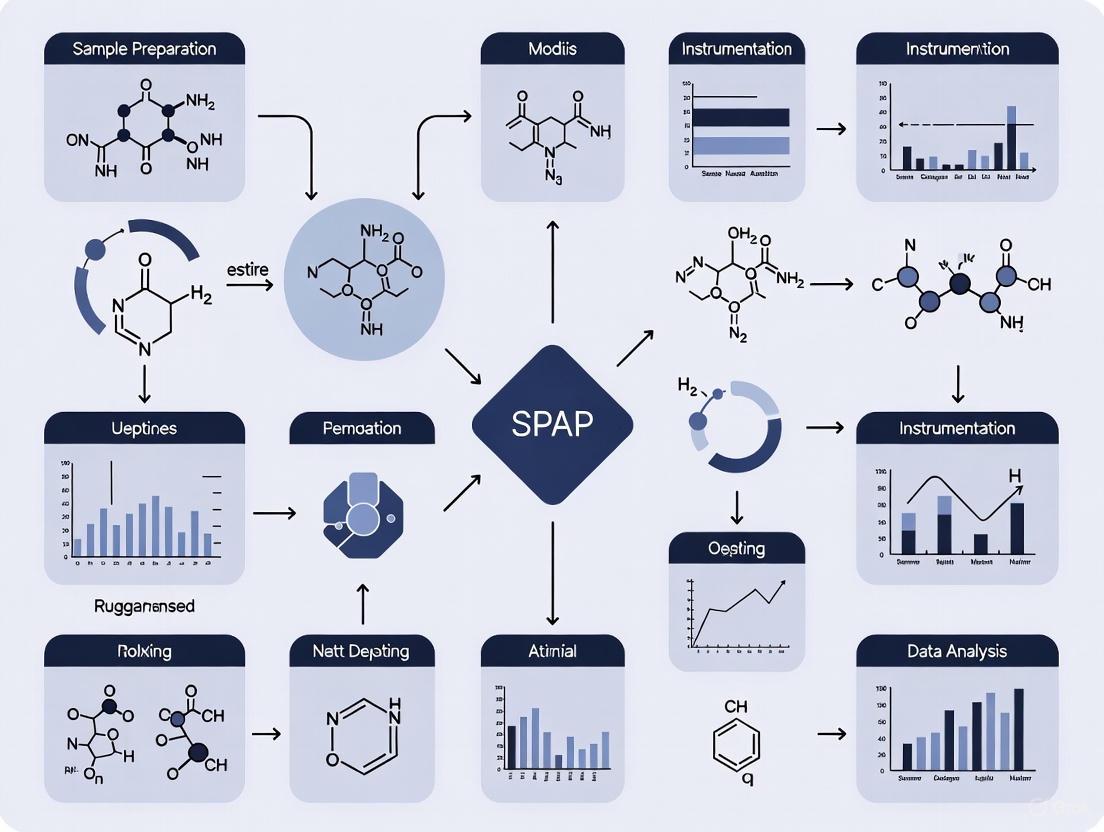
This article provides a complete guide to robustness testing for inorganic analytical methods, crucial for researchers, scientists, and drug development professionals. It covers foundational principles defining robustness and its critical importance in pharmaceutical and environmental analysis. The guide details practical methodologies including experimental design with Plackett-Burman and fractional factorial approaches, specifically applied to techniques like ICP-OES, ICP-MS, and IC. It addresses common troubleshooting scenarios and optimization strategies, while explaining modern validation paradigms aligned with ICH Q2(R2) and lifecycle management approaches. The content synthesizes current best practices with emerging trends, offering a strategic framework for developing reliable, transferable inorganic analytical methods that ensure data integrity and regulatory compliance.
Explore how f-element compounds containing lanthanides and actinides are revolutionizing technology through their unique structural properties.
Explore how theranostic nanomedicine is revolutionizing cancer treatment by integrating diagnosis and therapy into precise nanoscale systems.
Discover how advanced barrier films, the invisible shields revolutionizing how we protect everything from electronics to food.