Unlocking Elemental Data: A Researcher's Guide to PubChem's Periodic Table and Chemical Access
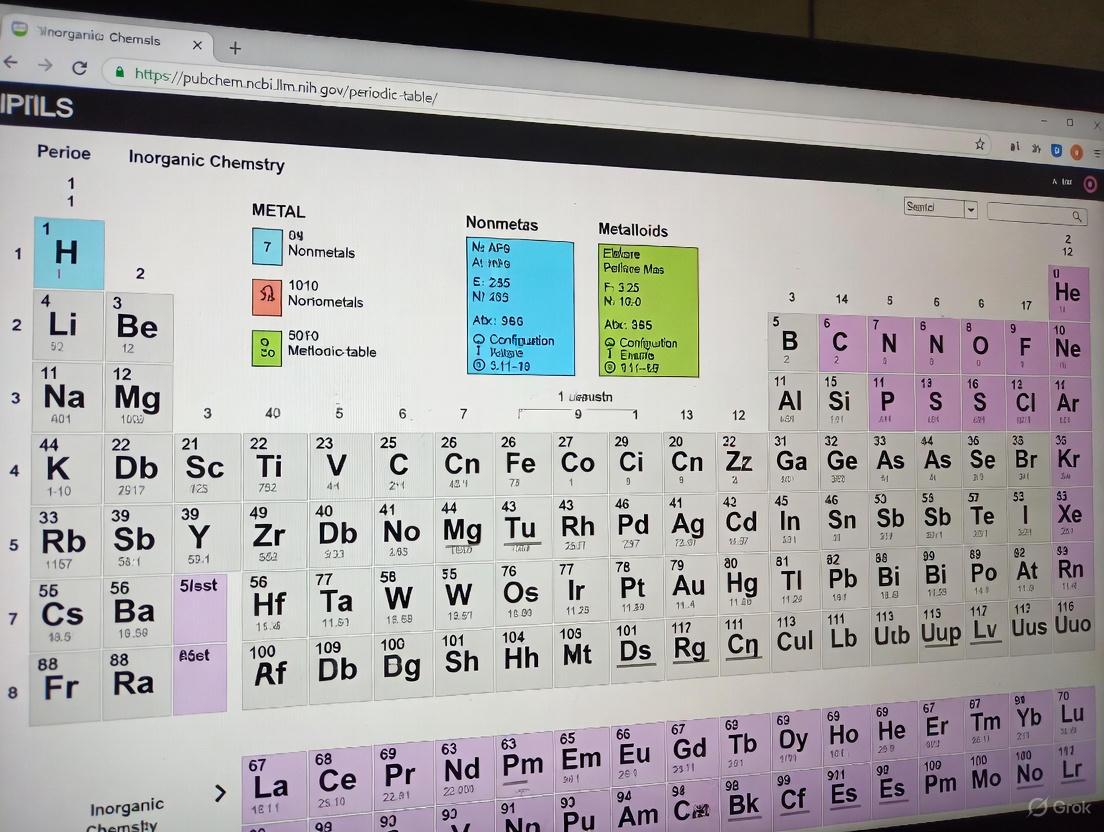
This guide provides researchers, scientists, and drug development professionals with a comprehensive overview of accessing and utilizing chemical element and compound data from PubChem.
Unlocking Elemental Data: A Researcher's Guide to PubChem's Periodic Table and Chemical Access
Abstract
This guide provides researchers, scientists, and drug development professionals with a comprehensive overview of accessing and utilizing chemical element and compound data from PubChem. It covers foundational knowledge of the database's immense scope, including its 118 million compound structures and dedicated periodic table interface. The article details practical methodologies for data retrieval via web interface and programmatic APIs like PUG-REST, addresses common troubleshooting scenarios in bulk operations and 3D structure handling, and offers comparative analysis with other major chemical databases. By synthesizing these four intents, this resource aims to enhance efficiency in chemical data acquisition for applications ranging from virtual screening to materials science.
Navigating PubChem's Chemical Universe: A Primer on Data Scope and the Periodic Table
PubChem (http://pubchem.ncbi.nlm.nih.gov) is a pivotal public repository for chemical and biological data, established in 2004 as part of the U.S. National Institutes of Health (NIH) Molecular Libraries Roadmap Initiative [1]. Its primary mission is to make the biological activity information of small molecules and small interfering RNAs (siRNAs) freely accessible to the public, thereby accelerating chemical biology research and facilitating drug development [1]. To manage this vast repository of information effectively, PubChem is architecturally structured around three interconnected core databases: Substance, Compound, and BioAssay [1] [2]. This triple-database system is ingeniously designed to handle contributed data, derive unique chemical entities, and archive biological screening results, respectively. For researchers, particularly those in drug discovery and chemical biology, a precise understanding of the relationships and distinctions between these three databases is fundamental to effectively navigating and exploiting PubChem's rich data resources. This framework allows scientists to trace biological activity results from a specific sample provider (Substance) back to a standardized chemical structure (Compound) and across multiple biological screening experiments (BioAssay), thereby providing a comprehensive view of a molecule's properties and activities.
Table 1: Core Databases of the PubChem Ecosystem
| Database Name | Primary Accession | Core Content and Purpose | Key Characteristics |
|---|---|---|---|
| Substance | SID (Substance ID) | Contributed sample descriptions from depositors [1]. | Contains provider-specific information; multiple SIDs can map to one unique compound. |
| Compound | CID (Compound ID) | Unique chemical structures derived from the Substance database [1]. | Represents a normalized chemical structure; aggregates data from multiple substances. |
| BioAssay | AID (Assay ID) | Contributed assay descriptions and associated biological screening results [1]. | Links substances/compounds to biological activity data against specific targets. |
Detailed Breakdown of the Three Core Databases
The Substance Database (SID)
The Substance database (SID) serves as the entry point for all data deposited into PubChem, acting as a collective repository for sample descriptions provided by over 30 academic institutions, government agencies, and industrial contributors [1] [2]. Each record in this database encapsulates the information as supplied by a particular depositor for a specific sample, which can be a small molecule or an siRNA reagent [1]. A critical concept is that multiple SIDs from different sources can refer to the same chemical molecule. For instance, the same compound submitted by two different laboratories or purchased from two different vendors will result in two distinct SIDs. This architecture allows PubChem to preserve the original context and provenance of the data as provided by the contributor, which is essential for tracking the source of a particular biological test result or understanding provider-specific annotations.
The Compound Database (CID)
The Compound database (CID) represents the next layer of data integration within PubChem. It contains unique, standardized chemical structures that are algorithmically derived from the chemical structure information present in the Substance database [1]. This process of structure normalization is a crucial function that enables PubChem to link biological test results from different depositors (associated with various SIDs) to a single, unique chemical entity (a CID) [1]. For example, if two different suppliers (resulting in two SIDs) provide the same molecule for screening, and both results are deposited in BioAssay, PubChem will link both activity outcomes to a single CID. This aggregation is powerful, as it provides researchers with a consolidated view of all known biological data for a specific chemical structure, regardless of its origin, thereby facilitating a more comprehensive structure-activity analysis.
The BioAssay Database (AID)
The BioAssay database (AID) is the repository for all biological activity data within PubChem. It archives experimental descriptions, protocols, and biological test results—including high-throughput screening (HTS) data, biological and medicinal chemistry research results, and data extracted from the scientific literature—linking them to the tested substances and compounds [1] [2]. Each assay record, defined by a unique AID, is highly detailed and consists of two main parts: the assay description and the assay results [1]. The description includes the assay's name, purpose, experimental protocol, and information about the biological target (e.g., protein, gene), with cross-references to other NCBI databases like GenBank whenever possible [1]. The results section provides the actual screening data in a tabular format, where each row corresponds to a tested substance and each column to a specific test readout (e.g., percentage inhibition, IC50) [1]. To standardize the diverse data, PubChem requires a summary bioactivity outcome for each tested sample, classifying it as "active," "inactive," "inconclusive," "unspecified," or a "chemical probe" [1]. For dose-response assays, a primary endpoint like IC50, denoted as an "active concentration summary," must be provided in micromolar units [1].
Figure 1: Data flow and relationships between PubChem's core databases.
Experimental Protocols for Accessing and Utilizing PubChem Data
Protocol 1: Compound-Centric Bioactivity Aggregation
Purpose: To retrieve and compare all available biological screening results for a specific compound of interest (CID) across multiple assays and data contributors [2].
Methodology:
- Entry Point: Navigate to the PubChem homepage (http://pubchem.ncbi.nlm.nih.gov) and use the search bar to query a compound by name, synonym, or CID.
- Compound Summary Page: Select the desired unique compound from the results to access its Compound Summary page. This page provides a centralized overview of the compound, including its chemical structure, properties, and related bioactivity.
- Access BioActivity Summary: On the Compound Summary page, locate and click the "BioActivity Summary" link. This tool is designed specifically to aggregate screening outcomes for the selected compound [2].
- Data Analysis: The resulting BioActivity Summary view will present a comprehensive report. It displays the bioactivity outcomes (e.g., active, inactive) and key data (e.g., IC50 values) for the compound across all deposited BioAssay records in which it has been tested [2].
- Result Refinement: Utilize the tool's built-in functionalities to filter and sort the results. You can tailor the view to focus on specific assay types (e.g., confirmatory assays), target classes, or activity value ranges to meet your research objectives [2].
Protocol 2: Target-Centric BioAssay Retrieval and Analysis
Purpose: To identify and examine all bioassay records and their associated active compounds for a specific biological target (e.g., a protein or gene).
Methodology:
- Database Selection: Access the NCBI Entrez retrieval system and select the "PubChem BioAssay" database for searching.
- Query Construction: Construct a query using the name or identifier of your protein or gene target. The Entrez "Limits" facility can be used to create a more specific query, for example, by restricting to "confirmatory" assay types [2].
- Review Assay List: Execute the search to retrieve a list of relevant BioAssay accessions (AIDs). Browse the list to identify assays of interest based on their titles and brief descriptions.
- Examine Assay Details: Select a specific AID to access its detailed BioAssay Summary page. This page provides the full assay description, experimental protocol, depositor comments, and definitions of reported readouts, which are crucial for understanding the context and reliability of the data [2].
- Identify Active Compounds: On the BioAssay Summary page, use the "Data Table (Active)" link to retrieve the list of substances and compounds that were reported as "active" in that specific screen. The page also provides links under the 'Related BioAssays' section, which can help identify counter-screens or assays against biologically related targets [2].
- Cross-Assay Comparison: For the identified active compounds, initiate the BioActivity Summary tool (as in Protocol 1) to explore their activity profiles across other screening experiments within PubChem, enabling target selectivity analysis [2].
Protocol 3: Structure-Activity Relationship (SAR) Exploration
Purpose: To analyze the relationship between chemical structure modifications and biological activity for a series of compounds active in a specific assay.
Methodology:
- Identify a Base Assay: Begin with a confirmatory or summary assay (AID) that contains a set of active compounds with a defined dose-response endpoint (e.g., IC50) [1].
- Access SAR Tool: From the BioAssay Summary page of your chosen AID, locate the "Structure-Activity Analysis" link under the "BioActive Compounds" section and click to launch the tool [2].
- Analyze the Data: The SAR tool will present the active compounds and their associated quantitative activity data. Use this view to identify common chemical scaffolds and critical substituents that correlate with increased potency.
- Leverage "Related BioAssays": The PubChem system automatically identifies and lists "Related BioAssays" by examining assay target relationships and the activity profiles of commonly tested compounds [1]. Explore these related assays to see how the compound series behaves in different biological contexts (e.g., against related targets or in counter-screens for selectivity).
Table 2: Key "Research Reagent Solutions" in the PubChem Ecosystem
| Resource / Tool | Type | Primary Function in Research |
|---|---|---|
| Entrez Retrieval System | Search Engine | Provides the primary interface for searching and retrieving records from PubChem and other interconnected NCBI databases using flexible queries [2]. |
| BioActivity Summary Tool | Data Analysis Tool | Aggregates and compares biological screening outcomes for one or more compounds across all available BioAssay depositions, providing a consolidated activity profile [2]. |
| Structure-Activity Analysis Tool | Data Analysis Tool | Enables exploratory analysis of the relationship between chemical structures and their biological activity outcomes, facilitating hypothesis generation in lead optimization [2]. |
| Molecular Libraries Program (MLP/MLPCN) Data | Data Source | Provides a large corpus of high-quality, publicly accessible high-throughput screening data and identified chemical probes, serving as a key resource for starting points in drug discovery [1]. |
| Related BioAssays | Database Annotation | Identifies and links biologically related assays (e.g., sharing targets or tested compounds), helping researchers place results in a broader biological context and assess compound selectivity [1] [2]. |
PubChem (https://pubchem.ncbi.nlm.nih.gov) represents one of the most comprehensive public chemical databases globally, serving as a foundational resource for researchers, scientists, and drug development professionals [3] [4]. As a key component of the National Institutes of Health (NIH) molecular databases resource, PubChem has evolved significantly since its launch in 2004, now integrating data from over 1,000 authoritative sources to provide unprecedented access to chemical information and biological activity data [4]. This application note details the current scale of PubChem's data collections, provides protocols for efficient data access and analysis, and demonstrates practical applications within drug discovery and chemical biology research contexts. The massive scale of PubChem—encompassing 119 million unique compounds and 295 million bioactivity data points—enables data-driven approaches to chemical biology, drug discovery, and toxicology research, provided researchers can effectively navigate and utilize this wealth of information [4].
The Expanding Scale of PubChem Data Collections
As of the 2025 update, PubChem has surpassed significant milestones in data content and integration. The database now contains information sourced from more than 1,000 data contributors, representing an addition of over 130 new sources in the past two years alone [3] [4]. The core data collections have grown substantially, with the Compound database storing unique chemical structures validated through chemical structure standardization processes.
Table 1: Core Data Collections in PubChem (as of September 2024)
| Data Collection | Record Count | Description |
|---|---|---|
| Substances | 322,395,335 | Chemical descriptions provided by contributors; may include non-discrete structures or materials |
| Compounds | 118,596,691 | Unique chemical structures extracted from Substance records |
| BioAssays | 1,671,325 | Biological experiment descriptions and protocols |
| Bioactivities | 295,360,133 | Individual biological activity data points from BioAssays |
| Proteins | 248,298 | Protein targets tested in BioAssays and/or involved in Pathways |
| Genes | 113,242 | Gene targets tested in BioAssays and/or involved in Pathways |
| Pathways | 241,163 | Groups of interacting chemicals, genes, and proteins |
| Literature | 41,558,769 | Scientific publications linked to chemical entities |
| Patents | 50,836,952 | Patent documents with chemical associations |
Specialized Data Content Expansion
Recent expansions have significantly enhanced PubChem's utility for specialized research applications. For drug discovery, integration with Drugs@FDA, the Japan Pharmaceuticals and Medical Devices Agency (JPMDA), and European Medicines Agency (EMA) resources provides comprehensive coverage of approved pharmaceuticals [4]. The addition of the MotherToBaby Fact Sheets offers critical information on chemical exposure risks during pregnancy and breastfeeding, supporting toxicology and safety research.
For metabolomics and exposomics studies, PubChem has incorporated valuable datasets including natural products from the NPASS database, metabolite information from the KNApSAcK Species-Metabolite Database and Yeast Metabolome Database (YMDB), and experimentally determined collision cross-section (CCS) values for lipids and per- and polyfluoroalkyl substances (PFAS) [4]. These additions facilitate more accurate compound identification and characterization in mass spectrometry-based studies.
Health hazard assessment capabilities have been strengthened through integration with authoritative sources including the U.S. Environmental Protection Agency Integrated Risk Information System (IRIS), Provisional Peer-Reviewed Toxicity Values (PPRTV), and California's Proposition 65 list from the Office of Environmental Health Hazard Assessment [4]. These resources provide validated toxicity values and regulatory information essential for chemical risk assessment.
Protocols for Accessing and Analyzing PubChem Data
Programmatic Access Using PUG-REST
The PUG-REST (Power User Gateway - RESTful interface) API provides the most efficient method for programmatic access to PubChem data at scale. Below is a detailed protocol for retrieving compound data using Python.
Protocol 1: Retrieving Compound Properties via PUG-REST
This protocol outputs a CSV-formatted table containing the specified molecular properties for each Compound ID (CID). The PUG-REST interface supports retrieval of numerous additional properties, including structural descriptors, chemical identifiers, and computed molecular characteristics.
Advanced Bioactivity Data Retrieval and Analysis
Protocol 2: Retrieving and Filtering Bioactivity Data
For researchers investigating structure-activity relationships, retrieving bioactivity data against specific biological targets is essential. The following protocol demonstrates how to obtain and filter bioactivity data for a protein target of interest.
Workflow for Chemical Data Analysis
The following diagram illustrates the complete workflow for accessing, retrieving, and analyzing chemical data from PubChem:
Diagram 1: Chemical Data Analysis Workflow (76 characters)
Specialized Applications and Methodologies
Patent Landscape Analysis Using Knowledge Panels
PubChem's recently introduced patent knowledge panels enable researchers to explore relationships between chemicals, genes, and diseases as co-mentioned in patent documents [3]. This functionality supports competitive intelligence and landscape analysis in drug discovery.
Protocol 3: Patent Co-occurrence Analysis
Metabolomics and Exposomics Data Analysis
For non-targeted screening studies in metabolomics and exposomics, the scale of PubChem can present computational challenges. PubChemLite addresses this by providing a curated subset focused on compounds relevant to these domains [5]. This resource collapses the >100 million PubChem database into a compact selection, grouping related chemical forms (salts, stereoisomers) to their neutral components and summing annotation counts.
Table 2: PubChemLite Category Coverage
| Category | Color Code | Content Description | Application |
|---|---|---|---|
| Environmental | Yellow | Environmental contaminants and transformation products | Environmental monitoring and risk assessment |
| Metabolomics | Purple | Known metabolites from various organisms | Metabolic pathway analysis and biomarker discovery |
| Exposomics | Dark Orange | Chemicals relevant to human exposure | Exposure science and epidemiological studies |
| Suspect Screening | Green | Compounds commonly screened in analytical chemistry | Non-targeted analysis by mass spectrometry |
Protocol 4: Accessing PubChemLite Data
Element Data Analysis Using the PubChem Periodic Table
For researchers requiring elemental property data, PubChem provides a dedicated Periodic Table interface with comprehensive element information [6]. The following protocol demonstrates how to programmatically access and visualize periodic trends.
Protocol 5: Accessing and Visualizing Element Properties
Table 3: Essential Resources for PubChem Data Analysis
| Resource | Type | Function | Access Method |
|---|---|---|---|
| PUG-REST API | Web Service | Programmatic access to all PubChem data collections | REST HTTP requests |
| PubChemPy | Python Library | Python wrapper for PUG-REST | Python import (import pubchempy) |
| PubChemLite | Curated Dataset | Compact subset for screening studies | Zenodo archive download |
| Consolidated Literature Panel | Web Interface | Unified view of all chemical literature | PubChem web interface |
| Patent Knowledge Panels | Web Interface | Co-mention analysis in patents | PubChem compound/gene pages |
| Periodic Table API | Web Service | Element property data access | REST endpoint for CSV/JSON |
| PubChemRDF | Semantic Web | Linked data for semantic queries | SPARQL endpoint |
| Structure Search | Web Service | Identity, similarity, substructure search | Web interface or programmatic |
Data Integration and Knowledge Extraction Workflow
The relationship between PubChem's data collections and the knowledge extraction process follows an integrated workflow that transforms raw data into research insights:
Diagram 2: Data to Knowledge Pipeline (67 characters)
The massive scale of PubChem, with its 118 million compounds and 295 million bioactivity data points, presents both unprecedented opportunities and significant analytical challenges for researchers [3] [4]. The protocols and methodologies detailed in this application note provide practical approaches to navigate this vast chemical data landscape effectively. Through programmatic access via PUG-REST, utilization of specialized resources like PubChemLite for screening studies, and implementation of the analytical workflows described, researchers can leverage PubChem's full potential to advance drug discovery, chemical biology, and toxicology research. As PubChem continues to expand through the addition of new data sources and development of enhanced analytical tools, its role as a foundational resource for the research community will only grow in importance, enabling increasingly sophisticated data-driven approaches to chemical research.
PubChem stands as one of the most comprehensive public chemical databases, providing unprecedented access to chemical information for the scientific community. As of September 2024, this National Institutes of Health (NIH) resource contains 119 million unique compounds, 322 million substances, and 295 million bioactivity data points collected from over 1,000 data sources [4]. For researchers navigating this vast chemical space, the PubChem Periodic Table serves as an essential gateway for element-specific compound exploration. This interface provides systematic organization of element-centric data, enabling efficient mining of chemical information relevant to drug discovery, materials science, and toxicology research.
The strategic importance of element-centric approaches continues to grow in modern chemical research. With the increasing volume and complexity of chemical data, the PubChem Periodic Table offers researchers a structured framework for investigating element-property relationships, predicting compound behavior, and identifying novel chemical entities with desired characteristics. This Application Note provides detailed protocols for leveraging this powerful interface within research workflows for drug development professionals and scientific investigators.
Protocol: Accessing Element Data from PubChem
Materials and Reagents
Table 1: Essential Research Reagent Solutions for Computational Element Analysis
| Item | Function | Example/Format |
|---|---|---|
| PubChem REST API | Programmatic data retrieval | https://pubchem.ncbi.nlm.nih.gov/rest/pug/periodictable/CSV |
| Python pandas library | Data manipulation and analysis | import pandas as pd |
| Data visualization libraries | Creating publication-quality plots | matplotlib, seaborn |
| Computational environment | Code execution and data processing | Jupyter Notebook, Python 3.7+ |
Methodology: Interactive and Programmatic Access
2.2.1 Interactive Web Interface Access
- Navigate to the PubChem Periodic Table at https://pubchem.ncbi.nlm.nih.gov/periodic-table/
- Browse elements by group, period, or property values using interactive filters
- Select individual elements to access dedicated Element Pages containing comprehensive property data
- Use the DOWNLOAD button and select CSV format to export the complete element dataset
2.2.2 Programmatic Access via Python The following protocol enables direct programmatic access to element data for computational analysis:
Workflow Visualization
Diagram 1: Element data access workflow showing interactive and programmatic pathways.
Data Analysis: Elemental Properties and Trends
Quantitative Element Data
Table 2: Selected Element Properties Available via PubChem Periodic Table
| Atomic Number | Symbol | Name | Atomic Mass | Electronegativity | Atomic Radius (pm) | Ionization Energy (eV) | Electron Affinity | Standard State | GroupBlock |
|---|---|---|---|---|---|---|---|---|---|
| 1 | H | Hydrogen | 1.008 | 2.20 | 120.0 | 13.598 | 0.754 | Gas | Nonmetal |
| 2 | He | Helium | 4.0026 | - | 140.0 | 24.587 | - | Gas | Noble gas |
| 3 | Li | Lithium | 7.00 | 0.98 | 182.0 | 5.392 | 0.618 | Solid | Alkali metal |
| 4 | Be | Beryllium | 9.012183 | 1.57 | 153.0 | 9.323 | - | Solid | Alkaline earth metal |
| 5 | B | Boron | 10.810 | 2.04 | 192.0 | 8.298 | 0.277 | Solid | Metalloid |
| 6 | C | Carbon | 12.011 | 2.55 | 170.0 | 11.260 | 1.263 | Solid | Nonmetal |
| 7 | N | Nitrogen | 14.007 | 3.04 | 155.0 | 14.534 | -0.070 | Gas | Nonmetal |
| 8 | O | Oxygen | 15.999 | 3.44 | 152.0 | 13.618 | 1.461 | Gas | Nonmetal |
| 9 | F | Fluorine | 18.998 | 3.98 | 147.0 | 17.423 | 3.401 | Gas | Halogen |
| 10 | Ne | Neon | 20.180 | - | 154.0 | 21.565 | - | Gas | Noble gas |
| 11 | Na | Sodium | 22.990 | 0.93 | 227.0 | 5.139 | 0.548 | Solid | Alkali metal |
| 12 | Mg | Magnesium | 24.305 | 1.31 | 173.0 | 7.646 | - | Solid | Alkaline earth metal |
| 13 | Al | Aluminum | 26.982 | 1.61 | 184.0 | 5.986 | 0.441 | Solid | Metal |
| 14 | Si | Silicon | 28.085 | 1.90 | 210.0 | 8.152 | 1.385 | Solid | Metalloid |
| 15 | P | Phosphorus | 30.974 | 2.19 | 180.0 | 10.487 | 0.747 | Solid | Nonmetal |
| 16 | S | Sulfur | 32.060 | 2.58 | 180.0 | 10.360 | 2.077 | Solid | Nonmetal |
| 17 | Cl | Chlorine | 35.450 | 3.16 | 175.0 | 12.968 | 3.613 | Gas | Halogen |
| 18 | Ar | Argon | 39.950 | - | 188.0 | 15.760 | - | Gas | Noble gas |
Visualization of Periodic Trends
This protocol generates a comprehensive bar chart showing periodic trends in ionization energy across all elements with available data. Elements from Period 1 (H, He) display the most dramatic differences, while the general trend shows increasing ionization energy moving right across periods and decreasing moving down groups [6].
Application in Research Domains
Drug Discovery and Development
The PubChem Periodic Table interface facilitates targeted compound exploration for pharmaceutical research. Recent updates have enhanced drug discovery capabilities through integration of specialized datasets:
- Approved Drug Information: Integration with Drugs@FDA, Japan Pharmaceuticals and Medical Devices Agency (JPMDA), and European Medicines Agency provides comprehensive coverage of approved pharmaceuticals [4]
- Biomarker Data: Access to MarkerDB offers biomarker concentration data in body fluids (blood, serum, urine) for normal and disease conditions [4]
- pKa Values: The IUPAC digitized pKa dataset provides high-confidence values for over 11,000 compounds, critical for ADMET profiling [4]
Chemical Safety and Toxicology
Element-specific data access supports comprehensive chemical risk assessment:
- Health Hazard Information: Integration with USEPA Integrated Risk Information System (IRIS) provides reference concentrations (RfC) and reference doses (RfD) for chemical exposure assessment [4]
- Carcinogenicity Data: Proposition 65 data from California OEHHA offers carcinogenicity and reproductive toxicity information [4]
- Exposure Information: Chemical Data Reporting from USEPA includes manufacturing, use, and production data for chemicals in commerce [4]
Metabolomics and Natural Products Research
Specialized applications benefit from element-centric exploration:
- Natural Products: NPASS database integration provides information on natural products and their species sources [4]
- Metabolite Data: KNApSAcK Species-Metabolite Database and Yeast Metabolome Database (YMDB) offer comprehensive metabolite information [4]
- Experimental CCS Values: Collision cross-section values for lipids and PFAS determined through ion mobility spectrometry support metabolomics identification [4]
Advanced Protocol: Element-Centric Compound Filtering
Workflow for Target-Based Compound Selection
Diagram 2: Element-centric workflow for target-based compound selection in virtual screening.
Computational Implementation
This advanced protocol enables researchers to efficiently navigate PubChem's extensive compound collection through element-based filtering, supporting virtual screening workflows in drug discovery [7].
The PubChem Periodic Table interface represents an indispensable tool for modern chemical research, providing structured access to element-specific data that facilitates compound exploration and property analysis. The protocols outlined in this Application Note demonstrate practical methodologies for leveraging this resource across multiple research domains, from drug discovery to metabolomics. As PubChem continues to expand—incorporating data from over 130 new sources in the past two years—the Periodic Table interface will remain an essential gateway for researchers navigating the increasingly complex landscape of chemical information [4]. By implementing these standardized protocols, research scientists can systematically exploit element-centric approaches to accelerate discovery and innovation in their chemical investigations.
PubChem serves as a pivotal chemical information resource for the biomedical research community, providing vast data on chemical elements, their structures, properties, and biological activities [8]. This application note details structured methodologies for accessing and utilizing element-specific data within PubChem, supporting research in drug discovery and chemical biology. The protocols presented here leverage the PubChem Periodic Table and Element Pages to bridge chemical data with biological significance, enabling researchers to efficiently navigate between elemental properties and their pharmacological contexts [9].
Key Data Categories in PubChem
PubChem organizes element data into several interconnected categories, allowing researchers to move seamlessly from basic atomic properties to complex biological interactions. The table below summarizes the primary data categories available for elements and their compounds.
Table 1: Key Element Data Categories in PubChem
| Data Category | Description | Example Applications |
|---|---|---|
| Structural Information | Atomic structure, isotopic variations, and molecular representations of elemental compounds | Identification of stereoisomers and isotopomers through identity search [8] |
| Physicochemical Properties | Fundamental atomic characteristics and compound-specific descriptors | Compound filtering based on drug-likeness criteria [8] |
| Biological Activity Data | Bioassay results, toxicity profiles, and biomedical effects | Retrieval of bioactivity data for compounds tested against specific proteins [8] |
| Health and Safety Information | Handling guidelines, hazard classifications, and safety data | Laboratory safety protocol development and risk assessment |
| Taxonomy and Pathway Associations | Biological systems and organisms interacting with elemental compounds | Finding genes/proteins interacting with a given compound [8] |
Data Access Protocols
Protocol 1: Accessing Element Properties via the PubChem Periodic Table
Objective: To retrieve comprehensive element data using the PubChem Periodic Table interface.
- Navigation: Access the PubChem Periodic Table through the PubChem homepage (
https://pubchem.ncbi.nlm.nih.gov) [8]. - Element Selection: Click on the desired element in the periodic table display to open its dedicated Element Page.
- Data Extraction: Locate the following information in respective sections:
- Basic Properties: Atomic number, mass, electron configuration, and classification
- Thermodynamic Data: Melting/boiling points, heat capacity, and thermal conductivity
- Atomic Structure: Atomic radius, electronegativity, and ionization energy
- Isotope Information: Naturally occurring isotopes with their abundances and half-lives
- Data Export: Use available download options to save data in spreadsheet-friendly formats for further analysis.
Protocol 2: Identity Search for Stereoisomers and Isotopomers
Objective: To identify stereoisomers and isotopomers of a given compound using PubChem's identity search functionality.
- Structure Input: Provide the chemical structure using one of these methods:
- Draw the structure using the PubChem Sketcher tool
- Input a SMILES or InChI string
- Specify a PubChem Compound Identifier (CID) [10]
- Search Configuration: Select the Identity/Similarity search tab and choose the appropriate identity option:
- Same Stereoisomer: For compounds matching connectivity and stereochemistry
- Same Isotopic Labels: For compounds matching isotopic composition [10]
- Result Analysis: Review the returned stereoisomers and isotopomers, noting their specific CID identifiers for future reference.
- Data Integration: Cross-reference identified compounds with associated bioactivity data to assess structure-activity relationships.
Protocol 3: Retrieving Biological Role Data for Elemental Compounds
Objective: To identify biomolecular interactions and biological roles of compounds containing specific elements.
- Compound Identification: Locate the compound of interest through text search (e.g., chemical name) or structure search [8].
- Summary Page Navigation: Access the Compound Summary page and use the table of contents to navigate to biomolecular interaction sections [8].
- Data Collection: Extract specific interaction data from:
- DrugBank Interactions: Pharmaceutical target information
- Gene Interactions: Transcriptional regulation data
- Pathway Annotations: Metabolic and signaling pathway associations
- Multi-Source Validation: Compare data across multiple authoritative sources (e.g., ChEMBL, IUPHAR/BPS) to confirm biological interactions [8].
The Scientist's Toolkit
Table 2: Essential Research Reagent Solutions for Element-Based Studies
| Reagent/Resource | Function/Application | Protocol Reference |
|---|---|---|
| PubChem Sketcher | Molecular structure input for identity and similarity searches | Protocol 2, Step 1 |
| Structure Standardization Tools | Normalization of chemical structures for consistent searching | Protocol 2, Step 1 |
| PUG-REST API | Programmatic access to PubChem data for automated workflows | Protocol 3, Step 4 |
| PubChemRDF | Machine-readable data integration for computational analysis | Protocol 1, Step 4 |
| BioActivity Data Services | Retrieval of assay results and toxicity profiles | Protocol 3, Step 3 |
Data Integration and Analysis Workflow
The interlinked nature of PubChem's data collections enables sophisticated research queries connecting elemental properties to biological activity. The quantitative data extracted through these protocols can be synthesized to identify significant patterns and relationships.
Table 3: Representative Elemental Compounds with Associated Biological Data
| Element | Example Compound (CID) | Key Biological Interactions | Reported Bioactivities |
|---|---|---|---|
| Lithium | Lithium carbonate (11125) | Neurotransmitter regulation; GSK-3 inhibition | Mood stabilization; treatment of bipolar disorder |
| Platinum | Cisplatin (5702198) | DNA cross-linking; apoptosis induction | Antineoplastic activity; cancer chemotherapy |
| Selenium | Selenomethionine (15103) | Antioxidant enzyme activation; redox homeostasis | Chemoprevention; antioxidant protection |
| Iron | Ferrous sulfate (24393) | Oxygen transport; electron transfer | Anemia treatment; metabolic cofactor |
The structured protocols presented herein provide researchers with reliable methodologies for accessing and interpreting element-centric data within PubChem. By systematically navigating from fundamental elemental properties to complex biological interactions, scientists can effectively leverage PubChem's integrated data collections to advance drug discovery and chemical biology research. The continuous expansion of PubChem's content and services ensures that these protocols will remain relevant and adaptable to evolving research needs.
PubChem, hosted by the National Center for Biotechnology Information (NCBI), is a pivotal public repository for chemical structures and their biological activities, serving as a foundational resource for the global scientific community [11] [2]. Its three interconnected databases—Substance, BioAssay, and Compound—provide a comprehensive infrastructure for researchers in chemical biology, medicinal chemistry, and informatics [11]. With open access to over 50 million unique chemical structures and associated bioactivity data from high-throughput screening (HTS) experiments, PubChem supports diverse research applications, from lead identification and optimization to compound-target profiling and polypharmacology studies [11]. The addition of the PubChem3D layer further enhances its utility by providing a three-dimensional conformer model description for over 92% of compounds in the PubChem Compound database, enabling sophisticated shape-based and feature-based similarity analyses that uncover latent structure-activity relationships not apparent through traditional 2-D methods [12]. This application note details protocols for leveraging PubChem's Periodic Table data and integrated tools to advance research in drug discovery and materials science, providing a framework for researchers to exploit the genetic basis of diseases and accelerate therapeutic innovation [11].
Data Access and Programmatic Retrieval Protocols
Programmatic Access to Elemental Data
The PubChem Periodic Table provides authoritative data on chemical elements, which can be accessed programmatically for large-scale analyses. The following Python protocol demonstrates how to retrieve and process this data for research applications.
This protocol enables researchers to access comprehensive elemental data, including atomic masses, electron configurations, electronegativity, ionization energies, and physical properties, which serve as fundamental descriptors in quantitative structure-activity relationship (QSAR) studies and materials informatics [6].
Key Elemental Properties for Research Applications
Table 1: Critical Elemental Properties Accessible via PubChem REST API
| Property | Description | Research Application | Data Type |
|---|---|---|---|
| AtomicMass | Relative atomic mass of the element | Mass spectrometry calibration; stoichiometric calculations | Numeric |
| Electronegativity | Tendency to attract electrons | Chemical reactivity prediction; bond polarity assessment | Numeric |
| IonizationEnergy | Energy required to remove an electron | Redox potential estimation; catalyst design | Numeric (eV) |
| ElectronAffinity | Energy change when electron is added | Semiconductor property prediction; surface interaction studies | Numeric (eV) |
| AtomicRadius | Measure of atomic size | Molecular volume estimation; steric effects analysis | Numeric (pm) |
| OxidationStates | Common oxidation states | Electrochemistry; catalyst behavior prediction | Text |
| CPKHexColor | Conventional representation color | Molecular visualization; educational tools | Hexadecimal |
| ElectronConfiguration | Electron orbital arrangement | Periodic trend analysis; bonding behavior prediction | Text |
This curated dataset provides the foundational parameters for computational chemistry simulations, materials design, and drug discovery workflows, enabling researchers to establish correlations between elemental properties and functional behaviors in complex systems [6].
Application Note 1: Drug Discovery and Bioactivity Profiling
Protocol for 3D Similarity-Based Lead Identification
The PubChem3D resource enhances drug discovery by enabling shape-based similarity searches that identify chemically diverse compounds with similar biological activity [12]. The following protocol outlines the procedure for 3D similarity-based lead identification.
Figure 1: Workflow for identifying novel lead compounds using PubChem3D similarity searching and bioactivity data integration.
Experimental Protocol:
Input Preparation: Start with a known active compound (e.g., current drug or validated hit). Retrieve its PubChem Compound Identifier (CID) using the structure search tool [11].
3D Conformer Retrieval: Access the 3D conformer model for the query compound through the PubChem Compound database. PubChem3D provides pre-computed conformer models for eligible compounds (≤50 non-hydrogen atoms, ≤15 rotatable bonds, containing only supported elements) [12].
3D Similarity Search: Execute a "Similar Conformers" search through the PubChem Power User Gateway (PUG) system. This service employs Gaussian-based similarity comparisons of molecular shape and feature complementarity, utilizing technology similar to ROCS and OEShape [12].
Result Filtering: Filter identified compounds using the BioActivity Summary tool to focus on those with relevant biological annotations. Prioritize compounds tested in target-specific assays with significant activity scores (IC50, Ki, or percentage inhibition) [2].
SAR Analysis: Utilize the PubChem BioActivity SAR service to explore structure-activity relationships among identified hits. This tool enables clustering of active compounds and visualization of key functional groups essential for biological activity [11].
Experimental Validation: Select top candidates for wet-lab testing. The PubChem BioAssay database provides protocol details that can be adapted for confirmatory screening, including assay conditions, detection methods, and activity thresholds [2].
Visualization and Analysis of 3D Chemical Space
The PubChem3D Viewer provides advanced capabilities for visualizing and analyzing the 3D relationships between identified lead compounds, offering insights that are not apparent from 2D structures alone [13].
Key Visualization Features:
Overlay Structure Viewer: Enables direct comparison of multiple conformers in a single coordinate system, ideal for assessing structural overlap and identifying conserved pharmacophoric elements [13].
Tiled Structure Viewer: Displays multiple molecules in tiled sections, facilitating browsing of multiple conformers and analysis of overall 3D coverage in conformer space [13].
Customizable Rendering: Allows adjustment of atom coloring (element-specific or conformer-specific), bond representation, background color, and lighting models to highlight specific molecular features relevant to biological activity [13].
Pharmacophore Visualization: Toggle visibility of pharmacophoric features to identify critical functional groups and their spatial orientation that correlate with biological activity [13].
Research Reagent Solutions for Drug Discovery
Table 2: Essential Research Reagents and Tools for PubChem-Based Drug Discovery
| Resource | Function | Access Method |
|---|---|---|
| PubChem Compound Database | Source of unique chemical structures with annotations | Web interface or programmatic access via PUG |
| PubChem3D Conformer Models | 3D molecular representations for shape-based screening | Download via Compound pages or PC3D Viewer |
| BioAssay Data Repository | Bioactivity results from HTS and targeted studies | Assay-specific pages (AID) or bulk download |
| BioActivity SAR Service | Structure-activity relationship analysis | Web-based tool linked from BioAssay summaries |
| PubChem Fingerprints | 2D structural descriptors for similarity assessment | FTP download or computational tools |
| Power User Gateway (PUG) | Programmatic access to PubChem data | REST-style web service API |
Application Note 2: Materials Science and Chemical Informatics
Protocol for Periodic Trend Analysis in Materials Design
Understanding periodic trends in elemental properties enables rational design of novel materials with tailored characteristics. The following protocol utilizes PubChem's elemental data to identify promising element combinations for materials development.
Figure 2: Methodology for analyzing periodic trends to inform the design of novel materials with targeted properties.
Experimental Protocol:
Objective Definition: Clearly define target material properties (e.g., high electrical conductivity, specific catalytic activity, or defined band gap energy).
Data Acquisition: Implement Protocol 1 to retrieve the complete PubChem elemental dataset, focusing on properties relevant to the target application (e.g., ionization energy, electronegativity, atomic radius) [6].
Trend Analysis: Calculate property gradients across periods and groups using statistical methods. For example, analyze how atomic radius decreases across periods while ionization energy generally increases.
Correlation Identification: Create scatter plots to identify relationships between different elemental properties. For instance, plot atomic number versus ionization energy to observe periodicity, or electronegativity versus electron affinity to identify elements with unique electronic characteristics [6].
Element Selection: Based on trend analysis, select promising elements or combinations that exhibit optimal property ranges for the target application. For example, transition metals with specific d-electron configurations might be selected for catalytic applications.
Performance Prediction: Integrate selected elemental properties into QSAR models or machine learning algorithms to predict material performance before synthesis. Utilize PubChem compound data to validate models against known materials with similar elemental composition.
Data Visualization for Periodic Trends
Effective visualization of elemental data reveals critical patterns that inform materials design decisions. The following protocol creates informative visualizations using Python libraries.
These visualizations enable researchers to quickly identify elements with exceptional properties, such as unusually high or low ionization energies that might indicate novel reactivity patterns or unique bonding capabilities valuable for advanced materials development [6].
Advanced Integration and Secondary Resource Development
Protocol for Building Specialized Databases from PubChem
The rich data content in PubChem has stimulated the development of specialized secondary databases that extend its utility for focused research applications [11]. The following protocol outlines the methodology for creating such value-added resources.
Database Development Protocol:
Domain Definition: Identify a specific research domain that would benefit from a curated subset of PubChem data (e.g., cytochrome P450 interactions, kinase inhibitors, or photovoltaic materials).
Data Extraction: Use PubChem's programmatic access tools (PUG) to extract relevant compounds and associated bioassay data. For example, to build a database of CYP inhibitors, query PubChem BioAssay for assays related to cytochrome P450 enzymes [11].
Value-Added Curation: Enhance extracted data with specialized annotations, such as:
- Calculated molecular descriptors (e.g., COMMODE database providing molecular descriptors for PubChem compounds) [11]
- Standardized activity classifications (e.g., MUV benchmark datasets for virtual screening validation) [11]
- Cross-references to specialized resources (e.g., SuperCYP database linking CYP-drug interactions) [11]
Identifier Preservation: Maintain PubChem identifiers (CID, SID, AID) in the secondary database to enable seamless navigation back to the source records in PubChem for additional contextual information [11].
Tool Integration: Develop or adapt informatics tools that interact with both the specialized database and PubChem, enabling functions such as structure search, property prediction, or activity profiling.
Community Distribution: Implement web services or download options to make the specialized database available to the research community, following PubChem's model of open access.
This protocol has been successfully employed in various published resources that extend PubChem's capabilities for specialized research communities, demonstrating how researchers can build upon this public resource to address domain-specific challenges [11].
PubChem provides an extensive, publicly accessible infrastructure that seamlessly connects fundamental elemental data with practical research applications in drug discovery and materials science. Through its structured databases, advanced visualization tools like the PubChem3D Viewer, and robust programmatic access methods, researchers can efficiently navigate from fundamental atomic properties to complex biological activities and material functionalities [11] [13] [12]. The protocols and application notes detailed herein demonstrate how leveraging PubChem's resources can accelerate the identification of novel therapeutic candidates, inform the design of advanced materials through periodic trend analysis, and facilitate the development of specialized secondary databases. By integrating these approaches into their research workflows, scientists can harness the full potential of this comprehensive chemical data ecosystem to address complex challenges in biomedical and materials research.
From Search to Download: Practical Methods for Accessing PubChem Elemental Data
PubChem is a foundational resource for chemical information, serving millions of users monthly, including researchers and drug development professionals [4] [14]. Its value lies not only in the sheer volume of data—encompassing over 119 million compounds and 295 million bioactivity data points—but also in the sophistication of its access interfaces [4]. For researchers, efficiently navigating this vastness is paramount. This Application Note details practical protocols for three core web interface techniques: keyword search, structure search, and bulk retrieval via the Periodic Table. Mastery of these techniques enables rapid data acquisition for research workflows in cheminformatics, medicinal chemistry, and chemical biology.
PubChem Web Interface Techniques: Protocols and Applications
The following sections provide detailed methodologies for employing PubChem's primary search and retrieval interfaces. Each protocol is designed to be a standalone guide for executing a specific data access task.
Keyword Search Technique
Protocol 1: Retrieving Bioactive Compounds for a Target Protein
Keyword search is the most direct method to initiate exploration in PubChem. It uses the E-Utilities (E-Utils) web service interface for programmatic access [15].
- Define Search Query: Formulate a precise keyword string. For target-based discovery, use official gene symbols or protein names (e.g., "BRAF kinase").
Execute Programmatic Search: Use the
ESearchE-Utility to retrieve a list of unique identifiers (UIDs) for records matching the query. The following Python code demonstrates this step.Retrieve Summaries: Use the
ESummaryE-Utility with the obtained UIDs, WebEnv, and QueryKey to fetch document summaries.- Refine and Export: Use the
EFetchE-Utility to download the complete records in the desired format (e.g., XML, ASN.1). Results can be exported to a spreadsheet for further analysis [15].
Table 1: Key E-Utilities for Programmatic Keyword Search
| E-Utility | Function | Critical Parameters |
|---|---|---|
ESearch |
Performs a text search and returns UIDs. | db, term, usehistory |
ESummary |
Retrieves document summaries for UIDs. | db, WebEnv, query_key |
EFetch |
Retrieves full data records in specified format. | db, WebEnv, query_key, rettype, retmode |
Structure Search Technique
Protocol 2: Conducting a 2D Similarity Search
Structure search allows researchers to find compounds based on molecular structure. The Java Molecular Editor (JME) is used to draw and convert structure queries into SMILES strings [15].
- Input Structure: Provide a query structure via a SMILES string, InChI, or by drawing it with the JME applet.
- Select Search Type: Choose the appropriate search type:
- Execute Search: Submit the query through the PubChem web interface or programmatically via the PUG-REST API.
- Analyze and Download Hits: Review the resulting compounds and their properties. Bioactivity data for the hit compounds can be retrieved and downloaded en masse for SAR studies, often exported as a SMILES file with an added activity value column [15].
Bulk Retrieval via the Periodic Table
Protocol 3: Programmatic Download of Element Properties
The PubChem Periodic Table offers a targeted entry point for accessing and downloading chemical element data authoritatively sourced from IUPAC, NIST, and IAEA [14]. This method is ideal for bulk retrieval of standardized elemental properties.
- Access the Data Source: Navigate to the PubChem Periodic Table at
https://pubchem.ncbi.nlm.nih.gov/periodic-table/[6] [14]. - Download via Web Interface (Ad-hoc):
Download via Programmatic Access (Automated):
- Use the PUG-REST API to directly fetch the data into an analysis script. The example below uses Python with
pandasandrequests[6].
- Use the PUG-REST API to directly fetch the data into an analysis script. The example below uses Python with
Data Utilization: The resulting dataset can be used for trend analysis, visualization, and as a reference table in computational research.
Table 2: Core Elemental Properties Available via the PubChem Periodic Table
| Property | Description | Unit | Example Element (Value) |
|---|---|---|---|
| AtomicNumber | Number of protons in nucleus | - | Carbon (6) |
| AtomicMass | Relative atomic mass | - | Carbon (12.011) |
| Electronegativity | Pauling scale | - | Chlorine (3.16) |
| IonizationEnergy | Energy to remove first electron | eV | Sodium (5.139) |
| ElectronAffinity | Energy change on gaining electron | eV | Chlorine (3.617) |
| AtomicRadius | Empirical atomic radius | pm | Potassium (243 pm) |
| StandardState | Physical state at 298 K | - | Bromine (Liquid) |
The workflow for selecting and executing these techniques is summarized below.
Successful data retrieval and application depend on leveraging the right digital "reagents." The following table details key resources available in PubChem for research workflows.
Table 3: Key Research Reagent Solutions for PubChem Data Access
| Tool / Resource | Type | Primary Function in Research |
|---|---|---|
| PubChem Periodic Table | Web Interface / Widget | Provides a centralized, authoritative source for elemental data and a launch point for element-specific compound data [14]. |
| PUG-REST / PUG-View | Programmatic API | Enables automated, large-scale data retrieval and integration into custom scripts and software (e.g., Python, R) for reproducible research [6] [9]. |
| E-Utilities (E-Utils) | Programmatic API | Allows powerful text-based searching across all Entrez databases, including PubChem, facilitating the gathering of literature and bioassay data linked to chemicals [15]. |
| PubChemSR | Desktop Application | A Windows-based tool that simplifies searching, retrieval, and organization of chemical and biological data from PubChem for non-computational scientists [15]. |
| Consolidated Literature & Patent Panels | Data View | Aggregates all scientific articles and patent information for a compound into a single, sortable list, enabling comprehensive literature reviews and IP landscape analysis [4]. |
| BioAssay Retriever | Function (in PubChemSR) | Extracts bioactivity data for specific assays and exports it along with compound structures (SMILES), creating ready-made input for SAR and QSAR modeling [15]. |
The structured application of keyword, structure, and bulk retrieval techniques via the PubChem Periodic Table empowers researchers to efficiently transform a vast chemical data repository into actionable research insights. The protocols detailed herein provide a framework for precise data extraction, whether the goal is target-oriented compound discovery, exploration of chemical space, or analysis of fundamental elemental properties. By integrating these techniques and leveraging the associated toolkit, scientists in drug development and related fields can accelerate their research, enhance the reproducibility of their data sourcing, and ultimately contribute to the advancement of chemical and biomedical science.
Leveraging the PUG-REST API for Programmatic Data Access
PubChem stands as one of the most comprehensive public chemical databases, containing millions of chemical structures and their associated biological, physical, and toxicological properties [16]. For researchers in chemical sciences and drug development, programmatic access to this vast repository enables data-intensive research and workflow automation. The Power User Gateway REST (PUG-REST) interface provides a simplified, RESTful approach to retrieve PubChem data using straightforward URL syntax [17] [18]. This application note details methodologies for accessing both compound-specific information and periodic table data through PUG-REST, framed within a broader thesis on enhancing research capabilities through programmatic data access.
PUG-REST operates through a REST-style architecture built upon standard HTTP protocols, making it accessible from virtually any programming environment [19]. Unlike other programmatic access methods to PubChem that require complex XML specifications or SOAP envelopes, PUG-REST encodes most request parameters directly into a single URL, significantly lowering the barrier to entry for researchers with limited programming experience [18]. The service handles the complexity of the underlying PubChem PUG REST API, providing a simple interface for chemical informatics workflows [16].
PUG-REST Architecture and Syntax
Fundamental Request Structure
A PUG-REST request URL consists of four primary components that define the data retrieval operation [20] [19]:
- Prolog: The base URL for all PUG-REST requests (
https://pubchem.ncbi.nlm.nih.gov/rest/pug) - Input: Specification of the target records (compounds, substances, or assays) using identifiers, names, or structures
- Operation: The action to perform (retrieve properties, structures, or annotations)
- Output: The desired format (TXT, CSV, JSON, XML, SDF, or PNG)
These components are concatenated with forward slashes to form a complete request URL. For example, to retrieve the molecular formula of aspirin as text [20]:
Workflow Diagram
The following diagram illustrates the general workflow for constructing and processing PUG-REST requests:
Accessing Element Data from the PubChem Periodic Table
Retrieving the Complete Element Dataset
PubChem provides extensive data on chemical elements through its Periodic Table interface [6]. Researchers can programmatically access the entire dataset using Python with the pandas library:
This approach retrieves a comprehensive dataframe containing 118 elements with 17 property columns, including atomic number, symbol, name, atomic mass, electron configuration, electronegativity, atomic radius, ionization energy, and more [6].
Key Element Properties Table
Table 1: Selected Properties of Chemical Elements Available Through PubChem PUG-REST
| Property | Description | Data Type | Example Values |
|---|---|---|---|
| AtomicNumber | Number of protons in nucleus | Integer | 1 (H), 6 (C), 8 (O) |
| AtomicMass | Average mass of atoms (amu) | Float | 1.008 (H), 12.011 (C), 16.00 (O) |
| Electronegativity | Tendency to attract electrons | Float | 2.20 (H), 2.55 (C), 3.44 (O) |
| IonizationEnergy | Energy required to remove an electron (eV) | Float | 13.598 (H), 11.260 (C), 13.618 (O) |
| ElectronAffinity | Energy change when electron is added (eV) | Float | 0.754 (H), 1.263 (C), 1.461 (O) |
| AtomicRadius | Empirical atomic radius (pm) | Float | 120.0 (H), 170.0 (C), 152.0 (O) |
| OxidationStates | Common oxidation states | String | "+1, -1" (H), "-4, +2, +4" (C), "-2" (O) |
| GroupBlock | Classification of element | String | "Nonmetal", "Noble gas", "Alkali metal" |
Enhanced Element Data with Period Information
The base dataset can be enriched with period information for more sophisticated analysis [6]:
This enhanced dataset enables periodicity trend analysis and visualization, particularly useful for materials science and fundamental chemical research.
Accessing Compound-Specific Data
Retrieving Basic Molecular Properties
PUG-REST enables retrieval of numerous computed molecular properties for chemical compounds. The following example demonstrates how to retrieve multiple properties for aspirin (CID 2244) in a single request [20]:
This returns a CSV-formatted response containing all requested properties, which can be parsed for further analysis.
Compound Properties Table
Table 2: Computed Molecular Properties Available Through PUG-REST
| Property | Description | Example (Aspirin) |
|---|---|---|
| MolecularFormula | Chemical formula | C9H8O4 |
| MolecularWeight | Molecular mass (g/mol) | 180.16 |
| HBondDonorCount | Number of hydrogen bond donors | 1 |
| HBondAcceptorCount | Number of hydrogen bond acceptors | 4 |
| HeavyAtomCount | Number of non-hydrogen atoms | 13 |
| XLogP | Computed octanol-water partition coefficient | 1.2 |
| TPSA | Topological polar surface area (Ų) | 63.6 |
| CanonicalSMILES | Canonical SMILES representation | CC(=O)OC1=CC=CC=C1C(=O)O |
| IUPACName | Systematic IUPAC name | 2-acetyloxybenzoic acid |
Batch Processing Multiple Compounds
Researchers can retrieve properties for multiple compounds in a single request by specifying multiple compound identifiers (CIDs) [20]:
This batch processing approach significantly improves efficiency when working with compound libraries, reducing the number of API calls required.
Advanced Protocols
Similarity Search Protocol
PUG-REST supports chemical similarity searches, enabling researchers to find structurally similar compounds. The following protocol outlines the process for conducting a similarity search using a query compound [21]:
Step-by-Step Protocol:
Define Query Compound: Start with a canonical SMILES string representing the query structure [21]:
Submit Similarity Search: Create a search task using the PUG-REST API [21]:
Check Job Status and Retrieve Results: Monitor the asynchronous job and download results [21]:
Retrieve Structures of Similar Compounds: Obtain canonical SMILES for the resulting compounds [21]:
Programmatic Access Best Practices
When implementing automated data retrieval scripts, adhere to the following guidelines:
Request Throttling: Limit requests to no more than five per second to comply with PubChem usage policies [20] [22]. Implement deliberate pauses between requests:
Error Handling: Implement robust error handling for network issues and API limitations:
Data Validation: Verify retrieved data completeness and quality before analysis:
The Scientist's Toolkit
Table 3: Essential Resources for Programmatic PubChem Access
| Tool/Resource | Type | Primary Function | Application Example |
|---|---|---|---|
| PubChemPy | Python Library | Pythonic wrapper for PUG-REST API [16] | Simplified data retrieval and parsing |
| Requests | Python Library | HTTP requests for API interaction [20] | Direct PUG-REST URL calls |
| Pandas | Python Library | Data manipulation and analysis [6] | Processing tabular element data |
| RDKit | Cheminformatics Library | Chemical informatics and visualization [21] | Structure manipulation and similarity assessment |
| PubChem PUG-REST | Web API | Primary data retrieval interface [17] | Direct access to PubChem records |
| PubChem Periodic Table CSV | Data Resource | Element properties dataset [6] | Periodic trend analysis |
| Matplotlib/Seaborn | Python Libraries | Data visualization and plotting [6] | Creating publication-quality figures |
The PUG-REST API provides researchers with a powerful, flexible interface for programmatic access to PubChem's extensive chemical data resources. Through the methodologies outlined in this application note, scientists can efficiently retrieve both element-specific properties from the PubChem Periodic Table and compound-specific data for drug discovery and materials research. The structured approaches to data retrieval, similarity searching, and batch processing enable automation of chemical data workflows, facilitating data-driven research in chemical sciences and drug development.
By adhering to the protocols and best practices detailed in this document, researchers can leverage the full potential of programmatic data access while maintaining compliance with PubChem's usage policies. The integration of these techniques into research workflows promises to accelerate discovery and enhance analytical capabilities across diverse chemical domains.
For researchers navigating the vast chemical space of PubChem, the precise retrieval of key data types—including chemical properties, synonyms, Structure-Data File (SDF) collections, and cross-references to related databases—is a fundamental skill. As the world's largest open chemistry database, PubChem aggregates and standardizes data from hundreds of sources, making it an indispensable resource for drug development and chemical biology research [8]. Effective data access ensures that scientists can build reliable datasets for computational modeling, virtual screening, and cheminformatics analysis. This protocol provides detailed methodologies for programmatically accessing these critical data types, framed within the context of ensuring data integrity and reproducibility in research.
The following table details key resources and their functions for efficiently retrieving data from PubChem.
Table 1: Essential Research Reagent Solutions for PubChem Data Retrieval
| Resource Name | Type | Primary Function |
|---|---|---|
| PUG-REST API | Programmatic Interface | Allows batch querying and downloading of data using HTTP syntax; ideal for scripting and automation [23] [24]. |
| PubChem Sketcher | Web Tool | Enables manual drawing of chemical structures to initiate identity, similarity, and substructure searches [10] [8]. |
| PubChem Identifier Exchange Service | Web Service | Translates between different types of chemical identifiers (e.g., converts a list of CAS RNs to PubChem CIDs) [8]. |
| PubChem Classification Browser | Web Tool | Facilitates finding compounds annotated with specific classifications or ontological terms (e.g., "antihypertensive agents") [8]. |
| ALATIS Web Server | Validation Tool | Provides unique compound and atom identifiers, helping to evaluate data consistency within PubChem and cross-referenced databases [25]. |
Data Retrieval Protocols and Workflows
Protocol 1: Retrieving Chemical Properties and Synonyms in Batch
This protocol describes a programmatic method for obtaining molecular properties and synonyms for a list of Compound IDs (CIDs), which is essential for building compound datasets for QSAR modeling or literature mining.
Materials
- A computing environment with internet access and command-line tools (e.g.,
wgetorcurl). - A text file (
cid_list.txt) containing one PubChem CID per line.
Experimental Steps
- Prepare Input List: Create and save your
cid_list.txtfile. - Execute Download Script: Use a shell script to iterate through the CID list and fetch data. The following example uses
wgetto download property data in XML format [24].
Download Synonyms: Modify the URL within the script to retrieve synonyms in JSON or XML format.
Data Processing: Parse the downloaded XML or JSON files to extract specific properties (e.g., molecular weight, formula, InChIKey) and synonym lists into a structured table for analysis.
The workflow for this batch retrieval process is standardized and can be visualized as follows:
Protocol 2: Downloading SDF Files for a Set of Compounds
SDF files store detailed structural information and are the standard format for computational chemistry and visualization software. This protocol outlines two methods for downloading SDF files.
Materials
- A list of target PubChem CIDs.
- Access to the PUG-REST API or the PubChem web interface.
Experimental Steps
Method A: Command-Line Bulk Download This method is efficient for processing dozens to hundreds of compounds and can be integrated into automated pipelines [24].
- Use a
forloop withwgetto request the SDF for each CID individually.
- To merge all individual SDF files into a single, multi-compound SDF file for use in other programs, use a command like
cat *.sdf > my_compound_library.sdf.
Method B: Web Interface Download for Single or Few Compounds For quick, one-off downloads of a small number of structures, the web interface is more practical [26].
- Navigate to the PubChem homepage and search for your compound by name, CID, or other identifier.
- On the Compound Summary page, locate the "Download" button (typically in the top right corner).
- Click "Download" and select "SDF" as the format from the available options.
Understanding a compound's biological context and its presence in other databases is crucial for drug development. This protocol details how to retrieve cross-references and associated bioactivity data.
Materials
- A PubChem CID for the compound of interest (e.g., Losartan, CID 3961).
- A modern web browser.
Experimental Steps
- Navigate to Compound Summary: Search for your compound on the PubChem homepage and open its Compound Summary page [8].
- Locate Cross-References: Scroll to the "Biomolecular Interactions and Pathways" section. Here, subsections like "DrugBank Interactions" will list proteins and genes known to interact with the compound, with direct links to external databases like DrugBank and ChEMBL [8].
- Retrieve Bioassay Data: To download bioactivity data for a specific assay (e.g., AID 1851 for Cytochrome P450 inhibition), use a PUG-REST request to fetch the data in JSON format, which can then be converted into a more readable CSV table [23]. The CSV file will contain columns for SID, CID, SMILES, activity outcome (Active/Inactive), and measured values (e.g., IC50) with their respective units.
The following workflow summarizes the process of gathering cross-referenced and bioactivity data:
Data Integrity and Curation Considerations
While PubChem is an unparalleled resource, researchers must be aware of data consistency challenges. Automated aggregation from hundreds of sources can lead to discrepancies, such as mismatches between a deposited 3D structure and its associated chemical formula or InChI string [25]. Furthermore, the propagation of errors in chemical identifiers (e.g., incorrect CAS RN-structure associations) from source databases can occur [27].
To ensure data quality:
- Leverage Standardized Identifiers: Rely on standard InChI strings for unique compound identification and cross-referencing, as the formula layer provides the composition of the core parent structure, separate from charge information [25].
- Consult Multiple Sources: Compare data from several authoritative sources listed in PubChem (e.g., ChEMBL, DrugBank) to identify and resolve conflicts [27] [8].
- Utilize Validation Tools: For advanced applications, especially those involving 3D structures or atom-specific data, use validation services like the ALATIS webserver to check for internal consistency within PubChem entries [25].
The following table provides a consolidated overview of the primary methods for accessing different data types from PubChem, serving as a quick reference for researchers.
Table 2: Summary of Retrieval Pathways for Key PubChem Data Types
| Data Type | Programmatic Method (PUG-REST) | Web Interface Method | Key Application in Research |
|---|---|---|---|
| Properties | GET .../compound/cid/{cid}/XML |
"Download" button on Compound Summary → Select "CSV" or "TXT" | Populating molecular descriptor tables for QSAR modeling. |
| Synonyms | GET .../compound/cid/{cid}/synonyms/JSON |
"Synonyms" section on Compound Summary page → Manual copy | Expanding keyword lists for literature mining or database searching. |
| SDF Files | GET .../compound/cid/{cid}/SDF |
"Download" button on Compound Summary → Select "SDF" | Preparing structure libraries for molecular docking or virtual screening. |
| Cross-References | Available via API for specific databases | "Biomolecular Interactions" and "Literature" sections on Summary page | Establishing connections between a compound and its protein targets or other DBs. |
| Bioassay Data | GET .../assay/aid/{aid}/JSON |
Assay Summary page → "Download" button | Building bioactivity datasets for machine learning model training. |
PubChem has established itself as a cornerstone public chemical database for biomedical research, serving as a critical resource for cheminformatics, chemical biology, and drug discovery. With over 119 million unique chemical compounds and 295 million bioactivity data points from more than 1.67 million biological assays as of 2024 [4], PubChem offers unprecedented opportunities for virtual screening (VS)—the computational exploration of large compound libraries to identify promising candidates for experimental testing. This protocol details advanced methodologies for efficiently accessing, processing, and utilizing PubChem's vast chemical and biological data within integrated virtual screening workflows, enabling researchers to leverage this public resource for computer-aided drug discovery.
Table 1: Key PubChem Data Statistics (2024 Update)
| Data Type | Record Count | Description |
|---|---|---|
| Substances | 322 million | Chemical descriptions provided by contributors |
| Compounds | 119 million | Unique chemical structures |
| BioAssays | 1.67 million | Biological experiments |
| Bioactivities | 295 million | Bioactivity data points |
| Patents | 51 million | Patent documents with chemical links |
| Literature References | 42 million | Scientific publications |
PubChem Data Access and Programmatic Retrieval
Data Organization and Structure
PubChem organizes its data into three primary interconnected databases: Substance (SID), Compound (CID), and BioAssay (AID) [28] [29]. The Substance database archives chemical descriptions submitted by individual data contributors, while the Compound database stores unique chemical structures extracted from Substance records through standardization processes. The BioAssay database contains biological assay descriptions and experimental results. Understanding this organizational structure is fundamental to effective data retrieval for virtual screening pipelines.
Programmatic Access Routes
Automated data access is essential for building reproducible virtual screening workflows. PubChem provides multiple programmatic interfaces:
- PUG-REST and PUG-VIEW: These REST-based services allow automated retrieval of PubChem data in various formats (SDF, SMILES, XML, JSON) using simple HTTP requests [30]. For example, retrieving compound data in SDF format can be accomplished via:
https://pubchem.ncbi.nlm.nih.gov/rest/pug/compound/CID/1983/SDF. - PubChemRDF: This semantic web approach provides PubChem data as Linked Data, facilitating integration with other biological resources and enabling complex queries using SPARQL [28] [4].
- FTP Download: Bulk datasets can be downloaded for local processing via the PubChem FTP site, which is particularly useful for constructing specialized screening libraries [29].
Figure 1: Programmatic Data Access Workflow
Virtual Screening Protocol: Multi-Filter Compound Selection
This protocol outlines a structured approach for identifying promising drug candidates from PubChem using sequential filtering criteria, integrating both ligand-based and target-based virtual screening strategies.
Data Acquisition and Preprocessing
Objective: Retrieve and standardize a target-focused compound set from PubChem.
Materials:
- Computing environment with internet access and programming capabilities (Python or R recommended)
- Chemical informatics toolkits (RDKit, Open Babel, or CDK)
- Storage capacity for chemical datasets (minimum 10GB recommended)
Procedure:
Target-Focused Compound Retrieval:
- Identify your biological target (e.g., protein, gene, or pathway) and determine relevant assay IDs (AIDs) using PubChem's search functionality.
- Use PUG-REST to retrieve all compounds tested against your target of interest:
https://pubchem.ncbi.nlm.nih.gov/rest/pug/assay/aid/[AID]/CSV - For larger datasets, utilize the FTP service for bulk download of relevant bioassay data.
Data Standardization:
- Apply structure standardization to ensure consistent molecular representation: neutralize charges, remove duplicates, and generate canonical tautomers.
- Filter out compounds with undesirable properties: molecular weight >800 Da, reactive functional groups, or pan-assay interference compounds (PAINS) [28].
Activity Annotation:
- Classify compounds as active, inactive, or inconclusive based on PubChem activity outcomes.
- Prioritize compounds with dose-response data and confirmed activity in secondary assays.
Table 2: Key Data Retrieval and Processing Tools
| Tool/Resource | Function | Access Method |
|---|---|---|
| PUG-REST | Programmatic data retrieval | HTTP REST API |
| PubChemRDF | Semantic data integration | SPARQL endpoint |
| PubChem FTP | Bulk data download | FTP protocol |
| RDKit | Chemical informatics | Python library |
| - Note: This table summarizes essential computational tools for implementing the protocol. |
Ligand-Based Virtual Screening
Objective: Identify compounds structurally similar to known active molecules.
Procedure:
Reference Compound Selection:
- Curate a set of known active compounds (reference ligands) with demonstrated activity against your target. These can be literature-derived or from confirmed PubChem actives.
Similarity Searching:
- Perform 2D similarity search using molecular fingerprints (e.g., ECFP4, MACCS) against the preprocessed compound set [8].
- Calculate Tanimoto coefficients between reference compounds and database compounds.
- Set appropriate similarity thresholds (typically >0.6-0.8 Tanimoto coefficient) to balance recall and precision.
3D Similarity Assessment (Optional):
- For targets with known active compounds having 3D structure information, perform 3D similarity search using shape-based or pharmacophore alignment methods [8].
- Utilize PubChem's 3D conformer records when available, or generate conformers using tools like OMEGA or RDKit.
Figure 2: Ligand-Based Screening Approach
Structure-Based Virtual Screening
Objective: Identify compounds with predicted favorable interactions with the target structure.
Procedure:
Target Preparation:
- Obtain 3D structure of the biological target from Protein Data Bank (PDB) or through homology modeling.
- Process the structure: add hydrogen atoms, assign partial charges, and define binding site.
Molecular Docking:
- Prepare compound libraries in appropriate formats for docking software (AutoDock, Glide, or AutoDock Vina).
- Perform high-throughput docking of the filtered compound set from previous steps.
- Rank compounds based on docking scores and analyze binding poses for key interactions.
Consensus Scoring:
- Apply multiple scoring functions to reduce false positives.
- Prioritize compounds consistently ranked high across different scoring methods.
Machine Learning-Based Prioritization
Objective: Leverage bioactivity data from PubChem to build predictive models for compound prioritization.
Procedure:
Feature Generation:
- Calculate molecular descriptors (physicochemical properties, topological indices) and fingerprints for all compounds.
- For targets with sufficient bioactivity data, incorporate existing PubChem bioactivity data as additional features.
Model Training:
- Train machine learning models (Random Forest, SVM, or Deep Neural Networks) on known active/inactive compounds from PubChem.
- Apply appropriate cross-validation strategies and evaluate model performance using ROC-AUC, precision-recall curves.
Compound Prioritization:
- Apply trained models to score and rank the screened compound set.
- Combine machine learning scores with similarity and docking results for final candidate selection.
Data Analysis and Hit Validation
Compound Triaging and Diversity Analysis
Objective: Select a diverse set of high-priority compounds for experimental testing.
Procedure:
Property Filtering:
- Apply drug-likeness filters (Lipinski's Rule of Five, Veber's parameters) [31].
- Filter based on target-specific requirements (e.g., CNS penetration, oral bioavailability).
Structural Diversity Analysis:
- Cluster compounds based on molecular fingerprints to ensure structural diversity in selected hits.
- Select representatives from different structural clusters to mitigate scaffold-specific bias.
Commercial Availability Check:
- Utilize PubChem's vendor information to identify commercially available compounds.
- Prioritize compounds with multiple vendor sources to ensure supply reliability.
Experimental Validation and Iterative Optimization
Objective: Establish a cycle of computational prediction and experimental validation.
Procedure:
Primary Screening:
- Test selected compounds in primary assay systems at single concentration.
- Include appropriate controls and reference compounds.
Dose-Response Studies:
- For confirmed hits, determine potency (IC50/EC50) through dose-response experiments.
- Assess selectivity against related targets or counter-screens.
Data Feedback for Model Refinement:
- Incorporate experimental results back into machine learning models to improve predictive performance.
- Use newly identified actives as reference compounds for subsequent similarity searches.
Table 3: Key Research Reagent Solutions for PubChem-Based Virtual Screening
| Resource | Type | Function in Workflow |
|---|---|---|
| PubChem Compound | Database | Source of unique chemical structures for screening |
| PubChem BioAssay | Database | Bioactivity data for model training and validation |
| PubChemRDF | Data Integration | Semantic web integration with other resources |
| DrugBank | Database | Approved drug information for repurposing studies |
| ChEMBL | Database | Curated bioactivity data complementing PubChem |
| RDKit | Software | Cheminformatics toolkit for molecular manipulation |
| - Note: This table catalogs essential data and software resources. Additional tool-specific reagents (e.g., assay kits, chemical libraries) will be required for experimental validation phases. |
The integration of PubChem data into virtual screening pipelines represents a powerful approach for modern drug discovery. By leveraging the extensive chemical and biological data available in PubChem, researchers can build robust, data-driven workflows for identifying novel bioactive compounds. The protocols outlined here provide a framework for accessing, processing, and utilizing PubChem resources effectively, from initial data retrieval through computational screening to experimental validation. As PubChem continues to grow and incorporate new data types and access methods, its value for virtual screening will only increase, making mastery of these workflows an essential skill for computational chemists and drug discovery scientists.
The rapid expansion of public chemical databases presents both an opportunity and a challenge for researchers in drug discovery. While vast chemical spaces are available for screening, identifying focused, relevant compound sets for specific research initiatives requires sophisticated data-mining strategies. This application note details a methodology for constructing targeted compound libraries by leveraging elemental composition data accessible through PubChem's Periodic Table and Element Pages [6]. This protocol is situated within the broader thesis that programmatic access to PubChem's elemental and chemical data is a vital skill for modern researchers, enabling efficient, reproducible, and scalable chemical data retrieval and analysis to accelerate early-stage drug discovery.
The utility of PubChem in supporting various facets of drug discovery—including lead identification, optimization, and compound-target profiling—is well-documented in the literature [11]. By building a library based on elemental composition, researchers can pre-filter compounds to enrich for desired pharmacological properties, focus on specific regions of chemical space, or design compounds with specific isotopic labels. The following sections provide a detailed protocol for accessing PubChem data, a computational workflow for library construction, and a visualization of the chemical space covered.
Data Retrieval Protocol from PubChem
Accessing Elemental Data
PubChem provides comprehensive data on chemical elements, which serves as the foundation for this protocol. The data can be accessed as follows:
Method 1: Direct CSV Download
- Navigate to the PubChem Periodic Table at
https://pubchem.ncbi.nlm.nih.gov/periodic-table/. - Click the
DOWNLOADbutton. - Select the
CSVformat to download a comma-separated values file of the entire dataset [6].
Method 2: Programmatic Access via Python
For automated and reproducible research workflows, data can be retrieved directly using Python and the pandas library [6].
The retrieved dataset contains 118 elements and 17 properties, including AtomicMass, Electronegativity, IonizationEnergy, ElectronAffinity, and GroupBlock [6].
Key Elemental Properties for Compound Library Design
Table 1: Key Elemental Properties Available from PubChem for Compound Filtering
| Property | Description | Application in Library Design |
|---|---|---|
| Atomic Mass | Relative atomic mass of the element [6]. | Filtering for light-atom compounds or specific isotopic compositions. |
| Electronegativity | Tendency of an atom to attract a shared pair of electrons [6]. | Enriching for compounds with specific polarity or bond types. |
| Ionization Energy | Energy required to remove an electron from the atom [6]. | Inferring potential reactivity or stability of compounds. |
| Atomic Radius | Typical size of an atom of the element [6]. | Biasing libraries towards compounds with specific steric constraints. |
| Oxidation States | Common oxidation states exhibited by the element [6]. | Targeting compounds with specific redox or coordination chemistry. |
Experimental Workflow for Library Construction
The following diagram outlines the logical workflow for building a targeted compound library, from data acquisition to final library evaluation.
Figure 1: A workflow for constructing a targeted compound library from PubChem data.
Step-by-Step Protocol
Step 1: Define Elemental Composition Rules Based on the research objective, define the specific elemental composition for the target library. Examples include:
- Carbon-Hydrogen-Nitrogen-Oxygen (CHNO) Library: For lead-like or drug-like compound space.
- Halogen-Enriched Library: For medicinal chemistry optimization and probing halogen bonding.
- Organometallic Library: For catalysis or unique pharmacology.
- Low-Molecular-Weight Fragment Library: For fragment-based drug discovery.
Step 2: Query the PubChem Compound Database Using the composition rules, query the PubChem Compound database via its Power User Gateway (PUG) system. The following Python script demonstrates a programmatic query for compounds containing only Carbon (C), Hydrogen (H), Nitrogen (N), and Oxygen (O).
Step 3: Apply Property-Based Filtering Refine the initial library by applying common physicochemical property filters to ensure compounds adhere to desired guidelines (e.g., Lipinski's Rule of Five for drug-likeness).
Step 4: Perform Scaffold Analysis
Analyze the chemical diversity of the resulting library by classifying compounds based on their molecular scaffolds. This helps identify over- or under-represented chemical series [32]. The Scaffold Tree method by Schuffenhauer et al. or the Oprea scaffolds (scaffold topologies) are established hierarchies suitable for this purpose [32]. Tools like Scaffvis can be used to visualize the library against the background of PubChem's empirical chemical space [32].
Table 2: Key Resources for Building a Targeted Compound Library
| Resource / Tool | Function / Description | Source / Access |
|---|---|---|
| PubChem Periodic Table API | Programmatic interface for retrieving authoritative elemental data [6]. | https://pubchem.ncbi.nlm.nih.gov/rest/pug/periodictable/CSV |
| PubChemPy | A Python library for accessing PubChem data without needing to handle HTTP queries directly. | Python Package Index (PyPI) |
| Pandas | Core Python library for data manipulation and analysis of the retrieved compound data [6]. | Python Package Index (PyPI) |
| Scaffold Analysis Tool (e.g., Scaffvis) | Enables hierarchical, scaffold-based visualization and analysis of chemical libraries [32]. | Public web service or open-source code |
| RDKit | Open-source cheminformatics toolkit for calculating molecular properties and performing scaffold decomposition. | http://www.rdkit.org |
Data Analysis and Visualization
Upon generating the library, key properties should be summarized and visualized to understand its characteristics.
Table 3: Example Summary Statistics for a Hypothetical CHNO Library
| Property | Minimum | Maximum | Average | Median |
|---|---|---|---|---|
| Molecular Weight | 78.0 | 498.3 | 285.6 | 292.4 |
| Calculated Log P | -2.1 | 4.9 | 1.8 | 1.9 |
| Number of H-Bond Donors | 0 | 5 | 1.9 | 2 |
| Number of H-Bond Acceptors | 2 | 10 | 5.1 | 5 |
| Number of Aromatic Rings | 0 | 4 | 1.5 | 1 |
The periodicity of key elemental properties, such as ionization energy, can be visualized using the data retrieved from PubChem to inform the selection of elements for library design [6].
Figure 2: Ionization energy of elements, a property retrievable from PubChem, which can influence compound selection [6].
This application note provides a robust protocol for constructing targeted compound libraries based on elemental composition by leveraging the extensive data and programmatic access offered by PubChem. The integration of elemental property data with compound retrieval and cheminformatic analysis creates a powerful workflow for researchers. This approach allows for the creation of focused, rationally-designed compound sets that can significantly enhance the efficiency of screening campaigns in drug discovery and chemical biology. The methods outlined here, framed within the broader context of accessible data-driven research, empower scientists to navigate the vastness of public chemical data and extract meaningful, project-specific subsets.
Solving Common Challenges: Optimizing Data Reliability and Workflow Efficiency
PubChem serves as a critical public repository for chemical information, housing over 94 million unique chemical structures that support drug discovery and chemical biology research [25]. However, researchers frequently encounter significant data gaps when working with this resource, particularly regarding missing three-dimensional (3D) structures and inconsistent molecular properties. A comprehensive analysis of the PubChem database revealed that over 2.5 million entries lack 3D structural information, with all compounds containing more than 152 atoms affected by this limitation [25]. Additionally, systematic inconsistencies between archived structural data and associated molecular descriptors further complicate computational research and structure-based modeling. This application note outlines standardized protocols for identifying, quantifying, and addressing these data gaps to enhance research reliability and reproducibility.
Quantitative Analysis of Data Gaps in PubChem
The scale and nature of data gaps in PubChem have been systematically characterized through large-scale computational analyses. The following table summarizes key findings from the ALATIS study, which evaluated consistency across the entire PubChem database [25].
Table 1: Quantitative Analysis of Data Gaps and Inconsistencies in PubChem
| Data Gap Category | Number of Affected Compounds | Percentage of Database | Primary Impact Areas |
|---|---|---|---|
| Missing 3D structures | >2,500,000 | ~2.7% | Large compounds (>152 atoms), charged molecules |
| Structure-formula inconsistencies | 1,239,752 | ~1.3% | Charged compounds, parent structure identification |
| Structure-InChI discrepancies | 32,980 (flagged) | ~0.04% | Atom connectivity, stereochemistry, charge representation |
| Chirality representation issues | Not specified | Not quantified | Spatial orientation, bond stereochemistry |
These data gaps present substantial challenges for researchers relying on PubChem for structure-based drug design, virtual screening, and molecular modeling. The absence of 3D structures prevents researchers from performing essential computational analyses such as molecular docking, 3D similarity searches, and conformational studies. Furthermore, inconsistencies between structural representations and molecular descriptors can lead to erroneous scientific conclusions when these discrepancies remain undetected.
Experimental Protocols for Identifying Data Gaps
Protocol 1: Systematic Identification of Missing 3D Structures
Purpose: To identify compounds within a target set that lack 3D structural data in PubChem.
Materials:
- PubChem Compound 3D dataset (SDF format)
- PubChem Current-Full dataset (SDF format)
- ALATIS webserver or local installation
- Computational environment (NMRbox or equivalent)
Methodology:
- Data Retrieval: Download the two primary structure datasets from PubChem FTP servers:
Compound_3Ddataset (contains 3D structures in SDF format)Current-Fulldataset (contains complete metadata in SDF format)
Gap Identification: Compare the two datasets to identify compounds present in
Current-Fullbut absent fromCompound_3D. This represents the set of compounds lacking 3D structures.Characterization: Analyze the chemical properties of compounds missing 3D structures to identify patterns (e.g., molecular weight, complexity, presence of unusual elements).
Documentation: Record the list of affected Compound Identifiers (CIDs) and their properties for subsequent processing.
This protocol enables researchers to quickly identify which compounds in their target sets require 3D structure generation before initiating computational studies.
Protocol 2: Validation of Structural Consistency
Purpose: To detect inconsistencies between 3D structures, chemical formulas, and standard InChI strings in PubChem entries.
Materials:
- ALATIS software suite
- PubChem Compound 3D dataset
- Custom scripting environment (Python/R)
Methodology:
- Structure Processing: Process all target compounds through the ALATIS software, which generates unique compound and atom identifiers based on standard InChI strings [25].
Formula Comparison: Compare the chemical formula from PubChem metadata with the formula layer extracted from the ALATIS-generated standard InChI string.
InChI Validation: Compare the deposited PubChem InChI string with the ALATIS-generated standard InChI string to identify discrepancies in:
- Atom connectivity (
/clayer) - Hydrogen atom count (
/hlayer) - Stereochemistry (
/band/tlayers) - Charge representation (
/pand/qlayers)
- Atom connectivity (
Chirality Verification: Validate the correctness of chiral center representation in 3D structures against stereochemical information in InChI strings.
Reporting: Generate a comprehensive report of identified inconsistencies, categorized by error type and potential impact on research applications.
This protocol provides a robust mechanism for quality control when utilizing PubChem data for sensitive computational analyses, ensuring that structural representations accurately reflect molecular properties.
Strategies for Addressing Missing 3D Structures
When researchers identify compounds lacking 3D structural data in PubChem, several strategies can be employed to bridge this gap:
Protocol 3: Generation of 3D Structural Data
Purpose: To generate accurate 3D structural representations for compounds missing this data in PubChem.
Materials:
- Open Babel software package
- Computational chemistry environment (Gaussian, GAMESS, or RDKit)
- High-performance computing resources
Methodology:
- 2D to 3D Conversion: Utilize Open Babel to convert 2D structural representations from PubChem to 3D conformations through structure sampling and optimization [25].
Conformational Analysis: Generate multiple conformers for each compound to ensure comprehensive spatial representation.
Geometry Optimization: Employ computational chemistry packages to optimize 3D structures using appropriate quantum mechanical or molecular mechanical methods.
Validation: Cross-validate generated structures against available experimental data or high-quality computational references.
Deposition: Contribute generated 3D structures to PubChem or maintain local databases for research use.
This protocol enables researchers to expand the available structural data for computational screening and modeling studies, particularly for large compounds systematically excluded from PubChem's 3D dataset.
Purpose: To leverage programmatic interfaces for accessing complementary structural data from external databases.
Materials:
- PUG-REST API for PubChem access
- External database APIs (PDB, ChEBI, HMDB)
- Custom scripting environment (Python with requests library)
Methodology:
- Compound Identification: Use PubChem programmatic interfaces to retrieve standardized compound identifiers [33].
Cross-Reference Mapping: Employ InChI key-based matching to identify corresponding structures in external databases such as Protein Data Bank ligand expo, ChEBI, and HMDB [25].
Data Retrieval: Implement automated workflows to query multiple databases for structural information using RESTful APIs.
Data Integration: Merge structural data from multiple sources to create comprehensive compound profiles.
Quality Assessment: Apply consistency checks to identify and resolve conflicts between data sources.
This approach maximizes the likelihood of locating missing structural data by leveraging the collective content of multiple public chemical databases.
Table 2: Research Reagent Solutions for Addressing PubChem Data Gaps
| Tool/Resource | Function | Application Context |
|---|---|---|
| ALATIS Software Suite | Generates unique compound and atom identifiers; validates structural consistency | Identifying discrepancies between structures and molecular descriptors |
| Open Babel | Converts 2D structures to 3D conformations; handles multiple chemical file formats | Generating 3D structures for compounds missing this data |
| PUG-REST API | Programmatic access to PubChem data using URL-based queries | Automated retrieval of compound information and metadata |
| PubChem Compound_3D Dataset | Repository of 3D structures for ~91 million compounds | Reference set for identifying compounds lacking 3D structures |
| NMRbox | Virtual environment for NMR data analysis | Provides computational resources for large-scale structure validation |
Implementation Framework for Data Gap Resolution
The following diagram illustrates a comprehensive workflow for identifying and addressing structural data gaps in PubChem, incorporating the protocols described in this application note:
Addressing data gaps in PubChem, particularly missing 3D structures and inconsistent molecular properties, requires systematic approaches and standardized protocols. The methodologies outlined in this application note provide researchers with practical strategies for identifying, quantifying, and resolving these limitations. Implementation of these protocols enhances research reliability and ensures that computational analyses based on PubChem data yield robust, reproducible results. As PubChem continues to grow, maintaining focus on data quality and completeness remains essential for supporting drug discovery and chemical biology research.
PubChem is a foundational resource for chemical biology and drug discovery research, providing public access to chemical compound and bioactivity data. As of late 2024, it contains over 118 million unique compounds and 295 million bioactivity data points from more than 1,000 data sources [4]. This massive, multi-source data aggregation introduces significant data handling challenges for researchers performing bulk downloads. Two predominant issues are duplicate Compound Identifier (CID) assignments and chemical structure data parsing errors, which can compromise data integrity and derail computational analyses if not properly addressed. This Application Note details the origins of these pitfalls and provides standardized protocols to identify, resolve, and prevent them, ensuring robust data for research applications.
Understanding the Data: PubChem's Structure and the Root of Duplicates
PubChem's Data Collections and Identifier System
PubChem organizes data into three primary collections, which is crucial for understanding identifier ambiguity:
- Substance (SID): Archives chemical information provided by individual data contributors. Multiple SIDs can exist for the same chemical structure if described differently by various depositors [34] [35].
- Compound (CID): Stores unique chemical structures standardized and extracted from the Substance collection. The goal is a one-to-one mapping between a CID and a unique chemical structure [35].
- BioAssay (AID): Contains descriptions and results of biological experiments. Bioactivity data is typically linked to Substances (SIDs), which are then connected to Compounds (CIDs) [23].
The process of assigning a unique CID to a chemical structure is complicated by differing standards for structure representation among depositors. PubChem applies a structure standardization process to normalize depositor-provided structures before assigning a CID [35]. A key challenge is that the perception of chemical "sameness" varies; some depositors may disregard stereochemistry or isotopic composition, while others include them, leading to multiple CIDs for what some researchers would consider the same molecule [35] [36].
The "Duplicate CID" Problem: A Matter of Context
The term "duplicate CIDs" often refers not to a database error, but to the existence of multiple CIDs for chemical structures that a researcher considers functionally identical for their specific analysis context. PubChem itself allows the retrieval of "identical" molecules at different levels of chemical equivalency [35]. The following table outlines these contexts, which are central to the disambiguation process.
Table 1: Contexts for Chemical Equivalency in PubChem, adapted from [35]
| Equivalency Context | Description | Ignores |
|---|---|---|
| Same Connectivity | Molecules share the same atom connectivity. | Isotopes, Stereochemistry |
| Same Stereochemistry | Molecules share the same connectivity and stereochemistry. | Isotopes |
| Same Isotopes | Molecules share the same connectivity and isotopes. | Stereochemistry |
| Same, Any Tautomer | Molecules are tautomers of each other. | Isotopes, Stereochemistry (in consideration of environment) |
Protocol 1: Resolving Duplicate CID and Synonym Ambiguity
This protocol uses a consensus-based "crowdsourcing" approach to filter chemical names and structures, resolving discrepancies both within and between data depositors [35].
Principles of the Crowdsourcing Filter
PubChem's synonym filtering strategy operates on the principle that a synonym-structure association is more reliable if it is consistently reported by multiple independent data depositors. It addresses two types of discrepancies:
- Intra-depositor discrepancy: A single depositor assigns the same chemical name to different chemical structures.
- Inter-depositor discrepancy: Different depositors use the same chemical name to represent different chemical structures [35].
The filtering process involves a pre-processing step (converting characters to uppercase, standardizing brackets) followed by a voting system where depositors collectively determine the most likely structure for a given name [35].
Experimental Workflow for Synonym Disambiguation
The following diagram visualizes the multi-step workflow for resolving synonym-to-structure assignments, from data collection to final filtered output.
Step-by-Step Procedure:
- Data Acquisition and Pre-processing: Download synonym-structure associations from the PubChem Substance database. Pre-process all synonyms by converting letters to uppercase and standardizing curly
{}and square[]brackets to rounded()brackets [35]. - Intra-Depositor Resolution: For each depositor, identify synonyms associated with multiple structures. A single vote is allocated per depositor for a given synonym, based on the most frequent structure association within that depositor's submissions [35].
- Inter-Depositor Crowd-Voting: Tally the votes (one per depositor) for each structure associated with a given synonym across all depositors.
- Consensus Application: Apply a consistency threshold of 60%. If a structure receives votes from at least 60% of the depositors who provided that synonym, assign the synonym exclusively to that winning CID [35].
- Output and Validation: Generate a filtered list of synonym-structure associations. Manually spot-check critical compounds in your dataset against authoritative sources like DrugBank or ChEMBL to validate the consensus assignment.
Protocol 2: Overcoming Chemical Data Parsing Errors
Parsing errors occur when software fails to interpret the structure representation (e.g., a SMILES string) of a CID. These are common with unusual valences, special atoms, or large, complex structures [37].
- Uncommon Valence States or Coordination Complexes: SMILES strings for molecules with atypical valences (e.g., hypervalent iodine or phosphorus compounds) may not be parsed correctly by all toolkits [37].
- Inorganic Molecules and Salts: Representations of inorganic molecules (e.g.,
O=Cl(=O)(=O)F) or specific salt forms can be problematic [37]. - Specialized Atom Types: The presence of atoms like silicon or germanium in complex environments may not be handled consistently across different cheminformatics toolkits (e.g., RDKit vs. CDK vs. OpenEye) [37].
Workflow for Handling Parsing Errors
The following diagram outlines a logical procedure to identify, diagnose, and resolve chemical data parsing errors encountered during bulk data analysis.
Step-by-Step Procedure:
- Initial Parsing and Logging: Load the bulk SMILES dataset (e.g., from the PubChem FTP service at
ftp.ncbi.nlm.nih.gov/pubchem/Compound/Extras/CID-SMILES.gz[36]). Attempt to parse each SMILES string using your primary cheminformatics toolkit (e.g., RDKit). Implement error handling to catch and log any CIDs that fail parsing, recording their SMILES strings for diagnosis. - Alternative Parsing Strategy: For each failed CID, employ one or more of these mitigation strategies:
- Use an Alternative Toolkit: If a SMILES fails in one toolkit (e.g., RDKit), try another (e.g., OpenEye's toolkit or CDK). PubChem's own processing uses OpenEye, so their SMILES representations are generally valid in that environment [37].
- Leverage Programmatic Access: Use PUG-REST to re-fetch the structure data for the problematic CID in a different format, such as an SDF/MOL file, which may provide a more interpretable representation than the SMILES string [38] [39].
- Structure Validation: For CIDs representing non-discrete structures (e.g., polymers, mixtures), consult PubChem's dedicated summary pages for these chemical types, which were improved in the 2024 update to provide clearer information [4].
- Data Validation and Canonicalization: After successful parsing, validate the resulting chemical structure for basic chemical sanity (e.g., reasonable atom valences). Finally, generate a canonical SMILES string for the structure using a single, consistent toolkit. This step ensures that all structures in your final dataset are represented uniformly, facilitating reliable comparison and analysis.
Table 2: Key Resources for Accessing and Processing PubChem Data
| Tool / Resource | Type | Function | Relevance to Pitfalls |
|---|---|---|---|
| PubChem FTP Service | Data Source | Provides bulk downloads of CID-SMILES associations and other data [36]. | Primary source for bulk data acquisition, the starting point for analysis. |
| PUG-REST/PUG-View | API | Programmatic interfaces to retrieve compound, substance, and assay data in various formats (JSON, XML, SDF) [38] [39]. | Crucial for re-fetching data for problematic CIDs and accessing up-to-date annotations. |
| RDKit | Cheminformatics Library | Open-source toolkit for cheminformatics, including SMILES parsing and molecular operations. | A common toolkit for parsing; however, may fail on some PubChem SMILES, necessitating alternatives [37]. |
| OpenEye Toolkits | Cheminformatics Library | Commercial toolkit known for robust parsing and high-quality molecular design applications. | Used by PubChem for structure processing; a reliable alternative for parsing difficult SMILES [37]. |
| CDK (Chemistry Development Kit) | Cheminformatics Library | Another open-source toolkit for cheminformatics and bioinformatics. | Useful as a second or third opinion for parsing SMILES that fail in other toolkits [37]. |
| PubChemR | R Package | An R interface to access PubChem via PUG-REST and PUG-View [38]. | Simplifies programmatic access and data retrieval within the R environment for analysis. |
The integration of data from over one thousand sources makes PubChem an incredibly powerful but complex resource. The challenges of duplicate CIDs and data parsing errors are inherent to its scale and multi-contributor nature. By understanding the structure of PubChem's data collections and applying the systematic protocols outlined here—leveraging consensus-based filtering for synonym disambiguation and multi-toolkit strategies for parsing robustness—researchers can effectively overcome these pitfalls. This ensures the reliability of the data powering their chemical biology and drug discovery research.
In the era of data-driven science, researchers in chemical biology and drug development heavily rely on public repositories like PubChem for lead identification and optimization. PubChem serves as a pivotal knowledge base, hosting over 119 million unique compounds and 295 million bioactivity outcomes as of 2025 [3]. The integration of experimental high-throughput screening (HTS) data with computationally generated molecular properties creates a powerful yet complex ecosystem for drug discovery. This application note provides structured protocols for validating computational predictions against experimental benchmarks within PubChem, enabling researchers to assess data quality, identify potential discrepancies, and make informed decisions in their investigative workflows.
PubChem Data Collections for Validation
PubChem's infrastructure provides multiple interconnected data collections essential for cross-referencing activities [40] [41]:
- PubChem Substance: Contains depositor-supplied chemical descriptions and sample information.
- PubChem Compound: Comprises unique, standardized chemical structures derived from the Substance database.
- PubChem BioAssay: Houses biological screening results and activity outcomes against molecular targets.
- Target Collections: Include specialized protein, gene, pathway, and taxonomy datasets that facilitate biological context interpretation [42].
Quantitative Comparison: Experimental vs. Computational Data
The following table summarizes documented discrepancies between computationally generated molecular properties (via AI) and experimentally curated data from PubChem, illustrating the critical need for validation protocols [43]:
Table 1: Comparative Analysis of Experimental vs. AI-Generated Molecular Properties
| Molecule | Property | Experimental Value (PubChem) | AI-Generated Value | Deviation | Reliability Assessment |
|---|---|---|---|---|---|
| Benzene | Complexity | 0 [43] | Variable AI outputs | High | Low |
| All other properties | Published values | Matches experimental | None | High | |
| Tetracene | Melting Point | 298°C [43] | 350°C | +52°C | Moderate |
| Boiling Point | 745°C [43] | 650°C | -95°C | Moderate | |
| logP, Density | Published values | Exhibits deviation | Significant | Moderate | |
| H-bond donors, acceptors | Published values | Matches experimental | None | High | |
| Hexachlorobenzene | logP | 5.47 [43] | 5.13-5.73 | ±0.34 | High |
| Complexity | 104 [43] | 23.7-67 | -76 to -37 | Low | |
| Density | 2.04 [43] | 1.56-1.88 | -0.48 to -0.16 | Moderate |
Interpretation Guidelines for Divergent Data
Analysis of the comparative data reveals several important patterns for researchers:
- High-Reliability Properties: Structural features, hydrogen bond donor/acceptor counts, and polar surface area generally show strong correlation between computational and experimental values [43].
- Variable-Reliability Properties: Physicochemical properties including melting/boiling points, logP, and density exhibit greater variability, requiring experimental confirmation [43].
- Complexity Metric Challenges: The "complexity" property demonstrates significant discrepancies, potentially due to differing algorithmic definitions versus experimental measurements [43].
Experimental Protocols for Data Validation
Protocol 1: Structure and Bioactivity Corroboration
Objective: To verify computationally generated chemical structures and their reported biological activities against experimental benchmarks in PubChem.
Methodology:
- Input Computational Predictions: Compile AI-generated or computationally derived structures with their predicted properties and bioactivities [43].
- PubChem Structure Search: Utilize PubChem's structure search tools (identity, similarity, substructure) to identify analogous compounds with experimental data [11].
- BioActivity Data Retrieval: For matched structures, extract associated bioassay data (AIDs) including potency measurements (e.g., IC50, Ki) and target information [40] [11].
- Cross-Reference Target Alignment: Map bioassay targets to standardized protein classifications (e.g., kinase, GPCR) using PubChem's protein target summaries [40].
- Potency Verification: Compare computational potency predictions against experimental dose-response data from PubChem BioAssay, noting significant deviations (>10-fold difference) [40].
- Pathway Contextualization: For targets with experimental bioactivity, identify associated biological pathways through KEGG mapping in PubChem to assess physiological relevance [40].
Protocol 2: Chemical Space and Polypharmacology Assessment
Objective: To evaluate computational chemical probes for selectivity and promiscuity using PubChem's bioactivity data.
Methodology:
- Compound Set Compilation: Curate a set of computationally generated chemical probes or lead compounds for validation [43].
- Bioactivity Profile Mining: Retrieve historical bioactivity data for each compound or structural analogs from PubChem BioAssay [11].
- Selectivity Analysis: Assess compound activity across multiple protein targets and superfamilies to identify potential promiscuity or off-target effects [40] [11].
- Chemical Space Positioning: Use PubChem fingerprints and molecular descriptors to locate compounds within established chemical space and identify activity cliffs [11].
- Network Integration: Construct compound-target networks using PubChem data to visualize and interpret polypharmacology profiles [11].
Visualization of Workflows
Data Validation Pathway
Data Validation Workflow
Target and Pathway Integration
Target-Pathway Integration
The Scientist's Toolkit: Essential Research Reagents
Table 2: Key Research Resources for Data Validation in PubChem
| Resource | Type | Function in Validation | Access Method |
|---|---|---|---|
| PubChem Structure Search | Tool [11] | Identity, similarity, and substructure search for compound matching | Web interface, programmatic API |
| PubChem BioActivity SAR | Service [11] | Bioactivity data retrieval and structure-activity relationship analysis | Web interface |
| PubChem Fingerprints | Data [11] | Chemical similarity search, space analysis, and clustering | FTP download |
| Conserved Domain Database (CDD) | Database [40] | Functional classification of protein targets | RPS-BLAST search |
| Protein Data Bank (PDB) | Database [40] | 3D structure verification for protein-ligand interactions | BLAST search |
| KEGG Pathway | Database [40] | Biological pathway mapping for target contextualization | Web interface |
| PubChemRDF | Data [3] [42] | Machine-readable data for semantic web applications | FTP download, SPARQL |
| Power User Gateway (PUG) | Tool [11] [42] | Programmatic access for batch data retrieval and analysis | RESTful web service |
Performance Optimization for Large-Scale Queries and API Rate Limits
Efficient data retrieval from public chemical databases is a cornerstone of modern computational drug discovery and chemical informatics. PubChem, a pivotal resource maintained by the U.S. National Institutes of Health (NIH), provides access to over 119 million compounds, 322 million substances, and 295 million bioactivity data points [3]. The sheer scale of this resource necessitates sophisticated query strategies and a thorough understanding of API constraints to facilitate productive research. This document outlines application notes and protocols for optimizing large-scale data queries from PubChem while adhering to its API rate limits, providing a formalized framework for researchers and drug development professionals engaged in high-throughput chemical analysis.
Understanding PubChem API Infrastructure and Constraints
Quantitative API Limitations
Successful data retrieval strategies must operate within the defined constraints of PubChem's REST API infrastructure. The following table summarizes the critical quantitative limitations researchers must incorporate into their experimental design.
Table 1: PubChem API Rate Limits and Performance Constraints
| Parameter | Limit | Implementation Consideration |
|---|---|---|
| Request Rate | 5 requests per second [44] [45] | Requires client-side throttling to avoid violations. |
| Minute Limit | 400 requests per minute [45] | Critical for batch processing design. |
| Request Timeout | 30 seconds [44] | Broad queries must use asynchronous methods. |
| Batch Lookup | Up to 200 compounds [46] | Enables efficient bulk property retrieval. |
| Data Sources | >1,000 integrated databases [3] | Justifies complex query consolidation. |
Infrastructure Implications for Research
The API constraints directly influence experimental workflows. The 30-second timeout is particularly impactful, as single, overly broad queries will fail without returning results [44]. Furthermore, the request rate limits dictate that a simple, sequential retrieval of 10,000 compounds would require a minimum of approximately 33 minutes, assuming perfect adherence to rate limits. This latency makes efficient query design and the use of available batch operations essential for research productivity.
Optimized Query Strategies and Experimental Protocols
Workflow for Efficient Large-Scale Data Retrieval
The following diagram illustrates a standardized workflow designed to maximize data retrieval efficiency while complying with PubChem API constraints.
Protocol 1: Molecular Formula-Based Screening
This protocol is ideal for screening compounds based on elemental composition, a common starting point in drug discovery.
Objective: To systematically retrieve all compounds within a specified molecular formula range while complying with API limits. Materials: See Section 5, "The Scientist's Toolkit." Method:
- Formula Definition: Formulate the molecular formula query using the validated syntax. For example, to retrieve compounds with 7 or 8 carbon atoms and 10 to 15 hydrogen atoms, use
["C7-8", "H10-15"]. Avoid open-ended ranges (e.g.,"C7-") as they are unstable; instead, use an upper bound (e.g.,"C7-500") [44]. - Initial Query Execution: Execute the search using the
MolecularFormulaSearchfunction, requesting only the Compound IDs (CIDs) and molecular formulas initially.
Async Handling: If a timeout occurs, rerun the query using the asynchronous mode.
Batch Property Retrieval: Use the resulting CIDs with the
batch_compound_lookuptool to retrieve detailed physicochemical and ADMET properties in batches of 200 or fewer [46].- Rate-Limited Execution: Implement a client-side delay between batch requests to ensure the sustained request rate remains below 5 requests per second [44].
Protocol 2: Structure-Based Virtual Screening
This protocol leverages structural similarity to identify novel compounds with potential similar bioactivity to a known lead.
Objective: To identify and retrieve compounds structurally similar to a query molecule for virtual screening. Materials: See Section 5, "The Scientist's Toolkit." Method:
- Query Definition: Obtain the canonical SMILES string of the query or lead compound.
- Similarity Search: Use the
search_similar_compoundstool, specifying a similarity threshold (e.g., 85% Tanimoto coefficient) and a maximum number of records [46] [45]. - Result Processing: The tool returns a list of similar CIDs. This list forms the input for the subsequent batch retrieval step.
- Parallel Property Profiling: Execute a batch lookup to obtain properties and concurrently retrieve bioactivity data using the
get_compound_bioactivitiestool for the top candidates [46]. - Data Integration: Cross-reference the results with the ChEMBL database via the
get_external_referencestool to enrich the dataset with known bioactivity data [45].
Advanced Data Integration and Annotation Retrieval
Protocol 3: Retrieval of Experimental Annotation Data
While computed properties are readily available via batch operations, experimental annotations require a different approach due to the lack of batch endpoints.
Objective: To efficiently gather experimental property annotations (e.g., "Heat of Combustion," "Autoignition Temperature") for a set of compounds. Method:
- Targeted Annotation Retrieval: For a small set of compounds, use the
get_compound_annotationsmethod per CID.
Bulk Annotation Mining: To build a comprehensive dataset for a specific property (e.g., all Autoignition Temperature values in PubChem), use the
get_annotationsmethod once. This is more efficient than querying by individual CID.Table 2: Experimental Annotation Retrieval Strategies
| Scenario | Recommended Method | Throughput Consideration |
|---|---|---|
| Few Compounds, Many Properties | get_compound_annotations per CID |
Slow; one request per compound. |
| Many Compounds, Single Property | get_annotations for the heading, then filter |
Fast; one request to get all data, then merge. |
| Integrating Literature | get_literature_references tool [46] |
Adds scientific context to experimental values. |
The Scientist's Toolkit
The following software and library tools are essential for implementing the protocols described in this document.
Table 3: Essential Research Reagent Solutions for PubChem Data Retrieval
| Tool / Resource | Type | Primary Function | Access Method |
|---|---|---|---|
| PubChem-API-Crawler | Python Library | Executes molecular formula and annotation searches with built-in rate limiting [44]. | PIP Install: pip install pubchem-api-crawler |
| Unofficial PubChem MCP Server | MCP Server (API Bridge) | Provides over 30 tools for compound search, structural analysis, and bioassay data retrieval [46] [45]. | Node.js: Clone from GitHub & npm install |
| PubChemRDF | Semantic Web Data | Enables complex relationship exploration using co-occurrence data from scientific literature [3]. | SPARQL Endpoint |
| SMI-TED289M Model | Foundation Model | Predicts molecular properties and reaction outcomes; can be fine-tuned on specific tasks [47]. | Open-source from GitHub |
For researchers in chemical biology and drug development, public databases like PubChem provide an unparalleled resource of chemical and biological activity information [4]. As of late 2024, PubChem houses data on over 119 million unique chemical compounds and 295 million bioactivity data points from more than 1,000 data sources [4]. Effectively integrating this data into analytical workflows is a critical prerequisite for modern research, including virtual screening campaigns [7]. This process almost universally requires converting raw data from its native format into a structure compatible with specialized analysis tools. This document provides detailed application notes and protocols for streamlining this essential data preparation workflow, ensuring data integrity and accelerating the research lifecycle.
The Scientist's Toolkit: Essential Data Solutions
Successful data workflow integration relies on a combination of software tools and data resources. The table below outlines key solutions relevant to researchers working with chemical data.
Table 1: Research Reagent Solutions for Data Workflow Integration
| Item Name | Type | Primary Function |
|---|---|---|
| PubChem Database | Data Resource | Provides comprehensive, public-domain information on chemicals, their bioactivities, and related biological targets [4]. |
| PubChemRDF | Data Resource | Offers PubChem data in a semantic web format (RDF), enabling advanced data exploration and integration using semantic web technologies [4]. |
| Integrate.io | Data Conversion Tool | A cloud-based ETL (Extract, Transform, Load) platform with a low-code interface and 200+ connectors for building automated data pipelines [48]. |
| Apache Beam | Data Processing Tool | An open-source, unified programming model for defining data processing workflows that can run on multiple execution engines like Spark or Flink [48]. |
| Talend | Data Integration Suite | Provides a suite of tools for data integration, transformation, and quality, emphasizing data governance and cleansing [48]. |
| Informatica | Enterprise Data Platform | An enterprise-grade platform for data integration, governance, and management, featuring AI-driven automation [48]. |
| AWS Glue | Cloud ETL Service | A serverless data integration service for discovering, preparing, and moving data for analytics within the AWS ecosystem [48]. |
Data Conversion Tools: A Comparative Analysis
Selecting the appropriate tool for data conversion is foundational to an efficient workflow. The choice depends on factors such as the technical expertise of the team, data volume, processing requirements (batch vs. real-time), and budget. The quantitative comparison below summarizes the key features of leading tools in 2025.
Table 2: Quantitative Comparison of Data Conversion Tools (2025)
| Feature/Aspect | Integrate.io | Apache Beam | Talend | Informatica | AWS Glue |
|---|---|---|---|---|---|
| G2 Rating (out of 5) | 4.3 [48] | 4.1 [48] | 4.0 [48] | 4.4 [48] | 4.3 [48] |
| Tool Type | Cloud ETL/ELT Platform | Unified Processing Model | Data Integration Suite | Enterprise Data Platform | Serverless ETL Service |
| Ease of Use | Drag-and-drop, low-code UI [48] | Developer-focused, requires coding [48] | Moderate to complex [48] | Moderate to steep learning curve [48] | Requires Spark knowledge [48] |
| Real-Time Capabilities | Yes [48] | Yes (unified batch/streaming) [48] | Yes [48] | Yes [48] | No (batch processing only) [48] |
| Connector Count | 200+ [48] | Varies by execution engine [48] | Hundreds [48] | 100+ built-in [48] | Tight AWS ecosystem integration [48] |
| Pricing Model | Flat-rate, connector-based [48] | Free SDK; cost from runner (e.g., Dataflow) [48] | Subscription/License [48] | Subscription/IPU-based [48] | Pay-per-DPU-hour [48] |
Experimental Protocol: From PubChem Retrieval to Analysis-Ready Data
This protocol details a standard methodology for extracting a compound dataset from PubChem and converting it into a format suitable for virtual screening or other cheminformatic analyses.
Protocol: SDF File Conversion for Virtual Screening
1. Purpose and Scope To provide a standardized method for downloading a chemical dataset from PubChem and converting it into an analysis-ready format (e.g., a table or fingerprint file) for use in virtual screening workflows, which are a key trend in modern drug discovery [7]. This is critical for ensuring data consistency and reproducibility.
2. Experimental Steps
- Step 1: Compound Retrieval. Use the PubChem Programmatic Interface (PUG-REST) to retrieve a set of compounds by their CID (Compound ID) list or a predefined query (e.g., "kinase inhibitors"). Specify the output format as Structure Data File (SDF), which encapsulates structural information, identifiers, and properties.
- Step 2: Data Validation and Cleaning. Upon download, validate the SDF file using a cheminformatics toolkit like RDKit (Python) or CDK (Java). This step checks for structural integrity, removes duplicates, and standardizes structures (e.g., neutralizing charges, stripping salts) to create a consistent dataset.
- Step 3: Data Conversion and Feature Extraction. Convert the validated SDF file into the required format for your analysis tool.
- For Machine Learning: Use a scripting environment (e.g., a Python script with RDKit) to compute molecular descriptors (e.g., molecular weight, logP, number of rotatable bonds) from the SDF and export them to a CSV file.
- For Similarity Searching: Generate molecular fingerprints (e.g., Morgan fingerprints) from the structures and save them in a binary or NumPy array format.
- Step 4: Data Integration. Load the final CSV or fingerprint file into the target analysis environment (e.g., a KNIME workflow, a Python-based QSAR model, or a specialized virtual screening platform).
3. Data Presentation The final output is a clean, structured dataset. For a project involving 50,000 compounds, the resulting CSV table would include the following columns, among others:
Table 3: Example Output Schema for Analysis-Ready Compound Data
| CID | SMILES | Molecular Weight | LogP | H-Bond Donors | H-Bond Acceptors | Bioactivity_Value (IC50 nM) |
|---|---|---|---|---|---|---|
| 123456 | CCOc1ccc(...) | 342.4 | 2.7 | 1 | 5 | 45 |
| 789012 | CN(C)C(=O)... | 455.5 | 3.2 | 2 | 6 | 1020 |
| ... | ... | ... | ... | ... | ... | ... |
Workflow Visualization
The following diagram illustrates the logical flow of the protocol, from data acquisition to final analysis.
Best Practices for Implementation
Adhering to the following best practices, synthesized from industry standards, will significantly increase the success and reliability of your data integration workflows [48] [49].
- Assess Data Requirements Upfront: Before selecting a tool, understand the volume, format, and frequency of your data sources (e.g., PubChemRDF, local assay files) and the specific requirements of your destination analysis tool [48].
- Prioritize Data Quality: Incorporate validation and cleansing rules directly into your conversion workflow. For chemical data, this includes checking for structure validity and standardizing nomenclature to avoid errors in downstream analysis [49].
- Plan for Compliance and Security: When handling sensitive or proprietary chemical data, ensure your workflow and chosen tools support encryption, audit trails, and access controls to meet internal or regulatory standards [48] [50].
- Monitor and Optimize: Continuously monitor data pipeline performance. Automated alerting for failed transfers or quality checks is essential for maintaining the integrity of the research data stream [50].
Benchmarking PubChem: Data Quality and Comparative Analysis with Other Resources
Assessing Data Provenance and Reliability in PubChem's Multi-Source Environment
PubChem (https://pubchem.ncbi.nlm.nih.gov) is a major public chemical database resource hosted by the National Institutes of Health (NIH), serving as a comprehensive repository for chemical structures and their biological activities [4]. As of late 2024, PubChem has grown to encompass over 1,000 data sources, containing 119 million compounds, 322 million substances, and 295 million bioactivity data points [4] [3]. This massive integration of diverse data sources creates a powerful resource for researchers, but also introduces significant challenges for assessing data provenance and reliability. For researchers in drug discovery and chemical biology, understanding how to evaluate the origin and quality of PubChem data is essential for drawing valid scientific conclusions [11].
This application note provides structured methodologies and protocols to help researchers systematically evaluate data provenance and reliability within PubChem's multi-source environment. By implementing these procedures, scientists can make informed decisions about data quality for their specific research contexts, particularly in drug discovery applications where data reliability directly impacts experimental outcomes and resource allocation.
Data Provenance Assessment Framework
Table 1: Key Quantitative Metrics of PubChem Data Content (as of September 2024)
| Data Collection | Record Count | Description |
|---|---|---|
| Substances | 322,395,335 | Chemical descriptions provided by contributors; may include non-discrete structures or materials |
| Compounds | 118,596,691 | Unique chemical structures extracted from Substance records through standardization |
| BioAssays | 1,671,325 | Biological experiment descriptions and results |
| Bioactivities | 295,360,133 | Individual biological activity data points from BioAssays |
| Data Sources | >1,000 | Organizations contributing data to PubChem |
Data provenance assessment begins with understanding the scope and origin of PubChem's integrated content. The database aggregates information from diverse sources including academic institutions, government agencies, research laboratories, and industrial partners [2]. Recent expansions have added over 130 new data sources, significantly broadening the coverage of chemical and biological information [4]. Each data source maintains different curation standards, experimental protocols, and data quality measures, making systematic provenance assessment essential for research utilization.
Data Source Classification and Reliability Indicators
Table 2: PubChem Data Source Classification and Reliability Indicators
| Source Type | Reliability Indicators | Common Use Cases |
|---|---|---|
| Regulatory Agencies (FDA, EPA) | Official regulatory status; standardized testing protocols; peer-reviewed methodologies | Drug safety assessment; environmental risk analysis; regulatory compliance |
| Authoritative Databases (DrugBank, ChEMBL) | Cross-referenced identifiers; professional curation; community acceptance | Drug-target identification; lead optimization; polypharmacology studies |
| Literature-derived Collections | Peer-reviewed publications; experimental details; citation metrics | Novel target identification; mechanism of action studies |
| High-Throughput Screening Centers | Standardized assay protocols; replicate data; control compounds | Chemical probe discovery; initial hit identification |
Experimental Protocols for Data Reliability Assessment
Protocol 1: Multi-Source Data Comparison Methodology
Purpose: To evaluate consistency and reliability of chemical information across multiple data sources within PubChem.
Materials:
- PubChem Compound identifier (CID)
- Access to PubChem Programmatic Utilities (PUG-REST, PUG-View)
- Data analysis software (Python/R with chemical informatics packages)
Procedure:
- Identify Target Compound: Obtain CID for compound of interest through PubChem search using name, SMILES, or InChI [8].
- Retrieve Source Information: Using PUG-REST, query substance sources for the given CID to identify all contributing data sources.
- Extract Key Properties: For each source, compile critical data elements including:
- Chemical structure representations
- Physicochemical properties (molecular weight, logP, etc.)
- Biological activity annotations
- Safety and toxicity information
- Cross-Source Analysis: Calculate consistency metrics for numerical properties and identify discrepancies in structural representations or activity annotations.
- Source Authority Weighting: Assign reliability scores based on source reputation, curation level, and methodological transparency.
- Generate Confidence Report: Document data consistency and recommend highest-quality sources for specific applications.
Protocol 2: Bioactivity Data Reliability Assessment
Purpose: To evaluate the reliability of bioactivity data for compound-target interactions within PubChem.
Materials:
- PubChem Assay identifier (AID)
- Access to PubChem BioActivity Summary tools
- Statistical analysis environment
Procedure:
- Assay Identification: Locate relevant bioassays for target of interest using PubChem BioAssay search [2].
- Protocol Evaluation: Examine assay methodology details including:
- Experimental design and controls
- Detection technology and measurement principles
- Data analysis and normalization procedures
- Hit selection criteria and thresholds
- Activity Data Extraction: Retrieve dose-response data, potency measurements (IC50, EC50, Ki), and activity annotations.
- Data Quality Assessment: Evaluate based on:
- Replicate consistency and statistical significance
- Positive/negative control performance
- Assay artifact indicators (promiscuous inhibitors, fluorescence interference)
- Cross-Assay Correlation: Compare results across related assays to identify consensus activities.
- Reliability Scoring: Assign confidence levels based on assay quality, reproducibility, and cross-validation.
Protocol 3: Structural Data Quality Evaluation
Purpose: To assess the quality and reliability of chemical structure representations in PubChem.
Materials:
- Chemical structure search and visualization tools
- PubChem Structure Clustering utilities
- Molecular descriptor calculation software
Procedure:
- Structure Retrieval: Obtain all structural representations for target compound across Substance sources.
- Standardization Assessment: Compare raw substance structures with standardized Compound representation.
- Stereochemistry Verification: Evaluate consistency of stereochemical assignments across sources.
- Descriptor Calculation: Compute key molecular descriptors (logP, polar surface area, hydrogen bond donors/acceptors) across sources.
- Structural Consistency Metrics: Quantify variance in structural representations and descriptor values.
- Quality Reporting: Document structural conflicts and recommend most reliable representation.
The Scientist's Toolkit: Essential Research Reagents
Table 3: Essential Research Reagent Solutions for PubChem Data Assessment
| Tool/Resource | Function | Application Context |
|---|---|---|
| PubChem PUG-REST API | Programmatic data retrieval | Automated extraction of compound and assay data across multiple sources |
| PubChem Sketcher | Chemical structure input and visualization | Structure searches and structural comparison across sources |
| BioActivity Summary Tool | Aggregation of screening results | Cross-assay comparison and reliability assessment |
| PubChemRDF | Semantic web data exploration | Analysis of entity relationships and co-occurrence patterns |
| Structure Clustering Tool | Grouping compounds by structural similarity | Chemical space analysis and structure-activity relationship studies |
Data Integration and Cross-Validation Strategies
Cross-Database Verification Methodology
Purpose: To validate PubChem data against external authoritative databases for reliability assessment.
Procedure:
- Identifier Mapping: Establish cross-references between PubChem CIDs and external database identifiers (ChEMBL, DrugBank, BindingDB).
- Property Comparison: Compare key chemical and biological properties across databases.
- Discrepancy Analysis: Identify and investigate significant differences in structural or activity data.
- Source Triangulation: Determine consensus values through multiple independent sources.
- Confidence Assignment: Assign reliability scores based on cross-database consistency.
Temporal Data Consistency Assessment
Purpose: To evaluate data reliability through version history and temporal consistency analysis.
Procedure:
- Version History Examination: Access PubChem's update history for compounds and assays of interest [4].
- Change Tracking: Document significant modifications to structural representations or activity annotations.
- Consistency Metrics: Calculate stability measures across database versions.
- Curational Activity Assessment: Evaluate frequency and nature of data corrections or updates.
Implementing systematic approaches to assess data provenance and reliability is essential for effective utilization of PubChem's rich multi-source data environment. The protocols and methodologies described in this application note provide researchers with structured frameworks for evaluating data quality, enabling more informed decisions in drug discovery and chemical biology research. As PubChem continues to grow, incorporating over 130 new data sources in the past two years alone [4], these assessment strategies become increasingly vital for navigating the complexity of integrated chemical information.
In the landscape of chemical and biological data, researchers have access to an array of public databases, each designed with specific strengths and use cases. PubChem stands as a comprehensive repository that aggregates chemical data from hundreds of sources, serving as a foundational starting point for many research inquiries [30]. However, specialized databases like ZINC (focused on commercially available compounds for virtual screening), ChEMBL (centered on bioactive molecules and drug discovery data), and the Cambridge Structural Database (CSD) (the authoritative resource for small-molecule crystal structures) offer curated data and tools for specific scientific workflows [51] [52] [53].
This application note provides a structured comparison of these resources, highlighting their distinct roles within scientific research. It includes detailed experimental protocols to demonstrate how these databases can be utilized effectively in various stages of drug discovery and chemical development, with a particular emphasis on their relationship to and integration with PubChem data.
Database Characteristics and Comparative Analysis
Table 1: Core Characteristics of PubChem and Specialized Databases
| Database | Primary Scope | Key Data Content | Access Method | Curation Approach |
|---|---|---|---|---|
| PubChem | Comprehensive chemical repository | 111M+ unique structures, 271M+ bioactivity data points, toxicity, properties [30] | Free web interface, REST APIs (PUG-REST, PUG-View) [30] [54] | Hybrid (automated aggregation with manual oversight) [55] [27] |
| ZINC | Commercially available compounds for virtual screening | 54B+ molecules; 5.9B+ with ready-to-dock 3D formats [55] | Free web interface, data downloads [51] | Automated (vendor catalogs, standardized preparation) [55] |
| ChEMBL | Bioactive drug-like molecules | 2.4M+ compounds, 20M+ bioactivity measurements (IC₅₀, Kᵢ) [55] | Free web interface, REST API, RDF, data downloads [52] | Manual (expert-curated from literature/patents) [52] [27] |
| CSD | Small-molecule organic/metal-organic crystal structures | 1.3M+ experimental 3D structures from X-ray/neutron diffraction [53] | Subscription-based (WebCSD for search), free structure viewing [53] [56] | Manual (experimental validation and curation) [55] |
Table 2: Typical Applications and Research Context
| Database | Primary Applications | Typical Research Phase | Key Integrations with PubChem |
|---|---|---|---|
| PubChem | Toxicity prediction, drug repurposing, initial compound identification, high-throughput screening [30] [55] | Early Discovery, Pre-clinical Research | Serves as a central aggregator; links to ZINC, ChEMBL, and CSD data [30] |
| ZINC | Virtual screening, hit identification, lead optimization, library design [51] [55] | Early Discovery, Virtual Screening | Commercially available compounds in ZINC are often linked to PubChem substance records |
| ChEMBL | Target identification, SAR analysis, polypharmacology, drug mechanism studies [52] [55] | Hit-to-Lead, Lead Optimization | Bioactivity data from ChEMBL is integrated into PubChem's bioassay records [54] |
| CSD | Ligand geometry analysis, intermolecular interaction studies, polymorphism prediction, crystal engineering [53] [55] | Lead Optimization, Materials Science | PubChem provides links to CSD entries for compounds with crystal structures [30] |
Experimental Protocols
Protocol 1: Virtual Screening Workflow Using PubChem and ZINC
Application Note: This protocol leverages PubChem for initial compound profiling and ZINC for acquiring purchasable, dock-ready compounds, streamlining the virtual screening process.
Diagram 1: Virtual screening workflow integrating PubChem and ZINC.
Procedure:
- Target Analysis in PubChem:
- Navigate to the PubChem website and enter your target of interest (e.g., a protein name or gene symbol) in the search bar.
- Access the "Target View" page to review known bioactive compounds, associated bioassay results, and related pathways [54].
- Identify one or more active compounds ("hits") to serve as reference structures for a similarity search.
Similarity Search and Compound Export:
- Use the PubChem "Structure Search" feature, inputting a reference compound's structure.
- Perform a similarity search (e.g., using the "Similar Compounds" option with a Tanimoto coefficient threshold) to identify structurally related molecules.
- Export the resulting list of Compound IDs (CIDs) for further processing.
Transition to ZINC for Purchasable Compounds:
- Access the ZINC database and use its "Text Search" functionality.
- Query the list of CIDs obtained from PubChem (e.g.,
zinc_id:(CID1 OR CID2 OR CIDn)) to find commercially available versions. - Apply drug-like filters within ZINC, such as molecular weight (≤ 500 g/mol), calculated LogP (≤ 5), and number of rotatable bonds (≤ 10) [51].
Download Ready-to-Dock 3D Structures:
- Select the filtered compounds and add them to a cart.
- Choose a suitable 3D file format (e.g., SDF or mol2) for your docking software. ZINC provides compounds in multiple protonation states and tautomeric forms at biologically relevant pH [51].
- Download the 3D structure file.
Docking, Analysis, and Purchase:
- Perform molecular docking simulations using your preferred software (e.g., AutoDock Vina, DOCK).
- Rank the compounds based on docking scores and binding poses.
- Select top-ranking compounds for purchase. ZINC provides direct vendor information and purchasing links for acquired compounds [51].
Protocol 2: Structure-Activity Relationship (SAR) Analysis Using PubChem and ChEMBL
Application Note: This protocol utilizes PubChem's broad data aggregation for an initial overview and ChEMBL's deeply curated bioactivity data for quantitative SAR modeling.
Procedure:
- Initial Compound Profiling in PubChem:
- Search for your compound of interest in PubChem by name, SMILES, or structure.
- On the Compound Summary page, review the "BioAssay Results" section to identify assays in which the compound is active and note the corresponding Assay IDs (AIDs) [30].
- This step provides a rapid overview of the compound's known biological activities.
Deep Bioactivity Data Retrieval from ChEMBL:
- Access the ChEMBL database via its web interface or REST API [52].
- Search for the compound to find its ChEMBL ID.
- Use the "Target Report Card" or programmatic access to extract all bioactivity data for the compound against related protein targets. Focus on quantitative measurements like IC₅₀, Kᵢ, and EC₅₀.
SAR Data Set Compilation:
- For the primary target, retrieve a data set of analogs from ChEMBL. This can be done by searching for the target and then downloading all bioactivity data for associated compounds.
Use the ChEMBL API with a Python script to filter and extract data. For example:
Export the data (ChEMBL IDs, SMILES, standard values, and standard units) for analysis.
SAR Model Development:
- Calculate molecular descriptors (e.g., logP, polar surface area, number of hydrogen bond donors/acceptors) or generate fingerprints for each analog in the dataset.
- Correlate the structural features with the bioactivity values (e.g., pIC₅₀) to identify key structural motifs that enhance or diminish activity.
- Visualize the SAR using graphs such as scatter plots of predicted vs. actual activity or heatmaps of activity across different substituents.
Protocol 3: Conformation and Intermolecular Interaction Analysis Using CSD
Application Note: This protocol uses the Cambridge Structural Database (CSD) to validate computational models and inform design based on experimental 3D structural data.
Procedure:
- Query the Cambridge Structural Database (CSD):
- Access the CSD through the WebCSD interface or desktop client [56].
- Perform a "Text Search" for your compound using its common name or a "Structure Search" by drawing its 2D structure.
- Identify and select relevant crystal structure entries, prioritizing structures with high resolution (e.g., R-factor < 0.05).
Analyze Ligand Geometry and Conformation:
- Download the 3D crystal structure file (CIF format) for your compound.
- Use CSD software (e.g., Mercury) to analyze bond lengths, bond angles, and torsion angles. This experimental data serves as a benchmark for assessing the quality of computationally generated 3D conformers [53].
- Compare the crystal structure conformation with the conformers generated for docking from ZINC or other sources.
Map Intermolecular Interactions:
- Within Mercury, use the "Packaging" feature to visualize the crystal packing of the structure.
- Employ the "Contacts" tool to identify and quantify key intermolecular interactions, such as hydrogen bonds, halogen bonds, and π-π stacking interactions [53].
- Measure the geometries (distances and angles) of these interactions. This information is crucial for understanding solid-state properties and for designing compounds with specific interaction profiles.
The Scientist's Toolkit: Essential Research Reagent Solutions
Table 3: Key Databases as Essential Research Reagents
| Resource | Function in Research | Typical Data Formats |
|---|---|---|
| PubChem | Primary reagent for initial compound and bioactivity profiling, toxicity screening, and finding links to specialized data [30] [54]. | SMILES, InChI, SDF, XML, JSON (via API) |
| ZINC | Essential reagent for sourcing purchasable, "dock-ready" compound libraries for virtual screening [51] [55]. | SMILES, SDF, mol2 (with 3D coordinates) |
| ChEMBL | Critical reagent for obtaining high-quality, quantitative bioactivity data for SAR modeling and target profiling [52] [55]. | SDF, CSV, JSON (via API) |
| CSD | Foundational reagent for accessing experimental 3D structural data to validate conformations and analyze intermolecular interactions [53]. | CIF, MOL2 (from CIF conversion) |
PubChem serves as an invaluable starting point for chemical research, providing a broad overview and interconnectivity between diverse data types. However, for specific tasks in the drug discovery pipeline, specialized databases offer irreplaceable value. ZINC provides ready-to-dock, purchasable compounds for virtual screening; ChEMBL delivers deeply curated bioactivity data for SAR analysis; and the CSD offers authoritative experimental 3D structures for conformational validation and interaction studies. A synergistic approach, leveraging the unique strengths of each database, empowers researchers to make more informed decisions and accelerate scientific discovery.
Evaluating Computational Property Predictions Against Experimental Data
The accurate prediction of molecular properties represents a cornerstone of modern drug discovery and materials science. As the volume of publicly available chemical data grows, so does the reliance on computational models to predict key characteristics, from quantum chemical properties to biological activity. PubChem, a premier public chemical database at the National Institutes of Health (NIH), provides foundational data for these efforts, containing over 119 million compounds and 295 million bioactivities as of its 2025 update [3]. This application note establishes protocols for rigorously evaluating computational property predictions against experimental data, with specific focus on leveraging PubChem's periodic table data access capabilities. We frame this evaluation within the critical context of data integrity, emphasizing the FAIR principles (Findable, Accessible, Interoperable, Reusable) that underpin reliable cheminformatics research [27].
Current State of Computational Property Prediction
Computational molecular property prediction has evolved significantly beyond traditional methods like density functional theory (DFT), with machine learning (ML) models now achieving remarkable accuracy for specific tasks. Recent advances focus on integrating multiple molecular representations and optimizing the balance between accuracy and computational expense.
Table 1: Performance Comparison of Recent Molecular Property Prediction Models
| Model | Architecture | Key Innovation | Reported MAE | Parameters |
|---|---|---|---|---|
| TGF-M [57] | Topology-augmented Geometric Features | Combines 2D topological and 3D geometric features | 0.0647 (HOMO-LUMO gap) | 6.4M |
| SCAGE [58] | Self-conformation-aware Graph Transformer | Multitask pretraining with conformational knowledge | Significant improvements across 9 properties | Not specified |
| AIMNet2 [59] | 3D-enhanced Neural Network | Incorporates 3D conformational information | >30% MAE reduction vs. 2D models | Not specified |
| CFS-HML [60] | Heterogeneous Meta-Learning | Combines property-shared and property-specific embeddings | Enhanced accuracy in few-shot settings | Not specified |
The integration of 3D structural information has proven particularly valuable for predicting electronic properties. The AIMNet2 model, when applied to cyclic molecules in the Ring Vault dataset, achieved R² values exceeding 0.95 for properties including HOMO-LUMO gap, ionization potential, and electron affinity [59]. Similarly, the TGF-M model demonstrates that optimizing feature extraction to capture both topological connectivity and spatial geometry enables high accuracy with reduced model complexity [57].
Data Access and Curation Protocols
PubChem Data Access
PubChem provides multiple access pathways for researchers seeking experimental data to validate computational predictions:
- Programmatic Access: PUG-REST and PUG-View APIs enable automated retrieval of elemental data and compound information in machine-readable formats (XML, JSON, CSV) [14].
- Element Pages: Comprehensive pages for each chemical element provide atomic properties, isotopes, and reference information from authoritative sources including IUPAC, NIST, and IAEA [14].
- Periodic Table Widgets: Embeddable widgets allow integration of PubChem's elemental data into custom web applications and research tools [14].
- Literature Integration: The consolidated literature panel combines all references about a compound into a single, sortable list, facilitating comprehensive literature review [3].
Data Curation and Quality Assurance
Effective evaluation requires meticulous attention to data quality. Recent analyses indicate that propagation of structural errors through public databases remains a significant challenge [27]. The following protocols are essential for ensuring data integrity:
- Structure-Identifier Validation: Manual inspection of CAS RN-structure associations, with particular attention to stereochemistry, tautomeric forms, and charge states [27].
- Provenance Tracking: Documenting the origin of experimental data to enable verification and assess reliability [27].
- Multi-Source Verification: Cross-referencing property measurements across multiple independent sources when possible.
- Format Standardization: Ensuring consistent chemical representations across different databases and software tools [27].
The critical importance of these procedures is highlighted by the MOSAEC-DB project, which employed oxidation state and formal charge analysis to identify and exclude erroneous crystal structures from metal-organic framework databases [61].
Experimental Protocol for Prediction Validation
This section provides a detailed methodology for evaluating computational property predictions against experimental benchmarks.
Compound Selection and Dataset Preparation
- Define Property Domain: Identify the specific molecular property for evaluation (e.g., HOMO-LUMO gap, toxicity, solubility).
- Curate Reference Set: Using PubChem's search and filtering capabilities, select compounds with:
- Experimentally measured values for the target property
- Well-documented experimental conditions
- Structural diversity representing the chemical space of interest
- Standardize Structures: Convert all structures to a consistent format, addressing tautomerism, stereochemistry, and charge states.
- Split Dataset: Partition compounds into training/validation sets (if tuning computational models) and a hold-out test set for final evaluation.
Computational Prediction Generation
- Select Prediction Methods: Choose appropriate computational models based on the target property:
- Generate Conformations: For 3D-aware models, use tools like Auto3D with MMFF force field to generate lowest-energy conformations [58] [59].
- Execute Predictions: Run computational models on the standardized dataset, recording both predicted values and associated uncertainty estimates when available.
Experimental Validation and Comparison
- Quantitative Assessment: Calculate standard metrics including:
- Mean Absolute Error (MAE)
- Root Mean Square Error (RMSE)
- Coefficient of Determination (R²)
- Statistical Analysis: Perform significance testing to evaluate performance differences between methods.
- Error Analysis: Identify structural patterns or chemical domains where predictions show systematic errors.
- Contextual Interpretation: Relate performance to model design characteristics (e.g., 2D vs. 3D representations, training data size, architectural choices).
The Scientist's Toolkit: Essential Research Reagents
Table 2: Key Research Resources for Computational Property Validation
| Resource | Type | Function | Access |
|---|---|---|---|
| PubChem Database [3] | Public Repository | Source of experimental compound data, bioactivities, and safety information | https://pubchem.ncbi.nlm.nih.gov |
| PubChem Periodic Table [14] | Data Access Tool | Navigate elemental data and properties with links to compound information | https://pubchem.ncbi.nlm.nih.gov/periodic-table/ |
| PUG-REST/PUG-View [14] | API | Programmatic access to PubChem data for automated workflows | RESTful interfaces |
| Ring Vault Dataset [59] | Specialized Database | 201,546 cyclic molecules with electronic properties for validation | Available from publication |
| MOSAEC-DB [61] | Curated Database | Experimentally verified metal-organic frameworks with structural accuracy | Available from publication |
| AIMNet2 Model [59] | Machine Learning Model | 3D-enhanced property prediction with high accuracy for electronic properties | Available from publication |
| TGF-M Model [57] | Machine Learning Model | Topology-geometry fusion for efficient property prediction | https://github.com/TiAW-Go/TGF-M |
| SCAGE Framework [58] | Pretrained Model | Self-conformation-aware prediction with substructure interpretability | Available from publication |
| Auto3D Package [59] | Computational Tool | Generation of lowest-energy 3D molecular conformations | Python package |
| CFS-HML Approach [60] | Learning Algorithm | Few-shot molecular property prediction for data-scarce scenarios | Methodology described in publication |
Case Study: Electronic Property Prediction for Cyclic Molecules
A recent investigation exemplifies rigorous validation using the Ring Vault dataset of 201,546 cyclic molecules [59]. This study provides a template for comprehensive evaluation:
Experimental Benchmark: A subset of 36,000 molecules underwent DFT calculations at the ωB97M-D3(BJ)/def2-TZVPP level to establish reference values for HOMO-LUMO gap, ionization potential, electron affinity, and redox potentials.
Model Comparison: Three ML models (GAT, Chemprop, AIMNet2) were trained on the quantum mechanical data, with the 3D-enhanced AIMNet2 model achieving superior performance (R² > 0.95, >30% MAE reduction versus 2D models).
Chemical Interpretation: Principal component analysis of AIMNet2 embeddings revealed intrinsic correlations between electronic properties and structural features, including conjugation extent and functional group effects.
This systematic approach demonstrates how computational predictions can be rigorously validated against quantum mechanical calculations, with explicit analysis of how molecular structure influences prediction accuracy.
The evaluation of computational property predictions against experimental data requires meticulous attention to data quality, appropriate model selection, and rigorous validation protocols. PubChem's extensive compound collection and data access tools provide an essential foundation for these efforts, particularly when combined with specialized datasets and advanced machine learning models. The integration of 3D structural information has proven particularly valuable for electronic property prediction, while few-shot learning approaches address the challenge of data scarcity for novel compounds.
Future developments will likely focus on several key areas: (1) enhanced data quality through community-curated resources; (2) more sophisticated integration of multiple molecular representations (1D, 2D, 3D); (3) improved uncertainty quantification in predictive models; and (4) standardized validation protocols across the research community. By adhering to the frameworks and methodologies outlined in this application note, researchers can critically assess computational predictions and advance their integration into drug discovery and materials development pipelines.
The integration of comprehensive quantum chemical datasets with public chemical databases represents a significant advancement in chemoinformatics and computational drug discovery. The PubChemQC PM6 dataset provides a massive collection of calculated molecular properties, covering 94.0% of the 91.6 million molecules in the PubChem Compound database as of August 29, 2016 [62]. With calculations performed for neutral, cationic, anionic, and spin-flipped electronic states, the dataset encompasses approximately 221 million individual computations [62]. This resource, when integrated with the authoritative elemental data from the PubChem Periodic Table [14], creates a powerful platform for predicting molecular behavior, understanding chemical reactivity, and accelerating drug discovery pipelines. This protocol details methodologies for accessing, processing, and utilizing this dataset within research frameworks aimed at quantum chemical analysis and predictive modeling.
The PubChemQC PM6 dataset is characterized by its extensive coverage and diverse electronic state calculations. The dataset provides optimized molecular geometries and electronic properties calculated using the PM6 semi-empirical quantum chemical method [62]. The structural and electronic properties make it invaluable for research in drug discovery and materials science [62].
Table 1: PubChemQC PM6 Dataset Configuration Profiles
| Configuration Name | Elemental Composition | Molecular Weight Limit | Calculation Type |
|---|---|---|---|
| pm6opt (default) | All elements in PubChem | No specified limit | PM6 optimization |
| pm6opt_chon300nosalt | C, H, O, N only | ≤ 300 | PM6 optimization |
| pm6opt_chon500nosalt | C, H, O, N only | ≤ 500 | PM6 optimization |
| pm6opt_chnops500nosalt | C, H, N, O, P, S | ≤ 500 | PM6 optimization |
| pm6opt_chnopsfcl300nosalt | C, H, N, O, P, S, F, Cl | ≤ 300 | PM6 optimization |
| pm6opt_chnopsfcl500nosalt | C, H, N, O, P, S, F, Cl | ≤ 500 | PM6 optimization |
| pm6opt_chnopsfclnakmgca500 | C, H, N, O, P, S, F, Cl, Na, K, Mg, Ca | ≤ 500 | PM6 optimization |
Table 2: Key Quantum Chemical Properties in PubChemQC PM6 Dataset
| Property Category | Specific Properties | Description |
|---|---|---|
| Energetics | total_energy, enthalpy | Electronic energy and enthalpy |
| Orbital Energies | energyalphahomo, energyalphalumo, energybetahomo, energybetalumo, energyalphagap, energybetagap | Frontier molecular orbital energies and HOMO-LUMO gaps |
| Electronic Structure | orbital_energies, homos, multiplicity | Orbital energy arrays and spin states |
| Molecular Geometry | coordinates, atomicnumbers, atomcount | Optimized Cartesian coordinates and composition |
| Partial Charges | mullikenpartialcharges | Atomic charges from Mulliken population analysis |
| Spectroscopic Properties | frequencies, intensities | IR frequencies and intensities |
| Electronic Properties | dipole_moment | Molecular dipole moment |
Access Protocols and Methodologies
Direct Dataset Access via Hugging Face
The PubChemQC PM6 dataset is accessible through the Hugging Face platform, requiring specific technical implementation [62].
Protocol 1: Python-based Data Loading
Technical Notes:
- The
trust_remote_code=Trueparameter is currently required but is deprecated in Hugging Face datasets ≥4.0.0 [62] - Use of
streaming=Trueis recommended to avoid downloading the entire dataset to disk - The dataset contains only a 'train' split, with no predefined validation or test sets
- Multiple configurations (Table 1) can be accessed by modifying the 'name' parameter
Programmatic Access via MQS Search API
For researchers requiring selective querying rather than bulk download, the MQS database provides API access to PubChemQC PM6 data [63].
Protocol 2: REST API Authentication and Compound Search
Protocol 3: Retrieving Detailed Compound Information
Data Integration Workflow
The following diagram illustrates the complete workflow for accessing, processing, and integrating PubChemQC PM6 data with PubChem's elemental information:
The Scientist's Toolkit: Essential Research Reagents
Table 3: Computational Resources for PubChemQC PM6 Implementation
| Tool/Resource | Function | Access Method |
|---|---|---|
| Hugging Face Datasets | Primary distribution platform for bulk dataset download | https://huggingface.co/datasets/molssiai-hub/pubchemqc-pm6 [62] |
| MQS Search API | RESTful interface for targeted compound queries | Authentication via email/password; endpoints: /search, /compound/{id} [63] |
| PubChem Periodic Table | Elemental property data and trends | https://pubchem.ncbi.nlm.nih.gov/periodic-table/ [14] |
| Python datasets library | Data loading and management | pip install datasets (version <4.0.0 recommended) [62] |
| GAMESS | Quantum chemistry package used for original calculations | External software for validation/recalculation [64] |
Advanced Integration: Bridging Elemental and Molecular Properties
The true power of the PubChemQC PM6 dataset emerges when correlated with elemental data from the PubChem Periodic Table [14]. This integration enables researchers to:
6.1 Trend Analysis Across the Periodic Table
- Correlate elemental electronegativity with molecular dipole moments
- Map atomic radii trends to bond lengths in optimized geometries
- Analyze periodicity effects on HOMO-LUMO gaps across compound classes
6.2 Electronic Structure Predictions
- Relate group-based chemical behavior to molecular orbital distributions
- Predict spectroscopic properties based on constituent element characteristics
- Validate calculated properties against empirical elemental data
6.3 Protocol for Cross-Dataset Analysis
Validation and Quality Assessment
The PubChemQC project employs rigorous validation methodologies to ensure data reliability:
7.1 Calculation Methodology
- Molecular geometries initially optimized using PM6 method [62]
- Initial geometries obtained from PubChem Compound entries converted to 3D structures using Open Babel [64]
- Multiple electronic states calculated for comprehensive coverage [62]
7.2 Data Quality Metrics
- Comparison with higher-level theory calculations available for subsets
- Internal consistency checks across different electronic states
- Cross-validation with experimental data where available
Researchers should note that the results are provided on an "as is" basis, and the correctness of all calculations is not guaranteed [64]. For critical applications, validation with higher-level theoretical methods or experimental data is recommended.
The PubChemQC PM6 dataset represents one of the most comprehensive resources for quantum chemical properties, seamlessly integrable with PubChem's elemental data through the protocols outlined herein. The multiple access methods, from bulk download to targeted API queries, accommodate diverse research needs across computational chemistry, drug discovery, and materials science. By following the detailed application notes and protocols described, researchers can effectively leverage this extensive dataset to advance their computational research initiatives while building upon the robust foundation provided by the PubChem ecosystem.
For researchers in chemical and drug development, the selection of an appropriate data resource for elements and compounds is a critical step that can significantly impact the efficiency and success of their work. With the vast and growing landscape of chemical information, a systematic approach to evaluating these resources is necessary. PubChem stands as a comprehensive public resource, providing access to millions of compounds and substances [4]. This Application Note outlines a protocol employing a Decision Matrix Analysis—a structured, multi-criteria decision-making tool—to help scientists objectively select the most suitable chemical data resource for their specific research needs [65] [66] [67]. By translating qualitative pros and cons into quantitative scores, this method brings clarity, reduces bias, and facilitates consensus among team members [68] [67].
The Decision Matrix Methodology
A Decision Matrix, also known as a Pugh Matrix or Multi-Criteria Decision Analysis (MCDA), is a systematic tool used to evaluate and prioritize a list of alternatives based on a set of weighted criteria [65] [67]. Its power lies in its ability to convert subjective preferences into an objective, numerical framework, enabling a direct and justified comparison between different options [68].
The process involves creating a matrix where the options (in this case, chemical data resources) are listed along one axis and the evaluation criteria are listed along the other. Each option is then scored against each criterion. These scores are multiplied by the relative weight of each criterion, and the weighted scores are summed to produce a total score for each option, revealing the highest-ranked choice [66] [67].
When to Use the Matrix
This methodology is particularly powerful in the following scenarios:
- Complex Decisions: When the decision involves many factors and alternatives, making intuitive choice difficult [66].
- Team-Based Selection: When multiple stakeholders are involved, as it creates transparency and a shared logical framework [65] [67].
- Justifying a Choice: When a documented, data-driven rationale for a decision is required for reporting or to secure approval [69].
The following workflow diagrams the logical relationship of the decision-making process and the structure of the decision matrix itself.
Protocol for Tool Selection
Step 1: Define the Problem and List Alternatives
Clearly articulate the specific research question or project goal that requires chemical data. Based on this need, compile a list of potential data resources to evaluate. For the purpose of this protocol, we will consider three common types of resources, with PubChem as a primary example [4].
- Alternative A: PubChem. A large, integrated public resource from the NIH with comprehensive information on chemicals and their biological activities [4].
- Alternative B: Commercial Chemical Database. A proprietary database often offering curated data, specialized analysis tools, and dedicated support (e.g., Reaxys, SciFinder).
- Alternative C: Specialized Academic Resource. A publicly available database focused on a specific niche, such as metabolomics (e.g., YMDB, NPASS) [4].
Step 2: Identify Key Evaluation Criteria
Determine the factors that are important for your research context. The following criteria are generally relevant for evaluating chemical data resources:
- Data Comprehensiveness: The breadth and depth of chemical compound coverage [4].
- Data Quality & Curation: The level of accuracy, standardization, and inclusion of expert-curated information.
- Bioactivity Data: Availability and extent of biological assay results and pharmacological information [4].
- Usability & Interface: The ease of navigating the platform and retrieving needed information [69].
- Cost & Accessibility: Financial requirements for access and any institutional licensing needs.
- Integration Capabilities: The ability to link with or export data to other software tools and platforms [69].
Step 3: Assign Weights to Criteria
Not all criteria are equally important. Allocate a weight to each criterion based on its significance to your project. The total weight should sum to 100% [67]. Weights are typically determined through team discussion or techniques like Paired Comparison Analysis [66].
Table 1: Example Criteria and Weight Assignment
| Criterion | Weight (%) | Rationale for Weighting |
|---|---|---|
| Data Comprehensiveness | 30 | Critical for exploratory research to avoid missing critical information. |
| Bioactivity Data | 25 | Essential for drug discovery projects requiring biological context. |
| Cost & Accessibility | 20 | A key practical constraint for most academic and industry labs. |
| Data Quality & Curation | 15 | Important for reliability, but some trade-off may be acceptable for early-stage research. |
| Usability & Interface | 10 | Impacts efficiency but is secondary to data content. |
Step 4: Score Each Alternative
Using a consistent scale (e.g., 1 to 5, where 1 is poor and 5 is excellent), rate each data resource against every criterion. Base these scores on available documentation, published literature, and hands-on testing if possible.
Table 2: Unweighted Scoring of Data Resources
| Criterion | Weight (%) | PubChem | Commercial DB | Specialized Resource |
|---|---|---|---|---|
| Data Comprehensiveness | 30 | 5 | 4 | 2 |
| Bioactivity Data | 25 | 5 | 4 | 3 |
| Cost & Accessibility | 20 | 5 | 2 | 5 |
| Data Quality & Curation | 15 | 3 | 5 | 4 |
| Usability & Interface | 10 | 4 | 5 | 3 |
| Total (Unweighted) | 100 | 22 | 20 | 17 |
Step 5: Calculate Weighted Scores and Analyze Results
Multiply each unweighted score by its criterion weight (as a decimal) to calculate the weighted score. Sum these weighted scores for each alternative to get a total score. The option with the highest total score represents the most suitable choice based on your defined priorities [67].
Table 3: Decision Matrix with Weighted Scores and Final Ranking
| Criterion | Weight | PubChem | Commercial DB | Specialized Resource | |||
|---|---|---|---|---|---|---|---|
| Score | Wtd. Score | Score | Wtd. Score | Score | Wtd. Score | ||
| Data Comprehensiveness | 0.30 | 5 | 1.50 | 4 | 1.20 | 2 | 0.60 |
| Bioactivity Data | 0.25 | 5 | 1.25 | 4 | 1.00 | 3 | 0.75 |
| Cost & Accessibility | 0.20 | 5 | 1.00 | 2 | 0.40 | 5 | 1.00 |
| Data Quality & Curation | 0.15 | 3 | 0.45 | 5 | 0.75 | 4 | 0.60 |
| Usability & Interface | 0.10 | 4 | 0.40 | 5 | 0.50 | 3 | 0.30 |
| Total Score | 4.60 | 3.85 | 3.25 | ||||
| Final Ranking | 1 | 2 | 3 |
Analysis: In this example, PubChem emerges as the highest-ranked option with a total weighted score of 4.60. Its strengths in comprehensiveness, bioactivity data, and cost-free accessibility align perfectly with the heavily weighted criteria, outweighing its slightly lower scores in curation and usability.
The Scientist's Toolkit: Research Reagent Solutions
The following table details key materials and digital resources essential for conducting the tool selection evaluation and subsequent data access.
Table 4: Essential Research Reagents and Digital Tools
| Item | Function/Description |
|---|---|
| PubChem Database | Primary public resource for chemical structures, properties, bioactivities, and related literature/patents; serves as a key alternative in the evaluation matrix [4]. |
| Specialized Databases (e.g., YMDB, NPASS) | Focused resources providing deep, curated data for specific domains like metabolomics or natural products, used as comparative alternatives in the matrix [4]. |
| Decision Matrix Template (Excel/Sheets) | A pre-formatted spreadsheet to systematically list alternatives, criteria, weights, and scores; automates calculations of weighted and total scores for analysis [69]. |
| Weighting Protocol | A structured method, such as team discussion or Paired Comparison Analysis, to objectively determine the relative importance of each evaluation criterion [66]. |
This protocol provides a robust, transparent framework for selecting chemical data resources. By applying this Decision Matrix, researchers and drug development professionals can move beyond subjective preference and make informed, defensible choices that best align their tool selection with specific project requirements and constraints. The example provided demonstrates how a public resource like PubChem can be objectively evaluated against commercial and specialized alternatives, ensuring that the selected tool optimally supports the research objectives.
Conclusion
PubChem stands as an indispensable, freely accessible resource that provides a critical bridge between elemental data and complex chemical-biological relationships. Mastering its periodic table interface and diverse access methods—from simple web queries to powerful APIs—empowers researchers to efficiently navigate its vast chemical space. By understanding common challenges and applying validation strategies, scientists can reliably integrate this data into drug discovery and materials research pipelines. The future of biomedical research will increasingly rely on such integrated data platforms, with PubChem's continued evolution promising even deeper insights into the fundamental connections between chemical elements, molecular structure, and biological function, thereby accelerating the pace of scientific innovation from bench to bedside.
References
- 1. An overview of the PubChem BioAssay resource - PMC [https://pmc.ncbi.nlm.nih.gov/articles/PMC2808922/]
- 2. PubChem: a public information system for analyzing ... [https://pmc.ncbi.nlm.nih.gov/articles/PMC2703903/]
- 3. update PubChem 2025 [https://pubmed.ncbi.nlm.nih.gov/39558165/]
- 4. PubChem 2025 update - PMC [https://pmc.ncbi.nlm.nih.gov/articles/PMC11701573/?utm_source=ncbi_twitter&utm_medium=referral&utm_campaign=pmc-nar-20250315]
- 5. PubChemLite - About [https://pubchemlite.lcsb.uni.lu/about]
- 6. Accessing the Chemical Elements Data from PubChem [https://iupac.github.io/WFChemCookbook/datasources/pubchem_ptable.html]
- 7. Exploiting PubChem and other public databases for virtual ... [https://pubmed.ncbi.nlm.nih.gov/40908921/]
- 8. Exploring Chemical Information in PubChem - PMC [https://pmc.ncbi.nlm.nih.gov/articles/PMC8363119/]
- 9. PubChem - Database Commons [https://ngdc.cncb.ac.cn/databasecommons/database/id/1773]
- 10. The PubChem Compound Help [https://pubchem.ncbi.nlm.nih.gov/search/help_search.html]
- 11. PubChem applications in drug discovery: a bibliometric analysis [https://pmc.ncbi.nlm.nih.gov/articles/PMC4252728/]
- 12. PubChem3D: a new resource for scientists - PubMed Central [https://pmc.ncbi.nlm.nih.gov/articles/PMC3269824/]
- 13. PubChem PC3D Viewer - NIH [https://pubchem.ncbi.nlm.nih.gov/pc3d/]
- 14. PubChem Periodic Table and Element Pages [https://pmc.ncbi.nlm.nih.gov/articles/PMC8276875/]
- 15. PubChemSR: A search and retrieval tool for PubChem - PMC [https://pmc.ncbi.nlm.nih.gov/articles/PMC2413227/]
- 16. PubChemPy 1.0.5 documentation [https://pubchempy.readthedocs.io/]
- 17. 7: Programmatic Access to Public Chemical Databases [https://chem.libretexts.org/Courses/St_Louis_College_of_Pharmacy/CHEM3351%3A_Cheminformatics/7%3A_Programmatic_Access_to_Public_Chemical_Databases]
- 18. PUG-View: programmatic access to chemical annotations ... [https://jcheminf.biomedcentral.com/articles/10.1186/s13321-019-0375-2]
- 19. 1.7: Accessing PubChem through a Web Interface [https://chem.libretexts.org/Courses/Intercollegiate_Courses/Cheminformatics/01%3A_Introduction/1.07%3A_Accessing_PubChem_through_a_Web_Interface]
- 20. Accessing PubChem through PUG-REST - Part I - GitHub Pages [https://iupac.github.io/WFChemCookbook/datasources/pubchem_pugrest1.html]
- 21. T013 · Data acquisition from PubChem [https://projects.volkamerlab.org/teachopencadd/talktorials/T013_query_pubchem.html]
- 22. 01 Getting Molecular Properties Through PUG-REST [https://www.notebookarchive.org/2020-10-ebnrlz4/]
- 23. Downloading PubChem Bioassays made easy [https://medium.com/ersiliaio/downloading-pubchem-bioassays-made-easy-132ddd8e21c4]
- 24. How to download list of compounds from pubchem ... [https://www.biostars.org/p/197897/]
- 25. Automated evaluation of consistency within the PubChem ... [https://www.nature.com/articles/sdata201923]
- 26. Download Summaries and Data - PubChem Training Course [https://www.nlm.nih.gov/oet/ed/pubchem/tutorial/04-100.html]
- 27. Three pillars for ensuring public access and integrity of ... [https://pmc.ncbi.nlm.nih.gov/articles/PMC11954203/]
- 28. Getting the Most out of PubChem for Virtual Screening - PMC [https://pmc.ncbi.nlm.nih.gov/articles/PMC5045798/]
- 29. Exploiting PubChem for Virtual Screening - PMC [https://pmc.ncbi.nlm.nih.gov/articles/PMC3117665/]
- 30. PubChem in 2021: new data content and improved web ... [https://pmc.ncbi.nlm.nih.gov/articles/PMC7778930/]
- 31. Benchmarking Data Sets from PubChem BioAssay Data [https://www.mdpi.com/1422-0067/21/12/4380]
- 32. Scaffold analysis of PubChem database as background for ... [https://jcheminf.biomedcentral.com/articles/10.1186/s13321-016-0186-7]
- 33. 1.8: Programmatic Access to the PubChem Database [https://chem.libretexts.org/Courses/Intercollegiate_Courses/Cheminformatics/01%3A_Introduction/1.08%3A_Programmatic_Access_to_the_PubChem_Database]
- 34. Handling the Multitude Of Chemical Biology Data Sources [https://pmc.ncbi.nlm.nih.gov/articles/PMC4655879/]
- 35. PubChem synonym filtering process using crowdsourcing [https://jcheminf.biomedcentral.com/articles/10.1186/s13321-024-00868-3]
- 36. How to get the SMILES of all compounds on PubChem? [https://chemistry.stackexchange.com/questions/122109/how-to-get-the-smiles-of-all-compounds-on-pubchem]
- 37. SMILES parsing in CDK and OpenEye but not RDKit #8119 [https://github.com/rdkit/rdkit/issues/8119]
- 38. PubChemR: Interface to the 'PubChem' Database for ... [https://selcukorkmaz.r-universe.dev/PubChemR]
- 39. RESTful interface for programmatic access to PubChem [https://www.semanticscholar.org/paper/An-update-on-PUG-REST%3A-RESTful-interface-for-access-Kim-Thiessen/cce28eb470fbc1585bd115b346de068a956b63b6]
- 40. PubChem as a public resource for drug discovery - PMC [https://pmc.ncbi.nlm.nih.gov/articles/PMC3010383/]
- 41. PubChem: Integrated Platform of Small Molecules and ... [https://www.sciencedirect.com/science/chapter/bookseries/abs/pii/S1574140008000121]
- 42. PubChem Protein, Gene, Pathway, and Taxonomy Data ... [https://www.sciencedirect.com/science/article/pii/S0022283622000882]
- 43. On the Reliability of AI-Generated Molecules and Their ... [https://intofuture.org/aims-ai-vs-pubchem.html]
- 44. pubchem-api-crawler [https://pypi.org/project/pubchem-api-crawler/]
- 45. PubChem MCP Server: A Deep Dive for AI Engineers [https://skywork.ai/skypage/en/pubchem-mcp-server-ai-engineers/1980065575172612096]
- 46. Unofficial PubChem MCP Server [https://glama.ai/mcp/servers/@Augmented-Nature/Augmented-Nature-PubChem-MCP-Server]
- 47. An open-source family of large encoder-decoder ... [https://www.nature.com/articles/s42004-025-01585-0]
- 48. Top 5 Data Conversion Tools in 2025 [https://www.integrate.io/blog/the-ultimate-guide-to-data-conversion-tools-in-2025/]
- 49. How to Use Data Conversion Services to Ensure Compliance ... [https://digital.sblcorp.com/blog/how-data-conversion-services-ensure-compliance-accuracy-2025]
- 50. File Transfer Automation: Secure, Efficient Workflow Guide ... [https://www.hivenet.com/post/file-transfer-automation-streamlining-business-operations-through-smart-data-movement]
- 51. ZINC – A Free Database of Commercially Available ... [https://pmc.ncbi.nlm.nih.gov/articles/PMC1360656/]
- 52. Using ChEMBL web services for building applications and ... [https://pmc.ncbi.nlm.nih.gov/articles/PMC6321761/]
- 53. The Largest Curated Crystal Structure Database [https://www.ccdc.cam.ac.uk/solutions/software/csd/]
- 54. PubChem 2019 update: improved access to chemical data [https://pmc.ncbi.nlm.nih.gov/articles/PMC6324075/]
- 55. 10 Most-used Cheminformatics Databases for the ... [https://neovarsity.org/blogs/most-used-cheminformatics-databases]
- 56. Cambridge Structural Database (CSD) - Crystallography ... [https://library.caltech.edu/crystallography/CSD]
- 57. TGF-M: Topology-augmented geometric features enhance ... [https://pmc.ncbi.nlm.nih.gov/articles/PMC12054908/]
- 58. A self-conformation-aware pre-training framework for ... [https://www.nature.com/articles/s41467-025-59634-0]
- 59. High-throughput electronic property prediction of cyclic ... [https://pubs.rsc.org/en/content/articlehtml/2025/sc/d5sc04079e]
- 60. Context-informed few-shot molecular property prediction via ... [https://pmc.ncbi.nlm.nih.gov/articles/PMC12510055/]
- 61. MOSAEC-DB: a comprehensive database of experimental ... [https://pubs.rsc.org/en/content/articlehtml/2025/sc/d4sc07438f]
- 62. molssiai-hub/pubchemqc-pm6 · Datasets at ... [https://huggingface.co/datasets/molssiai-hub/pubchemqc-pm6]
- 63. MQS Molecules Database [https://docs.mqs.dk/sections/section_4_database/]
- 64. The PubChemQC Project [https://nakatamaho.riken.jp/pubchemqc.riken.jp/]
- 65. Quick Guide to Decision | Any.do blog Matrices [https://www.any.do/blog/quick-guide-to-decision-matrices/]
- 66. Analysis - Making a Decision by Weighing Up... Matrix Decision [https://www.mindtools.com/aksic2i/decision-matrix-analysis]
- 67. Guide: Decision Analysis » Learn Lean Sigma Matrix [https://www.learnleansigma.com/guides/decision-matrix-analysis/]
- 68. A Practical Guide for Analysts to Start Using The Decision Matrix [https://newsletter.beingananalyst.co.za/p/start-using-the-decision-matrix]
- 69. How to Make a Decision in Excel Matrix [https://www.thebricks.com/resources/guide-how-to-make-a-decision-matrix-in-excel]