Active Learning in Chemistry Optimization: Accelerating Discovery from Molecules to Materials
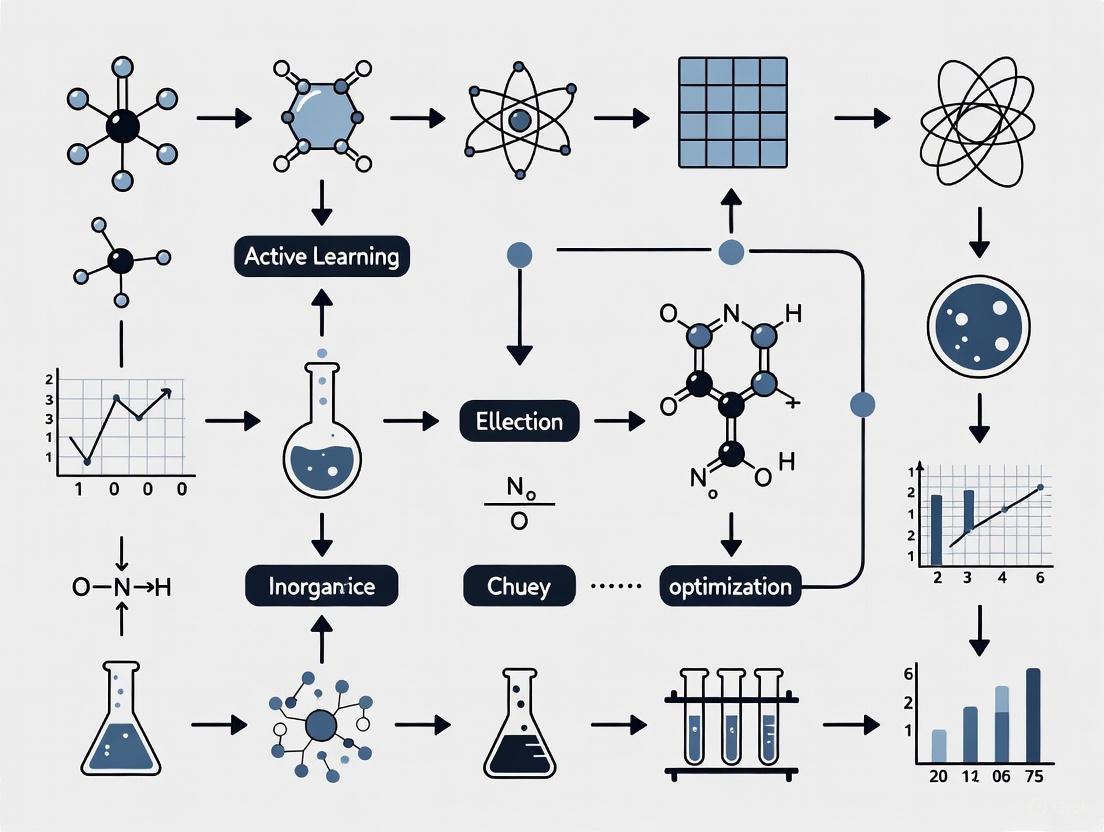
Active learning (AL) is transforming computational and experimental chemistry by creating intelligent, self-improving workflows that drastically reduce resource consumption.
Active Learning in Chemistry Optimization: Accelerating Discovery from Molecules to Materials
Abstract
Active learning (AL) is transforming computational and experimental chemistry by creating intelligent, self-improving workflows that drastically reduce resource consumption. This article explores how AL iteratively selects the most informative data points for evaluation, bridging generative AI, molecular simulations, and real-world laboratory validation. Tailored for researchers and drug development professionals, we detail foundational principles, methodological applications in drug design and materials science, strategies for overcoming implementation challenges, and rigorous benchmarks that validate AL's performance against traditional methods. The synthesis of these facets reveals a powerful paradigm shift, enabling efficient exploration of vast chemical spaces and accelerating the optimization of molecules and materials.
The Core Principles of Active Learning: Building Smarter Chemical Workflows
In the field of chemistry and drug development, where experimental data is often scarce, costly to acquire, and resource-intensive to generate, active learning (AL) has emerged as a transformative machine learning approach. Active learning strategically selects the most informative data points for labeling and model training, dramatically reducing the experimental burden required to develop high-performance predictive models [1] [2]. This methodology is particularly valuable for navigating vast chemical spaces—including reaction conditions, catalyst formulations, and material properties—that would be prohibitively expensive to explore exhaustively through traditional experimental approaches [3] [4].
At its core, active learning operates through an iterative, closed-loop process that integrates data-driven model predictions with targeted experimental validation. By treating expensive computational methods or laboratory experiments as an "oracle" that provides ground-truth labels, active learning frameworks can efficiently converge toward optimal solutions, whether for synthesizing novel compounds, optimizing reaction yields, or discovering high-performance materials [5] [6] [4]. This technical guide examines the components, implementation, and application of the active learning loop within chemistry optimization research, providing researchers with both theoretical foundations and practical methodologies.
The Active Learning Loop: Core Components and Workflow
The active learning loop is a cyclical process comprising several interconnected stages that work together to optimize the learning efficiency of machine learning models. Unlike traditional supervised learning that uses a static, pre-defined dataset, active learning dynamically selects which data points would be most valuable to label next, creating an adaptive learning system [1].
Component Breakdown
Initialization: The process begins with a small, often randomly selected, set of labeled data points. In chemical contexts, this may consist of known reaction yields, previously characterized material properties, or existing catalyst performance data [3] [5]. This initial dataset serves as the starting point for model training.
Model Training: A machine learning model (such as Gaussian Process Regression, Random Forest, or Neural Networks) is trained on the current labeled dataset. This model learns the relationship between input parameters (e.g., chemical compositions, reaction conditions) and target outputs (e.g., yield, mechanical properties, catalytic activity) [1] [2].
Query Strategy: An acquisition function uses the trained model to evaluate unlabeled data points and select the most informative ones for subsequent labeling. Common strategies include uncertainty sampling, diversity sampling, and expected improvement [1] [5].
Human-in-the-Loop/Oracle Consultation: The selected data points are presented to a human expert or an automated "oracle" for labeling. In chemical research, this typically involves performing targeted experiments or high-fidelity simulations to obtain the requested data [6] [4].
Model Update: The newly labeled data points are incorporated into the training set, and the model is retrained on this expanded dataset. The updated model benefits from the additional information and typically shows improved performance [1].
Iteration: Steps 3-5 are repeated iteratively until a stopping criterion is met, such as performance convergence, depletion of resources, or achievement of target metrics [1] [5].
Visualizing the Active Learning Workflow
The following diagram illustrates the complete active learning loop as implemented in chemical optimization research:
Figure 1: Active Learning Loop in Chemical Research. This workflow demonstrates the iterative process of model training, data selection, and experimental validation used to efficiently explore chemical spaces.
Query Strategies: The Intelligence Behind Data Selection
Query strategies form the decision-making engine of active learning systems, determining which unlabeled data points would provide the maximum information gain to the model. Different strategies employ distinct philosophical approaches to data selection, each with particular advantages for chemical applications.
Uncertainty Sampling
Uncertainty sampling selects instances where the model is most uncertain about its predictions, typically targeting regions of the chemical space where the model has low confidence [1]. In classification tasks, this might involve selecting data points with predicted probabilities closest to 0.5. For regression tasks common in chemical optimization (e.g., predicting reaction yields or material properties), uncertainty is often quantified using the standard deviation of predictions from an ensemble of models or through Bayesian methods like Gaussian Processes [2].
Chemical Application Example: In optimizing reaction conditions for deoxyfluorination, uncertainty sampling would prioritize testing reactions where the yield prediction has high variance, thereby refining the model in previously unexplored regions of the condition space [3].
Diversity Sampling
Diversity sampling aims to select a representative set of data points that broadly covers the input space. This approach helps prevent the model from over-exploring specific regions and ensures comprehensive coverage of the chemical space [1]. Techniques include clustering-based selection or maximizing the minimum distance between selected points.
Chemical Application Example: When exploring a multi-component catalyst system like FeCoCuZr, diversity sampling ensures that different compositional regions are adequately represented in the training data, preventing premature convergence to local optima [4].
Hybrid and Advanced Strategies
Sophisticated AL implementations often combine multiple strategies to balance exploration (diversity) and exploitation (uncertainty). The Pareto Active Learning framework employs expected hypervolume improvement (EHVI) to simultaneously optimize multiple objectives, such as maximizing strength and ductility in material design [5]. Similarly, the SIFT algorithm for fine-tuning language models addresses redundancy in data selection by optimizing for overall information gain rather than just similarity [7].
Table 1: Query Strategies in Chemical Active Learning
| Strategy | Mechanism | Chemical Application Example | Key Advantage |
|---|---|---|---|
| Uncertainty Sampling | Selects points with highest prediction uncertainty | Identifying ambiguous reaction conditions in deoxyfluorination [3] | Rapidly improves model in poorly understood regions |
| Diversity Sampling | Maximizes coverage of chemical space | Ensuring broad composition coverage in FeCoCuZr catalyst screening [4] | Prevents over-specialization and explores global space |
| Expected Improvement | Balances predicted performance and uncertainty | Optimizing laser power and scan speed in Ti-6Al-4V alloy manufacturing [5] | Directly targets performance improvement |
| Query-by-Committee | Selects points with highest disagreement among model ensemble | Materials property prediction with multiple ML algorithms [2] | Reduces model bias and variance |
| Multi-Objective EHVI | Optimizes Pareto front for multiple targets | Simultaneously maximizing strength and ductility in alloys [5] | Addresses competing objectives common in materials design |
Experimental Protocols in Chemical Active Learning
Implementing active learning in chemical research requires careful experimental design and execution. The following protocols outline key methodological considerations for successful AL deployment.
Dataset Construction and Feature Representation
Chemical active learning begins with defining the relevant chemical space and representing chemical entities in machine-readable formats.
Protocol: Feature Engineering for Chemical Reactions
- Reactant and Condition Encoding: Represent chemical reactions using concatenated one-hot encoded (OHE) vectors for each reactant type and condition parameter [3]. For example, a reaction with two reactants and three condition parameters would be represented as:
[ra1, ra2, ..., ca1, ca2, ca3]. - Descriptor Calculation: Alternatively, use chemical descriptors such as molecular fingerprints, electronic properties, or structural features when available.
- Data Normalization: Apply standard scaling to continuous parameters to ensure balanced influence across features with different units and scales.
Case Example: In deoxyfluorination reaction optimization, reactions were encoded using OHE vectors of length 37 (for reactants) + 4 (first condition parameter) + 5 (second condition parameter) = 46 dimensions [3].
Oracle Implementation and Experimental Validation
The "oracle" in chemical AL provides ground-truth labels through experimentation or high-fidelity simulation.
Protocol: High-Throughput Experimental Validation
- Batch Selection: Using the query strategy, select a batch of candidate experiments for each AL cycle. Batch sizes typically range from 2-6 experiments per cycle in resource-intensive chemical synthesis [5] [4].
- Automated Synthesis: For materials and catalyst optimization, employ automated synthesis platforms such as liquid-handling robots or high-throughput synthesis rigs.
- Characterization and Testing: Perform standardized characterization and performance testing. For catalytic systems, this includes activity, selectivity, and stability assessments under controlled conditions [4].
- Quality Control: Implement replicate experiments and control samples to ensure data reliability.
Case Example: In developing high-performance Ti-6Al-4V alloys, each AL iteration involved manufacturing two new alloy specimens with selected process parameters, followed by tensile testing to determine ultimate tensile strength and total elongation [5].
Model Training and Uncertainty Quantification
Accurate model predictions with reliable uncertainty estimates are essential for effective AL.
Protocol: Gaussian Process Regression for Chemical AL
- Kernel Selection: Choose appropriate covariance kernels based on the expected smoothness of the target property landscape. The Matérn kernel is often preferred for chemical applications.
- Hyperparameter Optimization: Maximize the marginal likelihood to optimize kernel hyperparameters.
- Predictive Distribution: For each unlabeled point ( x^* ), compute the predictive mean ( \mu(x^) ) and variance ( \sigma^2(x^) ).
- Acquisition Function Calculation: Use the predictive distribution to compute acquisition function values (e.g., expected improvement, upper confidence bound) for all candidates.
Case Example: In catalyst optimization for higher alcohol synthesis, Gaussian Process models with Bayesian optimization were trained using molar content values of four elements (Fe, Co, Cu, Zr) to predict space-time yields of higher alcohols (STYHA) [4].
Case Study: Optimizing High-Performance Ti-6Al-4V Alloys
The application of Pareto Active Learning to develop Ti-6Al-4V alloys with superior strength and ductility demonstrates the power of AL in materials science [5].
Experimental Design and Workflow
The research aimed to identify optimal laser powder bed fusion (LPBF) process parameters and heat-treatment conditions to overcome the traditional strength-ductility trade-off in additive manufacturing.
Initial Dataset and Parameter Space:
- Labeled Data: 119 combinations of LPBF parameters and post-heat treatment conditions from previous studies
- Unlabeled Pool: 296 unexplored combinations of laser power, scan speed, and heat treatment parameters
- Objectives: Maximize both Ultimate Tensile Strength (UTS) and Total Elongation (TE)
Active Learning Implementation:
- Surrogate Model: Gaussian Process Regressor (GPR) trained on initial 119 data points
- Acquisition Function: Expected Hypervolume Improvement (EHVI) to optimize the Pareto front between UTS and TE
- Batch Selection: 2 new experiments per AL cycle
- Validation: Tensile testing of manufactured specimens following standardized protocols
Table 2: Key Results from Ti-6Al-4V Active Learning Optimization
| Metric | Initial Best Performance | AL-Optimized Performance | Improvement |
|---|---|---|---|
| Ultimate Tensile Strength | ~1100 MPa | 1190 MPa | 8.2% increase |
| Total Elongation | ~8% | 16.5% | 106% increase |
| Parameter Combinations Evaluated | 119 (pre-AL) | 18 (AL-guided) | 85% reduction in experimentation |
| Performance Balance | Strength-ductility trade-off | Simultaneous improvement | Overcoming traditional compromise |
Research Reagent Solutions and Materials
Table 3: Essential Materials for Ti-6Al-4V Alloy Active Learning Study
| Material/Reagent | Specification | Function in Study |
|---|---|---|
| Ti-6Al-4V Powder | Gas-atomized, 15-53 μm particle size | Primary alloy material for LPBF process |
| Argon Gas | High purity (99.998%) | Inert atmosphere during printing to prevent oxidation |
| Heat Treatment Furnace | Capable of 25-1050°C with controlled atmosphere | Post-processing to modify microstructure |
| Tensile Testing Machine | ASTM E8 standard | Mechanical property characterization |
| Metallographic Equipment | Polishing, etching, microscopy | Microstructural analysis and validation |
The AL framework successfully identified processing conditions that produced Ti-6Al-4V alloys with unprecedented combinations of strength (1190 MPa) and ductility (16.5% elongation), demonstrating that active learning can overcome fundamental materials trade-offs that have limited traditional development approaches [5].
Advanced Implementations and Computational Tools
As active learning adoption grows in chemical research, specialized computational tools and advanced implementations have emerged to address domain-specific challenges.
Parallel Active Learning (PAL)
The PAL framework addresses limitations of sequential AL implementations by enabling parallel, asynchronous execution of AL components [6].
Key Features of PAL:
- Modular Architecture: Five core kernels (prediction, generator, training, oracle, controller) operate asynchronously
- MPI-based Communication: Enables deployment on high-performance computing clusters
- Automated Workflow: Minimizes human intervention during execution
- Flexibility: Supports various ML models and uncertainty quantification methods
Chemical Application: PAL has been applied to develop machine-learned potentials for biomolecular systems, excited-state dynamics of molecules, and simulations of inorganic clusters, demonstrating substantially reduced computational overhead and improved scalability [6].
Integration with Automated Machine Learning (AutoML)
Combining AL with AutoML creates powerful frameworks for data-efficient chemical discovery, particularly when the optimal model architecture for a given problem is unknown [2].
Implementation Considerations:
- Model Flexibility: The AL strategy must remain effective even as the AutoML system switches between different model families (linear models, tree-based ensembles, neural networks)
- Uncertainty Quantification: Model-agnostic uncertainty estimation methods are required to maintain consistent acquisition function performance
- Benchmarking: Comprehensive evaluation of 17 AL strategies within AutoML revealed that uncertainty-driven (LCMD, Tree-based-R) and diversity-hybrid (RD-GS) strategies outperform geometry-only heuristics, particularly in early acquisition stages [2]
Active learning represents a paradigm shift in chemical and materials research, transforming the scientific discovery process from sequential experimentation to intelligent, data-driven exploration. By implementing the active learning loop—with appropriate query strategies, robust experimental validation, and iterative model refinement—researchers can dramatically reduce the time and resources required to optimize complex chemical systems.
The continued development of specialized tools like PAL for parallel execution [6], integration with AutoML for model selection [2], and multi-objective optimization frameworks [5] will further enhance the capability of active learning to tackle increasingly complex challenges in chemistry and drug development. As these methodologies mature, active learning is poised to become an indispensable component of the modern chemical researcher's toolkit, accelerating the discovery and optimization of novel molecules, materials, and synthetic pathways.
Uncertainty Quantification, Oracles, and Exploration Strategies in Chemical Optimization
Active learning (AL) has emerged as a transformative paradigm in chemical and materials research, enabling the rapid discovery of new molecules and materials by strategically guiding expensive experiments and computations. This guide details the three core technical components that underpin an effective active learning cycle: Uncertainty Quantification for model self-assessment, Oracles for property evaluation, and Exploration Strategies for navigating chemical space. Framed within a broader thesis on chemistry optimization, these components form an iterative, self-improving system that efficiently balances the trade-off between resource investment and information gain, thereby accelerating the transition from initial design to validated candidate.
Key Component 1: Uncertainty Quantification
Uncertainty Quantification (UQ) provides the critical self-assessment mechanism for the machine learning models used in active learning cycles. It informs the algorithm about the confidence of its predictions, guiding the selection of the most informative samples for oracle evaluation.
In the context of chemical optimization, uncertainty arises from several distinct sources, as defined in studies on machine-learned interatomic potentials [8]:
- Aleatoric uncertainty stems from inherent noise in the data. It is negligible when using deterministic data sources like consistent density functional theory (DFT) calculations.
- Epistemic uncertainty arises from a lack of data in certain regions of chemical space. It can be minimized by using large, diverse training datasets.
- Misspecification uncertainty occurs when the model itself is incapable of perfectly fitting the underlying data, even with optimal parameters. This is a dominant source of error when using underparameterized models or those with constrained complexity for performance reasons [8].
Techniques for Quantifying Uncertainty
Different UQ techniques are employed based on the model architecture and the primary source of uncertainty being targeted. The table below summarizes prominent UQ methods and their applications in chemical research.
Table 1: Uncertainty Quantification Techniques in Chemical Research
| Technique | Core Principle | Representative Application | Key Insight |
|---|---|---|---|
| Ensemble Methods [8] | Trains multiple models (e.g., with different initializations); uses prediction variance as uncertainty. | Predicting formation energies and defect properties in tungsten with ML interatomic potentials. | Provides an effective sample of plausible parameters; robust for neural network-based models. |
| Gaussian Process Regression (GPR) [3] | Provides a natural posterior variance for predictions based on kernel similarity to training data. | Classifying reaction success in high-throughput synthesis campaigns. | Intrinsically well-suited for uncertainty qualification and active learning. |
| Misspecification-Aware UQ [8] | Quantifies error from model imperfection, where no single parameter set can fit all data. | Propagating errors to predict phase and defect properties in materials. | Crucial for underparameterized models; provides conservative, reliable error bounds. |
| LoUQAL Framework [9] | Leverages cheaper, low-fidelity quantum calculations to inform the UQ of higher-fidelity models. | Predicting excitation energies and ab initio potential energy surfaces. | Reduces the number of expensive iterations required for model training. |
| Robust UQ for SAR [10] | A simple, robust method designed to identify poorly predicted compounds in steep structure-activity relationship (SAR) regions. | Exploratory active learning for molecular activity prediction. | Addresses the challenge where similar structures have large property differences. |
Key Component 2: Oracles
Oracles are computational or experimental methods that provide ground-truth (or high-fidelity) evaluations of a proposed molecule or material's properties. They serve as the objective function for the optimization.
Types of Oracles and Their Fidelity-Cost Trade-Offs
The choice of oracle is a balance between computational cost and predictive accuracy. Multi-fidelity frameworks strategically combine oracles to optimize this trade-off [11].
Table 2: Oracle Types in Chemical and Drug Discovery Research
| Oracle Type | Typical Methods | Fidelity & Cost | Primary Use Case |
|---|---|---|---|
| Chemoinformatic Oracles [12] | Drug-likeness (QED), Synthetic Accessibility (SA) filters, Structural similarity. | Low cost, Medium-High fidelity for their specific, rule-based tasks. | Initial filtering to ensure generated molecules are viable and novel. |
| Physics-based (Low-Fidelity) [12] [13] [11] | Molecular Docking (e.g., AutoDock), Hybrid ML/MM (Machine Learning/Molecular Mechanics). | Moderate cost, Low-Medium fidelity for binding affinity. | High-throughput screening of thousands to millions of molecules in early cycles. |
| Physics-based (High-Fidelity) [12] [11] | Absolute Binding Free Energy (ABFE) simulations, Molecular Dynamics (MD) with FEP. | High cost (hours to days per molecule), High fidelity. | Final-stage validation and ranking of top candidate compounds. |
| Experimental Oracles [5] [13] | High-throughput synthesis and characterization, Fluorescence-based bioassays, Tensile testing. | Very high cost, Highest fidelity (real-world data). | Ultimate validation of computationally discovered leads. |
The Multi-Fidelity Paradigm
Modern AL frameworks increasingly move beyond single oracles to multi-fidelity approaches. For example, the MF-LAL (Multi-Fidelity Latent space Active Learning) framework uses a hierarchical latent space to integrate data from low-fidelity (docking) and high-fidelity (binding free energy) oracles [11]. This allows the model to generate compounds optimized for the most accurate metric by first pre-screening with cheaper methods, dramatically improving efficiency.
Key Component 3: Exploration Strategies
Exploration Strategies, often implemented through acquisition functions, determine how the AL algorithm selects the next set of experiments or calculations. They manage the fundamental exploration-exploitation trade-off.
Common Acquisition Functions
- Exploitation: Selects points where the surrogate model predicts the best properties. This strategy risks getting stuck in local optima [14].
- Exploration: Selects points where the model's uncertainty is highest. This improves the model's global knowledge but may be inefficient for pure optimization [14].
- Expected Improvement (EI): Balances exploration and exploitation by favoring points likely to improve upon the current best solution.
- Expected Hypervolume Improvement (EHVI): A state-of-the-art method for multi-objective optimization. It measures the expected growth in the volume of the Pareto front, effectively balancing multiple competing properties like strength and ductility in alloys [5] [14].
Hybrid and Customized Strategies
Researchers often develop hybrid strategies tailored to their specific challenges:
- Combined Explore-Exploit: A linear combination of exploration and exploitation terms, weighted by a parameter
α[3]. - Sequential Strategy: The unified AL framework for photosensitizer design employs a strategy that first prioritizes chemical diversity (exploration) before focusing on target regions (exploitation) in later cycles [15].
- Knowledge-Based Acquisition: Incorporates domain knowledge, such as using protein-ligand interaction profiles (PLIP) from crystallographic data to score compound designs [13].
Integrated Experimental Protocols
This section details the methodology from two landmark studies that successfully integrated all three key components.
Protocol 1: Optimizing Drug Molecules for CDK2 and KRAS
This protocol from a Nature Communications Chemistry study [12] demonstrates a generative AI workflow with nested AL cycles for de novo drug design.
1. Data Representation and Initial Training:
- Represent molecules as tokenized SMILES strings converted into one-hot encoding vectors.
- Train a Variational Autoencoder (VAE) first on a general molecular dataset, then fine-tune it on a target-specific set (e.g., known CDK2 inhibitors).
2. Nested Active Learning Cycles:
- Inner AL Cycle (Cheminformatics Oracle):
- Generation: Sample the VAE to generate new molecules.
- Evaluation: Use cheminformatic oracles to evaluate drug-likeness, synthetic accessibility (SA), and novelty (dissimilarity from training set).
- Fine-tuning: Molecules passing thresholds are added to a temporal set used to fine-tune the VAE. This cycle repeats to refine chemical properties.
- Outer AL Cycle (Physics-based Oracle):
- Evaluation: After several inner cycles, evaluate molecules from the temporal set using a physics-based oracle (molecular docking).
- Fine-tuning: Molecules with favorable docking scores are promoted to a permanent set used to fine-tune the VAE. The process then returns to inner cycles.
3. Candidate Selection and Validation:
- Apply stringent filtration, including advanced molecular simulations (PELE, Absolute Binding Free Energy) to assess binding interactions.
- Synthesize top-ranking compounds and validate activity via in vitro bioassays. This protocol yielded 8 active CDK2 inhibitors, including one with nanomolar potency [12].
Protocol 2: Discovering Complementary Reaction Conditions
This protocol from Digital Discovery [3] uses AL to find small sets of reaction conditions that collectively cover a broad reactant space.
1. Problem Formulation and Dataset Construction:
- Define a reactant space (e.g., 37 substrates) and a condition space (e.g., 4 catalysts × 5 solvents).
- Construct a complete dataset of reaction yields for all reactant-condition combinations, using a binary "success" label (yield ≥ cutoff).
2. Active Learning Loop:
- Initialization: Select an initial batch of reactions using Latin Hypercube Sampling.
- Iteration Cycle:
- Experiment & Training: Perform experiments to determine success/failure; train a classifier (e.g., Gaussian Process Classifier or Random Forest) on all accumulated data.
- Prediction: Use the classifier to predict the probability of success (
ϕ_r,c) for all possible reactant-condition pairs. - Acquisition: Select the next batch of reactions using a combined acquisition function:
Combined_r,c = (α) * Explorer,c + (1-α) * Exploit_r,c- Where
Explorer,cfavors high uncertainty, andExploit_r,cfavors conditions that complement known successful conditions for difficult reactants.
- Evaluation: After each iteration, identify the best set of complementary conditions via combinatorial enumeration and calculate its coverage of the reactant space.
3. Outcome:
- The AL algorithm efficiently identifies a small set of 2-3 reaction conditions that together achieve high coverage (e.g., >60%) of the reactant space, significantly outperforming the use of any single general condition [3].
Visualizing Active Learning Workflows
Nested Active Learning for Drug Design
The following diagram illustrates the integrated, iterative workflow for generative molecular design, combining generative AI with active learning [12].
Multi-Fidelity Active Learning
The diagram below outlines the MF-LAL framework, which integrates oracles of varying cost and accuracy to efficiently generate high-fidelity candidates [11].
The Scientist's Toolkit: Essential Research Reagents & Solutions
This table catalogs key computational tools and resources that form the essential "reagents" for building an active learning pipeline for chemical optimization.
Table 3: Key Research Reagents and Computational Tools
| Tool/Resource Name | Type | Primary Function in Active Learning |
|---|---|---|
| FEgrow [13] | Software Package | Builds and optimizes congeneric ligand series in protein binding pockets using hybrid ML/MM methods; automates library generation for AL. |
| Gaussian Process Regressor (GPR) [5] [3] | Surrogate Model | Serves as a probabilistic surrogate model providing native uncertainty estimates for acquisition functions like EHVI. |
| Variational Autoencoder (VAE) [12] | Generative Model | Learns a continuous latent representation of molecules, enabling generation of novel compounds and smooth property optimization. |
| ML-xTB Pipeline [15] | Quantum Chemistry Calculator | Provides rapid, DFT-level accuracy for calculating molecular properties (e.g., excitation energies), used as a cost-effective labeling oracle. |
| Enamine REAL Database [13] | Chemical Database | A vast source of purchasable compounds used to "seed" the chemical search space, ensuring synthetic tractability of designed molecules. |
| AutoDock [11] | Docking Software | A widely used, low-fidelity physics-based oracle for high-throughput virtual screening of protein-ligand binding affinity. |
| OpenMM [13] | Molecular Simulation Engine | Performs energy minimization and molecular dynamics simulations for pose optimization and binding free energy calculations. |
This technical guide explores the architecture of modular active learning (AL) systems, with a specific focus on the Parallel Active Learning (PAL) framework and its kernel-based design. Within chemistry optimization research, active learning enables more efficient molecular discovery by strategically selecting the most informative data points for experimental or computational validation. Traditional AL workflows often suffer from sequential execution and significant human intervention, limiting their scalability and efficiency. PAL addresses these limitations through a parallel, modular kernel architecture that facilitates simultaneous data generation, labeling, model training, and prediction. This whitepaper provides an in-depth analysis of PAL's architectural components, presents quantitative performance comparisons, details experimental protocols for chemical applications, and offers implementation guidelines for research teams. By examining PAL within the context of molecular optimization and drug discovery, we demonstrate how properly architected AL systems can dramatically accelerate research cycles while reducing computational costs.
Active learning represents a paradigm shift in computational chemistry and drug discovery, moving from passive model training to iterative, strategic data acquisition. In chemical optimization research, the primary challenge lies in the vastness of chemical space and the significant computational or experimental costs associated with evaluating molecular properties. Traditional machine learning approaches require large, representative datasets that are expensive to acquire, whereas active learning strategically selects the most informative molecules for evaluation, maximizing knowledge gain while minimizing resources [16].
The fundamental AL cycle in chemistry involves: (1) training an initial model on available data, (2) using the model to screen candidate molecules, (3) selecting candidates based on specific criteria (e.g., uncertainty, expected improvement), (4) obtaining ground-truth measurements for selected candidates, and (5) updating the model with new data. This cycle repeats until satisfactory performance is achieved or resources are exhausted. However, conventional implementations execute these steps sequentially, leading to substantial idle time for computational resources and researchers [17].
Active learning has demonstrated particular value in early-stage drug discovery projects where training data is limited and model exploitation might otherwise lead to analog identification with limited scaffold diversity [16]. By focusing on the most informative experiments, AL approaches enable more efficient exploration of chemical space while de-risking the optimization process.
PAL Architectural Framework
Core Kernel Architecture
PAL employs a sophisticated five-kernel architecture that enables parallel execution of AL components through efficient communication via Message Passing Interface (MPI). This design decouples the major functions of an active learning workflow, allowing them to operate concurrently and asynchronously [17] [18].
Table: PAL Kernel Functions and Responsibilities
| Kernel Name | Primary Function | Chemistry Application Example |
|---|---|---|
| Prediction Kernel | Provides ML model inferences for generated inputs | Predicts energies and forces for molecular geometries |
| Generator Kernel | Explores target space by producing new data instances | Performs molecular dynamics steps or generates new molecular geometries |
| Oracle Kernel | Sources ground truth labels for selected instances | Executes quantum chemical calculations (e.g., DFT) for accurate energy/force labels |
| Training Kernel | Retrains ML models using newly labeled data | Updates machine-learned potentials with new quantum chemistry data |
| Controller Kernel | Manages workflow coordination and inter-kernel communication | Orchestrates the overall active learning process and resource allocation |
The kernel-based architecture creates a highly modular system where each component can be customized independently. This flexibility allows researchers to substitute different machine learning models, exploration strategies, or oracle implementations without redesigning the entire workflow [17]. The controller kernel manages communication between all components, aggregating predictions from multiple models, distributing results to generators, and routing data requiring labeling to the appropriate oracle processes.
Parallelization and Workflow Management
A key innovation in PAL is its parallel execution model, which addresses critical bottlenecks in traditional sequential AL implementations. Where conventional systems execute data generation, labeling, model training, and prediction in sequence, PAL enables these operations to occur simultaneously through its decoupled kernel design [17].
The diagram below illustrates PAL's parallel workflow and how its kernels interact to accelerate the active learning process:
This parallel architecture demonstrates significant performance improvements over sequential approaches. In molecular dynamics simulations using machine-learned potentials, PAL enables continuous exploration of configuration space while simultaneously labeling uncertain configurations and retraining models in the background. The generator kernel can propagate multiple molecular dynamics trajectories concurrently, while the prediction kernel provides energy and force calculations, and the oracle kernel computes quantum mechanical references for structures with high uncertainty [17].
Active Learning in Chemistry Optimization
Chemical Space Exploration Strategies
In chemistry optimization, active learning enables efficient navigation of high-dimensional molecular space through strategic experiment selection. The generator kernel in PAL-like systems produces new molecular candidates through various sampling strategies:
- Molecular Dynamics Simulations: Propagation of atomic trajectories using machine-learned potentials, with uncertainty quantification identifying configurations requiring quantum mechanical validation [17]
- Genetic Algorithms: Evolutionary operations (mutation, crossover) applied to molecular representations to generate novel candidates
- Monte Carlo Methods: Stochastic sampling of molecular space with acceptance criteria based on predicted properties or uncertainty measures
The controller kernel employs uncertainty quantification techniques to identify which generated structures require oracle validation. Common approaches include query-by-committee (where disagreement between ensemble models indicates uncertainty), Bayesian neural networks, and Gaussian process regression with built-in uncertainty estimates [17] [18].
Advanced Active Learning Variants
Beyond standard uncertainty sampling, specialized AL approaches have emerged for chemical applications. The ActiveDelta method leverages paired molecular representations to predict property improvements rather than absolute values [16]. This approach addresses limitations of standard exploitative active learning in low-data regimes common to early-stage drug discovery projects.
The diagram below illustrates how ActiveDelta differs from standard active learning in molecular optimization:
ActiveDelta implementations have demonstrated superior performance in identifying potent inhibitors across 99 Ki benchmarking datasets, achieving both higher potency and greater scaffold diversity compared to standard active learning approaches [16]. This pairing approach benefits from combinatorial data expansion, particularly valuable in the low-data regimes typical of early-stage discovery projects.
Quantitative Performance Analysis
Computational Efficiency Metrics
The parallel architecture of PAL demonstrates significant performance advantages over sequential active learning implementations. Benchmark studies across diverse chemical applications show substantial reductions in computational overhead and improved resource utilization [17].
Table: Performance Comparison of Sequential vs. Parallel Active Learning
| Metric | Sequential AL | PAL Architecture | Improvement |
|---|---|---|---|
| CPU Utilization | 15-30% | 70-90% | 3-4x increase |
| Total Workflow Time | 100% (baseline) | 25-40% | 60-75% reduction |
| Data Generation Throughput | 1x | 3-5x | 3-5x increase |
| Model Retraining Frequency | After each AL cycle | Continuous in background | Near-real-time updates |
| Oracle Query Efficiency | 65-80% informative | 85-95% informative | 20-30% improvement |
These efficiency gains translate directly to accelerated research cycles in chemical optimization. In molecular dynamics applications, PAL achieves near-linear scaling on high-performance computing systems, enabling simultaneous exploration of multiple reaction pathways or conformational states [17].
Chemical Optimization Performance
In practical drug discovery applications, active learning frameworks have demonstrated remarkable efficiency in identifying optimized compounds. The ActiveDelta approach, when applied to 99 Ki benchmarking datasets with simulated time splits, showed consistent advantages over standard methods [16].
Table: ActiveDelta Performance in Molecular Potency Optimization
| Method | Most Potent Compounds Identified | Scaffold Diversity | Prediction Accuracy |
|---|---|---|---|
| ActiveDelta Chemprop | 87.3 ± 4.2 | High | 0.81 ± 0.05 |
| Standard Chemprop | 72.1 ± 5.7 | Medium | 0.69 ± 0.07 |
| ActiveDelta XGBoost | 83.5 ± 3.9 | High | 0.78 ± 0.06 |
| Standard XGBoost | 70.8 ± 6.2 | Medium | 0.65 ± 0.08 |
| Random Forest | 68.3 ± 7.1 | Low | 0.62 ± 0.09 |
The performance advantage of ActiveDelta was particularly pronounced in early iterations with limited data, highlighting its value in the low-data regimes typical of project initiation [16]. This approach also identified more chemically diverse inhibitors in terms of Murcko scaffolds, reducing the risk of analog bias in optimization campaigns.
Experimental Protocols and Methodologies
Implementation Framework for Chemical Applications
Implementing PAL for chemistry optimization requires careful configuration of each kernel component:
Prediction Kernel Configuration:
- Select appropriate machine learning architectures for chemical prediction tasks (e.g., message-passing neural networks for molecular properties, SchNet or NequIP for molecular energies and forces)
- Implement ensemble methods or Bayesian approaches for uncertainty quantification
- Configure model update frequency from training kernel (typically after specified training epochs)
Generator Kernel Setup:
- Implement molecular sampling strategies appropriate to the chemical space (e.g., molecular dynamics, genetic algorithms, Monte Carlo)
- Define criteria for trajectory management based on uncertainty signals from controller
- Configure parallel instance management for high-throughput exploration
Oracle Kernel Implementation:
- Interface with computational chemistry software (e.g., Gaussian, ORCA, Quantum ESPRESSO) for quantum mechanical calculations
- Or integrate with experimental data acquisition systems for wet-lab validation
- Implement error handling and recovery for failed calculations
Training Kernel Specification:
- Configure training parameters (learning rate, batch size, early stopping)
- Implement data management for expanding training sets
- Define model checkpointing and versioning protocols
Controller Kernel Orchestration:
- Implement uncertainty quantification algorithms (standard deviation, entropy, query-by-committee)
- Configure communication protocols between kernels
- Define convergence criteria for stopping the AL workflow
ActiveDelta Protocol for Potency Optimization
For drug discovery applications, the ActiveDelta methodology follows this detailed protocol:
Initial Dataset Preparation:
- Curate initial compound set with measured binding affinity (Ki) values
- Remove duplicate structures and standardize molecular representations
- Split data into initial training set (2 random compounds) and learning set (remaining compounds)
Molecular Representation:
- Generate molecular features (e.g., Morgan fingerprints with radius 2, 2048 bits)
- For deep learning approaches, use graph representations with atom and bond features
ActiveDelta Training:
- Create all possible pairwise combinations from training set
- Train model to predict property differences between paired compounds
- For Chemprop implementation: use two-molecule D-MPNN architecture with numberofmolecules=2
- For XGBoost implementation: concatenate fingerprint representations of molecule pairs
Iterative Selection:
- Identify the most potent compound in current training set
- Create pairs between this best compound and all compounds in learning set
- Use trained model to predict improvement for each pair
- Select the compound with highest predicted improvement
- Acquire experimental data for selected compound
- Add to training set and repeat from step 3
This protocol was validated across 99 Ki datasets with three independent replicates per dataset, demonstrating statistically significant improvements over standard active learning (Wilcoxon signed-rank test, p<0.001) [16].
Research Reagent Solutions
Implementing advanced active learning frameworks requires specific computational tools and libraries. The following table details essential components for establishing PAL-like systems in chemical research environments.
Table: Essential Research Reagents for Active Learning Implementation
| Component | Representative Solutions | Function | Application Context |
|---|---|---|---|
| Active Learning Framework | PAL Library [17], DeepChem | Provides core infrastructure for parallel AL workflows | General chemical space exploration |
| Machine Learning Models | SchNet [17], NequIP [18], Chemprop [16] | Property prediction and uncertainty quantification | Molecular property prediction, force fields |
| Molecular Representations | RDKit, Mordred | Generates molecular features and descriptors | Compound screening and optimization |
| Quantum Chemistry Oracles | Gaussian, ORCA, DFTB+ | Provides ground-truth labels for electronic properties | Molecular dynamics with ML potentials |
| Parallelization Infrastructure | MPI for Python [17], Dask | Enables distributed computing across HPC resources | Large-scale chemical space exploration |
| Uncertainty Quantification | Ensemble methods, Bayesian neural networks | Identifies informative samples for labeling | Strategic experiment selection |
| Molecular Dynamics Engines | ASE, LAMMPS with ML plugin | Explores molecular configuration space | Conformational sampling, reaction discovery |
Modular architectural frameworks like PAL represent a significant advancement in active learning methodology for chemistry optimization research. By decoupling core components into specialized kernels and enabling parallel execution, these systems address critical bottlenecks in traditional sequential approaches. The PAL architecture demonstrates that properly designed computational frameworks can achieve substantial improvements in resource utilization, workflow efficiency, and overall research productivity.
In the context of chemical research and drug discovery, the kernel-based design provides the flexibility needed to adapt to diverse research scenarios—from molecular dynamics with machine-learned potentials to compound potency optimization. Specialized approaches like ActiveDelta further enhance the value of active learning by addressing specific challenges in molecular optimization, particularly in low-data regimes where conventional methods struggle.
The quantitative results presented in this whitepaper demonstrate that parallel active learning systems can reduce total workflow time by 60-75% while improving data quality and model performance. For research organizations engaged in molecular discovery and optimization, investment in these architectural frameworks offers the potential to dramatically accelerate research cycles while more efficiently utilizing computational and experimental resources.
As active learning continues to evolve, we anticipate further specialization of kernel components and tighter integration with experimental automation systems. The principles outlined in this guide provide a foundation for research teams to implement and extend these architectures, advancing both computational methodology and chemical discovery.
Active learning (AL) has emerged as a transformative paradigm in computational chemistry and drug discovery, enabling the iterative construction of accurate machine learning models while minimizing costly data acquisition. The core principle of AL involves strategically selecting the most informative data points for labeling, thereby enhancing model performance with optimal resource utilization. However, the implementation of AL in chemical research presents profound computational challenges. The exploration of complex chemical spaces, such as vast molecular conformations or intricate potential energy surfaces, requires an immense number of energy and force evaluations using quantum mechanical methods like Density Functional Theory (DFT), which are computationally prohibitive when executed sequentially. High-performance computing (HPC) resolves this bottleneck through parallel and distributed computing frameworks, transforming AL from a sequential process into a highly concurrent workflow. This enables simultaneous data generation, model training, and quantum mechanical labeling across thousands of processing units, reducing resource time from months to hours and making previously intractable chemical optimization problems feasible.
Architectural Frameworks for Parallel Active Learning
The integration of HPC with AL has led to the development of specialized software architectures designed to leverage parallel and distributed computing resources efficiently. These frameworks typically decompose the AL workflow into modular components that can operate asynchronously, coordinated by a central manager. The design ensures that computational resources are continuously engaged, avoiding idle time that would occur in sequential workflows where data generation, labeling, and model training happen one after another.
Table: Key Software Frameworks for Parallel Active Learning in Chemistry
| Framework Name | Core Parallelization Strategy | Primary Application Domain | Key HPC Feature |
|---|---|---|---|
| PAL [6] | MPI-based kernels for prediction, generation, and training | Machine-learned potentials | Decoupled modules enabling simultaneous exploration, labeling, and training |
| aims-PAX [19] | Multi-trajectory sampling with parallel DFT calculations | Molecular dynamics & materials science | Automated, parallel exploration of configuration space |
| SDDF [20] | Volunteer computing across global personal computers | Molecular property prediction | CPU-only, distributed task distribution via a message broker |
| PALIRS [21] | Ensemble-based uncertainty quantification | Infrared spectra prediction | Parallel molecular dynamics at multiple temperatures |
The Kernel-Based Architecture of PAL
The PAL framework exemplifies a robust architecture for parallel AL. Its design centers on five specialized kernels that operate concurrently, communicating via the Message Passing Interface (MPI) standard for high efficiency on both shared- and distributed-memory systems [6]:
- Prediction Kernel: Hosts machine learning models that provide fast predictions of energies and forces during simulations.
- Generator Kernel: Runs multiple exploration processes (e.g., molecular dynamics steps) in parallel to propose new molecular configurations.
- Oracle Kernel: Manages parallelized quantum chemistry calculations to provide ground-truth labels for selected data points.
- Training Kernel: Handles the retraining of machine learning models as new data is incorporated.
- Controller Kernel: Orchestrates communication and data flow between all other kernels.
This modular design allows each component to be customized and scaled independently. For instance, multiple generator processes can run simultaneously to accelerate the exploration of chemical space, while multiple oracle processes can label data points in parallel, preventing the labeling step from becoming a bottleneck [6].
Workflow of an Integrated Parallel AL System
The following diagram illustrates the coordinated interaction between the major components in a parallel active learning system for molecular simulations, such as the one implemented in aims-PAX [19]:
Diagram: Parallel Active Learning Workflow for Molecular Simulations. The cycle of MD sampling, uncertainty-based selection, and parallel DFT labeling continues until model convergence.
Quantitative Performance Benchmarks
The adoption of parallel and distributed AL frameworks has yielded dramatic improvements in computational efficiency across diverse chemical applications. Performance gains are typically measured in terms of the reduction in required quantum mechanical calculations, the speedup of AL cycle time, and the overall resource utilization.
Table: Performance Benchmarks of Parallel Active Learning Systems
| Application Domain | Computational Framework | Performance Gain | Key Metric |
|---|---|---|---|
| Crystal Structure Search [22] | Neural Network Force Fields | Up to 100x reduction | Fewer DFT calculations required |
| Peptide & Perovskite MLFFs [19] | aims-PAX | 20x speedup; 100x reduction | AL cycle time; DFT calculations |
| Molecular Conformation Dataset [20] | SDDF Volunteer Computing | ~10 min/task | DFT calculation time per molecular conformation |
| IR Spectra Prediction [21] | PALIRS | 3 orders of magnitude faster than AIMD | MD simulation speed for spectra calculation |
Protocol for Benchmarking Parallel AL Efficiency
To objectively evaluate the performance of a parallel AL system, the following methodological protocol can be employed, drawing from the cited studies:
- System Setup: Select a target chemical system (e.g., a flexible peptide, a crystal composition like Si₁₆, or a set of organic molecules).
- Baseline Establishment: Perform a conventional, sequential AL process or a random sampling approach, measuring the total number of DFT calculations and the wall-clock time required to achieve a target accuracy (e.g., a mean absolute error in energy predictions below 1 meV/atom).
- Parallel AL Execution: Run the parallel AL workflow (e.g., using PAL or aims-PAX) on the same system. The key is to ensure all components—sampling, labeling, and training—are executed concurrently.
- In aims-PAX, this involves launching multiple independent molecular dynamics trajectories in parallel, each using the current ML potential to explore configuration space [19].
- Structures flagged as uncertain from any trajectory are collected in a central queue.
- A pool of worker processes consumes this queue, performing DFT calculations in parallel to label the structures.
- The training process is triggered asynchronously once a sufficient batch of new data is available.
- Metrics Collection:
- Computational Cost: Record the total number of DFT single-point calculations required for the model to converge.
- Wall-clock Speedup: Measure the total time from start to convergence, comparing it to the baseline.
- Resource Utilization: Monitor the usage of CPU/GPU resources across the cluster to evaluate the efficiency of the parallelization.
- Validation: The final model's accuracy is validated on a held-out test set of DFT calculations or by comparing its predictions of physical properties (e.g., IR spectra [21] or relative energies of crystal phases [22]) against reference data.
The Scientist's Toolkit: Essential Reagents for Parallel AL
Implementing a successful parallel AL campaign requires a suite of software "reagents" and computational resources. The table below details the essential components.
Table: Essential Research Reagents for Parallel Active Learning
| Tool/Reagent | Function | Implementation Example |
|---|---|---|
| Uncertainty Quantifier | Identifies regions of chemical space where the model is least confident, guiding data acquisition. | Ensemble of MACE models [21] [19]; Neural Network Force Field ensembles [22] |
| Parallel Sampler | Explores the chemical space (e.g., molecular geometries, compositions) concurrently. | Multi-trajectory Molecular Dynamics [19]; Random structure generation with PyXtal [22] |
| Distributed Oracle | Provides high-fidelity labels (e.g., energies, forces) for selected data points using quantum mechanics. | Parallel DFT in FHI-aims [19] or VASP; Volunteer computing for DFT [20] |
| Message Passing Interface | Enables high-speed communication and data exchange between processes in a distributed system. | MPI for Python (mpi4py) [6] |
| Machine Learning Potential | Fast, approximate model of the quantum mechanical potential energy surface. | MACE [19], SchNet [6], NequIP [6] |
| Workflow Manager | Orchestrates the execution and data flow between all other components. | Custom controller kernel [6]; Parsl [19] |
High-performance computing is not merely an accelerator but a fundamental enabler of modern active learning in chemical research. The parallel and distributed frameworks detailed herein—such as PAL, aims-PAX, and SDDF—deconstruct the sequential AL bottleneck by allowing for the simultaneous execution of sampling, labeling, and model training. The quantitative results are unambiguous: reductions of one to two orders of magnitude in the number of costly quantum calculations and speedups of over 20x in workflow completion time. As these frameworks continue to mature and integrate with emerging foundational models, they will further empower researchers and drug development professionals to navigate the breathtaking complexity of chemical space with unprecedented efficiency, ultimately accelerating the discovery of new materials and therapeutic agents.
Active Learning in Action: From Drug Discovery to Materials Informatics
The pursuit of novel therapeutic compounds is undergoing a paradigm shift, moving beyond traditional trial-and-error methods towards a more predictive, physics-informed science. At the heart of this transformation is the integration of generative artificial intelligence (AI) with physics-based computational oracles. This synergy aims to navigate the vast chemical space—estimated at 10^33 to 10^60 drug-like molecules—to design efficacious and synthesizable compounds [23]. While generative models can propose novel molecular structures, their true value is unlocked by guiding this generation with oracles that can predict a molecule's real-world behavior, such as its binding affinity to a biological target.
A critical enabler of this integration is active learning (AL), an iterative feedback process that strategically selects the most informative data points for computational or experimental evaluation. By embedding generative AI within an AL framework, researchers can create a self-improving cycle that simultaneously explores novel chemical regions while focusing resources on molecules with higher predicted affinity and better drug-like properties [12] [15]. This review explores the technical foundations, methodologies, and experimental protocols that define the state-of-the-art in physics-guided generative AI for drug design, framing its progress within the broader thesis of how active learning is revolutionizing optimization in chemical research.
The Generative AI and Active Learning Framework
Core Components of the Workflow
A typical integrated framework for de novo drug design consists of several key components that work in concert through an active learning loop.
- Generative Model: The engine that proposes new molecular structures. Common architectures include Variational Autoencoders (VAEs), Generative Adversarial Networks (GANs), and Diffusion Models [12] [23]. VAEs are often favored for their continuous latent space, which enables smooth interpolation and controlled generation [12].
- Molecular Representation: Molecules are typically represented as Simplified Molecular-Input Line-Entry System (SMILES) strings or molecular graphs, which are then tokenized and converted into numerical vectors for the AI model [12].
- Physics-Based Oracles: These are computational methods used to evaluate the generated molecules. They span a range of accuracy and computational cost, creating a multi-fidelity environment [11].
- Active Learning Controller: This component manages the iterative cycle. It uses acquisition strategies to select which generated molecules to evaluate with the oracles, and then uses the results to refine the generative model [15].
The Active Learning Cycle in Practice
The active learning cycle operates through a structured, iterative process designed to maximize information gain while minimizing the use of expensive computational resources. The following Graphviz diagram visualizes a representative workflow integrating these components, inspired by recent literature [12] [11] [15]:
Active Learning-Driven Generative Workflow Figure 1: A unified active learning framework for generative drug design, showcasing the iterative feedback between molecular generation and multi-fidelity physics-based oracles.
The process can be broken down into the following key stages, which correspond to the workflow in Figure 1:
- Initialization: A generative model (e.g., a VAE) is pre-trained on a broad dataset of known drug-like molecules to learn fundamental chemical rules and valid structures [12].
- Generation: The trained model samples its latent space to generate a large and diverse pool of novel molecular candidates.
- Evaluation and Acquisition: The Active Learning controller selects a batch of molecules from the pool using a defined acquisition strategy. Common strategies include:
- Uncertainty Sampling: Selecting molecules for which the surrogate model's prediction is most uncertain.
- Expected Improvement: Choosing molecules predicted to significantly outperform current best candidates.
- Diversity Sampling: Ensuring the selected batch represents broad chemical space coverage [15]. These molecules are first evaluated with a faster, low-fidelity oracle like molecular docking.
- Multi-Fidelity Refinement: A promising subset of molecules that pass the initial screening is promoted to a more accurate, high-fidelity oracle, such as Absolute Binding Free Energy (ABFE) calculations [11].
- Feedback and Model Update: The results from the oracles are used to create a refined, target-specific dataset. This dataset is then used to fine-tune the generative model, biasing future generations toward regions of chemical space with more desirable properties [12]. This cycle repeats for a set number of iterations or until a performance criterion is met.
Physics-Based Oracles: A Multi-Fidelity Approach
The accuracy of a generative AI campaign is directly tied to the reliability of the oracles used to guide it. A multi-fidelity approach balances computational cost with predictive accuracy, creating a tiered evaluation system.
Table 1: Characteristics of Physics-Based Oracles Used in Active Learning
| Oracle Type | Typical Methods | Computational Cost | Predictive Accuracy | Primary Role in AL |
|---|---|---|---|---|
| Chemoinformatic | QED, SA Score, LogP | Low | Low | Initial filtering for drug-likeness and synthetic accessibility [12] |
| Low-Fidelity | Molecular Docking (AutoDock) | Medium | Low-Medium | High-throughput initial screening and prioritization [11] |
| High-Fidelity | Absolute Binding Free Energy (ABFE) | Very High | High | Final validation of a small subset of top candidates [11] |
| Advanced Sampling | Monte Carlo (PELE), Molecular Dynamics | High | High | Refining docking poses and assessing binding stability [12] |
The Oracle Hierarchy in Practice
- Low-Fidelity Oracles (e.g., Molecular Docking): Docking software like AutoDock quickly scores how well a small molecule fits into a protein's binding pocket [11]. While fast, it is a relatively poor predictor of actual biological activity, as it often oversimplifies solvent effects and protein flexibility [11].
- High-Fidelity Oracles (e.g., Binding Free Energy Calculations): Methods like Molecular Dynamics (MD) simulations calculate the Absolute Binding Free Energy (ABFE), providing a more reliable estimate of binding affinity [11]. They are considered the gold standard for in silico affinity prediction but are prohibitively expensive for screening large libraries, with a single calculation potentially taking "hours to days on a powerful computer" [11].
- The Multi-Fidelity Solution: To overcome this cost-accuracy trade-off, frameworks like Multi-Fidelity Latent space Active Learning (MF-LAL) train surrogate models that integrate data from both low and high-fidelity oracles [11]. This allows the generative model to learn an inexpensive but accurate proxy for the high-fidelity oracle, dramatically improving the efficiency of the discovery process. One study reported that this approach can achieve a ~50% improvement in mean binding free energy of generated compounds compared to single-fidelity methods [11].
Experimental Protocols and Validation
Validating an integrated generative AI and active learning pipeline requires rigorous in silico benchmarks and, ultimately, synthesis and biological testing.
Case Study: VAE-AL Workflow for CDK2 and KRAS
A published workflow demonstrates a successful application using a VAE with two nested AL cycles [12]. The detailed methodology is as follows:
Data Preparation and Initial Training:
- Representation: Molecules were represented as SMILES strings, tokenized, and converted into one-hot encoding vectors.
- Training: The VAE was first trained on a general set of drug-like molecules, then fine-tuned on a target-specific set (e.g., known CDK2 inhibitors).
Nested Active Learning Cycles:
- Inner AL Cycle (Chemical Optimization):
- The trained VAE generates new molecules.
- Generated molecules are evaluated with chemoinformatic oracles for drug-likeness (QED), synthetic accessibility (SA), and novelty.
- Molecules passing these filters are added to a temporal-specific set, which is used to fine-tune the VAE.
- Outer AL Cycle (Affinity Optimization):
- After several inner cycles, molecules accumulated in the temporal set are evaluated with a physics-based oracle (molecular docking).
- Molecules with favorable docking scores are transferred to a permanent-specific set, which is used for the next round of VAE fine-tuning.
- These nested cycles run iteratively, progressively steering the generation toward chemically valid, synthesizable, and high-affinity molecules [12].
- Inner AL Cycle (Chemical Optimization):
Candidate Selection and Experimental Validation:
- Top-ranked candidates from the permanent set undergo more rigorous physics-based simulations, such as Monte Carlo simulations with PEL to refine binding poses and assess stability [12].
- The most promising candidates are selected for chemical synthesis and in vitro activity assays.
- Result: For the CDK2 program, this workflow led to the synthesis of 9 molecules, 8 of which showed in vitro activity, including one with nanomolar potency [12].
Protocol: Multi-Fidelity Latent Space Active Learning (MF-LAL)
The MF-LAL framework provides another validated protocol for integrating oracles of different fidelities [11]:
- Surrogate Model Training: A hierarchical model is trained to predict high-fidelity properties (e.g., ABFE) from low-fidelity data (e.g., docking scores) and molecular structures.
- Query Generation and Selection: The generative model produces new molecules. The AL algorithm selects queries based on the surrogate model's predictions and its associated uncertainty.
- Oracle Evaluation and Update: Selected molecules are evaluated with the appropriate oracle. Crucially, molecules promoted to the high-fidelity oracle are chosen based on their promising performance at the low-fidelity level and high uncertainty in the surrogate model's high-fidelity prediction.
- Iterative Refinement: The new high-fidelity data is used to update the surrogate and generative models, closing the active learning loop and improving the system's predictive power with each cycle [11].
Table 2: Experimental Results from Case Studies Applying Integrated AI and Physics-Based Methods
| Target Protein | Generative Model | Key Oracles | Experimental Outcome | Source |
|---|---|---|---|---|
| CDK2 | VAE with Nested AL | Docking, PELE, ABFE | 8 out of 9 synthesized molecules showed in vitro activity; 1 with nanomolar potency. | [12] |
| KRAS | VAE with Nested AL | Docking, PELE, ABFE | 4 molecules identified with potential activity via in silico methods validated by CDK2 assays. | [12] |
| Two Disease-Relevant Proteins | MF-LAL (Multi-Fidelity) | Docking, Binding Free Energy | ~50% improvement in mean binding free energy of generated compounds vs. baselines. | [11] |
The Scientist's Toolkit: Essential Research Reagents and Solutions
Implementing the described workflows requires a suite of computational tools and resources. The table below details key components of the technology stack.
Table 3: Essential Computational Tools for AI-Driven Drug Design
| Tool Category | Example Software/Libraries | Function in the Workflow |
|---|---|---|
| Generative Modeling | PyTorch, TensorFlow, RDKit | Provides the foundation for building and training VAEs, GANs, and other generative architectures. |
| Cheminformatics | RDKit, Open Babel | Handles molecular representation, fingerprinting, and calculation of simple properties (QED, SA). |
| Docking (Low-Fidelity Oracle) | AutoDock Vina, GOLD, Glide | Performs rapid molecular docking to score protein-ligand interactions and predict binding poses. |
| Molecular Simulation (High-Fidelity Oracle) | GROMACS, AMBER, OpenMM, PELE | Runs Molecular Dynamics or Monte Carlo simulations for calculating binding free energies and assessing complex stability. |
| Multi-Fidelity & AL Frameworks | Custom implementations (e.g., MF-LAL) | Integrates data from multiple oracles and manages the active learning cycle and surrogate modeling. |
The integration of generative AI with physics-based oracles, orchestrated through active learning, represents a mature and powerful paradigm for de novo drug design. This approach directly addresses the core challenges of traditional methods by enabling the efficient exploration of vast chemical spaces while ensuring that generated molecules are grounded in physical reality. The technical frameworks and case studies reviewed here demonstrate that this synergy is no longer theoretical but is already yielding experimentally validated results, including novel scaffolds and compounds with nanomolar potency against challenging biological targets.
The future of this field lies in the continued refinement of its components: more robust generative models, increasingly accurate and efficient physics-based simulators, and more intelligent active learning strategies that can seamlessly incorporate human expert feedback. As these technologies mature, the vision of a fully automated, closed-loop drug discovery system—where AI designs molecules, robots synthesize them, and assays test them, with data flowing continuously back to improve the AI—moves closer to reality, promising to accelerate the delivery of new therapeutics to patients.
Optimizing Machine-Learned Potentials for Molecular Dynamics and IR Spectra
In the realm of computational chemistry, achieving high-fidelity simulations of molecular systems while managing prohibitive computational costs presents a fundamental challenge. This is particularly true for predicting infrared (IR) spectra, where traditional methods like density functional theory-based ab-initio molecular dynamics (AIMD) provide high accuracy but are severely limited by computational expense, restricting tractable system size and complexity [21]. The emergence of machine-learned interatomic potentials (MLIPs) has created a paradigm shift, offering the potential to accelerate simulations by several orders of magnitude. However, the development of accurate and reliable MLIPs hinges on the creation of high-quality training datasets that comprehensively capture the relevant configurational space of molecular systems. Active learning (AL) has arisen as a powerful solution to this data generation challenge, establishing itself as a core optimization methodology within modern computational chemistry research [21] [12] [16].
Active learning frameworks systematically address the inefficiencies of conventional exhaustive sampling methods by implementing intelligent, iterative data selection. These protocols enable a machine learning model to strategically query its own uncertainty, selecting the most informative data points for labeling and subsequent model retraining [16]. This approach minimizes redundant calculations and focuses computational resources on regions of the chemical space where the model's performance is poorest, thereby maximizing the informational value of each data point added to the training set. The resulting optimized MLIPs can then be deployed in efficient molecular dynamics (MD) simulations for accurate property prediction, including IR spectra. This technical guide explores the core architectures, quantitative performance, and detailed experimental protocols for optimizing machine-learned potentials, with a specific focus on their application within molecular dynamics and IR spectra prediction, all framed within the transformative context of active learning.
Core Active Learning Frameworks and Architectures
The implementation of active learning can vary significantly based on the specific scientific objective, be it exploring vast chemical spaces or exploiting known regions for optimization. This section details the primary AL frameworks and their underlying architectures.
The PALIRS Framework for IR Spectroscopy
The Python-based Active Learning Code for Infrared Spectroscopy (PALIRS) exemplifies a specialized AL framework designed for efficiently constructing training datasets to predict IR spectra [21] [24]. Its primary goal is to train an MLIP that can accurately describe energies and interatomic forces, which is later paired with a separate model for dipole moment predictions required for IR intensity calculations. PALIRS employs an uncertainty-based active learning strategy where an ensemble of models (e.g., three MACE models) approximates the prediction uncertainty for interatomic forces [21].
- Initialization: The process begins by training an initial MLIP on a small set of molecular geometries sampled along normal vibrational modes, obtained from DFT calculations.
- Iterative Refinement: The initial model is used to run machine learning-assisted molecular dynamics (MLMD) simulations at multiple temperatures (e.g., 300 K, 500 K, and 700 K) to ensure broad exploration of the configurational space.
- Acquisition Strategy: During these MLMD runs, molecular configurations exhibiting the highest uncertainty in force predictions are selected and their accurate energies and forces are computed using the reference DFT method.
- Model Update: These newly acquired, informative data points are added to the training set, and the MLIP is retrained. This cycle repeats—simulation, uncertainty-based acquisition, DFT calculation, retraining—until the model achieves a predefined level of accuracy across the relevant chemical space [21].
The following diagram illustrates this iterative, self-improving workflow:
Explorative vs. Exploitative Active Learning
While PALIRS uses uncertainty to explore the configurational space, other AL strategies are designed for exploitation, particularly in molecular optimization campaigns. Explorative active learning prioritizes data points where the model is most uncertain to improve overall model robustness and generalizability [16]. In contrast, exploitative active learning biases the selection towards molecules predicted to have the most favorable properties (e.g., highest potency, best docking score) to rapidly identify top candidates [12] [16].
A sophisticated variant known as ActiveDelta has been developed to enhance exploitative learning. Instead of predicting absolute molecular properties, ActiveDelta models are trained on paired molecular representations to directly predict property differences or improvements [16]. In this framework, the next compound selected for evaluation is the one predicted to offer the greatest improvement over the current best compound in the training set. This approach benefits from combinatorial data expansion through pairing and has been shown to outperform standard exploitative methods in identifying potent and chemically diverse inhibitors [16].
Quantitative Performance and Data Analysis
The efficacy of active learning in optimizing MLIPs is demonstrated through concrete, quantitative improvements in model accuracy and computational efficiency. The following table summarizes key performance metrics from relevant studies.
Table 1: Quantitative Performance of Active Learning-Optimized Workflows
| Framework / Metric | Initial Training Set Size | Final Training Set Size | Key Performance Improvement | Computational Efficiency |
|---|---|---|---|---|
| PALIRS [21] | 2,085 structures | 16,067 structures | Accurately reproduced AIMD IR spectra at a fraction of the cost; good agreement with experimental peak positions and amplitudes. | High-throughput prediction enabled; MLMD simulations are orders of magnitude faster than AIMD. |
| ActiveDelta (Chemprop) [16] | 2 random datapoints per dataset | 100 selected datapoints | Identified a greater number of top 10% most potent inhibitors across 99 benchmark datasets compared to standard methods. | Achieved superior performance with fewer data points, reducing experimental burden in early-stage discovery. |
| VAE with AL Cycles [12] | Target-specific training set | Iteratively expanded via AL | For CDK2: Generated novel scaffolds; 9 molecules synthesized, 8 showed in vitro activity, 1 with nanomolar potency. | Efficiently explored novel chemical spaces tailored for specific targets, yielding high hit rates. |
The learning curve from the PALIRS study vividly demonstrates the power of active learning. The initial MLIP, trained on only 2,085 structures from normal mode sampling, showed limited accuracy. However, as the active learning cycle progressed—iteratively adding high-uncertainty structures from MLMD simulations—the model error consistently decreased. The final model, trained on 16,067 structures acquired through 40 active learning iterations, achieved high accuracy with a massive reduction in the required number of ab-initio calculations compared to random or exhaustive sampling strategies [21].
Detailed Experimental Protocols
Implementing a robust active learning workflow for MLIPs requires careful attention to each step of the protocol. Below is a detailed methodology for a PALIRS-like framework.
Protocol: Building an MLIP for IR Spectra via Active Learning
Objective: To develop a accurate and computationally efficient MLIP for predicting IR spectra of small organic molecules. Key Components: PALIRS software package [21], DFT code (e.g., FHI-aims [21]), MLIP architecture (e.g., MACE [21]), and a dipole moment prediction model.
Step-by-Step Procedure:
System Selection and Initial Dataset Generation:
- Select the target molecules (e.g., 24 small catalytically relevant organics).
- For each molecule, perform a geometry optimization using DFT.
- Sample molecular geometries by displacing atoms along their normal vibrational modes [21] [25]. This initial dataset typically contains a few thousand structures and serves as the starting point for the MLIP.
Initial MLIP and Dipole Model Training:
- Train an initial ensemble of MLIPs (e.g., 3 MACE models) on the initial dataset to predict energies and atomic forces. The ensemble allows for uncertainty quantification.
- Separately, train a machine learning model (e.g., a MACE model) on the same geometries to predict molecular dipole moment vectors [21].
Active Learning Cycle:
- MLMD Simulation: Use the current MLIP to run molecular dynamics simulations for each target molecule. Conduct these simulations at multiple temperatures (e.g., 300 K, 500 K, 700 K) to ensure diverse sampling of the potential energy surface [21].
- Uncertainty Quantification and Acquisition: For each structure sampled during the MLMD trajectory, calculate the uncertainty of the force predictions using the ensemble model. Common metrics include the standard deviation across ensemble members [21].
- Structure Selection: Select the molecular configurations with the highest uncertainty metrics for further computation.
- High-Fidelity Calculation: Perform single-point DFT calculations on the selected high-uncertainty structures to obtain accurate reference energies, forces, and dipole moments.
- Dataset Expansion and Retraining: Add these new {structure, energy, forces, dipole} data points to the training dataset. Retrain the MLIP ensemble and the dipole prediction model on the expanded dataset.
Convergence Check:
- Monitor the model's performance on a held-out test set. This test set can include harmonic frequencies computed from the initial DFT calculations [21]. The model is considered converged when the mean absolute error (MAE) of predicted properties (e.g., frequencies) on the test set plateaus or falls below a pre-defined threshold.
Production IR Spectra Calculation:
- Once the MLIP is converged, run a long, production-scale MLMD simulation using the final MLIP to generate a stable trajectory.
- For every frame in this trajectory, use the final dipole model to predict the dipole moment vector.
- Calculate the IR spectrum from the trajectory by computing the Fourier transform of the dipole moment autocorrelation function [21].
Protocol: ActiveDelta for Molecular Potency Optimization
Objective: To rapidly identify the most potent compounds in a chemical library with minimal experimental measurements. Key Components: Paired machine learning model (e.g., ActiveDelta Chemprop) [16].
Step-by-Step Procedure:
- Initialization: Start with a very small training set (e.g., 2 random compounds) with known property values (e.g., Ki).
- Model Training (Delta Mode): Train the model not on absolute properties, but on the difference in properties between every possible pair of molecules in the current training set.
- Prediction for Selection: Identify the molecule with the best experimental value in the current training set (the "current best"). Pair this molecule with every molecule in the large, unmeasured learning library. Use the trained model to predict the property improvement for each pair.
- Acquisition: Select the molecule from the library that is predicted to yield the largest improvement over the "current best."
- Experiment and Iteration: Experimentally measure (or compute via high-fidelity simulation) the property of the selected molecule. Add this new data point to the training set and repeat from Step 2.
Successfully implementing the aforementioned protocols relies on a suite of software tools and computational resources. The table below catalogs the key "research reagents" for this field.
Table 2: Essential Research Toolkit for AL-Optimized MLIPs and Molecular Design
| Tool / Resource | Type | Primary Function | Relevance to Workflow |
|---|---|---|---|
| PALIRS [21] | Software Package | Active learning framework for IR spectra prediction. | Core infrastructure for implementing the AL cycle for MLIP training. |
| MACE [21] | MLIP Architecture | Message Passing Neural Network for predicting energies and forces. | High-performance model used within PALIRS as the interatomic potential. |
| FHI-aims [21] | Quantum Chemistry Code | Density Functional Theory (DFT) calculator. | Generates the reference data (energies, forces, dipoles) for AL acquisition steps. |
| Chemprop [16] | Machine Learning Model | Directed Message Passing Neural Network for molecular property prediction. | Backbone for standard and ActiveDelta (paired) models in molecular optimization. |
| Variational Autoencoder (VAE) [12] [26] | Generative AI Model | Encodes molecules into a continuous latent space for generation. | Core generator in GM workflows, integrated with AL cycles for targeted design. |
| Gaussian Process Regressor (GPR) [5] | Surrogate Model | Probabilistic model used for prediction and uncertainty estimation. | Often used as the surrogate model in Bayesian optimization frameworks. |
| LUMI/CSC Supercomputers [24] | Computational Resource | High-performance computing (HPC) infrastructure. | Essential for running large-scale DFT calculations and MLIP training. |
The integration of active learning into the pipeline for developing machine-learned interatomic potentials represents a significant leap forward for computational chemistry and materials science. Frameworks like PALIRS demonstrate that by strategically guiding data generation, it is possible to create highly accurate MLIPs that enable fast and reliable prediction of complex properties like IR spectra, overcoming the computational bottleneck of traditional ab-initio methods. Simultaneously, exploitative AL strategies like ActiveDelta accelerate molecular optimization by focusing resources on the most promising candidates. As these active learning methodologies continue to mature and integrate more deeply with generative AI and high-performance computing, they pave the way for the efficient exploration of vastly larger and more intricate chemical systems, ultimately accelerating the discovery of new materials and therapeutic agents.
The advent of ultra-large, make-on-demand chemical libraries, which contain billions of readily available compounds, represents a transformative opportunity for computational drug discovery [27]. However, the sheer scale of these libraries, such as the Enamine REAL space with over 20 billion molecules, makes exhaustive screening via traditional computational docking methods prohibitively expensive and time-consuming [27] [28]. This challenge has catalyzed the development of advanced artificial intelligence (AI) and machine learning (ML) methods designed to navigate this vast chemical space efficiently. Central to these advancements is active learning (AL), an iterative feedback process that selects the most informative data points for labeling and model training, thereby dramatically improving the efficiency and effectiveness of virtual screening campaigns [29]. This technical guide explores the core methodologies, protocols, and tools that enable researchers to prioritize compounds in ultra-large libraries, framed within the broader thesis of how active learning revolutionizes chemistry optimization research.
The Core Challenge: Why Ultra-Large Libraries Demand New Strategies
Traditional virtual high-throughput screening (vHTS) faces insurmountable hurdles when applied to billion-compound libraries. The computational cost of docking billions of molecules with flexible receptor models is prohibitive; a campaign screening hundreds of millions of compounds can require substantial resources, and even fewer have screened billions [27]. Most conventional vHTS utilizes rigid docking to reduce computational demands, but this introduces potential errors as it fails to sample favorable protein-ligand structures that require flexibility [27]. The introduction of both protein and ligand flexibility significantly increases success rates but comes with a tremendous computational cost [27].
This is where active learning provides a powerful solution. AL is an iterative feedback process that starts with a model built on a limited set of labeled training data. It then iteratively selects the most informative data points for labeling based on a query strategy, updates the model with the newly labeled data, and repeats until a stopping criterion is met [29]. This process efficiently identifies valuable data within vast chemical spaces, even with limited initial labeled data, making it ideally suited to tackle the challenges of ultra-large library screening [29].
Strategic Approaches to Large-Scale Screening
Several sophisticated computational strategies have been developed to efficiently screen ultra-large libraries. The table below summarizes the key methodologies, their core principles, and representative tools.
Table 1: Key Strategic Approaches for Ultra-Large Library Screening
| Strategy | Core Principle | Representative Tool(s) | Key Advantage(s) |
|---|---|---|---|
| Active Learning with AI [28] [29] | An iterative process that uses a model to select the most informative compounds for expensive docking, then retrains the model with the results. | OpenVS [28], Deep Docking [27] | Drastically reduces the number of compounds requiring full docking calculations; continuously improves its own selection criteria. |
| Evolutionary Algorithms [27] | Mimics natural selection to optimize molecules, using operations like mutation and crossover on a population of compounds over multiple generations. | REvoLd [27], Galileo [27] | Does not require an initial trained model; efficiently explores combinatorial chemical space without full enumeration. |
| Fragment-Based Screening [27] | Docks small molecular fragments, then iteratively grows or links the most promising fragments into larger, fully-featured molecules. | V-SYNTHES [27], SpaceDock [27] | Reduces the initial search space to fragments; builds synthetically accessible compounds. |
| Ligand-Based ML Screening [30] | Uses machine learning models trained on known active/inactive compounds from databases like ChEMBL to predict new actives. | TAME-VS [30] | Does not require a protein structure; leverages existing bioactivity data. |
| Hybrid Workflows [28] [31] | Combines multiple methods (e.g., ligand-based filtering, ML-guided docking, advanced scoring) in a cascaded workflow. | Schrödinger's QuickShape, GlideWS & ABFEP [31] | Leverages the strengths of different methods; balances speed and accuracy. |
The Active Learning Engine: OpenVS and RosettaVS
The OpenVS platform exemplifies the modern AL-driven approach. It integrates a highly accurate, physics-based docking method called RosettaVS with a target-specific neural network that is trained simultaneously during the docking computations [28]. RosettaVS itself employs two docking modes for efficiency:
- Virtual Screening Express (VSX): Designed for rapid initial screening.
- Virtual Screening High-Precision (VSH): A more accurate method used for final ranking of top hits, which includes full receptor flexibility [28].
This platform has demonstrated remarkable success, enabling the screening of multi-billion compound libraries against unrelated targets (KLHDC2 and NaV1.7) in less than seven days on a high-performance computing cluster, yielding hit rates of 14% and 44%, respectively [28].
The Evolutionary Approach: REvoLd
REvoLd (RosettaEvolutionaryLigand) offers a distinct, yet powerful, strategy. It is an evolutionary algorithm designed to explore the vast search space of combinatorial make-on-demand libraries without enumerating all molecules [27]. It exploits the fact that these libraries are built from lists of substrates and chemical reactions. REvoLd starts with a random population of molecules and applies genetic operations:
- Mutation: Switching single fragments to low-similarity alternatives or changing the reaction of a molecule.
- Crossover: Recombining well-performing parts of different promising ligands [27].
A benchmark on five drug targets showed REvoLd improved hit rates by factors between 869 and 1622 compared to random selection, docking only between 49,000 and 76,000 unique molecules per target to explore a library of 20 billion compounds [27].
Experimental Protocols and Workflows
Protocol 1: An Active Learning-Driven Screening Campaign with OpenVS
This protocol is designed for scenarios where a high-resolution protein structure is available.
Step 1: System Preparation
- Protein Preparation: Obtain the 3D structure of the target protein (e.g., from crystallography or homology modeling). Add hydrogen atoms, assign protonation states, and optimize side-chain conformations for residues not in the binding site.
- Library Preparation: Format the ultra-large library (e.g., in SDF or SMILES format) and generate initial 3D conformers for each compound.
Step 2: Initial Sampling and Model Training
- Dock a small, diverse random subset (e.g., 1,000-10,000 compounds) from the library using the fast VSX mode to generate initial training data.
- Use these docking scores to train an initial target-specific neural network model within the OpenVS platform to predict the likelihood of a compound being a high-scoring hit.
Step 3: Active Learning Cycle
- Query: Use the trained model to predict scores for a large batch of unscreened compounds (e.g., 1 million) and select the top-ranked compounds, plus a small number of uncertain or diverse candidates, for the next docking round.
- Label: Dock the selected compounds using the VSX mode to get their actual scores.
- Update: Add the new (compound, score) pairs to the training set and retrain the neural network model.
- Iterate: Repeat the Query-Label-Update cycle for a predetermined number of iterations or until the hit rate plateaus.
Step 4: Final Validation
- Take the top-ranked compounds from the final AL cycle (e.g., the top 1,000-10,000) and dock them using the high-precision VSH mode for final ranking.
- Select the top-ranking compounds for in vitro experimental validation.
The workflow for this protocol is detailed in the diagram below.
Protocol 2: A Ligand-Based Machine Learning Screening Campaign with TAME-VS
This protocol is suitable when the protein structure is unknown, but the target is well-characterized with known bioactive ligands.
Step 1: Target Expansion and Compound Retrieval
- Input: Provide the UniProt ID of the target of interest.
- Target Expansion: Perform a protein BLAST (BLASTp) search to identify proteins with high sequence similarity (default cutoff: 40%) to the query target, based on the hypothesis that similar proteins may share active ligands.
- Compound Retrieval: From the ChEMBL database, extract compounds with reported bioactivity (e.g., IC50, Ki < 1000 nM) against the proteins in the expanded target list. Label these as "active." Inactive compounds, if available, are also retrieved.
Step 2: Model Training and Virtual Screening
- Vectorization: Compute molecular fingerprints (e.g., Morgan fingerprints, MACCS keys) for all retrieved active and inactive compounds. These fingerprints are numerical representations of chemical structure.
- ML Model Training: Train supervised machine learning classifiers (e.g., Random Forest, Multilayer Perceptron) to distinguish between active and inactive compounds based on their fingerprints.
- Virtual Screening: Apply the trained model to screen a user-defined ultra-large library (e.g., Enamine REAL). The model will output a prediction score for each compound, indicating its likelihood of being active. Rank the library based on this score.
Step 3: Post-Screening Analysis
- Evaluate the drug-likeness (e.g., Quantitative Estimate of Drug-likeness, QED) and key physicochemical properties of the top-ranked virtual hits.
- Select the most promising compounds for experimental testing.
The Scientist's Toolkit: Essential Research Reagents and Solutions
Successful implementation of the protocols above relies on a suite of software tools and chemical resources. The following table details the key components of the modern virtual screening toolkit.
Table 2: Essential Research Reagents and Solutions for Virtual Screening
| Tool/Resource Name | Type | Primary Function in Workflow |
|---|---|---|
| Enamine REAL Library [27] | Chemical Library | A make-on-demand combinatorial library of billions of compounds, providing the primary search space for ultra-large screening campaigns. |
| ChEMBL [30] | Bioactivity Database | A large-scale, publicly available database of bioactive molecules with drug-like properties, used for training ligand-based ML models. |
| RosettaVS & RosettaGenFF-VS [28] | Docking Software / Force Field | A physics-based docking protocol and force field used for predicting binding poses and affinities, with demonstrated high screening accuracy. |
| REvoLd [27] | Evolutionary Algorithm | An application within the Rosetta suite that uses an evolutionary algorithm to efficiently optimize and explore combinatorial make-on-demand libraries. |
| RDKit [30] | Cheminformatics Toolkit | An open-source toolkit for cheminformatics, used for calculating molecular fingerprints (e.g., Morgan fingerprints) and handling chemical data. |
| TAME-VS [30] | Machine Learning Platform | A publicly available, target-driven ML platform that automates homology-based target expansion, compound retrieval, and model training for hit identification. |
| Glide (GlideWS) [31] | Docking Software | An advanced docking method that combines enhanced ligand sampling with a physics-based empirical scoring function, often used in hybrid workflows. |
The paradigm of virtual screening has fundamentally shifted with the availability of ultra-large chemical libraries. Exhaustive screening is no longer a feasible or efficient strategy. Instead, intelligent, adaptive methods like active learning and evolutionary algorithms are now essential for prioritizing compounds in these vast spaces. These approaches, embodied by platforms like OpenVS and REvoLd, leverage iterative feedback and sophisticated search heuristics to achieve unprecedented enrichment and hit rates with a fraction of the computational cost. As these technologies continue to mature and integrate more deeply with experimental validation, they promise to significantly accelerate the early stages of drug discovery, turning the challenge of ultra-large libraries into a golden opportunity for identifying novel therapeutic leads.
The application of Active Learning (AL) in chemistry optimization represents a paradigm shift in computational drug discovery, enabling efficient navigation of vast chemical spaces. This case study examines the implementation of an AL-driven workflow for designing inhibitors targeting the SARS-CoV-2 Main Protease (Mpro), a key enzyme essential for viral replication. By framing this within the broader context of how AL functions in chemistry optimization, we demonstrate a systematic approach that iteratively refines molecular designs through selective evaluation, dramatically reducing the computational resources required compared to traditional high-throughput virtual screening.
The SARS-CoV-2 Mpro target presents particular challenges for drug design due to its structural flexibility and complex binding site dynamics [32]. Traditional virtual screening of ultra-large chemical libraries, such as the Enamine REAL database containing billions of compounds, becomes computationally prohibitive. AL addresses this bottleneck by employing an intelligent, adaptive search strategy that prioritizes the most promising regions of chemical space for evaluation, effectively balancing exploration with exploitation [33] [34].
Background & Significance
SARS-CoV-2 Mpro as a Drug Target
SARS-CoV-2 Mpro (also known as 3CLpro) is a cysteine protease that processes viral polyproteins essential for replication. Its high conservation across coronaviruses and absence of human homologs make it an attractive therapeutic target [35] [36]. The enzyme functions as a homodimer, with each monomer comprising three domains, and features a catalytic dyad of Cys145 and His41 responsible for proteolytic activity [32].
Analysis of approximately 30,000 Mpro conformations from crystallographic studies and molecular simulations has revealed that small structural variations in the binding site dramatically impact ligand binding properties [32]. This flexibility complicates rational drug design, as traditional druggability indices fail to adequately discriminate between highly and poorly druggable conformations. The malleable binding site consists of multiple subsites (S1, S1', S2, and S3/S4) that exhibit distinct chemical environments and interaction preferences [37].
Active Learning in Chemical Optimization
Active Learning represents a machine learning framework where the algorithm selectively queries the most informative data points from a large pool of unlabeled instances, significantly reducing the number of expensive evaluations required to optimize an objective function [33]. In chemical design, AL iterates between:
- Evaluating a small subset of compounds using computationally expensive simulations or experiments
- Training a machine learning model on the accumulated data
- Predicting the performance of unevaluated compounds
- Selecting the next batch of promising candidates for evaluation
This cyclic process has demonstrated substantial enrichment of hits compared to random screening or one-shot machine learning models, making it particularly valuable for exploring combinatorial chemical spaces of linkers and functional groups [33] [34].
Methodology & Workflow
FEgrow Software Platform
The FEgrow platform serves as the computational engine for the AL-driven Mpro inhibitor design [33] [34] [13]. This open-source software specializes in building congeneric series of compounds in protein binding pockets through the following technical workflow:
Table 1: Key Components of the FEgrow Workflow
| Component | Description | Implementation |
|---|---|---|
| Input Requirements | Protein structure, ligand core, and growth vector | PDB file for receptor, SMILES for core |
| Chemical Libraries | 2,000 linkers and ~500 R-groups provided | Custom libraries can be supplied |
| Conformation Generation | ETKDG algorithm via RDKit | Ensemble generation with core restraints |
| Structure Optimization | Hybrid ML/MM potential energy functions | ANI-2x ML potential for ligand, AMBER FF14SB for protein |
| Scoring Function | gnina convolutional neural network | Predicted pK affinity scoring |
The workflow begins with a provided ligand core positioned in the Mpro binding pocket. FEgrow then extends this core using flexible linkers and R-groups, generating an ensemble of ligand conformations through the ETKDG algorithm [33]. Conformers that clash with the protein are filtered out, and the remaining structures undergo optimization using a hybrid machine learning/molecular mechanics (ML/MM) approach. During energy minimization, the protein is treated with the AMBER FF14SB force field while ligand intramolecular energetics are described by the ANI-2x machine learning potential [33] [13]. This hybrid approach corrects deficiencies in classical force field potential energy surfaces while maintaining computational efficiency superior to full QM/MM.
Active Learning Integration
The AL cycle implemented for Mpro inhibitor design employs a Bayesian approach that iteratively improves compound selection [33] [34]. The specific implementation includes:
Active Learning Cycle for Mpro Inhibitor Design
The objective function for compound prioritization can incorporate multiple criteria beyond docking scores, including molecular properties (e.g., molecular weight) and 3D structural information such as protein-ligand interaction profiles (PLIP) [33] [13]. To address synthetic tractability, the workflow incorporates regular searches of the Enamine REAL database to 'seed' the chemical search space with promising purchasable compounds [34].
Experimental Validation Protocols
Compounds prioritized through the AL workflow underwent experimental validation using the following methodologies:
Fluorescence-based Mpro Activity Assay [33] [34]:
- Principle: Measures protease activity through cleavage of a fluorescently-labeled substrate
- Implementation: Tested 19 compound designs identified through AL prioritization
- Outcome: Three compounds showed weak but detectable activity in the biochemical assay
Structural Validation [32]:
- Approach: X-ray crystallography of inhibitor-Mpro complexes
- Application: Validated predicted binding modes for top candidates
- Finding: Confirmed interactions with key binding site residues
Key Research Findings
Computational Efficiency & Hit Identification
The AL-driven approach demonstrated significant advantages in computational efficiency and hit identification:
Table 2: Performance Metrics of AL-Driven Design
| Metric | Performance | Comparison to Traditional Methods |
|---|---|---|
| Chemical Space Search | Efficient navigation of combinatorial linker/R-group space | Superior to random or exhaustive screening [33] |
| Hit Similarity | Identified compounds with high similarity to COVID Moonshot hits | Validation against independently discovered inhibitors [34] |
| Experimental Success Rate | 3 out of 19 tested compounds showed activity | ~16% success rate from computational predictions [33] |
| Scaffold Diversity | Generated novel scaffolds alongside known chemotypes | Demonstrated ability to explore new chemical series [36] |
The AL workflow successfully identified several small molecules with high structural similarity to molecules discovered by the COVID Moonshot consortium, despite using only structural information from fragment screens in a fully automated fashion [34]. This demonstrates the method's ability to recapitulate structure-activity relationships through computational means alone.
Structural Insights into Mpro Inhibition
Analysis of the designed inhibitors revealed critical interactions with Mpro subsites:
Key Mpro Binding Site Interactions for Inhibitor Design
Notably, the S2 and S3/S4 subsites emerged as crucial regions for optimizing binding affinity while maintaining favorable drug-like properties [37]. Interactions in these regions, including hydrogen bonding, hydrophobic contacts, and π-π stacking, proved fundamental for achieving potent inhibition.
Challenges in Optimization
The study also revealed significant challenges in compound optimization:
Antagonistic Trends Between PD and PK Properties [37]:
- Hydrophilic features that enhanced binding affinity often compromised pharmacokinetic properties
- Balancing target engagement with drug-like properties required careful optimization
- The S2 and S3/S4 subsites offered opportunities to balance these competing demands
Rigid Receptor Approximation [33]:
- The use of a rigid protein structure during FEgrow optimization ignored binding site flexibility
- This limitation potentially missed compounds that might induce favorable conformational changes
The Scientist's Toolkit
Table 3: Essential Research Reagents & Computational Tools
| Tool/Resource | Type | Function in Research | Availability |
|---|---|---|---|
| FEgrow Software | Computational | Builds and scores congeneric compounds in binding pockets | Open-source (GitHub) |
| Enamine REAL Library | Chemical | Source of purchasable compounds for seeding chemical space | Commercial |
| gnina CNN Scoring | Computational | Predicts binding affinity and pose using neural networks | Open-source |
| RDKit | Computational | Cheminformatics toolkit for molecule manipulation | Open-source |
| OpenMM | Computational | Molecular dynamics engine for structure optimization | Open-source |
| ANI-2x ML Potential | Computational | Machine learning force field for accurate ligand energetics | Open-source |
| AMBER FF14SB | Computational | Force field for protein molecular mechanics | Academic license |
| SARS-CoV-2 Mpro Assay | Experimental | Fluorescence-based activity measurement for validation | Laboratory protocol |
This case study demonstrates that Active Learning provides a powerful framework for optimizing chemical structures in drug discovery, particularly for challenging targets like SARS-CoV-2 Mpro. The integration of FEgrow with AL enables efficient navigation of combinatorial chemical spaces, significantly reducing the computational resources required for identifying promising inhibitors.
The successful identification of experimentally active Mpro inhibitors through this fully automated workflow highlights the maturing capabilities of computational approaches in structure-based drug design. However, the observed challenges in balancing binding affinity with drug-like properties underscore the need for multi-objective optimization approaches that simultaneously consider pharmacodynamic and pharmacokinetic parameters.
Future developments in AL for chemistry optimization will likely incorporate enhanced binding site flexibility, improved free energy calculations, and more sophisticated molecular generation algorithms. These advances will further accelerate the discovery of therapeutic agents for emerging targets, solidifying AL's role as a transformative methodology in computational chemistry and drug design.
Overcoming Implementation Hurdles: Practical Strategies for Robust AL
Balancing Exploration and Exploitation in Chemical Space Search
The exploration of chemical space, the vast ensemble of all possible molecules, is a fundamental challenge in chemistry and drug discovery. Estimates suggest this space contains approximately (10^{60}) small molecules, making exhaustive exploration intractable [38] [39]. Active learning (AL), a subfield of artificial intelligence, has emerged as a powerful paradigm to address this challenge by strategically navigating this immense space. AL is an iterative machine learning process where a model selectively queries the most informative data points to be labeled, aiming to maximize performance with minimal experimental or computational cost [15] [40]. The core tension in this search is balancing exploration—broadly probing diverse regions of chemical space to uncover novel scaffolds—with exploitation—intensively searching promising regions to optimize known leads [41].
This balance is not merely a technical detail but a central determinant of efficiency and success in chemical research. Effective balancing accelerates the discovery of high-performance photosensitizers, catalysts, and drug candidates while managing limited resources [15] [42]. This guide provides an in-depth technical examination of how active learning manages the exploration-exploitation trade-off within chemistry optimization research, detailing core principles, quantitative performance, and practical protocols for implementation.
Core Principles and Acquisition Functions
The active learning cycle operates through a closed-loop workflow. A surrogate model predicts molecular properties; an acquisition function then scores candidate molecules based on a balance of exploration and exploitation; the top-scoring candidates are prioritized for costly calculation or experiment; resulting data updates the model, and the cycle repeats [15] [43]. The acquisition function is the algorithmic embodiment of the exploration-exploitation strategy.
Table 1: Common Acquisition Functions and Their Strategic Focus
| Acquisition Function | Mechanism | Best Suited For | Chemical Application Example |
|---|---|---|---|
| Uncertainty Sampling [40] | Selects molecules where the model's prediction is most uncertain. | Pure Exploration; Initial stages of screening to build a robust model. | Prioritizing molecules with high variance in predicted T1/S1 energy levels [15]. |
| Expected Improvement (EI) | Selects molecules with the highest potential to improve over the current best. | Exploitation; Refining a candidate with already good properties. | Optimizing the yield of a lead compound in a reaction series [42]. |
| q-Noisy Expected Hypervolume Improvement (q-NEHVI) [42] | Measures the expected gain in the hypervolume of dominated solutions in a multi-objective space. | Multi-objective Optimization; Balancing several competing properties like yield and selectivity. | Simultaneously optimizing reaction yield and selectivity in a Suzuki coupling [42]. |
| Thompson Sampling (TS) [42] | Selects candidates based on a random draw from the posterior surrogate model. | Balancing Exploration & Exploitation; A natural balance without complex tuning. | Highly parallel batch optimization in High-Throughput Experimentation (HTE) [42]. |
| Diversity-Based Sampling [15] | Selects a batch of molecules that are dissimilar from each other and the training set. | Pure Exploration; Ensuring broad coverage of chemical space and avoiding redundancy. | Initial seeding of a dataset for photosensitizer discovery [15]. |
Advanced strategies often combine these functions. For instance, a sequential hybrid strategy might begin with a strong exploration bias (e.g., using diversity-based or uncertainty sampling) to map the chemical landscape before switching to an exploitation-heavy strategy (e.g., EI) to refine the best candidates [15]. Furthermore, physics-informed acquisition functions incorporate domain knowledge, such as penalizing molecules with unrealistic energy level ratios, making the search more efficient [15].
Quantitative Performance and Comparative Analysis
The efficacy of active learning frameworks is demonstrated by their performance in real and simulated chemical search tasks. Key metrics include the rate of identifying top-performing candidates, data efficiency (reduction in required experiments), and performance in multi-objective optimization.
Table 2: Performance Benchmarks of Active Learning Frameworks in Chemical Applications
| Application Domain | Framework & Key Strategy | Performance Metrics & Data Efficiency | Comparative Baseline |
|---|---|---|---|
| Photosensitizer Design [15] | Unified AL with hybrid acquisition (uncertainty + diversity). | Identified 75% of top 100 molecules by sampling only 6% of the dataset; 15-20% lower test-set MAE vs. static models. | Outperformed conventional random screening and passive learning. |
| Reaction Optimization [42] | Minerva (Bayesian Optimization with q-NEHVI/TS-HVI). | Achieved >95% yield/selectivity for API syntheses; Scalable to 96-well batches and 88,000 condition spaces. | Outperformed chemist-designed HTE plates and Sobol sampling in identifying high-yield conditions. |
| Toxicity Prediction [40] | Active Stacking-Deep Learning with strategic sampling. | Achieved AUROC of 0.824 with 73.3% less labeled data; stable performance under severe class imbalance. | Superior stability and data efficiency compared to single-learner models and full-data models. |
| Free Energy Calculations [44] | Systematic AL parameter optimization. | Identified 75% of top 100 scoring molecules by sampling 6% of a 10,000 molecule dataset. | Performance was most sensitive to batch size, not the specific ML model or acquisition function. |
| Reaction Yield Prediction [43] | RS-Coreset with active representation learning. | Achieved promising prediction (60% with <10% error) using only 2.5-5% of the full reaction space data. | Effective for small-data regimes where large-scale HTE is not feasible. |
A critical insight from these studies is that while the choice of acquisition function is important, other factors significantly impact success. For example, systematically optimizing AL for free energy calculations revealed that the number of molecules sampled per iteration (batch size) was a more critical factor for performance than the specific machine learning model or acquisition function used [44]. Furthermore, strategic sampling is essential for handling imbalanced datasets, a common challenge in toxicity prediction where active compounds are rare [40].
Detailed Experimental Protocols
Implementing an active learning cycle for chemical search requires a structured experimental protocol. The following sections detail two key methodologies cited in the literature.
Protocol 1: Active Learning for Photosensitizer Energy Level Prediction
This protocol is adapted from the unified framework for discovering photosensitizers with target triplet (T1) and singlet (S1) energy levels [15].
- Objective: To efficiently discover photosensitizers with optimal T1 and S1 energy levels from a vast chemical library of over 655,000 candidates.
- Materials:
- Chemical Library: A curated set of molecular structures, typically in SMILES format, assembled from public databases like PubChem and ChEMBL [15] [38].
- Surrogate Model: A Graph Neural Network (GNN) architecture capable of processing molecular graphs and predicting T1/S1 energies.
- High-Fidelity Calculator: The ML-xTB pipeline, which uses semi-empirical quantum calculations to provide accurate T1/S1 labels at approximately 1% the cost of TD-DFT [15].
- Acquisition Function: A hybrid function combining ensemble-based uncertainty estimation and a physics-informed objective (e.g., favoring a specific T1/S1 ratio).
- Procedure:
- Initialization: Seed the training set by labeling a small, diverse subset (e.g., 100-1,000 molecules) selected via diversity-based sampling or Sobol sequences from the chemical library using the ML-xTB pipeline.
- Model Training: Train the GNN surrogate model on the current labeled dataset to predict T1/S1 energies.
- Candidate Selection: Use the trained model to predict properties and uncertainties for all unlabeled molecules in the library. Apply the hybrid acquisition function to rank candidates. In early cycles, the function should weight exploration (diversity, uncertainty) more heavily.
- High-Fidelity Labeling: Select the top-ranked batch of candidates (e.g., 100 molecules) and compute their T1/S1 energies using the ML-xTB pipeline.
- Iteration: Add the newly labeled data to the training set. Repeat steps 2-5 until a performance metric (e.g., model accuracy or the quality of the best-found candidate) converges or the experimental budget is exhausted.
- Validation: Validate the top-performing candidates identified by the AL cycle using higher-fidelity methods (e.g., TD-DFT) or synthetic experimentation.
Protocol 2: Machine Learning-Driven High-Throughput Reaction Optimization
This protocol is adapted from the "Minerva" framework for optimizing chemical reactions in 96-well HTE plates [42].
- Objective: To identify reaction conditions (e.g., solvent, ligand, catalyst, concentration) that maximize multiple objectives such as yield and selectivity for a given chemical transformation.
- Materials:
- Reaction Condition Space: A discrete set of plausible reaction conditions, defined by a chemist, containing thousands to hundreds of thousands of combinations.
- HTE Platform: Automated robotic system for setting up and running parallel reactions in 24, 48, or 96-well plates.
- Analytical Equipment: HPLC or LC-MS for high-throughput analysis of reaction outcomes.
- Surrogate Model: A Gaussian Process (GP) regressor, which provides predictions with inherent uncertainty estimates.
- Acquisition Function: A scalable multi-objective function like Thompson Sampling with Hypervolume Improvement (TS-HVI) or q-NParEgo.
- Procedure:
- Initial Design: Use Sobol sampling to select an initial batch of 96 reaction conditions, ensuring broad coverage of the predefined reaction space.
- HTE Experiment & Analysis: Execute the initial batch of reactions on the HTE platform and quantify the yield/selectivity for each condition using analytical methods.
- Model Training: Train the GP model on all data collected so far, using molecular descriptors or one-hot encodings to represent reaction components.
- Condition Selection: Using the trained GP, predict the outcomes and uncertainty for all possible condition combinations. The acquisition function (e.g., TS-HVI) selects the next batch of 96 conditions expected to maximize the hypervolume improvement in the multi-objective space (yield vs. selectivity).
- Iteration: Run the newly selected batch of reactions (step 2), update the model (step 3), and repeat. Integrate chemist intuition to adjust the search space or objectives as needed.
- Termation: The campaign concludes after a set number of iterations or when performance plateaus. The result is a Pareto front of non-dominated solutions balancing the multiple objectives.
Workflow Visualization
The following diagram illustrates the core active learning cycle that is common to chemical space search applications, from molecular design to reaction optimization.
Active Learning Cycle in Chemistry
Successfully implementing an active learning strategy requires a suite of computational and experimental tools.
Table 3: Essential Resources for Active Learning in Chemistry
| Resource Category | Specific Tool / Technique | Function & Utility |
|---|---|---|
| Cheminformatics & Descriptors | RDKit [45] | An open-source toolkit for cheminformatics; used for parsing SMILES, calculating molecular fingerprints, and generating 2D structure depictions for analysis. |
| Molecular Quantum Numbers (MQN) [38] | A set of 42 integer molecular descriptors (e.g., atom counts, polarity, topology) for simple, universal chemical space classification and mapping. | |
| Surrogate Models | Graph Neural Networks (GNNs) [15] | Deep learning models that operate directly on molecular graph structures, ideal for predicting properties like energy levels and toxicity. |
| Gaussian Processes (GPs) [42] | A probabilistic model that provides predictions with inherent uncertainty estimates, making it a natural choice for Bayesian optimization. | |
| Foundation Models | MIST (Molecular Insight SMILES Transformers) [39] | A family of large-scale molecular foundation models pre-trained on billions of molecules, which can be fine-tuned for diverse property prediction tasks with state-of-the-art performance. |
| High-Fidelity Labeling | ML-xTB [15] | A computational pipeline that combines machine learning with semi-empirical quantum mechanics (xTB) to provide accurate quantum chemical properties at a fraction of the cost of DFT. |
| High-Throughput Experimentation (HTE) [43] [42] | Automated robotic platforms that enable the parallel synthesis and analysis of hundreds or thousands of reactions, providing the experimental data for AL cycles. | |
| Optimization & Visualization | Bayesian Optimization [42] [26] | A framework for optimizing expensive black-box functions; core to many AL acquisition functions for navigating chemical or reaction spaces. |
| NetworkX [45] | A Python library for creating and analyzing networks, used to construct and visualize Chemical Space Networks (CSNs) based on molecular similarity. |
Active learning provides a principled, data-efficient framework for balancing the exploration of vast chemical spaces with the exploitation of promising molecular regions. As demonstrated across photosensitizer design, reaction optimization, and toxicity prediction, the strategic use of acquisition functions like q-NEHVI and Thompson Sampling enables researchers to dramatically reduce the number of costly experiments or calculations required for discovery. The ongoing integration of AL with emerging technologies—particularly large-scale foundation models [39] and highly automated HTE systems [42]—promises to further accelerate the design of novel molecules and optimized chemical processes. By systematically implementing the protocols and tools outlined in this guide, researchers and drug developers can effectively navigate the chemical universe's complexity.
Addressing Data Scarcity and Bias in Real-World Assays
Drug discovery and materials science face a fundamental data constraint: the vastness of chemical space versus the extreme scarcity of reliable experimental data. The chemical universe contains approximately 10³³ possible small-molecule compounds, yet the pharmaceutical industry possesses reliable experimental data for only a few million of these [46]. This massive disparity creates a fundamental bottleneck for machine learning (ML) applications, where model performance is intrinsically dependent on the quality, quantity, and representativeness of training data. This whitepaper examines how active learning (AL), an iterative machine learning paradigm, provides a principled framework to overcome these limitations within chemistry optimization research. By strategically selecting the most informative experiments to perform, AL addresses both data scarcity and bias, enabling efficient navigation of chemical space even when initial data is severely limited.
Active Learning Fundamentals and Relevance
The Active Learning Cycle
Active learning is a subfield of machine learning that studies algorithms which select the data they need for the improvement of their own models [47]. In the context of experimental design, it transforms a linear discovery process into an iterative, adaptive loop. The core AL cycle consists of several key stages, visualized below.
Diagram 1: The core Active Learning cycle. This iterative process closes the loop between computation and experimentation to maximize information gain.
The process begins with an Initial Model & Dataset, which may be small and biased. The Query Selection step employs an acquisition function to identify the most informative experiments from a pool of candidates. These selected queries undergo Wet-Lab Experimentation, generating new, high-quality data. Finally, the model undergoes Retraining & Update with the augmented dataset, leading to a more accurate and robust predictor for the next cycle [47].
Addressing Scarcity and Bias
AL directly confronts the twin challenges of data scarcity and bias:
- Combating Scarcity: AL maximizes the informational return on every experiment. Instead of testing molecules or conditions at random, it prioritizes those expected to most reduce model uncertainty or most improve objective performance, thereby compressing the experimental learning curve [48] [5].
- Mitigating Bias: Initial datasets often over-represent certain chemical scaffolds or assay conditions. AL can deliberately explore under-sampled regions of chemical space, moving the model beyond its initial biased training distribution and improving generalization to novel compounds [48] [46]. The "human-in-the-loop" variant further allows domain experts to guide exploration and correct model predictions, incorporating knowledge not present in the existing data [48].
Technical Framework and Acquisition Strategies
Mathematical Foundations in Chemistry
In goal-oriented molecular generation, the objective is to optimize a scoring function, ( s(\mathbf{x}) ), that evaluates a molecule ( \mathbf{x} ) based on multiple desired properties [48]:
[ s(\mathbf{x}) = \sum{j=1}^{J} wj \sigmaj\left( \phij(\mathbf{x})\right) + \sum{k=1}^{K} wk \sigmak \left( f{\theta_k} (\mathbf{x})\right) ]
Here, ( \phij ) represent analytically computable properties, while ( f{\thetak} ) are properties estimated by data-driven QSAR/QSPR models. The transformation functions ( \sigma ) map property values to a consistent scale, and ( w ) are weights reflecting relative importance [48]. The AL framework is deployed to refine these ( f{\theta_k} ) models, which are often the source of prediction error and bias.
Information-Theoretic Acquisition Functions
The choice of acquisition function is critical, as it defines what "informative" means for a given experiment. The table below summarizes key functions used to tackle data challenges.
Table 1: Key Acquisition Functions for Addressing Data Scarcity and Bias
| Acquisition Function | Primary Objective | Mechanism | Use Case against Data Challenges |
|---|---|---|---|
| Expected Predictive Information Gain (EPIG) [48] | Reduce predictive uncertainty for specific goals. | Selects data points expected to provide the greatest reduction in uncertainty about predictions for a targeted region (e.g., top-ranked molecules). | Directly addresses scarcity by focusing experimental resources on compounds most likely to be successful, mitigating the risk of false positives from biased models. |
| Expected Hypervolume Improvement (EHVI) [5] | Multi-objective optimization (e.g., strength & ductility). | Identifies candidates expected to increase the dominated volume in the multi-objective space (the Pareto front). | Efficiently balances competing properties without requiring extensive prior data, overcoming the scarcity of known high-performing candidates. |
| Uncertainty Sampling [47] | Improve overall model generalization. | Selects data points where the model's current predictive uncertainty is highest. | Actively explores under-sampled regions of chemical space, directly countering the sampling bias present in initial datasets. |
Experimental Protocols and Workflow Implementation
Human-in-the-Loop Active Learning for Molecule Generation
This protocol integrates domain expertise to refine property predictors and correct for model bias, using the Expected Predictive Information Gain (EPIG) acquisition function [48].
Initialization:
- Data: Start with an initial dataset ( \mathcal{D}0 = {(\mathbf{x}i, yi)}{i=1}^{N_0} ) of molecules and their measured properties.
- Model: Train an initial surrogate model (e.g., Gaussian Process Regressor, Random Forest) ( f{\theta} ) on ( \mathcal{D}0 ) to predict the target property.
Generative Step:
- Use a generative agent (e.g., a Reinforcement Learning-tuned RNN) to propose a batch of novel candidate molecules ( \mathcal{G} ) that maximize the predicted score ( s(\mathbf{x}) ).
Acquisition Step:
- Apply the EPIG criterion to the candidate pool ( \mathcal{G} ). EPIG selects molecules for which the experimental outcome is expected to most reduce the predictive uncertainty specifically for the top-of-list predictions.
- This identifies candidates where high predictor scores are most likely to be erroneous false positives.
Human Expert Feedback:
- Present the acquired molecules to a chemistry expert for in-silico evaluation.
- The expert provides feedback, confirming or refuting the predicted property and optionally specifying a confidence level. This step acts as a proxy for wet-lab assays, incorporating domain knowledge to correct model bias.
Model Update:
- Incorporate the newly labeled expert data into the training set: ( \mathcal{D}t = \mathcal{D}{t-1} \cup {(\mathbf{x}{\text{new}}, y{\text{expert}})} ).
- Retrain the surrogate model ( f{\theta} ) on the updated dataset ( \mathcal{D}t ).
Iteration:
- Repeat steps 2-5 for a fixed number of cycles or until convergence in model performance and generated molecule quality is achieved.
Pareto Active Learning for Multi-Objective Optimization
This protocol is designed for optimizing competing material properties, such as the strength and ductility of Ti-6Al-4V alloys [5]. The workflow is visualized below.
Diagram 2: Pareto Active Learning workflow for multi-objective optimization, balancing exploration and exploitation.
Dataset Curation:
- Compile an initial dataset from historical literature and experiments. For example, the Ti-6Al-4V study used 119 combinations of laser power bed fusion (LPBF) parameters and heat-treatment conditions [5].
- Define a large pool of unexplored parameter combinations (e.g., 296 candidates) for the AL loop to explore.
Surrogate Modeling:
- Train a multi-output Gaussian Process Regressor (GPR) on the initial dataset to model the relationship between process parameters and the multiple target properties (e.g., UTS and TE).
Multi-Objective Acquisition:
- Use the Expected Hypervolume Improvement (EHVI) acquisition function on the unexplored pool.
- EHVI evaluates the potential of a candidate to improve upon the current Pareto front, which represents the set of optimal trade-offs between the objectives.
Targeted Experimental Validation:
- Select the top candidates proposed by EHVI and perform wet-lab experiments. In the alloy study, this involved manufacturing specimens with the specified LPBF and heat-treatment parameters and conducting tensile tests [5].
Iteration and Discovery:
- Add the new experimental results to the training dataset.
- Retrain the GPR and repeat the process. This iterative loop efficiently navigates the parameter space to discover non-obvious combinations that push the Pareto front outward.
The Scientist's Toolkit: Research Reagent Solutions
Implementing the aforementioned protocols requires a combination of computational and experimental resources. The following table details key reagents and their functions.
Table 2: Essential Research Reagents and Materials for Active Learning-Driven Chemistry
| Reagent / Material | Function in Active Learning Workflow |
|---|---|
| Curated Historical Dataset | Serves as the initial training data (( \mathcal{D}_0 )) for the surrogate model. Quality and breadth here set the baseline for the AL loop. |
| Surrogate ML Model (e.g., GPR) | The predictive core of the system. It estimates property values for unexplored candidates and quantifies its own uncertainty to guide the acquisition function. |
| Acquisition Function Algorithm | The "brain" of the AL loop. It ranks all candidate experiments by their expected utility, enabling optimal resource allocation. |
| Generative Chemical Agent | In de novo molecular design, this component (e.g., an RNN) proposes novel molecular structures that optimize the predicted properties, expanding the exploration frontier [48]. |
| High-Throughput Assay Platform | The experimental engine. It must be capable of executing the selected queries (e.g., synthesizing and testing compounds or materials) with sufficient throughput to keep pace with the AL cycle. |
| Human Expert Feedback Interface | In HITL setups, a structured platform (e.g., the Metis UI [48]) is required to efficiently collect and digitize domain expert evaluations. |
Performance and Validation
The efficacy of active learning in addressing data scarcity is demonstrated by quantifiable reductions in experimental effort and improvements in outcomes.
Table 3: Quantitative Outcomes of Active Learning in Optimization
| Application Domain | Key Performance Metric | Result with Active Learning | Context & Implication |
|---|---|---|---|
| Ti-6Al-4V Alloy Optimization [5] | Exploration Efficiency | Identified optimal process parameters from a space of 296 candidates with minimal iterative experiments. | Overcame the traditional strength-ductility trade-off, achieving 1190 MPa UTS and 16.5% TE. Demonstrates AL's power against material property scarcity. |
| Goal-Oriented Molecule Generation [48] | Model Generalization | Human-in-the-loop AL refined property predictors to better align with oracle assessments. | Reduced the rate of false positives (molecules with artificially high predicted properties), a direct result of bias correction and targeted data acquisition. |
| AI-Driven Drug Discovery [49] | Timeline Acceleration | Accelerated early discovery and optimization phases from the traditional 3-6 years down to 11-18 months. | Companies like Exscientia and Insilico Medicine use AL-like iterative loops to combat data scarcity, compressing years of trial-and-error into months of targeted experimentation. |
Data scarcity and bias are not merely infrastructural hurdles but fundamental scientific constraints in chemistry and drug discovery. Active learning provides a robust, information-theoretic framework to overcome these constraints. By reframing experimental design as an iterative optimization problem, AL ensures that each experiment yields the maximum possible information, whether for refining a predictive model, exploring uncharted chemical space, or balancing competing objectives. The integration of human expertise further enhances this framework, creating a powerful synergy between computational efficiency and domain knowledge. As the fields of chemoinformatics and materials science continue to grapple with the immense complexity of their design spaces, the strategic, data-efficient principles of active learning will be integral to accelerating the discovery and optimization of novel molecules and materials.
Ensuring Synthetic Accessibility and Drug-Likeness of Generated Molecules
Active learning (AL) has emerged as a transformative paradigm in computational chemistry and drug discovery, enabling researchers to navigate vast chemical spaces with unprecedented efficiency. This machine learning strategy functions as an iterative feedback process that intelligently selects the most informative data points for experimental validation, thereby accelerating the identification of optimal molecular structures while minimizing resource-intensive testing [50]. Within this framework, ensuring both synthetic accessibility and drug-likeness presents a critical challenge, as algorithms must balance exploratory chemical space search with practical constraints of synthesizability and pharmacological viability.
The fundamental strength of active learning lies in its ability to address the "data paucity" problem common in early drug discovery projects, where labeled experimental data is severely limited [51] [16]. By strategically selecting which compounds to synthesize and test next, active learning systems can rapidly converge toward regions of chemical space that satisfy complex multi-parameter optimization requirements—including target affinity, pharmacokinetic properties, and synthetic tractability. This review examines the technical methodologies and experimental protocols that enable effective integration of synthetic accessibility and drug-likeness considerations into active learning workflows for molecular optimization.
Technical Foundations: Active Learning Methodologies for Drug Discovery
Core Active Learning Paradigms
Active learning implementations in drug discovery primarily operate through three distinct methodological approaches, each with specific advantages for molecular optimization:
Explorative Active Learning: Prioritizes compounds that maximize model uncertainty to improve predictive accuracy and expand the applicability domain of quantitative structure-activity relationship (QSAR) models [16] [48]. This approach is particularly valuable for broadening chemical space exploration and avoiding over-exploitation of limited structural motifs.
Exploitative Active Learning: Focuses on identifying compounds with the highest predicted property values (e.g., potency, selectivity) to rapidly optimize desired characteristics [16]. While efficient for property optimization, purely exploitative strategies may lead to analog identification with limited scaffold diversity.
Human-in-the-Loop (HITL) Active Learning: Integrates domain expertise directly into the iterative learning process, allowing chemistry experts to validate predictions, assess synthetic feasibility, and provide feedback on drug-likeness criteria [52] [48]. This approach bridges the gap between computational predictions and practical chemical knowledge.
Advanced Algorithmic Developments
Recent research has produced specialized active learning algorithms that address specific challenges in molecular optimization:
ActiveDelta represents a significant advancement in exploitative active learning by leveraging paired molecular representations to predict property improvements relative to current best compounds [16]. This approach combinatorially expands small datasets by learning from molecular pairs rather than individual compounds, enabling more accurate guidance of molecular optimization in low-data regimes. Implementation results across 99 Ki benchmarking datasets demonstrated that ActiveDelta identified more potent inhibitors with greater Murcko scaffold diversity compared to standard active learning implementations [16].
Batch Active Learning methods address practical constraints in drug discovery where experimental testing typically occurs in batches rather than sequential compound evaluation. Novel approaches like COVDROP and COVLAP utilize Monte Carlo dropout and Laplace approximation, respectively, to estimate model uncertainty and select diverse, informative compound batches that maximize joint entropy [53]. These methods have shown superior performance in optimizing absorption, distribution, metabolism, excretion, and toxicity (ADMET) properties and affinity data, significantly reducing the number of experiments needed to achieve target model performance [53].
Table 1: Quantitative Performance Comparison of Active Learning Methods
| Method | Key Innovation | Reported Efficiency Improvement | Application Context |
|---|---|---|---|
| ActiveDelta Chemprop | Paired molecular representations | Identified more potent inhibitors with greater scaffold diversity | Ki prediction across 99 targets [16] |
| COVDROP | Batch selection via Monte Carlo dropout | Significant reduction in experiments needed to achieve target RMSE | ADMET and affinity optimization [53] |
| Docking-informed BO | 3D docking features + Bayesian optimization | 24-77% fewer data points to find most active compound | Structure-based virtual screening [54] |
| AL FEP+ | Active learning for free energy perturbation | Explore 100,000+ compounds at fraction of computational cost | Lead optimization [51] |
Integrating Synthetic Accessibility and Drug-Likeness into Active Learning Workflows
Goal-Oriented Molecular Generation Framework
The integration of synthetic accessibility and drug-likeness into active learning requires a structured multi-objective optimization approach. Goal-oriented molecule generation typically frames this challenge as a scoring function optimization problem [48]:
Where 𝐱 represents a molecule, ϕj are analytically computable properties (e.g., molecular weight, synthetic accessibility scores), fθ_k are data-driven QSAR/QSPR predictions, w are weighting factors, and σ are transformation functions that map property values to consistent scales [48]. This framework allows simultaneous optimization of both computationally derivable drug-likeness metrics and predicted biological activities.
The active learning cycle operates within this framework by iteratively selecting compounds for experimental validation that maximize information gain for model refinement while balancing the multiple objectives. Specifically, the Expected Predictive Information Gain (EPIG) criterion has demonstrated effectiveness in selecting molecules that most reduce predictive uncertainty in regions of chemical space relevant to the optimization goals [48].
Experimental Protocols and Workflow Implementation
The following workflow diagram illustrates the integrated active learning process for optimizing synthetic accessibility and drug-likeness:
Protocol 1: Human-in-the-Loop Active Learning for Molecule Generation
This protocol implements an adaptive approach that integrates active learning with human expert feedback to refine property predictors and ensure synthetic accessibility [48]:
Initialization Phase:
- Begin with available training data 𝒟₀ = {(𝐱ᵢ, yᵢ)} for initial model training
- Define multi-objective scoring function incorporating synthetic accessibility metrics, drug-likeness rules, and predicted bioactivity
- Establish criteria for human expert intervention and feedback mechanisms
Active Learning Cycle:
- Generate candidate molecules using goal-oriented generative models
- Apply EPIG acquisition function to select compounds for expert evaluation
- Present top candidates to chemistry experts for synthetic feasibility assessment
- Experts provide binary approval/refutation and confidence levels for predictions
- Incorporate validated compounds into training set for model retraining
Validation and Iteration:
- Synthesize and test top-ranked compounds after multiple AL cycles
- Use experimental results to further refine predictors
- Continue until satisfactory compounds are identified or resource budget is exhausted
Empirical evaluations of this protocol demonstrate improved alignment between predicted and actual property values, with generated molecules showing enhanced drug-likeness and synthetic accessibility compared to those from standard optimization approaches [48].
Protocol 2: ActiveDelta for Potency Optimization with Scaffold Diversity
The ActiveDelta protocol addresses the challenge of maintaining chemical diversity while optimizing for potency and drug-like properties [16]:
Initial Training:
- Start with minimal initial data (as few as 2 compounds per dataset)
- Implement paired molecular representation approach for delta learning
Active Learning Iteration:
- Cross-merge training set to create molecular pairs for delta learning
- Identify the most potent compound in current training set
- Pair this best compound with every molecule in the learning set
- Predict property improvements for all pairs using trained model
- Select the compound from the pair with highest predicted improvement
- Add selected compound to training set for next iteration
Diversity Assessment:
- Monitor Murcko scaffold diversity throughout process
- Apply chemical space visualization (t-SNE/PCA) to ensure broad exploration
- Implement early stopping if diversity metrics fall below thresholds
This protocol has demonstrated superior performance in identifying potent inhibitors with greater scaffold diversity compared to standard active learning approaches, addressing a critical limitation in purely exploitative optimization strategies [16].
Table 2: Key Research Reagents and Computational Tools
| Tool/Solution | Function | Application Context |
|---|---|---|
| Chemprop [16] | Directed Message Passing Neural Network | Molecular property prediction and active learning |
| FEP+ Protocol Builder [51] | Automated free energy perturbation | Predicting binding affinities for lead optimization |
| Docking-Informed Features [54] | Structure-based molecular descriptors | Combining ligand- and structure-based virtual screening |
| Pareto Active Learning [5] | Multi-objective optimization | Balancing competing properties (e.g., strength vs. ductility in materials) |
| De Novo Design Workflow [51] | Integrated molecular generation | Cloud-based chemical space exploration with synthetic filtering |
Case Studies and Experimental Validation
Small Molecule Optimization with Human-in-the-Loop Active Learning
A recent implementation of HITL active learning for goal-oriented molecule generation demonstrated significant improvements in identifying synthetically accessible drug-like compounds [48]. In this study, researchers simulated a medicinal chemistry optimization campaign targeting dopamine receptor D2 (DRD2) bioactivity while maintaining favorable drug-like properties. The protocol integrated a QSAR predictor for DRD2 activity with computable descriptors for synthetic accessibility and drug-likeness.
The active learning system employed the EPIG acquisition function to select compounds for human expert evaluation. Chemistry experts provided feedback on both predicted bioactivity and synthetic feasibility, which was incorporated into subsequent training cycles. Results showed that the human-refined predictors generated molecules with improved alignment between predicted scores and oracle assessments, while also increasing drug-likeness and synthetic accessibility of top-ranking compounds [48]. This approach effectively balanced exploration of diverse chemical space with exploitation of similarity to known bioactive compounds.
ActiveDelta for Ki Optimization Across Multiple Targets
The ActiveDelta approach was comprehensively evaluated across 99 Ki benchmarking datasets representing diverse drug targets [16]. This study implemented both deep learning (Chemprop) and tree-based (XGBoost) versions of ActiveDelta and compared them to standard active learning implementations. Results demonstrated that ActiveDelta implementations consistently identified more potent inhibitors across the majority of targets while maintaining greater Murcko scaffold diversity.
Notably, the paired molecular representation approach in ActiveDelta showed particular strength in low-data regimes, benefiting from combinatorial expansion of training data through molecular pairing. This advantage addresses a critical challenge in early drug discovery where experimental data is scarce. Additionally, models trained on data selected through ActiveDelta approaches more accurately identified potent inhibitors in time-split test datasets, demonstrating improved generalization compared to standard methods [16].
Technical Challenges and Future Directions
Despite significant advances, several technical challenges remain in fully integrating synthetic accessibility and drug-likeness into active learning frameworks:
Data Quality and Representation: The performance of active learning systems heavily depends on the quality and representation of initial training data. Biases in available chemical data can lead to suboptimal exploration of chemical space [50] [48]. Future research directions include developing better molecular representations that explicitly encode synthetic feasibility and transfer learning approaches to leverage data from related chemical domains.
Human Feedback Integration: While HITL approaches show promise, scaling expert feedback presents practical challenges [52] [48]. Research is needed to develop more efficient feedback mechanisms, confidence calibration methods, and approaches for reconciling conflicting expert assessments.
Multi-Objective Optimization: Balancing the numerous competing objectives in molecular optimization (potency, selectivity, synthetic accessibility, drug-likeness, etc.) remains computationally challenging [5] [48]. Advanced Pareto optimization techniques and adaptive weighting schemes represent promising directions for future methodological development.
Experimental Validation: There is a critical need for more comprehensive experimental validation of active learning approaches across diverse target classes and chemical series. Public benchmarking initiatives and standardized evaluation protocols would accelerate methodological improvements and adoption in pharmaceutical discovery pipelines.
As active learning methodologies continue to evolve, their integration with experimental design and synthetic planning holds the potential to significantly accelerate the discovery of novel therapeutic agents with optimized properties and enhanced developmental viability.
Workflow Automation and Minimizing Human Intervention
Active learning (AL), a subfield of artificial intelligence (AI), is transforming computational chemistry and drug discovery by enabling iterative, data-driven selection of the most informative experiments. This paradigm addresses a fundamental challenge: the scarcity of high-quality data in early-stage research, where exhaustive experimental testing is prohibitively expensive and time-consuming. By strategically selecting which data points to acquire, AL automates the optimization workflow, minimizes redundant experiments, and significantly reduces human intervention in the decision-making process. This technical guide explores the core mechanisms of AL, details its implementation protocols, and presents quantitative evidence of its impact within chemistry optimization research.
Core Principles of Active Learning for Automation
Active learning frameworks are designed to maximize information gain while minimizing resource expenditure. The core cycle involves a model that selects the most "informative" samples from a large, unlabeled pool for experimental testing or simulation. The results from these selected samples are then used to retrain and improve the model, creating a self-improving loop.
- Query Strategies: The selection of samples is governed by acquisition functions, which balance the competing goals of exploration (sampling diverse regions of chemical space to improve model robustness) and exploitation (focusing on regions predicted to have high performance, such as strong binding affinity) [44] [12]. Common strategies include uncertainty sampling (selecting points where model prediction is least confident) and diversity sampling (selecting a representative set of compounds).
- Batch Mode Operation: For practical chemistry applications, batch active learning is essential. It allows for the selection of multiple compounds per cycle for parallel experimental testing, such as in high-throughput screening. Advanced methods, like those using joint entropy maximization, select batches that are both uncertain and diverse, rejecting highly correlated samples to maximize the information content of each cycle [55].
- Human-in-the-Loop (HITL) Synergy: Full automation is not always the goal. A synergistic Human-in-the-Loop approach integrates expert knowledge with data-driven AL. For instance, in optimizing lithium carbonate crystallization, HITL-AL allowed experts to guide the algorithm, rapidly adapting the process to handle impurity levels twenty times higher than industry standards [52]. This hybrid model enhances robustness and accelerates the translation of algorithmic findings into practical protocols.
Quantitative Impact of Automation in Drug Discovery
The implementation of active learning and automated workflows has yielded substantial efficiency gains across various stages of drug discovery. The following table summarizes key performance metrics from recent studies.
Table 1: Quantitative Performance of Active Learning in Chemistry Optimization
| Application Area | Traditional Method Benchmark | AL-Enhanced Performance | Key Outcome / Efficiency Gain |
|---|---|---|---|
| Oral Drug Plasma Exposure Prediction [56] | N/A | Used only 30% of training data | Achieved prediction accuracy of 0.856 on an independent test set |
| Top Molecule Identification (RBFE) [44] | Exhaustive sampling of 10,000 molecules | Sampled only 6% (600 molecules) | Identified 75% of the top 100 scoring molecules |
| Ultra-Large Library Screening [57] | Exhaustive docking of 4.5 billion compounds | Scanned only 5% of the chemical space | Recovered up to 98% of virtual hits discovered by exhaustive search |
| Generative AI for CDK2 Inhibitors [12] | Conventional screening & synthesis | 9 molecules synthesized | 8 molecules showed in vitro activity, including 1 nanomolar-potency compound |
| Low-Data Regime Hit Discovery [58] | Traditional non-iterative screening | Active deep learning protocol | Up to six-fold improvement in hit discovery rate |
These results demonstrate that AL-driven automation consistently reduces the experimental or computational burden by orders of magnitude. This translates directly into faster project timelines and significant cost savings.
Detailed Experimental Protocols
Implementing a successful AL-driven workflow requires careful planning and execution. Below are detailed methodologies for two common scenarios in automated chemistry research.
Protocol 1: Batch Active Learning for ADMET Optimization
This protocol is designed for optimizing Absorption, Distribution, Metabolism, Excretion, and Toxicity (ADMET) properties using deep learning models [55].
Problem Formulation and Data Preparation:
- Define the Property: Select a specific property for optimization (e.g., solubility, cell permeability, lipophilicity).
- Assemble Initial Data: Curate a dataset of molecules with experimentally measured values for the target property. This serves as the initial labeled pool, L₀.
- Define Unlabeled Pool: Compile a much larger virtual library of molecules without property data. This is the unlabeled pool, U.
Model and Algorithm Selection:
- Model Architecture: Choose a deep learning model, such as a Graph Neural Network (GNN), suitable for the molecular representation (e.g., graphs, SMILES strings).
- Uncertainty Quantification: Implement a method for the model to estimate its own uncertainty. The reviewed studies used Monte Carlo (MC) Dropout or Laplace Approximation (COVLAP) for this purpose [55].
- Batch Selection Algorithm: Employ a covariance-based method (e.g., COVDROP) that uses the model's uncertainty estimates to compute a covariance matrix between predictions on U. The batch of size B is selected by choosing the submatrix with the maximal determinant, ensuring high uncertainty and diversity.
Iterative Active Learning Cycle:
- Train Model: Train the model on the current labeled pool Lᵢ.
- Select Batch: Using the trained model and the batch selection algorithm, choose the most informative batch of molecules from U.
- "Oracle" Experiment: Obtain the labels for the selected batch through experimental assay or high-fidelity simulation. This step is the "oracle," representing the automated experiment.
- Update Pools: Remove the newly labeled batch from U and add it to Lᵢ to form Lᵢ₊₁.
- Repeat: Iterate steps a-d until a performance threshold is met or the experimental budget is exhausted.
Protocol 2: Generative AI with Nested Active Learning Cycles
This advanced protocol integrates a generative model to create novel molecules, guided by AL and physics-based simulations [12].
Initial Model Training:
- Representation: Convert training molecules into a numerical representation (e.g., SMILES strings tokenized and one-hot encoded).
- Train Variational Autoencoder (VAE): First, train the VAE on a large, general molecular dataset to learn the fundamentals of chemical space. Then, fine-tune it on a smaller, target-specific dataset (e.g., known CDK2 inhibitors) to bias the generation towards relevant chemotypes.
Nested Active Learning Workflow:
- Inner AL Cycle (Cheminformatics Oracle):
- The VAE generates a large set of novel molecules.
- Generated molecules are filtered using fast chemoinformatics oracles for drug-likeness, synthetic accessibility (SA), and similarity to the training set.
- Molecules passing the filters form a "temporal-specific set," which is used to fine-tune the VAE. This cycle runs for several iterations to accumulate chemically viable candidates.
- Outer AL Cycle (Affinity Oracle):
- After a set number of inner cycles, the accumulated molecules in the temporal-specific set are evaluated by a more computationally expensive physics-based oracle, such as molecular docking, to predict binding affinity.
- Molecules with favorable docking scores are promoted to a "permanent-specific set," which is used for the next round of VAE fine-tuning. This directly steers the generator towards high-affinity structures.
- The process of inner (chemical) and outer (affinity) cycles repeats, progressively refining the generated molecules.
- Inner AL Cycle (Cheminformatics Oracle):
Candidate Selection and Validation:
- The best molecules from the permanent-specific set undergo more rigorous molecular dynamics (MD) simulations and free energy calculations (e.g., Absolute Binding Free Energy (ABFE)) for a more reliable affinity prediction [12].
- Top-ranking candidates are selected for chemical synthesis and in vitro biological testing.
Workflow Visualization
The following diagram illustrates the automated, cyclical nature of the nested generative active learning workflow, integrating both cheminformatic and physics-based oracles.
Successful implementation of automated, AL-driven workflows relies on a suite of computational and experimental tools.
Table 2: Key Reagents and Resources for Automated Active Learning
| Tool / Resource | Type | Function in the Workflow |
|---|---|---|
| Chemical Libraries (e.g., ZINC, Enamine) [57] | Data | Ultralarge virtual compound spaces (billions+) for initial sampling and hit prioritization. |
| Molecular Descriptors & Fingerprints [54] | Computational | 2D/3D numerical representations of molecules that enable machine learning models to process chemical structures. |
| Deep Learning Frameworks (e.g., DeepChem) [55] | Software | Libraries providing pre-built architectures for graph neural networks and other models tailored to molecular data. |
| Uncertainty Quantification Methods (MC Dropout, Laplace) [55] | Algorithm | Techniques that allow a model to estimate its prediction uncertainty, which is the core of many AL query strategies. |
| Molecular Docking Software (e.g., AutoDock, Glide) [12] [54] | Computational | Physics-based oracle used to predict ligand binding mode and affinity, guiding optimization towards the target. |
| Free Energy Perturbation (FEP) & ABFE [44] [12] | Computational | High-fidelity simulations for accurate binding affinity prediction, used for final candidate validation and ranking. |
| Synthetic Accessibility (SA) Predictors [12] | Computational Oracle | Filters within a generative or AL workflow to ensure that proposed molecules can be realistically synthesized. |
| High-Throughput Assays | Experimental | Automated laboratory platforms that function as the real-world "oracle" to rapidly test AL-selected compounds. |
The integration of active learning into chemistry optimization represents a paradigm shift towards intelligent workflow automation. By strategically selecting experiments, AL minimizes human intervention in routine decision-making, reduces resource consumption by up to 95% in some applications, and accelerates the path to viable drug candidates. The synergy between generative AI, physics-based simulations, and AL cycles creates a powerful, self-improving system capable of navigating vast chemical spaces with remarkable efficiency. As these methodologies mature, they promise to further de-bottleneck the drug discovery process, enabling the rapid and cost-effective development of new therapeutics.
Benchmarking Success: Validating and Comparing Active Learning Performance
In the field of chemistry optimization research, the high cost of data acquisition—whether through quantum mechanical calculations, experimental synthesis, or characterization—poses a significant bottleneck to discovery. Active learning (AL), a subfield of machine learning, has emerged as a powerful paradigm to overcome this challenge by strategically selecting the most informative data points for labeling, thereby minimizing resource expenditure while maximizing model performance [2] [1]. This guide provides an in-depth technical examination of the quantitative efficiency gains offered by active learning, framing these advancements within the broader context of accelerating chemistry and materials optimization. We present consolidated quantitative data, detailed experimental protocols, and essential research tools to equip scientists with the knowledge to implement these efficient workflows in their own research.
Quantitative Efficiency Gains of Active Learning
The efficacy of Active Learning is not merely theoretical; it is consistently demonstrated through significant metric improvements and resource savings across diverse chemical applications. The tables below summarize documented efficiency gains and performance benchmarks.
Table 1: Documented Efficiency Gains from Active Learning Implementations
| Application Domain | Reported Efficiency Gain | Key Performance Metric | Citation |
|---|---|---|---|
| Relative Binding Free Energy (RBFE) Calculations | Identified 75% of top molecules by sampling only 6% of the dataset. | Data Efficiency | [44] |
| Machine-Learned Potentials (PAL Framework) | Achieved substantial speed-ups via asynchronous parallelization on CPU and GPU hardware. | Computational Speed-up | [6] |
| Ti-6Al-4V Alloy Optimization | Efficiently explored a parameter space of 296 candidates to overcome strength-ductility trade-offs. | Experimental Efficiency | [5] |
| Infrared Spectra Prediction (PALIRS) | Reproduced IR spectra at a fraction of the computational cost of ab-initio molecular dynamics. | Computational Cost Reduction | [21] |
| Materials Property Prediction | Achieved model accuracy parity while using only 10-30% of the data typically required. | Data Efficiency | [2] |
Table 2: Performance Benchmarks of the DANTE Algorithm for Complex Optimization
| Problem Context | Dimensionality | Performance of DANTE vs. State-of-the-Art | Data Requirements |
|---|---|---|---|
| Synthetic Functions | 20 to 2,000 dimensions | Achieved global optimum in 80–100% of cases. | As few as 500 data points. |
| Real-World Problems | High-dimensional, noise-free | Outperformed other methods by 10–20% in benchmark metrics. | Same number of data points. |
| Resource-Intensive Tasks | High-dimensional, noisy | Identified superior candidates with 9–33% improvements. | Fewer data points required. |
Detailed Experimental Protocols for Key Applications
Protocol 1: Active Learning for Machine-Learned Potentials (PAL)
The PAL framework provides a modular and parallel approach to developing machine-learned interatomic potentials, which is critical for accelerating molecular dynamics simulations [6].
Workflow Overview: The PAL workflow is architected around five core kernels that operate concurrently, communicating via the Message Passing Interface (MPI) for high performance on both shared- and distributed-memory systems [6].
Key Methodological Details:
- Uncertainty Quantification: The controller kernel centrally manages uncertainty estimation, a critical component for deciding when to invoke the oracle [6]. This can be achieved through committee models or intrinsic model uncertainty.
- Generator Logic: The generator kernel, which runs exploration algorithms like molecular dynamics, receives reliability information from the controller. It implements user-defined logic (e.g., a "patience" parameter) to decide whether to trust ML predictions or restart trajectories in regions of high uncertainty [6].
- Parallel Execution: A key innovation is the decoupling of kernels, allowing for simultaneous data generation, labeling, and model training, which drastically reduces idle time and improves resource utilization [6].
Protocol 2: Active Learning for Multi-Objective Materials Optimization
This protocol outlines the Pareto Active Learning framework used to optimize laser powder bed fusion (LPBF) parameters for Ti-6Al-4V alloys, balancing the competing objectives of high strength and high ductility [5].
Workflow Overview: The process iteratively uses a surrogate model and an acquisition function to select the most promising experimental conditions to test, efficiently navigating a vast parameter space.
Key Methodological Details:
- Surrogate Model: A Gaussian Process Regressor (GPR) is trained on an initial dataset of 119 combinations of LPBF process parameters (laser power, scan speed) and post-heat treatment conditions (temperature, time) and their corresponding Ultimate Tensile Strength (UTS) and Total Elongation (TE) values [5].
- Acquisition Function: The Expected Hypervolume Improvement (EHVI) is used to select the next batch of two conditions to test. EHVI balances the exploration of uncertain regions of the parameter space with the exploitation of areas predicted to yield high performance in both objectives [5].
- Experimental Validation: Alloys produced with parameters identified by the framework demonstrated higher ductility at similar strength levels, and vice versa, successfully overcoming the traditional trade-off [5].
Protocol 3: Active Learning for Reaction Condition Screening
This protocol is designed for identifying small sets of complementary reaction conditions that, together, provide high coverage over a diverse reactant space, thereby improving synthetic hit rates in high-throughput campaigns [3].
Key Methodological Details:
- Data Representation: Individual reactions are described using simple One Hot Encoded (OHE) vectors for each reactant and condition parameter, containing no explicit physical or chemical information [3].
- Binary Classification: Reaction success is defined as a yield at or above a predefined cutoff (e.g., 50%), simplifying the problem to classification and defining coverage as the fraction of reactant space for which at least one condition in the set is successful [3].
- Acquisition Strategy: A combined acquisition function linearly weights an exploration term (uncertainty sampling) and an exploitation term. The exploit function favors conditions that complement others for high predicted coverage and reactants where other conditions are likely to fail [3]. Batch selection uses a range of alpha values to balance exploration and exploitation within a single iteration [3].
The Scientist's Toolkit: Essential Research Reagents & Solutions
This section catalogs the key computational and experimental "reagents" essential for implementing the active learning workflows described in this guide.
Table 3: Key Research Reagents and Solutions for Active Learning
| Tool/Reagent | Function in Active Learning Workflow | Example Application |
|---|---|---|
| PAL (Parallel Active Learning) | An automated, modular library for parallel AL tasks using MPI for efficient execution. | Developing machine-learned potentials for molecular dynamics [6]. |
| PALIRS | A Python-based AL framework specifically designed for efficient IR spectra prediction. | Training ML interatomic potentials and dipole moment models for spectroscopy [21]. |
| Gaussian Process Regressor (GPR) | A surrogate model that provides predictions with inherent uncertainty estimates. | Modeling the relationship between process parameters and material properties [5]. |
| MACE (ML Model) | A machine-learned interatomic potential used for energy, force, and dipole moment predictions. | Serving as the prediction kernel in ML-driven molecular dynamics [21]. |
| Expected Hypervolume Improvement (EHVI) | An acquisition function for multi-objective optimization that guides the selection of new experiments. | Balancing strength and ductility in Ti-6Al-4V alloy development [5]. |
| Message Passing Interface (MPI) | A communication protocol enabling parallel execution of AL components on HPC clusters. | Orchestrating concurrent exploration, labeling, and training in PAL [6]. |
| DANTE (Deep Active Optimization) | A pipeline combining deep neural surrogates and tree search for high-dimensional problems. | Discovering superior solutions in alloy design and peptide binder design with limited data [59]. |
The quantitative data and methodologies presented in this guide unequivocally demonstrate that active learning is a transformative force in chemistry optimization research. By strategically guiding data acquisition, AL frameworks consistently achieve order-of-magnitude improvements in data and computational efficiency, enabling researchers to navigate high-dimensional, complex search spaces that were previously intractable. As the field progresses, the integration of more sophisticated surrogate models, increased parallelism, and robust, open-source libraries will further solidify active learning as an indispensable component of the modern scientific toolkit, accelerating the discovery of novel molecules, materials, and reactions.
In the field of computational chemistry and drug discovery, structure-based virtual screening has long been a cornerstone technique for identifying promising ligand hits against protein targets of interest. Traditional approaches have relied on exhaustive molecular docking, which computationally assesses every compound in a virtual library. However, with chemical libraries expanding from millions to billions—and even trillions—of compounds, the computational cost of exhaustive screening has become prohibitive [60] [28]. This challenge has catalyzed the adoption of active learning (AL) strategies, which use machine learning to guide the search process, prioritizing compounds most likely to be effective [60] [61].
Active learning represents a fundamental shift from brute-force computation to intelligent, iterative exploration. This technical guide provides an in-depth benchmarking analysis of active learning approaches against traditional exhaustive docking and screening methods. We present quantitative performance comparisons, detailed experimental protocols, and practical implementation frameworks to empower researchers in selecting and optimizing virtual screening strategies for their specific discovery pipelines.
Theoretical Foundations: How Active Learning Transforms Molecular Optimization
Active learning is a specific instance of sequential experimental design that closely mimics the iterative design-make-test-analysis cycle of laboratory experiments [61]. In the context of virtual screening, AL uses machine learning to intelligently select the next batch of molecular structures for computational evaluation, maximizing information gain while minimizing resource expenditure.
The Active Learning Cycle in Chemistry Optimization
The fundamental AL workflow operates through an iterative feedback loop:
- Initial Sampling: A surrogate model is trained on a small, initially labeled subset of compounds.
- Prediction & Uncertainty Quantification: The model predicts properties (e.g., docking scores) for all unlabeled compounds and estimates its own uncertainty for each prediction.
- Acquisition Function: Compounds for the next evaluation batch are selected based on criteria balancing predicted performance (exploitation) and uncertainty (exploration).
- Evaluation & Model Update: The acquired batch is evaluated with the expensive computational method (e.g., docking), and the surrogate model is updated with new data.
- Iteration: Steps 2-4 repeat until a stopping criterion is met, such as a performance target or computational budget.
This approach is particularly valuable in drug discovery, where it can accelerate the identification of optimized compounds by focusing resources on the most informative experiments [53] [61].
Performance Benchmarking: Quantitative Comparison of Methodologies
Rigorous benchmarking demonstrates the significant efficiency gains offered by active learning approaches compared to traditional exhaustive screening methods across various computational tasks and dataset sizes.
Table 1: Performance Comparison of Active Learning vs. Exhaustive Screening in Virtual Screening Tasks
| Study Context | Library Size | Traditional Method Performance | Active Learning Performance | Efficiency Gain |
|---|---|---|---|---|
| Virtual Screening (General) [60] | 100M compounds | Exhaustive docking required | 94.8% of top-50k hits found after screening only 2.4% of library | ~40x reduction in computational cost |
| Free Energy Calculations [44] | 10,000 compounds | Exhaustive RBFE calculations required | 75% of top-100 molecules found by sampling only 6% of dataset | ~16x reduction in computational cost |
| Small Library Screening [60] | 10,560 compounds | Random baseline found 5.6% of top-100 scores after 6% sampling | Greedy NN strategy found 66.8% of top-100 scores after 6% sampling | Enrichment Factor (EF) of 11.9 |
| Solubility Prediction [53] | 9,982 molecules | Random sampling required ~300 samples to reach RMSE of 1.0 | COVDROP method reached RMSE of 1.0 after ~100 samples | ~3x reduction in experiments needed |
Analysis of Benchmarking Results
The consistent theme across studies is that active learning dramatically reduces computational requirements while maintaining high recall of top-performing compounds. In one notable example on a 100-million compound library, Bayesian optimization techniques identified 94.8% of the top-50,000 ligands after testing only 2.4% of the library—a 40-fold reduction in computational expense [60]. Similarly, for Relative Binding Free Energy (RBFE) calculations, active learning identified 75% of the top-100 molecules by sampling only 6% of a 10,000 compound dataset [44].
The enrichment factors observed are particularly compelling. In smaller library screens (~10,000 compounds), active learning with neural network surrogate models achieved enrichment factors of 11.9 compared to random screening, meaning the method found nearly 12 times more top-performing compounds than would be expected through random selection after the same computational investment [60].
Methodological Protocols: Implementing Active Learning for Virtual Screening
Traditional Exhaustive Docking Protocol
The conventional virtual screening workflow serves as a baseline for comparison:
- Protein Preparation: Obtain and preprocess the target protein structure using tools like Schrödinger's Protein Preparation Wizard [62]. This includes adding hydrogen atoms, assigning protonation states, and optimizing hydrogen bonding networks.
- Ligand Library Preparation: Prepare the virtual compound library using tools such as LigPrep [62] to generate relevant tautomers, stereoisomers, and protonation states at physiological pH.
- Grid Generation: Define the binding site and generate energy grids for efficient docking calculations.
- Exhaustive Docking: Dock every compound in the library using appropriate methodologies:
- High-Throughput Virtual Screening (HTVS): Rapid screening (∼2 seconds/compound) trading accuracy for speed [62].
- Standard Precision (SP): Balanced approach (∼10 seconds/compound) for general virtual screening [62].
- Extra Precision (XP): More rigorous sampling (∼2 minutes/compound) for lead optimization [62].
- Pose Selection & Scoring: Use scoring functions (e.g., GlideScore) to rank compounds by predicted binding affinity [62].
Active Learning-Enhanced Virtual Screening Protocol
The AL-enhanced protocol integrates machine learning to guide the screening process:
Initialization:
- Select an initial diverse subset (typically 1-5% of library) using clustering or random sampling.
- Perform exhaustive docking on this initial set to establish ground truth labels.
Surrogate Model Training:
- Train machine learning models on currently labeled data. Effective architectures include:
- Input features typically include molecular fingerprints (ECFP, Morgan), molecular descriptors, or graph representations.
Acquisition & Selection:
- Apply acquisition functions to select the most informative batch for subsequent docking:
- Batch diversity can be enforced using methods like k-means clustering or by maximizing the joint entropy of selected compounds [53].
Iteration & Convergence:
- Dock the acquired batch of compounds using standard docking protocols.
- Update the surrogate model with new data.
- Repeat until computational budget exhausted or performance plateaus.
Table 2: Key Research Reagents and Computational Tools for Virtual Screening
| Resource Category | Specific Tools/Methods | Function in Workflow | Key Characteristics |
|---|---|---|---|
| Docking Programs | Glide (HTVS, SP, XP) [62] | Binding pose and affinity prediction | Hierarchical filtering; 10 sec/compound (SP) |
| AutoDock Vina [63] [28] | Binding pose and affinity prediction | Open-source; widely used | |
| DOCK 6 [63] | RNA-ligand docking specialist | Top performer for ribosomal targets | |
| RosettaVS [28] | Flexible receptor docking | Models sidechain & limited backbone flexibility | |
| Benchmark Datasets | DUD/DUD-E [62] [28] | Virtual screening validation | Active/decoy compounds for enrichment calculation |
| CASF-2016 [28] | Scoring function benchmark | 285 protein-ligand complexes with decoys | |
| Active Learning Platforms | MolPAL [60] | Bayesian optimization for screening | Supports RF, NN, MPNN surrogate models |
| OpenVS [28] | AI-accelerated screening platform | Integrates active learning with docking | |
| DeepBatchActiveLearning [53] | Batch selection for drug discovery | Maximizes joint entropy of selected batches |
Workflow Visualization: Traditional vs. Active Learning Approaches
Virtual Screening Workflow Comparison
Case Studies: Experimental Validation Across Domains
Multi-Billion Compound Library Screening with OpenVS
In a landmark demonstration, researchers developed the OpenVS platform combining RosettaVS docking with active learning to screen multi-billion compound libraries [28]. Against targets including the ubiquitin ligase KLHDC2 and sodium channel NaV1.7, the platform achieved remarkable results:
- KLHDC2: Discovered 7 hits (14% hit rate) with single-digit micromolar affinity
- NaV1.7: Identified 4 hits (44% hit rate) with similar affinity
- Screening Time: Completed in under 7 days using 3000 CPUs and one GPU
- Validation: X-ray crystallography confirmed predicted binding poses
The active learning component was critical for triaging the vast chemical space, enabling the prioritization of compounds for expensive physics-based docking calculations [28].
Generative Active Learning for Molecular Design
Löffler et al. combined generative AI (REINVENT) with precise binding free energy simulations (ESMACS) in a generative active learning (GAL) protocol [61]. This approach discovered higher-scoring molecules for targets 3CLpro and TNKS2 compared to baseline methods, with the found ligands occupying diverse chemical spaces distinct from the baseline. The study systematically evaluated batch size impact, providing practical guidance for implementation in different scenarios [61].
Benchmarking Docking Programs for Ribosomal Targets
A comprehensive assessment of docking programs (AutoDock 4, AutoDock Vina, DOCK 6, rDock, RLDock) for oxazolidinone antibiotics binding to bacterial ribosomes revealed significant performance differences [63]. The ranking based on median RMSD between native and predicted poses was DOCK 6 > AD4 > Vina > RDOCK >> RLDOCK. However, even the top-performing DOCK 6 could accurately replicate ligand binding in only 4 of 11 ribosomes, highlighting the challenge of RNA pocket flexibility and the need for method validation [63].
Limitations and Implementation Challenges
While active learning demonstrates substantial efficiency gains, several limitations merit consideration:
- Surrogate Model Accuracy: The quality of active learning predictions depends heavily on the surrogate model's ability to generalize across chemical space [60] [53].
- Initial Sampling Bias: Poor initial random sampling can lead to suboptimal model training and compound selection [44].
- High-Dimensional Spaces: Chemical space is inherently high-dimensional, making navigation challenging even with intelligent sampling [64].
- Multi-Parameter Optimization: Real-world drug discovery requires balancing potency with ADMET properties, adding complexity to the optimization landscape [64].
- Validation Requirements: As with all computational methods, experimental validation remains essential, as docking scores alone may not correlate well with actual binding affinities [63] [64].
Benchmarking studies consistently demonstrate that active learning approaches achieve comparable results to traditional exhaustive screening while reducing computational costs by up to 40-fold [60] [28]. This efficiency gain enables the practical screening of billion-compound libraries that would otherwise be computationally prohibitive.
The integration of active learning with emerging technologies presents promising future directions:
- Generative AI Combinations: Linking active learning with generative molecular design for fully automated discovery cycles [61].
- Human-in-the-Loop Systems: Incorporating expert knowledge to guide the learning process [52].
- Multi-Objective Optimization: Extending beyond binding affinity to simultaneously optimize multiple molecular properties [5] [64].
- Improved Surrogate Models: Leveraging advances in geometric deep learning for better molecular representations.
As virtual screening continues to evolve toward ever-larger chemical spaces, active learning methodologies will play an increasingly vital role in making comprehensive exploration computationally tractable. The benchmarks and protocols outlined in this guide provide researchers with the foundation to implement these powerful approaches in their own drug discovery pipelines.
The integration of active learning into chemistry and materials science represents a paradigm shift in research methodology, creating a closed-loop system that efficiently bridges computational prediction and experimental validation. This approach strategically uses machine learning models to select the most informative experiments, dramatically accelerating the optimization of molecular compounds and materials. This whitepaper examines the operational frameworks of active learning in research, provides detailed case studies of its application in drug discovery and materials science, and presents quantitative performance benchmarks. By implementing these methodologies, research teams can significantly reduce experimental costs, compress development timelines, and enhance the probability of success in discovering novel therapeutic compounds and advanced materials.
Active learning constitutes a fundamental shift from traditional sequential research approaches by establishing an iterative, closed-loop feedback system between computational models and laboratory experimentation. In chemistry and drug discovery research, this methodology addresses a critical challenge: the vastness of chemical space and the prohibitive cost of exhaustive experimental testing. Rather than relying on random screening or intuition-based selection, active learning employs intelligent algorithms to strategically select which experiments will provide maximum information gain for model improvement [1].
The operational principle involves training machine learning models on initial datasets, using these models to predict outcomes across unexplored chemical territories, and then strategically selecting the most promising or uncertain candidates for experimental validation. The results from these targeted experiments are fed back into the model, creating a continuous improvement cycle that rapidly converges toward optimal solutions. This approach has demonstrated particular efficacy in domains characterized by high experimental costs and complex, multi-dimensional parameter spaces, including pharmaceutical development [13] and materials science [5] [2].
Conceptual Framework of Active Learning in Research
Core Mechanism and Workflow
Active learning operates through a rigorously defined iterative process that strategically selects data points for experimental validation to optimize the learning trajectory. The fundamental workflow consists of several interconnected phases:
Initialization: The process begins with a small set of labeled data points, which serves as the foundational training set for the initial model. In chemistry contexts, this typically consists of known compound-property relationships or initial experimental results [1] [13].
Model Training: A machine learning model is trained using the currently available labeled data. This model forms the predictive basis for evaluating unexplored regions of the chemical space [1] [2].
Query Strategy Implementation: An acquisition function guides the selection of the next data points for experimental testing. Various strategies may be employed, including uncertainty sampling (selecting points where model predictions are most uncertain), diversity sampling (ensuring broad coverage of the chemical space), or expected improvement (targeting points likely to yield superior properties) [1] [2] [65].
Experimental Validation: The selected compounds or materials are synthesized and characterized through laboratory experiments, providing ground truth data for the model predictions [5] [13].
Model Update and Iteration: The newly acquired experimental data is incorporated into the training set, and the model is retrained. This iterative process continues until predetermined performance criteria are met or experimental resources are exhausted [1] [5].
This workflow creates a virtuous cycle where each iteration strategically improves model accuracy while minimizing experimental burden, fundamentally differing from traditional high-throughput screening approaches that lack this intelligent selection mechanism.
Query Strategies for Chemical Space Exploration
The efficacy of active learning heavily depends on the query strategy employed to select experiments. Research has identified several principled approaches:
Uncertainty Sampling: Selects compounds where the model exhibits highest predictive uncertainty, targeting regions of chemical space where additional data would most reduce model ambiguity [1] [2].
Diversity Sampling: Prioritizes compounds that diversify the training set, ensuring broad coverage of the chemical space and preventing over-exploitation of narrow regions [1].
Expected Model Change Maximization: Selects compounds expected to most significantly alter the model parameters, targeting high-impact experimental data [2].
Hybrid Approaches: Combine multiple principles, such as balancing uncertainty and diversity, to overcome limitations of individual strategies [2] [65].
In practical applications, the optimal strategy depends on specific research objectives, with uncertainty-driven methods particularly effective early in optimization campaigns when model uncertainty is high, and hybrid approaches gaining advantage as campaigns progress [2].
Table 1: Active Learning Query Strategies in Chemistry Research
| Strategy Type | Primary Selection Principle | Best Application Context | Key Advantage |
|---|---|---|---|
| Uncertainty Sampling | Model prediction uncertainty | Early-stage exploration | Rapidly reduces model uncertainty |
| Diversity Sampling | Chemical space coverage | Building representative datasets | Prevents clustering in similar chemical regions |
| Expected Improvement | Likelihood of property improvement | Late-stage optimization | Directly targets performance objectives |
| Hybrid Methods | Combination of multiple principles | Balanced exploration-exploitation | Mitigates limitations of single-method approaches |
| Query-by-Committee | Disagreement between ensemble models | Complex landscapes with multiple hypotheses | Reduces model-specific bias |
Case Study: Active Learning in SARS-CoV-2 Mpro Inhibitor Discovery
Experimental Design and Implementation
A recent groundbreaking application of active learning demonstrated its power in prospective drug discovery against SARS-CoV-2 Main Protease (Mpro). Researchers implemented a sophisticated workflow that integrated computational design with experimental validation to efficiently identify novel inhibitor candidates [13].
The research employed the FEgrow software package, which constructs congeneric series of compounds within protein binding pockets. Starting from a defined ligand core and receptor structure, the platform employs hybrid machine learning/molecular mechanics potential energy functions to optimize bioactive conformers of supplied linkers and functional groups. The key innovation was interfacing this molecular building capability with an active learning framework to efficiently navigate the combinatorial space of possible chemical modifications [13].
The experimental workflow proceeded through several meticulously designed stages:
Initialization Phase: Researchers defined a rigid core structure based on fragment hits from crystallographic screens, then generated a virtual library of potential compounds by combinatorially attaching linkers and R-groups from curated libraries containing 2000 linkers and approximately 500 functional groups [13].
Active Learning Cycle: The system implemented iterative batch selection rather than single-point evaluation:
- Initial batch of compounds was selected using naive sampling
- Each compound was built into the protein binding pocket using FEgrow and scored using the gnina convolutional neural network scoring function
- The resulting data trained a machine learning model to predict scores for unevaluated compounds
- Subsequent batches were selected based on combined criteria of predicted score and chemical diversity
- The cycle repeated with model retraining after each batch [13]
Experimental Validation: Promising compounds identified through active learning were synthesized or sourced from on-demand chemical libraries (Enamine REAL database) and experimentally tested using fluorescence-based Mpro activity assays [13].
Research Outcomes and Performance Metrics
The active learning approach demonstrated remarkable efficiency in navigating the vast chemical space. From extensive virtual libraries, the methodology identified several novel small molecules with high structural similarity to compounds independently discovered by the COVID moonshot consortium, despite using only structural information from fragment screens in a fully automated workflow [13].
In prospective experimental testing, researchers ordered and biologically evaluated 19 compound designs prioritized by the active learning system. Three of these compounds exhibited measurable activity in fluorescence-based Mpro assays, confirming the ability of the approach to identify biologically active compounds from extremely sparse experimental sampling [13].
The implementation highlighted several critical success factors for active learning in drug discovery:
- Integration of synthetic accessibility through on-demand library searching
- Use of structure-based scoring functions that incorporate protein-ligand interaction profiles
- Balanced sampling strategies that prevent premature convergence to local optima
- Adaptive batch sizes that balance exploration and exploitation throughout the campaign [13]
Case Study: Materials Optimization for Additive-Manufactured Ti-6Al-4V
Research Framework and Methodology
In materials science, active learning has demonstrated similar transformative potential in optimizing process parameters for additive-manufactured Ti-6Al-4V alloys with enhanced strength and ductility properties. Researchers faced a fundamental materials challenge: the inherent trade-off between strength and ductility in traditionally manufactured alloys. Through an innovative Pareto active learning framework, they efficiently explored a parameter space of 296 candidates to identify optimal processing conditions that enhance both properties simultaneously [5].
The research methodology incorporated several sophisticated elements:
Initial Dataset Construction: Researchers compiled 119 different combinations of laser powder bed fusion (LPBF) process parameters and post-heat treatment conditions from previous studies, creating a foundational dataset containing process parameters (laser power, scan speed, volumetric energy density) and post-processing conditions (heat treatment temperature and time) paired with resulting ultimate tensile strength (UTS) and total elongation (TE) measurements [5].
Surrogate Modeling: A Gaussian Process Regressor (GPR) was trained on the initial dataset to predict mechanical properties (UTS and TE) based on processing parameters, providing probabilistic predictions that quantified both expected performance and uncertainty across the parameter space [5].
Multi-Objective Acquisition Function: The Expected Hypervolume Improvement (EHVI) criterion was employed to select the most promising parameter combinations for experimental validation, simultaneously considering both strength and ductility objectives within the Pareto optimization framework [5].
Experimental Validation Loop: For each active learning iteration, two new combinations of LPBF parameters and heat treatment conditions were selected for experimental validation. Alloy specimens were fabricated using the selected parameters, and their mechanical properties were rigorously characterized through tensile testing according to standardized protocols [5].
Experimental Protocols and Technical Specifications
The experimental validation followed meticulously controlled procedures:
Specimen Fabrication:
- Laser Powder Bed Fusion system with parameter ranges: laser power (100-350W), scan speed (500-2000 mm/s), layer thickness (30μm), hatch spacing (100μm)
- Volumetric energy density calculated according to: VED (J/mm³) = P/(h×v×t) where P is laser power, h is hatch spacing, v is scan speed, and t is layer thickness [5]
Heat Treatment Protocols:
- Temperature parameters: 25°C (as-built), 595°C (martensite start temperature), 900°C, and 1050°C (β-transus temperature)
- Heat treatment time: 0 hours (as-built) and 2 hours
- Consistent furnace cooling applied across all conditions without subsequent annealing [5]
Mechanical Characterization:
- Tensile testing performed according to ASTM E8/E8M standards
- Ultimate tensile strength (UTS) and total elongation (TE) measurements recorded
- Microstructural characterization through SEM analysis to correlate mechanical properties with microstructural features [5]
Research Findings and Performance Benchmarking
The active learning framework demonstrated exceptional efficiency in navigating the complex parameter space. Key outcomes included:
Property Enhancement: All Ti-6Al-4V alloys produced with parameters identified through active learning exhibited higher ductility at similar strength levels and greater strength at similar ductility levels compared to previously reported values in literature [5].
Breakthrough Performance: The methodology achieved alloys with ultimate tensile strength of 1190 MPa and total elongation of 16.5%, representing an exceptional combination of properties that overcome traditional strength-ductility trade-offs [5].
Experimental Efficiency: The Pareto active learning framework identified optimal parameter combinations through evaluation of only a small fraction of the total parameter space (296 candidates), demonstrating substantial reduction in experimental resource requirements compared to traditional design of experiments approaches [5].
Table 2: Performance Comparison of Ti-6Al-4V Alloys via Active Learning
| Material Condition | Ultimate Tensile Strength (MPa) | Total Elongation (%) | Key Microstructural Features |
|---|---|---|---|
| As-built (literature) | ~1100 | ~8 | Acicular α' martensite |
| Sub-transus heat treatment | Decreased | Increased | Equilibration of α+β phases |
| Super-transus heat treatment | Further decreased | Significantly increased | Coarsened prior-β grains |
| Active Learning Optimized | 1190 | 16.5 | Engineered α+β microstructure |
| Property Trade-off | Improved one property without significant compromise of the other | Tailored phase distribution |
Performance Benchmarking of Active Learning Strategies
Comparative Analysis of Acquisition Functions
Rigorous benchmarking of active learning strategies provides critical insights for research implementation. A comprehensive evaluation of 17 different active learning strategies within Automated Machine Learning (AutoML) frameworks for materials science regression tasks reveals clear performance patterns across different experimental scenarios [2].
The benchmark study, conducted across 9 materials formulation datasets typically characterized by small sample sizes due to high acquisition costs, evaluated strategies based on four fundamental principles: uncertainty estimation, expected model change maximization, diversity, and representativeness. Performance was measured using mean absolute error (MAE) and coefficient of determination (R²) throughout the acquisition process [2].
Key findings from this systematic comparison include:
Early-Stage Superiority of Uncertainty-Driven Methods: In initial acquisition phases, uncertainty-driven strategies (LCMD, Tree-based-R) and diversity-hybrid approaches (RD-GS) clearly outperformed geometry-only heuristics (GSx, EGAL) and random sampling baselines, demonstrating superior selection of informative samples and accelerated model improvement [2].
Convergence with Increasing Data: As the labeled dataset expanded, performance gaps between strategies narrowed, with all 17 methods eventually converging toward similar accuracy levels, indicating diminishing returns from active learning under AutoML frameworks with sufficient data [2].
Strategy-Specific Strengths: Uncertainty-based methods demonstrated particular efficacy in early stages of exploration, while hybrid approaches maintained more consistent performance throughout the acquisition lifecycle, balancing exploration and exploitation more effectively [2].
Quantitative Performance Metrics
Table 3: Benchmark Performance of Active Learning Strategies in AutoML
| Strategy Category | Early-Stage Performance (MAE) | Late-Stage Performance (MAE) | Time to Convergence | Optimal Application Context |
|---|---|---|---|---|
| Uncertainty-Driven (LCMD) | 25-30% improvement vs. random | Comparable to other methods | Fastest | Initial exploration phases |
| Diversity-Based (GSx) | 10-15% improvement vs. random | Comparable to other methods | Moderate | Diverse dataset construction |
| Hybrid (RD-GS) | 20-25% improvement vs. random | Slight advantage maintained | Moderate | Balanced long-term campaigns |
| Expected Model Change | 15-20% improvement vs. random | Comparable to other methods | Fast | High-impact sample identification |
| Random Sampling (Baseline) | Reference | Reference | Slowest | Resource-intensive control |
The benchmark results underscore several implementation principles for researchers:
- Active learning provides maximum value in data-scarce environments typical of experimental research
- Strategy selection should align with campaign stage and objectives
- Hybrid approaches generally offer more robust performance across diverse scenarios
- The marginal value of sophisticated active learning diminishes as dataset size increases [2]
The Scientist's Toolkit: Essential Research Reagents and Platforms
Successful implementation of active learning frameworks requires specialized computational and experimental resources. The following toolkit outlines critical components for establishing an active learning-driven research pipeline:
Table 4: Essential Research Resources for Active Learning Implementation
| Tool Category | Specific Solutions | Function in Workflow | Key Features |
|---|---|---|---|
| Molecular Platform | FEgrow | Builds congeneric series in protein binding pockets | Hybrid ML/MM potentials, R-group/library enumeration [13] |
| Active Learning Framework | Gaussian Process Regression | Surrogate modeling for prediction and uncertainty quantification | Probabilistic predictions, automatic relevance determination [5] [65] |
| Automated Machine Learning | AutoML platforms | Automated model selection and hyperparameter optimization | Reduces manual tuning, adapts model family during learning [2] |
| Scoring Function | gnina | Predicts binding affinity from structural data | Convolutional neural network, protein-ligand interaction profiling [13] |
| Chemical Library | Enamine REAL | Sources synthesizable compounds for experimental testing | >5.5 billion compounds, on-demand availability [13] |
| Optimization Algorithm | OpenMM | Molecular mechanics optimization in binding pockets | AMBER FF14SB force field, flexible ligand conformations [13] |
Workflow Visualization: Active Learning in Experimental Research
Active Learning Workflow Diagram
This workflow visualization illustrates the iterative feedback mechanism central to active learning in experimental research. The process begins with clearly defined objectives and constraints, followed by construction of an initial dataset from existing knowledge or preliminary experiments. The core cycle involves training surrogate models, strategically selecting candidates through acquisition functions, experimental validation of these candidates, and integration of results to refine the model. Multiple acquisition strategies can be employed depending on research goals, including uncertainty sampling, diversity sampling, hybrid approaches, and expected improvement methods. The loop continues until convergence criteria are met, efficiently guiding the research toward optimal solutions while minimizing experimental burden.
Active learning represents a transformative methodology for bridging in-silico prediction and laboratory experimentation in chemistry and materials science research. By implementing intelligent, iterative cycles of computational prediction and targeted experimental validation, research teams can dramatically enhance efficiency in navigating complex optimization landscapes. The case studies presented in this whitepaper demonstrate tangible success across diverse domains, from SARS-CoV-2 antiviral development to advanced materials engineering.
The fundamental advantage of active learning lies in its strategic allocation of experimental resources toward maximally informative candidates, overcoming the limitations of both purely computational approaches and undirected experimental screening. As the field advances, integration with emerging technologies including automated experimentation, more sophisticated surrogate models, and multi-fidelity optimization frameworks will further expand the capabilities of this powerful research paradigm.
For research organizations seeking to maintain competitive advantage in drug discovery and materials development, adoption of active learning methodologies represents not merely a technical enhancement but a strategic imperative. The documented improvements in efficiency, success rates, and resource utilization provide compelling justification for integration of these approaches into mainstream research workflows.
Analyzing Limitations and Defining the Boundaries of AL Applicability
Active learning (AL) is an iterative, feedback-driven machine learning strategy that efficiently identifies the most informative data points within vast search spaces, aiming to optimize model performance with minimal experimental or computational cost [50]. By strategically selecting data for labeling rather than relying on random sampling, AL addresses a fundamental challenge in chemistry and drug discovery: the combinatorial explosion of possible molecules, reactions, and process parameters against a backdrop of limited, expensive-to-acquire labeled data [15] [66]. This guide analyzes the operational principles, practical implementations, and critically, the limitations and boundaries that define the effective applicability of AL in chemistry optimization research.
How Active Learning Works in Chemistry Optimization
The core AL cycle is a closed-loop process that integrates computational prediction with experimental validation. Its power lies in navigating high-dimensional problems where exhaustive screening is infeasible, such as exploring an estimated 10^60 feasible small organic molecules [66]. The workflow typically involves stages of data acquisition, surrogate model training, and iterative optimization [15].
Table: Core Components of an Active Learning Framework in Chemistry
| Component | Description | Common Examples in Chemistry |
|---|---|---|
| Initial Dataset | A small set of labeled data to bootstrap the model. | Experimentally measured properties (e.g., solubility, affinity) for a compound library [55] [67]. |
| Surrogate Model | A machine learning model trained to predict properties of interest. | Graph Neural Networks (GNNs), Gaussian Process Regressors (GPR) [5] [15]. |
| Acquisition Function | A strategy to select the most valuable unlabeled data points. | Uncertainty sampling, diversity-based selection, or expected improvement [5] [55]. |
| Experimental Oracle | The method for obtaining ground-truth labels for selected candidates. | Wet-lab experiments, high-fidelity quantum chemical calculations (e.g., TD-DFT), or high-throughput screening [15] [68]. |
The Active Learning Workflow
The following diagram illustrates the standard iterative workflow of an active learning cycle in molecular and materials discovery.
Quantitative Performance and Limitations
The promise of AL is quantified by its acceleration of discovery and resource savings. However, its performance is not uniform and is subject to diminishing returns and practical constraints.
Documented Performance Gains
Table: Documented Performance of Active Learning in Various Chemistry Domains
| Application Domain | Reported Performance | Key Limitation / Context |
|---|---|---|
| Drug Synergy Screening | Identified 60% of synergistic pairs by testing only 10% of the combinatorial space, saving ~82% of experimental effort [67]. | Synergy is a rare event (~1.5-3.5% rate); performance is highly sensitive to batch size and exploration strategy [67]. |
| Alloy Process Optimization | Efficiently identified Ti-6Al-4V alloy parameters yielding Ultimate Tensile Strength of 1190 MPa and 16.5% ductility, overcoming traditional strength-ductility trade-offs [5]. | Requires an initial dataset (119 combinations used) and is limited by the fidelity of the surrogate model and acquisition function [5]. |
| ADMET & Affinity Prediction | Novel batch AL methods (COVDROP, COVLAP) consistently outperformed existing methods, leading to significant potential savings in experiments needed [55]. | Performance gain varies with dataset; for imbalanced targets (e.g., PPBR), early model performance can be poor due to lack of training on underrepresented regions [55]. |
| Photosensitizer Design | Achieved sub-0.08 eV MAE for T1/S1 energy levels using a unified AL framework, reducing computational cost by 99% compared to TD-DFT [15]. | Relies on a lower-fidelity method (ML-xTB) for labeling; final accuracy is bounded by this method's inherent error [15]. |
| Hit-to-Lead Optimization | Achieved a 23% experimental hit rate (8 novel inhibitors from 35 tested) for the LRRK2 WDR domain [68]. | Underlying TI MD calculations had a mean absolute error of 2.69 kcal/mol, limiting precise affinity predictions [68]. |
Critical Analysis of Limitations and Boundaries
The quantitative successes in the table above are contingent on navigating several core limitations that define the boundaries of AL's applicability.
Data Scarcity and Initialization: The "cold start" problem is fundamental. AL requires a sufficiently representative initial dataset to train a preliminary surrogate model. If the initial data does not capture the underlying complexity of the chemical space, the model may struggle to make informative predictions, leading the acquisition function to get stuck in unproductive regions [50] [5]. This is particularly acute for rare phenomena, like synergistic drug pairs.
Model Dependency and Uncertainty Estimation: The efficiency of AL is entirely dependent on the quality of the surrogate model and, crucially, its ability to provide a well-calibrated estimate of its own uncertainty. If the model's uncertainty quantification is poor, the acquisition function cannot reliably distinguish between informative and uninformative samples. This is a significant challenge with complex deep learning models [55].
The Exploration-Exploitation Trade-off: A key algorithmic boundary is balancing the exploration of diverse, uncertain regions of chemical space with the exploitation of known promising regions. Over-emphasizing exploitation can lead to premature convergence on local optima, while excessive exploration wastes resources. This balance is not static and must often be dynamically tuned, with some frameworks implementing an early-cycle diversity schedule before focusing on target objectives [15] [67].
Experimental Bottlenecks and Cost: The AL cycle's speed is limited by its slowest component, often the "experimental oracle." Whether it is a wet-lab experiment, a complex simulation (e.g., TI calculations with an error of ~2.69 kcal/mol [68]), or a high-fidelity quantum chemistry calculation (e.g., TD-DFT), the time and cost per cycle impose a hard boundary on the number of iterations feasible for a project [15] [68].
Experimental Protocols and the Scientist's Toolkit
Detailed Methodology for a Representative AL Experiment
The following protocol is synthesized from the Pareto active learning framework used to optimize additive-manufactured Ti-6Al-4V alloys [5].
Initial Dataset Curation:
- Compile an initial labeled dataset from existing literature or previous experiments. The study by [5] used 119 distinct combinations of Laser Powder Bed Fusion (LPBF) parameters and heat-treatment conditions.
- Define the input features (e.g., laser power, scan speed, volumetric energy density, heat-treatment temperature and time) and target outputs (e.g., Ultimate Tensile Strength, Total Elongation).
Unlabeled Pool and Surrogate Model Setup:
- Define the vast search space of unexplored candidate parameters. The cited work constructed a pool of 296 unexplored combinations [5].
- Train a Gaussian Process Regressor (GPR) as the surrogate model on the initial dataset. The GPR is advantageous as it naturally provides uncertainty estimates.
Active Learning Loop:
- Prediction and Acquisition: Use the trained GPR to predict the mean and variance for all candidates in the unlabeled pool. Apply an acquisition function, such as Expected Hypervolume Improvement (EHVI), to select the most promising candidates that balance high predicted performance with high uncertainty.
- Experimental Validation: Fabricate alloy specimens using the selected LPBF and heat-treatment parameters. Perform tensile tests to obtain ground-truth UTS and TE values. This step acts as the experimental oracle.
- Model Update: Add the newly labeled data (parameters and their measured properties) to the training dataset. Retrain the GPR model on this expanded dataset.
Termination and Validation:
- Repeat the AL loop until a performance target is met or resources are exhausted.
- Validate the final optimized parameters through replication experiments and detailed microstructure characterization (e.g., using SEM) to confirm the model's predictions.
Research Reagent Solutions and Essential Materials
Table: Key Research Reagents and Tools for Active Learning Experiments
| Item / Tool | Function in AL Workflow | Example from Literature |
|---|---|---|
| Gaussian Process Regressor (GPR) | Surrogate model that predicts properties and provides inherent uncertainty estimates. | Used for optimizing Ti-6Al-4V alloy process parameters [5]. |
| Graph Neural Network (GNN) | Surrogate model that directly learns from molecular graph structures. | Used for predicting photophysical properties in photosensitizer design [15]. |
| Expected Hypervolume Improvement (EHVI) | A multi-objective acquisition function that selects points improving a set of Pareto-optimal solutions. | Applied to simultaneously optimize strength and ductility in alloys [5]. |
| ML-xTB Computational Pipeline | A fast, semi-empirical quantum method used as an "oracle" for labeling molecular properties at reduced cost. | Used to label T1/S1 energies for 655,197 photosensitizer candidates [15]. |
| Thermodynamic Integration (TI) | A free-energy calculation method used as a high-fidelity oracle for binding affinities. | Used to guide the optimization of LRRK2 WDR inhibitors [68]. |
| High-Throughput Screening Platform | Automated experimental systems that act as the physical oracle for biological activity. | Referenced in synergistic drug combination screening campaigns [67]. |
Defining the Boundaries: A Synthesis
The boundaries of AL applicability are not merely technical but are defined by economic and pragmatic constraints. The following diagram maps the logical relationship between the core challenges, their consequences, and the potential mitigation strategies that define the current frontiers of AL.
In conclusion, Active Learning is a transformative framework for chemistry optimization, demonstrably capable of drastically reducing experimental costs and accelerating the discovery of new molecules and materials. However, its applicability is bounded by the "cold start" problem, the fidelity of surrogate models and their uncertainty estimates, the algorithmic complexity of balancing exploration with exploitation, and the inescapable time and cost of the experimental feedback loop. Pushing these boundaries requires continued development in robust batch AL methods, efficient transfer learning, and the creation of accurate, low-cost experimental oracles.
Conclusion
Active learning has emerged as a cornerstone methodology for chemistry optimization, proving its value by dramatically accelerating discovery cycles and reducing computational and experimental costs. By intelligently guiding data acquisition, AL workflows have successfully generated novel drug candidates with validated activity and created accurate machine-learned potentials for complex spectroscopic predictions. The future of AL is inextricably linked to increased automation, more robust algorithms, and tighter integration with experimental platforms. As these trends continue, active learning is poised to become the standard paradigm for navigating the vastness of chemical space, fundamentally enhancing efficiency in biomedical and materials research and paving the way for novel therapeutic and technological breakthroughs.
References
- 1. Active Learning in Machine Learning Guide [Full Guide] [https://encord.com/blog/active-learning-machine-learning-guide/]
- 2. A comprehensive benchmark of active learning strategies ... [https://www.nature.com/articles/s41598-025-24613-4]
- 3. Active learning high coverage sets of complementary reaction ... [https://pubs.rsc.org/en/content/articlehtml/2025/dd/d4dd00365a]
- 4. Active learning streamlines development of high ... [https://www.nature.com/articles/s41467-024-50215-1]
- 5. Active learning framework to optimize process parameters ... [https://www.nature.com/articles/s41467-025-56267-1]
- 6. PAL – parallel active learning for machine-learned potentials [https://pubs.rsc.org/en/content/articlehtml/2025/dd/d5dd00073d]
- 7. Efficiently Learning at Test-Time: Active Fine-Tuning of LLMs [https://arxiv.org/abs/2410.08020]
- 8. Uncertainty quantification for misspecified machine learned ... [https://www.nature.com/articles/s41524-025-01758-4]
- 9. Low-fidelity informed Uncertainty Quantification for Active ... [https://arxiv.org/abs/2508.15577]
- 10. Upgrading Reliability in Molecular Property Prediction by ... [https://pubmed.ncbi.nlm.nih.gov/41060699/]
- 11. MF-LAL: Drug Compound Generation Using Multi-Fidelity ... [https://arxiv.org/html/2410.11226v3]
- 12. Optimizing drug design by merging generative AI with a ... [https://www.nature.com/articles/s42004-025-01635-7]
- 13. Active learning driven prioritisation of compounds from on ... [https://pubs.rsc.org/en/content/articlehtml/2025/dd/d4dd00343h]
- 14. Rapid discovery of promising materials via active learning ... [https://www.sciencedirect.com/science/article/abs/pii/S2352492823019360]
- 15. A unified active learning framework for photosensitizer design [https://pubs.rsc.org/en/content/articlehtml/2025/sc/d5sc05749c?page=search]
- 16. Finding the most potent compounds using active learning ... [https://pmc.ncbi.nlm.nih.gov/articles/PMC11368049/]
- 17. PAL – parallel active learning for machine-learned potentials [https://pmc.ncbi.nlm.nih.gov/articles/PMC12188519/]
- 18. PAL - Parallel active learning for machine-learned potentials [https://arxiv.org/html/2412.00401v1]
- 19. aims-PAX: Parallel Active eXploration for the automated ... [https://arxiv.org/html/2508.12888v1]
- 20. Smart distributed data factory volunteer computing platform ... [https://www.nature.com/articles/s41598-025-90981-6]
- 21. Leveraging active learning-enhanced machine ... [https://www.nature.com/articles/s41524-025-01827-8]
- 22. Accelerating crystal structure search through active ... [https://www.nature.com/articles/s41524-025-01523-7]
- 23. In Search of Beautiful Molecules: A Perspective on Generative ... [https://pmc.ncbi.nlm.nih.gov/articles/PMC12458704/]
- 24. Leveraging active learning-enhanced machine- ... [https://research.aalto.fi/en/publications/leveraging-active-learning-enhanced-machine-learned-interatomic-p/]
- 25. Leveraging active learning-enhanced machine ... [https://arxiv.org/abs/2506.13486]
- 26. Generative artificial intelligence based models optimization ... [https://jcheminf.biomedcentral.com/articles/10.1186/s13321-025-01059-4]
- 27. Ultra-large library screening with an evolutionary algorithm ... [https://www.nature.com/articles/s42004-025-01758-x]
- 28. An artificial intelligence accelerated virtual screening ... [https://www.nature.com/articles/s41467-024-52061-7]
- 29. The present state and challenges of active learning in drug ... [https://www.sciencedirect.com/science/article/abs/pii/S1359644624001107]
- 30. Target-driven machine learning-enabled virtual screening ... [https://pmc.ncbi.nlm.nih.gov/articles/PMC10040869/]
- 31. SFCi 2025 - Schrödinger [https://www.schrodinger.com/life-science/resources/event/sfci-2025/]
- 32. A Blueprint for High Affinity SARS-CoV-2 Mpro Inhibitors ... [https://pmc.ncbi.nlm.nih.gov/articles/PMC8009102/]
- 33. driven prioritisation of compounds from on-demand... Active learning [https://pmc.ncbi.nlm.nih.gov/articles/PMC11726688/]
- 34. Active learning driven prioritisation of compounds from on- ... [https://pubs.rsc.org/en/content/articlelanding/2025/dd/d4dd00343h]
- 35. First structure–activity relationship analysis of SARS - CoV - 2 virus main... [https://pmc.ncbi.nlm.nih.gov/articles/PMC7782049/]
- 36. De novo design and bioactivity prediction of SARS - CoV - 2 main... [https://bmcchem.biomedcentral.com/articles/10.1186/s13065-021-00737-2]
- 37. Antagonistic Trends Between Binding Affinity and Drug ... [https://pmc.ncbi.nlm.nih.gov/articles/PMC12298528/]
- 38. Exploring Chemical Space for Drug Discovery Using the ... [https://pmc.ncbi.nlm.nih.gov/articles/PMC3447393/]
- 39. Foundation Models for Discovery and Exploration in ... [https://arxiv.org/html/2510.18900v1]
- 40. Active Stacking-Deep Learning with Strategic Sampling for ... [https://pmc.ncbi.nlm.nih.gov/articles/PMC12631473/]
- 41. Balancing exploration and exploitation in de novo drug ... [https://www.sciencedirect.com/org/science/article/pii/S2635098X24001980]
- 42. Highly parallel optimisation of chemical reactions through ... [https://www.nature.com/articles/s41467-025-61803-0]
- 43. An active representation learning method for reaction yield ... [https://www.nature.com/articles/s42004-025-01434-0]
- 44. Optimizing active learning for free energy calculations [https://www.sciencedirect.com/science/article/pii/S2667318522000204]
- 45. Visualizing chemical space networks with RDKit and NetworkX [https://jcheminf.biomedcentral.com/articles/10.1186/s13321-022-00664-x]
- 46. Why Good Data is the Real Barrier to AI in Drug Discovery [https://medium.com/@ay.aaron.yu/the-hidden-bottleneck-why-good-data-is-the-real-barrier-to-ai-in-drug-discovery-8edc1d7fa33d]
- 47. A review of active learning approaches to experimental ... [https://pmc.ncbi.nlm.nih.gov/articles/PMC5453429/]
- 48. Human-in-the-loop active learning for goal-oriented molecule ... [https://jcheminf.biomedcentral.com/articles/10.1186/s13321-024-00924-y]
- 49. Can AI Really Cut Drug Development Time from Years to ... [https://eleks.com/blog/can-ai-cut-drug-development-time/]
- 50. The present state and challenges of active learning in drug ... [https://pubmed.ncbi.nlm.nih.gov/38642700/]
- 51. Active Learning Applications - Schrödinger [https://www.schrodinger.com/platform/products/active-learning-applications/]
- 52. Human-AI synergy in adaptive active learning for ... [https://pubs.rsc.org/en/content/articlelanding/2025/dd/d5dd00285k]
- 53. Deep Batch Active Learning for Drug Discovery [https://elifesciences.org/reviewed-preprints/89679v1]
- 54. Optimizing Drug Activity Using Docking-Informed Machine ... [https://chemrxiv.org/engage/chemrxiv/article-details/68b6f727a94eede1541ec4da]
- 55. Deep Batch Active for Learning Drug Discovery [https://elifesciences.org/reviewed-preprints/89679]
- 56. for Active Design: A Learning on the Plasma... Drug Case Study [https://pubmed.ncbi.nlm.nih.gov/34779199/]
- 57. Active Learning to Select the Most Suitable Reagents and ... [https://pubmed.ncbi.nlm.nih.gov/39815802/]
- 58. Traversing Chemical Space with Active Deep Learning ... [https://chemrxiv.org/engage/chemrxiv/article-details/65d8833ce9ebbb4db9098cb5]
- 59. Deep active optimization for complex systems [https://www.nature.com/articles/s43588-025-00858-x]
- 60. Accelerating high-throughput virtual screening through ... [https://pmc.ncbi.nlm.nih.gov/articles/PMC8188596/]
- 61. Optimal Molecular Design: Generative Active Learning ... [https://pubmed.ncbi.nlm.nih.gov/39225482/]
- 62. Docking and scoring - Schrödinger [https://www.schrodinger.com/life-science/learn/white-papers/docking-and-scoring/]
- 63. Comparative Assessment of Docking Programs for ... [https://pmc.ncbi.nlm.nih.gov/articles/PMC10044086/]
- 64. Where Docking and Virtual Screening Can Drop the Ball in ... [https://deeporigin.com/blog/where-docking-and-virtual-screening-drop-the-ball-in-drug-discovery]
- 65. Informed Initialization for Bayesian Optimization and Active ... [https://arxiv.org/html/2510.23681v1]
- 66. Cross-disciplinary perspectives on the potential for artificial ... [https://pubs.rsc.org/en/content/articlehtml/2025/cs/d5cs00146c]
- 67. A guide for active learning in synergistic drug discovery [https://www.nature.com/articles/s41598-025-85600-3]
- 68. Active Learning-Guided Hit Optimization for the Leucine-Rich ... [https://pubmed.ncbi.nlm.nih.gov/40415386/]