Research Articles
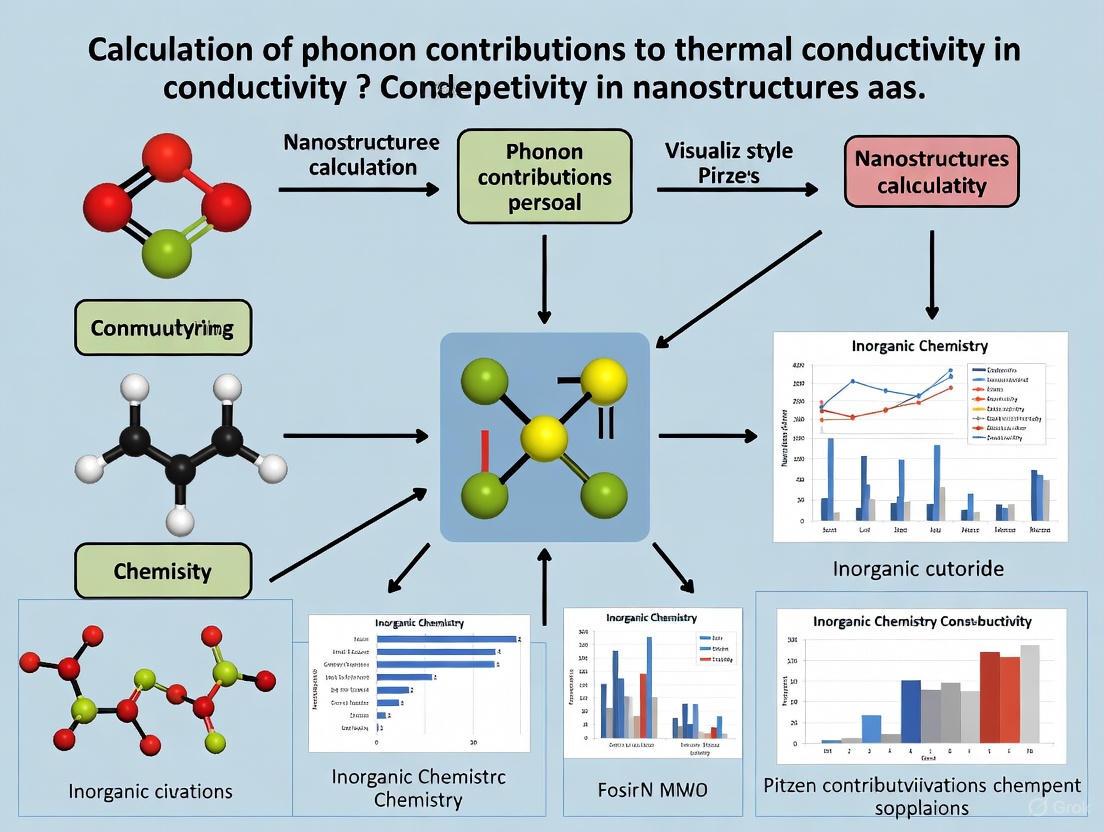
Calculating Phonon Contributions to Thermal Conductivity in Nanostructures: From Fundamental Theory to Advanced Applications
Understanding and accurately calculating phonon contributions to thermal conductivity is paramount for designing next-generation nanostructured materials for thermoelectrics, electronics, and biomedical applications.
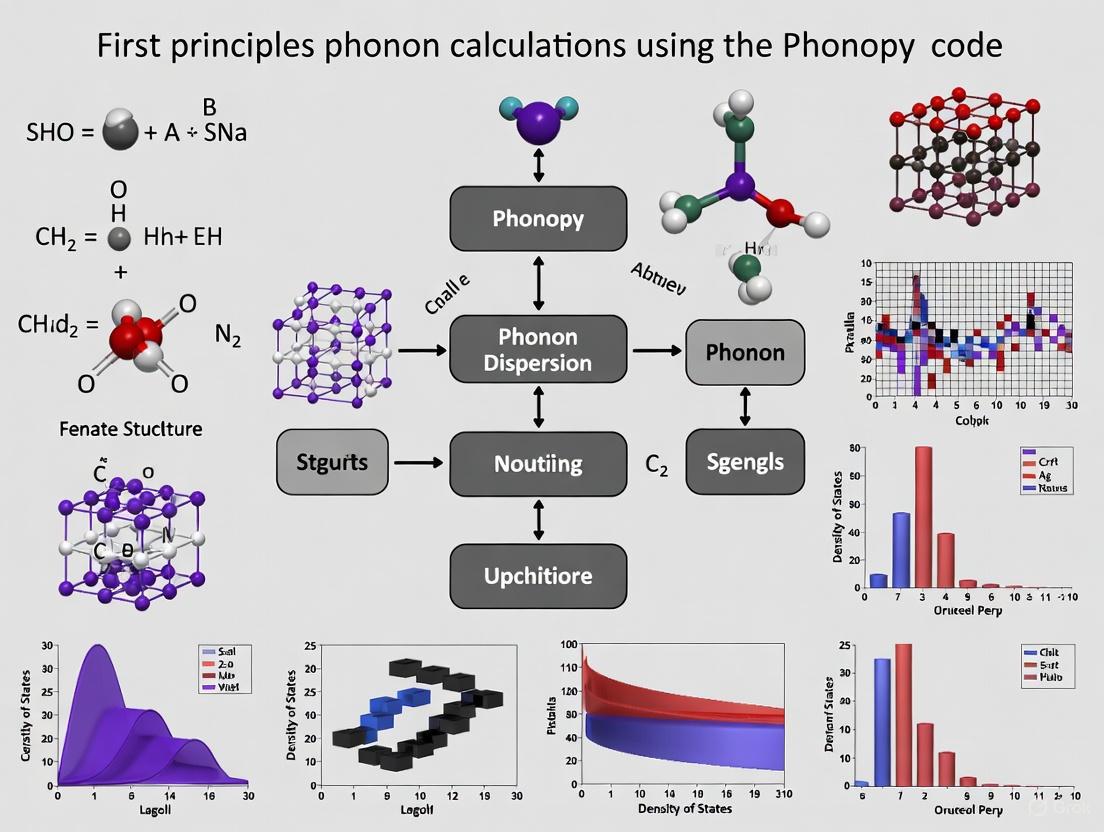
First Principles Phonon Calculations with Phonopy: A Comprehensive Guide for Materials Research
This article provides a comprehensive guide to performing first-principles phonon calculations using the open-source Phonopy code, a cornerstone tool in computational materials science.
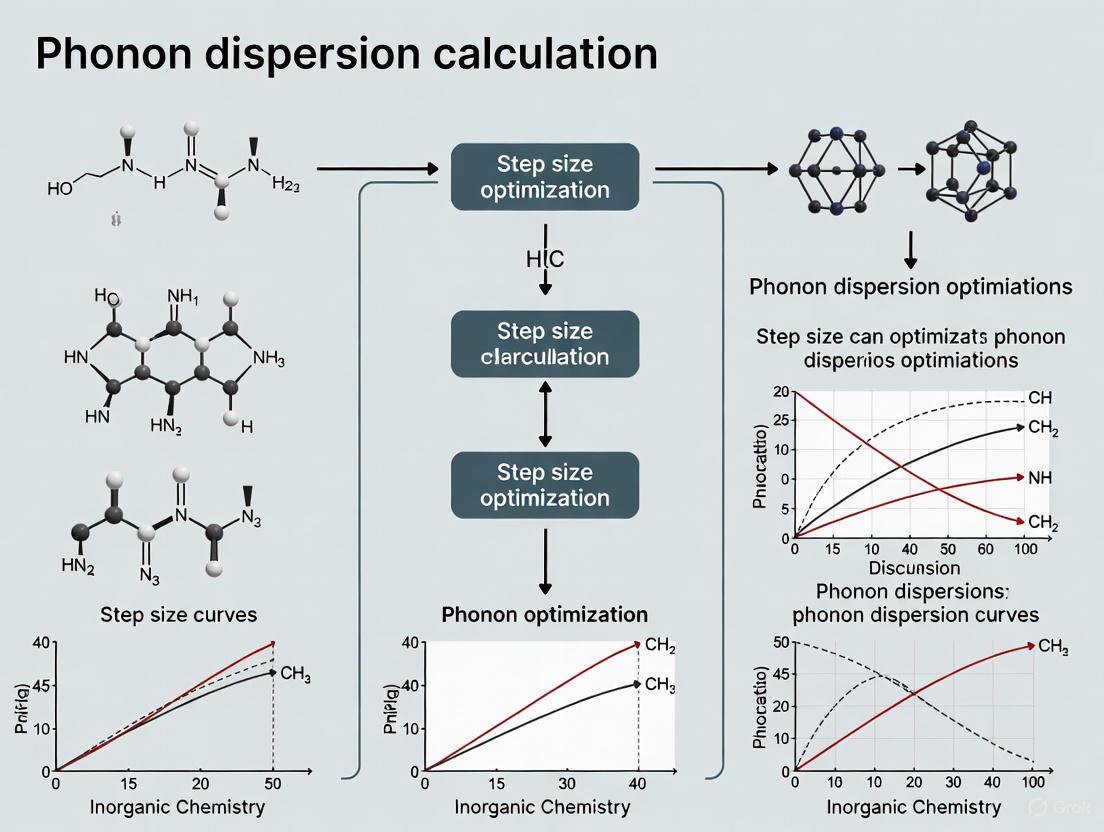
Phonon Dispersion Step Size Optimization: Advanced Techniques for Accurate and Efficient Calculations
This article provides a comprehensive guide to optimizing step size and convergence parameters in phonon dispersion calculations, a critical step for obtaining accurate vibrational properties of materials.
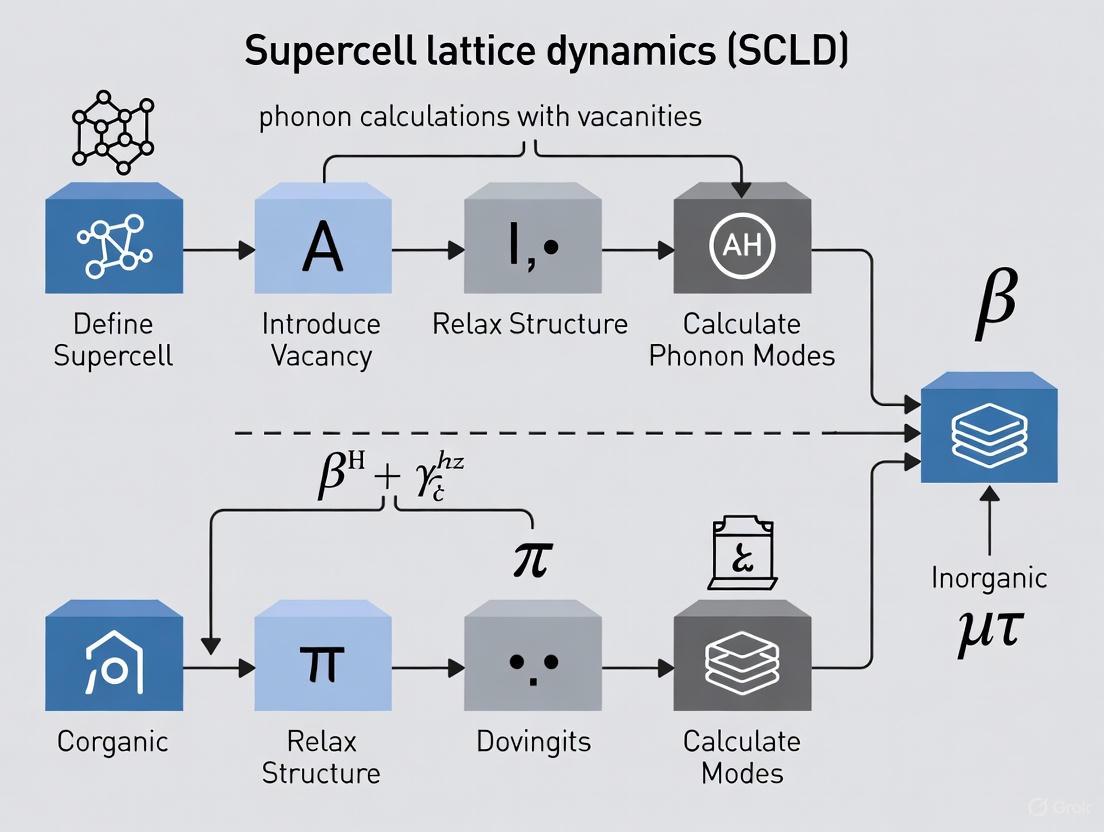
Supercell Lattice Dynamics for Phonon Calculations with Vacancies: A Comprehensive Guide from Foundations to Machine Learning
This article provides a comprehensive exploration of Supercell Lattice Dynamics (SCLD) for investigating phonon properties in materials with vacancy defects.
Negative Frequencies and Structural Phase Transitions: From Mathematical Foundation to Biomedical Applications
This article explores the critical, yet often overlooked, connection between the mathematical concept of negative frequencies and the physical mechanisms driving structural phase transitions in materials.
Unlocking Phonon Secrets: The Critical Role of Negative Phase Quotients in Disordered Solids
This article explores the pivotal role of phonons with negative phase quotient (PQ) in disordered solids, a frontier challenging the traditional phonon gas model.
Imaginary Frequencies Uncovered: Causes and Implications of Negative Phonons in Material Stability
This article provides a comprehensive analysis of the causes and significance of negative frequencies—more accurately termed imaginary frequencies—in phonon dispersion relations.
Band Gap Accuracy: A Practical Guide to DOS vs. Band Structure Calculations
Accurately determining the electronic band gap is a critical step in the computational design of functional materials, from semiconductors to catalysts.
Beyond Energy Convergence: A Practical Guide to Validating DOS with k-Point Density
This article provides a comprehensive guide for computational researchers on validating the convergence of the Density of States (DOS) with k-point sampling.
Overcoming Linear Dependency in Basis Sets: A Practical Guide for Robust Density of States Calculations in Drug Discovery
This article provides a comprehensive guide for researchers and drug development professionals on diagnosing, resolving, and preventing linear dependency in basis sets, a common numerical instability in electronic structure calculations.