The Tiny Hybrid Crystals Revolutionizing Modern Medicine
How biocompatible hybrid organic-inorganic nanocrystalline materials are transforming diagnostics, therapy, and regenerative medicine.

A New Frontier in Healing
Imagine a world where a single microscopic crystal, thousands of times thinner than a human hair, could simultaneously track its journey through your body and deliver a powerful drug precisely to a cancer tumor. This isn't science fiction—it's the reality being created in laboratories today using biocompatible hybrid organic-inorganic nanocrystalline materials.
These extraordinary materials represent a revolutionary approach to solving some of medicine's most persistent challenges, from fighting cancer to repairing broken bones. By bridging the gap between the biological world of our bodies and the synthetic world of engineered materials, scientists are creating next-generation medical solutions that were unimaginable just a decade ago.
At the heart of this revolution lies a simple but powerful concept: by combining the best properties of organic and inorganic components at the nanoscale, researchers can create materials with capabilities that far surpass either component alone. The field is experiencing rapid growth, with a constant stream of innovations in design and application . These advancements are pushing the boundaries of what's possible in diagnostics, therapy, and regenerative medicine, offering new hope for treatments that are more effective, less invasive, and personalized to individual patients.
Precision Medicine
Targeted delivery of therapeutics to specific cells or tissues with minimal side effects.
Advanced Diagnostics
Real-time monitoring and imaging capabilities integrated directly into therapeutic agents.
What Exactly Are Hybrid Organic-Inorganic Nanocrystalline Materials?
To understand the power of these materials, let's break down what they are. Nanocrystalline materials are substances made up of extremely small crystals, typically measuring just 1 to 100 nanometers in size. To put this in perspective, you could line up thousands of these nanocrystals across the width of a single human hair.
When we talk about hybrid materials, we're referring to the strategic combination of organic components (which contain carbon and are often similar to biological molecules) with inorganic components (which typically include minerals or metals) at the molecular or nanoscale level. What makes them particularly special for medical applications is that they're designed to be biocompatible—meaning they can safely interact with living tissue without causing harm 4 .
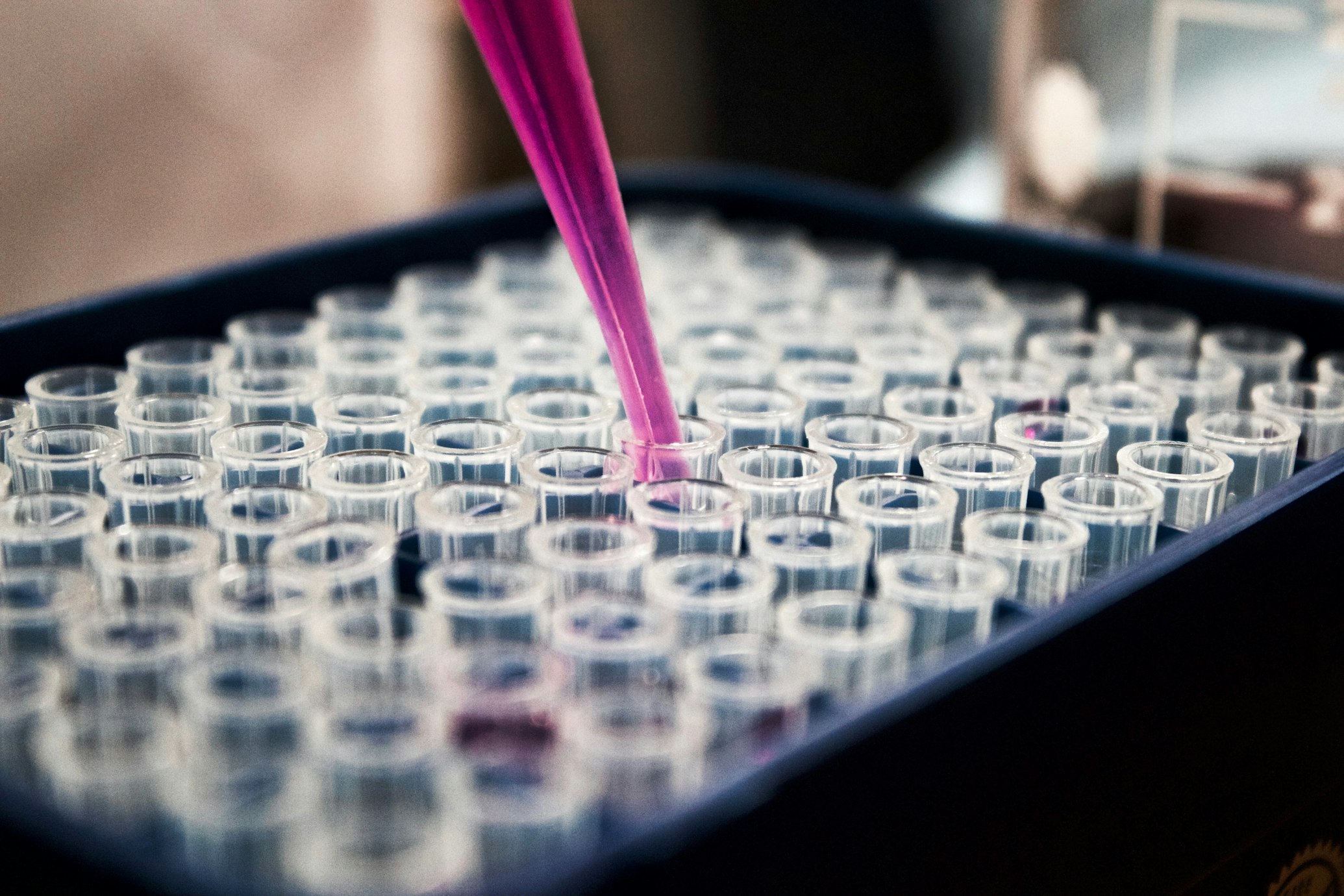
The true magic happens in how these components work together. The organic elements often provide flexibility, biodegradability, and compatibility with biological systems, while the inorganic parts can contribute strength, stability, and unique optical, magnetic, or electronic properties. This combination creates materials that can perform tasks neither component could manage alone:
- Targeted drug delivery to specific cells or tissues
- Self-monitoring of their location and function within the body
- Mimicking natural biological structures like bone or tooth enamel
- Responding to internal triggers like pH changes to release medication
Hybrid Material Composition
How These Tiny Hybrids Are Revolutionizing Medicine
Enhanced Implants and Tissue Engineering
One of the most advanced applications of hybrid nanomaterials is in creating better implants and scaffolds for tissue regeneration. When someone needs a bone implant, for instance, traditional materials may not integrate perfectly with natural bone. Now, researchers have developed sol-gel films containing nanocrystalline hydroxyapatite (the same mineral that makes up our natural bone) that can coat titanium implants 8 . These hybrid coatings significantly improve how bone cells attach to and grow on the implant surface while also providing better corrosion protection for the underlying metal 8 . This means implants last longer and function better inside the body.
Similarly, tantalum carbide (TaC) nanocrystalline coatings have shown remarkable improvements in properties essential for medical implants. When applied to titanium alloys commonly used in joint replacements, these coatings demonstrate exceptional performance across multiple critical dimensions 5 :
| Property | Improvement Over Uncoated Titanium Alloy | Medical Benefit |
|---|---|---|
| Hardness | ~6 times higher | More durable, wear-resistant implants |
| Wear Rate | Two orders of magnitude lower | Longer-lasting joint replacements |
| Corrosion Resistance | Significantly enhanced in simulated body fluid | Reduced metal ion release into the body |
| Biocompatibility | Better cell response | Improved integration with natural bone |
Multifunctional Therapeutic and Diagnostic Agents
Perhaps the most exciting development in this field is the creation of theranostic agents—materials that combine therapy and diagnosis in a single platform. In a groundbreaking experiment, researchers successfully created hybrid nanocrystals containing both camptothecin (an anticancer drug) and gold atoms 6 . This innovative approach represents a significant advance in cancer treatment strategies.
The gold components serve as contrast agents for CT scanning, allowing doctors to visually track where the particles travel in the body, while the camptothecin attacks cancer cells once the particles reach their target 6 . Because gold has a higher atomic number and electron density than iodine (used in traditional contrast agents), it provides 2.7 times stronger contrast per unit weight, meaning less material is needed for effective imaging 6 .
Comparison of Contrast Efficiency
A Closer Look at a Groundbreaking Experiment
Creating Cancer-Fighting Nanocrystals with Built-In Tracking
To understand how these advanced materials are actually made in the laboratory, let's examine the pioneering camptothecin-gold hybrid nanocrystal research in detail. The objective was elegantly simple in concept but revolutionary in execution: to physically embed gold within the crystal structure of an anticancer drug to create a combined therapeutic and diagnostic material 6 .
Step-by-Step Laboratory Process
The researchers developed a sophisticated multi-step procedure to create these hybrid nanocrystals 6 :
Solution Preparation
40 mL of acidified water (pH 4) was heated and mixed with 3 mL of gold salt solution (hydrogen tetrachloroaurate). The acidic environment was crucial to maintain the camptothecin drug in its active form.
Reduction and Crystallization
Under continuous stirring and intense sonication, trisodium citrate (a reducing agent) was added to initiate the reduction of gold ions. Simultaneously, a camptothecin solution in dimethyl sulfoxide was introduced.
Crystal Growth and Gold Incorporation
The system continued to be sonicated and stirred, promoting the simultaneous growth of drug nanocrystals and the incorporation of gold atoms and clusters within the crystal lattice as defects.
Purification
The resulting hybrid nanocrystals were meticulously purified through multiple cycles of vacuum filtration and washing with pH-adjusted water to remove any unincorporated gold particles or ions.
Remarkable Results and Significance
The experiment yielded several important findings that demonstrate the success of this hybrid approach 6 :
| Parameter | Finding | Significance |
|---|---|---|
| Gold Incorporation | Successful integration confirmed by TEM and ICP-OES | Proof of concept for hybrid crystal design |
| Crystal Structure | Gold atoms embedded as defects in camptothecin lattice | Novel material with combined properties |
| Drug Loading | High loading capacity of anticancer drug | Avoids limitations of conventional drug carriers |
| Contrast Efficiency | Sufficient gold for CT imaging | Dual functionality in single material |
This hybrid design elegantly addresses one of the major challenges in nanomedicine: the typically low drug loading capacity of many delivery systems. By formulating the actual drug as nanocrystals rather than encapsulating it in another carrier, the system achieves exceptionally high therapeutic payload 6 .
The implications for cancer treatment are substantial. Because these hybrid nanocrystals accumulate in tumor tissue through the Enhanced Permeation and Retention (EPR) effect—a phenomenon where particles of certain sizes preferentially leak into and are retained in tumor tissue—they enable passive targeting of cancer cells 6 . This means higher doses of drugs reach cancerous tissue while minimizing exposure to healthy cells, potentially reducing side effects and improving treatment outcomes.
Drug Delivery Efficiency Comparison
The Scientist's Toolkit: Essential Reagents for Hybrid Nanomaterial Research
Creating these advanced biomedical materials requires specialized chemicals and reagents, each serving specific functions in the synthesis process. Here are some of the key components researchers use to build these sophisticated structures:
| Reagent Category | Specific Examples | Function in Synthesis |
|---|---|---|
| Metal Precursors | Cadmium oleate, Hydrogen tetrachloroaurate | Provide inorganic components (metals) for nanocrystal formation |
| Surfactants/Ligands | Oleic acid, Trisodium citrate | Control crystal growth and prevent aggregation |
| Solvents | Octadecene, Dimethyl sulfoxide | Medium for chemical reactions and crystal growth |
| Reducing Agents | Trisodium citrate, Diphenylphosphine | Convert metal ions to atomic form for crystal incorporation |
| Organic Components | Synthetic polymers, Camptothecin | Form organic matrix or therapeutic component |
| Additives | Diphenylphosphine | Accelerate precursor conversion and modify reaction kinetics |
Synthesis Control
The strategic selection and combination of these reagents allows scientists to precisely control the size, shape, composition, and properties of the resulting hybrid materials.
Reaction Optimization
For instance, surfactant concentration has been found to play a critical role in nanocrystal synthesis—not just in stabilizing the particles, but actually retarding reaction rates by inhibiting diffusion to the growing crystals while maintaining uniform conversion 3 .
Recent advances in synthesis methods have expanded the toolbox available to researchers. Novel approaches using alkoxy reagents now enable the production of nanocrystals with nearly universal solvent dispersibility, eliminating the need for problematic solvent transfer processes that can deteriorate nanocrystal quality 7 . This is particularly valuable for biomedical applications, where compatibility with aqueous biological environments is essential.
The Future of Medicine Is Hybrid
The development of biocompatible hybrid organic-inorganic nanocrystalline materials represents a paradigm shift in how we approach medical treatment. By thoughtfully combining the unique strengths of organic and inorganic components at the nanoscale, scientists are creating materials that actively participate in healing processes in ways previously confined to the realm of imagination.
Multi-Functional Systems
Materials that can diagnose conditions, deliver targeted therapies, monitor their own effectiveness, and safely biodegrade once their work is done.
Biological Integration
The integration of these hybrid nanomaterials with biological systems continues to be a key focus, with an emphasis on ensuring they work in harmony with the complex environment of the human body 1 .
Interdisciplinary Collaboration
The incredible progress in this field highlights the power of bringing together chemists, materials scientists, biologists, and physicians to tackle medical challenges from entirely new angles.
The Next Generation of Medical Solutions
As research continues to accelerate, these tiny hybrid crystals are poised to make an enormous impact on human health, offering new solutions for some of medicine's most daunting challenges and ultimately improving lives around the world.