Spectrophotometry vs. Chromatography: A 2025 Cost and Application Guide for Lab Setup
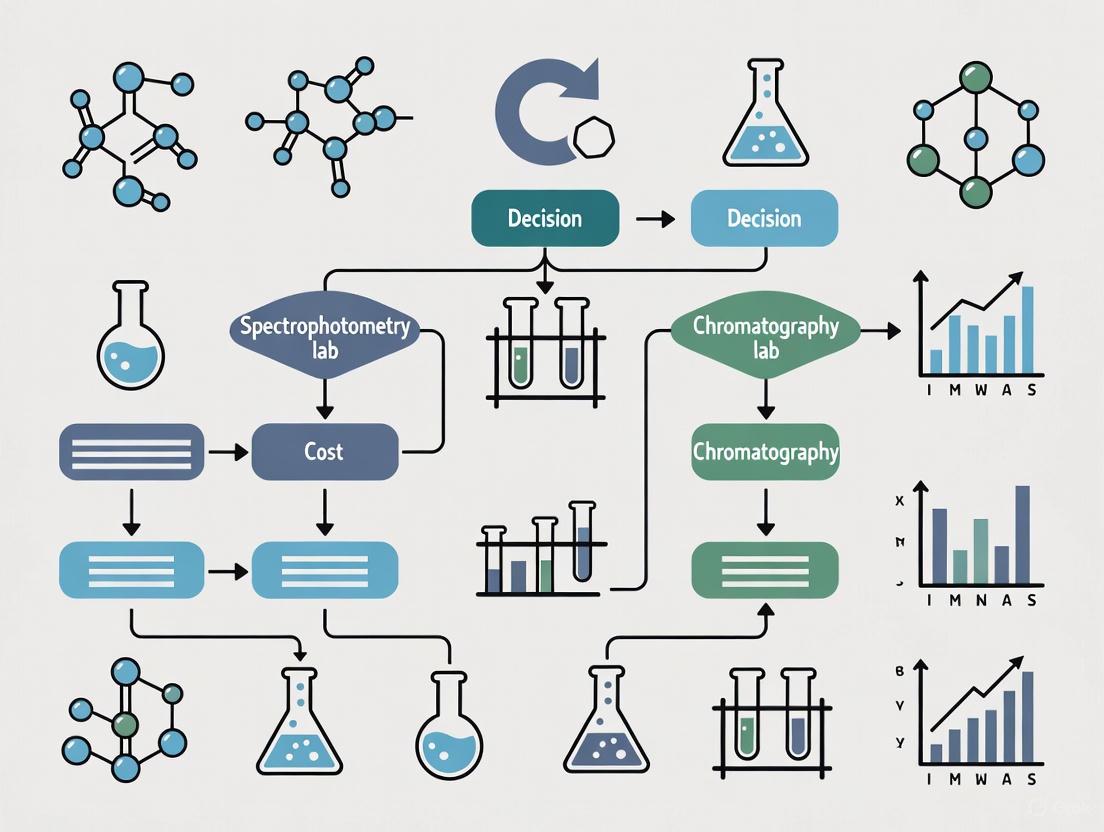
This article provides a comprehensive cost and application comparison for researchers and drug development professionals deciding between spectrophotometry and chromatography for their laboratory setup.
Spectrophotometry vs. Chromatography: A 2025 Cost and Application Guide for Lab Setup
Abstract
This article provides a comprehensive cost and application comparison for researchers and drug development professionals deciding between spectrophotometry and chromatography for their laboratory setup. It details foundational principles, initial investment and ongoing operational expenses, methodological applications in pharmaceutical and biotech workflows, strategies for budget optimization and troubleshooting, and a final validation framework for instrument selection based on specific research goals, sample complexity, and regulatory requirements.
Understanding the Core Technologies: Principles and Price Ranges
In the landscape of analytical chemistry, two families of instruments form the backbone of most laboratory analyses: spectrophotometers and chromatographs. Spectrophotometry, including UV-Visible (UV-Vis) and Fluorescence techniques, measures how samples interact with light to provide quantitative and qualitative data. In contrast, chromatography, including High-Performance Liquid Chromatography (HPLC), Ultra-High-Performance Liquid Chromatography (UHPLC), and Gas Chromatography (GC), separates complex mixtures into individual components for identification and quantification.
The choice between these technologies is often dictated by the analytical problem, required sensitivity, sample complexity, and budgetary constraints. This guide provides a technical comparison of these core instruments, framing the discussion within the practical context of setting up a research lab, with a specific focus on cost considerations for researchers and drug development professionals.
Core Instrument Principles and Mechanisms
Spectrophotometry
UV-Visible (UV-Vis) Spectrophotometers: These instruments operate on the principle of measuring the absorption of ultraviolet or visible light by a sample. When photons of light with specific energy (wavelength) interact with a molecule, they can be absorbed, promoting electrons to a higher energy state. The amount of light absorbed is quantitatively related to the concentration of the analyte via the Beer-Lambert law. Key components include a light source (e.g., deuterium or tungsten lamp), a monochromator to select specific wavelengths, a sample holder, and a detector [1]. They are predominantly used for quantifying nucleic acids, proteins, and many other analytes in solution.
Fluorescence Spectrophotometers: Fluorescence is a process where a molecule absorbs high-energy light (excitation) and then emits lower-energy light (emission) as it returns to its ground state. Fluorescence spectrophotometers are more sensitive than UV-Vis instruments because they measure the emitted light against a dark background, rather than a small change in a bright light source. This makes them ideal for detecting low-concentration biomolecules, binding assays, and various research applications [1] [2]. Their core components include an excitation monochromator, an emission monochromator, and a highly sensitive detector.
Chromatography
High-Performance Liquid Chromatography (HPLC): HPLC separates components in a liquid mixture by forcing a pressurized liquid solvent (mobile phase) containing the sample through a column packed with a solid adsorbent material (stationary phase). Different compounds in the sample interact differently with the stationary phase, leading to varying migration speeds and thus, separation over time. A detector (e.g., UV-Vis, Mass Spectrometry) then identifies and quantifies the separated components as they exit the column [3]. It is versatile for analyzing any compound soluble in a liquid.
Ultra-High-Performance Liquid Chromatography (UHPLC): UHPLC is a technological evolution of HPLC that operates at significantly higher pressures (up to 1400 bar) and uses columns with smaller particle sizes (sub-2 μm). This results in faster analysis times, higher resolution (peak separation), and improved sensitivity compared to traditional HPLC [3]. It is particularly valuable in high-throughput environments like pharmaceutical quality control and complex biomolecular analysis.
Gas Chromatography (GC) Systems: GC is designed to separate and analyze volatile compounds that can be vaporized without decomposition. The sample is carried by an inert gas (mobile phase) through a column coated with a liquid or solid stationary phase. Separation is based on the partitioning of analytes between the mobile gas phase and the stationary phase. GC is often coupled with detectors like Flame Ionization (FID) or Mass Spectrometry (MS) for powerful identification and quantification capabilities [4]. It is the method of choice for analyzing gases, fuels, fragrances, and volatile organic compounds.
The following diagram illustrates the core workflow and components of a generic chromatography system, highlighting the common operational logic shared by HPLC, UHPLC, and GC.
Technical Specifications and Performance Comparison
Performance and Application Matrix
The selection of an analytical technique is primarily driven by the sample properties and the required analytical performance. The table below summarizes the core characteristics of each technique.
Table 1: Instrument Performance and Application Matrix
| Instrument | Typical Applications | Key Strengths | Key Limitations | Sample Throughput |
|---|---|---|---|---|
| UV-Vis Spectrophotometer | Nucleic acid/protein quantification, colorimetric assays, concentration determination [1] | Simple operation, low cost per test, non-destructive to sample | Limited to chromophores, low specificity in complex mixtures, no separation capability | Very High (minutes) [2] |
| Fluorescence Spectrophotometer | Trace analysis, binding studies, cellular assays, detection of native fluorophores [1] [2] | Very high sensitivity, high specificity, non-destructive | Requires fluorescent molecules, can be prone to quenching or interference | High (minutes) [2] |
| HPLC | Drug purity testing, bioanalysis, natural product analysis, quality control [3] [5] | High resolution for complex mixtures, quantitative accuracy, versatile detection options | Destructive to sample, requires skilled operation, high solvent consumption | Moderate (tens of minutes to hours) [2] |
| UHPLC | High-throughput screening, metabolomics, proteomics, dissolution testing [3] | Very high speed and resolution, superior sensitivity, reduced solvent consumption | Higher operational pressure, more demanding on columns and components | High (faster than HPLC) [3] |
| GC / GC-MS | Volatile organic compound (VOC) analysis, environmental testing, petrochemicals, fragrance analysis [4] | Excellent for volatile compounds, high resolution, powerful when coupled with MS | Limited to volatile/thermostable samples, often requires sample derivation | Moderate to High (minutes to hours) |
Cost of Ownership Analysis
A critical factor in instrument selection is the total cost of ownership, which includes not only the initial purchase price but also ongoing operational expenses. The data below provides a comprehensive cost comparison.
Table 2: Instrument Cost of Ownership Breakdown
| Instrument | Initial Purchase Price (New) | Common Detectors / Configurations | Key Consumables & Operational Costs |
|---|---|---|---|
| UV-Vis Spectrophotometer | $1,500 - $15,000 [1] | Single beam, double beam, microvolume (e.g., NanoDrop) | Cuvettes (quartz/plastic), lamps (deuterium, tungsten), calibration costs [1] |
| Fluorescence Spectrophotometer | $15,000 - $50,000+ [1] | Standard fluorometer, microplate reader, phosphorescence | Lamps (xenon flash), specialized cuvettes, microplates |
| HPLC System | $10,000 - $70,000 [6] [3] | UV-Vis, Photodiode Array (PDA), Fluorescence, Refractive Index (RI) [3] | Columns ($100-$500), HPLC-grade solvents, solvent waste disposal, seals, tubing [6] [3] |
| UHPLC System | $60,000 - $200,000+ [3] | Same as HPLC, but designed for higher pressure | UHPLC-specific columns (sub-2µm), high-purity solvents, specialized tubing/fittings |
| GC System | $10,000 - $100,000+ (GC-MS can exceed $150,000) [6] [4] | Flame Ionization (FID), Mass Spectrometry (MS), Thermal Conductivity (TCD) [4] | Columns, carrier gases (Helium, Nitrogen), liners, septa, detector gases/gas generators [6] |
- Additional Financial Considerations:
- Maintenance Contracts: Annual preventive maintenance contracts for chromatography systems can range from $5,000 to $20,000 per year, depending on system complexity [6].
- Software Licensing: Compliance-ready software from major vendors often requires annual licensing fees and paid upgrades [6].
- Leasing vs. Buying: Leasing instruments can be a cost-effective strategy for startups and labs with evolving needs, offering lower upfront costs and access to newer technology, though the total cost over time may be higher [1].
Experimental Protocols and Workflows
Detailed Methodology: Quantification of an Active Ingredient in a Cosmetic Serum Using HPLC
This protocol, adapted from a published study on bakuchiol analysis, exemplifies a typical HPLC quality control application [7].
- Objective: To accurately identify and quantify the concentration of bakuchiol in a commercial face serum.
- Instrumentation: HPLC system with a Degasser, High-Pressure Pump, Autosampler, Column Oven, and Diode Array Detector (DAD).
- Chromatographic Conditions:
- Column: Reverse-phase C18 column (endcapped), 250 mm x 4.6 mm, 5 μm particle size.
- Mobile Phase: Acetonitrile with 1% formic acid (isocratic elution).
- Flow Rate: 1.0 mL/min.
- Column Temperature: 30°C.
- Injection Volume: 10 μL.
- Detection Wavelength: 260 nm.
- Sample Preparation:
- Weigh approximately 1.0 g of the homogeneous serum sample into a volumetric flask.
- Dilute to mark with ethanol or acetonitrile.
- Vortex mix for 1 minute and sonicate for 10 minutes to ensure complete extraction.
- Centrifuge the solution at 10,000 rpm for 5 minutes to precipitate insoluble excipients.
- Filter the supernatant through a 0.45 μm syringe filter into an HPLC vial.
- Data Analysis:
- A calibration curve is constructed by analyzing a series of bakuchiol standard solutions of known concentration (e.g., 5, 10, 50, 100 μg/mL).
- The peak area at the retention time of bakuchiol (~31.8 minutes in the reference method) is recorded for both standards and samples.
- The concentration of bakuchiol in the unknown sample is calculated by interpolating its peak area against the linear calibration curve.
The Scientist's Toolkit: Essential Research Reagent Solutions
Table 3: Key Reagents and Consumables for Chromatography and Spectrophotometry
| Item | Function & Description | Example in Protocol |
|---|---|---|
| HPLC/UHPLC Column | The heart of the separation; a stainless-steel tube packed with micron-sized particles coated with the stationary phase (e.g., C18). | C18 column for reverse-phase separation of bakuchiol from serum matrix [7]. |
| Mobile Phase Solvents | High-purity solvents (e.g., acetonitrile, methanol, water) that carry the sample through the column. Their composition drives the separation. | Acetonitrile with 1% formic acid [7]. |
| Internal Standard (IS) | A known compound added in a constant amount to all samples and standards to correct for variability in sample preparation and injection. | Nicotinamide was used as an IS for quantitative NMR in a related study [7]. |
| Syringe Filters | Small, disposable membranes (often 0.22 or 0.45 μm) used to remove particulate matter from samples prior to injection, protecting the column. | 0.45 μm filter used in sample preparation [7]. |
| Standard Reference Material | A highly pure compound of known identity and concentration used to calibrate the instrument and quantify unknowns. | Pure bakuchiol standard for creating the calibration curve [7]. |
The following workflow diagram maps the key steps of the HPLC quantification protocol, providing a visual guide to the analytical process.
The choice between spectrophotometry and chromatography is not a matter of one being superior to the other, but rather of selecting the right tool for the specific analytical challenge. UV-Vis and Fluorescence spectrophotometers offer rapid, cost-effective solutions for quantitative analysis, especially when dealing with pure compounds or simple mixtures. In contrast, HPLC, UHPLC, and GC systems are indispensable for resolving, identifying, and quantifying individual components within complex matrices.
From a lab setup and cost perspective, spectrophotometry presents a lower barrier to entry with more affordable instrumentation and minimal consumable costs. Chromatography, while having a higher initial and ongoing cost, provides a powerful separation capability that is often necessary for rigorous research and regulatory compliance, particularly in drug development.
Strategic instrument selection should be guided by a clear assessment of:
- Sample Complexity: Simple mixtures may be suited for spectrophotometry, while complex biological or chemical mixtures require chromatography.
- Sensitivity Requirements: Trace-level analysis often necessitates fluorescence detection or the combination of chromatography with mass spectrometry.
- Throughput Needs: UHPLC and automated spectrophotometers excel in high-throughput environments.
- Budgetary Constraints: The total cost of ownership, including long-term consumables and maintenance, must be factored into the decision.
By understanding the technical capabilities and cost structures of these core instruments, researchers and lab managers can make informed, strategic investments that effectively balance analytical performance with financial practicality.
Selecting the appropriate analytical instrumentation is a critical decision for research and drug development professionals, with the initial purchase price representing a significant portion of the total investment. Both spectrophotometry and chromatography systems span a wide cost spectrum, from affordable entry-level instruments to sophisticated high-end configurations, with each tier offering distinct capabilities matching specific research requirements and budgetary constraints. Understanding this price-performance landscape is essential for making informed capital equipment decisions that align with both immediate analytical needs and long-term research goals. This guide provides a detailed breakdown of initial purchase prices across instrument tiers to facilitate accurate budgeting and strategic planning for laboratory setup or expansion.
Spectrophotometer Price Ranges
Spectrophotometers are versatile instruments that measure how light interacts with a sample, providing data on concentration, purity, and composition through absorbance, fluorescence, or transmittance measurements [1]. These systems are foundational in life sciences, biotech, and pharmaceutical research for applications including DNA/RNA quantification, protein assays, cell culture monitoring, drug discovery, and environmental testing [1]. The cost of a spectrophotometer is influenced by several key factors: the technology type (UV-Vis, fluorescence, NIR), light source characteristics, wavelength range, monochromator design (single vs. double beam), detection sensitivity, and level of automation or throughput capabilities [8] [1]. Additional cost drivers include microvolume capabilities, software integration, brand reputation, and any required customization [1].
Detailed Price Breakdown
Table: Spectrophotometer Price Tiers and Specifications
| Price Tier | Price Range | Key Technologies | Typical Applications | Common Models/Specifications |
|---|---|---|---|---|
| Entry-Level | $1,500–$5,000 | Single-beam design, visible or basic UV-Vis (190–1100 nm), fixed bandwidth, cuvette-based | Routine nucleic acid quantification, teaching labs, basic QC | Basic benchtop UV-Vis systems with limited automation [1] |
| Mid-Range | $5,000–$15,000 | Double-beam for stability, adjustable bandwidth, microvolume capability, fluorescence detection | Pharmaceutical QC, research requiring higher sensitivity, environmental testing | Thermo Scientific NanoDrop, systems with LIMS integration [1] |
| High-End/Specialized | $15,000–$50,000+ | Fluorescence spectrophotometry, microplate readers, NIR, advanced monochromators, high-throughput automation | Biopharma (GMP-compliant), clinical diagnostics, high-throughput screening, drug discovery | High-sensitivity fluorescence systems, automated multi-sample analyzers [1] |
Representative Model Comparison
Table: Example UV-Vis Spectrophotometer Models for Water Analysis
| Model Series | Key Specs & Features | Strengths for Testing | Estimated Price Tier |
|---|---|---|---|
| SPSUV-5100 | UV-Vis version: ~190-1100 nm, Bandwidth ~2 nm, Single beam grating system | Good for routine lab work; UV coverage for nitrates, organics | Mid-Range [8] |
| SPSUV-6100 Series | Double beam design, 190-1100 nm, Multiple bandwidth options (1.8 nm / 1 nm) | Better accuracy, stability; suitable for kinetics, multi-wavelength methods | High Mid-Range [8] |
| SPSUV-9000 Series | Double beam, finest bandwidth (0.5 nm), wide wavelength range, lowest stray light | Highest precision for trace analysis, regulatory requirements | High-End [8] |
Chromatography System Costs
Chromatography systems separate, identify, and quantify components in complex mixtures, serving as indispensable tools in pharmaceutical, environmental, food safety, and biotechnology industries [6] [3]. The instrumentation encompasses several technologies: High-Performance Liquid Chromatography (HPLC), Ultra-High Performance Liquid Chromatography (UHPLC), Gas Chromatography (GC), and preparative systems, each with distinct performance characteristics and associated costs [6] [3]. Primary factors influencing chromatography system pricing include the separation mechanism, pressure capabilities, detector type and sensitivity, degree of automation, throughput requirements, and compliance features for regulated environments [6] [3]. More advanced systems offer higher pressure limits, superior resolution, faster analysis times, and enhanced data integrity features, all contributing to higher initial investment requirements.
Detailed Price Breakdown
Table: Chromatography System Price Tiers and Specifications
| Price Tier | Price Range | System Types | Typical Applications | Key Features |
|---|---|---|---|---|
| Entry-Level | $10,000–$40,000 | Basic HPLC, GC | Academic teaching, routine QC, simple separations | Standard pumps, UV-Vis or FID detectors, minimal automation [6] |
| Mid-Range | $40,000–$100,000 | UHPLC, LC-MS, GC-MS | Pharmaceutical R&D, metabolomics, environmental testing | Higher pressure, MS detection, advanced detectors (PDA, fluorescence), automation [6] |
| High-End/Preparative | $100,000–$500,000+ | Preparative HPLC, UHPLC, advanced LC-MS/MS | Biopharmaceutical production, proteomics, large-scale purification | Advanced MS (Q-TOF, Orbitrap), large-scale purification, compliance-ready [6] |
System-Specific Pricing Examples
Table: Detailed Chromatography System Pricing by Type
| System Type | Specific Technology | Price Range | Configuration Details |
|---|---|---|---|
| Liquid Chromatography | Analytical HPLC | $20,000–$70,000 | Standard systems for qualitative/quantitative analysis [3] |
| UHPLC Systems | $60,000–$200,000 | Higher pressure (to 1400 bar), sub-2μm columns, faster analysis [3] | |
| Preparative HPLC | $50,000–$150,000 | Larger columns, higher flow rates for compound purification [3] | |
| Gas Chromatography | GC-MS Systems | $40,000–$300,000+ | From single quadrupole ($40K-$75K) to QTOF systems ($150K-$300K+) [9] |
| Component Costs | HPLC Pump | $2,000–$30,000+ | Varies by pressure rating and precision [3] |
| Detectors | $5,000–$20,000+ | UV-Vis, PDA, fluorescence, MS detectors [3] | |
| Auto-samplers | $2,000–$10,000 | Automation for increased throughput [3] |
Experimental Protocols and Workflows
Key Methodologies and Applications
Nucleic Acid Quantification (Spectrophotometry) A fundamental application of UV-Vis spectrophotometry involves quantifying DNA and RNA concentration and assessing purity by measuring absorbance at specific wavelengths. The experimental protocol involves blanking the instrument with an appropriate buffer, loading a small sample volume (1-2 μL for microvolume instruments), and measuring absorbance at 260nm, 280nm, and 230nm. The 260/280nm ratio indicates protein contamination (ideal ~1.8 for DNA, ~2.0 for RNA), while the 260/230nm ratio detects other contaminants like salts or organic compounds [1]. This methodology is critical in molecular biology, biotechnology, and pharmaceutical research for ensuring sample quality before downstream applications like PCR, sequencing, or cloning.
Small Molecule Separation and Analysis (Chromatography) A standard HPLC protocol for small molecule analysis involves method development starting with column selection (typically C18 for reverse-phase), mobile phase preparation (often water/acetonitrile or methanol mixtures with modifiers), and parameter optimization including flow rate (0.5-2.0 mL/min), injection volume (1-100 μL), column temperature, and gradient profile. Detection employs UV-Vis, PDA, or mass spectrometry for compound identification and quantification [3]. This methodology is extensively applied in pharmaceutical quality control for assay and impurity testing, environmental monitoring for pollutant detection, and food safety for contaminant screening, with system choice heavily dependent on required sensitivity, resolution, and throughput.
Workflow Visualization
Diagram: Analytical Instrument Selection Workflow
Essential Research Reagent Solutions
Table: Key Consumables and Reagents for Spectrophotometry and Chromatography
| Item Category | Specific Items | Function & Application | Cost Considerations |
|---|---|---|---|
| Separation Media | HPLC/UHPLC Columns (C18, ion exchange, size exclusion) | Separate compounds based on chemical properties; core to chromatography | $100–$500 per column; varying lifespans [3] |
| Solvents & Carriers | High-purity solvents (acetonitrile, methanol), carrier gases (helium, hydrogen) | Mobile phase for compound elution in LC; carrier gas in GC | Ongoing operational cost; purity critical for performance [6] |
| Sample Preparation | Syringe filters, vials, caps, solid-phase extraction cartridges | Sample cleaning, container for analysis | Recurring expense; quality affects results [6] |
| Detection Reagents | Bradford/BCA assay reagents, derivatization agents | Enable detection of specific analytes via colorimetric or fluorescent methods | Varies by assay; some require specialized kits [1] |
| Calibration & Standards | Cuvettes (quartz, glass, plastic), certified reference materials | Hold samples for spectrophotometry; quantitative calibration | Quartz cuvettes more expensive but required for UV [10] |
| Maintenance Items | Deuterium & tungsten lamps, seals, frits | Regular replacement to maintain instrument performance | Lamps typically replaced every 2000 hours (~$500-$2000) [10] |
Financial Decision Framework
Acquisition Strategy Comparison
The decision between purchasing, leasing, or outsourcing analytical instrumentation involves weighing financial flexibility against long-term costs and operational control. Each approach offers distinct advantages depending on the organization's financial position, projected instrument utilization, and technology requirements:
Outsourcing to CROs or core facilities provides access to high-end instrumentation without capital investment, ideal for sporadic needs or early-stage research with limited funding [9]. However, this approach offers less control over turnaround times and may raise IP concerns with sensitive research.
Leasing instruments through laboratory equipment providers delivers predictable monthly payments, often including service and warranty coverage, while preserving capital for other expenses [1]. This approach is particularly advantageous for rapidly evolving fields where technology obsolescence is a concern, though total costs may exceed outright purchase over extended periods.
Outright purchase represents the most cost-effective option for established laboratories with stable, high-volume workflows and sufficient capital reserves [1]. Ownership eliminates recurring payments and provides complete operational control, though the organization bears all maintenance, repair, and eventual obsolescence risks.
Total Cost of Ownership Considerations
The initial instrument purchase price represents only a portion of the total investment, with several recurring costs significantly impacting long-term operational budgets:
Service contracts and preventive maintenance typically range from $5,000 to $20,000 annually for chromatography systems and $500–$2,000 for spectrophotometer calibration services [6] [10]. These agreements minimize unexpected repair costs and ensure instrument reliability but represent substantial recurring expenses.
Consumables and supplies including chromatography columns, solvents, gases, cuvettes, and vials constitute ongoing operational costs that scale with analytical throughput [6] [3]. For high-throughput laboratories, these recurring expenses may eventually surpass the initial instrument investment.
Personnel and training requirements vary significantly by instrument complexity, with advanced chromatography and mass spectrometry systems typically requiring specialized technical expertise for operation, method development, and data interpretation [11].
Infrastructure and compliance costs include laboratory space, ventilation, power stability, and potential regulatory validation expenses, particularly for instruments used in GMP/GLP environments [9].
For researchers, scientists, and drug development professionals, the decision to establish in-house analytical capabilities represents a significant financial commitment that extends far beyond the initial instrument price tag. The Total Cost of Ownership (TCO) provides a comprehensive framework for evaluating all direct and indirect costs associated with analytical instrumentation over its operational lifetime. Within the context of setting up spectrophotometry versus chromatography laboratories, understanding TCO becomes paramount for accurate budget forecasting, resource allocation, and strategic planning. The core components of TCO consistently include initial acquisition costs, ongoing consumables expenses, scheduled maintenance, service contracts, and various hidden operational costs that collectively determine the long-term financial impact of your laboratory investment.
Failure to account for these comprehensive costs can lead to severe budget overruns and operational disruptions. A realistic TCO analysis reveals that the initial purchase price often constitutes only a fraction of the true lifetime cost, particularly for complex analytical systems like liquid chromatography-mass spectrometry (LC-MS) where ongoing operational expenses can quickly surpass the initial investment. This guide provides a detailed breakdown of these cost components specifically for spectrophotometry and chromatography systems, enabling informed decision-making when comparing these foundational analytical techniques for your research laboratory.
TCO Component Analysis: Consumables
Consumables represent a significant recurring expense that varies dramatically between spectrophotometry and chromatography systems. These costs accumulate continuously throughout the instrument's operational life and can be difficult to forecast without understanding typical consumption patterns.
Chromatography Consumables Costs
Chromatography systems, particularly liquid-based platforms, require a wide array of consumables that must be regularly replaced to maintain system performance and data integrity:
Columns and Stationary Phases: The cost of chromatography columns varies significantly based on the technique and scale. For flash chromatography systems, normal-phase columns for purifying 10-100 mg of material cost approximately $11-$14 per column, while reversed-phase columns range from $50-$70 each but can last for hundreds of injections [12]. Preparative HPLC columns represent a more substantial investment at $3,000-$10,000 each [12]. For analytical-scale liquid chromatography, columns represent a recurring expense that must be replaced periodically to maintain separation efficiency.
Solvents and Mobile Phases: Solvent costs represent a substantial ongoing expense, particularly for preparative-scale applications. The solvent cost for a single run of a standard 25-gram flash chromatography column is approximately $11.50, while high-performance 10-gram columns consume about $3.90 worth of solvent per run [12]. Methods that involve column re-use may increase solvent consumption by 30-40% due to additional cleaning requirements [12].
Sample Preparation Materials: Various sample introduction consumables add to operational costs. For flash chromatography systems, dry loading accessories like Samplets cost $105-$157 for packages of 20 units, while disposable liquid loading syringes cost approximately $1 each [12]. These seemingly minor expenses accumulate significantly in high-throughput environments.
Spectrophotometry Consumables Costs
Spectrophotometry consumables are generally less diverse and costly than those required for chromatography systems:
Cuvettes and Sample Holders: Standard plastic cuvettes for visible wavelength measurements are relatively inexpensive, while quartz cuvettes required for ultraviolet measurements represent a more significant investment [1]. Specialized holders for microvolume measurements, flow cells, or temperature-controlled applications add to these costs.
Light Sources: Deuterium and xenon lamps used in UV-Vis spectrophotometers require periodic replacement, with costs varying based on the technology. Xenon flash lamps typically last longer but command higher replacement costs compared to standard halogen or deuterium sources [1].
Table: Comparative Annual Consumables Costs for Typical Research Laboratory Operations
| Consumable Category | Chromatography Systems | Spectrophotometry Systems |
|---|---|---|
| Separation Components | $1,000-$15,000+ (columns) | Not applicable |
| Solvents/Chemicals | $500-$5,000+ | $100-$1,000 (buffers, reagents) |
| Sample Introduction | $200-$2,000 (syringes, vials) | $200-$1,000 (cuvettes, plates) |
| Light Sources/Detectors | Varies by system | $500-$2,000 (lamp replacements) |
TCO Component Analysis: Maintenance and Service Contracts
Regular maintenance and service agreements constitute another critical component of TCO, directly impacting instrument uptime, data quality, and long-term reliability.
Service Contract Structures and Costs
Service contracts are typically structured as annual agreements costing 10%-15% of the instrument's original purchase price [13] [12]. For a high-end LC-MS system costing $500,000, this translates to $50,000-$75,000 annually, while maintenance for a $50,000 spectrophotometer would range from $5,000-$7,500 per year [14] [1].
Different service levels are available to match operational requirements:
Full Service Contracts: These comprehensive agreements extend beyond basic warranty coverage, including regular system servicing, cleaning, maintenance, and all necessary repairs performed automatically at pre-arranged intervals [15]. This option provides maximum operational security with predictable costs.
Preventive Maintenance Contracts: These focused agreements cover routine maintenance, cleaning, and inspection according to quality standards like DIN ISO 9000ff, with frequency options ranging from one to four times annually [15]. This approach maintains system performance while controlling costs.
Time-and-Materials Approach: Alternatively, laboratories may forgo service contracts and pay for support as needed. However, emergency service calls typically incur minimum charges of 4 hours at approximately $300 per hour, plus travel expenses, resulting in costs of $1,500 or more just for an engineer to arrive on-site, excluding actual repair work and parts [13].
Maintenance Cost-Benefit Analysis
Investing in regular maintenance provides substantial financial benefits compared to reactive repairs. For LC-MS systems, preventive maintenance programs costing $2,000-$6,000 annually dramatically reduce the risk of component failure and unexpected downtime [16]. In contrast, major repairs resulting from neglected maintenance often cost $10,000-$30,000 or more, in addition to substantial project delays and opportunity costs from instrument downtime [16].
Table: Comparative Maintenance Cost Analysis for Analytical Instruments
| Maintenance Aspect | Chromatography Systems | Spectrophotometry Systems |
|---|---|---|
| Annual Service Contract | 10%-15% of purchase price [13] [12] | 10%-15% of purchase price [1] |
| Preventive Maintenance | $2,000-$6,000 (LC-MS) [16] | $500-$2,000 (calibration) [1] |
| Major Repair Costs | $10,000-$30,000+ (LC-MS) [16] | $2,000-$10,000 (depending on components) |
| Typical Response Time | Varies by service level | Usually faster due to simpler systems |
Hidden Costs and Additional TCO Factors
Beyond consumables and maintenance, several often-overlooked factors significantly impact the total cost of ownership for both spectrophotometry and chromatography systems.
Initial Setup and Installation
The initial instrument purchase price does not include all setup-related expenses:
Installation and Calibration: Basic installation for chromatography systems typically costs $1,000-$3,000, including initial testing and basic operator familiarization [12]. For more complex systems like LC-MS, installation can reach $5,000-$15,000 when including full calibration and validation services [6].
Training Expenses: Comprehensive operator training is essential for maximizing instrument utility. On-site applications training for chromatography systems costs approximately $3,000-$4,000 per day [12]. Vendor-provided training at their facilities typically runs $1,500 for the first day and $1,000 for each additional day, plus travel expenses [13].
Infrastructure Modifications: High-end systems may require facility modifications including reinforced benches, dedicated ventilation, stable power supplies, and specialized gas lines, potentially adding thousands of dollars to initial costs [17].
Operational and Staffing Costs
Ongoing operational expenses extend beyond basic consumables and maintenance:
Staffing Requirements: Effective operation of analytical instrumentation requires qualified personnel. Salaries for analytical chemists range from $45,000 for recent graduates to $65,000 or more for master's level scientists with appropriate expertise [13]. The current shortage of skilled chromatographers further intensifies this cost component [14].
Data Analysis Tools: Advanced software packages for data processing often require annual licensing fees. For specialized applications like proteomics or metabolomics, advanced statistical tools and bioinformatics software represent additional recurring expenses [17]. Library databases for compound identification can cost up to $20,000 for purchase or $8,000 annually for subscription access [13].
Utilities and Disposal: Operational utilities including high-purity gases (particularly helium for GC-MS), specialized solvents, and waste disposal services add to recurring costs. Solvent waste management and regulatory compliance present additional ongoing expenses that vary by laboratory size and application [6].
Long-Term Value Considerations
Several factors influence the long-term economic value of analytical instrumentation:
Technology Obsolescence: Rapid technological advancement can render instruments obsolete long before their mechanical end-of-life. Mass spectrometry technology, for example, evolves rapidly with higher-resolution, faster, and more sensitive models emerging regularly [17].
Depreciation and Residual Value: Instrument depreciation affects financial reporting and planning. Systems with modular designs and upgradeable components typically retain higher residual value and deliver longer useful service life [17].
Regulatory Compliance: Laboratories operating in regulated environments must account for the significant costs associated with maintaining compliance with FDA GMP/GLP requirements, which may involve up to two months of effort to establish proper systems for a new instrument [13].
Experimental Protocols for TCO Analysis
Protocol for Comprehensive TCO Calculation
Objective: Systematically quantify the total cost of ownership for analytical instrumentation over a 5-10 year period to enable accurate comparison between spectrophotometry and chromatography options.
Materials Needed: Instrument specifications and pricing data, consumables usage logs, service contract options, staffing costs, facility overhead rates.
Methodology:
- Document Initial Costs: Record purchase price including all necessary accessories and options. Add installation, initial calibration, and staff training expenses. Include any facility modification costs required for instrument operation [13] [12].
Project Consumables Usage: Based on anticipated workload, estimate annual consumption of columns, solvents, cuvettes, lamps, and other disposable items. Multiply by current pricing to determine annual consumables cost [6] [1] [12].
Calculate Maintenance Expenses: Obtain quotes for comprehensive service contracts or estimate costs for time-and-materials service approach based on manufacturer recommendations. Include planned preventive maintenance and realistic repair projections [16] [15].
Factor Operational Costs: Include proportional costs for qualified operator time, data analysis software licenses, utilities consumption (power, gases, water), waste disposal, and facility overhead [13] [17].
Compute TCO: Sum all cost components over the projected instrument lifetime (typically 5-10 years). Calculate cost-per-sample by dividing TCO by projected sample throughput.
Validation: Compare calculated TCO against industry benchmarks where available. Sensitivity analysis should test how changes in key assumptions (sample volume, staff costs, etc.) impact overall TCO.
Protocol for Maintenance Cost-Benefit Analysis
Objective: Quantitatively evaluate the financial impact of regular preventive maintenance versus reactive repair strategies for analytical instrumentation.
Materials Needed: Service history records, maintenance cost data, repair invoices, downtime logs, productivity metrics.
Methodology:
- Establish Baseline Metrics: Document current instrument utilization rates, sample throughput, and operational costs under existing maintenance approach [16].
Quantify Preventive Maintenance Costs: Compile all costs associated with comprehensive service contracts or scheduled maintenance programs, including contract fees, replacement parts, and staff time [16] [15].
Document Repair History: Analyze historical repair data including frequency, costs (parts and labor), and associated instrument downtime. Project future repair probabilities based on instrument age and usage patterns [16].
Calculate Downtime Impact: Assign financial value to instrument downtime based on delayed projects, opportunity costs, and potential contractual penalties [13] [16].
Perform Comparative Analysis: Compare total costs of preventive maintenance approach against reactive repair strategy over identical time periods, incorporating all direct and indirect expenses [16].
Diagram 1: TCO Analysis Workflow for Laboratory Instrumentation
The Scientist's Toolkit: Essential Research Reagent Solutions
Table: Key Consumables and Accessories for Analytical Instrumentation
| Item | Function | Typical Cost Range | Considerations |
|---|---|---|---|
| HPLC/UHPLC Columns | Compound separation in liquid chromatography | $200-$2,000+ | Lifetime varies with usage; method compatibility critical [6] |
| Flash Chromatography Columns | Preparative-scale compound purification | $11-$70+ per column | Choice between normal phase,reversed phase affects cost [12] |
| Spectrophotometry Cuvettes | Sample containment for absorbance measurement | $2-$100+ each | Quartz required for UV,plastic sufficient for visible range [1] |
| Deuterium/Xenon Lamps | UV light source for spectrophotometers | $500-$2,000+ | Finite lifetime requiresperiodic replacement [1] |
| High-Purity Solvents | Mobile phase for chromatography | Varies by volume and grade | HPLC-grade typically required;costs fluctuate based on market [6] |
| Autosampler Vials | Standardized sample presentation | $1-$5 each | Cost accumulates significantlyin high-throughput labs [6] |
| Calibration Standards | Instrument performance verification | $100-$1,000+ | Required for quantitative accuracyand regulatory compliance [13] |
A comprehensive understanding of Total Cost of Ownership is essential when evaluating spectrophotometry versus chromatography systems for research laboratories. The analysis reveals that initial instrument purchase price typically represents only 30-50% of the true lifetime cost, with consumables, maintenance, and hidden operational expenses constituting the balance. Chromatography systems generally command higher TCO due to more expensive consumables (particularly columns and solvents) and more complex maintenance requirements, while spectrophotometry systems offer lower overall TCO but with more limited analytical capabilities.
The decision between these technologies should be driven by analytical requirements rather than cost considerations alone, with TCO analysis providing the financial framework to support this strategic choice. Laboratories should implement detailed TCO tracking for existing instrumentation to establish more accurate forecasting models for future acquisitions. By systematically accounting for all cost components over the instrument lifecycle, research organizations can optimize resource allocation, prevent budget overruns, and maximize the return on their analytical instrumentation investments.
The global market for analytical instrumentation, encompassing both chromatography and spectrophotometry, is experiencing significant growth driven by advancements in pharmaceutical research, biotechnology, and environmental testing. The GC and LC columns market alone was valued at $2.53 billion in 2024 and is projected to reach $3.68 billion by 2031, exhibiting a compound annual growth rate (CAGR) of 5.6% [18]. This growth is fueled by stringent regulatory requirements for drug safety, increasing spending on pharmaceutical R&D worldwide, and a growing focus on environmental testing and food quality [18] [19].
Key manufacturers including Agilent Technologies, Thermo Fisher Scientific, Shimadzu, and Waters Corporation dominate this landscape through continuous innovation, strategic expansions, and robust product portfolios. These companies lead developments in high-resolution mass spectrometry, ultra-high-performance liquid chromatography (UHPLC), and automated systems tailored for drug discovery, clinical diagnostics, and complex research applications [19].
Instrumentation Cost Analysis: Chromatography vs. Spectrophotometry
Setting up an analytical laboratory requires significant capital investment and operational expenditure. The cost structures for chromatography and spectrophotometry systems vary considerably based on technology, performance, and application needs. The following tables provide a detailed cost comparison to guide budgeting decisions.
Upfront Instrument Costs
Table 1: Comparison of initial purchase prices for different analytical instrument types.
| Instrument Category | Technology / Type | Price Range (USD) |
|---|---|---|
| Liquid Chromatography (LC) | Basic HPLC System | $10,000 – $40,000 [6] |
| UHPLC System | $40,000 – $100,000+ [6] | |
| Preparative LC System | $100,000 – $500,000+ [6] | |
| Gas Chromatography (GC) | Basic GC System | $10,000 – $40,000 [6] |
| GC-MS System | $40,000 – $100,000+ [6] | |
| Mass Spectrometry (MS) | Entry-Level (e.g., Quadrupole) | $50,000 – $150,000 [17] |
| Mid-Range (e.g., Triple Quad, TOF) | $150,000 – $500,000 [17] | |
| High-End (e.g., Orbitrap, FT-ICR) | $500,000 – $1,500,000+ [17] | |
| Spectrophotometry | UV-Vis Spectrophotometer | $1,500 – $15,000 [1] |
| Fluorescence Spectrophotometer | $15,000 – $50,000+ [1] | |
| Microplate Reader | $15,000 – $50,000+ [1] |
Total Cost of Ownership (TCO) and Operational Expenses
The initial purchase price is only a fraction of the total investment. Labs must budget for recurring costs to accurately assess the long-term financial commitment [13].
Table 2: Ongoing operational and maintenance costs for lab instrumentation.
| Cost Factor | Chromatography Systems | Spectrophotometry Systems |
|---|---|---|
| Annual Service Contract | 10-15% of purchase price [13]; $5,000 - $20,000 for LC/GC [6]; $10,000 - $50,000 for MS [17] | ~$2,000/year estimated [13] |
| Consumables | Columns ($ hundreds-$thousands), high-purity solvents, carrier gases (He, N₂) [6] | Cuvettes (quartz/plastic), lamps (deuterium, xenon), calibration standards [1] |
| Software Licensing | Annual fees for data analysis and compliance tracking [6] [17] | Possible annual fees for advanced analysis modules [1] |
| Installation & Training | $5,000 - $15,000 [6] | ~$3,500 - $7,000 for comprehensive training [13] |
| Utilities & Infrastructure | Dedicated gas lines, solvent waste disposal, reinforced lab benches [6] [17] | Stable power supply, minimal special requirements [1] |
Detailed Manufacturer Profiles and Product Portfolios
Agilent Technologies, Inc.
Agilent is a leader with a comprehensive portfolio including LC-MS, GC-MS, and ICP-MS systems [19]. The company is known for its high-performance equipment and a strong focus on R&D to enhance its offerings for drug discovery and environmental safety. Agilent holds a robust presence in North America and Europe and is expanding into emerging Asian markets [19].
Thermo Fisher Scientific Inc.
Renowned for its integrated analytical instruments, Thermo Fisher provides a wide range of mass spectrometry solutions, UHPLC systems, and automated platforms for biotechnology and pharmaceutical applications [6] [19]. The company continuously expands its portfolio through technological advancements and strategic collaborations, cementing its position as a market leader [19]. Its Vanquish series of UHPLC systems are designed for high-throughput and high-sensitivity workflows [20].
Waters Corporation
Waters Corporation specializes in liquid chromatography and mass spectrometry, with a strong emphasis on innovation in product offerings like the Xevo TQ Absolute tandem quadrupole mass spectrometer [19]. The company has expanded its manufacturing capabilities and enhances its bioanalytical services through strategic acquisitions, reinforcing its position in the top tier of the mass spectrometry sector [18] [19].
Shimadzu Corporation
Shimadzu is recognized for providing cost-effective and reliable HPLC, GC, and LC-MS solutions [6] [17]. The company balances advanced functionality with affordability, making its instruments a popular choice for method development and routine analysis in various industries, including analytical chemistry and regulated environments [6]. Its equipment is also widely used in academic and teaching labs [6].
Experimental Protocol and Application Guidance
Method Selection: HPLC vs. UV-Vis for Drug Release Studies
A comparative study of Levofloxacin release from a composite scaffold highlights the critical differences between HPLC and UV-Vis methods [21].
Objective: To accurately determine the sustained release profile of Levofloxacin from a mesoporous silica/nano-hydroxyapatite (Lev@MSN/n-HA/PU) composite scaffold in simulated body fluid (SBF).
Experimental Summary:
- HPLC Method:
- Column: Sepax BR-C18 (250 × 4.6 mm, 5 µm).
- Mobile Phase: 0.01 mol/L KH₂PO₄ : Methanol : 0.5 mol/L Tetrabutylammonium hydrogen sulphate (75:25:4).
- Flow Rate: 1 mL/min.
- Detection: UV at 290 nm.
- Internal Standard: Ciprofloxacin.
- Sample Prep: Drug release medium extracted with dichloromethane, dried under N₂, and reconstituted [21].
- UV-Vis Method:
- Instrument: UV-2600 Spectrophotometer.
- Wavelength: Maximum absorption (~290 nm) determined by scanning standard solutions.
- Sample Prep: Direct measurement of drug release medium [21].
Key Findings: While both methods showed excellent linearity (R² > 0.999), the HPLC method demonstrated superior accuracy in recovery tests, especially for medium and high concentrations (25 and 50 µg/mL). The study concluded that HPLC is the preferred method for evaluating drug release from complex composite scaffolds due to its specificity and ability to separate the analyte from potential interferents present in the scaffold or SBF [21].
Essential Research Reagent Solutions
Table 3: Key consumables and reagents for chromatography and spectrophotometry workflows.
| Item | Function / Application |
|---|---|
| Chromatography Columns | The heart of the separation; contains the stationary phase (e.g., C18) that interacts with analytes to achieve separation based on chemical properties [18]. |
| High-Purity Solvents | Act as the mobile phase to carry samples through the chromatography system; purity is critical to prevent background noise and system damage [6]. |
| Certified Reference Standards | Used for instrument calibration, method development, and ensuring quantitative accuracy and regulatory compliance [17] [13]. |
| Sample Preparation Kits | Include items for filtration, extraction, and derivation to clean up and concentrate samples before analysis, improving data quality [17]. |
| Quality Control Materials | Used to monitor the ongoing precision and accuracy of analytical methods during routine operation [22]. |
Implementation Workflow and Decision Framework
Establishing a new analytical capability requires a structured approach from needs assessment to operational execution. The following diagrams outline key decision pathways for method selection and lab setup.
Laboratory Setup and Validation Workflow
The choice between establishing a spectrophotometry or chromatography lab is multifaceted, heavily dependent on the specific analytical requirements, sample complexity, and available budget. Spectrophotometry (particularly UV-Vis) generally offers a lower barrier to entry with more affordable instrumentation and simpler operation, suitable for routine quantification and applications where the analyte is pure, or specific separation is not required [1] [21].
In contrast, chromatography and mass spectrometry represent a significantly higher investment both in capital expenditure and ongoing operational costs [6] [17]. However, they deliver unparalleled separation power, specificity, and sensitivity for complex mixtures, making them indispensable for advanced pharmaceutical research, metabolomics, proteomics, and regulatory-compliant testing [18] [19].
Leading manufacturers provide distinct advantages: Agilent and Thermo Fisher lead in high-performance, integrated solutions; Waters specializes in advanced LC-MS; and Shimadzu offers a strong balance of functionality and cost-effectiveness [6] [19]. A thorough analysis of the Total Cost of Ownership, including hidden costs like service contracts, training, and consumables, is crucial for making a financially sound and scientifically justified decision [13].
Matching the Method to the Application: Workflow-Specific Analysis
Spectrophotometry is a foundational analytical technique that measures how much a chemical substance absorbs or transmits light. The core principle is defined by the Beer-Lambert Law, which establishes a linear relationship between the absorbance of light by a substance and its concentration in a solution [23] [24]. This relationship, expressed as A = εcl (where A is Absorbance, ε is the molar absorptivity, c is concentration, and l is the path length), enables the precise quantification of a wide array of biological and chemical analytes [24]. Its attributes of high sensitivity, accuracy, and non-destructive nature make it an indispensable first-line tool in research and quality control workflows [24].
When evaluating laboratory instrumentation, the cost of setup and operation is a critical factor. This technical guide frames spectrophotometry within a cost comparison against chromatography methods, such as High-Performance Liquid Chromatography (HPLC). While HPLC is the gold standard for complex separations and analyses of intricate mixtures, spectrophotometry offers a vastly more economical and efficient solution for a well-defined set of routine quantitative applications [25] [26]. The following sections detail the ideal use cases for spectrophotometry, demonstrating that for many essential lab functions—nucleic acid and protein quantification, cell density measurement, and colorimetric assays—it provides exceptional value without compromising data integrity.
Nucleic Acid and Protein Quantification
The accurate quantitation of nucleic acids (DNA and RNA) and proteins is a critical first step in ensuring the success of downstream molecular biology applications like PCR, sequencing, and genotyping [23]. Spectrophotometry, primarily operating in the ultraviolet (UV) range, is a rapid and straightforward method for this purpose.
Methodology and Protocols
Nucleic Acid Quantification via UV Absorbance Nucleic acids absorb UV light maximally at a wavelength of 260 nm due to the heterocyclic rings of their nucleotide bases [23]. The concentration is calculated using the Beer-Lambert law with established extinction coefficients.
Procedure:
- Blank Preparation: Use the suspension buffer (e.g., TE buffer or nuclease-free water) as a blank to calibrate the instrument.
- Measurement: Pipette 1-2 µL of the nucleic acid sample onto the pedestal of a microvolume spectrophotometer or place a diluted sample in a cuvette.
- Data Collection: Measure the absorbance at 260 nm. The instrument software typically calculates concentration automatically.
- Purity Assessment: Record additional absorbance values at 230 nm, 280 nm, and 320 nm to assess sample purity.
Concentration Calculation:
- dsDNA Concentration (ng/µL) = ( A_{260} \times 50 \times ) Dilution Factor
- ssDNA Concentration (ng/µL) = ( A_{260} \times 33 \times ) Dilution Factor
- RNA Concentration (ng/µL) = ( A_{260} \times 40 \times ) Dilution Factor
Purity Ratios:
- A260/A280: Pure DNA is ~1.8; pure RNA is ~2.0. Significant deviation suggests protein/phenol contamination.
- A260/A230: Values should be >2.0 for pure nucleic acids. Lower values indicate salt or solvent contamination [23].
Protein Quantification via UV Absorbance Proptides in solution can be quantified directly by measuring their intrinsic absorbance of UV light, primarily due to tryptophan and tyrosine residues, at 280 nm.
- Procedure: The protocol is analogous to nucleic acid quantification, using the protein's buffer for blanking and measuring absorbance at 280 nm.
- Concentration Calculation: The concentration is estimated using the protein's theoretical molar extinction coefficient. This method is less specific for complex mixtures compared to dye-based colorimetric assays [24].
Performance and Cost Comparison
The following table summarizes key aspects of spectrophotometry for nucleic acid and protein analysis in comparison to more specialized techniques.
Table 1: Comparison of Quantitation Methods for Nucleic Acids and Proteins
| Parameter | UV Spectrophotometry | Fluorometry | qPCR |
|---|---|---|---|
| What It Measures | Absorbance of light by nucleotides/proteins [23] | Fluorescence from dye bound specifically to target molecule [23] | Amplification of a specific DNA sequence [23] |
| Sample Throughput | High | High | Medium |
| Key Advantage | Speed, cost-effectiveness, assesses sample purity [23] | High specificity and sensitivity; less affected by contaminants [23] | Extreme sensitivity; measures only amplifiable (intact) DNA [23] |
| Key Limitation | Cannot discriminate between DNA, RNA, nucleotides; affected by common contaminants [23] | Requires specific fluorescent dyes and a standard curve [23] | Higher cost, more complex setup and analysis [23] |
| Relative Cost (Setup & per Sample) | Very Low | Low | High |
The workflow below illustrates the general process for spectrophotometric quantification of nucleic acids and proteins.
Figure 1: Spectrophotometry Quantification Workflow
Cell Density Measurement (OD600)
In microbiology and cell culture, monitoring cell growth is fundamental. Spectrophotometry provides a rapid, non-destructive method for estimating microbial cell density in a liquid suspension through a technique known as optical density measurement at 600 nm (OD600) [27] [28].
Methodology and Protocol
The OD600 method is based on the principle of light scattering. As light passes through a cell suspension, cells scatter light rays, preventing them from reaching the detector in a straight path. The greater the cell density, the more light is scattered, and the higher the measured optical density [28].
Protocol for Estimating Bacterial Cell Density (E. coli):
- Instrument Setup: Turn on the spectrophotometer and allow it to warm up. Set the wavelength to 600 nm [27] [28].
- Blank Preparation: Fill a cuvette with sterile, fresh culture medium. This will serve as the blank to calibrate the instrument for 100% transmission. Wipe the cuvette clean and place it in the sample holder. Perform a zero adjustment [27] [28].
- Sample Preparation: Homogenize the culture by swirling gently to ensure an even distribution of cells. Avoid vigorous shaking to prevent cell damage. If the culture is concentrated and expected to have an OD600 > 1.0, dilute it with fresh medium to bring the reading into the linear range (OD600 < 1.0) [27] [28].
- Measurement: Transfer a sample of the homogenized culture to a clean cuvette, place it in the sample holder, and record the OD600 value.
- Conversion to Cell Density: Use a pre-established calibration curve to convert the OD600 reading to an approximate cell density. As a general rule for E. coli, an OD600 of 1.0 corresponds to approximately 1.3 x 10^7 cells/mL [28]. Note that the relationship between OD600 and cell count is strain-specific and instrument-dependent [27].
Advantages and Limitations in a Cost Context
The OD600 method is a cornerstone of microbiology due to its remarkable speed and simplicity, allowing for nearly instantaneous estimates of cell density without the need for expensive reagents [27] [28]. However, it is a relative and indirect measure that cannot distinguish between live and dead cells and is influenced by cell size and morphology [28]. For absolute cell counts, methods like hemocytometer counting or plating are required, but these are significantly more time-consuming and labor-intensive [27]. When framed within a cost-benefit analysis, OD600 is the undisputed most efficient tool for routine monitoring of cell growth in a laboratory setting.
Colorimetric Assays
Colorimetric assays are a powerful application of spectrophotometry that involves using a chemical reaction to produce a colored product from a target analyte. The intensity of the color, measured at a specific wavelength, is directly proportional to the concentration of the analyte [29]. This principle is widely used for quantifying a vast range of substances, from proteins and enzymes to metabolites and environmental pollutants.
Core Principles and Applications
In a typical colorimetric assay, a reagent is added to the sample, which reacts specifically with the target compound to generate a colored complex. This complex absorbs light in the visible range (typically 400-700 nm). The absorbance is then measured and compared to a standard curve generated from samples of known concentration [29] [30]. These assays are simple, fast, and economical, making them ideal for high-throughput screening [29].
Common Colorimetric Assays in Life Sciences:
- Protein Quantification (Bradford Assay): Uses Coomassie Brilliant Blue dye, which binds to proteins causing a shift in its absorbance maximum from 465 nm to 595 nm [29].
- Enzyme Activity (Alkaline Phosphatase - ALP Assay): Uses p-nitrophenol phosphate as a substrate. ALP dephosphorylates it to produce p-nitrophenol, which is yellow and absorbs light at 405 nm [29].
- Cell Viability (MTT Assay): Measures mitochondrial activity. Yellow MTT tetrazolium is reduced to purple formazan in metabolically active cells; the formazan is dissolved and quantified by spectrophotometry [29].
- Clinical Diagnostics: Used for detecting biomarkers, such as prostate-specific antigen (PSA) for prostate cancer, and for HbA1c estimation as an alternative to HPLC [25] [29].
Comparison with HPLC for HbA1c Assay
HbA1c (glycated hemoglobin) is a critical biomarker for long-term glucose management in diabetes. HPLC is the established gold standard method for its estimation [25]. However, research has demonstrated that spectrophotometry can serve as a viable, lower-cost alternative in certain contexts.
A 2024 cross-sectional study directly compared HbA1c values from HPLC and spectrophotometry. The results showed a strong positive correlation (Pearson’s r=0.65) between the two methods, leading the authors to conclude that spectrophotometry could be a practical alternative, especially for developing non-invasive devices [25]. Similarly, a 2020 study on chlorpheniramine maleate (CPM) tablets found that a derivative UV spectrophotometry method was as effective as HPLC for quantifying the drug in the presence of a dye (tartrazine) and was deemed more efficient than HPLC [26].
Table 2: Spectrophotometry vs. HPLC for Analytical Applications
| Aspect | Spectrophotometry | High-Performance Liquid Chromatography (HPLC) |
|---|---|---|
| Principle | Measures light absorption/transmission of a sample [24] | Separates components in a mixture based on interaction with stationary and mobile phases |
| Instrument Cost | Low to Medium | High |
| Operational Cost & Complexity | Low complexity, minimal consumables | High complexity, requires expensive columns and solvents |
| Throughput | Very High | Medium |
| Key Strength | Excellent for direct quantification of pure(ish) analytes and colorimetric reactions [29] [30] | Superior for separating and quantifying individual components in a complex mixture [25] [26] |
| Key Weakness | Limited specificity if contaminants absorb at similar wavelengths [23] | Higher cost, longer analysis time, more complex operation [25] [26] |
The following diagram outlines the logical decision-making process for choosing between spectrophotometry and chromatography.
Figure 2: Decision Logic for Spectrophotometry vs. Chromatography
The Scientist's Toolkit: Essential Research Reagent Solutions
Successful experimentation with spectrophotometry relies on a set of key reagents and materials. The following table details essential items for the experiments discussed in this guide.
Table 3: Essential Research Reagents and Materials for Spectrophotometry
| Item | Function/Description |
|---|---|
| Cuvettes | Containers (typically with a 10 mm path length) made of plastic, glass, or quartz for holding liquid samples during measurement [27]. |
| Bradford Reagent | Contains Coomassie Brilliant Blue G-250 dye for colorimetric quantification of protein concentration [29]. |
| MTT Reagent | A yellow tetrazolium salt (3-(4,5-Dimethylthiazol-2-yl)-2,5-diphenyltetrazolium bromide) used to assess cell viability and proliferation [29]. |
| p-NPP Substrate | p-Nitrophenyl Phosphate, a colorless substrate that is cleaved by alkaline phosphatase (ALP) to yield a yellow product measurable at 405 nm [29]. |
| Nucleic Acid Standards | Solutions of DNA or RNA of known concentration and purity used to create standard curves for accurate quantification of unknown samples [23]. |
| Lysis Buffers | Solutions designed to break open cells and release their contents (e.g., nucleic acids, proteins) for subsequent analysis. |
Spectrophotometry remains a cornerstone technique in the scientific laboratory, offering an unparalleled combination of simplicity, speed, and cost-effectiveness for a well-defined set of critical applications. As detailed in this guide, its ideal use cases include the routine quantification of nucleic acids and proteins, the estimation of microbial cell density, and a vast array of colorimetric assays for enzymes, metabolites, and biomarkers.
When conducting a cost comparison for laboratory setup, spectrophotometry presents a compelling value proposition. For applications that do not require the high-resolution separation of complex mixtures, it provides highly accurate quantitative data at a fraction of the capital and operational expense of chromatography systems like HPLC. While HPLC and other chromatographic methods are indispensable for more complex analytical challenges, a well-equipped life science laboratory can achieve a significant portion of its routine quantitative workload efficiently and reliably with a spectrophotometer, optimizing both its financial resources and researcher productivity.
Chromatography stands as a cornerstone analytical technique for separating complex mixtures, purifying target compounds, and identifying metabolites in biological systems. Its unparalleled ability to resolve intricate samples makes it indispensable across pharmaceutical development, clinical research, and metabolomics. The technique's fundamental principle involves distributing components between a stationary phase and a mobile phase, with separation occurring as different compounds migrate at varying velocities.
In the context of laboratory setup decisions, understanding chromatography's specific applications and associated costs becomes crucial when comparing it to alternative methodologies like spectrophotometry. While spectrophotometry offers rapid, cost-effective analysis for specific target identification and quantification, chromatography provides superior resolution for complex sample matrices where multiple components require separation before detection. This technical guide examines the specific research scenarios where chromatography becomes the mandatory choice, detailing the experimental protocols, instrumentation requirements, and financial considerations that researchers must evaluate when establishing their analytical capabilities.
Core Applications of Chromatographic Methods
Complex Mixture Separation
Chromatography excels where spectrophotometry reaches its limitations: resolving chemically diverse compounds within complex biological matrices. No single analytical method can identify and detect the vast range of metabolite types and concentrations found in living systems [31]. Chromatography addresses this challenge through multiple separation mechanisms that differentiate compounds based on chemical properties including polarity, molecular size, and charge.
Reversed-phase liquid chromatography (RPLC) represents the most widely employed chromatographic technique in metabolomics, particularly effective for separating non-polar to moderately polar metabolites [32]. The separation mechanism relies on hydrophobic interactions between analyte molecules and the non-polar stationary phase, typically alkyl chains (C8 or C18) bonded to silica particles. Compounds elute in order of increasing hydrophobicity, with more polar metabolites exiting the column first. Hydrophilic interaction liquid chromatography (HILIC) serves as a complementary technique for retaining and separating polar metabolites that elute too quickly in RPLC systems [31] [32]. HILIC utilizes a polar stationary phase (e.g., bare silica or amide-modified silica) with a hydrophobic mobile phase, often acetonitrile-rich, retaining polar compounds through hydrogen bonding and dipole-dipole interactions.
For volatile compounds, gas chromatography (GC) provides exceptional separation efficiency and is frequently paired with mass spectrometry (GC-MS) for compound identification [33] [32]. GC requires volatile analytes, often necessitating chemical derivatization for non-volatile metabolites, but produces highly reproducible molecular fragmentation patterns ideal for matching against extensive spectral libraries [33].
Biomolecule Purification
Preparative chromatography scales analytical separation to purification, enabling isolation of specific compounds in quantities sufficient for downstream applications. In pharmaceutical development, this process is critical for obtaining pure drug compounds, metabolites, and biomarkers for structural characterization, activity testing, and standard production.
Size-exclusion chromatography (SEC) separates biomolecules based on hydrodynamic volume, making it particularly valuable for protein purification and desalting [6]. Ion-exchange chromatography (IEC) exploits differences in net surface charge for separating proteins, nucleotides, and other charged biomolecules [32]. Affinity chromatography offers the highest specificity by utilizing biological interactions, such as antibody-antigen binding or enzyme-substrate recognition, for targeted purification [6].
Metabolite Identification
Metabolite identification represents one of chromatography's most significant applications in pharmaceutical and clinical research. The technique enables researchers to characterize the diverse range of low-mass compounds (<1500 g/mol) produced through metabolic processes in biological systems [31]. Two primary experimental approaches define this field:
Untargeted metabolomics provides comprehensive, unbiased analysis of all detectable metabolites in a biological sample, ideal for discovery-based research and identifying novel biomarkers [31]. This approach faces challenges in data processing complexity and the need for extensive metabolite coverage. Targeted metabolomics focuses on specific sets of metabolites with related pathways, enabling better detection limits and absolute quantification for defined compound classes [31].
Chromatography's critical role in metabolite identification stems from its ability to separate isobaric compounds (different molecules with identical mass) that mass spectrometry alone cannot distinguish, while also reducing matrix effects that suppress ionization in direct mass spectrometry approaches [31].
Experimental Protocols for Key Applications
Untargeted Metabolomics Using LC-MS
Objective: Comprehensive profiling of metabolites in biological samples (e.g., blood, urine, tissues) for biomarker discovery.
Sample Preparation:
- Protein Precipitation: Add 300 μL of cold methanol to 100 μL of plasma/serum. Vortex for 30 seconds and incubate at -20°C for 1 hour [31].
- Centrifugation: Centrifuge at 14,000 × g for 15 minutes at 4°C.
- Supernatant Collection: Transfer supernatant to a new tube and evaporate to dryness under nitrogen stream.
- Reconstitution: Reconstitute dried extract in 100 μL of initial mobile phase compatible with both RPLC and HILIC methods (typically 98:2 water:acetonitrile with 0.1% formic acid).
- Filtration: Pass through 0.2 μm membrane filter before LC-MS analysis.
Chromatographic Conditions:
- System: UHPLC with binary pump, refrigerated autosampler (4°C), and column compartment with temperature control
- Columns:
- RPLC: C18 column (100 × 2.1 mm, 1.7-1.8 μm) for non-polar metabolites
- HILIC: Amide or silica column (100 × 2.1 mm, 1.7-1.8 μm) for polar metabolites
- Mobile Phase:
- RPLC: (A) Water with 0.1% formic acid; (B) Acetonitrile with 0.1% formic acid
- HILIC: (A) Water with 10 mM ammonium formate (pH 3.0); (B) Acetonitrile with 0.1% formic acid
- Gradient Program (for RPLC):
- 0-1 min: 2% B (isocratic)
- 1-15 min: 2-95% B (linear gradient)
- 15-18 min: 95% B (isocratic)
- 18-18.1 min: 95-2% B (gradient)
- 18.1-22 min: 2% B (reequilibration)
- Flow Rate: 0.4 mL/min
- Injection Volume: 5-10 μL
- Column Temperature: 40°C
Mass Spectrometry Parameters:
- Ionization: Electrospray ionization (ESI) in both positive and negative modes
- Mass Analyzer: High-resolution mass spectrometer (Q-TOF or Orbitrap)
- Mass Range: 50-1500 m/z
- Resolution: >30,000 FWHM
- Source Temperature: 150°C
- Desolvation Temperature: 350°C
- Cone Gas Flow: 50 L/hr
- Desolvation Gas Flow: 800 L/hr
Data Processing:
- Perform peak picking, alignment, and normalization using specialized software (e.g., XCMS, MarkerView)
- Identify metabolites through exact mass matching (±5 ppm) and MS/MS fragmentation against databases (HMDB, METLIN)
- Conduct multivariate statistical analysis (PCA, OPLS-DA) to identify significantly altered metabolites
Untargeted Metabolomics Workflow
Purification of Pharmaceutical Compounds Using Preparative HPLC
Objective: Isolation and purification of synthetic drug compounds or natural products from complex reaction mixtures or extracts.
Sample Preparation:
- Extraction: For natural products, perform solid-liquid extraction using appropriate solvent (methanol, ethanol, or dichloromethane).
- Concentration: Remove solvent under reduced pressure using rotary evaporation.
- Filtration: Pre-filter through 0.45 μm membrane to remove particulate matter.
- Sample Loading Solution: Dissolve crude extract in minimal volume of mobile phase (typically <5% of column volume).
Chromatographic Conditions:
- System: Preparative HPLC with binary or quaternary pump, fraction collector, and UV/Vis detector
- Column: Preparative C18 column (250 × 21.2 mm, 5-10 μm particle size)
- Mobile Phase:
- (A) Water (with 0.1% TFA for improved peak shape)
- (B) Acetonitrile or methanol
- Gradient Program: Optimized based on analytical-scale separation
- Typically 5-95% B over 30-60 minutes
- Flow Rate: 10-20 mL/min (scaled from analytical method)
- Injection Volume: 0.1-5% of column volume
- Detection: UV at appropriate λmax for target compound(s)
- Fraction Collection: Triggered by UV signal threshold, collect peaks individually
Purification Validation:
- Purity Assessment: Analyze collected fractions using analytical HPLC
- Concentration: Pool pure fractions and remove solvent
- Characterization: Identify structure using NMR, MS, and other spectroscopic techniques
- Yield Calculation: Determine mass of purified compound and calculate recovery percentage
Instrumentation and Cost Considerations
Chromatography System Pricing
When establishing laboratory capabilities, understanding the financial investment required for chromatography systems proves essential for appropriate budgeting and technology selection. Instrument costs vary significantly based on technology type, performance specifications, and application requirements.
Table 1: Chromatography System Pricing Tiers
| System Tier | Price Range | Technology Types | Common Applications |
|---|---|---|---|
| Entry-level | $10,000 - $40,000 | Basic HPLC, GC with standard detectors | Academic teaching, routine quality control, basic chemical analysis [6] |
| Mid-range | $40,000 - $100,000 | UHPLC, GC-MS, LC-MS | Pharmaceutical R&D, metabolomics, biomarker analysis, environmental testing [6] |
| High-end/Preparative | $100,000 - $500,000+ | Advanced LC-MS (Q-TOF, Orbitrap), preparative systems | Biopharmaceutical production, proteomics, complex metabolomics, large-scale purification [6] |
The type of chromatography system significantly impacts cost structures. Liquid chromatography (LC) systems represent the most versatile option, with basic HPLC systems starting around $10,000 and ultra-high-performance liquid chromatography (UHPLC) systems costing 20-30% more [6]. Gas chromatography (GC) systems vary based on detector configuration, with GC-mass spectrometry (GC-MS) combinations reaching well into six figures [6]. Ion chromatography (IC) and supercritical fluid chromatography (SFC) systems typically command premium pricing due to specialized components and application-specific requirements [6].
Mass Spectrometry Detector Costs
For metabolite identification and advanced analytical applications, chromatography typically requires coupling with mass spectrometry detection, substantially increasing system costs.
Table 2: Mass Spectrometer Pricing by Technology
| Mass Spectrometer Type | Price Range | Key Applications | Performance Characteristics |
|---|---|---|---|
| Quadrupole | $50,000 - $150,000 | Routine analysis, environmental testing, pharmaceuticals | Cost-effective, reliable, moderate resolution [17] |
| Time-of-Flight (TOF) | $200,000 - $500,000+ | Proteomics, metabolomics, complex sample analysis | High resolution, fast data acquisition [17] |
| Ion Trap | $100,000 - $300,000 | Structural analysis, drug discovery | Excellent fragmentation capabilities, versatile [17] |
| Orbitrap | $400,000 - $1,000,000+ | Advanced life sciences research | Superior accuracy and resolution [17] |
| FT-ICR | $1.5 million+ | Top-tier research institutions | Ultra-high-resolution, unmatched precision [17] |
Total Cost of Ownership Considerations
Beyond initial purchase prices, laboratories must budget for significant ongoing expenses that constitute the total cost of ownership:
Service and Maintenance: Annual maintenance contracts range from $5,000-$20,000 for chromatography systems [6] and $10,000-$50,000 for mass spectrometers [17], covering repairs, calibrations, and software updates.
Consumables and Supplies: Operational expenses include chromatography columns ($200-$2,000 each with limited lifespan), high-purity solvents, gases (for GC systems), and sample preparation materials [17] [6].
Software and Data Management: Compliance-ready software typically requires annual licensing fees and paid upgrades, particularly for regulated environments [17] [6].
Infrastructure Requirements: High-end systems may necessitate facility modifications including reinforced benches, dedicated electrical circuits, temperature control, and specialized ventilation [17].
The Scientist's Toolkit: Essential Research Reagents and Materials
Successful chromatographic analysis requires specific reagents and materials optimized for each separation modality and detection method.
Table 3: Essential Chromatography Reagents and Materials
| Item | Function | Application Notes |
|---|---|---|
| HPLC-grade solvents | Mobile phase components | Low UV absorbance, high purity to minimize background interference [6] |
| Chromatography columns | Stationary phase for separation | Various chemistries (C18, HILIC, ion exchange) for different applications [6] [32] |
| Sample filtration units | Remove particulate matter | 0.2 μm membranes prevent column clogging [31] |
| Chemical standards | Method development and calibration | Certified reference materials for quantitative accuracy [31] |
| Derivatization reagents | Enhance detection of non-chromophoric compounds | GC analysis of non-volatile metabolites [32] |
| Ion-pairing reagents | Modify retention of ionic compounds | Separation of acids/bases in reversed-phase chromatography [32] |
| Buffer salts | Control mobile phase pH | Volatile salts (ammonium formate/acetate) for MS compatibility [31] |
Technological Advancements and Future Directions
Chromatography technology continues evolving to address increasing analytical demands through several key trends:
AI and Automation Integration: Artificial intelligence now automates system calibration, method development, and performance optimization, significantly reducing manual intervention and improving reproducibility [34]. Automated sample preparation and analysis workflows enable 24-hour operation with minimal supervision.
Microfluidic and Chip-based Systems: Traditional resin-based columns face competition from micropillar array columns and microfluidic chip-based systems that offer exceptional scalability and reproducibility, particularly in proteomic workflows [34].
Miniaturization and Portability: Instrument manufacturers increasingly focus on compact, space-efficient designs that reduce solvent consumption, power requirements, and operational costs while maintaining analytical performance [34].
Hybrid Separation Platforms: No single chromatographic technique separates all metabolites effectively, driving implementation of multiple orthogonal methods (RPLC, HILIC, GC, IC) within single analytical workflows for comprehensive metabolite coverage [33] [32].
Cloud Connectivity and Data Management: Modern systems incorporate cloud-based solutions for remote monitoring, data sharing, and collaborative analysis across multiple sites, enhancing workflow standardization and accessibility [34].
Technique Selection Decision Pathway
Chromatography remains the unequivocal choice for researchers facing complex mixture separation, target purification, and comprehensive metabolite identification challenges. Its superior resolution capabilities, coupled with advanced detection methods like mass spectrometry, provide the analytical power necessary to resolve intricate biological and chemical samples that surpass spectrophotometry's limitations. The decision to implement chromatographic methodologies must balance analytical requirements against significant financial considerations, including substantial instrumentation investments and ongoing operational expenses. As technological advancements continue to enhance chromatography's accessibility, automation, and efficiency, its position as a foundational analytical technique across pharmaceutical development, clinical research, and metabolomics appears secured for the foreseeable future. Researchers establishing laboratory capabilities should carefully evaluate their specific application requirements, sample complexity, and budgetary constraints when selecting between spectrophotometric and chromatographic approaches, recognizing that chromatography delivers indispensable capabilities for the most challenging separation and identification problems.
In the pharmaceutical industry, ensuring drug safety and efficacy is paramount. Quality control (QC) testing relies on rigorous analytical techniques to verify identity, potency, purity, and performance of drug substances and products. Chromatography and spectrophotometry are foundational technologies within these workflows, serving complementary yet distinct roles. Chromatography techniques, such as High-Performance Liquid Chromatography (HPLC) and Liquid Chromatography-Mass Spectrometry (LC/MS), are primarily used for separating and identifying individual components within a mixture. Spectrophotometry, including UV-Vis and fluorescence, is often employed for quantifying specific analytes and ensuring batch-to-batch consistency.
Framed within a broader cost comparison, this guide details the application-specific use cases, experimental protocols, and associated costs for setting up and operating these core technologies in a pharmaceutical lab. Understanding these factors is essential for researchers, scientists, and drug development professionals to make informed capital investment and operational decisions.
Core Principles and Instrumentation
Spectrophotometry in Pharma QA/QC
A spectrophotometer is an analytical instrument that measures the intensity of light as a function of its wavelength. It quantifies how much a chemical substance absorbs or transmits light by passing a beam through a sample solution, which is crucial for applications like concentration determination and purity analysis [35]. The instrument fundamentally consists of a spectrometer, which produces and disperses light, and a photometer, which detects and measures the light's intensity after it interacts with the sample [35].
Key Spectrophotometer Types and Applications:
- UV-Vis Spectrophotometers: Measure absorbance in the ultraviolet and visible spectrum. Used for nucleic acid and protein quantification, dissolution testing, and raw material identification (RMID) [36] [1].
- Fluorescence Spectrophotometers: Offer higher sensitivity by measuring fluorescence emission, making them ideal for detecting low-concentration biomolecules and certain assays [1].
- Near-infrared (NIR) Spectrophotometers: Allow non-destructive analysis and are used in pharmaceutical material characterization [1].
Chromatography in Pharma QA/QC
Chromatography encompasses a group of techniques used to separate, identify, and quantify the components in a mixture. In pharmaceutical workflows, it is a proven tool for the analysis of critical process parameters (CPP) and critical quality attributes (CQA) of biotherapeutics [36].
Key Chromatography Types and Applications:
- High-Performance Liquid Chromatography (HPLC): A workhorse for analyzing critical molecule parameters and impurities. It can be performed off-line or moved on-line as a Process Analytical Technology (PAT) tool to provide real-time data for bioprocessing control [36].
- Liquid Chromatography-Mass Spectrometry (LC/MS) and GC/MS: These hyphenated techniques combine the separation power of chromatography with the identification capabilities of mass spectrometry. They are essential for identifying complex impurities, performing extractables and leachables studies, and quantifying drug counterions [37] [38].
- Ion Chromatography (IC): Used to screen and accurately quantify drug counterions and ionic impurities [38].
Experimental Protocols and Workflows
Spectrophotometry Workflow: Raw Material Identification (RMID)
Raw material identification or verification is a common QA/QC practice in compliant environments with tremendous impact on customer safety as well as speed and cost of production [36]. RMID has become an important application field for Fourier-Transform Infrared (FTIR) and Raman spectroscopy.
Detailed Protocol:
- Sample Presentation: Present the raw material sample to the instrument. Agilent's compact portable FTIR and spatially offset Raman spectrometers (SORS) provide versatile sampling interfaces for both in-lab and field-based RMID [36].
- Spectral Acquisition: The instrument emits infrared or laser light onto the sample and measures the absorbed or scattered light to create a unique spectral fingerprint.
- Spectral Processing: Software processes the acquired spectrum, often applying baseline corrections and smoothing.
- Library Matching: The processed sample spectrum is automatically compared against a library of validated reference spectra of approved raw materials.
- Pass/Fail Verification: The software confirms whether the sample spectrum matches a library entry, thereby identifying or verifying the material for release to production.
The following diagram illustrates the decision-making workflow for this RMID process:
Chromatography Workflow: On-line HPLC for Bioprocessing Control
Historically, HPLC has been performed off-line—a process that can take days or weeks to complete. By moving HPLC to the manufacturing floor as an on-line process analytical technology (PAT) tool, relevant data on critical quality attributes (CQA) like antibody aggregation levels can be accessed in a matter of minutes [36]. This implementation enables continuous manufacturing and empowers industry progress towards Bioprocessing 4.0.
Detailed Protocol:
- Automated Sampling: An automated system draws a small sample directly from the bioreactor.
- Sample Preparation & Injection: The sample undergoes any necessary preparation (e.g., dilution, filtration) and is automatically injected into the on-line HPLC system.
- Chromatographic Separation: The sample is carried by a mobile phase through a chromatographic column, where components (e.g., monomeric antibodies and aggregates) are separated based on their chemical properties.
- On-line Detection: Separated components pass through a detector (e.g., UV-Vis, MS). Data is collected in real-time.
- Data Analysis & Process Feedback: Software analyzes the chromatogram in near real-time to quantify target attributes (e.g., % aggregation). Based on pre-set limits, the system can provide feedback for process control.
- Process Adjustment: Manufacturing parameters can be adjusted automatically or by an operator to maintain the CQA within the desired range, ensuring product quality.
The following diagram illustrates this continuous monitoring and control loop:
The Scientist's Toolkit: Essential Research Reagent Solutions
The following table details key materials and reagents essential for executing the described pharmaceutical QA/QC experiments.
Table 1: Essential Research Reagent Solutions for Pharma QA/QC
| Item | Function in QA/QC | Example Workflows |
|---|---|---|
| Ultrapure Water | Used as a solvent, diluent, and mobile phase component to prevent background interference and contamination. | Sample preparation for LC-MS; mobile phase for HPLC/UHPLC [39]. |
| HPLC/UHPLC Solvents | High-purity organic solvents (e.g., acetonitrile, methanol) form the mobile phase for chromatographic separation. | All HPLC, UHPLC, and LC-MS methods for impurity profiling and assay [6]. |
| Chromatography Columns | The heart of the separation containing stationary phase materials that interact with analytes. | Size-exclusion chromatography for protein aggregation analysis; reversed-phase for small molecules [6] [38]. |
| Reference Standards | Highly characterized materials used to calibrate instruments, validate methods, and confirm analyte identity/quantity. | Quantification of drug components and impurities in HPLC/LC-MS; system suitability tests [39]. |
| Solid Phase Extraction (SPE) Cartridges | Used for sample clean-up and concentration to remove interfering matrix components. | Preparation of complex samples for PFAS analysis via LC-MS/MS [39]. |
| Volatile & Semi-volatile Impurity Standards | Specific standards for organic volatile impurities following pharmacopeial methods like USP <467>. | GC/MS workflows for residual solvent analysis [38]. |
Cost Analysis and Operational Considerations
A critical factor in selecting analytical technology is the total cost of ownership (TCO), which includes initial capital investment and ongoing operational expenses.
Instrument Acquisition Costs
Table 2: Chromatography System Pricing Tiers
| System Tier | Price Range | Key Technologies | Common Pharma QA/QC Applications |
|---|---|---|---|
| Entry-level | $10,000 - $40,000 | Basic HPLC, GC with standard detectors (UV-Vis, FID) | Routine quality control testing, raw material verification [6]. |
| Mid-range | $40,000 - $100,000 | UHPLC, GC-MS, LC-MS (Triple Quadrupole) | Drug discovery, metabolite identification, impurity profiling [6]. |
| High-end & Preparative | $100,000 - $500,000+ | LC-MS with High-Resolution MS (Orbitrap, Q-TOF), Preparative LC | Biopharmaceutical production, protein purification, advanced impurity characterization [6]. |
Table 3: Spectrophotometer Pricing Tiers
| System Tier | Price Range | Key Technologies | Common Pharma QA/QC Applications |
|---|---|---|---|
| Entry-level | $1,500 - $5,000 | Single-beam UV-Vis, cuvette-based | Basic absorbance measurements, educational labs [1]. |
| Mid-range | $5,000 - $15,000 | Double-beam UV-Vis, microvolume capability (e.g., NanoDrop) | DNA/RNA/protein quantification, dissolution testing, raw material ID [1]. |
| High-end & Specialized | $15,000 - $50,000+ | Fluorescence, NIR, microplate readers | High-throughput assays, ultra-sensitive detection, GMP-compliant QC [1]. |
Operational and Consumables Cost Comparison
Beyond the initial purchase, ongoing costs significantly impact the total cost of ownership.
Chromatography Operational Costs:
- Consumables: Columns ($500-$2,000 each with a limited lifespan), high-purity solvents, and vial supplies constitute a major recurring cost [6].
- Maintenance: Preventive maintenance contracts typically range from $5,000 to $20,000 per year, depending on system complexity. Costs for replacement parts (e.g., pumps, seals, lamps) can be high [6].
- Carrier Gases: GC and GC-MS systems require a continuous supply of high-purity gases like helium, the cost of which can fluctuate [6].
- Service & Software: Annual software licensing fees and service contracts for calibration and validation add to operational expenses [6].
Spectrophotometry Operational Costs:
- Consumables: Costs are generally lower, primarily involving cuvettes (with expensive quartz required for UV) or microplate consumables for readers [1].
- Maintenance: Regular calibration services may cost $500–$2,000 annually. The primary maintenance cost is light source replacement (deuterium, xenon lamps) [1].
- Service: Warranties and service contracts are available to mitigate unexpected repair costs [1].
Usage-Based Cost Example: For LC-MS analysis, external academic research labs are charged about $35 per injection for a triple quadrupole system and $100 per injection for a high-resolution Orbitrap system, reflecting the consumables and operational costs involved [39].
Strategic Financial Decisions: Buying vs. Leasing
Labs must choose between outright purchase and leasing, each with distinct financial implications.
- Buying involves a high upfront cost but provides full ownership and is ideal for labs with stable, long-term funding and predictable workflows [1].
- Leasing requires a lower initial investment, preserves capital, and offers flexibility to upgrade to newer technology as it emerges. This is particularly appealing for startups, labs with evolving research needs, or for accessing high-end instruments like LC-MS systems without a massive capital outlay [6] [1]. Leasing agreements often bundle maintenance, reducing unexpected costs [1].
Spectrophotometry and chromatography are both indispensable in the modern pharmaceutical QA/QC and drug development landscape. The choice between them is not a matter of superiority but of application. Spectrophotometry often serves as a rapid, cost-effective tool for quantitative analysis and raw material verification. In contrast, chromatography and its hyphenated techniques like LC-MS provide unparalleled separation, identification, and quantification power for complex mixtures, playing a critical role in impurity profiling and ensuring the safety of biotherapeutics.
From a cost perspective, this creates a clear trade-off. Spectrophotometers generally represent a lower capital investment and lower ongoing operational costs. Chromatography systems, while far more powerful for specific applications, command a significantly higher purchase price and total cost of ownership. The decision for a lab setting up or expanding its capabilities must be driven by the specific analytical questions it needs to answer, balanced against the financial constraints it operates within. A strategic approach often involves equipping the lab with foundational spectrophotometry for high-volume, routine tests, while potentially leveraging leasing or core facility services (paying per injection) for the more specialized and costly chromatography-based analyses.
The quantification of Active Pharmaceutical Ingredients (APIs) is a critical step in drug development and quality control, ensuring that pharmaceutical products contain the correct amount of the therapeutic compound. Analytical techniques must be precise, accurate, and reliable to meet stringent regulatory standards. This case study provides a direct comparison between UV-Vis spectrophotometry and chromatographic methods (HPLC/UPLC) for quantifying metformin hydrochloride, a first-line antidiabetic drug. The analysis is framed within a broader evaluation of the cost-benefit analysis for setting up analytical laboratories, addressing the critical trade-offs between analytical performance and economic considerations that research and development professionals must navigate.
Technical Principles of Analytical Methods
UV-Vis Spectrophotometry
UV-Vis spectrophotometry is a classical analytical technique that measures the absorption of ultraviolet or visible light by a compound in solution. The fundamental principle is governed by the Beer-Lambert Law, which states that the absorbance (A) of a solution is directly proportional to the concentration (c) of the absorbing species and the path length (l) of the light through the solution: A = εlc, where ε is the molar absorptivity coefficient [40]. For metformin analysis, measurements are typically performed at 234 nm using a mixture of methanol and water as a blank solvent [41]. This method is particularly valued for its operational simplicity, rapid analysis time (approximately 2 minutes per sample), and minimal sample preparation requirements, often involving only dissolution and filtration steps [40] [42].
High-Performance Liquid Chromatography (HPLC)
HPLC is a separation technique that relies on the differential distribution of analytes between a stationary phase and a mobile phase. In reversed-phase HPLC, which is commonly used for metformin analysis, a non-polar stationary phase (typically C18 silica) and a polar mobile phase (often mixtures of buffer and methanol or acetonitrile) are employed [43] [41]. The separation process occurs as the sample mixture is carried by the mobile phase through the column under high pressure; different components interact with the stationary phase to varying degrees, leading to separation as they elute at different retention times [40]. For metformin quantification, detection is frequently achieved with UV detectors at 234 nm [41] or through more advanced detection methods like mass spectrometry (MS) for enhanced sensitivity and specificity [44].
Ultra-Performance Liquid Chromatography-Mass Spectrometry (UPLC-MS/MS)
UPLC-MS/MS represents a technological advancement over conventional HPLC, combining higher pressure operations with superior detection capabilities. This technique utilizes columns with smaller particle sizes (<2 μm) to achieve enhanced separation efficiency, faster analysis times, and improved resolution. When coupled with tandem mass spectrometry, it provides exceptional sensitivity and selectivity through multiple reaction monitoring (MRM), which filters specific precursor-to-product ion transitions unique to the target analyte [44]. For metformin analysis in biological matrices like human plasma, UPLC-MS/MS offers robust performance with a typical linear range of 100-3000 ng/ml, precision of <11.07% CV, and accuracy ranging from 89.78-99.44% [44].
Experimental Protocols for Metformin Analysis
Sample Preparation Protocols
Tablet Sample Preparation for UV and HPLC Analysis
For pharmaceutical formulations (tablets), a representative sample is obtained by weighing and finely powdering not less than 20 tablets. An amount of powder equivalent to the weight of one tablet is accurately transferred to a volumetric flask. The powder is dissolved in an appropriate solvent (methanol or mobile phase) and subjected to sonication for 15-30 minutes to ensure complete extraction of the API. The solution is then diluted to volume with the same solvent and filtered through a 0.45 μm membrane filter to remove insoluble excipients. Further dilutions are made as necessary to bring the analyte concentration within the linear range of the method [43] [42].
Plasma Sample Preparation for UPLC-MS/MS Analysis
For biological samples, a more extensive sample preparation is required to remove matrix interferences and concentrate the analyte. The protein precipitation technique is commonly employed for metformin due to its minimal plasma protein binding. Typically, 10 μl of plasma sample is mixed with 25 μl of internal standard solution (e.g., metformin-D6) and 40 μl of acetonitrile. The mixture is vortexed for 30 seconds and then centrifuged for 10 minutes at 13,000 × g at 4°C. The resulting supernatant is transferred to autosampler vials for analysis [44]. This efficient one-step extraction procedure is critical for achieving the required sensitivity and minimizing matrix effects in mass spectrometric detection.
Instrumental Parameters and Conditions
Table 1: Summary of Typical Instrumental Conditions for Metformin Analysis
| Parameter | UV-Vis Spectrophotometry | RP-HPLC | UPLC-MS/MS |
|---|---|---|---|
| Instrument | Double-beam UV-Vis Spectrophotometer | HPLC with UV detector | UPLC system coupled to Tandem Mass Spectrometer |
| Detection | Absorption at 234 nm [41] | UV at 234 nm [41] | MRM: 130.10→59.90/71.00 [44] |
| Column | Not applicable | C18 column (250 × 4.6 mm, 5 μm) [43] | C18 column (2.1 × 50 mm, 1.6 μm) [44] |
| Mobile Phase | Not applicable | Methanol:Water (80:20, v/v), pH 3.5 [43] or Phosphate Buffer:MeOH (35:65, v/v), pH 3.6 [41] | Gradient: 2mM Ammonium Acetate in Water and Methanol [44] |
| Flow Rate | Not applicable | 1.0 mL/min [43] | 0.3 mL/min [44] |
| Injection Volume | Not applicable | 20 μL [43] | 1 μL [44] |
| Run Time | ~2 minutes | ~10-15 minutes | 5 minutes [44] |
Calibration and Quality Control
Calibration standards are prepared by serial dilution of a primary stock solution (typically 1000 μg/mL) to cover the expected concentration range. For UV and HPLC methods analyzing tablet formulations, the linear range is typically 2.5-40 μg/mL [41], while for UPLC-MS/MS methods analyzing plasma samples, the range is 100-3000 ng/mL [44]. Quality control (QC) samples are prepared at low, medium, and high concentrations within the calibration range to assess the accuracy and precision of the method during validation and routine analysis.
Comparative Method Performance Data
Validation Parameters and Statistical Comparison
Table 2: Comparison of Validation Parameters for UV-Vis, HPLC, and UPLC-MS/MS Methods
| Validation Parameter | UV-Vis Spectrophotometry | HPLC | UPLC-MS/MS |
|---|---|---|---|
| Linearity (R²) | >0.999 [41] | >0.999 [43] [41] | >0.98 [44] |
| Precision (% RSD) | <3.773 (Repeatability) [41] | <1.578 (Repeatability) [41] | <11.07% [44] |
| Accuracy (% Recovery) | 92-104% [41] | 98-101% [41] | 89.78-99.44% [44] |
| LOD | Varies by method | 0.156 μg/mL [41] | Not specified |
| LOQ | Varies by method | 0.625 μg/mL [41] | 100 ng/mL [44] |
| Range | 5-30 μg/mL [43] | 5-50 μg/mL [43] [41] | 100-3000 ng/mL [44] |
Analysis of Comparative Performance
The data presented in Table 2 demonstrates a clear performance hierarchy among the techniques. HPLC methods consistently demonstrate superior precision (%RSD <1.578) and accuracy (98-101% recovery) compared to UV-Vis spectrophotometry for the analysis of pharmaceutical formulations [41]. This enhanced performance is attributed to HPLC's ability to separate the API from potential interfering excipients or degradation products, whereas UV-Vis measures total absorbance at the selected wavelength without separation capability.
The higher precision of chromatographic methods translates to reduced measurement uncertainty compared to spectroscopic approaches. A comparative study on piperine analysis reported measurement uncertainties of 4.29% for UV spectroscopy versus 2.47% for HPLC, underscoring the enhanced reliability of chromatographic techniques for quantitative analysis [45].
For biological matrix applications, UPLC-MS/MS provides exceptional sensitivity with LOQ values in the low nanogram per milliliter range (100 ng/mL for metformin in plasma), making it indispensable for pharmacokinetic studies and therapeutic drug monitoring despite its higher operational complexity and cost [44].
Analytical Workflow and Decision Pathways
Figure 1: Decision pathway for selecting appropriate analytical methods based on sample type, accuracy requirements, and budget constraints. The diagram illustrates how these factors guide researchers toward the most suitable technique, balancing analytical performance with practical considerations.
Cost-Benefit Analysis for Laboratory Setup
The Golden Triangle of Chemical Analysis
The selection of analytical techniques involves balancing three critical factors: accuracy, speed, and cost - often referred to as the "Golden Triangle" of chemical analysis [40]. These criteria are frequently mutually exclusive, requiring careful consideration of research objectives and operational constraints. Laboratory-based techniques like HPLC and UPLC-MS/MS typically occupy the high-accuracy region of the triangle but with increased costs and longer analysis times, while spectroscopic methods reside closer to the speed and cost vertices with some compromise in accuracy [40].
Direct and Indirect Cost Considerations
Instrument Acquisition Costs represent a significant initial investment, with basic UV-Vis spectrophotometers ranging from $5,000-$20,000, standard HPLC systems from $30,000-$80,000, and UPLC-MS/MS systems commanding $150,000-$500,000 depending on configuration and capabilities. These capital outlays must be evaluated against the required analytical performance for the intended applications.
Operational Expenditures vary substantially between techniques. HPLC and UPLC-MS/MS require continuous consumption of high-purity solvents, columns, and gases, whereas UV-Vis methods primarily utilize inexpensive solvents without ongoing consumable column costs. For metformin analysis by HPLC, typical mobile phases include methanol-water mixtures or phosphate buffer-methanol combinations, which represent recurring operational expenses [41].
Personnel Costs are often overlooked in technique selection. HPLC and particularly UPLC-MS/MS require specialized technical expertise for operation, method development, and maintenance, necessitating higher staffing costs compared to the more straightforward operation of UV-Vis spectrophotometers, which can be operated effectively with minimal specialized training.
Essential Research Reagent Solutions
Table 3: Key Research Reagents and Materials for Metformin Analysis
| Reagent/Material | Function | Example Specifications |
|---|---|---|
| Metformin Reference Standard | Primary standard for calibration and quantification | >99% purity, from certified suppliers (e.g., Sigma-Aldrich) [44] [42] |
| HPLC-Grade Methanol | Mobile phase component and extraction solvent | Low UV absorbance, high purity [43] [41] |
| HPLC-Grade Water | Mobile phase component | Ultrapure, deionized, 18.2 MΩ·cm resistivity [43] |
| Ammonium Acetate | Mobile phase additive for MS compatibility | LC-MS grade, 2 mM concentration [44] |
| Orthophosphoric Acid | Mobile phase pH adjustment | Analytical grade, for pH adjustment to 3.5 [43] |
| C18 Chromatographic Column | Stationary phase for separation | 50-250 mm length, 1.6-5 μm particle size [43] [44] |
| PVDF Syringe Filters | Sample clarification | 0.45 μm pore size [42] |
| Blank Human Plasma | Matrix for bioanalytical method development | Lithium heparin anticoagulant [44] |
| Internal Standard (Metformin-D6) | Quantification standard for MS methods | Isotopically labeled, >99% purity [44] |
This comparative analysis demonstrates that method selection for API quantification must align with specific application requirements and economic constraints. UV-Vis spectrophotometry offers a cost-effective solution for routine quality control of pharmaceutical formulations where high specificity is not critical, providing adequate accuracy (92-104% recovery) with minimal operational complexity [41]. HPLC-UV represents the optimal balance of performance and practicality for most pharmaceutical applications, delivering superior precision (%RSD <1.578), accuracy (98-101% recovery), and specificity for formulation analysis and stability studies [41]. UPLC-MS/MS is reserved for the most demanding applications requiring exceptional sensitivity and specificity, particularly in complex biological matrices, despite its substantial cost and operational requirements [44].
The decision framework presented in this case study provides researchers and drug development professionals with a systematic approach to selecting appropriate quantification methodologies based on sample type, accuracy requirements, and budgetary considerations, enabling informed decisions that optimize both analytical capabilities and resource utilization.
Maximizing Your Budget: Cost-Saving Strategies for Lab Setup and Operation
Strategic sourcing in a research laboratory extends beyond the initial purchase price, encompassing the total cost of ownership (TCO) over an instrument's operational lifespan. For scientists and drug development professionals establishing new capabilities, the critical decision often involves evaluating fundamentally different analytical approaches. The choice between implementing spectrophotometry versus chromatography represents a foundational strategic decision with significant financial and operational implications.
Chromatography systems, particularly when coupled with mass spectrometry (LC-MS, GC-MS), represent a substantially higher financial investment. A basic High-Performance Liquid Chromatography (HPLC) system starts at approximately $10,000, while high-end Ultra-High-Performance Liquid Chromatography (UHPLC) or preparative systems can surpass $500,000 [6]. In contrast, spectrophotometers offer a lower entry cost, with capable benchtop UV-Vis models available for $1,500 to $5,000 [1]. However, the initial instrument price is merely one component. Laboratories must also budget for annual service contracts ($5,000–$20,000 for chromatography; $500–$2,000 for spectrophotometer calibration), consumables, solvents, software licensing, and specialized labor [6] [1]. A blended sourcing strategy that leverages premium brands for core, high-impact systems and value brands for supportive or routine analyses can optimize both performance and operational expenditure.
Core Technology and Market Context
Current Market Dynamics
The analytical instrument sector is experiencing steady growth, largely driven by sustained demand from the pharmaceutical and chemical industries [46]. Major vendors reported strong revenues in Q2 2025, with liquid chromatography, gas chromatography, and mass spectrometry sales contributing significantly. This robust market underscores the technologies' central role in modern research and quality control. The global spectrophotometer market, valued at $2.33 billion in 2024, is projected to grow at a compound annual growth rate (CAGR) of 3.2%, reaching $2.90 billion by 2032 [35]. This growth is fueled by stringent regulatory requirements in pharmaceutical and biotechnology quality control, alongside increasing R&D investments in life sciences.
Fundamental Analytical Principles
Understanding the core principles of each technique is essential for making an informed sourcing decision.
Chromatography is a separation technique that resolves a mixture into its individual components. The sample in a mobile phase (gas or liquid) is passed through a column containing a stationary phase. Components separate based on their differing affinities for the two phases, eluting at distinct times for individual identification and quantification [40]. Common types include Liquid Chromatography (LC), Gas Chromatography (GC), and their high-performance variants (HPLC, UHPLC).
Spectrophotometry is a spectroscopic technique that measures how much a chemical substance absorbs or transmits light at specific wavelengths. It operates on the principle of Beer's Law, which establishes a quantitative relationship between light absorbance and the concentration of an analyte in a solution [40]. Common types include UV-Vis, fluorescence, and near-infrared (NIR) spectrophotometers.
The following diagram illustrates the fundamental operational workflow of each technique, highlighting their core differences.
Comprehensive Cost-Benefit Analysis: Spectrophotometry vs. Chromatography
A thorough financial and operational analysis is crucial for strategic planning. The following tables provide a detailed comparison of the two technologies.
Table 1: Instrumentation & Operational Cost Comparison
| Feature | Chromatography Systems | Spectrophotometry Systems |
|---|---|---|
| Initial Instrument Cost | $10,000 - $500,000+ [6] | $1,500 - $50,000+ [1] |
| Typical Annual Maintenance | $5,000 - $50,000 [6] [17] | $500 - $2,000 (calibration) [1] |
| Key Consumables | Columns, high-purity solvents, carrier gases, seals [6] | Cuvettes, lamps (deuterium, xenon), standards [1] |
| Sample Throughput | Moderate to High (with automation) [6] | Very High (especially with microplate readers) [1] |
| Analysis Speed | Minutes to hours per sample [40] | Seconds to minutes per sample [40] |
| Labor Skill Requirement | High (method development, data interpretation) [14] | Low to Moderate (routine operation) [1] |
Table 2: Technical Capability & Application Fit
| Aspect | Chromatography | Spectrophotometry |
|---|---|---|
| Primary Function | Separation and quantification of mixture components [40] | Measurement of analyte concentration via light absorption [40] |
| Analytical Nature | Primary method (calibrated with pure standards) [40] | Secondary method (often calibrated vs. chromatographic data) [40] |
| Ideal Application Scope | Complex mixtures, impurity profiling, unknown identification, preparative purification [6] [47] | Quantitative analysis of target analytes in simple mixtures or purified samples, nucleic acid/protein quantification, color measurement [1] [48] |
| Key Advantage | High specificity and accuracy for complex samples [40] | Speed, low cost, and operational simplicity [40] |
Strategic Sourcing Methodology and Implementation
A Hybrid Model for Instrument Procurement
A strategic blend of premium and value brands maximizes return on investment. The goal is not to minimize cost, but to optimize it for a required level of performance and reliability.
Tier 1: Mission-Critical Systems (Premium Investment):
- Application: Core research, regulatory filing, complex method development.
- Technology: LC-MS/MS, UHPLC, High-Resolution MS.
- Recommended Sourcing: Premium vendors (e.g., Waters, Agilent, Thermo Fisher Scientific) known for reliability, superior technical support, and compliance-ready data integrity [6] [14].
- Justification: The high cost of research failures or regulatory delays justifies the investment in maximum uptime, performance, and vendor support.
Tier 2: High-Volume Routine Analysis (Balanced Approach):
- Application: Routine quality control (QC), raw material testing, standard assays.
- Technology: HPLC, GC, UV-Vis Spectrophotometers.
- Recommended Sourcing: Mix of premium and value brands (e.g., Shimadzu), or certified pre-owned systems from OEMs [6] [14]. Value brands often provide the necessary performance for standardized methods at a lower cost.
Tier 3: Supportive & Field-Based Analysis (Value-Focused):
- Application: Sample screening, pilot studies, field testing, educational use.
- Technology: Portable or compact spectrophotometers, basic GC.
- Recommended Sourcing: Cost-effective brands and models. Leasing can be an excellent option here for accessing technology without upfront investment and avoiding obsolescence [1].
Experimental Protocol for Strategic Evaluation
Before making a major investment, conduct an internal feasibility study to validate the performance of a value-brand instrument for your specific application.
Objective: To evaluate the performance, cost-effectiveness, and reliability of a proposed value-brand instrument against the existing premium "gold standard" in the lab for a specific assay.
Methodology:
- Sample Set Selection: Prepare a representative set of 15-20 samples spanning the expected concentration and complexity range (e.g., low, medium, high potency; clean and complex matrices).
- Parallel Analysis: Run the entire sample set on both the premium (reference) system and the value-brand (test) system using the same standardized method where possible.
- Data Collection: Record critical performance data: accuracy, precision, linearity, sensitivity (LOD/LOQ), analysis time, and ease of use.
- Cost Tracking: Document the cost per sample, including consumables and instrument time, for both systems.
Data Analysis:
- Perform statistical analysis (e.g., t-tests, F-tests) to compare the data sets for any significant differences.
- Calculate the total cost of ownership over 3 and 5 years for both options.
- Weigh the performance differences against the cost savings to make a data-driven sourcing decision.
The following diagram outlines the logical decision-making process for instrument selection and sourcing, integrating both technical and financial considerations.
The Scientist's Toolkit: Essential Research Reagent Solutions
Successful implementation of analytical methods relies on a suite of essential reagents and consumables. Their quality must be matched to the application tier, as defined in the strategic sourcing model.
Table 3: Key Research Reagents and Consumables
| Item | Function | Sourcing Consideration |
|---|---|---|
| HPLC/UHPLC Columns | The stationary phase for compound separation; the heart of the method. | Premium for method development and critical assays; validated generic columns for routine QC [6] [14]. |
| MS-Grade Solvents | High-purity mobile phase for chromatography to minimize background noise and system damage. | Essential for all mass spectrometry applications. HPLC-grade may suffice for non-MS analytical LC [6]. |
| Certified Reference Standards | Pure substances for instrument calibration and quantification, ensuring data accuracy. | Source from accredited suppliers (e.g., USP, NIST) for regulatory work; purity-grade for research [40]. |
| Spectrophotometer Cuvettes | Hold liquid samples in the light path for absorbance measurement. | Use quartz for UV range; plastic or glass for visible light. Match quality to required pathlength accuracy [1]. |
| Cannabinoid Standards | Specific certified reference materials for quantifying THC, CBD, etc., in cannabis research. | Critical for accurate potency testing. Must be obtained from reliable chemical suppliers [40]. |
Strategic sourcing is a continuous process that aligns laboratory capabilities with research goals and budgetary constraints. The choice between spectrophotometry and chromatography is not a matter of which is superior, but which is optimal for a given application. Spectrophotometry excels in speed and cost-efficiency for targeted quantitative analysis, while chromatography is unparalleled in separating and quantifying components in complex mixtures. By implementing a tiered sourcing model—deploying premium brands for mission-critical applications and leveraging value brands or leasing for routine or supportive roles—laboratories can construct a versatile, cost-effective, and high-performing analytical infrastructure. This approach ensures financial resources are allocated efficiently, empowering researchers and drug development professionals to focus on innovation rather than operational overhead.
Selecting the right analytical instrument is a critical decision that balances performance, cost, and operational efficiency. Overspecification—purchasing an instrument with capabilities far exceeding actual workflow requirements—represents a significant financial drain, increasing upfront costs, maintenance expenses, and operational complexity without yielding corresponding benefits [49]. This guide provides a structured framework for researchers and drug development professionals to right-size their instrumentation, focusing on the core comparison between spectrophotometry and chromatography for lab setup.
Quantifying the Cost of Overspecification
The financial implications of instrument selection are substantial. The initial purchase price is only a portion of the total cost of ownership (TCO), which includes ongoing maintenance, consumables, and solvents [6] [37]. Overspecification exacerbates these costs. For example, a high-end UHPLC system operating at 1500 bar can cost 20-30% more than a standard HPLC system, an unnecessary premium for applications that do not require its superior resolution or speed [6].
The table below summarizes the cost tiers for chromatography and spectrophotometry systems, highlighting the performance expectations at each level.
Table 1: Cost and Capability Comparison of Chromatography and Spectrophotometry Systems
| System Tier | Chromatography Systems | Spectrophotometry Systems |
|---|---|---|
| Entry-Level ($1.5K - $40K) | HPLC or basic GC: Reliable for routine chemical analysis [6]. | UV-Vis, single-beam: Ideal for routine DNA/RNA/protein quantification [1]. |
| Mid-Range ($40K - $100K) | UHPLC, GC-MS, LC-MS: Higher throughput, resolution, and sensitivity for pharmaceutical R&D [6]. | Double-beam, microvolume (e.g., NanoDrop): Higher accuracy, fluorescence detection, advanced data analysis [1]. |
| High-End ($100K - $500K+) | LC-MS/MS (e.g., Triple Quad, Q-TOF), preparative systems: Used for large-scale biologics purification and cutting-edge research [6] [37]. | High-end fluorescence, NIR, microplate readers: Ultra-sensitive detection and high-throughput screening [1]. |
A Methodological Framework for Right-Sizing
A systematic assessment of your laboratory's specific needs is the most effective strategy to avoid overspecification. The following workflow provides a logical path to the optimal instrument choice.
Diagram 1: Instrument selection decision workflow
Define the Core Application and Sample Type
The nature of your analytes and your primary research question is the foundational step.
- Spectrophotometry is ideal for the quantification of specific molecules in a mixture, such as nucleic acids, proteins, or colored compounds. It is best for relatively pure samples or well-defined assays (e.g., Bradford, BCA) [1].
- Chromatography is essential for separating and analyzing complex mixtures, identifying multiple components, verifying purity, or quantifying trace impurities [6] [50]. If your workflow requires separating a complex sample into its individual components before analysis, chromatography is the necessary starting point.
Analyze Sample Throughput and Required Speed
- Low-Throughput Needs: For analyzing a few samples per day, a cuvette-based UV-Vis spectrophotometer or a basic HPLC system is typically sufficient and cost-effective [6] [1].
- High-Throughput Needs: For processing hundreds of samples daily, as in drug screening or quality control, a microplate reader (spectrophotometry) or a UHPLC system with an autosampler (chromatography) becomes necessary to maintain efficiency [6] [1].
Assess Required Data Precision and Detection Limits
- High Sensitivity and Specificity: If your work involves detecting trace-level contaminants, characterizing complex biologics, or requiring definitive compound identification, chromatography coupled with mass spectrometry (LC-MS or GC-MS) is the definitive choice. The mass spectrometer acts as a highly specific detector [6] [37].
- Moderate Precision Needs: For applications where high specificity is not critical, such as measuring nucleic acid concentration or tracking bacterial growth (OD600), a standard spectrophotometer provides more than enough precision at a fraction of the cost and complexity [1].
Evaluate Workflow Integration and Labor
Consider the available expertise and how the instrument will integrate into existing workflows.
- Simplicity and Ease of Use: Spectrophotometers are generally simpler to operate, require less training, and methods can be developed quickly [1] [11].
- Complexity and Specialized Skills: Chromatography systems, especially hyphenated techniques like LC-MS, require significant expertise for operation, method development, and data interpretation. Access to skilled personnel is a critical factor [37].
Experimental Validation: A Protocol for Instrument Suitability
Before finalizing a purchase, it is crucial to validate that the instrument meets your specific performance criteria. The following protocol provides a methodology for this assessment.
Objective
To empirically verify that a selected analytical instrument meets the sensitivity, precision, and throughput requirements for its intended application, ensuring it is not under- or over-specified.
Materials and Reagents
Table 2: Key Research Reagent Solutions for Validation
| Item | Function in Validation |
|---|---|
| Certified Reference Standards | Provides a known, pure analyte to establish accuracy, linearity, and detection limits of the method [51]. |
| Complex Matrix Blanks | A real-world sample without the analyte (e.g., serum, cell lysate) to assess specificity and potential background interference. |
| Quality Control (QC) Samples | Samples with a known, mid-range concentration of analyte, used to test precision and system suitability over multiple runs. |
Methodology
- Linearity and Range: Prepare a dilution series of the reference standard across the expected concentration range for your samples (e.g., 5-8 concentrations). Analyze in triplicate. The calibration curve should have a correlation coefficient (R²) of >0.995 [50].
- Limit of Detection (LOD) and Quantification (LOQ): Analyze progressively lower concentrations of the standard. LOD is typically determined as 3.3σ/S and LOQ as 10σ/S, where σ is the standard deviation of the response and S is the slope of the calibration curve.
- Precision and Accuracy: Analyze the QC samples at low, mid, and high concentrations (n=6 each) within a single day (repeatability) and over three different days (intermediate precision). Accuracy should be 85-115% of the known value, and precision (RSD) should be <5% for the mid-range QC [50].
- Throughput Test: Using the intended autosampler configuration (if any), run a sequence of 50-100 samples to confirm the analysis time per sample and system robustness. Note any downtime for column equilibration or system cleaning.
- Specificity/Selectivity: Inject the complex matrix blank to confirm no interfering peaks (chromatography) or significant background absorbance (spectrophotometry) at the analyte's retention time or wavelength.
Data Analysis and Decision
Compare the results against your pre-defined Target Product Profile (TPP)—a document outlining the minimum required performance characteristics. If the instrument exceeds the TPP in ways that do not benefit your workflow, a simpler, less expensive model should be considered.
Strategic Implementation and Future-Proofing
Making a strategically sound decision involves looking beyond immediate needs.
- Adopt a Hybrid Model: A growing trend in 2025 is to strategically mix premium and value brands. Use premium instruments (e.g., Thermo Scientific, Agilent) for precision-critical tasks and value brands (e.g., LLG Labware) for routine or redundant workflows, potentially cutting setup costs by 25-45% [49].
- Prioritize Modularity Over Maximum Performance: Instead of buying a fully-loaded high-end system, choose a modular platform that allows for future upgrades. This allows costs to be spread over time as needs evolve [49].
- Calculate Total Cost of Ownership (TCO): Use available online calculators [20] to model expenses over 3-5 years, including initial price, service contracts (~$5k-$20k/year), consumables, and solvents [6] [37].
- Consider Refurbished Instruments: For well-established techniques, certified refurbished instruments from reputable vendors can offer performance nearly equal to new systems at 40-60% of the cost, providing exceptional value [37].
Right-sizing instrumentation is a critical competency for efficient and sustainable laboratory management. By rigorously defining application needs, systematically evaluating instruments against those needs, and validating performance through empirical testing, researchers can avoid the financial and operational pitfalls of overspecification. The choice between spectrophotometry and chromatography is not about which is superior, but which is optimal for the specific analytical question at hand. A disciplined approach ensures that your investment directly empowers your research and drug development goals without unnecessary complexity or cost.
For researchers, scientists, and drug development professionals, the acquisition of core analytical instrumentation represents a significant strategic decision that directly impacts operational capabilities, financial flexibility, and long-term research productivity. Within the context of establishing or expanding laboratory capabilities for spectrophotometry and chromatography research, the choice between buying or leasing equipment requires careful financial and operational analysis. This decision extends far beyond initial price considerations to encompass total cost of ownership, technology obsolescence risk, and alignment with evolving research objectives.
The sophisticated instrumentation required for modern drug development and analytical research commands substantial financial investment. Basic HPLC systems begin around $10,000, while high-end configurations like UHPLC, LC-MS, or preparative chromatography systems can exceed $500,000 [6]. Similarly, spectrophotometer pricing spans from $1,500 for entry-level models to over $50,000 for high-end specialized systems with fluorescence detection and microplate reading capabilities [1]. Against this backdrop of substantial capital requirements, research facilities must evaluate acquisition strategies that optimize both financial resources and scientific capabilities.
Financial Analysis: Quantifying Acquisition Costs
The true cost of laboratory instrumentation extends significantly beyond the initial purchase price. A comprehensive financial analysis must account for both direct and indirect expenses across the equipment's operational lifecycle, whether through ownership or leasing arrangements.
Equipment Cost Structures
Table: Comparative Instrument Pricing for Spectrophotometry and Chromatography
| Instrument Type | Entry-Level Price | Mid-Range Price | High-End/Preparative Price |
|---|---|---|---|
| Chromatography Systems [6] | $10,000-$40,000 (Basic HPLC/GC) |
$40,000-$100,000 (UHPLC, LC-MS, GC-MS) |
$100,000-$500,000+ (Preparative, High-resolution MS) |
| Spectrophotometers [1] | $1,500-$5,000 (UV-Vis, Single-beam) |
$5,000-$15,000 (Double-beam, Fluorescence) |
$15,000-$50,000+ (NIR, Microplate readers) |
| Mass Spectrometers [37] | $10,000-$20,000 (Basic benchtop) |
$20,000-$50,000 (Intermediate) |
$100,000-$2.5M+ (Advanced, FT-MS, Q-TOF) |
Total Cost of Ownership Analysis
Ownership expenses extend significantly beyond initial purchase prices. For chromatography systems, annual preventive maintenance contracts typically range from $5,000 to $20,000 depending on system complexity, while extended warranty protection adds 10-20% of the original system price annually [6]. Spectrophotometers incur recurring costs for calibration services ($500-$2,000 annually) and light source replacements, with xenon flash lamps representing a more expensive but longer-lasting option [1]. Additional operational expenditures include:
- Consumables and reagents: HPLC and LC-MS systems require high-purity solvents; GC systems need carrier gases (helium, nitrogen, hydrogen) with fluctuating prices [6]
- Software licensing: Compliance-ready software from major manufacturers often requires annual licensing fees and paid updates [6]
- Waste disposal and regulatory compliance: Managing solvent waste and meeting safety regulations incurs ongoing expenses [6]
- Laboratory space: Mass spectrometers and chromatography systems require dedicated laboratory space with appropriate environmental controls [37]
Table: Additional Cost Considerations for Laboratory Instrumentation
| Cost Category | Chromatography Systems | Spectrophotometers |
|---|---|---|
| Annual Maintenance | $5,000-$20,000 (service contracts) [6] |
$500-$2,000 (calibration services) [1] |
| Consumables | Columns, solvents, carrier gases [6] | Cuvettes (quartz for UV), lamps, sample holders [1] |
| Software & IT | Annual licensing, updates [6] | Optional advanced analysis packages [1] |
| Installation/Training | $5,000-$15,000 (onsite setup) [6] |
Varies by system complexity |
| Energy & Utilities | Specialized electrical requirements, climate control | Standard electrical, minimal utilities |
Decision Framework: Buying vs. Leasing Laboratory Equipment
The choice between buying and leasing laboratory equipment involves weighing multiple financial, operational, and strategic factors specific to each research organization's circumstances.
Financial and Operational Implications
Buying represents a long-term capital investment with both advantages and limitations. Ownership provides complete control over instrument usage, modifications, and workflow integration without ongoing lease payments after purchase. Laboratories can potentially realize tax benefits through depreciation deductions, and the equipment becomes a permanent asset [1]. However, this approach requires substantial upfront capital, even for entry-level systems, and carries the risk of technological obsolescence as instrumentation advances rapidly. Owners also bear full responsibility for maintenance, repairs, and eventual disposal costs.
Leasing offers financial flexibility and technological currency at the expense of long-term ownership. The most significant advantage is lower initial investment, which preserves capital for other laboratory expenses such as personnel, consumables, or facility improvements [1]. Leasing provides access to cutting-edge models with built-in upgrade paths as technology evolves, and maintenance, calibration, and warranty coverage are often included in lease agreements, providing predictable operational expenses [1]. This approach is particularly advantageous for high-maintenance instruments like fluorescence spectrophotometers and LC-MS systems where servicing costs can be substantial. The primary disadvantages include ongoing payments that may exceed total ownership cost over extended periods, contract obligations that may include usage limits or return conditions, and the absence of asset ownership [1].
Strategic Decision-Making Workflow
The following workflow outlines a systematic approach to the buy-versus-lease decision for laboratory equipment:
Application to Spectrophotometry vs. Chromatography Research
The decision framework applies differently to spectrophotometry and chromatography based on their distinct technological and operational characteristics.
Spectrophotometry systems generally represent more stable technology with longer functional lifespans. Basic UV-Vis instruments serve fundamental quantification needs (nucleic acids, proteins, colorimetric assays) that remain consistent over time [52]. For these applications, buying often provides better long-term value unless the laboratory anticipates transitioning to more advanced techniques like fluorescence or microplate reading in the near future. The relatively lower cost of entry-level and mid-range spectrophotometers ($1,500-$15,000) makes ownership more accessible, while the simplicity of maintenance reduces the value of included service contracts [1].
Chromatography systems experience more rapid technological evolution, particularly in detection capabilities (e.g., mass spectrometry interfaces), automation, and data system integration. The higher complexity and cost of these systems ($20,000-$500,000+) present greater financial barriers to ownership [6]. For drug development professionals working on specific projects with defined timelines, or for laboratories needing to maintain state-of-the-art capabilities for regulatory compliance, leasing may offer superior value by providing access to advanced technology while transferring maintenance responsibility and obsolescence risk to the lessor.
Experimental Protocols: Methodology for Cost-Benefit Analysis
Research facilities should implement structured methodologies to evaluate acquisition options specific to their operational context.
Total Cost of Ownership Calculation Protocol
Objective: Quantitatively compare the financial implications of buying versus leasing over a defined period.
Materials: Equipment specifications, vendor quotes for purchase and lease options, maintenance cost estimates, consumables pricing, facility cost data, financial analysis software.
Procedure:
- Define Analysis Period: Typically 3-7 years based on equipment technology lifecycle
- Document Purchase Costs:
- Initial purchase price including taxes and shipping
- Installation, calibration, and training fees
- Annual maintenance contracts (escalating 3-5% annually)
- Consumables and reagent requirements
- Estimated residual value at end of analysis period
- Document Lease Costs:
- Monthly or annual lease payments
- Upfront fees and security deposits
- Included maintenance and support services
- Purchase options at lease termination
- Potential extra charges for excessive usage
- Calculate Net Present Value:
- Apply appropriate discount rate to future cash flows
- Compare NPV of purchase vs. lease scenarios
- Factor in tax implications (deductions, depreciation)
- Perform Sensitivity Analysis:
- Test impact of varying usage levels
- Model different technology refresh cycles
- Assess effects of changing interest rates
Operational Requirement Assessment Protocol
Objective: Systematically evaluate technical and operational needs to determine appropriate equipment specifications.
Materials: Historical experimental data, projected workflow requirements, regulatory guidelines, technical specifications from multiple vendors.
Procedure:
- Sample Analysis Requirements:
- Document typical and maximum sample volume per run
- Identify required detection limits and sensitivity thresholds
- Specify necessary data quality and compliance requirements
- Workflow Integration Needs:
- Assess compatibility with existing laboratory information management systems (LIMS)
- Evaluate required throughput and automation capabilities
- Determine necessary staff training and expertise development
- Future Capability Planning:
- Project anticipated methodological developments
- Identify potential application expansions
- Evaluate modularity and upgrade paths for each option
Essential Research Reagent Solutions
Table: Key Consumables and Reagents for Spectrophotometry and Chromatography
| Item | Function | Application Specifics |
|---|---|---|
| HPLC Columns [6] | Compound separation | Various stationary phases (C18, ion exchange); limited lifespan requiring periodic replacement |
| Spectrophotometer Cuvettes [1] | Sample containment for light measurement | Quartz for UV wavelengths, plastic/glass for visible range; varying path lengths |
| MS-Grade Solvents [6] [37] | Mobile phase for chromatography | High-purity solvents with minimal contaminants; significant ongoing expense |
| Carrier Gases [6] | Mobile phase for GC | Helium, nitrogen, or hydrogen; purity requirements and fluctuating costs |
| Reference Standards [51] | System calibration and quantification | Certified reference materials for method validation and quality control |
The decision between buying and leasing laboratory equipment for spectrophotometry and chromatography research requires careful consideration of both quantitative financial metrics and qualitative operational factors. Based on the analysis presented, specific guidelines emerge for research organizations:
Choose BUYING when:
- Research applications are stable and well-defined with minimal anticipated methodological changes
- The organization has sufficient capital reserves or funding for substantial upfront investment
- In-house technical expertise exists to perform routine maintenance and troubleshooting
- The equipment has a long anticipated technological lifespan (e.g., basic UV-Vis spectrophotometry)
- Tax advantages from depreciation provide significant benefits
Choose LEASING when:
- Research needs are evolving rapidly, requiring frequent technology upgrades
- Capital preservation is prioritized due to budget constraints or uncertainty
- Specialized technical support from manufacturers is essential for operation
- Projects have defined timelines after which equipment needs may change
- The equipment is subject to rapid technological obsolescence (e.g., high-end LC-MS systems)
A hybrid approach is increasingly adopted by strategic laboratory managers, combining ownership of core, stable-technology instruments with leasing of specialized, rapidly-evolving equipment [53]. This balanced strategy optimizes both financial resources and scientific capabilities while maintaining flexibility to adapt to changing research requirements in drug development and scientific discovery.
For laboratories engaged in drug development and research, managing operational costs is a critical component of success. This is particularly true when comparing the resource commitments for two foundational techniques: spectrophotometry and chromatography. This guide provides a detailed, technical breakdown of optimizing three key areas—consumable contracts, preventive maintenance, and solvent management—to help scientists and researchers make informed, cost-effective decisions for their labs.
Strategic Procurement and Consumable Contracts
A strategic approach to procuring consumables can lead to substantial, long-term savings by stabilizing budgets and ensuring a consistent supply of essential items.
a. Understanding Core Consumables by Technique:
The types and costs of consumables vary significantly between spectrophotometry and chromatography, directly impacting procurement strategy.
- Spectrophotometry: Key consumables include cuvettes (with cost variations between standard plastic and more expensive quartz for UV wavelengths) and specialized sample holders (e.g., microvolume, flow cell, temperature-controlled) [1].
- Chromatography: This technique involves a wider and often more expensive array of consumables, most notably chromatography columns, whose lifespan and replacement frequency are major cost drivers [6]. Other items include vials, filters, seals, and tubing [6] [13].
b. Implementing a Consumables Contract:
Formal contracts or standing orders with vendors can offer significant financial advantages.
- Price Lock-Ins and Volume Discounts: Secure favorable pricing and protect against market fluctuations by committing to a predetermined volume over a contract period [13].
- Library and Database Subscriptions: For techniques like FTIR, spectral library subscriptions (approximately $8,000/year) provide ongoing access to updated compound data, which is more cost-effective than purchasing new static libraries repeatedly [13].
Table 1: Consumable Cost Comparison for Spectrophotometry vs. Chromatography
| Consumable Type | Spectrophotometry | Chromatography | Procurement Strategy |
|---|---|---|---|
| Core Items | Cuvettes, sample holders | Columns, vials, seals, tubing | Volume-based contracts; bulk purchasing for non-perishables |
| Column/Cell Replacement | Lower cost; less frequent | Major recurring cost (HPLC/UHPLC columns) | Negotiate contracts with column manufacturers; monitor lifespan |
| Data Analysis Assets | Often included with software | Library subscriptions (e.g., ~$8,000/year [13]) | Evaluate subscription vs. perpetual license based on need |
| Solvents | Minimal to moderate use | High-purity solvents are a major operational expense | Centralized bulk purchasing; recycling programs |
Preventive Maintenance and Service Agreements
Proactive maintenance is not an expense but an investment that safeguards instrument performance, data integrity, and budgetary predictability.
a. The High Cost of Neglect: Maintenance vs. Repair
The financial logic for preventive maintenance is clear when compared to the cost of major repairs, especially for complex systems like Liquid Chromatography-Mass Spectrometry (LC-MS).
- Preventive Maintenance Cost: An annual preventive maintenance program for an LC-MS system typically costs between $2,000 and $6,000 [54].
- Major Repair Cost: A single major repair resulting from neglected maintenance can cost from $10,000 to over $30,000, plus the indirect costs of extended downtime which can delay critical research projects [54].
A five-year cost analysis illustrates this starkly: proactive maintenance totals $10,000 to $30,000, while just one major repair at the end of this period could equal or exceed this entire amount [54].
b. Structuring an Effective Service Agreement
Service plans should be tailored to the instrument's criticality, complexity, and usage.
- Comprehensive Vendor Plans: Leading manufacturers like Agilent offer plans (e.g., CrossLab Preventive Maintenance) that include regular system checks, performance verification, and software updates performed by certified engineers using genuine parts [55].
- Third-Party Service Providers: For older instruments or less critical applications, reputable third-party providers can offer significant savings on service contracts and repairs [37] [13].
- In-House Expertise: Training an internal staff member to perform basic maintenance and calibration can reduce costs. However, this requires investment in training ($1,500-$3,000 per course) and accounts for the staff member's time away from other duties [13].
Table 2: Annual Maintenance Cost Analysis
| Service Type | Typical Cost Range | Best Suited For |
|---|---|---|
| LC-MS Preventive Maintenance | $2,000 - $6,000 [54] | High-use, critical research systems |
| Spectrophotometer Calibration Service | $500 - $2,000 [1] | Regulated labs (GMP/GLP) requiring high accuracy |
| Service Contract (as % of instrument cost) | 10% - 15% [13] | New, complex instruments under warranty |
| Time & Materials Repair | ~$300/hour + parts & travel [13] | Older instruments or low-risk applications |
Maintenance Strategy Decision Tree
Optimizing Solvent Management and Consumption
Solvent costs represent a significant, recurring operational expense, especially in chromatography workflows. Effective management directly reduces the cost per sample.
a. Centralized Purchasing and Inventory Control
- Bulk Procurement: Purchasing high-purity HPLC-grade solvents in bulk (e.g., drum quantities) often comes with a substantial per-unit discount compared to buying individual bottles [6].
- Inventory Management: Implementing a system to track solvent usage and shelf-life prevents waste from expired materials and ensures solvents are available when needed, avoiding rushed orders at premium prices.
b. Implementing Solvent Recycling Systems
- In-House Distillation: For labs with high solvent consumption, investing in an in-house solvent recycling system can yield a high return on investment. Distillation allows labs to purify and reuse spent solvents, dramatically reducing the volume of new solvent purchased.
- Cost-Benefit Analysis: The upfront cost of a recycling system must be weighed against the annual solvent expenditure. For labs spending tens of thousands of dollars annually on solvents, payback periods can be less than two years.
c. Method-Dependent Optimization
- Solvent-Smart Method Development: When developing new analytical methods, scientists should consider solvent consumption as a key parameter. Techniques like UHPLC, which use smaller particle sizes and columns, often operate at lower flow rates, reducing solvent consumption per run compared to traditional HPLC [6].
- System Selection: As evidenced by Thermo Fisher's HPLC Total Cost of Ownership Calculator, dual or tandem LC systems can maximize detector utilization and sample throughput, thereby lowering the overall cost and solvent use per sample [20].
Total Cost of Ownership (TCO): Spectrophotometry vs. Chromatography
The initial instrument price is a small fraction of its true cost. A prudent lab manager must evaluate the TCO, which includes acquisition, maintenance, consumables, and labor.
Table 3: Total Cost of Ownership (TCO) Comparison
| Cost Component | Spectrophotometry | Chromatography (HPLC/LC-MS) |
|---|---|---|
| Initial Instrument Investment | $1,500 - $50,000+ [1] | $10,000 - $500,000+ [6] |
| Annual Maintenance & Service | $500 - $2,000 (calibration) [1] | $2,000 - $20,000 [6] [54] |
| Annual Consumables Cost | Low to Moderate (cuvettes) [1] | High (columns, solvents, seals) [6] [13] |
| Specialized Staffing | Basic training often sufficient | Often requires higher expertise; training costs $3,000 - $7,000 [13] |
| Key Cost Drivers | Light source replacement, accessories | Column replacement, high-purity solvents, mass spectrometer parts |
Experimental Protocols for Cost-Benefit Analysis
Protocol 1: Justifying a Preventive Maintenance Contract for an LC-MS System
- Data Collection: Record all unplanned downtime and repair costs for the LC-MS system over the previous 12-24 months.
- Cost Projection: Obtain a quote for an annual preventive maintenance (PM) plan from the OEM or a third-party provider (estimated $2,000-$6,000 [54]).
- Risk Assessment: Calculate the potential cost of a single major failure (e.g., pump or mass spectrometer repair, estimated $10,000-$30,000 [54]) and the value of project delays caused by downtime.
- ROI Calculation: Weigh the guaranteed cost of the PM contract against the probabilistic cost of major repairs and lost productivity. The PM contract is justified if its cost is less than the probable cost of failures.
Protocol 2: Evaluating a Solvent Recycling System
- Baseline Establishment: Track the volume and cost of every solvent purchased over a 6-month period. Calculate total annual expenditure.
- Recycling Potential: Estimate the percentage of used solvent that is suitable for recycling (typically 60-80%).
- Financial Modeling: Research the capital cost and operational costs (energy, maintenance) of a suitable solvent recycling system. Model the payback period using the formula: Payback Period (years) = Capital Cost / (Annual Solvent Cost * Recyclable Percentage).
- Implementation: If the payback period is acceptable (e.g., <3 years), proceed with procurement and integrate the system into the lab's standard operating procedures.
The Scientist's Toolkit: Research Reagent Solutions
Table 4: Essential Materials for Cost-Effective Lab Operations
| Item | Function | Cost-Saving Consideration |
|---|---|---|
| Quartz Cuvettes | Holds liquid samples for UV-Vis spectrophotometry, required for UV wavelengths [1]. | Reuse where applicable with proper, validated cleaning protocols to avoid cross-contamination. |
| HPLC/UHPLC Columns | Perform the critical separation of sample components [6]. | Extend lifespan with guard columns; use method parameters that reduce column stress (e.g., lower pressure, pH-stable mobiles phases). |
| Certified Reference Materials | Calibrate instruments and validate methods for regulatory compliance [13]. | Purchase smallest viable quantity to avoid waste; share standards across projects where possible. |
| High-Purity Solvents | Act as the mobile phase in chromatography, carrying samples through the system [6]. | Implement bulk purchasing and recycling programs to significantly reduce the largest consumable cost in chromatography. |
| Service Kits & Wear Parts | Contain seals, valves, and lamps for routine user-level maintenance [6] [55]. | Performing basic maintenance in-house reduces service engineer visit frequency and associated costs. |
Head-to-Head Comparison: Performance, Data Quality, and Final Selection Criteria
The establishment of a research laboratory requires careful consideration of analytical techniques, with spectrophotometry and chromatography representing two foundational pillars. The selection between these methods has profound implications for research capabilities, operational workflows, and financial investment. This whitepaper provides a comparative analysis of these technologies through the critical lenses of sensitivity, specificity, and resolution, contextualized within the practical framework of cost-effectiveness for drug development and scientific research. As the global analytical instrumentation market continues to expand, projected to grow from USD 57.73 billion in 2025 to USD 74.33 billion by 2033, making informed decisions about laboratory instrumentation becomes increasingly crucial for research efficiency and productivity [56].
Understanding the distinct advantages and limitations of each technology enables researchers, scientists, and drug development professionals to optimize their analytical strategies. This analysis synthesizes technical performance metrics with comprehensive cost data, including instrument acquisition, maintenance, and operational expenditures, to provide a holistic perspective on selecting the appropriate analytical tool for specific research scenarios in pharmaceutical and life sciences applications.
Spectrophotometry
Spectrophotometry measures how much light a substance absorbs at different wavelengths, providing insights into concentration, purity, and composition of samples. The fundamental mechanism involves a light source emitting radiation, a monochromator isolating specific wavelengths, and a detector measuring absorbed or transmitted light [1]. This technique operates across ultraviolet (UV), visible, and infrared (IR) spectra, with different configurations tailored to specific applications. Basic UV-Vis systems represent the most accessible entry point, while advanced configurations with microvolume capabilities, fluorescence detection, and automated sample handling address more complex research needs.
Key applications in pharmaceutical research and drug development include DNA/RNA and protein quantification using instruments like the Thermo Scientific NanoDrop, cell culture monitoring through optical density measurements, drug formulation verification, and quality control for batch consistency [1]. The technique's versatility extends to environmental and food testing for contaminant detection, as well as clinical diagnostics for measuring enzyme activity and biomarkers.
Chromatography
Chromatography encompasses a family of separation techniques that partition components between stationary and mobile phases, with High-Performance Liquid Chromatography (HPLC) and Ultra-High Performance Liquid Chromatography (UHPLC) being most prominent in pharmaceutical applications. The fundamental principle involves differential migration of analytes through a chromatographic column, followed by detection and quantification [6] [3]. HPLC systems consist of several integrated components: pumps for mobile phase delivery, degassing units, sample injectors, column ovens, detectors, and data processing software.
Chromatography applications span pharmaceutical development, environmental testing, food and beverage analysis, and chemical research [3]. In drug development, it facilitates compound purification, impurity profiling, and quality control. The technology offers various separation mechanisms including reverse-phase, normal-phase, ion exchange, size exclusion, and affinity chromatography, each with distinct selectivity profiles for specific compound classes [3]. Detection options range from universal detectors like UV-Vis and refractive index to selective detectors including fluorescence, electrochemical, and mass spectrometric detectors, with the latter providing unparalleled specificity through mass-based identification.
Performance Metrics Comparison
Sensitivity
Sensitivity refers to the ability of an analytical method to detect low quantities of an analyte, typically expressed as detection or quantification limits.
Spectrophotometry sensitivity varies significantly by configuration. Basic UV-Vis spectrophotometers typically detect compounds in the microgram per milliliter (μg/mL) range, sufficient for many quantitative applications in nucleic acid and protein analysis [1]. Fluorescence spectrophotometers offer substantially enhanced sensitivity, capable of detecting picogram per milliliter (pg/mL) concentrations for fluorescent compounds, making them ideal for low-abundance biomolecules [1]. Microvolume systems like the NanoDrop enable measurement of nanogram quantities using minimal sample volumes (1-2 μL), providing exceptional utility for precious samples.
Chromatography sensitivity depends on both separation efficiency and detector capabilities. Standard HPLC with UV detection typically achieves detection limits in the nanogram range, while UHPLC systems with improved peak compression can detect picogram quantities due to enhanced separation efficiency [6]. The most significant sensitivity enhancements come through coupling with mass spectrometry (LC-MS), enabling detection down to femtogram levels for targeted assays [6] [3]. This exceptional sensitivity makes chromatography indispensable for trace analysis, impurity profiling, and pharmacokinetic studies requiring low detection limits.
Specificity
Specificity describes the method's ability to accurately measure the analyte in the presence of interfering substances, such as impurities, degradation products, or matrix components.
Spectrophotometry generally offers moderate specificity, as UV-Vis detection relies on absorption characteristics at specific wavelengths without physical separation of components [1]. While diode array detectors can provide spectral confirmation, co-eluting or co-dissolved compounds with overlapping absorption can interfere with accurate quantification. Derivitization techniques can enhance specificity for certain applications, but this adds complexity to sample preparation. Fluorescence detection provides higher inherent specificity due to dual wavelength selection (excitation and emission) but requires native fluorescence or chemical derivitization.
Chromatography provides superior specificity through physical separation of analytes prior to detection [3]. The combination of retention time and detector response creates a two-dimensional identification system. When coupled with mass spectrometry, chromatography achieves exceptional specificity through mass-to-charge ratio discrimination, enabling identification and quantification of compounds in complex matrices like biological fluids or environmental samples [6] [3]. This capability makes chromatography the gold standard for regulatory analysis in pharmaceutical quality control and bioanalytical applications.
Resolution
Resolution refers to the ability to distinguish between closely related analytes, whether spectral separation in spectrophotometry or physical separation in chromatography.
Spectrophotometry resolution is primarily spectral, determined by the instrument's bandwidth and monochromator quality [1]. High-performance spectrophotometers can achieve bandwidths of 1nm or less, enabling discrimination between compounds with similar but distinct absorption profiles. However, resolution remains limited for complex mixtures without physical separation, making deconvolution of overlapping spectra challenging without sophisticated chemometric approaches.
Chromatography provides physical resolution through differential partitioning in the chromatographic column [6] [3]. Resolution is quantitatively expressed as the separation between two adjacent peaks and is influenced by column efficiency, selectivity, and retention. UHPLC systems operating at pressures up to 1500 bar provide significantly enhanced resolution compared to conventional HPLC through the use of smaller particle columns (sub-2μm) [3]. This improved resolution is particularly valuable for complex samples with numerous components, such as natural product extracts or metabolic profiling studies.
Table 1: Direct Comparison of Key Performance Metrics
| Performance Metric | Spectrophotometry | Chromatography (HPLC/UHPLC) |
|---|---|---|
| Sensitivity | μg/mL to pg/mL (with fluorescence) | ng to fg (with MS detection) |
| Specificity | Moderate (spectral overlap possible) | High (separation + detection) |
| Resolution | Spectral only (bandwidth-dependent) | Physical separation (retention time) |
| Matrix Tolerance | Low to moderate (susceptible to interference) | High (separation removes matrix effects) |
| Multi-analyte Capability | Limited without deconvolution | Excellent (sequential elution) |
Experimental Protocols for Performance Evaluation
Spectrophotometry Protocol for Protein Quantification
Objective: Quantify protein concentration using UV absorbance at 280 nm and assess method sensitivity, specificity, and resolution for protein mixtures.
Materials and Reagents:
- UV-transparent cuvettes (quartz for UV range)
- Protein standards (bovine serum albumin, lysozyme)
- Buffer solution (phosphate-buffered saline, pH 7.4)
- Purified water (HPLC grade)
- Target protein samples
Methodology:
- Instrument calibration using blank buffer solution
- Preparation of standard curve (0.1-2.0 mg/mL BSA)
- Measurement of unknown samples at 280 nm
- Calculation of protein concentration using Beer-Lambert law
- Assessment of interfering compounds by scanning 240-300 nm
Performance Assessment:
- Sensitivity: Determine limit of detection (LOD) and quantification (LOQ)
- Specificity: Evaluate absorption ratio 260/280 nm for nucleic acid contamination
- Resolution: Assess ability to distinguish protein mixtures by spectral deconvolution
Chromatography Protocol for Pharmaceutical Impurity Profiling
Objective: Separate, identify, and quantify active pharmaceutical ingredient (API) and related impurities using reversed-phase chromatography.
Materials and Reagents:
- HPLC/UHPLC system with PDA or MS detector
- C18 reversed-phase column (e.g., 2.1 × 100 mm, 1.7-1.8 μm)
- Mobile phase A: 0.1% formic acid in water
- Mobile phase B: 0.1% formic acid in acetonitrile
- Reference standards (API and known impurities)
- Test samples
Methodology:
- Mobile phase preparation and degassing
- System equilibration to initial conditions
- Gradient elution: 5-95% B over 15 minutes (UHPLC) or 30 minutes (HPLC)
- Injection of standard solutions for calibration
- Analysis of test samples
- Data processing and peak integration
Performance Assessment:
- Sensitivity: Calculate signal-to-noise ratio for low-level impurities
- Specificity: Resolution between API and closest eluting impurity
- System suitability: Plate count, tailing factor, repeatability
Cost Analysis and Budget Considerations
The financial investment required for establishing analytical capabilities represents a significant consideration for research laboratories. The cost structures for spectrophotometry and chromatography differ substantially in both initial investment and ongoing operational expenses.
Instrument Acquisition Costs
Table 2: Comparative Instrument Cost Analysis
| System Type | Price Range | Typical Applications | Key Cost Drivers |
|---|---|---|---|
| UV-Vis Spectrophotometer | |||
| Entry-level | $1,500 - $5,000 | Routine quantification, teaching labs | Single-beam, fixed bandwidth |
| Mid-range | $5,000 - $15,000 | Quality control, research | Double-beam, microvolume capability |
| High-end | $15,000 - $50,000+ | Biopharma, diagnostics | Fluorescence, automation [1] |
| HPLC/UHPLC Systems | |||
| Entry-level | $10,000 - $40,000 | Routine analysis, teaching | Isocratic pump, basic detector |
| Mid-range | $40,000 - $100,000 | Pharmaceutical R&D, metabolomics | Binary pump, autosampler, advanced detectors |
| High-end | $100,000 - $500,000+ | Biopharma production, proteomics | MS detection, automation, preparative scale [6] |
| UHPLC Systems | $60,000 - $200,000 | High-throughput, high-resolution | High-pressure capability, sub-2μm columns [3] |
Operational and Maintenance Costs
Beyond initial acquisition, operational expenditures significantly impact the total cost of ownership. Spectrophotometry systems generally incur lower ongoing costs, primarily consisting of cuvettes ($50-500 depending on type), calibration standards, and occasional lamp replacements ($500-2,000) [1]. Annual maintenance contracts typically range from $500-2,000 depending on instrument complexity.
Chromatography systems entail substantially higher operational costs, including:
- Solvents and mobile phase components: $2,000-10,000+ annually
- Columns: $100-500 each with replacement every 3-12 months
- Consumables: seals, tubing, injection vials
- Preventive maintenance contracts: $5,000-20,000 annually [6]
- Waste disposal and regulatory compliance expenses
For mass spectrometry detection, additional costs include gases (nitrogen, argon), source cleaning, and more frequent calibration, adding $10,000-25,000+ to annual operational costs [37].
Total Cost of Ownership Considerations
Laboratories must evaluate the total cost of ownership (TCO) over the instrument's operational lifespan, typically 5-10 years. For a mid-range spectrophotometer, the 5-year TCO might be 1.3-1.5 times the purchase price, while for chromatography systems, the multiplier can reach 1.8-2.5 times due to higher consumable and maintenance costs [6] [1].
The decision between purchasing and leasing represents another financial consideration. Leasing provides access to advanced instrumentation with lower upfront costs and often includes maintenance, while purchasing offers long-term ownership and potential tax benefits through depreciation [1].
Implementation Scenarios and Decision Framework
Workflow Integration and Experimental Design
The selection between spectrophotometry and chromatography should align with specific research goals and workflow requirements. The following decision framework provides guidance for selecting the appropriate technology based on analytical needs and operational constraints.
Diagram Title: Analytical Technique Selection Framework
Research Reagent Solutions and Essential Materials
Table 3: Essential Research Reagents and Materials
| Item | Function | Spectrophotometry | Chromatography |
|---|---|---|---|
| High-Purity Solvents | Sample preparation, mobile phase | Moderate volume requirements | High volume consumption |
| Reference Standards | Calibration, quantification | Required for specific assays | Essential for all methods |
| Columns/Stationary Phases | Separation medium | Not applicable | Critical performance factor |
| Cuvettes/Flow Cells | Sample containment for detection | Consumable item | Optional for specific detectors |
| Derivatization Reagents | Enhance detection properties | Limited applications | Broader application range |
| Buffer Salts | Maintain pH, ionic strength | Moderate requirements | Critical for reproducibility |
| Mass Spectrometry Gases | Ionization, collision-induced dissociation | Not applicable | Required for MS detection |
Hybrid Implementation Strategies
Many modern laboratories implement hybrid approaches that leverage the complementary strengths of both technologies. A common strategy employs spectrophotometry for rapid screening and method development, followed by chromatographic analysis for definitive quantification and confirmation. This approach optimizes resource utilization by applying each technology where it provides maximum value.
Implementation considerations for hybrid workflows include:
- Method validation requirements across platforms
- Data integration and management systems
- Staff training and technical expertise
- Laboratory space and infrastructure planning
- Quality control and standardization protocols
Spectrophotometry and chromatography offer complementary capabilities for pharmaceutical research and drug development applications. The selection between these technologies represents a strategic decision balancing analytical performance requirements with financial constraints.
Spectrophotometry provides a cost-effective solution for applications requiring rapid analysis of relatively simple samples, with lower capital investment and operational costs. Its limitations in specificity and resolution make it less suitable for complex matrices or trace analysis. Chromatography, particularly when coupled with advanced detection techniques like mass spectrometry, delivers superior sensitivity, specificity, and resolution for challenging applications, albeit with significantly higher acquisition and operational costs.
The establishment of a functional research laboratory requires careful consideration of these performance-cost tradeoffs. As the analytical instrumentation market continues to evolve, with increasing emphasis on automation, connectivity, and data integrity, both technologies will maintain important roles in the research landscape. Informed selection based on specific application requirements, sample complexity, and budgetary constraints will ensure optimal analytical performance and return on investment for scientific research and drug development initiatives.
The selection of an analytical technique is a critical strategic decision in drug development and research, profoundly influencing both the quality of data output and the financial resources required. This decision often centers on a fundamental comparison between the straightforward nature of absorbance-based spectrophotometry and the complex, information-rich profiles generated by chromatography. While spectrophotometry offers simplicity and cost-efficiency for specific, well-defined analyses, chromatography provides unparalleled detail for separating and characterizing complex mixtures. Framed within a broader cost-comparison context for laboratory setup, this guide provides a technical examination of both methodologies. It details their respective data outputs, establishes representative experimental protocols, and presents a transparent breakdown of associated costs to inform strategic, cost-effective decision-making for researchers and scientists.
The core distinction between these two techniques lies in their operational principles and the resulting data complexity.
Spectrophotometry is a non-destructive technique that measures the amount of light a sample absorbs at specific wavelengths. When a sample is placed in the light path, molecules within it absorb light energy, causing electronic transitions. The instrument measures the attenuation of light, resulting in an absorbance value (e.g., A260 for nucleic acids). The primary data output is simple: a single value or a simple spectrum (absorbance vs. wavelength) used for quantifying concentration or assessing purity via ratios (e.g., A260/A280 for DNA purity) [1]. The workflow is linear and requires minimal sample preparation.
Chromatography, particularly High-Performance Liquid Chromatography (HPLC), is a separation technique. It relies on the differential partitioning of analytes between a stationary phase (the column) and a mobile phase (the solvent). Components in a mixture travel through the column at different speeds, leading to physical separation. A detector, which can be a UV-Vis spectrophotometer, then identifies and quantifies each component as it elutes. The data output is a chromatogram—a complex plot of detector response versus time. This profile provides detailed information on the number of components, their identity (based on retention time), and their respective concentrations [3].
The following diagram illustrates the fundamental difference in the logical workflow and data output between these two techniques.
Cost Analysis: Equipment and Operational Expenditure
A critical factor in selecting a technique is the total financial investment, encompassing both initial equipment purchase and recurring operational costs.
Equipment and Setup Costs
The following table provides a clear comparison of the cost structures for setting up spectrophotometry and chromatography systems, highlighting the significant difference in financial outlay.
Table 1: Cost Comparison of Spectrophotometry vs. Chromatography Systems
| Aspect | Spectrophotometry | Chromatography (HPLC/UHPLC) |
|---|---|---|
| Basic Principle | Measures light absorption by a sample [1] | Separates components in a mixture for individual analysis [3] |
| Entry-Level System Cost | $1,500 - $5,000 [1] | $10,000 - $40,000 (Analytical HPLC) [6] [3] |
| Mid-Range System Cost | $5,000 - $15,000 [1] | $40,000 - $100,000 (UHPLC, LC-MS) [6] [3] |
| High-End System Cost | $15,000 - $50,000+ [1] | $100,000 - $500,000+ (Preparative, High-resolution LC-MS) [6] [3] |
| Key Cost Drivers | Wavelength range, light source, microvolume capability, automation [1] | Pump pressure, detector type (e.g., MS adds significant cost), automation, scalability [6] [3] |
Operational and Consumable Costs
Beyond the initial purchase, ongoing operational expenses contribute significantly to the total cost of ownership.
Table 2: Ongoing Operational and Consumable Costs
| Cost Component | Spectrophotometry | Chromatography |
|---|---|---|
| Consumables | Cuvettes (plastic/quartz), microvolume pedestal [1] | Chromatography columns ($100-$500), solvent filters, vials [6] [3] |
| Solvents/Chemicals | High-purity solvents for sample dilution or blanking | Significant ongoing cost for high-purity mobile phase solvents [6] |
| Maintenance & Service | Annual calibration: $500-$2,000; Lamp replacement [1] | Annual service contract: $5,000 - $20,000 (HPLC) [6]; $10,000 - $50,000 (MS systems) [17] |
| Software | Often included or minimal fees for advanced analysis [1] | Can require annual licensing fees and paid upgrades for compliance-ready software [6] [17] |
| Waste Disposal | Minimal | Additional cost for managing and disposing of solvent waste [6] |
Experimental Protocols and Data Interpretation
To illustrate the practical application and data output of each technique, the following are representative protocols for a common task in pharmaceutical analysis: the assay of an active pharmaceutical ingredient (API).
Spectrophotometry: Direct Absorbance Measurement of an API
This protocol is suitable for a pure substance that absorbs light in the UV-Vis range without interference from other components [1].
1. Materials and Reagents
- API Standard: High-purity reference standard of the compound.
- Solvent: A suitable high-purity solvent (e.g., methanol, water, buffer) that dissolves the API and does not absorb significantly at the target wavelength.
- Volumetric Flasks and Pipettes: For accurate preparation of solutions.
- UV-Vis Spectrophotometer: With cuvette or microvolume capability.
2. Instrument Preparation
- Turn on the spectrophotometer and allow it to initialize and warm up according to the manufacturer's instructions.
- Set the instrument to absorbance mode and select the appropriate wavelength (λ~max~) for the API, as determined from a preliminary scan or literature.
3. Standard Curve Preparation
- Prepare a stock solution of the API at a known concentration (e.g., 1 mg/mL).
- Serially dilute the stock solution to create a series of standard solutions covering a range of concentrations (e.g., 2, 5, 10, 20, 40 μg/mL).
4. Sample Preparation
- Prepare a test sample of the API at an unknown concentration within the linear range of the standard curve.
5. Measurement and Data Analysis
- Using a cuvette filled with the pure solvent, measure the blank and set the instrument baseline to zero absorbance.
- Measure the absorbance of each standard solution and the unknown sample.
- Plot the absorbance of the standards against their known concentrations to create a calibration curve.
- Use the linear equation from the calibration curve to calculate the concentration of the API in the unknown sample based on its measured absorbance.
Chromatography: LC-UV Identity Screening and Assay of Injectable Antibiotics
This protocol is based on a published, cost-effective LC-UV method for screening multiple antibiotics, demonstrating chromatography's power for complex mixtures [57].
1. Materials and Reagents
- Antibiotic Standards: Pure reference standards for the target antibiotics (e.g., cefepime, amoxicillin, ceftriaxone).
- Mobile Phase Components: High-purity Acetonitrile and 20 mM Phosphate Buffer (pH 8.0).
- Chromatography System: HPLC system with a binary or quaternary pump, autosampler, column oven, and UV-Vis detector.
- Analytical Column: XBridge C18 column (e.g., 4.6 x 150 mm, 5 μm particle size).
2. Instrument and Method Setup
- Mobile Phase: Prepare a gradient mixture of Acetonitrile and 20 mM Phosphate Buffer (pH 8.0). Example gradient: start at 5% acetonitrile, ramp to 50% over 15 minutes.
- Column Temperature: Set to 30°C.
- Flow Rate: 1.0 mL/min.
- Detection: UV detection at 230 nm or a wavelength optimized for the specific antibiotics.
- Injection Volume: 10 μL.
3. System Suitability Test
- Prepare a standard mixture of the target antibiotics.
- Inject the mixture and ensure the chromatography meets pre-defined criteria: resolution between peaks >1.5, tailing factor <2.0, and %RSD for retention time and peak area of replicate injections <2.0%.
4. Sample Preparation and Analysis
- Dissolve the injectable antibiotic powder in the mobile phase or a compatible solvent to a nominal concentration.
- Filter the solution through a 0.45 μm or 0.22 μm membrane filter.
- Inject the sample solution and record the chromatogram.
5. Data Analysis and Interpretation
- Identify the target antibiotic in the sample by matching its retention time with the reference standard.
- For quantification, integrate the peak area and compare it to a calibration curve constructed from the reference standards, similar to the spectrophotometry protocol but for each individual component in the mixture.
The following workflow summarizes the key steps in the chromatographic method for antibiotic analysis.
The Scientist's Toolkit: Essential Research Reagent Solutions
The execution of the protocols above relies on a set of core materials and reagents. The following table details these essential items and their functions.
Table 3: Essential Research Reagents and Materials for Spectrophotometry and Chromatography
| Item | Function / Application |
|---|---|
| Chromatography Column (C18) | The stationary phase for reverse-phase separation; its chemical properties determine the selectivity and efficiency of the separation [3] [57]. |
| High-Purity Solvents (ACN, MeOH, Water) | Used to prepare the mobile phase in chromatography and to dissolve/dilute samples in both techniques; purity is critical to prevent baseline noise and system damage [6] [3]. |
| Buffer Salts (e.g., Phosphate) | Used to control the pH of the mobile phase, which is crucial for stabilizing ionizable analytes like antibiotics and achieving reproducible retention times [57]. |
| Reference Standards | High-purity compounds of known concentration and identity, essential for calibrating instruments, identifying analytes (by retention time), and performing quantitative analysis [57]. |
| Syringe Filters (0.22/0.45 μm) | Used to remove particulate matter from samples before injection into an HPLC system, protecting the column and instrument from damage and clogging [57]. |
| Cuvettes / Microplates | Sample holders for spectrophotometers; quartz is required for UV wavelengths, while plastic or glass can be used for visible light measurements [1]. |
Regulatory Compliance and Validation Requirements for Each Technique
In the pharmaceutical industry, establishing a new analytical laboratory requires meticulous planning around regulatory compliance and validation. For techniques like spectrophotometry and chromatography, regulatory bodies including the U.S. Food and Drug Administration (FDA) and international harmonization committees like the International Council for Harmonisation (ICH) provide stringent guidelines. These guidelines ensure that analytical data generated is reliable, accurate, and reproducible, which is fundamental to drug safety, efficacy, and quality [58]. Compliance is not optional; it is a mandatory component for any laboratory whose work supports regulatory submissions, quality control, or product release.
The cost of setting up a laboratory is significantly influenced by these compliance requirements. This guide details the specific regulatory and validation mandates for spectrophotometry and chromatography, providing a framework for understanding the associated technical and financial investments. A proper understanding of these requirements helps in selecting the appropriate technique, planning the validation lifecycle, and ultimately avoiding costly non-compliance issues such as regulatory warnings, product recalls, or batch failures [59].
Core Regulatory Principles and Data Integrity
Foundational Regulations: ICH, FDA, and 21 CFR Part 11
The regulatory landscape for analytical laboratories is built on a few cornerstone documents. The ICH Q2(R2) guideline outlines the validation of analytical procedures, defining essential performance characteristics such as accuracy, precision, and specificity [58]. Simultaneously, the FDA's 21 CFR Part 11 rule establishes criteria for using electronic records and electronic signatures, mandating that they are as trustworthy and reliable as their paper and ink counterparts [60].
A critical concept underpinning these regulations is data integrity, often summarized by the ALCOA+ principles. This requires that all data is Attributable, Legible, Contemporaneous, Original, Accurate, available, and complete [61]. For any computerized system, which includes modern spectrophotometers and all chromatography data systems (CDS), this translates into specific technical controls.
Essential System Controls for Compliance
- System Validation: Any computerized system used to create, modify, or store electronic records must be validated to ensure it consistently operates as intended. This process includes Installation Qualification (IQ), Operational Qualification (OQ), and Performance Qualification (PQ) [60] [59].
- Audit Trails: The system must have a secure, time-stamped audit trail that automatically records the "who, what, and when" of any action related to the creation, modification, or deletion of electronic records. This trail must not be capable of being turned off by the user [60] [61].
- Access Control: Systems must enforce strict access controls with unique user IDs and passwords. Shared login credentials are expressly forbidden to ensure that all actions are attributable to a specific individual [60].
- Electronic Signatures: Where required, electronic signatures must be legally binding and include the printed name of the signer, the date and time of signing, and the meaning of the signature (e.g., review, approval) [60].
Chromatography System Compliance and Validation
Chromatography systems, especially High-Performance Liquid Chromatography (HPLC) and Gas Chromatography (GC), are subject to a multi-layered validation process that covers the instrument itself, the software controlling it, and the analytical methods run on it.
Instrument Qualification (IQ, OQ, PQ)
The foundation of reliable chromatography data is a properly qualified instrument [59].
- Installation Qualification (IQ): Documented verification that the instrument has been delivered, installed, and configured correctly according to the manufacturer's specifications and the laboratory's requirements.
- Operational Qualification (OQ): Documented verification that the installed instrument operates within predefined specifications (e.g., pump flow rate accuracy, detector wavelength accuracy, autosampler precision) under all anticipated operating ranges.
- Performance Qualification (PQ): Documented verification that the instrument consistently performs according to specifications relevant to its routine analytical use. This is typically done using a method and samples that mimic real-world analysis.
Analytical Method Validation
For any chromatographic method used for product release or stability testing, a full validation is required per ICH Q2(R2) [62] [58]. The table below summarizes the core validation parameters and their typical acceptance criteria for a quantitative impurity method.
Table 1: Key Analytical Method Validation Parameters for Chromatography (ICH Q2(R2))
| Validation Parameter | Definition | Typical Acceptance Criteria Example |
|---|---|---|
| Accuracy | Closeness of results to the true value. | Mean recovery of 98–102% for the analyte. |
| Precision | Degree of agreement among individual test results. | RSD ≤ 2% for repeatability (multiple injections of a homogeneous sample). |
| Specificity | Ability to measure the analyte unequivocally in the presence of potential interferents (e.g., impurities). | Baseline separation of analyte from known impurities; peak purity confirmed. |
| Linearity | Ability to obtain results proportional to analyte concentration. | Correlation coefficient (r) ≥ 0.999. |
| Range | Interval between upper and lower analyte concentrations demonstrating suitable linearity, accuracy, and precision. | Typically from the LOQ to 120–150% of the test concentration. |
| Limit of Detection (LOD) | Lowest amount of analyte that can be detected. | Signal-to-noise ratio ≥ 3. |
| Limit of Quantitation (LOQ) | Lowest amount of analyte that can be quantified with acceptable accuracy and precision. | Signal-to-noise ratio ≥ 10; Accuracy and Precision at LOQ within ±20%. |
| Robustness | Capacity to remain unaffected by small, deliberate variations in method parameters (e.g., pH, temperature). | The method meets all system suitability criteria despite variations. |
Chromatography Data System (CDS) Compliance
The software controlling the instrument and managing data is critical. A compliant CDS must have features that enforce data integrity [61]:
- Networked Architecture: Centralized data storage and management to prevent local data manipulation.
- Role-Based Access: Different permission levels for analysts, supervisors, and quality assurance (QA) personnel.
- Automated Audit Trail: An uneditable log that records all user actions, method changes, and data processing steps.
- Electronic Signature Workflows: Configurable pathways for formal review and approval of data and methods.
Spectrophotometry System Compliance and Validation
While often perceived as simpler, spectrophotometers used in regulated environments must adhere to the same fundamental principles of equipment qualification and performance verification.
Calibration and Performance Verification
Regular calibration and verification are essential for ensuring that spectrophotometer readings are accurate and traceable to national standards [63]. The following workflow outlines the key stages and checks in this process.
Diagram 1: Spectrophotometer Calibration Workflow (25 characters)
The core checks involved in this process are [63]:
- Wavelength Accuracy: Verified using filters or lamps with well-defined spectral peaks (e.g., holmium oxide filter). Any deviation must be within the manufacturer's specifications.
- Photometric Accuracy: Verified using NIST-traceable neutral density filters to ensure absorbance readings are correct across the usable range.
- Stray Light: Checked using specialized filters to detect any light outside the intended wavelength band, which can cause significant errors, particularly at high absorbances.
- Resolution and Baseline Flatness: Checks to ensure the instrument can resolve closely spaced peaks and that the baseline is stable and noise-free.
Method Validation
For spectrophotometric methods, the same ICH Q2(R2) parameters apply, though the acceptance criteria may differ based on the method's purpose. For example, a UV/Vis assay for drug potency would require validation of accuracy, precision, linearity over the specified range, and specificity against placebo and degradation products [58]. Robustness would involve testing the impact of small changes in factors like dilution or sonication time.
Setting up and operating either a chromatography or spectrophotometry system in a GxP environment follows a structured, lifecycle approach. The journey from an unqualified instrument to generating compliant data involves several defined stages of qualification, validation, and routine operation, as illustrated below.
Diagram 2: Equipment Compliance Lifecycle (27 characters)
The Scientist's Toolkit: Essential Materials for Compliance
Beyond the core instrument, maintaining compliance requires a suite of certified materials and reagents. The following table details key items essential for validation and routine quality control.
Table 2: Essential Research Reagent Solutions for Compliance
| Item | Function in Compliance & Validation |
|---|---|
| NIST-Traceable Calibration Standards (e.g., holmium oxide filters, neutral density filters) | Provide an auditable chain of measurement traceability to national standards for spectrophotometer calibration [63]. |
| Certified Reference Materials (CRMs) for analytes | Used during method validation to establish accuracy and for system suitability testing to ensure the analytical system is performing correctly [58]. |
| High-Purity Solvents and Mobile Phases | Essential for achieving low baseline noise, required detection limits, and preventing column damage or system blockages in chromatography [6] [61]. |
| Qualified Chromatography Columns | The heart of the separation; batch-to-batch reproducibility is critical for method robustness and transfer [61]. |
| System Suitability Test (SST) Solutions | A mixture of key analytes used to verify that the chromatographic system is providing the required resolution, precision, and plate count before a batch of samples is run [58]. |
The regulatory compliance and validation requirements for chromatography and spectrophotometry are comprehensive and non-negotiable in a pharmaceutical research and development context. Chromatography systems, particularly when coupled with mass spectrometry, involve a higher degree of complexity in both instrument qualification and method validation, which is reflected in their significantly higher setup and operational costs [6] [37]. Spectrophotometry, while generally less complex and costly, still demands a rigorous approach to calibration and performance verification to ensure data integrity [63].
The decision to establish a laboratory centered on either technique must, therefore, be driven by analytical needs and a clear understanding of the associated regulatory burden. A robust quality system, underpinned by the principles of data integrity and a proactive validation lifecycle, is essential for ensuring patient safety, product quality, and regulatory success, regardless of the technique chosen.
Selecting core analytical technology is a pivotal strategic decision for any research laboratory, especially within the demanding fields of drug development and life sciences. The choice between foundational techniques like spectrophotometry and chromatography directly impacts analytical capabilities, operational workflows, and financial sustainability. This guide provides a structured, step-by-step framework to help researchers, scientists, and lab managers make an objective, cost-effective choice between spectrophotometry and chromatography, framed within a broader cost-comparison context. The decision matrix outlined below moves beyond initial purchase prices to encompass ongoing operational expenses, application-specific requirements, and long-term research goals, ensuring your investment delivers maximum scientific and financial return.
Before embarking on the decision process, it is crucial to understand the fundamental principles, strengths, and primary applications of each technology.
Spectrophotometry measures the intensity of light absorbed, transmitted, or emitted by a substance across specific wavelengths (e.g., UV, visible light). This measurement provides insights into a sample's concentration, purity, and composition. It is a workhorse technique for fundamental quantitative analysis.
- Key Applications: DNA, RNA, and protein quantification (e.g., via NanoDrop), cell culture density measurements (OD600), enzyme activity assays, and quality control of drug formulations [1].
- Core Strength: Rapid, cost-effective quantification of specific analytes in a sample, often with minimal sample preparation.
Chromatography encompasses a suite of techniques that separate the individual components of a complex mixture for subsequent identification and quantification. The sample is carried by a mobile phase through a stationary phase, with separation occurring based on each component's differential partitioning between the two phases.
- Key Techniques and Applications:
- Liquid Chromatography (LC/HPLC/UHPLC): Separates non-volatile compounds; widely used in pharmaceutical analysis, metabolomics, and biomolecule purification [6].
- Gas Chromatography (GC): Ideal for separating volatile compounds; common in environmental monitoring, petrochemical, and fragrance analysis [64].
- Liquid or Gas Chromatography-Mass Spectrometry (LC-MS/GC-MS): Couples chromatographic separation with the powerful identification capabilities of a mass spectrometer [6] [37].
- Core Strength: High-resolution separation and specific identification of individual compounds within complex mixtures.
The Decision Matrix: A Step-by-Step Guide
The following matrix provides a systematic pathway for evaluating and selecting the most appropriate technology for your laboratory's specific context.
Step 1: Define Analytical Requirements and Sample Types
The nature of your samples and analytical questions is the most critical factor.
Choose Spectrophotometry if:
- Your goal is to quantify a known substance in a relatively pure sample or simple mixture (e.g., determining DNA concentration or protein purity using A260/A280 ratios) [1].
- Your samples do not require separation from other components in the mixture for accurate analysis.
- You need rapid, high-throughput results for routine quality control or concentration verification.
Choose Chromatography if:
- You need to separate, identify, and quantify multiple individual components within a complex mixture (e.g., identifying unknown metabolites in a biological fluid, quantifying drug impurities, or characterizing environmental pollutants) [6] [64].
- The analytes of interest are present at low concentrations and require high sensitivity and specificity for accurate measurement.
- Your work involves research, discovery, or regulatory compliance that demands definitive compound identification, often confirmed with a mass spectrometer [37].
Step 2: Evaluate Financial Implications: Initial and Ongoing Costs
A comprehensive cost analysis must look beyond the sticker price. The tables below summarize key cost components for both technologies.
Table 1: Spectrophotometry System Cost Breakdown
| Cost Component | Entry-Level | Mid-Range | High-End / Specialized |
|---|---|---|---|
| System Price | $1,500 - $5,000 [1] | $5,000 - $15,000 [1] | $15,000 - $50,000+ [1] |
| Examples | Basic UV-Vis, single-beam | Double-beam, microvolume (NanoDrop) | Fluorescence, high-end microplate readers |
| Common Consumables | Cuvettes (plastic/quartz), solvents [1] | Microvolume pedestals, specialized cuvettes | Microplates, automated sample handlers |
| Maintenance | Annual calibration: ~$500-$2,000; lamp replacement [1] | Included in service contracts | Comprehensive service contracts |
Table 2: Chromatography System Cost Breakdown
| Cost Component | Entry-Level | Mid-Range | High-End / Preparative |
|---|---|---|---|
| System Price | $10,000 - $40,000 [6] | $40,000 - $100,000 [6] | $100,000 - $500,000+ [6] |
| Examples | Basic HPLC or GC | UHPLC, GC-MS, LC-MS | Preparative LC, High-resolution LC-MS |
| Common Consumables | Columns, solvents, vials, liners, gases (He, N₂) [6] | UHPLC columns, MS-grade solvents, specialized detectors | Preparative columns, high-purity solvents |
| Maintenance | Service contracts: $5,000 - $20,000/year; pump seals, lamp replacement [6] | More complex service contracts for MS detectors | Comprehensive, manufacturer-led support contracts |
Total Cost of Ownership (TCO) Considerations:
- Consumables Intensity: Chromatography is typically more consumable-intensive. Columns are a significant recurring cost ($500 - $2,000+ each) and have a limited lifespan, while solvents and gases contribute to ongoing operational expenses [6] [64]. Spectrophotometry cuvettes or microplates are comparatively lower cost.
- Maintenance and Service: High-end chromatographs, especially those with mass spectrometers, require robust and costly service agreements ($5,000-$20,000 annually) to ensure uptime and data integrity [6]. Spectrophotometer service contracts are generally less expensive.
Step 3: Assess Throughput, Automation, and Scalability
- Throughput: For simple, rapid quantification of hundreds of samples, a microplate reader spectrophotometer is unmatched. Chromatography runs require longer method times per sample (minutes to tens of minutes), though autosamplers enable unattended operation [1].
- Scalability: A basic spectrophotometer's function is largely fixed. Chromatography systems, particularly modular LC and GC systems, can be scaled and upgraded with new detectors (e.g., adding an MS detector to an HPLC), autosamplers, or column ovens, thereby extending the instrument's capabilities and lifespan [6] [64].
Step 4: Consider Laboratory Infrastructure and Expertise
- Space and Utilities: Chromatography systems often require more bench space, gas cylinders or generators, and specialized solvent disposal systems. Spectrophotometers are generally more compact and have simpler utility requirements.
- Personnel Expertise: Operating and maintaining a chromatograph, especially when troubleshooting separations or maintaining a mass spectrometer, requires a higher level of technical training and expertise compared to running standard spectrophotometric assays.
Step 5: Explore Acquisition Strategies: Buying vs. Leasing
The choice between buying and leasing can significantly impact cash flow and technology access.
- Buying: Recommended for labs with stable, long-term funding and well-established, consistent workflows. It provides full ownership but carries the risk of technological obsolescence and responsibility for all maintenance costs [1].
- Leasing: An excellent option for startups, grants with limited upfront funds, or projects requiring access to cutting-edge technology for a limited time. Leasing preserves capital and often bundles maintenance and upgrade options, though the total cost may be higher over the long term [1].
Experimental Protocols for Informed Comparison
To ground your decision in practical reality, consider conducting a pilot study or evaluating data from these typical protocols.
Protocol 1: Spectrophotometric Analysis of Total Protein Concentration
This is a common, cost-effective method for quantifying proteins in a solution [65].
- 1. Principle: The Lowry method, a colorimetric assay based on the reaction of protein bonds with an alkaline copper tartrate solution and Folin-Ciocalteu reagent, producing a blue color measurable at ~750 nm.
- 2. Workflow:
- Sample Preparation: Dilute hemolymph or protein solution in 0.6% saline.
- Reaction: Add an alkaline copper solution to the sample, followed by Folin-Ciocalteu reagent.
- Incubation: Allow the reaction to proceed at room temperature for 30 minutes.
- Measurement: Measure absorbance of the solution at 750 nm using a visible-light spectrophotometer.
- Calculation: Compare sample absorbance to a standard curve generated from known protein concentrations (e.g., Bovine Serum Albumin).
- 3. Cost & Time: This protocol costs approximately $100 for 100 samples and takes about 1.5 hours to complete [65].
Protocol 2: Chromatographic Analysis (HPLC) of a Complex Mixture
This protocol outlines the steps for separating and quantifying multiple components in a mixture, such as a pharmaceutical formulation [6].
- 1. Principle: Components in a sample are separated as they travel through a column packed with a stationary phase at different rates, driven by a high-pressure liquid mobile phase. They are then detected (e.g., by UV-Vis) as they elute.
- 2. Workflow:
- Sample Preparation: Dissolve the sample in a compatible solvent and filter to remove particulates.
- Method Development: Establish chromatographic conditions: mobile phase composition (gradient or isocratic), flow rate, column type (C18, etc.), and detection wavelength.
- System Equilibration: Pass the mobile phase through the column until a stable baseline is achieved.
- Injection & Separation: An autosampler injects a precise volume of the sample onto the column. Separation occurs over a runtime.
- Detection & Data Analysis: Compounds are detected as peaks in a chromatogram. Peaks are integrated, and concentrations are determined by comparison to standard curves.
- 3. Cost & Time: Costs are highly variable but are dominated by column purchases and high-purity solvents. A single analysis can take from 10 to 60 minutes.
Essential Research Reagent Solutions
The table below details key materials required for the protocols and general operation of these technologies.
Table 3: Essential Research Reagents and Materials
| Item | Function | Application Context |
|---|---|---|
| Cuvettes (Quartz/Plastic) | Holds liquid sample in the light path for measurement. | Spectrophotometry; Quartz for UV range, plastic for visible range [1]. |
| Microplates | Allow high-throughput simultaneous measurement of dozens to hundreds of samples. | Spectrophotometry, particularly with microplate readers [1]. |
| Chromatography Columns | The core component where chemical separation occurs; packed with a stationary phase. | All chromatography forms; choice of phase (C18, HILIC, etc.) is critical [6]. |
| High-Purity Solvents | Act as the mobile phase to carry the sample through the chromatography system. | HPLC/UHPLC; required to prevent system damage and background noise [6]. |
| Carrier Gases (He, N₂, H₂) | The inert mobile phase that carries vaporized sample through the system. | Gas Chromatography; high-purity grades are essential [64] [66]. |
| Protein Assay Kits (e.g., Lowry, BCA) | Pre-formulated reagents for specific, sensitive protein quantification. | Spectrophotometric biochemical analysis [65]. |
| Analytical Standards | Pure compounds used to calibrate instruments and quantify unknown samples. | Critical for both techniques to ensure accurate and reproducible results. |
There is no universally "best" technology—only the best technology for your specific research context. Spectrophotometry is the cost-effective and efficient choice for labs focused on quantification of specific analytes in simple matrices. In contrast, chromatography is the indispensable, albeit more expensive, solution for labs that require the separation and definitive identification of multiple components in complex mixtures.
By systematically working through the decision matrix—defining analytical needs, conducting a thorough TCO analysis, evaluating throughput and infrastructure, and considering acquisition strategies—you can move beyond subjective preference. This structured approach enables a defensible, strategic investment that aligns your laboratory's technological capabilities with its scientific ambitions and financial constraints, ensuring long-term productivity and success.
Conclusion
The choice between spectrophotometry and chromatography is not a matter of one being superior, but of aligning technology with specific analytical needs and budget constraints. Spectrophotometry offers a cost-effective, simple solution for quantitative analysis of specific compounds, while chromatography provides unparalleled power for separating and analyzing complex mixtures. A strategic approach, which may include a hybrid model of both technologies or leveraging refurbished equipment, is key to building a capable and financially sustainable lab. Future advancements will continue to enhance the sensitivity, speed, and integration of these systems, further empowering biomedical research and precision drug development.
References
- 1. Spectrophotometer Pricing Guide: What to Expect [https://www.excedr.com/blog/spectrophotometer-pricing-guide-what-to-expect]
- 2. Fluorescence Spectroscopy vs. Other Adulteration ... [https://bhooc.com/blogs/articles/fluorescence-spectroscopy-vs-other-adulteration-detection-methods?srsltid=AfmBOorYEaJYYDwud7RoBy1XhYSZFRM0Iu4-l939dqazh1yLCiMcbsOb]
- 3. Comprehensive Guide to HPLC Systems: Cost, Suitability ... [https://arcscientific.com/scientific-equipment/hplc-systems/]
- 4. The Best Gas Chromatography (GC) Systems: A Buyer's ... [https://www.labx.com/resources/the-best-gas-chromatography-gc-systems-a-buyers-review-of-price-and-features/4814]
- 5. High-Performance Liquid Chromatography Market Size to ... [https://www.precedenceresearch.com/high-performance-liquid-chromatography-market]
- 6. Chromatography System Costs: Factors & Pricing Breakdown [https://www.excedr.com/blog/chromatography-system-pricing-guide]
- 7. Comparison of Quantification Using UV-Vis, NMR, and ... [https://www.mdpi.com/1422-0067/26/14/6638]
- 8. Using a Spectrophotometer for Water Analysis – Sper Scientific Direct [https://sperdirect.com/blogs/news/using-a-spectrophotometer-for-water-analysis]
- 9. How Much Does a GC-MS System Cost? [https://www.excedr.com/blog/how-much-does-a-gc-ms-system-cost]
- 10. Maintenance of UV-VIS Spectrophotometer & PM Kit [https://nexusanalyticals.com/maintenance-of-uv-vis-spectrophotometer-pm-kit/]
- 11. United States Benchtop Spectrometer Market Size 2025 ... [https://www.linkedin.com/pulse/united-states-benchtop-spectrometer-market-size-2025-dnjre]
- 12. How Much Is My Flash Chromatography System Really ... [https://www.biotage.com/blog/how-much-is-my-flash-chromatography-system-really-going-to-cost]
- 13. Boston Lab | Real Cost of Purchasing an Instrument [https://analyticalanswersinc.com/case-studies/real-costs-of-purchasing-an-instrument/]
- 14. Chromatography Instrumentation Market Size, Trends ... [https://www.mordorintelligence.com/industry-reports/global-chromatography-instrumentation-market-industry]
- 15. Service Contracts [https://www.spectro.com/support/customer-support-center/service-contracts]
- 16. Cost Analysis: The Impact of Regular Maintenance vs. ... [https://labtechsupport.com/blogs/services/cost-analysis-the-impact-of-regular-maintenance-vs-major-repair-in-lc-ms-systems?srsltid=AfmBOoor1FYBD9md2fefvdyrD0a6GBcKsQb4gHSyaDpssJovZmrkYWPU]
- 17. Mass Spectrometer Costs: How Much Should You Budget? [https://www.excedr.com/blog/mass-spectrometer-pricing-guide]
- 18. GC LC Columns Market - Market Outlook 2025 - 2032 [https://www.intelmarketresearch.com/machines/8979/gclc-columns-market]
- 19. Mass Spectrometry Company Evaluation Report 2025 [https://finance.yahoo.com/news/mass-spectrometry-company-evaluation-report-080800449.html]
- 20. HPLC System Cost Comparison Calculator [https://www.thermofisher.com/us/en/home/industrial/chromatography/liquid-chromatography-lc/hplc-uhplc-systems/hplc-system-total-cost-ownership-calculator.html]
- 21. Comparison of high-performance liquid chromatography ... [https://pmc.ncbi.nlm.nih.gov/articles/PMC6425260/]
- 22. How Much Does It Cost to Build a Clinical Laboratory? [https://www.lighthouselabservices.com/how-much-does-it-cost-to-build-a-clinical-laboratory/]
- 23. Choosing the Right Method for Nucleic Acid Quantitation [https://www.promega.com/resources/pubhub/choosing-the-right-method-for-nucleic-acid-quantitation/]
- 24. Spectrophotometry: Uses, Advantages & Applications [https://lifesciences.danaher.com/us/en/library/spectrophotometry.html]
- 25. of Glycated Hemoglobin (HbA1c) Values Estimated by... Comparison [https://pmc.ncbi.nlm.nih.gov/articles/PMC11044070/]
- 26. of UV- Comparison and high-performance liquid... spectrophotometry [https://scholar.unair.ac.id/en/publications/comparison-of-uv-spectrophotometry-and-high-performance-liquid-ch]
- 27. Cell Density measurement by OD600 Method [https://www.sigmaaldrich.com/US/en/technical-documents/protocol/analytical-chemistry/photometry-and-reflectometry/cell-density-measurement-by-od600-method?srsltid=AfmBOopjQLv1PD7x-VbEo9IJxGahBBx7DuWbbHn1ZKbYXMRdUfTIjQ9j]
- 28. 4.6: Exercise 3 - Estimating cell densities with a ... [https://bio.libretexts.org/Bookshelves/Cell_and_Molecular_Biology/Book%3A_Investigations_in_Molecular_Cell_Biology_(O'Connor)/04%3A_Working_with_Yeast/4.06%3A_Exercise_3_-_Estimating_cell_densities_with_a_spectrophotometer]
- 29. Colorimetry - an overview | ScienceDirect Topics [https://www.sciencedirect.com/topics/chemistry/colorimetry]
- 30. Colorimetry, Turbidity, and Spectrophotometry Meters [https://www.thermofisher.com/us/en/home/industrial/environmental/water-analysis/colorimetry-turbidity-uv-vis-spectrophotometry.html]
- 31. Applications of Chromatographic Methods in Metabolomics [https://pmc.ncbi.nlm.nih.gov/articles/PMC11618781/]
- 32. Applications of chromatographic methods in metabolomics [https://www.sciencedirect.com/science/article/abs/pii/S1570023224001326]
- 33. Separation Techniques for Metabolomics [https://www.thermofisher.com/us/en/home/industrial/mass-spectrometry/metabolomics-lipidomics/metabolite-separation-techniques.html]
- 34. Chromatography 2025: The Trends Transforming ... [https://www.sepscience.com/chromatography-2025-the-trends-transforming-laboratories-11149]
- 35. Spectrophotometer Market Outlook 2025-2032 [https://www.intelmarketresearch.com/spectrophotometer-market-13920]
- 36. Tools for the Pharma QA/QC: A Workflow Approach [https://www.spectroscopyonline.com/view/tools-for-the-pharma-qa-qc-a-workflow-approach]
- 37. How Much Does a Mass Spectrometer Cost? [https://gentechscientific.com/how-much-does-a-mass-spectrometer-cost/]
- 38. Pharmaceutical Quality Control Testing [https://www.thermofisher.com/us/en/home/industrial/pharma-biopharma/pharmaceutical-quality-control-testing.html]
- 39. Rate Schedule Liquid Chromatography/Mass Spectrometry ... [https://www.esf.edu/ats/lcms-rates.php]
- 40. Spectroscopy Versus Chromatography for Potency Analysis [https://www.cannabissciencetech.com/view/spectroscopy-versus-chromatography-potency-analysis]
- 41. Comparative performance of liquid chromatography and ... [https://pubmed.ncbi.nlm.nih.gov/38988548/]
- 42. Comparative evaluation of quality attributes among six ... [https://pmc.ncbi.nlm.nih.gov/articles/PMC12333786/]
- 43. Comparison of UV spectrophotometry and high ... [https://pmc.ncbi.nlm.nih.gov/articles/PMC3658086/]
- 44. Quantitative determination of Metformin in human plasma ... [https://www.nature.com/articles/s41598-025-12605-3]
- 45. Comparison study of validation parameters and ... [https://link.springer.com/article/10.1007/s10068-022-01108-w]
- 46. Analytical Instrument Vendors Post Strong Q2 2025 Growth ... [https://www.chromatographyonline.com/view/analytical-instrument-vendors-q2-2025-pharma-chemical-growth]
- 47. The Best HPLC Equipment: A Buyer's Guide to Price and ... [https://www.labx.com/resources/the-best-hplc-equipment-a-buyers-guide-to-price-and-features/4948]
- 48. Benchtop Spectrophotometers | Color Measurement for ... [https://www.xrite.com/categories/benchtop-spectrophotometers]
- 49. The True Cost of Setting Up a Lab in 2025 [https://www.labfriend.com.au/insights/true-cost-of-setting-up-a-lab-2025?srsltid=AfmBOooTbnJCDiDWjiMY_FRZof6XPzikDg5YsqBVWYYQVSVmQJe5lJo3]
- 50. Global Chromatography Market Size & Share Report, [2035] [https://www.rootsanalysis.com/reports/chromatography-consumables-market.html]
- 51. Rate Schedule Gas Chromatography/Mass Spectrometry ... [https://www.esf.edu/ats/gc-rates.php]
- 52. The Best Spectrophotometers: A Buyer's Review of Price ... [https://www.labx.com/resources/the-best-spectrophotometers-a-buyers-review-of-price-and-features/4825]
- 53. The True Cost of Setting Up a Lab in 2025 [https://www.labfriend.com.au/insights/true-cost-of-setting-up-a-lab-2025?srsltid=AfmBOooC01jCxPANM5oQRU53LG_TPgkkgG0JbH4JE3NSasq8fODJWLOh]
- 54. Cost Analysis: The Impact of Regular Maintenance vs. ... [https://labtechsupport.com/blogs/services/cost-analysis-the-impact-of-regular-maintenance-vs-major-repair-in-lc-ms-systems?srsltid=AfmBOorxobn1lUBUSP5yBd_qNYJ4YF570vDU9snsGZOKV9oykeO3XvdX]
- 55. CrossLab Preventive Maintenance [https://www.agilent.com/en/product/request-service-support/on-demand-repair-maintenance/preventive-maintenance?srsltid=AfmBOorblJV3Ab19iu3CyvBq-Z_4gqtK54ux3vPm_F5-I7QdAdOO0Tky]
- 56. Analytical Instrumentation Market Size & Outlook, 2025-2033 [https://straitsresearch.com/report/analytical-instrumentation-market]
- 57. A Cost-Effective Liquid Chromatography Method with ... [https://pubmed.ncbi.nlm.nih.gov/40430323/]
- 58. ICH and FDA Guidelines for Analytical Method Validation [https://www.labmanager.com/ich-and-fda-guidelines-for-analytical-method-validation-34252]
- 59. Pharmaceutical Calibration Compliance Guide | Ensure GMP ... [https://ips-us.com/pharmaceutical-industry-calibration-compliance-a-complete-guide/]
- 60. 21 CFR Part 11 Requirements for Laboratories [https://www.pharmaguideline.com/2025/11/21-cfr-part-11-requirements-for-laboratories.html]
- 61. Buyer's Guide: Chromatography Systems and Data Software [https://www.labmanager.com/buyer-s-guide-chromatography-systems-and-data-software-34437]
- 62. High-Performance Liquid Chromatography Analytical Method [https://www.globenewswire.com/news-release/2025/11/05/3181682/28124/en/High-Performance-Liquid-Chromatography-Analytical-Method-Development-and-Validation-Webinar-Emphasizing-Compliance-with-Stringent-US-EPA-and-FDA-Standards-to-Ensure-Data-Usability-.html]
- 63. Spectrophotometer Calibration and Validation Guide [https://aelabgroup.com/spectrophotometer-calibration-and-validation-guide/]
- 64. Factors Influencing Gas Chromatography Equipment Cost [https://chromatographyinst.com/gas-chromatography-equipment-cost/]
- 65. Fast and Cost-Effective Biochemical Spectrophotometric ... [https://www.mdpi.com/1424-8220/18/5/1494]
- 66. How Much is a Gas Chromatography Machine ... - MONAD [https://monadlabtech.com/blogs/how-much-is-a-gas-chromatography-machine-understanding-costs-and-considerations]