Resolving Peak Tailing in Inorganic Compound Chromatography: A Complete Troubleshooting Guide for Scientists
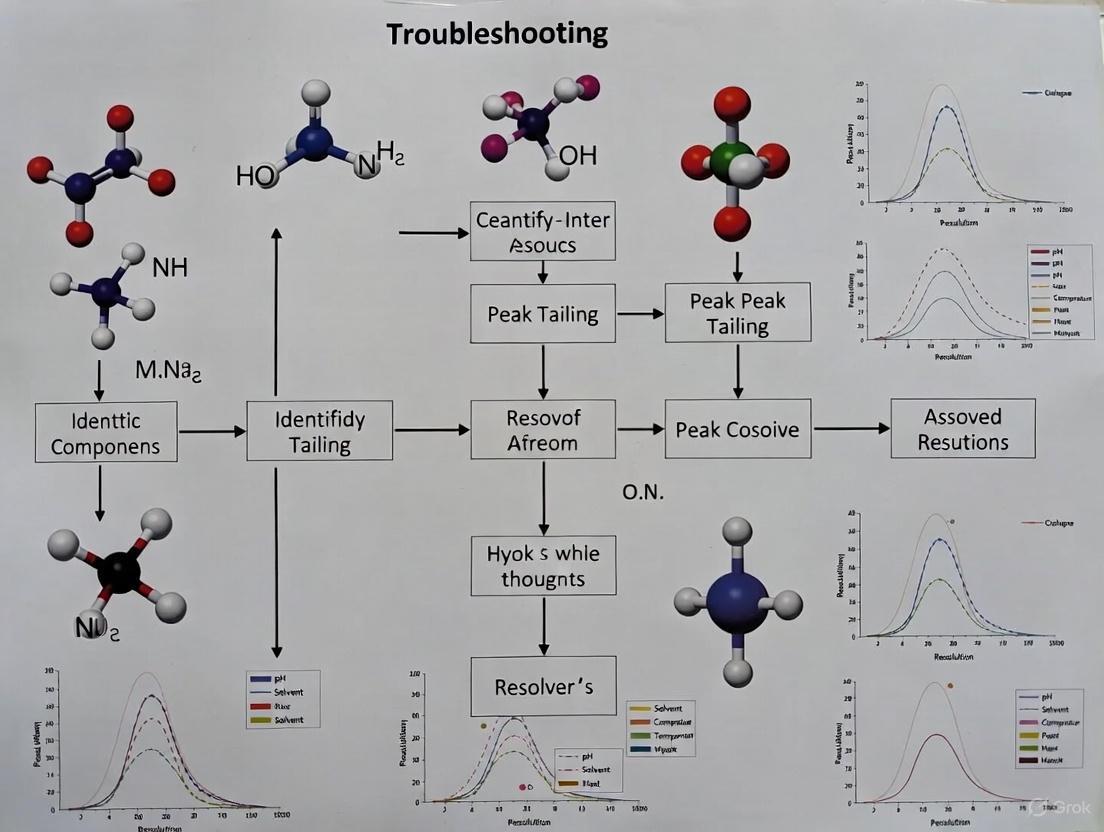
This comprehensive guide addresses the pervasive challenge of peak tailing in the chromatographic analysis of inorganic compounds.
Resolving Peak Tailing in Inorganic Compound Chromatography: A Complete Troubleshooting Guide for Scientists
Abstract
This comprehensive guide addresses the pervasive challenge of peak tailing in the chromatographic analysis of inorganic compounds. Tailored for researchers, scientists, and drug development professionals, the article provides a systematic framework spanning from foundational principles and modern methodologies to advanced troubleshooting protocols and validation strategies. Readers will gain actionable insights into diagnosing root causes, applying optimized chemical and instrumental solutions, and implementing robust quality control measures to ensure precise, reliable, and reproducible analytical results in biomedical and clinical research applications.
Understanding Peak Tailing: Core Principles and Impact on Inorganic Analysis
What are the visual characteristics of an ideal Gaussian peak versus a tailed peak?
An ideal chromatographic peak is symmetrical and follows a Gaussian (bell-shaped) distribution. Visually, the two sides of the peak are mirror images of each other, with a sharp apex and a smooth, equally gradual ascent and descent to the baseline [1] [2]. This symmetry indicates a single, uniform mechanism of analyte retention as it travels through the chromatography system [3].
In contrast, a tailing peak is asymmetrical. Its trailing edge (the back half of the peak) is broader and extends further than its leading edge (the front half) [1] [4] [2]. This distortion represents a deviation from ideal Gaussian behavior, where some analyte molecules are delayed within the system.
Quantifying Peak Shape The asymmetry of a peak is quantified using the USP Tailing Factor (T) or the Asymmetry Factor (As). Both are calculated using the formula at a specific peak height (often 5% or 10%) [5] [6] [2]:
- Formula: ( Tf or As = \frac{B}{A} )
The table below interprets these values:
| Tailing Factor (T) / Asymmetry Factor (As) | Peak Shape Assessment |
|---|---|
| 1.0 | Perfect symmetry |
| <1.0 | Net fronting |
| >1.0 | Net tailing |
For many assays, a tailing factor between 0.8 and 1.8 is considered acceptable, unless specified otherwise by the method [2].
What problems are caused by peak tailing in quantitative analysis?
Peak tailing is not merely a cosmetic issue; it directly compromises the accuracy and reliability of chromatographic data.
- Difficult Integration and Miscalculated Area: The gradual return to the baseline makes it challenging for data systems to accurately determine the peak's end point, leading to incorrect area calculations [1] [7].
- Reduced Resolution and Shorter Peaks: Tailed peaks are broader, which can cause them to overlap with closely eluting peaks, reducing resolution. They also have lower peak heights, which can negatively affect detection limits [1] [2] [7].
- Longer Analysis Times: Because tailed peaks take longer to fully elute, the overall runtime of the analysis must be increased to allow all peaks to return to baseline [1].
What are the most common causes of peak tailing and their solutions?
Peak tailing can originate from chemical interactions, physical issues with the hardware or column, or problems with the sample itself. The following troubleshooting guide outlines common causes and systematic fixes.
Systematic troubleshooting workflow for diagnosing peak tailing
Chemical Interactions: Silanol Effects
- Cause: Acidic silanol groups (-Si-OH) on the silica-based stationary phase can interact with basic functional groups on analyte molecules, especially at mid to high pH (above pH 3-4) where silanols are ionized. This creates multiple retention mechanisms, causing some molecules to lag [3] [2] [7].
- Solutions:
- Operate at a lower pH: Using a mobile phase with a pH below 3-4 suppresses silanol ionization, minimizing this interaction. Ensure your column is stable at low pH (e.g., Agilent ZORBAX Stable Bond columns) [3].
- Use a highly deactivated column: "End-capped" columns (e.g., Agilent ZORBAX Eclipse Plus) are treated with reagents like trimethylchlorosilane (TMCS) to convert residual silanols into less polar groups, dramatically reducing tailing for basic compounds [3] [2].
- Buffer the mobile phase: Adequate buffer concentration (e.g., 10-50 mM) helps maintain a stable pH and masks residual silanol interactions [1] [2].
Physical and Column-Related Issues
- Cause: Mass Overload occurs when the amount of analyte injected exceeds the column's capacity [8] [3].
- Solution: Dilute the sample or reduce the injection volume. If tailing improves, consider using a column with higher capacity (e.g., increased % carbon or larger diameter) [3] [1].
- Cause: Packing Bed Deformation such as a void at the column inlet or a partially blocked inlet frit can disrupt flow paths [3] [1].
- Solution: Substitute the column to confirm. If a void is suspected, reverse the column, disconnect it from the detector, and flush with a strong solvent. Use in-line filters and guard columns to prevent frit blockages [3] [6].
- Cause: Excessive System Dead Volume from poorly made connections or tubing can cause band broadening and tailing, especially for early-eluting peaks [2].
- Solution: Ensure all fittings are properly seated and use tubing with the correct internal diameter and minimal practical length [6] [2].
Sample and Instrument Issues
- Cause: Sample Solvent Mismatch occurs when the sample is dissolved in a solvent stronger than the mobile phase [8].
- Solution: Prepare the sample in a solvent that matches or is weaker than the initial mobile phase composition.
- Cause: Carryover or Contamination from the autosampler or system can introduce ghost peaks or cause tailing [8].
- Solution: Perform a thorough cleaning of the autosampler and injection needle. Run blank injections to identify carryover [8].
What key reagents and materials are essential for troubleshooting?
Having the right tools and materials is critical for efficiently diagnosing and resolving peak tailing.
Research Reagent Solutions for Peak Tailing
| Item | Function / Purpose in Troubleshooting |
|---|---|
| Highly Deactivated, End-Capped C18 Column (e.g., Agilent ZORBAX Eclipse Plus) | Benchmark column for testing and minimizing secondary silanol interactions; essential for analyzing basic compounds [3] [2]. |
| Low-pH Stable Column (e.g., Agilent ZORBAX Stable Bond) | Allows operation at pH < 3 to suppress silanol ionization without damaging the silica [3]. |
| pH Buffers (e.g., phosphate, formate, acetate) | To control mobile phase pH precisely and mask residual silanol interactions [1] [2]. |
| In-line Filter and Guard Column | Protects the analytical column from particulates that can block the inlet frit and cause bed deformation [3] [1]. |
| Strong Solvent (e.g., 100% ACN or MeOH) | For flushing and cleaning a column suspected of having a blockage or contamination [3]. |
FAQ: Quick Answers to Common Peak Tailing Questions
Q1: My peaks were symmetrical but have started tailing on a previously used column. What should I check first? A1: For a sudden change in a previously good column, first check for a poor connection between the tubing and the column, which creates dead volume. Reseating the connections often resolves the issue. If not, suspect a developing void or a blocked inlet frit [6].
Q2: Can the detector itself cause peak tailing? A2: Yes. A detector with a slow response time, a large flow cell volume, or improper calibration can distort peaks and contribute to tailing. Ensure detector settings are optimized for your method and that regular maintenance is performed [2].
Q3: Is peak tailing always a bad thing? A3: While a symmetrical peak is always the goal, some level of tailing is often tolerated. Pharmacopeial guidelines (USP/Ph. Eur.) generally specify a tailing factor of 0.8 to 1.8 as acceptable for many assays. However, values closer to 1.0 are always desirable for optimal resolution and quantitation [2].
Q4: How can I be sure that peak tailing is caused by the stationary phase and not my sample? A4: Test the same sample on a different column chemistry, preferably a highly deactivated one. If the tailing disappears or is significantly reduced on the new column, the original stationary phase was likely the cause. If tailing persists, investigate your sample preparation and instrument configuration [2] [7].
Definitions and Calculations
The USP Tailing Factor (Tf) and Symmetry Factor (As) are both crucial metrics for quantifying peak asymmetry in chromatographic analysis. According to the United States Pharmacopeia (USP) and the European Pharmacopoeia (Ph. Eur.), these terms and their calculations are considered identical [2].
The following diagram illustrates the measurement process for calculating the Tailing Factor:
Formula: The Tailing Factor (T) or Symmetry Factor (As) is calculated using the following equation, which is standardized across USP and Ph. Eur. [2] [9]: T = As = W₀.₀₅ / 2d Where:
- W₀.₀₅ is the peak width at 5% of the peak height.
- d is the distance from the perpendicular dropped from the peak maximum to the leading edge of the peak at 5% of the peak height.
Interpretation of Values:
- As = 1.0: Ideal symmetric peak (perfectly Gaussian) [9].
- As < 1.0: The peak is "fronting" [2] [9].
- As > 1.0: The peak is "tailing" [2] [9].
Table 1: Summary of Peak Shape Terminology
| Term | Calculation | Ideal Value | Governing Pharmacopeia |
|---|---|---|---|
| USP Tailing Factor (T) | T = W₀.₀₅ / 2d | 1.0 | United States Pharmacopeia (USP) [2] [10] |
| Symmetry Factor (As) | As = W₀.₀₅ / 2d | 1.0 | European Pharmacopoeia (Ph. Eur.) [2] [11] |
Acceptance Criteria
The generally accepted range for the tailing/symmetry factor in chromatographic assays, unless specifically stated otherwise in a method, is 0.8 to 1.8 [2] [10] [11].
- USP Requirement: The USP states that the tailing factor for the peak of interest should typically be less than 2.0 [12] [10].
- Ph. Eur. Requirement: The European Pharmacopoeia specifies that the symmetry factor is normally required to be between 0.8 and 1.8 [11].
Table 2: Acceptance Criteria and Implications
| Tailing/Symmetry Factor Value | Peak Shape Assessment | Common Regulatory Implication |
|---|---|---|
| 0.8 - 1.8 (ideal: 1.0) | Acceptable symmetry to slight tailing/fronting | Generally acceptable for quantitation unless otherwise specified [2] [11] |
| < 0.8 | Fronting peak | Unacceptable; requires troubleshooting [2] |
| > 1.8 to 2.0 | Significant tailing | May be acceptable for some assays, but indicates sub-optimal performance [10] |
| > 2.0 | Severe tailing | Typically unacceptable; requires investigation and corrective action [13] [10] |
Step-by-Step Experimental Protocol for Measurement
Accurately measuring the tailing factor is a critical step in system suitability testing. The following workflow outlines the core experimental process, from preparation to data analysis:
Detailed Methodology
Step 1: Prepare System Suitability Test (SST) Solution
- Prepare a standard solution containing a known concentration of the analyte of interest [12]. The concentration should be sufficient to achieve a strong signal-to-noise ratio (typically >10 for quantification) [12].
- For methods analyzing multiple compounds, the SST solution should contain all key analytes and any internal standards, covering the expected retention time range of the chromatographic method [12].
Step 2: Instrumental Analysis and Data Acquisition
- Set up the chromatographic system (HPLC or GC) according to the validated method parameters (column type, mobile phase, flow rate, temperature program, etc.) [12].
- Inject the SST solution a minimum of five times to establish a reproducible performance baseline [12].
- Record the resulting chromatograms for analysis.
Step 3: Data Processing and Peak Integration
- Use the chromatography data system (CDS) software to automatically identify and integrate the target peak(s).
- Ensure the software's integration algorithm correctly identifies the peak start, apex, and end points. Manually review and adjust the baseline if necessary to ensure accurate integration.
Step 4: Tailing Factor Calculation
- Modern CDS software will automatically calculate the tailing factor (T) using the built-in formula
T = W₀.₀₅ / 2d[5] [9]. - For manual verification or if using software that does not auto-calculate, measure
W₀.₀₅(the peak width at 5% height) andd(the distance from the peak maximum to the front edge of the peak at 5% height) directly from the printed or on-screen chromatogram and perform the calculation.
Step 5: Evaluation Against Criteria
- Compare the calculated tailing factor from each injection against the pre-defined acceptance criterion, which is typically 0.8 to 1.8 unless the method specifies otherwise [2] [11].
- The system is considered suitable for analysis only if the tailing factor and other system suitability parameters (e.g., precision, resolution) meet all acceptance criteria [12] [10].
Troubleshooting Guide: Resolving Excessive Peak Tailing
When the tailing factor exceeds the acceptance limit (>1.8), a systematic investigation is required. The following FAQs address common root causes and solutions.
FAQ 1: What are the primary chemical causes of peak tailing for basic compounds, and how can I fix them?
Answer: The most common chemical cause of tailing for basic inorganic compounds is undesirable secondary interaction with ionized silanol groups (-Si-OH) on the silica surface of the stationary phase [2] [3].
Corrective Actions:
- Operate at Low pH: Use a mobile phase with a pH of 2.0-3.0. At low pH, silanol groups are protonated and non-ionized, minimizing ionic interaction with basic analytes. This can dramatically reduce the tailing factor [2] [3].
- Use a Highly Deactivated Column: Select a column that is "end-capped" or specially designed for basic compounds. End-capping is a chemical process that converts polar silanol groups into less polar siloxane groups, significantly reducing secondary interactions [2] [3].
- Employ Buffered Mobile Phase: Ensure your mobile phase contains an adequate buffer concentration (e.g., 5-10 mM for reversed-phase HPLC) to maintain a stable pH and mask residual silanol activity [13] [2].
FAQ 2: My entire chromatogram shows tailing peaks. What should I check first?
Answer: Universal tailing across all peaks often points to a physical issue rather than a chemical one.
Corrective Actions:
- Check for Column Overload: Dilute your sample 10-fold and re-inject. If tailing decreases, the original sample was too concentrated, leading to mass overload. Use a more dilute sample or a column with higher capacity [2] [3].
- Inspect for Column Bed Deformation: A void (empty space) at the column inlet can cause peak tailing and broadening. Reverse the column (after disconnecting from the detector) and flush with a strong solvent. If performance does not improve, replace the column [2] [3].
- Minimize System Dead Volume: Ensure all connection tubing is of the correct diameter and length and that all fittings are properly seated. Excessive void volume in the flow path causes peak broadening and tailing, especially for early-eluting peaks [2] [14].
- Replace the Guard Cartridge: A dirty, obstructed, or inappropriate guard cartridge can cause tailing. Replace it with a new, compatible one [14].
FAQ 3: Only one or two peaks in my method are tailing. What does this indicate?
Answer: Tailing of a subset of peaks is typically a chemical selectivity issue or indicates a co-eluting interference.
Corrective Actions:
- Suspect a Co-eluting Interferent: A tailing or shouldering peak may hide an unresolved compound. Change the detection wavelength or modify the method's gradient/elution strength to improve resolution [3] [14].
- Verify Mobile Phase Preparation: An error in pH adjustment or buffer concentration can selectively affect the ionization and retention of specific analytes. Prepare a fresh mobile phase batch meticulously [13] [14].
- Improve Sample Cleanup: Matrix components in the sample can interfere with specific analytes. Implement a sample preparation technique like solid-phase extraction (SPE) to remove interfering contaminants [3] [14].
The Scientist's Toolkit: Essential Research Reagents and Materials
Table 3: Key Materials for Troubleshooting Peak Tailing
| Item | Function / Purpose | Application Notes |
|---|---|---|
| Low-pH Stable C18 Column (e.g., Agilent ZORBAX StableBind) | Stationary phase for separations at pH < 3, minimizing silanol interactions. | Essential for analyzing basic compounds without tailing [3]. |
| End-capped/Base-Deactivated Column (e.g., Agilent ZORBAX Eclipse Plus) | Highly deactivated surface reduces secondary interactions with polar and basic analytes. | First choice for method development to ensure symmetric peaks [2] [3]. |
| In-line Filter & Guard Column Holder | Protects the analytical column from particulate matter that can clog the inlet frit. | Extends column lifetime and prevents backpressure issues [2] [14]. |
| Appropriate Guard Cartridge | Matches the analytical column's chemistry; acts as a sacrificial pre-column. | Must be used with a correct cap frit to avoid dead volume [14]. |
| High-Purity pH Buffer Salts | For preparing buffered mobile phases to control pH precisely. | Critical for reproducible retention times and peak shapes [13] [2]. |
| PEEK Tubing & Fittings | Provides low-dead-volume connections throughout the HPLC system. | Vital for maintaining peak integrity, especially in UHPLC systems [14]. |
| Certified System Suitability Standard | A known mixture for verifying system performance before analysis. | Used for daily instrument qualification and system suitability testing (SST) [10]. |
FAQ: Understanding Peak Tailing
What is peak tailing and how is it measured? Peak tailing occurs when the back half of a chromatographic peak is broader than the front half, resulting in an asymmetrical shape. This is quantified using the Tailing Factor (Tf) or Asymmetry Factor (As) [2] [1]. The ideal, symmetrical Gaussian peak has a value of 1.0. A value greater than 1.0 indicates tailing, while a value less than 1.0 indicates fronting. According to pharmacopeial standards like the USP, an asymmetry factor between 0.8 and 1.8 is generally acceptable, though specific methods may have stricter requirements [2].
Why should I be concerned about peak tailing? Peak tailing is not just a cosmetic issue; it has several critical consequences that compromise data quality [2] [1] [7]:
- Degraded Resolution: The broad tail of a peak can obscure or merge with a closely eluting peak, making it difficult to separate and accurately identify individual compounds [2] [7].
- Inaccurate Quantification: The sloping baseline of a tailing peak makes it challenging for integration software to consistently determine the peak's end point. This leads to poor precision and accuracy in calculating peak area, which is essential for quantification [15] [1] [7].
- Higher Detection Limits: Tailing peaks are shorter and broader than symmetrical peaks of the same area. This reduced height worsens the signal-to-noise ratio, effectively raising the method's detection limit and making it harder to detect trace-level analytes [15].
Troubleshooting Guide: Diagnosing and Fixing Tailing Peaks
A systematic approach is key to resolving peak tailing. The following workflow outlines a logical path for diagnosis and correction.
Troubleshooting Common Causes and Solutions
The table below details specific problems and the experimental protocols to address them.
| Problem Area | Specific Cause | Experimental Protocol for Resolution & Verification |
|---|---|---|
| Column Condition | Packing Bed Deformation (voids or channels at column inlet) or blocked inlet frit [2] [3] [1]. | Protocol: Substitute the column with a new one of the same type. If the problem is resolved, the original column is faulty. For a suspected void, reverse the column, disconnect it from the detector, and wash with at least 10 column volumes of a strong solvent. Verification: If tailing is reduced or eliminated after substitution or flushing, the column was the cause. |
| Sample Introduction | Mass Overload (too much sample for the column's capacity) [2] [3] [1]. | Protocol: Dilute the sample 10-fold and re-inject. Alternatively, reduce the injection volume. Verification: A significant improvement in peak shape with the diluted sample confirms mass overload. Use a higher-capacity stationary phase for long-term resolution. |
| System Setup | Excessive Dead Volume in tubing or connections [2] [1]. | Protocol: Inspect all connections for gaps. Use shorter tubing lengths with narrower internal diameters where possible. Ensure the column is properly seated in the holder. Verification: A reduction in tailing, particularly for early-eluting peaks, after minimizing extra-column volume confirms the issue. |
| Stationary Phase Chemistry | Secondary Silanol Interactions (for basic compounds on silica-based columns) [2] [3] [7]. | Protocol: 1) Switch to a highly deactivated, end-capped column. 2) Lower the mobile phase pH (e.g., to pH 3.0 or below) to protonate silanol groups. 3) Buffer the mobile phase to control pH and mask interactions. Verification: Improved symmetry factor for basic analytes after implementing these changes. |
| Mobile Phase Chemistry | Unbuffered Mobile Phase or operating near analyte pKa [2]. | Protocol: Prepare a buffered mobile phase (e.g., phosphate or acetate) with a concentration of 10-50 mM, ensuring the pH is at least 1.0 unit away from the pKa of the key analytes. Verification: More consistent and symmetrical peaks across injections. |
The Scientist's Toolkit: Essential Research Reagent Solutions
The following materials are crucial for preventing and troubleshooting peak tailing in methods for inorganic compound analysis.
| Reagent/Material | Function & Rationale |
|---|---|
| Endcapped C18 Columns | Standard reversed-phase columns where residual silanols are treated to be less polar, minimizing secondary interactions with basic analytes [2] [3]. |
| Specialty Base-Deactivated Columns | Columns designed with high coverage and specific bonding to minimize interactions with basic compounds, providing superior peak shape for APIs and related substances [3]. |
| Mobile Phase Buffers (e.g., Potassium Phosphate, Ammonium Formate) | Essential for maintaining a stable pH, which suppresses silanol ionization and keeps analytes in a single, non-exchangeable form, ensuring sharp peaks [2] [1]. |
| Guard Columns / In-Line Filters | Protect the expensive analytical column from particulate matter and contaminants that can cause blockages or create voids at the column inlet [2] [3]. |
| High-Purity Solvents & Additives | Impurities in solvents can interact with the stationary phase or analyte, contributing to tailing. Using HPLC-grade or higher purity materials is critical [2]. |
Advanced Quantitative Implications
The quantitative errors introduced by peak tailing are not always trivial. Research using simulated chromatographic data has demonstrated that the integration algorithms in data systems can significantly underestimate the true area of a tailing peak because the software may fail to detect the gradual return to baseline [15]. One study showed that as the asymmetry factor increases from 1.1 to 3.0, the measured peak area can decrease by over 5%, and the peak height can be reduced by nearly 50% [15]. This height reduction directly degrades the signal-to-noise ratio, which can raise the minimum detection limit of a method by 50% or more. This has profound implications for trace analysis in pharmaceutical research and development.
FAQ: Understanding and Diagnosing Peak Tailing
What are the primary root causes of peak tailing for inorganic compounds? The three primary root causes are silanol interactions, metal chelation, and secondary retention mechanisms. Silanol interactions occur between basic functional groups on your analytes and acidic silanol groups on the silica-based stationary phase [2] [3]. Metal chelation involves trace metals in the base silica forming complexes with certain analytes, leading to tailing [16]. Secondary retention mechanisms refer to any additional, unwanted interactions that compete with the primary retention mechanism, often caused by the chemical nature of the analyte, stationary phase, or mobile phase [3].
How can I quickly diagnose the likely cause of tailing in my chromatogram? A rapid diagnostic approach is to observe which peaks are affected:
- Tailing of one or a few peaks: Typically points to a chemical or application-specific issue, such as secondary interactions (e.g., silanol effects, metal chelation) or column overload for specific analytes [13] [17].
- Tailing of all peaks: Often indicates a physical or systemic problem, such as a column void (packing bed deformation), a blocked frit, excessive system dead volume, or general column overload [13] [2] [1].
Why is peak tailing a critical problem in analytical chromatography? Peak tailing directly compromises data quality and method reliability. Key adverse effects include [13] [1]:
- Difficulty in Accurate Integration: Gradual peak transitions make it hard to set integration limits, leading to inaccurate peak area calculations.
- Reduced Resolution: Tailing peaks take longer to elute, potentially causing co-elution and failure to separate closely eluting compounds.
- Compromised Detection Limits: For a given peak area, tailing produces shorter peak heights, which is a critical factor in determining method detection and quantitation limits.
- Poor Reproducibility: Inconsistent peak shapes lead to variable quantification, affecting method robustness.
Troubleshooting Guide: Mechanisms and Solutions
Silanol Interactions
Mechanism Overview Acidic silanol groups (Si-OH) on the surface of silica-based stationary phases can interact with basic functional groups on analytes. At mid to high pH (typically >3), these silanols become ionized (Si-O⁻), creating strong secondary interaction sites that retain basic molecules longer than the primary hydrophobic mechanism, resulting in a characteristic tailing peak [2] [3] [16].
Diagnostic Experiments and Solutions
| Diagnostic Approach | Experimental Protocol | Recommended Solutions |
|---|---|---|
| pH Suppression | Prepare mobile phase at low pH (e.g., 2.5-3.0). Compare peak shape with the original method. | Use a low-pH mobile phase (e.g., pH ~2.5) to protonate silanol groups, suppressing their ionization and interaction strength [2] [16]. |
| Column Deactivation | Substitute the current column with a highly deactivated, end-capped, or high-purity silica (Type B) column. | Select a highly deactivated "end-capped" column. End-capping converts residual silanols to less polar siloxanes, drastically reducing secondary interactions [2] [1] [3]. |
| Mobile Phase Buffering | Increase the concentration of the buffer (e.g., phosphate, formate) in the mobile phase from 5-10 mM to 20-50 mM. | Employ a competitive base like triethylamine (TEA, ~0.05 M). The amine group competes with the analyte for silanol sites, effectively "masking" them [18] [16]. |
Metal Chelation
Mechanism Overview Trace metal impurities (e.g., iron, aluminum) present in the silica matrix can act as chelation sites for analytes with specific functional groups (e.g., carboxylic acids, phosphonates). This chelation creates a strong, specific secondary interaction that causes severe tailing for affected compounds [16].
Diagnostic Experiments and Solutions
| Diagnostic Approach | Experimental Protocol | Recommended Solutions |
|---|---|---|
| Chelating Agent Addition | Add a low concentration (e.g., 0.1-1.0 mM) of EDTA (Ethylenediaminetetraacetic acid) or a similar chelating agent to the mobile phase. | Introduce a sacrificial chelating agent like EDTA to the mobile phase. It will preferentially bind to the metal sites, blocking them from interacting with the analyte [18] [16]. |
| High-Purity Columns | Test the separation using a column specifically manufactured from high-purity, low-metal-content silica. | Use high-purity silica-based columns with documented low trace metal content to minimize the availability of chelation sites from the start [16]. |
Secondary Retention Mechanisms and Other Causes
Mechanism Overview This encompasses any situation where the analyte is retained by more than one mechanism simultaneously. Beyond silanol and metal interactions, this can include column overload (mass or volume), system dead volume, and physical damage to the column [3].
Diagnostic Experiments and Solutions
| Symptom | Possible Cause | Diagnostic Experiment | Solution |
|---|---|---|---|
| All peaks tail, retention times may shift. | Column Overload (Mass) | Dilute the sample 5-10 fold and re-inject. If tailing is reduced, mass overload was the issue. | Dilute the sample, use a column with higher capacity (e.g., higher carbon load, larger diameter), or reduce the injection volume [13] [2] [1]. |
| All peaks tail, especially early eluters. | Excessive System Dead Volume | Measure extra-column volume. Check for improper, loose, or overly long capillary connections. | Use short, narrow-internal-diameter (e.g., 0.13 mm for UHPLC) capillaries. Ensure all fittings are properly seated and use zero-dead-volume unions [18] [16] [17]. |
| All peaks tail, split, or front. Pressure may be abnormal. | Packing Bed Deformation (Void or blocked frit) | Substitute the column with a new one. If the problem is fixed, the original column is damaged. | Reverse and flush the column if a void is suspected. Use in-line filters and guard columns to prevent frit blockages. Replace the column if physical damage is severe [2] [1] [18]. |
The Scientist's Toolkit: Research Reagent Solutions
| Reagent/Material | Primary Function in Troubleshooting | Application Notes |
|---|---|---|
| Trimethylchlorosilane (TMCS) | Key reagent used in end-capping stationary phases to reduce the population of reactive silanols [3]. | N/A (Used in column manufacturing, not direct analysis) |
| Triethylamine (TEA) | Competitive base added to the mobile phase to mask silanol sites by preferentially binding to them [18] [16]. | Typical concentration ~0.05 M. Use with caution in LC-MS. |
| EDTA (Disodium Salt) | Sacrificial chelating agent added to the mobile phase to sequester trace metal impurities on the stationary phase [18] [16]. | Use at 0.1-1.0 mM concentration. Check compatibility with detection. |
| Potassium Phosphate Buffer | Provides buffering capacity to control mobile phase pH, critical for suppressing silanol ionization and analyte ionization [13] [2]. | Use at adequate concentration (e.g., 10-50 mM). Measure pH of aqueous portion before adding organic. |
| End-capped C18 Column | Highly deactivated stationary phase designed to minimize secondary interactions with polar and ionizable analytes [2] [3]. | The first and most critical choice for methods analyzing basic compounds. |
| In-line Filter / Guard Column | Physical protection for the analytical column by trapping particulates and contaminants that could cause frit blockage or create voids [2] [17]. | Essential for analyzing complex or dirty samples. |
Experimental Workflow for Systematic Diagnosis
The following diagram outlines a logical, step-by-step workflow to diagnose the root cause of peak tailing.
Quantitative Data for Peak Shape Assessment
Table: Standard Metrics for Quantifying Peak Tailing
| Metric Name | Calculation Formula | Ideal Value | Acceptable Range | Regulatory Citation |
|---|---|---|---|---|
| USP Tailing Factor (Tf) | Tf = W0.05 / (2f) where W0.05 is peak width at 5% height, and f is the front half-width. | 1.0 | Typically ≤ 2.0 [13] [16] | USP General Chapter <621> [2] |
| Symmetry Factor (As) | As = B / A where A and B are the front and back half-widths at 10% peak height. | 1.0 | 0.8 - 1.8 (Unless otherwise specified) [2] | Ph. Eur. 2.2.46 [2] |
Table: Troubleshooting Summary Table for Primary Root Causes
| Root Cause | Typical Symptom | Key Diagnostic Experiment | Immediate Corrective Action |
|---|---|---|---|
| Silanol Interactions | Tailing of basic compounds. | Lower mobile phase pH to ~2.5. | Use low-pH mobile phase and/or an end-capped column [2] [16]. |
| Metal Chelation | Tailing of compounds with chelating groups (e.g., acids). | Add EDTA to the mobile phase. | Add a chelating agent (e.g., EDTA) to the mobile phase [16]. |
| Column Void/Blocked Frit | Tailing or splitting of all peaks. | Substitute the column. | Reverse and flush the column; replace if ineffective [2] [18]. |
| Mass Overload | Tailing of major component(s), retention time may decrease. | Dilute the sample and re-inject. | Reduce sample concentration or injection volume [13] [1]. |
Proactive Method Development: Column and Mobile Phase Strategies for Inorganics
Peak tailing is a prevalent challenge in liquid chromatography (LC), characterized by an asymmetrical peak where the second half is broader than the front half [1]. This phenomenon is quantified by the asymmetry factor (As) or tailing factor (Tf), with a value of 1 representing perfect symmetry [13]. For many assays, an As of up to 1.5 is acceptable, but values exceeding 2.0 typically require corrective action [3] [13].
The primary chemical cause of peak tailing, especially for basic compounds, involves undesirable secondary interactions between analytes and the stationary phase [7]. These often occur with acidic silanol groups (Si-OH) on the surface of silica-based packing materials [1] [19]. The selection of an appropriate stationary phase is a critical strategic decision to mitigate these interactions, enhance method robustness, and ensure reliable quantification [7].
This guide provides a structured approach to selecting stationary phases—including low-metal Type-B silica, end-capped, and zirconia-based columns—to effectively minimize peak tailing.
Different stationary phase chemistries offer distinct mechanisms for reducing deleterious secondary interactions. The table below summarizes the key characteristics of the three primary types discussed in this guide.
Table 1: Comparison of Stationary Phases for Reducing Peak Tailing
| Stationary Phase Type | Key Mechanism of Action | Typical Applications | pH Stability Range | Key Advantages |
|---|---|---|---|---|
| Low-Metal Type-B Silica | Reduced trace metal content and fewer acidic silanols [7] [19] | General purpose; separation of basic compounds [7] | ~2-8 [19] | Significant reduction in tailing for basic compounds vs. Type-A [19] |
| End-capped / Base-Deactivated (BDS) | Chemical blocking of residual silanols with agents like trimethylsilyl (TMS) [1] [20] | Targeted analysis of basic and polar compounds [3] | ~2-8 [3] | Proactive minimization of silanol interactions; widely available [20] |
| Zirconia-Based | Non-siliceous substrate; completely eliminates silanol effects [7] [19] | Challenging separations requiring high pH or temperature [7] | Extended (e.g., 1-14) [7] | No silanol interactions; sharp, symmetrical peaks; high stability [19] |
Troubleshooting Guide: Selecting a Stationary Phase Based on Symptoms
The following flowchart provides a diagnostic workflow for selecting the optimal stationary phase based on specific experimental observations and requirements. This visual guide helps to quickly narrow down the best choice for your specific situation.
Diagnosing Peak Tailing and Column Selection Workflow
The decision process above helps narrow down the optimal stationary phase. The following section details the specific experimental protocols for implementing these solutions.
Detailed Experimental Protocols
Protocol for Method Development Using End-Capped (BDS) Columns
This protocol is ideal for initiating methods where analytes, especially basic ones, are susceptible to silanol interactions [20] [3].
- Column Selection: Choose a commercially available end-capped or BDS column (e.g., Agilent ZORBAX Eclipse Plus) [3]. These columns are treated with reagents like trimethylchlorosilane (TMCS) to convert residual silanols into less polar groups [3].
- Mobile Phase Preparation:
- For LC-UV: Prepare a mobile phase with a buffer concentration of 5-10 mM (e.g., phosphate) to control ionic strength [20]. If tailing persists, increasing the buffer concentration to 25 mM can further mask silanol interactions [20].
- For LC-MS: Use volatile additives such as 0.1% formic acid or ammonium formate/acetate at concentrations typically below 10 mM to prevent ion suppression [20].
- pH Optimization: Set the mobile phase to a low pH (e.g., pH 3.0). This protonates both the residual silanol groups on the silica and basic functional groups on the analyte, minimizing ionic interactions [1] [3]. Ensure the column is rated for use at the selected pH.
- System Equilibration: Equilibrate the column with at least 10 column volumes of the starting mobile phase before making the first injection [21].
Protocol for Assessing and Resolving Column Overload
If all peaks in a chromatogram tail, column mass overload should be investigated [1] [3].
- Diagnostic Test:
- Corrective Actions:
- Reduce Sample Load: Permanently use a lower sample concentration or a smaller injection volume. Injection volumes should generally be less than 40% of the expected peak width [21].
- Change Column: Switch to a column with higher capacity, such as one with increased carbon loading, larger pore size, or a larger internal diameter [1] [3].
Protocol for Column Cleaning and Maintenance to Restore Peak Shape
A gradual increase in tailing over time often indicates column contamination [13] [21].
- Flushing Procedure: Disconnect the column from the detector. Flush the column with 5-10 column volumes of buffer-free mobile phase to remove salts, followed by 10-20 column volumes of a strong solvent (e.g., isopropanol or acetonitrile) to remove hydrophobic contaminants [20].
- Backflushing (if permitted by manufacturer): If flushing does not resolve the issue, and a blocked inlet frit is suspected, reverse the column direction. Disconnect it from the detector and run at least 10 column volumes of a strong solvent directly to waste [20].
- Guard Column Use: To prevent future contamination and extend analytical column life, routinely use an in-line filter or a guard column [1] [20].
Research Reagent Solutions
The following table lists key materials and reagents essential for implementing the protocols described and achieving optimal peak shape.
Table 2: Essential Reagents and Materials for Troubleshooting Peak Tailing
| Item | Function / Purpose | Key Considerations |
|---|---|---|
| End-capped / BDS Column | Minimizes secondary interactions by bonding free silanol groups with a silylating agent [1] [20]. | Look for "base-deactivated" labeling. Agilent ZORBAX Eclipse Plus is a cited example [3]. |
| Zirconia-Based Column | Provides a non-siliceous alternative to eliminate silanol interactions entirely; useful for extended pH and temperature stability [7] [19]. | Ideal for methods outside the standard silica pH range (2-8) [7]. |
| Ammonium Formate/Acetate | Volatile buffer salts for controlling mobile phase pH and ionic strength in LC-MS applications [20]. | Prefer concentrations <10 mM to avoid ion suppression [20]. |
| Formic Acid | A volatile acidic additive for LC-MS to protonate silanols and analytes in low-pH mobile phases [20]. | Typical concentration of 0.1% is common [20]. |
| Phosphate Buffers | Provides pH control and increases ionic strength to mask silanol interactions in LC-UV applications [1] [20]. | Can be used at higher concentrations (e.g., 25 mM); ensure solubility in mobile phase [20]. |
| In-line Filter / Guard Column | Protects the analytical column from particulates that can block the inlet frit and cause peak tailing or splitting [1] [20]. | Regular replacement is necessary as part of preventative maintenance [1]. |
| Strong Solvents (e.g., Isopropanol) | Used for washing reversed-phase columns to remove strongly retained contaminants during cleaning procedures [20] [21]. | Ensure compatibility with all system components. |
Frequently Asked Questions (FAQs)
Q1: What is the fundamental difference between peak tailing and peak fronting? Peak tailing occurs when the trailing edge of the peak is elongated, resulting in a broader second half. This is often due to strong interactions with residual silanol groups. In contrast, peak fronting happens when the leading edge is broader, often caused by column overload, poor sample solubility, or physical column collapse [1] [19].
Q2: Does peak tailing affect all compounds equally? No. Peak tailing in reversed-phase HPLC primarily affects basic compounds with amine and other basic functional groups, as these strongly interact with acidic silanols. Acidic and neutral compounds are generally less impacted [19].
Q3: My method was working fine but now shows tailing. What is the first thing I should check? First, check and replace the guard cartridge if you use one. If the problem persists, substitute a new column. A sudden change in peak shape often points to a failed guard column or a void/contamination in the analytical column itself [13] [21].
Q4: Are competing amine additives like triethylamine (TEA) still recommended to prevent tailing? While historically important, the use of TEA has declined. Modern high-purity Type-B silica and advanced end-capped columns have reduced the need for such additives. Furthermore, TEA is incompatible with mass spectrometric detection and should be avoided in LC-MS methods [7] [19].
Q5: What should I do if only one peak in my chromatogram is tailing? Tailing of a single peak is typically a chemical issue specific to that analyte. Investigate mobile phase pH and buffer concentration first. If the problem began suddenly, check if a new batch of mobile phase was prepared or if the column/guard column was recently changed [13].
In the separation and analysis of inorganic compounds, peak tailing is a prevalent challenge that compromises data accuracy, reduces resolution, and hinders reliable quantification. At its core, peak tailing often results from undesirable secondary interactions between analytes and active sites on the stationary phase [2] [3]. For basic compounds and many metal complexes, ionic interactions with ionized silanol groups (-Si-O⁻) on the silica surface are a primary culprit [2] [23]. Mastering mobile phase chemistry—specifically pH control, buffer selection, and ionic strength optimization—provides the most effective tools to suppress these interactions, leading to symmetrical peaks, robust methods, and reliable analytical results [24] [16].
This guide provides targeted troubleshooting strategies and FAQs to help researchers diagnose and resolve peak tailing issues through strategic mobile phase design.
Core Principles and Quantitative Data
Understanding and Measuring Peak Tailing
What is the Tailing Factor? The tailing factor (Tf) is a quantitative measure of peak symmetry. It is calculated using the formula specified by the United States Pharmacopeia (USP), where the peak width at 5% of the peak height is divided by twice the width of the front half of the peak at the same height [2] [13]. An ideal, perfectly symmetrical Gaussian peak has a Tf of 1.0. Slight tailing is common, and peaks with a Tf ≤ 1.5 are often considered acceptable for many assays, while a Tf ≥ 2.0 typically requires corrective action [13] [3] [16].
Optimized Mobile Phase Additives for Inorganic Compounds
The following table summarizes common mobile phase additives and their optimal use cases for controlling peak shape in the separation of inorganic and basic compounds.
Table 1: Mobile Phase Additives for Peak Shape Control
| Additive Type | Specific Examples | Recommended Concentration | Primary Function & Best Use | Key Considerations |
|---|---|---|---|---|
| Chaotropic Anions [23] | Hexafluorophosphate (PF₆⁻), Perchlorate (ClO₄⁻), Tetrafluoroborate (BF₄⁻) | 5 - 20 mM | Disrupts solvation shell of protonated basic analytes; increases retention and improves peak symmetry at low pH. | Effectiveness follows the Hofmeister series (e.g., PF₆⁻ > ClO₄⁻ > BF₄⁻). |
| Volatile Buffers (LC-MS) [24] [25] | Ammonium Formate, Ammonium Acetate | 5 - 20 mM | Provides pH control and ionic strength for MS-compatible methods. | Weaker buffering capacity than phosphate; avoid high concentrations that can suppress ionization. |
| Inorganic Buffers (UV Detection) [24] | Potassium Phosphate | 10 - 50 mM | Excellent buffering capacity and UV transparency; ideal for low-pH methods with UV detection. | Not volatile; incompatible with MS. Can precipitate in high organic mobile phases. |
| Ion-Pair Reagents [26] [23] | Alkyl sulfonates (e.g., hexanesulfonate) | ~0.005 M | Shields analytes from silanol interactions by binding to stationary phase and analytes. | Can require longer column equilibration; may suppress MS signal. |
| Sacrificial Amines [16] | Triethylamine (TEA) | 0.05 - 0.1 M | Competitively blocks active silanol sites by binding more strongly than the analyte. | Can be difficult to flush from the system; may modify the stationary phase. |
Experimental Protocols
Protocol: Systematic Troubleshooting of Peak Tailing
Follow the workflow below to diagnose and correct peak tailing efficiently.
Systematic troubleshooting workflow for peak tailing
Step-by-Step Procedure:
- Initial Assessment: Run a benchmark method to determine if the issue is with the method itself or the instrument/column [16].
- Diagnose by Scope:
- If all peaks tail: This suggests a physical or instrumental problem [13]. Proceed to check for a column inlet void (often fixable by reversing and flushing the column), a clogged frit, or excessive system dead volume from incorrect tubing or fittings [2] [27].
- If one or a few peaks tail: This indicates a chemical interaction problem [13] [16].
- Investigate Chemical Causes:
- Prepare a fresh mobile phase: Degas and filter using a 0.45 µm or 0.22 µm membrane filter [28]. Ensure the pH is adjusted before adding the organic solvent for accuracy [26] [28].
- Verify buffer concentration: For reversed-phase separations, a concentration of 5-20 mM is often sufficient, but tailing may require increasing this to >20 mM to better mask silanols [13] [16].
- Test a new column: Substitute the current column with a new one of the same type. If tailing disappears, the original column has degraded. If tailing persists, the mobile phase composition is likely the cause [13].
- Implement Corrections: Apply the optimization strategies outlined in Section 4 and the FAQ below.
The Scientist's Toolkit: Research Reagent Solutions
Table 2: Essential Reagents for Mobile Phase Optimization
| Reagent/Chemical | Function | Key Property & Consideration |
|---|---|---|
| Trifluoroacetic Acid (TFA) | Acidifying agent and ion-pair reagent for low-pH mobile phases. | Provides pH ~2.1 at 0.1% v/v; excellent for silanol suppression; UV transparent but can suppress MS signal [24]. |
| Ammonium Acetate | Volatile buffer for LC-MS applications. | Effective buffering range ~pH 3.8-5.8; MS-compatible [24] [25]. |
| Potassium Phosphate | High-capacity buffer for UV detection. | UV transparent; excellent for robust, non-MS methods; pKa₂ of 7.2 [24]. |
| Chaotropic Salts (e.g., KPF₆) | Increases retention and improves symmetry of protonated bases. | Use at low pH; follows chaotropic series for effectiveness [23]. |
| Triethylamine (TEA) | Sacrificial base to block active silanols. | Use at low pH (~0.05 M); can be difficult to remove from the system [16]. |
| HPLC-Grade Acetonitrile | Strong organic eluent in reversed-phase chromatography. | Low viscosity and high eluotropic strength; aprotic solvent [24] [25]. |
| HPLC-Grade Methanol | Organic eluent and modifier. | Protic solvent; can offer different selectivity than acetonitrile; stronger hydrogen bonding [24] [25]. |
| EDTA | Metal chelator. | Added to mobile phase to chelate trace metals in silica that can cause tailing with chelating analytes [16]. |
Frequently Asked Questions (FAQs)
Q1: Why is operating at a pH below 3 so effective in reducing tailing for basic compounds? At a pH < 3, the acidic silanol groups (pKa ~5-7) on the silica surface are predominantly protonated and neutral (-Si-OH). This suppresses the ionic interaction between the positively charged basic analyte and the negatively charged silonate group (-Si-O⁻), which is the primary cause of tailing. At higher pH, more silanols are ionized, exacerbating these secondary interactions [2] [3] [16].
Q2: How does increasing buffer concentration improve peak shape? A higher buffer concentration (e.g., increasing from 10 mM to 50 mM) provides a greater number of ions that can competitively interact with and "block" the active silanol sites on the stationary phase. This shielding effect prevents the analyte from undergoing the slow adsorption-desorption kinetics that cause tailing [23] [16]. The cation of the buffer (e.g., K⁺, NH₄⁺) is particularly important in this shielding process.
Q3: My method must be MS-compatible. What are my best options for controlling peak tailing? For LC-MS, you must use volatile additives. The most common strategy is to use a low-pH mobile phase buffered with ammonium formate or ammonium acetate (5-20 mM) [24] [25]. If tailing persists, consider using highly end-capped or specially deactivated columns designed for basic compounds. As a last resort, low concentrations of a volatile ion-pair reagent can be tested, with the awareness that it may cause ion suppression [26].
Q4: I've optimized the pH and buffer, but I still see tailing. What should I check next? Consider the possibility of mass overload, especially if the tailing peak is large. Try diluting your sample or injecting a smaller volume [2] [27]. Additionally, investigate instrumental factors:
- Column Void: A void at the column inlet can cause peak tailing and fronting. Reverse the column, flush with a strong solvent, and then re-install it in the correct flow direction [2] [3].
- Extra-column Volume: Excessive volume in tubing, connectors, or the detector flow cell can cause band broadening and tailing, especially for early-eluting peaks. Ensure all tubing is of the shortest possible length and smallest internal diameter (e.g., 0.005" ID) that your system pressure allows [16] [27].
Q5: What is the role of ionic strength, and how is it different from buffer concentration? Ionic strength is a measure of the total concentration of ions in solution. While buffer concentration contributes to ionic strength, the term "ionic strength optimization" in this context refers to the deliberate addition of other salts (like chaotropic salts NaClO₄ or KPF₆) to manipulate retention and peak shape through non-buffering mechanisms. These ions can disrupt the solvation shell of analytes or more effectively compete for stationary phase sites, leading to improved symmetry [23].
FAQ: Understanding and Troubleshooting Peak Tailing
Q1: What is peak tailing and why is it a critical issue in the chromatography of inorganic compounds?
Peak tailing is a distortion where the trailing edge of a chromatographic peak extends significantly compared to its leading edge. It is quantified using the Symmetry Factor (As) or Tailing Factor [2]. A perfectly symmetrical peak has an As of 1.0. According to pharmacopeial standards like the USP, an asymmetry factor between 0.8 and 1.8 is generally acceptable, unless otherwise specified [2]. Tailing is critical because it can decrease resolution between peaks and lead to inaccurate quantification, potentially causing erroneous conclusions in research or quality control [2] [7].
Q2: What are the primary chemical causes of peak tailing for basic inorganic analytes?
The primary chemical cause for basic compounds is undesirable secondary interactions with the stationary phase [7] [3]. In reversed-phase chromatography using silica-based columns, acidic silanol groups (-Si-OH) on the silica surface can become ionized at higher pH and interact strongly with basic functional groups on analytes [2] [7] [3]. This creates multiple retention mechanisms, resulting in tailing peaks. This effect is most pronounced at mid-pH ranges [2].
Q3: How have troubleshooting strategies for peak tailing evolved with modern column technologies?
Historically, a common troubleshooting strategy was to add competing amines like triethylamine (TEA) to the mobile phase to block silanol interactions [7]. However, this approach is less necessary today and is incompatible with mass spectrometric detection [7]. Modern strategies focus on preventing the interaction through advanced column chemistry [7]:
- High-Purity Silica ("Type B"): Reduces the number of acidic, metal-impurity silanol sites [7].
- Advanced End-capping: More effectively converts residual silanols into less polar groups [2] [3].
- Bidentate Ligand Technology: Uses ligands with two points of attachment to the silica surface, enhancing stability at high pH and providing superior shielding of silanol groups [3].
Q4: My peaks are tailing. How can I systematically diagnose whether the cause is chemical or instrumental?
A systematic approach is key to efficient troubleshooting [2] [8]. The following workflow outlines a logical diagnostic process.
Q5: When should I consider a bidentate ligand column over a standard C18 column?
Bidentate ligand columns, such as those with bridged bidentate ligands, are particularly advantageous in the following scenarios [3]:
- High-pH Separations: They are engineered to resist silica dissolution at extended pH ranges (e.g., pH > 8), where standard silica columns degrade.
- Stubborn Peak Tailing: Their structure provides superior deactivation of the silica surface, minimizing silanol interactions for difficult-to-separate basic compounds.
- Methods Requiring Long-Term Stability: The bidentate bonding is more hydrolytically stable, leading to a longer column lifetime, especially when using mobile phases at pH extremes.
Q6: What are hybrid organic-inorganic phases and what benefits do they offer?
Hybrid phases are a class of stationary phases that combine organic and inorganic components in a single particle. A key example involves the use of tri- or bi-dentate ligands that are "bridged" using proprietary chemistry before being applied to the silica [3]. This bridged structure affords steric protection against hydrolysis of the silica surface. The primary benefits are [3] [18]:
- Extended pH Stability: They can operate reliably from very low (pH < 1) to very high (pH > 12) pH ranges.
- Enhanced Hydrolytic Stability: The unique bonding chemistry reduces phase degradation, increasing column lifespan.
- Reduced Peak Tailing: They offer a more inert surface, minimizing secondary interactions.
Troubleshooting Guide: Quantitative Data and Solutions
The table below summarizes common causes of peak tailing and targeted solutions based on modern column technologies.
Table 1: Troubleshooting Guide for Peak Tailing in Inorganic Compound Chromatography
| Cause of Peak Tailing | Affected Peaks | Recommended Modern Column Technology | Supporting Mobile Phase Adjustment |
|---|---|---|---|
| Silanol Interactions [2] [3] | Primarily basic compounds | High-purity silica, Bidentate ligand columns (e.g., Agilent ZORBAX Extend) [3], Hybrid phases [18] | Use low-pH buffer (pH 2-3) to protonate silanols [2] [7]; Increase buffer concentration [2] |
| Column Overload [2] [8] | All peaks in the chromatogram | Use a higher-capacity stationary phase (increased carbon load or larger pore size) [2] | Dilute sample or reduce injection volume [2] [3] |
| Packing Bed Deformation (Void or blocked frit) [2] [8] | All peaks, often a sudden change | Replace column; Use columns with improved packing robustness | Flush column with strong solvent (may reverse flow if allowed) [2] [3] |
| Inappropriate Column Chemistry | Specific analyte classes | Match column to analyte: Bidentate for high-pH/basic analytes, Hybrid for extended pH stability, Specialized inorganic phases (e.g., zirconia) for extreme conditions [7] | Ensure mobile phase pH and solvent strength are within column specifications |
The Scientist's Toolkit: Essential Research Reagents and Materials
Table 2: Key Research Reagents and Materials for Advanced Chromatography
| Item Name | Function/Application | Technical Notes |
|---|---|---|
| Bidentate Ligand Column (e.g., Agilent ZORBAX Extend) [3] | High-pH separation of basic compounds; superior peak shape. | Ligands are bridged, providing steric protection against silica hydrolysis. Enables operation up to pH 11-12. |
| Hybrid Phase Column [18] | Operation across a wide pH range (e.g., 1-12) with high stability. | Organic-inorganic hybrid particles offer long-term stability under aggressive conditions. |
| High-Purity Silica Column (Type B) [7] | General-purpose analysis of basic compounds with reduced tailing. | Lower metal impurity content reduces interactions with acidic silanol groups. The modern standard. |
| End-capped Columns [2] [3] | Reducing secondary interactions with residual silanols. | Treatment with reagents like TMCS converts silanols to less polar groups. A "highly deactivated" column is recommended. |
| Buffers for Low-pH Mobile Phase (e.g., Phosphate, Formate) [2] | Suppresses ionization of silanol groups on the stationary phase. | Effective in the pH 2-3 range. Critical for analyzing basic compounds on silica-based columns. |
| In-line Filters & Guard Columns [2] [8] | Protects analytical column from particulates and contaminants, preventing frit blockage and bed deformation. | Essential for maintaining column performance and longevity, especially with complex sample matrices. |
FAQs on Sample Preparation and Peak Tailing
How can improper sample preparation lead to peak tailing in my chromatograms?
Improper sample preparation is a primary cause of physicochemical peak tailing. Key issues include:
- Sample Solvent Mismatch: If the sample is dissolved in a solvent stronger than the mobile phase, it can cause peak splitting, broadening, or tailing as the analyte focuses poorly onto the column head [7].
- Mass Overload: Injecting too much analyte mass can exceed the column's capacity, leading to "overload tailing" characterized by a sharp front and a prolonged tail, often called a "shark fin" shape [29] [3].
- Matrix Interferences: Complex sample matrices can contain compounds that interact with active sites on the stationary phase or physically clog the column frit, leading to distorted peak shapes [7] [3]. Solid-phase extraction (SPE) clean-up is essential to remove these interferences [3].
What are the core strategies for matching sample solvent and mobile phase?
The core principle is to ensure the sample solvent is weaker than or equal in elution strength to the initial mobile phase composition [7].
- For reversed-phase HPLC, if the mobile phase starts with a high percentage of water, the sample solvent should be predominantly water or a weak organic solvent.
- For normal-phase HPLC, if the mobile phase is non-polar, the sample solvent should be non-polar.
- A general best practice is to reconstitute or dilute the sample in the initial mobile phase whenever possible to ensure compatibility and minimize peak shape issues [7].
When should I consider sample clean-up with Solid-Phase Extraction (SPE)?
SPE should be considered in the following scenarios [30] [3]:
- When analyzing samples in complex matrices (e.g., biological fluids, plant extracts, environmental samples) to remove interfering compounds that co-elute with your analytes or cause peak tailing.
- When minor peaks (like metabolites or impurities) are obscured by the tail of a major peak.
- To concentrate analytes and improve method sensitivity while simultaneously purifying the sample.
- To protect your analytical column from contamination and extend its lifetime.
What are the most common SPE problems and how do I fix them?
The table below summarizes common SPE issues and their solutions [31] [30].
| Problem | Likely Cause | Solution |
|---|---|---|
| Low Recovery | Eluent strength or volume is insufficient; analyte has low affinity for sorbent. | Increase organic modifier percentage; adjust pH to neutralize analyte; increase elution volume; choose a more selective sorbent [31] [30]. |
| Poor Reproducibility | Variable flow rates; cartridge bed dried out; wash solvent too strong. | Control flow rates with a manifold; ensure cartridge does not dry before loading; optimize wash solvent strength [31] [30]. |
| Unsatisfactory Clean-up | Incorrect purification strategy; poorly chosen wash solvents. | Reoptimize wash/elution conditions (pH, ionic strength); choose a more selective sorbent (IEX > Normal-Phase > Reversed-Phase) [30]. |
| Slow Flow Rate | Particulate clogging; high sample viscosity. | Filter or centrifuge sample; dilute sample with a weak solvent [31] [30]. |
| Low Recovery | Capacity of sorbent is exceeded. | Reduce sample load or use a cartridge with higher capacity [31] [30]. |
Sample Preparation Troubleshooting Guides
Guide 1: Troubleshooting Dilution and Solvent Effects
Problem: Poor peak shapes (tailing, fronting, splitting) after direct injection.
| Step | Action | Purpose & Rationale |
|---|---|---|
| 1 | Diagnose | Check if all peaks or only specific ones are tailing. Mass overload often affects all peaks, while solvent mismatch may affect early eluters more [3]. |
| 2 | Dilute the Sample | Perform a 1:10 or greater dilution of the sample. If peak shapes improve, mass overload was a contributing factor [3]. |
| 3 | Match the Solvent | Re-constitute or dilute the sample in a solvent that closely matches the initial mobile phase composition. For a 90:10 Water:ACN mobile phase, use 90:10 Water:ACN or a higher water content as the sample solvent [7]. |
| 4 | Re-inject | Inject the modified sample. Improved symmetry confirms solvent mismatch was the issue. |
Guide 2: Troubleshooting Solid-Phase Extraction (SPE)
Problem: Low or variable analyte recovery during SPE.
| Step | Action | Purpose & Rationale |
|---|---|---|
| 1 | Check Conditioning | Ensure the sorbent bed was properly conditioned with a strong solvent (e.g., methanol) followed by the sample loading solvent. A dried-out bed leads to poor and variable recovery [31] [30]. |
| 2 | Optimize Loading | Ensure the sample is loaded in a weak solvent that promotes retention. Adjust the sample pH so the analyte is charged for ion-exchange or neutral for reversed-phase SPE. Do not exceed the sorbent's capacity [31] [30]. |
| 3 | Optimize Washing | Use a wash solvent strong enough to remove impurities but weak enough to not displace the analyte. |
| 4 | Optimize Elution | Use a strong enough elution solvent (e.g., high organic content, pH adjusted to neutralize the analyte) and sufficient volume (e.g., 2 x 1 mL) to completely desorb the analyte [31] [30]. |
Essential Experimental Protocols
Protocol 1: Systematic Approach to Address Peak Tailing via Sample Prep
This protocol helps isolate the root cause of peak tailing.
- Baseline Check: Inject a standard dissolved in the initial mobile phase. If peaks are symmetric, the issue is likely sample-related. If tails, investigate column or mobile phase chemistry [7] [32].
- Dilution Test: Dilute the sample 10-fold and re-inject. Improved shape indicates mass overload [3].
- Solvent Matching Test: Re-dissolve the sample in the initial mobile phase and inject. Improved shape confirms a sample solvent mismatch [7].
- SPE Clean-up: If the above steps don't resolve the issue, or the sample is inherently complex, implement SPE to remove matrix interferences [3].
Protocol 2: Standard Reversed-Phase SPE Procedure
A generic procedure for extracting analytes from a complex aqueous matrix [31] [30].
- Conditioning: Pass 1-2 column volumes of methanol (or acetonitrile) through the cartridge to wet the sorbent. Then, pass 1-2 column volumes of water or a weak aqueous buffer (pH adjusted for retention) without letting the bed run dry.
- Loading: Apply the sample (pre-filtered if necessary) at a controlled, slow flow rate (e.g., 1-3 mL/min) to ensure efficient retention.
- Washing: Pass 2-3 column volumes of a weak wash solvent (e.g., 5-20% organic in water or a buffer) to remove unwanted matrix components without eluting the analyte.
- Elution: Pass 1-2 column volumes of a strong elution solvent (e.g., pure organic solvent like methanol or acetonitrile, often with a modifier like acid or base) to collect the analyte. Collect the eluate in two fractions to ensure complete recovery.
- Reconstitution: Evaporate the eluate under a gentle stream of nitrogen and reconstitute the dry residue in the initial mobile phase for HPLC analysis.
Research Reagent Solutions
Table: Key materials for sample preparation to mitigate peak tailing.
| Item | Function & Rationale |
|---|---|
| Type B Silica SPE Sorbents | High-purity silica with low metal content minimizes acidic silanol interactions, reducing peak tailing for basic compounds [7] [32]. |
| Polymeric SPE Sorbents | Offer higher capacity (~15% of sorbent mass) and are inert to silanol interactions, providing an alternative for problematic separations [30]. |
| PEEK Tubing (0.005" ID) | Minimizes extra-column volume and peak dispersion in the HPLC system, which can contribute to tailing [33]. |
| In-line Filters & Guard Columns | Placed before the analytical column, they trap particulate matter that could clog the frit and create column voids, a physical cause of tailing [3]. |
| Volatile Buffers & Additives | Ammonium formate or acetate are MS-compatible. Using buffers at a pH that suppresses ionization of silanols (low pH) or analytes can improve symmetry [7] [33]. |
Sample Preparation Workflow Diagrams
Sample Preparation Troubleshooting Path
Solid-Phase Extraction Workflow
Systematic Diagnostic Protocol: Isolating and Fixing Physical and Chemical Causes
FAQ: Troubleshooting Peak Tailing in Chromatography
Q1: What is peak tailing and why is it a problem in my chromatographic analysis?
Peak tailing occurs when the trailing edge of a chromatographic peak extends noticeably compared to its leading edge, deviating from the ideal symmetrical, Gaussian shape [13] [2]. This distortion can compromise your results by degrading the resolution between closely eluting peaks, reducing the accuracy and precision of peak area measurement, and lowering peak height, which can adversely affect method detection limits [13] [2].
Q2: How is peak tailing quantitatively measured?
Peak tailing is most commonly quantified using the Tailing Factor (TF) or the Asymmetry Factor (As) [13] [3] [2]. Although the calculations are similar, they are measured at different points on the peak. The following table summarizes these metrics:
| Metric | Calculation Formula | Measurement Point | Ideal Value | Common Acceptance Criteria |
|---|---|---|---|---|
| USP Tailing Factor (TF) [13] [2] | ( TF = W_{0.05} / (2f) ) | Peak width at 5% of peak height | 1.0 | Typically 0.8 - 1.8 unless otherwise specified [2] |
| Asymmetry Factor (As) [13] [3] | ( As = B / A ) | Peak width at 10% of peak height (B = back half, A = front half) | 1.0 | As ≤ 1.5 is often acceptable [3] |
Q3: I've observed tailing in one or a few peaks in my chromatogram. What are the most likely causes?
This is a common scenario, and the cause is often chemical in nature [13]. The primary culprit is secondary interaction of the analyte with the stationary phase [3] [2].
- Residual Silanol Interactions: For basic compounds possessing amine groups, ionic interactions with ionized silanol groups on the silica support surface are a frequent cause of tailing, especially at mobile phase pH above 3.0 [3] [2].
- Mobile Phase pH: Operating too close to an analyte's pKa can lead to inconsistent and tailing peaks [2].
- Insufficient Buffering: Low buffer concentration may fail to adequately control pH and mask silanol interactions [13].
- Sample Mass Overload: Injecting too much sample can saturate the column's binding sites, leading to tailing and changing retention times [13].
Q4: What does it mean if all the peaks in my chromatogram are tailing?
When all peaks tail, it typically indicates a physical or instrumental problem at the column inlet or within the system, rather than a chemical interaction specific to a single analyte [13] [3].
- Column Bed Deformation: A void or channel can form at the column inlet due to pressure shock or contamination [3] [2].
- Partially Blocked Inlet Frit: Particulate matter from samples or mobile phases can block the frit, disrupting flow [3].
- Column Overload: If the sample mass or volume is too high for the column's capacity, all peaks may tail [3].
- Excessive System Dead Volume: Extra volume in tubing or connections between the injector and column, or column and detector, can cause band broadening and tailing [2].
Experimental Protocols for Diagnosis and Resolution
Follow this systematic, step-by-step guide to diagnose and resolve peak tailing issues.
Step 1: The Initial Diagnosis - Blank Injections and Mobile Phase Check
Objective: To rule out mobile phase issues and confirm the problem is not from the sample itself.
- Perform a Blank Injection: Inject your sample solvent without the analyte. Observe the chromatogram for any peaks or baseline disturbances that might co-elute with and distort your analyte peak [13].
- Prepare a Fresh Mobile Phase: Errors in pH adjustment or buffer concentration are common. Prepare a new batch of mobile phase carefully and re-run the analysis [13].
- Check for Correlated Retention Time Shifts: If tailing is accompanied by a significant change in retention time, a mobile phase error is highly likely [13].
Step 2: Assessing the Sample
Objective: To determine if the issue is related to the amount or composition of the sample.
- Dilute the Sample: Dilute your sample 10-fold and re-inject [3] [2].
- Observation A (Improved Peak Shape): If tailing decreases, the original issue was likely mass overload [3].
- Observation B (No Change): Proceed to the next step.
- Evaluate Sample Clean-up: For complex matrices, implement a sample clean-up procedure such as Solid Phase Extraction (SPE) to remove interfering contaminants that could cause tailing [3] [2].
Step 3: Method and Chemical Optimization
Objective: To mitigate chemical causes of tailing, primarily secondary silanol interactions.
- Adjust Mobile Phase pH:
- For basic compounds, lowering the mobile phase pH to below 3 protonates residual silanols, minimizing ionic interactions and reducing tailing [3] [2].
- Protocol: Use a column stable at low pH (e.g., Agilent ZORBAX Stable Bond). Adjust the pH of your aqueous buffer to 2.0 - 2.8. Note that this may reduce retention for ionizable basic analytes, potentially requiring a reduction in organic modifier to compensate [3].
- Increase Buffer Concentration:
- Use Chaotropic Mobile Phase Additives:
- Protocol: At low pH ( < 3), additives like perchlorate (ClO4⁻) or hexafluorophosphate (PF6⁻) can improve peak symmetry and retention for protonated basic compounds. Prepare a mobile phase with 10-20 mM sodium perchlorate, for example [23].
Step 4: Column Inspection and Substitution
Objective: To confirm or rule out the column as the source of the problem.
- Check the Guard Column: If a guard column is in use, remove it and make an injection. If peak shape improves, replace the guard cartridge [13].
- Reverse and Flush the Column:
- Protocol: Disconnect the column from the detector. Reverse the flow direction and flush with a strong solvent (e.g., 100% methanol or acetonitrile) for at least 10 column volumes to waste. This can remove contamination from the inlet frit. Consult the manufacturer's instructions on whether to keep the column reversed afterward [3].
- Substitute with a New Column:
- Protocol: This is the definitive test. Replace the suspect column with a new one of the same type. If peak shape is restored, the original column has failed [13].
- Consider a Highly Deactivated Column: For methods analyzing basic compounds, use a highly end-capped column (e.g., Agilent ZORBAX Eclipse Plus) designed to minimize silanol activity [3].
Diagnostic Flowchart
The following diagram illustrates the logical troubleshooting pathway, from initial symptoms to final resolution.
The Scientist's Toolkit: Research Reagent Solutions
The following table details key materials and reagents used to troubleshoot and resolve peak tailing.
| Research Reagent / Material | Function & Explanation |
|---|---|
| Low-pH Stable C18 Column (e.g., Agilent ZORBAX SB) | Withstands low pH mobile phases (<3) to suppress silanol ionization, minimizing ionic interactions with basic analytes [3]. |
| Highly Deactivated/End-capped Column (e.g., Agilent ZORBAX Eclipse Plus) | Undergoes additional silanization to convert polar silanols into less polar groups, drastically reducing secondary interactions [3]. |
| Chaotropic Mobile Phase Additives (e.g., PF₆⁻, ClO₄⁻) | At low pH, these ions enhance retention and peak symmetry for protonated bases by disrupting their solvation shell and interacting with the stationary phase [23]. |
| Ammonium-Based Buffers (e.g., Ammonium Formate, Acetate) | The ammonium cation (NH₄⁺) competes more effectively than sodium or potassium for ionized silanol sites, blocking them and improving peak shape for basic compounds [23]. |
| In-Line Filter & Guard Column | Protects the analytical column from particulate matter that can block the inlet frit and cause channeling or pressure issues [3]. |
Frequently Asked Questions (FAQs)
Q1: What causes peak tailing in the chromatography of basic compounds? Peak tailing primarily occurs due to secondary chemical interactions between basic analytes and acidic silanol groups (-Si-OH) on the silica surface of the stationary phase. In reversed-phase LC, when the mobile phase pH is above 3.0, these silanol groups can become deprotonated and negatively charged, leading to undesirable ionic interactions with positively charged basic compounds. This results in slow desorption kinetics and asymmetric, tailing peaks [7] [3].
Q2: How do silanol-masking additives like triethylamine improve peak shape? Additives like triethylamine (TEA) are bulky amines that are positively charged at acidic pH. They work by two potential mechanisms:
- Electrostatic Blocking: The positively charged TEA ions are electrostatically attracted to the negatively charged silanol sites, effectively blocking them and preventing subsequent interaction with basic analytes [34].
- Stationary Phase Modification: The hydrophobic part of TEA can also associate with the alkyl-bonded chains (e.g., C18), creating a positively charged bilayer that repels protonated basic compounds, leading to reduced retention and sharper peaks [35].
Q3: Why is the use of triethylamine declining in modern methods? The use of TEA is declining for several reasons [7] [34]:
- Advanced Stationary Phases: Modern columns are often made with high-purity, type B silica with low metal impurity, which inherently has fewer acidic silanols. Furthermore, advanced bonding and end-capping technologies have significantly reduced silanol activity.
- Practical Drawbacks: TEA is volatile and can be lost from the mobile phase on standing, leading to retention time drift. It also requires extended column equilibration times.
- Detector Incompatibility: TEA is generally unsuitable for methods using mass spectrometric (MS) detection.
- Newer Alternatives: New column technologies, including polar-embedded phases and those stable at high pH, offer alternative ways to control the retention and peak shape of basic compounds without needing additives.
Q4: When is EDTA used, and how does it help? Ethylenediaminetetraacetic acid (EDTA) is a chelating agent used in chromatography for two main purposes:
- Metal Chelation in Mobile Phases: It can bind to metal ions (e.g., Fe³⁺, Ca²⁺) present in solvents or the LC system. This prevents these metals from activating surface silanols or from causing precipitation with phosphate buffers, which can lead to system blockages and peak shape issues [34].
- Clinical Chelation Therapy: Outside of analytical chemistry, EDTA is approved for treating heavy metal poisoning (e.g., lead). It binds to toxic metals in the bloodstream, forming complexes that are excreted in urine [36] [37].
Q5: What are the modern alternatives to traditional additives like TEA? Modern alternatives focus on improved column chemistry and different additives [7] [35]:
- Column Technology: Using columns made from high-purity, heavily end-capped silica, hybrid organic-inorganic particles, or non-silica materials (e.g., polymers).
- Ionic Liquids: Room temperature ionic liquids (RTILs), such as those with imidazolium cations, have been shown to be effective silanol suppressors and are sometimes considered superior to traditional amines.
- pH Control: Operating at low pH (<3) to protonate silanols or at high pH (>8) with specially designed columns to deprotonate basic analytes.
Q6: What non-chemical issues can also cause peak tailing? It is crucial to rule out physical causes before attributing tailing to chemical interactions. Common non-chemical causes include [7] [3] [1]:
- Column Issues: A void at the column inlet or a partially blocked inlet frit.
- System Issues: Poor capillary connections (e.g., excessive dead volume).
- Sample Issues: Mismatch between the sample solvent and the mobile phase, or mass/volume overload of the column.
Troubleshooting Guides
Guide 1: Diagnosing and Fixing Peak Tailing
| Step | Action | Expected Outcome & Further Investigation |
|---|---|---|
| 1 | Check if all peaks are tailing. | If Yes, suspect a physical cause (e.g., column void, system dead volume) or column overload. Proceed to Step 2. If No, only basic compounds tail, suspect a chemical cause (silanol interaction). Proceed to Step 4. |
| 2 | Dilute the sample 10-fold and re-inject. | If tailing is reduced, the issue was mass overload. If tailing persists, proceed to Step 3. |
| 3 | Substitute the column with a new one. | If tailing disappears, the original column was damaged (void/channeling). If tailing persists, check for excessive system dead volume (e.g., faulty connections). |
| 4 | Lower the mobile phase pH to 2.5-3.5. | If tailing improves, the issue was ionic interaction with silanols. For a permanent solution, consider using a low-pH method or a more deactivated column. If tailing persists, proceed to Step 5. |
| 5 | Add a silanol masking additive (e.g., 0.1% triethylamine) to the mobile phase. | If tailing improves, it confirms silanol interactions. For a more robust method, plan to switch to a modern column designed for basic compounds, which may eliminate the need for the additive. |
Guide 2: Selecting a Strategy to Mitigate Silanol Effects
| Situation | Recommended Strategy | Key Considerations & Protocols |
|---|---|---|
| Developing a new method for basic compounds | Use a modern, highly deactivated column. | Protocol: Select a column made from high-purity silica with advanced end-capping. Agilent ZORBAX Eclipse Plus is an example cited for symmetrical peak shapes with basic analytes [3]. Rationale: This addresses the root cause with hardware, making the method more robust and MS-compatible. |
| Troubleshooting an existing method with tailing | Employ mobile phase optimization. | Protocol 1 (Low pH): Adjust the mobile phase to pH 2.5-3.0 using a phosphate or formate buffer. Ensure the column is stable at low pH. Protocol 2 (Additive): Add 0.1-0.5% triethylamine or a bulky amine like N,N-dimethyloctylamine to the mobile phase. Adjust pH after addition. Note: TEA is volatile; prepare mobile phase fresh and keep tightly sealed [7] [35] [34]. |
| Analyzing compounds with a wide range of pKa values | Consider a high-pH stable column. | Protocol: Use a column specifically rated for high pH (e.g., up to pH 11), such as Agilent ZORBAX Extend. Adjust mobile phase to pH ~10.5 to suppress the ionization of basic analytes. Rationale: This eliminates the charge on the analyte, minimizing its interaction with silanols [3]. |
| Persistent system issues or buffer precipitation | Add EDTA to the mobile phase. | Protocol: Add a small concentration of EDTA (e.g., 0.1 mM) to the aqueous portion of the mobile phase. Ensure it is fully dissolved. Rationale: EDTA chelates metal ions that can catalyze silanol activity or cause phosphate buffers to precipitate, protecting the column and system [34]. |
Experimental Protocols & Data
Protocol: Evaluating Amine Additives as Silanol Suppressors
This protocol is based on a study comparing the performance of various amines and ionic liquids [35].
1. Materials and Reagents:
- Analytes: A set of basic compounds, such as β-adrenoceptor antagonists (e.g., atenolol, metoprolol).
- Stationary Phase: A standard C18 column.
- Mobile Phase: A mixture of water/acetonitrile or water/methanol, buffered at pH 3.0.
- Additives: A series of amines to be tested (e.g., triethylamine, dimethyloctylamine, cyclohexylamine) and ionic liquids (e.g., 1-butyl-3-methylimidazolium chloride, BMIM·Cl).
2. Experimental Procedure:
- Prepare the mobile phase with each additive at a defined concentration (e.g., 10 mM).
- Run the separation for the set of basic analytes under isocratic or gradient conditions.
- For each additive, measure the peak asymmetry factor (As) and the retention factor (k) for each analyte.
- Compare the results against a control (no additive) and against each other.
3. Data Analysis and Key Metrics: The effectiveness of an additive is judged by its ability to reduce the peak asymmetry factor (As) towards 1.0 (perfect symmetry) and its impact on retention time.
The table below summarizes example data from such a comparative study, illustrating how different additives perform [35].
Table: Performance Comparison of Silanol Suppressing Additives
| Additive (10 mM) | Peak Asymmetry (As) for Metoprolol | Retention Factor (k) for Metoprolol | Key Mechanism & Notes |
|---|---|---|---|
| No Additive (Control) | 2.35 | 4.2 | Severe tailing due to unmitigated silanol interactions. |
| Triethylamine (TEA) | 1.45 | 3.5 | Electrostatic blocking of silanols; volatile, may cause drift. |
| Dimethyloctylamine (DMOA) | 1.15 | 2.8 | High effectiveness. Hydrophobic chain aids in surface coverage and bilayer formation [35]. |
| Dicyclohexylamine (DCHA) | 1.25 | 3.1 | Bulky, rigid structure provides effective shielding of silanols. |
| BMIM·Cl (Ionic Liquid) | 1.20 | 3.0 | Dual nature; cation and anion can both interact with the system, offering high suppressing potency [35]. |
Visualization: Mechanism of Silanol Masking
The diagram below illustrates the competitive binding mechanism by which silanol-masking additives improve peak shape.
The Scientist's Toolkit: Key Research Reagents
Table: Essential Reagents for Troubleshooting Chemical Interactions in Chromatography
| Reagent | Function & Mechanism | Typical Use Concentration |
|---|---|---|
| Triethylamine (TEA) | Classic silanol masking agent. Positively charged amine blocks access to anionic silanol sites. | 0.1 - 0.5% (v/v) |
| Dimethyloctylamine (DMOA) | High-performance silanol suppressor. Combines amine functionality with a long hydrophobic chain for superior surface coverage [35]. | 5 - 20 mM |
| Ionic Liquids (e.g., BMIM·Cl) | Modern dual-nature additive. The cation can mask silanols while the anion can interact with the stationary phase or analytes, offering versatile suppression [35]. | 5 - 20 mM |
| Potassium Dihydrogen Phosphate | Buffer component. Maintains mobile phase pH at a desired setpoint (effective buffer range ~pH 2.1-3.1 and ~6.2-8.2). | 10 - 50 mM |
| Sodium Heptane Sulfonate | Ion-pair reagent. Interacts with basic analytes and the stationary phase to modify retention and mask silanols [34]. | 5 - 20 mM |
| EDTA (Disodium Salt) | Metal chelator. Binds to metal ions (Fe³⁺, Ca²⁺) in solvents or buffers to prevent them from activating silanols or causing precipitation [34]. | 0.01 - 0.1 mM |
Frequently Asked Questions
Q1: What are the symptoms of a blocked inlet frit? A blocked inlet frit typically causes peak splitting or tailing for all peaks in the chromatogram. This happens because part of the sample is delayed in entering the column, leading to broadened and distorted peaks [1].
Q2: How can I confirm the presence of a void in the column packing? The most direct way to confirm a packing void is to substitute the column with a new one. If the peak shape problems are resolved with the new column, it confirms the original column had a defect, likely a void [1] [3].
Q3: Why do early-eluting peaks seem most affected by system dead volume? Excessive system dead volume causes band broadening and peak tailing as the analyte band disperses in an unswept space. This effect is most pronounced for early-eluting peaks because they are typically the narrowest at the point of injection and are more susceptible to being broadened before separation begins [1] [38] [2].
Q4: Can these physical issues cause other problems besides bad peak shape? Yes. In addition to peak tailing and splitting, these issues can lead to decreased resolution, inaccurate quantification, longer run times, and problems with peak integration [1] [2].
Troubleshooting Guide: Symptoms, Diagnosis, and Solutions
The following table summarizes the key characteristics and corrective actions for common physical system issues.
| Issue | Primary Symptoms | Diagnostic Steps | Corrective Actions |
|---|---|---|---|
| Void in Column Packing [1] [3] | Peak tailing or splitting for all peaks in the chromatogram [1]. | Substitute the column with a new one; if the problem disappears, the original column had a void [1] [3]. | • Use a guard column [1].• Reverse the column and flush with strong solvent [1] [3].• Use a more stable column or less aggressive mobile phase [1]. |
| Blocked Inlet Frit [1] | Peak splitting for all peaks; increased backpressure [1]. | Substitute the column; check system pressure before and after column removal. | • Use an in-line filter and guard column [1] [3].• Reverse-flush the column to clear the frit [1].• Replace the frit or the entire column [1]. |
| Excessive Dead Volume [1] [38] [2] | Peak tailing and broadening, especially for early-eluting peaks; loss of efficiency [1] [38]. | Check all connections for gaps; use a known good method to isolate the issue. | • Ensure proper pre-packing of the column [1].• Use shorter tubing with narrower internal diameters [2].• Check and optimize all connection points in the system flow path [38]. |
Experimental Protocols for Diagnosis and Resolution
Protocol 1: Diagnosing a Column Void or Blocked Frit
Objective: To determine whether peak shape distortions (tailing or splitting) are caused by a defect in the chromatography column itself.
- Baseline Analysis: Run a standard method with a known sample on the suspect column and document the peak shapes and system pressure.
- Column Substitution: Replace the suspect column with a new, certified column of the same type.
- Comparative Analysis: Run the exact same method and sample on the new column.
- Interpretation:
Protocol 2: Correcting a Suspected Column Void
Objective: To attempt to restore performance of a column with a suspected packing void.
Safety Warning: Ensure the flushing solvent is compatible with the column's stated pH and pressure limits. Direct flushing waste to an appropriate container.
- Column Reversal: Disconnect the column from the detector and reverse its flow direction [1] [3].
- High-Strength Flush: Flush the column in reverse orientation with a strong solvent recommended for the column chemistry (e.g., 100% methanol or acetonitrile). Use a low flow rate (e.g., 0.2 mL/min) for at least 10 column volumes to dissolve and remove any contamination from the inlet frit [3].
- Re-equilibration: Return the column to its normal flow direction and re-equilibrate thoroughly with the mobile phase.
- Performance Check: Re-run the standard method to assess if peak shape has improved.
Protocol 3: Minimizing System Dead Volume
Objective: To identify and reduce extracolumn volume that degrades chromatographic performance.
- System Mapping: Carefully inspect the entire flow path from the injector to the detector, including:
- The injector needle and seat.
- All connection capillaries and ferrules.
- The in-line filter and guard column housings.
- The detector cell connection.
- Connection Check: Ensure all capillaries are cut perfectly square and are inserted to the correct depth in each fitting to minimize void spaces [38].
- Component Optimization: Replace standard capillaries with shorter segments that have the narrowest internal diameter practicable for your system's pressure limit [2].
- Verification: Test the optimized system with a standard method to confirm improvement in peak shape, particularly for early-eluting peaks.
The Scientist's Toolkit: Essential Research Reagents & Materials
| Item | Function in Troubleshooting |
|---|---|
| Guard Column [1] [3] | A short, disposable column placed before the analytical column to trap particulate matter and contaminants, protecting the more expensive analytical column from blockages and voids. |
| In-Line Filter [1] [3] | A frit placed between the injector and column to remove particulates from the mobile phase or sample, preventing frit blockages. |
| Strong Flushing Solvent [1] [3] | A solvent like methanol or acetonitrile, used to dissolve and flush out contaminants that cause blocked frits or interact with the stationary phase. |
| Certified Reference Column | A new, performance-guaranteed column of the same type, used for comparative testing to definitively diagnose a column-specific problem [1] [3]. |
Logical Troubleshooting Pathway
The diagram below outlines a systematic decision-making process for addressing these physical issues.
Troubleshooting Guide: Mass Overload
Mass overload occurs when the amount of sample injected onto the column exceeds the column's capacity, leading to distorted peak shapes and compromised data [2] [39]. The table below summarizes the symptoms and immediate corrective actions.
| Symptom | Description | Corrective Action |
|---|---|---|
| Tailing or Fronting Peaks | Asymmetric peaks with a broader trailing (tailing) or leading (fronting) edge [1] [39]. | Dilute the sample or reduce the injection volume [2] [40]. |
| Reduced Retention Time | Analyte peaks elute significantly earlier than expected as the column's capacity is exceeded [39]. | Use a stationary phase with higher capacity (e.g., increased % carbon or larger pore size) or a column with a larger internal diameter [2] [1]. |
| "Shark Fin" Peaks | Severe fronting peaks that resemble a shark's fin [39]. | Decrease the mass of sample introduced onto the column [39]. |
Diagnostic Experiment: Assessing Mass Overload
To confirm mass overload, perform a simple loading study [39].
Methodology:
- Prepare Sample Dilutions: Create a series of sample dilutions (e.g., 1:2, 1:5, 1:10) [39].
- Inject and Analyze: Inject the same volume of each dilution under identical chromatographic conditions.
- Monitor Peak Shape and Retention Time: Observe the peak symmetry and retention time of the analytes of interest.
Expected Outcome: If mass overload is the cause, the peak shape will become more symmetrical, and the retention time will stabilize (or increase in the case of fronting) as the sample mass is reduced [39].
Calculating Operational Limits
Understanding your column's theoretical limits helps prevent mass overload. The following tables provide general guidance.
Table: Theoretical Mass Loading Estimates for Neutral Compounds [39]
| Column Dimension (length x i.d. mm) | Theoretical Loading Estimate (mg) |
|---|---|
| 150 x 4.6 | 15 |
| 100 x 4.6 | 10 |
| 50 x 4.6 | 5 |
| 100 x 2.1 | 0.2 |
| 50 x 2.1 | 0.1 |
| 30 x 2.1 | 0.06 |
Note: For ionized analytes (e.g., bases under acidic conditions), the loading capacity can be 10 to 50 times lower than for neutral compounds [39].
Table: Maximum Injection Volume to Prevent Volume Overload To avoid volume overload, the injection volume should typically be kept below 15% of the peak volume of the first eluting peak of interest [39]. The peak volume (Vp) can be estimated as: Vp = (4 × tR × F) / √N Where tR is the retention time (min), F is the flow rate (mL/min), and N is the column plate number [39].
| Column Dimension (Example) | Typical Efficiency (N) | Example: For a peak at tR = 2.5 min, F=0.5 mL/min, Max Injection Volume (15% of Vp) |
|---|---|---|
| 50 x 2.1 mm, 3µm | 5,000 | ~11 µL |
| 150 x 4.6 mm, 5µm | 10,000 | ~69 µL |
Troubleshooting Guide: Detector-Related Distortions
Detector issues can also lead to peak shape distortions that resemble other problems [2].
| Symptom | Possible Detector Cause | Corrective Action |
|---|---|---|
| Tailing Peaks | Slow detector response time; large flow cell volume [2]. | Optimize detector time constant/response time settings; ensure the flow cell volume is compatible with the column dimensions and flow rate. |
| Flat-Topped Peaks | Detector saturation or overloading [40]. | Attenuate the signal or, more effectively, reduce the sample concentration or injection volume [40]. |
| Broad, Tailed Peaks | Excessive extra-column volume (dead volume) in tubing between the column and detector [2]. | Use shorter, narrower internal diameter tubing to minimize post-column dead volume. |
| Noisy Baseline/Drift | Dirty flow cell; worn-out lamp; improper sensitivity settings [2]. | Perform regular maintenance: clean the flow cell, replace lamps, and ensure proper detector calibration. |
Diagnostic Experiment: Isolating Detector Issues
To determine if the problem originates from the detector or the separation process, conduct a direct-injection test.
Methodology:
- Disconnect the Column: Connect a zero-dead-volume union from the injector directly to the detector.
- Inject a Standard: Inject a small volume of a well-characterized standard solution.
- Analyze the Peak Shape: The resulting peak shape is primarily a function of the injector and detector. A symmetrical peak indicates the detector is functioning correctly, and the problem lies upstream (e.g., in the column). A tailed peak confirms a detector or injector issue [2].
Frequently Asked Questions (FAQs)
Q: All peaks in my chromatogram are tailing. What should I check first? A: When all peaks tail, it is often a systemic issue. First, check for column bed deformation (voids) or a blocked inlet frit by substituting the column with a new one [2] [1]. If the problem persists, consider mass overload (dilute your sample) or excessive system dead volume (check tubing and connections) [2] [39].
Q: How does the choice of injection solvent affect peak shape? A: The injection solvent strength is critical. If the solvent is stronger than the mobile phase, it can cause peak splitting or fronting, especially for early-eluting peaks [1] [39]. Ideally, dissolve your sample in the initial mobile phase composition. The table below summarizes the effect of solvent strength.
| Sample Solvent Strength | Recommended Maximum Injection Volume |
|---|---|
| 100% Strong Solvent | ≤ 10 µL |
| Stronger than Mobile Phase | ≤ 25 µL |
| Matches Mobile Phase | ≤ 15% of Peak Volume |
| Weaker than Mobile Phase | Can be large |
Q: My peaks are tailing, but only for basic compounds. Why? A: This is a classic symptom of secondary interactions between basic analytes and acidic residual silanol groups on the silica-based stationary phase [2] [41]. To resolve this:
- Use a low-pH mobile phase (pH ≤ 3) to suppress silanol ionization [2] [1] [41].
- Buffer the mobile phase (e.g., 10-25 mM ammonium formate with formic acid) to mask silanol interactions [2] [1] [42].
- Switch to a highly deactivated ("end-capped") column or a Type B silica column with low metal content and reduced silanol activity [2] [41].
The Scientist's Toolkit: Research Reagent Solutions
| Reagent/Material | Function in Preventing Distortions |
|---|---|
| Ammonium Formate/Acetate | Common volatile buffers for LC-MS. Helps control mobile phase pH and masks residual silanol interactions, reducing tailing of basic compounds [42]. |
| Formic Acid / Trifluoroacetic Acid (TFA) | Acidic mobile phase additives. Protonate silanol groups and ionizable analytes, minimizing unwanted secondary interactions and suppressing peak tailing [40] [43]. |
| Type B Silica Columns | Modern stationary phases made from high-purity silica with minimal metal impurities. Significantly reduce peak tailing for basic compounds compared to older Type A silica [41]. |
| In-Line Filters & Guard Columns | Placed before the analytical column, they trap particulate matter from samples and mobile phases, protecting the column from blockage and bed deformation that causes peak tailing [2] [1]. |
Experimental Workflow for Diagnosing Peak Tailing
The following diagram illustrates a logical, step-by-step workflow for diagnosing the root cause of peak tailing in your chromatography experiments.
Ensuring Method Robustness: Suitability Testing and Comparative Column Performance
Understanding the Core System Suitability Parameters
System suitability tests are integral to a robust chromatographic method, ensuring the system performs as expected. Monitoring Tailing Factor, Plate Count, and Retention Time Stability provides critical insight into the health of your separation.
Tailing Factor (Tf) quantifies the symmetry of a chromatographic peak. An ideal, symmetrical Gaussian peak has a Tf of 1.0. Tailing, where the trailing edge of the peak is broader than the front, results in Tf > 1.0. Excessive tailing can lead to inaccurate integration, reduced resolution between peaks, and poorer detection limits [2] [1]. The United States Pharmacopeia (USP) and European Pharmacopoeia (Ph. Eur.) define the Tailing Factor using the formula at 5% of the peak height: Tf = (a + b) / 2a, where 'a' is the width of the front half and 'b' is the width of the back half of the peak [2] [1]. General acceptance criteria typically fall between 0.8 and 1.8, unless specified otherwise [2].
Theoretical Plate Count (N) is a measure of column efficiency, indicating how well the column can narrow solute bands. Higher plate counts mean a more efficient column, leading to sharper peaks and better resolution. It is calculated from the retention time (tR) and peak width at half-height (W0.5) using the formula: N = 5.54 (tR / W0.5)² [44]. Efficiency is primarily influenced by particle size of the packing material, column packing quality, and flow rate [44].
Retention Time (tR) Stability refers to the reproducibility of a compound's elution time over consecutive injections. Shifts in retention time can signal problems with the mobile phase composition, flow rate, column temperature, or the column itself [45]. Stable retention times are crucial for reliable peak identification and quantification.
The table below summarizes the purpose, calculation, and typical acceptance criteria for these key parameters.
Table 1: Key System Suitability Parameters Overview
| Parameter | Purpose | Calculation | Typical Acceptance Criteria |
|---|---|---|---|
| Tailing Factor (Tf) | Measures peak symmetry [1] | Tf = (a + b) / 2a (at 5% peak height) [1] | 0.8 - 1.8 (unless otherwise specified) [2] |
| Theoretical Plate Count (N) | Measures column efficiency [44] | N = 5.54 (tR / W0.5)² [44] | Method-specific; should be consistent with column certification |
| Retention Time (tR) Stability | Measures elution reproducibility [45] | Relative Standard Deviation (RSD) of tR for replicate injections | RSD typically < 1-2% |
Troubleshooting Guides
Tailing Factor Issues
Peak tailing is one of the most common peak shape distortions. The following workflow helps diagnose and correct excessive tailing.
Diagram 1: Diagnosing Peak Tailing
Corrective Actions Based on Diagnosis:
For Silanol Interactions (Most common for basic compounds):
- Operate at lower pH: Use a mobile phase with pH ~2.5 to protonate (neutralize) acidic silanol groups on the silica surface, minimizing their interaction with basic analytes [3] [16]. Ensure your column is stable at low pH.
- Use a highly deactivated column: Select columns that are "end-capped" or made from high-purity, low-metal silica to reduce the number and activity of residual silanols [3] [2] [16].
- Adjust the mobile phase: Increase buffer concentration (e.g., >20 mM) to better mask silanol interactions. For persistent issues, consider adding a small, charged amine like triethylamine (0.05 M) as a sacrificial base to block active sites [16].
For Column Voids or Blocked Frits:
- Reverse and flush the column: Disconnect the column from the detector, reverse its flow direction, and wash with a strong solvent (e.g., 100% methanol or acetonitrile) for 10-15 column volumes to remove blockage [3].
- Replace the column: If reversing the flow does not help, the column bed may be permanently damaged, and the column should be replaced [3] [8].
For Column Mass Overload:
Low Plate Count (Reduced Efficiency)
A drop in plate count indicates peak broadening, which reduces resolution.
Diagram 2: Diagnosing Low Plate Count
Corrective Actions for Low Plate Count:
- Minimize Extra-Column Volume: Band broadening can occur in tubing, connectors, and the detector cell. Use the shortest possible tubing with the smallest applicable internal diameter and ensure all connections are made properly to minimize dead volume [16].
- Verify and Optimize Flow Rate: The relationship between flow rate and efficiency is described by the van Deemter equation. If possible, experiment with flow rate to find the optimal linear velocity for your system and column [44].
- Address Column Issues: A heavily used or contaminated column will lose efficiency. Replace the column if it is old or has seen many injections. For contaminated columns, a rigorous cleaning procedure with strong solvents may restore some performance [8] [46].
Retention Time Instability
Understanding the pattern of retention time shifts is key to identifying the root cause. The table below categorizes common symptoms and solutions.
Table 2: Troubleshooting Retention Time Shifts
| Observed Shift | Possible Causes | Corrective Actions |
|---|---|---|
| Gradual Decrease | - Column temperature increasing [45]- Increasing flow rate [45]- Loss of stationary phase [45] | - Stabilize column thermostat and room temperature [45]- Verify pump flow rate accuracy [45]- Replace degraded column [45] |
| Gradual Increase | - Column temperature decreasing [45]- Decreasing flow rate [45]- Change in stationary phase chemistry [45] | - Stabilize column thermostat and room temperature [45]- Verify pump flow rate accuracy [45]- Replace aged column [45] |
| Fluctuating / Non-Reproducible | - Insufficient mobile phase mixing [45]- Inadequate buffer capacity [45]- Insufficient column equilibration [45]- Unstable flow rate/pressure [45] | - Prepare fresh, well-mixed mobile phase [45]- Use buffer concentration >20 mM [45]- Equilibrate with 10-15 column volumes [45]- Check for system leaks or pump issues [45] |
Frequently Asked Questions (FAQs)
Q1: What is an acceptable Tailing Factor for my method? For many assays, a Tailing Factor (Tf) of ≤ 1.5 is acceptable, though ideally, it should be as close to 1.0 as possible. Regulatory monographs often set a specific limit, but a general guideline from pharmacopeias is between 0.8 and 1.8 unless otherwise specified [2]. The key is that the value should be consistent and within a predefined range for your method.
Q2: My plate count has suddenly dropped, but the peak shape looks fine. What should I check first? A sudden loss of efficiency across all peaks strongly suggests a physical problem rather than a chemical one. Your first checks should be for extra-column volume (e.g., loose or overly long tubing) and a void at the column inlet [8] [16]. Re-tighten connections and test with a different column. If the problem persists, the issue may be with the injector or detector cell.
Q3: Can the sample solvent cause retention time instability? Yes. If the sample solvent is stronger than the starting mobile phase, it can cause peak distortion and retention time shifts for early-eluting peaks [8]. Whenever possible, prepare your sample in the initial mobile phase composition or a weaker solvent to ensure focused analyte introduction onto the column.
Q4: How can I differentiate between a column problem and an instrument problem? A useful strategy is to run a "benchmarking method"— a known separation on the system when it is performing well [16]. When a problem arises, run this method again.
- If the benchmarking method shows the same issue, the problem is likely with the instrument or the column.
- If the benchmarking method runs correctly, the problem is likely with your specific sample or method conditions. You can further isolate the issue by replacing the column with a new one. If the problem is fixed, the original column was at fault [8].
The Scientist's Toolkit: Essential Research Reagents & Materials
Table 3: Key Reagents and Materials for Troubleshooting
| Item | Function / Purpose |
|---|---|
| High-Purity, End-Capped C18 Column | The workhorse column for reversed-phase HPLC; end-capping reduces peak tailing for basic compounds by deactivating residual silanols [3] [2]. |
| Stable-Bond or Bidentate Column | Designed for operation at low pH (<3) or extended pH range (up to 11-12), providing more flexibility in method development to control peak shape and retention [3]. |
| Buffers (e.g., Phosphate, Formate, Acetate) | Essential for controlling mobile phase pH, which is critical for reproducible retention of ionizable compounds and minimizing silanol interactions [2] [16]. |
| Ion-Pairing Reagents (e.g., TFA, HFBA) | Can be added to the mobile phase to improve the peak shape and retention of ionic or ionizable analytes, particularly in the analysis of inorganic ions or biomolecules [2]. |
| Guard Column / In-Line Filter | Protects the expensive analytical column from particulate matter and contaminants from the sample or mobile phase, significantly extending column lifetime [3] [8]. |
| Triethylamine (TFA) or EDTA | TFA: A sacrificial base added to the mobile phase (e.g., 0.05 M) to block active silanol sites and reduce tailing of basic analytes [16]. EDTA: A chelating agent that can bind to trace metals in the stationary phase, improving peak shape for chelating analytes [16]. |
| Particle-Free Vials and Solvent Filters | Prevents introduction of particulates that can clog the column inlet frit, leading to increased backpressure and peak broadening [3]. |
Successful method transfer between laboratories, a critical step in pharmaceutical development and quality control, depends on establishing robust performance baselines. Inconsistencies in liquid chromatography (LC) instruments—such as differences in gradient delay volume, extra-column volume, and column thermostatting—are major sources of irreproducibility, leading to mismatched retention times, bad peak shape, or loss of resolution [47]. For separations involving inorganic compounds, which often require specialized approaches like countercurrent chromatography (CCC) or specific ligand-based stationary phases, these challenges can be particularly pronounced [48] [49].
A well-maintained Column Performance Log serves as the single source of truth for a column's history and performance characteristics. It is foundational for:
- Troubleshooting: Providing a baseline to compare against when methods fail.
- Method Transfer: Offering receiving laboratories a verified performance profile to match.
- Regulatory Compliance: Creating an auditable trail for column usage and maintenance, essential for GxP environments [2] [47].
Establishing a Performance Baseline: Critical Parameters and Protocols
The first step in a robust method transfer is to establish a detailed performance baseline for the chromatographic system using a standardized test mixture.
Experimental Protocol for Baseline Acquisition
Materials:
- Test Mixture: A solution containing well-characterized analytes that probe specific column interactions (e.g., basic compounds for silanol activity, early eluters for dead volume assessment).
- Mobile Phase: A pre-defined, reproducible mobile phase system.
- New, Certified Column: The column model specified in the method.
Procedure:
- Equilibrate the column and system with the starting mobile phase until a stable baseline is achieved.
- Inject the test mixture and record the chromatogram under the method's specified conditions (isocratic or gradient).
- Process the data to measure the parameters listed in the table below.
- Repeat the process in triplicate to establish a statistically sound average and standard deviation for each parameter.
- Document all conditions, results, and raw data in the Column Performance Log.
Quantitative Performance Parameters
The following parameters, synthesized from general chromatography guidelines, should be recorded for the test mixture to create a comprehensive performance profile [2] [50].
Table: Key Quantitative Parameters for Baseline Establishment
| Parameter | Target Value | Purpose & Significance |
|---|---|---|
| Theoretical Plates (N) | Method/Column Specific | Measures column efficiency. A significant drop indicates column degradation or system issues [50]. |
| Tailing/Asymmetry Factor (As) | Typically 0.8 - 1.8 [2] | Quantifies peak symmetry. Values >1.5 indicate potential secondary interactions (e.g., with silanols) or system problems [7] [2]. |
| Retention Time (tᵣ) | Consistent (Low %RSD) | Ensures reproducibility. Shifts during transfer often point to gradient delay volume or thermal differences [47]. |
| Resolution (Rₛ) | >1.5 between critical pairs | Assesses separation power. Critical for quantifying method robustness [50]. |
| Pressure | Consistent with baseline | Monitors system and column health. A steady increase suggests frit blockage or column fouling [3]. |
Troubleshooting Guides for Common Method Transfer Issues
When the receiving laboratory cannot replicate the benchmarked performance, a structured troubleshooting approach is required.
Diagnostic Flowchart for Peak Tailing
Peak tailing is a common issue with multiple potential causes, from chemical interactions to instrumental factors. The following logic can help diagnose the problem efficiently, especially for basic analytes and inorganic compounds where secondary interactions are a key concern [7] [2] [3].
Troubleshooting Retention Time Shifts
Retention time mismatches are a frequent challenge in method transfer. The table below outlines common causes and solutions.
Table: Troubleshooting Retention Time Shifts During Method Transfer
| Symptom | Potential Cause | Corrective Action |
|---|---|---|
| Consistent shift in all tᵣ | Gradient delay volume (dwell volume) mismatch between systems [47]. | Use system features to adjust the gradient delay volume to match the original system. Alternatively, modify the method's gradient program to account for the difference. |
| Inconsistent or drifting tᵣ | Column temperature mismatch [47]. | Ensure both labs use the same column heater mode (e.g., still air vs. forced air). Confirm and match the actual set temperature. |
| Change in tᵣ for specific analytes | Mobile phase pH or buffer concentration inaccuracy [2]. | Precisely prepare mobile phases and verify pH. For inorganic separations, ensure chelating agent concentrations are exact [48]. |
| General irreproducibility | Pumping mechanism differences (high-pressure vs. low-pressure mixing) [47]. | This can be a fundamental system difference. Method re-development or re-validation on the new system may be necessary to ensure robustness. |
FAQs on Benchmarking and Method Transfer
Q1: What is the most critical parameter to track in a Column Performance Log for method transfer? While all parameters are important, the Tailing Factor (As) is exceptionally diagnostic. It is sensitive to both chemical issues (e.g., silanol activity, which impacts basic drugs and some metal complexes) and physical system problems (e.g., dead volume, column voids) [7] [2]. A change in As often provides the first clue for troubleshooting.
Q2: How can we transfer a method when the receiving lab has a different brand of LC instrument? Modern LC systems often have features designed to overcome vendor-specific differences. Key steps include [47]:
- Fine-tune the gradient delay volume to match the dwell volume of the original system.
- Emulate the column thermostat mode (e.g., forced air vs. still air) to replicate thermal conditions.
- Adjust pre-heater settings to match thermal profiles.
- Use identical columns and mobile phase preparation to isolate instrument variables.
Q3: Our method involves separating metal complexes. Are there special benchmarking considerations? Yes. Inorganic separations, such as those for selenium compounds or other metal ions, often rely on specific chelating or ion-pairing reactions [48] [49]. Your baseline must rigorously control and document:
- Mobile phase chelating agent/ion-pair reagent concentration with high precision.
- pH stability, as small shifts can dramatically alter complexation and retention.
- Column temperature, as reaction kinetics can be temperature-dependent.
The Scientist's Toolkit: Essential Research Reagent Solutions
Table: Key Reagents and Materials for Robust Method Development and Transfer
| Item | Function & Importance |
|---|---|
| High-Purity, Type B Silica Columns | The standard base material for modern columns; lower metal impurity content reduces undesirable interactions with basic compounds and metal-sensitive analytes [7]. |
| End-Capped Columns (e.g., Agilent ZORBAX Eclipse Plus) | Treatment with reagents like TMCS or HMDS converts residual silanols to less polar groups, significantly reducing peak tailing for basic compounds [2] [3]. |
| Extended pH Columns (e.g., Agilent ZORBAX Extend) | Utilize bidentate ligands to protect the silica from dissolution, enabling operation at high pH (>8) to suppress ionization of basic analytes and improve peak shape [3]. |
| In-line Filters & Guard Columns | Placed before the analytical column, they protect against particulate matter, prolonging column life and preventing frit blockages that cause pressure spikes and peak shape issues [2] [3]. |
| Certified Buffer Salts & pH Standards | Essential for reproducible mobile phase preparation. Inaccurate pH or buffer concentration is a major source of retention time variability, especially in ionizable compound separations [2] [47]. |
| Solid Phase Extraction (SPE) Cartridges | Used for sample clean-up to remove interfering contaminants and matrix components that can foul the column or cause peak tailing [2] [3]. |
Technical Article
Peak tailing is a pervasive challenge in liquid chromatography, particularly for researchers analyzing basic compounds in reversed-phase separations. This phenomenon not only compromises peak symmetry but also severely impacts resolution, quantification accuracy, and method reproducibility. For scientists engaged in inorganic compound chromatography and drug development, understanding the root causes of peak tailing and selecting appropriate stationary phase chemistries is crucial for developing robust analytical methods. This technical article provides a comprehensive evaluation of modern column technologies, their performance in mitigating peak tailing, and practical troubleshooting guidance framed within contemporary chromatographic research.
Understanding Peak Tailing: Fundamentals and Impact
Peak tailing occurs when the trailing edge of a chromatographic peak extends significantly beyond the leading edge, resulting in an asymmetric profile. The ideal chromatographic peak exhibits perfect Gaussian distribution with a symmetry factor of 1.0, but in practice, values between 0.8 and 1.8 are generally acceptable unless otherwise specified in methodological guidelines [2].
The primary cause of peak tailing in reversed-phase separations involves secondary interactions between analytes and residual silanol groups on silica-based stationary phases [51] [3]. These acidic silanol groups can ionize at intermediate to high pH values, creating negatively charged sites that strongly interact with basic functional groups on analytes, particularly amine-containing compounds [16]. This interaction creates multiple retention mechanisms, with some analyte molecules undergoing reversible adsorption/desorption processes that delay their progression through the column, resulting in the characteristic tailing effect [2] [3].
The consequences of peak tailing extend beyond aesthetic concerns in chromatograms. Tailed peaks are broader, reducing resolution between closely eluting compounds and potentially obscuring minor components [7]. The gradual return to baseline complicates accurate integration, leading to quantification inaccuracies [1]. Additionally, tailing can increase detection limits and method variability, ultimately compromising data quality and regulatory compliance [7].
Stationary Phase Chemistries: A Comparative Analysis
The evolution of column technologies has focused significantly on mitigating silanol activity through various bonding strategies and base material modifications. The following sections evaluate major stationary phase categories, with performance data summarized in Table 1.
Type B Silica-Based Phases
Modern high-purity Type B silica columns represent a significant advancement over earlier Type A materials that contained higher metal impurities. These metal impurities were shown to increase silanol acidity, exacerbating peak tailing for basic compounds [7] [16]. Type B silicas feature significantly reduced metal content (typically <10 ppm), resulting in fewer acidic silanol groups and consequently improved peak symmetry [16]. While these conventional phases are typically manufactured using monofunctional silane reagents and end-capping processes, they still contain residual silanols that can contribute to tailing, particularly for high-purity applications [51].
End-Capped and Highly Deactivated Phases
End-capping is a common secondary treatment process where residual silanol groups after initial bonding are reacted with smaller silanes such as trimethylchlorosilane (TMCS) or hexamethyldisilazane (HMDS) [3]. This process converts approximately 50% of remaining silanols to less polar trimethylsilyl groups, thereby reducing secondary interactions [3]. Highly deactivated columns like the Agilent ZORBAX Eclipse Plus undergo optimized end-capping processes to maximize silanol coverage, resulting in significantly improved peak symmetry even for challenging basic compounds [3]. Studies demonstrate that these phases can reduce tailing factors for basic drugs like methamphetamine from 2.35 to 1.33 when properly implemented [3].
Bidentate and Bridged Hybrid Phases
Bidentate bonding technologies, exemplified by columns such as Zorbax Extend-C18, utilize silanes with two reactive sites that attach to adjacent silanol groups on the silica surface [51] [3]. This bonding chemistry creates enhanced stability against hydrolysis at both low and high pH conditions while providing improved shielding of residual silanols [51]. The bridged ethylene hybrid technology, as found in Waters XTerra columns, incorporates a hybrid organic/inorganic structure that demonstrates reduced silanol activity compared to conventional phases [51]. Research indicates these materials exhibit excellent peak shape for basic compounds like propranolol and amitriptyline, though they may show slightly lower retention factors compared to conventional C18 phases due to their unique surface chemistry [51].
Silica Hydride-Based Phases
A more recent innovation in stationary phase technology involves silica hydride materials, where most surface silanol groups are replaced with hydride moieties before functionalization [51]. Materials such as Cogent-C18 are prepared through a two-step process beginning with triethoxysilane reaction to create a hydride surface, followed by C18 bonding with double attachment to the modified surface [51]. This fundamental alteration of the base silica material significantly reduces the population of ionizable silanols, potentially offering superior peak shapes for challenging basic analytes [51].
Table 1: Comparative Performance of Stationary Phase Chemistries for Basic Compound Analysis
| Stationary Phase Type | Bonding Chemistry | Silanol Activity | pH Stability Range | Typical Tailing Factors | Retention Characteristics |
|---|---|---|---|---|---|
| Conventional Type B C18 | Monofunctional silane + endcapping | Moderate | 2-8 | 1.5-2.5 (basic compounds) | High retention, typical C18 selectivity |
| Bidentate C18 (e.g., Extend-C18) | Divalent bonding to silica | Low | 2-12 | 1.2-1.8 (basic compounds) | Slightly reduced retention vs. conventional C18 |
| Bridged Hybrid (e.g., XTerra) | Organosilica hybrid | Low-moderate | 2-12 | 1.3-2.0 (basic compounds) | Intermediate retention, unique selectivity |
| Silica Hydride (e.g., Cogent-C18) | Hydride surface + C18 | Very low | 2-11 | 1.1-1.5 (basic compounds) | Alternative retention mechanisms |
| Polymer-Based | Polystyrene-divinylbenzene | None | 1-14 | 1.0-1.3 (basic compounds) | Different selectivity, often reduced efficiency |
Experimental Protocols for Stationary Phase Evaluation
Frontal Analysis Methodology
Frontal analysis provides precise measurement of adsorption isotherms, enabling quantitative assessment of stationary phase properties [51]. The standard protocol involves:
Column Equilibration: Condition the column with mobile phase (e.g., methanol-water 80:20 for neutral compounds or acetonitrile-water 65:35 with 20 mM phosphate buffer pH 6.9 for basic compounds) until stable baseline is achieved [51].
Breakthrough Curve Measurement: Continuously pump sample solutions of varying concentrations through the column at constant flow rate (typically 0.5-1.0 mL/min for 4.6 mm ID columns) while monitoring detector response [51].
Data Calculation: Determine the adsorbed quantity, q, using the equation: q = Fv × C × (teq - t0 - tc) / Vc - VM where Fv is flow rate, C is sample concentration, teq is equivalent time, t0 is void time, tc is correction factor, Vc is column volume, and VM is void volume [51].
Adsorption Energy Distribution (AED): Calculate AED from adsorption isotherm data to identify heterogeneous adsorption sites contributing to peak tailing [51].
Systematic Column Evaluation Protocol
A standardized approach for comparing stationary phase performance should include:
Test Mixture Preparation: Prepare solutions containing representative compounds (e.g., phenol, caffeine, propranolol, amitriptyline) at concentrations appropriate for detection (typically 0.1-1.0 mg/mL) [51].
Chromatographic Conditions:
- Mobile Phase: Vary pH (2.0, 4.0, 7.0) with appropriate buffers (phosphate, acetate)
- Organic Modifier: Methanol or acetonitrile with gradient or isocratic elution
- Temperature: 25°C and 40°C to assess temperature dependence
- Flow Rate: Optimized for each column (typically 1.0 mL/min for 4.6 mm ID)
- Detection: UV at appropriate wavelengths for test compounds [51] [3]
Performance Metrics: Calculate tailing factors, efficiency (N), retention factors (k), and selectivity (α) for each column under identical conditions [2] [3].
Advanced Troubleshooting Strategies
Chemical Causes and Solutions
Beyond column selection, several chemical approaches can mitigate peak tailing:
Mobile Phase pH Optimization: Operating at low pH (2.0-3.0) protonates residual silanols, reducing ionization and subsequent interaction with basic analytes [16] [3]. This approach can reduce tailing factors for basic drugs by up to 40% [3].
Buffer Selection and Concentration: Higher buffer concentrations (>20 mM) can more effectively mask silanol interactions through competitive interaction [16]. The counter-ion selection is also critical, with surface-active ions providing better suppression of tailing.
Additives and Modifiers: While traditional additives like triethylamine (TEA) effectively suppress silanol activity through competitive binding, they are incompatible with mass spectrometric detection and are being phased out in favor of improved stationary phase technologies [7].
Physical Causes and Solutions
Column Void Formation: Inlet frit blockage or bed settlement creates voids that cause peak tailing and splitting [1] [16]. Reversing the column direction and flushing with strong solvent may temporarily alleviate this issue, but column replacement is often necessary [3].
Extra-column Volume: Excessive system volume between injector and detector contributes to band broadening and tailing, particularly for early eluting peaks [16]. Minimizing connection tubing length and diameter, using appropriate fittings, and selecting detectors with low-volume flow cells can reduce these effects [16] [52].
Mass Overload: When all peaks in a chromatogram exhibit tailing, column overload should be suspected [1] [3]. Sample dilution (typically 10-fold) and re-analysis confirms this issue. Solutions include using higher capacity stationary phases, larger diameter columns, or reduced injection volumes [3].
The Scientist's Toolkit: Essential Research Reagents and Materials
Table 2: Key Reagents and Materials for Peak Tailing Investigation
| Reagent/Material | Function/Application | Usage Notes |
|---|---|---|
| High-purity Type B silica C18 | Reference conventional stationary phase | Baseline for comparison studies [51] |
| Bidentate C18 (e.g., Zorbax Extend) | High-pH stable, low tailing phase | Excellent for basic compounds at intermediate pH [51] [3] |
| Bridged hybrid C18 (e.g., XTerra) | Alternative hybrid material | Comparative evaluation of hybrid technologies [51] |
| Silica hydride C18 (e.g., Cogent) | Novel surface chemistry | Assessment of hydride surface benefits [51] |
| Phosphate buffers (pH 2.0-7.0) | Mobile phase pH control | Standard buffer system for wide pH range [51] |
| Triethylamine (TEA) | Silanol masking agent | Traditional approach, MS incompatible [7] |
| Ammonium acetate/formate | MS-compatible buffers | Alternative for LC-MS applications [7] |
| Test analytes (propranolol, amitriptyline) | Basic compound probes | Standard basic compounds for evaluation [51] |
| Test analytes (phenol, caffeine) | Neutral compound references | Control for non-specific tailing effects [51] |
The systematic evaluation of stationary phase chemistries demonstrates that modern column technologies offer significant advantages for mitigating peak tailing in chromatographic analysis. While conventional Type B silica columns with advanced end-capping provide satisfactory performance for many applications, specialized phases including bidentate, hybrid, and silica hydride materials deliver superior peak symmetry for challenging basic compounds. The optimal column selection depends on specific analytical requirements, including pH operating range, detection methodology, and analyte characteristics. Through understanding of the fundamental mechanisms underlying peak tailing and implementation of appropriate stationary phase technologies, researchers can develop more robust and reliable chromatographic methods for pharmaceutical and inorganic compound analysis.
Troubleshooting Guides
HPLC Diagnostic Guide: Systematic Approach to Peak Tailing
Guide to Stationary Phase Selection for Peak Shape Optimization
Table 3: Stationary Phase Selection Guide Based on Analyte Properties
| Analyte Characteristics | Recommended Stationary Phase | Optimal pH Range | Expected Tailing Factor | Additional Considerations |
|---|---|---|---|---|
| Strongly basic compounds (pKa > 8) | Bidentate C18 (e.g., Extend) or Bridged Hybrid | 2.0-4.0 | 1.2-1.5 | Excellent silanol shielding; high pH stability |
| Weakly basic compounds | Highly deactivated Type B C18 | 2.5-7.0 | 1.3-1.8 | Good balance of performance and cost |
| Mixed mode (acidic + basic) | Silica hydride or Polymer-based | 2.0-11.0 | 1.1-1.7 | Reduced secondary interactions |
| High pH applications | Bidentate or Bridged Hybrid | 7.0-11.0 | 1.3-2.0 | Superior stability at alkaline pH |
| LC-MS applications | Low bleed phases with MS-compatible chemistry | 2.0-10.0 | 1.2-1.8 | Avoid non-volatile additives |
Frequently Asked Questions (FAQs)
FAQ: Peak Tailing in Chromatography
Q1: What is considered an acceptable tailing factor in regulatory methods? For most regulatory methods, a tailing factor (As) between 0.8 and 1.8 is generally acceptable, with many methods specifying a limit of ≤2.0 [16] [2]. The United States Pharmacopeia (USP) Chapter <621> and European Pharmacopoeia both recommend symmetry factors not exceeding 1.8 unless otherwise justified [7] [2]. These limits ensure accurate integration and reproducible quantification.
Q2: How does mobile phase pH specifically affect peak tailing for basic compounds? Mobile phase pH significantly impacts silanol ionization and subsequent interactions with basic analytes. At low pH (<3), silanol groups remain protonated (neutral), minimizing ionic interactions with basic compounds [16] [3]. As pH increases above 4, silanols become increasingly ionized (negatively charged), creating strong electrostatic interactions with protonated basic analytes that cause tailing [3]. For example, methamphetamine tailing reduced from 2.35 to 1.33 when pH decreased from 7.0 to 3.0 [3].
Q3: When should I consider using triethylamine (TEA) versus investing in a better column? Triethylamine was historically used as a sacrificial base to mask silanol interactions, but it presents several drawbacks including MS incompatibility, method transfer challenges, and additional method development complexity [7]. Modern highly deactivated stationary phases typically provide equivalent or better performance without these drawbacks [7] [3]. Current best practice favors column investment over TEA use, except when maintaining legacy methods where column substitution isn't feasible.
Q4: How can I quickly determine if peak tailing is caused by my column or other system issues? Implement a benchmarking method using a well-characterized test mixture on new columns and periodically during column lifetime [16]. If tailing appears suddenly across multiple methods, the column is likely compromised [1] [16]. If tailing is method-specific, focus on method conditions and analyte properties. System issues often affect all peaks similarly, while chemical interactions are typically analyte-specific [16].
Q5: What are the practical differences between bidentate C18, hybrid, and silica hydride columns? Bidentate C18 columns (e.g., Zorbax Extend) provide enhanced hydrolytic stability across wide pH ranges (2-12) through dual-point attachment chemistry [51] [3]. Hybrid columns (e.g., XTerra) incorporate organic groups within the silica matrix, reducing silanol concentration and improving pH stability [51]. Silica hydride columns fundamentally modify the silica surface by replacing silanols with hydride groups, potentially offering the lowest silanol activity but with different retention mechanisms that require method re-optimization [51]. Each technology offers distinct selectivity and performance characteristics.
Q6: Can column temperature help reduce peak tailing? Yes, increasing column temperature typically improves mass transfer kinetics and can reduce peak tailing [52]. Higher temperatures decrease mobile phase viscosity and increase analyte diffusion rates, leading to more efficient separations and improved peak shapes [52]. However, temperature stability is critical, and excessive temperatures may degrade samples or reduce column lifetime. Most separations benefit from temperatures between 30-45°C, but manufacturer recommendations should be followed [52].
In the field of inorganic compound chromatography, peak tailing is not merely a technical nuisance; it is a phenomenon that can directly compromise data integrity, leading to regulatory non-compliance. Severe peak tailing can prevent the accurate detection and quantification of minor impurities, potentially failing the stringent requirements set by the International Council for Harmonisation (ICH) for validation of analytical procedures [2] [53]. Good Clinical Practice (GCP), as outlined in ICH E6(R2), provides an international ethical and scientific quality standard for designing, conducting, and reporting trials, underscoring the need for credible and reliable data [54]. This guide provides a structured, documentable framework for troubleshooting peak tailing, ensuring your methods meet both internal quality standards and external regulatory mandates.
Understanding and Quantifying Peak Tailing
What is Peak Tailing?
An ideal chromatographic peak is symmetrical and follows a Gaussian shape. Peak tailing occurs when the trailing edge of the peak extends significantly, resulting in an asymmetrical shape. This distortion is often caused by secondary, unwanted interactions between the analyte and the stationary phase [2] [53].
Regulatory Metrics for Quantification
Both the United States Pharmacopeia (USP) and the European Pharmacopoeia (Ph. Eur.) provide standards for quantifying peak shape. The primary metric is the Symmetry Factor (As), also referred to as the Tailing Factor [2].
- Calculation: As = W~0.05~ / 2f
- W~0.05~ is the peak width at 5% of the peak height.
- f is the distance from the peak maximum to the leading edge at 5% of the peak height [2].
- Acceptance Criteria: A perfectly symmetrical peak has an As of 1.0. While specific monographs may have stricter limits, a general acceptance criterion for the Symmetry Factor is 0.8 to 1.8 unless otherwise specified [2].
The Impact of Peak Tailing on Data Quality
- Impaired Quantification: Tailing peaks are shorter and broader, raising the lower limit of quantification and making trace-level analysis difficult [53].
- Inaccurate Integration: The gradual return to baseline makes it hard for integration software to set peak start and end points consistently, affecting area measurement precision [53] [7].
- Obscured Impurities: The tail of a major peak can hide or merge with small, closely eluting peaks, such as impurities or degradation products, preventing their accurate detection and reporting as required by ICH guidelines [53].
- Reduced Resolution: Achieving baseline resolution for tailing peaks requires longer run times, reducing analytical efficiency [53].
Troubleshooting Guide & FAQs
This section addresses common, specific issues in a question-and-answer format suitable for a technical support knowledge base.
FAQ 1: Why are the peaks for my basic inorganic compounds tailing, and how can I fix it?
Diagnosis: This is a classic symptom of interaction between protonated basic analytes and ionized silanol groups (-SiO⁻) on the silica-based stationary phase surface [29] [53] [7].
Solutions:
- Adjust Mobile Phase pH: Use a low-pH mobile phase (e.g., pH ≤ 3.0). This suppresses the ionization of silanol groups, reducing their ability to interact with basic analytes [29] [2] [53].
- Employ Buffering: Use a mobile phase buffered at 5-10 mM concentration. The buffer competes for active sites and maintains a stable pH, which is critical for robust method performance [13] [55].
- Select an Appropriate Column:
- Use modern Type B silica columns, which have low metal impurity content and reduced acidic silanol activity [29] [53] [7].
- Use end-capped columns to cover residual silanols [2].
- Consider alternative stationary phases like organic polymers or zirconia-based columns, which eliminate silanol interactions entirely [29] [7].
FAQ 2: When I inject a higher concentration, my peaks tail more and shift to earlier retention times. What is happening?
Diagnosis: This is characteristic of overload tailing (also called "shark fin" peak shape). It can occur due to mass overload or, for ionizable compounds, a mutual repulsion mechanism where adsorbed analyte molecules repel incoming molecules of the same charge [29] [7].
Solutions:
- Reduce Sample Load: Dilute the sample or decrease the injection volume [55].
- Increase Buffer Concentration: A higher ionic strength buffer can help shield charge repulsion effects in the stationary phase pores [29] [55].
- Use a High-Capacity Column: Switch to a column with a larger surface area, higher carbon load, or larger internal diameter [2].
FAQ 3: All peaks in my chromatogram are tailing suddenly. Where should I look first?
Diagnosis: Widespread tailing across all analytes typically indicates a physical problem in the chromatographic system, not a chemical interaction specific to certain compounds [13] [56].
Solutions:
- Check for System Voids:
- Column Inlet: Inspect for a void caused by bed degradation or a clogged inlet frit. Replacing the column or the guard cartridge often resolves this [2] [56].
- Fittings and Tubing: Ensure all connections (e.g., between the injector and column, column and detector) are tight and properly made to eliminate extra-column volume [2] [55].
- Replace the Guard Column: A contaminated or overloaded guard column is a very common cause of peak shape issues for all compounds [56] [55].
- Confirm Sample Solvent Compatibility: Ensure the sample is dissolved in a solvent that is not stronger than the initial mobile phase composition, as solvent mismatch can cause peak distortion [55].
FAQ 4: My peak shape was acceptable during method development but is now failing system suitability. What is the most likely cause?
Diagnosis: This suggests column degradation or contamination over time and use [13] [56].
Solutions:
- Column Regeneration: Follow the manufacturer's instructions to flush the column with strong solvents to remove contamination [55].
- Replace Guard/Analytical Column: Guard columns are consumables designed to protect the more expensive analytical column. Replace the guard column first. If the problem persists, replace the analytical column [13] [56] [55].
- Prepare Fresh Mobile Phase: Degraded mobile phase, especially buffers, can cause changes in peak shape [55].
- Document the Change: When replacing the column, document the new column lot number in your laboratory records as part of your change control procedure.
Experimental Protocol: A Systematic Diagnostic Workflow
The following diagram provides a logical workflow for diagnosing peak tailing problems, aligning with a systematic troubleshooting approach.
The Scientist's Toolkit: Research Reagent Solutions
The table below details key materials and reagents essential for resolving peak tailing issues.
| Item | Function & Rationale |
|---|---|
| Type B Silica Columns | Modern, high-purity silica with minimal metal impurities, reducing acidic silanol activity and subsequent tailing of basic compounds [29] [53] [7]. |
| End-capped Columns | Columns treated with a second, smaller silanizing agent to cover residual silanols after the primary bonding step, minimizing secondary interactions [2]. |
| Ammonium Formate/Acetate Buffers | Common volatile buffers for LC-MS. They provide ionic strength to shield charge interactions and maintain stable pH, crucial for robust method performance [55]. |
| Phosphate Buffers | Traditional buffers for UV detection. Effective for pH control and masking silanol interactions in non-MS applications [13]. |
| In-line Filters & Guard Columns | Protect the analytical column from particulates and contaminants that can accumulate on the frit and cause peak tailing. Guard columns are cost-effective, replaceable consumables [2] [56]. |
| Alternative Stationary Phases | Non-silica phases (e.g., organic polymers, zirconia) eliminate silanol interactions entirely, providing a definitive solution for challenging separations of basic compounds [29] [53] [7]. |
Documentation for Regulatory Compliance
All troubleshooting activities must be documented to demonstrate control over the analytical procedure and compliance with internal SOPs and ICH guidelines.
- Record Baseline Performance: Document system suitability results, including symmetry factors, when the method is performing acceptably.
- Document Deviations: Log any observed peak shape issues against predefined acceptance criteria.
- Detail Investigation Steps: Record all steps taken during troubleshooting, referencing the specific protocols and reagents used.
- Capture Final Resolution: Note the root cause and the final action that restored method performance (e.g., "Guard column replaced," "Mobile phase pH re-adjusted to 2.95").
- Preventive Action: Update methods or SOPs based on the investigation findings to prevent recurrence, as part of a continuous improvement cycle.
Conclusion
Successfully troubleshooting peak tailing in inorganic compound chromatography requires a holistic strategy that integrates foundational knowledge, proactive method design, systematic diagnostics, and rigorous validation. By understanding the specific interactions of inorganic analytes with the stationary phase, scientists can select superior column technologies and optimized mobile phases to inherently minimize tailing. A structured troubleshooting approach efficiently isolates root causes, whether chemical or instrumental, saving valuable time and resources. Ultimately, robust, well-characterized methods that consistently produce symmetrical peaks are fundamental to generating reliable data, ensuring regulatory compliance, and advancing research in drug development and clinical analysis. Future directions will continue to leverage evolving column chemistries and a deeper mechanistic understanding to further enhance separation performance for complex inorganic matrices.
References
- 1. An Introduction to Peak Tailing, Fronting and Splitting in ... [https://www.acdlabs.com/blog/an-introduction-to-peak-tailing-fronting-and-splitting-in-chromatography/]
- 2. Peak Tailing In Chromatography: Troubleshooting Basics [https://gmpinsiders.com/peak-tailing-in-chromatography/]
- 3. Peak Tailing in HPLC [https://www.elementlabsolutions.com/uk/chromatography-blog/post/peak-tailing-in-hplc]
- 4. Understanding Chromatogram Peaks – Fronting, Tailing ... [https://chemtech-us.com/understanding-chromatogram-peaks-fronting-tailing-ghosting-rounded-explained/]
- 5. Peak Shapes and Their Measurements [https://www.chromatographyonline.com/view/peak-shapes-and-their-measurements-need-and-concept-behind-total-peak-shape-analysis-0]
- 6. Peak Shape Changes for a Previously Used Column [https://www.waters.com/nextgen/us/en/education/primers/troubleshooting-guide-for-hplc/peak-shape-changes-for-a-previously-used-column.html?srsltid=AfmBOorSM9uOWjnwtVvCzVfq27aKg5ipsJWfXOdk9q7DbdWusUid4jni]
- 7. The Evolution of LC Troubleshooting [https://www.chromatographyonline.com/view/the-evolution-of-lc-troubleshooting-strategies-for-improving-peak-tailing]
- 8. LC Troubleshooting Essentials: A Guide to Common ... [https://www.chromatographyonline.com/view/lc-troubleshooting-essentials-a-guide-to-common-problems-and-solutions-for-peak-tailing-ghost-peaks-and-pressure-spikes]
- 9. Theoretical Plate Number and Symmetry : SHIMADZU... Factor [https://www.shimadzu.com/an/service-support/technical-support/analysis-basics/basic/theoretical_plate.html]
- 10. System suitability Requirements for a USP HPLC Method [https://www.mtc-usa.com/kb-article/aa-03965]
- 11. PEAK SYMMETRY - FAQs Home [https://faq.edqm.eu/display/FAQS/PEAK+SYMMETRY]
- 12. GC-MS System Suitability Tests: How to Perform and Evaluate [https://www.linkedin.com/advice/3/how-do-you-perform-gc-ms-system-suitability-tests-what-acceptance]
- 13. Troubleshooting Basics, Part IV: Peak Shape Problems [https://www.chromatographyonline.com/view/troubleshooting-basics-part-iv-peak-shape-problems]
- 14. [3]Troubleshooting HPLC- Tailing Peaks [https://www.restek.com/chromablography/3troubleshooting-hplc--tailing-peaks?srsltid=AfmBOopUPlifZhtxCfDgGhovv3MVpnLln_3ti1sZOtbXSlXlr85k3ObB]
- 15. Pinning Down Tailing Peaks, Part II: Quantitative ... [https://www.chromatographyonline.com/view/pinning-down-tailing-peaks-part-ii-quantitative-measurement]
- 16. The LCGC Blog: HPLC Diagnostic Skills II – Tailing Peaks [https://www.chromatographyonline.com/view/lcgc-blog-hplc-diagnostic-skills-ii-tailing-peaks]
- 17. [3]Troubleshooting HPLC- Tailing Peaks [https://www.restek.com/chromablography/3troubleshooting-hplc--tailing-peaks?srsltid=AfmBOoqlJJkTO57G_JLTfRPgwy0CSED5WsVET-Nj2Tpd6cjdMwl1DECN]
- 18. HPLC Troubleshooting Guide [https://www.thermofisher.com/us/en/home/industrial/chromatography/chromatography-learning-center/high-performance-liquid-chromatography-hplc-support/hplc-troubleshooting.html]
- 19. How to Reduce Peak Tailing in HPLC? [https://www.phenomenex.com/knowledge-center/hplc-knowledge-center/how-to-reduce-peak-tailing-in-hplc?srsltid=AfmBOoogCaplXlvmCxwsm16UxUSw72-7IHhvk2X73lc-aj9-d3vBvPk-]
- 20. LABTips: How to Prevent Tailing Peaks in HPLC [https://www.labcompare.com/10-Featured-Articles/580188-LABTips-How-to-Prevent-Tailing-Peaks-in-HPLC/]
- 21. Chromatography Troubleshooting Guides-Liquid ... [https://www.thermofisher.com/us/en/home/industrial/chromatography/chromatography-learning-center/chromatography-consumables-resources/chromatography-troubleshooting-guides/chromatography-troubleshooting-guides-liquid-chromatography.html]
- 22. How Can I Prevent Peak Tailing in HPLC? [https://www.linkedin.com/pulse/how-can-i-prevent-peak-tailing-hplc-rachel-zhang]
- 23. Influence of inorganic mobile phase additives on the ... [https://www.sciencedirect.com/science/article/abs/pii/S0021967304011495]
- 24. Modern Trends and Best Practices in Mobile-Phase ... [https://www.chromatographyonline.com/view/modern-trends-and-best-practices-mobile-phase-selection-reversed-phase-chromatography-0]
- 25. Mobile Phase Solvent Pairing for HPLC [https://allanchem.com/mobile-phase-solvent-pairing-for-hplc/]
- 26. Mobile Phase Optimization: A Critical Factor in HPLC [https://www.phenomenex.com/knowledge-center/hplc-knowledge-center/mobile-phase-in-chromatography?srsltid=AfmBOopnj5J0hG8wlvKkcRX4CNanfKD-0K29Or8RF1L4NpjT_gVGIxOs]
- 27. [3]Troubleshooting HPLC- Tailing Peaks [https://www.restek.com/chromablography/3troubleshooting-hplc--tailing-peaks?srsltid=AfmBOooO8IFzOtFirLtnJsRR5WnLd0GAA8lDCVfXXIQQ-t8viLTI7Fvj]
- 28. How to Prepare and Optimise HPLC Mobile Phases [https://pharmaguru.co/how-to-prepare-and-optimise-hplc-mobile-phases/]
- 29. But My Peaks Are Not Gaussian! Part 3: Physicochemical ... [https://www.chromatographyonline.com/view/but-my-peaks-are-not-gaussian-part-3-physicochemical-causes-of-peak-tailing]
- 30. Common Problems in Solid-Phase Extraction: A Practical ... [https://www.welch-us.com/blogs/knowleage-base/common-problems-in-solid-phase-extraction-a-practical-troubleshooting-guide]
- 31. SPE Troubleshooting | Thermo Fisher Scientific - US [https://www.thermofisher.com/us/en/home/industrial/chromatography/chromatography-sample-preparation/sample-preparation-consumables/solid-phase-extraction-consumables/spe-troubleshooting.html]
- 32. How to Reduce Peak Tailing in HPLC? [https://www.phenomenex.com/knowledge-center/hplc-knowledge-center/how-to-reduce-peak-tailing-in-hplc?srsltid=AfmBOorn7aHWja53ZgNnRuXKaMreMHyG8ROn5eZF2nUspyW1H4dcjyC4]
- 33. What Causes Peak Tailing in HPLC? [https://chromtech.com/blog/what-causes-peak-tailing-in-hplc/]
- 34. Implementing Pharmacopeial Methods [https://www.chromatographyonline.com/view/implementing-pharmacopeial-methods-method-in-the-madness-]
- 35. Performance of amines as silanol suppressors in reversed- ... [https://www.sciencedirect.com/science/article/abs/pii/S0021967316311256]
- 36. Rationale for the Successful Management of EDTA Chelation ... [https://pmc.ncbi.nlm.nih.gov/articles/PMC5118545/]
- 37. Chelation Therapy - LA County Public Health [http://www.publichealth.lacounty.gov/eh/safety/chelation-therapy.htm]
- 38. What Is “Dead” Volume and Why Should ... [https://www.chromatographyonline.com/view/what-dead-volume-and-why-should-chromatographers-worry-about-it]
- 39. Avoiding the Problems Associated with HPLC Column ... [https://www.chromatographyonline.com/view/lcgc-blog-avoiding-problems-associated-hplc-column-overload]
- 40. Common Peak Shape Distortions in HPLC and their ... [https://lab-training.com/common-peak-shape-distortions-in-hplc-and-their-prevention/]
- 41. How to Reduce Peak Tailing in HPLC? [https://www.phenomenex.com/knowledge-center/hplc-knowledge-center/how-to-reduce-peak-tailing-in-hplc?srsltid=AfmBOopRihzbfVZrKvpL0UnR5NWHZQr20JJCdaWXpKzyCQGbEU82V39F]
- 42. LC Troubleshooting—All of My Peaks are Tailing! What ... [https://www.restek.com/videos/lc-troubleshooting-all-of-my-peaks-are-tailing-what-should-i-do?srsltid=AfmBOoqaTQcjS1fDYtj5wSm4gJVH0UQUiqa8uQaSXUQm0SdmP5_A8MMW]
- 43. Distorted Peaks – A Case Study [https://www.chromatographyonline.com/view/distorted-peaks-case-study]
- 44. Three major ways to influence column efficiency in your favor [https://www.buchi.com/en/blogs/colorful-researchers/three-major-ways-to-influence-column-efficiency-in-your-favor]
- 45. Troubleshooting Peak Retention Time Shifts and Non- ... [https://community.agilent.com/knowledge/lc-portal/kmp/lc-articles/kp1561.troubleshooting-peak-retention-time-shifts-and-non-reproducibility-in-lc-systems]
- 46. GC Column Killers! [https://www.chromatographyonline.com/view/gc-column-killers-]
- 47. Getting it right: best practices for analytical method transfers [https://manufacturingchemist.com/getting-it-right-best-practices-for-analytical-method-transfers--166315]
- 48. Separation of inorganic compounds: theory, methodology ... [https://www.sciencedirect.com/science/article/abs/pii/S0166526X02800125]
- 49. New separation method for organic and inorganic ... [https://pubmed.ncbi.nlm.nih.gov/16858565/]
- 50. Methodology of quantitative comparison of practically ... [https://www.sciencedirect.com/science/article/abs/pii/S0021967322002321]
- 51. Comparison of the performance of a few packing materials ... [https://www.sciencedirect.com/science/article/abs/pii/S002196730702170X]
- 52. Real Solutions to Improve Your HPLC Peak Resolution [https://www.thermofisher.com/blog/analyteguru/real-solutions-to-improve-your-hplc-peak-resolution/]
- 53. How to Reduce Peak Tailing in HPLC? [https://www.phenomenex.com/knowledge-center/hplc-knowledge-center/how-to-reduce-peak-tailing-in-hplc?srsltid=AfmBOoqAVa5yAuB2HpXfe_2lnbffTww-nAFDYWYZ6REdaenfnlYtekIw]
- 54. E6(R2) Good Clinical Practice: Integrated Addendum to ... [https://www.fda.gov/regulatory-information/search-fda-guidance-documents/e6r2-good-clinical-practice-integrated-addendum-ich-e6r1]
- 55. Effective LC Troubleshooting: Symptom-Based Strategies ... [https://www.restek.com/articles/effective-lc-troubleshooting-symptom-based-strategies-and-solutions?srsltid=AfmBOorpOBR78KFqdqCKxHPc51ufOPABA51yyaekUohm3R9Oy9SBflx-]
- 56. Troubleshooting Peak Shape Problems in HPLC [https://www.waters.com/nextgen/us/en/education/primers/troubleshooting-guide-for-hplc.html?srsltid=AfmBOoqE-VvQhKgj-U_MUYQY8B3HKisMLVLImsYfqnVywD9IuoCw1FIL]