Parallelized Batch Reactors in Organic Synthesis: Accelerating Discovery and Optimization through High-Throughput Experimentation
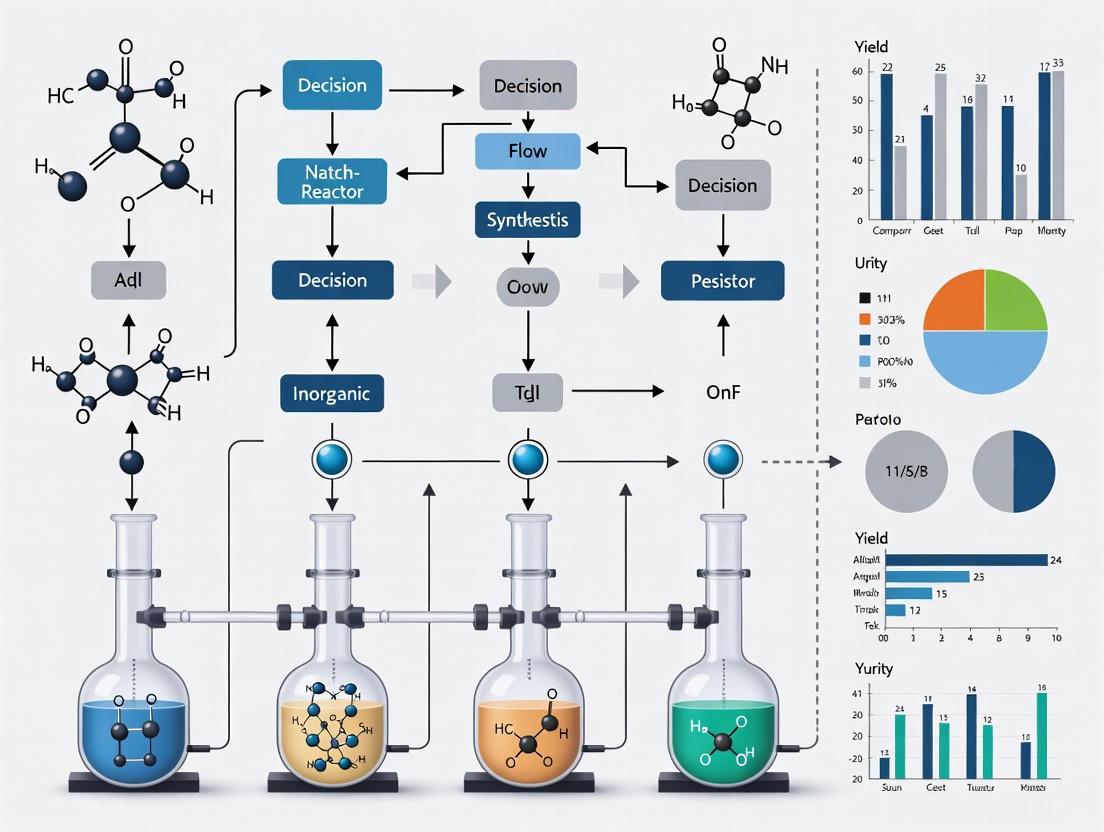
This article explores the paradigm shift in organic synthesis driven by the parallelization of batch reactors.
Parallelized Batch Reactors in Organic Synthesis: Accelerating Discovery and Optimization through High-Throughput Experimentation
Abstract
This article explores the paradigm shift in organic synthesis driven by the parallelization of batch reactors. Aimed at researchers, scientists, and drug development professionals, it details how High-Throughput Experimentation (HTE) platforms, combined with advanced optimization algorithms like Bayesian Optimization, are revolutionizing process development and reaction screening. We cover the foundational principles of multi-reactor systems, methodological implementations using commercial and custom platforms, sophisticated troubleshooting and optimization strategies to navigate complex constraints, and finally, a rigorous validation of these approaches through comparative case studies. The synthesis conclusively demonstrates how parallelization accelerates lead optimization, reduces material consumption, and enhances the sustainability of pharmaceutical R&D.
The Principles and Power of Parallelization: Unlocking High-Throughput in Organic Synthesis
Application Notes
Multi-Reactor Systems in High-Throughput Experimentation
Multi-Reactor Systems (MRS) are engineered platforms that enable the parallel execution of chemical reactions under elevated temperatures and pressures, forming the physical backbone of high-throughput experimentation (HTE) in modern research laboratories. These systems allow researchers to rapidly screen catalysts, optimize reaction conditions, and explore chemical space more efficiently than traditional sequential approaches. By conducting multiple experiments simultaneously, MRS dramatically accelerates data generation, reducing the time required for reaction optimization from months to weeks while improving statistical reliability through parallel testing. The fundamental principle involves using multiple miniature reactors operating in parallel, each capable of independent or coordinated control of critical reaction parameters.
These systems have proven particularly valuable in pharmaceutical development and organic synthesis research, where they enable comprehensive investigation of reaction variables including temperature, pressure, catalyst loading, and reactant concentrations. The integration of MRS with automated sampling and analysis technologies has further enhanced their utility, creating closed-loop systems for autonomous reaction optimization. This approach has transformed traditional trial-and-error methodologies into systematic, data-rich experimentation strategies.
Hierarchical Parameter Constraints in Experimental Design
Hierarchical parameter constraints represent a sophisticated computational framework for managing complex experimental spaces in high-throughput experimentation. In the context of parallel reactor systems, these constraints enforce logical relationships between experimental parameters, ensuring that only chemically meaningful combinations are tested. This approach prevents wasted resources on nonsensical parameter combinations and focuses experimental effort on promising regions of the chemical space.
The mathematical foundation for hierarchical constraints lies in defining conditional parameter relationships where certain parameters only become relevant when specific parent parameters take particular values. For example, the choice of a catalyst ligand may only be meaningful when a specific metal catalyst is selected. This creates a tree-like parameter structure that mirrors chemical intuition while reducing the dimensionality of the optimization problem. In computational implementation, this can be achieved through Bayesian hierarchical modeling with parameter constraints that restrict the search space to chemically plausible regions.
Equipment Specification and Selection
Comparative Analysis of Multi-Reactor Systems
The selection of an appropriate MRS requires careful consideration of reactor configuration, control capabilities, and application requirements. The table below provides a quantitative comparison of standard and custom reactor systems based on commercial specifications.
Table 1: Comparison of Standard and Custom Multi-Reactor System Configurations
| Feature | 5000 Multiple Reactor System (MRS) | 2500 Micro Batch System (MBS) | Custom Parallel Reactor Systems |
|---|---|---|---|
| Number of Reactors | 6 | 3 | Typically 2-16 |
| Reactor Volume | 45 mL or 75 mL | 5 mL or 10 mL | Any volume (commonly 50mL-1000mL) |
| Control System | 4871 (HC900)-based | 4848MBS | Typically 4871-based |
| Agitation Method | Stir bar | Stir bar | Magnetic drive |
| Individual Speed Control | No | No | Yes |
| Individual Heater Control | Yes | No | Yes |
| Gas Supply Manifold | Yes | Yes | Available |
| Cooling Water Manifold | No | No | Available |
| Optional Internal Cooling | Yes | No | Yes |
| Optional Liquid Sampling | Yes | No | Yes |
| Optional Pressure Control | No | No | Yes |
| Typical Applications | Catalyst screening, process optimization, combinatorial chemistry | Small-scale screening, limited material availability | Custom applications, specialized materials, complex processes |
Advanced Configuration Options
Custom MRS configurations offer significant advantages for specialized research applications. These systems support magnetic drive agitation with alternate geometries (anchor, spiral, gas entrainment) for handling high-viscosity mixtures or slurries, which are challenging for standard stir bar systems. Additionally, custom systems can incorporate advanced features such as individual pressure control, mass flow controllers for precise gas addition, and integrated cooling manifolds for exothermic reactions. The flexibility in reactor material selection (including corrosion-resistant alloys like Alloy 400 and C276) enables operation with diverse chemical substrates, including those involving highly corrosive environments or specialized reaction conditions.
Experimental Protocols
Protocol 1: Parallel Catalyst Screening Using MRS
Objective: Systematically evaluate six transition metal catalysts for hydrogenation of aromatic substrates using a Parr 5000 Multiple Reactor System.
Materials and Equipment:
- Parr 5000 MRS with six 75 mL reactors
- Hydrogen gas supply with pressure regulation
- Temperature control system
- Sampling apparatus
- Analytical equipment (GC-MS or HPLC)
Procedure:
- Reactor Preparation: Clean and dry all six reactor vessels. Install appropriate gaskets and ensure proper sealing surfaces.
- Reaction Setup: Charge each reactor with 30 mL of substrate solution (0.1 M in appropriate solvent) and 50 mg of different catalyst materials.
- System Assembly: Mount reactors onto the MRS base unit and connect to gas manifold. Verify all connections are pressure-tight.
- Purging Procedure: Purge each reactor three times with inert gas (N₂) at 50 psi, then pressurize with H₂ to target reaction pressure (200-1000 psi).
- Temperature Programming: Set individual reactor temperatures according to experimental design (e.g., 50°C, 75°C, 100°C, 125°C, 150°C, 175°C).
- Initiation: Start agitation simultaneously across all reactors at 500 RPM.
- Monitoring: Record pressure and temperature data at 5-minute intervals throughout the 4-hour reaction period.
- Sampling: At predetermined timepoints (30, 60, 120, 240 minutes), extract 0.5 mL samples from each reactor for analysis.
- Termination: After 4 hours, cool reactors to room temperature and slowly vent pressure.
- Workup: Recover reaction mixtures and analyze conversion and selectivity by GC-MS.
Data Analysis: Calculate conversion rates and selectivity for each catalyst at different temperatures. Plot temperature versus conversion to identify optimal catalyst-temperature combinations for further optimization.
Protocol 2: Hierarchical Parameter Optimization with Constrained Experimental Space
Objective: Optimize a photoredox catalytic system using hierarchical parameter constraints to efficiently explore the experimental space.
Materials and Equipment:
- Multi-well photoreactor system (24-96 well capacity)
- Automated liquid handling system
- Photocatalyst library
- Substrate and reagent solutions
- Analytical platform (LC-MS or HPLC)
Procedure:
- Primary Parameter Definition: Identify independent parameters: photocatalyst type (PC1-PC8), base concentration (0.1-2.0 equiv.), solvent composition (ACN, DMF, DMSO), and light wavelength (365-450 nm).
- Constraint Implementation: Establish hierarchical constraints:
- IF photocatalyst = PC1 THEN solvent ≠ DMSO (incompatibility constraint)
- IF base concentration > 1.0 equiv. THEN light wavelength = 450 nm (reactivity constraint)
- IF solvent = ACN THEN base concentration range = 0.5-1.5 equiv. (solubility constraint)
- Experimental Design Generation: Use statistical software to create a D-optimal experimental design incorporating the defined constraints.
- Plate Preparation: Program automated liquid handler to dispense reagents according to the experimental design into a 96-well photoreactor plate.
- Reaction Execution: Seal plate and initiate simultaneous irradiation under controlled temperature (25°C) for 12 hours.
- Analysis: Quench reactions and analyze yields using high-throughput LC-MS.
- Model Building: Fit response surface models to the data, respecting the hierarchical constraint structure.
- Validation: Confirm model predictions by testing 5-10 additional constraint-compliant conditions.
Computational Implementation: The hierarchical constraints can be implemented programmatically using Bayesian optimization frameworks with parameter constraints that restrict the search space. For continuous parameters, this involves defining valid ranges conditional on other parameter values, while for categorical parameters, it requires defining conditional dependencies between parameter choices.
Visualization of System Architecture
Hierarchical Parameter Selection Logic
Diagram Title: Hierarchical Parameter Constraint Logic
MRS Experimental Workflow
Diagram Title: MRS Experimental Workflow
Research Reagent Solutions
Table 2: Essential Research Reagents and Materials for MRS Experiments
| Reagent/Material | Function/Purpose | Application Notes |
|---|---|---|
| Alloy C276 Reactors | Corrosion resistance for harsh chemical environments | Essential for reactions involving halides, strong acids, or other corrosive media at elevated temperatures |
| Magnetic Drive Agitation | Superior mixing for high-viscosity or slurry systems | Enables use of specialized impellers (anchor, spiral) for challenging reaction mixtures |
| Gas Burette Option | Precise measurement of gas consumption/production | Critical for hydrogenation, hydroformylation, and other gas-liquid reactions |
| Mass Flow Controllers | Controlled gas addition and monitoring | Enables precise stoichiometry in gas-consuming reactions |
| Internal Cooling Coils | Temperature control for exothermic reactions | Prevents thermal runaway in rapid polymerization or highly exothermic reactions |
| Auto-sampling Devices | Automated reaction monitoring | Enables kinetic profiling without manual intervention, improves reproducibility |
| Pressure Control System | Maintains constant reaction pressure | Essential for reactions with volatile components or precise pressure requirements |
| Multiple Gas Manifold | Flexible gas switching capabilities | Enables sequential or mixed gas reactions (e.g., CO/H₂ mixtures) |
Implementation Considerations
Integration of MRS with Hierarchical Constraints
The synergy between physical MRS platforms and computational hierarchical constraint systems creates a powerful framework for efficient experimental optimization. The MRS generates high-quality, parallelized experimental data, while the hierarchical constraint system directs subsequent experimental designs toward chemically meaningful and promising regions of parameter space. This integrated approach is particularly valuable in pharmaceutical development where material availability is often limited and experimental efficiency is paramount.
Implementation requires careful consideration of both physical and computational infrastructure. The reactor system must provide sufficient control and monitoring capabilities to ensure data quality, while the constraint management system must be flexible enough to encode complex chemical knowledge. Successful implementation typically involves collaboration between experimental chemists and computational researchers to develop appropriate constraint structures that balance chemical intuition with statistical efficiency.
Advanced Applications and Future Directions
Recent advances in MRS technology have expanded applications to specialized domains including photochemistry, electrochemistry, and high-pressure catalysis. The combination of flow chemistry principles with MRS has enabled even greater throughput and experimental flexibility. Similarly, developments in Bayesian optimization with sophisticated constraint handling have improved the efficiency of hierarchical experimental design. Future developments will likely focus on increased automation, improved real-time analytics, and more sophisticated constraint learning systems that can automatically refine hierarchical constraints based on experimental outcomes.
Parallel synthesis represents a paradigm shift in experimental inorganic chemistry and materials science, enabling the simultaneous execution of multiple reactions to dramatically accelerate research and development cycles. This approach leverages specialized hardware components designed to maintain precise control over reaction parameters while facilitating high-throughput experimentation. The core hardware ecosystem encompasses liquid handling robots for precise reagent dispensing, parallel reactor blocks for conducting multiple synchronized reactions, and integrated robotic platforms that transfer samples between stations for fully autonomous operation. These systems have become indispensable in fields ranging from pharmaceutical development to novel materials discovery, where rapidly generating and screening compound libraries is essential for innovation.
The fundamental architecture of a parallel synthesis platform typically integrates three primary stations: sample preparation, reaction execution, and product characterization. This configuration enables continuous, autonomous operation where robotic arms seamlessly transfer samples and labware between stations. The A-Lab, an autonomous laboratory described in Nature, exemplifies this integration, successfully synthesizing 41 novel inorganic compounds over 17 days of continuous operation through the combination of robotics, computational planning, and real-time characterization [1]. Such platforms demonstrate the powerful synergy between specialized hardware and intelligent software, reshaping traditional approaches to chemical synthesis.
Core Hardware Components
The hardware infrastructure for parallel synthesis consists of several interconnected systems, each serving a distinct function within the experimental workflow. These components work in concert to enable high-throughput experimentation with precise environmental control and minimal manual intervention.
Parallel Reactor Systems
Parallel reactor systems form the core of synthetic operations, providing controlled environments for multiple simultaneous reactions. These systems vary in capacity, configuration, and specialization to accommodate diverse research requirements.
Table 1: Comparison of Parallel Reactor Systems
| System Name | Reactor Capacity | Temperature Range | Pressure Capacity | Special Features |
|---|---|---|---|---|
| PolyBLOCK 4 [2] | 4 positions (up to 500 mL) | -40°C to +200°C | Ambient | Independent temperature and agitation control per zone |
| PolyBLOCK 8 [2] | 8 positions (up to 120 mL) | -40°C to +200°C | Ambient | Small footprint, multiple vessel compatibility |
| Parr Parallel System [3] | 6 × 25 mL reactors | Up to 350°C | 3000 psi (200 bar) | High-pressure capability, automated liquid sampling |
| Asynt MULTI Range [4] | Up to 3 RBFs (5-500 mL) or 27 vials | Dependent on hotplate | Ambient | Accommodates flasks and vials, uniform stirring |
| Asynt OCTO [4] | 8 positions | Dependent on hotplate | Ambient | Inert atmosphere capability |
Specialized Reaction Systems
Beyond conventional heating and stirring, specialized reactor systems enable parallel execution of advanced synthetic methodologies:
Parallel Photochemistry: Systems like the Illumin8 (8 positions) and Lighthouse (3 positions) provide controlled irradiation for photochemical reactions, with options for heating, cooling, and inert atmosphere [4]. These systems ensure equal irradiation across all reaction vials through precise LED positioning.
Parallel Electrochemistry: Reactors such as the ElectroRun enable screening of different electrode materials and solution conditions under consistent, repeatable conditions [4]. These systems power multiple electrochemical cells in series while maintaining independent control over experimental variables.
Parallel Pressure Chemistry: Systems including the Quadracell (4 position) and Multicell (10 position) facilitate high-pressure reactions such as hydrogenation or carbonylation [4]. These reactors incorporate safety features like pressure release valves and burst disks while enabling rapid screening of challenging reaction pathways.
Automation and Robotics Infrastructure
Automated components handle material transfer and sample processing between experimental stages:
Liquid Handling Robots: Automated pipetting systems provide precise reagent dispensing across multiple reaction vessels, minimizing volumetric errors and ensuring reproducibility.
Robotic Transfer Arms: These systems transport samples and labware between preparation, reaction, and characterization stations, enabling continuous operation [1].
Powder Dispensing and Milling: For inorganic solid-state synthesis, automated stations handle precursor powders, including milling operations to ensure optimal reactivity between solid precursors with diverse physical properties [1].
Characterization and Analysis Integration
Real-time analysis is critical for autonomous operation and rapid optimization:
In-Line Spectroscopy: Systems often incorporate XRD, Raman, or FTIR capabilities for immediate reaction monitoring and phase identification [1].
Automated Sampling: Systems like the Parr 4878 Automated Liquid Sampler enable sequential collection of liquid samples under full reactor pressure, automatically clearing sampling lines between collections [3].
ML-Driven Analysis: Platforms like the A-Lab use machine learning models to interpret XRD patterns, extracting phase and weight fractions of synthesis products through automated Rietveld refinement [1].
Research Reagent Solutions
The effective implementation of parallel synthesis requires carefully selected reagents and materials that enable reproducible, high-throughput experimentation.
Table 2: Essential Research Reagent Solutions for Parallel Synthesis
| Reagent/Material | Function | Application Examples |
|---|---|---|
| Precursor Powders | Starting materials for solid-state synthesis | Inorganic oxides and phosphates for novel material discovery [1] |
| Alumina Crucibles | Reaction vessels for high-temperature synthesis | Solid-state synthesis in box furnaces [1] |
| Diverse Electrodes | Anode/cathode materials for parallel electrochemistry | Screening electrode performance in the ElectroRun system [4] |
| Interchangeable Wavelength Modules | Specific light emission for photochemical reactions | Tuning reaction conditions in the Illumin8 photoreactor [4] |
| Catalyst Libraries | Accelerating reaction kinetics | High-throughput screening of heterogeneous catalysts [2] |
Experimental Protocols
Protocol 1: High-Throughput Solid-State Synthesis of Novel Inorganic Materials
This protocol outlines the autonomous synthesis of novel inorganic powders using the A-Lab platform [1], which successfully synthesized 41 novel compounds from 58 targets.
Materials and Equipment:
- Robotic powder dispensing station
- Three integrated robotic stations for preparation, heating, and characterization
- Four box furnaces
- Alumina crucibles
- X-ray diffractometer with automated sample handling
- Precursor powders (composition depends on target material)
Procedure:
- Target Identification: Select thermodynamically stable target materials using ab initio phase-stability data from computational databases (e.g., Materials Project).
- Precursor Selection: Generate up to five initial synthesis recipes using machine learning models trained on historical literature data. The model assesses target "similarity" through natural-language processing of synthesis databases.
- Temperature Optimization: Determine optimal synthesis temperature using ML models trained on heating data from literature.
- Automated Preparation:
- Dispense and mix precursor powders using automated powder handling station.
- Transfer mixture into alumina crucibles using robotic arms.
- Reaction Execution:
- Load crucibles into box furnaces using robotic transfer system.
- Execute thermal treatment with programmed temperature profile.
- Allow samples to cool automatically.
- Product Characterization:
- Transfer samples to XRD station using robotic arms.
- Grind samples into fine powder using automated grinder.
- Acquire XRD patterns.
- Analyze patterns using probabilistic ML models trained on experimental structures.
- Confirm phases with automated Rietveld refinement.
- Active Learning Optimization:
- If yield is <50%, employ ARROWS3 active learning algorithm.
- Algorithm integrates computed reaction energies with observed outcomes.
- Proposes improved synthesis routes avoiding intermediates with small driving forces.
- Repeat steps 4-6 until target yield is achieved or recipes exhausted.
Notes:
- The protocol emphasizes avoiding intermediate phases with small driving forces (<50 meV per atom) to prevent kinetic limitations.
- The system continuously builds a database of pairwise reactions to preemptively eliminate unsuccessful synthesis routes.
Protocol 2: Parallel Optimization of Reaction Conditions Using PolyBLOCK System
This protocol describes using parallel reactor systems for high-throughput optimization of synthetic parameters, particularly useful for pharmaceutical applications and catalyst development [2].
Materials and Equipment:
- PolyBLOCK 4 or 8 reactor system
- Appropriate reaction vessels (1 mL HPLC vials to 250 mL flasks)
- Precursor solutions or suspensions
- Temperature control unit
- Independent agitation system
Procedure:
- Experimental Design:
- Define experimental parameter space (temperature, concentration, catalyst loading, etc.).
- Program temperature gradients across reactor zones (up to 100°C difference between zones).
- System Setup:
- Select appropriate reaction vessels based on scale (1-500 mL).
- Install vessels in PolyBLOCK reactor positions.
- Configure independent temperature setpoints for each zone (-40°C to 200°C).
- Program individual agitation rates (250-1500 rpm) for each position.
- Reaction Execution:
- Dispense reaction mixtures into respective vessels.
- Initiate parallel heating and stirring according to programmed parameters.
- Monitor reaction progress through in-line analytics if available.
- For extended operations, utilize pre-programmed overnight procedures.
- Sampling and Analysis:
- Extract samples at predetermined timepoints.
- Analyze products using appropriate analytical methods (HPLC, GC, NMR, etc.).
- Correlate reaction outcomes with parameter variations.
- Data Integration:
- Compile results across all parallel experiments.
- Identify optimal reaction conditions through statistical analysis.
- Use findings to refine subsequent experimental designs.
Notes:
- The system's flexibility allows use of different glassware sizes within the same block, enabling scale-up studies using identical equipment and procedures.
- Independent control over each reaction zone enables comprehensive Design of Experiments (DoE) approaches within a single run.
Workflow Visualization
Autonomous Synthesis Workflow
This diagram illustrates the integrated workflow for autonomous materials synthesis, showcasing the continuous loop between computational prediction, robotic execution, characterization, and active learning optimization.
Hardware Integration Architecture
This diagram depicts the physical hardware configuration and material flow within an autonomous laboratory, highlighting the coordination between robotic components and stationary stations.
High-Throughput Experimentation (HTE) has revolutionized inorganic synthesis research by enabling the rapid parallelization of batch reactor experiments. This approach accelerates discovery and optimization processes by allowing researchers to systematically explore vast parameter spaces—including temperature, pressure, solvent systems, and stoichiometry—in a fraction of the time required by traditional sequential methods. The core principle of HTE involves conducting numerous experiments simultaneously under tightly controlled conditions, generating statistically significant data while conserving valuable reagents and resources. Within this domain, three platforms have established themselves as powerful tools for researchers: Chemspeed for automated synthesis and workflow integration, Zinsser Analytic for advanced liquid handling and synthesis automation, and Technobis Crystalline systems for specialized crystallization studies and formulation development. These systems provide the technological foundation for modern parallelized experimentation, each offering unique capabilities that address different aspects of the complex challenges faced in drug development and materials science research. By implementing these platforms, research facilities can standardize procedures, enhance data quality, and dramatically increase experimental throughput, ultimately shortening development timelines for new chemical entities and formulated products.
Platform Capabilities and Specifications
Chemspeed Technologies AG provides highly modular and scalable automation solutions designed to grow with research needs. Their platforms combine base systems with robotic tools, modules, reactors, and software to create tailored setups for specific workflow requirements [5]. Chemspeed's philosophy emphasizes starting with a compact benchtop system, such as the CRYSTAL platform for gravimetric solid dispensing, and seamlessly scaling up to fully automated, connected laboratories as research evolves [5] [6]. Their solutions are engineered to accelerate, standardize, and digitalize R&D and QC workflows, with flexibility, reliability, and reproducibility built into the core design. Chemspeed systems are trusted by leading industrial R&D centers, including the Clariant Innovation Center, which utilizes Chemspeed's HIGH-THROUGHPUT & HIGH-OUTPUT workflows for sample preparation (SWING), formulation (FORMAX), and process research and optimization (MULTIPLANT PRORES) [7].
Technobis Crystallization Systems (referred to in the search results as Crystallization Systems) offers specialized analytical instruments focused on crystallization and formulation research. Their Crystalline platform represents a significant advancement in this niche, combining temperature control, turbidity measurements, and real-time particle imaging with eight in-line high-quality digital visualization probes capable of reaching 0.63 microns per pixel resolution [8]. This integrated visual approach allows researchers to directly observe crystallization processes and access real-time particle size and shape information at milliliter scales. The system employs AI-based software analysis for enhanced process control and can be configured with real-time Raman spectroscopy for comprehensive polymorph characterization [8]. Their Crystal16 instrument serves as a multi-reactor crystallizer for medium-throughput solubility studies, featuring 16 reactors at 1mL volumes with integrated transmissivity technology for generating solubility curves and screening crystallization conditions [9].
Zinsser Analytic provides a modular state-of-the-art liquid handler robotic system that combines sophisticated liquid handling with robotic manipulation. Their platform features a unique design that integrates robotic and liquid handling functionality into a robotic arm that glides on an x-rail to access rack modules [10]. The system is notable for its high working speed, rapid arm movements, and compact syringe pump, making it significantly faster than many traditional liquid handling systems. The platform can be configured with various tools that extend capabilities beyond standard pipetting, including capping/decapping vials, working with viscous liquids, and powder handling [10]. The Zinsser Lissy system, utilized by research institutions like Singapore's IMRE, enables high-throughput automated chemical solution synthesis and thin film deposition, featuring reactor blocks with heating and shaking (up to 96 vials, 200°C heating) with argon gas inertization capabilities [11].
Table 1: Technical Specifications Comparison of HTE Platforms
| Specification | Chemspeed | Technobis Crystalline | Technobis Crystal16 | Zinsser Analytic Lissy |
|---|---|---|---|---|
| Reactor/Well Count | Configurable | 8 reactors [8] | 16 reactors [9] | Up to 96 vials [11] |
| Working Volume | Flexible configurations | 2.5 - 5 mL [8] | 0.5 - 1.0 mL [9] | Not specified |
| Temperature Range | Application-dependent | -25°C to 150°C [8] | -20°C to 150°C [9] | Up to 200°C (block), 300°C (hot plate) [11] |
| Key Analytical Capabilities | Broad modular options | Particle imaging (0.63 µm/px), Turbidity, Real-time Raman [8] | Turbidity/Transmissivity [9] | UV-Vis, Photoluminescence plate reader [11] |
| Stirring Options | Overhead stirring | Overhead or stirrer bar [8] | Overhead or stirrer bar [9] | Shaking [11] |
| Special Features | "Plug and play" modularity, Gravimetric dispensing [7] | AI-based image analysis, Sealed visual probes [8] | Four independent temperature zones [9] | Spin-coating, Argon inertization [11] |
Application Focus and Workflow Integration
Each platform excels in specific application domains and offers distinct integration capabilities:
Chemspeed demonstrates exceptional versatility across a broad spectrum of chemical R&D applications. The platform is designed for seamless workflow integration, enabling transitions from ingredient dispensing to synthesis, process development, and formulation within a connected automated environment [7]. This end-to-end automation capability is particularly valuable for complex multi-step processes in specialty chemicals, pharmaceuticals, and materials science. The company's AUTOSUITE and ARKSUITE software platforms provide digital orchestration across systems and processes, facilitating data integrity and workflow standardization [5]. This comprehensive approach supports a wide range of applications, including catalyst research, battery materials development, and formulation science.
Technobis Crystallization Systems specializes deeply in solid-state and crystallization research. The Crystalline platform is specifically engineered to address critical challenges in polymorph screening, salt selection, and formulation optimization [8]. Its ability to provide real-time visual confirmation of crystallization events, combined with AI-based particle classification, offers researchers unprecedented insight into crystal formation and transformation processes. The platform's readiness for robotic integration future-proofs laboratories as they move toward greater automation [8]. The Crystal16 serves as an excellent tool for earlier-stage solubility profiling and metastable zone width determination, providing critical data for crystallization process design [9].
Zinsser Analytic focuses on automated synthesis and specialized deposition processes. The Lissy system's combination of liquid handling, reactor block heating and shaking, and spin-coating capabilities makes it particularly suitable for applications in materials science, including thin-film deposition and nanomaterials synthesis [11]. The system's flexibility in tool configuration enables adaptation to diverse synthesis protocols, while the argon inertization capability allows for handling air-sensitive compounds. This focused approach benefits research areas requiring precise control over reaction conditions and specialized processing techniques.
Table 2: Application Strengths and Experimental Focus
| Application Area | Chemspeed | Technobis Crystallization Systems | Zinsser Analytic |
|---|---|---|---|
| Solid Dispensing & Weighing | Excellent (Gravimetric) [6] | Not Available | Limited (Powder Tools) [10] |
| Solution-Phase Synthesis | Excellent (Broad capabilities) [7] | Limited (Crystallization focus) | Excellent (High-throughput) [11] |
| Crystallization Studies | Good (With appropriate modules) | Excellent (Specialized platform) [8] [9] | Fair (Basic capability) |
| Polymorph/Salt Screening | Good | Excellent (Visual & Raman) [8] | Limited |
| Formulation Development | Excellent (FORMAX platform) [7] | Excellent (Formulation visualization) [8] | Limited |
| Thin Film Deposition | Limited | Not Available | Excellent (Spin-coating) [11] |
| Process Optimization | Excellent (MULTIPLANT PRORES) [7] | Good (Crystallization processes) | Good (Synthesis processes) |
Application Notes for Batch Reactor Parallelization
Automated Parallel Solubility Profiling and Metastable Zone Width Determination
Objective: To rapidly determine compound solubility across multiple solvent systems and temperature profiles, while characterizing metastable zone widths (MSZW) to inform crystallization process design.
Background: Solubility data serves as a foundational element in pharmaceutical and specialty chemical development, influencing decisions from candidate selection to final process design [9]. The metastable zone width represents the temperature range in which a solution remains supersaturated without spontaneous nucleation, providing critical parameters for designing optimal cooling crystallization processes.
Platform: Technobis Crystal16 with CrystalClear software [9].
Experimental Workflow:
- Sample Preparation: Accurately weigh 10-100 mg of compound into each of 16 standard HPLC vials. Using an automated liquid handler or gravimetric dispenser (e.g., Chemspeed SWING) improves efficiency and accuracy for this step [7].
- Solvent Addition: Add 0.5-1.0 mL of selected solvents to each vial using gravimetric or volumetric methods. The Crystal16 accommodates four different temperature zones, allowing strategic grouping of solvents by expected boiling point or polarity [9].
- Method Programming: Design a temperature profile in the CrystalClear software. A standard method includes:
- Heat to 10°C above the expected dissolution temperature (e.g., 50°C) at 20°C/min.
- Hold for 30 minutes to ensure complete dissolution.
- Cool to 10°C at a controlled rate of 0.5°C/min to gently induce supersaturation.
- Monitor transmissivity continuously throughout the cycle [9].
- System Tuning: Prior to the cooling ramp, use the software's tuning function on clear solutions to calibrate transmissivity detection, enhancing sensitivity to nucleation events [9].
- Data Analysis: The CrystalClear software automatically identifies clear points (dissolution) and cloud points (nucleation) from transmissivity data. It subsequently generates solubility curves, calculates MSZW, and can export reports including mg/mL solubility values [9].
Key Parameters:
- Stirring: 600-800 rpm using overhead stirring to prevent crystal attrition [9].
- Temperature Range: -20°C to 150°C using integrated air cooling [9].
- Replication: Perform in duplicate or triplicate to ensure statistical significance of MSZW data.
High-Throughput Parallel Synthesis with Automated Process Control
Objective: To execute multiple synthetic reactions in parallel with precise control over reaction conditions, reagent addition, and inert atmosphere for air-sensitive inorganic synthesis.
Background: Parallel synthesis accelerates the exploration of reaction parameters such as catalyst loading, ligand effects, and stoichiometry. Automation ensures reproducibility, enables the handling of hazardous reagents, and facilitates operation under controlled atmospheres.
Platform: Zinsser Analytic Lissy System with argon inertization [11].
Experimental Workflow:
- Reactor Setup: Load up to 96 reaction vials into the temperature-controlled reactor block. If necessary, perform a system purge with argon gas to establish an inert atmosphere [11].
- Reagent Dispensing: Program the liquid handling arm to dispense solvents, substrates, and catalysts according to the experimental design. The system's high-speed operation and flexible tool configuration allow for handling both standard and viscous liquids [10] [11].
- Reaction Initiation: For temperature-dependent reactions, initiate the process by heating the reactor block to the desired temperature (up to 200°C) with continuous shaking to ensure efficient mixing [11].
- Process Monitoring: Utilize the integrated MTP plate reader for in-process checks (UV-Vis, photoluminescence) by automatically transferring aliquots at specified time points [11].
- Reaction Quenching: Program the system to automatically add quenching agents or cooling to specific vials at predetermined times, enabling the study of reaction kinetics.
- Product Isolation: For thin-film applications, transfer reaction mixtures to the integrated spin-coater and hot-plate annealer (up to 300°C) for substrate deposition and processing [11].
Key Parameters:
- Atmosphere Control: Maintain argon blanket throughout for oxygen- or moisture-sensitive reactions.
- Heating/Shaking: Uniform heating to 200°C with concurrent shaking for efficient heat and mass transfer.
- Liquid Handling: Configurable with 8 or 16 dispensing tips, with optional grippers for labware manipulation [10].
Integrated Workflow from Solid Dispensing to Formulation
Objective: To demonstrate a completely automated, gravimetrically-controlled workflow from raw material dispensing through synthesis to final formulation, highlighting the integration capabilities of a modular automation platform.
Background: Integrating discrete unit operations eliminates manual transfer steps, reduces operator error, enhances reproducibility, and protects air- or moisture-sensitive intermediates. This is particularly valuable for optimizing complex multi-step processes in specialty chemicals and formulated products [7].
Platform: Chemspeed Configurable Automation Solution with SWING, FORMAX, and/or MULTIPLANT PRORES modules [7].
Experimental Workflow:
- Gravimetric Solid Dispensing: Initiate the workflow on a Chemspeed platform equipped with gravimetric solid dispensing technology (e.g., CRYSTAL POWDERDOSE). The system accurately weighs and dispenses multiple solid reagents directly into reaction vessels or vials located on a deck [6].
- Liquid Addition: Add liquid reagents and solvents gravimetrically using the platform's liquid dispensing capabilities, which can handle a range of viscosities [7].
- Parallel Synthesis/Process Optimization: Transfer the charged reactors to a synthesis module (e.g., MULTIPLANT PRORES). This module provides individually controlled reactors for parallel synthesis with precise temperature control, stirring, and the ability to add reagents during the process (e.g., antisolvent, seeds) [7].
- In-line Analysis and Decision Making: Integrate in-line analytics (e.g., PAT tools) if available. The software can be programmed to make decisions based on analytical data, such as extending a reaction time or adjusting temperature.
- Automated Formulation: Upon reaction completion, transfer the crude product or isolated intermediate to a formulation module (e.g., FORMAX). This module automates downstream processes such as dilution, mixing with excipients, pH adjustment, or emulsification to create the final formulated product [7].
- Data Digitalization: Throughout the workflow, the AUTOSUITE or ARKSUITE software captures and digitizes all process parameters and experimental data, ensuring complete data integrity and traceability [5].
Key Parameters:
- Modularity: "Plug and play" integration of different functional modules (dispensing, synthesis, formulation) [7].
- Gravimetric Control: Unrivalled overhead gravimetric dispensing for solids and liquids ensures high accuracy and records all additions [7].
- Software Integration: Centralized software control orchestrates the entire workflow across different modules, managing scheduling, robotic movements, and data aggregation [5].
Diagram 1: Integrated HTE Workflow for Batch Reactor Parallelization. This diagram illustrates the three-phase automated workflow for high-throughput experimentation, highlighting the critical feedback loops that enable adaptive experimentation and continuous process optimization.
Essential Research Reagent Solutions and Materials
Successful implementation of HTE platforms requires careful selection of compatible reagents and materials. The following table details essential solutions and their specific functions within automated workflows for inorganic synthesis research.
Table 3: Essential Research Reagent Solutions for HTE Platforms
| Reagent/Material Category | Specific Examples | Function in HTE Workflows | Platform-Specific Considerations |
|---|---|---|---|
| High-Purity Solvents | Anhydrous DMF, Acetonitrile, Alcohols, Chlorinated solvents | Reaction medium, crystallization solvent, cleaning agent [9] | Chemspeed/Zinsser: Compatibility with dispensing systems. Crystalline: Optimal transparency for turbidity measurements [8]. |
| Inorganic Precursors | Metal salts (e.g., CuCl₂, NaAuCl₄), Metal-organic frameworks | Primary reactants for inorganic synthesis and nanomaterial formation | Stability under robotic dispensing; compatibility with platform materials (e.g., resistance to corrosion). |
| Stabilizers/Ligands | Citrate, PVP, Thiols, Phosphines | Control nucleation, growth, and morphology of inorganic nanoparticles [8] | Viscosity considerations for liquid handling; solubility for stock solution preparation. |
| Antisolvents | Heptane, Ethers (added to saturated solutions) | Induce supersaturation for crystallization [8] [9] | Zinsser/Chemspeed: Automated addition during process. Crystalline: Proprietary caps enable automated addition [8]. |
| Calibration Standards | USP resolution standards, Sized microparticles | Validate imaging systems, turbidity probes, and liquid handling accuracy [8] | Crystalline: Required for validating AI-based image analysis (0.63 µm/px resolution) [8]. |
| Inert Atmosphere Sources | Argon gas tanks, Nitrogen generators | Prevent oxidation of air-sensitive catalysts and intermediates [11] | Zinsser Lissy: Integrated argon inertization capability [11]. Crystal16: Nitrogen purge port for low-temperature runs [9]. |
Detailed Experimental Protocols
Protocol 1: Automated Nanoparticle Synthesis with Zinsser Lissy
Title: High-Throughput Synthesis of Gold Nanoparticles with Varied Capping Agents
Objective: To systematically investigate the effect of different stabilizing agents on the size and morphology of gold nanoparticles using an automated parallel synthesis platform.
Materials:
- Precursor Solution: Chloroauric acid (HAuCl₄) in DI water (10 mM)
- Reducing Agent: Sodium borohydride (NaBH₄) in ice-cold DI water (100 mM)
- Stabilizers: Trisodium citrate (1%), Polyvinylpyrrolidone (PVP, 1%), Cetyltrimethylammonium bromide (CTAB, 0.1 M)
- Solvents: Deionized water
- Equipment: Zinsser Lissy system with temperature-controlled reactor block, liquid handling arm, and UV-Vis plate reader [11]
Procedure:
- System Initialization: Power on the Zinsser Lissy system and initialize the robotic arm. Purge the reactor block with argon for 10 minutes to create an inert atmosphere [11].
- Reaction Setup: Load 96 identical glass vials into the reactor block.
- Dispensing:
- Program the liquid handler to dispense 1.8 mL of DI water into each vial.
- Add 200 µL of HAuCl₄ precursor solution (10 mM) to each vial.
- Dispense varying volumes (10-100 µL) of different stabilizer solutions according to the experimental design matrix to different vial sets.
- Mixing and Equilibration: Activate the reactor block shaker for 5 minutes at 500 rpm to ensure homogeneous mixing. Heat the block to 25°C and allow temperature equilibration.
- Reaction Initiation: Rapidly dispense 50 µL of ice-cold NaBH₄ solution to each vial simultaneously using the multi-tip liquid handling arm to initiate nanoparticle formation.
- Kinetic Monitoring: Immediately after addition, transfer 200 µL aliquots from selected vials to a 96-well MTP at predetermined time intervals (e.g., 0, 5, 15, 30, 60 min) for UV-Vis analysis to monitor plasmon resonance peak development [11].
- Termination: After 60 minutes, quench reactions by cooling the reactor block to 4°C.
Data Analysis: Characterize the final nanoparticles by analyzing the surface plasmon resonance peaks in UV-Vis spectra (peak position and width correlate with size and dispersity). Correlate the stabilizer type and concentration with the optical properties.
Protocol 2: Polymorph Screening of an Active Pharmaceutical Ingredient (API)
Title: Integrated Workflow for Salt and Polymorph Screening Using Chemspeed and Technobis Crystalline
Objective: To automate the preparation and analysis of various API salts for polymorph identification and characterization.
Materials:
- API: Free base form of a drug compound
- Counter-Ions: Hydrochloric acid, phosphoric acid, succinic acid (in stoichiometric solutions)
- Solvents: Methanol, ethanol, acetone, ethyl acetate
- Equipment: Chemspeed platform for dispensing and synthesis, Technobis Crystalline PV/RR with Particle View imaging and optional Raman spectroscopy [8] [7]
Procedure:
- Solution Preparation (Chemspeed):
- Use the gravimetric solid dispenser to accurately weigh the free base API into multiple vials.
- Dispense different solvents gravimetrically to create API stock solutions.
- Dispense stoichiometric amounts of acid solutions into separate vials.
- Salt Formation (Chemspeed):
- Transfer the API stock solution and acid solutions to a Chemspeed synthesis module.
- Initiate salt formation by mixing at ambient temperature with overhead stirring.
- Optionally, evaporate a portion of the solvent under controlled conditions to induce crystallization.
- Sample Transfer: Use the robotic arm to transfer the slurries or solutions to the pre-equilibrated reactors of the Technobis Crystalline PV/RR.
- Crystallization and Monitoring (Crystalline PV/RR):
- Program a temperature cycling profile (e.g., heat to 50°C, cool to 5°C) to promote crystallization.
- Activate all eight in-line particle view cameras (0.63 µm/px) to monitor crystal appearance in real-time [8].
- Simultaneously collect turbidity data and, if configured, real-time Raman spectra to identify polymorphic forms [8].
- AI-Based Image Analysis: Use the integrated AI software to automatically classify observed crystals by shape and size into different polymorph classes [8].
Data Analysis: Correlate visual data (crystal habit), turbidity profiles (clear and cloud points), and Raman spectra to identify distinct polymorphic forms and their formation conditions. Generate a comprehensive report mapping counter-ions and solvents to resulting solid forms.
Diagram 2: Automated Polymorph Screening Workflow. This protocol integrates automated synthesis with advanced analytical characterization to systematically map the solid-form landscape of an Active Pharmaceutical Ingredient (API).
The strategic implementation of commercial HTE platforms—Chemspeed, Zinsser Analytic, and Technobis Crystallization Systems—provides research organizations with powerful capabilities for accelerating inorganic synthesis and development. Chemspeed offers unparalleled flexibility and scalability for end-to-end workflow automation, from initial dispensing to final formulation. Zinsser Analytic delivers high-speed, specialized synthesis and deposition capabilities ideal for materials science applications. Technobis Crystallization Systems provides deep, application-specific focus on solid-state characterization and crystallization process understanding. The choice of platform depends heavily on the specific research goals: broad synthetic versatility and workflow integration point toward Chemspeed, specialized synthesis and thin-film applications align with Zinsser Analytic, and intensive solid-form and crystallization studies are best served by Technobis systems. Critically, these platforms are not mutually exclusive; a fully connected laboratory of the future may strategically integrate complementary technologies from multiple vendors to create a seamless, digitally-controlled ecosystem that maximizes throughput, data integrity, and research effectiveness across the entire product development pipeline.
The Role of Custom-Built and Low-Cost Automated Platforms for Specialized Workflows
The integration of custom-built and low-cost automated platforms is transforming specialized workflows in inorganic and organic synthesis research. Within the context of batch reactor parallelization, these platforms address the critical gap between high-throughput computational screening and experimental realization, enabling the rapid discovery and optimization of novel materials and molecules [1] [12]. The convergence of robotics, artificial intelligence (AI), and purpose-built hardware creates Self-Driving Laboratories (SDLs) that automate repetitive tasks, enhance experimental reproducibility, and accelerate data generation [13]. This paradigm shift allows researchers to move beyond traditional one-variable-at-a-time (OVAT) methodologies, instead exploring vast chemical spaces efficiently through parallel experimentation [12]. The emerging concept of the "frugal twin"—a low-cost surrogate of a high-cost research system—further democratizes access to autonomous experimentation, making SDLs feasible for academic settings and lower-budget projects [13]. This article details the application notes and experimental protocols for implementing these platforms, with a specific focus on their impact in batch reactor-based synthesis for drug development and materials science.
Automated platforms for chemical synthesis vary widely in cost, complexity, and application. The table below summarizes representative examples, from low-cost "frugal twins" to advanced integrated systems.
Table 1: Overview of Automated Platforms for Chemical Synthesis
| Platform Name | Field | Primary Purpose | Estimated Cost (USD) | Key Characteristics |
|---|---|---|---|---|
| Educational ARES [13] | Education | 3D Printing & Titration | $250 - $300 | Very low-cost; for education and prototyping. |
| LEGO Low-cost Autonomous Science (LEGOLAS) [13] | Education | Titration | ~$300 | Built from low-cost components; hands-on SDL experience. |
| Cheap Automated Synthesis Platform [13] | Chemistry | Organic Synthesis | ~$450 | Low-barrier entry for automated synthesis. |
| A-Lab [1] | Materials Science | Solid-State Synthesis of Inorganic Powders | Not Specified | Fully autonomous; integrates AI, robotics, and active learning. |
| Custom High-Throughput Platform [12] | Organic Chemistry | Reaction Optimization & Library Generation | Varies (often high) | Uses microtiter plates; explores solvents, catalysts, reagents. |
| "The Chemputer" [13] | Chemistry | Organic Synthesis | ~$30,000 | High-cost, advanced system for complex synthesis. |
Application Notes: Implementation in Synthesis Workflows
The A-Lab for Inorganic Powder Synthesis
The A-Lab exemplifies a fully integrated SDL for the solid-state synthesis of inorganic powders. Its workflow demonstrates the synergy between computation, AI, and robotics [1].
Key Workflow Components:
- Target Identification: Targets are identified from large-scale ab initio phase-stability data from sources like the Materials Project [1].
- Recipe Generation: Initial synthesis recipes are proposed by natural-language models trained on historical literature data. A second ML model suggests heating temperatures [1].
- Active Learning: If initial recipes fail (yield <50%), an active learning algorithm (ARROWS³) proposes improved recipes by integrating computed reaction energies with observed outcomes, prioritizing pathways with larger driving forces [1].
- Experimental Execution: Robotic arms handle powder dispensing, mixing, and milling. Samples are heated in box furnaces and characterized by X-ray diffraction (XRD) [1].
- Outcome Analysis: ML models analyze XRD patterns to identify phases and quantify weight fractions, with results automated by Rietveld refinement [1].
Performance: In one continuous 17-day campaign, the A-Lab successfully synthesized 41 out of 58 novel target compounds, demonstrating a 71% success rate and validating the effectiveness of AI-driven platforms for autonomous materials discovery [1].
High-Throughput Experimentation (HTE) in Organic Synthesis
HTE employs miniaturization and parallelization to accelerate reaction optimization, compound library generation, and data collection for machine learning [12].
Key Workflow Components:
- Miniaturized Reaction Vessels: Reactions are conducted in parallel within microtiter plates (MTPs), typically at micro- or nanoliter scales [12].
- Automated Liquid Handling: Robotic dispensers are used for precise delivery of reagents, catalysts, and solvents, ensuring reproducibility and handling air-sensitive materials under inert atmospheres [12].
- In-Situ Reaction Monitoring: Advanced analytical techniques, such as mass spectrometry (MS), are integrated for high-throughput reaction analysis [12].
- Data Management: Emphasis is placed on managing data according to FAIR principles (Findable, Accessible, Interoperable, and Reusable) to maximize utility for ML [12].
Challenges and Solutions:
- Spatial Bias: Wells at the edge of MTPs can experience different conditions (e.g., temperature, light irradiation) compared to center wells. This is mitigated through careful plate design and calibration [12].
- Solvent Compatibility: Adapting aqueous-based HTS instrumentation to the diverse organic solvents requires hardware that is chemically resistant and accounts for varying surface tension and viscosity [12].
- Material Compatibility: Ensuring that all wetted parts (e.g., seals, tubing) are compatible with the broad range of chemicals used is crucial to prevent degradation and failure [12].
Experimental Protocols
Protocol: High-Throughput Optimization of a Catalytic Reaction in Batch Parallel Reactors
This protocol outlines the steps for using a custom low-cost HTE platform to optimize a model Suzuki-Miyaura cross-coupling reaction.
1. Hypothesis and Plate Design:
- Objective: Identify the optimal combination of ligand and base for the coupling of 4-bromotoluene and phenylboronic acid.
- Variables: Screen 4 ligands (L1-L4) and 4 bases (B1-B4) in a single solvent (THF).
- Plate Map: Design a 4x4 matrix within a 96-well MTP, with each well containing a unique ligand/base combination. Include control wells.
2. Precursor and Reagent Preparation:
- Stock Solutions: Prepare solutions in an inert atmosphere glovebox:
- Palladium catalyst (e.g., Pd(dba)₂) in THF.
- Ligands (L1-L4) in THF.
- Bases (B1-B4) in THF.
- Substrates: Prepare separate solutions of 4-bromotoluene and phenylboronic acid in THF.
3. Automated Reaction Setup:
- Dispensing: Use an automated liquid handler to dispense:
- 100 µL of THF into each well.
- 10 µL of the Pd catalyst solution into each well.
- 10 µL of the appropriate ligand solution per the plate map.
- 10 µL of the appropriate base solution per the plate map.
- 10 µL of the 4-bromotoluene solution into each well.
- Mixing: Seal the plate and mix briefly on an orbital shaker.
- Initiation: Dispense 10 µL of the phenylboronic acid solution into each well to initiate the reaction.
4. Reaction Execution and Quenching:
- Heating: Transfer the MTP to a heated shaker block. Agitate at 60°C for 2 hours.
- Quenching: After the reaction time, automatically inject a fixed volume of a quenching solution (e.g., acidic methanol) into each well.
5. High-Throughput Analysis:
- Sampling: Use an autosampler to inject aliquots from each well into a UHPLC-MS system.
- Analysis: Quantify conversion and yield for each reaction condition based on calibrated UV response or mass detection.
6. Data Processing and Analysis:
- Automated Data Extraction: Use software to automatically extract analytical results and populate a data table linked to the plate map.
- Visualization: Generate a heat map visualizing reaction yield as a function of ligand and base identity to identify the optimal combination.
Protocol: Active Learning-Driven Synthesis Optimization (A-Lab model)
This protocol describes the closed-loop, active learning cycle for optimizing a solid-state synthesis, based on the methodology of the A-Lab [1].
1. Initialization with Literature-Based Recipe:
- Target Input: Define the target compound (e.g., a novel metal oxide).
- Precursor Selection: An NLP model trained on literature data proposes an initial set of solid precursors based on analogy to similar known materials [1].
- Condition Proposal: A second ML model suggests an initial firing temperature and duration [1].
2. Robotic Synthesis Execution:
- Powder Dispensing: A robotic arm dispenses and weighs precursor powders into an alumina crucible.
- Milling: The powder mixture is milled automatically to ensure homogeneity and reactivity.
- Heating: The crucible is transferred to a box furnace and heated under static air according to the proposed temperature profile.
3. Automated Characterization and Analysis:
- Sample Preparation: The robotic system transfers the cooled product to a grinder to create a fine powder for XRD.
- XRD Measurement: The sample is loaded and its XRD pattern is collected automatically.
- Phase Analysis: A probabilistic ML model analyzes the XRD pattern to identify crystalline phases and quantify the weight fraction of the target phase via automated Rietveld refinement [1].
4. Active Learning and Iteration:
- Decision Point: If the target yield is >50%, the process is successful. If not, the active learning algorithm (ARROWS³) is triggered [1].
- Algorithmic Redesign: The algorithm uses a growing database of observed pairwise solid-state reactions and thermodynamic data from the Materials Project to:
- A. Infer known reaction pathways to avoid redundant experiments.
- B. Propose a new precursor set or heating profile designed to avoid low-driving-force intermediates that kinetically trap the reaction [1].
- Loop Closure: The new recipe is executed robotically, and the cycle repeats until success or recipe exhaustion.
Diagram 1: A-Lab autonomous synthesis workflow.
The Scientist's Toolkit: Essential Research Reagents and Materials
The successful implementation of automated synthesis platforms relies on a suite of essential reagents, materials, and software.
Table 2: Key Research Reagent Solutions for Automated Workflows
| Item | Function / Role | Application Notes |
|---|---|---|
| Microtiter Plates (MTPs) | Miniaturized reaction vessel for parallel experimentation. | Choose material (e.g., glass, polypropylene) for chemical and temperature compatibility with screened solvents and conditions [12]. |
| Solid Precursor Powders | Starting materials for solid-state reactions. | Purity, particle size, and reactivity are critical. Often require pre-drying and automated milling to ensure homogeneity [1]. |
| Palladium Catalysts (e.g., Pd(dba)₂) | Catalyze cross-coupling reactions (e.g., Suzuki-Miyaura). | Prepared as stock solutions in inert atmosphere for automated dispensing; concentration must be precise [12]. |
| Ligand Libraries | Modulate catalyst activity and selectivity in metal-catalyzed reactions. | Screened in combination with metals and bases in an HTE matrix design to find optimal pairs [12]. |
| Diverse Solvent Library | Explore solvent effects on reaction outcome. | Must account for solvent compatibility with automated liquid handling hardware (viscosity, vapor pressure) [12]. |
| Ab Initio Computational Data | Provides thermodynamic stability data for target materials and intermediates. | Used by platforms like the A-Lab for target selection and by active learning algorithms to compute reaction driving forces (e.g., from the Materials Project) [1]. |
| Historical Synthesis Literature Data | Trains NLP and ML models for initial precursor and condition suggestions. | Enables "human-like" reasoning by analogy, forming the knowledge base for the first experimental iteration [1]. |
Diagram 2: SDL components and data flow.
The transition from traditional batch processing to parallelized reactor systems represents a paradigm shift in organic synthesis research, particularly for pharmaceutical development. This evolution demands a refined approach to defining process objectives, moving beyond the single-minded pursuit of reaction yield to the simultaneous optimization of yield, purity, and selectivity. This tripartite objective is technically challenging yet critical for developing efficient, sustainable, and economically viable synthetic routes. In a parallelized batch reactor framework, where multiple experiments proceed concurrently, a well-defined optimization strategy is not merely beneficial—it is essential for leveraging the full potential of these advanced platforms [14] [15]. This document outlines the key objectives and provides detailed application notes for achieving these integrated goals, framed within the context of modern digital catalysis and high-throughput experimentation (HTE).
Background and Significance
Traditional optimization in organic synthesis has historically relied on one-variable-at-a-time (OVAT) experimentation, an approach that is often labor-intensive, time-consuming, and incapable of capturing complex variable interactions [14]. The rise of lab automation and parallelized reactor systems enables a fundamentally different strategy. These systems, such as the REALCAT’s Flowrence unit featuring a hierarchy of fixed-bed reactors, allow for the synchronous exploration of a high-dimensional parametric space [15]. However, this capability introduces the challenge of hierarchical technical constraints, where parameters like a common feed composition or block-level temperature control must be considered alongside reactor-specific variables [15].
The core challenge in this environment is to navigate the intricate trade-offs between the primary objectives:
- Yield: The efficiency of the desired transformation, directly impacting material throughput and cost.
- Purity: The level of the target molecule relative to impurities and side-products, a critical determinant for downstream processing and regulatory approval in drug development.
- Selectivity: The preference for forming the desired product over other possible side-products, which is intrinsically linked to both yield and purity.
Failure to consider all three objectives simultaneously can result in processes that are high-yielding but generate intractable impurity profiles, or highly selective but impractically slow. The application of data-centric optimization methods, such as Bayesian optimization, is thus a significant step forward in digital catalysis, enabling researchers to efficiently balance these competing goals under complex constraints [15].
Key Methodologies for Simultaneous Optimization
The simultaneous optimization of multiple objectives requires sophisticated methodologies that can efficiently model and navigate the experimental space.
Bayesian Optimization (BO) and Process Constraints
Bayesian Optimization (BO) is a powerful machine learning framework for optimizing "black-box" functions that are expensive to evaluate, such as chemical reactions [15]. It operates by building a probabilistic surrogate model (often a Gaussian Process) of the objective function (e.g., a function combining yield, purity, and selectivity) and uses an acquisition function to intelligently select the next most promising experiments.
For multi-reactor systems, standard BO must be adapted to handle process constraints. The novel process-constrained batch Bayesian optimization via Thompson sampling (pc-BO-TS) and its hierarchical extension (hpc-BO-TS) have been developed for this purpose [15]. These methods are tailored for systems with layered parameters, such as a multi-reactor system where a common feed stream (a global constraint) feeds multiple blocks that have independent temperature control (a block-level constraint), which in turn feed individual reactors with variable catalyst mass (a reactor-specific constraint). The pc-BO-TS approach effectively balances exploration and exploitation under these constraints, often outperforming other sequential and batch BO methods [15].
Table 1: Key Components of Bayesian Optimization for Chemical Reaction Optimization
| Component | Description | Common Examples |
|---|---|---|
| Surrogate Model | A probabilistic model that approximates the expensive-to-evaluate objective function. | Gaussian Process (GP) |
| Acquisition Function | A function that determines the next experiment by balancing exploration (uncertain regions) and exploitation (promising regions). | Expected Improvement (EI), Upper Confidence Bound (UCB), Thompson Sampling (TS) |
| Process Constraints | Technical limitations and fixed parameters inherent to the experimental setup. | Common feed composition, shared pressure in a reactor block, maximum safe temperature |
High-Throughput Automated Platforms
The practical implementation of these advanced optimization algorithms is enabled by high-throughput automated chemical reaction platforms [14]. These systems perform numerous experiments in parallel, rapidly generating the high-quality data required to build and refine the models used in BO. The synergy between automation and machine learning creates a closed-loop optimization cycle: the platform executes a batch of experiments designed by the algorithm, and the results are then fed back to the algorithm to design the next optimal batch [14]. This cycle dramatically reduces experimentation time and human intervention while synchronously optimizing multiple reaction variables.
Experimental Protocols
This section provides a detailed, actionable protocol for conducting simultaneous optimization studies in a parallelized batch reactor system, using the synthesis of carbamazepine as a representative example [16].
Protocol 1: Kinetic Parameter Determination via Batch Experiments
Objective: To determine initial kinetic parameters (reactant orders, rate constants) for the primary and side reactions to inform the continuous process model.
Materials:
- Iminostilbene (ISB)
- Potassium Cyanate (KOCN)
- Acetic Acid (solvent)
Methodology:
- Reaction Setup: Conduct a series of batch reactions in a controlled laboratory reactor. Vary initial concentrations of ISB and KOCN independently across a predefined range.
- Sampling and Analysis: Withdraw samples at regular time intervals throughout the reaction.
- Analytical Techniques: Analyze samples using High-Performance Liquid Chromatography (HPLC) to quantify the concentrations of CBZ, unreacted starting materials, and key impurities.
- Data Fitting: Fit the concentration-time data to proposed rate laws to determine the reaction orders with respect to ISB and KOCN, as well as the rate constants for the primary and major side reactions [16].
Protocol 2: Continuous Synthesis Optimization in a Parallel CSTR System
Objective: To optimize the yield, purity, and selectivity of CBZ in a system of two Continuous Stirred Tank Reactors (CSTRs) in series, based on the kinetic model.
Materials:
- ISB Solution: Prepared in acetic acid at concentrations above room temperature solubility, requiring a heated dissolution loop [16].
- KOCN Solution: Prepared in acetic acid.
- CSTR System: Two CSTRs in series with controlled feed streams, temperature, and agitation.
Methodology:
- System Configuration: Set up the two CSTRs in series. The outlet of the first reactor serves as the feed for the second reactor.
- Parameter Optimization based on BO: Using the kinetic model from Protocol 1 as a prior, a Bayesian optimization strategy is deployed to find optimal process conditions. Key variables to optimize include:
- KOCN Addition Split Ratio: The fraction of total KOCN added to the first CSTR versus the second CSTR [16].
- Residence Time: In each CSTR, controlled by the feed flow rate.
- Reaction Temperature: Of each CSTR.
- Evaluation of Objectives: For each set of conditions, the process is evaluated based on:
- Yield: Moles of CBZ produced per mole of ISB fed.
- Purity: Percentage of CBZ in the solid precipitate obtained after an integrated continuous precipitation step.
- Selectivity: Moles of CBZ produced per mole of ISB consumed.
- Iterative Refinement: The results from each experimental batch are used to update the Bayesian optimization algorithm, which then suggests a new batch of conditions to test, progressively moving towards the global optimum for the multi-objective function [15] [16].
Table 2: Key Research Reagent Solutions and Materials
| Item | Function/Description | Application in CBZ Synthesis |
|---|---|---|
| Iminostilbene (ISB) | Primary reactant, precursor to the carbamazepine structure. | Reacted with KOCN to form the CBZ molecule [16]. |
| Potassium Cyanate (KOCN) | Reactant, source of the carbamoyl group incorporated into CBZ. | Added in a split stream to two CSTRs in series to optimize yield and minimize impurities [16]. |
| Acetic Acid | Solvent medium for the imination reaction. | Chosen for its ability to dissolve reactants and facilitate the reaction kinetics [16]. |
| Ethanol | Solvent for purification via cooling crystallization. | Used to isolate the final CBZ product in the desired polymorphic form (Form III) and within impurity limits [16]. |
Workflow and Data Visualization
The following diagram illustrates the integrated workflow for the simultaneous optimization of yield, purity, and selectivity, combining high-throughput experimentation with machine learning guidance.
Optimization Workflow Integrating BO and HTE
The logical relationships and data flow within a hierarchical multi-reactor system are complex. The following diagram details the constraint architecture.
Hierarchical Constraints in a Multi-Reactor System
Implementing Parallel Synthesis: From Workflow Design to Real-World Applications
High-Throughput Experimentation (HTE) has emerged as a transformative approach in organic synthesis and drug discovery, enabling the rapid parallel execution and analysis of numerous chemical reactions. By leveraging miniaturization, automation, and data-rich analysis, HTE accelerates reaction discovery, optimization, and the generation of diverse compound libraries. This protocol details the standard HTE workflow, framing it within the context of batch reactor parallelization for inorganic synthesis research. It provides a comprehensive guide to the experimental procedures, key technologies, and data management practices that underpin a robust HTE pipeline, drawing on current advancements in the field [12].
The HTE workflow is a structured, iterative cycle designed to maximize the efficiency of exploring chemical space. It begins with the strategic design of a reaction array, followed by its automated execution, comprehensive analysis, and finally, data management to inform subsequent experimentation cycles [17] [12].
- Reaction Design and Plate Layout: The initial phase involves defining the experimental question. Researchers select reagents from a digital chemical inventory, which automatically populates fields with molecular weights, SMILES strings, and other metadata [17]. The reaction array is then designed, either manually or using software algorithms, to efficiently populate a microtiter plate (e.g., 24, 96, 384, or 1536-well formats). This step strategically assigns different reagents, catalysts, and solvents to individual wells to explore a wide parameter space [17] [12].
- Instrument Control and Data Integration: Software platforms like
phactorandHTE OSact as the central nervous system of the workflow. They generate instructions for liquid handling robots, communicate with automated powder dispensers like the CHRONECT XPR, and funnel all resulting analytical data into visualization and analysis software such as Spotfire [18] [17] [19]. This creates a closed-loop system where data from one cycle directly informs the design of the next [17].
Experimental Protocols
This section provides detailed, actionable methodologies for setting up and running a high-throughput screen, from initial preparation to data collection.
Protocol: Setting Up a 96-Well Plate Reaction Array for Catalyst Screening
Objective: To identify an optimal catalyst and ligand combination for a model transition metal-catalyzed cross-coupling reaction.
Materials and Reagents
- Model Reaction: Suzuki-Miyaura coupling of aryl halide and boronic acid.
- Plate Format: 96-well glass-lined microtiter plate with stir bars.
- Stock Solutions: Prepare in dry, degassed solvent (e.g., toluene, 1,4-dioxane).
- Aryl halide (0.1 M)
- Boronic acid (0.15 M)
- Base (e.g., K₂CO₃, Cs₂CO₃, 0.5 M aqueous solution)
- Catalysts & Ligands: Solid powders or stock solutions in a range of transition metal catalysts (e.g., Pd₂(dba)₃, Pd(OAc)₂, Ni(acac)₂) and ligands (e.g., PPh₃, SPhos, XPhos, DACH-phenyl Trost ligand).
Procedure
- Reaction Design:
- Using HTE software (e.g.,
phactor), design an 8x12 grid where rows vary the metal catalyst and columns vary the ligand. - Include control wells with no catalyst and/or no ligand.
- Using HTE software (e.g.,
Automated Powder Dosing:
- Load solid catalysts and ligands into an automated powder dosing system (e.g., CHRONECT XPR).
- Program the system to dispense precise masses (e.g., 0.5-2.0 mg) directly into the designated wells of the 96-well plate. The system can typically dispense 1 mg to several grams with high accuracy, achieving <10% deviation at sub-mg masses and <1% at >50 mg masses [19].
Liquid Handling:
- Using a liquid handling robot (e.g., Opentrons OT-2, Tecan Veya), dispense the following into each well:
- 100 µL of aryl halide stock solution (10 µmol).
- 100 µL of boronic acid stock solution (15 µmol).
- 50 µL of base stock solution (25 µmol).
- Top up with solvent to a final volume of 500 µL.
- Using a liquid handling robot (e.g., Opentrons OT-2, Tecan Veya), dispense the following into each well:
Reaction Execution:
- Seal the plate with a pressure-sensitive adhesive seal.
- Place the plate on a heated stirrer/hotplate within an inert atmosphere glovebox.
- Stir and heat the reactions at a defined temperature (e.g., 80°C) for 18 hours.
Quenching and Analysis:
- After the reaction time, quench the plate by adding a standard solution (e.g., containing an internal standard like caffeine).
- Dilute an aliquot from each well with acetonitrile in a new analysis plate.
- Analyze the plate using UPLC-MS. The output (e.g., a CSV file with peak integrations) is uploaded to the HTE software for visualization as a heatmap of conversion or yield [17].
Quantitative Performance of HTE Components
Table 1: Performance Metrics of Key HTE Technologies
| Technology | Key Metric | Performance Value | Protocol Application |
|---|---|---|---|
| Automated Powder Dosing [19] | Mass Dispensing Range | 1 mg to several grams | Dispensing solid catalysts and ligands. |
| Dispensing Accuracy (>50 mg) | < 1% deviation from target | Ensures precise stoichiometry for scale-up conditions. | |
| Dispensing Accuracy (sub-mg to low mg) | < 10% deviation from target | Critical for accurate catalyst loading at screening scale. | |
| Throughput (manual comparison) | ~5-10 min/vial manually vs. <30 min for a full experiment automated [19] | Drastically reduces setup time for a 96-well plate. | |
| Liquid Handling [20] | Typical Well Volumes | ~300 µL (96-/384-well plates) | Used for dispensing reagent stock solutions and solvents. |
| Focus | Reproducibility and robustness | Eliminates human pipetting variation for trusted data. | |
| Reaction Scale [19] | Miniaturized Scale | Milligram (mg) scale | Reduces reagent consumption and environmental impact. |
The Scientist's Toolkit: Essential Research Reagents & Solutions
A successful HTE campaign relies on a suite of integrated software and hardware solutions. The table below details the core components of a modern HTE toolkit.
Table 2: Key Research Reagent Solutions for HTE Workflows
| Tool Name | Type | Primary Function | Relevance to HTE Workflow |
|---|---|---|---|
phactor [17] |
Software | Reaction array design, robot instruction, and data analysis. | Facilitates the entire workflow from virtual experiment design to result visualization via heatmaps. Free for academic use. |
| HTE OS [18] | Software Workflow | A free, open-source workflow managing experiment submission to presentation. | Uses a Google Sheet core for planning and Spotfire for data analysis, integrating LCMS parsing tools. |
| CHRONECT XPR [19] | Hardware | Automated powder dosing of solids. | Safely and accurately handles free-flowing, fluffy, or charged powders in an inert environment, critical for catalyst and substrate dispensing. |
| Opentrons OT-2 [17] | Hardware | Benchtop liquid handling robot. | Executes precise dispensing of liquid reagents and solvents according to software-generated protocols. |
| Vapourtec UV150 [21] | Hardware | Flow photochemical reactor. | Enables HTE for photochemistry with controlled light irradiation and residence time, overcoming plate-based limitations. |
| Virscidian Analytical Studio | Software | Analysis of UPLC-MS output. | Generates the CSV files of peak integrations that are fed into HTE software for result visualization [17]. |
Data Management and Analysis Architecture
The final, crucial stage of the HTE workflow is the transformation of raw analytical data into actionable chemical insights. This requires a structured data management architecture.
- From Raw Data to Structured Information: Raw data from analytical instruments (e.g., UPLC-MS) is processed by specialized software (e.g., Virscidian Analytical Studio) to generate structured data files like CSVs, containing quantitative metrics such as conversion or yield for each well [17]. HTE software then parses these files and links the results back to the original reaction parameters.
- Visualization and FAIR Data Principles: Data is visualized within platforms like Spotfire or
phactor, which generate intuitive heatmaps and multiplexed pie charts to quickly identify successful "hits" [18] [17]. For long-term value, all data and metadata must be stored according to FAIR principles (Findable, Accessible, Interoperable, and Reusable) [12]. This machine-readable format is essential for feeding robust datasets into machine learning algorithms, which can then predict optimal conditions for future experiments, creating a powerful, self-improving discovery loop [20] [12].
Design of Experiments (DoE) for Efficient Initial Screening of Reaction Variables
Within the context of batch reactor parallelization for inorganic synthesis research, the initial screening of reaction variables is a critical step. Traditional one-variable-at-a-time (OVAT) approaches are inefficient and can fail to identify optimal conditions due to complex factor interactions [22]. This document outlines the application of Design of Experiments (DoE) for efficient multi-variable screening, enabling the rational and controllable synthesis of inorganic materials through data-driven techniques [23]. By systematically exploring the multi-dimensional "reaction space," researchers can rapidly identify influential factors and their optimal ranges, thereby accelerating development cycles and improving synthesis outcomes.
Theoretical Foundation of DoE
The Limitation of OVAT Approaches
In a conventional OVAT optimization, a chemist might first fix the temperature at 40°C and vary the reagent equivalents, determining that 2 equivalents yield the best result. Subsequently, they would fix the equivalents at 2 and vary the temperature, finding 55°C to be optimal. However, this approach can completely miss the true optimum—for instance, at 105°C with only 1.25 equivalents of reagent—due to unobserved interactions between temperature and reagent loading [22]. This failure arises from exploring only a limited subset of the possible experimental conditions.
The DoE Advantage
DoE is a statistical methodology that varies multiple factors simultaneously according to a structured design. This allows for:
- Efficient Exploration: Evaluation of a large number of reaction parameters in a minimal number of experiments [22].
- Interaction Detection: Identification and quantification of interactions between factors (e.g., how the effect of temperature depends on catalyst loading) [22].
- Predictive Modeling: Development of mathematical models that predict reaction outcomes within the experimental domain [23]. A simple two-factor DoE involves running experiments at each vertex of the experimental domain (e.g., high and low values for each factor) along with a centre point. This provides comprehensive data to build a reliable response model [22].
A Practical Protocol for Initial Screening with DoE
Pre-Experimental Planning
- Define the Objective: Clearly state the goal (e.g., "maximize product yield of nanomaterial Z" or "minimize particle size polydispersity").
- Identify Potential Factors: Brainstorm all variables that could influence the outcome. Common factors in inorganic synthesis include temperature, reaction time, precursor concentration, ligand-to-metal ratio, and solvent composition [23].
- Select Factors for Screening: Choose 4-8 factors deemed most critical for the initial screen. Prior knowledge or preliminary experiments can guide this selection.
- Define Factor Ranges: Establish realistic high and low levels for each continuous factor. For categorical factors (e.g., solvent type, ligand class), define the distinct options to be tested.
Experimental Design and Execution
- Choose a Design: For initial screening, a Resolution IV design such as a Fractional Factorial or Plackett-Burman design is recommended. These designs efficiently identify main effects and significant interactions.
- Example: A Resolution IV design can screen up to 8 factors in just 19 experiments, including centre points for error estimation [22].
- Randomize Run Order: Execute the experiments in a randomized order to avoid systematic bias from uncontrolled environmental factors.
- Conduct Experiments: Perform reactions in parallel batch reactors according to the randomized design matrix. Precise control and documentation of all parameters are essential.
Data Analysis and Interpretation
- Model Fitting: Use statistical software to fit the experimental data to a linear or interaction model.
- Effect Analysis: Identify which factors have statistically significant effects on the response(s). Pareto charts and half-normal probability plots are useful visual tools.
- Model Validation: Check the model's adequacy using centre points and diagnostic plots (e.g., residual analysis).
Application Note: Solvent Optimization via a "Solvent Map"
The Challenge of Solvent Selection
Solvent choice profoundly impacts reaction efficiency and selectivity but is often optimized via trial-and-error, leading to suboptimal or undesirable solvent use [22]. DoE optimization of solvent is complex because solvent suitability depends on multiple physical properties.
Protocol: Integrating a Solvent Map into DoE
- Utilize a Predefined Solvent Map: A new solvent map developed using Principal Component Analysis (PCA) incorporates 136 solvents characterized by a wide range of properties [22]. This map positions solvents in a 2D or 3D space where proximity indicates similarity.
- Select Representative Solvents: Choose 5-8 solvents from different regions of the map (e.g., the vertices and centre) to ensure a diverse exploration of "solvent space" [22].
- Incorporate into DoE Matrix: Treat the selected solvents as a categorical factor within your broader screening design. Alternatively, use the principal component scores of the solvents as continuous variables in the design.
- Analyze and Optimize: The statistical model will reveal which region of the solvent map is most favourable for the reaction. This insight can identify safer, more effective solvent alternatives [22].
Table: Example Solvent Selection for a DoE Screening Based on a PCA Map
| Solvent | PCA Region | Key Properties (Representative) | Rationale for Inclusion |
|---|---|---|---|
| n-Hexane | Non-polar, aliphatic | Low polarity, low dielectric constant | Represents one extreme of solvent space |
| Water | Polar, protic | High polarity, hydrogen bonding | Represents the opposite extreme |
| Dimethylformamide (DMF) | Polar aprotic | High dielectric constant, strong solvating ability | Common polar aprotic solvent |
| Ethanol | Polar protic | Medium polarity, hydrogen bonding donor/acceptor | Common and sustainable option |
| Dichloromethane | Intermediate polarity | Medium dielectric constant, non-coordinating | Represents halogenated solvent class |
The Scientist's Toolkit: Research Reagent Solutions
Table: Essential Reagents and Materials for DoE in Inorganic Synthesis
| Item | Function/Application |
|---|---|
| KitAlysis High-Throughput Screening Kits | Enable efficient identification and optimization of catalytic reaction conditions through parallel experimentation [24]. |
| SYNTHIA Retrosynthesis Software | Assists in the design of synthetic pathways to target molecules, a crucial step preceding reaction optimization [24]. |
| Preformed Air-Stable Catalysts | Catalysts (e.g., for cross-coupling) provided in kits with consistent quality, ensuring reproducibility across parallel reactors [24]. |
| N-Heterocyclic Carbene (NHC) Ligands | A wide range of commonly available ligands that exhibit high activities in various metal-catalyzed transformations [24]. |
| Molecular Sieves | Used to selectively adsorb water or other small molecules, controlling reaction environment in closed batch systems [24]. |
Workflow and Data Visualization
The following diagram illustrates the integrated workflow for applying DoE to the screening of reaction variables in inorganic synthesis, incorporating the solvent selection strategy.
Table: Comparison of OVAT vs. DoE Screening Approaches for a 3-Factor System
| Aspect | One-Variable-at-a-Time (OVAT) | Design of Experiments (DoE) |
|---|---|---|
| Total Experiments | 9 (3 factors × 3 levels, assuming no replication) | 8 (Full 2³ Factorial) |
| Exploration of Space | Limited; only along single-factor axes | Comprehensive; all vertices of the experimental cube |
| Detection of Interactions | Not possible | Explicitly models and quantifies factor interactions |
| Statistical Efficiency | Low; data only used to understand one factor at a time | High; every data point informs the effect of all factors |
| Risk of Misleading Optimum | High, as demonstrated in [22] | Low, due to systematic exploration |
| Basis for Scale-up | Weak, based on incomplete understanding | Robust, supported by a predictive model |
The application of Design of Experiments for the initial screening of reaction variables provides a powerful, data-driven foundation for research in inorganic synthesis, particularly within parallelized batch reactor systems. By moving beyond OVAT methodologies, researchers can efficiently uncover complex factor interactions, rationally optimize critical parameters like solvent using PCA maps, and develop predictive models for synthesis control. This structured approach ultimately leads to more robust, reproducible, and scalable synthetic methods, accelerating the discovery and development of new inorganic materials.
Integrating Machine Learning and Bayesian Optimization for Closed-Loop Campaigns
The integration of machine learning (ML) with Bayesian optimization (BO) represents a paradigm shift in the optimization of chemical synthesis within batch reactor environments. This approach enables the creation of intelligent, closed-loop systems that autonomously navigate complex experimental landscapes, dramatically accelerating the development of organic synthesis protocols and active pharmaceutical ingredients (APIs). By leveraging high-throughput experimentation (HTE) and multi-objective optimization, these systems efficiently balance competing goals such as yield, selectivity, and cost while minimizing experimental burden. This document provides detailed application notes and protocols for implementing these methodologies, framed within the broader context of batch reactor parallelization for inorganic synthesis research, with specific case studies and quantitative performance data presented for researcher implementation.
Chemical reaction optimization is a fundamental, yet resource-intensive process in chemistry, traditionally relying on chemist intuition and one-factor-at-a-time (OFAT) approaches. The exploration of multidimensional parameter spaces—including catalysts, ligands, solvents, temperatures, and concentrations—poses significant challenges due to the combinatorial explosion of possible experimental configurations [25]. In pharmaceutical process development, these challenges are compounded by rigorous economic, environmental, health, and safety considerations that necessitate optimal conditions satisfying multiple, often competing objectives [26].
The convergence of automation, ML, and BO has catalyzed a transformative approach to this problem. BO has emerged as a particularly powerful machine learning method for transforming reaction engineering by enabling efficient optimization of complex reaction systems characterized by high-dimensionality, noise, and expensive function evaluations [26]. When integrated with HTE platforms in closed-loop systems, BO can guide highly parallel experimental campaigns, systematically exploring vast reaction spaces while leveraging data-driven insights to continuously refine experimental direction. This synergy between ML optimization and HTE platforms offers promising prospects for automated and accelerated chemical process optimization within minimal experimental cycles [25].
Core Principles and Methodologies
Bayesian Optimization Framework
Bayesian optimization is a sample-efficient global optimization strategy designed for optimizing black-box functions that are expensive to evaluate. The core components of a BO framework include:
- Probabilistic Surrogate Model: Typically a Gaussian Process (GP), which approximates the unknown objective function and provides probabilistic predictions with uncertainty estimates [26]. The GP uses kernel functions to characterize correlations between input variables and output predictions.
- Acquisition Function: Balances exploration of uncertain regions and exploitation of known promising areas based on the surrogate model's predictions. Common acquisition functions include Expected Improvement (EI), Upper Confidence Bound (UCB), and Thompson Sampling (TS) [26].
- Iterative Experimental Loop: The optimization process follows a sequence: initial experimental design, surrogate model training, acquisition function evaluation to select new experiments, experimental execution, and model updating until convergence or resource exhaustion [25] [26].
For chemical synthesis applications, the reaction condition space is typically represented as a discrete combinatorial set of potential conditions comprising parameters deemed plausible by domain knowledge, with automatic filtering of impractical or unsafe combinations [25].
Machine Learning Integration
Machine learning techniques enhance BO frameworks through several capabilities:
- Handling High-Dimensional Spaces: ML models efficiently navigate complex parameter spaces with numerous categorical and continuous variables [25].
- Multi-Objective Optimization: Specialized algorithms simultaneously optimize multiple competing objectives such as yield, selectivity, and cost [25].
- Noise Robustness: ML implementations can account for experimental variability and measurement uncertainty inherent in chemical systems [25].
- Transfer Learning: Knowledge gained from previous optimization campaigns can accelerate new ones [26].
Table 1: Comparison of Optimization Methods in Chemical Synthesis
| Method | Key Features | Limitations | Best Use Cases |
|---|---|---|---|
| One-Factor-at-a-Time (OFAT) | Simple implementation; intuitive interpretation | Ignores parameter interactions; inefficient for high-dimensional spaces; suboptimal results [26] | Preliminary investigations with very few parameters |
| Design of Experiments (DoE) | Systematic exploration; accounts for some interactions | Requires substantial data for modeling; high experimental cost; limited adaptability [26] | Well-characterized systems with moderate parameter spaces |
| Evolutionary Algorithms | Population-based search; handles multiple objectives | High computational cost; slow convergence; many evaluations needed [26] | Complex multi-objective problems with sufficient resources |
| Bayesian Optimization | Sample-efficient; balances exploration/exploitation; handles noise | Complex implementation; computational overhead for large datasets [25] [26] | Expensive experiments with limited data; high-dimensional spaces |
Multi-Objective Acquisition Functions
In real-world scenarios, chemists frequently face the challenge of optimizing multiple reaction objectives simultaneously. Several scalable multi-objective acquisition functions have been developed for highly parallel HTE applications:
- q-NParEgo: An extension of the ParEGO algorithm that uses random scalarization to handle multiple objectives [25].
- Thompson Sampling with Hypervolume Improvement (TS-HVI): Combines Thompson sampling with hypervolume-based selection for batch optimization [25].
- q-Noisy Expected Hypervolume Improvement (q-NEHVI): A state-of-the-art acquisition function that directly optimizes for hypervolume improvement while accounting for observational noise [25].
The hypervolume metric is commonly used to evaluate multi-objective optimization performance, calculating the volume of objective space enclosed by the selected reaction conditions, considering both convergence toward optimal objectives and diversity of solutions [25].
Application Notes: Case Studies
Case Study 1: Minerva Framework for Nickel-Catalyzed Suzuki Reaction
Background and Objectives
The Minerva framework represents an advanced implementation of ML-driven BO for highly parallel multi-objective reaction optimization with automated HTE. It was specifically designed to address challenges in non-precious metal catalysis, particularly nickel-catalyzed Suzuki reactions, which present complex reaction landscapes with unexpected chemical reactivity [25].
Experimental Setup and Workflow
The optimization campaign was conducted in a 96-well HTE format, exploring a search space of approximately 88,000 possible reaction conditions. The workflow implemented:
- Algorithmic quasi-random Sobol sampling for initial batch selection to maximize reaction space coverage [25].
- Gaussian Process regressor trained on experimental data to predict reaction outcomes and uncertainties [25].
- Scalable acquisition functions (q-NEHVI, q-NParEgo, TS-HVI) for batch selection [25].
- Iterative closed-loop optimization with automated experimental execution and model updating [25].
Performance Results
The Minerva framework demonstrated robust performance, identifying reaction conditions with an area percent (AP) yield of 76% and selectivity of 92% for this challenging transformation. Notably, the ML-driven approach outperformed traditional chemist-designed HTE plates, which failed to find successful reaction conditions [25].
Table 2: Quantitative Performance Metrics for Minerva Framework
| Metric | Traditional HTE | Minerva BO | Improvement |
|---|---|---|---|
| Best AP Yield | No successful conditions identified | 76% | Not applicable |
| Best Selectivity | No successful conditions identified | 92% | Not applicable |
| Experimental Conditions Evaluated | 192 (2×96-well plates) | 96 (1×96-well plate) | 50% reduction |
| Search Space Coverage | Limited subset of fixed combinations | Comprehensive exploration of 88,000 conditions | Significant improvement |
Case Study 2: Pharmaceutical Process Development
API Synthesis Optimization
The Minerva framework was validated through two pharmaceutical process development case studies:
- Ni-catalyzed Suzuki coupling
- Pd-catalyzed Buchwald-Hartwig reaction
For both syntheses, the ML workflow rapidly identified multiple reaction conditions achieving >95 area percent (AP) yield and selectivity, directly translating to improved process conditions at scale [25].
Timeline Acceleration
In one case, the ML framework led to the identification of improved process conditions at scale in just 4 weeks compared to a previous 6-month development campaign using traditional approaches, representing an approximately 83% reduction in development time [25].
Case Study 3: Parallel Chemical Reaction Optimization using EI-PMO
Methodological Framework
Jiang et al. developed a parallel Efficient Global Optimization (EGO) algorithm for chemical reaction optimization leveraging a Multi-Objective Expected Improvement (MOEI) criterion based on preference-based multi-objective evolutionary algorithm (PMOEA) [27]. The approach introduces preference information into the optimization of the MOEI criterion to enhance the horizon of the surrogate model.
Algorithm Implementation
The EI-PMO algorithm involves:
- Setting artificial reference points to control convergence of candidate parameter combinations [27].
- Focusing on high uncertainty areas in GP prediction during early iterations [27].
- Employing the l-NSGA2 algorithm based on arc length information for preference-based optimization [27].
- Evaluating multiple parameter combinations in parallel for concurrent chemical experiments [27].
Performance Validation
Testing on the Summit virtual response platform with a nucleophilic aromatic substitution (SNAr) reaction demonstrated EI-PMO's effectiveness, comparing favorably to EI-MO and random strategies [27].
Experimental Protocols
Protocol 1: Implementing Closed-Loop Optimization with Minerva
Initial Setup
- Define Reaction Space: Enumerate all plausible reaction parameters (reagents, solvents, catalysts, temperatures, concentrations) based on chemical knowledge and practical constraints [25].
- Establish Constraints: Implement automatic filtering for impractical conditions (e.g., temperatures exceeding solvent boiling points, unsafe chemical combinations) [25].
- Specify Objectives: Define multiple optimization targets (e.g., yield, selectivity, cost, safety) with relative priorities [25].
Initial Experimental Design
- Generate Initial Batch: Use quasi-random Sobol sampling to select an initial diverse set of experimental conditions (typically 24, 48, or 96 reactions based on HTE platform capacity) [25].
- Execute Initial Experiments: Perform reactions using automated HTE platforms with standardized protocols for reagent handling, reaction setup, and product analysis [25].
Closed-Loop Optimization Cycle
- Model Training: Train Gaussian Process regressor on all accumulated experimental data to predict reaction outcomes and uncertainties [25].
- Batch Selection: Apply acquisition function (q-NEHVI recommended for multi-objective optimization) to select next batch of experiments balancing exploration and exploitation [25].
- Experimental Execution: Perform newly selected experiments using automated HTE platforms [25].
- Analysis and Model Update: Analyze reaction outcomes and update the surrogate model with new data [25].
- Convergence Check: Evaluate optimization progress using hypervolume metrics and improvement trends; continue or terminate based on predefined criteria [25].
Protocol 2: High-Throughput Experimentation for Bayesian Optimization
Reaction Platform Preparation
- Reactor System: Utilize automated multi-reactor systems (e.g., 96-well plate format) with independent temperature control and stirring capability [25].
- Liquid Handling: Implement automated liquid handling systems for precise reagent dispensing [25].
- Atmosphere Control: For air- or moisture-sensitive reactions, employ gloveboxes or Schlenk techniques adapted to HTE formats [25].
Reaction Execution
- Reagent Preparation: Prepare stock solutions of reactants, catalysts, and ligands at standardized concentrations [25].
- Plate Setup: Use automated dispensers to transfer calculated reagent volumes to reaction vessels according to experimental design [25].
- Reaction Initiation: Implement sequential start protocols if reaction kinetics require precise timing [25].
- Quenching and Workup: Apply standardized quenching procedures compatible with high-throughput format [25].
Analysis and Data Processing
- High-Throughput Analysis: Utilize automated UPLC/HPLC systems with fast analysis methods for reaction conversion and yield determination [25].
- Data Integration: Automate transfer of analytical results to the optimization algorithm to minimize manual intervention [25].
- Quality Control: Implement internal standards and control reactions to ensure data reliability [25].
The Scientist's Toolkit
Research Reagent Solutions
Table 3: Essential Research Reagents for ML-Guided Reaction Optimization
| Reagent Category | Specific Examples | Function in Optimization |
|---|---|---|
| Non-Precious Metal Catalysts | Nickel precursors (e.g., Ni(acac)₂, Ni(cod)₂) | Earth-abundant alternative to precious metals; reduces cost and environmental impact [25] |
| Ligand Libraries | Phosphine ligands, N-heterocyclic carbenes, bipyridines | Modulate catalyst activity and selectivity; key categorical variable for optimization [25] |
| Solvent Collections | Polar protic, polar aprotic, non-polar solvents with varying dielectric constants | Medium optimization; affects solubility, reactivity, and selectivity [25] |
| Base Arrays | Inorganic bases (K₂CO₃, Cs₂CO₃), organic bases (Et₃N, DBU) | Influence reaction kinetics and pathways; critical for catalysis [25] |
Computational Tools
Table 4: Computational Resources for Bayesian Optimization
| Tool/Framework | Application | Key Features |
|---|---|---|
| Minerva | General chemical reaction optimization | Handles large parallel batches, high-dimensional spaces, reaction noise [25] |
| Summit | Multi-objective chemical optimization | Includes benchmarks for reaction optimization; comparison of multiple strategies [27] |
| TabPFN | Tabular data prediction | Foundation model for small-to-medium tabular data; fast inference [28] |
| Gaussian Process Implementations (GPyTorch, scikit-learn) | Surrogate modeling | Probabilistic predictions with uncertainty quantification [25] [27] |
Workflow Visualization
Closed-Loop Optimization Workflow
ML-BO System Architecture
The integration of machine learning with Bayesian optimization represents a transformative approach to chemical reaction optimization in batch reactor systems. The methodologies and protocols outlined in this document demonstrate significant advantages over traditional approaches, including reduced experimental requirements, accelerated development timelines, and improved identification of optimal reaction conditions. As these technologies continue to evolve, their implementation within pharmaceutical development and organic synthesis laboratories promises to dramatically enhance research efficiency and success rates. The case studies presented provide compelling evidence for the practical implementation of these approaches, with the Minerva framework serving as a particularly advanced example of closed-loop optimization in action.
Within the context of batch reactor parallelization for inorganic synthesis, the optimization of catalytic cross-coupling reactions represents a significant time and resource challenge in pharmaceutical development. Traditional one-variable-at-a-time (OVAT) approaches are inefficient for exploring the multi-dimensional parameter spaces of complex reactions like the Suzuki-Miyaura (SM) and Buchwald-Hartwig (BH) couplings. This application note details a machine learning (ML)-driven high-throughput experimentation (HTE) framework that leverages automated parallel batch reactors to accelerate the optimization of these critical transformations, directly addressing the demands of rapid drug development timelines.
Machine Learning-Driven HTE Framework
The integration of Bayesian optimization with automated high-throughput experimentation enables highly efficient navigation of complex reaction landscapes. The core of this approach, as exemplified by the Minerva framework, involves a closed-loop workflow where machine learning algorithms select promising reaction conditions for parallel testing in a 96-well batch reactor format, with subsequent experimental outcomes informing the next cycle of ML-guided design [25].
Key Workflow Components
- Experimental Design: The reaction condition space is defined as a discrete combinatorial set of plausible parameters (e.g., ligands, solvents, bases, temperatures), filtered by practical chemical constraints (e.g., solvent boiling points, reagent incompatibilities) [25].
- Initial Sampling: The workflow initiates with quasi-random Sobol sampling to select an initial batch of experiments, maximizing diversity and coverage of the reaction space to increase the likelihood of discovering informative regions [25].
- Machine Learning Model: A Gaussian Process (GP) regressor is trained on the accumulated experimental data to predict reaction outcomes (e.g., yield, selectivity) and their associated uncertainties for all possible conditions in the search space [25].
- Acquisition Function: Scalable multi-objective acquisition functions, such as q-NParEgo, Thompson sampling with hypervolume improvement (TS-HVI), and q-Noisy Expected Hypervolume Improvement (q-NEHVI), balance the exploration of uncertain regions of the search space with the exploitation of known high-performing conditions to select the most promising next batch of experiments [25].
Table 1: Key Components of the ML-Driven HTE Workflow
| Component | Description | Role in Optimization |
|---|---|---|
| Combinatorial Search Space | Pre-defined set of viable reaction conditions (reagents, solvents, temperatures). | Ensures exploration is practical and safe, filtering out unsuitable combinations. |
| Sobol Sampling | Algorithm for generating a quasi-random, uniformly distributed sequence of initial experiments. | Provides a diverse and space-filling initial dataset for training the initial ML model. |
| Gaussian Process (GP) Model | A probabilistic machine learning model that predicts reaction outcomes and quantifies uncertainty. | Creates a surrogate model of the reaction landscape to guide experimental selection. |
| Acquisition Function | A function (e.g., q-NParEgo) that uses the GP's predictions to score and rank all candidate experiments. | Automates the decision-making process for the next experiments, balancing exploration and exploitation. |
Figure 1: Closed-Loop Workflow for ML-Driven Reaction Optimization. The process iterates between machine learning prediction and automated high-throughput experimentation until optimal conditions are identified.
Case Study: Ni-Catalyzed Suzuki Reaction Optimization
Experimental Protocol
Objective: To optimize a challenging nickel-catalyzed Suzuki–Miyaura cross-coupling reaction, focusing on yield and selectivity, within a vast search space of 88,000 potential conditions [25].
Methodology:
- Automated Reaction Setup: Reactions were conducted in a 96-well plate format using an automated liquid-handling robot.
- Parameter Space: The search space included categorical variables (e.g., ligand, solvent, base) and continuous variables (e.g., catalyst loading, temperature).
- ML-Guided Campaign: The Minerva framework managed the campaign, initiating with a Sobol-sampled batch of 96 reactions. After quantitative analysis (e.g., UPLC for area percent yield and selectivity), the data was used to retrain the GP model. The q-NParEgo acquisition function then selected the subsequent batch of 96 conditions for testing [25].
- Analysis: Reaction outcomes were monitored via ultra-performance liquid chromatography (UPLC) or high-performance liquid chromatography (HPLC) to determine area percent (AP) yield and selectivity.
Results: The ML-driven approach successfully identified reaction conditions achieving an AP yield of 76% and selectivity of 92% for the nickel-catalyzed transformation. This outperformed traditional chemist-designed HTE plates, which failed to find successful conditions within the same complex landscape [25].
Table 2: Performance Comparison: ML-Driven vs. Traditional HTE for Suzuki Optimization
| Optimization Method | Best Achieved AP Yield | Best Achieved Selectivity | Search Space Covered |
|---|---|---|---|
| ML-Driven Workflow (Minerva) | 76% | 92% | Efficient navigation of 88,000 conditions |
| Chemist-Designed HTE Plates | Unsuccessful | Unsuccessful | Limited subset of fixed combinations |
Case Study: Pharmaceutical Process Development
Experimental Protocol for API Synthesis
Objective: To rapidly identify high-performing process conditions for the synthesis of Active Pharmaceutical Ingredients (APIs) via SM and BH couplings, aiming for conditions with >95% purity and selectivity to streamline scale-up [25].
Methodology:
- Reaction Setup: Parallel reactions were carried out in an automated HTE batch reactor system (e.g., 96-well format).
- Precatalyst Activation: For BH and SM couplings, understanding and controlling the activation of palladium precatalysts is critical. The active Pd(0) catalyst, such as [Pd(0)(XPhos)₂], must be efficiently generated from precatalysts like DyadPalladate complexes ([R₃PH⁺]₂[Pd₂Cl₆]²⁻) or Pd(II) salts (e.g., Pd(OAc)₂, PdCl₂(ACN)₂) [29] [30].
- Activation Control: The reduction of Pd(II) to Pd(0) was maximized using primary alcohols (e.g., N-hydroxyethyl pyrrolidone, HEP) as reducing agents in combination with specific bases (e.g., TMG, TEA, Cs₂CO₃), while avoiding phosphine oxidation or unwanted reagent consumption [29].
- ML-Optimization: The ML-workflow was applied to optimize multiple objectives simultaneously, such as yield and selectivity, navigating a high-dimensional space of continuous and discrete parameters.
Results: For both a Ni-catalyzed Suzuki coupling and a Pd-catalyzed Buchwald–Hartwig reaction, the ML-driven workflow identified multiple conditions achieving >95% area percent (AP) yield and selectivity. This approach significantly accelerated process development timelines; in one instance, it led to the identification of improved, scalable process conditions in just 4 weeks, compared to a previous 6-month development campaign using traditional methods [25].
The Scientist's Toolkit: Essential Research Reagents & Materials
Successful implementation of this optimized workflow relies on key reagents and materials.
Table 3: Key Reagent Solutions for SM and BH Coupling Optimization
| Reagent / Material | Function / Role | Examples & Notes |
|---|---|---|
| Palladium Precatalysts | Source of palladium to generate the active catalytic species. | Pd(OAc)₂, PdCl₂(ACN)₂, DyadPalladates (e.g., [HXPhos]₂[Pd₂Cl₆]); choice influences activation pathway [29] [30]. |
| Phosphine Ligands | Bind to metal center, modulating reactivity and stability of the catalyst. | XPhos, SPhos, RuPhos, DPPF, Xantphos, PPh3; ligand structure critically impacts yield and selectivity [25] [29]. |
| Base Additives | Facilitate transmetalation step (SM) and/or catalyst activation. | Cs₂CO₃, K₂CO₃, TMG, TEA; critical for controlling precatalyst reduction without causing side reactions [29]. |
| Reducing Agents | Promote the in situ reduction of Pd(II) precatalysts to active Pd(0). | Primary alcohols (e.g., N-hydroxyethyl pyrrolidone - HEP); maximize reduction while preserving ligand and reagents [29]. |
| Automated HTE Platform | Enables highly parallel synthesis and reproducible data generation. | 96-well batch reactors integrated with liquid handling robots and inline/online analysis (UPLC/HPLC) [25] [12]. |
Figure 2: Precatalyst Activation Pathway for Pd-Catalyzed Couplings. Controlled activation of Pd(II) precatalysts is essential for forming the active Pd(0) species while minimizing deleterious side reactions.
This case study demonstrates that the integration of machine learning with highly parallelized batch reactor HTE creates a powerful framework for accelerating the optimization of industrially relevant cross-coupling reactions. The documented protocols for nickel- and palladium-catalyzed couplings provide a validated template for researchers to implement this efficient, data-driven strategy. By transitioning from traditional OVAT or intuition-based grid screenings to autonomous ML-guided workflows, synthetic chemists can dramatically compress development cycles, reduce resource consumption, and robustly identify optimal conditions for complex synthetic transformations in drug development.
The integration of batch reactor parallelization, often termed High-Throughput Experimentation (HTE), is reshaping the landscape of pharmaceutical development [12]. This approach provides a solid technical foundation for realizing the deep fusion of artificial intelligence and chemistry, enabling the full utilization of their respective advantages [31]. In the critical stages of lead optimization and Structure-Activity Relationship (SAR) analysis, HTE offers a paradigm shift from traditional, sequential one-variable-at-a-time (OVAT) methodologies to highly parallelized, miniaturized, and automated processes [12]. This transition allows research teams to navigate the complex multi-parameter optimization space of drug candidates with unprecedented speed and efficiency, compressing timelines that traditionally required 12 to 36 months into significantly shorter periods [32] [33].
The underlying strength of HTE lies in its core characteristics: low consumption, low risk, high efficiency, high reproducibility, high flexibility, and good versatility [31]. When applied to SAR analysis—the process which correlates chemical structural features with biological activity—HTE enables the rapid generation of the comprehensive datasets necessary to elucidate trends and guide rational molecular design [34] [35]. The deployment of intelligent automated platforms for high-throughput chemical synthesis is reshaping traditional disciplinary thinking, promoting innovation, redefining the rate of chemical synthesis, and innovating the way materials are manufactured [31].
Technical Background
High-Throughput Experimentation (HTE) Platforms
Modern HTE platforms for organic synthesis in pharmaceutical development are engineered to execute numerous miniaturized reactions in parallel, dramatically accelerating data generation [12]. The foundational equipment often includes:
- Automated Liquid Handlers: For precise reagent dispensing in microtiter plates (MTPs) with typical well volumes around 300 µL [21].
- Modular Batch Reactor Stations: Systems that provide controlled environments (temperature, stirring, atmosphere) for parallel chemical reactions. Advanced systems can handle air-sensitive chemistry, a critical requirement for many organometallic catalysts and reagents [12].
- Integrated Analytical Systems: High-throughput analysis, often via liquid chromatography-mass spectrometry (LC-MS) or nuclear magnetic resonance (NMR), is coupled directly with the reaction platforms for rapid reaction outcome evaluation [21] [12].
A significant advancement in this field is ultra-HTE, capable of running up to 1536 reactions simultaneously, which vastly expands the ability to explore complex reaction parameters [12]. Furthermore, the convergence of HTE with other enabling technologies, such as flow chemistry, widens the available process windows, giving access to chemistry that is extremely challenging under standard batch-wise HTS, such as photochemistry, electrochemistry, and reactions using hazardous reagents [21].
Fundamentals of SAR Analysis
Structure-Activity Relationship (SAR) analysis is the systematic process of identifying which structural characteristics of a molecule correlate with its biological activity and physicochemical properties [34] [35]. The fundamental assumption is that similar molecules have similar functions, and the core challenge is quantifying and interpreting "small differences" on a molecular level [36].
In lead optimization, SAR analysis enables medicinal chemists to rationally explore chemical space, which is essentially infinite without such "sign posts" [35]. The process typically involves:
- Data Collection: Aggregation of comprehensive biological and physicochemical data (e.g., potency, selectivity, solubility) for a series of analogs [36].
- Trend Identification: Experts review SAR tables—which display compounds, their properties, and activities—by sorting, graphing, and scanning structural features to find possible relationships [34].
- Model Building: Employing computational techniques, from simple regression to advanced machine learning (e.g., Artificial Neural Networks, Support Vector Machines), to build predictive models that link structural descriptors to biological outcomes [35] [36].
- Iterative Design: Using the SAR insights to propose new compounds with enhanced profiles, thus closing the design-make-test-analyze cycle [35] [36].
Table 1: Core Computational Methods for SAR Modeling in Lead Optimization
| Method Category | Examples | Key Application in SAR | Interpretability |
|---|---|---|---|
| Statistical & Machine Learning | Multiple Linear Regression (MLR), Principal Component Analysis (PCA), Support Vector Machine (SVM), Artificial Neural Networks (ANN) [36] | Builds predictive models linking molecular descriptors to activity; handles complex, non-linear relationships [35]. | Variable; model interpretation is vital for guiding chemical design [35]. |
| 3D & Physical Methods | Pharmacophore modeling, Molecular Docking, CoMFA (Comparative Molecular Field Analysis) [35] | Utilizes 3D structural information of targets to understand ligand-receptor interactions and design novel binders [35] [36]. | High; provides explicit, spatially aware insights into binding interactions. |
| Inverse QSAR Approaches | Signature descriptors, Kernel methods [35] | Identifies structures that match a desired activity profile, facilitating de novo molecular design. | Moderate; focuses on generating candidate structures from a target profile. |
Application in Lead Optimization & SAR
Accelerated SAR Exploration through HTE
The primary application of batch reactor parallelization in SAR analysis is the rapid expansion of chemical series. A single microtiter plate can generate dozens of analogs, systematically varying substituents to probe steric, electronic, and lipophilic tolerances around a common molecular scaffold [12]. This generates the high-quality, consistent data required to build robust SAR models.
For example, a case study on the optimization of a flavin-catalyzed photoredox fluorodecarboxylation reaction showcases this power. Researchers used a 96-well plate-based reactor to screen 24 photocatalysts, 13 bases, and 4 fluorinating agents in parallel. This HTE approach not only confirmed the optimal conditions but also identified novel, superior hits outside the previously reported scope, including two new optimal photocatalysts and bases. This discovery was pivotal in developing a homogeneous procedure suitable for scalable flow chemistry, ultimately leading to the production of 1.23 kg of the desired product [21].
The data generated from such HTE campaigns are ideal for constructing SAR landscapes, a paradigm that visualizes the relationship between chemical structure (X-Y plane) and biological activity (Z-axis) [35]. Smooth regions in this landscape indicate that similar structures have similar activity, while "activity cliffs" represent small structural changes that lead to large activity differences. HTE provides the dense data points needed to accurately map these landscapes and identify critical structural features.
Multi-Parameter Optimization (MPO)
Lead optimization is an inherently multi-parameter problem, requiring simultaneous improvement of potency, selectivity, pharmacokinetics (PK), and safety while minimizing toxicity [32] [35]. HTE is uniquely positioned to address this challenge.
Parallelized platforms enable the synthesis and profiling of compounds against multiple endpoints concurrently. This integrated approach is far more efficient than the traditional sequential method. As noted in the search results, HTE can reduce the time required to screen 3000 compounds against a therapeutic target from 1–2 years to just 3–4 weeks [21]. This acceleration is crucial for making informed decisions that balance often competing ADMET (Absorption, Distribution, Metabolism, Excretion, Toxicity) properties.
Table 2: Key Parameters Optimized via HTE in Lead Optimization
| Parameter | Description | Common HTE Assays |
|---|---|---|
| Potency | Strength of a compound's interaction with its primary target (e.g., IC50, Ki). | Biochemical enzyme activity assays (e.g., kinase, GTPase assays); binding assays (e.g., Fluorescence Polarization, TR-FRET) [37]. |
| Selectivity | Specificity for the target versus unrelated or anti-targets. | Counter-screening against panels of related enzymes or receptors; cross-screening in different cell lines [37]. |
| ADME/PK | Absorption, Distribution, Metabolism, and Excretion properties influencing drug exposure. | In vitro metabolic stability assays (e.g., microsomal stability), permeability assays (e.g., Caco-2, PAMPA), cytochrome P450 inhibition screening [32] [37]. |
| Solubility & Stability | Physical properties critical for formulation and in vivo performance. | Kinetic and thermodynamic solubility measurements; chemical stability under various pH and storage conditions. |
| Cellular Activity | Functional effect in a physiologically relevant cellular environment. | Cell-based reporter gene assays; signal transduction pathway modulation; cell proliferation or cytotoxicity assays [37]. |
Integration with AI and Machine Learning
HTE and AI form a synergistic partnership. The comprehensive, high-fidelity data generated by HTE serves as an ideal training set for machine learning algorithms [12]. These models can then predict the activity and properties of unsynthesized compounds, guiding the next cycle of experimentation in an iterative, closed-loop fashion.
AI-driven tools can predict off-target interactions, suggest synthetic routes, and perform virtual screening of vast virtual libraries, prioritizing the most promising candidates for physical synthesis and testing in HTE systems [38]. This integration transforms the discovery process from a linear, trial-and-error approach to a more efficient, predictive, and knowledge-driven endeavor. The application of AI in multi-parameter optimization is now a core capability offered by specialized Contract Research Organizations (CROs) to accelerate lead optimization programs [32].
Experimental Protocols
Protocol: High-Throughput SAR Expansion of a Lead Series
Objective: To synthesize and screen a 96-member library of analogs to establish initial SAR around a lead compound's "R-group" moiety.
The Scientist's Toolkit: Key Research Reagent Solutions
| Item | Function |
|---|---|
| Automated Liquid Handling System | Precisely dispenses microliter volumes of reagents and solvents into microtiter plates. |
| 96-Well Microtiter Plate (MTP) | Serves as the miniaturized parallel batch reactor. Plates made of chemically resistant materials (e.g., polypropylene) are used. |
| Agitation and Heating Station | Provides uniform mixing and temperature control for the reactions across all wells. |
| Inert Atmosphere Enclosure (e.g., Glovebox) | Ensures an oxygen- and moisture-free environment for handling air-sensitive reagents [12]. |
| LC-MS with Autosampler | Enables high-throughput analytical analysis for reaction conversion and purity assessment. |
Procedure:
Plate Design and Reagent Stocking:
- Design a 96-well plate layout specifying the structure and concentration for each well. A typical design might vary the electrophile component across rows and the nucleophile across columns.
- In an inert atmosphere glovebox, prepare stock solutions of the common core scaffold (e.g., 100 mM in DMF), diverse R-group building blocks (e.g., 200 mM in DMF), and the base/catalyst (e.g., 50 mM in DMF) [12].
Automated Reaction Setup:
- Using an automated liquid handler, dispense 100 µL of the core scaffold solution into each of the 96 wells.
- Dispense 50 µL of the unique R-group building block solution into each corresponding well.
- Add 20 µL of the base/catalyst solution to initiate the reaction. The final reaction volume is 170 µL.
- Seal the plate with a pressure-sensitive adhesive seal to prevent solvent evaporation.
Reaction Execution:
- Transfer the sealed MTP to a heated agitation station. React for a predetermined time (e.g., 12-24 hours) at a set temperature (e.g., 60°C) with orbital shaking.
Reaction Quenching and Analysis:
- After the reaction time, quench the reactions by adding a standard quenching solution (e.g., 30 µL of a 1% TFA solution in acetonitrile) via liquid handler.
- Dilute an aliquot (e.g., 10 µL) from each well into a dedicated LC-MS analysis plate containing a diluent.
- Analyze the analysis plate using a standardized LC-MS method. Use UV chromatogram peak areas at a relevant wavelength or MS ion counts to calculate conversion relative to an internal standard.
Data Processing:
- Compile the conversion data and purity assessment for each well into an SAR table.
- The data is then visualized, for example, by sorting compounds by potency or generating a heat map of activity against the varied structural elements.
Protocol: HTE-Enabled Reaction Optimization
Objective: To identify the optimal catalyst, ligand, and solvent combination for a key catalytic cross-coupling step in the synthesis of a lead compound.
Procedure:
Design of Experiment (DoE):
- Select 4 catalysts, 4 ligands, and 6 solvents for screening, creating a 96-condition matrix (4 x 4 x 6 = 96).
- Use statistical DoE software to layout the plate, ensuring orthogonality and coverage of the chemical space.
Reaction Setup:
- In a glovebox, stock a master solution of the two coupling partners in a primary solvent.
- Dispense this master solution into all 96 wells.
- Dispense catalyst, ligand, and solvent stocks according to the DoE layout using the liquid handler.
Parallel Execution and Analysis:
- Seal the plate and heat/agitate as required.
- After the reaction, quench and analyze via LC-MS as described in Protocol 4.1.
Data Analysis and Hit Identification:
- Analyze the results using statistical software to model the response surface (e.g., yield or conversion) as a function of the three variables.
- Identify the optimal combination of catalyst, ligand, and solvent that provides the highest yield and purity. This optimal condition can then be validated in a larger scale batch reactor.
Workflow Visualization
The following diagram illustrates the integrated, cyclical workflow of HTE-driven lead optimization and SAR analysis.
HTE-Driven Lead Optimization Cycle
The application of batch reactor parallelization in pharmaceutical development represents a fundamental advancement in how lead optimization and SAR analysis are conducted. By enabling the rapid, parallel synthesis and profiling of compound libraries, HTE provides the rich, high-quality datasets required to elucidate complex SARs and simultaneously optimize multiple parameters critical for drug candidate success. The integration of this experimental approach with AI and machine learning creates a powerful, iterative cycle of design, synthesis, and testing, dramatically accelerating the timeline from hit identification to a viable lead candidate. As these technologies become more accessible and integrated, they promise to further redefine the pace and efficiency of drug discovery, fostering innovation and improving the likelihood of delivering new therapeutics to patients.
Navigating Complex Constraints and Enhancing Efficiency with Advanced Algorithms
In modern organic synthesis research, particularly within the context of drug development, the parallelization of batch reactors in Multi-Reactor Systems (MRS) presents significant challenges in process control and optimization. The core constraints in such systems often revolve around managing common feed streams across multiple reactors and implementing effective hierarchical control strategies to ensure economic performance, constraint satisfaction, and operational stability [39] [40]. This application note details structured methodologies and protocols for addressing these constraints, framed within a hierarchical decision-making procedure that progresses from high-level synthesis to detailed operational control [40]. The integration of these approaches enables researchers to systematically navigate the complex trade-offs between production requirements and operating conditions inherent in parallelized reactor systems [39].
Theoretical Framework: Hierarchical Decision Procedure
The hierarchical decision procedure for process synthesis provides a structured framework for addressing MRS constraints. This methodology proceeds through multiple decision levels, progressively adding finer structural details to the flow sheet at each stage [40].
Decision Levels in Process Synthesis
The hierarchical approach breaks down the complex problem of MRS design into manageable decision levels:
- Level 1: Batch vs. Continuous Operation - The fundamental decision between batch and continuous processing modes, considering production volume, flexibility requirements, and operational constraints.
- Level 2: Input-Output Structure - Definition of input streams and output products, including the identification of potential recycles and purges.
- Level 3: Recycle Structure - Specification of recycle streams and separation sequences, particularly relevant for common feed distribution systems.
- Level 4: Heat Exchanger Networks - Integration of energy recovery systems to optimize thermal efficiency.
- Level 5: Operational Control Structure - Implementation of control systems for stable operation under varying conditions [40].
This procedure emphasizes economic trade-offs throughout each decision level, with raw material costs typically constituting 35-85% of overall processing expenses [40]. The methodology enables the generation and evaluation of numerous flow sheet alternatives before finalizing design definitions.
Diagram 1: Hierarchical Decision Procedure for Process Synthesis. The procedure progresses through sequential decision levels, with economic evaluation at each stage before finalizing the base case design [40].
MRS Design Equations and Performance Metrics
The design of Mixed Reactor Systems (MRS), including Continuous Stirred-Tank Reactors (CSTRs) and batch reactors, relies on fundamental material balance equations and performance metrics.
Material Balance and Design Equations
For mixed flow reactors, the general material balance equation forms the basis for design calculations [41]:
Under steady-state conditions, accumulation equals zero, simplifying the design equation for a continuous stirred-tank reactor to:
[F{A0}XA = (-r_A)V]
which rearranges to the performance equation:
[\frac{V}{F{A0}} = \frac{XA}{-r_A}]
In terms of space-time (τ):
[\tau = \frac{C{A0}XA}{-r_A}]
Where:
- (F_{A0}) = Initial molar flow rate of component A (mol/time)
- (X_A) = Conversion of reactant A
- (-r_A) = Rate of reaction of A (mol/volume·time)
- (V) = Reactor volume (volume)
- (C_{A0}) = Initial concentration of A (mol/volume)
- (\tau) = Space-time (time)
Key Performance Metrics
Table 1: Performance Metrics for Mixed Reactor Systems
| Metric | Definition | Equation | Units |
|---|---|---|---|
| Space-time (τ) | Time required to process one reactor volume of feed | (\tau = \frac{V}{v_0}) | time |
| Space-velocity (s) | Number of reactor volumes processed per unit time | (s = \frac{1}{\tau} = \frac{v_0}{V}) | time⁻¹ |
| Conversion (X_A) | Fraction of reactant converted to product | (XA = \frac{F{A0} - FA}{F{A0}}) | dimensionless |
Space-time represents the time required to process one reactor volume of feed, while space-velocity indicates the number of reactor volumes of feed that can be treated per unit time [41]. Both parameters depend on the specific conditions of the feed stream.
Experimental Protocols
Protocol 1: Residence Time Optimization in Parallel MRS
Objective: Determine optimal residence time and conversion for a mixed flow reactor system with common feed distribution.
Materials & Equipment:
- Parallel reactor system with common feed manifold
- Precision feed pumps
- Temperature control system
- Online or offline analytical capability (HPLC, GC, or NMR)
Procedure:
- Prepare feed solution with known concentration of reactant A ((C_{A0}) = 2 mol/L) [41]
- Set constant volumetric flow rate ((v_0) = 25 L/min) through the common feed distribution system [41]
- For each residence time to be tested: a. Calculate required reactor volume using (V = \tau \cdot v_0) b. Maintain isothermal operation throughout the run c. Allow 5-7 residence times to reach steady state d. Sample output stream and analyze for reactant concentration
- Calculate conversion for each residence time: (XA = \frac{C{A0} - CA}{C{A0}})
- Plot (X_A) vs. (\tau) to determine optimal operating conditions
Data Analysis:
- Calculate reaction rate using: (-rA = \frac{C{A0}X_A}{\tau})
- Determine kinetic parameters by fitting data to appropriate rate expression
- Identify residence time for target conversion (e.g., 95%)
Protocol 2: Hierarchical Optimization of Photochemical MRS
Objective: Implement hierarchical decision procedure for optimizing parallel photochemical reactors with common feed constraints.
Materials & Equipment:
- High-throughput photochemical reactor system [21]
- Multi-well plates (24-96 wells) or parallel flow reactors
- Light source with uniform irradiation capability
- Automated liquid handling system
- Real-time process analytical technology (PAT)
Procedure:
- Decision Level 1: Reaction Screening a. Prepare diverse set of reaction conditions varying photocatalysts, bases, and reagents [21] b. Use common feed distribution for solvent and main substrate c. Conduct parallel reactions in multi-well plates d. Identify promising candidate conditions based on conversion
Decision Level 2: Residence Time Optimization a. Transfer promising conditions to flow reactor system [21] b. Use two-feed approach with common feed manifold [21] c. Systematically vary residence time while monitoring conversion d. Determine optimal residence time for scale-up
Decision Level 3: Stability and Control a. Conduct stability studies of reaction components [21] b. Determine optimal feed composition and number of feed solutions c. Implement model predictive control for critical parameters d. Validate control strategy under disturbance conditions
Data Analysis:
- Use Design of Experiments (DoE) approach for multivariate optimization [21]
- Collect time-course data using inline analytics
- Establish design space for robust operation
- Implement real-time optimization based on economic objectives [39]
Diagram 2: Hierarchical Experimental Workflow for MRS Optimization. The protocol progresses from initial screening through stability studies to control implementation, with common feed preparation and economic evaluation at multiple stages [40] [21].
Case Study: Enzymatic Fermentation in MRS
Problem Statement
Find the size of mixed flow reactor needed for 95% conversion of reactant in a feed stream (25 L/min) of reactant (2 mol/L) and enzyme. The fermentation kinetics at this enzyme concentration are given by:
[-rA = \frac{0.1CA}{1 + 0.5C_A}]
Solution Protocol
Step 1: Calculate Exit Concentration [CA = C{A0}(1 - X_A) = 2 \times (1 - 0.95) = 0.1 \text{ mol/L}]
Step 2: Determine Reaction Rate [-r_A = \frac{0.1 \times 0.1}{1 + 0.5 \times 0.1} = \frac{0.01}{1.05} = 0.009524 \text{ mol/L·min}]
Step 3: Calculate Reactor Volume [\frac{V}{v0} = \frac{C{A0}XA}{-rA} = \frac{2 \times 0.95}{0.009524} = 199.58 \text{ min}] [V = 199.58 \times 25 = 4989.5 \text{ L} \approx 5 \text{ m}^3]
Implementation in Parallel MRS
For parallel operation with common feed, the total feed rate of 25 L/min would be distributed across multiple smaller reactors. The hierarchical control system would:
- Maintain equal flow distribution through common feed manifold
- Monitor individual reactor conversions
- Adjust operating conditions to maintain target performance
- Implement constraint handling for maximum throughput [39]
Table 2: Reactor Configuration Options for Case Study
| Configuration | Number of Reactors | Volume per Reactor (L) | Advantages | Constraints |
|---|---|---|---|---|
| Single Reactor | 1 | 4989.5 | Simple control | Limited flexibility |
| Parallel System | 4 | 1247.4 | Operational flexibility | Common feed distribution challenge |
| Parallel System | 8 | 623.7 | Better heat transfer | Increased control complexity |
The Scientist's Toolkit: Research Reagent Solutions
Table 3: Essential Materials for MRS Implementation with Common Feeds
| Item | Function | Application Notes |
|---|---|---|
| Common Feed Manifold | Distributes feed streams to multiple reactors | Must ensure equal distribution; material compatible with process fluids |
| Precision Metering Pumps | Controls flow rates to individual reactors | Required for maintaining residence time distribution in parallel systems |
| Multi-well Plate Reactors | Parallel reaction screening | 24-96 wells for initial screening; requires addressing spatial bias [12] |
| Online Analytical Instruments | Real-time monitoring of reactor outputs | HPLC, GC, or PAT for conversion monitoring; essential for control |
| Automated Liquid Handling Systems | Precinct reagent addition | Enables high-throughput experimentation with reduced manual intervention [12] |
| Model Predictive Control Software | Advanced process control | Handles constraints and optimizes economic performance [39] |
| Heat Transfer System | Temperature control | Critical for exothermic/endothermic reactions in parallel reactors |
| Data Management Platform | Stores and processes experimental data | Should adhere to FAIR principles for findability and reuse [12] |
Computational Methods for MRS Optimization
Python Implementation for MRS Design
The following Python code computes the relationship between conversion, reaction rate, and reactor volume for a first-order reaction, demonstrating the graphical representation used in MRS design:
Data Analysis and Visualization
The graphical output from this code enables researchers to:
- Determine reactor volume requirements for target conversions
- Identify optimal operating points for economic performance
- Visualize the relationship between kinetic parameters and reactor size
- Support decision-making in hierarchical process synthesis
Addressing process constraints in MRS through common feed management and hierarchical control provides a systematic framework for optimizing parallel reactor systems in organic synthesis research. The integration of high-throughput experimentation with model-based optimization enables researchers to navigate the complex trade-offs between production requirements and operating conditions [39] [12].
Future developments in this field will likely focus on increased integration of artificial intelligence and machine learning with HTE platforms, enhancing predictive modeling and reducing experimental burden [12]. Additionally, advances in process analytical technology will enable more sophisticated control strategies for handling common feed distribution challenges in parallel MRS configurations. The continued adoption of hierarchical decision procedures provides a structured methodology for addressing the economic and operational constraints inherent in complex reactor networks for drug development and specialty chemical production.
Process-Constrained Bayesian Optimization via Thompson Sampling (pc-BO-TS)
The pursuit of novel chemical compounds and materials demands efficient navigation of vast and complex experimental parameter spaces. High-Throughput Experimentation (HTE) has emerged as a pivotal technique for this purpose, enabling the parallel screening of diverse reaction conditions to drastically reduce development timelines [21]. Within this framework, batch reactor parallelization represents a particularly powerful approach, allowing for the simultaneous investigation of numerous discrete and continuous variables. However, the sheer volume of data generated by such systems necessitates sophisticated decision-making algorithms to guide experimental campaigns effectively. This document details the application of Process-Constrained Bayesian Optimization via Thompson Sampling (pc-BO-TS), a robust artificial intelligence (AI) methodology, for the autonomous optimization of inorganic nanocrystal synthesis within a parallelized batch reactor platform. By integrating pc-BO-TS, researchers and drug development professionals can accelerate the discovery and optimization of high-performance materials, such as metal halide perovskite (MHP) nanocrystals, while efficiently managing critical process constraints.
Key Concepts and Definitions
- High-Throughput Experimentation (HTE): An automated approach to reaction screening where a wide chemical space is explored by conducting diverse reactions in parallel, significantly reducing the time required for discovery and optimization [21].
- Batch Reactor Parallelization: A system configuration employing multiple small-scale batch reactors operating simultaneously. This setup is exceptionally suited for handling discrete parameters (e.g., ligand type, catalyst) and allows for independent control over each reactor's conditions, facilitating direct knowledge transfer to larger-scale production [42].
- Bayesian Optimization (BO): A machine learning framework for globally optimizing black-box functions that are expensive to evaluate. It combines a probabilistic surrogate model of the objective function with an acquisition function to decide the next most promising experiment.
- Thompson Sampling (TS): A Bayesian algorithm for decision-making under uncertainty. In this context, it is used to select new experimental conditions by sampling from the posterior distribution of the surrogate model, providing a natural balance between exploration and exploitation.
- Process Constraints: User-defined boundaries on process variables (e.g., maximum safe temperature, maximum allowable pressure) or output requirements (e.g., minimum purity) that must be adhered to during experimentation.
Experimental Protocols
Protocol 1: Autonomous Multi-Robot Platform for Perovskite Nanocrystal Synthesis
This protocol describes the operation of the "Rainbow" self-driving lab, which integrates parallelized batch synthesis, real-time characterization, and AI-driven optimization [42].
1. Primary Objective: To autonomously synthesize and optimize metal halide perovskite (MHP) nanocrystals (NCs) for target optical properties, specifically maximizing Photoluminescence Quantum Yield (PLQY) and minimizing emission linewidth (FWHM) at a predefined peak emission energy.
2. Reagent Solutions and Essential Materials: Table 1: Key Research Reagent Solutions for MHP Nanocrystal Synthesis
| Reagent/Material | Function/Explanation |
|---|---|
| Cesium Precursors (e.g., Cs-Oleate) | Provides the cesium cation (Cs+) source for the formation of cesium lead halide (CsPbX3) perovskite crystal structure [42]. |
| Lead Halide Precursors (e.g., PbBr2, PbI2) | Supplies lead (Pb2+) and halide anions (Br-, I-) which constitute the core inorganic framework of the nanocrystal [42]. |
| Organic Acid/Amine Ligands (e.g., varying alkyl chain lengths) | Surface-active agents that control nanocrystal growth, stabilize the resulting NCs in solvent, and critically influence their optical properties [42]. |
| Non-Aqueous Solvents (e.g., Octadecene) | High-boiling point reaction medium that facilitates the dissolution of precursors and the growth of NCs at elevated temperatures. |
3. Equipment and Hardware Setup:
- Liquid Handling Robot: For precise automated preparation of NC precursors and execution of multi-step synthesis protocols.
- Parallelized Miniaturized Batch Reactors: A bank of independent reactor vessels, allowing for simultaneous reactions under different conditions.
- Robotic Arm and Plate Feeder: For transferring samples and replenishing labware across the platform.
- Characterization Robot: A benchtop instrument equipped with UV-Vis absorption and photoluminescence spectroscopy for real-time analysis of NC optical properties [42].
4. Step-by-Step Procedure: 1. Precursor Preparation: The liquid handling robot prepares stock solutions of metal and halide precursors in designated labware. 2. Reaction Mixture Formulation: For each experiment proposed by the AI, the robot aliquots specific volumes of precursors, ligands, and solvent into individual wells of a microtiter plate, creating the reaction mixture. 3. Reagent Dispensing and Reaction Initiation: The robotic arm transfers the reaction mixture from the well plate to an available miniaturized batch reactor. 4. Incubation and Reaction: The reaction proceeds at room temperature for a specified duration. 5. Automated Sampling and Quenching: A sample of the reaction mixture is robotically transferred to the characterization instrument. 6. Real-Time Characterization: The platform acquires UV-Vis absorption and emission spectra of the synthesized NCs. 7. Data Processing: Key performance metrics (PLQY, FWHM, Peak Emission Energy) are extracted from the spectroscopic data. 8. AI-Driven Decision Loop: The extracted data is fed into the pc-BO-TS algorithm, which proposes a new batch of experimental conditions for the next iteration. The process repeats from Step 2.
5. Critical Parameters and Constraints:
- Continuous Variables: Precursor concentrations, reaction temperature, reaction time.
- Discrete Variables: Organic acid/amine ligand identity, halide composition (Cl, Br, I).
- Process Constraints: The algorithm must operate within safe physical limits of the reactors (e.g., temperature, pressure) and avoid conditions known to lead to immediate NC degradation.
Protocol 2: Parallelized Droplet Platform for Reaction Kinetics and Optimization
This protocol outlines the use of a parallelized droplet reactor platform for high-fidelity screening and optimization, which can be directly adapted for inorganic synthesis [43].
1. Primary Objective: To perform automated, high-throughput reaction optimization and kinetic studies over both categorical and continuous variables with high reproducibility.
2. Equipment and Hardware Setup:
- Liquid Handler: For preparing and injecting reagent droplets.
- Parallel Reactor Bank: Ten independent reactor channels constructed from fluoropolymer tubing, each with individual temperature control (0-200 °C) and pressure rating (up to 20 atm).
- Selector Valves: Upstream and downstream valves to distribute droplets to and from the individual reactor channels.
- Isolation Valves: Six-port, two-position valves for each channel to isolate reaction droplets during the reaction period.
- On-line HPLC: Equipped with a nano-scale injection valve for automated product analysis with minimal delay [43].
3. Step-by-Step Procedure: 1. Droplet Formation: The liquid handler and pumps create discrete reaction droplets separated by an immiscible solvent. 2. Droplet Routing: The upstream selector valve routes each droplet to its assigned reactor channel based on the experimental schedule. 3. Reaction Execution: The isolation valve for the channel closes, and the droplet is held stationary or oscillated within the reactor maintained at the target temperature. 4. Droplet Sampling: After the set reaction time, the isolation valve opens, and the downstream selector valve directs the droplet to the injection loop of the on-line HPLC. 5. Automated Analysis: The HPLC injects and analyzes a nanoliter-scale volume of the reaction mixture. 6. Data Feedback: The analytical result (e.g., conversion, yield) is sent to the control software. 7. AI Optimization: The integrated Bayesian optimization algorithm processes the results and proposes the next set of experimental conditions for the following droplet.
4. Critical Parameters:
- The platform is designed for excellent reproducibility (<5% standard deviation) [43].
- It is capable of performing both thermal and photochemical transformations.
Data Presentation and Analysis
The application of pc-BO-TS in autonomous laboratories has generated significant quantitative data demonstrating its efficacy.
Table 2: Summary of Experimental Outcomes from Autonomous Optimization Campaigns
| Platform / Study | Optimization Target(s) | Key Input Variables | Reported Performance and Outcomes |
|---|---|---|---|
| Rainbow (Multi-Robot Platform) [42] | Maximize PLQY, Minimize FWHM at target Emission Energy | Ligand structure (discrete), precursor concentrations, ratios | Successfully identified Pareto-optimal formulations for targeted spectral outputs; Enabled mapping of structure-property relationships across 6 different organic acids. |
| Parallelized Droplet Platform [43] | Maximize Yield/Conversion (Model Reactions) | Catalyst type (discrete), temperature, residence time, concentration | Achieved high-fidelity optimization with <5% standard deviation in outcomes; Demonstrated rapid data acquisition for reaction kinetics. |
| Flow Chemistry HTE [21] | Accelerate reaction screening and scale-up | Temperature, pressure, residence time | Enabled access to wide process windows (e.g., high T above solvent bp); Reduced re-optimization requirements during scale-up. |
Workflow and Signaling Pathway Visualizations
pc-BO-TS Algorithm Workflow
The following diagram illustrates the core iterative feedback loop of the pc-BO-TS process within a self-driving laboratory.
Parallelized Batch Reactor Platform Architecture
This diagram outlines the key hardware components and data flow of a multi-robot platform for autonomous synthesis, such as the "Rainbow" system.
Adaptive Bayesian Optimization (AdBO) for Material and Time Reduction
Adaptive Bayesian Optimization (AdBO) represents a paradigm shift in the design and optimization of experiments within inorganic synthesis and drug development. This machine learning approach is particularly vital for batch reactor parallelization research, where it autonomously guides the experimental process by balancing the exploration of new conditions with the exploitation of known high-performing regions. By iteratively refining a probabilistic model of the relationship between experimental parameters and desired outcomes, AdBO significantly accelerates the discovery of optimal synthesis conditions. This methodology is indispensable for modern research laboratories aiming to minimize resource consumption—reducing material usage by up to 5-fold compared to traditional methods—while simultaneously enhancing the efficiency and success rate of inorganic material development [44].
Core Principles and Algorithmic Enhancements
The efficacy of standard Bayesian Optimization (BO) hinges on two core components: a surrogate model, which approximates the unknown objective function (e.g., reaction yield or material property), and an acquisition function, which guides the selection of the next experiment by balancing exploration and exploitation [45]. AdBO builds upon this foundation by introducing adaptive elements that make the process more efficient and robust for complex, real-world research scenarios.
Recent algorithmic enhancements have focused on overcoming the limitations of traditional BO:
- Adaptive Surrogate Models: Gaussian Processes (GPs) with standard kernels can struggle with high-dimensional design spaces or non-smooth objective functions. Advanced AdBO frameworks now employ more flexible surrogate models like Bayesian Additive Regression Trees (BART) and Bayesian Multivariate Adaptive Regression Splines (BMARS), which demonstrate enhanced search efficiency and robustness in materials science case studies [45].
- Feature Adaptive Bayesian Optimization (FABO): For problems involving complex material representations (e.g., Metal-Organic Frameworks), the FABO framework dynamically identifies the most informative features influencing material performance at each optimization cycle. This avoids reliance on fixed, pre-defined feature sets and allows the algorithm to autonomously discover the critical relationship between chemistry, geometry, and the target property [46].
- Process-Constrained Batch BO: In high-throughput experimentation (HTE) with multi-reactor systems, parameters often have hierarchical constraints (e.g., a common feed for all reactors, but independent temperature control per block). Methods like pc-BO-TS (process-constrained batch Bayesian optimization via Thompson sampling) are specifically designed to handle these complexities, efficiently optimizing yields under real-world technical constraints [47] [15].
Application Notes for Inorganic Synthesis
Quantitative Efficacy in Material and Time Reduction
The implementation of AdBO directly addresses the core challenges of material conservation and operational efficiency in research. The following table summarizes key quantitative findings from recent studies.
Table 1: Documented Efficiency Gains from AdBO Implementation
| Application Area | Reported Efficiency Gain | Comparison Baseline | Key Metric |
|---|---|---|---|
| Pharmaceutical Crystallization Process Development | Material usage reduced by up to 5-fold [44] | Traditional Statistical Design of Experiments (DoE) | Material Consumption |
| Epitaxial Growth of Si Thin Films | Growth rate increased by approximately 2-fold while maintaining quality parameters [48] | Standard growth conditions | Process Output & Speed |
| Optimization of Crystallization Kinetic Parameters | Significantly more efficient than grid-search approaches (600+ hours per variable) [44] | Grid-Search & Modified Simplex Algorithm | Experimental Time |
Protocol: Implementing AdBO for Parallelized Batch Reactor Synthesis
This protocol outlines the steps for employing AdBO to optimize a heterogeneously catalyzed reaction in a multi-reactor system, targeting maximum yield with minimal experimental iterations.
I. Pre-Experimental Planning
- Define the Optimization Goal: Clearly state the primary objective (e.g., "Maximize the yield of product Y").
- Identify and Parameterize Input Variables: Determine the hierarchical set of experimental parameters. For a 4-block, 16-reactor system:
- Global Parameter (Level 0): Common to all reactors (e.g., Feed Concentration, System Pressure). Batch size for exploration: 1.
- Block-Level Parameters (Level 1): Common to reactors within a block (e.g., Temperature). Batch size: 4.
- Reactor-Level Parameters (Level 2): Unique to individual reactors (e.g., Catalyst Mass). Batch size: 16 [47] [15].
- Set Parameter Bounds: Define the feasible range for each continuous variable (e.g., Temperature: 50-150 °C, Catalyst Mass: 0.1-1.0 g).
- Select an AdBO Framework: Choose an algorithm suited to the problem, such as pc-BO-TS for its effectiveness in handling process constraints [15].
II. Initial Experimental Design
- Design Initial Batch: Use a space-filling design (e.g., Latin Hypercube Sampling) to select a diverse set of 5-10 initial experimental conditions across the defined parameter space. This provides the first data for the surrogate model to learn from [44] [46].
III. Iterative AdBO Cycle
Execute the following cycle until the yield converges or the experimental budget is exhausted.
- Execute Experiments & Analyze: Run the batch of experiments in the parallel reactor system and measure the yield for each condition.
- Update the Surrogate Model: Input all accumulated data (parameters and corresponding yields) into the surrogate model (e.g., GP, BART, or BMARS). The model will update its prediction of the yield function across the entire parameter space.
- Select Next Batch via Acquisition Function:
- For a framework like pc-BO-TS, the acquisition function (e.g., Thompson Sampling) will propose a new batch of experiments. This includes suggesting new values for the global, block-level, and reactor-level parameters that balance testing promising conditions (high predicted yield) with exploring uncertain regions [47].
- The algorithm automatically respects the hierarchical constraints of the reactor system.
- Review and Iterate: The proposed conditions form the next batch. Return to Step 1.
The following diagram illustrates the logical workflow of this closed-loop optimization process.
Case Study: REALCAT Platform Optimization
The REALCAT platform's Flowrence unit, a multi-reactor system for catalytic testing, exemplifies the application of AdBO. The system comprises 16 fixed-bed reactors divided into 4 blocks. All reactors share a common feed composition (a global constraint), each block has an independent temperature controller (a block-level parameter), and each reactor can be loaded with a different catalyst mass (a reactor-level parameter) [47] [15].
Applying the hpc-BO-TS (hierarchical pc-BO-TS) algorithm:
- The AdBO framework successfully navigated this complex, constrained parameter space.
- It efficiently balanced the exploration of different combinations of temperature and catalyst mass with the exploitation of conditions that led to high yields.
- The result was a superior optimization performance compared to traditional sequential BO or other constrained BO methods, effectively identifying the set of parameters that maximized the reaction yield under the given technical constraints [15].
The Scientist's Toolkit: Research Reagent Solutions
The following table details key materials and computational resources essential for setting up AdBO campaigns in inorganic synthesis.
Table 2: Essential Research Reagents and Tools for AdBO-driven Synthesis
| Item Name | Function/Description | Relevance to AdBO |
|---|---|---|
| Multi-Reactor System (e.g., Flowrence/REALCAT) | A high-throughput platform with multiple parallel reactors allowing for hierarchical control of parameters (feed, block temperature, individual catalyst loading) [47]. | Core experimental hardware. Enables the parallel execution of batch experiments suggested by the AdBO algorithm, drastically reducing optimization time. |
| Catalyst Libraries | A diverse collection of catalytic materials, often with varied metal centers, ligands, and supports. | Provides a discrete or continuous parameter space (e.g., composition, mass) for the AdBO algorithm to explore and optimize. |
| Precursor Solutions | Standardized solutions of metal salts and ligand precursors for reproducible synthesis of inorganic materials (e.g., MOFs) [46]. | Ensures consistent and reproducible experimental conditions, which is critical for building a reliable surrogate model in AdBO. |
| Zinsser Analytics Crissy Platform | An automated XYZ robot for dosing powders and liquids in preparation for crystallization experiments [44]. | Automates sample preparation, reducing human error and enabling the high-throughput data generation required for efficient AdBO loops. |
| Technobis Crystalline Platform | A parallel reactor system for crystallization studies with in-situ imaging and automated temperature control [44]. | Provides high-quality, automated kinetic data (induction time, growth rate) as the objective function for AdBO in crystallization optimization. |
| Bayesian Optimization Software (e.g., FABO, pc-BO-TS) | Custom or open-source code implementing adaptive BO algorithms with features like dynamic feature selection (FABO) or hierarchical constraint handling (pc-BO-TS) [46] [15]. | The core intelligence. This software plans the experiments by processing data and maximizing the acquisition function. |
| Gaussian Process / BART Modeling Package | Python libraries (e.g., scikit-learn, GPy, BartPy) that can build and update the probabilistic surrogate models at the heart of BO [45]. | Used to build the surrogate model that predicts material performance based on experimental parameters. |
Adaptive Bayesian Optimization has matured into a powerful and essential methodology for accelerating research in inorganic synthesis within parallelized reactor systems. By moving beyond traditional one-variable-at-a-time or statistical DoE approaches, AdBO intelligently navigates complex, constrained, and high-dimensional parameter spaces. The documented outcomes—significant reductions in material usage and accelerated discovery of optimal conditions—directly contribute to more sustainable and efficient research practices. As these algorithms continue to evolve with better surrogate models and more sophisticated constraint handling, their integration into self-driving laboratories will undoubtedly become the standard for next-generation materials and drug development.
Balancing Exploration and Exploitation in Multi-Dimensional Parameter Spaces
In the field of organic synthesis, particularly within drug development, the efficiency of research and development workflows is paramount. The paradigm of batch reactor parallelization, often implemented through High-Throughput Experimentation (HTE), has emerged as a powerful tool for accelerating discovery and optimization [12]. At the core of maximizing the effectiveness of these parallelized systems lies a critical challenge: the strategic balance between exploration and exploitation.
Exploration involves the search for new, high-performing regions in a vast chemical parameter space, encompassing variables such as catalysts, solvents, ligands, and temperatures. It is a process of accessing novel regions in the search space and is crucial for identifying promising leads and avoiding local optima [49]. Conversely, Exploitation refers to the intensive investigation and refinement of conditions within known promising regions to maximize performance outcomes, such as yield or selectivity [49]. It delves deeply into the neighbourhood of previously visited points to refine solutions.
This application note provides a structured framework and detailed protocols for managing this balance within the context of parallelized batch reactor systems for organic synthesis, equipping researchers with practical strategies to enhance their experimental efficiency and output.
Theoretical Foundation
The exploration-exploitation dilemma is a trans-disciplinary concept recognized as crucial in fields ranging from metaheuristic optimization to multi-robot systems and drug design [50] [51] [52]. In all cases, an over-emphasis on exploration expends resources on broad searching without capitalizing on promising findings, while excessive exploitation risks stagnation in local optima and missed opportunities for superior solutions [51] [49].
Within organic synthesis HTE, this translates to a need for strategic decision-making. A workflow biased towards exploration might screen a vast array of disparate reaction conditions or reagent combinations with the goal of discovering novel reactivity or identifying unexpected hits. A workflow biased towards exploitation would take a promising set of conditions and perform fine-grained optimization of continuous variables like temperature, residence time, and stoichiometry to push performance to its peak.
Modern approaches suggest that a dynamic balance, rather than a fixed ratio, is often necessary for high performance, especially in fast-changing or complex environments [51]. This is particularly relevant when moving from initial reaction discovery to lead optimization in a drug discovery project.
Quantitative Frameworks and Metrics
A key challenge in managing the exploration-exploitation balance is the quantification of each aspect. The following metrics, adapted from optimization and machine learning literature, provide a means to assess and guide experimental strategy.
Table 1: Metrics for Quantifying Exploration and Exploitation
| Metric Category | Specific Metric | Exploration Focus | Exploitation Focus | Application in Synthesis HTE |
|---|---|---|---|---|
| Spatial & Diversity | Chemical Space Coverage [52] | High | Low | Measures the diversity of reagents/conditions tested in a batch; high coverage indicates strong exploration. |
| Population Diversity [49] | High | Low | Tracks the similarity/dissimilarity of experimental conditions within a single plate or batch. | |
| Performance-Based | Convergence Rate [49] | Low | High | The speed at which experimental outcomes stabilize around a high-performing value. |
| Performance Variance [52] | High | Low | High variance across a batch suggests exploration; low variance suggests convergence and exploitation. | |
| Behavioral | Agent Movement Patterns [51] | High (Random/Dispersed) | Low (Directed/Focused) | In closed-loop systems, how algorithms direct new experiments: scattered (explore) vs. local (exploit). |
The probabilistic framework for de novo drug design proposed by Langevin et al. is highly relevant to batch optimization in synthesis [52]. It argues that when generating a batch of molecules (or conditions), selecting only the top-scoring candidates is a risky strategy if the predictive models are imperfect. Instead, maximizing the expected success rate of the entire batch requires a balance between high-scoring and diverse candidates, as correlated failure risks can be mitigated by diversity.
Experimental Protocols for Balanced Workflows
Protocol 4.1: Two-Stage Exploration then Exploitation for Reaction Optimization
This classic sequential approach is effective for systematically optimizing a new reaction.
- Objective: To first identify promising regions of chemical space (exploration) and then deeply optimize within the best region (exploitation).
- Materials:
- Automated liquid handling system.
- 96-well or 384-well microtiter plates (MTPs).
- Reagent stock solutions (catalysts, ligands, bases, substrates).
- Solvent library.
- GC-MS or HPLC-MS for analysis.
- Procedure:
- Exploration Phase (Broad Screening):
- Design a plate to screen categorical variables: 4 catalysts × 4 ligands × 3 solvents × 2 bases = 96 conditions.
- Use the automated liquid handler to dispense reagents and solvents into the MTP.
- Seal the plate and place it in a heated agitator for a fixed, conservative reaction time.
- Quench reactions and analyze yields/conversion via high-throughput analytics.
- Data Analysis: Identify the top 3-5 condition sets based on yield and selectivity.
- Exploitation Phase (Focused Optimization):
- Design a new plate focusing on the top catalyst-ligand-solvent-base combination(s) from the exploration phase.
- Vary continuous parameters: temperature (e.g., 4 levels), time (e.g., 4 levels), and stoichiometry (e.g., 3 levels) around the initial hit.
- Execute and analyze the plate as before.
- Data Analysis: Use a Response Surface Methodology (RSM) model to pinpoint the precise optimum from the exploitation data set.
- Exploration Phase (Broad Screening):
- Balance Consideration: This protocol explicitly separates the two phases. The resource allocation (number of experiments) between phases can be adjusted based on project stage—more exploration for early discovery, more exploitation for late-stage optimization.
Protocol 4.2: Mixed-Portfolio Approach for Reaction Discovery
This protocol is designed for projects where the goal is to maximize the chances of finding a successful, albeit not necessarily perfect, reaction condition.
- Objective: To simultaneously generate diverse chemical leads (exploration) while improving promising ones (exploitation) within a single experimental batch.
- Materials: (As in Protocol 4.1)
- Procedure:
- Plate Design:
- Allocate ~70% of the wells on an MTP for exploratory conditions. This includes conditions with high uncertainty, novel reagent combinations, or conditions drawn from under-explored areas of the chemical space.
- Allocate the remaining ~30% of wells for exploitative conditions. These are focused variations of the most promising conditions identified from prior literature or previous in-house screening rounds.
- Execute all experiments in parallel.
- Analyze outcomes and categorize results into: (i) novel hits from the exploration set, and (ii) optimized conditions from the exploitation set.
- Plate Design:
- Balance Consideration: The 70/30 split is a starting point and should be dynamically adjusted. If the exploitative set consistently outperforms the exploratory set, it may indicate a mature system where more exploitation is warranted. Conversely, if the exploratory set yields surprising new hits, increasing its allocation in the next cycle is beneficial.
The Scientist's Toolkit: Research Reagent Solutions
The effective implementation of the above protocols relies on a suite of key materials and technologies.
Table 2: Essential Research Reagents and Technologies for Balanced HTE
| Item | Function / Role in Balance | Key Considerations |
|---|---|---|
| Microtiter Plates (MTPs) | The physical platform for parallelized reaction execution. Enable miniaturization and massive parallelism, the foundation of HTE. | Well volume (96-well ~300 µL, 384-well ~50 µL), material compatibility (for organic solvents), and sealing method (for inert atmosphere). [21] |
| Automated Liquid Handlers | Enable precise, reproducible dispensing of reagents and solvents into MTPs. Reduce human error and enable the execution of large, complex experimental designs. | Accuracy at low volumes, solvent compatibility, and ability to handle air-sensitive reagents. [12] |
| Chemical Reagent Libraries | Curated collections of catalysts, ligands, solvents, and building blocks. The breadth and diversity of the library directly enable or constrain exploration. | Library design is critical. Should balance common "go-to" reagents (for exploitation) with novel or unconventional reagents (for exploration) to avoid bias. [12] |
| Process Analytical Technology (PAT) | In-line or on-line analytics (e.g., UHPLC-MS, SFC) for rapid reaction analysis. Provides the high-quality data required to accurately assess the outcome of both exploratory and exploitative experiments. | Throughput, sensitivity, and automation integration are key. Enables real-time or near-real-time feedback for adaptive workflows. [21] |
| Algorithmic Optimization Software | Tools for implementing Design of Experiments (DoE), Bayesian Optimization, or other adaptive strategies. Actively manages the balance by using data from previous experiments to suggest new, informative conditions. | Can dynamically shift from exploration to exploitation, proposing experiments with high uncertainty (explore) or high expected performance (exploit). [21] [52] |
The following diagram synthesizes the concepts, protocols, and tools into a single, adaptive workflow for managing exploration and exploitation in a multi-cycle HTE campaign.
Success in modern organic synthesis, particularly within the demanding timeline of drug development, requires more than just executing a high number of experiments. It demands a strategic approach to how those experiments are chosen. By consciously framing experimental campaigns through the lens of the exploration-exploitation balance, leveraging the quantitative metrics in Table 1, implementing the detailed Protocols, and utilizing the tools in Table 2, researchers can transform their parallelized batch reactor platforms from simple high-throughput tools into intelligent, adaptive discovery engines. This structured approach maximizes learning per unit of resource and significantly increases the probability of project success.
Within the context of batch reactor parallelization for inorganic synthesis research, overcoming inherent hardware limitations is paramount to achieving scalable, reproducible, and efficient results. The ability to conduct multiple reactions simultaneously places stringent demands on the precise control of reaction parameters, primarily temperature and pressure, across all individual reactor vessels. Furthermore, the selection of solvents, governed by their physical properties such as boiling points, becomes critically important under elevated pressure conditions. This application note provides detailed methodologies and structured data to help researchers navigate these challenges, ensuring that parallelized experiments maintain the integrity and validity of their synthetic outcomes.
Temperature Control in Parallel Batch Reactors
Core Challenges and Control Strategies
Precise temperature control is the cornerstone of successful batch reactor parallelization. The primary challenges in multi-reactor systems include managing the discontinuous operation modes (heating, holding, cooling) and compensating for the different heat dynamics of various reaction mixtures [53]. Furthermore, suboptimal PID controller tuning often leads to oscillations, overshoot, and extended batch cycle times, which are compounded when managing multiple units [54].
A advanced strategy involves using thermal flux as the manipulated variable. A master controller computes the required thermal flux to track the desired temperature profile. This flux value is then used in a supervisory system to select the appropriate utility fluid (e.g., steam for rapid heating, glycol/water for cooling) based on its available thermal capacity, ensuring optimal response across different operational phases [53]. For common split-range control configurations, follow these tuning steps [55]:
- Make process dynamics linear: Properly size control valves and address non-linearities like dead zones in split-range configurations.
- Minimize dead time: Reduce transport delays of heating/cooling media and avoid excessive filtering of temperature signals.
- Measure process dynamics: Perform step tests with the loop in manual to determine the process response.
- Choose the right controller algorithm: Use a controller that supports gain scheduling to handle different dynamics during heating and cooling steps.
- Tune for speed without oscillation: Apply methods like the Lambda tuning method, starting with the faster jacket temperature control loop before tuning the master reactor temperature loop.
Experimental Protocol: Temperature Controller Tuning for a Parallel Reactor Station
Objective: To optimally tune the temperature controller of a single batch reactor within a parallel station, minimizing settling time and overshoot during a setpoint change, to ensure uniform performance across all reactors.
Materials:
- Batch reactor with jacketed heating/cooling system.
- Temperature sensor (e.g., RTD, thermocouple).
- Control system with configurable PID algorithm and split-range output.
- Data acquisition system to log temperature.
Methodology:
- Initial Setup: Charge the reactor with a typical reaction volume and composition. Ensure the heating/cooling system is operational.
- Step Test (Open Loop):
- Place the temperature controller in manual mode.
- At a stable initial temperature, step the controller output to a fixed value (e.g., 10% open for a heating valve).
- Log the reactor temperature until it stabilizes at a new steady-state rate of change.
- Repeat for cooling steps.
- Model Identification: Use the data from the step test to determine the process dynamics, including the process gain and time constant or integrating rate.
- Controller Tuning:
- Implement the calculated tuning parameters (Controller Gain, Integral Time) into the PID controller.
- For systems with different heating and cooling dynamics, configure gain scheduling to use separate tuning parameters for each mode.
- Closed-Loop Verification:
- Return the controller to automatic mode.
- Execute a representative temperature profile (ramp, hold, cool).
- Observe the response for overshoot, oscillation, and settling time.
- Iterative Refinement: Fine-tune the parameters to achieve a fast, stable response with minimal overshoot (e.g., allowing one overshoot as per industry advice [55]).
Visualization of Control Strategy and Workflow The following diagram illustrates the logic and components of a split-range temperature control strategy for a single reactor, which can be replicated across a parallel system.
Pressure Management for Enhanced Synthesis
Principles and Benefits
Operating batch reactors under elevated pressure (from a few to several hundred bar) is essential for numerous synthetic pathways in inorganic chemistry [56]. High-pressure conditions enhance reaction kinetics by increasing the concentration of gaseous reactants in the liquid phase, leading to more frequent molecular collisions and faster reaction rates [56] [57]. This can shift reaction equilibria, maximizing yield and selectivity, and enabling reactions that are infeasible at atmospheric pressure [56].
Pressure is typically generated by introducing inert gases (e.g., nitrogen, argon) or by utilizing the vapor pressure of reactants upon heating [56]. These systems are equipped with advanced pressure regulators, relief valves, and transducers to maintain the desired setpoint safely [56] [57].
Experimental Protocol: Conducting a High-Pressure Reaction in a Parallel Batch Reactor
Objective: To safely execute a high-pressure synthetic reaction in a sealed batch reactor, maintaining target pressure throughout the operation.
Materials:
- High-pressure batch reactor (constructed from 316 stainless steel, Hastelloy, or Inconel) [57].
- Pressure transducer and display.
- Source of inert gas (N₂, Ar) with regulating valves.
- Pressure relief valve or rupture disc.
- Heating mantle with temperature control.
Methodology:
- Reactor Charging: Load the reactor with solid and liquid reactants and a stirring bar. For reactions with gaseous reactants, the gas may be introduced after sealing.
- Sealing and Leak Check: Secure the reactor closure according to the manufacturer's instructions. Pressurize the system slightly with an inert gas and monitor the pressure gauge for any drop, indicating a leak. Never proceed if a leak is detected.
- Inert Gas Purging (if required): To create an inert atmosphere, evacuate the reactor headspace and refill with inert gas. Repeat this process three times.
- Pressurization: Slowly introduce the reaction gas or inert gas to the desired initial pressure using the gas regulator.
- Initiating the Reaction: Begin heating and stirring according to the defined temperature profile. Monitor pressure closely, as it will increase with temperature.
- Pressure Management: Use the pressure control system to maintain the target pressure. For exothermic reactions, be prepared to activate cooling to manage a runaway pressure increase.
- Reactor Depressurization and Cooling: After the reaction time is complete, stop heating and stirring. Allow the reactor to cool to room temperature slowly. Caution: Carefully vent any residual pressure slowly and safely, often through an vent valve or scrubber, before opening the reactor.
- Product Recovery: Once at ambient temperature and pressure, open the reactor and retrieve the reaction mixture.
Solvent Selection and Boiling Point Considerations
The Role of Solvents under High Pressure
In high-pressure synthesis, the boiling point of a solvent is no longer a fixed value at standard pressure. The elevated pressure inside the reactor suppresses solvent evaporation, allowing reactions to be conducted at temperatures significantly above the solvent's normal boiling point [57]. This enables higher reaction rates and access to different reaction pathways without the risk of solvent loss.
Solvent Boiling Points at Standard Pressure
Selecting a solvent with an appropriate standard boiling point is the first step in planning a high-pressure experiment. The table below provides a reference for common solvents used in chemical synthesis.
Table 1: Boiling Points of Common Laboratory Solvents at Standard Pressure [58] [59] [60]
| Solvent | Boiling Point (°C) | Solvent | Boiling Point (°C) |
|---|---|---|---|
| Acetic Acid | 118.0 | Ethyl Acetate | 77.1 |
| Acetic Acid Anhydride | 139.0 | Ethylene Glycol | 197.5 |
| Acetone | 56.3 | Heptane | 98.4 |
| Acetonitrile | 81.6 | n-Hexane | 68.7 |
| Benzene | 80.1 | Methanol | 64.7 |
| n-Butanol | 117.7 | Methylene Chloride | 39.8 |
| tert-Butanol | 82.5 | Pentane | 36.1 |
| Chloroform | 61.2 | iso-Propanol | 82.3 |
| Cyclohexane | 80.7 | n-Propanol | 97.2 |
| Dimethyl Formamide (DMF) | 153.0 | Pyridine | 115.3 |
| Dimethyl Sulfoxide (DMSO) | 189.0 | Tetrahydrofuran (THF) | 66.0 |
| Dioxane | 101.0 | Toluene | 110.6 |
| Ethanol | 78.3 | Water | 100.0 |
Experimental Protocol: Selecting a Solvent for a High-Temperature/High-Pressure Reaction
Objective: To strategically select a solvent that enables a reaction to be performed safely above its standard boiling point by leveraging elevated pressure conditions.
Methodology:
- Determine Required Temperature: Based on kinetic or thermodynamic data, identify the target reaction temperature.
- Generate Solvent Shortlist: Compile a list of solvents that dissolve your reactants and are chemically compatible with the reaction. Use Table 1 as an initial reference.
- Assess Boiling Point vs. Pressure: For the shortlisted solvents, consult vapor pressure tables or curves to determine the pressure required to keep the solvent liquid at the target reaction temperature. This is a critical safety and experimental design step.
- Evaluate Material Compatibility: Ensure that the reactor materials (e.g., steel alloys, PTFE liners) are resistant to the solvent at the target temperature and pressure [57].
- Final Selection: Choose the solvent that meets the solubility, compatibility, and safety requirements, and for which the required pressure is within the safe operating limit of your high-pressure reactor.
The Scientist's Toolkit: Essential Research Reagent Solutions
The successful implementation of the protocols above relies on a set of key materials and instruments. The following table details these essential items.
Table 2: Key Research Reagents and Materials for Parallel Batch Reactor Synthesis
| Item | Function/Application |
|---|---|
| Inert Gases (N₂, Ar) | Used for generating and controlling pressure, and for creating an inert atmosphere to prevent oxidation of sensitive inorganic compounds [56]. |
| Stainless Steel (316) / Alloy Reactors | Standard construction materials for high-pressure vessels, offering good resistance to corrosion and mechanical strength at high temperatures and pressures [57]. |
| PTFE (Teflon) Liners | Removable inserts that provide superior chemical resistance for reactions involving highly corrosive substances, protecting the main reactor body [57]. |
| PID Controller with Gain Scheduling | An advanced control algorithm that allows for different tuning parameters to be used during heating and cooling phases, compensating for process non-linearities in batch reactions [55]. |
| Thermal Fluids (Steam, Glycol/Water) | Utility fluids used in jacket systems for heating and cooling. Steam provides rapid heating, while glycol/water mixtures enable sub-ambient cooling [53]. |
| Pressure Relief Valve / Rupture Disc | A critical safety component that acts as a fail-safe to automatically release excess pressure and prevent catastrophic over-pressurization of the reactor vessel [56] [57]. |
Benchmarking Performance: Quantitative Comparisons and Industrial Case Studies
In the field of organic synthesis, particularly within the context of batch reactor parallelization, the efficiency of reaction optimization directly impacts the speed of research and development. For decades, the One-Variable-at-a-Time (OVAT) approach was the mainstream method, followed by the more systematic Design of Experiments (DoE). More recently, Bayesian Optimization (BO) has emerged as a powerful, data-driven alternative [61] [62]. This article provides a detailed comparison of these methodologies, framing them within the challenges and opportunities of modern parallelized reactor systems. We present structured data, detailed experimental protocols, and visual workflows to guide researchers and drug development professionals in selecting and applying the most efficient optimization strategy for their projects.
Fundamental Principles
One-Variable-at-a-Time (OVAT): This classical approach involves changing a single factor while keeping all others constant to observe its effect on the outcome [22] [63]. While simple to execute and interpret, it operates on the flawed assumption that all variables are independent. This method often fails to identify optimal conditions, especially when factor interactions are significant, and can be inefficient, wasting both time and materials [22] [64].
Design of Experiments (DoE): DoE is a statistical methodology that systematically varies multiple input factors simultaneously according to a pre-defined experimental matrix [61] [63]. Its power lies in its ability to efficiently explore the "reaction space," identify interactions between factors, and build a predictive model for the system. Its principles include randomization, replication, and blocking to minimize the influence of experimental error and uncontrolled variables [61].
Bayesian Optimization (BO): BO is a machine learning-based sequential design strategy for optimizing expensive-to-evaluate black-box functions [61] [65]. It employs two key components: a probabilistic surrogate model, typically a Gaussian Process, which approximates the objective function and quantifies uncertainty; and an acquisition function, which uses the surrogate's predictions to balance exploration and exploitation when suggesting the next experiment [61] [66]. This creates a closed-loop system that learns from each experiment to guide the subsequent one.
Quantitative Comparison of Methodologies
The table below summarizes the core characteristics of each optimization method, providing a clear, at-a-glance comparison for researchers.
Table 1: Head-to-Head Comparison of Optimization Methods
| Feature | OVAT | Traditional DoE | Bayesian Optimization |
|---|---|---|---|
| Experimental Efficiency | Low (requires many runs) [22] | Moderate (predefined grid) [62] | High (adaptive search) [62] |
| Handles Factor Interactions | No [22] | Yes (but pre-planned) [22] [63] | Yes (learned from data) [62] |
| Learning from Data | (Real-time, closed-loop) [62] [66] | ||
| Best for Categorical Variables | Limited | Limited support [62] | (e.g., via one-hot encoding) [65] [62] |
| Prior Knowledge Required | High (intuition-based) | Moderate [62] | Low [62] |
| Computational Overhead | Low | Low-Moderate | Moderate-High [61] |
| Ideal Use Case | Preliminary scoping | Understanding precise variable interactions, regulated environments [62] | Expensive experiments, high-dimensional spaces, parallel reactors [65] [62] [66] |
Experimental Protocols
Protocol 1: Implementing a DoE for a Catalytic Reaction
This protocol is adapted from a study optimizing a modified Sharpless asymmetric sulfoxidation using factorial design [63].
Application Note: To optimize a reaction with multiple continuous variables (e.g., temperature, concentration, catalyst loading) where understanding interactions is critical.
Materials & Equipment:
- Batch reactor vessels (parallel system preferred)
- Standard reagents and catalysts
- Analytical instrumentation (e.g., HPLC, GC)
Procedure:
- Define Objective: Clearly state the goal (e.g., maximize yield, enantiomeric excess).
- Select Factors and Ranges: Choose variables to test (e.g., temperature, catalyst loading, solvent ratio) and their high/low values based on prior knowledge [22].
- Choose Experimental Design: For initial screening, a fractional factorial design (e.g., Resolution IV) can efficiently evaluate 5-8 factors in 16-19 experiments, including center points [22].
- Execute Experiments: Run the reactions as per the design matrix. Using a parallel reactor system significantly accelerates this step.
- Analyze Data & Build Model: Use statistical software to perform regression analysis, identify significant factors and interactions, and generate a response surface model.
- Validate Model: Perform additional experiments at the predicted optimum conditions to validate the model's accuracy.
Expected Outcome: A robust statistical model that identifies key factors and their interactions, leading to a verified set of optimal reaction conditions. The cited study improved enantiomeric excess from 60% to 92% using this approach [63].
Protocol 2: Bayesian Optimization for Multi-Parameter Screening in Flow/Batch Synthesis
This protocol is based on a study that used BO to optimize a flow synthesis of biaryl compounds, screening six numerical and categorical parameters [65].
Application Note: To efficiently optimize reactions with many parameters (≥4), especially when experiments are resource-intensive, or to handle categorical variables like catalyst type or reactor geometry.
Materials & Equipment:
- Automated flow chemistry system or parallel batch reactor station
- Various micromixer types (e.g., Comet X, β-type, T-shaped) [65]
- Reagents and catalysts
Procedure:
- Define Objective Function: Specify the target to optimize (e.g., reaction yield).
- Set Parameter Bounds: Define the search space for all numerical (e.g., temperature: 20-60°C, flow rate: 0.05-0.2 mL/min) and categorical parameters (e.g., mixer type: A, B, C).
- Encode Categorical Variables: Convert categorical choices into a numerical format the algorithm can process, for example, using one-hot encoding [65].
- Select BO Algorithm: Choose a surrogate model (e.g., Gaussian Process) and an acquisition function. For parallel experimentation, use a batch method like parallel Lower Confidence Bound (LCB) [65] [66].
- Run the Optimization Loop: a. Initialization: Start with a small, space-filling initial dataset (e.g., 6 experiments). b. Model Fitting: Update the surrogate model with all available data. c. Suggestion: Use the acquisition function to propose the next batch of experiments (e.g., 3 conditions) that maximize expected improvement or minimize regret. d. Execution: Run the suggested experiments in parallel. e. Iteration: Repeat steps b-d until convergence (e.g., yield plateau) or resource exhaustion.
- Final Validation: Confirm the optimal conditions identified by the BO.
Expected Outcome: Convergence to high-performing reaction conditions with a significantly reduced number of experiments compared to OVAT or full-factorial DoE. The cited study achieved a 93% yield in just 15 experiments while optimizing 5 numerical and 1 categorical parameter [65].
Workflow Visualization
The following diagram illustrates the core iterative workflow of a Bayesian Optimization process, highlighting its closed-loop, learning-driven nature.
Diagram Title: Bayesian Optimization Closed-Loop Workflow
The Scientist's Toolkit: Research Reagent Solutions
This table details key materials and their functions as derived from the cited optimization studies.
Table 2: Essential Research Reagents and Materials for Reaction Optimization
| Item | Function / Relevance | Example from Literature |
|---|---|---|
| Micromixers (Comet X, T-shaped, β-type) | Ensures rapid and efficient mixing of reagents, a critical parameter in flow chemistry and high-throughput screening [65]. | Categorical variable optimized in BO-assisted synthesis of biaryls [65]. |
| Brønsted Acid Catalysts (TfOH, TFA, (PhO)₂PO₂H) | Organocatalyst for redox-neutral cross-coupling reactions; catalyst loading is a key numerical parameter for optimization [65]. | Used in metal-free synthesis of 2-amino-2′-hydroxy-biaryls [65]. |
| Solvent Library | Medium optimization is crucial; solvent properties can drastically alter reaction efficiency and selectivity [22]. | DoE can optimize solvent choice using a "solvent space map" based on principal component analysis (PCA) [22]. |
| One-Hot Encoding | A data preprocessing technique to convert categorical variables (e.g., catalyst type) into a numerical format understandable by machine learning algorithms [65]. | Enabled BO to directly optimize the choice of mixer type without complex feature engineering [65]. |
| Parallel Reactor System | Enables simultaneous execution of multiple experiments, drastically reducing the time required for DoE screening and BO batch suggestions [66] [63]. | Fundamental hardware for exploiting parallel Bayesian optimization paradigms [66]. |
The choice between OVAT, DoE, and Bayesian Optimization is not merely a technicality but a strategic decision that dictates the efficiency and success of a research campaign in organic synthesis. OVAT remains a simple tool for initial scoping but is ill-suited for modern, complex optimization. DoE is a powerful, rigorous method for understanding factor interactions and is well-established in regulated environments. However, for the challenging problems of today—characterized by high-dimensional spaces, expensive experiments, and the need to incorporate categorical choices—Bayesian Optimization offers a transformative approach. Its ability to learn from every data point and guide experiments in a closed-loop fashion, especially when integrated with parallel reactor systems, makes it the superior choice for accelerating discovery and development in drug research and beyond.
Application Note: Enhancing Productivity in Parallelized Batch Reactors
The integration of parallelization strategies and advanced enabling technologies into batch reactor operations is transforming organic synthesis research. This approach directly addresses core performance metrics—experimental efficiency, material savings, and yield improvement—by allowing researchers to rapidly explore vast chemical spaces and optimize reaction conditions with minimal resource expenditure [21]. The transition from traditional, sequential experimentation to high-throughput, parallel methods can reduce development timelines from years to weeks, providing a decisive competitive advantage in fields like drug development [21].
Central to this paradigm is the concept of high-throughput experimentation (HTE), where a wide range of reaction conditions are investigated simultaneously in a "brute force" approach that drastically accelerates discovery and optimization [21]. When coupled with modern process intensification technologies, batch reactors can achieve remarkable performance gains. For instance, recent performance testing of an advanced batch reactor system demonstrated a 300% productivity improvement and more than four times the heat transfer performance of a standard batch reactor, while utilizing 50% less primary energy [67].
Table 1: Key Performance Metrics in Modern Batch Reactor Systems
| Metric | Traditional Batch Reactor | Advanced/Parallelized System | Key Enabling Technology |
|---|---|---|---|
| Experimental Efficiency | Sequential experimentation; timeline: 1-2 years for 3000 compounds [21] | High-throughput parallel screening; timeline: 3-4 weeks for 3000 compounds [21] | Automated plate-based reactors (96-/384-well) [21] |
| Heat Transfer Performance | Baseline | 400% improvement (4x) [67] | Patented heated baffle acting as in-situ heat exchanger [67] |
| Energy Consumption | Baseline | 50% reduction [67] | Integrated energy-efficient thermal control [67] |
| Process Development | Often requires re-optimization upon scale-up [21] | Reduced re-optimization via maintained heat/mass transfer [21] | Modular, scalable reactor designs [68] |
| Material Savings | Higher material consumption per data point | Lower consumption via miniaturization (e.g., ~300 µL wells) [21] | Micro-well plates and automated liquid handling [21] |
Protocol: High-Throughput Reaction Screening in Parallel Batch Reactors
Background and Principle
This protocol outlines a methodology for conducting high-throughput reaction screening in a parallel batch reactor setup, specifically tailored for organic synthesis. The core principle involves using microtiter plates (96- or 384-well) to perform numerous reactions simultaneously under varied conditions, thereby rapidly identifying optimal parameters for a given transformation [21]. This approach is particularly powerful for screening diverse reaction variables such as catalysts, ligands, bases, and solvents, drastically compressing the reaction optimization timeline [21].
Research Reagent Solutions and Essential Materials
Table 2: Key Research Reagent Solutions and Materials
| Item | Function/Application | Specification/Notes |
|---|---|---|
| Microtiter Plates | Reaction vessel for parallel experimentation. | 96- or 384-well plates with typical well volumes of ~300 µL [21]. |
| Automated Liquid Handler | Precise dispensing of reagents and catalysts. | Enables high reproducibility and minimizes human error [68]. |
| Heated/Stirred Reactor Block | Provides temperature control and mixing for the microtiter plate. | Often includes additional cooling components [21]. |
| Photocatalysts | Facilitate photoredox reactions. | e.g., Flavins, iridium complexes; screened to identify optimal performer [21]. |
| Catalyst/Ligand Library | Screening for optimal catalytic systems. | A diverse collection to explore a wide chemical space [21]. |
| Base Library | Screening for optimal reaction environment. | Various organic/inorganic bases (e.g., carbonates, phosphates, amines) [21]. |
| Analytical LC-MS | High-throughput analysis of reaction outcomes. | Enables rapid conversion and yield determination for all parallel reactions [21]. |
Equipment and Setup
- Parallel Reactor System: A commercially available or custom-built high-throughput screening station capable of accommodating 96- or 384-well microtiter plates. The system must provide precise temperature control (heating and cooling) and orbital or magnetic agitation for efficient mixing in all wells [21].
- Automated Liquid Handling Workstation: For accurate and reproducible dispensing of substrate solutions, catalysts, solvents, and other reagents into the wells of the microtiter plate.
- Analytical Instrumentation: Liquid Chromatography-Mass Spectrometry (LC-MS) system configured for high-throughput analysis, ideally with an autosampler capable of handling microtiter plates [21].
- Environmental Control: For air- or moisture-sensitive reactions, an inert atmosphere glove box or provisions for sealing the microtiter plate under an inert gas are required.
Step-by-Step Experimental Procedure
Reaction Plate Preparation:
- Design a reaction matrix defining the variable to be screened (e.g., catalyst, base, solvent) and its value for each well in the microtiter plate.
- Using the automated liquid handler, dispense the appropriate stock solutions of substrates, catalysts, ligands, and bases into the designated wells according to the matrix. A typical reaction volume in a 96-well plate is ~300 µL [21].
- Seal the plate with a compatible septum or foil to prevent solvent evaporation or contamination.
Parallel Reaction Execution:
- Transfer the prepared microtiter plate to the parallel reactor system.
- Set the desired reaction parameters: temperature, agitation speed, and reaction time.
- Initiate the reactions simultaneously for all wells. If conducting photochemical reactions, ensure the reactor is equipped with a uniform light source capable of irradiating the entire plate [21].
Reaction Quenching and Sampling:
- After the set reaction time, terminate the reactions, typically by cooling the entire plate or by adding a quenching solvent via the liquid handler.
- Prepare dilution plates as needed for analytical analysis.
High-Throughput Analysis:
- Analyze the samples from each well using the LC-MS system to determine conversion and yield.
- Automate data processing to generate a results matrix (e.g., heat maps) for easy visualization of optimal conditions.
Validation and Scale-Up:
- Validate the most promising conditions identified from the screen by running a larger-scale reaction (e.g., in a traditional round-bottom flask or a larger batch reactor) to confirm performance.
- For further scale-up, consider transferring the optimized conditions to a flow chemistry system to leverage its advantages in heat/mass transfer and safer operation, enabling access to tractable quantities of material without changing the process fundamentals [21].
Workflow Visualization
The following diagram illustrates the logical workflow for high-throughput reaction screening and optimization in a parallel batch reactor system.
In the field of pharmaceutical development, controlling crystallization kinetics is paramount for designing manufacturing processes that yield active pharmaceutical ingredients (APIs) with the desired particle characteristics, such as shape, size, and polymorphic form. These attributes directly impact the drug's downstream processability, dissolution rate, and ultimately, its therapeutic efficacy [44]. This application note details a comparative study on the optimization of crystallization kinetics for two model APIs, lamivudine and aspirin, within the context of batch reactor parallelization for inorganic synthesis research. The study demonstrates the application of high-throughput experimentation (HTE) and advanced optimization algorithms to accelerate process development while minimizing material usage [44].
Lamivudine, an antiviral medication, exhibits slow crystallization kinetics, whereas aspirin, a common analgesic, crystallizes with fast kinetics [44]. Understanding and controlling the nucleation and growth rates for such diverse compounds is a common challenge in pharmaceutical manufacturing. This study leverages an automated parallel batch reactor system to efficiently explore the crystallization design space for both APIs, comparing the performance of a traditional Design of Experiments (DoE) approach with an adaptive Bayesian Optimization (AdBO) method [44].
Experimental Setup and Workflow
Materials and Equipment
The research utilized a combination of automated platforms for sample preparation, crystallization, and analysis to enable high-throughput experimentation. The table below lists the key reagents and equipment essential for replic this experimental protocol.
Table 1: Research Reagent Solutions and Essential Materials
| Item Name | Function/Description | Specifications/Details |
|---|---|---|
| Lamivudine API | Model compound with slow crystallization kinetics | Purchased from Molekula Ltd., purity >99% [44] |
| Aspirin API | Model compound with fast crystallization kinetics | Purchased from Alfa Aesar, purity >99% [44] |
| Ethanol | Solvent for crystallization | Purity >99.97% [44] |
| Ethyl Acetate | Solvent for crystallization | Purity >99.97% [44] |
| Zinsser Analytics Crissy Platform | Automated XYZ robot | Doses powders and liquids for sample preparation [44] |
| Technobis Crystalline Platform | Parallel batch reactor system | Performs 8 separate heating, cooling, and stirring procedures with in-situ imaging [44] |
| In-house Convolutional Neural Network (CNN) | Image analysis algorithm | Extracts kinetic parameters (induction time, nucleation rate, growth rate) from captured images [44] |
High-Throughput Workflow in a Parallel Batch Reactor System
The experimental workflow integrates automation from sample preparation to data analysis, embodying the principles of batch reactor parallelization. The process is designed for efficiency and reproducibility, allowing for the simultaneous investigation of multiple crystallization conditions.
Figure 1: High-Throughput Crystallization Workflow. The diagram outlines the closed-loop optimization process, from automated preparation to algorithmic recommendation of the next experiment.
The specific experimental procedure for each vial was consistent [44]:
- Heating: The solution was heated to 10 °C below the solvent's boiling point at a rate of 0.5 °C/min.
- Dissolution: The elevated temperature was maintained for 10 minutes to ensure complete dissolution of the API.
- Cooling: The solution was cooled to the desired isothermal temperature at a rate of -10 °C/min. No stirring was applied during this stage.
- Crystallization: The solution was kept at the isothermal temperature for 3 hours to allow for nucleation and growth.
- Cycling: Steps 1 through 4 were repeated for a total of five cycles to study the reproducibility and stability of the crystallization process. The stir rate was fixed at 600 rpm during appropriate stages.
Images were captured every 5 seconds throughout the experiment, and kinetic parameters were extracted using the in-house CNN algorithm [44].
Optimization Methodologies and Parameters
Problem Definition and Kinetic Targets
The optimization objective was to identify experimental conditions that produced crystallization kinetics as close as possible to pre-defined target values for induction time, nucleation rate, and growth rate. The input parameters and their bounds, which were adjusted according to the metastable zone width of each API, as well as the target objectives, are summarized below.
Table 2: Input Parameter Bounds and Target Kinetic Objectives for Lamivudine and Aspirin
| API | Input Parameter Bounds | Target Parameter Objectives | |||
|---|---|---|---|---|---|
| Supersaturation | Temperature (°C) | Induction Time (s) | Nucleation Rate (#/s) | Growth Rate (μm/s) | |
| Lamivudine | 2 - 3 | 5 - 50 | 3600 | 0.1 | 0.01 |
| Aspirin | 1.05 - 2 | 5 - 50 | 3600 | 0.1 | 0.05 |
The broader metastable zone width of lamivudine allowed for investigation at higher supersaturations, where nucleation was expected to be dominant. In contrast, the narrower metastable zone of aspirin led to the assumption that growth would be the dominant kinetic process at the studied supersaturations [44].
Comparative Optimization Approaches
This study implemented and compared two distinct optimization strategies:
1. Adaptive Design of Experiments (DoE)
- Initial Screen: A full-factorial design with 28 experiments (five supersaturation levels, five temperature levels, and three central points).
- Iterative Refinement: Successive rounds of smaller experimental screens (7 experiments per iteration) were conducted, centered on the newly predicted optimum from the previous round.
- Termination Criterion: The optimization loop stopped when the recommended changes in temperature and supersaturation between iterations fell below 2 °C and 0.02, respectively [44].
2. Adaptive Bayesian Optimization (AdBO)
- Probabilistic Modeling: AdBO constructs a probabilistic (surrogate) model of the objective function, which represents the difference between the experimental results and the target kinetics.
- Acquisition Function: An acquisition function uses this model to balance exploration (reducing model uncertainty) and exploitation (converging on the optimum) to recommend the next most informative experiment.
- Closed Loop: The system iteratively updates its model with new experimental data, efficiently guiding the search for optimal conditions [44].
Results and Discussion
Optimization Performance and Material Efficiency
The core finding of this study was the superior efficiency of the adaptive Bayesian Optimization approach compared to the traditional DoE method. The AdBO strategy successfully identified experimental conditions that achieved the target crystallization kinetic parameters for both lamivudine and aspirin with a reduction in material usage of up to 5-fold [44]. This dramatic increase in efficiency underscores the potential of algorithmic optimization to accelerate process development and contribute to more sustainable, green chemistry practices within pharmaceutical manufacturing.
The following table summarizes the key aspects and outcomes of the two optimization methods as applied in this study.
Table 3: Comparison of DoE and Adaptive Bayesian Optimization Approaches
| Aspect | Design of Experiments (DoE) | Adaptive Bayesian Optimization (AdBO) |
|---|---|---|
| Core Principle | Pre-planned, structured statistical screening of the design space [44]. | Iterative, data-driven probabilistic modeling guided by an acquisition function [44]. |
| Experimental Planning | Requires a fixed initial set of experiments; subsequent rounds are smaller and focused on a refined region [44]. | Recommends experiments sequentially, one (or a few) at a time, based on the current state of knowledge. |
| Key Advantage | Provides a comprehensive overview of the entire design space with the initial screen. | Highly efficient in converging to an optimum with fewer experiments, minimizing material waste [44]. |
| Material Usage | Higher, as it relies on a substantial initial screen and multiple iterative rounds. | Up to 5-fold lower compared to the DoE approach [44]. |
| Applicability | Well-suited for initial process understanding when the design space is unknown. | Particularly powerful for optimizing complex processes with multiple objectives where experiments are resource-intensive. |
Implications for Batch Reactor Parallelization
This case study exemplifies the transformation of inorganic synthesis and crystallization research through batch reactor parallelization and automation. The integration of a fully automated workflow—from dosing and reaction execution to in-situ analysis—enables the rapid generation of high-quality, reproducible data [12] [44]. This addresses a key limitation in traditional one-variable-at-a-time (OVAT) experimentation.
Furthermore, the success of AdBO highlights the growing synergy between automated physical platforms and intelligent algorithms. The high-quality data generated by parallelized reactors provides an excellent training ground for machine learning models, which in turn can guide experimentation more effectively than human intuition or traditional statistical methods alone [12] [44]. This creates a virtuous cycle of accelerated discovery and optimization, reducing both the time and cost associated with pharmaceutical process development.
Protocol: Kinetic Parameter Optimization via Bayesian Methods
This protocol provides a step-by-step guide for replicating the adaptive Bayesian optimization approach described in the case study.
Initial Setup and Parameter Definition
- System Calibration: Ensure the automated dosing system (e.g., Zinsser Crissy platform) and parallel reactors (e.g., Technobis Crystalline platform) are calibrated. Verify the accuracy of liquid and solid dosing.
- Solubility Profiling: Prior to optimization, determine the solubility profile of the target API in the selected solvent(s) to inform the bounds for supersaturation.
- Define Bounds and Targets:
- Set the lower and upper bounds for the input variables (Supersaturation, Temperature).
- Define the target values for the output kinetic parameters (Induction Time, Nucleation Rate, Growth Rate). See Table 2 for examples.
Bayesian Optimization Loop
Figure 2: Adaptive Bayesian Optimization Protocol. The iterative loop of modeling, recommendation, experimentation, and update.
- Initialization: Start with a small initial set of experiments (e.g., 4-6 points selected via a space-filling design or a small DoE) to seed the Bayesian model.
- Model Building: Using the accumulated dataset, build a Gaussian Process (GP) surrogate model that predicts the objective function (deviation from targets) and its uncertainty across the entire input space.
- Recommendation: Optimize an acquisition function (e.g., Expected Improvement) based on the GP model. The point that maximizes this function is the next recommended experiment.
- Execution: Program the automated system to execute the recommended experiment (Supersaturation, Temperature) using the standardized crystallization procedure.
- Analysis & Update: Automatically analyze the resulting image data with the CNN algorithm to extract the new kinetic parameters. Add the new input-output data pair to the dataset.
- Convergence Check: Evaluate if the experimental results meet the target objectives within an acceptable tolerance. If not, return to Step 2. The loop can also be terminated after a fixed number of iterations or if the algorithm's recommendations stabilize.
This application note has detailed a robust methodology for optimizing crystallization kinetics using a parallelized batch reactor system driven by adaptive Bayesian optimization. The direct comparison between lamivudine and aspirin demonstrates the generalizability of the approach across compounds with divergent kinetic profiles. The significant reduction in material usage achieved by AdBO, up to five-fold, confirms its value as a powerful tool for accelerating pharmaceutical process development. This HTE strategy, which integrates automation, real-time analytics, and intelligent algorithms, represents a cornerstone of modern synthesis research, enabling faster, more efficient, and more sustainable development of pharmaceutical products.
The integration of batch reactor parallelization is transforming the landscape of industrial organic synthesis, particularly within pharmaceutical research and development. This approach enables the simultaneous execution of numerous synthetic experiments, dramatically accelerating the design-make-test-analyze (DMTA) cycle crucial for drug discovery [69]. By leveraging automated systems and high-throughput experimentation (HTE) principles, research organizations can efficiently explore vast chemical spaces, optimize synthetic routes, and generate high-quality data for machine learning applications [12]. This application note examines the implementation and validation of these technologies at Eli Lilly and other pioneering institutions, providing detailed protocols for adopting these transformative methodologies.
Case Study: The Lilly Life Sciences Studio (L2S2)
Eli Lilly's Life Sciences Studio (L2S2) represents a seminal implementation of integrated automation for drug discovery. Established as part of a $90 million investment to expand Lilly's research footprint in San Diego, this 11,500-square-foot facility physically and virtually integrates multiple drug discovery processes into a fully automated platform [69] [70].
System Architecture and Workflow Integration
The L2S2 laboratory features a sophisticated architecture centered around a Magnamotion track system that connects individual islands of automation dedicated to specific functions including compound synthesis, purification, analysis, and biological testing [71] [72]. This configuration enables a continuous, closed-loop operation where samples move seamlessly between stations under the control of bespoke automation scheduling software.
A critical innovation in this system is the implementation of comprehensive sample tracking using 2D-barcoded tubes and vials with Ziath Cube readers [71] [72]. This technology allows for positive sample tracking throughout the entire workflow, with each sample's individual ID number reported to the master scheduler at every workstation or touchpoint. The input-output module provides a single touchpoint for operators to place and retrieve samples while maintaining complete sample provenance.
Quantitative Output and Performance Metrics
The throughput capabilities of the L2S2 system are substantial, with reports indicating it generates approximately 15-20% of the entire Lilly compound collection that proceeds to biological screening annually [71] [72]. This dramatic acceleration of compound production demonstrates the powerful impact of integrating automated synthesis with testing capabilities in a continuous workflow.
Table 1: Performance Metrics of Lilly's L2S2 Automated Laboratory
| Metric | Value | Significance |
|---|---|---|
| Annual Compound Production | 15-20% of Lilly's screening collection [72] | Accelerated library generation for discovery |
| Laboratory Size | 11,500 sq. ft. [69] [70] | Substantial dedicated automation footprint |
| Instrument Count | >100 instruments [69] | Comprehensive capability integration |
| Compound Storage Capacity | ~5 million compounds [69] | Extensive legacy data correlation |
Beyond Lilly: Academic and Industrial Implementation Platforms
The transition toward automated, high-throughput synthesis extends well beyond single corporate implementations, with academic institutions and other industrial players developing complementary platforms.
The iChemFoundry Platform
The iChemFoundry platform, developed at the ZJU-Hangzhou Global Scientific and Technological Innovation Center, represents an academic implementation of intelligent automated platforms for high-throughput chemical synthesis [31]. These systems demonstrate the unique advantages of automation including low consumption, low risk, high efficiency, high reproducibility, high flexibility and good versatility—critical characteristics for both academic and industrial research environments.
The Rainbow Platform for Perovskite Nanocrystals
In materials science, the Rainbow platform exemplifies the application of batch reactor parallelization for complex synthesis optimization. This multi-robot self-driving laboratory integrates automated nanocrystal synthesis with real-time characterization and machine learning-driven decision-making to navigate the high-dimensional parameter space of metal halide perovskite nanocrystals [42]. The system employs parallelized, miniaturized batch reactors with robotic sample handling and continuous spectroscopic feedback, enabling autonomous optimization of optical properties including photoluminescence quantum yield and emission linewidth [42].
Flow Chemistry as an HTE Tool
While batch reactor parallelization dominates discrete parameter optimization, flow chemistry has emerged as a powerful complementary approach for high-throughput experimentation, particularly for reactions requiring precise temperature control, handling of hazardous intermediates, or access to extreme process windows [21]. Continuous flow systems enable investigation of continuously variable parameters in a high-throughput manner not possible in traditional batch systems, with demonstrated applications in photochemistry, electrocatalysis, and medicinal chemistry [21].
Experimental Protocols for Automated Batch Reactor Parallelization
Protocol: Library Synthesis Using Automated Parallel Batch Reactors
This protocol outlines the standardized procedure for conducting parallelized synthesis in an automated batch reactor system, adapted from implementations at Lilly and academic SDLs.
Materials and Equipment:
- Automated liquid handling robot with organic synthesis capability
- 96-well or 384-well microtiter plates rated for organic solvents
- 2D-barcoded sample vials and tubes
- Reagent stock solutions in anhydrous solvents
- Inert atmosphere enclosure or glovebox
- Automated purification system (e.g., preparative LC-MS)
Procedure:
- Experiment Design:
- Define chemical space to be explored using design of experiments (DoE) methodology
- Format synthesis instructions in machine-readable format (e.g., JSON or XML)
Reagent Preparation:
- Prepare stock solutions of building blocks in anhydrous, degassed solvents at standardized concentrations (typically 0.1-0.5 M)
- Transfer solutions to barcoded vials for robotic access
Reaction Setup:
- Robotic system dispenses calculated volumes of stock solutions into barcoded reaction vials according to experimental design
- Implement inert atmosphere maintenance through glovebox or sealed plate systems
- Add catalysts or specialty reagents as required by synthetic protocol
Reaction Execution:
- Transfer reaction plate to temperature-controlled agitation station
- Monitor reactions using in-line analytics where available (e.g., Raman spectroscopy)
- Execute appropriate reaction time based on previous optimization data
Workup and Purification:
- Transfer reaction mixtures to automated purification system
- Implement standardized purification methods (e.g., preparative LC-MS)
- Collect purified compounds in barcoded output containers
Analysis and Data Management:
- Analyze purified compounds using validated analytical methods (UPLC-MS, NMR)
- Record all synthetic and analytical metadata in structured database
- Implement FAIR data principles for future accessibility and reuse
Protocol: Self-Driving Optimization of Synthetic Conditions
This protocol describes the implementation of a closed-loop optimization for synthetic methodology using batch reactor parallelization and machine learning-guided experimental planning.
Materials and Equipment:
- Automated robotic platform with liquid handling capabilities
- Miniaturized batch reactors with temperature control
- Real-time analytical capabilities (e.g., UPLC-MS, GC-MS)
- Machine learning software for experimental planning (e.g., Bayesian optimization)
- Centralized database for experimental data storage
Procedure:
- Objective Definition:
- Define optimization objective function (e.g., yield, selectivity, cost)
- Identify constrained parameters (e.g., temperature, solvent, catalyst)
Initial Experimental Design:
- Create diverse set of initial conditions using space-filling algorithms
- Program robotic system to execute initial experimental set
Automated Execution and Analysis:
- Robotic system prepares and executes reactions in parallel
- Automated sampling and analysis provides quantitative reaction outcomes
- Data is automatically processed and stored in structured format
Machine Learning-Guided Iteration:
- Optimization algorithm processes all collected data to propose subsequent experiments
- System selects conditions that balance exploration of uncertain regions with exploitation of promising areas
- Process iterates until convergence or resource allocation exhausted
Validation and Scale-up:
- Validate optimal conditions in traditional laboratory setting
- Execute demonstration at synthetically relevant scales
- Document all results in electronic laboratory notebook
Essential Research Reagent Solutions
The successful implementation of automated batch reactor parallelization requires careful selection of reagents and materials compatible with robotic systems and miniaturized formats.
Table 2: Essential Research Reagent Solutions for Automated Batch Synthesis
| Reagent Category | Specific Examples | Function in Automated Synthesis |
|---|---|---|
| Building Blocks | Borylation reagents, halogenated intermediates [73] | Core structural elements for diversity-oriented synthesis |
| Catalyst Systems | Pd-catalyzed cross-coupling catalysts, photoredox catalysts [21] | Enable key bond-forming transformations under mild conditions |
| Activating Reagents | Peptide coupling reagents, bases, ligands [12] | Facilitate reaction efficiency and specificity |
| Specialty Solvents | Anhydrous DMF, DMSO, acetonitrile, 2-MeTHF [12] | Maintain reagent stability and reaction compatibility |
Workflow Visualization
The following diagram illustrates the integrated workflow for automated synthesis and optimization in parallel batch reactor systems:
Automated Synthesis Optimization Workflow
The implementation of automated batch reactor parallelization systems, as exemplified by Eli Lilly's L2S2 laboratory and academic self-driving labs, represents a transformative advancement in organic synthesis methodology. These systems deliver substantial improvements in safety, reproducibility, and efficiency while generating the high-quality, standardized data required for machine learning applications [73] [12]. The detailed protocols and reagent solutions provided in this application note offer practical guidance for research organizations seeking to implement these technologies. As these platforms continue to evolve, their integration with artificial intelligence and expansion to broader chemical spaces will further accelerate the discovery and development of novel molecular entities for pharmaceutical and materials science applications.
Within the context of batch reactor parallelization for inorganic synthesis, this document details application notes and protocols for quantifying two critical performance aspects: the acceleration of research timelines and the advancement of green chemistry goals. High Throughput Experimentation (HTE), which involves conducting diverse chemical reactions in parallel on a small scale, is a key strategy for drastically reducing the time required for reaction discovery and optimization [21]. This approach, often utilizing platforms like 96- or 384-well plates, can reduce screening processes from years to weeks [21]. Furthermore, the principles of green chemistry provide a framework for designing more sustainable and efficient chemical processes [74]. This application note synthesizes these concepts, providing a standardized methodology for employing parallelized batch reactors to simultaneously achieve faster development cycles and demonstrably greener synthesis, complete with protocols for quantification and visualization.
Quantifying Green Chemistry Performance
Evaluating the environmental performance of a chemical process requires specific metrics. Mass-based metrics, which compare the mass of desired product to the mass of waste, offer a simple and calculable starting point [75]. The following table summarizes key mass-based green metrics applicable to parallelized synthesis.
Table 1: Key Mass-Based Green Chemistry Metrics for Process Evaluation
| Metric | Calculation Formula | Interpretation & Ideal Value |
|---|---|---|
| Atom Economy (AE) [74] [75] | ( \text{AE} = \frac{\text{Molecular Mass of Desired Product}}{\text{Sum of Molecular Masses of Reactants}} \times 100\% ) | Measures the efficiency of incorporating reactant atoms into the final product. The ideal value is 100%, indicating no atoms are wasted [74]. |
| Reaction Mass Efficiency (RME) [75] | ( \text{RME} = \frac{\text{Actual Mass of Desired Product}}{\text{Mass of All Reactants Used}} \times 100\% ) | A holistic metric that incorporates both atom economy and chemical yield, providing a more practical efficiency measure [75]. |
| Environmental Factor (E-Factor) [74] [75] | ( \text{E-Factor} = \frac{\text{Total Mass of Waste}}{\text{Mass of Product}} ) | Quantifies the total waste generated per mass of product. A lower E-factor is better, with an ideal of zero [75]. |
| Process Mass Intensity (PMI) [74] | ( \text{PMI} = \frac{\text{Total Mass of All Materials Used}}{\text{Mass of Product}} ) | Expresses the ratio of the weights of all materials (water, solvents, raw materials, etc.) to the weight of the product. Lower PMI indicates higher resource efficiency [74]. |
Application Protocol: Calculating Green Metrics in Parallelized Screening
This protocol outlines the steps for calculating the green metrics for a single reaction well within a parallelized batch screening campaign.
- Define Reaction and Identify Inputs: Clearly state the balanced chemical equation for the transformation being screened. Identify all reactants, catalysts, and solvents.
- Record Masses: Accurately weigh and record the mass of each material added to an individual reaction well.
- Determine Theoretical Yield: Based on the balanced equation and the masses of limiting reactants, calculate the theoretical mass of the desired product.
- Isolate and Weigh Product: After the reaction is complete and work-up is finished, isolate the pure product and measure its actual mass.
- Perform Calculations:
- Atom Economy: Use the formula in Table 1 with the molecular masses from the balanced equation.
- Reaction Mass Efficiency: Input the actual mass of the product and the total mass of reactants used.
- E-Factor: Calculate the total waste mass as (Total mass of inputs - Actual mass of product). Then apply the formula.
- Process Mass Intensity: Use the total mass of all materials, including solvents, in the calculation.
High Throughput Experimentation for Accelerated Development
Parallelization in batch reactors is a cornerstone of High Throughput Experimentation (HTE). This approach allows a wide chemical reaction space—encompassing variables like catalysts, ligands, bases, and solvents—to be explored simultaneously [21]. A case study on a photoredox fluorodecarboxylation reaction demonstrates the power of this approach, where 24 photocatalysts, 13 bases, and 4 fluorinating agents were screened across a 96-well plate, rapidly identifying optimal conditions outside previously reported parameters [21]. The following diagram illustrates a generalized workflow for such a parallelized screening campaign.
Graph 1: HTE workflow for reaction optimization.
Experimental Protocol: Parallelized Screening for Reaction Optimization
This protocol provides a detailed methodology for setting up and executing a high-throughput screen in a microtiter plate.
- Plate Preparation: Select a suitable microtiter plate (e.g., 96-well or 384-well). Using an automated liquid handler or positive displacement pipettes, dispense solid reagents (e.g., catalysts, bases) into the individual wells first.
- Solvent and Liquid Reagent Addition: Add the chosen solvent and any liquid reagents to the wells according to the experimental design. Ensure thorough mixing via an integrated plate shaker or orbital agitator.
- Reaction Execution: Seal the plate with a pressure-sensitive adhesive seal or a cap mat. Place the plate in a pre-heated or pre-cooled incubator/shaker to initiate the reactions. Maintain controlled conditions (temperature, agitation) for the predetermined reaction time.
- Quenching and Analysis: After the reaction time has elapsed, quench the reactions, for example, by adding a standard quenching solvent via an automated system. Prepare samples for analysis, typically by dilution. Analyze the samples using high-throughput analytical techniques such as Liquid Chromatography-Mass Spectrometry (LC-MS) or Gas Chromatography (GC) equipped with autosamplers capable of handling microtiter plates.
- Data Processing: Integrate and process the chromatographic data to determine key outcome metrics like conversion, yield, and selectivity for each well. Compile this data into a structured format for analysis and visualization.
The Scientist's Toolkit: Essential Research Reagent Solutions
The following table lists key materials and their functions commonly employed in parallelized synthesis campaigns within inorganic and organometallic chemistry.
Table 2: Key Research Reagent Solutions for Parallelized Synthesis
| Reagent / Material | Function in Parallelized Synthesis |
|---|---|
| Homogeneous Catalysts (e.g., Pd, Fe, or Ru complexes) | Speeding up reactions and enabling new transformations; easily screened in solution across many wells. |
| Ligand Libraries (e.g., phosphines, N-heterocyclic carbenes) | Modifying the activity and selectivity of metal catalysts; a primary variable for optimization in catalyst screening. |
| Solid Supported Reagents | Facilitating work-up and purification; can be filtered out after reaction, simplifying high-throughput processing. |
| Diverse Solvent Sets | Screening solvent effects on reaction outcome, including conversion, selectivity, and greenness (e.g., switching to biodegradable solvents). |
| Stoichiometric Reagents (e.g., bases, oxidants, reductants) | Essential reaction components screened to identify the most effective and least wasteful agents for the transformation. |
Integrating Timelines and Green Metrics
The ultimate goal of parallelization is to identify conditions that are not only high-performing but also efficient and sustainable. The chemical transformation below, derived from a reported case study, serves as a model for how optimized conditions from HTE directly contribute to green chemistry goals [21]. The synthesis of a target compound via a photoredox-catalyzed pathway was optimized through HTE, leading to a highly efficient process with excellent green metrics, including high atom economy and reaction mass efficiency [21].
Graph 2: Optimized reaction with green benefits.
Conclusion
The parallelization of batch reactors, powered by HTE platforms and intelligent optimization algorithms, marks a fundamental advancement in organic synthesis. This approach demonstrably accelerates the drug discovery pipeline, from initial lead optimization to process scale-up, while significantly reducing material waste and experimental time—key tenets of green chemistry. The integration of methods like process-constrained Bayesian Optimization provides a robust framework for tackling the complex, hierarchical constraints inherent in multi-reactor systems. Looking forward, the convergence of more accessible automation, advanced machine learning models, and the growing ethos of digital catalysis will further democratize these technologies. This will not only expedite the delivery of new therapeutics but also enable the exploration of more complex and sustainable synthetic pathways, fundamentally reshaping biomedical research and development.
References
- 1. An autonomous laboratory for the accelerated synthesis of ... [https://www.nature.com/articles/s41586-023-06734-w]
- 2. PolyBLOCK | Compact Automated Parallel Synthesis ... [https://helgroup.com/products/parallel-reactors/polyblock/?srsltid=AfmBOoqha7ITMhZS6VD-fvvo45XUJR9HdGc4nIOWHRqH5QIn-7ufZBxN]
- 3. Parallel Reactor System with 4878 Autosampler [https://www.parrinst.com/products/multi-reactor-systems/six-reactor-parallel-system/]
- 4. How to run a parallel synthesis reaction [https://www.asynt.com/blog/how-to-run-a-parallel-synthesis-reaction/]
- 5. Configurable Automation Solutions for Every Lab [https://www.chemspeed.com/configurable-solutions/]
- 6. Chemspeed | Automation and Digitalization of R&D and QC ... [https://www.chemspeed.com/]
- 7. High-Throughput & High-Output Specialty Chemicals R+D [https://www.chemspeed.com/news/high-throughput-high-output-specialty-chemicals-rd/]
- 8. Crystallization platform | Crystalline [https://www.crystallizationsystems.com/products/crystalline/]
- 9. Crystallization platform | Crystal16 [https://www.crystallizationsystems.com/products/crystal16/]
- 10. Automated Liquid Handling Platform [https://www.zinsserna.com/liquid_handling.htm]
- 11. High throughput Automated System (Zinsser Lissy) [https://search.rsc.a-star.edu.sg/equipment/process-equipment-high-throughput-automated-system-zinsser-lissy-imre]
- 12. Advancing Organic Chemistry Using High‐Throughput ... [https://pmc.ncbi.nlm.nih.gov/articles/PMC12462754/]
- 13. Review of low-cost self-driving laboratories in chemistry and ... [https://pubs.rsc.org/en/content/articlehtml/2024/dd/d3dd00223c]
- 14. Emerging trends in the optimization of organic synthesis ... [https://www.sciencedirect.com/science/article/pii/S1860539725000088]
- 15. Process-constrained batch Bayesian approaches for yield ... [https://arxiv.org/html/2408.02551v1]
- 16. Process design and modeling to achieve high yield ... [https://pubs.rsc.org/en/content/articlelanding/2025/re/d5re00088b]
- 17. Rapid planning and analysis of high-throughput experiment ... [https://pmc.ncbi.nlm.nih.gov/articles/PMC10318092/]
- 18. HTE OS: A High-Throughput Experimentation Workflow ... [https://www.sciencedirect.com/org/science/article/pii/S1083616024002263]
- 19. Automation Revolutionizes High Throughput ... [https://chronect.trajanscimed.com/news/high-throughput-experimentation-hte]
- 20. Inside ELRIG's Drug Discovery 2025 [https://www.drugtargetreview.com/article/190237/inside-elrigs-drug-discovery-2025/]
- 21. Flow chemistry as a tool for high throughput experimentation [https://pubs.rsc.org/en/content/articlehtml/2025/dd/d5dd00129c]
- 22. The application of design of experiments (DoE) reaction optimisation and solvent selection in the development of new synthetic chemistry - Organic & Biomolecular Chemistry (RSC Publishing) DOI:10.1039/C5OB01892G [https://pubs.rsc.org/en/content/articlehtml/2016/ob/c5ob01892g]
- 23. Using Data-Driven Learning to Predict and Control the Outcomes of Inorganic Materials Synthesis - PubMed [https://pubmed.ncbi.nlm.nih.gov/37767941/]
- 24. Reaction Design & Optimization [https://www.sigmaaldrich.com/US/en/applications/chemistry-and-synthesis/reaction-design-and-optimization?srsltid=AfmBOoreLycs4VuzCe4yw4V5TufwCylpiKg2srACGFfC02KVeuVgJ9Zs]
- 25. Highly parallel optimisation of chemical reactions through ... [https://www.nature.com/articles/s41467-025-61803-0]
- 26. Bayesian Optimization for Chemical Synthesis in the Era of ... [https://www.mdpi.com/2227-9717/13/9/2687]
- 27. A parallel chemical reaction optimization method based on ... [https://www.sciencedirect.com/science/article/abs/pii/S1004954124004075]
- 28. Accurate predictions on small data with a tabular ... [https://www.nature.com/articles/s41586-024-08328-6]
- 29. Mastering palladium-catalyzed cross-coupling reactions [https://pubs.rsc.org/en/content/articlehtml/2025/qo/d4qo02335h]
- 30. Catalyst Activation and Speciation Involving DyadPalladate ... [https://pubmed.ncbi.nlm.nih.gov/40083950/]
- 31. Automated Intelligent Platforms for High‐Throughput ... [https://www.sciencedirect.com/science/article/pii/S2949747724000150]
- 32. Lead optimization | Drug Discovery [https://www.oncodesign-services.com/drive-idds/lead-optimization/]
- 33. Accelerating drug discovery - PMC - PubMed Central [https://pmc.ncbi.nlm.nih.gov/articles/PMC1299137/]
- 34. SAR | Structure Activity Relationships [https://www.collaborativedrug.com/cdd-blog/what-is-sar]
- 35. On Exploring Structure Activity Relationships - PMC [https://pmc.ncbi.nlm.nih.gov/articles/PMC4852705/]
- 36. Structure Activity Relationship (SAR) Analysis [https://www.creative-proteomics.com/services/structure-activity-relationship-sar-analysis.htm]
- 37. Hit to Lead Assays: Accelerating Early Drug Discovery [https://bellbrooklabs.com/hit-to-lead-assays/?srsltid=AfmBOopgxyqQeo817I8KmH61QaGtBYeBGFvpPGQ_dWtAtFbFCQDu6B-J]
- 38. Accelerating Drug Discovery from Virtual Screening to ... [https://xtalks.com/webinars/accelerating-drug-discovery-from-virtual-screening-to-lead-optimization/]
- 39. An overview of chemical process operation-optimization ... [https://www.sciencedirect.com/science/article/pii/S277250812500033X]
- 40. (PDF) A Hierarchical Decision Procedure for Process Synthesis [https://www.academia.edu/9246958/A_Hierarchical_Decision_Procedure_for_Process_Synthesis]
- 41. - Design Equation and Calculations Mixed Flow Reactor [https://chemenggcalc.com/mixed-flow-reactor-design-equation/]
- 42. Autonomous multi-robot synthesis and optimization of ... [https://www.nature.com/articles/s41467-025-63209-4]
- 43. Parallel multi-droplet platform for reaction kinetics and ... [https://pmc.ncbi.nlm.nih.gov/articles/PMC10445457/]
- 44. Comparative Study on Adaptive Bayesian Optimization for ... [https://pmc.ncbi.nlm.nih.gov/articles/PMC10853904/]
- 45. Bayesian optimization with adaptive surrogate models for ... [https://www.nature.com/articles/s41524-021-00662-x]
- 46. Adaptive representation of molecules and materials in ... [https://pubs.rsc.org/en/content/articlehtml/2025/sc/d5sc00200a]
- 47. Process-constrained batch Bayesian approaches for yield ... [https://www.sciencedirect.com/science/article/abs/pii/S0098135424001972]
- 48. Adaptive Bayesian optimization for epitaxial growth of Si ... [https://www.sciencedirect.com/science/article/pii/S2352492820325496]
- 49. Methods to balance the exploration and exploitation in ... [https://www.sciencedirect.com/science/article/abs/pii/S0925231223010226]
- 50. Evolution and Trends of the Exploration–Exploitation Balance ... [https://pmc.ncbi.nlm.nih.gov/articles/PMC12383399/]
- 51. Balancing Collective Exploration and Exploitation in Multi ... [https://pmc.ncbi.nlm.nih.gov/articles/PMC8844516/]
- 52. Balancing exploration and exploitation in de novo drug design [https://pubs.rsc.org/en/content/articlehtml/2024/dd/d4dd00105b]
- 53. A new strategy for temperature control of batch reactors [https://www.sciencedirect.com/science/article/abs/pii/S138589479900073X]
- 54. Temperature Control for Batch Reactors in your industry [https://blog.incatools.com/temperature-control-batch-reactor-in-industry]
- 55. Advice for Batch Reactor Temperature Control [https://www.emersonautomationexperts.com/2008/industry/advice_for_batc/]
- 56. What Is A High Pressure Batch Reactor? - News - Achieve Chem [https://www.achievechem.com/news/what-is-a-high-pressure-batch-reactor-83981138.html]
- 57. Methods for Heating Chemical Reactions Under High ... [https://www.asynt.com/blog/methods-for-heating-chemical-reactions-under-high-pressure/]
- 58. Solvent Boiling Point Chart [https://www.brandtech.com/support/learning-center/solvent-boiling-points-chart]
- 59. Common Solvents Used in Organic Chemistry: Table of ... [https://organicchemistrydata.org/solvents/]
- 60. Solvent Boiling Point Chart - BrandTech Scientific [http://www.brandtech.com.asp1-8.lan3-1.websitetestlink.com/solbps.asp]
- 61. DOE vs Bayesian Optimization: A Comparison [https://advancedmaterialsshow.com/blog/doe-vs-bayesian-optimization-a-comparison/]
- 62. Bayesian vs DoE for Reaction Optimization - AutoRxn [https://autorxn.com/blog/bayesian-vs-doe-for-reaction-optimization-what-chemists-should-know/]
- 63. Process optimization using combinatorial design principles [https://www.sciencedirect.com/science/article/abs/pii/S1367593104000559]
- 64. OVAT Analysis and Response Surface Methodology Based on ... [https://pmc.ncbi.nlm.nih.gov/articles/PMC8146719/]
- 65. Bayesian optimization-driven parallel-screening of multiple ... [https://www.nature.com/articles/s42004-022-00764-7]
- 66. New paradigms for exploiting parallel experiments in ... [https://www.sciencedirect.com/science/article/abs/pii/S0098135422004434]
- 67. “300% Productivity Improvement in Batch Reactors” [https://www.chemicalindustryjournal.co.uk/next-generation-batch-reactor-productivity-and-efficiency]
- 68. Advancements in Batch Reactor Technology for Enhanced ... [https://seprex.in/2025/02/11/advancements-in-batch-reactor-technology-for-enhanced-efficiency/]
- 69. Lilly launches new robotic laboratory [https://journalforclinicalstudies.com/lilly-launches-new-robotic-laboratory/]
- 70. Eli Lilly Sells Automated Lab to Arctoris, Platform Relocates ... [https://www.biopharmatrend.com/post/949-eli-lilly-sells-automated-lab-to-arctoris-platform-relocates-to-oxford/]
- 71. Next-Gen Automation Lab Aims to Speed Up Drug ... [https://www.biopharminternational.com/view/next-gen-automation-lab-aims-to-speed-up-drug-discovery-process]
- 72. Lilly Life Science Studio Automated Laboratory Goes ... [https://www.ien.eu/article/lilly-life-science-studio-automated-laboratory-goes-further-in-the-search-for-new-drugs/]
- 73. The Molecular Industrial Revolution: Automated Synthesis ... [https://pmc.ncbi.nlm.nih.gov/articles/PMC5912692/]
- 74. 12 Principles of Green Chemistry [https://www.acs.org/green-chemistry-sustainability/principles/12-principles-of-green-chemistry.html]
- 75. Green chemistry metrics [https://en.wikipedia.org/wiki/Green_chemistry_metrics]