Navigating Inorganic Compound Databases for QSPR Analysis: Challenges, Methods, and Best Practices
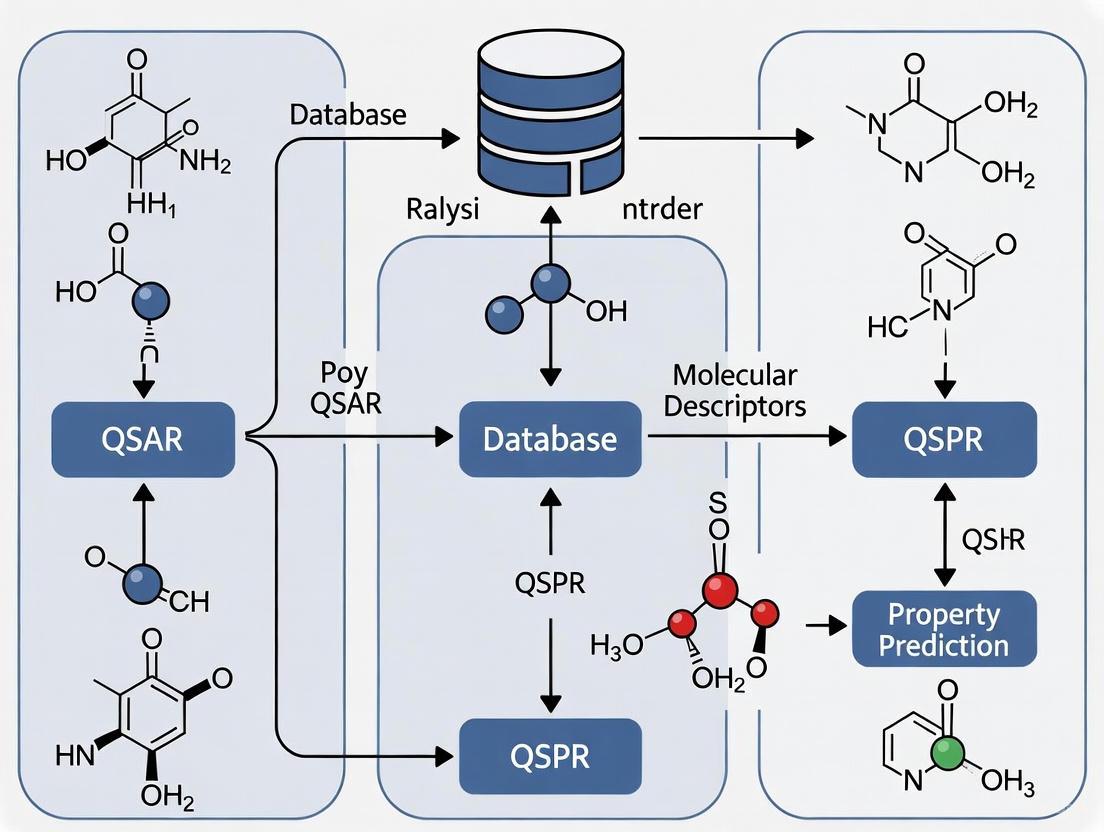
This article provides a comprehensive guide for researchers and drug development professionals on the use of inorganic compound databases in Quantitative Structure-Property Relationship (QSPR) analysis.
Navigating Inorganic Compound Databases for QSPR Analysis: Challenges, Methods, and Best Practices
Abstract
This article provides a comprehensive guide for researchers and drug development professionals on the use of inorganic compound databases in Quantitative Structure-Property Relationship (QSPR) analysis. It explores the fundamental differences between organic and inorganic QSPR, detailing the current landscape of specialized databases and the significant challenges posed by data scarcity and structural complexity. The content covers advanced methodological approaches, from traditional topological indices to modern machine learning and hybrid AI models, with practical applications in predicting critical properties like octanol-water partition coefficients, enthalpy of formation, and toxicity. The article further addresses troubleshooting and optimization strategies for model development, emphasizes rigorous validation protocols, and offers a comparative analysis of available tools and resources. By synthesizing current research and future directions, this guide serves as an essential resource for advancing the application of QSPR in inorganic chemistry, particularly in biomedical and materials science contexts.
The Landscape of Inorganic QSPR: Databases, Challenges, and Key Differences from Organic Systems
Quantitative Structure-Property Relationship (QSPR) modeling represents a cornerstone of computational chemistry, enabling the prediction of compound behaviors from molecular descriptors. While extensively developed for organic molecules, the application of QSPR to inorganic compounds presents unique challenges, beginning with a fundamental question: what exactly constitutes an "inorganic compound" in the context of QSPR modeling? The standard textbook definition—compounds lacking carbon-hydrogen bonds—proves insufficient for practical QSPR applications where representation, descriptor calculation, and database management require more nuanced approaches [1].
The significance of this definition extends beyond academic interest. Research groups, particularly in Italy and collaborating institutions, are actively developing approaches to apply inorganic compounds across diverse fields including ecology, medicine, and materials science [1]. The accurate development of databases for these applications hinges on consistent compound classification. This technical guide examines the working definitions, practical classifications, and methodological considerations for identifying and handling inorganic compounds within QSPR frameworks, specifically contextualized for inorganic compound database development in research.
Beyond the Textbook: Practical Definitions in Computational Chemistry
The Traditional Divide and Its Limitations
The conventional division between organic and inorganic chemistry typically follows a structural criterion: organic chemistry primarily studies carbon-containing compounds, often with complex chains and skeletons, while inorganic chemistry focuses on compounds typically without carbon-carbon or carbon-hydrogen bonds, frequently containing metals, oxygen, nitrogen, sulfur, and phosphorus [1]. This distinction, while useful in introductory contexts, becomes blurred at the boundaries when dealing with organometallic compounds, coordination complexes, and other hybrid structures that contain both organic and inorganic components [1].
The QSPR Practitioners' Definition
In practical QSPR terms, the operational definition of an inorganic compound often centers on computational treatability rather than purely chemical composition. A critical distinction emerges: can the compound be adequately represented and processed by standard QSPR software originally designed for organic molecules? From this perspective, inorganic compounds in QSPR include:
- Classic inorganic compounds containing metal ions and non-carbon-based anions (e.g., metal oxides, sulfides, halides).
- Organometallic complexes where metal atoms are bonded to organic ligands [1].
- Coordination compounds involving central metal atoms surrounded by ligands.
- Salts and ionic compounds that often present representation challenges in standard molecular representation systems [1].
The primary challenge lies in the fact that "many models only use atoms commonly present in organic substances" and "salts are usually represented as a disconnected structure, with two separate parts, and this represents a complication for modeling in most cases" [1]. This practical limitation fundamentally shapes how inorganic compounds are identified and handled in QSPR workflows.
A Practical Classification Framework for QSPR Databases
For researchers developing inorganic compound databases for QSPR analysis, a functional classification system is essential. Based on current literature and modeling practices, inorganic compounds in QSPR can be categorized as follows:
Table 1: Classification of Inorganic Compounds in QSPR Research
| Category | Definition | Examples | QSPR Treatment Considerations |
|---|---|---|---|
| Classic Inorganics | Compounds without carbon atoms (excluding certain allotropes) | Metal oxides (TiO₂), silica, metal salts (NaCl) | Often represented as disconnected structures; may require specialized descriptors [1] |
| Coordination Complexes | Central metal atom/ion surrounded by ligands | Pt(IV) complexes, iron porphyrins | Can be treated as single molecular entities; metal-ligand bonding requires careful parameterization [1] |
| Organometallics | Compounds featuring metal-carbon bonds | Ferrocene, metal carbonyls | Hybrid character necessitates descriptors capturing both organic and inorganic domains [1] |
| Small Inorganic Molecules | Small polyatomic molecules without carbon | O₂, NO₂, PCl₃ | Often represented with simplified molecular input line entry system (SMILES); may be included in broader inorganic datasets [1] |
This classification system provides database architects with a structured approach to compound categorization, ensuring consistent treatment of chemically diverse entities within QSPR modeling frameworks.
Methodological Approaches for Inorganic Compound Representation
Representation Systems and Descriptors
The representation of inorganic compounds requires specialized approaches beyond those used for typical organic molecules. Several methodological frameworks have emerged:
Simplified Molecular Input Line Entry System (SMILES) Adaptation SMILES strings can represent many inorganic compounds, particularly coordination complexes and organometallics. For example, platinum complexes studied in QSPR models have been successfully represented using SMILES notation [1]. However, salts and ionic compounds often present as disconnected structures, complicating their representation in standard QSPR workflows [1].
Simplex Representation of Molecular Structure (SiRMS) The SiRMS approach represents molecules as systems of simplexes (n-dimensional polyhedrons), providing a particularly powerful method for handling stereochemical complexity in inorganic and coordination compounds [2]. This method enables comprehensive stereochemical analysis and can differentiate homochirality classes, which is essential for modeling biologically active coordination complexes [2].
Quantum Chemical Descriptors For many inorganic compounds, especially those involving transition metals, quantum chemical descriptors derived from Density Functional Theory (DFT) calculations provide critical information. Studies on dye-sensitized solar cells involving titanium dioxide demonstrate the importance of DFT-calculated descriptors like hardness, which correlates with fundamental gap properties [3].
Machine Learning and Feature Selection Strategies
Modern QSPR implementations increasingly leverage machine learning (ML) techniques for handling inorganic compounds:
Descriptor Optimization Techniques Advanced optimization methods like the index of ideality of correlation (IIC) and coefficient of conformism of correlative prediction (CCCP) have shown promise for improving QSPR models of inorganic compounds. Research indicates that "optimization with CCCP was the best option for the models of the octanol–water partition coefficient for the set of organic compounds, the octanol–water partition coefficient of the inorganic set, and the enthalpy of formation of the inorganic compounds" [1].
Dimensionality Reduction The high dimensionality of descriptor spaces for inorganic compounds necessitates robust dimensionality reduction techniques. Principal Component Analysis (PCA) and Partial Least Squares (PLS) are widely employed to address multicollinearity issues in inorganic compound datasets [4].
Table 2: Experimental Protocols for QSPR Model Development with Inorganic Compounds
| Protocol Step | Methodological Approach | Application to Inorganic Compounds |
|---|---|---|
| Dataset Curation | Las Vegas algorithm for splitting into active training, passive training, calibration, and validation sets [1] | Ensures robust model validation for often limited inorganic compound datasets |
| Descriptor Calculation | Correlation weights optimized via Monte Carlo method [1] | Handles diverse atomic types and bonding environments in inorganic compounds |
| Model Validation | External validation with invisible validation sets [1] | Critical for assessing predictive power given structural diversity of inorganic compounds |
| Performance Assessment | Determination coefficients (R²) for training and validation sets [1] | Standard metric for model quality, with typically lower values for inorganic vs. organic compound models |
Computational Tools and Research Reagents
The successful implementation of QSPR for inorganic compounds requires specialized computational tools and descriptor systems that function as essential "research reagents" in silico:
Table 3: Essential Computational Tools for Inorganic QSPR
| Tool/Descriptor Type | Function | Applicability to Inorganic Compounds |
|---|---|---|
| CORAL Software | QSPR model development using SMILES-based descriptors [1] | Handles both organic and inorganic compounds; implements Monte Carlo optimization for correlation weights |
| SiRMS Approach | Stereochemical analysis and molecular representation using simplexes [2] | Particularly effective for chiral inorganic and coordination complexes |
| DFT Calculations | Quantum chemical descriptor generation [3] | Essential for electronic property description in metal-containing compounds |
| Dragon Software | Molecular descriptor calculation [3] | Limited for pure inorganic compounds but useful for organometallics |
| 3D-QSAR Approaches | Three-dimensional quantitative structure-activity relationships [4] | Adapted for coordination complexes with defined stereochemistry |
Workflow: Classifying Compounds for QSPR Analysis
The following diagram illustrates the decision process for classifying compounds within a QSPR context, integrating the criteria and considerations discussed:
Defining inorganic compounds for QSPR analysis requires moving beyond simplistic chemical definitions to embrace practical considerations of molecular representation, descriptor availability, and computational treatability. The operational definition hinges on a compound's compatibility with standard QSPR frameworks originally designed for organic molecules. As research in this field advances, particularly in the development of comprehensive inorganic compound databases, the adoption of consistent classification systems and specialized modeling approaches will be essential for advancing the QSPR field beyond its traditional organic boundaries. Future work should focus on expanding descriptor sets specifically tailored to inorganic compounds' unique characteristics and developing more inclusive representation systems that seamlessly handle the full spectrum of chemical diversity.
The development of Quantitative Structure-Property Relationship (QSPR) and Quantitative Structure-Activity Relationship (QSAR) models represents a cornerstone of modern chemical research, enabling the prediction of physicochemical, environmental, and biological behaviors of compounds without resource-intensive experimental work. While these in silico approaches have flourished for organic compounds, the landscape for inorganic compounds presents distinct challenges and opportunities. The fundamental distinction lies in chemical composition: organic chemistry primarily concerns compounds containing carbon atoms, often in complex chains, whereas inorganic chemistry focuses on compounds typically lacking carbon-hydrogen bonds, frequently containing metals, oxygen, nitrogen, sulfur, and phosphorus [1].
The context of a broader thesis on inorganic compound databases reveals a critical disparity: the ecosystem of chemical databases for QSPR analysis is characterized by a significant imbalance. Organic compounds benefit from extensive, well-curated databases supporting robust model development, while inorganic compounds suffer from comparatively "modest" database resources both in number and content [1]. This gap is particularly problematic given the importance of inorganic and organometallic compounds in fields ranging from medicine and catalysis to materials science. This whitepaper provides a comprehensive analysis of the current availability of inorganic chemical databases, quantitatively assesses the existing gaps, and outlines experimental protocols and computational strategies to advance QSPR research for inorganic substances.
Current Landscape of Inorganic Chemical Databases
The database infrastructure for inorganic compounds is distributed across several key repositories, each with a specific focus, such as crystallographic data, physicochemical properties, or bioactivity. The following table summarizes the principal databases relevant to inorganic chemical research.
Table 1: Key Databases Containing Inorganic and Organometallic Compound Data
| Database Name | Primary Content Focus | Relevant Inorganic Data | Estimated Size (Inorganic/Total) | Access |
|---|---|---|---|---|
| Cambridge Structural Database (CSD) [5] [6] | Crystal structures of small molecules | Organic & metal-organic structures | 1.24 million+ total structures | Paid Subscription |
| Inorganic Crystal Structure Database (ICSD) [6] | Inorganic crystal structures | Inorganic compounds, minerals, ceramics | Niche coverage | Not Specified |
| Reaxys [7] | Chemical substances, reactions, data | Inorganic and organometallic chemistry | Broad (includes Gmelin legacy data) | Subscription |
| Pauling File [6] | Inorganic Materials | Phase diagrams, crystal structures, physical properties | Niche coverage | Not Specified |
| Protein Data Bank (PDB) [5] [6] | 3D structures of macromolecules | Metalloproteins, metal-organic complexes | 227,000+ structures | Free |
| Crystallography Open Database (COD) [6] | Open-access crystal structures | Organic, inorganic, metal-organic compounds | Open collection | Free |
| ChEMBL [5] | Bioactive molecules & drug discovery | Bioactive compounds, including some metal-containing molecules | 2.4 million+ compounds | Free |
| QSAR Toolbox Databases [8] | Properties, environmental fate, toxicity | Includes data on inorganic substances | 69,547 substances (PhysChem) | Free |
Beyond these, specialized resources exist for specific inorganic sub-fields. The Materials Project and AFLOW provide open web-based access to computed properties of known and predicted inorganic materials [6]. The International Zeolite Association Database offers structural information on zeolites, a crucial class of inorganic materials [6].
A quantitative analysis of database content highlights the data gap. The QSAR Toolbox, a major resource for predictive toxicology, aggregates 63 databases containing over 142,500 chemicals [8]. However, its physical-chemical properties section covers 69,547 substances, the majority of which are organic [1] [8]. This reflects a broader trend where databases with "broad" coverage, like PubChem and ChemSpider, are dominated by organic molecules, while those with "niche" coverage, like the ICSD, are dedicated to inorganics but are smaller in scale [5].
Critical Gaps and Research Challenges
The development of QSPR models for inorganic compounds is hindered by several interconnected gaps.
Scarcity of Specialized Databases and Standardized Data
The most significant challenge is the scarcity of large, dedicated databases for inorganic compounds, particularly those containing high-quality experimental data for properties relevant to environmental fate and toxicology [1] [9]. This forces researchers to spend considerable effort on manual data collection from scattered literature sources, as demonstrated in the development of a sublimation enthalpy model for energetic compounds, which required supplementing a general database with over 100 nitro compounds from literature [10]. Furthermore, the lack of standardization in data reporting for inorganics complicates the curation of homogenous datasets necessary for reliable QSPR model building [11].
Limitations in QSPR/QSAR Modeling and Descriptor Availability
Many widely used QSPR/QSAR models and software tools are inherently biased toward organic chemistry. They often disregard salts or represent them as disconnected structures, creating complications for modeling inorganic substances [1]. A benchmark study of predictive software noted the routine removal of "inorganic and organometallic compounds" during data curation, explicitly limiting the scope to organic molecules [11]. Additionally, molecular descriptors optimized for organic molecules may not adequately capture the properties and bonding environments prevalent in inorganic complexes, such as coordination number and geometry [1].
Challenges in Predictive Performance and Applicability
Building predictive models for inorganic endpoints remains difficult. Research indicates that optimization methods successful for organic compound properties, such as the Coefficient of Conformism of a Correlative Prediction (CCCP), may not be optimal for all inorganic endpoints. For instance, modeling the acute toxicity (pLD50) of organometallic complexes in rats failed with one optimization method but achieved modest success with the Index of Ideality of Correlation (IIC) [1]. This underscores the unique challenges in predicting the toxicokinetic and toxicodynamic behaviors of inorganic species compared to organics.
Experimental and Computational Protocols
To address these challenges, researchers have developed specific methodological workflows for building QSPR models with limited inorganic data.
Workflow for QSPR Model Development
The following diagram illustrates a generalized protocol for developing QSPR models for inorganic compounds, integrating steps from recent studies.
Detailed Methodological Breakdown
Data Collection and Curation
- Data Sourcing: Data must be aggregated from diverse sources, including specialized databases like the ICSD and manual literature mining. For example, a model for sublimation enthalpy of energetic compounds was built by supplementing a general database with 100+ energetic organic compounds from scientific papers [10].
- Standardization: Isomeric SMILES are retrieved for all compounds, often using services like the PubChem PUG REST API. Subsequent standardization using toolkits like RDKit includes neutralizing salts, removing duplicates, and standardizing chemical structures [11].
- Curation of Inorganics: A critical step is the identification and potential removal of inorganic and organometallic compounds if the model is not designed for them, highlighting the field's bias [11]. For inorganic-focused models, this step involves careful annotation of metal centers and coordination environments.
- Outlier Removal: Intra-dataset outliers are identified using Z-scores (e.g., |Z| > 3), and inter-outliers (inconsistent values for the same compound across datasets) are removed or averaged based on standardized standard deviation thresholds (e.g., >0.2) [11].
Descriptor Calculation and Data Splitting
- Descriptor Generation: Two primary descriptor types are used:
- Topological Descriptors: Calculated using cheminformatics tools (e.g., RDKit, CDK), they are computationally inexpensive and include counts of specific functional groups (e.g., nitro groups), surface area, and polar surface area [10].
- Quantum Chemical (QC) Descriptors: Derived from quantum mechanical calculations (e.g., surface electrostatic potentials, degree of charge balance), these descriptors have intrinsic physical meaning but are computationally expensive [10].
- Data Splitting: Datasets are split into subsets for robust validation, often using stochastic algorithms like the Las Vegas algorithm. A typical split includes:
- Active Training Set: For optimization of model parameters.
- Passive Training Set: To check suitability for unseen data.
- Calibration Set: To detect the onset of training stagnation.
- Validation Set: For final, external evaluation of predictive performance [1]. Splits can be equal or skewed (e.g., 35%/35%/15%/15%) depending on data size [1].
Model Training, Optimization, and Validation
- Algorithm Selection: Machine learning algorithms such as Support Vector Regression (SVR), Random Forest (RF), Extreme Gradient Boosting (XGBoost), and Particle Swarm Optimization (PSO) are employed [10]. For smaller datasets, Monte Carlo optimization of correlation weights is also used [1].
- Target Function Optimization: The choice of optimization function is critical. Studies show that for inorganic endpoints like the octanol-water partition coefficient of inorganic sets and the enthalpy of formation of organometallics, optimization using the Coefficient of Conformism of a Correlative Prediction (CCCP) is superior. In contrast, for rat acute toxicity of inorganic compounds, the Index of Ideality of Correlation (IIC) was the best option [1].
- Validation and Applicability Domain: The model's predictivity is rigorously assessed on the external validation set. Defining the Applicability Domain (AD) is crucial to identify compounds for which the model's predictions are reliable [12] [11].
Table 2: Key Software and Resources for Inorganic QSPR Analysis
| Tool/Resource | Type | Function in Inorganic QSPR | Relevance to Inorganics |
|---|---|---|---|
| CORAL Software [1] | QSPR/QSAR Modeling | Builds models using SMILES-based descriptors and stochastic optimization. | Explicitly used for modeling both organic and inorganic substances. |
| RDKit [11] | Cheminformatics | Standardizes structures, calculates topological descriptors. | Used in curation; descriptors may be less optimal for inorganics. |
| VEGA [12] [11] | QSAR Platform | Integrates multiple (Q)SAR models for property and toxicity prediction. | Contains models for bioaccumulation (e.g., Log Kow); AD assessment is critical. |
| OPERA [12] [11] | QSAR Model Suite | Predicts physicochemical properties and environmental fate parameters. | A key tool for PC properties; performance may vary for inorganics. |
| XGBoost / RF / SVR [10] | Machine Learning Algorithms | Used to construct non-linear QSPR models from molecular descriptors. | Successfully applied to energetic materials and organometallics. |
| Reaxys [7] | Database | Provides access to chemical information, including the Gmelin inorganic database legacy data. | Essential for data collection on inorganic and organometallic compounds. |
The current state of inorganic chemical databases is one of constrained potential. While specialized resources like the ICSD and CSD provide foundational structural data, a significant gap exists in databases containing consistently measured experimental properties essential for developing and validating robust QSPR models for environmental, health, and materials applications. This data scarcity directly impacts the predictive power and regulatory acceptance of in silico models for inorganic substances.
Future progress hinges on several key advancements. Firstly, there is a pressing need to establish "large, open, and transparent" databases that include a wider range of chemical types, with an emphasis on the external regulation of data to ensure high quality [9]. Secondly, the construction of more efficient and relevant descriptors for inorganic compounds, potentially leveraging approaches from crystallography and solid-state physics, is pivotal [9] [6]. Finally, the integration of new computational approaches, including Large Language Models (LLMs) for data mining and advanced AI for feature engineering, is expected to provide new impetus to the field [9]. By addressing the identified gaps and strategically pursuing these research directions, the scientific community can significantly advance the capabilities of QSPR analysis for inorganic compounds, accelerating innovation in drug development, materials science, and environmental safety.
The development of robust Quantitative Structure-Property Relationship (QSPR) and Quantitative Structure-Activity Relationship (QSAR) models for inorganic compounds represents a significant frontier in computational chemistry, yet it is constrained by several fundamental challenges. While organic chemistry benefits from extensive, well-curated databases and relatively standardized molecular representations, the domain of inorganic chemistry faces a triad of critical impediments: profound data scarcity, exceptional structural diversity, and the complex issue of salt representation [1]. These challenges are particularly acute within the context of building reliable databases for QSPR analysis, which traditionally rely on large, consistent datasets to establish predictive correlations [1]. This technical guide delves into the core of these challenges, providing a detailed examination of their nature and presenting advanced methodological frameworks designed to overcome them, thereby enabling more accurate in silico predictions of the physicochemical and biochemical behaviors of inorganic substances.
Core Challenges in Inorganic Compound Modeling
Data Scarcity in Inorganic Databases
A primary obstacle in inorganic QSPR is the severe scarcity of structured databases compared to the organic domain. The molecular architectures of organic compounds, characterized by long carbon chains and skeletons, enable the creation of extensive databases formatted as molecular structure vectors, which are indispensable for successful QSPR/QSAR analysis [1]. In stark contrast, databases for inorganic compounds are described as "considerably modest" in both number and content [1]. This scarcity limits the statistical power and applicability domains of developed models, posing a significant bottleneck for high-throughput screening and reliable property prediction.
Extreme Structural Diversity
The structural landscape of inorganic compounds introduces a level of complexity not commonly encountered in organic chemistry. Inorganic compounds often feature small structures containing elements like oxygen, nitrogen, sulfur, phosphorus, and various metals, leading to a vast and heterogeneous array of possible molecular architectures [1]. This diversity complicates the development of universal molecular descriptors and necessitates modeling approaches that are capable of capturing a wider range of bonding patterns and geometric configurations than those required for organic molecules.
The Problem of Salt Representation
The representation of salts presents a unique and persistent challenge in QSPR modeling. Salts are typically represented as disconnected structures with two or more separate ionic parts, a format that most common QSPR software cannot process effectively [1]. Consequently, salts are frequently disregarded or transformed into their neutral forms for modeling purposes, a simplification that can drastically alter their physicochemical characteristics and lead to inaccurate predictions of their real-world behavior [1]. Developing systems capable of authentically representing and modeling salts is therefore a critical requirement for advancing inorganic QSPR.
Table 1: Core Challenges in Inorganic vs. Organic QSPR Modeling
| Challenge | Impact on Inorganic QSPR | Status in Organic QSPR |
|---|---|---|
| Data Scarcity | Databases are "considerably modest" in number and content [1]. | Benefits from large, diverse databases of molecular structure vectors [1]. |
| Structural Diversity | Features small structures with metals, O, N, S, P, leading to vast architectural variations [1]. | Dominated by carbon-based chains and skeletons, offering more predictable architectures [1]. |
| Salt Representation | Salts are represented as disconnected structures, causing complications and are often disregarded [1]. | Salts are less frequently a central focus; common software is optimized for covalent organic structures [1]. |
Methodological Frameworks and Experimental Protocols
Advanced Stochastic Modeling with CORAL Software
To address the challenges of data scarcity and diversity, one advanced methodology involves the use of the CORAL software (http://www.insilico.eu/coral) for constructing QSPR models via stochastic approaches [1]. The protocol leverages Simplified Molecular Input Line Entry System (SMILES) notation to represent molecular structures and utilizes the Monte Carlo method for optimizing correlation weights of molecular descriptors.
Detailed Protocol:
- Data Splitting: The dataset is partitioned into four distinct subsets using the Las Vegas algorithm to ensure robust validation. The splits are typically performed in equal parts or specific ratios (e.g., 35% active training, 35% passive training, 15% calibration, 15% validation) [1].
- Descriptor Calculation: Descriptors of Correlation Weights (DCW) are calculated from the SMILES notations of compounds in the active training set. The parameters for these descriptors, such as DCW(3,15), are specified, indicating the threshold and the number of epochs for the optimization process [1].
- Target Function Optimization: Correlation weights are optimized using one of two target functions:
- TF1: Optimizes the Index of Ideality of Correlation (IIC), which can improve model quality for calibration sets but may lead to stratification into correlation clusters [1].
- TF2: Optimizes the Coefficient of Conformism of a Correlative Prediction (CCCP), which has been shown to provide superior predictive potential for several inorganic endpoints, including the octanol-water partition coefficient and enthalpy of formation [1].
- Model Validation: The predictive potential of the model is rigorously evaluated using the external validation set, which was not involved in the training or calibration process. Statistical quality metrics, such as the coefficient of determination, are reported for all subsets.
Topological Indices for Structural Diversity
For managing extreme structural diversity, graph-theoretical approaches provide a powerful mathematical framework. Molecular graph theory represents atoms as vertices and bonds as edges, allowing the derivation of numerical descriptors known as topological indices that capture key structural features [13]. These indices are widely applied in QSPR analysis to predict physicochemical behavior.
Detailed Protocol for Topological Index Calculation:
- Molecular Graph Construction: Create a molecular graph ( G ) of the inorganic compound, where the vertex set ( V(G) ) represents non-hydrogen atoms and the edge set ( E(G) ) represents covalent bonds [13].
- Index Formulation: Calculate degree-based topological indices. For each vertex ( u ) in the graph, determine its degree ( du ), which is the number of connections it has. Then, apply formulations for various indices by summing over all edges ( uv ) in ( E(G) ). Key indices include [13]:
- First Zagreb Index: ( M{1}(G) = \sum{uv \epsilon E(G)} (d{u} + d{v}) )
- Second Zagreb Index: ( M{2}(G) = \sum{uv \epsilon E(G)} (d{u} \cdot d{v}) )
- Hyper Zagreb Index: ( HM{1}(G) = \sum{uv \epsilon E(G)} (d{u} + d{v})^{2} )
- Symmetric Division Degree Index: ( S.S.D.(G) = \sum{uv \epsilon E(G)} \left( \frac{d^{2}{u} + d^{2}{v}}{d{u} \cdot d{v}} \right) )
- QSPR Model Development: Establish linear regression models correlating the computed topological indices with target physicochemical properties. The general form of the model is ( \text{P} = \text{A} + \text{B} \cdot [\text{T.I.}] ), where ( P ) is the physical property, ( T.I. ) is the topological index, and ( A ) and ( B ) are constants determined through regression analysis [13].
Table 2: Key Reagents and Computational Tools for Inorganic QSPR Research
| Item / Software | Function / Application | Key Feature |
|---|---|---|
| CORAL Software | Constructs QSPR/QSAR models using SMILES notation and stochastic methods [1]. | Offers target function optimization (IIC, CCCP) and robust data splitting via the Las Vegas algorithm [1]. |
| Topological Indices | Numerical descriptors capturing molecular structure for QSPR analysis [13]. | Enables prediction of properties like boiling point and molecular weight via regression models [13]. |
| Monte Carlo Method | Optimizes correlation weights for molecular descriptors during model training [1]. | A stochastic approach suitable for navigating complex parameter spaces inherent to diverse inorganic structures. |
| SMILES Notation | A line notation system for representing molecular structures as text strings [1]. | Serves as the foundational input for generating descriptors in software like CORAL. |
Workflow and Pathway Visualizations
The following diagrams, generated using Graphviz DOT language, illustrate the core methodologies and logical relationships involved in addressing the key challenges of inorganic QSPR modeling. The color palette is strictly adhered to, and all text within nodes has been set to ensure high contrast against the node's background color (e.g., dark text on light colors, white text on dark colors) in compliance with WCAG guidelines [14] [15].
Inorganic QSPR Modeling Pathway
Salt Representation Challenge Flow
The critical challenges of data scarcity, structural diversity, and salt representation define the current frontier of QSPR analysis for inorganic compounds. While these obstacles are significant, the development of sophisticated computational methodologies provides a promising path forward. The integration of stochastic modeling approaches, as implemented in software like CORAL, with the mathematical rigor of graph-theoretical descriptors offers a powerful toolkit for building predictive models. Success in this domain hinges on the continued refinement of these techniques and a dedicated effort to expand the foundational databases of inorganic compounds. Overcoming these hurdles will unlock the full potential of in silico methods for inorganic chemistry, accelerating discovery and application across fields ranging from medicine to materials science.
Fundamental Differences Between Organic and Inorganic QSPR Modeling
Quantitative Structure-Property Relationship (QSPR) modeling serves as a cornerstone in computational chemistry, enabling the prediction of chemical behavior from molecular structure. While extensively developed for organic compounds, the application of QSPR to inorganic substances presents unique challenges and opportunities. This technical guide examines the fundamental distinctions between organic and inorganic QSPR modeling, framed within the context of developing specialized databases for inorganic compound research. Understanding these differences is crucial for researchers and drug development professionals working with organometallic therapeutics, catalytic systems, and inorganic materials whose properties cannot be adequately modeled using traditional organic-centric approaches.
The core distinction originates from fundamental chemical composition: organic chemistry primarily concerns compounds containing carbon atoms, often forming complex chains and skeletons, while inorganic chemistry focuses on compounds lacking carbon-hydrogen bonds, frequently incorporating metals, oxygen, nitrogen, sulfur, and phosphorus within typically smaller structural frameworks [1]. This structural divergence creates significant implications for QSPR methodology, descriptor selection, and model interpretation that this review systematically addresses.
Fundamental Divergences in QSPR Approaches
Structural and Compositional Challenges
Inorganic QSPR modeling must account for several structural complexities rarely encountered in organic systems. Salts and organometallic compounds represent a particular challenge, as they are often disregarded in mainstream QSPR software or transformed into neutral forms, potentially losing critical structural information [1]. These substances frequently appear as disconnected structures with separate ionic components, complicating descriptor calculation and interpretation. Furthermore, the coordination chemistry of metals introduces spatial geometries and bonding situations (e.g., coordination numbers, ligand field effects) that require specialized descriptors beyond those used for covalent organic frameworks [1] [2].
The diversity of molecular architectures in organic chemistry has enabled the creation of comprehensive databases containing structural vectors of physicochemical and biochemical properties, which are prerequisite for successful QSPR analysis. In contrast, databases for inorganic compounds remain "considerably modest" in both number and content, creating a fundamental resource disparity that hampers model development [1]. This database gap presents both a challenge and opportunity for researchers focusing on inorganic compound databases for QSPR analysis.
Descriptor Selection and Interpretation
Descriptor systems successful for organic compounds often fail to capture the essential chemistry of inorganic systems. Traditional fragment descriptor systems based on organic functional groups and bonding patterns may not adequately represent inorganic complexes, requiring specialized approaches like the Simplex Representation of Molecular Structure (SiRMS) that can handle stereochemical complexity and coordination environments [2].
For inorganic and organometallic systems, topological descriptors must be adapted or redeveloped to account for different bonding patterns, while electronic descriptors must capture metal-ligand interactions, oxidation states, and coordination effects [1] [13]. The SiRMS approach has demonstrated particular utility for stereochemical description and universal molecular stereo-analysis, enabling the identification of structural stereoisomers with different chirality elements that are common in coordination compounds [2].
Table 1: Core Differences in Descriptor Applications Between Organic and Inorganic QSPR
| Descriptor Category | Organic QSPR Applications | Inorganic QSPR Challenges |
|---|---|---|
| Topological Descriptors | Well-established for carbon skeletons; extensive validation [13] | Requires adaptation for coordination complexes; limited validation databases [1] |
| Electronic Descriptors | Focus on conjugation, aromaticity, functional group effects | Must capture oxidation states, ligand field effects, metal-ligand charge transfer |
| Geometric Descriptors | Molecular mechanics parameters well-defined | Coordination geometry, ligand spatial arrangements require specialized treatment [2] |
| Surface Descriptors | Polar surface area, solvent accessibility | Enhanced importance for coordination compounds; specialized approaches needed |
Computational Methodologies and Optimization Approaches
Algorithmic Strategies for Inorganic Systems
Model optimization strategies differ significantly between organic and inorganic QSPR. Research indicates that for inorganic compounds, Monte Carlo optimization of correlation weights using specialized target functions demonstrates particular efficacy [1]. The index of ideality of correlation (IIC) and coefficient of conformism of correlative prediction (CCCP) have emerged as valuable optimization criteria for inorganic systems, with CCCP optimization proving superior for models of octanol-water partition coefficients for mixed organic-inorganic sets and enthalpy of formation of inorganic compounds [1].
The division into correlation clusters observed in inorganic QSPR models suggests underlying structural patterns distinct from organic systems. This stratification into multiple correlation clusters, individually possessing high correlation coefficients but collectively reducing overall determination coefficients for training sets, represents a characteristic feature of inorganic QSPR modeling [1]. This phenomenon necessitates specialized validation approaches beyond those standard in organic QSPR.
Validation Paradigms
Model validation for inorganic QSPR requires enhanced rigor due to limited datasets and increased structural diversity. The Las Vegas algorithm for splitting datasets into active training, passive training, calibration, and validation sets provides a robust framework for inorganic QSPR validation [1]. This approach, employing multiple random splits rather than a single division, generates more informative and reliable models for inorganic systems where data scarcity amplifies overfitting risks.
For inorganic compounds, defining the applicability domain becomes particularly crucial yet challenging. The structural heterogeneity of inorganic compounds necessitates careful assessment of model boundaries, as extrapolation beyond the represented structural classes produces higher uncertainty in predictions compared to organic systems with more continuous descriptor spaces [1] [2].
Experimental Protocols and Workflows
QSPR Model Development for Inorganic Compounds
The following workflow outlines the standardized protocol for developing validated QSPR models for inorganic compounds, incorporating best practices from recent research:
Diagram 1: Inorganic QSPR Modeling Workflow
Specialized Software Solutions
Table 2: Essential Computational Tools for Inorganic QSPR Modeling
| Software/Resource | Primary Function | Application in Inorganic QSPR |
|---|---|---|
| CORAL Software | Generates optimal descriptors using Monte Carlo method [16] | Builds models for organometallic compounds, Pt complexes, inorganic toxicity |
| GUSAR2019 | Calculates MNA and QNA descriptors for QSPR modeling [17] | Models antioxidant activity in sulfur-containing compounds and hybrid molecules |
| SiRMS Approach | Solves stereochemical problems and generates fragment descriptors [2] | Handles chirality in coordination compounds; models complex inorganic systems |
| AlvaDesc | Calculates molecular descriptors for QSPR studies [18] | Used in modeling critical properties of diverse compound sets including inorganics |
Case Studies and Experimental Evidence
Octanol-Water Partition Coefficient (log P) Modeling
Comparative studies on log P prediction reveal fundamental differences between organic and inorganic QSPR. For a mixed dataset containing 10,005 organic and inorganic compounds, optimization with CCCP (TF2) demonstrated superior predictive potential compared to IIC optimization (TF1), with determination coefficients on validation sets of 0.94±0.01 versus 0.92±0.01, respectively [1]. This performance advantage persisted across specialized inorganic subsets, including 461 specifically defined inorganic compounds and small molecules, where TF2 optimization achieved determination coefficients of 0.90±0.02 compared to 0.85±0.03 for TF1 [1].
For platinum (IV) complexes, a particularly important class of inorganic pharmaceuticals, the superiority of CCCP optimization was maintained, with determination coefficients of 0.94±0.01 versus 0.90±0.03 for 122 Pt(IV) complexes [1]. These consistent results across diverse inorganic compound classes indicate fundamental differences in structure-property relationships that necessitate specialized optimization approaches.
Enthalpy of Formation for Organometallic Complexes
Modeling the enthalpy of formation for organometallic complexes demonstrates the necessity for specialized approaches to inorganic systems. Using an uneven split of 35%, 35%, 15%, and 15% for active training, passive training, calibration, and validation sets respectively, researchers achieved robust models through Monte Carlo optimization with target functions adapted for inorganic molecular features [1]. The success of CCCP optimization for this endpoint further confirms the distinct nature of structure-energy relationships in organometallic systems compared to organic compounds.
Hybrid and Polycomponent Systems
The Simplex Representation of Molecular Structure (SiRMS) approach enables QSPR modeling not only for standard inorganic compounds but also for complex systems including mixtures, polymers, and nanomaterials [2]. This capability is particularly valuable for inorganic systems that often exist in multicomponent formulations or exhibit complex aggregation behavior. The method's foundation on 4-vertice fragments (simplexes) provides an optimal balance between informational content and generalizability for inorganic compounds, where smaller fragments prove insufficiently informative and larger fragments become too unique with reduced predictive value [2].
Database Development Implications
Current Landscape and Deficiencies
The development of specialized databases for inorganic QSPR represents a critical research priority. As noted in recent research, "databases related to inorganic compounds are considerably modest in both their general number and contents" compared to their organic counterparts [1]. This disparity creates a fundamental constraint on inorganic QSPR development, limiting both model robustness and applicability domains.
The structural complexity of inorganic compounds necessitates specialized curation approaches in database development. Information must capture coordination environments, oxidation states, stereochemical configurations, and other features irrelevant to most organic compounds. The SiRMS approach offers a potential framework for such database development, with its capability for universal molecular stereo-analysis and stereochemical configuration description [2].
Recommended Database Architecture
Effective databases for inorganic QSPR should incorporate:
- Comprehensive stereochemical descriptors capable of representing the three-dimensional structure of coordination compounds
- Electronic structure parameters relevant to metal centers and ligand interactions
- Coordination geometry classifiers beyond traditional organic structural descriptors
- Validation metrics specific to inorganic chemical space
The fundamental differences between organic and inorganic QSPR modeling necessitate specialized approaches throughout the model development pipeline, from descriptor selection and optimization to validation and application. The structural complexity, diverse bonding situations, and limited database resources for inorganic compounds present significant challenges but also opportunities for methodological innovation.
Future research directions should prioritize the development of comprehensive, curated databases for inorganic compounds, the creation of specialized descriptors targeting inorganic molecular features, and the adaptation of machine learning approaches to accommodate the distinct characteristics of inorganic chemical space. As research in inorganic pharmaceuticals, materials, and catalysts accelerates, bridging the QSPR methodology gap between organic and inorganic chemistry will become increasingly critical for rational design and discovery in these technologically vital domains.
Promising Applications in Medicine, Ecology, and Materials Science
Quantitative Structure-Property Relationship (QSPR) modeling represents a powerful computational approach that correlates chemical structure descriptors with physicochemical or biological properties. While extensively developed for organic compounds, the application of QSPR to inorganic compounds has historically faced significant challenges, primarily due to the scarcity of comprehensive, high-quality databases specifically tailored to inorganic crystal structures [1]. The fundamental distinction between organic and inorganic chemistry lies in their compositional nature: organic chemistry primarily studies carbon-containing compounds with complex molecular architectures, whereas inorganic chemistry focuses on compounds that may contain metals, oxygen, nitrogen, sulfur, phosphorus, and other elements, typically with smaller, less variable structures [1].
The development of specialized inorganic databases and adapted computational methodologies is now enabling a paradigm shift, allowing researchers to harness QSPR for accelerated discovery across critical scientific domains. This whitepaper examines the promising applications emerging from this integration of inorganic compound databases with advanced QSPR modeling, focusing specifically on medicine, ecology, and materials science.
The cornerstone of effective inorganic QSPR research is access to comprehensive, well-curated structural databases. Unlike organic chemistry with its numerous extensive databases, inorganic chemistry has traditionally operated with more modest data resources [1]. However, several critical databases have emerged to address this gap.
Table 1: Key Databases for Inorganic QSPR Research
| Database Name | Primary Content | Size and Scope | Key Features |
|---|---|---|---|
| Inorganic Crystal Structure Database (ICSD) | Inorganic crystal structures | >210,000 entries; literature coverage from 1913 [19] | Complete atomic parameters, space group data, Wyckoff sequence, mineral group classification [20] |
| NIST ICSD | Solid-state inorganic compounds | Comprehensive collection of completely identified inorganic crystal structures [19] | Quality-assured data, theoretical structures for data mining, powder diffraction simulation [20] |
| American Mineralogist Crystal Structure Database | Mineral structures | Every structure from major mineralogy journals | Search by mineral, author, element names, cell parameters [21] |
| Database of Zeolite Structures | Zeolite framework types | Comprehensive structural information on all zeolite types | Crystallographic data, framework drawings, simulated powder patterns [21] |
The ICSD stands as the world's largest database for completely identified inorganic crystal structures, with around 12,000 new structures added annually [20]. Its rigorous quality assurance process and comprehensive data fields make it particularly valuable for QSPR studies requiring high-fidelity structural information. The database includes allocation of approximately 80% of structures to about 9,000 structure types, enabling efficient searches for substance classes and comparative analyses [20].
Medical Applications: Inorganic Compounds in Therapeutics and Toxicology
Anticancer Drug Development
Inorganic compounds, particularly organometallic complexes, have shown significant promise in anticancer drug development. Recent QSPR studies have successfully modeled the enthalpy of formation for organometallic complexes and developed predictive models for platinum (IV) complexes, which are crucial in cisplatin-based chemotherapy [1]. These models utilize simplified molecular input line entry system (SMILES) notations and optimize correlation weights using advanced algorithms like the Monte Carlo method with target functions such as the coefficient of conformism of a correlative prediction (CCCP) [1].
For acute toxicity prediction (pLD50) in rats, researchers have employed descriptor correlation weights (DCW) with stochastic approaches, demonstrating that optimization with the index of ideality of correlation (IIC) provides superior predictive potential for toxicological endpoints [1]. This approach is particularly valuable for screening inorganic compounds for therapeutic potential while minimizing animal testing.
Thyroid Hormone System Disruption Assessment
The thyroid hormone (TH) system is essential for regulating metabolism, growth, and brain development, and its disruption by chemicals poses significant health concerns [22]. Quantitative Structure-Activity Relationship (QSAR) models have emerged as valuable New Approach Methodologies (NAMs) for assessing TH system disruption without relying solely on animal-based testing [22].
Recent research has developed QSAR models targeting Molecular Initiating Events (MIEs) within the Adverse Outcome Pathway (AOP) for TH system disruption [22]. These include models predicting:
- Inhibition of thyroperoxidase (TPO), a critical enzyme for TH synthesis
- Binding to serum TH distributor proteins (transthyretin, thyroid binding globulin, albumin)
- Interactions with thyroid receptors (TRs) that regulate gene expression [22]
These models enable rapid screening of potential TH system-disrupting chemicals (THSDCs), including polychlorinated biphenyls (PCBs), polybrominated diphenyl ethers (PBDEs), bisphenol A, phthalates, and per- and polyfluoroalkyl substances (PFAS) [22].
Experimental Protocol: QSAR Model Development for Thyroid Disruption
Data Curation and Preparation
- Compound Selection: Collect a diverse set of inorganic and organometallic compounds with known thyroid disruption activities from scientific literature and databases like ICSD
- Descriptor Calculation: Use molecular descriptor calculation software (e.g., Mordred, PaDEL-Descriptor) to compute 2D and 3D molecular descriptors [23]
- Data Splitting: Divide the dataset into active training, passive training, calibration, and validation sets using algorithms like Las Vegas algorithm for robust validation [1]
Model Development and Validation
- Descriptor Selection: Apply feature selection techniques to identify the most relevant molecular descriptors correlated with thyroid disruption endpoints
- Model Training: Utilize machine learning algorithms (multiple linear regression, partial least squares, random forest) to build QSAR models
- Validation: Assess model performance using statistical parameters (R², Q², RMSE) and define applicability domain to identify reliable prediction boundaries [22]
Ecological Applications: Environmental Monitoring and Risk Assessment
Octanol-Water Partition Coefficient Prediction
The octanol-water partition coefficient (Kow) is a critical parameter in environmental risk assessment, determining how chemicals distribute between aqueous and organic phases in the environment. Recent research has developed QSPR models for predicting Kow for both organic and inorganic substances, including specialized models for platinum complexes and other metal-containing compounds [1].
These models employ DCW descriptors with correlation weights optimized using CCCP, demonstrating superior predictive potential compared to traditional approaches [1]. The integration of inorganic compound databases has been essential for developing these environmentally relevant prediction models.
Table 2: QSPR Models for Environmental Parameters of Inorganic Compounds
| Endpoint | Compound Types | Dataset Size | Optimal Target Function | Application in Ecology |
|---|---|---|---|---|
| Octanol-Water Partition Coefficient | Organic and inorganic substances | 10,005 compounds | CCCP (TF2) [1] | Bioaccumulation assessment, environmental fate prediction |
| Octanol-Water Partition Coefficient | Inorganic compounds (Au, Ge, Hg, Pb, Se, Si, Sn) | 461 compounds | CCCP (TF2) [1] | Heavy metal environmental behavior, soil sorption prediction |
| Octanol-Water Partition Coefficient | Pt(IV) complexes | 122 complexes | CCCP (TF2) [1] | Environmental impact of platinum-based therapeutics |
Ecological QSAR Workflow
Materials Science Applications: Advanced Functional Materials
Antioxidant Design for High-Energy-Density Fuels
In aerospace applications, high-energy-density fuels face oxidative instability challenges that can be addressed with phenolic antioxidants. Recent research combines multilevel calculation protocols with QSAR modeling to predict antioxidant activity at different temperatures [24]. This approach integrates quantum mechanical conformational sampling with high-level electronic structure calculations to accurately determine rate constants (kinh) and equilibrium constants (Kinh) of antioxidative reactions [24].
The methodology employs:
- GFNn-xTB semi-empirical calculations for efficient conformational sampling
- Density functional theory (DFT) refinement with functionals like B3LYP, M06-2X, and ωB97X-D
- Temperature-dependent QSAR models incorporating both quantum chemical descriptors and temperature data [24]
This integrated approach has demonstrated significant improvements over traditional single-structure calculations, with discrepancies of up to 5 orders of magnitude corrected through comprehensive conformational sampling [24].
Materials Informatics Workflow
Table 3: Essential Research Tools for Inorganic QSPR Applications
| Tool Category | Specific Tools | Key Functionality | Application Examples |
|---|---|---|---|
| Descriptor Calculation | Mordred [23], PaDEL-Descriptor [23], Dragon [23] | Calculate 1800+ 2D/3D molecular descriptors from chemical structures | Converting inorganic structures to numerical descriptors for modeling |
| Crystallographic Databases | ICSD [20] [19], American Mineralogist Database [21] | Provide validated inorganic crystal structures for training sets | Source of structural parameters for inorganic QSPR models |
| Quantum Chemical Software | Gaussian, ORCA, DFT packages | Calculate electronic structure properties for complex inorganic systems | Providing quantum chemical descriptors for antioxidant design [24] |
| Modeling Algorithms | Monte Carlo optimization [1], MLR, PLS, Random Forest | Build predictive relationships between descriptors and properties | Optimizing correlation weights for octanol-water partition coefficient prediction [1] |
| Validation Tools | Cross-validation, external validation sets, applicability domain assessment | Ensure model robustness and define prediction boundaries | Establishing reliable prediction domains for thyroid disruption models [22] |
The integration of comprehensive inorganic compound databases with advanced QSPR modeling methodologies is opening new frontiers in medical, ecological, and materials science research. As database coverage expands and modeling techniques become more sophisticated, we anticipate several key developments:
First, the increased incorporation of machine learning and deep learning approaches will enhance predictive accuracy for complex inorganic systems. Second, the development of standardized validation protocols and applicability domain definitions will improve model reliability for regulatory applications. Finally, the integration of multi-scale modeling approaches—combining quantum mechanical calculations with QSPR predictions—will enable more accurate property predictions across diverse temperature and environmental conditions.
These advances position inorganic QSPR as a transformative tool for accelerating the discovery and development of new therapeutics, environmental monitoring strategies, and advanced functional materials, ultimately contributing to solutions for pressing global challenges in health, sustainability, and technology.
Methodologies for Inorganic QSPR: From Topological Indices to AI-Driven Models
The application of Quantitative Structure-Property Relationship (QSPR) modeling to inorganic compounds presents unique challenges distinct from those encountered in organic chemistry. While organic QSPR benefits from well-established descriptors handling carbon-based molecular skeletons and functional groups, inorganic systems feature greater structural diversity, complex bonding patterns, and the presence of metals requiring specialized characterization approaches [1]. The development of reliable QSPR models for inorganic crystals is further complicated by the relative scarcity of comprehensive databases compared to those available for organic compounds [1]. This technical guide examines the specialized molecular descriptors enabling QSPR analysis for inorganic materials, focusing on topological, electronic, and three-dimensional feature representations essential for predicting material properties in energy storage, catalysis, and electronic applications.
Fundamental Descriptor Categories for Inorganic Compounds
Molecular descriptors translate chemical structures into quantitative parameters that can be processed by statistical and machine learning algorithms [25] [26]. For inorganic compounds, these descriptors can be categorized based on the structural information they encode and their computational requirements.
Table 1: Categories of Molecular Descriptors for Inorganic Compounds
| Descriptor Category | Required Input | Key Examples | Applications in Inorganic QSPR |
|---|---|---|---|
| Topological Descriptors | Atom and bond connectivity (2D structure) | Wiener index, Balaban index, Randić index [25] [26] | Characterizing branching patterns and molecular complexity without 3D coordinates |
| Geometrical Descriptors | 3D atomic coordinates | Gravitational index, moment of inertia, molecular surface area and volume [26] | Describing crystal morphology, pore sizes, and bulk material properties |
| Electronic Descriptors | Electron distribution data | HOMO/LUMO energies, atomic charges, ionization potential, electronegativity [25] [27] | Predicting electronic properties, band gaps, and chemical reactivity |
| Crystal-Wide Descriptors | Unit cell parameters | Lattice constants, space group, density, symmetry operations [27] | Modeling bulk material properties and phase behavior |
Specialized Descriptor Frameworks for Inorganic Crystals
Property-Labelled Materials Fragments (PLMF)
A significant advancement in inorganic materials descriptor development is the Property-Labelled Materials Fragments (PLMF) approach, which adapts fragment descriptors from cheminformatics to characterize inorganic crystals [27]. This method represents materials as 'coloured' graphs where vertices are decorated according to atomic properties, overcoming the limitations of traditional fragment descriptors that perform poorly with new structural motifs.
The PLMF generation workflow involves several sophisticated steps as visualized below:
Diagram 1: PLMF descriptor generation workflow for inorganic crystals
The PLMF approach incorporates an extensive set of atomic properties including Mendeleev group and period numbers, valence electron count, atomic mass, electron affinity, thermal conductivity, heat capacity, ionization potentials, effective atomic charge, molar volume, chemical hardness, various atomic radii, electronegativity, and polarizability [27]. For each property scheme, the method calculates minimum, maximum, sum, average, and standard deviation values across all atoms in the material, creating a comprehensive 2,494-dimensional descriptor vector after filtering low-variance and highly correlated features [27].
CORAL Software Descriptors for Inorganic QSPR
The CORAL software implements specialized descriptors for QSPR modeling of both organic and inorganic compounds using simplified molecular input line entry system (SMILES) representations [1]. This approach employs correlation weights optimized through Monte Carlo methods with target functions such as the index of ideality of correlation (IIC) or coefficient of conformism of correlative prediction (CCCP) [1]. The optimization process utilizes specially structured datasets divided into active training, passive training, calibration, and validation subsets via the Las Vegas algorithm, creating models capable of predicting properties like octanol-water partition coefficients even for challenging inorganic systems including platinum complexes [1].
Experimental Protocols for Descriptor Implementation
Protocol: Generating PLMF Descriptors for Inorganic Crystals
Materials Required:
- Crystallographic Information File (CIF) for the target material
- Tabulated atomic properties database (including electronegativity, radii, ionization potentials)
- Computational geometry software with Voronoi partitioning capabilities
- Programming environment for graph analysis (Python, R, or specialized materials informatics platform)
Methodology:
- Structure Input: Begin with a properly formatted CIF containing unit cell parameters and atomic coordinates [27].
- Connectivity Determination:
- Graph Construction: Generate adjacency matrix representing the full connectivity graph of the crystal structure [27].
- Fragment Generation:
- Extract path fragments (linear strands of up to four atoms)
- Identify circular fragments (coordination polyhedra representing nearest neighbor clusters)
- Property Assignment: Decorate each atom in fragments with 50+ chemical and physical properties, including pairwise multiplications and ratios [27].
- Descriptor Calculation: Compute crystal-wide properties (lattice parameters, symmetry operations, density) and combine with fragment descriptors [27].
- Feature Filtering: Remove low-variance (<0.001) and highly correlated (r²>0.95) features to produce the final descriptor vector [27].
Validation: Compare predicted properties (band gap, elastic moduli) with experimental measurements or high-fidelity computational results [27].
Protocol: CORAL-based QSPR Model Development
Materials Required:
- SMILES representations of inorganic compounds
- CORAL software (available at http://www.insilico.eu/coral)
- Experimental property data for training and validation
- Computational resources for Monte Carlo optimization
Methodology:
- Data Preparation: Convert inorganic compounds to SMILES notation and compile experimental property data [1].
- Dataset Splitting: Use Las Vegas algorithm to divide data into:
- Active training set (for correlation weight optimization)
- Passive training set (validation during optimization)
- Calibration set (detecting optimization stagnation)
- Validation set (final model evaluation) [1]
- Descriptor Calculation: Compute SMILES-based descriptors using correlation weights [1].
- Optimization: Implement Monte Carlo optimization with target functions (IIC or CCCP) to determine optimal correlation weights [1].
- Model Validation: Assess predictive performance on external validation set using statistical metrics (R², Q²) [1].
Research Reagent Solutions for Inorganic QSPR
Table 2: Essential Resources for Inorganic QSPR Research
| Resource Category | Specific Tools/Databases | Function in Inorganic QSPR |
|---|---|---|
| Crystallographic Databases | Inorganic Crystal Structure Database (ICSD) [20] [19], American Mineralogist Crystal Structure Database [21] | Provides reference crystal structures for descriptor calculation and model training |
| Software Toolkits | CORAL [1], QSPRpred [28], AFLOW-ML [27] | Implement specialized descriptors and machine learning algorithms for inorganic materials |
| Atomic Property Databases | CRC Handbook of Chemistry and Physics [21], Tabulated elemental properties [27] | Sources for atomic descriptors (electronegativity, radii, ionization potentials) |
| Validation Resources | AEL-AGL framework [27], Experimental thermomechanical data [27] | Benchmark computational predictions against established calculations or measurements |
Applications and Validation in Materials Discovery
Well-constructed descriptors for inorganic compounds have demonstrated remarkable predictive accuracy for diverse material properties. The PLMF approach has successfully predicted metal/insulator classification, band gap energy, bulk and shear moduli, Debye temperature, heat capacities, and thermal expansion coefficients for virtually any stoichiometric inorganic crystalline material [27]. The accuracy of these predictions compares favorably with the quality of training data, with validation against the AEL-AGL integrated framework and experimental measurements confirming their reliability [27].
For pharmaceutical applications involving inorganic compounds, topological descriptors similar to those used in organic QSAR have been adapted, including entire neighborhood indices that characterize molecular graphs based on adjacency and connectivity patterns [29]. These approaches demonstrate the transferability of descriptor concepts across chemical domains while acknowledging the unique challenges posed by inorganic systems, particularly those containing metals and complex coordination environments [1].
The development of specialized molecular descriptors for inorganic compounds represents a critical advancement in materials informatics, enabling QSPR modeling across the vast chemical space of inorganic crystalline materials. By integrating topological, electronic, and crystal-structural information through frameworks such as Property-Labelled Materials Fragments and CORAL optimization, researchers can now predict important electronic and thermomechanical properties with accuracy rivaling experimental measurements. These descriptor technologies continue to evolve, offering powerful tools for accelerated discovery of novel inorganic materials with tailored properties for energy, electronic, and pharmaceutical applications.
The application of Quantitative Structure-Property Relationship (QSPR) modeling to inorganic compounds presents a significant challenge and opportunity in computational chemistry. Unlike organic chemistry, where carbon-based compounds share common structural frameworks, inorganic chemistry encompasses a vast array of elements with diverse electronic configurations and bonding patterns. This diversity creates unique challenges for traditional QSPR approaches, primarily due to limited specialized databases and structural complexity that complicate descriptor calculation [1] [30].
The development of reliable QSPR models for inorganic compounds requires advanced regression techniques that can handle these complexities while providing interpretable results. This technical guide explores four key regression methodologies—Multiple Linear Regression (MLR), Partial Least Squares (PLS), Genetic Algorithm-based Multiple Linear Regression (GA-MLR), and Genetic Partial Least Squares (G/PLS)—within the specific context of modeling inorganic compound properties. We examine their theoretical foundations, implementation protocols, and comparative performance to provide researchers with a framework for selecting appropriate methodologies for their inorganic QSPR investigations.
Theoretical Foundations of Regression Techniques
Multiple Linear Regression (MLR)
Multiple Linear Regression (MLR) represents one of the earliest and most straightforward methods for constructing QSPR models. Its fundamental advantage lies in its simple mathematical form and easily interpretable results, providing a direct relationship between molecular descriptors and the target property [31] [32]. The MLR model takes the form:
[y = b0 + b1x1 + b2x2 + \cdots + bnx_n + e]
where (y) is the predicted property, (b0) is the intercept, (b1) to (bn) are regression coefficients for descriptors (x1) to (x_n), and (e) represents the error term [31].
Despite its simplicity, MLR has significant limitations when applied to complex inorganic systems. It is particularly vulnerable to descriptor collinearity, which can obscure the true relationship between structure and property. Additionally, standard MLR cannot automatically determine which correlated descriptor sets may be more significant to the model, making it suboptimal for datasets with numerous intercorrelated variables [31] [33].
Partial Least Squares (PLS)
Partial Least Squares (PLS) regression was developed to address the limitations of MLR when dealing with highly correlated variables or situations where the number of descriptors exceeds the number of compounds [31] [34]. Rather than directly correlating the original descriptors to the response variable, PLS projects both descriptors and response variables into a new latent variable space, maximizing the covariance between them [34].
The fundamental PLS model consists of two simultaneous equations:
[X = TP^T + E]
[y = Tq^T + f]
where (X) is the descriptor matrix, (T) contains the latent scores, (P) represents the loading vectors for (X), (q) contains the loading vectors for (y), and (E) and (f) denote error matrices [34]. This projection makes PLS particularly effective for modeling inorganic compounds where descriptors often exhibit strong correlations due to underlying electronic or structural relationships.
Genetic Algorithm-Based Multiple Linear Regression (GA-MLR)
Genetic Algorithm-based Multiple Linear Regression (GA-MLR) combines the stochastic optimization power of Genetic Algorithms (GAs) with the interpretability of MLR [31] [33]. In this hybrid approach, the GA performs a global search of the descriptor space to select the most relevant variables, which are then used to construct a traditional MLR model [31].
The GA component follows an evolutionary computation approach, generating an initial population of potential descriptor subsets (chromosomes) and iteratively applying selection, crossover, and mutation operations to evolve toward optimal solutions [31] [35]. The fitness of each chromosome is typically evaluated using a function such as the Friedman Lack-of-Fit (LOF) measure:
[LOF = \frac{SSE}{\left(1 - \frac{c + dp}{n}\right)^2}]
where (SSE) is the sum of squares of errors, (c) is the number of basis functions, (d) is a smoothness factor, (p) is the number of features in the model, and (n) is the number of data points [31]. This approach resists overfitting by penalizing models with too many descriptors.
Genetic Partial Least Squares (G/PLS)
Genetic Partial Least Squares (G/PLS) represents a further evolution of hybrid methodologies, combining Genetic Function Approximation (GFA) with PLS regression [31] [32]. In this approach, GFA selects appropriate basis functions or descriptor combinations, while PLS serves as the fitting technique to weigh their relative contributions in the final model [31] [32].
This methodology allows the construction of larger QSAR equations while avoiding overfitting and eliminating non-essential variables. The PLS component efficiently handles the inherent collinearity in molecular descriptors, while the GA element ensures optimal variable selection, making G/PLS particularly suited for complex inorganic systems with numerous potential descriptors [31].
Comparative Analysis of Regression Techniques
Table 1: Comparison of Key Regression Techniques for Inorganic Compound QSPR
| Technique | Mathematical Foundation | Variable Selection | Handling Collinearity | Interpretability | Best Suited For |
|---|---|---|---|---|---|
| MLR | Ordinary least squares | Manual or stepwise | Poor | High | Small datasets with orthogonal descriptors |
| PLS | Latent variable projection | Built-in through components | Excellent | Moderate | Highly correlated descriptors, spectral data |
| GA-MLR | Evolutionary algorithm + OLS | Automated via GA | Moderate | High | Large descriptor pools, feature selection critical |
| G/PLS | GA + Latent variable projection | Automated via GA | Excellent | Moderate | Complex systems with many correlated variables |
Table 2: Performance Characteristics for Different Data Scenarios
| Technique | Computational Demand | Risk of Overfitting | Nonlinear Modeling Capability | Implementation Complexity |
|---|---|---|---|---|
| MLR | Low | High with many variables | None | Low |
| PLS | Moderate | Low | Limited (with extensions) | Moderate |
| GA-MLR | High | Moderate | Limited | High |
| G/PLS | High | Low | Moderate (through basis functions) | High |
Experimental Protocols and Implementation
Data Preparation and Descriptor Calculation
For inorganic compounds, traditional descriptors designed for organic molecules are often inadequate. Recent approaches have utilized elemental composition-based descriptors and electron configurations as effective alternatives [30]. The electron configuration of each element in a compound can be represented as a binary vector indicating the presence of electrons in specific orbitals (s, p, d, f), creating a uniform representation across diverse inorganic structures [30].
Data should be partitioned into training, calibration, and validation sets using algorithms such as the Las Vegas algorithm to ensure representative splits [1]. For inorganic datasets, specialized validation strategies are crucial due to limited data availability. The training set is used for model building, the calibration set detects stagnation in optimization processes, and the validation set provides the final assessment of predictive performance [1].
MLR Implementation Protocol
- Descriptor Pre-screening: Calculate pair correlation matrices and eliminate highly correlated descriptors (typically with R² > 0.8-0.9) [31]
- Model Construction: Apply stepwise selection, forward selection, or backward elimination to identify the optimal descriptor combination [31] [35]
- Validation: Assess model performance using leave-one-out (LOO) or leave-many-out (LMO) cross-validation
- Applicability Domain: Define the structural space where the model can make reliable predictions
Enhanced MLR variants like the Heuristic Method (HM) and Best Multiple Linear Regression (BMLR) implement more sophisticated descriptor selection strategies. BMLR specifically searches for orthogonal descriptor pairs (R²ij < 0.1) and systematically builds higher-parameter models while monitoring the Fisher criterion to prevent overfitting [31] [32].
PLS Implementation Protocol
- Data Preprocessing: Autoscale descriptors (mean-centering and unit variance) to ensure equal weighting [34]
- Component Selection: Determine the optimal number of latent components using cross-validation to maximize predictive ability without overfitting [34]
- Model Fitting: Calculate weight vectors (w) that maximize covariance between scores (t) and the response variable [34]
- Model Interpretation: Analyze variable importance in projection (VIP) scores to identify influential descriptors
For inorganic compounds with particularly complex descriptor relationships, specialized PLS variants such as PLS with Only the First Component (PLSFC) can provide enhanced interpretability. In PLSFC, regression coefficients can be directly interpreted as descriptor contributions since multicollinearity issues are minimized with a single component [34].
GA-MLR Implementation Protocol
GA Parameter Initialization:
Fitness Evaluation: Use the Friedman LOF function or cross-validated R² to assess descriptor subset quality [31]
Genetic Operations:
- Selection: Choose parent chromosomes based on fitness (tournament or roulette wheel selection)
- Crossover: Exchange descriptor subsets between parents to create offspring
- Mutation: Randomly add or remove descriptors to maintain diversity [35]
Termination: Stop when fitness plateaus or maximum generations is reached
Final Model Construction: Build MLR model using the optimal descriptor subset identified by GA
G/PLS Implementation Protocol
Basis Function Generation: Use GFA to create initial population of basis functions (descriptor combinations) [31] [32]
PLS Projection: For each basis function set, perform PLS regression to model the relationship with the target property
Fitness Assessment: Evaluate model performance using cross-validation statistics
Evolutionary Improvement: Apply genetic operations to iteratively improve basis functions over generations
Model Selection: Choose the final model that balances predictive performance and complexity
Workflow Visualization
Model Development Workflow for Inorganic Compound QSPR
Case Studies and Applications
QSPR Modeling for Octanol-Water Partition Coefficient
A comprehensive study applied both MLR and advanced optimization techniques to model the octanol-water partition coefficient for datasets containing both organic and inorganic substances [1]. The research utilized CORAL software with correlation weights optimized using either the Index of Ideality of Correlation (IIC) or the Coefficient of Conformism of a Correlative Prediction (CCCP) [1].
For a dataset of 461 inorganic compounds containing elements such as gold, germanium, mercury, lead, selenium, silicon, and tin, optimization with CCCP demonstrated superior predictive potential compared to IIC optimization [1]. The models employed Descriptor of Correlation Weights (DCW) based on SMILES representations, with datasets partitioned into active training, passive training, calibration, and validation subsets of equal size [1].
Electron Configuration-Based Neural Network Models
While not strictly using the regression techniques discussed here, an innovative approach to modeling inorganic compound properties utilized electron configuration descriptors with neural networks [30]. This study developed models for boiling point, water solubility, melting point, and pyrolysis point prediction for inorganic compounds, achieving R² values ranging from 0.63 to 0.89 on test sets [30].
The success of this electron-based descriptor system suggests potential for integration with the regression techniques discussed in this guide, particularly for handling the diverse elemental composition of inorganic compounds that challenge traditional molecular descriptors.
Modeling Enthalpy of Formation for Organometallic Complexes
In modeling the enthalpy of formation for organometallic complexes, researchers employed a modified dataset split with 35% active training, 35% passive training, 15% calibration, and 15% validation sets [1]. The results demonstrated that optimization with CCCP again provided superior predictive potential compared to alternative optimization target functions [1].
Essential Research Reagents and Computational Tools
Table 3: Essential Research Reagents and Computational Tools for Inorganic QSPR
| Tool/Resource | Type | Primary Function | Applicability to Inorganic Compounds |
|---|---|---|---|
| CORAL Software | Software | QSPR model development with SMILES-based descriptors | Supports both organic and inorganic compounds [1] |
| Electron Configuration Descriptors | Descriptor System | Represents elements by their electron orbital occupancy | Specifically designed for inorganic compounds [30] |
| Magpie (Materials-Agnostic Platform for Informatics and Exploration) | Descriptor Tool | Calculates composition-based features for inorganic materials | Specialized for inorganic compounds [30] |
| matminer | Descriptor Tool | Materials data mining and feature generation | Specialized for inorganic compounds [30] |
| GA-PLSFC | Algorithm | Variable selection with interpretable regression coefficients | Handles multicollinearity in inorganic descriptors [34] |
| Las Vegas Algorithm | Algorithm | Representative data splitting for training/validation | Critical for limited inorganic datasets [1] |
The application of advanced regression techniques to inorganic compound QSPR represents a rapidly evolving field with significant potential impact on materials design, environmental assessment, and pharmaceutical development. Each regression method offers distinct advantages: MLR provides interpretability for well-behaved systems, PLS handles correlated descriptors common in inorganic datasets, GA-MLR enables efficient variable selection from large descriptor pools, and G/PLS combines evolutionary optimization with robust latent variable modeling.
Future developments will likely focus on improved descriptor systems specifically designed for inorganic structural complexity, hybrid modeling approaches that combine the strengths of multiple techniques, and enhanced validation protocols addressing the unique challenges of inorganic compound databases. As these methodologies mature, they will increasingly enable accurate prediction of inorganic compound properties, reducing reliance on costly experimental characterization and accelerating the discovery of novel materials with tailored functionalities.
Quantitative Structure-Property Relationship (QSPR) modeling represents a cornerstone of modern computational chemistry, enabling researchers to predict the physicochemical properties and biological activities of compounds directly from their molecular structures. This approach has become indispensable in drug discovery, materials science, and environmental chemistry, significantly reducing the need for costly and time-consuming experimental procedures. The fundamental premise of QSPR is that a quantifiable relationship exists between molecular descriptors (numerical representations of molecular structures) and target properties, which can be uncovered through statistical learning and machine learning algorithms [4].
However, the application of QSPR modeling faces significant challenges when dealing with inorganic and organometallic compounds. Unlike organic chemistry, which predominantly deals with carbon-based compounds often featuring complex chains and skeletons, inorganic chemistry studies compounds that typically do not contain carbon-hydrogen bonds, instead featuring smaller structures containing oxygen, nitrogen, sulfur, phosphorus, and metals [1]. This fundamental distinction creates substantial obstacles for QSPR modeling. Databases for inorganic compounds are considerably more modest in both number and content compared to those for organic compounds. Furthermore, most existing QSPR software and models are primarily designed for organic substances and often cannot adequately handle salts or disconnected structures common in inorganic chemistry [1]. The greater structural diversity of organic compounds, with their vast number of possible molecular architectures, has led to more extensive database development that facilitates successful QSPR analysis. This disparity highlights the critical need for specialized approaches and enhanced machine learning techniques tailored to the unique challenges of inorganic compound databases in QSPR research.
Fundamental Machine Learning Frameworks in QSPR
Artificial Neural Networks (ANN) in Predictive Modeling
Artificial Neural Networks (ANN) represent a powerful class of machine learning models inspired by biological neural networks. In QSPR modeling, ANNs excel at capturing complex, non-linear relationships between molecular descriptors and target properties. The multi-layer perceptron (MLP), a fundamental type of feedforward neural network, consists of an input layer (molecular descriptors), one or more hidden layers that process information, and an output layer that generates predictions [36] [37]. During training, the network adjusts weights and biases through backpropagation, minimizing a loss function by computing gradients and updating parameters with optimization algorithms like Adam [36].
In QSPR applications, ANNs have demonstrated remarkable predictive capabilities across diverse chemical domains. For instance, in predicting properties of CO₂-capturing amines, MLP models trained on concatenated molecular fingerprints (including MACCS, Avalon, ECFP6, and others) have shown excellent performance for properties including basicity, viscosity, boiling point, melting point, and vapor pressure [36]. Similarly, in membrane fouling control research, feed-forward ANN with back-propagation algorithms have achieved exceptional accuracy (R² > 0.99) in predicting membrane permeability based on operational parameters [38].
Back Propagation Artificial Neural Network (BP ANN) represents a specific implementation where errors are propagated backward through the network to adjust weights. A study exploring pKa prediction implemented a BP ANN optimized with a chaos-enhanced accelerated particle swarm optimization (CAPSO) algorithm. The network structure follows a three-layer design with the following input-output relationship [39]:
- Input:
net = x₁w₁ + x₂w₂ + ... + xₙwₙ - Output:
y = f(net) = 1 / (1 + e^(-net))
where x₁, x₂, ... xₙ are input vectors (molecular descriptors), w₁, w₂, ... wₙ are connection weights, and y is the network output [39].
Support Vector Machines (SVM) for Regression and Classification
Support Vector Machines (SVM) constitute another powerful machine learning framework widely employed in QSPR modeling. Originally developed for classification tasks, SVM extends to regression problems (Support Vector Regression, SVR) through the use of kernel functions that map input data to higher-dimensional feature spaces, enabling the capture of complex nonlinear relationships [38] [4].
In membrane technology optimization research, SVM regression models with Bayesian optimizer approaches have demonstrated outstanding performance (R² > 0.99) in predicting membrane permeability based on disk rotational speed, hydraulic retention time (HRT), and sludge retention time (SRT) [38]. The efficacy of SVM in handling high-dimensional data with limited samples makes it particularly valuable for QSPR applications where experimental data may be scarce, a common challenge with inorganic compound databases.
The implementation of SVM models typically involves careful selection of kernel functions (linear, polynomial, radial basis function, etc.) and regularization parameters. For molecular property prediction, SVM has been successfully applied alongside feature selection techniques to identify the most relevant molecular descriptors, enhancing model interpretability and predictive performance [4].
Table 1: Comparison of Fundamental Machine Learning Algorithms in QSPR
| Algorithm | Key Characteristics | Typical QSPR Applications | Advantages | Limitations |
|---|---|---|---|---|
| Artificial Neural Networks (ANN) | Non-linear, multi-layer processing; learns complex patterns through backpropagation | pKa prediction, toxicity assessment, physicochemical property prediction [39] [40] | Excellent for complex nonlinear relationships; handles large descriptor spaces | Requires large datasets; prone to overfitting; "black box" nature |
| Support Vector Machines (SVM) | Kernel-based; finds optimal hyperplane in high-dimensional space; good for small datasets | Membrane permeability prediction, classification of bioactive compounds [38] [4] | Effective with limited samples; robust against overfitting; strong theoretical foundation | Kernel selection critical; less interpretable; computationally intensive for large datasets |
Hybrid and Advanced Modeling Approaches
Classical Hybrid Models
Hybrid modeling approaches integrate multiple machine learning techniques to leverage their complementary strengths, often resulting in enhanced predictive performance compared to individual models. These integrations can occur at various levels, including feature selection, parameter optimization, and prediction aggregation.
A notable example is the CAPSO BP ANN model, which combines a chaos-enhanced accelerated particle swarm optimization algorithm with a back-propagation artificial neural network for pKa prediction [39]. In this approach, CAPSO serves dual purposes: screening optimal molecular descriptors and optimizing the weights of the BP ANN. The chaotic system in CAPSO introduces controlled randomness through a logistic equation (X_i^{K+1} = 4 * X_i^K * (1 - X_i^K)), helping the algorithm escape local optima and explore the solution space more effectively [39]. This hybrid model demonstrated high prediction accuracy for pKa values, with an absolute mean relative error of 0.5364, root mean square error of 0.0632, and square correlation coefficient of 0.9438 [39].
Another powerful hybrid approach involves integrated deep learning models. In mutagenicity prediction research, 78 integrated models were developed by systematically combining 13 types of molecular descriptors and fingerprints [40]. The best-performing model (MACCS-Mordred) achieved a balanced accuracy of 0.885 and precision of 0.922 in testing datasets. The integration followed a consensus strategy where compounds were labeled as positive if at least one model prediction was positive, and negative only if all models agreed on negative classification [40].
Quantum-Enhanced Hybrid Models
The emerging field of quantum machine learning has introduced innovative hybrid approaches that integrate quantum computing principles with classical neural networks. Hybrid Quantum Neural Networks (HQNN) represent cutting-edge advancements that leverage quantum superposition, entanglement, and interference to capture complex correlations in molecular data [36] [37].
In QSPR modeling for CO₂-capturing amines, HQNNs integrate variational quantum regressors (VQR) with classical multi-layer perceptrons and graph neural networks [37]. These architectures typically employ parameterized quantum circuits with unitary transformations that evolve iteratively, optimized via gradient-based or variational methods. The quantum layers are often embedded within classical networks, creating hybrid pipelines that can process molecular fingerprint or graph representations [36].
Studies have demonstrated that HQNNs with 9 qubits consistently achieve the highest rankings in predicting key solvent properties, including basicity, viscosity, boiling point, melting point, and vapor pressure [37]. Furthermore, simulations under hardware noise have confirmed the robustness of these models, maintaining predictive performance despite the limitations of current noisy intermediate-scale quantum (NISQ) devices [37].
Table 2: Advanced and Hybrid Modeling Techniques in QSPR
| Model Type | Components | Key Applications | Performance Metrics |
|---|---|---|---|
| CAPSO BP ANN [39] | Chaos-enhanced PSO + BP Neural Network | pKa prediction of various compounds | R²: 0.9438, RMSE: 0.0632, AMRE: 0.5364 |
| Integrated DNN [40] | Multiple descriptor types + Deep Neural Networks | Mutagenicity prediction | Balanced accuracy: 0.885, Precision: 0.922 |
| Hybrid Quantum Neural Networks [36] [37] | Variational Quantum Regressor + Classical MLP/GNN | Amine solvent properties for CO₂ capture | Superior performance across multiple properties vs. classical models |
Experimental Protocols and Methodologies
Data Preparation and Feature Engineering
The foundation of robust QSPR models lies in meticulous data preparation and feature engineering. The process typically begins with data collection and curation from diverse sources such as chemical databases (ChEMBL, BindingDB, DrugBank), literature mining, and experimental measurements [4]. For inorganic compounds, special attention must be paid to handling salts, organometallic complexes, and disconnected structures that conventional organic-oriented software often mishandles [1].
Molecular representation is achieved through various descriptor types and fingerprints:
- 0D-4D Molecular Descriptors: Including constitutional, topological, geometrical, and quantum chemical descriptors [4]
- Fingerprint Representations: MACCS (166-bit keys for predefined substructures), Avalon (1024-bit path-based vectors), ECFP6/FCFP4 (circular fingerprints with 1024-bit keys), and Morgan fingerprints [36] [37]
- Graph Representations: Molecular graphs where nodes represent atoms (with features like element, degree, valence) and edges represent bonds (with features like bond type, conjugation) [37]
For inorganic compound modeling, topological indices derived from molecular graph theory provide valuable structural descriptors. These include Zagreb indices (M₁(G) = Σ(dᵤ + dᵥ), M₂(G) = Σ(dᵤ · dᵥ)), Hyper Zagreb index, and symmetric division degree index [13]. These indices have demonstrated strong predictive correlations with physicochemical properties such as boiling point, molecular weight, complexity, and polar surface area in QSPR studies [13].
Model Training and Validation Frameworks
Robust model training and validation are critical for developing reliable QSPR models. The data splitting methodology typically employs techniques such as the Las Vegas algorithm for dividing datasets into active training, passive training, calibration, and external validation sets [1]. For deep learning models, stratified splits based on molecular scaffolds and y-value distributions across quintiles ensure balanced representation [37].
Optimization strategies play a crucial role in model performance:
- Target Function Optimization: Using Index of Ideality of Correlation (IIC) or Coefficient of Conformism of Correlative Prediction (CCCP) to optimize correlation weights [1]
- Hyperparameter Tuning: Grid searches across hidden layer configurations, optimization algorithms (Adam, Adamax), and architectural parameters [40] [37]
- Regularization Techniques: Employing batch normalization, dropout, and other methods to prevent overfitting
Validation methodologies must be rigorous, particularly for inorganic compounds where datasets may be limited:
- Cross-Validation: k-fold cross-validation (typically 5-fold) with scaffold-based splitting [37]
- External Validation: Using completely hold-out test sets not involved in any training process [1]
- Applicability Domain Analysis: Identifying the reliable prediction region of constructed models [40]
Successful implementation of machine learning models in QSPR research requires both computational tools and chemical data resources. The following table details essential components for developing and deploying ANN, SVM, and hybrid models for inorganic compound analysis.
Table 3: Essential Research Reagents and Computational Tools for QSPR Modeling
| Category | Item/Resource | Specification/Function | Application Examples |
|---|---|---|---|
| Chemical Databases | ISSSTY/ISSCAN Databases | Source of mutagenicity data for model training and validation [40] | Integrated DNN models for mutagenicity prediction |
| Molecular Descriptors | Mordred Descriptors | Comprehensive calculation of 2D molecular descriptors [40] | MACCS-Mordred integrated model for mutagenicity |
| Fingerprint Algorithms | ECFP6/FCFP4 Fingerprints | 1024-bit circular fingerprints capturing substructure features [36] [37] | Molecular representation in MLP and HQNN models |
| Software Libraries | RDKit | Cheminformatics toolkit for molecular manipulation and descriptor calculation [37] | Scaffold splitting, molecular graph generation |
| Optimization Algorithms | Chaos-Enhanced APSO (CAPSO) | Particle swarm optimization with chaotic dynamics for global search [39] | Molecular descriptor selection and ANN weight optimization |
| Quantum Computing Tools | IBM Quantum Systems | Quantum hardware for hybrid quantum-classical model evaluation [36] [37] | HQNN training and noise robustness assessment |
The integration of machine learning techniques—particularly ANN, SVM, and their hybrid variants—has substantially advanced QSPR modeling capabilities, offering powerful tools for predicting the properties of both organic and inorganic compounds. These approaches have demonstrated remarkable success across diverse applications, from predicting physicochemical properties of CO₂-capturing amines to assessing mutagenicity of chemical compounds [36] [40].
For inorganic compounds specifically, specialized strategies are required to address the unique challenges posed by their structural characteristics and limited database availability. The use of topological indices [13], optimized correlation weight optimization using IIC and CCCP [1], and hybrid models that combine multiple descriptor types and algorithms [40] have shown particular promise in overcoming these limitations.
Future developments in QSPR modeling will likely focus on several key areas: (1) expansion and curation of specialized databases for inorganic compounds; (2) advancement of quantum machine learning approaches as quantum hardware matures [37]; (3) development of more interpretable models that provide insights into structure-property relationships; and (4) implementation of automated machine learning pipelines that streamline model development and deployment. As these technologies evolve, they will further enhance our ability to predict and understand molecular properties, accelerating discovery in materials science, drug development, and environmental chemistry.
The octanol-water partition coefficient (KOW), typically expressed as logKOW, is a fundamental physicochemical property critical for predicting the environmental fate, bioaccumulation potential, and toxicological behavior of chemical substances. For organic compounds, Quantitative Structure-Property Relationship (QSPR) models are well-established. However, the development of reliable QSPR models for inorganic compounds presents significant challenges, primarily due to the scarcity of specialized databases and the structural complexity of inorganic species, which often include organometallics, salts, and metal complexes [1]. This case study explores the development, application, and validation of QSPR models specifically designed to predict the logKOW of inorganic substances, framed within the broader context of advancing inorganic compound databases for QSPR analysis.
Challenges in Inorganic Compound QSPR Modeling
Data Scarcity and Structural Diversity
A principal challenge in developing QSPR models for inorganic compounds is the relative lack of curated databases compared to those available for organic substances [1]. Furthermore, the structural diversity of inorganics—ranging from simple metal ions to complex organometallic compounds and coordination complexes—necessitates robust molecular representation techniques capable of capturing their unique bonding and stereochemistry [1].
Limitations of Conventional Software
Many commonly used QSPR software packages are primarily designed for organic molecules and struggle with the representation of inorganic structures, particularly salts, which are often represented as disconnected structures, complicating the modeling process [1].
Methodology for Model Development
Molecular Representation and Descriptors
Accurate molecular representation is the foundation of any QSPR model. For inorganic compounds, this often involves specialized approaches:
- Simplified Molecular Input Line Entry System (SMILES): Used to represent molecular structure for descriptor calculation [1]. The SMILES notation must be capable of representing the unique bonding patterns found in inorganics.
- Descriptor Calculation: Descriptors of Correlation Weights (DCWs) are used, which are optimized based on the SMILES representations of the compounds in the training set [1].
Dataset Construction and Splitting
Robust model development requires careful dataset organization. A typical workflow involves partitioning data into distinct subsets [1]:
- Active Training Set: Used for the primary optimization of correlation weights.
- Passive Training Set: Evaluates the suitability of obtained correlation weights for compounds not involved in the optimization.
- Calibration Set: Monitors for the onset of stagnation in model improvement.
- Validation Set: Provides the final, external evaluation of model predictive potential.
The division into these subsets can be performed using algorithms such as the Las Vegas algorithm, which creates multiple, distinct splits to build more informative and robust models [1].
Model Optimization and Target Functions
The optimization of correlation weights is frequently performed using the Monte Carlo method [1]. The choice of the target function for this optimization is critical for predictive performance. Two advanced target functions have shown promise:
- Coefficient of Conformism of a Correlative Prediction (CCCP): Often provides superior predictive potential for models of the octanol-water partition coefficient and enthalpy of formation for inorganic compounds [1].
- Index of the Ideality of Correlation (IIC): May be the best option for other endpoints, such as the prediction of rat acute toxicity for inorganic compounds [1].
Experimental Protocols
Protocol 1: QSPR for Mixed Organic and Inorganic Datasets
This protocol is adapted from studies developing models for datasets containing both organic and inorganic substances [1].
- Objective: To build a QSPR model for logKOW using a dataset of 10,005 organic and inorganic compounds.
- Descriptors: DCW(3,15) descriptors are used [1].
- Data Splitting: The dataset is split into four equal parts: active training, passive training, calibration, and validation sets using the Las Vegas algorithm [1].
- Model Optimization: Correlation weights are optimized using the Monte Carlo method. The Coefficient of Conformism of a Correlative Prediction (CCCP) is used as the target function (TF2), as it was found to provide the best predictive potential [1].
- Validation: Model performance is rigorously assessed on the external validation set for each of the three random splits. The average determination coefficient (R²) is reported.
Protocol 2: QSPR for a Defined Set of Inorganic Compounds
This protocol is designed for a more focused set of inorganic substances [1].
- Objective: To build a QSPR model for logKOW using a dataset of 461 specifically defined inorganic compounds and small molecules (e.g., containing gold, germanium, mercury, lead, selenium, silicon, and tin).
- Descriptors: DCW(3,15) descriptors are used [1].
- Data Splitting: The dataset is split into four equal parts: active training, passive training, calibration, and validation sets [1].
- Model Optimization: The Monte Carlo method is used for optimization. The Coefficient of Conformism of a Correlative Prediction (CCCP) is again employed as the target function (TF2) [1].
- Validation: Model performance is evaluated on the external validation set, with the average determination coefficient (R²) calculated across multiple splits.
Protocol 3: QSPR for Pt(IV) Complexes
This protocol is tailored for a specific, homogeneous class of organometallic complexes [1].
- Objective: To build a QSPR model for logKOW using a dataset of 122 Pt(IV) complexes.
- Descriptors: DCW(3,15) descriptors are used [1].
- Data Splitting: The dataset is split into four equal parts: active training, passive training, calibration, and validation sets [1].
- Model Optimization: The Monte Carlo method is used. For Pt(IV) complexes, optimization with the CCCP (TF2) was found to yield superior results [1].
- Validation: The model's predictive power is confirmed using the external validation set.
The following workflow diagram illustrates the key stages of the model development process.
Key Research Reagent Solutions
Table 1: Essential Computational Tools for Inorganic logKOW Prediction
| Tool/Reagent Name | Type | Primary Function in Workflow |
|---|---|---|
| CORAL Software | QSPR Modeling Software | Provides an integrated environment for building QSPR models using SMILES-based descriptors and the Monte Carlo optimization method [1]. |
| SMILES Notation | Molecular Representation | A linear string notation that unambiguously describes the structure of a molecule, serving as the input for descriptor calculation [1]. |
| Las Vegas Algorithm | Computational Algorithm | Used to perform stochastic splitting of datasets into training, calibration, and validation subsets, ensuring robust model validation [1]. |
| Monte Carlo Method | Optimization Algorithm | A stochastic technique used to optimize the correlation weights of molecular descriptors during model training [1]. |
| Target Functions (CCCP/IIC) | Optimization Metric | Functions used to guide the Monte Carlo optimization; selection (CCCP vs. IIC) depends on the property and compound set [1]. |
Results and Data Analysis
Model Performance Across Different Compound Classes
The described methodologies have been applied to various datasets, yielding the following performance metrics [1]:
Table 2: Performance Summary of logKOW QSPR Models for Different Datasets
| Dataset | Number of Compounds | Model Optimization (Target Function) | Average Determination Coefficient (R²) on Validation Set |
|---|---|---|---|
| Mixed Organic & Inorganic | 10,005 | CCCP (TF2) | 0.94 ± 0.01 |
| Defined Inorganic Set | 461 | CCCP (TF2) | 0.90 ± 0.02 |
| Pt(IV) Complexes | 122 | CCCP (TF2) | 0.94 ± 0.01 |
Critical Analysis of Results
The data demonstrates that robust QSPR models for logKOW can be developed for inorganic compounds, with performance rivaling traditional organic-focused models. The consistency of results across heterogeneous inorganic sets and more homogeneous Pt(IV) complexes indicates the general applicability of the methodology. The choice of the CCCP target function consistently emerged as the best option for optimizing logKOW predictions for the inorganic compounds studied [1].
This case study confirms that QSPR modeling for predicting the octanol-water partition coefficients of inorganic compounds is not only feasible but can achieve high predictive accuracy when appropriate methodologies are employed. Key to this success is the use of specialized molecular descriptors, robust data splitting techniques, and advanced optimization target functions like CCCP.
The broader thesis on inorganic compound databases for QSPR analysis is profoundly impacted by these findings. Future research must focus on expanding and curating high-quality experimental databases for inorganic compounds to further improve model reliability and applicability domains. Furthermore, exploring the transferability of these methodologies to other critical physicochemical properties, such as enthalpy of formation and toxicity endpoints, represents a promising avenue for advancing the field of inorganic computational chemistry.
The development of Quantitative Structure-Property/Activity Relationship (QSPR/QSAR) models represents a fundamental methodology in computational chemistry for predicting crucial chemical and biological properties. While extensively applied to organic compounds, the modeling of inorganic substances presents unique challenges that this study explores within the broader context of inorganic compound databases for QSPR analysis research [1]. This technical guide provides an in-depth examination of modeling methodologies for two critical endpoints: the enthalpy of formation, a fundamental thermodynamic property, and acute oral toxicity (pLD50), a vital pharmacological parameter.
A significant distinction exists between organic and inorganic chemistry concerning database availability and model development. Organic chemistry benefits from numerous comprehensive databases containing diverse molecular structures, facilitating robust QSPR/QSAR analysis. In contrast, databases for inorganic compounds remain considerably more limited in both number and content, creating a substantial research gap [1]. Furthermore, many conventional software tools designed for property prediction are optimized for organic substances and cannot adequately handle salts or disconnected structures common in inorganic chemistry, necessitating specialized approaches [1].
Fundamental QSPR/QSAR Framework
QSPR/QSAR modeling establishes mathematical relationships between molecular descriptors derived from chemical structure and experimentally measured properties or activities. The general workflow encompasses: (1) data collection and curation; (2) molecular structure representation and optimization; (3) descriptor calculation; (4) model development using statistical or machine learning algorithms; and (5) rigorous validation [41] [42].
Critical Considerations for Inorganic Compounds
Modeling inorganic compounds introduces specific complexities that require methodological adaptations. The representation of organometallic compounds and coordination complexes demands specialized structural descriptors beyond those used for organic molecules. Additionally, salts often necessitate representation as disconnected structures, presenting complications for conventional modeling software [1]. Successful approaches must therefore incorporate descriptors capable of capturing the distinctive bonding environments and electronic properties characteristic of inorganic compounds.
Modeling Enthalpy of Formation
The standard enthalpy of formation (ΔHf°) is defined as the enthalpy change accompanying the formation of one mole of a compound in its standard state from its constituent elements in their standard states [41]. Accurate experimental values are typically sourced from thermochemical compilations such as the DIPPR 801 database, which provides critically evaluated data recommended by the American Institute of Chemical Engineers [41] [43].
For hydrocarbon systems, specialized computational protocols have been developed. One method involves calculating energy changes for isodesmic reactions using computational chemistry software. For example, the bond separation reaction for ethanol (CH₃CH₂OH + CH₄ → CH₃–CH₃ + CH₃OH) can be computed at the STO-3G//STO-3G level, yielding an energy change of 2.6 kcal/mol. This computed value, combined with experimental enthalpies of formation for the reference compounds (ethane: -20.1 kcal/mol; methanol: -48.2 kcal/mol; methane: -17.8 kcal/mol), enables estimation of the target compound's enthalpy of formation [44].
Molecular Descriptors and Modeling Approaches
Various descriptor types have proven effective for modeling enthalpy of formation:
- Topological Descriptors: Graph-theoretical indices derived from molecular structure, including correlation weighting of local invariants of atomic orbital molecular graphs [44]
- Constitutional Descriptors: Simple molecular features such as atom counts and bond types [41]
- Electronic Descriptors: Parameters derived from molecular electrostatic potential calculations [43]
Genetic algorithm-based multivariate linear regression (GA-MLR) has successfully generated predictive models using descriptors calculable directly from molecular structure. One robust model for diverse organic compounds incorporates five key descriptors with demonstrated predictive power (R² = 0.983) [41]:
Table: Descriptors for Enthalpy of Formation QSPR Model
| Descriptor | Meaning | Role in Model |
|---|---|---|
| nSK | Number of non-hydrogen atoms | Represents molecular size |
| SCBO | Sum of conventional bond orders (H-depleted) | Captures bonding environment |
| nO | Number of oxygen atoms | Accounts for specific heteroatom effects |
| nF | Number of fluorine atoms | Represents halogen substitution |
| nHM | Number of heavy atoms | Characterizes molecular complexity |
For inorganic and organometallic compounds, the Monte Carlo method with correlation weight optimization has shown particular promise. This approach utilizes simplified molecular input line entry system (SMILES) representations and employs specialized target functions like the coefficient of conformism of a correlative prediction (CCCP) to enhance predictive potential [1].
Validation Techniques
Rigorous validation is essential for establishing model reliability. Recommended approaches include:
- Cross-validation: Removing each data point sequentially and predicting it from the remaining data (Q² = 0.9826 for the GA-MLR model) [41]
- Bootstrap validation: Repeated random sampling with replacement (Q²Boot = 0.9823 after 5000 repetitions) [41]
- External validation: Testing on compounds excluded from model development [41]
Modeling Acute Oral Toxicity (pLD50)
The median lethal dose (LD50) represents the dose required to kill 50% of test animals within 24 hours of exposure. For modeling purposes, values are typically converted to pLD50 [-log(mol/kg)] to normalize the distribution [45] [42]. Regulatory frameworks utilize LD50 values for hazard classification systems, including:
- U.S. EPA Classification: Four-category system (Category I: LD50 ≤ 50 mg/kg; Category II: 50 < LD50 ≤ 500 mg/kg; Category III: 500 < LD50 ≤ 5000 mg/kg; Category IV: LD50 > 5000 mg/kg) [45]
- Globally Harmonized System (GHS): Five-category classification scheme [45]
Large-scale datasets have been compiled through collaborative initiatives, such as the ~12,000 compound inventory curated by NICEATM and EPA's NCCT [45]. Data quality assurance measures include structure verification and removal of duplicates, particularly those arising from different counterions associated with the same molecular structure [45].
Modeling Approaches for Toxicity Prediction
Combinatorial QSAR Strategy
A comprehensive combinatorial approach employs multiple descriptor sets and statistical modeling techniques to develop predictive toxicity models [42]. This methodology involves:
- Diverse Descriptor Calculation: Using software such as Dragon (producing 1,664 descriptors) and EPA-specific descriptor sets encompassing E-state values, constitutional descriptors, and topological indices [42]
- Multiple Algorithm Implementation: Applying various machine learning techniques including neural networks, support vector regression, and multiple linear regression
- Consensus Modeling: Averaging predictions from all validated models to enhance accuracy and chemical space coverage [42]
Specialized Protocols for Inorganic Compounds
For inorganic and organometallic compounds, optimal results have been achieved using the CORAL software with correlation weights optimized via the index of ideality of correlation (IIC) [1]. The modeling process employs structured data splitting:
- Active Training Set: Used for correlation weight optimization
- Passive Training Set: Evaluates suitability of weights for unseen compounds
- Calibration Set: Identifies optimization stagnation points
- Validation Set: Provides final model evaluation [1]
This approach has demonstrated predictive potential for rat acute toxicity of inorganic compounds where conventional methods failed [1].
Model Validation and Applicability Domain
External validation using compounds not included in model development is essential for assessing real-world predictive power. For acute toxicity models, applicability domain implementation improves prediction accuracy but reduces chemical space coverage, with R² values for external validation typically ranging from 0.24 to 0.70 depending on threshold strictness [42].
Table: Statistical Performance of Acute Toxicity Models
| Model Type | Dataset Size | Validation Method | Performance Metrics |
|---|---|---|---|
| GA-MLR for PAHs | 1115 compounds | External validation | R² = 0.9830, Q² = 0.9826 [41] |
| Consensus Model | 7385 compounds | External validation | R² = 0.24-0.70 (varies with applicability domain) [42] |
| CORAL with IIC | Inorganic compounds | Train/validation split | Predictive for compounds where standard approaches failed [1] |
Essential Research Reagents and Computational Tools
Table: Research Reagent Solutions for QSPR/QSAR Modeling
| Tool/Resource | Type | Function | Application Examples |
|---|---|---|---|
| CORAL Software | Computational Tool | Optimizes correlation weights using Monte Carlo method | Building models for inorganic compounds [1] |
| Dragon Software | Descriptor Generator | Calculates 1,664 molecular descriptors | Generating structural parameters for organic compounds [41] [42] |
| GA-MLR Algorithm | Modeling Algorithm | Genetic algorithm-driven multivariate linear regression | Developing predictive models with optimal descriptor selection [41] |
| Hyperchem Software | Molecular Modeling | Structure optimization and pre-processing | Preparing 3D molecular structures for descriptor calculation [41] |
| BioPPSy Package | QSPR Modeling | Comprehensive descriptor calculation and model development | Predicting sublimation thermodynamics [43] |
| DIPPR 801 Database | Data Source | Critically evaluated thermochemical data | Accessing reliable enthalpy of formation values [41] [43] |
Workflow Visualization
This technical guide has detailed methodologies for developing robust QSPR/QSAR models for enthalpy of formation and acute toxicity endpoints, with specific consideration of challenges associated with inorganic compounds. The successful application of these models requires careful attention to data quality, appropriate descriptor selection, rigorous validation, and clear definition of applicability domains.
For enthalpy of formation, GA-MLR models with topological and constitutional descriptors provide excellent predictive capability for organic compounds, while Monte Carlo optimization with CCCP target functions shows promise for inorganic systems. For acute toxicity prediction, combinatorial approaches employing consensus models and specialized target functions like IIC for inorganic compounds offer enhanced predictive power across diverse chemical spaces.
The continued development of specialized modeling approaches for inorganic compounds remains essential for expanding the utility of QSPR/QSAR methodologies across the full spectrum of chemical space, ultimately supporting more efficient drug development and chemical safety assessment.
Overcoming Modeling Hurdles: Data Curation, Algorithm Selection, and Performance Optimization
Data Preprocessing and Curation Best Practices for Inorganic Sets
Within the framework of a broader thesis on inorganic compound databases for Quantitative Structure-Property Relationship (QSPR) analysis, the establishment of robust data preprocessing and curation protocols is paramount. The predictive power and reliability of any QSPR model are fundamentally constrained by the quality of the data upon which it is built. While data curation is a universal concern in cheminformatics, the distinct characteristics of inorganic and organometallic compounds introduce specific challenges not always prevalent in organic datasets. These include the handling of salts, complex coordination geometries, and the presence of metals, which are often disregarded or transformed into neutral forms in software primarily designed for organic molecules [1]. This guide details the established and emerging best practices for curating high-quality inorganic datasets, providing a technical foundation for researchers aiming to construct reliable QSPR models in this domain.
Unique Challenges in Inorganic Data Curation
The curation of inorganic compounds for QSPR modeling presents several distinct challenges that necessitate specialized approaches compared to organic counterparts.
- Structural Complexity and Salts: Inorganic chemistry encompasses compounds with complex structures, including salts and organometallic complexes. Standard software often fails to handle salts appropriately, typically representing them as disconnected structures, which complicates modeling efforts [1].
- Data Scarcity: Databases for inorganic compounds are notably more modest in both number and content compared to the extensive databases available for organic compounds. This relative scarcity limits the data available for training comprehensive QSPR models [1].
- Descriptor Applicability: Many traditional molecular descriptors are optimized for organic molecules containing common atoms like carbon, hydrogen, oxygen, and nitrogen. Their applicability and relevance for compounds containing metals or other inorganic elements require careful validation [1].
Data Curation Workflow and Protocols
A systematic and automated workflow is crucial for ensuring consistent and reproducible data curation. The following protocol outlines the key stages, from initial data collection to final model readiness.
Workflow Diagram
The entire data curation and modeling pipeline for inorganic compounds can be visualized as a sequential workflow:
Chemical Structure Curation and Cleaning
The initial and most critical phase involves refining the raw chemical data to ensure consistency and accuracy.
- Standardization of Molecular Representation: All chemical structures should be converted into a standardized format. The Simplified Molecular Input Line Entry System (SMILES) is widely used, but it requires careful normalization to ensure identical molecules are represented identically [1] [46].
- Removal of Duplicates and Curation of Salts: Duplicate compounds must be identified and removed to prevent model bias. Special attention must be paid to salts, which are often represented as disconnected structures. Decisions must be made on whether to keep them as is, remove them, or convert them to a neutral form, and this must be applied consistently [1] [46].
- Data Source Consolidation: When combining data from multiple sources (e.g., public repositories like the Materials Project, OQMD, and JARVIS), meticulous curation is required to resolve conflicts in naming conventions, units of measurement, and experimental conditions [47] [48].
Table 1: Common Data Curation Steps and Their Objectives
| Curation Step | Description | Objective | Tools/Examples |
|---|---|---|---|
| Standardization | Converting structures to a canonical SMILES notation. | Ensure consistent molecular representation. | KNIME chemistry nodes, OpenBabel [46] |
| Duplicate Removal | Identifying and removing identical molecular entries. | Prevent overfitting and data leakage. | KNIME workflows, fingerprint-based clustering [46] |
| Salt Disconnection | Handling of ionic compounds and coordination complexes. | Manage complex inorganic structures that standard organic software may not process correctly [1]. | Custom scripts, CORAL software considerations [1] |
| Descriptor Handling | Generating fixed-length or learned representations. | Create numerical inputs for ML models. | Magpie fingerprints [48], Roost [48], ALIGNN [47] |
Feature Generation and Descriptor Strategies
Converting curated chemical structures into numerical descriptors is a foundational step in QSPR. For inorganic compounds, this can be achieved through both traditional and modern learning-based approaches.
Traditional and Learned Descriptors
The choice of descriptors significantly influences model performance and interpretability.
- Hand-Engineered Fixed-Length Descriptors: Tools like Magpie generate fixed-length feature vectors based on elemental properties and stoichiometry. While these are structure-agnostic and do not require atomic coordinates, they require considerable domain knowledge to engineer and may not capture complex structural information [48].
- Structure-Agnostic Learned Representations: Frameworks like Roost (Representation Learning from Stoichiometry) represent a significant advancement. They take only the stoichiometric formula as input and use a message-passing neural network on a dense weighted graph of elements to learn material descriptors automatically, offering a flexible and powerful alternative to fixed descriptors [48].
- Structure-Based Descriptors: For inorganic crystals with known structures, Graph Neural Networks (GNNs) like ALIGNN and CGCNN can be used. These models construct graphs from the crystal structure, treating atoms as nodes and capturing interactions through edges, which leads to highly accurate predictions but requires relaxed crystal structures that can be computationally expensive to obtain [47].
Table 2: Comparison of Descriptor Generation Methods for Inorganic Compounds
| Method Type | Example | Input | Key Advantage | Key Limitation |
|---|---|---|---|---|
| Hand-Engineered | Magpie Fingerprints [48] | Stoichiometry | Simple, fast, no structure needed. | Limited by human design, may miss complex features. |
| Structure-Agnostic Learned | Roost [48] | Stoichiometry | Learnable framework, no need for curated structural data. | Performance may be lower than structure-based models. |
| Structure-Based GNN | ALIGNN, CGCNN [47] | Crystal Structure | High accuracy, captures intricate atomic interactions. | Requires optimized 3D structures, computationally intensive. |
| Language Model-Based | MatBERT [49] | Text-based crystal description | Leverages pretrained models, potentially high accuracy and interpretability. | Emerging technology, requires text representation. |
Advanced Modeling and Transfer Learning Techniques
Given the frequent challenge of small dataset sizes in inorganic chemistry, advanced modeling strategies like Transfer Learning (TL) are essential for building robust models.
Transfer Learning Methodology
TL involves leveraging knowledge from a large, computationally generated or multi-property dataset (source) to improve performance on a smaller target dataset of interest.
- Pre-Training and Fine-Tuning: A model is first pre-trained (PT) on a large source dataset. Subsequently, the model's parameters are fine-tuned (FT) on the smaller target inorganic dataset. This process helps the model start from a better initialization point than random weights [47].
- Multi-Property Pre-Training (MPT): Instead of pre-training on a single property, an MPT approach involves pre-training on multiple material properties simultaneously. This creates a more generalizable model that has learned broader chemical concepts, which can then be fine-tuned on a specific target property. This strategy has been shown to outperform pair-wise PT-FT models on several datasets and is particularly effective for out-of-domain predictions [47].
- Strategies to Avoid Catastrophic Forgetting: During fine-tuning, techniques such as using lower learning rates, freezing early layers of the neural network, and employing specialized frameworks like Mixture of Experts (MOEs) can help prevent "catastrophic forgetting," where the model loses the valuable general knowledge acquired during pre-training [47].
The following diagram illustrates the architecture and data flow of a structure-agnostic model, like Roost, which is well-suited for these TL approaches.
A range of software tools is available to implement the described curation and modeling workflows. The choice of tool depends on the specific needs for flexibility, reproducibility, and deployment.
Table 3: Key Software Tools for Inorganic QSPR Modeling
| Tool Name | Primary Function | Key Features for Inorganic Sets | Reference |
|---|---|---|---|
| KNIME | Workflow-based data analysis and curation. | Extensive chemistry plug-ins for structure standardization, duplicate removal, and descriptor calculation. Enables visual design of curation protocols [46]. | [46] |
| QSPRpred | Python-based QSPR modeling. | Modular API for data preparation, featurization, and model training. Ensures reproducibility by serializing models with all preprocessing steps for direct deployment from SMILES strings [50]. | [50] |
| CORAL | QSPR/QSAR model building. | Uses SMILES-based descriptors and the Monte Carlo method for optimization. Explicitly studied for modeling both organic and inorganic substances, including Pt(IV) complexes [1]. | [1] |
| ALIGNN | Graph Neural Network for materials. | High-accuracy predictions using crystal structures. Effective as a base architecture for transfer learning on material properties [47]. | [47] |
| Roost | Structure-agnostic representation learning. | Learns descriptors from stoichiometry alone, ideal for datasets lacking full structural information. Can be enhanced with pretraining strategies like SSL and MML [48]. | [48] |
Experimental Validation and Model Robustness
Ensuring the validity and reliability of a trained QSPR model is the final critical step.
- Stratified Data Splitting: Datasets should be carefully split into distinct active training, passive training, calibration, and validation sets. The use of algorithms like the Las Vegas algorithm for creating multiple, random splits helps in building more robust and informative models than considering a single split [1].
- Applicability Domain (AD): The scope of the model must be defined. A model should only be used to make predictions for new compounds that fall within its AD—the chemical space spanned by the training data. This helps to identify when the model is being asked to extrapolate beyond its reliable limits.
- Validation with Small Datasets: For small inorganic datasets, it is crucial to report performance metrics averaged over multiple random splits or using cross-validation to ensure that the reported performance is not due to a fortunate split of the data. Transfer learning has been shown to be particularly beneficial in these low-data regimes [47] [48].
The construction of predictive QSPR models for inorganic compounds hinges on a rigorous and specialized approach to data preprocessing and curation. This involves overcoming challenges unique to inorganic chemistry through systematic workflows for structure standardization, the strategic application of both traditional and learned descriptors, and the adoption of advanced techniques like multi-property pre-training and transfer learning to combat data scarcity. By adhering to these best practices and leveraging the growing toolkit of specialized software, researchers can build reliable, robust, and interpretable models that accelerate the discovery and design of novel inorganic materials.
Quantitative Structure-Property Relationship (QSPR) modeling faces a significant hurdle when applied to inorganic and organometallic compounds: the "small data" problem. Unlike organic chemistry with its abundant databases, inorganic compound databases are "considerably modest in both their general number and contents" [1]. This scarcity fundamentally challenges the development of robust predictive models, as traditional validation approaches often fail with limited samples.
The core issue lies in the fundamental limitation of conventional data splitting methods. When working with small datasets, random splitting often produces unreliable performance estimates - there's a "significant gap between the performance estimated from the validation set and the one from the test set for all the data splitting methods employed on small datasets" [51]. For inorganic compounds, this problem is exacerbated by greater structural diversity and complex property landscapes, making representative data partitioning even more critical.
This technical guide examines specialized data splitting and validation methodologies specifically designed to address these challenges within inorganic QSPR analysis, providing researchers with practical frameworks for maximizing predictive accuracy despite data limitations.
Comparative Analysis of Data Splitting Methodologies
Statistical Performance of Splitting Methods
The table below summarizes the effectiveness of different splitting strategies based on comparative studies:
Table 1: Performance comparison of data splitting methods for small datasets
| Method Category | Specific Method | Key Strengths | Limitations for Small Data | Recommended Use Cases |
|---|---|---|---|---|
| Systematic Selection | Kennard-Stone (K-S) | Selects most representative samples for training | Leaves poorly representative validation sets; poor performance estimation [51] | Initial model exploration with very small datasets (<50 samples) |
| Systematic Selection | SPXY (X-Y Distance) | Considers both feature and response variables | Similar poor estimation as K-S; requires careful distance metric selection [51] | When property cliffs or activity cliffs are concerns |
| Random Resampling | k-Fold Cross-Validation | Maximizes training data usage; reduces variance | Over-optimistic performance estimates; high computational cost [51] | Standard practice for datasets >100 compounds |
| Random Resampling | Monte Carlo Cross-Validation | Multiple random splits; robust performance estimation | Can produce highly variable results with very small datasets [51] | Intermediate datasets (50-200 compounds) |
| Advanced Validation | Coral-based Splits (Active/Passive/Calibration) | Explicit calibration set prevents overfitting; improved generalizability | Complex implementation; requires specialized software [1] [52] | Critical applications requiring high reliability |
Target Function Optimization for Enhanced Predictivity
Advanced optimization techniques can significantly improve model performance on small datasets. The CORAL software framework implements target function optimization with specialized statistical benchmarks:
Table 2: Target function optimization performance for inorganic/organometallic datasets
| Target Function | Optimization Metric | Validation R² (Octanol-Water) | Validation R² (Enthalpy) | Recommended Application Domain |
|---|---|---|---|---|
| TF1 | Index of Ideality of Correlation (IIC) | 0.65-0.72 | 0.58-0.63 | Rat acute toxicity of inorganic compounds [1] |
| TF2 | Coefficient of Conformism of Correlative Prediction (CCCP) | 0.75-0.82 | 0.71-0.76 | Octanol-water partition coefficient (organic & inorganic) [1] |
| TF3 | IIC + Correlation Intensity Index (CII) | 0.77-0.82 (Nitro compounds) | Not reported | Impact sensitivity of nitroenergetic compounds [52] |
The integration of both IIC and CII in TF3 demonstrates superior predictive performance, with the best results observed for split 2 (R²Validation = 0.7821, IICValidation = 0.6529, CIIValidation=0.8766, Q²Validation = 0.7715) in impact sensitivity prediction [52].
Experimental Protocols for specialized Validation Strategies
CORAL-based Multi-Set Validation with Las Vegas Algorithm
This protocol implements a robust validation framework specifically designed for small inorganic compound datasets:
Procedure:
- Dataset Preparation: Compile SMILES representations and experimental endpoints for inorganic compounds. For impact sensitivity studies, convert H50 values to logarithmic scale (log H50) [52].
- Stochastic Splitting: Apply the Las Vegas algorithm to create four distinct subsets:
- Active Training Set (35%): Used for correlation weight optimization via Monte Carlo method
- Passive Training Set (35%): Evaluates suitability of correlation weights for unseen compounds
- Calibration Set (15%): Detects stagnation in optimization process
- Validation Set (15%): Provides final unbiased performance assessment [1]
- Multiple Split Validation: Repeat the splitting process 3-5 times with different random seeds to ensure statistical robustness.
- Target Function Application: Implement TF2 (CCCP optimization) for physicochemical properties or TF1 (IIC optimization) for toxicity endpoints [1].
- Performance Assessment: Calculate determination coefficients (R²) and ideality indices for each validation set.
Fastprop Hybrid Descriptor Protocol for Small Datasets
The fastprop framework addresses small data challenges by combining predefined molecular descriptors with deep learning:
Workflow:
- Descriptor Calculation: Use mordred descriptor calculator to generate ~1,600 molecular descriptors from SMILES representations [53].
- Data Standardization: Apply appropriate scaling (z-score or min-max) to both descriptors and target properties.
- Network Architecture: Implement a feedforward neural network with 2 hidden layers (1800 neurons each) and ReLU activation functions.
- Training Configuration: Utilize multitask learning to improve generalizability when multiple related properties are available.
- Validation Strategy: Employ repeated k-fold cross-validation (k=5, repeated 3-5 times) to obtain reliable performance estimates [53].
The Scientist's Toolkit: Essential Research Reagents
Table 3: Essential software tools for small data QSPR modeling
| Tool/Resource | Type | Primary Function | Relevance to Small Data Challenges |
|---|---|---|---|
| CORAL Software | Modeling Suite | Monte Carlo optimization with SMILES-based descriptors | Implements advanced splitting (active/passive/calibration sets) and target functions (IIC, CII) [1] [52] |
| fastprop | Python Package | DeepQSPR with molecular descriptors | Hybrid approach requiring less training data than learned representations; improved interpretability [53] |
| QSPRpred | Python Toolkit | Comprehensive QSPR workflow management | Modular API for implementing custom splitting strategies; supports multi-task learning [50] |
| MolCompass | Visualization Tool | Chemical space navigation | Visual validation of models; identification of model cliffs and applicability domains [54] |
| mordred | Descriptor Calculator | 1600+ molecular descriptor computation | Provides cogent descriptor set for descriptor-based deep learning [53] |
| RDKit | Cheminformatics | Fingerprint generation (MACCS, ECFP, FCFP) | Creates structural fingerprints for similarity-based splitting [55] |
Implementation Framework and Best Practices
Visual Validation and Chemical Space Analysis
Implementation Steps:
- Chemical Space Mapping: Train a parametric t-SNE model using molecular descriptors to project compounds into 2D space while preserving chemical similarity [54].
- Error Visualization: Color-code compounds in the 2D map based on prediction errors to identify regions of poor model performance.
- Model Cliff Detection: Identify "model cliffs" - structurally similar compounds with large prediction discrepancies - using the Structure-Activity Landscape Index (SALI) or similar metrics [56].
- Applicability Domain Assessment: Define model applicability domain based on the chemical space coverage and refine training sets to address underrepresented regions.
Addressing Data Imbalance and Rare Events
Inorganic QSPR datasets frequently suffer from imbalance, particularly for toxicity endpoints where inactive compounds are underrepresented. Recommended approaches include:
- Strategic Oversampling: Carefully augment underrepresented classes using SMILES-based data augmentation or generative approaches.
- Inactive Data Integration: Actively curate and include inactive compound data from published literature to balance datasets [56].
- Cost-Sensitive Learning: Implement algorithmic approaches that assign higher misclassification costs to rare but critical events like activity cliffs.
- Ensemble Methods: Combine multiple models trained on balanced bootstrap samples to improve prediction stability.
Addressing the small data problem in inorganic QSPR requires specialized approaches to data splitting and validation. The methodologies presented in this guide - particularly the CORAL-based multi-set validation and fastprop's hybrid descriptor approach - provide robust frameworks for maximizing predictive accuracy with limited compound data.
The integration of visual validation techniques using tools like MolCompass represents a significant advancement in model diagnostics, enabling researchers to identify and address model weaknesses in specific regions of chemical space. As the field progresses, the development of standardized validation protocols for small datasets will be crucial for advancing reliable QSPR modeling of inorganic compounds, ultimately supporting drug development, materials science, and environmental safety assessment.
Future research should focus on transfer learning approaches that leverage larger organic compound datasets to improve inorganic property prediction, as well as the development of specialized descriptors specifically designed for inorganic and organometallic systems to better capture their unique structural and electronic characteristics.
The expansion of Quantitative Structure-Property Relationship (QSPR) modeling to include inorganic and organometallic compounds presents significant computational challenges due to structural diversity and limited database availability. This whitepaper details advanced optimization techniques, specifically the Index of Ideality of Correlation (IIC) and the Coefficient of Conformism of a Correlative Prediction (CCCP), which enhance the predictive performance and reliability of QSPR models for inorganic compounds. We provide a technical examination of their mathematical formulations, integration methodologies into Monte Carlo optimization workflows, and comparative performance metrics across diverse chemical domains, supported by experimental protocols for implementation.
The fundamental distinction between organic and inorganic chemistry directly impacts QSPR model development. Organic chemistry primarily deals with carbon-based compounds featuring complex molecular skeletons, while inorganic chemistry focuses on compounds that may contain metals, oxygen, nitrogen, sulfur, and phosphorus, typically with simpler structures [1]. This distinction creates significant challenges for QSPR modeling of inorganic compounds:
- Database Limitations: Inorganic compounds have "considerably modest" databases in both quantity and content compared to organic compounds [1].
- Structural Representation Complexity: Salts and organometallic complexes often require disconnected structure representations that complicate traditional molecular descriptor calculations [1].
- Descriptor Optimization Needs: Conventional optimization techniques developed for organic compounds frequently underperform when applied to inorganic datasets, necessitating specialized target functions [1].
The expansion of QSPR into inorganic domains represents a critical research frontier with implications for medicinal chemistry, materials science, and environmental toxicology. Advanced optimization techniques like IIC and CCCP address these challenges by improving model robustness and predictive accuracy across diverse chemical spaces.
Theoretical Foundations of IIC and CCCP
Index of Ideality of Correlation (IIC)
The Index of Ideality of Correlation (IIC) serves as a sophisticated statistical criterion for evaluating model quality, particularly effective for addressing dataset heterogeneity. The IIC is calculated using the calibration set as follows [57]:
IIC = rC × [min(MAEC-, MAEC+) / max(MAEC-, MAEC+)]
Where:
- rC = Correlation coefficient for the calibration set
- MAEC- = Mean absolute error for substances with negative residuals (Δk < 0)
- MAEC+ = Mean absolute error for substances with positive residuals (Δk ≥ 0)
- Δk = Difference between observed and calculated endpoint values
The IIC specifically addresses clustering phenomena in QSPR models, where data may naturally separate into distinct correlation clusters. By balancing errors across these clusters, IIC optimization produces models with more consistent predictive performance across diverse chemical classes [1].
Coefficient of Conformism of a Correlative Prediction (CCCP)
The Coefficient of Conformism of a Correlative Prediction (CCCP) introduces a novel approach to evaluating model stability by analyzing how individual data points influence overall correlation strength. The CCCP is defined as [57]:
CCCP = ΣΔR(oppositionists) / ΣΔR(supporters)
Where:
- ΔR(oppositionists) = (R2k - R2) when positive, indicating substances whose removal improves model correlation
- ΔR(supporters) = |R2k - R2| when negative, indicating substances whose removal worsens model correlation
- R2 = Determination coefficient for the full set of n compounds
- R2k = Determination coefficient after removing the k-th compound
CCCP quantifies the "conformism" between opposing influences within a dataset, with optimal values approaching 1.0 indicating balanced model stability [58] [57].
Integration into Optimization Workflows
Target Function Formulations
IIC and CCCP integrate into Monte Carlo optimization through target functions that extend baseline optimization criteria:
Baseline Function: TF0 = rAT + rPT - |rAT - rPT| × 0.1 [57]
IIC-Enhanced Function: TF1 = TF0 + IICC × 0.3 [57]
CCCP-Enhanced Function: TF2 = TF0 + CCCP × 0.3 [57]
Where rAT and rPT represent correlation coefficients for active and passive training sets, respectively.
Workflow Implementation
The optimization process follows a structured workflow incorporating the Las Vegas algorithm for optimal data splitting:
Figure 1: Monte Carlo Optimization Workflow with IIC/CCCP
Experimental Protocols and Performance Analysis
Protocol for Inorganic Compound Modeling
Materials and Software Requirements:
- CORAL Software (http://www.insilico.eu/coral) for QSPR model development [1] [58]
- Chemical Datasets with measured endpoints (e.g., logP, enthalpy of formation, toxicity)
- SMILES Representations of inorganic compounds and organometallic complexes
Methodology:
- Data Preparation: Compile SMILES notations and experimental endpoint values [59]
- Data Splitting: Apply Las Vegas algorithm to divide data into:
- Descriptor Calculation: Compute optimal descriptors using correlation weights of molecular features
- Monte Carlo Optimization: Run optimization with IIC or CCCP target functions for 10-15 epochs [57]
- Model Validation: Assess predictive potential on external validation set
- Applicability Domain: Define based on statistical defects of structural features [57]
Comparative Performance Analysis
Table 1: Performance Comparison of Optimization Techniques Across Compound Classes
| Compound Class | Endpoint | Target Function | R² (Validation) | Reference |
|---|---|---|---|---|
| Organic/Inorganic Mix | logP (10,005 compounds) | TF2 (CCCP) | >0.70 | [1] |
| Inorganic Compounds | logP (461 compounds) | TF2 (CCCP) | Significant improvement | [1] |
| Pt(IV) Complexes | logP (122 complexes) | TF2 (CCCP) | Superior performance | [1] |
| Organometallic Complexes | Enthalpy of Formation | TF2 (CCCP) | Best predictive potential | [1] |
| Organometallic Complexes | Acute Rat Toxicity (pLD50) | TF1 (IIC) | Modest but measurable | [1] |
| hERG Blockers (Cardiotoxicity) | pIC50 (394 compounds) | TF2 (CCCP) | R² > 0.70 (vs <0.70 for TF1) | [58] |
| Peptides (Tri/tetrapeptides) | Antioxidant Activity | TF3 (CCCP) | Improved predictive potential | [57] |
Table 2: Statistical Quality Indicators for Different Target Functions
| Statistical Metric | Description | Significance in Optimization |
|---|---|---|
| R² | Determination coefficient | Measures explained variance |
| IIC | Index of Ideality of Correlation | Balances error distribution across clusters |
| CCCP | Coefficient of Conformism of a Correlative Prediction | Quantifies model stability against individual points |
| CII | Correlation Intensity Index | Measures resistance to "oppositionist" compounds |
| Q² | Cross-validated correlation coefficient | Assesses internal predictive performance |
The Scientist's Toolkit: Research Reagent Solutions
Table 3: Essential Computational Tools for IIC/CCCP Implementation
| Tool/Resource | Function | Application Context |
|---|---|---|
| CORAL Software | QSPR model development with Monte Carlo optimization | Primary platform for IIC/CCCP implementation [1] [58] [57] |
| SMILES Notation | Simplified Molecular Input Line Entry System | Standardized molecular representation [59] |
| Las Vegas Algorithm | Stochastic data splitting into training/validation sets | Generates optimal data partitions for robust modeling [1] [57] |
| Monte Carlo Optimization | Correlation weight calculation for molecular features | Core optimization engine for descriptor calculation [59] |
| Topological Indices | Mathematical representations of molecular structure | Alternative descriptor system for QSPR models [60] |
The integration of IIC and CCCP into QSPR modeling workflows represents a significant advancement for inorganic compound research. These target functions address fundamental challenges in heterogeneous dataset modeling, particularly relevant for the structurally diverse inorganic chemical space. Empirical evidence demonstrates that CCCP-enhanced optimization consistently outperforms traditional approaches for most physicochemical properties, while IIC shows particular value for complex endpoints like toxicity prediction.
Future research directions should focus on:
- Developing hybrid optimization functions combining IIC and CCCP advantages
- Expanding inorganic compound databases to improve model training
- Integrating these techniques with emerging deep learning approaches
- Exploring applications in multi-target QSAR models for drug discovery [61]
As QSPR modeling continues to expand into inorganic domains, advanced optimization techniques like IIC and CCCP will play increasingly critical roles in developing reliable, predictive models for drug discovery, materials science, and toxicological assessment.
Handling Salts, Organometallics, and Complex Coordination Compounds
Quantitative Structure-Property Relationship (QSPR) analysis represents a cornerstone of modern computational chemistry, enabling researchers to predict the physicochemical behavior of chemical compounds from their molecular structures. While extensively applied to organic molecules, QSPR modeling of inorganic compounds—including salts, organometallics, and coordination compounds—presents unique challenges and opportunities. These materials exhibit diverse coordination geometries, oxidation states, and bonding patterns that complicate their numerical representation yet underpin their critical functions in catalysis, materials science, and pharmaceutical development.
The accurate prediction of inorganic compound properties hinges on accessing comprehensive structural databases and implementing specialized topological descriptors that capture their distinctive architectures. This technical guide examines the integrated workflow of database mining, descriptor calculation, and model validation specifically tailored for inorganic compounds, providing researchers with methodologies to advance computational materials design and drug development initiatives.
Essential Databases for Inorganic Structural Data
Primary Crystallographic Databases
The Inorganic Crystal Structure Database (ICSD) serves as the world's most comprehensive repository of evaluated inorganic crystal structure data, containing over 200,000 entries as of the 2018.2 release [62]. The database covers literature from 1915 to the present, with approximately 4,000 new records added biannually [63] [62]. ICSD includes structures of pure elements, minerals, metals, intermetallic compounds, and, since 2015, theoretically calculated structures published in peer-reviewed journals [62]. Inclusion criteria require complete structural characterization with determined atomic coordinates and fully specified composition. Each entry undergoes expert evaluation for quality and scientific accuracy, with data standardized for comparability [62].
Specialized Structural Resources include several domain-specific databases:
- American Mineralogist Crystal Structure Database: Focuses exclusively on mineral structures published in major mineralogy journals [21]
- Database of Zeolite Structures: Provides structural information on all zeolite framework types, including crystallographic data and simulated powder patterns [21]
- Cambridge Structural Database (CSD): Specializes in organic and metal-organic compounds, containing approximately 1,000,000 entries [62]
- Crystallography Open Database (COD): An open-access alternative containing approximately 400,000 structures of inorganic and organic compounds [62]
Table 1: Comparison of Major Crystal Structure Databases
| Database | Number of Entries | Content Focus | Data Type | Access |
|---|---|---|---|---|
| ICSD | ~210,000 | Inorganic and metal-organic compounds | Experimental and theoretical | Commercial |
| CSD | ~1,000,000 | Organic and metal-organic compounds | Experimental | Commercial |
| COD | ~400,000 | Inorganic and organic compounds | Experimental | Open access |
| Pearson's Crystal Data | ~319,000 | Inorganic compounds | Experimental | Commercial |
| American Mineralogist | ~20,000 | Minerals only | Experimental | Open access |
| Materials Project | ~130,000 (inorganic) | Inorganic compounds | Theoretical | Open access |
Database Search Methodologies
Effective utilization of these databases requires systematic search strategies. The ICSD provides multiple search modalities through its RETRIEVE software interface [63]:
- Composition-based searching via periodic table selection with options to specify oxidation states, stoichiometric indices, number of different elements, and formula types
- Crystallographic searching by crystal system, Bravais lattice, space group symbol or number, Pearson symbol, or Laue class
- Advanced similarity detection using the COMPARE module to identify isopointal structures based on Wyckoff sequences with automatic standardization
For theoretical studies, the ICSD's incorporation of calculated structures enables direct comparison between experimental and computational data, facilitating validation of quantum chemical methods [62]. The database also implements a keyword thesaurus covering material properties (magnetic, electrical, optical, mechanical, thermal, physicochemical, and dielectric) and analytical methods, enabling targeted searches for compounds with specific characteristics [62].
Computational Representation of Inorganic Compounds
Molecular Graph Theory Fundamentals
Chemical graph theory provides the mathematical foundation for representing molecular structures as graphs, where atoms correspond to vertices and chemical bonds to edges [13]. This representation enables the calculation of topological indices—numerical descriptors that quantify structural features relevant to physicochemical properties [64] [13]. For inorganic compounds, molecular graphs must accommodate coordination geometries, extended solid-state structures, and diverse bonding patterns not typically encountered in organic molecules.
The transformation of a chemical structure into a molecular graph follows a standardized procedure:
- Vertex assignment: Non-hydrogen atoms are represented as vertices in the graph
- Edge creation: Covalent bonds between atoms are represented as edges connecting corresponding vertices
- Degree calculation: For each vertex, the degree (d) is calculated as the number of incident edges [64]
For coordination compounds and organometallics, special consideration must be given to metal-ligand bonds, which may exhibit covalent, ionic, or coordination character. In such cases, the molecular graph typically includes edges between metal centers and donor atoms, though weighting schemes may be applied to distinguish bond types.
Topological Descriptors for Inorganic Systems
Degree-based topological indices represent the most widely applied descriptors in QSPR studies of inorganic compounds. These indices are calculated from the vertex degrees of molecular graphs and correlate with various physicochemical properties:
Basic Zagreb Indices:
- First Zagreb index: ( M1(\phi) = \sum{ij \in E(\phi)} (di + dj) ) [64] [13]
- Second Zagreb index: ( M2(\phi) = \sum{ij \in E(\phi)} (di \cdot dj) ) [64] [13]
- Third Zagreb index: ( M3(\phi) = \sum{ij \in E(\phi)} (di + dj)^2 ) [64]
Advanced Connectivity Indices:
- Randić index: ( R(\phi) = \sum{ij \in E(\phi)} \frac{1}{\sqrt{di \cdot d_j}} ) [64] [65]
- Harmonic index: ( H(\phi) = \sum{ij \in E(\phi)} \frac{2}{di + d_j} ) [64]
- Atom-bond connectivity index: ( ABC(\phi) = \sum{ij \in E(\phi)} \sqrt{\frac{di + dj - 2}{di \cdot d_j}} ) [64]
- Sombor index: ( So(\phi) = \sum{ij \in E(\phi)} \sqrt{di^2 + d_j^2} ) [64]
For complex inorganic systems like copper iodide (CuI), these indices have demonstrated strong correlations with properties including heat of formation, molecular weight, and density [64]. The calculation requires edge partitioning based on vertex degree pairs, with separate summations for each edge type (e.g., (2,2), (2,3), (2,4), (3,4), (4,4) edges) [64].
Table 2: Topological Indices and Their Correlations with Physicochemical Properties
| Topological Index | Mathematical Formula | Correlated Properties | Application Examples |
|---|---|---|---|
| First Zagreb Index | ( M1(G) = \sum{uv\in E(G)} (du + dv) ) | Boiling point, molecular weight, complexity, polar surface area | Polyphenols, copper iodide [64] [13] |
| Second Zagreb Index | ( M2(G) = \sum{uv\in E(G)} (du \cdot dv) ) | Molar volume, polarizability, molar refractivity | Breast cancer drugs, sulfur-based drugs [13] [66] |
| Randić Index | ( R(G) = \sum{uv\in E(G)} (du d_v)^{-1/2} ) | Lipid bilayer permeability, biological activity | General QSPR applications [65] |
| Atom-Bond Connectivity Index | ( ABC(G) = \sum{uv\in E(G)} \sqrt{\frac{du + dv - 2}{du d_v}} ) | Stability, strain energy | Copper iodide, molecular stability [64] |
| Hyper Zagreb Index | ( HM(G) = \sum{uv\in E(G)} (du + d_v)^2 ) | Surface tension, molar refractivity | Polyphenols, drug compounds [13] |
QSPR Modeling Workflow for Inorganic Compounds
QSPR Workflow for Inorganic Compounds
Structure Selection and Data Preparation
The initial phase involves careful selection of structurally characterized compounds from authoritative databases. For coordination compounds and organometallics, particular attention should be paid to:
- Coordination geometry around metal centers (octahedral, tetrahedral, square planar, etc.)
- Ligand types (monodentate, polydentate, chelating) and donor atoms
- Oxidation states of metal centers
- Counterions in charged coordination complexes
Compounds should be filtered based on data quality indicators, such as R-factors for crystallographic data and agreement between reported and calculated powder patterns. For theoretical studies, the level of theory and computational methodology should be documented for comparative analysis.
Topological Descriptor Calculation
The calculation of topological indices follows a systematic protocol:
- Molecular graph generation: Transform crystal structure or molecular geometry into a connected graph
- Vertex degree assignment: Calculate degrees for all vertices (atoms)
- Edge partitioning: Categorize edges based on the degrees of incident vertices
- Index computation: Apply mathematical formulas for each topological index using the edge partition data
For example, in the study of marshite (CuI), the molecular structure with dimensions n and m (representing vertical and horizontal layers) requires identification of five edge types: (2,2), (2,3), (2,4), (3,4), and (4,4) [64]. The first Zagreb index is then computed as: ( M_1(\phi) = 8nm + 16n + 33m - 42 ) for ( n, m \ge 2 ) [64]
Similar explicit formulas can be derived for other indices based on the specific edge partition table of the compound.
Model Development and Validation
Regression models form the core of QSPR analysis, establishing mathematical relationships between topological indices (predictor variables) and physicochemical properties (response variables). The general form of a linear QSPR model is: ( {\text{Property}} = A + B \times [{\text{Topological Index}}] ) where A and B are constants determined through regression analysis [13].
For breast cancer drugs, researchers have developed models such as:
- Boiling point = 99.84728 + 4.494093 × [M₁(G)] [13]
- Molecular weight = 0.306809 + 3.014766 × [M₁(G)] [13]
- Complexity = -67.2393 + 4.232474 × [M₁(G)] [13]
- Polar surface area = 3.143836 + 1.050685 × [M₁(G)] [13]
Validation protocols ensure model robustness:
- Leave-one-out cross-validation (LOO-CV): Iteratively removes one data point, develops a model with remaining points, and predicts the omitted value [18]
- External validation: Uses a completely independent test set not involved in model development
- Y-randomization: Scrambles property values to confirm models don't result from chance correlations [18]
Performance metrics include correlation coefficient (R²), cross-validated R² (Q²), mean absolute error (MAE), root mean square error (RMSE), and mean square error (MSE) [66].
Experimental Protocols for Key Methodologies
Crystal Structure Data Extraction and Standardization
The retrieval of structural data from the ICSD follows a standardized protocol:
- Access the database via the STN International network, CD-ROM, or web interface [63]
- Perform search using chemical composition, mineral name, or crystallographic parameters [63] [21]
- Export data in CIF (Crystallographic Information File) format for further analysis [63]
- Standardize the structure using the STRUCTURE TIDY program to select unique settings for comparison [63]
The standardization process applies unambiguous criteria for space group setting, unit cell parameters, representative triplets, and coordinate system origin, enabling meaningful comparison between related structures [63]. For coordination compounds, this step is particularly crucial due to the multiple equivalent descriptions of coordination environments.
Machine Learning Integration in QSPR Analysis
Advanced QSPR studies increasingly incorporate machine learning algorithms to enhance predictive accuracy:
- Data preprocessing: Normalize input features using z-score normalization and scale target variables between 0 and 1 using Min-Max scaling [66]
- Model training: Implement algorithms such as support vector machines (SVM), random forests (RF), artificial neural networks (ANN), and multiple linear regression (MLR) [18]
- Cross-validation: Apply k-fold cross-validation (typically 5-fold) to assess model performance [66]
- Error analysis: Calculate RMSE, MSE, and MAE to quantify prediction accuracy [66]
For sulfur-based drugs, this approach has successfully correlated topological indices with properties including polarizability, complexity, molecular weight, molar volume, surface tension, molar refractivity, and density [66].
Table 3: Essential Resources for Inorganic Compound QSPR Research
| Resource Category | Specific Tools/Databases | Primary Function | Application in QSPR Workflow |
|---|---|---|---|
| Structural Databases | ICSD [63] [21] [62], CSD [62], COD [62] | Source of experimental crystal structures | Provides structural data for molecular graph construction |
| Specialized Collections | American Mineralogist DB [21], Zeolite DB [21], RRUFF Project [21] | Domain-specific structural data | Supplies specialized structures for targeted applications |
| Computational Tools | RETRIEVE software [63], STRUCTURE TIDY [63], LAZY PULVERIX [63] | Structure visualization, standardization, powder pattern simulation | Preprocessing and analysis of structural data |
| Topological Calculators | Custom Python algorithms [66], Maple [64], MATLAB [18] | Calculation of topological indices and entropy | Generation of molecular descriptors for QSPR models |
| Modeling Environments | RDKit [18], AlvaDesc [18], CDK [18] | Molecular descriptor calculation and machine learning | Development and validation of predictive models |
| Validation Tools | LOO-CV scripts [18], Y-randomization tests [18] | Assessment of model robustness and significance | Ensuring predictive reliability and avoiding overfitting |
The QSPR analysis of salts, organometallics, and coordination compounds represents a rapidly advancing frontier in computational chemistry. The integration of comprehensive structural databases like the ICSD with sophisticated topological descriptors enables researchers to decode complex structure-property relationships in inorganic systems. As database coverage expands to include theoretical structures and machine learning algorithms become more sophisticated, the accuracy and applicability of QSPR models will continue to improve.
The methodologies outlined in this guide provide a framework for researchers to exploit these resources effectively, from data extraction through model validation. By leveraging these tools and protocols, scientists can accelerate the design of novel materials with tailored properties, advancing applications in drug development, catalysis, and materials science. The continued refinement of topological descriptors specifically designed for inorganic compounds will further enhance our ability to navigate chemical space and predict chemical behavior from structural patterns.
Quantitative Structure-Property Relationship (QSPR) analysis represents a cornerstone of modern computational chemistry, enabling researchers to predict the physicochemical and biological properties of compounds directly from their molecular structures. This methodology has revolutionized drug discovery and materials science by significantly reducing the reliance on costly and time-consuming laboratory experiments. Specialized software platforms have been developed to implement QSPR principles, with CORAL (CORrelation And Logic) emerging as a particularly robust and freely available tool. These platforms are especially valuable for researching inorganic compounds and ionic liquids, where experimental determination of properties can be particularly challenging. CORAL and similar tools leverage sophisticated algorithms to transform structural information into predictive models, thereby accelerating the design of new compounds with tailored properties for pharmaceutical and industrial applications [67] [17].
The core principle underlying these tools is the mathematical correlation between molecular descriptors—numerical representations of chemical structure—and experimental endpoint data. By establishing these relationships across a training set of compounds, validated models can predict properties for novel, unsynthesized structures. This guide provides an in-depth technical examination of the CORAL software and other specialized platforms, detailing their operational methodologies, application workflows, and implementation within the context of inorganic compound database research for scientific and drug development professionals [68] [67].
Core Architecture of CORAL Software
CORAL is a dedicated software for QSPR/QSAR analysis that utilizes the Monte Carlo method to generate optimal descriptors and build predictive models from molecular structures represented by the Simplified Molecular Input-Line Entry System (SMILES). A distinctive feature of CORAL is its self-contained nature; it generates special optimal descriptors and constructs models without requiring the involvement of other software programs. This integrated approach ensures consistency and reproducibility in model development. The software is freely available and has been actively developed and validated through numerous international projects, including DEMETRA, CAESAR, ANTARES, and the ongoing EU-funded ONTOX project (2021-2026) [16].
The software's architecture supports three types of optimal descriptors, each offering different approaches to molecular representation:
- Graph-based descriptors: Derived directly from molecular graphs, including hydrogen-suppressed graphs (HSG), hydrogen-filled graphs (HFG), and graphs of atomic orbitals (GAO).
- SMILES-based descriptors: Utilize the SMILES string notation to capture structural features through one-, two-, and three-symbol fragments and global molecular attributes.
- Hybrid descriptors: Combine both graph-based and SMILES-based approaches, often yielding more reliable and robust QSPR models compared to those using either descriptor type alone [67].
CORAL has demonstrated exceptional versatility across diverse chemical domains, with proven applications spanning organic compounds, organometallics, nanomaterials, and ionic liquids. For inorganic compounds specifically, CORAL includes a specialized version for predicting the enthalpy of formation from elements for inorganic compounds, highlighting its applicability to the user's thesis context [16].
Table 1: CORAL Software Application Domains and Exemplary Endpoints
| Application Domain | Exemplary Endpoints Modeled |
|---|---|
| Organic Compounds | Toxicity (rats, Daphnia magna), Mutagenicity (TA98, TA100), Skin permeability |
| Inorganic & Organometallic Compounds | Enthalpy of formation from elements |
| Nano-QSPR/QSAR | Membrane damage, Bioavailability, Toxicity to E. coli, Mutagenicity of fullerene |
| Ionic Liquids | Melting point, Thermal stability |
| Pharmaceutical Compounds | Anti-sarcoma activity, Anti-malaria agents, Pharmacokinetic parameters |
Comparative Analysis of QSPR Platforms
While CORAL offers a unique approach to descriptor optimization, other software platforms provide complementary capabilities for QSPR analysis. GUSAR2019 (General Unrestricted Structure-Activity Relationships) represents another significant tool in the QSPR software landscape, employing alternative descriptor calculation and model building methodologies. Understanding the comparative strengths of these platforms enables researchers to select the most appropriate tool for their specific research requirements, particularly when working with inorganic compound databases [17].
GUSAR2019 utilizes a consensus modeling approach that combines Multiple Neighborhoods of Atoms (MNA) and Quantitative Neighborhoods of Atoms (QNA) descriptors with whole-molecule descriptors such as topological length, topological volume, and lipophilicity. This software has proven effective in predicting various biological activities and physicochemical properties for heterogeneous organic compounds, including antioxidant activity parameters like the rate constant for oxidation chain termination (logk7). The consensus model methodology in GUSAR2019 enhances prediction reliability by integrating results from multiple descriptor types [17].
Traditional QSPR studies often rely on predefined topological indices calculated from molecular graphs. These indices are graph-invariant numerical values that characterize molecular bonding topology and have been correlated with numerous physicochemical properties. Recent advances have introduced coloring-based topological indices, which assign colors to vertices (atoms) based on specific rules and compute indices from these colored graphs, providing an alternative approach to molecular characterization for QSPR analysis [68] [69].
Table 2: Comparative Analysis of QSPR Modeling Software
| Software Platform | Descriptor Approach | Optimization Method | Key Features | Applicability to Inorganic Compounds |
|---|---|---|---|---|
| CORAL | SMILES, Molecular Graphs, Hybrid | Monte Carlo optimization | Generates optimal descriptors; Uses Index of Ideality of Correlation (IIC); Freeware | Explicit module for inorganic compound enthalpy |
| GUSAR2019 | MNA, QNA, Whole-molecule | Consensus modeling | Combines multiple descriptor types; Predicts various biological activities | Primarily validated on organic compounds |
| Traditional Topological Indices | Degree-based, Distance-based, Coloring-based | Linear/Non-linear regression | Large inventory of established indices; Well-documented relationships | Applicable with appropriate molecular graph representation |
Experimental Protocols and Methodologies
CORAL Workflow for Property Prediction
Implementing CORAL for QSPR analysis follows a systematic protocol designed to ensure model robustness and predictive reliability. The following methodology, derived from studies predicting the melting point of imidazolium ionic liquids, illustrates a comprehensive application of the software [67]:
Data Collection and Curation: Compile experimental data for the target property (e.g., melting point) across a series of compounds. For the ionic liquid study, 353 imidazolium-based structures with melting points ranging from 180.65 to 541.15 K were assembled. Each molecular structure is converted into SMILES notation, which serves as the primary structural representation. For hybrid descriptor approaches, molecular graphs are additionally prepared [67].
Data Splitting: Partition the dataset into four distinct subsets using random splits:
- Training set (≈33%): Used for initial model building and parameter estimation.
- Invisible training set (≈31%): Employed in the Monte Carlo optimization process.
- Calibration set (≈16%): Utilized for assessing index of ideality of correlation (IIC).
- Validation set (≈20%): Reserved for final evaluation of model predictive performance. This quadruple split strategy enhances model validation and reduces the risk of overfitting [67].
Descriptor Calculation: Compute the hybrid optimal descriptor using the combination of SMILES and hydrogen-suppressed graph (HSG) representations. The hybrid descriptor is calculated as follows [67]:
HybridDCW(T*, N*) = SMILESDCW(T, N*) + GraphDCW(T*, N*)whereT*represents the threshold value andN*denotes the number of epochs for Monte Carlo optimization.Model Construction: Apply the Monte Carlo optimization method to establish the correlation between the hybrid optimal descriptor and the target property. The general form of the QSPR model is expressed as [67]:
Property = C0 + C1 × DCW(T*, N*)whereC0andC1are regression coefficients determined by the least-squares method.Model Validation: Evaluate model performance using multiple statistical metrics:
- Coefficient of determination (R²) for training and validation sets
- Cross-validated R² (Q²)
- Index of Ideality of Correlation (IIC)
- Mean Absolute Error (MAE) The IIC is particularly valuable as a criterion for predictive potential, calculated using a formula that considers both correlation coefficients and errors in the calibration set [67].
Applicability Domain Definition: Establish the chemical space area where the model provides reliable predictions based on the descriptors and compounds used in model development.
Traditional QSPR with Topological Indices
For researchers employing traditional topological indices, the experimental protocol typically involves these stages [68] [69]:
Molecular Graph Representation: Convert chemical structures into molecular graphs G(V,E), where vertices (V) represent atoms and edges (E) represent chemical bonds. Hydrogen atoms are typically suppressed for simplicity.
Topological Index Calculation: Compute selected topological indices for each compound in the dataset. These may include degree-based indices, distance-based indices, or the more recently developed coloring-based indices that assign colors to vertices according to specific rules.
Regression Analysis: Employ linear, quadratic, cubic, or multiple linear regression models to establish mathematical relationships between the topological indices and the target physicochemical properties.
Model Validation: Apply statistical measures such as correlation coefficients (R²) and mean squared error to validate the predictive power of the established models, often using training and test set methodologies.
CORAL QSPR Workflow: This diagram illustrates the systematic protocol for building QSPR models using CORAL software, from data preparation through model validation and application.
Essential Research Reagent Solutions
Successful implementation of QSPR studies requires both computational tools and conceptual "research reagents" – fundamental components that form the basis of analysis. The table below details these essential elements, with particular emphasis on their relevance to inorganic compound database research.
Table 3: Essential Research Reagents for QSPR Analysis
| Research Reagent | Function in QSPR Analysis | Implementation in CORAL |
|---|---|---|
| SMILES Notation | Standardized textual representation of molecular structure | Primary input for calculating SMILES-based descriptors; captures structural fragments |
| Hydrogen-Suppressed Graph (HSG) | Molecular graph representation excluding hydrogen atoms | Basis for graph-based descriptors; represents bonding topology |
| Topological Indices | Numerical invariants characterizing molecular structure | Alternative descriptor approach; used in traditional QSPR studies |
| Hybrid Optimal Descriptor | Combined descriptor incorporating SMILES and graph features | Enhances model robustness; implemented as SMILESDCW + GraphDCW |
| Index of Ideality of Correlation (IIC) | Validation metric for predictive potential | Unique CORAL feature; evaluates model quality beyond R² |
| Applicability Domain (AD) | Theoretical chemical space defining reliable prediction scope | Identifies compounds similar to training set; estimates prediction uncertainty |
Application Case Studies
Predicting Melting Points of Ionic Liquids
A compelling application of CORAL in the domain of salt-like compounds involves predicting the melting points of imidazolium-based ionic liquids – a specialized class of low-melting salts with significant industrial potential. Researchers applied the CORAL workflow to a dataset of 353 imidazolium ILs, employing hybrid optimal descriptors derived from both SMILES notations and hydrogen-suppressed graphs. The resulting QSPR models demonstrated impressive predictive capability across four random splits, with validation set statistics including R² values ranging from 0.7846 to 0.8535, Q² values from 0.7687 to 0.8423, and IIC values between 0.7424 and 0.8982. This case study highlights CORAL's effectiveness in modeling physically complex properties relevant to inorganic and organometallic compounds [67].
Antioxidant Activity Prediction with GUSAR2019
In a study focusing on sulfur-containing alkylphenols, natural phenols, and related compounds, researchers utilized GUSAR2019 to develop QSPR models for predicting antioxidant activity, specifically the logarithm of the rate constant for oxidation chain termination (logk7). The study employed consensus models combining MNA and QNA descriptors with whole-molecule descriptors, resulting in six statistically significant models with R² training > 0.6, Q² training > 0.5, and R² test > 0.5. The theoretical predictions for two antioxidant compounds showed excellent agreement with experimental values, validating the approach for designing new antioxidant compounds. This case demonstrates how alternative QSPR platforms can effectively model reaction kinetic parameters [17].
Coloring-Based Indices for Antiviral Drugs
Recent research has explored novel coloring-based topological indices for QSPR analysis of potential antiviral drugs targeting dengue disease. These approaches assign colors to molecular graph vertices according to specific rules and compute indices based on these color assignments, providing an alternative structural characterization method. The induced color-based indices demonstrated superior predictive performance for various physicochemical properties of dengue-treating drugs compared to traditional indices, illustrating how descriptor innovation continues to advance QSPR methodology [69].
CORAL and other specialized QSPR platforms provide sophisticated computational tools that are transforming property prediction in inorganic and organic chemistry. Through its unique approach of generating optimal descriptors via Monte Carlo optimization, CORAL offers a powerful, freely available solution for researchers studying inorganic compounds and ionic liquids. The software's robust methodology, incorporating hybrid descriptors and the Index of Ideality of Correlation, enables the development of highly predictive models for diverse physicochemical properties.
As QSPR methodology continues to evolve, the integration of novel descriptor types, including coloring-based indices and consensus modeling approaches, promises to further expand the applicability and accuracy of these computational tools. For researchers focused on inorganic compound databases, these platforms offer the potential to significantly accelerate the design and optimization of new compounds with tailored properties for pharmaceutical, industrial, and materials science applications.
Ensuring Model Reliability: Validation Protocols and Comparative Analysis of QSPR Tools
Quantitative Structure-Property Relationship (QSPR) modeling represents a cornerstone of modern chemical research, enabling the prediction of compound properties based on mathematical relationships derived from structural descriptors. While extensively applied to organic compounds, the QSPR approach for inorganic substances presents unique challenges, including more modest database sizes and greater structural diversity involving metal atoms and coordination geometries [1]. Within this context, robust validation frameworks become paramount to ensure predictive models transcend mere statistical artifact and achieve genuine scientific utility. The strategic implementation of training, calibration, and test sets provides the foundational methodology for evaluating model performance, assessing predictive potential, and preventing overfitting—a critical consideration given the valuable experimental resources often allocated to inorganic compound synthesis and testing [1].
This technical guide examines contemporary validation frameworks employed in QSPR analysis, with specific emphasis on protocols applicable to inorganic compound databases. We detail experimental methodologies, provide standardized data presentation formats, and visualize key workflows to equip researchers with practical tools for developing chemically-relevant and statistically-sound predictive models.
Foundational Concepts: The Triad of Validation Sets
Definitions and Functional Roles
A robust QSPR validation framework strategically partitions available data into distinct subsets, each serving a specific function in model development and evaluation [70] [1].
- Training Set: This subset enables the model to learn the underlying relationship between molecular structure descriptors and the target property. During this phase, model parameters are optimized. For inorganic compounds, this involves capturing complex coordination geometries and metal-ligand interactions [1].
- Calibration Set: This independent subset determines the optimal point to halt the training process to prevent overfitting. It identifies the onset of stagnation, where further adjustments no longer improve performance on unseen data [70] [1].
- Test (or Validation) Set: This subset provides a final, unbiased evaluation of the model's predictive capability on completely novel data not used during training or calibration, simulating real-world application [71] [1].
Quantitative Distribution in Practice
The distribution of data among these sets varies based on dataset size and methodology. The following table summarizes representative distributions from recent QSPR studies:
Table 1: Representative Data Splitting Strategies in QSPR Studies
| Study Focus | Dataset Size | Training Set (%) | Calibration Set (%) | Test/Validation Set (%) | External Validation | Citation |
|---|---|---|---|---|---|---|
| Drug Release from MOFs | 67 MOFs | 54 (≈81%) | Not Specified | 13 (≈19%) | 8 additional observations | [71] |
| Pepper VOC Retention Indices | 273 VOCs | ≈26% (Active) + ≈20% (Passive) | ≈20% | ≈34% | Applied via splits | [70] |
| Organic/Inorganic Partition Coefficient | 10,005 Compounds | 25% | 25% | 25% | 25% as external validation | [1] |
| Organometallic Enthalpy of Formation | Not Specified | 35% | 15% | 15% | 35% as passive training | [1] |
Advanced Validation Methodologies and Protocols
The Balance of Correlation with IIC and CII
Advanced validation frameworks extend beyond simple data splitting. The Balance of Correlation approach, implemented in CORAL software, uses a Monte Carlo algorithm and incorporates novel statistical criteria to enhance model robustness [70].
- Index of Ideality of Correlation (IIC): This metric improves the predictive potential for the calibration and validation sets [70].
- Correlation Intensity Index (CII): This index enhances the coefficient of determination (R²) across all subsets: active training, passive training, calibration, and validation [70].
Researchers define a Target Function (TF) to optimize these indices. Common configurations include:
- TF0: No weighting of IIC or CII (
WIIC = WCII = 0) - TF1: Emphasis on IIC (
WIIC = 0.5 & WCII = 0) - TF2: Emphasis on CII (
WIIC = 0 & WCII = 0.3) - TF3: Balanced emphasis on both IIC and CII (
WIIC = 0.5 & WCII = 0.3) [70]
Studies on inorganic compounds, such as Pt(IV) complexes, have demonstrated that optimization using the Coefficient of Conformism of a Correlative Prediction (CCCP), associated with TF2, often yields superior predictive potential for physicochemical endpoints like the octanol-water partition coefficient [1].
Experimental Protocol: Building a Validated QSPR Model
The following workflow details the steps for constructing a QSPR model with a robust validation framework, particularly for inorganic compounds:
Diagram 1: QSPR Model Validation Workflow
Step 1: Data Curation and Preparation Compile a dataset of inorganic compounds with experimentally measured properties. For metal-organic frameworks (MOFs), this may include structural descriptors like nitrogen/oxygen atom counts and metal-ligand interaction indices [71]. Apply rigorous data curation to remove outliers and errors.
Step 2: Molecular Representation Represent molecular structures using appropriate notations. The Simplified Molecular Input Line Entry System (SMILES) is widely used, while Hydrogen-Filled Graphs (HFG) offer an alternative. For inorganic complexes, Hybrid Optimal Descriptors combining SMILES and graph-based approaches often yield superior models [70] [1].
Step 3: Data Splitting Strategy Implement a splitting strategy appropriate for the dataset size. For smaller inorganic datasets, consider multiple random splits (e.g., 10 splits) to ensure robustness. Each split should be divided into four subsets:
- Active Training Set: For initial model optimization (≈26%)
- Passive Training Set: For preliminary validation of correlation weights (≈20%)
- Calibration Set: For identifying training stagnation (≈20%)
- Validation Set: For final predictive assessment (≈34%) [70]
Step 4: Model Training and Optimization Utilize software like CORAL with Monte Carlo optimization to build models. Define the target function (TF0-TF3) based on the desired balance between IIC and CII. For inorganic compound properties like enthalpy of formation, TF2 optimization (using CCCP) has shown superior performance [1].
Step 5: Performance Evaluation and Validation Apply the model to the validation set and calculate statistical metrics:
- R²: Coefficient of determination
- RMSE: Root Mean Square Error
- IIC: Index of Ideality of Correlation
- CII: Correlation Intensity Index
- CCC: Concordance Correlation Coefficient [70]
Step 6: External Validation Finally, test the model on a completely external dataset not used in any previous stage. This provides the most rigorous assessment of real-world predictive power [71].
Essential Research Tools and Reagent Solutions
Successful implementation of robust validation frameworks requires specialized software tools and computational resources. The following table catalogs key solutions for QSPR modeling, particularly for inorganic compounds:
Table 2: Essential Research Reagent Solutions for QSPR Modeling
| Tool/Resource Name | Type/Function | Specific Application in Validation | Key Features for Inorganic Compounds |
|---|---|---|---|
| CORAL Software | Free QSPR/QSAR Modeling | Implements Balance of Correlation with IIC/CII; Manages data splitting into four subsets | Generates optimal descriptors for organometallic complexes; Models endpoints like enthalpy of formation [70] [1] [16] |
| QSPRpred | Python-based Toolkit | Modular API for workflow description; Automated serialization of models with preprocessing | Supports custom descriptors; Facilitates reproducible modeling for diverse compound types [50] |
| Monte Carlo Algorithm | Stochastic Optimization Method | Optimizes correlation weights for descriptors in training phase | Handles diverse atomic compositions in inorganic compounds [70] [1] |
| Hybrid Optimal Descriptor | Molecular Descriptor | Combines SMILES and Graph-based features as model inputs | Captures complex structural aspects of inorganic compounds and MOFs [70] |
| SMILES Notation | Molecular Representation | Standardized structure input for CORAL and other software | Can be adapted for inorganic complexes and organometallics [1] |
Comparative Analysis of Validation Performance
Implementing advanced validation strategies significantly impacts model performance. The following table compares statistical outcomes from studies employing different validation frameworks:
Table 3: Performance Comparison of Different Validation Approaches
| Model Endpoint | Validation Approach | Target Function | R² Validation | IIC | CII | Key Findings | Citation |
|---|---|---|---|---|---|---|---|
| Retention Indices (VOCs) | Balance of Correlation | TF3 (WIIC=0.5, WCII=0.3) | 0.9308 | 0.7704 | 0.9549 | Simultaneous IIC & CII application improves predictions | [70] |
| Octanol-Water Partition (Inorganic) | Balance of Correlation | TF2 (CCCP) | Best potential | - | - | CCCP optimization superior for partition coefficients | [1] |
| Drug Release (MOFs) | Train/Test/External | BMLR | 0.9999 (Test) | - | - | External validation with 8 new MOFs confirmed model accuracy | [71] |
| Enthalpy of Formation (Organometallic) | Balance of Correlation | TF2 (CCCP) | Best potential | - | - | CCCP optimization superior for thermodynamic properties | [1] |
| Acute Toxicity in Rats (Inorganic) | Balance of Correlation | TF1 (IIC) | Modest | - | - | IIC optimization effective for complex toxicity endpoints | [1] |
Robust validation frameworks incorporating training, calibration, and test sets represent non-negotiable components of reliable QSPR modeling, particularly for the chemically diverse space of inorganic compounds. The integration of advanced statistical measures like the Index of Ideality of Correlation (IIC) and Correlation Intensity Index (CII) through the Balance of Correlation methodology provides a sophisticated approach to quantifying and enhancing model predictive power. As inorganic databases continue to expand and structural representation methods evolve, these validation frameworks will play an increasingly critical role in ensuring that QSPR models for inorganic compounds achieve the reliability necessary to guide experimental research and material design in drug development and beyond. The standardized protocols and comparative analyses presented in this guide offer researchers a practical foundation for implementing these rigorous validation standards in their QSPR workflows.
The accurate prediction of inorganic compound properties through Quantitative Structure-Property Relationship (QSPR) modeling is pivotal to advancements in materials science, catalysis, and drug development. The reliability of these models hinges on the rigorous application of statistical validation metrics to assess their predictive power and applicability domain. This technical guide provides an in-depth examination of three core statistical metrics—R², RMSE, and Q²—within the context of inorganic compound databases for QSPR analysis. We delineate their mathematical definitions, proper interpretation, and methodological protocols for implementation, supported by structured data presentation and visual workflows. By establishing standardized assessment criteria, this whitepaper aims to empower researchers in developing robust, reproducible, and predictive QSPR models for inorganic systems, thereby accelerating the discovery and optimization of novel functional materials.
Quantitative Structure-Property Relationship (QSPR) modeling employs statistical and machine learning methods to establish mathematical relationships between the molecular structures of compounds and their physicochemical properties [72] [73]. For inorganic compounds, which are increasingly relevant in diverse applications from photovoltaics to pharmaceutical development, reliable QSPR models can significantly reduce the need for costly and time-consuming experimental screening [50]. The foundational assumption of QSPR theory is that a compound's physicochemical properties are directly determined by its molecular structure, enabling the development of statistical models using structural descriptors as predictor variables [73]. The core challenge, however, lies not in model generation but in the rigorous, unambiguous assessment of model predictive accuracy for independent data, a process that ensures models can be trusted for prospective compound design [72] [74].
The statistical metrics used to characterize model fit and external predictivity have proliferated over the past decade, leading to confusion and potential misrepresentation of model performance [72]. This guide focuses on three fundamental metrics—R² (Coefficient of Determination), RMSE (Root Mean Square Error), and Q² (the coefficient of determination for cross-validation)—providing a clarified framework for their correct application within inorganic compound QSPR analysis. We frame this discussion within the critical practice of dataset partitioning, where data is split into distinct training, validation, and test sets to ensure unbiased model evaluation [72].
Theoretical Foundations of Key Metrics
The Coefficient of Determination (R²)
R², the coefficient of determination, is a primary metric for evaluating model goodness-of-fit. It quantifies the proportion of variance in the dependent variable (e.g., a property of an inorganic compound) that is predictable from the independent variables (molecular descriptors) [75]. The most general definition of R² is given by: R² = 1 - (SSres / SStot) where SSres is the sum of squares of residuals (∑(yi - ŷi)²) and SStot is the total sum of squares (∑(yi - ȳ)²), with yi being the observed value, ŷi the predicted value, and ȳ the mean of observed values [72] [75]. In the optimal scenario, a perfect model has SSres = 0, resulting in an R² of 1 [75].
It is critical to distinguish between R² calculated on the training set, which indicates how well the model fits the data it was trained on, and R² calculated on an independent test set (denoted R²ext), which is a true measure of the model's external predictive power [72]. A common point of confusion arises from the fact that R² for test data can technically be negative, which occurs when the model predictions are worse than simply using the mean of the training data for all predictions (i.e., SSres > SS_tot) [72] [75]. This is a clear indicator of a non-predictive model.
Root Mean Square Error (RMSE)
The Root Mean Square Error (RMSE) measures the average magnitude of the prediction errors, using the same units as the dependent variable, making it highly interpretable [76] [77]. It is calculated as the square root of the average of squared differences between predicted and observed values: RMSE = √[ ∑(yi - ŷi)² / n ] For QSPR models, this means that if a model predicting the boiling point of inorganic complexes has an RMSE of 10 K, the typical prediction error is about 10 Kelvin [76]. A key characteristic of RMSE is that the squaring step gives a disproportionately higher weight to larger errors, making the metric sensitive to outliers [76] [78]. Consequently, a model with a few large errors will have a high RMSE.
Like R², the interpretation of RMSE depends on context. The RMSE of calibration (RMSEC) is calculated for the training set, while the RMSE of prediction (RMSEP) for an independent test set is the gold standard for evaluating the model's performance on new, unseen inorganic compounds [79].
The Cross-Validation Coefficient (Q²)
In QSPR modeling, Q² (or q²) typically denotes the coefficient of determination obtained through internal cross-validation, most commonly leave-one-out (LOO) cross-validation [72]. In LOO, each compound in the training set is removed one at a time, a model is built using the remaining compounds, and the property of the omitted compound is predicted. The predicted values (ŷCV) for all training compounds are then used to calculate Q² in a manner analogous to R²: Q² = 1 - (∑(yi - ŷCV,i)² / ∑(yi - ȳ_train)²) While Q² is useful for model selection and robustness testing, it is well-established that it often provides an overly optimistic estimate of a model's true predictive power for external compounds [72]. Therefore, a high Q² is a necessary but not sufficient condition for a predictive model; final model assessment must always include evaluation using a truly external test set [72].
Table 1: Summary of Core Statistical Metrics for QSPR Model Assessment
| Metric | Formula | Interpretation | Primary Use | Limitations |
|---|---|---|---|---|
| R² | 1 - (SSres / SStot) | Proportion of variance explained. Closer to 1 is better. | Goodness-of-fit for training and test sets. | Can be inflated by adding irrelevant descriptors; does not indicate prediction accuracy on its own. |
| RMSE | √[ ∑(yi - ŷi)² / n ] | Average prediction error in Y units. Closer to 0 is better. | Quantifying prediction error magnitude for any dataset. | Sensitive to outliers; value is scale-dependent. |
| Q² (LOO) | 1 - (∑(yi - ŷCV,i)² / ∑(yi - ȳtrain)²) | Estimate of internal predictive robustness. | Model selection and validation during training. | Often overestimates external predictivity. |
Methodological Protocols for Metric Evaluation
Data Curation and Partitioning for Inorganic Databases
The first step in building a reliable QSPR model for inorganic compounds is the curation of a high-quality dataset. For a database of inorganic complexes, this involves:
- Data Collection: Gathering consistent and reliable experimental property data (e.g., reduction potential, catalytic activity, solubility) from literature or databases.
- Descriptor Calculation: Generating molecular descriptors (e.g., topological, electronic, geometric) directly from the compound structures using computational software.
- Data Pre-processing: Addressing missing values, scaling descriptors, and identifying potential outliers.
Following curation, the dataset must be partitioned into training and test sets. The training set is used to build the model, while the independent test set is held back for the final, unbiased evaluation of the model's predictive power [72]. For smaller datasets, cluster-based or sphere exclusion methods are preferred over random splitting to ensure the test set is representative of the structural and property space of the entire dataset [72].
Figure 1: Workflow for QSPR Model Development and Validation. The independent test set is crucial for calculating R²_ext and RMSEP, the gold-standard metrics for external predictivity.
Model Training and Internal Validation with Q²
The training set is used to construct the QSPR model using methods ranging from multiple linear regression (MLR) to advanced machine learning algorithms like random forests or neural networks [73] [50]. During this phase, internal validation is performed via cross-validation to prevent overfitting and guide model selection.
Standard Protocol for Leave-One-Out (LOO) Cross-Validation:
- Omission: Remove one compound (i) from the training set of M compounds.
- Model Building: Build a model using the remaining M-1 compounds and the selected descriptors/algorithm.
- Prediction: Predict the property (ŷ_CV,i) of the omitted compound i using the newly built model.
- Repetition: Repeat steps 1-3 for every compound in the training set.
- Calculation: Compute Q² using all the predicted (ŷ_CV) and observed (y) values from the training set [72].
A high Q² value suggests the model is robust internally. However, reliance on Q² alone is a known pitfall, as it does not guarantee performance on truly external data [72].
External Validation and Final Assessment with R² and RMSE
The definitive step in model assessment is the evaluation of the final model—trained on the entire training set—on the hitherto untouched independent test set.
Experimental Protocol for External Test Set Validation:
- Prediction: Use the final model to predict the properties of all compounds in the independent test set.
- Metric Calculation:
- Calculate R²ext using the observed and predicted test set values. A value of R²ext > 0.6 is often considered acceptable for a predictive model, but this is context-dependent [72].
- Calculate RMSEP (Root Mean Square Error of Prediction). This value represents the expected average error when the model is used for prospective prediction of new inorganic compounds [79].
- Analysis: Plot the observed versus predicted values for the test set. For a good model, the data points should scatter closely around the line of unity (y=x).
Table 2: Benchmarking Model Performance on Aliphatic Alcohols Dataset This table illustrates how different model types and descriptors can lead to varying performance metrics, using a published QSPR study on aliphatic alcohols as an example [80].
| Model Type | Descriptors Used | Training Set R² | LOO Q² | Test Set R²_ext | Test Set RMSE | Inference |
|---|---|---|---|---|---|---|
| Multiple Linear Regression (MLR) | OEI, MPEI, SX1CH | > 0.99 | Not Reported | 0.65 | 83.6 (RI Units) | Model fits training data well but has mediocre external predictivity and high error. |
| Artificial Neural Network (ANN) | OEI, MPEI, SX1CH | 0.93 | 0.76 | 0.83 | 40.8 (RI Units) | ANN model shows superior generalization, with higher R²_ext and lower RMSE on the test set. |
The Scientist's Toolkit: Essential Reagents for QSPR Modeling
This section details key computational "reagents" required for conducting QSPR studies on inorganic compound databases.
Table 3: Essential Tools and Resources for QSPR Modeling
| Tool/Resource | Type | Function in QSPR Workflow | Examples/Notes |
|---|---|---|---|
| Compound Database | Data Source | Provides curated experimental property data for model training and testing. | For inorganic compounds, databases may be custom-built from literature; public databases are growing. |
| Descriptor Calculation Software | Computational Tool | Generates numerical representations of molecular structures from input files. | Dragon, PaDEL-Descriptor; must be capable of handling inorganic molecular geometries. |
| Modeling & Validation Software | Computational Platform | Performs statistical analysis, model building, and calculation of R², RMSE, and Q². | QSPRpred [50], scikit-learn in Python, R statistical environment. |
| Domain Applicability Tools | Statistical Method | Defines the chemical space where the model's predictions are reliable. | Leverage-based methods, distance-based methods [50]. |
The rigorous assessment of QSPR models for inorganic compounds using R², RMSE, and Q² is not a mere formality but a fundamental requirement for establishing model credibility. This guide has underscored that while R² describes goodness-of-fit and Q² offers an internal estimate of robustness, the external validation on a separate test set—characterized by R²_ext and RMSEP—is the unequivocal benchmark for predictive power. The interplay of these metrics, applied through standardized protocols of data partitioning, model training, and validation, provides a comprehensive picture of model performance. As the field progresses with more complex models and larger inorganic databases, adherence to these unambiguous assessment practices will be paramount in ensuring that QSPR predictions can be confidently leveraged to guide the synthesis and development of new inorganic materials with tailored properties.
Comparative Analysis of Model Performance Across Different Inorganic Classes
Within the broader thesis on developing robust inorganic compound databases for Quantitative Structure-Property Relationship (QSPR) analysis, understanding the performance variations of predictive models across different inorganic classes is paramount. The application of QSPR modeling, a well-established technique for organic compounds, to inorganic and organometallic systems presents unique challenges and opportunities [1]. This analysis systematically investigates these model performance disparities, providing a technical guide for researchers and drug development professionals engaged in the predictive modeling of inorganic compounds. The scarcity of specialized databases for inorganic substances, compared to their organic counterparts, further complicates the development of universal models and necessitates a class-specific evaluation framework [1].
Current Landscape of Inorganic Compound Modeling
Fundamental Divergences from Organic QSPR
The primary distinction in QSPR modeling for inorganic substances stems from fundamental differences in chemical composition and structure. Inorganic chemistry typically investigates compounds lacking carbon-hydrogen bonds, often featuring smaller structures containing elements like oxygen, nitrogen, sulfur, phosphorus, and metals [1]. This structural simplicity is counterbalanced by a different kind of complexity in electronic properties and bonding characteristics. Consequently, databases for inorganic compounds are considerably more modest in both number and content, creating a foundational challenge for comprehensive QSPR analysis [1]. Many conventional software tools designed for property prediction are optimized for organic substances and cannot adequately handle salts or disconnected structures common in inorganic chemistry, often requiring specialized representation methods [1].
Critical Need for Specialized Benchmarking
The establishment of standardized benchmarks is crucial for meaningful performance comparison across inorganic classes. As evidenced by prior initiatives in lead optimization, curated datasets enable robust assessment of predictive methodologies [81]. For chemical mixtures containing inorganic components, platforms like CheMixHub have emerged, providing approximately 500k datapoints across 11 tasks ranging from battery electrolytes to drug delivery formulations [82]. These resources implement various data splitting techniques—including random, unseen chemical component, varied mixture size/composition, and out-of-distribution context splits—to assess context-specific generalization and model robustness [82]. Such systematic benchmarking is particularly vital for inorganic systems where the modeling space remains underexplored compared to single-component organic systems.
Performance Analysis Across Inorganic Classes
Case Study: Platinum Complexes and Organometallics
Substantial performance variations emerge when comparing QSPR models across different inorganic classes. Research utilizing the CORAL software demonstrates that predictive potential is highly class-dependent [1]. For instance, models predicting the octanol-water partition coefficient for Platinum (IV) complexes (n=122) showed consistent performance across multiple dataset splits when using specific correlation weight optimization methods [1]. In contrast, models developed for the enthalpy of formation of broader organometallic complexes achieved superior predictive capability using the Coefficient of Conformism of a Correlative Prediction (CCCP) as the target function during Monte Carlo optimization [1]. This suggests that thermochemical properties for diverse organometallics may benefit from different optimization approaches compared to those for specific metal complexes.
Table 1: Comparative Model Performance Across Inorganic Compound Classes
| Inorganic Class | Endpoint Modeled | Optimal Target Function | Key Statistical Performance (Representative Split) | Dataset Size |
|---|---|---|---|---|
| Platinum (IV) Complexes | Octanol-water partition coefficient | CCCP (TF2) | R² validation: Comparable across splits [1] | 122 compounds [1] |
| Broad Organometallic Complexes | Enthalpy of formation | CCCP (TF2) | R² validation: Superior with TF2 optimization [1] | Variable subsets [1] |
| Diverse Inorganic Compounds | Rat acute toxicity (pLD50) | IIC (TF1) | R² validation: Modest but measurable [1] | Variable subsets [1] |
| Nitroenergetic Compounds | Impact sensitivity (log H50) | IIC + CII (TF3) | R² validation: 0.7821 [52] | 404 compounds [52] |
Toxicity Endpoint Modeling Challenges
The prediction of rat acute toxicity (pLD50) for inorganic compounds illustrates the class-specific nature of model performance. Unlike the octanol-water partition coefficient and enthalpy models, toxicity modeling for inorganic substances did not yield meaningful results using the CCCP (TF2) optimization approach, with validation set determination coefficients approaching zero [1]. However, modest statistical parameters were achieved using the Index of Ideality of Correlation (IIC) with TF1 optimization [1]. This stark divergence in optimal target function suggests that the structure-toxicity relationship for inorganic compounds operates through fundamentally different structural determinants compared to physicochemical properties, requiring specialized optimization strategies for adequate model development.
Advanced Optimization Methodologies
The integration of advanced statistical benchmarks significantly enhances model performance for specific inorganic classes. Research on nitroenergetic compounds demonstrates that hybrid approaches combining multiple optimization techniques yield superior results [52]. For impact sensitivity prediction of 404 nitro compounds, models incorporating both the Index of Ideality of Correlation (IIC) and Correlation Intensity Index (CII) demonstrated markedly better predictive performance (R²Validation = 0.7821) compared to models using either metric alone or basic Monte Carlo optimization without these enhancements [52]. This hybrid optimal descriptor approach combines molecular attributes from both SMILES notations and molecular graphs, improving statistical quality beyond what is achievable with single-representation models [52].
Figure 1: Workflow for Class-Specific QSPR Model Optimization in Inorganic Compounds
Methodological Protocols for Robust Model Development
Dataset Construction and Splitting Strategies
The foundation of reliable comparative analysis lies in rigorous dataset construction. The recommended protocol involves:
- Compound Selection and Representation: Curate inorganic compounds from diverse classes with experimentally determined endpoint values. Represent molecular structures using Simplified Molecular Input Line Entry System (SMILES) notation, ensuring accurate depiction of inorganic complexes and salts [52].
- Stratified Data Splitting: Implement the Las Vegas algorithm or similar stochastic approach to partition data into four distinct subsets: active training set (for correlation weight optimization), passive training set (to assess applicability to unseen compounds), calibration set (to identify optimization stagnation), and external validation set (for final model evaluation) [1]. For organometallic complexes, effective splits allocate 35% to active training, 35% to passive training, 15% to calibration, and 15% to validation [1].
- Representation Diversity: Ensure adequate representation of different inorganic classes within each split to prevent bias and enable class-specific performance analysis.
Monte Carlo Optimization with Advanced Target Functions
The optimization protocol significantly influences model performance across inorganic classes:
Descriptor Calculation: Compute hybrid optimal descriptors DCW(T, N) that integrate SMILES-based attributes and graph-based structural features using the CORAL software or equivalent platforms [52]. The hybrid descriptor is calculated as:
HybridDCW(T*, N*) = DCW_SMILES(T*, N*) + DCW_HSG(T*, N*)where T* and N* represent optimized parameters of the Monte Carlo procedure [52].Target Function Selection: Implement comparative optimization using multiple target functions:
- TF0: Standard Monte Carlo optimization without IIC or CII
- TF1: Incorporates the Index of Ideality of Correlation (IIC)
- TF2: Incorporates the Coefficient of Conformism of a Correlative Prediction (CCCP)
- TF3: Integrates both IIC and CII for enhanced performance [52]
Class-Specific Optimization: Apply different target functions based on inorganic class and endpoint, guided by established performance patterns (see Figure 1).
Table 2: Essential Research Reagent Solutions for Inorganic QSPR Modeling
| Research Tool | Function in Analysis | Application Context |
|---|---|---|
| CORAL Software | Implements Monte Carlo optimization for correlation weight calculation | Primary QSPR model development for both organic and inorganic compounds [1] |
| SMILES Notation | Standardized molecular representation for computational analysis | Structural input for descriptor calculation across diverse inorganic classes [52] |
| Las Vegas Algorithm | Stochastic data splitting into training/validation subsets | Ensures robust model evaluation through multiple random splits [1] |
| Index of Ideality of Correlation (IIC) | Advanced statistical metric for optimization target function | Particularly effective for toxicity endpoints in inorganic compounds [1] |
| Coefficient of Conformism of Correlative Prediction (CCCP) | Alternative optimization target function | Superior for partition coefficient and enthalpy models in organometallics [1] |
| Hybrid Optimal Descriptors | Combines SMILES and graph-based structural features | Enhances model robustness for complex inorganic systems [52] |
Validation and Applicability Domain Assessment
Comprehensive validation protocols are essential for reliable performance comparison:
- Statistical Validation: Employ multiple metrics including determination coefficient (R²), cross-validated R² (Q²), and indexes of ideality for both calibration and validation sets [52].
- Applicability Domain: Define the structural domain where models maintain predictive reliability for each inorganic class, identifying outliers and structural patterns beyond model scope [52].
- Iterative Refinement: Use validation outcomes to refine descriptor selection and optimization parameters specifically for underperforming inorganic classes.
This comparative analysis demonstrates that QSPR model performance varies significantly across inorganic compound classes, necessitating tailored optimization strategies. The optimal target function for Monte Carlo optimization depends on both the inorganic class and the specific endpoint being modeled, with CCCP (TF2) generally superior for physicochemical properties like partition coefficients and enthalpy, while IIC (TF1) proves more effective for complex endpoints like toxicity [1]. For specialized applications such as impact sensitivity of nitroenergetic materials, combined IIC and CII (TF3) optimization delivers the highest predictive accuracy [52].
Future research directions should prioritize the development of comprehensive, publicly available databases specifically for inorganic compounds, the creation of standardized benchmarking sets for cross-methodological comparison, and the investigation of advanced machine learning approaches that can capture the unique structural and electronic features of inorganic classes. Such efforts will advance the broader thesis of establishing robust inorganic compound databases for QSPR analysis, ultimately accelerating discovery and optimization in materials science, catalysis, and pharmaceutical development.
Benchmarking Open-Source vs. Commercial QSPR Software
Quantitative Structure-Property Relationship (QSPR) modeling serves as a fundamental computational approach in chemical sciences, enabling the prediction of compound properties from molecular structures. The selection of appropriate software platforms is particularly critical for researchers working with inorganic compounds, where specialized handling and descriptor calculations are often required. This technical guide provides a comprehensive benchmarking analysis of open-source versus commercial QSPR software, framed within the specific context of inorganic compound database analysis. For researchers and drug development professionals, these evaluations inform strategic software selection that balances computational power, methodological flexibility, and resource constraints.
The challenges in QSPR modeling of inorganic compounds differ significantly from traditional organic-focused approaches. As highlighted in recent research, "by far, most models are related to organic substances, only using organometallic compounds in very few cases. Indeed, many models only use atoms commonly present in organic substances. Salts are disregarded and transformed into their neutral form. Indeed, salts are usually represented as a disconnected structure, with two separate parts, and this represents a complication for modeling in most cases" [1]. This fundamental limitation in many QSPR platforms necessitates careful software evaluation specifically for inorganic applications.
Methodology for Comparative Analysis
Benchmarking Framework Design
The benchmarking methodology employed in this analysis evaluates software platforms across multiple technical dimensions relevant to inorganic compound QSPR modeling. Each platform was assessed using standardized datasets containing both organic and inorganic compounds to ensure balanced performance evaluation. The benchmarking process incorporated the coefficient of conformism of a correlative prediction (CCCP) and the index of the ideality of correlation (IIC) as key statistical metrics for comparing predictive performance [1].
The evaluation framework specifically addressed the unique requirements of inorganic QSPR modeling, including: handling of disconnected salt structures, representation of organometallic complexes, computation of quantum chemical descriptors for metals, and prediction of inorganic-specific properties such as formation enthalpies. For commercial platforms, assessment included evaluation of enterprise features such as database integration, support services, and regulatory compliance capabilities. Open-source tools were evaluated for community support, extensibility, and integration with modern computational chemistry workflows.
Experimental Protocols for Software Evaluation
Dataset Preparation and Standardization: All chemical structures underwent standardized "QSAR-ready" preprocessing using an automated KNIME workflow. This critical step ensures consistency in molecular representation prior to descriptor calculation and includes desalting, stripping of stereochemistry (for 2D structures), standardization of tautomers and nitro groups, valence correction, and neutralization where possible [83]. For inorganic compounds specifically, special attention was paid to salt dissociation representation and metal coordination environments.
Descriptor Calculation and Validation: Molecular descriptors were calculated using each platform's native descriptor sets, with additional validation using open-source tools including RDKit and PaDEL-Descriptor. For sigma profile generation – particularly relevant for inorganic compound solvation properties – the open-source OpenSPGen tool was employed using NWChem v7.2.0-beta2 for quantum chemical calculations with RDKit for cheminformatics operations [84].
Model Training and Validation: QSPR models were developed using consistent algorithmic approaches across platforms, including Support Vector Regression (SVR), Random Forest (RF), and Extreme Gradient Boosting (XGBoost). Model validation followed standardized procedures including k-fold cross-validation, leave-one-out cross-validation, and external validation set testing. The experimental protocol specifically evaluated performance on inorganic subsets using metrics including Mean Absolute Error (MAE), Root Mean Square Error (RMSE), and determination coefficients (r²) [10].
Comparative Analysis of QSPR Platforms
Table 1: Core Characteristics of Benchmark QSPR Platforms
| Platform | License Model | Primary Use Case | Inorganic Compound Support | Extensibility |
|---|---|---|---|---|
| RDKit | Open-Source (BSD) | Cheminformatics Toolkit | Limited, requires customization | High (Python API) |
| ChemAxon Suite | Commercial | Enterprise Cheminformatics | Moderate, with limitations | Moderate (Java API) |
| QSPRpred | Open-Source (Python) | QSPR Modeling Pipeline | Limited, research-grade | High (Modular Python API) |
| CORAL | Open-Source | QSPR Modeling | Explicit support demonstrated | Moderate |
| Commercial Platforms (Schrödinger, MOE) | Commercial | Drug Discovery | Varies, generally limited | Low to Moderate |
Functional Capabilities Comparison
Table 2: Technical Capability Assessment for Inorganic QSPR
| Capability | Open-Source (RDKit/QSPRpred) | Commercial Platforms | Performance Notes |
|---|---|---|---|
| Descriptor Diversity | Extensive via community packages | Curated, validated sets | Commercial descriptors show better validation for organic compounds |
| Inorganic Representation | Limited but extensible | Varies, generally limited | Both struggle with salt representations and metal coordination [1] |
| QSAR-ready Standardization | Available via KNIME workflows [83] | Built-in, proprietary methods | Open-source workflow provides transparency |
| Sigma Profile Generation | OpenSPGen (open-source) [84] | COSMOtherm (commercial) | OpenSPGen enables customization of quantum chemistry level |
| 3D-QSAR Capabilities | Py-CoMSIA (open-source) [85] | Built-in in commercial platforms | Open-source implementation avoids proprietary software dependence |
| Enterprise Integration | Requires custom development | Comprehensive built-in support | Commercial advantage for large organizations |
Performance Benchmarking Results
Table 3: Quantitative Benchmarking Metrics for Organic and Inorganic Compounds
| Platform/Approach | Dataset | Optimization Method | Determination Coefficient (r²) | MAE | Notes |
|---|---|---|---|---|---|
| CORAL (Open-Source) | 10,005 organic & inorganic compounds | CCCP (TF2) | 0.94 ± 0.01 | N/A | Superior to IIC optimization [1] |
| CORAL (Open-Source) | 461 inorganic compounds | CCCP (TF2) | 0.90 ± 0.02 | N/A | Effective for specialized inorganic set [1] |
| XGBoost (Open-Source) | Energetic compounds | Topological descriptors | N/A | 2.8 kcal/mol | Best for energetic compounds [10] |
| PSO (Open-Source) | Energetic compounds | Topological descriptors | N/A | Comparable to XGBoost | Interpretable, portable [10] |
| Py-CoMSIA (Open-Source) | Steroids (Benchmark) | SEH parameters | 0.917 (training) | N/A | Comparable to proprietary Sybyl [85] |
Technical Implementation Guide
Workflow for Inorganic Compound QSPR Modeling
The following diagram illustrates the complete QSPR workflow for inorganic compounds, integrating both open-source and commercial components:
Diagram 1: Complete QSPR workflow for inorganic compounds, showing critical path from structure input to prediction.
Critical Implementation Considerations
Structure Standardization for Inorganics: The initial standardization step is particularly crucial for inorganic compounds. The "QSAR-ready" workflow implemented in KNIME provides open-source, automated standardization including desalting, nitro group standardization, and valence correction [83]. For commercial platforms, proprietary standardization protocols are typically embedded within the software, though with less transparency for inorganic-specific adjustments.
Descriptor Selection Strategy: For inorganic compounds, a hybrid descriptor approach often yields optimal results. Combining topological descriptors (molecular surface area, topological polar surface area) with quantum chemical descriptors (sigma profiles, electrostatic potentials) addresses both structural and electronic characteristics. Open-source tools like OpenSPGen enable generation of sigma profiles from first-principles quantum calculations, providing physically meaningful descriptors for inorganic systems [84].
Model Validation Protocols: Rigorous validation is essential for inorganic QSPR models due to limited dataset sizes. The recommended approach includes: 1) External validation with truly unseen compounds, 2) Applicability domain assessment to identify interpolation vs. extrapolation predictions, and 3) Progressive validation using multiple splits as implemented in CORAL software with the Las Vegas algorithm [1].
The Scientist's Toolkit: Essential Research Reagents
Table 4: Critical Software Tools for QSPR Research
| Tool/Resource | License | Primary Function | Inorganic Applications |
|---|---|---|---|
| RDKit | Open-Source | Core cheminformatics | Molecular representation, fingerprint generation |
| KNIME | Open-Source | Workflow automation | QSAR-ready standardization [83] |
| OpenSPGen | Open-Source | Sigma profile generation | Solvation properties of inorganic compounds [84] |
| QSPRpred | Open-Source | QSPR modeling pipeline | Model development with serialization [50] |
| CORAL | Open-Source | QSPR modeling | Explicit inorganic QSPR demonstrated [1] |
| Py-CoMSIA | Open-Source | 3D-QSAR analysis | Molecular field analysis [85] |
| Commercial Suite (e.g., ChemAxon) | Commercial | Enterprise cheminformatics | Limited inorganic support |
The benchmarking analysis reveals a nuanced landscape for QSPR software selection when working with inorganic compounds. Open-source platforms, particularly RDKit, QSPRpred, and specialized tools like OpenSPGen, provide compelling advantages in terms of flexibility, transparency, and cost-effectiveness. The demonstrated capability of open-source tools like CORAL to model both organic and inorganic compounds using optimization approaches like CCCP highlights their maturity for research applications [1].
Commercial platforms maintain advantages in enterprise integration, user support, and validated workflows for regulated environments. However, their limitations in handling inorganic compounds, particularly salt representations and metal-specific descriptors, present significant constraints for inorganic-focused research programs.
For research teams with programming expertise and specific inorganic modeling requirements, open-source platforms provide the necessary flexibility and cutting-edge capabilities. The thriving open-source ecosystem, with tools covering the complete QSPR workflow from structure standardization to model deployment, offers a compelling alternative to commercial solutions. For organizations requiring enterprise-level support and regulatory compliance, commercial platforms may still be preferable, particularly when supplemented with open-source tools for inorganic-specific challenges.
The future of QSPR modeling for inorganic compounds will likely see increased convergence between open-source and commercial approaches, with open-source innovation gradually incorporated into commercial offerings. For now, researchers are best served by evaluating both paradigms against their specific inorganic compound modeling requirements and resource constraints.
Assessing Predictive Power for Critical Properties in Drug Development
Quantitative Structure-Property Relationship (QSPR) modeling represents a cornerstone computational approach in modern drug development, enabling researchers to predict critical physicochemical and biological properties from molecular structure alone. While extensively applied to organic compounds, the QSPR paradigm faces unique challenges when extended to inorganic compounds and organometallic complexes, which exhibit fundamentally different structural characteristics and bonding patterns compared to their organic counterparts.
The primary distinction lies in molecular complexity and descriptor applicability. Traditional QSPR approaches developed for organic molecules often struggle with inorganic structures due to their diverse elemental composition, coordination geometries, and the presence of metal centers that dominate electronic properties. Furthermore, databases for inorganic compounds remain "considerably modest in both their general number and contents" compared to the extensive databases available for organic molecules [1]. This database scarcity creates significant hurdles for developing robust predictive models specifically tailored to inorganic pharmaceutical compounds, including platin-based chemotherapeutics and metal-containing diagnostic agents [1].
Critical Properties and Predictive Endpoints in Drug Development
Accurate prediction of fundamental physicochemical properties provides the foundation for rational drug design, influencing bioavailability, metabolic stability, and toxicity profiles. For inorganic and organic compounds alike, key predictable properties include:
Thermodynamic Properties
- Normal Boiling Point (NBP): Critical for predicting compound stability and purification methods
- Critical Temperature (TC) and Pressure (PC): Essential for process design and formulation development
- Enthalpy of Vaporization/Formation: Determines thermal stability and synthesis pathways
- Sublimation Enthalpy (ΔsubH): Particularly crucial for energetic materials and solid dosage forms [10]
Transport and Partitioning Properties
- Octanol-Water Partition Coefficient (Log P): Predicts membrane permeability and distribution behavior
- Acentric Factor (ACEN): Influences phase behavior and solvation characteristics
Biological Activity and Toxicity
- Impact Sensitivity: Critical for handling safety of energetic compounds [52]
- Acute Toxicity (pLD50): Enables early-stage safety assessment [1] [86]
- Pharmacokinetic Parameters: Governs absorption, distribution, metabolism, and excretion
Table 1: Key Critical Properties in Pharmaceutical Development
| Property Category | Specific Properties | Drug Development Significance |
|---|---|---|
| Thermodynamic | Boiling Point, Critical Temperature, Enthalpy of Vaporization, Sublimation Enthalpy | Stability prediction, formulation design, process optimization |
| Solubility & Partitioning | Octanol-Water Coefficient, Acentric Factor | Bioavailability forecasting, membrane permeability prediction |
| Solid-State | Impact Sensitivity, Crystal Lattice Energy | Handling safety, dosage form stability, polymorphism assessment |
| Biological | Acute Toxicity (pLD50), Therapeutic Activity | Safety profiling, efficacy prediction, lead optimization |
Methodological Frameworks for Predictive Modeling
Molecular Descriptors and Representation Systems
The accurate numerical representation of molecular structure constitutes the foundational step in QSPR modeling. For inorganic compounds, specialized descriptor systems must capture coordination geometry and metal-ligand interactions:
Topological Indices: Graph-theoretical representations that quantify molecular connectivity patterns, including:
- Zagreb Indices: Measure molecular branching complexity [87] [88]
- Sombor Variants: Capture geometric aspects of molecular graphs [88]
- Neighborhood Degree-based Indices: Account for atomic environment influences [88]
- Reverse and Reduced Reverse Vertex Degree Indices: Provide enhanced discrimination for similar structures [87]
Quantum Chemical Descriptors: Derived from electronic structure calculations, particularly relevant for metal-containing compounds:
- Surface Electrostatic Potentials: Characterize charge distribution and reactive sites
- Molecular Orbital Energies: Predict redox behavior and ligand binding affinities
SMILES-Based Representations: Simplified Molecular Input Line Entry System notations enable linear string representations of complex structures, facilitating:
- Fragment Correlation Weights: Statistical optimization of structural fragment contributions [1] [52]
- Hybrid Descriptors: Combine SMILES with graph-based features for enhanced predictive power [52]
Machine Learning Algorithms in QSPR
Modern QSPR leverages diverse machine learning algorithms, each with distinct advantages for specific prediction tasks:
Ensemble Methods:
- Random Forest (RF): Constructs multiple decision trees for robust prediction, particularly effective for categorical data and feature importance assessment [87]
- Extreme Gradient Boosting (XGBoost): Sequential tree building with error correction, demonstrates superior accuracy for energetic compound properties [10]
Neural Network Architectures:
- Artificial Neural Networks (ANN): Capture complex nonlinear relationships between descriptors and properties, achieving R² > 0.99 for critical property prediction [87] [89]
- Graph Neural Networks (GNN): Directly operate on molecular graph representations, naturally handling structural information [89]
Optimization Approaches:
- Monte Carlo Optimization: Iterative random sampling to optimize correlation weights, particularly effective with SMILES representations [1] [52]
- Particle Swarm Optimization (PSO): Population-based stochastic optimization producing interpretable functional forms [10]
Experimental Protocols and Workflow Implementation
Comprehensive QSPR Modeling Protocol
The development of validated QSPR models follows a systematic workflow encompassing data preparation, model training, and validation:
Diagram 1: Comprehensive QSPR Modeling Workflow
Advanced Model Optimization Techniques
Monte Carlo Optimization with Target Functions: Recent advances implement sophisticated target functions during Monte Carlo optimization to enhance predictive performance [1] [52]:
- Index of Ideality of Correlation (IIC): Improves model performance by accounting for both correlation strength and residual distribution
- Coefficient of Conformism of Correlative Prediction (CCCP): Enhances predictive potential through stratified correlation clustering
- Hybrid Target Functions: Simultaneously incorporate IIC and CII (Correlation Intensity Index) for superior validation metrics (R²Validation = 0.7821, IICValidation = 0.6529) [52]
Data Splitting Strategies: Robust model validation employs multiple splitting approaches to assess generalizability:
- Active Training Set: Used for correlation weight optimization
- Passive Training Set: Evaluates suitability for unseen compounds
- Calibration Set: Detects optimization stagnation points
- Validation Set: Provides final unbiased performance assessment [1] [52]
Hybrid Descriptor Implementation
The integration of multiple descriptor types significantly enhances model performance for inorganic compounds:
Diagram 2: Hybrid Descriptor Generation Workflow
Research Reagent Solutions: Computational Tools for QSPR
Table 2: Essential Computational Tools for QSPR Modeling
| Tool/Software | Descriptor Capabilities | Application in Drug Development |
|---|---|---|
| CORAL Software | SMILES-based optimal descriptors, Monte Carlo optimization | Builds QSPR models for organic and inorganic compounds; predicts octanol-water coefficient, toxicity, and impact sensitivity [1] [52] |
| Mordred | 1,800+ 2D/3D molecular descriptors | Calculates comprehensive descriptor sets for machine learning models; predicts critical properties and boiling points [89] |
| AlvaDesc | 5,000+ molecular descriptors | Generates extensive numerical representations for chemical compounds; facilitates robust model development |
| Dragon | 5,270 molecular descriptors | Provides organized logical blocks of descriptors for traditional QSPR analysis |
| PaDEL | 400+ molecular descriptors | Offers accessible descriptor calculation for high-throughput screening |
| RDKit | Several hundred descriptors | Supports cheminformatics and machine learning applications with Python integration |
| Python Scikit-learn | Machine learning algorithms | Implements RF, ANN, XGBoost, and SVR for predictive modeling [87] [10] |
Case Studies: Predictive Model Performance
Thermodynamic Property Prediction
Advanced ensemble learning approaches demonstrate remarkable accuracy for critical property prediction:
Table 3: Performance Metrics for Critical Property Prediction
| Property | Dataset Size | Algorithm | Key Metrics | Application Relevance |
|---|---|---|---|---|
| Critical Temperature (TC) | 1,701 molecules | ANN Ensemble | R² > 0.99 | Process design, formulation stability [89] |
| Critical Pressure (PC) | 1,701 molecules | ANN Ensemble | R² > 0.99 | Supercritical fluid extraction, particle engineering [89] |
| Normal Boiling Point (NBP) | 1,701 molecules | ANN Ensemble | R² > 0.99 | Purification method selection, storage condition optimization [89] |
| Acentric Factor (ACEN) | 1,701 molecules | ANN Ensemble | R² > 0.99 | Thermodynamic modeling, equation of state parameters [89] |
| Sublimation Enthalpy (ΔsubH) | 1,400+ compounds | XGBoost/PSO | MAE = 2.8 kcal/mol | Energetic material safety, solid-form stability [10] |
| Octanol-Water Coefficient | 10,005 compounds | Monte Carlo + CCCP | Superior predictive potential | Bioavailability prediction, permeability assessment [1] |
| Impact Sensitivity (log H50) | 404 nitro compounds | Monte Carlo + IIC&CII | R²Validation = 0.7821 | Handling safety for energetic compounds [52] |
Inorganic Compound Modeling
Specialized approaches address the unique challenges of inorganic and organometallic compounds:
Platinum Complex Modeling:
- Dataset: 122 Pt(IV) complexes with defined structural features
- Descriptors: DCW(3,15) based on SMILES notation
- Performance: Target function optimization (CCCP) provides superior predictive potential for thermodynamic properties [1]
Organometallic Enthalpy Prediction:
- Dataset: Organometallic complexes with formation enthalpy data
- Splitting: 35% active training, 35% passive training, 15% calibration, 15% validation
- Optimization: TF2 (CCCP) optimization demonstrates preferable predictive potential [1]
Validation Frameworks and Regulatory Considerations
Model Validation Standards
Robust QSPR models require comprehensive validation based on OECD principles:
- Defined Endpoint: Clear specification of predicted property
- Unambiguous Algorithm: Transparent model implementation
- Defined Applicability Domain: Clear boundaries for reliable prediction
- Statistical Validation: Appropriate goodness-of-fit, robustness, and predictivity measures
- Mechanistic Interpretation: Plausible relationship between descriptors and properties [86]
Advanced Validation Metrics
Beyond traditional R² and RMSE, sophisticated validation metrics enhance model reliability:
- Index of Ideality of Correlation (IIC): Improves model robustness by considering residual distributions [52]
- Correlation Intensity Index (CII): Enhances predictive performance for external validation sets [52]
- rm² Metric: Measures model stability and predictive power (target: > 0.6) [52]
- 5-Fold Cross-Validation: Provides robust internal validation through comprehensive data usage [66]
The integration of advanced machine learning algorithms with sophisticated molecular descriptors has significantly enhanced the predictive power for critical properties in drug development. For inorganic compounds, hybrid approaches combining SMILES-based representations with topological indices show particular promise in addressing database limitations and structural complexity challenges.
Future advancements will likely focus on several key areas: (1) expansion of curated databases specifically for inorganic pharmaceutical compounds, (2) development of specialized descriptors capturing metal-ligand interactions and coordination geometries, and (3) implementation of transfer learning approaches to leverage knowledge from organic compound databases. As these methodologies mature, QSPR modeling will continue to transform early-stage drug development by enabling more accurate virtual screening and property-led compound optimization across both organic and inorganic chemical spaces.
Conclusion
The effective application of QSPR analysis to inorganic compounds represents a significant frontier in computational chemistry with profound implications for biomedical and clinical research. This synthesis of current knowledge reveals that while inorganic QSPR faces unique challenges—including database limitations and the complexity of representing salts and metal-containing structures—advanced methodologies are rapidly evolving to address these hurdles. The integration of robust machine learning techniques, optimized target functions, and rigorous validation protocols is enabling increasingly reliable predictions of critical properties like toxicity and bioavailability for inorganic and organometallic compounds. Looking forward, the collaboration between computational and experimental scientists will be paramount. Future progress hinges on the expansion of curated, public inorganic databases, the development of more universal descriptor systems capable of handling diverse inorganic structures, and the application of these refined models to accelerate the design of novel metallodrugs, diagnostic agents, and functional materials. As these tools mature, they hold the potential to de-risk and streamline the development of innovative inorganic-based therapies, ultimately translating computational predictions into tangible clinical advancements.
References
- 1. New QSPR/QSAR Models for Organic and Inorganic ... [https://www.mdpi.com/2304-6740/13/7/226]
- 2. Simplex representation of molecular structure as universal ... [https://pmc.ncbi.nlm.nih.gov/articles/PMC8218296/]
- 3. The chemical reactivity and QSPR of organic compounds ... [https://www.sciencedirect.com/science/article/abs/pii/S1093326321000218]
- 4. Recent Advances in Machine-Learning-Based ... [https://pmc.ncbi.nlm.nih.gov/articles/PMC10380192/]
- 5. 10 Most-used Cheminformatics Databases for the ... [https://neovarsity.org/blogs/most-used-cheminformatics-databases]
- 6. Crystallographic databases and related resources [https://www.iucr.org/resources/data/databases]
- 7. Waterman (Fall 2025): Chemical Databases - UVM Libraries [https://libraries.uvm.edu/research-guides/chem2020/databases]
- 8. Databases [https://qsartoolbox.org/resources/databases/]
- 9. Machine Learning Models for Rapid Prediction of ... [https://www.sciencedirect.com/science/article/pii/S2950155525000485]
- 10. QSPR models for sublimation enthalpy of energetic ... [https://www.sciencedirect.com/science/article/abs/pii/S138589472304456X]
- 11. Comprehensive benchmarking of computational tools for ... [https://jcheminf.biomedcentral.com/articles/10.1186/s13321-024-00931-z]
- 12. Comparative Study of (Q)SAR Models for Predicting the ... [https://www.sciencedirect.com/science/article/pii/S3050620425000491]
- 13. Topological modeling and QSPR based prediction of ... [https://www.nature.com/articles/s41598-025-11863-5]
- 14. Text has enhanced contrast | ACT Rule | WAI [https://www.w3.org/WAI/standards-guidelines/act/rules/09o5cg/]
- 15. Elements must meet minimum color contrast ratio thresholds [https://dequeuniversity.com/rules/axe/4.8/color-contrast]
- 16. CORAL/Free software for QSAR and nanoQSAR [https://www.insilico.eu/coral/]
- 17. QSPR Modeling and Experimental Determination of the ... [https://pmc.ncbi.nlm.nih.gov/articles/PMC9572093/]
- 18. Property estimation of organic compounds based on QSPR ... [https://www.sciencedirect.com/science/article/abs/pii/S0009250924001350]
- 19. NIST Inorganic Crystal Structure Database (ICSD) - National ... [https://icsd.nist.gov/]
- 20. ICSD: Home [https://icsd.products.fiz-karlsruhe.de/]
- 21. Crystallography Resources @ Caltech: Inorganic [https://library.caltech.edu/c.php?g=512714&p=3502508]
- 22. A Review of Quantitative Structure–Activity Relationship ... [https://pmc.ncbi.nlm.nih.gov/articles/PMC12474327/]
- 23. Mordred: a molecular descriptor calculator | Full Text [https://jcheminf.biomedcentral.com/articles/10.1186/s13321-018-0258-y]
- 24. Combining multilevel calculation protocol and QSAR ... [https://www.sciencedirect.com/science/article/abs/pii/S0360544225009077]
- 25. Quantitative Structure-Activity Relationship - an overview [https://www.sciencedirect.com/topics/physics-and-astronomy/quantitative-structure-activity-relationship]
- 26. A Survey of Quantitative Descriptions of Molecular Structure [https://pmc.ncbi.nlm.nih.gov/articles/PMC3809149/]
- 27. Universal fragment descriptors for predicting properties of ... [https://www.nature.com/articles/ncomms15679]
- 28. QSPRpred: a Flexible Open-Source Quantitative Structure ... [https://pmc.ncbi.nlm.nih.gov/articles/PMC11566221/]
- 29. Exploring QSPR in breast cancer drugs via entire ... [https://www.nature.com/articles/s41598-025-12179-0]
- 30. Electron configuration-based neural network model to predict ... [https://pubs.rsc.org/en/content/articlehtml/2020/ra/d0ra05873d]
- 31. Current Mathematical Methods Used in QSAR/QSPR Studies [https://pmc.ncbi.nlm.nih.gov/articles/PMC2695261/]
- 32. Current Mathematical Methods Used in QSAR/QSPR Studies [https://www.mdpi.com/1422-0067/10/5/1978]
- 33. Comparison of MLR, PLS and GA-MLR in QSAR analysis [https://pubmed.ncbi.nlm.nih.gov/14758986/]
- 34. Genetic Algorithm-Based Partial Least-Squares with Only ... [https://pmc.ncbi.nlm.nih.gov/articles/PMC8928558/]
- 35. A simple idea on applying large regression coefficient to ... [https://www.sciencedirect.com/science/article/abs/pii/S016974391300169X]
- 36. Hybrid Quantum Neural Networks with Variational ... [https://arxiv.org/html/2503.00388v1]
- 37. Hybrid quantum neural networks with variational quantum ... [https://epjquantumtechnology.springeropen.com/articles/10.1140/epjqt/s40507-025-00385-8]
- 38. SVM and ANN Modelling Approach for the Optimization of ... [https://pmc.ncbi.nlm.nih.gov/articles/PMC9504877/]
- 39. A Quantitative Structure-Property Relationship Model ... [https://www.mdpi.com/2076-3417/8/7/1121]
- 40. Establishment of an Integrated Model for Predicting ... [https://pmc.ncbi.nlm.nih.gov/articles/PMC12606639/]
- 41. Prediction of Standard Enthalpy of Formation by a QSPR ... [https://pmc.ncbi.nlm.nih.gov/articles/PMC3692305/]
- 42. QSAR Modeling of Rat Acute Toxicity by Oral Exposure [https://pmc.ncbi.nlm.nih.gov/articles/PMC2796713/]
- 43. Predicting the Enthalpy and Gibbs Energy of Sublimation ... [https://www.nature.com/articles/s41598-018-28105-6]
- 44. QSPR modeling of the enthalpy of formation from elements ... [https://www.sciencedirect.com/science/article/pii/S000926140001126X]
- 45. SAR and QSAR modeling of a large collection of LD50 rat ... [https://pmc.ncbi.nlm.nih.gov/articles/PMC6717335/]
- 46. Automated QSPR modeling and data curation of ... [https://www.sciencedirect.com/science/article/abs/pii/S001945222200334X]
- 47. Optimal pre-train/fine-tune strategies for accurate material ... [https://www.nature.com/articles/s41524-024-01486-1]
- 48. Pretraining Strategies for Structure Agnostic Material Property ... [https://pmc.ncbi.nlm.nih.gov/articles/PMC10865364/]
- 49. Accurate, interpretable predictions of materials properties ... [https://www.sciencedirect.com/science/article/pii/S2666389923001587]
- 50. QSPRpred: a Flexible Open-Source Quantitative Structure ... [https://jcheminf.biomedcentral.com/articles/10.1186/s13321-024-00908-y]
- 51. On Splitting Training and Validation Set: A Comparative Study ... [https://pmc.ncbi.nlm.nih.gov/articles/PMC6373628/]
- 52. Construction of reliable QSPR models for predicting the ... [https://www.nature.com/articles/s41598-025-95129-0]
- 53. Generalizable, fast, and accurate DeepQSPR with fastprop [https://jcheminf.biomedcentral.com/articles/10.1186/s13321-025-01013-4]
- 54. MolCompass: multi-tool for the navigation in chemical space ... [https://pmc.ncbi.nlm.nih.gov/articles/PMC11318166/]
- 55. Data-Driven Quantitative Structure–Activity Relationship ... [https://pmc.ncbi.nlm.nih.gov/articles/PMC10134506/]
- 56. The pursuit of accurate predictive models of the bioactivity of ... [https://pmc.ncbi.nlm.nih.gov/articles/PMC10848664/]
- 57. In Silico Models of Biological Activities of Peptides Using ... [https://www.mdpi.com/2673-6209/5/2/27]
- 58. Using the Coefficient of Conformism of a Correlative ... [https://pmc.ncbi.nlm.nih.gov/articles/PMC12031301/]
- 59. Optimization of Monte Carlo Method-Based QSPR ... [https://www.sciencedirect.com/science/article/abs/pii/S0009261424001763]
- 60. Quantitative structure–property relationship modeling and ... [https://www.frontiersin.org/journals/chemistry/articles/10.3389/fchem.2025.1668093/full]
- 61. Multi-Target QSAR Approaches for Modeling Protein ... [https://pubmed.ncbi.nlm.nih.gov/25961517/]
- 62. (IUCr) Recent developments in the Inorganic Crystal Structure ... [https://journals.iucr.org/paper?in5024]
- 63. Inorganic Crystal Structure Database (ICSD) and ... [https://pmc.ncbi.nlm.nih.gov/articles/PMC4894608/]
- 64. Predictive modeling of copper iodide properties using ... [https://www.nature.com/articles/s41598-025-23657-w]
- 65. Topological insights into breast cancer drugs: a QSPR ... [https://www.frontiersin.org/journals/chemistry/articles/10.3389/fchem.2025.1710442/full]
- 66. Molecular graphs and entropy based QSPR analysis of ... [https://link.springer.com/article/10.1007/s10791-025-09578-2]
- 67. The Monte Carlo approach to model and predict the melting point of imidazolium ionic liquids using hybrid optimal descriptors - PMC [https://pmc.ncbi.nlm.nih.gov/articles/PMC9042335/]
- 68. QSPR analysis of physico-chemical and pharmacological ... [https://www.nature.com/articles/s41598-025-00898-3]
- 69. QSPR graph model to explore physicochemical properties ... [https://www.frontiersin.org/journals/chemistry/articles/10.3389/fchem.2025.1599715/full]
- 70. A simple and reliable QSPR model for prediction of ... [https://pmc.ncbi.nlm.nih.gov/articles/PMC10797599/]
- 71. A reliable QSPR model for predicting drug release rate ... [https://pmc.ncbi.nlm.nih.gov/articles/PMC10432896/]
- 72. Beware of R2: simple, unambiguous assessment of the ... [https://pmc.ncbi.nlm.nih.gov/articles/PMC4530125/]
- 73. Quantitative Structure Property Relation - an overview [https://www.sciencedirect.com/topics/biochemistry-genetics-and-molecular-biology/quantitative-structure-property-relation]
- 74. Simple, Unambiguous Assessment of the Prediction ... - PubMed [https://pubmed.ncbi.nlm.nih.gov/26099013/]
- 75. Coefficient of determination [https://en.wikipedia.org/wiki/Coefficient_of_determination]
- 76. Root Mean Square Error (RMSE) [https://statisticsbyjim.com/regression/root-mean-square-error-rmse/]
- 77. What are R² and RMSE? [https://click.clarity.io/knowledge/r2-rmse]
- 78. MSE, RMSE, MAE, R², and Adjusted R² | by FARSHAD K [https://farshadabdulazeez.medium.com/essential-regression-evaluation-metrics-mse-rmse-mae-r%C2%B2-and-adjusted-r%C2%B2-0600daa1c03a]
- 79. Root Mean Square Error of Prediction - an overview [https://www.sciencedirect.com/topics/engineering/root-mean-square-error-of-prediction]
- 80. A Quantitative Structure-Property Relationship (QSPR) ... [https://pmc.ncbi.nlm.nih.gov/articles/PMC3127127/]
- 81. Comparison data sets for benchmarking QSAR ... [https://pubmed.ncbi.nlm.nih.gov/19569715/]
- 82. CheMixHub: Datasets and Benchmarks for Chemical ... [https://arxiv.org/html/2506.12231v1]
- 83. Free and open-source QSAR-ready workflow for automated ... [https://jcheminf.biomedcentral.com/articles/10.1186/s13321-024-00814-3]
- 84. Open-source generation of sigma profiles: impact of quantum ... [https://pubs.rsc.org/en/content/articlehtml/2025/dd/d5dd00087d]
- 85. Py-CoMSIA: An Open-Source Implementation of ... [https://pmc.ncbi.nlm.nih.gov/articles/PMC11945924/]
- 86. Machine Learning for Toxicity Prediction Using Chemical ... [https://pmc.ncbi.nlm.nih.gov/articles/PMC12093382/]
- 87. Computational approaches in drug chemistry leveraging ... [https://www.nature.com/articles/s41598-025-01594-y]
- 88. Computational analysis of metal organic framework and ... [https://www.nature.com/articles/s41598-025-21240-x]
- 89. AI-powered prediction of critical properties and boiling points [https://jcheminf.biomedcentral.com/articles/10.1186/s13321-025-01062-9]