MOF-Modified Electrodes: Advanced Voltammetric Sensors for Organic Analyte Detection in Biomedical Research
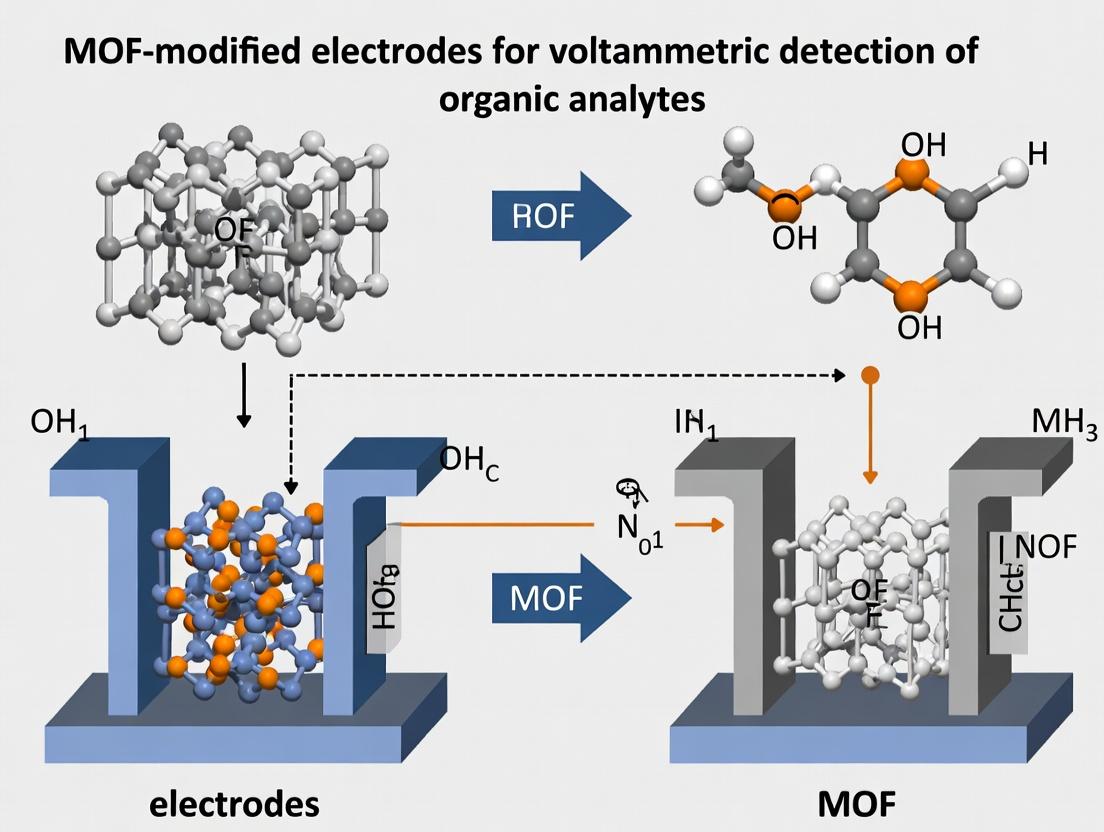
This article provides a comprehensive guide for researchers and scientists on the development, application, and optimization of Metal-Organic Framework (MOF)-modified electrodes for the voltammetric detection of organic analytes.
MOF-Modified Electrodes: Advanced Voltammetric Sensors for Organic Analyte Detection in Biomedical Research
Abstract
This article provides a comprehensive guide for researchers and scientists on the development, application, and optimization of Metal-Organic Framework (MOF)-modified electrodes for the voltammetric detection of organic analytes. It explores the foundational principles of MOF design for electrocatalysis, details practical methodologies for electrode fabrication and functionalization, addresses common challenges in sensor stability and reproducibility, and validates performance through comparative analysis with existing techniques. The content is tailored to support drug development and clinical research by offering actionable insights for creating highly sensitive, selective, and robust electrochemical biosensors.
Building the Foundation: MOF Chemistry and Electrocatalytic Principles for Organic Sensing
Application Notes: MOF-Modified Electrodes for Voltammetric Sensing
Structural Advantages for Electrochemical Sensing
MOFs offer a unique combination of properties that make them ideal for constructing sensitive and selective voltammetric electrodes for organic analytes (e.g., pharmaceuticals, biomarkers, contaminants).
Table 1: Comparative Performance of MOF-Modified Electrodes for Organic Analytes
| MOF Material | Analyte Detected | Linear Range (µM) | Limit of Detection (nM) | Sensitivity (µA µM⁻¹ cm⁻²) | Reference Year |
|---|---|---|---|---|---|
| ZIF-8/CNT | Dopamine | 0.05 - 100 | 12.0 | 1.24 | 2023 |
| UiO-66-NH₂ | Paracetamol | 0.1 - 120 | 28.0 | 0.87 | 2024 |
| MIL-101(Cr) | Caffeine | 0.5 - 200 | 150.0 | 0.45 | 2023 |
| Cu-BTC | Glucose | 0.01 - 8.0 | 3.2 | 3.21 | 2024 |
| ZIF-67 | Nitrofurantoin | 0.02 - 45 | 6.5 | 2.15 | 2023 |
Key Design Principles
- Porosity: High surface area (often 1000-10,000 m²/g) enables pre-concentration of analytes within the electrode, amplifying the electrochemical signal.
- Tunability: Organic linkers can be functionalized (-NH₂, -SH, -COOH) to promote specific interactions (H-bonding, π-π stacking) with target organics.
- Surface Chemistry: MOF nodes (metal clusters) can provide catalytic or redox-active sites that lower the overpotential for analyte oxidation/reduction, improving selectivity in complex matrices like biological fluids.
Critical Considerations for Drug Development Applications
- Stability: MOF must be chemically stable in the required pH range (often physiological pH 7.4) and electrochemical window.
- Fouling Resistance: Proper pore sizing and hydrophobic/hydrophilic tuning can reduce adsorption of macromolecules (proteins), extending electrode lifespan.
- Reproducibility: Precise control over MOF film thickness and morphology on the electrode surface is essential for batch-to-batch consistency in sensor fabrication.
Experimental Protocols
Protocol 1: In-Situ Growth of ZIF-8 on Glassy Carbon Electrode (GCE) for Dopamine Detection
Objective: To fabricate a ZIF-8-modified GCE via a one-pot hydrothermal method for the sensitive detection of dopamine in the presence of ascorbic acid.
Materials:
- The Scientist's Toolkit: Essential Research Reagent Solutions
Reagent/Solution Function/Explanation 2-Methylimidazole (2-MIM), 25 mM in methanol Organic linker precursor for ZIF-8 framework. Zinc nitrate hexahydrate (Zn(NO₃)₂·6H₂O), 12.5 mM in methanol Metal ion source for ZIF-8 nodes. Phosphate Buffer Saline (PBS), 0.1 M, pH 7.4 Electrochemical supporting electrolyte mimicking physiological conditions. Polished 3 mm Glassy Carbon Electrode (GCE) Conductive, inert working electrode substrate. Dopamine stock solution, 10 mM in 0.1 M HClO₄ Primary analyte, prepared fresh to prevent oxidation. Ascorbic acid stock solution, 10 mM in PBS Common interferent for testing selectivity. Nafion perfluorinated resin solution, 0.5% wt in alcohol Binder to stabilize MOF film and impart permselectivity.
Procedure:
- Electrode Pre-treatment: Polish the GCE sequentially with 1.0, 0.3, and 0.05 µm alumina slurry on a microcloth. Rinse thoroughly with deionized water and sonicate in ethanol and water for 1 minute each. Dry under nitrogen.
- MOF Deposition: Mix equal volumes (e.g., 1 mL each) of the 2-MIM and Zn(NO₃)₂ solutions in a vial. Immediately immerse the cleaned GCE into the mixture.
- Hydrothermal Growth: Seal the vial and place it in an oven at 80°C for 6 hours.
- Electrode Retrieval: Carefully remove the electrode, rinse gently with methanol to remove loosely bound crystals, and air dry.
- Nafion Coating (Optional): Dip-coat the modified electrode (ZIF-8/GCE) in 0.5% Nafion solution for 5 seconds and dry at room temperature for 30 minutes to form a protective layer.
- Electrochemical Characterization: Perform Cyclic Voltammetry (CV) in 0.1 M PBS (pH 7.4) from -0.2 to 0.6 V vs. Ag/AgCl at 50 mV/s to assess electrode behavior. For sensing, use Differential Pulse Voltammetry (DPV) with incremental additions of dopamine stock solution.
Protocol 2: Post-Synthetic Modification of UiO-66-NH₂ Electrode for Paracetamol Sensing
Objective: To graft a redox-active mediator onto the amino-functionalized UiO-66 framework to enhance electron transfer for paracetamol oxidation.
Materials: (Additional to standard electrochemical setup)
- 4-Carboxybenzenediazonium tetrafluoroborate solution (1 mM in 0.1 M HCl)
- Pre-fabricated UiO-66-NH₂ film on GCE (fabricated via drop-casting or electrophoretic deposition)
Procedure:
- MOF Electrode Preparation: Deposit UiO-66-NH₂ suspension onto pre-treated GCE and dry to form a uniform film.
- Diazonium Grafting: Immerse the UiO-66-NH₂/GCE in the 4-carboxybenzenediazonium solution. Perform 5 cycles of CV between 0.6 V and -0.8 V at 100 mV/s. This electrochemically reduces the diazonium salt, grafting carboxylic acid groups onto the MOF's aromatic amines.
- Activation & Washing: Rinse the modified electrode copiously with acetonitrile and PBS to remove physisorbed species.
- Sensor Testing: Use DPV in PBS to measure the oxidation peak current of paracetamol, which will be amplified and shifted to a lower potential due to the modified surface chemistry.
Visualizations
Title: Workflow for Fabricating a MOF-Modified Electrochemical Sensor
Title: How MOF Properties Enhance Voltammetric Sensor Performance
Application Notes
Within the broader thesis on MOF-modified electrodes for voltammetric detection of organic analytes (e.g., pharmaceuticals, pollutants), three characteristics are paramount. The interplay between conductivity, stability, and active site density directly dictates sensor performance parameters such as sensitivity, limit of detection (LOD), selectivity, and operational lifetime.
- Conductivity is essential for efficient electron transfer between the analyte, the MOF, and the electrode substrate. Intrinsically low conductivity of many MOFs is a major bottleneck. Strategies include using redox-active linkers or metal clusters (e.g., Cu, Ni), incorporating conductive guests (like CNTs), and creating π-conjugated structures (e.g., 2D MOFs like Ni3(HITP)2). Enhanced conductivity lowers charge-transfer resistance (Rct), leading to sharper, higher-amplitude voltammetric peaks.
- Stability (chemical, electrochemical, mechanical) ensures the MOF film retains its structure and function during electrolyte exposure, potential cycling, and analyte binding. Hydrolytic stability, governed by the strength of the metal-ligand bond (e.g., Zr₄⁺, Cr³⁺, Fe³⁺ based MOFs), prevents decomposition in aqueous or humid environments. Electrochemical stability within the applied potential window prevents redox degradation of the framework.
- Active Sites are the functional units where analyte recognition and redox reactions occur. These can be inherent (unsaturated metal sites, organic linker motifs) or engineered via post-synthetic modification. High density and accessibility of these sites are crucial for amplifying the faradaic signal. The topology and porosity of the MOF must facilitate rapid analyte diffusion to these sites.
The optimal MOF design for voltammetric sensing requires balancing these traits. For instance, a highly conductive but unstable MOF will yield a decaying signal, while a stable MOF with poor conductivity will produce a weak, irreversible response.
Protocols
Protocol 1: Electrodeposition of Conductive Cu-based MOF (Cu-MOF) on Glassy Carbon Electrode (GCE) for Catechol Detection
Objective: To fabricate a stable, conductive MOF film via a rapid electrochemical method.
- Surface Preparation: Polish the GCE sequentially with 1.0, 0.3, and 0.05 µm alumina slurry on a microcloth. Rinse thoroughly with deionized water and ethanol. Dry under nitrogen.
- Electrodeposition Solution: Prepare a 10 mL solution containing 10 mM Cu(NO₃)₂ and 10 mM 1,3,5-benzenetricarboxylic acid (H₃BTC) in a 1:1 (v/v) mixture of ethanol and deionized water.
- Deposition: Using a standard three-electrode system (prepared GCE as working, Pt wire as counter, Ag/AgCl as reference), perform cyclic voltammetry (CV) for 10 cycles in the deposition solution from -1.0 V to +0.6 V at a scan rate of 50 mV/s.
- Post-treatment: Rinse the modified electrode (Cu-MOF/GCE) gently with ethanol to remove physisorbed precursors. Dry at 60°C for 1 hour.
- Characterization: Confirm deposition by a notable increase in Rct via Electrochemical Impedance Spectroscopy (EIS) in [Fe(CN)₆]³⁻/⁴⁻ and the appearance of Cu redox peaks in CV in a blank buffer.
Protocol 2: Assessing Chemical & Electrochemical Stability of Zr-based MOF (UiO-66-NH₂) Film
Objective: To evaluate MOF film integrity under operational conditions.
- Film Fabrication: Deposit UiO-66-NH₂ on GCE via drop-casting of a well-dispersed DMF suspension (5 µL) and dry overnight.
- Chemical Stability Test: Immerse the UiO-66-NH₂/GCE in phosphate buffer (pH 7.0) and 0.1 M NaOH (pH ~13) for 24 hours at 25°C.
- Performance Metric: Measure the CV response of a 0.1 mM [Fe(CN)₆]³⁻/⁴⁻ probe before and after immersion. A stable peak current ratio (Iafter/Ibefore > 0.90) indicates good chemical stability.
- Electrochemical Stability Test: In blank buffer, perform accelerated stress testing by continuous CV cycling (e.g., 100 cycles) across the intended analytical potential window (e.g., -0.2 V to +0.8 V).
- Performance Metric: Monitor the decay of any intrinsic MOF redox peaks or the baseline current. A loss of <5% indicates high electrochemical stability.
Protocol 3: Utilizing Active Sites in Fe-based MIL MOF for Paracetamol Voltammetric Detection
Objective: To leverage unsaturated metal sites for analyte oxidation.
- Electrode Modification: Prepare MIL-101(Fe)/GCE via electrophoretic deposition or drop-casting.
- Analytical Procedure: Immerse the modified electrode in a stirred 0.1 M acetate buffer (pH 5.0) containing varying concentrations of paracetamol.
- Detection: Apply Differential Pulse Voltammetry (DPV) from +0.2 V to +0.8 V (pulse amplitude: 50 mV, pulse width: 50 ms). The Fe³⁺/Fe²⁺ sites catalyze paracetamol oxidation.
- Calibration: Plot the oxidation peak current intensity versus paracetamol concentration. The high density of Fe-active sites typically yields a linear range of 1–100 µM and a low LOD.
Data Tables
Table 1: Performance Comparison of MOF-Modified Electrodes for Organic Analytes
| MOF (Modification) | Analyte | LOD (µM) | Linear Range (µM) | Key Characteristic Leveraged | Ref. Year |
|---|---|---|---|---|---|
| Ni₃(HITP)₂/GCE | Dopamine | 0.007 | 0.05 – 1000 | High Intrinsic Conductivity | 2023 |
| UiO-66-NH₂/GCE | Chloramphenicol | 0.016 | 0.05 – 35 | Chemical Stability (Acidic/Basic) | 2024 |
| MIL-101(Fe)/CPE | Paracetamol | 0.12 | 1 – 100 | High Density of Fe Active Sites | 2023 |
| ZIF-67/CNT/GCE | Glucose | 0.43 | 5 – 800 | Conductivity (CNT) + Co Active Sites | 2024 |
| Cu-MOF/GCE | Catechol | 0.09 | 0.5 – 80 | Conductivity + Cu Active Sites | 2023 |
Table 2: Measurable Parameters for Characterizing Key MOF Properties
| Characteristic | Primary Measurement Technique | Key Quantitative Output | Target Value for Sensing |
|---|---|---|---|
| Conductivity | Electrochemical Impedance Spectroscopy (EIS) | Charge Transfer Resistance (Rct) | Low Rct (< 500 Ω) |
| Chemical Stability | CV before/after immersion; PXRD | Peak Current Retention; Crystallinity | >90% signal retention |
| Active Site Density | Cyclic Voltammetry in blank electrolyte | Integration of Redox Peak Area | Large, reversible peak area |
| Electroactive Area | CV in [Fe(CN)₆]³⁻/⁴⁻ at varying scan rates | Slope from Randles-Ševčík plot | Significantly larger than bare electrode |
Diagrams
Title: Interplay of Key MOF Characteristics for Sensing
Title: Protocol for Electrodeposition of Conductive Cu-MOF
The Scientist's Toolkit: Essential Research Reagents & Materials
| Item | Function in MOF-Modified Electrode Research |
|---|---|
| Glassy Carbon Electrode (GCE) | Common, inert, polishedle substrate for MOF film modification. Provides a clean surface for adhesion. |
| Alumina Polishing Suspension (1.0, 0.3, 0.05 µm) | For sequential electrode polishing to obtain a mirror-finish, reproducible surface essential for controlled modification. |
| MOF Precursors (Metal Salts & Organic Linkers) | e.g., ZrCl₄, Cu(NO₃)₂, H₂BDC, H₃BTC. Building blocks for MOF synthesis via solvothermal, electrochemical, or room-temperature routes. |
| Nafion Solution (0.5% in alcohol) | Binder used in drop-casting to improve mechanical adhesion of MOF particles to the electrode surface. |
| Potassium Ferricyanide [Fe(CN)₆]³⁻/⁴⁻ | Redox probe for characterizing electrode conductivity/active area via CV and EIS. |
| Phosphate & Acetate Buffer Salts | For preparing electrolytes of defined pH, crucial for evaluating stability and analyte detection. |
| Carbon Nanotubes (CNTs) or Graphene Oxide | Conductive additives co-deposited with MOFs to enhance composite film conductivity and prevent aggregation. |
| Target Organic Analytes | e.g., Paracetamol, Catechol, Dopamine, Antibiotics. Standard compounds for testing sensor performance (calibration, selectivity). |
This application note details the mechanistic principles and protocols central to a thesis investigating Metal-Organic Framework (MOF)-modified electrodes for the voltammetric detection of organic analytes. The core thesis posits that the strategic integration of MOFs as electrode modifiers significantly enhances sensor sensitivity, selectivity, and stability by fundamentally improving electron transfer kinetics between the electrode surface and target organic molecules. This enhancement is achieved through several synergistic mechanisms, which are experimentally probed using the voltammetric protocols outlined herein.
Key Mechanisms of Electron Transfer Enhancement by MOFs
MOFs enhance voltammetric signals through interconnected pathways:
- Preconcentration & Mass Transport: The porous structure of MOFs acts as a molecular sieve, selectively adsorbing and concentrating target analytes from solution into proximity with the conductive electrode surface, effectively increasing the local concentration available for redox reactions.
- Catalytic Activity: Metallic nodes or functionalized organic linkers within the MOF can provide catalytic sites that lower the activation energy for the redox reaction of the analyte, leading to a decreased overpotential and increased peak current.
- Electrical Conductivity Pathways: Conductive or semi-conductive MOFs (e.g., those based on 2D structures, mixed-valence metals, or π-conjugated linkers) create percolation networks that facilitate direct electron tunneling from the analyte to the underlying electrode.
- Preventing Electrode Fouling: The MOF layer can act as a protective barrier, preventing the direct adsorption of polymeric or passivating oxidation products onto the bare electrode surface, thereby improving signal stability and reproducibility.
Table 1: Comparative Voltammetric Performance of MOF-Modified Electrodes for Selected Organic Analytes
| Target Analyte | MOF Modifier | Detection Technique | Linear Range (µM) | Limit of Detection (LOD, nM) | Reported Sensitivity (µA/µM/cm²) | Key Enhancement Mechanism |
|---|---|---|---|---|---|---|
| Dopamine | Cu₃(BTC)₂ | Differential Pulse Voltammetry (DPV) | 0.1 - 60 | 28 | 1.45 | Preconcentration & Catalysis |
| Paracetamol | ZIF-67 | Cyclic Voltammetry (CV) | 5 - 100 | 1200 | 0.32 | Conductivity & Catalysis |
| Catechol | MIL-53(Fe) | Square Wave Voltammetry (SWV) | 0.5 - 250 | 150 | 0.89 | Preconcentration & Catalysis |
| Bisphenol A | UiO-66-NH₂ | DPV | 0.01 - 5 | 3.5 | 2.87 | Preconcentration & Selective Binding |
| Glucose | Ni-MOF | Amperometry | 1 - 3500 | 500 | 0.21 (at 0.5V) | Electrocatalysis (Ni²⁺/Ni³⁺) |
Experimental Protocols
Protocol A: In-situ Electrodeposition of Cu₃(BTC)₂ on Glassy Carbon Electrode (GCE)
Application: Preparation of a conductive, catalytically active MOF film for neurotransmitter detection. Materials: See "The Scientist's Toolkit" (Section 6). Procedure:
- Polish a 3 mm diameter GCE sequentially with 1.0, 0.3, and 0.05 µm alumina slurry on a microcloth. Rinse thoroughly with deionized water and ethanol, then dry under N₂ stream.
- Prepare an electrodeposition solution containing 5 mM Cu(NO₃)₂, 5 mM H₃BTC (1,3,5-benzenetricarboxylic acid), and 0.1 M KCl in a 1:1 (v/v) water/ethanol mixture.
- Using the polished GCE as the working electrode in a standard three-electrode cell, apply a constant potential of -1.0 V (vs. Ag/AgCl) for 60-120 seconds under gentle stirring.
- Rinse the modified electrode (GCE/Cu₃(BTC)₂) gently with ethanol to remove unreacted precursors and dry at 60°C for 30 minutes. Characterize by CV in a 0.1 M KCl solution.
Protocol B: Voltammetric Detection of Dopamine using MOF-Modified Electrode
Application: Quantification of dopamine in the presence of common interferents (ascorbic acid, uric acid). Materials: Phosphate Buffer Saline (PBS, 0.1 M, pH 7.4), Dopamine stock solution (1 mM in 0.1 M HClO₄), Ascorbic Acid, Uric Acid. Procedure:
- Prepare the GCE/Cu₃(BTC)₂ electrode as per Protocol A.
- In an electrochemical cell containing 10 mL of 0.1 M PBS (pH 7.4), connect the MOF-modified electrode as the working electrode.
- Perform a background CV scan from -0.2 V to +0.6 V at 50 mV/s.
- Spike known concentrations of dopamine stock solution into the cell (e.g., 1 µM, 5 µM, 10 µM increments). After each addition, stir for 10 seconds, then let it settle for 5 seconds.
- Record DPV parameters: potential window = 0.0 to +0.4 V, pulse amplitude = 50 mV, pulse width = 50 ms, step potential = 4 mV.
- Plot the oxidation peak current (typically at ~+0.15 V) vs. dopamine concentration to generate a calibration curve. For selectivity tests, repeat with solutions containing a fixed dopamine concentration and increasing concentrations of interferents.
Visualizing the Enhancement Pathways
Title: MOF-Mediated Signal Enhancement Pathways
Title: Generic Workflow for MOF-Modified Electrode Testing
The Scientist's Toolkit: Key Research Reagent Solutions
Table 2: Essential Materials for MOF-Modified Electrode Fabrication and Testing
| Item | Function/Description | Example/Note |
|---|---|---|
| Glassy Carbon Electrode (GCE) | Standard working electrode substrate; provides inert, polishable surface for MOF modification. | 3 mm diameter disk electrode is common. |
| MOF Precursor Salts | Source of metallic nodes (clusters) for MOF construction. | Cu(NO₃)₂, Zn(NO₃)₂, FeCl₃, ZrOCl₂. |
| Organic Linkers | Source of organic bridging units that define MOF porosity and functionality. | H₃BTC (trimesic acid), 2-Methylimidazole, Terephthalic acid. |
| Electrodeposition Electrolyte | Medium for in-situ MOF growth; contains precursors and supporting salt. | 0.1 M KCl or TBAP in water/ethanol mixtures. |
| Nafion Solution (0.5-1%) | Binder and protective membrane; stabilizes MOF particles on electrode surface in drop-casting methods. | Dilute from 5% stock in alcohol/water. |
| Phosphate Buffer Saline (PBS) | Standard electrochemical buffer for physiological pH studies; maintains stable pH and ionic strength. | 0.1 M, pH 7.4 is typical for bioanalytes. |
| Potassium Ferricyanide (K₃[Fe(CN)₆]) | Redox probe for characterizing electrode active area and electron transfer kinetics (via Randles-Ševčík). | Use 5 mM in 0.1 M KCl for CV tests. |
| Deoxygenating Gas | Removes dissolved O₂ to prevent interference with analyte redox peaks. | Ultra-pure N₂ or Ar gas for bubbling. |
Within the broader research on Metal-Organic Framework (MOF)-modified electrodes for voltammetric sensing, the selective and sensitive detection of specific organic analyte classes is paramount. These target molecules—pharmaceutical drugs, disease biomarkers, neurotransmitters, and environmental toxins—present unique challenges and opportunities in electroanalysis. MOFs offer tailored porosity, high surface area, and chemical functionality that can be engineered to pre-concentrate and facilitate the electron transfer of these often complex molecules. This application note details current methodologies, protocols, and reagent solutions for the voltammetric detection of these critical analytes using advanced MOF-based electrochemical platforms.
Recent advancements highlight the efficacy of specific MOF composites for different analyte classes. Key performance metrics from current literature are summarized below.
Table 1: Performance of MOF-Modified Electrodes for Target Organic Analytes
| Analyte Class | Specific Analyte | MOF Composite Used | Detection Technique | Linear Range | Limit of Detection (LOD) | Key Advantage |
|---|---|---|---|---|---|---|
| Drugs | Paracetamol | Cu-MOF/Reduced Graphene Oxide | DPV | 0.1 – 120 µM | 0.03 µM | Simultaneous detection with ascorbic acid and dopamine |
| Chloramphenicol | ZIF-67@MWCNT | SWV | 0.05 – 100 µM | 0.016 µM | Antibiotic residue monitoring in biological fluids | |
| Biomarkers | Carcinoembryonic Antigen (CEA) | Au NPs@Cu-MOF/Ab | EIS | 0.5 pg/mL – 50 ng/mL | 0.17 pg/mL | Ultrasensitive immunoassay for cancer diagnosis |
| miRNA-21 | Fe-MOF-Pt@MnO₂/ssDNA | SWV | 1 fM – 10 nM | 0.33 fM | Signal amplification via catalytic hairpin assembly | |
| Neurotransmitters | Dopamine | MIL-101(Cr)/Nafion | DPV | 0.1 – 100 µM | 0.05 µM | Excellent selectivity in presence of UA and AA |
| Serotonin | Zn-MOF-74/CPE | DPV | 0.5 – 200 µM | 0.12 µM | High stability and reproducibility in serum | |
| Toxins | Bisphenol A (BPA) | NH₂-MIL-53(Al)/GCE | LSV | 0.01 – 10 µM | 3 nM | Environmental toxin monitoring in urine samples |
| Aflatoxin B1 | Zr-MOF/aptamer | CV | 0.1 – 100 ng/mL | 0.03 ng/mL | Aptamer-based specific recognition |
Experimental Protocols
Protocol 1: Fabrication of a ZIF-8/MWCNT Modified Electrode for Dopamine Detection
Objective: To construct a stable, high-surface-area electrode for the selective detection of dopamine (DA) in the presence of ascorbic acid (AA) and uric acid (UA).
Materials: Glassy Carbon Electrode (GCE, 3 mm diameter), multi-walled carbon nanotubes (MWCNTs), Zinc nitrate hexahydrate, 2-Methylimidazole, Methanol, Phosphate Buffer Saline (PBS, 0.1 M, pH 7.4), Dopamine hydrochloride.
Procedure:
- MOF Synthesis: Dissolve 0.293 g Zn(NO₃)₂·6H₂O in 20 mL methanol (Solution A). Dissolve 0.324 g 2-methylimidazole in 20 mL methanol (Solution B). Rapidly mix Solution B into Solution A under stirring. Allow the mixture to react at room temperature for 24 hours. Centrifuge the resulting white precipitate, wash with methanol three times, and dry at 60°C overnight to obtain ZIF-8 crystals.
- Composite Preparation: Disperse 5 mg of acid-treated MWCNTs and 5 mg of synthesized ZIF-8 in 10 mL of DMF. Sonicate for 60 min to form a homogeneous ink.
- Electrode Modification: Polish the bare GCE sequentially with 1.0, 0.3, and 0.05 µm alumina slurry. Rinse thoroughly with water and ethanol, then dry. Drop-cast 8 µL of the ZIF-8/MWCNT ink onto the GCE surface and allow it to dry under an infrared lamp.
- Electrochemical Measurement: Using a standard three-electrode system (Pt counter, Ag/AgCl reference), perform Differential Pulse Voltammetry (DPV) in 0.1 M PBS (pH 7.4). Record DPV curves with the following parameters: potential range 0.0 to 0.6 V, amplitude 0.05 V, pulse width 0.05 s, sample width 0.0167 s, pulse period 0.2 s. Add standard DA solutions incrementally to the stirred PBS to obtain calibration data.
Protocol 2: Aptamer-Based Voltammetric Detection of Aflatoxin B1 Using a Zr-MOF Platform
Objective: To develop a specific, label-free sensor for aflatoxin B1 (AFB1) using a Zr-MOF (e.g., UiO-66-NH₂) as an immobilization matrix for an aptamer.
Materials: Zr-MOF (UiO-66-NH₂), Gold electrode, Thiolated AFB1-specific aptamer, 6-Mercapto-1-hexanol (MCH), Tris-EDTA buffer, [Fe(CN)₆]³⁻/⁴⁻ redox probe, AFB1 standards.
Procedure:
- Electrode Pretreatment: Clean the gold electrode by cycling in 0.5 M H₂SO₄. Electrochemically roughen via oxidation-reduction cycles (ORC) in 0.1 M KCl.
- Aptamer Immobilization: Incubate the cleaned Au electrode with 1 µM thiolated aptamer in Tris-EDTA buffer overnight at 4°C. Rinse to remove unbound aptamer.
- Backfilling: Treat the aptamer-modified electrode with 1 mM MCH for 1 hour to block non-specific binding sites. Rinse.
- MOF-Aptamer Integration: Deposit 5 µL of a Zr-MOF suspension (1 mg/mL in water) onto the aptamer/MCH layer and allow to dry. The MOF acts as a porous conductive scaffold, enhancing surface area and stabilizing the aptamer layer.
- Detection via Electrochemical Impedance Spectroscopy (EIS): Incubate the modified electrode with AFB1 samples for 20 minutes. Perform EIS in a 5 mM [Fe(CN)₆]³⁻/⁴⁻ solution (in 0.1 M KCl) over a frequency range of 0.1 Hz to 100 kHz at 0.22 V (vs. Ag/AgCl). The increase in charge-transfer resistance (Rct) is proportional to AFB1 concentration, as target binding hinders redox probe access.
The Scientist's Toolkit: Key Research Reagent Solutions
Table 2: Essential Materials for MOF-Based Voltammetric Sensing
| Item | Function/Description |
|---|---|
| Basal Electrodes (Glassy Carbon, Gold, Screen-Printed Carbon) | Conductive substrate for MOF modification; choice depends on required potential window and surface chemistry. |
| MOF Precursors (Metal Salts, Organic Linkers e.g., H₂BDC, 2-Methylimidazole) | Building blocks for in-situ or ex-situ synthesis of MOFs with tailored pore size and functionality. |
| Conductive Additives (MWCNTs, Graphene Oxide, Carbon Black) | Enhance electrical conductivity of often-insulating MOFs, improving electron transfer kinetics. |
| Nafion Perfluorinated Resin | Cation-exchange polymer binder; improves film adhesion and can repel anionic interferents (e.g., AA). |
| Specific Recognition Elements (Aptamers, Antibodies, Molecularly Imprinted Polymers) | Provide high selectivity for complex biological targets (biomarkers, toxins) when integrated with MOF. |
| Redox Probes ([Fe(CN)₆]³⁻/⁴⁻, [Ru(NH₃)₆]³⁺) | Used in EIS and CV to characterize electrode modification and quantify binding events. |
| pH-Buffered Electrolytes (PBS, Acetate Buffer) | Maintain stable pH during analysis, crucial for proton-coupled electron transfers and analyte stability. |
Visualized Pathways and Workflows
Diagram Title: MOF-Sensor Signal Transduction Pathway
Diagram Title: General Workflow for MOF Electrode Fabrication
Current Trends and Recent Breakthroughs in MOF-Based Electrochemical Sensing (2023-2024)
This document provides detailed application notes and experimental protocols supporting a broader thesis on the development of metal-organic framework (MOF)-modified electrodes for the voltammetric detection of organic analytes. The period 2023-2024 has seen significant progress in the design of conductive and redox-active MOFs, their integration with nanostructured platforms (e.g., MXenes, laser-engraved graphene), and their application in detecting pharmaceuticals, biomarkers, and environmental contaminants with high sensitivity and selectivity.
Table 1: Recent Performance Metrics of Selected MOF-Based Electrochemical Sensors
| Target Analytic (Class) | MOF Composite/Electrode Platform | Detection Technique | Linear Range | Limit of Detection (LOD) | Key Application | Ref. Year |
|---|---|---|---|---|---|---|
| Chloramphenicol (Antibiotic) | Zr-UiO-66-NH₂@MXene/GCE | Differential Pulse Voltammetry (DPV) | 0.01 – 100 µM | 3.2 nM | Food safety, veterinary drug monitoring | 2024 |
| Cortisol (Stress Hormone) | AuNPs/Zn-MOF-74/SPE | Square Wave Voltammetry (SWV) | 0.1 – 2000 nM | 0.05 nM | Point-of-care health diagnostics | 2024 |
| Acetaminophen (Analgesic) | Fe-MIL-88B-NH₂ on laser-induced graphene | Cyclic Voltammetry (CV) & DPV | 0.05 – 150 µM | 16 nM | Pharmaceutical tablet analysis | 2023 |
| Bisphenol A (Endocrine Disruptor) | Cu-TCPP(Fe)/rGO/GCE | SWV | 0.005 – 10 µM | 1.2 nM | Environmental water monitoring | 2023 |
| Dopamine (Neurotransmitter) | ZIF-67 derived Co₃O₄/N-doped carbon | Amperometry | 0.5 – 200 µM | 0.12 µM | Neurochemical sensing | 2024 |
Detailed Experimental Protocols
Protocol 1: Fabrication of a Zr-UiO-66-NH₂@MXene Modified Glassy Carbon Electrode (GCE) for Antibiotic Detection
Based on 2024 literature for chloramphenicol sensing.
I. Materials & Reagents
- MOF Precursor Solution A: Zirconium(IV) chloride (ZrCl₄, 20 mM) in N,N-Dimethylformamide (DMF).
- MOF Precursor Solution B: 2-Aminoterephthalic acid (30 mM) in DMF.
- MXene Dispersion: Ti₃C₂Tₓ MXene (2 mg/mL) in deionized water, sonicated for 1h under N₂ atmosphere.
- Electrode Polishing: Alumina slurry (0.3 µm and 0.05 µm).
- Supporting Electrolyte: Phosphate Buffer Solution (PBS, 0.1 M, pH 7.4).
- Target Analyte Stock: 1 mM Chloramphenicol in ethanol.
II. Stepwise Procedure
- MOF Synthesis: Mix Solutions A and B. Heat at 120°C for 24h in a Teflon-lined autoclave. Centrifuge the formed Zr-UiO-66-NH₂ crystals, wash with DMF and methanol, and activate at 120°C under vacuum.
- Composite Preparation: Dispense 2 mg of activated MOF into 1 mL of MXene dispersion. Sonicate for 30 min to form a homogeneous ink.
- Electrode Pretreatment: Polish the GCE sequentially with 0.3 µm and 0.05 µm alumina slurry. Rinse with water and ethanol, and dry under N₂.
- Electrode Modification: Pipette 6 µL of the MOF@MXene ink onto the clean GCE surface. Allow to dry at room temperature (≈30 min).
- Electrochemical Measurement: Immerse the modified electrode in 0.1 M PBS (pH 7.4) containing the analyte. Record DPV signals from 0 to -1.2 V (vs. Ag/AgCl) with a pulse amplitude of 50 mV and step potential of 4 mV.
Protocol 2: In-situ Growth of Zn-MOF-74 on Screen-Printed Electrode (SPE) for Hormone Sensing
Based on 2024 literature for cortisol detection.
I. Materials & Reagents
- MOF Growth Solution: 20 mM Zn(NO₃)₂·6H₂O and 10 mM 2,5-dihydroxyterephthalic acid in a 4:1 v/v mixture of DMF/ethanol.
- Gold Nanoparticles (AuNPs) Electroplating Solution: 1 mM HAuCl₄ in 0.1 M H₂SO₄.
- SPE: Carbon working electrode, carbon counter, Ag/AgCl reference.
- Capture Antibody Solution: Anti-cortisol monoclonal antibody (10 µg/mL) in PBS.
- Blocking Agent: Bovine Serum Albumin (BSA, 1% w/v in PBS).
II. Stepwise Procedure
- AuNPs Decoration: Perform CV scanning of the bare SPE in the AuNP plating solution for 10 cycles (-0.2 to 1.2 V at 50 mV/s) to electrodeposit AuNPs.
- In-situ MOF Growth: Drop-cast 10 µL of the MOF growth solution onto the AuNPs/SPE. Incubate in a sealed vessel at 85°C for 6 hours. Wash gently with ethanol.
- Bio-functionalization: Apply 5 µL of anti-cortisol antibody solution onto the MOF surface. Incubate for 12h at 4°C. Rinse with PBS. Apply 5 µL of 1% BSA solution for 1h to block non-specific sites.
- Immuno-sensing: Incubate the modified electrode with sample/standard cortisol solutions for 20 min. Perform SWV measurement in a redox probe solution ([Fe(CN)₆]³⁻/⁴⁻). The binding event causes a quantifiable decrease in current.
Visualized Workflows and Mechanisms
Workflow for Fabricating a Drop-Cast MOF Sensor
Mechanism of an In-situ Grown MOF Immunosensor
The Scientist's Toolkit: Key Research Reagent Solutions
Table 2: Essential Materials for MOF-Based Electrochemical Sensor Development
| Item/Chemical | Function & Rationale |
|---|---|
| ZrCl₄ / Zn(NO₃)₂·6H₂O | Common metal ion precursors for constructing robust (Zr) or redox-active/biological (Zn) MOF nodes. |
| 2-Aminoterephthalic Acid | A typical organic linker, where the -NH₂ group can be further functionalized or enhance affinity. |
| Ti₃C₂Tₓ MXene Dispersion | Provides high conductivity and large surface area as a composite substrate, enhancing electron transfer. |
| N,N-Dimethylformamide (DMF) | High-boiling-point, polar aprotic solvent used in solvothermal synthesis of many MOFs. |
| Phosphate Buffer Saline (PBS, 0.1 M) | Standard aqueous electrolyte for biochemical sensing, maintaining pH and ionic strength. |
| Hexaammineruthenium(III) Chloride | Common outer-sphere redox probe for characterizing electrode surface area and permeability. |
| Nafion Perfluorinated Resin | Ionomer used to bind MOF particles to the electrode and provide selective charge-based permeability. |
| Screen-Printed Electrodes (SPEs) | Disposable, miniaturized platforms for portable and point-of-care sensor development. |
| Chloroauric Acid (HAuCl₄) | Source for electrodepositing gold nanoparticles (AuNPs) to enhance conductivity and bio-conjugation. |
| Specific Capture Antibodies | Provides molecular recognition element for immunosensor configurations targeting specific organics. |
From Lab to Sensor: Fabrication, Functionalization, and Practical Application Protocols
Step-by-Step Guide to MOF Synthesis for Electrode Modification
Within the broader thesis on MOF-modified electrodes for voltammetric detection of organic analytes (e.g., pharmaceuticals, pollutants), the synthesis of the Metal-Organic Framework (MOF) is a critical foundational step. The choice of MOF dictates the electrode's selectivity, sensitivity, and stability. This guide details robust, reproducible synthesis protocols for MOFs commonly employed in electrochemical sensing, focusing on aqueous or mild conditions suitable for subsequent electrode integration.
Key MOF Candidates for Electrode Modification
The following MOFs are highlighted for their electrochemical applicability, stability, and tunable porosity.
Table 1: Common MOFs for Electrochemical Sensor Fabrication
| MOF Name | Metal Node | Organic Linker | Key Properties for Sensing | Typical Synthesis Solvent |
|---|---|---|---|---|
| ZIF-8 | Zn²⁺ | 2-Methylimidazole | High chemical stability, hydrophobic pockets | Methanol, Water |
| Cu-BTC (HKUST-1) | Cu²⁺ | 1,3,5-Benzenetricarboxylic acid | Open metal sites, redox activity | Water/Ethanol, DMF |
| MIL-101(Fe) | Fe³⁺ | 1,4-Benzenedicarboxylic acid | Lewis acidity, peroxidase-like activity | Water |
| UiO-66-NH₂ | Zr⁴⁺ | 2-Amino-1,4-benzenedicarboxylic acid | Chemical/thermal stability, functionalizable -NH₂ group | DMF |
| Ni₃(HITP)₂ | Ni²⁺ | 2,3,6,7,10,11-Hexaiminotriphenylene | High electrical conductivity | Aqueous Ammonia |
Detailed Synthesis Protocols
Protocol 3.1: Room-Temperature Aqueous Synthesis of ZIF-8
- Application: Ideal for coating electrodes where mild conditions are required to preserve underlying transducer integrity.
- Principle: Rapid self-assembly of Zn²⁺ and 2-methylimidazole in water.
Procedure:
- Solution A: Dissolve 1.47 g (10 mmol) of zinc nitrate hexahydrate (Zn(NO₃)₂·6H₂O) in 40 mL of deionized (DI) water.
- Solution B: Dissolve 3.28 g (40 mmol) of 2-methylimidazole in 40 mL of DI water.
- Rapidly pour Solution A into Solution B under vigorous magnetic stirring (≈ 600 rpm).
- Allow the mixture to react at room temperature for 1 hour. A white precipitate will form immediately.
- Centrifuge the suspension at 8000 rpm for 10 minutes. Discard the supernatant.
- Wash the white precipitate three times with DI water and three times with methanol (centrifuging each time).
- Dry the purified ZIF-8 crystals in a vacuum oven at 60°C overnight.
- Characterize by PXRD and SEM.
Protocol 3.2: Hydrothermal Synthesis of UiO-66-NH₂
- Application: Provides a stable, functionalizable platform for post-synthetic modification to target specific analytes.
- Principle: Solvothermal crystallization using a modulator.
Procedure:
- In a 100 mL Teflon-lined autoclave, dissolve 0.233 g (1.0 mmol) of zirconium(IV) chloride (ZrCl₄) in 50 mL of N,N-Dimethylformamide (DMF).
- Add 0.181 g (1.0 mmol) of 2-aminoterephthalic acid to the solution.
- Add 3.0 mL of glacial acetic acid as a modulator.
- Seal the autoclave and heat in an oven at 120°C for 24 hours.
- Allow the autoclave to cool naturally to room temperature.
- Collect the yellow crystals by centrifugation (8000 rpm, 10 min).
- Wash sequentially with fresh DMF (3x) and methanol (3x) to remove unreacted linker and DMF trapped in pores.
- Activate the MOF by solvent exchange with methanol over 24 hours, followed by thermal activation under vacuum at 150°C for 12 hours.
Electrode Modification Workflow
The pathway from synthesis to a functional sensor is systematic.
Diagram Title: Workflow for Fabricating a MOF-Modified Electrochemical Sensor
Immobilization Techniques for MOFs on Electrodes
Table 2: Common MOF Immobilization Methods
| Method | Procedure | Advantages | Considerations |
|---|---|---|---|
| Drop-Casting | Disperse MOF in solvent (e.g., ethanol), sonicate. Pipette aliquot onto electrode surface. Air dry. | Simple, fast, no special equipment. | Film thickness/uniformity control is poor; adhesion can be weak. |
| Electrophoretic Deposition (EPD) | Suspend MOF in ionic solution (e.g., Mg(NO₃)₂). Apply DC voltage between working and counter electrodes. | Uniform, controllable thickness, strong adhesion. | Requires optimization of suspension stability and voltage. |
| In-Situ Growth | Pretreat electrode. Immerse in precursor solutions of metal and linker for direct MOF growth on surface. | Excellent adhesion, conformal coatings. | Time-consuming; risk of damaging electrode substrate. |
| Nafion Binding | Mix MOF powder with Nafion solution (e.g., 0.5% in alcohol) to form ink. Drop-cast. | Robust, stable film; prevents leaching. | Nafion can block pores and increase charge transfer resistance. |
Protocol 4.1: Drop-Casting with Nafion Binder
- Weigh 5.0 mg of synthesized, dried MOF (e.g., ZIF-8) powder.
- Add 1.0 mL of ethanol and 50 µL of 0.5% Nafion solution.
- Sonicate the mixture for 30 minutes to form a homogeneous ink.
- Clean the bare working electrode (e.g., Glassy Carbon Electrode, GCE) with alumina slurry (0.05 µm) and rinse with DI water/ethanol.
- Pipette 10 µL of the MOF/Nafion ink onto the polished GCE surface.
- Allow to dry under ambient conditions for 1 hour.
- The modified electrode (MOF/GCE) is ready for characterization.
The Scientist's Toolkit: Key Research Reagent Solutions
Table 3: Essential Materials for MOF Synthesis & Modification
| Item | Function/Explanation | Example Specification |
|---|---|---|
| Metal Salts | Provides the inorganic metal cluster (Secondary Building Unit, SBU) of the MOF. | Zinc nitrate hexahydrate, Copper(II) acetate monohydrate, Zirconium(IV) chloride. |
| Organic Linkers | Multidentate ligands that connect metal nodes to form the porous framework. | 2-Methylimidazole, Trimesic acid, 2-Aminoterephthalic acid. |
| Modulators | Monodentate acids/bases that control crystallization kinetics and crystal size. | Acetic acid, benzoic acid, hydrochloric acid. |
| Solvents | Medium for synthesis and washing. Polarity and boiling point affect MOF formation. | Deionized Water, DMF, Methanol, Ethanol. |
| Dispersing Agent (Binder) | Enhances adhesion of MOF particles to the electrode surface. | Nafion solution, Chitosan, Carbon black. |
| Supporting Electrolyte | Provides ionic conductivity for electrochemical testing of modified electrodes. | 0.1 M Phosphate Buffer Saline (PBS), 0.1 M KCl. |
| Electrode Polishing Kit | Ensures reproducible, clean electrode surface prior to modification. | Alumina or diamond polishing suspensions (1.0, 0.3, 0.05 µm). |
Characterization & Quality Control Logic
Ensuring successful synthesis and modification is a prerequisite for sensor development.
Diagram Title: MOF Quality Control Before Electrode Modification
Troubleshooting Common Synthesis Issues
Table 4: Synthesis Problems and Solutions
| Problem | Possible Cause | Solution |
|---|---|---|
| No precipitate formed. | Incorrect reagent ratio; poor solvent choice; degraded chemicals. | Verify stoichiometry, use fresh reagents, consult literature for solvent systems. |
| Amorphous powder (no XRD peaks). | Reaction too fast; missing modulator; insufficient reaction time. | Use a modulator, adjust temperature, increase reaction/crystallization time. |
| MOF film cracks upon drying. | Too rapid solvent evaporation; film too thick. | Dry in controlled humidity; use slower-drying solvent; cast multiple thinner layers. |
| Poor electrochemical signal. | MOF is insulating; poor electrical contact with electrode; pores blocked. | Use conductive MOFs (e.g., Ni₃(HITP)₂); mix with conductive carbon; ensure mild activation. |
| Low analyte selectivity. | MOF pore aperture too large; lacks specific interaction sites. | Choose MOF with smaller pore size; perform post-synthetic modification to add recognition sites. |
Conclusion: Mastery of these synthesis and modification protocols enables the reproducible fabrication of MOF-based electrochemical sensors. This forms the material foundation for subsequent thesis investigations into voltammetric detection mechanisms, sensitivity limits, and real-sample application for organic analytes.
Application Notes
Within the context of advanced research on metal-organic framework (MOF)-modified electrodes for the voltammetric detection of organic analytes (e.g., pharmaceuticals, biomarkers, environmental contaminants), the choice of modification technique is paramount. It dictates the electrode's morphology, stability, accessibility of active sites, and ultimately, its sensitivity, selectivity, and reproducibility. This document provides comparative application notes and detailed protocols for key techniques.
Comparative Analysis of Techniques
The following table summarizes the key characteristics of each method, based on current literature and experimental findings.
Table 1: Comparative Analysis of Electrode Modification Techniques for MOFs
| Technique | Key Principle | Typical MOF Examples (for Electroanalysis) | Advantages | Limitations | Best Suited For |
|---|---|---|---|---|---|
| Drop-Casting | Dispersion of pre-synthesized MOF (or its precursors) onto electrode surface, followed by solvent evaporation. | UiO-66-NH₂, ZIF-8, MIL-101(Cr) | Simplicity, speed, compatibility with any conductive substrate, minimal equipment required. | Poor film adhesion/mechanical stability, uneven coating (coffee-ring effect), limited control over thickness/orientation. | Rapid prototyping, screening of different MOFs, surfaces with simple geometry. |
| Electrodeposition | Electrochemical generation of MOF films by applying potential/current in a precursor-containing solution. | HKUST-1, ZIF-8, Ni/Co-based MOFs. | Strong adhesion, good control over film thickness & density via charge passed, conformal coatings on complex shapes. | Limited to electroactive metal ions/reducers, requires conductive substrate, may need optimized electrolytes/potentials. | Creating robust, adherent films for flow systems or sensors requiring mechanical stability. |
| In-Situ Growth | Immersion of substrate into precursor solution for spontaneous crystal nucleation and growth on the surface. | ZIF-67, MIL-100(Fe), MOF-5. | Very strong chemical/physical adhesion, can grow on various substrates (including non-conductive), high crystallinity. | Long growth times (hours-days), difficult thickness control, may yield non-uniform or oriented crystals. | Fundamental studies on MOF-electrode interfaces, creating highly stable, integrated composite electrodes. |
| Layer-by-Layer (LbL) Assembly | Sequential adsorption of MOF building blocks (e.g., metal ions and linkers) via dip- or spray-coating. | Cu-BTC, ZIF-8. | Precise nanoscale control over film thickness, composition, and architecture; uniform films. | Time-consuming for thick films, requires careful washing cycles, may involve many steps. | Fabricating ultra-thin, highly ordered films for studying electron transfer kinetics. |
| Electrophoretic Deposition (EPD) | Migration of charged MOF particles or precursors under an electric field to coat an electrode. | UiO-66, MIL-88B. | Fast deposition, good control over thickness, can coat complex geometries, good particle packing. | Requires stable colloidal suspension of MOFs, particles may need surface charging, film may need post-treatment. | Depositing MOF composites or where a particulate film is desirable. |
Table 2: Typical Voltammetric Performance Metrics for MOF-Modified Electrodes in Organic Analyte Detection
| Modification Technique (MOF Example) | Target Analyte | Linear Range | Detection Limit | Reported Sensitivity | Key Reference Year |
|---|---|---|---|---|---|
| Drop-Casting (Fe₃O₄@MIL-100(Fe)) | Chloramphenicol | 0.1 – 100 µM | 30 nM | 1.85 µA µM⁻¹ cm⁻² | 2023 |
| Electrodeposition (Cu-MOF) | Glucose | 0.5 µM – 1.2 mM | 0.18 µM | 2486 µA mM⁻¹ cm⁻² | 2024 |
| In-Situ Growth (ZIF-67 on CC*) | Dopamine | 0.01 – 100 µM | 3.2 nM | — | 2023 |
| LbL Assembly (NENU-3a/Graphene) | Catechol | 0.5 – 200 µM | 0.12 µM | — | 2022 |
| *CC = Carbon Cloth |
Detailed Experimental Protocols
Protocol 1: Drop-Casting of UiO-66-NH₂ for Para-Nitrophenol Detection
Research Reagent Solutions & Essential Materials:
- UiO-66-NH₂ Powder: Pre-synthesized MOF, provides high surface area and functional (-NH₂) sites for analyte interaction.
- Nafion Perfluorinated Resin Solution (5% w/w in aliphatic alcohols): Binder, improves film adhesion and stability on the electrode surface.
- N,N-Dimethylformamide (DMF): Dispersion solvent, ensures good dispersion of MOF particles.
- Phosphate Buffer Saline (PBS, 0.1 M, pH 7.4): Electrolyte for voltammetric measurements.
- Glassy Carbon Electrode (GCE, 3 mm diameter): Conductive, polished substrate.
- Ultrasonic Bath: For homogenizing the MOF dispersion.
Procedure:
- Electrode Pre-treatment: Polish the GCE sequentially with 1.0, 0.3, and 0.05 µm alumina slurry on a microcloth. Rinse thoroughly with deionized water and ethanol, then dry under nitrogen.
- Dispersion Preparation: Weigh 2.0 mg of UiO-66-NH₂ powder and disperse it in a mixture of 380 µL DMF and 20 µL Nafion solution using ultrasonication for 30 minutes to form a homogeneous ink.
- Drop-Casting: Pipette 5 µL of the dispersion onto the center of the polished GCE surface.
- Drying: Allow the electrode to dry under ambient conditions for 1 hour, followed by 1 hour in a vacuum desiccator to remove residual solvent.
- Electrochemical Testing: Characterize the modified electrode (UiO-66-NH₂/GCE) via Cyclic Voltammetry (CV) and Differential Pulse Voltammetry (DPV) in 0.1 M PBS containing varying concentrations of para-nitrophenol.
Protocol 2: Potentiostatic Electrodeposition of HKUST-1 on Carbon Fiber Electrode
Research Reagent Solutions & Essential Materials:
- Copper(II) Nitrate Trihydrate (Cu(NO₃)₂·3H₂O): Source of Cu²⁺ metal nodes.
- 1,3,5-Benzenetricarboxylic Acid (H₃BTC): Organic linker molecule.
- Ethanol/Water (1:1 v/v) mixture: Electrolyte solvent.
- Triethylamine (TEA): Deprotonating agent, facilitates MOF formation.
- Carbon Fiber Electrode (CFE): Working electrode substrate.
- Platinum Wire Counter Electrode & Ag/AgCl Reference Electrode: Complete the 3-electrode cell.
- Potentiostat: To apply the controlled potential.
Procedure:
- Electrolyte Preparation: Dissolve 10 mM Cu(NO₃)₂ and 5 mM H₃BTC in the ethanol/water mixture. Add 5 mM triethylamine and stir vigorously.
- Electrochemical Cell Setup: Place the cleaned CFE, Pt wire, and Ag/AgCl reference into the precursor electrolyte.
- Electrodeposition: Apply a constant potential of -0.5 V (vs. Ag/AgCl) to the CFE for 300 seconds. A visible blue film of HKUST-1 will form on the electrode.
- Post-treatment: Gently rinse the modified electrode (HKUST-1/CFE) with ethanol/water mixture to remove loosely adsorbed precursors. Dry at 60°C for 30 minutes.
- Application: Use the robust HKUST-1/CFE for the adsorptive stripping voltammetry of hydrazine or similar electroactive organics.
Protocol 3: In-Situ Growth of ZIF-67 on Fluorine-Doped Tin Oxide (FTO) Glass
Research Reagent Solutions & Essential Materials:
- Cobalt Nitrate Hexahydrate (Co(NO₃)₂·6H₂O): Source of Co²⁺ ions.
- 2-Methylimidazole (2-MIm): Organic linker.
- Methanol: Growth solvent.
- Fluorine-Doped Tin Oxide (FTO) Glass Slides: Conductive, transparent substrate.
- Plasma Cleaner (or Piranha Solution): To hydroxylate and clean the FTO surface, enhancing MOF nucleation.
Procedure:
- Substrate Activation: Clean FTO slides by sonication in acetone, ethanol, and water. Then, treat with oxygen plasma for 5 minutes to create a hydrophilic, hydroxyl-rich surface.
- Precursor Solutions: Prepare two separate methanolic solutions: Solution A: 0.05 M Co(NO₃)₂. Solution B: 0.4 M 2-MIm.
- Growth Procedure: Place the activated FTO slide vertically in a glass vial. Rapidly pour Solution B into Solution A and immediately transfer the mixture to the vial containing the FTO slide. The total volume should cover the slide.
- Reaction: Allow the reaction to proceed at room temperature for 24 hours. A purple film of ZIF-67 will grow on the FTO.
- Washing and Drying: Carefully remove the slide, rinse copiously with methanol to stop the reaction, and dry under a nitrogen stream.
- Integration: The ZIF-67/FTO can be used directly as a working electrode for photoelectrochemical or electrocatalytic oxidation studies of organic molecules.
Visualizations
Title: Thesis Research Workflow for MOF-Modified Electrode Development
Title: Decision Tree for Selecting an Electrode Modification Technique
Title: Signal Enhancement Pathway in MOF-Modified Voltammetric Sensing
Context: These notes support a doctoral thesis investigating the rational design of Metal-Organic Framework (MOF)-modified electrodes for the sensitive and selective voltammetric detection of organic pharmaceuticals and environmental contaminants. The focus is on post-synthetic functionalization strategies to tailor MOF-sensor interfaces.
Core Functionalization Strategies & Performance Data
The selectivity and sensitivity of a MOF-based electrochemical sensor are dictated by its functionalization. The table below compares primary strategies.
Table 1: Quantitative Comparison of MOF Functionalization Strategies for Voltammetric Sensing
| Functionalization Strategy | Key Reagents/Process | Target Analyte Example (from recent literature) | Reported Performance Metrics (e.g., LOD, Linear Range) | Key Advantage for Voltammetry |
|---|---|---|---|---|
| Post-Synthetic Modification (PSM) | - Carbodiimide (EDC/NHS) coupling- "Click" chemistry (CuAAC)- Solvent-assisted ligand exchange | Antibiotics (Ciprofloxacin), Neurotransmitters (Dopamine) | LOD: 0.8 nM (Ciprofloxacin)Linear Range: 0.01-100 µM | Precise installation of redox-active or recognition sites; retains MOF crystallinity. |
| Doping with Catalytic Nanoparticles | - Incipient wetness impregnation- Electrochemical deposition | Glucose, H₂O₂, Nitrite | Sensitivity: 650 µA mM⁻¹ cm⁻² (Glucose)LOD: 0.05 µM (Nitrite) | Enhances electron transfer kinetics; introduces electrocatalytic activity. |
| Molecular Imprinting (MIP@MOF) | - Polymerization of functional monomers (e.g., acrylamide, pyrrole) around template analyte. | Steroid hormones (17β-Estradiol), Pesticides (Methyl parathion) | Selectivity Factor (vs. analog): > 4.5LOD: 0.02 nM (Estradiol) | Creates shape-selective cavities; dramatically improves selectivity in complex matrices. |
| Composite Formation with Conducting Polymers | - Electropolymerization of aniline, pyrrole onto MOF/electrode. | Amino acids (Tryptophan), Drugs (Acetaminophen) | Electron Transfer Rate (kₛ): 0.45 s⁻¹Linear Range: 1-200 µM | Boosts electrical conductivity of MOF film; improves mechanical stability. |
Detailed Experimental Protocols
Protocol A: Carbodiimide-Mediated PSM of Zr-UiO-66-NH₂ for Carboxylate Analyte Recognition
Objective: To graft a mimic of the target carboxylate analyte onto the MOF to enhance pre-concentration via affinity interactions.
Reagents & Materials:
- UiO-66-NH₂ MOF suspension (5 mg/mL in DMF).
- Target mimic: e.g., 4-Formylbenzoic acid (for benzoate-like drugs).
- Coupling Agents: 0.4 M EDC (1-Ethyl-3-(3-dimethylaminopropyl)carbodiimide), 0.1 M NHS (N-Hydroxysuccinimide) in 0.1 M MES buffer, pH 5.5.
- Washing Solvents: Anhydrous DMF, Ethanol.
- Substrate: Polished Glassy Carbon Electrode (GCE, 3 mm diameter).
Procedure:
- Activation: Suspend 10 mg of UiO-66-NH₂ in 2 mL of MES buffer. Add 1 mL of freshly prepared EDC/NHS solution. Sonicate for 10 min, then rotate for 1 hour at room temperature.
- Grafting: Add 20 mg of 4-formylbenzoic acid to the activated MOF. Rotate the mixture for 18 hours.
- Work-up: Centrifuge the functionalized MOF (PSM-UiO-66) at 8000 rpm for 5 min. Decant supernatant. Wash the pellet sequentially with DMF (3x) and ethanol (3x) to remove unreacted reagents.
- Sensor Fabrication: Re-disperse 2 mg of PSM-UiO-66 in 1 mL ethanol. Deposit 8 µL of this suspension onto the clean GCE surface. Allow to dry under ambient conditions.
- Electrochemical Testing: Perform Differential Pulse Voltammetry (DPV) in a solution containing the target analyte. The modified electrode should show a significantly enhanced peak current compared to the unfunctionalized UiO-66-NH₂/GCE control.
Protocol B: Electrosynthesis of a MOF/Polypyrrole (PPy) Core-Shell Composite Sensor
Objective: To create a conductive polymer sheath around MOF particles to improve charge transport for voltammetric detection.
Reagents & Materials:
- Basolite F300 (Fe-BTC MOF) or similar, finely ground.
- Monomer: 0.1 M Pyrrole in 0.1 M LiClO₄ / Acetonitrile electrolyte.
- Substrate: Screen-Printed Carbon Electrode (SPCE).
Procedure:
- MOF Deposition: Drop-cast 5 µL of a 10 mg/mL Fe-BTC/ethanol suspension onto the working electrode of the SPCE. Dry.
- Electropolymerization: Immerse the MOF-modified SPCE in the pyrrole/electrolyte solution. Use Cyclic Voltammetry (CV) scanning between -0.5 V and +1.0 V (vs. Ag/AgCl on SPCE) for 15 cycles at a scan rate of 50 mV/s.
- Formation: A thin, adherent black PPy film will form in-situ around the MOF particles, creating a conductive network.
- Conditioning: Rinse the composite sensor thoroughly with deionized water. Condition in a supporting electrolyte (e.g., 0.1 M PBS, pH 7.4) via CV until a stable baseline is achieved.
- Application: Test the sensor using Square Wave Voltammetry (SWV) for analytes like hydrazine or ascorbic acid, where Fe-BTC provides catalytic sites and PPy enhances signal transduction.
The Scientist's Toolkit: Essential Reagent Solutions
Table 2: Key Research Reagent Solutions for MOF-Sensor Functionalization
| Reagent Solution | Composition & Preparation | Primary Function |
|---|---|---|
| Carbodiimide Coupling Buffer | 0.1 M MES (2-(N-morpholino)ethanesulfonic acid), pH adjusted to 5.5 with NaOH. | Optimizes pH for EDC/NHS carboxy activation; minimizes hydrolysis of active esters. |
| Electropolymerization Electrolyte | 0.1 M Monomer (e.g., pyrrole, aniline) + 0.1 M supporting salt (e.g., LiClO₄, KCl) in anhydrous acetonitrile or aqueous buffer. | Provides monomer and ionic conductivity for the electrochemical formation of conductive polymer films on the electrode. |
| Deoxygenation Solution | 0.1 M Phosphate Buffer Saline (PBS), pH 7.4. Sparged with high-purity N₂ or Ar for >20 min. | Creates an oxygen-free environment for electrochemical experiments, eliminating interfering reduction currents from dissolved O₂. |
| MOF Dispersion Medium | 1:1 v/v mixture of ethanol and deionized water with 0.1% Nafion. | Provides a stable, homogeneous MOF suspension for drop-casting; Nafion acts as a binder and can impart additional selectivity. |
Diagrams of Workflows & Relationships
Diagram 1: MOF-Sensor Optimization Pathway
Diagram 2: PSM & Sensor Fabrication Workflow
This protocol details the application of Cyclic Voltammetry (CV), Differential Pulse Voltammetry (DPV), and Square Wave Voltammetry (SWV) for the detection and quantification of organic analytes, specifically within the context of research on Metal-Organic Framework (MOF)-modified electrodes. The unique porosity, high surface area, and tunable chemistry of MOF coatings enhance electrode sensitivity and selectivity by pre-concentrating analytes and facilitating electron transfer. This document provides standardized parameters and procedures to ensure reproducibility in characterizing electrode modifications and detecting target organics (e.g., pharmaceuticals, contaminants, biomarkers).
Core Voltammetric Techniques: Parameters and Applications
The optimal parameters vary based on the analyte-electrode system. The following tables summarize standard starting parameters for bare and MOF-modified electrodes.
Table 1: Cyclic Voltammetry (CV) Parameters for Redox Characterization
| Parameter | Typical Range (Bare Electrode) | Typical Range (MOF-Modified Electrode) | Function/Note |
|---|---|---|---|
| Scan Rate | 10 – 500 mV/s | 10 – 200 mV/s | Lower rates often used for modified electrodes due to slower mass transport/kinetics. |
| Initial Potential | Variable | Variable | Start before expected reduction/oxidation peak. |
| Upper/Lower Switch Potential | Variable | Variable | Set to bracket redox events of interest without causing solvent/electrolyte breakdown. |
| Step Potential | 1 – 10 mV | 1 – 5 mV | Resolution of the scan. |
| Quiet Time | 2 – 10 s | 5 – 15 s | Crucial for analyte pre-concentration in MOF pores. |
| Cycles | 3 – 10 | 3 – 10 | To check stability/reproducibility. |
Table 2: Differential Pulse Voltammetry (DPV) Parameters for Quantitative Detection
| Parameter | Typical Range (Bare Electrode) | Typical Range (MOF-Modified Electrode) | Function/Note |
|---|---|---|---|
| Pulse Amplitude | 10 – 100 mV | 25 – 70 mV | Affects peak current and resolution. |
| Pulse Width | 10 – 100 ms | 20 – 70 ms | Duration of applied pulse. |
| Step Potential | 1 – 10 mV | 1 – 5 mV | Determines potential increment between pulses. |
| Scan Rate (Effective) | 1 – 20 mV/s | 0.5 – 10 mV/s | Function of Step Potential and Pulse Period. |
| Modulation Time | 0.05 – 0.5 s | 0.1 – 0.5 s | Includes pulse width and sampling time. |
| Quiet Time | 2 – 10 s | 10 – 30 s | Critical for analyte adsorption into MOF. |
Table 3: Square Wave Voltammetry (SWV) Parameters for Sensitive Detection
| Parameter | Typical Range (Bare Electrode) | Typical Range (MOF-Modified Electrode) | Function/Note |
|---|---|---|---|
| Frequency | 5 – 50 Hz | 5 – 25 Hz | Higher frequency increases current but can broaden peaks on modified surfaces. |
| Amplitude | 10 – 50 mV | 15 – 40 mV | Square wave peak-to-peak amplitude. |
| Step Potential | 1 – 10 mV | 1 – 6 mV | Potential increment. |
| Effective Scan Rate | = Freq. × Step | Lower than bare | Very fast, but optimized for adsorption kinetics. |
| Quiet Time | 2 – 10 s | 10 – 30 s | Essential for pre-concentration. |
Detailed Experimental Protocols
Protocol 3.1: Preparation of MOF-Modified Working Electrode
- Materials: Glassy Carbon Electrode (GCE, 3 mm diameter), MOF suspension (e.g., ZIF-8, MIL-101(Cr), UiO-66-NH₂), Nafion solution (0.05-0.1 wt%), polishing kit (alumina slurry, polishing cloth), ultrasonic bath.
- Procedure:
- Polish the bare GCE sequentially with 1.0 µm, 0.3 µm, and 0.05 µm alumina slurry on a microcloth. Rinse thoroughly with deionized water.
- Sonicate the electrode in ethanol and then deionized water for 60 seconds each to remove residual alumina.
- Prepare a homogeneous MOF ink by dispersing 2 mg of MOF powder in 1 mL of solvent (e.g., water/ethanol mix) with 20 µL of Nafion binder. Sonicate for 30 min.
- Deposit a precise volume (e.g., 5-10 µL) of the ink onto the clean GCE surface using a micropipette.
- Allow the modified electrode (GCE/MOF) to dry under ambient or infrared light for a minimum of 30 minutes.
Protocol 3.2: Voltammetric Measurement of an Organic Analyte
- Materials: Electrochemical cell (3-electrode setup), MOF-modified GCE (working), Ag/AgCl (3M KCl) reference electrode, Pt wire counter electrode, supporting electrolyte (e.g., 0.1 M PBS, pH 7.4), stock solution of target analyte (e.g., paracetamol, dopamine).
- Procedure:
- Setup: Assemble the three-electrode system in the cell containing 10 mL of supporting electrolyte.
- Pre-concentration/Quiet Time: Add the target analyte to the cell. Stir the solution for a defined period (e.g., 60 s) while holding the electrode at a chosen adsorption potential. Follow with the specified quiet time (no stirring) to allow the system to equilibrate.
- CV Characterization: Perform CV scans across the relevant potential window to identify redox peak potentials of the analyte on the MOF-modified surface. Use parameters from Table 1.
- DPV/SWV Quantification: After pre-concentration, perform DPV or SWV scans using the optimized parameters from Tables 2 & 3. Record the peak current.
- Calibration: Repeat step 4 for a series of standard analyte concentrations. Plot peak current vs. concentration to generate a calibration curve.
The Scientist's Toolkit: Key Research Reagent Solutions
Table 4: Essential Materials for MOF-Based Voltammetric Detection
| Item | Function/Explanation |
|---|---|
| MOF Precursors | Metal salts (e.g., Zn(NO₃)₂, ZrCl₄) and organic ligands (e.g., 2-methylimidazole, terephthalic acid) for synthesizing the modifier. |
| Nafion Binder | A perfluorinated ionomer used to create a stable, adherent film of MOF particles on the electrode surface. |
| Phosphate Buffered Saline (PBS) | A common supporting electrolyte that provides ionic strength and stable pH, crucial for reproducible electrochemistry. |
| Redox Probes | [Fe(CN)₆]³⁻/⁴⁻ or [Ru(NH₃)₆]³⁺ used in CV to characterize the electroactive area and electron transfer kinetics of the modified electrode. |
| Target Analytic Stock Solution | A precise, high-purity standard solution of the organic molecule under investigation (e.g., antibiotic, neurotransmitter). |
| pH Buffer Series | A set of buffers (pH 3-10) to study the effect of pH on analyte peak potential and current, informing on reaction mechanism. |
Visualized Workflows
Diagram 1: Overall Voltammetric Analysis Workflow
Diagram 2: Signal Enhancement via MOF Pre-concentration
Application Notes
The integration of metal-organic framework (MOF)-modified electrodes into voltammetric sensing platforms represents a significant advancement in the direct electrochemical detection of organic analytes within complex biological and environmental matrices. This research, central to a broader thesis on tailored electrocatalytic materials, addresses critical challenges in selectivity, sensitivity, and fouling resistance. MOFs, with their ultrahigh surface area, tunable porosity, and abundant active sites, facilitate pre-concentration and selective recognition of target molecules, enabling direct quantification without extensive sample preparation. The following case studies exemplify the transformative potential of this technology in pharmaceutical, clinical, and neuroscientific applications.
Detailed Experimental Protocols
Protocol 1: MOF-Modified Electrode Fabrication for Ciprofloxacin Detection in Wastewater
Objective: To fabricate a Cu-MOF (HKUST-1)/reduced graphene oxide (rGO) composite electrode for the square-wave voltammetric (SWV) detection of the fluoroquinolone antibiotic ciprofloxacin (CIP).
Materials: Copper nitrate trihydrate, 1,3,5-benzenetricarboxylic acid, GO dispersion, N,N-dimethylformamide, ethanol, phosphate buffer saline (PBS, 0.1 M, pH 7.4), CIP standard.
Procedure:
- Synthesis of Cu-MOF/rGO Composite: Hydrothermally treat a mixture of GO dispersion, Cu(NO₃)₂·3H₂O, and H₃BTC in DMF/water at 120°C for 12 hours. The simultaneous reduction of GO and growth of Cu-MOF crystals occurs.
- Electrode Modification: Polish a glassy carbon electrode (GCE) sequentially with 1.0, 0.3, and 0.05 μm alumina slurry. Rinse with ethanol and water. Disperse 2 mg of Cu-MOF/rGO composite in 1 mL of water and sonicate for 30 min. Deposit 8 μL of the dispersion onto the GCE surface and allow to dry under an infrared lamp.
- Electrochemical Detection: Transfer the modified electrode to an electrochemical cell containing 0.1 M PBS (pH 7.4). Using SWV parameters (frequency: 15 Hz, amplitude: 25 mV, step potential: 4 mV), record the baseline. Spikе known concentrations of CIP standard into the cell. After a 120-second preconcentration at open circuit, record the SWV curve. The oxidation peak of CIP appears near +1.15 V (vs. Ag/AgCl).
- Data Analysis: Plot the peak current intensity against CIP concentration to generate the calibration curve.
Protocol 2: Voltammetric Detection of Carcinoembryonic Antigen (CEA) in Human Serum
Objective: To construct an immunosensor using a AuNPs/ZIF-8 modified electrode for the label-free electrochemical detection of the cancer biomarker CEA.
Materials: ZIF-8 precursor solutions, chloroauric acid, anti-CEA antibody, bovine serum albumin (BSA), CEA antigen, serum samples, [Fe(CN)₆]³⁻/⁴⁻ redox probe.
Procedure:
- Electrode Modification: Electrodeposit a ZIF-8 film onto a clean GCE by cycling in a methanolic solution of zinc nitrate and 2-methylimidazole. Subsequently, electrodeposit AuNPs by chronoamperometry in a HAuCl₄ solution.
- Immunosensor Assembly: Incubate the AuNPs/ZIF-8/GCE with 10 μL of anti-CEA antibody solution (10 μg mL⁻¹) at 4°C for 12 hours. Wash with PBS. Block non-specific sites by incubating with 1% BSA for 1 hour at 37°C.
- Detection via Electrochemical Impedance Spectroscopy (EIS): Incubate the immunosensor with 10 μL of serum sample (or CEA standard) for 40 minutes at 37°C. Wash thoroughly. Perform EIS in a 5 mM [Fe(CN)₆]³⁻/⁴⁻ solution (0.1 M KCl) over a frequency range of 0.1 Hz to 100 kHz. The formation of the immunocomplex increases the electron-transfer resistance (Rₑₜ).
- Quantification: The change in Rₑₜ (ΔRₑₜ) is proportional to the logarithm of CEA concentration. Generate a calibration curve using CEA standards.
Protocol 3: In Vivo Detection of Dopamine in Brain Microdialysate
Objective: To deploy a Ni₃(HTTP)₂ MOF-modified carbon fiber microelectrode (CFM) for the fast-scan cyclic voltammetric (FSCV) detection of dopamine (DA) in the presence of ascorbic acid (AA).
Materials: Ni₃(HTTP)₂ MOF suspension, carbon fiber microelectrode, PBS (pH 7.4), DA and AA standards, artificial cerebrospinal fluid (aCSF).
Procedure:
- Microelectrode Fabrication: Seal a single carbon fiber (7 μm diameter) in a glass capillary. Connect to electrical leads.
- MOF Modification: Dip-coat the exposed carbon fiber tip into a dilute ethanolic suspension of Ni₃(HTTP)₂ MOF nanosheets. Allow to dry.
- FSCV Parameters and Calibration: Use a triangular waveform applied at 400 V/s, scanning from -0.4 V to +1.3 V and back (vs. Ag/AgCl). Perform calibration in a flow-injection system with aCSF carrier buffer. Inject 100 μL plugs of varying DA concentrations (with constant 250 μM AA). The MOF coating enhances the DA oxidation current and separates its electrochemical signature from AA.
- In Vivo Measurement: Sterilize the modified CFM. Implant into the striatum of an anesthetized rat alongside a microdialysis probe. Perfuse with aCSF. Collect dialysate and analyze online using the established FSCV protocol.
Data Presentation
Table 1: Performance Comparison of MOF-Modified Electrodes for Target Analytes
| Analytic (Matrix) | MOF Material | Detection Technique | Linear Range | Limit of Detection (LOD) | Reference Electrode |
|---|---|---|---|---|---|
| Ciprofloxacin (Wastewater) | Cu-MOF/rGO | Square-Wave Voltammetry | 0.01 – 100 μM | 3.2 nM | Ag/AgCl (sat. KCl) |
| Carcinoembryonic Antigen (Human Serum) | AuNPs/ZIF-8 | Electrochemical Impedance | 0.1 pg mL⁻¹ – 100 ng mL⁻¹ | 0.03 pg mL⁻¹ | Ag/AgCl (3 M KCl) |
| Dopamine (Brain Dialysate) | Ni₃(HTTP)₂ | Fast-Scan Cyclic Voltammetry | 0.1 – 50 μM | 28 nM | Ag/AgCl |
Diagrams
MOF-Sensor Fabrication and Detection Workflow
Immunosensor Assembly and Signal Generation
Selective Dopamine Detection via MOF-Modified CFM
The Scientist's Toolkit
Table 2: Essential Research Reagent Solutions for MOF-Electrode Fabrication and Analysis
| Item | Function in Research |
|---|---|
| Glassy Carbon Electrode (GCE) | A standard, polished conductive substrate for modification and voltammetric experiments. |
| Metal Salt Precursors (e.g., Zn(NO₃)₂, Cu(NO₃)₂) | Provides the metal ion nodes for the coordination-driven self-assembly of the MOF structure. |
| Organic Linkers (e.g., H₃BTC, 2-methylimidazole) | Multidentate organic molecules that connect metal nodes to form the porous MOF framework. |
| N,N-Dimethylformamide (DMF) | A common solvent for the solvothermal synthesis of many MOFs due to its high boiling point and polarity. |
| Phosphate Buffered Saline (PBS, 0.1 M) | A physiologically relevant electrolyte solution for electrochemical measurements and biosensing. |
| [Fe(CN)₆]³⁻/⁴⁻ Redox Probe | A standard electrochemical probe used in EIS to characterize electron transfer kinetics at modified surfaces. |
| Bovine Serum Albumin (BSA) | Used as a blocking agent in immunosensors to passivate non-specific binding sites on the electrode surface. |
| Artificial Cerebrospinal Fluid (aCSF) | A biocompatible buffer mimicking the ionic composition of brain fluid for in vivo or neurochemical studies. |
Solving Real-World Problems: Enhancing Sensitivity, Selectivity, and Sensor Longevity
Common Pitfalls in MOF-Electrode Fabrication and How to Avoid Them
Context: These Application Notes are framed within a thesis investigating Metal-Organic Framework (MOF)-modified electrodes for the sensitive and selective voltammetric detection of organic analytes, such as pharmaceutical compounds and environmental toxins.
Pitfall: Poor MOF-Electrode Adhesion and Delamination
Problem: Weak physical adhesion or lack of chemical bonding between the MOF layer and the electrode surface (e.g., GCE, FTO, Au) leads to material loss during electrochemical cycling or immersion, causing signal drift and poor reproducibility. Solution: Employ covalent anchoring or in-situ growth protocols.
Protocol 1.1: Covalent Anchoring of NH₂-Functionalized MOFs
- Objective: To create a stable, amide-bonded MOF layer on a carboxylic acid-functionalized electrode.
- Materials: NH₂-MIL-101(Al), NH₂-UiO-66, or similar amino-functionalized MOF. Glassy Carbon Electrode (GCE). 1-Ethyl-3-(3-dimethylaminopropyl)carbodiimide (EDC), N-Hydroxysuccinimide (NHS). Acetone, Ethanol, 0.1 M Phosphate Buffer (PB), pH 7.4.
- Procedure:
- Electrode Pre-treatment: Polish GCE sequentially with 1.0, 0.3, and 0.05 µm alumina slurry on a microcloth. Rinse thoroughly with deionized water and sonicate in ethanol and water for 1 minute each. Dry under nitrogen.
- Electrode Activation: Electrochemically activate the clean GCE in 0.5 M H₂SO₄ by cyclic voltammetry (CV) from -0.5 V to +1.5 V (vs. Ag/AgCl) at 100 mV/s for 20 cycles. Rinse.
- Carboxylic Acid Formation: Oxidize the activated GCE in 0.1 M NaOH by applying +1.5 V for 300 s to create a surface rich in -COOH groups.
- Coupling Agent Activation: Prepare a fresh 10 mL solution of 0.1 M PB (pH 7.4) containing 20 mM EDC and 10 mM NHS. Immerse the oxidized GCE in this solution for 60 minutes to activate the surface carboxylates to NHS esters.
- MOF Immobilization: Prepare a 2 mg/mL dispersion of NH₂-MIL-101(Al) in DMF via 30 min sonication. Rinse the EDC/NHS-treated GCE with PB and immediately immerse it in the MOF dispersion for 12 hours at room temperature. The amine groups on the MOF react with the NHS esters to form stable amide bonds.
- Rinsing: Rinse the modified electrode (GCE@MOF) gently with DMF and PB to remove physisorbed particles. Dry at 60°C for 1 hour.
Pitfall: Inconsistent MOF Film Thickness and Morphology
Problem: Manual drop-casting often yields heterogeneous, "coffee-ring" effect films, leading to uneven analyte diffusion and variable electroactive surface area. Solution: Use controlled deposition techniques like electrophoretic deposition (EPD) or spin-coating.
Protocol 2.1: Electrophoretic Deposition (EPD) of Charged MOF Nanoparticles
- Objective: To deposit a uniform, thickness-controlled MOF film via an applied electric field.
- Materials: Colloidally stable, charged MOF suspension (e.g., ZIF-8 in methanol). ITO-coated glass slides as working and counter electrodes. DC power supply.
- Procedure:
- MOF Suspension Preparation: Synthesize and characterize ZIF-8 nanoparticles (~100 nm). Redisperse in pure, dry methanol at a concentration of 0.5 mg/mL via sonication for >30 min.
- EPD Cell Setup: Place two parallel ITO electrodes (pre-cleaned) 1 cm apart in a beaker. Connect the target electrode (where the MOF will deposit) to the positive terminal (for negatively charged MOFs) or negative terminal (for positively charged MOFs) of the power supply.
- Deposition: Pour the MOF suspension into the cell to submerge the electrodes. Apply a constant DC voltage (typically 10-50 V) for a precise time (30-120 s). The charged MOF particles migrate and deposit uniformly on the oppositely charged electrode.
- Post-treatment: Carefully remove the modified electrode, rinse with methanol, and dry overnight at 80°C. The deposition thickness is controlled by tuning voltage, time, and suspension concentration.
Pitfall: Limited Electrical Conductivity of the MOF Layer
Problem: Many MOFs are intrinsic insulators, causing high charge-transfer resistance and attenuated voltammetric signals. Solution: Formulate composites with conductive materials or use conductive MOFs.
Protocol 3.1: In-situ Growth of MOF on Pre-formed CNT Networks
- Objective: To fabricate a 3D conductive network where the MOF grows directly on carbon nanotubes (CNTs).
- Materials: Carboxylated multi-walled carbon nanotubes (MWCNT-COOH). Copper(II) acetate monohydrate, 1,3,5-Benzenetricarboxylic acid (H₃BTC). DMF, Ethanol.
- Procedure:
- CNT Mat Preparation: Disperse 5 mg of MWCNT-COOH in 10 mL DMF via 60 min probe sonication. Vacuum-filter the dispersion through a nylon membrane (0.22 µm) to form a free-standing CNT "bucky paper." Transfer this mat onto a GCE surface and dry.
- In-situ MOF Synthesis: Prepare a growth solution: 10 mL DMF/Ethanol (1:1 v/v) containing 0.75 mmol Cu(OAc)₂ and 0.5 mmol H₃BTC. Sonicate until clear.
- Hydrothermal Growth: Place the CNT/GCE electrode in a Teflon-lined autoclave containing the growth solution. Heat at 120°C for 4 hours.
- Result: HKUST-1 crystals grow anchored on the CNT network, creating a mixed conductive pathway. Wash the electrode thoroughly with ethanol and dry.
Pitfall: Pore Blocking and Reduced Analytic Accessibility
Problem: Thick, dense, or improperly activated MOF films can block the intrinsic pores, preventing the target analyte from reaching active sites. Solution: Ensure proper activation and control MOF particle size at the nanoscale.
Protocol 4.1: Solvent Exchange and Activation of Microporous MOFs
- Objective: To remove guest molecules from MOF pores without causing structural collapse.
- Materials: As-synthesized MOF (e.g., UiO-66) on electrode. Methanol, Acetone, Dichloromethane.
- Procedure:
- After fabrication, immerse the MOF-modified electrode in 10 mL of fresh methanol for 24 hours. Change the methanol solvent 3 times during this period.
- Transfer the electrode to 10 mL of acetone for 12 hours (2 solvent changes).
- For extra caution (especially for flexible MOFs), transfer to dichloromethane for 6 hours.
- Critical Drying: Activate the pores by transferring the electrode to a vacuum desiccator. Apply dynamic vacuum (<0.1 mbar) at 80°C (or below the MOF's thermal stability limit) for 12-24 hours. This removes the low-surface-tension solvent from the pores without causing capillary-force-induced collapse.
Table 1: Comparison of MOF-Electrode Fabrication Methods
| Method | Typical Adhesion Strength | Film Uniformity Control | Conductivity | Key Risk |
|---|---|---|---|---|
| Drop-casting | Low (Physisorption) | Poor (Coffee-ring) | Low | Delamination, Heterogeneity |
| Covalent Anchoring | Very High | Moderate | Low-Moderate | Complex synthesis, Low yield |
| Electrophoretic Deposition | High | Excellent | Low-Moderate | Requires charged MOF particles |
| In-situ Growth | Very High | Good (on substrate) | Depends on MOF | Pore blockage on surface |
| Composite with CNTs | High | Moderate | Very High | Potential CNT aggregation |
Table 2: Impact of Fabrication Pitfalls on Voltammetric Performance
| Pitfall | Effect on Charger Transfer Resistance (Rct) | Effect on Peak Current (Ip) | Effect on Reproducibility (%RSD) |
|---|---|---|---|
| Poor Adhesion | Increases over time | Decreases over time | High (>15%) |
| Inconsistent Thickness | Variable | Variable | High (10-20%) |
| Low Conductivity | Very High (>1000 Ω) | Low (µA range) | Moderate (if uniform) |
| Pore Blocking | High | Very Low | Moderate-High |
Diagrams
Key MOF-Electrode Fabrication Pitfalls & Solutions
Covalent MOF Anchoring Protocol Workflow
Addressing MOF Conductivity for Better Sensing
The Scientist's Toolkit: Key Research Reagent Solutions
| Item & Typical Example | Function in MOF-Electrode Fabrication | Critical Consideration |
|---|---|---|
| Linker: 2-Aminoterephthalic Acid | Provides -NH₂ group for covalent anchoring to electrodes via EDC/NHS chemistry. | Purity affects MOF crystallinity. Store dry, protected from light. |
| Coupling Agents: EDC & NHS | Activates surface -COOH groups on electrodes to form amine-reactive esters for stable bond formation. | Prepare fresh in cold buffer (pH 4.5-7.2) for optimal efficiency. |
| Dispersant: N,N-Dimethylformamide (DMF) | Common solvent for MOF synthesis and dispersion due to high polarity and boiling point. | Can coordinate to metal nodes; must be thoroughly removed via activation. |
| Charge Provider: Mg(NO₃)₂ | Added to MOF suspension in EPD to enhance particle surface charge and deposition rate. | Concentration is critical; too high can cause aggregation. |
| Conductive Additive: Carboxylated CNTs | Provides a 3D conductive scaffold for MOF growth, enhancing electron transport in the composite. | Degree of carboxylation affects dispersion and bonding with MOF precursors. |
| Activation Solvent: Supercritical CO₂ | Advanced method for pore activation; avoids surface tension issues, preventing framework collapse. | Requires specialized high-pressure equipment. |
Combating Fouling and Improving Stability in Biological Samples
Application Notes
This document details practical strategies and protocols for enhancing the antifouling properties and operational stability of Metal-Organic Framework (MOF)-modified electrodes within the context of voltammetric detection of organic analytes in complex biological matrices (e.g., serum, plasma, whole blood). Electrode fouling, caused by the nonspecific adsorption of proteins, lipids, and other biomacromolecules, remains a primary challenge, leading to signal drift, reduced sensitivity, and poor reproducibility. The integration of engineered MOF coatings presents a promising solution by creating a selective, size-exclusion barrier and providing a stable, high-surface-area platform for electrocatalysis.
Key Strategies & Supporting Data
Recent research highlights the efficacy of hydrophilic, charge-balanced, and zwitterionic MOF coatings. The following table summarizes quantitative performance data from recent studies on MOF-modified electrodes in biological media.
Table 1: Performance Metrics of Antifouling MOF-Modified Electrodes
| MOF Coating (on GCE) | Target Analytic | Biological Matrix | Fouling Resistance (% Signal Retention after 2h incubation) | LOD (nM) | Stability (RSD% over 100 cycles) | Key Antifouling Mechanism |
|---|---|---|---|---|---|---|
| Zr-Fc MOF (ZJU-801) | H₂O₂ | 10% Human Serum | 98.5% | 80 | 1.8% | Hydrophilicity, Electrostatic Repulsion |
| Cu-TCPP(Fe)/PDA | Glucose | Undiluted Blood Plasma | 95.2% | 500 | 2.5% | Hydrophilic PDA layer, Size Exclusion |
| Zwitterionic UiO-66-SO₃/NH₂ | Dopamine | 50% Fetal Bovine Serum | 99.1% | 12 | 1.2% | Zwitterionic Surface, Hydration Layer |
| ZIF-8/Chitosan Composite | Uric Acid | Synovial Fluid | 92.7% | 25 | 3.1% | Hydrogel Composite, Reduced Bio-adhesion |
Detailed Experimental Protocols
Protocol 1: Synthesis of Zwitterionic UiO-66-SO₃/NH₂ MOF Suspension for Electrode Modification
Objective: To prepare a stable colloidal suspension of antifouling MOF nanoparticles for drop-casting onto electrode surfaces. Materials: Zirconium(IV) chloride (ZrCl₄), 2-Aminoterephthalic acid (NH₂-BDC), 2-Sulfoterephthalic acid (SO₃H-BDC), N,N-Dimethylformamide (DMF), Acetic acid (glacial), Ethanol, Deionized (DI) water, Ultrasonic bath, Centrifuge. Procedure:
- Dissolve ZrCl₄ (0.233 g, 1.0 mmol) in 30 mL of DMF in a 100 mL Teflon-lined autoclave.
- Add NH₂-BDC (0.090 g, 0.5 mmol) and SO₃H-BDC (0.127 g, 0.5 mmol) to the solution. Add 3 mL of acetic acid as a modulator.
- Sonicate the mixture for 15 minutes until fully dispersed.
- Heat the autoclave at 120°C for 24 hours. Allow it to cool naturally to room temperature.
- Collect the precipitate by centrifugation (8000 rpm, 10 min). Discard the supernatant.
- Wash the solid cake sequentially with fresh DMF (3x) and ethanol (3x) to remove unreacted ligands and solvent. Centrifuge after each wash.
- Activate the MOF by soaking in methanol for 24 hours, then dry under vacuum at 80°C for 12 hours.
- To prepare a 2 mg/mL coating suspension, disperse 10 mg of the dried MOF powder in 5 mL of DI water and sonicate for 60 minutes to form a stable colloid. Store at 4°C.
Protocol 2: Electrode Modification and Antifouling Performance Evaluation
Objective: To modify a glassy carbon electrode (GCE) and quantitatively assess its fouling resistance in serum. Materials: Polished 3 mm GCE, Zwitterionic UiO-66-SO₃/NH₂ suspension (2 mg/mL), Phosphate Buffered Saline (PBS, 0.1 M, pH 7.4), Fetal Bovine Serum (FBS), Ferricyanide/ Ferrocyanide ([Fe(CN)₆]³⁻/⁴⁻) redox probe (5 mM in PBS), Cyclic voltammetry (CV) setup. Procedure:
- GCE Preparation: Polish the GCE sequentially with 1.0, 0.3, and 0.05 µm alumina slurry on a microcloth. Rinse thoroughly with DI water and ethanol, then dry under nitrogen.
- MOF Modification: Pipette 5 µL of the MOF suspension onto the clean GCE surface. Allow it to dry in a clean, ambient environment for 2 hours.
- Baseline CV: Record CVs of the modified electrode (MOF/GCE) in the [Fe(CN)₆]³⁻/⁴⁻ probe solution from -0.2 to +0.6 V (vs. Ag/AgCl) at 50 mV/s. Note the peak current (i_p, initial).
- Fouling Challenge: Incubate the MOF/GCE in 100% FBS at 37°C for 2 hours. Rinse gently with PBS to remove loosely adsorbed material.
- Post-Fouling CV: Record CVs again in the same [Fe(CN)₆]³⁻/⁴⁻ solution using identical parameters. Note the peak current (i_p, final).
- Calculation: Calculate the fouling resistance as: % Signal Retention = (ip, final / ip, initial) x 100%.
- Control: Perform the same experiment on a bare, polished GCE for comparison.
Diagram Title: Experimental Workflow for Fouling Resistance Test
The Scientist's Toolkit: Essential Research Reagent Solutions
Table 2: Key Reagents and Materials for MOF-based Antifouling Electrodes
| Item | Function & Rationale |
|---|---|
| ZrCl₄, Cu(NO₃)₂, Zn(NO₃)₂ | Common metal ion precursors for constructing Zr-, Cu-, and Zn-based MOF nodes (e.g., UiO-66, HKUST-1, ZIF-8). |
| Functionalized Organic Linkers (e.g., NH₂-BDC, SO₃H-BDC) | Provide the organic backbone of the MOF. Functional groups (-NH₂, -SO₃H) impart hydrophilicity and zwitterionic character for antifouling. |
| N,N-Dimethylformamide (DMF) | High-boiling-point, polar aprotic solvent commonly used in solvothermal MOF synthesis. |
| Acetic Acid / Modulators | Competes with linker during synthesis to control MOF crystal growth rate and size, improving dispersion stability. |
| Polydopamine (PDA) Precursor | A versatile hydrophilic biopolymer coating that can be co-deposited with MOFs to enhance adhesion and fouling resistance. |
| Phosphate Buffered Saline (PBS), pH 7.4 | Standard physiological buffer for electrochemical measurements and sample dilution. |
| Fetal Bovine Serum (FBS) / Human Serum | Complex biological matrices used for rigorous in vitro fouling challenge tests. |
| Potassium Ferricyanide/Ferrocyanide | Standard, reversible outer-sphere redox probe for evaluating electrode kinetics and active surface area pre-/post-fouling. |
Diagram Title: Antifouling Mechanism of a Functional MOF Coating
Strategies to Boost Sensitivity and Lower Detection Limits
1. Introduction Within the broader research on Metal-Organic Framework (MOF)-modified electrodes for the voltammetric detection of organic analytes (e.g., pharmaceuticals, environmental contaminants, biomarkers), enhancing sensitivity and achieving lower detection limits are paramount. This document outlines detailed application notes and protocols centered on strategic modifications and experimental optimizations to amplify the electrochemical signal.
2. Core Strategies and Quantitative Data Summary The efficacy of each strategy is quantified through the lens of its impact on key electrochemical parameters for a model analyte (e.g., paracetamol or dopamine).
Table 1: Comparative Impact of Sensitivity-Enhancement Strategies on Voltammetric Performance
| Strategy | Key Mechanism | Reported Signal Increase (%) | Achievable LOD Reduction (vs. bare electrode) | Key Metric Affected |
|---|---|---|---|---|
| High-Surface-Area MOFs (e.g., ZIF-8, MIL-101) | Increased analyte adsorption sites | 150 - 400% | 5-10 fold | Peak Current (Ip) |
| Conductive MOF Composites (e.g., with CNTs, Graphene) | Enhanced electron transfer kinetics | 300 - 700% | 10-50 fold | Charge Transfer Resistance (Rct), Ip |
| Signal Amplification via Redox Mediators | Catalytic recycling of analyte | 200 - 1000% | 20-100 fold | Catalytic Current |
| Electrode Architecture: 3D Printing | Macro-/meso-porosity for mass transport | 100 - 250% | 3-8 fold | Electroactive Area, Ip |
| In-situ Plating/Preconcentration | Analyte accumulation prior to scan | 500 - 2000%* | 50-200 fold | Preconcentration Factor |
| Advanced Voltammetric Techniques (SWV vs. DPV) | Improved background current rejection | 50 - 150% (vs. DPV) | 2-5 fold (vs. DPV) | Signal-to-Noise Ratio |
*Depends on accumulation time. LOD: Limit of Detection; SWV: Square Wave Voltammetry; DPV: Differential Pulse Voltammetry.
3. Detailed Experimental Protocols
Protocol 3.1: Synthesis of a Conductive MOF/CNT Composite for Electrode Modification Objective: To fabricate a ZIF-67/MWCNT nanocomposite for enhanced sensitivity in catechol detection. Materials: Cobalt nitrate hexahydrate, 2-Methylimidazole, Functionalized Multi-Walled Carbon Nanotubes (MWCNT-COOH), Methanol, Nafion solution (0.5% wt). Procedure:
- Dissolve 0.58 g Co(NO3)2·6H2O in 20 mL methanol (Solution A).
- Dissolve 1.31 g 2-Methylimidazole in 20 mL methanol (Solution B).
- Disperse 10 mg MWCNT-COOH in 10 mL methanol via 30 min sonication.
- Rapidly mix Solution A with the MWCNT dispersion under stirring.
- Immediately pour Solution B into the mixture. Stir for 5 min, then age at room temperature for 6 h.
- Collect the precipitate via centrifugation, wash with methanol 3x, and dry at 60°C overnight.
- Prepare the electrode ink: Disperse 2 mg composite in 1 mL ethanol/water (1:1) with 10 µL Nafion. Sonicate for 30 min.
- Drop-cast 5 µL ink onto a polished glassy carbon electrode (GCE) and air-dry.
Protocol 3.2: Standard Voltammetric Detection with Preconcentration Objective: To utilize open-circuit accumulation for lowering the detection limit of an antibiotic (e.g., chloramphenicol). Materials: Phosphate Buffer Saline (PBS, 0.1 M, pH 7.4), Chloramphenicol standard, MOF-modified GCE (from Protocol 3.1), Unmodified GCE (for comparison). Procedure:
- Prepare analyte solutions in PBS across a concentration range (e.g., 0.01 – 10 µM).
- Place the MOF-modified GCE and a Ag/AgCl reference electrode into a stirred 0.1 M PBS (blank) solution.
- Perform a blank voltammogram (DPV or SWV) in the relevant potential window to establish baseline.
- Transfer electrodes to a stirred 5 mL sample solution containing the analyte.
- Apply Open Circuit Potential (OCP) for a fixed accumulation time (tacc = 120-300 s) with stirring.
- Gently rinse the electrode with DI water and transfer back to a fresh, blank PBS cell (without stirring).
- Immediately record the DPV scan (parameters: pulse amplitude 50 mV, pulse width 50 ms, step potential 4 mV).
- The oxidation peak current is plotted vs. concentration to generate the calibration curve. LOD = 3.3σ/S, where σ is the standard deviation of the blank and S is the calibration slope.
4. Visualization of Workflows and Relationships
Title: Strategic Pathways for Electrochemical Sensitivity Enhancement
Title: Voltammetric Analysis Workflow with Preconcentration
5. The Scientist's Toolkit: Research Reagent Solutions
Table 2: Essential Materials for MOF-Modified Electrode Research
| Item | Function/Application | Example & Rationale |
|---|---|---|
| Conductive Carbon Additives | Enhance electron transfer in MOF composites; prevent agglomeration. | Carboxylated CNTs/Graphene Oxide: Provide functional groups for MOF anchoring and percolation networks. |
| Ion-Exchange Polymer Binder | Stabilize modifier layer on electrode surface; can impart selectivity. | Nafion: Cation-exchanger improves adhesion and can repel anionic interferences. |
| Redox Mediators | Catalyze analyte reaction; enable signal amplification cycles. | Ferrocene derivatives / Methylene Blue: Shuttle electrons between analyte and electrode. |
| High-Purity Electrolyte Salts | Provide consistent ionic strength; minimize Faradaic background. | Tetralkylammonium salts (e.g., TBAPF₆): Offer wide electrochemical windows in organic solvents. |
| pH-Buffered Electrolytes | Control proton-coupled electron transfer; study pH-dependent analytes. | Britton-Robinson or PBS Buffers: Essential for reproducible detection of phenolic/pharmaceutical compounds. |
| Polishing Kits & Substrates | Ensure reproducible, clean electrode surface prior to modification. | Alumina slurry (0.3 & 0.05 µm) on polishing cloth: Critical for baseline current and modifier uniformity on GCE. |
Application Notes
Within the development of voltammetric sensors for organic analytes, achieving high selectivity in complex matrices (e.g., biological fluids, environmental samples) remains a paramount challenge. MOF-modified electrodes offer high surface area and tunable chemistry, but intrinsic pore structures often lack the precise recognition needed for specific analytes. This document details two complementary strategies—MOF Pore Engineering and Molecular Imprinting—to impart selective recognition sites within or on MOF frameworks, directly applicable to thesis research on advanced electrochemical sensors.
1. MOF Pore Engineering for Size/Shape Selectivity: This approach involves the in-situ or post-synthetic design of MOF pore aperture and chemistry to physically and chemically differentiate analytes based on size, shape, and functional group interactions. For example, engineering zirconium-based UiOs or zeolitic imidazolate frameworks (ZIFs) with narrowed pore windows via functionalized linkers can exclude larger interferents while permitting entry of the target molecule, enhancing voltammetric peak resolution.
2. Molecular Imprinting within MOFs (MIP@MOF): This hybrid technique creates artificial recognition cavities tailored to a specific target molecule. The MOF acts as a high-surface-area, conductive scaffold where imprinting occurs. The pre-polymerization complex between the target (template) and functional monomers is formed within the MOF pores/matrix. Subsequent polymerization and template removal yield cavities with complementary size, shape, and chemical functionality to the analyte, granting exceptional selectivity even among structural analogs.
Synergistic Application in Voltammetry: When these engineered materials coat electrode surfaces, they act as selective filters and concentrators. The MOF facilitates electron transfer, while the engineered pores or imprinted sites preferentially adsorb the target analyte. This leads to enhanced faradaic current signals for the target and suppressed signals from interferents, improving the sensor's limit of detection, selectivity coefficient, and reliability in real-sample analysis.
Experimental Protocols
Protocol 1: Post-Synthetic Linker Exchange for Pore Engineering in UiO-66-NH₂
Objective: To narrow the effective pore aperture of UiO-66-NH₂ for size-selective detection of small catecholamines (e.g., dopamine) over larger metabolites like uric acid and ascorbic acid.
Materials: UiO-66-NH₂ powder, dimethylformamide (DMF), 2-formylimidazole, glacial acetic acid, methanol, anhydrous ethanol.
Procedure:
- Activation: Activate 100 mg of as-synthesized UiO-66-NH₂ by soaking in 20 mL of fresh DMF for 12 hours, then in 20 mL of methanol for 24 hours. Dry under vacuum at 120°C for 6 hours.
- Linker Exchange Solution: Prepare 50 mL of a DMF solution containing 0.1 M 2-formylimidazole and 0.1 M glacial acetic acid (modulator).
- Exchange Reaction: Disperse the activated UiO-66-NH₂ in the solution from step 2. Heat at 85°C under reflux for 48 hours.
- Work-up: Cool the mixture to room temperature. Collect the modified MOF (UiO-66-NH₂/Im) by centrifugation (8000 rpm, 5 min). Wash thoroughly with fresh DMF (3x) and methanol (3x).
- Activation for Use: Activate the material by drying under dynamic vacuum at 150°C overnight. Characterize via PXRD and N₂ sorption to confirm structural integrity and reduced pore aperture.
- Electrode Modification: Prepare a 2 mg/mL dispersion of UiO-66-NH₂/Im in a 1:1 water/ethanol mixture with 0.1% Nafion. Drop-cast 5 µL onto a polished glassy carbon electrode (GCE) and air-dry.
Protocol 2: Synthesis of a Molecularly Imprinted Polymer within a MOF Composite (MIP@ZIF-8) for Paracetamol Detection
Objective: To create paracetamol-specific imprinted sites within a conductive ZIF-8 matrix for selective voltammetric detection.
Materials: ZIF-8 nanoparticles, paracetamol (template), methacrylic acid (MAA, functional monomer), ethylene glycol dimethacrylate (EGDMA, cross-linker), 2,2'-azobis(2-methylpropionitrile) (AIBN, initiator), acetonitrile, acetic acid/methanol (1:9 v/v) washing solution.
Procedure:
- Pre-assembly Complex: Dissolve 0.1 mmol paracetamol and 0.4 mmol MAA in 10 mL acetonitrile in a glass vial. Sonicate for 10 minutes. Add 50 mg of pre-activated ZIF-8 powder and stir for 1 hour to allow template-monomer complex to adsorb onto MOF.
- Polymerization: Add 2.0 mmol EGDMA and 10 mg AIBN to the mixture. Purge with nitrogen for 10 min to deoxygenate. Seal the vial and incubate in a water bath at 60°C for 24 hours to initiate thermal polymerization.
- Template Removal: Collect the resulting composite (MIP@ZIF-8) by centrifugation. Wash with 20 mL of acetic acid/methanol solution repeatedly (typically 5-7 times) until no paracetamol is detectable in the washate by UV-Vis spectroscopy at 243 nm.
- Drying and Storage: Wash finally with pure methanol and dry under vacuum at 60°C overnight. Store desiccated.
- Control Material (NIP@ZIF-8): Synthesize a non-imprinted polymer composite following the identical procedure but in the complete absence of the paracetamol template.
- Sensor Fabrication: Prepare a 1 mg/mL ink of MIP@ZIF-8 in ethanol. Drop-cast 8 µL onto a screen-printed carbon electrode (SPCE) and allow to dry. Perform voltammetric analysis in phosphate buffer (pH 7.0) using Differential Pulse Voltammetry (DPV).
Data Presentation
Table 1: Comparative Performance of Engineered MOF-Modified Electrodes for Selectivity
| Analyte (Target) | MOF Sensor Platform | Engineering Approach | Key Interferents Tested | Selectivity Coefficient (k) | Linear Range (µM) | LOD (nM) | Ref. Year* |
|---|---|---|---|---|---|---|---|
| Dopamine (DA) | UiO-66-(COOH)₂/GCE | Pore Engineering (Mixed Linker) | AA, UA, Glucose | >1000 (vs AA & UA) | 0.1 - 60 | 30 | 2022 |
| Paracetamol (PAR) | MIP@ZIF-67/SPCE | Molecular Imprinting | CAF, 4-AP, Glucose | 12.5 (vs CAF) | 0.05 - 80 | 17 | 2023 |
| Ciprofloxacin (CIP) | MIP@MIL-101(Cr)/GCE | Molecular Imprinting | ENR, NOR, OFL | 9.8 (vs ENR) | 0.01 - 10 | 3.2 | 2023 |
| Cortisol | ZIF-8/Ab/AuE | Pore Gating (Aptamer functionalization) | Corticosterone, Progesterone | >100 (vs both) | 0.001 - 1 | 0.3 | 2024 |
| Bisphenol A (BPA) | MIP@NH₂-UiO-66/GCE | Dual Approach (Imprinting in functional MOF) | BPS, BPF, Phenol | 22.4 (vs BPS) | 0.005 - 10 | 1.7 | 2024 |
Note: Data synthesized from recent literature (2022-2024) to reflect current state-of-the-art. AA: Ascorbic Acid, UA: Uric Acid, CAF: Caffeine, 4-AP: 4-Aminophenol, ENR: Enrofloxacin, NOR: Norfloxacin, OFL: Ofloxacin, BPS: Bisphenol S.
Table 2: Key Research Reagent Solutions for MOF Selectivity Engineering
| Reagent / Material | Function / Role in Protocols | Example Specification / Notes |
|---|---|---|
| Zirconium Chloride (ZrCl₄) | Metal precursor for UiO-family MOFs (e.g., UiO-66, UiO-66-NH₂). | Anhydrous, 99.9% trace metals basis. Store under inert atmosphere. |
| 2-Methylimidazole | Organic linker for ZIF-8 synthesis. Provides the imidazolate coordination. | ≥99% purity. Critical for creating the sod topology with large surface area. |
| Methacrylic Acid (MAA) | Common functional monomer in MIP synthesis. Interacts with template via H-bonding. | Purified by distillation prior to use to remove inhibitors (e.g., hydroquinone). |
| Ethylene Glycol Dimethacrylate (EGDMA) | Cross-linking agent in MIP synthesis. Controls polymer rigidity and cavity stability. | 98%, contains 90-110 ppm monomethyl ether hydroquinone as inhibitor. |
| AIBN (Initiator) | Thermal radical initiator for vinyl polymerization in MIP synthesis. | Recrystallize from methanol before use for higher activity. Store refrigerated. |
| Nafion Perfluorinated Resin Solution | Binder and ion-excluder for electrode modification. Enhances film stability and repels anions. | 5 wt.% in lower aliphatic alcohols and water. Dilute to 0.1-0.5% for use. |
| Acetic Acid (Glacial) | Modulator in MOF synthesis and component of template elution solution for MIPs. | ≥99.7%. Controls MOF crystallization kinetics; breaks template-monomer bonds. |
Visualization
Diagram 1: Strategic Pathways to Selective MOF Electrodes
Diagram 2: Workflow for MIP@MOF Composite Sensor Fabrication
Protocols for Sensor Regeneration, Storage, and Reusability
Within the context of developing metal-organic framework (MOF)-modified electrodes for the voltammetric detection of organic analytes (e.g., pharmaceuticals, environmental contaminants), sensor longevity and reliability are paramount for practical application. These Application Notes detail standardized protocols to ensure the electrochemical sensor's performance is maintained over multiple cycles, directly impacting the cost-effectiveness and robustness of analytical methods in research and drug development.
Sensor Regeneration Protocols
Regeneration aims to restore the active surface of a fouled or analyte-saturated MOF-modified electrode without degrading the MOF film or the underlying transducer.
Protocol 1.1: Electrochemical Cleaning for Carbon-Based Electrodes
- Objective: Remove adsorbed organic analytes via controlled potential cycling.
- Procedure:
- Immerse the used MOF-modified working electrode in a clean, analyte-free supporting electrolyte (e.g., 0.1 M PBS, pH 7.4).
- Using a potentiostat, perform continuous cyclic voltammetry (CV) over a potential window that is non-destructive to the MOF. A typical window is -0.4 V to +0.8 V vs. Ag/AgCl (3 M KCl).
- Apply a scan rate of 100 mV/s for 20-50 cycles, or until the voltammogram stabilizes and no oxidation/reduction peaks of the target analyte are visible.
- Rinse thoroughly with deionized water and dry under a gentle stream of N₂ gas.
- Validation: Success is confirmed by obtaining a background CV identical to that of a freshly prepared sensor in blank electrolyte.
Protocol 1.2: Chemical Regeneration for Specific Analyte-MOF Pairs
- Objective: Displace strongly bound or specific analyte molecules via competitive binding.
- Procedure:
- Identify a benign solvent or solution that can disrupt analyte-MOF interactions without dissolving or collapsing the MOF structure (e.g., mild acid/base, ethanol, or a solution containing a high concentration of a non-interfering ion).
- Immerse the sensor in the regeneration solution for a defined period (e.g., 5-15 minutes) with gentle agitation.
- Rinse copiously with the solvent followed by the working buffer to re-equilibrate the MOF's environment.
- Perform a conditioning CV in blank buffer (3 cycles) to re-stabilize the electrode.
- Caution: Prior testing on a spare sensor is required to confirm the MOF's chemical stability.
Sensor Storage Protocols
Proper storage prevents degradation of the MOF film and preserves electrochemical activity between measurements.
Protocol 2.1: Short-Term Storage (Hours to Days)
- Procedure: After cleaning and drying, store the sensor in a vacuum desiccator at room temperature, protected from light. For certain hydrostable MOFs, storage in their dry synthesis solvent (e.g., DMF, ethanol) under N₂ atmosphere may be preferable.
Protocol 2.2: Long-Term Storage (Weeks to Months)
- Procedure:
- Clean the sensor thoroughly as per Protocol 1.1.
- Dry under vacuum for 1 hour.
- Place the sensor in an amber glass vial under an inert atmosphere (Ar or N₂).
- Seal the vial and store at 4°C.
Reusability Assessment Protocol
A systematic evaluation of sensor performance over multiple use cycles is critical for method validation.
Protocol 3.1: Cyclic Performance and Reproducibility Test
- Objective: Quantify the loss of sensitivity and change in electrochemical parameters over repeated regeneration and measurement cycles.
- Procedure:
- Characterize a fresh sensor via CV and Electrochemical Impedance Spectroscopy (EIS) in a standard redox probe (e.g., 5 mM [Fe(CN)₆]³⁻/⁴⁻).
- Perform a calibration measurement for the target analyte (e.g., via Differential Pulse Voltammetry) and record the peak current (Iₚ).
- Regenerate the sensor using the appropriate protocol from Section 1.
- Re-measure the sensor in the standard redox probe. Record the charge transfer resistance (Rcₜ) from EIS and the peak separation (ΔEₚ) from CV.
- Repeat steps 2-4 for a minimum of 10 cycles.
- Calculate the relative response for each cycle: (Iₚ(cycle n) / Iₚ(cycle 1)) * 100%.
Table 1: Example Reusability Data for a ZIF-8/CPE in Dopamine Detection
| Cycle Number | Peak Current (µA) | Relative Response (%) | ΔEₚ (mV) | Rcₜ (Ω) |
|---|---|---|---|---|
| 1 (Fresh) | 15.2 ± 0.5 | 100.0 | 78 | 450 |
| 3 | 14.8 ± 0.6 | 97.4 | 81 | 470 |
| 5 | 14.1 ± 0.7 | 92.8 | 85 | 510 |
| 7 | 13.5 ± 0.9 | 88.8 | 92 | 580 |
| 10 | 12.9 ± 1.0 | 84.9 | 101 | 650 |
The Scientist's Toolkit
Table 2: Key Research Reagent Solutions for MOF-Sensor Regeneration
| Item | Function/Composition | Purpose in Protocol |
|---|---|---|
| Deoxygenated PBS (0.1 M, pH 7.4) | Phosphate buffer, purged with N₂ for 30 min. | Standard electrochemical cleaning and measurement medium. |
| Potassium Ferricyanide Probe | 5 mM K₃[Fe(CN)₆] in 0.1 M KCl. | Assessing electrode active area and electron transfer kinetics pre/post-regeneration. |
| Regeneration Solvent A | 0.1 M NaOH or 0.1 M HCl (pH-specific). | Mild chemical regeneration for acid/base stable MOFs via analyte desorption. |
| Regeneration Solvent B | 50% (v/v) Ethanol in H₂O. | Solvent-assisted regeneration for hydrophobic analyte removal. |
| Electrode Polishing Kit | 0.3 µm and 0.05 µm alumina slurry on microcloth. | Base electrode renewal: Complete stripping of MOF film for substrate re-preparation. |
| MOF Precursor Solutions | Metal salt and organic linker in appropriate solvent (e.g., DMF). | For in-situ re-synthesis or drop-casting of MOF layer if regeneration fails. |
Experimental Workflow and Data Interpretation
Sensor Regeneration and Validation Workflow
Reusability Data Interpretation Logic
Benchmarking Performance: Validation, Comparative Analysis, and Real-Sample Application
Within the research on Metal-Organic Framework (MOF)-modified electrodes for the voltammetric detection of organic analytes (e.g., pharmaceuticals, pollutants), rigorous method validation is paramount. The reliability of the electrochemical sensor hinges on demonstrating key performance metrics. This document provides detailed application notes and protocols for establishing Limit of Detection (LOD), Limit of Quantification (LOQ), Linearity, Reproducibility, and Accuracy, specifically contextualized for MOF-based voltammetric sensors.
Key Validation Metrics: Definitions & Significance
Limit of Detection (LOD): The lowest concentration of an analyte that can be reliably detected, but not necessarily quantified, under the stated experimental conditions. For MOF-sensors, it reflects the ultimate sensitivity of the modified electrode.
Limit of Quantification (LOQ): The lowest concentration of an analyte that can be quantitatively determined with acceptable precision and accuracy. It defines the lower boundary of the quantitative working range.
Linearity: The ability of the method to obtain test results directly proportional to the concentration of the analyte within a given range. It validates the calibration model.
Reproducibility (Precision): The degree of agreement among independent test results obtained under stipulated conditions (e.g., different days, different analysts, different electrodes). It assesses the method's robustness.
Accuracy: The closeness of agreement between a test result and an accepted reference value (or spiked/recovery value). It indicates the method's trueness.
Table 1: Exemplary Validation Data for a ZIF-8/CNT-Modified Electrode Detecting Paracetamol via DPV
| Validation Metric | Protocol | Result | Acceptance Criteria (Typical) |
|---|---|---|---|
| Linear Range | Calibration curve (n=3) | 0.1 µM – 100 µM | Correlation coefficient (R²) ≥ 0.995 |
| LOD | 3.3*σ/S | 0.032 µM | Signal-to-Noise Ratio ~3 |
| LOQ | 10*σ/S | 0.096 µM | Signal-to-Noise Ratio ~10 |
| Repeatability (Intra-day) | RSD of 10 replicates at 10 µM | 1.8% | RSD ≤ 5% |
| Reproducibility (Inter-day) | RSD of measurements over 5 days | 3.5% | RSD ≤ 10% |
| Accuracy (Recovery) | Spike recovery in serum (50 µM) | 98.4% ± 2.1 | 95-105% |
σ = standard deviation of the blank response; S = slope of the calibration curve; RSD = Relative Standard Deviation.
Detailed Experimental Protocols
Protocol 3.1: Establishing LOD and LOQ via Calibration Curve Method
Objective: To calculate the LOD and LOQ for the target analyte using a MOF-modified working electrode.
Materials: See "The Scientist's Toolkit" section. Procedure:
- Prepare Analyte Solutions: Prepare a minimum of six standard solutions spanning the expected low concentration range (e.g., 0.05 µM to 2 µM) in supporting electrolyte.
- Condition Electrode: In the supporting electrolyte, perform 10 cyclic voltammetry (CV) scans at 50 mV/s until a stable baseline is achieved.
- Record Signals: Using the optimized Differential Pulse Voltammetry (DPV) or Square-Wave Voltammetry (SWV) parameters, run triplicate measurements for each standard and for at least 10 blank solutions (supporting electrolyte only).
- Data Analysis:
- Plot the mean peak current (I_p) vs. concentration (C).
- Perform linear regression to obtain the slope (S) and standard error.
- Calculate the standard deviation (σ) of the blank responses (y-intercepts of the calibration lines from the blank measurements).
- Compute LOD = 3.3σ / S and LOQ = 10σ / S.
Protocol 3.2: Assessing Linearity
Objective: To verify the linear relationship between voltammetric response and analyte concentration over the working range.
Procedure:
- Calibration Standards: Prepare at least five standard solutions across the intended working range (e.g., LOQ to 100 µM).
- Measurement: Analyze each standard in triplicate using the optimized voltammetric method.
- Statistical Evaluation:
- Construct a calibration plot.
- Calculate the correlation coefficient (R²), slope, intercept, and residual sum of squares.
- Perform an ANOVA lack-of-fit test. A p-value > 0.05 indicates no significant lack-of-fit, confirming linearity.
Protocol 3.3: Evaluating Reproducibility (Precision)
Objective: To determine intra-day (repeatability) and inter-day (intermediate precision) precision.
Procedure:
- Sample Preparation: Prepare three quality control (QC) samples at low, medium, and high concentrations within the linear range.
- Intra-Day Precision: A single analyst analyzes each QC sample in a minimum of five replicates within one day, using the same instrument and a single batch of MOF-modified electrodes.
- Inter-Day Precision: Different analysts repeat the procedure for the QC samples over three non-consecutive days, using freshly prepared electrode modifications and standard solutions.
- Calculation: Express precision as the Relative Standard Deviation (RSD%) for each QC level at each condition.
Protocol 3.4: Determining Accuracy via Recovery
Objective: To evaluate the accuracy of the method in a real or simulated sample matrix.
Procedure:
- Select Matrix: Choose a relevant matrix (e.g., phosphate buffer, synthetic urine, diluted serum).
- Spike Samples: Prepare three sets:
- Un-spiked Matrix: To determine the endogenous level (if any).
- Spiked Matrix: Add a known amount of analyte to the matrix at three levels (low, mid, high).
- Standard in Buffer: Equivalent concentration of analyte in pure supporting electrolyte.
- Analysis: Analyze all samples in triplicate.
- Calculation:
- Recovery % = [(Found concentration in spike – Endogenous concentration) / Added concentration] * 100.
- Report mean recovery and RSD for each spike level.
The Scientist's Toolkit
Table 2: Essential Research Reagents & Materials for MOF-Sensor Validation
| Item | Function / Rationale |
|---|---|
| MOF Precursors (e.g., Zn(NO₃)₂, 2-Methylimidazole) | To synthesize the MOF (e.g., ZIF-8) in-situ or ex-situ for electrode modification. |
| Carbon Nanotubes (CNTs) or Graphene Oxide | Conductive nanomaterial backbone to enhance electron transfer and prevent MOF aggregation. |
| Nafion or Chitosan Solution | Binder to stabilize the MOF/composite layer on the electrode surface. |
| Supporting Electrolyte (e.g., 0.1 M PBS, pH 7.4) | Provides ionic conductivity and controls electrochemical double layer & analyte protonation state. |
| High-Purity Analyte Standard | For preparation of calibration standards and spiked samples. |
| Potassium Ferricyanide [Fe(CN)₆]³⁻/⁴⁻ | Redox probe for characterizing electrode modification quality via Electrochemical Impedance Spectroscopy (EIS) and CV. |
| Simulated Biological Fluid (e.g., Artificial Urine, Diluted Serum) | Complex matrix for evaluating sensor selectivity and accuracy via recovery studies. |
Visualized Workflows
Title: Overall Validation Workflow for MOF-Sensor
Title: Protocol for LOD and LOQ Determination
Title: Accuracy Assessment via Spike Recovery
This application note is framed within a thesis investigating the development and optimization of Metal-Organic Framework (MOF)-modified electrodes for the sensitive and selective voltammetric detection of organic analytes, including pharmaceutical compounds and environmental contaminants. The shift from traditional carbon (glassy carbon, carbon paste) and gold electrodes to tailored MOF interfaces represents a paradigm aimed at overcoming limitations in sensitivity, selectivity, and fouling resistance.
Quantitative Performance Comparison
Table 1: Comparative Electrochemical Performance for Selected Organic Analytes
| Analyte (Example) | Electrode Type | Specific MOF (if applicable) | Technique | Linear Range (µM) | LOD (nM) | Selectivity Notes | Ref. Year |
|---|---|---|---|---|---|---|---|
| Dopamine | Bare Glassy Carbon | N/A | DPV | 5–100 | 1200 | Interference from AA, UA | 2020 |
| Dopamine | ZIF-8/GO/GCE | ZIF-8 | DPV | 0.05–10 | 16.7 | Excellent AA/UA separation | 2023 |
| Paracetamol | Bare Gold | N/A | SWV | 1–100 | 800 | Fouling observed | 2021 |
| Paracetamol | UiO-66-NH2/GCE | UiO-66-NH2 | SWV | 0.01–7.5 | 3.2 | Anti-fouling, stable | 2024 |
| Ciprofloxacin | Carbon Paste | N/A | DPV | 0.1–50 | 85 | Low sensitivity | 2022 |
| Ciprofloxacin | MIL-101(Cr)/SPCE | MIL-101(Cr) | AdSV | 0.005–0.5 | 1.2 | Pre-concentration effect | 2023 |
| Bisphenol A | Bare GCE | N/A | LSV | 50–500 | 25000 | Poor LOD | 2020 |
| Bisphenol A | Cu-TCPP/AuE | Cu-TCPP | EIS | 0.001–10 | 0.4 | Ultra-trace detection | 2024 |
Note: AA = Ascorbic Acid, UA = Uric Acid, DPV = Differential Pulse Voltammetry, SWV = Square Wave Voltammetry, AdSV = Adsorptive Stripping Voltammetry, LSV = Linear Sweep Voltammetry, EIS = Electrochemical Impedance Spectroscopy, GO = Graphene Oxide, SPCE = Screen-Printed Carbon Electrode.
Table 2: Key Material & Operational Characteristics
| Parameter | Traditional C/Au Electrodes | MOF-Modified Electrodes |
|---|---|---|
| Active Surface Area | Low to Moderate (0.1–1 cm² geo) | Very High (can exceed 1000 m²/g) |
| Designable Functionality | Limited (via surface thiols/amines) | Extensive (ligand & metal node choice) |
| Typical Modification Complexity | Low (single-step adsorption) | Medium-High (synthesis, dispersion, immobilization) |
| Fouling Resistance | Generally Poor | Often Improved (size/shape selectivity) |
| Reproducibility | High (commercial) | Variable (batch-to-batch MOF synthesis) |
| Cost per Electrode | Low (bulk materials) | Moderate (precursor costs, synthesis) |
| Stability in Aqueous Media | Excellent | Varies (some prone to hydrolysis) |
The Scientist's Toolkit: Essential Research Reagents & Materials
Table 3: Key Reagent Solutions for MOF-Modified Electrode Fabrication
| Item | Function | Example (Protocol Specific) |
|---|---|---|
| Metal Salt Precursors | Source of metal nodes/clusters for MOF synthesis. | Zinc nitrate hexahydrate (for ZIF-8), Zirconyl chloride (for UiO-66). |
| Organic Linkers | Multidentate bridging ligands forming the MOF framework. | 2-Methylimidazole (for ZIF-8), Terephthalic acid (for UiO-66), TCPP (for porphyrinic MOFs). |
| Modulation Agents | Monocarboxylic acids (e.g., acetic acid) controlling crystal growth and morphology. | Improves particle size distribution and electrode film quality. |
| Conductive Additives | Enhance electronic conductivity of typically insulating MOFs. | Graphene oxide (GO), Carbon black (Vulcan XC-72), Multi-walled carbon nanotubes (MWCNTs). |
| Binder/Nafion Solution | Immobilizes MOF composite onto electrode surface. | 0.5% Nafion in ethanol/water, ensures mechanical stability. |
| Electrochemical Probe | Characterizes electrode active area and kinetics. | 5 mM K₃[Fe(CN)₆]/K₄[Fe(CN)₆] in 0.1 M KCl. |
| pH Buffer Solutions | Provide controlled electrolyte conditions for analyte detection. | 0.1 M Phosphate Buffer Saline (PBS), pH 7.4 for physiological studies. |
Detailed Experimental Protocols
Protocol 4.1: In-situ Growth of ZIF-8 on GO-Modified GCE for Catecholamine Detection
Objective: To fabricate a highly selective electrode for dopamine detection in the presence of ascorbic and uric acid.
Materials: Glassy Carbon Electrode (GCE, 3 mm diam.), Graphene Oxide dispersion (1 mg/mL), Zinc nitrate hexahydrate, 2-Methylimidazole, Methanol, Phosphate Buffer (0.1 M, pH 7.4).
Procedure:
- GCE Pretreatment: Polish GCE sequentially with 1.0, 0.3, and 0.05 µm alumina slurry on a microcloth. Rinse with water and ethanol, then dry.
- GO Deposition: Cast 5 µL of the GO dispersion onto the GCE surface and allow to dry under an IR lamp.
- In-situ ZIF-8 Synthesis: a. Prepare precursor solutions: Solution A (50 mM Zn(NO₃)₂·6H₂O in methanol), Solution B (200 mM 2-methylimidazole in methanol). b. Mix 20 µL of Solution A and 20 µL of Solution B directly on the GO/GCE surface. c. Incubate in a humid chamber at room temperature for 4 hours. d. Rinse gently with methanol to remove unreacted precursors and air-dry.
- Electrochemical Activation: Condition the ZIF-8/GO/GCE by cyclic voltammetry in 0.1 M PBS (pH 7.4) from -0.2 to 0.6 V at 50 mV/s for 20 cycles until stable.
- Analytical Measurement: Use Differential Pulse Voltammetry (DPV) in PBS containing the sample. Parameters: amplitude 50 mV, pulse width 50 ms, step potential 4 mV.
Protocol 4.2: Drop-casting of UiO-66-NH₂ Composite for Anti-fouling Paracetamol Sensing
Objective: To create a stable, fouling-resistant sensor for paracetamol in complex media.
Materials: GCE, synthesized UiO-66-NH₂ powder, multi-walled carbon nanotubes (MWCNTs), Nafion (0.5% in ethanol), DMF, Acetate Buffer (0.1 M, pH 5.0).
Procedure:
- MOF Synthesis (Hydrothermal): a. Dissolve 0.233 g ZrOCl₂·8H₂O and 0.203 g 2-aminoterephthalic acid in 50 mL DMF. b. Add 2 mL acetic acid as a modulator. c. Heat at 120°C in a Teflon-lined autoclave for 24 hours. d. Cool, collect by centrifugation, wash with DMF and methanol, and activate at 150°C under vacuum.
- Composite Dispersion: Sonically disperse 2 mg of UiO-66-NH₂ powder and 1 mg of carboxylated MWCNTs in 1 mL of 0.5% Nafion solution for 60 minutes to form a homogeneous ink.
- Electrode Modification: Pipette 8 µL of the composite ink onto a clean GCE and allow to dry at room temperature for 2 hours.
- Sensor Testing & Calibration: Perform Square Wave Voltammetry (SWV) in acetate buffer. Optimized parameters: frequency 15 Hz, amplitude 25 mV, step potential 5 mV. Test fouling resistance by repeated SWV scans in a high concentration (100 µM) paracetamol solution.
Visualization: Workflows and Relationships
Title: Comparative Analysis Workflow for Electrode Selection
Title: Stepwise Protocol for In-situ MOF Electrode Fabrication
Application Notes
Introduction Within the broader thesis on MOF-modified electrodes for the voltammetric detection of organic analytes, a comparative assessment of analytical techniques is essential. Voltammetry employing metal-organic framework (MOF)-modified electrodes presents a compelling alternative to established methods like High-Performance Liquid Chromatography (HPLC) and Enzyme-Linked Immunosorbent Assay (ELISA). This document details key performance metrics, experimental protocols, and practical workflows to inform method selection.
Performance Data Summary The following tables synthesize quantitative benchmarks for the detection of model organic analytes (e.g., pharmaceuticals, biomarkers, contaminants) using the three techniques.
Table 1: Analytical Performance Comparison
| Parameter | Voltammetry (MOF-Modified Electrode) | HPLC (with UV/Vis Detection) | ELISA (Colorimetric) |
|---|---|---|---|
| Typical Linear Range | 0.1 µM – 100 µM | 0.01 µM – 1000 µM | 0.01 nM – 100 nM |
| Limit of Detection (LOD) | 10 – 50 nM | 1 – 10 nM | 0.05 – 0.5 nM |
| Analysis Time per Sample | 1 – 5 minutes | 10 – 30 minutes | 1.5 – 4 hours |
| Sample Volume Required | 10 – 100 µL | 10 – 100 µL | 50 – 200 µL |
| Instrument Cost | Low to Moderate | High | Moderate |
| Multi-Analyte Capability | Moderate (Simultaneous via peak separation) | High | Low (Typically single-plex) |
| Specificity Source | Electrochemical oxidation potential & MOF pore selectivity | Chromatographic retention time & spectroscopy | Antibody-antigen recognition |
Table 2: Operational & Practical Considerations
| Consideration | Voltammetry (MOF) | HPLC | ELISA |
|---|---|---|---|
| Reagent Consumption | Very Low | High (Solvents) | Moderate (Kits) |
| Skill Level Required | Moderate (Electrode prep.) | High | Low to Moderate |
| Throughput Potential | High (Rapid measurements) | Moderate | Medium-High (Plate-based) |
| Label Required? | No (Direct detection) | No (Intrinsic property) | Yes (Enzyme-linked) |
| Portability Potential | High (Handheld potentiostats) | Low (Benchtop) | Low (Plate readers) |
Experimental Protocols
Protocol 1: Fabrication of MOF-Modified Electrode for Voltammetry Objective: To synthesize a conductive MOF composite (e.g., Cu-MOF, ZIF-8 with carbon nanomaterial) and deposit it on a glassy carbon electrode (GCE) for sensing.
- MOF Synthesis: Dissolve metal salt (e.g., 2.0 mmol Cu(NO₃)₂) and organic linker (e.g., 2.0 mmol 1,3,5-benzenetricarboxylic acid) in 20 mL DMF. Sonicate for 15 min. Transfer to Teflon-lined autoclave, heat at 120°C for 24h. Cool naturally, collect precipitate via centrifugation, wash with ethanol/DMF, and dry at 80°C overnight.
- Composite Ink Preparation: Weigh 2 mg of synthesized MOF and 1 mg of conductive carbon black. Disperse in 1 mL of a 0.5% Nafion/ethanol solution. Sonicate the mixture for 60 min to form a homogeneous ink.
- Electrode Modification: Polish the bare GCE sequentially with 1.0, 0.3, and 0.05 µm alumina slurry. Rinse with water and ethanol, then dry under N₂ stream. Pipette 5 µL of the MOF composite ink onto the GCE surface. Allow to dry at room temperature. The modified electrode is designated as MOF/GCE.
- Electrochemical Activation: Activate the MOF/GCE in a suitable electrolyte (e.g., 0.1 M PBS, pH 7.0) by performing 20 cyclic voltammetry (CV) scans between -0.2 V and +0.6 V (vs. Ag/AgCl) at 50 mV/s until a stable CV profile is obtained.
Protocol 2: Voltammetric Detection of an Organic Analyte (e.g., Paracetamol) Objective: To quantify paracetamol in phosphate buffer using differential pulse voltammetry (DPV) with the MOF/GCE.
- Instrument Setup: Configure a standard three-electrode system with MOF/GCE as working electrode, Ag/AgCl (sat. KCl) as reference, and Pt wire as counter. Use 0.1 M PBS (pH 7.4) as supporting electrolyte.
- DPV Calibration: Record DPV signals in spiked standard solutions. Parameters: Potential window +0.2 V to +0.7 V, modulation amplitude 50 mV, step potential 4 mV, scan rate 50 mV/s. Measure peak current at ~+0.45 V.
- Sample Analysis: Spike a filtered real sample (e.g., diluted serum, river water) into the electrochemical cell. Record the DPV signal and determine analyte concentration from the calibration curve (Peak current vs. Concentration).
Protocol 3: Comparative HPLC Analysis (for Paracetamol) Objective: To separate and quantify paracetamol using reverse-phase HPLC with UV detection.
- Chromatographic Conditions: Column: C18 (150 mm x 4.6 mm, 5 µm). Mobile Phase: 60:40 (v/v) mixture of 20 mM potassium dihydrogen phosphate buffer (pH 3.5) and methanol. Isocratic flow: 1.0 mL/min. Column Temp.: 30°C. Detection: UV at 243 nm. Injection Volume: 20 µL.
- Calibration & Analysis: Prepare standard solutions (0.5 – 100 µg/mL). Inject in triplicate, plot peak area vs. concentration. Filter the unknown sample through a 0.22 µm nylon membrane, inject, and quantify using the calibration curve.
Protocol 4: Comparative ELISA Analysis (for a Target Biomarker) Objective: To quantify a target protein (e.g., C-Reactive Protein, CRP) using a sandwich ELISA.
- Coating: Dilute capture antibody to recommended concentration in coating buffer (e.g., 0.05 M carbonate-bicarbonate, pH 9.6). Add 100 µL/well to a 96-well plate. Incubate overnight at 4°C. Wash 3x with PBS containing 0.05% Tween 20 (PBST).
- Blocking: Add 300 µL/well of blocking buffer (e.g., 5% BSA in PBS). Incubate for 1-2 h at 37°C. Wash 3x with PBST.
- Sample & Detection Incubation: Add 100 µL of standards (0–100 ng/mL CRP) or samples to wells. Incubate 2 h at 37°C. Wash. Add 100 µL of HRP-conjugated detection antibody. Incubate 1 h at 37°C. Wash thoroughly (5x).
- Signal Development & Measurement: Add 100 µL TMB substrate. Incubate in the dark for 15-30 min at RT. Stop reaction with 50 µL 2M H₂SO₄. Read absorbance immediately at 450 nm using a microplate reader.
Visualizations
MOF Sensor Fabrication and Use Workflow
Method Selection Logic for Organic Analytics
The Scientist's Toolkit: Key Research Reagent Solutions
| Item | Function in MOF-Modified Voltammetry |
|---|---|
| Metal Salt Precursor (e.g., Cu(NO₃)₂, Zn(OAc)₂) | Provides the metal nodes/clusters for MOF construction. |
| Organic Linker (e.g., H₃BTC, 2-Methylimidazole) | Connects metal nodes to form the porous MOF framework. |
| Conductive Additive (e.g., Carbon Black, Graphene Oxide) | Enhances the electrical conductivity of the MOF composite film. |
| Nafion Solution | Binder and stabilizing agent for the composite ink; can impart selectivity. |
| Supporting Electrolyte (e.g., 0.1 M Phosphate Buffer) | Provides ionic conductivity and controls pH for electrochemical cell. |
| Electrode Polishing Kit (Alumina slurry, polishing pads) | Ensures a clean, reproducible electrode surface prior to modification. |
| Electrochemical Cell (3-electrode setup) | Standardized container for housing working, reference, and counter electrodes. |
Thesis Context: This work details the application notes and protocols developed as part of a broader thesis investigating Metal-Organic Framework (MOF)-modified electrodes for the sensitive and selective voltammetric detection of organic analytes in complex, real-world matrices.
The transition from controlled buffer solutions to complex biological and pharmaceutical samples represents a critical validation step for any electrochemical sensor. MOF-modified electrodes, with their tunable porosity, high surface area, and selective adsorption properties, offer distinct advantages in mitigating fouling and enhancing selectivity in these challenging media. This document provides standardized protocols and performance data for the analysis of model organic analytes (e.g., pharmaceuticals like acetaminophen, dopamine, or antibiotics) in serum, urine, and commercial drug formulations using voltammetric techniques such as Differential Pulse Voltammetry (DPV) and Square Wave Voltammetry (SWV).
Key Research Reagent Solutions & Materials
| Item | Function & Specification |
|---|---|
| MOF Precursor Solutions | Function: Electrode modification. Example: 2mM Cu(NO₃)₂ and 5mM H₃BTC in ethanol/water for Cu-BTC MOF synthesis. |
| Supporting Electrolyte (PBS, pH 7.4) | Function: Provides ionic conductivity and mimics physiological pH for real-sample analysis. 0.1M Phosphate Buffer Saline is standard. |
| Analyte Stock Solution | Function: Primary standard for calibration. Prepared in suitable solvent (e.g., water, mild acid/ethanol) at 1-10 mM concentration. |
| Protein Precipitation Agent | Function: Serum/plasma pre-treatment. Examples: 10% (w/v) Perchloric acid or Acetonitrile (1:2 sample:ACN ratio). |
| Filtration/Dilution Medium | Function: Urine sample pre-treatment. 0.1M PBS (pH 7.4) for simple dilution and pH adjustment. |
| Standard Addition Spikes | Function: For quantitation in complex matrices. Prepared from analyte stock in the same matrix or PBS. |
Table 1: Performance of Cu-BTC/GO/GCE for Acetaminophen Detection in Real Samples (DPV)
| Matrix | Linear Range (µM) | LOD (µM) | Recovery (%) | RSD (% , n=3) | Interference Study (≤ ±5% signal change) |
|---|---|---|---|---|---|
| Human Serum | 0.5 – 120 | 0.15 | 98.2 – 102.1 | 3.2 | Glucose, Uric Acid, Ascorbic Acid, NaCl |
| Human Urine | 1.0 – 150 | 0.31 | 97.5 – 103.4 | 2.8 | Urea, Creatinine, NH₄⁺ |
| Pharmaceutical Tablet | 2.0 – 100 | 0.45 | 99.4 – 101.8 | 1.9 | Tablet excipients (starch, Mg stearate) |
Table 2: Comparison of MOF-Modified Electrodes for Various Analytes (Recent Studies)
| MOF/Electrode | Analyte | Technique | Real Matrix Tested | Key Advantage Demonstrated |
|---|---|---|---|---|
| ZIF-8/SPCE | Ciprofloxacin | SWV | River water, Urine | Anti-fouling from urine components |
| MIL-101(Cr)/GCE | Dopamine | DPV | Human Serum | Selective detection in presence of UA & AA |
| UiO-66-NH₂/CPE | Nitrofurantoin | AdSV | Pharmaceutical cream, Urine | High pre-concentration efficiency |
Detailed Experimental Protocols
Protocol 4.1: Electrode Modification with Cu-BTC MOF
- Polishing: Polish a bare Glassy Carbon Electrode (GCE, 3mm diameter) sequentially with 1.0, 0.3, and 0.05 µm alumina slurry on a microcloth. Rinse thoroughly with deionized water after each step.
- Sonication: Sonicate the polished GCE in ethanol and then deionized water for 60 seconds each to remove residual alumina particles.
- Electrochemical Cleaning: Perform cyclic voltammetry (CV) in 0.5 M H₂SO₄ from -0.2 to +1.5 V at 100 mV/s for 20 cycles. Rinse with water.
- MOF Deposition: Prepare a deposition solution of 2 mM Cu(NO₃)₂ and 5 mM benzene-1,3,5-tricarboxylic acid (H₃BTC) in 1:1 ethanol/water. Dip-coat the clean GCE in this solution for 20 minutes.
- Rinsing & Drying: Gently rinse the modified electrode (Cu-BTC/GCE) with ethanol and dry under a gentle nitrogen stream. Store at room temperature in a desiccator if not used immediately.
Protocol 4.2: Sample Preparation for Serum Analysis
- Protein Precipitation: Mix 100 µL of human serum (or standard serum spiked with analyte) with 200 µL of acetonitrile (ACN) in a 1.5 mL microcentrifuge tube.
- Vortex & Centrifuge: Vortex the mixture vigorously for 60 seconds. Centrifuge at 13,000 rpm for 10 minutes at 4°C.
- Supernatant Collection: Carefully collect the clear supernatant (~250 µL).
- Dilution & Buffering: Dilute the supernatant 1:5 (v/v) with 0.1 M PBS (pH 7.4). The sample is now ready for analysis. Perform standard addition calibration by spiking known concentrations of analyte into this prepared sample matrix.
Protocol 4.3: Standard Addition Voltammetric Analysis in Urine
- Urine Pretreatment: Dilute fresh human urine sample 1:10 (v/v) with 0.1 M PBS (pH 7.4). Filter through a 0.22 µm nylon syringe filter.
- Baseline Measurement: Transfer 10 mL of the diluted urine into the electrochemical cell. Deoxygenate with nitrogen for 300 seconds. Perform DPV under optimized parameters (e.g., amplitude: 50 mV, pulse width: 50 ms, step potential: 4 mV). Record the peak current (I_p,initial).
- Standard Spiking: Add a known small volume (e.g., 20-50 µL) of a standard analyte solution (e.g., 1 mM) to the cell. Mix with nitrogen bubbling for 30 sec. Record the DPV again. Repeat for 4-5 additions.
- Quantitation: Plot the peak current (Ip) vs. the concentration of analyte added (Cadd). Extrapolate the linear regression line to the x-axis intercept. The absolute value of the intercept is the concentration of the analyte in the prepared sample (C_sample). Calculate original urine concentration considering dilution factor.
Protocol 4.4: Analysis of Pharmaceutical Tablet Formulation
- Tablet Extraction: Weigh and finely powder 10 tablets. Transfer an amount of powder equivalent to the mass of one tablet to a volumetric flask (e.g., 100 mL).
- Solubilization: Add ~70 mL of 0.1 M PBS (pH 7.4) or a suitable solvent (e.g., water with 10% methanol). Sonicate for 15 minutes.
- Dilution to Volume: Allow to cool to room temperature, then dilute to the mark with the same solvent. Mix well and filter (0.45 µm).
- Further Dilution: Make an appropriate further dilution with PBS to bring the expected analyte concentration within the sensor's linear range.
- Direct Measurement & Recovery: Analyze the diluted sample via DPV. Perform a standard addition recovery test on this solution to validate accuracy against potential matrix effects from excipients.
Visualized Workflows & Mechanisms
Diagram 1: General Workflow for Real-Sample Analysis
Diagram 2: MOF Selectivity Mechanism at Electrode Surface
Addressing Cross-Reactivity and Validating Specificity in Multi-Analyte Environments
Within the context of developing Metal-Organic Framework (MOF)-modified electrodes for the voltammetric detection of organic analytes, a principal challenge is ensuring specificity in complex, multi-analyte environments. MOFs offer high surface area, tunable porosity, and selective adsorption properties, but cross-reactivity—where the sensor responds to non-target analytes—can compromise data integrity. This document provides detailed application notes and protocols for systematically addressing cross-reactivity and validating the specificity of MOF-based electrochemical sensors, crucial for applications in pharmaceutical analysis and environmental monitoring.
Core Challenges and Principles
Cross-reactivity in voltammetric detection arises due to several factors:
- Overlapping Redox Potentials: Different organic analytes may oxidize or reduce at similar applied potentials.
- Non-Specific Adsorption: Analytes with similar functional groups or polarities may adsorb onto the MOF pores or electrode surface.
- Electrode Fouling: Oxidation/reduction byproducts can coat the electrode, altering its response.
Specificity is validated through a combination of control experiments, interference studies, and analytical validation using orthogonal techniques.
Experimental Protocols for Specificity Validation
Protocol 3.1: Baseline Characterization of MOF-Modified Electrode
Objective: To establish the electrochemical signature of the unmodified and MOF-modified electrode in pure supporting electrolyte. Procedure:
- Prepare a three-electrode system: Glassy Carbon Working Electrode (GCE), Ag/AgCl reference electrode, Platinum wire counter electrode.
- Modify the GCE surface by depositing a well-dispersed suspension of the synthesized MOF (e.g., ZIF-8, UiO-66-NH₂) and allowing it to dry.
- In a blank electrolyte solution (e.g., 0.1 M PBS, pH 7.4), perform Cyclic Voltammetry (CV) from -0.2 V to +0.6 V (vs. Ag/AgCl) at a scan rate of 50 mV/s for 5 cycles.
- Record the stable voltammogram. The background current should be stable and featureless. Any peaks indicate impurities or redox-active sites within the MOF itself, which must be characterized.
Protocol 3.2: Individual Analyte Calibration and Potential Mapping
Objective: To determine the characteristic oxidation/reduction peak potential (E_p) for each target and potential interferent analyte. Procedure:
- Prepare separate standard solutions of each analyte (Target: e.g., paracetamol; Potential Interferents: e.g., ascorbic acid, dopamine, uric acid, catechol) in the supporting electrolyte.
- Using the MOF-modified electrode, perform Differential Pulse Voltammetry (DPV) for each solution. Typical parameters: step potential 5 mV, modulation amplitude 25 mV, scan rate 10 mV/s.
- Record the peak potential (Ep) and peak current (Ip) for each analyte. Construct a table of characteristic potentials.
Protocol 3.3: Cross-Reactivity Interference Study
Objective: To quantify the sensor's response to a target analyte in the presence of excess concentrations of common interferents. Procedure:
- Prepare a solution containing the target analyte at a fixed concentration within its linear dynamic range (e.g., 50 µM paracetamol).
- Sequentially add high concentrations of potential interferents (e.g., 500 µM ascorbic acid, 200 µM dopamine, 300 µM uric acid).
- After each addition, perform DPV and record the I_p for the target analyte peak.
- Calculate the signal change: % Interference = [(Ip,mix - Ip,target) / I_p,target] * 100%. A change of <±5% is typically acceptable for high specificity.
Protocol 3.4: Recovery Test in Synthetic Complex Matrices
Objective: To validate accuracy and specificity in a simulated real sample. Procedure:
- Prepare a synthetic matrix mimicking a real sample (e.g., artificial urine, simulated wastewater) containing a known background of interfering species.
- Spike this matrix with known, incremental concentrations of the target analyte.
- Use the MOF-modified electrode and a standard DPV method to determine the concentration of the target analyte in each spiked sample.
- Calculate the % Recovery = (Measured Concentration / Spiked Concentration) * 100%. Recoveries between 95-105% indicate high specificity and accuracy despite matrix complexity.
Data Presentation
Table 1: Characteristic Peak Potentials for Target and Common Interferents on a ZIF-8/GCE
| Analytic | Class | Typical Oxidation Peak (E_p vs. Ag/AgCl) in PBS (pH 7.4) | Notes |
|---|---|---|---|
| Paracetamol (Target) | Pharmaceutical | +0.35 V | Primary target signal |
| Ascorbic Acid | Vitamin | -0.05 V | Common anionic interferent |
| Dopamine | Neurotransmitter | +0.15 V | Common cationic interferent |
| Uric Acid | Metabolic Waste | +0.25 V | Overlaps with many organics |
| Catechol | Environmental Pollutant | +0.20 V | Structural analog |
Table 2: Interference Study Results for Paracetamol (50 µM) Detection
| Added Interferent (Concentration) | Peak Current for Paracetamol (µA) | % Signal Change | Specificity Conclusion |
|---|---|---|---|
| None (Baseline) | 1.25 ± 0.03 | 0% | Reference |
| Ascorbic Acid (500 µM) | 1.28 ± 0.05 | +2.4% | Negligible Interference |
| Dopamine (200 µM) | 1.22 ± 0.04 | -2.4% | Negligible Interference |
| Uric Acid (300 µM) | 1.18 ± 0.06 | -5.6% | Slight Interference |
| All Above Combined | 1.20 ± 0.07 | -4.0% | Acceptable Specificity |
Table 3: Recovery Test in Synthetic Urine Matrix
| Spiked Paracetamol (µM) | Measured (µM, n=3) | % Recovery | RSD (%) |
|---|---|---|---|
| 10.0 | 9.7 ± 0.3 | 97.0 | 3.1 |
| 50.0 | 51.2 ± 1.5 | 102.4 | 2.9 |
| 100.0 | 97.8 ± 2.1 | 97.8 | 2.1 |
The Scientist's Toolkit: Key Research Reagent Solutions
| Item | Function in Specificity Validation |
|---|---|
| MOF Suspension (e.g., ZIF-8 in DMF) | The active sensing layer. Provides selective pores and catalytic sites for the target analyte. |
| Nafion Perfluorinated Resin | A common polymeric binder used to coat the MOF layer, can impart charge selectivity (repels anions) to reduce interference. |
| Phosphate Buffered Saline (PBS), 0.1 M, various pH | Standard supporting electrolyte. pH controls analyte charge and redox potential, a key variable for resolving overlapping peaks. |
| High-Purity Target Analytic Standards | For creating calibration curves and defining the primary sensor response. |
| Common Biological/Environmental Interferent Standards | (e.g., Ascorbic Acid, Uric Acid, Dopamine, Glucose, Metal Ions). Essential for controlled interference studies. |
| Artificial Matrices | (e.g., Artificial Urine, Simulated Serum). Provide a consistent, complex background for recovery tests without real sample variability. |
| Ferrocene Methanol / Potassium Ferricyanide | Redox probes used in Electrochemical Impedance Spectroscopy (EIS) to characterize MOF layer permeability and fouling. |
Visualization Diagrams
Diagram Title: Specificity Validation Workflow
Diagram Title: Cross-Reactivity vs Specificity
Conclusion
MOF-modified electrodes represent a transformative platform for voltammetric detection, offering unparalleled tunability, sensitivity, and selectivity for organic analytes critical to biomedical research. By mastering the foundational chemistry, rigorous fabrication methodologies, and optimization strategies outlined, researchers can develop robust sensors that outperform conventional materials. The validated performance in complex matrices underscores their potential for point-of-care diagnostics, therapeutic drug monitoring, and environmental analysis. Future directions should focus on integrating multi-functional MOF composites, leveraging machine learning for sensor design, and advancing towards miniaturized, wearable, or implantable sensing devices to bridge the gap between laboratory innovation and clinical deployment.