Mastering PESTLE Analysis: A Strategic Framework for Research and Drug Development in 2025
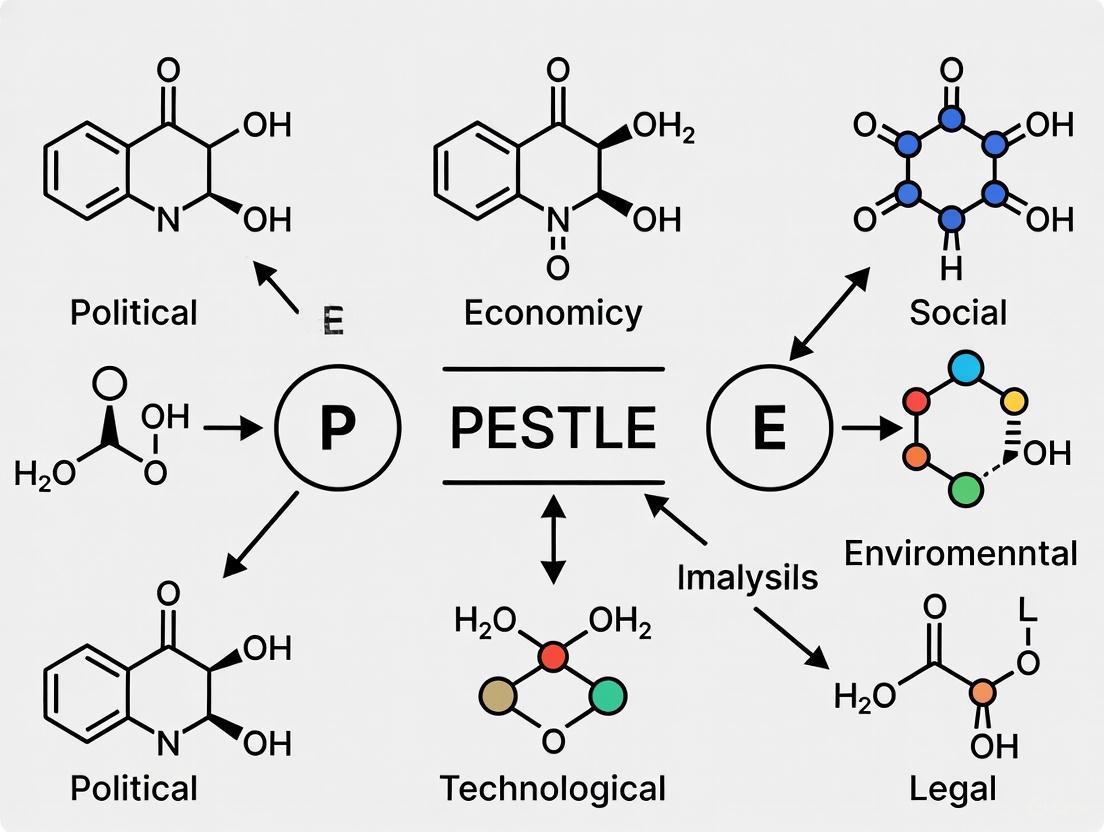
This article provides researchers, scientists, and drug development professionals with a comprehensive guide to applying the PESTLE analysis framework within a research context.
Mastering PESTLE Analysis: A Strategic Framework for Research and Drug Development in 2025
Abstract
This article provides researchers, scientists, and drug development professionals with a comprehensive guide to applying the PESTLE analysis framework within a research context. It covers the foundational principles of Political, Economic, Social, Technological, Legal, and Environmental factors, offers a step-by-step methodological approach for application in biomedical projects, addresses common challenges and optimization strategies, and validates its utility through comparison with other strategic tools. The content is designed to equip professionals with the knowledge to systematically assess external risks and opportunities, thereby enhancing the strategic planning and resilience of their research initiatives.
What is PESTLE Analysis? Building Your Foundational Knowledge for Research
PESTLE analysis is a strategic framework used to identify, analyze, and monitor key external macro-environmental factors that may influence an organization's activities, performance, and strategic decision-making [1] [2]. The acronym PESTLE stands for the six core dimensions of this analysis: Political, Economic, Social, Technological, Legal, and Environmental [3] [4]. This methodology provides a structured approach for researchers and organizations to understand the broader business environment, anticipate changes, and adapt strategies accordingly. For research applications, particularly in fields like drug development, a PESTLE analysis offers a critical lens through which to assess the viability, risks, and opportunities associated with long-term and resource-intensive projects [5].
The Six Core Dimensions: Detailed Breakdown and Quantitative Factors
The following sections provide a detailed examination of each PESTLE dimension, including key factors and application notes particularly relevant to researchers and scientists.
Political Factors
Political factors encompass the degree to which governments influence or intervene in an economy or industry, including political policies, stability, trade regulations, and foreign relations [6] [3].
Application Notes for Researchers: For drug development professionals, political factors are paramount. Government-funded research grants, government healthcare policies, and political support for specific therapeutic areas (e.g., orphan drugs, vaccines) can direct the flow of research and development (R&D) resources [5]. Furthermore, the stability of political relations between a company's home country and the countries where it conducts clinical trials can significantly impact project timelines and regulatory harmony [7].
Table 1: Key Political Factors and Research Implications
| Factor | Description | Potential Impact on Research & Drug Development |
|---|---|---|
| Government Policy & Funding | Public health priorities, research grants, and subsidies [2]. | Determines availability of non-dilutive funding for basic and applied research. |
| Political Stability | Continuity of government and policies in key regions [8]. | Affects long-term planning and risk assessment for multi-year clinical trials. |
| Trade Policies & Tariffs | Regulations on international trade, including import/export tariffs [9]. | Impacts cost and supply chain for active pharmaceutical ingredients (APIs) and laboratory equipment. |
| Tax Policy | Corporate tax rates, R&D tax credits [7]. | Influences overall R&D budget and the net cost of innovation. |
| Regulatory Pressures | Governmental push for faster approvals or specific drug classes [6]. | Can create opportunities in prioritized therapeutic areas or streamline development pathways. |
Economic Factors
Economic factors determine the economic performance of the environment in which an organization operates and directly affect its profitability [3] [10].
Application Notes for Researchers: Economic conditions dictate the availability of private investment capital for high-risk R&D projects. In periods of economic recession or high interest rates, securing funding for long-term drug development becomes more challenging [5] [10]. Furthermore, exchange rate fluctuations can drastically alter the cost of international multi-center clinical trials, while inflation can increase the costs of materials, equipment, and talent [8].
Table 2: Key Economic Factors and Research Implications
| Factor | Description | Potential Impact on Research & Drug Development |
|---|---|---|
| Economic Growth (GDP) | Overall health and growth rate of the economy [2]. | Influences corporate profits and investor appetite for funding high-risk R&D. |
| Interest Rates | Cost of borrowing money [8]. | Affects the feasibility of financing large-scale research projects through debt. |
| Inflation Rates | Rate at which the general level of prices for goods and services is rising [10]. | Erodes R&D purchasing power and increases the cost of clinical trials. |
| Exchange Rates | Value of one currency for conversion to another [8]. | Directly impacts the cost of international operations, from clinical research organizations (CROs) to API sourcing. |
| Unemployment Rates | Proportion of the labor force that is jobless [2]. | May affect recruitment for clinical trials and influence the availability of specialized research talent. |
Social Factors
Social factors analyze the demographic, cultural, and societal characteristics, norms, and trends of the external environment [3] [4].
Application Notes for Researchers: Sociocultural trends are critical for defining research priorities and market potential. An aging population increases the focus on age-related diseases [6] [9]. Public awareness and attitudes towards specific diseases (e.g., mental health) can influence patient recruitment for trials and eventual market acceptance. Increasing health consciousness and patient advocacy also shape drug development agendas [5].
Table 3: Key Social Factors and Research Implications
| Factor | Description | Potential Impact on Research & Drug Development |
|---|---|---|
| Demographic Shifts | Changes in population age, size, and distribution [2]. | Drives R&D focus towards therapies for growing demographic segments (e.g., geriatrics). |
| Health Consciousness | Public attitudes and awareness towards health and wellness [9]. | Creates demand for preventative medicines and influences trial participation rates. |
| Cultural Attitudes | Beliefs and opinions about medicine, clinical trials, and specific diseases [7]. | Affects patient recruitment strategies and design of patient-centric trial protocols. |
| Educational Levels | Average education level of the population [4]. | Influences the pool of qualified research scientists and clinical staff. |
| Work-Life Trends | Changing patterns of work, such as remote work [10]. | May necessitate new models for decentralized clinical trials and remote monitoring. |
Technological Factors
Technological factors pertain to innovations and developments in technology that may affect the operations of the industry and the market favorably or unfavorably [3] [10].
Application Notes for Researchers: This is a primary driver of disruption and progress in drug development. Advances in areas like AI and machine learning are accelerating drug discovery and predictive modeling [6] [9]. Technological breakthroughs in genomics, CRISPR, and high-throughput screening fundamentally change R&D capabilities. Automation and new data analytics platforms can significantly improve the efficiency and cost-effectiveness of research processes [5].
Table 4: Key Technological Factors and Research Implications
| Factor | Description | Potential Impact on Research & Drug Development |
|---|---|---|
| AI & Machine Learning | Use of algorithms to analyze complex biological data [9]. | Speeds up drug discovery, biomarker identification, and clinical trial data analysis. |
| Automation & Robotics | Use of automated systems in laboratories [5]. | Increases throughput and reproducibility of experiments in screening and diagnostics. |
| Data Analytics Platforms | Advanced software for managing and interpreting large datasets [5]. | Enhances clinical data management, real-world evidence (RWE) analysis, and safety monitoring. |
| New Research Techniques | Emergence of new tools (e.g., CRISPR, single-cell sequencing) [9]. | Opens new therapeutic avenues and creates more precise disease models. |
| Cybersecurity | Protection of digital systems and data [8]. | Critical for safeguarding sensitive patient data and intellectual property from R&D. |
Legal Factors
Legal factors involve the laws and regulations that govern the conditions under which organizations operate [3] [4]. While related to political factors, they focus on the current, practical application of laws.
Application Notes for Researchers: The life sciences industry is one of the most heavily regulated. Legal factors include intellectual property law (patents), which is the lifeblood of protecting drug innovation [9]. Compliance with health and safety regulations (e.g., OSHA), clinical trial protocols (e.g., Good Clinical Practice), and data protection laws (e.g., GDPR, HIPAA) is non-negotiable and shapes every aspect of the research workflow [8] [5].
Table 5: Key Legal Factors and Research Implications
| Factor | Description | Potential Impact on Research & Drug Development |
|---|---|---|
| Patent & IP Law | Regulations protecting inventions and intellectual property [9]. | Determines the period of market exclusivity for a new drug, directly impacting return on R&D investment. |
| Health & Safety Regulations | Laws governing workplace safety (e.g., lab safety, biohazards) [8]. | Mandates specific protocols for handling materials, protecting researchers, and managing risk. |
| Data Protection Laws | Regulations on handling personal data (e.g., GDPR, HIPAA) [8]. | Governs the collection, storage, and use of patient data in clinical trials and research. |
| Drug Approval Regulations | Legal framework for marketing authorization (e.g., FDA, EMA requirements) [5]. | Defines the entire drug development pathway from pre-clinical studies to post-marketing surveillance. |
| Antitrust & Competition Law | Laws preventing anti-competitive practices [7]. | Influences strategic collaborations, mergers, and acquisitions between research entities. |
Environmental Factors
Environmental factors include ecological and environmental aspects such as weather, climate, environmental policies, and climate change [3] [4].
Application Notes for Researchers: The environmental dimension is increasingly critical. It involves assessing the environmental impact of research activities, from laboratory waste management to the carbon footprint of large clinical trials [5]. Furthermore, climate change can influence the prevalence and geographic distribution of diseases (e.g., vector-borne diseases), thereby redirecting research efforts. There is also a growing demand from regulators and consumers for sustainable and environmentally friendly manufacturing processes for pharmaceuticals [4].
Table 6: Key Environmental Factors and Research Implications
| Factor | Description | Potential Impact on Research & Drug Development |
|---|---|---|
| Environmental Regulations | Laws concerning waste disposal, emissions, and pollution [4]. | Dictates protocols for safe disposal of chemical and biological waste from laboratories. |
| Climate Change | Long-term shifts in temperatures and weather patterns [9]. | May alter the spread of diseases, requiring shifts in public health research focus. |
| Sustainability Demands | Pressure from stakeholders to adopt eco-friendly practices [4]. | Drives innovation in green chemistry and sustainable manufacturing processes for APIs. |
| Natural Disasters | Extreme weather events and geological disasters [8]. | Poses a risk to the continuity of research operations and security of sample storage facilities. |
| Resource Scarcity | Availability of key raw materials or energy [9]. | Can affect the supply chain and cost of critical materials used in research and production. |
PESTLE Analysis Workflow Protocol
The following diagram illustrates the standard operational protocol for conducting a systematic PESTLE analysis, synthesized from established methodologies [8] [5] [10].
Diagram 1: PESTLE Analysis Workflow. This protocol outlines the key stages for a comprehensive analysis.
Detailed Experimental Protocol
This protocol provides a step-by-step methodology for researchers to execute a PESTLE analysis.
Step 1: Define Objectives & Scope Clearly articulate the purpose and boundaries of the analysis [5] [10]. For a research project, this could be: "To assess the external environment for the development of a new oncology drug candidate over the next 10 years." Define the specific geographic markets, therapeutic areas, and timeline under consideration.
Step 2: Assemble Cross-Functional Team Convene a diverse team to ensure comprehensive coverage of all PESTLE dimensions [8] [5]. Essential members include:
- Research Scientists & Principal Investigators: Provide insights on technological and scientific trends.
- Regulatory Affairs Specialists: Advise on legal and political factors.
- Clinical Operations Managers: Inform on social and practical trial considerations.
- Business Development/Strategy Leads: Contextualize economic and market factors.
- Environmental Health & Safety Officers: Input on environmental and lab safety regulations.
Step 3: Gather Data from Reliable Sources Collect quantitative and qualitative data for each PESTLE category [2] [5]. Use credible sources such as:
- Government Reports: Census data, FDA/EMA guidelines, patent databases, economic forecasts.
- Academic & Industry Publications: Scientific journals, market research reports (e.g., IBISWorld), clinical trial registries.
- News & Policy Sources: Reputable news streams, policy analysis from organizations like the Pew Research Center [2].
Step 4: Brainstorm and Categorize Factors Conduct a structured brainstorming session using a PESTLE template (a simple six-column grid). For each dimension, have the team identify and list all relevant external factors. Categorize each factor into the appropriate PESTLE bucket [8] [10].
Step 5: Analyze Impact and Prioritize Evaluate the significance of each identified factor. A common method is to use an Impact/Probability Matrix to prioritize factors based on their potential impact (High/Low) and their likelihood of occurring in the defined timeframe (High/Low) [10]. Focus strategic attention on factors that are high-impact and high-probability.
Step 6: Develop Strategic Responses Translate the prioritized factors into actionable strategies [5] [10]. For each key factor, define a clear response.
- Threats: Develop mitigation plans (e.g., for a potential change in regulation, initiate early dialogue with regulators).
- Opportunities: Formulate plans to capitalize (e.g., for a new technological breakthrough, plan a pilot project to integrate it into the R&D workflow).
Step 7: Integrate and Communicate Findings Integrate the results of the PESTLE analysis into broader strategic planning frameworks, such as a SWOT analysis (where PESTLE informs the Opportunities and Threats) [9] [10]. Create a summary report and presentation to communicate the key insights and agreed-upon actions to all relevant stakeholders.
Step 8: Monitor and Review Periodically The external environment is dynamic. Establish a schedule (e.g., annually or biannually) to review and update the PESTLE analysis to ensure its ongoing relevance and accuracy [3] [5].
Research Reagent Solutions for PESTLE Analysis
Conducting a robust PESTLE analysis requires specific "research reagents"—sources of data and analytical tools. The table below details essential resources for researchers.
Table 7: Essential Research Reagents for PESTLE Analysis
| Reagent/Solution | Function in Analysis | Example Sources & Applications |
|---|---|---|
| Government & Census Data | Provides authoritative data on social, economic, and demographic factors [2]. | data.census.gov: For population demographics, education levels, and income distribution in target markets [2]. |
| Regulatory Agency Databases | Informs Legal and Political factors related to drug approval, safety, and compliance. | FDA/EMA Websites: For current guidelines, approval pathways, and safety regulations. ClinicalTrials.gov: For insight into competitive research landscape. |
| Economic Forecasts | Provides data on Economic factors like GDP growth, inflation, and interest rates. | World Bank/IMF Reports: For global and national economic outlooks. Central Bank Publications: For monetary policy and interest rate trends. |
| Academic & Industry Literature | Identifies Technological factors and Societal health trends. | PubMed/Google Scholar: For tracking scientific breakthroughs and publishing trends. IBISWorld/Market Research Reports: For industry-specific economic and technological analysis [2]. |
| Policy & Social Trend Monitors | Tracks Political, Social, and Ethical trends. | Pew Research Center: For data on social attitudes, health beliefs, and demographic trends [2]. CQ Researcher: For in-depth reports on current political and social issues [2]. |
| Strategic Planning Software | Aids in organizing, visualizing, and collaborating on the analysis. | Cascade Strategy Execution Platform [10], PresentationLoad PowerPoint Templates [4]: For creating diagrams, storing data, and developing action plans. |
PESTLE analysis is a strategic framework used to analyze the key external macro-environmental factors that can influence an organization or project. The acronym stands for Political, Economic, Social, Technological, Legal, and Environmental dimensions [1]. For researchers, scientists, and drug development professionals, this methodology provides a systematic approach to identifying and monitoring the external forces that can create risks or opportunities for research programs.
In the context of scientific research, PESTLE moves beyond traditional business applications to become a critical tool for strategic foresight and risk mitigation. It enables research teams to anticipate regulatory changes, adapt to shifting funding landscapes, align with societal expectations, and leverage technological breakthroughs [11] [12]. Organizations that systematically employ PESTLE analysis are better positioned to navigate the complex external environment surrounding research and development, potentially reducing strategic uncertainties by up to 71% according to industry studies [11].
Quantitative Impact Assessment of PESTLE Factors
The value of PESTLE analysis in research settings is supported by empirical data on its adoption and effectiveness across knowledge-intensive industries. The following table summarizes key quantitative findings on PESTLE implementation and impact:
Table 1: Adoption Metrics and Success Rates of PESTLE Analysis
| Metric | Finding | Source |
|---|---|---|
| Fortune 500 Adoption | 93% use PESTLE for strategic planning | Deloitte Global Strategic Planning Survey, 2023 [11] |
| Market Expansion Success | 3.4x higher success rate with PESTLE | Boston Consulting Group Market Entry Study, 2023 [11] |
| Uncertainty Reduction | 71% reduction in strategic planning uncertainties | PwC Strategic Framework Analysis, 2023 [11] |
| Market Change Navigation | 2.3x more likely to successfully navigate market changes | Industry analysis [11] |
For research organizations, particularly in regulated fields like drug development, the implications of these metrics are significant. The high adoption rate among leading organizations suggests that PESTLE analysis has become a standard practice for strategic planning in complex environments. The dramatically higher market expansion success rate indicates that research institutions looking to enter new therapeutic areas or geographical markets can substantially improve their outcomes through systematic environmental scanning.
PESTLE Framework Components: Research Applications
Each component of the PESTLE framework addresses distinct external factors that impact research programs. The following application notes detail how each dimension applies specifically to research contexts:
Political Factors
Political factors encompass government policies, stability, and interventions that can shape research priorities and funding flows [2].
- Government Research Funding: Political agendas directly influence national research priorities and funding allocations, particularly through agencies like the NIH in the U.S. or the European Research Council in the EU [12].
- Healthcare Policies: National healthcare system priorities (e.g., cancer moonshots, rare disease initiatives) create strategic alignment opportunities for drug development programs [13].
- International Relations: Trade agreements and diplomatic relations affect cross-border research collaborations, material transfers, and clinical trial networks [8].
- Political Stability: Changes in administration can trigger significant reorientation of public research investment, requiring proactive monitoring [14].
Economic Factors
Economic factors determine the financial viability and resource availability for research programs [2].
- Research Funding Climate: Economic growth or recession directly impacts both public funding and private investment in R&D [13].
- Capital Availability: Interest rates and venture capital trends influence startup biotech formation and early-stage research financing [12].
- Inflation and Costs: Research operational costs (equipment, materials, specialized labor) are sensitive to economic cycles and inflationary pressures [8].
- Global Economic Shifts: Emerging market growth creates new opportunities for research partnerships and patient recruitment for clinical trials [14].
Social Factors
Social factors reflect demographic, cultural, and societal trends that influence research directions [2].
- Demographic Changes: Population aging in developed countries drives research focus on chronic diseases prevalent in older adults [12].
- Patient Advocacy: Growing patient empowerment and advocacy movements influence research priorities and funding for specific conditions [13].
- Public Trust in Science: Fluctuations in public confidence in scientific institutions affect research acceptance and implementation [14].
- Health Literacy: Increasing health awareness in populations creates demand for patient-centered research outcomes and accessible technologies [11].
Technological Factors
Technological factors include innovations and advancements that enable new research capabilities [2].
- Research Methodologies: Breakthroughs in gene editing, AI-driven drug discovery, and high-throughput screening transform research approaches [12].
- Digital Health Technologies: Wearables, sensors, and mobile health platforms create new data collection modalities for clinical research [11].
- Data Science Capabilities: Advanced analytics, machine learning, and computational modeling accelerate research insights and predictive accuracy [13].
- Research Infrastructure: Cloud computing, collaborative platforms, and electronic lab notebooks enhance research efficiency and reproducibility [8].
Legal Factors
Legal factors comprise the regulatory frameworks and compliance requirements governing research activities [2].
- Intellectual Property Regimes: Patent laws and protection mechanisms directly impact research commercializability and investment appeal [12].
- Research Regulations: FDA, EMA, and other regulatory pathways for drug approval define evidence requirements and development timelines [13].
- Data Protection Laws: GDPR, HIPAA, and other privacy regulations govern research data collection, storage, and sharing practices [11].
- Clinical Trial Directives: Evolving requirements for trial design, ethics approval, and informed consent affect research planning and execution [14].
Environmental Factors
Environmental factors encompass ecological concerns and sustainability considerations affecting research [2].
- Environmental Health: Growing understanding of environmental determinants of health (air quality, water contaminants) drives new research domains [12].
- Lab Sustainability: Increasing focus on reducing research environmental footprint through green chemistry and waste reduction initiatives [8].
- Climate Change Impacts: Changing disease patterns and environmental stresses create new research imperatives for public health [14].
- Sustainable Sourcing: Considerations of supply chain sustainability for research materials and reagents [13].
Experimental Protocols for PESTLE Analysis in Research
Implementing PESTLE analysis in research organizations requires a structured methodology. The following protocols provide detailed guidance for conducting comprehensive analyses.
Protocol 1: Comprehensive Environmental Scanning
Objective: To systematically identify and document external factors affecting research programs across all PESTLE dimensions.
Materials:
- Cross-functional team representation (research, regulatory, business development)
- Access to diverse information sources
- Structured data collection templates
- Dedicated analysis workshops
Methodology:
- Define Scope (1-2 weeks): Establish geographic focus (local, national, global), time horizon (1-3-5 years), and specific research domains or therapeutic areas to be analyzed [12].
- Assemble Team (1 week): Convene representatives from research, clinical development, regulatory affairs, IP management, and business functions to ensure diverse perspectives [8].
- Data Collection (2-4 weeks):
- Political: Review government science policies, healthcare priorities, and international cooperation frameworks [2].
- Economic: Analyze research funding trends, venture capital flows, and economic indicators in target markets [15].
- Social: Examine demographic data, patient advocacy positions, and public attitude surveys toward research areas [14].
- Technological: Scan scientific literature, patent databases, and technology forecasts for emerging capabilities [2].
- Legal: Monitor regulatory agency communications, legislative developments, and case law affecting research [12].
- Environmental: Review environmental regulations, sustainability reporting requirements, and climate impact assessments [13].
- Factor Analysis (1-2 weeks): Evaluate collected data for relevance, impact probability, and time horizon, prioritizing factors with high impact and high probability [12].
Quality Control:
- Validate information sources for credibility and timeliness
- Document assumptions and evidence for each identified factor
- Review preliminary findings with external experts for validation [8]
Protocol 2: Strategic Impact Assessment and Response Planning
Objective: To translate PESTLE analysis findings into specific research strategies and risk mitigation plans.
Materials:
- Prioritized PESTLE factors from Protocol 1
- Impact-probability matrix templates
- Scenario planning frameworks
- Strategic response worksheets
Methodology:
- Factor Prioritization (1 week): Plot identified factors on an impact-probability matrix, focusing strategic attention on high-impact, high-probability factors while establishing monitoring systems for others [12].
- Interconnection Analysis (1 week): Identify relationships between factors across PESTLE dimensions (e.g., how technological advances might trigger regulatory responses) [12].
- Scenario Development (2 weeks): Create 3-4 alternative future scenarios based on different combinations of key PESTLE factors, representing plausible environments for research programs [12].
- Strategy Formulation (2-3 weeks):
- Monitoring Framework (1 week): Implement ongoing surveillance systems for tracking prioritized PESTLE factors, with regular review cycles (quarterly for fast-changing factors, annually for comprehensive reassessment) [11].
Quality Control:
- Stress-test strategic responses against multiple scenarios
- Ensure clear metrics and monitoring responsibilities are established
- Document decision rationales for audit and learning purposes [12]
Research Reagent Solutions: Strategic Analysis Tools
The following table details essential resources and methodologies for conducting effective PESTLE analyses in research environments, framed as "research reagent solutions" with specific functions and applications.
Table 2: Essential Research Reagent Solutions for PESTLE Analysis
| Tool/Resource | Function | Research Application |
|---|---|---|
| Country Reports (Business Source Complete) | Provides comprehensive PESTLE factor data for specific countries | Essential for international research expansion decisions and global clinical trial planning [2] |
| Industry Reports (IBISWorld) | Delivers detailed industry analysis including regulatory and technological factors | Helps understand the competitive landscape and value chain for research translation [2] |
| Government Publications | Official data on policies, regulations, and funding priorities | Critical for monitoring political and legal factors affecting research compliance and funding [12] |
| Pew Research Center Data | Tracks social attitudes, demographic trends, and public opinion | Informs understanding of social factors and public reception of research areas [2] |
| CQ Researcher | Provides in-depth reports on political and social issues | Offers context for the societal implications and policy environment of research domains [2] |
| US Census Data (data.census.gov) | Delivers comprehensive demographic and economic data | Supports analysis of social and economic factors for patient population targeting [2] |
Workflow Visualization: PESTLE Analysis Process
The following diagram illustrates the systematic workflow for conducting PESTLE analysis in research environments, showing the process from initiation through to strategic implementation and continuous monitoring.
PESTLE Analysis Workflow for Research Organizations
Factor Interrelationship Visualization
The following diagram maps the complex interrelationships between different PESTLE factors, illustrating how developments in one dimension often trigger effects across others in research contexts.
PESTLE Factor Interrelationships in Research
For researchers, scientists, and drug development professionals, PESTLE analysis represents more than a strategic planning exercise—it is a critical methodology for building organizational resilience and creating strategic foresight [12]. By systematically scanning the external environment across all six dimensions, research organizations can anticipate disruptions, identify emerging opportunities, and make informed strategic decisions about resource allocation and research direction [11].
The ultimate value of PESTLE analysis lies in its translation into actionable research strategies. Organizations that successfully integrate continuous environmental scanning with agile response mechanisms demonstrate significantly higher success rates in navigating complex research landscapes and bringing innovations to market [11] [12]. For research leaders, embedding PESTLE analysis as an ongoing discipline rather than a periodic exercise represents a powerful approach to transforming external complexity into competitive advantage and societal impact.
PESTLE analysis is a strategic framework used to identify and evaluate the key external macro-environmental factors that can influence an organization, project, or industry. In biomedical and clinical research, this systematic assessment of Political, Economic, Social, Technological, Legal, and Environmental factors provides a crucial foundation for strategic decision-making and risk management [1] [16]. This methodology helps researchers, scientists, and drug development professionals navigate the complex external landscape, anticipate challenges, and capitalize on emerging opportunities [17].
For biomedical enterprises, a PESTLE analysis offers a structured approach to understanding the broader context in which research operates. The framework is particularly valuable when entering new research domains, launching clinical trials, developing novel therapeutics, or adapting to shifting regulatory landscapes [8] [10]. By examining these six external factors, research organizations can develop more resilient strategies, allocate resources more effectively, and enhance their chances of successful research translation.
Factor Analysis: Relevance and Application
Political Factors
Political factors encompass government policies, regulatory agencies, political stability, and international relations that directly influence biomedical research operations and direction [18] [16].
Key Elements in Biomedical Context:
- Regulatory Agencies and Approval Processes: Stringent oversight by bodies like the FDA (Food and Drug Administration) and EMA (European Medicines Agency) governs every stage of drug development and clinical research. Changes in administration or political priorities can significantly alter approval timelines and requirements [18].
- Government Funding Priorities: Political decisions determine the allocation of substantial research funding through organizations like the NIH (National Institutes of Health) and NSF (National Science Foundation). Shifts in political agendas can redirect research priorities toward specific disease areas or methodological approaches [16].
- International Collaboration Policies: Biomedical research increasingly operates globally, making international relations and trade agreements critical factors. Political tensions can disrupt collaborative research efforts, data sharing, and multi-center clinical trials [10].
- Healthcare Policies and Reimbursement Structures: Government healthcare policies, including Medicare and Medicaid regulations, influence the economic viability of research areas by determining eventual reimbursement pathways for new therapies and diagnostics [18] [16].
- Political Stability and Policy Continuity: Long-term biomedical research projects, particularly those spanning electoral cycles, are vulnerable to political instability or dramatic policy shifts that can jeopardize sustained funding and regulatory support [8].
Economic Factors
Economic factors include all financial considerations and economic conditions that impact the viability, scope, and direction of biomedical and clinical research endeavors [18] [8].
Key Elements in Biomedical Context:
- Research and Development Funding Availability: The availability of venture capital, pharmaceutical R&D budgets, and grant funding fluctuates with economic conditions, directly influencing which research projects receive financial support [16].
- Healthcare Expenditure and Pricing Pressures: Economic downturns often increase pressure on healthcare costs, influencing the types of research that receive priority based on potential cost-effectiveness and healthcare savings [18].
- Investment in Biotechnology and Pharmaceutical Sectors: Economic cycles significantly impact investor confidence in high-risk biomedical ventures, affecting capital availability for early-stage research and development [8] [10].
- Economic Value of Intellectual Property: The economic landscape influences the valuation of patents and intellectual property, which are crucial assets for securing research funding and forming commercial partnerships [16].
- Global Economic Disparities in Healthcare Access: Economic inequalities between countries create divergent research priorities, with some focusing on high-cost personalized medicines and others prioritizing affordable interventions for widespread diseases [17].
Table 1: Economic Factors Impacting Biomedical Research
| Economic Factor | Impact Level | Research Stage Affected | Typical Manifestations |
|---|---|---|---|
| R&D Funding Availability | High | All stages | Fluctuations in venture capital, grant funding, and industry R&D budgets |
| Healthcare Pricing Pressures | Medium to High | Late-stage clinical development | Emphasis on cost-effectiveness and health economic outcomes |
| Currency Exchange Rates | Medium | Global clinical trials | Variable costs across trial sites and international collaborations |
| Economic Incentives for Innovation | High | Early discovery | Tax credits, research grants, and patent protection systems |
| Recession Impacts | High | All stages | Reduced private investment and shifts in public funding priorities |
Social Factors
Social factors encompass demographic trends, cultural attitudes, public health priorities, and patient advocacy movements that shape biomedical research [8] [16].
Key Elements in Biomedical Context:
- Aging Populations and Demographic Shifts: Changing demographics, particularly aging populations in developed countries, drive research focus toward age-related conditions such as neurodegenerative diseases, cancer, and cardiovascular disorders [16].
- Public Awareness and Disease Advocacy: Well-organized patient advocacy groups can significantly influence research priorities and funding allocation for specific diseases, as seen with HIV/AIDS, breast cancer, and rare diseases [17].
- Health Literacy and Public Engagement with Science: Varying levels of public understanding of scientific concepts affects participant recruitment for clinical trials, acceptance of new therapies, and public funding support for research [16].
- Cultural and Ethical Perspectives on Medical Interventions: Cultural and religious beliefs can influence acceptance of certain research approaches, including stem cell research, genetic modification, and end-of-life interventions, creating geographic variations in research feasibility [17].
- Patient-Centric Research Movement: Growing emphasis on incorporating patient perspectives and experiences throughout the research process, from study design to outcome measurement, is changing how clinical research is conducted [8].
Technological Factors
Technological factors include advancements in research methodologies, analytical tools, data management, and enabling technologies that drive innovation in biomedical research [18] [16].
Key Elements in Biomedical Context:
- High-Throughput Omics Technologies: Next-generation sequencing, proteomics, and metabolomics platforms have revolutionized biological discovery, generating vast datasets that require sophisticated analytical approaches [16].
- Artificial Intelligence and Machine Learning: AI/ML applications in drug discovery, clinical trial optimization, and diagnostic pattern recognition are transforming research methodologies and accelerating discovery timelines [19] [16].
- CRISPR and Advanced Gene Editing Tools: Precision gene editing technologies have created new research paradigms for understanding disease mechanisms and developing novel therapeutic approaches [16].
- Advanced Imaging and Biosensing Technologies: Improvements in resolution, sensitivity, and miniaturization of imaging and sensing technologies enable novel research approaches and more precise measurement of biological phenomena [18].
- Big Data Analytics and Computational Infrastructure: The growing volume and complexity of biomedical data require increasingly sophisticated computational resources, data management platforms, and analytical capabilities [19] [16].
- Telemedicine and Digital Health Technologies: Remote monitoring, mobile health applications, and digital biomarkers are creating new opportunities for decentralized clinical trials and continuous data collection [18].
Table 2: Technological Advancements in Biomedical Research
| Technology Category | Current Applications | Research Impact | Emerging Trends |
|---|---|---|---|
| Artificial Intelligence | Drug discovery, clinical trial matching, diagnostic imaging analysis | Reduced development timelines, improved target identification | Federated learning, generative AI for molecular design |
| Gene Editing | CRISPR-based functional genomics, gene therapy development | Precision disease modeling, novel therapeutic modalities | Base editing, prime editing, epigenetic modifications |
| Single-Cell Technologies | Cell atlas development, tumor heterogeneity studies, developmental biology | Unprecedented resolution in cellular analysis | Multi-omics integration, spatial transcriptomics |
| Organ-on-a-Chip | Disease modeling, toxicology testing, personalized medicine | More physiologically relevant in vitro models | Human-on-a-chip systems, integration with biosensors |
| Digital Health Platforms | Remote patient monitoring, decentralized clinical trials, real-world evidence generation | Enhanced patient recruitment, continuous data collection | AI-powered digital endpoints, integrated health ecosystems |
Legal Factors
Legal factors encompass the laws, regulations, and statutory requirements that govern the conduct of biomedical research and the development of therapeutic products [18] [16].
Key Elements in Biomedical Context:
- Intellectual Property Protection: Patent laws, data exclusivity provisions, and trade secret protections are fundamental to securing commercial interest and investment in biomedical research [16].
- Clinical Trial Regulations: Legal frameworks governing clinical research, including informed consent requirements, ethical review processes, and safety reporting mandates, directly shape trial design and conduct [18].
- Data Protection and Privacy Laws: Regulations such as GDPR (General Data Protection Regulation) and HIPAA (Health Insurance Portability and Accountability Act) govern the collection, storage, and sharing of research data, particularly sensitive health information [19] [16].
- Product Liability and Malpractice Considerations: Legal accountability for research outcomes and product safety influences risk management strategies and insurance requirements throughout the research and development process [16].
- Technology Transfer and Licensing Regulations: Laws governing the transfer of research findings from academic institutions to commercial entities facilitate or impede the translation of basic research into practical applications [18].
Environmental Factors
Environmental factors include ecological influences, public health concerns, and sustainability considerations that affect biomedical research priorities and methodologies [10] [16].
Key Elements in Biomedical Context:
- Climate Change and Disease Patterns: Shifting climate conditions alter the geographic distribution of infectious diseases and vectors, necessitating research into emerging health threats [16].
- Environmental Pollutants and Exposure Research: Growing understanding of environmental impacts on health drives research into the effects of pollutants, endocrine disruptors, and other environmental factors on disease pathogenesis [17].
- Sustainability in Research Operations: Increasing emphasis on reducing the environmental footprint of research activities, including energy-intensive laboratory operations, chemical waste, and single-use plastics [10].
- * Pharmaceutical Pollution and Ecotoxicology*: Concerns about environmental impacts of pharmaceutical manufacturing and medication disposal influence drug development priorities and manufacturing processes [16].
- One Health Initiatives: Integrated approaches recognizing the interconnection between human, animal, and environmental health are creating new interdisciplinary research paradigms [17].
Experimental Protocols and Methodologies
Protocol: Comprehensive PESTLE Analysis for Research Planning
Objective: To systematically identify and evaluate external factors that may impact biomedical research projects or strategic directions.
Materials and Equipment:
- Multidisciplinary team of experts (scientific, regulatory, commercial)
- Data collection resources (access to regulatory databases, scientific literature, market reports)
- Analysis framework template (PESTLE categorization matrix)
- Impact-probability assessment tools
- Strategy mapping worksheets
Procedure:
- Define Research Scope and Objectives: Clearly articulate the specific research project, therapeutic area, or strategic decision under consideration. Establish temporal boundaries for the analysis (e.g., 3-5 year horizon) [8].
- Assemble Multidisciplinary Analysis Team: Convene a diverse team including research scientists, clinical operations specialists, regulatory experts, and business development professionals to ensure comprehensive perspective [17].
- Conduct Factor Identification: Systematically brainstorm and research factors for each PESTLE category relevant to the research scope:
- Political: Review upcoming regulatory changes, political initiatives, and government healthcare priorities [18].
- Economic: Analyze funding trends, market dynamics, and economic indicators affecting the research area [8].
- Social: Examine demographic shifts, patient advocacy movements, and cultural attitudes relevant to the research [16].
- Technological: Identify emerging technologies, research tools, and methodological advancements in the field [19].
- Legal: Document relevant intellectual property landscape, liability considerations, and compliance requirements [18].
- Environmental: Assess ecological factors, sustainability pressures, and climate-related health impacts [10].
- Evaluate Impact and Probability: Rate each identified factor based on its potential impact (high, medium, low) and probability of occurrence (high, medium, low) [8] [10].
- Prioritize Critical Factors: Focus attention on factors with high impact and high probability, developing specific monitoring and response strategies for these priority areas.
- Integrate Findings into Research Strategy: Translate PESTLE analysis insights into specific research adaptations, contingency plans, and strategic initiatives [17].
- Establish Ongoing Monitoring System: Implement a process for regularly updating the analysis as external conditions evolve, typically on a quarterly or biannual basis [10].
Validation and Quality Control:
- Cross-verify factor identification with external experts and stakeholders
- Document assumptions and data sources for traceability
- Test analysis robustness through scenario planning exercises
- Review historical predictions for accuracy in subsequent analyses
Protocol: Technology Assessment and Adoption Framework
Objective: To systematically evaluate emerging technologies for integration into biomedical research programs.
Materials and Equipment:
- Technology assessment criteria checklist
- Vendor evaluation questionnaires
- Pilot study design templates
- Cost-benefit analysis frameworks
- Implementation roadmap templates
Procedure:
- Technology Identification and Scanning: Continuously monitor scientific literature, patent filings, and conference presentations for emerging technologies with potential research applications [16].
- Technical Feasibility Assessment: Evaluate whether the technology integrates with existing research infrastructure, personnel expertise, and operational workflows [19].
- Strategic Alignment Evaluation: Assess how the technology aligns with current research priorities, capabilities, and long-term strategic directions [8].
- Resource Requirement Analysis: Quantify financial investments, personnel training needs, and infrastructure modifications necessary for technology implementation [10].
- Pilot Implementation Design: Develop limited-scale testing protocols to validate technology performance in specific research contexts before full adoption [17].
- Adoption Decision Framework: Establish clear go/no-go criteria based on pilot results, strategic alignment, and resource availability [8].
- Implementation Roadmap Development: Create phased adoption plans with clear milestones, success metrics, and contingency options [10].
Visualization and Workflow Diagrams
PESTLE Analysis Integration in Research Planning
External Factor Impact on Research Translation
Research Reagent Solutions and Essential Materials
Table 3: Essential Research Tools for PESTLE Analysis in Biomedical Contexts
| Tool Category | Specific Examples | Primary Function | Application in PESTLE Analysis |
|---|---|---|---|
| Data Analytics Platforms | IBM Watson Health, Google Cloud Healthcare API, SAS Analytics | Processing complex datasets and identifying patterns | Analysis of economic trends, technology adoption curves, and social determinants of health |
| Regulatory Intelligence Databases | Cortellis Regulatory Intelligence, FDA databases, ClinicalTrials.gov | Tracking changing regulatory requirements and guidelines | Monitoring political and legal factors affecting research compliance and approval pathways |
| Patent Analytics Tools | Derwent Innovation, PatBase, USPTO database | Analyzing intellectual property landscapes and technology trends | Assessing legal factors and technological innovation trajectories in specific research domains |
| Market Research Platforms | Evaluate Pharma, IQVIA Institute, DRG (Decision Resources Group) | Understanding market dynamics and economic viability | Evaluating economic factors, competitive landscapes, and commercial potential of research areas |
| Social Listening Tools | Brandwatch, Talkwalker, Meltwater | Monitoring public discourse and sentiment around health topics | Tracking social factors including patient perspectives, cultural attitudes, and advocacy movements |
| Environmental Scanning Systems | LexisNexis for news, PubMed for literature, Web of Science | Broad monitoring of external environment for emerging trends | Comprehensive factor identification across all PESTLE categories |
| Scenario Planning Software | IBM SPSS Modeler, Palisade @RISK, AnyLogic | Modeling potential futures and testing strategy robustness | Evaluating impact of different external factor combinations on research outcomes |
| Collaborative Analysis Platforms | Miro, Mural, Jupyter Notebooks | Facilitating multidisciplinary team analysis and visualization | Enabling cross-functional PESTLE analysis workshops and strategy development sessions |
The systematic application of PESTLE analysis in biomedical and clinical research contexts provides a critical framework for navigating an increasingly complex external environment. By rigorously examining Political, Economic, Social, Technological, Legal, and Environmental factors, research organizations can anticipate challenges, identify emerging opportunities, and allocate resources more effectively. The structured protocols and visualization tools presented in this analysis provide practical methodologies for implementing this approach across various research contexts.
For maximum effectiveness, PESTLE analysis should be integrated as an ongoing process rather than a one-time exercise, with regular updates to reflect the dynamic nature of the external environment [10]. When combined with internal capability assessments and other strategic planning tools, this methodology enhances strategic agility and improves the likelihood of research success in an increasingly competitive and regulated landscape. The ability to systematically scan, analyze, and respond to external factors represents a core competency for research organizations seeking to translate scientific discoveries into meaningful health innovations.
The STEEPLE analysis is an extension of the traditional PESTLE framework, designed to provide a more comprehensive understanding of the macro-environmental factors influencing organizations and research endeavors. It builds upon the core components of PESTLE—Political, Economic, Social, Technological, Environmental, and Legal—by incorporating a dedicated seventh element: Ethical considerations [20]. This evolution reflects the growing recognition that ethical factors, while often intertwined with legal and social dimensions, represent a distinct and critical area of external influence that can shape strategic planning, public perception, and operational integrity, particularly in sensitive fields like drug development and scientific research [20].
The framework serves as a strategic planning tool that helps organizations align their business strategies with broader societal and ethical expectations [20]. By systematically examining these seven external factors, research scientists and drug development professionals can better anticipate changes, adapt strategies efficiently, and reinforce their reputation for meeting high societal and ethical standards. The analysis transforms environmental scanning from an overwhelming task into a structured, actionable intelligence process [12].
Table 1: Core Components of the STEEPLE Framework
| Factor | Description | Key Focus Areas |
|---|---|---|
| Social | Cultural trends, demographics, and human behavior impacting operations [20]. | Demographic shifts, lifestyle transformations, evolving social values [20]. |
| Technological | Innovations and technological advancements reshaping the competitive landscape [12]. | Digital transformation, R&D dynamics, automation, AI [20]. |
| Economic | Financial and market dynamics affecting operational costs and investment returns [12]. | Inflation, economic growth, labor markets, exchange rates [20] [21]. |
| Environmental | Ecological and climate-related considerations influencing sustainability and operations [12]. | Climate change, sustainability practices, resource stewardship [20]. |
| Political | Government actions, policies, and geopolitical climates shaping the regulatory and trade environment [12]. | Government stability, tax policies, trade agreements, regulatory environments [20] [22]. |
| Legal | Laws, regulations, and compliance requirements governing business and research activities [12]. | Employment law, consumer protection, industry-specific regulation, intellectual property [2] [20]. |
| Ethical | Moral principles, corporate social responsibility, and societal expectations guiding conduct beyond legal compliance [20]. | Corporate social responsibility (CSR), transparency, fair labor practices, ethical sourcing [20]. |
The Critical Role of Ethical Considerations
The addition of the Ethical factor formally integrates a layer of analysis that examines how businesses can develop strategies aligned with broader societal expectations and moral imperatives [20]. In the context of research and drug development, this dimension has evolved from a peripheral concern to a central strategic consideration.
Ethical factors encompass corporate social responsibility (CSR), which extends beyond traditional philanthropy to a comprehensive approach for creating positive societal impact [20]. This includes building stakeholder trust through organizational transparency in communication, data reporting, and decision-making processes. A critical aspect is the commitment to fair labor practices and human rights throughout the global supply chain, ensuring ethical treatment of all workers involved directly or indirectly in research and production [20].
For scientists and drug developers, ethical analysis must also grapple with issues such as:
- Patient Welfare and Safety: Prioritizing patient well-being in clinical trial design and post-market surveillance.
- Data Integrity and Transparency: Ensuring the accurate reporting of all research findings, including negative results.
- Equitable Access: Addressing the affordability and availability of new therapies across different socioeconomic and geographic populations.
- Animal Welfare: Adhering to the "3Rs" (Replacement, Reduction, Refinement) in preclinical research.
These considerations are no longer optional but are integral to maintaining public trust, securing regulatory approvals, and achieving long-term research viability.
Application Notes for Researchers and Scientists
For researchers, scientists, and drug development professionals, the STEEPLE framework is particularly valuable in specific scenarios [20]:
- Prior to initiating new research programs or clinical trials, to understand the full external context.
- When entering new international markets or regulatory jurisdictions, to assess cultural nuances, legal frameworks, and ethical landscapes.
- During the development of new products or technologies, to ensure alignment with social values and technological trends.
- In strategic workforce planning, to anticipate future talent needs and the impact of technological change on required skillsets [20].
Sector-Specific Interpretation of STEEPLE Factors
The following table outlines how STEEPLE factors can be interpreted specifically within a pharmaceutical and research context.
Table 2: STEEPLE Analysis in Pharmaceutical Research & Development
| STEEPLE Factor | Application in Drug Development & Scientific Research |
|---|---|
| Social | Public trust in science; aging populations and disease prevalence; patient advocacy group influences; health literacy and cultural beliefs about treatment [20]. |
| Technological | Adoption of AI in drug discovery; advancements in gene editing (e.g., CRISPR); novel clinical trial platforms (decentralized trials); data analytics and blockchain for supply chain integrity [20]. |
| Economic | R&D funding availability; pricing and reimbursement pressures; impact of economic cycles on research budgets; cost of raw materials and manufacturing [21]. |
| Environmental | Environmental impact of manufacturing processes (green chemistry); waste management of lab materials; carbon footprint of clinical trial operations; sustainability of sourcing raw materials [22]. |
| Political | Government funding for research (e.g., NIH); political priorities for certain disease areas; trade policies affecting import/export of lab equipment and APIs; tax incentives for R&D [22]. |
| Legal | Intellectual property law and patent protection; FDA/EMA regulatory approval pathways; compliance with Good Clinical/Laboratory/Manufacturing Practices (GCP/GLP/GMP); data privacy laws (e.g., GDPR, HIPAA) [2] [21]. |
| Ethical | Bioethical review and Institutional Review Board (IRB) requirements; informed consent processes; ethical sourcing of clinical trial materials; publication ethics and conflict-of-interest disclosures [20]. |
Experimental Protocol for Conducting a STEEPLE Analysis
This protocol provides a step-by-step methodology for conducting a systematic and rigorous STEEPLE analysis, suitable for application in research planning and drug development projects [12] [5].
Phase 1: Preparation and Scoping
- Define the Objective and Scope: Clearly articulate the purpose of the analysis [5]. Is it for a specific research project, a new drug launch, or overall strategic direction? Define the geographic scope (e.g., U.S., EU, global) and the time horizon (e.g., 1-2 years for operational plans, 3-5+ years for strategic R&D) [12].
- Assemble a Cross-Functional Team: Include members from R&D, regulatory affairs, clinical operations, legal, marketing, and manufacturing. Different perspectives are crucial for a holistic analysis [12].
Phase 2: Data Collection and Curation
- Gather Information from Diverse Sources [12] [5]:
- Political/Legal: Monitor government health agency websites (FDA, EMA), legislative tracking services, and industry associations (PhRMA).
- Economic: Consult financial reports, economic forecasts from investment banks, and industry-specific market analyses.
- Social: Analyze public health data (CDC, WHO), demographic studies (Census data), and patient sentiment from advocacy groups and social media.
- Technological: Review scientific publications (PubMed, arXiv), patent databases (USPTO), and technology reports from consulting firms.
- Environmental: Reference sustainability reports from peers and environmental agency regulations (EPA).
- Ethical: Follow guidelines from bioethics boards (The Hastings Center), and analyze CSR reports from leading companies.
- Utilize Research Reagents and Tools: The following table details essential "research reagents" for conducting a robust STEEPLE analysis.
Table 3: Key Research Reagent Solutions for STEEPLE Analysis
| Reagent / Tool | Function in the STEEPLE Analysis Process |
|---|---|
| IBISWorld / Market Research Reports | Provides detailed industry reports containing economic data, market trends, and regulatory operating conditions specific to the pharmaceutical sector [2]. |
| ClinicalTrials.gov Database | Offers insights into technological and social trends by revealing the volume and focus of global clinical research activities. |
| Pew Research Center Studies | A nonpartisan fact tank that provides data on social and demographic trends, public opinion on science, and other sociological factors [2]. |
| FDA/EMA Regulatory Guidance Documents | The primary source for understanding the current legal and regulatory landscape for drug approval and compliance [2]. |
| U.S. Census Bureau Data (data.census.gov) | Provides foundational demographic data on population age, race, and geographic distribution, which are key social factors [2]. |
| CQ Researcher Online | Offers comprehensive reports covering current political and social issues, including those in health and technology [2]. |
| Company Annual Reports (10-K) & CSR Reports | Found on company investor relations pages, these reveal a company's economic performance, strategic priorities, and its approach to environmental and ethical factors [2]. |
Phase 3: Analysis and Synthesis
- Analyze Each Factor Individually: For each of the seven STEEPLE factors, identify 3-5 key trends. Assess whether each trend represents an Opportunity (O), Threat (T), or is Neutral (N) for your research or organization [12].
- Assess Interrelationships: Analyze how trends in different factors influence one another. For example, a technological breakthrough in AI (T) might trigger new ethical guidelines (E) and subsequent legal regulations (L) [12].
- Prioritize Factors: Rank the identified factors based on their potential impact (High/Medium/Low) and probability of occurrence (High/Medium/Low). Focus strategic attention on high-impact, high-probability factors [12].
Phase 4: Strategic Integration and Reporting
- Derive Strategic Implications: Translate the prioritized list of factors and their interrelationships into concrete strategic implications. For example, "The growing social trend of personalized medicine (S) combined with advancements in genomic sequencing (T) implies a need to invest in biomarker discovery platforms."
- Develop an Action Plan: Formulate specific, measurable, assignable, realistic, and time-bound (SMART) actions to capitalize on opportunities and mitigate threats.
- Integrate with SWOT: Feed the results into a SWOT analysis, where STEEPLE's opportunities and threats form the "O" and "T" of the SWOT framework [23] [12].
- Document and Communicate: Create a final report or presentation that clearly outlines the process, findings, and recommended actions. The following diagram visualizes the complete STEEPLE analysis workflow.
Diagram 1: STEEPLE analysis workflow.
Protocol for Ongoing Monitoring and Review
A STEEPLE analysis is not a one-time exercise. The external environment is dynamic, necessitating a continuous monitoring process [12] [5].
- Establish a Review Cycle: Formalize a semi-annual or annual review cycle to reassess the STEEPLE factors [5].
- Create an Early Warning System: Identify leading indicators for each key factor (e.g., draft legislation for Legal factors, early-stage clinical trial results for Technological factors). Assign team members to monitor these indicators.
- Update Strategic Assumptions: As new data is collected, update the strategic assumptions and action plans accordingly. This ensures the organization remains agile and can respond proactively to external shifts [12].
By adhering to this detailed protocol, research scientists and drug development professionals can systematically integrate a comprehensive understanding of the external environment into their strategic planning, thereby enhancing the resilience, relevance, and ethical grounding of their vital work.
The Research Application Blueprint: A Step-by-Step Guide to Conducting Your PESTLE Analysis
A PESTLE analysis is a strategic framework used to evaluate the macro-environmental factors—Political, Economic, Social, Technological, Legal, and Environmental—that can impact an organization or research project [1]. For researchers, scientists, and drug development professionals, this analysis provides a structured approach to understanding external forces that influence research direction, funding, regulatory pathways, and ultimate success [6]. The foundational step that determines the efficacy of the entire PESTLE process is the precise definition of its scope and objectives. A well-defined scope ensures the analysis remains focused, manageable, and directly relevant to the specific research question at hand, preventing unnecessary resource expenditure on extraneous data and maximizing the utility of the findings for strategic decision-making [24].
Core Concepts: Scope and Objectives
Scope in a PESTLE analysis establishes the boundaries of the inquiry. It defines the specific markets, geographic regions, time horizons, and PESTLE factors that are pertinent to the research project [24]. A clearly articulated scope prevents "analysis paralysis" and ensures the team concentrates on the most relevant external trends.
Objectives are the specific, measurable goals the PESTLE analysis aims to achieve. They articulate what the research team intends to do with the insights gained, guiding the data collection and analysis phase [8]. Well-defined objectives ensure the output is actionable and directly supports the project's strategic goals.
Table: Key Definitions for Defining PESTLE Analysis in Research
| Term | Definition | Role in PESTLE Analysis |
|---|---|---|
| Scope | The boundaries and focus areas of the analysis [24]. | Determines the specific markets, geographies, timeframes, and external factors to be investigated. |
| Objectives | The specific, measurable goals the analysis aims to accomplish [8]. | Guides the entire process by defining what the analysis will achieve and how the findings will be used. |
| Macro-Environment | The external factors outside of a research organization's direct control that can influence its performance [25]. | The domain of the PESTLE analysis, encompassing political, economic, social, technological, legal, and environmental forces. |
Experimental Protocol: Defining Scope and Objectives
This protocol provides a detailed, step-by-step methodology for establishing the scope and objectives of a PESTLE analysis within a research and development context, particularly for drug development.
Research Reagent Solutions
Table: Essential Materials for Scoping a PESTLE Analysis
| Item | Function |
|---|---|
| StratNavApp.com PESTEL Template | An online, collaborative template supported by AI that helps structure the analysis and integrates with other strategy frameworks [24]. |
| IBISWorld Industry Reports | Provides relevant industry reports to understand economic, technological, and regulatory operating conditions for a specific sector [2]. |
| Pew Research Center Data | A nonpartisan fact tank that provides data on social and demographic trends, public opinion, and global attitudes [2]. |
| Country Reports (e.g., from Business Source Complete) | Offers extensive current reports providing information on PESTLE factors within a specific country [2]. |
| Regulatory Agency Websites (e.g., FDA, EMA) | Critical sources for identifying legal factors, including regulatory pathways, compliance requirements, and product safety laws [16]. |
Procedure
The following workflow outlines the key steps and decision points for establishing a robust scope and objectives. This process is best conducted as a collaborative workshop involving key stakeholders from the research project.
Step 1: Assemble a Cross-Functional Team Gather key stakeholders for the research project. This should include, but not be limited to, principal investigators, clinical development leads, regulatory affairs specialists, market access analysts, and project managers [6] [8]. The inclusion of diverse expertise is critical to ensure all potential external influences are considered.
Step 2: Define the Primary Research Question Clearly articulate the core problem or decision the PESTLE analysis will inform. This question will anchor the entire process.
- Example for Drug Development: "What are the key external challenges and opportunities for the development and eventual commercialization of our new oncology drug candidate in the United States and European Union over the next 5-7 years?"
Step 3: Establish Geographic and Market Scope Explicitly define the geographical boundaries (e.g., U.S. only, EU5, global) and the specific market or therapeutic area (e.g., Type 2 Diabetes market, CAR-T cell therapy) of the analysis [26]. This prevents an overly broad and unmanageable study.
Step 4: Determine Temporal Scope Set the timeframe for the analysis. Are you assessing the current environment, forecasting trends for the next 3 years, or considering the entire product lifecycle? [24] A 5-10 year horizon is typical for drug development projects.
Step 5: Identify Relevant PESTLE Factors As a team, brainstorm and prioritize the specific Political, Economic, Social, Technological, Legal, and Environmental factors most relevant to the research question defined in Step 2. This step is crucial for focusing efforts [24]. The table in Section 4.0 can be used as a starting point.
Step 6: Formulate SMART Objectives Translate the purpose of the analysis into Specific, Measurable, Achievable, Relevant, and Time-bound (SMART) objectives [8].
- Example Objective: "To identify the three most significant regulatory hurdles for our medical device in Japan by the end of Q2 to inform our pre-submission meeting strategy."
Step 7: Document the Agreed Scope and Objectives Formally record the outputs of Steps 1-6 in a shared document or strategic planning tool [24]. This document serves as a charter that aligns the team and guides the subsequent data collection and analysis phases.
Expected Results and Data Presentation
A successfully executed scoping phase will yield a clear, documented framework that directs the entire PESTLE analysis. The expected output is a charter that includes the research question, agreed-upon boundaries, and SMART objectives.
To aid in the brainstorming and prioritization of factors during Step 5 of the procedure, the following table provides a structured list of potential PESTLE factors highly relevant to research and drug development.
Table: Key PESTLE Factors for Research and Drug Development
| Factor Category | Specific Factors for Research & Drug Development | Potential Impact on Research |
|---|---|---|
| Political | Government healthcare policy, drug pricing policies, political stability, funding grants and initiatives [16] [24]. | Alters research funding availability, influences market size and pricing, impacts international collaboration. |
| Economic | Economic growth, interest rates, healthcare spending, inflation, venture capital availability, unemployment rates [9] [13]. | Affects R&D budget, influences investment in new research, changes cost of clinical trials. |
| Social | Demographic changes (e.g., aging population), disease prevalence, patient advocacy, health consciousness, cultural attitudes to treatment [16] [24]. | Defines patient population size, influences clinical trial recruitment, drives demand for specific therapies. |
| Technological | AI in drug discovery, automation, new research methodologies (e.g., CRISPR), advancements in manufacturing, data analytics [9] [13]. | Creates new R&D pathways, improves research efficiency, disrupts existing development models. |
| Legal | FDA/EMA regulatory pathways, patent and IP laws, clinical trial regulations, data protection laws (GDPR), product liability laws [16] [13]. | Determines time-to-market, protects intellectual property, imposes compliance costs and requirements. |
| Environmental | Environmental laws, green chemistry incentives, waste management regulations, sustainability concerns in manufacturing [24] [25]. | Impacts manufacturing process design, influences corporate social responsibility (CSR) reporting. |
For researchers, scientists, and drug development professionals, a PESTLE analysis is not a speculative exercise but a data-driven process integral to strategic risk assessment and resource allocation in R&D [12]. The external macro-environment—encompassing regulatory shifts, healthcare economic policies, and technological breakthroughs—profoundly influences drug development pathways, market viability, and therapeutic access [21] [27]. This protocol establishes a rigorous, reproducible methodology for sourcing credible information for each PESTLE dimension, ensuring subsequent strategic analysis is grounded in high-quality, verifiable data.
A targeted approach to data collection, utilizing specialized sources for each factor, ensures both efficiency and credibility. The following matrix summarizes recommended data sources and key search metrics for researchers.
Table 1: Data Collection Sources and Strategies for PESTLE Factors
| PESTLE Factor | Key Data Types & Search Terms | Authoritative Sources & Databases | Critical Search Metrics for Researchers |
|---|---|---|---|
| Political [12] | Government policies, regulatory guidelines (e.g., FDA, EMA), political stability, trade policies (e.g., tariffs on APIs), tax incentives for R&D [28] [27]. | ProQuest News & Newspapers, Global Issues in Context, government portals (e.g., FDA, EMA, ClinicalTrials.gov), Country Commercial Guides [29]. | Regulatory change lead time, election cycle impact, lobbying influence strength. |
| Economic [12] | Healthcare GDP spending, R&D funding trends, drug pricing & reimbursement policies, inflation & interest rates, market growth projections [21] [27]. | IBISWorld, Morningstar Investing Center, EconLit, Sage Data, financial reports from pharma giants [2] [21] [29]. | Pricing model elasticity, R&D ROI period, currency fluctuation risk. |
| Social [12] | Disease prevalence & demographics, patient advocacy trends, health literacy & cultural beliefs, public acceptance of novel therapies (e.g., gene therapy) [5] [28]. | Pew Research Center, Mergent Intellect, CultureGrams, Opposing Viewpoints in Context, patient association reports [2] [29]. | Patient adherence rate, trial recruitment feasibility, demographic shift velocity. |
| Technological [12] | AI/ML in drug discovery, automation (high-throughput screening), manufacturing innovations (continuous flow), genomic sequencing advancements [5] [27]. | Patent databases (USPTO, EPO), scientific journals (e.g., Nature, Science), IBISWorld (operating conditions), conference proceedings [2] [8]. | Technology adoption curve, patent expiry timeline, R&D collaboration density. |
| Legal [12] | Intellectual property law, clinical trial regulations (GCP), data privacy (GDPR, HIPAA), compliance & liability, antitrust laws [1] [21]. | LegalTrac, regulatory agency websites (FDA, EMA), CQ Researcher, law firm client alerts, industry-specific compliance portals [2] [29]. | Legal precedent strength, compliance cost burden, litigation likelihood. |
| Environmental [12] | Environmental regulations (EPA, REACH), green chemistry principles, waste stream management, carbon footprint of supply chains, solvent use restrictions [30] [27]. | Sage Data, EPA/EEA databases, corporate sustainability reports (SASB, GRI), scientific literature on environmental impact [21] [29]. | Waste reduction ratio, energy consumption per batch, supply chain sustainability score. |
Experimental Protocol: A Systematic Workflow for Data Gathering
This section outlines a detailed, step-by-step methodology for executing a comprehensive data collection plan.
Protocol: Data Gathering and Triage Workflow
Objective: To methodically identify, collect, and triage credible information relevant to each PESTLE factor affecting a research organization or specific drug development program.
Materials and Equipment:
- Institutional access to academic and business databases (e.g., ProQuest, Business Source Complete)
- Spreadsheet software (e.g., Microsoft Excel, Google Sheets) or specialized strategic analysis tools
- Access to regulatory agency websites (e.g., FDA, EMA) and government statistical portals
Procedure:
- Define Scope & Objectives: Precisely delineate the scope of the analysis. Determine if the focus is on a specific therapeutic area, a new drug launch, expansion into a new geographic market, or a long-term R&D strategy. This defines the geographic and temporal boundaries for all data collection [12] [8].
- Assemble a Cross-Functional Team: Involve experts from regulatory affairs, clinical development, market access, intellectual property, and environmental health & safety. This ensures a holistic understanding of external factors and their interdependencies [12] [28].
- Preliminary Source Identification & Access: Based on the defined scope (Step 1), use Table 1 to identify the most relevant sources for each PESTLE factor. Verify institutional access to these databases and portals.
- Systematic Data Harvesting: For each PESTLE category, execute targeted searches using the recommended sources and search terms from Table 1.
- Political: Search for "clinical trial regulations," "orphan drug designation," and "pharmaceutical price controls" in ProQuest News & Newspapers and on FDA/EMA websites [29].
- Economic: In IBISWorld, locate relevant industry reports (e.g., "Pharmaceutical Manufacturing in the US") and extract data from sections like "Key Statistics" and "Operating Conditions" [2].
- Social: Use the Pew Research Center to find reports on "public opinion on genetic engineering" or "health trends" relevant to the therapeutic area [2].
- Technological: Search patent databases for recent filings in the relevant drug modality (e.g., "mRNA delivery systems") and scan scientific literature for breakthrough technologies [8].
- Legal: Use CQ Researcher for reports on "Drug Pricing Laws" and monitor FDA guidance documents on "Good Clinical Practice" updates [2].
- Environmental: Review Sage Data for environmental metrics and corporate sustainability reports from peer companies for benchmarks on green chemistry and waste reduction [29].
- Data Triage & Impact Assessment: Critically evaluate all collected information.
- Source Credibility: Prioritize peer-reviewed journals, government publications, and reputable research institutes over unvetted news or blog content.
- Timeliness: Note the publication date. For fast-moving areas like technology or regulation, prioritize the most recent data (last 1-2 years).
- Impact/Probability Matrix: Rate each identified factor on its potential impact (High, Medium, Low) and its probability of occurring (High, Medium, Low). This allows for the prioritization of factors that are both high-impact and high-probability [12] [30].
- Synthesis & Documentation: Organize the triaged data into a structured format. Create a master spreadsheet or document with separate sections for each PESTLE factor, listing the key finding, the source, the impact/probability rating, and a brief rationale. This becomes the foundational input for the analytical phase of the PESTLE analysis [30].
Workflow Visualization
The following diagram illustrates the logical flow and iterative nature of the data collection protocol.
The Scientist's Toolkit: Essential Research Reagent Solutions for Strategic Data Collection
In scientific terms, the databases and tools used for this process are the essential "research reagents." The following table details these key resources and their specific functions in the context of PESTLE data collection.
Table 2: Key Research Reagent Solutions for PESTLE Data Collection
| Research Reagent | Function & Application in PESTLE Analysis |
|---|---|
| Business Source Complete (EBSCO) [2] | A primary database for retrieving full-text country reports, detailed company and industry profiles, and scholarly articles on business and economic trends. |
| IBISWorld [2] | Provides in-depth industry research reports containing critical data on market size, growth, operational conditions, and key success factors, which inform Economic and Technological analyses. |
| ProQuest News & Newspapers [29] | An aggregated database of thousands of news sources, essential for tracking real-time developments in Political, Legal, and Social factors, including regulatory announcements and public opinion shifts. |
| Sage Data [29] | A vast repository of curated statistical data from national and international sources, used for quantitative analysis of Economic, Social, and Environmental factors (e.g., healthcare spending, demographic data). |
| Pew Research Center [2] | A nonpartisan fact tank that provides authoritative data on social trends, public policy attitudes, and demographic changes, crucial for a robust analysis of the Sociocultural (Social) factor. |
| Patent Databases (e.g., USPTO) | Critical for monitoring the Technological landscape, including emerging innovations, competitor R&D activity, and intellectual property boundaries that could impact drug development. |
Application Note: Principles of Systematic Macro-Environmental Analysis
For researchers and drug development professionals, a systematic analysis of external factors is a critical step in strategic planning. This process, often structured as a PESTLE analysis, enables a structured evaluation of the macro-environmental forces that can impact research viability, funding, regulatory pathways, and ultimate market success [1] [31]. This document outlines a detailed protocol for conducting the brainstorming and impact evaluation phase of a PESTLE (Political, Economic, Social, Technological, Legal, and Environmental) analysis, contextualized specifically for the pharmaceutical and life sciences sectors.
The core objective of this phase is to move from unstructured information gathering to a prioritized list of evidence-based external factors. This ensures that strategic decisions—from R&D portfolio allocation to clinical trial design—are resilient to external shocks and aligned with broader societal and technological trends [6] [10]. A systematic approach mitigates the risk of cognitive biases, such as "negative tunnel vision," and ensures that both threats and opportunities are given due consideration [26].
Experimental Protocol: Brainstorming and Evaluating Key Trends
Materials and Reagents
Table 1: Research Reagent Solutions for Systematic Analysis
| Item Name | Function in the Analytical Process |
|---|---|
| Multi-Disciplinary Team | Provides diverse expertise and perspectives to ensure a comprehensive identification of factors across all PESTLE domains [26]. |
| Founding Document | A pre-analysis charter that defines the scope, goals, key participants, and deadlines, ensuring focus and alignment [10]. |
| Data Collection Tools | Access to curated databases (e.g., statutory databases, clinical trial registries, economic forecasts) for gathering high-quality, relevant information [2] [15]. |
| Structured Template | A standardized framework (e.g., a table or diagram) for categorizing and evaluating factors, enabling clear analysis and reporting [31] [10]. |
| Impact/Probability Matrix | A visual tool for scoring and prioritizing identified factors based on their potential impact and likelihood of occurrence [31] [10]. |
Methodological Procedure
Step 1: Preparatory Phase and Team Assembly
- Define the Strategic Context: Clearly articulate the specific objective of the analysis (e.g., assessing the environment for a new drug launch, evaluating the feasibility of a new research program in neurodegenerative diseases) [10].
- Assemble a Cross-Functional Team: Convene a team of 6-10 experts from relevant domains. For drug development, this must include, but not be limited to, representatives from R&D, Regulatory Affairs, Clinical Operations, Market Access, and Medical Affairs [26]. The diversity of voices uncovers additional risks and opportunities [26].
- Develop a Founding Document: Create a brief that answers the "Why, What, Who, Where, and When" of the analysis. Communicate this plan and success metrics to all stakeholders [10].
Step 2: Structured Brainstorming and Data Collection
- Sequential Factor Identification: Using a PESTLE template, guide the team through a structured brainstorming session, addressing each category sequentially (Political, Economic, Social, Technological, Legal, Environmental) [10]. Encourage participants to propose any relevant factor, as "no idea is a bad idea" at this stage [31].
- Gather Evidence: For each proposed factor, team members should contribute data from reliable sources to substantiate its relevance. This may include government reports, clinical guidelines, scientific publications, and market research [15] [6].
- Pharmaceutical-Specific Prompting: Use the following prompts to guide discussion for a drug development context:
- Political: Changes in government healthcare priorities; stability of national regulatory agencies (e.g., FDA, EMA); intellectual property protection policies.
- Economic: Global inflation rates and their impact on R&D budgets; funding availability for specific therapeutic areas; pricing and reimbursement pressures from payers.
- Social: Aging demographics and prevalence of target diseases; patient advocacy group influence and growing health consciousness; cultural acceptance of novel therapies (e.g., gene therapies).
- Technological: Breakthroughs in adjacent fields (e.g., AI in drug discovery, CRISPR, mRNA platform technologies); adoption of digital endpoints and wearables in clinical trials.
- Legal: Evolving regulations for clinical trial data transparency (e.g., FDAAA); updates to Good Clinical Practice (GCP) guidelines; patent law dynamics.
- Environmental: Impact of climate change on disease patterns; environmental regulations concerning drug manufacturing waste; supply chain resilience to natural disasters.
Step 3: Impact Evaluation and Prioritization
- Dual-Factor Scoring: For each validated factor, the team must collectively assign two numerical scores [31]:
- Potential Impact (I): On a scale of 1 (Negligible) to 5 (Severe), how significantly would this factor affect the project/organization if it occurred?
- Probability of Occurrence (P): On a scale of 1 (Very Unlikely) to 5 (Very Likely), what is the estimated chance of this factor materializing within the analysis timeframe?
- Calculate Priority Score: Multiply the Impact and Probability scores for each factor (I x P) to generate a Priority Score ranging from 1 to 25 [31].
- Prioritize Findings: Rank-order the factors based on their Priority Score. This directs strategic attention to the high-impact, high-likelihood factors, which are easier to address and can yield more powerful outcomes [26].
Table 2: Quantitative Scoring for Hypothetical Pharmaceutical PESTLE Factors
| PESTLE Factor | Description of Factor | Potential Impact (1-5) | Probability (1-5) | Priority Score (I x P) |
|---|---|---|---|---|
| Political | New expedited approval pathway for breakthrough therapies | 5 | 4 | 20 |
| Economic | Major payer requires demonstrable cost-effectiveness vs. standard of care | 5 | 5 | 25 |
| Social | Increased patient demand for inclusive clinical trial designs | 3 | 4 | 12 |
| Technological | Competitor launches a disruptive gene-editing platform | 4 | 3 | 12 |
| Legal | Stricter data privacy laws impacting patient recruitment | 3 | 5 | 15 |
| Environmental | New regulations on single-use plastics in lab supplies | 2 | 3 | 6 |
Data Analysis and Visualization
The prioritized list of factors from the evaluation phase must be translated into an actionable strategic overview. The following workflow diagram and prioritization matrix provide a standard method for visualizing the results and their implications.
Systematic PESTLE Analysis Workflow
The final output of the evaluation is best visualized using an Impact/Probability Matrix, which categorizes factors for distinct strategic responses.
Impact vs. Probability Prioritization Matrix
Interpretation Guidelines
- High-Priority Factors (Act Now): These factors, characterized by high impact and high probability, demand immediate strategic action and resource allocation. For example, a new regulatory pathway requires proactive engagement with the agency and adaptation of development plans [31] [10].
- High-Impact/Low-Probability Factors (Consider): These are potential "game-changers" (e.g., a major geopolitical event disrupting supply chains). While immediate action may not be required, developing contingency plans is essential.
- High-Probability/Low-Impact Factors (Watch): These persistent issues (e.g., incremental updates to reporting standards) require monitoring and integration into standard operating procedures to avoid cumulative inefficiencies.
- Low-Priority Factors (Monitor): Factors in this quadrant should be logged and periodically reviewed but do not warrant significant strategic diversion [26].
The rigorous application of this protocol for brainstorming and evaluating key trends transforms a simple PESTLE checklist into a powerful, evidence-based strategic tool. For research scientists and drug developers, this systematic process provides the critical link between external macro-environmental scanning and internal strategic decision-making, ultimately de-risking the complex and costly journey of drug development [1] [6]. This analysis should not be a one-off exercise; the macro-environment is dynamic, and the factors must be reviewed and monitored regularly to keep the strategy relevant [26] [10].
Structured Data from PESTLE Analysis
A PESTLE analysis provides a systematic framework for scanning the external macro-environment. The following table summarizes key factors across the six PESTLE dimensions that are critical for research organizations, particularly in drug development [1] [16] [8].
Table 1: Key External Factors Influencing Research and Drug Development
| PESTLE Dimension | Specific Factor | Potential Research Opportunity | Potential Research Threat |
|---|---|---|---|
| Political | Change in government research funding priorities [5] | Focus research proposals on areas with increased funding and political support. | Sudden loss of grant funding for a previously prioritized research area. |
| Strengthening of international trade agreements [8] | Easier access to global research collaborations and patient cohorts for clinical trials. | New trade barriers impacting the import of critical research reagents or equipment. | |
| Economic | Economic recession [8] [5] | Potential for increased research into cost-effective therapeutics and diagnostics. | Reduced private sector investment in R&D and tighter research budgets. |
| Fluctuating currency exchange rates [8] | Opportunity to establish research facilities in countries with favorable exchange rates. | Increased cost of importing specialized laboratory equipment from abroad. | |
| Social | Shifting demographics and aging populations [16] [5] | Growing market and need for research into age-related diseases (e.g., Alzheimer's). | Challenges in recruiting specific demographic subgroups for clinical trials. |
| Increasing public focus on health equity [5] | Opportunity to develop inclusive trial designs and therapies for underserved populations. | Reputational risk and recruitment challenges if research is perceived as non-inclusive. | |
| Technological | Emergence of AI and Machine Learning [16] | Accelerate drug discovery, analyze complex datasets, and identify new drug targets. | Need for significant investment in new technologies and skills training to avoid obsolescence. |
| Advances in genomic sequencing [5] | Enable personalized medicine and development of targeted gene therapies. | Increased complexity of data management and ethical considerations regarding genetic data. | |
| Legal | Changes to data protection laws (e.g., GDPR) [8] [5] | Opportunity to build more robust, transparent, and trusted data governance frameworks. | Increased complexity and cost of managing international clinical trial data compliantly. |
| Patent law reforms and patent expirations [5] | Opportunity to develop novel delivery systems or new uses for off-patent compounds. | Loss of market exclusivity for a key drug, reducing revenue that funds future research. | |
| Environmental | Stricter environmental regulations on waste [16] [5] | Drive research into greener chemistry and sustainable laboratory processes. | Increased operational costs for compliant disposal of hazardous laboratory waste. |
| Climate change impacting disease patterns [8] | New research avenues into vector-borne diseases and public health preparedness. | Geographic shifts in disease prevalence may invalidate long-term research assumptions. |
Experimental Protocol for Quantitative PESTLE Factor Prioritization
Protocol: Multi-Dimensional Scoring and Weighting of PESTLE Factors
1. Objective: To quantitatively assess and prioritize PESTLE factors based on their projected impact and probability, enabling objective decision-making for research strategy.
2. Materials and Reagents:
- Data Collection Tool: Survey platform (e.g., Google Forms, SurveyMonkey) or structured interview template.
- Analysis Software: Spreadsheet software (e.g., Microsoft Excel, Google Sheets).
- Stimulus Material: Compiled PESTLE analysis data (see Table 1).
3. Methodology:
1. Assemble Expert Panel: Convene a cross-functional team of 5-10 experts, including research scientists, clinical operations leads, regulatory affairs specialists, and strategic planners [8].
2. Rate PESTLE Factors: Each expert independently scores each identified PESTLE factor on two scales:
* Impact (I): Scale of 1 (Negligible impact on research) to 5 (Severe, game-changing impact on research).
* Probability (P): Scale of 1 (Very unlikely to occur) to 5 (Very likely to occur within 1-3 years).
3. Assign Weighting (Optional but Recommended): If certain PESTLE dimensions are deemed more critical than others, the panel can assign a weight (W) to each dimension (e.g., Political=1.2, Technological=1.5), summing to a total of 6 (one per dimension) [16].
4. Calculate Priority Score: For each factor, calculate a weighted priority score.
* Formula: Priority Score = (Impact × Probability) × Dimension Weight
5. Plot on Impact-Probability Matrix: Transfer the average scores for each factor to a 5x5 matrix for visual prioritization.
4. Data Analysis:
- Quantitative: Factors with the highest Priority Scores demand immediate strategic attention.
- Qualitative: The Impact-Probability Matrix visually categorizes factors into four groups:
- High Impact/High Probability: Critical threats or opportunities. Require immediate action plans.
- High Impact/Low Probability: Contingency planning required. Monitor closely.
- Low Impact/High Probability: Operational issues. Delegate for management.
- Low Impact/Low Probability: Monitor with low priority.
Strategic Response Workflow
The following diagram visualizes the logical workflow for translating a prioritized PESTLE analysis into concrete research actions.
The Scientist's Toolkit: Strategic Research Reagents and Solutions
Table 2: Essential Resources for Strategic Research Planning and Execution
| Item | Function/Benefit |
|---|---|
| Environmental Scanning Tools (e.g., AI-powered news aggregators, regulatory tracking databases) | Automate the continuous monitoring of the external environment for new publications, patent filings, and policy changes relevant to research domains [16] [8]. |
| Data Visualization Software (e.g., Tableau, specialized graphing tools) | Enable the clear presentation of complex PESTLE data and research metrics to stakeholders, facilitating informed decision-making [32] [33]. |
| Project Management Platform (e.g., Asana, Jira) | Provide a structured framework for tracking the execution of strategic research actions, deadlines, and resource allocation derived from the PESTLE analysis [8]. |
| Collaborative Workspace (e.g., Microsoft Teams, Slack) | Facilitate the cross-functional collaboration required for a comprehensive PESTLE analysis and the development of integrated strategic responses [8] [5]. |
| Strategic Framework Templates (e.g., PESTLE, SWOT) | Offer a proven structure for analysis, ensuring all critical external and internal factors are considered systematically [1] [16]. |
For researchers, scientists, and drug development professionals, securing funding and ensuring project viability extends far beyond scientific merit. A PESTLE analysis (Political, Economic, Social, Technological, Legal, and Environmental) provides a critical framework for demonstrating a comprehensive understanding of the external macro-environment that can determine a project's success or failure [12]. This systematic environmental scanning transforms a proposal from a purely technical document into a robust, strategically-aware plan that anticipates real-world challenges and opportunities [2]. By explicitly integrating PESTLE findings, researchers can effectively communicate to grant committees and stakeholders that their project is not only scientifically sound but also strategically positioned within the broader landscape, significantly enhancing its credibility and competitive edge [11] [34].
Studies indicate that organizations utilizing structured external analysis frameworks can better navigate market changes [11]. This document provides detailed application notes and protocols for seamlessly weaving PESTLE insights into the core of research plans, ensuring they are resilient, relevant, and resource-aware.
Data Presentation: Quantitative Factors in Research Context
Translating broad PESTLE factors into quantifiable, research-specific metrics is essential for building a compelling, evidence-based argument. The following tables summarize key external factors and their potential impacts on research projects, providing a template for data presentation in applications.
Table 1: Political, Economic, and Social Factors in Research Planning
| Factor Category | Specific Metric/Indicator | Potential Impact on Research Projects | Data Sources for Researchers |
|---|---|---|---|
| Political | Government research priorities & funding allocations [5] | Directs applicability and funding attractiveness of a research topic. | Agency websites (e.g., NIH, NSF), public policy documents [2]. |
| Political stability & international trade policies [11] [35] | Affects supply chain for reagents, equipment, and international collaboration ease. | Government reports, trade body analyses [5]. | |
| Economic | Interest rates & inflation [36] [34] | Influences project budget longevity, cost of equipment, and future scaling potential. | Central bank reports, economic forecasts from investment banks [5]. |
| R&D investment trends in the pharmaceutical sector [12] | Indicates market interest and potential for future private partnership or investment. | Industry reports (e.g., IBISWorld), company annual reports [2]. | |
| Social | Public attitudes towards technology (e.g., AI, gene editing) [11] [12] | Predicts public acceptance of research outcomes and identifies potential communication challenges. | Pew Research Center studies, social survey data [2]. |
| Aging demographics & disease prevalence [11] [5] | Justifies research focus and defines the future societal impact and application of findings. | Census data, World Health Organization reports [5] [2]. |
Table 2: Technological, Legal, and Environmental Factors in Research Planning
| Factor Category | Specific Metric/Indicator | Potential Impact on Research Projects | Data Sources for Researchers |
|---|---|---|---|
| Technological | Emerging analytical techniques (e.g., single-cell sequencing, CRISPR) [12] [35] | Offers opportunities for enhanced methodology or risks of current approach becoming obsolete. | Scientific publications, patent databases, Gartner technology trends [11]. |
| AI and automation adoption rates in labs [12] [36] | Impacts project efficiency, personnel skill requirements, and long-term cost projections. | Industry-specific studies, market research reports [5]. | |
| Legal | Data protection laws (e.g., GDPR, CCPA) [11] [36] | Dictates protocols for handling human subject data, especially in international studies. | Legal compliance portals, regulatory agency guidelines [5]. |
| Intellectual property and patent law landscapes [36] [34] | Shapes freedom-to-operate and the strategy for protecting and commercializing research outputs. | Patent databases (e.g., USPTO), legal case monitoring [5]. | |
| Environmental | Environmental regulations on chemical use & waste disposal [5] [34] | Affects laboratory safety protocols, operational costs, and compliance requirements. | EPA/sister agency guidelines, environmental impact assessments [11]. |
| Sustainability targets & green lab initiatives [11] [36] | Creates opportunities for grants focused on green chemistry or sustainable processes. | University sustainability office reports, sector benchmarks [5]. |
Experimental Protocols: Methodology for PESTLE Integration
A rigorous, repeatable methodology is required to transform PESTLE data into actionable strategic insights for a research plan. The following protocol outlines this process.
Protocol: Strategic Integration of PESTLE Findings into a Research Proposal
Purpose: To provide a systematic method for identifying, analyzing, and incorporating macro-environmental factors into the core sections of a research proposal, grant application, or project plan, thereby strengthening its strategic foundation and likelihood of funding.
Principle: This protocol converts raw data on PESTLE factors into prioritized strategic responses, which are then embedded into relevant sections of a research document to demonstrate comprehensive planning and risk mitigation [12] [5].
Workflow Overview: The logical flow for integrating PESTLE analysis into a research plan begins with scoping the research and gathering data, proceeds through analysis and prioritization of factors, and culminates in developing and embedding strategic responses directly into the proposal.
Materials and Reagents:
Table 3: Research Reagent Solutions for Strategic Analysis
| Item/Tool | Function in the PESTLE Integration Process |
|---|---|
| Collaborative Brainstorming Platform (e.g., GroupMap, Xmind) [34] | Facilitates remote, synchronous input from a cross-functional team during the data gathering and ideation phases. |
| Data Visualization Software (e.g., Xmind) [36] | Helps structure the PESTLE analysis visually, using color-coding to distinguish risks and opportunities. |
| Strategic Planning Framework (e.g., SWOT Analysis) [12] [2] | Serves as a connecting tool, where PESTLE findings form the Opportunities and Threats for a subsequent SWOT. |
| Government & Regulatory Database Access (e.g., data.census.gov, CQ Researcher) [2] | Provides verified, up-to-date information on political, economic, social, and legal factors. |
| Scientific Literature Databases (e.g., PubMed, Web of Science) | Critical for sourcing data on technological factors and competing research trends. |
Procedure:
Define Scope and Gather Data: Clearly define the geographic and temporal scope of the research project (e.g., "5-year drug development project for the US and EU markets") [12] [5]. Subsequently, gather relevant, credible data for all six PESTLE factors. Utilize sources from Table 1 and Table 2, such as government reports, academic studies, and market research [2]. In a collaborative setting, use a brainstorming platform to collect input from team members with diverse expertise (e.g., legal, finance, lab science) [34].
Analyze and Prioritize Factors: Systematically examine each factor to deduce its implications for the research project [5]. Evaluate the impact (high/medium/low) on the project's success and the probability (high/medium/low) of the factor occurring or changing within the project's timeline [12]. Create a prioritization matrix to identify factors that are high-impact and high-probability; these are the critical items requiring strategic responses [5]. Visually mark these in your analysis tool.
Develop Strategic Responses: For each prioritized factor, generate concrete, actionable strategic responses [12] [36]. Categorize these responses as:
- Mitigation Plans: For threats (e.g., "If a key reagent is sourced from a politically unstable region, we will identify and qualify a secondary supplier in Q1 of Year 2").
- Capitalization Plans: For opportunities (e.g., "To leverage new federal funding for AI in health, we will partner with the computer science department to develop a joint research aim"). These responses should be specific, measurable, and assigned [36].
Integrate into Proposal Documents: This is the critical final step. Do not relegate the PESTLE analysis to an appendix. Instead, weave the findings and responses directly into the narrative of the proposal [12]:
- Background and Significance: Use social, economic, and health data to quantitatively justify the research problem and its potential impact.
- Preliminary Studies: Highlight how political support (e.g., grants) or new technologies enabled your initial work.
- Research Design and Methods: Explain how the chosen methodology accounts for legal constraints (e.g., data privacy) or leverages new, efficient technologies.
- Budget and Justification: Link budget items to external factors (e.g., "The 10% year-over-year cost increase for cell culture media accounts for projected economic inflation").
- Timeline and Project Management: Include milestones for monitoring high-priority external factors (e.g., "Q3: Review of evolving FDA guidance on AI/ML-based SaMD").
- Risk Assessment: Populate this section with the identified PESTLE threats and the corresponding mitigation plans developed in Step 3.
To operationalize this protocol, researchers should be familiar with the following key resources and strategic solutions.
Table 4: Key Research Reagent Solutions for Strategic Planning
| Resource Category | Specific Examples | Strategic Function in Research Planning |
|---|---|---|
| Strategic Analysis Tools | PESTLE Analysis [34], SWOT Analysis [12] [2] | Provides the foundational framework for structuring environmental scanning and internal capability assessment. |
| Data Aggregation Platforms | Business Source Complete [2], IBISWorld [2], Pew Research Center [2] | Offers curated reports on industry trends, economic forecasts, and social attitudes essential for evidence-based justification. |
| Visualization & Collaboration Software | Xmind [36], GroupMap [34] | Enables real-time, collaborative brainstorming and visual mapping of complex external factors and their interconnections. |
| Regulatory Intelligence Sources | FDA/EMA websites, CQ Researcher [2] | Delivers critical updates on legal and regulatory changes that directly impact research protocols and product approval pathways. |
| Grant and Funding Databases | Grants.gov, NIH Guide, EU Funding Portals | Informs the political and economic analysis by revealing current government and institutional research priorities. |
Visualization: From Analysis to Integration Logic
The following diagram synthesizes the core strategic process of translating analyzed PESTLE factors into concrete components of a research plan, ensuring all external considerations are addressed.
Integration Pathways Diagram: This chart illustrates how different categories of prioritized PESTLE factors logically feed into specific sections of a research proposal, ensuring a comprehensive and strategically aligned final document.
This application note provides a detailed protocol for conducting a PESTLE analysis within a novel drug development program. The PESTLE framework—analyzing Political, Economic, Social, Technological, Legal, and Environmental macro-environmental factors—offers a systematic methodology for identifying external opportunities and threats in the highly regulated pharmaceutical sector [18] [1]. For research applications, this structured approach enables drug development professionals to anticipate market shifts, regulatory hurdles, and technological disruptions that could impact development timelines, commercial viability, and strategic resource allocation [37] [8]. This case study specifically examines the application of PESTLE analysis to "Sevabertinib," a novel drug for locally advanced or metastatic non-squamous non-small cell lung cancer with HER2 mutations, which received FDA approval on November 19, 2025 [38].
Experimental Protocol: PESTLE Analysis Methodology for Drug Development
Stage 1: Establishing the Analytical Framework and Objectives
Purpose: To define the scope, objectives, and methodology for the PESTLE analysis specific to the sevabertinib development program.
Procedure:
- Define Strategic Objectives: Clearly articulate what the analysis aims to achieve. For sevabertinib, the primary objective was to identify macro-environmental factors critical for strategic planning from Phase III trials through commercial launch.
- Assemble Cross-Functional Team: Form an analysis team comprising members from regulatory affairs, clinical development, commercial/market access, R&D, and legal/compliance departments to ensure diverse expertise.
- Develop Information Collection Plan: Identify key internal and external data sources, including regulatory databases (e.g., FDA, EMA), market research reports, clinical trial registries, and peer-reviewed publications.
Key Outputs: A defined analysis scope, a project charter with assigned responsibilities, and a structured data collection plan.
Stage 2: Systematic Data Collection and Factor Identification
Purpose: To gather comprehensive, validated data across all six PESTLE domains.
Procedure:
- Political & Legal Data Collection:
- Source information on drug pricing policies (e.g., U.S. Inflation Reduction Act), FDA regulatory pathways, and intellectual property laws from official government publications and legal databases [39] [40].
- Monitor clinical trial regulations and anticipated changes, such as ICH GCP guidelines revisions expected in 2025 [40].
- Economic Data Collection:
- Social & Technological Data Collection:
- Collect demographic data on lung cancer incidence and patient preference studies for oral therapies from public health databases and sociographic studies [41] [37].
- Identify technological advancements in drug delivery systems, AI in drug discovery, and competitive landscape analyses from scientific literature and patent databases [41] [42].
- Environmental Data Collection:
- Obtain data on corporate sustainability mandates, waste management regulations, and carbon footprint reduction targets from company sustainability reports and environmental regulatory agencies.
Key Outputs: A comprehensive repository of validated data and evidence supporting each identified macro-environmental factor.
Stage 3: Analysis, Synthesis, and Strategic Integration
Purpose: To analyze the collected data, synthesize the findings, and translate them into actionable strategic insights.
Procedure:
- Factor Categorization and Impact Assessment: Organize the identified factors into the six PESTLE categories. Assess each factor based on its potential impact (High, Medium, Low) and likelihood (High, Medium, Low) on the sevabertinib program.
- Thematic Analysis and Interconnection Mapping: Identify cross-cutting themes and interrelationships between factors from different PESTLE categories (e.g., how political pricing pressure interconnects with economic factors).
- Threat and Opportunity Prioritization: Rank the identified threats and opportunities to focus strategic planning on the most critical external factors. The table below summarizes the quantitative analysis for sevabertinib.
- Strategy Development Workshop: Conduct a cross-functional workshop to develop mitigation strategies for high-priority threats and action plans to capitalize on key opportunities.
Key Outputs: A prioritized PESTLE factor table, a strategic response plan, and a final report integrated into the overall development strategy.
Results: PESTLE Analysis of Sevabertinib
The following table summarizes the key external factors identified through the analysis, their specific manifestations for sevabertinib, and their potential impact on the drug development program.
Table 1: PESTLE Analysis of Sevabertinib for HER2-Mutant NSCLC
| Factor | Key Findings for Sevabertinib (2025) | Impact on Development Program |
|---|---|---|
| Political | • FDA Accelerated Approval Pathway utilization [38]• U.S. Inflation Reduction Act price negotiations [40]• Political pressure on oncology drug pricing [37] | • Accelerated regulatory timeline• Potential long-term revenue impact• Increased market access challenges |
| Economic | • Biotech VC investment decline (42% YoY 2022-23) [41]• Global oncology market: $170B (2023) → $300B (2030) [40]• High R&D cost per successful drug (~$2.6B) [37] | • Challenging capital raising environment• Large target market opportunity• High barrier to entry and profitability pressure |
| Social | • Aging global population increasing cancer prevalence [37]• Growing patient demand for targeted therapies [37]• Rising health literacy and treatment expectations [37] | • Expanding patient population• Favorable market reception for targeted agents• Need for robust patient support and education |
| Technological | • Rise of AI in drug discovery/development [37]• Novel Drug Delivery Systems (NDDS) market growth (CAGR 7.5%) [42]• Companion diagnostics for HER2 mutation detection [38] | • Reduced development timelines and costs• Opportunities for lifecycle management• Co-development of essential diagnostic tests |
| Legal | • Strong patent protection for novel entities (Sevabertinib patent expiry: 2035-2042 est.) [41]• Complex FDA compliance (e.g., NDA approval: ~360 days, $5.1M cost) [41]• HIPAA/GDPR data privacy regulations for trial data [37] | • Market exclusivity and ROI protection• Significant regulatory resource allocation• Data management and security requirements |
| Environmental | • Pressure for sustainable manufacturing & green chemistry [37]• Corporate sustainability reporting requirements [37]• Supply chain resilience to climate disruptions [37] | • Increased operational costs for compliance• Enhanced corporate reputation• Risk of manufacturing/supply chain disruption |
Visualizing the Analytical Workflow
The following diagram illustrates the logical workflow and interrelationships of the PESTLE analysis methodology as applied in this case study.
PESTLE Analysis Workflow
The Scientist's Toolkit: Essential Research Reagents and Materials
The following table details key reagents, technologies, and materials essential for conducting a robust PESTLE analysis in a drug development context, based on the methodologies applied in this case study.
Table 2: Key Research Reagent Solutions for Strategic Analysis
| Item | Function in PESTLE Analysis | Application Example |
|---|---|---|
| Regulatory Intelligence Platforms | Aggregates real-time data on FDA/EMA guidelines, approval pathways, and policy changes. | Tracking novel drug approval trends and FDA review timelines (e.g., 10.1 month average in 2023) [38] [41]. |
| Market Analysis Reports | Provides quantitative data on market size, growth projections, and competitive landscapes. | Sourcing oncology market data ($170B in 2023, projected $300B by 2030) and CAGR figures [39] [40]. |
| Clinical Trial Databases | Tracks ongoing trials, patient recruitment trends, and competitor R&D pipelines. | Analyzing the competitive landscape for HER2-directed therapies in NSCLC [38]. |
| Financial Data Tools | Monitors venture capital trends, R&D costs, and economic indicators affecting funding. | Assessing biotech investment climate (e.g., 35% decline in VC investments from 2022-2023) [41] [40]. |
| IP/Patent Database | Maps intellectual property landscape, patent expirations, and freedom-to-operate analyses. | Determining sevabertinib's patent protection and market exclusivity period [41] [37]. |
| Structured Analysis Frameworks | Provides a systematic methodology (e.g., PESTLE, SWOT) for organizing and evaluating factors. | Guiding cross-functional teams in brainstorming and prioritizing external factors [18] [8]. |
Discussion: Strategic Implications and Protocol Validation
The application of the PESTLE framework to sevabertinib successfully identified critical external factors with significant strategic implications. The analysis validated the protocol's effectiveness by revealing high-impact factors such as evolving drug pricing policies and the growing oncology market, enabling proactive strategic planning.
The Political and Legal landscape necessitates robust health economics and outcomes research (HEOR) capabilities to demonstrate value in the face of price negotiations [40]. Economic factors highlight the importance of strategic partnerships to share R&D financial risks and capitalize on the expanding market [40]. Social and Technological trends validate the initial development strategy focused on a targeted therapy and point toward future opportunities in digital companion apps and advanced drug delivery systems for lifecycle management [37] [42]. Finally, Environmental considerations, while currently lower impact, require the integration of sustainable practices into long-term manufacturing and supply chain planning to mitigate future regulatory and reputational risks [37].
This case study demonstrates that a rigorously applied PESTLE analysis, following the detailed protocol outlined herein, is an indispensable tool for de-risking novel drug development. It transforms unstructured environmental scanning into a systematic, actionable strategic intelligence process, ultimately enhancing decision-making for researchers, scientists, and drug development professionals.
Navigating Pitfalls and Enhancing Impact: Advanced Troubleshooting for PESTLE in Research
For researchers, scientists, and drug development professionals, navigating the external environment is crucial for strategic direction, risk mitigation, and resource allocation. The PESTLE framework provides a structured methodology for this analysis, examining six macro-environmental factors: Political, Economic, Social, Technological, Legal, and Environmental [11] [6]. In the high-stakes, highly regulated pharmaceutical sector, a robust PESTLE analysis is not merely an academic exercise; it is a fundamental component of sound research strategy. It helps identify regulatory pathways, anticipate market shifts, understand patient demographics, and leverage technological breakthroughs [11].
However, the practical application of PESTLE methodology faces three significant challenges that can undermine its efficacy: information overload from the vast digital ecosystem, subjectivity in analysis and interpretation, and the static nature of traditional analyses in a dynamic world [43] [6]. This document provides application notes and detailed protocols designed to help research professionals overcome these challenges, enhancing the reliability and strategic value of their PESTLE analyses.
The contemporary research environment is characterized by an unprecedented volume of data. The following table summarizes key quantitative indicators of information overload that impact research and development activities.
Table 1: Quantitative Impact of Information Overload in the Workplace
| Metric | Impact Level | Source / Context |
|---|---|---|
| Global Data Creation | Over 403 million terabytes per day (2025) [43] | Overall data environment |
| Employee Interruptions | Every 3-11 minutes; takes ~23 min to refocus [43] | Impact on deep work & analysis |
| Daily Communications | 117 emails & 153 Teams messages on average (2025) [44] | Daily communication load |
| Economic Cost (U.S.) | Up to $1 trillion annually in lost productivity [43] | Macroeconomic impact |
| AI Acceleration | Can increase volume of generated content [44] | Emerging risk factor |
Challenge 1: Information Overload
The Problem for Researchers
Information overload occurs when the volume of information available exceeds an individual's capacity to process it, leading to stress, reduced cognitive function, and impaired decision-making [43]. For drug development professionals, this manifests as difficulty in tracking relevant regulatory changes, scientific publications, clinical trial results, and competitor activities amidst a constant stream of emails, internal communications, and database alerts. This overload takes a psychological toll, acting as a chronic stressor that can lead to negative emotions and fatigue, ultimately harming both well-being and the quality of the analysis [45].
Application Note: Critical Ignoring as a Defense Strategy
Critical ignoring is an evidence-based strategy involving the conscious choice to ignore low-value information to protect cognitive resources for high-value analysis [45]. It is not about disengaging but about proactively and selectively filtering the information stream before it consumes attention.
Research indicates that overwhelmed individuals are more likely to share misinformation, as the cognitive load impairs their ability to differentiate truth from falsehood [45]. By implementing critical ignoring, research teams can maintain a higher standard of analytical rigor.
Protocol: Implementing Critical Ignoring in PESTLE Sourcing
Objective: To systematically filter information sources during the data collection phase of a PESTLE analysis, improving efficiency and signal-to-noise ratio. Principle: Prioritize sources based on credibility, context, and connection to the research objective [44].
Workflow:
- Source Identification & Triage: As potential information sources (e.g., news articles, reports, regulatory documents) are identified, immediately screen them against the following "ignore" clues [45]:
- Polarizing or Emotionally Charged Language: Words like "insane" or "threat" that signal a lack of factual grounding.
- Appeals to Intuition Without Evidence: Content that relies on "common sense" rather than data or cited evidence.
- Lack of Credible Sources: Information provided without attribution or from sources with a known low-credibility rating.
- Potential Distraction: Information that seems unrelated to core PESTLE factors and may be a tactical release to divert attention.
- Unsupported Accusations: Particularly against political or commercial opponents.
- Promotion of a Scapegoat: Blaming minoritized groups for complex problems.
- Credibility Verification: For sources passing the initial triage, use interactive media bias and fact-checking charts to verify journalistic quality and credibility. Different lists tend to agree with one another and professional fact-checkers, providing a degree of objectivity [45].
- Contextual Relevance Check: Ask: "Does this information directly relate to the specific PESTLE factor and research objective I am currently investigating?" If the connection is not clear and direct, ignore it.
- Connection to Action: Finally, evaluate whether the information can lead to a tangible insight or action for the research project. If it fails this test, it is likely noise [44].
Challenge 2: Subjectivity and Bias
The Problem for Researchers
Subjectivity in PESTLE analysis arises from unconscious biases, team homogeneity, and a lack of structured evaluation criteria. This can lead to over- or under-weighting certain factors based on preconceived notions rather than empirical impact, potentially jeopardizing drug development projects through misallocated resources and unanticipated risks.
Application Note: Standardization for Objectivity
The principle of Experimentation Protocols from software development provides a powerful model for reducing subjectivity in analysis [46]. These are predefined frameworks that standardize key settings, auto-fill key elements like metrics, and integrate decision matrices to provide clear, unbiased recommendations based on the data [46]. Translating this to PESTLE means moving from ad-hoc, opinion-based discussions to a standardized, metric-driven evaluation process.
Protocol: Weighted Factor Impact Assessment
Objective: To objectively quantify and prioritize PESTLE factors based on their projected impact on a specific research project. Principle: Use a weighted scoring system to minimize individual bias and create a reproducible assessment process [11].
Workflow:
- Team Assembly: Convene a diverse team of experts from relevant departments (e.g., regulatory affairs, clinical development, commercial, R&D) to ensure multiple perspectives [6].
- Factor Brainstorming: For each PESTLE category, brainstorm and list all relevant factors. Use reliable sources like government reports, economic forecasts, and consumer surveys to populate the list with specific, data-backed trends [6].
- Impact & Probability Scoring: Each team member independently scores every factor on two scales:
- Impact (1-10): The magnitude of the factor's potential effect on the project's success (1 = negligible, 10 = catastrophic/severe).
- Probability (1-10): The likelihood of the factor materializing or significantly changing within the project's timeframe (1 = very unlikely, 10 = almost certain).
- Calculate Weighted Score: For each factor, calculate:
(Impact Score) x (Probability Score). This yields a score from 1 to 100. - Prioritization Matrix: Plot the factors on a 2x2 matrix with Impact on the Y-axis and Probability on the X-axis. This creates a visual prioritization of "High Impact/High Probability" factors requiring immediate attention, versus "Low Impact/Low Probability" factors that can be monitored.
Table 2: Research Reagent Solutions for PESTLE Analysis
| Reagent / Tool | Primary Function | Application in PESTLE Protocol |
|---|---|---|
| Digital Asset Management (DAM) | Centralizes and organizes information assets [43] | Single source of truth for reports, regulatory docs, and data; reduces duplicate info. |
| Media Bias/Fact-Checking Chart | Provides credibility ratings for news/info sources [45] | Verifies objectivity of Political and Social factor information during critical ignoring. |
| Weighted Scoring System | Quantifies subjective judgments using a structured scale [11] | Enables objective Impact/Probability scoring in the Factor Impact Assessment protocol. |
| Scenario Planning Platform | Models potential future states based on variable inputs [11] | Tests research strategy robustness against different PESTLE scenarios in dynamic analysis. |
| Automated Monitoring Tool | Tracks changes in predefined data points or news feeds [11] | Provides trigger alerts for PESTLE factor changes, keeping the analysis current. |
Challenge 3: Static Analysis
The Problem for Researchers
A traditional PESTLE analysis is often a point-in-time exercise, creating a snapshot that quickly becomes outdated. In the dynamic fields of science and medicine, a static analysis fails to capture emerging regulatory guidance, breakthrough technologies, shifting payer economics, or new public health data, rendering the strategic plan vulnerable.
Application Note: From Snapshot to Continuous Monitoring
The solution is to adopt the principles of open science and continuous monitoring, as reflected in the updated SPIRIT 2025 statement for clinical trial protocols, which emphasizes transparency, accessibility, and predefined plans for sharing and updating information [47]. A PESTLE analysis should be a living document, integrated into an ongoing environmental scanning process.
Protocol: Dynamic PESTLE with Trigger-Based Reviews
Objective: To transition PESTLE from a static report to a dynamic process that evolves with the external environment. Principle: Establish a system of continuous monitoring with clear triggers for formal review and analysis updates [11].
Workflow:
- Establish a Baseline: Complete an initial PESTLE analysis using the protocols above. This is the "version 1.0" baseline.
- Define Monitoring Triggers: For each high-priority factor identified in the Weighted Factor Impact Assessment, define specific, measurable triggers that will prompt a re-evaluation. Examples include:
- Political/Legal: Draft legislation moving to a committee vote; a new FDA guidance document issued.
- Economic: A >1% shift in key interest rates; publication of new health technology assessment (HTA) criteria.
- Social/Technological: Publication of a landmark clinical trial; a competitor's patent grant or new drug approval.
- Assign Ownership: Designate a team or individual ("PESTLE Owner") responsible for monitoring triggers for each major category.
- Schedule Cadenced Reviews: Formalize a review rhythm:
- Update and Communicate: When a trigger is met or a cadenced review is held, update the analysis and disseminate the revised insights to all relevant stakeholders, clearly communicating the implications for the research program [6].
Integrated Workflow Diagram
The following diagram illustrates the integrated protocol for overcoming all three challenges in a continuous cycle.
Integrated Workflow for Robust PESTLE Analysis
For the research community, a robust PESTLE methodology is a critical defense against strategic surprise. By systematically addressing the endemic challenges of information overload, subjectivity, and static analysis with the protocols outlined—Critical Ignoring, Weighted Factor Impact Assessment, and Dynamic Trigger-Based Reviews—teams can transform their environmental scanning from a perfunctory checklist into a powerful, living process. This disciplined approach fosters a culture of data-driven decision-making, enhances strategic agility, and ultimately de-risks the complex journey of drug development in an unpredictable world.
In the fast-paced and highly regulated environment of research and drug development, external environmental factors are in constant flux. A PESTLE analysis (Political, Economic, Social, Technological, Legal, and Environmental) provides a crucial framework for systematically scanning this macro-environment [6] [12] [5]. However, a single analysis provides only a snapshot; its true strategic power is unlocked when it becomes the foundation for a system of continuous monitoring and regular review. This protocol details the application of such strategies, enabling researchers and drug development professionals to transform static analysis into a dynamic tool for maintaining compliance, managing risk, and securing a competitive advantage.
Continuous monitoring refers to the ongoing, automated process of assessing and analyzing an organization's security and operational posture to detect vulnerabilities and emerging threats in real-time [48]. When applied to the research context, this principle extends to the continuous surveillance of the PESTLE landscape, ensuring that strategic decisions are based on the most current information available. This proactive approach is essential for navigating the complexities of modern research, where a change in regulatory policy, a breakthrough in technology, or a shift in economic conditions can fundamentally alter a project's viability [12].
Application Notes: Integrating Monitoring with PESTLE Analysis
A PESTLE framework offers a structured lens through which to view external pressures [6] [5]. For a research organization, this translates to specific, monitorable factors:
- Political: Tracking legislative agendas for proposed changes to research funding, drug approval processes, or international trade agreements affecting the supply of critical materials.
- Economic: Monitoring inflation rates, interest rates, and venture capital trends in the pharmaceutical sector to forecast R&D budget impacts.
- Social: Observing evolving patient advocacy group positions, public attitudes towards genetic therapies, or demographic health trends.
- Technological: Scanning for emerging analytical techniques, novel drug delivery platforms, or advancements in AI for compound screening.
- Legal: Maintaining vigilance on patent law rulings, updates to Good Laboratory/Clinical Practices (GLP/GCP), and liability case law.
- Environmental: Assessing new regulations on solvent use or waste disposal and monitoring the physical risks of climate change to laboratory infrastructure.
The integration of continuous monitoring with this framework transforms it from a periodic checklist into a live nervous system for the organization. It enables the shift from being reactive to external shocks to being proactive and prepared for emerging trends [12] [49].
Protocol for a Continuous Monitoring System
This protocol establishes a methodology for implementing a continuous monitoring system tailored to track factors identified in a PESTLE analysis.
Phase 1: Define Scope and Objectives
- Objective: Establish a focused and actionable monitoring perimeter.
- Steps:
- Geographic Scope: Define the operational regions (e.g., local, national, global) relevant to your research [12].
- Time Horizon: Set monitoring alerts for both short-term (1-2 years; e.g., regulatory updates) and long-term (3-5+ years; e.g., foundational technological shifts) trends [12].
- PESTLE Prioritization: Based on your initial PESTLE analysis, prioritize which factors are most critical to your research projects and allocate resources accordingly [5].
A robust monitoring system relies on diverse, high-quality data streams and the tools to manage them.
- Data Sources:
- Political/Legal: Government legislative databases (e.g., FDA, EMA portals), regulatory news feeds, and reports from industry associations [2].
- Economic: Financial reports, economic forecasts from investment banks, and market research on the pharmaceutical sector [5].
- Social/Technological: Academic preprint servers (e.g., arXiv, bioRxiv), patent databases, peer-reviewed literature alerts, and consumer trend reports from organizations like the Pew Research Center [2].
- Monitoring Tools:
- Automated Alert Systems: Use tools like Google Scholar alerts, RSS feeds, and specialized regulatory intelligence software.
- Data Aggregation Platforms: Implement dashboards that consolidate news, financial data, and scientific updates.
Phase 3: Implement Continuous Monitoring and Analysis
This is the active, ongoing phase of the system.
- Automate Data Collection: Configure your tools to push relevant information based on predefined keywords (e.g., "FDA guidance," "CRISPR patent," "ADC therapy market").
- Establish a Baseline: For quantitative factors (e.g., raw material costs, grant approval rates), determine normal ranges to help identify significant deviations [49].
- Conduct Regular Analysis Meetings: Hold cross-functional team reviews (e.g., monthly or quarterly) to analyze incoming data, assess its impact on research projects, and update risk assessments [6] [5].
Phase 4: Review and Integrate Findings into Strategy
- Update PESTLE Analysis: Formally update the master PESTLE analysis document on a semi-annual or annual basis with the insights gathered from continuous monitoring [5].
- Inform Strategic Planning: Feed the updated PESTLE findings directly into SWOT analyses, risk management plans, and long-term research and development roadmaps [12].
- Maintain an Early Warning System: Use the monitoring system to identify leading indicators of major shifts, providing maximum time to adapt research strategies [12].
The following workflow diagram illustrates this continuous cycle:
Quantitative Monitoring Cadence and Data Presentation
Establishing a regular rhythm for review is critical. The following table summarizes a recommended cadence for monitoring different PESTLE factors, balancing comprehensiveness with operational feasibility.
Table 1: Recommended Monitoring Cadence for PESTLE Factors in Research
| PESTLE Factor | Key Metrics to Track | Recommended Monitoring Frequency | Responsibility |
|---|---|---|---|
| Political | Draft legislation, public R&D funding levels, election outcomes affecting science policy | Weekly Alert / Quarterly Deep Dive | Government Affairs, Senior Management |
| Economic | R&D investment trends, cost of raw materials, currency exchange rates | Monthly Dashboard Review / Quarterly Analysis | Finance, Project Management |
| Social | Patient group sentiment, public trust in science, demographic health data | Quarterly Survey Review / Annual Analysis | Medical Affairs, Marketing |
| Technological | New publications, patent grants, disruptive platform technologies | Real-time Alerts / Monthly Literature Scan | R&D, Intellectual Property |
| Legal | New case law, updates to GCP/GLP, patent law changes | Real-time Alerts / Weekly Compliance Review | Legal, Regulatory Affairs, QA |
| Environmental | New regulations (e.g., REACH), extreme weather risks to facilities | Monthly Alert / Annual Audit | Operations, EHS (Environ. Health & Safety) |
The Researcher's Toolkit: Essential Reagent Solutions for Monitoring
While continuous monitoring is an informational process, its effectiveness can be enhanced by specific tools and platforms. The following table details key "reagent solutions" for building a robust monitoring system.
Table 2: Key Research Reagent Solutions for Environmental Monitoring
| Tool / Solution Category | Specific Examples | Function in Monitoring |
|---|---|---|
| Regulatory Intelligence Platforms | FDA/EMA email alerts, Cortellis, Citeline | Provides real-time tracking of changes in regulatory guidelines and drug approval processes. |
| Scientific Literature Aggregators | Google Scholar Alerts, PubMed updates, bioRxiv | Automates surveillance of new preclinical and clinical research in specific fields. |
| Patent Database Monitors | USPTO PAIR, Espacenet, commercial IP platforms | Tracks technological advancements and competitive intellectual property landscape. |
| Financial & Market Data Tools | Industry reports (e.g., IBISWorld), Wall Street Journal, financial newswires [2] | Monitors economic factors, M&A activity, and investment trends in the pharma and biotech sectors. |
| Social Listening & Survey Tools | Pew Research reports, social media analytics platforms [2] | Gauges public opinion, patient attitudes, and societal trends relevant to research areas. |
Visualization: The PESTLE Monitoring Integration Pathway
The ultimate goal of continuous monitoring is to create a closed-loop system where data directly informs strategy. This pathway illustrates how information from the external environment, filtered through the PESTLE framework and monitoring protocols, integrates into the research organization's core strategic planning.
Application Note: Integrating PESTLE Analysis with a Digital Research Toolkit
For researchers in drug development, the external environment—shaped by Political, Economic, Social, Technological, Legal, and Environmental (PESTLE) factors—is increasingly complex and dynamic. [8] [16] A PESTLE analysis provides a structured framework to identify and monitor these macro-environmental factors, enabling organizations to anticipate risks, capitalize on opportunities, and inform strategic R&D decisions. [16] [23] This application note details how to leverage modern AI-assisted research and digital collaboration tools to conduct a more efficient, data-driven, and collaborative PESTLE analysis.
The core value of integrating technology with this methodology lies in enhanced capabilities. AI research tools can process vast amounts of textual data from news, regulatory documents, and scientific literature to identify emerging PESTLE trends. [50] [51] Digital collaboration platforms then enable research teams to synthesize these findings, share insights in context, and build a living, organizational PESTLE knowledge base. [52] [53] This is critical in drug development, where factors such as shifting regulatory landscapes (Political/Legal), [16] investment patterns (Economic), [54] [55] public trust in science (Social), and the adoption of AI in discovery (Technological) [55] [56] can directly impact research trajectories and success.
Protocol: A Technology-Enabled PESTLE Analysis for Research Applications
Stage 1: AI-Driven Environmental Scanning and Data Collection
Objective: To systematically gather and synthesize raw data on macro-environmental factors from diverse digital sources.
Materials & Reagents: Table 1: Digital Tools for Environmental Scanning
| Tool Category | Example Tools | Primary Function in PESTLE Context |
|---|---|---|
| AI-Powered Literature Review | Elicit, Scispace, Keenious, Avidnote | Discovers and summarizes academic literature, regulatory filings, and scientific reports on PESTLE-related topics. [50] [51] |
| Current Awareness & News Aggregation | Perplexity, Consensus | Provides real-time, evidence-backed updates on policy changes, economic trends, and public health discussions. [50] [51] |
| Citation & Source Analysis | Scite, Semantic Scholar | Analyzes the context of citations to assess the supporting or contrasting evidence for scientific claims, informing regulatory and social trends. [50] [51] |
| Reference Management | Zotero, Paperpile | Collects, organizes, and shares source documents and bibliographic data across the research team. [53] |
Methodology:
- Define PESTLE Search Queries: For each PESTLE dimension, develop a set of targeted search queries. For example:
- Political: "FDA fast-track approval process changes 2024", "European Medicines Agency clinical trial regulation".
- Economic: "Venture capital trends in oncology drug development", "Inflation impact on pharmaceutical manufacturing costs".
- Social: "Public perception of gene therapies", "Patient advocacy group influence on research priorities".
- Technological: "AI in high-content screening for drug discovery", "Generative AI for novel protein design".
- Legal: "Intellectual property law updates for biologics", "Data privacy laws (e.g., GDPR) in clinical research".
- Environmental: "Green chemistry principles in API synthesis", "Sustainable sourcing of raw materials".
- Execute AI-Assisted Searches: Input these queries into the tools listed in Table 1. Use AI summarization features (e.g., ChatPDF, Avidnote's summarization) to quickly extract key takeaways from long policy documents or scientific papers. [50] [51]
- Collect and Store Snippets: Use a collaborative research platform (e.g., Collabwriting) to capture key insights directly from web pages, PDFs, and articles. Highlight relevant text, add preliminary notes on potential impact, and tag each snippet with the relevant PESTLE code (P, E, S, T, L, E). [53] This creates a centralized repository of evidence.
Stage 2: Collaborative Analysis and Synthesis
Objective: To transform collected data into analyzed and validated strategic insights through team-based discussion and synthesis.
Materials & Reagents:
- Digital Collaboration Platform: Tools like Collabwriting, which allows for highlighting, commenting, and organizing insights in shared clusters, or shared project management workspaces (e.g., those integrated with Google Workspace). [53]
- Video Conferencing Software: For synchronous team meetings.
- Shared Digital Canvas or SWOT Template: A shared document or whiteboard for structuring the final PESTLE and SWOT outputs.
Methodology:
- Cluster and Categorize Insights: Within your collaboration platform, group the collected snippets into thematic clusters under each PESTLE heading (e.g., under "Technological," you might have clusters for "AI Agents," "Automation," and "Computational Biology"). [53]
- Facilitate Virtual Analysis Sessions: Schedule regular video conferences to review the clustered data. For each significant finding, the team should discuss and reach a consensus on:
- Impact: Is this factor a potential Opportunity (O) or Threat (T) to our research projects/organization?
- Certainty and Timeline: How likely is this to materialize, and over what timeframe?
- Populate the PESTLE and SWOT Frameworks: Transfer the synthesized and agreed-upon factors into a formal PESTLE matrix. Use this output to directly inform the "Opportunities" and "Threats" sections of a companion SWOT analysis. [8] [16] [23] This creates a direct link between external scanning and internal strategy.
- Document Assumptions and Evidence: Ensure that every identified factor is linked back to its source evidence within the collaboration platform, creating an audit trail for the analysis.
Workflow Visualization
The following diagram illustrates the integrated, cyclical workflow of the technology-enabled PESTLE analysis protocol.
The Scientist's Toolkit: Essential Digital Research Reagents
The successful implementation of the protocol above relies on a suite of digital tools that function as the essential "research reagents" for a modern research organization. The following table provides a comparative overview of key tools.
Table 2: AI and Collaboration Tools for Research (The Scientist's Toolkit)
| Tool Name | Primary Function | Key Features for PESTLE/Research | Example Use Case in Drug Development |
|---|---|---|---|
| Avidnote [50] [51] | Integrated AI Research Hub | AI-powered summarization; data analysis; secure, private workspace. | Analyzing a set of new environmental regulations (E) on solvent waste and drafting a compliance memo. |
| Elicit [50] [51] | Literature Review Automation | Automates literature searches; extracts data from multiple papers; summarizes findings. | Answering a query like "What are the latest social trends in patient adherence to chronic therapies?" (S). |
| Scite [50] [51] | Citation Context Analysis | "Smart Citations" show if a paper has been supported or contradicted. | Assessing the evidential strength behind a new technological claim (T) before investing in it. |
| Perplexity [51] | Real-Time Search & Q&A | Provides source-backed answers to current questions; web search. | Tracking real-time updates on a new political initiative (P) for biotech funding. |
| Collabwriting [53] | Cross-Functional Research Collaboration | Captures highlights & comments from web, PDF, video; organizes into shareable clusters. | Building a shared knowledge base on legal precedents (L) in pharmaceutical patents from diverse sources. |
| Zotero [53] | Academic Reference Management | Manages bibliographic data; collects references from browsers; integrates with Word. | Maintaining the master library of sources for a PESTLE analysis report on a new therapeutic area. |
For researchers, scientists, and drug development professionals, the external environment is not a static backdrop but an active driver of risk and opportunity. By integrating the structured framework of PESTLE analysis with the power of AI-assisted research and digital collaboration tools, organizations can transform a traditionally high-level strategic exercise into a dynamic, evidence-based, and continuous process. This technology-enabled approach allows teams to move from reactive information gathering to proactive environmental sensing, ultimately fostering more resilient and strategically informed research and development programs.
This application note provides a formal methodology for researchers, particularly in drug development and life sciences, to systematically identify and analyze the cascading effects across Political, Economic, Social, Technological, Legal, and Environmental (PESTLE) factors. Moving beyond a static listing of external factors, the protocols herein detail how to map interconnections, quantify their impacts, and integrate these insights into robust strategic planning and risk assessment processes. The guidance is framed within a broader thesis on advancing PESTLE analysis for rigorous research applications.
Traditional PESTLE analysis often treats its six factors—Political, Economic, Social, Technological, Environmental, and Legal—as discrete silos of external influence [57]. However, in complex, real-world environments, these factors are dynamically interlinked. A change in one factor can trigger a sequence of effects across others, creating a cascade that can fundamentally alter the business and research landscape [12]. For research-intensive sectors like drug development, failing to account for these interconnections can lead to significant strategic blind spots, underestimated risks, and missed opportunities. This document establishes a standardized protocol for analyzing these cascading effects, transforming PESTLE from a diagnostic checklist into a dynamic forecasting tool.
Theoretical Framework: The Logic of Interconnectedness
The core premise of this methodology is that PESTLE factors do not operate in isolation. They exist within a complex web of cause-and-effect relationships [12]. For instance:
- A Technological breakthrough (e.g., mRNA platforms) can reshape the Social and regulatory Legal landscape for vaccine development.
- New Environmental regulations can drive Economic costs, influencing Political trade policies.
- Social trends (e.g., increased health consciousness) can create Economic opportunities for new therapeutic areas and demand for more rigorous Legal oversight of claims.
Analyzing these cascading effects requires a shift from viewing the PESTLE categories as a simple list to modeling them as a network of interdependent nodes. The protocols below provide a structured approach to building and interpreting this network.
Experimental Protocols
Protocol 1: Systematic Identification of PESTLE Interconnections
Objective: To collaboratively identify and document potential causal relationships between individual PESTLE factors.
Materials:
- Cross-functional team of experts (e.g., regulatory affairs, clinical operations, market access, R&D)
- Facilitator
- Data from authoritative sources (see Section 5.0)
Workflow:
- Factor Elicitation: Begin with a conventional PESTLE analysis. For a specific research question (e.g., "Launching a novel gene therapy in the EU"), brainstorm and list key factors under each of the six PESTLE headings [10].
- Relationship Mapping: Using a large physical or digital whiteboard, systematically evaluate each factor against every other factor. For each pair, ask: "Does a change in Factor A directly influence or cause a change in Factor B?"
- Directional Arrowing: For each identified relationship, draw a directional arrow from the cause (initiating factor) to the effect (resulting factor). A single factor can be both a cause and an effect in different relationships.
- Documentation: Record all factors and their interconnections in a relationship matrix (see Table 1) for further analysis.
Protocol 2: Quantitative Assessment of Impact and Probability
Objective: To quantify the strength and likelihood of identified cascading effects to enable prioritization.
Materials:
- Completed Interconnection Relationship Matrix from Protocol 1
- Risk Assessment Matrix template
- Voting system or polling software for collaborative scoring
Workflow:
- Impact Scoring: For each causal relationship identified in Protocol 1, the expert team assigns an Impact Score on a defined scale (e.g., 1=Negligible to 5=Severe) based on the potential magnitude of the effect on the organization's strategic goals.
- Probability Scoring: Assign a Probability Score (e.g., 1=Very Unlikely to 5=Very Likely) for the likelihood of that specific causal chain occurring within a defined time horizon (e.g., 3-5 years for drug development) [12].
- Risk Prioritization Number (RPN) Calculation: Calculate an RPN for each interconnection using the formula: RPN = Impact Score x Probability Score.
- Prioritization: Sort interconnections by their RPN. Those with the highest scores represent the most critical cascading effects requiring immediate strategic attention and mitigation planning. These results should be visualized on a risk matrix [10].
Data Presentation & Visualization
Cascading Effects Assessment Table
Table 1: Quantitative Assessment of Select PESTLE Interconnections for a Novel Drug Launch
| Initiating Factor (Cause) | Resulting Factor (Effect) | Cascading Effect Description | Impact (1-5) | Probability (1-5) | Risk Prioritization Number (RPN) |
|---|---|---|---|---|---|
| P: New legislation accelerating regulatory pathways | E: Cost of market entry | Faster approval reduces pre-revenue R&D holding costs, improving initial ROI. | 4 | 3 | 12 |
| E: Global economic inflation | L: Price control regulations | Governments impose stricter price controls to manage healthcare spending, compressing profit margins. | 5 | 4 | 20 |
| S: Public distrust of clinical trial data | L: Tighter informed consent laws | Regulatory bodies mandate more rigorous patient consent protocols and data transparency, increasing trial complexity and duration. | 4 | 3 | 12 |
| T: Widespread AI adoption in drug discovery | P: New IP protection frameworks | Governments create new legal categories and protections for AI-generated inventions, altering patent strategy. | 3 | 2 | 6 |
| E: Budget pressures on health systems | T: Investment in real-world evidence (RWE) platforms | Payers demand cost-effectiveness, driving investment in RWE to demonstrate value beyond clinical trials. | 4 | 4 | 16 |
Visualizing Workflows and Logical Relationships
Figure 1: PESTLE Cascading Analysis Workflow
This diagram outlines the core methodological process for analyzing cascading effects, from preparation to strategic integration.
Figure 2: Example Cascading Effect Network
This network model illustrates a real-world example of how factors across the PESTLE spectrum can dynamically influence one another.
The Scientist's Toolkit: Essential Research Reagents & Materials
Table 2: Key Information Sources and Analytical Tools for PESTLE Research
| Item / Reagent | Type / Category | Function in Analysis |
|---|---|---|
| Government & Regulatory Publications | Primary Data Source | Provides authoritative information on Political and Legal factors, including pending legislation, regulatory guidance (e.g., FDA, EMA), and policy white papers [15] [58]. |
| Industry Reports (e.g., IBISWorld, Statista) | Secondary Data Source | Offers synthesized data on Economic and Social factors, including market size, growth rates, demographic trends, and industry benchmarks [15]. |
| Academic & Research Institution Journals | Primary & Secondary Data Source | Key source for emerging Technological and Environmental factors, detailing scientific breakthroughs, new methodologies (e.g., CRISPR, AI), and sustainability research [12]. |
| Stakeholder Interview Protocols | Primary Data Collection Tool | Structured guides for gathering qualitative insights on PESTLE factors from internal (R&D, legal) and external (KOLs, patients, suppliers) experts [12] [58]. |
| Risk Assessment Matrix | Analytical Tool | A visual grid (Impact vs. Probability) used during Protocol 2 to plot, prioritize, and discuss the most significant cascading effects identified [10]. |
| Scenario Planning Templates | Strategic Framework | Structured documents used in Protocol 3 to develop narratives for different future states based on key PESTLE cascades, stress-testing organizational strategy [12]. |
The methodology detailed in these application notes provides a structured, repeatable protocol for moving beyond a superficial PESTLE analysis. By systematically identifying, quantifying, and visualizing the cascading effects across PESTLE factors, research scientists and drug development professionals can build more resilient strategies, anticipate disruptive risks, and capitalize on emergent opportunities in an increasingly complex global environment. This rigorous approach elevates PESTLE from a simple environmental scan to a critical component of strategic foresight and enterprise risk management.
Application Note: Integrating PESTLE Analysis into Research Strategy
PESTLE analysis provides a structured framework to analyze the macro-environmental factors (Political, Economic, Social, Technological, Legal, and Environmental) that influence an organization or research project [1]. For researchers, scientists, and drug development professionals, this methodology offers a systematic approach to identifying external threats and opportunities that could impact research viability, funding, and ultimate success. By scanning the external environment for these key influencers, research teams can develop more resilient strategies that anticipate potential disruptions [27].
The application of PESTLE analysis is particularly valuable in research settings due to the long-term nature of scientific investigation and drug development. Research initiatives often span multiple years, during which the external environment can change significantly. A PESTLE analysis conducted at the project inception and reviewed regularly provides an evidence-based foundation for developing contingency plans that protect research investments [6].
PESTLE Factor Definitions and Research Implications
Table: PESTLE Factor Definitions and Research Applications
| Factor | Definition | Research-Specific Considerations |
|---|---|---|
| Political | Government policies, leadership changes, trade agreements, and political stability [9] [2] | Healthcare policies, research funding priorities, international collaboration agreements, stem cell research regulations |
| Economic | Economic growth, inflation rates, interest rates, unemployment, and consumer spending power [9] [25] | Research grant availability, pharmaceutical market dynamics, investment in R&D, economic cycles affecting funding |
| Social | Demographic changes, cultural trends, population health attitudes, and public opinion [9] [2] | Patient recruitment potential for clinical trials, aging population impacts, health literacy, cultural acceptance of treatments |
| Technological | Innovations, automation, emerging technologies, and technological infrastructure [9] [2] | AI in drug discovery, laboratory automation, data analytics capabilities, research equipment advancements |
| Legal | Laws, regulations, compliance requirements, and intellectual property protection [9] [2] | Patent laws, FDA approval processes, data privacy regulations, ethical guidelines for research |
| Environmental | Climate change, sustainability concerns, environmental regulations, and ecological impacts [9] [2] | Environmental impact of research activities, sustainable sourcing of materials, temperature-sensitive supply chains |
Protocol: Conducting a PESTLE Analysis for Research Planning
Phase 1: Environmental Scanning and Data Collection
Objective: Systematically gather relevant data across all six PESTLE dimensions to inform threat identification.
Materials and Equipment:
- Access to scientific databases (PubMed, Scopus, Google Scholar)
- Regulatory tracking systems (FDA, EMA updates)
- Economic forecasts and funding trend reports
- Demographic and public health data sources
- Technology assessment reports
- Environmental impact assessment tools
Methodology:
- Assemble Cross-Functional Team: Include members with expertise across relevant domains (regulatory affairs, R&D, clinical operations, market access) [5].
- Define Research Scope and Timeline: Clearly establish the research project parameters and strategic planning horizon (typically 1-5 years for medium-term planning) [27].
- Systematic Data Collection:
- Political Data: Monitor healthcare policy developments, government research priorities, and international relations affecting scientific collaboration [18].
- Economic Indicators: Track funding patterns from public and private sources, economic forecasts, and pharmaceutical market trends [25].
- Social Metrics: Analyze demographic shifts, disease prevalence data, and public attitude research on scientific approaches [13].
- Technology Assessments: Review scientific literature for emerging technologies, competitor patent applications, and automation opportunities [27].
- Legal Monitoring: Track regulatory changes, compliance requirements, and intellectual property landscape [18].
- Environmental Factors: Assess climate patterns, sustainability regulations, and environmental impact requirements [9].
- Data Organization: Categorize findings according to the PESTLE framework using a standardized template.
Phase 2: Threat Analysis and Prioritization
Objective: Identify and prioritize potential threats to research continuity and success.
Methodology:
- Structured Brainstorming Sessions: Conduct facilitated workshops to identify potential threats within each PESTLE category [13].
- Impact-Probability Assessment: Evaluate each identified threat based on:
- Probability of Occurrence (Low/Medium/High)
- Potential Impact on Research (Low/Medium/High)
- Timeframe to Manifestation (Short/Medium/Long-term)
- Risk Prioritization Matrix: Plot threats on a matrix to identify critical risks requiring immediate contingency planning.
- Interconnection Analysis: Identify relationships between threats across different PESTLE categories to anticipate cascade effects.
Table: Threat Prioritization Matrix Template
| Threat Description | PESTLE Category | Probability | Impact | Timeframe | Priority Level |
|---|---|---|---|---|---|
| Example: Major reduction in government research funding | Political | Medium | High | Short-term | High |
| Example: New data privacy regulations affecting patient data collection | Legal | High | Medium | Short-term | High |
| Example: Emerging competitive technology rendering research approach obsolete | Technological | Low | High | Medium-term | Medium |
Phase 3: Contingency Plan Development
Objective: Develop specific, actionable contingency plans for high-priority threats.
Methodology:
- Contingency Strategy Formulation: For each high-priority threat, develop specific response strategies:
- Avoidance: Modify research approach to eliminate the threat
- Mitigation: Reduce the probability or impact of the threat
- Transfer: Shift risk to third parties (e.g., partnerships, insurance)
- Acceptance: Acknowledge the risk and prepare to manage consequences
Action Plan Development:
- Define specific trigger conditions for plan activation
- Outline step-by-step response procedures
- Assign clear responsibilities to team members
- Establish communication protocols for activation
- Define success metrics for contingency implementation
Resource Allocation: Identify and reserve resources (financial, human, technological) required for contingency plan execution.
Documentation: Create comprehensive contingency plan documentation accessible to all stakeholders.
Visualization: PESTLE Analysis Workflow for Research Strategy
PESTLE Research Strategy Workflow: This diagram illustrates the systematic process for integrating PESTLE analysis into research planning, showing how external factors inform threat identification and contingency planning through an iterative cycle.
The Scientist's Toolkit: Research Reagent Solutions for Strategic Implementation
Table: Essential Tools for PESTLE Analysis in Research Contexts
| Tool/Resource | Function | Application in Research Strategy |
|---|---|---|
| Environmental Scanning Software | Automated monitoring of external trends and developments | Tracking regulatory changes, funding opportunities, and competitor research activities [2] |
| Risk Assessment Matrix | Visual tool for prioritizing threats based on impact and likelihood | Ranking identified PESTLE threats to focus contingency planning efforts [13] |
| Scenario Planning Templates | Structured frameworks for developing alternative futures | Creating "what-if" scenarios for different external developments [27] |
| Stakeholder Analysis Grid | Tool for identifying and prioritizing key stakeholders | Mapping influential actors across PESTLE dimensions who affect research viability [5] |
| Regulatory Intelligence Platforms | Databases tracking legal and regulatory changes | Monitoring FDA, EMA, and other regulatory body requirements that impact research protocols [18] |
| Collaboration Management Systems | Platforms for managing research partnerships | Facilitating international collaborations affected by political and legal factors [19] |
Protocol: Implementation and Monitoring of Contingency Plans
Activation Protocol
Objective: Establish clear procedures for activating contingency plans when threats materialize.
Methodology:
- Trigger Identification: Define specific, measurable indicators for each contingency plan activation.
- Activation Authority: Designate individuals with authority to activate specific contingency plans.
- Communication Cascade: Establish notification procedures to inform all stakeholders when contingencies are activated.
- Resource Mobilization: Define processes for rapid deployment of reserved resources.
Monitoring and Review Cycle
Objective: Ensure contingency plans remain relevant and effective through regular review.
Methodology:
- Schedule Regular Reviews: Establish quarterly or biannual review cycles for contingency plans [5].
- Environmental Rescanning: Update PESTLE analysis with current data to identify new threats [27].
- Plan Effectiveness Evaluation: Assess whether activated contingency plans achieved desired outcomes.
- Stakeholder Feedback Integration: Collect input from research team members and stakeholders on plan improvements.
- Documentation Updates: Revise contingency plans based on review findings and environmental changes.
Application Note: Case Example - PESTLE in Drug Development
Practical Implementation
A pharmaceutical company developing a novel oncology treatment applied PESTLE analysis to build resilience into their research strategy:
Political Contingency: When anticipating potential healthcare policy changes, they developed relationships with multiple payer organizations and prepared adaptive pricing models.
Economic Contingency: Facing potential economic downturns that could impact research funding, they established a diversified funding strategy including government grants, private partnerships, and internal reserves.
Technological Contingency: Concerned about rapid technological obsolescence, they implemented a continuous environmental scanning protocol and established an emerging technology assessment team.
This approach enabled the company to navigate unexpected regulatory changes and continue their research program with minimal disruption, ultimately reducing time-to-market for their therapeutic intervention [19] [18].
Integration with Research Lifecycle
PESTLE analysis should be integrated at key decision points throughout the research lifecycle:
- Research Conceptualization: Initial PESTLE assessment to evaluate project viability
- Protocol Development: Incorporate PESTLE findings into study design considerations
- Study Implementation: Continuous monitoring of external factors during research execution
- Results Interpretation: Contextualize findings within the broader external environment
- Translation Planning: Assess external factors influencing research implementation and commercialization
By embedding PESTLE analysis throughout this lifecycle, research teams can develop truly resilient strategies that withstand external pressures and capitalize on emerging opportunities [6] [5].
PESTLE in the Strategic Toolkit: Validation and Comparative Analysis with Other Frameworks
In the rigorous field of research and drug development, strategic planning is paramount. Two foundational frameworks, PESTLE and SWOT, provide critical methodologies for navigating complex environments and guiding strategic decisions. A PESTLE analysis offers a macro-environmental scan, examining external factors Political, Economic, Social, Technological, Legal, and Environmental that are largely outside an organization's control [59] [6]. In contrast, a SWOT analysis provides a holistic view of an organization's internal Strengths and Weaknesses alongside external Opportunities and Threats [59] [60]. For scientists and research professionals, mastering these tools is not merely an administrative exercise; it is essential for proactively shaping research pipelines, mitigating development risks, and securing a competitive advantage in the fast-paced landscape of scientific innovation. These analyses form the bedrock of a robust research strategy, enabling professionals to convert environmental challenges into actionable research opportunities.
Core Principles and Key Differences
Understanding the distinct architecture and application of each framework is the first step toward leveraging their synergistic potential.
The PESTLE Analysis Framework
PESTLE analysis is a strategic tool used to scan the organization's external macro-environment [5]. It is a situational analysis of variables that can affect strategic decisions, providing a comprehensive overview of the external forces that could impact an organization's activity and planning [5]. The components are:
- Political: Government policies, funding agendas, regulatory priorities, and political stability [59] [6].
- Economic: Economic growth, research funding cycles, inflation rates, and investment climates [59] [6].
- Social: Demographic shifts, public health trends, patient advocacy, and cultural attitudes toward science [59] [11].
- Technological: Technological breakthroughs, AI in research, new laboratory techniques, and data management capabilities [59] [11].
- Legal: Regulatory compliance, patent laws, clinical trial regulations, and intellectual property rights [59] [6].
- Environmental: Environmental regulations, sustainability concerns, green lab initiatives, and the environmental impact of research processes [59] [6].
The SWOT Analysis Framework
SWOT Analysis is a strategic planning technique that assesses internal strengths, weaknesses, and external opportunities and threats to inform business strategies and leverage competitive advantages [60]. Its core components are:
- Strengths: Internal attributes and resources that support a successful outcome. These are what the organization excels at and controls [60].
- Weaknesses: Internal attributes and resources that work against a successful outcome. These are areas requiring improvement [60].
- Opportunities: External factors that the organization can capitalize on or use to its advantage [60].
- Threats: External factors that could jeopardize the organization's success [60].
Comparative Analysis: PESTLE vs. SWOT
The table below summarizes the fundamental differences between the two frameworks.
Table 1: Key Differences Between PESTLE and SWOT Analyses
| Feature | PESTLE Analysis | SWOT Analysis |
|---|---|---|
| Analytical Focus | Exclusively external (macro-environment) [59] [61] | Both internal and external (organization-specific) [59] [61] |
| Primary Scope | Broad, big-picture view of the market and society [59] [15] | Focused snapshot of the organization's current position [59] [62] |
| Nature of Factors | Factors are generally outside the organization's direct control [6] | Internal factors can be controlled; external factors must be responded to [60] |
| Core Function | An environmental scan to identify overarching trends and drivers of change [12] | A situational analysis to evaluate strategic position and competitive advantage [60] |
| Typical Application | Long-term strategic planning, market entry, risk assessment [59] [11] | Strategic planning, competitive analysis, product development [59] [60] |
The following workflow diagram illustrates the distinct focus of each framework and how they are integrated into a comprehensive strategic process.
Diagram 1: Strategic Analysis Workflow. This illustrates how PESTLE provides external context that feeds into the Opportunities and Threats of a SWOT analysis, leading to integrated strategic decisions.
Application Notes for Research and Drug Development
The theoretical strengths of PESTLE and SWOT are realized through their rigorous application to the specific challenges of scientific research.
Applying PESTLE Analysis in a Research Context
PESTLE serves as an essential early-warning system, helping research organizations detect emerging risks and opportunities often before they hit the radar [12]. Its structured approach brings method to the chaos of external forces, enabling adaptation with intention rather than reactive scrambling [12].
Table 2: PESTLE Analysis Application in Drug Development
| PESTLE Factor | Key Considerations for Drug Development | Exemplary Research Questions |
|---|---|---|
| Political | Government health priorities, funding for basic research, trade and import/export policies for biological materials [6] [5]. | How might a shift in the administration's healthcare policy influence NIH grant priorities for oncology research? |
| Economic | Economic downturns impacting R&D budgets, venture capital trends in biotech, pricing and reimbursement pressures from payers [6] [5]. | Could rising interest rates constrain the availability of capital for our Series B financing round? |
| Social | Aging populations, rising patient advocacy, public trust in science, health literacy, and cultural acceptance of novel therapies (e.g., gene therapy) [11] [5]. | How can we incorporate patient-reported outcome measures from advocacy groups into our clinical trial design for a rare disease? |
| Technological | Advances in AI for drug discovery, CRISPR and other gene-editing tools, high-throughput screening, and automation in labs [11] [12]. | Does our lab possess the bioinformatics expertise to leverage the latest AI-powered protein-folding predictions? |
| Legal | Evolving FDA/EMA regulatory pathways, patent cliffs and intellectual property disputes, clinical trial compliance (e.g., ICH-GCP), and data privacy laws (e.g., GDPR, HIPAA) [6] [5]. | What is our strategy for navigating the new FDA accelerated approval requirements for our drug class? |
| Environmental | Environmental regulations on chemical waste, sustainability goals for lab operations, impact of climate change on disease patterns [6] [11]. | How can we redesign our manufacturing process to reduce solvent waste and align with corporate sustainability targets? |
Applying SWOT Analysis in a Research Context
SWOT analysis's versatility makes it a popular choice for various applications, including strategic planning and product development [59]. For research teams, it forces a critical self-assessment, aligning internal capabilities with the external landscape defined by tools like PESTLE.
Table 3: SWOT Analysis Application in Drug Development
| SWOT Element | Application in a Research Institute / Biotech Lab |
|---|---|
| Strengths (Internal) | - World-class expertise in a specific therapeutic area (e.g., immunology).- Proprietary research platform or patented technology.- Strong publication record and PI reputation attracting talent.- Robust and well-managed IP portfolio.- Agile decision-making compared to large pharmaceutical companies. |
| Weaknesses (Internal) | - Limited scale for GMP manufacturing, relying on CROs.- High dependency on a narrow pipeline or key personnel.- Outdated laboratory information management systems (LIMS).- Limited budget for capital equipment compared to large competitors.- Lack of commercial experience in the leadership team. |
| Opportunities (External) | - Emerging scientific evidence validating a new drug target.- Changes in regulatory pathways creating faster routes to market.- Potential for strategic partnerships with large pharma. |
| Threats (External) | - Intense competition from other firms pursuing similar targets.- Changes in regulatory standards increasing development costs.- Difficulty in patient recruitment for clinical trials.- Economic downturn impacting investor confidence and funding.- Key patent expirations exposing the market to generics. |
Integrated Experimental Protocols
The true power of these frameworks is unlocked not by using them in isolation, but through a structured, integrated protocol.
Protocol 1: Conducting a PESTLE Analysis for Research Strategy
Objective: To systematically identify and evaluate macro-environmental factors influencing a research organization's long-term strategy and operational context.
- Step 1: Define Scope and Objectives - Clearly delineate the analysis boundaries. Specify the geographic focus (e.g., "the EU market"), time horizon (e.g., "5-year outlook"), and the strategic decision it will inform (e.g., "entry into cell therapy market") [12].
- Step 2: Assemble a Cross-Functional Team - Convene experts from R&D, regulatory affairs, clinical operations, business development, and legal to ensure diverse perspectives [6] [12].
- Step 3: Systematic Data Collection - Gather data from credible sources for each PESTLE dimension. Use government reports, regulatory agency websites, scientific literature, market research, and economic forecasts [15] [12].
- Step 4: Analyze and Categorize Factors - Brainstorm and document specific factors under each PESTLE letter. Evaluate each for its potential impact (High, Medium, Low) and likelihood (High, Medium, Low) [12].
- Step 5: Synthesize and Prioritize - Discuss interconnections between factors. Prioritize the most critical factors (high impact, high likelihood) that require immediate strategic attention [5] [12].
- Step 6: Document and Report - Compile findings into a structured report, highlighting key drivers of change, potential risks, and nascent opportunities. This report becomes the primary input for the subsequent SWOT analysis [12].
Protocol 2: Conducting a SWOT Analysis for a Research Program
Objective: To assess the internal capabilities and external position of a specific research program or project, creating a foundation for strategic action.
- Step 1: Internal Analysis (Strengths & Weaknesses) - Conduct an honest audit of internal resources. Use guided questions to identify strengths (What do we do best? What unique resources do we have?) and weaknesses (Where are we resource-constrained? What processes are inefficient?) [60].
- Step 2: External Analysis (Opportunities & Threats) - Populate the external factors by drawing directly from the completed PESTLE analysis. An economic trend from PESTLE becomes an Opportunity or Threat in SWOT. Also, consider competitive intelligence and direct market forces [61] [63].
- Step 3: Populate the SWOT Matrix - Clearly and concisely list the key points in each of the four quadrants. Avoid vague statements; be specific and evidence-based [60].
- Step 4: Develop Strategic Actions - This is the most critical step. Use a TOWS matrix framework to generate actions by combining quadrants [60]:
- SO (Strengths-Opportunities) Strategies: Use internal strengths to capitalize on external opportunities (e.g., Leverage our proprietary platform (S) to develop a therapy for the newly validated target (O)).
- ST (Strengths-Threats) Strategies: Use internal strengths to mitigate external threats (e.g., Use our strong cash position (S) to acquire a competitor facing financial threats from an economic downturn (T)).
- WO (Weaknesses-Opportunities) Strategies: Improve internal weaknesses by taking advantage of external opportunities (e.g., Form a partnership (to address limited manufacturing scale (W)) with a CMO to supply the growing market (O)).
- WT (Weaknesses-Threats) Strategies: Defensive actions to prevent internal weaknesses from making the organization susceptible to external threats (e.g., Implement a succession plan (to address key-person risk (W)) in case a competitor poaches our lead scientist (T)).
Protocol 3: Integrating PESTLE and SWOT for Comprehensive Strategy
The following diagram visualizes the synergistic relationship between PESTLE and SWOT, showing how they feed into each other to create a dynamic and continuous strategic planning process.
Diagram 2: PESTLE-SWOT Integration Cycle. This illustrates the continuous strategic loop where PESTLE feeds external factors into SWOT, which generates actions; the results of those actions then feedback, prompting updates to both analyses.
Essential Research Reagents and Tools for Analysis
Conducting a high-quality strategic analysis requires its own set of "research reagents"—tangible tools and resources that ensure the process is rigorous, data-driven, and actionable.
Table 4: Strategic Analysis "Research Reagent Solutions"
| Tool / Resource | Function in Analysis | Exemplary Sources |
|---|---|---|
| Strategic Analysis Software | Collaborative platforms for developing, executing, and tracking strategy; some integrate SWOT and PESTLE to keep them in sync [61]. | StratNavApp.com [61], Spider Strategies [12] |
| Data & Intelligence Platforms | Provides quantitative data on markets, industries, and economic trends; essential for evidence-based PESTLE analysis [15] [11]. | Statista [15], IBISWorld, government databases (e.g., data.census.gov) [15] |
| SWOT Analysis Template | A pre-formatted structure (e.g., a 2x2 grid) to guide teams in populating and organizing their analysis in a clear, standardized way [60]. | HubSpot [60], University library guides (e.g., Pepperdine, City University) [60] [15] |
| PESTLE Analysis Template | A structured checklist or template that outlines the six factors, ensuring no critical external element is overlooked during the scan [6] [11]. | Profit.co [6], SCOPY.ME [11], TMI [5] |
| Cross-Functional Team | A group of individuals with diverse expertise (R&D, Regulatory, Legal, Commercial) who act as "reagents" providing critical, specialized inputs for a holistic view [6] [12]. | Internal departmental experts, external consultants |
PESTLE and SWOT analyses are not competing methodologies but are fundamentally complementary components of a world-class strategic planning system. For the research scientist and drug developer, PESTLE provides the essential wide-angle lens on the external world—illuminating the regulatory, technological, and economic currents that shape the research landscape. SWOT then offers the zoom function, focusing intently on the organization's unique position within that landscape, relating internal capabilities to external possibilities. By integrating these frameworks through the protocols outlined, research organizations can transform strategic planning from a static, bureaucratic exercise into a dynamic, continuous process. This disciplined approach enables professionals to not only anticipate and react to change but to proactively shape their research destiny, ensuring that groundbreaking science successfully navigates the path from the laboratory bench to the patient's bedside.
In the complex landscape of drug development and scientific research, strategic planning tools are indispensable for navigating external uncertainties and structuring risk assessment. While numerous analytical frameworks exist, this application note focuses on the synergistic integration of three powerful methodologies: PESTLE Analysis, Porter's Five Forces, and Risk Breakdown Structures (RBS). PESTLE provides a macro-environmental lens, examining broad external factors—Political, Economic, Social, Technological, Legal, and Environmental—that shape the operating landscape [11] [64]. Porter's Five Forces concentrates on the micro-environment, analyzing industry-specific competitive dynamics [65]. Risk Breakdown Structures offer a project-level framework for categorizing and managing potential risks [66]. Used in isolation, each model offers valuable but incomplete insights; integrated within a holistic strategic process, they provide researchers and drug development professionals with a comprehensive system for environmental scanning, risk assessment, and strategic decision-making. This protocol details their complementary application, with specific adaptations for the pharmaceutical and biotechnology sectors.
Theoretical Foundations and Framework Comparisons
Core Principles of PESTLE Analysis
PESTLE Analysis systematically evaluates the macro-environmental context that organizations cannot control but must respond to [11] [64]. Its value lies in forcing a structured examination of external drivers that could impact research directions, regulatory pathways, market potential, and operational viability.
- Political Factors: Government policies, regulatory agency dynamics (e.g., FDA, EMA), political stability, trade regulations, and public health priorities [37] [67]. For a drug developer, this includes tracking changes in clinical trial regulations, drug approval processes, and government funding for specific therapeutic areas.
- Economic Factors: Economic growth, inflation rates, currency exchange fluctuations, healthcare spending, and R&D investment climate [37] [67]. These factors influence capital availability, pricing strategies, and the economic viability of research programs.
- Social Factors: Demographic shifts, public health awareness, cultural attitudes toward treatments, patient advocacy trends, and health literacy [37] [67]. An aging population, for instance, drives research into age-related chronic diseases.
- Technological Factors: Advances in R&D technologies (e.g., AI in drug discovery, CRISPR, mRNA platforms), manufacturing innovations, and digital health integration [37] [67]. These factors can render existing research approaches obsolete or create new pathways.
- Legal Factors: Patent laws, intellectual property rights, liability issues, compliance requirements (e.g., GDPR, HIPAA), and antitrust regulations [37] [67]. Robust patent protection is crucial for securing returns on drug development investments.
- Environmental Factors: Environmental regulations, green manufacturing expectations, waste management protocols, and the carbon footprint of research activities [37] [22]. Sustainability practices are increasingly influencing stakeholder expectations and manufacturing costs.
Table 1: PESTLE Analysis in Pharmaceutical Research and Development
| Factor | Key Considerations for Drug Development | Representative Data Sources |
|---|---|---|
| Political | Regulatory approval pathways, government price controls, trade policies affecting API sourcing, political stability in clinical trial locations [37] [67]. | FDA/EMA guidance documents, government healthcare policy reports, trade agreement texts. |
| Economic | R&D funding availability, inflation impact on operational costs, currency exchange effects on international trials, healthcare reimbursement trends [37] [67]. | Economic forecasts (IMF, World Bank), industry reports (e.g., IQVIA), corporate financial statements. |
| Social | Disease prevalence, patient adherence trends, public trust in clinical research, cultural acceptance of treatment modalities (e.g., gene therapy) [37] [67]. | Demographic databases (e.g., UN Population Division), public health surveys, patient advocacy group publications. |
| Technological | AI/ML in target identification, high-throughput screening advances, novel clinical trial platforms (decentralized trials), manufacturing 4.0 technologies [37] [67]. | Scientific literature (e.g., PubMed), patent databases, technology conference proceedings. |
| Legal | Patent cliff dynamics, international IP protection, product liability law, compliance with data protection in global trials [37] [67]. | Legal databases, regulatory agency websites, international treaty organizations (e.g., WIPO). |
| Environmental | Solvent waste management, energy consumption of lab facilities, green chemistry applications, environmental impact of drug disposal [37] [22]. | Environmental agency regulations (e.g., EPA), corporate sustainability reports, scientific journals on green chemistry. |
Porter's Five Forces: The Industry Dynamics Framework
Porter's Five Forces model analyzes the micro-environment—the specific industry structure and competitive intensity that directly determine its attractiveness and profit potential [65]. For a pharmaceutical company, the "industry" is the specific therapeutic area or drug class under consideration.
- Threat of New Entrants: Barriers to entry in pharma are high, including patent protection, regulatory hurdles, massive R&D costs, and established manufacturing expertise. However, biotech startups and generic manufacturers post-patent expiry represent significant threats [37] [65].
- Bargaining Power of Buyers: In many markets, buyers are powerful government health services or large insurance companies that negotiate aggressively on price. This contrasts with fragmented patient populations with less individual power [37] [65].
- Bargaining Power of Suppliers: This includes API manufacturers, specialized CROs (Contract Research Organizations), and providers of proprietary research technologies. The power of these suppliers can significantly impact R&D costs and timelines [65].
- Threat of Substitute Products or Services: Substitutes include generics, biosimilars, alternative therapies (e.g., surgery vs. medication), and competing drugs with different mechanisms of action but similar indications [37] [65].
- Intensity of Competitive Rivalry: This is driven by the number of competitors in a therapeutic area, the rate of industry growth, and the degree of product differentiation. Oncology, for example, is a field with intense and rapidly evolving rivalry [65].
Risk Breakdown Structures (RBS): The Project Risk Organizer
A Risk Breakdown Structure (RBS) is a hierarchical representation of potential project risks, organized by category [66]. It provides a systematic, comprehensive framework for ensuring all risk sources are considered during project planning and monitoring. In drug development, risks can be categorized into technical, managerial, commercial, and external groups, providing a granular view that complements the high-level external focus of PESTLE and the industry focus of Porter's Five Forces. The PESTLE framework is often used as a top-level category within an RBS to ensure comprehensive coverage of external macro-environmental risks [66].
Integrated Application Protocols
Protocol 1: Sequential Framework Integration for New Research Program Assessment
This protocol outlines a sequential methodology for integrating PESTLE, Porter's Five Forces, and RBS during the initiation of a new drug discovery program.
Objective: To conduct a comprehensive strategic and risk assessment for a proposed research program in a new therapeutic area. Primary Applications: Go/No-Go decisions for program funding, initial strategy formulation, and high-level risk identification. Materials: Strategic planning software (e.g., ClearPoint Strategy [18]), data access to scientific literature and market reports, multidisciplinary team.
Procedure:
Phase 1: Macro-Environmental Scanning (PESTLE)
- Step 1.1: Convene a multidisciplinary team including R&D scientists, regulatory affairs specialists, market access experts, and legal counsel.
- Step 1.2: For each PESTLE dimension, brainstorm and data-mine relevant factors. Utilize the considerations in Table 1.
- Example Political/Legal: Analyze FDA Fast Track or Breakthrough Therapy designation eligibility for the therapeutic class.
- Example Technological: Review competitive intelligence on technological platforms (e.g., antibody-drug conjugates, cell therapies) being employed by rivals.
- Step 1.3: Document findings in a structured PESTLE matrix. Prioritize factors based on potential impact and probability using a weighted scoring system (e.g., 1-10 scale) [11].
- Deliverable: A prioritized list of macro-environmental opportunities and threats.
Phase 2: Industry Attractiveness Analysis (Porter's Five Forces)
- Step 2.1: Define the specific "industry" boundary (e.g., "first-line treatment for non-small cell lung cancer").
- Step 2.2: Analyze each of the five forces within this defined boundary.
- Example - Supplier Power: Assess the number and bargaining power of CROs specialized in running Phase III oncology trials.
- Example - Threat of Substitutes: Map the competitive landscape, including standard-of-care chemotherapies, immunotherapies, and radiopharmaceuticals in development.
- Step 2.3: Synthesize the analysis to determine the overall attractiveness and competitive intensity of the chosen therapeutic area.
- Deliverable: An assessment of industry profitability and key competitive threats.
Phase 3: Project Risk Identification (Risk Breakdown Structure)
- Step 3.1: Create a Level 1 RBS. A standard top-level includes: Technical, Management, Commercial, and External risks.
- Step 3.2: Integrate PESTLE outputs. The PESTLE factors from Phase 1 populate the "External" branch of the RBS.
- Step 3.3: Decompose other branches. The "Technical" branch is informed by the technological and scientific challenges identified. The "Commercial" branch is heavily informed by the Porter's Five Forces analysis (e.g., "Risk of intense price negotiation from powerful buyers").
- Step 3.4: Develop the RBS to Level 3 or 4 for critical risk areas, creating a granular hierarchy of potential project risks.
- Deliverable: A comprehensive, hierarchical Risk Breakdown Structure specific to the research program.
Visualization of Workflow: The following diagram illustrates the sequential and integrative nature of this protocol.
Protocol 2: Risk-Led Drug Development Planning using PESTLE-Informed RBS
This protocol provides a detailed methodology for embedding PESTLE analysis into a Risk Breakdown Structure to proactively manage external risks in a clinical-stage drug development project.
Objective: To create a dynamic, external risk monitoring and mitigation plan for a drug candidate entering Phase II clinical trials. Primary Applications: Proactive risk management, clinical trial protocol design, and resource allocation for risk mitigation. Materials: Risk management software, regulatory intelligence platforms, established RBS template.
Procedure:
Step 1: Construct the RBS Shell
- Develop a hierarchical RBS with "External Risks" as a top-level category (Level 1).
- Define Level 2 categories under "External Risks" directly using the PESTLE acronym: Political, Economic, Social, Technological, Legal, Environmental [66].
Step 2: Populate with PESTLE-Driven Risks
- For each PESTLE category, conduct a brainstorming session with relevant experts to define Level 3 and Level 4 specific risks.
- Example - Political (L2) -> Regulatory Shift (L3) -> Risk: FDA may require additional cardiovascular safety endpoints based on recent advisory committee sentiment (L4).
- Example - Legal (L2) -> Intellectual Property (L3) -> Risk: Key formulation patent challenged by a generic manufacturer (L4).
Step 3: Risk Analysis and Prioritization
- For each leaf-level risk (Level 4), assign a probability score (P) and an impact score (I) on a defined scale (e.g., 1-5).
- Calculate a Risk Priority Number (RPN): RPN = P x I.
- Prioritize risks based on RPN for further action.
Step 4: Develop Mitigation Strategies (Risk Response Planning)
- For each high-priority risk, define a mitigation strategy, assign an owner, and set a timeline.
- Example for the "FDA endpoint" risk: Mitigation = Proactively engage with FDA via Type B meeting to discuss trial design; Owner = Head of Regulatory Affairs; Timeline = Q2.
Step 5: Integrate into Project Management
- Load the populated RBS and associated mitigation plans into the project's risk register.
- Schedule regular reviews (e.g., quarterly) to update the RBS based on new PESTLE intelligence.
Visualization of Structure: The hierarchical relationship between the RBS and PESTLE is shown below.
The Scientist's Toolkit: Essential Reagents for Strategic Analysis
Table 2: Key Analytical "Reagents" for Integrated Strategic Analysis
| Tool / Resource | Function in Analysis | Application Notes |
|---|---|---|
| Strategic Planning Software (e.g., ClearPoint [18]) | Centralizes data, visualizes relationships, and tracks KPIs. | Essential for managing the complexity of integrated analysis and maintaining a live strategic plan. |
| Regulatory Intelligence Platform (e.g., FDA/EMA portals) | Provides real-time data on Political and Legal factors. | Used to monitor changing regulatory guidelines, approval status of competitors, and adverse event reports. |
| Market Research & Analyst Reports (e.g., IQVIA, BCG [11]) | Informs Economic and Social factors and Porter's Five Forces analysis. | Provides data on market size, growth rates, pricing trends, and competitor market share. |
| Patent Database (e.g., USPTO, WIPO) | Critical for assessing Technological and Legal factors. | Used to map competitor R&D activity, identify freedom-to-operate risks, and manage intellectual property strategy. |
| Multidisciplinary Team | Acts as the "catalyst" for the entire process. | A team with diverse expertise (R&D, Regulatory, Commercial, Legal) is crucial to avoid analysis blind spots and ensure holistic insights [18]. |
Case Study: Integrated Analysis in mRNA Vaccine Development
Scenario: A biotech firm evaluates a new program for an mRNA-based seasonal flu vaccine.
PESTLE Application:
- Political/Legal: Scrutinize government pandemic preparedness funding and liability protection for vaccine developers. Monitor EMA and FDA's evolving regulatory pathway for novel mRNA platforms [67].
- Social: Assess public perception and hesitancy regarding mRNA technology post-COVID-19. Analyze demographic data on flu vaccine uptake in different age groups [67].
- Technological: Evaluate the pace of innovation in lipid nanoparticle delivery systems and thermostability formulations, which could render a first-generation product obsolete [67].
Porter's Five Forces Application:
- Competitive Rivalry: Map the intense competition from established egg-based and recombinant protein vaccine manufacturers (e.g., Sanofi, Seqirus) as well as other mRNA biotechs.
- Threat of Substitutes: Consider the threat from universal flu vaccines in development and improved traditional vaccines.
- Buyer Power: Model the bargaining power of national public health bodies (e.g., CDC, WHO) that make bulk purchases for seasonal campaigns.
RBS Integration:
- The specific risks identified (e.g., "Social: Public hesitancy reduces market uptake," "Technological: New LNP delivery system emerges before product launch") are codified as Level 3/4 items within the "External" branch of the RBS.
- Mitigation strategies are then developed, such as a public education campaign for the social risk and a dedicated R&D budget for platform improvements for the technological risk.
Quantitative Synthesis: The following table illustrates how findings from the different analyses can be synthesized for a strategic overview.
Table 3: Synthesized Strategic Analysis for mRNA Flu Vaccine Program
| Strategic Factor | Source Framework | Finding | Integrated Strategic Implication |
|---|---|---|---|
| High Regulatory Scrutiny | PESTLE (Political/Legal) | mRNA platform is closely watched; approval may be complex but accelerated if successful. | Allocate >15% of budget for rigorous CMC and pre-Clinical meeting packages. |
| Intense Price Pressure | Porter's (Bargaining Power of Buyers) | Government buyers aggressively negotiate for seasonal flu vaccines. | Prioritize manufacturing process innovations to achieve cost-of-goods <$5/dose to ensure profitability. |
| Rapid Technological Change | PESTLE (Technological) | Next-gen LNP systems in development by rivals offer improved efficacy. | Mitigation (from RBS): Establish a dedicated exploratory research unit to track and adopt new technologies. |
The strategic challenges in pharmaceutical research and drug development demand a multi-faceted analytical approach. Relying on a single framework, such as PESTLE alone, creates blind spots—either to competitive industry dynamics or to granular project-level risks. The integrated protocols presented in this application note demonstrate that PESTLE, Porter's Five Forces, and Risk Breakdown Structures are not competing tools but essential, complementary components of a robust strategic management system. PESTLE provides the vital "outside-in" context, Porter's clarifies the competitive playing field, and the RBS translates these insights into an actionable, hierarchical risk management plan. For researchers and drug developers, the disciplined application of this integrated methodology transforms strategic planning from a static, compliance-driven exercise into a dynamic process that enhances decision-making, resource allocation, and ultimately, the probability of technical and commercial success.
PESTLE analysis is a strategic framework used to identify and evaluate the key external macro-environmental factors that can influence an organization, project, or in this context, a research program. The acronym stands for Political, Economic, Social, Technological, Legal, and Environmental factors [1]. For researchers, scientists, and drug development professionals, this methodology provides a structured approach to scanning the broader operating environment, thereby uncovering critical risks and opportunities that may not be apparent from a purely technical or scientific perspective.
Integrating a PESTLE analysis into grant applications and stakeholder communications demonstrates strategic foresight. It shows funders and partners that the research team has a comprehensive understanding of the context in which their research will exist, moving beyond the laboratory bench to consider real-world applicability and challenges [6]. This structured external analysis is a recognized component of robust strategic planning, with studies indicating that organizations using frameworks like PESTLE are significantly more likely to successfully navigate market changes [11].
The Strategic Value of PESTLE for Researchers
Enhancing Grant Applications
Grant funding is highly competitive. Reviewers look for proposals that are not only scientifically sound but also viable and impactful. A PESTLE analysis strengthens an application by:
- Demonstrating Comprehensive Foresight: It shows a proactive assessment of external drivers, transforming a proposal from a simple scientific plan into a well-contextualized strategy [6]. This answers the reviewer's implicit question: "Has the research team considered all factors that could lead to success or failure?"
- Improving Risk Mitigation Plans: By identifying potential external threats early, researchers can develop robust contingency plans within the proposal. This demonstrates maturity and planning proficiency, increasing funder confidence that the project can withstand external shocks [68].
- Highlighting Real-World Impact: It directly connects the research to current political, economic, and social trends, thereby justifying the investment by highlighting the project's relevance and potential for adoption [13].
Securing Stakeholder Buy-in
Research, particularly in drug development, often requires support from a diverse set of stakeholders, including internal leadership, commercial partners, and patient advocacy groups. A PESTLE analysis facilitates buy-in by:
- Creating a Shared Understanding: It provides a common framework for discussing non-scientific challenges and opportunities, aligning technical and non-technical stakeholders [1].
- Building Credibility and Trust: Presenting a holistic view of the project landscape signals professionalism and strategic acumen, fostering trust in the research team's ability to deliver [6].
- Identifying Collaborative Opportunities: The analysis can reveal synergies with other sectors, technologies, or policy initiatives, opening doors for partnerships that strengthen the project's foundation and resources [68].
Table 1: Strategic Benefits of PESTLE Analysis in Research Applications
| Application Stage | Strategic Benefit | Outcome for the Researcher |
|---|---|---|
| Grant Development | Identifies alignment with public & political priorities (e.g., decarbonization, healthy aging) | Increases relevance and competitiveness of the proposal [6] |
| Stakeholder Engagement | Provides objective data to frame the research's commercial and social value | Secures broader support and resources from internal and external partners [11] |
| Project Planning | Anticipates regulatory, supply chain, and technological shifts | Decreases project risk and prevents costly delays [68] |
| Communicating Impact | Connects research outcomes to macroeconomic and social trends | Enhances the narrative for publications, press releases, and public engagement |
Detailed PESTLE Framework for Research Applications
For each PESTLE factor, specific considerations relevant to researchers and drug developers are outlined below. This framework should be tailored to the specific research domain and geographic focus of the project.
Political Factors
Political factors encompass government policies, political trends, stability, and international relations that can impact research funding, priorities, and operations [9] [2].
- Government Research Funding Priorities: Analyze current and upcoming public grant initiatives (e.g., focus on antimicrobial resistance, rare diseases, or mental health). Aligning a proposal with these priorities increases its chances of success [6].
- Healthcare Policies and Reimbursement: Changes in national healthcare systems and drug reimbursement policies can affect the long-term commercial viability and adoption pathway of a new therapeutic [13].
- International Trade Agreements and Tariffs: For research relying on specialized imported materials, equipment, or international collaboration, trade policies can affect cost, supply chain reliability, and intellectual property (IP) protection [9].
- Geopolitical Stability: Political tensions can disrupt global supply chains for critical reagents or clinical trial materials, necessitating contingency planning [68].
Economic Factors
Economic factors include macroeconomic conditions that influence the availability of funding and the economic context into which a research output will be launched [9] [13].
- Economic Growth and R&D Investment Cycles: During economic downturns, both public and private R&D budgets may contract, increasing competition for funds [5].
- Venture Capital and Philanthropic Funding Climate: The appetite of private investors and foundations for funding early-stage, high-risk research is subject to economic fluctuations.
- Inflation and Interest Rates: Rising costs can erode a fixed grant budget, affecting the ability to purchase equipment or hire personnel over a multi-year project [6].
- Cost of Raw Materials and Specialist Equipment: Global economic shifts can cause price volatility in essential research commodities [9].
Social Factors
Social factors involve societal and cultural trends, demographic shifts, and public perceptions that can shape research agendas and acceptance of outcomes [9] [2].
- Public Health Demographics and Epidemiology: Aging populations, changing disease prevalence, and health inequalities define areas of high unmet medical need and social impact [6].
- Patient Advocacy and Engagement: Strong, organized patient groups can powerfully influence research priorities, trial recruitment, and regulatory approval processes.
- Public Trust in Science and Vaccine Hesitancy: Understanding and addressing societal concerns is crucial for the successful deployment of new health technologies [13].
- Health Literacy and Cultural Beliefs: These factors influence participant consent in clinical studies and the ultimate adoption of a new treatment or diagnostic.
Technological Factors
Technological factors refer to innovations and advancements in technology that can enable new research avenues or render existing approaches obsolete [9] [13].
- Disruptive Technologies: Advances in AI/ML for drug discovery, CRISPR for gene editing, or single-cell sequencing create new research opportunities and necessitate specific expertise [6] [11].
- Data Management and Interoperability Standards: The ability to manage, share, and analyze large datasets is critical. Grant applications should demonstrate awareness of FAIR (Findable, Accessible, Interoperable, Reusable) data principles.
- Automation and High-Throughput Screening: Technologies that increase experimental efficiency can be a key differentiator for a project's feasibility and timeline.
- Cybersecurity: Protecting sensitive research data, including patient information and IP, is a critical technological and operational consideration [13].
Legal Factors
Legal factors are the laws and regulations that govern research and its translation into products [9] [2]. These are distinct from political factors as they represent enacted and enforceable rules.
- Intellectual Property Law: The robustness of patent protection is fundamental to securing investment for translational research. Understanding the patent landscape is essential [68].
- Clinical Trial Regulations: Evolving requirements from bodies like the FDA and EMA regarding trial design, ethics, and safety reporting must be meticulously followed [13].
- Data Protection and Privacy Laws: Regulations like the GDPR (EU) and HIPAA (US) impose strict requirements on the handling of personal data in research [11].
- Product Liability and Safety Regulations: For drug development, understanding the legal landscape of post-market surveillance and liability is crucial for long-term planning.
Environmental Factors
Environmental factors concern ecological and environmental aspects that can affect or be affected by the research [9] [2].
- Environmental Impact of Research Activities: Funders are increasingly requiring assessments of the carbon footprint and waste generation of research projects, including lab plastic consumption and energy-intensive equipment [5].
- Sustainable Sourcing of Materials: Scrutiny of supply chains for ethical and sustainable sourcing of biological and chemical reagents is growing.
- Climate Change and Health: Research may directly address health impacts of climate change (e.g., vector-borne diseases), making it highly relevant [6].
- Green Lab Initiatives: Implementing and highlighting sustainable lab practices can enhance a proposal's alignment with institutional and funder sustainability goals.
Table 2: PESTLE Factor Impact Assessment for a Hypothetical Drug Development Project
| PESTLE Factor | Specific External Influence | Potential Impact on Research | Confidence Level | |
|---|---|---|---|---|
| Political | New FDA Fast-Track designation for neurodegenerative diseases | High (Opportunity) | Accelerated regulatory pathway | High |
| Economic | Rising interest rates and inflation | High (Threat) | Increased cost of capital and materials; reduced budget flexibility | High |
| Social | Growing patient advocacy for personalized cancer vaccines | Medium (Opportunity) | Easier clinical trial recruitment; stronger public & funder interest | Medium |
| Technological | Adoption of AI for predicting small molecule toxicity | High (Opportunity) | Reduced late-stage attrition; lower R&D costs | Medium |
| Legal | Evolving international data transfer mechanisms (e.g., EU-US Data Privacy Framework) | Medium (Threat) | Increased complexity and cost for multi-national clinical trials | High |
| Environmental | Increased scrutiny of pharmaceutical supply chain sustainability | Low (Threat) | Potential for reputational damage and investor questions | Low |
Experimental Protocol: Conducting a PESTLE Analysis
This protocol provides a detailed, step-by-step methodology for conducting a rigorous PESTLE analysis suitable for inclusion in a research strategy or grant application.
Pre-Analysis Planning
- Objective Definition: Clearly define the scope of the PESTLE analysis. Example: "To identify the top three external threats and opportunities for the successful development and commercialization of our novel gene therapy for Disease X over the next 5 years" [5].
- Team Assembly: Form a multidisciplinary team. Include principal investigators, postdoctoral researchers, a project manager, and if possible, an external advisor with expertise in regulatory affairs or commercialization. Diverse perspectives prevent blind spots [6].
- Timeline and Resources: Allocate 4-6 weeks for a comprehensive analysis. Secure access to key information sources (see Section 5.1).
Data Collection and Information Sourcing
Systematically gather data for each of the six PESTLE factors. Use primary sources where possible.
- Political Data: Review government policy documents, public health agency strategic plans, and parliamentary records for upcoming legislation [2].
- Economic Data: Source economic forecasts from central banks, industry reports (e.g., from IBISWorld), and analyst reports on the pharmaceutical sector [2].
- Social Data: Utilize demographic data from national census bureaus, public opinion surveys from organizations like the Pew Research Center, and reports from patient advocacy groups [2].
- Technological Data: Scan scientific literature (PubMed, arXiv), patent databases (USPTO, EPO), and technology trend reports from Gartner or similar firms [11].
- Legal Data: Monitor updates from regulatory bodies (FDA, EMA) and subscribe to legal updates from specialized law firms or compliance platforms [5].
- Environmental Data: Consult environmental protection agency guidelines, sustainability reports from peer institutions, and scientific literature on environmental impacts.
Analysis and Synthesis
This is the core analytical phase where data is transformed into strategic insights.
- Factor Identification and Categorization: Brainstorm and list all relevant factors under each PESTLE heading. Use templates and collaborative workshops.
- Impact-Probability Assessment: Evaluate each factor based on its potential impact (Low, Medium, High) on the research project and its probability of occurring (Low, Medium, High). This allows for prioritization. See Table 2 for an example.
- Inter-Factor Analysis: Identify and document connections between factors. For example, a social trend (aging population) may drive a political priority (increased funding for geriatrics), which in turn influences economic investment.
- Summary of Opportunities and Threats: Consolidate the findings into a clear list of the most significant opportunities to leverage and threats to mitigate.
Integration and Action
The final phase involves translating the analysis into actionable strategies.
- Develop Strategic Responses: For each high-priority threat and opportunity, formulate a specific response.
- Example Threat (Legal): A complex new data privacy law.
- Response: Budget for a specialized consultant in the grant application to ensure compliance from day one.
- Example Opportunity (Technological): A new AI-based protein folding tool.
- Response: Plan a collaboration with a computational biology group mentioned in the grant's "Future Directions" section.
- Incorporate into Grant Application: Weave the findings throughout the proposal: in the background (justifying significance), the approach (addressing risks), the budget (allocating resources for contingencies), and the summary (highlighting strategic awareness).
- Communicate to Stakeholders: Create a concise summary (1-2 pages) or a presentation slide to communicate the key PESTLE insights to stakeholders, demonstrating a command of the project's external environment [69].
The following diagram illustrates the iterative workflow of the PESTLE analysis protocol.
Key Research Reagent Solutions
Table 3: Essential Information Sources for Conducting a PESTLE Analysis
| Tool / Resource | Function / Utility | Relevant PESTLE Factors |
|---|---|---|
| IBISWorld / Market Research Reports | Provides detailed industry analysis, including market size, trends, and key competitors. | Economic, Social, Technological [2] |
| Government Policy Databases (e.g., congress.gov) | Tracks proposed and enacted legislation, and government policy shifts. | Political, Legal |
| Regulatory Agency Websites (e.g., FDA, EMA) | Provides up-to-date guidelines, approval processes, and safety alerts. | Legal, Technological [13] |
| Patent Databases (e.g., USPTO, Espacenet) | Reveals technological trends, competitive landscape, and freedom-to-operate. | Technological, Legal [68] |
| Pew Research Center / Census Data | Offers high-quality data on social demographics, attitudes, and trends. | Social, Economic [2] |
| Business Source Complete / Newsstreams | Aggregates scholarly journals, trade publications, and news on companies/industries. | All Factors [15] [2] |
Visualization of Strategic Integration
The following diagram maps how insights from the PESTLE analysis directly feed into and strengthen core components of a research grant application, creating a cohesive and compelling narrative.
For researchers and scientists, particularly in fields like drug development, strategic planning is paramount. The PESTLE analysis (Political, Economic, Social, Technological, Legal, and Environmental) serves as a foundational framework for understanding the macro-environmental context in which research occurs [1] [28]. However, its application within rigorous scientific methodology is fraught with constraints that, if unaddressed, can compromise the validity and utility of the findings. This document provides a candid examination of these limitations from a research perspective and establishes detailed protocols to mitigate them, ensuring the analysis remains a robust tool for informing research direction, risk assessment, and resource allocation.
A Systematic Breakdown of PESTLE Limitations and Mitigation Strategies
The following table summarizes the primary limitations of the PESTLE framework and proposes targeted mitigation strategies suitable for a research environment.
Table 1: Key Limitations of PESTLE Analysis and Corresponding Mitigation Protocols
| Limitation | Impact on Research Applications | Proposed Mitigation Protocol |
|---|---|---|
| Static Snapshot [70] [71] | Provides a point-in-time assessment in a dynamically changing environment; quickly becomes outdated, especially with fast-moving regulatory or technological shifts. | Implement a Continuous Environmental Scanning protocol with scheduled quarterly reviews and trigger-based updates for major events [28]. |
| Subjectivity & Qualitative Bias [70] | Relies on qualitative interpretation, leading to inconsistent conclusions and a lack of measurable, quantitative data for objective decision-making. | Employ a Structured Delphi Technique with cross-functional expert panels and assign quantitative impact/probability scores to factors [12]. |
| Information Overload & Variable Data Quality [71] | Risk of gathering excessive, irrelevant, or low-quality data, leading to confusion and an inability to discern critical signals from noise. | Enact a Structured Data Triage Protocol using predefined criteria for data source credibility and relevance to specific research questions [2] [8]. |
| Lack of Depth & Oversimplification [70] | Offers a broad overview but often lacks the depth required for actionable insights into complex, niche, or highly technical areas. | Integrate with SWOT Analysis to connect external factors to internal capabilities (Strengths, Weaknesses) and project-specific risks/opportunities [70] [16]. |
| Exclusive Focus on External Factors [70] [71] | Ignores internal organizational factors such as core competencies, financial resources, culture, and operational efficiency. | Combine with Internal Analysis Frameworks like SWOT or Resource-Based View (RBV) to create a complete strategic picture [71] [28]. |
| Time and Resource Intensive [70] [71] | Conducting a thorough analysis demands significant time and expert input, which can be prohibitive for research teams with limited resources. | Develop a Scope-First, Tiered Approach. Begin with a focused, short-cycle analysis on the most critical factors, then deep-dive as needed [12] [28]. |
Detailed Experimental Protocols for Mitigation
Protocol: Continuous Environmental Scanning System
Objective: To transform the static PESTLE analysis into a dynamic, living process that remains current and relevant.
Workflow:
- Initial Baseline Analysis: Conduct a full PESTLE analysis to establish a baseline.
- Define Monitoring Parameters:
- Scheduled Reviews: Calendar quarterly (for stable factors) or monthly (for volatile factors like regulatory changes in drug development) review meetings [28].
- Event Triggers: Establish clear triggers for an unscheduled update (e.g., publication of new FDA guidance, a major technological breakthrough, a significant shift in political leadership affecting research funding).
- Assign Ownership: Designate "Factor Owners" from relevant departments (e.g., Regulatory Affairs for Legal factors, R&D for Technological) to monitor assigned domains.
- Utilize Automated Feeds: Implement tools like Google Alerts, RSS feeds from authoritative sources (e.g., Nature, FDA news, NIH databases), and access to specialized databases (e.g., IBISWorld, Pew Research) to streamline data collection [2].
- Update and Communicate: Maintain a shared, version-controlled document (e.g., a wiki or cloud-based dashboard) where updates are logged and disseminated to stakeholders.
Protocol: Structured Delphi Technique for Quantitative Scoring
Objective: To reduce subjectivity and introduce quantitative rigor into the identification and prioritization of PESTLE factors.
Workflow:
- Convene Expert Panel: Assemble a diverse panel of 5-10 experts from relevant fields (e.g., clinical research, regulatory science, market access, biotech law).
- Anonymous First-Round Survey: Distribute a survey listing potential PESTLE factors. Panelists independently rate each factor on two scales:
- Impact (I): 1 (Negligible) to 5 (Severe Impact)
- Probability (P): 1 (Very Unlikely) to 5 (Very Likely)
- Analyze and Provide Feedback: Collate the results, calculating the mean and standard deviation for each I&P score. Share this summary with the panel.
- Anonymous Second-Round Survey: Panelists receive the aggregated feedback and are given the opportunity to revise their initial scores. This process can be repeated until a consensus emerges (decreasing standard deviation).
- Calculate Priority Score: For each factor, calculate a final Priority Score = Impact × Probability. Factors can then be ranked and plotted on a 2x2 matrix for visual prioritization.
Table 2: The Scientist's Toolkit: Reagents for Quantitative PESTLE Scoring
| Research Reagent (Tool/Metric) | Function in the Analysis Protocol |
|---|---|
| Expert Panel | Provides diverse, credentialed perspectives to counteract individual bias and fill knowledge gaps. |
| Impact-Probability Matrix | A 2x2 visualization tool (Impact vs. Probability) to categorize factors into "Critical" (High/High), "Monitor" (Low/High), etc. |
| Priority Score (I×P) | A simple quantitative metric to rank-order factors objectively, focusing strategic attention. |
| Consensus Metrics (e.g., Std. Dev.) | Measures the degree of agreement within the panel, indicating the reliability of the assessment. |
Protocol: Strategic Integration with SWOT Analysis
Objective: To overcome the limitations of PESTLE's external-only focus and lack of depth by linking it directly to internal capabilities and strategic options.
Workflow:
- Complete the PESTLE Analysis: Identify key external Opportunities (O) and Threats (T) from the macro-environment.
- Conduct an Internal Analysis: Identify internal Strengths (S) and Weaknesses (W) of the research organization or project (e.g., proprietary technology, funding stability, expertise gaps, IP position).
- Perform Integration Matrix Analysis:
- SO Strategies: Use internal Strengths to capitalize on external Opportunities (e.g., leverage a strong IP portfolio [S] to lead in a new therapeutic area endorsed by health policy [O]).
- ST Strategies: Use internal Strengths to mitigate external Threats (e.g., use strong financial reserves [S] to weather an economic downturn [T]).
- WO Strategies: Overcome internal Weaknesses by exploiting external Opportunities (e.g., partner with a tech startup [to address a tech gap, W] to adopt a promising new AI-driven research tool [O]).
- WT Strategies: Develop defensive plans to minimize internal Weaknesses and avoid external Threats (e.g., create a contingency plan for a key patent expiry [W] amid potential price controls [T]).
A PESTLE analysis, while inherently constrained, remains a vital component of the research strategist's toolkit. For scientists and drug development professionals, acknowledging its limitations is not a rejection of the framework but a prerequisite for its rigorous application. By adopting the detailed protocols outlined herein—Continuous Environmental Scanning, the Structured Delphi Technique, and Strategic Integration with SWOT—researchers can transform a static, subjective exercise into a dynamic, quantitative, and actionable process. This elevated approach ensures that strategic planning is built on a foundation of robust evidence, enabling organizations to navigate the complex macro-environment with greater confidence and precision.
PESTLE analysis provides a structured framework for evaluating the macro-environmental factors that influence research and development. This methodology systematically examines the Political, Economic, Social, Technological, Legal, and Environmental dimensions of the external environment, enabling researchers to identify opportunities and threats that may impact their work [72] [28]. For research applications, PESTLE serves as a critical tool for strategic decision-making, helping organizations navigate complex regulatory landscapes, allocate resources efficiently, and anticipate disruptive technological shifts [73] [10].
The framework's strength lies in its ability to translate broad external trends into actionable research intelligence. By analyzing these six factors, research organizations can make more informed decisions about project selection, funding allocation, partnership formation, and compliance strategies [28]. This structured approach is particularly valuable in research-intensive fields like drug development, where external factors significantly influence success rates, regulatory pathways, and ultimate commercial viability [9].
Quantitative Validation of PESTLE Impact
Empirical evidence demonstrates the tangible value of PESTLE analysis in research and business environments. The following tables summarize key quantitative data points that validate the framework's role in informed decision-making.
Table 1: Economic and Market Indicators Relevant to Research Planning
| Factor Category | Metric | Impact Value | Research Implications |
|---|---|---|---|
| Economic | Cloud database market projection | $39.2 billion by 2027 at 15.7% CAGR [72] | Guides investment in research data infrastructure |
| Economic | Corporate taxation rates | Varies by jurisdiction [10] | Affects R&D budget planning and location decisions |
| Economic | GDP growth rates | Varies by region [74] | Influences research funding availability and priorities |
| Social | Consumer privacy concerns | 81% of consumers concerned about data usage [72] | Impacts clinical trial design and data governance |
| Environmental | Data center energy consumption | ~1% of global electricity [72] | Affects sustainability metrics for computational research |
Table 2: Regulatory and Compliance Factors in Research Environments
| Factor Category | Regulatory Framework | Financial Impact | Research Compliance Requirements |
|---|---|---|---|
| Legal | GDPR (General Data Protection Regulation) | Fines up to €20M or 4% of global turnover [72] | Strict data handling protocols for international research |
| Legal | Health and safety laws | Case-specific penalties [75] [74] | Laboratory safety protocols and participant protection |
| Legal | Intellectual property laws | Varies by jurisdiction [9] | Patent strategies and technology transfer agreements |
| Environmental | Carbon footprint regulations | Compliance costs vary [72] | Sustainable laboratory practices and waste management |
Experimental Protocols for PESTLE Implementation
Protocol 1: Comprehensive PESTLE Analysis for Research Projects
Objective: To systematically identify and evaluate macro-environmental factors affecting research projects and institutional strategy [10].
Materials and Methodology:
- Cross-functional team assembly: Establish a diverse team with representatives from research, legal, finance, and operations departments to ensure comprehensive perspective [28].
- Data collection framework: Gather information from both internal sources (historical project data, institutional knowledge) and external sources (regulatory databases, scientific publications, market reports) [10].
- Structured analysis template: Utilize a standardized template to categorize factors according to PESTLE dimensions and assess their potential impact [75].
Step-by-Step Procedure:
- Define scope and objectives: Clearly articulate the research project or strategic initiative under evaluation, including timelines, geographic considerations, and specific outcomes of concern [28].
- Conduct factor identification: For each PESTLE category, brainstorm and document relevant external factors that may influence the research initiative [10].
- Evaluate impact and probability: Assess each factor based on its potential impact (high, medium, low) and probability of occurrence (high, medium, low) [10].
- Prioritize critical factors: Focus attention on factors with high impact and high probability, as these represent the most significant external influences [28].
- Develop strategic responses: Formulate specific actions to mitigate threats and capitalize on opportunities identified through the analysis [10].
- Document and communicate findings: Prepare a comprehensive report detailing the analysis process, key findings, and recommended strategic responses [28].
Validation Metrics:
- Completeness of factor identification across all six PESTLE dimensions
- Accuracy of impact and probability assessments compared to historical data
- Effectiveness of strategic responses in mitigating identified risks
Protocol 2: AI-Enhanced PESTLE Analysis for Rapid Environmental Scanning
Objective: To leverage artificial intelligence and machine learning technologies for real-time monitoring of PESTLE factors affecting research organizations [73].
Materials and Methodology:
- AI analytics platform: Implement specialized software capable of natural language processing and predictive analytics (e.g., IBM Watson, custom solutions) [73].
- Data feeds: Configure real-time inputs from regulatory databases, scientific publications, news media, and social media platforms [73].
- Visualization tools: Utilize dashboard software to present analyzed data in an accessible format for research decision-makers [73].
Step-by-Step Procedure:
- Define monitoring parameters: Establish specific keywords, data sources, and alert thresholds relevant to the organization's research portfolio [73].
- Configure AI algorithms: Train or customize algorithms to identify patterns, trends, and anomalies in the collected data streams [73].
- Implement continuous monitoring: Establish automated systems for ongoing data collection and analysis across all PESTLE dimensions [73].
- Generate predictive insights: Utilize historical data and pattern recognition to forecast potential future developments in the research environment [73].
- Validate AI findings: Implement human oversight to verify automated analysis and interpretations before strategic action [73].
- Integrate with decision processes: Establish protocols for incorporating AI-generated insights into research planning and strategy meetings [73].
Validation Metrics:
- Speed of identification for emerging issues compared to traditional methods
- Accuracy of predictive forecasts against actual outcomes
- Reduction in manual effort required for environmental scanning
PESTLE Analysis Workflow for Research Decisions
Research Reagent Solutions: Strategic Analysis Toolkit
Table 3: Essential Tools for Effective PESTLE Analysis in Research Organizations
| Tool Category | Specific Solution | Research Application | Implementation Considerations |
|---|---|---|---|
| Data Collection Platforms | Business intelligence databases (e.g., Business Source Ultimate) [15] | Access to industry reports, market data, and regulatory information | Subscription costs, training requirements, integration with existing systems |
| Analytical Frameworks | Cross-functional team structures [28] | Diverse perspective gathering for comprehensive analysis | Team composition, facilitation requirements, time commitment |
| Strategic Planning Software | Strategy execution platforms (e.g., Cascade, Lucidity) [75] [10] | Tracking PESTLE factors and integrating with strategic plans | Software compatibility, user accessibility, customization needs |
| AI-Enhanced Analytics | Natural Language Processing systems (e.g., IBM Watson) [73] | Real-time monitoring of political, regulatory, and technological developments | Data quality requirements, algorithmic transparency, validation protocols |
| Compliance Management Systems | Regulatory tracking tools [72] | Monitoring legal changes across multiple jurisdictions | Update frequency, jurisdiction coverage, alert customization |
Case Study Validation
Pharmaceutical Industry Application
In the pharmaceutical sector, PESTLE analysis has proven invaluable for navigating complex research and development pathways. For instance, companies like Johnson & Johnson and Pfizer routinely employ PESTLE frameworks to assess the external environment for drug development programs [9]. The analysis helps identify:
- Political factors: Changing healthcare policies, government funding priorities for specific disease areas, and political stability in clinical trial locations [28] [9].
- Economic factors: R&D cost structures, pricing pressures, insurance reimbursement trends, and economic conditions affecting patient participation in trials [10] [74].
- Social factors: Demographic shifts affecting disease prevalence, public attitudes toward specific treatments, and cultural acceptance of novel therapeutic approaches [9] [74].
- Technological factors: Advances in research methodologies, digital health technologies, and computational tools for drug discovery [72] [73].
- Legal factors: Intellectual property protections, regulatory approval processes, and liability considerations [72] [74].
- Environmental factors: Environmental impact of manufacturing processes, sustainability expectations, and climate-related impacts on disease patterns [72] [9].
Technology Sector Implementation
Major technology companies have integrated PESTLE analysis into their research planning processes with demonstrated results. Google's use of AI-enhanced PESTLE analysis for navigating political advertising regulations exemplifies how the framework supports research decisions in complex regulatory environments [73]. Similarly, IBM's Watson has been deployed to assess political risks, such as those associated with Brexit, enabling research organizations to anticipate and mitigate potential disruptions to international collaborations [73].
These implementations highlight how PESTLE analysis moves beyond theoretical exercise to deliver tangible benefits for research organizations, including more effective resource allocation, reduced regulatory compliance costs, and enhanced ability to anticipate market shifts that impact research priorities [73] [10].
PESTLE analysis provides research organizations with a systematic methodology for transforming external environmental data into strategic intelligence. The framework's structured approach to evaluating political, economic, social, technological, legal, and environmental factors enables more informed, data-driven research decisions across multiple domains [28] [10]. Quantitative metrics and case study evidence demonstrate its value in identifying emerging opportunities, mitigating potential threats, and optimizing resource allocation in research-intensive environments [72] [73] [9].
For research professionals, mastery of PESTLE methodology represents a critical competency for navigating increasingly complex and interconnected research landscapes. By implementing the protocols and tools outlined in this analysis, research organizations can enhance their strategic positioning, improve risk management, and ultimately increase the impact and relevance of their research outcomes [28] [10].
Conclusion
PESTLE analysis is an indispensable strategic framework that empowers researchers and drug development professionals to navigate an increasingly complex external environment. By systematically examining Political, Economic, Social, Technological, Legal, and Environmental factors, research initiatives can be designed with greater foresight, resilience, and alignment with global trends. The key takeaways involve the importance of a structured methodology, the necessity of continuous monitoring in a dynamic landscape, and the synergistic power of combining PESTLE with other strategic tools like SWOT. For the future of biomedical research, the consistent application of PESTLE will be critical for anticipating regulatory shifts, leveraging technological disruptions like AI, responding to societal health demands, and building clinically successful and commercially viable programs in the face of global challenges.
References
- 1. PESTLE analysis [https://www.cipd.org/en/knowledge/factsheets/pestle-analysis-factsheet/]
- 2. LibGuides: Industry Research: PESTEL Analysis - Libraries [https://libguides.libraries.wsu.edu/c.php?g=294263&p=4358409]
- 3. PESTEL Framework: The 6 Elements of a PESTEL Analysis [https://www.masterclass.com/articles/pestel-framework]
- 4. PESTEL Analysis: Analyzing External Business Influences [https://www.presentationload.com/blog/pestel-analysis/]
- 5. Performing a PESTLE Analysis for Strategic HR Planning [https://www.tmi.org/blogs/performing-a-pestle-analysis-for-strategic-hr-planning]
- 6. Why PESTLE Analysis is the Key to Strategic Planning in 2025 [https://www.profit.co/blog/project-management/why-pestle-analysis-is-the-key-to-strategic-planning-in-2025/]
- 7. PESTEL Framework: The 6 Factors of PESTEL Analysis [https://pestleanalysis.com/pestel-framework/]
- 8. How to do a PESTLE analysis (a guide in 7 steps) [https://www.competitiveintelligencealliance.io/how-to-do-pestle-analysis/]
- 9. PESTLE Analysis Example I 6 Real-World Companies ... [https://onstrategyhq.com/resources/pestle-analysis-examples/]
- 10. How To Do A Pestle Analysis In 6 Steps + Free Template [https://www.cascade.app/blog/how-to-do-a-pestle-analysis]
- 11. PESTLE Analysis: Making Sense of Business Environments [https://www.scopy.me/pestle-analysis]
- 12. PESTEL Analysis: A Complete Guide to Strategic Planning [https://www.spiderstrategies.com/blog/pestel-analysis/]
- 13. How to Do PEST Analysis (PESTLE): A Simple Guide [2025] [https://asana.com/resources/pest-analysis]
- 14. PEST & PESTEL Analysis: The Ultimate Guide - SM Insight [https://strategicmanagementinsight.com/tools/pest-pestel-analysis/]
- 15. SWOT and PESTLE Analyses - Business & Management [https://library.cityu.edu/researchguides/business/swot]
- 16. PESTEL Analysis: Application, Examples and Best Practices [https://thebusinessanalystjobdescription.com/pestel-analysis-application-examples-and-best-practices/]
- 17. The Use of Pestel Analysis Tool of Quality Management in ... [https://biomedgrid.com/fulltext/volume14/the-use-of-pestel-analysis-tool-of-quality-management-in-the-health-care-business-and-its-advantages.002046.php]
- 18. Master PESTEL Analysis for Strategic Healthcare Planning [https://www.clearpointstrategy.com/blog/pest-analysis-healthcare]
- 19. Applying ChatGPT in public health: a SWOT and PESTLE ... [https://pmc.ncbi.nlm.nih.gov/articles/PMC10350520/]
- 20. What is a STEEPLE Analysis? Understanding its Elements ... [https://creately.com/guides/steeple-analysis/]
- 21. PESTEL Analysis & Uses in Finance [https://corporatefinanceinstitute.com/resources/management/pestel-analysis/]
- 22. PESTLE Analysis – Cases and Tools in Biotechnology ... [https://ecampusontario.pressbooks.pub/bio16610w18/chapter/pestle-analysis/]
- 23. What is a PESTLE Analysis? A Complete ... [https://onstrategyhq.com/resources/pestle-analysis/]
- 24. How to do PESTEL Analysis (with examples, template and AI) [https://www.stratnavapp.com/Articles/PESTEL]
- 25. PESTLE Analysis: Definition, Template and Real-World ... [https://www.thepowermba.com/en/blog/pestle-analysis]
- 26. PESTLE Analysis: Understanding Market Influences ... [https://www.b2binternational.com/2025/04/03/pestle-analysis/]
- 27. PESTLE Analysis Guide by McKinsey Alum | Free Templates [https://www.stratechi.com/pestle-analysis/]
- 28. Understanding External Business Environments with PEST ... [https://www.thestrategyinstitute.org/insights/understanding-external-business-environments-with-pest-and-pestle-analysis]
- 29. Conduct a PESTEL Analysis - University Library [https://library.phoenix.edu/pestel_analysis]
- 30. How to do a PESTLE analysis for your small business [https://www.hiscox.co.uk/business-blog/small-business-guide-to-completing-a-pestle-analysis]
- 31. PESTLE Analysis: A Step-by-Step Guide for Strategists [https://thesocialcat.com/guides/pestle-analysis]
- 32. Understanding the anatomy and proper construction of tables [https://www.decisionfoundry.com/misc/articles/understanding-the-anatomy-and-proper-construction-of-tables/]
- 33. Structure Data for Analysis [https://help.tableau.com/current/pro/desktop/en-us/data_structure_for_analysis.htm]
- 34. PESTLE Analysis [https://www.groupmap.com/portfolio/pestle-analysis]
- 35. PEST Analysis: Strategic Planning Guide for 2025 [https://www.storyboardthat.com/articles/b/pest-analysis]
- 36. What Is PESTLE Analysis: Guide and Examples [https://xmind.com/blog/pestle-analysis]
- 37. PESTEL Analysis of Pharmaceutical Industry [https://pestleanalysis.info/pestel-analysis-of-pharmaceutical-industry/]
- 38. Approvals for Novel | FDA Drug 2025 [https://www.fda.gov/drugs/novel-drug-approvals-fda/novel-drug-approvals-2025]
- 39. US Healthcare Industry Outlook Report 2025: Pharma and ... [https://www.businesswire.com/news/home/20250513086828/en/US-Healthcare-Industry-Outlook-Report-2025-Pharma-and-Medical-Device-Competitive-Landscape-Market-Assessment-Access-Insights-and-PESTLE-Analysis---ResearchAndMarkets.com]
- 40. ORIC Pharmaceuticals PESTLE Analysis [https://matrixbcg.com/products/oricpharma-pestle-analysis]
- 41. PESTEL Analysis of Rani Therapeutics Holdings, Inc.... [https://dcfmodeling.com/products/rani-pestel-analysis]
- 42. Delivery Systems (NDDS) Market Size, Future Growth and... Novel Drug [https://www.strategicrevenueinsights.com/industry/novel-drug-delivery-systems-ndds-market]
- 43. Information Overload in 2025: Risks, Impact & DAM Solutions [https://www.wedia-group.com/blog/how-to-avoid-information-overload-for-your-clients-and-employees]
- 44. How To Ensure AI Does Not Make Information Overload ... [https://www.forbes.com/sites/dianehamilton/2025/11/03/how-to-ensure-ai-does-not-make-information-overload-worse-at-work/]
- 45. Critical Ignoring: A Strategy for Information Overload [https://www.psychologytoday.com/us/blog/misinformation-desk/202511/critical-ignoring-a-strategy-for-information-overload]
- 46. Experimentation Protocols: Your Practical Path to Better ... [https://www.geteppo.com/blog/experimentation-protocols-practical-testing-guide]
- 47. SPIRIT 2025 statement: Updated guideline for protocols of ... [https://pmc.ncbi.nlm.nih.gov/articles/PMC12037212/]
- 48. Continuous Security Monitoring: 5 Key Components [https://www.bitsight.com/blog/5-things-to-consider-building-continuous-security-monitoring-strategy]
- 49. Continuous Monitoring: What is, Benefits, Challenges, Best ... [https://www.motadata.com/blog/continuous-monitoring/]
- 50. Top 10 AI Tools for Research in 2025 [https://avidnote.com/top-10-ai-tools-for-research-in-2025/]
- 51. 9 Best AI Tools for Research in 2025 (Free & Paid) [https://paperguide.ai/blog/ai-tools-for-research/]
- 52. 9 Best Practices for Collaborative Research [https://otio.ai/blog/collaborative-research]
- 53. Best Research Collaboration Tools in 2025 - Compared [https://blog.collabwriting.com/best-research-collaboration-tools-in-2025-zotero-paperpile-collabwriting-compared/]
- 54. The State of AI: Global Survey 2025 [https://www.mckinsey.com/capabilities/quantumblack/our-insights/the-state-of-ai]
- 55. The 2025 AI Index Report | Stanford HAI [https://hai.stanford.edu/ai-index/2025-ai-index-report]
- 56. Research Collaboration Best Practices for Modern Science [https://motif.bio/blog/research-collaboration-best-practices-2025]
- 57. What is a PESTEL analysis? [https://blog.oxfordcollegeofmarketing.com/2016/06/30/pestel-analysis/]
- 58. A “PESTLE” Analysis: 6 Steps For Identifying Emerging Risks [https://www.richardchambers.com/a-pestle-analysis-6-steps-for-identifying-emerging-risks/]
- 59. SWOT vs. PESTEL Analysis: What's The Difference? [https://www.splunk.com/en_us/blog/learn/swot-vs-pestel.html]
- 60. SWOT Analysis Best Practices: Tips for Success [https://bschool.pepperdine.edu/personal-growth/article/best-practices-for-successful-swot-analysis.htm]
- 61. What's the difference between SWOT and PESTEL analysis? [https://www.stratnavapp.com/Articles/difference-between-SWOT-and-PESTEL-analysis]
- 62. SWOT Analysis: Getting Started - Research Guides [https://libguides.rutgers.edu/SWOT]
- 63. Should I Use a SWOT or PESTLE Analysis? [https://alacrityfoundation.co.uk/should-i-use-a-swot-or-pestle-analysis/]
- 64. Navigating Risk with PESTLE Analysis: A Strategic Tool ... [https://www.dawgen.global/navigating-risk-with-pestle-analysis-a-strategic-tool-for-business-resilience/]
- 65. Comparing Porter's Five Forces and PESTEL analysis [https://www.linkedin.com/pulse/comparing-porters-five-forces-pestel-analysis-dan-hadley]
- 66. Risk Breakdown Structures: PESTLE, TECOP, SPECTRUM ... [https://www.linkedin.com/posts/mohamed-salem-pmp%C2%AE-senior-project-manager-21405110b_risk-breakdown-structures-that-matter-activity-7349107254161240064-Byet]
- 67. Pfizer PESTEL Analysis [https://thestrategystory.com/blog/pfizer-pestel-analysis/]
- 68. What is PESTEL Analysis? Definition, Benefits and Best ... [https://ideascale.com/blog/what-is-pestel-analysis/]
- 69. PESTLE Analysis Deck Template for PowerPoint & Google ... [https://slidebazaar.com/templates/pestle-analysis-deck-powerpoint-google-slides/]
- 70. The Advantages and Disadvantages of PESTLE Analysis [https://sites.google.com/view/advantage-and-disadvantage-/]
- 71. 6 Frustrating Disadvantages of PESTLE Analysis [https://pestleanalysis.com/disadvantages-of-pestle-analysis/]
- 72. Strategic PESTLE for Databases | Analysis - Real Use World ... Cases [https://www.linkedin.com/pulse/strategic-pestle-analysis-databases-real-world-use-cases-rohit-garg-gzbqc]
- 73. : The Incredible Impact Of Artificial Intelligence - 29... PESTLE Analysis [https://aicoach.co.za/pestle/]
- 74. PESTEL Analysis (Full Breakdown) [https://www.careerprinciples.com/resources/pestel-analysis-what-it-is-and-example-applications]
- 75. PESTLE - The Ultimate Beginner Friendly Step-by-step Guide [https://getlucidity.com/strategy-resources/ultimate-guide-to-pestle/]