In Situ TEM Heating Stages: Real-Time Nanomaterial Phase Evolution for Advanced Materials Design
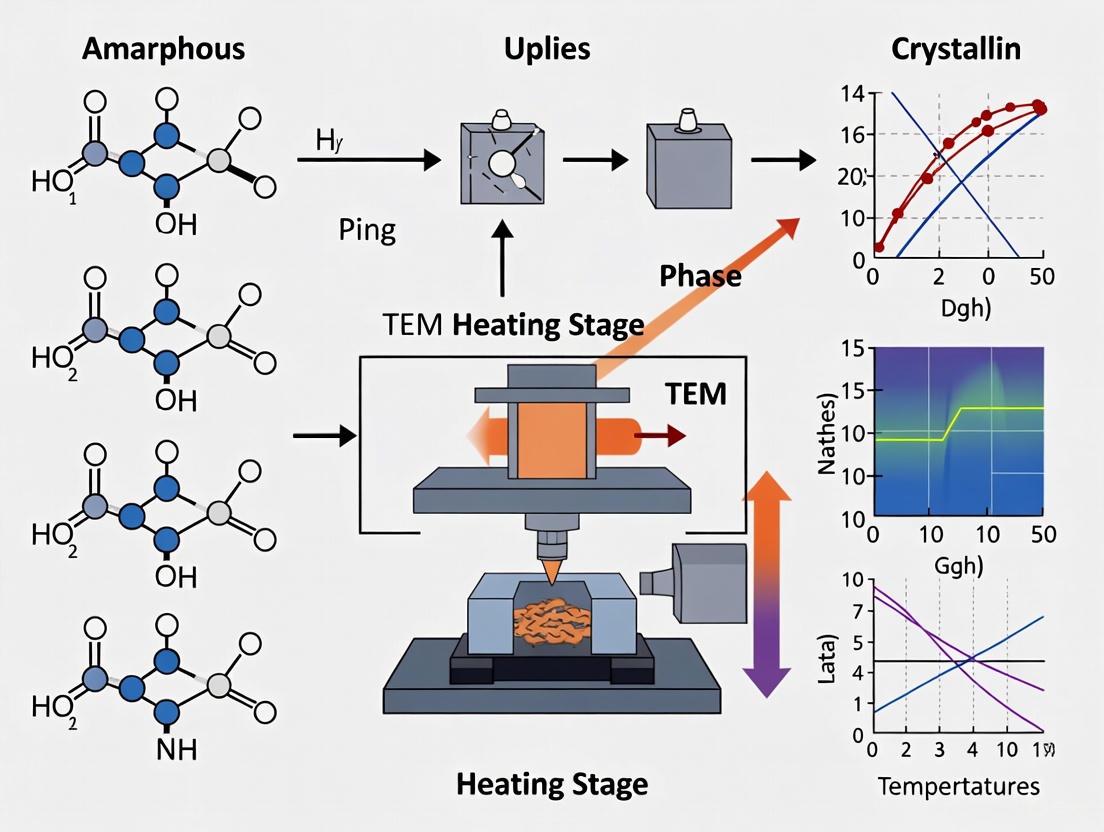
This article explores the transformative role of in situ transmission electron microscopy (TEM) heating stages in characterizing the dynamic phase evolution of nanomaterials.
In Situ TEM Heating Stages: Real-Time Nanomaterial Phase Evolution for Advanced Materials Design
Abstract
This article explores the transformative role of in situ transmission electron microscopy (TEM) heating stages in characterizing the dynamic phase evolution of nanomaterials. By enabling real-time, atomic-scale observation of materials under controlled thermal stimuli, this technique provides unprecedented insights into nucleation, growth, and transformation mechanisms. We cover foundational principles, methodological advances including MEMS-based systems, and applications across catalytic, energy, and biomedical nanomaterials. The review also addresses key challenges such as electron beam effects and data interpretation, while comparing in situ TEM with complementary characterization techniques. This synthesis aims to empower researchers in designing nanomaterials with tailored properties for specific applications.
Understanding Phase Evolution: The Fundamental Principles of In Situ TEM Heating
Application Notes
This document provides key insights and methodologies for studying nanomaterial phase transformations under thermal stimuli, with a specific focus on applications within in situ Transmission Electron Microscopy (TEM) heating experiments. Understanding these transformations is crucial for advancing materials used in energy storage, catalysis, and drug delivery systems [1] [2].
Fundamental Concepts and Impact
Phase transformations in nanomaterials involve changes in crystal structure, often triggered by thermal energy. These changes directly dictate the material's electronic, catalytic, and mechanical properties [3]. Nano-enhanced Phase Change Materials (NePCMs) demonstrate how nanoparticle inclusions can significantly alter a material's thermal properties. Dispersing nanoparticles within a PCM matrix is a reliable and economically viable technique that can lead to an 80-150% improvement in thermal conductivity for organic PCMs with only 1-2% nanomaterial inclusion [1].
Key Insights from In Situ TEM Studies
Real-time observation using in situ heating TEM reveals unique nanoscale behaviors not apparent in bulk studies:
- High-Temperature Phase Stability: Isolated TiO₂ nanotubes can maintain a unique three-phase (anatase, rutile, brookite) structure at temperatures as high as 950°C, a phenomenon not observed in film or bulk geometries [3].
- Crystallization Initiation: Amorphous TiO₂ nanotubes begin crystallizing into anatase and rutile phases at approximately 300°C, with the brookite phase emerging at around 550°C [3].
- Dynamic Restructuring: Block copolymer nanomaterials in solution can undergo significant restructuring upon heating, transitioning from complex core-shell particles to more uniform spherical micelles, as revealed by correlative liquid-phase TEM and X-ray scattering [4].
Experimental Protocols
Protocol: In Situ TEM Heating of TiO₂ Nanotubes
This protocol outlines the procedure for dynamically observing phase transformations in a single isolated TiO₂ nanotube [3].
Objective: To elucidate the temperature-dependent crystallization and phase transformation of anodic TiO₂ nanotubes in real-time.
Materials and Equipment:
- Nanomaterial: Amorphous TiO₂ nanotubes, fabricated via anodic oxidation in aqueous or organic electrolytes [3].
- Central Equipment: Transmission Electron Microscope (TEM) equipped with an in situ heating holder and a Micro-Electro-Mechanical Systems (MEMS) heating device.
- Supplementary Characterization: Ex situ X-ray Diffraction (XRD), Raman Spectroscopy, Scanning TEM (STEM), Electron Energy Loss Spectroscopy (EELS) [3].
Procedure:
- Sample Preparation: Transfer an isolated, single TiO₂ nanotube onto the MEMS heating chip of the in situ TEM holder.
- Microscope Setup: Insert the holder into the TEM column and achieve high vacuum. Use an accelerating voltage of 300 kV for all data acquisition to ensure consistency and minimize voltage-dependent beam effects [3].
- Real-Time Data Acquisition:
- Begin heating the sample at a controlled ramp rate.
- Hold the sample at each target temperature (e.g., 300°C, 550°C, 950°C) and collect data, rather than cooling between steps, to avoid microstructural changes from cooling processes [3].
- At each temperature plateau, acquire:
- High-Resolution TEM (HRTEM) images to observe crystal lattice formation.
- Selected-Area Electron Diffraction (SAED) patterns to identify emerging crystal phases.
- EELS spectra to analyze chemical and electronic structure changes.
- Data Analysis:
- Analyze SAED patterns and HRTEM images to identify the emergence of anatase, rutile, and brookite crystal phases.
- Correlate phase identification with the specific temperatures at which they appear.
- Validate in situ TEM findings with ex situ XRD and Raman spectroscopy performed on nanotube films annealed under similar conditions.
Workflow Visualization
The following diagram illustrates the logical workflow for the in situ TEM heating experiment.
Data Presentation
Quantitative Data on Phase Transformation Temperatures
The table below summarizes the phase transformation data observed in isolated TiO₂ nanotubes during in situ heating TEM [3].
Table 1: Experimentally determined phase transformation temperatures for isolated TiO₂ nanotubes.
| Material | Initial Phase | Crystallization Onset | Anatase & Rutile Formation | Brookite Formation | Final Stable Phase (at 950°C) |
|---|---|---|---|---|---|
| Isolated TiO₂ Nanotube | Amorphous | 300 °C | 300 °C | 550 °C | Coexistence of Anatase, Rutile, and Brookite |
Thermophysical Property Enhancement in NePCMs
The inclusion of nanomaterials within a Phase Change Material (PCM) matrix significantly enhances its properties, as summarized below [1].
Table 2: Enhancement of thermophysical properties in Nano-enhanced Phase Change Materials (NePCMs).
| Base Material Type | Nanomaterial Inclusion | Thermal Conductivity Enhancement | Change in Heat Storage Enthalpy |
|---|---|---|---|
| Organic PCM | 1-2% of 0D, 1D, 2D, 3D carbon nanomaterials | 80% to 150% improvement | Not Specified |
| Form/Shape Stable PCM | 5-20% weight fraction | 700% to 900% improvement | Reduction (due to nanomaterial weight fraction) |
The Scientist's Toolkit
Research Reagent Solutions
This table lists essential materials and their functions for experiments in nanomaterial phase transformations.
Table 3: Key research reagents and materials for thermal phase transformation studies.
| Item | Function/Description | Application Example |
|---|---|---|
| In Situ TEM Heating Holder | A specimen holder with an integrated heating element to thermally stimulate samples inside the TEM. | Real-time observation of phase transformations in nanomaterials like TiO₂ nanotubes [3]. |
| MEMS Heating Chip | A microchip that holds the nanomaterial sample and allows for precise, rapid heating. | Used as a substrate for heating isolated nanotubes and nanowires [3]. |
| Block Copolymer Nanomaterials | "Smart" polymers that self-assemble and restructure in response to temperature changes. | Studying thermally triggered nanoscale restructuring for drug delivery applications [4]. |
| Anodic TiO₂ Nanotubes | Self-organized, vertically aligned nanotube arrays formed by anodization of titanium. | Model system for investigating crystallization and phase stability in low-dimensional semiconductors [3]. |
| Nano-enhanced PCM (NePCM) | A composite material where nanoparticles are dispersed in a phase change matrix to improve thermal properties. | Enhancing thermal energy storage and release rates in solar thermal systems [1]. |
The Critical Role of Atomic-Scale Observation in Unraveling Nucleation and Growth Mechanisms
The controllable synthesis of nanomaterials, essential for applications in catalysis, energy, and biomedicine, is often hindered by an incomplete understanding of their formation mechanisms. Traditional ex situ characterization techniques fall short as they cannot capture the dynamic structural evolution occurring during synthesis [5]. In situ transmission electron microscopy (TEM) overcomes this limitation by enabling real-time observation and analysis of dynamic processes, such as nucleation and growth, at the atomic scale [5]. This capability is fundamental for directing the design and fabrication of nanomaterials with precisely tailored properties. This Application Note details the protocols and insights derived from in situ TEM heating studies, providing a framework for investigating phase evolution in nanomaterials.
Key Investigated Nanomaterial Systems
In situ TEM heating studies have been pivotal in elucidating the nucleation and growth mechanisms across various nanomaterial systems. The following table summarizes key quantitative findings from recent research.
Table 1: Atomic-Scale Insights from In Situ TEM Heating Studies on Selected Nanomaterials
| Nanomaterial System | Experimental Conditions | Key Atomic-Scale Observation | Quantitative Data / Thresholds | Implication for Nanomaterial Design |
|---|---|---|---|---|
| BCC Ta Nanocrystals [6] | In situ TEM straining at RT | Size-dependent transition from reluctant (slow) to facile (fast) twin growth | Transition diameter: 15 nmYield stress (10nm): ~6.8 GPaYield stress (23nm): ~4.6 GPa | Exploiting twinning-induced plasticity can break the strength-ductility limit in BCC metallic nanostructures. |
| Isolated TiO2 Nanotubes [3] | In situ heating in vacuum | Crystallization and unique high-temperature phase stability | Crystallization onset: 300 °CBrookite emergence: 550 °CStable 3-phase coexistence up to: 950 °C | Isolated geometry can prevent complete transition to rutile, enabling stabilization of mixed phases for specialized applications. |
| Pb Nanodroplets on PbTiO3 [7] | Electron-beam induced nucleation at RT | Two-step nucleation pathway: precipitation → coalescence | Electron dose: ~11,000 e/ŲsCoalescence time for 10nm crystals: < 3 s | Provides atomic-scale evidence of non-classical growth routes like particle attachment and coalescence. |
Detailed Experimental Protocols
Protocol A: In Situ TEM Straining of Metallic Nanocrystals
This protocol is adapted from studies on deformation twinning in Body-Centered Cubic (BCC) Ta nanocrystals [6].
1. Objective: To investigate the atomic-scale mechanisms of deformation twinning and plasticity in BCC metallic nanocrystals under tensile stress.
2. Materials and Reagents:
- Nanocrystal Synthesis: Tantalum (Ta) source material, facilities for physical vapor deposition or electrochemical synthesis.
- TEM Support: Specialized MEMS-based in situ TEM straining holder and chips.
3. Equipment:
- Microscope: Aberration-corrected (scanning) transmission electron microscope ((S)TEM).
- Detection: High-resolution TEM camera (e.g., CMOS-based), electron energy loss spectroscopy (EELS) system.
- Holder: In situ TEM straining holder.
4. Procedure:
1. Sample Preparation: Fabricate single-crystalline Ta nanobridges or nanowires directly onto the MEMS straining chips using a focused ion beam (FIB) or vapor-liquid-solid (VLS) growth method [6].
2. Holder Setup: Load the prepared MEMS chip into the in situ TEM straining holder according to the manufacturer's instructions.
3. Microscope Alignment: Insert the holder into the (S)TEM. Align the microscope and locate a suitable, electron-transparent region of a nanocrystal along the <110> zone axis.
4. In Situ Experiment:
* Begin applying a controlled tensile strain along the [001] crystal direction at a constant strain rate.
* Simultaneously, record the deformation process using high-speed HRTEM imaging. Ensure the electron dose rate is sufficient for clear atomic resolution without causing significant beam damage.
* Continue straining until the nanocrystal fractures or undergoes substantial plastic deformation.
5. Data Acquisition: Capture real-time HRTEM image series or videos. Record corresponding selected-area electron diffraction (SAED) patterns at different strain levels to monitor crystal structure evolution.
5. Data Analysis: * Analyze the HRTEM image series to identify the critical stress and atomic-scale site for twin nucleation. * Track the migration of twinning partials and coherent twin boundaries (CTBs) to measure twin growth rates. * Correlate the applied strain (from the holder data) with the observed deformation mechanisms (dislocation slip vs. twinning).
Protocol B: In Situ Heating of Oxide Nanotubes for Phase Evolution
This protocol is adapted from the study of phase transformations in isolated TiO2 nanotubes [3].
1. Objective: To dynamically elucidate the crystallization and phase transformation pathways in an individual amorphous oxide nanotube under controlled heating.
2. Materials and Reagents:
- Nanotube Synthesis: Titanium foil, electrolyte (e.g., aqueous or organic-based with fluoride ions), platinum counter electrode for anodic oxidation.
- TEM Support: Silicon-based in situ TEM heating holder and MEMS heating chips with electron-transparent silicon nitride windows.
3. Equipment:
- Microscope: (S)TEM equipped with EELS.
- Detection: STEM detector, EELS spectrometer, HRTEM camera.
- Holder: In situ TEM heating holder.
4. Procedure: 1. Sample Preparation: * Synthesize TiO2 nanotube arrays via anodic oxidation of Ti foil [3]. * Carefully scrape the nanotube array film from the substrate and disperse in ethanol. * Drop-cast the suspension onto a MEMS heating chip, allowing isolated nanotubes to adhere. 2. Holder Setup: Load the chip into the heating holder, ensuring electrical contacts are secure. 3. Microscope Alignment: Insert the holder into the (S)TEM. Locate an isolated, well-defined nanotube in STEM or TEM mode. 4. In Situ Experiment: * Set a controlled temperature ramp (e.g., 10-50 °C/min). Acquire data at key temperature points (e.g., 25°C, 300°C, 550°C, 950°C). * At each temperature plateau, acquire: * STEM-BF images to monitor morphological changes. * SAED patterns to identify the emergence of crystalline phases. * HRTEM images to resolve crystal structures and interfaces. * EELS spectra (if available) to analyze chemical and electronic structure changes, particularly the Ti L-edge and O K-edge. 5. Data Acquisition: Hold the temperature constant during data acquisition at each plateau to avoid transient effects.
5. Data Analysis: * Index the SAED patterns to identify crystalline phases (anatase, rutile, brookite) present at each temperature. * Use HRTEM images to measure crystal grain size and spatial distribution of different phases within a single nanotube. * Analyze EELS spectra for fine-structure changes that indicate phase transformation and the formation of oxygen vacancies.
The Scientist's Toolkit: Essential Research Reagents & Materials
Table 2: Key Research Reagents and Materials for In Situ TEM Nanomaterial Studies
| Item Name | Function / Application | Critical Notes for Experimental Design |
|---|---|---|
| MEMS Heating Chips [5] [3] | Provide a controlled high-temperature environment for samples within the TEM. Enable real-time observation of phase transformations. | Ensure chips have low thermal drift and electron-transparent windows (e.g., SiNx). Compatible with your TEM holder. |
| In Situ TEM Straining Holder [6] | Applies precise tensile or compressive stress to nanoscale samples. Crucial for studying deformation mechanics. | Calibration of the force/displacement is critical for quantitative stress-strain data. |
| Graphene Liquid Cells [5] | Encapsulate liquid reagents between graphene sheets. Allow for atomic-scale observation of nucleation and growth in a liquid environment. | Minimizes electron beam scattering compared to traditional silicon-based liquid cells. |
| Gas-Phase Cells / Environmental TEM [5] | Enable the introduction of gaseous environments around the sample. Essential for studying catalysts or materials under reactive atmospheres. | Allows researchers to correlate nanoscale structural changes with gas exposure. |
| Monochromated EELS System [8] | Provides high-energy resolution for analyzing the chemical bonding, electronic structure, and local chemistry of materials at the atomic scale. | Key for detecting subtle changes in electronic structure during phase evolution or at defects. |
Workflow Visualization
Diagram 1: Generalized in situ TEM experimental workflow for studying nucleation and growth.
Diagram 2: Phase evolution pathway for an isolated TiO₂ nanotube under heating.
In situ Transmission Electron Microscopy (TEM) has emerged as a transformative tool in nanomaterials research, enabling direct observation of dynamic processes such as Ostwald ripening, sintering, and solid-state phase transitions in real-time. By applying external stimuli like heating to specimens within the microscope, researchers can quantify the structural and compositional evolution of nanomaterials with high spatial and temporal resolution. This application note details the key phenomena, quantitative findings, and experimental protocols central to a thesis on in-situ TEM heating stage studies, providing a structured framework for researchers and scientists engaged in the development and characterization of advanced materials.
Key Phenomena and Quantitative Data
Ostwald Ripening
Ostwald ripening is a thermodynamically-driven process where larger particles grow at the expense of smaller ones due to differences in surface energy and solubility. The driving force is the higher chemical potential of atoms on the surface of smaller particles, described by the Gibbs-Thomson relation [9] [10]. The Lifshitz-Slyozov-Wagner (LSW) theory quantitatively describes the kinetics of this process for diffusion-controlled systems, where the cube of the average particle radius increases linearly with time [9] [10].
Table 1: Quantitative Descriptors of Ostwald Ripening in Metallic Nanoparticles
| Material System | Experimental Conditions | Quantified Ripening Rate/Behavior | Key Parameters Measured |
|---|---|---|---|
| NiAu Nanoparticles [11] | During catalytic CO₂ hydrogenation in situ TEM | Smaller particles migrated and coalesced faster; Growth of larger particles at expense of smaller ones | Particle diameter/area, circularity, instantaneous migration velocity |
| General Theory (LSW) [9] [10] | Solution or solid-state | ( \langle R \rangle^3 - \langle R \rangle0^3 = \frac{8\gamma c{\infty}v^2 D}{9R_gT}t ) | Average radius ⟨R⟩, time ( t ), interfacial energy ( \gamma ), solubility ( c_{\infty} ), molar volume ( v ), diffusion coefficient ( D ) |
Sintering and Coalescence
Sintering involves the coalescence of adjacent nanoparticles into a single, larger particle upon contact, driven by the reduction of total surface energy. In-situ TEM studies have quantified the migration and coalescence pathways of nanoparticles under reaction conditions [11].
Table 2: Quantitative Data on Nanoparticle Sintering and Migration
| Material System | Experimental Conditions | Migration & Coalescence Behavior | Key Quantitative Findings |
|---|---|---|---|
| NiAu Nanoparticles [11] | In situ TEM during CO₂ hydrogenation | Particles migrated only when catalytic reactions induced continuous reshaping; migration led to collision and sintering | Directed migration along surface regions with most significant reshaping; sintering via coalescence and ripening |
| PdCu Nanoparticles [11] | In situ TEM during hydrogen oxidation | Oscillatory structural changes evolved into an asymmetric head-tail structure, driving directed migration | Asymmetric PdCu head and Cu₂O tail formation acted as a driving force for particle movement |
Solid-State Phase Transitions
Solid-state phase transitions are transformations from one crystal structure to another without passing through a liquid state. In-situ TEM heating reveals mechanisms like transition through a metastable liquid phase or spinodal decomposition [12] [13].
Table 3: Characteristics of Solid-State Phase Transitions Observed via In-Situ TEM
| Material System | Experimental Conditions | Phase Transition Characteristics | Key Observations |
|---|---|---|---|
| Au-Cu-Ag-Si BMG [12] | Fast Differential Scanning Calorimetry (FDSC) & In-situ TEM heating | Metastable crystalline state → Metastable liquid → More stable crystalline state | Transformation occurred via a metastable liquid at a temperature far below the equilibrium eutectic temperature |
| Au-Pd Nanoparticles [13] | In situ TEM heating up to 1000 °C | Initial alloy formation (400-800°C), followed by phase separation into Au and Pd phases above 850°C | Formation of a stable, phase-separated Janus Au-Pd nanostructure at 1000 °C |
| Al-Mg-Si-Cu Alloy [14] | In situ heating TEM | Precipitation, phase transformation, and dissolution of nanoscale precipitates | Direct tracking of specific precipitates undergoing phase transformations during heating |
Experimental Protocols
Protocol 1: General In-Situ TEM Heating for Phase Evolution Analysis
This protocol outlines the procedure for observing temperature-induced phenomena like Ostwald ripening, sintering, and phase transitions in nanoparticles [11] [5].
Research Reagent Solutions & Key Materials
Table 4: Essential Materials for In-Situ TEM Heating Experiments
| Item Name | Function/Description | Example Specifications / Notes |
|---|---|---|
| Metallic Precursor Salts [11] | To synthesize target nanoparticles via wet-chemistry | E.g., Ni(acac)₂, HAuCl₄•4H₂O for NiAu systems; high purity (>99.9%) |
| Solvents & Surfactants [11] | To facilitate nanoparticle synthesis and stabilize dispersion | E.g., Oleylamine (OAm), ethanol; act as reducing agents and colloidal stabilizers |
| In-Situ TEM Heating Holder [5] | Specialist TEM holder to heat specimen while observing | Micro-electro-mechanical system (MEMS) based heating chips |
| In-Situ Gas Cell (Optional) [11] [5] | To introduce reactive gas environments during heating | Allows for observations under catalytic reaction conditions (e.g., CO₂, H₂) |
Step-by-Step Procedure:
- Nanomaterial Synthesis: Synthesize nanoparticles using established wet-chemical methods. For NiAu, dissolve Ni(acac)₂ in oleylamine, then add an ethanolic solution of HAuCl₄•4H₂O under specific temperature and stirring conditions [11].
- TEM Specimen Preparation: Deposit a dilute suspension of the synthesized nanoparticles onto a specialized MEMS-based heating chip. Allow the solvent to evaporate, leaving a dispersed layer of nanoparticles on the chip [5].
- In-Situ Loading: Carefully insert the prepared heating chip into the in-situ TEM holder and load the assembly into the TEM column, ensuring proper electrical contact for heating [5].
- Experimental Parameter Setup:
- Imaging: Establish stable, high-resolution TEM imaging conditions (e.g., HAADF-STEM).
- Heating Profile: Program the desired temperature ramp and hold sequences into the holder controller (e.g., ramp to 400-1000°C at controlled rates).
- Data Acquisition: Start continuous video recording or series image acquisition at a frame rate sufficient to capture dynamic events [11].
- Data Analysis: Utilize deep learning-driven quantification methods (e.g., instance segmentation with Mask R-CNN) to track particle size, shape, position, and trajectory from the recorded video data [11].
Figure 1: In-Situ TEM Heating Experimental Workflow
Protocol 2: Quantifying Nanoparticle Dynamics via Deep Learning
This protocol details the analysis of in-situ TEM video data to extract quantitative descriptors of nanoparticle behavior [11].
Step-by-Step Procedure:
- Data Pre-processing: Prepare the recorded in-situ TEM video by correcting for drift and noise, and extract individual frames for analysis.
- Instance Segmentation: Apply a deep learning instance segmentation model (e.g., Mask R-CNN) to identify and separate every nanoparticle in each video frame, even when they are touching or overlapping. This generates a precise mask for each particle [11].
- Multi-Particle Tracking: Link the segmentation masks of individual particles across all frames to construct a complete trajectory for each nanoparticle over time [11].
- Descriptor Extraction: For each particle trajectory, calculate evolving descriptors such as:
- Geometric: Projected area, equivalent diameter, circularity.
- Dynamic: Instantaneous velocity, migration direction, displacement [11].
- Statistical Analysis: Correlate the extracted descriptors with experimental parameters (e.g., temperature, time) to understand kinetics and mechanisms of ripening, sintering, or phase transitions [11].
The Scientist's Toolkit
Table 5: Key Research Reagent Solutions and Essential Materials
| Tool/Reagent | Function in Experiment | Specific Application Example |
|---|---|---|
| MEMS-based In-Situ Heating Chips [5] | Heats the nanomaterial specimen inside the TEM; low thermal mass enables fast heating rates. | Studying phase transitions in Al-Mg-Si-Cu alloys [14] and coalescence in NiAu NPs [11]. |
| In-Situ Gas Cell Holder [11] [5] | Creates a gaseous microenvironment around the sample for realistic condition studies. | Observing catalyst nanoparticle dynamics during CO₂ hydrogenation [11]. |
| Deep Learning Models (Mask R-CNN) [11] | Performs instance segmentation on TEM videos to identify and track multiple nanoparticles accurately. | Quantifying migration velocity and coalescence events of hundreds of NiAu NPs [11]. |
| Fast Differential Scanning Calorimetry (FDSC) [12] | Measures heat flow associated with phase transitions at very high heating/cooling rates. | Identifying metastable melting and re-crystallization in bulk metallic glasses [12]. |
| Aberration-Corrected (S)TEM [5] | Provides atomic-scale resolution imaging, crucial for resolving structural and compositional changes. | Direct visualization of phase separation in Au-Pd alloys at near-atomic scale [13]. |
Visualization of Phenomena and Mechanisms
Figure 2: Key Phenomena and Their Underlying Mechanisms
The controlled synthesis and thermal treatment of nanomaterials are fundamental to advancing technologies in catalysis, energy storage, and biomedicine. Traditionally, understanding material evolution during heating has relied on ex situ characterization, where samples are analyzed before and after processing, providing only static snapshots of dynamic processes. This approach creates a critical knowledge gap regarding the real-time mechanisms of phase transformations, crystallization, and microstructural changes. In situ transmission electron microscopy (TEM) with specialized heating stages has emerged as a transformative technology, enabling researchers to directly observe and manipulate nanomaterial evolution at the atomic scale under controlled microenvironmental conditions [5]. This Application Note details the protocols and experimental frameworks that allow researchers to overcome traditional limitations, providing a dynamic window into nanomaterial behavior during thermal processing.
Application Notes: Key Insights from Real-Time Observation
In situ heating TEM has revealed complex, non-equilibrium processes that challenge classical theories of nanomaterial behavior, providing insights essential for designing materials with tailored properties.
Unconventional Phase Stability in Isolated Nanostructures
A landmark study investigating the phase evolution of isolated TiO₂ nanotubes revealed exceptional high-temperature stability that diverges significantly from bulk material behavior and previously studied nanotube arrays. Using in situ heating TEM and electron energy loss spectroscopy (EELS), researchers documented that crystallization of amorphous TiO₂ nanotubes initiated at 300°C, forming both anatase and rutile phases simultaneously [3]. Contrary to expectations and prior ex situ studies on array films, a third phase (brookite) emerged at 550°C, and this unique three-phase coexistence (anatase-rutile-brookite) remained stable even at temperatures as high as 950°C [3]. This finding is technologically significant because it demonstrates that isolated nanotubes can maintain metastable phase configurations that enhance functional properties like photocatalytic activity, unlocking new application potential.
Direct Observation of Sintering Dynamics
The sintering process of copper (Cu) nanoparticles has been directly visualized using in situ heating TEM, providing crucial information on neck formation, grain growth, and the role of surface coatings. When heated to 250°C, Cu nanoparticles coated with a thin gelatin biopolymer film began forming contact points (necks) between neighboring particles within 230 seconds, with the process continuing over 630 seconds [15]. Remarkably, the gelatin layer partially decomposed but remained as a 2-5 nm surface layer, preventing oxidation while allowing solid-state diffusion to proceed. Analysis confirmed lattice-fringe continuity at contact regions and pure copper chemistry without oxidation, demonstrating that sintering can proceed effectively with organic capping agents present [15].
Advanced Technique Integration: 4D Nanoscale Tomography
The integration of electron tomography (ET) with in situ heating represents a cutting-edge advancement, enabling three-dimensional characterization of microstructural evolution over time (4D analysis). This approach utilizes rapid heating and cooling capabilities of MEMS-based specimen holders to intermittently freeze the material's state during a tilt-series acquisition for ET [15]. Technical innovations including direct electron detection cameras and faster goniometers have reduced dataset acquisition times to the second level, making it feasible to capture 3D structural changes during thermal processing [15]. This 4D approach provides unprecedented insight into volume changes, pore evolution, and particle interactions that are inaccessible through conventional 2D imaging.
Experimental Protocols
This section provides detailed methodologies for implementing in situ heating TEM experiments, derived from published studies and commercial platforms.
Protocol: In Situ Heating TEM for Phase Evolution Analysis
Application: Investigating temperature-induced phase transformations in nanomaterials [3].
Sample Preparation
- Nanomaterial Isolation: Disperse individual nanotubes or nanoparticles in ethanol via ultrasonication. Drop-cast suspension onto a MEMS-based heating chip and allow to dry.
- Holder Selection: Use a commercially available in situ heating TEM holder (e.g., Fusion AX from Protochips) [16].
Microscope Setup
- Accelerating Voltage: 300 kV for high-resolution imaging and EELS analysis [3].
- Detector Configuration: Use HAADF-STEM for Z-contrast imaging. Synchronize EELS acquisition for chemical analysis.
- Data Acquisition Rate: Adjust camera acquisition to 1-10 frames per second for dynamic processes.
In Situ Experiment Execution
- Initial Characterization: Acquire baseline images, SAED patterns, and EELS spectra at room temperature.
- Ramped Heating: Increase temperature to target (e.g., 300°C, 550°C, 950°C) at 5-10°C/s using holder software.
- Dwell and Analyze: Hold at each target temperature, acquiring time-series data (images, diffraction, spectra).
- Cooling Phase: Document structural changes during cooling to room temperature.
Data Analysis
- Phase Identification: Correlate HRTEM lattice fringes with SAED patterns for crystal structure assignment.
- Quantitative Morphology: Track dimensional changes (diameter, wall thickness) using image analysis software.
- Spectral Analysis: Process EELS data to identify chemical shifts and phase signatures.
Protocol: 4D In Situ Heating Tomography
Application: Capturing 3D structural evolution of nanomaterials during thermal processing [15].
Specimen Preparation
- Grid Preparation: Deposit nanoparticles onto a MEMS heating chip with minimal debris.
- Fiducial Markers: Use gold nanoparticles as fiducial markers for alignment.
Tomography Acquisition
- Tilt-Series Parameters: Acquire images from -70° to +70° with 1-2° increments.
- Temperature Protocol: Rapidly heat to target temperature, then cool to below reaction temperature during tilt-series acquisition.
- Automated Acquisition: Use software to synchronize heating, cooling, and tilt-series acquisition.
3D Reconstruction and Analysis
- Alignment: Align tilt-series using fiducial or cross-correlation methods.
- Reconstruction: Apply weighted back-projection or SIRT algorithms.
- Segmentation: Use threshold-based methods to identify different material phases.
- 4D Visualization: Create 3D models for each time point to visualize evolution.
Data Presentation
Table 1: Quantitative Phase Transformation Data for TiO₂ Nanotubes
| Temperature (°C) | Anatase Phase | Rutile Phase | Brookite Phase | Key Structural Observations |
|---|---|---|---|---|
| 25 (Room Temp) | Not Present | Not Present | Not Present | Amorphous structure; smooth nanotube walls |
| 300 | Present | Present | Not Present | Initiation of crystallization; both anatase and rutile nucleate simultaneously |
| 550 | Present | Present | Present | Brookite phase emerges; three-phase coexistence established |
| 950 | Present | Present | Present | Unique three-phase structure remains stable; no complete transition to rutile |
Data derived from in situ heating TEM/EELS analysis of isolated TiO₂ nanotubes [3]
Table 2: Technical Specifications for In Situ Heating TEM Methodologies
| Technique | Spatial Resolution | Temporal Resolution | Temperature Range | Key Applications | Technical Considerations |
|---|---|---|---|---|---|
| In Situ Heating TEM | Atomic (~0.1 nm) | Seconds to minutes | Room temp to 1200°C+ | Phase transformations, crystallization, grain growth | Potential electron beam effects; vacuum environment limitations |
| In Situ Heating STEM | Atomic (~0.1 nm) | Seconds to minutes | Room temp to 1000°C | Nanomaterial sintering, elemental mapping via EDS | Z-contrast imaging; higher beam dose possible |
| In Situ Heating ET | ~1-2 nm | 10-60 minutes per volume | Room temp to 400°C+ | 3D particle sintering, pore evolution, volume changes | Rapid heating/cooling required; thermal drift challenges |
| Liquid Phase TEM with Heating | 1-2 nm | Seconds | -160°C to 1000°C | Nanocrystal growth in solution, shape transformation | Radiolysis effects; liquid cell thickness limitations |
Technical specifications compiled from multiple studies [5] [16] [3]
The Scientist's Toolkit
Table 3: Essential Research Reagents and Solutions for In Situ Heating TEM
| Item | Function/Specification | Example Application | Notes |
|---|---|---|---|
| MEMS Heating Chip | Silicon-based microheater; enables rapid temperature control | General in situ heating experiments | Low thermal drift; compatible with EDS/EELS [15] |
| Graphene Liquid Cell | Encapsulates liquid for solution-phase reactions | Nanocrystal growth in aqueous/organic media | Enables atomic-resolution imaging of liquid-phase processes [5] |
| Gas-Phase Cell | Creates controlled gas environment in TEM column | Catalyst studies under reactive atmospheres | Can replicate realistic catalytic conditions [5] |
| Protochips Poseidon AX | Commercial system for liquid phase TEM with heating | Nanoparticle etching; shape transformation | Allows mixing of reactants and temperature control [16] |
| Protochips Atmosphere AX | Commercial system for gas-phase reactions | Nanowire growth via vapor deposition | Operates at various pressures including 1 bar [16] |
Workflow Visualization
The implementation of in situ heating TEM methodologies represents a fundamental shift in materials characterization, moving from static snapshots to dynamic observation of nanoscale processes. The protocols and applications detailed in this Note demonstrate how researchers can directly observe phase transformations, sintering dynamics, and structural evolution with unprecedented spatial and temporal resolution. As these technologies continue to evolve—particularly through integration with machine learning, faster detectors, and multi-modal analysis—the capability to design and optimize nanomaterials based on direct observation of their behavior under processing conditions will become increasingly sophisticated. This paradigm shift enables a more rational design of nanomaterials for specific applications across energy, electronics, and biomedical fields.
Linking Microstructural Evolution to Macroscopic Material Properties
Understanding the intrinsic relationship between a material's microstructural evolution and its resulting macroscopic properties is a cornerstone of advanced materials science and engineering. This relationship is particularly critical for nanomaterials, where subtle changes in phase, composition, and morphology at the atomic scale can dramatically alter functional properties. In situ Transmission Electron Microscopy (TEM) heating stages have emerged as a transformative tool, enabling researchers to directly observe and quantify these dynamic microstructural processes in real-time under controlled conditions. This Application Note provides detailed protocols and frameworks for leveraging in situ TEM heating experiments to establish predictive links between nanoscale evolution and macroscopic material behavior, with a specific focus on phase evolution in functional nanomaterials.
Experimental Protocols for In Situ TEM Heating
Protocol: Phase Transformation Analysis in Single TiO2 Nanotubes
This protocol details the methodology for observing the thermally-driven crystallization and phase transformation of an individual amorphous TiO2 nanotube, as derived from foundational research [3].
- Objective: To dynamically elucidate the crystallization temperature, phase transformation sequence, and high-temperature phase stability in an isolated TiO2 nanotube.
- Materials:
- Nanomaterial: Isolated amorphous TiO2 nanotubes, fabricated via anodic oxidation of titanium foil in aqueous or organic electrolytes [3].
- TEM Support: Electron-transparent MEMS-based in situ heating chip or holder.
- Equipment:
- Transmission Electron Microscope operating at 300 kV.
- In situ heating holder with thermal control unit.
- Electron Energy Loss Spectroscopy (EELS) detector.
- Scanning TEM (STEM) capability.
- Procedure:
- Sample Preparation: Disperse fabricated TiO2 nanotubes in ethanol via ultrasonication. Deposit a small volume onto the MEMS heating chip and allow to dry [3].
- Microscope Setup: Insert the heating holder into the TEM. Locate a single, isolated nanotube suitable for observation.
- In Situ Heating Experiment:
- Set the initial temperature to 25°C (room temperature).
- Acquire baseline STEM images, Selected Area Electron Diffraction (SAED) patterns, and EELS spectra.
- Ramp the temperature to a target value (e.g., 300°C) and hold the sample at this temperature for data acquisition [3].
- At each temperature plateau, acquire a full dataset: STEM images, SAED, and EELS.
- Repeat the heating and data acquisition cycle at increasing temperature intervals (e.g., 300°C, 550°C, 950°C).
- Maintain a constant electron beam energy (300 kV) throughout the experiment to ensure consistency and minimize beam-induced artifacts [3].
- Data Analysis:
- Analyze SAED patterns to identify the emergence of crystalline phases (Anatase, Rutile, Brookite) and their crystal planes.
- Use high-resolution TEM (HRTEM) images to measure lattice fringes and confirm phase identity.
- Process EELS data to monitor changes in the electronic structure and chemical environment during phase transitions.
Protocol: Microstructure Evolution in Additively Manufactured Alloys
This protocol outlines the approach for characterizing the complex thermal history-driven microstructure in alloys produced by techniques like Selective Laser Melting (SLM), using Ti-6Al-4V as a model system [17].
- Objective: To correlate the thermal gradients and solidification conditions during additive manufacturing (AM) with the resulting grain structure, texture, and solid-state phase transformations.
- Materials: Additively manufactured metallic alloy sample (e.g., Ti-6Al-4V), prepared as an electron-transparent lamella via focused ion beam (FIB) milling.
- Equipment:
- Scanning Electron Microscope (SEM) with Electron Backscatter Diffraction (EBSD).
- Transmission Electron Microscope (TEM).
- Procedure:
- Macro-scale Analysis (SEM/EBSD):
- Map the sample using EBSD to determine grain orientation, size distribution, and texture across different sections (e.g., longitudinal vs. wall section) [17].
- Identify regions of interest, such as columnar grain boundaries and melt pool boundaries.
- Micro/Nano-scale Analysis (TEM):
- Prepare a TEM lamella from a specific region of interest using FIB.
- Perform TEM imaging to analyze fine-scale phases within grains.
- Use SAED to identify metastable phases (e.g., martensite α') and stable phases (α, β) [17].
- In Situ Heating (Optional): Subject the TEM lamella to thermal cycles within the in situ holder to observe phase dissolution, precipitate formation, or grain growth in real-time, replicating post-processing heat treatments.
- Macro-scale Analysis (SEM/EBSD):
Quantitative Data and Property Correlation
The following tables consolidate quantitative data from model systems, demonstrating the direct link between processing conditions, microstructural evolution, and final material properties.
Table 1: Phase Transformation and Stability in a Single TiO2 Nanotube (from in situ heating TEM) [3]
| Temperature (°C) | Observed Phase Transformation | Key Microstructural Observations | Implication for Macroscopic Properties |
|---|---|---|---|
| 300 | Crystallization Initiation | Simultaneous formation of Anatase and Rutile phases. | Activates functional properties (e.g., photocatalysis, electronic conductivity). |
| 550 | Brookite Emergence | Brookite phase appears alongside Anatase and Rutile. | May lead to enhanced or modified photocatalytic activity due to facet-specific effects. |
| 950 | Three-Phase Coexistence | Anatase, Rutile, and Brookite phases remain stable. | Exceptional high-temperature stability prevents full conversion to Rutile, unlocking new high-temp applications. |
Table 2: Microstructure-Property Relationships in Additively Manufactured Ti Alloys [17] [18]
| Material & Process | Grain Structure | Phase Composition | Resulting Macroscopic Properties |
|---|---|---|---|
| Ti-6Al-4V (SEBM/SLM) | Columnar prior-β grains along build direction [17]. | α/β basket-weave; or acicular α' martensite [17]. | Anisotropic mechanical properties; high yield strength but reduced ductility in certain orientations [17]. |
| TNT5Zr β-Ti Alloy (SLM + HIP + Aging) | Equiaxed β grain matrix [18]. | Nano-sized intragranular α″ precipitates (5-10 nm) [18]. | High ultimate tensile strength (~853 MPa) and superior strength-to-modulus ratio, ideal for load-bearing implants [18]. |
The Scientist's Toolkit: Essential Research Reagents & Materials
Table 3: Key Reagents and Materials for In Situ TEM Heating Studies
| Item Name | Function/Application | Critical Notes |
|---|---|---|
| Anodic TiO2 Nanotubes | Model 1D nanomaterial for studying phase transformations [3]. | Fabrication electrolyte (aqueous vs. organic) determines nanotube dimensions and wall morphology [3]. |
| MEMS In Situ Heating Chips | Provides a thermally conductive, electron-transparent platform for holding samples inside the TEM [5]. | Allows for precise temperature control and real-time observation during heating experiments. |
| Ti-6Al-4V & β-Ti Alloy Powders | Feedstock for additive manufacturing studies [17] [18]. | Powder chemistry and morphology critically influence melt pool dynamics and final microstructure. |
| FIB/SEM System | Preparation of site-specific, electron-transparent TEM lamellae from bulk or AM samples. | Essential for targeting specific microstructural features like grain boundaries or melt pools. |
Visualizing Workflows and Relationships
In Situ Heating Workflow
AM Microstructure Evolution
Advanced Methodologies and Applications in Thermal Nanomaterial Analysis
Micro-Electro-Mechanical Systems (MEMS)-based heating holders represent a transformative technology for in situ transmission electron microscopy (TEM), enabling researchers to observe nanoscale material dynamics in real-time under controlled thermal conditions. These specialized holders facilitate the application of precise thermal stimuli—ranging from cryogenic temperatures of -175°C to extreme highs exceeding 1200°C—directly to samples within the TEM column vacuum environment. The integration of MEMS technology has revolutionized in situ TEM techniques by providing unprecedented control over experimental conditions while maintaining the high spatial resolution necessary for atomic-scale observation. This capability is particularly crucial for phase evolution nanomaterials research, where understanding thermal transformation kinetics, stability thresholds, and structural evolution dynamics is fundamental to materials design and optimization.
The core advantage of MEMS-based heating systems lies in their miniaturized architecture, which incorporates heating elements, temperature sensors, and sometimes electrical contacts into a chip-scale device compatible with standard TEM holders. This sophisticated design enables rapid thermal response and exceptional temperature stability while minimizing thermal drift that traditionally hampered high-resolution imaging during heating experiments. For researchers investigating phase transformations, these systems provide direct visualization capability of phenomena such as nucleation events, grain boundary migration, precipitate evolution, and solid-state reactions as they occur, rather than relying on post-mortem analysis of heat-treated samples.
Design Principles of MEMS Heating Chips
Fundamental Architecture
MEMS heating chips employ sophisticated microfabrication techniques to create miniature heating circuits and sensing elements on silicon-based substrates with electron-transparent windows, typically made of silicon nitride (Si₃N₄). The fundamental design incorporates a resistive heating element patterned around a thin membrane window that allows electron beam transmission while withstanding significant thermal stress. This architecture achieves extremely fast thermal response times and excellent temperature uniformity across the sample area due to the minimal thermal mass of the microfabricated components. The heating elements are typically fabricated from materials with favorable high-temperature resistivity characteristics, such as platinum or doped silicon, which maintain structural integrity and predictable electrical properties throughout the operational temperature range.
The membrane material selection represents a critical design consideration, as it must satisfy competing requirements for electron transparency, mechanical strength, and thermal stability. Silicon nitride membranes typically range from 10-50 nm in thickness, providing sufficient strength to withstand atmospheric pressure differentials while allowing high-resolution imaging. Advanced MEMS designs incorporate multiple electrical contacts—up to nine in state-of-the-art systems—enabling simultaneous heating and electrical biasing experiments for investigating more complex multistimuli material responses [19]. The entire MEMS chip is engineered for compatibility with standard TEM holder form factors, allowing integration without instrument modification.
Temperature Sensing and Control
Accurate temperature measurement and control represents one of the most challenging aspects of MEMS heater design, addressed through integrated four-point resistance sensing methodology. This approach eliminates lead resistance artifacts that would otherwise compromise temperature measurement accuracy, particularly at extreme temperatures. The sensing element is strategically positioned in close proximity to the heating circuit to provide real-time temperature feedback with minimal lag, enabling sophisticated closed-loop control systems that can maintain temperature stability within ±0.1°C for extended durations exceeding 100 hours [19].
The temperature calibration process correlates the measured electrical resistance with temperature through previously established resistance-temperature relationships for the sensing material, often requiring sophisticated modeling to account for thermal gradients across the MEMS structure. Advanced systems incorporate shielded electrical cables and filtering electronics to minimize electromagnetic interference that could compromise sensitive current measurements during operation. This precise thermal control enables researchers to not only set specific isothermal conditions but also to program complex thermal profiles including ramps, spikes, and cycles that mimic real-world thermal processing conditions experienced by materials in service.
Mechanical Stability and Imaging Compatibility
MEMS heating holders incorporate sophisticated mechanical designs to maintain sample stability at high magnifications despite thermal expansion effects. Double-tilt versions feature high-precision goniometer mechanisms with beta-tilt accuracy better than 0.01 degrees and negligible backlash when reversing tilt direction [19]. This exceptional mechanical stability is essential for collecting meaningful data during dynamic thermal processes, as it minimizes image drift that would otherwise complicate analysis of time-resolved microstructural evolution.
The strategic material selection and compact design of MEMS heating chips ensures compatibility with key TEM analytical techniques throughout the operational temperature range. The holders maintain analytical capability for energy-dispersive X-ray spectroscopy (EDS) and electron energy loss spectroscopy (EELS) without interference, enabling correlative structural and chemical analysis during thermal treatments [19]. The localized heating approach minimizes thermal load on the surrounding holder components, protecting sensitive electronics and mechanical assemblies from degradation while enabling the extreme temperature capabilities that make these systems indispensable for modern materials research.
Temperature Capabilities and Performance Specifications
Table 1: Technical specifications of commercial MEMS heating holders
| Parameter | Single-Tilt Holder | Double-Tilt Holder |
|---|---|---|
| Tilt Range | Up to ±45° (depending on objective pole) | Up to ±20° (alpha and beta) |
| Beta-Tilt Accuracy | Not applicable | <0.01 degree |
| Electrical Contacts | 9 | 9 |
| Maximum Operating Temperature | >1000°C | >1000°C |
| Settled Resolution at 1000°C | Up to TEM resolution | Up to TEM resolution |
| Temperature Stability | >100 hours | >100 hours |
| Temperature Measurement | 4-point resistance sensing | 4-point resistance sensing |
| EDS/EELS Compatibility | Full temperature range | Full temperature range |
MEMS-based heating systems demonstrate exceptional temperature performance characteristics that enable previously impossible experimental observations. Commercial systems routinely achieve temperatures exceeding 1000°C while maintaining atomic-resolution imaging capabilities, with some specialized configurations reaching even higher temperatures [19]. The thermal stability performance is particularly remarkable, with demonstrated capability to maintain setpoint temperatures within tight tolerances for continuous durations exceeding 100 hours, enabling investigation of slow kinetic processes such as Ostwald ripening, grain growth, and long-term phase stability.
The rapid thermal response of MEMS heaters facilitates experiments with complex thermal histories, including quenching studies, thermal cycling, and short-term annealing treatments. This capability has proven invaluable for investigating processes such as precipitate dissolution in aluminum alloys, where in situ heating TEM observations have revealed the transformation kinetics of nanoscale Al-Mg-Si-Cu precipitates with direct correlation to bulk thermal treatments [20]. The combination of high temperature capability, precise control, and exceptional stability establishes MEMS heating holders as essential tools for probing the thermal behavior of nanomaterials across virtually all material classes.
Experimental Protocols for MEMS Heating Studies
Sample Preparation Methods
Proper sample preparation is critical for successful in situ heating experiments, with several established methodologies available depending on sample characteristics. The micro-manipulator transfer approach provides precise, damage-free placement of specific samples onto MEMS windows, utilizing controlled electrostatic attraction between a tungsten probe tip and the sample [21]. This protocol begins with dispersing the sample material (nanowires, 2D flakes, or FIB lamellae) in ethanol via 10-minute sonication, followed by deposition onto an anodic aluminum oxide (AAO) membrane filter to minimize contact area. Selection of an appropriately sized tungsten tip (typically 100 nm radius for nanomaterials) is essential, with optional application of low bias voltage (0.1-1V) to enhance electrostatic attraction when needed [21].
The MEMS Dropcasting Tool (MDT) offers an alternative approach specifically designed to confine droplets to designated areas, preventing particle migration under O-rings and reducing contamination risks [22]. This 3D-printed, cost-effective solution addresses one of the principal challenges of traditional dropcasting by physically limiting droplet spread, thereby increasing successful preparation rates and experimental reproducibility. For focused ion beam (FIB)-prepared samples, specialized protocols involve eliminating side carbon deposition with low-current (few pA) Ga+ ion milling at 30 kV to facilitate manipulation, though subsequent metallic contact reinforcement via FIB or lithography is recommended to minimize sample drift during heating experiments [21].
In Situ Heating Experiment Workflow
Table 2: Key research reagent solutions for MEMS-based heating experiments
| Reagent/Material | Function | Application Notes |
|---|---|---|
| MEMS Heating Chips | Sample support & thermal stimulus | Available with various window sizes & contact configurations |
| Anodic Aluminum Oxide (AAO) Membrane | Temporary substrate for sample selection | 20 nm pore diameter minimizes contact area |
| Tungsten Micro-Manipulator Tips | Precision sample handling | Select tip radius matching sample size (100-1000 nm) |
| Ethanol Solvent | Sample dispersion medium | Enables uniform deposition via dropcasting |
| FIB Preparation Materials | Site-specific sample fabrication | Requires low-current finishing to reduce damage |
The experimental workflow for in situ heating studies follows a systematic sequence to ensure data quality and instrument integrity. Initial system calibration establishes the relationship between heater resistance and actual temperature, accounting for chip-specific characteristics and potential thermal gradients. Sample loading proceeds with careful alignment on the MEMS window, ensuring optimal thermal contact and electrical connection if biasing is incorporated. Once inserted into the TEM, preliminary imaging establishes the initial microstructure before thermal treatment, with specific regions of interest documented for subsequent tracking.
During thermal cycling, simultaneous multimodal data acquisition is recommended, combining high-resolution imaging, scanning diffraction for structural analysis, and spectroscopic techniques where applicable. For example, studies of precipitate evolution in Al-Mg-Si-Cu alloys successfully employed scanning precession electron diffraction at multiple thermal stages to identify phase transformations in individual precipitates during heating [20]. This approach enables direct quantitative assessment of precipitation phenomena, providing insights unattainable through conventional ex situ methods. Experimental parameters including heating rates, hold temperatures, and acquisition intervals should be predetermined based on scientific objectives, with real-time adjustment capability to respond to unexpected observations.
Data Collection and Analysis Protocols
Effective data collection during in situ heating experiments requires strategic planning to capture relevant transformation events while managing electron dose to minimize beam effects. Scanning diffraction approaches combined with data postprocessing enable comprehensive analysis of phase distribution and crystal structure evolution at multiple thermal stages [20]. This methodology proved particularly effective for tracking precipitate transformations in aluminum alloys, identifying specific precipitates that underwent phase changes during heating through sequential phase mapping.
For quantitative analysis, automated image acquisition protocols help maintain consistent imaging conditions throughout extended experiments, with specific attention to focus maintenance as thermal expansion occurs. Advanced data analysis approaches include multivariate statistical analysis of spectral data sets and machine learning-assisted feature identification in image sequences to extract subtle transformation kinetics. Crucially, researchers should account for potential specimen thickness effects when extrapolating results from electron-transparent lamellae (typically ≈90 nm thick) to bulk material behavior, as demonstrated by comparative studies showing differences in transformation kinetics between in situ and ex situ heated specimens [20].
Application Examples in Nanomaterials Research
MEMS-based heating holders have enabled groundbreaking research across diverse material systems, particularly in quantifying phase transformation dynamics at the nanoscale. Studies of Al-Mg-Si-Cu alloys have elucidated the precipitation sequence and dissolution behavior of strengthening phases, directly correlating thermal exposure with precipitate evolution through in situ observations [20]. This approach revealed differences in transformation kinetics between electron-transparent lamellae and bulk specimens, highlighting the importance of specimen geometry in thermal studies [20].
In two-dimensional materials research, heating holders have uncovered unique phase transformations in transition metal dichalcogenides (TMDs), with studies demonstrating temperature-initiated phase conversions beginning around 500°C, with diffusion velocities dependent upon the applied stimulus [19]. These observations provided critical insights into the thermal stability and phase control of 2D materials for electronic applications. Similar approaches have revealed atomic-scale diffusion phenomena in quantum dots, showing coalescence processes at 650°C, and enabled observation of vacancy migration mechanisms for synthesizing sub-10 nm crystalline TMD nanocrystals [19].
The versatility of MEMS heating systems continues to expand their application space, with recent work including controlled self-assembly in phase-change nanowires, interfacial reactions at one-dimensional interfaces of 2D materials, and real-time observation of crystallization processes. This diverse application portfolio demonstrates the transformative impact of MEMS heating technology across the broader landscape of nanomaterials research, establishing it as an indispensable methodology for understanding material behavior under thermal stimulus.
In situ transmission electron microscopy (TEM) represents a revolutionary advancement in materials characterization, enabling researchers to directly observe dynamic processes at the nanoscale and atomic level under various external stimuli. Unlike conventional TEM, which is limited to static observations in high vacuum, specialized reactor designs now permit real-time investigation of materials during gas-solid interactions and liquid-phase reactions. These developments are particularly transformative for research on phase evolution in nanomaterials, where understanding dynamic structural changes under operational conditions is critical for developing next-generation materials for catalysis, energy storage, and conversion technologies.
The core principle behind these specialized reactor designs involves integrating microelectromechanical systems (MEMS)-based chips that can apply thermal, electrical, or environmental stimuli to samples while simultaneously allowing high-resolution imaging, diffraction, and spectroscopic analysis. For catalytic studies, gas-cell TEM enables direct visualization of catalysts during exposure to reactive atmospheres, providing unprecedented insights into structure-activity relationships. Similarly, liquid-cell TEM has opened new frontiers for investigating electrochemical processes, including battery cycling, electrocatalysis, and nanoparticle self-assembly in liquid media, with near-atomic resolution. These techniques have become indispensable tools for advancing our fundamental understanding of nanomaterial behavior under realistic conditions, effectively bridging the gap between idealized ex situ characterization and complex operational environments.
Gas-Cell TEM for Catalytic Studies
Technical Fundamentals and Working Principles
Gas-cell TEM employs specialized specimen holders and microfabricated cells to create a confined reactive atmosphere around the sample while maintaining the high vacuum required for electron microscopy. The fundamental design incorporates two ultra-thin electron-transparent windows (typically silicon nitride) that trap a thin layer of reactive gas between them, with the nanomaterial of interest positioned within this gaseous environment. This configuration minimizes electron scattering by the gas while allowing the material to interact with the reactive atmosphere, enabling direct observation of dynamic structural changes during catalytic reactions. Advanced systems can achieve local gas pressures up to atmospheric pressure while maintaining TEM resolution at the nanometer scale, though higher pressures necessitate thicker windows that can slightly reduce resolution.
The integration of heating capabilities within gas-cell TEM systems is particularly valuable for studying thermal catalytic processes. MEMS-based heating chips can rapidly elevate sample temperatures to levels relevant for industrial catalysis (often exceeding 1000°C) with precise control and minimal drift, allowing researchers to directly correlate thermal activation with structural transformations in catalyst materials. These systems simultaneously permit the application of multiple stimuli, enabling studies on how temperature, gas composition, and catalyst structure interact to determine catalytic performance. The development of correlated data collection approaches, where images, diffraction patterns, and spectroscopic signals are acquired simultaneously with quantitative measurements of reaction conditions and catalytic activity, has further enhanced the utility of gas-cell TEM for mechanistic studies in heterogeneous catalysis [23] [24].
Experimental Protocol: Catalytic NO Reduction on Rh Nanoparticles
Objective: To investigate the dynamic structural changes of Rh nanoparticle surfaces during catalytic reduction of NO using gas-cell TEM.
Materials and Equipment:
- Environmental TEM or conventional TEM equipped with gas-cell holder
- MEMS-based gas-cell system with heating capability
- Rh nanoparticle catalyst supported on oxide substrate
- High-purity NO and H₂ gases
- Mass spectrometer system for gas analysis (optional but recommended)
- High-speed camera or direct electron detector for image acquisition
Procedure:
- Sample Preparation:
- Disperse Rh nanoparticles onto a MEMS chip with silicon nitride windows compatible with the gas-cell system.
- Ensure uniform distribution of nanoparticles and secure the chip in the gas-cell holder according to manufacturer specifications.
System Setup:
- Insert the gas-cell holder into the TEM and establish stable imaging conditions.
- Connect gas delivery lines to the holder, ensuring leak-free connections.
- For systems with integrated gas analysis, connect the outlet to a quadrupole mass spectrometer for real-time monitoring of reaction products.
- Calibrate the heating element using known melting point standards or via EELS thermal calibration.
Reaction Conditions:
- Introduce a mixture of NO and H₂ gases (typical ratio 1:2 to 1:5) at a total pressure of 2-20 mbar.
- Ramp temperature gradually from room temperature to operational range (200-500°C) while monitoring structural changes.
- Maintain constant gas flow throughout the experiment to ensure steady-state reaction conditions.
Data Acquisition:
- Acquire time-resolved high-resolution TEM images at 1-10 frames per second to capture surface dynamics.
- Record selected area electron diffraction patterns at regular intervals to identify phase transformations.
- Simultaneously collect mass spectrometry data to correlate structural changes with catalytic activity.
- Continue observation for sufficient time to capture multiple cycles of dynamic behavior (typically 10-60 minutes).
Data Analysis:
- Track changes in nanoparticle morphology, surface faceting, and atomic-scale features.
- Correlate structural changes with temperature, gas composition, and reaction products.
- Quantify dynamics such as surface reconstruction rates, particle sintering, or redispersion [25].
Table 1: Key Parameters for Gas-Cell TEM Study of NO Reduction on Rh Nanoparticles
| Parameter | Specification | Rationale |
|---|---|---|
| Gas Composition | NO:H₂ = 1:2 to 1:5 | Stoichiometric balance for complete reduction to N₂ and H₂O |
| Total Pressure | 2-20 mbar | Optimized for electron transparency while maintaining relevant catalytic conditions |
| Temperature Range | 200-500°C | Covers typical operating conditions for NO reduction catalysts |
| Imaging Rate | 1-10 frames/sec | Balances temporal resolution with electron dose considerations |
| Spatial Resolution | <1 nm | Enables observation of surface steps, facets, and atomic rearrangements |
Application Example: Operando Analysis of Catalytic Systems
A representative application of gas-cell TEM involves the operando analysis of dynamic structural changes on Rh nanoparticle surfaces during catalytic reduction of NO. In such studies, researchers have directly observed the formation and reduction of surface oxides, facet-dependent reactivity, and particle restructuring under cycling reaction conditions. These observations have revealed how transient surface structures dictate catalytic activity and selectivity, providing mechanistic insights that could not be obtained through post-reaction characterization alone. The integration of mass spectrometry with TEM imaging enables direct correlation between structural dynamics and catalytic function, offering a comprehensive view of the structure-activity relationships that govern catalyst performance [25].
The experimental workflow for such catalytic studies typically involves systematically varying reaction conditions while monitoring both catalyst structure and reaction products, as illustrated below:
Liquid-Cell TEM for Electrochemical Processes
Technical Fundamentals and Working Principles
Liquid-cell TEM utilizes specialized cells with electron-transparent windows to encapsulate liquid environments, enabling direct observation of processes in liquids with nanoscale resolution. The fundamental design consists of two silicon nitride membranes (typically 10-50 nm thick) separated by a spacer that defines a liquid cavity with controlled height (usually 100-1000 nm). This configuration minimizes electron scattering in the liquid while allowing the electron beam to penetrate the sample immersed in solution. Recent advances have integrated microfabricated electrodes directly into the liquid cell, enabling precise control of electrochemical potentials during TEM observation and facilitating studies of battery materials, electrocatalysts, and electrochemical deposition processes.
A significant advantage of liquid-cell TEM is its ability to capture nanoparticle dynamics in their native liquid environment, including growth, self-assembly, and transformation processes. For electrochemical applications, specialized cells with integrated working, counter, and reference electrodes allow for potentiostatic and galvanostatic control during imaging, directly correlating structural changes with electrochemical response. However, careful optimization of experimental parameters is essential, as the electron beam can influence the processes being observed through radiolysis effects, generating reactive species in the liquid that may interfere with natural or electrochemically driven processes. Advanced strategies to mitigate beam effects include using lower electron doses, faster imaging detectors, and incorporating scavengers to neutralize radiolytic products [26] [24].
Experimental Protocol: Nanoparticle Self-Assembly in Liquid Cell
Objective: To investigate the self-assembly dynamics of platinum nanoparticles during solvent drying using liquid-cell TEM.
Materials and Equipment:
- Liquid-cell TEM holder and compatible silicon chips
- Silicon nitride window chips (window thickness ~25 nm)
- Platinum nanoparticle dispersion (8.3 nm diameter, stabilized with oil-amine)
- Solvent mixture: orthodichlorobenzene, pentadecane, and oil-amine
- Microinjection system for liquid cell loading
- Optical microscope for chip inspection
- Copper aperture grids with 600 μm holes
Procedure:
- Liquid Cell Assembly:
- Inspect silicon nitride window chips for defects using optical microscopy.
- Pattern indium spacers onto the bottom chip using photolithography.
- Align top and bottom chips and bond at 100°C to create a sealed liquid cell.
Sample Loading:
- Prepare nanoparticle dispersion by mixing platinum nanoparticles with orthodichlorobenzene, pentadecane, and oil-amine.
- Using a microinjection system, load 100 nL of the dispersion into the liquid cell reservoir.
- Remove excess dispersion using filter paper to control liquid thickness.
- Allow the cell to stand in ambient air for 10 minutes to partially evaporate the orthodichlorobenzene.
TEM Imaging:
- Mount the liquid cell in a standard TEM holder and insert into the microscope.
- Begin continuous image acquisition as solvent drying proceeds.
- Use a low electron dose (1-100 e⁻/Ų·s) to minimize beam effects on assembly process.
- Acquire images at 0.5-2 second intervals to capture assembly dynamics.
Data Analysis:
- Calculate radial distribution functions from sequential TEM images.
- Track nanoparticle motion and assembly kinetics using tracking algorithms.
- Correlate solvent drying front movement with assembly behavior [26].
Table 2: Key Parameters for Liquid-Cell TEM Study of Nanoparticle Self-Assembly
| Parameter | Specification | Rationale |
|---|---|---|
| Nanoparticle Type | Oil-amine capped Pt | Provides uniform size and controlled surface chemistry |
| Particle Diameter | 8.3 nm | Optimal for tracking individual particles while observing collective behavior |
| Liquid Layer Thickness | 100-500 nm | Balances electron transmission with realistic confinement effects |
| Electron Dose Rate | 1-100 e⁻/Ų·s | Minimizes beam-induced artifacts while maintaining usable signal |
| Imaging Interval | 0.5-2 seconds | Captures relevant timescales for assembly dynamics |
Application Example: Electrochemical Deposition and Battery Materials
Liquid-cell TEM has proven particularly valuable for studying electrochemical processes, including electrode-electrolyte interfaces in battery systems and electrochemical deposition phenomena. For battery materials, researchers have directly observed lithium ion transport, interfacial reactions, and phase transformations during cycling, providing crucial insights into degradation mechanisms and informing strategies for performance enhancement. Similarly, studies of electrochemical deposition have revealed nucleation and growth processes at the nanoscale, showing how applied potential and electrolyte composition influence deposit morphology and growth kinetics. These observations have challenged classical models of electrochemical phase formation and led to improved processing strategies for functional nanomaterials.
The experimental workflow for liquid-cell TEM studies of electrochemical processes typically involves coordinating electrochemical stimulation with high-resolution imaging, as illustrated below:
Comparative Analysis and Technical Considerations
Performance Metrics and Limitations
Both gas-cell and liquid-cell TEM offer unique capabilities for in situ studies, but each approach has distinct advantages, limitations, and optimal application domains. Gas-cell TEM typically provides higher spatial resolution (often sub-nanometer) due to lower scattering from gas compared to liquid, making it preferable for atomic-scale surface studies. Liquid-cell TEM, while generally offering slightly lower resolution due to increased scattering in liquids, enables investigation of solution-phase processes essential for understanding electrochemical systems, biological samples, and synthetic pathways in nanomaterial growth. Both techniques face challenges related to electron beam effects, which can alter the processes being observed, though specific mitigation strategies have been developed for each configuration.
The table below summarizes key technical considerations when selecting between these specialized reactor designs for specific research applications:
Table 3: Comparison of Gas-Cell vs. Liquid-Cell TEM Capabilities
| Parameter | Gas-Cell TEM | Liquid-Cell TEM |
|---|---|---|
| Typical Spatial Resolution | 0.5-2 nm | 1-5 nm |
| Temporal Resolution | Millisecond-second | Second-minute |
| Maximum Pressure/Concentration | ~1 atm (gas) | ~1 M (solution) |
| Primary Applications | Heterogeneous catalysis, gas-solid reactions, oxidation/reduction | Electrochemistry, battery studies, nanoparticle growth, biological processes |
| Key Advantages | Higher resolution, well-established for catalysis, compatible with various gases | Enables study of solution-phase processes, direct observation of electrochemical interfaces |
| Main Limitations | Limited to gas-solid interfaces, potential beam-induced reactions | Increased electron scattering, more pronounced beam effects, complex cell fabrication |
| Beam Effect Considerations | Radiolysis can create reactive species; manageable with dose control | Significant radiolysis producing radicals and hydrated electrons; requires careful dose management |
The Scientist's Toolkit: Essential Research Reagents and Materials
Successful implementation of specialized reactor TEM experiments requires careful selection of materials and reagents optimized for specific research objectives. The following table details essential components for both gas-cell and liquid-cell TEM studies:
Table 4: Essential Research Reagents and Materials for Specialized Reactor TEM
| Item | Function | Application Examples |
|---|---|---|
| MEMS-based Chips with Heaters | Provides controlled thermal stimulation while allowing electron transparency | Phase transformation studies, thermal catalysis, annealing processes |
| Silicon Nitride Membrane Windows | Creates sealed environment while maintaining electron transparency | Both gas-cell and liquid-cell containment, typically 10-50 nm thickness |
| Microfabricated Electrodes | Enables electrochemical control during TEM observation | Battery cycling studies, electrocatalysis, electrodeposition processes |
| High-Purity Gases (NO, H₂, O₂, CO) | Creates reactive atmospheres for catalytic studies | Heterogeneous catalysis, oxidation/reduction reactions, environmental TEM |
| Stabilized Nanoparticle Dispersions | Model systems for studying assembly and transformation dynamics | Nanocrystal growth, self-assembly studies, catalytic nanoparticle behavior |
| Specialized Solvents (Orthodichlorobenzene, Pentadecane) | Low vapor pressure solvents for liquid cell experiments | Nanoparticle self-assembly, controlled drying processes |
| Electron Sensitive Detectors | Enables high-speed, low-dose imaging | Capturing dynamic processes while minimizing beam damage |
| Mass Spectrometry Systems | Correlates structural changes with reaction products | Operando catalysis studies, quantification of reaction kinetics |
The ongoing development of specialized reactor designs for TEM is pushing the boundaries of in situ materials characterization, with several emerging trends likely to shape future research. The integration of multi-modal characterization within a single experiment—combining imaging with diffraction, spectroscopy, and external property measurements—will provide increasingly comprehensive views of material behavior. Additionally, the incorporation of artificial intelligence and machine learning approaches is poised to revolutionize data acquisition and analysis, enabling real-time feature identification, adaptive experimental control, and extraction of subtle correlations from complex multidimensional datasets [23] [24].
Future technical developments will likely focus on enhancing the spatial and temporal resolution of both gas-cell and liquid-cell techniques, potentially through advanced detector technologies and improved cell designs. The combination of these specialized environments with ultrafast TEM approaches promises to capture previously inaccessible dynamics at microsecond to femtosecond timescales. For example, the development of 4D ultrafast electron microscopy at institutions like Nankai University represents a significant advancement, enabling studies of transient processes with unprecedented temporal resolution [27]. Similarly, progress in analytical capabilities—including more sensitive spectroscopy and the integration of complementary characterization methods—will further expand the quantitative information available from in situ experiments.
In conclusion, specialized reactor designs for TEM have transformed our ability to study dynamic processes in nanomaterials under realistic conditions, providing direct insights into phase evolution, reaction mechanisms, and structure-property relationships. Both gas-cell and liquid-cell approaches offer unique capabilities tailored to specific research domains, from heterogeneous catalysis to electrochemical energy storage. As these techniques continue to evolve alongside complementary characterization methods and data analysis approaches, they will undoubtedly play an increasingly central role in advancing our understanding of nanomaterial behavior and guiding the design of next-generation functional materials.
This application note details a protocol for investigating the temperature-driven phase evolution of nanoscale ferroelectric materials, specifically barium titanate (BaTiO₃). Framed within a broader thesis on in situ TEM heating stage phase evolution nanomaterials research, this methodology leverages in situ heating techniques to provide real-time, nanoscale insights into structural dynamics. BaTiO₃ is a cornerstone ferroelectric perovskite material, and understanding its phase stability is critical for advancing next-generation nano- and micro-devices, including multilayer ceramic capacitors, transducers, and memory devices [28]. The following sections provide a detailed protocol and analytical framework for conducting these experiments.
Experimental Protocols & Methodologies
Core In Situ Heating Experiment Protocol
The following procedure outlines the key steps for conducting in situ heating studies to track phase transitions in nanomaterials, utilizing the specific example of BaTiO₃ nanopowders.
Objective: To investigate the phase transformation behavior, relative crystal phase content, lattice parameters, crystallite size, and tetragonality of a nanomaterial as a function of temperature.
Materials and Equipment:
- Nanomaterial Sample: Barium titanate(IV) (BaTiO₃) nanopowders (e.g., ≥99% purity, Fuji Titanium Industry co., Ltd Japan) [28].
- In Situ Heating Holder: A transmission electron microscope (TEM) heating holder or a dedicated in situ heating stage for X-ray diffraction (XRD).
- Characterization Instrument: Transmission Electron Microscope or High-Resolution X-ray Diffractometer equipped with a high-temperature stage.
- Image Analysis Software: Software for determining particle size distribution from micrographs (e.g., Clemex Vision PE) [28].
- Structural Refinement Software: Software capable of performing Rietveld refinement on XRD data (e.g., TOPAS).
Procedure:
- Sample Preparation: Disperse the as-received BaTiO₃ nanopowders onto a suitable TEM grid or XRD sample holder to ensure a representative and thin layer for analysis.
- Initial Characterization:
- Acquire baseline micrographs using Field Emission Scanning Electron Microscopy (FE-SEM) or TEM to analyze initial morphology and particle size distribution [28].
- Perform an initial XRD scan at room temperature to determine the starting crystal structure.
- In Situ Thermal Experiment Setup:
- Load the sample into the in situ heating holder and insert it into the TEM or XRD instrument.
- Establish a controlled temperature ramp profile. For BaTiO₃, a range from 25 °C to 300 °C is effective for observing the tetragonal-to-cubic phase transition [28].
- Data Acquisition:
- At predetermined temperature intervals (e.g., every 25 °C), acquire a high-resolution XRD pattern or high-magnification TEM image and associated electron diffraction patterns.
- Ensure system stability at each temperature point before data collection.
- Data Analysis:
- For XRD data, analyze all patterns using the Rietveld refinement method to quantify phase fractions, lattice parameters, and crystallite size [28].
- For TEM data, analyze diffraction patterns to identify crystal structures and monitor the appearance/disappearance of diffraction spots or rings corresponding to different phases.
- Calculate key parameters such as tetragonality (c/a ratio for the tetragonal phase) as a function of temperature.
Workflow Visualization
The following diagram illustrates the logical workflow for the in situ heating experiment:
Quantitative Data Analysis
The quantitative data extracted from in situ experiments is crucial for understanding material behavior. The table below summarizes the phase-specific structural parameters for BaTiO₃ nanopowders at key temperatures, as determined by Rietveld refinement [28].
Table 1: Temperature-Dependent Structural Evolution of BaTiO₃ Nanopowders
| Temperature (°C) | Crystal Phase & Fraction | Lattice Parameters (Å) | Tetragonality (c/a) | Crystallite Size (nm) |
|---|---|---|---|---|
| 25 | Tetragonal (75.7%) | a = b = 4.012, c = 4.059 | 1.012 | ~180 (particle size) |
| Cubic (24.3%) | a = b = c = 4.025 | 1.000 | - | |
| 125 | Onset of complete transition | - | Decrease observed | - |
| 150 | Cubic (100%) | a = b = c = 4.030 (est.) | 1.000 | - |
| 300 | Cubic (100%) | a = b = c = 4.035 (est.) | 1.000 | Increase observed |
The Scientist's Toolkit: Research Reagent Solutions
Successful in situ experimentation relies on specific materials and software tools. The following table details essential items and their functions.
Table 2: Essential Materials and Tools for In Situ Phase Transition Studies
| Item Name | Function & Application in Research |
|---|---|
| BaTiO₃ Nanopowders | The model ferroelectric material system under investigation, exhibiting well-known phase transitions useful for method validation [28]. |
| In Situ TEM Heating Holder | A specialized specimen holder that allows for controlled heating of the sample inside the TEM column, enabling direct observation of phase evolution. |
| Rietveld Refinement Software | Critical software for the quantitative analysis of XRD data, used to determine phase fractions, lattice parameters, and crystallite size [28]. |
| FE-SEM | Used for ex-situ morphological analysis and determining the average particle size and size distribution of the nanopowders [28]. |
Signaling Pathway and Phase Transition Logic
The phase transitions in BaTiO₃ can be conceptualized as a pathway driven by temperature and crystallographic changes. The following diagram maps this relationship and the resultant material properties.
The development of highly conductive copper inks is pivotal for the advancement of printed and flexible electronics. A critical step in achieving optimal conductivity is the sintering process, where individual copper nanoparticles (CuNPs) coalesce to form continuous conductive pathways. However, the dynamic structural evolution of CuNPs during sintering, which dictates the final electrical and mechanical properties of the printed film, is complex and occurs at the nanoscale. This application note details how in situ Transmission Electron Microscopy (TEM) heating studies provide unparalleled, real-time insights into these sintering dynamics. By directly observing mechanisms like neck formation, dislocation activity, and phase transformation under controlled thermal conditions, researchers can refine sintering protocols to develop superior conductive inks for flexible electronics.
Experimental Protocols for In Situ TEM Sintering Analysis
Core In Situ TEM Heating Methodology
The fundamental protocol for observing sintering dynamics involves integrating a heating stage directly within the TEM, allowing for real-time observation of microstructural changes at elevated temperatures.
- Equipment Setup: A TEM equipped with a MEMS-based in situ heating holder is essential. This holder features an integrated microheater chip, often made of silicon nitride (SiNx) with embedded electrodes, upon which the nanoparticle sample is dispersed [15]. For oxidation-prone copper studies, an auxiliary gas cell may be incorporated to introduce a controlled atmosphere (e.g., forming gas: 95% N₂, 5% H₂) [29].
- Sample Preparation: CuNPs, typically synthesized via a liquid-phase reduction method, are used [30]. To prevent oxidation during storage and handling, particles are often surface-functionalized with protective agents like polyvinylpyrrolidone (PVP) or gelatin [31] [30]. A dilute suspension of CuNPs is prepared and drop-casted onto the MEMS heating chip, ensuring a monolayer or sub-monolayer of particles for clear observation.
- In Situ Experiment: The holder is inserted into the TEM, and the sample is heated according to a predefined thermal profile (e.g., ramping at 0.27°C/s to a target temperature such as 250°C) while recording real-time video or capturing images at set intervals [15]. Selected Area Electron Diffraction (SAED) is performed intermittently to monitor phase composition and crystallographic changes [32].
Advanced 4D In Situ Heating and Electron Tomography
A cutting-edge extension of the basic protocol combines in situ heating with Electron Tomography (ET) to reconstruct three-dimensional (3D) morphology evolution over time, creating a 4D dataset (3D space + time).
- Procedure:
- Intermittent Heating and Data Acquisition: The specimen is heated rapidly to a target temperature using the MEMS heater's fast ramp capabilities and held for a specific duration to advance the sintering process. The heating is then stopped, and the specimen is rapidly cooled to "freeze" the microstructure [15].
- Tilt-Series Acquisition: While the heating is paused, a full tilt-series of TEM images (typically from -60° to +60°) is acquired for 3D tomographic reconstruction [15].
- Cycle Repetition: The cycle of brief heating followed by cooling and tomography is repeated, building a time-resolved, 3D visual record of the sintering process [15].
Key Findings and Data on Sintering Dynamics
In situ TEM studies have yielded critical quantitative and qualitative data on the sintering behavior of CuNPs, summarized in the table below.
Table 1: Key Sintering Parameters and Characteristics of Copper Nanoparticles Observed via In Situ TEM
| Parameter | Typical Range/Value | Observation Method | Impact on Sintering & Final Properties |
|---|---|---|---|
| Onset Temperature | 170°C - 250°C [29] [15] | Real-time imaging, DSC | Lower onset enables compatibility with heat-sensitive flexible polymer substrates. |
| Exothermic Peak | ~224°C [29] | Differential Scanning Calorimetry (DSC) | Confirms sintering is an exothermic process, releasing stored surface energy. |
| Surface Energy Release | 41.2 J/g (for 20nm NPs) [29] | DSC coupled with TEM | The driving force for coalescence; greater in smaller particles. |
| Primary Sintering Mechanism | Dislocation-mediated coalescence [31] [29] | Atomic-scale HRTEM, Molecular Dynamics (MD) simulation | Governs the atomic-level material transport and neck formation between particles. |
| Role of Stacking Faults | HCP faults from Shockley dislocations [31] | HRTEM, MD Simulation | Can deteriorate sintering performance by introducing defects into the crystal structure. |
| Neck Formation & Atomic Migration | Enhanced lateral (horizontal) atom migration at higher temps [31] | Atomic-scale MD Simulation | Promotes stronger, more conductive necks between particles versus vertical diffusion. |
| Stable Crystal Formation | Favored by high-temperature constant sintering [31] | SAED, HRTEM | Reduces dislocation generation, leading to better electrical conductivity. |
These findings demonstrate that optimal conductivity is achieved by sintering at temperatures that promote extensive neck formation through lateral atomic diffusion while minimizing the creation of crystal defects.
The Scientist's Toolkit: Essential Research Reagents & Materials
Successful execution of in situ TEM sintering studies requires a specific set of reagents and materials.
Table 2: Essential Research Reagents and Materials for CuNP Sintering Studies
| Item | Function/Description | Example from Literature |
|---|---|---|
| Copper Source | Precursor for nanoparticle synthesis. | Copper sulfate pentahydrate (CuSO₄·5H₂O) [30]. |
| Reducing Agent | Converts copper ions to metallic Cu⁰. | Ascorbic acid [30] or hydrazine monohydrate [33]. |
| Capping/Protective Agent | Stabilizes nanoparticles, prevents agglomeration & oxidation. | Polyvinylpyrrolidone (PVP) [30] or gelatin [15]. |
| Solvent | Medium for synthesis and ink formulation. | Ethylene Glycol [30] or 2-Propanol [33]. |
| In Situ TEM Holder | Specimen holder with integrated heater for thermal studies. | MEMS-based heating holder [15]. |
| Flexible Substrate | Supports printed patterns for real-world application testing. | Polyimide (PI) film [34] [30]. |
Workflow and Signaling Visualization
The following diagram illustrates the integrated experimental and analytical workflow for conducting an in situ TEM study of copper nanoparticle sintering.
Diagram 1: Integrated workflow for in situ TEM analysis of copper nanoparticle sintering, encompassing sample preparation, real-time observation, and data correlation.
In situ TEM heating studies have proven to be an indispensable tool for demystifying the atomic-to-microscale sintering dynamics of copper nanoparticles. By providing direct evidence of exothermic coalescence, dislocation-mediated neck growth, and temperature-dependent atomic migration, this technique moves the optimization of conductive inks from an empirical art to a science-driven process. The protocols and data outlined in this application note provide a framework for researchers to systematically investigate and refine sintering parameters, ultimately accelerating the development of high-performance, low-cost, and robust flexible electronic devices.
In the field of nanomaterials research, understanding phase evolution under thermal stimuli is crucial for developing advanced materials for energy, biomedical, and electronic applications. This application note details protocols for integrating energy-dispersive X-ray spectroscopy (EDS), electron energy-loss spectroscopy (EELS), and four-dimensional scanning transmission electron microscopy (4D-STEM) with in situ heating experiments within transmission electron microscopy (TEM). This multimodal approach enables direct correlation of nanoscale structural, chemical, and electronic properties with temperature-induced phase transformations in real-time [35] [36]. The capability to directly correlate thermoelectric properties with structure and chemical composition down to the atomic level, including grain boundaries and crystal defects, represents a significant advancement for the field [35].
Experimental Setup and Material Considerations
Essential Research Reagent Solutions
Successful multimodal in situ characterization requires specific materials and instrumentation. The table below details key reagents and their functions in these experiments.
Table 1: Key Research Reagents and Materials for In Situ TEM Heating Experiments
| Item Name | Function/Application |
|---|---|
| MEMS-based In Situ Heating Holder | Enables rapid heating and cooling of specimens with minimal thermal drift; essential for applying temperature stimuli during TEM observation [15] [36]. |
| Amorphous TiO₂ Nanotubes | A model wide band-gap semiconductor for studying thermally-driven crystallization and phase transformation processes [3]. |
| Cu Nanoparticles with Biopolymer | Model system for investigating sintering processes; the biopolymer (e.g., gelatin) coating prevents oxidation during heating [15]. |
| Fe₃O₄ Nanocubes | Magnetic nanoparticles synthesized for multimodal studies combining 4D-STEM and EELS [37]. |
| TiNi Shape Memory Alloy (SMA) | A material for studying temperature-induced phase transformations relevant to dental and biomedical applications [37]. |
Instrument Configuration
A Cs-corrected (S)TEM operating at 200-300 kV is recommended to provide the necessary spatial and energy resolution [37] [36]. The instrument must be equipped with:
- Fast, Pixelated Detector: For 4D-STEM data acquisition, capable of recording diffraction patterns at high frame rates [38] [37].
- EELS Spectrometer: For collecting chemical and electronic structure data with high energy resolution [39] [36].
- EDS Detector: For elemental mapping and quantification [39] [36].
- Integrated Software Suite: Platforms like eaSI (Gatan) or St4DeM are critical for spatially and temporally correlating data streams from multiple detectors (STEM, EDS, EELS, 4D-STEM) during a single experiment [39] [37].
Protocol: Multimodal In Situ Heating Experiment
This section provides a detailed step-by-step protocol for conducting a correlated EDS, EELS, and 4D-STEM experiment during in situ heating, using the crystallization of amorphous TiO₂ nanotubes as an exemplary study [3].
Sample Preparation
- Synthesis of TiO₂ Nanotubes: Perform potentiostatic anodization of a titanium foil in a two-electrode cell, using a platinum foil counter electrode. Fabricate nanotubes in aqueous or organic electrolytes to achieve different dimensions (e.g., ~146 nm or ~216 nm outer diameter) [3].
- TEM Grid Preparation: Use a focused ion beam (FIB) lift-out technique to prepare electron-transparent lamellae from specific sites of interest, or disperse individual nanotubes onto a TEM grid compatible with the MEMS heating holder [3] [36].
In Situ Experiment Workflow
The following diagram illustrates the integrated workflow for a multimodal in situ heating experiment.
Detailed Protocols for Key Steps
Step 4: Multimodal Data Acquisition at Temperature This step is performed once the sample is stabilized at a target temperature. Data should be acquired with the sample at temperature, rather than after cooling, to avoid missing transient phases or microstructural changes [3].
4a. 4D-STEM Acquisition
- Microscope Settings: Operate in microprobe STEM mode. Use a condenser aperture of 50 µm, a convergence angle of 0.2-0.5 mrad, and a camera length of ~145 mm [37].
- Data Collection: Raster the electron probe across a defined area of the nanotube. At each probe position, acquire a full 2D convergent-beam electron diffraction (CBED) pattern using a fast, pixelated detector. This generates a 4D data stack (2D real space × 2D diffraction space) [38] [40].
- Application: This dataset will be used for virtual imaging, orientation mapping, and phase identification via diffraction pattern analysis [38].
4b. EELS Spectrum Imaging
- Setup: Immediately following the 4D-STEM scan, without moving the beam, acquire an EELS spectrum at each pixel in the same scan area.
- Parameters: Collect the core-loss edges for Ti-L₂,₃ and O-K to track chemical and bonding changes during phase transformation [3]. The low-loss region can provide information on band gap and dielectric properties.
- Synchronization: Using integrated software like
eaSIensures the EELS and 4D-STEM data are spatially correlated [39].
4c. EDS Spectrum Imaging
Step 5: Protocol for In Situ Heating Electron Tomography To achieve a 4D (3D space + time) understanding of phase evolution, electron tomography can be integrated.
- Procedure: Rapidly cool the MEMS heater to "freeze" the microstructure. Acquire a tilt-series of 4D-STEM (or STEM) images from, for example, -70° to +70°. This must be completed before significant microstructural change occurs [15].
- Repetition: Re-heat the sample to the next target temperature and repeat the tilt-series acquisition after stabilization. This builds up a 3D movie of the transformation over time and temperature [15].
Data Analysis and Integration
The power of this multimodal approach lies in the correlated analysis of the acquired datasets.
- Phase Identification: Use virtual dark-field images reconstructed from the 4D-STEM dataset to identify crystallite locations and phases (e.g., anatase, rutile, brookite in TiO₂) based on their diffraction signatures [38] [40].
- Chemical Correlation: Extract EELS spectra from the specific crystallites identified in step 1. Analyze the fine structure of the Ti-L₂,₃ edge to confirm the phase identification and probe the local electronic structure [3] [39].
- Quantitative Mapping: Apply analysis techniques to the 4D-STEM dataset to map strain and electric fields within the nanotube, which can be correlated with phase boundaries observed in the virtual images [40].
Table 2: Phase Transformation in Isolated TiO₂ Nanotubes During In Situ Heating
| Temperature (°C) | Crystalline Phases Identified | Key Structural Observations | Primary Characterization Techniques |
|---|---|---|---|
| 25 (As-prepared) | Amorphous | No crystallinity; smooth electron diffraction ring [3]. | SAED, HRTEM |
| 300 | Anatase, Rutile | Initiation of crystallization; coexistence of multiple phases from the start [3]. | 4D-STEM, EELS |
| 550 | Anatase, Rutile, Brookite | Emergence of the brookite phase; three-phase coexistence [3]. | 4D-STEM, EELS |
| 950 | Anatase, Rutile, Brookite | Remarkable stability of the three-phase mixture; prevention of complete transition to rutile [3]. | 4D-STEM, EELS, SAED |
Discussion and Outlook
The integrated application of EDS, EELS, and 4D-STEM with in situ heating provides an unparalleled view of nanomaterial behavior. The case study on TiO₂ nanotubes revealed that isolated nanotubes can stabilize a mixture of anatase, rutile, and brookite phases up to 950°C, a phenomenon not observed in bulk or film geometries [3]. This has direct implications for designing high-temperature nanocatalysts and sensors.
Future developments in this field are focused on increasing the dimensionality and speed of data acquisition. The combination of electron tomography with 4D-STEM and EELS enables the acquisition and analysis of 7-dimensional data (3D space, diffraction, energy, and time) [37]. Furthermore, so-called "5D-STEM" experiments, which continuously record 4D-STEM datasets during heating, allow for the tracking of local structural relaxation phenomena, such as those in metallic glasses, with high temporal resolution [15]. As software tools like St4DeM and eaSI continue to evolve, they will further streamline these complex multimodal workflows, making comprehensive nanoscale characterization more accessible and powerful [37] [39].
Overcoming Technical Challenges in In Situ Heating TEM Experiments
In situ Transmission Electron Microscopy (TEM) enables the direct observation of nanomaterial evolution under various stimuli, such as heating. However, a critical challenge is that the electron beam used for imaging can itself alter the specimen's structure. For researchers studying phase evolution in nanomaterials using in situ heating stages, distinguishing thermally-driven transformations from beam-induced artifacts is paramount. The two primary mechanisms of electron beam damage are knock-on displacement and radiolysis. Knock-on damage involves the transfer of kinetic energy from incident electrons to atomic nuclei, physically displacing them from their lattice sites [41]. This elastic scattering process is the dominant damage mechanism in metallic and inorganic materials. In contrast, radiolysis, or inelastic scattering, involves energy transfer to the electrons of the sample, leading to ionization, chemical bond breaking, and mass loss, which is particularly detrimental to organic and soft materials [41] [5]. This Application Note provides a structured framework for identifying, quantifying, and mitigating these electron beam effects to ensure the fidelity of in situ TEM heating experiments on nanomaterials.
Fundamental Damage Mechanisms and Their Identification
Quantitative Thresholds for Beam Damage
Understanding the energy thresholds for different damage mechanisms is the first step in designing a robust experiment. The table below summarizes key parameters for knock-on damage in several elements relevant to nanomaterial research.
Table 1: Knock-on Displacement Energy (Ed) and Calculated Threshold Incident Electron Energy (E0h) for Selected Elements [41]
| Element | Atomic Number (Z) | Displacement Energy Ed (eV) | Threshold Incident Energy E0h (keV) |
|---|---|---|---|
| Aluminum (Al) | 13 | 16 | 134 |
| Magnesium (Mg) | 12 | 10 | 118 |
| Silicon (Si) | 14 | 15 | 163 |
The energy (E) transferred from an incident electron to an atomic nucleus is calculated as follows [41]: [E = \frac{E0 \sin^2 \theta/2}{1.02 + E0/106} \times \frac{465.7}{Z}] where (E0) is the incident electron energy, (\theta) is the scattering angle, and (Z) is the atomic number. The threshold incident energy (E{0h}) is found when (E) equals the displacement energy (E_d) at (\theta = 180^\circ) [41].
Differentiating Damage from Intrinsic Behavior
A key challenge is distinguishing beam-induced effects from intrinsic material behavior. The following experimental signatures can help identify active damage mechanisms:
- Knock-on Damage: Manifests as gradual disordering of crystal structures, dissolution of precipitates, and the creation of vacancy defects [41]. For example, in Al-Mg-Si alloys, β" precipitates become disordered and diminish under a 200-300 keV beam but remain stable at 80 keV [41].
- Radiolysis: Leads to mass loss, amorphization, and the fading of diffraction patterns, especially in materials with covalent or weak bonds [41].
- Thermal Effects: While often a secondary concern in conductive metals, localized beam heating can occur. However, for Al-Mg-Si precipitates, heating was ruled out as a primary cause of disordering [41].
Experiments on nanostructured metals have revealed counter-intuitive behaviors, such as more pronounced stress relaxation and dislocation activation at 120 kV compared to 200 kV in both aluminum and gold, underscoring the need for systematic beam testing [42].
Figure 1: A workflow for diagnosing electron beam damage mechanisms versus intrinsic material behavior during in situ TEM experiments.
Practical Mitigation Strategies and Protocols
Optimizing Microscope Parameters
The most direct control over beam damage is exercised through the selection of microscope operating conditions.
Table 2: Optimization of Microscope Parameters to Minimize Beam Damage [41] [42]
| Parameter | Knock-on Damage Mitigation | Radiolysis Mitigation | Practical Recommendation |
|---|---|---|---|
| Accelerating Voltage | Reduce below threshold energy (E₀ₕ). | Effect is complex; may increase or decrease. | 80 kV is effective for Al-Mg-Si alloys [41]. Test 120 kV vs 200 kV for your material [42]. |
| Electron Dose | Minimize total exposure (dose = dose rate × time). | Minimize total exposure. | Use the lowest dose rate that provides sufficient signal. Limit exposure time [41]. |
| Beam Current/Intensity | Reduce to lower dose rate. | Reduce to lower dose rate. | Lower the beam current via Wehnelt bias or smaller condenser apertures [42]. |
| Imaging Mode | Use STEM with a small, bright probe. | Prefer TEM mode over STEM for some materials. | Low-dose TEM or fast-scanning STEM can reduce localized dose [36]. |
Sample Preparation and Design
Sample geometry and preparation method directly influence its sensitivity to the electron beam.
- Minimize Contamination: Ga+ ion implantation from Focused Ion Beam (FIB) preparation can severely alter the results of in situ heating experiments in aluminum alloys. Implement a protocol combining an external transfer method with low-energy (3 kV) ion milling to suppress Ga and Pt contamination [43].
- Optimize Sample Thickness: Thin specimens (<100 nm) have a high surface-to-volume ratio, which can lead to surface-driven abnormal coarsening of precipitates that does not represent bulk behavior. A thickness of 150–200 nm is recommended for Al-Cu-Li alloys to balance imaging resolution with representative precipitation dynamics [43].
Experimental Protocol for In Situ TEM Heating Studies
This protocol provides a step-by-step guide for setting up an in situ TEM heating experiment while minimizing electron beam effects.
Pre-Experiment Setup and Beam Conditions Testing
- Sample Preparation:
- For metallic alloys, use an optimized FIB lift-out protocol. Employ a 3 kV final polishing step and avoid the use of Pt protective layers where possible to minimize Ga and Pt contamination [43].
- Aim for a uniform thickness in the 150–200 nm range to ensure bulk-like diffusion behavior while maintaining electron transparency [43].
- Beam Sensitivity Test:
- Locate an area of interest and acquire a high-resolution reference image or diffraction pattern.
- Expose a representative, but non-critical, region of the sample to a range of beam conditions (80, 120, 200, 300 kV) at a medium dose rate for a fixed duration (e.g., 30-60 seconds). Monitor for structural changes such as disordering, amorphization, or precipitate dissolution [41].
- Identify the maximum safe voltage and a low-dose imaging protocol that causes no observable damage. All subsequent experiments should be conducted at or below these conditions.
In Situ Heating Experiment Execution
- Baseline Characterization: With the beam blanked or at an ultra-low dose, ramp the temperature to the first target holding point (e.g., 300°C for TiO₂ crystallization) [3].
- Data Acquisition at Temperature:
- Unblank the beam and immediately collect data using the pre-optimized low-dose protocol.
- For imaging, use fast-scanning modes. For spectroscopy (EDS/EELS), use the largest probe and shortest acquisition time that yield acceptable signal-to-noise [36].
- After acquisition, blank the beam or reduce the dose to a negligible level before proceeding to the next temperature step.
- Sequential Heating and Data Collection: Repeat Step 2 for each target temperature in the study (e.g., 300°C, 550°C, 950°C) [3]. Always allow the sample to stabilize at the target temperature before unblanking the beam for data collection.
Figure 2: Experimental workflow for in situ TEM heating studies, designed to minimize electron beam effects during phase evolution analysis.
The Scientist's Toolkit: Essential Research Reagents and Materials
Table 3: Key Materials and Reagents for In Situ TEM Heating Experiments [43] [36]
| Item | Function/Description | Application Note |
|---|---|---|
| MEMS-based Heating Chip | Micro-electromechanical system device with embedded microheater for precise temperature control and low thermal drift. | Enables real-time observation of nucleation, growth, and coarsening of precipitates [43]. |
| Low-kV Ion Mill | Instrument for final sample thinning/polishing using low-energy (e.g., 3 kV) Ar+ or Xe+ ions. | Critical for removing Ga+ implanted layer from FIB preparation, reducing contamination in Al alloys [43]. |
| Cryo-Preparation Stage | Sample preparation stage maintained at cryogenic temperatures. | Can slow the diffusion of implanted Ga+ ions during FIB milling, reducing contamination [43]. |
| Fast-scanning CMOS Camera | High-speed, high-sensitivity camera for TEM imaging. | Enables data acquisition at very low electron doses and high temporal resolution [36]. |
| Xe+ Plasma FIB | Focused Ion Beam system using Xe+ ions instead of Ga+. | Eliminates Ga contamination entirely; preferred for sensitive materials if available [43]. |
Successful in situ TEM heating studies of nanomaterial phase evolution require a diligent and proactive approach to electron beam effects. Key strategies include operating the microscope below the knock-on damage threshold voltage for the material, minimizing the total electron dose through careful protocol design, and preparing samples to minimize extrinsic contamination and ensure representative behavior. By integrating the protocols and mitigation strategies outlined in this document, researchers can confidently attribute observed structural dynamics to the intended thermal stimulus rather than beam-induced artifacts, thereby ensuring the validity and impact of their research.
Strategies for Thermal Drift Control and Achieving Atomic-Resolution Stability
In the field of in situ transmission electron microscopy (TEM) heating studies of nanomaterial phase evolution, thermal drift represents a paramount challenge, compromising the stability and spatial resolution required to track dynamic processes at the atomic scale. Achieving atomic-resolution stability is not the result of a single action but depends on an integrated strategy encompassing specialized hardware, meticulous sample preparation, and optimized operational protocols. This application note details the proven strategies and detailed methodologies that enable researchers to mitigate thermal drift, thereby facilitating reliable high-resolution observation of nanoscale transformation dynamics during heating experiments.
Foundational Principles and Hardware Solutions
Thermal drift, the undesired movement of a specimen due to temperature gradients and stabilization processes, is inherently exacerbated during in situ heating experiments. The primary defense against this phenomenon is the use of advanced micro-electro-mechanical systems (MEMS) based heating holders. These devices are engineered to provide ultra-low thermal drift rates and superior temperature control accuracy, which are indispensable for maintaining the sample area in view over extended periods, sometimes lasting many hours [44]. The design of these chips often includes a silicon nitride membrane embedded with a microheater, contributing to minimal thermal mass and rapid stabilization [43].
Furthermore, the strategic design of the MEMS heater chip itself is critical. One study emphasized that the chip includes an 8-μm-diameter aperture at the center as the observation window, a feature designed to minimize thermal lag and promote uniform heating, thereby reducing the thermal gradients that are a root cause of drift [43]. The implementation of these specialized holders has enabled atomic-scale Annular Dark-Field STEM (ADF-STEM) imaging during heating, allowing for the direct observation of phenomena such as individual precipitate growth in aluminum alloys [44].
Quantitative Data on Stability and Performance
The table below summarizes key experimental parameters and the associated stability performance achieved in published in situ heating TEM studies.
Table 1: Experimental Parameters and Stability Performance in In Situ Heating TEM Studies
| Material System | Heating Temperature Range | Sample Holder Type | Reported Resolution / Stability | Key Observation |
|---|---|---|---|---|
| Al-Cu alloy [44] | 140°C - 200°C | MEMS Heater | Atomic-scale ADF-STEM | Observation of individual precipitate growth and phase change over ~20 hours. |
| Al-Cu-Li alloy [43] | 180°C | MEMS Heater | High-resolution HAADF-STEM | Precipitation dynamics studied with thickness-optimized samples. |
| TiO₂ Nanotubes [3] | Up to 950°C | MEMS Heater | High-resolution TEM/EELS | Real-time observation of phase transformation in a single nanotube. |
| Al-Fe alloy [45] | Up to 325°C | Not Specified | Identification of 3.81 ± 0.66 nm embryos | Determination of critical threshold for cellular structure decomposition. |
Integrated Experimental Protocol for Drift Control
The following section provides a detailed, step-by-step protocol for preparing and conducting a stable in situ TEM heating experiment, incorporating key strategies for drift mitigation.
Stage 1: Optimized Sample Preparation using FIB
Proper sample preparation is the foundation of a stable experiment. The goal is to produce an electron-transparent specimen that is both representative of the bulk material and minimizes artifacts that could induce drift upon heating.
- Step 1: Site-Specific Milling. Use a Dual-Beam FIB-SEM system for site-specific sample preparation. Begin by creating an "identifier" or marker near your region of interest (ROI) to aid in navigation [46].
- Step 2: Mitigate Contamination. To prevent gallium (Ga) infiltration, which can segregate and cause distortion upon heating, employ a low-energy ion milling clean-up step at 3 kV after the primary milling process [43]. Avoid the use of platinum (Pt) deposition if possible, as it can also introduce artifacts.
- Step 3: Achieve Optimal Thickness. Carefully thin the sample to a final thickness in the range of 150–200 nm. This range has been shown to optimally balance electron transparency for high-resolution imaging with the suppression of surface-driven abnormal precipitation that occurs in thinner samples (<100 nm), which can alter transformation kinetics and contribute to instability [43].
- Step 4: Secure Lift-Out. For plan-view samples from thin films, use a horizontal attachment method and a buffer amorphous carbon film to increase the stability of the lamella during and after transfer to the MEMS chip [46].
Stage 2: MEMS Chip Loading and System Preparation
- Step 5: Secure Mounting. Mount the prepared FIB lamella securely onto the MEMS heating chip. Ensure good electrical and thermal contact to prevent charge buildup and localized hot spots.
- Step 6: Pre-Baking (Optional). Some protocols may benefit from a brief, low-temperature pre-baking of the loaded chip in a vacuum prior to insertion into the TEM to outgas any contaminants.
- Step 7: Holder Insertion. Insert the MEMS holder into the TEM column carefully, allowing sufficient time for the system vacuum to stabilize.
Stage 3: In-Situ Heating and Data Acquisition
- Step 8: Gradual Temperature Ramping. Avoid rapid temperature jumps. Program the MEMS controller to ramp the temperature to the desired aging or transformation temperature at a controlled rate (e.g., 1 °C/s as used in one study [43]). This allows the entire system to stabilize thermally, minimizing sudden drift.
- Step 9: Stabilization Period. Once the target temperature is reached, allow the system to stabilize for a period (e.g., 10-15 minutes) before commencing high-resolution data acquisition. This waiting period is critical for thermal equilibrium to be established and for drift to subside to an acceptable level.
- Step 10: Real-Time Observation and Data Collection. Utilize techniques like ADF-STEM and scanning nanobeam diffraction to track the evolution of the microstructure [14] [44]. Acquire data in "movie" mode to track dynamic processes, and use the inherent stability of the MEMS system to keep features of interest within the field of view for extended durations.
The workflow for a successful experiment is summarized in the following diagram:
The Scientist's Toolkit: Essential Research Reagents and Materials
Table 2: Key Reagents and Materials for In Situ Heating TEM Experiments
| Item Name | Function / Application | Critical Notes |
|---|---|---|
| MEMS-Based Heating Holder | Provides controlled thermal stimulus with ultra-low drift. | Essential for atomic-resolution stability during heating. Look for models with precise temperature feedback [43] [44]. |
| Dual-Beam FIB-SEM | For site-specific preparation of electron-transparent lamellae. | Enables precise milling and lift-out from bulk materials or specific film locations [43] [46]. |
| Ga⁺ Ion Source | Standard source for FIB milling and thinning. | A known source of contamination; requires mitigation strategies during sample prep [43]. |
| Low-Voltage Ion Milling System | For final cleaning and Ga+ contamination removal. | Use at low kV (e.g., 3 kV) post-FIB to remove implanted Ga and amorphous layers [43]. |
| Amorphous Carbon Film Grids / Buffer Layer | Provides mechanical support for FIB-lifted lamellae. | Enhances sample stability on the MEMS chip, reducing vibrations and drift [46]. |
| High-Purity Test Materials | Model systems for method validation. | Common systems include Al-Cu-Li [43], Al-Cu [44], and TiO₂ nanotubes [3]. |
Optimizing Temperature Ramp Rates and Calibration for Accurate Thermal Profiles
In the field of in situ Transmission Electron Microscope (TEM) heating studies of nanomaterials, accurately controlling and measuring thermal profiles is paramount. The dynamic observation of phase evolution, precipitation kinetics, and transformation pathways is highly sensitive to thermal parameters. This application note details optimized protocols for temperature ramp rates and calibration, contextualized within a broader thesis on nanomaterial phase evolution. It synthesizes current research to provide actionable methodologies for obtaining reliable thermal data, focusing on mitigating artifacts introduced by sample preparation, measurement techniques, and instrument-specific factors.
The Critical Role of Thermal Parameters in Phase Evolution
Precise thermal control is fundamental to studying nanomaterial behavior. Inaccurate temperature measurements or inappropriate ramp rates can lead to misinterpretation of fundamental material processes.
- Phase Transformation Kinetics: The temperature at which phase transformations occur is highly sensitive to heating rates. For instance, in iron sulfide (FeS₂) nanoparticles, a phase transformation from pyrite to pyrrhotite was observed at 400–450 °C in vacuum, which is 100–150 °C lower than values reported for bulk pyrite [47]. The study also confirmed that the heating ramp rate directly influences the measured phase transition temperature.
- Precipitation Behavior: In Al-Cu-Li alloys, the precipitation kinetics of T1 phases are critically influenced by thermal history and sample geometry. Non-optimal conditions can lead to surface-driven abnormal coarsening, which does not represent bulk material behavior [43].
- Thermal Measurement Artifacts: The accuracy of temperature measurement techniques like Plasmon Energy Expansion Thermometry (PEET) is compromised by sample thickness variations. In tungsten lamellae, the thickness-dependent shift in plasmon energy can lead to significant uncertainties in temperature determination, especially for samples below 60 nm thick [48].
Quantitative Data on Ramp Rates and Thermal Calibration
The table below summarizes key quantitative data from recent studies on ramp rates and their applications.
Table 1: Experimentally Employed Temperature Ramp Rates and Key Findings
| Material System | Applied Ramp Rate | Key Finding / Effect | Reference |
|---|---|---|---|
| Al-Cu-Li Alloy | 1 °C/s | Used for heating to 180°C on a MEMS chip to study T1 precipitation behavior [43]. | [43] |
| γ-TiAl-based Alloy | 50 °C/s & 200 °C/s | Used to simulate additive manufacturing thermal cycles. High quenching rates helped study phase evolution under non-equilibrium conditions [49]. | [49] |
| FeS₂ Nanoparticles | Multiple rates tested | The heating ramp rate was found to influence the phase transition temperature, with lower transformation temperatures observed for higher heating rates [47]. | [47] |
| Tungsten (W) Lamella | N/A (Temperature Measurement) | Sample thickness below ~60 nm causes uncertainty in temperature measurement via PEET; beam broadening (FWHM) can be used for correction [48]. | [48] |
Experimental Protocols for Accurate Thermal Profiling
Protocol: In Situ TEM Heating of Aluminum Alloys for Precipitation Studies
This protocol is adapted from studies on Al-Cu-Li alloys [43].
Sample Preparation (Crucial Step):
- Material: Commercial 2195 Al-Li alloy, solution-treated at 510°C for 30 min and water-quenched.
- Thickness Optimization: Prepare electron-transparent lamellae to a final thickness of 150–200 nm. This range balances electron transparency for high-resolution imaging with precipitation dynamics representative of bulk material.
- Contamination Mitigation: Use a combination of an external transfer method and low-energy ion milling at an accelerating voltage of 3 kV to effectively suppress Gallium (Ga) and Platinum (Pt) contamination from FIB milling.
Experimental Setup:
- Equipment: Use a MEMS-based heating chip (e.g., Protochips) with an embedded microheater and a silicon nitride membrane.
- Mounting: Secure the prepared sample onto the MEMS heater chip.
In Situ Heating Experiment:
- Thermal Profile: Program the heater to ramp to 180°C at a controlled rate of 1 °C/s.
- Data Collection: Use High-Angle Annular Dark-Field Scanning TEM (HAADF-STEM) and Energy-Dispersive X-Ray Spectroscopy (EDS) to observe the nucleation, growth, and coarsening of T1 precipitates in real-time.
Protocol: Simulating Additive Manufacturing Cycles in TiAl Alloys
This protocol utilizes in situ synchrotron radiation to study phase evolution under extreme thermal cycles [49].
Sample Preparation:
- Material: Use a Ti-48Al-2Nb-2Cr (at.%) alloy, manufactured via the Electrode Induction Melting Gas Atomization (EIGA) process.
- Geometry: Fabricate cylindrical hollow samples with a 5 mm diameter and a 2 mm internal hole via spark erosion to enable rapid gas quenching.
Experimental Setup:
- Technique: Perform in situ high-energy X-ray diffraction (HEXRD) at a synchrotron beamline (e.g., P07 at PETRA III) in transmission geometry.
- Heating System: Use a modified high-speed quenching dilatometer for inductive heating.
Thermal Cycling:
- Initial Condition: Heat the sample to 1300°C at a ramp rate of 50 °C/s and hold for 10 seconds.
- Cyclic Treatment: Subject the sample to repeated cycles of:
- Heating: Rapid heating at 200 °C/s from a simulated "powder bed" temperature (700°C or 1000°C) to a "layer" temperature (between 1300°C and 1100°C).
- Holding: Hold at the high temperature for 5 seconds.
- Quenching: Rapidly quench back to the powder bed temperature at 200 °C/s and hold for 5 seconds.
- Data Acquisition: Collect diffraction patterns at a high frequency (e.g., 10 Hz) to track phase fractions and lattice parameters in real-time with high temporal resolution.
The Scientist's Toolkit: Essential Research Reagent Solutions
Table 2: Key Materials and Equipment for In Situ Heating Experiments
| Item / Reagent | Function / Application | Specific Example / Rationale |
|---|---|---|
| MEMS-based Heating Chip | Provides precise and rapid thermal stimulation with low thermal drift inside the TEM. | Chips with silicon nitride membranes and embedded microheaters (e.g., from Protochips) [43]. |
| FIB-SEM System | Preparation of site-specific, electron-transparent lamellae from bulk materials. | Essential for creating thin samples, but requires optimized protocols to mitigate ion damage [43]. |
| Low-Energy Ion Mill | Final cleaning and thinning of TEM lamellae to reduce FIB-induced amorphous layers and contamination. | Using an accelerating voltage of 3 kV effectively suppresses Ga+/Pt contamination [43]. |
| Synchrotron HEXRD Setup | For time-resolved studies of phase evolution, strain, and texture under extreme thermal cycles outside the TEM. | Allows simulation of processes like additive manufacturing with very high heating/cooling rates [49]. |
| Plasmon Energy Expansion Thermometry (PEET) | A technique for mapping local temperature within a TEM sample by measuring the temperature-dependent shift of the bulk plasmon energy. | Requires careful consideration of sample thickness effects for accurate calibration [48]. |
Workflow and Relationship Visualizations
Diagram 1: A workflow for optimizing temperature ramp rates and calibration in in situ thermal studies, highlighting critical steps from sample preparation to data analysis.
Diagram 2: The critical influence of sample thickness on both phase evolution behavior and temperature measurement accuracy in thin-film experiments.
The investigation of nanomaterial behavior under realistic synthesis and operational conditions is a fundamental challenge in materials science. A significant "materials gap" often exists between observations made in simplified model systems and the performance of materials under complex, industrially relevant environments [5]. In situ Transmission Electron Microscopy (TEM), particularly heating stage experiments, has emerged as a powerful technique to bridge this gap by enabling real-time observation of dynamic processes such as crystallization and phase evolution at the atomic scale [5]. These capabilities allow researchers to directly study the thermal stability and transformation pathways of nanomaterials, providing critical insights that are essential for designing materials with tailored properties for specific industrial applications [3]. This application note details protocols and analytical approaches for using in situ heating TEM to characterize phase evolution, using titanium dioxide (TiO₂) nanotubes as a primary case study.
Experimental Data and Analysis
The following tables summarize quantitative data and conditions from key in situ heating TEM experiments, providing a clear comparison of phase transformation parameters.
Table 1: Phase Transformation Parameters in Isolated TiO₂ Nanotubes [3]
| Phase | Crystallization Onset Temperature (°C) | Stability Observation | Key Characterization Techniques |
|---|---|---|---|
| Anatase | 300 | Coexists stably up to 950°C | In situ TEM, EELS, ex situ XRD |
| Rutile | 300 | Coexists stably up to 950°C | In situ TEM, EELS, ex situ XRD |
| Brookite | 550 | Coexists stably up to 950°C | In situ TEM, EELS |
| Note: The unique three-phase coexistence in isolated nanotubes prevents a complete transition to the rutile phase, even at 950°C. |
Table 2: Comparison of Experimental Conditions and Outcomes [3]
| Parameter | In Situ TEM Study (Isolated Nanotube) | Ex Situ Film Study (Array on Substrate) |
|---|---|---|
| Geometry | Single, isolated nanotube | Nanotube array film (~400 nm thick) |
| Environment | Vacuum (within TEM column) | Oxygen or Argon atmosphere (1 atm) |
| Anatase Formation | 300°C | ~280°C |
| Rutile Formation | 300°C | ~430°C (nucleation) |
| Brookite Formation | 550°C | Not typically reported |
| Final Phase at 620°C+ | Anatase-Rutile-Brookite coexistence | Complete transformation to Rutile |
| Attributed Cause for Difference | Vacuum-induced oxygen vacancies, lack of inter-tube contacts | Substrate effects, nanotube coalescence |
Experimental Protocols
Protocol:In SituTEM Heating of TiO₂ Nanotubes for Phase Evolution Analysis
This protocol outlines the procedure for studying the crystallization and phase transformation of amorphous TiO₂ nanotubes using an in situ heating holder within a Transmission Electron Microscope [3].
1. Nanotube Synthesis and Sample Preparation
- Synthesis: Fabricate amorphous TiO₂ nanotubes via anodic oxidation of a titanium foil. Use a two-electrode cell with a platinum counter electrode and the Ti foil as the working electrode.
- Preparation: Scrape the nanotube arrays from the substrate and disperse in ethanol. Deposit a few drops of the suspension onto a specialized MEMS-based in situ TEM heating chip. Allow the ethanol to evaporate, leaving isolated nanotubes on the chip [3].
2. In Situ TEM Heating Experiment
- Loading: Insert the prepared heating chip into a compatible in situ TEM heating holder and load it into the microscope.
- Data Acquisition Settings:
- Accelerating Voltage: 300 kV [3].
- Imaging Modes: Utilize Scanning TEM (STEM)-Bright Field (BF) imaging and High-Resolution TEM (HRTEM).
- Analytical Techniques: Acquire Selected Area Electron Diffraction (SAED) patterns and Electron Energy Loss Spectroscopy (EELS) data at target temperatures.
- Heating Routine: Ramp the temperature to predetermined set points (e.g., 300°C, 550°C, 950°C). Hold the sample at each temperature during data acquisition to avoid microstructural changes associated with cooling and reheating [3].
- Parallel Validation: Conduct complementary ex situ experiments where nanotube array films on substrates are annealed in a furnace under an argon atmosphere. Characterize these samples using X-ray Diffraction (XRD) and Raman spectroscopy to correlate and validate the in situ findings [3].
Protocol: General Workflow forIn SituHeating TEM Studies
This generalized protocol can be adapted for studying other nanomaterials.
1. Problem Definition & Holder Selection
- Define the material's operational temperature range and environment.
- Select the appropriate in situ TEM method: a dedicated heating chip is standard for studying phase transformations in vacuum or inert gas [5].
2. Sample Preparation & Setup
- Prepare a specimen that is electron-transparent and representative of the material system.
- Load the sample onto the heating chip and insert the holder into the TEM.
- Choose imaging (HRTEM, STEM) and analytical (SAED, EDS, EELS) techniques suited to the information required.
3. Data Acquisition & In-situ Experiment
- Begin at room temperature to establish a baseline structure.
- Apply the thermal stimulus according to a defined ramp-and-hold program.
- Simultaneously record real-time images, diffraction patterns, and spectroscopic data.
4. Data Analysis & Correlation
- Analyze the video and image data to track morphological changes, nucleation events, and grain growth.
- Index diffraction patterns to identify crystalline phases and their evolution.
- Process spectroscopic data to monitor changes in chemical composition and electronic structure.
The Scientist's Toolkit: Key Research Reagent Solutions
Table 3: Essential Materials and Tools for In Situ TEM Heating Studies
| Item | Function / Relevance |
|---|---|
| MEMS-based Heating Chip | A micro-electro-mechanical system that serves as a miniature, electron-transparent furnace inside the TEM, allowing precise heating of the sample [3]. |
| In Situ TEM Holder | A specialized holder that integrates with the heating chip, providing electrical connections and controlling the thermal stimulus applied to the sample [5]. |
| Amorphous TiO₂ Nanotubes | A model nanomaterial system for studying thermally induced crystallization and phase transformations due to its well-defined geometry and industrial relevance [3]. |
| Aqueous & Organic Electrolytes | Used in the anodization process to synthesize TiO₂ nanotubes with different morphologies and properties, enabling comparative studies [3]. |
| Electron Energy Loss Spectroscopy (EELS) | An analytical technique used within the TEM to probe chemical composition, electronic structure, and local bonding environments during phase evolution [3]. |
In situ heating TEM provides an unparalleled platform for directly observing the dynamic thermal processes that govern the behavior of nanomaterials. The detailed protocols and case study on TiO₂ nanotubes presented herein demonstrate the power of this technique to close the materials gap. By revealing unique high-temperature phase stability in isolated nanostructures that differs from bulk or film behavior, this approach provides critical, actionable insights. These insights are fundamental for the rational design of next-generation nanomaterials with tailored properties for specific applications in catalysis, energy storage, and electronics.
Data Management Solutions for High-Volume Temporal and Spatial Information
In the field of in situ Transmission Electron Microscopy (TEM) heating stage research, the study of nanomaterial phase evolution generates complex, high-volume spatio-temporal data. This data encompasses the precise spatial dimensions and crystallographic information of nanomaterials captured over time as they are subjected to controlled thermal stimuli. Modern in situ TEM techniques produce massive datasets that integrate real-time imagery, spectral information, and quantitative measurements, creating significant challenges for storage, management, and analysis [3] [15]. Effective data management solutions are therefore critical for extracting meaningful scientific insights from these complex experiments, particularly when investigating dynamic processes such as the temperature-driven phase transformations in materials like TiO₂ nanotubes [3].
This application note outlines specialized data management strategies and protocols tailored to support nanomaterials research, focusing specifically on the context of phase evolution studies using in situ TEM heating stages. We present a structured approach covering data acquisition, storage, processing, and analysis, with particular emphasis on solutions capable of handling the unique characteristics of spatio-temporal data generated in these experiments.
Data Management Solutions: Comparative Analysis
The table below summarizes key data management technologies relevant to handling high-volume spatio-temporal data from in situ TEM experiments.
Table 1: Comparative Analysis of Data Management Solutions for Spatio-Temporal Data
| Solution Name | Core Architecture | Key Features | Relevance to In Situ TEM Research |
|---|---|---|---|
| PostMan [50] | Apache Spark, Hadoop HDFS | Unified partition management; Hybrid indexing; GPU acceleration for spatio-temporal operators; Two-phase static partitioning for load balance | High-performance processing of large-scale experimental data; Efficient management of time-series microstructure evolution data |
| ArcGIS GeoEvent Server [51] | ArcGIS Enterprise | Real-time spatiotemporal data archiving; High-velocity write throughput; Scalable multi-node architecture; Dynamic data visualization | Handling high-frequency data streams from in situ TEM sensors; Visualizing dynamic material changes over time |
| IoT-HSQM [52] | Hierarchical storage model | Spatial-temporal chunking preprocessing; Data compression; Cache batch writing; Multi-layer data organization | Efficient storage of time-series experimental data; Managing raw sensor data and processed analytical results |
| TSBPS [52] | Temporal-spatial partitioning | Primitive sensory data storage; Spatial-temporal pre-chunking; Fast storage and writing of micro-sensory data | Optimizing storage of high-volume, high-frequency data from in situ TEM experiments |
Experimental Data: Phase Transformation in TiO₂ Nanotubes
The following table summarizes quantitative experimental data from a representative in situ TEM heating study investigating phase transformations in isolated TiO₂ nanotubes, demonstrating the type and scale of data generated in such experiments [3].
Table 2: Experimental Data on Temperature-Driven Phase Transformation in TiO₂ Nanotubes [3]
| Temperature (°C) | Crystalline Phases Identified | Analytical Techniques | Key Observations |
|---|---|---|---|
| 300 | Anatase, Rutile | In situ TEM/EELS, SAED | Initiation of crystallization from amorphous precursor |
| 550 | Anatase, Rutile, Brookite | In situ TEM/EELS, SAED | Emergence of brookite phase alongside anatase and rutile |
| 950 | Anatase, Rutile, Brookite | In situ TEM/EELS, SAED, Ex situ XRD, Raman spectroscopy | Retention of three-phase structure; complete transition to rutile prevented in isolated nanotubes |
Protocol for Managing Spatio-Temporal Data inIn SituTEM Heating Experiments
Data Acquisition and Preprocessing
Instrument Configuration and Calibration
- Configure in situ TEM heating holder (MEMS-based) with rapid heating/cooling capability [15].
- Calbrate temperature sensors and ensure thermal stability of ±2°C during tilt-series acquisition.
- Implement beam blanking protocol to minimize electron beam damage during data acquisition.
Tilt-Series Acquisition Parameters
- Set tilt range to ±60-80° with 1-2° increments between images.
- Configure direct electron detector camera for high-speed acquisition (3000+ frames per second capability) [15].
- Apply dose fractionation with total electron dose not exceeding 80 e⁻/Ų to preserve sample integrity.
- Synchronize image acquisition with heating stage temperature steps (e.g., acquire data at temperature plateaus).
Metadata Standardization
- Record experimental parameters: timestamp, temperature, heating rate, tilt angle, spatial coordinates, and detector settings.
- Implement standardized file naming convention incorporating date, sample ID, temperature, and tilt angle.
- Generate JSON-sidecar files with complete experimental metadata for each dataset.
Data Storage and Management
Hierarchical Storage Architecture
- Implement IoT-HSQM layered approach [52]:
- Micro-perceptual data layer: Store raw TEM images, diffraction patterns, and EELS spectra.
- Perceptual data layer: Store processed data (filtered images, quantified phase distributions, crystallographic analyses).
- Apply spatial-temporal chunking preprocessing (TSBPS method) to optimize storage efficiency [52].
- Utilize data compression algorithms specifically tuned for electron microscopy data.
- Implement IoT-HSQM layered approach [52]:
Database Implementation
- Deploy PostMan system with unified partition management and hybrid indexing [50].
- Configure two-phase static partitioning (TPSP) to maintain load balance during query operations:
- Phase 1: Generate partitions using enhanced R*-Tree algorithm.
- Phase 2: Allocate partitions using greedy algorithm optimization.
- Implement scale-dependent rendering for efficient visualization of large datasets [51].
Data Retention and Backup
- Establish retention policies based on data importance and storage capacity.
- Configure automated backup to cloud storage (Amazon S3 or Azure Blob Storage) [51].
- Maintain version control for processed data and analytical results.
Data Processing and Analysis
Real-Time Processing Pipeline
- Implement GPU-accelerated spatio-temporal operators available in PostMan for rapid image processing [50].
- Apply motion correction and dose weighting to raw tilt-series images.
- Perform reconstruction to generate 3D tomograms at each temperature point.
Phase Identification and Quantification
- Analyze selected area electron diffraction (SAED) patterns using circular Hough transform for ring detection.
- Apply multivariate analysis to EELS spectra for phase identification and quantification.
- Correlate in situ TEM findings with ex situ XRD and Raman spectroscopy results [3].
Spatio-Temporal Tracking
- Implement feature detection algorithms to track individual nanoparticles or specific material regions across temperature steps.
- Calculate phase distribution statistics and transformation kinetics.
- Generate time-temperature-transformation (TTT) diagrams from quantitative data.
Visualization Workflows
The following diagrams illustrate key data management and experimental workflows for in situ TEM heating experiments.
Diagram 1: Data management framework for in situ TEM.
Diagram 2: Experimental workflow for phase evolution study.
Research Reagent Solutions
Table 3: Essential Research Reagents and Materials for In Situ TEM Heating Studies
| Item | Specifications | Function/Application |
|---|---|---|
| MEMS Heating Chip [15] | SiNx membrane with graphene heating element; Temperature range: RT-1200°C; Heating/cooling rate: >1000°C/s | Specimen support and controlled heating during in situ TEM experiments |
| TiO₂ Nanotube Samples [3] | Anodic oxidation synthesized; Outer diameter: 146±12nm (KC25), larger (KC40); Wall thickness: ~14nm | Model nanomaterial for studying phase transformation kinetics |
| TEM Detector System [15] | Direct electron detection camera; Acquisition speed: 3000+ fps; Dose fractionation capability | High-speed, high-sensitivity imaging for capturing dynamic processes |
| Electron Energy Loss Spectrometer [3] | Energy resolution: <1eV; Acquisition rate: 1000+ spectra/sec | Chemical and phase analysis during thermal treatment |
| Data Processing Suite [50] | Apache Spark-based; GPU-accelerated operators; Hybrid indexing | Distributed computing for large spatio-temporal dataset analysis |
Validating Results and Comparative Analysis with Complementary Techniques
The controlled synthesis and application of nanomaterials demand a profound understanding of their dynamic structural, chemical, and functional evolution under realistic stimuli, such as heat. In situ Transmission Electron Microscopy (TEM) has emerged as a transformative tool, enabling real-time observation of nanomaterial dynamics—including nucleation, growth, and phase transformations—at the atomic scale under various environmental conditions [5]. However, TEM alone primarily provides morphological and structural information, creating a critical need for correlative characterization that integrates multiple analytical techniques on a single sample.
Combining the high-spatial-resolution imaging of in situ TEM with the chemical bonding information from Raman spectroscopy, the crystallographic data from X-ray Diffraction (XRD), and the functional response from dielectric spectroscopy offers a powerful, multi-modal framework. This approach delivers a comprehensive picture of structure-property relationships in nanomaterials undergoing thermal processing, bridging a significant gap in materials science research [53] [54] [55]. This Application Note details the protocols and insights for implementing these correlative approaches, framed within phase evolution studies of nanomaterials using in situ heating stages.
Integrated Methodologies: Synergies and Applications
In Situ TEM with Raman Spectroscopy
The combination of TEM and Raman spectroscopy is particularly powerful for correlating nanoscale structure with molecular composition and chemical bonding.
- In Situ Raman within TEM Vacuum Chamber: Advanced systems, known as RISE (Raman Imaging and Scanning Electron Microscopy), integrate a confocal Raman microscope directly inside the SEM vacuum chamber. This allows for automatic transfer of the sample between the electron beam and the Raman laser position without breaking vacuum, ensuring perfect spatial correlation and preserving sample integrity [54] [56].
- Ex Situ Correlative Analysis: For TEM lamellae, an ex situ correlative approach is often necessary. A focused ion beam (FIB)-prepared lamella is first analyzed via STEM and EDX, then transferred to a micro-Raman microscope for spectroscopic mapping. The data is then overlaid to correlate microstructure with chemical distribution [57].
- Application Example: This method was successfully applied to study a degraded Mg-Ag alloy wire for biomedical applications. STEM analysis revealed the microstructure, while Raman mapping identified localized distributions of chemical compounds like Mg(OH)₂, confirmed by a distinct OH⁻ stretching mode at ~3650 cm⁻¹. This correlative approach was crucial for understanding the material's degradation mechanism in a physiological environment [57].
In Situ TEM with Dielectric Spectroscopy
Coupling in situ TEM with dielectric spectroscopy allows for the direct correlation of structural phase transitions with changes in a material's electrical response.
- In Situ Dielectric Thermal Analysis (MW-DETA): A notable application is the study of mineral transformations under microwave heating. In one study, in situ dielectric analysis and Raman spectroscopy were simultaneously used to investigate the gypsum-anhydrite system. The dielectric properties, measured during microwave heating, revealed the dynamics of the transformation sequence and identified a new intermediate phase (soluble γ-anhydrite) characterized by high ionic charge inside crystal channels [53].
- Revealed Transformation Pathway: The complete sequence observed was: Gypsum → 0.625-subhydrate → Bassanite → Hydro γ-anhydrite → Anhydrous γ-anhydrite → β-anhydrite. This study demonstrated that the in situ combination of MW-DETA and Raman spectroscopy is a powerful technique for elucidating the mechanisms governing volumetric heating [53].
In Situ/Operando TEM with XRD and Other Techniques
In situ TEM is increasingly combined with other stimuli and analytical methods in operando experiments, which correlate structural changes directly with performance metrics.
- Gas and Liquid Phase TEM: Specialized TEM holders (gas-phase cells, electrochemical liquid cells) enable the study of catalysts and battery materials under realistic gas or liquid environments. When combined with simultaneous elemental analysis via EDS or EELS, researchers can track atomic-scale structural and chemical evolution during reactions [55] [5].
- Correlative Workflow for Catalysis: In catalysis research, this operando approach involves observing the catalyst's morphology, structure, and composition via TEM/STEM while simultaneously measuring its catalytic activity and selectivity. This directly establishes structure-property relationships, providing insights into active sites and reaction mechanisms for industrially relevant reactions like CO₂ hydrogenation and NO reduction [55].
Experimental Protocols
Protocol A: Correlative Raman and STEM Analysis of a FIB Lamella
This protocol details the steps for correlative microstructural and chemical analysis of a specific region of interest, such as a degradation layer on a Mg-Ag alloy wire [57].
1. Sample Preparation (FIB Milling):
- Material: Mg-4Ag alloy wire degraded in simulated body fluid (SBF).
- Protective Coating: Deposit a ~3 μm carbon protective layer using electron and ion beam-induced deposition with a phenanthrene precursor.
- Lift-out and Thinning: Use a Ga⁺ ion beam for trench milling, lift-out with a micromanipulator, and thin the lamella to electron transparency (≈100 nm) on a copper grid.
2. Scanning Transmission Electron Microscopy (STEM) Analysis:
- Instrument: Probe-corrected STEM operated at 200 kV.
- Imaging: Acquire High-Angle Annular Dark-Field (HAADF) images.
- Chemical Mapping: Perform Energy-Dispersive X-ray (EDX) mapping with a pixel size of ~4 nm and a dwell time of 10 µs.
3. Raman Spectroscopy Analysis:
- Instrument: Micro-Raman microscope in backscattering geometry.
- Parameters: Use a 532 nm Nd-YAG laser (50 mW), 100x objective (NA 0.85), and a spot size of ~1 µm.
- Mapping: Acquire Raman spectra across the entire lamella surface to create chemical maps.
4. Data Correlation:
- Overlay the Raman chemical maps (e.g., Mg(OH)₂ distribution) with the corresponding STEM-HAADF and EDX maps to correlate microstructure with chemical state at the exact same location.
Protocol B: In Situ Heating TEM for Phase Evolution Analysis
This protocol outlines the procedure for observing phase transformations in nanomaterials, such as precipitates in an Al-Mg-Si-Cu alloy, under controlled heating [20].
1. Specimen Preparation:
- Material: Bulk material of the alloy under study.
- TEM Lamella Fabrication: Prepare an electron-transparent lamella (thickness ≈90-100 nm) via FIB milling.
2. In Situ Heating TEM Experiment:
- Instrumentation: Load the lamella into a dedicated in situ heating holder (e.g., Protochips Fusion AX).
- Heating and Imaging: Ramp temperature to the desired range (e.g., for precipitate dissolution) while acquiring:
- Real-time bright-field/dark-field TEM images to track morphological changes.
- Scanning nanobeam electron diffraction patterns at multiple stages to identify crystal structure and phase transformations of specific precipitates.
- Data Post-processing: Use software (e.g., Hyperspy) to analyze diffraction data and create phase maps, tracking precipitates that undergo transformations.
3. Comparative Ex Situ Validation:
- Heat-treat bulk specimens ex situ under identical conditions.
- Prepare and analyze these bulk specimens via conventional TEM to validate that the transformation kinetics observed in the thin in situ lamella are representative of bulk material behavior.
Table 1: Key Phases in Gypsum-Anhydrite Transformation under Microwave Heating
| Phase | Identification Method | Key Characteristics/Properties |
|---|---|---|
| Gypsum | In situ Raman, XRD, Dielectric | Starting calcium sulfate hydrate mineral. |
| Bassanite | In situ Raman, XRD, Dielectric | Calcium sulfate hemihydrate. |
| Hydro γ-anhydrite | In situ MW-DETA, Raman | Newly identified intermediate phase; soluble γ-anhydrite structure with high ionic charge in crystal channels [53]. |
| Anhydrous γ-anhydrite | In situ MW-DETA, Raman | |
| β-anhydrite | In situ MW-DETA, Raman, XRD | Final anhydrous phase. |
Table 2: Research Reagent Solutions for Featured Experiments
| Reagent/Material | Function/Application | Experimental Context |
|---|---|---|
| Mg-4Ag Alloy Wire | Model biodegradable material | Sample for studying degradation mechanisms in physiological conditions [57]. |
| Simulated Body Fluid (SBF) | Simulates physiological environment | Degradation medium for Mg-Ag alloys; contains ions like Cl⁻, HCO₃⁻, HPO₄²⁻ to mimic body fluid chemistry [57]. |
| Phenanthrene (C₁₄H₁₀) | Carbon precursor | Used in FIB to deposit a protective carbon layer on samples, preventing damage during milling [57]. |
| In Situ Heating TEM Chip | Microelectromechanical system (MEMS) | Provides controlled heating of samples within the TEM; allows real-time observation of thermal processes [58]. |
| Gas/Vapor Supply System | Delivers reactive environments | Enables in situ TEM studies of catalysts or materials in gas atmospheres (e.g., H₂, O₂) [55] [58]. |
Workflow Visualization
The integration of in situ TEM with complementary techniques like Raman spectroscopy, XRD, and dielectric spectroscopy represents a paradigm shift in nanomaterials characterization. These correlative approaches move beyond static snapshots to provide a dynamic, multi-parameter view of material behavior under relevant conditions. The detailed protocols and examples provided herein offer a framework for researchers to implement these powerful methods, thereby accelerating the development of nanomaterials with tailored properties for applications in catalysis, energy storage, biomedicine, and beyond. As these methodologies continue to evolve, they will undoubtedly unlock deeper insights into the atomic-scale processes that govern material performance.
Operando Transmission Electron Microscopy (TEM) is a sophisticated analytical technique that enables the direct, real-time observation of nanoscale materials under working conditions, simultaneously correlated with quantitative measurements of their functional performance. This powerful approach moves beyond conventional in situ TEM by not only observing structural dynamics under stimuli but also directly linking these atomic-scale changes to catalytic activity, selectivity, or other performance metrics. The core principle involves integrating specialized reaction cells with advanced analytical capabilities within the TEM column, allowing researchers to establish definitive structure-property relationships in catalytic materials [55]. This methodology is particularly transformative for studying heterogeneous catalysis, where the active state of catalysts is often a metastable structure that only exists under specific reaction conditions of temperature and gas environment [59].
For researchers investigating phase evolution in nanomaterials, operando TEM bridges the critical gap between ex-post-facto analysis and true working states. By combining high spatial imaging resolution with integrated spectroscopy techniques and simultaneous gas analysis via mass spectrometry, it provides unparalleled insights into the dynamic evolution of catalysts—revealing active sites, reaction mechanisms, and degradation pathways that were previously inaccessible [55]. This protocol details the application of operando TEM for investigating structural dynamics correlated with performance metrics, with specific methodologies for gas-phase catalytic reactions.
Theoretical Background and Key Concepts
In operando TEM experiments, the term "operando" specifically denotes the simultaneous correlation between the structural/chemical information obtained from the microscope and the catalytic performance data collected from online gas analysis, typically using mass spectrometry (MS) [55]. This dual-stream data acquisition is crucial for distinguishing truly active catalyst phases from spectator species.
The technique is particularly valuable for studying metastable surface states that depend on the gas-phase chemical potential and reaction kinetics. For instance, studies on copper catalysts during ethylene oxidation have revealed that the catalyst's state and selectivity vary significantly with temperature, challenging conclusions drawn from traditional ultra-high vacuum studies [59]. The implementation of this technique requires addressing several instrumentation challenges, including the development of specialized MEMS-based nanoreactors that allow for the creation of localized gas or liquid environments while maintaining the high vacuum integrity of the electron microscope column. These reactors incorporate microheaters and electrodes for applying thermal and electrical stimuli, with electron-transparent windows (typically silicon nitride) that permit the passage of the electron beam while confining the reactive environment to the sample area [55].
Experimental Protocols and Methodologies
Protocol 1: Gas-Phase Catalytic Reaction on Metallic Nanoparticles
This protocol outlines the procedure for studying copper nanoparticles during ethylene oxidation, based on recent research [59].
Materials and Equipment
- Microscope: Transmission Electron Microscope equipped with aberration corrector for high-resolution imaging.
- Gas Supply System: Gas manifold with mass flow controllers for C₂H₄, O₂, H₂, and inert gases.
- Operando Holder: MEMS-based gas cell holder with integrated heating capability and temperature control.
- Analytical Equipment: Online Mass Spectrometer (MS) plumbed to the gas cell outlet.
- Sample: Copper nanoparticles (25-200 nm initial size range) dispersed on a silicon nitride membrane (MEMS chip).
Step-by-Step Procedure
Sample Loading: Mount the MEMS chip containing the catalyst nanoparticles into the operando gas holder following manufacturer specifications. Ensure electrical contacts for heating are secure.
System Assembly and Leak Check: Insert the gas holder into the TEM column. Connect the gas supply lines and MS inlet. Perform a leak check of the entire gas path to ensure integrity before introducing reactive gases.
Initial Catalyst Pre-treatment:
- Introduce a H₂/O₂ mixture (typical ratio 1:5) at a total pressure of 1-20 mbar in the cell.
- Heat the sample to 500°C at a controlled ramp rate (e.g., 10°C/min) and hold for 15-30 minutes.
- This redox treatment adjusts the average particle size through a balance between particle splitting (affecting larger oxidized particles during reduction) and sintering of smaller reduced particles [59].
Reaction Condition Establishment:
- Cool the system to the desired starting temperature (e.g., 200°C).
- Switch the gas flow from the H₂/O₂ mixture to the reaction mixture (C₂H₄:O₂ = 40:1 for oxygen-lean conditions). Maintain a constant total flow rate and pressure.
Simultaneous Data Acquisition:
- Begin continuous MS data collection to monitor reaction products (e.g., ethylene oxide, acetaldehyde, CO₂, water).
- Acquire TEM images, diffraction patterns, and/or spectroscopy data (EELS/EDS) in real-time at the same location.
- For temperature-dependent studies, increase temperature in steps (e.g., 100°C increments from 200°C to 950°C), allowing the system to stabilize at each temperature before data collection.
Data Synchronization: Ensure all data streams (TEM images/videos, diffraction, MS spectra) are time-synchronized using the microscope's and MS's internal clocks or a shared trigger signal.
Key Parameters and Typical Values
Table 1: Key Experimental Parameters for Gas-Phase Operando TEM
| Parameter | Typical Range/Value | Notes |
|---|---|---|
| Total Gas Pressure | 1 - 20 mbar | Limited by MEMS cell design and TEM vacuum requirements. |
| Temperature Range | 200°C - 950°C | Dependent on microheater design and sample stability. |
| Gas Flow Rates | 0.1 - 1.0 sccm | Controlled by mass flow controllers; affects residence time. |
| Electron Beam Energy | 80 - 300 keV | Lower energies may reduce beam damage but compromise resolution. |
| Beam Current Density | As low as possible | Minimized to reduce electron beam effects on the reaction. |
| MS Scan Rate | ~1 spectrum/second | Balances temporal resolution with signal-to-noise. |
Protocol 2: In Situ Heating for Phase Evolution Studies
This protocol focuses on tracking phase transformations in alloy nanoparticles under thermal treatment, utilizing scanning/precession electron diffraction for phase mapping [20].
Materials and Equipment
- Sample: Thin foil or FIB-prepared lamella of the material of interest (e.g., Al-Mg-Si-Cu alloy [20] or Al-Fe alloy [45]).
- Specimen Holder: In situ heating holder with a heating element and temperature calibration.
- Microscope: TEM capable of Scanning Precession Electron Diffraction (SPED).
Step-by-Step Procedure
- Sample Preparation: Prepare an electron-transparent lamella (≤100 nm thickness) using FIB or electropolishing.
- Initial Characterization: Acquire bright-field (BF) and dark-field (DF) TEM images and diffraction patterns of the region of interest at room temperature.
- Heating Series: Increase the temperature in controlled steps (e.g., 25-50°C increments). At each temperature step:
- Hold for a defined duration (e.g., 2-5 minutes) to approach equilibrium.
- Acquire BF/DF-TEM images and a SPED dataset over the same region.
- Data Processing: Use automated crystal orientation mapping (ACOM) or similar software to identify precipitate phases and their spatial distribution from the diffraction patterns at each temperature.
- Kinetic Analysis: Track the appearance, growth, phase transformation, and dissolution of specific precipitates as a function of temperature and time.
The Scientist's Toolkit: Essential Research Reagents and Materials
Successful operando TEM experiments require specialized materials and instrumentation. The table below details the key components and their functions.
Table 2: Essential Research Reagents and Materials for Operando TEM
| Item | Function/Description | Application Notes |
|---|---|---|
| MEMS Nanoreactor Chips | Silicon-based microchips with electron-transparent windows (SiNₓ), microheaters, and sometimes integrated electrodes. | Creates a localized, controlled reaction environment (gas/liquid) within the high vacuum of the TEM. Different window sizes and heater designs are available for various pressure and temperature needs [59]. |
| Mass Spectrometer (MS) | Online gas analyzer connected to the outlet of the nanoreactor. | Provides quantitative, time-resolved data on reaction products and reactants, enabling correlation of structural changes with catalytic activity/selectivity [55] [59]. |
| Gas Manifold System | System of pipes, valves, and Mass Flow Controllers (MFCs) for precise gas mixing and delivery. | Allows for creating complex gas atmospheres (e.g., redox cycles, reactant mixtures) with precise control over composition and flow rate [59]. |
| Model Catalyst Nanoparticles | Well-defined nanocatalysts (e.g., Cu, Pt, Pd) synthesized via colloidal or impregnation methods. | The subject of study. Size, shape, and support can be tailored to investigate specific structure-property relationships [59]. |
| Aberration-Corrected TEM | High-resolution transmission electron microscope equipped with probe and/or image correctors. | Enables atomic-resolution imaging and analysis of catalysts under reaction conditions, crucial for identifying active sites and surface reconstructions [55]. |
Data Interpretation and Visualization
The primary challenge in operando TEM is the co-interpretation of multimodal data streams. The workflow below outlines the logical process from experiment design to insight generation.
Diagram 1: Operando TEM data analysis workflow.
Data interpretation requires careful consideration of electron beam effects, which can potentially alter reaction pathways or damage sensitive samples. Strategies to mitigate these effects include using the lowest possible electron dose for imaging and employing beam blanking during periods of data collection not essential for temporal resolution. Furthermore, the thickness of electron-transparent specimens (typically ≤100 nm) can affect transformation kinetics compared to bulk materials, a factor that must be considered when extrapolating results to industrial applications [20].
Quantitative Data Presentation and Analysis
Operando TEM generates rich, quantitative datasets. The following tables summarize typical findings from a model study.
Table 3: Correlation of Cu Catalyst Structure and Performance in Ethylene Oxidation [59]
| Temperature Regime | Catalyst Phase | Observed Dynamics | Primary Reaction Products | Proposed Active Site |
|---|---|---|---|---|
| Low (200-300°C) | Cu₂O | Quasi-static, hollow structures | Ethylene Oxide (EO), Acetaldehyde (AcH) | Stable Cu₂O surface via OMC pathway |
| Medium (400-700°C) | Cu₀/Cu₂O mixture | Dynamic oscillations, particle splitting/reshaping | Enhanced partial oxidation products | Partially reduced, strained oxides at metal/oxide interface |
| High (>700°C) | Predominantly Cu₀ | Sintering, surface reconstruction | Total combustion (CO₂, H₂O) | Metallic Cu surface (combustion); Monolayer Cu₂O on Cu (EO) |
Table 4: In Situ Heating Analysis of Precipitate Evolution in an Al-Fe Alloy [45]
| Heating Temperature | Microstructural State | Key Observations | Quantitative Data |
|---|---|---|---|
| Up to 300°C | Cellular structures stable | No significant decomposition | Thermal stability confirmed |
| 325°C | Onset of decomposition | Cellular structure breakdown begins; precipitate coarsening starts | Critical threshold identified |
| >325°C | Precipitate growth & coarsening | Loss of defined cellular boundaries; increase in precipitate size | Coarsening kinetics determined |
Operando TEM has established itself as an indispensable technique for elucidating the dynamic behavior of functional nanomaterials, particularly catalysts, under realistic working conditions. The protocols outlined herein provide a framework for conducting experiments that successfully correlate atomic-scale structural dynamics with simultaneous performance metrics. As MEMS technology, detector sensitivity, and data processing algorithms continue to advance, operando TEM is poised to provide even deeper insights into reaction mechanisms and material behavior, ultimately accelerating the rational design of more efficient and stable materials for energy and chemical applications.
In the field of nanomaterials research, understanding phase evolution under thermal stimulus is critical for applications in catalysis, energy, and biomedicine [5]. While in situ Transmission Electron Microscopy (TEM) heating stages provide unparalleled real-time observation of dynamic structural changes at the atomic scale, findings from these localized experiments require validation against bulk material behavior to ensure methodological accuracy and practical relevance [5] [45]. This application note details rigorous protocols for cross-validating in situ TEM heating results with complementary bulk characterization techniques, providing a framework for researchers to establish confidence in nanomaterial phase evolution studies conducted within electron microscopes. The integration of multi-scale characterization data ensures that observations from minute TEM specimens accurately represent material behavior at scales relevant for practical applications and industrial processing.
Comparative Analysis of Characterization Techniques
Table 1: Cross-referencing capabilities of in situ TEM with bulk characterization methods
| Characterization Method | Spatial Resolution | Temporal Resolution | Phase Identification | Environmental Control | Key Limitations |
|---|---|---|---|---|---|
| In Situ TEM Heating | Atomic (sub-Å) [5] | Millisecond [5] | Selected Area Electron Diffraction (SAED) | Limited gas environments [5] | Electron beam effects, thin sample requirement |
| In Situ Synchrotron XRD | Micrometer (bulk average) | Second to minute [60] | Rietveld refinement of multiple phases [60] | Various atmospheres, pressure | Limited spatial resolution, average bulk signal |
| Differential Scanning Calorimetry (DSC) | N/A (bulk average) | Minute | Phase transition temperatures | Precise temperature control | No structural information, indirect measurement |
| Ex Situ TEM | Atomic [45] | N/A (post-mortem) | SAED, nanobeam diffraction [45] | N/A | No dynamic information |
Table 2: Quantitative parameters for cross-validation benchmarks
| Validation Parameter | In Situ TEM Methodology | Bulk Characterization Correlation | Acceptable Variance |
|---|---|---|---|
| Phase Transition Temperature | Direct visualization of structural change [45] [13] | DSC peak analysis, Synchrotron XRD phase fraction change [60] | ± 10°C |
| Crystallographic Structure | SAED pattern analysis [45] | Synchrotron XRD pattern matching [60] | Lattice parameter match ± 0.01Å |
| Phase Distribution | High-resolution imaging [45] | SEM/BSE imaging, XRD phase quantification [60] | Phase fraction ± 5% |
| Kinetic Parameters | Time-resolved image analysis [5] | DSC isothermal analysis | Activation energy ± 10% |
Experimental Protocols
Protocol 1: Correlative In Situ TEM Heating and Bulk Synchrotron XRD
Purpose: To validate phase transformation temperatures and identities observed in in situ TEM heating experiments against bulk-sensitive synchrotron X-ray diffraction.
Materials and Equipment:
- Protochips Fusion AX TEM heating holder or equivalent [16]
- MEMS-based heating chips (e.g., Protochips Aduro series)
- Aberration-corrected TEM with video capture capability
- Synchrotron XRD beamline with equivalent heating capabilities [60]
- Identical specimen material from same synthesis batch for both techniques
Procedure:
- Specimen Preparation:
- For TEM: Prepare electron-transparent specimens (<100 nm thickness) via focused ion beam (FIB) or ultramicrotomy.
- For XRD: Prepare bulk powder specimens from identical material source.
- Document initial microstructure for both specimens using standard TEM and SEM imaging.
In Situ TEM Heating Experiment:
- Mount TEM specimen on MEMS heating chip and load into TEM holder [16].
- Acquire reference SAED patterns and HRTEM images at room temperature.
- Implement identical thermal profile to bulk XRD experiment (e.g., 5°C/min ramp to 1000°C with isothermal holds).
- Record video data at 10 frames/second during ramps and 1 frame/second during holds.
- Capture SAED patterns at 10°C intervals during heating.
In Situ Synchrotron XRD Experiment:
- Load bulk powder specimen into high-temperature XRD stage.
- Implement identical thermal profile used for TEM experiments.
- Collect XRD patterns (e.g., 2θ = 20-80°) at identical temperature intervals.
- Utilize Rietveld refinement for quantitative phase analysis at each temperature [60].
Data Correlation:
- Identify phase transition temperatures from TEM video data by tracking morphological changes.
- Correlate with phase fraction changes from XRD Rietveld refinement.
- Compare lattice parameters from SAED patterns with XRD-derived values.
- Calculate cross-correlation coefficient between techniques for phase transition temperatures.
Troubleshooting:
- If significant temperature discrepancies (>20°C) occur, calibrate both systems using standard materials (e.g., pure metal melting points).
- If phase identification conflicts, perform additional characterization (e.g., TEM-EDS) to resolve ambiguities.
Protocol 2: Phase Evolution Kinetics Validation
Purpose: To quantitatively compare phase transformation kinetics between localized TEM observations and bulk thermal analysis.
Materials and Equipment:
- TEM with direct electron detection for high temporal resolution
- Differential Scanning Calorimeter (DSC)
- Identical thermal profile capability for both instruments
- Image analysis software (e.g., ImageJ, DigitalMicrograph)
Procedure:
- In Situ TEM Kinetic Analysis:
- Select specific microstructural feature (e.g., precipitate, grain boundary) for tracking.
- Program complex thermal profile (e.g., isothermal holds at multiple temperatures).
- Quantify phase evolution parameters: nucleation rate, growth velocity, phase boundary motion [45].
- Track individual nanoparticle transformations, such as phase separation in Au-Pd systems [13].
DSC Kinetic Analysis:
- Implement identical thermal profile with bulk specimen.
- Measure heat flow changes associated with phase transformations.
- Apply standard kinetic models (e.g., Johnson-Mehl-Avrami-Kolmogorov) to extract kinetic parameters.
Data Cross-Validation:
- Compare transformation fraction vs. time curves from both techniques.
- Extract and compare activation energies for identical transformations.
- Validate Avrami exponents from TEM microstructural analysis against DSC-derived values.
Case Study: Thermal Stability of Additively Manufactured Alloys
Recent research on additively manufactured Al-Fe alloys demonstrates the critical importance of cross-validation between in situ TEM and bulk characterization [45]. In situ heating TEM revealed that cellular structures in laser-powder bed fusion (L-PBF) AlFeSiMoZr alloy remain stable up to 300°C, with decomposition initiating at 325°C alongside precipitate coarsening [45]. This localized observation was validated against bulk hardness measurements showing correlated changes at identical temperatures.
The identification of nanometer-sized crystalline embryos (3.81 ± 0.66 nm) within cellular structure boundaries via HRSTEM provided mechanistic understanding of precipitation behavior that could not be resolved through bulk techniques alone [45]. However, the generalizability of these findings required confirmation through bulk hardness testing and complementary synchrotron XRD studies [60].
The Scientist's Toolkit: Essential Research Reagent Solutions
Table 3: Key research reagents and instrumentation for cross-validation studies
| Product/Technology | Vendor Examples | Primary Function | Application Notes |
|---|---|---|---|
| MEMS Heating Chips | Protochips Aduro, DENSsolutions | Nanoscale heating in TEM | Enable heating to 1000°C+ with precise thermal control [16] |
| In Situ TEM Holders | Protochips Fusion AX, Poseidon AX | Environmental control in TEM | Heating, electrical biasing, liquid/gas environments [16] |
| PVTsim Software | Calsep A/S | Fluid phase simulation | Reconstructs phase diagrams from compositional data [61] |
| Synchrotron XRD | Various national facilities | Bulk phase identification | High-temperature chambers enable in situ studies [60] |
| AXON Dose Software | Protochips | Electron flux tracking | Quantifies and manages electron beam effects [16] |
Data Interpretation Guidelines
Addressing Common Discrepancies
Systematic differences between in situ TEM and bulk characterization results often arise from several sources. Electron beam effects can artificially influence transformation kinetics through radiolysis or localized heating [5]. Thin film constraints in TEM specimens alter nucleation behavior and diffusion pathways compared to bulk materials. Heating rate differences between instruments can shift apparent transformation temperatures due to kinetic limitations.
When discrepancies exceed 15% in transformation temperatures or a factor of 2 in kinetic parameters, investigators should:
- Verify thermal calibration of both systems using standard materials
- Quantify and minimize electron beam dose in TEM experiments [16]
- Conduct post-mortem analysis of TEM specimens to validate observed microstructures
- Perform multiple experimental replicates to establish statistical significance
Statistical Validation Framework
Robust cross-validation requires quantitative statistical analysis beyond visual correlation. For phase transition temperatures, apply Bland-Altman analysis to assess agreement between techniques. For kinetic parameters, calculate intraclass correlation coefficients to evaluate consistency. Establish acceptable variance thresholds based on application requirements (typically ±10% for transition temperatures, ±15% for kinetic parameters).
The integration of in situ TEM heating experiments with bulk characterization methods provides a powerful approach for validating nanomaterial phase evolution studies. The protocols outlined in this application note establish rigorous methodologies for cross-technique validation, addressing the critical need to connect atomic-scale observations with bulk material behavior. Through systematic application of these correlative approaches, researchers can advance the development of nanomaterials with precisely tailored thermal properties for applications across catalysis, energy storage, and advanced manufacturing.
In the field of nanomaterial research, particularly for the study of dynamic processes like phase evolution under thermal stimuli, in situ Transmission Electron Microscopy (TEM) has emerged as a transformative tool. It allows researchers to observe nucleation, growth, and transformation processes at the atomic scale in real time [5]. Among the various methodologies, two primary configurations enable the introduction of environmental stimuli into the high vacuum of the TEM: the Environmental TEM (ETEM) and closed-cell reactor systems. This analysis provides a detailed comparison of these two configurations, framing their capabilities, optimal protocols, and applications within the context of a thesis on phase evolution in nanomaterials, to guide researchers in selecting and implementing the most appropriate technique.
Fundamental Configuration and Operating Principles
The core difference between the two configurations lies in how the sample environment is isolated from the microscope's high vacuum.
- Environmental TEM (ETEM): This system utilizes differential pumping apertures to maintain a localized gas environment around the sample while preserving the high vacuum in the rest of the electron column. This allows the sample to be directly exposed to a gas atmosphere, providing an unobstructed path for the electron beam [62] [63].
- Closed-Cell Reactors (Microelectromechanical Systems - MEMS cells): These are specialized sample holders that encapsulate the sample between two ultra-thin electron-transparent windows (typically made of silicon nitride). This sealed "nanoreactor" contains the gas or liquid environment, fully isolating it from the microscope vacuum [5].
Comparative Technical Specifications
The choice between ETEM and closed-cell configurations involves significant trade-offs. The table below summarizes their key technical characteristics based on current literature.
Table 1: Technical Comparison between ETEM and Closed-Cell Reactor Configurations
| Feature | Environmental TEM (ETEM) | Closed-Cell Reactor |
|---|---|---|
| Operating Principle | Differential pumping for localized gas environment [63] | Sealed cell with electron-transparent windows [5] |
| Maximum Gas Pressure | Typically several mbar (up to ~20 mbar in some systems) [63] | Can exceed 1 atmosphere [5] |
| Sample Accessibility | Directly accessible; standard sample preparation [63] | Requires loading into a sealed cell; more complex preparation [43] |
| Heating Capabilities | Uses specialized heating holders; sample directly heated [63] | MEMS-based heating chips integrated into the cell; precise thermal control [43] |
| Spatial Resolution | Atomic resolution (0.14-0.21 nm) possible, though pressure can limit it [63] | Atomic resolution achievable; windows may introduce scattering or defects [5] |
| Advantages | - No electron scattering from windows- Direct sample access- Easier exchange of samples | - Higher and more stable pressure environments- Compatible with any TEM- Can contain liquids and gases safely |
| Disadvantages | - Limited maximum pressure- Requires expensive, modified TEM instrument- Risk of contamining microscope column | - Windows can scatter electrons, reduce signal- Complex sample preparation- Potential for "window effects" on reactions |
Experimental Protocols for Nanomaterial Phase Evolution Studies
Sample Preparation and Mounting
Accurate sample preparation is critical for reliable in situ heating studies, as the sample's nanoscale dimensions can significantly influence its behavior.
Protocol for Closed-Cell Systems (MEMS Heating Chips):
- Material: Use a commercial Al-Cu-Li alloy or similar model system [43].
- Initial Treatment: Subject the bulk material to solution treatment at 510°C for 30 minutes, followed by water quenching [43].
- Lift-Out: Using a Focused Ion Beam (FIB), perform a site-specific lift-out of an electron-transparent lamella.
- Mitigating Contamination: To prevent gallium (Ga) ion contamination from FIB milling, which can alter precipitation dynamics:
- Thickness Optimization: Final sample thickness should be maintained between 150-200 nm. This range optimally balances electron transparency for high-resolution imaging with representative, bulk-like precipitation kinetics. Thinner samples (sub-100 nm) exhibit surface-driven abnormal coarsening of precipitates, while thicker samples (>250 nm) reduce imaging resolution [43].
- Mounting: Weld the prepared lamella onto the MEMS-based heating chip using Pt deposition.
Protocol for ETEM Systems:
- Sample Support: Deposit catalyst nanoparticles (e.g., Au or Pd) directly onto a heating-compatible support, such as TiO₂ or amorphous carbon powder [63].
- Mounting: Place a small quantity of the powder onto the heating wire of a dedicated ETEM sample holder [63]. The sample is directly exposed and does not require sealing.
In Situ Heating Experiment Workflow
The following diagram illustrates the generalized workflow for conducting an in situ heating experiment to study phase evolution, highlighting path variations for the two configurations.
Data Acquisition and Analysis
- Imaging and Spectroscopy: Use a combination of techniques to correlate structural and chemical evolution.
- High-Resolution TEM (HRTEM): To observe lattice fringes and atomic structure of evolving phases [63].
- Scanning TEM (STEM): High-angle annular dark-field (HAADF-STEM) is particularly effective for visualizing nanoscale precipitates due to its Z-contrast sensitivity [43].
- Precession Electron Diffraction (PED): A scanning diffraction approach can be used to map phases at multiple stages, pinpointing specific precipitates that undergo transformation during heating [20].
- Quantitative Analysis: Post-process the acquired image and diffraction data to quantify parameters such as precipitate size distribution, number density, and crystal structure evolution [20]. Compare results with ex situ heated bulk specimens to validate that observations in thin specimens are representative of bulk material behavior [20].
The Scientist's Toolkit: Essential Research Reagents and Materials
Successful execution of in situ TEM experiments requires specific materials and reagents. The following table details the key items and their functions.
Table 2: Essential Research Reagents and Materials for In Situ TEM Heating Studies
| Item | Function / Application | Configuration |
|---|---|---|
| MEMS Heating Chip | Provides precise and rapid thermal stimulation with low thermal drift for real-time observation of phase transformations [43]. | Closed-Cell |
| FIB/SEM System | Enables site-specific preparation of electron-transparent lamellas from bulk materials via milling and lift-out [43]. | Both |
| Low-Energy Ion Mill | Final sample cleaning to remove amorphous layers and mitigate Ga⁺ ion contamination from FIB preparation [43]. | Both |
| APDMES (Silane) | Functionalizes TEM grids with positive charges to facilitate the attachment of negatively charged nanoparticles for catalyst studies [64]. | ETEM / Standard TEM |
| Protochips Atmosphere | A closed-cell gas reactor system that enables controlled gas environments in standard TEMs [5]. | Closed-Cell |
| Jeol E-Cell Holder | A dedicated closed-cell holder with carbon windows for introducing gas environments in standard TEMs [63]. | Closed-Cell (Older Design) |
The selection between Environmental TEM and closed-cell reactor configurations is not a matter of superiority, but of strategic alignment with research objectives and available resources. ETEM excels in providing superior spatial resolution for fundamental studies of gas-solid interactions at the atomic scale, where direct sample access and the absence of obscuring windows are paramount. In contrast, closed-cell MEMS reactors offer unparalleled versatility and experimental control, enabling a wider range of conditions, including higher pressures and liquid environments, within any standard TEM. For a thesis focused on the phase evolution of nanomaterials under thermal treatment, the closed-cell approach with optimized sample preparation offers a robust and accessible pathway to obtain quantitative, kinetically relevant data. The continued development of both technologies promises to further demystify the dynamic "black box" of nanomaterial transformations.
Assessing the Fidelity of In Situ Conditions Against Real-World Operating Environments
In situ Transmission Electron Microscopy (TEM) has emerged as a transformative tool in nanotechnology, enabling real-time observation of dynamic processes such as the phase evolution of nanomaterials at the atomic scale [5]. A central challenge, however, lies in bridging the fidelity gap between the controlled, simplified environment of an in situ TEM heating stage and the complex, multi-variable conditions of a real-world operating environment [65]. This document outlines a systematic protocol for assessing this fidelity, using the phase evolution of nanomaterials as a key case study. The goal is to provide researchers with a framework to critically evaluate the representativeness of their in situ data and to design experiments that yield more translatable insights for applications in catalysis, energy storage, and drug development.
Defining the Fidelity Gap in In Situ TEM Heating Experiments
The "fidelity gap" refers to the discrepancies in material behavior observed under in situ TEM conditions compared to its behavior in real-world applications. For phase evolution studies, this gap can manifest as differences in transformation temperatures, nucleation pathways, stabilised metastable phases, or final microstructures [3] [14].
Primary factors contributing to this gap include:
- Vacuum vs. Ambient Atmosphere: The high-vacuum environment inside a conventional TEM column can suppress oxidation, sublimation, or other gas-solid interactions that are critical in real-world settings [3] [66].
- Specimen Geometry: Electron-transparent lamellae (typically <100 nm thick) used in TEM have a high surface-to-volume ratio, which can significantly alter diffusion kinetics, surface energy, and phase stability compared to bulk materials [14].
- Heating Dynamics: The rapid heating rates and precise temperature control achievable with MEMS-based heating chips may not replicate the more gradual thermal cycles of industrial processes [3].
- Electron Beam Effects: The high-energy electron beam can inadvertently influence the process under observation, causing radiolysis, localized heating, or knock-on damage, thereby altering the natural pathway of phase evolution [3] [5].
A Protocol for Systematic Fidelity Assessment
The following protocol provides a step-by-step methodology for a critical comparison between in situ TEM observations and real-world material behavior.
Stage 1: Correlative Experimental Design
Objective: To generate directly comparable data from in situ TEM and bulk-scale (ex situ) experiments on the same nanomaterial.
Procedure:
- Material Synthesis & Preparation: Synthesize a single batch of the nanomaterial of interest (e.g., anodic TiO₂ nanotubes) [3]. Split the batch into two portions.
- In Situ TEM Sample Preparation: From one portion, prepare an electron-transparent specimen using standard techniques (e.g., FIB lift-out or dispersion of nanotubes onto a TEM grid).
- Bulk-Scale Reference Sample: The second portion is processed as a bulk powder or a film on a substrate to represent the real-world "macro" state.
- Synchronized Thermal Treatment: Subject both samples to an identical thermal profile (e.g., ramp rate, peak temperature, hold time).
- In Situ TEM: Perform heating using a MEMS-based heating holder. Acquire real-time data via imaging, selected-area electron diffraction (SAED), and spectroscopy (EELS/EDS) [3] [5].
- Bulk-Scale: Heat the reference sample in a furnace under controlled atmospheric conditions (e.g., air, argon). Use a thermocouple for accurate temperature monitoring.
Stage 2: Multi-Modal Characterisation and Cross-Validation
Objective: To quantitatively compare the outcomes of the two experiments and identify discrepancies.
Procedure:
- Phase Identification & Quantification:
- For the in situ TEM sample, use SAED patterns and high-resolution imaging to identify crystal phases and their sequence of appearance [3].
- For the bulk sample, use ex situ X-ray Diffraction (XRD) and Raman spectroscopy for phase identification and quantification [3].
- Key Comparison: Create a table comparing phase transformation temperatures and the presence of metastable phases (e.g., anatase, brookite, rutile in TiO₂) between the two samples.
- Microstructural Analysis:
- Analyze the in situ TEM images for grain size, morphology, and distribution.
- Use scanning electron microscopy (SEM) on the bulk sample to assess the same microstructural parameters.
- Chemical State Analysis:
- Use Electron Energy Loss Spectroscopy (EELS) within the TEM to probe the local chemistry and electronic structure (e.g., oxidation state, presence of oxygen vacancies) [3].
- Use X-ray Photoelectron Spectroscopy (XPS) on the bulk sample for surface chemical analysis.
Stage 3: Data Integration and Fidelity Scoring
Objective: To synthesize the data and assign a qualitative "Fidelity Score" for the in situ experiment.
Procedure:
- Compile Results: Integrate all comparative data into a summary table.
- Identify Discrepancies: Note significant differences in transformation pathways, kinetics, or final microstructure.
- Assign a Fidelity Score: Based on the discrepancies, assign a score (e.g., High, Medium, Low) for the in situ conditions. A high-fidelity score indicates that the in situ observations are consistent with the bulk-scale behavior, validating the use of the in situ platform for predicting real-world performance.
Table 1: Quantitative Comparison of Phase Evolution in TiO₂ Nanotubes: In Situ TEM vs. Bulk-Scale Heating
| Parameter | In Situ TEM (Vacuum) | Bulk-Scale (Argon Atmosphere) | Noted Discrepancy & Implication |
|---|---|---|---|
| Anatase Crystallization Onset | 300 °C [3] | ~280-300 °C [3] | Minimal. Good agreement on initial crystallization. |
| Rutile Crystallization Onset | 300 °C [3] | ~430 °C [3] | Significant. Vacuum environment lowers rutile nucleation barrier. |
| Brookite Formation | Observed at 550 °C [3] | Not detected [3] | Significant. Unique to nanoscale, isolated geometry in vacuum. |
| Phase Coexistence at High T | Anatase, Rutile, Brookite stable up to 950 °C [3] | Complete transition to Rutile above ~620 °C [3] | Major. Vacuum and geometry prevent complete phase transition to stable rutile. |
| Proposed Fidelity Score | \multicolumn{2}{c | }{Medium} | \multicolumn{1}{c}{} |
Essential Tools and Reagents
Table 2: Researcher's Toolkit for In Situ TEM Phase Evolution Studies
| Tool / Reagent | Function / Description | Key Considerations |
|---|---|---|
| MEMS Heating Holder | Provides controlled thermal stimulus to the specimen inside the TEM. | Enables heating rates >1000 °C/ms and temperatures >1000 °C. Crucial for replicating process conditions [5]. |
| Aberration-Corrected (S)TEM | Provides atomic-resolution imaging and analysis. | Allows direct visualization of nucleation, phase boundaries, and atomic-scale transformations [5]. |
| Electron Energy Loss Spectroscopy (EELS) | Analyzes local chemical composition, electronic structure, and bonding. | Can detect beam-induced effects like oxygen vacancy formation in oxides [3]. |
| Anodic TiO₂ Nanotubes | A model nanomaterial for phase evolution studies. | Well-characterized; undergoes predictable anatase-to-rutile transformation, ideal for fidelity assessment [3]. |
| Gas/ Liquid Cell TEM Holder | Introduces reactive gas or liquid environments around the sample. | Directly addresses the vacuum fidelity gap, allowing studies under conditions closer to real-world operation [67] [5]. |
Workflow and Pathway Visualization
The following diagram illustrates the logical workflow for assessing the fidelity of an in situ TEM heating experiment, from experimental design to final validation.
Diagram 1: Fidelity Assessment Workflow
Closing the fidelity gap is not about perfectly replicating industrial conditions inside the TEM, but rather about understanding and accounting for the discrepancies between the model and real-world systems. The protocol outlined here—centered on a correlative, multi-modal approach—enables researchers to place appropriate confidence in their in situ TEM observations. By systematically assessing fidelity, scientists can more effectively leverage the unparalleled spatial resolution of in situ TEM to predict and optimize nanomaterial performance for real-world applications, thereby accelerating the development of next-generation technologies in catalysis, energy, and medicine.
Conclusion
In situ TEM heating stages have revolutionized our understanding of nanomaterial phase evolution by providing direct atomic-scale observation of dynamic processes under thermal stimuli. The integration of MEMS technology has enabled unprecedented stability and control, allowing researchers to precisely track nucleation, growth, and transformation pathways in real time. While challenges remain in perfectly replicating industrial conditions and managing beam-sample interactions, the methodology has proven indispensable for developing structure-property relationships in diverse nanomaterials. Future directions point toward increased integration with machine learning for automated data analysis, further miniaturization of reactor systems, and the expansion of multi-modal operando studies that correlate structural dynamics with functional performance metrics. These advances will accelerate the rational design of next-generation nanomaterials for catalytic, energy storage, and biomedical applications, ultimately enabling predictive materials synthesis with tailored functionalities.
References
- 1. Nano-enhanced phase change materials: Fundamentals ... [https://www.sciencedirect.com/science/article/pii/S0360128524000200]
- 2. Elucidating the structural and phase transformations of ... [https://chem.as.uky.edu/elucidating-structural-and-phase-transformations-nanomaterials-using-situ-transmission-electron]
- 3. Revealing the High-Temperature Stability and Phase ... [https://www.sciencedirect.com/science/article/abs/pii/S2588842025000859]
- 4. Insight into How Thermoresponsive Nanomaterials Work [https://als.lbl.gov/insight-into-how-thermoresponsive-nanomaterials-work/]
- 5. In situ transmission electron microscopy characterization and ... [https://pubs.rsc.org/en/content/articlehtml/2025/sc/d5sc01214g]
- 6. Atomic-scale observation of nucleation- and growth ... [https://www.nature.com/articles/s41467-024-44837-8]
- 7. Atomic-Scale Tracking of Dynamic Nucleation and Growth ... [https://pmc.ncbi.nlm.nih.gov/articles/PMC9370107/]
- 8. How materials scientists are using (S)TEM to better ... [https://www.rdworldonline.com/how-materials-scientists-are-using-stem-to-better-understand-our-world-on-the-atomic-scale/]
- 9. Ostwald Ripening - an overview | ScienceDirect Topics [https://www.sciencedirect.com/topics/materials-science/ostwald-ripening]
- 10. Ostwald ripening [https://en.wikipedia.org/wiki/Ostwald_ripening]
- 11. Dynamics of catalyst nanoparticles quantified from in situ ... [https://www.sciencedirect.com/science/article/abs/pii/S174801322400361X]
- 12. Solid–solid phase transitions via melting in metals [https://www.nature.com/articles/ncomms11113]
- 13. Direct Visualization of Temperature-Induced Phase ... [https://pubmed.ncbi.nlm.nih.gov/40351223/]
- 14. In situheating TEM observations of evolving nanoscale Al- ... [https://www.ovid.com/journals/jmic/fulltext/10.1111/jmi.12845~in-situheating-tem-observations-of-evolving-nanoscale]
- 15. In-situ heating-and-electron tomography for materials research [https://pmc.ncbi.nlm.nih.gov/articles/PMC11000667/]
- 16. In Situ Electron Microscopy for Nanomaterial Synthesis [https://www.protochips.com/solutions/by-applications/nanomaterial-synthesis/]
- 17. Microstructure Evolution - an overview [https://www.sciencedirect.com/topics/engineering/microstructure-evolution]
- 18. Microstructural Evolution, Mechanical Properties, and ... [https://pubmed.ncbi.nlm.nih.gov/35537190/]
- 19. MEMS Heating + Biasing [https://hummingbirdscientific.com/products/heating-biasing/]
- 20. In situ heating TEM observations of evolving nanoscale Al- ... [https://pubmed.ncbi.nlm.nih.gov/31721196/]
- 21. TEM sample preparation using micro-manipulator for in- ... [https://pmc.ncbi.nlm.nih.gov/articles/PMC8190252/]
- 22. MDT: A simple tool to facilitate dropcasting on in situ TEM ... [https://www.sciencedirect.com/science/article/pii/S2468067225000446]
- 23. 原位透射电子显微镜(In-situ TEM):材料动态表征与应用场景 ... [https://www.huasuankeji.com/news/?p=359907]
- 24. 一文了解原位透射电镜实验技术(in-situ TEM) [https://www.phenom-scientific.com/application/287.html]
- 25. Publications - MUTO Laboratory - 武藤研究室 - 名古屋大学 [https://www.nanoscopy.imass.nagoya-u.ac.jp/en/publications/index.html]
- 26. 用于追踪纳米颗粒自组装的液池透射电子显微镜 [https://www.jove.com/cn/v/56335/liquid-cell-transmission-electron-microscopy-for-tracking-self]
- 27. 付学文教授 [https://physics.nankai.edu.cn/fxw/main.htm]
- 28. In-situ thermal phase transition and structural investigation ... [https://www.sciencedirect.com/science/article/abs/pii/S0045653521016908]
- 29. Exothermic low temperature sintering of Cu nanoparticles [https://www.sciencedirect.com/science/article/abs/pii/S104458031500337X]
- 30. The Synthesis of Copper Nanoparticles for Printed ... [https://pmc.ncbi.nlm.nih.gov/articles/PMC11242839/]
- 31. Coalescence behavior of Cu nanoparticles during sintering [https://www.sciencedirect.com/science/article/pii/S2238785423025292]
- 32. Operando TEM study of a working copper catalyst during ... [https://pmc.ncbi.nlm.nih.gov/articles/PMC11868487/]
- 33. Sintering Copper Nanoparticles with Photonic Additive for ... [https://pmc.ncbi.nlm.nih.gov/articles/PMC6723544/]
- 34. Direct sintering of copper nanoparticles on flexible ... [https://www.sciencedirect.com/science/article/abs/pii/S152661252500920X]
- 35. Toward quantitative thermoelectric characterization of ... [https://www.sciencedirect.com/science/article/pii/S0304399124001505]
- 36. Tutorial on In Situ and Operando (Scanning) Transmission ... [https://pmc.ncbi.nlm.nih.gov/articles/PMC11697340/]
- 37. St4DeM A software suite for multi-modal 4D-STEM ... [https://arxiv.org/html/2504.19762v1]
- 38. 4D STEM [https://www.gatan.com/techniques/4d-stem]
- 39. eaSI Spectrum Imaging [https://www.gatan.com/techniques/easi-spectrum-imaging]
- 40. Applications of 4D-STEM in Materials Characterization [https://www.eag.com/app-note/applications-of-4d-stem-in-materials-characterization/]
- 41. Effect of electron beam irradiation in TEM on the ... [https://www.sciencedirect.com/science/article/abs/pii/S0968432818302646]
- 42. Electron Beam Induced Artifacts During in situ TEM ... [https://www.nature.com/articles/srep16345]
- 43. Optimizing Sample Preparation for In situ TEM Heating ... [https://www.sciencedirect.com/science/article/abs/pii/S096843282500109X]
- 44. In-situ STEM imaging of growth and phase change ... [https://www.nature.com/articles/s41598-017-02081-9]
- 45. In-situ heating TEM observation of solidification cell ... [https://www.sciencedirect.com/science/article/pii/S2772369024000598]
- 46. Site-specific plan-view (S)TEM sample preparation from ... [https://www.sciencedirect.com/science/article/abs/pii/S0304399125000038]
- 47. In situ observations of thermally induced phase ... [https://www.sciencedirect.com/science/article/pii/S2590049820300047]
- 48. Improving the accuracy of temperature measurement on ... [https://www.sciencedirect.com/science/article/pii/S0304399125000014]
- 49. How rapid heating and quenching cycles affect phase ... [https://link.springer.com/article/10.1557/s43579-025-00756-3]
- 50. PostMan: A Productive System for Spatio-temporal Data ... [https://link.springer.com/article/10.1007/s41019-025-00302-0]
- 51. Manage spatiotemporal big data stores—ArcGIS GeoEvent ... [https://enterprise.arcgis.com/en/geoevent/latest/administer/managing-big-data-stores.htm]
- 52. Real-Time Information Exchange Strategy for Large Data ... [https://pmc.ncbi.nlm.nih.gov/articles/PMC9170461/]
- 53. Evidence of a new phase in gypsum–anhydrite ... [https://pubs.rsc.org/en/content/articlelanding/2020/cp/d0cp04926c]
- 54. Review Correlative Raman imaging and scanning electron ... [https://www.sciencedirect.com/science/article/pii/S2666386423004150]
- 55. Review Advances in in situ and operando TEM: From basic ... [https://www.sciencedirect.com/science/article/abs/pii/S2590238525001821]
- 56. Exploring the Unknown with Correlative Raman Imaging ... [https://www.spectroscopyonline.com/view/exploring-unknown-correlative-raman-imaging-and-scanning-electron-microscopy]
- 57. Towards Correlative Raman Spectroscopy–STEM ... [https://pmc.ncbi.nlm.nih.gov/articles/PMC11944808/]
- 58. In Situ Electron Microscopy for Materials Science [https://www.protochips.com/solutions/by-applications/materials-science/]
- 59. Operando TEM study of a working copper catalyst during ... [https://www.nature.com/articles/s41467-025-57418-0]
- 60. In situ characterization of phase and microstructural ... [https://www.sciencedirect.com/science/article/pii/S2238785425015376]
- 61. Quantitative reconstruction of phase states and evolution ... [https://www.nature.com/articles/s41598-025-03736-8]
- 62. Review Recent advances in in-situ transmission electron ... [https://www.sciencedirect.com/science/article/pii/S2589004223011495]
- 63. Environmental electron microscopy (ETEM) for catalysts ... [https://www.sciencedirect.com/science/article/abs/pii/S0304399106000064]
- 64. Measuring the Size of Nanoparticles Using Transmission ... [https://www.ncbi.nlm.nih.gov/books/NBK604907/]
- 65. Best practices for in-situ and operando techniques within ... [https://www.nature.com/articles/s41467-025-57563-6]
- 66. The Value of In-Situ TEM compared to conventional ... [https://denssolutions.com/value-of-insitu/]
- 67. Review Advances in in situ and operando TEM: From basic ... [https://www.sciencedirect.com/science/article/pii/S2590238525001821?dgcid=rss_sd_all]