Illuminating the Invisible
How Light Reveals the Secret Lives of Molecules
The Dream of Seeing Molecules
Imagine trying to understand a complex machine like a watch by only listening to its ticks—without ever being able to open it and see the intricate interplay of gears and springs inside.
For decades, this was the fundamental challenge facing biologists seeking to understand the molecular machinery of life. The very tools that could reveal cellular structures were too crude to see individual molecules at work, their details blurred by the fundamental physical properties of light itself.
This all changed when scientists began harnessing the power of fluorescence—the natural property that makes certain substances glow when illuminated by light. Today, by combining this ancient phenomenon with cutting-edge laser technology, researchers have developed extraordinary methods to not only see individual molecules but to watch them interact, assemble, and perform their biological functions in real-time.
These advances are revealing the inner workings of life at a scale once thought impossible, opening new frontiers in medicine, drug development, and our fundamental understanding of biology itself.
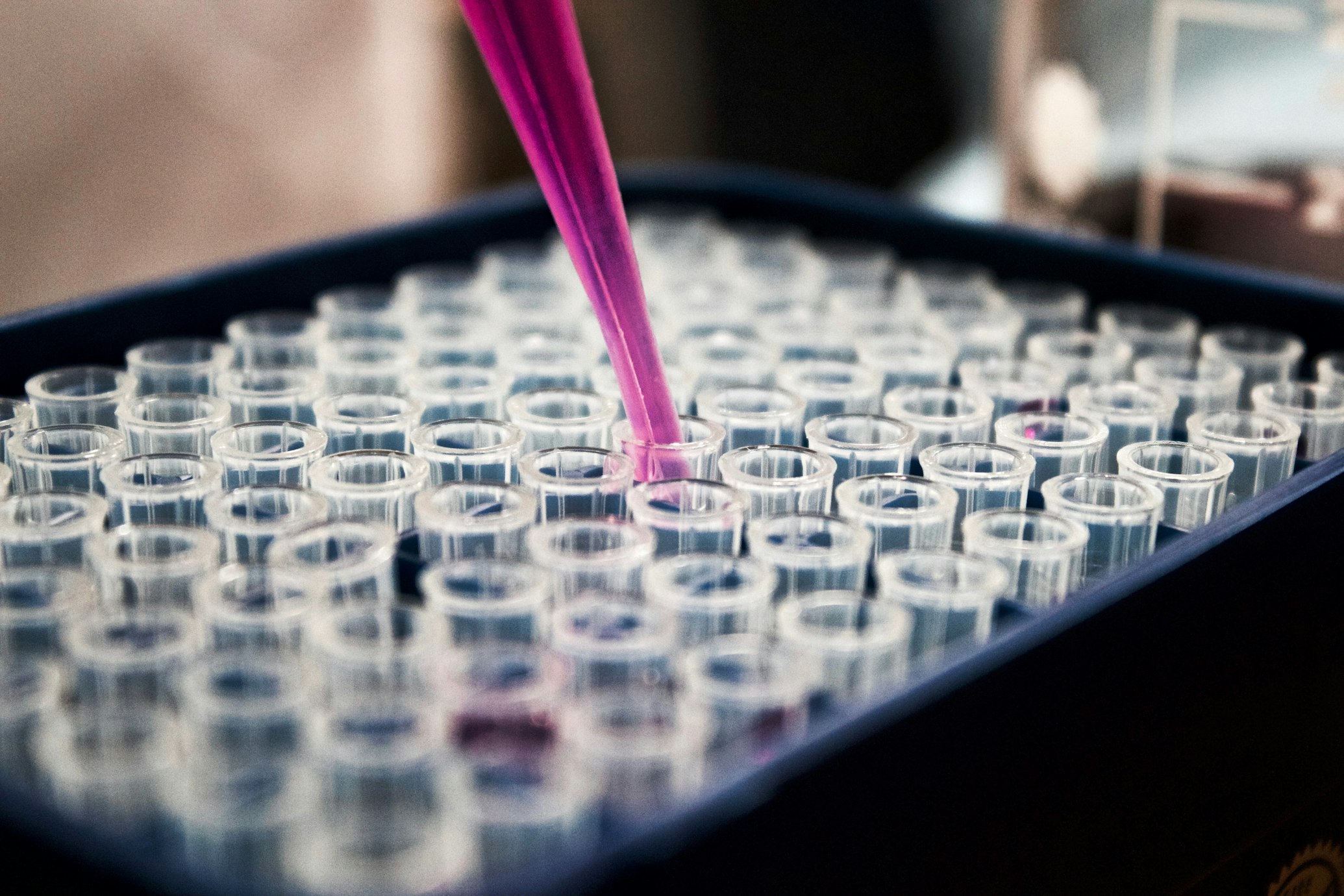
The Science of Seeing: How We Illuminate the Invisible
What is Fluorescence?
To understand these revolutionary advances, we first need to explore the basic phenomenon of fluorescence. The process begins when a fluorophore—a fluorescent molecule—absorbs light energy at a specific wavelength. This energy excites the molecule's electrons, pushing them to a higher energy state. After a brief moment, these electrons return to their resting state, releasing the excess energy as light of a longer, lower-energy wavelength. This emission is what we perceive as a fluorescent glow 3 .
This property transforms invisible molecular processes into visible signals. As Professor Ezequiel Pérez-Inestrosa explains, molecules that maintain or even intensify their fluorescence in biological environments are particularly revolutionary: "Our molecules challenge established fluorescent chemistry paradigms while simultaneously opening avenues to new diagnostic tools" 4 .
Beating the Blur: Overcoming Microscopy's Resolution Limit
For centuries, conventional light microscopy faced an insurmountable barrier known as the diffraction limit. This fundamental law of physics dictated that structures smaller than approximately 200-250 nanometers (about one-two thousandth the width of a human hair) could not be distinguished as separate objects—their images would always merge into a blur 1 .
The breakthrough came when scientists realized that while they couldn't defeat this blurring effect, they could work around it through clever techniques now collectively known as super-resolution microscopy.
Super-Resolution Microscopy Techniques Comparison
| Technique Name | Key Principle | Best Resolution Achieved | Primary Applications |
|---|---|---|---|
| FPALM/PALM | Activates & localizes single photoactivatable molecules | < 30 nm | Living cells; protein tracking |
| STORM | Uses blinking dyes to localize molecules sequentially | ~20 nm | Fixed cells; protein complexes |
| STED | Uses depletion beam to shrink effective fluorescence area | 16 nm | Live-cell imaging; membrane dynamics |
| SIM | Uses patterned light to enhance resolution | ~100 nm | Thick samples; 3D imaging |
Methods such as FPALM (Fluorescence Photoactivation Localization Microscopy) and STORM (Stochastic Optical Reconstruction Microscopy) share a common ingenious strategy: instead of trying to see all molecules at once, they activate only a random, sparse subset of molecules at a time, precisely locate each one, then repeat this process thousands of times to build a complete, high-resolution image 1 .
This approach is like trying to map a crowded room in complete darkness. If you turned on all the lights, you would see only a blur of people. But if you briefly illuminated just a few individuals at a time, noting each person's exact position before moving to the next group, you could eventually build a precise map of the entire crowd.
A Closer Look: Groundbreaking Experiment in Label-Free Detection
The Challenge of Labels
Most fluorescence imaging methods require researchers to attach glowing tags to molecules they wish to study. While effective, these labels are bulky—like putting large, bright hats on people you're trying to watch in a crowd. The hats make people visible but might alter their normal behavior and interactions. Similarly, fluorescent labels can potentially interfere with the natural function and movement of biological molecules 7 .
In 2023, a research team reported a revolutionary solution to this problem—a label-free method for observing individual molecules as they naturally move and interact in solution, without requiring any fluorescent tags 7 .

Inside the Experiment: Step by Step
Building a Light Trap
The team created a microscopic chamber by positioning two specially engineered mirrors opposite each other, forming a cavity about 20 micrometers wide (roughly one-third the width of a human hair). Laser light bouncing between these mirrors created an intense, standing wave of light 7 .
Stabilizing the System
Using an advanced feedback system called Pound-Drever-Hall locking, they maintained perfect resonance within the cavity—keeping the light waves perfectly aligned despite environmental vibrations 7 .
Introducing the Molecules
The researchers flowed solutions containing different biomolecules through the cavity. These included proteins ranging from the relatively large streptavidin (66 kilodaltons) down to the tiny c-Myc peptide (a mere 1.2 kilodaltons) 7 .
Detecting the Invisible
As individual molecules diffused through the intense light field, they interacted with the light in a way that created detectable disturbances. The key innovation was a "molecular velocity filtering" mechanism that distinguished these molecular transits from background noise 7 .
Remarkable Results and Their Significance
Detection Performance Across Molecular Sizes
| Biomolecule | Molecular Weight (kDa) | Estimated Radius (nm) | Typical Transit Time (ms) | Signal-to-Noise Ratio |
|---|---|---|---|---|
| Myc-tag | 1.2 | 0.75 | ~1.0 | Up to 123 |
| Aprotinin | 6.5 | 1.45 | ~1.2 | High |
| Carbonic Anhydrase | 30 | 2.10 | ~1.5 | High |
| Streptavidin | 66 | 2.80 | ~2.0 | High |
The system achieved what was previously thought impossible: detecting individual, label-free biomolecules as small as 1.2 kilodaltons freely diffusing in solution with extraordinary signal-to-noise ratios exceeding 100:1 7 . This represents the highest signal quality ever reported for label-free single-molecule detection.
Even more impressively, the technique could distinguish between different molecules based on their diffusion characteristics and detect mixtures of biomolecule isomers—molecules with identical chemical formulas but different spatial arrangements 7 . This capability provides crucial information about molecular shape and conformation that was previously inaccessible without labels.
The linear relationship observed between molecular transit time and molecular radius confirms the technique's potential for measuring solution-phase properties that are essential for understanding biological function, including diffusion constants and conformational changes 7 .
The Scientist's Toolkit: Essential Research Reagents
The field of fluorescence imaging relies on a diverse arsenal of specialized tools and molecules. Here are some of the key players that make this research possible:
Fluorescent Proteins
Examples: GFP, EGFP, DsRed, mCherry
Enable tagging of specific proteins in living cells; self-assembling chromophores 5 .
Cavity-Enhanced Systems
Examples: Fiber Fabry-Pérot microcavities
Enable detection of biomolecules without labels; high signal-to-noise ratios 7 .
Application Areas of Different Fluorescent Reagents
Conclusion: A Brighter Future for Biological Discovery
The ability to watch individual molecules in action—without interfering with their natural function—represents a fundamental transformation in how we study life's processes.
From observing how DNA repair proteins fix genetic damage to watching how neurodegenerative diseases corrupt cellular machinery, these advances in fluorescence imaging are providing unprecedented views of biology at its most fundamental level 6 .

As these technologies continue to evolve, becoming more accessible and refined, they promise to accelerate discoveries across medicine and basic research. The once-impossible dream of seeing molecules at work has become reality, illuminating not just individual molecules, but the path to solving some of biology's most challenging mysteries.
In the words of the researchers behind these advances, we're witnessing a true "paradigm shift" that "heralds new possibilities in biomedical research and clinical diagnostics" 4 .
Key Insight
The combination of fluorescence techniques with advanced computational analysis is opening new windows into molecular dynamics that were previously invisible to science.