Heterojunction Design for Enhanced Photocatalysis: Principles, Materials, and Cutting-Edge Applications
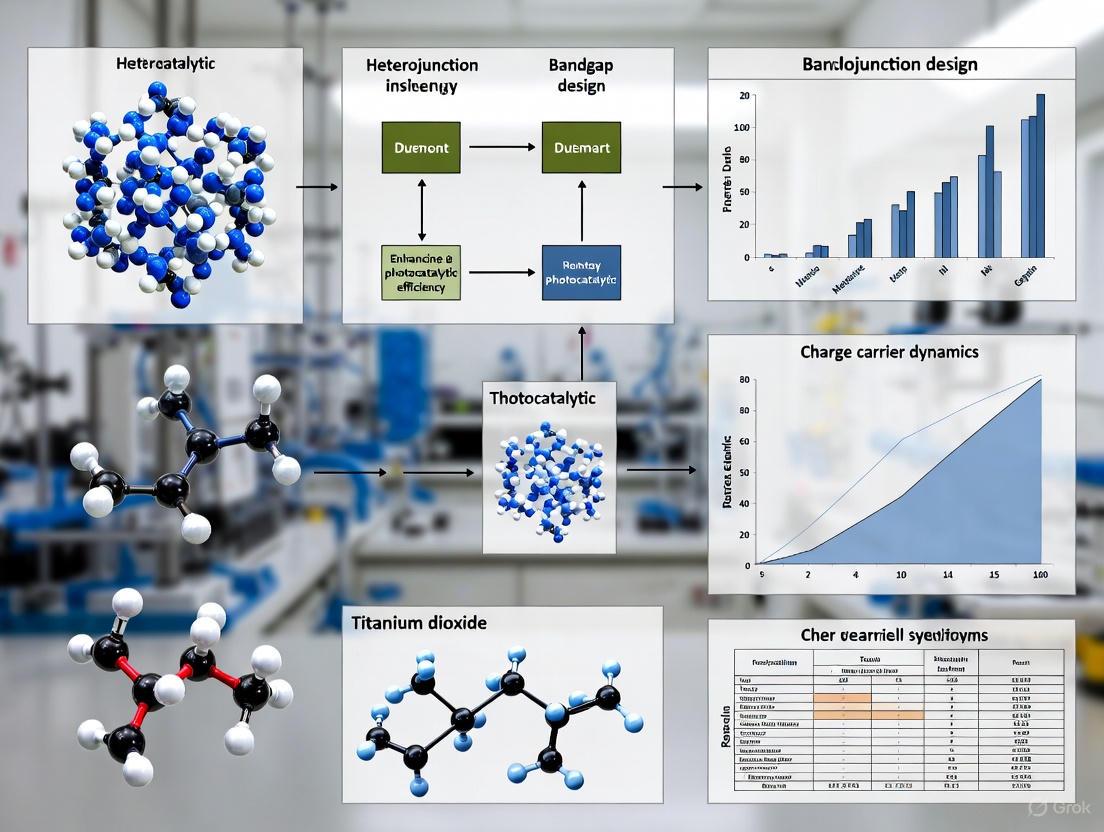
This comprehensive review explores the strategic design of semiconductor heterojunctions to dramatically enhance photocatalytic efficiency for energy and environmental applications.
Heterojunction Design for Enhanced Photocatalysis: Principles, Materials, and Cutting-Edge Applications
Abstract
This comprehensive review explores the strategic design of semiconductor heterojunctions to dramatically enhance photocatalytic efficiency for energy and environmental applications. Covering foundational principles to emerging trends, it systematically examines charge separation mechanisms, material synthesis, interfacial engineering, and performance validation. The article provides researchers and scientists with a methodological framework for designing high-performance heterostructures using novel materials like perovskites, COFs, and MOFs, while addressing key challenges in scalability and computational design for biomedical and environmental remediation applications.
Understanding Heterojunction Fundamentals: Charge Separation Mechanisms and Band Engineering
Frequently Asked Questions (FAQs)
1. What is electron-hole recombination and why is it a critical challenge in photocatalysis? Electron-hole recombination is the process where photogenerated electrons in the conduction band recombine with holes in the valence band, annihilating both charge carriers [1] [2]. This is a fundamental problem in single semiconductors because it drastically reduces the number of available electrons and holes that can migrate to the catalyst surface to drive desired chemical reactions, such as water splitting or CO2 reduction [3] [4]. In a single semiconductor, these opposite charges are generated in close proximity, leading to a high recombination rate and limited overall photocatalytic efficiency [3] [5].
2. What are the main types of recombination mechanisms? Recombination mechanisms are broadly categorized into two groups [1] [6]:
- Radiative Recombination (Band-to-Band): An electron directly transitions from the conduction band to the valence band, emitting a photon with energy similar to the band gap of the material [2]. This is prominent in direct-bandgap semiconductors.
- Non-Radiative Recombination: The energy from recombination is released as heat (phonons) rather than light. Key types include:
- Shockley-Read-Hall (SRH) Recombination: Occurs through defect energy levels (traps) within the band gap, introduced by impurities or crystal imperfections [1] [6].
- Auger Recombination: The energy from recombination is transferred to another electron or hole, which then relaxes and releases heat [6].
- Surface Recombination: Caused by dangling bonds and defects on the semiconductor surface, which act as efficient recombination centers [6].
3. How does constructing a heterojunction address the recombination problem? A heterojunction is an interface between two different semiconductors. When formed, it creates a built-in electric field due to differences in their Fermi levels and electron affinities [3] [5] [7]. This internal electric field acts as a powerful driving force that spatially separates photogenerated electrons and holes, directing them to different semiconductor components [5] [7]. This physical separation significantly reduces the probability that the electrons and holes will encounter each other and recombine, thereby increasing their lifetime and availability for surface reactions [3] [4].
4. What is the difference between Type-II and S-scheme heterojunctions? Both heterojunction types enhance charge separation but differ in their charge transfer pathways and the resulting redox potential of the separated charges [3] [5].
- Type-II Heterojunction: The band alignment is "staggered." Electrons migrate from Semiconductor B (higher CB) to Semiconductor A (lower CB), while holes move from Semiconductor A (higher VB) to Semiconductor B (lower VB). This achieves good spatial separation but at the cost of the redox potential, as the electrons and holes accumulate on semiconductors with weaker reduction and oxidation power, respectively [3] [5].
- S-Scheme Heterojunction: This newer concept combines a reduction photocatalyst (with higher Fermi level and work function) and an oxidation photocatalyst. The internal electric field causes useless electrons and holes to recombine at the interface, while leaving the most powerful electrons (in the reduction photocatalyst's CB) and holes (in the oxidation photocatalyst's VB) to participate in reactions. This mechanism optimizes both charge separation and the retention of high redox potential [3] [8].
5. What experimental techniques can I use to confirm reduced recombination in my heterojunction? A combination of photoelectrochemical and spectroscopic techniques is essential to confirm improved charge separation [3]:
- Photoluminescence (PL) Spectroscopy: A direct method. A decrease in PL intensity in the heterojunction compared to the single semiconductors indicates a lower electron-hole recombination rate [9].
- Photoelectrochemical Tests: Measurements of photocurrent response and electrochemical impedance spectroscopy (EIS). A stronger and more stable photocurrent, along with a smaller arc radius in the EIS Nyquist plot, suggest more efficient charge separation and transfer [9] [7].
- Surface Photovoltage (SPV) Spectroscopy: Directly probes the separation of photogenerated charges by measuring the change in surface potential upon illumination [3].
- Transient Absorption Spectroscopy (TAS): Monitors the decay kinetics of photogenerated charges, providing a direct measurement of their lifetime. A longer lifetime confirms suppressed recombination [3].
Troubleshooting Guides
Problem: High Recombination Rate Persists in Heterojunction
Possible Causes and Solutions:
Cause 1: Poor Interface Quality A disordered or defective interface between the two semiconductors can act as a recombination center instead of facilitating charge separation.
Cause 2: Incorrect Band Alignment The heterojunction may not have the intended Type-II or S-scheme alignment, leading to ineffective or counterproductive charge flow.
- Solution: Prior to synthesis, carefully calculate or experimentally determine the band edge positions (conduction and valence bands) and Fermi levels of both semiconductors. Use techniques like UV-vis spectroscopy (Tauc plot) for band gap and ultraviolet photoelectron spectroscopy (UPS) for Fermi level and valence band maximum [3].
Cause 3: High Bulk or Surface Defect Density Defects within the semiconductor bulk or on its surface can trap charge carriers and promote non-radiative Shockley-Read-Hall recombination [1] [9].
- Solution: Introduce defect engineering strategies. In some cases, carefully controlled defects like oxygen vacancies can be beneficial by creating intermediate energy levels [9]. In others, passivation of these defects is necessary. Use techniques like post-synthesis annealing in a controlled atmosphere to heal defects or intentionally create beneficial vacancies [9].
Problem: Low Photocatalytic Activity Despite Good Charge Separation
Possible Causes and Solutions:
Cause 1: Slow Surface Reaction Kinetics Even if charges are separated and reach the surface, slow reaction kinetics can lead to their accumulation and eventual recombination at the surface [5].
- Solution: Decorate the surface with co-catalysts (e.g., Pt, Ni(OH)2, CoO~x~). Co-catalysts provide active sites that lower the activation energy for the target redox reactions, thereby rapidly consuming the separated charges [7].
Cause 2: Inefficient Charge Migration to Surface The internal electric field may not be strong enough to drive charges to the surface, or the path may be too long.
- Solution: Design nanostructured materials, such as 3D hollow heterostructures or thin films. These architectures can shorten the diffusion distance for charges to reach the surface and provide a larger surface area for reactions [7].
Key Experimental Protocols
Protocol 1: Probing Charge Separation with Photoluminescence (PL) Spectroscopy
Objective: To compare the electron-hole recombination rates of a single semiconductor and a newly synthesized heterojunction.
Materials:
- Powdered samples of single semiconductor A, single semiconductor B, and the A/B heterojunction.
- PL spectrometer with a suitable excitation wavelength (often in the UV or visible range).
- Integrating sphere (optional, but recommended for powder samples for more quantitative analysis).
Methodology:
- Place each powder sample separately in the spectrometer's sample holder, ensuring a consistent and thin layer.
- Set the excitation wavelength to a value that can excite both semiconductors (e.g., the lower band gap edge).
- Record the PL emission spectrum for each sample under identical instrument settings (e.g., slit width, detector gain, scan speed).
- Analysis: Compare the PL intensity of the heterojunction with that of the single semiconductors. A significant quenching of the PL signal in the heterojunction is direct evidence of reduced radiative recombination and improved charge separation across the interface [9].
Protocol 2: Confirming Charge Transfer Pathway with Surface Photovoltage (SPV) Spectroscopy
Objective: To provide direct evidence of the direction of charge transfer in a heterojunction.
Materials:
- Thin film or pressed pellet of the heterojunction sample.
- SPV spectrometer (Kelvin Probe setup).
- Monochromatic light source (e.g., a tunable laser or monochromator with a xenon lamp).
Methodology:
- Place the sample in the SPV setup and ensure good electrical contact.
- Measure the contact potential difference (CPD) between the sample and the Kelvin probe reference in the dark to establish a baseline.
- Illuminate the sample with monochromatic light while recording the change in CPD (this is the SPV signal).
- Analysis: The sign of the SPV signal indicates the type of majority charges accumulating at the surface. For example, a positive SPV signal suggests the upward band bending and accumulation of electrons at the surface. By analyzing the SPV spectra and comparing it with the band structures of the individual components, you can deduce the charge transfer mechanism (e.g., Type-II vs. S-scheme) [3].
Quantitative Data on Performance Enhancement
Table 1: Representative Performance Improvements via Heterojunction Engineering
| Photocatalytic System | Type of Structure | Key Metric | Performance Improvement | Reference |
|---|---|---|---|---|
| La₂TiO₅ (LTO) with defects | Defect-engineered single semiconductor | Nitrogen Fixation Rate | 158.13 μmol·g⁻¹·h⁻¹ (vs. lower performance for pristine LTO) | [9] |
| Cu₂O─S@GO@Zn₀.₆₇Cd₀.₃₃S | 3D Hollow p-n Heterojunction | H₂ Production Rate | 97 times higher than pure Zn₀.₆₇Cd₀.₃₃S nanospheres | [7] |
Research Reagent Solutions
Table 2: Essential Materials for Heterojunction Photocatalyst Research
| Reagent/Material | Function in Research | Example Application |
|---|---|---|
| g-C₃N₄ | A metal-free, organic semiconductor photocatalyst. Often used as a component in S-scheme heterojunctions due to its appropriate band structure [8] [4]. | Building blocks for heterojunctions with TiO₂ or other semiconductors for water splitting [4]. |
| TiO₂ (e.g., P25) | A benchmark wide-bandgap semiconductor. Its well-understood properties make it an excellent reference and a common component in heterojunctions [3]. | Used in Type-II or S-scheme heterojunctions with narrow-bandgap semiconductors to extend light absorption and enhance charge separation. |
| ZnₓCd₁₋ₓS solid solutions | n-type semiconductors with tunable band gaps and excellent visible light absorption properties [7]. | Coupled with p-type semiconductors (e.g., Cu₂O) to form p-n heterojunctions for photocatalytic H₂ evolution [7]. |
| Graphene Oxide (GO) | A 2D conductive material that acts as an electron transfer mediator and co-catalyst support. It enhances charge separation and provides a platform for building complex structures [7]. | Used as an interlayer in 3D hollow heterostructures to facilitate electron transfer between semiconductors. |
| Nickel-based Salts (e.g., Ni(NO₃)₂) | Precursors for non-precious metal co-catalysts (e.g., Ni(OH)₂). These co-catalysts provide active sites for surface reduction reactions, consuming electrons and suppressing surface recombination [7]. | Photodeposited onto heterojunction surfaces to boost H₂ evolution reaction rates. |
Visualizing Recombination and Solutions
The following diagrams illustrate the core problem of recombination in single semiconductors and how heterojunctions provide a solution.
Recombination vs. Heterojunction Charge Flow
S-Scheme Charge Transfer Mechanism
A heterojunction is an interface between two layers or regions of dissimilar semiconductors, which have unequal band gaps [10]. The behavior and performance of a semiconductor junction depend crucially on the alignment of the energy bands at this interface [10]. Proper band alignment engineering is fundamental to enhancing photocatalytic efficiency, as it directly governs the separation and transfer of photogenerated charge carriers, thereby determining the redox capabilities of the system [5].
This guide provides researchers with a foundational understanding of the primary heterojunction classifications, troubleshooting for common experimental challenges, and standard protocols for characterizing these interfaces.
Heterojunction Band Alignment: Core Classifications
Semiconductor interfaces are organized into three fundamental types of heterojunctions based on their band edge alignment: straddling gap (Type I), staggered gap (Type II), and broken gap (Type III) [10] [11]. The characteristics of each are summarized in the table below.
Table 1: Classification and Properties of Fundamental Heterojunction Types
| Heterojunction Type | Band Alignment | Charge Carrier Behavior | Primary Application in Photocatalysis |
|---|---|---|---|
| Type I (Straddling) | Both the CB and VB of Semiconductor B are higher than those of Semiconductor A [10]. | Electrons and holes accumulate in the same semiconductor (the one with the narrower band gap) [11]. | Limited use; often leads to rapid recombination unless one carrier has a much faster transfer rate to the surface [11]. |
| Type II (Staggered) | The CB and VB of Semiconductor B are both higher than the corresponding bands of Semiconductor A, creating a "staggered" profile [10] [5]. | Electrons migrate to the lower CB, and holes migrate to the higher VB, enabling spatial separation of charge carriers [5] [11]. | Highly effective for enhancing charge separation; widely used in traditional photocatalytic systems [5] [11]. |
| Type III (Broken) | The band gaps are broken, with the CB of one material aligned with the VB of the other [10]. | Creates a tunneling junction; not typically used for conventional photocatalysis [10]. | Specialized applications, such as tunnel field-effect transistors [10]. |
Figure 1: Band alignment diagrams for Type-I, Type-II, and Type-III heterojunctions, showing distinct charge carrier pathways.
Advanced Heterojunction Architectures
Beyond conventional classifications, advanced heterojunctions like Z-scheme and S-scheme (Step-scheme) have been developed to overcome the limitation of Type-II systems, where improved charge separation sometimes comes at the cost of reduced redox power [5] [11].
- Z-Scheme Heterojunction: Mimics natural photosynthesis. The electrons from the CB of one semiconductor recombine with the holes from the VB of a second semiconductor via a solid-state mediator. This selectively retains the most energetic electrons and holes in the respective semiconductors, achieving strong spatial charge separation while preserving high redox potentials [11].
- S-Scheme Heterojunction: A newly proposed mechanism consisting of a reduction photocatalyst (RP) and an oxidation photocatalyst (OP) with staggered band structure. The internal electric field (IEF) formed at their interface drives the recombination of less useful electrons and holes, leaving the powerful charge carriers to participate in reactions. This system is particularly effective for maintaining high redox ability and inhibiting charge recombination [5] [11].
Figure 2: S-Scheme heterojunction charge transfer mechanism, combining efficient separation with high redox power.
Frequently Asked Questions (FAQs) & Troubleshooting
Q1: My heterojunction photocatalyst shows poor charge separation efficiency. What could be the issue? A1: This is a common problem often traced to the band alignment itself or the interface quality.
- Verify Band Alignment: Confirm you have successfully constructed a Type-II or S-scheme heterojunction, not a Type-I, where carriers accumulate and recombine. Use UV-Vis DRS to determine band gaps and XPS valence band spectra to ascertain absolute band positions [11].
- Check Interface Quality: A poor physical interface between the two semiconductors creates a high energy barrier for charge transfer. Ensure synthesis methods like hydrothermal or solvothermal routes promote intimate contact. Techniques like HR-TEM can reveal the quality of the interface [10] [12].
- Characterize Charge Dynamics: Perform photoluminescence (PL) spectroscopy. A significant quenching of the PL signal in the heterostructure compared to the individual semiconductors indicates successful charge separation. Conversely, a strong PL signal suggests rapid recombination is occurring [11].
Q2: How can I experimentally distinguish between a Type-II and an S-scheme charge transfer mechanism? A2: This is a critical and non-trivial task in modern photocatalysis research. Rely on a combination of techniques rather than a single test.
- Radical Trapping Experiments: Use specific chemical scavengers (e.g., BQ for •O₂⁻, EDTA-2Na for h⁺) to identify the active species in a reaction. In an S-scheme, you typically find evidence of highly oxidizing holes from one semiconductor and highly reducing electrons from the other, which would not be the case in a conventional Type-II [12].
- XPS Analysis: Measure the binding energy shifts of core elements under light irradiation. In an S-scheme, the direction of electron flow due to the internal electric field can cause characteristic shifts in the XPS spectra, which differ from those in a Type-II system [11].
- In-situ Irradiated KPFM: Use Kelvin Probe Force Microscopy under light to directly measure the surface potential changes. This can visually map the direction of electron transfer across the junction, providing strong evidence for the S-scheme pathway [5].
Q3: What are the best practices for synthesizing a high-quality, intimate heterojunction? A3: The synthesis method is paramount.
- Use Sequential Growth Methods: For core-shell structures, methods like atomic layer deposition (ALD) offer exceptional control over thickness and uniformity, creating clean, lattice-matched abrupt interfaces [11].
- Leverage Self-Assembly: Techniques like electrostatic self-assembly of pre-synthesized nanosheets (e.g., Bi₂WO₆ with NixMo₁₋ₓS₂) can create large, intimate contact areas with minimal defects, facilitating excellent charge transport [12] [11].
- Control Crystallization: In-situ hydrothermal/solvothermal methods where one component grows in the presence of the other often yield better junctions than simple mechanical mixing of pre-formed powders [12].
Detailed Experimental Protocol: Constructing a Bi₂WO₆/NiₓMo₁₋ₓS₂ Heterojunction
The following protocol, adapted from recent literature, outlines the synthesis and basic characterization of a heterojunction photocatalyst for antibiotic degradation [12].
1. Synthesis of Ni-doped MoS₂ (Ni₀.₀₈Mo₀.₉₂S₂)
- Materials: Nickel acetate tetrahydrate (Ni(CH₃COO)₂·4H₂O), Sodium molybdate dihydrate (Na₂MoO₄·2H₂O), L-Cysteine, Deionized water.
- Procedure:
- Dissolve 2 mmol Na₂MoO₄·2H₂O and a calculated amount of Ni(CH₃COO)₂·4H₂O (to achieve 8 at% Ni doping) in 35 mL of deionized water. Stir for 30 minutes.
- Add 8 mmol of L-Cysteine (acts as both a sulfur source and a reducing agent) to the solution and stir for an additional hour until homogeneous.
- Transfer the solution into a 50 mL Teflon-lined stainless-steel autoclave and maintain it at 200°C for 24 hours.
- After natural cooling, collect the resulting precipitate by centrifugation, wash several times with ethanol and deionized water, and dry in a vacuum oven at 60°C for 12 hours.
2. Synthesis of Bi₂WO₆
- Materials: Bismuth nitrate pentahydrate (Bi(NO₃)₃·5H₂O), Sodium tungstate dihydrate (Na₂WO₄·2H₂O).
- Procedure:
- Precisely weigh 2 mmol of Bi(NO₃)₃·5H₂O and 2 mmol of Na₂WO₄·2H₂O.
- Dissolve each precursor separately in 20 mL of deionized water, then mix the two solutions together.
- Stir vigorously for 1 hour to form a homogeneous precursor suspension.
- Transfer the mixture into a 50 mL Teflon-lined autoclave and heat at 160°C for 16 hours.
- Cool naturally, collect the product by centrifugation, wash thoroughly, and dry at 60°C.
3. Construction of the Bi₂WO₆/Ni₀.₀₈Mo₀.₉₂S₂ Heterojunction
- Procedure:
- Disperse a specific mass of the as-synthesized Ni₀.₀₈Mo₀.₉₂S₂ powder (e.g., 100 mg) in 40 mL of ethylene glycol via ultrasonication for 30 minutes.
- Add a calculated mass of Bi₂WO₆ powder to achieve the desired weight ratio (e.g., 8 wt% Bi₂WO₆).
- Continue stirring the mixture for 6 hours to ensure intimate contact through self-assembly.
- Collect the final heterojunction composite by centrifugation, wash with ethanol, and dry at 60°C for subsequent use and characterization.
The Scientist's Toolkit: Essential Research Reagents & Materials
Table 2: Key Reagents and Materials for Heterojunction Photocatalyst Research
| Material/Reagent | Function & Role in Research | Example from Literature |
|---|---|---|
| L-Cysteine | A common sulfur source and reducing agent in hydrothermal synthesis of metal sulfides. It also can act as a capping agent to control morphology. | Used in the synthesis of Ni-doped MoS₂ to provide sulfur and control crystal growth [12]. |
| Bi(NO₃)₃·5H₂O | A standard bismuth precursor for synthesizing bismuth-based semiconductors (e.g., Bi₂WO₆, BiVO₄, BiOX), which are known for their visible-light activity and layered structures. | Reacted with Na₂WO₄ to form the visible-light-active Bi₂WO₆ photocatalyst [12]. |
| Na₂WO₄·2H₂O | A common tungsten source for synthesizing tungsten-containing semiconductors like Bi₂WO₆ or WO₃. | Used as a precursor for the Bi₂WO₆ component in the heterojunction [12]. |
| Ethylene Glycol | A solvent and dispersing medium used in solvothermal synthesis and self-assembly processes. Its high viscosity can help stabilize colloidal suspensions and prevent aggregation. | Used as a medium to facilitate the electrostatic self-assembly between Bi₂WO₆ and Ni₀.₀₈Mo₀.₉₂S₂ nanosheets [12]. |
| Scavengers (e.g., BQ, EDTA-2Na, TBA) | Critical reagents for mechanistic studies. They selectively quench specific reactive species (•O₂⁻, h⁺, •OH) to identify the primary active species in a photocatalytic reaction. | Used to confirm that •O₂⁻ and h⁺ were the primary active species in the degradation of tetracycline hydrochloride (TCH) [12]. |
The quest for efficient solar-driven technologies has positioned semiconductor photocatalysis as a pivotal strategy for addressing energy and environmental challenges. A significant bottleneck in this field, however, is the rapid recombination of photogenerated electron-hole pairs in single-component semiconductors, which drastically reduces quantum efficiency. Heterojunction design, which involves integrating two or more semiconducting materials, has emerged as a powerful research direction to overcome this limitation. By creating a composite material, it is possible to achieve improved light absorption, more efficient charge separation, and enhanced charge transfer [5]. Furthermore, heterojunctions enable better alignment of band edge potentials with the redox potentials of reactants, promoting the selective formation of desired products with higher yields [5]. Among the various heterojunction configurations, Z-scheme and its evolved form, the S-scheme (Step-scheme), have garnered significant attention for their ability to achieve superior spatial charge separation while maintaining strong redox capabilities [13] [14]. This technical resource center is designed to support researchers in navigating the complexities of these advanced charge transfer models, providing clear troubleshooting guidance and foundational knowledge to accelerate the development of high-performance photocatalytic systems.
Frequently Asked Questions (FAQs) on Core Concepts
Q1: What is the fundamental difference between a Type-II heterojunction and a Z-scheme/S-scheme heterojunction? While both systems feature staggered band alignments, their charge transfer pathways and final redox outcomes are fundamentally different. In a Type-II heterojunction, photogenerated electrons migrate to the semiconductor with the more positive conduction band (CB), while holes migrate to the semiconductor with the more negative valence band (VB). This achieves charge separation but at the cost of retaining charge carriers with weaker redox abilities [5].
In contrast, Z-scheme and S-scheme heterojunctions are designed to mimic natural photosynthesis. They facilitate the recombination of useless electrons and holes at the interface, thereby preserving the most energetic electrons in the CB of the reduction photocatalyst and the most powerful holes in the VB of the oxidation photocatalyst. The S-scheme is a recent refinement of the Z-scheme concept, offering a more direct and clearer mechanistic understanding of the charge transfer process without requiring redox mediators [13] [14].
Q2: Why is the S-scheme considered an optimization of the traditional Z-scheme? The traditional Z-scheme concept, while effective, came with several practical challenges that the S-scheme aims to overcome. The table below summarizes the key distinctions.
Table 1: Comparison of Z-scheme and S-scheme Heterojunctions
| Feature | Traditional Z-Scheme (Liquid-Phase) | All-Solid-State Z-Scheme | S-Scheme (Step-Scheme) |
|---|---|---|---|
| Charge Mediator | Shuttle redox couple (e.g., Fe³⁺/Fe²⁺, IO₃⁻/I⁻) | Solid electron mediator (e.g., Au, Ag, graphene) | No mediator; direct interface |
| Key Limitation | Backward reactions, limited pH stability, light shielding by ions | High cost, photo-corrosion of metals, difficult controllable synthesis | N/A |
| Charge Transfer Path | Indirect, via redox couple | Indirect, via solid conductor | Direct, facilitated by internal electric field |
| Redox Power | Strong | Strong | Strong |
The S-scheme heterojunction simplifies the system by eliminating the need for a mediator. Charge transfer is driven by the built-in electric field (BIEF) formed at the interface, band bending, and Coulombic attraction, which collectively promote the recombination of less useful charges and preserve those with the strongest redox power [13] [14].
Q3: What are the primary experimental techniques used to confirm an S-scheme or Z-scheme mechanism? Confirming the charge transfer pathway is critical and requires a combination of experimental techniques.
- In-situ X-ray Photoelectron Spectroscopy (XPS): Can detect the shifting of core energy levels and the formation of a built-in electric field at the interface under light illumination.
- Femtosecond Transient Absorption (fs-TA) Spectroscopy: A powerful tool for directly tracking electron transfer paths on ultrafast (femtosecond to picosecond) timescales, allowing researchers to visualize the flow of charge carriers and identify recombination partners [15].
- Electron Spin Resonance (ESR): Used to identify the active radical species (e.g., •O₂⁻, •OH) generated during photocatalysis, which helps verify the potential levels of the surviving electrons and holes.
- Selective Photodeposition: Depositing metal or metal oxide particles (e.g., Pt, PbO₂) selectively on the surfaces where electrons or holes accumulate provides spatial evidence of the charge migration path.
Troubleshooting Common Experimental Challenges
Table 2: Troubleshooting Guide for S-scheme and Z-scheme Heterojunction Experiments
| Problem | Possible Cause | Suggested Solution |
|---|---|---|
| Low charge separation efficiency | Poor interfacial contact between semiconductors. | Optimize synthesis method (e.g., in-situ growth) to ensure intimate contact. |
| Incorrect band alignment, leading to a Type-II pathway. | Re-evaluate semiconductor pair selection using UV-Vis DRS and UPS/XPS to precisely determine band positions. | |
| Weak photocatalytic activity | High recombination of useful charges at the interface. | Introduce atomic-level bridges (e.g., covalent bonds) or control facet engineering to steer charge transfer. |
| Insufficient active sites on the surface. | Design morphologies with high surface area (e.g., porous structures, 2D/2D contact) [16]. | |
| Poor reproducibility of heterojunction | Inconsistent synthesis conditions affecting morphology and interface. | Strictly control reaction parameters (temperature, time, precursor concentration) during hydrothermal/solvothermal synthesis. |
| Uncontrolled growth of the second semiconductor. | Use pre-synthesized, uniform primary particles as substrates for secondary growth. | |
| Difficulty in verifying mechanism | Over-reliance on indirect evidence. | Combine multiple characterization techniques (e.g., in-situ XPS, fs-TA, ESR) to build a conclusive case for the S-scheme pathway [15]. |
Experimental Protocols: Key Methodologies
Protocol: Hydrothermal Synthesis of a Z-Scheme MoS₂/WO₃ Heterojunction
This protocol is adapted from a study that successfully created a spherical MoS₂/WO₃ composite for efficient Rhodamine B degradation [17].
Research Reagent Solutions Table 3: Essential Reagents for MoS₂/WO₃ Synthesis
| Reagent | Function |
|---|---|
| Sodium Tungstate Dihydrate (Na₂WO₄·2H₂O) | Tungsten (W) precursor for WO₃. |
| Ammonium Tetrathiomolybdate ((NH₄)₂MoS₄) | Source of Molybdenum (Mo) and Sulfur (S) for MoS₂. |
| Hydrochloric Acid (HCl) | Provides acidic condition for the precipitation of WO₃. |
| Deionized Water | Solvent for the hydrothermal reaction. |
Step-by-Step Procedure:
- Precursor Solution Preparation: Dissolve 1.65 g of Na₂WO₄·2H₂O in 60 mL of deionized water under magnetic stirring.
- Precipitation of WO₃: Slowly add 3 M HCl solution to the above solution under continuous stirring until the pH reaches approximately 1.5, leading to the formation of a pale-yellow precipitate.
- Addition of MoS₂ Precursor: Add a calculated amount of (NH₄)₂MoS₄ (e.g., 50 wt% relative to the theoretical WO₃ yield) to the mixture and stir for 1 hour to ensure homogeneity.
- Hydrothermal Reaction: Transfer the final suspension into a 100 mL Teflon-lined stainless-steel autoclave. Seal the autoclave and maintain it at 180°C for 24 hours.
- Product Recovery: After the reaction, allow the autoclave to cool to room temperature naturally. Collect the resulting precipitate by centrifugation, wash it several times with deionized water and ethanol, and dry it in an oven at 60°C for 12 hours.
Key Characterization Data for MW-50 Composite [17]:
- Degradation Performance: Achieved 94.5% degradation of RhB in 60 minutes under visible light.
- Electrochemical Impedance: Low charge transfer resistance (Rct) of 7.42 × 10² Ω.
- Photocurrent Density: High value of 87 μA·cm⁻², indicating efficient charge separation.
Protocol: Fabrication of an S-scheme ZnO/g-C₃N₄ Heterojunction
This protocol is based on the construction of a hierarchically porous S-scheme heterojunction for H₂O₂ production [13].
Research Reagent Solutions Table 4: Essential Reagents for ZnO/g-C₃N₄ Synthesis
| Reagent | Function |
|---|---|
| Melamine (C₃H₆N₆) | Precursor for graphitic carbon nitride (g-C₃N₄). |
| Zinc Acetate Dihydrate (Zn(CH₃COO)₂·2H₂O) | Zinc (Zn) precursor for ZnO. |
| Urea (CH₄N₂O) | Acts as a pore-forming agent and fuel during calcination. |
Step-by-Step Procedure:
- Synthesis of g-C₃N₄: Place 5 g of melamine in a covered alumina crucible and heat in a muffle furnace at 550°C for 2 hours with a ramp rate of 5°C/min. The resulting yellow bulk g-C₃N₄ should be ground into a fine powder.
- Preparation of the Hybrid Precursor: Dissolve a specific mass of the as-prepared g-C₃N₆ powder (e.g., 0.5 g) and an appropriate mass of Zn(CH₃COO)₂·2H₂O (e.g., 12 wt% ratio) in a mixture of water and ethanol via ultrasonication for 30 minutes.
- Addition of Urea: Add a excess of urea to the suspension and continue stirring.
- Calcination: Dry the mixture completely and then calcine the solid powder in an open crucible at 500°C for 2 hours in air.
- Product Collection: The final product is a light-yellow powder of the ZnO/g-C₃N₄ composite.
Key Characterization Data for ZCN12 Composite [13]:
- H₂O₂ Production: Yield of 1544 μmol L⁻¹ under light irradiation.
- Proposed Mechanism: The S-scheme charge transfer pathway was identified as more suitable than a Type-II model, leading to enhanced spatial charge carrier separation and high redox ability.
The Scientist's Toolkit: Key Characterization Techniques
Table 5: Essential Techniques for Mechanistic Investigation
| Technique | Function & Application | Key Information Obtained |
|---|---|---|
| Femtosecond Transient Absorption (fs-TA) | Tracks ultrafast charge transfer and recombination pathways [15]. | Direct visualization of electron flow from one CB to another VB in an S-scheme, on femtosecond-picosecond scales. |
| In-situ Irradiated XPS | Probes changes in the electronic structure at the interface under light. | Identifies the direction of electron flow and confirms the formation of a built-in electric field (BIEF). |
| Electron Spin Resonance (ESR) | Detects radical species generated during photocatalysis. | Verifies the presence of ·O₂⁻ (from CB electrons) and ·OH (from VB holes), confirming their high redox potentials. |
| Photoelectrochemical Measurements | Assesses the efficiency of charge separation and transfer in a macroscopic assembly. | Higher photocurrent and lower electrochemical impedance (Rct) indicate better charge separation in the heterojunction [17]. |
Visualization of Mechanisms and Workflows
S-scheme Heterojunction Charge Transfer Mechanism
Experimental Workflow for Heterojunction Synthesis & Validation
Band gap engineering is a fundamental process in materials science that involves controlling or altering the band gap of a semiconductor to achieve desired electronic and optical properties [18]. In the context of photocatalysis, this technique is crucial for developing materials that can effectively harness visible light, which constitutes a significant portion of the solar spectrum [19]. For researchers working on heterojunction design, understanding band gap engineering principles is essential for creating photocatalysts with enhanced charge separation, improved visible light absorption, and superior redox capabilities for applications in environmental remediation and energy production [5] [20].
The band gap refers to the energy difference between the top of the valence band and the bottom of the conduction band in semiconductors and insulators [18]. This energy barrier determines what portion of the solar spectrum a material can absorb and thus directly influences its photocatalytic efficiency [19]. By strategically engineering this band gap through various methods, researchers can tailor materials to maximize their performance under visible light irradiation while maintaining sufficient redox potential to drive target reactions.
Fundamental Concepts & FAQs
FAQ 1: What is the significance of band gap values for visible light photocatalysis?
Answer: The band gap value directly determines the range of light absorption in semiconductor materials. For effective visible light absorption, which spans approximately 1.65 eV to 3.10 eV (750 nm to 400 nm), ideal photocatalysts should have band gaps within or slightly above this range [18]. Materials with wider band gaps (e.g., >3.1 eV) primarily absorb UV light, which constitutes only about 4-5% of the solar spectrum, making them inefficient for solar-driven applications. Band gap engineering aims to reduce wide band gaps to visible light-responsive ranges while maintaining adequate redox potentials for catalytic reactions.
Table: Band Gap Values of Common Semiconductor Materials
| Material | Symbol | Band Gap (eV) @ 302K | Light Absorption Range |
|---|---|---|---|
| Germanium | Ge | 0.67 | Infrared |
| Gallium Arsenide | GaAs | 1.43 | Visible to Infrared |
| Silicon | Si | 1.14 | Visible to Infrared |
| Gallium Phosphide | GaP | 2.26 | Visible |
| Gallium Nitride | GaN | 3.4 | UV |
| Diamond | C | 5.5 | UV |
| Aluminium Nitride | AlN | 6.0 | UV |
FAQ 2: What is the difference between direct and indirect band gaps, and why does it matter?
Answer: In materials with a direct band gap, the momentum of the lowest energy state in the conduction band and the highest energy state of the valence band have the same value, allowing direct electron transitions with photon absorption/emission [18]. In contrast, indirect band gap materials require a change in momentum during electron transitions, necessitating involvement of both a photon and a phonon (lattice vibration).
This distinction critically impacts photocatalytic efficiency because:
- Direct band gap materials exhibit stronger light absorption and emission properties
- Indirect band gap materials have weaker absorption and lower probability of electron transitions
- Direct band gap semiconductors are generally more efficient for photocatalysis, LEDs, and solar cells [18]
For heterojunction design, understanding the band gap nature of component materials helps predict charge transfer efficiency and interfacial behavior.
FAQ 3: How does band gap engineering enhance charge separation in heterojunctions?
Answer: Band gap engineering facilitates the creation of heterojunctions with optimized band alignment, which significantly enhances charge separation through built-in electric fields [5]. In S-scheme heterojunctions particularly, engineering the band gaps and band positions of the two semiconductors creates an internal electric field at the interface that promotes the recombination of useless charges while preserving the powerful photogenerated electrons and holes with strong redox capabilities [8] [21]. This strategic charge transfer pathway overcomes the limitations of traditional type-II heterojunctions where redox potential is compromised for better charge separation.
Troubleshooting Common Experimental Issues
Problem: Insufficient Visible Light Absorption
Symptoms:
- Low photocatalytic efficiency under visible light
- High performance only under UV irradiation
- Poor quantum yield in visible spectrum
Solutions:
- Cation/Anion Doping: Introduce foreign elements into the host lattice to create intermediate energy levels. For example, copper doping in MgWO₄ as demonstrated in Mg₁₋ₓCuₓWO₄/Bi₂WO₆ heterojunctions [22].
- Solid Solution Formation: Create homogeneous mixtures of isostructural semiconductors with different band gaps to tune optical properties continuously [22].
- Dye Sensitization: Anchor visible-light-absorbing dye molecules to wider band gap semiconductors to extend absorption range [19].
Problem: Rapid Charge Carrier Recombination
Symptoms:
- High photoluminescence intensity
- Low photocurrent generation
- Decreased photocatalytic activity despite good light absorption
Solutions:
- Heterojunction Construction: Combine semiconductors with appropriate band alignment to create internal electric fields that separate electrons and holes [5]. S-scheme heterojunctions have shown particular promise for maintaining strong redox potential while enhancing charge separation [8] [21].
- Co-catalyst Loading: Deposit noble metal nanoparticles (Pt, Au) or metal oxides (NiO, CoOₓ) as electron or hole sinks to extract specific charge carriers.
- Defect Engineering: Carefully introduce specific defects that trap one type of charge carrier, though this requires precision as excessive defects can become recombination centers.
Problem: Inconsistent Band Gap Measurements
Symptoms:
- Variable band gap values for the same material
- Poor correlation between measured band gap and photocatalytic performance
- Difficulty comparing results across different research groups
Solutions:
- Standardized Methodology: Use the Kubelka-Munk transformation on diffuse reflectance UV-Vis spectra, which provides sharper absorption edges and more reliable data compared to log(1/R) methods [23].
- Proper Baseline Correction: Account for pre-absorption edge features that can distort Tauc plot interpretations [23].
- Multiple Technique Validation: Complement optical measurements with XPS, UPS, and IPES spectroscopies for accurate band gap and band position determination [23].
Experimental Protocols & Methodologies
Protocol 1: Band Gap Engineering via Solid Solution Formation
Based on: Mg₁₋ₓCuₓWO₄/Bi₂WO₆ heterojunction construction [22]
Materials:
- Magnesium acetate tetrahydrate
- Copper(II) acetate monohydrate
- Sodium tungstate dihydrate
- Bismuth(III) nitrate pentahydrate
- Hydrochloric acid (for pH adjustment)
Procedure:
- Prepare Mg₁₋ₓCuₓWO₄ solid solution by dissolving appropriate molar ratios of magnesium and copper acetates in deionized water.
- Add sodium tungstate solution dropwise under continuous stirring.
- Adjust pH to 9-10 using dilute NaOH or HCl.
- Transfer the mixture to a Teflon-lined autoclave and hydrothermally treat at 180°C for 24 hours.
- Separately prepare Bi₂WO₆ by dissolving bismuth nitrate in dilute nitric acid and adding sodium tungstate solution.
- Hydrothermally treat the Bi₂WO₆ precursor at 160°C for 12 hours.
- Combine the two semiconductors through mechanical mixing or secondary hydrothermal treatment.
- Characterize the heterojunction using XRD, DRS, and photoelectrochemical measurements.
Key Parameters:
- Copper doping ratio (x) typically between 0.1-0.5 for optimal visible light absorption [22]
- pH control critical for phase purity
- Secondary thermal treatment temperature should not exceed component degradation points
Protocol 2: S-scheme Heterojunction Construction
Based on: Yb₆Te₅O₁₉.₂/g-C₃N₄ (YTO/GCN) composite synthesis [21]
Materials:
- Ytterbium(III) nitrate pentahydrate
- Tellurium tetrachloride
- Melamine (for g-C₃N₄ synthesis)
- Sodium hydroxide
- Ethane-1,2-diol (ethylene glycol)
Procedure:
- Synthesize g-C₃N₄ by thermal polycondensation: heat melamine at 540°C for 4 hours in a muffle furnace (ramp rate: 10°C/min).
- Prepare YTO via hydrothermal method: mix ytterbium nitrate and tellurium tetrachloride in deionized water.
- Adjust pH to 12 using NaOH solution (2 M).
- Hydrothermally treat at 200°C for 48 hours in Teflon-lined autoclave.
- Wash precipitate with absolute ethanol and deionized water, dry at 60°C overnight.
- Create composites with varying GCN weight ratios (5-90%) by dispersing GCN in ethane-1,2-diol via ultrasonication.
- Add YTO powder, stir for 30 minutes at room temperature.
- Hydrothermally treat at 100°C for 4 hours.
- Filter, wash with deionized water, and dry at 60°C overnight.
Characterization Methods:
- XRD for crystal structure analysis
- SEM/TEM for morphology examination
- DRS for band gap determination
- PL spectroscopy for charge separation efficiency
- XPS for chemical states and interfacial interaction
- BET surface area analysis
Material Selection Guide
Table: Material Selection Based on Target Application
| Application | Recommended Materials | Ideal Band Gap Range | Heterojunction Strategy |
|---|---|---|---|
| CO₂ Reduction | YTO/GCN [21], Bi₂WO₆-based [22], MOFs [23] | 2.0-2.8 eV | S-scheme heterojunction for strong redox power preservation |
| H₂ Evolution | g-C₃N₄-based [21], CdS/MnO₂ [20] | 2.2-2.8 eV | S-scheme or type-II with co-catalysts |
| Pollutant Degradation | YTO/GCN [21], MgCuWO₄/Bi₂WO₆ [22] | 2.3-3.0 eV | Type-II for efficient charge separation |
| Selective Oxidation | In₂O₃/ZnIn₂S₄ [20] | 2.4-2.9 eV | S-scheme for simultaneous oxidation and reduction |
Visualization: Heterojunction Charge Transfer Mechanisms
The Scientist's Toolkit: Essential Research Reagents
Table: Key Reagents for Band Gap Engineering Research
| Reagent/Category | Function | Example Applications |
|---|---|---|
| Metal Precursors | Provide cationic components for semiconductor synthesis | Yb(NO₃)₃·5H₂O for YTO [21], Cu salts for doping [22] |
| Non-Metal Precursors | Source of anionic components | TeCl₄ for YTO [21], Na₂WO₄ for tungsten oxides [22] |
| Structure-Directing Agents | Control morphology and crystal growth | NaOH for pH control [21], surfactants for nanostructuring |
| Carbon/Nitrogen Sources | Form carbon nitride-based semiconductors | Melamine, urea for g-C₃N₄ synthesis [21] |
| Dopant Sources | Modify band structure through elemental incorporation | Cu salts for MgWO₄ doping [22], Ti for MOF modification [23] |
| Solvents for Synthesis | Medium for hydrothermal/solvothermal reactions | Deionized water, ethane-1,2-diol [21] |
Advanced Characterization Techniques
Proper characterization is essential for validating band gap engineering outcomes:
Optical Properties:
- Use diffuse reflectance spectroscopy (DRS) with Kubelka-Munk transformation for accurate band gap determination [23]
- Employ Tauc plot analysis to distinguish between direct and indirect band gaps [23]
- Apply Kramers-Kronig transformation and Boltzmann regression for complex materials like MOFs [23]
Electronic Structure:
- X-ray photoelectron spectroscopy (XPS) for surface composition and chemical states [21]
- Ultraviolet photoelectron spectroscopy (UPS) for valence band positions [21]
- Electron spin resonance (ESR) for detecting active radical species [21]
Structural and Morphological Analysis:
- XRD for crystal structure and phase identification [21]
- SEM/TEM for morphology, interface analysis, and elemental mapping [21]
- BET surface area analysis for porosity and surface properties [21]
Emerging Trends and Future Directions
The field of band gap engineering continues to evolve with several promising developments:
Novel Material Systems:
- MOFs and COFs: These porous materials offer tunable band gaps through ligand design and metal cluster selection [23] [20]. Proper band gap analysis is crucial as these materials often exhibit complex electronic transitions [23].
- Rare Earth Materials: Compounds like Yb₆Te₅O₁₉.₂ leverage 4f electronic structures for unique optical properties and catalytic activity [21].
Advanced Heterojunction Concepts:
- Hybrid Charge Separation: Combining asymmetric energetics (AE) and asymmetric kinetics (AK) approaches for superior charge management [5].
- Defect-Engineered Interfaces: Precisely controlled defects at heterojunction interfaces to create additional charge transfer pathways.
System-Level Integration:
- Reactor Design Optimization: Coupling advanced materials with engineered reactor configurations for improved light utilization and mass transfer [19].
- Hybrid Process Integration: Combining photocatalysis with other advanced oxidation processes or electrocatalysis for synergistic effects [19].
For researchers in this field, success requires a multidisciplinary approach combining materials synthesis, sophisticated characterization, theoretical modeling, and practical application testing. The continuous development of new band gap engineering strategies and heterojunction designs promises further enhancements in photocatalytic efficiency for sustainable energy and environmental applications.
Material Synthesis and Application-Specific Heterojunction Design Strategies
Troubleshooting Common Experimental Challenges
This section addresses specific issues researchers might encounter when working with emerging photocatalytic heterostructures.
FAQ 1: My g-C3N4-based heterostructure shows rapid electron-hole recombination. How can I improve charge separation?
Answer: Rapid recombination in g-C3N4 is often due to its inherent electronic structure and insufficient interfacial contact in the heterostructure [24] [25]. Implement these solutions:
- Optimize Heterojunction Type: Move from a Type-II to a more advanced S-scheme or Z-scheme heterojunction. These systems more effectively separate electron-hole pairs while preserving the strongest redox potentials [24] [26]. For instance, an S-scheme heterojunction uses a built-in electric field to recombine less useful charges, allowing powerful charges to participate in reactions [26].
- Enhance Interface Engineering: Improve the intimacy of contact at the heterojunction interface. For g-C3N4, this can be achieved by in-situ growth of the second material onto the g-C3N4 surface rather than simple physical mixing [24].
- Apply External Fields: Combine photocatalysis with ultrasound (sonophotocatalysis). The mechanical energy from ultrasound can disrupt charge agglomeration and enhance mass transfer, as demonstrated in BiVO4 systems [27].
FAQ 2: What are the primary strategies to improve the stability of lead halide perovskites for photocatalytic applications?
Answer: The instability of all-inorganic lead halide perovskites (e.g., CsPbX3) under operational conditions (moisture, light, heat) is a critical challenge [28]. Mitigation strategies include:
- Encapsulation: Use protective matrices like polymethyl methacrylate (PMMA) or metal-organic frameworks (e.g., ZIF-8) to shield the perovskite from environmental factors. CsPbBr3/PMMA composites have shown high stability while maintaining 99.18% degradation efficiency for methylene blue [28].
- Heterostructure Construction: Coupling perovskites with more stable semiconductors. A CsPbBr3-TiO2 heterostructure improves stability and achieves a 94% removal rate of tetracycline [28].
- Surface Passivation: Treat the perovskite surface with agents that bind to defect sites (e.g., uncoordinated lead atoms), reducing surface energy and preventing degradation initiation [29].
FAQ 3: The photocatalytic performance of my BiVO4 is limited by poor charge transport. How can I address this?
Answer: Poor charge transport is a known limitation of pristine BiVO4 [27] [30]. Solutions involve structural and compositional engineering:
- Construct Isotype Heterojunctions: Create junctions between different crystalline phases of the same material. For example, forming a heterostructure between the monoclinic and tetragonal phases of BiVO4 can create an internal electric field that drives better charge separation [27].
- Form Type-II Heterojunctions with WO3: Coupling BiVO4 with WO3 to create a WO3/BiVO4 heterostructure is a highly effective strategy. This setup facilitates electron transfer from BiVO4 to WO3, reducing recombination. This approach has achieved photocurrent densities of 6.85 mA cm⁻² and high TOC removal for glycerol [30].
- Introduce Oxygen Vacancies: Synthesis conditions that create oxygen vacancies can improve charge separation and provide more active sites, as indicated by shifts in Raman spectra [30].
FAQ 4: How can I overcome the poor solubility and aggregation tendency of Perylene Diimide (PDI) molecules in solution-based processing?
Answer: PDI's strong π-π stacking leads to aggregation and poor processability [26]. Functionalization and compositing are key:
- Chemical Substituents: Introduce hydrophilic ionic groups (e.g., ammonium salts, carboxylic acids, sulfonic acids) or non-ionic polar groups (e.g., polyethylene glycol) at the bay, imide, or ortho positions of the PDI core. This significantly enhances water solubility and disrupts excessive aggregation [26].
- Covalent Bonding to Supports: Anchor PDI molecules to other materials via covalent bonds. For instance, PDI can be connected to amino-functionalized MIL-125(Ti) through amidation reactions, ensuring a stable and well-dispersed heterostructure [26].
- Form Supramolecular Structures: Direct the self-assembly of PDI into defined nanostructures like nanofibers or layered assemblies, which can enhance charge transport properties and create a higher surface area for reactions [26].
Experimental Protocols for Key Heterostructures
This protocol produces a mixed-phase BiVO4 catalyst with enhanced charge separation.
- Key Reagents: Bismuth nitrate pentahydrate (Bi(NO₃)₃·5H₂O), Ammonium vanadate (NH₄VO₃), Sodium lauryl sulfate (SLS), Sodium hydroxide (NaOH), Nitric acid (HNO₃), Deionized water.
- Procedure:
- Precursor Solution: Dissolve 2.5 mmol of Bi(NO₃)₃·5H₂O in 10 mL of 2 M HNO₃. Separately, dissolve 2.5 mmol of NH₄VO₃ in 15 mL of 2 M NaOH with continuous stirring at 70°C.
- Mixing: Slowly add the Bi(NO₃)₃ solution to the NH₄VO₃ solution under vigorous stirring.
- Surfactant Addition: Add a controlled amount of Sodium lauryl sulfate (e.g., 0.2 g) to the mixture. The surfactant dosage is critical for phase control.
- Hydrothermal Reaction: Transfer the final mixture into a Teflon-lined stainless-steel autoclave (50 mL capacity). Seal and maintain it at 180°C for 24 hours.
- Product Recovery: After natural cooling, collect the resulting precipitate by centrifugation. Wash repeatedly with deionized water and absolute ethanol to remove impurities.
- Drying: Dry the product in an oven at 60°C for 12 hours to obtain the final powder.
- Characterization: Use X-ray Diffraction (XRD) to confirm the coexistence of monoclinic (JCPDS card no. 14-0688) and tetragonal (JCPDS card no. 14-0133) phases.
This method creates a thin-film heterostructure photoanode for simultaneous hydrogen production and pollutant degradation.
- Key Reagents: Tungsten (W) metal foil, Hydrogen peroxide (H₂O₂, 30%), Bismuth nitrate pentahydrate (Bi(NO₃)₃·5H₂O), Potassium iodide (KI), Vanadyl acetylacetonate (C₁₀H₁₄O₅V), p-Benzoquinone, Deionized water.
- Procedure:
- WO3 Nanoplates Synthesis: Clean a W foil substrate. Prepare a hydrothermal growth solution. React the W foil in a Teflon-lined autoclave to grow vertically-aligned WO3 nanoplates.
- BiVO4 Deposition: Prepare a precursor solution containing Bi(NO₃)₃·5H₂O, KI, and C₁₀H₁₄O₅V in a mixture of water and ethanol. Drop-cast this solution onto the synthesized WO3 nanoplates.
- Annealing: Anneal the composite film at 450°C in air to crystallize the BiVO4 layer, forming the WO3/BiVO4 heterostructure.
- Testing: Perform photoelectrochemical (PEC) measurements in a 0.5 M Na₂SO₄ electrolyte with and without 0.5 M glycerol. Apply AM 1.5 G illumination and measure photocurrent density. Analyze solution for hydrogen evolution and use TOC analysis to quantify glycerol mineralization.
Quantitative Performance Data
The following tables summarize the photocatalytic performance of various heterostructures for different applications, as reported in the literature.
Table 1: Performance Comparison of Halide Perovskite vs. Traditional Photocatalysts [28]
| Sample | Application | Synthesis Method | Photocatalytic Performance |
|---|---|---|---|
| Ag/TiO₂ | Degradation of Methylene Blue (MB) | Sol-gel | 98.86% degradation (5 mg/L, 250 min) |
| CsPbBr₃/PMMA | Degradation of Methylene Blue (MB) | Electrospinning | 99.18% degradation (5 mg/L, 60 min) |
| TiO₂/PCN-224 | H₂ Production | Vacuum Filtration | 1.88 mmol g⁻¹ h⁻¹ H₂ production rate |
| CsPbBr₃ | H₂ Production | Hot Injection | 133.3 μmol g⁻¹ h⁻¹ H₂ evolution rate |
| TiO₂/rGO/Cu₂O | Degradation of Tetracycline (TC) | Hummers method | 99.38% removal (100 mg/L, 40 min) |
| CsPbBr₃–TiO₂ | Degradation of Tetracycline (TC) | Solvothermal | 94% removal (20 mg/L, 60 min) |
Table 2: Performance of g-C3N4 and BiVO4-Based Heterostructures
| Photocatalyst | Application | Performance Metrics | Key Finding |
|---|---|---|---|
| WO₃/BiVO₄ | Photoelectrochemical Glycerol Degradation & H₂ Production [30] | Photocurrent density: 6.85 mA cm⁻²; TOC removal: ~82% (120 min). | Dual-functional system for simultaneous energy production and environmental remediation. |
| LaFeO₃/g-C₃N₄/ZnO | Degradation of Bisphenol (BP) and related compounds [28] | 97.43% BP degradation (120 min); >90% degradation for BPA, PNP, DCP (60 min). | Effective for a wide range of persistent organic pollutants. |
| g-C₃N₄/Mg-ZnFe₂O₄ | Dye Degradation [24] | Significant enhancement in dye decomposition. | Highlights the versatility of g-C3N4 composites in water purification. |
| BiVO₄ (Isotype Heterostructure) | Degradation of Rhodamine B (RhB) [27] | Enhanced degradation under sonophotocatalysis (visible light + ultrasound). | Synergistic effect of combined irradiation modes improves efficiency. |
Essential Research Reagent Solutions
This table lists key reagents and their functions in synthesizing and modifying the featured photocatalytic heterostructures.
Table 3: Key Research Reagents and Their Functions
| Reagent / Material | Function in Heterostructure Research |
|---|---|
| Urea / Melamine / Thiourea | Low-cost, nitrogen-rich precursors for the thermal synthesis of g-C₃N₄ [24] [31]. |
| Bismuth Nitrate Pentahydrate (Bi(NO₃)₃·5H₂O) | Common Bi-precursor for the synthesis of BiVO₄ and Bismuth-based perovskites [27] [30]. |
| Ammonium Vanadate (NH₄VO₃) | Standard V-precursor for the hydrothermal synthesis of BiVO₄ [27]. |
| Perylene Dianhydride | Starting material for the synthesis of various Perylene Diimide (PDI) derivatives [26]. |
| Cesium Bromide (CsBr) / Lead Bromide (PbBr₂) | Common precursors for the synthesis of all-inorganic CsPbBr₃ perovskite nanocrystals [28]. |
| Sodium Lauryl Sulfate (SLS) | Surfactant used to control the crystalline phase (tetragonal vs. monoclinic) during BiVO₄ synthesis [27]. |
| Polymethyl Methacrylate (PMMA) | A polymer used for encapsulating and stabilizing halide perovskites like CsPbBr₃ against environmental degradation [28]. |
Heterojunction Charge Transfer Mechanisms
Understanding the pathway of photogenerated electrons and holes is fundamental to designing efficient heterostructures. The diagrams below illustrate the three primary mechanisms.
Type-II Heterojunction Mechanism
This diagram shows the charge transfer in a Type-II heterojunction, where electrons (e⁻) migrate to Semiconductor B's CB and holes (h⁺) to Semiconductor A's VB. This spatially separates the charges but can reduce the redox power available for reactions [24] [26].
S-Scheme Heterojunction Mechanism
This diagram illustrates the S-scheme mechanism. The internal electric field promotes the recombination of less useful electrons in the OP's CB with less useful holes in the RP's VB. This leaves the most powerful electrons (in the RP's CB) and holes (in the OP's VB) to perform surface redox reactions, achieving both high charge separation and strong redox ability [26].
Experimental Workflow for Heterostructure Synthesis and Testing
The following diagram outlines a generalized experimental workflow for developing and evaluating a photocatalytic heterostructure, integrating steps from the cited protocols.
FAQs and Troubleshooting Guides
This technical support resource addresses common challenges researchers face when fabricating heterojunction photocatalysts. The guidance is framed within research aimed at enhancing photocatalytic efficiency for applications in environmental remediation and energy conversion.
Hydrothermal/Solvothermal Synthesis
Q1: My hydrothermal product shows low crystallinity and poor photocatalytic activity. What could be wrong? This is often due to incorrect reaction kinetics or contamination.
- Cause Analysis: The crystallinity of hydrothermally synthesized materials is highly sensitive to reaction temperature, time, and precursor concentration. Inadequate parameters can hinder complete crystallization. Impurities from non-precursor reagents can also act as crystallization inhibitors.
- Troubleshooting Steps:
- Verify Temperature and Duration: Ensure the autoclave reaches and maintains the target temperature for the full duration. Standard crystallization often requires 6 to 24 hours at 120-200°C.
- Optimize Precursor Concentration: Overly high concentrations can lead to amorphous aggregates instead of well-defined crystals. Perform a series of experiments with varying concentrations to find the optimum.
- Check for Contaminants: Ensure all equipment and reagents are clean. Use high-purity precursors (e.g., K₃[Fe(CN)₆] for α-Fe₂O₃) to avoid introducing impurities that disrupt crystal growth [32].
- Use a Mineralizer: Add a mineralizer like NaOH or urea to the reaction mixture. These agents increase the solubility of the precursor material, facilitating the dissolution-recrystallization process necessary for forming highly crystalline products [32].
Q2: How can I control the final morphology of my hydrothermal product? Morphology is controlled by manipulating the relative rates of nucleation and crystal growth.
- Cause Analysis: The morphology (e.g., spheres, rods, cubes) is directed by the use of surfactants or capping agents that selectively adsorb to specific crystal facets, inhibiting their growth and promoting anisotropic shapes.
- Troubleshooting Steps:
- Introduce a Structure-Directing Agent: Use surfactants like sodium citrate. For example, sodium citrate can assist in the self-assembly of α-Fe₂O₃ nanoparticles into microspheres or microcylinders, with the final shape being dependent on the citrate concentration [32].
- Adjust the Solvent Composition: Mixing water with organic solvents (e.g., ethanol) can alter the surface energy and reaction kinetics, leading to different morphologies.
- Control the Heating Ramp Rate: A slower heating rate can promote the formation of more uniform and thermodynamically stable structures.
Sol-Gel Synthesis
Q3: My sol-gel derived film is cracking during drying. How can I prevent this? Cracking is caused by capillary stresses during the evaporation of the liquid phase.
- Cause Analysis: Rapid drying creates high capillary forces that pull the solid network together, causing stress that exceeds its mechanical strength, resulting in cracks.
- Troubleshooting Steps:
- Control Humidity: Dry the gel in a controlled humidity environment. Slowly reducing the humidity over several days allows for gradual solvent removal and minimizes stress.
- Use a Drying Control Chemical Additive (DCCA): Additives like formamide or glycerol can reduce capillary pressure by modifying the pore structure and surface tension of the solvent.
- Optimize the Aging Time: Allow the wet gel to age in its own solvent for a longer period (e.g., 24-72 hours). This strengthens the network through continued condensation reactions, making it more resistant to cracking [33].
- Apply Supercritical Drying: For the highest quality aerogels (e.g., TiO₂ aerogels), remove the solvent under supercritical conditions (e.g., using high-temperature CO₂). This avoids the liquid-gas interface entirely, preventing capillary forces and resulting in an uncracked, low-density solid gel [34] [33].
Q4: The bandgap of my sol-gel semiconductor is not optimal for visible light absorption. How can I modify it? The electronic structure can be tuned during the sol-gel process.
- Cause Analysis: The innate bandgap of a pure metal oxide (e.g., TiO₂) may be too wide for efficient visible light utilization.
- Troubleshooting Steps:
- Dope with Metal or Non-Metal Ions: Introduce dopant precursors directly into the sol. For instance, adding a nitrogen source (e.g., urea) or metal salts (e.g., FeCl₃) to a titanium alkoxide sol can create doped TiO₂ with a narrowed bandgap.
- Employ the Pechini Process: For multi-cation oxides, use the Pechini process. Chelate metal cations (e.g., Sr²⁺, Ti⁴⁺) with citric acid and then form a polymer network with ethylene glycol. This immobilizes the cations, ensuring atomic-level homogeneity upon calcination and preventing the formation of separate binary oxide phases, which is crucial for consistent electronic properties [33].
- Control Calcination Temperature: The final thermal treatment (firing) temperature significantly affects crystallinity, particle size, and defect concentration, all of which influence the bandgap. Optimize this parameter carefully.
Self-Assembly Fabrication
Q5: The components of my heterojunction are not forming an intimate interface, leading to poor charge transfer. This indicates insufficient interfacial contact, which is critical for effective charge separation across the heterojunction [5].
- Cause Analysis: Physical mixing or non-uniform coating fails to create the large, coherent interface needed for efficient electron and hole migration between semiconductors.
- Troubleshooting Steps:
- Utilize In-Situ Growth: Grow the second semiconductor directly on the surface of the first. For a WO₃@TCN heterojunction, this can be achieved by reacting a tungsten precursor with ammonia released during the thermal polymerization of melamine, followed by calcination to form WO₃ nanoparticles anchored onto the carbon nitride tubes [35].
- Employ Molecular Linkers: Use bifunctional molecules that can chemically bond to both materials, facilitating self-assembly and improving interfacial adhesion.
- Adopt a Charge-Induced Assembly: Manipulate the surface charges (zeta potential) of the pre-synthesized components so they attract each other electrostatically, promoting spontaneous and uniform heterojunction formation.
Q6: My self-assembled structure is unstable and disaggregates under reaction conditions. Instability arises from weak interactions between the building blocks.
- Cause Analysis: The forces holding the assembly together (e.g., van der Waals, hydrogen bonding) may be too weak to withstand the mechanical stress or chemical environment of photocatalytic reactions.
- Troubleshooting Steps:
- Strengthen Inter-Component Bonds: Replace physical interactions with stronger covalent or coordination bonds. For example, using covalent organic framework (COF) chemistry to link building blocks into a robust 2D network can greatly enhance stability [36].
- Optimize the Assembly Conditions: Parameters such as pH, ionic strength, and concentration are critical for stable assembly. Systematically vary these to find conditions that maximize the strength and number of inter-particle interactions.
- Apply a Stabilizing Overcoat: In some cases, a thin, conformal layer of an inert material (e.g., alumina or silica) can be applied to "lock" the assembled structure in place.
Experimental Protocols for Key Heterojunction Systems
Protocol 1: Hydrothermal Synthesis of α-Fe₂O₃ Microspheres
This protocol details the synthesis of self-assembled hematite microspheres for use as a photocatalyst component [32].
- Objective: To synthesize self-assembled α-Fe₂O₃ microspheres via a sodium citrate-assisted hydrothermal route.
- Materials:
- Precursor: Potassium ferricyanide (K₃[Fe(CN)₆])
- Structure-directing agent: Sodium citrate
- Base: Sodium hydroxide (NaOH)
- Solvent: Deionized water
- Procedure:
- Dissolve 1 mmol of K₃[Fe(CN)₆] and 1.7 mmol of sodium citrate in 10 mL of deionized water to form a homogeneous solution.
- Introduce 10 mL of a NaOH aqueous solution (150 mM final concentration) into the mixture.
- Irradiate the mixture with ultrasonic waves for 5 minutes to ensure thorough mixing.
- Transfer the solution into a Teflon-lined stainless-steel autoclave (e.g., 50 mL capacity).
- Seal the autoclave and maintain it at 180°C for 12 hours in an oven.
- After natural cooling to room temperature, collect the resulting red precipitate by centrifugation.
- Wash the product sequentially with deionized water and absolute ethanol several times.
- Dry the final product in an oven at 60°C for 6 hours.
- Key Parameters for Heterojunction Design: The sodium citrate acts as a chelating agent and shape modifier, enabling the formation of a microsphere morphology through self-assembly. This structure provides a high surface area for subsequent coupling with other semiconductors.
Protocol 2: Self-Assembly of a WO₃@Tubular Carbon Nitride (TCN) Heterojunction
This protocol describes the creation of a heterojunction between WO₃ and metal-free carbon nitride for enhanced visible-light photocatalysis [35].
- Objective: To fabricate a WO₃@TCN heterojunction photocatalyst using a self-assembly method driven by pH modulation.
- Materials:
- TCN precursor: Melamine
- WO₃ precursor: Sodium tungstate or other tungsten salts
- Acid for pH regulation: Hydrochloric acid (HCl)
- Solvent: Deionized water
- Procedure:
- Synthesis of TCN:
- Hydrothermally treat melamine to form a hexagonal prismatic melamine-cyanuric acid (MC) supramolecular precursor.
- Thermally polymerize this precursor. The center of the prisms sublimates, yielding hollow tubular carbon nitride (TCN) [35].
- In-Situ Growth of WO₃ on TCN:
- Disperse the as-prepared TCN in water.
- Add the tungsten precursor to the suspension.
- During the thermal polymerization of melamine, released ammonia reacts with the WO₃ precursor to form ammonium tungstate.
- Acidify the system with HCl, causing ammonium tungstate to convert to tungstic acid.
- A final calcination step converts tungstic acid to WO₃ nanoparticles anchored on the TCN surface, forming the WO₃@TCN heterojunction [35].
- Synthesis of TCN:
- Key Parameters for Heterojunction Design: This one-pot, in-situ method ensures an intimate interface between WO₃ and TCN. The hollow tube structure of TCN facilitates charge carrier migration, while the heterojunction promotes spatial separation of photogenerated electrons and holes, which is critical for enhancing photocatalytic activity [35].
Protocol 3: Sol-Gel Synthesis of a g-C₃N₄ Based Covalent Organic Framework (COF)
This protocol outlines the chemical modification of g-C₃N₄ to create a COF with optimized electron-hole separation [36].
- Objective: To synthesize CN-306, a modified g-C₃N₄ COF, for highly efficient H₂O₂ production.
- Materials:
- g-C₃N₄ precursor: Urea
- Organic linkers: Terephthalaldehyde, para-aminobenzaldehyde, p-nitrobenzaldehyde
- Catalyst: Acetic acid
- Solvent: Ethanol
- Procedure:
- Synthesize Bulk g-C₃N₄ (Product A): Heat urea at 580°C in air for 4 hours. Wash and dry the resulting yellow solid.
- Form Intermediate Products (B, C, D):
- React Product A with terephthalaldehyde in ethanol with acetic acid catalyst at 80°C for 12 hours to yield Product B.
- Under identical conditions, react B with para-aminobenzaldehyde to obtain Product D.
- Synthesize CN-306: Condense Product D with p-nitrobenzaldehyde in ethanol using acetic acid as a catalyst.
- Purification: Wash and dry the final product [36].
- Key Parameters for Heterojunction Design: The introduction of a strong electron-withdrawing group (nitro group) via molecular engineering alters the electron cloud density distribution of the conjugated framework. This modification enhances the separation efficiency of photogenerated electron-hole pairs by extending the distance between them, a fundamental principle for improving the quantum efficiency of photocatalysts [36].
Table 1: Performance Comparison of Photocatalysts Synthesized via Different Methods
| Synthesis Method | Photocatalyst System | Performance Metric | Result | Reference |
|---|---|---|---|---|
| Self-Assembly | 3% WO₃@TCN | Rate constant for tetracycline degradation | 2x higher than pure TCN | [35] |
| Self-Assembly | CN-306 COF | H₂O₂ Production Rate | 5352 μmol g⁻¹ h⁻¹ | [36] |
| Self-Assembly | CN-306 COF | Surface Quantum Efficiency (at 420 nm) | 7.27% | [36] |
| Theoretical (Heterojunction) | g-C₁₂N₇H₃ /g-C₉N₁₀ | Bandgap (HSE06 calculation) | 3.24 eV (marginal visible light) | [4] |
Table 2: Essential Research Reagent Solutions for Heterojunction Fabrication
| Reagent Category | Example Reagents | Primary Function in Synthesis |
|---|---|---|
| Precursors | Metal alkoxides (e.g., Ti(OR)₄), K₃[Fe(CN)₆], Melamine, Urea | Source of metal or non-metal elements for the semiconductor oxide or framework. |
| Structure-Directing Agents | Sodium citrate, Pluronic surfactants, CTAB | Control morphology and particle size by selective facet adsorption. |
| Chelating Agents | Citric Acid (for Pechini Process) | Sterically entrap cations in solution to ensure compositional homogeneity in multi-cation oxides. |
| Catalysts & pH Modulators | Acetic Acid, HCl, Ammonia, NaOH | Control hydrolysis and condensation rates in sol-gel; trigger in-situ reactions in self-assembly. |
| Solvents & Drying Agents | Ethanol, Ethylene Glycol, Formamide (DCCA) | Dissolve precursors; control reaction medium; minimize capillary stress during gel drying. |
Process Visualization Diagrams
Heterojunction Charge Transfer Mechanisms
Hydrothermal Self-Assembly Workflow
Sol-Gel and Self-Assembly Hybrid Process
FAQs and Troubleshooting Guides
This section addresses common challenges in photocatalytic H₂ production and CO₂ reduction, with a focus on systems utilizing heterojunction designs.
FAQ 1: Why is the overall quantum efficiency of my photocatalytic system so low?
- Potential Causes & Solutions:
- Rapid Charge Recombination: This is a primary cause of low efficiency [37]. If using a single semiconductor, consider constructing a heterojunction, specifically an S-scheme heterojunction, to spatially separate electrons and holes and enhance redox power [8] [38] [39].
- Insufficient Active Sites: The surface may not provide enough locations for the reaction. Solution: Integrate a co-catalyst (e.g., Pt, Ni) to lower the activation energy for H₂ evolution or CO₂ reduction and provide more active sites [37].
- Limited Light Absorption: The photocatalyst may only absorb UV light, which constitutes a small portion of the solar spectrum [37]. Solution: Employ bandgap engineering through doping or form heterojunctions with narrow-bandgap semiconductors (e.g., modified SrTiO₃, CdS) to enhance visible light absorption [37] [40].
FAQ 2: My system produces hydrogen, but the yield is poor and the rate decreases over time. What could be wrong?
- Potential Causes & Solutions:
- Charge Recombination at Surface Defects: Defects can trap charge carriers, leading to recombination [5]. Solution: Apply interface engineering to create well-defined, strongly bonded interfaces, which improve charge transfer [41] [39].
- Reverse Reaction: The produced hydrogen and oxygen can recombine back into water on the catalyst surface, especially in a one-pot system without proper separation [37]. Solution: Use sacrificial reagents (e.g., triethanolamine) to consume the holes (or oxygen), thereby suppressing the reverse reaction and stabilizing hydrogen production [37] [39].
- Photocorrosion or Catalyst Instability: The semiconductor itself may degrade under illumination [42]. Solution: Utilize more stable oxide semiconductors or protect the core catalyst with a stable shell layer.
FAQ 3: How can I improve the selectivity for a specific product in photocatalytic CO₂ reduction (e.g., CO vs. CH₄)?
- Potential Causes & Solutions:
- Unoptimized Reaction Pathway: The catalyst surface may not favor the desired reaction intermediates. Solution: Use interface engineering to manipulate interfacial interactions, which can orchestrate thermodynamics and kinetics to enhance selectivity [41]. For example, Metal-Organic Frameworks (MOFs) can be designed to induce preferential adsorption and activation of CO₂, favoring specific products [39].
- Insufficient Redox Potential: The retained electrons and holes may not have sufficient energy to drive the desired multi-electron reaction. Solution: Implement an S-scheme heterojunction, which is specifically designed to preserve charge carriers with the strongest redox potentials, enhancing the ability to drive challenging reactions like CO₂ reduction to hydrocarbons [8] [38] [5].
FAQ 4: What are the critical parameters to monitor in a standard photocatalytic experiment?
- Key Parameters:
- Light Source & Intensity: Use a calibrated solar simulator or Xe lamp; intensity directly affects charge carrier generation [37] [42].
- Catalyst Loading: Excessive loading causes light scattering and reduces penetration, decreasing efficiency [42].
- Solution pH: Affects the surface charge of the catalyst and the adsorption of reactants [42].
- Sacrificial Reagent Concentration: Essential for consuming unwanted holes and boosting the target reduction reaction [37] [39].
- Temperature: Moderate temperatures can enhance reaction kinetics, but extremes may degrade the catalyst [42].
Performance Data and Protocols
Quantitative Performance of Representative Photocatalysts
Table 1: Performance comparison of various photocatalysts for H₂ evolution and CO₂ reduction.
| Photocatalyst | Reaction | Light Source | Performance | Key Feature | Ref. |
|---|---|---|---|---|---|
| TiO₂/Pt | H₂ Evolution | UV-Vis | High QE with Pt | Standard UV catalyst with Pt co-catalyst | [37] |
| CdS/ZnO | H₂ Evolution | Visible Light | Compelling alternative | Sensitized system, scalable | [37] |
| Ni-MOF/g-C₃N₄ | CO₂ to CO | 300 W Xe lamp | 1014.6 µmol g⁻¹ h⁻¹, 95% selectivity | S-scheme heterojunction | [39] |
| Polymer (with K₂HPO₄) | H₂ Evolution | Visible Light | 44.2 mmol h⁻¹ g⁻¹ | Dibenzothiophene-S,S-dioxide-based polymer | [37] |
| AgIn₅S₈/CdS QDs | H₂ Evolution | Visible Light | Efficient H₂ evolution | Quantum dots as enhancer | [37] |
Detailed Experimental Protocol: S-scheme Heterojunction for CO₂ Reduction
This protocol is adapted from the synthesis and testing of the Ni-MOF/g-C₃N₄ S-scheme heterojunction [39].
Aim: To synthesize and evaluate a metal-organic framework (MOF) based S-scheme heterojunction photocatalyst for the reduction of CO₂ to CO.
Materials: See Section 3.1 for reagent details.
Synthesis Procedure:
Synthesis of g-C₃N₄ (CN) Nanosheets:
- Place 10 g of dicyandiamide in a covered alumina crucible.
- Heat in a muffle furnace to 550 °C at a ramp rate of 2.5 °C/min and hold for 4 hours.
- After cooling, grind the resulting yellow agglomerate into a fine powder.
- For exfoliation, subject 0.1 g of this powder to secondary calcination in an open ceramic boat at 510 °C for 2 hours (ramp rate: 5 °C/min) to obtain few-layered CN nanosheets.
Synthesis of Ni-MOF:
- Prepare a homogeneous solution by mixing 20 mL deionized water, 20 mL ethanol, and 20 mL DMF in a 100 mL beaker.
- Add 1.6 g of nickel (II) nitrate hexahydrate, 0.48 g of terephthalic acid, and 2.4 g of PVP (K30) to the solution. Stir vigorously for 30 minutes.
- Transfer the mixture to a 100 mL Teflon-lined autoclave and conduct a hydrothermal reaction at 150 °C for 10 hours.
- Collect the precipitate by centrifugation, wash with ethanol and DI water, and dry to obtain light green Ni-MOF powder.
Synthesis of Ni-MOF/CN Heterojunction (e.g., CN/NMF-4):
- Disperse pre-weighed amounts of Ni-MOF and CN (e.g., 80 wt% Ni-MOF) into a 20 mL 1:1 mixture of ethanol and water.
- Stir and ultrasonicate the mixture for 30 minutes to ensure homogeneity.
- Filter the sample and dry at 80 °C to obtain the final composite.
Photocatalytic Testing Protocol:
- Reactor Setup: Use a gas-closed circulation system with a top-glass photoreactor.
- Reaction Mixture: Disperse 20 mg of the photocatalyst in an aqueous solution containing a sacrificial reagent (e.g., triethanolamine).
- Gas Purging: Purging the system with CO₂ for 30 minutes to remove air and ensure a saturated CO₂ atmosphere.
- Irradiation: Illuminate the reactor with a 300 W Xe lamp to simulate solar light.
- Product Analysis:
- Analyze the gas products periodically using a gas chromatograph (GC) equipped with a flame ionization detector (FID) and a thermal conductivity detector (TCD).
- Quantify the amount of CO produced (µmol g⁻¹ h⁻¹) and calculate selectivity.
Mechanism Verification: To confirm the S-scheme charge transfer mechanism:
- In situ Irradiated XPS: Observe changes in the binding energies of core levels under light, indicating electron flow.
- Electron Paramagnetic Resonance (EPR): Detect and quantify reactive radical species.
- Density Functional Theory (DFT) Calculations: Model the electronic structure and charge density at the interface.
Essential Research Toolkit
Key Research Reagent Solutions
Table 2: Essential materials and their functions in photocatalysis research.
| Reagent/Material | Function in Experiment | Example Use Case |
|---|---|---|
| TiO₂ (Titania) | Benchmark UV-active semiconductor photocatalyst. | H₂ evolution with Pt co-catalyst [37] [40]. |
| g-C₃N₄ (Graphitic Carbon Nitride) | Metal-free, visible-light-responsive semiconductor; often a component in heterojunctions. | Forming S-scheme heterojunctions with MOFs or other semiconductors for CO₂ reduction [39]. |
| SrTiO₃ (Strontium Titanate) | Perovskite semiconductor with high stability for water splitting. | Modified forms used for high-performance H₂ generation [40]. |
| CdS-based Materials | Visible-light-absorbing semiconductor with a narrow bandgap. | Used in quantum dots or heterostructures (e.g., CdS/ZnO) for H₂ evolution [37]. |
| Metal-Organic Frameworks (MOFs) | Porous catalysts with high surface area and tunable functionality for adsorption and activation. | Ni-MOF in S-scheme heterojunctions for selective CO₂ reduction [39]. |
| Pt, Ni, MoS₂ | Co-catalysts that provide active sites for proton reduction, lowering the overpotential for H₂ evolution. | Deposited on semiconductors (e.g., TiO₂/Pt) to significantly boost H₂ production rates [37]. |
| Triethanolamine (TEOA) | Sacrificial electron donor; irreversibly consumes photogenerated holes. | Used in reaction solutions to enhance charge separation and stabilize H₂ or CO production [39]. |
| Polyvinylpyrrolidone (PVP) | Structure-directing agent and stabilizer in nanomaterial synthesis. | Controls the morphology and prevents aggregation during MOF synthesis [39]. |
Mechanism and Workflow Diagrams
Experimental Workflow for Heterojunction Photocatalyst Development
S-Scheme Heterojunction Charge Transfer Mechanism
Frequently Asked Questions (FAQs)
FAQ 1: What is the primary advantage of using a heterojunction photocatalyst over a single semiconductor? The main advantage is significantly enhanced charge separation. Integrating two or more semiconducting materials creates an internal structure that improves the separation of photogenerated electrons and holes, slowing their recombination. This leads to more charge carriers being available for surface redox reactions, improving performance in light-driven degradation of pollutants [5].
FAQ 2: My heterojunction photocatalyst shows poor stability and activity loss after a few cycles. What could be the cause? This is a common challenge, often due to photocorrosion or physical degradation of the material. For instance, pure Ag3PO4 is known to suffer from severe photocorrosion, retaining only 28.6% of its initial activity after 5 cycles. A potential solution is heterojunction engineering. As demonstrated, constructing a BrSubPc/Ag3PO4 heterojunction improved stability dramatically, allowing it to maintain 82.0% of its original activity over the same number of cycles [43].
FAQ 3: Why is my photocatalyst's performance low under visible light? This typically occurs when the composite material has a wide bandgap or an inefficient charge transfer pathway that doesn't adequately utilize visible light. Consider incorporating a narrow bandgap semiconductor. For example, compositing TiO2 with BiOI, which has a bandgap of about 1.74 eV, significantly improved visible light absorption and made the degradation rate 12 times that of pure TiO2 [44].
FAQ 4: How can I improve the redox power of the charge carriers in my heterojunction? Consider designing an S-scheme heterojunction. Unlike conventional type-II heterojunctions, the S-scheme mechanism selectively preserves the most useful electrons and holes with strong redox abilities by recombining less useful ones. This intelligent charge transfer pathway maintains a high redox potential while achieving effective charge separation, which is crucial for demanding reactions like antibiotic degradation [5] [8] [45].
Troubleshooting Guides
Problem: Rapid Recombination of Photogenerated Charge Carriers
Issue: The electron-hole pairs recombine too quickly, leaving insufficient charges to drive the degradation reaction, resulting in low photocatalytic efficiency.
Possible Causes and Solutions:
- Suboptimal Band Alignment: The energy levels of the two semiconductors may not align properly to facilitate efficient charge flow.
- Solution: Carefully select semiconductor pairs with compatible band structures. Pre-design the heterojunction using theoretical calculations to predict band edge positions and ensure the built-in electric field drives charge separation effectively [5].
- Lack of a Direct Z-Scheme or S-Scheme Mechanism: In a standard type-II heterojunction, electrons and holes migrate to bands with lower redox potential, which may weaken their driving force for reactions.
- Insufficient Interfacial Contact: Poor contact between the two semiconductors creates a barrier for charge transfer.
- Solution: Optimize synthesis methods to create intimate core-shell or tightly bound hetero-interfaces. For example, the 1D/0D/0D core-shell structure of CQD/CdS/Ta3N5 nanofibers favors efficient charge transfer across the interface [45].
Problem: Low Efficiency in Degrading Specific Antibiotics
Issue: The photocatalyst fails to achieve satisfactory degradation rates for target antibiotic molecules like tetracycline or levofloxacin.
Possible Causes and Solutions:
- Mismatch between Redox Potential and Antibiotic Degradation Pathway: The redox power of the charge carriers may not be sufficient for breaking key molecular bonds in the antibiotic.
- Solution: Employ an S-scheme heterojunction or introduce cocatalysts to enhance the redox potential. Additionally, combine photocatalysis with other advanced oxidation processes. For example, a hybrid g-C3N4/Persulfate system creates powerful sulfate radicals (SO4•−), which can more effectively attack and break down persistent antibiotic molecules like Furazolidone [46].
- Poor Adsorption of Antibiotic Molecules on the Catalyst Surface: The reaction cannot occur efficiently if the pollutant does not adsorb onto the active sites.
- Solution: Modify the catalyst's surface properties or morphology to increase specific surface area and enhance affinity for the target pollutant. Morphology control, such as creating rhombic dodecahedron structures, can expose more active facets [43].
Problem: Poor Structural Stability and Reusability
Issue: The photocatalyst material degrades, agglomerates, or leaches components during reaction cycles, leading to a continuous loss of activity.
Possible Causes and Solutions:
- Photocorrosion: One of the semiconductors in the heterojunction may be susceptible to self-oxidation or reduction by its own charge carriers.
- Physical Loss or Agglomeration of Powder Catalysts: Nano-sized powder catalysts are difficult to recover and tend to aggregate.
- Solution: Immobilize the photocatalyst on a support. Electrospinning is an effective technique to create reusable nanofiber mats (e.g., TiO2/BiOI composite fibers), which are easier to retrieve and prevent nanoparticle agglomeration [44].
Experimental Protocols & Performance Data
Protocol 1: Construction of an Organic/Inorganic S-scheme Heterojunction
This protocol outlines the synthesis of a BrSubPc/Ag3PO4 heterojunction for enhanced tetracycline degradation [43].
Synthesis Steps:
- Preparation of BrSubPc:
- Dry 2g of 1,2-dicyanobenzene in a vacuum oven for 24 hours.
- Grind it finely and dry for another week.
- In a Schlenk flask, mix the dried precursor with 50 mL of pre-dried ortho-dichlorobenzene under a nitrogen atmosphere.
- Add 1.3 mL of boron tribromide (BBr3) dropwise in an ice bath with stirring.
- Heat the mixture to 120°C and reflux for 10 hours until the color turns bright purple.
- Cool, filter, and purify the crude product via Soxhlet extraction with methanol.
- Preparation of Rhombic Dodecahedron Ag3PO4:
- Prepare separate aqueous solutions of NH4NO3 (0.05 M), NaOH (0.2 M), AgNO3 (0.05 M), and K2HPO4 (0.1 M).
- In a beaker with 2526 mL of deionized water, sequentially add 180 mL of NH4NO3, 54 mL of NaOH, and 120 mL of AgNO3. Stir vigorously for 10 minutes to form a [Ag(NH3)2]+ complex.
- Add 120 mL of K2HPO4 solution with stirring. A light yellow precipitate of Ag3PO4 will form.
- Centrifuge the product, wash with deionized water three times, and dry in the dark.
- Fabrication of BrSubPc/Ag3PO4 Heterojunction:
- Dissolve 5.77 mg of BrSubPc in 50 mL of ethanol via 30 minutes of sonication.
- Add 144.25 mg of the as-prepared Ag3PO4 to the solution (achieving a mass ratio of about 1:25) and sonicate for another 30 minutes.
- Heat the mixture in a water bath at 80°C with stirring until the ethanol completely evaporates.
- Dry the resulting brown-yellow powder in an oven at 60°C.
Photocatalytic Performance Testing:
- Conditions: Use a 300 W Xenon lamp as a simulated solar light source. Assess the degradation of tetracycline in water under different influencing factors like catalyst dosage, temperature, and pH.
- Result Summary:
| Photocatalyst | Degradation Rate Constant (min⁻¹) | Stability (Activity after 5 cycles) | Key Improvement |
|---|---|---|---|
| Ag3PO4 | Not specified | 28.6% | Baseline |
| BrSubPc/Ag3PO4 | Not specified | 82.0% | Enhanced stability via heterojunction [43] |
| CQDs/CdS/Ta3N5 | 0.0404 | Not specified | High activity for levofloxacin removal [45] |
| g-C3N4/PS for FZ | 0.017 (in real wastewater) | Not specified | Effective in complex water matrix [46] |
Protocol 2: Fabrication of Multiple Heterojunction Composite Fibers
This protocol describes creating recyclable anatase–rutile/BiOI (TiO2/BiOI) composite fibers with multiple heterojunctions via electrospinning and hydrothermal methods [44].
Synthesis Steps:
- Electrospinning of TiO2 Fibers:
- Prepare a spinning solution by mixing 60 g absolute ethanol, 3 g acetic acid, 30 g CTAB (surfactant), and 5 g PVP (polymer matrix). Stir for 20 minutes.
- Slowly add 20 g of TBOT (titanium source) and stir until the solution is clear and viscous.
- Load the solution into a syringe. Use a high voltage DC power supply (15 kV), a pump speed of 1 mL/h, and a needle-to-collector distance of 15 cm to spin fibers.
- Calcinate the collected fibers in a muffle furnace at 700°C for 2 hours to crystallize the TiO2 into a mix of anatase and rutile phases.
- Hydrothermal Growth of BiOI:
- Prepare solutions of Bi(NO3)3·5H2O and KI in ethylene glycol.
- Immerse the electrospun TiO2 fiber mat in the mixed solution, ensuring different Ti/Bi atomic ratios (e.g., 1.57 for optimal performance).
- Conduct the hydrothermal reaction in a Teflon-lined autoclave at a specific temperature (e.g., 160°C for several hours).
- Wash and dry the final anatase–rutile/BiOI composite fiber.
Performance Data:
- The optimal composite fiber ([Ti/Bi] = 1.57) exhibited a methyl orange degradation rate approximately 12 times higher than that of pure TiO2 fibers [44].
The Scientist's Toolkit: Key Research Reagent Solutions
The following table lists essential materials used in the synthesis and testing of heterojunction photocatalysts for antibiotic removal.
| Reagent / Material | Function in Experiment | Example from Context |
|---|---|---|
| AgNO3 & K2HPO4 | Precursors for the synthesis of Ag3PO4 semiconductor. | Used to create the rhombic dodecahedron Ag3PO4 substrate [43]. |
| Br-Subphthalocyanine (BrSubPc) | Organic semiconductor to form an S-scheme heterojunction. | Assembled on Ag3PO4 to improve charge separation and prevent photocorrosion [43]. |
| Tetra-n-butyl titanate (TBOT) | Titanium precursor for the synthesis of TiO2 nanostructures. | Used in the electrospinning solution to fabricate TiO2 nanofibers [44]. |
| Bismuth Nitrate Pentahydrate & Potassium Iodide (KI) | Precursors for the synthesis of BiOI nanosheets/spheres. | Hydrothermally grown on TiO2 fibers to form a p-n heterojunction for visible light absorption [44]. |
| Carbon Quantum Dots (CQDs) | Electron mediator and enhancer of light absorption. | Incorporated into CdS/Ta3N5 S-scheme heterojunction to facilitate charge separation [45]. |
| Graphitic Carbon Nitride (g-C3N4) | Metal-free, visible-light-responsive photocatalyst. | Serves as the main catalyst, and its hybrids with persulfate (PS) generate additional sulfate radicals for enhanced antibiotic degradation [46]. |
| Sodium Persulfate (Na2S2O8) | Source of persulfate anions (PS). | Added to the photocatalytic system to be activated by photogenerated electrons, producing highly oxidizing sulfate radicals (SO4•−) [46]. |
Diagnostic and Optimization Workflows
The following diagram illustrates the logical decision process for diagnosing and resolving common issues in heterojunction photocatalyst development.
Diagnostic Flowchart for Photocatalyst Performance Issues
Charge Transfer Mechanisms in Heterojunctions
Understanding the fundamental mechanisms of charge separation is critical for designing efficient heterojunctions. The following diagram compares two primary pathways.
Charge Separation Mechanisms in Heterojunctions [5]
FAQs and Troubleshooting Guide
This section addresses frequently asked questions and common experimental challenges encountered when developing and characterizing heterojunction photocatalysts.
FAQ 1: Why does my heterojunction photocatalyst show lower activity than its individual components?
This is a common issue often traced to ineffective charge separation despite successful physical synthesis.
- Primary Cause: Inefficient interfacial charge transfer, often due to poor heterojunction contact or incorrect band alignment, leads to rapid electron-hole recombination instead of spatial separation [5].
- Troubleshooting Steps:
- Verify Band Alignment: Use UV-Vis spectroscopy and UPS to determine the conduction band (CB) and valence band (VB) positions of each component. Ensure the band alignment fits a known charge-transfer pathway (e.g., Type-II, S-scheme) [5] [47].
- Improve Interfacial Contact: If using a multi-step synthesis method (e.g., mechanical mixing or sequential synthesis), switch to an in-situ growth or one-pot solvothermal method. This often creates more intimate contact between components, facilitating electron transfer [48] [47].
- Characterize the Interface: Use TEM to inspect the physical interface between materials. Perform XPS analysis to detect chemical shifts in core levels, which can confirm the formation of an internal electric field crucial for S-scheme operation [49].
FAQ 2: How can I distinguish between Type-II and S-scheme charge transfer mechanisms in my heterojunction?
Correctly identifying the charge transfer mechanism is critical for rational design.
- Primary Cause: Both mechanisms involve the spatial separation of electrons and holes, but they preserve different redox potentials. Misidentification can lead to an incorrect interpretation of the active species and reaction pathways [5] [47].
- Troubleshooting Steps:
- Determine Work Functions: Calculate or obtain the work functions of the individual semiconductors. An S-scheme heterojunction typically forms between a semiconductor with a lower work function (reduction photocatalyst) and one with a higher work function (oxidation photocatalyst) [49].
- Conduct In-Situ XPS: Monitor the binding energy shifts of key elements under light irradiation. An upward shift in the reductive photocatalyst and a downward shift in the oxidative photocatalyst confirm S-scheme transfer [49].
- Perform Selective Photodeposition: Attempt to photodeposit metal nanoparticles (e.g., Pt, Au) from their salt solutions onto the catalyst surface. The specific location where deposition occurs reveals the migration paths of electrons and holes, distinguishing between the two mechanisms [47].
FAQ 3: My graphene-based composite exhibits aggregation and uneven dispersion. How can I improve its homogeneity?
Aggregation reduces the active surface area and hinders performance.
- Primary Cause: The strong π-π interactions and van der Waals forces between graphene sheets cause restacking, which blocks active sites and inhibits mass transfer [50] [51].
- Troubleshooting Steps:
- Optimize Synthesis Method: Employ a solvothermal method where the precursor nanoparticles are anchored onto the graphene sheets during the reduction/assembly process, rather than being mixed post-synthesis [50].
- Functionalize Graphene: Introduce hydrophilic functional groups (e.g., -COOH, -OH) to the graphene surface to improve its dispersion in aqueous solutions via enhanced electrostatic repulsion [51].
- Use Ultrasonic Dispersion: Ensure prolonged and powerful ultrasonication is applied during the mixing stage to exfoliate graphene layers and achieve a more uniform suspension before the reaction proceeds [50].
FAQ 4: How can I enhance the stability and reusability of my MOF-based heterojunction photocatalyst?
MOFs can suffer from structural degradation during photocatalytic cycles.
- Primary Cause: Photocorrosion or chemical instability of the MOF's coordination bonds, especially in aqueous environments under light irradiation [47].
- Troubleshooting Steps:
- Select Stable MOFs: Choose hydrothermally stable MOFs like ZIF-8, UiO-66, or MIL-125-NH2 as the foundational material [48] [47].
- Create a Protective Layer: Form a core-shell structure where a stable semiconductor (e.g., TiO₂) or carbon layer coats the MOF, shielding it from the reactive environment [47].
- Post-Synthesis Cross-linking: For COF-based heterojunctions, post-synthetic annealing or chemical treatment can enhance crystallinity and mechanical robustness, improving cycling performance [48].
Quantitative Performance Data
The following tables summarize key performance metrics for state-of-the-art heterojunction photocatalysts, providing benchmarks for experimental results.
Table 1: Performance Metrics for Environmental Remediation
| Photocatalyst | Target Pollutant | Optimal Conditions | Degradation Efficiency | Reusability (Cycles) | Key Feature |
|---|---|---|---|---|---|
| (MOF-808-NH₂)₂/(TpTt-COF)₈ [48] | Alkylphenols (APs) | Visible light, 120 min | >97% | 5 (Stable) | S-scheme heterojunction |
| ZnS/CuS/GO [50] | Norfloxacin (10 ppm) | pH 10, 30°C, 300 W Xe lamp | ~86% | 5 (Efficiency drops to ~80%) | p-n junction on GO sheets |
| D-ZnO@FeₓOᵧ [49] | U(VI) in water | Presence of competing ions | >95% | 5 (Efficiency >86%) | S-scheme from ZIF-8 precursor |
Table 2: Performance Metrics for Energy Production
| Photocatalyst | Reaction | Sacrificial Agent | Reaction Rate | Key Feature |
|---|---|---|---|---|
| ZnS/CuS/GO [50] | H₂ Evolution | Sodium Thiosulfate | 452 µmol/g/h (in 120 min) | Ternary composite with GO electron mediator |
| MOF-based Heterojunctions [47] | H₂ Evolution (HER) | Various | Varies (Highly material-dependent) | Enhanced charge separation via built-in field |
Detailed Experimental Protocols
Protocol 1: One-Pot Solvothermal Synthesis of an S-scheme MOF/COF Heterojunction
This protocol is adapted from the synthesis of (MOF-808-NH₂)₂/(TpTt-COF)₈ for high-efficiency pollutant degradation [48].
- Principle: A one-pot method co-assembles the metal-organic framework (MOF-808-NH₂) and the covalent organic framework (TpTt-COF) to form an intimate heterojunction interface, facilitating an S-scheme electron transfer.
- Materials:
- Zirconyl chloride octahydrate (ZrOCl₂·8H₂O)
- Trimestic acid (H₃BTC)
- 2-aminoterephthalic acid (NH₂-BDC)
- TpTt-COF precursors (e.g., TpTt aldehyde and amine monomers)
- Solvents: ( N,N )-Dimethylformamide (DMF), Acetic acid, Mesitylene
- Procedure:
- Precursor Solution Preparation: Dissolve the metal salt (ZrOCl₂·8H₂O), MOF linkers (H₃BTC and NH₂-BDC), and the COF monomers in a mixed solvent system of DMF, acetic acid, and mesitylene in a specified ratio inside a Teflon-lined autoclave.
- Solvothermal Reaction: Seal the autoclave and heat it at 120°C for 24-48 hours to allow the concurrent formation and coupling of the MOF and COF phases.
- Product Recovery: After natural cooling to room temperature, collect the resulting solid product by centrifugation.
- Washing and Activation: Wash the product repeatedly with fresh DMF and acetone to remove unreacted precursors. Finally, activate the material by drying under vacuum at 80°C for 12 hours.
Protocol 2: Synthesis of a Ternary ZnS/CuS/GO p-n Heterojunction Nanocomposite
This protocol outlines the synthesis of a graphene-based composite for dual applications in antibiotic degradation and hydrogen evolution [50].
- Principle: A p-n heterojunction between p-type CuS and n-type ZnS is constructed on the surface of graphene oxide (GO). GO acts as an electron acceptor and transporter, suppressing charge recombination.
- Materials:
- Graphene Oxide (synthesized via modified Hummers' method)
- Zinc Chloride (ZnCl₂)
- Copper Acetate (Cu(CH₃COO)₂)
- Sodium Sulfide (Na₂S)
- Solvent: Distilled water / Ethanol mixture
- Procedure:
- GO Dispersion: Disperse a calculated amount of GO in a water/ethanol mixture (e.g., 1:1 v/v) using probe sonication for 1 hour to create a homogeneous suspension.
- Metallic Precursor Loading: Under continuous stirring, add stoichiometric amounts of ZnCl₂ and Cu(CH₃COO)₂ to the GO suspension. Stir for 2 hours to ensure adsorption of metal ions onto the GO surface.
- Sulfidation and Reaction: Slowly add a Na₂S solution as a sulfur source to the mixture. Transfer the final suspension into an autoclave and maintain it at 160-180°C for 12 hours.
- Isolation of Product: After the solvothermal reaction, cool the autoclave, collect the precipitate by centrifugation, wash with ethanol and water, and dry in an oven at 60°C.
Charge Transfer Pathways and Experimental Workflows
Research Reagent Solutions
This table lists essential materials and their functions for synthesizing and optimizing advanced heterojunction photocatalysts.
Table 3: Essential Research Reagents for Heterojunction Photocatalysts
| Reagent / Material | Function / Application | Key Consideration |
|---|---|---|
| Graphene Oxide (GO) [50] [51] | Electron acceptor and transporter; enhances surface area and prevents nanoparticle aggregation. | Degree of oxidation affects conductivity; can be reduced to rGO during solvothermal synthesis. |
| ZIF-8 [49] [47] | MOF precursor for deriving ZnO-based heterojunctions; provides high surface area and porous structure. | Thermal stability; used as a template for creating derived metal oxide heterostructures. |
| UiO-66-NH₂ [47] | Stable MOF photocatalyst; amino group enhances visible-light absorption and provides binding sites. | Known for exceptional chemical and thermal stability, ideal for harsh photocatalytic conditions. |
| Covalent Organic Frameworks (COFs) [48] [20] | Highly crystalline porous polymers with designable band gaps; form heterojunctions with MOFs or inorganic semiconductors. | Synthesis requires precise control of reaction conditions to ensure high crystallinity and porosity. |
| Sodium Thiosulfate (Na₂S₂O₃) [50] | Sacrificial agent for photocatalytic hydrogen evolution experiments. | Efficiently scavenges holes, thereby promoting the hydrogen evolution reaction (HER). |
| Transition Metal Sulfides (e.g., ZnS, CuS) [50] | Semiconductor components for forming p-n heterojunctions; often coupled with carbon materials. | Stoichiometry and crystal phase significantly influence band gap and photocatalytic activity. |
Interfacial Engineering and Performance Optimization Challenges
FAQs on Heterojunction Photocatalyst Challenges
Q1: What are the primary manifestations of "Weak Redox Capacity" in a photocatalytic system, and how can I diagnose it? Weak redox capacity is indicated by the inability to drive the desired chemical reaction, even when charge carriers are generated. Key symptoms include: low product yield (e.g., minimal H₂ or CH₄ evolution), incomplete degradation of pollutants, and the formation of undesirable byproducts due to insufficient redox potential. Diagnosis involves using techniques like Ultraviolet Photoelectron Spectroscopy (UPS) to determine the precise positions of valence and conduction bands, ensuring they straddle the redox potentials of the target reaction [21]. For example, the conduction band must be more negative than the H⁺/H₂ reduction potential (0 V vs. NHE, pH 7), and the valence band must be more positive than the H₂O/O₂ oxidation potential (+1.23 V vs. NHE, pH 7) [52].
Q2: My heterojunction photocatalyst shows strong light absorption but low product yield. Is this a charge transfer issue? Yes, this is a classic sign of rapid charge carrier recombination, which falls under the broader category of slow or inefficient charge transfer. Strong absorption confirms the first step (light harvesting) is working, but the generated electrons and holes recombine before reaching the surface to participate in reactions. This directly leads to low quantum efficiency and poor product yield [5]. Strategies to enhance charge separation include constructing S-scheme heterojunctions, which are specifically designed to preserve strong redox potentials while facilitating charge separation [8] [53].
Q3: What is the fundamental difference between Type-II and S-scheme heterojunctions in managing redox power? The key difference lies in the charge transfer pathway and its impact on redox potential.
- Type-II Heterojunction: Charge transfer is based on a "staggered" band alignment. Electrons migrate to the semiconductor with the more positive conduction band, and holes migrate to the semiconductor with the more negative valence band. While this separates charges, it results in the accumulation of electrons and holes in energy bands with weaker reduction and oxidation power, respectively [5].
- S-Scheme Heterojunction: This mechanism involves the recombination of less useful electrons and holes at the interface. The electrons with strong reduction power in the higher conduction band and the holes with strong oxidation power in the lower valence band are preserved and participate in surface reactions. This effectively overcomes the trade-off between charge separation and redox ability [53] [5].
Q4: Which characterization techniques are most effective for confirming the charge transfer mechanism in a newly synthesized heterojunction? A combination of in situ and light-irradiation techniques is essential to provide conclusive evidence.
- In situ X-ray Photoelectron Spectroscopy (XPS): Can detect changes in the elemental binding energies under light illumination, indicating electron flow between the components [53].
- Electron Paramagnetic Resonance (EPR): Used to detect and track the generation of active radical species (e.g., •O₂⁻ and •OH) under light, confirming the presence and origin of charge carriers with sufficient redox power [53] [21].
- Photoluminescence (PL) Spectroscopy: A quenching of the PL intensity in the heterojunction compared to the individual semiconductors indicates reduced charge recombination, proving enhanced charge separation and transfer [21].
- Ultraviolet Photoelectron Spectroscopy (UPS): Critical for determining the absolute band edge positions and work functions, which are necessary for proposing a plausible charge transfer mechanism [21].
Troubleshooting Guides
Problem 1: Poor Product Selectivity and Low Yield
This problem often stems from weak redox capacity, where the photocatalyst cannot provide sufficient driving force for the desired reaction.
| Symptoms | Possible Causes | Recommended Solutions |
|---|---|---|
| Low production of target fuel (e.g., H₂, CH₄) [53] [21] | Band edges not straddling water redox potentials [52] | Select semiconductor pairs with appropriate band alignment; consider S-scheme design [8] [53] |
| Incomplete pollutant degradation [21] | Insufficient oxidation potential of holes | Couple with a semiconductor possessing a deep valence band to retain high oxidation power [5] |
| Formation of undesirable byproducts | Random charge transfer pathway leading to non-selective reactions | Engineer an S-scheme heterojunction to direct electrons and holes to specific active sites [53] |
Experimental Protocol: Verifying Redox Capability via Band Alignment Analysis
- Material Synthesis: Prepare your heterojunction catalyst. For example, the YTO/GCN composite was synthesized via a hydrothermal method, where YTO precursors were mixed with GCN in ethane-1,2-diol and heated in an autoclave [21]. The CdS-C/CuCo₂S₄ composite was made by anchoring CuCo₂S₄ nanoparticles onto cubic CdS derived from a Prussian blue analog framework [53].
- Valence Band Analysis: Perform Ultraviolet Photoelectron Spectroscopy (UPS). The secondary electron cutoff and the valence band region are used to calculate the work function and the valence band maximum (VBM) [21].
- Band Gap Determination: Use UV-Vis Diffuse Reflectance Spectroscopy (DRS). The absorption data is processed using the Tauc plot method to determine the semiconductor's bandgap energy (E𝑔) [53] [21].
- Band Diagram Construction: Calculate the conduction band minimum (CBM) using the formula: CBM = VBM - E𝑔. Align the band structures of both semiconductors based on their VBM and CBM to predict the charge transfer pathway and ensure the resulting redox potentials are sufficient for your target reaction [52].
Problem 2: Low Quantum Efficiency and Severe Charge Recombination
This problem is directly linked to slow charge transfer and the rapid recombination of photogenerated electrons and holes.
| Symptoms | Possible Causes | Recommended Solutions |
|---|---|---|
| High PL intensity | Rapid bulk/surface recombination of charges [5] | Construct a heterojunction to create an internal electric field for charge separation [54] |
| Low photocurrent response | Poor charge separation and transport | Introduce a charge transport layer, such as graphdiyne, or form a 2D/2D intimate interface to shorten migration paths [53] |
| Minimal effect from co-catalysts | Charge recombination outcompeting surface reactions | Rationally design the heterojunction interface (S-scheme) before applying co-catalysts [55] |
Experimental Protocol: Probing Charge Transfer with In Situ Techniques
- Sample Preparation: Fabricate a thin film or press a pellet of your heterojunction photocatalyst to ensure it is suitable for in situ analysis.
- In Situ XPS Measurement:
- Acquire XPS spectra (e.g., for Cd 3d, S 2p, Cu 2p, Co 2p) in the dark to establish a baseline [53].
- Excite the sample with simulated sunlight inside the XPS chamber.
- Acquire the spectra again under illumination. A shift in the binding energy of an element indicates electron density loss (shift to higher BE) or gain (shift to lower BE), directly revealing the direction of electron flow across the interface [53].
- EPR Analysis of Active Species:
- Prepare a suspension of your photocatalyst in water or a solvent containing a spin-trapping agent like DMPO (5,5-dimethyl-1-pyrroline N-oxide).
- Record the EPR spectrum in the dark; there should be no signal for radicals.
- Irradiate the sample and record the EPR spectrum again. The appearance of characteristic EPR signals for DMPO-•O₂⁻ and DMPO-•OH confirms the successful generation and separation of electrons and holes, and their participation in forming these radical species [21].
Research Reagent Solutions
The following table lists key materials used in advanced heterojunction studies for enhancing charge transfer and redox capacity.
| Reagent / Material | Function in Heterojunction Design | Example from Literature |
|---|---|---|
| Graphitic Carbon Nitride (g-C₃N₄) | A metal-free, stable semiconductor that serves as an excellent component in heterojunctions due to its tunable band gap and favorable band positions [21] [54]. | Used in YTO/GCN S-scheme heterojunctions for CO₂ reduction and pollutant degradation [21]. |
| Prussian Blue Analogs (PBAs) | Used as precursors or scaffolds to synthesize porous metal sulfides or oxides with high surface area and abundant reaction sites [53]. | Served as a template for synthesizing cubic CdS (CdS-C) in the CdS-C/CuCo₂S₄ S-scheme heterojunction [53]. |
| CuCo₂S₄ Spinel | A ternary metal sulfide that acts as a catalytic active site due to its strong oxidation capabilities and narrow band gap, ideal for forming heterojunctions [53]. | Anchored onto CdS-C to create an S-scheme heterojunction, drastically improving H₂ evolution [53]. |
| DMPO (Spin Trap) | A crucial reagent for EPR spectroscopy that traps short-lived radical species (•OH, •O₂⁻), allowing for the indirect detection and verification of charge separation and redox reactions [21]. | Used to confirm the generation of •O₂⁻ and •OH radicals in YTO/GCN composites under light irradiation [21]. |
Schematic Diagrams of Key Mechanisms
S-scheme Charge Transfer Mechanism
Experimental Workflow for Diagnosis
In the field of heterojunction photocatalyst design, achieving efficient separation of photogenerated electron-hole pairs is a fundamental challenge that directly dictates photocatalytic efficiency. Two primary mechanisms govern this process: Asymmetric Energetics (AE) and Asymmetric Kinetics (AK). A advanced strategy integrates both mechanisms into a hybrid system to overcome their individual limitations and synergistically enhance performance [5].
AE-driven charge separation relies on an internal electric field within the photocatalyst, typically created by band bending, built-in potentials, or space-charge regions at heterojunctions. This field actively drifts electrons and holes to different spatial locations, providing directional charge transport [5]. Conversely, AK-driven separation does not require an internal field but depends on significantly different charge-transfer rates at various reaction sites. Here, one type of charge carrier is transferred preferentially at a much faster rate than the other, preventing recombination through kinetic asymmetry [5].
The integration of AE and AK creates a hybrid charge-separation pathway, leveraging the built-in electric field for spatial charge separation while using fast surface reaction kinetics to rapidly utilize the separated charges, thereby minimizing recombination losses and maximizing quantum yield [5].
Troubleshooting Guides
Poor Charge Separation Efficiency
Problem: Despite forming a heterojunction, charge separation remains inefficient, leading to high recombination and low photocatalytic activity.
| Possible Cause | Diagnostic Steps | Recommended Solution |
|---|---|---|
| Weak Internal Electric Field (AE Failure) | Perform Mott-Schottky analysis to determine band bending and space-charge region strength [56]. | Select semiconductor pairs with large work function differences to strengthen the built-in electric field [5]. |
| Insufficient Kinetic Asymmetry (AK Failure) | Conduct transient photoluminescence decay or photocurrent response measurements to compare electron and hole transfer rates [5]. | Decorate the heterojunction with high-turnover co-catalysts (e.g., Pt for H₂ evolution, CoOOH for O₂ evolution) to accelerate specific redox kinetics [5]. |
| High Defect Density at Interface | Use high-resolution transmission electron microscopy (HRTEM) and X-ray photoelectron spectroscopy (XPS) to examine interfacial quality and chemical states [56]. | Optimize synthesis conditions (e.g., lower temperature, passivating agents) to minimize interfacial recombination centers [5]. |
Limited Visible-Light Response
Problem: The photocatalyst only functions under UV light, failing to utilize the visible spectrum effectively.
| Possible Cause | Diagnostic Steps | Recommended Solution |
|---|---|---|
| Wide Bandgap Semiconductors | Use UV-Vis Diffuse Reflectance Spectroscopy (DRS) to determine the bandgap of individual components and the composite [56]. | Incorporate narrow-bandgap materials (e.g., CdS, ~2.4 eV; α-Fe₂O₃, ~2.2 eV) to extend absorption into the visible region [57] [58]. |
| Ineffective Energy-Level Alignment | Combine UV-Vis DRS with valence band XPS to construct the full band alignment diagram of the heterojunction [56]. | Redesign the heterojunction (e.g., switch from Type-II to S-scheme) to maintain strong redox potentials while improving visible light absorption [8]. |
Low Quantum Yield and Product Selectivity
Problem: The system shows low photon-to-product efficiency and/or produces undesirable reaction products.
| Possible Cause | Diagnostic Steps | Recommended Solution |
|---|---|---|
| Slow Surface Reaction vs. Recombination | Measure quantum yield and compare carrier lifetime via time-resolved spectroscopy [5]. | Engineer interfaces at the molecular level (e.g., covalent bonding, π-π stacking) to facilitate faster charge injection from the semiconductor to the reactant [41]. |
| Unoptimized Redox Potentials | Use band positions from Mott-Schottky and XPS-VB to calculate the thermodynamic driving force for target reactions [5]. | Employ AK strategies to moderate redox potentials; use selective co-catalysts to steer reaction pathways for desired products (e.g., CH₄ over CO in CO₂ reduction) [5] [41]. |
Frequently Asked Questions (FAQs)
Q1: What is the fundamental difference between AE and AK mechanisms? The difference lies in their driving forces. AE is driven by an internal electric field that causes physical drift of charges to different locations, a process inherent to semiconductor heterojunctions with band bending. In contrast, AK is driven by a large disparity in charge-transfer rates at different surface sites, where one carrier is consumed so rapidly that recombination is outcompeted, common in molecular or quantum-confined systems [5].
Q2: Can a single material system exhibit both AE and AK? Typically, no. AE mechanisms are characteristic of semiconductor systems with continuous energy bands and built-in electric fields (e.g., metal oxides). AK mechanisms are more common in molecular, quantum-confined, or nanostructured systems (e.g., quantum dots, dye-sensitized systems) that lack such fields. The hybrid approach intentionally combines different materials into a single heterostructure to integrate both mechanisms [5].
Q3: How can I experimentally verify the operation of a hybrid AE-AK mechanism? Verification requires multiple complementary techniques:
- AE Component: Use Kelvin Probe Force Microscopy (KPFM) or Mott-Schottky analysis to map and quantify the internal electric field and band bending [5].
- AK Component: Use transient absorption spectroscopy or intensity-modulated photocurrent spectroscopy (IMPS) to directly measure charge-transfer rate constants for electrons and holes separately, confirming kinetic asymmetry [5] [59].
- Overall Effect: Compare the performance (degradation rate, H₂ evolution) of the hybrid system against controls lacking either the field or the fast kinetic sites [56] [58].
Q4: Why is my heterojunction's performance still poor even with good band alignment? Perfect band alignment enables AE but does not guarantee good performance. The most common reason is that separated charges recombine at the surface before engaging in chemical reactions. This is an AK failure. The solution is to introduce highly active co-catalysts at the charge collection points to swiftly capture and utilize the charges, thereby completing the hybrid mechanism [5].
Q5: Are S-scheme heterojunctions considered hybrid AE-AK systems? Yes, they are a prime example. The S-scheme creates a strong internal electric field (AE) that drives the recombination of useless charges while preserving the powerful redox charges. Furthermore, these heterojunctions are almost always coupled with co-catalysts that provide the AK by offering low-energy pathways for the desired surface redox reactions, thus efficiently consuming the separated charges [8] [58] [60].
Performance Data of Representative Hybrid Systems
The following table summarizes quantitative data from recent studies on heterojunction photocatalysts, demonstrating the performance achievable through advanced charge separation strategies.
Table 1: Performance Metrics of Advanced Heterojunction Photocatalysts
| Photocatalyst System | Heterojunction Type | Primary Application | Key Performance Metric | Reference |
|---|---|---|---|---|
| DyFeO₃–MoS₂ (80:20) | p-n | Pollutant Degradation (Methylene Blue) | 96.5% degradation; Quantum Yield: 35.5% | [56] |
| MoS₂/Bi₂O₃/CdS | S-scheme Ternary | Pollutant Degradation (4-Nitrophenol) | 99% degradation in 120 min | [60] |
| WO₃/g-C₃N₄/Fe₂O₃ | Dual S-scheme | Pollutant Degradation (Methylene Blue) | Significant enhancement under both dark and light conditions | [58] |
| Bi₂O₃/CdS | S-scheme Binary | Pollutant Degradation (4-Nitrophenol) | 86% degradation | [60] |
Experimental Protocols for Key Characterization
Protocol: Probing Charge Separation via Photoluminescence (PL) Spectroscopy
Objective: To evaluate the efficiency of charge separation and recombination in synthesized heterojunctions. Materials: Powder photocatalyst, spectrofluorometer, integrating sphere accessory (optional for quantum yield). Procedure:
- Prepare a thin, uniform layer of the photocatalyst powder on a glass slide.
- Place the sample in the spectrofluorometer and select an excitation wavelength suitable for the material (e.g., 365 nm for many wide-bandgap semiconductors).
- Record the steady-state PL emission spectrum.
- Interpretation: A significant quenching of PL intensity in the heterojunction compared to its individual components indicates more efficient charge separation, as non-radiative transfer across the interface competes effectively with radiative recombination [56].
- (Advanced) For quantitative analysis, perform time-resolved photoluminescence (TRPL) decay measurements. A longer average PL lifetime in the heterojunction can suggest the successful spatial separation of electrons and holes, suppressing their recombination [59].
Protocol: Verifying S-scheme Mechanism with XPS Analysis
Objective: To provide evidence for the S-scheme charge transfer pathway by detecting interfacial charge redistribution. Materials: Powder photocatalyst, X-ray photoelectron spectrometer. Procedure:
- Measure the high-resolution XPS spectra (e.g., Bi 4f, Cd 3d, O 1s, S 2p) for individual semiconductors (Bi₂O₃, CdS) and their heterojunction (Bi₂O₃/CdS).
- Precisely compare the binding energies of key elements in the heterojunction versus the pristine materials.
- Interpretation: In a valid S-scheme heterojunction, upon contact and under illumination, electrons will transfer from one semiconductor to another. This causes the binding energy of core levels in the electron-accepting semiconductor to shift to lower values due to increased electron density. Conversely, the binding energy in the electron-donating semiconductor will shift to higher values. These shifts confirm the internal electron flow direction, a hallmark of the S-scheme mechanism [60].
The Scientist's Toolkit: Research Reagent Solutions
Table 2: Essential Materials for Hybrid Heterojunction Photocatalysis Research
| Material / Reagent | Function in Research | Example Use Case |
|---|---|---|
| Graphitic Carbon Nitride (g-C₃N₄) | Metal-free, polymeric semiconductor; serves as a reduction photocatalyst in S-scheme systems. | Base material in WO₃/g-C₃N₄/Fe₂O₃ ternary heterojunction for pollutant degradation [58]. |
| Molybdenum Disulfide (MoS₂) | Co-catalyst and p-type semiconductor; provides active sites for proton reduction, enhancing AK. | Integrated into DyFeO₃ and Bi₂O₃/CdS heterojunctions to drastically improve H₂ evolution and pollutant degradation kinetics [56] [60]. |
| Cetyltrimethylammonium Bromide (CTAB) | Structure-directing surfactant; controls morphology and prevents aggregation during synthesis. | Used in the solvothermal synthesis of Bi₂O₃ nanosheets to achieve a high surface area [60]. |
| Ammonium Tetrathiomolybdate ((NH₄)₂MoS₄) | Precursor for MoS₂; allows for controlled synthesis of MoS₂ nanosheets. | Common precursor for hydro/solvothermal synthesis of MoS₂-containing composites [56]. |
| Platinum Chloride (H₂PtCl₆) | Precursor for Pt co-catalyst; deposited on surfaces to provide ultra-fast reduction sites (AK). | Often photo-deposited on conduction bands of oxides/sulfides to catalyze H₂ evolution reaction. |
| Scavengers (e.g., IPA, BQ, EDTA-2Na) | Diagnostic tools for mechanistic studies; quench specific reactive species to determine their role. | Used in scavenger tests to identify superoxide radicals as the primary reactive species in DyFeO₃-MoS₂ system [56]. |
Charge Separation Mechanism Workflows
Diagram 1: AE and AK synergy for maximum efficiency.
Diagram 2: Hybrid charge separation operational cycle.
Performance Validation, Computational Modeling, and Comparative Analysis
Troubleshooting Guides
FAQ 1: Why is my photocatalyst's charge separation efficiency still low even after modification?
Problem: Despite applying doping or heterojunction strategies, the separation of photogenerated electron-hole pairs remains insufficient, leading to high recombination rates and poor photocatalytic activity.
Solutions:
- For Doped Photocatalysts:
- Verify Dopant Uniformity: Ensure a uniform distribution of dopants within the host lattice. Agglomeration can create recombination centers instead of facilitating charge transfer. Techniques like X-ray Photoelectron Spectroscopy (XPS) and Scanning Transmission Electron Microscopy (STEM) can characterize dopant distribution [61].
- Check Dopant Energy Levels: The introduced dopant should create effective mid-gap energy levels. Use Ultraviolet Photoelectron Spectroscopy (UPS) and UV-Vis Diffuse Reflectance Spectroscopy (DRS) to confirm the new energy levels align with the host's band structure for optimal charge transition [61].
- Optimize Dopant Concentration: An excessive amount of dopant can increase crystal defects that promote recombination. Perform a series of syntheses with varying dopant concentrations and evaluate performance to find the optimal level [61].
- For Heterojunction Photocatalysts:
- Confirm Band Alignment: The heterojunction type (e.g., Type-II, S-scheme) must have correct band alignment for charge transfer. Use Mott-Schottky analysis and UPS to determine the conduction band (CB) and valence band (VB) positions of each semiconductor [5] [61].
- Inspect Interface Quality: A poor interfacial connection between semiconductors hinders charge migration. Improve synthesis methods (e.g., in-situ growth, solvothermal) to achieve intimate contact. High-resolution TEM can examine the interface [62] [5].
- Validate Charge Transfer Pathway: For S-scheme heterojunctions, confirm the internal electric field direction and interface band bending. A combination of XPS analysis (for binding energy shifts) and Electron Paramagnetic Resonance (EPR) can provide evidence for the proposed charge transfer mechanism [20] [8].
FAQ 2: How can I improve the visible light absorption of my wide-bandgap metal oxide photocatalyst?
Problem: A photocatalyst like pure ZnO or TiO₂ has a wide bandgap and is only active under UV light, which constitutes a small fraction of solar spectrum [61] [63].
Solutions:
- Doping Strategy:
- Transition Metal Doping: Introduce transition metal ions (e.g., Co, Fe, Mn) to create mid-gap states within the bandgap. These states can allow sub-bandgap transitions for visible light absorption. For instance, DFT+U studies show Fe-doped α-NiS significantly modulates the bandgap and enhances visible-light absorption [61] [63].
- Monitor Bandgap Deformation: Use DRS-UVvis to measure the bandgap reduction. A successful doping strategy should show a red shift in the absorption edge and a reduction in the Kubelka-Munk transformed reflectance spectra [61].
- Heterojunction Strategy:
- Couple with Narrow-Bandgap Semiconductor: Combine the wide-bandgap material with a visible-light-responsive semiconductor (e.g., CdS, Bi2WO6) to form a heterojunction. The composite can utilize the narrow-bandgap component to harvest visible light [64] [62].
- Utilize S-Scheme Design: Construct an S-scheme heterojunction, which not only enhances charge separation but also preserves the strongest redox ability of the system, beneficial for reactions requiring high potential like water splitting [20] [8].
FAQ 3: My heterojunction photocatalyst shows poor stability and performance degradation over cycling tests. What could be the cause?
Problem: The photocatalytic performance of a heterojunction material decreases significantly after several reaction cycles.
Solutions:
- Identify Photocorrosion: This is common in sulfide-based semiconductors. If one component is susceptible, consider using protective layers or substituting with more stable oxides [62].
- Check Structural Integrity: Perform post-reaction XRD analysis to detect any phase changes or structural degradation of the materials. Synthesis methods that create strong chemical bonds at the interface (e.g., in-situ growth of MOFs/COFs on semiconductors) can improve stability [20] [62].
- Verify Charge Consumption: In S-scheme or Z-scheme heterojunctions, efficient consumption of separated electrons and holes by sacrificial agents or reactants is crucial. If charge consumption is slow, accumulated charges can cause self-oxidation or reduction of the photocatalyst. Ensure efficient mass transfer and use appropriate scavengers [5].
Quantitative Data Comparison: Heterojunction vs. Doping
The following table summarizes key performance metrics and characteristics of doping and heterojunction strategies, synthesized from comparative studies.
Table 1: Quantitative and Qualitative Comparison of Doping and Heterojunction Strategies
| Feature | Doping Strategy | Heterojunction Strategy |
|---|---|---|
| Primary Function | Modifies electronic structure; creates mid-gap energy levels [61] | Creates internal electric fields for spatial charge separation [5] |
| Impact on Bandgap | Can reduce effective bandgap via new energy levels; bandgap deformation via sp-d exchange [61] [63] | Typically preserves individual bandgaps; enhances light harvesting via component synergy [5] |
| Charge Separation Mechanism | Reduces internal recombination by trapping charges at dopant sites [61] | Reduces external recombination by driving electrons and holes to different components [61] |
| Typical Performance Gain (in degradation studies) | Varies with dopant; can achieve >90% dye degradation under optimized conditions [63] | Often very high; e.g., NiS/TiO₂ p-n heterostructure showed 98% methyl orange degradation in 20 min [63] |
| Key Advantages | Simpler material system; precise tuning of optical properties [61] | Superior charge separation; can combine advantages of multiple materials [64] [5] |
| Common Limitations | Risk of introducing recombination centers; limited improvement in charge spatial separation [61] | Complex synthesis; interfacial defects can hinder performance [5] |
Experimental Protocols
Protocol 1: Synthesis and Characterization of Metal-Ion Doped ZnO
This protocol is adapted from studies on enhancing visible light activity and reducing electron-hole recombination in ZnO [61].
Objective: To synthesize transition metal (e.g., Fe, Co) doped ZnO nanoparticles and characterize their properties.
Materials: Zinc precursor (e.g., Zinc acetate), dopant precursor (e.g., Iron(III) nitrate), precipitating agent (e.g., Sodium hydroxide), solvent (Deionized water/Ethanol).
Procedure:
- Solution Preparation: Dissolve the zinc precursor and the calculated amount of dopant precursor in a solvent to achieve the desired doping concentration (e.g., 1-5 at%).
- Precipitation: Under constant stirring, add the precipitating agent solution dropwise to the metal solution. Maintain the reaction mixture at 60-80°C for 1-2 hours to allow for nucleation and growth.
- Aging and Washing: Age the precipitate for several hours, then collect it via centrifugation. Wash thoroughly with deionized water and ethanol to remove impurities.
- Drying and Calcination: Dry the washed precipitate in an oven at 80°C overnight. Calcine the resulting powder in a muffle furnace at 400-500°C for 2-4 hours to obtain the crystalline doped ZnO.
Characterization and Validation:
- XRD: Confirm ZnO crystal structure and check for peak shifts indicating successful dopant incorporation into the lattice [61].
- XPS: Verify the presence of dopant elements and their oxidation states. A shift in binding energy suggests changes in charge density due to doping [61].
- DRS-UVvis: Measure the bandgap. Successful doping is indicated by a reduction in bandgap and enhanced absorption in the visible region [61].
- Photoluminescence (PL) Spectroscopy: A significant reduction in PL intensity for doped ZnO compared to pure ZnO indicates suppressed electron-hole recombination [61].
Protocol 2: Construction of an S-Scheme Heterojunction Photocatalyst
This protocol is based on the design principles for advanced heterojunctions like α-NiS/g-C3N4 and In2O3/ZnIn2S4 for applications in CO2 reduction and selective oxidation [20] [8] [63].
Objective: To fabricate a composite photocatalyst with an S-scheme charge transfer mechanism for enhanced redox capability.
Materials: Semiconductor A (e.g., g-C3N4, Bi2WO6), Semiconductor B (e.g., α-NiS, ZnIn2S4), solvents (e.g., water, ethanol).
Procedure:
- Synthesis of Individual Components: Prepare the two semiconductor materials separately using appropriate methods (e.g., thermal polymerization for g-C3N4, solvothermal synthesis for α-NiS).
- Composite Formation (In-situ Growth):
- Disperse a measured amount of Semiconductor A in a solvent and sonicate to form a homogeneous suspension.
- Add the precursors for Semiconductor B to the above suspension and stir vigorously to ensure adsorption onto the surface of Semiconductor A.
- Transfer the mixture to a Teflon-lined autoclave and heat at a set temperature (e.g., 120-180°C) for several hours to grow Semiconductor B in-situ on the surface of Semiconductor A.
- Post-processing: Collect the resulting solid product by filtration or centrifugation, wash thoroughly, and dry.
Characterization and Validation:
- TEM/HRTEM: Observe the intimate interfacial contact between the two components.
- Mott-Schottky Analysis: Determine the semiconductor type (n or p) and the flat band potentials of each component to estimate their CB and VB positions [61].
- In-situ XPS: Evidence of an internal electric field. Under light irradiation, a shift in the core-level peaks of elements from both components indicates electron flow across the interface, confirming the S-scheme mechanism [8] [61].
- EPR Spectroscopy: Use radical trappers to detect the reactive species generated during photocatalysis. The results can help verify the charge transfer pathway and the preservation of high-energy charge carriers [8].
Visualization of Strategies and Workflows
Heterojunction vs. Doping Charge Dynamics
Experimental Workflow for Photocatalyst Development
The Scientist's Toolkit: Research Reagent Solutions
Table 2: Essential Materials and Reagents for Photocatalyst Development
| Reagent/Material | Function/Application | Key Considerations |
|---|---|---|
| Transition Metal Salts (e.g., Fe(NO₃)₃, CoCl₂) | Precursors for doping; create mid-gap states to enhance visible light absorption and modify charge dynamics [61] [63]. | Ionic radius and oxidation state should be compatible with the host cation for stable substitutional doping [61]. |
| Narrow Bandgap Semiconductors (e.g., CdS, Bi2WO6, α-NiS) | Components for constructing heterojunctions; extend light absorption range and provide complementary band structures [64] [63]. | Stability under irradiation (e.g., photocorrosion of CdS) must be considered for long-term applications [62]. |
| Covalent/Metal-Organic Frameworks (COFs/MOFs) (e.g., Porphyrin-based MOFs/COFs) | High-surface-area, tunable platforms for building advanced heterostructures; excellent light-harvesting and charge separation properties [20] [62]. | Synthesis complexity and chemical/thermal stability under reaction conditions require optimization [62]. |
| Structural & Chemical Characterization Kits (XRD, XPS, TEM/STEM) | Confirm crystal structure, phase purity, dopant incorporation, elemental composition, and interfacial structure [61]. | STEM with EDS is crucial for mapping the spatial distribution of dopants in a host lattice [61]. |
| Opto-Electronic Characterization Kits (DRS-UVvis, PL, Mott-Schottky) | Determine bandgap, analyze charge recombination rates, identify semiconductor type (n/p), and estimate flat band potentials [61]. | Mott-Schottky analysis is fundamental for predicting band alignment in heterojunctions [5] [61]. |
| Mechanistic Probe Reagents (e.g., radical scavengers, isotope-labeled molecules) | Used in EPR or GC-MS to identify active species (e.g., •OH, O₂•⁻) and reaction pathways, validating the charge transfer mechanism [8]. | Selective scavengers are needed to quench specific radicals and deduce their role in the catalytic process [8]. |
Frequently Asked Questions (FAQs)
FAQ 1: What are the primary driving forces for charge separation in heterojunction photocatalysts, and how do they influence the choice of characterization technique? The primary driving forces are Asymmetric Energetics (AE) and Asymmetric Kinetics (AK). AE relies on an internal electric field that drifts electrons and holes to different sites, common in semiconductor heterojunctions. AK depends on differential charge-transfer rates at various reaction sites, where one carrier is transferred much faster than the other, common in molecular or quantum-confined systems [5]. The choice of technique depends on the mechanism: techniques like surface photovoltage (SPV) transients are suited for AE-driven systems to probe internal fields [65], while ultrafast spectroscopy is key for AK-driven systems to measure differential rate constants [66].
FAQ 2: How can I experimentally confirm whether charge separation in my heterojunction follows a Type-II or S-scheme mechanism? Confirmation requires evidence of both spatial charge separation and the preserved redox potential of the system. For S-scheme, you must demonstrate the recombination of weaker charge carriers and the retention of stronger ones. Techniques include:
- X-ray Photoelectron Spectroscopy (XPS): To observe the shifts in core levels that indicate electron transfer and internal electric field formation [67].
- Kelvin Probe Force Microscopy (KPFM): To measure surface potential changes and work function alignment under illumination, confirming band bending direction [5].
- In-situ Irradiated Photoelectron Spectroscopy: To directly track the migration pathways of photogenerated electrons under light [8].
- Selective Photodeposition: Using different sacrificial agents to spatially map where reduction and oxidation reactions occur on the heterostructure [67].
FAQ 3: My heterojunction shows excellent charge separation in ultrafast spectroscopy but poor photocatalytic activity. What could be the issue? This discrepancy often points to issues at the surface or interface after charge separation. Key troubleshooting areas include:
- Surface Recombination: High densities of surface defects can trap and recombine charges after separation. Use photoluminescence (PL) spectroscopy with and without scavengers to quantify surface vs. bulk recombination [68] [41].
- Insufficient Active Sites: The separated charges may have no efficient pathway to reactants. Characterize surface chemistry and consider adding co-catalysts [5].
- Interfacial Quality: Poor interfacial contact can hinder initial charge transfer despite favorable band alignment. Use high-resolution TEM to examine interface crystallography and energy-dispersive X-ray spectroscopy (EDS) for elemental diffusion [41] [67].
FAQ 4: Which techniques are most suitable for quantifying charge separation efficiency and recombination rates across different time scales? No single technique covers all time scales. A combination is required, as shown in the table below.
Table 1: Techniques for Characterizing Charge Dynamics Across Time Scales
| Time Scale | Technique | Measurable Parameters | Key Insights |
|---|---|---|---|
| Femtosecond to Picosecond | Transient Absorption Spectroscopy (TAS) | Formation and decay rates of charge transfer states | Initial charge separation efficiency, hot carrier cooling [66]. |
| Picosecond to Nanosecond | Time-Resolved Electric Field-Induced Second Harmonic (EFISH) | Charge carrier displacement, time-dependent mobility | Direct visualization of carrier drift and separation distance [66]. |
| Nanosecond to Second | Time-Resolved Photoluminescence (TRPL) | Photoluminescence decay lifetime | Bulk charge carrier recombination rates [4]. |
| Millisecond and Slower | Surface Photovoltage (SPV) Transients | Surface potential decay | Trapped charge carrier lifetime and recombination [65]. |
Troubleshooting Guides
Problem 1: Inconsistent or Low Charge Separation Efficiency
Symptoms:
- Weak or no signal in SPV measurements.
- Fast decay (nanosecond scale) in TRPL measurements.
- Minimal difference in photocatalytic activity between heterojunction and its individual components.
Potential Causes and Solutions:
- Cause 1: Poor Band Alignment. The heterojunction type (Type-II, S-scheme) may not be formed as designed due to incorrect Fermi level alignment [5] [67].
- Solution: Use UV-Vis Diffuse Reflectance Spectroscopy (DRS) and Valence Band XPS to accurately determine the absolute band positions of each component before and after junction formation. Redesign the heterojunction if alignment is incorrect.
- Cause 2: High Interfacial Recombination. Defects at the interface act as recombination centers.
- Solution: Employ TEM to check for a clean, intimate interface. Use Electron Spin Resonance (ESR) to identify defect states. Apply interface engineering strategies like molecular linkers (using covalent bonding, π-π stacking) to passivate defects and improve charge flow [41].
- Cause 3: Low Charge Carrier Mobility. Separated charges cannot move efficiently to the surface.
- Solution: Use time-resolved THz spectroscopy to measure photoconductivity and mobility [66]. Consider synthesizing materials with higher crystallinity or constructing more ordered nanostructures to facilitate transport.
Problem 2: Ambiguous Charge Transfer Pathway
Symptoms:
- Characterization data is open to interpretation (e.g., could support either Type-II or S-scheme).
- Photocatalytic redox results contradict the predicted mechanism.
Resolution Protocol: A step-by-step methodology to conclusively determine the charge transfer pathway [8] [67]:
- Step 1: Thermodynamic Analysis.
- Method: Precisely establish the band structures (conduction band, valence band, Fermi level) of individual semiconductors using a combination of DRS, Valence Band XPS, and UPS.
- Expected Outcome: A predicted band alignment diagram.
- Step 2: Evidence of Internal Electric Field (IEF).
- Method: Use XPS to detect core-level shifts in both components after heterojunction formation. A shift to higher binding energy indicates electron loss, while a lower shift indicates electron gain.
- Expected Outcome: Confirmation of IEF direction, a prerequisite for S-scheme.
- Step 3: Spatial Tracking of Reactive Charges.
- Method: Perform in-situ irradiation experiments combined with XPS or ESR to track the flow of electrons. Alternatively, use selective photodeposition of metal/metal oxide (e.g., Pt, PbO₂) to spatially map reduction and oxidation sites.
- Expected Outcome: For S-scheme, the strongest reductant and oxidant are retained on different components.
- Step 4: Direct Observation of Carrier Recombination.
- Method: Use femtosecond TAS to identify the spectroscopic signature of the useless electrons and holes recombining at the interface.
- Expected Outcome: For S-scheme, the recombination of the weaker carriers is directly observed, validating the mechanism.
The diagram below illustrates this diagnostic workflow for determining the charge transfer mechanism.
Problem 3: Poor Correlation Between Laboratory and Scalable Performance
Symptoms:
- High performance in small-scale, ideal lab tests (e.g., high powder activity in pure water).
- Significant performance drop in larger reactors or with real-world feedstocks.
Potential Causes and Solutions:
- Cause 1: Inadequate Mass Transfer. Lab-scale tests often have perfect mixing, which is not replicated at scale.
- Solution: Use techniques like Rotating Ring-Disk Electrode (RRDE) experiments on catalyst films to simulate and study mass transfer limitations. Correlate performance with reactor fluid dynamics.
- Cause 2: Surface Poisoning. Real-world reactants or impurities block active sites.
- Solution: Use in-situ FTIR or Raman spectroscopy to monitor the adsorption/desorption of molecules on the catalyst surface during reaction conditions. This helps identify blocking species and informs surface regeneration strategies [41].
- Cause 3: Light Distribution Limitations. In powder suspensions, light penetration is poor in larger volumes.
Research Reagent Solutions for Key Experiments
Table 2: Essential Materials for Characterizing Charge Separation and Interface Quality
| Reagent / Material | Function in Characterization | Application Example |
|---|---|---|
| Polymer:Fullerene Blends (e.g., P3HT:PCBM) | Model system for studying charge separation dynamics in bulk heterojunctions due to well-defined phase separation [66]. | Visualizing initial charge pair separation and drift/diffusion contributions using Time-Resolved EFISH. |
| Selective Scavengers (e.g., Ag⁺, Cr⁶⁺, Fe³⁺) | To quantify the flux of electrons or holes reaching the surface by their preferential consumption in reduction/oxidation reactions [67]. | Differentiating between charge separation efficiency and surface reaction efficiency. |
| Isotopic Labels (e.g., ¹³CO₂, H₂¹⁸O) | To trace the origin of products in photocatalytic reactions, confirming the reaction pathway and ruling out carbon contamination [41]. | Validating the catalytic reduction of CO₂ in the designed heterojunction system. |
| Molecular Linkers (e.g., aminocarboxylates, silanes) | To engineer the semiconductor interface via covalent bonding, π-π stacking, or electrostatic forces, improving charge transfer and stability [41]. | Intentionally modulating interface quality to study its impact on charge separation via PL or TAS. |
| Metal Precursors (e.g., H₂PtCl₆, AgNO₃) | For in-situ photodeposition of metal nanoparticles (Pt, Ag) as electron trappers, visually mapping reduction sites on the heterostructure [67]. | Providing direct, spatial evidence for the charge transfer pathway in S-scheme or Type-II heterojunctions. |
Experimental Protocols
Protocol 1: Time-Resolved Electric Field-Induced Second Harmonic (EFISH) Generation for Visualizing Charge Separation
Application: This protocol is used to directly measure the drift distance and time-dependent mobility of charge carriers in a heterojunction, providing spatial and temporal resolution of the separation process [66].
Materials:
- Pulsed laser system (e.g., Ti:Sapphire amplifier, ~100 fs pulses).
- Sample of heterojunction film (e.g., P3HT:PCBM spin-coated on ITO substrate).
- Optical parametric amplifier (for tuneable pump wavelength).
- EFISH detection setup (including filters, monochromator, and photomultiplier tube).
- Variable voltage source.
Step-by-Step Methodology:
- Sample Preparation: Prepare a well-defined film of the heterojunction material with electrical contacts. For polymer-based BHJs, this is typically done by spin-coating on a patterned ITO substrate [66].
- Pump-Probe Alignment: Align the optical path. The high-intensity pump pulse excites the sample, generating charge carriers. The weaker, time-delayed probe pulse (at the fundamental wavelength) generates the second harmonic signal.
- EFISH Signal Acquisition: Apply a known external electric field across the sample. Measure the intensity of the second harmonic signal as a function of the time delay between the pump and probe pulses. The signal is proportional to the internal electric field, which is screened by the drifting photogenerated charges.
- Data Extraction: The reduction in the EFISH signal corresponds to charge displacement. Calculate the average charge pair displacement
l(t)directly from the signal kinetics. The instantaneous effective carrier mobilityμ(t)is derived from the derivative ofl(t)with respect to time and the applied field [66]. - Diffusion Calculation: Use the Einstein relation
D(t) = (k_B * T / q) * μ(t)to calculate the time-dependent diffusion coefficientD(t). Model the average diffusion-driven separation distance to deconvolute the contributions of drift and diffusion to the overall separation.
Protocol 2: Random Walk Numerical Simulation (RWNS) for Modeling Charge Dynamics
Application: This computational protocol models electron and hole dynamics in disordered semiconductor heterojunctions, helping to interpret experimental data on charge separation and recombination [65].
Materials:
- High-performance computing workstation.
- Simulation software (custom code, e.g., in C++ or Python, implementing the RWNS algorithm).
Step-by-Step Methodology:
- Define Parameters: Input key material parameters into the model, including the density of states (DOS) shape (e.g., exponential disorder), reorganization energy, and permittivity.
- Model Transport and Recombination: Use the Miller–Abrahams expression to calculate hopping rates between localized sites. Implement a tunnelling distance-dependent mechanism for electron–hole annihilation (recombination) [65].
- Design Numerical Experiment:
- Experiment 1 (Transient): Simulate surface photovoltage (SPV) transients after a pulsed generation of charge carriers to quantify charge separation without constant illumination.
- Experiment 2 (Steady-State): Simulate a solar cell under continuous illumination to calculate open-circuit voltages and recombination currents.
- Execution and Validation: Run the Monte Carlo simulations tracking the random walk of thousands of charge carriers. Validate the model by comparing the output (e.g., SPV decay shape, VOC) with corresponding experimental data from a real system (e.g., a BHJ solar cell) [65].
- Parameter Extraction: Once validated, use the model to extract hard-to-measure parameters, such as the effective disorder energy and the charge carrier lifetime against recombination, which are critical for optimizing the heterojunction.
Troubleshooting Guides and FAQs for Photocatalytic Experimentation
This technical support center addresses common challenges in benchmarking photocatalytic heterojunction systems. The guidance is framed within research focused on enhancing photocatalytic efficiency through advanced heterojunction design.
Troubleshooting Guide: Common Experimental Challenges
| Problem Area | Specific Issue | Potential Causes | Recommended Solutions |
|---|---|---|---|
| Quantum Yield (QY) | Inconsistent or unreproducible QY values [69] | - Varying calculation methods (incident vs. absorbed photons) [69]- Different light source spectra and intensities [69] | - Standardize the QY calculation protocol: Use absorbed photons for reporting [69].- Characterize and document light source intensity (e.g., with a radiometer) for all experiments [69]. |
| Reaction Rates | Low hydrogen evolution or pollutant degradation rates | - Rapid charge carrier recombination [68] [70]- Poor alignment between band edges and reactant redox potentials [68] | - Redesign the heterojunction to an S-scheme model to preserve strong redox potentials and improve charge separation [70].- Optimize the mass of the photocatalyst and the concentration of the reactant [71]. |
| Reaction Rates | Inability to compare results with literature | - Use of different model pollutants (e.g., methylene blue vs. rhodamine B) [69]- Non-standard reactor geometries and catalyst loadings [69] | - Adopt a suite of standardized model reactions and report all experimental conditions (catalyst concentration, reactor type, light spectrum) [69]. |
| Stability & Durability | Significant activity loss after several reaction cycles | - Photocorrosion of semiconductor components [69]- Structural degradation or leaching of active sites [69] | - Perform post-reaction characterization (e.g., XRD, XPS, ICP-MS) to identify degradation mechanisms [69].- Consider applying a protective co-catalyst or coating to susceptible components [71]. |
| Charge Transfer | Low charge separation efficiency despite heterojunction | - Incorrect band alignment (e.g., Type-II reducing redox power) [70]- Poor interfacial quality between materials [69] | - Use Kelvin Probe Force Microscopy to verify Fermi level alignment and internal electric field formation in S-scheme heterojunctions [70].- Improve synthesis for intimate interfacial contact [69]. |
Frequently Asked Questions (FAQs)
Q1: Why do my reported quantum yields sometimes exceed what seems theoretically possible, and how can I ensure they are accurate?
Achieving a quantum efficiency of 100% is very difficult and nearly impossible due to inherent energy losses [70]. Overestimation often stems from inconsistent calculation methods. For accuracy, consistently use the Apparent Quantum Yield (AQY), which is based on the number of incident photons, and always report the specific wavelength of light used [69]. Avoid using the broader and less precise Quantum Efficiency (QE) term for catalytic reactions.
Q2: What are the minimum stability tests I should perform to make my photocatalyst's durability claims credible?
While many studies report stability over only a few hours, credible claims require more rigorous testing [69]. A minimum protocol should include:
- Cyclic testing: At least three consecutive cycles of the same duration as your primary activity test.
- Post-characterization: Use techniques like XRD and SEM to confirm the catalyst's chemical composition and morphology remain unchanged.
- Leaching tests: Perform ICP-MS on the reaction solution to check for dissolved metal ions from the catalyst [69].
Q3: What is the practical difference between Type-II, Z-scheme, and S-scheme heterojunctions, and which is most effective?
The key difference lies in the charge transfer pathway and its impact on redox power.
- Type-II: Charge transfer reduces the redox potential of the system, which is thermodynamically unfavorable for strong reactions [70].
- Z-scheme: This concept, especially the original liquid-phase version, has been challenged on thermodynamic and kinetic grounds [70].
- S-Scheme: This model is now considered more accurate and advantageous. It involves an oxidation photocatalyst (OP) and a reduction photocatalyst (RP). The internal electric field promotes the recombination of less useful charges while spatially separating the powerful electrons in the RP and powerful holes in the OP, thereby maximizing redox ability [70].
Q4: Our lab-scale catalyst shows excellent performance, but how do we assess its potential for scalable, industrial application?
Translating lab-scale success requires evaluating additional metrics [69]:
- Scalability: Assess the simplicity, cost, and reproducibility of the synthesis method.
- Performance under real conditions: Test the catalyst in a water matrix similar to the target application (e.g., with interfering ions) rather than pure water.
- Techno-economic analysis: Estimate the cost of producing 1 gram of the catalyst and project the cost of treatment at a larger scale.
Standardized Performance Metrics and Protocols
Table 1: Key Performance Metrics for Photocatalyst Benchmarking
| Metric | Definition & Formula | Ideal Value | Notes for Reporting |
|---|---|---|---|
| Apparent Quantum Yield (AQY) | AQY (%) = (Number of reacted electrons / Number of incident photons) × 100 | System-dependent; >10% under solar is a common target [69] | Must report the specific wavelength (λ) of light used [69]. |
| Hydrogen Evolution Rate (HER) | Amount of H₂ produced per unit mass of catalyst per time (e.g., μmol·g⁻¹·h⁻¹) | Varies; e.g., CdS-BaZrO₃ heterojunction: 44.77 μmol·h⁻¹ [71] | Report light source type (e.g., Xe lamp, LED), intensity, and spectral range. |
| Solar-to-Hydrogen Efficiency (STH) | STH (%) = (Energy output as H₂ / Energy of incident solar light) × 100 | Goal: >5% for commercial viability [69] | Must be measured under standard AM 1.5G solar illumination without external bias [69]. |
| Turnover Frequency (TOF) | TOF (h⁻¹) = (Molecules of product) / (Number of active sites × time) | Allows direct comparison of intrinsic activity per active site [69]. | Requires an accurate measurement of the number of active sites, which can be challenging. |
| Stability Half-life | Operational time for the reaction rate to decrease to half its initial value. | Target: >1000 hours for industrial apps [69]. | More informative than just percent loss over a fixed number of cycles [69]. |
Table 2: Detailed Experimental Protocols for Key Measurements
| Experiment | Protocol Details | Key Parameters to Control & Measure |
|---|---|---|
| Quantum Yield Measurement | 1. Use a monochromatic light source (e.g., band-pass filter, LED) [69].2. Measure photon flux with a calibrated silicon photodiode or radiometer.3. Use a gas-tight reactor for H₂ evolution; use UV-Vis for degradation studies.4. Calculate using the formula in Table 1. | - Light intensity at the reactor window.- Wavelength of irradiation.- Catalyst concentration and reactor geometry. |
| Photocatalytic H₂ Evolution | 1. Disperse 10-50 mg catalyst in an aqueous sacrificial agent solution (e.g., 20 vol% methanol) [71].2. Evacuate the headspace to remove air.3. Irradiate with a stirred Xe lamp (or other simulated solar source).4. Quantify H₂ gas at regular intervals via gas chromatography (GC). | - Type and concentration of sacrificial agent.- Light source power and spectrum.- Reaction temperature and stirring rate. |
| Accelerated Stability Testing | 1. After an initial activity test, recover the catalyst via centrifugation/filtration.2. Wash and re-disperse in fresh reactant solution.3. Repeat the activity measurement for at least 3 cycles [69].4. Characterize spent catalyst with XRD, SEM, XPS. | - Duration of each cycle.- Method of catalyst recovery and washing.- Analysis of the reaction solution for leached ions. |
| Charge Separation Efficiency | 1. Use Transient Absorption Spectroscopy (TAS) to track charge carrier lifetimes.2. Use Photoluminescence (PL) Spectroscopy; lower intensity indicates better separation.3. Use Electrochemical Impedance Spectroscopy (EIS) to measure charge transfer resistance. | - Same excitation wavelength for TAS and PL.- Consistent film thickness for electrochemical measurements. |
The Scientist's Toolkit: Research Reagent Solutions
Table 3: Essential Materials and Reagents for Photocatalytic Research
| Item | Function & Role in Experimentation | Examples & Notes |
|---|---|---|
| Reference Catalysts | Provides a performance baseline for benchmarking new materials. | TiO₂-P25 (Aeroxide): A standard benchmark for UV-driven reactions [71]. |
| Model Pollutants | Standardized compounds for evaluating degradation activity and comparing results across labs. | Methylene Blue (dye), Rhodamine B (dye), Formic Acid (non-dye), Salicylic Acid (non-dye) [71] [69]. |
| Sacrificial Agents | Consumes photogenerated holes (or electrons) to isolate and study the half-reaction of interest. | Methanol, Triethanolamine (hole scavengers), Na₂S/Na₂SO₃ (electron scavenger for sulfide systems). |
| Co-catalysts | Nanoparticles deposited on the photocatalyst surface to act as reaction sites, enhancing charge separation and catalytic activity. | Pt, Au, Pd for reduction reactions (e.g., H₂ evolution); IrO₂, CoOₓ for oxidation reactions (e.g., O₂ evolution) [71]. |
| Precursor Salts | Raw materials for the synthesis of photocatalyst components. | Cadmium acetate (for CdS), Thiourea (S source), Titanium isopropoxide (for TiO₂), Urea (for g-C₃N₄ or N-doping) [71]. |
Experimental Workflow and Charge Transfer Diagrams
Photocatalyst Benchmarking Workflow
S-Scheme Heterojunction Charge Transfer
Conclusion
Heterojunction design represents a transformative approach for overcoming fundamental limitations in photocatalysis, enabling unprecedented control over charge separation and redox capabilities. The integration of novel materials like perovskites and COFs with advanced S-scheme mechanisms and interfacial engineering has established a robust foundation for next-generation photocatalytic systems. Future progress hinges on bridging laboratory innovations with commercial applications through scalable synthesis, enhanced stability under operational conditions, and the integration of AI-driven design with experimental validation. Particularly promising are applications in biomedical environmental control and sustainable energy conversion, where optimized heterojunctions can drive advances in pollutant degradation, antibacterial surfaces, and solar fuel production. The convergence of computational prediction, machine learning optimization, and sophisticated material design positions heterojunction photocatalysis as a cornerstone technology for addressing global energy and environmental challenges.
References
- 1. Electron-Hole Recombination [https://eng.libretexts.org/Bookshelves/Materials_Science/Supplemental_Modules_(Materials_Science)/Electronic_Properties/Electron-Hole_Recombination]
- 2. Carrier generation and recombination [https://en.wikipedia.org/wiki/Carrier_generation_and_recombination]
- 3. When the fate of electrons matters — strategies for correct ... [https://www.sciencedirect.com/science/article/abs/pii/S221133982400042X]
- 4. Forming heterojunction: an effective strategy to enhance ... [https://www.nature.com/articles/srep29327]
- 5. Heterojunction photocatalysts: where are they headed? [https://pubs.rsc.org/en/content/articlehtml/2025/lf/d5lf00037h]
- 6. The Types of Recombination in Semiconductors [https://resources.system-analysis.cadence.com/blog/msa2022-the-types-of-recombination-in-semiconductors]
- 7. Rational Design of Three Dimensional Hollow ... [https://pmc.ncbi.nlm.nih.gov/articles/PMC10987164/]
- 8. A comprehensive review of S-scheme heterojunction ... [https://www.sciencedirect.com/science/article/pii/S221298202500071X]
- 9. Defect density modulation of La2TiO5: An effective method ... [https://www.sciencedirect.com/science/article/abs/pii/S0021979721009292]
- 10. Heterojunction [https://en.wikipedia.org/wiki/Heterojunction]
- 11. Heterojunction - an overview [https://www.sciencedirect.com/topics/materials-science/heterojunction]
- 12. NixMo1-xS2 heterojunction photocatalysis for efficient ... [https://www.sciencedirect.com/science/article/abs/pii/S0254058425014427]
- 13. Z-Scheme Heterojunction - an overview [https://www.sciencedirect.com/topics/chemical-engineering/z-scheme-heterojunction]
- 14. S-Scheme Heterojunction Photocatalyst [https://www.sciencedirect.com/science/article/pii/S2451929420302916]
- 15. Exploring the Dynamics of Charge Transfer in Photocatalysis [https://pmc.ncbi.nlm.nih.gov/articles/PMC11396338/]
- 16. Construction of 2D S-Scheme Heterojunction Photocatalyst [https://pubmed.ncbi.nlm.nih.gov/37988721/]
- 17. Synthesis and Mechanism of Z-Scheme Heterojunction ... [https://www.mdpi.com/2073-4344/15/1/3]
- 18. Band gap [https://en.wikipedia.org/wiki/Band_gap]
- 19. Harnessing visible light: Advanced photocatalytic ... [https://www.sciencedirect.com/science/article/pii/S1385894725057870]
- 20. Acta Physico-Chimica Sinica | Emerging photocatalyst 2025 [https://www.sciencedirect.com/journal/acta-physico-chimica-sinica/special-issue/10R1G2RKMT5]
- 21. A novel S-scheme heterojunction photocatalyst, Yb 6 Te 5 ... [https://www.nature.com/articles/s41598-025-04935-z]
- 22. Band gap engineering design for construction of energy ... [https://pubs.rsc.org/en/content/articlelanding/2014/ra/c4ra05708b]
- 23. Band gap analysis in MOF materials: Distinguishing direct ... [https://www.sciencedirect.com/science/article/pii/S2352940724000404]
- 24. Challenges and Opportunities for g-C 3 N 4 [https://www.mdpi.com/2073-4344/15/7/653]
- 25. Strategies for improving photocatalytic performance of g- ... [https://www.sciencedirect.com/science/article/pii/S2405844024111292]
- 26. Recent Advances in PDI-Based Heterojunction ... [https://www.mdpi.com/2073-4344/15/6/565]
- 27. Isotype BiVO 4 heterostructure and the effect of photo-sono ... [https://www.sciencedirect.com/science/article/abs/pii/S2213343724013708]
- 28. All-inorganic lead halide perovskites for photocatalysis : a review... [https://pmc.ncbi.nlm.nih.gov/articles/PMC10847908/]
- 29. -Based Perovskite for Microbial Inactivation: Materials... Photocatalysis [https://pubs.rsc.org/en/content/articlelanding/2025/na/d5na00737b]
- 30. Dual functional WO3/BiVO4 heterostructures for efficient ... [https://pmc.ncbi.nlm.nih.gov/articles/PMC10285356/]
- 31. Recent Advances in g-C3N4-Based Materials and Their ... [https://pmc.ncbi.nlm.nih.gov/articles/PMC9823828/]
- 32. Hydrothermal synthesis, self-assembly and ... [https://www.sciencedirect.com/science/article/abs/pii/S0272884214003198]
- 33. Sol–gel process [https://en.wikipedia.org/wiki/Sol%E2%80%93gel_process]
- 34. Gels in Heterogeneous Photocatalysis: Past, Present, and ... [https://pmc.ncbi.nlm.nih.gov/articles/PMC11675333/]
- 35. Self-Assembly Strategy for Synthesis of WO3@TCN ... [https://www.mdpi.com/1420-3049/30/2/379]
- 36. Enhancing photocatalytic efficiency through surface ... [https://www.nature.com/articles/s41545-025-00480-4]
- 37. Challenges in photocatalytic hydrogen evolution [https://www.sciencedirect.com/science/article/abs/pii/S0360319924029367]
- 38. S-scheme heterojunction photocatalysts for CO2 reduction [https://www.sciencedirect.com/science/article/pii/S2590238522005276]
- 39. Ni-MOF/g-C3N4 S-Scheme Heterojunction for Efficient ... [https://pmc.ncbi.nlm.nih.gov/articles/PMC12300081/]
- 40. integrated, hands-on lessons on photocatalytic hydrogen ... [https://link.springer.com/article/10.1007/s44217-025-00490-x]
- 41. Advances in molecular interfacial engineering of ... [https://pubs.rsc.org/en/content/articlehtml/2025/gc/d5gc01228g]
- 42. Recent prospects, challenges and advancements of ... [https://www.oaepublish.com/articles/wecn.2025.03]
- 43. 一种评价光催化剂降解环境修复中抗生素性能的完整方法 [https://www.jove.com/cn/t/64478/a-complete-method-for-evaluating-performance-photocatalysts-for]
- 44. Improvement of Photocatalytic Performance by Building ... [https://pmc.ncbi.nlm.nih.gov/articles/PMC9654642/]
- 45. 一种新型Carbon Quantum Dots/CdS/Ta3N5 S型异质结纤维光催化 ... [http://www.ccspublishing.org.cn/article/doi/10.3866/PKU.WHXB202403005]
- 46. Photocatalytic Removal of the Antibiotic Furazolidone ... [https://www.mdpi.com/2073-4441/17/4/602]
- 47. Unlocking the potential of MOFs-based heterojunction ... [https://www.sciencedirect.com/science/article/abs/pii/S1364032125010329]
- 48. Designing an S-scheme heterojunction based on MOF-808 ... [https://pubs.rsc.org/en/content/articlelanding/2025/cy/d5cy00520e]
- 49. S-Scheme Heterojunction D-ZnO@Fe x O y Derived From ... [https://jnrc.xml-journal.net/en/article/doi/10.7538/hhx.2024.46.04.0345]
- 50. Synergistic effects of heterojunction graphene oxide ... [https://www.nature.com/articles/s41598-025-18060-4]
- 51. Recent Advancements in Graphene-Based ... [https://ui.adsabs.harvard.edu/abs/2025RvECT.263...13S/abstract]
- 52. Recent Advances in Semiconductor Heterojunctions and Z ... [https://pmc.ncbi.nlm.nih.gov/articles/PMC9587104/]
- 53. Optimizing photocatalytic hydrogen evolution performance ... [https://www.sciencedirect.com/science/article/abs/pii/S0021979724018472]
- 54. Forming heterojunction: an effective strategy to enhance ... [https://pmc.ncbi.nlm.nih.gov/articles/PMC4965868/]
- 55. Heterojunction photocatalysts: where are they headed? [https://pubs.rsc.org/en/content/articlelanding/2025/lf/d5lf00037h]
- 56. Mechanistic insights into the enhanced photocatalytic ... [https://pubs.rsc.org/en/content/articlelanding/2025/nr/d4nr05281a]
- 57. Advances in Hybrid Composites for Photocatalytic ... [https://pmc.ncbi.nlm.nih.gov/articles/PMC9607189/]
- 58. Dual S-Scheme WO 3 /gC 3 N 4 /Fe 2 O 3 Heterojunction ... [https://www.sciencedirect.com/science/article/abs/pii/S092583882506637X]
- 59. Charge separation and carrier dynamics in donor-acceptor ... [https://pmc.ncbi.nlm.nih.gov/articles/PMC5736396/]
- 60. Empowering wastewater treatment with step scheme ... [https://www.nature.com/articles/s41598-025-86975-z]
- 61. A critical mini-review on doping and heterojunction ... [https://pmc.ncbi.nlm.nih.gov/articles/PMC11134265/]
- 62. Porphyrin-based heterojunction photocatalysts [https://pubs.rsc.org/en/content/articlelanding/2025/ta/d5ta05146k]
- 63. Transition metal doping effects on the structural ... [https://link.springer.com/article/10.1007/s00339-025-08942-9]
- 64. Doping vs. heterojunction: A comparative study of the ... [https://www.sciencedirect.com/science/article/pii/S1566736723001073]
- 65. Charge separation at disordered semiconductor ... [https://pubs.rsc.org/en/content/articlelanding/2014/cp/c3cp54237h]
- 66. Visualizing charge separation in bulk heterojunction ... [https://www.nature.com/articles/ncomms3334]
- 67. Charge separation by switching heterojunction system from ... [https://www.sciencedirect.com/science/article/abs/pii/S1383586624038085]
- 68. Heterojunction photocatalysts: where are they headed? [https://www.sciencedirect.com/org/science/article/pii/S2755370125000216]
- 69. Comparing Performance Metrics Across Photocatalyst ... [https://eureka.patsnap.com/report-comparing-performance-metrics-across-photocatalyst-heterojunctions]
- 70. Energy conversion and loss in heterojunction photocatalysts [https://www.sciencedirect.com/science/article/abs/pii/S2451929425003109]
- 71. : Research and Potential - Journal - SCIEPublish Photocatalysis [https://www.sciepublish.com/journals/prp]