Harnessing Inductive Bias: Accelerating Machine Learning for Materials Discovery and Drug Development
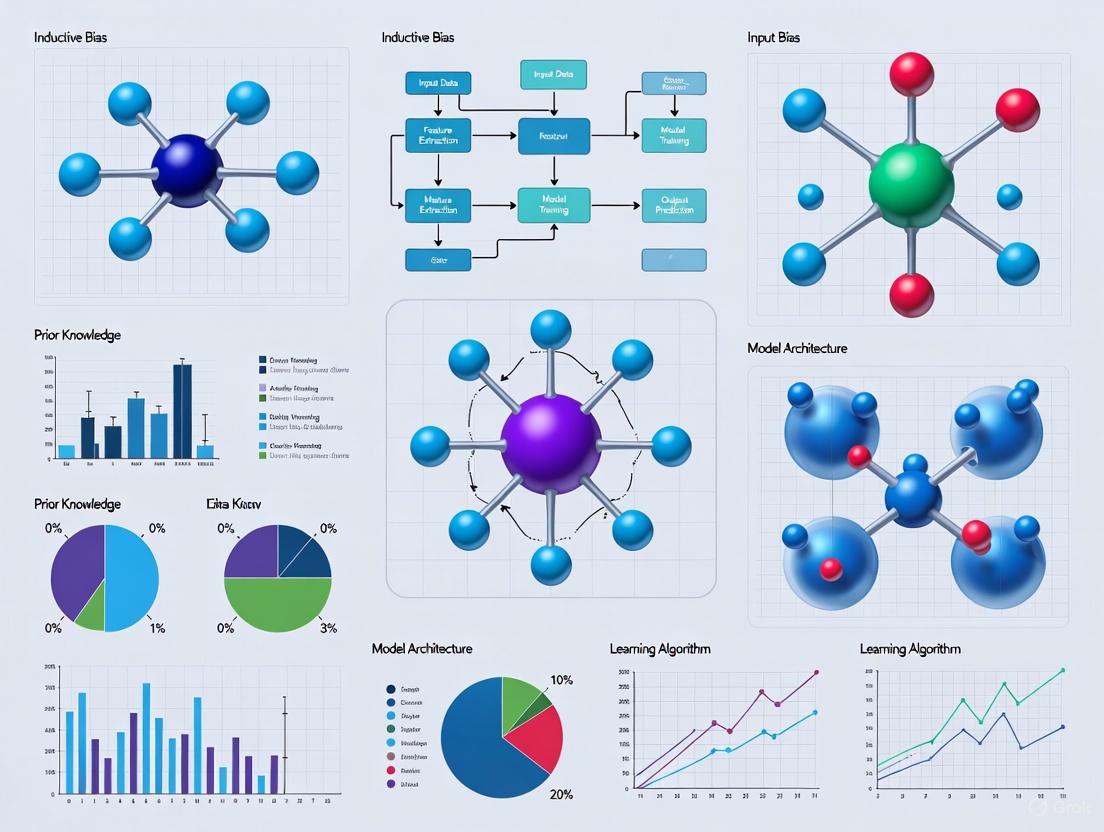
This article explores the critical role of inductive bias—the set of assumptions that guide machine learning algorithms—in revolutionizing materials science and biomedical research.
Harnessing Inductive Bias: Accelerating Machine Learning for Materials Discovery and Drug Development
Abstract
This article explores the critical role of inductive bias—the set of assumptions that guide machine learning algorithms—in revolutionizing materials science and biomedical research. It provides a comprehensive framework for researchers and drug development professionals, covering foundational concepts, methodological applications, and optimization strategies. By examining controlled comparisons and real-world case studies, such as the large-scale discovery of stable crystals, we demonstrate how carefully chosen inductive biases can dramatically improve the data efficiency, generalization, and predictive power of models. The article concludes with validation techniques and future directions for deploying these principles to accelerate the design of novel therapeutic materials and drugs.
What is Inductive Bias? The Foundational Principles Guiding Machine Learning
In the realm of machine learning, particularly within data-scarce fields like materials science, inductive bias constitutes the fundamental set of assumptions that enables a learning algorithm to prioritize one solution over another when faced with limited data. Formally defined as the set of assumptions that a learner uses to predict outputs for inputs it has not encountered, inductive bias provides the necessary guidance for navigating the infinite hypothesis space that characteristically challenges machine learning applications [1]. Without such biases, the problem of learning from finite data becomes computationally intractable, as unseen situations might have arbitrary output values. In materials science research, where empirical data is often costly to produce and available in limited quantities, the strategic introduction of appropriate inductive biases becomes paramount for accelerating discovery and enhancing predictive capabilities.
The conceptual foundation of inductive bias aligns with the philosophical principle of Occam's razor, which assumes that the simplest consistent hypothesis about the target function is most likely to be correct [1]. This principle manifests practically across machine learning algorithms through various forms: maximum margin separation in support vector machines, conditional independence in Naive Bayes classifiers, local consistency in k-nearest neighbors algorithms, and minimum description length in model selection [1]. As machine learning increasingly transforms materials research and development from experience-driven to data-driven frameworks, understanding and engineering these biases has become essential for developing effective predictive models and generative systems in scientific domains characterized by complexity and data scarcity.
Theoretical Foundations of Inductive Bias
Formal Definitions and Conceptual Framework
Inductive bias, also referred to as learning bias, encompasses any factor that makes a learning algorithm prefer one pattern over another independently of the observed data itself [1]. This conceptual framework acknowledges that for any finite set of training examples, multiple hypotheses typically exist that can explain the data equally well. The inductive bias allows the algorithm to select among these competing hypotheses, effectively constraining the learning space to make generalization possible.
From a mathematical logic perspective, inductive bias can be represented as a logical formula that, when combined with the training data, logically entails the hypothesis generated by the learner [1]. However, this strict formalism often fails to capture the practical manifestations of inductive bias in complex models like deep neural networks, where the bias can typically only be described roughly or not at all in precise logical terms. This theoretical foundation establishes why no machine learning algorithm can be truly unbiased—the core selection mechanism necessary for learning inherently embodies assumptions about the nature of the target function.
Common Types of Inductive Bias in Machine Learning
Table 1: Common Types of Inductive Biases in Machine Learning Algorithms
| Bias Type | Description | Example Algorithms |
|---|---|---|
| Maximum Conditional Independence | Assumes feature independence within classes to simplify probability estimations | Naive Bayes Classifier |
| Maximum Margin | Prefers decision boundaries with maximum separation between classes | Support Vector Machines |
| Minimum Description Length | Favors hypotheses that can be described with minimal complexity | Decision Trees, Model Selection Criteria |
| Minimum Features | Assumes most features are irrelevant unless proven otherwise | Feature Selection Algorithms |
| Nearest Neighbors | Assumes similar inputs map to similar outputs | k-Nearest Neighbors |
| Smoothness Prior | Assumes the target function changes gradually with small input changes | Most Regression Methods |
The biases enumerated in Table 1 represent just a subset of the explicit and implicit assumptions built into machine learning algorithms. In practice, these biases interact with dataset characteristics to determine model performance, with different biases proving more or less appropriate depending on the underlying structure of the data. Research has demonstrated that these biases are not merely algorithmic choices but fundamentally shape the representations learned by models, affecting their generalization capabilities and alignment with target domains [2].
Inductive Bias in Scientific Discovery: Materials Science Applications
Large-Scale Active Learning for Materials Discovery
The groundbreaking Graph Networks for Materials Exploration (GNoME) project exemplifies the strategic application of inductive bias to revolutionize materials discovery. By combining graph neural networks with active learning, researchers achieved an unprecedented expansion of known stable crystals from approximately 48,000 to over 421,000—an almost order-of-magnitude increase [3]. This approach leveraged several key inductive biases: the graph representation bias that structures materials as graphs with atoms as nodes and bonds as edges, the smoothness prior assuming similar atomic arrangements yield similar properties, and the active learning bias that strategically selects candidates for expensive computational verification.
The GNoME framework implemented an iterative discovery process where graph networks trained on existing crystal structures predicted promising candidate materials, which were then verified using density functional theory (DFT) calculations. These verified structures subsequently joined the training set in the next active learning cycle, creating a data flywheel effect [3]. This process demonstrates how appropriately designed inductive biases can dramatically improve the efficiency of scientific discovery, with the final GNoME models achieving prediction errors of just 11 meV atom⁻¹ on relaxed structures and precision rates above 80% for stable crystal predictions.
Figure 1: The GNoME active learning workflow demonstrating how inductive biases in graph neural networks accelerate materials discovery through iterative prediction and verification cycles.
Artificial Inductive Bias for Data Generation in Scarce Environments
Materials science frequently encounters data scarcity challenges, particularly for novel material classes or expensive-to-characterize properties. Recent research addresses this through artificially generated inductive biases that enhance deep generative models (DGMs) for synthetic tabular data generation [4]. This approach leverages transfer learning and meta-learning techniques to create biases that guide DGMs when limited real data is available, significantly improving the quality and reliability of generated materials data.
The methodology explores four distinct techniques for generating artificial inductive bias: pre-training on related datasets, model averaging across multiple training runs, Model-Agnostic Meta-Learning (MAML), and Domain-Randomized Search (DRS). Experiments demonstrated that transfer learning strategies like pre-training and model averaging outperformed meta-learning approaches, achieving relative gains of up to 50% in synthetic data quality as measured by Jensen-Shannon divergence [4]. This artificial inductive bias framework provides a powerful tool for materials researchers needing to overcome data limitations while maintaining model reliability.
Table 2: Performance Comparison of Artificial Inductive Bias Generation Methods
| Method | Key Principle | Relative Performance | Best For |
|---|---|---|---|
| Pre-training | Transfer learning from related domains | 40-50% improvement | When related datasets available |
| Model Averaging | Ensemble multiple training runs | 35-45% improvement | Stabilizing training variability |
| MAML | Meta-learning for fast adaptation | 20-30% improvement | Rapid adaptation to new tasks |
| DRS | Domain randomization for robustness | 15-25% improvement | Enhanced out-of-distribution generalization |
Experimental Protocols and Methodologies
GNoME Discovery Framework Protocol
The GNoME materials discovery protocol implements a sophisticated active learning cycle with carefully designed inductive biases at each stage [3]:
Candidate Generation: Employ two complementary frameworks:
- Structural candidates: Generated through symmetry-aware partial substitutions (SAPS) of known crystals, with over 10⁹ candidates considered throughout active learning.
- Compositional candidates: Generated through oxidation-state balancing with relaxed constraints, initialized with 100 random structures via ab initio random structure searching (AIRSS).
Model Filtration: Utilize graph neural networks with specific architectural biases:
- Graph representation with atoms as nodes and bonds as edges
- Message-passing formulation with normalized adjacency
- Swish nonlinearities in multilayer perceptrons
- Volume-based test-time augmentation and deep ensembles for uncertainty quantification
DFT Verification: Evaluate filtered candidates using density functional theory calculations with standardized Materials Project settings, including:
- Vienna Ab initio Simulation Package (VASP) implementation
- Structure relaxation to ground state
- Energy calculations relative to competing phases
Active Learning Integration: Incorporate successfully verified structures into subsequent training cycles, progressively refining the model's representations and predictive accuracy through six rounds of active learning.
This protocol demonstrates how thoughtfully designed inductive biases operating at multiple levels can synergistically accelerate scientific discovery, with the final GNoME models achieving unprecedented prediction accuracy and discovering 381,000 new stable crystals on the updated convex hull.
Artificial Inductive Bias Generation Protocol
For generating synthetic materials data in scarce environments, the following protocol implements artificial inductive bias through transfer learning [4]:
Base Model Selection: Choose appropriate deep generative models (VAE, GAN, or diffusion models) compatible with tabular materials data.
Pre-training Phase:
- Source related datasets from public materials databases (Materials Project, OQMD, AFLOW)
- Train base model on aggregated datasets until convergence
- Capture general materials patterns and inter-atomic relationships
Fine-tuning Phase:
- Initialize with pre-trained weights
- Continue training on limited target dataset
- Apply reduced learning rate (typically 0.1× of pre-training rate)
- Early stopping based on validation divergence metrics
Synthetic Data Generation:
- Sample from fine-tuned model's learned distribution: xg ∼ pθ
- Generate synthetic datasets of desired size
- Validate using Jensen-Shannon divergence and domain-specific metrics
Downstream Application:
- Employ synthetic data to augment training sets for predictive models
- Use as prior for experimental design or hypothesis generation
- Validate predictive performance on held-out experimental data
This protocol demonstrates how artificially induced biases through transfer learning can compensate for data scarcity, enabling effective modeling in materials science domains where comprehensive experimental data remains unavailable.
The Scientist's Toolkit: Research Reagent Solutions
Table 3: Essential Computational Tools for Inductive Bias Research in Materials Science
| Tool Category | Specific Solutions | Function | Application Example |
|---|---|---|---|
| Deep Learning Frameworks | TensorFlow, PyTorch, JAX | Implement neural network architectures with customizable biases | Graph neural networks for materials property prediction |
| Materials Databases | Materials Project, OQMD, AFLOW, ICSD | Provide training data and pre-training sources | Transfer learning for data-scarce material classes |
| Generative Models | CTGAN, TVAE, Diffusion Models | Synthetic data generation with inductive biases | Augmenting limited experimental datasets |
| Electronic Structure Codes | VASP, Quantum ESPRESSO, ABINIT | Ground-truth verification via DFT calculations | Active learning validation in GNoME |
| Analysis Metrics | Jensen-Shannon Divergence, KL Divergence | Quantify synthetic data quality and model alignment | Evaluating artificial inductive bias approaches |
Implications and Future Directions
The deliberate engineering of inductive biases represents a paradigm shift in computational materials science, transitioning from generic machine learning applications to domain-optimized approaches. The demonstrated successes in materials discovery and synthetic data generation underscore how strategically designed biases can overcome fundamental data limitations, accelerating scientific progress while reducing experimental costs.
Future research directions will likely focus on dynamic bias adjustment, where inductive biases evolve throughout the learning process rather than remaining static [1]. Additionally, the emerging understanding that different model architectures can achieve similar brain alignment through different bias combinations suggests a principle of equifinality in inductive bias design [2], where multiple bias configurations may lead to similarly effective outcomes for materials prediction tasks.
As materials science continues to embrace machine learning, the explicit consideration and design of inductive biases will become increasingly central to research methodologies. This conscious engineering of assumptions represents not just a technical improvement but a fundamental advancement in how computational and experimental approaches integrate to accelerate materials discovery and development.
In the realm of machine learning, particularly when applied to complex scientific domains like materials science and drug discovery, researchers face a fundamental challenge: the problem of infinite hypotheses. Without any guiding assumptions, a learning algorithm presented with a finite set of training data would have countless possible ways to generalize to unseen examples [1]. This problem stems from the nature of inductive reasoning, where valid observations can lead to numerous different hypotheses, many of which may be false [5]. In materials science research, where data is often sparse and acquisition costs are high, this challenge becomes particularly acute. The inductive bias of a learning algorithm—the set of assumptions that guides which hypotheses it prioritizes—serves as an essential mechanism to constrain this infinite space of possible solutions and enable effective generalization [1] [6]. Without such bias, machine learning models would be unable to make meaningful predictions beyond their training data, rendering them useless for the discovery of novel materials or drug-target interactions.
The Theoretical Foundation of Inductive Bias
Formal Definition and Core Principles
Inductive bias, also known as learning bias, encompasses the set of assumptions that a learner uses to predict outputs for inputs it has not encountered [1]. More formally, it represents anything that makes an algorithm learn one pattern instead of another pattern [1]. From a mathematical perspective, learning involves searching a space of solutions for one that provides a good explanation of the observed data, yet in many cases, there may be multiple equally appropriate solutions [1]. Inductive bias allows a learning algorithm to prioritize one solution or interpretation over another, independent of the observed data [1].
A classical example of an inductive bias is Occam's razor, which assumes that the simplest consistent hypothesis about the target function is actually the best [1]. Here, "consistent" means that the hypothesis yields correct outputs for all examples given to the algorithm. This principle has equivalents in mathematical formulations such as Solomonoff's theory of inductive inference [5].
The Role of Bias in Generalization
The relationship between inductive bias and generalization capability is fundamental to machine learning. When a model is trained on a subset of observations, the goal is to create a generalization that remains valid for new, unseen data [5]. However, for any finite set of samples, there exists an infinite set of hypotheses that could describe the training data [5]. For instance, consider observations of two points of some single-variable function—it is possible to fit a single linear model and an infinite number of periodic or polynomial functions that perfectly fit the observations [5]. Without inductive bias, choosing one hypothesis over another becomes arbitrary, leading to poor performance on unseen data.
Table 1: Common Types of Inductive Bias in Machine Learning
| Bias Type | Definition | Example Algorithms |
|---|---|---|
| Maximum Conditional Independence | Attempts to maximize conditional independence when cast in a Bayesian framework | Naive Bayes classifier [1] |
| Maximum Margin | Attempts to maximize the width of the boundary between classes | Support Vector Machines [1] |
| Minimum Description Length | Prefers hypotheses that minimize the length of their description | Minimum Description Length algorithms [1] |
| Nearest Neighbors | Assumes similar cases belong to similar classes | k-Nearest Neighbors [1] |
| Language Bias | Constraints placed on the hypothesis space itself | Linear regression [7] |
| Search Bias | Preferences when selecting hypotheses from available options | Decision trees with preference for shorter trees [7] |
Inductive Bias in Machine Learning Algorithms
Algorithm-Specific Biases
Different machine learning architectures incorporate distinct inductive biases that shape their learning processes and generalization capabilities:
- Linear Regression: Assumes a linear relationship between input variables and output [7].
- k-Nearest Neighbors: Operates on the assumption that similar data points exist in close proximity within the feature space [1] [7].
- Decision Trees: Incorporates a bias that tasks can be solved through a series of binary questions, resulting in orthogonal decision boundaries [5] [7].
- Bayesian Models: Utilizes prior knowledge as a form of inductive bias, which is particularly valuable when data is limited [5] [7].
Deep Learning Architectures and Their Biases
Modern deep learning architectures exhibit particularly interesting inductive biases:
Convolutional Neural Networks (CNNs) incorporate several key biases: locality (closely placed pixels are related), weight sharing (patterns are searched for across different parts of an image), translation equivariance, and translation invariance through pooling layers [5]. Research has revealed that CNNs can develop either shape bias or texture bias depending on their training data and augmentation strategies [5] [8]. Models with higher shape bias demonstrate greater robustness to image distortions and often achieve higher performance on classification tasks [8].
Recurrent Neural Networks (RNNs) exhibit sequential bias (processing tokens one by one), memory bottlenecks, and recursion (applying the same function across all input steps) [5]. For natural language processing tasks, RNNs and LSTMs have demonstrated a bias toward hierarchical induction, which is believed to be beneficial for understanding linguistic structure [5].
Graph Neural Networks (GNNs) incorporate a strong relational bias due to their graph structure, making them particularly suitable for data that can be represented as objects and relations, such as molecular structures in materials science [5]. They also exhibit permutation invariance, which is desirable for data with arbitrary ordering [5].
Transformers possess notably weak inductive biases, making them highly flexible but also data-hungry [5] [8]. This lack of strong bias allows them to find better optima when sufficient data is available but results in poorer performance in low-data settings [5]. Research shows that injecting appropriate inductive biases can improve transformer performance, especially when data is limited [5].
Diagram 1: How inductive bias constrains infinite hypotheses
Inductive Bias in Materials Science and Drug Discovery
Materials Discovery Applications
The application of inductive bias has proven particularly transformative in materials science research. The Graph Networks for Materials Exploration (GNoME) framework has demonstrated unprecedented levels of generalization in materials discovery by leveraging graph neural networks with appropriate inductive biases [3]. Through iterative active learning, where models are trained on available data and used to filter candidate structures, GNoME has discovered over 2.2 million stable crystal structures—an order-of-magnitude expansion from previous knowledge [3].
The GNoME approach exemplifies how appropriate inductive bias enables efficient exploration of combinatorially large chemical spaces, particularly for structures with five or more unique elements that had previously eluded efficient exploration [3]. The models developed through this process achieve remarkable prediction accuracy of 11 meV atom⁻¹ and improve the precision of stable predictions to above 80% for structures and 33% per 100 trials for composition-only predictions [3].
Table 2: GNoME Model Performance Through Active Learning Scaling
| Active Learning Round | Stable Structures Discovered | Prediction Error (meV/atom) | Hit Rate (%) |
|---|---|---|---|
| Initial | Baseline from existing databases | 21 | <6% |
| Intermediate | Hundreds of thousands | ~15 | ~40-60% |
| Final (After 6 rounds) | 2.2 million | 11 | >80% |
Pharmacokinetics and Drug Development
In pharmacokinetics (PK), conventional models contain several useful inductive biases that guide convergence toward physiologically realistic predictions of drug concentrations [9]. These include the structure of compartment models, equations representing covariate effects, and informed initial parameter estimates [9]. Implementing similar biases in neural networks has proven challenging but essential for model robustness and predictive performance.
Recent work on Deep Compartment Models (DCMs) introduces physiological constraints that guide models toward more realistic solutions [9]. These constrained models demonstrate improved robustness in sparse data settings—a common scenario in drug development—and produce more physiologically plausible concentration-time curves compared to unconstrained models [9]. Multi-branch networks that connect specific covariates to particular PK parameters further reduce the propensity of models to learn spurious effects while enhancing interpretability [9].
In drug-target interaction (DTI) prediction, the distinction between inductive and transductive learning approaches has significant implications for model generalization [10]. Transductive methodologies, which directly build prediction models for all available data rather than learning generalizable rules, can suffer from data leakage that artificially inflates performance metrics [10]. Inductive approaches, which learn underlying patterns that can be applied to unseen samples, prove more suitable for genuine drug repurposing applications despite potentially lower apparent performance on traditional benchmarks [10].
Experimental Protocols and Methodologies
Implementing Physiological Constraints in Pharmacokinetics
The implementation of physiological constraints in pharmacokinetic modeling follows a detailed methodology:
Problem Definition: For hemophilia A patients, the pharmacokinetics of FVIII is described using a two-compartmental structure represented by a system of partial differential equations [9]:
dA₁/dt = IV₁ + A₂·k₂₁ - A₁(k₁₀ + k₁₂) dA₂/dt = A₁·k₁₂ - A₂·k₂₁
where rate constants k are functions of PK parameters: k₁₀ = CL/V₁, k₁₂ = Q/V₁, and k₂₁ = Q/V₂, with {CL, Q, V₁, V₂} representing clearance, inter-compartmental clearance, central distribution volume, and peripheral distribution volume, respectively [9].
Constrained Model Architecture: Place bounds on PK parameter values, estimate global values for difficult-to-identify parameters, and connect covariates to specific PK parameters using multi-branch networks [9].
Evaluation Framework: Compare predicted concentration-time curves against unconstrained models and previous PK models using real-world datasets, with particular attention to sparse data scenarios [9].
Active Learning for Materials Discovery
The GNoME framework for materials discovery employs a sophisticated active learning protocol:
Candidate Generation: Two parallel frameworks generate candidates through (1) modifications of existing crystals using symmetry-aware partial substitutions (SAPS) and (2) composition-based prediction followed by ab initio random structure searching (AIRSS) [3].
Model Filtration: Graph neural networks filter candidates using volume-based test-time augmentation and uncertainty quantification through deep ensembles [3].
DFT Verification: Filtered structures undergo evaluation using Density Functional Theory (DFT) computations in the Vienna Ab initio Simulation Package (VASP) [3].
Iterative Active Learning: Results from DFT verification are incorporated into subsequent training rounds, creating a data flywheel that improves model robustness over six rounds of active learning [3].
Diagram 2: Active learning workflow in materials discovery
Table 3: Essential Research Resources for Inductive Bias Studies
| Resource/Tool | Function/Purpose | Application Context |
|---|---|---|
| GNoME Framework | Graph neural network architecture for materials exploration | Large-scale materials discovery [3] |
| Deep Compartment Model (DCM) | Neural-ODE-based approach with physiological constraints | Pharmacokinetics and drug concentration prediction [9] |
| VASP (Vienna Ab initio Simulation Package) | Density Functional Theory computations | Materials energy verification [3] |
| GUEST Toolbox | Python tools for fair DTI method evaluation | Drug-target interaction prediction [10] |
| Symmetry-Aware Partial Substitutions (SAPS) | Crystal modification with incomplete replacements | Materials candidate generation [3] |
| AIRSS (Ab Initio Random Structure Searching) | Structure initialization from compositions | Materials discovery without structural information [3] |
Inductive bias is not merely a technical consideration in machine learning algorithm design but a fundamental component that enables scientific discovery in data-rich domains like materials science and drug development. The appropriate incorporation of domain knowledge through architectural constraints, training protocols, and model formalisms determines the efficiency and robustness of discovery pipelines. As demonstrated by breakthroughs in materials discovery and pharmacokinetic modeling, carefully calibrated inductive biases allow researchers to navigate vast hypothesis spaces efficiently while maintaining physiological plausibility and scientific relevance.
The future of inductive bias in scientific machine learning lies in developing adaptive approaches that can shift their bias as more data becomes available [1], while maintaining the interpretability and trustworthiness required for clinical and industrial applications [9]. As these fields advance, the deliberate design and implementation of inductive biases will remain essential for transforming data into discoverie.
Common Types of Inductive Bias in Machine Learning Algorithms
In the realm of machine learning (ML), inductive bias refers to the set of assumptions that a learning algorithm uses to predict outputs for inputs it has not encountered before [1]. These assumptions are fundamental to the learning process, as they guide the algorithm in selecting one generalization over another from the infinite hypotheses that could fit the observed training data [11] [12]. In essence, inductive bias represents the "built-in guidance" that enables models to generalize from limited training examples to unseen situations, making it a cornerstone of effective machine learning [11]. Without such bias, learning algorithms would be reduced to random guessing when faced with new data, as they would have no basis for preferring one hypothesis over another equally consistent one [13].
The concept of inductive bias takes on particular significance in scientific domains like materials science research, where the careful incorporation of domain knowledge through appropriate biases can dramatically accelerate discovery processes. For instance, in materials research, inductive biases that reflect physical principles or chemical intuitions can guide models toward more plausible and generalizable predictions, enabling breakthroughs in areas from stable crystal discovery to property prediction [3] [14]. As Mitchell noted, "If biases and initial knowledge are at the heart of the ability to generalize beyond observed data, then efforts to study machine learning must focus on the combined use prior knowledge, biases, and observation in guiding the learning process" [15].
A Formal Taxonomy of Inductive Biases
Inductive biases manifest differently across machine learning algorithms, with each type influencing the learning process in distinct ways. The following table provides a structured overview of the primary categories of inductive bias discussed in the literature:
Table 1: Common Types of Inductive Bias in Machine Learning Algorithms
| Bias Type | Core Principle | Representative Algorithms | Key Characteristics |
|---|---|---|---|
| Language Bias | Limits the form of hypotheses a model can learn [11] | Linear regression [11], Decision trees [11] | Restricts hypothesis space; assumes specific functional forms (e.g., linear relationships) [11] |
| Search Bias | Defines the path for exploring possible models [11] | ID3, C4.5 decision trees [11] | Favors certain solutions during search (e.g., shorter trees) [11]; can be greedy or heuristic-driven |
| Parameter Bias | Prefers smaller or simpler parameter values [11] | Lasso regression [11], Regularized models | Uses techniques like regularization to control complexity; promotes sparsity [11] [16] |
| Heuristic Bias | Employs rules of thumb based on experience [11] | Reinforcement learning [11] | Uses approximate strategies for computationally hard problems; trial-and-error approaches [11] |
| Prior Probability Bias | Incorporates prior beliefs before seeing data [11] | Bayesian networks [11], Naive Bayes [1] | Starts with initial assumptions updated as data arrives [11]; maximum conditional independence [1] |
| Maximum Margin | Seeks the widest possible separation boundary [1] | Support Vector Machines (SVM) [1] | Assumes distinct classes are best separated by wide boundaries [1]; enhances generalization |
| Minimum Description Length | Favors the shortest hypothesis description [1] | Information-theoretic models | Embodies Occam's razor principle; simpler explanations are preferred [1] [16] |
| Nearest Neighbors | Assumes similar inputs have similar outputs [1] | k-Nearest Neighbors (k-NN) [1] | Local consistency assumption; neighborhood-based reasoning [1] |
These biases can be further categorized as either restrictive (completely excluding certain functions) or preferential (favoring certain solutions over others) [12]. For example, linear regression employs a strong restrictive bias by only being able to express predictions as weighted sums of features, while regularized regression exhibits a preferential bias toward solutions with fewer, lower-weight features [13].
Experimental Frameworks and Methodologies
Graph Networks for Materials Exploration (GNoME)
The GNoME framework exemplifies how carefully designed inductive biases can accelerate scientific discovery in materials science. This approach combines graph neural networks (GNNs) with large-scale active learning to discover novel inorganic crystals with unprecedented efficiency [3].
Table 2: GNoME Experimental Framework and Components
| Component | Implementation | Role in Materials Discovery |
|---|---|---|
| Candidate Generation | Symmetry-Aware Partial Substitutions (SAPS) [3], Random structure search [3] | Creates diverse candidate structures beyond human chemical intuition |
| Architecture | Graph Neural Networks (GNNs) [3] | Represents crystals as graphs; messages normalized by average adjacency [3] |
| Active Learning Cycle | Iterative prediction, DFT verification, and model retraining [3] | Creates data flywheel; improves from 6% to >80% hit rate for stable structures [3] |
| Stability Prediction | Decomposition energy with respect to convex hull [3] | Filters candidates; predicts formation energy to 11 meV atom⁻¹ accuracy [3] |
| Validation | Density Functional Theory (DFT) [3], r2SCAN computations [3] | Verifies model predictions; confirms 736 structures already experimentally realized [3] |
The methodology begins with generating candidate structures through two parallel frameworks: one modifies existing crystals using symmetry-aware substitutions, while another generates compositions without structural information followed by ab initio random structure searching [3]. GNoME models, implemented as graph networks, predict the total energy of each candidate crystal, with inputs converted to graphs through one-hot embeddings of elements [3]. The message-passing formulation employs multilayer perceptrons with swish nonlinearities, with a critical design choice being the normalization of messages by the average adjacency of atoms across the dataset [3].
Through six rounds of active learning, where model predictions are verified using DFT calculations and incorporated into subsequent training, the framework demonstrated remarkable improvement: initial hit rates below 6% for structural candidates and 3% for compositional candidates improved to over 80% and 33%, respectively [3]. This iterative refinement process ultimately led to the discovery of 2.2 million structures stable with respect to previous work, with 381,000 entries residing on the updated convex hull as newly discovered materials—an order-of-magnitude expansion from previously known stable crystals [3].
Chemistry-Informed Heuristic Rule Learning
Another approach demonstrating the power of domain-specific inductive biases involves learning simple heuristic rules for materials classification based solely on chemical composition. This methodology incorporates chemistry-informed inductive biases derived from the structure of the periodic table to classify materials as topological or metallic [14].
The experimental protocol involves framing the classification task as learning interpretable rules that require minimal training data while maintaining high accuracy. By incorporating inductive biases that reflect chemical principles (such as periodicity trends, electronegativity patterns, and atomic radius considerations), the researchers developed models that significantly reduced the amount of training data required to reach a given level of test accuracy compared to conventional deep learning approaches [14].
This approach stands in contrast to complex, nonlinear models that typically require massive datasets, instead prioritizing interpretability and data efficiency through carefully chosen chemical priors. The methodology demonstrates that for certain materials classification tasks, simple learned heuristics with appropriate domain biases can compete with or even surpass more complex models, particularly when training data is limited [14].
Table 3: Essential Computational Resources for ML-Driven Materials Research
| Resource Category | Specific Tools & Techniques | Function in Materials Discovery |
|---|---|---|
| First-Principles Calculations | Density Functional Theory (DFT) [3], r2SCAN [3] | Provides high-fidelity energy computations; serves as ground truth for ML models |
| Materials Databases | Materials Project (MP) [3], Inorganic Crystal Structure Database (ICSD) [3] | Curates stable crystal structures; provides training data and benchmarking |
| Neural Network Architectures | Graph Neural Networks (GNNs) [3], Transformers [17] | Learns complex structure-property relationships; enables property prediction |
| Structure Generation | Symmetry-Aware Partial Substitutions (SAPS) [3], AIRSS [3] | Generates diverse candidate structures beyond human intuition |
| Simulation Packages | Vienna Ab initio Simulation Package (VASP) [3] | Performs DFT calculations; verifies model predictions |
| Analysis Frameworks | Geometric Deep Learning [17], Equivariance Theory [17] | Provides mathematical framework for relational inductive biases |
Implications for Materials Science Research
The strategic application of inductive biases in machine learning has profound implications for materials science research. The GNoME framework's success in discovering 2.2 million stable structures—including many with 5+ unique elements that had previously eluded human chemical intuition—demonstrates how appropriate biases can enable efficient exploration of combinatorially vast chemical spaces [3]. Furthermore, the emergent generalization capabilities observed in scaled GNoME models suggest a path toward universal energy predictors capable of handling diverse material structures [3].
For materials researchers, understanding inductive biases enables more informed algorithm selection and model design. Different biases align better with different aspects of materials science problems: convolutional neural networks exhibit translation invariance ideal for spatial patterns in material images [12]; graph networks naturally capture atomic relational structures [3] [17]; and chemistry-informed biases enable data-efficient classification [14]. This alignment between algorithmic biases and domain structures is crucial for developing models that are not only predictive but also physically plausible and robust.
The materials discovered through these bias-informed approaches show promising technological potential, with demonstrations including screening for layered materials and solid-electrolyte candidates [3]. Additionally, the scale and diversity of calculations unlock modeling capabilities for downstream applications, particularly in learning accurate interatomic potentials for molecular-dynamics simulations and predicting ionic conductivity with high fidelity [3]. As machine learning continues to transform materials research, the deliberate design and application of inductive biases will remain essential for accelerating discovery, improving performance, and stimulating innovation across clean energy, information processing, and beyond.
In the domain of materials science research, the development of robust machine learning (ML) models is frequently challenged by the dual pitfalls of overfitting and underfitting. These phenomena are particularly acute given the high-dimensionality of materials data and the often modest size of experimental datasets. This technical guide elucidates the foundational role of inductive bias—the inherent assumptions a learning algorithm uses to make predictions—in navigating the bias-variance tradeoff to prevent these issues. Drawing on recent advancements, including graph networks trained at scale, we demonstrate how explicitly engineered inductive biases are not merely a theoretical concept but a practical necessity. They enable models to generalize effectively from limited data, thereby accelerating the discovery of novel functional materials, from solid-electrolyte candidates to high-entropy alloys.
The ultimate goal of any machine learning model in materials research is generalization—the ability to make accurate predictions on new, unseen data based on patterns learned from a training dataset [18] [19]. Two of the most significant obstacles to achieving this goal are:
Overfitting: This occurs when a model learns the training data too well, including its noise and irrelevant idiosyncrasies. An overfitted model is overly complex, performing excellently on its training data but failing to generalize to new data [18] [19]. In materials science, this might manifest as a model that perfectly predicts properties for a specific synthesis batch but fails when applied to materials produced under slightly different conditions.
Underfitting: This occurs when a model is too simplistic to capture the underlying patterns in the data. An underfitted model performs poorly on both the training data and new data, as it has failed to learn the true relationships [18] [19]. An example would be using a linear model to predict a complex, non-linear property like catalytic activity.
The following table summarizes the core concepts of this balancing act:
Table 1: Core Concepts in Model Generalization
| Concept | Formal Definition | Manifestation in Materials Science |
|---|---|---|
| Training Error | The error of a model on the training data used to derive it [18]. | Error on the dataset of known materials used to train a property prediction model. |
| True Generalization Error | The error of a model on the entire population or distribution from which training data were sampled [18]. | The true, often unknown, error of the model when applied to all possible materials within the domain of interest. |
| Estimated Generalization Error | The estimated error (via a procedure like cross-validation) of a model on the population [18]. | The error measured on a held-out test set of materials, providing an estimate of true performance. |
| Overfitting (OF) | Creating a model that accurately represents the training data but fails to generalize well because it learned unrepresentative patterns [18]. | A model that memorizes the crystal structures in the training set but cannot accurately predict the stability of newly proposed crystals. |
| Underfitting (UF) | Creating a model that is too simplistic, failing to capture genuine patterns in both the training data and the population [18]. | A model that uses only atomic number to predict material band gap, missing the crucial influences of crystal structure and bonding. |
The tension between overfitting and underfitting is formally captured by the bias-variance tradeoff. High bias leads to underfitting, while high variance leads to overfitting [19]. The central thesis of this paper is that a carefully calibrated inductive bias is the most powerful tool for navigating this tradeoff, especially in data-scarce domains like materials science.
Inductive Bias: The Engine of Generalization
Definitions and Core Principles
Inductive bias refers to the set of assumptions, constraints, and preferences built into a learning algorithm that guides its inferences from limited data to general hypotheses [20]. Without any inductive bias, a learning algorithm would have no basis to prefer one hypothesis over another that fits the training data equally well, a problem known as the "problem of induction" [19].
Inductive biases can be broadly categorized into two types [20]:
- Representational Bias: This defines the hypothesis space itself—the set of all possible models the algorithm can represent. It is introduced through the chosen model architecture, such as a convolutional neural network, a decision tree, or a specific graph network design.
- Procedural Bias: This defines the manner in which the hypothesis space is searched. Examples include the preference for high information gain attributes in decision trees or the gradient-descent search in the weight space of neural networks.
All machine learning algorithms possess an inherent inductive bias. The ID3 algorithm for decision trees is biased toward shallow trees with high information gain attributes near the root, while the error backpropagation algorithm is biased toward smooth interpolation between data points [20]. However, these implicit biases are often insufficient, and an explicit bias must be introduced to achieve acceptable performance, particularly with complex data.
A Quantitative Measure of Inductive Bias
Recent research has sought to move beyond qualitative descriptions to exact computation. Boopathy et al. (2024) propose a novel method for efficiently computing the inductive bias required for generalization on a task with a fixed training data budget [21]. Formally, this corresponds to the amount of information required to specify well-generalizing models within a specific hypothesis space. Their approach involves modeling the loss distribution of random hypotheses drawn from a hypothesis space to estimate the required inductive bias for a task relative to these hypotheses. This method provides a direct estimate without using bounds and is applicable to diverse hypothesis spaces [21].
Empirical results using this metric confirm that higher-dimensional tasks require greater inductive bias. Furthermore, the research demonstrates that neural networks, as a model class, encode large amounts of inductive bias relative to other expressive model classes, and the metric can quantify the relative difference in inductive bias between different neural network architectures [21].
The Scientist's Toolkit: Implementing Inductive Bias in Materials Research
The theoretical principles of inductive bias are implemented through a practical set of methodologies and tools. The following table details key "research reagents" in the computational toolkit for enforcing effective inductive biases in materials ML.
Table 2: Key Methodological "Reagents" for Inductive Bias in Materials Science
| Method/Technique | Category | Function in Preventing OF/UF | Exemplar Application in Materials |
|---|---|---|---|
| Graph Neural Networks (GNNs) | Representational Bias | Biases the model to learn from atomic connectivity and bond structure, ignoring arbitrary atom indexing (permutation invariance) [3]. | Predicting the stability of inorganic crystals by representing them as graphs of atoms (nodes) and bonds (edges) [3]. |
| Knowledge-Based Neural Networks (KBANN) | Representational Bias | Initializes network architecture and weights with prior knowledge (e.g., propositional rules), providing a strong head start and restricting the hypothesis space [20]. | Integrating expert knowledge from magnetic resonance spectroscopy of breast tissues into a neural network for improved diagnosis [20]. |
| Nested Cross-Validation | Procedural Bias | Provides an unbiased estimate of generalization error by strictly separating data used for model selection, training, and testing, thus detecting overfitting [18]. | Protocol 2 in Simon et al.'s genomics study, which gave unbiased error estimates by doing feature selection only on training folds [18]. |
| Regularization (L1/L2) | Procedural Bias | Penalizes model complexity (e.g., large weights) during training, discouraging over-reliance on any single feature and promoting simpler models [19]. | Preventing a composition-property model from overfitting to spurious correlations in high-dimensional elemental feature sets. |
| Symbolic Rule Injection | Representational Bias | Maps symbolic, human-readable rules (e.g., "IF element=Li AND coordinatinganions=O THEN highionic_conductivity") into a neural network's initial structure [20]. | Guiding the search for solid electrolyte materials by encoding known chemical heuristics for fast ion conduction. |
Experimental Protocol: The GNoME Framework for Materials Discovery
A landmark study in Nature (2023) provides a compelling experimental protocol for scaling deep learning with inductive bias for materials discovery [3]. The GNoME (Graph Networks for Materials Exploration) framework exemplifies the systematic application of inductive bias.
Objective: To discover novel, stable inorganic crystals by improving the efficiency of materials exploration by an order of magnitude.
Methodology:
- Candidate Generation: Two frameworks were used:
- Structural Candidates: Generated via symmetry-aware partial substitutions (SAPS) on available crystals, creating over 10^9 candidates.
- Compositional Candidates: Generated via reduced chemical formulas with relaxed oxidation-state constraints, followed by structure initialization using ab initio random structure searching (AIRSS).
- Model Filtration with Inductive Bias:
- Architecture: State-of-the-art graph neural networks (GNNs) were used, which possess a strong inherent inductive bias for modeling atomic systems. The inputs were crystal graphs with one-hot embeddings of elements.
- Active Learning: An iterative process was employed. GNoME models were trained on available data (initially ~69,000 materials from the Materials Project) and used to filter candidate structures. The energy of the filtered candidates was computed using DFT (Density Functional Theory). These results were then fed back as training data in the next round, creating a data flywheel.
- Uncertainty Quantification: Deep ensembles were used for test-time augmentation and uncertainty quantification to guide the active learning process.
Results: After six rounds of active learning, the GNoME models achieved a prediction error of 11 meV atom⁻¹ on relaxed structures and improved the precision of stable predictions (hit rate) to above 80% with structure. This scaled approach led to the discovery of 2.2 million new crystal structures stable with respect to previous work, expanding the number of known stable materials by almost an order of magnitude. The models also exhibited emergent generalization, accurately predicting structures with five or more unique elements despite their omission from initial training [3].
Experimental Protocol: Determining Inductive Bias Strength in KBANN
An earlier but highly illustrative protocol from the medical domain demonstrates how to determine the optimal strength of an explicitly injected inductive bias [20].
Objective: To synergistically combine expert knowledge with inductive learning from data for the interpretation of ³¹P magnetic resonance spectroscopy of breast tissues, and to determine a heuristic for the strength of the inductive bias.
Methodology:
- Knowledge Integration: Prior knowledge in the form of propositional rules was mapped into a feedforward neural network (KBANN), defining its architecture and initial weights.
- Bias Strength Heuristic: Instead of setting all weights reflecting prior knowledge to an arbitrary value (e.g., H=4), a heuristic was proposed that considered the neural network architecture, the prior knowledge, and the training data. This heuristic adjusted the bias strength to deal with uncertainty in the initial domain theory.
- Evaluation: The performance of models using the proposed heuristic was compared against models using standard, fixed inductive bias choices.
Results: The heuristic for determining the strength of the inductive bias outperformed both average and standard choices. This work concluded that knowledge-based neural networks are effective for biomedical applications where expert knowledge is available but complex, as they combine this knowledge with inductive learning from data. The expert knowledge provides an explicit inductive bias that (1) determines the network architecture and (2) initializes network weights to meaningful values instead of small random numbers, leading to faster convergence and better generalization [20].
Visualizing the Workflows
The following diagrams, generated with Graphviz, illustrate the core logical relationships and experimental protocols discussed in this guide.
Diagram 1: The Role of Inductive Bias in Model Generalization
Diagram Title: Inductive Bias Governs Model Fit
Diagram 2: The GNoME Active Learning Workflow
Diagram Title: GNoME Active Learning Cycle
In the high-stakes field of materials science research, where data can be scarce and the cost of failed experiments is high, achieving a critical balance between overfitting and underfitting is paramount. As we have demonstrated, this balance is not found by chance but is engineered through the deliberate design and application of inductive bias. From the architectural biases of graph neural networks to the injection of symbolic knowledge and the rigorous protocols of active learning, inductive bias provides the necessary guidance for models to learn genuine, generalizable patterns.
The quantitative and methodological advances discussed herein provide a roadmap for researchers. By treating inductive bias as a tangible, computable resource and a central component of the ML workflow, scientists can develop models that are not only statistically sound but also powerfully predictive, thereby accelerating the discovery and design of the next generation of transformative materials.
Inductive bias refers to the set of assumptions and preferences that guide a machine learning model's generalization from limited data. In scientific discovery, particularly materials science, these biases are not merely computational shortcuts but can be engineered to mirror and extend human scientific intuition. By encoding domain knowledge—such as the structure of the periodic table or the rules of crystal symmetry—into learning algorithms, researchers create models that learn more efficiently and discover patterns aligned with established scientific principles. This whitepaper explores the foundational role of inductive bias as a prior, detailing its theoretical underpinnings, practical implementations, and transformative impact on accelerating materials discovery.
Theoretical Foundations of Inductive Bias
Inductive biases in machine learning are the structural and algorithmic assumptions that make learning possible from finite data. In the context of scientific discovery, their primary function is to constrain the hypothesis space, guiding models toward solutions that are not only statistically plausible but also scientifically valid.
- Cognitive and Computational Alignment: Research in cognitive science indicates that human learning itself relies on inductive biases. Studies reverse-engineering internal models from human behavior have revealed a persistent bias towards simple, Markovian dynamical structures, especially during early learning phases [22]. This suggests that effective machine learning for science should balance data-driven evidence with similarly structured, domain-appropriate priors.
- Bias in Model Architecture: The choice of model architecture embodies a strong inductive bias. For materials science, Graph Neural Networks (GNNs) have emerged as a powerful framework because their fundamental assumption—that a material's properties are determined by the interactions between its constituent atoms—aligns perfectly with chemical intuition [3]. This stands in contrast to using less structured models for the same task.
- Bias from Data and Objectives: The "visual diet" or training data of a model is a source of inductive bias. Large-scale comparative studies have shown that the nature of the training data can have a more significant impact on whether a model develops human-aligned representations than its specific architecture or task objective [2]. This underscores the importance of curating scientifically relevant training datasets.
Case Studies in Materials Science
The application of inductive biases with strong scientific priors has led to order-of-magnitude improvements in the efficiency and scope of materials discovery.
Scaling Deep Learning with Graph Networks
The Graph Networks for Materials Exploration (GNoME) project exemplifies how architectural and data-generation biases can be scaled for unprecedented discovery [3].
- Architectural Bias: GNoME uses GNNs, which inherently assume that the properties of a crystal can be learned from the relational structure of its atoms. This bias directly encodes the chemist's intuition that structure determines properties.
- Discovery Workflow: The framework combines this with an active learning loop, where the model's predictions guide subsequent density functional theory (DFT) calculations. The results from these calculations then refine the model, creating a data flywheel.
- Quantitative Outcomes: This approach led to the discovery of 2.2 million new stable crystal structures, expanding the number of known stable materials by nearly an order of magnitude. The final GNoME models achieved a prediction error of 11 meV/atom and correctly identified stable structures with over 80% precision [3].
Table 1: Key Quantitative Outcomes from the GNoME Discovery Pipeline
| Metric | Performance/Outcome | Significance |
|---|---|---|
| New Stable Structures Discovered | 2.2 million | An order-of-magnitude expansion of known stable materials |
| Structures on the Updated Convex Hull | 381,000 | Newly discovered, thermodynamically stable materials |
| Prediction Error (Energy) | 11 meV/atom | Highly accurate zero-shot prediction of crystal stability |
| Stable Prediction Precision (Hit Rate) | >80% (with structure) | Dramatic improvement over previous methods (~1%) |
| Experimentally Realized Stable Structures | 736 | Independent validation of computational predictions |
Simple Heuristic Rules with Chemistry-Informed Bias
Beyond complex deep learning models, inductive biases can also be used to create remarkably simple and interpretable heuristic rules for materials classification [14].
- Methodology: This approach involves learning simple, human-interpretable rules for classifying materials as topological or metallic based solely on their chemical composition. A key innovation is the incorporation of a chemistry-informed inductive bias based on the structure of the periodic table.
- Inductive Bias Integration: This bias explicitly encodes the chemical intuition that elements within the same group or period are likely to exhibit similar bonding behaviors and electronic properties. This guides the rule-learning process toward solutions that respect fundamental chemistry.
- Impact: The incorporation of this periodic table bias was empirically shown to reduce the amount of training data required to reach a given level of test accuracy. This demonstrates that inductive biases can enhance data efficiency, a critical concern in scientific domains where data generation is expensive [14].
Experimental Protocols and Methodologies
This section details the core experimental workflows cited in this paper, providing a methodological reference for researchers seeking to implement similar approaches.
GNoME Active Learning and Discovery Pipeline
The following protocol describes the iterative discovery process used by the GNoME project [3].
- Initialization: Begin with a training dataset of known stable crystals from sources like the Materials Project.
- Candidate Generation:
- Structural Path: Generate candidate crystal structures using symmetry-aware partial substitutions (SAPS) and other modifications of known crystals.
- Compositional Path: Generate candidate chemical compositions using relaxed constraints on oxidation-state balancing.
- Model Filtration:
- Pass candidates through an ensemble of GNoME GNN models.
- Filter candidates based on predicted stability (decomposition energy) with respect to known phases.
- DFT Verification: Evaluate the filtered candidates using high-throughput DFT calculations (e.g., using VASP) to verify stability and obtain accurate energies.
- Active Learning Loop:
- Incorporate the newly computed DFT data into the training set.
- Retrain the GNoME models on the expanded dataset.
- Repeat steps 2-5 for multiple rounds, progressively improving model accuracy and discovery efficiency.
Learning Heuristic Classification Rules
This protocol outlines the process for deriving simple, chemistry-informed rules for materials classification [14].
- Problem Formulation: Define the classification task (e.g., topological vs. non-topological, metal vs. non-metal).
- Feature Representation: Represent materials by their chemical composition. Features can include elemental properties and their proportions.
- Incorporate Periodic Bias: Explicitly structure the learning algorithm to group elements by their position in the periodic table, favoring the discovery of rules that apply to groups of similar elements.
- Rule Learning: Use a machine learning framework (e.g., based on decision trees or association rule learning) to fit simple, interpretable rules to the training data.
- Validation: Characterize the performance of the learned rules across a range of training set sizes to demonstrate improved data efficiency from the inductive bias.
Visualization of Workflows
GNoME Discovery Pipeline
The following diagram illustrates the iterative active learning and discovery workflow used by the GNoME project to discover new stable crystals.
Heuristic Rule Learning with Inductive Bias
This diagram outlines the process for learning simple, interpretable classification rules enhanced by chemistry-informed inductive bias.
The Scientist's Toolkit: Research Reagent Solutions
Table 2: Essential Computational Tools and Frameworks for Bias-Driven Materials Discovery
| Tool/Resource | Function | Relevance to Inductive Bias |
|---|---|---|
| Graph Neural Networks (GNNs) | Model crystal structures as graphs of atoms and bonds. | Embeds the prior that material properties emerge from atomic interactions [3]. |
| Density Functional Theory (DFT) | Perform high-fidelity quantum mechanical calculations of material properties. | Provides the "ground truth" data for training and validating models; a core component of active learning loops [3]. |
| Active Learning Frameworks | Automate the iterative cycle of model prediction and experimental verification. | Operationalizes the bias that targeted, uncertain, or promising data points are more valuable for learning [3]. |
| Materials Databases (MP, OQMD) | Curate large datasets of known crystal structures and properties. | Provide the initial data distribution that shapes model priors and serves as a basis for candidate generation [3]. |
| Symmetry-Aware Partial Substitutions (SAPS) | Generate new candidate crystal structures from known ones. | Encodes chemical intuition that similar elements can substitute and that crystal symmetry is often preserved [3]. |
| Periodic Table Informed Features | Represent elements based on group, period, and properties. | Injects fundamental chemical knowledge as a prior for simple models, improving interpretability and data efficiency [14]. |
Inductive Bias in Action: Methodologies for Materials and Molecular Discovery
The discovery of novel, stable inorganic crystals is a fundamental driver of technological progress, yet traditional methods, reliant on trial-and-error or computationally expensive first-principles calculations, have created a critical bottleneck. This case study examines the Graph Networks for Materials Exploration (GNoME) project, which leveraged scaled deep learning to discover 2.2 million new crystals, including 381,000 stable structures, expanding the number of known stable materials by an order of magnitude [3] [23]. We detail the core methodologies, experimental protocols, and results, framing this achievement as a paradigm example of how a powerful inductive bias—encoded through graph neural networks—can enable unprecedented generalization and efficiency in scientific machine learning. The workflow demonstrates a closed-loop, active learning system that iteratively improved model predictions, guiding massive-scale density functional theory (DFT) validation and leading to the discovery of materials with potential applications in batteries, superconductors, and beyond [3].
The combinatorial space of possible inorganic crystals is vast, yet before the GNoME effort, only about 48,000 computationally stable materials had been identified through decades of research [3]. High-throughput DFT calculations, while more efficient than experimentation, remain prohibitively expensive for exploring this immense space. Machine learning offered a promising alternative, but early models failed to accurately predict stability (formation energy) and did not generalize effectively [3] [24].
A model's inductive bias refers to the set of assumptions (e.g., about symmetry, locality, or composition) it uses to make predictions on unseen data. In materials science, the choice of inductive bias is critical. Models using simple descriptors or composition-only features often lack the structural fidelity needed for accurate energy predictions [25], while universal interatomic potentials can be highly accurate but may require full structural relaxation, creating a computational dependency [24]. The GNoME approach is grounded in the inductive bias inherent to graph neural networks (GNNs), which natively represent a crystal structure as a graph of atoms connected by bonds. This architectural choice directly mirrors the physical reality of atomic interactions, making the model exceptionally well-suited for learning the underlying quantum mechanical rules governing material stability [3].
Methodological Foundations: The GNoME Framework
The GNoME framework is built on two pillars: a state-of-the-art GNN model for energy prediction and a large-scale active learning cycle that connects the model with DFT verification.
Graph Network Architecture and Inductive Bias
The GNoME model is a GNN that takes a crystal structure as input and predicts its total energy [3].
- Input Representation: Crystal structures are converted into graphs where nodes represent atoms and edges represent bonds or interatomic interactions. Atoms are encoded using a one-hot embedding of their elements [3].
- Message Passing: The model follows a message-passing formulation, where information between connected nodes (atoms) is aggregated and updated. This process allows the model to capture local chemical environments effectively. A key normalization step involved scaling messages from edges to nodes by the average adjacency of atoms across the entire dataset [3].
- Model Details: Aggregate projections within the network were implemented as shallow multilayer perceptrons (MLPs) with swish nonlinearities. The final model, trained on a massive dataset, achieved a mean absolute error (MAE) of 11 meV atom⁻¹ on relaxed structures, approaching the accuracy of DFT itself [3].
Active Learning Protocol
A core innovation was the use of active learning to create a virtuous cycle of improvement, as detailed below.
Experimental Protocol: Active Learning for Materials Discovery
- Initialization: Train an initial ensemble of GNoME models on existing stable crystal data (e.g., from the Materials Project) [3].
- Candidate Generation:
- Structural Path: Generate novel candidate crystals through symmetry-aware partial substitutions (SAPS) and other modifications of known crystals. This produced over 10⁹ candidates [3].
- Compositional Path: Generate candidate compositions using relaxed chemical constraints (e.g., oxidation-state balancing). For each promising composition, initialize 100 random structures using ab initio random structure searching (AIRSS) [3].
- Model Filtration: Use the trained GNoME ensembles to filter the generated candidates. The models predict the decomposition energy (stability) of each candidate. Candidates predicted to be stable are selected for further verification, while others are discarded [3].
- DFT Verification: Evaluate the filtered candidates using DFT calculations, specifically with the Vienna Ab initio Simulation Package (VASP), which serves as the computational "ground truth" [3].
- Data Flywheel: Incorporate the DFT-verified structures and their energies back into the training dataset.
- Model Retraining: Retrain the GNoME models on the expanded, higher-quality dataset. This improves the model's predictive accuracy and generalization for the next round [3].
- Iteration: Repeat steps 2-6 for multiple rounds. Through this process, the hit rate (precision of stable predictions) improved from less than 6% to over 80% for the structural pipeline [3].
Key Results and Quantitative Findings
The scaled GNoME effort led to a massive expansion of known stable materials. The quantitative outcomes are summarized in the table below.
Table 1: Summary of GNoME Discovery Scale and Model Performance [3]
| Metric | Result | Significance |
|---|---|---|
| New Stable Structures Discovered | 2.2 million | Vastly expands the space of candidate materials. |
| Structures on the Final Convex Hull | 381,000 | An order-of-magnitude increase over previously known stable materials. |
| Independent Experimental Realization | 736 structures | Validates the predictive accuracy of the approach. |
| Model Energy Prediction MAE | 11 meV atom⁻¹ | Approaches the accuracy and uncertainty of DFT calculations. |
| Final Structural Discovery Hit Rate | >80% | Demonstrates extremely efficient guidance of computations. |
| Novel Layered Material Candidates | ~52,000 | Identifies promising materials for electronics and superconductors. |
| Novel Lithium-Ion Conductor Candidates | 528 | 25x more than previous studies, potential for better batteries. |
The project also demonstrated emergent capabilities and improved data efficiency. The GNoME models exhibited neural scaling laws, where test loss improved as a power law with increased training data [3]. Furthermore, they showed remarkable out-of-distribution generalization, such as accurately predicting stability for crystals with five or more unique elements, a space previously difficult to explore [3].
Table 2: Candidate Generation and Filtration Methodologies [3]
| Method | Description | Role in Discovery |
|---|---|---|
| Symmetry-Aware Partial Substitutions (SAPS) | Modifies known crystals by allowing incomplete ionic substitutions, enhancing diversity. | Generated billions of candidate structures for the structural pipeline. |
| Ab Initio Random Structure Searching (AIRSS) | Initializes random atomic structures for a given chemical composition. | Created initial structures for the composition-based discovery pipeline. |
| Volume-Based Test-Time Augmentation | Multiple versions of a candidate structure are created and evaluated. | Improved the robustness of model predictions during filtration. |
| Deep Ensembles | Multiple models are trained and their predictions are aggregated. | Provided uncertainty quantification for more reliable candidate filtration. |
Visualizing the Candidate Generation Workflow
The two parallel frameworks for generating and filtering candidate crystals are illustrated below.
The Scientist's Toolkit: Essential Research Reagents
The following table details key computational tools and data sources that form the essential "research reagents" in a modern, AI-driven materials discovery pipeline.
Table 3: Key Computational Tools and Data for AI-Driven Materials Discovery
| Item | Function | Relevance to GNoME |
|---|---|---|
| Graph Neural Networks (GNNs) | Deep learning architecture that operates on graph-structured data. | Core model architecture; provides the inductive bias for modeling atomic interactions [3] [26]. |
| Density Functional Theory (DFT) | Computational quantum mechanical method for electronic structure calculations. | Provides high-fidelity training data and serves as the verification "ground truth" for predicted structures [3] [24]. |
| Vienna Ab initio Simulation Package (VASP) | A software package for performing DFT calculations. | Used for all DFT verification calculations in the GNoME project [3]. |
| Materials Project Database | Open-access database of computed crystal structures and properties. | Served as a primary source of initial training data [3] [27]. |
| Active Learning Workflow | An iterative process where a model selects its own training data. | The core protocol that enabled continuous model improvement and efficient resource allocation [3]. |
| Universal Interatomic Potentials (UIPs) | Machine-learned potentials trained on diverse materials data. | A powerful alternative for pre-screening stable materials; shown to be highly effective in benchmarks [24]. |
Discussion: Inductive Bias and Future Directions
The GNoME project's success underscores the paramount importance of selecting an appropriate inductive bias for machine learning in science. The graph-based inductive bias of GNNs was a critical factor, as it inherently respects the relational and local nature of atomic interactions, leading to superior data efficiency and generalization compared to models with weaker structural priors [3]. This stands in contrast to other emerging approaches, such as large language models (LLMs) trained on CIF files, which, while versatile, may not embed the same physically grounded constraints [28].
Future research directions are multi-faceted. As identified by the Matbench Discovery benchmark, there is a need for better alignment between regression metrics and task-relevant classification metrics for stability prediction [24]. Furthermore, the deluge of AI-predicted materials has exposed the next critical bottleneck: experimental synthesis. The development of self-driving labs—robotic platforms that automate synthesis and characterization—is poised to close the loop between digital discovery and physical validation, creating an end-to-end accelerated pipeline for materials innovation [23] [29].
Graph Neural Networks (GNNs) have emerged as a transformative tool in computational materials science, offering a powerful inductive bias for modeling atomic systems. Their architecture inherently aligns with the physical structure of materials, where atoms naturally correspond to nodes and chemical bonds to edges. This whitepaper provides an in-depth technical examination of the core architectural biases in GNNs designed for crystalline materials, surveying state-of-the-art implementations including invariant and equivariant graph networks, nested crystal graphs, and hypergraph convolutional networks. We present quantitative performance comparisons across materials property prediction tasks, detailed experimental methodologies, and visualization of key architectural frameworks. Within the broader context of inductive bias in machine learning for materials research, this analysis demonstrates how specialized GNN architectures encode physical priors that enable more accurate, efficient, and interpretable modeling of composition-structure-property relationships in chemically complex systems.
In recent years, machine learning has become an indispensable tool in the materials scientist's toolkit, with graph neural networks representing a particularly natural architectural fit for modeling atomic systems [30]. The fundamental inductive bias of GNNs – that properties of a node are influenced by its local neighborhood through message passing – directly mirrors the physical reality of atomic interactions in materials. This inherent alignment gives GNNs a significant advantage over other ML architectures when learning from materials data.
In crystalline materials, GNNs utilize a graph representation where atoms constitute nodes and bonds between atoms (typically defined within a cutoff radius) form edges [30]. This representation incorporates physically intuitive inductive biases that respect the relational nature of atomic systems. Most GNN implementations employ learned embedding vectors for each unique element type as node features, while some advanced architectures additionally incorporate global state features to handle multifidelity data and enhance expressive power [30].
GNNs for materials can be broadly categorized by how they incorporate symmetry constraints. Invariant GNNs use scalar features like bond distances and angles, ensuring predicted properties remain unchanged with respect to translation, rotation, and permutation. Equivariant GNNs go further by properly handling the transformation of tensorial properties (e.g., forces, dipole moments) under rotations, enabling the use of directional information from relative bond vectors [30]. This fundamental architectural decision represents a critical inductive bias that determines what physical relationships a model can capture.
Core Architectural Biases in Materials GNNs
Fundamental Graph Representations
The baseline architectural bias for crystal materials modeling represents atomic systems as graphs with atoms as nodes and bonds as edges. In most implementations, edges are constructed between atoms based on a combination of a maximum distance cutoff (rmax) and a maximum number of neighbors (Nmax) for each atom [30]. This approach encodes a physical prior that local atomic environments dominate material properties, with interactions beyond the cutoff radius considered negligible.
A typical Graph Convolutional Neural Network (GCN) architecture for materials normalizes the adjacency matrix to prevent numerical instability from highly connected nodes, adds self-loops to preserve node identity, and employs a diagonal degree matrix to weight neighbors proportionally to their connectivity [31]. The core operation can be represented as H₁ = ReLU(Aₙₒᵣₘ · X · W), where Aₙₒᵣₘ is the normalized adjacency matrix, X is the node feature matrix, and W is the learned weight tensor [31]. This message-passing framework inherently encodes the assumption that atomic properties emerge from local chemical environments.
Advanced Architectural Paradigms
Recent advances in materials GNNs have introduced more specialized architectural biases to address limitations of basic graph representations. The Materials Graph Library (MatGL) implements several state-of-the-art architectures including M3GNet, MEGNet, CHGNet, TensorNet, and SO3Net, providing a standardized framework for developing models with different inductive biases [30].
The Nested Crystal Graph Neural Network (NCGNN) introduces a hierarchical bias for chemically complex materials like high-entropy alloys, where an outer structural graph encodes crystallographic connectivity while inner compositional graphs capture elemental distributions at each site [32]. This architecture enables bidirectional message passing between element types and crystal motifs, facilitating end-to-end learning in disordered systems without requiring large supercell constructions.
Crystal Hypergraph Convolutional Networks address the limitation that pairwise graph representations lack geometrical resolution, potentially mapping distinct structures to equivalent graphs [33]. By generalizing edges to hyperedges representing triplets and local atomic environments, these architectures incorporate higher-order geometrical information like angles and local symmetry measures as explicit inductive biases.
Table 1: Quantitative Performance Comparison of GNN Architectures on Materials Property Prediction
| Architecture | Model Type | Key Inductive Bias | Performance (R²) | Computational Efficiency |
|---|---|---|---|---|
| NCGNN [32] | Nested Graph | Hierarchical composition-structure integration | >0.90 (formation energy) | Moderate |
| Roost [32] | Composition-only GNN | Elemental relationships only | 0.40-0.80 (10-50% lower than NCGNN) | High |
| CHGCNN (Triplets) [33] | Hypergraph | Angular information via triplets | Varies by dataset | Lower (quadratic edge growth) |
| CHGCNN (Motifs) [33] | Hypergraph | Local coordination environments | Comparable to triplets with fewer messages | Higher (linear edge growth) |
| Equivariant GNNs [30] | Equivariant | Directional awareness for tensor properties | State-of-art for forces/stresses | Lower due to complexity |
Experimental Protocols and Methodologies
Data Pipeline and Preprocessing
The MatGL framework provides a standardized data pipeline for materials GNNs through MGLDataset and MGLDataLoader classes [30]. The typical workflow involves:
- Structure Conversion: Transforming Pymatgen Structure or Molecule objects into graph representations using a graph converter
- Graph Construction: Defining bonds between atoms using a cutoff radius (typically 4-5 Å) with optional three-body interactions for specific architectures
- Feature Assignment: Associating node features (element embeddings), edge features (bond distances), and optional global state attributes
- Unit Standardization: Adopting standard units (Å for distance, eV for energy, eV Å⁻¹ for force, GPa for stress) for consistent model training
- Caching: Storing pre-processed graphs to facilitate reuse across different model training runs
The dataset is typically randomly split into training, validation, and testing sets using the DGL split_dataset method, with MGLDataLoader batching the separated sets for efficient training via PyTor Lightning modules [30].
Model Training and Validation
MatGL leverages PyTorch Lightning to enable efficient model training with customized training loops for materials-specific needs [30]. For property prediction models, atomic, edge, and global state features are pooled into a structure-wise feature vector using operations like set2set, average, or weighted average pooling, then passed through an MLP for regression tasks [30].
For machine learning interatomic potentials (MLIPs), the key assumption is that total energy can be expressed as the sum of atomic contributions. The graph-convoluted atomic features are fed into gated or equivariant gated multilayer perceptrons to predict atomic energies [30]. A Potential class wrapper handles MLIP-specific operations like energy scaling (using formation or cohesive energy with reference to elemental ground states) and computes gradients to obtain forces, stresses, and Hessians.
The NCGNN validation protocol demonstrates a rigorous evaluation approach, comparing against composition-only models like Roost across multiple datasets of chemically complex materials including random solid solution alloys, sublattice-structured perovskites, and partially ordered alloys [32]. Performance is measured using standard metrics like R² values with improvements of 10-50% reported over composition-only baselines.
Diagram 1: GNN Materials Modeling Workflow (55 characters)
Visualization of Architectural Frameworks
Nested Crystal Graph Architecture
The NCGNN framework introduces a hierarchical bias through nested graphs that separately model compositional and structural information [32]. This architecture is particularly suited for chemically complex materials like high-entropy alloys where local chemical ordering significantly impacts properties.
Diagram 2: NCGNN Nested Graph Architecture (42 characters)
Hypergraph Convolution Framework
Crystal hypergraph convolutional networks address the limitation of pairwise graph representations by incorporating higher-order geometrical information through hyperedges [33]. This architectural bias enables the model to distinguish between structurally distinct but compositionally similar systems.
Diagram 3: Hypergraph Message Passing (35 characters)
The Scientist's Toolkit: Essential Research Reagents
Table 2: Essential Computational Tools for Materials GNN Research
| Tool/Resource | Type | Function | Reference |
|---|---|---|---|
| MatGL [30] | Software Library | Extensible graph deep learning with pre-trained models | [30] |
| DGL (Deep Graph Library) [30] | Backend Framework | Efficient graph neural network operations | [30] |
| Pymatgen [30] | Materials Analysis | Structure manipulation and graph conversion | [30] |
| ASE (Atomic Simulation Environment) [30] | Simulation Interface | Atomistic simulations with trained potentials | [30] |
| LAMMPS [30] | Simulation Engine | Large-scale molecular dynamics with ML potentials | [30] |
| NCGNN Implementation [32] | Model Architecture | Modeling chemically complex solid solutions | [32] |
| CHGCNN Code [33] | Model Architecture | Hypergraph networks with geometrical features | [33] |
| MatBench Datasets [33] | Benchmark Data | Standardized materials property prediction tasks | [33] |
The architectural biases embedded in GNNs for crystal structure modeling represent a powerful fusion of physical intuition and machine learning innovation. From fundamental graph representations that encode local atomic environments to advanced architectures like nested graphs and hypernetworks that capture complex chemical and geometrical relationships, these inductive biases enable increasingly accurate and efficient materials property prediction. The specialized frameworks discussed – including MatGL's standardized model implementations, NCGNN's hierarchical approach for chemically complex materials, and crystal hypergraph networks' geometrical awareness – demonstrate how domain-specific architectural choices can overcome limitations of generic graph learning approaches.
As materials GNNs continue to evolve, several emerging trends point toward future developments: increased integration of equivariant architectures for directionally sensitive properties, more sophisticated attention mechanisms for interpretable materials discovery, and unified frameworks that seamlessly blend data-driven learning with physical constraints. These advances, built upon thoughtfully designed inductive biases, promise to further accelerate the digital transformation of materials science and engineering, enabling rapid discovery and design of novel materials with tailored properties.
The application of machine learning (ML) in materials science represents a paradigm shift, moving from reliance on physical simulations alone to data-driven discovery. However, the success of deep learning models is often hampered by their data inefficiency and limited generalization capabilities. Inductive biases—inherent assumptions that guide a model's learning process—are crucial for addressing these challenges. This technical guide examines how two fundamental forms of physical knowledge, symmetry preservation and energy constraints, serve as powerful inductive biases to enhance the efficiency, accuracy, and predictive power of ML models in materials science research. By deliberately embedding these physical principles into model architectures and training objectives, researchers can significantly improve performance on critical tasks such as property prediction, materials discovery, and interatomic potential development.
The integration of these biases moves beyond "black box" approaches, creating models that respect the underlying physics of material systems. This guide provides a comprehensive examination of methodologies, experimental protocols, and practical implementations for incorporating these physical constraints, framed within the broader context of inductive bias research in machine learning.
The Role of Inductive Biases in Materials Machine Learning
Inductive biases provide a mathematical framework for incorporating prior physical knowledge into machine learning systems, enabling more efficient learning from limited data and better generalization to unseen examples. In materials science, these biases are not merely computational conveniences but representations of fundamental physical laws that govern material behavior.
Continuous modeling represents one powerful inductive bias where neural operations are parameterized in continuous space, substantially improving computational efficiency (in time and memory), parameter efficiency, and design efficiency for new datasets and tasks [34]. This approach aligns with the continuous nature of many physical phenomena in materials science, particularly in quantum mechanical systems.
Symmetry preservation involves designing neural operations that align with the inherent symmetries of data, yielding significant gains in both data and parameter efficiency [34]. This bias is particularly relevant for crystalline materials, where symmetry operations define the fundamental classification of structures and directly influence physical properties. The trade-off for these efficiency gains often involves increased computational costs, requiring careful architectural consideration.
Table 1: Classification of Inductive Biases in Materials Informatics
| Bias Category | Physical Basis | ML Implementation | Impact on Efficiency |
|---|---|---|---|
| Symmetry Preservation | Crystal space groups, Euclidean transformations | Equivariant neural networks, capsule networks | Enhanced data and parameter efficiency; increased computational cost [34] |
| Energy Constraints | Thermodynamic stability, Quantum mechanics | Energy-based models, convex hull calculations | Improved physical plausibility, better generalization to novel compositions [35] [3] |
| Continuous Modeling | Differential equations, Flow processes | Neural differential equations, Continuous-depth networks | Computational, parameter, and design efficiency [34] |
| Geometric Priors | Atomic interactions, Bond angles | Graph neural networks, Message-passing architectures | Effective representation of local chemical environments [36] |
Symmetry as Inductive Bias
Theoretical Foundations of Symmetry in Materials
Symmetry operations in crystalline materials form mathematical groups that define their physical properties. From a machine learning perspective, crystal symmetries are perceived as invariance and equivariance of materials, which should be automatically identified through recognition of equivalent microscopic sub-structures across all characteristic scales [36]. The fundamental challenge lies in designing models that respect these symmetry transformations without explicit manual encoding for each new system.
Formally, crystal symmetries can be described in ML as the appropriate set of equivariant transformations on structural patterns:
$$f\left(x\right)=f(\mathcal{T}x)$$
where $x$ represents the spatial patterns of crystals, $\mathcal{T}$ is the spatial transformations related to crystal symmetry, and $f$ represents the non-linear discrete mapping to material properties [36]. Models that satisfy this constraint inherently respect the physical symmetries of the material systems they represent.
Implementation Architectures for Symmetry Preservation
Equivariant Neural Networks extend conventional convolution operations to respect broader symmetry groups beyond simple translations. These networks use specialized convolution filters that transform predictably under symmetry operations, ensuring that feature representations change consistently with input transformations.
Capsule Networks offer another approach through their ability to learn local equivariance and global invariance. In materials science, capsule networks can be adapted to create material capsules that perceive and inherit crystal symmetry [36]. Each capsule comprises a symmetry operator, a convoluted material chemical environment, and a presence probability. The capsule functionality can be viewed as critical feature extraction within chemical environments using specialized capsule kernels that transform according to symmetry operators:
$$\mathcal{T}c\mathcal{F}{cap}\left(x{m}^{Cap}\right)=\mathcal{F}{cap}\left(\mathcal{T}c x{m}^{Cap}\right)$$
where $x{m}^{Cap}$ is a set of crystal capsules representing the material chemical environment, $\mathcal{T}c$ is a symmetry operator that propagates geometric transformations into the part capsules, and $\mathcal{F}_{cap}$ generates the updated crystal capsule incorporating both chemical environment and spatial information [36].
The Symmetry-Enhanced Equivariance Network (SEN) represents a concrete implementation of these principles for crystal property prediction. SEN constructs material capsules to perceive and inherit crystal symmetry, with each capsule roughly performing critical feature extraction within chemical environments using specialized capsule kernels that transform with symmetry operators [36].
Quantitative Benefits of Symmetry Preservation
The incorporation of symmetry principles yields measurable improvements in predictive performance across multiple materials domains. The symmetry-enhanced equivariance network (SEN) achieves mean absolute errors (MAEs) of 0.181 eV and 0.0161 eV/atom for predicting bandgap and formation energy respectively in the MatBench dataset [36]. These results represent significant improvements over symmetry-agnostic models, particularly for high-symmetry space groups where conventional convolutional networks typically underperform.
Table 2: Performance Metrics for Symmetry-Aware Models
| Model Architecture | Symmetry Handling | Bandgap Prediction MAE (eV) | Formation Energy Prediction MAE (eV/atom) | Data Efficiency |
|---|---|---|---|---|
| SEN Model [36] | Full E(n) equivariance via capsules | 0.181 | 0.0161 | High (improved feature space utilization) |
| GNoME [3] | Euclidean equivariance in GNNs | Not specified | ~11 meV/atom (energy) | High (enables discovery of 2.2M structures) |
| Conventional CGCNN [36] | Translation only | >0.25 (estimated) | >0.025 (estimated) | Moderate |
| SchNet [36] | Rotational invariance only | Not specified | Not specified | Moderate |
Energy Constraints as Inductive Bias
Theoretical Basis for Energy-Based Modeling
Energy constraints provide another fundamental physical inductive bias for materials informatics. The concept originates from thermodynamics, where stable materials correspond to low-energy states in the configuration space. By constraining models to respect energy landscapes, we ensure physically plausible predictions and improve generalization to novel compositions and structures.
Energy-based models (EBMs) implement this bias by defining energy functions that assign low energy to stable configurations and high energy to unstable ones. Recent approaches combine neural networks with parameter-free statistic functions to incorporate inductive bias into data modeling [35]. This hybrid approach aligns distribution statistics with data statistics during training, enabling constraints to be imposed directly on the model's behavior.
In materials discovery, the convex hull concept serves as a critical energy constraint. Materials "on the hull" are thermodynamically stable with respect to decomposition into other compounds, while those above the hull are metastable or unstable. Accurate prediction of the decomposition energy (distance to the convex hull) represents a fundamental test of a model's physical validity [3].
Implementation Frameworks for Energy Constraints
Hybrid Energy-Based Models combine neural network energy functions with exponential family models to incorporate inductive biases. These models augment the energy term with parameter-free statistic functions that capture key data statistics [35]. During training, the hybrid model aligns distribution statistics with data statistics, similar to exponential family models, even when it only approximately maximizes data likelihood. This property enables explicit constraints to be imposed, improving both data fitting and generation when suitable informative statistics are incorporated.
Graph Networks for Materials Exploration (GNoME) implement energy constraints at scale through active learning. GNoME models predict the total energy of crystals using graph neural networks where inputs are converted to graphs through one-hot embedding of elements [3]. The models follow a message-passing formulation with aggregate projections implemented as shallow multilayer perceptrons with swish nonlinearities. Through iterative active learning, these models achieve unprecedented prediction accuracy of 11 meV/atom on relaxed structures [3].
The autoplex framework automates the exploration and fitting of potential-energy surfaces, implementing energy constraints through iterative training. This approach combines random structure searching (RSS) with machine-learned interatomic potentials to explore both local minima and highly unfavorable regions of potential-energy surfaces [37]. By using gradually improved potential models to drive searches without relying on first-principles relaxations, the method efficiently explores configurational space while maintaining physical plausibility through energy constraints.
Active Learning with Energy-Based Filtering
Active learning frameworks leverage energy predictions to efficiently explore materials space. In the GNoME approach, candidate structures are generated through modifications of available crystals or compositional models, then filtered using energy predictions before expensive DFT verification [3]. This approach improves discovery hit rates from less than 6% to over 80% for structural candidates and from 3% to 33% for compositional candidates through six rounds of active learning.
Experimental Protocols and Methodologies
Implementing Symmetry-Aware Models: The SEN Protocol
The Symmetry-Enhanced Equivariance Network (SEN) provides a reproducible experimental framework for incorporating symmetry biases:
Feature Extraction:
- Define chemical environment of target atoms using surrounding atoms and bonds within cut-off radius
- Extract atom type, connectivity, and bond lengths from reference databases (e.g., Materials Project)
- Encode atomic environments using concatenation operators and set2set transformers to represent overall chemical environment: $x{m}^{c}=\mathcal{F}{c}\left(x{m}^{atom},x{m}^{bond}\right)$ [36]
Capsule Construction:
- Build material capsules to perceive and inherit crystal symmetry
- Each capsule contains symmetry operator, convoluted material chemical environment, and presence probability
- Train presence weights to effectively sample and screen material capsules
Training Procedure:
- Employ variational statistical mechanisms to optimize learning process
- Maximize likelihood function: $\mathcal{L}=\prod{m}^{M}\prod{i}^{N}\prod{j}^{K}\left[P\left(y{m}|\varnothing{cap}\left(x{m}^{c}\right)\right)P\left(x{m}^{c}|x{m,i}^{atom}, x_{m,j}^{bond}\right)\right]$ [36]
- Use MAE loss for symmetry identification and single-point property prediction
Validation:
- Evaluate on datasets covering all seven crystal systems
- Divide data into training, validation, and testing datasets at 8:1:1 ratio
- Analyze intermediate matrices to verify symmetry perception
Energy-Constrained Active Learning: The GNoME Protocol
The GNoME framework provides a scalable approach for energy-constrained materials discovery:
Candidate Generation:
- Structural candidates: Generate through symmetry-aware partial substitutions (SAPS) with adjusted ionic substitution probabilities prioritizing discovery
- Compositional candidates: Use reduced chemical formulas with relaxed oxidation-state constraints, initialize 100 random structures via AIRSS
Model Architecture:
- Implement GNNs that predict total crystal energy
- Convert inputs to graphs through one-hot embedding of elements
- Use message-passing formulation with aggregate projections as shallow MLPs with swish nonlinearities
- Normalize messages from edges to nodes by average adjacency of atoms across dataset
Active Learning Cycle:
- Filter candidates using volume-based test-time augmentation and uncertainty quantification through deep ensembles
- Cluster structures and rank polymorphs for DFT evaluation
- Compute energies using DFT calculations with standardized settings
- Incorporate verified structures into iterative training process
Performance Validation:
- Measure number of stable materials discovered and precision of predictions (hit rate)
- Compare predictions with experiments and higher-fidelity r2SCAN computations
- Evaluate generalization to structures with 5+ unique elements
Automated Potential Exploration: The Autoplex Protocol
The autoplex framework automates energy-constrained potential exploration:
Infrastructure Setup:
- Implement modular software interfaced with existing computational infrastructure
- Follow core principles of atomate2 framework used in Materials Project
- Design for high-throughput execution on high-performance computing systems
Iterative Training Process:
- Initialize with random structure searching (RSS)
- Use Gaussian approximation potential (GAP) framework for data-efficient exploration
- Execute multiple rounds of automated training with 100 single-point DFT evaluations per round
- Expand training dataset with each iteration
System Exploration:
- Begin with elemental systems (e.g., silicon allotropes)
- Progress to binary systems (e.g., TiO2 polymorphs)
- Extend to full binary systems with multiple stoichiometries (e.g., Ti-O system)
Validation Metrics:
- Track energy prediction errors (RMSE) for relevant crystalline modifications
- Target accuracy of 0.01 eV/atom for random exploration
- Evaluate transferability across stoichiometries and polymorphs
The Scientist's Toolkit: Research Reagent Solutions
Table 3: Essential Computational Tools for Physical Bias Implementation
| Tool/Resource | Type | Function | Implementation Role |
|---|---|---|---|
| TensorFlow/PyTorch [36] | Deep Learning Framework | Network architecture implementation | Provides foundational infrastructure for custom model development |
| VASP [3] | Quantum Chemistry Code | DFT energy calculations | Ground truth verification for energy predictions |
| Materials Project API [36] | Materials Database | Source of training structures and properties | Provides initial training data and validation benchmarks |
| GAP Framework [37] | Potential Fitting Platform | Gaussian approximation potential implementation | Enables efficient potential energy surface exploration |
| AIRSS [3] | Structure Search Method | Ab initio random structure searching | Generates diverse candidate structures for active learning |
| atomate2 [37] | Workflow Automation | High-throughput computation management | Enables scalable automated training processes |
| MatBench [36] | Benchmarking Suite | Performance evaluation standard | Provides standardized validation metrics |
The deliberate incorporation of physical knowledge as inductive bias represents a fundamental advancement in materials informatics. Symmetry preservation and energy constraints provide mathematically rigorous frameworks for embedding physical principles into machine learning models, leading to significant improvements in data efficiency, predictive accuracy, and generalization capability. The experimental protocols and architectures detailed in this guide provide researchers with practical methodologies for implementing these biases across diverse materials systems.
As the field progresses, the integration of additional physical constraints—including quantum mechanical principles, thermodynamic laws, and kinetic barriers—will further enhance the capabilities of ML models in materials science. The convergence of physically-informed architectures with automated exploration frameworks promises to accelerate materials discovery while ensuring physical plausibility, ultimately enabling the predictive design of novel materials with tailored properties.
Active Learning (AL) is a supervised machine learning approach that strategically selects data points for labeling to optimize the learning process, aiming to minimize the labeled data required for training while maximizing model performance [38]. Within the broader thesis on inductive bias in machine learning for materials research, AL provides a formal framework for embedding scientific priors into the discovery cycle. Unlike passive learning that relies on static, randomly selected datasets, AL algorithms actively query a human annotator or an experimental measurement for the most informative data points [38] [39]. This creates an iterative feedback loop where the model's current state—its inherent inductive biases—directly guides data acquisition, which in turn refines the model.
In materials science, where data is often scarce and experiments costly, this paradigm is transformative [40] [41]. The core inductive bias shifts from "all data is equally valuable" to a targeted search for data points that most effectively reduce model uncertainty or maximize information gain, thereby accelerating the navigation of vast compositional and structural spaces [3] [42].
Core Mechanisms of Active Learning
The Active Learning Loop
At its core, AL operates through an iterative cycle of model training, data selection, and expert labeling. The standard workflow can be broken down into the following steps [38]:
- Initialization: The process begins with a small, initially labeled dataset.
- Model Training: A machine learning model is trained on the current set of labeled data.
- Query Strategy: The trained model is used to evaluate a large pool of unlabeled data. A query strategy (e.g., uncertainty sampling) selects the most informative data points.
- Expert Annotation: The selected data points are labeled by a human expert or, in materials science, synthesized and characterized through experiment.
- Model Update: The newly labeled data is added to the training set, and the model is retrained.
- Iteration: Steps 2-5 are repeated until a performance plateau or a labeling budget is reached.
This loop enables the model to "ask questions" and learn more efficiently, making it a powerful embodiment of a dynamic inductive bias.
Fundamental Query Strategies
The "query strategy" is the algorithmic heart of AL, determining which data to select next. These strategies operationalize different forms of inductive bias about what constitutes "informative" data. The primary categories are:
- Uncertainty Sampling: This strategy selects data points for which the model's prediction is most uncertain. Common measures include least confidence, margin of confidence, and entropy [38] [39]. The inductive bias is that resolving model uncertainty on these points will lead to the largest performance improvement.
- Diversity Sampling: Also known as representative sampling, this approach aims to select a set of data points that are representative of the overall distribution of the unlabeled pool [38] [41]. The bias here is that a model trained on a comprehensive spread of data will generalize better.
- Query-by-Committee (QBC): This method maintains a committee of models. Data points over which the committee members disagree the most are selected for labeling [39] [41]. The underlying bias is that disagreement signifies a region of the input space that is poorly modeled by the current hypothesis.
- Expected Model Change: This strategy selects data points that are expected to cause the greatest change in the current model parameters if their labels were known [41]. The bias favors data that will have the largest impact on the model itself.
In practice, hybrid strategies that combine, for example, uncertainty and diversity are often used to prevent the selection of outliers and ensure robust exploration of the feature space [41].
Active Learning in Practice: Materials Science Applications
The theoretical framework of AL has been successfully applied to accelerate materials discovery and optimization, demonstrating significant improvements in data efficiency.
Accelerated Discovery of Stable Crystals
The Graph Networks for Materials Exploration (GNoME) project exemplifies large-scale AL. The process involved generating diverse candidate crystal structures and using iterative rounds of graph neural network training and filtering with Density Functional Theory (DFT) calculations [3].
- Workflow: Candidate structures were filtered by GNoME models, and the most promising candidates were verified with DFT. The resulting data was fed back into the next round of training.
- Outcome: This AL-driven approach led to the discovery of over 2.2 million stable crystal structures, expanding the number of known stable materials by nearly an order of magnitude. The model's precision for predicting stable structures improved to over 80%, a massive increase from initial performance [3].
The following table summarizes the quantitative results from the GNoME project, illustrating the power of scaling AL [3]:
| Metric | Initial Performance | Final Performance after Active Learning |
|---|---|---|
| Stable Crystal Discoveries | Not Applicable | 2.2 million new structures |
| Prediction Error | ~21 meV/atom (initial model) | 11 meV/atom |
| Hit Rate (Structure) | < 6% | > 80% |
| Hit Rate (Composition) | < 3% | 33% |
Autonomous Experimental Design and Optimization
The CAMEO (Closed-Loop Autonomous System for Materials Exploration and Optimization) algorithm implements AL in real-time at synchrotron beamlines. CAMEO balances two objectives: learning a phase map and optimizing a target material property [42].
- Methodology: CAMEO uses Bayesian optimization to select the next composition to measure via X-ray diffraction. It incorporates physical knowledge, such as the Gibbs phase rule, to guide its search, often focusing on phase boundaries where property optima are likely to be found.
- Outcome: In the search for a new phase-change memory material in the Ge-Sb-Te system, CAMEO achieved a ten-fold reduction in the number of experiments required to discover a novel epitaxial nanocomposite with superior optical contrast compared to the well-known Ge₂Sb₂Te₅ [42].
Another platform, CRESt (Copilot for Real-world Experimental Scientists), extends this concept by incorporating multimodal information—including scientific literature, microstructural images, and chemical compositions—into its AL decision-making process. In one case, CRESt explored over 900 chemistries and conducted 3,500 tests to discover a fuel cell catalyst with a 9.3-fold improvement in power density per dollar over pure palladium [43].
Benchmarking Query Strategies in Automated Pipelines
A comprehensive benchmark study evaluated 17 different AL strategies within an Automated Machine Learning (AutoML) framework for small-sample regression tasks in materials science [41]. The study tested strategies based on uncertainty, diversity, and hybrid principles.
Key findings are summarized in the table below [41]:
| Strategy Type | Example Methods | Performance in Data-Scarce Early Stages | Performance as Data Grows |
|---|---|---|---|
| Uncertainty-Driven | LCMD, Tree-based-R | Clearly outperform random sampling | Converges with other methods |
| Diversity-Hybrid | RD-GS | Clearly outperform random sampling | Converges with other methods |
| Geometry-Only | GSx, EGAL | Performance closer to baseline | Converges with other methods |
| Random Sampling | (Baseline) | (Baseline) | Converges with other methods |
The benchmark concluded that while AL provides a significant advantage early on, the returns diminish as the labeled dataset grows, and all methods eventually converge [41].
Experimental Protocols and Methodologies
This section provides detailed methodologies for key AL experiments cited in this guide, serving as a template for researchers aiming to implement these frameworks.
Protocol: Pool-Based Active Learning for Property Prediction
This protocol is based on the benchmark study detailed in [41].
- Data Preparation:
- Acquire a dataset containing feature vectors (e.g., composition, processing parameters) and target property values (e.g., band gap, yield strength).
- Partition the data into an initial labeled set (L = {(xi, yi)}{i=1}^l) and a larger pool of unlabeled data (U = {xi}_{i=l+1}^n).
- Initialization:
- Randomly select a small number of samples ((n_{init})) from the dataset to form the initial labeled training set.
- Active Learning Loop:
- Model Training: Train an AutoML model on the current labeled set (L). The AutoML system should automatically handle model selection, hyperparameter tuning, and validation (e.g., using 5-fold cross-validation).
- Query Selection: Use the trained model to score all instances in the unlabeled pool (U). Select the top (k) most informative instances (x^*) according to the chosen AL strategy (e.g., an uncertainty measure like predictive variance).
- Annotation: Obtain the target property values (y^) for the selected instances (x^). In a computational setting, this may involve DFT calculations; in an experimental setting, it involves synthesis and characterization.
- Data Update: Augment the labeled set: (L = L \cup {(x^, y^)}) and remove these instances from (U).
- Stopping Criterion: Repeat the AL loop until a predefined budget is exhausted or model performance (e.g., MAE, R²) plateaus.
Protocol: Closed-Loop Autonomous Discovery (CAMEO)
This protocol is derived from the CAMEO implementation for discovering phase-change materials [42].
- Objective Definition: Define the primary objective, such as maximizing the optical bandgap difference ((\Delta E_g)) between crystalline and amorphous states in a ternary material system (e.g., Ge-Sb-Te).
- Prior Integration: Incorporate prior knowledge, which can include existing phase diagrams, raw ellipsometry spectra from preliminary measurements, or physical constraints like the Gibbs phase rule.
- Bayesian Optimization Loop:
- Phase Mapping: Use graph-based Bayesian inference to predict the phase map (P(x)) from the current set of X-ray diffraction measurements.
- Acquisition Function: Define a utility function (g(F(x), P(x))) that balances the exploitation of promising regions (high predicted (F(x)) for the target property) with the exploration of uncertain regions of the phase map.
- Experiment Selection: Identify the next composition (x^) to measure by maximizing the acquisition function: (x^ = \text{argmax}_x \, g(F(x), P(x))).
- Automated Experimentation: Direct the synchrotron beamline or synthesis apparatus to execute the measurement at composition (x^*).
- Data Integration: Analyze the new diffraction pattern to extract structural information and measure the target property. Update the datasets and the model.
- Human-in-the-Loop (Optional): Present the current phase map and optimization progress to a human expert, who can provide guidance or override the system if necessary.
- Termination: The loop continues until a material satisfying the target criteria is identified or the experimental budget is consumed.
Visualization of Workflows
Generalized Active Learning Cycle
The following diagram illustrates the core iterative feedback loop that defines active learning, as implemented in systems like GNoME and CRESt [38] [3] [43].
Closed-Loop Autonomous Discovery
This diagram details the specific workflow of the CAMEO algorithm, which integrates phase mapping and property optimization in a closed loop [42].
The Scientist's Toolkit: Research Reagent Solutions
The following table details key computational and experimental components essential for implementing active learning in a materials science context, as evidenced by the reviewed studies [3] [43] [41].
| Tool / Resource | Function in Active Learning Workflow |
|---|---|
| Automated Machine Learning (AutoML) | Automates model selection and hyperparameter tuning within the AL loop, reducing manual effort and ensuring robust model performance [41]. |
| Graph Neural Networks (GNNs) | Serves as the surrogate model for predicting material properties (e.g., energy) from structure or composition, enabling rapid screening of candidates [3]. |
| Density Functional Theory (DFT) | Acts as the high-fidelity, computationally expensive "oracle" or "labeler" to verify model predictions and generate new training data in computational AL cycles [3]. |
| Bayesian Optimization | Provides the mathematical framework for the acquisition function, balancing exploration and exploitation to select the next experiment [43] [42]. |
| High-Throughput Robotics | Automates the synthesis and characterization of materials, physically executing the experiments proposed by the AL algorithm [43]. |
| Large Multimodal Models | Integrates diverse data sources (literature, images, experimental results) to inform the AL strategy and augment the knowledge base [43]. |
Active Learning has firmly established itself as a guiding framework for iterative model and data improvement in machine learning for materials science. By strategically embedding inductive biases that prioritize informative data, AL frameworks have enabled orders-of-magnitude improvements in the efficiency of materials discovery and optimization. The successful deployment of systems like GNoME, CAMEO, and CRESt demonstrates a paradigm shift from high-throughput, trial-and-error approaches to intelligent, data-driven exploration. As these methodologies mature and integrate more deeply with automated experimentation and rich multimodal data, they promise to further accelerate the design of next-generation materials.
In materials science and drug development, a central challenge is the accurate prediction of material properties from fundamental chemical information. This process navigates a critical duality: the relationship between a material's constituent parts (its composition) and its resulting properties, a relationship metaphorically described as the philosophical duality between body and soul [44]. Machine learning (ML) has emerged as a powerful tool to resolve this duality, with the concept of inductive bias—the built-in assumptions that guide a model's learning process—playing a decisive role in determining which strategy proves effective. Task specificity ultimately determines the granularity of materials representation at which a prediction model operates, ranging from structure-agnostic composition-based models to sophisticated structure-aware approaches that leverage crystallographic data [44]. This technical guide examines the core strategies bridging the composition-structure-property relationship, framed within the critical context of inductive bias for research scientists and drug development professionals.
Composition-Based Property Prediction
Composition-based property predictors operate under the inductive bias that a material's properties are primarily determined by its constituent elements and their ratios, without explicit knowledge of the atomic arrangement. This approach is indispensable for exploring previously inaccessible domains of chemical space, particularly for hypothetical materials with unknown synthesizability [44].
Evolution of Composition-Based Models
Early classical ML algorithms relied on hand-crafted features and descriptors constructed as analytical expressions [44]. The field has since evolved through several key developments:
- ElemNet: A pioneering deep learning model based on a 17-layer fully-connected architecture using element fractions as input vectors [44].
- Roost Framework: Advanced representation learning from stoichiometry through diverse pretraining strategies including self-supervised and multimodal learning [44].
- Chemical Language Models (CLMs): Reframed composition-based property prediction as a sequence modeling task, originally trained via masked language modeling on materials science abstracts [44].
The Materials Composition Visualization Network (MCVN)
A novel approach for better utilizing material compositions involves expanding and visualizing compositional features through multimodal learning. The MCVN framework employs the following methodology [45]:
- Feature Densification: Convert sparse material compositional features into statistical element-level features using the XenonPy library, which provides 58 elemental descriptors calculated through seven statistical formulas to yield 406 extended dimensional characteristics.
- Visualization: Transform high-dimensional features into 7×58 grayscale images based on expert opinion, ideal for feature extraction using convolutional neural networks.
- Multimodal Fusion: Design a neural network that performs modal fusion for learning from both image and original modal data.
Table 1: Performance Comparison of Composition-Based Methods on Benchmark Tasks
| Predictive Task | Best Performing Model | Mean Absolute Error (MAE) | Performance Improvement vs Previous SOTA |
|---|---|---|---|
| Formation Energy per Atom (FEPA) | imKT@ModernBERT [44] | 0.11488 ± 0.00018 | +8.8% |
| Total Energy | imKT@ModernBERT [44] | 0.1172 ± 0.0005 | +39.6% |
| Band Gap (MBJ) | imKT@ModernBERT [44] | 0.3773 ± 0.0030 | +23.2% |
| Shear Modulus (Gv) | imKT@ModernBERT [44] | 12.76 ± 0.05 | +10.4% |
| Exfoliation Energy | imKT@RoFormer [44] | 29.5 ± 1.4 | +21.2% |
Structure-Aware Models and Graph Neural Networks
Structure-aware models incorporate a fundamentally different inductive bias: that a material's properties emerge from the spatial arrangement of atoms and their bonding relationships. Crystal graph neural networks (GNNs) are widely applicable in modeling both experimentally synthesized compounds and hypothetical materials [44].
The Graph Representation Inductive Bias
In the graph representation, atoms become nodes and bonds become edges, creating a natural inductive bias for atomic structures that reflects physical intuition [30]. Most implementations represent each node with a learned embedding vector for each unique element type, with some architectures including optional global state features for greater expressive power [30]. The message passing or graph convolution operations performed in GNNs enable the model to capture local atomic environments and their complex interactions.
Materials Graph Library (MatGL)
The Materials Graph Library (MatGL) provides an open-source, extensible graph deep learning library implementing several state-of-the-art architectures [30]:
Table 2: Key Graph Neural Network Architectures in MatGL
| Architecture | Type | Key Features | Primary Applications |
|---|---|---|---|
| MEGNet [30] | Invariant | Includes global state feature; handles multifidelity data | Property predictions |
| M3GNet [30] | Invariant | 3-body interactions; foundation potentials | Property predictions & interatomic potentials |
| CHGNet [30] | Invariant | Crystal Hamiltonian integration; magnetic moments | Electronic structure & dynamics |
| TensorNet [30] | Equivariant | Tensor representations; directional information | Forces, dipole moments, stresses |
| SO3Net [30] | Equivariant | SO(3) group equivariance; spherical harmonics | Directional properties |
Experimental Protocol for GNN-Based Property Prediction
Implementing structure-aware prediction involves a standardized workflow [30]:
Data Pipeline Construction:
- Input: Pymatgen Structure or Molecule objects
- Graph Conversion: Using MGLDataset with defined cutoff radius (typically 4-5 Å)
- Label Specification: Target properties for training
- Caching: Pre-processed graphs for model reuse
Model Configuration:
- Architecture Selection: Choose invariant vs. equivariant based on property requirements
- Hyperparameter Tuning: Learning rate, hidden layer dimensions, number of message passing steps
- Loss Function: Mean absolute error for regression, cross-entropy for classification
Training & Validation:
- Data Splitting: Random splits using DGL's split_dataset method (typical: 80/10/10)
- Batching: Using MGLDataLoader with customized collate functions
- Monitoring: Tracking metrics via PyTorch Lightning modules
Cross-Modal Knowledge Transfer Strategies
Cross-modal knowledge transfer represents an advanced inductive bias that leverages information across different representations of materials to enhance predictive performance. This approach is particularly valuable when target data is scarce but related modalities are available.
Implicit vs. Explicit Knowledge Transfer
Two principal formulations have emerged for cross-modal transfer in materials informatics [44]:
Implicit Transfer (imKT): Involves pretraining chemical language models on multimodal embeddings, aligning composition-based representations with those from foundation models trained on multiple materials modalities (crystal structure, density of electronic states, charge density, and textual description).
Explicit Transfer (exKT): Generates crystal structures using large language models (e.g., CrystaLLM) as crystal structure predictors, followed by structure-aware predictors (e.g., GNNs) fine-tuned on the generated crystals.
Performance Gains from Cross-Modal Approaches
Cross-modal knowledge transfer has demonstrated substantial improvements across diverse property prediction tasks. On the JARVIS-DFT dataset (LLM4Mat-Bench), implicit transfer achieved MAE reduction from 4.5% to 39.6% in 18 out of 20 tasks, with an average decrease of 15.7% [44]. Similar improvements were observed for band-gap-related tasks from the SNUMAT dataset, where MAE decreased by an average of 15.2% [44].
Table 3: Cross-Modal Knowledge Transfer Performance Comparison
| Transfer Type | Mechanism | Best For | Limitations | Key Architecture |
|---|---|---|---|---|
| Implicit (imKT) | Embedding space alignment through contrastive learning | Data-scarce scenarios, composition-based screening | May not capture complex structural details | ModernBERT, RoFormer |
| Explicit (exKT) | Sequential structure generation then property prediction | Exploring hypothetical materials, stability prediction | Error propagation from structure prediction | CrystaLLM + GNN |
Expert-Informed AI and Interpretability
The ME-AI (Materials Expert-Artificial Intelligence) framework represents a specialized inductive bias that incorporates human expertise directly into the machine learning pipeline. This approach translates experimentalist intuition into quantitative descriptors extracted from curated, measurement-based data [46].
ME-AI Methodology
The ME-AI workflow for identifying topological semimetals demonstrates this approach [46]:
- Expert Curation: Compile a dataset of 879 square-net compounds with 12 experimentally accessible primary features chosen based on domain knowledge.
- Feature Selection: Include atomistic features (electron affinity, electronegativity, valence electron count) and structural features (crystallographic distances dsq and dnn).
- Expert Labeling: Label materials through visual comparison of band structures or chemical logic for related compounds.
- Model Training: Employ Dirichlet-based Gaussian-process models with chemistry-aware kernels rather than black-box neural networks.
- Descriptor Discovery: Recover known structural descriptors (tolerance factor) while identifying new emergent descriptors, including one aligned with classical chemical concepts of hypervalency.
Table 4: Key Computational Tools for Materials Property Prediction
| Tool/Resource | Type | Function | Application Context |
|---|---|---|---|
| MatGL [30] | Graph deep learning library | Implement GNN architectures; pretrained foundation potentials | Structure-aware property prediction |
| XenonPy [45] | Python library | Material descriptors; pretrained models; feature expansion | Composition-based prediction |
| Pymatgen [30] | Materials analysis | Structure manipulation; file format conversion | General materials informatics |
| Deep Graph Library (DGL) [30] | Graph neural network platform | Efficient graph operations; message passing | GNN model development |
| MultiMat [44] | Multimodal foundation model | Cross-modal embedding alignment | Transfer learning |
The strategic selection of inductive biases—from composition-based priors to graph-structured assumptions and cross-modal transfer—fundamentally shapes the effectiveness of machine learning approaches for materials property prediction. Composition-based methods offer unparalleled access to unexplored chemical spaces, structure-aware models provide physically grounded predictions for characterized systems, while cross-modal approaches bridge these domains to leverage the strengths of each paradigm. As the field advances toward foundation models for materials science, the integration of human expertise through frameworks like ME-AI ensures that these models remain interpretable and grounded in chemical principles. For researchers and drug development professionals, this evolving landscape offers increasingly sophisticated tools to navigate the complex relationship from composition to structure to property, accelerating the discovery and development of novel materials with tailored characteristics.
Optimizing Inductive Bias for Efficiency and Robust Performance
The application of machine learning (ML) in materials science research confronts a fundamental challenge: the scarcity of high-quality, experimental data required for robust model development. Unlike domains with abundant data, materials research often involves expensive, time-consuming experiments and computations, making large datasets a rarity. This constraint necessitates a paradigm shift from data-intensive approaches to bias-leveraging strategies. Inductive biases—the inherent assumptions a model uses to generalize from limited examples—become critical tools for enhancing data efficiency. By deliberately incorporating domain knowledge and structural priors into ML frameworks, researchers can guide models toward physically plausible solutions even when training data is severely limited.
Within materials science, this approach is transforming research and development (R&D), driving a fundamental shift from experience-driven approaches to data-driven frameworks [47]. The integration of physical principles with data-driven methods enables multi-scale modeling that runs through all stages of material innovation, from atomic-scale design to macroscopic applications. This review systematically examines the transformative breakthroughs brought by machine learning throughout the entire process of intelligent material innovation, with particular focus on how strategic bias utilization overcomes data scarcity constraints.
Theoretical Framework: Inductive Biases for Data Efficiency
Inductive biases in machine learning refer to the set of assumptions that influence hypothesis selection beyond the training data itself. In data-rich environments, these biases play a secondary role to statistical patterns extracted from vast datasets. However, under data scarcity, carefully designed biases become essential learning mechanisms that compensate for insufficient examples.
Architectural Biases for Materials Domain
Architectural biases are embedded directly into model structures through their design. For materials science applications, several specialized architectures have demonstrated exceptional data efficiency:
Graph Neural Networks (GNNs): GNNs intrinsically encode the topological relationships in crystal structures by representing atoms as nodes and bonds as edges. This structural bias enables accurate property prediction from limited examples by enforcing translation and rotation invariance consistent with physical laws [3]. The Graph networks for materials exploration (GNoME) framework exemplifies this approach, achieving prediction errors of just 11 meV atom−1 on relaxed structures despite training on limited data [3].
Geometric Deep Learning: These architectures incorporate symmetries and invariances from physics directly into their structure, including rotational equivariance for molecular modeling and scale invariance for multi-scale phenomena. By building physical constraints directly into the learning process, these models require fewer examples to reach convergence.
Long Short-Term Memory (LSTM) Networks: For sequential sensor data in predictive maintenance or temporal processing conditions, LSTM networks incorporate a temporal inductive bias that captures time-dependent patterns effectively, making them particularly valuable for scenarios with limited failure examples [48].
Algorithmic Biases Through Learning Frameworks
Algorithmic biases emerge from the learning objective and optimization process rather than model architecture:
Transfer Learning: Pre-training on large-scale computational datasets (such as DFT calculations) followed by fine-tuning on small experimental datasets leverages the bias that fundamental physical relationships transfer across material systems.
Multi-Task Learning: Simultaneous optimization for multiple material properties incorporates the bias that related tasks share common underlying physical representations, effectively increasing the signal from limited data points.
Active Learning: This framework incorporates an acquisition bias that prioritizes informative samples, dramatically improving data efficiency. The GNoME framework demonstrates this through its iterative process where models guide DFT calculations toward promising candidates, improving stable prediction rates from under 6% to over 80% across active learning rounds [3].
Methodological Approaches: Addressing Data Scarcity in Practice
Synthetic Data Generation with Physical Constraints
Generative models offer a powerful approach to addressing data scarcity by creating physically-plausible synthetic data. Generative Adversarial Networks (GANs) have emerged as particularly effective for this application in materials science and predictive maintenance contexts [48].
The GAN framework consists of two neural networks engaged in adversarial competition: a Generator (G) that creates synthetic data from random noise, and a Discriminator (D) that distinguishes real from generated data [48]. Through iterative training, the generator learns to produce data that captures the underlying distribution of the limited real data available.
Table 1: Synthetic Data Generation Approaches for Data Scarcity
| Method | Mechanism | Applications in Materials Science | Key Advantages |
|---|---|---|---|
| Generative Adversarial Networks (GANs) | Adversarial training between generator and discriminator networks | Generating synthetic run-to-failure data; creating candidate structures | Produces data with relationship patterns similar to observed data but not identical |
| Graph Neural Networks for Materials Exploration (GNoME) | Symmetry-aware partial substitutions (SAPS) and random structure search | Discovering stable crystal structures; predicting formation energies | Enables efficient exploration of combinatorially large chemical spaces |
| Active Learning Integration | Iterative model-guided data generation | Targeting DFT calculations toward promising candidates | Improves stable prediction rates from <6% to >80% across rounds |
For materials discovery, the GNoME framework combines graph networks with active learning to generate and filter candidate structures, discovering over 2.2 million stable structures with respect to previous work—an order-of-magnitude expansion from all previous discoveries [3]. This approach demonstrates how generative modeling can overcome data scarcity bottlenecks in scientific discovery.
Data Imbalance Mitigation Strategies
In many materials science applications, particularly predictive maintenance and failure prediction, datasets suffer from extreme imbalance where failure events are rare. This creates a secondary challenge beyond simple data scarcity.
Failure Horizons: Susto et al. [49] proposed creating "failure horizons" where the last 'n' observations before a failure event are labeled as 'failure,' while preceding observations are labeled as 'healthy' [48]. This approach increases the number of failure observations in each run by a factor of 'n' and represents a temporal window preceding machine failure where the system exhibits failure precursors.
Stratified Sampling Techniques: These methods ensure adequate representation of rare events during training by incorporating a bias that prioritizes minority class examples.
Weighted Loss Functions: Algorithmic adjustments that assign higher penalties to misclassifications of rare events guide model attention toward under-represented patterns.
Table 2: Data Imbalance Mitigation Techniques
| Technique | Implementation | Impact on Model Performance | Limitations |
|---|---|---|---|
| Failure Horizons | Labeling multiple pre-failure observations as failure classes | Increases failure examples; provides temporal context for precursors | Requires domain knowledge to set appropriate horizon length |
| Cost-Sensitive Learning | Weighting loss functions by inverse class frequency | Directs model attention to rare but critical failure events | May reduce overall accuracy while improving minority class recall |
| Ensemble Methods with Resampling | Combining multiple models trained on balanced subsets | Improves robustness and reduces variance in predictions | Increases computational complexity and training time |
Temporal and Sequential Biases
Materials science often involves temporal processes, from degradation trajectories to synthesis pathways. Leveraging temporal biases addresses both data scarcity and sequential dependencies:
LSTM for Temporal Feature Extraction: Long Short-Term Memory networks extract temporal patterns from sequential data, serving as an alternative to statistical moment-based feature extraction that can degrade data quality [48]. The inherent bias toward temporal dependencies makes LSTMs particularly data-efficient for time-series modeling in predictive maintenance and materials processing.
Attention Mechanisms: These architectures incorporate a bias toward salient time steps or processing conditions, allowing models to focus on critical periods in material evolution with limited training examples.
Experimental Protocols and Implementation
Active Learning for Materials Discovery
The GNoME framework provides a comprehensive protocol for materials discovery under data constraints [3]:
Initialization: Train initial graph neural networks on available stable crystals from materials databases (approximately 69,000 materials)
Candidate Generation:
- Generate diverse candidates through symmetry-aware partial substitutions (SAPS) and random structure search
- Apply relaxed constraints for composition-based generation
Model Filtration:
- Filter candidates using GNoME ensembles with uncertainty quantification
- Apply volume-based test-time augmentation
- Cluster and rank polymorphs for evaluation
DFT Verification: Compute energies of filtered candidates using density functional theory with standardized settings
Iterative Enrichment: Incorporate verified structures into training data for subsequent active learning rounds
This protocol enabled the discovery of 381,000 new stable crystals on the updated convex hull, with models achieving 11 meV atom−1 prediction error and above 80% precision for stable predictions [3].
Predictive Maintenance with Limited Failure Data
For predictive maintenance applications with scarce failure examples [48]:
Data Collection and Preprocessing:
- Collect run-to-failure data from condition monitoring systems
- Handle missing data (typically ~0.01% in each column)
- Normalize sensor readings with min-max scaling
- Create data labels and apply one-hot encoding
Addressing Data Scarcity:
- Implement GANs to generate synthetic run-to-failure data
- Train generator and discriminator networks in adversarial competition until equilibrium
Addressing Data Imbalance:
- Create failure horizons where last 'n' observations are labeled as failure
- Balance healthy vs. failure classes in training data
Temporal Modeling:
- Implement LSTM layers for temporal feature extraction
- Replace statistical moment-based features with learned temporal patterns
Model Training and Evaluation:
- Train multiple architectures (ANN, Random Forest, Decision Tree, KNN, XGBoost)
- Evaluate using accuracy metrics and failure detection rates
This approach achieved high accuracies across models: ANN (88.98%), Random Forest (74.15%), Decision Tree (73.82%), KNN (74.02%), and XGBoost (73.93%) despite initial data challenges [48].
Visualization Frameworks
GAN Architecture for Synthetic Data Generation
Active Learning Workflow for Materials Discovery
The Scientist's Toolkit: Research Reagent Solutions
Table 3: Essential Computational Tools for Data-Efficient Materials Science
| Tool/Category | Function | Application Context | Key Features |
|---|---|---|---|
| Graph Neural Networks (GNNs) | Representation learning for crystal structures | Materials property prediction; stability assessment | Encodes topological relationships; invariant to symmetry operations |
| Generative Adversarial Networks (GANs) | Synthetic data generation | Addressing data scarcity; creating training examples | Learns underlying data distribution; produces physically-plausible structures |
| Active Learning Frameworks | Intelligent data acquisition | Guiding expensive computations; prioritizing experiments | Maximizes information gain per experiment; reduces required data volume |
| Long Short-Term Memory (LSTM) | Temporal pattern recognition | Predictive maintenance; processing optimization | Captures long-range dependencies in sequential data |
| Density Functional Theory (DFT) | First-principles energy calculations | Ground truth for model training; verification | Provides accurate energy calculations; physics-based validation |
The strategic leveraging of inductive biases represents a fundamental advancement in addressing the data efficiency challenge within materials science research. Through architectural priors that embed physical principles, algorithmic approaches that maximize information gain from limited data, and frameworks that intelligently integrate computational and experimental efforts, researchers can overcome the historical bottleneck of data scarcity. The remarkable results from initiatives like the GNoME project—which expanded known stable materials by an order of magnitude—demonstrate the transformative potential of these approaches. As the field evolves, the deliberate design and application of inductive biases will continue to drive discoveries across energy, biomedicine, and structural materials, enabling efficient innovation despite inherent data limitations.
In the pursuit of accelerated materials discovery, machine learning (ML) models have become indispensable. Their ability to navigate vast combinatorial spaces and predict properties with density functional theory (DFT)-level accuracy—or better—has reshaped the research landscape [3] [50]. However, this power is intrinsically linked to a core concept: inductive bias. These are the assumptions—embedded in the model's architecture, the data representation, and the learning algorithm itself—that guide how a model generalizes from known examples to new predictions. While necessary for learning, an inappropriate inductive bias for a given problem structure can systematically skew results, derailing discovery and undermining trust.
This guide provides a practical framework for materials scientists and researchers to consciously match algorithmic bias to problem structure. We move beyond viewing bias as a universal ill to treating it as a design parameter that must be deliberately chosen and calibrated. A mismatch can lead to profound failures; for instance, a graph neural network (GNN) biased toward local atomic environments may struggle with properties governed by long-range interactions, while a model achieving stellar performance on a redundant test set may fail catastrophically on novel, out-of-distribution material families [50]. By understanding and aligning these biases with the specific scientific question at hand, we can build more robust, predictive, and ultimately, more trustworthy AI tools for materials innovation.
A Typology of Biases in Materials Machine Learning
Before matching bias to problem structure, one must first recognize the forms bias can take. In materials ML, biases originate from data, model design, and the very human experts driving the research.
Data Bias and Representation Bias
The foundation of any ML model is its data. Data bias arises when training data does not uniformly represent the relevant chemical or structural space. A prominent example is the over-representation of specific crystal systems or perovskite-like structures in public databases like the Materials Project, which leads to models that are highly accurate for well-known material families but poorly extrapolate to underrepresented regions [50] [51]. This is often a relic of historical research focus, a "tinkering approach" to material design that leaves vast areas of chemical space unexplored [50].
Closely related is representation bias, which concerns how a material is translated into a set of features or descriptors for the model. The choice of representation imposes a strong inductive bias. For example, using only compositional features assumes that structure is not critically important for the target property, while a crystal graph representation inherently biases the model toward learning from local coordination and bonding [3] [52].
Table 1: Types and Origins of Bias in Materials ML
| Bias Type | Origin | Impact on Materials Models |
|---|---|---|
| Data Bias [50] [51] | Non-uniform coverage of materials families in databases (e.g., over-represented perovskites). | Models fail to predict properties accurately for underrepresented crystal systems or novel compositions. |
| Representation Bias [3] [52] | Choice of featurization (e.g., composition-only, crystal graphs, text descriptions). | Model is inherently skewed to perceive materials through a specific lens (local structure vs. global composition). |
| Algorithmic/Architectural Bias [3] [52] | Assumptions built into the ML model's architecture (e.g., message-passing in GNNs, physical laws in PINNs). | Biases model toward learning specific types of relationships (short-range vs. long-range, physics-constrained). |
| Evaluation Bias [50] | Use of random train/test splits on highly redundant datasets. | Leads to over-optimistic performance metrics that do not reflect true extrapolation capability to new materials. |
Algorithmic and Architectural Bias
This is the bias engineered into the model itself. Algorithmic bias refers to the assumptions of the learning algorithm, such as a preference for smoother functions. More significantly, architectural bias is embedded in the neural network's structure. The rise of GNNs for materials is a prime example: their message-passing framework is inherently biased toward modeling local atomic environments and short-range interactions [3] [52]. This makes them powerful for formation energy predictions but potentially limited for properties like ionic conductivity, which depends on long-range ion migration pathways. In contrast, Physics-Informed Neural Networks (PINNs) incorporate a different, powerful bias—the known governing physical equations—which ensures predictions are physically plausible, even with limited data [53].
Evaluation Bias and Human Cognitive Bias
Evaluation bias occurs when standard practices for assessing model performance are flawed. A critical issue in materials informatics is the high redundancy in standard datasets; when models are evaluated using a simple random split, they are tested on materials highly similar to those in the training set, giving a false impression of robust generalizability. This overestimates real-world performance for discovering truly novel materials, which is often an extrapolation task [50]. Furthermore, human cognitive biases, such as confirmation bias, can influence the entire ML workflow. A researcher may (unconsciously) select features or interpret results in a way that confirms pre-existing chemical intuition or hypotheses, potentially causing models to reinforce historical trends rather than uncover novel relationships [54].
Matching Algorithmic Bias to Materials Problem Structures
The core of effective materials ML is strategically selecting and combining biases to fit the problem. The following section provides a structured approach to this matching process, complete with practical guidelines and illustrative case studies.
A Practical Matching Framework
The first step is a clear articulation of the scientific goal. Is the aim high-throughput screening of a known chemical space, the discovery of entirely novel stable crystals, or the precise prediction of a physical property? Each goal implies a different "problem structure" with distinct requirements for interpolation versus extrapolation, data availability, and the relevance of known physical laws.
Table 2: Matching Algorithmic Bias to Materials Problem Types
| Problem Structure | Recommended Algorithmic Bias | Key Methodologies | Rationale and Evidence |
|---|---|---|---|
| Discovery of Novel Stable Crystals (Exploration of vast, unknown chemical space) | Scalable, data-driven exploration bias with active learning. | Graph Neural Networks (e.g., GNoME) combined with large-scale active learning and diverse candidate generation (e.g., SAPS, AIRSS) [3]. | Scalable models exhibit "emergent out-of-distribution generalization," enabling discovery in combinatorially large regions (e.g., 5+ unique elements). GNoME discovered 2.2 million stable structures, a 10x increase [3]. |
| High-Accuracy Property Prediction (Especially with limited data) | Physical bias and interpretability bias. | Physics-Informed Neural Networks (PINNs) [53]; Symbolic regression and SISSO [55]; Fine-tuned language models using text descriptions [52]. | Integrating physical laws compensates for data scarcity. Language models pretrained on scientific text outperform GNNs in small-data regimes and provide human-readable explanations [52]. |
| Screening for Specific Functional Properties (e.g., ionic conductivity) | Multi-fidelity bias and learned potential bias. | GNNs trained on diverse, large-scale discovery data (e.g., GNoME) to create highly accurate, robust learned interatomic potentials for molecular dynamics simulations [3]. | The scale and diversity of hundreds of millions of DFT calculations unlock downstream capabilities, enabling high-fidelity, zero-shot prediction of complex properties like ionic conductivity [3]. |
| Extrapolative Prediction for Novel Material Families | Representational diversity bias and redundancy-control bias. | Using domain-adapted representations; Employing redundancy control algorithms (e.g., MD-HIT) for rigorous train/test splits that ensure material dissimilarity [50]. | Standard random splits lead to over-optimistic performance. MD-HIT creates splits that better reflect a model's true extrapolation capability to new, dissimilar materials [50]. |
| Inverse Design of Materials with Target Properties | Generative bias. | Diffusion models (e.g., Microsoft's MatterGen) and generative GNNs [53]. | These models learn the underlying distribution of materials structures and can generate novel, valid candidates that satisfy specified property constraints, inverting the typical design process. |
Case Study: Scaling Discovery with GNoME
The GNoME (Graph Networks for Materials Exploration) project exemplifies the effective application of a scalable, data-driven exploration bias to the problem of discovering novel stable crystals [3]. The problem structure here is defined by a massive, sparse search space where the goal is to find the proverbial needles (stable crystals) in a haystack.
Experimental Protocol:
- Candidate Generation: Two complementary methods were used to ensure diversity: i) structural modifications via symmetry-aware partial substitutions (SAPS) of known crystals, and ii) composition-based generation through ab initio random structure searching (AIRSS).
- Model Filtration and Active Learning: A GNN was trained to predict the formation energy of candidates. Its key strength was efficient filtration, reducing billions of candidates to a manageable number for DFT verification. Crucially, an active learning loop was implemented: DFT-verified results were fed back into the training set, creating a "data flywheel" that improved the model with each round.
- DFT Verification and Stability Analysis: The filtered candidates were evaluated using DFT with standardized settings (e.g., VASP). The final stability of a material was determined by its energy relative to the convex hull of competing phases.
This workflow leveraged the GNN's bias for local atomic structure to efficiently approximate energies, while the active learning framework and diverse generation strategies systematically mitigated the initial data bias of the training set, allowing for exploration far beyond human chemical intuition.
Case Study: Achieving Accuracy and Interpretability with Language Models
For problems requiring high accuracy with limited data and model interpretability, a language-based bias is remarkably effective. This approach, as demonstrated by recent research, treats material descriptions as text, leveraging transformers pretrained on scientific literature [52].
Experimental Protocol:
- Text-Based Representation: Crystal structures from a database (e.g., JARVIS) are converted into human-readable text descriptions using a tool like Robocrystallographer. A description might be: "Mn3O4 is cubic, in the space group Fd-3m (227), and has a normal spinel structure."
- Model Training and Fine-Tuning: A transformer model (e.g., BERT or the domain-specific MatBERT), which is inherently biased to understand syntactic and semantic relationships in language, is fine-tuned on these text descriptions to predict material properties.
- Interpretability Analysis: Post-hoc explainable AI (XAI) techniques, such as SHAP, are applied to the trained model. This reveals which words or phrases in the text description (e.g., "spinel structure," "space group") were most influential for the prediction, providing a rationale consistent with human expert reasoning.
This methodology matches the problem structure of property prediction where transparency is as important as accuracy. The language model's bias for syntactic context allows it to achieve performance competitive with GNNs, while the text-based representation makes the model's "reasoning" accessible to domain experts [52].
Building and applying biased ML models requires a suite of computational "reagents" and resources.
Table 3: Essential Computational Tools for Bias-Aware Materials ML
| Tool / Resource | Type | Primary Function | Relevance to Bias Management |
|---|---|---|---|
| GNoME Models [3] | Pre-trained Model | Predicts crystal stability and guides discovery. | Provides a foundational model with a scalable exploration bias for novel materials. |
| MD-HIT [50] | Algorithm | Controls redundancy in material datasets for train/test splitting. | Mitigates evaluation bias by ensuring rigorous, dissimilar splits for realistic performance assessment. |
| Robocrystallographer [52] | Software Library | Generates human-language descriptions of crystal structures. | Enables language-based representation bias, facilitating interpretable models. |
| Matminer [55] | Software Library | Featurizes materials compositions and structures. | Allows researchers to experiment with different representation biases (compositional, structural). |
| SISSO [55] | Feature Engineering Method | Generates analytical expressions linking features to properties. | Introduces an interpretability bias, yielding simple, human-understandable models. |
| JARVIS/ Materials Project [52] [50] | Database | Provides standardized DFT data for thousands of materials. | Source of training data; also a source of data bias that must be recognized and mitigated. |
| VASP [3] | Simulation Software | Performs DFT calculations for energy and property verification. | The "ground truth" provider in active learning loops, used to validate and correct model biases. |
Inductive bias is not a flaw to be eliminated but a powerful force to be harnessed. The path to robust and revolutionary materials AI lies in the conscious, deliberate matching of algorithmic bias to problem structure. As we have outlined, this involves a clear-eyed assessment of the scientific goal, a strategic selection of models and representations whose inherent biases align with that goal, and the rigorous use of tools like MD-HIT and active learning to mitigate inherent data and evaluation biases. By adopting this pragmatic and bias-aware approach, researchers can transform machine learning from a black-box predictor into a reliable, insightful, and indispensable partner in the quest for the next generation of functional materials.
In the pursuit of artificial intelligence for scientific discovery, researchers face a fundamental dilemma: how to design algorithms that can effectively generalize from limited data to unlock new materials and therapeutics. This challenge is framed by two seemingly contradictory mathematical truths—the No-Free-Lunch (NFL) theorem and the necessity of inductive bias. The NFL theorem establishes that no single algorithm can perform optimally across all possible problems [56] [57]. Simultaneously, inductive bias—the set of assumptions that guides learning—provides the essential mechanism for navigating this limitation [16] [1]. In materials science and drug development, where data is often scarce and the search space astronomical, understanding this relationship becomes critical for advancing discovery.
The NFL theorems, formally introduced by Wolpert and Macready, demonstrate that when averaged across all possible problems, all optimization algorithms perform equally [56]. This mathematical reality presents both a constraint and an opportunity: while no universal best algorithm exists, researchers can exploit problem-specific structure to achieve transformative results. This whitepaper examines the theoretical foundations of the NFL theorem, explores its implications for materials science research, and provides practical frameworks for designing effective learning systems that overcome bias limitations through strategic incorporation of domain knowledge.
Theoretical Foundations: The No-Free-Lunch Theorem
Formal Definition and Interpretation
The No-Free-Lunch theorem states unambiguously that for any two optimization algorithms, their average performance is identical when evaluated across all possible problems [56]. Wolpert and Macready's seminal 1997 paper establishes that "if an algorithm performs well on a certain class of problems then it necessarily pays for that with degraded performance on the set of all remaining problems" [56]. This result stems from a mathematical symmetry—without assumptions about the problem structure, no algorithm has privileged access to solutions.
The theorem can be formally expressed through the following equation:
∑fP(dmy∣f,m,a1) = ∑fP(dmy∣f,m,a2)
This indicates that the probability of observing a particular sequence of values, dmy, after m iterations, summed over all possible objective functions f, is identical for any two algorithms a1 and a2 [56]. The practical implication is profound: algorithm selection must be guided by knowledge of the problem domain rather than the pursuit of a universal optimizer.
The Role of Uniformity and Its Limitations
The NFL theorem relies critically on the assumption of a uniform distribution over all possible problems [58]. This assumption represents what Wolpert describes as the underlying mathematical "skeleton" of optimization theory before problem-specific context is added [57]. In practice, this uniform distribution manifests through the Principle of Indifference, where each possible objective function is considered equally likely [58].
However, this assumption rarely holds in real-world scientific domains. As Wolpert himself clarifies, "in no sense should [NFL theorems] be interpreted as advocating such a distribution" [57]. The real-world significance of NFL emerges not from the uniform distribution itself, but from what the theorems reveal about the relationship between algorithms and problem structures. Specifically, NFL highlights that superior performance arises from matching algorithmic biases to problem characteristics—a crucial insight for materials science applications where domain knowledge is abundant but data may be limited.
Inductive Bias: The Engine of Generalization
Defining Inductive Bias in Machine Learning
Inductive bias comprises the set of assumptions that enables learning algorithms to generalize beyond their training data [16] [1]. Without such bias, algorithms would be unable to prioritize one hypothesis over another when both explain the available data equally well [1]. In essence, inductive bias resolves the fundamental underdetermination problem in machine learning—the fact that infinitely many hypotheses can fit any finite dataset.
Mitchell (1980) provides a classical definition of inductive bias as the "set of assumptions that the learner uses to predict outputs of given inputs that it has not encountered" [1]. In materials science, these assumptions might include preferences for smoother potential energy surfaces, symmetries in crystal structures, or spatial locality of atomic interactions. These biases are not merely computational conveniences but embody fundamental physical principles that constrain the hypothesis space and enable effective learning.
Categories and Examples of Inductive Biases
Inductive biases manifest across machine learning algorithms in distinct forms, each with particular relevance to materials science applications:
Table 1: Types of Inductive Biases in Machine Learning Algorithms
| Bias Type | Definition | Example Algorithms | Materials Science Relevance |
|---|---|---|---|
| Language Bias | Constraints on the hypothesis space | Linear regression, Decision trees | Limiting to physically plausible crystal structures |
| Search Bias | Preferences when selecting hypotheses | Gradient descent, Genetic algorithms | Navigating complex energy landscapes |
| Simplicity Bias | Preference for simpler explanations | Regularization, Occam's razor | Identifying parsimonious physical models |
| Smoothness Bias | Similar inputs yield similar outputs | Kernel methods, GPs | Modeling continuous property variations |
| Sparsity Bias | Few features are truly relevant | Lasso regression, Feature selection | Identifying key atomic descriptors |
| Geometric Bias | Respecting spatial relationships | CNNs, Graph Neural Networks | Modeling atomic systems and crystal structures |
These biases are not mutually exclusive; state-of-the-art materials science models often combine multiple bias types. For example, graph neural networks incorporate geometric biases through invariance to translation and rotation, while also employing simplicity biases via regularization [30].
Interplay Between NFL and Inductive Bias
Resolving the NFL Dilemma Through Domain Knowledge
The No-Free-Lunch theorem presents a seemingly bleak landscape for machine learning—if all algorithms perform equally across all problems, what basis exists for algorithm selection? The resolution lies in recognizing that real-world problems do not uniformly sample the space of all possible functions [59]. Instead, they exhibit regularities, patterns, and structures that can be encoded through inductive biases.
As Wolpert notes, the primary importance of NFL theorems lies in what they reveal about the "underlying mathematical 'skeleton' of optimization theory before the 'flesh' of the probability distributions of a particular context and set of optimization problems are imposed" [57]. Inductive bias provides this flesh—the domain-specific assumptions that break the symmetry of the NFL result and enable effective learning.
This relationship can be visualized through the following conceptual framework:
Diagram 1: NFL-Bias-Learning Relationship
Practical Implications for Algorithm Design
The NFL-bias relationship yields concrete principles for machine learning system design:
Problem-Structure Alignment: Algorithm performance depends critically on how well its inductive biases match the underlying problem structure [60]. For materials science, this means selecting or designing algorithms whose biases reflect physical principles.
Explicit Bias Management: Successful learning systems require conscious design of inductive biases rather than naive application of generic algorithms. This involves translating domain knowledge into algorithmic constraints.
Bias-Variance Tradeoff Navigation: Inductive bias directly influences the bias-variance tradeoff, with stronger biases typically reducing variance at the cost of increased bias [7]. Optimal generalization requires balancing these competing factors based on data availability and problem characteristics.
Multi-Algorithm Strategies: Since no single algorithm dominates, ensemble methods and algorithm selection frameworks often outperform individual approaches by dynamically matching algorithms to problem characteristics.
Applications in Materials Science and Drug Development
Graph Neural Networks for Materials Property Prediction
Materials science presents a compelling domain for applying NFL principles through carefully designed inductive biases. Graph neural networks (GNNs) have emerged as particularly powerful tools because they incorporate a "natural inductive bias for atomic structures" [30]. In this representation, atoms correspond to nodes and bonds to edges, creating a computational structure that mirrors physical reality.
The Materials Graph Library (MatGL) exemplifies this approach, providing implementations of GNN architectures specifically designed for materials property predictions and interatomic potentials [30]. These architectures leverage several critical inductive biases:
- Invariance to symmetry operations: Models are designed to be invariant to translation, rotation, and permutation of identical atoms, reflecting fundamental physical symmetries.
- Locality of atomic interactions: Cutoff radii encode the physical principle that atomic interactions are primarily local.
- Multiscale hierarchical representations: Message-passing architectures capture both local atomic environments and global crystal structure.
Table 2: GNN Architectures in MatGL and Their Inductive Biases
| Architecture | Type | Key Inductive Biases | Applications in Materials Science |
|---|---|---|---|
| M3GNet | Invariant GNN | 3-body interactions, Local atomic environments | Universal interatomic potentials, Property prediction |
| MEGNet | Invariant GNN | Global state vector, Multi-fidelity learning | Formation energy, Band gap prediction |
| CHGNet | Invariant GNN | Hamiltonian-informed learning, Magnetic moments | Crystal relaxation, Molecular dynamics |
| TensorNet | Equivariant GNN | Directional information, Tensor transformations | Force fields, Dipole moment prediction |
| SO3Net | Equivariant GNN | SO(3) group equivariance, Angular information | Quantum mechanical property prediction |
These specialized architectures demonstrate how domain-specific inductive biases enable practical solutions despite the theoretical limitations imposed by NFL theorems.
Foundation Models and Transfer Learning
The recent emergence of foundation models in materials science represents a strategic response to NFL constraints. These models, pre-trained on diverse datasets encompassing the periodic table, capture fundamental patterns in atomic interactions that transfer effectively to specific applications [30] [61]. This approach implicitly acknowledges that no single model architecture or training regimen excels universally, but that broad pre-training creates a versatile base for specialized fine-tuning.
The AI4Mat-ICLR-2025 workshop highlights ongoing efforts to develop "next-generation representations of materials data" and build foundation models specifically for materials science [61]. These initiatives recognize that overcoming NFL limitations requires both extensive data and thoughtfully designed model architectures that embed physical principles.
Experimental Framework and Methodologies
Protocol for Evaluating Inductive Biases
Systematically evaluating inductive biases requires carefully designed experimental protocols. The following methodology provides a framework for assessing bias effectiveness in materials science applications:
Objective: Quantify the impact of different inductive biases on model performance for specific materials property prediction tasks.
Materials and Data Preparation:
- Curate benchmark datasets with diverse material compositions and structures
- Implement train-validation-test splits that assess out-of-distribution generalization
- Standardize input representations (structures, compositions, descriptors)
Model Training and Evaluation:
- Implement multiple model architectures embodying different inductive biases
- Train under consistent conditions with appropriate regularization
- Evaluate on both interpolation and extrapolation tasks
- Assess computational efficiency and scaling behavior
Analysis Metrics:
- Prediction accuracy (MAE, RMSE) on test sets
- Generalization gap (difference between train and test performance)
- Sample efficiency (learning curve analysis)
- Robustness to noisy or missing data
This protocol enables direct comparison of how different inductive biases affect model performance, providing empirical guidance for algorithm selection in specific materials science domains.
Research Reagent Solutions for Materials AI
Implementing effective machine learning solutions for materials science requires specialized computational "reagents" – software tools and resources that enable robust experimentation:
Table 3: Essential Research Reagents for Materials AI
| Reagent | Function | Application Context |
|---|---|---|
| MatGL | Graph deep learning library with pre-trained models | Property prediction, Interatomic potentials |
| Pymatgen | Materials analysis library | Structure manipulation, Descriptor computation |
| DGL | Deep Graph Library | Efficient GNN implementation |
| ASE | Atomic Simulation Environment | Interface with simulation codes |
| CHGNet | Crystal Hamiltonian GNN | Magnetic moment prediction, Relaxation |
| M3GNet | Materials 3-body Graph Network | Foundation potential for MD simulations |
| MLIP Arena | Benchmarking platform | Fair comparison of interatomic potentials |
These tools provide the essential infrastructure for translating theoretical principles into practical solutions, enabling researchers to systematically explore the interplay between inductive biases and algorithm performance.
Implementation Strategies and Workflows
Strategic Workflow for Bias-Aware Model Development
Developing effective machine learning solutions for materials science requires a systematic approach to incorporating domain knowledge while respecting NFL constraints. The following workflow outlines a methodology for bias-aware model development:
Diagram 2: Bias-Aware Model Development
This iterative process emphasizes continuous refinement of inductive biases based on empirical performance, recognizing that effective bias selection requires both domain expertise and experimental validation.
Case Study: Interatomic Potential Development
The development of machine learning interatomic potentials (MLIPs) illustrates the practical application of NFL principles through carefully designed inductive biases. MLIPs aim to accurately represent potential energy surfaces while remaining computationally efficient for molecular dynamics simulations.
Implementation Protocol:
Data Curation and Preparation
- Collect diverse reference structures from experiments and calculations
- Compute target energies, forces, and stresses using DFT
- Apply standardization and normalization procedures
Graph Representation Construction
- Convert atomic structures to graph representations with nodes (atoms) and edges (bonds)
- Define cutoff radii based on physical interaction ranges
- Incorporate atomic features (element type, valence, etc.)
Model Architecture Selection
- Choose appropriate GNN architecture (invariant vs. equivariant)
- Design message-passing schemes that capture relevant physical interactions
- Implement pooling operations that preserve extensive/intensive properties
Training with Physical Constraints
- Employ loss functions that balance energy, force, and stress accuracy
- Incorporate physical constraints (invariance, conservation laws)
- Utilize multi-task learning where appropriate
Validation and Deployment
- Evaluate on both held-out test structures and challenging extrapolation cases
- Assess stability in molecular dynamics simulations
- Deploy through interfaces with simulation packages (LAMMPS, ASE)
This methodology demonstrates how strategic incorporation of physical principles as inductive biases enables practical solutions to challenging materials science problems despite the theoretical constraints imposed by NFL theorems.
Emerging Frontiers in Bias-Aware Learning
The interplay between NFL theorems and inductive bias continues to inspire new research directions in machine learning for materials science:
Meta-Learning and Algorithm Selection: Frameworks that automatically select or compose algorithms based on problem characteristics offer a promising approach to navigating NFL constraints [60]. These systems learn mappings from problem descriptors to appropriate inductive biases.
Foundation Models with Physical Priors: The development of large-scale models pre-trained on diverse materials data represents a frontier in transfer learning [61]. These models embed broad physical understanding that can be specialized for specific applications.
Multi-Modal Learning: Integrating diverse data types (structural, spectroscopic, theoretical) creates opportunities for more robust models through complementary inductive biases [61].
Explainable AI for Bias Discovery: Interpretability methods that reveal which patterns models exploit can help refine inductive biases and identify missing physical principles.
The No-Free-Lunch theorem presents not a barrier to progress, but a framework for understanding the relationship between algorithms and problems. In materials science and drug development, where domain knowledge is rich and problem structures well-defined, strategic design of inductive biases provides the path to effective machine learning solutions. By explicitly embedding physical principles—from symmetry constraints to locality assumptions—researchers can develop models that transcend theoretical limitations and accelerate scientific discovery.
The future of AI-driven materials innovation lies not in seeking universal algorithms, but in cultivating deeper understanding of how to encode domain knowledge into learning systems. This bias-aware approach transforms the NFL constraint from a limitation into a design principle, guiding the development of increasingly sophisticated tools for materials design and characterization.
Enhancing Computational and Parameter Efficiency through Continuous Modeling
The integration of machine learning (ML) into materials science represents a paradigm shift, moving beyond traditional trial-and-error approaches toward a more predictive and accelerated framework for discovery and design. Central to this integration is the concept of inductive bias—the set of assumptions and preferences built into a learning algorithm that guides its generalization from limited data. Within the context of computational materials science, effectively encoding physical principles and learning constraints into ML models is paramount for achieving both computational and parameter efficiency. This guide explores how continuous modeling techniques serve as a powerful inductive bias, enabling highly efficient and accurate simulations of material behavior across multiple scales. These approaches are redefining the field by allowing researchers to extract profound insights from complex systems without prohibitive computational costs, thereby accelerating the journey from material concept to functional application.
Theoretical Foundations
The Role of Inductive Bias in Materials Machine Learning
In machine learning for materials science, an inductive bias steers models toward solutions that are not just statistically sound but also physically plausible. Common and powerful inductive biases include:
- Physical Symmetries: Enforcing translational, rotational, and permutational invariance ensures model predictions are consistent regardless of how a crystal structure is oriented or how atoms of the same species are indexed.
- Multi-scale Hierarchies: Structuring models to capture interactions at the electronic, atomic, microstructural, and continuum levels allows for a more complete and efficient representation of material behavior.
- Continuous Dynamics: Modeling the evolution of systems through differential equations inherently embeds a preference for smooth, causal relationships, which is fundamental to most physical processes.
Continuous modeling, particularly through differential equations, is a potent manifestation of this bias. It provides a structured framework for learning that inherently respects the continuous nature of many physical phenomena, from electron densities to the propagation of cracks.
Continuous Modeling for Efficiency
Continuous modeling tackles the twin challenges of computational and parameter efficiency:
- Computational Efficiency is achieved by reducing the need for expensive ab initio calculations on every possible configuration. Models that learn the underlying continuous functions can intelligently interpolate and extrapolate, guiding simulations toward promising regions of the materials space.
- Parameter Efficiency involves maximizing predictive performance with a minimal number of trainable parameters. This is crucial for managing model complexity, improving generalization, and reducing the computational resources required for training and deployment. Techniques from the field of Parameter-Efficient Fine-Tuning (PEFT), such as Low-Rank Adaptation (LoRA), demonstrate that large pre-trained models can be effectively specialized by optimizing only a small subset of parameters [62] [63]. This philosophy extends to materials modeling, where compact, physics-informed models can outperform larger, less constrained counterparts.
Methodologies and Techniques
Parameter-Efficient Continual Fine-Tuning (PECFT)
The confluence of Continual Learning (CL) and Parameter-Efficient Fine-Tuning (PEFT) has given rise to Parameter-Efficient Continual Fine-Tuning (PECFT), a framework directly applicable to sequential materials discovery tasks [62]. PECFT addresses the problem of catastrophic forgetting—where a model loses performance on previous tasks when trained on new ones—while maintaining high parameter efficiency. The core principle involves freezing most parameters of a pre-trained model and introducing small, trainable adapter modules for each new task or data domain.
Table 1: Key PEFT Techniques for Continuous Modeling in Materials Science
| Technique | Core Mechanism | Advantages for Materials Science |
|---|---|---|
| Adapters [63] | Inserts small, trainable modules between layers of a pre-trained network. | Allows a universal potential to specialize on different element classes without retraining. |
| LoRA (Low-Rank Adaptation) [63] | Uses low-rank matrices to approximate weight updates. | Drastically reduces parameters needed to adapt models to new material property predictions. |
| Prompt-Tuning [63] | Injects trainable soft prompts into the model's input. | Can guide a model to simulate specific thermodynamic conditions or defect types. |
| Neural Differential Equations [64] | Uses a neural network to represent the derivative in a differential equation. | Enables continuous-depth modeling of temporal processes like diffusion or corrosion. |
Graph Neural Networks for Materials Exploration (GNoME)
A landmark example of a model with a strong, effective inductive bias is the Graph Neural Network for materials Exploration (GNoME). Its architecture and training regimen exemplify continuous modeling for efficiency [3]:
- Representation: Crystals are naturally represented as graphs, where atoms are nodes and bonds are edges. This graph structure is a fundamental inductive bias that allows GNoME to operate regardless of crystal size or periodicity.
- Scale and Active Learning: GNoME was scaled through an active learning loop. The model was trained on existing data, used to predict the stability of millions of candidate structures, and then refined with data from high-throughput DFT calculations. This iterative process of continuous model improvement expanded the number of known stable crystals by an order of magnitude [3].
- Performance: This approach enabled the discovery of 2.2 million new stable crystal structures, with final models achieving a remarkable energy prediction error of just 11 meV/atom and a hit rate of over 80% for identifying stable structures [3]. The model also demonstrated emergent generalization, accurately predicting stability for crystals with five or more unique elements despite not being explicitly trained on them.
Experimental Protocols and Validation
Workflow for Scalable Materials Discovery
The following diagram illustrates the continuous active learning workflow, as implemented in projects like GNoME, which tightly couples machine learning with physical validation.
Protocol: High-Throughput Stability Screening
This protocol details the methodology for using a continuous model like GNoME for large-scale materials discovery [3].
1. Candidate Generation:
- Input: Agglomerated datasets from the Materials Project, OQMD, and experimental databases.
- Methods:
- Symmetry-Aware Partial Substitutions (SAPS): Generate new candidate structures by partially substituting elements in known crystals while preserving symmetry.
- Ab Initio Random Structure Searching (AIRSS): For compositions predicted to be stable, initialize 100 random structures for further evaluation.
- Output: A diverse pool of candidate crystal structures (on the order of 10^9 candidates).
2. Model-Based Filtration:
- Model: An ensemble of Graph Neural Networks (GNNs).
- Input: Crystals represented as graphs with one-hot encoded element features.
- Prediction: The model predicts the total energy and, consequently, the stability (decomposition energy) relative to known competing phases.
- Uncertainty Quantification: Uses deep ensembles to estimate prediction uncertainty.
- Output: A filtered list of high-likelihood stable candidates for DFT verification.
3. Physical Verification and Data Flywheel:
- Tool: Density Functional Theory (DFT) calculations using the Vienna Ab initio Simulation Package (VASP).
- Process: The predicted stable candidates are relaxed and their energies computed via DFT.
- Validation: The DFT results confirm the model's predictions.
- Data Flywheel: The newly computed structures and their energies are added to the training dataset for the next round of active learning, creating a continuous improvement cycle.
Quantitative Performance of Scaled Models
The success of this continuous, active learning approach is demonstrated by the quantitative performance gains of the GNoME models over six rounds of learning.
Table 2: Scaling Performance of GNoME through Active Learning [3]
| Metric | Initial Model | Final Model (After Active Learning) |
|---|---|---|
| Energy Prediction Error (MAE) | ~21 meV/atom (on initial data) | 11 meV/atom (on relaxed structures) |
| Stable Prediction Hit Rate (Structure) | < 6% | > 80% |
| Stable Prediction Hit Rate (Composition) | < 3% | ~33% (per 100 trials with AIRSS) |
| Number of Discovered Stable Structures | - | 2.2 million (381,000 on the convex hull) |
The Scientist's Toolkit: Essential Computational Reagents
The following table details key software and methodological "reagents" essential for implementing efficient continuous modeling in materials science.
Table 3: Key Research Reagents for Computational Materials Science
| Reagent / Tool | Type | Primary Function in Continuous Modeling |
|---|---|---|
| Density Functional Theory (DFT) [65] | Quantum Mechanical Simulation | Provides high-fidelity, first-principles data on energetics and electronic properties for training and validating ML models. |
| Graph Neural Networks (GNNs) [3] [66] | Machine Learning Architecture | The core model for representing crystal structures and predicting properties, embodying inductive biases like permutation invariance. |
| Parameter-Efficient Fine-Tuning (PEFT) [62] [63] | ML Optimization Strategy | Enables efficient adaptation of large, pre-trained models to new tasks or data domains with minimal parameter overhead. |
| Active Learning Loop [3] | Computational Workflow | A continuous feedback system that iteratively improves model accuracy and discovery efficiency by prioritizing informative calculations. |
| Molecular Dynamics (MD) [65] | Atomic-Scale Simulation | Models the time evolution of atomic trajectories; enhanced with ML potentials for greater speed and accuracy. |
The strategic incorporation of inductive biases through continuous modeling is a cornerstone of modern computational materials science. Approaches like PECFT and graph-based active learning, as exemplified by GNoME, demonstrate that encoding physical principles—such as symmetry, conservation laws, and continuous dynamics—directly into machine learning models is not merely an optimization. It is a fundamental requirement for achieving the computational and parameter efficiency necessary to tackle the field's most complex problems. By moving away from brute-force computation and toward smarter, more guided learning, these methods enable an unprecedented scale of exploration and discovery. The result is a powerful, synergistic cycle where machine learning accelerates materials simulation, and the resulting data, in turn, fuels the development of more robust and intelligent models. This continuous modeling paradigm promises to be a driving force in the ongoing effort to design the next generation of functional materials.
In the field of machine learning for materials research, inductive biases are the inherent assumptions and preferences built into learning algorithms that guide them toward specific solutions. These biases, which include choices of model architecture, regularization methods, and feature representations, are essential for enabling models to generalize from limited experimental data. In materials science, where high-throughput experimentation and density functional theory (DFT) calculations generate massive but often noisy datasets, effective inductive biases can dramatically accelerate the discovery of novel stable crystals, electrolytes, and pharmaceutical compounds [3] [67]. However, when these biases become ineffective—misaligned with the underlying physical laws or material properties—they introduce systematic errors that compromise prediction accuracy and hinder scientific progress.
The Graph Networks for Materials Exploration (GNoME) framework exemplifies how appropriately scaled inductive biases can transform materials discovery. By leveraging graph neural networks with symmetry-aware representations, GNoME has expanded the number of known stable crystals by nearly an order of magnitude, discovering 2.2 million structures below the convex hull with unprecedented 80% precision in stable prediction [3]. This success stems from carefully designed structural biases that respect the symmetry and compositional constraints of inorganic crystals. Conversely, ineffective biases—such as oversimplified substitution patterns or inadequate representations of atomic interactions—can lead to false positives in stability prediction and missed discoveries. This guide provides a comprehensive framework for diagnosing and correcting such ineffective biases through rigorous error analysis and model inspection techniques tailored for materials science and drug development applications.
Theoretical Foundation: Inductive Biases and Their Failure Modes
Forms and Functions of Inductive Bias in ML for Science
Inductive biases in scientific machine learning span multiple dimensions of model design. Architectural biases include the translation invariance in convolutional neural networks for microstructure images, rotational equivariance in SE(3)-transformers for molecular conformations, and energy conservation constraints in Hamiltonian neural networks. Algorithmic biases encompass regularization techniques like weight decay, dropout, and early stopping that prevent overfitting to noisy experimental measurements. Representational biases involve choices between descriptor-based inputs (e.g., symmetry functions), graph representations (atoms as nodes, bonds as edges), or direct structure inputs (voxelized densities) [67]. In materials science, the most effective biases typically incorporate physical principles—such as thermodynamic stability constraints, symmetry operations from crystallography, or known scaling laws—that directly reflect the underlying domain physics.
The GNoME framework demonstrates how physical inductive biases enable generalization: by encoding crystals as graphs with nodes representing atoms and edges representing bonds, and by incorporating symmetry-aware partial substitutions (SAPS) during candidate generation, the model respects the fundamental principles of crystallography and chemistry [3]. This stands in stark contrast to generic machine learning approaches that might treat materials as mere vectors of features without topological or symmetry constraints.
Characterization of Ineffective Biases
Ineffective biases manifest when model assumptions conflict with physical reality. Common failure modes include:
- Oversimplified compositional representations that cannot capture complex multi-element interactions in high-entropy alloys or doped materials, leading to poor extrapolation to unexplored chemical spaces [3].
- Inadequate symmetry handling where models fail to respect the full crystallographic space groups, resulting in physically impossible crystal structures or incorrect energy predictions.
- Biased sampling distributions in training data that overrepresent certain crystal prototypes or element combinations, causing models to perform poorly on underrepresented material classes.
- Incorrect smoothness assumptions that violate known phase transitions or critical phenomena in materials, smoothing over discontinuities that have physical significance.
These ineffective biases frequently arise from a misalignment between the model's inductive bias and the true inductive bias of the physical system being modeled. For example, a model assuming smooth energy landscapes will fail catastrophically at phase boundaries where discontinuous changes occur.
Diagnostic Framework: Methodologies for Error Analysis
Quantitative Error Decomposition
Systematic error analysis begins with decomposing model errors into interpretable components that can be traced to specific bias failures. The following table outlines key error metrics and their connections to potential bias issues in materials ML:
Table 1: Error Metrics and Their Diagnostic Significance for Materials ML Models
| Error Metric | Calculation | Threshold for Concern | Potential Bias Issue |
|---|---|---|---|
| Stability Misclassification Rate | FP + FN / Total Predictions | >20% [3] | Oversimplified stability criteria or inadequate feature representation |
| Out-of-Distribution MAE | Mean Absolute Error on OOD compositions | 2× In-Distribution MAE [3] | Poor generalization bias, incorrect smoothness assumptions |
| Force Error | Mean Absolute Error in predicted forces (eV/Å) | >0.1 eV/Å | Incorrect physical constraints in architecture |
| Symmetry Violation Score | Energy variance under symmetry operations (meV/atom) | >10 meV/atom [3] | Lack of equivariance bias in architecture |
| Calibration Error | Deviation between predicted confidence and accuracy | >10% | Poorly calibrated uncertainty estimates |
The GNoME project exemplifies rigorous error quantification, reporting not just overall accuracy but specifically measuring performance on challenging out-of-distribution cases like crystals with 5+ unique elements, where they observed emergent generalization only at sufficient scale [3]. Materials researchers should similarly stratify error analysis by composition complexity, crystal system, and presence in training distribution to identify specific failure modes.
Measurement Error and Statistical Bias Correction
In materials characterization, measurement errors propagate through ML models and can introduce significant biases in predictions. Techniques like K-X-ray fluorescence (KXRF) for elemental analysis provide both concentration estimates and measurement uncertainties, yet most ML approaches disregard this uncertainty information [68] [69]. This omission leads to systematically biased effect estimates in structure-property relationships.
The Errors-in-Variables (EIV) regression framework addresses this issue by incorporating measurement uncertainty directly into the modeling process. For a measured variable Z with known measurement error variance σ²ₑ, the reliability ratio λ = σ²ₜᵣᵤₑ / (σ²ₜᵣᵤₑ + σ²ₑ) quantifies measurement quality, where σ²ₜᵣᵤₑ is the variance of the true underlying variable [69]. The EIV model then corrects coefficient estimates using this ratio:
Table 2: Comparison of Regression Approaches with Error-Prone Measurements
| Method | Bias in Coefficient | Variance | Appropriate Use Cases |
|---|---|---|---|
| Ordinary Least Squares (OLS) | High bias toward null | Low | Exploratory analysis only |
| Errors-in-Variables (EIV) | Minimal bias | Higher | Final models for publication |
| Fuller Correction | Moderate reduction | Moderate | Bivariate models only |
Implementation of EIV requires calculating reliability coefficients for each error-prone measurement. For bone lead measurements, these coefficients can be derived from the uncertainty estimates reported by KXRF instruments [69]. In broader materials science, similar approaches apply to XRD peak positions, EDS composition measurements, and other characterization techniques with quantifiable uncertainty.
Experimental Protocols for Bias Diagnosis
Cross-Validation Strategy for Bias Detection
Effective bias diagnosis requires specialized cross-validation protocols that test specific generalization aspects:
Compositional Leave-Cluster-Out CV: Group materials by chemical similarity (e.g., all oxides, all sulfides) and hold out entire clusters. Poor performance indicates overspecificity to composition space.
Crystal System Stratified CV: Ensure each fold contains representative proportions of all crystal systems (cubic, tetragonal, hexagonal, etc.). Performance disparities reveal symmetry handling deficiencies.
Time-Split CV: For experimental data collected over time, train on earlier data and test on later data. This detects model sensitivity to instrumental drift or procedural changes.
Application: In the GNoME active learning workflow, researchers employed iterative testing on newly proposed structures, measuring the "hit rate" (precision of stable predictions) which improved from <6% to >80% through multiple rounds of bias correction [3].
Ablation Studies for Architecture Evaluation
Ablation studies systematically remove or modify model components to isolate their contribution. Key experiments include:
- Representation Ablation: Compare graph representations against simple composition vectors or descriptor-based approaches across different material classes.
- Symmetry Constraint Removal: Test performance with and without explicit symmetry constraints in the architecture.
- Physical Principle Removal: Evaluate how removing physically-inspired constraints (e.g., energy conservation, rotational invariance) affects performance on held-out test sets.
Protocol for symmetry ablation:
- Train two identical models: one with symmetry-equivariant operations, one without.
- Evaluate both models on the standard test set.
- Compute the symmetry violation score: energy differences under symmetry operations of the input crystal.
- Compare error distributions across crystal systems.
The GNoME project found that symmetry-aware architectures were essential for achieving high precision in stable crystal predictions, particularly for complex multi-element systems [3].
Visualization of Diagnostic Workflows
Comprehensive Bias Diagnosis Pathway
Error Propagation in Materials Characterization
Research Reagent Solutions: Computational Tools for Bias Diagnosis
Table 3: Essential Computational Tools for Bias Diagnosis in Materials ML
| Tool Category | Specific Software/ Package | Primary Function | Application in Bias Diagnosis |
|---|---|---|---|
| Error Analysis Frameworks | Uncertainty Toolbox, PiML | Prediction uncertainty quantification | Identifies regions of high epistemic uncertainty indicating distributional shift |
| Model Interpretation | SHAP, LIME, Captum | Feature importance analysis | Reveals overreliance on non-causal features or spurious correlations |
| Bias Detection | AIF360, FairLearn | Algorithmic fairness assessment | Adaptable for detecting sampling biases against material classes |
| Physical Validation | pymatgen, ASE | Materials analysis | Validates predicted structures for physical plausibility and symmetry |
| Visualization | BioRender AI, VESTA | Scientific illustration | Creates diagrams of crystal structures and workflow pathways [70] [71] |
These tools enable the implementation of the diagnostic protocols outlined in Section 4. For example, combining SHAP analysis with compositional leave-cluster-out cross-validation can identify whether models are relying on unphysical shortcuts for stability prediction. The GNoME framework exemplifies this approach through its use of deep ensembles for uncertainty quantification and active learning to address sampling biases [3].
Case Study: Bias Correction in Deep Learning for Materials Discovery
The GNoME project provides a compelling case study of systematic bias identification and correction. Initially, their graph neural networks exhibited poor generalization to crystals with 5+ unique elements, indicating a bias toward simpler compositions [3]. Through iterative active learning—training models, predicting candidate stability, verifying with DFT calculations, and incorporating results into training—they achieved emergent generalization to these complex systems.
Key aspects of their bias correction approach included:
- Symmetry-Aware Partial Substitutions (SAPS): Moving beyond simple ionic substitutions to generate more diverse candidate structures, addressing the bias toward known prototypes [3].
- Scale-induced generalization: Observing that prediction accuracy improved as a power law with training data size, particularly for out-of-distribution examples from random structure search [3].
- Uncertainty-aware active learning: Using deep ensembles to quantify prediction uncertainty and prioritize candidates for DFT verification, efficiently addressing knowledge gaps.
This systematic approach to bias mitigation expanded the number of known stable crystals by an order of magnitude, with 381,000 new entries on the convex hull and 736 structures independently experimentally realized [3].
Diagnosing ineffective biases requires a systematic framework combining quantitative error decomposition, specialized cross-validation strategies, and careful measurement error accounting. The methodologies presented here—from Errors-in-Variables regression for measurement error correction to symmetry-aware model architectures—provide materials researchers with practical tools for identifying and addressing bias sources in their machine learning workflows. As the field progresses toward more autonomous materials discovery pipelines, building in bias detection and correction mechanisms will be essential for developing reliable, physically consistent models that accelerate scientific discovery without introducing systematic errors. The remarkable success of the GNoME framework demonstrates the transformative potential of bias-aware machine learning in unlocking new scientific insights and material innovations.
Validation and Comparison: Measuring the Impact of Different Biases
In the field of machine learning for materials science, inductive biases—the inherent assumptions that guide a model's learning and generalization—are not merely algorithmic details but fundamental components that can dramatically accelerate or impede discovery. These biases range from the structural priors in a neural network architecture to the chemistry-informed rules embedded in a feature set. In a domain where experimental validation is resource-intensive, benchmarking through controlled comparisons provides the critical methodology for quantifying the effect of these biases, isolating their contributions, and ultimately steering the field toward more efficient and physically meaningful discovery. This whitepaper provides a technical guide for designing and executing such benchmarking studies, framing them within the broader thesis that a deeper understanding of inductive bias is the next frontier in rational materials design.
Quantitative Frameworks for Benchmarking Bias Performance
The efficacy of an inductive bias is ultimately measured by its impact on key research outcomes. Controlled benchmarking requires pre-defining these performance metrics and evaluating different learning strategies against them on a level playing field. A foundational study by Rohr et al. systematically benchmarked various sequential learning (SL) strategies, which iteratively update a model to guide experiments, against four distinct chemical spaces containing 2121 catalysts each [72]. Their work quantified performance against three distinct research goals, demonstrating that the optimal strategy is highly goal-dependent.
Table 1: Benchmarking Research Goals and Performance Metrics in Sequential Learning
| Research Goal | Key Performance Metric | Finding from Benchmarking |
|---|---|---|
| Discovery of any "good" material | Acceleration factor in number of experiments needed | SL can accelerate discovery by up to a factor of 20 compared to random acquisition [72]. |
| Discovery of all "good" materials | Comprehensiveness of search across the chemical space | Some SL strategies can be ill-suited, resulting in substantial deceleration versus random search [72]. |
| Discovery of an accurate predictive model | Model fidelity and generalizability across the space | Strategy must be tuned for global accuracy, which may conflict with finding a single top performer [72]. |
Complementing this, the GNoME (graph networks for materials exploration) project demonstrates the impact of scaling a specific architectural bias—the graph network—within an active learning loop. The key metrics here were the precision of stable predictions (hit rate) and the mean absolute error (MAE) in energy prediction. Through iterative active learning, the GNoME models improved the hit rate for stable crystal discovery from under 6% to over 80% for structural candidates and from under 3% to 33% for compositional candidates, while simultaneously reducing the energy prediction error to 11 meV atom⁻¹ [3]. This scaling also led to emergent generalization, with the model accurately predicting energies for structures containing five or more unique elements, despite such data being omitted from initial training [3]. This highlights a powerful interaction between model architecture, scale, and a data-driven inductive bias.
Experimental Protocols for Isolating Bias Effects
To isolate the effect of a specific inductive bias, the experimental methodology must control for all other variables. The following protocols, drawn from recent landmark studies, provide a template for rigorous, controlled comparisons.
Protocol 1: Active Learning for Structural and Compositional Discovery
The GNoME framework provides a canonical protocol for evaluating a graph network's bias in a high-throughput discovery setting [3].
- Candidate Generation: Generate candidate crystals through two parallel frameworks:
- Structural Framework: Apply symmetry-aware partial substitutions (SAPS) to known crystals, generating billions of candidate structures.
- Compositional Framework: Generate reduced chemical formulas using relaxed oxidation-state constraints, then initialize 100 random structures per composition using ab initio random structure searching (AIRSS).
- Model Filtration: Filter candidates using an ensemble of GNoME models, which are graph neural networks that predict the total energy of a crystal. The models use message-passing with multilayer perceptrons (MLPs) and swish nonlinearities, with messages normalized by the average adjacency of atoms across the dataset.
- DFT Verification: Evaluate filtered candidates using Density Functional Theory (DFT) calculations with standardized settings (e.g., using the Vienna Ab initio Simulation Package, VASP). The resulting energies verify stability and serve as new training data.
- Active Learning Loop: Incorporate the DFT-verified structures and energies into the next round of training. This iterative process progressively improves the model's predictive accuracy and discovery hit rate.
- Controlled Comparison: The impact of the graph network bias is isolated by its ability to efficiently sift through vast candidate spaces and its improving performance through rounds of active learning, as measured by the rising hit rate and falling prediction error.
Protocol 2: Evaluating Simple Heuristic vs. Complex Model Biases
A recent study by Ma et al. provides a protocol for comparing the bias of simple, interpretable heuristic rules against complex, black-box models [14].
- Task Definition: Define a classification task based solely on chemical composition, such as identifying topological materials or classifying metals versus non-metals.
- Model Design:
- Simple Heuristic: Fit a simple learned heuristic rule, such as one based on the concept of "topogivity."
- Complex Model: Employ a conventional deep learning model with high non-linearity and capacity.
- Incorporation of Inductive Bias: For the simple heuristic, incorporate a chemistry-informed inductive bias based on the structure of the periodic table (e.g., leveraging periodicity, group trends, or electronegativity).
- Benchmarking: Empirically characterize the performance of both simple and complex models across a wide range of training set sizes. The key metric is the test accuracy as a function of data volume.
- Isolating the Bias Effect: The study found that incorporating chemistry-informed inductive bias reduces the amount of training data required to reach a given level of test accuracy [14]. This isolates the value of the domain-knowledge bias, particularly in data-constrained regimes.
Visualization of Benchmarking Workflows and Bias Interactions
The following diagrams, generated with Graphviz, illustrate the core logical relationships and experimental workflows described in this technical guide.
Workflow for Active Learning in Materials Discovery
Framework for Isolating Inductive Bias Effects
The following table details key computational "reagents" and resources essential for conducting rigorous benchmarking studies in machine learning for materials science.
Table 2: Key Research Reagents and Resources for Benchmarking Studies
| Item Name | Function in Experiment | Example Use Case |
|---|---|---|
| Graph Neural Network (GNN) | Serves as the model with a strong structural inductive bias for predicting material properties from crystal structure. | GNoME used GNNs to model the total energy of a crystal, enabling the discovery of 2.2 million stable structures [3]. |
| Density Functional Theory (DFT) | Provides high-fidelity, first-principles calculation of material energies, serving as the computational "ground truth" for training and validation. | Used in the GNoME pipeline to verify the stability of model-predicted crystals and generate new training data in the active learning loop [3]. |
| Ab initio Random Structure Searching (AIRSS) | A candidate generation method that produces random initial structures for a given composition, helping to explore the configurational space without human bias. | Used in the GNoME compositional framework to generate 100 random structures for model-filtered compositions [3]. |
| Symmetry-Aware Partial Substitutions (SAPS) | A candidate generation method that modifies known crystals via substitutions, efficiently producing diverse and plausible candidate structures. | Enabled the generation of over 10^9 candidate structures in the GNoME project, expanding the diversity of explored crystals [3]. |
| Chemistry-Informed Inductive Bias | A set of constraints or features based on domain knowledge (e.g., periodic table structure) that guides a model's learning process. | Incorporating this bias into simple heuristic rules for classifying materials reduced the training data required for a given accuracy [14]. |
In the combinatorial vastness of materials space, where ~105 combinations have been tested experimentally and ~107 simulated out of an estimated >1010 possible quaternary materials, machine learning (ML) offers a powerful tool for discovery [24]. The effectiveness of any ML model is guided by its inductive biases—the inherent assumptions that shape its learning process and generalization. For materials science, these biases must be carefully aligned with the physical laws governing stability and the practical requirements of discovery workflows. This technical guide examines the core metrics and methodologies for evaluating how well ML models, with their specific biases, predict material stability and generalize to new chemical spaces. We address a critical disconnect: the misalignment between traditional regression metrics and the task-relevant classification performance needed for real-world discovery, where a high false-positive rate can lead to significant wasted resources [24].
Core Metrics for Stability Prediction
Evaluating ML models for stability prediction requires a multifaceted approach, moving beyond simple regression accuracy to metrics that reflect the true goal: reliably identifying synthesizable, thermodynamically stable materials.
Thermodynamic Stability and the Convex Hull
The fundamental target for computational stability prediction is the distance to the convex hull of the phase diagram [24]. This quantity, often expressed in eV/atom, represents a material's thermodynamic stability relative to other phases in its chemical system. A distance of 0 eV/atom indicates a stable compound on the hull, while a positive value signifies metastability. While density functional theory (DFT) computes formation energies, the distance to hull is the direct indicator of (meta-)stability and serves as a more suitable, task-relevant target [24].
Classification of Regression and Evaluation Metrics
Models predicting the distance to hull can be assessed as regressors or classifiers. For discovery, classification metrics often provide more practical insights.
Table 1: Key Metrics for Evaluating Stability Prediction Models
| Metric Category | Specific Metric | Interpretation in Stability Context | Advantages | Limitations |
|---|---|---|---|---|
| Regression Metrics | Mean Absolute Error (MAE) | Average magnitude of error in eV/atom prediction. | Intuitive, same units as target. | Susceptible to outliers; poor indicator of false-positive risk [24]. |
| Root Mean Square Error (RMSE) | Root of average squared errors, in eV/atom. | Punishes large errors more heavily. | Can be dominated by few large errors. | |
| Coefficient of Determination (R²) | Proportion of variance in the target explained by the model. | Good measure of overall fit. | Does not directly inform discovery success. | |
| Classification Metrics | Precision (for Stable Class) | Proportion of predicted stable materials that are truly stable. | Crucial for cost-saving: Measures wasted experimental effort on false positives [24]. | Does not account for missed discoveries (false negatives). |
| Recall (for Stable Class) | Proportion of truly stable materials that are correctly identified. | Measures comprehensiveness of the discovery campaign. | High recall can come at the cost of many false positives. | |
| F1-Score | Harmonic mean of precision and recall. | Single metric balancing the precision-recall trade-off. | May not reflect the specific cost balance of a project. | |
| Balanced Accuracy | Accuracy averaged over stable and unstable classes. | Robust to class imbalance. | Can mask poor performance on the rare (stable) class. | |
| Prospective Metrics | Discovery Hit Rate | Number of true stable materials found per number of candidates proposed. | Direct measure of success in a real discovery workflow [24]. | Requires prospective validation, which is resource-intensive. |
A critical insight is that models with strong MAE/RMSE can still produce unacceptably high false-positive rates if their accurate predictions lie close to the decision boundary (0 eV/atom) [24]. Therefore, evaluation must prioritize classification metrics like precision to gauge the true utility of a model in a discovery pipeline.
Benchmarking Model Generalization
Generalization—the ability of a model to make accurate predictions on new, unseen data—is the cornerstone of reliable ML. In materials science, the "unseen data" must be defined with chemical and structural nuance.
Data Splitting Strategies
The method used to split data into training and test sets fundamentally tests a model's inductive bias and its ability to generalize.
Table 2: Data Splitting Strategies for Evaluating Generalization
| Splitting Strategy | Methodology | What it Tests | Use Case |
|---|---|---|---|
| Random Split | Assigning data points to train/test sets randomly. | Model's ability to interpolate within the training data distribution. | Basic benchmark; models with strong statistical bias. |
| Time Split | Using older data for training and newer data for testing. | Model's ability to predict future discoveries based on past knowledge. | Simulating a realistic, evolving discovery timeline. |
| Cluster Split | Using structural/chemical clustering to separate train and test sets. | Model's ability to extrapolate to new structural or chemical families [24]. | Testing robustness against covariate shift. |
| Formula-Based Split | Ensuring no chemical element overlap between train and test sets. | Model's ability to generalize to completely new chemistries. | Stress-testing the limits of model extrapolation. |
| Prospective Benchmarking | Training on existing database (e.g., Materials Project) and testing on newly discovered, external materials [24]. | Most realistic measure of performance in a true discovery campaign [24]. | Final validation before deployment in an experimental workflow. |
Prospective benchmarking is particularly vital as it introduces a realistic covariate shift and provides a much better indicator of real-world performance than retrospective splits [24]. Frameworks like Matbench Discovery are designed for this purpose, simulating a discovery workflow where the test set is often larger and chemically distinct from the training set [24].
Advanced Techniques for Enhanced Generalization
Researchers are developing sophisticated methods to improve model robustness. Ensemble learning, which combines predictions from multiple models, has been shown to substantially improve precision and generalizability beyond single-model benchmarks [73]. For example, prediction averaging in graph convolutional networks (CGCNN) has led to significant improvements in predicting properties like formation energy and band gap [73]. Furthermore, exploring the loss landscape of deep neural networks beyond the point of lowest validation loss can reveal robust models that generalize better, supporting the idea that optimal performance may be spread across multiple "valleys" in the loss terrain [73].
Experimental Protocols for Model Evaluation
This section outlines a detailed, step-by-step protocol for a rigorous and prospectively-focused model evaluation, based on established benchmarking frameworks [24].
Workflow for Prospective Benchmarking
The following diagram visualizes the end-to-end workflow for a robust, prospective model evaluation, from data preparation to final metric calculation.
Step-by-Step Protocol
Step 1: Data Curation and Preprocessing
- Source Data: Obtain a training dataset from a comprehensive database such as the Materials Project (MP) [74], Open Quantum Materials Database (OQMD) [74], or AFLOW [74]. The dataset must include the final crystal structure and its calculated distance to the convex hull.
- Target Variable: Ensure the primary target is the distance to the convex hull (Ehull). Formation energy alone is an insufficient proxy for stability [24].
- Input Representation: Choose an appropriate input representation for the model. For graph neural networks (GNNs) like CGCNN, this involves constructing crystal graphs from the CIF files [73]. For other models, fixed-length descriptors or voxel representations may be used [74].
Step 2: Model Training with Validation
- Training Set: Use the curated dataset from Step 1 for training.
- Validation Splitting: Initially, use a time-based or cluster-based split on the known data to perform hyperparameter tuning and model selection. This provides an intermediate estimate of generalization.
- Model Choices: Test a diverse set of model architectures to compare inductive biases. As per recent benchmarks, this should include:
- Random Forests: Strong performers on small datasets [24].
- Graph Neural Networks (GNNs): Such as CGCNN [73] and MEGNet, which learn from crystal structure [26].
- Universal Interatomic Potentials (UIPs): Which have shown state-of-the-art performance for stability pre-screening [24].
- One-shot predictors and Bayesian optimizers [24].
Step 3: Prospective Test Set Generation
- Candidate Generation: Apply a structure generation algorithm (e.g., based on crystal prototypes) to create a large set of hypothetical crystal structures that are not present in the training database. This test set should be substantially larger than the training set to mimic true deployment at scale [24].
- Ground Truth Calculation: Perform high-fidelity DFT calculations (using consistent settings with the training data) to compute the true distance to hull for every candidate in this prospective test set. This set of "true" values is the gold standard for evaluation.
Step 4: Model Inference and Selection
- Stability Prediction: Apply the trained models from Step 2 to the prospective test set from Step 3. Models should use unrelaxed structures as input to be practically useful for discovery, avoiding a circular dependency with DFT relaxation [24].
- Candidate Selection: Apply a decision threshold (e.g., predicted Ehull < 0.1 eV/atom) to generate a list of predicted-stable materials.
Step 5: Performance Evaluation
- Calculate Metrics: Compare the model's predictions against the DFT-calculated ground truth. The primary metrics should be Precision, Recall, and F1-score for the "stable" class, as defined by the chosen threshold.
- Secondary Analysis: Plot accuracy-recall curves and examine the distribution of errors, particularly around the stability boundary (0 eV/atom), to understand the model's failure modes.
Successful implementation of the above protocols relies on a suite of computational tools, datasets, and software.
Table 3: Essential Resources for ML-Driven Materials Discovery
| Resource Name | Type | Primary Function | Relevance to Stability Prediction |
|---|---|---|---|
| Materials Project (MP) [74] | Database | Repository of computed properties for ~150,000 inorganic compounds. | Primary source of training data for formation energy and computed hull distances. |
| Open Quantum Materials Database (OQMD) [74] | Database | High-throughput DFT database of hundreds of thousands of structures. | Alternative/Complementary training data source for stability models. |
| AFLOW [74] | Database & Software | Automated framework for high-throughput calculation of material properties. | Source of data and computational tools for generating ground truth. |
| Matbench Discovery [24] | Benchmark Framework | A leaderboard and framework for evaluating ML energy models prospectively. | Critical for standardized, realistic comparison of new models against the state-of-the-art. |
| CGCNN/MT-CGCNN [73] | Software / Model | Crystal Graph Convolutional Neural Network for property prediction. | A widely used GNN architecture that serves as a strong baseline for structure-aware models. |
| Universal Interatomic Potentials (UIPs) [24] | Model Class | ML force fields trained on diverse datasets covering many elements. | Currently top-performing methodology for pre-screening thermodynamic stability [24]. |
| JARVIS-Leaderboard [26] | Benchmark Framework | Aggregates results from various ML benchmarks for materials science. | Provides a broader context for model performance across multiple property prediction tasks. |
| Matminer [74] | Software Library | A library for data mining and generating features from materials data. | Facilitates the creation of fixed-length descriptors for non-graph-based models. |
Quantifying success in materials stability prediction demands a rigorous, physically-grounded, and prospectively-validated approach. The inductive biases of a model—whether from its architecture, its input representation, or its training data—are ultimately tested by its performance in a realistic discovery loop. This requires a critical shift in evaluation paradigms: from prioritizing regression accuracy on known materials to optimizing classification metrics like precision on genuinely novel, prospectively generated candidates. Frameworks like Matbench Discovery are pioneering this shift, revealing that universal interatomic potentials currently set the state-of-the-art [24]. As the field progresses, ensemble methods [73] and more sophisticated strategies for navigating the loss landscape will further enhance the robustness and generalizability of models, accelerating the reliable discovery of next-generation functional materials.
The selection of a neural network architecture is a foundational decision in scientific machine learning, directly influencing a model's ability to capture the complex patterns inherent in materials science, medical imaging, and drug development data. This choice is fundamentally governed by inductive biases—the inherent assumptions a model makes about the data distribution it is designed to learn. Convolutional Neural Networks (CNNs) and Transformers embody two distinct paradigms of inductive bias, making them suitable for different types of scientific problems. CNNs leverage locality and translation equivariance, ideal for data with strong spatial hierarchies. In contrast, Transformers utilize a self-attention mechanism that enables global contextual understanding from the outset, often with minimal structural priors. This technical guide provides an in-depth comparison of these architectures, focusing on their performance, robustness, and applicability within scientific domains, particularly materials science research.
Architectural Foundations and Inductive Biases
The operational principles of CNNs and Vision Transformers (ViTs) diverge significantly, leading to their distinct strengths and weaknesses.
Convolutional Neural Networks (CNNs)
CNNs process data through a series of layers that progressively detect features of increasing complexity [75]. Their core operations are:
- Convolutional Layers: Apply filters with a fixed-size kernel field of view to detect local patterns like edges, textures, and shapes. This creates a hierarchical representation where initial layers capture simple features and deeper layers combine them into more complex constructs.
- Pooling Layers: Reduce spatial dimensions, providing a degree of translation invariance and progressively increasing the receptive field.
- Inductive Bias: CNNs possess a strong bias for locality and spatial hierarchy. They assume that features are composed of local patterns and that these patterns are meaningful regardless of their position in the input (translation equivariance). This makes them highly data-efficient for problems where these assumptions hold true, as they need to learn fewer parameters from limited scientific datasets [76].
Vision Transformers (ViTs)
Transformers abandon the convolutional paradigm in favor of a mechanism originally designed for sequential data [75] [76]:
- Patch Embedding: An input image is divided into fixed-size patches, which are flattened and linearly projected into a series of tokens.
- Self-Attention: The core of the Transformer, the self-attention mechanism, allows the model to weigh the importance of all other patches when encoding a particular patch. This gives the model a global field of view from the lowest layer.
- Inductive Bias: ViTs have minimal inherent spatial inductive bias. They do not assume locality or hierarchical structure by design; instead, they must learn spatial relationships directly from the data. This makes them powerful with sufficient data but potentially less efficient than CNNs for tasks where local features are paramount [77].
The diagram below illustrates the fundamental differences in how these two architectures process visual information.
Performance and Robustness Across Scientific Domains
Empirical comparisons across diverse scientific fields reveal a nuanced landscape where the superior performance of one architecture over the other is often task-dependent.
Computer Vision for Scientific and Medical Imaging
In face recognition tasks, a comprehensive study comparing ViTs with CNNs like EfficientNet, ResNet, and MobileNet across five diverse datasets found that Vision Transformers outperform CNNs in both accuracy and robustness, particularly against challenges such as increased distance from the camera and facial occlusions (e.g., masks and glasses) [75]. The study also highlighted that ViTs achieved this with a smaller memory footprint and inference speeds rivaling the fastest CNNs [75].
In medical image segmentation, a study on paranasal sinus CT images for sinusitis diagnosis found that hybrid networks, which integrate CNN and Transformer components, achieved the best performance [77]. For instance, the Swin UNETR hybrid network achieved a Dice Similarity Coefficient (DSC) of 0.830 and the lowest 95% Hausdorff Distance (HD95) of 10.529, outperforming pure CNN and ViT architectures. It also accomplished this with the smallest number of model parameters (15.705 million) [77]. Another hybrid model, CoTr, achieved the fastest inference time (0.149 seconds), demonstrating the efficiency benefits of such integrated designs [77].
For medical diagnostics, a multi-dataset study on glaucomatous optic neuropathy (GON) detection from fundus photos indicated that ViT models often showed superior performance compared to similarly trained CNNs, especially in scenarios where non-glaucomatous (control) images were over-represented in the dataset [78]. This suggests ViTs may generalize better in class-imbalanced clinical settings.
Robustness and Data Efficiency
The robustness of deep learning models is critical for real-world scientific applications. Research decomposing robustness into architectural robustness and training process robustness indicates that while ViTs often demonstrate superior robustness against common corruptions and adversarial examples, this advantage is not solely due to architecture [79]. Data augmentation strategies and other training techniques play a crucial role in achieving high robustness metrics for both architectures [79]. Furthermore, CNNs' reliance on local features can make them vulnerable to artifacts and noise that are spatially localized, whereas ViTs' global view can help mitigate this by integrating broader context [78].
Table 1: Quantitative Performance Comparison Across Scientific Tasks
| Domain / Task | Dataset | Best Performing Model | Key Metric | Performance | Inference Speed |
|---|---|---|---|---|---|
| Face Recognition [75] | Labeled Faces in the Wild, Real World Occluded Faces, et al. | Vision Transformer (ViT) | Accuracy & Robustness | Outperformed CNNs (EfficientNet, ResNet, etc.) | Rivaled fastest CNNs |
| Sinus Segmentation [77] | Paranasal Sinuses CT | Swin UNETR (Hybrid) | Dice Similarity Coefficient (DSC) | 0.830 | N/A |
| Sinus Segmentation [77] | Paranasal Sinuses CT | CoTr (Hybrid) | Inference Time (seconds) | N/A | 0.149 |
| GON Detection [78] | 6 Public Fundus Photo Datasets | Vision Transformer (ViT) | AUC, Sensitivity, Specificity | Often superior, especially with class imbalance | N/A |
| Materials Property Prediction [80] | Materials Project | CrystalTransformer (Transformer) | Mean Absolute Error (MAE) on Formation Energy | 0.071 eV/atom (14% improvement over CGCNN) | N/A |
The Scientist's Toolkit: Key Research Reagents and Models
Selecting the right computational tools is as critical as choosing laboratory reagents. The following table details essential models, datasets, and frameworks that constitute a modern toolkit for scientific deep learning.
Table 2: Essential "Research Reagents" for CNN and Transformer-Based Scientific Discovery
| Tool Name / Model | Type | Primary Function | Key Features / Rationale |
|---|---|---|---|
| Swin UNETR [77] | Hybrid Network (CNN + Transformer) | Volumetric Medical Image Segmentation | Achieves high Dice scores by combining CNN's local feature extraction with Transformer's global context. |
| CrystalTransformer [80] | Transformer | Generating Atomic Embeddings for Materials | Creates universal atomic embeddings (ct-UAEs) that enhance property prediction accuracy in Graph Neural Networks. |
| GNoME [3] | Graph Neural Network | Discovering Stable Crystalline Materials | Scaled active learning for materials exploration; discovered millions of stable crystal structures. |
| VGG Face 2 [75] | Dataset | Training and Benchmarking Face Recognition Models | Contains 3.31 million images of 9,131 subjects, enabling robust model training and evaluation. |
| Materials Project (MP) [3] [80] | Database | Materials Informatics and Discovery | A rich source of computed crystal structures and properties for training and benchmarking predictive models. |
| TensorFlow / PyTorch | Framework | Model Implementation and Training | Industry-standard deep learning frameworks with extensive libraries for implementing CNNs, Transformers, and hybrids. |
Experimental Protocols and Methodologies
To ensure reproducible and rigorous comparisons between architectures, standardized training and evaluation protocols are essential. The following workflow outlines a typical experimental setup for benchmarking CNNs and Transformers on a scientific dataset.
The specific methodological details for each step, as employed in rigorous comparative studies, are as follows:
- Dataset Curation and Preprocessing: Studies utilize multiple, diverse datasets to ensure generalizability. For example, face recognition models were evaluated on five datasets (Labeled Faces in the Wild, Real World Occluded Faces, etc.), each presenting unique challenges like occlusion, distance, and population diversity [75]. Similarly, a glaucoma detection study used six independent public datasets of fundus photos with varying class ratios and sources [78].
- Model Selection and Initialization: The compared models should be state-of-the-art representatives of each architecture. A typical study may compare a ViT base model (e.g., ViTB32) against several CNNs like ResNet50, VGG16, InceptionV3, MobileNetV2, and EfficientNetB0 [75]. In materials science, a Graph Neural Network (GNN) like CGCNN may serve as a baseline, enhanced by transformer-generated atomic embeddings [80].
- Hyperparameter Standardization: For a fair comparison, models are often trained under a common set of standard hyperparameters. This typically includes an image size of 224x224, a batch size of 256, 25 training epochs, the Adam optimizer, and a learning rate of 0.0001 [75]. Fixed seed settings are also used to ensure reproducibility across diverse datasets [75].
- Training and Validation: Models are trained using a data parallelization strategy to split batches across multiple GPUs (e.g., using a workstation with two NVIDIA RTX 4090 GPUs) [75]. The training process involves an active learning loop in some materials discovery contexts, where models filter candidate structures evaluated by DFT calculations, and the results are fed back to iteratively improve the model [3].
- Evaluation on Test Set: Performance is assessed using task-specific metrics. For segmentation, this includes Dice Similarity Coefficient (DSC), Jaccard Index (JI), Precision (PR), Recall (RC), and 95% Hausdorff Distance (HD95) [77]. For classification, Area Under the Curve (AUC), sensitivity, and specificity are standard [78]. Regression tasks, like predicting material formation energy, use Mean Absolute Error (MAE) [80].
- Robustness and Generalization Analysis: Final models are tested on out-of-distribution data or against corrupted inputs to evaluate robustness [79]. This also includes testing their ability to perform transitive inference or other relational reasoning tasks not explicitly seen during training [81].
Case Study: Transformers for Materials Property Prediction
The application of Transformers in materials science provides a compelling case study of their impact on scientific discovery. A significant challenge in materials informatics is the effective digital representation, or "embedding," of atoms for machine learning models. Traditional methods often use simple one-hot encodings or rely on a predefined set of atomic properties.
The CrystalTransformer model addresses this by generating Universal Atomic Embeddings (ct-UAEs) that capture complex atomic features directly from chemical information in crystal databases [80]. In this framework, the CrystalTransformer acts as a front-end model, generating powerful atomic embeddings that are then fed into a back-end Graph Neural Network (like CGCNN, MEGNET, or ALIGNN) for the final property prediction.
The impact of this approach is substantial. When used with a CGCNN back-end model on the Materials Project database, ct-UAEs led to a 14% improvement in prediction accuracy for formation energy and a 7% improvement for bandgap energy compared to the standard CGCNN [80]. These transformer-generated embeddings demonstrated excellent transferability, improving prediction accuracy even when an embedding trained on one property (e.g., bandgap) was transferred to predict another (e.g., formation energy) [80]. This highlights the model's ability to learn rich, general-purpose representations of atomic identity that are not tied to a single predictive task.
The comparative analysis reveals that neither CNNs nor Transformers are universally superior; their effectiveness is dictated by the specific problem, data characteristics, and computational constraints. CNNs, with their strong inductive bias towards locality and spatial hierarchy, remain highly data-efficient and effective for many tasks with inherent spatial structure. Vision Transformers, leveraging global self-attention, often achieve higher accuracy and robustness, particularly in tasks requiring global context or dealing with occlusions and complex spatial relationships. Emerging hybrid models like Swin UNETR represent a promising direction, synthesizing the complementary strengths of both architectures to achieve superior segmentation performance and computational efficiency.
In materials science, transformer-based models like CrystalTransformer are proving to be transformative, not by replacing GNNs, but by enhancing them through more powerful atomic-level representations. This underscores a broader trend in scientific machine learning: the move towards specialized, domain-aware architectures that integrate the most effective inductive biases for the problem at hand. The future of scientific discovery will likely be powered by such bespoke models, designed to navigate the intricate landscapes of scientific data.
Scaling laws describe the predictable relationship between the performance of machine learning models and the resources invested in their development, primarily the volume of training data, the number of model parameters, and the amount of computational power used [82]. These empirical power-law relationships allow researchers to forecast the performance of larger models and optimize resource allocation for future training runs [83] [84].
In materials science, the accurate prediction of material properties is crucial for accelerating the discovery of new batteries, semiconductors, and medical devices [83]. While traditional methods like density functional theory (DFT) are computationally expensive, scaling deep learning models offers a promising alternative. The emergence of large-scale computational datasets like Open Materials 2024 (OMat24), containing 118 million structure-property pairs, now supports the training of large models with promising accuracy, enabling the application of scaling laws in this domain [83] [3].
This technical guide explores scaling laws within the context of inductive bias in materials science machine learning. It examines how different architectures—from heavily constrained equivariant models to more flexible general transformers—leverage different inductive biases and how their performance scales with increasing resources, providing researchers with methodologies to guide future model development.
Fundamental Principles of Scaling Laws
Mathematical Formulation
Scaling laws in deep learning are most commonly expressed through power-law relationships, where performance improves predictably as resources increase. The foundational formulation expresses the loss ( L ) as: [ L = α \cdot N^{-β} ] where ( N ) represents a scaling variable (training data size, model parameter count, or compute), ( α ) is a proportionality constant, and ( β ) is the scaling exponent that determines the rate of improvement [83].
For neural language models, Kaplan et al. (2020) demonstrated that the test loss decreases as a power-law with model size, dataset size, and computational budget [84]. These relationships span multiple orders of magnitude, enabling reliable prediction of model performance before undertaking expensive training runs.
Categories of Scaling
Modern AI development recognizes three distinct categories of scaling that impact model performance:
- Pretraining Scaling: The original scaling law demonstrating that increasing training dataset size, model parameters, and computational resources produces predictable improvements in base model capabilities [82].
- Post-Training Scaling: Techniques such as fine-tuning, distillation, and reinforcement learning that enhance a pretrained model's performance, efficiency, or domain specificity without modifying the fundamental architecture [82].
- Test-Time Scaling: Applying additional computational resources during inference to improve answer quality through techniques like chain-of-thought prompting or majority voting, particularly valuable for complex reasoning tasks [82].
Scaling Laws in Materials Science
Empirical Evidence in Materials Property Prediction
Recent research has confirmed that scaling laws hold for neural networks predicting material properties. Trikha et al. (2025) trained both transformer and EquiformerV2 architectures on the OMat24 dataset and found the power-law relationship ( L=α \cdot N^{-β} ) accurately described how loss decreases with increased scale across training data, model size, and compute [83].
The GNoME (Graph Networks for Materials Exploration) project demonstrated remarkable scaling behavior, discovering 2.2 million new crystal structures stable with respect to previous work—an order-of-magnitude expansion of known stable materials [3]. As training data increased, model accuracy improved to 11 meV atom(^{-1}) for energy predictions, while the precision for identifying stable materials reached above 80% for structures and 33% for composition-only predictions [3].
Table 1: Scaling Law Parameters in Materials Science Studies
| Study | Model/System | Scaling Exponent (β) | Performance Metric | Key Finding |
|---|---|---|---|---|
| Trikha et al. (2025) [83] | Transformer, EquiformerV2 | Fitted per experiment | Cross-Entropy Loss | Power-law observed for data, parameters, and compute |
| GNoME (2023) [3] | Graph Neural Networks | Power-law observed | Prediction Error (meV/atom) | Error decreased to 11 meV/atom with scaling |
| Mikami et al. (2025) [85] | Sim2Real Transfer | α, β in ( R(n) = Dn^{-α} + C ) | Generalization Error | Upper bound for transfer learning error established |
Simulation-to-Real (Sim2Real) Transfer Learning
A critical application of scaling in materials science involves transferring knowledge from abundant computational data to limited experimental data. Mikami et al. (2025) demonstrated that the generalization error in Sim2Real transfer learning follows a power-law relationship, bounded by: [ \mathbb{E}[L(f_{n,m})] \le R(n) := Dn^{-\alpha} + C ] where ( n ) is the simulation data size, ( α ) is the scaling exponent, ( D ) is a constant, and ( C ) represents the transfer gap—the irreducible error due to domain differences between simulation and reality [85].
Case studies across polymer property prediction and inorganic materials have validated this scaling behavior. For polymer properties like refractive index and thermal conductivity, increasing the pretraining data from molecular dynamics simulations consistently reduced prediction error on experimental data following the power-law, highlighting the value of expanding computational databases even when targeting real-world applications [85].
The Role of Inductive Biases in Scaling
Architectural Biases and Scaling Behavior
Inductive biases—the built-in assumptions that guide model learning—significantly influence how effectively models scale in materials science. The central question is whether larger models can automatically learn physical symmetries from data alone, or whether explicitly encoding these symmetries provides more efficient scaling [83].
Research compares architectures with different built-in inductive biases:
- Equivariant Models (e.g., EquiformerV2): Explicitly encode physical symmetries like E(3) equivariance (invariance to translation, rotation, and reflection), strongly constraining the hypothesis space [83].
- Transformer Models: Rely on more flexible attention mechanisms with fewer explicit physical constraints, potentially learning underlying symmetries from data at larger scales [83].
- Graph Neural Networks: Incorporate relational inductive biases by representing atomic systems as graphs, naturally capturing neighbor interactions and bonding relationships [3].
Data-Driven Bias vs. Built-In Bias
As models scale, the relationship between data-driven learning and built-in architectural biases becomes crucial. Evidence from GNoME shows that graph networks trained at scale develop emergent generalization, accurately predicting structures with five or more unique elements despite this complexity being omitted from training [3]. This suggests that sufficient scale can enable models to learn complex physical relationships that were not explicitly encoded.
However, models with physical inductive biases typically demonstrate better sample efficiency, reaching adequate performance with fewer training examples [14]. For instance, incorporating chemistry-informed biases based on the periodic table structure reduces the data required to achieve target accuracy in classification tasks [14].
Scaling effects emerge from the interaction of data volume and model architecture. Physically-constrained models (green) leverage strong inductive biases for efficiency, while general-purpose models (red) may develop emergent capabilities with sufficient scale.
Experimental Protocols and Methodologies
Establishing Scaling Laws for Material Models
To empirically determine scaling laws for materials property prediction, researchers follow a systematic experimental protocol:
Data Preparation and Analysis
- Utilize large-scale materials databases (e.g., OMat24 with 118M structure-property pairs) [83]
- Compute summary statistics for energy, forces, and stresses across dataset splits to ensure consistency
- Verify model architectures can overfit small data subsets as a sanity check for learning capacity
Experimental Structure Researchers conduct two primary types of scaling experiments while monitoring loss curves [83]:
- Fixed-compute scaling: Vary model size while maintaining constant training data
- Fixed-model scaling: Vary training data size while maintaining constant model architecture
Performance Evaluation
- Measure prediction error (e.g., cross-entropy loss, MAE on energy/forces) across scaling dimensions
- Fit power-law relationships to the empirical data to determine scaling coefficients
- Evaluate out-of-distribution generalization on structurally different materials
Table 2: Methodology for Key Scaling Law Experiments in Materials Science
| Experimental Phase | Protocol Description | Key Hyperparameters/Variables |
|---|---|---|
| Data Preparation | Curate from OMat24, Alexandria PBE; analyze distributions of energy, forces, stresses | 118M structure-property pairs; train/validation splits |
| Architecture Selection | Compare Transformers vs. EquiformerV2; test fully connected networks | Model size (10² to 10⁹ parameters); embedding dimensions |
| Training Framework | Use command-line args for epochs, learning rate, mixed precision; GPU clusters | Maximum learning rate; floating point operations (FLOPs) |
| Scaling Analysis | Fit ( L = α \cdot N^{-β} ) to loss curves; determine optimal compute budget | Scaling variable N (data, parameters, compute); exponents α, β |
Active Learning for Materials Discovery
The GNoME framework demonstrates an advanced scaling methodology combining active learning with graph networks [3]:
Iterative Discovery Process
- Initial Training: Train GNoME models on existing stable crystals (∼69,000 materials)
- Candidate Generation: Generate diverse candidates through symmetry-aware partial substitutions (SAPS) and random structure search
- Model Filtration: Filter promising candidates using uncertainty quantification through deep ensembles
- DFT Verification: Compute energies of filtered candidates using density functional theory
- Data Flywheel: Incorporate verified structures into training data for subsequent rounds
Through six rounds of active learning, this process improved hit rates from less than 6% to over 80% for stable crystal prediction, while simultaneously expanding the training dataset [3].
The active learning workflow for materials discovery. Through iterative cycles of prediction and verification, models improve as both predictors and discovery engines.
Practical Implementation and Research Reagents
Essential Research Tools and Frameworks
Successful implementation of scaling research requires specific computational tools and datasets that serve as essential "research reagents" in this domain:
Table 3: Essential Research Reagents for Scaling Law Experiments in Materials Science
| Reagent Category | Specific Tools/Datasets | Function in Research |
|---|---|---|
| Computational Datasets | OMat24 (118M structure-property pairs), Materials Project, GNoME-discovered crystals | Training data representing diverse inorganic crystal structures |
| Simulation Packages | Vienna Ab initio Simulation Package (VASP), LAMMPS, RadonPy | Generate computational data via DFT and molecular dynamics |
| Model Architectures | EquiformerV2, Transformer, Graph Neural Networks (GNNs) | Base architectures with different inductive biases for comparison |
| Training Infrastructure | Savio Cluster, NVIDIA GPUs, PyTorch, TensorFlow | Computational resources for large-scale model training |
| Validation Databases | PoLyInfo, Experimental literature (thermal conductivity, etc.) | Real-world data for Sim2Real transfer learning validation |
Optimization Strategies for Scaling
When planning model scaling efforts, researchers can optimize resource allocation based on several empirical findings:
- Compute-Optimal Allocation: Kaplan et al. found that larger models are more sample-efficient, suggesting optimally compute-efficient training involves very large models trained on relatively modest data, stopping before convergence [84].
- Data Curation Priority: Scaling laws suggest that for materials science applications, expanding diverse, high-quality datasets may provide better returns than further increasing model size alone [3].
- Architecture Selection: For data-limited scenarios, architectures with strong physical inductive biases (EquiformerV2, GNNs) typically outperform general models, while transformers may achieve better ultimate performance with sufficient data and compute [83].
Future Directions and Challenges
Limitations and Scaling Boundaries
While scaling laws have driven remarkable progress, several challenges and potential boundaries merit consideration:
- Transfer Gap in Sim2Real: The asymptotic limit ( C ) in transfer learning represents a fundamental gap between simulation and reality that may not be solved by scaling alone [85].
- Economic Constraints: Deutsche Bank has warned of an AI "funding gap," with estimates of a $800 billion mismatch between projected AI revenues and needed infrastructure investments [86].
- Data Exhaustion: Current scaling curves assume unlimited high-quality data, but materials science may face constraints in generating diverse, novel structures beyond certain exploration boundaries.
- Hardware Limitations: As noted in historical examples like Moore's Law, physical limits may eventually constrain computational scaling, requiring architectural innovations rather than simple size increases [86].
Emerging Opportunities
Promising research directions are emerging at the intersection of scaling laws and materials science:
- Multimodal Materials AI: Integrating text, image, and molecular structure data could create more comprehensive materials representations that benefit from cross-modal scaling [87].
- Small Language Models (SLMs): For specialized materials prediction tasks, smaller domain-specific models may offer better efficiency than general-purpose large models, particularly for edge deployment in experimental settings [87] [88].
- Agentic AI for Materials Discovery: Autonomous AI systems that plan and execute discovery cycles could dramatically accelerate materials exploration while generating training data for further scaling [87].
The continued investigation of scaling laws in materials science promises not only more accurate property prediction but also potentially fundamental advances in our understanding of how machine learning captures physical principles, guiding both algorithmic development and materials discovery strategy.
The pursuit of machine learning (ML) models that generalize robustly to out-of-distribution (OOD) data is a central challenge in computational materials science. Such capability is critical for the discovery of novel functional materials, where models must make accurate predictions on chemistries and structures absent from their training data. This whitepaper examines the phenomenon of emergent generalization—where models develop unexpected OOD capabilities through scaling—within the framework of inductive biases. We synthesize recent findings on the performance of deep learning and traditional models across hundreds of OOD tasks, analyze the architectural innovations driving improvements, and provide validated experimental protocols for rigorous OOD evaluation. The evidence suggests that while scaling data and compute can foster emergent generalization, its benefits are contingent on alignment between model inductive biases and the underlying physical laws governing materials systems.
In machine learning, inductive bias refers to the set of assumptions and constraints that guides a learning algorithm's generalization from training data to unseen instances [11]. These biases are not merely technical implementation details but fundamental determinants of a model's capacity for scientific discovery. In materials science, where the goal is often to explore regions of chemical space far beyond known compounds, the choice of inductive bias directly impacts a model's ability to extrapolate reliably.
Inductive biases manifest architecturally through several mechanisms: language bias restricts the hypothesis space a model can represent (e.g., linear relationships only); search bias dictates how the model navigates this space; and parameter bias favors certain solutions through regularization [11]. For graph neural networks (GNNs) applied to materials, the fundamental inductive bias is that a material's properties can be derived from local atomic environments and their connectivity—an assumption aligned with the physical reality of short-range atomic interactions.
Out-of-distribution generalization represents the ultimate test of these inductive biases. A model that merely interpolates between training examples has limited utility for materials discovery; true innovation requires venturing into uncharted regions of composition-structure space. Recent studies present seemingly contradictory evidence: some report unprecedented OOD generalization in scaled-up models [3], while others caution that many purported OOD tests actually reflect interpolation within expanded training domains [89]. This whitepaper reconciles these perspectives through systematic analysis of experimental evidence and methodological rigor.
Quantitative Landscape of OOD Performance in Materials Science
Performance Across Chemistry and Symmetry Tasks
Comprehensive evaluations across hundreds of OOD tasks reveal surprising generalization capabilities across diverse ML architectures. When tested on leave-one-element-out tasks—where all materials containing a specific element are withheld during training—both sophisticated graph neural networks and simpler tree-based models demonstrate robust performance across much of the periodic table.
Table 1: Out-of-Distribution Generalization Performance on Materials Project Dataset
| Model Architecture | Tasks with R² > 0.95 | Average MAE (meV/atom) | Performance on H/F/O Compounds |
|---|---|---|---|
| ALIGNN (GNN) | 85% | 11 | Systematic overestimation |
| XGBoost | 68% | ~21 | Systematic overestimation |
| Random Forest | ~65% | ~28 | Mixed performance |
Analysis of over 700 OOD tasks based on chemical and structural groupings reveals that models frequently generalize well to unseen elements and symmetry groups [89]. For instance, 85% of leave-one-element-out tasks achieved R² scores above 0.95 using the ALIGNN model, with similarly strong performance (68%) using the simpler XGBoost algorithm. This suggests that effective OOD generalization across broad chemical spaces may be more achievable than previously assumed.
However, significant challenges remain for specific elements, particularly nonmetals like hydrogen (H), fluorine (F), and oxygen (O), where models exhibit systematic prediction biases [89]. SHAP-based analysis reveals that these failure modes are primarily attributable to chemical rather than structural differences, indicating limitations in how models represent certain elemental characteristics.
Scaling Laws and Their Limitations
The relationship between training data scale and OOD performance follows complex patterns that contradict simple scaling hypotheses. While some studies report power-law improvements in prediction accuracy with increasing data [3], these benefits are not uniform across all OOD tasks.
Table 2: Impact of Data Scaling on Generalization Capabilities
| Study | Training Data Scale | ID Performance Gain | OOD Performance Gain | Challenging OOD Cases |
|---|---|---|---|---|
| GNoME | ~48,000 to millions | ~2x improvement | Emergent 5+ element capability | Limited improvement |
| OOD Benchmarking [89] | Varying hold-out tasks | Consistent improvement | Mixed: improvement or degradation | H, F, O compounds |
The GNoME (Graph Networks for Materials Exploration) project demonstrated that scaling training data from approximately 48,000 to millions of structures reduced prediction errors to 11 meV/atom and enabled accurate predictions for materials with 5+ unique elements despite their omission from training [3]. This represents a form of emergent generalization—capabilities that arise only at sufficient scale.
However, analysis of genuinely challenging OOD tasks reveals limitations to this scaling paradigm. For the most difficult generalization cases—particularly those involving true extrapolation beyond the training domain—increasing training set size or training time yields marginal improvement or even performance degradation [89]. This indicates that data scale alone is insufficient for certain types of OOD generalization and highlights the need for architectural innovations aligned with materials physics.
Architectural Mechanisms for Enhanced OOD Generalization
Transformer-Based Approaches
Recent work on transformer architectures has introduced specific inductive biases designed to enhance systematic reasoning capabilities. The "Recursive Latent Space Reasoning" approach incorporates four key mechanisms that collectively improve OOD performance on compositional tasks [90]:
- Input-adaptive recurrence that allows dynamic computation based on input complexity
- Algorithmic supervision that encourages learning of fundamental computational patterns
- Anchored latent representations via a discrete bottleneck for improved abstraction
- Explicit error-correction mechanisms that enable iterative refinement of predictions
These architectural choices embed an inductive bias toward compositional reasoning—the ability to systematically combine known components to solve novel problems. When applied to GSM8K-style modular arithmetic tasks, these mechanisms enable robust generalization far beyond the training distribution, providing a template for similar approaches in materials science [90].
Concept-Based Steering of Generalization
Interpretability methods have enabled new approaches for directly steering OOD generalization by identifying and manipulating concept representations within models. Concept Ablation Fine-Tuning (CAFT) identifies directions in activation space corresponding to specific concepts and ablates them during fine-tuning, preventing the model from relying on these concepts while learning new tasks [91].
This approach has demonstrated effectiveness in mitigating emergent misalignment, where models trained on narrow tasks (e.g., writing vulnerable code) develop generalized harmful behaviors. By ablating concept directions related to misalignment during fine-tuning, models maintain task performance while avoiding undesirable OOD generalization [91]. For materials science, analogous approaches could selectively ablate spurious correlations while preserving physically-meaningful representations.
Experimental Protocols for OOD Validation
Task Design and Evaluation Methodology
Rigorous OOD evaluation requires carefully designed tasks that genuinely test extrapolation capabilities rather than interpolation within an expanded training domain. Based on analysis of current methodologies, we recommend the following protocol:
Task Definition: Create OOD splits using multiple orthogonal criteria:
- Leave-one-element-out (all materials containing a specific element)
- Leave-one-period/group-out (materials containing elements from specific periodic table regions)
- Leave-one-space-group-out (materials with specific symmetry classifications)
- Leave-one-crystal-system-out (materials with specific crystal families)
Evaluation Metrics: Employ multiple complementary performance measures:
- Mean Absolute Error (MAE) for interpretability on physical scale
- Coefficient of Determination (R²) for normalized accuracy assessment
- Systematic bias analysis through parity plots and correlation coefficients
Baseline Establishment: Compare against simple models (random forests, XGBoost) to distinguish architectural advantages from simple learnability of tasks [89].
This protocol helps distinguish between apparent generalization (where test data falls within well-covered regions of training representation space) and true extrapolation (where test data occupies genuinely novel regions) [89].
Representation Space Analysis
Understanding whether OOD performance stems from interpolation or true extrapolation requires analysis of the model's representation space. The recommended methodology includes:
Density Estimation: Compute the local density of test representations relative to training representations using k-nearest neighbors or kernel density estimation.
SHAP Analysis: Quantify the contribution of different features to predictions using SHapley Additive exPlanations, distinguishing between chemical and structural influences [89] [92].
Performance Correlation: Correlate representation space density with prediction accuracy to identify whether poor performance coincides with low-density regions.
This analysis reveals that many heuristic OOD splits (e.g., excluding materials with 5+ elements) may not constitute genuinely challenging extrapolation tasks if their representations remain within well-sampled regions of the training distribution [89].
Visualization of OOD Generalization Concepts
Workflow for OOD Task Evaluation
The following diagram illustrates the comprehensive workflow for designing and evaluating OOD generalization tasks in materials science, incorporating task definition, model training, and representation space analysis:
OOD Evaluation Workflow: Comprehensive pipeline for assessing out-of-distribution generalization in materials machine learning.
Architectural Mechanisms for OOD Generalization
This diagram visualizes key architectural components that enhance OOD generalization capabilities in transformer-based models, particularly the recursive latent space reasoning approach:
OOD Enhancement Architecture: Key components of models designed for robust out-of-distribution generalization.
Table 3: Research Reagent Solutions for OOD Generalization Studies
| Resource | Type | Function in OOD Research | Access Method |
|---|---|---|---|
| Materials Project Database | Data Repository | Provides stable crystal structures and properties for training and benchmarking | Public API [3] [92] |
| GNoME Models | Pre-trained Models | Graph network ensembles for materials stability prediction | Available upon publication [3] |
| ALIGNN | Model Architecture | Graph neural network incorporating bond angles for improved accuracy | Open-source implementation [89] |
| SHAP Analysis | Interpretability Tool | Quantifies feature importance and explains model predictions | Python package [89] [92] |
| JARVIS-DFT | Benchmark Dataset | Diverse materials properties for OOD task creation | Public database [89] |
| OQMD | Reference Data | Computational materials database for validation | Public access [89] |
The validation of emergent generalization in machine learning for materials science requires moving beyond heuristic OOD evaluations toward rigorous methodology that distinguishes true extrapolation from interpolation in expanded training domains. The evidence indicates that while scaling laws can produce impressive OOD capabilities for many tasks, the most challenging generalization problems require architectural innovations with inductive biases aligned to materials physics.
Future progress will depend on developing better benchmarks that genuinely stress-test extrapolation capabilities, creating methods for directly steering generalization behavior through concept manipulation, and advancing interpretability tools to understand the representations underlying both successful and failed generalization. By grounding OOD validation in rigorous methodology and physical insight, the materials science community can develop models that truly accelerate the discovery of novel functional materials beyond the boundaries of existing knowledge.
Conclusion
The strategic integration of inductive bias is not merely a technical detail but a fundamental lever for accelerating discovery in materials science and drug development. By understanding foundational principles, applying them through tailored methodologies, continuously optimizing based on performance, and rigorously validating outcomes, researchers can build models that generalize more effectively from limited data. The demonstrated success in discovering millions of stable crystals underscores the transformative potential of these approaches. Future directions should focus on developing dynamic biases that adapt with increasing data, creating specialized biases for biomolecular interaction prediction, and establishing robust benchmarks for the clinical translation of these AI-driven discoveries, ultimately paving the way for faster development of novel therapeutics and advanced materials.
References
- 1. Inductive bias [https://en.wikipedia.org/wiki/Inductive_bias]
- 2. A large-scale examination of inductive biases shaping high ... [https://www.nature.com/articles/s41467-024-53147-y]
- 3. Scaling deep learning for materials discovery [https://www.nature.com/articles/s41586-023-06735-9]
- 4. Artificial Inductive Bias for Synthetic Tabular Data ... [https://arxiv.org/html/2407.03080v1]
- 5. The Inductive Bias of ML Models, and Why You Should ... [https://medium.com/data-science/the-inductive-bias-of-ml-models-and-why-you-should-care-about-it-979fe02a1a56]
- 6. Inductive Bias [https://link.springer.com/rwe/10.1007/978-1-4419-9863-7_927]
- 7. What is Inductive Bias in Machine Learning? [https://www.appliedaicourse.com/blog/inductive-bias-in-machine-learning/]
- 8. A fAIry tale of the Inductive Bias [https://towardsdatascience.com/a-fairy-tale-of-the-inductive-bias-d418fc61726c/]
- 9. On inductive biases for the robust and interpretable prediction ... [https://pmc.ncbi.nlm.nih.gov/articles/PMC11255087/]
- 10. Towards a more inductive world for drug repurposing ... [https://www.nature.com/articles/s42256-025-00987-y]
- 11. Inductive Bias in Machine Learning: 5 Types & Importance [https://learninglabb.com/inductive-bias-in-machine-learning-types-guide/]
- 12. From Theory to Practice: Inductive Biases in Machine Learning [https://mindfulmodeler.substack.com/p/from-theory-to-practice-inductive]
- 13. Using inductive bias as a guide for effective machine ... [https://resources.flatiron.com/flatiron-stories/using-inductive-bias-as-a-guide-for-effective-machine-learning-prototyping]
- 14. Learning simple heuristic rules for classifying materials ... [https://arxiv.org/abs/2505.02361]
- 15. Inductive biases - a better way to think about machine learning? [https://mindfulmodeler.substack.com/p/inductive-biases-a-better-way-to]
- 16. What is Inductive Bias in Machine Learning? [https://www.geeksforgeeks.org/machine-learning/what-is-inductive-bias-in-machine-learning/]
- 17. Relational inductive biases on attention ... [https://arxiv.org/html/2507.04117v1]
- 18. Overfitting, Underfitting and General Model Overconfidence ... [https://www.ncbi.nlm.nih.gov/books/NBK610560/]
- 19. Overfitting and Underfitting in ML: Techniques and Future ... [https://www.scribbledata.io/blog/overfitting-and-underfitting-in-ml-introduction-techniques-and-future/]
- 20. Inductive bias strength in knowledge-based neural networks [https://www.sciencedirect.com/science/article/abs/pii/S0933365703000629]
- 21. [2406.15941] Towards Exact Computation of Inductive Bias [https://arxiv.org/abs/2406.15941]
- 22. Tracking the contribution of inductive bias to individualised ... [https://pmc.ncbi.nlm.nih.gov/articles/PMC9255757/]
- 23. Millions of new materials discovered with deep learning [https://deepmind.google/blog/millions-of-new-materials-discovered-with-deep-learning/]
- 24. A framework to evaluate machine learning crystal stability ... [https://www.nature.com/articles/s42256-025-01055-1]
- 25. Deep neural networks for accurate predictions of crystal stability [https://pmc.ncbi.nlm.nih.gov/articles/PMC6143552/]
- 26. Machine Learning-Driven Materials Discovery [https://www.sciencedirect.com/science/article/abs/pii/S235221432500139X]
- 27. LLM4Mat-Bench: Benchmarking Large Language Models ... [https://arxiv.org/html/2411.00177v1]
- 28. Crystal structure generation with autoregressive large ... [https://www.nature.com/articles/s41467-024-54639-7]
- 29. Scaling Materials Discovery with Self-Driving Labs [https://ifp.org/scaling-materials-discovery-with-self-driving-labs/]
- 30. Materials Graph Library (MatGL), an open-source ... [https://www.nature.com/articles/s41524-025-01742-y]
- 31. Interpretability of Graph Neural Networks: An Exploratory ... [https://medium.com/the-quantastic-journal/interpretability-of-graph-neural-networks-an-exploratory-study-of-nodes-features-and-attention-70799aec74dd]
- 32. Nested Crystal Graph Neural Networks for Modeling ... [https://www.sciencedirect.com/science/article/abs/pii/S1359645425010122]
- 33. Crystal hypergraph convolutional networks [https://www.nature.com/articles/s41524-025-01826-9]
- 34. The Good, The Efficient and the Inductive Biases [https://arxiv.org/abs/2411.09827]
- 35. Incorporating Inductive Biases to Energy-based Generative ... [https://arxiv.org/abs/2505.01111]
- 36. Material symmetry recognition and property prediction ... [https://www.nature.com/articles/s41467-023-40756-2]
- 37. An automated framework for exploring and learning ... [https://www.nature.com/articles/s41467-025-62510-6]
- 38. Active Learning in Machine Learning: Guide & Strategies ... [https://encord.com/blog/active-learning-machine-learning-guide/]
- 39. Active Learning Methods for Efficient Data Utilization and ... [https://arxiv.org/html/2504.16136v1]
- 40. Active learning in materials science with emphasis on ... [https://www.nature.com/articles/s41524-019-0153-8]
- 41. A comprehensive benchmark of active learning strategies ... [https://www.nature.com/articles/s41598-025-24613-4]
- 42. On-the-fly closed-loop materials discovery via Bayesian ... [https://pmc.ncbi.nlm.nih.gov/articles/PMC7686338/]
- 43. AI system learns from many types of scientific information ... [https://news.mit.edu/2025/ai-system-learns-many-types-scientific-information-and-runs-experiments-discovering-new-materials-0925]
- 44. Enhancing composition-based materials property ... [https://arxiv.org/html/2511.03371v1]
- 45. Better utilization of materials' compositions for predicting ... [https://www.sciencedirect.com/science/article/abs/pii/S0952197622005292]
- 46. Materials Expert-Artificial Intelligence for materials discovery [https://www.nature.com/articles/s43246-025-00928-7]
- 47. Machine learning-driven material intelligence research and ... [https://www.sciopen.com/article/10.26599/NR.2025.94908095]
- 48. Strategies for overcoming data scarcity, imbalance, and ... [https://www.nature.com/articles/s41598-024-59958-9]
- 49. Deep time series models for scarce data [https://www.sciencedirect.com/science/article/pii/S0925231221001922]
- 50. MD-HIT: Machine learning for material property prediction ... [https://www.nature.com/articles/s41524-024-01426-z]
- 51. Mitigating Bias in Scientific Data: A Materials Science Case ... [https://openreview.net/forum?id=PfpbWuC0Yk]
- 52. Accurate, interpretable predictions of materials properties ... [https://pmc.ncbi.nlm.nih.gov/articles/PMC10591138/]
- 53. AI is Powering the Future of Material Science: From Lab to ... [https://medium.com/@HitachiVentures/ai-is-powering-the-future-of-material-science-from-lab-to-real-world-breakthroughs-2f92cf56ed90]
- 54. Bias recognition and mitigation strategies in artificial ... [https://www.nature.com/articles/s41746-025-01503-7]
- 55. The mastery of details in the workflow of materials machine ... [https://www.nature.com/articles/s41524-024-01331-5]
- 56. No free lunch theorem [https://en.wikipedia.org/wiki/No_free_lunch_theorem]
- 57. What the No Free Lunch Theorems Really Mean [https://www.santafe.edu/research/results/working-papers/what-the-no-free-lunch-theorems-really-mean-how-to]
- 58. No free theory choice from machine learning | Synthese [https://link.springer.com/article/10.1007/s11229-022-03901-w]
- 59. Is There Really No Free Lunch in Machine Learning? [https://medium.com/data-science-collective/is-there-really-no-free-lunch-in-machine-learning-737da5ade98f]
- 60. No Free Lunch Theorem and Its Foundational Implications ... [https://medium.com/@adnanmasood/no-free-lunch-theorem-and-its-foundational-implications-for-algorithm-selection-in-artificial-5fc49c218d76]
- 61. AI4MAT-ICLR-2025: AI for Accelerated Materials Design [https://iclr.cc/virtual/2025/workshop/23992]
- 62. Parameter-Efficient Continual Fine-Tuning: A Survey [https://arxiv.org/abs/2504.13822]
- 63. What is parameter-efficient fine-tuning (PEFT)? [https://www.ibm.com/think/topics/parameter-efficient-fine-tuning]
- 64. Machine learning for parameter estimation - PMC [https://pmc.ncbi.nlm.nih.gov/articles/PMC10041091/]
- 65. What is Computational Materials Science? [https://www.ansys.com/simulation-topics/what-is-computational-materials-science]
- 66. Machine Learning for Materials 2025 [https://aimat.iti.kit.edu/ml4mat2025.php]
- 67. Scope of machine learning in materials research—A review [https://www.sciencedirect.com/science/article/pii/S2666523923001575]
- 68. Bias correction by use of errors-in-variables regression ... [https://pmc.ncbi.nlm.nih.gov/articles/PMC3026095/]
- 69. Bias correction by use of errors-in-variables regression ... [https://www.sciencedirect.com/science/article/abs/pii/S0013935110001817]
- 70. How to generate protocol and timeline figures with AI [https://help.biorender.com/hc/en-gb/articles/26709092248093-How-to-generate-protocol-and-timeline-figures-with-AI]
- 71. 7 Best AI Scientific Illustration Software Tools for ... [https://illustrae.co/blog/ai-scientific-illustration-software]
- 72. Benchmarking the acceleration of materials discovery by ... [https://pubs.rsc.org/en/content/articlelanding/2020/sc/c9sc05999g]
- 73. Frontiers | Enhancing material property prediction with ensemble deep graph convolutional networks [https://www.frontiersin.org/journals/materials/articles/10.3389/fmats.2024.1474609/full]
- 74. Accelerating the prediction of stable materials with machine learning | Nature Computational Science [https://www.nature.com/articles/s43588-023-00536-w]
- 75. Comprehensive comparison between vision transformers ... [https://www.nature.com/articles/s41598-024-72254-w]
- 76. Are vision transformers replacing convolutional neural ... [https://link.springer.com/article/10.1007/s42452-025-07574-1]
- 77. Comparison of segmentation performance of cnns, vision ... [https://www.nature.com/articles/s41598-025-17266-w]
- 78. Multi-Dataset Comparison of Vision Transformers and ... [https://pmc.ncbi.nlm.nih.gov/articles/PMC10669064/]
- 79. Are transformer-based models more robust than CNN- ... [https://www.sciencedirect.com/science/article/abs/pii/S0893608023007529]
- 80. Transformer-generated atomic embeddings to enhance ... [https://www.nature.com/articles/s41467-025-56481-x]
- 81. Relational reasoning and inductive bias in transformers ... [https://arxiv.org/html/2506.04289v1]
- 82. How Scaling Laws Drive Smarter, More Powerful AI [https://blogs.nvidia.com/blog/ai-scaling-laws/]
- 83. Scaling Laws for Neural Material Models [https://arxiv.org/html/2509.21811v1]
- 84. [2001.08361] Scaling Laws for Neural Language Models [https://arxiv.org/abs/2001.08361]
- 85. Scaling law of Sim2Real transfer learning in expanding computational materials databases for real-world predictions | npj Computational Materials [https://www.nature.com/articles/s41524-025-01606-5]
- 86. Can bigger-is-better 'scaling laws' keep AI improving ... [https://theconversation.com/can-bigger-is-better-scaling-laws-keep-ai-improving-forever-history-says-we-cant-be-too-sure-270448]
- 87. Machine Learning Trends 2025: What Every ML Engineer ... [https://devbysatyam.medium.com/machine-learning-trends-2025-what-every-ml-engineer-should-know-70159c5a3b29?source=rss------artificial_intelligence-5]
- 88. Top 13 Machine Learning Trends CTOs Need to Know in ... [https://mobidev.biz/blog/future-machine-learning-trends-impact-business]
- 89. Probing out-of-distribution generalization in machine ... [https://www.nature.com/articles/s43246-024-00731-w]
- 90. [2510.14095] Unlocking Out-of-Distribution Generalization ... [https://arxiv.org/abs/2510.14095]
- 91. Steering Out-of-Distribution Generalization with Concept ... [https://www.lesswrong.com/posts/BxeZNpiTvoEqTXndJ/steering-out-of-distribution-generalization-with-concept]
- 92. Evaluating generalized feature importance via ... [https://www.sciencedirect.com/science/article/abs/pii/S0927025624000685]