Ensuring Purity in Coordination Complexes: Foundational Methods, Advanced Applications, and Validation Strategies for Drug Development
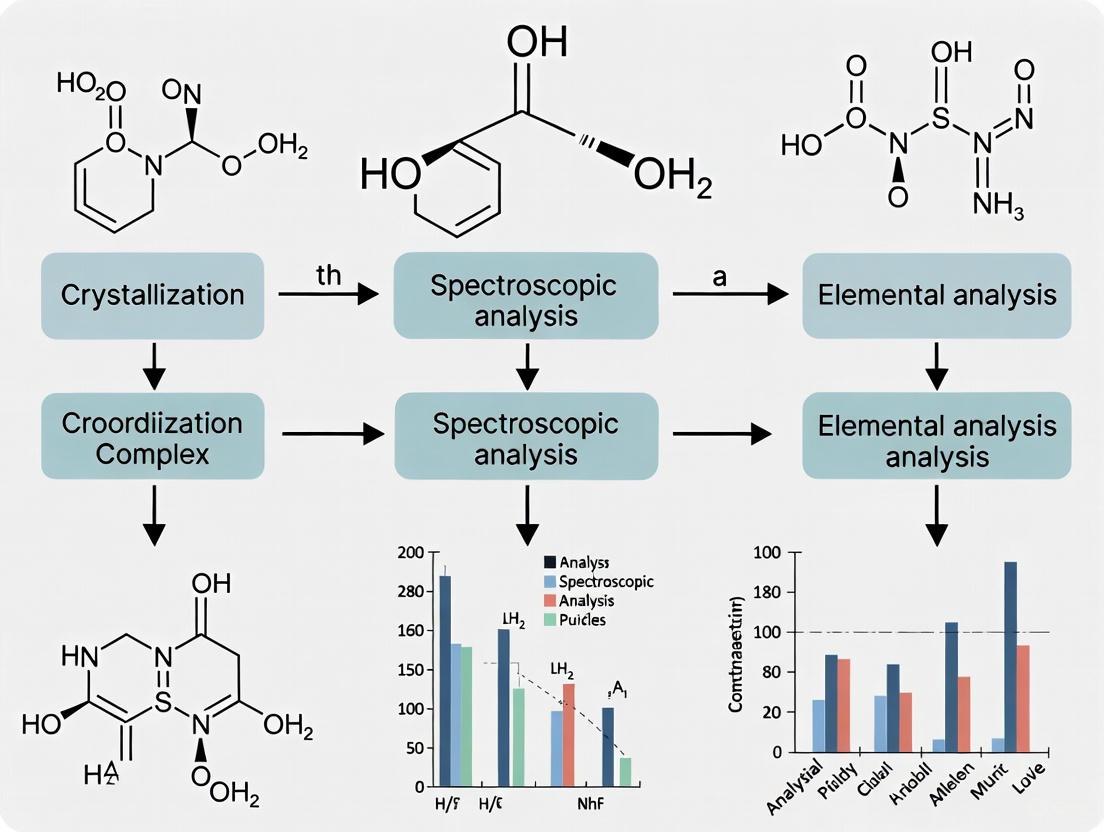
This article provides a comprehensive guide for researchers and drug development professionals on assessing the purity of coordination complexes, a critical step in developing effective metal-based therapeutics.
Ensuring Purity in Coordination Complexes: Foundational Methods, Advanced Applications, and Validation Strategies for Drug Development
Abstract
This article provides a comprehensive guide for researchers and drug development professionals on assessing the purity of coordination complexes, a critical step in developing effective metal-based therapeutics. It covers foundational concepts linking purity to biological activity, explores established and emerging characterization methodologies, addresses common troubleshooting and optimization challenges, and outlines rigorous validation and comparative frameworks. By integrating foundational knowledge with practical application and validation protocols, this resource aims to support the advancement of high-purity, clinically translatable coordination complexes for biomedical applications.
Fundamentals of Coordination Complex Purity: From Chemical Principles to Therapeutic Imperative
Defining Purity and Identity in Metal-Based Drug Candidates
The development of metal-based drugs presents unique challenges for defining purity and identity that extend beyond those typically encountered with purely organic pharmaceuticals. Metal complexes possess distinctive properties, including variable coordination geometries, redox activity, and ligand exchange kinetics, which complicate both their synthesis and analytical characterization [1]. Unlike organic molecules, metal-based drugs frequently undergo speciation changes in solution, where the active pharmaceutical ingredient may exist as multiple species in equilibrium, making definitive purity assessment particularly challenging [2]. Furthermore, the inherent reactivity of many metal centers can lead to decomposition during storage or administration, necessitating rigorous stability profiling as an integral component of purity evaluation [2] [3].
The definition of purity for metal-based drug candidates must therefore encompass not only chemical purity but also structural integrity and compositional consistency. This is especially critical because trace impurities with high biological potency can lead to false conclusions about a compound's activity, as historically demonstrated by cases where minor impurities were ultimately identified as the active principles [4]. For pharmaceutical applications, this requires demonstrating that the material consists predominantly of the intended coordination complex with correct stereochemistry, with comprehensive identification and quantification of impurities arising from synthetic by-products, decomposition products, or residual solvents [4] [5].
Analytical Techniques for Purity Assessment
Chromatographic Methods with Element-Specific Detection
Chromatographic separation coupled with element-specific detection provides powerful tools for assessing the purity of metal-based drugs and their interaction with biomolecules. Size exclusion chromatography (SEC) separates compounds based on molecular size and has been widely used to study metallodrug-protein interactions [6]. The recent introduction of UHPLC SEC with sub-2μm materials has significantly reduced separation times from 20-30 minutes to just a few minutes while maintaining column recovery rates above 90% for protein adducts and small molecules [6].
Turbulent flow chromatography (TFC) represents an alternative approach for online protein removal from biological samples. This technique utilizes high linear velocities with large porous particles (30-80μm) to create a turbulent flow regime that allows large molecules like proteins to pass without interaction while smaller molecules, including metallodrugs and their metabolites, interact with the stationary phase for subsequent analysis [6]. When combined with inductively coupled plasma mass spectrometry (ICP-MS), TFC enables high-throughput screening of metallodrug distribution between low and high molecular mass fractions in complex biological matrices [6].
Table 1: Comparison of Chromatographic Methods for Metallodrug Purity and Binding Studies
| Method | Separation Principle | Analysis Time | Key Applications | Advantages |
|---|---|---|---|---|
| UHPLC SEC-ICP-MS | Molecular size | Few minutes | Protein-binding studies, aggregation assessment | Rapid separation, high recovery (>90%), preserves native interactions |
| TFC-ICP-MS | Size-based online filtration | Minutes | High-throughput screening of protein binding | Automation capability, minimal sample preparation |
| Centrifugal Ultrafiltration-ICP-MS | Molecular size cutoff | Varies | Distribution between LMF and HMF | Technically simple, suitable for small sample volumes |
| CEx-HPLC | Charge differences | 20-30 minutes | Charge variant analysis | High resolution for charged species |
Quantitative NMR Spectroscopy
Quantitative (^1)H NMR (qHNMR) has emerged as a versatile technique for purity assessment of metal-based drug candidates, offering both qualitative structural verification and absolute quantitative capability in a single experiment [4]. Unlike chromatographic methods that typically provide relative purity measurements, qNMR serves as a primary ratio method capable of absolute quantification without requiring identical reference standards [4]. This technique is particularly valuable for detecting and quantifying impurities that may escape detection by other methods, including water, solvents, or other analytes that lack strong chromophores [4].
The universal detection capability of qHNMR makes it especially suitable for metallodrug analysis, as protons are ubiquitous in organic ligands [4]. Furthermore, qNMR provides orthogonal validation to chromatographic methods, serving as a crucial confirmatory technique, particularly for materials purified chromatographically [4]. For mass-limited samples, such as natural product isolates or early-stage discovery compounds, qNMR offers the advantage of being a non-destructive method, allowing recovery of precious samples after analysis [4].
Figure 1: Orthogonal Approach to Metallodrug Purity Assessment. Integrating multiple analytical techniques provides comprehensive characterization of metal-based drug candidates.
ICP-MS Based Approaches
Inductively coupled plasma mass spectrometry (ICP-MS) provides element-specific detection with exceptional sensitivity for metal-containing compounds, making it ideal for tracking metallodrugs in complex biological matrices [6]. This technique forms the cornerstone of modern metallodrug development, enabling researchers to study drug distribution, metabolism, and protein binding interactions with unparalleled specificity for the metal center [6].
When combined with separation techniques like SEC or TFC, ICP-MS allows for speciation analysis – the identification and quantification of different metal-containing species in a sample [6]. This is particularly important for metallodrugs, as the intact complex may undergo transformation in biological environments, generating various metal-containing metabolites with potentially different pharmacological activities [6]. The quantitative capabilities of ICP-MS also facilitate determination of drug-to-protein binding ratios and kinetics, essential parameters for understanding metallodrug pharmacokinetics and biodistribution [6].
Experimental Protocols for Key Purity Assessments
Protein Binding Studies Using UHPLC SEC-ICP-MS
Objective: To quantitatively assess the binding of platinum-based drug candidates to serum proteins. Principle: This protocol utilizes size exclusion chromatography to separate protein-bound from unbound drug, with ICP-MS providing specific detection for platinum [6].
Materials and Reagents:
- Platinum(IV) prodrug candidates (e.g., KP2156 and KP2157)
- Fetal calf serum (FCS) or human serum
- Ammonium acetate buffer (pH 7.4)
- UHPLC SEC column (e.g., sub-2μm SEC stationary phase)
- ICP-MS instrument with oxygen reaction gas
Procedure:
- Prepare 1 μM stock solutions of platinum drugs in purified water immediately before experimentation.
- Incubate 100 μL of drug stock solution with 900 μL of FCS (approximate molar ratio of drug:albumin = 1:6000) for 45 minutes at 37°C.
- Dilute the incubation mixture 10-fold with ammonium acetate buffer immediately prior to ICP-MS analysis.
- Perform UHPLC SEC separation using compatible mobile phase (e.g., ammonium acetate) at flow rates appropriate for the column specifications.
- Direct the UHPLC effluent to the ICP-MS for platinum-specific detection at m/z 195.
- Quantify platinum associated with the high molecular mass fraction (proteins) versus low molecular mass fraction (unbound drug) based on retention time and peak integration.
Data Analysis: Calculate the percentage of protein-bound drug by comparing the integrated peak areas of platinum signals corresponding to the protein fraction versus the total platinum signal. Compare binding between different drug candidates – for example, maleimide-functionalized complexes (KP2156) designed for covalent albumin binding versus non-reactive succinimide analogs (KP2157) as negative controls [6].
Absolute Purity Determination by Quantitative (^1)H NMR
Objective: To determine the absolute purity of metal-based drug candidates using qHNMR. Principle: This method uses a certified reference standard with known purity to quantify the analyte of interest based on the relative intensities of their NMR signals [4].
Materials and Reagents:
- Metal-based drug candidate sample
- Certified purity reference standard (e.g., maleic acid)
- Deuterated solvent appropriate for the compound
- High-field NMR spectrometer (>400 MHz recommended)
- NMR tubes
Procedure:
- Precisely weigh the metal-based drug candidate and the certified reference standard.
- Dissolve both components in a deuterated solvent to prepare a homogeneous mixture in a volumetric flask.
- Transfer the solution to a high-quality NMR tube, ensuring no air bubbles are present.
- Acquire (^1)H NMR spectrum under quantitative conditions:
- Use sufficient relaxation delay (≥5×T(_1))
- Disable sample spinning
- Use 90° pulse angle
- Ensure adequate digital resolution
- Collect data at constant temperature
- Process the spectrum with exponential line broadening of 0.3-1.0 Hz and manual phase correction.
Data Analysis:
- Identify well-resolved signals from both the metallodrug and reference standard.
- Integrate the selected peaks, ensuring proper baseline correction.
- Calculate absolute purity using the formula: [ P{sample} = \frac{I{sample} \times N{std} \times M{sample} \times m{std}}{I{std} \times N{sample} \times M{std} \times m{sample}} \times P{std} ] Where I=integral, N=number of nuclei, M=molecular weight, m=mass, and P=purity.
- Account for residual solvents and water by integration of their characteristic signals.
Centrifugal Ultrafiltration for Protein Binding Assessment
Objective: Rapid screening of metallodrug protein binding using centrifugal ultrafiltration with ICP-MS detection. Principle: This method uses molecular weight cut-off filters to separate protein-bound from unbound drug, followed by metal-specific quantification of both fractions [6].
Materials and Reagents:
- Metallodrug candidate
- Biological matrix (serum, plasma)
- Centrifugal ultrafiltration devices (appropriate molecular weight cutoff, typically 10 kDa)
- Centrifuge with fixed-angle rotor
- ICP-MS instrument
Procedure:
- Incubate metallodrug with biological matrix under physiologically relevant conditions (time, temperature, concentration).
- Pre-condition ultrafiltration devices according to manufacturer recommendations to minimize non-specific binding.
- Apply incubation mixture to ultrafiltration device.
- Centrifuge at appropriate g-force and time to obtain adequate filtrate volume.
- Collect both filtrate (unbound drug) and retentate (protein-bound drug) fractions.
- Dilute both fractions with dilute nitric acid or appropriate diluent for ICP-MS analysis.
- Quantify metal content in both fractions by ICP-MS.
Data Analysis: Calculate percentage protein binding using the formula: [ \%\text{Protein Binding} = \left(1 - \frac{[Metal]{filtrate}}{[Metal]{total}}\right) \times 100 ] Where ([Metal]_{total}) is determined from a control sample without ultrafiltration. Account for non-specific binding to the filter device by appropriate controls.
The Scientist's Toolkit: Essential Research Reagents and Materials
Table 2: Essential Research Reagents and Materials for Metallodrug Purity Assessment
| Item | Function/Application | Key Specifications |
|---|---|---|
| UHPLC SEC Columns | High-resolution size-based separation of metallodrug-protein adducts | Sub-2μm particles, wide pore size (>150Å), biocompatible |
| Centrifugal Ultrifugation Devices | Rapid separation of protein-bound and free drug fractions | Specific molecular weight cutoff (typically 10kDa), low metal binding |
| ICP-MS Instrumentation | Element-specific detection and quantification of metallodrugs | High sensitivity, collision/reaction cell capability, low detection limits ( |
| NMR Reference Standards | Absolute quantification in qNMR purity assays | Certified purity, chemical stability, non-overlapping signals |
| Stable Deuterated Solvents | NMR sample preparation for structural and purity analysis | High isotopic purity, low water content, compound compatibility |
| Platinum Drug Standards | Method development and quantification reference | Known stoichiometry, high purity, established stability |
| Ammonium Acetate Buffer | Biological compatible mobile phase for SEC separations | HPLC grade, pH stability, volatile for ICP-MS compatibility |
Comparative Performance of Analytical Techniques
Each analytical technique offers distinct advantages and limitations for assessing purity and identity of metal-based drug candidates. The choice of method depends on the specific information required, the stage of drug development, and the physicochemical properties of the metallodrug.
Table 3: Performance Comparison of Key Analytical Techniques for Metallodrug Purity
| Technique | Detection Limits | Quantitation Capability | Structural Information | Throughput | Key Metallodrug Applications |
|---|---|---|---|---|---|
| qHNMR | ~0.1 mol% (for (^1)H) | Absolute purity | Extensive (structure, stoichiometry) | Moderate | Absolute purity, structural verification, impurity identification |
| ICP-MS | sub-ppb for most metals | Absolute for metal content | None (element-specific only) | High | Total metal quantification, protein binding studies, biodistribution |
| SEC-ICP-MS | Low ppb range | Relative for species | Limited (size-based) | Moderate | Metallodrug-protein interactions, aggregation studies |
| TFC-ICP-MS | Low ppb range | Relative for species | Limited | High | High-throughput protein binding screening |
| Centrifugal Ultrafiltration-ICP-MS | Low ppb range | Relative for fractions | None | Moderate-High | Rapid protein binding assessment |
The comprehensive characterization of purity and identity in metal-based drug candidates requires an integrated analytical approach that addresses their unique chemical complexities. No single technique suffices to fully define metallodrug purity; rather, orthogonal methods must be employed to build a complete picture of chemical composition, structural integrity, and behavior in biologically relevant environments [4] [6] [5].
Chromatographic techniques coupled to element-specific detection, particularly ICP-MS, provide powerful tools for studying metallodrug interactions with biomolecules, while qNMR offers unparalleled capability for absolute purity determination and structural verification [4] [6]. The emerging paradigm of "live validation" approaches, such as the Uncertainty Based on Current Information (UBCI) model, represents a significant advancement for real-time assessment of analytical method performance, potentially streamlining the qualification and validation process throughout the drug development lifecycle [5].
As the field of medicinal inorganic chemistry continues to evolve, with an increasing emphasis on rational drug design based on mechanism of action, robust and comprehensive purity assessment methods will play an increasingly critical role in translating promising metallodrug candidates from the laboratory to clinical application [2] [3]. The analytical frameworks and methodologies discussed herein provide a foundation for ensuring that metal-based therapeutics meet the rigorous standards required for pharmaceutical development while maintaining their intended structural and functional properties.
In any biomedical and chemical context, a truthful description of chemical constitution requires coverage of both structure and purity. This qualification affects all drug molecules, regardless of their development stage or source. Purity assessment is particularly critical in discovery programs and whenever chemistry is linked with biological and therapeutic outcomes. Impurities, even at trace levels, can lead to false conclusions about a compound's activity, mask the true active agent, or pose significant safety risks, thereby undermining the integrity of scientific research and drug development [4]. This guide objectively compares modern purity assessment methods, providing the experimental data and protocols essential for researchers and drug development professionals.
The Critical Role of Purity in Bioactivity
The link between purity and observed bioactivity is not merely theoretical; numerous historical cases underscore its profound practical importance.
- Misattribution of Bioactivity: Purity assessment is perhaps most critical for novel compounds to which a biological activity is ascribed, because trace impurities of high potency can lead to false conclusions. In one historic case, the activity initially attributed to the lead compound sesbanamide was later found to be caused by an impurity "hidden" in the sample. A more recent example involved epiquinamide, where approximately 0.1% of the highly potent agonist epibatidine was present as an impurity, which was likely the actual source of the reported biological activity [4].
- Impurities as the Active Principle: Conversely, impurities can sometimes be the true active agents. In a drug discovery program for schizophrenia, an N-hydroxylated impurity of the initial lead compound was identified as the actual high-potency inhibitor of the target enzyme, not the lead compound itself [4].
- Consequences of Inadequate Purity: These instances highlight a critical vulnerability in research: the reproducibility and interpretability of data always hinge on the accurate chemical characterization of the material used. A lack of commitment to rigorous purity assessment can waste human and financial resources and potentially endanger patients in a clinical setting [4].
Comparative Analysis of Purity Assessment Methods
The choice of purity assessment method is pivotal and should be orthogonal to the purification method. No single technique is universally superior; each offers distinct advantages and limitations, as summarized in the table below.
Table 1: Comparison of Key Purity Assessment Methodologies
| Method | Core Principle | Key Applications | Key Performance Metrics | Advantages | Limitations |
|---|---|---|---|---|---|
| Quantitative ¹H NMR (qNMR) [4] | Absolute quantitation based on universal proton detection | Precious materials, natural products, small molecule drugs, absolute purity determination | Accuracy, precision, universal detection | Nearly universal detection; provides simultaneous structural and quantitative data; non-destructive | Lower sensitivity for trace impurities; not suitable for proton-deficient compounds |
| Chromatography (HPLC, GC) [7] [5] | Separation based on differential partitioning between mobile and stationary phases | Routine quality control, volatile compound analysis (GC), protein/biologics analysis (HPLC) | Resolution, precision, limit of detection/quantitation, linearity, accuracy | High sensitivity and resolution; excellent for complex mixtures; highly reproducible | Requires reference standards for absolute purity; detectors can be selective (e.g., UV, MS) |
| Powder X-ray Diffraction (pXRD) [8] | Quantitation based on crystalline phase composition | Paramagnetic or sparingly soluble catalysts (e.g., CoBF), solid-state purity | Phase identification, compositional quantification | Effective for paramagnetic compounds insoluble for NMR; provides solid-state composition | Limited to crystalline materials; requires pure phase standards for deconvolution |
| Electrophoresis (SDS-PAGE) [9] | Separation based on protein molecular weight in a gel matrix | Protein biologics purity, impurity profiling | Percent purity (band/lane), linear range, limit of detection | Standard for protein purity; measures size-based impurities; accessible | Semi-quantitative; destructive; requires staining and imaging |
Detailed Experimental Protocols
Protocol 1: Quantitative ¹H NMR (qNMR) for Absolute Purity
1. Principle: qNMR is a primary ratio method that uses the universal detection of protons for absolute quantitation. It compares the integral of the analyte's signal to that of a certified internal standard of known purity, requiring no identical analyte reference material [4] [10].
2. Key Experimental Steps:
- Sample Preparation: Precisely weigh the analyte and a certified internal standard (e.g., 1,4-bis(trimethylsilyl)benzene). Dissolve both in a deuterated solvent. The purity of the internal standard must be known, and its uncertainty must be accounted for in the final calculation [4] [10].
- Data Acquisition: Acquire a ¹H NMR spectrum under quantitative conditions. This requires a sufficiently long relaxation delay (typically >5 times the longest T1 relaxation time of the signals of interest) and a 90° pulse angle to ensure complete signal recovery between scans [4].
- Data Analysis: Integrate the resolved signals from the analyte and the internal standard. The purity of the analyte is calculated using the formula below, which accounts for the molecular weights, integral values, and masses of both components [4].
dot Purity_Calculation {
graph [layout=neato rankdir=TB bgcolor="#F1F3F4"]
node [shape=rectangle style="filled, rounded" fillcolor="#FFFFFF" fontcolor="#202124" fontname=Arial]
edge [color="#5F6368" fontcolor="#5F6368" fontname=Arial]
// Nodes
A [label="Weigh Analyte & Standard"]
B [label="Acquire Quantitative ¹H NMR"]
C [label="Integrate Resonances"]
D [label="Calculate Analyte Purity"]
// Edges
A -> B -> C -> D
}

Protocol 2: Powder XRD for Paramagnetic Complex Purity
1. Principle: This method is designed for compounds like the chain transfer catalyst CoBF, which are paramagnetic and sparingly soluble, precluding NMR analysis. It identifies and quantifies active and inactive crystalline phases in a catalyst batch [8].
2. Key Experimental Steps:
- Reference Acquisition: Obtain single-crystal structures of the target compound (e.g., active CoBF) and known synthetic byproducts or decomposition products. This provides the reference patterns for quantitative analysis [8].
- Data Collection & Deconvolution: Acquire a powder XRD pattern of the unknown catalyst sample. Use a deconvolution algorithm to fit the experimental pattern as a sum of the reference patterns, determining the weight percentage of each crystalline phase [8].
- Correlation with Activity: Calculate the total "active wt%" by summing the contributions from all catalytically active cobalt species. This value has been directly correlated with the catalyst's chain transfer constant (Cs), providing a direct measure of functional purity [8].
The Scientist's Toolkit: Essential Research Reagents & Materials
The following table details key materials and their functions for implementing the purity methods discussed.
Table 2: Essential Research Reagent Solutions for Purity Assessment
| Item | Function & Application |
|---|---|
| Certified Internal Standards (for qNMR) | High-purity compounds with known uncertainty for absolute quantitation in qNMR [10]. |
| Deuterated Solvents | NMR-inactive solvents for qNMR sample preparation that do not interfere with analyte signals [4]. |
| Chromatography Columns & Phases | Stationary phases (C18, ion-exchange, size exclusion) for separating analytes from impurities in HPLC/GC [7] [5]. |
| Reference Materials (CRS) | Well-characterized chemical standards of the analyte, identical to the sample, for chromatographic calibration [10]. |
| High-Purity Solvents & Buffers | HPLC or LC-MS grade solvents to minimize background interference and noise in chromatographic analyses [7]. |
| Crystalline Phase Standards | Pure samples of each potential crystalline component for quantitative powder XRD analysis [8]. |
| Precast Gels & Stains | Standardized SDS-PAGE gels and compatible protein stains (e.g., colloidal Coomassie) for reproducible protein purity analysis [9]. |
Quantifying Confidence: The Role of Measurement Uncertainty
A purity value is incomplete without a statement of its measurement uncertainty (MU). MU is a quantitative indicator of the confidence in a measurement result, describing a range within which the true value is expected to lie. It is a broader concept than simple precision, as it encompasses all potential sources of error and variation in the method [5] [10].
For any quantitative method that relies on a Reference Material (RM)—such as chromatography—the uncertainty of the RM's purity is a critical component of the overall MU budget. A reference material does not necessarily need to be of the highest purity, but the uncertainty of its content must be known to ensure the validity of the final analytical result [10]. The Uncertainty Based on Current Information (UBCI) model represents an advancement by allowing for a "live validation" of purity methods. This model dynamically assesses performance characteristics like precision and limits of detection using information (signal and noise levels) extracted from each individual chromatogram, providing a more relevant and real-time estimate of uncertainty [5].
dot Uncertainty_Components {
graph [layout=neato rankdir=LR bgcolor="#F1F3F4"]
node [shape=rectangle style="filled, rounded" fillcolor="#FFFFFF" fontcolor="#202124" fontname=Arial]
edge [color="#5F6368" fontcolor="#5F6368" fontname=Arial]
// Nodes
A [label="Purity of Reference Material" fillcolor="#FBBC05"]
B [label="Instrument Performance"]
C [label="Sample Preparation"]
D [label="Data Analysis Parameters"]
E [label="Total Measurement Uncertainty" fillcolor="#34A853" fontcolor="#FFFFFF"]
// Edges
A -> E [color="#EA4335"]
B -> E
C -> E
D -> E
}

The direct link between purity and safety, efficacy, and reproducible bioactivity is undeniable. As this guide demonstrates, a multifaceted approach to purity assessment is crucial. Selecting an orthogonal method, understanding its performance characteristics and limitations, and rigorously reporting measurement uncertainty are fundamental practices. By integrating these principles, researchers can ensure the integrity of their scientific findings, accelerate the development of effective therapies, and ultimately uphold the safety of patients.
In the development of pharmaceuticals and advanced therapeutic agents, three interconnected challenges consistently pose significant barriers to clinical success and patient safety: drug resistance, off-target effects, and metabolic complications. These challenges are particularly pronounced in cutting-edge fields such as cancer therapy, gene editing, and coordination complex-based treatments, where understanding and mitigating adverse effects is crucial for therapeutic efficacy. The precision of therapeutic action is fundamentally governed by the molecular purity and structural integrity of the active compounds, forming a critical focus of modern pharmaceutical research.
This guide objectively compares current technologies and methodologies aimed at addressing these core challenges, with particular emphasis on how coordination complex purity assessment methods provide a foundational framework for ensuring therapeutic reliability. By comparing experimental data and standardized protocols, we provide researchers with actionable insights for selecting appropriate strategies in drug development programs.
Comparative Analysis of Core Challenges and Technological Solutions
Table 1: Comparative Analysis of Core Challenges and Technological Solutions
| Challenge Area | Representative Technologies/Methods | Key Performance Metrics | Experimental Evidence | Primary Limitations |
|---|---|---|---|---|
| Cancer Drug Resistance | OXPHOS inhibitors (Elesclomol), Glutaminase inhibitors (Telaglenastat), PKM2 modulators | Increased cancer cell death in combination therapy; Improved Progression-Free Survival (PFS) | Elesclomol with paclitaxel showed increased survival times [11]; Telaglenastat with Everolimus improved PFS in Phase II [11] | Toxicity (e.g., Etomoxir cardiac toxicity); Limited efficacy in heterogeneous tumors [12] |
| Therapeutic Off-Target Effects | CRISPR/Cas9 high-fidelity variants, In silico prediction tools (CCTop, DeepCRISPR), Experimental detection (DIG-seq, CIRCLE-seq) | Reduction in off-target editing events; Specificity scores based on mismatch position/type | DIG-seq accounts for chromatin states, improving accuracy [13]; DeepCRISPR uses deep learning to predict off-target sites [13] | In silico tools can miss sgRNA-independent effects; High sequencing costs for genome-wide methods [13] |
| Metabolic Complications | Metformin (ETC complex I inhibitor), GLP-1 receptor agonists, Traditional Chinese medicine/acupuncture | Improved insulin sensitivity measured by HOMA; Reduction in branched-chain amino acids | Metformin's "Mito-Met" derivative shown to slow cancer proliferation [11]; Elevated TyG index linked to vascular complications [14] | Systemic side effects; Variable patient response due to genetic heterogeneity [14] |
| Purity Assessment | Powder X-ray Diffraction (XRD), UV/vis Spectrophotometry, Chain Transfer Constant (Cs) Measurement | Correlation of compositional purity with catalytic activity; High Cs values (>10³) indicating active catalyst | XRD deconvolution quantified active CoBF components; Cs values validated polymerization activity [8] | Paramagnetic nature complicates NMR; Labor-intensive purification for sparingly soluble complexes [8] |
Experimental Protocols for Key Assessments
Protocol for Assessing Coordination Complex Purity and Activity via XRD
Application: Determining the purity and catalytic activity of cobalt-based chain transfer catalysts (e.g., CoBF) used in polymerization [8].
Detailed Methodology:
- Synthesis: Prepare the coordination complex (e.g., CoBF) via established methods, noting any potential synthetic byproducts.
- Sample Preparation: Grind the solid catalyst sample into a fine, homogeneous powder.
- XRD Analysis: Acquire powder X-ray diffraction patterns using a standard diffractometer with Cu Kα radiation. Typical parameters include a 2θ range from 5° to 50°.
- Phase Identification & Quantification: Compare the obtained XRD pattern to a database of known structures (including the target complex and potential impurities). Use a deconvolution algorithm to quantify the weight percentage of each crystalline phase present in the mixture.
- Activity Correlation: Correlate the composition of the catalyst sample with its experimentally determined chain transfer constant (Cs) from a Mayo plot analysis. A high composition of active cobalt species correlates with a Cs > 10³, confirming high activity for catalytic chain transfer polymerization [8].
Protocol for Genome-Wide Detection of CRISPR-Cas9 Off-Target Effects
Application: Unbiased identification of off-target cleavage sites for CRISPR-Cas9 gene editing systems [13].
Detailed Methodology:
- Cellular Extraction: Isolate cell-free chromatin DNA (for DIG-seq) or purified genomic DNA (for Digenome-seq) from the target cell type.
- In Vitro Cleavage: Incubate the extracted DNA or chromatin with the pre-formed Cas9/sgRNA ribonucleoprotein (RNP) complex under optimal reaction conditions.
- DNA Processing: Digest the reaction products and perform whole-genome sequencing (WGS) on the cleaved DNA fragments. This requires high sequencing coverage (∼400-500 million reads for the human genome).
- Bioinformatic Analysis: Map the sequencing reads to the reference genome. Identify sites with a significant accumulation of sequence reads that start or end at the same genomic position, indicating a potential double-strand break.
- Validation: Confirm nominated off-target sites using orthogonal methods such as targeted sequencing [13].
Protocol for Evaluating Metabolic Reprogramming in Drug-Resistant Cancer Cells
Application: Characterizing the shift from glycolysis to oxidative phosphorylation (OXPHOS) in chemotherapy-resistant cancers [11] [12].
Detailed Methodology:
- Cell Line Generation: Establish drug-resistant cancer cell lines (e.g., cisplatin-resistant NSCLC) via prolonged, step-wise exposure to the chemotherapeutic agent.
- Metabolic Phenotyping:
- Seahorse Analysis: Utilize a Seahorse XF Analyzer to measure the Oxygen Consumption Rate (OCR, indicator of OXPHOS) and Extracellular Acidification Rate (ECAR, indicator of glycolysis) in real-time.
- Metabolite Profiling: Employ LC-MS/MS to quantify levels of key metabolites, including lactate, citrate, ATP, and glutamine, in cell culture supernatants or lysates.
- ROS Measurement: Use fluorescent probes (e.g., H2DCFDA) and flow cytometry to quantify intracellular levels of reactive oxygen species (ROS), which are often elevated in OXPHOS-dependent resistant cells [11].
- Vulnerability Testing: Treat the resistant cells with OXPHOS inhibitors (e.g., Elesclomol) or glutaminase inhibitors (e.g., Telaglenastat) and assess cell viability using assays like MTT or CellTiter-Glo [11].
Visualization of Pathways and Workflows
Analytical Validation Pathway for Coordination Complex Purity
Integrated Research Strategy to Overcome Core Challenges
The Scientist's Toolkit: Research Reagent Solutions
Table 2: Essential Research Reagents and Materials
| Reagent/Material | Primary Function | Application Context |
|---|---|---|
| CoBF (BF₂-bridged Cobaloxime) | Catalytic Chain Transfer Agent (CCTA) | Polymer science; produces low molecular weight, vinyl-terminated polymers for commercial applications [8]. |
| Cas9/sgRNA RNP Complex | Precise genome editing via targeted DNA double-strand breaks. | Molecular biology; gene knockout, knock-in, and gene therapy studies [13]. |
| Elesclomol | Induces oxidative stress and disrupts mitochondrial metabolism. | Cancer research; targets OXPHOS-dependent drug-resistant cancer cells [11]. |
| Telaglenastat (GLS Inhibitor) | Inhibits glutaminase, blocking glutamine metabolism. | Cancer research; targets "glutamine-addicted" resistant cancer cells [11]. |
| Seahorse XF Analyzer | Real-time measurement of OCR and ECAR in live cells. | Metabolic research; phenotyping cellular metabolic pathways (glycolysis vs. OXPHOS) [11] [12]. |
| Powder X-ray Diffractometer | Determines crystalline structure and phase composition of solid materials. | Materials science and chemistry; purity assessment of coordination complexes and other crystalline compounds [8]. |
| DMG (Dimethylglyoxime) | Ligand for synthesizing cobalt-based coordination complexes (cobaloximes). | Inorganic synthesis; precursor for catalysts like CoBF [8]. |
The synthesis of coordination complexes is a foundational process in inorganic chemistry with critical applications spanning pharmaceuticals, catalysis, and materials science. The purity of these complexes directly determines their performance and safety in end-use applications. Impurity profiling represents a crucial aspect of quality control, particularly for metal-based pharmaceuticals where impurity levels can significantly impact therapeutic efficacy and toxicity profiles. This guide systematically compares the sources, types, and analytical methods for detecting impurities in coordination complex synthesis, providing researchers with structured frameworks for purity assessment aligned with modern analytical capabilities.
The presence of impurities in coordination compounds can originate from multiple sources throughout the synthetic pathway, including unreacted starting materials, reaction byproducts, solvent residues, metal contaminants, and degradation products. Understanding these impurities is particularly crucial in pharmaceutical contexts where complexes like cisplatin and its derivatives have revolutionized cancer treatment but require stringent purity control to minimize adverse effects [15]. As coordination chemistry advances toward more sophisticated applications in metal-organic frameworks (MOFs) and biomedicine, comprehensive impurity characterization becomes increasingly essential for ensuring product consistency and performance [16] [17].
Metal-Centered Impurities
Metal-centered impurities represent a significant challenge in coordination complex synthesis, particularly when using metal salts as starting materials. These impurities can substantially alter the chemical and physical properties of the final product.
Incomplete Metal Incorporation: Residual metal ions that fail to incorporate into the coordination sphere can remain as ionic impurities within the crystal lattice or solution. For instance, in the synthesis of silver coordination compounds with 2-amino-1-methylbenzimidazole, unreacted Ag⁺ ions may persist despite careful stoichiometric control [18].
Competing Metal Species: The same metal in different oxidation states can create isostructural impurities with divergent reactivity. This is particularly problematic in transition metal complexes where multiple oxidation states are accessible under synthetic conditions.
Foreign Metal Contamination: Trace metal contaminants originating from reagents, solvents, or reaction vessels can co-coordinate with ligands or catalyze decomposition pathways. The stringent requirements for pharmaceutical-grade coordination compounds make this a critical concern [15].
Ligand-Based Impurities
Ligand systems in coordination chemistry range from simple monodentate ligands to complex polydentate organic molecules, each presenting distinct impurity profiles.
Unreacted Ligands: Incomplete coordination leaves free ligand molecules that can compete with the coordinated complex in subsequent applications. Research on O-carboxymethyl chitosan Schiff base metal complexes demonstrated that unreacted ligand fragments could significantly affect the biological activity of the final products [19].
Ligand Decomposition Products: Ligands may undergo partial degradation during synthesis, especially under harsh reaction conditions such as elevated temperatures or extreme pH. For instance, Schiff base ligands can hydrolyze under acidic conditions, generating aldehyde and amine precursors that contaminate the final product.
Isomeric Impurities: Particularly in asymmetric ligand systems, isomeric forms with identical molecular formulas but different coordination modes can create hard-to-separate impurities that affect the complex's stereochemistry and functionality [16].
Process-Related Impurities
Synthetic methodology introduces its own category of impurities that must be controlled through optimized protocols.
Solvent Residues: Coordination complex syntheses often employ solvents like ethanol, methanol, dimethylformamide, or acetonitrile, which can become incorporated into the crystal lattice as solvates. These solvent molecules are particularly problematic in pharmaceutical applications where residual solvent levels are strictly regulated [19] [18].
Counterion Exchange: During metathesis reactions, incomplete counterion exchange can leave precursor anions in the final product. In the synthesis of silver complexes with diisopropyldithiophosphate, nitrate ions from the silver nitrate starting material may persist despite precipitation and washing steps [18].
Byproducts of Template Reactions: In supramolecular coordination chemistry, template-directed syntheses can yield unexpected coordination polymers or oligomeric species as impurities when the self-assembly process deviates from the intended pathway [16].
Table 1: Common Impurities in Coordination Complex Synthesis
| Impurity Category | Specific Examples | Origin in Synthesis | Impact on Final Product |
|---|---|---|---|
| Metal-Centered | Unincorporated metal ions, Alternate oxidation states, Foreign metal contamination | Incomplete reaction, Reductive/oxidative side reactions, Reagent impurities | Altered stoichiometry, Changed redox properties, Catalyzed decomposition |
| Ligand-Based | Free ligands, Decomposition products, Isomeric forms | Incomplete coordination, Harsh reaction conditions, Imperfect stereocontrol | Competitive binding, Reduced efficacy, Altered stereoselectivity |
| Process-Related | Solvent molecules, Precursor counterions, Template byproducts | Crystal inclusion, Incomplete metathesis, Uncontrolled self-assembly | Crystal structure defects, Altered solubility, Divergent architectures |
Analytical Methods for Impurity Detection and Characterization
Advanced analytical techniques are essential for comprehensive impurity profiling in coordination complexes. Each method offers distinct capabilities for detecting and quantifying specific impurity types.
Spectroscopic Methods
Spectroscopic techniques provide fundamental tools for identifying and characterizing impurities through their unique spectral signatures.
Infrared Spectroscopy (FT-IR): FT-IR is particularly valuable for identifying ligand-based impurities and coordination anomalies. Shifted absorption bands may indicate improper coordination modes or the presence of unreacted functional groups. Research on silver complexes with 2-amino-1-methylbenzimidazole demonstrated how FT-IR could confirm proper coordination through characteristic band shifts in the 400-4000 cm⁻¹ range [18].
Nuclear Magnetic Resonance (NMR): Multinuclear NMR (¹H, ¹³C, ³¹P, etc.) provides detailed information about ligand environments and can detect unreacted starting materials or decomposition products. The technique is especially powerful for identifying organic impurities in diamagnetic coordination complexes.
Electronic Spectroscopy (UV-Vis): Electronic absorption spectra can reveal metal-centered impurities through characteristic d-d transitions or charge-transfer bands that deviate from expected patterns. This method is particularly sensitive to different metal oxidation states and coordination geometries [16].
Diffraction and Thermal Analysis
Crystallographic and thermal methods offer insights into structural purity and composition.
X-ray Diffraction (XRD): Powder XRD patterns can detect crystalline impurities with distinct lattice parameters, while single-crystal X-ray diffraction provides definitive structural confirmation. Studies on synthesized silver complexes used XRD to verify phase purity and confirm the absence of crystalline impurities from starting materials [18].
Thermogravimetric Analysis (TGA): TGA monitors mass changes with temperature, revealing solvent molecules, counterions, or unstable ligands that may decompose at characteristic temperatures. This method is particularly effective for quantifying solvent content in coordination complexes and MOFs [18].
Elemental and Microscopic Analysis
Elemental composition and morphological characterization provide complementary impurity information.
Elemental Analysis (EA): Combustion-based elemental analysis (CHNS) offers precise quantification of carbon, hydrogen, nitrogen, and sulfur content, with deviations from theoretical values indicating impurity presence. This technique was employed to verify composition in silver coordination compounds [18].
Scanning Electron Microscopy with Energy-Dispersive X-ray Spectroscopy (SEM-EDX): SEM-EDX provides morphological information and semi-quantitative elemental composition, enabling detection of heterogeneous impurity phases. Research on chitosan metal complexes utilized SEM-EDX to confirm metal incorporation and detect potential inorganic impurities [19].
Table 2: Analytical Techniques for Impurity Detection in Coordination Complexes
| Analytical Method | Detectable Impurities | Detection Limits | Key Applications in Coordination Chemistry |
|---|---|---|---|
| FT-IR Spectroscopy | Uncoordinated ligands, Alternate coordination modes, Solvent molecules | ~1-5% | Monitoring coordination completeness, Identifying solvent inclusion |
| NMR Spectroscopy | Organic impurities, Ligand stereoisomers, Solvent residues | ~0.1-1% | Verifying ligand integrity, Detecting stereochemical impurities |
| X-ray Diffraction | Crystalline phase impurities, Alternate polymorphs, Starting materials | ~2-5% | Confirming phase purity, Identifying crystalline byproducts |
| Elemental Analysis | Stoichiometric deviations, Counterion content, Solvent inclusion | ~0.3% absolute | Quantitative composition verification |
| SEM-EDX | Foreign metal particles, Heterogeneous phases, Elemental contaminants | ~0.1-1% atomic | Morphological impurity detection, Elemental mapping |
Experimental Protocols for Impurity Assessment
Synthesis and Purification of Coordination Complexes
Robust synthetic and purification protocols are essential for minimizing impurities in coordination complexes. The following general procedure, adapted from research on silver benzimidazole complexes, provides a foundation for impurity-controlled synthesis [18]:
Reaction Setup:
- Dissolve the organic ligand (0.002 mol) in 10-15 mL of appropriate solvent (ethanol, methanol, or acetonitrile) with stirring.
- Prepare a separate solution of metal salt (0.001 mol) in minimal solvent (water, alcohol, or acetonitrile).
- Slowly add the metal salt solution to the ligand solution with continuous stirring at room temperature.
- Heat the reaction mixture in a water bath (60-80°C) for 1-2 hours to complete coordination.
Purification Sequence:
- Cool the reaction mixture to room temperature, then further cool in an ice bath to promote crystallization.
- Filter under vacuum using a fine-porosity fritted glass funnel.
- Wash the precipitate multiple times with small portions of cold solvent (2-3 mL) to remove soluble impurities.
- Recrystallize from boiling absolute alcohol or appropriate solvent system.
- Dry under vacuum (0.1-1 mmHg) at room temperature for 24 hours to remove solvent impurities.
Critical Parameters: Solvent purity, stoichiometric accuracy, reaction temperature control, and thorough washing are essential for minimizing impurities. For air-sensitive complexes, inert atmosphere techniques are necessary to prevent oxidation byproducts.
Comprehensive Impurity Analysis Workflow
A systematic approach to impurity analysis ensures comprehensive characterization:
Step 1: Initial Purity Assessment
- Perform elemental analysis (CHNS) to verify composition against theoretical values.
- Record FT-IR spectrum and compare with starting materials to confirm coordination.
- Obtain powder XRD pattern to verify phase purity and crystallinity.
Step 2: Metal Content and Stoichiometry Verification
- Use atomic absorption spectroscopy (AAS) or inductively coupled plasma mass spectrometry (ICP-MS) for precise metal quantification.
- Employ SEM-EDX for elemental distribution mapping and heterogeneous impurity detection.
Step 3: Structural Confirmation and Impurity Identification
- Conduct thermal analysis (TGA/DTA) to identify solvent inclusions and assess thermal stability.
- Perform solution-state NMR studies to detect organic impurities and verify ligand integrity.
- Utilize single-crystal XRD for definitive structural determination when suitable crystals are available.
Step 4: Quantification and Reporting
- Calculate impurity levels based on analytical deviations.
- Document all detected impurities with proposed structures and quantification data.
Experimental Workflow for Coordination Complex Impurity Assessment
Essential Research Reagents and Materials
Successful synthesis and impurity analysis of coordination complexes requires specific high-purity reagents and specialized materials. The following table summarizes essential components for coordination chemistry research focused on purity control.
Table 3: Essential Research Reagents for Coordination Complex Synthesis and Analysis
| Reagent/Material | Function/Purpose | Purity Considerations | Typical Applications |
|---|---|---|---|
| Metal Salts (AgNO₃, Cu(OAc)₂, Ni(OAc)₂, Zn(OAc)₂) | Source of metal centers for coordination | High purity (>99%) to minimize foreign metal contamination; Anion selection affects solubility | Primary starting materials for complex synthesis [19] [18] |
| Organic Ligands (Schiff bases, benzimidazoles, phosphines, carboxylates) | Donor molecules for coordinate covalent bonds | Recrystallized before use; Characterized by NMR and elemental analysis | Define coordination geometry and functionality [15] [18] |
| Deuterated Solvents (DMSO-d₆, CDCl₃, D₂O) | NMR spectroscopy for structural characterization | Anhydrous, >99.8% deuterated; Stored with molecular sieves | Impurity identification and structural verification [18] |
| Spectroscopy Grade Solvents (EtOH, MeOH, CH₃CN, DMF) | Synthesis medium and recrystallization | Anhydrous, spectroscopic grade; Stored under inert atmosphere | Reaction medium and purification [19] [18] |
| Potassium Bromide (FT-IR Grade) | Matrix for solid-state FT-IR sample preparation | Spectral grade, dried before use; Hygroscopic requiring careful storage | FT-IR sample preparation for coordination verification [18] |
| Elemental Analysis Standards (Sulfanilamide, acetanilide) | Calibration standards for elemental analysis | Certified reference materials with known composition | Instrument calibration for accurate CHNS quantification [18] |
The synthesis of high-purity coordination complexes requires meticulous attention to potential impurity sources throughout the preparation and isolation processes. Metal-centered impurities, ligand-based contaminants, and process-related byproducts collectively present challenges that demand sophisticated analytical strategies for comprehensive characterization. The experimental protocols and analytical workflows presented herein provide systematic approaches for impurity identification and quantification that align with the rigorous requirements of modern coordination chemistry research, particularly in pharmaceutical applications where purity directly correlates with safety and efficacy.
Advancements in analytical methodologies continue to enhance our capability to detect and characterize impurities at increasingly lower thresholds. As coordination chemistry expands into more complex architectural domains such as MOFs and supramolecular assemblies, and into more biologically relevant applications including pharmaceuticals and diagnostic agents, impurity control remains a critical factor in successful technology translation. The fundamental principles and methods outlined in this guide provide a foundation for developing impurity profiling protocols tailored to specific coordination systems and their intended applications.
A Practical Toolkit: Established and Emerging Methods for Purity Assessment
High-Performance Liquid Chromatography (HPLC) stands as a cornerstone technique for determining the purity of chemical substances, including coordination complexes used in pharmaceutical and research applications. Its exceptional resolving power, precision, and reproducibility make it indispensable for separating, identifying, and quantifying components in complex mixtures [20]. Within the broader context of coordination complex purity assessment, HPLC provides the rigorous analytical data necessary to ensure compound integrity, which is critical for reliable research outcomes and drug development processes.
The fundamental principle of HPLC involves the separation of analytes based on their differential interaction with a stationary phase packed inside a column and a liquid mobile phase pumped through under high pressure [20]. For purity analysis, the goal is to resolve the primary analyte from any impurities, degradation products, or synthetic by-products, thereby enabling accurate quantification of the target substance's purity. Two predominant HPLC modes are employed for this purpose: Reversed-Phase HPLC (RP-HPLC), which separates molecules based on hydrophobicity, and Size-Exclusion Chromatography (SEC), also known as Gel Filtration HPLC (GF-HPLC), which separates molecules according to their size in solution [20]. This guide provides a detailed comparison of these techniques, supported by experimental data and protocols relevant to purity assessment within coordination complex research.
Comparative Technique Analysis: RP-HPLC vs. GF-HPLC
The selection between RP-HPLC and GF-HPLC depends on the analytical objectives, the nature of the sample, and the type of purity information required. The table below summarizes their core characteristics for purity analysis.
Table 1: Comparison of RP-HPLC and GF-HPLC for Purity Assessment
| Feature | Reversed-Phase (RP-HPLC) | Gel Filtration (GF-HPLC) |
|---|---|---|
| Separation Mechanism | Hydrophobicity [20] | Molecular size/hydrodynamic volume [20] |
| Stationary Phase | Hydrophobic surfaces (e.g., C8, C18 chains) [21] [20] | Porous inert particles [20] |
| Mobile Phase | Organic/water mixtures (e.g., Acetonitrile/Water with modifiers like TFA) [21] [22] | Aqueous buffers (for native state separation) [20] |
| Typical Applications | Analysis of small molecules, peptides, and determination of related substances/impurities [21] [22] [23] | Assessing protein aggregation, oligomeric state, and removal of aggregates from target protein [20] |
| Impact on Purity Data | Provides high-resolution data on chemical impurities and degradation products with similar size but different polarity [21] [23] | Provides information on size-based impurities (e.g., aggregates or fragments); often used for final purity check of biomolecules [20] |
| Key Strength in Purity Context | Exceptional resolution for separating compounds with minute differences in hydrophobicity; ideal for quantifying related substances [22] [23] | Gentler conditions that can preserve native structure and biological activity [20] |
Experimental Protocols for Purity Assessment
To ensure reliable and reproducible purity results, adherence to validated experimental protocols is essential. The following sections detail methodologies cited from research publications for both RP-HPLC and general HPLC purity analysis.
RP-HPLC Purity Method for a Pharmaceutical Compound
A validated RP-HPLC method for the quantification of Lamivudine in tablet formulation demonstrates a typical approach for purity and assay analysis [23].
Chromatographic Conditions:
- Column: Shimadzu C18 (250 mm × 4.6 mm, 5 µm particle size) [23]
- Mobile Phase: Methanol and water in a ratio of 70:30 (v/v) [23]
- Mode: Isocratic elution [23]
- Flow Rate: 1.0 mL/min [23]
- Detection Wavelength: 271 nm [23]
- Injection Volume: 10 µL [23]
- Column Temperature: 30 °C [23]
- Run Time: 5 minutes [23]
Sample Preparation:
- An amount of powder equivalent to 5 mg of the active drug is transferred to a 50 mL volumetric flask.
- Approximately 15 mL of methanol is added, and the solution is sonicated for 30 minutes.
- The volume is made up to the mark with methanol and filtered.
- The filtrate is further diluted to obtain a final concentration of about 10 µg/mL for analysis [23].
Validation Data:
One-Step Protein Purification via Preparative RP-HPLC
A one-step purification method for a recombinant protein from a whole cell extract showcases the preparative power of RP-HPLC [21].
- Sample Preparation: E. coli cells expressing the recombinant protein TM 1–99 were lysed, and the contents were extracted with 0.1% aqueous trifluoroacetic acid (TFA) [21].
- Chromatographic Conditions:
- Column: Zorbax 300SB-C8 (150 mm × 2.1 mm I.D., 3.5 µm, 300 Å pore size) [21]
- Mobile Phase A: 0.05% aqueous TFA [21]
- Mobile Phase B: 0.05% TFA in acetonitrile [21]
- Gradient: Initial gradient of 2% B/min up to 24% B, followed by a shallow gradient of 0.1% B/min up to 40% B [21]
- Flow Rate: 0.3 mL/min [21]
- Load: 23 mg and 48 mg of lyophilized crude cell extract [21]
- Results: This method yielded 2.4 mg and 4.2 mg of purified product (>94% pure), respectively, with a recovery of >94%, demonstrating high efficiency and purity outcomes [21].
HPLC Purity Assay Using a Primary Standard
A direct purity assay approach using ultra-purified materials as primary standards can provide high accuracy without the need to identify all impurities [24].
- Core Concept: An existing reference material is further purified using semi-preparative HPLC to create an ultra-purified standard with virtually no related substances [24].
- Quantification Method: The purity of a sample is determined directly by comparing its HPLC response to that of the ultra-purified calibrant using "exact matching single-point HPLC calibration" [24].
- Advantage: This method is particularly valuable for certifying the purity of substances with lower purity levels, as it avoids the complex process of identifying and individually quantifying every impurity [24].
Workflow for HPLC-Based Purity Analysis
The following diagram illustrates a generalized logical workflow for developing and executing an HPLC purity analysis method, integrating elements from the cited experimental protocols.
The Scientist's Toolkit: Essential Reagents and Materials
Successful HPLC purity analysis requires specific, high-quality materials. The table below lists key research reagent solutions and their functions based on the cited experimental data.
Table 2: Essential Research Reagent Solutions for HPLC Purity Analysis
| Item | Function in Purity Analysis | Exemplary Use Case |
|---|---|---|
| C18 or C8 Reverse-Phase Column | The stationary phase for separating analytes based on hydrophobicity; the core of the RP-HPLC system [21] [23]. | Analysis of small molecules and peptides; determination of related substances [21] [23]. |
| Size-Exclusion Chromatography (SEC) Column | The stationary phase with controlled pore sizes for separating analytes based on their molecular size [20]. | Assessing protein aggregation or fragment content in a sample [20]. |
| Trifluoroacetic Acid (TFA) | A mobile phase modifier (ion-pairing agent) in RP-HPLC that improves peak shape and separation efficiency for peptides and proteins [21] [22]. | Purification of recombinant proteins and analysis of Ga-68-DOTATATE [21] [22]. |
| HPLC-Grade Acetonitrile & Methanol | Organic solvents used as components of the mobile phase in RP-HPLC to elute analytes from the hydrophobic stationary phase [21] [23]. | Standard mobile phase component for eluting compounds in RP-HPLC [21] [23]. |
| Ultra-Purified Analytical Standard | A calibrant of known, certified purity used for direct quantification of the analyte in a sample via a calibration curve or single-point calibration [24]. | Direct determination of the mass fraction of an analyte without needing to identify all impurities [24]. |
| Centrifugal Filter Units | For sample concentration, buffer exchange, or desalting prior to HPLC analysis to prevent column damage and improve separation [21]. | Post-lysis clarification of a protein sample before injection [21]. |
RP-HPLC and GF-HPLC serve distinct but complementary roles in the purity analysis of chemical and biological compounds. RP-HPLC is the workhorse for high-resolution separation of chemical impurities and is highly suited for quantifying related substances in small molecules and peptides [21] [23]. In contrast, GF-HPLC is indispensable for characterizing size-based heterogeneity, such as protein aggregates, under non-denaturing conditions [20]. The choice of technique must be guided by the nature of the analyte and the specific purity questions being addressed. As demonstrated by the cited protocols, rigorous method development and validation—following ICH guidelines when applicable—are fundamental to obtaining reliable purity data that can support robust research conclusions and ensure product quality in drug development [22] [23].
X-ray diffraction (XRD) stands as the preeminent analytical technique for the definitive determination of atomic-scale geometry in crystalline materials. For researchers investigating coordination complexes, XRD provides unparalleled insight into metal-center coordination spheres, ligand binding modes, and overall molecular architecture—critical data for establishing structure-property relationships in functional materials and pharmaceutical compounds [25] [26]. This guide examines the capabilities, methodologies, and applications of principal XRD techniques for geometric confirmation within coordination chemistry research.
Core XRD Techniques for Coordination Complex Analysis
XRD techniques provide complementary approaches for structural analysis, each with distinct strengths for specific research scenarios in coordination chemistry.
Table: Primary X-ray Diffraction Techniques for Coordination Complex Analysis
| Technique | Sample Requirements | Structural Information Obtained | Key Applications in Coordination Chemistry |
|---|---|---|---|
| Single-Crystal XRD (SCXRD) | Single, well-ordered crystal (>0.1 mm) | Complete 3D atomic coordinates, bond lengths/angles, thermal parameters, absolute configuration [26] [27] | De novo structure determination of novel complexes; studying metal-ligand interaction details [25] [28] |
| Powder XRD (PXRD) | Polycrystalline microcrystalline powder | Phase identification, phase quantification, crystallite size, lattice parameters, material homogeneity [29] | Batch purity verification, polymorph screening, monitoring solid-state transformations [25] [29] |
| Pair Distribution Function (PDF) | Non-crystalline or amorphous solids | Local atomic ordering, interatomic distances, short-range structure [26] | Analyzing amorphous coordination polymers; disordered framework materials [26] |
Experimental Protocols for Definitive Geometric Confirmation
Single-Crystal X-ray Diffraction Protocol
The protocol for determining the structure of the luminescent complex [Tb(bipy)₂(NO₃)₃] exemplifies a rigorous SCXRD analysis [25]:
Crystal Selection & Mounting: A single, high-quality colorless crystal (approximately 0.1-0.2 mm) is selected under a microscope and mounted on a cryo-loop or glass fiber using a viscous oil to prevent desolvation.
Data Collection: The crystal is centered in the X-ray beam (commonly Mo Kα, λ = 0.71073 Å, or Cu Kα, λ = 1.54056 Å) at a controlled temperature (e.g., 100(2) K). A complete dataset of diffraction images is collected across a sphere of reciprocal space using a CCD-based area detector. Exposure times and rotation widths are optimized for data completeness and intensity statistics.
Data Reduction & Structure Solution: The diffraction images are processed (indexed, integrated, scaled) using software packages like XDS or HKL. The structure is solved using "direct methods" or "dual-space" algorithms implemented in programs such as SHELXT. For the [Tb(bipy)₂(NO₃)₃] complex, this confirmed a Pbcn orthorhombic space group with Z = 4 [25].
Model Refinement & Validation: The initial atomic model is refined against the diffraction data using least-squares algorithms (e.g., in SHELXL or OLEX2). The Tb³⁺ ion was found to have a 10-fold coordination sphere, bonded to four nitrogen atoms from two bidentate bipyridine ligands and three bidentate nitrate groups [25]. The final model is validated using tools like MolProbity or PLATON to ensure stereochemical correctness and proper fit to the electron density [30].
SCXRD Workflow for Coordination Complexes
In Situ Monitoring of Coordination Complex Formation
Understanding crystallization pathways and intermediate species is vital for targeted synthesis. An integrated approach combines multiple techniques [25]:
Reaction Setup: A glass reactor is charged with a solution of the metal precursor (e.g., Tb(NO₃)₃·5H₂O in ethanol) and stirred at constant temperature (e.g., room temperature, 500 rpm).
Ligand Addition & Monitoring: The ligand solution (e.g., 2,2'-bipyridine in ethanol) is added at a controlled rate (e.g., 0.5-10 mL min⁻¹). The reaction is simultaneously monitored by:
- In situ luminescence spectroscopy: An optical fiber submerged in the solution tracks ligand-to-metal energy transfer in real-time, indicating complex formation [25].
- In situ synchrotron-based PXRD: High-intensity X-rays at a synchrotron beamline (e.g., DESY P08) capture the emergence of crystalline phases and intermediates with high time resolution [25].
- Supplementary physical measurements: pH and ionic conductivity probes provide additional reaction progress insights [25].
Data Correlation: Data streams are correlated to reveal the sequence of phase formation and the influence of synthesis parameters (e.g., ligand-to-metal ratio) on the crystallization pathway [25].
The Scientist's Toolkit: Essential Reagents & Materials
Successful structural elucidation of coordination complexes requires specific high-purity materials and specialized software.
Table: Essential Research Reagent Solutions for XRD of Coordination Complexes
| Category | Specific Items | Function & Importance |
|---|---|---|
| Metal Precursors | Tb(NO₃)₃·5H₂O (99.99%), Cu(II) chloride, Mn(II) acetate [25] [28] | High-purity (>99%) salts ensure stoichiometric reactions and minimize impurities that can disrupt crystal lattice formation. |
| Organic Ligands | 2,2'-Bipyridine (99+%), 1,3-bis(imidazol-1-yl)benzene, custom polycarboxylates [25] [28] | Structurally defined ligands with known coordination motifs (e.g., bidentate, tridentate) enable rational design of target complexes. |
| Crystallization Solvents | Ethanol, dimethylformamide (DMF), water, acetonitrile [25] [28] | High-purity, degassed solvents facilitate slow evaporation or diffusion crystal growth, which is crucial for obtaining diffraction-quality single crystals. |
| Software for Analysis | SHELX suite, OLEX2, JANA, GSAS, DIOPTAS [25] [30] | Specialized programs for processing diffraction data, solving crystal structures, refining atomic models, and performing Rietveld quantification. |
Strategic Application & Comparative Insights
Advancing Drug Discovery through Structural Insights
XRD is indispensable in structure-based drug design (SBDD) and fragment-based drug design (FBDD). Determining the crystal structure of a target protein (e.g., cytochrome P450 enzymes) in complex with a small-molecule inhibitor reveals precise interaction geometries—hydrogen bonds, hydrophobic contacts, and metal coordination—enabling rational optimization of drug affinity and specificity [26] [30]. Validating the correct positioning and chemistry of ligands within the protein's active site is paramount, as errors can misdirect entire drug discovery programs [30].
Analysis of Light-Induced Structural Dynamics
Time-resolved X-ray diffraction techniques can capture the ultrafast geometric changes in photoactive coordination complexes. For example, transient wide-angle X-ray scattering (TR-WAXS) has been used to visualize the coordination sphere dynamics of [Fe(bpy)₃]²⁺ upon photoexcitation to its high-spin state, revealing both primary coordination sphere expansion and rearrangements in the secondary solvation shell [31]. This provides direct atomic-scale insight into the structural basis of their photophysical properties.
Time-Resolved XRD for Photoinduced Dynamics
Critical Considerations for Technique Selection
- For complete de novo structure determination of a novel coordination complex, SCXRD is the unequivocal standard, providing the most comprehensive geometric confirmation [25] [26].
- For quality control and batch-to-batch consistency of synthesized coordination complexes or Metal-Organic Frameworks (MOFs), PXRD is the most efficient and informative tool [29].
- When dealing with poorly crystalline or amorphous materials such as some amorphous solid dispersions (ASDs) in pharmaceutical formulations, the Pair Distribution Function (PDF) analysis of X-ray scattering data can provide the crucial local structural information that escapes conventional PXRD [26].
X-ray diffraction techniques, from laboratory benchtop instruments to advanced synchrotron-based methods, provide an indispensable suite of tools for the definitive geometric confirmation of coordination complexes. The strategic selection and application of SCXRD, PXRD, and emerging time-resolved methods empower researchers to correlate atomic-scale structure with macroscopic properties, driving innovation in materials science, catalysis, and pharmaceutical development.
Within the field of coordination chemistry, the assessment of complex purity is not merely a preliminary step but a foundational aspect of credible research. The integrity of subsequent findings in catalysis, medicine, and materials science is wholly dependent on the precise characterization of the metal complexes involved [16]. This guide provides an objective comparison of three cornerstone spectroscopic techniques—NMR, FT-IR, and UV-Vis spectroscopy—for the critical tasks of functional group identification and stoichiometry determination in coordination complexes. The data and protocols presented herein are framed within a broader thesis on advancing purity assessment methodologies, offering researchers a structured framework for method selection and application.
Comparative Analysis of Spectroscopic Techniques
The following table summarizes the core capabilities, advantages, and limitations of each spectroscopic method, providing a clear basis for comparative evaluation.
Table 1: Comparison of Key Spectroscopic Methods for Coordination Complex Analysis
| Feature | NMR Spectroscopy | FT-IR Spectroscopy | UV-Vis Spectroscopy |
|---|---|---|---|
| Primary Information | Molecular structure, ligand identity, coordination environment, complex stoichiometry [32] | Functional group identification, binding mode (e.g., O- vs N-coordination) [32] | Electronic structure, d-d transitions, metal oxidation state, ligand field strength [32] |
| Key Parameters | Chemical shifts (δ, ppm), signal integration [32] [33] | Wavenumber (cm⁻¹), band shift/intensity change [32] | Absorption wavelength (λ_max, nm), molar absorptivity (ε) [32] |
| Quantitative Strength | High (e.g., precise stoichiometry via signal integration) [32] | Low to Moderate (functional group confirmation) | Moderate (concentration determination via Beer-Lambert law) |
| Sample Form | Liquid (solution in deuterated solvents) [34] | Solid (KBr pellets), liquid (solutions) [33] | Liquid (solutions) [32] |
| Key Advantage | Direct, quantitative structural and stoichiometric data [32] | Rapid, sensitive fingerprint of functional groups and bonding [32] | Sensitive to metal center electronic environment; useful for kinetic studies [32] |
| Principal Limitation | Requires diamagnetic complexes; limited for some paramagnetic metal ions [32] | Cannot independently establish full stoichiometry [32] | Lacks atomic-level structural detail on its own [32] |
Experimental Protocols for Coordination Complex Analysis
Detailed and reproducible methodologies are the bedrock of effective complex characterization. Below are generalized protocols for each technique, adaptable to specific research contexts.
Nuclear Magnetic Resonance (NMR) Spectroscopy
NMR spectroscopy is a powerful tool for elucidating molecular structure and quantifying stoichiometry in solution.
- Objective: To confirm ligand identity, probe the metal coordination environment, and determine complex stoichiometry through chemical shift analysis and signal integration [32].
- Materials: Deuterated solvent (e.g., DMSO-d₆, CDCl₃), NMR tube, high-frequency NMR spectrometer (e.g., 400 MHz) [34].
- Procedure:
- Sample Preparation: Dissolve a precise mass (typically 5-10 mg) of the pure coordination complex in 0.6-0.7 mL of deuterated solvent. Use tetramethylsilane (TMS) as an internal chemical shift reference [34].
- Data Acquisition:
- For
¹H NMR, record the spectrum and integrate signals corresponding to specific proton environments on the ligand(s) [32]. - For
³¹P NMR, analyze the chemical shift and signal pattern to investigate coordination involving phosphate groups, as demonstrated in phosphocholine complexes [32]. - For
¹³C NMR, observe changes in carbon chemical shifts upon complexation to identify coordination sites [32].
- For
- Data Analysis:
- Functional Groups: Identify the presence of ligands by comparing chemical shifts to those of the free ligand.
- Stoichiometry: For stable, diamagnetic complexes, determine the metal-to-ligand ratio by integrating distinct proton signals from the ligand and correlating them with the known metal concentration [32].
Fourier-Transform Infrared (FT-IR) Spectroscopy
FT-IR spectroscopy provides a vibrational fingerprint of a molecule, revealing the presence of functional groups and their involvement in metal coordination.
- Objective: To identify functional groups present in the ligand and detect shifts in their vibrational energies upon metal complexation, indicating binding [32] [33].
- Materials: FT-IR spectrometer, KBr or ATR (Attenuated Total Reflectance) accessory [33] [34].
- Procedure:
- Sample Preparation:
- KBr Pellet Method: Grind 1-2 mg of the solid complex with 100-200 mg of dry KBr powder. Compress the mixture under high pressure to form a transparent pellet [33].
- ATR Method: Place a few crystals of the solid complex directly onto the ATR crystal and apply pressure to ensure good contact.
- Data Acquisition: Acquire the spectrum in the range of 4000-400 cm⁻¹. Collect a background spectrum of air or a pure KBr pellet before measuring the sample [33] [34].
- Data Analysis:
- Compare the spectrum of the complex to that of the free ligand.
- Identify key functional group regions (e.g., O-H, C=O, C-N).
- Coordination Evidence: A significant shift (usually to lower wavenumbers) or change in intensity/sharpness of bands associated with donor atoms (e.g., C=O, C-O of phosphate) indicates coordination to the metal center [32].
- Sample Preparation:
Ultraviolet-Visible (UV-Vis) Spectroscopy
UV-Vis spectroscopy probes electronic transitions and is particularly useful for characterizing the metal center's environment in a complex.
- Objective: To determine the electronic spectrum of a complex, infer the oxidation state of the metal, and estimate ligand field strength [32].
- Materials: UV-Vis spectrophotometer, quartz cuvette (for UV range), appropriate solvent (e.g., methanol, water, chloroform) [32] [34].
- Procedure:
- Sample Preparation: Prepare a solution of the complex at an appropriate concentration (typically 10⁻⁴ - 10⁻⁶ M) in a suitable solvent. The concentration should be chosen to ensure absorbance values are within the ideal range (0.2 - 1.0) for the bands of interest [32].
- Data Acquisition: Record the absorption spectrum across the 200-800 nm range. This captures both ligand-centered transitions and metal-centered d-d transitions [32] [34].
- Data Analysis:
- Charge Transfer Bands: Identify high-intensity bands often in the UV region, which may involve ligand-to-metal or metal-to-ligand charge transfer.
- d-d Transitions: Lower intensity bands in the visible region are typically due to d-d transitions of the metal ion. Their energy and number provide information on the geometry and ligand field strength around the metal center [32]. For example, the d-d transition energy (λ_max) and its changes with pH can indicate the number of oxygen atoms in the inner coordination sphere of Cu(II) complexes [32].
Integrated Workflow for Purity Assessment
The true power of these techniques is realized when they are used in a complementary, integrated workflow. The following diagram illustrates a logical pathway for the comprehensive spectroscopic assessment of coordination complex purity, from sample preparation to final analysis.
Essential Research Reagent Solutions
The following table catalogs key reagents and materials commonly employed in the spectroscopic characterization of coordination complexes, as evidenced by the surveyed literature.
Table 2: Essential Research Reagents for Spectroscopic Characterization
| Reagent/Material | Function and Application in Characterization |
|---|---|
| Deuterated Solvents (DMSO-d₆, CDCl₃) | Provides a silent NMR background for analyzing sample structure in solution [34]. |
| Metal Salts (e.g., CuCl₂, ZnCl₂) | The source of metal ions for synthesizing coordination complexes for study [32] [33]. |
| Organic Ligands (e.g., phosphocholine, nucleosides) | The molecules that coordinate to the metal center; their structure defines the complex's function [32]. |
| Potassium Bromide (KBr) | An IR-transparent matrix used for preparing solid samples for FT-IR analysis via the pellet method [33]. |
| Tetramethylsilane (TMS) | The internal standard for calibrating chemical shifts in NMR spectroscopy [34]. |
| Quartz Cuvettes | Required for holding liquid samples in UV-Vis spectroscopy due to transparency in the UV range [32]. |
Hirshfeld Surface (HS) analysis is a powerful computational technique for visualizing and quantifying intermolecular interactions in molecular crystals. This method partitions the crystal electron density by defining a surface around each molecule where the electron distribution from the promolecule (the isolated molecule) contributes exactly half to the total electron density of the crystal. Unlike traditional van der Waals surfaces, which consider molecules in isolation, Hirshfeld surfaces incorporate the influence of neighboring molecules, providing a comprehensive picture of crystal packing and intermolecular contacts [35] [36]. This surface is uniquely defined by the crystal's environment, making it exceptionally valuable for crystal engineering, pharmaceutical development, and materials science, where understanding solid-state structure is crucial [36].
The foundation of this analysis lies in the mapping of various properties onto the Hirshfeld surface. The most commonly used property is the normalized contact distance (dnorm), a function of the distances from the surface to the nearest nuclei inside (di) and outside (de) the surface, normalized by their respective van der Waals radii [37] [35]. When mapped with a red-white-blue color scheme, dnorm instantly reveals the nature of intermolecular contacts: red regions indicate contacts shorter than the sum of van der Waals radii (strong interactions), white regions represent contacts around the van der Waals separation, and blue regions show longer contacts [37] [35]. Other properties like shape index and curvedness help visualize complementary regions of surface contact and the "bumpiness" of the surface, respectively [36].
Quantitative Intermolecular Interaction Analysis via 2D Fingerprint Plots
While the 3D Hirshfeld surface provides a visual overview, the true quantitative power of the analysis comes from the two-dimensional fingerprint plot. This plot is a scattergram of di versus de for all points on the Hirshfeld surface, providing a unique "fingerprint" of a crystal structure's intermolecular interaction landscape [37] [35]. The plot is pseudo-symmetrical due to the reciprocal nature of interactions between molecules [38]. Decomposing this overall fingerprint allows for the precise calculation of the percentage contribution of specific atom pair contacts (e.g., H⋯H, O⋯H, C⋯C) to the total surface, offering an unambiguous measure of their relative importance in crystal packing [37].
Table 1: Percentage Contributions of Different Intermolecular Contacts in Various Crystal Structures from Hirshfeld Surface Analysis.
| Compound / System | H⋯H (%) | H⋯Cl/Cl⋯H (%) | C⋯H/H⋯C (%) | O⋯H/H⋯O (%) | Other Notable Contacts | Primary Stabilizing Force |
|---|---|---|---|---|---|---|
| Binuclear Cu Complex (2023) [37] | - | - | - | 34.1 | C⋯O/O⋯C (23.3%), O⋯O (20.9%) | Hydrophilic interactions |
| Organic Molecule 6b [37] | 65.3 | - | 26.8 | 2.7 | H⋯N/N⋯H (3.6%) | van der Waals (H⋯H) |
| (C9H14N)2[SnCl6] Compound [37] | 27.2 | 59.9 | 9.2 | - | - | N-H⋯Cl Hydrogen Bonds |
| Cellulose Iα / Iβ [39] | - | - | - | - | O-H⋯O Hydrogen Bonds | Hydrogen Bonding |
| Z-2 Ene-dione Derivative [37] | 35.2 | 10.1 (Cl⋯H) | 18.2 | 12.5 (O⋯H) | Cl⋯Cl (6.1%), C⋯C (7.6%) | Mixed (H⋯H, C⋯H, Halogen) |
The data in Table 1 illustrates how Hirshfeld surface analysis reveals the dominant packing forces in diverse materials. For instance, the crystal packing of organic molecule 6b is dominated by van der Waals interactions, evidenced by a high H⋯H contact contribution of 65.3% [37]. In contrast, the structure of (C9H14N)2[SnCl6] is primarily stabilized by N-H⋯Cl hydrogen bonds, which constitute 59.9% of all surface contacts [37]. This quantitative breakdown allows researchers to move beyond qualitative descriptions and precisely compare packing motifs across different crystal forms or related compounds.
Experimental and Computational Protocols
Workflow for Hirshfeld Surface Analysis
The following diagram outlines the standard workflow for performing Hirshfeld surface analysis, from initial data requirement to final interpretation.
Essential Tools and Reagents
Conducting Hirshfeld surface analysis requires specific software tools and a high-quality crystallographic data set. The following table lists the key resources.
Table 2: Essential Research Tools and Software for Hirshfeld Surface Analysis.
| Tool/Resource | Primary Function | Key Features & Importance |
|---|---|---|
| CrystalExplorer [37] [35] | Primary software for HS generation and analysis | Generates Hirshfeld surfaces, fingerprint plots, and energy frameworks; integrates with Tonto for electrostatic potential mapping. |
| Well-Refined CIF [36] [38] | Input data file | Requires accurate atomic coordinates, especially for hydrogen atoms, as they critically influence interaction analysis. |
| X-Ray Diffractometer | Experimental data collection | Provides single-crystal X-ray data for structure solution and refinement to generate the CIF file. |
| PLATON [35] | Complementary crystallographic analysis | A "crystallographer's tool" for initial validation and analysis of crystal structures before HS analysis. |
| NCIPLOT [35] | Analysis of interaction nature | Complements HS analysis by evaluating whether contacts are attractive, weakly attractive, or repulsive. |
The absolute prerequisite for a meaningful Hirshfeld surface analysis is a high-quality, well-refined crystal structure, as the surfaces are constructed directly from the atomic coordinates in the Crystallographic Information File (CIF) [36] [38]. The accuracy of the surface and the subsequent fingerprint plots is highly dependent on the precise location of all atoms, particularly hydrogen atoms, which are involved in many key interactions [35] [36]. The software CrystalExplorer is the academic standard for this analysis, enabling users to generate, visualize, and interrogate the Hirshfeld surfaces and their associated 2D fingerprint plots [37] [35]. It also incorporates the computational chemistry package Tonto for calculating wave functions and mapping electrostatic potentials onto the surfaces [35]. For a more complete picture, tools like NCIPLOT can be used alongside CrystalExplorer to evaluate the nature (attractive or repulsive) of the non-covalent interactions identified [35].
Applications in Coordination Complexes and Material Science
Hirshfeld surface analysis has proven particularly valuable in the field of coordination chemistry for deciphering the complex interplay of interactions that stabilize metal-organic structures. For a binuclear copper complex, the analysis revealed a predominantly hydrophilic nature of intermolecular interactions, with contacts involving oxygen atoms (O⋯H/H⋯O, C⋯O/O⋯C, and O⋯O) accounting for nearly 80% of all surface contacts [37]. This provided quantitative evidence that the crystal packing was stabilized by a network of weak, oxygen-based interactions rather than classical strong hydrogen bonds.
The technique is also instrumental in analyzing coordination polymers and Metal-Organic Frameworks (MOFs). While not directly providing Hirshfeld data for a specific MOF, the search results highlight that the spatial configuration of MOFs can extend from 2D to 3D with permanently porous structures [17]. Hirshfeld analysis can be applied to such systems to visualize and quantify the interactions between the organic linkers and the environment within the pores, which is critical for applications in gas storage, separation, and catalysis [17]. Furthermore, in material science, the analysis of Hirshfeld surfaces and the distribution of red spots (short contacts) can help quickly identify crystal packing modes correlated with the sensitivity of energetic materials [36].
Comparison with Alternative Characterization Methods
Hirshfeld surface analysis occupies a unique niche in the characterization of solid-state materials. It offers distinct advantages and complements other techniques.
- Versus Traditional X-ray Analysis: Conventional X-ray crystallography provides precise atomic coordinates and geometric parameters for specific atom-to-atom contacts (e.g., H-bond distances and angles). However, Hirshfeld surface analysis offers a global, whole-molecule perspective of all intermolecular interactions simultaneously, including those that are weak and non-conventional, which might be overlooked in a traditional analysis [35].
- Integration with Other Tools: Hirshfeld analysis does not operate in isolation. It is powerfully complemented by energy framework calculations (available in newer versions of CrystalExplorer) that quantify the stabilization energies between molecular dimers, and by Non-Covalent Interaction (NCI) plots from NCIPLOT, which help visualize and classify the strength and type (steric repulsion, van der Waals, hydrogen bonding) of interactions [35]. Together, these tools provide a more complete picture of how and why molecules assemble in their specific crystal forms.
- Role in a Broader Thesis: For research focused on coordination complex purity assessment methods, Hirshfeld surface analysis serves as a sophisticated solid-state characterization tool. While it does not directly assay chemical purity, it can reveal the presence of specific, predictable intermolecular interactions that characterize a pure, well-ordered crystalline phase. A disordered or impure crystal may not produce a sufficiently high-quality CIF for a detailed HS analysis, thereby indirectly affirming sample quality. Its primary strength lies in understanding and controlling crystal packing, which is a critical aspect of developing pharmaceuticals and functional materials with desired properties [36].
In the rigorous field of drug development and biomaterial evaluation, validating biological purity is a critical safety requirement. Cytotoxicity assays serve as a fundamental, sensitive, and rapid first line of testing in the biological evaluation of medical devices, pharmaceuticals, and novel compounds, including coordination complexes [40]. These in vitro tests use tissue cells to observe the effects of test materials on cell growth, reproduction, and morphology [40]. The central premise is that substances leaching from a material that are toxic to cells indicate a potential biological impurity or a safety risk that could compromise patient health. A positive cytotoxicity result often triggers further investigation into the nature and source of the impurity.
These assays are preferred as pilot tests because they are relatively simple, fast, possess high sensitivity, and can reduce the need for animal testing in early development stages [40]. The term "cytotoxicity" itself refers to the quality of a substance being toxic to cells, capable of causing cell damage or death through mechanisms such as the destruction of cell membranes, prevention of protein synthesis, or irreversible binding to receptors [41] [42]. By identifying these adverse effects early, researchers can screen out unsuitable candidate materials or formulations before investing in more complex and costly in vivo studies.
Classification and Principles of Cytotoxicity Assays
Cytotoxicity and cell viability assays are classified based on the specific cellular functions or components they measure. Choosing the appropriate assay is crucial for obtaining accurate and reliable results that are predictive of the material's biocompatibility and purity [41]. The assays can be broadly categorized by the type of measurement endpoint, such as color changes, fluorescence, or luminescence. The main categories include dye exclusion assays, colorimetric assays, fluorometric assays, and luminometric assays [41].
The principle behind dye exclusion assays is that viable cells possess intact cell membranes that exclude certain dyes, whereas dead cells with compromised membranes take them up. The colorimetric assays typically measure a biochemical marker related to metabolic activity. In these assays, reagents develop a color in response to cell viability, which can be measured spectrophotometrically. Fluorometric assays rely on fluorescent signals that change in intensity or wavelength based on cellular conditions, while luminometric assays often measure light-producing reactions, such as those dependent on cellular ATP levels [41]. Each of these methods offers distinct advantages and disadvantages, which must be weighed based on the specific experimental needs, the nature of the test compound, and the available laboratory equipment.
Table 1: Major Categories of In Vitro Cytotoxicity Assays
| Assay Category | Measurement Principle | Example Assays | Key Readout |
|---|---|---|---|
| Dye Exclusion | Membrane integrity; dead cells uptake dye | Trypan Blue, Erythrosine B, Propidium Iodide | Microscopic count of stained (dead) vs. unstained (live) cells |
| Colorimetric | Metabolic activity or enzyme function | MTT, MTS, XTT, LDH, SRB, WST-1, WST-8 | Color development measured by absorbance (OD) |
| Fluorometric | Metabolic activity or protease activity | AlamarBlue, CFDA-AM, SYTOX Green | Fluorescence intensity |
| Luminometric | ATP content (marker of metabolically active cells) | ATP Assay | Luminescence intensity |
Key Assay Methodologies and Protocols
Dye Exclusion and Membrane Integrity Assays
The simplest and most direct method to assess cell viability is by evaluating plasma membrane integrity. The Trypan Blue Dye Exclusion Assay is a classic technique based on the principle that live cells with intact membranes exclude the large, negatively charged trypan blue molecule, while dead cells do not [41] [43]. In a standard protocol, adherent or non-adherent cells are incubated with serial dilutions of the test compound. After treatment, cells are washed, suspended, and mixed with a solution of trypan blue (e.g., 0.4%). The mixture is then visually examined under a light microscope to determine the percentage of cells with a blue cytoplasm (dead) versus a clear cytoplasm (live) [41]. While simple, this method can be time-consuming and subjective for large sample numbers.
A more advanced and HTS-compatible approach involves the use of fluorescent DNA-binding dyes, such as propidium iodide or SYTOX Green, which are generally impermeable to live cells [43]. When the plasma membrane is damaged, these dyes enter the cell and bind to nucleic acids, producing a strong fluorescent signal. The protocol involves adding the dye directly to the cell culture medium and measuring fluorescence with a plate reader. An important consideration is that some dyes may be cytotoxic with long-term exposure, so endpoint assays are often preferred [43]. These dye-based methods can often be multiplexed with other cell-based assays, providing flexibility in assay design.
Colorimetric Metabolic Activity Assays
Colorimetric assays are widely used because they are applicable for adherent or suspended cell lines, easy to perform, and comparably economical [41]. The MTT assay is one of the most commonly used colorimetric assays to assess cytotoxicity and cell viability [41] [40]. Its principle is based on the reduction of a yellow tetrazolium salt (3-(4,5-dimethylthiazol-2-yl)-2,5-diphenyltetrazolium bromide) to a purple formazan crystal by mitochondrial enzymes such as succinate dehydrogenase in metabolically active cells [41] [40].
A standard MTT protocol is as follows: After treating cells with the test material in a 96-well plate, the MTT reagent is added to each well and the plate is incubated for a few hours. During this time, viable cells convert MTT to formazan. The formed crystals are then dissolved using an organic solvent like dimethyl sulfoxide (DMSO). The absorbance of the solution is measured at a specific wavelength (often 570 nm with a reference filter) using a spectrophotometer or ELISA reader. The amount of purple formazan produced is directly proportional to the number of viable cells [41] [40]. A decrease in absorbance in test samples compared to controls indicates cytotoxicity or a reduction in cell viability, potentially due to impurities.
Other tetrazolium-based assays like MTS, XTT, WST-1, and WST-8 operate on a similar principle but yield water-soluble formazan products, eliminating the need for a dissolution step and simplifying the procedure [41]. For instance, in the WST-1 assay, the ready-to-use reagent is added directly to the culture media, and after incubation (30 minutes to 4 hours), the plate is read at 450 nm [41].
Luminometric and Advanced Real-Time Assays
ATP-based assays are a highly sensitive luminometric method for assessing cell viability. The principle is that ATP is present in all metabolically active cells and rapidly declines upon cell death. The assay measures ATP using a luciferase enzyme, which produces light in the presence of ATP. The emitted light intensity is directly proportional to the number of viable cells [42]. These assays are highly sensitive and have a broad dynamic range.
Beyond endpoint assays, label-free technologies like the xCELLigence Real-Time Cell Analysis (RTCA) system show significant potential for cytotoxicity testing [40]. This system uses electronic sensors to monitor cell status continuously, providing kinetic information on cell proliferation, morphology, and viability without the use of labels. This allows researchers to observe the dynamics of cytotoxic effects in real-time, offering a more comprehensive picture of a material's impact on cells, which can be crucial for identifying subtle impurities that cause delayed toxicity.
Comparative Analysis of Cytotoxicity Assays
Selecting the right cytotoxicity assay is critical for accurate purity assessment. Each method has unique strengths and limitations, and the choice often depends on the specific application, the nature of the test material, and the required throughput.
Table 2: Comparative Advantages and Disadvantages of Common Cytotoxicity Assays
| Assay | Key Advantage | Primary Disadvantage | Best Use for Purity Assessment |
|---|---|---|---|
| Trypan Blue | Simple, inexpensive, does not require specialized equipment | Low-throughput, subjective, time-consuming for many samples | Quick, routine viability checks of cell stocks prior to assay setup |
| MTT | Widely used, well-understood, measures metabolic activity | Requires solubilization step, formazan crystals can be insoluble, can have background interference from particles | General screening of material extracts for metabolic toxins |
| MTS/XTT/WST | Water-soluble formazan, no solubilization step, simple protocol | May be less sensitive than MTT in some cell types, chemical reduction can cause background | High-throughput screening of compound libraries for cytotoxicity |
| ATP Assay | Highly sensitive, rapid, broad dynamic range, compatible with HTS | More expensive than colorimetric assays, requires luminescence plate reader | Highly sensitive detection of low levels of metabolically active impurities |
| LDH Release | Directly measures membrane damage, can be multiplexed with other assays | Can have high background if serum is not removed, measures accumulated death | Specific detection of impurities that cause rapid necrotic cell death |
| Real-Time Cell Analysis (e.g., xCELLigence) | Label-free, real-time kinetic data, provides continuous information | Requires specialized instrumentation, higher cost per sample | Detecting subtle or delayed cytotoxic effects of impurities over time |
The Lactate Dehydrogenase (LDH) Release Assay is another important method that directly measures cell membrane integrity. LDH is a stable cytosolic enzyme that is released into the cell culture medium upon membrane damage [42]. The LDH in the medium is measured with a coupled enzymatic reaction that results in a colorimetric product, proportional to the number of dead or damaged cells [42]. This assay is particularly useful for quantifying necrotic cell death.
Experimental Workflow and Research Toolkit
A standardized workflow is essential for generating reliable and reproducible cytotoxicity data for purity validation. The process typically begins with sample preparation and proceeds through cell seeding, treatment, and finally, the chosen assay readout.
Diagram 1: Cytotoxicity Testing Workflow
The Researcher's Toolkit: Essential Reagents and Materials
Successful execution of cytotoxicity assays requires a set of key reagents and instruments. The following table details the essential components of a research toolkit for these studies.
Table 3: Essential Research Reagent Solutions for Cytotoxicity Testing
| Item | Function/Description | Example Application |
|---|---|---|
| Mammalian Cell Lines | In vitro model system (e.g., HEK293, HeLa, primary fibroblasts) | Representative biological system to test material biocompatibility |
| Tetrazolium Salts (MTT, MTS) | Substrates reduced by metabolically active cells to formazan | Colorimetric measurement of cell viability in MTT/MTS assays |
| ATP Assay Kit | Luciferin/Luciferase enzyme mix for ATP detection | Sensitive, luminescent measurement of metabolically active cells |
| LDH Assay Kit | Coupled enzyme system to measure lactate dehydrogenase | Quantification of dead cells via released cytoplasmic LDH enzyme |
| Vital Dyes (Propidium Iodide, SYTOX Green) | Fluorescent DNA-binding dyes impermeable to live cells | Flow cytometry or fluorescence plate reader detection of dead cells |
| Cell Culture Plates (96-/384-well) | Microplates for high-throughput cell culture and assay execution | Format for screening multiple samples/concentrations in parallel |
| Multi-Mode Microplate Reader | Instrument to detect absorbance, fluorescence, and luminescence | Essential for reading colorimetric, fluorometric, and luminometric assays |
| Test Material/Extract | The substance of unknown purity being evaluated | Source of potential cytotoxic impurities |
The Role of Cytotoxicity in a Comprehensive Purity Strategy
While in vitro cytotoxicity assays are a powerful and sensitive tool for initial purity screening, they are most effective when integrated into a broader, multi-faceted purity assessment strategy. A negative result in a cytotoxicity assay suggests the absence of biologically reactive impurities at the assay's detection limit, but it does not guarantee absolute purity. Conversely, a positive result indicates a potential impurity that requires further characterization.
For a comprehensive evaluation, cytotoxicity data should be correlated with other analytical techniques. For instance, the detection of cytotoxic leachates from a medical device or a coordination complex should be followed by chemical analysis, such as Ultra Performance Liquid Chromatography (UPLC) or High-Performance Liquid Chromatography (HPLC), to identify and quantify the specific impurity [44] [40]. In the case of complex biological products like bioinsecticides, whole genome sequencing (WGS) and metagenomics can be employed to verify strain authenticity and the absence of undesired genetic material, complementing functional cytotoxicity tests [45].
In conclusion, in vitro cytotoxicity assays are an indispensable component of the modern scientist's toolkit for validating biological purity. Their speed, sensitivity, and ethical advantages make them ideal for early-stage screening. By carefully selecting the appropriate assay from the available toolkit and integrating its findings with other analytical data, researchers and drug development professionals can effectively ensure the safety and quality of their products, from novel coordination complexes to final pharmaceutical formulations.
Troubleshooting Purity Analysis: Overcoming Common Pitfalls and Optimizing Protocols
Addressing Sample Degradation and Stability Issues During Analysis
In the realm of coordination complex purity assessment, sample degradation presents a fundamental challenge that can compromise analytical results, lead to inaccurate purity determinations, and ultimately affect drug safety and efficacy. Chemical stability is a critical quality attribute (CQA) for pharmaceutical entities, directly impacting product safety and performance [46]. For researchers and drug development professionals, addressing stability issues is not merely a procedural requirement but a scientific imperative that underpins the reliability of analytical data.
The complex structure of coordination compounds introduces unique stability considerations, as metal-ligand interactions can be sensitive to environmental factors. Understanding and controlling degradation pathways is particularly crucial during purity assessment, where the presence of degradants can skew results and lead to incorrect conclusions about product quality. This guide provides a systematic comparison of established and emerging approaches to stability testing, equipping scientists with the methodologies needed to ensure analytical integrity throughout the drug development pipeline.
Understanding Degradation Pathways and Stability Fundamentals
Defining Stability and Instability Manifestations
Pharmaceutical stability encompasses multiple facets: chemical, physical, microbiological, therapeutic, and toxicological [47]. Chemical instability involves molecular changes to the active pharmaceutical ingredient (API), while physical instability affects appearance, uniformity, or dissolution without altering chemical structure. For coordination complexes, both forms of instability can significantly impact purity assessment results.
Manifestations of instability vary by dosage form but commonly include:
- Loss of potency through API degradation
- Appearance of degradation products or impurities
- Alteration of organoleptic properties (color, texture, odor)
- Changes in bioavailability due to crystallization or polymorphic transitions
- Microbial contamination in liquid formulations [47]
Primary Degradation Pathways
Understanding the chemical mechanisms of degradation is essential for developing effective stabilization strategies and accurate purity methods. Major degradation pathways include:
Hydrolysis: Decomposition through reaction with water, particularly prevalent in compounds with ester, amide, lactam, or imide functional groups [48]. This pathway is often catalyzed by acidic or basic conditions.
Oxidation: Reaction with atmospheric oxygen, often initiated by light, heat, or metal ion catalysts [48]. Functional groups with labile hydrogen (benzylic, allylic, tertiary carbon) are particularly susceptible.
Photodegradation: Molecular changes induced by light exposure, including isomerization, dimerization, cyclization, and rearrangement reactions [48]. Both non-oxidative and oxidative photolytic mechanisms can occur.
Thermal degradation: Molecular breakdown at elevated temperatures, following Arrhenius kinetics where reaction rates increase exponentially with temperature [48].
Comparative Analysis of Stability Testing Approaches
ICH Stability Guidelines: The Regulatory Standard
The International Council for Harmonisation (ICH) has established comprehensive guidelines (Q1A-E, Q3A-B, Q5C, Q6A-B) that harmonize stability testing requirements across regulatory jurisdictions [47]. These guidelines represent the current gold standard for regulatory submissions.
The ICH testing framework employs a multi-condition approach:
- Long-term testing: Minimum 12 months at 25°C ± 2°C/60% RH ± 5% RH or 30°C ± 2°C/65% RH ± 5% RH
- Intermediate testing: Minimum 6 months at 30°C ± 2°C/65% RH ± 5% RH (if not used as long-term)
- Accelerated testing: Minimum 6 months at 40°C ± 2°C/75% RH ± 5% RH [47]
These studies are designed to establish re-test periods for drug substances and shelf lives for drug products, providing comprehensive stability profiles under expected storage conditions.
Accelerated Predictive Stability (APS) Studies: An Emerging Alternative
Accelerated Predictive Stability studies have emerged as a time-efficient alternative to conventional ICH testing, particularly valuable during early development phases when rapid decision-making is crucial [47].
The APS methodology employs:
- Extreme conditions: Temperatures of 40-90°C and relative humidity between 10-90%
- Short duration: Typical study periods of 3-4 weeks
- Predictive modeling: Mathematical extrapolation to estimate long-term stability under normal storage conditions [47]
This approach leverages the Arrhenius equation principle, which describes the temperature dependence of reaction rates, to project degradation patterns under standard storage conditions based on high-stress data.
Direct Comparison: ICH versus APS Approaches
Table 1: Comparative analysis of ICH guidelines versus Accelerated Predictive Stability studies
| Parameter | ICH Guidelines | APS Studies |
|---|---|---|
| Study Duration | 6-12 months | 3-4 weeks |
| Temperature Conditions | 25°C, 30°C, 40°C | 40-90°C |
| Relative Humidity | 60-75% RH | 10-90% RH |
| Regulatory Acceptance | Fully accepted for registration | Primarily for development decisions |
| Data Output | Real-time stability data | Projected stability profiles |
| Resource Intensity | High (extended timeframe) | Moderate (condensed timeframe) |
| Best Application | Regulatory submissions, final shelf-life determination | Formulation screening, early development |
The choice between these approaches depends on development stage, regulatory requirements, and resource constraints. ICH studies remain essential for market authorization, while APS offers efficiency advantages during formulation development and candidate selection.
Methodologies for Forced Degradation Studies
Objectives and Regulatory Context of Forced Degradation
Forced degradation (stress testing) represents a deliberate exaggeration of normal storage conditions to identify likely degradation products, elucidate degradation pathways, and validate stability-indicating analytical methods [48]. These studies are conducted under more severe conditions than accelerated stability testing.
From a regulatory perspective, forced degradation studies provide essential data to support:
- Identification of potential degradants
- Understanding of degradation pathways and intrinsic drug substance stability
- Validation of stability-indicating analytical methods [48]
While regulatory guidances specify that forced degradation should be conducted using conditions more severe than accelerated testing (>50°C; ≥75% relative humidity; extreme pH; oxidation), exact experimental parameters remain at the applicant's discretion [48].
Experimental Design and Conditions
Table 2: Standard forced degradation conditions and methodological considerations
| Stress Condition | Typical Parameters | Key Considerations | Target Degradation |
|---|---|---|---|
| Acidic Hydrolysis | 0.1-1 M HCl, room temperature to 70°C | Neutralization may be required after stress | Acid-labile functional groups |
| Basic Hydrolysis | 0.1-1 M NaOH, room temperature to 70°C | Neutralization may be required after stress | Base-labile functional groups |
| Oxidative Stress | 0.1-3% H₂O₂, room temperature, neutral pH | Concentration selection depends on drug susceptibility | Electron-rich functional groups |
| Photostability | ≥1.2 million lux hours visible light; ≥200 W·h/m² UV | ICH Q1B compliant light sources | Photosensitive chromophores |
| Thermal Stress | 40-80°C (solid & solution) | High temperatures (>80°C) may produce non-predictive pathways | Thermally labile structures |
| Humidity Stress | 60-75% RH, 70°C | Often combined with thermal stress | Hydrolytic susceptibility |
A critical consideration in forced degradation study design is determining the appropriate extent of degradation. Generally, 5-20% degradation of the drug substance is considered acceptable for analytical validation, with approximately 10% degradation often optimal for small molecules [48]. This level provides sufficient degradant formation for characterization without generating secondary degradation products that might not form under normal storage conditions.
Forced Degradation Workflow
The following diagram illustrates the systematic workflow for conducting forced degradation studies:
Forced Degradation Study Workflow
This systematic approach ensures comprehensive evaluation of degradation behavior and facilitates development of stability-indicating methods.
Developing and Validating Stability-Indicating Methods
The Method Development Process
Stability-indicating methods (SIMs) must separate and quantify both the active pharmaceutical ingredient and its related compounds (process impurities and degradation products) [49]. The development process follows a structured approach:
Understanding Drug Substance Chemistry: Comprehensive knowledge of API physicochemical properties, functional groups, and potential degradation pathways based on chemical structure [49].
Preliminary Separation Development: Selection of appropriate chromatographic conditions (typically reversed-phase LC), mobile phase composition, pH, column chemistry, and detection method [49].
Forced Degradation Studies: Generation of degradation products to confirm method selectivity and stability-indicating capability [49].
Method Optimization: refinement of chromatographic conditions to achieve baseline separation of all critical pairs, particularly between API and nearest eluting degradants [49].
Method Validation: Formal demonstration that the method meets predefined acceptance criteria for intended applications [49].
For coordination complexes, method development must consider the unique physicochemical properties of metal complexes, including charge, ligand exchange kinetics, and potential metal-centered redox chemistry.
Advanced Approaches: "Live Validation" with UBCI Model
The Uncertainty Based on Current Information (UBCI) model represents an innovative approach to purity method validation that addresses limitations of traditional qualification methods [50]. This model dynamically assesses method performance characteristics based on information extracted from individual chromatograms.
The UBCI model links signal and noise levels, instrument settings, and software parameters directly to method performance characteristics, enabling real-time uncertainty assessment [50]. This approach provides several advantages over traditional validation:
- Eliminates extrapolation from historical validation data
- Accounts for instrument-specific performance and analyst technique
- Reduces validation burden while maintaining data integrity
- Facilitates introduction of advanced technologies during method lifecycle [50]
This "live validation" approach is particularly valuable for coordination complex analysis, where method robustness is essential for accurate purity assessment.
The Scientist's Toolkit: Essential Research Reagent Solutions
Table 3: Key reagents and materials for stability and forced degradation studies
| Reagent/Material | Function/Application | Considerations |
|---|---|---|
| Hydrochloric Acid | Acid hydrolysis studies | Typically 0.1-1 M concentrations; may require neutralization |
| Sodium Hydroxide | Base hydrolysis studies | Typically 0.1-1 M concentrations; may require neutralization |
| Hydrogen Peroxide | Oxidative stress studies | 0.1-3% concentrations; light-sensitive |
| Deuterated Solvents | NMR characterization of degradants | Appropriate for structure elucidation |
| LC-MS Mobile Phase Additives | MS-compatible separation | Volatile buffers (ammonium formate/acetate) |
| Photostability Chambers | ICH Q1B light exposure testing | Calibrated lux hours and watt hours |
| Stability Chambers | Controlled temperature/humidity | ICH-compliant conditions |
| Silicon Carbide Reactors | Microwave-assisted degradation | Enable high-temperature processing |
Addressing sample degradation and stability issues requires a systematic, scientifically-grounded approach that aligns with both development stage and regulatory expectations. For coordination complex purity assessment, understanding the unique degradation pathways of metal-containing compounds is essential for developing appropriate stability strategies.
The comparison between traditional ICH guidelines and emerging APS approaches demonstrates a continuing evolution in stability science, with increasing emphasis on efficiency and predictive capability. By implementing robust forced degradation protocols and developing validated stability-indicating methods, researchers can ensure the reliability of purity assessments throughout the drug development lifecycle.
As analytical technologies advance, approaches like the UBCI model offer promising avenues for more dynamic assessment of method performance, potentially transforming how we approach method validation in pharmaceutical analysis. Through strategic application of these principles and methodologies, scientists can effectively address the challenges of sample degradation, ensuring product quality and patient safety.
Optimizing Chromatographic Conditions for Complex Metal-Ligand Systems
The analysis of metal-ligand complexes is paramount in numerous scientific fields, including pharmaceutical development, environmental monitoring, and material science. The characterization of these complexes is complicated by their ionic nature, thermodynamic instability, and kinetic lability. Ensuring the purity of coordination complexes is a critical step in drug development, where the presence of uncomplexed metal ions or free ligands can significantly alter a drug's pharmacological properties, stability, and toxicity profiles. This guide objectively compares the performance of several chromatographic techniques—Ion Chromatography (IC), High-Performance Liquid Chromatography (HPLC), and Ligand-Exchange Chromatography (LEC)—for the separation and analysis of these challenging compounds, providing a framework for selecting the optimal methodology based on specific analytical requirements.
Comparative Analysis of Chromatographic Techniques
The following table summarizes the core characteristics and performance metrics of the primary chromatographic methods used for metal-ligand complex analysis.
Table 1: Performance Comparison of Chromatographic Techniques for Metal-Ligand Systems
| Technique | Primary Separation Mechanism | Optimal Metal-Ligand Complex Characteristics | Key Advantages | Common Detection Methods | Reported Limitations |
|---|---|---|---|---|---|
| Ion Chromatography (IC) | Ion-exchange, Ion-exclusion, Ion-pairing [51] | Ionic or ionizable complexes; inorganic anions/cations; weak organic acids [52] [51] | High sensitivity for ionic species; compatible with aqueous mobile phases; reagent-free operation possible (RFIC) [51] | Conductivity, UV, MS, ICP-MS [51] | Slow column equilibration; potential for peak broadening with suppressor columns [53] [51] |
| Reversed-Phase HPLC | Partitioning between polar mobile phase and hydrophobic stationary phase [54] [55] | Hydrophobic complexes; stable, non-labile complexes; analytes with UV chromophores [56] [55] | High efficiency and versatility; excellent for a wide range of organic molecules; coupled with MS (LC-MS) for identification [56] [55] | UV-Vis (PDA), MS, Fluorescence [54] [56] | Low sensitivity for compounds without chromophores; not ideal for highly polar or ionic species [55] |
| Ligand-Exchange Chromatography (LEC) | Formation of labile, diastereomeric complexes with immobilized metal ions [57] | Chiral compounds with bidentate functional groups (e.g., amino acids, α-hydroxy acids) [57] | High enantioselectivity for specific compound classes; direct resolution of racemates [57] | UV-Vis [57] | Relatively poor column efficiency; slow ligand-exchange kinetics; complexity of mobile phase [57] |
Each technique offers distinct advantages. IC excels in the direct separation of inorganic ions and low-molecular-mass organic acid-metal complexes, especially when coupled with sensitive detection systems like ICP-MS [52] [51]. Reversed-Phase HPLC is a versatile workhorse for a broad spectrum of organic molecules and is indispensable when coupled with MS for structural elucidation [56]. LEC provides a unique mechanism for chiral separations, crucial for analyzing enantiopure drug molecules, though its use has declined in favor of other chiral stationary phases [57].
Experimental Protocols for Key Methodologies
Ion Chromatography for Low-Molecular-Mass Organic Acid-Metal Complexes
This protocol is adapted from methods used to separate metal complexes in environmental and biological samples, such as soil solutions or plant rhizosphere extracts [52].
- Instrumentation: An IC system equipped with an electrolytic eluent generator (e.g., Reagent-Free IC, RFIC), a high-pressure pump, a conductivity detector with a suppressor, and an autosampler. The use of PEEK wetted parts is recommended to withstand corrosive mobile phases [51].
- Column Selection: A high-capacity anion-exchange column, such as a Dionex AS11 or AS19, is typically employed [53] [52].
- Eluent Preparation: For an RFIC system, a potassium hydroxide (KOH) eluent is generated online from a deionized water stream. A multistep gradient profile is often necessary for complex mixtures, for example: 3.75 mM KOH for 0.8 min, followed by a ramp from 3.75 to 33.75 mM KOH over 10 min [53].
- Sample Preparation: Aqueous samples should be filtered (e.g., 0.2 µm membrane filter) to remove particulate matter. For complex matrices, solid-phase extraction may be required for cleanup and pre-concentration [52].
- Detection: Suppressed conductivity detection is standard. For species-specific identification and trace analysis, the effluent can be coupled to an ICP-MS or Electrospray Ionisation Mass Spectrometry (ESI-MS) [52].
Chiral Ligand-Exchange Chromatography for Amino Acid Enantiomers
This protocol details the resolution of enantiomers, such as amino acids, using a chiral stationary phase [57].
- Instrumentation: A standard HPLC system with a UV-Vis detector.
- Column Selection: A commercially available chiral LEC column, such as Chiral ProCu or Chiral ValCu, where a chiral selector (e.g., L-proline) is bound to the stationary phase [57].
- Mobile Phase Preparation: The mobile phase is an aqueous solution containing a low concentration (e.g., 1-5 mM) of copper sulfate (CuSO₄). The pH may be adjusted with a buffer like potassium phosphate to optimize complex formation. A small percentage (2-10%) of acetonitrile can be added as an organic modifier [57].
- Detection: UV detection at a wavelength appropriate for the analytes (e.g., 254 nm for many amino acid derivatives).
Workflow and Signaling Pathways
The logical process for developing and optimizing a chromatographic method for metal-ligand systems can be visualized as a decision workflow. The following diagram outlines the critical steps and decision points, from sample characterization to final method selection and validation.
The separation mechanism in Ligand-Exchange Chromatography involves specific molecular interactions at the stationary phase. The following diagram illustrates the coordination process where analytes compete for binding sites on immobilized metal ions, forming transient diastereomeric complexes that are the basis for separation.
The Scientist's Toolkit: Essential Research Reagents and Materials
Successful separation of metal-ligand complexes relies on a carefully selected suite of reagents and materials. The following table details the key components required for the chromatographic techniques discussed.
Table 2: Key Research Reagent Solutions for Metal-Ligand Chromatography
| Item Name | Function/Description | Application Notes |
|---|---|---|
| Electrolytic Eluent Generator (RFIC) | Generates high-purity acid or base eluents (e.g., KOH, MSA) online from deionized water [51]. | Eliminates manual eluent preparation; ensures reproducibility; essential for reproducible IC gradients [51]. |
| Suppressor Device | Chemically reduces background conductance of the eluent post-column, enhancing analyte signal [51]. | Critical for sensitive conductivity detection in IC; modern membranes are self-regenerating [51]. |
| Chiral LEC Column | Stationary phase with immobilized chiral ligand (e.g., L-Proline) and transition metal ion (e.g., Cu²⁺) [57]. | Specialized for enantiomeric separation of amino acids, hydroxy acids, etc. [57]. |
| ICP-MS Detector | Element-specific detector coupled to HPLC or IC for sensitive trace metal and speciation analysis [52]. | Provides ultra-sensitive detection of metals independent of the complex's organic structure [52]. |
| Photodiode Array (PDA) Detector | Measures UV-Vis absorption spectra across a wavelength range for each eluting peak [54] [58]. | Enables peak purity assessment by comparing spectra across a peak [58]. |
| PEEK Tubing & Fittings | Inert, corrosion-resistant polymer for fluidic paths in IC [51]. | Withstands corrosive mobile phases (high pH hydroxide eluents) and prevents metal contamination [51]. |
Resolving Challenges in Crystallization for X-ray Quality Crystals
Obtaining high-quality crystals is a critical, and often formidable, step in determining molecular structures via X-ray crystallography. For researchers working with coordination complexes, the challenges are multifaceted, stemming from sample purity, conformational dynamics, and the intricate optimization of crystallization conditions. This guide compares the core methodologies and strategic approaches employed to overcome these hurdles, providing a objective analysis of their applications and limitations to inform scientific and industrial development.
The Foundational Challenge: From Sample Impurity to Crystal Lattice
The journey to a viable crystal begins long before the crystallization trial. The intrinsic properties of the sample itself are the primary determinants of success.
Sample Purity and Homogeneity
A protein or coordination complex sample must exhibit high purity (>95%) and monodispersity to form a regular crystal lattice. Impurities or aggregates act as defects that disrupt ordered packing, leading to microcrystals or amorphous precipitate [59].
Solutions and Comparative Data:
- Advanced Purification: Multistep chromatography, including affinity tags, is fundamental. The effectiveness can be monitored by techniques like dynamic light scattering (DLS) to confirm monodispersity [59].
- Surface Entropy Reduction (SER): This protein engineering strategy systematically replaces flexible or high-entropy surface residues (e.g., Lys, Glu) with smaller, ordered residues like alanine or threonine. This reduces conformational disorder and promotes the formation of stable crystal contacts [59].
- Fusion Protein Strategies: For particularly challenging targets like membrane proteins, fusion with stable protein domains (e.g., T4 lysozyme, GST) can enhance solubility and provide new surfaces for crystal lattice formation. Comparative studies have shown this method to be crucial for solving structures of proteins like the β2 adrenergic receptor [59].
Membrane Protein Crystallization
Membrane proteins present a special challenge due to their hydrophobic surfaces, which require detergents for solubilization, often inhibiting crystallization. A comparison of stabilization methods reveals distinct trade-offs [59].
Table 1: Comparison of Membrane Protein Crystallization Methods
| Method | Mechanism | Advantages | Limitations |
|---|---|---|---|
| Lipidic Cubic Phase (LCP) | Embeds protein in a lipidic membrane mimic | Stabilizes native conformation; high success rate for certain targets | Technically challenging setup; optimization can be complex |
| Bicelles | Uses lipid-detergent discs to mimic the membrane | Can yield well-ordered crystals for some proteins | Limited to specific lipid and detergent combinations |
| Fusion Proteins | Adds a soluble protein domain to increase hydrophilicity | Provides robust crystal contacts; widely applicable | May restrict conformational dynamics; requires removal for some studies |
A Comparative Toolkit of Crystallization Techniques
Once a pure, homogeneous sample is secured, selecting the appropriate crystallization method is crucial. The following experimental protocols are designed to slowly drive the solution toward supersaturation, facilitating the ordered assembly of molecules.
Vapor Diffusion (Sitting Drop/T hanging Drop)
This is the most prevalent method for initial screening of proteins and coordination complexes. A drop containing the sample and precipitant is sealed in a chamber with a reservoir of pure precipitant. Water vapor diffuses from the drop to the reservoir, slowly increasing the concentration of both the sample and precipitant in the drop [59].
Liquid-Liquid Diffusion
This method offers superior control over the rate of supersaturation. It involves the careful layering of an anti-solvent (precipitant) over a solution of the compound in a good solvent. Crystals grow at the interface as the solvents slowly mix over hours to days [60].
Detailed Protocol for Liquid-Liquid Diffusion [60]:
- Sample Preparation: Dissolve the compound (e.g., 10 mg) in a suitable solvent (e.g., 0.75 mL of dichloromethane).
- Filtration: Pass the solution through a pipette filter containing a lint-free wipe to remove particulate impurities that can act as unwanted nucleation sites.
- Layering: Gently layer the anti-solvent (e.g., 1.5 mL of methanol) on top of the sample solution using a fresh pipette filter. Caution: The solvent of higher density must be placed in the tube first, and the two solvents must be miscible.
- Crystal Growth: Seal the tube and store it completely undisturbed. Crystals may take days to weeks to form at the solvent interface.
- Crystal Selection: Select single crystals with well-defined faces. Clustered crystals should be avoided. Crystals must remain solvated until mounted on the diffractometer to prevent de-solvation and cracking [60].
Advanced and High-Throughput Screening
Traditional trial-and-error is inefficient given the vast parameter space of precipitant type, pH, and temperature.
- Sparse-Matrix Screening: Uses pre-designed condition libraries to efficiently sample chemical space [59].
- Microseed Matrix Screening (MMS): Uses pre-formed microcrystals as seeds to promote growth in new conditions, significantly expanding the range of conditions that yield crystals [59].
- Automation: Robotic liquid handlers (e.g., Crystal Gryphon) enable nanoliter-scale screening of thousands of conditions, maximizing the use of precious sample [59].
The following workflow diagram synthesizes these strategies into a logical pathway for overcoming crystallization challenges.
Post-Crystallization Optimization and Alternative Pathways
Obtaining a crystal is not the final step. Often, initial crystals require improvement, or crystallization may prove intractable, necessitating alternative paths to structural data.
Enhancing Diffraction Quality
- Crystal Dehydration: Controlled reduction of humidity around the crystal can shrink the unit cell, leading to a more ordered lattice and improved diffraction resolution [59].
- Ligand Soaking: For studying drug binding or enzyme mechanisms, crystals can be transferred to a solution containing a small molecule ligand. The molecule diffuses into the binding site, which can stabilize the structure and improve diffraction [59].
The Scientist's Toolkit: Essential Research Reagents and Materials
The following table details key reagents and materials used in the featured crystallization experiments.
Table 2: Key Research Reagent Solutions for Crystallization
| Item | Function in Experiment | Example Use Case |
|---|---|---|
| Precipitants | To reduce solute solubility and drive supersaturation | Polyethylene glycol (PEG) of various molecular weights; salts like ammonium sulfate [59] |
| Buffers | To control pH for optimal protein stability and solubility | HEPES, Tris, MES buffers across a wide pH range [59] |
| Lipidic Cubic Phase (LCP) | To provide a membrane-mimetic environment for crystallization | Stabilization of membrane proteins like GPCRs [59] |
| Detergents | To solubilize and stabilize membrane proteins in solution | n-Dodecyl-β-D-maltoside (DDM) for extracting proteins from membranes [59] |
| Seeding Microcrystals | To provide nucleation sites and promote growth in new conditions | Microseed Matrix Screening (MMS) to expand crystallization conditions [59] |
| Anti-solvent | A miscible solvent in which the compound is insoluble | Methanol layered over a dichloromethane sample solution [60] |
Alternative Structure Determination Methods
When traditional X-ray crystallography fails, several powerful alternatives can provide structural insights.
- Microcrystal Electron Diffraction (MicroED): This technique can determine atomic-resolution structures from nanocrystals too small for conventional X-ray diffraction. For example, the structure of lysozyme has been solved from microcrystals using MicroED [59].
- Small-Angle X-Ray Scattering (SAXS): SAXS provides low-resolution structural information of molecules in solution, without the need for crystallization, making it ideal for studying flexible systems [59].
In conclusion, the path to X-ray quality crystals is systematic. Success hinges on integrating rigorous sample preparation with strategic crystallization screening and post-crystallization optimization. By objectively comparing the available methods and their applications, as detailed in this guide, researchers can navigate these challenges effectively, turning crystallization from an art into a more predictable science.
Strategies for Differentiating Between Closely Related Coordination Isomers
In coordination chemistry, coordination isomers are defined as compounds with the same molecular formula but differing in the distribution of ligands between cationic and anionic complex ions [61]. This phenomenon occurs in compounds containing complex anionic and cationic parts, where ligands can be interchanged between the two metal centers [62]. The ability to precisely differentiate between closely related coordination isomers represents a fundamental challenge in pharmaceutical development, particularly in metallodrug research where isomeric purity can determine therapeutic efficacy versus toxicity.
The profound biological implications of isomer differentiation are exemplified by the platinum-based anticancer agents. Cisplatin (cis-[PtCl₂(NH₃)₂) demonstrates significant antitumor activity, whereas its geometrical isomer, transplatin (trans-[PtCl₂(NH₃)₂), is therapeutically ineffective and toxic [62]. This dramatic difference in biological activity underscores why regulatory agencies require rigorous characterization of isomeric composition in metal-containing pharmaceutical compounds. For research scientists and drug development professionals, mastering isomer differentiation strategies is not merely an academic exercise but a critical component of ensuring drug safety and efficacy.
Classification of Coordination Isomers
Coordination compounds exhibit several distinct types of isomerism that researchers must differentiate. Understanding this classification framework provides the foundation for selecting appropriate analytical strategies.
Table: Fundamental Types of Isomerism in Coordination Compounds
| Isomer Category | Basis of Differentiation | Research Impact |
|---|---|---|
| Structural Isomers | Different bonding connections | Affects metabolic stability and reactivity |
| • Ionization | Exchange of ionic ligand with counterion [63] | Alters solubility and bioavailability |
| • Coordination | Ligand distribution between cation and anion [61] | Changes metal center reactivity |
| • Linkage | Different donor atoms from ambidentate ligands [64] | Influences binding to biological targets |
| • Hydrate/Solvate | Water molecules in coordination sphere vs. crystal lattice [63] | Affects crystallization and formulation |
| Stereoisomers | Different spatial arrangement of identical bonds | Crucial for specific biological recognition |
| • Geometrical (cis/trans, fac/mer) | Relative ligand positions in coordination sphere [62] | Dramatically impacts therapeutic activity (e.g., cisplatin) |
| • Optical (enantiomers) | Non-superimposable mirror images [65] | Important for chiral recognition in biological systems |
Analytical Techniques for Isomer Differentiation
Chemical Methods
Traditional chemical differentiation methods remain valuable for initial screening due to their simplicity and cost-effectiveness.
Ionization Isomer Identification: Ionization isomers can be distinguished through selective precipitation reactions [66]. For example, the isomers [Co(NH₃)₅Br]SO₄ and [Co(NH₃)₅(SO₄)]Br exhibit distinct behavior in solution:
- [Co(NH₃)₅Br]SO₄ liberates free SO₄²⁻ ions in solution, forming a white precipitate of BaSO₄ when reacted with BaCl₂, but no precipitate with AgNO₃ [66].
- [Co(NH₃)₅(SO₄)]Br liberates free Br⁻ ions, producing a light yellow AgBr precipitate with AgNO₃ but no precipitate with BaCl₂ [66].
Hydrate Isomer Characterization: Hydrate isomers of chromium chloride (CrCl₃·6H₂O) demonstrate how water molecules positioned differently create distinct compounds [63] [64]:
- [Cr(H₂O)₆]Cl₃ (violet) contains six coordinated water molecules and three ionic chlorides, precipitating three equivalents of AgCl with AgNO₃ [64].
- [Cr(H₂O)₅Cl]Cl₂·H₂O (blue-green) contains five coordinated water molecules, one coordinated chloride, and two ionic chlorides, precipitating two equivalents of AgCl [64].
- [Cr(H₂O)₄Cl₂]Cl·2H₂O (dark green) contains four coordinated water molecules, two coordinated chlorides, and one ionic chloride, precipitating one equivalent of AgCl [64].
Spectroscopic and Physical Methods
Modern analytical laboratories employ sophisticated instrumentation for unambiguous isomer identification.
Table: Instrumental Techniques for Isomer Differentiation
| Technique | Information Obtained | Application Example |
|---|---|---|
| IR Spectroscopy | Donor atom identification in linkage isomers [66] | Distinguishing N-bonded (NO₂⁻) vs. O-bonded (ONO⁻) nitro complexes [65] |
| Conductivity Measurements | Number of ionic species in solution [66] | Differentiating [Co(NH₃)₅Br]SO₄ (2 ions) from [Co(NH₃)₅(SO₄)]Br (2 ions) with similar conductivity |
| Electronic Spectroscopy | d-d transition energies and charge transfer bands | Detecting subtle geometric differences in cis/trans isomers |
| X-ray Crystallography | Definitive three-dimensional structure determination | Absolute configuration determination of optical isomers [62] |
| Polarimetry | Optical activity measurement | Quantifying enantiomeric excess of chiral complexes [62] |
Linkage isomers such as [Co(NH₃)₅(NO₂)]²⁺ (nitro) and [Co(NH₃)₅(ONO)]²⁺ (nitrito) exhibit distinct infrared spectra due to different vibrational frequencies of N-O bonds when the donor atom differs (N vs. O) [66]. Similarly, thiocyanate complexes like [Co(CN)₅(NCS)]³⁻ and [Co(CN)₅(SCN)]³⁻ show characteristic differences in IR spectra depending on whether coordination occurs through nitrogen or sulfur atoms [65].
Experimental Protocols for Isomer Identification
Comprehensive Workflow for Isomer Differentiation
The following diagram illustrates a systematic approach to isomer identification, integrating both chemical and physical methods:
Systematic Workflow for Isomer Identification
Detailed Protocol: Differentiation of Ionization Isomers
Objective: Distinguish between [Co(NH₃)₅Br]SO₄ and [Co(NH₃)₅(SO₄)]Br [66].
Principle: These ionization isomers differ in which anion (Br⁻ or SO₄²⁻) is coordinated to the metal center and which is outside the coordination sphere, leading to different ions in solution [63].
Materials:
- Authentic samples of both isomeric compounds
- Silver nitrate solution (0.1 M AgNO₃)
- Barium chloride solution (0.1 M BaCl₂)
- Deionized water
- Test tubes and rack
- Centrifuge (optional)
- Conductivity meter
Procedure:
- Prepare 0.01 M aqueous solutions of each isomer in separate test tubes.
- To 2 mL of each solution, add 1 mL of 0.1 M AgNO₃ solution.
- Observe formation of light yellow precipitate (AgBr) indicating free Br⁻ ions [66].
- To another 2 mL portion of each solution, add 1 mL of 0.1 M BaCl₂ solution.
- Observe formation of white precipitate (BaSO₄) indicating free SO₄²⁻ ions [66].
- Measure conductivity of 0.001 M solutions of both compounds at 25°C.
Expected Results:
- [Co(NH₃)₅Br]SO₄: White precipitate with BaCl₂; no precipitate with AgNO₃ [66].
- [Co(NH₃)₅(SO₄)]Br: Light yellow precipitate with AgNO₃; no precipitate with BaCl₂ [66].
Detailed Protocol: Identification of Hydrate Isomers
Objective: Characterize the three hydrate isomers of CrCl₃·6H₂O [64].
Principle: Hydrate isomers differ in the number of water molecules directly coordinated to the metal center versus those present as water of crystallization, affecting both color and the number of ionic chlorides [63].
Materials:
- Samples of all three hydrate isomers:
- [Cr(H₂O)₆]Cl₃ (violet)
- [Cr(H₂O)₅Cl]Cl₂·H₂O (blue-green)
- [Cr(H₂O)₄Cl₂]Cl·2H₂O (dark green)
- Silver nitrate solution (0.1 M AgNO₃)
- Concentrated sulfuric acid
- Analytical balance
- Büchner funnel and filtration apparatus
Procedure:
- Prepare 0.01 M solutions of each isomer in separate containers.
- To 5 mL of each solution, add excess 0.1 M AgNO₃ (approximately 3 mL).
- Collect and dry the precipitated AgCl.
- Weigh the precipitate to determine moles of chloride ions per mole of complex.
- Treat separate samples with concentrated H₂SO₄ to detect water of hydration.
Expected Results:
- [Cr(H₂O)₆]Cl₃: Three moles AgCl per mole complex; violet color; loses water to H₂SO₄ [64].
- [Cr(H₂O)₅Cl]Cl₂·H₂O: Two moles AgCl per mole complex; blue-green color; loses both coordinated and lattice water to H₂SO₄ [64].
- [Cr(H₂O)₄Cl₂]Cl·2H₂O: One mole AgCl per mole complex; dark green color; loses lattice water more readily to H₂SO₄ [64].
The Scientist's Toolkit: Essential Research Reagents and Materials
Table: Key Reagents for Isomer Differentiation Experiments
| Reagent/Material | Function | Application Example |
|---|---|---|
| Silver Nitrate (AgNO₃) | Halide detection | Precipitation of AgCl, AgBr for ionization isomer identification [66] |
| Barium Chloride (BaCl₂) | Sulfate detection | Precipitation of BaSO₄ for sulfate-containing isomers [66] |
| Deuterated Solvents | NMR spectroscopy | Solvent for ¹H and ¹³C NMR studies of isomer structure |
| IR Crystals | Sample preparation | Windows for infrared spectroscopy of solid isomers |
| Chiral Resolving Agents | Enantiomer separation | Resolution of optical isomers like [Co(en)₃]³⁺ [62] |
| Crystallization Solvents | Single crystal growth | Growing X-ray quality crystals for definitive structure determination |
| EDTA and Related Chelators | Masking agents | Selective complexation of metal ions in mixture analysis [62] |
Data Interpretation and Analysis
Successful isomer differentiation requires careful interpretation of experimental data. The table below summarizes expected results for key isomer types:
Table: Expected Results for Differentiation of Major Isomer Classes
| Isomer Type | Example | Conductivity | Precipitation Tests | IR Spectral Features |
|---|---|---|---|---|
| Ionization | [Co(NH₃)₅Br]SO₄ vs [Co(NH₃)₅(SO₄)]Br | Similar molar conductivity | Differs in AgNO₃ vs BaCl₂ reactivity [66] | Similar coordination sphere vibrations |
| Hydrate | [Cr(H₂O)₆]Cl₃ vs [Cr(H₂O)₅Cl]Cl₂·H₂O | Differs due to different ions | Varying AgCl yield with AgNO₃ [64] | Different O-H stretching patterns |
| Linkage | [Co(NH₃)₅(NO₂)]²⁺ vs [Co(NH₃)₅(ONO)]²⁺ | Identical | Identical | Different N-O stretches: 1430 cm⁻¹ (N-coord) vs 1060 cm⁻¹ (O-coord) [65] |
| Coordination | [Co(NH₃)₆][Cr(CN)₆] vs [Cr(NH₃)₆][Co(CN)₆] | Similar | Similar | Different M-N vs M-C vibrations |
| Geometric | cis-/trans-[Co(NH₃)₄Cl₂]⁺ | Identical | Identical | Different splitting patterns in UV-Vis |
For geometric isomers like cis- and trans-[Co(NH₃)₄Cl₂]⁺, electronic spectroscopy provides key distinguishing data. The cis isomer typically shows two absorption bands in the visible region due to lower symmetry, while the trans isomer may display only one band [62]. These spectral differences arise from distinct crystal field splitting patterns in different geometries.
Coordination isomers such as [Co(NH₃)₆][Cr(CN)₆] and [Cr(NH₃)₆][Co(CN)₆] may exhibit different colors and magnetic properties despite having identical empirical formulas, due to different metal ions being surrounded by different ligand fields [61]. These properties provide additional handles for differentiation through magnetic susceptibility measurements and electronic spectroscopy.
The strategic differentiation of coordination isomers requires a multidisciplinary approach combining classical wet-chemical methods with modern spectroscopic techniques. The protocols outlined herein provide researchers with a robust framework for isomeric characterization, which is particularly crucial in pharmaceutical development where isomeric purity directly impacts biological activity. As coordination compounds continue to gain importance in medicinal chemistry, materials science, and catalysis, these differentiation strategies will remain essential tools for ensuring compound identity and purity in research and quality control environments.
In the development of metal-based drugs and catalysts, confirming the chemical purity of a coordination complex is a fundamental first step. However, the ultimate value of these compounds, particularly in biomedical applications, is determined by their biological activity. A pure compound is not necessarily a biologically effective one. This guide compares contemporary analytical methods that bridge this gap, focusing on techniques that directly correlate spectroscopic purity assessments with biological readouts. The core challenge lies in the frequent lack of a direct, predictable relationship between the chemical purity of a coordination complex and its performance in a biological context, such as its therapeutic efficacy or its ability to inhibit a pathological process. Factors such as the compound's stability in physiological buffers, its cellular uptake, and its interaction with specific biological targets can dramatically influence its apparent activity, often in ways not revealed by standard purity assays alone. This comparison guide objectively evaluates the performance of integrated methodologies that pair analytical techniques like X-ray diffraction (XRD) and UV-Vis spectroscopy with relevant biological models, providing researchers with a framework for selecting the most effective strategy for their specific coordination complex development pipeline.
Comparative Analysis of Integrated Methodologies
The table below summarizes key methodologies that successfully correlate physicochemical data from coordination complexes with biological activity.
Table 1: Comparison of Integrated Assessment Methods for Coordination Complexes
| Methodology | Analytical Technique | Biological Correlation / Readout | Key Performance Findings | Considerations |
|---|---|---|---|---|
| XRD & Polymerization Activity [8] | Powder X-ray Diffraction (XRD) for structural composition and purity. | Catalytic chain transfer constant (Cs) in methyl methacrylate polymerization. | XRD purity deconvolution directly predicted catalytic activity (Cs > 10³ for active samples). Identified specific active and inactive cobalt species in mixtures [8]. | Requires synthesis and isolation of known impurity structures for calibration. Not performed in a biological medium. |
| UV-Vis & Cyclic Voltammetry with C. elegans Models [67] | UV-Vis spectroscopy and Cyclic Voltammetry to confirm copper chelation. | Reduction of polyglutamine aggregation and neurodegeneration in C. elegans models of Huntington's disease. | Methanol extract of Bacopa monnieri formed copper complexes (UV-Vis λmax shift to 770 nm; cathodic CV shift to -0.85 V) and reduced polyQ aggregation [67]. | Provides a direct link between metal-chelating ability and a phenotypic bioassay. |
| FTIR with Functional Property Prediction [68] | FTIR Spectroscopy with PCA/PLS regression analysis. | Prediction of functional properties (Water/Oil Absorption Capacity, Solubility, Emulsification). | Strong predictive models for WAC and OAC (Rp > 0.99); successfully classified and predicted functionality of plant protein isolates [68]. | A rapid, non-destructive proxy for functional assessment; correlation with specific in vivo efficacy remains indirect. |
| Uncertainty Based on Current Information (UBCI) [50] | Chromatographic purity analysis (e.g., SE-HPLC, CEx-HPLC). | "Live validation" of measurement uncertainty for purity methods controlling biopharmaceutical quality attributes. | Dynamically assesses method performance (precision, DL, QL) from a single chromatogram's signal/noise, streamlining qualification and ensuring result validity [50]. | Primarily focused on analytical method reliability as a prerequisite for accurate bioactivity correlation. |
Experimental Protocols for Correlation
Protocol 1: XRD Purity Deconvolution and Catalytic Activity Correlation
This protocol details the process for correlating the structural purity of a cobalt-based catalytic chain transfer agent (CCTA), such as the BF₂ bridged cobaloxime (CoBF), with its direct chemical activity [8].
- Step 1: Catalyst Synthesis and Sampling: Synthesize the cobalt complex (e.g., CoBF) using established methods. Obtain samples from different synthetic batches, storage conditions, and commercial sources to introduce purity variance [8].
- Step 2: Powder X-ray Diffraction (XRD): Grind each catalyst sample into a fine, homogeneous powder. Acquire powder XRD spectra for all samples under consistent instrumental conditions [8].
- Step 3: XRD Spectral Deconvolution: Develop or apply a deconvolution algorithm that fits the experimental XRD pattern using the known crystal structures of the target active catalyst and any identified impurity phases (e.g., other cobalt complexes or starting materials). This analysis yields a quantitative weight percent composition for each phase in the mixture [8].
- Step 4: Determination of Catalytic Chain Transfer Constant (Cs): For each catalyst sample, perform catalytic chain transfer polymerization (CCTP) of a standard monomer like methyl methacrylate (MMA). Conduct multiple polymerizations at low conversion (<10%) with varying concentrations of the cobalt catalyst. Analyze the molecular weight of the resulting polymers by Gel Permeation Chromatography (GPC) and construct a Mayo plot (1/DPn vs. [CCTA]/[M]) to determine the chain transfer constant (Cs) [8].
- Step 5: Data Correlation: Plot the calculated Cs values against the weight percent of the active catalyst components as determined by XRD deconvolution. A strong positive correlation validates the XRD method as a predictor of catalytic activity [8].
Protocol 2: Metal Chelation Assessment and Validation in a Neurodegenerative Model
This protocol describes how to screen for and validate the bioactivity of copper-chelating agents using spectroscopy, electrochemistry, and a C. elegans model of Huntington's disease [67].
- Step 1: Sample Preparation: Prepare solutions of the test compounds (e.g., purified ligands or plant extracts like Bacopa monnieri) and a copper salt (e.g., CuSO₄) in an appropriate aqueous buffer [67].
- Step 2: UV-Vis Spectroscopy Chelation Test: Acquire UV-Vis absorption spectra of the copper salt solution alone and upon the addition of increasing concentrations of the test compound. Monitor for shifts in the absorption maximum (λmax) and changes in absorbance, which indicate the potential formation of a copper-coordination complex. A significant hypsochromic (blue) shift suggests complexation [67].
- Step 3: Cyclic Voltammetry (CV) Chelation Test: Perform CV on the copper salt solution alone and with the added test compound. A negative shift (cathodic displacement) in the Cu²⁺/Cu⁰ reduction peak potential upon addition of the ligand confirms coordination and provides information on the relative stability of the complex formed [67].
- Step 4: Biological Validation in C. elegans:
- Utilize transgenic C. elegans strains expressing polyglutamine (polyQ) tracts fused to a fluorescent protein (e.g., YFP), which aggregate in body wall muscle cells or neurons, modeling Huntington's disease.
- Expose the worms to the test compounds that showed positive chelation results.
- Quantify the reduction in polyQ aggregation using fluorescence microscopy, either by counting aggregates or measuring fluorescence intensity.
- Assess complementary phenotypes, such as the amelioration of neurodegeneration-induced motility defects [67].
Diagram 1: Bioactivity validation workflow for metal chelators.
The Scientist's Toolkit: Essential Research Reagents and Materials
Successful correlation studies require specific, high-quality reagents and materials. The following table details essential items for the experiments described in this guide.
Table 2: Key Research Reagent Solutions for Correlation Studies
| Reagent/Material | Function and Application | Experimental Example |
|---|---|---|
| Cobalt CCTA (e.g., CoBF) | A paramagnetic, homogeneous catalyst whose purity is critical for activity in chain transfer polymerization [8]. | Used as the active species in Protocol 1. Its purity is deconvoluted via XRD and correlated with the chain transfer constant (Cs) in MMA polymerization [8]. |
| Copper(II) Salts (e.g., CuSO₄) | The source of Cu²⁺ ions for in vitro chelation tests via UV-Vis and CV, modeling metal-biomolecule interactions [67]. | The central metal ion for coordinating with ligands like Bacopa monnieri extracts or salicylate in Protocol 2, forming complexes characterized spectroscopically and electrochemically [67]. |
| Transgenic C. elegans Strains | An in vivo model organism expressing fluorescently-tagged polyQ proteins to screen for anti-aggregation activity [67]. | Used in Protocol 2 to biologically validate copper chelators identified by UV-Vis/CV, quantifying reduction in polyQ aggregation and neurodegeneration [67]. |
| Powder XRD Standards | Crystalline materials with known structures used to calibrate the deconvolution algorithm for quantitative phase analysis [8]. | Essential for Protocol 1 to identify and quantify the amount of active CoBF versus inert cobalt-containing impurities in a catalyst mixture [8]. |
| Chromatographic Columns (e.g., SE-HPLC) | Used for purity and impurity analysis of biopharmaceuticals, separating species by size (SE-HPLC) or charge (CEx-HPLC) [50]. | The foundational separation technique for the UBCI model, which assesses the uncertainty of purity measurements directly from the chromatogram [50]. |
The rigorous assessment of coordination complexes for advanced applications demands a move beyond standalone purity analysis. As this guide demonstrates, the most informative strategies actively correlate advanced spectroscopic and analytical techniques with functionally relevant biological readouts. Methods that link structural purity (XRD) to catalytic activity, or metal-chelation capability (UV-Vis, CV) to efficacy in disease models, provide a more complete and predictive picture of a compound's true value. The choice of the optimal correlation strategy depends heavily on the research goal: XRD-polymerization correlation is powerful for catalyst development, while chelation-C. elegans correlation is directly relevant for neurodegenerative drug discovery. Ultimately, integrating these multifaceted data streams is paramount for de-risking the development pipeline and accelerating the translation of promising coordination complexes from the synthesis lab to real-world biological applications.
Validation and Benchmarking: Ensuring Accuracy and Comparative Bioactivity
In the field of coordination complex purity assessment, the reliability of analytical data is paramount. Method validation provides the foundational assurance that analytical procedures yield consistent, reliable, and meaningful results suitable for their intended purpose. For researchers and drug development professionals, establishing key validation parameters—accuracy, precision, and linearity—is a critical prerequisite for generating trustworthy data in pharmaceutical analysis. These parameters form the core of a system that demonstrates a method's capability to correctly identify, precisely measure, and accurately quantify analytes, from active pharmaceutical ingredients (APIs) to complex coordination compounds. Regulatory authorities worldwide, including the International Council for Harmonisation (ICH), mandate rigorous method validation to ensure product safety, efficacy, and quality [69] [70]. This guide examines the experimental approaches and performance criteria for these fundamental parameters, providing a framework for their objective assessment across different analytical techniques.
Core Principles of Method Validation Parameters
Accuracy
Accuracy represents the closeness of agreement between a measured value and its corresponding true value or accepted reference value [69] [70]. It is typically expressed as percentage recovery and indicates a method's ability to provide results without systematic error. In pharmaceutical analysis, accuracy demonstrates that a method correctly measures the target analyte in the presence of sample matrix components, which is particularly crucial for coordination complex assessment where metal ions and ligands may interact with complex matrices.
Precision
Precision describes the closeness of agreement between a series of measurements obtained from multiple sampling of the same homogeneous sample under specified conditions [69]. It is expressed as standard deviation or relative standard deviation (RSD) and encompasses three distinct levels:
- Repeatability (intra-assay precision): Precision under the same operating conditions over a short time interval [71].
- Intermediate precision: Variation within a laboratory over longer time periods incorporating different analysts, equipment, reagents, and days [71].
- Reproducibility (between-lab precision): Precision between different laboratories, typically assessed during method transfer [71].
Linearity and Range
Linearity refers to the ability of an analytical method to produce test results that are directly proportional to analyte concentration within a given range [69] [70]. The range is the interval between the upper and lower concentration levels for which acceptable levels of accuracy, precision, and linearity have been demonstrated [69]. For impurity testing in coordination complexes, the range should extend from the limit of quantitation (LOQ) to at least 120% of the expected specification level.
Experimental Protocols for Parameter Determination
Accuracy Determination Protocol
Accuracy is typically established using one of two approaches:
- Comparison with Reference Materials: Analyze a certified reference material (CRM) of known purity and calculate recovery as (Measured Value/True Value) × 100% [72].
- Spiked Recovery Studies: For complex matrices, spike the sample with known quantities of pure analyte at multiple levels (minimum of 3 concentrations with 3 replicates each) across the specified range [70]. Calculate percentage recovery for each spike level and determine mean recovery.
Acceptance Criteria: For API assays, recovery should typically be within 98-102% [73] [72]. For impurity methods at lower concentrations, wider acceptance criteria may be justified based on the intended use of the method.
Precision Evaluation Protocol
- Repeatability Assessment: Prepare a minimum of 6 determinations at 100% of the test concentration or 3 replicates each of 3 different concentrations covering the specified range (e.g., 80%, 100%, 120%) [70]. Analyze under the same conditions (same analyst, same instrument, same day). Calculate the mean, standard deviation, and relative standard deviation (RSD).
- Intermediate Precision Evaluation: Perform the same analysis on different days, with different analysts, using different equipment or columns [71]. Incorporate a minimum of 6 determinations at 100% of test concentration. The combined standard deviation accounts for variations from all these factors.
Acceptance Criteria: For assay methods, RSD for repeatability should typically be <2%, while intermediate precision RSD should be <3% [73]. Tighter criteria may apply for specific applications.
Linearity and Range Establishment Protocol
- Preparation of Standard Solutions: Prepare a minimum of 5 concentration levels across the expected range (e.g., 50%, 80%, 100%, 120%, 150% of target concentration) [70].
- Analysis and Calculation: Analyze each concentration in triplicate. Plot the average response against concentration and perform linear regression analysis to determine the correlation coefficient (r), slope, and y-intercept.
- Range Verification: Confirm that the method provides acceptable accuracy, precision, and linearity at the extremes of the specified range.
Acceptance Criteria: Correlation coefficient (r) should typically be ≥0.999 for assay methods [73] [72]. The y-intercept should not be significantly different from zero, and residuals should be randomly distributed.
Comparative Performance Data Across Techniques
The following tables summarize typical performance data for accuracy, precision, and linearity across different analytical techniques and applications, demonstrating how these parameters are evaluated in pharmaceutical research.
Table 1: Accuracy and Precision Data from Recent Pharmaceutical Studies
| Analytical Method | Analyte | Accuracy (% Recovery) | Precision (% RSD) | Reference |
|---|---|---|---|---|
| RP-HPLC | Rivaroxaban | 98-102% | <2.0% | [74] |
| UV-Vis Spectrophotometry | Rifampicin | 88.38-111.88%* | 2.06-13.29% | [75] |
| GC | Residual Solvents | 98-102% | <2% (repeatability) <3% (intermediate) | [73] |
Note: The wider acceptance range for Rifampicin in biological matrices reflects the increased complexity of sample matrix effects.
Table 2: Linearity and Range Parameters from Validation Studies
| Analytical Method | Analyte | Range | Correlation Coefficient (r²) | Reference |
|---|---|---|---|---|
| RP-HPLC | Rivaroxaban | 50-1000 ppm | 0.999 | [74] [76] |
| UV-Vis Spectrophotometry | Rifampicin | Not specified | 0.999 | [75] |
| GC | Various | LOQ to 120% | >0.999 | [73] |
The Scientist's Toolkit: Essential Research Reagents and Materials
Table 3: Essential Research Reagents and Materials for Method Validation
| Item | Function in Validation | Application Examples |
|---|---|---|
| Certified Reference Standards | Establish accuracy and calibration; known purity essential for recovery studies | API purity assessment, impurity quantification |
| Chromatographic Columns | Separation component; different columns test specificity and robustness | HPLC, UPLC, GC analyses |
| MS-Grade Solvents | Mobile phase preparation; minimize background interference | LC-MS/MS applications |
| Buffer Salts (e.g., potassium phosphate) | Mobile phase modification; control pH for separation | RP-HPLC method for Rivaroxaban [74] |
| Internal Standards | Account for instrumental variation; improve precision | Especially valuable in mass spectrometry [77] |
Workflow Visualization
Method Validation Workflow
Parameter-Purpose Relationships
The establishment of accuracy, precision, and linearity parameters forms the essential triad of analytical method validation for coordination complex purity assessment. Through the systematic implementation of standardized experimental protocols and adherence to predefined acceptance criteria, researchers can objectively demonstrate method suitability. The comparative data presented reveals that while performance expectations may vary based on analytical technique and matrix complexity, the fundamental principles of validation remain consistent across platforms. As regulatory scrutiny intensifies and analytical challenges grow more complex with novel coordination compounds, rigorous attention to these validation parameters becomes increasingly critical. By adopting the structured approaches outlined in this guide, scientists can ensure their analytical methods produce data of sufficient quality to support robust pharmaceutical development and reliable purity assessment of sophisticated coordination complexes.
In the field of drug discovery and coordination complex purity assessment, the accurate evaluation of cytotoxic potential is paramount. A core principle in this process is selective cytotoxicity—the ability of a therapeutic agent to eliminate cancer cells while sparing healthy, non-tumoral cells. This selective action is the foundation for developing effective cancer treatments with reduced side effects. Comparative cytotoxicity studies, which systematically test compounds against paired panels of tumor and non-tumoral cell lines, provide critical early data on this selectivity [78]. The integrity of these studies is intrinsically linked to the purity and precise characterization of the coordination complexes and compounds under investigation, as impurities can significantly skew results and lead to false conclusions.
This case study explores the experimental frameworks and methodologies used to reliably assess and compare cytotoxic effects. It details the key assays, presents quantitative findings from recent research, and explains the underlying cell death mechanisms that drive selective toxicity, providing a structured approach for researchers in drug development.
Experimental Approaches for Cytotoxicity Screening
A variety of in vitro assays are employed to measure cell viability and cytotoxic activity, each with distinct principles, advantages, and limitations. The choice of assay is crucial and depends on the mechanism of action of the compound and the desired endpoints [41].
Dye Exclusion Assays: These are among the simplest methods for assessing cell membrane integrity. Viable cells with intact membranes exclude dyes like Trypan blue, whereas dead cells take them up, appearing blue under a microscope. While simple, these assays can be time-consuming for large sample sizes and may underestimate cell death because lethally damaged cells can take days to lose membrane integrity [41].
Colorimetric Assays: These are widely used for high-throughput screening.
- MTT Assay: This assay measures the metabolic activity of cells via mitochondrial function. Viable cells reduce the yellow tetrazolium salt MTT to purple formazan crystals. The amount of formazan, quantified by measuring absorbance, is proportional to the number of living cells [79] [41]. A key consideration is that the formazan crystals must be dissolved in a solvent like DMSO before reading [79].
- Other Tetrazolium Salts: Assays using compounds like MTS, XTT, and WST-1 were developed to generate water-soluble formazan products, eliminating the need for a solubilization step and simplifying the procedure [41].
- Sulforhodamine B (SRB) Assay: This method measures cellular protein content, which can indicate cell biomass. It is often used in conjunction with other assays to provide a more comprehensive view of cytotoxic effects [80].
Fluorometric and Luminometric Assays: These assays offer high sensitivity.
- ATP Assay: This assay measures cellular ATP levels, a direct indicator of metabolically active cells. The rapid degradation of ATP upon cell death makes this a very reliable indicator of viability [41].
- Annexin V/Propidium Iodide (PI) Staining: This flow cytometry-based method is used to distinguish between early apoptotic cells (Annexin V-positive, PI-negative) and late apoptotic or necrotic cells (Annexin V-positive, PI-positive) [81] [82].
Figure 1: A generalized workflow for in vitro cytotoxicity screening, highlighting key assay endpoints.
Comparative Cytotoxicity Data from Recent Studies
The following tables synthesize quantitative data from recent investigations, illustrating how cytotoxicity and selectivity are evaluated across different compound classes and cell models.
Table 1: Cytotoxicity of Selected Chemotherapeutic Drugs in Various Cancer Cell Lines [79]
| Drug | Cell Line | Origin | IC₅₀ (95% Confidence Interval) |
|---|---|---|---|
| Paclitaxel | MCF-7 | Breast Carcinoma | 6.9 (6.19 - 7.58) µg/mL |
| Paclitaxel | NCI-H2126 | Non-Small Cell Lung Carcinoma | 3.1 (2.66 - 3.69) µg/mL |
| Docetaxel | MCF-7 | Breast Carcinoma | 5.0 (4.44 - 5.69) µg/mL |
| Docetaxel | SKOV-3 | Ovarian Carcinoma | 83.7 (76.04 - 92.2) µg/mL |
| Docetaxel | PC-3 | Prostate Carcinoma | 6.4 (5.61 - 7.37) µg/mL |
| Oxaliplatin | HT-29 | Colorectal Carcinoma | 6.7 (6.10 - 7.33) µg/mL |
Table 2: Selective Cytotoxicity of Natural Plant Extracts [80]
| Plant Extract | Target Cell Line | Selectivity | Key Findings |
|---|---|---|---|
| Escallonia pulverulenta (stem, hexane) | HT-29 (Colon Cancer) | Selective over non-tumoral lines | Induced oxidative stress and selective cell death in colon cancer cells. |
| Escallonia rubra (stem, ethyl acetate) | PC-3 (Prostate Cancer) | Selective over non-tumoral lines | Promoted unbalanced redox effects and selective cell death in prostate cancer cells. |
Table 3: Cell Death Mechanisms in Breast Cell Lines Triggered by Photodynamic Therapy [82]
| Cell Line | Type | Treatment | Primary Cell Death Mechanisms | Key Observations |
|---|---|---|---|---|
| SKBR-3 | Tumoral | Na-H2TCPP (PDT) | Apoptosis, Necrosis | 40% necrotic nuclei, 26% apoptotic nuclei; Caspase-3 activation observed. |
| MCF-10A | Non-Tumoral | Na-H2TCPP (PDT) | Necrosis, Parthanatos | 28% necrotic nuclei, 41% spotted nuclei; PARP-dependent, AIF translocation. |
Mechanisms of Selective Cell Death
Understanding how therapeutics selectively kill cancer cells involves examining the biological pathways they activate. Key mechanisms include apoptosis, necrosis, and other regulated forms of cell death.
Apoptosis: This is a programmed, controlled form of cell death vital for maintaining tissue homeostasis. Hallmarks include caspase-3 activation, phosphatidylserine externalization (detected by Annexin V staining), and nuclear fragmentation [82]. For example, the recombinant oncolytic virus rAF-IL12 was shown to induce apoptosis in CT26 colon cancer cells, accompanied by cell cycle arrest at the G1 phase [81].
Necrosis and Regulated Necrosis: Traditionally viewed as an unregulated process, necrosis is now understood to include regulated subroutines like parthanatos. This process is triggered by excessive DNA damage, leading to hyperactivation of the PARP enzyme, depletion of NAD+/ATP, and translocation of Apoptosis-Inducing Factor (AIF) into the nucleus, resulting in chromatin degradation [82]. Studies on photodynamic therapy have shown that non-tumoral breast epithelial cells (MCF-10A) are more likely to undergo parthanatos compared to tumoral cells (SKBR-3) under the same treatment, highlighting how cell type influences death pathway activation [82].
Selective Oxycation: This strategy exploits the inherently elevated levels of reactive oxygen species (ROS) in many cancer cells. By applying pro-oxidant agents, the already stressed antioxidant systems in cancer cells can be overwhelmed, pushing them beyond a survivable threshold of oxidative stress. This leads to selective cytotoxicity without significant harm to non-tumoral cells [80]. The plant extracts from the Escallonia genus, for instance, demonstrate this principle by unbalancing the redox environment specifically in cancer cell lines [80].
Figure 2: Key signaling pathways in different cell death mechanisms.
Advanced Models and Research Tools
The transition from traditional 2D cell cultures to more sophisticated models is crucial for improving the clinical predictive power of cytotoxicity studies.
Traditional 2D Cell Lines: Immortalized cancer cell lines (e.g., MCF-7, PC-3, HT-29) are the workhorses of initial drug screening due to their ease of use and reproducibility [83] [84]. Large-panel screens, which test compounds across hundreds of genetically characterized cell lines, can help identify biomarkers and predict drug responsiveness [84].
Patient-Derived Cancer Cells (PDCCs): To better recapitulate the complexity of human tumors, researchers are increasingly using PDCCs. These models, which include 3D spheroids and organoids derived directly from patient tumors, retain the genetic and phenotypic heterogeneity of the original cancer, providing a more physiologically relevant platform for drug testing and personalized therapeutic screening [85].
The Scientist's Toolkit: Key Research Reagent Solutions
Table 4: Essential Reagents and Materials for Cytotoxicity Research
| Reagent/Material | Function in Cytotoxicity Research |
|---|---|
| MTT Reagent | A tetrazolium salt used in colorimetric assays to measure mitochondrial activity and cell viability [79] [41]. |
| Sulforhodamine B (SRB) | A dye that binds to cellular proteins, used in colorimetric assays to measure cell biomass and proliferation [80]. |
| Annexin V FITC / PI Kit | A fluorescence-based kit for flow cytometry to detect apoptotic (Annexin V+) and necrotic (PI+) cell populations [81] [82]. |
| Cell Culture Media | Formulated nutrient solutions (e.g., DMEM, RPMI) essential for maintaining cell lines in vitro [79] [81]. |
| Extracellular Matrix (ECM) | Hydrogels (e.g., Matrigel, Collagen) used to support 3D cell culture models like organoids and spheroids, providing a more in vivo-like environment [85]. |
| PARP Inhibitors (e.g., 3-AB) | Small molecule inhibitors used in mechanistic studies to investigate the role of parthanatos in cell death pathways [82]. |
Cisplatin stands as a cornerstone chemotherapeutic agent, forming the standard treatment for numerous malignancies, including locally advanced nasopharyngeal carcinoma (NPC), muscle-invasive bladder cancer (MIBC), and lung cancer with malignant pleural effusion (MPE) [86] [87] [88]. Its efficacy is substantiated by substantial survival benefits, establishing it as a primary benchmark in oncology [86]. The therapeutic action of cisplatin and other platinum-based drugs involves the formation of coordination complexes with DNA, which ultimately triggers apoptosis in cancer cells [86]. However, the clinical utility of cisplatin is often limited by significant side effects—including nephrotoxicity, ototoxicity, neurotoxicity, nausea, and vomiting—that adversely affect patient compliance and quality of life [86]. Consequently, research focuses intensely on developing novel coordination complexes and alternative platinum-based derivatives that maintain or enhance anticancer efficacy while presenting a more favorable safety profile. This objective necessitates rigorous benchmarking practices, defined as the process of comparing a drug candidate's performance against historical data from established treatments like cisplatin to identify potential risks and enable informed decision-making [89]. This article provides a comprehensive comparison of the efficacy and safety of various clinical alternatives benchmarked against the cisplatin standard, supported by experimental data and detailed methodologies.
Comparative Efficacy and Safety Data of Cisplatin and Alternatives
The evaluation of cisplatin against other drugs and combination therapies reveals a nuanced landscape of efficacy and safety across different cancer types. The data summarized in the tables below provide a comparative overview based on recent meta-analyses and clinical studies.
Table 1: Benchmarking Efficacy of Cisplatin and Alternatives in Different Cancers
| Cancer Type | Comparison | Overall Survival (OS) | Progression-Free Survival (PFS) | Key Efficacy Endpoints | References |
|---|---|---|---|---|---|
| Locally Advanced Nasopharyngeal Carcinoma (NPC) | Cisplatin vs. Other Platinum-based Derivatives (Carboplatin, Nedaplatin, Lobaplatin) | No significant difference in 3- and 5-year OS | No significant difference in PFS | No significant difference in distant metastasis-free survival (DMFS) and locoregional relapse-free survival (LRFS) | [86] |
| Lung Cancer with Malignant Pleural Effusion (MPE) | Bevacizumab + Cisplatin vs. Cisplatin alone | Not Reported | Not Reported | ↑ Total Efficacy Rate (RR: 1.48); ↓ Pleural fluid VEGF (SMD: -4.28 pg/mL) | [87] |
| Muscle-Invasive Bladder Cancer (MIBC) | Disitamab Vedotin (RC48) + PD-1 vs. GC* Regimen + PD-1 | Not Reported | Not Reported | ↑ Pathological Complete Response Rate (PCRR): 82.35% vs 47.62% | [88] |
*GC: Gemcitabine-Cisplatin
Table 2: Benchmarking Safety Profiles of Cisplatin and Alternatives
| Therapeutic Agent | Common Adverse Events (≥ Grade 3) | Comparative Safety Findings | References |
|---|---|---|---|
| Cisplatin | Nausea, vomiting, weight loss, nephrotoxicity, ototoxicity, neurotoxicity | Higher risk of nausea, vomiting, and weight loss compared to other platinum-based drugs | [86] |
| Other Platinum-based Derivatives (Carboplatin, Nedaplatin, Lobaplatin) | Neutropenia, leukopenia, thrombocytopenia | Incidence of anemia was higher; Other severe acute hematological side effects were equivalent to cisplatin | [86] |
| Bevacizumab + Cisplatin (for MPE) | Nausea, vomiting, rash | ↓ Incidence of any adverse reactions (RR: 0.66); ↓ Nausea/Vomiting (RR: 0.80) and Rash (RR: 0.72) vs. Cisplatin alone | [87] |
| Disitamab Vedotin (RC48) + PD-1 (for MIBC) | Grade 3 AEs rate: 5.71% | Comparable safety profile; No fatal AEs or serious allergic reactions reported | [88] |
The data indicates that for locally advanced NPC, other platinum-based derivatives demonstrate equivalent efficacy to cisplatin-based regimens for key survival metrics [86]. In the context of combination therapies, bevacizumab plus cisplatin for lung cancer with MPE shows a superior efficacy rate and reduced levels of vascular endothelial growth factor (VEGF) in pleural fluid compared to cisplatin alone [87]. Furthermore, the antibody-drug conjugate (ADC) disitamab vedotin (RC48) combined with immunotherapy demonstrates a significantly higher pathological complete response rate for MIBC compared to the traditional gemcitabine-cisplatin regimen with immunotherapy [88].
Regarding safety, while other platinum-based drugs exhibit a similar profile for most hematological toxicities, they are associated with a lower burden of non-hematological side effects like nausea and vomiting compared to cisplatin [86]. The addition of bevacizumab to cisplatin for MPE appears to mitigate the incidence of certain adverse reactions, resulting in a better-tolerated profile than cisplatin alone [87].
Experimental Protocols for Benchmarking Studies
The reliable benchmarking of drug efficacy and safety hinges on the execution of robust, standardized experimental protocols. The following methodologies are commonly employed in comparative effectiveness research.
Systematic Review and Meta-Analysis Protocol
Systematic reviews and meta-analyses represent the highest level of evidence, synthesizing data from multiple studies to draw overarching conclusions [86] [87].
- Search Strategy: A comprehensive and systematic literature search is conducted across major electronic databases such as PubMed, EMBASE, Cochrane Library, Web of Science, and ClinicalTrials.gov. The search employs a combination of Medical Subject Headings (MeSH) terms and keywords related to the disease, interventions (e.g., "Cisplatin," "lobaplatin," "carboplatin," "bevacizumab"), and study type [86] [87].
- Study Identification and Selection: Studies are identified based on the PICOS framework (Participants, Intervention, Comparison, Outcomes, Study design). Researchers screen titles, abstracts, and full texts against predefined inclusion and exclusion criteria. This process is typically performed by multiple independent reviewers to minimize bias [86] [87].
- Data Extraction: Key data are extracted from included studies into a standardized form. This includes: first author, publication year, patient characteristics, sample size, treatment regimens, efficacy outcomes (e.g., HR for OS, PFS; RR for response rates), and safety outcomes (e.g., incidence of adverse events) [86] [87].
- Quality Assessment and Risk of Bias: The methodological quality of included studies is assessed using tools like the Cochrane risk-of-bias tool for randomized controlled trials (RCTs) or the Newcastle-Ottawa Scale (NOS) for observational studies [86].
- Statistical Analysis: Pooled hazard ratios (HRs), risk ratios (RRs), or standardized mean differences (SMDs) with 95% confidence intervals (CIs) are calculated using statistical software. Heterogeneity among studies is assessed using the I² statistic and χ² test, with a random-effects or fixed-effects model applied accordingly [86] [87].
Benchmarking Controlled Trial (BCT) Protocol
The Benchmarking Controlled Trial (BCT) is a novel concept encompassing observational studies designed to assess effectiveness in real-world settings [90].
- Study Question and PICO Definition: The research question is formulated according to the PICO principle, clearly defining the Patient population, Intervention, Comparator, and Outcomes, while considering interventions across the entire clinical pathway [90].
- Data Source and Provider Definition: Data are sourced from routine clinical practice, such as registries, electronic health records, or prospective observational cohorts. The "health service providers" being benchmarked are defined, which could be individual clinicians, hospitals, or entire healthcare systems [90].
- Adjustment for Baseline Comparability: A critical step involves identifying and adjusting for potential confounders and differences in baseline characteristics between the comparison groups to ensure the groups are as similar as possible [90].
- Outcome and Mediator Analysis: Differences in relevant clinical outcomes (efficacy and safety) are analyzed. Additionally, diagnostic and treatment procedures are documented and analyzed as potential mediators of the observed effectiveness [90].
Diagram 1: Experimental workflow for drug benchmarking, showing both meta-analysis (blue) and BCT (yellow) paths.
Signaling Pathways and Mechanisms of Action
Understanding the distinct and overlapping molecular pathways through which cisplatin and its alternatives exert their effects is crucial for interpreting efficacy and toxicity data.
Cisplatin and Platinum-Based Derivatives
Cisplatin is a classical coordination complex whose primary mechanism of action involves entering the cell and undergoing aquation to form positively charged species. These active species form covalent DNA adducts, primarily intrastrand cross-links, which distort the DNA helix and impede replication and transcription. This DNA damage ultimately triggers apoptosis, or programmed cell death [86]. Other platinum derivatives like carboplatin, nedaplatin, and lobaplatin share this fundamental mechanism but differ in their chemical structure and kinetics. These differences influence their reactivity, the spectrum of DNA adducts formed, and their interaction with cellular detoxification and repair mechanisms, which in turn affects their efficacy and toxicity profile relative to cisplatin [86]. A key resistance mechanism shared across many alternatives involves upregulation of DNA repair pathways, particularly nucleotide excision repair (NER), and enhanced efflux of the drug from cancer cells.
Targeted and Immunotherapy Combinations
Newer alternatives often combine cytotoxic agents with drugs that target specific pathways, leveraging synergistic effects.
- Anti-Angiogenic Pathway (Bevacizumab): Bevacizumab is a monoclonal antibody that targets vascular endothelial growth factor (VEGF). In malignant pleural effusion, VEGF is a key driver of increased vascular permeability and angiogenesis, leading to fluid accumulation. By binding VEGF, bevacizumab normalizes blood vessels and blocks new vessel formation, thereby reducing effusion. When combined with cisplatin, it may also improve drug delivery by altering the tumor vasculature [87].
- Antibody-Drug Conjugate (ADC) Pathway (Disitamab Vedotin): Disitamab vedotin (RC48) is an ADC composed of an antibody that targets HER2 (a receptor overexpressed in some cancers), a linker, and a potent cytotoxic payload (monomethyl auristatin E). The ADC binds to HER2 on the cancer cell surface, followed by internalization and release of the cytotoxic agent inside the cell. The payload then disrupts microtubule polymerization, leading to cell cycle arrest and apoptosis. This mechanism provides a more targeted delivery of the cytotoxic agent compared to conventional chemotherapy [88].
- Immunotherapy Checkpoint Pathway (PD-1 Inhibitors): PD-1 inhibitors (e.g., toripalimab, tislelizumab) block the programmed death-1 (PD-1) receptor on T-cells. Tumor cells often exploit the PD-1/PD-L1 checkpoint to inactivate T-cells and evade immune surveillance. By inhibiting this interaction, these drugs "release the brakes" on the immune system, allowing T-cells to recognize and destroy cancer cells. Their combination with chemotherapy or ADCs can induce a more robust and durable anti-tumor response [88].
Diagram 2: Key signaling pathways for cisplatin (black), platinum derivatives (green), bevacizumab (blue), ADCs (red), and immunotherapy (yellow).
The Scientist's Toolkit: Key Reagents and Materials
The benchmarking of drug efficacy and the assessment of coordination complex purity rely on a suite of specialized reagents, analytical techniques, and data resources.
Table 3: Essential Research Reagents and Tools for Drug Benchmarking
| Tool / Reagent | Function / Application | Specific Examples / Notes |
|---|---|---|
| Platinum-based Chemotherapeutics | Benchmark agents; Form coordination complexes with DNA to induce apoptosis. | Cisplatin, Carboplatin, Nedaplatin, Lobaplatin [86] |
| Targeted Therapy Agents | Inhibit specific molecular pathways involved in tumor growth and survival. | Bevacizumab (anti-VEGF) [87]; Disitamab Vedotin (HER2-targeting ADC) [88] |
| Immunotherapy Agents | Block immune checkpoints to enhance the body's anti-tumor immune response. | PD-1 inhibitors (e.g., Toripalimab, Tislelizumab) [88] |
| Analytical Techniques for Purity | Characterize and quantify the purity and structure of coordination complexes and biopharmaceuticals. | Powder X-ray Diffraction (XRD) for cobalt catalysts [8]; Size Exclusion HPLC (SE-HPLC); Cation Exchange HPLC (CEx-HPLC) [50] |
| Clinical Databases & Registries | Source of real-world data for Benchmarking Controlled Trials (BCTs) and meta-analyses. | Used to compare outcomes across providers and health systems [90] |
| Statistical Software | Perform meta-analysis, calculate pooled estimates, and assess heterogeneity. | Stata, R software, Review Manager [86] [87] [88] |
| Outcome Assessment Guidelines | Standardize the evaluation of treatment efficacy and safety in clinical trials. | RECIST v1.1 (tumor response); CTCAE v5.0 (adverse events) [88] |
Benchmarking against the cisplatin standard reveals a dynamic field of oncology drug development. Robust evidence from meta-analyses and BCTs demonstrates that other platinum-based derivatives can achieve equivalent survival outcomes to cisplatin for specific cancers like nasopharyngeal carcinoma, while offering a differentiated safety profile with reduced non-hematological toxicity [86]. Furthermore, combination strategies that integrate cisplatin or replace it with targeted agents like disitamab vedotin show superior efficacy in indications such as muscle-invasive bladder cancer and malignant pleural effusion from lung cancer [87] [88]. The success of these novel therapies underscores the importance of moving beyond a one-size-fits-all approach. Future progress will rely on continued rigorous benchmarking, the refinement of purity assessment methods for complex drugs [8] [50], and the strategic application of real-world evidence [90] to ensure that new coordination complexes and therapeutic strategies are accurately evaluated against established standards, ultimately leading to more effective and tolerable treatments for patients.
The concept of selective toxicity, pioneered by Paul Ehrlich, describes the ideal that therapeutic agents should exert deleterious effects on pathological targets while sparing normal host cells [91]. In modern drug development, therapeutic index (TI) serves as the crucial quantitative measure of this selectivity, defined as the ratio between the dose producing toxic effects in 50% of the population (TD₅₀) and the dose producing desired therapeutic effects in 50% of the population (ED₅₀) [92]. A higher therapeutic index indicates a wider safety margin, making TI a fundamental parameter in toxicology and risk assessment during drug development [92].
The purity of therapeutic compounds, particularly advanced formulations like coordination complexes and liposomal systems, directly influences this therapeutic index through multiple mechanisms. Impurities can alter drug distribution, accelerate degradation, modify target engagement, and introduce unforeseen toxicities that narrow the safety margin [93] [91]. Even sophisticated drug delivery systems depend on chemical purity for their selective advantage, as demonstrated by liposomal amphotericin B, where the stable incorporation of the pure drug into lipid bilayers fundamentally changes its interaction with mammalian versus fungal cell membranes [93]. This guide examines how purity assessment methodologies directly impact the evaluation of selective toxicity and therapeutic index across different therapeutic modalities.
Comparative Analysis: Purity Impact on Therapeutic Index
Table 1: Comparative Therapeutic Indices and Purity Relationships Across Drug Classes
| Drug Class/Formulation | Therapeutic Index Basis | Impact of Purity on TI | Key Purity Assessment Methods |
|---|---|---|---|
| Liposomal Amphotericin B | Markedly reduced nephrotoxicity vs. conventional formulation [93] | Drug transfer to fungal cells maintained while transfer to mammalian cells minimized [93] | Liposomal integrity, drug loading efficiency, stability testing |
| Conventional Antibiotics | Varies by class; mitochondrial effects common [91] | Impurities exacerbate off-target eukaryotic effects (mitochondria, MMP inhibition) [91] | HPLC, mass spectrometry, contaminant screening |
| Coordination Complexes | Highly purity-dependent; metal-ligand ratio critical | Chelation potency, target specificity dependent on stoichiometric purity | Atomic absorption, NMR, elemental analysis |
| Oncology Therapeutics | Narrow TI common; often dose-limited by toxicity [94] | Metabolic byproducts, isomers alter cytotoxicity profiles [94] | Tumor purity assessment (e.g., SoftCTM), chiral separation [95] |
Table 2: Purity Assessment Techniques and Their Applications in TI Evaluation
| Assessment Method | Primary Applications | Key Parameters Measured | Limitations & Considerations |
|---|---|---|---|
| Spectrophotometry | RNA/DNA quantification, protein contamination assessment [96] | A₂₆₀/A₂₈₀ ratio (nucleic acid purity), A₂₆₀/A₂₃₀ ratio (salt/organics) [96] | Cannot differentiate RNA from DNA; susceptible to contaminant interference [96] |
| Fluorometry | High-sensitivity nucleic acid quantification, low-concentration samples [96] | RNA concentration via dye-binding specificity [96] | Requires specific dyes; calibration critical for accuracy [96] |
| Deep Learning Histopathology (SoftCTM) | Tumor purity assessment in cancer samples [95] | Automated tumor cell detection in H&E slides; single-cell resolution [95] | Technical validation required; correlation with molecular methods varies [95] |
| Chromatography/Mass Spectrometry | Small molecule drugs, coordination complexes | Chemical identity, impurity profiling, stoichiometric verification | Method development intensive; reference standards required |
Experimental Evidence: Purity-Therapeutic Index Relationships
Case Study 1: Liposomal Amphotericin B Formulation Purity
The enhanced therapeutic index of liposomal amphotericin B provides a compelling case study in how formulation purity and structural integrity directly impact selective toxicity. The fundamental mechanism behind this improvement lies in the differential transfer of the pure drug from liposomal carriers to fungal versus mammalian cells [93].
Experimental Protocol:
- Liposome Characterization: Assess liposomal integrity using dynamic light scattering for size distribution and encapsulation efficiency via HPLC
- Drug Transfer Assay: Incubate liposomal formulation with both fungal (C. albicans) and mammalian (renal tubular) cell cultures
- Toxicity Endpoints: Measure cell viability (MTT assay), membrane integrity (LDH release), and organ-specific toxicity (serum creatinine for nephrotoxicity)
- Therapeutic Efficacy: Determine minimum inhibitory concentrations (MICs) against systemic fungal infections in murine models
Results Interpretation: The almost complete abolition of nephrotoxicity while maintaining antifungal potency demonstrates that proper drug loading and liposomal stability—key aspects of formulation purity—enable selective drug delivery [93]. This purity-dependent mechanism allows administration of higher doses, resulting in superior outcomes in systemic fungal infections, particularly in immunocompromised hosts [93].
Case Study 2: Antibiotic Effects on Eukaryotic Systems
Recent evidence challenges the traditional view of selective toxicity by demonstrating that numerous antibiotic classes directly affect eukaryotic systems through conserved structural targets [91]. This phenomenon underscores how drug purity influences off-target effects that potentially narrow the therapeutic index.
Experimental Protocol:
- Mitochondrial Translation Assay: Treat human cell lines with antibiotics (aminoglycosides, tetracyclines, macrolides) and assess mitochondrial protein synthesis via radioactive labeling
- Matrix Metalloproteinase (MMP) Inhibition: Evaluate antibiotic chelation of zinc and calcium ions in MMP enzymatic assays
- DNA Damage Repair Assessment: Examine fluoroquinolone effects on eukaryotic DNA repair mechanisms using comet assays
- Purity Correlation: Compare highly purified versus technical-grade compounds for each off-target effect
Results Interpretation: Multiple antibiotic classes—including aminoglycosides, macrolides, oxazolidinones, chloramphenicol, clindamycin, tetracyclines, glycylcyclines, fluoroquinolones, rifampicin, bedaquillin, and β-lactams—inhibit mitochondrial translation through interactions with structurally conserved targets [91]. Importantly, impurity profiles significantly modify these effects, as contaminating compounds may synergize with or antagonize the primary drug's eukaryotic interactions [91].
Case Study 3: Tumor Purity Assessment in Molecular Analysis
In oncology therapeutics, accurate assessment of tumor purity—the proportion of cancer cells in a sample—critically impacts the interpretation of molecular data and consequent therapeutic decisions. Advanced deep learning approaches now enable more precise purity assessment than conventional methods [95].
Experimental Protocol:
- Sample Collection: Obtain colorectal cancer specimens from multicenter cohorts (n=1,097 patients)
- Purity Assessment Methods:
- Conventional pathological (CP) review
- Deep learning model (SoftCTM) analysis of H&E slides
- Bioinformatic deconvolution of molecular data (RNA expression, DNA methylation)
- Molecular Analysis: Perform copy number variation (CNV) profiling correlated with purity assessments
- Method Comparison: Evaluate technical repeatability, inter-method correlation, and impact on CNV calls
Results Interpretation: SoftCTM demonstrated superior performance with technical repeatability (r=1.0) and excellent correlation in paired H&E slides (r>0.9) [95]. Most significantly, conventional pathology underestimates tumor purity (mean=35.9%) while molecular deconvolution overestimates purity (RNA expression: 79.2%; DNA methylation: 62.7%), whereas SoftCTM provides intermediate values (mean=58.9%) that reconcile these discrepancies [95]. This accuracy directly impacts therapeutic index calculations for oncology drugs, where dosing often approaches toxicity limits and precise molecular characterization guides treatment selection.
Methodological Framework: Purity Assessment Protocols
Protocol 1: Comprehensive Purity Assessment for Coordination Complexes
Principle: Coordination complexes require multifaceted purity assessment to ensure reproducible therapeutic index.
Procedure:
- Elemental Analysis
- Digest samples in nitric acid (trace metal grade)
- Quantify metal content via inductively coupled plasma mass spectrometry (ICP-MS)
- Verify ligand:metal stoichiometry against theoretical values
Structural Integrity Validation
- Analyze coordination geometry via Fourier-transform infrared spectroscopy (FTIR)
- Confirm complex stability using nuclear magnetic resonance (NMR) spectroscopy
- Assess oligomeric state via size exclusion chromatography with multi-angle light scattering (SEC-MALS)
Functional Purity Testing
- Evaluate chelation capacity using competitive binding assays
- Test for free metal ions using colorimetric chelators
- Assess in vitro therapeutic index through dose-response curves in target vs. non-target cells
Quality Control Criteria: Metal-ligand stoichiometry within 2% of theoretical; free metal content <0.5%; single peak on SEC-MALS; characteristic coordination bonds in FTIR.
Protocol 2: Formulation Stability and Impurity Profiling
Principle: Drug formulations must maintain purity and stability throughout shelf life to preserve therapeutic index.
Procedure:
- Accelerated Stability Testing
- Store formulations under stressed conditions (40°C/75% RH)
- Sample at 0, 1, 3, and 6 months
- Monitor degradation products via high-performance liquid chromatography (HPLC)
Functional Stability Assessment
- Determine encapsulation efficiency for liposomal systems
- Evaluate drug release kinetics under physiological conditions
- Assess particle size distribution changes via dynamic light scattering
Toxicological Screening
- Test degradation products for novel toxicity in relevant cell lines
- Compare therapeutic index of fresh versus aged formulations
- Identify impurity thresholds that significantly impact safety margin
Quality Control Criteria: <5% change in critical quality attributes; maintenance of original therapeutic index; no novel toxicities from degradation products.
The Scientist's Toolkit: Essential Research Reagents
Table 3: Essential Reagents for Purity-Therapeutic Index Research
| Reagent/Category | Specific Examples | Primary Research Function | Key Considerations |
|---|---|---|---|
| Chromatography Standards | USP reference standards, certified impurities | HPLC/LC-MS method validation, quantification | Purity certification, stability, storage conditions |
| Cell-Based Assay Systems | Primary hepatocytes, renal tubular cells, fungal cultures | Target vs. off-target toxicity assessment | Species relevance, metabolic competence, passage number |
| Molecular Biology Tools | DNA damage reporters, mitochondrial function probes | Mechanistic toxicity studies | Signal-to-noise ratio, specificity, compatibility |
| Spectrophotometry Kits | RNA/DNA quantification kits, protein assays [96] | Nucleic acid purity assessment [96] | A₂₆₀/A₂₈₀ ratio interpretation, contaminant interference [96] |
| Liposomal Components | High-purity phospholipids, cholesterol | Formulation integrity studies | Peroxidation status, phase transition temperature |
| Coordination Chemistry Reagents | Metal salts, chelators, ligand precursors | Complex synthesis and characterization | Redox stability, coordination geometry, solubility |
The relationship between compound purity and therapeutic index represents a fundamental consideration in drug development that transcends specific therapeutic classes. From traditional antibiotics to advanced coordination complexes and biologics, purity parameters directly modulate the delicate balance between efficacy and toxicity that defines selective toxicity. Contemporary methodologies—from deep learning histopathology to advanced spectroscopic techniques—provide increasingly sophisticated tools to quantify and control purity parameters [95]. The integration of these assessment protocols throughout the drug development pipeline, from discovery through post-marketing surveillance, represents a critical strategy for optimizing therapeutic index and achieving genuine selective toxicity in clinical practice. As drug modalities continue to evolve in complexity, the fundamental principle remains: purity assessment is not merely a regulatory requirement but an essential component of therapeutic optimization.
The Role of Computational Modeling (e.g., DFT) in Supporting Experimental Purity Data
In the fields of medicinal chemistry and drug development, the accurate assessment of chemical purity is not merely a procedural formality but a fundamental prerequisite for credible research. As Heisenberg profoundly observed, "What we observe is not nature itself, but nature exposed to our method of questioning" [4]. This principle is acutely relevant to purity assessment, where the true chemical constitution of a substance—encompassing both structure and purity—directly determines the reproducibility and interpretability of research data [4]. Within coordination chemistry, this challenge intensifies as researchers work with sophisticated metal complexes where trace impurities can significantly alter observed biological activity, potentially leading to false conclusions about a compound's therapeutic potential [4].
The integration of computational modeling with experimental techniques has emerged as a powerful paradigm for addressing these challenges. Computational methods provide a detailed molecular understanding that expands the interpretation of experimental data, offering insights into mechanisms, dynamics, and functions that extend beyond what static structures can reveal [97]. This review examines the specific role of computational modeling, particularly Density Functional Theory (DFT), in supporting and enhancing experimental purity data for coordination compounds, with a focus on applications in drug development and pharmaceutical sciences.
Computational Methods for Purity Assessment: A Comparative Analysis
Spectrum of Computational Approaches
Computational methods employed in support of purity assessment span a wide range of sophistication levels, from fundamental molecular modeling to advanced quantum mechanical calculations. Each approach offers distinct capabilities and limitations for researchers investigating coordination complexes and their purity characteristics.
Table 1: Comparison of Computational Methods Supporting Purity Assessment
| Computational Method | Primary Applications in Purity Assessment | Strengths | Limitations | Representative Examples |
|---|---|---|---|---|
| Density Functional Theory (DFT) | Reaction mechanism elucidation; Metal-ligand interaction energy calculations; Transition state modeling [98] | High accuracy for electronic structure; Reasonable computational cost; Handles metal-ligand systems effectively [98] [16] | Limited to smaller model systems; Accuracy dependent on functional choice [98] | Methanolytic cleavage of DNA/RNA models by Zn(II) complexes [98] |
| Molecular Dynamics (MD) | Conformational sampling; Solvent effects; Binding pathway analysis [97] | Explicit solvent modeling; Temporal evolution; Thermal fluctuations [97] | Force field dependencies; Timescale limitations [97] | Guided docking with experimental restraints [97] |
| Quantitative NMR (qNMR) | Absolute purity determination; Impurity identification and quantification [4] | Nearly universal detection; Absolute quantitation; Non-destructive [4] | Limited for compounds with low H-to-C ratio; Requires reference standards [4] | Purity assessment of pharmaceutical compounds [4] |
| Chromatographic Algorithms | Peak purity assessment; Impurity deconvolution [99] | High sensitivity; Multi-wavelength detection; Well-established protocols [99] | Limited structural information; Reference standards often needed [99] | LC-DAD pharmaceutical analysis [99] |
| Machine Learning Forecasting | Predicting impurity effects; Gene expression changes from perturbations [100] | Handles large datasets; Pattern recognition; Predictive modeling [100] | "Black box" limitations; Training data requirements [100] | Gene regulatory network predictions [100] |
DFT Computational Modeling: Detailed Methodologies
DFT calculations have proven particularly valuable for studying the reactivity and stability of coordination complexes, which directly impacts purity assessment. A representative DFT methodology is exemplified by the study of methanolytic cleavage of DNA and RNA phosphodiester models promoted by a dinuclear Zn(II) complex [98].
Computational Protocol for DFT Studies:
- System Preparation: Initial substrate-bound states are constructed with phosphoryl oxygens bridging two Zn(II) centers [98].
- Geometry Optimization: All structures are optimized using appropriate density functionals (often including dispersion corrections for non-covalent interactions).
- Transition State Location: Multiple possible mechanisms are investigated through concerted or stepwise processes, with transition states verified through frequency calculations [98].
- Energy Calculations: Free energy profiles are constructed for competing pathways to determine thermodynamic feasibility [98].
- Electronic Structure Analysis: Natural bond orbital (NBO) or atoms-in-molecules (AIM) analyses provide insights into metal-ligand bonding characteristics.
The flexibility of ligand systems in coordination complexes emerges as a critical factor, with DFT calculations revealing significant expansion of Zn-Zn distances from approximately 3.6 Å to over 5 Å during catalytic events, highlighting the dynamic nature of these systems [98].
Experimental Protocols for Purity Assessment
Quantitative NMR (qNMR) Methodology
Protocol for Absolute Purity Determination by qHNMR [4]:
- Sample Preparation: Precisely weigh analyte and internal standard (for absolute quantification) or use pre-characterized reference standards.
- Instrument Calibration: Establish quantitative conditions including sufficient relaxation delays (typically ≥5×T₁), proper pulse angles, and optimized spectral width.
- Data Acquisition: Acquire spectra with adequate digital resolution and signal-to-noise ratio (S/N≥150:1 for 0.1% impurity detection).
- Signal Integration: Carefully integrate selected resonance signals, avoiding regions with signal overlap.
- Purity Calculation: For absolute quantification, use the formula:
Purity (%) = (Iₐₙₐₗᵧₜₑ × Nᵣₑꜰ × Mₐₙₐₗᵧₜₑ × mᵣₑꜰ) / (Iᵣₑꜰ × Nₐₙₐₗᵧₜₑ × Mᵣₑꜰ × mₐₙₐₗᵧₜₑ) × 100%where I=integral, N=number of nuclei, M=molecular weight, and m=mass. - Validation: Verify results through standard addition or comparison with orthogonal methods.
Radiochemical Purity Assessment via r-TLC
Optimized Protocol for [⁶⁸Ga]Ga-EDOTREOTIDE [101]:
- Stationary Phase Preparation: Use glass fiber strips impregnated with silica gel (ITLC-SG), cut to 1 cm × 5 cm dimensions, pre-dried at 90°C for 24 hours.
- Mobile Phase Preparation: Two systems required:
- ITLC-SG – Acetate: Ammonium acetate (77 g/L) in 50:50 (v/v) water/methanol mixture.
- ITLC-SG – Citrate: 0.1 M sodium citrate solution (pH 5) in water.
- Sample Application: Apply 1 µL aliquot of [⁶⁸Ga]Ga-EDOTREOTIDE 1 cm from the bottom of the strip.
- Chromatographic Development: Place strips in saturated chamber, allowing migration to 4 cm (optimized from original 9 cm method).
- Analysis: Determine retardation factors (Rf) and calculate radiochemical purity (RCP) as:
RCP (%) = 100 - (% impurities)with acceptance criteria: ≥95% RCP, ≤3% [⁶⁸Ga]Ga-uncomplexed, and ≤2% [⁶⁸Ga]GaCl₃ [101].
This optimized method reduces migration time by 85% while maintaining specificity, accuracy, and robustness, significantly improving workflow efficiency in clinical settings [101].
Chromatographic Peak Purity Assessment
LC-DAD Protocol for Pharmaceutical Analysis [99]:
- Chromatographic Separation: Employ optimized gradient elution on reversed-phase columns.
- Multi-wavelength Detection: Acquire full UV-Vis spectra throughout chromatographic run using diode-array detector (DAD).
- Spectral Comparison: Apply peak purity algorithms to compare spectra across the peak profile.
- Statistical Evaluation: Use mathematical resolution techniques to detect co-eluting impurities.
Integration Strategies: Combining Computational and Experimental Approaches
The combination of computational and experimental methods can be implemented through several distinct strategies, each with particular advantages for purity assessment of coordination complexes.
Table 2: Strategies for Integrating Computational and Experimental Methods
| Integration Strategy | Description | Applications in Purity Assessment | Implementation Considerations |
|---|---|---|---|
| Independent Approach | Computational and experimental protocols performed separately, with subsequent comparison of results [97] | Initial screening; Method validation; Hypothesis generation [97] | Requires correlation between methods; Can reveal "unexpected" conformations [97] |
| Guided Simulation (Restrained) | Experimental data incorporated as restraints during computational sampling [97] | Structure refinement; Conformational analysis of metal complexes [97] | Limits conformational space; Requires implementation of restraints in simulation software [97] |
| Search and Select (Reweighting) | Computational generation of large conformational ensemble followed by experimental data filtering [97] | Identifying impurity structures; Conformational heterogeneity [97] | Initial pool must contain "correct" conformations; Allows integration of multiple data types [97] |
| Guided Docking | Experimental data used to define binding sites in molecular docking predictions [97] | Protein-metal complex interactions; Impurity binding effects [97] | Particularly useful for understanding biological activity of complexes [97] |
Integration Workflow for Purity Assessment
The Scientist's Toolkit: Essential Research Reagents and Materials
Table 3: Key Research Reagent Solutions for Purity Assessment Studies
| Reagent/Material | Function/Application | Specific Examples | Considerations |
|---|---|---|---|
| ITLC-SG Strips | Stationary phase for radiochemical purity assessment [101] | [⁶⁸Ga]Ga-EDOTREOTIDE RCP analysis [101] | Must be pre-dried (90°C, 24h); Cut to specific dimensions (1×5 cm) [101] |
| qNMR Reference Standards | Absolute quantification in quantitative NMR [4] | Purity determination of pharmaceutical compounds [4] | Certified reference materials preferred; Must be chemically inert and soluble [4] |
| Coordination Complex Ligands | Tunable metal environment for functional complexes [16] | 1,3-bis(1,5,9-triazacyclododec-1-yl)propane Zn(II) complex [98] | Denticity, electronics, and steric properties determine complex behavior [16] |
| Chromatographic Mobile Phases | Solvent systems for impurity separation [101] [99] | Ammonium acetate/MeOH/H₂O; Sodium citrate [101] | pH control critical; Must be prepared with precision [101] |
| Computational Software | Molecular modeling, DFT calculations, and data analysis [98] [97] | CHARMM, GROMACS, Xplor-NIH [97] | Force field selection critical; Validation against experimental data essential [97] |
Case Studies: Integrated Computational-Experimental Approaches
DFT Study of Zn(II) Complex Reactivity
A comprehensive DFT computational study elucidated the mechanism of methanolytic cleavage of DNA and RNA phosphodiester models promoted by a dinuclear Zn(II) complex [98]. This research demonstrates how computational modeling provides atomic-level insights that complement experimental observations:
Integrated Methodology:
- Experimental Foundation: Kinetic data and product identification from model compound reactions.
- Computational Elucidation: Multiple reaction pathways investigated through DFT calculations at the molecular level.
- Key Findings: Identification of three viable mechanisms with distinct roles for the two metal ions:
- Direct nucleophilic attack by metal-bound methoxide
- General base mechanism deprotonating attacking groups
- Lewis acid activation with hydrogen-bonding assistance
- Structural Insight: Calculations revealed ligand flexibility allowing Zn-Zn distance expansion from ~3.6 Å to over 5 Å during catalysis [98].
This integrated approach provided a comprehensive understanding of phosphodiester cleavage mechanisms that would be challenging to derive from experimental data alone.
Optimized Radiochemical Purity Assessment
The development of a shortened r-TLC method for [⁶⁸Ga]Ga-EDOTREOTIDE purity assessment demonstrates how methodological optimization enhances workflow efficiency while maintaining analytical reliability [101]:
Validation Protocol:
- Specificity: Resolution factors (Rs) of 2.43±0.28 (ITLC-SG-Acetate) and 5.58±0.23 (ITLC-SG-Citrate) exceeded the 1.5 threshold.
- Accuracy: Mean RCP of 98.90%±0.25% (4 cm method) versus 99.21%±0.19% (9 cm method) demonstrated equivalence.
- Robustness: Coefficient of variation for RCP between methods was <2% (0.22%).
- Efficiency Gain: 85% reduction in migration time significantly improved clinical workflow [101].
This case exemplifies how careful validation of modified analytical methods can yield substantial practical benefits while maintaining data quality.
The integration of computational modeling with experimental purity assessment represents a powerful paradigm for advancing coordination chemistry research, particularly in pharmaceutical applications. DFT calculations provide atomic-level insights into reaction mechanisms and metal-ligand interactions that complement and enhance experimental purity data [98] [16]. Meanwhile, robust experimental methods like qNMR and chromatographic techniques offer validated approaches for absolute purity determination [4] [101] [99].
The continuing evolution of this field will likely see increased application of machine learning methods to predict impurity effects and compound behavior [100], alongside more sophisticated integrative structural biology approaches that combine multiple experimental and computational techniques [97]. For researchers working with coordination complexes, the strategic combination of these methodologies provides a comprehensive toolkit for ensuring compound purity and understanding structure-function relationships at an unprecedented level of detail.
As coordination chemistry continues to expand into new therapeutic and diagnostic applications [16] [101], the rigorous assessment of purity through integrated computational and experimental approaches will remain essential for validating research findings and translating discoveries into clinical applications.
Conclusion
The rigorous assessment of coordination complex purity is not merely a regulatory checkbox but a fundamental determinant of therapeutic success. A multi-technique approach, integrating chromatographic, spectroscopic, structural, and biological methods, is essential for comprehensive characterization. As the field advances toward more sophisticated theranostic agents and personalized medicine, future directions must focus on standardizing purity protocols, developing real-time purity monitoring techniques, and strengthening the correlation between analytical purity data and in vivo outcomes. Mastering these purity assessment strategies will accelerate the translation of promising metal-based compounds from the laboratory to safe and effective clinical therapies, ultimately expanding the arsenal against cancer and other complex diseases.
References
- 1. Metal Complexes in Medicine: An Overview and Update from Drug Design Perspective [https://juniperpublishers.com/ctoij/CTOIJ.MS.ID.555883.php]
- 2. Frontiers | Lessons from metals -containing drugs in diagnostic, and... [https://www.frontiersin.org/journals/chemical-biology/articles/10.3389/fchbi.2025.1639340/full]
- 3. Classification of Metal-Based Drugs according to Their Mechanisms of Action - ScienceDirect [https://www.sciencedirect.com/science/article/pii/S245192941930467X]
- 4. Importance of Purity Evaluation and the Potential of Quantitative 1H NMR as a Purity Assay: Miniperspective - PMC [https://pmc.ncbi.nlm.nih.gov/articles/PMC4255677/]
- 5. Uncertainty Estimates of Purity Measurements Based on Current Information: Toward a “Live Validation” of Purity Methods - PMC [https://pmc.ncbi.nlm.nih.gov/articles/PMC3497960/]
- 6. Critical assessment of different methods for quantitative... [https://pmc.ncbi.nlm.nih.gov/articles/PMC6208971/]
- 7. How to Determine Purity from Gas Chromatography – Birch Biotech [https://www.birchbiotech.com/blogs/hplc-lc-ms-articles/how-to-determine-purity-from-gas-chromatography]
- 8. Cobalt(II/III) Assessing Using XRD and Its Impact on... Complex Purity [https://pmc.ncbi.nlm.nih.gov/articles/PMC11948481/]
- 9. Performing a Protein Purity Analysis Comparability Study | BioPharm International [https://www.biopharminternational.com/view/performing-protein-purity-analysis-comparability-study]
- 10. The uncertainty of purity of reference materials must be known - ScienceDirect [https://www.sciencedirect.com/science/article/abs/pii/S0731708513000174]
- 11. Targeting Metabolic Vulnerabilities to Combat Drug Resistance in Cancer Therapy - PMC [https://pmc.ncbi.nlm.nih.gov/articles/PMC11856717/]
- 12. Metabolic reprogramming: The driving force behind cancer drug resistance - ScienceDirect [https://www.sciencedirect.com/science/article/abs/pii/S0093775425000843]
- 13. Frontiers | Off - target in CRISPR/Cas9 gene editing effects [https://www.frontiersin.org/journals/bioengineering-and-biotechnology/articles/10.3389/fbioe.2023.1143157/full]
- 14. The crucial role and mechanism of insulin resistance in metabolic ... [https://pmc.ncbi.nlm.nih.gov/articles/PMC10086443/]
- 15. sciencedirect.com/topics/chemistry/ coordination -compound [https://www.sciencedirect.com/topics/chemistry/coordination-compound]
- 16. Advancements in Coordination Chemistry: Design and Applications of Metal Complexes : Oriental Journal of Chemistry [http://www.orientjchem.org/vol41no3/advancements-in-coordination-chemistry-design-and-applications-of-metal-complexes/]
- 17. Metal organic frameworks for wastewater treatment, renewable energy and circular economy contributions | npj Clean Water [https://www.nature.com/articles/s41545-024-00408-4]
- 18. and structure of mono and mixed ligand Synthesis ... coordination [https://7universum.com/ru/nature/archive/item/12055]
- 19. C- coordinated O-carboxymethyl chitosan metal complexes ... [https://pubmed.ncbi.nlm.nih.gov/28774807/]
- 20. The Role of High - Performance ... Liquid Chromatography [https://www.labx.com/resources/the-role-of-high-performance-liquid-chromatography-hplc-in-protein-purification/5053]
- 21. One-step purification of a recombinant protein from a whole cell extract... [https://pmc.ncbi.nlm.nih.gov/articles/PMC2722115/]
- 22. Validation of the HPLC Analytical Method for the Determination of Chemical and Radiochemical Purity of Ga-68-DOTATATE - PMC [https://pmc.ncbi.nlm.nih.gov/articles/PMC10171759/]
- 23. study of UV spectroscopy, Comparative - RP and HPTLC... HPLC [https://fjps.springeropen.com/articles/10.1186/s43094-024-00651-z]
- 24. HPLC direct purity assay using ultra-purified materials as primary standards - PubMed [https://pubmed.ncbi.nlm.nih.gov/20936270/]
- 25. Frontiers | In situ monitoring of ligand-to-metal energy transfer in... [https://www.frontiersin.org/journals/chemistry/articles/10.3389/fchem.2025.1536383/full]
- 26. Using X-ray Diffraction Techniques for Biomimetic Drug Development, Formulation, and Polymorphic Characterization - PMC [https://pmc.ncbi.nlm.nih.gov/articles/PMC7838816/]
- 27. : Principles, Applications & Easy Guide X Ray Diffraction [https://www.vedantu.com/physics/x-ray-diffraction]
- 28. Syntheses, Structures , and Characteristics of Three Metal Complexes ... [https://pubmed.ncbi.nlm.nih.gov/31817115/]
- 29. Powder X-Ray Diffraction - an overview | ScienceDirect Topics [https://www.sciencedirect.com/topics/materials-science/powder-x-ray-diffraction]
- 30. X-ray crystallography: Assessment and validation of protein-small molecule complexes for drug discovery - PMC [https://www.ncbi.nlm.nih.gov/pmc/articles/PMC3138648/]
- 31. Visualizing the coordination-spheres of photoexcited transition metal complexes with ultrafast hard X-rays - PubMed [https://pubmed.ncbi.nlm.nih.gov/31020288/]
- 32. Biocoordination reactions in copper(II) ions and phosphocholine... [https://www.nature.com/articles/s41598-023-37986-1?error=cookies_not_supported&code=dc35ed99-54e0-4337-ab9d-19fd0bdd15cd]
- 33. ( Spectroscopic - FT , FT-Raman, 1H, 13C IR , NMR / UV )... VIS [https://pubmed.ncbi.nlm.nih.gov/24334064/]
- 34. Photovoltaic performance of 4-Cyano-3-fluorobenzaldehyde... [https://link.springer.com/article/10.1007/s11164-025-05564-x]
- 35. Utilizing Hirshfeld surface calculations, non-covalent interaction (NCI) plots and the calculation of interaction energies in the analysis of molecular packing - PMC [https://pmc.ncbi.nlm.nih.gov/articles/PMC6399703/]
- 36. Hirshfeld Surface - an overview | ScienceDirect Topics [https://www.sciencedirect.com/topics/chemistry/hirshfeld-surface]
- 37. sciencedirect.com/topics/physics-and-astronomy/ hirshfeld - surface ... [https://www.sciencedirect.com/topics/physics-and-astronomy/hirshfeld-surface-analysis]
- 38. X-ray crystal structure of new monohydrate of... [https://link.springer.com/article/10.1007/s11224-012-9964-7]
- 39. of the Hirshfeld ... surface analysis intermolecular interaction [https://pubmed.ncbi.nlm.nih.gov/35660257/]
- 40. Study of the in testing of medical devices - PMC vitro cytotoxicity [https://pmc.ncbi.nlm.nih.gov/articles/PMC4535150/]
- 41. and Cell Viability In ... | IntechOpen Vitro Cytotoxicity Assays [https://www.intechopen.com/chapters/57717]
- 42. Cytotoxicity - Wikipedia [https://en.wikipedia.org/wiki/Cytotoxicity]
- 43. Cytotoxicity Assays: In Vitro Methods to Measure Dead Cells - Assay Guidance Manual - NCBI Bookshelf [https://www.ncbi.nlm.nih.gov/books/NBK540958/]
- 44. Frontiers | Comprehensive measurement of purines in biological ... [https://www.frontiersin.org/journals/analytical-science/articles/10.3389/frans.2025.1600781/full]
- 45. the authenticity and Assessing of a commercial Bacillus... purity [https://pubmed.ncbi.nlm.nih.gov/39963497/]
- 46. Stability Studies and Testing of Pharmaceuticals - An Overview | LCGC International [https://www.chromatographyonline.com/view/stability-studies-and-testing-pharmaceuticals-overview]
- 47. Drug Stability: ICH versus Accelerated Predictive Stability Studies - PMC [https://pmc.ncbi.nlm.nih.gov/articles/PMC9693625/]
- 48. Forced Degradation & Stability Testing: Strategies and Analytical ... [https://pharmachitchat.wordpress.com/2015/05/26/forced-degradation-and-stability-testing-strategies-and-analytical-perspectives/]
- 49. Current Practices and Considerations for a Stability -Indicating Method... [https://www.chromatographyonline.com/view/current-practices-and-considerations-stability-indicating-method-pharmaceutical-analysis]
- 50. Uncertainty Estimates of Purity Measurements Based on Current... [https://link.springer.com/article/10.1007/s11095-012-0836-z]
- 51. Ion Chromatography: An Overview and Recent Developments | LCGC International [https://www.chromatographyonline.com/view/ion-chromatography-overview-and-recent-developments]
- 52. of low-molecular mass organic acid- Separation complexes by... metal [https://pubmed.ncbi.nlm.nih.gov/15628118/]
- 53. Tools for Simulation and Optimization of Separations in Ion Chromatography | LCGC International [https://www.chromatographyonline.com/view/tools-simulation-and-optimization-separations-ion-chromatography]
- 54. GPM.1.2.1.2.0005.15 HPLC – Pharmacopoeia.ru [https://pharmacopoeia.ru/en/ofs-1-2-1-2-0005-15-vysokoeffektivnaya-zhidkostnaya-hromatografiya/]
- 55. : Principle, Parts, Types, Uses, Diagram HPLC [https://microbenotes.com/high-performance-liquid-chromatography-hplc/]
- 56. Advanced Chromatography Analytical Methods for the Isolation and Identification of Natural Drug Molecules | IntechOpen [https://www.intechopen.com/chapters/1206559]
- 57. Ligand Exchange Chromatography - an overview | ScienceDirect Topics [https://www.sciencedirect.com/topics/chemistry/ligand-exchange-chromatography]
- 58. Strategies for peak-purity assessment in liquid chromatography - ScienceDirect [https://www.sciencedirect.com/science/article/abs/pii/073170859380143O]
- 59. Common Problems in Protein X - ray ... - Creative Biostructure [https://www.creative-biostructure.com/resource-common-problems-protein-xray-crystallography.htm]
- 60. Video: Growing Crystals for X-ray Diffraction Analysis [https://www.jove.com/v/10216/growing-crystals-for-x-ray-diffraction-analysis]
- 61. Structural Isomers: Coordination Isomerism in Transition Metal Complexes - Chemistry LibreTexts [https://chem.libretexts.org/Bookshelves/Inorganic_Chemistry/Supplemental_Modules_and_Websites_(Inorganic_Chemistry)/Coordination_Chemistry/Structure_and_Nomenclature_of_Coordination_Compounds/Isomers/Structural_Isomers:_Coordination_Isomerism_in_Transition_Metal_Complexes]
- 62. in Isomerism Compounds Coordination [http://wwwchem.uwimona.edu.jm/courses/IC10Kiso.html]
- 63. 24.4: Isomerism in Coordination Complexes - Chemistry LibreTexts [https://chem.libretexts.org/Bookshelves/General_Chemistry/Map:_General_Chemistry_(Petrucci_et_al.)/24:_Complex_Ions_and_Coordination_Compounds/24.04:_Isomerism]
- 64. : Learn about Isomerism in Compounds- Embibe Isomerism [https://www.embibe.com/exams/isomerism-in-coordination-compounds/]
- 65. Coordination compound - Isomerism, Ligands, Complexes | Britannica [https://www.britannica.com/science/coordination-compound/Isomerism]
- 66. In Isomerism Compounds-1 - Coordination Chemistry... Coordination [https://edurev.in/t/94674/Isomerism-In-Coordination-Compounds-1-Coordination]
- 67. , Electrochemical, and Spectroscopic of... Biological Assays [https://pmc.ncbi.nlm.nih.gov/articles/PMC9118385/]
- 68. FTIR Spectroscopic Analysis of Plant Proteins and Correlation with... [https://pubmed.ncbi.nlm.nih.gov/39903067/]
- 69. Analytical Method : Ensuring Quality and Consistency in... Validation [https://www.webofpharma.com/2025/11/analytical-method-validation-ensuring.html]
- 70. Analytical Method : are your analytical... | QbD Group Validation [https://www.qbdgroup.com/en/blog/analytical-method-validation-are-your-methods-suitable-for-intended-use/]
- 71. 4.1. Repeatability , intermediate precision and reproducibility ... [https://sisu.ut.ee/lcms_method_validation/41-precision-trueness-accuracy/]
- 72. Mastering Method Validation [https://www.numberanalytics.com/blog/mastering-method-validation-in-instrumental-analysis]
- 73. Conducting GC Method Validation Using High Accuracy Standards [https://www.environics.com/2024/08/23/gc-method-validation-high-accuracy-standards/]
- 74. Comprehensive and robust stability-indicating reversed phase high performance liquid chromatography (RP-HPLC) method for Rivaroxaban: synergistic integration of infrared spectroscopy and clinical pharmacology insights - PubMed [https://pubmed.ncbi.nlm.nih.gov/40351528/]
- 75. Validation of UV-Vis spectrophotometric colorimetric methods for Rifampicin quantification in PBS & biological matrices - PubMed [https://pubmed.ncbi.nlm.nih.gov/40366746/]
- 76. Frontiers | Comprehensive and robust stability-indicating reversed phase high performance liquid chromatography (RP-HPLC) method for Rivaroxaban: synergistic integration of infrared spectroscopy and clinical pharmacology insights [https://www.frontiersin.org/journals/chemistry/articles/10.3389/fchem.2025.1551189/full]
- 77. Instrumental Analysis in Modern Chemistry - SlideServe [https://www.slideserve.com/reneem/instrumental-analysis-powerpoint-ppt-presentation]
- 78. (PDF) Comparative sensitivity of tumor and non -tumor cell as... lines [https://www.academia.edu/48223132/Comparative_sensitivity_of_tumor_and_non_tumor_cell_lines_as_a_reliable_approach_for_in_vitro_cytotoxicity_screening_of_lysine_based_surfactants_with_potential_pharmaceutical_applications]
- 79. of Comparison Activity of Anticancer Drugs against Various... Cytotoxic [https://pmc.ncbi.nlm.nih.gov/articles/PMC3614850/]
- 80. Oxidative stress promotes cytotoxicity in human cancer ... cell lines [https://bmccomplementmedtherapies.biomedcentral.com/articles/10.1186/s12906-024-04341-4]
- 81. study of the interleukin-12-expressing recombinant... Cytotoxicity [https://cancerci.biomedcentral.com/articles/10.1186/s12935-020-01372-y]
- 82. Death Mechanisms in Tumoral and Cell - Non Human Tumoral ... Cell [https://www.nature.com/articles/srep41340?error=cookies_not_supported&code=24dc713a-d6e4-4485-ae35-9cfdf9ee579e]
- 83. Cancer cell lines for drug discovery and development - PubMed [https://pubmed.ncbi.nlm.nih.gov/24717177/]
- 84. Cancer Cell Line Screening: A Compass for Drug Discovery [https://blog.crownbio.com/cancer-cell-line-screening-a-compass-for-drug-discovery]
- 85. Frontiers | Advancements and challenges in culturing patient-derived cancer cells for personalized therapeutics [https://www.frontiersin.org/journals/lab-on-a-chip-technologies/articles/10.3389/frlct.2025.1663420/full]
- 86. the Comparing and safety of efficacy and cisplatin ... other [https://pmc.ncbi.nlm.nih.gov/articles/PMC9169397/]
- 87. Intracavitary perfusion with bevacizumab plus cisplatin versus... [https://wjso.biomedcentral.com/articles/10.1186/s12957-025-03887-y]
- 88. Frontiers | Disitamab vedotin vs. gemcitabine- cisplatin regimen with... [https://www.frontiersin.org/journals/immunology/articles/10.3389/fimmu.2025.1549647/full]
- 89. Better Benchmarking Improves Drug Development Decision-Making – Here’s How - intelligencia [https://www.intelligencia.ai/better-benchmarking-elevates-pharma-decision-making/]
- 90. Benchmarking Controlled Trial—a novel concept covering all observational effectiveness studies - PMC [https://pmc.ncbi.nlm.nih.gov/articles/PMC4673508/]
- 91. Selective toxicity of antibacterial agents—still a valid concept or do we miss chances and ignore risks? - PMC [https://pmc.ncbi.nlm.nih.gov/articles/PMC7851017/]
- 92. , ED50, TD50 and LD50 | Deranged Physiology Therapeutic index [https://derangedphysiology.com/main/cicm-primary-exam/pharmacodynamics/Chapter-413/therapeutic-index-ed50-td50-and-ld50]
- 93. and enhanced Selective of liposomal... toxicity therapeutic index [https://pubmed.ncbi.nlm.nih.gov/3860162/]
- 94. Biochemical Aspects of Selective Toxicity | SpringerLink [https://link.springer.com/chapter/10.1007/978-3-642-65678-1_18]
- 95. Tumour purity with deep learning in colorectal cancer... assessment [https://pubmed.ncbi.nlm.nih.gov/39710952/]
- 96. RNA quantification and quality assessment techniques | QIAGEN [https://www.qiagen.com/us/knowledge-and-support/knowledge-hub/bench-guide/rna/rna-analysis/quantification-and-analysis-of-rna]
- 97. Combining Experimental Data and Computational Methods for the Non-Computer Specialist - PMC [https://pmc.ncbi.nlm.nih.gov/articles/PMC7594097/]
- 98. study of the methanolytic cleavage of DNA and... DFT computational [https://pubmed.ncbi.nlm.nih.gov/24111543/]
- 99. Strategies for peak-purity assessment in liquid chromatography - PubMed [https://pubmed.ncbi.nlm.nih.gov/8466954/]
- 100. A comparison of computational methods for expression forecasting | Genome Biology | Full Text [https://genomebiology.biomedcentral.com/articles/10.1186/s13059-025-03840-y]
- 101. Optimization of radiochemical purity assessment for [68Ga]Ga-EDOTREOTIDE (Somakit-TOC®): a shortened r-TLC method for improved PET radiopharmaceutical workflow | EJNMMI Radiopharmacy and Chemistry | Full Text [https://ejnmmipharmchem.springeropen.com/articles/10.1186/s41181-025-00341-y]