Composition-Based Machine Learning for Inorganic Stability: From Foundational Concepts to Advanced Discovery
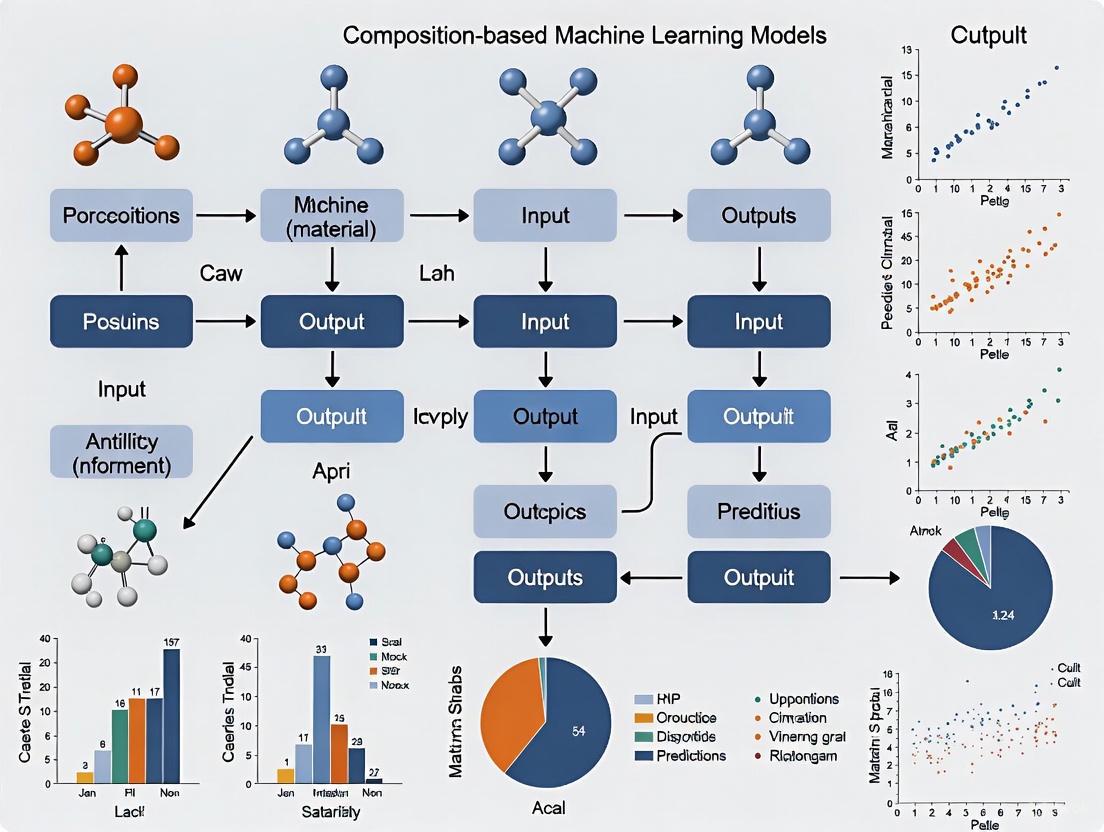
This article provides a comprehensive exploration of composition-based machine learning (ML) models for predicting the thermodynamic stability of inorganic materials.
Composition-Based Machine Learning for Inorganic Stability: From Foundational Concepts to Advanced Discovery
Abstract
This article provides a comprehensive exploration of composition-based machine learning (ML) models for predicting the thermodynamic stability of inorganic materials. Tailored for researchers and scientists, it covers the foundational principles of why stability prediction is a critical bottleneck in materials discovery and how ML offers a data-driven solution. The scope extends to detailed methodologies, including ensemble techniques and feature engineering, alongside critical discussions on overcoming common challenges like model bias and false-positive rates. Finally, the article presents rigorous validation frameworks and comparative analyses of state-of-the-art models, synthesizing key takeaways to guide the effective application of these tools in accelerating the development of novel functional materials, with implications for biomedical and clinical research.
The Why and What: Foundational Principles of Stability Prediction in Inorganic Materials
The discovery of new inorganic compounds with desirable properties has long been a fundamental challenge in materials science. The compositional space of potential inorganic materials is astronomically large, often described as akin to finding a needle in a haystack [1]. The actual number of compounds that can be feasibly synthesized in a laboratory represents only a minute fraction of this total space, creating a significant bottleneck in materials development [1]. This challenge stems from the extensive combinatorial possibilities when considering combinations of elements from the periodic table in varying proportions. Traditional experimental approaches to explore this space are characterized by inefficiency, as establishing thermodynamic stability typically requires resource-intensive experimental investigation or density functional theory (DFT) calculations to determine the energy of compounds within a given phase diagram [1]. The computation of energy via these methods consumes substantial computational resources, resulting in low efficiency and limited efficacy in exploring new compounds.
Within this context, evaluating thermodynamic stability provides a crucial strategy for constricting the exploration space [1]. By meticulously evaluating which compounds are thermodynamically stable, researchers can winnow out a substantial proportion of materials that are difficult to synthesize or endure under certain conditions, thereby notably amplifying the efficiency of materials development [1]. The thermodynamic stability of materials is typically represented by the decomposition energy (ΔHd), defined as the total energy difference between a given compound and competing compounds in a specific chemical space [1]. This metric is ascertained by constructing a convex hull utilizing the formation energies of compounds and all pertinent materials within the same phase diagram. Machine learning (ML) offers a promising avenue for expediting the discovery of new compounds by accurately predicting their thermodynamic stability, providing significant advantages in terms of time and resource efficiency compared to traditional methods [1] [2].
Quantifying the Compositional Space Challenge
The Scale of the Exploration Problem
The challenge of navigating compositional space is fundamentally a problem of scale. To understand the magnitude, consider the combinatorial possibilities when mixing even a limited number of elements. For instance, with 10 elements combined in ternary compounds, thousands of possible compositions exist before even considering different stoichiometric ratios. The V–Cr–Ti alloy system demonstrates this complexity, where conventional wisdom had limited exploration to Cr+Ti content below 10 wt.%, while machine learning approaches have revealed promising composition regions with Cr+Ti content as high as 60 wt.% [3].
Table 1: Traditional vs. ML-Accelerated Materials Discovery
| Aspect | Traditional Methods | ML-Directed Approach |
|---|---|---|
| Exploration Speed | Slow (months to years for systematic exploration) | Rapid (days to weeks for screening) |
| Resource Requirements | High (extensive experimental/DFT resources) | Low (efficient computational screening) |
| Data Efficiency | Requires full characterization of each compound | Achieves same performance with 1/7th the data [1] |
| Composition Space Coverage | Limited to small regions | Can explore vast, unexplored regions [3] |
| Bias in Exploration | Limited by researcher intuition and existing literature | Reduced through data-driven discovery [1] |
Performance Metrics of ML Approaches
The effectiveness of machine learning in addressing the compositional space challenge can be quantified through various performance metrics. Experimental results have validated the efficacy of ensemble ML models in accurately predicting compound stability, achieving an Area Under the Curve (AUC) score of 0.988 [1] [2]. Notably, these models demonstrate exceptional efficiency in sample utilization, requiring only one-seventh of the data used by existing models to achieve the same performance [1]. This data efficiency is particularly valuable for exploring composition spaces with limited existing experimental data.
Table 2: Quantitative Performance of ML Stability Prediction Models
| Model/Method | Prediction Accuracy | Data Efficiency | Key Advantages |
|---|---|---|---|
| ECSG (Ensemble) | 0.988 AUC [1] [2] | 7x more efficient than existing models [1] | Mitigates inductive bias through ensemble approach |
| ElemNet | MAE: 0.042 eV/atom (cross-validation) [3] | Trained on 341,000 compounds [3] | Deep neural network using only elemental composition |
| DFT Calculations | High but computationally expensive | Requires full calculation for each compound | Considered benchmark for accuracy |
| Traditional Experimental | High but low throughput | Extremely resource-intensive | Provides ground-truth validation |
Machine Learning Frameworks for Composition Space Navigation
Ensemble Approaches with Stacked Generalization
To address the core challenge of navigating compositional space, researchers have proposed machine learning frameworks based on ensemble methods and stacked generalization. The Electron Configuration models with Stacked Generalization (ECSG) framework integrates three distinct models to construct a super learner [1]. This approach effectively mitigates the limitations of individual models and harnesses a synergy that diminishes inductive biases, ultimately enhancing the performance of the integrated model [1]. The framework's strength lies in its ability to amalgamate models grounded in diverse knowledge sources to complement each other and mitigate bias, consequently ameliorating predictive performance.
The ECSG framework incorporates three foundational models representing different domains of knowledge [1]:
Magpie: Emphasizes statistical features derived from various elemental properties, including atomic number, atomic mass, and atomic radius. The statistical features encompass mean, mean absolute deviation, range, minimum, maximum, and mode. This model is trained using gradient-boosted regression trees (XGBoost).
Roost: Conceptualizes the chemical formula as a complete graph of elements, employing graph neural networks to learn the relationships and message-passing processes among atoms. By incorporating an attention mechanism, Roost effectively captures the interatomic interactions critical for determining thermodynamic stability.
ECCNN (Electron Configuration Convolutional Neural Network): A newly developed model designed to address the limited understanding of electronic internal structure in current models. The model uses electron configuration information as input, processed through convolutional operations to extract relevant features for stability prediction.
The ensemble approach is particularly valuable because it compensates for the limitations of individual models that are constructed based on specific domain knowledge, which can introduce biases that impact performance [1]. By integrating multiple perspectives, the framework provides a more robust prediction capability essential for reliable navigation of compositional space.
ML Ensemble Framework for Stability Prediction
Composition-Based vs. Structure-Based Models
Machine learning models for predicting material properties can be broadly categorized into structure-based models and composition-based models [1]. Structure-based models contain more extensive information, including the proportions of each element and the geometric arrangements of atoms. However, determining the precise structures of compounds can be challenging [1]. In contrast, composition-based models do not encounter this issue but are often perceived as inferior due to their lack of structure information. Nonetheless, recent research has demonstrated that composition-based models can accurately predict the properties of materials, such as energy and bandgap [1].
For the specific challenge of navigating compositional space in inorganic compounds, composition-based models offer significant advantages, particularly in the discovery of novel materials [1]. Composition-based models can significantly advance the efficiency of developing new materials, given that the composition information can be known as a priori. While databases like the Materials Project (MP) contain extensive structural information, this data is often unavailable or difficult to obtain when exploring new, uncharacterized materials [1]. Structural information typically requires complex experimental techniques or computationally expensive methods like Density Functional Theory (DFT). In contrast, compositional information can be readily obtained by sampling the compositional space, making it more accessible for high-throughput screening and the exploration of new materials [1].
Experimental Protocols and Validation Methodologies
Workflow for ML-Directed Materials Discovery
Implementing machine learning to navigate compositional space requires a systematic workflow that integrates computational prediction with experimental validation. The following detailed methodology has been proven effective in discovering new inorganic compounds:
Data Collection and Preprocessing: Gather formation energies and structural information from existing databases such as the Materials Project (MP) and Open Quantum Materials Database (OQMD) [1] [3]. For composition-based models, extract elemental compositions and corresponding thermodynamic properties.
Feature Engineering: For electron configuration-based models like ECCNN, encode the electron configuration of materials as input matrices. The input for ECCNN is a matrix with a shape of 118 × 168 × 8, encoded by the electron configuration of materials [1]. For other approaches, calculate features including statistical measures of elemental properties or graph representations of compositions.
Model Training and Validation: Train multiple base models (Magpie, Roost, ECCNN) using their respective feature representations. Employ stacked generalization to combine these models into a super learner. Validate using k-fold cross-validation and hold-out test sets, targeting performance metrics such as AUC and mean absolute error.
Composition Space Screening: Apply the trained model to screen unexplored compositional spaces. For example, in the study of V–Cr–Ti alloys, the model computed the enthalpy of formation (ΔHf) across the ternary composition space [3].
First-Principles Validation: Perform DFT calculations on the most promising candidate compositions to verify thermodynamic stability. This step is crucial for validating ML predictions before experimental synthesis [1].
Experimental Synthesis and Characterization: Finally, synthesize the predicted compounds using solid-state methods and characterize their structure and properties. For instance, in the V–Cr–Ti system, this would involve arc-melting or powder metallurgy followed by microstructure analysis and mechanical testing [3].
Workflow for ML-Directed Materials Discovery
Case Study: V–Cr–Ti Alloy Stability Prediction
A concrete example of ML-directed composition space navigation is the stability prediction of V–Cr–Ti alloys for nuclear applications [3]. The experimental protocol for this study involved:
Data Source and Model Selection: Utilizing the ElemNet model, a 17-layered fully connected deep neural network developed for predicting formation energy using only elemental composition [3]. The model was pretrained on enthalpies of formation of 341,000 compounds with unique elemental compositions determined by DFT calculations from the Open Quantum Materials Database.
Computational Methods: Operating the ElemNet code in energy-prediction mode based on the pretrained model in a Python 3.7 environment with extension modules including NumPy 1.21 and TensorFlow 1.14, considering the elemental composition of the metal alloy as the only input [3].
Validation Approach: Comparing ML-predicted formation enthalpies with the limited available DFT data for ternary V–Cr–Ti compounds, achieving excellent agreement with a mean absolute error of 0.015 eV/atom [3].
Stability Assessment: Computing the negative enthalpy of formation (-ΔHf) as a direct representation of stability and correlating these values with experimental data for ductile-brittle transition temperature (DBTT) and swelling behavior [3].
Discovery Outcome: Identifying a previously unexplored composition region with Cr+Ti ~ 60 wt.% that exhibits significantly lower DBTT compared to conventional compositions with less than 10 wt.% Cr+Ti content [3]. This demonstrates the power of ML approaches to reveal promising composition regions that conventional wisdom might overlook.
Computational Tools and Databases
Successfully navigating the compositional space of inorganic compounds requires specialized computational tools and data resources. The table below details essential components of the modern computational materials scientist's toolkit.
Table 3: Essential Research Reagents for Composition-Based ML Studies
| Resource Name | Type | Function/Purpose | Key Features |
|---|---|---|---|
| Materials Project (MP) | Database | Provides calculated properties of known and predicted materials [1] | Formation energies, crystal structures, band gaps |
| Open Quantum Materials Database (OQMD) | Database | Contains DFT-calculated formation energies for training ML models [3] | 341,000+ compounds with formation energies |
| ElemNet | ML Model | Deep neural network for formation energy prediction [3] | 17-layer network using only elemental composition |
| ECSG Framework | ML Model | Ensemble model for stability prediction [1] | Combines Magpie, Roost, and ECCNN models |
| JARVIS Database | Database | Repository for DFT calculations and ML benchmarks [1] | Includes stability data for validation |
| compositions R Package | Software Tool | Compositional data analysis within log-ratio framework [4] | Consistent analysis and modeling of compositional data |
The computational prediction of stable compositions must ultimately be validated through experimental synthesis and characterization. Key experimental resources include:
Solid-State Synthesis Equipment: High-temperature furnaces, arc melters, and spark plasma sintering apparatus for synthesizing predicted compounds. These enable the preparation of samples with precise composition control.
Characterization Tools: X-ray diffraction (XRD) systems for structural validation, scanning electron microscopes (SEM) for microstructural analysis, and thermal analysis equipment for stability assessment.
Mechanical Testing Systems: Equipment for evaluating ductile-brittle transition temperatures (DBTT), particularly important for structural materials like V–Cr–Ti alloys [3].
The challenge of navigating the vast compositional space of inorganic compounds represents a fundamental bottleneck in materials discovery. Traditional experimental and computational approaches are insufficient to explore this space systematically due to resource constraints. Composition-based machine learning models offer a transformative approach to this problem, enabling efficient screening of compositional spaces and prediction of thermodynamic stability with remarkable accuracy [1] [2].
The ensemble framework combining electron configuration information with other knowledge domains has demonstrated exceptional performance, achieving AUC scores of 0.988 in stability prediction while requiring only one-seventh of the data used by existing models [1]. This approach has proven effective in identifying previously unexplored composition regions in diverse material systems, from two-dimensional wide bandgap semiconductors to double perovskite oxides and V–Cr–Ti alloys [1] [3].
As machine learning methodologies continue to evolve and materials databases expand, the navigation of compositional space will become increasingly efficient and comprehensive. This progression will accelerate the discovery of novel materials with tailored properties for applications ranging from nuclear energy to electronics and beyond. The integration of composition-based ML models with high-throughput experimentation and first-principles validation represents a paradigm shift in materials discovery, transforming it from a serendipitous process to a systematic, data-driven engineering discipline.
Thermodynamic stability determines the synthesizability and longevity of inorganic materials, guiding the discovery of new compounds for energy and technology applications. This whitepaper establishes the critical distinction between formation enthalpy and decomposition energy, demonstrating how the convex hull construction provides the definitive metric for stability assessment. Within composition-based machine learning research, the convex hull serves as both a source of training data and a benchmark for predictive model accuracy. We present quantitative comparisons of density functional theory (DFT) performance, detailed computational protocols, and visualization of the stability evaluation framework essential for researchers navigating complex chemical spaces.
Traditional materials thermodynamics has relied heavily on formation enthalpy (ΔHf) as a stability metric, representing the energy required to form a compound from its constituent elemental phases [5]. However, this perspective proves incomplete for practical stability assessment. A compound competes thermodynamically not only with its elements but with all other compounds in its chemical space [5]. The decomposition energy (ΔHd) represents the energy change for a compound decomposing into the most stable combination of competing phases, providing the true determinant of thermodynamic stability [5] [6].
This distinction becomes crucial in high-throughput screening and machine learning, where accurate stability labels are prerequisite for model training [7]. The convex hull construction translates this theoretical principle into a computable metric, enabling the rapid classification necessary for exploring vast composition spaces [2] [7].
Theoretical Foundation: The Convex Hull in Composition Space
Geometric Definition and Stability Criterion
In geometric terms, the convex hull in materials science represents the minimum energy envelope in energy-composition space [6] [8]. For a given set of points representing compounds, the convex hull is the smallest convex set containing all points, analogous to the shape enclosed by a rubber band stretched around the points [8].
The energy above hull (Ehull) quantifies thermodynamic stability as the vertical distance from a compound's energy to this hull surface [6]. Compounds lying on the hull (Ehull = 0) are thermodynamically stable, while those above it (Ehull > 0) are unstable with respect to decomposition into the hull phases [5] [6].
Decomposition Pathways and Their Prevalence
Analysis of 56,791 compounds from the Materials Project database reveals three distinct decomposition types [5] [9]:
Table 1: Classification and Prevalence of Decomposition Reactions
| Reaction Type | Description | Prevalence | Example |
|---|---|---|---|
| Type 1 | Decomposition into elemental phases | 3% of compounds (81% are binaries) | ΔHd = ΔHf |
| Type 2 | Decomposition exclusively into other compounds | 63% of compounds | Compound bracketed by other compounds |
| Type 3 | Decomposition into both elements and compounds | 34% of compounds | Mixed decomposition products |
This distribution demonstrates that decomposition to elemental forms rarely determines compound stability, especially for non-binary systems where Type 2 reactions dominate [5]. This has profound implications for synthesis strategies, as Type 2 reaction thermodynamics are insensitive to adjustments in elemental chemical potentials [5].
Computational Framework for Stability Assessment
Density Functional Theory Methodology
First-principles calculations using DFT provide the foundation for computational stability assessment. The generalized gradient approximation (GGA) with the Perdew-Burke-Ernzerhof (PBE) functional and the meta-GGA strongly constrained and appropriately normed (SCAN) functional represent standard approaches [5] [9].
Table 2: Performance of DFT Functionals for Stability Prediction
| Functional | Mean Absolute Difference (MAD) for ΔHf | MAD for ΔHd (646 reactions) | MAD for Type 2 Reactions (231 reactions) |
|---|---|---|---|
| PBE | 196 meV/atom | 70 meV/atom | ~35 meV/atom |
| SCAN | 88 meV/atom | 59 meV/atom | ~35 meV/atom |
For the most prevalent Type 2 decomposition reactions, both functionals achieve accuracy comparable to experimental uncertainty (~35 meV/atom) [5]. Correction schemes using fitted elemental reference energies provide negligible improvement (~2 meV/atom) for decomposition energy predictions [5] [9].
Convex Hull Construction Protocol
The convex hull construction protocol involves systematic evaluation of phase relationships:
Figure 1: Computational workflow for convex hull construction and stability assessment
Step 1: Data Collection Compile all known and predicted compounds within the target composition space from crystallographic databases (ICSD, Materials Project, OQMD) [7]. For ternary and quaternary systems, ensure adequate coverage of the composition space.
Step 2: Energy Calculation Compute DFT total energies for all structures using consistent computational parameters (functional, pseudopotentials, k-point mesh, convergence criteria) [6]. Normalize energies to eV/atom to enable comparison across different compositions.
Step 3: Hull Computation Solve the N-dimensional convex hull problem using computational geometry algorithms. For a compound A(α)B(β)C(γ), the decomposition energy is calculated as: [ \Delta Hd = E{ABC} - E{A-B-C} ] where E(_{A-B-C}) represents the minimum energy combination of competing phases with the same average composition as ABC [5].
Step 4: Stability Classification Identify phases on the convex hull (thermodynamically stable) and above the hull (metastable or unstable). The energy above hull is calculated as the vertical distance to the hull surface [6].
Step 5: Decomposition Analysis For unstable compounds, determine the specific decomposition reaction and products. For example, BaTaNO(2) decomposes as: BaTaNO(2) → 2/3 Ba(4)Ta(2)O(9) + 7/45 Ba(TaN(2))(2) + 8/45 Ta(3)N(_5) [6].
Essential Research Reagents and Computational Tools
Table 3: Key Resources for Computational Stability Assessment
| Resource Category | Specific Tools/Databases | Function in Stability Research |
|---|---|---|
| DFT Codes | VASP, Quantum ESPRESSO | First-principles energy calculations |
| Materials Databases | Materials Project, OQMD, NRELMatDB | Source of reference structures and energies |
| Stability Analysis | pymatgen, PHONOPY | Convex hull construction and phase analysis |
| Machine Learning | CGCNN, MEGNet, iCGCNN | Graph neural networks for energy prediction |
Machine Learning Integration for Stability Prediction
Data Requirements and Model Architectures
Machine learning models for stability prediction require balanced training datasets containing both ground-state and higher-energy structures [7]. Graph neural networks (GNNs) that represent crystal structures as graphs with atoms as nodes and bonds as edges have emerged as particularly effective architectures [7].
The critical importance of data balance was demonstrated in models trained exclusively on ground-state structures from the ICSD, which showed significant errors (e.g., -0.733 eV/atom for PdN) when predicting energies of higher-energy polymorphs [7]. Incorporating hypothetical structures generated through ionic substitution or other structure prediction methods improves model performance for stability ranking [7].
Workflow for ML-Guided Materials Discovery
Figure 2: Machine learning workflow for stability prediction and materials discovery
Recent advances demonstrate remarkable efficiency in sample utilization, with some models requiring only one-seventh of the data used by existing approaches to achieve comparable performance (AUC score of 0.988) [2]. These models enable rapid exploration of uncharted composition spaces, particularly for complex systems like ternary transition metal compounds and double perovskite oxides [2] [10].
Experimental Validation and Synthesis Considerations
Interpreting Stability Metrics for Synthesis
The energy above hull provides crucial guidance for experimental synthesis:
- Ehull = 0 meV/atom: Thermodynamically stable; synthesizable under equilibrium conditions
- Ehull < 20-30 meV/atom: Likely synthesizable as metastable phases
- Ehull > 50 meV/atom: Increasingly challenging to synthesize
For example, BaTaNO₂ with Ehull = 32 meV/atom represents a metastable phase that can be synthesized despite its positive energy above hull [6].
Limitations and Complementary Techniques
Computational stability assessments have limitations. DFT errors (~35 meV/atom for Type 2 reactions) approach the magnitude of experimental uncertainty [5]. Additionally, convex hull analysis assumes equilibrium conditions and does not account for kinetic barriers, non-equilibrium synthesis pathways, or temperature-dependent effects beyond the harmonic approximation.
Successful research programs integrate computational stability predictions with experimental validation. The machine-learning directed approach has demonstrated reduced experimental effort in identifying new intermetallic compounds in systems like Y-Ag-In [11]. For ternary transition metal compounds, combining convex hull analysis with machine learning feature importance provides insights into structure-stability relationships [10].
The convex hull construction and decomposition energy provide the fundamental framework for assessing thermodynamic stability in inorganic materials. Moving beyond traditional formation enthalpy to decomposition energy reveals that most compounds compete thermodynamically with other compounds rather than elemental phases. Integration of these concepts with machine learning creates a powerful paradigm for accelerated materials discovery, enabling efficient navigation of vast composition spaces while grounding predictions in rigorous thermodynamics. As computational methods advance toward higher accuracy and machine learning models achieve greater data efficiency, this integrated approach promises to dramatically accelerate the discovery of stable materials for energy and technology applications.
The discovery and development of new inorganic compounds are fundamental to technological progress, from renewable energy systems to next-generation electronics. Traditionally, this process has relied on two core methodologies: experimental synthesis and density functional theory (DFT) calculations. However, the extensive compositional space of potential materials makes the exhaustive exploration of these methods prohibitively expensive and time-consuming. The actual number of compounds that can be synthesized in a laboratory represents only a minute fraction of the total compositional space, a predicament often likened to finding a needle in a haystack [1].
This article examines the intrinsic limitations and high costs associated with these conventional approaches. It further frames these challenges within the context of a promising solution: the use of composition-based machine learning (ML) models for predicting inorganic compound stability. By leveraging existing data, these models offer a pathway to significantly accelerate materials discovery while conserving substantial computational and experimental resources [1] [3].
The Computational Bottleneck: Limitations of Density Functional Theory
Fundamental Accuracy Challenges
DFT is a widely used methodology for calculating crucial material properties such as formation energy, which determines thermodynamic stability. Despite its popularity, DFT has well-documented limitations that affect its predictive accuracy. A primary issue is the intrinsic error of the exchange-correlation functionals, which can lead to an inadequate energy resolution. This is particularly problematic for calculating formation enthalpies and predicting phase stability, especially in ternary systems [12].
The method is known to struggle with several physical phenomena, including the correct description of weak, long-range interactions and spin-state energetics. These failures can lead to incorrect qualitative results, particularly in systems with strong electron correlation or complex magnetic properties. The errors are often unsystematic and highly functional-dependent, necessitating careful and computationally expensive validation [13].
Resource Intensiveness and Efficiency
Establishing thermodynamic stability typically requires constructing a convex hull using the formation energies of a target compound and all competing phases within the same phase diagram. DFT calculations for each of these points consume substantial computational resources, leading to low efficiency in exploring new compounds [1].
Table 1: Key Limitations of Density Functional Theory
| Limitation Category | Specific Challenge | Impact on Material Discovery |
|---|---|---|
| Fundamental Accuracy | Intrinsic errors in exchange-correlation functionals [12] | Limited reliability in predicting phase stability, especially for ternary systems [12] |
| Inaccurate description of weak interactions (dispersion forces) [13] | Reduced predictive power for molecular crystals and layered materials | |
| Failures in spin-state energetics [13] | Incorrect predictions for magnetic materials and transition metal complexes | |
| Computational Cost | High resource demand for total energy calculations [1] | Inefficient for rapid screening across vast compositional spaces |
| Need for multiple calculations to build a convex hull [1] | Low throughput in determining thermodynamic stability |
The Experimental Synthesis Hurdle: Cost, Time, and Labor
The traditional experimental path to discovering new materials is characterized by its labor-intensive nature. For multicomponent alloys, such as the V-Cr-Ti systems studied for nuclear applications, conducting experiments across a wide range of elemental compositions is extremely laborious [3]. Each synthesis and subsequent characterization of properties, such as the ductile-brittle transition temperature (DBTT), requires significant investment of time, specialized equipment, and expert labor. This process becomes exponentially more challenging as the number of constituent elements increases, rendering the comprehensive exploration of complex compositional spaces, like those of high-entropy alloys, practically infeasible [3].
The Machine Learning Paradigm: A Path to Accelerated Discovery
Composition-Based Machine Learning Models
Machine learning offers a promising avenue for overcoming the bottlenecks of traditional methods. By learning from existing databases of calculated and experimental properties, ML models can predict material stability directly from chemical composition, bypassing the need for exhaustive DFT or immediate synthesis [1] [3]. This approach provides significant advantages in time and resource efficiency [1].
A key advantage of composition-based models is that they do not require precise structural information, which is often unavailable for new, unexplored materials. This allows for the rapid screening of vast compositional spaces using only the chemical formula as a starting point [1].
Table 2: Comparison of Traditional Methods and Machine Learning for Stability Prediction
| Aspect | Experimental Synthesis | Density Functional Theory | Composition-Based ML |
|---|---|---|---|
| Primary Input | Raw elements & synthesis conditions | Atomic structure & composition | Elemental composition |
| Time per Sample | Weeks to months [3] | Hours to days [1] | Seconds to minutes |
| Computational Cost | Low (but high equipment/lab cost) | Very High [1] | Low |
| Exploration Speed | Very Slow | Slow | Very High |
| Key Limitation | Laborious for multicomponent systems [3] | High resource demand [1] | Reliant on quality of training data |
Key Methodologies and Workflows
Several advanced ML frameworks have been developed specifically for predicting material stability. The ECSG (Electron Configuration models with Stacked Generalization) framework integrates three distinct models to mitigate individual biases and enhance predictive performance [1]:
- ECCNN (Electron Configuration Convolutional Neural Network): A novel model that uses electron configuration as an intrinsic material descriptor.
- Roost: A model that represents a chemical formula as a graph of elements and uses message-passing to capture interatomic interactions.
- Magpie: A model that leverages statistical features from various elemental properties.
Another approach involves using pre-trained deep learning models like ElemNet, a 17-layer deep neural network trained on hundreds of thousands of compounds from databases like the Open Quantum Materials Database (OQMD). This model can predict formation energy using only elemental composition as input [3].
The following diagram illustrates a generalized workflow for using ensemble machine learning to predict compound stability, from data sourcing to final validation.
Performance and Validation
The performance of these ML models is compelling. The ECSG framework has been reported to achieve an Area Under the Curve (AUC) score of 0.988 in predicting compound stability within the JARVIS database [1]. Notably, it demonstrated exceptional sample efficiency, requiring only one-seventh of the data used by existing models to achieve the same performance [1].
In a case study on V–Cr–Ti alloys, predictions of negative enthalpy of formation (-ΔHf) from the ElemNet model qualitatively agreed with experimental ductile-brittle transition temperature (DBTT) data. The model accurately reproduced the trend of increasing DBTT with Cr content below 20 wt.%, and even suggested a previously unexplored compositional region with high Cr+Ti content (~60 wt.%) that may exhibit low DBTT [3].
Furthermore, ML models can be deployed to correct DFT errors. One study trained a neural network to predict the discrepancy between DFT-calculated and experimentally measured formation enthalpies for binary and ternary alloys, thereby systematically improving the reliability of first-principles predictions [12].
The Scientist's Toolkit: Research Reagent Solutions
Table 3: Essential Resources for Composition-Based Machine Learning in Materials Research
| Resource Name | Type | Primary Function | Relevance to Stability Prediction |
|---|---|---|---|
| Materials Project (MP) [1] | Database | Repository of computed material properties (e.g., formation energies from DFT). | Provides high-quality training data for machine learning models. |
| Open Quantum Materials Database (OQMD) [3] | Database | Extensive collection of DFT-calculated thermodynamic properties for hundreds of thousands of compounds. | Serves as a key dataset for training models like ElemNet. |
| JARVIS [1] | Database | Joint Automated Repository for Various Integrated Simulations, includes DFT data. | Used for benchmarking and validating model performance. |
| ElemNet [3] | Pre-trained ML Model | A deep neural network for predicting formation energy from composition. | Allows rapid stability screening without training a new model from scratch. |
| ECCNN [1] | ML Model Architecture | A convolutional neural network using electron configuration as input. | Captures intrinsic electronic structure information to predict stability. |
The limitations of traditional methods for material discovery are clear. The high computational costs of DFT and the labor-intensive nature of experimental synthesis create significant bottlenecks in the exploration of vast inorganic compositional spaces. Composition-based machine learning models emerge as a powerful alternative, demonstrating the ability to predict thermodynamic stability with high accuracy and remarkable sample efficiency. By integrating diverse knowledge sources and leveraging large existing datasets, these models can accelerate the discovery of novel, stable compounds for technological applications, effectively navigating the challenging "needle in a haystack" problem of materials science.
The discovery of novel inorganic materials has long been characterized by expensive, inefficient trial-and-error approaches, creating a significant bottleneck for technological progress across fields from clean energy to information processing. Traditional methods for assessing thermodynamic stability and synthesizability—primarily through experimental investigation and density functional theory (DFT) calculations—consume substantial computational resources and time, resulting in low efficiency for exploring new compounds. The extensive compositional space of materials means the number of compounds actually synthesized represents only a minute fraction of the total possibility, creating a "needle in a haystack" challenge for researchers. This review examines the transformative paradigm shift driven by composition-based machine learning models, which accurately predict stability and synthesizability orders of magnitude faster than conventional approaches, dramatically accelerating the materials development pipeline.
The Limitations of Traditional Approaches
Computational and Experimental Bottlenecks
Traditional stability assessment relies on constructing convex hulls using formation energies of compounds and all pertinent materials within the same phase diagram. Establishing these convex hulls typically requires experimental investigation or DFT calculations to determine the energy of compounds, processes that consume substantial computation resources and yield limited efficacy in exploring new compounds. While DFT has paved the way for extensive materials databases, its high computational cost remains prohibitive for large-scale exploration.
The Charge-Balancing Fallacy
Charge-balancing criteria has served as a commonly employed proxy for synthesizability, filtering out materials that lack net neutral ionic charge for common oxidation states. However, this chemically motivated approach demonstrates poor predictive accuracy. Among all inorganic materials that have already been synthesized, only 37% can be charge-balanced according to common oxidation states, and even among ionic binary cesium compounds—typically governed by highly ionic bonds—only 23% of known compounds are charge balanced. The inflexibility of the charge neutrality constraint cannot account for different bonding environments across material classes such as metallic alloys, covalent materials, or ionic solids.
Machine Learning Frameworks for Stability Prediction
Ensemble Model with Stacked Generalization
The Electron Configuration models with Stacked Generalization (ECSG) framework integrates three foundational models based on distinct domains of knowledge to mitigate individual model biases. This super learner amalgamates:
- Magpie: Emphasizes statistical features derived from elemental properties (atomic number, mass, radius) using gradient-boosted regression trees (XGBoost)
- Roost: Conceptualizes chemical formulas as complete graphs of elements, employing graph neural networks with attention mechanisms to capture interatomic interactions
- ECCNN: A novel electron configuration-based convolutional neural network that delineates electron distribution within atoms, encompassing energy levels and electron counts
The ECSG framework achieves an Area Under the Curve score of 0.988 in predicting compound stability within the JARVIS database and demonstrates exceptional efficiency, requiring only one-seventh of the data used by existing models to achieve equivalent performance [1] [2].
Graph Networks for Materials Exploration (GNoME)
The GNoME approach scales machine learning for materials exploration through large-scale active learning, utilizing state-of-the-art graph neural networks trained at scale to reach unprecedented generalization levels. The framework employs two parallel pipelines:
- Structural candidates: Generated through modifications of available crystals using symmetry-aware partial substitutions (SAPS)
- Compositional models: Predict stability without structural information using reduced chemical formulas
Through iterative active learning, GNoME models have discovered 2.2 million structures stable with respect to previous work, with final models achieving prediction errors of 11 meV atom⁻¹ and hit rates above 80% with structure and 33% with composition only [14].
Deep Learning Synthesizability Classification
SynthNN adopts a positive-unlabeled (PU) learning framework to predict synthesizability directly from chemical compositions without structural information. The model utilizes atom2vec representations, where each chemical formula is represented by a learned atom embedding matrix optimized alongside all neural network parameters. This approach learns optimal representations directly from the distribution of previously synthesized materials without assumptions about factors influencing synthesizability. Trained on the Inorganic Crystal Structure Database (ICSD) augmented with artificially generated unsynthesized materials, SynthNN identifies synthesizable materials with 7× higher precision than DFT-calculated formation energies [15].
Quantitative Performance Comparison
Table 1: Performance Metrics of ML Models for Stability and Synthesizability Prediction
| Model | Approach | Key Metric | Performance | Data Efficiency |
|---|---|---|---|---|
| ECSG | Ensemble learning with electron configuration | AUC score | 0.988 | 7× better than existing models |
| GNoME | Graph neural networks with active learning | Hit rate (with structure) | >80% | Improves with data scaling |
| GNoME | Graph neural networks with active learning | Hit rate (composition only) | 33% per 100 trials | Improves with data scaling |
| SynthNN | Deep learning classification | Precision vs DFT | 7× higher than formation energy | Trained on ICSD + artificial data |
| Traditional DFT | First-principles calculations | Hit rate | ~1% | Computationally intensive |
Table 2: Discovery Scale Comparison Across Methods
| Method | Stable Materials Discovered | Time Scale | Computational Cost |
|---|---|---|---|
| Traditional experimental | 20,000 (ICSD) | Decades | Extremely high |
| DFT + substitutions | 48,000 | Years | High |
| GNoME (ML-guided) | 2.2 million | Active learning cycles | Orders of magnitude reduction |
| Human experts | Limited to specialized domains | Months to years | High personnel costs |
Detailed Methodologies and Experimental Protocols
ECSG Framework Implementation
The ECCNN base model processes electron configuration data encoded as a 118×168×8 matrix representing the electron configuration of materials. The architecture employs:
- Two convolutional operations with 64 filters of size 5×5
- Batch normalization following the second convolution
- 2×2 max pooling operation
- Flattening extracted features into a one-dimensional vector
- Fully connected layers for final prediction
After training foundational models, their outputs construct a meta-level model producing final predictions through stacked generalization. Validation via first-principles calculations demonstrates remarkable accuracy in correctly identifying stable compounds, particularly for two-dimensional wide bandgap semiconductors and double perovskite oxides [1].
GNoME Active Learning Workflow
The GNoME active learning process implements:
- Candidate generation: Over 10⁹ candidates through strongly augmented substitutions and random structure search
- Model filtration: Using volume-based test-time augmentation and uncertainty quantification through deep ensembles
- Structure clustering: Polymorphs ranked for DFT evaluation
- Data flywheel: Verified structures incorporated into iterative training cycles
Through six rounds of active learning, initial hit rates of <6% (structural) and <3% (compositional) improved to >80% and 33% respectively. The final ensemble achieves 11 meV atom⁻¹ prediction error on relaxed structures, demonstrating the power of scaling laws in materials informatics [14].
SynthNN Training Protocol
SynthNN employs semi-supervised learning addressing the lack of recorded data on unsynthesizable materials:
- Positive examples: Synthesizable inorganic materials extracted from ICSD
- Unlabeled examples: Artificially generated unsynthesized materials, treated as unlabeled data and probabilistically reweighted according to likelihood of synthesizability
- Hyperparameter optimization: Including embedding dimensionality and Nₛynth ratio of artificial to synthesized formulas
This positive-unlabeled learning approach generates predictions informed by the entire spectrum of previously synthesized materials rather than proxy metrics, better capturing the complex array of factors influencing synthesizability [15].
Visualization of ML Workflows
ML vs Traditional Discovery Workflow
Table 3: Key Databases and Computational Resources for ML-Driven Materials Discovery
| Resource | Type | Key Features | Application in Research |
|---|---|---|---|
| Materials Project (MP) | Materials Database | DFT-calculated properties for ~150,000 materials | Training data for stability prediction models |
| Open Quantum Materials Database (OQMD) | Materials Database | DFT-calculated properties for ~700,000 materials | Training data for stability prediction models |
| Inorganic Crystal Structure Database (ICSD) | Experimental Database | Experimentally characterized inorganic crystal structures | Ground truth for synthesizability models |
| JARVIS | Materials Database | DFT, ML, and experimental data for ~80,000 materials | Benchmarking model performance |
| Alexandria | DFT Database | >5 million DFT calculations for periodic compounds | Training advanced ML models and interatomic potentials |
| VASP | Simulation Software | First-principles DFT calculations | Ground truth verification for ML predictions |
Case Studies and Validation
Exploration of Multi-Component Systems
GNoME has demonstrated exceptional capability in discovering materials with 5+ unique elements, a combinatorially challenging space that previously escaped human chemical intuition. The model discovered 381,000 new entries on the updated convex hull from a total of 421,000 stable crystals, representing an order-of-magnitude expansion from all previous discoveries. Phase-separation energy analysis confirms these materials are meaningfully stable with respect to competing phases rather than merely "filling in the convex hull" [14].
Two-Dimensional Wide Bandgap Semiconductors
The ECSG framework successfully navigated unexplored composition space for two-dimensional wide bandgap semiconductors, with first-principles calculations validating the remarkable accuracy of identified stable compounds. The electron configuration approach proved particularly valuable for predicting stability in these systems where traditional domain knowledge provides limited guidance [1].
Human vs Machine Performance Benchmark
In a head-to-head material discovery comparison against 20 expert material scientists, SynthNN outperformed all experts, achieving 1.5× higher precision and completing the task five orders of magnitude faster than the best human expert. Remarkably, without prior chemical knowledge, SynthNN learned chemical principles of charge-balancing, chemical family relationships, and ionicity from the data distribution of synthesized materials [15].
The integration of composition-based machine learning models represents a fundamental paradigm shift in inorganic materials discovery, enabling rapid and cost-effective screening at unprecedented scales. Ensemble methods like ECSG, large-scale graph networks like GNoME, and synthesizability classifiers like SynthNN have demonstrated order-of-magnitude improvements in efficiency, accuracy, and scale compared to traditional approaches. As these models continue to benefit from scaling laws and improved algorithms, and as materials databases expand further, machine learning will become increasingly indispensable for identifying novel functional materials to address pressing technological challenges. The successful validation of ML-predicted compounds through first-principles calculations and experimental realization confirms these approaches are not merely computational exercises but represent a transformative advancement in materials science methodology.
In the field of inorganic materials research, machine learning (ML) has emerged as a transformative tool for predicting thermodynamic stability and accelerating the discovery of new compounds. These ML approaches primarily fall into two distinct categories: composition-based and structure-based models. Composition-based models predict material properties using only the chemical formula as input, making them exceptionally valuable for high-throughput screening of novel compounds whose crystal structures are unknown [1]. In contrast, structure-based models incorporate detailed information about atomic arrangements, bonding, and crystal symmetry, typically delivering higher accuracy for properties strongly influenced by structural characteristics [16]. Understanding the relative strengths, limitations, and appropriate application contexts of these two frameworks is essential for researchers developing ML-guided strategies for inorganic stability research. This guide provides a technical comparison of these approaches, detailing their underlying methodologies, performance characteristics, and implementation protocols.
Core Conceptual Frameworks and Technical Differentiation
Composition-Based Models: Leveraging Elemental Proportions and Properties
Composition-based models operate on the fundamental principle that a material's stability and properties are determined by its constituent elements and their relative proportions. These models use chemical formulas as their starting point, which are then transformed into quantitative descriptors using domain knowledge [1].
The feature engineering process typically involves calculating statistical measures (mean, variance, range, etc.) across various elemental properties for all elements in a compound. These properties often include atomic number, atomic mass, electronegativity, valence electron count, and electron affinity [1] [17]. For example, the Magpie model leverages such statistical features of elemental properties and employs gradient-boosted regression trees for prediction [1]. Advanced deep learning approaches like ElemNet bypass manual feature engineering by using deep neural networks to automatically learn relevant patterns directly from elemental compositions [1].
A more sophisticated approach incorporates electron configurations (EC) as intrinsic atomic characteristics that introduce less inductive bias. The Electron Configuration Convolutional Neural Network (ECCNN) framework encodes electron distributions into a matrix representation processed through convolutional layers to predict stability [1]. The primary advantage of composition-based models is their applicability in exploratory settings where only compositional space is being sampled, as they can significantly narrow down candidate materials before resource-intensive structure determination is attempted [1].
Structure-Based Models: Encoding Crystalline Architecture
Structure-based models recognize that atomic arrangement fundamentally influences material properties and stability. These approaches represent crystal structures as mathematical objects that capture bonding relationships and spatial configurations [16].
Graph Neural Networks (GNNs) have become the dominant architecture for structure-based prediction, representing crystals as graphs with atoms as nodes and bonds as edges [16] [18]. Models such as CGCNN, ALIGNN, and MEGNet operate on this principle, using message-passing between connected atoms to learn structure-property relationships [18]. ALIGNN extends this further by incorporating angular information through a line graph of atomic bonds, effectively capturing three-body interactions [18]. The most advanced frameworks, including CrysGNN, explicitly encode four-body interactions (atoms, bonds, angles, and dihedral angles) to comprehensively represent periodicity and structural characteristics [18].
Structure-based models generally achieve higher accuracy than composition-based approaches for properties strongly dependent on atomic arrangement, such as mechanical properties and thermodynamic stability [16] [18]. However, they require complete crystal structure information, which is often unavailable for new, unsynthesized materials, limiting their application in discovery workflows targeting completely novel compounds [1].
Table 1: Comparison of Model Frameworks for Predicting Inorganic Material Stability
| Feature | Composition-Based Models | Structure-Based Models |
|---|---|---|
| Primary Input | Chemical formula | Crystallographic information (atomic coordinates, space group) |
| Key Descriptors | Elemental properties statistics, electron configurations | Atomic bonds, angles, dihedral angles, periodicity |
| Common Algorithms | Random Forest, XGBoost, ECCNN, ElemNet | CGCNN, ALIGNN, MEGNet, CrysGNN |
| Primary Advantage | Applicable to unexplored composition spaces; no structure needed | Higher accuracy; captures structure-property relationships |
| Key Limitation | Lower accuracy for structure-sensitive properties | Requires complete structural data |
| Data Efficiency | High (e.g., 1/7 the data for similar performance [1]) | Lower (requires large datasets for training) |
| Interpretability | Moderate (feature importance) | Lower (complex architecture) |
Methodological Protocols and Implementation
Protocol for Composition-Based Stability Prediction
Step 1: Data Curation and Preprocessing Collect a dataset of known materials with their chemical formulas and stability labels (e.g., decomposition energy, stability above convex hull). Databases such as the Materials Project, OQMD, and JARVIS provide extensive training data. For experimental validation, curate stability measurements from literature using natural language processing tools like ChemDataExtractor [19].
Step 2: Feature Engineering Convert chemical formulas into numerical descriptors using one of these approaches:
- Statistical Feature Method: For each element in the composition, calculate statistical measures (mean, standard deviation, range, etc.) across fundamental atomic properties including electronegativity, atomic radius, valence electron count, and electron affinity [1] [17].
- Electron Configuration Method: Encode the electron configuration of each element into a matrix representation capturing energy levels and electron occupations, then process through convolutional layers [1].
- Graph Representation Method: Represent the chemical formula as a dense graph of elements (as in Roost) and use message passing with attention mechanisms to learn compositional relationships [1].
Step 3: Model Selection and Training Select an appropriate algorithm based on dataset size and complexity:
- For smaller datasets (<10,000 samples), use ensemble methods like Random Forest or XGBoost [20] [21].
- For larger datasets, employ deep learning architectures like ECCNN or ElemNet [1].
- Implement stacked generalization by combining multiple models (e.g., Magpie, Roost, and ECCNN) to reduce inductive bias and improve performance [1].
Step 4: Validation and Interpretation Validate model performance using cross-validation with a focus on compositional splits rather than random splits to assess generalization to new chemical spaces [16]. Analyze feature importance to identify which elemental properties most strongly influence stability predictions.
Protocol for Structure-Based Stability Prediction
Step 1: Data Preparation Obtain crystal structure information (CIF files) from databases like Materials Project, ICSD, or OQMD. The dataset should include structural information and target properties (e.g., energy above convex hull, formation energy).
Step 2: Structure Representation Convert crystal structures into graph representations:
- Graph Construction: Represent atoms as nodes and bonds as edges within a cutoff radius (typically 5-8 Å) [18].
- Feature Assignment: Node features include atomic number, valence, and position; edge features include bond length and bond type [18].
- Higher-Order Interactions: For advanced models, compute bond angles (three-body) and dihedral angles (four-body) to comprehensively capture local environments [18].
Step 3: Model Architecture and Training Select a GNN architecture based on property requirements:
- For general property prediction, use CGCNN or MEGNet [18].
- For properties sensitive to angular information, implement ALIGNN [18].
- For data-scarce scenarios, employ transfer learning from a model pre-trained on data-rich properties like formation energy [18].
- Implement attention mechanisms (e.g., EGAT) to prioritize important atomic interactions [18].
Step 4: Evaluation with OOD Testing Assess model performance using out-of-distribution (OOD) testing methods that evaluate generalization to structurally or compositionally distinct materials, as random splits often overestimate performance due to dataset redundancy [16].
Performance Benchmarking and Comparative Analysis
Quantitative Performance Metrics
Table 2: Performance Comparison Across Model Architectures and Tasks
| Model Type | Specific Model | Target Property | Performance Metric | Score | Data Requirements |
|---|---|---|---|---|---|
| Composition-Based | ECSG (Ensemble) | Thermodynamic Stability | AUC | 0.988 [1] | ~1/7 of data for similar performance [1] |
| Composition-Based | RFC/XGBoost/SVM | MAX Phase Stability | Accuracy | High [20] | 1,804 compositions [20] |
| Structure-Based | coGN (MatBench) | Formation Energy | MAE | 0.017 eV [16] | Large dataset with redundancy [16] |
| Structure-Based | coGN (MatBench) | Bandgap | MAE | 0.156 eV [16] | Large dataset with redundancy [16] |
| Structure-Based | ALIGNN | Formation Energy | MAE | Lower than CGCNN [18] | Extensive structural data [18] |
| Hybrid | CrysCo (CrysGNN + CoTAN) | Energy Above Hull | MAE | Outperforms SOTA [18] | Transfer learning enabled [18] |
Case Studies in Inorganic Materials Discovery
Case Study 1: Discovery of Ti₂SnN MAX Phase Researchers employed a composition-based machine learning approach using Random Forest, Support Vector Machine, and Gradient Boosting Tree models to screen for stable MAX phases. The model was trained on 1,804 MAX phase combinations with stability labels and identified 190 promising candidates from 4,347 possibilities. First-principles calculations validated 150 of these as thermodynamically and intrinsically stable. This computational guidance enabled the experimental synthesis of Ti₂SnN at 750°C through Lewis acid substitution reactions, demonstrating the practical utility of composition-based screening for discovering previously unknown inorganic compounds [20].
Case Study 2: Exploring Two-Dimensional Semiconductors and Perovskites The ECSG ensemble framework, which combines composition-based models including Magpie, Roost, and ECCNN, was applied to discover new two-dimensional wide bandgap semiconductors and double perovskite oxides. The model successfully identified novel perovskite structures that were subsequently validated using first-principles calculations, demonstrating remarkable accuracy in identifying stable compounds. This case highlights how composition-based models can effectively navigate unexplored composition spaces despite having no structural information about the target materials [1].
Case Study 3: Identifying Materials for Harsh Environments A hybrid approach was developed to discover inorganic solids with high hardness and oxidation resistance for extreme environments. The methodology combined composition-based features with structural descriptors within an XGBoost framework. The resulting model screened 15,247 pseudo-binary and ternary compounds, identifying three promising candidates with both high hardness and excellent oxidation resistance. This successful application demonstrates the power of integrating both compositional and structural information for predicting complex material behaviors under demanding conditions [21].
Essential Research Reagents and Computational Tools
Table 3: Key Research Resources for Stability Prediction Research
| Resource Name | Type | Primary Function | Access |
|---|---|---|---|
| Materials Project | Database | Provides calculated structural and thermodynamic data for training | Online [1] [16] |
| JARVIS | Database | Contains DFT-calculated properties for materials including stability | Online [1] |
| OQMD | Database | Open Quantum Materials Database with formation energies | Online [1] [16] |
| ICSD | Database | Inorganic Crystal Structure Database with experimental structures | Subscription [17] |
| ChemDataExtractor | Software Tool | Automates extraction of experimental data from literature | Open Source [19] |
| ALIGNN | Model Framework | Graph neural network incorporating angular bond information | Open Source [18] |
| CGCNN | Model Framework | Crystal Graph Convolutional Neural Network for structure-based prediction | Open Source [18] |
| Magpie | Model Framework | Composition-based model using elemental property statistics | Open Source [1] |
The selection between composition-based and structure-based modeling frameworks depends critically on the research objectives and available data. Composition-based models provide an efficient starting point for exploring novel chemical spaces and conducting initial screening of candidate materials, requiring only chemical formulas as input. Their superior data efficiency makes them particularly valuable when exploring previously uncharted compositional territory. Structure-based models deliver higher accuracy for properties strongly influenced by atomic arrangements but require complete crystallographic information, limiting their application to materials with known structures.
For comprehensive inorganic stability research, a hierarchical approach is recommended: begin with composition-based screening to identify promising regions of compositional space, then apply structure-based methods for refined prediction once candidate materials are selected. Emerging hybrid frameworks that integrate both compositional and structural information represent the most promising direction, leveraging the respective strengths of both approaches while mitigating their individual limitations. As materials databases continue to expand and algorithms become more sophisticated, the integration of these complementary frameworks will increasingly accelerate the discovery of novel inorganic materials with tailored stability characteristics.
The How: Methodologies and Real-World Applications of ML Models
The discovery of novel inorganic materials with targeted properties is a central pursuit in materials science, yet it is perpetually challenged by the vastness of the compositional space. Traditional experimental methods and high-fidelity computational simulations, such as Density Functional Theory (DFT), are often too time-consuming and resource-intensive for exhaustive exploration [1]. In this context, composition-based machine learning (ML) models have emerged as a powerful tool for rapid virtual screening and prediction of material properties, most notably thermodynamic stability [22]. The performance of these models, however, is profoundly dependent on the representation of the input chemical formula—a process known as feature engineering. The journey of feature engineering for inorganic materials has evolved from simple elemental statistics to more sophisticated, physics-informed representations such as electron configurations, each with distinct advantages and limitations. This evolution is framed within the broader thesis that the strategic design of input features is paramount for developing accurate, generalizable, and efficient ML models that can accelerate inverse design and stability research in inorganic chemistry.
The Foundation: Elemental Statistics and Classical Descriptors
The initial approaches to feature engineering for inorganic compounds leveraged readily available elemental properties. These methods transform a chemical formula into a vector of numerical features by computing statistical moments across various elemental attributes.
Core Methodology
For a given compound, a list of atomic properties is first assembled for each constituent element. These properties can include atomic number, atomic mass, atomic radius, electronegativity, group number, and more [1]. Subsequently, a set of statistical functions—such as mean, standard deviation, minimum, maximum, and mode—is applied to the list of values for each property, generating a comprehensive feature vector that describes the compound's compositional makeup [23]. This approach is exemplified by the Magpie (Materials-Agnostic Platform for Informatics and Exploration) descriptor set [1].
Experimental Protocol and Data Presentation
The application of these descriptors typically follows a standard ML workflow. A dataset of compounds with known target properties (e.g., formation energy from the Materials Project or OQMD) is split into training and test sets [24]. A model, such as Gradient Boosted Regression Trees (XGBoost), is then trained to map the feature vectors to the target property [1].
Table 1: Key Elemental Properties Used in Feature Engineering
| Category | Specific Examples | Role in Describing Material Behavior |
|---|---|---|
| Electronic Structure | Number of valence electrons, Electronegativity | Influences bonding type and strength, chemical reactivity |
| Spatial | Atomic radius, Atomic volume | Determines packing efficiency and structural stability |
| Energetic | Melting point, Boiling point | Correlates with bond strength and thermal stability |
| Periodic | Group number, Period number | Captures periodic trends and chemical similarity |
The Paradigm Shift: Electron Configuration as a Fundamental Representation
While elemental statistics provide a useful summary, they rely on pre-selected properties and may introduce human bias. Electron configuration (EC) offers a more fundamental representation by describing the distribution of electrons in atomic orbitals, which underlies all chemical behavior [25].
Theoretical Underpinnings
The electron configuration of an atom denotes the population of electrons in its atomic orbitals (e.g., 1s² 2s² 2p⁶ for neon). It is determined by the Aufbau principle, the Pauli exclusion principle, and Hund's rule, which collectively dictate the ground-state arrangement of electrons that minimizes the atom's total energy [26]. This configuration is intrinsically linked to an element's position in the periodic table and its chemical properties, including its common oxidation states and preferred bonding patterns [25].
Encoding Methods for Machine Learning
To be used as input for an ML model, the electron configuration information for all atoms in a compound must be encoded into a numerical matrix. One advanced method involves creating a large matrix (e.g., 118 elements × 168 orbital slots × 8 channels) that comprehensively represents the electron occupancy for each element in a structured format [1]. This dense representation aims to provide the model with a more direct and less biased view of the electronic structure that governs interatomic interactions.
Table 2: Comparison of Feature Engineering Approaches for Inorganic Compounds
| Feature Type | Description | Advantages | Limitations |
|---|---|---|---|
| Elemental Statistics (e.g., Magpie) | Statistical moments (mean, variance, etc.) of elemental properties [1]. | Computationally lightweight; Intuitive; Good performance for many properties. | Relies on manual feature selection; May introduce bias; Limited transferability. |
| Graph Representations (e.g., Roost) | Treats chemical formula as a graph with message-passing between atoms [1]. | Effectively captures interatomic interactions. | Can be computationally intensive; Relies on the completeness of the graph model. |
| Electron Configuration (EC) | Direct use of orbital occupation data as a feature matrix [1] [23]. | Fundamental, physics-based input; Reduces manual feature bias. | Higher dimensionality requires more complex models (e.g., CNN); Less interpretable. |
Advanced Architectures and Ensemble Strategies
Relying on a single type of feature representation can limit model performance due to inherent inductive biases. Consequently, state-of-the-art research has moved towards ensemble frameworks that integrate multiple, complementary representations.
The ECCNN Model
The Electron Configuration Convolutional Neural Network (ECCNN) is designed to process the encoded electron configuration matrix [1]. The architecture typically involves:
- Input Layer: Accepts the encoded EC matrix.
- Convolutional Layers: Apply filters to extract localized spatial patterns from the EC matrix, effectively learning salient features from the electronic structure [1].
- Fully Connected Layers: Map the extracted features to a final prediction, such as decomposition energy or stability classification [1].
Ensemble Learning with Stacked Generalization
The ECSG (Electron Configuration models with Stacked Generalization) framework exemplifies the ensemble approach [1]. It operates on two levels:
- Base-Level Models: Three distinct models are trained independently: Magpie (elemental statistics), Roost (graph representation), and ECCNN (electron configuration). Each provides a unique "perspective" on the composition-property relationship.
- Meta-Learner: The predictions from these three base models are used as input features to train a final, super-learner model (e.g., a linear model or another simple predictor). This meta-model learns to optimally combine the strengths and compensate for the weaknesses of each base model [1].
The following workflow diagram illustrates the ECSG ensemble framework:
Experimental Validation and Performance
The superiority of advanced feature engineering and ensemble methods is demonstrated through rigorous benchmarking against established datasets and traditional approaches.
Quantitative Performance Metrics
The ECSG ensemble framework, for instance, achieved an Area Under the Curve (AUC) score of 0.988 in predicting compound stability within the JARVIS database, significantly outperforming models based on single representations [1]. Furthermore, the integration of electron configuration features demonstrated remarkable sample efficiency, requiring only one-seventh of the training data to achieve performance equivalent to existing models that used the full dataset [1] [2].
Table 3: Performance Comparison of Different Model Architectures
| Model / Framework | Key Features | Reported Performance | Reference |
|---|---|---|---|
| ElemNet | Deep learning on elemental composition only. | Lower accuracy, significant inductive bias. | [1] |
| Magpie (XGBoost) | Classical elemental statistics. | Good baseline, but limited by feature selection. | [1] |
| ECCNN | Electron configuration input with CNN. | High accuracy, reduces bias. | [1] |
| ECSG (Ensemble) | Combines Magpie, Roost, and ECCNN. | AUC = 0.988; High sample efficiency. | [1] [2] |
Case Studies in Materials Discovery
The practical utility of these models is validated through case studies. For example, the ECSG model was deployed to explore new two-dimensional wide bandgap semiconductors and double perovskite oxides [1]. The model successfully identified several novel, thermodynamically stable compounds, which were subsequently verified using first-principles DFT calculations, confirming the model's high accuracy and potential to guide experimental synthesis efforts [1].
The Scientist's Toolkit: Essential Research Reagents
The following table details key computational tools and datasets that are indispensable for research in this field.
Table 4: Essential "Research Reagent Solutions" for Computational Stability Prediction
| Name | Type | Function & Application |
|---|---|---|
| Materials Project (MP) | Database | Provides a vast repository of computed crystal structures and thermodynamic properties (e.g., formation energy) for training and benchmarking ML models [1]. |
| Open Quantum Materials Database (OQMD) | Database | Another extensive source of DFT-calculated data on inorganic materials, crucial for sourcing training data for stability prediction [24]. |
| Magpie | Descriptor Generator | Software for automatically generating a vector of statistical features from a chemical formula based on elemental properties [1] [23]. |
| JARVIS | Database & Tools | A repository including both computational and experimental data, used for model validation and development [1]. |
| matminer | Python Library | A platform for data mining in materials science that includes numerous feature extraction utilities and facilitates the connection between ML algorithms and materials data [23]. |
The evolution of feature engineering from elemental statistics to electron configuration representations marks a significant maturation in the field of composition-based machine learning for inorganic materials. This progression, driven by the need to reduce inductive bias and capture more fundamental chemical physics, has culminated in powerful ensemble frameworks that synergistically combine multiple knowledge domains. The experimental evidence is clear: models leveraging these advanced features, particularly within an ensemble strategy, achieve state-of-the-art predictive accuracy for thermodynamic stability while demonstrating remarkable data efficiency. As these tools become more accessible and integrated into high-throughput workflows, they hold the transformative potential to drastically accelerate the discovery and design of next-generation inorganic materials, from advanced semiconductors to robust catalyst systems, ultimately solidifying their role as an indispensable component in the materials researcher's toolkit.
The discovery of new inorganic materials with tailored stability properties is a cornerstone of advancements in energy storage, catalysis, and electronics. Traditional experimental methods and first-principles calculations, while accurate, are often prohibitively slow and resource-intensive for scanning vast compositional spaces. Composition-based machine learning (ML) models have emerged as a powerful tool to accelerate this discovery process, enabling the rapid prediction of properties like thermodynamic stability directly from a chemical formula. Among the plethora of ML algorithms, Gradient Boosting, Graph Neural Networks (GNNs), and Convolutional Neural Networks (CNNs) have demonstrated exceptional performance. This whitepaper provides an in-depth technical overview of these three core model architectures, framing them within the context of inorganic stability research. It details their fundamental principles, summarizes their predictive performance in recent studies, outlines experimental protocols for their application, and visualizes their operational workflows, serving as a scientific toolkit for researchers in materials science and drug development.
Theoretical Foundations of the Architectures
Gradient Boosting (XGBoost)
Gradient Boosting is a powerful ensemble machine learning technique that builds a strong predictive model by combining multiple weak learners, typically decision trees, in a sequential manner. The core principle is that each new tree is fitted to the residual errors made by the current ensemble of trees, thereby gradually improving the model's accuracy. This "boosting" process is guided by gradient descent optimization in a functional space. The Extreme Gradient Boosting (XGBoost) implementation is renowned for its computational efficiency, scalability, and high performance on structured/tabular data. It incorporates regularization to control overfitting and can natively handle missing data, making it particularly suited for materials informatics where datasets may be curated from multiple sources and featurized into a vector of compositional and structural descriptors.
Graph Neural Networks (GNNs)
Graph Neural Networks (GNNs) are a class of deep learning models designed to operate directly on graph-structured data. In materials science, a crystal structure can be naturally represented as a graph, where atoms serve as nodes and chemical bonds as edges. GNNs leverage a framework called message passing, where each node's feature vector is updated iteratively by aggregating information from its neighboring nodes and the connecting edges. This allows the model to capture complex local chemical environments and atomic interactions that are critical for determining macroscopic properties. The ability to work directly on a structural representation of materials gives GNNs a significant advantage, providing full access to atomic-level information and the flexibility to incorporate physical laws.
Convolutional Neural Networks (CNNs)
Convolutional Neural Networks (CNNs) are deep learning architectures that excel at processing data with a grid-like topology, such as images. Their operation is characterized by the use of convolutional filters that slide over the input to detect local patterns and hierarchical features. While not a natural fit for compositional data in their raw form, CNNs can be effectively applied to materials science by transforming input data into a structured, grid-like format. For instance, a material's composition can be encoded into a 2D matrix representation, such as an image of an electron configuration map, which a CNN can then process to identify features relevant to property prediction.
Performance Comparison in Materials Stability Prediction
The following table summarizes the performance of the three model architectures as reported in recent high-impact studies focused on predicting properties related to inorganic material stability and discovery.
Table 1: Performance Comparison of Model Architectures on Materials Property Prediction
| Model Architecture | Study / Model Name | Prediction Task | Key Performance Metric | Reference |
|---|---|---|---|---|
| Ensemble (XGBoost) | Brgoch Group Model | Vickers Hardness & Oxidation Temperature | Hardness Model: R² on test set; Oxidation Model: R² = 0.82, RMSE = 75°C | [27] |
| GNN | GNoME (Graph Networks for Materials Exploration) | Thermodynamic Stability (Decomposition Energy) | Prediction Error: 11 meV/atom; Hit Rate: >80% (structure) | [14] |
| GNN | DenseGNN | General Material Properties | State-of-the-art (SOAT) on multiple crystal & molecule datasets (e.g., JARVIS, Materials Project) | [28] |
| CNN & Ensemble | ECSG (Ensemble) | Thermodynamic Stability | AUC = 0.988; High sample efficiency (1/7 data for same performance) | [1] |
| CNN with Transfer Learning | GeoCGNN (for Melting Point) | Melting Temperature (Tm) | RMSE = 218 K (with transfer learning) | [29] |
Experimental Protocols for Model Implementation
Protocol 1: Ensemble Gradient Boosting for Multi-Property Prediction
This protocol outlines the workflow for developing ensemble models to predict mechanical and chemical stability, as demonstrated in research on hard, oxidation-resistant materials [27].
- Data Curation: Compile a labeled dataset from experimental literature and computational databases. For hardness, gather Vickers microhardness (H_V) values exclusively from bulk polycrystalline samples. For oxidation, collect oxidation onset temperatures.
- Feature Engineering (Featurization): Generate a comprehensive set of descriptors for each compound.
- Compositional Descriptors: Use tools like MatMiner with the "Magpie" preset to generate statistics (mean, deviation, range, etc.) for elemental properties such as electronegativity, atomic radius, and valence electron count [30].
- Structural Descriptors: From the CIF file, calculate geometric and topological features (e.g., density, packing fraction, symmetry operations) and the Smooth Overlap of Atomic Positions (SOAP) descriptor.
- Elastic Descriptors: Train auxiliary XGBoost models to predict bulk and shear moduli using data from the Materials Project. Use these predicted moduli as additional input features for the final models.
- Model Training and Optimization:
- Employ the XGBoost algorithm.
- Use GridSearchCV or randomized search for hyperparameter optimization, tuning parameters such as maximum tree depth, learning rate, and subsample ratios.
- Implement a Leave-One-Group-Out Cross-Validation (LOGO-CV) strategy to ensure robustness and prevent data leakage.
- Validation: Perform experimental validation by synthesizing top candidate materials identified by the model and measuring their actual hardness and oxidation temperature.
Protocol 2: Active Learning with Large-Scale GNNs for Stability
This protocol describes the large-scale active learning framework used by the GNoME project to discover millions of novel stable crystals [14].
- Candidate Generation: Generate a massive and diverse set of candidate crystal structures.
- Structural Candidates: Use symmetry-aware partial substitutions (SAPS) on known crystals.
- Compositional Candidates: Use relaxed constraints on oxidation states to generate novel chemical formulas.
- Model Filtration with Active Learning:
- Initialization: Train an initial GNN model on existing stable crystals from databases like the Materials Project.
- Prediction and Filtration: Use the trained GNN to predict the decomposition energy of millions of candidates. Filter out candidates predicted to be unstable.
- DFT Verification: Evaluate the filtered candidates using high-throughput Density Functional Theory (DFT) calculations.
- Data Flywheel: Incorporate the DFT-verified data (both stable and unstable crystals) back into the training set.
- Iteration: Repeat the training, prediction, and verification steps for multiple rounds, progressively improving the model's accuracy and discovery rate.
- Model Architecture: The GNoME model is a GNN that takes a crystal structure as input, converting it into a graph with atoms as nodes. It uses a message-passing framework where node features are updated by aggregating information from neighbors, followed by a readout phase to generate a graph-level embedding for the energy prediction.
Protocol 3: CNN-Based Stacked Generalization for Stability Classification
This protocol is based on the ECSG framework, which uses an ensemble of CNNs and other models to predict thermodynamic stability with high data efficiency [1].
- Input Representation - Electron Configuration Encoding: Encode the chemical composition of a material into a 2D matrix representation (118 x 168 x 8) that captures the electron configuration of its constituent elements. This serves as an image-like input for the CNN.
- Base-Level Model Training: Train three distinct base models that leverage different domains of knowledge to ensure complementarity.
- ECCNN (Electron Configuration CNN): A newly developed CNN that takes the electron configuration matrix as input. It uses two convolutional layers (each with 64 filters of size 5x5) for feature extraction, followed by batch normalization, max pooling, and fully connected layers for prediction.
- MagPie Model: A model that uses statistical features of elemental properties and is trained with Gradient Boosted Regression Trees (XGBoost).
- Roost Model: A model that represents the chemical formula as a graph of elements and uses a graph neural network to capture interatomic interactions.
- Stacked Generalization (Ensemble): Use the predictions of the three base-level models as input features for a meta-learner model (e.g., a linear model or another simple classifier). This meta-model learns to optimally combine the base predictions to produce a final, more accurate, and robust stability classification.
- Validation: Validate the model's predictions by performing first-principles calculations on newly identified stable compounds and by comparing its sample efficiency (data required to achieve a certain accuracy) against existing benchmarks.
Architecture Workflow Visualization
Gradient Boosting (XGBoost) for Material Property Prediction
Graph Neural Network (GNN) for Crystal Stability
Convolutional Neural Network (CNN) for Electron Configuration
The Scientist's Toolkit: Essential Research Reagents
Table 2: Key Computational Tools and Datasets for Materials Informatics
| Tool / Dataset Name | Type | Primary Function in Research | Reference |
|---|---|---|---|
| Materials Project | Database | Provides a vast repository of computed crystal structures and properties (e.g., formation energy, band gap) for training and benchmarking ML models. | [14] [27] [29] |
| JARVIS | Database | A repository containing DFT-computed data and tools used for benchmarking ML models, particularly on properties like formation energy. | [1] [28] |
| MatMiner | Software Library | An open-source Python library for data mining materials data. It includes featurizers (e.g., Magpie) that generate compositional and structural descriptors from a chemical formula or CIF file. | [30] |
| Pymatgen | Software Library | A robust Python library for materials analysis. It provides core functionalities to manipulate crystal structures, parse computational output files, and interface with databases like the Materials Project. | [30] |
| XGBoost | Software Library | A highly optimized library for the Gradient Boosting algorithm, used for building fast and accurate regression and classification models on featurized data. | [27] [30] |
| Vienna Ab initio Simulation Package (VASP) | Simulation Software | A package for performing first-principles quantum mechanical calculations using Density Functional Theory (DFT). It is the "ground truth" validator in active learning cycles and is used to generate training data. | [14] [27] |
The discovery of new inorganic materials with targeted properties represents a grand challenge in materials science. A critical step in this process is the accurate prediction of a compound's thermodynamic stability, which determines its likelihood of successful synthesis. Traditional approaches relying on density functional theory (DFT) calculations, while accurate, are computationally intensive, limiting their application across vast compositional spaces [1]. Machine learning (ML) offers a promising alternative by enabling rapid stability assessments, yet many existing models suffer from significant limitations. A primary concern is inductive bias, where models built upon specific domain knowledge or idealized assumptions may fail to generalize effectively to unexplored regions of chemical space [1].
Composition-based ML models, which predict properties using only chemical formulas, are particularly valuable for early-stage discovery when structural data is unavailable [1]. However, these models face a fundamental tension: the choice of how to represent elemental compositions inherently introduces biases. Some models emphasize elemental properties, others focus on interatomic interactions, while newer approaches consider electronic configurations [1]. Each perspective captures different aspects of the underlying physics and chemistry, but none provides a complete picture.
This whitepaper explores stacked generalization (stacking), an advanced ensemble technique, as a powerful framework for mitigating inductive bias in composition-based models for inorganic stability prediction. By integrating models grounded in diverse knowledge domains, stacking creates a super learner that synthesizes their strengths while minimizing their individual limitations [1]. We present the Electron Configuration Stacked Generalization (ECSG) framework as a case study, detailing its methodology, experimental validation, and implementation for the materials research community.
The Theoretical Foundation of Stacked Generalization
The Problem of Inductive Bias in Materials ML
Inductive bias refers to the set of assumptions a learning algorithm uses to predict outputs for inputs not encountered during training. In materials informatics, these biases manifest in several ways:
- Representational Bias: The choice of input features (e.g., which elemental properties to include) privileges certain hypotheses about structure-property relationships [1].
- Algorithmic Bias: The learning algorithm itself incorporates assumptions, such as the spatial locality priors in convolutional neural networks or the graph connectivity assumptions in graph neural networks [1].
- Data Bias: Training data from existing databases may overrepresent certain chemistries and underrepresent others, skewing predictions [31].
Models relying on singular hypotheses risk encountering performance ceilings when their predefined assumptions do not align with the true, complex mechanisms governing material behavior [1]. Stacked generalization addresses this fundamental limitation through a meta-learning approach that acknowledges the incompleteness of any single modeling perspective.
Stacked Generalization: Core Concepts
Stacked generalization, introduced by Wolpert, operates on the principle that different learning algorithms offer complementary perspectives on the same prediction task [1]. Rather than selecting a single best-performing model, stacking builds a meta-learner that optimally combines the predictions of multiple base models (level-0 models) to generate final predictions [1].
The theoretical justification for stacking rests on the bias-variance-covariance trade-off. While individual models may exhibit high variance or specific biases, their weighted combination can reduce overall error when their prediction errors are uncorrelated. The meta-learner essentially learns which models are most reliable for different regions of the input space, effectively creating a specialized committee of experts.
In materials stability prediction, this approach is particularly powerful because different modeling paradigms may excel for different classes of materials (e.g., oxides vs. intermetallics vs. chalcogenides). A model based on elemental properties might perform well for simple metal alloys, while a graph-based approach might better capture complex ternary compounds.
The ECSG Framework: A Case Study in Materials Stability Prediction
The Electron Configuration Stacked Generalization (ECSG) framework integrates three distinct composition-based models, each rooted in different domain knowledge, to predict thermodynamic stability of inorganic compounds [1]. The architecture employs a two-tier structure:
- Base-Level Models: Three distinct models generate initial predictions from different representational perspectives.
- Meta-Learner: A higher-level model combines these predictions into a final stability classification [1].
Table: ECSG Base Model Components and Their Knowledge Domains
| Base Model | Knowledge Domain | Representation Approach | Algorithm |
|---|---|---|---|
| MagPie | Atomic Properties | Statistical features (mean, variance, range) of elemental properties | Gradient Boosted Regression Trees (XGBoost) |
| Roost | Interatomic Interactions | Chemical formula represented as a complete graph of elements | Graph Neural Network with Attention |
| ECCNN | Electronic Structure | Electron configuration matrix encoding | Convolutional Neural Network |
Diagram Title: ECSG Two-Tier Stacking Architecture
Base Model Specifications
MagPie: The Atomic Properties Model
MagPie employs a feature engineering approach based on stoichiometric attributes and elemental properties [1]. For each compound, it calculates statistical measures (mean, standard deviation, range, etc.) across 22 elemental properties for all constituent elements, generating a fixed-length feature vector. This representation captures trends across the periodic table but may oversimplify complex interactions.
Roost: The Relational Model
Roost represents the chemical formula as a fully-connected graph, where nodes correspond to elements and edges represent stoichiometric relationships [1]. Using a message-passing neural network architecture with attention mechanisms, Roost learns representations that capture how elements interact in specific compositional contexts. This approach introduces biases about the strength and nature of interatomic interactions but excels at modeling complex relationships.
ECCNN: The Electronic Structure Model
The Electron Configuration Convolutional Neural Network (ECCNN) addresses a critical gap in existing models: the explicit incorporation of electronic structure information [1]. ECCNN takes as input a matrix representation of electron configurations, structured as 118 elements × 168 electron orbital positions × 8 features characterizing electron occupancy [1]. This representation encodes fundamental quantum mechanical information that directly influences bonding and stability.
The ECCNN architecture employs:
- Two convolutional layers with 64 filters (5×5) for feature extraction
- Batch normalization and 2×2 max pooling
- Fully connected layers for final prediction [1]
By using electron configuration as a foundational representation, ECCNN introduces fewer hand-crafted biases compared to feature-engineered approaches, potentially capturing more fundamental determinants of stability.
The Meta-Learner Implementation
The meta-learner in ECSG is implemented using logistic regression, which learns optimal weights for combining the predictions of the base models [1]. During training, the base models are first trained on the training data, then their predictions on a hold-out validation set serve as input features for training the meta-learner. This approach prevents information leakage and ensures the meta-learner learns to correct for the biases of individual base models.
Experimental Framework and Validation
Benchmarking Methodology
Robust evaluation of stability prediction models requires addressing several challenges in materials ML benchmarking [31]:
- Prospective vs. Retrospective Evaluation: Models must be tested on data generated after training to simulate real discovery campaigns [31].
- Relevant Targets: Formation energy alone is insufficient; distance to the convex hull (ΔHd) better indicates thermodynamic stability [1] [31].
- Informative Metrics: Classification metrics (AUC, precision, recall) better reflect practical utility than regression errors (MAE, RMSE) [31].
The ECSG framework was evaluated using the Matbench Discovery protocol, which employs a time-split testing strategy to simulate realistic discovery scenarios [31]. Performance was assessed primarily using the Area Under the Curve (AUC) metric, with additional measures including precision, recall, F1 score, and AUC-PR [1] [32].
Performance Results
Experimental validation demonstrated that ECSG achieves state-of-the-art performance in thermodynamic stability prediction, with an AUC of 0.988 on the JARVIS database [1]. The stacked model significantly outperformed any individual base model, validating the hypothesis that combining diverse knowledge domains reduces inductive bias and improves generalization.
Table: Comparative Performance of ECSG and Base Models
| Model | AUC | Precision | Recall | F1 Score | Data Efficiency |
|---|---|---|---|---|---|
| ECSG (Ensemble) | 0.988 | 0.778 | 0.733 | 0.755 | 1/7 of data for equivalent performance |
| ECCNN (Electron Configuration) | - | - | - | - | - |
| Roost (Graph Network) | - | - | - | - | - |
| MagPie (Elemental Features) | - | - | - | - | - |
Notably, ECSG exhibited exceptional data efficiency, requiring only one-seventh of the training data to achieve performance equivalent to existing models [1]. This property is particularly valuable for exploring novel composition spaces where labeled data is scarce.
Case Studies in Materials Discovery
The practical utility of ECSG was demonstrated through two discovery case studies:
- Two-Dimensional Wide Bandgap Semiconductors: ECSG screened candidate compositions, with subsequent DFT validation confirming high accuracy in identifying stable compounds [1].
- Double Perovskite Oxides: The model discovered novel perovskite structures that were subsequently verified computationally [1].
These applications highlight how stacked generalization can accelerate materials discovery by providing reliable stability pre-screening before costly computational or experimental validation.
Implementation Protocol
Research Reagent Solutions
Table: Essential Components for ECSG Implementation
| Component | Function | Implementation Notes |
|---|---|---|
| PyTorch (v1.9.0-1.16.0) | Deep learning framework for ECCNN and Roost | Required for neural network implementation and training [32] |
| matminer | Materials data mining library | Facilitates feature extraction and dataset management [32] |
| pymatgen | Materials analysis library | Enables composition parsing and materials representation [32] |
| torch_geometric | Graph neural network library | Required for Roost implementation [32] |
| XGBoost | Gradient boosting framework | Powers the MagPie model implementation [32] |
| JARVIS/MP Databases | Training data sources | Provide labeled stability data for model training [1] |
Workflow Specification
Implementing the ECSG framework involves a structured workflow encompassing data preparation, feature generation, model training, and prediction.
Diagram Title: ECSG End-to-End Implementation Workflow
Execution Commands
The ECSG codebase provides comprehensive training and prediction scripts [32]:
Critical parameters for training include:
--folds: Number of cross-validation folds (default: 5)--train_data_used: Fraction of training data to use (for data efficiency studies)--train_meta_model: Flag to enable/disable stacked generalization [32]
Discussion and Future Directions
Stacked generalization represents a paradigm shift in materials informatics, moving from isolated models to integrated knowledge systems. The ECSG framework demonstrates that combining electron configuration, atomic properties, and interatomic interactions creates a more holistic representation of composition-stability relationships than any single perspective.
The remarkable data efficiency of ECSG—achieving equivalent performance with substantially less training data—suggests that stacked generalization provides a more effective inductive bias than manually engineered representations [1]. This has profound implications for exploring uncharted composition spaces where labeled data is inherently limited.
Future research directions include:
- Incorporating Additional Knowledge Domains: Integrating crystal symmetry information or spectroscopic descriptors.
- Uncertainty Quantification: Developing probabilistic extensions to quantify prediction confidence.
- Transfer Learning: Adapting pre-trained stability models to specific material classes.
- Automated Representation Learning: Exploring end-to-end learning of composition representations without manual feature engineering.
As benchmarking frameworks like Matbench Discovery continue to standardize evaluation [31], and as interpretable ML approaches provide deeper insights into learned heuristics [33], stacked generalization will play an increasingly central role in accelerating the discovery of novel inorganic materials.
Advanced ensemble techniques, particularly stacked generalization, offer a powerful methodology for reducing inductive bias in composition-based machine learning models for inorganic stability prediction. By integrating multiple perspectives on material representation—from atomic properties to electronic structure—these approaches create more robust and accurate predictive models. The ECSG framework exemplifies how strategically combining diverse knowledge domains through meta-learning can enhance both performance and data efficiency, addressing fundamental limitations in materials informatics. As the field progresses, such ensemble methods will be crucial tools in navigating the vast landscape of possible inorganic compounds and accelerating the discovery of materials with tailored properties.
The discovery of novel functional materials is often hampered by vast, unexplored compositional spaces. This is particularly true for perovskite and two-dimensional (2D) semiconductors, where traditional experimental methods and computational simulations struggle to efficiently navigate the immense number of possible elemental combinations. Within this context, composition-based machine learning (ML) models have emerged as a powerful tool for predicting a critical materials property: thermodynamic stability. A material's stability is a fundamental prerequisite for its synthesis and practical application, serving as a primary gatekeeper in the discovery pipeline. This case study examines how ML models built solely on chemical composition are accelerating the discovery of stable perovskites and 2D semiconductors, highlighting the sophisticated frameworks, validated experimental results, and essential tools that are shaping modern inorganic materials research.
The Stability Prediction Challenge in Materials Science
Limitations of Conventional Methods
The conventional approach to assessing thermodynamic stability relies heavily on density functional theory (DFT) calculations to determine a compound's decomposition energy (ΔHd), which is its energy relative to competing phases on the convex hull [1]. While DFT is a powerful tool, it is computationally expensive, consuming substantial resources and limiting the speed and scope of exploration [1]. Furthermore, DFT calculations are typically performed at 0 K, neglecting entropic effects and disorder that can influence stability at synthesis conditions, often leading to a significant "synthesizability gap" where computationally predicted stable materials prove difficult to realize in the laboratory [34].
For perovskites specifically, traditional geometric descriptors like the Goldschmidt tolerance factor and octahedral factor provide a preliminary stability estimate based on ionic radii. However, satisfying these factors is not a guarantee of synthesizability, especially for complex multi-element alloys [34]. The unique soft ionic nature and solution-processability of perovskites introduce additional challenges, creating a complex synthesis landscape with a large number of interdependent factors [35].
The Promise of Composition-Based Machine Learning
Composition-based ML models offer a transformative alternative by learning the complex relationships between a material's elemental composition and its stability directly from existing data. The primary advantage of these models is their dramatic speed, enabling the screening of thousands of candidate compounds in a fraction of the time required for DFT [1]. This approach is particularly valuable in the early stages of discovery when detailed structural information for new compounds is unavailable, as composition can be known a priori and sampled from the compositional space without costly experiments or simulations [1] [36].
A significant challenge in this field is the bias in available data. Most models are trained on data from sources like the Materials Project, which contain mostly positive examples of stable materials. Reports of failed synthesis attempts are rare, creating a positive and unlabeled (PU) learning problem where only some materials have positive (stable/synthesizable) labels, and the rest have unknown status [34].
Machine Learning Frameworks for Stability Prediction
Advanced Model Architectures and Ensembles
Recent research has moved beyond simple models to sophisticated architectures and ensembles that mitigate the limitations of individual algorithms. A leading approach is the Electron Configuration models with Stacked Generalization (ECSG) framework [1]. This ensemble method combines three distinct models to reduce inductive bias and improve predictive performance:
- ECCNN (Electron Configuration Convolutional Neural Network): This model uses the fundamental electron configuration of atoms as input, an intrinsic property that provides a direct, less biased representation of atomic behavior crucial for understanding chemical properties and stability [1].
- Roost (Representation Learning from Stoichiometry): This model represents the chemical formula as a graph and uses a graph neural network to capture complex interatomic interactions and message-passing processes within the material [1] [36].
- Magpie: This model uses statistical features (mean, range, mode, etc.) derived from a wide array of elemental properties (atomic number, radius, mass, etc.) and trains a gradient-boosted regression tree (XGBoost) for predictions [1].
The ECSG framework employs stacked generalization, where the predictions of these three base models are used as inputs to a meta-learner that produces the final, refined stability prediction. This synergy allows the framework to leverage knowledge from atomic, interatomic, and electronic scales, achieving an exceptional Area Under the Curve (AUC) score of 0.988 on stability classification tasks within the JARVIS database. Notably, it demonstrated high sample efficiency, requiring only one-seventh of the data used by existing models to achieve equivalent performance [1].
Positive and Unlabeled (PU) Learning for Synthesizability
To directly address the challenge of predicting which materials can actually be synthesized, researchers have turned to PU learning [34]. This technique trains a classifier using only positive examples (materials known to be synthesizable from experimental literature or databases like the ICSD) and unlabeled examples (all other candidates). The model learns to assign a synthesis probability to unlabeled compounds based on their similarity to the known positive examples and features derived from DFT, such as decomposition energy. This approach has been successfully applied to bridge the "synthesizability gap" in perovskites, forecasting the likelihood of successful laboratory synthesis [34].
Feature Engineering and Model Interpretation
Effective feature engineering is critical for model performance. For 2D organic-inorganic perovskites, ML has been used to decode the impact of ligand chemistry on structural stability. Studies have identified that features like nitrogen content in the organic ligand, hydrogen bonding capability, and π-conjugation are critical descriptors governing octahedral distortions and, consequently, the stability and properties of the resulting 2D perovskite [37]. By applying LASSO regression and Adaptive Boosting, researchers have established quantitative correlations between these ligand features and structural outcomes, achieving prediction accuracies as high as 92.6% [37].
Table 1: Quantitative Performance of Featured ML Frameworks for Stability Prediction
| ML Framework | Application Domain | Key Input Features | Reported Performance | Source/Reference |
|---|---|---|---|---|
| ECSG (Ensemble) | Inorganic Compounds & Perovskites | Electron Configuration, Graph Representation, Elemental Statistics | AUC = 0.988; High data efficiency | [1] |
| PU Learning | Perovskite Synthesizability | Composition, DFT decomposition energy, Literature labels | Identifies synthesizable candidates from unlabeled set | [34] |
| Ligand-based ML | 2D Perovskites | Nitrogen content, Hydrogen bonding, π-conjugation | Prediction Accuracy = 92.6% | [37] |
| Roost Algorithm | Anti-Perovskites (X₃BA) | Compositional Stoichiometry | Predicts formation energy & energy above hull for screening | [36] |
Experimental Validation and Case Studies
Discovery of Novel 2D Wide Bandgap Semiconductors
The ECSG ensemble model was deployed to explore new two-dimensional wide bandgap semiconductors [1]. The model screened a vast compositional space, identifying several promising stable compounds. Subsequent validation of these candidates using first-principles calculations (DFT) confirmed the model's remarkable accuracy, with the predicted stable compounds correctly identified as such by the rigorous computational standard. This case demonstrates the practical utility of ML in guiding exploration towards viable new materials with specific target properties.
Ligand Engineering for 2D Perovskites
In a landmark study integrating ML prediction with experimental synthesis, a machine learning framework was used to design organic ligands for stable 2D perovskites [37]. The model, trained on 145 known 2D perovskite structures, identified key ligand descriptors and was used to design six novel organic ligands. These ligands were then used in synthesis experiments, successfully producing six distinct 2D perovskite crystals. Single-crystal X-ray diffraction (SCXRD) analysis confirmed that the structural characteristics (Pb-I-Pb bond angles, distortion factors) of the newly synthesized crystals closely matched the ML model's predictions. Furthermore, the study demonstrated precise tunability of the band gap from 1.91 eV to 2.39 eV, validating the model's ability to not only predict stability but also to control functional optoelectronic properties [37].
High-Throughput Screening of Anti-Perovskite Solid-State Electrolytes
A combined high-throughput screening and compositional ML approach was used to discover novel anti-perovskite solid-state electrolytes (AP SSEs) [36]. The workflow began by enumerating a combinatorial library of 12,840 candidate compositions with the general formula X₃BA. The Roost compositional ML algorithm was used to predict the stability (formation energy and energy above hull) of these candidates, rapidly prioritizing those with a high likelihood of being stable. This was followed by successive screening filters, including tolerance factor, mechanical stability, and ionic conductivity. This integrated process narrowed the thousands of initial candidates down to eight promising AP SSEs, which were then validated with DFT and ab initio molecular dynamics (AIMD) simulations, confirming their stability and functional performance [36].
Essential Protocols and Research Toolkit
Detailed Experimental Methodology for ML-Driven Discovery
The following protocol outlines the key steps for a typical ML-driven materials discovery campaign, as evidenced by the cited case studies.
Data Curation and Feature Engineering
- Source Raw Data: Compile a dataset of known materials and their properties from databases like the Materials Project (MP), Open Quantum Materials Database (OQMD), and/or the Inorganic Crystal Structure Database (ICSD) [34] [36]. For synthesizability, extract positive labels from literature or ICSD tags.
- Generate Features: For composition-based models, convert chemical formulas into feature vectors. This can involve:
- Elemental Statistics: Compute statistics (mean, range, mode, etc.) over a set of elemental properties for the composition [1].
- Graph Representation: Represent the composition as a stoichiometry-weighted graph for graph neural networks like Roost [36].
- Electron Configuration: Encode the electron configuration of the constituent atoms into a matrix format for convolutional networks like ECCNN [1].
- Domain-Specific Descriptors: For perovskites, calculate tolerance factors; for 2D perovskites, compute ligand-specific features like nitrogen content [37].
Model Training and Validation
- Select and Train Models: Choose appropriate ML algorithms (e.g., Roost, ECCNN, XGBoost, or PU learning classifiers) and train them on the curated dataset. Ensemble methods like ECSG are highly recommended for improved accuracy and robustness [1].
- Validate Performance: Assess model performance using standard metrics (AUC, accuracy, mean absolute error) via cross-validation on a held-out test set. For PU learning, use cross-validation techniques designed for positive and unlabeled data [34].
High-Throughput Screening and Down-Selection
- Enumerate Candidates: Generate a large virtual library of candidate compositions within the target chemical space [36].
- ML Prediction: Use the trained model to predict stability and/or synthesizability scores for all candidates in the library.
- Apply Filters: Sequentially apply rational screening criteria, which may include ML-predicted stability, thermodynamic stability (energy above hull < 50 meV/atom), mechanical stability, and electronic properties (e.g., band gap) [36].
First-Principles and Experimental Validation
- DFT Validation: Perform DFT calculations on the top-ranked candidates to confirm their thermodynamic stability by verifying a negative decomposition energy or a small energy above hull (< 36 meV/atom is a common threshold) [1] [34].
- Experimental Synthesis: Attempt the synthesis of the most promising, DFT-validated candidates. For crystals, use single-crystal X-ray diffraction (SCXRD) to determine and verify the crystal structure against predictions [37].
- Property Characterization: Characterize the optical (UV-Vis for band gap), electronic (impedance spectroscopy for ionic conductivity), and structural (PXRD, SEM) properties of the successfully synthesized materials [37].
The Scientist's Toolkit: Key Research Reagents and Materials
Table 2: Essential Research Reagents and Computational Tools for Perovskite Stability Research
| Item Name | Function/Application | Relevance to Stability Prediction |
|---|---|---|
| Precursor Salts (e.g., PbI₂, CsI, FAI, MAI) | Starting materials for the synthesis of perovskite crystals and thin films. | Experimental validation of predicted stable compositions; creation of training data. |
| Organic Ligands (e.g., custom amines, diamines) | Spacer molecules for constructing 2D Ruddlesden-Popper and Dion-Jacobson perovskites. | Key input for ML models predicting 2D perovskite stability; enables tuning of structural and electronic properties [37]. |
| ROOST Algorithm | A compositional machine learning model for materials property prediction. | Core algorithm for high-throughput prediction of formation energy and energy above hull from chemical formula alone [36]. |
| DFT Software (e.g., VASP, Quantum ESPRESSO) | First-principles calculation of material properties, including total energy and electronic structure. | Provides ground-truth data for stability (decomposition energy) used to train ML models and validate final candidates [34] [36]. |
| Single-Crystal X-ray Diffractometer | Determination of the precise atomic structure of synthesized crystals. | Gold-standard experimental technique for validating the crystal structure and octahedral distortions predicted by ML models [37]. |
Workflow Visualization
The following diagram illustrates the integrated computational and experimental workflow for machine learning-driven discovery of stable materials, as described in this case study.
Integrated Workflow for ML-Driven Materials Discovery
Composition-based machine learning has firmly established itself as an indispensable component in the toolkit of materials scientists, dramatically accelerating the prediction of stability for novel perovskites and 2D semiconductors. Frameworks like ECSG, which leverage ensemble methods to reduce bias, and PU learning, which directly tackles the synthesizability gap, represent the cutting edge in this field. The successful experimental validation of ML-predicted materials—from 2D perovskites with tailored band gaps to novel anti-perovskite electrolytes—provides compelling evidence that these models are moving from mere predictive tools to genuine partners in discovery. As datasets grow larger and models become more sophisticated, the close integration of machine learning prediction, high-throughput computation, and targeted experimentation will continue to shorten the path from conceptual material to realized innovation.
The discovery of new functional materials is often limited by the high computational cost of density functional theory (DFT). Integrated workflows that combine machine learning interatomic potentials (MLIPs) and transfer learning (TL) have emerged as a powerful solution, dramatically accelerating high-throughput screening while maintaining high accuracy. These approaches enable the rapid evaluation of vast compositional spaces for target properties, such as thermodynamic stability and functional performance, by using MLIPs for structure optimization and TL-enhanced models for property prediction. This paradigm shift allows researchers to navigate complex materials spaces with DFT-level reliability at a fraction of the computational cost, making the discovery of novel inorganic compounds more efficient than ever before.
High-throughput (HTP) computational screening has transformed materials discovery by enabling the systematic exploration of large chemical spaces. Traditional DFT-based workflows, while reliable, are often computationally prohibitive, restricting searches to manageable subspaces [38]. This is particularly true for complex properties like magnetic anisotropy energy or oxidation resistance, which require expensive calculations.
Machine learning offers a promising path forward. Early ML-HTP workflows used composition-based models that map chemical formulas directly to properties. However, these models cannot distinguish between different atomic arrangements of the same stoichiometry [38]. Crystal graph-based models incorporate structural information but still require prior geometry optimization, creating a bottleneck.
The integration of MLIPs and TL now provides a comprehensive solution. MLIPs accelerate structure optimization by orders of magnitude compared to DFT, while TL enables accurate property prediction even with limited data. When framed within composition-based stability research, these workflows allow for the efficient screening of unprecedented numbers of candidate compounds, bringing previously intractable discovery problems within reach.
Core Methodological Framework
Machine Learning Interatomic Potentials (MLIPs) for Structure Optimization
MLIPs are trained on large, diverse datasets of DFT calculations to predict potential energy surfaces and atomic forces. In integrated workflows, they serve as drop-in replacements for DFT during the critical structure optimization phase [38].
- Function: MLIPs perform rapid geometry optimization and calculate formation energies, providing essential inputs for stability assessment.
- Implementation: State-of-the-art potentials like eSEN-30M-OAM are trained on extensive datasets (e.g., OMat24) containing diverse crystal structures [38]. These models take atomic coordinates and species as input and output energies and forces for structure relaxation.
- Performance: MLIPs reduce computational costs by several orders of magnitude while reliably distinguishing between different crystal phases, such as cubic versus tetragonal structures in Heusler compounds [38].
Transfer Learning for Property Prediction
Once structures are optimized, TL enhances the prediction of complex materials properties. This approach leverages models pre-trained on large general datasets, which are then fine-tuned with smaller, task-specific data [38].
- Process: A base model (often an MLIP) pre-trained on a diverse dataset serves as a foundation. The model is then fine-tuned using a smaller, curated dataset specific to the target property, such as magnetic anisotropy energy or oxidation temperature.
- Benefit: TL significantly reduces the amount of task-specific data required for accurate predictions, overcoming the data scarcity problem common in materials science [38].
- Architecture: The "frozen transfer learning" strategy is particularly effective, where most base model parameters remain fixed during fine-tuning, preventing overfitting and improving generalization [38].
Workflow Implementation and Experimental Protocols
Integrated Screening Workflow
The synergistic combination of MLIPs and TL creates an efficient pipeline for materials discovery, from candidate generation to validated predictions.
Case Study: Screening Magnetic Heusler Compounds
A recent benchmark study demonstrates this workflow's effectiveness in identifying stable Heusler compounds with high magnetic anisotropy energy (Eₐₙᵢₛₒ) [38].
- Screening Scale: The workflow evaluated 131,544 conventional quaternary and 104,139 all-d Heusler compounds.
- MLIP Implementation: Structure optimization and stability assessment used the eSEN-30M-OAM potential. Thermodynamic stability was determined by calculating formation energy (ΔE < 0 eV/atom) and distance to convex hull (ΔH < 0.22 eV/atom).
- TL Implementation: Separate models predicted local magnetic moments, phonon stability, and Eₐₙᵢₛₒ using frozen transfer learning from the base MLIP, fine-tuned on the HeuslerDB database.
- Validation: 366 quaternary and 924 all-d candidates identified by ML were validated using DFT calculations, confirming high predictive precision.
Case Study: Predicting Hardness and Oxidation Resistance
Another study developed a coupled ML framework to identify multifunctional materials with high hardness and oxidation resistance [21].
- Model Architecture: Extreme Gradient Boosting (XGBoost) models were trained on compositional and structural descriptors.
- Training Data: A Vickers hardness model used 1,225 data points, while an oxidation temperature model used 348 compounds.
- Feature Engineering: The workflow incorporated predicted bulk and shear moduli as descriptors for both hardness and oxidation models.
- Experimental Validation: The model identified three promising candidates with previously unmeasured oxidation temperatures, demonstrating real-world applicability.
Table 1: Performance Metrics of Integrated ML Workflows in Case Studies
| Study | Screening Scale | Key Models | Validation Results | Computational Efficiency |
|---|---|---|---|---|
| Heusler Compounds [38] | 235,683 compounds | eSEN-30M-OAM MLIP, TL models | >97.8% accuracy on stability; 100% tetragonality identification | Orders of magnitude faster than DFT |
| Hardness & Oxidation [21] | 15,247 compounds | XGBoost with structural descriptors | Identification of 3 candidates with superior properties | Rapid screening of complex properties |
Technical Protocols and Reagent Solutions
Essential Computational Tools and Datasets
Table 2: Research Reagent Solutions for Integrated ML Workflows
| Resource | Type | Function | Implementation Example |
|---|---|---|---|
| MLIP Models | Software | Accelerated structure optimization and energy calculation | eSEN-30M-OAM potential for Heusler compounds [38] |
| Transfer Learning Framework | Methodology | Adapting pre-trained models to specific properties with limited data | Frozen TL for magnetic anisotropy prediction [38] |
| Materials Databases | Data | Training and benchmarking datasets for ML models | Materials Project, OQMD, HeuslerDB [1] [38] |
| Ensemble Models | Architecture | Combining multiple models to reduce bias and improve accuracy | ECSG framework with Magpie, Roost, and ECCNN [1] |
| Compositional Descriptors | Features | Representing materials without structural information | Electron configuration matrix, elemental statistics [1] |
Detailed Experimental Protocol
Workflow for High-Throughput Screening of Stable Functional Materials
Candidate Generation
- Define compositional space based on target elements and stoichiometries
- Generate candidate compositions, considering both known and novel chemical spaces
Structure Optimization with MLIP
- Initialize structures using known crystal prototypes or random atomic placements
- Perform geometry optimization using MLIP (e.g., eSEN-30M-OAM) instead of DFT
- Calculate formation energies and distances to convex hull for stability assessment
Property Prediction with Transfer Learning
- Extract features from optimized structures (compositional, structural descriptors)
- Apply TL-enhanced models for target properties (magnetic anisotropy, hardness, oxidation resistance)
- Use ensemble methods where applicable to improve prediction reliability
Multi-stage Screening
- Apply sequential filters: thermodynamic stability → functional properties → synthesizability
- Use strict thresholds based on application requirements (e.g., ΔH < 0.22 eV/atom, high Eₐₙᵢₛₒ)
DFT Validation
- Perform first-principles calculations on top candidates to verify predictions
- Compare ML-predicted properties with DFT results to validate workflow accuracy
Performance Optimization Strategies
Data Efficiency and Model Architecture
Integrated workflows demonstrate remarkable data efficiency. One ensemble approach achieved equivalent performance with only one-seventh of the data required by existing models [1]. This efficiency stems from:
- Electron Configuration Inputs: Using fundamental atomic properties as model inputs reduces bias and improves generalization [1]
- Stacked Generalization: Combining models based on different knowledge domains (e.g., Magpie for atomic statistics, Roost for interatomic interactions, ECCNN for electron configurations) creates a more robust super learner [1]
- Cross-Validation: Employing leave-one-group-out cross-validation (LOGO-CV) and multiple random states ensures reliable performance estimates [21]
Table 3: Quantitative Performance Benchmarks of ML Materials Screening
| Model / Workflow | Prediction Target | Accuracy Metric | Performance | Data Efficiency |
|---|---|---|---|---|
| ECSG Framework [1] | Thermodynamic stability | AUC Score | 0.988 | 7x more efficient than baseline |
| XGBoost Oxidation Model [21] | Oxidation temperature | R² / RMSE | 0.82 / 75°C | Trained on 348 compounds |
| ML-HTP Heusler Screening [38] | Multiple properties | DFT validation precision | 96.4-99.1% on stability | 235k compounds screened |
Validation and Benchmarking
Rigorous validation against DFT calculations is essential for establishing workflow reliability. In the Heusler compound study, DFT validation confirmed that:
- 100% of ML-predicted tetragonal candidates remained tetragonal in DFT verification [38]
- 97.8-99.1% of compounds met thermodynamic stability criteria (ΔE < 0 eV/atom) in DFT calculations [38]
- The workflow successfully identified rare candidates (0.5% of total space) meeting all stability and functionality criteria [38]
For oxidation-resistant materials, the coupled ML framework demonstrated practical utility by identifying previously unknown compounds with validated superior properties [21].
Implementation Considerations
Successful implementation requires:
- Access to large materials databases (Materials Project, OQMD, JARVIS) for training data [1]
- MLIP libraries and frameworks (eSEN, other potential models)
- High-performance computing resources for large-scale screening
- Validation capabilities using DFT codes (VASP, Quantum ESPRESSO)
Limitations and Mitigation Strategies
Current challenges include:
- Polymorph Discrimination: Composition-based models cannot distinguish different structural arrangements of the same composition [38]
- Data Quality: Dependence on curated, high-quality datasets for training reliable models [21]
- Transferability: Ensuring models generalize well across different compositional spaces
Mitigation approaches incorporate structural descriptors where available, ensemble methods to reduce bias, and rigorous validation protocols.
Integrated workflows combining MLIPs and transfer learning represent a paradigm shift in computational materials discovery. By leveraging MLIPs for rapid structure optimization and TL for accurate property prediction, these approaches enable the efficient screening of vast compositional spaces while maintaining DFT-level reliability. The frameworks demonstrated in recent studies for magnetic Heusler compounds and oxidation-resistant materials provide robust blueprints for future discovery efforts across diverse materials classes. As ML methodologies continue advancing and materials databases expand, these integrated workflows will play an increasingly central role in accelerating the design of novel functional materials for extreme environments and specialized applications.
Overcoming Hurdles: Troubleshooting Model Bias and Optimizing for Efficiency
Identifying and Mitigating Inductive Bias from Domain-Specific Assumptions
In the field of inorganic materials research, composition-based machine learning models have emerged as powerful tools for predicting key properties, most notably thermodynamic stability, which is a critical determinant of a material's synthesizability [1] [39]. These models operate by learning patterns from existing materials data to make predictions about new, unexplored compositions, thereby accelerating the discovery process. However, the performance and generalizability of these models are profoundly influenced by inductive biases—the set of assumptions, preferences, and prior knowledge embedded within them that guides the learning algorithm toward some hypotheses over others [1] [40].
While some bias is necessary for learning, domain-specific assumptions can introduce systematic errors, causing models to perform poorly on minority classes of materials or in uncharted regions of compositional space. For instance, a model might assume that material properties are solely determined by elemental composition, neglecting the complex interactions between atoms, or it might rely on hand-crafted features that embed human preconceptions [1]. This whitepaper provides an in-depth technical guide to identifying, quantifying, and mitigating such inductive biases within the context of composition-based machine learning for inorganic stability research. By adopting rigorous diagnostic and mitigation frameworks, researchers can build more robust, reliable, and fair models that genuinely accelerate materials discovery.
The Nature and Impact of Inductive Bias in Materials Modelling
Inductive bias in materials modelling arises from choices made at every stage of the machine learning pipeline. In composition-based models, which forego explicit structural information for the sake of high-throughput screening, these biases are particularly pronounced [1]. The primary sources of bias include:
- Feature Representation Bias: The method chosen to represent a chemical composition as input to a model carries significant assumptions. Models based solely on elemental fractions cannot generalize to new elements absent from the training data [1]. Alternatively, models that rely on hand-crafted features (e.g., averages of atomic properties like electronegativity or radius) embed the designer's hypothesis about which properties are most relevant, potentially overlooking crucial electronic or thermodynamic factors [1].
- Algorithmic Bias: The learning algorithm itself has inherent preferences. A convolutional neural network (CNN) assumes spatial locality and translation invariance, which may not directly translate to the representation of elemental compositions [1]. Graph neural networks, like Roost, assume all atoms in a unit cell interact strongly, which is not always physically true [1].
- Data Bias: The datasets used for training, such as the Materials Project (MP) or Open Quantum Materials Database (OQMD), are inherently biased toward stable compounds and specific crystal structures that have been either computationally characterized or experimentally synthesized [1] [39]. This leads to under-representation of metastable phases or materials with novel compositions, causing models to perform poorly in these regions.
The impact of these biases is not merely theoretical. They can lead to models that exploit spurious correlations in the training data rather than learning the underlying physics of material stability [40]. For example, a model might incorrectly associate the presence of certain elements with stability based on frequency in the database, not on thermodynamic principles. This undermines the model's utility for genuine discovery in unexplored compositional spaces, such as the search for new two-dimensional wide bandgap semiconductors or double perovskite oxides [1].
A Framework for Identifying Inductive Bias
A systematic approach to identifying bias is the first step toward its mitigation. The following protocols and frameworks enable a quantitative diagnosis of bias in materials models.
Diagnostic Experimental Protocols
To evaluate a model's susceptibility to bias, researchers should employ the following experimental designs:
- Out-of-Distribution (OOD) Testing: The model is trained on a standard dataset (e.g., compounds from the MP database) and then tested on a carefully curated hold-out set that contains different distributions of material classes, such as novel perovskites or materials with elements rarely seen in the training data [40]. A significant performance drop on the OOD test set indicates reliance on dataset-specific biases.
- Ablation Studies on Feature Sets: Train and evaluate models using different feature sets (e.g., elemental fractions only, hand-crafted atomic properties, electron configurations). By comparing performance across consistent training/test splits, researchers can isolate the bias introduced by specific feature representations [1].
- Shortcut Hull Learning (SHL): This emerging paradigm, while not yet widely applied in materials science, offers a unified framework for diagnosing dataset shortcuts. SHL uses a suite of models with different inductive biases to collaboratively learn the "shortcut hull" (SH)—the minimal set of shortcut features in a dataset. It formalizes the diagnosis of data biases that lead to shortcut learning [41].
Quantitative Metrics for Bias Assessment
The following quantitative metrics, summarized in Table 1, are essential for a rigorous evaluation of model bias and fairness.
Table 1: Key Metrics for Assessing Model Bias and Performance
| Metric Name | Formula/Definition | Interpretation in Materials Context |
|---|---|---|
| Mean Per-Group Accuracy [40] | $\frac{1}{G} \sum_{i=1}^{G} \text{Accuracy}(D_i)$ where $G$ is the number of groups. |
Measures average accuracy across all predefined groups (e.g., material classes), ensuring performance on minority groups is not drowned out by majority groups. |
| Unbiased Accuracy [40] | Equivalent to Mean Per-Group Accuracy. | A high value indicates the model does not exploit biases against specific material groups. Ideal is parity with overall accuracy. |
| Area Under the Curve (AUC) [1] | Area under the Receiver Operating Characteristic (ROC) curve. | Measures the model's ability to distinguish between stable and unstable compounds across all classification thresholds. Less sensitive to class imbalance. |
| Worst-Group Accuracy [40] | $\min_{i \in [1,G]} \text{Accuracy}(D_i)$ |
The minimum accuracy achieved on any group. A direct measure of a model's performance on the most challenging or underrepresented subgroup. |
The following workflow diagram illustrates the process of identifying inductive biases in a composition-based materials model.
Mitigation Strategies and Techniques
Once identified, inductive biases can be mitigated through a multi-faceted approach that targets different stages of the model lifecycle. The techniques below are categorized according to the stage at which they are applied.
Pre-Processing Methods
Pre-processing techniques modify the training data itself to remove underlying biases before model training.
- Re-weighting: This technique assigns higher weights to samples from underrepresented groups in the loss function. For example, Group Upweighting (Up Wt) assigns a weight of
$1/N_g$to each sample, where$N_g$is the number of instances in its group$g$(defined by target property$y$and bias variables$b$). This forces the model to pay more attention to minority patterns [40] [42]. - Representation Learning: Methods like Learning Fair Representations (LFR) aim to find a latent representation of the input data that encodes the essential information for predicting the target property (e.g., stability) while obfuscating information related to protected or biasing attributes [42]. This helps the model learn a more fundamental, invariant representation of materials.
In-Processing Methods
In-processing techniques modify the learning algorithm itself to encourage fairness and robustness during training.
- Regularization and Constraints: These methods add a fairness-aware penalty term to the standard loss function. The Prejudice Remover technique, for instance, adds a term that reduces the statistical dependence between sensitive features and the model's predictions [42]. Similarly, Group Distributionally Robust Optimization (Group DRO) optimizes for the worst-case performance across all groups, directly targeting performance disparities [40].
- Adversarial Learning: This approach pits two models against each other: a predictor that tries to accurately forecast the target property (stability), and an adversary that tries to predict the biasing variable from the predictor's embeddings. The predictor is trained to maximize its predictive accuracy while minimizing the adversary's performance, thus learning representations that are invariant to the bias [42].
- Ensemble Modeling with Stacked Generalization: This powerful framework combines multiple models based on different domain knowledge to create a "super learner." For example, the Electron Configuration models with Stacked Generalization (ECSG) framework integrates a model based on electron configurations (ECCNN) with others based on atomic properties (Magpie) and interatomic interactions (Roost) [1]. By amalgamating these diverse perspectives, the ensemble mitigates the inductive bias inherent in any single model, leading to a more robust predictor.
Post-Processing Methods
Post-processing techniques adjust a model's outputs after training to ensure fairness.
- Classifier Correction: Techniques like the Linear Programming method optimally adjust the decision thresholds of a pre-trained classifier to satisfy fairness constraints, such as equalized odds, without retraining the model [42]. This is useful when access to the training process or data is limited.
- Output Correction: The Reject Option based Classification assigns favorable outcomes to unprivileged groups and unfavorable outcomes to privileged groups in the low-confidence region of a classifier's output, thereby directly correcting for bias in the predictions [42].
Table 2: Summary of Bias Mitigation Techniques for Composition-Based Models
| Technique | Category | Key Principle | Advantages | Limitations |
|---|---|---|---|---|
| Re-weighting [40] | Pre-Processing | Balances influence of samples by increasing weight of minority groups. | Simple to implement; model-agnostic. | Requires group labels; sensitive to hyperparameters. |
| Fair Representation Learning [42] | Pre-Processing | Learns a new data representation that hides information about bias variables. | Creates a debiased feature set for future use. | Can lead to loss of predictive information. |
| Adversarial Debiasing [42] | In-Processing | Uses an adversary to force the model to learn bias-invariant features. | Directly enforces invariance to biases. | Complex training setup; can be unstable. |
| Group DRO [40] | In-Processing | Minimizes the worst-case loss over all predefined groups. | Robust guarantee for worst-group performance. | Requires group labels; computationally intensive. |
| Stacked Generalization [1] | In-Processing | Combines multiple models with different biases into a super-learner. | Reduces bias by leveraging model diversity; high performance. | Computationally expensive; complex to implement. |
| Classifier Correction [42] | Post-Processing | Adjusts model outputs post-training to meet fairness constraints. | No retraining needed; fast to apply. | Limited flexibility; may reduce overall accuracy. |
The following diagram illustrates the integrated workflow for mitigating inductive bias, combining the strategies outlined above.
Experimental Protocols for Validation
Validating the effectiveness of bias mitigation requires a rigorous, multi-faceted experimental protocol. The following methodologies provide a blueprint for robust evaluation.
Benchmarking on Biased Datasets
To test a model's resistance to known biases, it should be evaluated on purpose-built benchmark datasets.
- Protocol for BiasedMNISTv1: This dataset, while not for materials, provides a template for creating robust benchmarks. It introduces multiple, controlled, spurious correlations (e.g., background color, texture) with the digit label [40]. A similar protocol can be adapted for materials by creating a synthetic dataset where stability is spuriously correlated with easily learnable but non-causal features (e.g., the presence of a very common element).
- Methodology: The model is trained on the biased dataset. Its performance is then evaluated on a test set where these spurious correlations are removed or inverted. The key metric is the unbiased accuracy or worst-group accuracy.
- Application: A materials-centric benchmark could involve creating a dataset where a specific crystal system is over-represented in stable compounds. A robust model must learn true stability cues, not just the system preference.
Case Study: Ensemble Learning for Thermodynamic Stability
The ECSG framework provides a validated, high-performance protocol for stability prediction [1].
- Objective: To accurately predict the thermodynamic stability of inorganic compounds while minimizing bias from any single domain assumption.
- Base-Level Models:
- Magpie: Uses statistical features (mean, variance, etc.) of elemental properties (atomic radius, electronegativity). Represents bias toward classical descriptive features.
- Roost: Models composition as a graph of elements, using message-passing to capture interatomic interactions. Represents bias toward graph-based structural assumptions.
- ECCNN (Electron Configuration CNN): Newly developed model that uses the full electron configuration of elements as input, processed by convolutional layers. Represents a bias toward fundamental quantum-mechanical information.
- Meta-Learning with Stacked Generalization: The predictions from these three base models are used as input features to train a final meta-learner (e.g., a linear model or a simple neural network). This meta-learner learns the optimal way to combine the diverse perspectives of the base models.
- Validation: The model is validated on hold-out sets from databases like JARVIS, MP, or OQMD. Crucially, its performance is also tested on unexplored composition spaces, such as for 2D semiconductors or double perovskites, with final validation using first-principles DFT calculations to confirm the stability of top predictions [1]. The ECSG model achieved an AUC of 0.988 and demonstrated high sample efficiency, requiring only one-seventh of the data to match the performance of existing models [1].
The Scientist's Toolkit
To implement the strategies described in this whitepaper, researchers can leverage the following key software and data resources.
Table 3: Essential Research Reagents for Bias-Aware Materials ML
| Tool/Resource Name | Type | Function and Relevance | Key Features |
|---|---|---|---|
| Materials Project (MP) [1] [39] | Database | A vast repository of computed materials properties and crystal structures. Serves as a primary source of training data and a benchmark for stability prediction. | DFT-calculated energies; extensive API; community-vetted data. |
| Open Quantum Materials Database (OQMD) [1] | Database | Another large-scale database of computed thermodynamic and structural properties of inorganic crystals. Used for training and comparative validation. | High-throughput DFT data; phase stability assessments. |
| JARVIS | Database | The Joint Automated Repository for Various Integrated Simulations includes data on atoms, molecules, and materials, and was used for benchmarking in recent studies [1]. | Integrates DFT, ML, and experimental data; tools for materials design. |
| PyTorch / TensorFlow [39] | Software Framework | Open-source libraries for building and training deep learning models. Essential for implementing custom model architectures and bias mitigation algorithms. | Flexible automatic differentiation; extensive neural network modules. |
| Viz Palette [43] | Software Tool | A tool for evaluating color palettes used in data visualization, ensuring accessibility for color-blind users. Critical for creating inclusive and interpretable model performance charts. | Simulates color vision deficiencies; provides just-noticeable difference reports. |
| BiasedMNISTv2 [40] | Dataset & Protocol | A benchmark dataset designed to evaluate robustness to multiple, known biases. Provides a template for creating similar benchmarks in materials science. | Controlled spurious correlations; enables measurement of worst-group performance. |
In the field of inorganic materials research, the distinction between regression and classification models represents more than a mere technicality—it constitutes a fundamental methodological divide with profound implications for predictive reliability. Classification and regression form the cornerstone of supervised machine learning, yet they serve distinctly different purposes: classification predicts discrete categories (e.g., "stable" vs. "unstable"), while regression forecasts continuous numerical values (e.g., formation energy) [44] [45]. In composition-based machine learning for inorganic stability research, this distinction becomes critically important when models predicting continuous thermodynamic properties like formation energy are repurposed or thresholded to make categorical predictions about synthesizability.
The core problem emerges from this translation: a regression model can achieve high accuracy in predicting continuous values while simultaneously generating an unacceptable rate of false positives when those predictions are converted into binary classes. This occurs because optimization objectives for these tasks differ fundamentally. Regression models like those predicting decomposition energy (ΔHd) minimize continuous error metrics (e.g., mean squared error), while classification models for synthesizability optimize for discrete decision boundaries that directly control false positive rates [1] [15]. The false-positive problem thus represents a critical failure mode where accurate regression does not guarantee effective classification, potentially leading researchers to pursue nonsynthesizable material candidates based on seemingly accurate predictive models.
Core Theoretical Framework: Metrics and Their Interpretation
The Confusion Matrix and Classification Metrics
In binary classification for materials stability, the confusion matrix provides a fundamental framework for understanding different types of prediction outcomes. When predicting whether a material is stable ("positive") or unstable ("negative"), four distinct outcomes emerge [46] [47]:
- True Positive (TP): The model correctly predicts a stable material
- True Negative (TN): The model correctly predicts an unstable material
- False Positive (FP): The model incorrectly predicts an unstable material as stable (Type I error)
- False Negative (FN): The model incorrectly predicts a stable material as unstable (Type II error)
From these outcomes, three primary metrics emerge with distinct interpretations [46]:
- Accuracy: Overall correctness across both classes = (TP + TN) / (TP + TN + FP + FN)
- Precision: Correctness when predicting positive class = TP / (TP + FP)
- Recall: Completeness in identifying positive class = TP / (TP + FN)
Table 1: Classification Metrics and Their Interpretation in Materials Stability Prediction
| Metric | Mathematical Formula | Interpretation in Materials Context | Optimization Goal |
|---|---|---|---|
| Accuracy | (TP + TN) / Total | Overall correctness in stability predictions | Balanced class performance |
| Precision | TP / (TP + FP) | Reliability of stable predictions | Minimize false positives |
| Recall | TP / (TP + FN) | Completeness in finding stable materials | Minimize false negatives |
| F1 Score | 2 × (Precision × Recall) / (Precision + Recall) | Balance between precision and recall | Harmonic mean of both |
The Precision-Recall Tradeoff in Materials Discovery
The relationship between precision and recall embodies a fundamental tradeoff in classification. Increasing the classification threshold (requiring higher confidence to predict "stable") typically improves precision at the cost of reduced recall, as the model becomes more conservative in making positive predictions. Conversely, lowering the threshold improves recall but risks increasing false positives [46] [48].
In materials stability prediction, this tradeoff carries significant practical implications. For high-stakes scenarios where experimental validation is resource-intensive, researchers often prioritize precision to minimize false positives and avoid pursuing nonsynthesizable candidates [47]. As demonstrated by SynthNN—a deep learning model for predicting synthesizability of inorganic crystalline materials—this precision-focused approach achieved "7× higher precision than with DFT-calculated formation energies" [15], highlighting how specialized classification models can outperform thresholded regression predictions.
Quantitative Comparison: Regression Accuracy vs. Classification Performance
Case Study: Stability Prediction in Inorganic Compounds
Recent research in composition-based machine learning for inorganic materials provides compelling evidence of the disconnect between regression accuracy and classification performance. Ensemble frameworks like ECSG (Electron Configuration models with Stacked Generalization) demonstrate exceptional performance in predicting thermodynamic stability, achieving "an Area Under the Curve score of 0.988" in classification tasks [1]. Meanwhile, regression-based formation energy predictions, even when accurate, often translate poorly to binary classification of synthesizability.
Table 2: Performance Comparison Between Regression-Derived and Direct Classification Approaches for Materials Stability
| Method | Approach | Key Metric | Performance | False Positive Implications |
|---|---|---|---|---|
| Formation Energy Thresholding | Regression with post-hoc classification | Formation energy accuracy | Captures only 50% of synthesized materials [15] | High false positives due to kinetic stabilization effects |
| Charge-Balancing Heuristic | Rule-based classification | Charge neutrality | Only 37% of known materials charge-balanced [15] | Moderate false positives, misses metallic/covalent systems |
| SynthNN | Direct classification | Precision | 7× higher precision than formation energy [15] | Optimized to minimize false positives for efficient discovery |
| ECSG Framework | Ensemble classification | AUC | 0.988 AUC [1] | Balanced approach for comprehensive discovery |
The Class Imbalance Problem in Materials Data
A critical factor exacerbating the false-positive problem is class imbalance in materials datasets. In typical materials discovery scenarios, stable compounds represent a small minority of the compositional search space. In such imbalanced contexts, accuracy becomes a misleading metric—a naive model that always predicts "unstable" would achieve high accuracy while failing completely at the identification task [46] [47].
This imbalance explains why specialized classification approaches like positive-unlabeled (PU) learning have gained traction in materials informatics. As noted in synthesizability prediction research, "unsuccessful syntheses are not typically reported in the scientific literature" [15], creating precisely this positive-unlabeled scenario where only positive examples (successfully synthesized materials) are reliably known, while negative examples are ambiguous or unrecorded.
Methodological Approaches: From Regression to Effective Classification
Experimental Protocol: Direct Classification for Synthesizability
The development of SynthNN illustrates a modern approach to direct classification for materials stability [15]:
- Data Curation: Compile positive examples from the Inorganic Crystal Structure Database (ICSD) representing synthesized crystalline inorganic materials
- Handling Unlabeled Data: Treat unsynthesized materials as unlabeled rather than negative in a Positive-Unlabeled (PU) learning framework
- Representation Learning: Utilize atom2vec embeddings to learn optimal compositional representations directly from data distribution
- Semi-Supervised Training: Apply class-weighted learning according to likelihood of synthesizability
- Evaluation: Benchmark against charge-balancing and formation energy baselines using precision-oriented metrics
This methodology demonstrates that "without any prior chemical knowledge, SynthNN learns the chemical principles of charge-balancing, chemical family relationships and ionicity" [15], achieving both high precision and contextual chemical understanding.
Threshold Optimization for Regression-Based Classification
When regression models must be adapted for classification tasks, strategic threshold optimization provides a pathway to mitigate false positives [48]:
- Probability Calibration: Use Platt scaling or isotonic regression to transform regression outputs into well-calibrated probabilities
- Precision-Recall Analysis: Evaluate performance across the entire threshold range using precision-recall curves
- Cost-Sensitive Selection: Choose thresholds based on relative costs of false positives versus false negatives
- Ensemble Verification: Combine multiple regression models with different inductive biases, as in the ECSG framework that integrates "Magpie, Roost, and ECCNN" models [1]
The Scientist's Toolkit: Research Reagent Solutions
Table 3: Essential Computational Tools for Materials Stability Classification
| Tool/Resource | Type | Function in Research | Application Context |
|---|---|---|---|
| Materials Project Database | Materials Database | Source of calculated formation energies and structures | Training data for both regression and classification models [1] [15] |
| Inorganic Crystal Structure Database (ICSD) | Experimental Database | Source of confirmed synthesized materials | Positive examples for classification model training [15] |
| XGBoost Algorithm | Machine Learning Library | Gradient boosting for structured/tabular data | Implementation of ensemble models for stability prediction [1] [21] |
| Atom2Vec Embeddings | Representation Learning | Learning compositional representations directly from data | Feature extraction for classification without manual feature engineering [15] |
| DFT Calculations | First-Principles Method | Ground truth energy calculations | Validation of model predictions and training data for regression [1] [21] |
| TPEN Chelator | Experimental Reagent | Selective zinc chelation in assays | Control experiments to identify false positives from metal impurities [49] |
The false-positive problem in translating regression accuracy to classification performance has substantial implications for materials discovery pipelines. The resource-intensive nature of experimental validation makes false positives particularly costly in inorganic materials research. As demonstrated by high-throughput screening studies, metal impurities alone can cause false-positive rates where "41 of 175 HTS screens showed a hit rate of zinc-probing compounds of at least 25% as compared to a randomly expected hit rate of <0.01%" [49], highlighting how seemingly promising candidates may prove invalid upon experimental interrogation.
Moving forward, materials informatics requires purpose-built classification approaches rather than regression-derived predictions. Frameworks like ECSG [1] and SynthNN [15] demonstrate that models specifically designed for categorical stability prediction outperform thresholded regression models, while generative approaches like MatterGen show promise for directly creating likely synthesizable candidates [50]. By acknowledging the fundamental distinction between regression and classification tasks, and adopting metrics that directly address the false-positive problem, researchers can significantly improve the efficiency and success rate of computational materials discovery.
In the field of artificial intelligence and machine learning, sample efficiency refers to the ability of a model to learn quickly and effectively from limited data [51]. This capability stands in stark contrast to traditional AI approaches that often require massive, laboriously curated datasets to achieve high performance. In the specific context of composition-based machine learning for inorganic stability research, sample efficiency is revolutionizing the discovery process. Where conventional methods like Density Functional Theory (DFT) demand substantial computational resources to calculate properties such as formation energy for a single compound, sample-efficient models can accurately predict stability from just a handful of examples [1].
The pursuit of sample efficiency is not merely a technical convenience but a fundamental requirement for sustainable and scalable scientific progress. As machine learning models grow in parameter count, training on extensive datasets consumes substantial energy and leaves a significant carbon footprint [52]. Furthermore, in materials science, the challenge is particularly acute: the actual number of compounds that can be feasibly synthesized in a laboratory represents only a minute fraction of the total compositional space [1]. Sample-efficient methods offer the promise of navigating this vast "haystack" to find the proverbial "needle" of stable, novel materials without exhaustive enumeration.
This technical guide explores the core principles, methodologies, and implementations of sample-efficient machine learning, with specific application to composition-based models for predicting thermodynamic stability of inorganic compounds. By framing this discussion within the broader thesis of inorganic materials research, we provide researchers and scientists with practical frameworks for accelerating discovery workflows while maintaining scientific rigor and reliability.
Technical Approaches to Enhanced Sample Efficiency
Ensemble Methods with Stacked Generalization
Concept and Rationale: Ensemble methods, particularly those utilizing stacked generalization, represent a powerful approach to enhancing sample efficiency in stability prediction. The fundamental premise involves combining multiple models built upon distinct domains of knowledge to create a super learner that mitigates the inductive biases inherent in any single modeling approach [1]. Traditional machine learning models for compound stability often suffer from poor accuracy and limited practical application due to significant bias introduced by reliance on a single hypothesis or idealized scenario [1]. By amalgamating diverse modeling paradigms, the ensemble framework compensates for individual model limitations and harnesses synergistic effects that substantially enhance overall performance.
Implementation Framework: The Electron Configuration models with Stacked Generalization (ECSG) framework exemplifies this approach through integrating three distinct model types [1]:
- Magpie: Utilizes statistical features derived from elemental properties (atomic number, mass, radius) and employs gradient-boosted regression trees (XGBoost).
- Roost: Conceptualizes chemical formulas as complete graphs of elements, employing graph neural networks with attention mechanisms to capture interatomic interactions.
- ECCNN (Electron Configuration Convolutional Neural Network): A newly developed model that addresses the limited understanding of electronic internal structure in existing models by using electron configuration as intrinsic input features.
This multi-faceted approach ensures complementarity by incorporating domain knowledge from different scales: interatomic interactions (Roost), atomic properties (Magpie), and electron configurations (ECCNN) [1]. The strategic diversity of perspectives enables the ensemble to extract more information from fewer data points, dramatically improving sample efficiency.
Iterative Frameworks with Feedback-Driven Refinement
Concept and Rationale: Iterative frameworks that incorporate continuous feedback represent another paradigm for enhancing sample efficiency in materials discovery. These systems emulate the reasoning process of human experts by implementing cyclical refinement of proposals based on evaluation outcomes [53]. Unlike single-step generation processes that may limit precision in meeting specified target properties, iterative approaches allow for progressive optimization toward desired characteristics through successive improvement cycles.
Implementation Framework: The MatAgent framework demonstrates this principle through a structured four-step process repeated across iterations [53]:
- LLM-driven Planning: Analysis of current context and strategic selection of appropriate tools.
- LLM-driven Proposition: Generation of new composition proposals with explicit reasoning.
- Structure Estimation: Generation of 3D crystal structures using diffusion models.
- Property Evaluation: Quantitative assessment of proposed materials and preparation of feedback.
This framework enhances its reasoning capabilities by integrating four external tools that mimic human expert approaches [53]:
- Short-term memory: Recalls recently proposed compositions and corresponding feedback.
- Long-term memory: Retrieves successful compositions and associated reasoning processes.
- Periodic table: Provides elements within the same group as previous compositions.
- Materials knowledge base: Records how properties change when transitioning between compositions.
The feedback-driven nature of this approach enables more efficient exploration of the materials design space, as each iteration incorporates lessons from previous attempts, preventing redundant exploration and focusing investigation on promising compositional regions.
Data Selection and Distillation Techniques
Concept and Rationale: Rather than employing entire available datasets, data selection methods aim to identify and utilize only the most informative subsets for training machine learning models [52]. This approach directly addresses sample efficiency by maximizing the informational value extracted from each data point, reducing both computational requirements and the volume of labeled examples needed for effective training.
Implementation Framework: Coreset selection and dataset distillation represent two prominent techniques in this category [52]:
- Coresets: Rigorously selected subsets that preserve the essential statistical properties of the full dataset, enabling models to be trained on dramatically reduced data volumes while maintaining comparable performance.
- Dataset Distillation: Techniques that "distill" the essential information from large datasets into compact synthetic datasets that can be used for efficient model training.
These methods are particularly valuable in materials science contexts where obtaining labeled data (e.g., through DFT calculations or experimental synthesis) is computationally expensive or time-consuming. By prioritizing data quality over quantity, researchers can focus resources on characterizing the most informative compounds rather than exhaustively cataloging the entire compositional space.
Experimental Protocols and Methodologies
Protocol for Ensemble Model Development
Dataset Preparation and Curation
- Source: Extract inorganic compound data from established materials databases such as Materials Project (MP) or Open Quantum Materials Database (OQMD) [1].
- Preprocessing: Filter compounds to ensure data quality, handling missing values and outliers appropriately.
- Feature Engineering:
- For Magpie: Calculate statistical features (mean, variance, range, etc.) for elemental properties including atomic number, mass, radius, electronegativity, and electron affinity [1].
- For Roost: Encode chemical formulas as stoichiometrically weighted element sets for graph construction [1].
- For ECCNN: Encode electron configurations as a 3D tensor (118 elements × 168 features × 8 channels) representing electron orbital distributions [1].
- Stability Labeling: Calculate decomposition energy (ΔHd) using convex hull constructions based on formation energies from DFT calculations [1].
Model Architecture and Training
- Individual Model Development:
- Implement Magpie using XGBoost with default hyperparameters initially, then optimize through grid search.
- Configure Roost with graph attention layers and message-passing mechanisms appropriate for chemical graphs.
- Design ECCNN with two convolutional layers (64 filters of size 5×5), batch normalization, and 2×2 max pooling before fully connected layers [1].
- Ensemble Integration:
- Train each base model (Magpie, Roost, ECCNN) independently on the same training dataset.
- Use stacked generalization to combine model outputs, training a meta-learner (logistic regression or simple neural network) on the base models' predictions [1].
- Validate ensemble performance using k-fold cross-validation to ensure robustness.
Performance Evaluation
- Metrics: Assess using Area Under the Curve (AUC), accuracy, precision, and recall on held-out test sets [1].
- Benchmarking: Compare against single-model baselines and existing state-of-the-art approaches.
- Sample Efficiency Analysis: Train models on progressively smaller subsets of data to evaluate performance degradation and determine minimal data requirements.
Protocol for Iterative Framework Implementation
Agent Framework Configuration
- LLM Setup: Select and configure a suitable large language model as the central reasoning engine (e.g., GPT-4, Claude, or domain-specific variants) [53].
- Tool Integration:
- Implement short-term memory as a FIFO buffer storing recent compositions and feedback.
- Develop long-term memory as a database of successful compositions with associated reasoning traces.
- Create periodic table interface that retrieves elements from the same group.
- Construct materials knowledge base linking compositional changes to property variations [53].
- Structure Estimator: Implement diffusion-based crystal structure generation model trained on MP-60 dataset (stable crystals with ≤60 atoms from Materials Project) [53].
- Property Evaluator: Develop graph neural network trained on MP-60 dataset to predict formation energy per atom [53].
Iterative Optimization Cycle
- Initialization: Define target property value (e.g., formation energy quantile from MP-60 dataset) [53].
- Planning Phase: Prompt LLM to analyze current context and select appropriate tool, providing explicit justification for choice [53].
- Proposition Phase: Based on selected tool and retrieved information, generate new composition proposal with interpretable reasoning [53].
- Structure Generation: For each proposed composition, generate multiple candidate structures with varying formula units per unit cell (Z) using conditional diffusion model [53].
- Evaluation and Feedback:
- Predict formation energy for all candidate structures using property evaluator.
- Select the structure with lowest formation energy as most stable.
- Prepare feedback for LLM incorporating prediction results and comparative analysis [53].
- Termination Criteria: Continue iterations until convergence (minimal improvement over successive cycles) or maximum iteration count reached.
Validation and Analysis
- Stability Assessment: Validate predicted stable compounds using DFT calculations when possible.
- Novelty Evaluation: Compare generated materials against known databases to identify truly novel compositions.
- Interpretability Analysis: Examine reasoning traces provided by LLM to understand compositional design choices.
Quantitative Performance Data
Table 1: Performance Comparison of Sample-Efficient Methods for Stability Prediction
| Method | AUC Score | Training Data Size | Sample Efficiency Gain | Key Applications |
|---|---|---|---|---|
| ECSG Framework [1] | 0.988 | 1/7 of baseline data | 7x | General inorganic compound stability |
| Traditional ML Models [1] | ~0.96 | Full datasets | 1x (baseline) | Historical data-rich scenarios |
| MatAgent Iterative Framework [53] | Comparable to state-of-the-art | Reduced via iterative refinement | Significant in target-oriented generation | Target-specific materials discovery |
| LoRR for LLM Optimization [54] | Improved reasoning benchmarks | Enhanced data utilization | Reduced overfitting to initial experiences | Mathematical and general reasoning tasks |
Table 2: Data Efficiency in Industrial Applications
| Application Domain | Traditional Data Requirements | Sample-Efficient Approach | Business Impact |
|---|---|---|---|
| New Product Launches [51] | 6 months of stable sales data | Recalibration after few weeks using external signals | Reduced time-to-market |
| Supplier Risk Assessment [51] | Multiple late delivery instances | First missed shipment as signal with contextual data | Preventative risk mitigation |
| Retail Forecasting [51] | Years of store-level data | Few weeks per store with transfer learning | Improved shelf availability, reduced excess stock |
| Regional Market Entry [51] | Extensive local market data | Insights "borrowed" from mature markets | Reduced working capital tied in inventory |
Workflow and System Architecture Diagrams
Diagram 1: Ensemble model architecture showing integration of diverse knowledge domains
Diagram 2: Iterative framework showing feedback-driven refinement process
Essential Research Reagent Solutions
Table 3: Computational Tools and Resources for Sample-Efficient Materials Research
| Resource Category | Specific Tool/Platform | Function in Research | Key Features for Sample Efficiency |
|---|---|---|---|
| Materials Databases | Materials Project (MP) [1] [53] | Provides structured data on inorganic compounds for model training | Curated formation energies and stability labels |
| Open Quantum Materials Database (OQMD) [1] | Alternative source of computational materials data | Extensive coverage of hypothetical compounds | |
| JARVIS Database [1] | Repository for density functional theory calculations | Benchmark for stability prediction models | |
| Machine Learning Frameworks | ECSG Framework [1] | Ensemble model for stability prediction | Integrates multiple knowledge domains; achieves 0.988 AUC |
| MatAgent [53] | LLM-driven iterative discovery platform | Feedback-driven refinement reduces exploration space | |
| LoRR [54] | Plugin for preference-based LLM optimization | Counteracts primacy bias; enhances data utilization | |
| Computational Tools | Diffusion Models [53] | Crystal structure generation from composition | Conditional generation with varying formula units |
| Graph Neural Networks [53] | Property prediction from crystal structures | Learns from atomic environments and bonds | |
| Coreset Selection Algorithms [52] | Identifies most informative data subsets | Reduces training data requirements while maintaining performance |
Strategies for Feature Selection and Hyperparameter Optimization
In the field of inorganic materials stability research, accurately predicting properties such as thermodynamic stability, hardness, and oxidation resistance is essential for accelerating the discovery of new functional materials. Composition-based machine learning (ML) models present a powerful approach for this task, as they can predict material properties using only chemical formula information, without requiring experimentally determined crystal structures that are often unavailable for novel compounds [1]. However, the performance of these models is critically dependent on two fundamental technical components: the strategic selection of input features (feature selection) and the careful tuning of algorithm settings (hyperparameter optimization). This technical guide examines advanced strategies for these processes, framed within the context of developing robust ML models for predicting inorganic material stability.
The core challenge in composition-based modeling lies in transforming limited input—a chemical formula—into a rich, informative feature set that enables accurate stability predictions. As noted in research on predicting thermodynamic stability, "models that solely incorporate element proportions, known as element-fraction models, cannot be extended to account for new elements" [1]. This limitation necessitates the creation of sophisticated feature representations derived from domain knowledge, while simultaneously avoiding the introduction of excessive inductive bias that can limit model generalizability.
Feature Engineering and Selection Strategies
Feature Types and Representations
Effective feature engineering for composition-based models involves creating mathematical representations that encapsulate physically meaningful information about the constituent elements and their interactions. Based on current research, several feature types have demonstrated particular value for inorganic stability prediction:
Elemental Property Statistics: The Magpie approach incorporates statistical features (mean, mean absolute deviation, range, minimum, maximum, mode) derived from various elemental properties such as atomic number, atomic mass, and atomic radius [1]. These statistics capture the diversity among materials and provide sufficient information for predicting thermodynamic properties.
Electron Configuration Representations: The Electron Configuration Convolutional Neural Network (ECCNN) model utilizes electron configuration information as input, representing it as a matrix that is then processed through convolutional layers [1]. This approach leverages an intrinsic atomic characteristic that may introduce less inductive bias compared to manually crafted features.
Structural Descriptors: For models with access to structural information, descriptors such as bulk and shear moduli (predicted via secondary ML models) can significantly enhance prediction accuracy for properties like hardness and oxidation resistance [27].
Graph-Based Representations: Approaches like Roost conceptualize the chemical formula as a complete graph of elements, employing graph neural networks with attention mechanisms to capture interatomic interactions [1].
Table 1: Feature Types for Composition-Based Stability Prediction
| Feature Category | Key Examples | Primary Applications | Advantages |
|---|---|---|---|
| Elemental Statistics | Atomic property means, deviations, ranges | Thermodynamic stability, oxidation resistance | Computational efficiency, broad applicability |
| Electronic Structure | Electron configurations, ionization energies | Phase stability, band gap prediction | Physical interpretability, reduced bias |
| Graph Representations | Interatomic relationships, message passing | Complex stability relationships | Captures emergent interactions |
| Mechanical Properties | Bulk/shear moduli (predicted) | Hardness, mechanical behavior | Direct structure-property relationships |
Feature Selection Methodologies
Once features are generated, strategic selection is crucial for optimizing model performance and interpretability. Research indicates several effective methodologies:
Recursive Feature Elimination with Cross-Validation (RFECV): In developing an oxidation temperature model, researchers employed RFECV to refine the feature set from an initial 157 features to 34 of the most important features [27]. This method recursively removes the least important features and evaluates model performance through cross-validation.
Correlation-Based Filtering: Pearson's correlation and Spearman's rank correlation coefficients can identify and eliminate highly correlated redundant features [55]. As demonstrated in scale formation prediction research, features with mutual correlation exceeding 0.9 are typically candidates for removal.
Domain Knowledge Integration: For organic-inorganic hybrid perovskites, researchers used Pearson correlation coefficients to evaluate relationships between features and target variables (e.g., energy above convex hull), prioritizing features with strong physical justification [56].
SHAP-Based Interpretation: Shapley Additive Explanations (SHAP) analysis helps identify which features most significantly impact predictions. In perovskite stability studies, SHAP revealed that the third ionization energy of the B-element and electron affinity of X-site ions were the most critical features [56].
Hyperparameter Optimization Approaches
Manual and Algorithmic Tuning Methods
Hyperparameter optimization systematically searches for the optimal combination of algorithm parameters that control the learning process. Research across multiple materials domains reveals several effective strategies:
Grid Search: A comprehensive approach exemplified by oxidation temperature model development, where researchers systematically explored hyperparameter ranges including maximum tree depth [3, 4, 5, 6, 7], learning rate [0.01, 0.02, 0.03, 0.05, 0.07], and various regularization parameters [27]. While computationally intensive, this method ensures thorough exploration of defined parameter spaces.
Bayesian Optimization: An efficient alternative to grid search that builds a probabilistic model of the objective function to direct the search toward promising hyperparameters. This approach is particularly valuable when computational resources are constrained.
Automated Machine Learning (AutoML): Frameworks like H2O AutoML, TPOT, FLAML, and AutoGluon automate the hyperparameter optimization process [57]. In predicting cadmium adsorption by biochar, H2O AutoML achieved superior performance (R² = 0.918) by automating feature selection and model optimization [57].
Table 2: Hyperparameter Optimization Methods Comparison
| Method | Key Parameters Optimized | Computational Efficiency | Best Use Cases |
|---|---|---|---|
| Grid Search | Learning rate, tree depth, regularization terms | Low | Small parameter spaces, comprehensive search |
| Random Search | Same as grid search | Medium | Larger parameter spaces, limited resources |
| Bayesian Optimization | Complex parameter relationships | High | Expensive model evaluations, medium spaces |
| AutoML | Full pipeline including preprocessing | Variable | Rapid prototyping, minimal expert intervention |
Domain-Specific Optimization Protocols
Different ML algorithms require distinct hyperparameter optimization strategies:
XGBoost Models: For predicting Vickers hardness and oxidation temperature, critical hyperparameters include maximum tree depth (typically 3-7), learning rate (0.01-0.07), column subsampling rate per tree (0.6-0.9), minimum child weight (4-7), subsample ratio (0.6-0.9), and gamma regularization (0-0.1) [27].
Ensemble Methods: When combining multiple models using stacked generalization, careful tuning of both base-level models and the meta-learner is essential. Research on thermodynamic stability prediction achieved exceptional performance (AUC = 0.988) through sophisticated ensemble construction [1].
Cross-Validation Strategies: Leave-one-group-out cross-validation (LOGO-CV) is particularly valuable for materials data, where groups represent distinct material systems or measurement conditions [27]. This approach provides more realistic performance estimates compared to random splits.
Integrated Experimental Protocols
Workflow for Stability Prediction Model Development
The following workflow diagram illustrates the comprehensive process for developing composition-based stability prediction models, integrating both feature selection and hyperparameter optimization:
Case Study: Oxidation-Resistant Hard Materials Discovery
A representative experimental protocol from recent research demonstrates the integration of feature selection and hyperparameter optimization [27]:
Objective: Develop ML models to identify multifunctional inorganic compounds exhibiting both high hardness and oxidation resistance.
Feature Engineering Protocol:
- Descriptor Generation: Compute 157 compositional and structural descriptors for each compound, including elemental properties, stoichiometric attributes, and structural fingerprints.
- Elastic Property Prediction: Train auxiliary XGBoost models to predict bulk and shear moduli using 7,148 compounds from the Materials Project database.
- Feature Expansion: Incorporate predicted elastic moduli as additional features for hardness and oxidation models.
Feature Selection Protocol:
- Initial Filtering: Remove features with near-zero variance and high intercorrelation (Pearson's r > 0.9).
- Recursive Elimination: Apply RFECV to identify the 34 most predictive features for oxidation temperature.
- Domain Validation: Ensure selected features align with materials science principles (e.g., bonding characteristics, thermodynamic properties).
Hyperparameter Optimization Protocol:
- Grid Search Setup: Define parameter spaces for XGBoost models:
- maxdepth: [3, 4, 5, 6, 7]
- learningrate: [0.01, 0.02, 0.03, 0.05, 0.07]
- colsample_bytree: [0.6, 0.7, 0.8, 0.9]
- minchildweight: [4, 5, 6, 7]
- subsample: [0.6, 0.7, 0.8, 0.9]
- gamma: [0, 0.1, 0.01, 0.001, 0.0001]
- Cross-Validation: Employ 10-fold cross-validation across five random states.
- Model Aggregation: Implement bagging strategy (n=5) to enhance robustness.
Validation:
- Experimental synthesis and testing of 18 previously uncharacterized compounds.
- Measurement of actual oxidation temperatures and Vickers hardness.
- Comparison with ML predictions to validate model accuracy.
Essential Research Reagent Solutions
The following table details key computational tools and resources that constitute the essential "research reagents" for implementing feature selection and hyperparameter optimization in composition-based materials informatics:
Table 3: Essential Research Reagent Solutions
| Tool/Resource | Type | Primary Function | Application Example |
|---|---|---|---|
| XGBoost | Algorithm Library | Gradient boosting framework with efficient hyperparameter tuning | Predicting hardness and oxidation temperature [27] |
| SHAP | Interpretability Library | Feature importance analysis and model interpretation | Identifying critical features for perovskite stability [56] |
| AutoML Frameworks (H2O, TPOT, FLAML, AutoGluon) | Automated ML Platforms | End-to-end automation of feature engineering, selection, and hyperparameter optimization | Predicting cadmium adsorption by biochar [57] |
| Materials Project | Materials Database | Source of calculated properties for training auxiliary models | Providing elastic moduli data for feature expansion [27] |
| Stacked Generalization | Ensemble Framework | Combining multiple models with different inductive biases | Enhancing thermodynamic stability prediction accuracy [1] |
Effective feature selection and hyperparameter optimization strategies are fundamental to advancing composition-based machine learning for inorganic stability research. The methodologies outlined in this guide—ranging from recursive feature elimination and SHAP-based interpretation to systematic grid search and automated ML approaches—provide researchers with a comprehensive toolkit for developing robust predictive models. The integrated protocols and case studies demonstrate how these strategies successfully identify materials with targeted stability properties, significantly accelerating the discovery cycle for novel inorganic compounds. As the field evolves, continued refinement of these computational approaches, coupled with experimental validation, will further enhance our ability to navigate the vast compositional space of inorganic materials and identify promising candidates for specialized applications.
The application of machine learning (ML) to accelerate the discovery of new inorganic crystalline materials represents a paradigm shift in computational materials science. A significant bottleneck in this pipeline, however, is the reliance on density functional theory (DFT) for calculating material properties, which is computationally demanding and time-consuming [31]. While ML models offer a faster alternative, a critical challenge emerges: a circular dependency arises when models require fully relaxed crystal structures as input, as obtaining these structures itself depends on the expensive DFT calculations that ML seeks to bypass [31] [58].
This technical guide frames the solution within a broader thesis on composition-based ML models for inorganic stability research. We argue that the key to breaking this cycle lies in developing models capable of predicting thermodynamic stability directly from unrelaxed or preliminary structural representations. This approach enables ML to act as a effective pre-filter, triaging candidate materials before they ever enter a DFT relaxation workflow, thereby optimizing the allocation of computational resources [31] [59]. The following sections detail the evaluation framework, benchmarked methodologies, and experimental protocols that make this prospective discovery pipeline possible.
The Circular Dependency Problem in Materials Discovery
Defining the Problem
In a conventional high-throughput DFT-driven discovery workflow, a candidate material must undergo a full DFT-based structural relaxation before its energy—and, consequently, its thermodynamic stability—can be accurately determined [58]. This relaxation process is computationally intensive, often consuming the majority of the simulation time and resources [31]. The circular dependency is established when an ML model, intended to accelerate this workflow, itself requires these relaxed structures as input features. This creates a logical loop where the accelerated method depends on the output of the slow process it is meant to replace, rendering it ineffective for genuine prospective discovery in uncharted chemical spaces [58].
Consequences for Discovery
This circularity severely limits the practical utility of ML models. It confines their application to interpolative tasks within known chemical spaces, rather than enabling explorative searches for novel, stable materials. The disconnect between commonly used regression metrics and real-world task performance can be misleading; a model with a low mean absolute error (MAE) on formation energy can still produce a high rate of false positives if its errors occur near the critical stability decision boundary (0 eV/atom above the convex hull) [31] [58]. Such false positives incur high opportunity costs by wasting laboratory time and computational resources on unstable candidates.
The Matbench Discovery Framework: A Solution for Prospective Benchmarking
The Matbench Discovery framework was introduced to address the aforementioned challenges by providing a standardized evaluation benchmark that simulates a real-world discovery campaign [31] [58]. Its design is built on four central pillars:
- 1. Prospective Benchmarking: It utilizes a test set generated from a prospective discovery workflow, leading to a realistic covariate shift between training and test distributions. This provides a better indicator of a model's performance in actual deployment compared to retrospective data splits [31].
- 2. Relevant Targets: The framework prioritizes the distance to the convex hull (Ehull) as the primary prediction target over the formation energy. The Ehull directly indicates a material's thermodynamic stability with respect to its competing phases, making it a more relevant metric for synthesizability [58].
- 3. Informative Metrics: It moves beyond global regression metrics (MAE, R²) to task-relevant classification metrics. Models are evaluated on their ability to correctly classify materials as stable or unstable, using metrics such as F1 score and Discovery Acceleration Factor (DAF) [58] [60].
- 4. Scalability: The benchmark task is designed such that the test set is larger than the training set, mimicking the true scale of deployment where models must generalize to vast, unexplored regions of chemical space [31].
Workflow Visualization
The following diagram illustrates the ML-guided high-throughput screening workflow that forms the basis of the Matbench Discovery framework, highlighting how the circular dependency is broken.
Performance Benchmarking of ML Methodologies
Quantitative Model Comparison
Initial results from the Matbench Discovery benchmark provide a quantitative ranking of various ML methodologies based on their ability to correctly identify stable crystals from unrelaxed inputs. The results are summarized in the table below.
Table 1: Performance of various ML methodologies on the Matbench Discovery benchmark for crystal stability prediction. Data is sourced from the initial release benchmark [58].
| Methodology | Example Models | Test F1 Score | Discovery Acceleration Factor (DAF) | Key Characteristics |
|---|---|---|---|---|
| Universal Interatomic Potentials (UIPs) | EquiformerV2, MACE, CHGNet | 0.57 – 0.82 | Up to 6x | Use unrelaxed structures; perform on-the-fly relaxation; high accuracy. |
| Graph Neural Networks (GNNs) | ALIGNN, MEGNet, CGCNN | Moderate | ~2.7 (MEGNet) | Typically require relaxed structures as input; limited by circular dependency. |
| One-shot Predictors | Random Forests, BOWSR | Lower (e.g., Voronoi RF: lowest) | Lower | Often use compositional or simple structural features; faster but less accurate. |
The data reveals that Universal Interatomic Potentials (UIPs) currently represent the state-of-the-art for this task. Their superior performance is attributed to their ability to consume unrelaxed crystal structures and perform a rapid, ML-based relaxation, thus directly addressing the circular dependency problem [31] [58]. This capability allows them to achieve the highest F1 scores and the most significant acceleration of the discovery process.
Metric Misalignment: Regression vs. Classification
A critical insight from the benchmark is the misalignment between traditional regression metrics and the ultimate goal of stable material discovery. Table 2 illustrates this concept by contrasting the two evaluation paradigms.
Table 2: Contrasting regression and classification metrics for evaluating model utility in materials discovery.
| Metric Type | Example Metrics | What It Measures | Limitation for Discovery |
|---|---|---|---|
| Regression | Mean Absolute Error (MAE), R² | Average accuracy of predicted energy values. | A model with good MAE can still have high false-positive rates near the stability boundary [58]. |
| Classification | F1 Score, Precision, Recall | Ability to correctly classify as stable/unstable. | Directly measures the model's utility for decision-making in a screening pipeline [58]. |
Detailed Experimental Protocols
Protocol 1: Model Evaluation on Matbench Discovery
This protocol outlines the steps for benchmarking a new ML model within the Matbench Discovery framework [31] [58].
- A. Objective: To evaluate a model's performance in a simulated, prospective high-throughput screening campaign for thermodynamically stable inorganic crystals.
- B. Input Data:
- Training Set: Stable and unstable crystals from major DFT databases (e.g., Materials Project, OQMD, AFLOW) [58].
- Test Set: A prospectively generated set of crystals from a real discovery effort, ensuring a realistic covariate shift. The test set is larger than the training set.
- C. Target Variable: The distance to the convex hull (Ehull) in eV/atom, binarized using a threshold (e.g., Ehull < 0.05 eV/atom for "stable") [58].
- D. Key Steps:
- Training: Train the model on the provided training set. The model must predict stability (Ehull) from an unrelaxed crystal structure.
- Prediction: Generate predictions on the held-out, prospective test set.
- Evaluation: Calculate primary metrics:
- F1 Score: Harmonic mean of precision and recall for the "stable" class.
- Discovery Acceleration Factor (DAF): The factor by which using the model increases the rate of stable material discovery compared to random screening in the test set.
- Submission: Submit results to the public leaderboard for comparison.
Protocol 2: High-Throughput Virtual Screening with ML Pre-filters
This protocol describes how to integrate an ML model into a practical high-throughput virtual screening (HTVS) pipeline, breaking the circular dependency [59].
- A. Objective: To efficiently discover new stable crystalline materials by using an ML model to triage candidates before DFT verification.
- B. Input: A large database of hypothetical crystal structures, which can be generated via:
- Elemental Substitution: Replacing elements in known crystal templates [59].
- Generative Models: Using variational autoencoders (VAEs) or generative adversarial networks (GANs) to create novel structures [59].
- Symmetry-Based Generators: Using frameworks like WyCryst to generate symmetry-compliant structures [61].
- C. Key Steps:
- Initial Generation: Create a large pool of candidate crystal structures (10^5 - 10^6).
- ML Pre-screening: Pass all candidates through a pre-trained UIP or other high-performing model to predict Ehull directly from their unrelaxed structures.
- Candidate Selection: Select the top-k candidates ranked by predicted Ehull, or all candidates predicted to be stable (Ehull < threshold).
- DFT Verification: Perform full DFT structural relaxation and energy calculation only on the pre-filtered candidate set.
- Final Validation: Confirm the thermodynamic stability of the DFT-relaxed structures by computing their final Ehull.
The workflow for this protocol is visualized below.
The Scientist's Toolkit: Key Research Reagents and Solutions
This section details the essential computational "reagents" required to implement the described workflows.
Table 3: Essential tools and resources for ML-driven inorganic materials discovery.
| Tool / Resource | Type | Function in Research | Relevance to Circular Dependency |
|---|---|---|---|
| Matbench Discovery [31] [58] | Python Package / Benchmark | Provides standardized tasks and metrics to evaluate ML models on prospective discovery. | Core framework for evaluating models on unrelaxed structures. |
| Universal Interatomic Potentials (UIPs) [31] [58] | Pre-trained ML Model | Predicts energy and forces for any atom configuration; can relax unrelaxed structures. | Directly solves the dependency by working with unrelaxed inputs. |
| High-Performance Computing (HPC) Cluster | Infrastructure | Runs large-scale DFT calculations and ML model training/inference. | Necessary for both the final validation and generating training data. |
| Crystal Databases (MP, AFLOW, OQMD) [58] [59] | Data Repository | Sources of known stable/unstable materials for training and benchmarking ML models. | Provides the foundational data for model development. |
| Density Functional Theory (DFT) [31] | Computational Method | The high-fidelity, computationally expensive method used for final validation and generating training data. | The "gold standard" that the ML pipeline is designed to augment. |
| Generative Models (e.g., WyCryst) [61] | AI Software | Generates novel, symmetry-compliant crystal structures for the initial candidate pool. | Creates the raw input for the ML pre-screening step. |
The circular dependency between ML model inputs and expensive DFT relaxations presents a significant barrier to the accelerated discovery of inorganic materials. The path forward, as demonstrated by the Matbench Discovery benchmark, requires a fundamental shift towards models that operate on unrelaxed structures and are evaluated using prospective, task-relevant metrics. The current state-of-the-art, embodied by Universal Interatomic Potentials, shows that this barrier can be overcome, achieving discovery acceleration factors of up to 6x. Integrating these models into high-throughput virtual screening pipelines, as detailed in the provided experimental protocols, allows researchers to efficiently navigate vast chemical spaces and rationally allocate computational resources. This paves the way for the rapid identification of next-generation materials for energy, electronics, and sustainability applications.
Proving Value: Validation Frameworks and Comparative Analysis of ML Approaches
In the rapidly advancing field of materials informatics, the development of composition-based machine learning (ML) models for predicting inorganic material stability represents a paradigm shift in accelerated materials discovery. However, the transition from promising algorithmic performance to reliable real-world application hinges on the rigorous validation frameworks employed. Within pharmaceutical and medical device manufacturing, prospective, concurrent, and retrospective validation methodologies are well-established for ensuring process reliability and product quality [62] [63]. These approaches, while originating in regulated industries, offer valuable frameworks for benchmarking the real-world impact of ML-guided materials research.
This technical guide examines these validation paradigms within the context of composition-based ML models for predicting thermodynamic stability of inorganic compounds. We explore how these methodologies provide structured approaches for establishing documented evidence that ML models perform as intended, ultimately determining their suitability for guiding experimental synthesis and materials design decisions.
Validation Methodologies: Core Concepts and Workflows
Defining the Validation Spectrum
The three primary validation approaches differ fundamentally in their timing relative to model deployment and production use:
Prospective Validation: Established as the gold standard, prospective validation involves confirming model performance before its implementation in guiding experimental campaigns or materials design decisions. This approach requires establishing documented evidence, based on pre-planned protocols, that a system performs as intended prior to process implementation [62] [63]. For ML models, this means rigorous testing on hold-out datasets and simulated deployment scenarios before the model influences any experimental resource allocation.
Concurrent Validation: This approach involves validating the ML model during its active use in guiding experimental synthesis. Conducted alongside routine production, it serves to evaluate ongoing model performance and ensure continuous control [63]. In exceptional circumstances, such as cases of immediate research urgency, validation may be conducted in parallel with experimental activities [62]. This method represents a balance between cost and risk [64].
Retrospective Validation: This methodology involves validating a process—or in this context, an ML model—based on historical data and records [63]. It is typically performed when a model has been in routine use without formal validation or when there is a need to validate an existing approach that lacks documented validation evidence. This approach carries significantly higher risk, as problems identified during validation could invalidate previous research conclusions or require extensive rework [64].
Comparative Analysis of Validation Approaches
Table 1: Comprehensive Comparison of Validation Methodologies for ML-Guided Materials Research
| Aspect | Prospective Validation | Concurrent Validation | Retrospective Validation |
|---|---|---|---|
| Timing | Before model deployment | During active model use | After model has been used |
| Risk Level | Lowest risk [64] | Moderate risk [64] | Highest risk [64] |
| Cost Implications | Potentially highest initial cost [64] | Balanced cost-risk profile [64] | Potentially lower immediate cost |
| Product/Material Status | No experimental resources committed based on model predictions | Experimental batches quarantined until validation complete [62] | Materials already synthesized and characterized |
| Issue Identification | Problems resolved before impact on research | Previously distributed predictions must be addressed if issues found [64] | Could invalidate previous research conclusions |
| Regulatory Preference | Preferred approach [62] | Accepted in exceptional circumstances [62] | Least preferred option |
| Suitable ML Context | New stability prediction models before experimental guidance | Validating model updates during research campaigns | Analyzing performance of long-used models |
Validation in Practice: Applications to ML-Guided Materials Research
Prospective Validation for Novel Stability Prediction Models
Prospective validation follows a systematic, step-wise process commencing with development of a validation plan, followed through design qualification, installation qualification, operational qualification, and performance qualification phases [62]. Translated to ML contexts, this involves:
Protocol Development for Model Validation Establishing pre-defined success criteria for ML models based on relevant performance metrics (AUC-ROC, mean absolute error, etc.) and application requirements. For thermodynamic stability prediction, this might include thresholds for accuracy in identifying stable compounds against known databases.
Experimental Design for Model Verification Designing hold-out test sets with known outcomes that adequately represent the chemical space of interest. The ECSG framework for predicting thermodynamic stability of inorganic compounds achieved an AUC of 0.988 on the JARVIS database, demonstrating exceptional predictive performance for stable compounds [1].
Implementation Framework Establishing protocols for how model predictions will guide experimental synthesis campaigns, including decision thresholds for proceeding with resource-intensive experiments or computational validation.
A prime example of effective prospective validation in materials informatics is the development of ensemble ML frameworks for predicting thermodynamic stability. The Electron Configuration models with Stacked Generalization (ECSG) approach integrates three foundational models—Magpie, Roost, and ECCNN—drawing from distinct knowledge domains to mitigate individual model biases [1]. This ensemble framework was prospectively validated through rigorous testing on the JARVIS database before deployment, achieving remarkable sample efficiency by requiring only one-seventh of the data used by existing models to achieve equivalent performance [1].
Case Study: Concurrent Validation in ML-Guided Synthesis
Concurrent validation presents a balanced approach for scenarios requiring model deployment while maintaining ongoing validation. The application of machine learning to guide the synthesis of advanced inorganic materials exemplifies this approach, particularly in multi-variable synthesis methods like chemical vapor deposition (CVD) [65].
In the CVD synthesis of 2D MoS₂, researchers implemented an XGBoost classifier trained on 300 experimental data points to predict successful synthesis outcomes based on seven critical features including gas flow rate, reaction temperature, and reaction time [65]. The model achieved an AUROC of 0.96, demonstrating effective distinction between "Can grow" and "Cannot grow" conditions [65].
Table 2: Essential Research Reagent Solutions for ML-Guided Materials Synthesis Validation
| Research reagent/Material | Function in Experimental Validation | Application Example |
|---|---|---|
| Precursor Materials | Source elements for target composition | Solid, liquid, or gas-based precursors for CVD [65] |
| Substrate Platforms | Surface for material growth and nucleation | Various substrate materials for MoS₂ deposition [65] |
| Structure Characterization Tools | Validate crystal structure and phase purity | X-ray diffraction, electron microscopy [20] |
| Property Measurement Systems | Confirm predicted material properties | Bandgap measurement, stability testing [1] [66] |
| Computational Validation Resources | First-principles calculations for verification | Density Functional Theory (DFT) calculations [1] [3] |
During concurrent validation, model predictions guided new experimental conditions while maintaining rigorous tracking of outcomes. SHapley Additive exPlanations (SHAP) analysis quantified the influence of each synthesis parameter on experimental outcomes, revealing gas flow rate as the most critical factor, followed by reaction temperature and time [65]. This real-time interpretation enhanced model transparency and guided iterative improvements during the validation process.
The Perils of Retrospective Validation
Retrospective validation poses significant risks for ML-guided materials research due to its inherent limitations. When applied to existing datasets without proper prospective design, this approach may lead to overestimation of model performance and poor generalization to new chemical spaces.
The replication study of the Magpie framework highlights challenges in retrospective approaches, where attempts to reproduce bandgap predictions for novel solar cell materials revealed significant deviations from originally reported values [67]. Discrepancies arose from incomplete documentation of data preprocessing steps, unclear model hyperparameters, and missing information about random seed initialization [67]. These issues underscore how retrospective validation without comprehensive documentation can compromise research reproducibility and real-world impact.
Integrated Workflow for Validation in Materials Informatics
The following workflow diagram illustrates a comprehensive approach to validating composition-based ML models for inorganic material stability prediction, integrating prospective, concurrent, and retrospective elements throughout the model lifecycle:
Experimental Protocols for Validation
Protocol for Prospective Validation of Stability Prediction Models
Objective: Establish documented evidence that a composition-based ML model can accurately predict thermodynamic stability of inorganic compounds before guiding experimental synthesis.
Materials and Data Requirements:
- Curated datasets with known stability labels (e.g., Materials Project, OQMD, JARVIS)
- Defined composition space for target application
- Hold-out test set representing 20-30% of available data
- Computational resources for DFT validation of select predictions [1]
Methodology:
- Model Training: Train ML models (e.g., ECSG framework, Magpie, Roost) on training subset while maintaining strict separation from test set [1] [66]
- Performance Benchmarking: Evaluate model using metrics relevant to stability prediction: AUC-ROC, precision-recall, formation energy MAE
- Cross-Validation: Implement nested cross-validation to avoid overfitting and ensure robust performance estimation [65]
- Chemical Space Analysis: Assess model performance across different regions of composition space to identify potential biases
- Computational Verification: Validate top predictions using first-principles DFT calculations for select compounds [1] [20]
Success Criteria:
- AUC-ROC >0.95 for stability classification [1]
- MAE <0.05 eV/atom for formation energy prediction [3]
- Consistent performance across diverse composition families
Protocol for Concurrent Validation During Experimental Guidance
Objective: Monitor and validate ML model performance during active guidance of synthesis campaigns.
Materials and Data Requirements:
- Prospectively validated ML model for stability prediction
- Experimental synthesis capabilities (CVD, hydrothermal, solid-state)
- Characterization tools (XRD, SEM, TEM, spectroscopy)
- Database for tracking predictions versus outcomes [65]
Methodology:
- Prediction Generation: Use ML model to recommend promising compositions and synthesis conditions
- Controlled Synthesis: Execute synthesis following ML recommendations while systematically varying parameters
- Outcome Characterization: Comprehensive structural and property characterization of synthesized materials
- Performance Tracking: Document correlation between predicted stability and experimental results
- Model Interpretation: Apply explainable AI techniques (e.g., SHAP) to understand prediction drivers [65]
- Iterative Refinement: Update model based on experimental findings while maintaining version control
Success Criteria:
- Statistical significance between prediction confidence and synthesis success rate
- Identification of critical features influencing synthesis outcomes
- Progressive improvement in prediction accuracy with additional data
The validation methodology employed in composition-based machine learning for inorganic material stability prediction significantly influences the real-world impact and reliability of research outcomes. Prospective validation emerges as the preferred approach, establishing robust performance benchmarks before resource-intensive experimental guidance, thereby minimizing risk and maximizing research efficiency. The demonstrated success of prospectively validated ensemble models like ECSG in accurately predicting compound stability with remarkable sample efficiency underscores the power of this approach [1].
Concurrent validation provides a balanced framework for scenarios requiring model deployment while maintaining ongoing validation, particularly valuable in rapidly evolving research domains where continuous learning is essential. The application of ML-guided synthesis with real-time performance monitoring represents a pragmatic approach to accelerating materials discovery while maintaining scientific rigor [65].
Retrospective validation, while carrying inherent risks, can serve as a valuable tool for analyzing historical model performance and identifying improvement opportunities, though it should not replace prospective validation for critical applications.
As materials informatics continues to evolve, embracing systematic validation frameworks from regulated industries provides a pathway toward more reproducible, reliable, and impactful research outcomes. By adopting these structured approaches, researchers can bridge the gap between predictive modeling and experimental realization, ultimately accelerating the discovery and development of novel inorganic materials with tailored properties and enhanced stability.
In the field of composition-based machine learning for inorganic materials stability research, the selection of appropriate performance metrics is not merely a technical formality but a fundamental determinant of a model's practical utility. Traditional regression metrics like Mean Absolute Error (MAE) have long been used for predicting continuous properties such as formation energy. However, the critical task of classifying material stability—predicting whether a compound is stable or unstable—demands a different class of metrics that can evaluate discriminatory power, handle class imbalance, and provide meaningful probabilistic interpretation. Relying solely on MAE for classification tasks presents significant limitations, as it fails to capture the nuanced performance needed for effective materials screening and prioritization. This whitepaper establishes the theoretical and practical framework for adopting Area Under the Curve (AUC) and robust variants of Classification Accuracy as core metrics in stability prediction research, enabling more reliable discovery of novel inorganic compounds.
The transition toward classification-based paradigms in materials informatics is driven by pressing research needs. While determining a compound's exact formation energy (a regression task) is valuable, many practical discovery workflows ultimately require a binary decision: is this material sufficiently stable to warrant experimental synthesis? [1] This classification approach enables rapid screening of vast compositional spaces, a critical capability given that the actual number of compounds that can be synthesized represents only "a minute fraction" of the total possible compositional space [1]. Furthermore, classification models can effectively leverage diverse feature representations—from elemental properties to electron configurations—within ensemble frameworks that mitigate the inductive biases inherent in single-model approaches [1]. Within these frameworks, AUC and properly implemented accuracy metrics provide the rigorous evaluation standards needed to validate model performance before proceeding to resource-intensive experimental verification.
Beyond MAE: Limitations in Classification Contexts
While MAE provides an intuitive measure of average prediction error for continuous variables, it exhibits significant shortcomings when applied to classification tasks or when models are evaluated for practical deployment in materials discovery pipelines.
Theoretical Shortcomings of MAE for Stability Classification
The primary limitation of MAE in classification contexts stems from its insensitivity to classification error types. When a continuous prediction is thresholded to produce a binary stable/unstable classification, MAE does not distinguish between false positives (unstable materials incorrectly classified as stable) and false negatives (stable materials missed by the classifier). In materials discovery, these error types have asymmetric costs: false positives waste experimental resources on non-viable compounds, while false negatives cause promising materials to be overlooked [68]. This limitation becomes particularly acute when dealing with class imbalance, a common characteristic in materials stability datasets where unstable compounds typically far outnumber stable ones [69]. A model can achieve low MAE while completely failing to identify rare stable compounds, providing a false sense of performance quality.
Practical Limitations in Model Selection and Comparison
From a practical standpoint, MAE offers limited guidance for probability calibration. Many modern classifiers output probability scores rather than simple binary labels, and selecting an appropriate decision threshold requires understanding how sensitivity and specificity trade off against each other—information that MAE cannot provide [69]. Furthermore, MAE values are not directly comparable across datasets with different prevalence rates of stable compounds, making it difficult to benchmark model performance consistently or assess generalization to new compositional spaces. These limitations necessitate metrics specifically designed for classification performance.
Superior Metrics for Stability Classification
AUC: The Comprehensive Performance Metric
The Area Under the Receiver Operating Characteristic (ROC) Curve, commonly referred to as AUC, provides a singular comprehensive metric that evaluates a classifier's performance across all possible decision thresholds. The ROC curve itself plots the True Positive Rate (sensitivity) against the False Positive Rate (1-specificity) as the classification threshold is varied, visually representing the tradeoff between identifying stable compounds correctly and incorrectly flagging unstable ones as stable. AUC summarizes this curve as a single value between 0 and 1, where 0.5 represents random guessing and 1.0 represents perfect discrimination [1].
AUC offers particular advantages for materials stability prediction due to its threshold-invariance and insensitivity to class imbalance. Unlike metrics that require a fixed decision threshold, AUC evaluates the model's underlying ability to rank stable compounds higher than unstable ones regardless of the specific threshold chosen. This is particularly valuable during model development and when deploying models across diverse compositional spaces with different stability prevalence rates. Recent research demonstrates the efficacy of AUC in advanced stability prediction frameworks, with ensemble methods combining electron configuration representations with stacked generalization achieving remarkable AUC scores of 0.988 on benchmark datasets [1].
Table 1: AUC Performance Benchmarks in Recent Materials Stability Studies
| Study | Model Architecture | Dataset | Reported AUC | Key Advantages |
|---|---|---|---|---|
| Electron Configuration Ensemble [1] | ECSG (ECCNN + Roost + Magpie) | JARVIS | 0.988 | Mitigates inductive bias; exceptional sample efficiency |
| Synthesizability Prediction [68] | FTCP with Deep Learning | MP/ICSD | 0.826 (Precision) | Reciprocal space features; high true positive rate |
| Li-SSE Electrochemical Window [70] | Classification Model | Custom Li-containing compounds | >0.98 | Thermodynamic approach; high-accuracy screening |
Robust Accuracy Assessment: Precision, Recall, and F1
While AUC provides an excellent overall measure of discriminatory power, practical deployment requires understanding performance at specific operational thresholds through robust accuracy metrics. In stability prediction, the fundamental accuracy measures are:
- Precision (User's Accuracy): The proportion of predicted stable compounds that are truly stable (( \frac{TP}{TP+FP} )). High precision indicates minimal wasted experimental effort on unstable compounds.
- Recall (Producer's Accuracy/Sensitivity): The proportion of truly stable compounds that are correctly identified (( \frac{TP}{TP+FN} )). High recall ensures few stable compounds are overlooked.
- F1-Score: The harmonic mean of precision and recall (( \frac{2\times Precision\times Recall}{Precision+Recall} )), providing a balanced measure when both error types are important.
The selection and interpretation of these metrics must account for the substantial class imbalance typical in materials stability datasets, where unstable compounds vastly outnumber stable ones [69]. In such contexts, overall accuracy (proportion of correct predictions overall) can be highly misleading, as a naive "always predict unstable" classifier would achieve high accuracy while failing completely at the task of identifying stable compounds. As noted in accuracy assessment literature, "OA is not wrong or misleading, and does not underweight rare classes. The problem is instead that OA is the wrong choice for evaluating the success of discriminating individual classes" [69].
Table 2: Classification Metrics for Materials Stability Prediction
| Metric | Formula | Interpretation in Stability Context | Handling Class Imbalance |
|---|---|---|---|
| Precision | ( \frac{TP}{TP+FP} ) | Efficiency of experimental resource use | Stable class focus |
| Recall | ( \frac{TP}{TP+FN} ) | Completeness of stable compound identification | Stable class focus |
| F1-Score | ( 2\times\frac{Precision\times Recall}{Precision+Recall} ) | Balance between efficiency and completeness | Balanced perspective |
| Overall Accuracy | ( \frac{TP+TN}{TP+TN+FP+FN} ) | Overall correct classification rate | Misleading in imbalance |
| Micro-Averaged F1 | Aggregate then calculate | Equivalent to overall accuracy | Not recommended for imbalance |
| Weighted Macro-F1 | Prevalence-weighted class average | Meaningful for class importance | Recommended |
Experimental Protocols for Metric Evaluation
Benchmarking Stability Prediction Models
Robust evaluation of classification metrics requires standardized experimental protocols. For stability prediction, the following methodology ensures meaningful comparisons:
Dataset Construction and Partitioning: Source stability labels from authoritative databases such as the Materials Project (MP) or Open Quantum Materials Database (OQMD), using energy above hull (Eℎull) with a standardized threshold (typically <0.08 eV/atom) for stable/unstable classification [68]. Employ temporal splitting where models are trained on data available before a certain date (e.g., pre-2015) and tested on compounds added afterward (e.g., post-2019) to simulate real discovery scenarios and assess generalization to truly novel compounds [68]. This approach has demonstrated true positive rates of 88.60% on post-2019 materials in synthesizability prediction research [68].
Cross-Validation Strategy: Implement stratified k-fold cross-validation (typically k=5) to preserve class distribution across folds, reporting mean and standard deviation of all metrics across folds. For ensemble methods like ECSG, apply stacked generalization with base models (ECCNN, Roost, Magpie) trained on the training folds and meta-learners trained on out-of-fold predictions [1].
Metric Computation and Reporting: Calculate AUC-ROC using standard one-vs-rest methodology for multiclass stability problems. Report precision, recall, and F1-score for the stable class specifically, alongside macro-averaged values for comprehensive multiclass assessments. Avoid micro-averaged statistics as they reduce to overall accuracy and provide no class-specific insight [69].
Implementation of Ensemble Classification Frameworks
Advanced stability prediction employs ensemble frameworks that combine diverse feature representations to mitigate inductive bias. The Electron Configuration with Stacked Generalization (ECSG) approach exemplifies this methodology:
Base Model Training: Develop multiple base classifiers leveraging different feature representations: (1) ECCNN (Electron Configuration Convolutional Neural Network) processing electron configuration matrices (118×168×8) through convolutional layers to capture electronic structure effects; (2) Roost (Representing Ore On Sets of Tasks) modeling composition as complete graphs of elements using message-passing neural networks to capture interatomic interactions; and (3) Magpie computing statistical features (mean, variance, range, etc.) of elemental properties like electronegativity and atomic radius [1].
Stacked Generalization Implementation: Train the base models on the training dataset, then generate predictions on a held-out validation set. Use these out-of-fold predictions as input features for a meta-learner (typically logistic regression or gradient boosting) that learns to optimally combine the base model predictions [1]. This approach has demonstrated remarkable sample efficiency, achieving performance equivalent to existing models with only one-seventh of the training data [1].
Performance Validation: Evaluate the ensemble using comprehensive metrics including AUC-ROC, precision-recall curves, and class-wise accuracy metrics. Conduct external validation through first-principles DFT calculations on promising candidates to verify thermodynamic stability, with recent studies reporting "remarkable accuracy in correctly identifying stable compounds" through this approach [1].
The Scientist's Toolkit: Essential Research Reagents
Table 3: Essential Computational Tools for Stability Classification Research
| Tool/Resource | Type | Primary Function | Application in Stability Prediction |
|---|---|---|---|
| Materials Project API [1] [68] | Database Interface | Access to DFT-calculated formation energies and structures | Source of stability labels (Eℎull) and compositional data |
| pymatgen [68] | Materials Analysis Library | Crystal structure manipulation and feature generation | Composition featurization, descriptor calculation |
| JARVIS Database [1] | Curated Dataset | Benchmark materials data with stability labels | Model training and validation |
| ECCNN [1] | Deep Learning Architecture | Electron configuration-based feature learning | Base model in ensemble framework |
| Roost [1] | Graph Neural Network | Message-passing on compositional graphs | Capturing interatomic interactions |
| Magpie [1] | Feature Generator | Compositional descriptor calculation | Statistical feature representation |
| FTCP [68] | Crystal Representation | Fourier-transformed crystal properties | Alternative featurization approach |
The adoption of AUC and robust classification accuracy metrics represents a critical evolution in materials informatics methodology, enabling more reliable and efficient discovery of stable inorganic compounds. These metrics provide the rigorous evaluation standards needed to deploy predictive models in practical discovery workflows, where the costs of false positives and false negatives directly impact research efficiency and success rates. By implementing the experimental protocols and ensemble frameworks described in this whitepaper, researchers can establish a metric-driven discovery pipeline that systematically prioritizes the most promising candidates for experimental validation. This approach is particularly valuable for exploring uncharted compositional spaces, such as two-dimensional wide bandgap semiconductors and double perovskite oxides, where classification models can serve as reliable guides in otherwise inaccessible territories [1]. As the field advances, the continued refinement of these evaluation standards will further accelerate the discovery and development of novel inorganic materials with tailored properties and functionalities.
The acceleration of inorganic materials discovery is increasingly dependent on sophisticated computational models. Within this landscape, two distinct machine learning (ML) paradigms have emerged: universal machine learning interatomic potentials (uMLIPs) and direct property prediction models. uMLIPs are foundational models that approximate the potential energy surface (PES), enabling the calculation of energies, forces, and stresses for diverse atomic configurations across the periodic table [71] [72]. In contrast, direct property predictors establish statistical mappings from material composition or structure to specific target properties, such as thermodynamic stability or mechanical moduli, often bypassing explicit PES evaluation [73] [18]. Framed within a broader thesis on composition-based ML for inorganic stability research, this analysis provides a technical comparison of these approaches, evaluating their respective capabilities, performance, and optimal application domains to guide researchers in selecting appropriate methodologies.
Core Architectural and Methodological Differences
The fundamental distinction between uMLIPs and property predictors lies in their learning objectives and architectural implementations. uMLIPs are trained to model the quantum mechanical PES, typically using graph neural networks that represent atoms as nodes and interatomic interactions as edges. For instance, MACE employs a hierarchy of explicit many-body messages to capture high-order atomic correlations [71], while CHGNet integrates magnetic moment constraints to encode electronic-structure effects into its latent space [71]. These models output energy, forces, and stress, from which material properties must be derived through subsequent simulations, such as molecular dynamics (MD) or structural relaxation [74].
Direct property predictors, however, are optimized for end-to-end prediction of specific material characteristics. They employ diverse architectures, including convolutional neural networks (e.g., ECCNN) that use electron configuration matrices as input [73], or hybrid frameworks like CrysCo, which combine crystal graph networks (CrysGNN) handling four-body interactions with composition-based transformer networks (CoTAN) [18]. These models learn direct structure-property or composition-property relationships, eliminating the need for intermediate simulations. For stability prediction, specialized ensemble methods like ECSG (Electron Configuration models with Stacked Generalization) integrate multiple knowledge domains to mitigate inductive bias and improve generalization [73].
Table 1: Fundamental Architectural Comparison Between uMLIPs and Property Predictors
| Feature | Universal Interatomic Potentials (uMLIPs) | Direct Property Predictors |
|---|---|---|
| Primary Learning Objective | Approximate the potential energy surface (PES) [71] | Learn structure/composition to property mappings [73] [18] |
| Model Outputs | Energy, atomic forces, stress [71] | Target properties (e.g., formation energy, band gap, elastic moduli) [18] |
| Common Architectures | Message-passing neural networks (e.g., MACE), equivariant GNNs [71] [72] | Graph Neural Networks (GNNs), Transformers, Convolutional Neural Networks (CNNs) [73] [18] |
| Key Technical Strengths | High transferability across diverse chemistries; Enables MD and phase exploration [75] | Computational efficiency; No need for subsequent simulation [18] |
Performance Benchmarking on Critical Material Properties
Predicting Mechanical and Elastic Properties
Accurate prediction of elastic constants is crucial for assessing mechanical behavior. A large-scale benchmark evaluating uMLIPs on nearly 11,000 elastically stable Materials Project structures revealed significant performance variations. The study assessed the models' ability to compute elastic tensors and derived properties like bulk and shear moduli through strain-matrix approaches, with SevenNet achieving the highest accuracy, while MACE and MatterSim offered a favorable balance of accuracy and computational efficiency [71]. CHGNet, however, demonstrated lower overall effectiveness [71]. This highlights that excellent performance on energy and force prediction does not automatically guarantee high fidelity for second-derivative properties like elastic constants, which are highly sensitive to the curvature of the PES [71].
In contrast, direct predictors like the CrysCoT framework address data scarcity for mechanical properties (e.g., bulk and shear modulus) through transfer learning. These models are pre-trained on abundant primary property data (e.g., formation energy) before fine-tuning on smaller elastic property datasets, achieving state-of-the-art performance on regression tasks and outperforming models that rely on pairwise transfer learning [18].
Table 2: Performance Benchmarking of uMLIPs and Property Predictors
| Property / Task | Top-Performing uMLIPs | Reported Performance / Notes | Top-Performing Direct Predictors | Reported Performance / Notes |
|---|---|---|---|---|
| Elastic Constants | SevenNet [71] | Highest accuracy in large-scale benchmark [71] | CrysCoT (with Transfer Learning) [18] | State-of-the-art on data-scarce regression tasks [18] |
| Phonon Properties | MACE-MP-0, MatterSim-v1 [72] | High accuracy for harmonic properties [72] | Specialized models not highlighted in search results | |
| Thermodynamic Stability (Ehull) | eSEN [76] | State-of-the-art on Matbench Discovery [76] | ECSG (Ensemble) [73] | AUC = 0.988 for stability classification [73] |
| Crystal Structure Prediction | M3GNet [75] | Successfully predicts novel, stable quaternary oxides [75] | MatterGen (Generative) [50] | >60% more stable, unique, new materials vs. prior generative models [50] |
Predicting Phonon and Vibrational Properties
Phonon spectra, derived from the second derivatives of the PES, are a stringent test for uMLIPs. A benchmark on approximately 10,000 non-magnetic semiconductors showed that while some uMLIPs like MACE-MP-0 and MatterSim-v1 achieve high accuracy in predicting harmonic phonon properties, others exhibit substantial inaccuracies despite excelling in energy and force prediction for equilibrium structures [72]. This further underscores the challenge of capturing the correct PES curvature. The benchmark also noted varying failure rates during geometry optimization, a prerequisite for phonon calculation, with CHGNet and MatterSim being the most reliable [72].
Assessing Thermodynamic Stability
For predicting thermodynamic stability, often quantified by the energy above the convex hull (Ehull), both approaches show strong capabilities. The eSEN uMLIP claims state-of-the-art performance on the Matbench Discovery leaderboard for materials stability prediction [76]. Conversely, direct composition-based models like the ECSG ensemble, which combines an electron configuration CNN with models based on elemental properties (Magpie) and interatomic interactions (Roost), achieve an Area Under the Curve (AUC) score of 0.988 for stability classification, demonstrating remarkable accuracy and sample efficiency [73].
Practical Application and Workflow
Table 3: Essential Resources for Computational Materials Research
| Resource Name | Type | Primary Function / Application |
|---|---|---|
| MatterSim [71] | uMLIP | Large-scale, symmetry-preserving force field for energy, force, and stress prediction. |
| MACE [71] | uMLIP | Uses higher-order equivariant messages for fast and accurate force fields. |
| CHGNet [71] [72] | uMLIP | Graph network incorporating charge information via magnetic moments. |
| ECSG [73] | Property Predictor | Ensemble model for stability prediction using electron configurations and stacked generalization. |
| CrysCo [18] | Property Predictor | Hybrid Transformer-Graph framework for energy and mechanical properties. |
| MatterGen [50] | Generative Model | Diffusion model for inverse design of stable, diverse inorganic materials. |
| DeePMD-kit [74] | MLIP Package | Open-source package for training and running MLIPs like the B~4~C potential. |
| LAMMPS [77] [75] | Simulation Engine | Molecular dynamics simulator that integrates with various uMLIPs. |
Experimental and Validation Workflows
Robust validation is critical for both uMLIPs and property predictors. For uMLIPs intended for complex ceramics, a recommended workflow involves multiple stages [74]:
- Stage 1 - Baseline Validation: Evaluate against DFT for basic properties like equation of state and elastic constants.
- Stage 2 - Targeted Validation: Test on properties relevant to the intended application (e.g., surface energies, defect properties).
- Stage 3 - Cross-Condition Validation: Assess transferability under conditions like high temperature or pressure, which may require targeted fine-tuning if performance degrades [78] [74].
For direct property predictors, best practices include using stacked generalization to combine models from different knowledge domains (atomic, electronic, structural) to reduce inductive bias [73], and employing transfer learning from data-rich source tasks (e.g., formation energy) to improve performance on data-scarce target tasks (e.g., mechanical properties) [18].
Critical Limitations and Performance Gaps
Both methodologies exhibit distinct limitations. uMLIPs, while powerful, can suffer from performance degradation under extrapolative conditions, such as extreme pressures beyond their training data distribution [78]. Furthermore, their accuracy for specific properties like elastic constants and phonons is not guaranteed by low energy and force errors alone, as these properties depend critically on the second derivative of the PES [71] [72]. The computational cost of uMLIP-driven crystal structure prediction has now shifted from energy evaluation to the efficiency of the global search algorithm itself [75].
Direct property predictors face challenges related to data scarcity for higher-level properties (e.g., elastic tensors) and potential inductive bias introduced by the choice of input features or model architecture [73] [18]. Their "black-box" nature can also limit physical interpretability, though methods like feature importance analysis in ensemble models offer some insights [77] [18].
uMLIPs and direct property predictors are complementary tools in the computational materials science arsenal. uMLIPs excel in providing a general-purpose, physics-based foundation for simulating atomic-scale processes and exploring uncharted structural spaces [71] [75]. Direct property predictors offer unparalleled speed and efficiency for high-throughput screening of specific properties, especially when data is available, and have shown advanced capabilities in inverse design [50] [73] [18].
The future lies in the synergistic use of both paradigms. Promising directions include using generative models like MatterGen [50] for initial candidate generation, uMLIPs for rapid relaxation and preliminary stability assessment [75], and high-fidelity DFT for final validation. Furthermore, incorporating insights from property predictors into the training and fine-tuning of uMLIPs, particularly for challenging regimes like high pressure [78], will be key to developing the next generation of robust, truly universal, and physically accurate computational models.
The discovery and development of new materials capable of withstanding extreme environments are critical for advancements in aerospace, energy, and propulsion technologies. Traditional experimental methods for designing such materials are often time-consuming and resource-intensive, struggling to efficiently navigate vast compositional spaces. The integration of composition-based machine learning (ML) models represents a paradigm shift, enabling the rapid prediction of material properties and guiding targeted experimental validation. This technical guide documents a framework for discovering new hard and oxidation-resistant inorganic materials, anchored by modern ML approaches and conclusive experimental verification. It details specific case studies on ultra-high temperature ceramics (UHTCs) and oxidation-resistant alloys, providing validated protocols and quantitative results for the research community.
Machine Learning Frameworks for Material Stability and Property Prediction
The initial discovery phase for new materials increasingly relies on ML models that predict key properties, such as thermodynamic stability and oxidation resistance, directly from chemical composition. This bypasses the need for exhaustive structural data, which is often unavailable for novel compounds.
Predicting Thermodynamic Stability with Ensemble Models
A leading approach for stability prediction is the Electron Configuration models with Stacked Generalization (ECSG) framework [1]. This ensemble method mitigates the inductive bias inherent in single-hypothesis models by integrating three distinct base learners:
- ECCNN (Electron Configuration Convolutional Neural Network): Processes the fundamental electron configuration of constituent elements as input, providing a model rooted in the intrinsic electronic structure of atoms.
- Roost: Represents the chemical formula as a graph and uses a message-passing neural network to capture complex interatomic interactions.
- Magpie: Employs gradient-boosted regression trees on a set of statistical features (e.g., mean, range, mode) derived from elemental properties like atomic radius and electronegativity.
The outputs of these base models are fed into a meta-learner to make the final prediction. This framework achieved an Area Under the Curve (AUC) score of 0.988 for stability classification on the JARVIS database and demonstrated remarkable sample efficiency, requiring only one-seventh of the data used by existing models to achieve equivalent performance [1]. Its effectiveness was proven by guiding the exploration of new two-dimensional wide bandgap semiconductors and double perovskite oxides, with subsequent Density Functional Theory (DFT) validation confirming a high rate of correct stable compound identification [1].
Predicting Oxidation Resistance with Decision Trees
For predicting oxidation resistance, tree-based ensemble methods have shown exceptional performance. In a study on Ti-V-Cr burn-resistant titanium alloys, the Gradient Boosting Decision Tree (GBDT) and eXtreme Gradient Boosting (XGBoost) algorithms were used to predict the natural logarithm of the parabolic oxidation rate constant (lnkp), a key metric for oxidation resistance [79]. The models were trained on experimental data from isothermal oxidation tests. After hyperparameter tuning via Bayesian optimization, the GBDT model achieved a coefficient of determination (R² of 0.98) with a maximum error of 6.57%, demonstrating high accuracy and reliability [79]. Similarly, a GBDT model was successfully applied to predict the specific mass gain of refractory high-entropy alloys due to oxidation, achieving a strong balance between accuracy and generalization [80].
Table 1: Performance Metrics of Featured Machine Learning Models
| Material System | ML Model | Predicted Property | Key Performance Metric | Value |
|---|---|---|---|---|
| Inorganic Compounds | ECSG (Ensemble) | Thermodynamic Stability | AUC | 0.988 [1] |
| Ti-V-Cr Alloys | GBDT | Parabolic Oxidation Rate (lnkp) | R² | 0.98 [79] |
| Ti-V-Cr Alloys | GBDT | Parabolic Oxidation Rate (lnkp) | Maximum Error | 6.57% [79] |
Case Study 1: Hardness Optimization in Ultra-High Temperature Ceramics
Experimental Workflow and ML-Guided Active Learning
This study focused on optimizing the hardness of the ternary HfB2-SiC-X system (where X = C, MoSi2, ZrC, TaSi2), a class of UHTCs. The challenge of a small and inconsistent experimental dataset was addressed through a hybrid ML workflow combining data augmentation and active learning [81].
- Dataset Construction: A small-sample experimental dataset was built using compositional and processing parameters (e.g., mass percentages of HfB2, SiC, and additives; sintering pressure, temperature, and time) as features, with Vickers hardness as the target [81].
- Data Augmentation: A Generative Adversarial Network (GAN) was employed to augment the limited experimental data, creating a larger, high-fidelity synthetic dataset for robust model training [81].
- Model Training & Prediction: A machine learning model (e.g., Random Forest) was trained on the augmented dataset to predict hardness from composition and processing parameters.
- Active Learning Loop: The trained model was used to predict optimal high-hardness formulations. The most promising candidates from the prediction were then synthesized and tested experimentally. The new experimental data was fed back into the dataset, and the model was retrained for further iterative optimization [81].
The following diagram illustrates this iterative, closed-loop workflow:
Diagram 1: Active learning workflow for UHTC hardness optimization.
Experimental Validation and Results
After two rounds of active learning iteration, the model successfully identified a novel UHTC formulation with a hardness of 25.13 GPa. This value was 21.6% higher than the maximum hardness recorded in the original dataset, conclusively validating the ML-guided approach [81]. The key to this success was the model's ability to uncover complex, non-linear relationships between composition, processing parameters, and final hardness that are difficult to intuit through traditional methods.
Table 2: Key Experimental Inputs and Results for UHTC Hardness Optimization
| Category | Parameter | Details / Value |
|---|---|---|
| Base Material | System | HfB2-SiC-X [81] |
| Modifiers (X) | C, MoSi2, ZrC, TaSi2 [81] | |
| Processing Parameters | Sintering Method | Hot Pressing [81] |
| Key Variables | Pressure, Maximum Temperature, Holding Time [81] | |
| Target Property | Measurement | Vickers Hardness [81] |
| ML-Augmented Result | Optimized Hardness | 25.13 GPa [81] |
| Performance Gain | 21.6% increase over baseline [81] |
Case Study 2: Oxidation-Resistant Alloy Design and Validation
Ti-V-Cr Burn-Resistant Titanium Alloy
Experimental Protocol:
- Sample Preparation: Ti-V-Cr alloys with varying compositions are prepared based on the design of experiments.
- Isothermal Oxidation Testing: Samples are exposed to a high-temperature, controlled atmosphere furnace for set durations (e.g., up to 500 hours). The temperature is precisely maintained at different test points (e.g., 650°C, 700°C, 750°C) [79].
- Weight Gain Measurement: Samples are periodically removed from the furnace, cooled in a desiccator, and weighed using a high-precision microbalance. The specific mass gain per unit area is recorded [79].
- Data Calculation: The parabolic oxidation rate constant (kp) is calculated from the slope of the mass gain squared versus time plot, in accordance with Wagner's theory. The natural logarithm (lnkp) is used as the quantitative output for ML modeling [79].
Model Interpretation and Validation:
The GBDT model not only provided accurate predictions but also offered interpretability through SHAP (SHapley Additive exPlanations) analysis. This analysis quantified the contribution of each input feature (element content and temperature) to the predicted oxidation resistance. The trends identified by the model, such as the influence of specific elements, were consistent with previous experimental conclusions, thereby validating the model's effectiveness and providing insight into the oxidation mechanism [79].
Aluminide Coatings on Nickel-Based Superalloys
An alternative approach to enhancing oxidation resistance is applying protective coatings.
Experimental Protocol:
- Substrate Preparation: Hastelloy C-276 samples are ground, polished, and cleaned to a mirror-like finish [82].
- Halide-Activated Pack Aluminizing: Samples are embedded in a powder mixture containing metallic aluminum (Al source), alumina (Al2O3, inert filler), and ammonium chloride (NH4Cl, activator). The pack is sealed in a crucible and heated in a furnace at temperatures between 600–700°C for 2–6 hours [82].
- Coating Formation: At high temperatures, the activator forms volatile aluminum halides that transport aluminum to the superalloy surface, where it diffuses inward, forming intermetallic aluminide layers (e.g., NiAl3, Ni2Al3) [82].
- Oxidation Testing: Coated and uncoated samples are subjected to high-temperature oxidation, and their mass change is tracked over time to determine oxidation rates [82].
Experimental Validation:
The study resulted in the formation of defect-free, continuous aluminide coatings with thicknesses ranging from 11 to 41 µm. The surface hardness of the coated samples was measured at approximately 800 HV, significantly higher than the substrate. Crucially, oxidation tests revealed that thicker aluminide layers, particularly those processed at lower temperatures, led to a "significant decrease in the oxidation rate" due to the formation of a stable, protective Al-rich oxide scale (Al2O3) [82].
The Scientist's Toolkit: Essential Research Reagents and Materials
Table 3: Key Materials and Reagents for Synthesis and Coating Experiments
| Item Name | Function / Application | Technical Specification / Example |
|---|---|---|
| Hafnium Diboride (HfB2) | Base matrix for Ultra-High Temperature Ceramics (UHTCs). Provides high melting point and intrinsic hardness [81]. | Mass percentage in composite formulations [81]. |
| Modifier Additives (C, MoSi2, ZrC, TaSi2) | Enhance specific properties of UHTCs such as oxidation resistance, sinterability, and mechanical performance [81]. | Added as a mass percentage to the HfB2-SiC base [81]. |
| Metallic Aluminum Powder | Aluminum source for forming oxidation-resistant aluminide coatings via pack cementation [82]. | High purity (e.g., 99.95%), 35–44 µm particle size [82]. |
| Ammonium Chloride (NH4Cl) | Activator in pack cementation. Forms volatile aluminum chlorides to transport Al vapor to the substrate surface [82]. | Mixed with metallic and inert powders in the pack [82]. |
| Alumina (Al2O3) Powder | Inert filler in pack cementation. Prevents sintering of the pack powder and ensures proper gas circulation [82]. | High purity (e.g., 99.95%), fine particle size (e.g., 1 µm) [82]. |
The case studies presented herein demonstrate a powerful, integrated pipeline for discovering and validating new high-performance materials. The process begins with composition-based machine learning models, like the ECSG ensemble and GBDT algorithms, which rapidly and accurately predict target properties such as thermodynamic stability, hardness, and oxidation resistance. These predictions guide high-throughput experimental efforts, which are further accelerated by techniques like active learning and data augmentation. The final and crucial step is high-fidelity experimental validation through rigorous synthesis, processing, and testing protocols. The success of this approach—yielding a 21.6% improvement in UHTC hardness and identifying oxidation-resistant alloys and coatings with quantified performance gains—establishes a robust and reproducible framework for future materials innovation.
The rapid adoption of machine learning (ML) across scientific domains necessitates robust, community-agreed-upon standards for evaluating model performance. In materials science, the lack of such standards has obscured meaningful comparisons between the proliferating number of ML models, hindering progress in critical areas like the discovery of new inorganic crystals. Matbench Discovery emerges as a response to this challenge, providing a specialized framework for evaluating ML energy models used as pre-filters in high-throughput searches for stable inorganic materials. This whitepaper examines the role of Matbench Discovery in establishing community standards, with a specific focus on its implications for composition-based machine learning models within the broader thesis of inorganic stability research. By creating a standardized, task-oriented evaluation ecosystem, Matbench Discovery enables researchers to identify the most promising methodologies, accelerates the discovery of new functional materials, and provides a pathway for interdisciplinary researchers to contribute effectively to materials science advancement.
The Benchmarking Challenge in Materials Informatics
The field of materials informatics has demonstrated substantial potential for accelerating materials development, yet faces fundamental challenges in model evaluation and comparison. Without standardized benchmarks, comparing newly published models to existing techniques becomes problematic, as different studies employ varying data cleaning procedures, train/test splits, and error estimation methods. This lack of standardization leads to difficulties in reproducing results and impedes rational ML model design. The materials informatics community has historically lacked a benchmarking method equivalent to ImageNet in computer vision or the Stanford Question Answering Dataset in natural language processing, creating a critical gap in the research infrastructure.
The combinatorial space of inorganic materials remains vastly underexplored, with approximately 10^5 combinations tested experimentally, 10^7 simulated computationally, and upwards of 10^10 possible quaternary materials permitted by basic chemical rules. This unexplored territory represents a tremendous opportunity for ML-guided discovery, provided that reliable evaluation frameworks exist to identify the most promising approaches. The disconnect between traditional regression metrics and real-world discovery success has further complicated model assessment, as accurate formation energy predictions do not necessarily translate to effective identification of thermodynamically stable materials.
Core Challenges Addressed by Matbench Discovery
Prospective vs. Retrospective Benchmarking
Matbench Discovery addresses a critical limitation of traditional benchmarks: the disconnect between retrospective performance on historical data and prospective performance in real discovery campaigns. Idealized benchmarks often fail to reflect real-world challenges because they use artificial or unrepresentative data splits. Matbench Discovery adopts a prospective benchmarking approach where the test data is generated through the intended discovery workflow, creating a substantial but realistic covariate shift between training and test distributions that better indicates real application performance.
Thermodynamic Stability as a Relevant Target
The framework corrects the problematic use of formation energy as a primary target for materials discovery. While high-throughput DFT formation energies are widely used as regression targets, they do not directly indicate thermodynamic stability or synthesizability. Matbench Discovery instead uses the distance to the convex hull of the phase diagram as the target property, which represents the energetic competition between a material and its competing phases in the same chemical system. This provides a more meaningful indicator of thermodynamic stability under standard conditions, though it acknowledges that other factors like kinetic and entropic stabilization also influence real-world stability.
Classification Metrics over Regression Metrics
Matbench Discovery highlights a critical misalignment between commonly used regression metrics and task-relevant evaluation for materials discovery. Global error metrics like MAE, RMSE, and R² can provide misleading confidence in model reliability, as accurate regressors can still produce high false-positive rates when predictions lie near the decision boundary (0 eV/atom above the convex hull). The framework instead emphasizes classification performance and the ability to facilitate correct decision-making, as false positives incur substantial opportunity costs through wasted laboratory resources and research time.
Scalability to Large Data Regimes
Future materials discovery efforts will likely target broad chemical spaces and large data regimes, necessitating benchmarks that test model performance under these conditions. Small benchmarks can lack chemical diversity and obscure poor scaling relations or weak out-of-distribution performance. Matbench Discovery creates tasks where the test set is larger than the training set to mimic true deployment at scale, providing a more realistic assessment of model performance for large-scale discovery campaigns.
Matbench Discovery Methodology
Evaluation Framework Design
The Matbench Discovery benchmark task simulates a real-world discovery campaign by requiring models to predict materials stability from unrelaxed structures, avoiding circular dependencies where relaxed structures (which require expensive DFT calculations) are used as input to accelerate the very process that produces them. This setup ensures that all model inputs would be available to a practitioner conducting an actual materials discovery campaign, as unrelaxed structures can be cheaply enumerated through elemental substitution methodologies.
The evaluation framework employs a timeline-based cross-validation approach, where models are trained on data available before a certain cutoff date and tested on materials discovered after that date. This temporal splitting strategy better mimics real-world discovery scenarios compared to random splits, as it tests a model's ability to generalize to truly novel materials rather than just interpolate between known structures.
Key Performance Metrics
Matbench Discovery employs multiple metrics to evaluate model performance, with particular emphasis on classification-based metrics that align with discovery objectives:
- F1 Score: The harmonic mean of precision and recall for stability classification, providing a balanced measure of a model's ability to identify truly stable materials while minimizing false positives.
- Discovery Acceleration Factor (DAF): Measures how much faster ML prioritization identifies stable materials compared to random selection.
- Precision-Recall Curves: Illustrate the trade-off between correctly identifying stable materials (recall) and minimizing false positives (precision) across different classification thresholds.
- False Positive Rate: Particularly important for materials discovery, as false positives waste computational and experimental resources.
Table 1: Key Performance Metrics in Matbench Discovery
| Metric | Description | Importance for Discovery |
|---|---|---|
| F1 Score | Harmonic mean of precision and recall | Balanced measure of classification performance |
| Discovery Acceleration Factor (DAF) | Speedup over random selection | Measures practical utility for screening |
| Precision | Proportion of predicted stable materials that are actually stable | Reduces wasted resources on false positives |
| Recall | Proportion of truly stable materials correctly identified | Ensures promising candidates aren't missed |
| False Positive Rate | Proportion of unstable materials incorrectly flagged as stable | Directly impacts resource allocation efficiency |
Experimental Workflow
The experimental workflow implemented in Matbench Discovery mirrors a practical high-throughput computational screening pipeline, as visualized below:
Diagram 1: Matbench Discovery Evaluation Workflow
This workflow illustrates the staged process where machine learning models pre-screen candidate materials before more expensive DFT validation, accelerating the overall discovery process.
Performance Comparison of ML Methodologies
Model Rankings and Performance
Matbench Discovery's initial release includes a diverse set of ML methodologies, enabling direct comparison of their effectiveness for materials discovery. The benchmarked approaches include random forests, graph neural networks (GNNs), one-shot predictors, iterative Bayesian optimizers, and universal interatomic potentials (UIPs). The ranking based on test set F1 scores for thermodynamic stability prediction reveals clear performance differences:
Table 2: Model Performance Ranking on Matbench Discovery
| Rank | Model | Methodology | F1 Score | Discovery Acceleration Factor |
|---|---|---|---|---|
| 1 | EquiformerV2 + DeNS | Universal Interatomic Potential | 0.82 | ~6x |
| 2 | Orb | Universal Interatomic Potential | 0.75-0.80 | ~5-6x |
| 3 | SevenNet | Universal Interatomic Potential | 0.72-0.78 | ~5x |
| 4 | MACE | Universal Interatomic Potential | 0.72 | ~5x |
| 5 | CHGNet | Universal Interatomic Potential | 0.68 | ~4x |
| 6 | M3GNet | Universal Interatomic Potential | 0.65 | ~4x |
| 7 | ALIGNN | Graph Neural Network | 0.62 | ~3x |
| 8 | MEGNet | Graph Neural Network | 0.58 | ~3x |
| 9 | CGCNN | Graph Neural Network | 0.55 | ~2-3x |
| 10 | Wrenformer | Compositional Model | 0.48 | ~2x |
| 11 | BOWSR | Bayesian Optimizer | 0.45 | ~2x |
| 12 | Voronoi RF | Random Forest | 0.40 | ~1-2x |
The results demonstrate that universal interatomic potentials consistently outperform other methodologies, achieving F1 scores of 0.57-0.82 and discovery acceleration factors of up to 6x compared to random selection. This performance advantage highlights the importance of atomic-level interactions and structural relaxation in accurately predicting thermodynamic stability.
Methodology Comparison Diagram
Diagram 2: ML Methodology Categories in Matbench Discovery
Implications for Composition-Based Models
The performance results from Matbench Discovery have significant implications for composition-based machine learning models within inorganic stability research. While composition-based approaches offer advantages in simplicity and computational efficiency, their performance limitations revealed by the benchmark suggest they should be applied with careful consideration of these constraints.
Performance Limitations
Composition-based models like Wrenformer demonstrate substantially lower performance (F1 score: 0.48) compared to universal interatomic potentials (F1 scores: 0.57-0.82) and even structural graph neural networks (F1 scores: 0.55-0.62). This performance gap highlights the critical importance of structural information in accurately predicting thermodynamic stability, as composition alone provides insufficient information about atomic arrangements and bonding environments that determine material stability.
The qualitative leap in performance from the best compositional models to structural models underscores that structure plays a crucial role in determining material stability. Composition-based models, while capable of predicting DFT formation energies with reasonable accuracy, show significantly degraded performance when predicting decomposition enthalpy or thermodynamic stability relative to competing phases.
Appropriate Use Cases
Despite their performance limitations, composition-based models retain value in specific research contexts within inorganic stability studies:
- Initial Screening: For extremely large chemical spaces where structural information is unavailable, composition-based models can provide rough prioritization before more sophisticated structural analysis.
- Resource Constraints: When computational resources are insufficient for universal interatomic potentials or structural relaxations, composition-based models offer a computationally efficient alternative.
- Binary Classification: For simple stable/unstable classification rather than precise energy prediction, composition-based models may provide adequate performance.
- Educational Applications: In academic settings where the focus is on methodology understanding rather than state-of-the-art discovery performance.
Research Reagent Solutions
The experimental framework implemented by Matbench Discovery relies on several key computational tools and resources that constitute the essential "research reagents" for ML-guided materials discovery:
Table 3: Essential Research Reagents for ML-Guided Materials Discovery
| Resource | Type | Function | Access |
|---|---|---|---|
| Matbench Discovery | Python Package | Benchmarking framework and evaluation metrics | Open source |
| Materials Project | Database | Source of training and validation data | Public API |
| AFLOW | Database | Additional source of computational materials data | Public access |
| Open Quantum Materials Database | Database | Source of calculated materials properties | Public access |
| Automatminer | Reference Algorithm | Automated machine learning pipeline for materials | Open source |
| Matminer | Featurization Library | Materials feature generation for machine learning | Open source |
| Universal Interatomic Potentials | ML Models | State-of-the-art models for energy prediction | Varied (open & commercial) |
Matbench Discovery represents a significant advancement in establishing community standards for evaluating machine learning models in materials science. By addressing critical challenges in prospective benchmarking, relevant targets, informative metrics, and scalability, the framework provides a realistic assessment of model performance for materials discovery campaigns. The benchmarking results clearly establish universal interatomic potentials as the leading methodology, while also revealing the limitations of composition-based models for thermodynamic stability prediction.
As the field progresses, Matbench Discovery continues to evolve through its growing online leaderboard and adaptive evaluation metrics, allowing researchers to prioritize metrics based on their specific discovery objectives. The framework's emphasis on practical utility over theoretical performance makes it an invaluable resource for guiding future research directions and computational resource allocation in high-throughput materials discovery. For composition-based model research, Matbench Discovery provides both a cautionary benchmark highlighting methodological limitations and a clear standard against which to measure future improvements in predictive accuracy and discovery utility.
Conclusion
The integration of composition-based machine learning models marks a transformative advancement in the prediction of inorganic material stability. By synthesizing insights from foundational principles to advanced validation, it is clear that ensemble methods and frameworks that mitigate bias, such as ECSG, are achieving remarkable accuracy and sample efficiency. The successful application of these models in discovering new perovskites, semiconductors, and materials for harsh environments underscores their practical utility. For the future, the alignment of regression accuracy with task-specific classification metrics will be crucial for reducing false positives in discovery campaigns. As benchmarks and community standards evolve, these ML-driven approaches are poised to dramatically accelerate the design of next-generation materials, with significant potential implications for developing more stable biomaterials and drug delivery systems in clinical research.
References
- 1. Predicting thermodynamic stability of inorganic compounds ... [https://www.nature.com/articles/s41467-024-55525-y]
- 2. Predicting thermodynamic stability of inorganic compounds ... [https://pubmed.ncbi.nlm.nih.gov/39747064/]
- 3. Machine-Learning-Based Composition Analysis of the ... [https://www.mdpi.com/2673-4362/4/2/24]
- 4. CRAN Task View: Compositional Data Analysis - R Project [https://cran.r-project.org/view=CompositionalData]
- 5. The role of decomposition reactions in assessing first ... [https://www.nature.com/articles/s41524-018-0143-2]
- 6. The theory/calculation behind energy-above-hull [https://matsci.org/t/the-theory-calculation-behind-energy-above-hull-how-to-calculate-for-quarternary-structures/59743]
- 7. Predicting energy and stability of known and hypothetical ... [https://pmc.ncbi.nlm.nih.gov/articles/PMC8600245/]
- 8. Convex hull [https://en.wikipedia.org/wiki/Convex_hull]
- 9. The Role of Decomposition Reactions in Assessing First ... [https://research-hub.nrel.gov/en/publications/the-role-of-decomposition-reactions-in-assessing-first-principles-2/]
- 10. Integrating Computational Chemistry and Machine ... [https://www.sciencedirect.com/science/article/abs/pii/S0254058425014117]
- 11. Targeting Productive Composition Space through Machine ... [https://www.sciencedirect.com/science/article/pii/S2590238520302356]
- 12. Machine learning for improved density functional theory ... [https://www.nature.com/articles/s41598-025-02088-7]
- 13. A Critical Look at Density Functional Theory in Chemistry [https://www.mdpi.com/2218-2004/12/12/65]
- 14. Scaling deep learning for materials discovery [https://www.nature.com/articles/s41586-023-06735-9]
- 15. Predicting the synthesizability of crystalline inorganic ... [https://www.nature.com/articles/s41524-023-01114-4]
- 16. Structure-based out-of-distribution (OOD) materials ... [https://www.nature.com/articles/s41524-024-01316-4]
- 17. Materials Expert-Artificial Intelligence for materials discovery [https://www.nature.com/articles/s43246-025-00928-7]
- 18. Accelerating materials property prediction via a hybrid ... [https://www.nature.com/articles/s41524-024-01472-7]
- 19. Using experimental data in computationally guided rational ... [https://link.springer.com/article/10.1557/s43578-025-01568-w]
- 20. A fast composition-stability machine learning model for ... [https://www.sciopen.com/article/10.26599/JAC.2025.9221050]
- 21. Identifying inorganic solids for harsh environments via machine learning - Chemical Science (RSC Publishing) DOI:10.1039/D5SC05800G [https://pubs.rsc.org/en/content/articlehtml/2025/sc/d5sc05800g]
- 22. Deep reinforcement learning for inverse inorganic ... [https://www.nature.com/articles/s41524-024-01474-5]
- 23. Electron configuration-based neural network model to predict ... [https://pubs.rsc.org/en/content/articlehtml/2020/ra/d0ra05873d]
- 24. Machine learning material properties from the periodic ... [https://pmc.ncbi.nlm.nih.gov/articles/PMC6244172/]
- 25. Electron configuration [https://en.wikipedia.org/wiki/Electron_configuration]
- 26. 0.1.2.1: How to predict most electron configurations [https://chem.libretexts.org/Courses/Saint_Marys_College_Notre_Dame_IN/CHEM_342%3A_Bio-inorganic_Chemistry/Readings/0%3A_Pre-Semester_Review_and_Introduction/0.1%3A_Orbitals_Quantum_Numbers_Electron_Configurations_and_Trends/0.1.3%3A_Predicting_Electron_Configurations/0.1.2.1%3A_How_to_predict_most_electron_configurations]
- 27. Identifying inorganic solids for harsh environments via ... [https://pmc.ncbi.nlm.nih.gov/articles/PMC12506783/]
- 28. DenseGNN: universal and scalable deeper graph neural ... [https://www.nature.com/articles/s41524-024-01444-x]
- 29. Predicting melting temperature of inorganic crystals via ... [https://www.sciencedirect.com/science/article/abs/pii/S0927025624000041]
- 30. Estimation of inorganic crystal densities using gradient ... [https://www.frontiersin.org/journals/materials/articles/10.3389/fmats.2022.922566/full]
- 31. A framework to evaluate machine learning crystal stability ... [https://www.nature.com/articles/s42256-025-01055-1]
- 32. HaoZou-csu/ECSG [https://github.com/Haozou-csu/ECSG]
- 33. Learning simple heuristic rules for classifying materials ... [https://arxiv.org/html/2505.02361v2]
- 34. Bridging the Synthesizability Gap in Perovskites by ... [https://arxiv.org/html/2510.06166v1]
- 35. Machine learning for predicting and improving perovskite ... [https://www.sciencedirect.com/science/article/abs/pii/S0080878425000249]
- 36. Compositional machine learning and high-throughput ... [https://www.sciencedirect.com/science/article/abs/pii/S2352152X25017037]
- 37. Machine learning-driven ligand engineering decodes and ... [https://www.sciencedirect.com/science/article/abs/pii/S2590238525005259]
- 38. Accurate Screening of Functional Materials with Machine ... [https://arxiv.org/html/2508.20556v1]
- 39. Recent advances and applications of deep learning ... [https://www.nature.com/articles/s41524-022-00734-6]
- 40. Are Bias Mitigation Techniques for Deep Learning Effective? [https://arxiv.org/html/2104.00170v3]
- 41. Mitigating data bias and ensuring reliable evaluation of AI ... [https://www.nature.com/articles/s41467-025-60801-6]
- 42. Bias Mitigation Strategies and Techniques for ... [https://www.holisticai.com/blog/bias-mitigation-strategies-techniques-for-classification-tasks]
- 43. Color palettes and accessibility features for data visualization [https://medium.com/carbondesign/color-palettes-and-accessibility-features-for-data-visualization-7869f4874fca]
- 44. Classification vs Regression in Machine Learning [https://www.geeksforgeeks.org/machine-learning/ml-classification-vs-regression/]
- 45. Classification vs Regression [https://www.ibm.com/think/topics/classification-vs-regression]
- 46. Classification: Accuracy, recall, precision, and related metrics [https://developers.google.com/machine-learning/crash-course/classification/accuracy-precision-recall]
- 47. Accuracy vs. precision vs. recall in machine learning [https://www.evidentlyai.com/classification-metrics/accuracy-precision-recall]
- 48. Methods to Minimize False Negatives and False Positives ... [https://www.geeksforgeeks.org/machine-learning/methods-to-minimize-false-negatives-and-false-positives-in-binary-classification/]
- 49. Metal Impurities Cause False Positives in High-Throughput ... [https://pmc.ncbi.nlm.nih.gov/articles/PMC4027514/]
- 50. A generative model for inorganic materials design [https://www.nature.com/articles/s41586-025-08628-5]
- 51. Learning Fast From Limited Data [https://www.forbes.com/councils/forbestechcouncil/2025/11/19/learning-fast-from-limited-data-the-hidden-measure-of-enterprise-intelligence/]
- 52. Data-efficiency - Baharan Mirzasoleiman [https://baharanm.github.io/projects/data_efficient/]
- 53. Accelerated Inorganic Materials Design with Generative AI ... [https://arxiv.org/html/2504.00741v1]
- 54. Sample-efficient LLM Optimization with Reset Replay [https://www.arxiv.org/abs/2508.06412]
- 55. Ensemble learning for prediction of inorganic scale formation [https://pmc.ncbi.nlm.nih.gov/articles/PMC12219556/]
- 56. Studying the Thermodynamic Phase Stability of Organic– ... [https://www.mdpi.com/1420-3049/29/13/2974]
- 57. Automated Machine Learning-Based Prediction of the ... [https://www.mdpi.com/2073-4441/17/15/2266]
- 58. Matbench Discovery A framework to evaluate machine ... [https://arxiv.org/html/2308.14920v3]
- 59. Machine-enabled inverse design of inorganic solid materials [https://pmc.ncbi.nlm.nih.gov/articles/PMC8159218/]
- 60. Matbench Discovery - Can machine learning identify stable ... [https://openreview.net/forum?id=yQkKMgAdWve]
- 61. WyCryst: Wyckoff inorganic crystal generator framework [https://www.sciencedirect.com/science/article/pii/S2590238524003059]
- 62. The Difference Between Prospective, Concurrent and ... [https://www.linkedin.com/pulse/difference-between-prospective-concurrent-validation-graham-o-keeffe]
- 63. Prospective, Concurrent, Retrospective Validation Approach [https://usvalidation.com/kb/validation_sequential.aspx]
- 64. The Difference Between Prospective, Concurrent and ... [http://www.learngxp.com/good-validation-practices/the-difference-between-prospective-concurrent-and-retrospective-validation-video/]
- 65. Machine learning-guided synthesis of advanced inorganic ... [https://www.sciencedirect.com/science/article/pii/S1369702120302248#!]
- 66. A general-purpose machine learning framework for ... [https://www.nature.com/articles/npjcompumats201628]
- 67. lessons from 'A general-purpose machine learning framework ... [https://pubs.rsc.org/en/content/articlehtml/2024/dd/d3dd00199g]
- 68. Predicting Synthesizability using Machine Learning on ... [https://pmc.ncbi.nlm.nih.gov/articles/PMC9996807/]
- 69. Selecting and Interpreting Multiclass Loss and Accuracy ... [https://www.mdpi.com/2072-4292/16/3/533]
- 70. Machine-learning-aided screening of inorganic lithium solid ... [https://pubs.rsc.org/en/content/articlehtml/2025/ta/d5ta04197j]
- 71. Benchmarking Universal Machine Learning Interatomic ... [https://arxiv.org/html/2510.22999v1]
- 72. Universal machine learning interatomic potentials are ... [https://www.nature.com/articles/s41524-025-01650-1]
- 73. Predicting thermodynamic stability of inorganic compounds ... [https://pmc.ncbi.nlm.nih.gov/articles/PMC11696921/]
- 74. Validation workflow for machine learning interatomic ... [https://www.sciencedirect.com/science/article/abs/pii/S0927025624002040]
- 75. Accelerating Complex Materials Discovery with Universal ... [https://www.sciencedirect.com/science/article/abs/pii/S2468606925002679]
- 76. Learning Smooth and Expressive Interatomic Potentials for ... [https://openreview.net/forum?id=R0PBjxIbgm]
- 77. Interpretable ensemble learning for materials property ... [https://www.nature.com/articles/s41524-024-01468-3]
- 78. Universal Machine Learning Potentials under Pressure [https://arxiv.org/abs/2508.17792]
- 79. Prediction of oxidation resistance of Ti-V-Cr burn ... [https://www.nature.com/articles/s41529-025-00553-2]
- 80. Advancing refractory high entropy alloy development with ... [https://www.sciencedirect.com/science/article/pii/S1359646224004299]
- 81. Accelerated hardness optimization of ultra-high ... [https://www.sciencedirect.com/science/article/abs/pii/S0927025625003817]
- 82. Deposition of Oxidation-Resistant Hard Aluminide Layers ... [https://link.springer.com/article/10.1007/s13369-025-10210-0]