Unlocking Green Hydrogen: A Comprehensive Guide to Photocatalytic Water Splitting Mechanisms and Materials
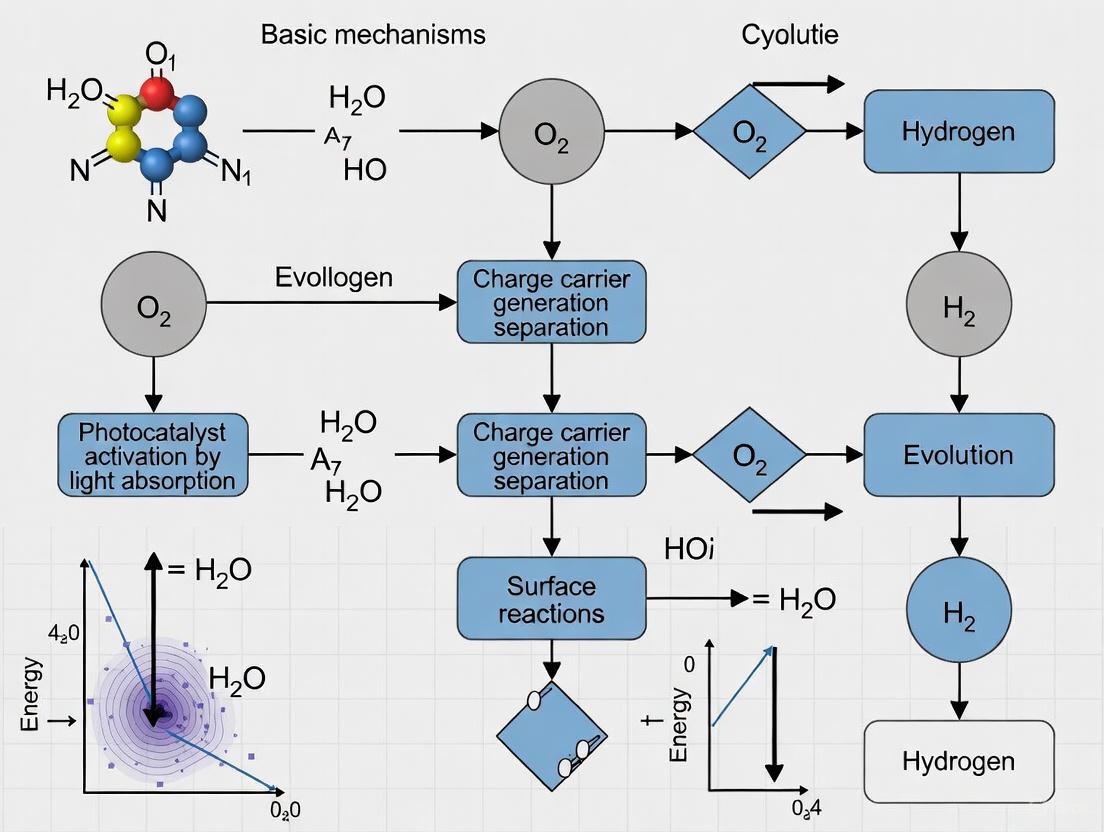
This article provides a comprehensive examination of the basic mechanisms underlying photocatalytic hydrogen production, a promising pathway for converting solar energy into clean chemical fuel.
Unlocking Green Hydrogen: A Comprehensive Guide to Photocatalytic Water Splitting Mechanisms and Materials
Abstract
This article provides a comprehensive examination of the basic mechanisms underlying photocatalytic hydrogen production, a promising pathway for converting solar energy into clean chemical fuel. Tailored for researchers and scientists, it explores the fundamental photophysical processes in semiconductors, details advanced material design strategies including heterojunctions and cocatalysts, and addresses critical performance bottlenecks such as charge recombination and photocorrosion. The content systematically compares photocatalytic efficiency against other hydrogen production methods, evaluates environmental impacts, and discusses the integration of emerging technologies like machine learning and photothermal effects to guide future research and development towards scalable, sustainable hydrogen energy solutions.
The Fundamental Principles of Solar-to-Hydrogen Conversion
The global energy crisis and environmental challenges have intensified the search for sustainable and clean energy sources. Hydrogen has emerged as a leading candidate for a next-generation energy carrier due to its high energy density and zero carbon emissions upon combustion [1] [2]. Photocatalytic water splitting, a process that uses semiconductor materials to convert solar energy into chemical energy stored in hydrogen, represents a visionary pathway to a sustainable hydrogen economy [3] [4]. This technology, inspired by natural photosynthesis, enables the direct production of hydrogen from water and sunlight, offering a promising solution to future energy demands [3].
The field was inaugurated in the early 1970s with the groundbreaking discovery of the Honda-Fujishima effect [3] [1]. Fujishima and Honda demonstrated that water could be split into hydrogen and oxygen using a titanium dioxide (TiOâ‚‚) electrode as a photoanode and a platinum counter electrode under UV light irradiation, with an external electrical bias [3]. This pioneering work proved that light energy could drive the chemical reaction of water splitting, laying the foundation for decades of subsequent research into photocatalytic and photoelectrochemical systems [5].
Fundamental Principles and Mechanisms
Basic Thermodynamics and Band Structure Requirements
Photocatalytic overall water splitting is an uphill reaction accompanied by a large positive change in Gibbs free energy (ΔG° = 238 kJ molâ»Â¹) [1]. The overall reaction is: 2Hâ‚‚O → 2Hâ‚‚ + Oâ‚‚ [1].
For this reaction to proceed, a semiconductor photocatalyst must meet specific electronic band structure requirements, as illustrated in the diagram below:
The fundamental steps in the photocatalytic water splitting process are as follows:
- Photon Absorption: When a semiconductor absorbs light with energy greater than or equal to its bandgap energy (E_g), electrons (eâ») are excited from the valence band (VB) to the conduction band (CB), creating holes (hâº) in the valence band [3] [1].
- Charge Separation and Migration: The photogenerated electrons and holes separate and migrate to the surface of the photocatalyst [3].
- Surface Redox Reactions: The electrons reduce water to produce hydrogen (2H⺠+ 2e⻠→ Hâ‚‚), while the holes oxidize water to produce oxygen (2Hâ‚‚O + 4h⺠→ Oâ‚‚ + 4Hâº) [3] [2].
The theoretical minimum bandgap energy required to drive the overall water-splitting reaction is 1.23 eV, corresponding to a wavelength of about 1000 nm [1]. However, due to overpotentials and activation barriers, practical photocatalysts require a larger bandgap, typically > 3.0 eV for UV-active materials [6] [5].
Critical Processes and Efficiency Limitations
The overall efficiency of photocatalytic water splitting is governed by three main processes, each presenting specific challenges [3] [1]:
- Light Absorption: Efficient absorption of a broad spectrum of solar radiation, especially visible light (400-800 nm), which constitutes the majority of sunlight. Many stable semiconductors, like TiOâ‚‚, primarily absorb UV light, which accounts for only about 4-5% of the solar spectrum [3] [2] [5].
- Charge Separation and Migration: After generation, electron-hole pairs must separate and migrate to the catalyst surface without recombining. Crystal defects often act as recombination centers, reducing efficiency. High crystallinity and small particle size can mitigate this by reducing the migration distance for charge carriers [3] [1].
- Surface Chemical Reactions: The migrated charges must initiate redox reactions on the catalyst surface. The kinetics of these reactions, particularly the four-electron water oxidation reaction, are often slow. Co-catalysts (e.g., Pt, NiO, RuOâ‚‚) are typically loaded onto the photocatalyst surface to provide active sites and lower the activation energy for gas evolution [3] [1].
Evolution of Photocatalytic Systems
From One-Step to Z-Scheme Systems
Early photocatalytic systems aimed to achieve overall water splitting using a single photocatalyst in a one-step system [3]. However, the stringent requirements for such a material—a suitable band structure, stability, and efficient charge separation—have limited the number of successful single-component photocatalysts [3] [1].
To overcome these limitations, a two-step photoexcitation mechanism, known as the Z-scheme, was developed, inspired by natural photosynthesis in green plants [3]. This system uses two different photocatalysts: one for hydrogen evolution (Hâ‚‚ photocatalyst) and another for oxygen evolution (Oâ‚‚ photocatalyst), coupled by a reversible redox mediator (e.g., Fe³âº/Fe²⺠or IO₃â»/Iâ») in the solution [3]. The Z-scheme system lowers the energy requirement for each photocatalyst, allowing for the use of a wider range of visible-light-responsive semiconductors that possess either a sufficient water reduction or oxidation potential, but not both [3].
Photoelectrochemical vs. Particulate Systems
Two primary approaches exist for implementing water splitting:
- Photoelectrochemical (PEC) Water Splitting: This system uses separate semiconductor electrodes (photoanode and/or photocathode) immersed in an electrolyte, similar to the original Honda-Fujishima cell [3] [1]. The spatial separation of reaction sites can facilitate gas separation, but the requirement for conductive substrates and electrical connections can complicate large-scale application [3] [1].
- Particulate Photocatalytic Water Splitting: This approach uses micrometer-sized semiconductor powder suspended directly in water [1]. This system is simpler and more scalable, as the photocatalyst particles function as both light absorber and reactor. A major challenge is the prevention of the back-reaction (recombination of Hâ‚‚ and Oâ‚‚ into water) and the difficulty in separating the produced gas mixture [1].
Advanced Materials and Modern Strategies
Key Material Classes and Performance
Extensive research has been dedicated to developing efficient photocatalyst materials. The table below summarizes the hydrogen production performance of various modern photocatalysts as reported in recent literature.
Table 1: Performance of Selected Modern Photocatalysts for Hydrogen Production
| Photocatalyst | Co-catalyst | Light Source | Sacrificial Agent | Hâ‚‚ Production Rate | Reference |
|---|---|---|---|---|---|
| Ag-La-CaTiO₃ | None | 1200 W Visible Lamp | None | 6246.09 μmol in 3 h | [7] |
| CdS/CoFeâ‚‚Oâ‚„ on AMS* | None | Light irradiation | None | 254.1 μmol hâ»Â¹ | [8] |
| Rh@Crâ‚‚O₃/SrTiO₃:Al | Rh@Crâ‚‚O₃ | Simulated sunlight | None | 351 μmol gâ»Â¹ hâ»Â¹ | [9] |
| MnNbâ‚‚O₆-based composites | Not specified | Visible light | Possibly used | Up to 146 mmol hâ»Â¹ gâ»Â¹ | [6] |
| Pt-loaded CdS with Single-Atom Pt | Pt | Not specified | Not specified | 19.77 mmol gâ»Â¹ hâ»Â¹ | [4] |
*AMS: Annealed Melamine Sponge (Gas-solid biphase system)
Strategic Enhancements for Efficiency
Recent advances have focused on sophisticated material engineering strategies to overcome the inherent limitations of semiconductor photocatalysts:
- Bandgap Engineering and Doping: Introducing impurity atoms (e.g., metals, nitrogen, sulfur) into a semiconductor lattice can narrow its bandgap, extending its light absorption into the visible region [4]. For example, codoping CaTiO₃ with Ag and La ions made the typically UV-active material responsive to visible light [7].
- Heterojunction Construction: Coupling two or more semiconductors with aligned band structures can significantly enhance charge separation. In a heterojunction, photogenerated electrons and holes move to different materials, reducing recombination. Z-scheme heterojunctions are particularly effective as they simultaneously maintain strong reduction and oxidation powers while enabling better charge separation [4].
- Morphology and Facet Engineering: Controlling the exposed crystal facets of a photocatalyst can create an internal electric field that drives the spatial separation of electrons and holes to different crystal faces [9]. For instance, SrTiO₃ crystals with specifically exposed {100} and {110}/{111} facets can naturally separate reduction and oxidation sites, enhancing overall water splitting efficiency [9].
- Co-catalyst Integration: Co-catalysts are crucial for providing active sites for gas evolution. Research has expanded beyond noble metals like Pt to include cheaper alternatives such as NiS and MoS₂ for the hydrogen evolution reaction (HER) [4]. Core-shell co-catalysts like Rh@Cr₂O₃ are also used to prevent back-reactions on the H₂ evolution sites [9].
- Single-Atom Catalysts and Advanced Systems: The frontier of research involves single-atom catalysts, where isolated metal atoms are anchored on a support, maximizing atomic utilization and providing exceptional catalytic activity [4]. Furthermore, innovative reactor designs, such as transitioning from traditional solid-liquid-gas triphase systems to more efficient gas-solid biphase systems (where reaction occurs with water vapor instead of liquid water), have demonstrated enhanced mass transfer and solar energy utilization [8].
Table 2: Key Research Reagent Solutions and Their Functions
| Reagent/Material | Function in Photocatalytic Water Splitting |
|---|---|
| Pt, NiO, RuOâ‚‚, NiS, MoSâ‚‚ | Co-catalyst; provides active sites for hydrogen or oxygen evolution, lowers activation energy. |
| Methanol, Lactic Acid, Triethanolamine | Sacrificial electron donor (hole scavenger); consumes photogenerated holes to enhance Hâ‚‚ evolution. |
| AgNO₃, Na₂S-Na₂SO₃, Fe³⺠| Sacrificial electron acceptor; consumes photogenerated electrons to enhance O₂ evolution. |
| Redox Mediators (e.g., Fe³âº/Fe²âº, IO₃â»/Iâ») | Electron shuttle in Z-scheme systems; reversibly couples the Hâ‚‚-evolution and Oâ‚‚-evolution photocatalysts. |
| Annealed Melamine Sponge (AMS) | Photothermal substrate in immobilized systems; converts triphase to biphase system, enhancing efficiency. |
Experimental Protocols and Characterization
Synthesis of a Codoped Perovskite Photocatalyst (Ag-La-CaTiO₃)
The synthesis of advanced photocatalysts often involves precise wet-chemical methods. The following protocol for synthesizing Ag-La-CaTiO₃ via the sol-gel method is adapted from a recent study [7]:
- Solution Preparation: Add 3.033 mL of Titanium Tetraisopropoxide (TTIP) to 20 mL of absolute ethanol under vigorous stirring at room temperature for 30 minutes.
- Chelation: Add 5 mL of citric acid (acting as a chelating agent) to the TTIP solution with continuous stirring for another 30 minutes.
- Precursor Addition: Slowly add a mixed stoichiometric solution of Ca(NO₃)₂, La(NO₃)₂, and Ag(NO₃)₂ dropwise to the above mixture. Maintain stirring at 50°C until the solution becomes viscous.
- Gel Formation and Drying: Transfer the viscous yellow solution to an oven and dry at 50°C for 12 hours to obtain a xerogel.
- Calcination: Remove excess organic materials by burning the xerogel using a self-spread method. Subsequently, calcine the resulting powder at 850°C for 10 hours in a muffle furnace to obtain the crystalline Ag-La-CaTiO₃ photocatalyst.
Standardized Photocatalytic Activity Test
The experimental setup for evaluating photocatalytic water splitting typically involves a gas-closed circulation system. The core procedure is as follows [7]:
- Reactor Setup: Use a lab-made, airtight reaction cell connected to a gas circulation system and a gas chromatograph for analysis. The system should be air-free to allow accurate detection of oxygen.
- Reaction Mixture: Disperse a specified amount of photocatalyst (e.g., 500-800 mg) in 1000 mL of deionized water (or an aqueous solution with/without sacrificial agents) within the reaction cell.
- Light Irradiation: Irradiate the suspension using a suitable light source (e.g., a 1200 W metal halide lamp for visible light, a high-pressure mercury lamp for UV light, or a solar simulator). Use appropriate optical filters to select specific wavelength ranges.
- Gas Collection and Analysis: Continuously stir the mixture during irradiation. The evolved gases are collected, often by displacing water or using an inert carrier gas. The amount and composition of the gas (Hâ‚‚ and Oâ‚‚) are quantitatively analyzed using gas chromatography.
Essential Characterization Techniques
A suite of characterization techniques is employed to correlate the physicochemical properties of a photocatalyst with its performance [7]:
- UV-Vis/DRS Spectroscopy: Determines the light absorption range and estimates the bandgap energy of the material.
- X-Ray Diffraction (XRD): Identifies the crystal phase, structure, and average crystal size.
- Scanning Electron Microscopy (SEM): Reveals the surface morphology and particle size.
- X-Ray Photoelectron Spectroscopy (XPS): Analyzes the surface chemical composition and elemental oxidation states.
- Brunauer-Emmett-Teller (BET) Surface Area Analysis: Measures the specific surface area and pore structure.
- Photoluminescence (PL) Spectroscopy: Probes the efficiency of charge carrier separation and recombination.
Current Challenges and Future Perspectives
Despite significant progress, the widespread commercialization of photocatalytic water splitting faces several key challenges. The solar-to-hydrogen (STH) conversion efficiency of most systems remains below the practical target of 10% set by the U.S. Department of Energy, primarily due to insufficient visible light utilization and rapid charge recombination [9]. The scalability and cost of photocatalyst synthesis, especially those involving noble metal co-catalysts, present significant economic hurdles [4]. Furthermore, ensuring the long-term stability of photocatalysts against photo-corrosion, particularly for non-oxide materials, is crucial for durable operation [5].
Future research is pivoting toward integrated, system-level design. Key emerging directions include [4]:
- AI-Driven Catalyst Design: Using machine learning to predict optimal material compositions and properties, accelerating the discovery of high-performance photocatalysts.
- Tandem and Hybrid Systems: Combining photocatalysts with photovoltaic or electrochemical modules to more efficiently utilize the full solar spectrum and overcome the limitations of single-photon processes.
- Circular Design and Lifecycle Analysis: Developing photocatalysts with a focus on recyclability, low-toxicity synthesis, and reduced reliance on scarce elements to ensure environmental and economic sustainability.
The transition from laboratory discovery to real-world impact will require a shift in focus from purely academic metrics (e.g., quantum yield) to system-level metrics such as long-term stability under sunlight, cost per kilogram of Hâ‚‚ produced, and seamless integration with existing energy infrastructure [4].
Photocatalytic technology represents a transformative platform for solar energy utilization, offering a pathway to address global energy demands and environmental challenges through processes such as hydrogen production via water splitting [10] [11]. This technology, often termed "photosynthesis in the chemical sense," provides an environmentally friendly method for converting solar energy directly into chemical energy [12]. The fundamental process involves a semiconductor material that absorbs light energy and facilitates chemical reactions without being consumed itself. Within the specific context of hydrogen production research, understanding the precise mechanism of photocatalysis is paramount for developing more efficient materials and systems that can make green hydrogen a commercially viable energy carrier [13] [11].
The entire photocatalytic process is a cascade of sequentially coupled stages, from photon absorption to surface chemical reactions, operating across temporally disparate regimes spanning femtoseconds to seconds [14]. This in-depth technical guide provides a systematic breakdown of these core mechanisms, focusing specifically on their application in photocatalytic hydrogen evolution. We will explore the step-by-step process, material design strategies, and advanced characterization techniques that are driving innovation in this critical field of renewable energy research.
The Fundamental Steps of Photocatalysis
The photocatalytic mechanism occurs through a series of interconnected steps that can be broadly categorized into three primary stages: (1) light absorption and electron-hole pair generation, (2) charge separation and migration, and (3) surface redox reactions. Each step presents distinct challenges and opportunities for efficiency improvements, particularly in the context of hydrogen production through water splitting [15] [11].
The photocatalytic process initiates when a photocatalyst is exposed to light with energy equal to or greater than its bandgap energy. During this critical first step, photons are absorbed by the semiconductor material, promoting electrons (eâ») from the valence band (VB) to the conduction band (CB). This excitation creates negatively charged electrons in the CB and leaves behind positively charged holes (hâº) in the VB, forming electron-hole pairs known as excitons [15].
The efficiency of this initial step is fundamentally governed by the electronic structure of the photocatalytic material. The bandgap energy—the energy difference between the valence and conduction bands—determines the range of the solar spectrum that can be harvested. As illustrated in Figure 1, a significant challenge in photocatalyst design lies in the inherent incompatibility between broad light absorption and strong redox capability. While a narrow bandgap is desirable for enhanced visible light absorption, it often comes at the expense of reduced redox driving force, which requires more negative conduction band and more positive valence band positions [11]. For effective overall water splitting, the conduction band must be more negative than the reduction potential for H₂ production (0 V vs. NHE at pH 7), while the valence band must be more positive than the oxidation potential for O₂ generation (1.23 V vs. NHE) [15].
Table 1: Bandgap Properties and Light Absorption Characteristics of Representative Photocatalysts
| Photocatalyst | Bandgap (eV) | Primary Absorption Range | CB Edge Potential (V vs. NHE, pH 7) | VB Edge Potential (V vs. NHE, pH 7) |
|---|---|---|---|---|
| TiOâ‚‚ (Anatase) | 3.2 | Ultraviolet | -0.5 | 2.7 |
| g-C₃N₄ | ~2.7 | Visible | ~-1.1 | ~1.6 |
| CdS | 2.4 | Visible | -0.8 | 1.6 |
| ZnO | 3.37 | Ultraviolet | -0.5 | 2.87 |
Step 2: Charge Separation and Migration
Following excitation, the photogenerated electron-hole pairs must separate into free charge carriers and migrate to the catalyst surface before they recombine. This represents one of the most critical efficiency-limiting steps in photocatalysis, as the rate of charge recombination is typically several orders of magnitude higher than that of charge separation [11]. Bulk charge recombination occurs within picoseconds, while charge migration to the surface requires hundreds of picoseconds. Similarly, surface charge recombination happens within tens of nanoseconds, whereas surface reactions require several microseconds to complete [11].
Multiple strategies have been developed to enhance charge separation efficiency:
- Ferroelectric materials generate inherent surface polarization that creates a strong internal electric field to facilitate bulk charge separation [11].
- Heterojunction construction establishes a built-in electric field (BIEF) at the interface between different semiconductors, promoting continuous charge flow driven by differences in work functions [11].
- Electron spin control through doping, defect engineering, or magnetic field application can promote charge separation via spin polarization effects [15].
- Morphological control and facet engineering reduce charge migration distances to the surface, decreasing recombination probabilities [12].
The success of this step determines the fraction of photogenerated charges that ultimately reach the catalyst surface available for redox reactions, with typically less than 1% of initially generated charges surviving recombination losses [14].
Step 3: Surface Redox Reactions
The final stage involves surface-reaching charges driving reduction and oxidation reactions with adsorbed species. For photocatalytic hydrogen production, the key reactions are the hydrogen evolution reaction (HER) at reduction sites and the oxygen evolution reaction (OER) at oxidation sites [11]. The surface-reaching electrons reduce water protons to hydrogen gas (2H⺠+ 2e⻠→ Hâ‚‚), while holes oxidize water to oxygen gas (2Hâ‚‚O + 4h⺠→ Oâ‚‚ + 4Hâº) [15].
The kinetics of these surface reactions are critically dependent on the density of surface-reaching charges and the energy barriers of specific reaction steps. Microkinetic simulations reveal that while lowering activation energies for surface reactions shows minimal enhancement at experimentally observed charge concentrations (~10â»â¹ monolayer), sustaining a stable flux of photogenerated charges to the surface could elevate turnover frequency by up to five orders of magnitude [14]. This highlights the scarcity of surface-available charges as the fundamental bottleneck in photocatalytic energy conversion.
Surface engineering strategies focus on creating active sites with optimized adsorption/desorption behaviors for reaction intermediates. For hydrogen production, this involves simultaneously facilitating proton absorption and Hâ‚‚ desorption, which typically encounter conflicting energy barriers on single-component photocatalysts [11]. Interfacial electronic interactions in heterostructures can precisely modulate electronic density at active sites to lower these energy barriers and create dual-functional sites [11].
Figure 1: Photocatalytic Process Flow. The diagram illustrates the sequential steps of photocatalysis, competing recombination pathways, and final products.
Advanced Material Design for Enhanced Photocatalysis
Bandgap Engineering and Heterostructures
Material design plays a pivotal role in optimizing each step of the photocatalytic process. Bandgap engineering through elemental doping, defect creation, and solid solution formation enables the extension of light absorption into the visible spectrum [10] [15]. For instance, doping TiOâ‚‚ with metal or non-metal elements (e.g., N, S, Fe, Co) has proven effective in reducing its bandgap from 3.2 eV to visible-light-responsive ranges [15].
Heterostructure construction represents one of the most promising approaches to overcome the fundamental limitation of single-component photocatalysts. By creating interfaces between different semiconductors with mismatched band alignments, heterojunctions simultaneously broaden light absorption range and optimize redox capability while reducing charge recombination through built-in electric fields [11]. Common configurations include type-II heterojunctions and direct Z-scheme systems, with the latter often achieving higher redox potentials by preserving electrons and holes at higher energy states [12].
Table 2: Performance of Selected Photocatalytic Materials for Hydrogen Evolution
| Photocatalyst System | Co-catalyst | Light Source | Hâ‚‚ Production Rate | Reference |
|---|---|---|---|---|
| 1D/2D CoSâ‚.₀₉₇@ZIS | - | UV-Vis | 2,632.33 μmol gâ»Â¹ hâ»Â¹ | [16] |
| MC-CN | Rh/Crâ‚‚O₃ | λ > 420 nm | 57 μmol gâ»Â¹ hâ»Â¹ | [16] |
| Pt/ZnInâ‚‚Sâ‚„/BaTiO₃ | Pt | Visible + Ultrasound | 1,335.3 μmol gâ»Â¹ hâ»Â¹ | [16] |
| CdS-based systems | Various | Visible | Varies widely (2,000-4,000 μmol gâ»Â¹ hâ»Â¹ common) | [12] |
Emerging Strategies: Electron Spin Control and Surface Polarization
Recent advances have introduced innovative approaches for enhancing photocatalytic efficiency. Electron spin control has emerged as a promising strategy for optimizing photocatalysis through multiple mechanisms: tuning energy band structures to extend light absorption, promoting charge separation via spin polarization, and strengthening surface interaction by modulating electron spin states of active sites [15]. Manipulation techniques include doping design, defect engineering, magnetic field regulation, metal coordination modulation, and chiral-induced spin selectivity [15].
Surface modification to manipulate internal electron-hole distribution represents another significant advancement. Systematic investigations into substituent electronic properties in covalent organic frameworks (COFs) have demonstrated that molecular-level engineering can precisely control electron cloud redistribution to minimize carrier recombination [17]. For instance, introducing strong electron-withdrawing groups onto organic frameworks can improve effective separation of electrons and holes, extending the distance between electron-hole pairs and increasing active sites per unit volume [17].
Experimental Protocols and Characterization Techniques
Quantifying Surface-Reaching Charges
A critical challenge in photocatalytic research has been the quantitative assessment of surface-reaching charges, which are crucial for driving redox reactions but difficult to detect due to their scarcity under operational conditions. The adsorbate (methanol) surface elementary reaction kinetic analysis method has been developed to address this challenge [14]. This methodology employs methanol as a probe molecule to quantify surface-reaching photoholes in TiOâ‚‚-based materials through the following protocol:
Catalyst Preparation and Characterization: Synthesize well-defined TiOâ‚‚ nanocrystals with controlled facets ({001}, {100}, and {101}). Characterize crystallographic structure using XRD and surface properties through XPS and FTIR [14].
Methanol Adsorption Study: Conduct controlled methanol adsorption experiments to determine site-specific behaviors. Molecular adsorption primarily occurs at fivefold-coordinated Tiâµâº sites (CH₃OH(a)Ti5c), while dissociative adsorption generates methoxy species (CH₃O(a)) at defect sites including surface oxygen vacancies [14].
Photocatalytic Oxidation Kinetics: Perform methanol photo-oxidation under controlled illumination conditions with oxygen present. The reaction mechanism proceeds as follows:
- CH₃OH → CH₃Oâ» + Hâº
- TiOâ‚‚ + hν → eâ» + hâº
- Oâ‚‚ + e⻠→ O₂•â»
- CH₃OH + h⺠→ CH₃O• + Hâº
- CH₃O⻠+ h⺠→ CH₃O•
- CH₃O• → CHâ‚‚O•⻠+ Hâº
- CH₂O•⻠→ H₂CO + e⻠[14]
Kinetic Analysis: Measure formaldehyde production rates as a function of illumination intensity and methanol coverage. Apply Langmuir-Hinshelwood kinetics to extract surface hole concentrations [14].
This method has been validated across diverse TiOâ‚‚ materials, including defective TiOâ‚‚, transition metal-doped TiOâ‚‚, and noble metal-decorated TiOâ‚‚, providing critical insights into surface/interface design principles that enhance surface-reaching charge concentrations [14].
The Scientist's Toolkit: Essential Research Reagents and Materials
Table 3: Key Research Reagents and Materials for Photocatalytic Hydrogen Production Studies
| Reagent/Material | Function/Application | Examples/Notes |
|---|---|---|
| Semiconductor Photocatalysts | Light absorption and charge generation | TiO₂, g-C₃N₄, CdS, ZnIn₂S₄, metal oxides/sulfides |
| Co-catalysts | Enhance charge separation and provide active sites | Pt, Ni, NiS, Ru, noble metals, transition metal compounds |
| Sacrificial Reagents | Consume holes to improve electron availability for H₂ evolution | Methanol, triethanolamine, lactic acid, Na₂S/Na₂SO₃ |
| Electron Donors | Facilitate electron transfer in Z-scheme systems | Redox pairs (IO₃â»/Iâ», Fe³âº/Fe²âº), inorganic ions |
| Probe Molecules | Quantify surface-reaching charges and reaction mechanisms | Methanol (for hole quantification), specific organic dyes |
| Precursor Materials | Synthesis of tailored photocatalytic materials | Metal salts (nitrates, chlorides), thiourea, cyanamide, organic linkers for MOFs/COFs |
| Niobium--vanadium (1/2) | Niobium--vanadium (1/2), CAS:57455-59-1, MF:NbV2, MW:194.789 g/mol | Chemical Reagent |
| 2-Propanamine, N,N-dipropyl | 2-Propanamine, N,N-dipropyl, CAS:60021-89-8, MF:C9H21N, MW:143.27 g/mol | Chemical Reagent |
The photocatalytic reaction mechanism represents a sophisticated interplay of physical and chemical processes spanning multiple temporal and spatial scales. From ultrafast light absorption and charge generation events to nanosecond charge separation and microsecond-to-second surface reactions, each step presents distinct challenges and optimization opportunities [15] [14]. Within the context of hydrogen production research, understanding these fundamental mechanisms provides the foundation for developing advanced photocatalytic materials and systems capable of efficient solar-to-chemical energy conversion.
Current research continues to push the boundaries of photocatalytic efficiency through innovative approaches including electron spin control [15], precise surface engineering [17], multifunctional heterostructure design [11], and synergistic processes such as photothermal catalysis [12]. As characterization techniques advance, particularly in the quantitative assessment of surface-reaching charges [14], researchers gain deeper insights into the structure-function relationships governing photocatalytic performance. These developments are steadily bridging the gap between laboratory-scale demonstrations and the large-scale implementation of photocatalytic hydrogen production as a viable component of a sustainable energy future.
Photocatalytic water splitting is a promising technology for converting solar energy into green hydrogen fuel, a process that hinges on the precise electronic properties of semiconductor materials [18] [19]. This process mimics natural photosynthesis, using a solid-state photocatalyst to harvest light and drive the chemical reactions that dissociate water into hydrogen (Hâ‚‚) and oxygen (Oâ‚‚). The efficiency of this transformation is fundamentally governed by the semiconductor's band gap and the energetic positions of its band edges relative to water's redox potentials [20]. For researchers and scientists working in renewable energy and material design, a deep understanding of these core properties is essential for developing next-generation photocatalytic systems. This guide details the critical thermodynamic requirements and material characteristics necessary for efficient photocatalytic water splitting, providing a foundation for ongoing research and development.
Fundamental Thermodynamic and Electronic Requirements
The minimum thermodynamic energy required to split one water molecule into hydrogen and oxygen is a Gibbs free energy change (ΔGâ°) of 1.23 eV per electron transferred [20]. This sets the fundamental energy threshold for the reaction.
For a semiconductor to drive this reaction using light, its electronic structure must meet two primary criteria:
Band Gap Energy (E₉): The photon energy absorbed by the semiconductor must be sufficient to excite electrons from the valence band (VB) to the conduction band (CB), creating electron-hole pairs. While the thermodynamic minimum is 1.23 eV, in practice, due to overpotentials and kinetic losses, the optimal band gap must be larger [18] [20]. Research indicates that for a reasonable solar conversion efficiency, the band gap should be less than 2.2 eV, yet greater than 1.8 eV to provide sufficient driving force for the reaction [20]. An excellent photocatalyst typically requires a bandgap greater than 1.8 eV [18]. Furthermore, to efficiently utilize visible light, the bandgap should ideally be smaller than 3.0 eV [18].
Band Edge Positions: The energy levels of the band edges must straddle the water redox potentials. Specifically:
- The Conduction Band Minimum (CBM) must be more negative (or at a higher energy) than the hydrogen evolution reaction (HER) potential, Eâ°(Hâº/Hâ‚‚) = 0 V vs. NHE (Normal Hydrogen Electrode) at pH 0, which corresponds to -4.44 eV in an absolute vacuum scale [18].
- The Valence Band Maximum (VBM) must be more positive (or at a lower energy) than the oxygen evolution reaction (OER) potential, Eâ°(Oâ‚‚/Hâ‚‚O) = 1.23 V vs. NHE, or -5.67 eV absolute [18].
Table 1: Key Thermodynamic and Electronic Criteria for Water Splitting Photocatalysts
| Parameter | Symbol | Theoretical Value | Practical Consideration | Reference |
|---|---|---|---|---|
| Gibbs Free Energy | ΔGⰠ| 1.23 eV | Minimum energy input required per electron | [20] |
| Minimum Band Gap | E₉ | >1.23 eV | Must be >1.8 eV due to overpotentials and band bending | [18] [20] |
| Optimal Band Gap Range | E₉ | 1.8 - 2.2 eV | Balances visible light absorption and sufficient redox driving force | [20] |
| CBM Position | E_{CBM} | > -4.44 eV (absolute) | Must be higher (more negative) than Hâº/Hâ‚‚ reduction potential | [18] |
| VBM Position | E_{VBM} | < -5.67 eV (absolute) | Must be lower (more positive) than Hâ‚‚O/Oâ‚‚ oxidation potential | [18] |
Failure to meet any of these criteria will render a material inactive for overall water splitting, regardless of its other attractive properties, such as high light absorption or good charge carrier mobility.
Material Engineering and Performance of Representative Photocatalysts
A wide variety of semiconductor materials have been explored for photocatalytic water splitting, each with distinct advantages and limitations. Engineering their properties to meet the critical requirements is a central focus of research.
Key Material Classes and Band Structure Engineering
Two-Dimensional (2D) and Janus Materials: 2D materials like the ScTeI monolayer are investigated for their high surface area and unique electronic properties. The ScTeI monolayer, for instance, is predicted to have a direct band gap of 2.07 eV, which is within the visible light range, and its CBM and VBM are calculated to straddle the water redox potentials effectively [18]. The intrinsic built-in electric field in asymmetric Janus structures (e.g., I-Sc-Te) enhances the spatial separation of photogenerated electrons and holes, a key factor in improving photocatalytic efficiency [18].
Traditional Metal Oxides and Doping: Wide-bandgap semiconductors like anatase TiOâ‚‚ are historically important but primarily absorb UV light. Band structure engineering via co-doping is a common strategy to enhance their activity. For example, nonmetal-metal co-doping (e.g., (N, Ta) into TiOâ‚‚) can significantly raise the valence band edge and slightly increase the conduction band edge, narrowing the band gap from ~3.2 eV to 2.71 eV and shifting the absorption edge into the visible light region (457.6 nm) [21].
Covalent Organic Frameworks (COFs): Organic semiconductors like COFs offer exceptional tunability at the molecular level. Studies on COF-OH-n series demonstrate that proton tautomerism, influenced by the number of β-ketoenamine linkages, can regulate the bandgap and band edge positions. COF-OH-3, with a bandgap of 2.28 eV and a suitable flat band potential of -0.62 V, achieved a high hydrogen evolution rate of 9.89 mmol gâ»Â¹ hâ»Â¹, while other variants in the series with less optimal structures showed significantly lower performance [22].
Conjugated Organic Polymers: Organic polymer photocatalysts, such as those based on ITIC and BTIC units, can be designed for visible and even near-infrared (NIR) light activity. Engineering the π-linker between acceptor-donor-acceptor moieties (e.g., using difluorothiophene (ThF)) allows for tuning the bandgap, enhancing charge separation, and reducing recombination. PITIC-ThF polymer nanoparticles (Pdots) demonstrated remarkable hydrogen evolution rates of 279 µmol/h under visible light and 20.5 µmol/h under NIR light [23].
Niobate and Other Complex Oxides: Materials like Nb₃O₇(OH) are attractive for their chemical stability and energetic band positions. Doping with elements like Ta or Sb can effectively reduce its band gap (from 1.7 eV to ~1.2 eV), shift the optical absorption threshold into the visible region, and increase charge carrier mobility, enhancing its potential for visible-light-driven photocatalysis [24].
Table 2: Performance and Properties of Selected Photocatalytic Materials from Literature
| Material | Type | Band Gap (eV) | Key Feature / Strategy | Reported Performance (Hâ‚‚ Evolution Rate) | Reference |
|---|---|---|---|---|---|
| ScTeI Monolayer | 2D Janus | 2.07 (direct) | Built-in electric field, high carrier mobility anisotropy | Theoretical Solar-to-Hydrogen (STH) efficiency of 23.66% | [18] |
| (N, Ta)-co-doped TiOâ‚‚ | Doped Metal Oxide | 2.71 | Passivated co-doping narrows band gap | Absorption edge red-shifted to 457.6 nm (visible light) | [21] |
| COF-OH-3 | Covalent Organic Framework | 2.28 | Proton tautomerism for band tuning | 9.89 mmol gâ»Â¹ hâ»Â¹ | [22] |
| PITIC-ThF Pdots | Conjugated Polymer | NIR-active | π-linker engineering (difluorothiophene) for charge separation | 279 µmol/h (visible); 20.5 µmol/h (NIR) | [23] |
| Ta-doped Nb₃O₇(OH) | Doped Niobate | 1.266 | Doping reduces gap, increases mobility | Promising potential for visible-light activity | [24] |
| CdO/Alâ‚‚SSe | Type-II Heterojunction | Tunable under strain | Strain engineering optimizes band alignment and gap | Enhanced visible light absorption predicted | [25] |
The Critical Role of Cocatalysts
Even with an ideal band structure, the recombination of charge carriers and slow surface reaction kinetics often limit efficiency. The use of cocatalysts is a pivotal strategy to overcome these challenges [19]. Cocatalysts are typically nanoparticles or single atoms deposited on the semiconductor surface that function as:
- Active Sites: Providing specific, low-energy pathways for the hydrogen evolution reaction (HER) or oxygen evolution reaction (OER).
- Electron Sinks: Extracting photogenerated electrons from the semiconductor bulk, thereby reducing charge carrier recombination.
- Overpotential Reducers: Lowering the activation energy required for the redox reactions.
While noble metals (e.g., Pt, Au) are highly effective HER cocatalysts, research is increasingly focused on earth-abundant alternatives such as transition metal phosphides (Ni₂P), carbides (Mo₂C), dichalcogenides (MoS₂), and single-atom catalysts [19]. For instance, integrating Ni₂P with semiconductors like g-C₃N₄ has been shown to significantly enhance hydrogen evolution rates [19] [26].
Essential Experimental and Computational Methodologies
Advancements in this field are driven by robust experimental and computational protocols for synthesizing, modifying, and characterizing photocatalysts.
First-Principles Computational Analysis
Density Functional Theory (DFT) is a cornerstone for predicting the properties of new photocatalytic materials before synthesis. A standard computational workflow involves:
- Software and Code: Calculations are typically performed using the Vienna Ab initio Simulation Package (VASP) [18] [26] [25].
- Exchange-Correlation Functional: The Perdew-Burke-Ernzerhof (PBE) functional within the Generalized Gradient Approximation (GGA) is commonly used for geometry optimization [18] [26]. For more accurate electronic property prediction (e.g., band gap), the Tran-Blaha modified Becke-Johnson (TB-mBJ) potential is often employed [24].
- Stability Verification:
- Phonon Spectrum Calculations: The absence of imaginary frequencies confirms the dynamic stability of the material's structure [18] [25].
- Ab initio Molecular Dynamics (AIMD) Simulations: Simulating the material at high temperatures (e.g., 300-500 K) for several picoseconds verifies its thermal stability [18] [26].
- Binding Energy/Formation Energy Calculation: A negative value indicates the structure is energetically favorable to form [18] [26].
- Property Calculation:
- Band Structure & Density of States (DOS): Used to determine the band gap (direct/indirect) and the atomic orbital contributions to the VB and CB [18] [24].
- Band Edge Alignment: The electrostatic potential is used to align the CBM and VBM with the vacuum level and the water redox potentials [18].
- Optical Properties: The complex dielectric function is calculated to determine the material's absorption coefficient and spectrum [24].
Experimental Synthesis and Evaluation Protocols
Experimental validation is crucial. A representative protocol for evaluating powdered photocatalysts is outlined below.
Diagram 1: Experimental workflow for photocatalyst development, from synthesis to performance testing.
Detailed Experimental Steps:
Photocatalyst Synthesis:
- Methods: Chemical Vapor Deposition (CVD) for 2D layers [18], wet-chemical synthesis for COFs [22] and g-C₃N₄ [20], Stille or Suzuki coupling for conjugated polymers [23], and solvothermal methods for metal oxides [24].
- Nanostructuring: Bulk polymers are often converted to polymer nanoparticles (Pdots) via a re-precipitation method to enhance water dispersity and reduce charge carrier diffusion length [23].
Material Characterization:
- Structural & Chemical: X-ray Diffraction (XRD) for crystallinity; Fourier-Transform Infrared (FTIR) spectroscopy and X-ray Photoelectron Spectroscopy (XPS) for functional groups and elemental composition.
- Morphological: Scanning Electron Microscopy (SEM) and Transmission Electron Microscopy (TEM) for visualizing morphology and nanostructure; BET analysis for specific surface area.
- Optoelectronic: UV-Vis Diffuse Reflectance Spectroscopy (DRS) to determine the band gap via Tauc plot; Photoluminescence (PL) spectroscopy to assess charge carrier recombination; XPS Valence Band spectra to estimate the VBM position.
Photocatalytic Hydrogen Evolution Test:
- Reactor: A typical setup uses a Pyrex glass reactor with a top irradiation window, connected to a closed gas circulation system.
- Light Source: A 300 W Xe lamp is standard. Adjustable cut-off filters (e.g., λ > 420 nm for visible light, λ > 780 nm for NIR light) are used to select the excitation wavelength [23].
- Reaction Mixture: Typically, 10-50 mg of photocatalyst is dispersed in an aqueous solution (e.g., 100 mL) containing a sacrificial electron donor, such as triethanolamine (TEOA) or methanol, to consume the photogenerated holes and promote the HER [19] [23].
- Gas Analysis: The evolved gases are periodically sampled and quantified using gas chromatography (GC) equipped with a thermal conductivity detector (TCD) and a molecular sieve column. Argon or Nitrogen is commonly used as a carrier gas.
The Scientist's Toolkit: Key Research Reagents and Materials
Table 3: Essential Reagents and Materials for Photocatalyst Research and Development
| Reagent/Material | Function / Description | Example Use Case |
|---|---|---|
| Sacrificial Agents | Electron donors that irreversibly consume photogenerated holes, enhancing electron availability for Hâ‚‚ evolution. | Triethanolamine (TEOA), Methanol, Ascorbic Acid used in performance testing [19] [23]. |
| Cocatalysts | Nanoparticles or single atoms loaded onto the semiconductor surface to provide active sites and facilitate charge separation. | Pt nanoparticles, Niâ‚‚P, MoSâ‚‚ for enhancing Hâ‚‚ evolution rates [19] [26]. |
| Precursor Salts | Source of metal and non-metal elements for the synthesis of inorganic or hybrid photocatalysts. | Niobium salts (for Nb₃O₇(OH)) [24], Cadmium salts (for CdO) [25]. |
| Organic Monomers | Building blocks for the synthesis of polymeric photocatalysts like COFs and conjugated polymers. | 2,4,6-tris(4-aminophenyl)-1,3,5-triazine and triformylbenzene derivatives for COF synthesis [22]. |
| π-linker Comonomers | Molecular units used to connect polymer building blocks, tuning conjugation, planarity, and charge transfer. | Phenyl (Ph), Thiophene (Th), Difluorothiophene (ThF) in ITIC/BTIC-based polymers [23]. |
| Surfactants | Amphiphilic molecules used to improve the dispersity of hydrophobic photocatalysts in aqueous solutions. | PS-PEG-COOH, Triton X-100 for forming stable polymer nanoparticle (Pdot) dispersions [23]. |
| Phosphine oxide, oxophenyl- | Phosphine Oxide, Oxophenyl-|CAS 55861-16-0 | Phosphine oxide, oxophenyl- is a reagent for synthesizing bioactive compounds and ligands. This product is for research use only (RUO). Not for personal use. |
| 2,5-Furandione, 3-pentyl- | 2,5-Furandione, 3-pentyl-|Research Chemical | Explore 2,5-Furandione, 3-pentyl- for industrial and scientific research. This reagent is For Research Use Only. Not for human or veterinary use. |
The pursuit of efficient photocatalytic water splitting is a multidisciplinary endeavor centered on the precise control of semiconductor properties. The band gap and band edge positions are not merely parameters but the foundational design criteria that determine a material's thermodynamic feasibility. As evidenced by research on 2D Janus structures, doped metal oxides, COFs, and conjugated polymers, strategic engineering of these properties is paramount for activating visible-light response and achieving high solar-to-hydrogen conversion efficiencies. The integration of cocatalysts and the formation of heterojunctions further address kinetic limitations by enhancing charge separation and surface reaction rates. Continued advancement in computational prediction and sophisticated synthetic protocols, as detailed in this guide, provides a clear pathway for researchers to design and develop the next generation of high-performance photocatalysts for sustainable hydrogen production.
Photocatalytic hydrogen production represents a cornerstone in the quest for sustainable energy, directly converting solar energy into chemical fuel via water splitting. The fundamental process involves three critical steps: (1) light absorption by a semiconductor photocatalyst to generate electron-hole pairs, (2) charge separation and migration of these carriers to the catalyst surface, and (3) surface redox reactions for hydrogen evolution. Despite its conceptual elegance, the practical application is hampered by three intrinsic challenges that dictate the overall efficiency: rapid recombination of photogenerated charge carriers, limited light absorption capabilities of semiconductor materials, and slow surface reaction kinetics. These challenges are deeply interconnected; improvements in one area often impact the others, necessitating a holistic research approach. This guide delves into the core mechanisms of these limitations, presents current experimental methodologies for their investigation, and outlines advanced strategies being developed to overcome them, thereby framing the pathway toward more efficient solar hydrogen generation.
Challenge 1: Rapid Charge Carrier Recombination
The generation of electron-hole pairs upon photon absorption is futile if these charge carriers recombine before they can participate in surface reactions. This bulk and surface recombination represents a primary efficiency loss in photocatalysis.
Core Mechanisms and Quantitative Impact
Charge carrier recombination occurs through both radiative and non-radiative pathways, dissipating energy as heat or light. In pristine semiconductors like g-C3N4, this recombination is exceptionally fast, leading to poor photocatalytic performance for hydrogen generation despite favorable bandgap and visible light absorption [27]. The recombination rate is often modeled as a first-order kinetic process dependent on the density of trapped charges, competing directly with the desired charge transfer to substrates [28].
Experimental Analysis Protocols
Transient Absorption Spectroscopy (TAS) provides direct insight into charge carrier dynamics. This pump-probe technique involves:
- Pump Pulse: A short laser pulse (e.g., 355 nm, 150 ps) excites the photocatalyst, generating electron-hole pairs.
- Probe Pulse: A delayed white light continuum pulse monitors changes in absorption ((\Delta A)) at specific wavelengths, which are characteristic of photogenerated electrons (e.g., in the conduction band or trap states) and/or holes.
- Kinetic Tracing: The decay of (\Delta A) over time (from picoseconds to microseconds) is monitored. A multi-exponential function is typically fitted to the kinetic traces to extract lifetime components ((\tau1, \tau2, ...)), which represent the population decay of charge carriers due to recombination and trapping.
Electrochemical Impedance Spectroscopy (EIS) indirectly probes charge separation efficiency. The protocol involves:
- Electrode Preparation: Fabricating a working electrode by depositing a thin film of the photocatalyst onto a conductive substrate (e.g., FTO glass).
- Measurement: Applying a small AC voltage amplitude (e.g., 10 mV) over a frequency range (e.g., 0.1 Hz to 1 MHz) and measuring the current response in a suitable electrolyte.
- Data Analysis: The resulting Nyquist plot (Z'' vs. Z') is fitted with an equivalent circuit model. A smaller arc radius indicates lower electron transfer resistance, signifying more efficient charge separation and migration, as demonstrated in CdIn2S4/g-C3N4 heterostructures [27].
Advanced Mitigation Strategies
Heterojunction Engineering: Coupling two semiconductors with appropriate band alignment forces the spatial separation of electrons and holes.
- Type-II Heterojunction: Electrons migrate to the semiconductor with a lower conduction band, while holes move to the one with a higher valence band.
- Z-Scheme Heterojunction: Mimics natural photosynthesis, where electrons from the conduction band of one semiconductor recombine with holes from the valence band of another, leaving more reductive electrons and oxidative holes on the respective semiconductors.
The synthesis of CdIn2S4/g-C3N4 nanoheterostructures via a low-temperature precipitation method at 80°C resulted in a significant boost in Hâ‚‚ production (1062.1 μmol hâ»Â¹) compared to bare g-C3N4 (a 17-fold increase). Characterization confirmed the uniform distribution of CdIn2S4 floral microspheres on g-C3N4 sheets, which facilitates efficient electron transport across the interface [27].
Isotype Heterojunctions and Molecular Modification: Forming an isotype heterojunction between different morphologies or compositions of the same base material (e.g., g-C3N4) creates an internal electric field that drives charge separation. Further enhancement is achieved by modifying the carbon nitride structure with aromatic rings (e.g., benzene rings from N-phenylthiourea), which alters the electronic structure, enhances light absorption, and improves charge separation. This combined strategy yielded a photocatalyst with a hydrogen production rate 6.1 and 20 times higher than those of standard urea- and thiourea-based g-C3N4, respectively [29].
Table 1: Performance of Photocatalysts Engineered to Suppress Charge Recombination
| Photocatalyst | Synthesis Method | Hâ‚‚ Production Rate (μmol hâ»Â¹) | Enhancement Factor vs. Baseline | Key Characterization Evidence |
|---|---|---|---|---|
| CdIn2S4/g-C3N4 (30% g-C3N4) | Low-temperature precipitation | 1062.1 | ~17x (bare g-C3N4) [27] | TEM (morphology), EIS (charge transfer) [27] |
| UTPh (g-C3N4 with benzene ring) | Thermal polycondensation | Specific rate not provided | 6.1x (U-g-C3N4), 20x (T-g-C3N4) [29] | DFT calculations, PL spectroscopy [29] |
| S–C3N4/ZnO hybrid | Not specified | Used for degradation | Enhanced degradation kinetics [30] | Scavenger studies confirmed charge separation [30] |
Challenge 2: Limited Light Absorption
A photocatalyst must efficiently harvest a significant portion of the solar spectrum to be practical. Many base semiconductors, like TiOâ‚‚ and ZnO, possess wide bandgaps (>3.0 eV), restricting their absorption to the ultraviolet region, which constitutes only about 5% of sunlight [31].
Core Mechanisms and Quantitative Impact
Light absorption is governed by the semiconductor's bandgap energy (Eð‘”) and its optical absorption coefficient. The inability to absorb visible light (constituting ~43% of solar energy) drastically limits the theoretical maximum solar-to-hydrogen efficiency. The atomic absorption cross-section of common semiconductors is low (~10â»Â¹â·â€“10â»Â¹â¶ cm²), meaning they capture photons poorly [31].
Experimental Analysis Protocols
Diffuse Reflectance Spectroscopy (DRS) & Bandgap Calculation: This is the standard method for determining the light absorption range and bandgap of powdered catalysts.
- Measurement: The photocatalyst powder is placed in a sample holder, and the instrument measures its diffuse reflectance (R) across a wavelength range (e.g., 200–800 nm).
- Data Transformation: The reflectance data is converted into the Kubelka-Munk function: ( F(R) = (1 - R)^2 / 2R ).
- Bandgap Determination: A Tauc plot is constructed by plotting ( [F(R) \cdot h\nu]^n ) versus the photon energy (( h\nu )), where ( n ) is 1/2 for direct bandgaps and 2 for indirect bandgaps. The bandgap is estimated by extrapolating the linear region of the plot to the x-axis. For instance, CdSe nanoparticles showed a bandgap of 2.55 eV via this method, confirming visible-light activity [32].
Advanced Mitigation Strategies
Bandgap Engineering via Doping and Composition Tuning: Introducing elemental dopants (metals/non-metals) or creating ternary compounds can create mid-gap states or shift the band edges to narrow the effective bandgap. For example, CdSe nanoparticles have a bandgap of ~2.55 eV, allowing them to function as potent visible-light photocatalysts, as utilized in the degradation of Methylene Blue [32].
Surface Plasmon Resonance (SPR) Enhancement: Decorating semiconductors with noble metal nanoparticles (Au, Ag) or certain metals like Bi, which exhibit SPR, dramatically enhances light absorption. SPR is the collective oscillation of conduction electrons upon interacting with light, creating intense localized electromagnetic fields and generating "hot electrons." The absorption cross-section of noble metals is 10â´â€“10âµ times greater than that of typical semiconductor atoms [31]. The SPR effect can be tuned from UV to near-infrared by modifying the size, shape, and aspect ratio of the metal nanoparticles, as demonstrated with Bi nanoparticles [31].
Synergistic Effects: Recent research explores coupling photocatalysis with other physical phenomena, such as piezoelectricity, to create internal fields that aid charge separation under mechanical stress, thereby improving the utilization of absorbed photons [33].
Table 2: Strategies for Enhancing Light Absorption in Photocatalysts
| Strategy | Mechanism | Example Material | Bandgap / Absorption Range |
|---|---|---|---|
| Ternary Chalcogenides | Intrinsic narrower bandgap and tunable composition for visible light absorption. | CdIn2S4 [27], CdSe [32] | CdSe: ~2.55 eV [32] |
| Elemental Doping | Introduces new energy levels within the bandgap, reducing the energy required for excitation. | S-doped g-C3N4 [30] | Absorbance extended further into visible region [30] |
| Plasmonic Enhancement | Metal nanoparticles act as light-harvesting antennas via SPR, generating hot electrons and enhancing the local electromagnetic field. | Au/TiOâ‚‚, Bi nanoparticles [31] | Tunable from UV to NIR (e.g., Bi nanoparticles) [31] |
| Molecular Modification | Modifying the electronic structure of polymers (like g-C3N4) with aromatic rings to extend the π-conjugation and redshift absorption. | Benzene-ring-modified g-C3N4 [29] | Enhanced visible light absorption [29] |
Challenge 3: Slow Surface Reaction Kinetics
Even when separated charges successfully reach the catalyst surface, the subsequent multi-step redox reactions can be sluggish, becoming the rate-limiting step. This is particularly true for the complex, multi-electron process of water reduction (2H⺠+ 2e⻠→ H₂).
Core Mechanisms and Kinetic Modeling
The surface reaction kinetics can be described by a holistic model considering the generation of reactive surface sites ((c_R^*)), their recombination, and the charge transfer to the substrate [28]. The general rate law is expressed as:
[r = \frac{\phi \cdot L{pa} \cdot k^* \cdot \theta \cdot c0}{\phi \cdot L{pa} + kr + k^* \cdot \theta \cdot c_0}]
where (\phi) is the quantum yield, (L{pa}) is the local volumetric rate of photon absorption, (k^*) is the normalized kinetic constant, (\theta) is the surface coverage, (c0) is the catalyst mass, and (k_r) is the recombination rate constant [28]. This model reveals two limiting regimes:
- Light-limited regime (( \phi L{pa} \ll kr + k^* \theta c_0 )): Reaction rate scales linearly with light intensity.
- Kinetic-limited regime (( \phi L{pa} \gg kr + k^* \theta c0 )): Reaction rate is independent of light intensity and governed by the intrinsic surface reaction rate ( k^* \theta c0 ) [28].
Experimental Analysis and Optimization Protocols
Kinetic and Thermodynamic Studies:
- Effect of Scavengers: Adding specific scavengers to the reaction mixture helps identify the primary reactive species. For example, the addition of isopropanol (scavenges •OH), EDTA-2Na (scavenges hâº), and benzoquinone (scavenges •Oâ‚‚â») during the degradation of Methylene Blue by CdSe revealed that photogenerated holes and hydroxyl radicals were the main active species [32].
- Reaction Order: The dependence of the reaction rate on substrate concentration is determined. The photocatalytic degradation of MB by CdSe nanoparticles followed a pseudo-first-order kinetic model [32].
- Thermodynamics: Parameters like activation energy (Ea), enthalpy (ΔH), and entropy (ΔS) of activation are calculated from experiments at different temperatures. For CdSe, the degradation of MB was found to be spontaneous and endothermic [32].
Response Surface Methodology (RSM): This statistical technique optimizes complex processes by modeling the interaction of multiple variables.
- Design: A Central Composite Design (CCD) is created with independent variables (e.g., pH, pollutant concentration, catalyst dosage, time).
- Experimentation: Experiments are run according to the design matrix.
- Modeling & Optimization: A quadratic polynomial model is generated via ANOVA to predict the response (e.g., degradation efficiency). This model is used to find the optimum conditions. For instance, RSM optimized the degradation of Methylene Blue using CdSe to ~92.8% at pH=8, [MB]=20 mgLâ»Â¹, dosage=0.02 g/50 mL, and time=20 min [32].
Advanced Mitigation Strategies
Co-catalyst Loading: Depositing small amounts of noble metals (Pt, Au) or non-precious metals (Ni, MoSâ‚‚) acts as a reaction hub, lowering the activation energy for Hâ‚‚ evolution by providing favorable adsorption sites for protons and facilitating electron transfer.
Surface Area and Morphology Control: Creating nanostructures with high surface area (e.g., porous networks, 2D nanosheets, 3D hierarchical structures) increases the density of active sites. The synthesized CdSe nanoparticles, for example, had a specific surface area of 26.71 m² gâ»Â¹, providing a high active surface for reactions [32].
Defect Engineering and Functionalization: Introducing surface defects (e.g., S-vacancies in CdIn2S4) or functional groups can act as specific trapping sites for reactants, enhancing surface coverage ((\theta)) and the reaction rate constant ((k^*)) [28].
Diagram 1: Kinetic Analysis Workflow for Surface Reactions
The Scientist's Toolkit: Research Reagent Solutions
Table 3: Essential Materials and Reagents for Photocatalyst Research and Evaluation
| Reagent/Material | Function in Research | Example Application |
|---|---|---|
| Graphitic Carbon Nitride (g-C3N4) | Metal-free, visible-light-active semiconductor; serves as a base material for creating heterojunctions. | Bulk preparation by thermal polycondensation of melamine at 550°C [27]. |
| Ternary Chalcogenides (e.g., CdIn2S4, CdSe) | Visible-light absorbers with tunable band structures for forming heterojunctions or acting as primary catalysts. | CdIn2S4/g-C3N4 heterostructures for Hâ‚‚ production [27]; CdSe for dye degradation [32]. |
| Noble Metal Salts (e.g., H₂PtCl₆, HAuCl₄) | Precursors for depositing co-catalysts (Pt, Au) or plasmonic nanoparticles to enhance charge separation and surface reactions. | Pt-edged Au nanoprisms for direct H₂ production [31]. |
| Scavenger Compounds (Isopropanol, EDTA, Benzoquinone) | To quench specific reactive species (•OH, hâº, •Oâ‚‚â») and elucidate the dominant reaction mechanism in photocatalytic tests. | Mechanistic study for CdSe-mediated MB degradation [32]. |
| Sacrificial Agents (e.g., Methanol, Triethanolamine) | Electron donors that irreversibly consume photogenerated holes, thereby suppressing recombination and accelerating the half-reaction of Hâ‚‚ evolution. | Used in Hâ‚‚ production tests to evaluate reduction capability [27] [29]. |
| 3-Methylocta-2,6-dienal | 3-Methylocta-2,6-dienal|CAS 56522-83-9 | 3-Methylocta-2,6-dienal (CAS 56522-83-9) is a high-purity chemical for research. This product is For Research Use Only and not for human or veterinary diagnostics or therapeutic use. |
| Benzothiazole hydrochloride | Benzothiazole Hydrochloride|Research Chemical | High-purity Benzothiazole Hydrochloride for research. Explore applications in neuroscience, antimicrobial, and anticancer studies. For Research Use Only. Not for human use. |
The interconnected challenges of charge recombination, limited light absorption, and slow surface kinetics form the central triad of bottlenecks in photocatalytic hydrogen production. As detailed in this guide, a deep understanding of the underlying mechanisms, coupled with advanced characterization and kinetic modeling, is essential for progress. The most promising strategies involve integrated materials design, such as constructing heterojunctions for charge separation, employing bandgap engineering and plasmonics for broad-spectrum light harvesting, and engineering surfaces with co-catalysts for accelerated reaction rates. Future advancements will likely rely on interdisciplinary synergies—combining photocatalysis with other fields like piezoelectronics and thermocatalysis—and the increased use of AI-driven materials discovery and multi-scale reactor design to translate laboratory breakthroughs into scalable, economically viable technology for sustainable hydrogen production [33].
Advanced Materials and Reactor Designs for Enhanced Hydrogen Evolution
The escalating global energy crisis and environmental degradation underscore the urgent need for sustainable and clean energy sources. Hydrogen, with its high energy density of 122–143 MJ/kg and zero carbon emissions upon combustion, is widely regarded as a cornerstone of the future clean energy landscape [34] [35]. Among the various methods for hydrogen production, photocatalytic water splitting, which directly converts solar energy into chemical energy stored in hydrogen, presents a profoundly promising and environmentally friendly strategy [34] [36]. This process leverages semiconductor photocatalysts, which absorb photons with energy equal to or greater than their bandgap, exciting electrons from the valence band (VB) to the conduction band (CB). This generates electron-hole pairs that drive the redox reactions of water: the reduction of protons to H₂ at the electron-rich sites and the oxidation of water to O₂ at the hole-rich sites [36] [35].
The fundamental challenge lies in developing photocatalysts that are highly efficient, stable, cost-effective, and responsive to visible light, which constitutes a significant portion of the solar spectrum. This guide provides an in-depth technical examination of three core photocatalyst families central to advancing this field: Metal Oxides (exemplified by TiO₂ and CoO modifications), Metal Sulfides (such as CdS and MoS₂), and Metal-Free Semiconductors (notably g-C₃N₄). We will delve into their fundamental mechanisms, recent performance enhancements, and detailed experimental protocols, framing the discussion within the broader context of basic research on photocatalytic hydrogen production mechanisms.
Fundamental Mechanisms and Material Design
The overall efficiency of a photocatalyst is governed by a sequence of critical steps, and material design strategies aim to optimize each one. The process can be broken down into: 1) Photon Absorption, where the catalyst must absorb incident light to generate electron-hole pairs—this requires a bandgap ideally between 1.8 eV and 2.2 eV for optimal visible light utilization [35]; 2) Charge Separation and Migration, where the photogenerated electrons and holes must separate and move to the catalyst surface without recombining; and 3) Surface Redox Reactions, where the charges participate in the hydrogen and oxygen evolution reactions (HER and OER) [35]. The energy positions of the CB and VB are crucial; the CB minimum must be more negative than the Hâº/Hâ‚‚ reduction potential (0 V vs. NHE, pH=7), and the VB maximum must be more positive than the Hâ‚‚O/Oâ‚‚ oxidation potential (1.23 V vs. NHE, pH=7) [37].
A primary obstacle is the rapid recombination of photogenerated electron-hole pairs, which occurs on a timescale of femtoseconds, far faster than the surface redox reactions (picoseconds to nanoseconds) [37]. To address this, researchers have developed sophisticated material engineering strategies, which are visually summarized in the workflow below.
The following section provides a comparative analysis of the three photocatalyst families based on the design principles outlined above.
Table 1: Comparative Analysis of Key Photocatalyst Families
| Photocatalyst Family | Representative Materials | Bandgap (eV) | Key Advantages | Inherent Challenges | Primary Enhancement Strategies |
|---|---|---|---|---|---|
| Metal Oxides | TiOâ‚‚, CoO-modified TiOâ‚‚ | ~3.2 (Anatase TiOâ‚‚) [36] | Excellent chemical stability, non-toxicity, low cost [36] [38] | Wide bandgap (UV-light only), rapid charge recombination [36] [38] | Doping (metal/non-metal), heterojunctions, co-catalyst loading (Ru, Co, Ni) [36] [38] |
| Metal Sulfides | CdS, MoSâ‚‚, ZnS | ~2.4 (CdS) [39] [34] | Narrow bandgap (visible light response), suitable band positions for reduction [34] [37] | Susceptibility to photocorrosion, high charge recombination rate [39] [34] [37] | Heterostructure building, cocatalyst loading, morphology control, introducing S vacancies [39] [34] |
| Metal-Free Semiconductors | g-C₃N₄ | ~2.7 [40] [41] [35] | Visible light response, metal-free, low cost, high thermal/chemical stability [40] [41] [35] | High charge carrier recombination, low surface area, insufficient quantum efficiency [40] [41] [35] | Elemental doping, nanostructure design, heterojunction construction, creating porous structures [41] [35] |
Metal Oxide Photocatalysts
Titanium Dioxide (TiOâ‚‚)
TiOâ‚‚ has been a benchmark photocatalyst since the pioneering work of Fujishima and Honda. Its anatase phase, with a bandgap of ~3.2 eV, is highly active but only under UV light, which accounts for a mere ~4% of the solar spectrum [36]. A prominent strategy to enhance its activity is the loading of metal co-catalysts, which serve as electron sinks and active sites for the Hydrogen Evolution Reaction (HER).
Experimental Protocol: Impregnation Loading of Co-catalysts on TiOâ‚‚ [38]
- Solution Preparation: Suspend 1 gram of TiO₂ nanoparticles (commercially available from suppliers like Acros Organics) in 3 mL of deionized water. To this suspension, add the required volume of an aqueous metal precursor solution (e.g., RuCl₃·2H₂O, Ni(NO₃)₂·6H₂O, or Co(NO₃)₂·6H₂O) to achieve the target loading (e.g., 0.05–1 wt% for Ru, 0.1–1 wt% for Co or Ni).
- Impregnation and Drying: Stir the mixture vigorously with a glass rod and sonicate to ensure homogeneity. The suspension is then placed in an alumina crucible over a hot water bath with constant stirring until complete dryness is achieved.
- Reduction Treatment: Transfer the dried powder to a tube furnace. Purge the system with Argon gas (99.99%) at a flow rate of 100 mL/min for 15 minutes. Subsequently, switch the gas flow to Hydrogen (99.99%) at 10 mL/min and raise the furnace temperature to 200°C at a ramp rate of 10°C/min. Maintain this temperature for 1 hour under H₂ flow to reduce the metal ions to their zero-valent state.
- Cooling and Storage: Allow the furnace to cool naturally under the continued H₂ flow. The final catalyst, denoted as, for example, 0.1Ru–TiO₂ (Imp), can be stored in an inert atmosphere.
Performance Data: The hydrogen evolution rate (HER) is highly dependent on the co-catalyst. For instance, 0.1 wt% Ru–TiOâ‚‚ prepared via impregnation achieved an initial rate of 23.9 mmol hâ»Â¹ gâ»Â¹, outperforming 0.3 wt% Co–TiOâ‚‚ (16.55 mmol hâ»Â¹ gâ»Â¹) and 0.3 wt% Ni–TiOâ‚‚ (10.82 mmol hâ»Â¹ gâ»Â¹) under UV light using methanol as a sacrificial agent [38]. This demonstrates that transition metals like Co and Ni can serve as cost-effective alternatives to noble metals like Ru.
Cobalt Oxide (CoO) and Related Modifications
While less common as a standalone photocatalyst, cobalt, particularly in mixed-valence states (Co²âº/Co³âº), plays a critical role as a co-catalyst. In a Co-Ni/TiOâ‚‚ system, cobalt sites were found to act as hole traps, promoting the Oxygen Evolution Reaction (OER) and creating a synergistic effect with nickel, which served as an electron sink for the HER [42]. This dual functionality facilitated spatial charge separation, significantly suppressing recombination and leading to a high HER of 448 μmol hâ»Â¹ gâ»Â¹, substantially higher than single-metal-loaded or pristine TiOâ‚‚ [42].
Metal Sulfide Photocatalysts
Cadmium Sulfide (CdS) and Molybdenum Disulfide (MoSâ‚‚)
CdS possesses a favorable bandgap (~2.4 eV) for visible light absorption and suitable conduction band potential for proton reduction. However, it suffers from severe photocorrosion, where photogenerated holes oxidize S²⻠to SⰠ[39] [37]. Constructing heterostructures with MoS₂, a highly active co-catalyst for HER, is a widely successful strategy to mitigate this and enhance charge separation.
MoSâ‚‚ exists in semiconducting (2H) and metallic (1T) phases. The 1T phase exhibits superior conductivity and a higher density of active sites but is metastable. Heterostructures incorporating the 1T phase are therefore highly desirable [39].
Experimental Protocol: Two-Step Solvothermal Synthesis of CdS@1T/2H MoSâ‚‚ Nanorod Clusters [39]
- Synthesis of CdS Nanorod Clusters:
- Dissolve Cadmium nitrate tetrahydrate (Cd(NO₃)₂·4H₂O) and thiourea in a mole ratio of 1:3 in an aqueous solution of Ethylenediamine (EDA) (1:1 vol ratio).
- Transfer the homogeneous mixture to a Teflon-lined autoclave and heat at 180°C for 12 hours.
- Cool naturally, collect the resulting orange product (CdS nanorod clusters) via centrifugation, wash, and dry.
- Construction of CdS@1T/2H MoSâ‚‚ Heterostructure:
- Disperse 0.15 g of the as-prepared CdS in an ethanol aqueous solution by sonication for 10 min and vigorous stirring for 1 hour.
- Add appropriate amounts of ammonium tetrathiomolybdate ((NH₄)₂MoS₄) and thioacetamide (CH₃CSNH₂) as Mo and S sources, respectively, to the above suspension.
- Transfer the final mixture to an autoclave and conduct a second solvothermal reaction at 200°C for 24 hours.
- Collect the final product by centrifugation, wash thoroughly with water and ethanol, and dry.
Key Findings: The resulting material featured ultrathin 1T/2H MoSâ‚‚ nanosheets tightly wrapped around CdS nanorod clusters. The presence of rich sulfur vacancies and the metallic 1T-MoSâ‚‚ phase drastically promoted electron transport and separation at the intimate interface, leading to outstanding photocatalytic Hâ‚‚ production performance under visible light [39].
Table 2: Performance of Advanced Metal Sulfide and g-C₃N₄ Based Photocatalysts
| Photocatalyst | Co-catalyst/Modification | Light Source | Sacrificial Agent | Hydrogen Evolution Rate | Key Enhancement Mechanism |
|---|---|---|---|---|---|
| CdS Nanorod Clusters [39] | 1T/2H MoSâ‚‚ wrapping | Full-spectrum | Lactic Acid | Outstanding performance (specific value not provided) | Rich S-vacancies, metallic 1T phase, intimate heterojunction |
| g-C₃N₄ (Optimized) [35] | Elemental Doping & Nanostructuring | Visible Light | Not Specified | 104-fold increase vs. pristine | Enhanced charge separation, expanded surface area |
| g-C₃N₄ (Optimized) [35] | Heterostructure Construction | Visible Light | Not Specified | 100-fold increase vs. pristine | Improved charge carrier separation, preserved redox properties |
| TiOâ‚‚ [42] | Co and Ni co-loading | Simulated Solar | Not Specified | 448 μmol hâ»Â¹ gâ»Â¹ | Synergistic redox couples (Co²âº/Co³âº, Ni²âº/Ni³âº) for spatial charge separation |
Metal-Free Semiconductors: Graphitic Carbon Nitride (g-C₃N₄)
Graphitic carbon nitride (g-C₃N₄) is a metal-free polymer semiconductor that has generated significant interest due to its visible-light-responsive bandgap (~2.7 eV), high thermal and chemical stability, ease of synthesis, and composition from earth-abundant elements [40] [41] [35]. However, its pristine form suffers from a high recombination rate of photogenerated charge carriers and a relatively low surface area.
Enhancement Strategies and Performance: Sophisticated engineering strategies have led to remarkable improvements. Elemental doping (e.g., with P, S, B) can modify the electronic structure to improve charge separation. Nanostructure design, such as creating porous or hollow structures, can expand the surface area by a factor of 26 and extend the fluorescence lifetime of charge carriers by 50%, providing more active sites [35]. Most effectively, heterostructure construction with other semiconductors (e.g., ZnO, CdS, MoSâ‚‚, or metals) can form junctions that powerfully drive the spatial separation of electrons and holes, resulting in a dramatic hundredfold surge in hydrogen generation performance [41] [35]. The DOT script below visualizes this charge transfer process in a heterojunction system.
The Scientist's Toolkit: Essential Research Reagents and Materials
The experimental protocols and enhancement strategies discussed rely on a core set of chemical reagents and materials. The following table details these essential components and their functions in photocatalytic hydrogen production research.
Table 3: Essential Reagents and Materials for Photocatalyst Research
| Reagent/Material | Function/Application | Examples from Literature |
|---|---|---|
| Metal Precursors | Source of metal co-catalysts for loading onto semiconductors. | RuCl₃·2H₂O, Ni(NO₃)₂·6H₂O, Co(NO₃)₂·6H₂O for loading on TiO₂ [38]. |
| Semiconductor Substrates | The primary photocatalyst material. | TiO₂ nanoparticles (commercially available) [38]; Synthesized CdS nanorods [39]; Synthesized g-C₃N₄ [35]. |
| Sulfur Sources | Reactants for the synthesis of metal sulfide photocatalysts. | Thiourea, thioacetamide (CH₃CSNH₂), ammonium tetrathiomolybdate ((NH₄)₂MoS₄) [39]. |
| Structure-Directing Agents | Used in solvothermal synthesis to control the morphology and structure of nanomaterials. | Ethylenediamine (EDA) for the synthesis of CdS nanorod clusters [39]. |
| Sacrificial Agents (Hole Scavengers) | Electron donors that consume photogenerated holes, thereby suppressing charge recombination and photocorrosion. | Methanol, lactic acid [39] [38]. |
| Inert Gases | To create an oxygen-free atmosphere, preventing unwanted oxidative side reactions and ensuring accurate Hâ‚‚ measurement. | Argon (Ar) gas for purging reaction systems [38]. |
| Reducing Gases | For the thermal reduction of metal precursors to their active metallic state during catalyst synthesis. | Hydrogen (Hâ‚‚) gas [38]. |
| 1,5-Dibromopent-2-ene | 1,5-Dibromopent-2-ene | |
| Pentanal, 2-methyl-, (R)- | Pentanal, 2-methyl-, (R)-, CAS:53531-14-9, MF:C6H12O, MW:100.16 g/mol | Chemical Reagent |
This technical guide has detailed the fundamental properties, mechanisms, and state-of-the-art enhancement strategies for three pivotal photocatalyst families: Metal Oxides (TiO₂, CoO), Metal Sulfides (CdS, MoS₂), and Metal-Free Semiconductors (g-C₃N₄). The consistent theme across all families is that the intrinsic limitations of pristine materials—such as wide bandgaps, charge recombination, and photocorrosion—can be overcome through deliberate material engineering. Strategies like heterojunction construction, co-catalyst loading, elemental doping, and nanostructuring are universal tools that dramatically improve photocatalytic performance by optimizing light absorption, charge dynamics, and surface reactions.
The quantitative data and experimental protocols provided serve as a foundational resource for researchers designing experiments and advancing the fundamental understanding of photocatalytic mechanisms. Future research will likely focus on refining these strategies, exploring new hybrid materials, improving long-term stability for commercial application, and developing scalable synthesis methods. The continuous innovation in these photocatalyst families is crucial for realizing the ultimate goal of efficient, solar-driven hydrogen production as a cornerstone of a sustainable energy future.
The efficient separation of photogenerated charge carriers is a fundamental challenge in photocatalysis, directly determining the performance of reactions such as hydrogen production from water splitting. Single semiconductor materials often suffer from rapid recombination of electrons and holes, significantly limiting their quantum efficiency and practical applicability [43]. Heterojunction engineering has emerged as a powerful strategy to overcome this limitation by creating interfacial electric fields that spatially separate charge carriers, thereby enhancing their availability for surface redox reactions [43].
This technical guide examines two predominant heterojunction architectures—Type-II and Z/S-scheme systems—within the context of photocatalytic hydrogen production research. While Type-II heterojunctions provide a straightforward mechanism for charge separation through staggered band alignment, they often do so at the expense of redox potential [44] [43]. Recent advances in Z/S-scheme heterojunctions address this compromise by maintaining strong redox capabilities while achieving effective charge separation, making them particularly promising for demanding photocatalytic processes [44] [45].
Fundamental Mechanisms of Heterojunction Systems
Charge Separation Driving Forces
In particulate photocatalysts, charge separation operates primarily through two distinct mechanisms with fundamentally different driving forces [43]:
Asymmetric Energetics (AE): This mechanism relies on an internal electric field within the photocatalyst, created through band bending, built-in potentials, or space-charge regions. This field drives the spatial separation of electrons and holes via drift motion, directing them to different reaction sites. AE is naturally formed in semiconductor-based heterojunctions due to differences in energy levels across different material interfaces [43].
Asymmetric Kinetics (AK): This approach does not depend on an internal electric field but instead utilizes differential charge-transfer rates at various reaction sites. One type of charge carrier is transferred at a significantly faster rate than the other, creating kinetic asymmetry that prevents recombination. AK mechanisms are typically observed in molecular-scale or nanostructured systems where quantum confinement prevents the formation of internal electric fields [43].
Advanced heterojunction designs increasingly seek to integrate both AE and AK mechanisms to maximize charge separation efficiency through hybrid approaches [43].
Type-II Heterojunctions: Mechanism and Limitations
Type-II heterojunctions (also described as "staggered" heterojunctions) facilitate charge separation through a staggered band alignment where the conduction band (CB) and valence band (VB) of one semiconductor are both higher in energy than those of the paired semiconductor [43]. This alignment creates a thermodynamic driving force for electrons to migrate to the semiconductor with the lower CB potential, while holes transfer to the material with the higher VB potential, achieving spatial charge separation [44] [43].
Recent refinements in the understanding of Type-II systems have led to the identification of sub-categories. The type-II-II heterojunction represents a system where the CB and Fermi level (Ef) of one semiconductor cannot simultaneously surpass those of the other material [46]. In the Ag2CO3/Bi2WO6 system, for example, the Fermi energy of Ag2CO3 (-6.005 eV) is lower than Bi2WO6 (-3.659 eV), but its conduction band is higher [46]. This creates a built-in electric field (IEF) that plays a crucial role in directing carrier transfer, demonstrating that band alignment alone does not fully predict heterojunction behavior [46].
The primary limitation of conventional Type-II heterojunctions is that while they effectively separate charge carriers, this separation comes at the cost of reduced redox potential. The electrons accumulate in the semiconductor with the less negative CB, while holes accumulate in the material with the less positive VB, diminishing the overall driving force for redox reactions [44].
Z/S-Scheme Heterojunctions: Enhanced Redox Capability
Z/S-scheme heterojunctions represent a more advanced architectural design that overcomes the redox potential limitation of Type-II systems. In these configurations, electrons from the CB of one semiconductor recombine with holes from the VB of the other semiconductor at the heterojunction interface [47]. This charge recombination pathway effectively preserves the most energetically favorable electrons and holes—those with the strongest reduction and oxidation capabilities, respectively [44] [45].
The S-scheme heterojunction concept provides a refined understanding of this mechanism. When a reduction photocatalyst (RP, with higher Fermi level) and an oxidation photocatalyst (OP, with lower Fermi level) contact, electrons migrate from RP to OP until their Fermi levels equilibrate [44]. This electron transfer creates:
- An internal electric field (IEF) pointing from RP to OP
- Band bending upward at the RP interface and downward at the OP interface
- Coulombic attraction between electrons in OP and holes in RP
Under illumination, these factors synergistically drive the recombination of useless charges (electrons in OP with weak reduction ability and holes in RP with weak oxidation ability) while preserving powerful charges (electrons in RP with strong reduction ability and holes in OP with strong oxidation ability) [44].
Table 1: Comparative Analysis of Heterojunction Mechanisms
| Characteristic | Type-II Heterojunction | Z/S-Scheme Heterojunction |
|---|---|---|
| Charge Transfer Path | Electrons move to lower CB, holes to higher VB | Electrons in higher CB recombine with holes in lower VB |
| Redox Potential | Compromised (weakest electrons and holes accumulate) | Preserved (strongest electrons and holes remain active) |
| Driving Force | Band alignment | Internal electric field, band bending, Coulombic interaction |
| Spatial Charge Separation | Yes | Yes |
| Primary Advantage | Simple mechanism for charge separation | Maintains high redox power while separating charges |
| Key Challenge | Energy loss reducing redox power | Requires careful band alignment and interface engineering |
Experimental Validation and Characterization Methodologies
Advanced Characterization Techniques
Validating charge transfer mechanisms in heterojunction systems requires multiple complementary characterization approaches:
In situ X-ray Photoelectron Spectroscopy (XPS): This technique can detect electron transfer between components by tracking binding energy shifts under illumination. For example, in CdS/CoCo-PBA S-scheme heterojunctions, in situ XPS confirmed the electron transfer direction, providing direct evidence of the S-scheme mechanism [48].
Transient Absorption Spectroscopy (TAS): This method tracks charge carrier dynamics on ultrafast timescales. In CdS/Ce-UiO66-NH2 heterojunctions, TAS revealed long-lived (millisecond) charge separation, with holes localized on Ce-UiO66-NH2 and electrons on CdS, confirming the charge separation direction and longevity [49].
Ultraviolet Photoelectron Spectroscopy (UPS): Combined with Mott-Schottky analysis, UPS determines band positions and work functions essential for understanding band alignment. These techniques were crucial for verifying the Z-scheme mechanism in ZnIn2S4@NENU-5 composites [50].
Photoluminescence (PL) Analysis: Steady-state and time-resolved PL measurements quantify charge recombination rates. Suppressed PL intensity in heterojunctions indicates reduced electron-hole recombination, as demonstrated in CsPbI3:Ho3+@SnS QD p-n heterojunctions [51].
Density Functional Theory (DFT) Calculations: Theoretical computations provide atomic-level insights into interfacial charge transfer. In CsPbI3:Ho3+@SnS systems, DFT calculations visualized electron accumulation at the interface and revealed higher defect formation energies after heterojunction formation, explaining enhanced performance [51].
Protocol: Constructing and Validating an S-Scheme Heterojunction
The following protocol outlines the synthesis and validation of CdS/CoCo-PBA S-scheme heterojunctions for photocatalytic hydrogen production [48]:
Synthesis Procedure:
- Preparation of CdS nanorods: Using a simple hot-solvent method, synthesize CdS nanorods with controlled dimensions.
- Synthesis of CoCo-PBA nanoparticles: Prepare cobalt-based Prussian blue analogue nanoparticles through precipitation.
- Heterojunction formation: Combine CdS nanorods and CoCo-PBA nanoparticles in appropriate solvent systems with controlled mixing to form intimate interfacial contacts.
- Optimization: Adjust the mass ratio of components (optimal performance at CSCo-15 composite) to maximize interfacial area while maintaining structural integrity.
Characterization and Validation:
- Structural analysis: Employ XRD and TEM to confirm successful integration without phase segregation.
- Electronic structure mapping: Use UPS and Mott-Schottky measurements to determine band alignment favorable for S-scheme mechanism.
- Charge transfer verification: Perform in situ XPS under illumination to track electron flow direction.
- Photocatalytic assessment: Evaluate hydrogen production rates under visible light irradiation using triethanolamine (TEOA) as sacrificial agent.
- Performance metrics: The optimal composite achieved hydrogen production of 765.68 μmol after 4 hours, 2.54 times higher than pure CdS [48].
Table 2: Quantitative Performance Enhancement from Selected Heterojunction Systems
| Photocatalytic System | Heterojunction Type | Performance Metric | Enhancement Factor | Reference |
|---|---|---|---|---|
| CdS/CoCo-PBA | S-scheme | H₂ production: 765.68 μmol/4h | 2.54× vs. pure CdS | [48] |
| ZnIn2S4@NENU-5 | Z-scheme | Hâ‚‚ evolution: 5282.14 μmol gâ»Â¹ hâ»Â¹ | 4.9× vs. ZnIn2S4; 264× vs. NENU-5 | [50] |
| Ag₂CO₃/Bi₂WO₆ | Type-II-II | LEV degradation: 85.4% | 1.38-1.39× vs. individual components | [46] |
| Fe₂O₃/Bi-C | Type-II to S-scheme | CIP degradation & H₂ production | Significant enhancement vs. Type-II | [44] |
The Scientist's Toolkit: Essential Research Reagents and Materials
Table 3: Key Research Reagents for Heterojunction Photocatalyst Development
| Material/Reagent | Function in Heterojunction Systems | Application Examples |
|---|---|---|
| Graphitic Carbon Nitride (g-C₃N₄) | Metal-free, visible-light responsive photocatalyst; forms heterojunctions with appropriate band structure | g-C₃N₄/Bi₂O₃/Fe₂O₃ ternary composites for ciprofloxacin degradation [44] |
| Bismuth-based semiconductors (Bi₂WO₆, Bi₂O₃) | Visible-light absorption, layered structure, suitable band gaps | Bi₂WO₆/Ag₂CO₃ type-II-II heterojunctions [46] |
| Cadmium Sulfide (CdS) | Strong visible-light absorption (2.3 eV band gap); prone to photo-corrosion without proper charge separation | CdS/Ce-UiO66-NHâ‚‚ for hydrogen evolution [49] |
| Metal-Organic Frameworks (MOFs, e.g., UiO-66, NENU-5) | High surface area, tunable band structures through linker/metal node modification | ZnInâ‚‚Sâ‚„@NENU-5 for Z-scheme hydrogen evolution [50] |
| Triethanolamine (TEOA) | Sacrificial electron donor in hydrogen production systems | Used in ZnInâ‚‚Sâ‚„@NENU-5 Z-scheme system at pH=9 [50] |
| Methanol | Sacrificial electron donor for hydrogen evolution tests | Used in CdS/Ce-UiO66-NHâ‚‚ photocatalytic reactions [49] |
| Perovskite Quantum Dots (CsPbI₃) | Tunable bandgaps, high charge mobility for p-n heterojunctions | CsPbI₃:Ho³âº@SnS QDs for self-powered photodetectors [51] |
| Platinum(II) sulfate | Platinum(II) Sulfate|291.14|CAS 53231-79-1 | |
| 3-Methylpent-4-yn-1-ol | 3-Methylpent-4-yn-1-ol, CAS:55930-35-3, MF:C6H10O, MW:98.14 g/mol | Chemical Reagent |
Computational Diagrams of Heterojunction Mechanisms
Type-II Heterojunction Charge Transfer
Diagram 1: Type-II Heterojunction Charge Transfer - This diagram illustrates the staggered band alignment in Type-II heterojunctions where electrons (eâ») transfer from higher to lower conduction band, while holes (hâº) transfer from lower to higher valence band, achieving spatial charge separation at the cost of redox potential [44] [43].
Z/S-Scheme Heterojunction Mechanism
Diagram 2: Z/S-Scheme Heterojunction Mechanism - This diagram shows the Z/S-scheme charge transfer where electrons from the oxidation photocatalyst's conduction band recombine with holes from the reduction photocatalyst's valence band, preserving the most powerful charges for redox reactions while maintaining spatial separation [44] [45] [47].
Heterojunction engineering represents a cornerstone strategy for enhancing charge separation in photocatalytic hydrogen production systems. While traditional Type-II heterojunctions provide a well-established mechanism for spatial charge separation, emerging Z/S-scheme configurations offer superior performance by maintaining strong redox potentials while effectively separating charges [44] [45].
Future research directions should focus on several key areas: First, the development of hybrid charge-separation strategies that integrate both asymmetric energetics and asymmetric kinetics could potentially achieve near-unity quantum yields [43]. Second, advanced interfacial engineering at the molecular level—utilizing π-π stacking, covalent bonding, hydrogen bonding, and other interactions—can optimize charge transfer pathways and reduce recombination losses [52]. Third, precise theoretical modeling combined with in situ characterization will enable more rational design of heterojunction systems with optimized band alignments and interfacial properties [46] [51].
As research progresses beyond lab-scale demonstrations, scalability and practical implementation considerations will become increasingly important. The integration of heterojunction photocatalysts into functional photoreactor systems that maximize light utilization and facilitate product separation will be essential for translating enhanced charge separation into commercially viable photocatalytic hydrogen production technologies [43] [52].
In the pursuit of sustainable hydrogen production via photocatalytic water splitting, semiconductors face intrinsic limitations that hinder their practical application. While semiconductors like TiO₂, SrTiO₃, and g-C₃N₄ can absorb light and generate electron-hole pairs, their surfaces often provide insufficient active sites and exhibit slow kinetics for the hydrogen evolution reaction (HER) [19]. This results in rapid recombination of photogenerated charge carriers and low quantum yields. The strategic application of cocatalysts addresses these fundamental challenges by providing specialized active sites that dramatically enhance HER efficiency [19].
Cocatalysts function as synergistic components that are typically deposited on the semiconductor surface, where they serve multiple critical roles: providing active sites for proton reduction, facilitating charge separation by acting as electron sinks, and improving reaction kinetics by lowering the activation energy for Hâ‚‚ evolution [19]. Historically, noble metals such as Pt, Pd, Au, and Ag have dominated cocatalyst research due to their excellent conductivity and optimal hydrogen adsorption properties [53] [19]. However, their scarcity and high cost have prompted intensive research into earth-abundant alternatives including metallic nanoparticles, metal oxides, chalcogenides, phosphides, and carbon-based materials [53] [54] [19]. This technical guide examines both categories of cocatalysts, providing performance comparisons, experimental methodologies, and mechanistic insights to inform research in photocatalytic hydrogen production.
Cocatalyst Classification and Mechanistic Functions
Noble Metal Cocatalysts
Noble metals remain the benchmark for cocatalyst performance due to their exceptional electronic properties and catalytic activity. Platinum (Pt) is particularly effective, often serving as a reference point for comparing new cocatalyst materials [19]. These metals function primarily as electron sinks, extracting photogenerated electrons from the semiconductor conduction band due to the formation of Schottky barriers at the metal-semiconductor interface [19]. This electron extraction significantly reduces charge carrier recombination, increasing the number of electrons available for proton reduction.
The mechanism involves the noble metal providing favorable adsorption sites for protons and facilitating H-H bond formation through optimal hydrogen binding energy. For instance, Pt nanoparticles exhibit excellent capability for hydrogen adsorption and recombination, leading to Hâ‚‚ formation and desorption [19]. Beyond elemental metals, noble metal derivatives such as PtS and Rhâ‚“P have also demonstrated superior catalytic activity compared to their pure metallic counterparts [19].
Earth-Abundant Alternatives
Metallic Cocatalysts
Earth-abundant metals like Bi, Ni, Co, Fe, and Cu have emerged as promising cocatalyst materials [53] [54]. Metallic bismuth (Biâ°) has shown particular promise, functioning through a surface plasmon resonance (SPR) effect that enhances light harvesting and electron trapping [53]. In Bi-decorated g-C₃Nâ‚„/SrTiO₃ composites, the metallic bismuth effectively captures electrons, significantly improving electron-hole separation and hydrogen evolution rates [53]. A significant challenge with metallic bismuth is its tendency to oxidize in air, forming a Biâ‚‚O₃ layer that diminishes its SPR effect and light-harvesting capability [53]. This can be mitigated through in-situ photoreduction techniques, where Bi³⺠is directly reduced to Biâ° by photogenerated electrons during the photocatalytic reaction [53].
Metal Compound Cocatalysts
Various metal compounds have demonstrated excellent cocatalytic performance:
- Metal Chalcogenides: Copper and iron-based sulfides have shown remarkable HER activity when used as cocatalysts on TiOâ‚‚. Recent research indicates that partial oxidation of these sulfides or doping with additional elements (e.g., Ni-doped CuFeâ‚‚Oâ‚„) can enhance activity by a factor of 15 compared to pristine TiOâ‚‚ [54].
- Transition Metal Phosphides, Carbides, and Borides: These materials have attracted significant interest due to their metal-like electronic conductivity and tunable surface properties. They effectively serve as electron acceptors while providing abundant active sites for proton reduction [19].
- Metal Oxides: Certain metal oxides can function as effective cocatalysts, particularly when their properties are optimized through doping or composite formation [19].
Performance Comparison of Cocatalyst Materials
Table 1: Performance Comparison of Selected Cocatalyst Materials for Photocatalytic Hâ‚‚ Evolution
| Cocatalyst | Semiconductor | Light Source | Hâ‚‚ Evolution Rate | Key Findings | Reference |
|---|---|---|---|---|---|
| BiⰠ| g-C₃N₄/SrTiO₃ | Simulated sunlight | Significantly enhanced | In-situ photoreduction prevented Bi oxidation; SPR effect enhanced activity | [53] |
| Cu/Fe sulfides/oxides | TiOâ‚‚ (P25) | AM 1.5G simulated sunlight | 15x higher than pristine TiOâ‚‚ | Partial oxidation & Ni doping enhanced performance; earth-abundant materials | [54] |
| RhCrCo | SrTiO₃:Al | Near-UV or solar light | Efficient H₂ evolution | Critical for oxidative radical-to-cation crossover in addition to H₂ evolution | [55] |
| Pt | Various | UV illumination | Benchmark activity | Serves as electron sink; optimal H adsorption properties | [19] |
Table 2: Advantages and Limitations of Cocatalyst Categories
| Cocatalyst Type | Examples | Advantages | Disadvantages | |
|---|---|---|---|---|
| Noble Metals | Pt, Pd, Au, Ag, Ru | Excellent activity, optimal H adsorption, good stability | High cost, limited abundance | [53] [19] |
| Earth-Abundant Metals | Bi, Ni, Co, Cu | Low cost, abundant, tunable properties | Oxidation susceptibility, generally lower activity | [53] [54] |
| Metal Compounds | Metal sulfides, phosphides, carbides, oxides | Versatile functionality, tunable properties, cost-effective | Complex synthesis, potential stability issues | [54] [19] |
| Carbon-Based | Graphene, carbon nanotubes | Excellent conductivity, high surface area, tunable functionality | Limited intrinsic activity, requires modification | [19] |
Experimental Protocols and Methodologies
Synthesis of Bi-Decorated g-C₃N₄/SrTiO₃ Sheet-like Nanocomposites
Principle: This protocol describes the preparation of a heterostructure photocatalyst with metallic bismuth cocatalyst deposited on a g-C₃N₄/SrTiO₃ (GCNSTO) composite. The method combines sol-gel and hydrothermal techniques with in-situ photoreduction to prevent bismuth oxidation [53].
Materials:
- Urea (CHâ‚„Nâ‚‚O, J.T.Baker, 99.0-100%)
- Strontium nitrate (Sr(NO₃)₂, Alfa Aesa, 99%)
- Titanium butoxide (Ti(C₄H₉O)₄, Alfa Aesar, 99%)
- Bismuth(III) nitrate pentahydrate (Bi(NO₃)₃·5H₂O, Sigma-Aldrich, 98%)
- Ethylene glycol (C₂H₆O₂, Sigma-Aldrich, 99.8%)
- Methanol (CHâ‚„O, Honeywell, 100%)
- Sodium hydroxide (NaOH, Sigma-Aldrich, ≥99%)
Procedure:
- Synthesis of g-C₃N₄ (GCN): Heat urea at 550°C for 4 hours in a muffle furnace, then collect the resulting yellow powder [53].
- Synthesis of SrTiO₃ (STO): Prepare through a sol-gel process using strontium nitrate and titanium butoxide as precursors, followed by calcination at 500°C for 2 hours [53].
- Preparation of g-C₃N₄/SrTiO₃ (GCNSTO) composite: Employ a hydrothermal method by dispersing appropriate mass ratios of GCN and STO in deionized water. Conduct hydrothermal treatment at 150°C for 24 hours, then collect and dry the resulting precipitate [53].
- Decoration with Bismuth: Use a hydrothermal process with bismuth nitrate pentahydrate in ethylene glycol. The Bi-decorated GCNSTO is obtained after hydrothermal treatment at 160°C for 16 hours [53].
- In-situ Photoreduction: Under light irradiation during photocatalytic testing, Bi³⺠is reduced to metallic Biâ° (Biâ°) by photogenerated electrons, preventing oxidation and maintaining catalytic activity [53].
Characterization: Analyze morphology by SEM, determine crystal structure by XRD, measure surface area by BET, and confirm chemical states by XPS [53].
Earth-Abundant Cu and Fe-Based Chalcogenide Cocatalysts on TiOâ‚‚
Principle: This methodology utilizes microwave-assisted synthesis to prepare cost-effective, earth-abundant cocatalysts for enhanced hydrogen evolution [54].
Materials:
- TiOâ‚‚ (Degussa P25)
- Copper and iron precursors (e.g., copper salts, iron salts)
- Sulfur sources
- Solvents for microwave synthesis
Procedure:
- Microwave-Assisted Synthesis: Prepare various Cu and Fe sulfides/oxides using simple and fast microwave-assisted synthesis methods [54].
- Modification Strategies: Implement post-synthesis modifications including:
- Partial oxidation of sulfides
- Doping of CuFeâ‚‚Oâ‚„ with Ni to enhance catalytic performance [54].
- Catalyst Loading: Deposit the synthesized cocatalysts onto TiOâ‚‚ (P25) support using appropriate loading methods.
Performance Evaluation: Test photocatalytic hydrogen evolution under both simulated sunlight (AM 1.5G) and UV irradiation. The optimal systems achieved Hâ‚‚ evolution rates of more than 2.3 mmol hâ»Â¹ under UV irradiation [54].
Visualization of Cocatalyst Mechanisms
Diagram 1: Cocatalyst functions in photocatalytic hydrogen evolution. Cocatalysts provide active sites for the hydrogen evolution reaction (HER), act as electron sinks to enhance charge separation, and reduce recombination losses.
The Scientist's Toolkit: Essential Research Reagents and Materials
Table 3: Essential Research Reagents for Cocatalyst Development and Testing
| Reagent/Material | Function | Application Examples | Key Considerations | |
|---|---|---|---|---|
| Chloroplatinic acid (H₂PtCl₆) | Precursor for Pt cocatalyst | Noble metal deposition on various semiconductors | High cost, but benchmark performance | [19] |
| Bismuth nitrate pentahydrate | Bi³⺠source for metallic Bi cocatalyst | Bi-decorated composites (e.g., g-C₃N₄/SrTiO₃) | Requires protection from oxidation; in-situ photoreduction effective | [53] |
| Copper/Iron salts | Precursors for earth-abundant cocatalysts | Cu/Fe sulfides/oxides on TiOâ‚‚ | Microwave-assisted synthesis enables rapid preparation | [54] |
| Triethanolamine (TEOA) | Sacrificial electron donor | Hole scavenger in Hâ‚‚ evolution tests | Irreversibly consumes holes, allowing accurate HER assessment | [19] |
| Methanol/Ethanol | Sacrificial reagents | Hole scavengers in photocatalytic systems | Different scavengers affect overall Hâ‚‚ evolution rates | [19] |
| Lithium hydroxide (LiOH) | pH modifier | Optimization of reaction conditions | Concentration significantly affects catalytic performance | [55] |
| Ethylene glycol | Solvent and reducing agent | Hydrothermal synthesis of metal composites | Acts as both solvent and mild reducing agent in synthesis | [53] |
| Ethyl dibutylphosphinite | Ethyl dibutylphosphinite, CAS:56660-55-0, MF:C10H23OP, MW:190.26 g/mol | Chemical Reagent | Bench Chemicals | |
| Penta-2,4-diene-1-thiol | Penta-2,4-diene-1-thiol|CAS 55317-82-3|RUO | Bench Chemicals |
The strategic implementation of cocatalysts represents a cornerstone in enhancing the performance of photocatalytic systems for hydrogen evolution. While noble metals continue to offer benchmark performance, recent advances in earth-abundant alternatives demonstrate significant progress toward cost-effective and sustainable solutions. The development of bismuth-based cocatalysts, transition metal chalcogenides, and engineered heterostructures highlights the potential for replacing scarce resources with abundant materials without compromising functionality.
Future research directions should focus on several key areas: First, the precise engineering of cocatalyst-semiconductor interfaces to optimize charge transfer dynamics; second, the development of sophisticated in-situ characterization techniques to observe cocatalyst function under operational conditions; and third, the exploration of multifunctional cocatalysts that can simultaneously enhance charge separation, provide active sites, and improve system stability. As these advancements mature, the integration of high-performance earth-abundant cocatalysts will be essential for scaling up photocatalytic hydrogen production to commercially viable levels, ultimately contributing to a sustainable energy future.
The transition of photocatalytic hydrogen production from a laboratory-scale phenomenon to an industrially viable technology is a formidable engineering challenge that hinges on the synergistic integration of advanced photocatalysts with scalable reactor architectures. While fundamental research continues to refine the basic mechanisms of photocatalysis—light absorption, charge separation, and surface redox reactions—the photoreactor design dictates the ultimate efficiency, safety, and economic feasibility of the process at scale [11] [56]. The core principle involves photons with energy greater than a semiconductor's bandgap generating electron-hole pairs; these charges must then migrate to the catalyst surface to drive the hydrogen evolution reaction (HER) and oxygen evolution reaction (OER) [11] [19]. However, at a systems level, this micro-level mechanism is profoundly influenced by macro-level engineering factors, including light distribution across the catalyst surface, mass transport of reactants and products, and fluid dynamics within the reactor [11] [57]. This whitepaper examines the key photoreactor configurations and design principles essential for overcoming the historical "efficiency ceiling" in large-scale hydrogen generation, framing them within the context of foundational photocatalytic research [58].
Core Photocatalytic Mechanisms Informing Reactor Design
A reactor's design is directly informed by the physicochemical processes it must facilitate. The photocatalytic process begins when a semiconductor absorbs light, exciting electrons from the valence band (VB) to the conduction band (CB), creating charge carriers [19]. The efficiency of this process is plagued by a fundamental trade-off: wide-bandgap semiconductors possess the strong redox potential needed for water splitting but absorb only ultraviolet light (~4% of the solar spectrum), whereas narrow-bandgap semiconductors harvest visible light but often lack sufficient redox power [11] [58]. Furthermore, photogenerated electrons and holes recombine on picosecond-to-nanosecond timescales, far faster than the microsecond-to-millisecond timescales required for surface redox reactions, leading to significant energy loss [11].
Advanced material strategies have emerged to circumvent these limitations, and their success is intimately tied to reactor engineering:
- Heterojunction Construction: Coupling two or more semiconductors to form a heterojunction, such as a Z-scheme or S-scheme system, can simultaneously broaden light absorption and enhance charge separation via a built-in electric field (BIEF) [11] [58]. These systems spatially separate reduction and oxidation sites, a feature that reactor designs can exploit to manage product gases and prevent backward reactions [58].
- Cocatalyst Integration: Cocatalysts, typically noble (e.g., Pt) or non-noble (e.g., NiS, MoSâ‚‚) metals, are loaded onto semiconductors to provide active sites and lower the activation energy for the HER [19]. A reactor must ensure uniform exposure of these active sites to both light and the reactant (water).
- Sacrificial Reagents and Alternative Oxidations: Replacing the kinetically sluggish OER with the oxidation of sacrificial agents (e.g., methanol, triethanolamine) or, more valuably, organic feedstocks like plastic waste is a key strategy to boost HER rates and improve process economics [58] [59]. This necessitates reactors capable of handling diverse, potentially complex, feedstocks [59].
The following diagram illustrates the core mechanism and a key advanced strategy (Z-scheme) that informs modern reactor design.
Scalable Photoreactor Configurations and Performance Analysis
Translating molecular-scale mechanisms into macro-scale efficiency requires reactors optimized for light penetration, catalyst utilization, and gas management. The following table summarizes the primary reactor configurations for large-scale hydrogen generation.
Table 1: Key Photoreactor Configurations for Large-Scale Hydrogen Production
| Reactor Type | Key Features & Working Principle | Scalability Advantages | Scalability Challenges |
|---|---|---|---|
| Suspension (Slurry) Reactors | Catalyst particles suspended in aqueous solution, often with mechanical stirring. Simple, high surface area for reactions [56]. | Simple geometry, easy temperature control, high catalyst surface area exposure [56]. | Light penetration depth is limited, difficult catalyst recovery for reuse, potential for hotspots and inefficiency [56]. |
| Fixed-Bed (Thin-Film) Reactors | Catalyst immobilized as a thin, stable film on a solid substrate. Reactant solution flows over the surface [11] [57]. | Inherent catalyst retention, eliminates separation steps, suitable for continuous-flow operation, easier product gas separation [11] [57]. | Potential for mass transfer limitations, risk of channeling, lower active surface area compared to slurries, coating durability and adhesion is critical [11] [57]. |
| Panel/Flat-Plate Reactors | A sealed, illuminated vessel with catalysts coated on internal walls or as a fixed bed. Mimics solar collector design [11]. | Large illuminated surface-to-volume ratio, efficient gas separation in two-phase flow, modular and easy scale-up via "numbering-up" [11]. | Requires large land area, scaling relies on parallel replication of units, internal light scattering can be inefficient. |
| Photocatalytic Flow Reactors | Continuous flow of reactant solution through a zone containing immobilized catalyst under illumination [57]. | Promotes excellent mass transfer, enables continuous, steady-state operation, high productivity, and easier integration with downstream processes [57]. | Complex design and fabrication, pressure drop management, ensuring uniform flow and illumination throughout the catalyst bed [57]. |
| Membrane Reactors | Incorporates a proton exchange membrane (PEM) to physically separate Hâ‚‚ and Oâ‚‚ evolution chambers, often in a Z-scheme configuration [11]. | Inherent safety by preventing explosive Hâ‚‚/Oâ‚‚ mixture, can enhance reaction kinetics by promoting charge separation [11]. | Higher cost and complexity, membrane fouling and long-term stability, challenging reactor sealing and integration. |
The performance of these reactors is quantified using key metrics, most importantly the Solar-to-Hydrogen (STH) efficiency, which represents the fraction of solar energy input converted to the chemical energy of hydrogen. The table below provides a comparative performance analysis.
Table 2: Quantitative Performance Metrics of Photocatalytic Systems
| System Description | Hydrogen Evolution Rate | Solar-to-Hydrogen (STH) Efficiency | Stability / Durability | Key Conditions |
|---|---|---|---|---|
| Optimized TiOâ‚‚ Flow Reactor | 7.3 g Hâ‚‚ mâ»Â² hâ»Â¹ [57] | Quantum Efficiency: 65% [57] | >100 hours stable operation [57] | TiOâ‚‚ loading: 700 µg cmâ»Â²; with SiOâ‚‚ & CaClâ‚‚ additives [57] |
| PV-Electrolysis (Benchmark) | - | 10-14% [58] | Mature technology | Standard illumination (1 Sun); without sacrificial agents [58] |
| Traditional Lab-Scale Slurry | Highly variable | Typically <1% [11] [56] | Often limited by catalyst leaching/deactivation [56] | Often uses sacrificial reagents; batch operation [56] |
| Photoreforming of Waste Plastics | Dependent on plastic feedstock | Emerging technology, lower than water splitting [59] | Catalyst deactivation by impurities is a concern [59] | Uses waste plastics (e.g., PET, PLA) as electron donor [59] |
Advanced Engineering Protocols for Reactor Implementation
Protocol: Fabrication of Optimized Catalyst Coatings for Fixed-Bed Reactors
The creation of durable, high-performance catalyst coatings is a critical step in moving from powder catalysts to engineered reactor systems [57].
- Objective: To deposit a uniform, mechanically stable, and highly active photocatalyst film on a reactor substrate (e.g., glass, metal) for continuous flow hydrogen production.
- Materials:
- Photocatalyst Powder: (e.g., TiO₂ P25, modified g-C₃N₄, CdS) [57] [16].
- Binder/Additives: Colloidal SiOâ‚‚ (e.g., LUDOX AS-40), CaClâ‚‚ [57].
- Solvent: Deionized water or alcohol.
- Substrate: Glass plate, FTO glass, or stainless steel.
- Coating Equipment: Slot-die coater or bar coater for uniform deposition.
- Methodology:
- Slurry Preparation: Disperse the photocatalyst powder in deionized water. Add colloidal SiOâ‚‚ (e.g., 2.5 µL mLâ»Â¹) as a pore-forming and binding agent and CaClâ‚‚ (e.g., 0.6 mg mLâ»Â¹) to enhance adhesion and mechanical stability. The slurry must be sonicated and stirred to achieve a homogeneous dispersion [57].
- Substrate Preparation: Clean the substrate thoroughly with detergent, deionized water, and ethanol. Dry in an oven to remove moisture.
- Coating Process: Use the slot-die coater to apply the slurry onto the substrate at a controlled speed and gap height to achieve a target catalyst loading (e.g., 700 µg cmâ»Â²). Optimize the loading to balance between providing sufficient active sites and preventing light shielding effects, which cause recombination losses [57].
- Drying and Curing: Allow the coated film to air-dry, followed by thermal treatment (e.g., 350-450 °C for 1-2 hours) in a muffle furnace to remove organic residues and enhance the adhesion between catalyst particles and the substrate.
- Quality Control: The final coating should be uniform without cracks. Adhesion can be tested by sonication in a solvent or tape test. Optical properties (light transmission) should be characterized by UV-Vis spectroscopy [57].
Protocol: Operation of a Continuous Flow Photocatalytic Reactor
This protocol outlines the steps for operating an immobilized catalyst reactor for hydrogen generation, building on the coating fabricated in Protocol 4.1.
- Objective: To safely and efficiently produce hydrogen from water splitting in a continuous flow mode using an immobilized photocatalyst system.
- Materials:
- Coated Reactor Panel: The reactor cell with the immobilized catalyst.
- Reaction Solution: Aqueous solution, typically with a sacrificial agent (e.g., 10-20 vol% methanol or triethanolamine) or a waste feedstock (e.g., dissolved PLA) [58] [59].
- Pumping System: Peristaltic or HPLC pump for precise liquid flow control.
- Light Source: Solar simulator (AM 1.5G) or visible light lamp array.
- Gas Collection & Analysis: Gas chromatograph (GC) equipped with a thermal conductivity detector (TCD) for quantifying Hâ‚‚.
- Methodology:
- Reactor Assembly: Connect the inlet of the reactor to the pump and the reaction solution reservoir. Connect the reactor outlet to a gas-liquid separator.
- System Purging: Purge the entire system with an inert gas (e.g., Nâ‚‚ or Ar) for at least 30 minutes to remove dissolved oxygen, which can act as an electron scavenger and inhibit HER.
- Initiation of Flow and Illumination: Start the pump to establish a continuous flow of the reaction solution through the reactor. Then, turn on the light source. The flow rate should be optimized to ensure sufficient reactant residence time for reaction while avoiding mass transfer limitations.
- Gas Sampling and Analysis: After the system reaches a steady state (typically 30-60 minutes), collect the evolved gas from the gas-liquid separator. Inject the gas sample into the GC for quantitative analysis of hydrogen.
- Long-Term Stability Testing: Monitor the hydrogen evolution rate continuously over an extended period (e.g., >100 hours) to assess the durability of the catalyst coating and reactor system [57].
- Safety Considerations: When performing overall water splitting without a membrane, the produced gas is a mixture of Hâ‚‚ and Oâ‚‚. Extreme care must be taken to avoid the formation of explosive compositions (4-75% Hâ‚‚ in air). Conduct experiments behind a blast shield and in a well-ventilated fume hood. The use of membrane reactors is recommended for enhanced safety during overall water splitting [11].
The Scientist's Toolkit: Essential Reagents and Materials
The following table details key reagents and materials central to developing and operating scalable photocatalytic hydrogen generation systems.
Table 3: Research Reagent Solutions for Photocatalytic Hydrogen Production
| Reagent/Material | Function in Photocatalysis | Application Note |
|---|---|---|
| TiOâ‚‚ (P25) | Benchmark UV-active photocatalyst; often used as a base material for modification [56]. | Widely available; can be doped or formed into heterojunctions to enhance visible light activity [56]. |
| g-C₃N₄ | Metal-free, visible-light-responsive polymer semiconductor [11]. | Requires thermal synthesis from precursors like urea or melamine; often combined with cocatalysts to boost performance [11]. |
| Pt, Pd, Au | Noble metal cocatalysts; act as electron sinks and active sites for proton reduction, lowering HER overpotential [19]. | Highly effective but costly and scarce; research focuses on minimizing loading (e.g., single-atom catalysts) or finding replacements [19]. |
| NiS, MoSâ‚‚ | Earth-abundant transition metal-based cocatalysts; alternative to noble metals for HER [19]. | Subject of intense research for scalable applications; MoSâ‚‚ edge sites are particularly active for HER [19]. |
| Methanol/Triethanolamine | Sacrificial electron donor (hole scavenger); consumes photogenerated holes to suppress charge recombination [19]. | Dramatically increases apparent Hâ‚‚ evolution rates but is consumed in the process, not sustainable for large-scale cycling [19]. |
| LUDOX AS-40 (SiOâ‚‚) | Colloidal silica binder; enhances mechanical stability, porosity, and light transmission of catalyst coatings [57]. | Critical for fabricating durable immobilized catalyst films for flow reactors [57]. |
| Proton Exchange Membrane (PEM) | Semipermeable membrane; allows proton (Hâº) transport while physically separating Hâ‚‚ and Oâ‚‚ evolution chambers [11]. | Essential for safe overall water splitting in membrane reactors to prevent gas mixing [11]. |
| Waste Plastics (e.g., PET, PLA) | Alternative sacrificial feedstock; oxidized instead of water, simultaneously producing Hâ‚‚ and valorizing waste [59]. | An emerging strategy to improve process economics and sustainability; requires preprocessing and is often limited to oxygenated plastics [59]. |
| O-Benzyl-L-seryl-L-tyrosine | O-Benzyl-L-seryl-L-tyrosine, CAS:55739-51-0, MF:C19H22N2O5, MW:358.4 g/mol | Chemical Reagent |
The path to industrial-scale photocatalytic hydrogen generation requires a paradigm shift from viewing photocatalysts in isolation to designing them as integral components of a holistic reactor system. The intrinsic limitations of single-component photocatalysts, namely the trade-off between light absorption and redox potential, are being overcome at the materials level through heterojunctions and cocatalysts [11] [58]. Concurrently, reactor engineering is addressing system-level challenges through immobilized catalyst designs that enable continuous flow operation, enhanced safety via membrane integration, and novel process schemes like plastic photoreforming that improve economic viability [11] [57] [59]. The convergence of these disciplines—materials science, chemical engineering, and process design—is breaking the historical efficiency ceiling. Future progress will be driven by the scaling of promising concepts like panel reactors and photoelectrochemical cells, the application of AI for accelerated materials and reactor optimization, and a steadfast focus on lifecycle analysis to ensure the environmental and economic sustainability of the resulting technology [4] [58]. The transition from laboratory discovery to impactful technology hinges on this integrated, scalability-focused engineering approach.
Overcoming Efficiency and Stability Bottlenecks in Photocatalysis
Charge recombination constitutes a fundamental bottleneck in photocatalytic hydrogen production, directly limiting solar-to-fuel conversion efficiency. Within the broader thesis of advancing basic mechanisms in photocatalysis research, this whitepaper addresses the critical challenge of rapid electron-hole pair recombination that typically occurs on picosecond to nanosecond timescales—several orders of magnitude faster than surface chemical reactions [60] [61]. Ferroelectric materials and surface polarization strategies offer promising pathways to overcome this limitation through the establishment of built-in electric fields that drive charge separation.
The unique spontaneous polarization exhibited by ferroelectric materials generates strong internal electric fields capable of separating photogenerated charge carriers. Recent studies demonstrate that these effects can be strategically enhanced through material design, facet engineering, and external field manipulation [62] [63] [64]. This technical guide synthesizes current research findings and experimental methodologies to provide researchers with comprehensive strategies for diagnosing and mitigating charge recombination in photocatalytic systems.
Fundamental Charge Recombination Mechanisms
In photocatalytic processes, charge recombination occurs through multiple pathways that compete directly with surface redox reactions. Upon photoexcitation, electrons are promoted from the valence band to the conduction band, generating electron-hole pairs. These charge carriers can recombine radiatively (emitting photons) or non-radiatively (generating heat), typically within nanoseconds or faster [60].
The kinetics of these processes span tremendous temporal scales. Charge separation and transport occur from femtoseconds to microseconds, while surface chemical reactions typically require milliseconds to seconds [61]. This disparity creates a critical efficiency bottleneck, as most photogenerated charges recombine before participating in hydrogen evolution reactions. Understanding these fundamental timescales is essential for designing effective mitigation strategies.
Figure 1: Charge Carrier Dynamics in Photocatalysis. The diagram illustrates competing pathways and timescales for photogenerated charge carriers, highlighting the critical bottleneck where recombination typically outpaces surface reactions essential for hydrogen production.
Ferroelectric Materials for Charge Separation
Spontaneous Polarization Mechanisms
Ferroelectric materials exhibit a spontaneous electric polarization that can be reversed by applying an external electric field. This polarization arises from the non-centrosymmetric displacement of positive and negative charge centers within the crystal structure, creating strong internal electric fields that drive charge separation [63]. In photocatalytic systems, these built-in fields efficiently separate photogenerated electrons and holes to different crystal facets, significantly reducing bulk recombination.
In ferroelectric PbTiO₃ (PTO), for instance, the internal electric field can reach ∼10ⵠkV/cm, approximately 3-4 orders of magnitude higher than conventional semiconductor photocatalysts [62]. This substantial field strength enables directional charge migration where "positive holes and negative electrons move in opposite polarization directions" [62], leading to spatial charge separation that enhances photocatalytic efficiency.
Material Systems and Performance
Recent research has demonstrated several promising ferroelectric material systems for photocatalytic hydrogen evolution:
PbTiO₃-Based Systems: Single-domain PbTiO₃ nanoparticles exhibit exceptional charge separation capabilities. However, performance is often limited by surface defects, particularly Ti vacancies at positively polarized facets that act as charge recombination centers. Strategic growth of SrTiO₃ nanolayers on these polarized facets has been shown to mitigate interface defects, establishing efficient electron transfer pathways and extending electron lifetime from 50 microseconds to the millisecond scale [62].
Layered Perovskites: Materials such as SrBiâ‚„Tiâ‚„Oâ‚â‚… combine ferroelectric properties with layered structures that further enhance charge separation. The inherent structural anisotropy creates directional pathways for charge transport, with "electrons and holes separately migrating to TiO₆ octahedra and Biâ‚‚O₂²⺠layers" [63]. This unique charge transport mechanism yields outstanding photocatalytic COâ‚‚ reduction performance without cocatalysts.
2D Ferroelectric Materials: Emerging 2D ferroelectric semiconductors like copper indium thiophosphate (CuInP₂S₆, CIPS) exhibit room-temperature ferroelectricity even at nanometer thicknesses. Their van der Waals layered structure enables rapid interlayer charge transfer and separation through strong interlayer coupling [64].
Table 1: Performance Metrics of Ferroelectric Photocatalysts for Hydrogen Evolution
| Material | Modification Strategy | Hydrogen Evolution Rate | Apparent Quantum Yield | Key Mechanism |
|---|---|---|---|---|
| PbTiO₃ | SrTiO₃ nanolayer on positive facets | Significant increase | 400× enhancement at 365 nm | Defect passivation, electron lifetime extension |
| SrBiâ‚„Tiâ‚„Oâ‚â‚… | None (direct application) | N/A (COâ‚‚ reduction focus) | 1.33% at 365 nm | Spontaneous polarization, anisotropic charge migration |
| N-doped TiOâ‚‚ | Electrolyte-assisted polarization | 40 mmol gâ»Â¹ hâ»Â¹ (270°C) | 20.2% STH (Dead Sea water) | Selective ion adsorption, local field enhancement |
| CuInP₂S₆ (CIPS) | Ferroelectric polarization control | N/A (CO₂ reduction focus) | Enhanced performance | 2D polarization, spin manipulation |
Surface Polarization Strategies
Atomic-Level Surface Engineering
Surface polarization effects can be engineered at the atomic level to enhance charge separation efficiency. In a notable study, asymmetric Ruâ‚-S/Cd motifs were constructed on CdS surfaces, creating strong surface polarization that dramatically improved photocatalytic performance [65]. This atomic-level design resulted in "a more than six-fold enhancement in Hâ‚‚ production from lignocellulose reforming under visible light irradiation" [65].
The mechanism involves significantly enhanced hole extraction from the bulk to the surface, where single Ru atoms serve as both hole acceptors and active sites for catalyzing hydroxyl radical generation. This surface polarization effect facilitates the oxidation of inert lignocellulose, addressing a key kinetic limitation in biomass photoreforming [65].
Electrolyte-Assisted Polarization
The strategic use of electrolyte solutions represents another powerful approach for enhancing surface polarization effects. In N-doped TiOâ‚‚ systems, ionic species in seawater selectively adsorb on photo-polarized facets of opposite charge, generating a strong local electric field that prolongs charge-carrier lifetime by a factor of five [66].
This electrolyte-assisted polarization mechanism enables remarkable solar-to-hydrogen conversion efficiency of 15.9 ± 0.4% at 270°C when using Dead Sea water. The adsorbed ions create a localized field that enhances charge separation without requiring external power inputs, demonstrating that "apart from Cl⻠anions, cations like Na⺠that are widely considered as inert in photocatalytic seawater splitting could also exert a strong polarization effect" [66].
Advanced Diagnostic Techniques
Time-Resolved Spectroscopy
Femtosecond transient absorption (fs-TA) spectroscopy has emerged as a powerful tool for probing charge transfer dynamics in photocatalytic systems. This technique employs pump-probe methodology to track the evolution of photogenerated charge carriers across femtosecond to millisecond timescales [61]. By monitoring ground state bleaching (GSB), stimulated emission (SE), and excited state absorption (ESA) signals, researchers can quantify charge separation efficiency and recombination rates.
Application of fs-TA to ferroelectric materials has revealed coherent acoustic phonons generated by charge separation, observed as oscillatory signals in transient reflectivity measurements. These oscillations, which diminish above the Curie temperature, provide direct evidence of ferroelectric polarization-driven charge separation [64].
Piezoresponse Force Microscopy (PFM)
PFM enables direct nanoscale characterization of ferroelectric domains and polarization dynamics. Through contact resonance measurements, PFM maps polarization direction and strength, confirming the presence of switchable ferroelectric phases essential for sustained photocatalytic performance [62] [64].
Temperature-dependent PFM studies further elucidate the ferroelectric-paraelectric phase transition, correlating polarization strength with photocatalytic activity. For CuInP₂S₆, the piezoelectric coefficient d₃₃ decreases from 12.5 pm/V at 25°C to 3.5 pm/V at 90°C, directly linking ferroelectric properties with charge separation capability [64].
Experimental Protocols
Ferroelectric Heterostructure Fabrication
Selective SrTiO₃ Growth on PbTiO₃ Facets [62]:
- Synthesize single-domain PbTiO₃ particles via hydrothermal method at controlled temperature and pressure
- Confirm ferroelectric tetragonal phase using X-ray diffraction (XRD) and monodomain structure via piezoresponse force microscopy (PFM)
- Prepare strontium precursor solution with controlled concentration and pH
- Deposit SrTiO₃ nanolayers on positively polarized facets through controlled chemical epitaxial growth
- Characterize interface quality using high-resolution scanning transmission electron microscopy (HR-STEM) and electron energy loss spectroscopy (EELS)
- Validate defect passivation through enhanced electron lifetime measurements using transient absorption spectroscopy
Surface Polarization Engineering
Constructing Asymmetric Atomic Motifs on Semiconductor Surfaces [65]:
- Synthesize CdS nanowires using solvothermal method with ethylenediamine as solvent
- Prepare ruthenium precursor solution with appropriate concentration and reducing agents
- Deposit single Ru atoms onto CdS surfaces through controlled impregnation and reduction process
- Characterize atomic dispersion using aberration-corrected transmission electron microscopy
- Validate surface polarization effects through Kelvin probe force microscopy (KPFM)
- Assess hole extraction efficiency using time-resolved photoluminescence spectroscopy
Figure 2: Experimental Workflow for Ferroelectric Photocatalyst Development. The diagram outlines key steps from material synthesis to performance evaluation, emphasizing the integrated characterization approach required to understand structure-property relationships.
Time-Resolved Spectroscopic Analysis
Femtosecond Transient Absorption Spectroscopy Protocol [61]:
- Prepare photocatalyst sample as thin film or colloidal suspension with appropriate optical density
- Generate femtosecond pump pulses at excitation wavelength (typically 400-500 nm for visible-light catalysts)
- Generate broadband probe pulses covering visible to near-infrared range (450-1600 nm)
- Measure differential absorption (ΔA) spectra at delay times from femtoseconds to milliseconds
- Analyze kinetics at specific wavelengths to extract charge carrier lifetimes
- Global fitting of dataset to develop kinetic model describing charge separation and recombination pathways
Research Reagent Solutions
Table 2: Essential Research Reagents for Ferroelectric Photocatalyst Development
| Reagent/Material | Function | Application Example |
|---|---|---|
| PbTiO₃ nanoparticles | Ferroelectric base material | Charge separation studies [62] |
| SrTiO₃ precursors | Epitaxial layer material | Surface defect passivation [62] |
| CdS nanowires | Semiconductor substrate | Surface polarization engineering [65] |
| Ruthenium salts | Single-atom catalyst precursor | Asymmetric motif construction [65] |
| N-doped TiOâ‚‚ | Model polarized photocatalyst | Electrolyte effect studies [66] |
| CuInP₂S₆ crystals | 2D ferroelectric material | Polarization manipulation studies [64] |
| Sodium chloride (NaCl) | Electrolyte source | Ion adsorption studies [66] |
Ferroelectric materials and surface polarization strategies represent powerful approaches for mitigating charge recombination in photocatalytic hydrogen production. The internal electric fields generated by spontaneous polarization provide a substantial driving force for charge separation, while atomic-level surface engineering and electrolyte effects further enhance these capabilities. Advanced diagnostic techniques, particularly time-resolved spectroscopy and piezoresponse force microscopy, enable precise characterization of charge dynamics and polarization effects. As research in this field advances, the strategic manipulation of electronic polarizations promises to unlock new efficiencies in solar-driven hydrogen evolution, addressing critical energy challenges through fundamental materials design.
Photocatalytic water splitting represents a promising pathway for sustainable hydrogen production, yet the stability and longevity of photocatalysts remain significant challenges for practical application. Material degradation, primarily photocorrosion in metal sulfides and deactivation in metal oxides, substantially limits the efficiency and operational lifespan of these photocatalytic systems. Understanding these degradation mechanisms and developing effective mitigation strategies is crucial for advancing photocatalytic hydrogen production technology [34] [13].
This technical guide examines the fundamental degradation mechanisms affecting two prominent photocatalyst classes: metal sulfides (exemplified by CdS) and metal oxides (exemplified by TiOâ‚‚). It further explores current mitigation strategies, experimental protocols for studying degradation, and emerging approaches to enhance photocatalyst durability within the broader context of photocatalytic hydrogen production research.
Photocorrosion Mechanisms in Metal Sulfides
Metal sulfide photocatalysts, particularly CdS, are prized for their narrow bandgaps and excellent visible-light responsiveness. However, their susceptibility to photocorrosion poses a major constraint [34] [37].
The CdS Photocorrosion Mechanism
CdS photocorrosion proceeds through two parallel pathways: an oxidative route and a reductive route, both triggered by photogenerated charge carriers.
- Oxidative Pathway: Photogenerated holes (hâº) oxidize sulfide anions (S²â») in the CdS lattice, leading to the dissolution of the catalyst structure [67]: [ \text{CdS} + 2h^+ \rightarrow \text{Cd}^{2+} + \text{S} ]
- Reductive Pathway: Concurrently, photogenerated electrons (eâ») can reduce lattice cadmium cations (Cd²âº) to metallic cadmium (Cdâ°) [67] [68]: [ \text{Cd}^{2+} + 2e^- \rightarrow \text{Cd}^0 ]
The manifestation and impact of the reductive pathway significantly depend on the reaction environment and sacrificial agents used [67] [68]. The following diagram illustrates these parallel degradation pathways and a potential self-stabilization mechanism:
Sacrificial Agents Influence Degradation Pathways
The choice of sacrificial agents significantly influences the dominant corrosion pathway and resulting morphological changes:
- In Na₂S-Na₂SO₃ systems, isolated metallic Cd nanoparticles (5-50 nm) form on the CdS surface, causing substantial structural damage and progressively decreasing photocatalytic activity [67] [68].
- In lactic acid systems, a homogeneous, thin metallic Cd layer (2-3 nm) coats the CdS surface, potentially enhancing charge separation and leading to increased and more stable Hâ‚‚ evolution rates [67].
This phenomenon has led to the proposal of a photoinduced self-stability mechanism, where controlled metallic Cd formation transforms unstable CdS into stabilized CdS-Cd composites with sustained Hâ‚‚ evolution performance [68].
Deactivation Mechanisms in Metal Oxides
Metal oxide photocatalysts like TiOâ‚‚ exhibit greater stability against photocorrosion but face other deactivation challenges.
Primary Deactivation Pathways
- Charge Carrier Recombination: Rapid recombination of photogenerated electrons and holes reduces quantum efficiency. TiOâ‚‚'s wide bandgap restricts UV-only absorption, further limiting practical efficiency [69].
- Surface Passivation: Intermediate reaction products can adsorb strongly to active sites, blocking reactant access. During methanol photoreforming, intermediates like formaldehyde and formic acid deactivate Pt/TiOâ‚‚ catalysts by site blocking [69].
- Structural and Chemical Modifications: These include agglomeration of cocatalyst nanoparticles (e.g., Pt), changes in oxidation states, and strong metal-support interactions (SMSI). In Pt-C/TiOâ‚‚ systems, light-induced oxidation state changes in titanium and carbon components correlate with activity loss [69].
- Oxygen Vacancy Dynamics: The role of oxygen vacancies (V_O) is complex. Surface vacancies can enhance charge separation and reaction kinetics, but bulk vacancies often act as recombination centers, decreasing photocatalytic activity [69].
Mitigation Strategies and Material Design
Advanced material design strategies can simultaneously enhance photocatalytic activity and material stability.
Heterostructure Engineering
Constructing composite materials or heterojunctions effectively suppresses charge recombination and enhances stability:
- CdS/Cd(OH)â‚‚ Heterostructure: In situ formation during photocatalytic reaction creates a composite with 15.2 mmol·hâ»Â¹Â·gâ»Â¹ Hâ‚‚ evolution rate versus 2.6 mmol·hâ»Â¹Â·gâ»Â¹ for pure CdS. Cd(OH)â‚‚ acts as an electron acceptor, facilitating charge separation and providing a more negative conduction band position for enhanced proton reduction [70].
- Z-Scheme Systems: A liquid-phase Z-scheme integrating n-type CdS and BiVOâ‚„ with a [Fe(CN)₆]³â»/â´â» mediator achieves an impressive 10.2% apparent quantum yield at 450 nm. This system spatially separates oxidation and reduction reactions, minimizing photocorrosion while enabling stoichiometric Hâ‚‚ and Oâ‚‚ evolution [71].
Cocatalyst Engineering
Strategic application of cocatalysts significantly improves stability and activity:
- Core-Shell Structures: Pt@CrOx cocatalysts on CdS enhance Hâ‚‚ evolution while suppressing undesirable back reactions. The CrOx shell physically blocks Oâ‚‚ access to Pt sites, preventing competitive oxygen reduction reactions [71].
- Earth-Abundant Alternatives: CdS@Co–N/C composites using lignin-derived carbon support prevent nanoparticle aggregation, mitigate photocorrosion, and enhance electron transfer. This system achieves 8.4-fold higher H₂ production than pure CdS while maintaining excellent stability over multiple cycles [72].
Defect and Interface Engineering
Precise control of defects and interfaces presents a powerful approach:
- Targeted Oxygen Vacancies: Concentrating oxygen vacancies specifically at the Pt-TiOâ‚‚ interface creates proximal oxidation and reduction sites. This defect engineering enables unusual reaction pathways, dramatically increasing Hâ‚‚ yield per photon from 0.046 to 1.28 during alcohol photoreforming [73].
Table 1: Quantitative Performance Enhancement Through Stabilization Strategies
| Photocatalyst System | Stabilization Approach | Hâ‚‚ Evolution Rate | Stability Improvement | Reference |
|---|---|---|---|---|
| CdS/Cd(OH)â‚‚ | In situ heterostructure formation | 15.2 mmol·hâ»Â¹Â·gâ»Â¹ | Stable performance over 10 h | [70] |
| CdS@Co–N/C | Carbon composite from lignin | 6.11 mmol·gâ»Â¹ (8.4× enhancement) | Stable over 5 cycles | [72] |
| Pt//TiOâ‚‚-P | Interface oxygen vacancies | Hâ‚‚ yield/photon: 1.28 | Stable over 10 cycles with residual Hâ‚‚ | [73] |
| CdS/BiVOâ‚„ | Z-scheme with redox mediator | AQY: 10.2% @ 450 nm | Oxide coating prevents deactivation | [71] |
Experimental Protocols for Degradation Studies
Standardized methodologies are essential for systematically investigating photocatalyst degradation.
Photocorrosion Protocol for CdS
Objective: Evaluate CdS photocorrosion behavior in different sacrificial agent systems [67].
Materials:
- CdS photocatalyst (synthesized hydrothermally)
- Aqueous solutions: Na₂S-Na₂SO₃ mixture (0.25 M Na₂S + 0.35 M Na₂SO₃) and lactic acid (10 vol%)
- Closed gas-circulation reaction system with visible light source (λ ≥ 420 nm)
- Gas chromatography system for Hâ‚‚ quantification
Procedure:
- Disperse 50 mg CdS in 100 mL sacrificial solution
- Evacuate system to remove air and establish inert atmosphere
- Irradiate with continuous magnetic stirring under visible light
- Analyze evolved Hâ‚‚ gas at regular intervals via GC
- Characterize post-reaction catalysts using XRD, TEM, and XPS
Key Measurements:
- Temporal Hâ‚‚ evolution rate tracking activity degradation
- Metallic Cd identification via XRD and TEM
- Surface composition analysis through XPS
Deactivation Protocol for Metal Oxide Systems
Objective: Investigate deactivation mechanisms in Pt-decorated carbon/TiOâ‚‚ nanocomposites [69].
Materials:
- Pt–C/TiO₂ nanocomposite
- Aqueous methanol solution (10 vol%) as sacrificial agent
- Solar simulator and visible light source (λ ≥ 420 nm)
- Spectrophotometer for intermediate analysis
Procedure:
- Conduct photocatalytic Hâ‚‚ production under solar and visible light irradiation
- Monitor H₂ evolution rates over extended periods (≥5 h)
- Separate and analyze deactivated catalysts (SLD and VLD)
- Characterize fresh and deactivated materials using SEM, STEM, XPS, and PL spectroscopy
- Analyze reaction solution for intermediates
Experimental Approaches:
- Approach 1: Deactivated catalyst in fresh solution identifies catalyst-centric deactivation
- Approach 2: Fresh catalyst in deactivated solution identifies solution-mediated deactivation
The Scientist's Toolkit: Essential Research Reagents
Table 2: Key Reagents for Studying and Mitigating Photocatalyst Degradation
| Reagent/Material | Function in Research | Application Context |
|---|---|---|
| Na₂S/Na₂SO₃ | Sacrificial electron donor | Studies hole scavenging effect on CdS photocorrosion [67] |
| Lactic Acid | Alternative sacrificial agent | Investigates reductive photocorrosion pathway in CdS [67] |
| K₄[Fe(CN)₆] | Redox mediator in Z-scheme systems | Enables electron transfer between photocatalysts [71] |
| Chloroplatinic Acid (H₂PtCl₆) | Source for Pt cocatalyst deposition | Enhances charge separation and H₂ evolution kinetics [69] [71] |
| Cobalt Acetate | Precursor for non-noble metal cocatalysts | Forms Co₃O₄ or Co-N/C composites as Pt alternatives [71] [72] |
| Lignin-derived Carbon | Sustainable carbon support material | Prevents aggregation and enhances electron transfer in composites [72] |
Future Research Directions
Advancing photocatalyst stability requires innovative approaches across multiple fronts:
- Advanced Material Architectures: Developing metal-organic frameworks (MOFs), covalent organic frameworks (COFs), and graphene-based composites with controlled porosity and conductivity represents a promising direction for enhancing charge separation and stability [34].
- Defect Engineering: Precise control of defect type, density, and distribution can optimize charge carrier dynamics while minimizing recombination centers [34] [73].
- Dual-Function Protection: Combining multiple stabilization strategies—such as oxide coatings with heterostructure engineering—addresses both photocorrosion and deactivation simultaneously. TiO₂ coating on CdS and SiO₂ on BiVO₄ in Z-scheme systems dramatically improves stability by suppressing interfacial side reactions [71].
- Operando Characterization: Advanced in situ and operando analysis techniques under actual reaction conditions will provide deeper insights into degradation mechanisms and guide more effective mitigation strategies [69].
The following diagram illustrates an integrated experimental workflow for developing and evaluating stable photocatalyst systems:
Overcoming material degradation in photocatalytic hydrogen production requires a multifaceted approach addressing both photocorrosion in metal sulfides and deactivation in metal oxides. Key strategies including heterostructure engineering, cocatalyst design, defect control, and composite formation have demonstrated significant improvements in photocatalyst stability without compromising activity. The development of Z-scheme systems represents a particularly promising direction, enabling the use of highly active but corrosion-prone sulfides like CdS in efficient overall water splitting. As research advances toward commercial application, integrating multiple stabilization approaches and developing standardized testing protocols will be essential for creating photocatalytic systems that combine high efficiency with long-term operational stability.
The efficient utilization of solar energy represents a cornerstone in the pursuit of sustainable energy solutions. Photocatalytic hydrogen production, a process that uses semiconductors to split water into hydrogen and oxygen using sunlight, has emerged as a promising pathway for clean energy generation. However, a fundamental challenge persists: conventional photocatalysts primarily utilize ultraviolet (UV) light, which constitutes a mere 4-5% of the solar spectrum, while visible (Vis) light (43%) and near-infrared (NIR) light (52%) remain largely untapped [74] [75]. This limitation stems from the electronic structure of most semiconductors, whose bandgap energies are too large to be excited by lower-energy photons in the Vis-NIR region. Overcoming this bottleneck requires sophisticated material engineering strategies to expand light absorption without compromising catalytic efficiency. This whitepaper examines the latest technical advances in enhancing Vis and NIR light absorption for photocatalytic applications, particularly hydrogen production, providing researchers with a comprehensive guide to material design principles, experimental methodologies, and characterization techniques.
Fundamental Absorption Mechanisms and Challenges
Photocatalytic Principles and Spectrum Limitations
Photocatalytic hydrogen production via water splitting operates on the principle of photoexcitation, where semiconductors absorb photons with energy equal to or greater than their bandgap, generating electron-hole pairs that drive redox reactions. The process involves three critical steps: (1) photon absorption and exciton generation, (2) charge carrier separation and migration, and (3) surface redox reactions. The efficiency of each step determines the overall quantum yield of hydrogen evolution [76].
The solar spectrum encompasses a broad wavelength distribution: UV (290-400 nm, ~4%), visible (400-700 nm, ~43%), and near-infrared (700-2500 nm, ~52%) light [74]. Traditional wide-bandgap semiconductors like TiO₂ (3.2 eV) and C₃N₄ (2.7 eV) absorb only UV and portions of visible light, inherently incapable of utilizing NIR photons due to their lower energy (1.55-0.5 eV) [75]. Furthermore, even when modified to absorb longer wavelengths, semiconductors often suffer from rapid electron-hole recombination, particularly with narrow bandgaps, reducing the number of available charge carriers for catalytic reactions [75].
Key Performance Metrics and Evaluation Standards
The performance of Vis-NIR responsive photocatalysts is quantified through several key metrics. The hydrogen evolution rate (HER) measures photocatalytic activity, typically expressed in mmol·gâ»Â¹Â·hâ»Â¹. The apparent quantum efficiency (AQE) calculates the ratio of reacted electrons to incident photons at specific wavelengths, while the solar-to-hydrogen (STH) conversion efficiency measures the overall energy conversion effectiveness under AM 1.5G solar illumination [76]. An STH efficiency of approximately 10% is considered economically viable for commercial applications [76].
Material Design Strategies for Enhanced Vis-NIR Absorption
Bandgap Engineering Approaches
Bandgap engineering modifies the electronic structure of semiconductors to enhance light absorption across broader spectral ranges, primarily through doping and defect creation.
Doping Engineering introduces foreign elements into the host lattice, creating new energy levels within the bandgap. For instance, molybdenum doping in BaTiO₃ reduces the bandgap from 3.24 eV to 2.92 eV, enabling visible light absorption [77]. Similarly, transition metals (Cr, Fe, Co, Ni) and non-metals (N, S, C) create impurity states that facilitate lower-energy excitations [75]. The doping concentration critically affects performance; excessive dopants can form recombination centers that reduce charge separation efficiency.
Defect Engineering intentionally creates vacancies (e.g., oxygen vacancies) or interstitial atoms that introduce mid-gap states. Oxygen vacancies in ZnMnâ‚‚Oâ‚„ enable full-spectrum light-driven activation of surface lattice oxygen for efficient photothermal catalysis [75]. Defect concentration must be optimized, as excessive defects can serve as charge recombination centers.
Heterostructure Construction
Heterostructures integrate multiple semiconductors with aligned band structures to enhance charge separation while expanding light absorption.
S-Scheme Heterojunctions represent an advanced design where two semiconductors with staggered band structures form an internal electric field that promotes the separation of useful electrons and holes while recombining less energetic carriers [78]. For example, In₂O₃/ZnIn₂S₄ S-scheme heterojunctions demonstrate enhanced charge separation and redox capability for photocatalytic hydrogen evolution [78].
p-n Heterojunctions create a built-in electric field that drives directional charge migration. The hollow Cuâ‚‚â‚‹â‚“Se@ZnInâ‚‚Sâ‚„ core-shell heterostructure exemplifies this approach, where the p-n junction facilitates carrier separation while the localized surface plasmon resonance (LSPR) from Cuâ‚‚â‚‹â‚“Se enables NIR absorption [79].
Table 1: Performance Comparison of Selected Heterostructure Photocatalysts
| Photocatalyst | Structure Type | Light Range | Hâ‚‚ Evolution Rate | Reference |
|---|---|---|---|---|
| Cuâ‚‚â‚‹â‚“Se@ZnInâ‚‚Sâ‚„ | p-n core-shell | Vis-NIR | 46.78 mmol·gâ»Â¹Â·hâ»Â¹ | [79] |
| 1D/2D CoSâ‚.₀₉₇@ZIS | Heterostructure | UV-Vis-NIR | 2,632.33 μmol·gâ»Â¹Â·hâ»Â¹ | [16] |
| Inâ‚‚O₃/ZnInâ‚‚Sâ‚„ | S-scheme | Visible | 2.18 mmol·gâ»Â¹Â·hâ»Â¹ | [16] |
| Pt/ZnInâ‚‚Sâ‚„/BaTiO₃ | Piezo-photocatalytic | Visible | 1,335.3 μmol·gâ»Â¹Â·hâ»Â¹ | [16] |
Plasmonic and Upconversion Strategies
Localized Surface Plasmon Resonance (LSPR) occurs in noble metal nanoparticles (Au, Ag, Cu) and non-stoichiometric semiconductors (Cu₂₋ₓSe, WO₂.₇₂) when incident light excites collective oscillations of surface electrons, generating hot carriers or thermal effects [79] [80]. Pt colloidosomes with broadband absorption from visible to NIR efficiently generate hot electrons even under low-energy excitation, enabling photocatalytic oxidation reactions [80]. The LSPR effect in hollow Cu₂₋ₓSe@ZnIn₂S₄ core-shell structures lowers the apparent activation energy and accelerates reaction kinetics through plasmonic hot electron-assisted water cleavage [79].
Upconversion Materials absorb multiple low-energy NIR photons and emit higher-energy visible or UV photons through anti-Stokes processes. Lanthanide-doped nanomaterials (e.g., NaYFâ‚„:Yb³âº/Er³+) are particularly effective, with Yb³⺠sensitizers absorbing NIR light and transferring energy to Er³⺠or Tm³⺠emitters that radiate visible light, which can then excite traditional photocatalysts [75].
Photonic Crystal Structures
Photonic crystals with periodic dielectric structures exhibit photonic bandgap characteristics that can control light propagation and enhance light-matter interactions [81]. Their unique properties, including photon localization and slow light effects, can be harnessed to expand light absorption spectra and enhance light utilization efficiency in photocatalytic systems [81]. Morphology-engineered photonic crystals prepared through self-assembly and template techniques offer new design principles for high-performance photocatalysts by facilitating better carrier separation and light harvesting [81].
Experimental Protocols and Methodologies
Synthesis of Mo-Doped BaTiO₃ for Visible Light Absorption
Objective: To synthesize molybdenum-doped BaTiO₃ nanostructures with enhanced visible light absorption through solid-state reaction [77].
Materials:
- Barium nitrate (Ba(NO₃)₂, 99.6% purity)
- Titanium dioxide (TiOâ‚‚, 99.9% purity)
- Molybdenum pentachloride (MoClâ‚…, 99.9% purity)
- Agate mortar and pestle
- Muffle furnace
Procedure:
- Weigh stoichiometric amounts of Ba(NO₃)₂ and TiO₂ in 1:1 molar ratio for pure BaTiO₃.
- For Mo-doped samples, add MoClâ‚… corresponding to 1, 3, and 4 mol% of Ti content.
- Manually grind the powder mixture in an agate mortar for 5 hours to ensure homogeneous mixing.
- Transfer the homogenized mixture to an alumina crucible and calcine in a muffle furnace at 500°C for 2 hours to decompose nitrates and initiate solid-state diffusion.
- After cooling, regrind the powder and subject it to a second calcination at 1200°C for 5 hours to complete the perovskite phase formation.
- Characterize the final product using XRD, SEM, UV-Vis diffuse reflectance spectroscopy, and XPS.
Key Considerations: The extended grinding ensures uniform dopant distribution, while the two-step calcination protocol prevents carbonate formation and promotes phase-pure crystallization. Higher Mo content (≥4%) may drive a tetragonal-to-cubic phase transformation, affecting ferroelectric properties [77].
Fabrication of Hollow Cuâ‚‚â‚‹â‚“Se@ZnInâ‚‚Sâ‚„ Core-Shell Heterostructures
Objective: To construct hollow core-shell nanocubes synergistically utilizing p-n heterojunction and NIR plasmonic effects for enhanced photocatalytic hydrogen evolution [79].
Materials:
- Copper(I) oxide (Cuâ‚‚O) nanocubes template
- Selenium powder
- Zinc chloride (ZnClâ‚‚)
- Indium chloride (InCl₃)
- Thioacetamide (Câ‚‚Hâ‚…NS)
- Hydrazine hydrate (N₂H₄·H₂O)
- Ethanol and deionized water
Procedure:
- Synthesis of hollow Cu₂₋ₓSe: Hydrothermally convert Cu₂O nanocubes to hollow Cu₂₋ₓSe using selenium powder and hydrazine hydrate at 160°C for 6 hours.
- Formation of ZnIn₂S₄ shell: Dissolve ZnCl₂, InCl₃, and thioacetamide in deionized water, then add the hollow Cu₂₋ₓSe nanocubes.
- Hydrothermal reaction: Maintain the mixture at 160°C for 3 hours to allow ZnIn₂S₄ nanosheets to grow directly on the Cu₂₋ₓSe surface, forming the core-shell structure.
- Product recovery: Centrifuge, wash with ethanol and deionized water, and dry at 60°C overnight.
- Photocatalytic testing: Evaluate hydrogen evolution under visible-NIR irradiation using a 300W Xe lamp with appropriate filters, with catalyst dispersed in an aqueous solution containing sacrificial agents.
Key Considerations: The hollow structure enhances light scattering and absorption, while the intimate core-shell interface facilitates efficient charge transfer. The Cuâ‚‚â‚‹â‚“Se composition must be carefully controlled to maintain optimal LSPR response in the NIR region [79].
Photocatalytic Hydrogen Evolution Testing Protocol
Objective: To quantitatively evaluate photocatalytic hydrogen production under controlled illumination conditions.
Materials:
- Photocatalyst powder
- Pyrex reaction vessel with quartz window
- Light source (300W Xe lamp with AM 1.5G filter)
- Monochromator or bandpass filters for wavelength-dependent studies
- Gas chromatograph with thermal conductivity detector
- Sacrificial agents (e.g., methanol, triethanolamine)
Procedure:
- Disperse catalyst (typically 10-50 mg) in an aqueous solution (100 mL) containing appropriate sacrificial agents.
- Seal the reaction system and purge with argon or nitrogen for 30 minutes to remove dissolved oxygen.
- Illuminate with continuous stirring, maintaining constant temperature (typically 25°C).
- Sample the headspace gas at regular intervals (e.g., every 30 minutes) for hydrogen quantification via gas chromatography.
- Calculate hydrogen evolution rate based on production over time normalized to catalyst mass.
- For wavelength-dependent studies, use appropriate bandpass filters or a monochromator to isolate specific wavelength regions.
Key Considerations: The sacrificial agent is crucial for consuming photogenerated holes, preventing electron-hole recombination. Apparent quantum efficiency (AQE) should be calculated using the formula: AQE (%) = (2 × number of evolved H₂ molecules / number of incident photons) × 100% [76].
Characterization Techniques and Data Interpretation
Structural and Morphological Analysis
X-ray Diffraction (XRD) determines crystal structure, phase purity, and lattice parameters. Mo-doped BaTiO₃ shows progressive tetragonal-to-cubic phase transition with increasing Mo content, evidenced by merging of (002)/(200) peaks [77].
Scanning Electron Microscopy (SEM) and Transmission Electron Microscopy (TEM) reveal morphology, particle size, and heterostructure integrity. Core-shell structures like Cuâ‚‚â‚‹â‚“Se@ZnInâ‚‚Sâ‚„ show uniform shell coverage and hollow core architecture [79].
X-ray Photoelectron Spectroscopy (XPS) identifies elemental composition, chemical states, and defects. Mo-doped BaTiO₃ shows mixed valence states (Mo³âº/Moâ´âº/Moâ¶âº) and Ti³⺠species, indicating oxygen vacancies that enhance charge transport [77].
Optical Properties Assessment
UV-Vis-NIR Diffuse Reflectance Spectroscopy measures light absorption range and bandgap. Data is converted using the Kubelka-Munk function: F(R) = (1-R)²/2R, where R is reflectance. Tauc plots of (F(R) × hν)⿠versus hν determine bandgap energy, with n=2 for direct and n=1/2 for indirect transitions [75] [77].
Photoluminescence (PL) Spectroscopy evaluates charge recombination rates. Lower PL intensity indicates suppressed electron-hole recombination, common in effective heterostructures [79].
Dielectric and Electrical Properties
Impedance Analyzers measure dielectric constant (εᵣ) and loss tangent (tan δ). Mo-doped BaTiO₃ shows increased room-temperature permittivity with lower loss, indicating improved polarization dynamics beneficial for charge separation [77].
Photoelectrochemical Measurements including electrochemical impedance spectroscopy (EIS) and Mott-Schottky analysis provide insights into charge transfer resistance, flat-band potential, and carrier density.
Table 2: Key Characterization Techniques for Vis-NIR Photocatalysts
| Technique | Information Obtained | Application Example |
|---|---|---|
| UV-Vis-NIR DRS | Absorption range, bandgap | Bandgap narrowing in Mo-BaTiO₃ (3.24→2.92 eV) [77] |
| XPS | Elemental composition, oxidation states, defects | Detection of Mo³âº/Moâ´âº/Moâ¶âº and Ti³⺠in BaTiO₃ [77] |
| PL Spectroscopy | Charge recombination rate | Reduced PL intensity in heterostructures [79] |
| TEM/SEM | Morphology, structure, elemental distribution | Core-shell confirmation in Cuâ‚‚â‚‹â‚“Se@ZnInâ‚‚Sâ‚„ [79] |
| EIS | Charge transfer resistance | Lower resistance in plasmonic composites [79] |
Diagrammatic Representations
The Scientist's Toolkit: Essential Research Reagents and Materials
Table 3: Key Research Reagent Solutions for Vis-NIR Photocatalyst Development
| Material/Reagent | Function/Application | Key Characteristics |
|---|---|---|
| Molybdenum Precursors (MoClâ‚…) | Dopant for bandgap engineering in oxide perovskites | Creates intermediate energy states; multiple oxidation states enhance visible light absorption [77] |
| Chalcogenide Salts (ZnCl₂, InCl₃, Se powder) | Construction of narrow-bandgap semiconductors | Enables formation of visible-light-responsive materials (e.g., ZnIn₂S₄, Cu₂₋ₓSe) with suitable band alignment [79] |
| Noble Metal Salts (Chloroauric acid, AgNO₃, PtCl₄) | Plasmonic nanoparticle synthesis | LSPR effects extend absorption to visible-NIR; hot carrier generation enhances catalytic activity [80] |
| Lanthanide Precursors (Yb(NO₃)₃, Er(NO₃)₃) | Upconversion material synthesis | Converts NIR to visible light through sequential photon absorption; enhances NIR utilization [75] |
| Sacrificial Agents (Methanol, triethanolamine) | Hole scavengers in photocatalytic testing | Consumes photogenerated holes, suppresses recombination, enables accurate assessment of reduction activity [76] |
The strategic expansion of solar spectrum utilization from UV to visible and NIR regions represents a critical pathway toward efficient solar fuel production. Current material engineering approaches—including bandgap manipulation, heterostructure design, plasmonic enhancement, and upconversion strategies—have demonstrated significant progress in broadening light absorption while maintaining effective charge separation. The integration of multiple mechanisms in sophisticated architectures, such as the hollow Cuâ‚‚â‚‹â‚“Se@ZnInâ‚‚Sâ‚„ core-shell structure achieving 46.78 mmol·gâ»Â¹Â·hâ»Â¹ Hâ‚‚ evolution under Vis-NIR irradiation, highlights the potential of synergistic design principles [79].
Despite these advances, challenges remain in achieving high quantum efficiency across the broad solar spectrum, maintaining material stability under prolonged illumination, and developing scalable synthesis methods. Future research directions should focus on advanced multifunctional systems that combine multiple enhancement strategies, develop precise structure-property relationships through advanced characterization and computational modeling, and establish standardized testing protocols for reliable performance comparison. The continued innovation in Vis-NIR responsive photocatalysts holds immense promise for achieving commercially viable solar hydrogen production, ultimately contributing to a sustainable energy future.
The pursuit of sustainable energy solutions has positioned photocatalytic hydrogen production as a cornerstone of clean energy research. This process, which uses semiconductors to split water into hydrogen and oxygen using solar energy, offers a direct pathway for converting solar energy into chemical fuel [13] [11]. However, its widespread commercialization faces significant bottlenecks, including low solar-to-hydrogen (STH) conversion efficiency—which remains below 1% for most photocatalytic systems, far inferior to the 30% achievable with electrocatalysis—and the complex, multi-parameter optimization required for both catalyst design and reaction engineering [13] [11]. Traditional experimental approaches, often reliant on trial-and-error, struggle to efficiently navigate the vast compositional and operational parameter spaces due to the intricate relationships between catalyst properties, synthesis conditions, and photocatalytic performance [82] [83].
Within this context, Artificial Intelligence (AI) and Machine Learning (ML) are emerging as transformative tools. They offer a paradigm shift from intuition-driven experimentation to data-driven discovery, enabling researchers to decode complex structure-property relationships in photocatalysts and optimize reaction conditions with unprecedented speed and accuracy [84] [83]. This technical guide explores how these data-driven approaches are revolutionizing the optimization of photocatalyst composition and reaction parameters, thereby accelerating the development of efficient photocatalytic hydrogen production systems within the broader framework of sustainable energy research.
Machine Learning Fundamentals for Photocatalysis
The application of ML in photocatalysis relies on a structured workflow encompassing data collection, model selection, training, and validation. The predictive accuracy of these models is quantitatively assessed using statistical metrics, with the Coefficient of Determination (R²) and Root Mean Square Error (RMSE) being among the most critical. A perfect model would achieve an R² of 1.0 and an RMSE of 0. Current AI-driven research leverages a diverse arsenal of supervised and semi-supervised learning models, each with distinct strengths for specific tasks in photocatalyst development [85].
Table 1: Key Machine Learning Models and Their Applications in Photocatalysis
| Model Category | Specific Algorithms | Primary Application in Photocatalysis | Reported Performance (Example) |
|---|---|---|---|
| Tree-Based Models | Decision Tree (DT), Random Forest (RF), Gradient Boosting Regressor (GBR), CatBoost | Predicting degradation efficiency, optimizing reaction conditions, and classifying products [85] [86]. | CatBoost achieved R² = 0.96 for dye degradation [85]. GBR achieved R² = 0.98 for CO2 conversion yield prediction [86]. |
| Neural Networks | Artificial Neural Networks (ANN), Graph Neural Networks (GNN), Physics-Informed Neural Networks (PINN) | Predicting material properties from atomic structure, optimizing synthesis, and forecasting reaction pathways [83] [85]. | GNNs predicted material bandgap within ±0.05 eV [83]. |
| Support Vector Models | Support Vector Machine (SVM), Support Vector Regressor (SVR) | Regression and classification tasks for catalytic performance [85] [87]. | Used in predicting photocatalytic activity of organic photosensitizers [87]. |
| Ensemble & Hybrid | Ensemble Learning Tree (ELT) coupled with Particle Swarm Optimization (PSO) | Hybrid modeling and optimization of complex multi-parameter processes [85]. | ELT-PSO hybrid model achieved R² = 0.992 for dye degradation [85]. |
| Transfer Learning | Domain-Adaptation-based Transfer Learning (TL) | Leveraging knowledge from one photocatalytic reaction to improve predictions for a different, related reaction [87]. | Improved prediction accuracy for [2+2] cycloaddition using data from cross-coupling reactions [87]. |
A critical advancement in interpreting these complex "black-box" models is the use of SHapley Additive exPlanations (SHAP) analysis. SHAP quantifies the contribution of each input feature (e.g., pH, catalyst dosage, light intensity) to the model's final prediction, thereby providing mechanistically meaningful insights [85] [86]. For instance, SHAP analysis has consistently identified pH and light intensity/wavelength as among the most influential parameters affecting photocatalytic performance [85] [86].
Optimizing Photocatalyst Composition with AI
The design of novel photocatalysts, particularly complex heterostructured nanomaterials, is a primary area where AI is making a profound impact. The integration of advanced ML models enables the rapid prediction of material properties, guides synthesis, and even generates designs for new high-performance catalysts.
Predictive Modeling for Material Properties
Graph Neural Networks (GNNs) are exceptionally suited for materials science because they operate directly on the atomic graph structure of a molecule or crystal. This allows them to accurately represent atomic interactions and predict key electronic properties critical to photocatalysis, such as bandgap energy, conduction/valence band positions, and photocatalytic efficiency. AI-driven frameworks utilizing GNNs have demonstrated remarkable accuracy, predicting properties like bandgap energy within a margin of ±0.05 eV, which is crucial for screening potential photocatalysts before resource-intensive synthesis [83].
AI-Driven Synthesis and Discovery
Beyond property prediction, AI actively optimizes and invents catalyst compositions. Reinforcement Learning (RL) algorithms can dynamically adjust synthesis parameters—such as precursor concentrations, doping levels, temperature, and reaction time—to maximize a target output like hydrogen yield. This approach has been shown to reduce the number of required experimental iterations by up to 40% while simultaneously boosting hydrogen yield by 15-20% [83]. Furthermore, Variational Autoencoders (VAEs) can generate entirely novel, theoretically viable material configurations by learning the underlying distribution of high-performing catalyst designs from existing data. This capability has led to the in-silico discovery of material morphologies that improve photocatalytic efficiency by up to 15% [83].
Diagram 1: AI-Driven catalyst optimization workflow, showing the integration of GNNs, RL, and VAEs in a closed-loop discovery cycle.
Optimizing Photocatalytic Reaction Conditions
While catalyst composition is vital, the operational parameters of the photocatalytic reaction itself are equally critical for maximizing efficiency. ML models excel at modeling this multi-dimensional space to identify optimal conditions.
Modeling and Parameter Optimization
Supervised learning models are trained on datasets where input features (e.g., catalyst dosage, initial pollutant concentration, pH, light intensity, reaction time) are mapped to an output (e.g., hydrogen production rate or pollutant degradation efficiency). For instance, a Decision Tree model coupled with the Least Squares Boosting (DT_LSBOOST) algorithm was used to optimize the solar-driven removal of an antibiotic, Cefuroxime. The model demonstrated exceptional predictive accuracy (R² > 0.9996, RMSE < 0.88) for degradation efficiency based on the input parameters [88].
To then find the global optimum within this modeled space, nature-inspired optimization algorithms such as the Dragonfly Algorithm (DA) or Genetic Algorithms (GA) are employed. In the case of Cefuroxime degradation, the DA successfully identified the optimal combination of parameters (pH = 6.11, catalyst dose = 0.1 g Lâ»Â¹), which was experimentally validated to achieve an 84.25% degradation rate [88]. This underscores the power of combining ML modeling with robust optimization techniques.
Table 2: Key Operational Parameters for AI-Driven Photocatalytic Reaction Optimization
| Parameter Category | Specific Variables | AI Model Input | Influence on Process & Common AI Insights |
|---|---|---|---|
| Catalyst Properties | Composition, Doping percentage, Bandgap, Morphology | Yes [83] [85] | Determines light absorption and charge separation. SHAP analysis often reveals doping and bandgap as critical [85]. |
| Reaction Environment | pH, Catalyst Dosage, Initial Contaminant Concentration, Temperature | Yes [88] [85] | pH is frequently identified as a top-tier influential parameter by SHAP analysis [85]. |
| Energy Input | Light Intensity, Light Wavelength/Energy, Irradiation Time | Yes [88] [86] | Wavelength and intensity are highly influential for COâ‚‚ conversion and other reactions [86]. |
| Chemical Additives | Scavengers, Sacrificial Agents | Yes [85] | Can be used to probe reaction mechanisms and are included in mechanistic studies. |
Advanced AI Strategies: Transfer Learning
A significant challenge in applying ML to chemistry is the scarcity of large, high-quality datasets for every specific reaction. Transfer Learning (TL) addresses this by leveraging knowledge from a data-rich "source domain" (e.g., a well-studied photocatalytic cross-coupling reaction) to improve predictions in a data-scarce "target domain" (e.g., a new [2+2] cycloaddition reaction) [87]. This approach mirrors how a seasoned chemist applies intuition from past experiments to new problems. Demonstrating this, a TL model achieved satisfactory predictive performance for a [2+2] cycloaddition reaction using only ten training data points from the target reaction, by transferring knowledge from a different but related photocatalytic reaction [87]. This drastically reduces the experimental burden for optimizing new photocatalytic processes.
Experimental Protocols for AI-Integrated Photocatalysis Research
To effectively generate data for AI models, rigorous and consistent experimental protocols are essential. The following provides a generalized methodology for conducting and optimizing photocatalytic hydrogen evolution experiments.
Protocol: Photocatalytic Hydrogen Production Experiment
1. Catalyst Synthesis (Example: Sol-Gel Method for Ag-ZnO)
- Purpose: To create a doped semiconductor photocatalyst with enhanced visible light absorption.
- Procedure: a. Dissolve the precursor (e.g., Zinc acetate) in a suitable solvent (e.g., ethanol/water mixture) under stirring. b. Prepare a solution of the doping agent (e.g., Silver nitrate for Ag doping at 1-3 wt%) in deionized water. c. Slowly add the doping solution to the precursor solution under continuous stirring. d. Adjust the pH using a chelating agent (e.g., citric acid) or a base (e.g., ammonia solution) to form a stable gel. e. Age the gel for 12-24 hours, dry it in an oven at ~100°C, and subsequently calcine it in a muffle furnace at a predetermined temperature (e.g., 400-500°C) for 2-4 hours to obtain the crystalline photocatalyst powder [88].
2. Photocatalytic Reactor Setup and Operation
- Purpose: To evaluate the hydrogen production performance of the synthesized catalyst.
- Reactor Configuration: A typical setup involves a Pyrex or quartz reaction cell (volume: 50-200 mL) equipped with a magnetic stirrer, sealed with a rubber septum, and connected to a gas sampling port.
- Light Source: A simulated solar light source (e.g., a 300 W Xe lamp) with an AM 1.5 filter. The light intensity should be measured with a radiometer.
- Experimental Procedure: a. Suspend a precise mass of the photocatalyst (e.g., 50 mg) in an aqueous solution (e.g., 100 mL) containing a sacrificial agent (e.g., 10 vol% methanol). b. Seal the reactor and purge the headspace with an inert gas (e.g., Argon or Nitrogen) for 20-30 minutes to remove dissolved oxygen, a critical step for accurate Hâ‚‚ measurement. c. Turn on the light source under constant stirring to initiate the reaction. Maintain the reactor at a constant temperature using a water bath. d. At regular time intervals (e.g., every 30 minutes), withdraw a fixed volume of gas from the headspace (e.g., 0.5 mL) using a gas-tight syringe. e. Analyze the gas sample using a Gas Chromatograph (GC) equipped with a Thermal Conductivity Detector (TCD) and a molecular sieve column to quantify the hydrogen concentration [13] [11].
3. Data Logging for AI Modeling
- Purpose: To create a structured dataset for training machine learning models.
- Data to Record:
- Input Features: Catalyst properties (composition, bandgap, surface area), reaction conditions (catalyst loading, light intensity/wavelength, pH, sacrificial agent type/concentration, reaction time, temperature).
- Target Output: Hydrogen evolution rate (µmol hâ»Â¹ gâ»Â¹), total yield, or quantum efficiency.
Diagram 2: Experimental workflow for AI data generation, showing the pipeline from catalyst synthesis to data logging for model training.
The Scientist's Toolkit: Key Reagents and Materials
Table 3: Essential Research Reagents and Materials for Photocatalytic Hydrogen Production
| Reagent/Material | Function/Description | Example in Research |
|---|---|---|
| Semiconductor Catalysts | Light-absorbing materials that generate electron-hole pairs upon irradiation. | TiO₂, ZnO, g-C₃N₄, CdS [13] [85]. |
| Co-catalysts | Nanoparticles deposited on the semiconductor to serve as active sites, enhancing charge separation and reducing overpotential for Hâ‚‚ evolution. | Pt, Ni, NiS, CoSâ‚“ [13] [11]. |
| Sacrificial Agents | Electron donors that irreversibly consume the photogenerated holes, thereby suppressing charge recombination and enhancing proton reduction. | Methanol, Triethanolamine, Na₂S/Na₂SO₃ [13]. |
| Dopants | Elements incorporated into the catalyst lattice to modify its electronic structure, typically to narrow the bandgap and extend light absorption into the visible range. | Ag, V, N, S [82] [88]. |
| Heterostructure Components | A second material combined with the primary semiconductor to create a heterojunction, improving charge separation via a built-in electric field. | AgVO₃ QDs on g-C₃N₄, CdSe on TiO₂ [11]. |
The integration of AI and ML into photocatalytic hydrogen production research marks a fundamental shift from serendipitous discovery to rational, accelerated engineering. As demonstrated, these data-driven approaches are already delivering tangible advances: they are reducing experimental iterations by over 40%, improving hydrogen yields by 15-20%, and achieving predictive accuracies with R² values exceeding 0.95 for critical performance metrics [83] [85]. By simultaneously optimizing both the photocatalyst composition and the reaction environment, AI acts as a powerful force multiplier for researchers.
The future trajectory of this field points towards even deeper integration and sophistication. Key developments will include the widespread adoption of Physics-Informed Neural Networks (PINNs) to ensure model predictions adhere to fundamental physical laws, making them more robust and reliable [83]. Furthermore, the creation of large-scale, standardized, and open databases will be crucial for training more generalizable models. Finally, the vision for the future is a fully closed-loop autonomous discovery system, where AI models not only suggest new catalysts and conditions but also direct robotic synthesis platforms and real-time analytical systems to validate their predictions, dramatically accelerating the path from laboratory innovation to industrial-scale sustainable hydrogen production.
Benchmarking Performance and Assessing Technological Viability
Photocatalytic hydrogen production represents a cornerstone technology for achieving a sustainable energy future by converting solar energy into clean chemical fuel. For researchers and scientists driving innovation in this field, a rigorous and quantitative understanding of key performance metrics is fundamental for evaluating material breakthroughs and guiding technological development. These metrics provide the critical benchmarks for comparing results across studies and assessing the viability of photocatalysts for large-scale application. This whitepaper provides an in-depth technical analysis of the three core performance indicators—Solar-to-Hydrogen (STH) efficiency, Hydrogen Evolution Rate (HER), and Quantum Yield (QY). Framed within the broader context of photocatalytic mechanisms, this guide synthesizes current literature, presents quantitative data, outlines standardized measurement protocols, and visualizes the interrelationships between these essential metrics to support advanced research and development.
Fundamental Metrics in Photocatalytic Hydrogen Production
The performance of a photocatalytic system for water splitting is quantitatively described by three primary metrics. Each captures a distinct aspect of the system's functionality, from the fundamental physics of charge carrier utilization to the practical output of hydrogen gas and the overall solar energy conversion efficiency.
Quantum Yield (QY) measures the effectiveness of photon-to-charge-carrier conversion and utilization in the desired reaction. Apparent Quantum Yield (AQY)
is a specific and widely reported parameter measured under monochromatic light, which eliminates the ambiguity of quantifying polychromatic light sources. It is defined as the number of photogenerated electrons used for hydrogen production divided by the number of incident photons, typically expressed as a percentage [19]. The AQY is calculated as:
AQY (%) = (2 × Number of evolved H₂ molecules / Number of incident photons) × 100%
The factor of 2 accounts for the two electrons required to reduce two protons to one H₂ molecule. Recent breakthroughs report AQYs approaching the theoretical maximum, with values near 100% for modified Al-doped SrTiO₃ under UV light and up to 69% at 405 nm for advanced organic polymers like g-C₃N₄ [89].
Hydrogen Evolution Rate (HER) is a practical measure of the catalyst's activity, representing the amount of hydrogen gas produced per unit time. It is a crucial metric for evaluating the potential for scalable hydrogen generation. The HER is most commonly reported as a volumetric or molar production rate per unit mass of catalyst (e.g., mmol hâ»Â¹ gâ»Â¹) or, in immobilized or panel systems, as an area-specific rate (e.g., mmol hâ»Â¹ mâ»Â²) [90] [91]. For instance, a recent study on a CdS@SiOâ‚‚-Pt composite organized into a PVDF membrane reported a high HER of 213.48 mmol mâ»Â² hâ»Â¹ under simulated sunlight [90]. It is critical to note that the HER is highly dependent on experimental conditions, including light source intensity and spectrum, the use of sacrificial agents, and reactor configuration.
Solar-to-Hydrogen (STH) Efficiency is the ultimate benchmark for assessing the commercial potential of a photocatalytic water-splitting system. It measures the overall efficiency of converting the energy of full-spectrum solar light into the chemical energy of hydrogen fuel. The STH is defined as the energy output in the generated hydrogen divided by the energy input from incident solar radiation [58]. The calculation is:
STH (%) = (Output energy of H₂ / Energy of incident solar light) × 100%
The output energy of hydrogen is given by the higher heating value of Hâ‚‚ ( 285.8 kJ/mol ) multiplied by the production rate [92]. Unlike AQY, STH is measured under standard reporting conditions: AM 1.5G solar spectrum (100 mW cmâ»Â², 1 Sun) without sacrificial agents or external bias [58]. This makes it the most challenging metric to optimize. While current photocatalytic systems typically report STH efficiencies below 1-2%, recent advances using concentrated sunlight and elevated temperatures have pushed efficiencies toward the 5-10% range required for economic viability [13] [11] [58]. For comparison, integrated photovoltaic-electrolysis systems can achieve STH efficiencies of 10-14% [58].
Table 1: Key Performance Metrics for Photocatalytic Hydrogen Production
| Metric | Definition | Key Formula | Reporting Standards | Recent Benchmark Values |
|---|---|---|---|---|
| Quantum Yield (QY) | Efficiency of photon-to-charge conversion for a reaction. | (2 × H₂ molecules / incident photons) × 100% |
Monochromatic light; often at 365-420 nm. | • ~100% for Al:SrTiO₃ [89]• 69% @405 nm for g-C₃N₄ [89] |
| Hydrogen Evolution Rate (HER) | Practical rate of hydrogen gas production. | mmol hâ»Â¹ gâ»Â¹ or mmol hâ»Â¹ mâ»Â² |
Specify light source, catalyst loading, sacrificial agent (if any). | • 213.48 mmol mâ»Â² hâ»Â¹ for CdS@SiOâ‚‚-Pt/PVDF membrane [90] |
| Solar-to-Hydrogen (STH) Efficiency | Overall solar energy to hydrogen chemical energy conversion. | (Energy output of H₂ / Solar energy input) × 100% |
AM 1.5G spectrum (1 Sun), no sacrificial agents/bias. | • ~0.4-0.76% for panel systems [91]• 0.68% for CdS@SiO₂-Pt membrane [90]• Target: 5-10% for viability [11] [58] |
Interrelationship and Significance of the Metrics
The three metrics are intrinsically linked, each providing a different lens through which to evaluate a photocatalyst. Quantum Yield is a fundamental electronic property that reveals how effectively a material separates photogenerated charges and drives the surface redox reaction, independent of the solar spectrum. A high AQY at a specific wavelength indicates excellent intrinsic charge management, often achieved through strategies like cocatalyst loading and heterojunction engineering [19].
The Hydrogen Evolution Rate is the tangible result of this photon conversion process integrated over the experimental light spectrum and conditions. A system can have a high AQY at a specific wavelength but a low overall HER if the catalyst's light absorption range is narrow. Conversely, a catalyst with broad light absorption might have a moderate AQY across wavelengths but achieve a high HER due to the greater total number of photons harvested.
The STH Efficiency is the ultimate systems-level metric, as it incorporates both the quantum efficiency across the solar spectrum and the thermodynamic requirement of unassisted overall water splitting. It is the most stringent and commercially relevant indicator of performance. The profound challenge in achieving high STH efficiency stems from an intrinsic material dilemma: wide-bandgap semiconductors needed for strong redox power (e.g., TiO₂, Eg ≈ 3.2 eV) absorb only the UV portion (~5%) of sunlight, while narrow-bandgap semiconductors that harvest visible light often lack sufficient potential for water splitting [58]. This trade-off has created an "efficiency ceiling" that has historically limited STH to around 1% for single-component photocatalysts [58]. The following diagram illustrates the relationship between these metrics and the fundamental photocatalytic process.
Diagram 1: The interrelationship between the photocatalytic process and its key performance metrics. AQY is governed by the early-stage processes of charge generation and separation, HER is a direct measure of the final Hâ‚‚ output, and STH is the holistic measure of solar energy conversion efficiency.
Advanced Experimental Protocols for Metric Evaluation
Accurate and standardized measurement of these metrics is paramount for credible research. This section details advanced methodologies for quantifying photocatalytic hydrogen production, drawing from recent high-impact studies.
Protocol for Measuring STH Efficiency in Panel Reactors
The deployment of photocatalysts in panel-style reactors represents a significant step toward practical application. The following protocol, inspired by large-scale demonstrations, outlines the procedure for determining the crucial STH efficiency [90] [91].
- Photocatalyst Immobilization: Prepare photocatalyst sheets or membranes. For instance, composite a pre-synthesized photocatalyst (e.g., CdS@SiO₂-Pt) with a polymer binder like polyvinylidene fluoride (PVDF) to form a robust, flexible membrane. Alternatively, immobilize particulate suspensions (e.g., CoOOH/RhCrOx/SrTiO₃:Al) onto a suitable substrate using a doctor blade or spin-coating technique [90] [91].
- Reactor Sealing and Purging: Integrate the photocatalyst panel into a gas-tight, flat-panel reactor equipped with a quartz window. Ensure the reactor chamber is filled with the reaction medium (typically pure water or a specific pH electrolyte). Seal the system and thoroughly purge it with an inert gas (e.g., Ar or Nâ‚‚) for at least 30 minutes to remove dissolved oxygen and air from the headspace.
- Solar-Simulated Illumination: Illuminate the entire panel reactor surface with a standard solar simulator, carefully calibrated to provide the AM 1.5G spectrum at an intensity of 100 mW cmâ»Â² (1 Sun). Use a thermocouple to monitor the reactor temperature; for non-thermostatted systems, report the average temperature during operation.
- Gas Product Analysis and Quantification: At regular intervals, sample the headspace gas using a gas-tight syringe. Analyze the gas composition via gas chromatography (GC) equipped with a thermal conductivity detector (TCD) and a molecular sieve column. Quantify the hydrogen and oxygen concentrations by comparing peak areas to a calibration curve prepared from standard gas mixtures.
- STH Efficiency Calculation: Calculate the STH efficiency using the formula:
STH (%) = [(rHâ‚‚ × 285.8) / (P × A)] × 100%Where:rHâ‚‚is the Hâ‚‚ evolution rate (mol sâ»Â¹).285.8is the higher heating value of hydrogen (kJ molâ»Â¹).Pis the incident light power density (kW mâ»Â²).Ais the illuminated area (m²).
Protocol for Determining AQY and HER in Suspension Systems
Laboratory-scale testing often employs powder suspensions, requiring a different setup for measuring AQY and HER [19] [91].
- Photocatalyst Dispersion: Disperse a precise mass of photocatalyst powder (typically 10-100 mg) in an aqueous solution (e.g., water or a sacrificial agent solution like 10 vol% methanol) in a sealed, gas-tight reaction vessel with a quartz window. The total volume is often 50-150 mL.
- Ultrasonication and Purging: Sonicate the suspension for 15-30 minutes to ensure homogeneity and break up agglomerates. Sparge the suspension with inert gas for 20-30 minutes while stirring to remove oxygen.
- Monochromatic Illumination: Use a bandpass filter or a monochromator with a Xe or Hg lamp to provide incident light of a specific, known wavelength (e.g., 365 nm, 405 nm). Measure the incident light intensity (Iâ‚€, in mW cmâ»Â²) at the reaction position using a calibrated Si photodiode or a power meter.
- Gas Evolution and Analysis: Illuminate the stirred suspension under constant stirring. Sample the headspace at regular intervals (e.g., every 30 minutes) for GC-TCD analysis to determine the hydrogen concentration.
- Calculation of AQY and HER:
- HER: Calculate from the slope of the linear portion of the Hâ‚‚ evolution vs. time plot, normalized by catalyst mass (
mmol hâ»Â¹ gâ»Â¹). - AQY: Calculate using:
AQY (%) = [(2 × Nâ‚•â‚‚ × N₠× h × c) / (Iâ‚€ × A × t × λ)] × 100%Where:Nâ‚•â‚‚= number of evolved Hâ‚‚ molecules.Nâ‚= Avogadro's constant.h= Planck's constant.c= speed of light.Iâ‚€= incident light intensity (W mâ»Â²).A= irradiated area (m²).t= irradiation time (s).λ= wavelength of incident light (m).
- HER: Calculate from the slope of the linear portion of the Hâ‚‚ evolution vs. time plot, normalized by catalyst mass (
The experimental workflow for both suspension and panel-based systems is summarized below.
Diagram 2: A flowchart comparing the core experimental workflows for evaluating photocatalytic hydrogen production in suspension systems (for AQY/HER) and panel reactor systems (for STH).
The Scientist's Toolkit: Key Research Reagents and Materials
The advancement of photocatalytic hydrogen production relies on a suite of specialized materials and reagents. The following table details essential components for constructing and evaluating high-performance photocatalytic systems.
Table 2: Essential Research Reagents and Materials for Photocatalytic Hâ‚‚ Production
| Category/Item | Specific Examples | Function & Rationale |
|---|---|---|
| Photocatalyst Materials | ||
| > Inorganic Semiconductors | Al-doped SrTiO₃, TiO₂, CdS, BiVO₄, α-Fe₂O₃ [89] [90] [92] | Light absorption and initial charge carrier generation. SrTiO₃:Al demonstrates near-perfect QY; CdS is a visible-light absorber [89]. |
| > Organic Semiconductors | g-C₃N₄, Conjugated Microporous Polymers (CMPs), Covalent Organic Frameworks (COFs) [89] [93] | Tunable, metal-free alternatives for visible-light absorption and surface engineering. |
| Co-catalysts | ||
| > Hydrogen Evolution (HER) | Pt, Rh/Cr₂O₃, MoS₂, Ni, metal phosphides (Ni₂P), metal carbides [19] [91] [92] | Provide active sites for proton reduction, enhance charge separation, and suppress recombination. Cr₂O₃ layer on Rh prevents back-reaction with O₂ [19] [91]. |
| > Oxygen Evolution (OER) | CoOOH, IrOâ‚‚, RuOâ‚‚, metal oxides/hydroxides (NiO, FeOOH) [91] [92] | Facilitate the kinetically sluggish water oxidation reaction, crucial for overall water splitting. |
| Sacrificial Agents | Methanol, Ethanol, Triethanolamine, Na₂S/Na₂SO₃ [19] | Act as irreversible hole scavengers to consume photogenerated holes, thereby freeing electrons for enhanced H₂ evolution in half-reaction studies. |
| Reactor Components | ||
| > Immobilization Matrix | Polyvinylidene fluoride (PVDF), Nafion, SiOâ‚‚ [90] | Binds particulate catalysts into robust, operable sheets/membranes. PVDF offers additional ferroelectric/piezoelectric properties [90]. |
| > Proton Exchange Membrane | Nafion [11] | Used in two-step (Z-scheme) excitation systems to separate Hâ‚‚ and Oâ‚‚ evolution chambers, preventing gas mixing and back-reaction. |
| Analytical Tools | ||
| > Light Source | Solar Simulator (AM 1.5G), Xe lamp with monochromator [91] [58] | Provides standardized (for STH) or wavelength-specific (for AQY) illumination. |
| > Detection Instrument | Gas Chromatograph with TCD detector [90] [91] | The standard method for precise and quantitative analysis of evolved Hâ‚‚ (and Oâ‚‚) gas. |
The rigorous analysis of Solar-to-Hydrogen efficiency, Hydrogen Evolution Rate, and Quantum Yield provides the indispensable framework for progress in photocatalytic hydrogen production. While QY and HER offer critical insights into charge carrier dynamics and practical activity, STH efficiency remains the non-negotiable benchmark for assessing commercial potential. The field is currently undergoing a paradigm shift, moving beyond the limitations of single-component photocatalysts through innovative strategies such as Z-scheme heterojunctions, the replacement of the oxygen evolution reaction with value-added oxidations, and the synergistic use of photothermal effects and concentrated sunlight [58]. These approaches are breaking the historical "efficiency ceiling" and pushing STH values toward the economically viable target of 5-10%. For researchers, a disciplined adherence to standardized measurement protocols and a deep understanding of the interrelationship between these core metrics are fundamental to guiding the rational design of next-generation photocatalysts and accelerating the transition of this promising technology from the laboratory to large-scale industrial application.
Hydrogen energy, recognized for its high calorific value and eco-friendly nature, is a cornerstone of global strategies to achieve a sustainable and net-zero emissions future. [13] [94] However, the environmental merits of hydrogen are intrinsically tied to its production method. Currently, over 90% of the world's hydrogen is produced via steam methane reforming (SMR), a process reliant on fossil fuels. [95] [96] A cleaner alternative, water electrolysis—particularly when powered by renewable energy to produce "green hydrogen"—is gaining prominence but faces economic and infrastructural hurdles. [95] [94]
In parallel, photocatalytic water splitting has emerged as a visionary pathway for direct solar-to-chemical energy conversion. [4] This process uses semiconductor materials to harness sunlight and split water into hydrogen and oxygen, offering a potentially decentralized and low-operational-cost production route. This whitepaper provides a comparative analysis of these three hydrogen production pathways—photocatalytic water splitting, SMR, and electrolysis—from environmental and economic perspectives, contextualized within the broader research on photocatalytic mechanisms.
Current Hydrogen Production Landscape and Color Classification
Hydrogen production methods are commonly classified by a color code that reflects their environmental impact and energy source. [96]
- Grey Hydrogen: Produced via SMR without carbon capture, it is cost-effective but carbon-intensive.
- Blue Hydrogen: Utilizes SMR coupled with Carbon Capture and Storage (CCS) to reduce COâ‚‚ emissions by approximately 90%. [96]
- Green Hydrogen: Produced through water electrolysis using renewable electricity, resulting in near-zero direct carbon emissions. [95] [96]
- Turquoise Hydrogen: Created by methane pyrolysis, splitting methane into hydrogen and solid carbon. [96]
- Photocatalytic Hydrogen: A nascent method under the "green" umbrella, it produces hydrogen directly from sunlight and water without an external electrical source. [13] [2]
Basic Mechanism of Photocatalytic Water Splitting
The fundamental process, discovered by Honda and Fujishima, involves a semiconductor photocatalyst absorbing light with energy greater than its bandgap. [97] [2] This excitation promotes electrons (( e^- )) from the valence band (VB) to the conduction band (CB), generating positively charged holes (( h^+ )) in the VB. [2] These charge carriers then drive two half-reactions at the catalyst surface [2]:
- Proton Reduction: ( 4H^+ + 4e^- \rightarrow 2H_2 ) (at the CB, requires CB level more negative than 0 eV vs. NHE)
- Water Oxidation: ( 2H2O + 4h^+ \rightarrow O2 + 4H^+ ) (at the VB, requires VB level more positive than 1.23 eV vs. NHE)
A significant challenge is the rapid recombination of photogenerated electron-hole pairs, which limits overall efficiency. [97] [2] Researchers address this through strategies like bandgap engineering, heterojunction construction, and co-catalyst integration. [4] [97] [98]
Steam Methane Reforming (SMR)
SMR is an established, high-temperature (700–1000 °C) process that reacts methane with steam over a nickel-based catalyst. [95] [96] The primary reactions are:
- Reforming: ( CH4 + H2O \leftrightarrow CO + 3H_2 )
- Water-Gas Shift: ( CO + H2O \leftrightarrow CO2 + H_2 )
While technologically mature and cost-effective, SMR is carbon-intensive, releasing approximately 9-10 kg of COâ‚‚ per kg of Hâ‚‚ produced unless coupled with CCS. [96] [94]
Water Electrolysis
Electrolysis uses electricity to split water into hydrogen and oxygen in an electrolyzer. [95] The main technologies are:
- Alkaline Water Electrolysis (AWE): Uses a liquid electrolyte and non-precious metal catalysts (e.g., nickel). It is mature and cost-effective but has lower efficiency and slower response times. [96]
- Proton Exchange Membrane (PEM) Electrolysis: Uses a solid polymer membrane and precious metal catalysts (e.g., Pt, Ir). It offers higher efficiency and faster dynamic response but at a higher cost. [96]
- Solid Oxide Electrolyzer (SOE): Operates at high temperatures, reducing electrical energy needs but facing challenges with material durability. [96]
When powered by renewables, electrolysis offers a clean hydrogen production pathway.
Comparative Economic Analysis
A techno-economic assessment is crucial for evaluating the commercial viability of hydrogen production technologies. The Levelized Cost of Hydrogen (LCOH) is a key metric.
Table 1: Comparative Economic Analysis of Hydrogen Production Methods
| Production Method | Typical LCOH Range | Key Cost Components | Technological Maturity | Scalability |
|---|---|---|---|---|
| Steam Methane Reforming (SMR) | Low (Baseline) [96] | Natural gas feedstock, Plant capital cost, CCS adds significant cost [95] [96] | Commercial / Mature [95] | Highly scalable for centralized production [95] |
| SMR with CCS (Blue) | Moderate (Higher than Grey) [96] | Demonstration / Early Commercial [96] | Scalable, but CCS infrastructure is a limitation [95] | |
| Alkaline Water Electrolysis (AWE) | $4.6 - $7.9 /kg Hâ‚‚ (Grid)~$3.23 /kg Hâ‚‚ (Renewables) [96] [94] | Electricity cost (60-70% of LCOH), Electrolyzer capital cost [95] [96] | Commercial / Mature [96] | Scalable, but limited by renewable energy availability & infrastructure [95] |
| Photocatalytic Water Splitting | Currently High (R&D phase) [97] | Photocatalyst material (noble metals), Reactor manufacturing, System integration [13] [97] | Laboratory / Pilot Scale [13] [99] | Potential for decentralized production; scalability of reactor systems is unproven [13] [100] |
Note: Costs are highly dependent on local energy prices. LCOH for grid-connected AWE in China ranges as shown; renewable-powered costs are context-specific. Photocatalytic LCOH is based on techno-economic models as the technology is not yet commercialized.
SMR remains the most economically competitive method today due to established infrastructure and low natural gas prices. [96] The LCOH of electrolysis is dominated by electricity costs, making it competitive only in regions with abundant, low-cost renewable electricity. [95] [94] Photocatalysis currently has high costs associated with catalyst development and reactor engineering, though its operational costs are potentially low. [97] One analysis suggests the LCOH for off-grid renewable electrolysis could fall to $2.2/kg Hâ‚‚ by 2045-2050, making it the most cost-effective low-carbon pathway. [94]
Comparative Environmental Impact Analysis
A Life Cycle Assessment (LCA) evaluates the environmental footprint from cradle to grave.
Table 2: Comparative Environmental Impact of Hydrogen Production Methods
| Production Method | Life Cycle Carbon Emissions (kg COâ‚‚/kg Hâ‚‚) | Other Environmental Considerations | Water Usage |
|---|---|---|---|
| SMR (Grey Hydrogen) | ~10 - 14 [96] [94] | Methane leakage during natural gas extraction; Air pollutants (NOx, SOx). [95] [96] | Moderate (for steam) [95] |
| SMR with CCS (Blue Hydrogen) | ~1 - 3 (90% capture rate) [96] | CCS energy penalty; Long-term COâ‚‚ storage risks. [95] | Moderate (higher than grey due to CCS) [95] |
| Grid Electrolysis | 5.2 - 59.3 (Highly grid-dependent) [94] | Emissions tied to electricity generation mix; E-waste from electronics. | High (requires high-purity water) [95] |
| Renewable Electrolysis (Green) | Near-zero (direct emissions) [95] [94] | Manufacturing impacts of renewables and electrolyzers; Land use for renewables. | High (requires high-purity water) [95] |
| Photocatalytic Water Splitting | Low (direct emissions) [97] | Environmental impact of catalyst synthesis (use of rare/toxic metals); End-of-life recycling of materials. [4] [97] | Can utilize seawater (demonstrated in pilot systems) [100] |
SMR has the highest emissions unless CCS is deployed. The carbon footprint of grid electrolysis varies dramatically with the local grid's carbon intensity. [94] Renewable electrolysis and photocatalysis offer the lowest emission pathways. Photocatalysis holds a unique potential advantage in being able to use seawater directly, as demonstrated in a pilot system that achieved 300-hour stability in seawater splitting. [100]
The Scientist's Toolkit: Key Research Reagents and Materials
Advancements in photocatalysis rely on the development and understanding of novel materials.
Table 3: Key Materials and Reagents in Photocatalytic Hydrogen Production Research
| Material/Reagent | Function in Research | Key Characteristics & Rationale |
|---|---|---|
| TiOâ‚‚-based Semiconductors | Benchmark photocatalyst; platform for modification. [4] [2] | Wide bandgap (UV-active); high stability; low cost. Used for doping and heterojunction studies. [4] [97] |
| g-C₃N₄ (Graphitic Carbon Nitride) | Metal-free, visible-light-active photocatalyst. [4] [98] | Moderate bandgap (~2.7 eV); suitable CB for H₂ evolution; easily modified. [4] [97] |
| MoSâ‚‚ (Molybdenum Disulfide) | Non-precious co-catalyst. [98] | Provides active sites for Hâ‚‚ evolution; enhances charge separation; alternative to Pt. [98] |
| Sacrificial Agents (e.g., Triethanolamine, Methanol) | Electron donors in half-reaction studies. [2] | Scavenge holes to suppress recombination, allowing isolated study of Hâ‚‚ evolution efficiency. [2] |
| Noble Metals (Pt, Pd, Au) | Co-catalysts for proton reduction. [2] [98] | High work function; efficient electron sinks; low overpotential for Hâ‚‚ evolution. High cost is a drawback. [2] |
| MOFs/COFs (Metal-/Covalent Organic Frameworks) | Emerging porous photocatalyst platforms. [4] [100] | High surface area; tunable structure and bandgap; designed active sites. [4] [100] |
Experimental Workflow in Photocatalyst Development
The research cycle for developing advanced photocatalysts is iterative and multi-faceted. The following diagram outlines a generalized experimental workflow from material design to system-level testing.
Step 1: Catalyst Design. Research begins with designing new materials, such as through bandgap engineering of TiOâ‚‚ via doping to enable visible light absorption, [4] [97] or constructing Z-scheme heterojunctions that mimic natural photosynthesis for superior charge separation. [4] [97] AI-driven models are increasingly used to predict ideal material properties before synthesis. [4]
Step 2: Material Synthesis. The designed materials are synthesized using various wet-chemical and solid-state methods. Common techniques include the hydrothermal/solvothermal method for producing crystalline powders like MoS₂, [98] and the calcination method for preparing materials like graphitic carbon nitride (g-C₃N₄) or composite catalysts. [98]
Step 3: Material Characterization. The synthesized materials are thoroughly characterized using techniques such as X-ray Diffraction (XRD) for crystal structure, electron microscopy (SEM/TEM) for morphology, X-ray Photoelectron Spectroscopy (XPS) for surface composition, and UV-Vis Diffuse Reflectance Spectroscopy (DRS) for bandgap determination. [97]
Step 4: Lab-Scale Performance Testing. The photocatalytic activity is typically evaluated in a slurry-type batch reactor under simulated solar light. Key performance metrics include the Hydrogen Evolution Rate (HER)—often measured in mmol/g/h—and the Apparent Quantum Yield (AQY). [13] [2] Stability tests are conducted over multiple hours to assess catalyst durability. [100]
Step 5: Mechanistic Study. Understanding the underlying mechanisms is crucial. Techniques like photoelectrochemical analysis, photoluminescence spectroscopy, and transient absorption spectroscopy are employed to study charge carrier dynamics, separation, and recombination. [97] [2]
Step 6: Reactor Engineering and Scaling. Promising lab-scale catalysts are integrated into larger-scale reactor systems for real-world testing. Recent advancements include 100 m² panel arrays and compound parabolic concentrator reactors, which have achieved a solar-to-hydrogen (STH) efficiency of up to 9%. [100]
Challenges and Future Perspectives
Despite promising progress, significant challenges remain for the commercialization of photocatalytic hydrogen production.
- Efficiency and Stability: Current STH efficiencies, though improving, remain low for large-scale economic viability. [13] [97] The stability of photocatalysts, particularly non-oxide materials, under prolonged illumination needs improvement. [97]
- Cost and Scalability: The reliance on noble metal co-catalysts (e.g., Pt) increases cost. [97] [2] Scaling up photoreactor designs while maintaining efficiency and managing temperature/light distribution is non-trivial. [13] [97]
- System Integration and Safety: Efficient separation and collection of stoichiometric Hâ‚‚ and Oâ‚‚ mixtures is critical to prevent explosive reverse reactions and ensure safety. [97] [2]
Future research will focus on developing noble-metal-free catalysts using earth-abundant elements, [98] applying AI for accelerated catalyst discovery, [4] designing robust and low-cost reactor systems, [13] and conducting comprehensive Techno-Economic Analysis (TEA) and Life Cycle Assessment (LCA) to guide sustainable process optimization. [97] The ultimate goal is a transition from laboratory metrics to system-level metrics like cost per kilogram of Hâ‚‚ and seamless integration with energy infrastructure. [4]
The comparative analysis reveals a clear trade-off between the economic dominance of incumbent SMR and the compelling environmental advantages of electrolysis and photocatalysis. While SMR will continue to play a role in the near term, especially with CCS, the path to a sustainable hydrogen economy points toward electrolysis powered by renewables and, in the longer term, potentially direct photocatalytic pathways.
Photocatalytic water splitting holds the unique potential to produce hydrogen in a single step from sunlight and water, potentially overcoming the energy conversion losses and infrastructure requirements of indirect pathways. Although it currently trails electrolysis in technological maturity, rapid advancements in materials science and reactor engineering, evidenced by pilot systems achieving 9% STH efficiency, are bridging the gap between fundamental research and industrial implementation. [100] The success of this field hinges on a concerted, interdisciplinary effort to solve core challenges related to efficiency, cost, and scalability.
Within the broader thesis research on the basic mechanisms of photocatalytic hydrogen production, understanding its environmental footprint is not merely a supplementary exercise but a fundamental requirement. As the global energy system evolves, hydrogen produced via photocatalytic water splitting is positioned as a key sustainable fuel due to its potential for zero operational carbon emissions [13] [101]. However, a truly sustainable energy carrier must be environmentally viable across its entire life cycle, from raw material extraction to manufacturing, operation, and end-of-life disposal. Life Cycle Assessment (LCA) provides a systematic, data-driven methodology for quantifying these environmental impacts, offering researchers and scientists a critical tool for validating the green credentials of this promising technology [102] [103]. This guide details the application of LCA to photocatalytic hydrogen production, framing it within the core research of mechanistic investigation and performance optimization.
Basic Mechanisms of Photocatalytic Hydrogen Production
Photocatalytic hydrogen generation rests on the principle of using semiconductor materials to harness solar energy and drive the water-splitting reaction. The fundamental process involves three critical steps after a photocatalyst absorbs photons with energy greater than its bandgap:
- Photoexcitation: Light absorption promotes electrons (eâ») from the valence band (VB) to the conduction band (CB), creating holes (hâº) in the VB.
- Charge Separation and Migration: The photogenerated electrons and holes separate and migrate to the surface of the semiconductor.
- Surface Reactions: The electrons reduce water protons (Hâº) to hydrogen gas (Hâ‚‚), while the holes oxidize water (Hâ‚‚O) to oxygen gas (Oâ‚‚) [13] [97].
A major research focus within the field is overcoming the inherent limitations of single-component photocatalysts, such as rapid charge recombination and limited visible-light absorption. Advanced material strategies include:
- Dye Sensitization: Extending the absorption range of wide-bandgap semiconductors by attaching dyes that act as a light-harvesting antenna [97].
- Heterojunction Engineering: Coupling two semiconductors with aligned band structures (e.g., Type-II or Z-Scheme) to spatially separate electrons and holes, thereby enhancing charge carrier lifetime and activity [97].
- Defect Engineering: Introducing oxygen vacancies or other defects to modify the electronic structure and create active sites [97].
- Co-catalyst Deposition: Loading noble (e.g., Pt) or non-noble metals to serve as active sites for hydrogen evolution, reducing the activation energy for the reaction [97].
The following diagram illustrates the core mechanism and key material strategies for enhancing performance in photocatalytic hydrogen evolution.
Life Cycle Assessment Methodology for Photocatalytic Hydrogen Production
Life Cycle Assessment is a standardized methodology (governed by ISO 14040/14044) that evaluates the environmental impacts associated with all stages of a product's life. For photocatalytic hydrogen production, a cradle-to-gate assessment is most common, encompassing resource extraction (cradle), material processing, photocatalyst synthesis, reactor manufacturing, and hydrogen production (gate) [103]. A cradle-to-grave analysis would additionally include operation, maintenance, and end-of-life disposal or recycling.
Goal and Scope Definition
The critical first step is to define the study's parameters clearly.
- Goal: To quantify and compare the environmental impacts of producing hydrogen via different photocatalytic routes (e.g., using TiO₂-based vs. g-C₃N₄-based systems) or to benchmark it against other hydrogen production methods (e.g., SMR, electrolysis).
- Functional Unit: This normalizes the input and output data, enabling fair comparison. The standard functional unit is 1 kg of hydrogen produced [103].
- System Boundary: This defines the processes included in the study. A typical system boundary for a photocatalytic hydrogen system is illustrated below.
Life Cycle Inventory (LCI)
The LCI phase involves the meticulous collection of input and output data for all processes within the system boundary. This is the most data-intensive stage.
Table 1: Exemplary Life Cycle Inventory Data for a Photocatalytic Hâ‚‚ Production System (per 1 kg Hâ‚‚)
| Category | Item | Quantity | Unit | Data Source |
|---|---|---|---|---|
| Inputs | Titanium Dioxide (TiOâ‚‚) precursor | 0.05 - 0.2 | kg | Ecoinvent Database |
| Platinum (Pt) co-catalyst | 0.001 - 0.01 | kg | Ecoinvent Database | |
| Deionized Water | 10 - 20 | kg | Ecoinvent Database | |
| Process Energy (for synthesis) | 10 - 50 | kWh | Literature/Simapro | |
| Solar Irradiation | Varies with STH | kWh | Operational Data | |
| Outputs | Hydrogen Gas (Hâ‚‚) | 1.00 | kg | (Functional Unit) |
| Oxygen Gas (Oâ‚‚) | 8.00 | kg | Stoichiometry | |
| Wastewater/Scrap Catalyst | 0.5 - 2.0 | kg | Process Design |
STH: Solar-to-Hydrogen efficiency. Data is indicative and based on typical ranges from literature [97] [103].
Life Cycle Impact Assessment (LCIA)
The LCIA phase translates LCI data into potential environmental impacts. The ReCiPe 2016 Midpoint method (H) is commonly used, which categorizes impacts into 18 standardized categories [103]. Key impact categories for photocatalytic hydrogen production include:
- Global Warming Potential (GWP): Measured in kg COâ‚‚-equivalent, it represents the contribution to climate change. This is a primary metric for evaluating carbon footprint [103].
- Human Toxicity & Ecotoxicity: Assesses impacts on human health and ecosystems, often from heavy metal leaching or chemical synthesis [97].
- Resource Depletion: Includes Mineral Resource Scarcity (MRS), measured in kg Cu-equivalent, which is critical for systems using scarce metals like Pt [103].
- Water Consumption: The volume of freshwater used throughout the life cycle.
Interpretation
This final stage involves analyzing the results from the LCIA to draw conclusions, identify environmental hotspots (e.g., energy-intensive catalyst synthesis or the use of rare metals), and provide recommendations for more sustainable design choices [102].
Quantitative LCA Data and Comparative Analysis
Comparative LCA studies provide critical data for contextualizing the environmental performance of photocatalytic hydrogen production.
Table 2: Comparative Life Cycle Impact Assessment for Hydrogen Production Methods (Selected Impact Categories) [103]
| Hydrogen Production Method | Global Warming Potential (kg CO₂-eq/kg H₂) | Mineral Resource Scarcity (kg Cu-eq/kg H₂) | Human Carcinogenic Toxicity (kg 1,4-DCB-eq/kg H₂) | Land Use (m²a crop-eq/kg H₂) |
|---|---|---|---|---|
| PEC AEM Reactor | 1.17 | 0.0021 | 0.15 | 0.015 |
| PEC PEM Reactor | 1.10 | 0.0035 | 1.50 | 0.018 |
| Solar PV PEMWE | 3.5 - 5.0 | 0.0450 | 0.45 | 0.120 |
| Wind PEMWE | 0.8 - 1.5 | 0.0839 | 0.20 | 0.030 |
| Steam Methane Reforming (SMR) | 12.0 - 14.0 | 0.0050 | 0.80 | 0.189 |
PEC: Photoelectrochemical; AEM: Anion Exchange Membrane; PEM: Proton Exchange Membrane; PEMWE: Proton Exchange Membrane Water Electrolysis. Data adapted from Prasad & Khalid, 2025 [103].
Key Insights from Comparative Data:
- Lowest Carbon Footprint: Advanced photocatalytic (PEC) systems, particularly the PEC AEM reactor with a GWP of 1.17 kg COâ‚‚-eq/kg Hâ‚‚, demonstrate a significantly lower global warming potential compared to incumbent SMR and even solar-driven electrolysis [103].
- Trade-offs in Toxicity and Resource Use: While the PEC AEM reactor excels in GWP, the PEC PEM reactor shows a high Human Carcinogenic Toxicity potential, likely linked to the synthesis or use of specific catalyst materials (e.g., Nafion membrane) [103]. Wind PEMWE has the highest Mineral Resource Scarcity due to the use of rare earth elements in turbines [103].
- Land Use Efficiency: PEC systems show a distinct advantage in land use compared to SMR and solar PV-based systems, which is a crucial factor for large-scale deployment [103].
Experimental Protocols for LCA-Oriented Photocatalyst Testing
To generate reliable data for LCA inventories, standardized experimental protocols for evaluating photocatalysts are essential.
Synthesis of a Representative Metal Oxide Photocatalyst (Sol-Gel Method)
This protocol describes the synthesis of TiOâ‚‚-based photocatalysts, a common reference material.
- Precursor Solution Preparation: Slowly add 10 mL of titanium isopropoxide (Ti(OiPr)â‚„) to 40 mL of anhydrous ethanol under vigorous stirring.
- Gelation: In a separate beaker, mix 40 mL of ethanol with 10 mL of deionized water and adjust the pH to 3 using nitric acid. Add this solution dropwise to the titanium precursor solution under continuous stirring. A translucent sol will form, which will gradually convert into a gel over 12-24 hours.
- Aging and Drying: Age the gel for 24 hours. Then, dry it in an oven at 80°C for 12 hours to remove the solvent.
- Calcination: Place the dried gel in a furnace and calcine at 450°C for 4 hours (ramp rate: 2°C/min) to crystallize the TiO₂ into the anatase phase.
- Characterization: Characterize the resulting powder using X-ray diffraction (XRD) to confirm crystallinity, scanning electron microscopy (SEM) for morphology, and UV-Vis diffuse reflectance spectroscopy (DRS) to determine the bandgap.
Photocatalytic Hydrogen Production Experiment
This protocol measures the hydrogen evolution activity of the synthesized catalyst.
- Reaction Mixture: In a 100 mL quartz photoreactor, disperse 50 mg of the photocatalyst in 80 mL of an aqueous solution containing 10 vol% methanol as a sacrificial agent.
- Degassing: Purge the reaction mixture with an inert gas (e.g., Argon or Nâ‚‚) for 30 minutes to remove dissolved oxygen.
- Irradiation: Seal the reactor and place it under a simulated solar light source (e.g., a 300 W Xe lamp with an AM 1.5G filter). Maintain constant magnetic stirring and a water jacket to keep the temperature at 25°C.
- Gas Sampling and Analysis: At regular intervals (e.g., every 30 minutes), withdraw 0.5 mL of the headspace gas. Analyze the gas using a gas chromatograph (GC) equipped with a thermal conductivity detector (TCD) and a molecular sieve column to quantify the amount of hydrogen produced.
- Calculation: Calculate the hydrogen evolution rate (μmol/h) and the apparent quantum yield (AQY) at specific wavelengths. The total hydrogen produced over the experiment's duration contributes to the LCI for the operational phase.
The Scientist's Toolkit: Key Research Reagent Solutions
Table 3: Essential Materials and Reagents for Photocatalytic Hâ‚‚ Research
| Item | Function / Rationale | Example(s) |
|---|---|---|
| Semiconductor Precursors | Base material for the photocatalyst. Defines the core band structure and light absorption. | Titanium isopropoxide (for TiO₂), Urea (for g-C₃N₄), Metal nitrates/chlorides (for perovskites, LDHs) [97]. |
| Co-catalysts | Deposited on the semiconductor surface to provide active sites, lower the overpotential for Hâ‚‚ evolution, and reduce charge recombination. | Noble metals (Pt, Rh, Ru); non-noble alternatives (Ni, MoSâ‚‚, Niâ‚‚P) [97]. |
| Sacrificial Agents | Electron donors that consume the photogenerated holes, thereby enhancing electron availability for the hydrogen evolution reaction. | Methanol, Ethanol, Triethanolamine, Na₂S/Na₂SO₃ [97]. |
| Membrane Materials | Used in PEC reactors to separate Hâ‚‚ and Oâ‚‚ evolution chambers, preventing gas crossover and enabling efficient product collection. | Nafion (PEM), Anion Exchange Membranes (AEM) [97] [103]. |
| Sensitizers | Organic dyes that extend the light absorption range of wide-bandgap semiconductors into the visible region. | Ruthenium-based complexes (e.g., N719), Eosin Y, Rose Bengal [97]. |
Life Cycle Assessment is an indispensable tool that bridges fundamental research on photocatalytic mechanisms with the imperative of sustainable development. The quantitative data clearly show that photocatalytic hydrogen production, particularly through advanced PEC AEM reactors, holds the promise of a very low carbon footprint, outperforming many existing alternatives in key impact categories like global warming [103]. However, challenges remain, including the environmental costs associated with the synthesis of some high-performance materials, potential toxicity, and the use of scarce resources. Future research must focus on the design of earth-abundant, non-toxic, and highly stable photocatalysts, the development of scalable reactor designs with integrated product separation, and the continuous refinement of LCA studies with more accurate and primary data. By integrating LCA at the early stages of research and development, scientists can guide the field of photocatalytic hydrogen production toward truly sustainable and commercially viable solutions, ensuring its role in a clean energy future.
Photocatalytic hydrogen production stands at a pivotal juncture, transitioning from fundamental laboratory research toward pre-commercial demonstration. While the core promise of direct solar-to-hydrogen conversion remains compelling, the path to commercialization is defined by a concerted effort to overcome persistent efficiency ceilings, scale up reactor architectures, and establish a nascent industrial ecosystem. Current state-of-the-art systems are demonstrating progressively higher solar-to-hydrogen (STH) efficiencies in the lab, with some reports exceeding 9% and even reaching double digits under concentrated sunlight or in hybrid systems. Concurrently, industrial players are initiating pilot projects and forming strategic alliances to address scalability and economic viability. This whitepaper synthesizes the current landscape of photocatalytic hydrogen generation, detailing benchmark efficiencies, material and reactor advancements, key industrial initiatives, and the critical research protocols driving the field toward commercial reality.
Current State-of-the-Art Efficiencies
The efficiency of photocatalytic water splitting is most accurately measured by the solar-to-hydrogen (STH) conversion efficiency, which represents the fraction of incident solar energy converted to the chemical energy of hydrogen. This metric allows for direct comparison across different technologies and with the established benchmark of photovoltaic-driven electrolysis (PV-electrolysis), which achieves STH efficiencies of 10–14% [58].
For decades, the STH efficiency of photocatalytic overall water splitting remained stagnant at around 1–2% under standard reporting conditions (1 Sun illumination, room temperature) [58]. This "efficiency ceiling" has been the primary bottleneck for commercialization. However, recent paradigm-shifting strategies have led to notable breakthroughs, pushing reported efficiencies higher.
The following table summarizes the efficiency landscape and performance benchmarks for various photocatalytic hydrogen production approaches.
Table 1: Performance Benchmarks for Photocatalytic Hydrogen Production
| Technology / Material | Reported Efficiency / Performance | Conditions / Notes | Source |
|---|---|---|---|
| PV-Electrolysis (Benchmark) | 10–14% STH | Mature technology; benchmark for commercial viability. | [58] |
| Photocatalytic Overall Water Splitting (Historical Ceiling) | ~1–2% STH | Standard conditions (1 Sun, room temperature). | [58] |
| Recent High-Efficiency Reports | Up to 9% STH | New avenues for industrial use opened by this level of efficiency. | [13] |
| Systems with Concentrated Sunlight/Photothermal Effects | Double-digit STH | Landmark reports using system-level optimization (e.g., concentrated light, elevated temperatures). | [58] |
| Co-doped TiOâ‚‚ (Al, Zn, Ce) | 5781.33 μmol gâ»Â¹ hâ»Â¹ | Hydrogen production rate in ethanol solution; bandgap reduced to 1.6 eV. | [104] |
| AgVO₃/g-C₃N₄ Heterojunction | Enhanced performance | Significantly improved visible-light absorption and charge separation. | [11] |
The strategies enabling these improvements are multifaceted. The development of Z-scheme and S-scheme heterojunctions mimics natural photosynthesis to resolve the fundamental trade-off between light absorption and redox potential, allowing systems to achieve both broad spectral utilization and strong driving forces for water splitting [58]. Another disruptive approach involves replacing the sluggish oxygen evolution reaction (OER) with value-added oxidation reactions, such as the conversion of biomass or plastic waste. This not only bypasses a kinetic bottleneck but also co-produces valuable chemicals, improving the process economics [58] [59]. Finally, the manipulation of the reaction environment through concentrated sunlight and photothermal effects can dramatically enhance reaction kinetics and overall quantum yields [58].
Advanced Photocatalytic Materials
The performance of any photocatalytic system is fundamentally governed by the properties of its materials. Research has moved beyond single-component photocatalysts to sophisticated engineered structures designed to overcome intrinsic limitations.
Key Challenges and Engineering Strategies
The primary challenges for photocatalytic materials are:
- Limited Light Absorption: Wide-bandgap semiconductors (e.g., TiOâ‚‚) only absorb UV light (~5% of solar spectrum) [58].
- Charge Carrier Recombination: The rate of electron-hole recombination is orders of magnitude faster than charge separation, leading to significant energy loss [11].
- Bandgap Dilemma: A narrow bandgap favors broad light absorption but results in insufficient redox potential for water splitting, and vice-versa [58].
Advanced material strategies to address these issues include:
- Bandgap Engineering and Doping: Introducing foreign elements into a semiconductor lattice can create mid-gap states, narrowing the bandgap and extending absorption into the visible light region. For instance, co-doping TiOâ‚‚ with Al, Zn, and Ce reduced its bandgap from 3.0 eV to 1.6 eV, enabling a dramatic increase in hydrogen production [104].
- Heterojunction Construction: Coupling two or more semiconductors with mismatched band structures creates a built-in electric field that promotes the spatial separation of electrons and holes. Z-scheme and S-scheme heterojunctions are particularly effective, as they can simultaneously maintain strong reduction and oxidation powers while enhancing charge separation [11] [58].
- Morphology Control and Co-catalyst Deposition: Designing materials with high surface area (e.g., nanoporous structures, 2D nanosheets) provides more active sites. Depositing co-catalysts (e.g., Pt, NiS) on surfaces further accelerates reaction kinetics and suppresses charge recombination [105] [11].
Table 2: Key Research Reagent Solutions for Advanced Photocatalysis
| Reagent / Material Category | Example Materials | Primary Function | Key Characteristics |
|---|---|---|---|
| Metal Oxide Semiconductors | TiO₂, SrTiO₃, ZnO, α-Fe₂O₃ | Primary light absorber and catalyst platform. | TiO₂ is widely used for its stability and low cost; often requires modification for visible light activity. |
| Non-Metal Semiconductors | g-C₃N₄, CdS, ZnS | Visible-light-responsive photocatalysts. | g-C₃N₄ is a metal-free, stable polymer; CdS has a narrow bandgap but suffers from photo-corrosion. |
| Co-catalysts | Pt, NiS, NiCo₂O₄, Cr₂O₃ | Enhance surface reaction kinetics and charge separation. | Noble metals (Pt) are efficient but costly; research focuses on earth-abundant alternatives. |
| Dopants | Al, Zn, Ce, N, S | Modify electronic structure to narrow bandgap and create active sites. | Can be single-element or multi-element (co-doping) for synergistic effects. |
| Heterojunction Partners | AgVO₃ QDs, ZnCdS, MOFs (e.g., NH₂-MIL-125(Ti)) | Extend light absorption and create charge separation interfaces. | Used to form type-II, Z-scheme, or S-scheme heterojunctions. |
| Sacrificial Agents | Ethanol, Methanol, Triethanolamine, Na₂S/Na₂SO₃ | Consume photogenerated holes to enhance hydrogen evolution. | Used in half-reaction studies to evaluate the reduction capability of a photocatalyst. |
The following diagram illustrates the charge transfer mechanism in an S-scheme heterojunction, a advanced design for achieving efficient separation of powerful photogenerated charge carriers.
Diagram 1: Charge transfer in an S-scheme heterojunction system. The internal electric field at the interface promotes the recombination of useless electrons in the RP-CB and holes in the OP-VB, leaving the powerful electrons in the OP-CB and holes in the RP-VB for redox reactions.
Photoreactor Design and Scaling Architectures
Transitioning from powder suspensions in lab-scale beakers to structured, efficient, and safe reactor systems is a critical step toward commercialization. Scalable reactor designs must optimize light distribution, mass transfer, and catalyst integration.
Key Requirements for Scalable Reactors
Large-scale photocatalytic hydrogen generation imposes stringent requirements on reactor design that are often not critical at the laboratory scale [11]:
- Efficient Light Harvesting: The reactor must ensure maximum exposure of the photocatalyst to the light source, minimizing reflection and shadowing effects.
- Effective Mass Transfer: Reactants (water) must efficiently reach the catalyst surface, and product gases (Hâ‚‚ and Oâ‚‚) must be rapidly removed to prevent backward reactions and ensure safety.
- Gas Separation and Safety: A paramount concern is the prevention of the formation of explosive Hâ‚‚/Oâ‚‚ mixtures. Many advanced reactor designs incorporate functional membranes, such as proton exchange membranes (PEM), to spatially separate the evolution of hydrogen and oxygen into different chambers [11].
- Long-Term Stability and Durability: Reactor materials and the integrated photocatalysts must withstand prolonged operation under light irradiation and in potentially corrosive environments.
Types of Photoreactors
Recent developments have focused on several reactor configurations suitable for scaling up:
- Suspension (Slurry) Reactors: These are the simplest systems, where powdered photocatalyst is suspended in the reactant solution. While easy to set up, they face challenges with light penetration beyond a certain depth and difficult catalyst recovery.
- Fixed-Bed and Monolithic Reactors: In these systems, the photocatalyst is immobilized as a thin film or within a monolithic solid support (e.g., honeycomb structures). This facilitates catalyst retention and separation of the solid catalyst from the liquid/gas products. However, they can suffer from lower surface area and mass transfer limitations compared to slurries [13] [99].
- Panel and Flat-Plate Reactors: Designed with a thin layer of catalyst or suspension, these reactors offer a large surface area for illumination and are considered promising for large-scale solar applications. Their thin geometry promotes good light penetration.
- Photoreactors with Membrane Separation: As mentioned, integrating a PEM or similar membrane is a key trend for safe overall water splitting. These reactors often resemble electrochemical cells, where the membrane prevents gas crossover, allowing for the separate collection of pure Hâ‚‚ and Oâ‚‚ streams [11].
Industrial Initiatives and Market Landscape
The photocatalytic hydrogen generator market is transitioning from pure research to early commercial development, characterized by growing investment and the emergence of pilot projects.
Market Outlook and Key Players
The market, though currently nascent, is projected to experience robust growth. It is valued at approximately $2 billion in 2025 and is projected to grow at a Compound Annual Growth Rate (CAGR) of 15% from 2025 to 2033 [99]. Another assessment estimates the market size at USD 21.24 million in 2024, growing to USD 41.48 million by 2032 at a slightly more conservative CAGR of 8.72% [106]. This growth is fueled by global decarbonization policies, advancements in photocatalyst technology, and increasing adoption of hydrogen fuel cells.
The competitive landscape is a mix of established industrial gas companies, energy technology firms, and academic spin-offs. Key players include Praxair Inc. (now part of Linde), Airgas Inc. (an Air Liquide company), Air Products, Mitsubishi Heavy Industries (MHI), and SunHydrogen, Inc., among others [99] [106]. These companies are involved in developing and commercializing generator technologies, often through strategic collaborations and acquisitions.
Recent Industrial Developments and Pilot Projects
Industrial activities are accelerating, focusing on scaling technology and validating economic models:
- Air Products announced a major investment in green hydrogen production, including research into photocatalytic technology (2021) [99].
- The first commercial-scale photocatalytic hydrogen generator plant opened in Japan (2023) [99].
- Companies like Sparc Hydrogen and Syzygy Plasmonics are developing innovative reactor technologies that use concentrated light or other light sources to drive the reaction [106].
- There is a growing trend of public-private partnerships and joint research consortia aimed at pooling resources to overcome common challenges like catalyst durability and reactor scalability [106].
Standardized Experimental Protocols and Characterization
To reliably compare results across different studies and accelerate technology development, the field is moving toward more standardized reporting protocols and rigorous characterization methodologies.
Protocol for Photocatalytic Hydrogen Production Experiment
The following provides a generalized experimental workflow for assessing the hydrogen production performance of a newly synthesized powder photocatalyst, based on common practices in the literature [104] [107].
Objective: To quantify the rate of hydrogen gas evolution from an aqueous suspension containing a photocatalyst and a sacrificial agent under simulated solar irradiation.
Materials and Equipment:
- Synthesized photocatalyst powder (e.g., Al/Zn/Ce co-doped TiOâ‚‚ from Protocol 5.2).
- Sacrificial agent (e.g., Ethanol, Methanol, Triethanolamine).
- High-purity water.
- Reaction cell (typically a gas-tight, quartz or Pyrex glass vessel with ports for gas sampling).
- Light source (e.g., 300 W Xenon lamp with an AM 1.5 G filter to simulate sunlight).
- Magnetic stirrer.
- Gas Chromatograph (GC) equipped with a Thermal Conductivity Detector (TCD) for quantifying Hâ‚‚.
Procedure:
- Catalyst Suspension Preparation: Weigh 50-100 mg of the photocatalyst powder and disperse it in an aqueous solution (e.g., 100 mL of a 10 vol% ethanol-in-water solution) within the reaction cell.
- Oxygen Removal: Seal the system and purge the headspace of the reaction cell with an inert gas (e.g., Argon or Nitrogen) for at least 30 minutes to remove dissolved oxygen, which can act as an electron scavenger.
- Irradiation: Turn on the light source under constant stirring to keep the catalyst in suspension. Maintain the reaction cell at a constant temperature (e.g., 25°C) using a water circulator.
- Gas Sampling and Analysis: At regular time intervals (e.g., every 30 minutes), withdraw a fixed volume of gas from the headspace using a gas-tight syringe.
- Inject the gas sample into the GC for Hâ‚‚ quantification.
- Data Analysis: Calculate the cumulative amount of Hâ‚‚ produced and express the photocatalytic activity as a hydrogen evolution rate (HER) in units of μmol hâ»Â¹ or, after normalization by catalyst mass, μmol gâ»Â¹ hâ»Â¹.
Protocol: Sol-Gel Synthesis of Co-doped TiOâ‚‚
This detailed methodology is adapted from a recent study that demonstrated a highly effective doped TiOâ‚‚ photocatalyst [104].
Objective: To synthesize anatase TiOâ‚‚ co-doped with Aluminum (Al), Zinc (Zn), and Cerium (Ce) via the sol-gel method.
Reagents:
- Titanium precursor: Titanium isopropoxide (TTIP) or titanium butoxide.
- Dopant precursors: Aluminum nitrate (Al(NO₃)₃·9H₂O), Zinc acetate (Zn(CH₃COO)₂), Cerium nitrate (Ce(NO₃)₃·6H₂O).
- Solvent: Ethanol.
- Catalyst: Nitric acid (HNO₃) or acetic acid.
- Hydrolysis agent: Deionized water.
Procedure:
- Solution A (Titanium Solution): Dissolve a calculated amount of TTIP (e.g., 0.05 mol) in 50 mL of ethanol under vigorous stirring.
- Solution B (Dopant Solution): Dissolve stoichiometric amounts of Al(NO₃)₃·9H₂O, Zn(CH₃COO)₂, and Ce(NO₃)₃·6H₂O in a mixture of 20 mL ethanol and 5 mL deionized water. Add a few drops of nitric acid to catalyze the reaction and ensure complete dissolution.
- Gel Formation: Slowly add Solution B dropwise into Solution A under continuous stirring. A translucent gel will form within minutes to hours.
- Aging: Continue stirring the gel for 12-24 hours at room temperature to allow for complete hydrolysis and condensation.
- Drying: Dry the resulting gel in an oven at 80-100°C for 12 hours to remove the solvent, obtaining a xerogel.
- Calcination: Grind the dried powder into a fine consistency and calcine it in a muffle furnace at a predetermined temperature (e.g., 450-500°C) for 2-4 hours in air to crystallize the amorphous material into the anatase phase of TiO₂.
Characterization: The final product should be characterized by X-ray Diffraction (XRD) to confirm phase and crystallite size, Scanning Electron Microscopy (SEM) for morphology, X-ray Photoelectron Spectroscopy (XPS) to verify elemental composition and doping states, and UV-Vis Diffuse Reflectance Spectroscopy (UV-Vis DRS) to determine the bandgap.
The following flowchart summarizes the interconnected experimental workflow from material synthesis to performance evaluation.
Diagram 2: Standard experimental workflow for photocatalytic hydrogen production research, from catalyst synthesis to performance evaluation.
The path to commercialization for photocatalytic hydrogen production is being paved by concrete advances in material science, reactor engineering, and industrial engagement. The field is steadily overcoming its historical efficiency ceiling, with laboratory demonstrations now approaching the lower threshold of economic relevance. The emergence of pilot-scale plants and the active participation of major industry players signal growing confidence in the technology's potential.
The future trajectory will rely on a multi-pronged approach:
- Breaking the Efficiency Barrier: Continued research into S-scheme heterojunctions, defect engineering, and molecular-level co-catalyst design is crucial to push STH efficiencies consistently above 10% under standard conditions.
- System Integration and Durability: Beyond the photocatalyst itself, efforts must focus on the engineering of low-cost, durable reactor systems that integrate efficient light-harvesting, mass transfer, and safe gas separation for thousands of hours of operation.
- Economic Viability through Value-Added Products: The strategy of coupling hydrogen production with the valorization of waste streams (e.g., plastics, biomass) presents a compelling economic model that could accelerate market adoption.
- Standardization and Collaboration: The community must continue to develop and adopt standardized testing protocols to ensure reliable benchmarking. Furthermore, the current model of public-private partnerships will be essential to de-risk scaling and drive down costs.
While challenges in scalability, cost, and long-term stability remain, the combined force of fundamental research and industrial innovation is positioning photocatalytic hydrogen generation as a credible contributor to the future green hydrogen economy.
Conclusion
Photocatalytic hydrogen production stands as a scientifically robust and environmentally imperative technology for green hydrogen generation. The synthesis of knowledge across foundational mechanisms, advanced material engineering, optimization strategies, and comparative validation reveals a clear path forward. Key takeaways include the paramount importance of suppressing charge recombination through heterojunction design and cocatalysts, the need to develop stable, visible-light-responsive materials, and the significant efficiency gap that remains before widespread commercialization. Future progress hinges on interdisciplinary research integrating novel material discovery—such as high-entropy compounds and single-atom catalysts—with advanced reactor engineering and the synergistic application of photothermal effects. For the research community, successfully translating these laboratory innovations into industrially viable processes is the critical next step toward a sustainable, hydrogen-powered economy, aligning with global carbon neutrality goals.
References
- 1. Photocatalytic water splitting using semiconductor particles [https://www.sciencedirect.com/science/article/pii/S1389556711000505]
- 2. Hydrogen Production Using Modern Photocatalysts [https://www.mdpi.com/2079-6412/14/3/366]
- 3. Photocatalytic Water Splitting [http://solar.iphy.ac.cn/en_first.php?id=1705]
- 4. The Next Frontier in Photocatalytic Hydrogen Generation [https://www.lidsen.com/journals/cr/cr-05-04-008]
- 5. Semiconductor Nanomaterial Photocatalysts for Water- ... [https://pmc.ncbi.nlm.nih.gov/articles/PMC9921879/]
- 6. Recent Progress and Future Perspectives of MNb2O6 ... [https://pmc.ncbi.nlm.nih.gov/articles/PMC12347838/]
- 7. Experimental, predictive and RSM studies of H2 production ... [https://www.nature.com/articles/s41598-024-51219-z]
- 8. Triphase photocatalytic water splitting for hydrogen ... [https://www.innovationnewsnetwork.com/triphase-photocatalytic-water-splitting-revolutionises-hydrogen-production/61971/]
- 9. Boosted photocatalytic hydrogen production from overall ... [https://www.sciencedirect.com/science/article/abs/pii/S0360319925048724]
- 10. Harnessing visible light: Advanced photocatalytic ... [https://www.sciencedirect.com/science/article/pii/S1385894725057870]
- 11. Key requirements for photocatalysts and reactor ... [https://sciexplor.com/articles/smd.2025.0014]
- 12. Photocatalytic hydrogen evolution: Recent advances in ... [https://www.sciencedirect.com/science/article/abs/pii/S0360319925011838]
- 13. Photocatalytic materials and reactors for hydrogen production [https://www.sciencedirect.com/science/article/pii/S3050796025000011]
- 14. Quantifying the surface-reaching charges in photocatalyst ... [https://link.springer.com/article/10.1007/s44251-025-00080-x]
- 15. Optimizing photocatalysis via electron spin control [https://pubs.rsc.org/en/content/articlehtml/2025/cs/d4cs00317a]
- 16. Advanced catalysis for efficient hydrogen production [https://www.oaepublish.com/articles/microstructures.2025.02]
- 17. Enhancing photocatalytic efficiency through surface ... [https://www.nature.com/articles/s41545-025-00480-4]
- 18. Photocatalytic water splitting performance of ScTeI ... [https://www.sciencedirect.com/science/article/abs/pii/S2352492825007500]
- 19. Semiconductor photocatalysts for hydrogen evolution [https://pubs.rsc.org/en/content/articlehtml/2025/cc/d5cc04459f?page=search]
- 20. Engineering of g-C3N4 for Photocatalytic Hydrogen ... [https://pmc.ncbi.nlm.nih.gov/articles/PMC11354686/]
- 21. Band structure design of semiconductors for enhanced ... [https://www.sciencedirect.com/science/article/pii/S1002007113001020]
- 22. Bandgap engineering of covalent organic frameworks for ... [https://pubs.rsc.org/en/content/articlelanding/2022/ta/d2ta07271h]
- 23. Overcoming small-bandgap charge recombination in ... [https://www.nature.com/articles/s41467-024-45085-6]
- 24. Band structure engineering, optical, transport, and ... [https://pubs.rsc.org/en/content/articlelanding/2025/ra/d4ra08019j]
- 25. The band gaps first decrease then increase and last back ... [https://www.sciencedirect.com/science/article/abs/pii/S0360319925038108]
- 26. First Principles study of Photocatalytic Water Splitting in BO ... [https://arxiv.org/html/2511.13556v1]
- 27. Fast charge carrier dynamics boosted sustainable green ... [https://www.sciencedirect.com/science/article/abs/pii/S0360319925025248]
- 28. A Holistic Approach to Model the Kinetics of Photocatalytic ... [https://pmc.ncbi.nlm.nih.gov/articles/PMC6426749/]
- 29. A graphitic carbon nitride photocatalyst with a benzene ... [https://pubs.rsc.org/en/content/articlelanding/2024/cy/d3cy01461d]
- 30. Kinetic modeling and rate of reactions for the photocatalytic ... [https://www.sciencedirect.com/science/article/pii/S0065237724000486]
- 31. Recent Progress on Metal-Enhanced Photocatalysis [https://pmc.ncbi.nlm.nih.gov/articles/PMC8214360/]
- 32. Optimization, kinetics and thermodynamics studies for ... [https://www.nature.com/articles/s41545-022-00178-x]
- 33. Photocatalytic synergies: mechanisms, enhancement ... [https://pubs.rsc.org/en/content/articlehtml/2025/ta/d5ta05414a?page=search]
- 34. Harnessing metal sulfides for efficient hydrogen production ... [https://www.sciencedirect.com/science/article/abs/pii/S0360319925000035]
- 35. Engineering of g-C3N4 for Photocatalytic Hydrogen ... [https://www.mdpi.com/1422-0067/25/16/8842]
- 36. Based Photocatalysts for Efficient Water Splitting to Hydrogen [https://www.mdpi.com/2079-4991/15/13/984]
- 37. Metal Sulfide Photocatalysts for Hydrogen Generation [https://www.mdpi.com/2073-4344/12/11/1316]
- 38. Boosting photocatalytic water splitting of TiO 2 using metal ... [https://www.nature.com/articles/s41598-024-59608-0]
- 39. Boosted photocatalytic hydrogen production of CdS@1T ... [https://www.sciencedirect.com/science/article/abs/pii/S0927775725012208]
- 40. g-C3N4 based mixed metal/semiconductor heterojunction ... [https://www.sciencedirect.com/science/article/pii/S3050913025001160]
- 41. Review of g-C3N4-Based Photocatalytic Systems [https://www.sciltp.com/journals/ewacr/articles/2511002269]
- 42. Optimizing TiO2 photocatalysts with Co and Ni loading for ... [https://www.sciencedirect.com/science/article/pii/S2949822825009359]
- 43. Heterojunction photocatalysts: where are they headed? [https://pubs.rsc.org/en/content/articlehtml/2025/lf/d5lf00037h]
- 44. Charge separation by switching heterojunction system from ... [https://www.sciencedirect.com/science/article/abs/pii/S1383586624038085]
- 45. A comprehensive review of S-scheme heterojunction ... [https://www.sciencedirect.com/science/article/pii/S221298202500071X]
- 46. A novel type-II–II heterojunction for photocatalytic ... [https://www.nature.com/articles/s41598-024-60250-z]
- 47. Charge Transfer Mechanism in Type II WO3/Cu2O ... [https://pmc.ncbi.nlm.nih.gov/articles/PMC11678158/]
- 48. Efficient construction of S-scheme heterojunctions for ... [https://pubs.rsc.org/en/content/articlelanding/2025/nj/d4nj05143b]
- 49. Understanding charge separation in CdS/Ce-UiO66-NH 2 ... [https://pubs.rsc.org/en/content/articlehtml/2025/se/d4se01473a]
- 50. Construction of Z-scheme heterojunction interfacial charge ... [https://pubs.rsc.org/en/content/articlelanding/2024/nr/d4nr02587c]
- 51. Heterojunction Derived Efficient Charge Separation for ... [https://pmc.ncbi.nlm.nih.gov/articles/PMC12302588/]
- 52. Advances in molecular interfacial engineering of ... [https://pubs.rsc.org/en/content/articlehtml/2025/gc/d5gc01228g]
- 53. Photocatalytic whole H2O splitting using Bi0-decorated g- ... [https://www.sciencedirect.com/science/article/abs/pii/S0360319925019871]
- 54. Novel earth-abundant Cu and Fe-based chalcogenide ... [https://chemrxiv.org/engage/chemrxiv/article-details/679757f581d2151a02247d1d]
- 55. Artificial photosynthesis directed toward organic synthesis [https://www.nature.com/articles/s41467-025-56374-z]
- 56. Challenges in photocatalytic hydrogen evolution [https://www.sciencedirect.com/science/article/abs/pii/S0360319924029367]
- 57. Enhanced Photocatalytic Hydrogen Evolution via ... [https://chemrxiv.org/engage/chemrxiv/article-details/68e51a32dfd0d042d14afafe]
- 58. Recent Breakthroughs in Overcoming the Efficiency Limits ... [https://www.mdpi.com/2073-4344/15/11/1067]
- 59. State-of-the-art and perspectives of hydrogen generation from ... [https://pubs.rsc.org/en/content/articlehtml/2025/cs/d4cs00604f]
- 60. Kinetics and mechanisms of charge transfer processes in ... [https://www.sciencedirect.com/science/article/pii/S1389556712000457]
- 61. Exploring the Dynamics of Charge Transfer in Photocatalysis [https://pmc.ncbi.nlm.nih.gov/articles/PMC11396338/]
- 62. Unveiling charge utilization mechanisms in ferroelectric for ... [https://www.nature.com/articles/s41467-025-56359-y]
- 63. Ferroelectric polarization promoted bulk charge separation ... [https://www.sciencedirect.com/science/article/abs/pii/S2211285518309200]
- 64. Manipulating Ferroelectric Polarization and Spin ... [https://pmc.ncbi.nlm.nih.gov/articles/PMC11345765/]
- 65. Surface Asymmetric Polarization Enables Ultrafast Hole ... [https://www.sciencedirect.com/science/article/abs/pii/S2211285525005397]
- 66. Electrolyte-assisted polarization leading to enhanced ... [https://www.nature.com/articles/s41929-023-01069-1]
- 67. Photoinduced self-stability mechanism of CdS photocatalyst [https://www.sciencedirect.com/science/article/abs/pii/S1005030222002043]
- 68. Photoinduced self-stability mechanism of CdS photocatalyst [https://www.jmst.org/EN/10.1016/j.jmst.2021.12.051]
- 69. Unraveling the solar and visible light-induced deactivation ... [https://www.sciencedirect.com/science/article/pii/S2213343724009928]
- 70. In Situ Fabrication of CdS/Cd(OH)2 for Effective Visible ... [https://pmc.ncbi.nlm.nih.gov/articles/PMC10490156/]
- 71. Efficient and stable n-type sulfide overall water splitting ... [https://www.nature.com/articles/s41467-025-63840-1]
- 72. the role of lignin-derived carbon Co-based composites in ... [https://link.springer.com/article/10.1007/s44246-024-00187-0]
- 73. Defect engineering of metal–oxide interface for proximity ... [https://pmc.ncbi.nlm.nih.gov/articles/PMC6534996/]
- 74. Advancements and prospects of near-infrared-light driven CO ... [https://pubs.rsc.org/en/content/articlehtml/2025/cs/d4cs00721b]
- 75. Near-infrared responsive photocatalysts for environmental ... [https://www.sciencedirect.com/science/article/abs/pii/S0045653524024998]
- 76. Recent advances in hybrid photocatalysts for efficient solar ... [https://www.sciencedirect.com/science/article/abs/pii/S0360319924051176]
- 77. Synergistic optical, dielectric and visible-light photocatalytic ... [https://www.nature.com/articles/s41598-025-22201-0]
- 78. Acta Physico-Chimica Sinica | Emerging photocatalyst 2025 [https://www.sciencedirect.com/journal/acta-physico-chimica-sinica/special-issue/10R1G2RKMT5]
- 79. Boosting photocatalytic hydrogen evolution on hollow Cu 2 ... [https://www.sciopen.com/article/10.26599/NR.2025.94907434]
- 80. Pt Colloidosomes with Broadband Absorption for Near- ... [https://pubmed.ncbi.nlm.nih.gov/40605781/]
- 81. Advancing photocatalysis through efficient fabrication of ... [https://pubs.rsc.org/en/content/articlehtml/2025/qi/d5qi01087j?page=search]
- 82. Machine learning-assisted optimization design for ... [https://pubs.rsc.org/en/content/articlelanding/2025/ta/d5ta03069b]
- 83. An integrated AI-driven framework for maximizing the ... [https://www.nature.com/articles/s41598-025-10785-6]
- 84. Artificial intelligence-driven advances in photocatalytic ... [https://pubs.rsc.org/en/content/articlelanding/2025/nj/d5nj00505a]
- 85. Artificial Intelligence-Guided Supervised Learning Models ... [https://www.mdpi.com/2673-2688/6/10/258]
- 86. Data-driven model development for the prediction of ... [https://www.sciencedirect.com/science/article/abs/pii/S0016236125023919]
- 87. Transfer learning across different photocatalytic organic ... [https://www.nature.com/articles/s41467-025-58687-5]
- 88. Solar-driven photocatalytic removal of cefuroxime from water [https://pubs.rsc.org/en/content/articlelanding/2025/ra/d5ra04447b]
- 89. Developments of photocatalytic overall water splitting to ... [https://www.sciencedirect.com/science/article/pii/S2589965124001259]
- 90. 0.68% of solar-to-hydrogen efficiency and high ... [https://www.nature.com/articles/s41467-024-51183-2]
- 91. Photocatalyst sheet performance under intense UV irradiation ... [https://pubs.rsc.org/en/content/articlehtml/2025/el/d5el00059a]
- 92. Recent trends in photoelectrochemical water splitting [https://www.nature.com/articles/s41427-022-00436-x]
- 93. A Roadmap of Sustainable Hydrogen Production and ... [https://pubmed.ncbi.nlm.nih.gov/39924879/]
- 94. Economic and environmental competitiveness of multiple ... [https://www.nature.com/articles/s41467-025-59412-y]
- 95. Steam Methane Reforming vs Electrolysis [https://hydrogenera.eu/tpost/0dbz6x6ye1-steam-methane-reforming-vs-electrolysis]
- 96. A Techno-Economic Assessment of Steam Methane ... [https://www.mdpi.com/2673-4141/6/2/23]
- 97. Photocatalytic and photoelectrochemical H2 generation for ... [https://www.sciencedirect.com/science/article/abs/pii/S0016236125000808]
- 98. Recent Progress in Photocatalytic Hydrogen Production ... [https://www.mdpi.com/2073-4344/15/7/648]
- 99. Photocatalytic Hydrogen Generator Unlocking Growth ... [https://www.archivemarketresearch.com/reports/photocatalytic-hydrogen-generator-793715]
- 100. Gold Open Access Journal Publisher [https://www.oaepublish.com/pre_onlines/energymater.2025.128]
- 101. A mini review for hydrogen production routes toward ... [https://link.springer.com/article/10.1007/s44270-024-00004-4]
- 102. The Power of Data Visualization in Life Cycle Assessment [https://earthshiftglobal.com/blog/from-numbers-to-insights-the-power-of-data-visualization-in-life-cycle-assessment]
- 103. a comparative life cycle assessment of hydrogen production ... [https://pubs.rsc.org/en/content/articlehtml/2025/su/d5su00330j]
- 104. Research on the enhanced photocatalytic hydrogen ... [https://pubs.rsc.org/en/content/articlelanding/2025/ta/d5ta01353d]
- 105. Recent avenues in the photocatalytic splitting of water for ... [https://www.sciencedirect.com/science/article/pii/S2214993725001009]
- 106. Photocatalytic Hydrogen Generator Market Size 2025-2032 [https://www.360iresearch.com/library/intelligence/photocatalytic-hydrogen-generator]
- 107. Photocatalytic Hydrogen Production - an overview [https://www.sciencedirect.com/topics/engineering/photocatalytic-hydrogen-production]