The Periodic Table in Modern Medicine: Essential Foundations and Emerging Applications in Drug Development
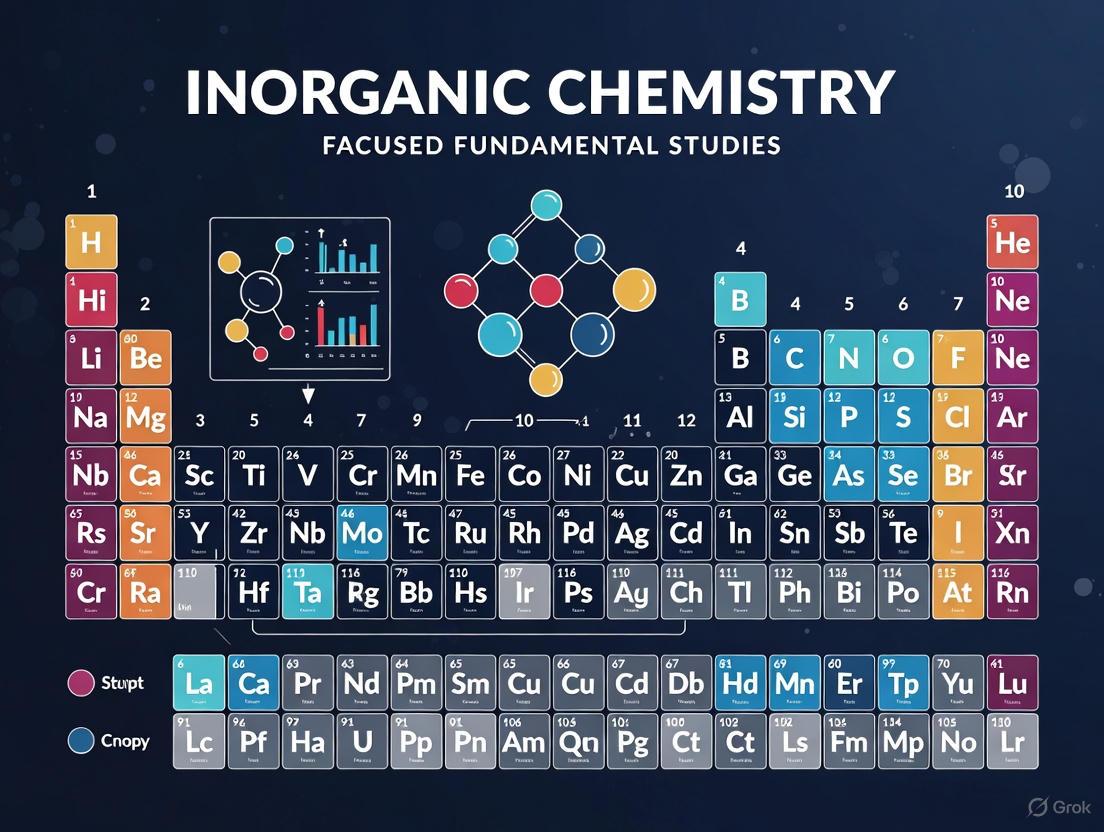
This article synthesizes fundamental inorganic chemistry with cutting-edge applications in pharmaceutical research and development.
The Periodic Table in Modern Medicine: Essential Foundations and Emerging Applications in Drug Development
Abstract
This article synthesizes fundamental inorganic chemistry with cutting-edge applications in pharmaceutical research and development. It explores the critical role of the periodic table as a predictive tool for understanding elemental properties, biological essentiality, and therapeutic potential. Tailored for researchers and drug development professionals, the content spans from foundational trends and essential element biology to the design mechanisms of metallodrugs, addressing common challenges in speciation and toxicity, and validating approaches through preclinical and clinical case studies. The discussion highlights how a deep understanding of periodicity is driving innovation in targeting diseases with metal-based therapeutics and diagnostic agents.
The Biological Periodic Table: Unveiling Essential Elements and Fundamental Trends
The periodic table represents one of the most significant achievements in chemical science, providing a systematic framework for understanding element properties based on the Periodic Law. This whitepaper traces the conceptual evolution from Mendeleev's foundational work based on atomic weights to the modern IUPAC standards governed by atomic number. We examine the structural organization of the table, key periodic trends with quantitative analysis, ongoing classification debates, and experimental methodologies for elemental characterization. Within the context of fundamental inorganic chemistry research, this review provides drug development professionals with advanced understanding of elemental behavior crucial for rational design of metal-based therapeutics and materials.
The Periodic Law states that when elements are arranged in order of their atomic numbers, an approximate recurrence of properties emerges periodically [1]. This fundamental principle serves as the cornerstone of modern chemistry, enabling prediction of chemical behavior and rational design of novel materials. The historical development of this law represents a paradigm shift in chemical classification, moving from qualitative similarity-based groupings to a quantitative predictive framework.
Dmitri Mendeleev's seminal advance in March 1869 established that elements "exhibit an evident periodicity of properties" when arranged according to their atomic weights [2]. Unlike previous classification attempts, Mendeleev's system successfully predicted properties of then-undiscovered elements, demonstrating the power of this organizational principle. The modern table has evolved to incorporate 118 elements, with the first 94 occurring naturally and the remaining 24 synthesized in laboratories [1].
Historical Evolution: From Atomic Weights to Atomic Numbers
Mendeleev's Original Formulation
Mendeleev's 1869 periodic table employed two critical datasets for element classification: atomic weights and chemical similarities [2]. His system was remarkable not only for organizing known elements but for its predictive power—Mendeleev confidently identified gaps corresponding to undiscovered elements and accurately forecast their properties. His key conclusions included [2]:
- "The elements, if arranged according to their atomic weights, exhibit an evident periodicity of properties"
- "The magnitude of the atomic weight determines the character of the element"
- "We must expect the discovery of many yet unknown elements"
- "Certain characteristic properties of the elements can be foretold from their atomic weights"
The Shift to Atomic Number
The pioneering work of Henry Moseley in the early 20th century established that a more fundamental ordering principle existed—the atomic number (Z), representing the nuclear charge and number of electrons in a neutral atom [3]. This resolved anomalies in Mendeleev's table where atomic weight order contradicted chemical behavior (e.g., cobalt/nickel and tellurium/iodine pairs) [3]. The atomic number provided a physically meaningful integer value that perfectly correlated with an element's position in the periodic table.
Table: Historical Evolution of Periodic Classification
| Era | Ordering Principle | Key Figures | Distinguishing Features |
|---|---|---|---|
| Pre-1869 | Equivalent weights, qualitative properties | Leopold Gmelin | Early 2D arrangements based purely on chemical experience |
| 1869-1913 | Atomic weight | Dmitri Mendeleev, Lothar Meyer | Predictive power through recognized gaps; periodicity of physical properties |
| Post-1913 | Atomic number (Z) | Henry Moseley, Niels Bohr | Resolution of atomic weight anomalies; quantum mechanical foundation |
Modern Periodic Table Organization
IUPAC Standardization and Nomenclature
The International Union of Pure and Applied Chemistry (IUPAC) has established standardized nomenclature and organization for the periodic table. Key IUPAC contributions include [4]:
- Establishing criteria for new element discovery
- Defining temporary names and symbols for newly synthesized elements
- Validating claims of element discovery
- Coordinating the official naming process for new elements
- Defining group numbering (1-18) and collective names
- Determining standard atomic weights through the Commission on Isotopic Abundances and Atomic Weights (CIAAW)
The current IUPAC recommendation numbers groups from 1 to 18, replacing older Roman numeral systems that varied between American and European conventions [1] [4].
Structural Features and Classification
The modern periodic table exhibits a systematic structure characterized by rows, columns, and blocks:
- Periods: Horizontal rows representing elements with the same highest occupied electron shell [5]. There are currently seven complete periods.
- Groups: Vertical columns containing elements with similar chemical properties due to analogous valence electron configurations [1].
- Blocks: Rectangular areas categorized by the subshell (s, p, d, f) containing the highest energy electrons [1].
Table: Element Categories in the Modern Periodic Table
| Category | Location | Elements Included | Key Characteristics |
|---|---|---|---|
| Alkali metals | Group 1 | Li, Na, K, Rb, Cs, Fr | Highly reactive, single s-valence electron |
| Alkaline earth metals | Group 2 | Be, Mg, Ca, Sr, Ba, Ra | Reactive, two s-valence electrons |
| Transition metals | d-block | Groups 3-12 | Form colored compounds, often act as catalysts |
| Halogens | Group 17 | F, Cl, Br, I, At | Highly reactive nonmetals, readily gain one electron |
| Noble gases | Group 18 | He, Ne, Ar, Kr, Xe, Rn | Extremely stable, full valence shells |
| Lanthanides | 4f series | La-Lu | Rare earth elements with unique magnetic properties |
| Actinides | 5f series | Ac-Lr | Radioactive, include synthetic elements |
Fundamental Periodic Trends
Periodic trends are observable patterns in elemental properties that occur systematically across periods and down groups, arising from the arrangement of elements in the periodic table [6]. These trends enable prediction of chemical behavior and reactivity.
Atomic Radius Trends
Atomic radius measures the distance from an atom's nucleus to its outermost electrons and follows predictable trends [5]:
- Across a period: Atomic radius decreases due to increasing nuclear charge pulling electrons closer.
- Down a group: Atomic radius increases as additional electron shells are added.
Electronegativity and Ionization Energy
Electronegativity measures an atom's ability to attract and bind with electrons, while ionization energy is the energy required to remove an electron from a neutral atom [6]:
- Electronegativity increases from left to right across a period and decreases from top to bottom within a group.
- Ionization energy increases from left to right across a period due to increasing nuclear charge and decreases from top to bottom within a group as valence electrons become farther from the nucleus.
Linus Pauling developed the most common quantitative scale for electronegativity, with fluorine assigned the highest value of 3.98 Pauling units [6].
Table: Quantitative Periodic Trends of Key Atomic Properties
| Property | Trend Across Period | Trend Down Group | Physical Basis | Extreme Values |
|---|---|---|---|---|
| Atomic radius | Decreases | Increases | Increasing nuclear charge vs. additional electron shells | Largest: Cs; Smallest: He |
| Ionization energy | Increases | Decreases | Valence shell stability vs. electron shielding | Highest: He; Lowest: Fr |
| Electronegativity | Increases | Decreases | Nuclear attraction for bonding electrons | Highest: F (3.98); Lowest: Fr (~0.7) |
| Metallic character | Decreases | Increases | Ability to lose electrons | Most metallic: Fr; Least: F |
Experimental Methodologies and Data Visualization
Determining Atomic Properties
Experimental characterization of elemental properties relies on sophisticated instrumentation and methodology:
- X-ray spectroscopy: Following Moseley's approach, measuring characteristic X-ray frequencies to verify atomic number and identify new elements [3].
- Mass spectrometry: Precisely determining atomic weights and isotopic abundances through the CIAAW [4].
- Crystallography: Measuring atomic and ionic radii by determining interatomic distances in elemental crystals [5].
- Photoelectron spectroscopy: Quantifying ionization energies by measuring electron kinetic energies following photon irradiation [6].
Advanced Periodic Table Visualizations
Innovative visualization techniques enhance understanding of periodic trends. Historical approaches like Hubbard and Meggers' 1963 table used perimeter bars within each cell to represent quantitative variables, enabling visual trend analysis across periods and groups [7]. Modern interactive implementations allow dynamic encoding of elemental properties through size, color, and shape parameters [8].
Reference Materials and Databases
- CRC Handbook of Chemistry & Physics: Comprehensive reference for chemical and physical data, regularly updated with revised values and new material [9].
- IUPAC Periodic Table of Elements and Isotopes (IPTEI): Authoritative resource providing isotopic compositions, standard atomic weights, and educational materials [4].
- NIST Chemistry WebBook: Critically evaluated thermodynamic and spectroscopic data for elements and compounds.
- CIAAW Database: Official standard atomic weights and isotopic abundance information [4].
Experimental Reagents and Standards
Table: Essential Research Reagents for Elemental Characterization
| Reagent/Standard | Function | Application Examples |
|---|---|---|
| Ultra-pure elemental standards | Calibration reference | Instrument calibration for atomic spectroscopy |
| Deuterated solvents | NMR spectroscopy | Determining molecular structure of organometallic compounds |
| High-purity acids (HCl, HNO₃) | Digestion and dissolution | Sample preparation for elemental analysis |
| Certified reference materials | Quality assurance | Validating analytical method accuracy |
| Inert atmosphere boxes | Oxygen/moisture exclusion | Handling air-sensitive organometallic compounds |
| Single crystal substrates | Crystallography | Growing crystals for structure determination |
Current Debates and Future Directions
Ongoing Classification Challenges
Despite its established nature, debates persist regarding optimal periodic table arrangements:
- Group 3 composition: Whether group 3 should consist of Sc, Y, Lu, Lr or Sc, Y, La, Ac remains unresolved, with an ongoing IUPAC project examining this question [4].
- f-block placement: The optimal positioning of lanthanides and actinides continues to be discussed, balancing educational utility against electronic structure accuracy [3].
- Superheavy elements: Chemical characterization of the heaviest elements (beyond einsteinium) challenges traditional periodic trends due to significant relativistic effects [1] [3].
Beyond Traditional Periodicity
Modern research continues to reveal nuances in periodic behavior:
- Relativistic effects: Particularly significant for superheavy elements, these effects can alter expected properties and challenge simple extrapolation of trends [3].
- Non-periodic phenomena: Under non-ambient conditions (high pressure, unusual oxidation states), elements may exhibit behavior deviating from expected periodic trends [3].
- Quantum mechanical refinements: Advanced computational models provide deeper understanding of the quantum basis for periodicity, sometimes revealing exceptions to simplified trends [3].
The periodic table has evolved from Mendeleev's empirical classification based on atomic weights to a sophisticated expression of the Periodic Law grounded in atomic number and quantum mechanics. Modern IUPAC standards provide a systematic framework, while ongoing research continues to refine our understanding of elemental behavior. For drug development professionals, mastery of periodic trends enables rational design of metal-containing therapeutics, catalysts, and materials. The fundamental organization of elements remains indispensable for predicting chemical behavior and guiding synthetic strategies in both academic research and industrial applications.
The periodic table organizes elements based on atomic structure, revealing predictable trends in key properties such as electronegativity, ionization energy, and atomic radius. These trends are not merely academic concepts but fundamental principles governing atomic behavior that directly impact biological structure and function. In biological contexts, these atomic properties dictate molecular interactions that form the basis of life processes, from enzyme-substrate recognition to pharmaceutical efficacy. Understanding the systematic variation of these properties across the periodic table provides researchers with predictive power in drug design, toxicology assessment, and biomaterial development. This review synthesizes current understanding of these core periodic trends and demonstrates their critical importance in biological and pharmaceutical applications through quantitative data analysis, experimental methodologies, and visual representations of the underlying principles that bridge inorganic chemistry and biological sciences.
The fundamental thesis of this work posits that the predictable nature of periodic trends provides an essential framework for understanding and manipulating biological interactions at the molecular level. By examining these trends through both theoretical and applied perspectives, researchers can more effectively design compounds with desired biological properties, predict metabolic pathways, and develop targeted therapeutic interventions. The following sections explore the quantitative measurement, theoretical basis, and practical application of these atomic properties in biological contexts, with particular emphasis on their role in drug discovery and development processes.
Quantitative Analysis of Periodic Properties
The predictable nature of periodic trends allows researchers to estimate atomic properties based on an element's position in the periodic table. The table below summarizes key values for biologically relevant elements, demonstrating the systematic variation in atomic properties that influence biological behavior.
Table 1: Periodic Properties of Biologically Relevant Elements
| Element | Atomic Radius (pm) | Ionization Energy (kJ/mol) | Electronegativity (Pauling) | Biological Significance |
|---|---|---|---|---|
| H | 53 | 1312 | 2.20 | Universal biological constituent; hydrogen bonding |
| C | 70 | 1086 | 2.55 | Organic chemistry backbone |
| N | 65 | 1402 | 3.04 | Amino groups; nucleic acids |
| O | 60 | 1314 | 3.44 | Biological oxidizer; hydrogen bonding |
| F | 50 | 1681 | 3.98 | Drug metabolism; bone mineral |
| P | 100 | 1012 | 2.19 | ATP; nucleic acids; bone |
| S | 100 | 1000 | 2.58 | Protein structure (disulfide bonds) |
| Cl | 100 | 1251 | 3.16 | Electrolyte balance; nerve conduction |
| Na | 180 | 496 | 0.93 | Membrane potential; osmoregulation |
| K | 220 | 419 | 0.82 | Membrane potential; osmoregulation |
| Mg | 150 | 738 | 1.31 | Enzyme cofactor; chlorophyll |
| Ca | 180 | 590 | 1.00 | Signaling; bone mineralization |
| Fe | 140 | 759 | 1.83 | Oxygen transport; electron transfer |
| Zn | 135 | 906 | 1.65 | Enzyme cofactor; structural |
These fundamental atomic properties directly impact biological interactions. For instance, the relatively high electronegativity of oxygen (3.44) and nitrogen (3.04) compared to hydrogen (2.20) and carbon (2.55) enables the formation of hydrogen bonds that stabilize protein structures and facilitate molecular recognition [10]. Similarly, the low ionization energies and large atomic radii of sodium and potassium enable these elements to readily form cations essential for electrochemical gradients in neuronal function [11].
Table 2: Periodic Trends in Atomic Properties
| Trend Direction | Electronegativity | Ionization Energy | Atomic Radius |
|---|---|---|---|
| Across Period (Left → Right) | Increases | Increases | Decreases |
| Down Group (Top → Bottom) | Decreases | Decreases | Increases |
| Governing Factors | Nuclear charge, atomic radius, shielding | Nuclear charge, atomic radius, electron stability | Principal quantum number, electron shell addition |
The trends illustrated in Table 2 reflect fundamental atomic principles: increasing nuclear charge across a period draws electrons closer to the nucleus (decreasing atomic radius) and increases the energy required to remove an electron (increasing ionization energy). Moving down a group, additional electron shells increase atomic radius and shield valence electrons from nuclear attraction, decreasing both ionization energy and electronegativity [11]. These systematic variations provide researchers with predictive power when investigating new compounds for pharmaceutical applications.
Electronegativity: The Molecular Polarity Regulator
Theoretical Foundations and Measurement
Electronegativity represents the ability of an atom to attract shared electrons in a chemical bond, a concept first quantified by Linus Pauling [10]. The most widely used scale for quantifying this property is the Pauling scale, which is based on thermochemical data and bond energies. The original Pauling equation defines electronegativity difference as:
[ \chiM - \chiX = a \sqrt{E{MX} - \frac{1}{2}(E{MM} + E{XX})} = a \sqrt{\Delta E{MX}} ]
where χ represents electronegativity, E represents bond energy, and a is a constant conversion factor (approximately 0.102 when energies are in eV) [12]. This relationship establishes that bond polarity increases with the difference in electronegativity between bonded atoms.
Alternative approaches to quantifying electronegativity include the Mulliken scale, which calculates electronegativity as the average of an atom's ionization energy (I) and electron affinity (A):
[ \chi = \frac{1}{2}(I + A) ]
This approach directly links electronegativity to measurable atomic properties and provides values that can be converted to the Pauling scale [12]. For atoms in solid-state environments, modifications incorporating work functions (Φ) and solid-state electron affinities (A_s) have been developed:
[ \chis = \frac{1}{2}(\Phi + As) ]
This adjustment is particularly relevant for understanding biological mineral phases and metallic implants where solid-state electronegativity values more accurately predict behavior [12].
Biological Significance and Applications
In biological systems, electronegativity differences govern bond polarity, which in turn dictates molecular interactions critical to life processes. The O-H bond in water, with an electronegativity difference of 1.24 (O: 3.44, H: 2.20), is highly polar, enabling water molecules to form extensive hydrogen bonding networks that drive protein folding, membrane formation, and solute interactions [10]. Similarly, the relatively high electronegativity of oxygen and nitrogen compared to carbon creates polar bonds in biological molecules that facilitate specific molecular recognition events.
In pharmaceutical development, electronegativity considerations guide drug design, particularly in optimizing metabolic stability. For instance, the strategic introduction of fluorine (χ = 3.98) into drug molecules can block metabolic hot spots by replacing hydrogen (χ = 2.20) or oxygen (χ = 3.44) at vulnerable positions, creating stronger C-F bonds that resist enzymatic oxidation [13]. This approach has been successfully employed in numerous pharmaceuticals, including the antimetabolite 5-fluorouracil and various fluorinated quinolone antibiotics.
The role of electronegativity extends to predicting drug-receptor interactions, where complementary electrostatic surfaces between a drug and its target often determine binding affinity. Molecular modeling approaches frequently incorporate electronegativity-based charge calculations to predict these interactions, with modern methods providing increasingly accurate predictions of atomic charges in complex molecular environments [12].
Diagram 1: Electronegativity difference determines bond type and biological effects
Ionization Energy: The Electron Retention Metric
Fundamental Principles and Periodic Trends
Ionization energy represents the minimum energy required to remove an electron from a gaseous atom in its ground state. This property exhibits clear periodic trends, increasing across periods due to greater nuclear charge and decreasing atomic radius, and decreasing down groups due to increased electron shielding and greater distance from the nucleus [11]. These trends reflect the underlying stability of electron configurations and the effective nuclear charge experienced by valence electrons.
The theoretical basis for ionization energy connects directly to atomic structure. According to Coulomb's law, the attraction between the positively charged nucleus and negatively charged electrons strengthens with decreasing distance and increasing nuclear charge. This explains why elements on the left side of the periodic table (with fewer protons and larger atomic radii) have lower ionization energies and readily form cations, while elements on the right side (with more protons and smaller atomic radii) have higher ionization energies and resist cation formation [11].
For transition metals and heavier elements, the relationship becomes more complex due to electron-electron repulsion effects and varying subshell stabilities. These subtleties are particularly relevant in biological contexts where transition metals like iron, copper, and zinc play crucial roles in electron transfer reactions and enzyme catalysis.
Biological Implications and Experimental Assessment
In biological systems, ionization energy dictates elemental speciation and reactivity. Elements with low ionization energies, such as sodium (496 kJ/mol) and potassium (419 kJ/mol), readily form cations that function as electrolytes, maintaining osmotic balance and enabling nerve impulse transmission [11]. Conversely, elements with high ionization energies, such as nitrogen (1402 kJ/mol) and oxygen (1314 kJ/mol), tend to form covalent bonds or attract electrons in ionic bonds, creating the polarized functional groups that drive molecular recognition.
Experimental determination of ionization energy typically employs photoelectron spectroscopy, which measures the kinetic energy of electrons ejected when atoms are irradiated with X-rays or UV light. The relationship is given by:
[ IE = h\nu - KE ]
where IE is ionization energy, hν is the photon energy, and KE is the measured kinetic energy of the ejected electron. For biological applications, ionization potentials can also be estimated computationally using density functional theory or Hartree-Fock methods, providing valuable insights for drug design without requiring direct measurement [12].
In pharmaceutical development, ionization energy correlates with a compound's ability to undergo metabolic oxidation. Molecules containing atoms or functional groups with low ionization energies are more susceptible to cytochrome P450-mediated oxidation, a primary metabolic pathway that can be predicted during early drug discovery stages [13]. Understanding these relationships allows medicinal chemists to modify molecular structures to optimize metabolic stability while maintaining therapeutic activity.
Atomic Radius: The Spatial Determinant
Trends and Measurement Techniques
Atomic radius follows predictable periodic trends, decreasing across periods due to increasing nuclear charge pulling electrons closer to the nucleus, and increasing down groups due to the addition of electron shells [11]. These size variations have profound implications for biological interactions, as atomic dimensions directly influence bond lengths, molecular geometry, and steric accessibility.
Several types of atomic radii are used depending on context: covalent radii for bonded atoms in molecules, metallic radii for atoms in metallic structures, and van der Waals radii for non-bonded interactions. For biological applications, covalent and van der Waals radii are most relevant, as they dictate molecular dimensions and intermolecular contact distances. Experimental determination of atomic radii employs X-ray crystallography, which measures electron density distributions to establish nuclear positions and interatomic distances [14].
For complex biological macromolecules, atomic coordinates from protein data bank structures provide precise measurements of atomic distances in functional contexts. Advanced computational approaches can also predict atomic radii using ab initio calculations that solve Schrödinger equations for multi-electron systems, providing values that correlate well with experimental measurements [12].
Structural Implications in Biological Systems
Atomic size directly influences biological function through steric effects. In enzyme active sites, precisely defined cavities with dimensions complementary to their substrates ensure reaction specificity. The atomic radii of catalytic residues create spatial constraints that orient substrates optimally for transformation and exclude competing molecules. Similarly, in DNA and RNA, the consistent dimensions of nucleotide bases and sugar-phosphate backbones create uniform helical structures that maintain genetic fidelity while allowing sequence-specific protein recognition.
In drug-receptor interactions, the fit between a pharmaceutical compound and its target depends critically on atomic dimensions. Minor variations in atomic radius can dramatically alter binding affinity; for instance, the difference between oxygen (60 pm) and sulfur (100 pm) atomic radii explains why phosphate (PO₄³â») and sulfate (SO₄²â») groups are not interchangeable in biological molecules despite similar chemical formulas [10]. This size differential affects not only bond lengths but also bond angles and overall molecular conformation.
The role of atomic radius extends to ion channel selectivity, where precise dimensions of hydration shells and channel pores discriminate between similar ions like sodium (180 pm) and potassium (220 pm), enabling biological systems to maintain distinct intracellular and extracellular ion concentrations essential for electrochemical signaling [11].
Experimental Methodologies for Characterizing Atomic Properties
Computational Determination of Electronegativity
Modern computational approaches enable precise determination of electronegativity values for elements in various chemical environments. The density functional theory (DFT) methodology has proven particularly valuable for calculating electronegativity as the negative of the chemical potential:
[ \chi = -\mu = -\left(\frac{\partial E}{\partial N}\right)_{v(r)} ]
where E is the total energy, N is the number of electrons, and v(r) is the external potential. This approach allows researchers to calculate electronegativity values for atoms in specific molecular contexts rather than relying on generalized values [12].
Protocol: DFT Calculation of Electronegativity
- System Preparation: Define molecular structure with atomic coordinates
- Basis Set Selection: Choose appropriate basis set (e.g., 6-311G for organic molecules)
- Geometry Optimization: Minimize energy using Hartree-Fock or DFT methods
- Single-Point Energy Calculation: Compute total energy for N and N±1 electron systems
- Electronegativity Calculation: Apply finite difference approximation: χ ≈ -(IP+EA)/2
- Validation: Compare with known values for similar systems
This methodology provides electronegativity values specific to molecular environment, offering more accurate predictions of charge distribution than tabulated values [12].
Spectroscopic Determination of Ionization Energy
Photoelectron spectroscopy (PES) provides direct experimental measurement of ionization energies, with ultraviolet (UPS) and X-ray (XPS) variants offering complementary information about valence and core electrons, respectively.
Protocol: UPS Measurement of Ionization Energy
- Sample Preparation: For biological molecules, prepare thin films or frozen solutions
- Instrument Calibration: Use standard samples with known ionization energies (e.g., argon)
- Ultraviolet Irradiation: Excite sample with monochromatic UV radiation (typically He I at 21.22 eV or He II at 40.8 eV)
- Energy Analysis: Measure kinetic energy of ejected electrons using hemispherical analyzer
- Data Conversion: Convert kinetic energy to binding energy: IE = hν - KE
- Spectral Interpretation: Assign peaks to specific molecular orbitals or atoms
The resulting spectra provide both ionization energies and information about electronic structure, which can correlate with biological reactivity [12].
Crystallographic Determination of Atomic Radii
X-ray crystallography remains the gold standard for experimental determination of atomic positions and radii in biological molecules.
Protocol: X-ray Crystallographic Analysis
- Crystallization: Grow high-quality single crystals of biological macromolecules
- Data Collection: Expose crystals to X-rays and collect diffraction patterns
- Phase Determination: Solve phase problem using molecular replacement or anomalous dispersion
- Electron Density Map Calculation: Fourier transform diffraction data
- Model Building: Fit atomic coordinates to electron density
- Refinement: Iteratively adjust parameters to minimize difference between observed and calculated structure factors
- Bond Length Analysis: Measure interatomic distances to determine covalent radii
This approach provides precise atomic positions in functional biological contexts, revealing how atomic dimensions influence macromolecular function [14].
Table 3: Research Reagent Solutions for Atomic Property Characterization
| Reagent/Technology | Function | Application Context |
|---|---|---|
| Human Liver Microsomes (HLM) | In vitro metabolic stability assessment | Prediction of drug metabolism pathways [13] |
| Human Hepatocytes (HHEP) | Hepatotoxicity and metabolism studies | More physiologically relevant metabolic prediction [13] |
| Accelerator Mass Spectrometry (AMS) | Ultra-sensitive detection of radiolabeled compounds | Human ADME studies with microdosing [15] |
| Physiologically Based Pharmacokinetic (PBPK) Modeling | In vitro to in vivo extrapolation | Prediction of human pharmacokinetics [13] [15] |
| MDAnalysis Toolkit | Molecular dynamics trajectory analysis | Membrane property projection and lipid interactions [14] |
| 2Danalysis Toolbox | Biomolecular interface characterization | Pattern identification at membrane surfaces [14] |
| LLPS REDIFINE | Biomolecular condensate characterization | Label-free analysis of phase separation systems [16] |
Applications in Drug Discovery and Development
ADME Optimization Through Atomic Property Considerations
The integration of periodic trend understanding has revolutionized absorption, distribution, metabolism, and excretion (ADME) optimization in pharmaceutical development. Electronegativity differences directly influence a compound's polarity, which affects membrane permeability and absorption. Compounds with balanced electronegativity distributions (moderate polarity) typically exhibit optimal oral bioavailability, crossing epithelial barriers while maintaining sufficient aqueous solubility for distribution [13].
Metabolic susceptibility often correlates with ionization energy and electronegativity. Atoms with low ionization energies or situated in regions of high electron density represent preferred sites for cytochrome P450-mediated oxidation. By strategically incorporating elements like fluorine (high electronegativity) or modifying molecular regions to alter electron density, medicinal chemists can block metabolic soft spots and improve drug half-life [13].
Recent advances in ADME prediction incorporate atomic properties through quantitative structure-activity relationship (QSAR) models and physiologically based pharmacokinetic (PBPK) modeling. These approaches leverage the predictable nature of periodic trends to simulate drug behavior in biological systems, significantly reducing development timelines [15].
Diagram 2: Relationship between atomic properties and drug disposition
Membrane Interactions and Transport
Atomic properties significantly influence drug-membrane interactions, a critical factor in distribution and targeting. The 2Danalysis toolbox enables researchers to project membrane properties onto a two-dimensional plane, characterizing how atomic-level properties influence lipid-lipid and lipid-biopolymer interfaces [14]. This approach reveals how atomic radius affects packing density in membrane bilayers and how electronegativity differences create charge gradients that influence drug partitioning.
Transporter proteins responsible for drug uptake and efflux exhibit binding pockets with specific stereoelectronic requirements dictated by the atomic properties of their endogenous substrates. By designing compounds with atomic properties that match these requirements, researchers can optimize drug delivery to target tissues. For instance, the strategic placement of hydrogen bond acceptors (oxygen, nitrogen) and donors (O-H, N-H) at positions complementary to transporter binding sites can enhance tissue-specific delivery [13].
Biomolecular Condensates and Phase Separation
Recent research has revealed the importance of liquid-liquid phase separation (LLPS) in cellular organization, with atomic properties playing a fundamental role in these processes. The LLPS REDIFINE methodology enables label-free characterization of biomolecular condensates, revealing how electronegativity-driven interactions promote the formation of these membraneless organelles [16].
In drug development, understanding how atomic properties influence phase behavior provides new opportunities for targeting pathological condensates associated with neurodegenerative diseases and cancer. Compounds can be designed to specifically modulate condensate formation by interacting with key residues through complementary electronic properties, offering new therapeutic approaches for previously undruggable targets [16].
The fundamental periodic trends of electronegativity, ionization energy, and atomic radius provide an essential framework for understanding and manipulating biological interactions at the molecular level. As demonstrated throughout this review, these atomic properties directly influence molecular polarity, reactivity, and dimensions—factors that dictate biological behavior from molecular recognition to metabolic fate. The quantitative understanding of these relationships has transformed drug discovery, enabling rational design approaches that optimize ADME properties while maintaining therapeutic activity.
Future research directions will likely focus on extending these principles to emerging therapeutic modalities, including oligonucleotides, peptides, and targeted protein degraders. Additionally, the integration of atomic property considerations with artificial intelligence and machine learning approaches promises to further enhance predictive capabilities in drug development. As characterization technologies advance, particularly in areas such as biomolecular condensate analysis and single-molecule imaging, our understanding of how atomic properties influence biological function in complex cellular environments will continue to deepen.
The enduring value of periodic trends lies in their predictability and fundamental connection to atomic structure. By applying these principles systematically to biological and pharmaceutical challenges, researchers can continue to develop innovative solutions to complex medical needs, leveraging the simple yet powerful patterns that govern atomic behavior across the periodic table.
Within the framework of inorganic chemistry and periodic table fundamental studies, the essential element landscape represents a critical intersection of geochemistry, biology, and human physiology. The atomic number serves as the fundamental organizing principle, dictating an element's chemical properties and, consequently, its biological role. From the macronutrients required in substantial quantities for structural integrity and energy metabolism to the trace metals that serve as potent enzyme cofactors, each element occupies a specific niche defined by its position in the periodic table. This whitepaper delineates the quantitative requirements, biochemical functions, and sophisticated homeostatic mechanisms governing elements essential to human health, framing this knowledge within the context of drug development and therapeutic intervention. Understanding this landscape is paramount for researchers and scientists developing novel metal-based therapeutics and diagnostic agents.
Element Classification and Quantitative Requirements
The biological essentiality of an element is intrinsically linked to its inherent chemical properties—such as ionic radius, preferred coordination geometry, and redox potential—which are, in turn, periodic functions. These properties determine an element's suitability for specific biochemical functions. Elements are categorized based on their dietary requirement and abundance in biological systems.
Table 1: Classification of Essential Elements by Quantitative Requirement and Biological Role [17]
| Category | Daily Adult Requirement | Representative Elements | Primary Biological Functions |
|---|---|---|---|
| Bulk Macronutrients | > 100 mg/day | Carbon (C), Hydrogen (H), Oxygen (O), Nitrogen (N), Sulfur (S) | Constituents of organic molecules (proteins, lipids, carbohydrates, nucleic acids); structural backbone. |
| Macrominerals | ~100 mg - 1 g/day | Sodium (Na), Potassium (K), Calcium (Ca), Magnesium (Mg), Chloride (Cl), Phosphorus (P) | Osmotic balance, electrical signaling, structural components (bone), energy transfer (ATP). |
| Trace Elements | 1–100 mg/day | Iron (Fe), Zinc (Zn), Fluoride (F), Selenium (Se), Copper (Cu) | Enzyme catalysis, oxygen transport, antioxidant defense, hormone synthesis. |
| Ultra-Trace Metals | < 1 mg/day | Chromium (Cr), Iodine (I), Manganese (Mn), Molybdenum (Mo), Cobalt (Co) | Cofactors for specialized enzymes (e.g., oxidoreductases, deiodinases). |
All trace elements, without exception, are toxic if consumed at sufficiently high levels for prolonged periods. The margin between toxic intakes and optimal physiological requirements is narrow for some elements, necessitating precise homeostatic control [17].
Biochemical Roles and Homeostatic Regulation
Trace Elements as Catalytic Centers
Trace elements function primarily as catalysts in enzyme systems, with their unique electronic configurations enabling participation in oxidation-reduction reactions [17]. The specific chemical properties dictated by an element's position in the periodic table make it ideal for its biological niche.
Table 2: Essential Trace Elements: Functions, Deficiency, and Toxicity [17]
| Element | Key Enzymes/Proteins | Primary Function | Deficiency Manifestations | Toxicity Manifestations |
|---|---|---|---|---|
| Iron (Fe) | Hemoglobin, Cytochromes, Catalase | Oxygen transport, Electron transfer, Antioxidant defense | Microcytic anemia, Fatigue, Impaired immunity | Hemochromatosis, Organ damage, Oxidative stress |
| Zinc (Zn) | Carbonic anhydrase, Alcohol dehydrogenase, Zinc fingers | Enzyme catalysis, DNA binding protein structure, Wound healing | Growth retardation, Dermatitis, Immune dysfunction | Nausea, Copper deficiency, Impaired immune function |
| Copper (Cu) | Cytochrome c oxidase, Superoxide dismutase, Ceruloplasmin | Electron transport, Antioxidant defense, Iron metabolism | Anemia, Neutropenia, Connective tissue defects | Wilson's disease, Liver necrosis, Neurological symptoms |
| Selenium (Se) | Glutathione peroxidases, Thioredoxin reductases, Deiodinases | Antioxidant defense, Thyroid hormone metabolism | Cardiomyopathy (Keshan disease), Myxedema | Selenosis, Hair loss, Neurological damage |
| Iodine (I) | Thyroid hormones (T3, T4) | Metabolic regulation, Brain development | Goiter, Cretinism, Hypothyroidism | Hyperthyroidism, Thyroiditis |
| Manganese (Mn) | Arginase, Pyruvate carboxylase, Mn-SOD | Urea cycle, Gluconeogenesis, Antioxidant defense | Dermatitis, Hypocholesterolemia | Parkinsonian symptoms, Neurotoxicity |
Systemic Homeostasis of Iron: A Paradigm of Trace Element Regulation
Iron represents a quintessential example of trace element homeostasis, illustrative of the complex regulation required to maintain the delicate balance between sufficiency and toxicity. Its metabolism involves precise coordination of absorption, transport, storage, and recycling.
Diagram 1: Systemic Iron Homeostasis. This pathway illustrates the journey of dietary iron from absorption in the duodenum, through transport in the blood via transferrin, to utilization in erythropoiesis and storage in the liver. The hormone hepcidin, produced by the liver, serves as the master regulator by controlling the iron exporter ferroportin. Note the efficient recycling of iron from senescent red blood cells by macrophages [17].
The regulation of iron absorption is a critical control point. Heme iron, found in meat, poultry, and fish, is more efficiently absorbed than inorganic (nonheme) iron. The presence of dietary factors significantly influences nonheme iron bioavailability; ascorbic acid (Vitamin C) enhances absorption, while dietary fiber, phytates, and certain trace elements can diminish it [17].
Experimental Methodologies for Trace Element Analysis
Accurate quantification of elemental concentrations in biological samples is fundamental to research in this field. The following protocols represent gold-standard methodologies.
Protocol: Inductively Coupled Plasma Mass Spectrometry (ICP-MS)
Principle: This technique ionizes a sample in a high-temperature argon plasma and separates the resulting ions based on their mass-to-charge ratio, providing exceptional sensitivity for simultaneous multi-element analysis, even at ultra-trace levels.
Detailed Methodology:
- Sample Digestion: Precisely weigh 0.5 g of wet tissue (e.g., liver biopsy) or 1.0 mL of biological fluid (e.g., serum, plasma) into a high-purity Teflon digestion vessel. Add 5 mL of concentrated, ultra-pure nitric acid (HNO₃). Perform digestion using a closed-vessel microwave system with a controlled temperature ramp (e.g., to 180°C over 20 minutes, hold for 15 minutes). After cooling, quantitatively transfer the digestate to a 50 mL volumetric flask and dilute to volume with 18 MΩ·cm deionized water.
- Instrument Calibration: Prepare a series of multi-element calibration standards (e.g., 0, 1, 10, 100, 1000 µg/L) in a matrix matching the sample digest (e.g., 2% HNO₃). Include internal standards (e.g., Scandium [Sc], Germanium [Ge], Rhodium [Rh], Indium [In], Lutetium [Lu]) at a consistent concentration in all blanks, standards, and samples to correct for instrumental drift and matrix effects.
- ICP-MS Analysis: Introduce samples via a peristaltic pump and nebulizer into the argon plasma (~6000-10000 K). The ions generated are extracted into the mass spectrometer's high-vacuum region. Use a collision/reaction cell with helium (He) or hydrogen (Hâ‚‚) gas to mitigate polyatomic interferences (e.g., ArC⺠on âµÂ²Crâº). Acquire data in standard or kinetic energy discrimination (KED) mode.
- Data Analysis & Quality Control: Quantify unknown concentrations against the calibration curve. Include certified reference materials (CRMs; e.g., NIST SRM 1577c Bovine Liver) and reagent blanks in each analytical batch to validate accuracy and monitor contamination.
Protocol: Synchrotron Radiation X-Ray Fluorescence (SR-XRF) Imaging
Principle: This micro-analytical technique uses a high-brightness, focused X-ray beam from a synchrotron source to excite a thin tissue section, causing elements to emit characteristic secondary (fluorescent) X-rays. By scanning the beam across the sample, it provides quantitative, spatially resolved maps of elemental distribution.
Detailed Methodology:
- Sample Preparation: Flash-freeze fresh tissue samples in liquid nitrogen-cooled isopentane. Cryo-section tissues to a thickness of 10-20 µm at -20°C and mount onto ultrapure, reflective silicon nitride windows. Maintain samples in a frozen, hydrated state under a helium atmosphere during analysis to prevent elemental redistribution and loss of volatile elements.
- Beline Setup: Utilize a synchrotron beamline equipped with a monochromator to select the incident X-ray energy (typically tuned to 10-15 keV to efficiently excite a wide range of elements from potassium (K) to strontium (Sr)). Focus the beam to a sub-micron spot size using Kirkpatrick-Baez mirrors or Fresnel zone plates.
- Data Acquisition: Raster-scan the sample through the focused X-ray beam. At each pixel, collect the entire X-ray fluorescence spectrum using a high-energy resolution detector, such as a silicon drift detector (SDD). Typical dwell times range from 50-500 ms per pixel, depending on elemental concentrations and beam intensity.
- Spectral Fitting & Quantification: Fit the measured spectra in each pixel using specialized software (e.g., PyMCA, GeoPIXE) to deconvolute overlapping peaks and extract net elemental counts. Convert elemental counts to absolute concentrations (µg/cm²) by analyzing thin-film CRMs (e.g., NIST SRM 1832/1833) under identical experimental conditions.
The Scientist's Toolkit: Research Reagent Solutions
Table 3: Essential Reagents and Materials for Trace Element Research
| Reagent/Material | Function & Application | Technical Notes |
|---|---|---|
| Ultra-Pure HNO₃ (TraceMetal Grade) | Primary digesting acid for ICP-MS sample preparation; oxidizes organic matrix. | Essential for minimizing background contamination. Must be used in Class-1000 cleanrooms or laminar flow hoods. |
| Certified Reference Materials (CRMs) | Quality control and validation of analytical accuracy for techniques like ICP-MS. | Examples: NIST SRM 1577c (Bovine Liver), Seronorm Trace Elements Serum. |
| Chelators (EDTA, DTPA) | Investigate metal speciation, bioavailability, and homeostasis; used in buffer systems. | Used in in vitro assays to selectively sequester specific metal ions. |
| Metal Salts (e.g., FeSOâ‚„, ZnClâ‚‚) | Supplement cell culture media to study metal-dependent processes or induce deficiency/toxicity. | Must be prepared in metal-free water; concentration must be carefully calibrated. |
| Silicon Nitride Windows | Substrate for SR-XRF imaging of tissue sections due to low inherent elemental background. | Critical for analyzing low-abundance elements at the cellular level. |
| Metal-Free Tubes (e.g., PFA Teflon) | Sample collection and storage to prevent leaching of contaminating metals from container walls. | Standard practice for all ultra-trace element analysis to ensure data integrity. |
| 2-Heptanol, pentanoate | 2-Heptanol, pentanoate|C12H24O2|Research Chemical | |
| Iridium--vanadium (1/1) | Iridium--vanadium (1/1), CAS:12142-05-1, MF:IrV, MW:243.16 g/mol | Chemical Reagent |
Research Frontiers and Implications for Drug Development
The synthesis and study of superheavy elements (SHEs), such as Nihonium (Nh, element 113) and Oganesson (Og, element 118), push the boundaries of the periodic table [18]. Research into their relativistic effects on electron shell stability provides fundamental insights into chemical bonding and periodicity, which can inform the design of novel inorganic complexes with potential therapeutic or diagnostic applications.
In drug development, the understanding of trace element biology is crucial. It informs:
- The design of metal-chelating therapies for diseases of metal overload (e.g., Wilson's disease).
- The development of metallodrugs, such as platinum-based chemotherapeutics (e.g., cisplatin), where knowledge of ligand exchange kinetics is key.
- The recognition of drug-metal interactions that can alter pharmacokinetics or cause micronutrient deficiencies.
Future research will continue to leverage advanced analytical techniques and a deepening understanding of inorganic chemistry to elucidate the complex roles of the essential element landscape in human health and disease.
The genomic blueprint of an organism extends beyond coding for amino acid sequences to precisely dictate the incorporation and handling of specific inorganic metal ions. This control is fundamental to a vast array of cellular processes, from enzyme catalysis to signal transduction. This whitepaper delves into the sophisticated molecular mechanisms by which the genome encodes for the specificity of metal species and their oxidation states. We explore how genetic sequences define metal-binding sites in proteins, how dedicated genetic systems regulate metal homeostasis, and how metal ions themselves act as regulators of gene expression. Framed within fundamental inorganic chemistry principles, this guide also summarizes contemporary computational and experimental methodologies for predicting and studying metalloprotein structure and function, providing a vital resource for researchers in chemistry, biology, and drug development.
In biological systems, the periodic table comes to life. Metal ions, with their unique redox properties and coordination geometries, are indispensable cofactors for an estimated one-third of all proteins [19] [20]. The fundamental challenge for biology is that the intrinsic metal-binding preferences of protein scaffolds often follow the Irving-Williams series (Mn²⺠< Fe²⺠< Co²⺠< Ni²⺠< Cu²⺠> Zn²âº), which does not always align with physiological needs [20]. Despite this thermodynamic preference for tighter-binding metals, cells successfully populate proteins with the correct metal cofactor.
This precise metallation is not left to chance; it is a genetically directed process. The genome encodes a multi-layered system that ensures the correct metal is delivered to the correct protein at the correct time and in the correct oxidation state. This system encompasses the specific amino acid composition of metal-binding sites, the machinery for metal trafficking and homeostasis, and sensory-regulatory proteins that couple metal availability to gene expression. Understanding this "genetic inorganic code" is essential for elucidating fundamental biological mechanisms and for designing novel metalloenzymes and metal-based therapeutics.
Genomic Strategies for Metal Ligation and Specificity
The primary sequence of a gene dictates the primary amino acid sequence of a protein, which in turn determines the three-dimensional environment of a metal-binding site. The genome codes for the ligands—typically Cys, His, Asp, and Glu—that coordinate the metal ion.
Coordination Motifs and Spatial Preorganization
The specific combination and spatial arrangement of these ligands in the protein fold create a binding pocket with defined geometry, charge, and hydrophobicity, conferring specificity for a particular metal ion. For instance, zinc fingers, a common DNA-binding motif, are characterized by a genomic sequence that codes for a combination of cysteine and histidine residues (e.g., Cys₂His₂) that coordinate a Zn²⺠ion in a tetrahedral geometry, stabilizing the protein fold [21]. In contrast, genes for iron-sulfur cluster proteins code for clusters of cysteine residues that coordinate [2Fe-2S] or [4Fe-4S] clusters in a cuboidal geometry [22].
The protein backbone itself can be preorganized to favor certain metals. The BioMetAll algorithm leverages this principle by identifying protein cavities with backbone carbonyl oxygen atoms positioned to coordinate specific metals, a direct consequence of the genomic sequence that dictates the protein's fold [23].
Table 1: Common Amino Acid Ligands for Essential Metal Ions
| Metal Ion | Common Protein Ligands | Typical Coordination Geometry | Example Motif/Protein |
|---|---|---|---|
| Zn²⺠| Cys, His | Tetrahedral | Zinc finger (Cys₂His₂) |
| Cu²âº/Cu⺠| His, Cys, Met | Distorted Tetrahedral, Square Planar | Galactose Oxidase (Cu²âº) [24] |
| Fe²âº/Fe³⺠| His, Asp, Glu, Cys (in Fe-S clusters) | Octahedral, Cuboidal (Fe-S clusters) | [2Fe-2S] Ferredoxin |
| Mn²⺠| Asp, Glu, His | Octahedral | Mn²⺠in MncA cupin [20] |
| Mg²⺠| Asp, Glu, backbone carbonyls | Octahedral | Mg²âº-dependent kinases |
| Ca²⺠| Asp, Glu, backbone carbonyls | Irregular (6-8 coordinate) | EF-hand motif |
| Ni²⺠| His, Cys | Square Planar, Octahedral | Urease [24] |
Overcoming the Irving-Williams Series
Genomes have evolved sophisticated strategies to overcome the inherent metal-binding preferences described by the Irving-Williams series. These genetic strategies include:
- Metal-Specific Chaperones: Dedicated genes encode for metallochaperone proteins that form transient complexes with specific metal ions and deliver them directly to their cognate apo-proteins. This minimizes the exposure of metals to the competitive cellular environment and avoids mismetallation [20]. The copper chaperone CCS, for instance, is specifically encoded to deliver Cu⺠to superoxide dismutase [20].
- Compartmentalization: The genome encodes for metal transporters that sequester different metals into separate cellular compartments. A prime example is the Tat secretion system in bacteria, which exports pre-folded proteins like the manganese-binding cupin MncA. By folding and binding manganese in the cytoplasm before export, MncA avoids competition with the more competitive zinc and copper ions prevalent in the periplasm [20].
- Controlled Metal Availability: The genomic repertoire includes systems for metal buffering and storage (e.g., ferritin for iron, metallothionein for zinc and copper) as well as efflux pumps (e.g., CopA for copper, ZntA for zinc) to maintain the buffered intracellular concentrations of free metal ions. The concentration of tightly-bound Zn²⺠is kept exceptionally low (at least 100,000-fold below manganese in some compartments) to prevent it from inactivating magnesium enzymes, which consistently prefer to bind zinc in vitro [20].
Genetic Control of Metal Oxidation States and Redox Signaling
The genome also indirectly codes for the stabilization of specific metal oxidation states, which is critical for redox catalysis and signaling. This is achieved through the precise protein environment created by the amino acid sequence.
Redox-Sensitive Transcription Factors
Several transcription factors contain metal cofactors or redox-sensitive cysteine residues that act as sensors of the cellular redox state, directly coupling metal oxidation state to gene expression.
- SoxR: This bacterial transcription factor contains stable [2Fe-2S] centers. When these clusters are oxidized, SoxR activates the transcription of genes involved in the oxidative stress response, including soxS [22].
- OxyR: A bacterial sensor of hydrogen peroxide, OxyR uses a redox-active cysteine thiol. Upon oxidation, a disulfide bond forms, inducing a conformational change that allows OxyR to activate the transcription of antioxidant genes [22].
- NF-κB & AP-1: In eukaryotes, the activity of key transcription factors like NF-κB and AP-1 is regulated by the intracellular thiol redox state, controlled by molecules like glutathione and thioredoxin. The reduction of critical cysteine residues in their DNA-binding domains by the Ref-1 enzyme, itself redox-regulated by thioredoxin, is essential for their DNA-binding activity [25].
The diagram below illustrates a generalized pathway for redox-controlled gene expression.
Diagram Title: Redox-Sensing Genetic Pathway
The Role of the Thiol Redox State
The cellular redox state, primarily governed by the glutathione (GSH)/GSSG and thioredoxin systems, is crucial for maintaining the reduced state of redox-sensitive protein thiols. The genome codes for the entire apparatus involved in this homeostasis: the enzymes for glutathione synthesis (GCL, glutathione synthetase), the NADPH-producing enzymes of the pentose phosphate pathway to provide reducing power, and the reductases (glutathione reductase, thioredoxin reductase) that recycle oxidized antioxidants back to their reduced forms [25] [26]. This system ensures that metal centers in proteins can cycle between oxidation states as required for their function, without succumbing to irreversible oxidation.
Metalloregulatory Proteins and Genetic Networks
A dedicated class of proteins, known as metalloregulatory proteins, functions as genetic switches that couple intracellular metal availability to the expression of genes involved in metal homeostasis and resistance.
Operon Systems in Microbial Metal Resistance
In bacteria, metal resistance is often governed by operons, which are clusters of genes co-transcribed under the control of a single metalloregulatory protein. Key examples include:
- The mer operon for mercury detoxification, regulated by the MerR protein, which activates transcription in the presence of Hg²⺠[27].
- The ars operon for arsenic resistance, regulated by the ArsR protein, a member of the SmtB/ArsR family of repressors [27].
These regulatory proteins are themselves metal-sensors. They bind specific metal ions with high selectivity, causing a conformational change that alters their affinity for DNA, thereby turning gene expression on or off.
Table 2: Key Microbial Metal Resistance Operons and Regulators
| Metal | Regulatory Protein | Protein Family | Mechanism of Action |
|---|---|---|---|
| Hg²⺠| MerR | MerR | Hg²⺠binding induces DNA bending, activating transcription. |
| As³âº/Asâµâº | ArsR | SmtB/ArsR | As³⺠binding causes dissociation from DNA, derepressing operon. |
| Cuâº/Cu²⺠| CueR | MerR | Cu⺠binding activates transcription of copper efflux genes. |
| Zn²⺠| ZntR | MerR | Zn²⺠binding activates transcription of zntA efflux pump. |
| Ni²⺠| NikR | NikR | Ni²⺠binding enhances DNA binding, repressing nickel uptake. |
A Systems View of Metal Homeostasis
The genomics era has revealed that metal resistance and homeostasis are not solely determined by single operons but by complex genetic networks. A systems biology perspective shows that there is significant crosstalk between metal resistance systems; for example, silver stress can activate copper resistance determinants, and cobalt/nickel resistance genes can be co-localized on the same genetic element [27]. Furthermore, global genomic analyses have identified numerous non-essential genes that contribute to metal resistance, indicating a highly interconnected cellular response to metal stress that extends beyond the classical Mendelian view of a one-gene-one-metal relationship [27].
Genetic Disorders and Computational Prediction of Metal Binding
Human Genetic Disorders of Metal Metabolism
Mutations in genes encoding for metal transporters, chaperones, and storage proteins disrupt metal homeostasis, leading to severe genetic disorders. These conditions underscore the critical importance of genetic control over metal ions in human health, particularly in the nervous system [21] [28].
Table 3: Genetic Disorders Associated with Metal Ion Imbalance
| Disorder | Metal Affected | Inheritance | Gene(s) | Primary Gene Function |
|---|---|---|---|---|
| Wilson's Disease | Copper | Autosomal Recessive | ATP7B | Copper transporter (biliary excretion) |
| Hypermanganesemia with Dystonia | Manganese | Autosomal Recessive | SLC30A10, SLC39A14 | Manganese transporter |
| Acaeruloplasminaemia | Iron | Autosomal Recessive | CP | Ferroxidase (iron oxidation) |
| Neurodegeneration with Brain Iron Accumulation (NBIA) | Iron | Autosomal Recessive/ Dominant | PANK2, PLA2G6, C19orf12 | Coenzyme A synthesis, phospholipase |
| Acrodermatitis Enteropathica | Zinc | Autosomal Recessive | SLC39A4 | Zinc importer (ZIP4) |
Computational Prediction of Metal-Binding Sites
Accurately predicting metal-binding sites from protein sequence or structure is a major goal in bioinformatics. Deep learning models are now at the forefront of this field.
- Metal3D: A 3D convolutional neural network that transforms a protein structure into a point cloud and predicts a per-residue zinc density. It achieves high accuracy, with predictions within 0.70 ± 0.64 Å of experimental locations, and outperforms other tools like MIB and BioMetAll [23].
- GPred: A geometry-aware graph neural network that uses a point cloud representation of protein structures to predict coordinated binding sites for essential metal ions (Zn²âº, Ca²âº, Mg²âº, Mn²âº, Fe²âº). It has demonstrated significant improvement over existing state-of-the-art tools and works effectively with AlphaFold2-predicted structures [19].
The workflow for these computational methods is summarized below.
Diagram Title: Computational Metal Site Prediction
Experimental Protocols and Research Toolkit
Protocol: Validating Metal-Binding Sites with Apo-Metalloenzyme Reconstitution
This methodology is used to demonstrate that a protein's function is dependent on a specific metal cofactor.
- Protein Expression and Purification: Express the recombinant protein in a heterologous system (e.g., E. coli) under metal-cheating conditions or in minimal media to produce the apo-protein (metal-free).
- Dephysiologization: Treat the purified protein with a chelating agent (e.g., EDTA, typically 1-10 mM) in a buffered solution to strip any bound metal ions. Remove the chelator via dialysis or size-exclusion chromatography.
- Reconstitution: Incubate the apo-protein with a slight molar excess (e.g., 1.2-2x) of the specific metal salt (e.g., NiClâ‚‚ for urease, CuSOâ‚„ for galactose oxidase) under non-denaturing conditions [24].
- Activity Assay: Measure the enzymatic activity of the reconstituted protein against its substrate. A successful reconstitution is indicated by a significant increase in activity compared to the apo-enzyme.
- For Urease (Ni²âº): Monitor the decomposition of urea to ammonia and COâ‚‚ by tracking an increase in pH using a fluorescent dye like HPTS [24].
- For Galactose Oxidase (Cu²âº): Monitor the oxidation of D-galactose and production of Hâ‚‚Oâ‚‚ using an Amplex Red/horseradish peroxidase coupled assay [24].
- Validation: Use techniques like Inductively Coupled Plasma Mass Spectrometry (ICP-MS) to confirm metal incorporation and X-ray crystallography to visualize the metal in the binding site.
The Scientist's Toolkit: Key Research Reagents
Table 4: Essential Reagents for Studying Metal-Protein Interactions
| Reagent / Tool | Function / Application | Specific Example |
|---|---|---|
| Ionophores | Selective transport of specific metal ions across lipid membranes for synthetic cell studies or metal loading. | Ionophore A (for Ni²âº), Ionomycin (for Ca²âº) [24] |
| Metal Chelators | Deplete specific metals to create apo-proteins or control metal availability in assays. | EDTA, EGTA (broad-spectrum); Tetrathiomolybdate (Cu-specific) |
| Metal-Sensitive Fluorescent Dyes | Visualize and quantify intracellular metal ions or metal transport in real-time. | Rhod-2 (for Ca²âº), Fura-2 (for Zn²âº) [24] |
| Redox Sensors | Probe the cellular thiol redox state or detect reactive oxygen species. | Monochlorobimane (for GSH), roGFP (redox-sensitive GFP) |
| Computational Tools | Predict metal-binding sites from protein sequences or 3D structures. | Metal3D [23], GPred [19], BioMetAll [23] |
| Copper--zirconium (3/1) | Copper--zirconium (3/1), CAS:12054-27-2, MF:Cu3Zr, MW:281.86 g/mol | Chemical Reagent |
| Dihexoxy(oxo)phosphanium | Dihexoxy(oxo)phosphanium, CAS:6151-90-2, MF:C12H26O3P+, MW:249.31 g/mol | Chemical Reagent |
The relationship between genes and metal elements is a profound example of the integration of inorganic chemistry and biology. The genome employs a multi-faceted strategy to code for metal specificity and oxidation states, using the primary amino acid sequence to define ligand fields, encoding dedicated chaperones and transporters to control metal delivery, and deploying metalloregulatory proteins to genetically manage metal homeostasis. Disruptions in this intricate network lead to severe human diseases, highlighting its physiological importance.
Future research will be driven by more powerful computational predictions from tools like Metal3D and GPred, which will accelerate the discovery and design of novel metalloproteins. Furthermore, the emerging understanding of metal-specific cell death pathways, such as ferroptosis and cuproptosis, opens new avenues for therapeutic intervention in cancer and neurodegenerative diseases [28]. The continued synthesis of inorganic chemistry principles with genomics and systems biology will undoubtedly yield deeper insights into how the genome harnesses the periodic table for life's processes.
Within the framework of inorganic chemistry and fundamental periodic table studies, a central challenge persists: definitively identifying the set of chemical elements essential for life and understanding the full scope of their biological functions. The periodic table serves as the foundational map for this exploration, yet the biological roles of many elements, particularly those required in trace amounts, remain poorly defined or are a subject of active debate within the scientific community [29] [30]. The pursuit is to move from a simple catalog of elements to a mechanistic understanding of their functions, an endeavor critical for advancing fields from drug development to synthetic biology.
Establishing a universal definition of an "essential element" is fraught with complexity. Current criteria generally stipulate that an element is essential if an organism cannot complete its life cycle without it, no other element can perform its function, and the element is directly involved in the organism's physiology [31] [30]. However, applying these criteria reveals significant gaps. Functional redundancy, where one element can biochemically substitute for another (e.g., manganese for iron in certain superoxide dismutases), creates conditional essentiality that is environment-dependent [30]. Furthermore, the immense diversity of microbial life, much of which is unculturable in laboratory settings, means that the full spectrum of elemental use across the tree of life is undoubtedly underestimated. This whitepaper examines the core uncertainties in essential element research, details the experimental frameworks designed to address them, and outlines the future trajectory of this fundamental field of inorganic chemistry.
Current Uncertainties in Essential Element Research
The "Missing Pieces" Problem and the Limits of Detection
A primary uncertainty lies in simply establishing a complete and definitive list of essential elements, even for well-studied model organisms. Technical limitations present a major hurdle; proving an element is non-essential requires demonstrating that an organism can grow with less than one atom of that element per cell—a formidable analytical challenge that is rarely met [30]. This is compounded by the problem of adventitious uptake, where cells may accumulate elements without a biological need, making it difficult to distinguish between essential and coincidental presence.
The biological roles of many elements, particularly those in the lanthanide series, are only beginning to be understood. While once considered biologically irrelevant, certain lanthanides are now known to be crucial for some methanotrophic bacteria, where they serve as cofactors in methanol dehydrogenase enzymes [29] [30]. However, due to their extreme chemical similarity, the definition of essentiality becomes blurred, as any one of several lanthanides (La, Ce, Pr, Nd) can often fulfill the same function [30]. This phenomenon challenges the classical "indispensable and irreplaceable" criterion for essential nutrients.
Conditionality and Context-Dependency
Elemental essentiality is not an absolute property but is highly dependent on the organism's genetic makeup and environment. Conditional essentiality means an element may be required under some growth conditions but dispensable under others [30]. For instance, molybdenum (Mo) is essential for bacteria that utilize nitrogenase for nitrogen fixation, but is not required for organisms that do not perform this process.
Moreover, the concept of the holobiont—a host organism plus its symbiotic microbial communities—adds another layer of complexity. The elemental requirements for a host animal or plant must be considered in the context of its microbiome, which may provide essential nutrients or perform biochemical transformations that the host cannot [30]. This systems-level perspective necessitates a move beyond studying isolated organisms in highly controlled laboratory settings to understanding elemental requirements within complex ecological networks.
Table 1: Elements with Disputed or Context-Dependent Essentiality
| Element | Evidence for Essentiality/Beneficial Role | Uncertainties and Contextual Factors |
|---|---|---|
| Boron (B) | Essential in plants for roles in cell wall synthesis and membrane function; probable essentiality in animals for reasons not fully understood [29]. | Specific biochemical mechanisms in animals remain elusive; essentiality may not be universal across all species [29] [30]. |
| Silicon (Si) | Absolutely required by horsetails (Equisetum); beneficial for many other plant species [31]. | Not considered universally essential for plants; structural role often can be compensated by other mechanisms [31]. |
| Vanadium (V) | Essential cofactor for some nitrogenase enzymes in bacteria and for vanadium bromoperoxidase in algae [29]. | Role in higher organisms is debated; may have pharmacological effects but not strictly essential [29] [30]. |
| Cadmium (Cd) | Found in a unique carbonic anhydrase in marine diatoms living in low-zinc environments [29]. | Generally toxic; essential role appears to be a rare adaptation to specific environmental conditions [29]. |
| Lanthanides | Essential for certain methylotrophic bacteria as enzyme cofactors [29] [30]. | High degree of functional redundancy among different lanthanides complicates assignment of essentiality to a single element [30]. |
| Bromine (Br) | Essential to membrane architecture and tissue development in animals [29]. | Many of its specific molecular functions are still being elucidated. |
The "Asterisk Nation" Problem and Data Gaps
A significant challenge in essential element research is the relative neglect of non-model organisms, leading to a phenomenon aptly described as the "asterisk nation" problem—where data for certain groups is missing or insufficient and thus marked only with an asterisk [32]. This is not merely an oversight but a form of scientific erasure that limits our understanding of the true diversity of biochemical solutions evolution has produced.
The heavy research focus on humans, laboratory model animals, and agriculturally significant plants means that the elemental requirements of the vast majority of prokaryotes, fungi, and microbial eukaryotes remain virtually unexplored [29] [30]. This gap is critical because these organisms often possess unique metabolic pathways and may utilize elements in novel ways. For example, the discovery of cadmium-based carbonic anhydrase in marine diatoms was a surprise that expanded our understanding of how life adapts to trace metal limitation [29]. It is likely that other such discoveries await, particularly among extremophiles and organisms from undersampled environments like the deep biosphere.
Methodological Frameworks and Experimental Approaches
Defining Essentiality: Core Protocols
Addressing the uncertainties in essential element research requires rigorous, multi-faceted experimental methodologies. The foundational protocol for establishing essentiality involves cultivating organisms in chemically defined media from which a single element has been meticulously removed.
Protocol 1: Definitive Exclusion and Rescue This multi-step protocol is designed to establish a causal link between element removal and loss of function.
- Medium Preparation: Prepare a high-purity, chemically defined growth medium using ultrapure water (18 MΩ·cm resistivity) and molecular biology-grade reagents. A chelating resin (e.g., Chelex 100) may be used to remove trace metal contaminants.
- Control Cultivation: Grow the test organism in the complete medium to establish a baseline growth curve (measured by optical density, cell count, or biomass dry weight).
- Test Cultivation: Inoculate the test organism into an otherwise identical medium that lacks the target element (e.g.,
<Target_Element>-free). This medium must be prepared in trace-metal-clean labware, typically Teflon or polypropylene. - Rescue Experiment: If growth is impaired in the
<Target_Element>-free medium, reintroduce a physiologically relevant concentration (e.g., nM to µM range) of the element back into the medium. Restoration of growth provides strong evidence for essentiality. - Analysis: Monitor growth kinetics, viability, and morphology. Confirm the elemental status of the cells using inductively coupled plasma mass spectrometry (ICP-MS).
Protocol 2: 'Omics Interrogation of Elemental Function When an element is suspected to be essential but its specific role is unknown, 'omics technologies can provide mechanistic insights.
- Conditioning: Grow two cultures: one in replete medium (
+<Target_Element>) and one in deficient medium (-<Target_Element>), harvested during mid-exponential phase. - Multi-Omics Profiling:
- Transcriptomics: Isolate total RNA and perform RNA sequencing (RNA-Seq) to identify genes upregulated or downregulated in response to deficiency.
- Proteomics: Analyze the proteome using liquid chromatography-tandem mass spectrometry (LC-MS/MS) to detect changes in protein abundance and potential post-translational modifications.
- Metallomics: Use techniques like size-exclusion chromatography coupled to ICP-MS (SEC-ICP-MS) to characterize the native metal content and metal-binding properties of biomolecules.
- Data Integration: Integrate the multi-omics datasets to identify specific metabolic pathways and protein complexes that are disrupted by the absence of the target element, thereby generating hypotheses about its molecular function.
Visualizing Experimental and Conceptual Workflows
The following diagrams, generated using Graphviz DOT language, illustrate the core experimental and conceptual frameworks discussed.
The Scientist's Toolkit: Key Research Reagents and Materials
Table 2: Essential Research Reagents for Advanced Elemental Studies
| Reagent / Material | Function and Critical Role in Research |
|---|---|
| Ultrapure Water (18 MΩ·cm) | The foundation of all defined media preparation; minimizes background contamination from trace elements, which is critical for detecting subtle biological effects [30]. |
| Chelating Resins (e.g., Chelex 100) | Used to scrub trace metal contaminants from culture media and reagent solutions, enabling the creation of element-specific deficient conditions [30]. |
| Trace-Metal-Clean Labware (Teflon, PFA) | Essential for preventing leaching of adventitious elements (e.g., Zn, Al) from plasticware or glass into sensitive cultures and analytical samples. |
| Inductively Coupled Plasma Mass Spectrometry (ICP-MS) | The gold-standard analytical instrument for quantifying elemental composition in biological samples (cells, tissues) at ultra-trace (ppt) levels [30]. |
| Stable Isotope Tracers (e.g., ^67Zn, ^57Fe) | Allow for precise tracking of elemental uptake, distribution, and speciation within living systems without radioactive hazards. |
| Size-Exclusion Chromatography (SEC) Columns | Coupled to ICP-MS, this technique (SEC-ICP-MS) separates native biomolecules and reveals the elemental composition of metal-protein complexes in cell lysates [30]. |
| CRISPR-Cas9 / Gene Editing Tools | Enable targeted knockout of genes encoding specific metal transporters or metalloenzymes to validate hypotheses about element function in a physiological context. |
| 1-Hexadecyl-3-phenylurea | 1-Hexadecyl-3-phenylurea |
| Piperidinylmethylureido | Piperidinylmethylureido|Research Chemicals |
The Future of Essential Element Research
The trajectory of essential element research is moving toward increasingly sophisticated integration of chemistry, biology, and data science. Future progress will be driven by several key frontiers.
A major shift involves moving from a reductionist view of single elements and single organisms to an integrative understanding of elemental networks within ecosystems. This requires studying how elemental cycles and requirements interact within a holobiont and how these interactions shape the health of an entire ecosystem [30]. Furthermore, the discovery of biological roles for lanthanides and other non-canonical elements is pushing the boundaries of the periodic table's biological relevance [33] [30]. Research in main group chemistry is highlighting the transformative role of these abundant elements in synthesis, biomedical research, and materials science, suggesting that their biological roles may be similarly versatile and underexplored [33].
Technologically, the future lies in the development and application of ever-more-sensitive analytical methods. The ability to detect elements at the single-cell level and to image their distribution within tissues (e.g., with high-resolution mass spectrometry imaging) will reveal heterogeneity and dynamics previously invisible. Coupled with advanced computational models and machine learning, these large, multi-omics datasets will allow researchers to predict elemental essentiality and function in unculturable organisms based on genomic signatures, dramatically accelerating the exploration of the vast microbial dark matter.
The study of essential elements is a dynamic field at the intersection of inorganic chemistry and biology, characterized by significant uncertainties that represent compelling opportunities for future research. The core challenge of defining a universal set of essential elements is complicated by issues of conditional essentiality, functional redundancy, and the vast diversity of understudied organisms. Overcoming these challenges requires a concerted effort combining rigorous, multi-omics-enabled experimental protocols with the development of sophisticated analytical tools and a shift toward studying elements in an ecological context. As these methodologies advance, they will not only fill the current gaps in our knowledge but also undoubtedly reveal new biological roles for elements across the periodic table, fundamentally deepening our understanding of the chemical basis of life. For researchers and drug development professionals, this expanding knowledge base opens new avenues for therapeutic intervention, biomarker discovery, and the manipulation of biological systems for human health and biotechnology.
From Principle to Pill: Applying Periodic Trends in Drug Design and Diagnostics
The rational design of metal-containing pharmaceuticals represents a paradigm shift in drug discovery, moving beyond organic-dominated approaches to exploit the unique properties of the periodic table. Metals provide a diverse palette of chemical characteristics—including distinctive coordination geometries, varied redox states, and ligand exchange kinetics—that are unavailable to purely organic compounds. This versatility enables the targeting of complex biological systems through mechanisms that often differ fundamentally from those of traditional organic drugs [34] [35]. The development of metallodrugs has evolved from serendipitous discovery to a deliberate design process grounded in inorganic chemistry principles, with contemporary research leveraging the entire periodic table to create sophisticated therapeutic agents [35] [36].
The significance of metal-based pharmaceuticals is underscored by their clinical impact. Since the approval of cisplatin, metallodrugs have become established for treating cancer, diabetes, rheumatoid arthritis, and microbial infections [34] [35]. The field continues to advance with compounds ranging from traditional coordination complexes to sophisticated nanoarchitectures like metal-organic frameworks (MOFs), demonstrating how fundamental inorganic chemistry research directly enables therapeutic innovation [37] [38].
Chemical Fundamentals: Periodic Properties as Design Tools
The rational design of metal-containing pharmaceuticals requires meticulous selection of the metal center based on its position in the periodic table, which dictates key chemical properties that influence biological activity [39].
Atomic and Ionic Properties Governing Reactivity
Atomic size follows predictable trends across the periodic table, decreasing from left to right across a period due to increasing nuclear charge, and increasing down a group due to additional electron shells. This property significantly influences how metal ions interact with biological targets. For example, smaller atoms like fluorine hold electrons tightly, making them highly electronegative, while larger atoms like cesium have loosely held outer electrons that are easily lost [39].
Ionization energy—the energy required to remove an electron—increases across a period and decreases down a group. This trend directly impacts a metal's ability to form positive ions and its preferred oxidation states in biological environments. Sodium has a low ionization energy, explaining why it readily forms Na+ ions, while chlorine's higher ionization energy contributes to its tendency to gain electrons [39].
Electronegativity measures an atom's ability to attract electrons in a chemical bond, increasing across periods and decreasing down groups. This property determines bond polarity and significantly influences how metal complexes interact with biological macromolecules. Fluorine has the highest electronegativity, enabling strong polar interactions, while cesium has one of the lowest values [39].
Table 1: Key Periodic Trends Influencing Metal-Based Drug Design
| Property | Trend Across Period | Trend Down Group | Impact on Drug Design |
|---|---|---|---|
| Atomic Size | Decreases (e.g., Na > Cl) | Increases (e.g., Li < Cs) | Determines steric fit in biological binding pockets |
| Ionization Energy | Increases (e.g., Na < Cl) | Decreases (e.g., Li > Cs) | Influences oxidation state stability and redox chemistry |
| Electronegativity | Increases (e.g., F > O) | Decreases (e.g., Cl > Br) | Affects bond polarity and interaction with biomolecules |
| Metallic Character | Decreases (e.g., Na > Al) | Increases (e.g., Li < Cs) | Impacts electron donation/acceptance behavior |
Coordination Chemistry and Lewis Acidity
The coordination number and geometry of metal centers—influenced by their electronic configuration and ionic radius—determine how they orient organic ligands for optimal target binding. For instance, square planar Pt(II) complexes like cisplatin enable specific DNA adduct formation, while octahedral Co(III) complexes provide more complex spatial arrangements for targeting protein active sites [40] [35].
Lewis acidity, the ability to accept electron pairs, varies significantly across metal ions and can be fine-tuned through ligand selection. Hard Lewis acids (e.g., Mg²âº, Ca²âº) prefer oxygen donors, while soft Lewis acids (e.g., Pt²âº, Auâº) favor sulfur and nitrogen donors. This principle is exploited in auranofin, where the soft Au(I) center selectively targets cysteine residues in thioredoxin reductase over oxygen-containing biomolecules [35].
Ligand exchange kinetics—the rate at which ligands enter and leave the coordination sphere—ranges from inert (slow-exchanging) to labile (fast-exchanging) complexes. Inert complexes maintain their structural integrity until reaching the target site, while labile complexes may undergo multiple ligand exchanges during biological trafficking. This property is crucial for prodrug activation mechanisms, as demonstrated by Pt(IV) complexes that remain inert until intracellular reduction to reactive Pt(II) species [35].
Strategic Metal Selection: Case Studies Across the Periodic Table
Platinum-Group Metals: Covalent DNA Binders
Platinum-based drugs exemplify the application of periodic properties in drug design. Cisplatin, carboplatin, and oxaliplatin all feature Pt(II) centers with square planar geometry that facilitates covalent binding to the N7 position of guanine bases in DNA, primarily forming intrastrand cross-links that trigger apoptosis [34] [35]. The kinetic liability of the chloride ligands in cisplatin enables aquation and activation within the lower chloride concentration of cells, while the more stable dicarboxylate ligand in carboplatin provides a different pharmacokinetic profile with reduced nephrotoxicity [35].
Table 2: Clinically Established Metal-Based Drugs and Their Mechanisms
| Drug | Metal Center | Primary Target | Clinical Application | Key Periodic Property Utilized |
|---|---|---|---|---|
| Cisplatin | Pt(II) | DNA guanine N7 | Various cancers | Square planar geometry, ligand exchange kinetics |
| Auranofin | Au(I) | Thioredoxin reductase | Rheumatoid arthritis | Soft Lewis acidity for cysteine/selenocysteine targeting |
| Arsenic Trioxide | As(III) | PML-RARα oncoprotein | Acute promyelocytic leukemia | Molecular mimicry, covalent protein binding |
| Vanadyl Complexes | V(IV/V) | Protein tyrosine phosphatases | Diabetes (investigational) | Phosphate mimicry, redox cycling |
| Lanthanum Carbonate | La(III) | Phosphate binding | Hyperphosphatemia | High phosphate affinity through hard Lewis acidity |
Transition Metals: Redox-Active and Structural Mimetics
First-row transition metals offer diverse chemistry for pharmaceutical applications. Ruthenium complexes are particularly valuable for their accessible oxidation states (Ru(II)/Ru(III)) that enable redox-activated drug release and reduced toxicity compared to platinum drugs [35] [41]. The Ru(III) complex KP1019 accumulates in tumor tissue where the reducing environment generates active Ru(II) species that bind DNA and proteins [35].
Copper, zinc, and cobalt complexes with Schiff base ligands demonstrate how metal centers can organize organic frameworks for specific biomolecular recognition. These complexes interact with DNA through groove binding or intercalation, with their potency modulated by the choice of metal ion and ligand substituents [40]. For instance, electron-donating groups on the ligand framework can enhance DNA binding affinity and cytotoxicity [40].
Main Group and f-Block Elements: Emerging Opportunities
Elements from the main groups and f-block offer distinctive properties. Arsenic trioxide (As₂O₃), directly derived from Traditional Chinese Mineral Medicine, targets the PML-RARα fusion protein in acute promyelocytic leukemia, promoting its degradation [34]. The metalloid character of arsenic enables both covalent interactions and molecular mimicry of phosphate groups.
Lanthanide complexes are increasingly investigated for their unique photophysical properties and high coordination numbers (typically 8-9), which enable novel binding modes to biomolecules. Gadolinium complexes are well-established as MRI contrast agents, while cerium and ytterbium complexes show promise as antimicrobial agents [36].
Advanced Architectures: Metal-Organic Frameworks in Drug Delivery
Metal-Organic Frameworks represent a convergence of coordination chemistry and materials science, creating highly porous, crystalline structures with unprecedented drug loading capacities [37] [38]. MOFs consist of metal ions or clusters connected by organic linkers, forming structures with surface areas exceeding 6,000 m²/g [38].
Design Principles for Biomedical MOFs
The metal nodes in MOFs influence both structural stability and biological activity. Zinc-based MOFs like ZIF-8 offer excellent biocompatibility and pH-responsive degradation, making them suitable for targeted drug release in acidic tumor microenvironments [38]. Copper-based MOFs can provide intrinsic antibacterial activity through copper ion release and reactive oxygen species generation [42]. Iron-based MIL-series MOFs exhibit magnetic properties useful for imaging and magnetic-field-guided drug delivery [38].
Organic linker modification enables precise control over pore size, surface functionality, and drug release profiles. Bioactive linkers such as bioactive peptides or enzyme inhibitors can be incorporated to create theranostic platforms that combine drug delivery with therapeutic effects [37] [38].
MOF Synthesis and Functionalization Methods
Table 3: Synthesis Methods for Metal-Organic Frameworks
| Method | Principle | Advantages | Representative MOFs |
|---|---|---|---|
| Solvothermal | High-temperature reaction in sealed vessel | High crystallinity, phase purity | MOF-5, MIL-101, ZIF-8 |
| Microwave-Assisted | Rapid heating through microwave irradiation | Reduced synthesis time, small particle size | Bi-DBC, Zn-BTC derivatives |
| Ultrasonic | Acoustic cavitation for rapid nucleation | Energy-efficient, room temperature operation | Zn-MOF-U, Cu-MOF |
| Electrochemical | Anodic dissolution of metal electrodes | Continuous production, avoids counterions | HKUST-1, ZIF-8 films |
| Mechanochemical | Solvent-free grinding of precursors | Green synthesis, high yield | Various Zn, Cu MOFs |
Experimental Methodologies: From Synthesis to Biological Evaluation
Synthesis of Schiff Base Metal Complexes
Protocol: Synthesis of Cobalt, Copper, and Zinc Complexes with Thiosemicarbazone Ligands [40]
Reagents: Metal chlorides (CoCl₂·6H₂O, CuCl₂·2H₂O, ZnCl₂), fluorobenzaldehyde, ethyl acetoacetate, thiosemicarbazide, absolute ethanol.
Procedure:
- Prepare the intermediate through Knoevenagel condensation: Heat equimolar fluorobenzaldehyde (0.01 mol) and ethyl acetoacetate (0.01 mol) in absolute ethanol at 60°C for 6 hours with stirring.
- Isolate the resulting ethyl-2-(fluorobenzylidene)-3-oxobutanate by evaporation and recrystallization.
- Synthesize the Schiff base ligand (L1): Reflux the intermediate (0.01 mol) with thiosemicarbazide (0.01 mol) in absolute ethanol for 4 hours. Cool the mixture to obtain crystalline product.
- Form metal complexes: Heat under reflux a 2:1 molar ratio of ligand L1 (0.02 mol) to metal chloride (0.01 mol) in absolute ethanol for 5 hours.
- Isolate complexes by concentration and cooling, then purify by recrystallization from ethanol.
- Characterize products by elemental analysis, FT-IR, UV-Vis, NMR, molar conductivity, and single-crystal XRD.
The Scientist's Toolkit: Key Research Reagents [40]
| Reagent | Function | Rationale |
|---|---|---|
| Transition Metal Salts | Provide metal center | Dictate coordination geometry, redox activity, Lewis acidity |
| Thiosemicarbazide | Ligand precursor | Provides N,S-donor system for metal chelation |
| Fluorobenzaldehyde | Ligand precursor | Introduces hydrophobic aryl ring and electron-withdrawing group |
| Absolute Ethanol | Solvent medium | Polar protic solvent favoring Schiff base formation |
| DMF/DMSO | Solubility aid | High polarity solvents for characterization studies |
DNA Binding and Cytotoxicity Assessment
DNA Binding Studies [40]
Electronic Absorption Titration:
- Prepare CT-DNA solution in buffer (typically 5 mM Tris-HCl/50 mM NaCl, pH 7.2).
- Determine DNA concentration per nucleotide using ε₂₆₀ = 6600 Mâ»Â¹cmâ»Â¹.
- Record UV-Vis spectrum of metal complex (fixed concentration, e.g., 50 μM).
- Titrate with increasing concentrations of CT-DNA (r = [DNA]/[complex] = 0-5).
- Monitor changes in absorption (hypochromism and red shift indicate intercalation).
- Calculate binding constant (K_b) using Wolfe-Shimmer equation.
Ethidium Bromide Displacement Assay:
- Prepare DNA-ethidium bromide complex ([DNA] = 50 μM, [EB] = 5 μM).
- Record fluorescence emission spectrum (λex = 510 nm, λem = 550-700 nm).
- Titrate with increasing concentrations of metal complex.
- Monitor decrease in fluorescence intensity at 600 nm.
- Calculate apparent binding constant from Stern-Volmer plot.
Cytotoxicity Evaluation (MTT Assay) [40] [42]
- Culture cancer cell lines (e.g., SKOV3 ovarian cancer, U87MG glioblastoma) in 96-well plates (1 × 10ⴠcells/well).
- Incubate for 24 hours at 37°C in 5% CO₂ atmosphere.
- Treat cells with serially diluted metal complexes (typically 1-100 μM range) for 48-72 hours.
- Add MTT reagent (0.5 mg/mL final concentration) and incubate 2-4 hours.
- Dissolve formed formazan crystals in DMSO.
- Measure absorbance at 570 nm using microplate reader.
- Calculate ICâ‚…â‚€ values from dose-response curves.
Diagram 1: Rational Design Workflow for Metallodrug Development
Mechanisms of Action: From Molecular Targets to Cellular Responses
Covalent Binding to Biomacromolecules
The classic mechanism of platinum drugs involves covalent coordination to DNA, primarily at the N7 position of guanine residues, forming predominantly 1,2-intrastrand cross-links that distort the DNA helix and trigger cellular apoptosis [35]. This covalent binding mechanism extends to other metal centers, including gold-based antiarthritic drugs like auranofin, which covalently modifies cysteine residues in thioredoxin reductase, inhibiting this enzyme and inducing oxidative stress in inflammatory cells [35].
Diagram 2: Cisplatin Mechanism of Action Pathway
Enzyme Inhibition Through Molecular Mimicry
Vanadium compounds exemplify molecular mimicry in metallodrug design, with vanadate (VO₄³â») species acting as phosphate analogues that inhibit protein tyrosine phosphatases [35]. This inhibition enhances insulin signaling, explaining the antidiabetic effects of vanadium complexes. The more bioavailable bis(maltolato)oxovanadium(IV) (BMOV) undergoes intracellular oxidation to vanadate species that competitively inhibit phosphatases while also potentially activating insulin receptor kinase activity through alternative mechanisms [35].
Redox-Activated Mechanisms
Ruthenium and iron complexes often exert therapeutic effects through redox cycling, generating reactive oxygen species that induce oxidative stress in target cells. This mechanism is particularly valuable in anticancer applications, as many cancer cells exhibit elevated basal oxidative stress and are more vulnerable to further ROS insult [35]. The antimalarial drug artemisinin, while not a metal complex itself, illustrates how iron-dependent redox activation can be harnessed for selective toxicity, as parasites accumulate iron that catalyzes artemisinin activation [35].
Supramolecular Interactions
Non-covalent interactions including intercalation, groove binding, and electrostatic recognition represent important mechanisms for metallodrugs that target nucleic acids. Octahedral metal complexes with extended aromatic ligands can intercalate between DNA base pairs, while cationic complexes often bind preferentially in the minor groove through electrostatic and hydrogen bonding interactions [40]. These supramolecular recognition principles enable targeting of specific DNA sequences and secondary structures, opening possibilities for gene-specific therapeutics.
The rational design of metal-containing pharmaceuticals continues to evolve, driven by deepening understanding of inorganic chemistry principles and their intersection with biological systems. Future directions include the development of targeted delivery systems that minimize off-target effects, the exploitation of metalloenzyme mimicry for catalytic therapeutics, and the design of sophisticated theranostic agents that combine treatment with monitoring capabilities [41] [38]. As research extends further across the periodic table, including the exploration of heavy and superheavy element chemistry [43], new opportunities will emerge for innovative metallodrugs that address unmet medical needs through unique mechanisms of action inaccessible to purely organic compounds.
The integration of computational chemistry, high-throughput screening, and structural biology will further accelerate metallodrug discovery, enabling precise prediction of metal complex behavior in biological systems. This interdisciplinary approach, grounded in periodic table fundamentals, ensures that metal-based pharmaceuticals will remain at the forefront of therapeutic innovation for the foreseeable future.
The field of inorganic chemistry has profoundly expanded the pharmaceutical arsenal, providing unique therapeutic agents derived from metallic elements. This whitepaper explores three paradigm-shifting case studies—platinum-based anticancer agents, lithium for bipolar disorder, and gold-based anti-inflammatories—within the broader context of periodic table fundamental studies. These elements, occupying distinct positions in the periodic table, demonstrate how atomic structure, oxidation states, and chemical reactivity translate to specific biological mechanisms and clinical applications. The strategic application of platinum, lithium, and gold exemplifies the core principle of bioinorganic chemistry: leveraging the unique properties of metallic elements to solve complex medical challenges. Their discovery, often serendipitous, has opened systematic pathways for rational drug design, highlighting the untapped potential of other elements for therapeutic development [44] [45] [46].
Platinum-Based Anticancer Agents
Historical Discovery and Clinical Development
The anticancer properties of platinum were discovered accidentally in the 1960s by Barnett Rosenberg during experiments on the effects of electric fields on E. coli bacterial growth. The observed cessation of cell division was traced to cis-[Pt(NH3)2Cl2] (cisplatin) formed from the electrolysis products of platinum electrodes in the ammonium chloride buffer [47]. This discovery initiated the development of a new class of chemotherapeutic agents, leading to the clinical approval of cisplatin in 1978 [44]. The subsequent development of second and third-generation drugs (carboplatin and oxaliplatin) aimed to mitigate toxicity and overcome resistance, as summarized in Table 1 [44].
Table 1: Clinically Approved Platinum-Based Anticancer Drugs
| Generation | Drug (Market Time) | Molecular Structure | Key Features and Clinical Use |
|---|---|---|---|
| First | Cisplatin (1978) | cis-[Pt(NH3)2Cl2] | Foundational drug; effective against testicular, ovarian, and other solid tumors; dose-limited by nephrotoxicity, neurotoxicity, and ototoxicity [44]. |
| Second | Carboplatin (1986) | Cyclobutane-dicarboxylate ligand | Improved safety profile with reduced systemic toxicity; commonly used for aggressive tumors where high-dose therapy is needed [44]. |
| Third | Oxaliplatin (1996) | with 1,2-diaminocyclohexane (DACH) ligand | Active against cancers with resistance to cisplatin/carboplatin (e.g., colorectal cancer); different spectrum of activity and side effects (e.g., neurotoxicity) [44]. |
Molecular Mechanism of Action
The primary mechanism of cisplatin's anticancer action involves damaging nuclear DNA and triggering apoptosis in rapidly dividing cells. The process follows a multi-step pathway, illustrated in the diagram below.
Following cellular entry and activation, the positively charged platinum species reacts with nucleophilic sites on DNA, primarily the N7 position of guanine, forming covalent DNA crosslinks [44]. These adducts cause significant distortion of the DNA helix, which subsequently triggers cell cycle arrest and programmed cell death, or apoptosis [44] [47]. While DNA is considered the primary target, research indicates only 1-10% of intracellular platinum binds to DNA, suggesting secondary mechanisms involving cytoplasmic signaling, endoplasmic reticulum stress, and disruption of RNA transcription also contribute to cytotoxicity [44].
Key Experimental Protocols
Cytotoxicity Assay (MTT/XTT Assay): This standard colorimetric assay measures a compound's ability to kill cells (cytotoxicity) or inhibit their proliferation. Cells (e.g., L1210 leukemia cells) are cultured and exposed to a range of concentrations of the platinum compound for a set period. A tetrazolium salt is added, which is reduced by metabolically active cells into a colored formazan product. The intensity of color, measured with a spectrophotometer, is directly proportional to the number of living cells. This assay was crucial in establishing the superior cytotoxicity of the cis isomer of DDP over the trans isomer [47].
DNA Binding and Adduct Characterization: To study the formation of platinum-DNA adducts, purified DNA or cells are treated with the drug. Following incubation, DNA is isolated and purified. The specific types of DNA adducts (e.g., intrastrand vs. interstrand crosslinks) can be characterized and quantified using techniques like Atomic Absorption Spectroscopy (AAS) to measure total platinum content, High-Performance Liquid Chromatography (HPLC) coupled with mass spectrometry to separate and identify different adducts, and enzyme-linked immunosorbent assays (ELISAs) using antibodies specific to platinum-DNA complexes.
Research Reagent Solutions
Table 2: Essential Reagents for Platinum Drug Research
| Research Reagent | Function/Explanation |
|---|---|
| Cisplatin (cis-DDP) | The foundational prototype compound for studying platinum drug mechanisms and structure-activity relationships (SAR) [47]. |
| Copper Transporter 1 (CTR1) Antibody | Used in Western Blotting and Immunofluorescence to investigate CTR1's role in platinum drug uptake and its correlation with treatment resistance [44]. |
| Anti-Platinum-DNA Adduct Antibody | Enables detection and quantification of the primary cytotoxic lesions (Pt-DNA adducts) in cells and tissue samples via ELISA or immunohistochemistry [44]. |
| Tetrazolium Salts (MTT/XTT) | Critical reagents for colorimetric cell viability and proliferation assays, used for initial screening of drug cytotoxicity [47]. |
Lithium for Bipolar Disorder
Clinical Efficacy and Historical Context
Lithium, a monovalent alkali metal, remains the gold standard mood stabilizer for the long-term management of bipolar disorder (BD) [48]. Its therapeutic application was discovered in 1949 by Australian psychiatrist John Cade, who observed its calming effects in manic patients [48]. Long-term studies have established that lithium monotherapy can completely prevent recurrent manic and depressive episodes in approximately one-third of bipolar patients, a group termed "excellent lithium responders" [45]. Meta-analyses and comparative trials, such as the BALANCE study, have demonstrated lithium's superiority over other mood stabilizers like valproate, particularly in preventing manic episodes and reducing suicide risk [45].
Putative Mechanisms of Action
The precise pharmacodynamics of lithium in stabilizing mood is complex and multifaceted, influencing several key neuronal and cellular pathways as illustrated below.
By modulating these pathways, lithium restores the excitatory-inhibitory balance in the brain. It reduces excitatory neurotransmission (dopamine and glutamate) while enhancing inhibitory signals (GABA). Concurrently, its interference with second messenger systems is believed to regulate gene expression, promote neuronal growth and plasticity, and confer neuroprotective and immunomodulatory effects over the long term [45] [48].
Key Experimental Protocols
Clinical Trial Design for Long-Term Efficacy: Establishing lithium's prophylactic efficacy requires long-term, randomized controlled trials (RCTs). The BALANCE trial exemplifies a robust methodology: 330 patients with bipolar I disorder were randomly allocated to receive lithium, valproate, or a combination for 2 years. The primary outcome was the time to a new episode from the Diagnostic and Statistical Manual of Mental Disorders (DSM). Such studies use survival analysis (e.g., Kaplan-Meier curves) to compare relapse rates between treatment groups, providing high-level evidence for lithium's superior preventative effect [45].
Animal Models of Mania and Depression: Preclinical research often employs animal models to investigate lithium's mechanism. Common protocols include:
- Amphetamine-Induced Hyperlocomotion: A model for mania where lithium pre-treatment is assessed for its ability to inhibit amphetamine-induced increases in rodent motor activity.
- Forced Swim Test (FST) and Tail Suspension Test (TST): Models for depressive-like behavior. The primary measure is immobility time, which is reduced by effective antidepressant/mood-stabilizing agents. Lithium's effect is evaluated by administering it prior to the test and observing a decrease in immobility.
Research Reagent Solutions
Table 3: Essential Reagents for Lithium Therapy Research
| Research Reagent | Function/Explanation |
|---|---|
| Lithium Carbonate (Li₂CO₃) | The primary lithium salt formulation used in clinical practice and a key reagent for in vivo studies [48]. |
| Phospho-Specific Antibodies (e.g., pGSK-3β) | Critical for Western Blot analysis to demonstrate target engagement, showing inhibition of key enzymes like GSK-3β in cell and tissue samples [48]. |
| ELISA Kits for Neurotransmitters | Used to quantify changes in levels of GABA, glutamate, dopamine, and serotonin in cell culture supernatants or brain homogenates from treated models. |
| Therapeutic Drug Monitoring (TDM) Kits | Essential for clinical management and research studies to ensure lithium levels are maintained within the narrow therapeutic window (0.6–1.2 mM) and avoid toxicity [45]. |
Gold-Based Anti-Inflammatories
From Chrysotherapy to Modern Applications
The medical use of gold, known as chrysotherapy, dates to 1929 when Jacques Forestier discovered that ionic gold compounds could relieve joint pain and induce remission in rheumatoid arthritis (RA) patients [46]. While largely superseded by newer treatments for RA, gold therapy has found new relevance in osteoarthritis (OA) and other inflammatory conditions. A modern approach involves creating an autologous conditioned serum (ACS) by incubating a patient's whole blood with gold microparticles (AuMPs), which is then reinjected [49]. This therapy has been shown to significantly downregulate key pro-inflammatory cytokines like TNF-α and IL-9 in OA patients [49].
Molecular Mechanisms of Anti-Inflammatory Action
Gold compounds, particularly in the +I oxidation state, exert their effects through interactions with key proteins involved in the inflammatory response. The following diagram outlines the primary molecular targets.
A critical mechanism is the inhibition of thioredoxin reductase (TrxR), a selenium-containing enzyme crucial for maintaining cellular redox balance. This inhibition leads to a temporary increase in oxidative stress, which paradoxically activates the cytoprotective Keap1/Nrf2/ARE pathway, resulting in the upregulation of antioxidant enzymes like heme oxygenase-1 (HO-1) [50]. Furthermore, gold(I) complexes directly inhibit the IκB kinase (IKK) complex, preventing the activation and nuclear translocation of the central pro-inflammatory transcription factor NF-κB, thereby suppressing the production of key cytokines [50].
Key Experimental Protocols
Cytokine Profiling in Autologous Serum Therapy: This protocol evaluates the efficacy of gold-based serum therapy. Whole blood is collected from patients (e.g., with osteoarthritis) and incubated with gold microparticles to generate the conditioned serum. Blood is also collected from the same patients before treatment and from healthy controls. Serum levels of pro-inflammatory cytokines (e.g., TNF-α, IL-9, IL-1β, IL-6) are quantified using a multiplex bead-based immunoassay (Luminex) or standard ELISA before and after therapy to measure the modulatory effects of the treatment [49].
NF-κB Reporter Gene Assay: This assay is used to determine if a gold compound inhibits the NF-κB signaling pathway. Cells (e.g., HEK293 or macrophage cell lines) are engineered to express a luciferase gene under the control of an NF-κB-responsive promoter. The cells are treated with the gold complex and then stimulated with an NF-κB inducer (e.g., LPS). If the gold compound inhibits the pathway, a reduction in luciferase activity is measured, indicating suppression of NF-κB-mediated transcription [50].
Research Reagent Solutions
Table 4: Essential Reagents for Gold-Based Therapy Research
| Research Reagent | Function/Explanation |
|---|---|
| Auranofin (Ridaura) | An oral gold(I)-phosphine complex; a well-characterized clinical agent that is widely repurposed as a prototype research tool for investigating gold's mechanisms [50]. |
| Gold Microparticles (AuMPs) | Used in the production of modern autologous serum therapies for osteoarthritis; the key active ingredient in ex vivo blood incubation protocols [49]. |
| Recombinant Thioredoxin Reductase (TrxR) | The purified enzyme used in in vitro enzymatic activity assays to directly test the inhibitory potential and potency of novel gold complexes [50]. |
| Phospho-IκBα and NF-κB p65 Antibodies | Used in Western Blotting and immunofluorescence/electrophoretic mobility shift assays (EMSA) to track the activation status and cellular localization of NF-κB pathway components. |
The case studies of platinum, lithium, and gold therapies underscore the profound impact of inorganic chemistry on modern medicine. Each element, with its distinct position in the periodic table, confers a unique mechanism of action: platinum's DNA-binding capability triggers apoptosis, lithium's ionic properties modulate neuronal signaling, and gold's affinity for sulfur/selenium residues alters inflammatory pathways. The evolution of these therapies—from serendipitous discovery to mechanistic understanding and targeted modification—provides a blueprint for future bioinorganic drug development. Current research focuses on overcoming limitations such as platinum's systemic toxicity and lithium's narrow therapeutic window through advanced formulations like platinum nanoclusters and personalized dosing regimens. The continued exploration of the periodic table promises to unlock new therapeutic agents, further solidifying the critical role of inorganic elements in addressing complex human diseases.
The field of diagnostic imaging represents a pinnacle of applied inorganic chemistry, where the unique electronic structures and redox properties of metal ions are harnessed for non-invasive medical visualization. Metal-based agents are indispensable in modern medical imaging, providing critical contrast for modalities including Magnetic Resonance Imaging (MRI) and nuclear medicine techniques using radiopharmaceuticals [51] [52]. The development of these agents is fundamentally rooted in periodic table principles, leveraging the distinct electron configurations of the d- and f-block elements to generate detectable signals [43] [53]. This technical guide explores the inorganic chemistry foundations, mechanisms, and applications of metal ions in diagnostic imaging, providing a comprehensive resource for researchers and drug development professionals working at the intersection of chemistry and medicine.
Metal Ions in Magnetic Resonance Imaging (MRI) Contrast Agents
Gadolinium-Based Contrast Agents (GBCAs)
Gadolinium(III) complexes dominate clinical MRI contrast enhancement, accounting for approximately 40% of all MRI exams and 60% of neuro MRI studies globally [54]. Their efficacy stems from gadolinium's seven unpaired electrons, which create a large magnetic moment that efficiently shortens the T1 relaxation time of nearby water protons, resulting in positive image contrast [54].
The first FDA-approved GBCA, gadopentetate dimeglumine (Gd-DTPA, Magnevist), was introduced in 1988 and established the fundamental design principle for subsequent agents: a Gd(III) ion chelated by an octadentate ligand to ensure sufficient kinetic and thermodynamic stability while leaving one coordination site available for water exchange [51] [54]. This structure enables the paramagnetic metal center to influence bulk water protons through inner-sphere relaxation mechanisms.
Despite their diagnostic utility, safety concerns have emerged regarding GBCAs, particularly their association with nephrogenic systemic fibrosis (NSF) in patients with renal impairment and evidence of gadolinium deposition in brain tissues [55] [54]. These concerns have driven research into more stable chelate designs and alternative contrast mechanisms.
Table 1: Clinically Utilized Gadolinium-Based Contrast Agents and Properties
| Agent Name (Generic) | Chelate Structure | Coordinating Ligand | Primary Clinical Application | Safety Profile Considerations |
|---|---|---|---|---|
| Gadopentetate Dimeglumine | Linear | DTPA | CNS, whole-body | Associated with NSF in renal impairment |
| Gadoterate Meglumine | Macrocyclic | DOTA | CNS, whole-body | Higher stability, lower NSF risk |
| Gadobutrol | Macrocyclic | BT-DO3A | CNS, MR angiography | Higher stability, lower NSF risk |
| Gadoxetate Disodium | Linear | EOB-DTPA | Liver imaging | Hepatobiliary excretion |
Manganese-Based Alternatives
Manganese-based contrast agents represent a promising alternative to GBCAs, leveraging manganese's natural biological role and favorable magnetic properties [55]. The Mn(II) ion has five unpaired electrons, providing strong T1 relaxivity, though slightly reduced compared to Gd(III). Early manganese agents included oral MnCl2 (LumenHance) for gastrointestinal imaging and Mn-DPDP (Teslascan), which received FDA approval in 1997 for liver imaging [55]. However, concerns regarding free manganese release and potential neurotoxicity (manganism) limited their clinical adoption [55].
Current research focuses on developing stable manganese chelates with macrocyclic ligands such as NOTA and PyC3A, which offer improved kinetic and thermodynamic stability [55]. These designs aim to prevent Mn²⺠dissociation while maintaining high relaxivity through optimization of the inner-sphere water coordination.
Table 2: Manganese-Based Contrast Agent Classes and Characteristics
| Agent Category | Examples | Relaxivity (mMâ»Â¹sâ»Â¹, ≈1.5T) | Stability Profile | Development Status |
|---|---|---|---|---|
| Small-molecule Chelates | Mn-DPDP, Mn-PyC3A | ~3-4 | Moderate; potential Mn²⺠release | Approved (withdrawn), Preclinical |
| Nanoparticles | MnO NPs, Mn-doped silica NPs | ~5-30 | High; encapsulation reduces leakage | Preclinical |
| Theranostic Agents | MnO@SiOâ‚‚ NPs with drugs | Varies with design | High; depends on coating | Preclinical |
| Responsive Agents | Mn-Tyr-EDTA | Stimulus-dependent | Varies with design | Research |
Radiopharmaceuticals in Diagnostic Imaging
Fundamentals and Mechanism
Radiopharmaceuticals comprise a targeting vector (small molecule, peptide, or antibody) conjugated to a radionuclide, enabling precise delivery to pathological tissues for diagnostic imaging or therapy [52]. Diagnostic radiopharmaceuticals utilize gamma-emitting or positron-emitting radionuclides detectable by Single-Photon Emission Computed Tomography (SPECT) or Positron Emission Tomography (PET) scanners, respectively [52].
The thermostic paradigm represents a significant advancement, pairing diagnostic and therapeutic radionuclides targeting the same biomarker. This approach enables patient stratification, treatment planning, and response monitoring using chemically similar agents [52]. Notable examples include â¶â¸Ga/¹â·â·Lu-labeled somatostatin analogs ([â¶â¸Ga]Ga-DOTA-TATE/[¹â·â·Lu]Lu-DOTA-TATE) for neuroendocrine tumors and PSMA-targeted agents ([â¶â¸Ga]Ga-PSMA-11/[¹â·â·Lu]Lu-PSMA-617) for prostate cancer [52].
Key Radionuclides and Their Properties
Radionuclide selection is critical for optimal imaging performance and depends on factors including half-life, emission type and energy, and production method [52]. Diagnostic radionuclides are characterized by shorter half-lives to minimize patient radiation exposure while allowing sufficient time for synthesis, administration, and imaging.
Table 3: Diagnostic Radionuclides in Nuclear Medicine
| Radionuclide | Half-Life | Decay Mode | Energy (keV) | Production Method | Primary Imaging Modality |
|---|---|---|---|---|---|
| Technetium-99m (â¹â¹áµTc) | 6 hours | IT (γ) | 140 | Generator | SPECT |
| Gallium-68 (â¶â¸Ga) | 67.7 min | β⺠(EC) | 511 (annihilation) | Generator | PET |
| Fluorine-18 (¹â¸F) | 109.8 min | β⺠| 511 (annihilation) | Cyclotron | PET |
| Copper-64 (â¶â´Cu) | 12.7 hours | βâº, βâ», EC | 511 (annihilation) | Cyclotron | PET |
| Indium-111 (¹¹¹In) | 2.8 days | EC (γ) | 171, 245 | Cyclotron | SPECT |
Experimental Protocols in Agent Development and Evaluation
Protocol for Evaluating MRI Contrast Agent Stability
Objective: Determine the kinetic and thermodynamic stability of a novel manganese-based MRI contrast agent to assess potential in vivo Mn²⺠release.
Materials:
- Test compound (e.g., Mn-PyC3A complex)
- Reference compounds (e.g., Mn-DPDP, Gd-DOTA)
- Phosphate Buffered Saline (PBS), pH 7.4
- Human serum
- Chelex-100 resin
- ZnClâ‚‚ solution
- ICP-MS instrumentation
- Relaxometer
Methodology:
- Thermodynamic Stability Assessment:
- Prepare 1 mM solutions of test complex in PBS and human serum
- Incubate at 37°C with continuous sampling over 24 hours
- Use Chelex-100 resin to separate free Mn²⺠from complexed Mn
- Quantify Mn²⺠release via ICP-MS at predetermined intervals (1, 2, 4, 8, 24 h)
- Calculate percentage of intact complex over time
Kinetic Stability Evaluation:
- Prepare 1 mM complex solution in PBS containing 10 µM ZnCl₂
- Incubate at 37°C with continuous monitoring
- Measure transmetalation by analyzing Zn²⺠displacement using ICP-MS
- Determine relaxivity changes over time using relaxometer at clinical field strength (1.5T or 3T)
Data Analysis:
- Compare dissociation rates between test and reference compounds
- Establish correlation between metal release and relaxivity changes
- Calculate half-life of complex integrity under physiological conditions
Protocol for Radiopharmaceutical Radiolabeling and Quality Control
Objective: Develop and validate a reliable radiolabeling procedure for a â¶â¸Ga-based PET radiopharmaceutical with comprehensive quality control.
Materials:
- â¶â¸Ga generator eluate (0.1M HCl)
- Precursor (e.g., DOTA-TATE, PSMA-11)
- Sodium acetate buffer (1.25M, pH 4.5-5.0)
- Ascorbic acid (antioxidant)
- C18 solid-phase extraction cartridge
- Ethanol/water mixture for purification
- Radio-TLC/HPLC system
- Liquid scintillation counter
- Endotoxin testing kit
Methodology:
- Radiolabeling Procedure:
- Adjust â¶â¸Ga generator eluate to pH 3.5-4.0 with sodium acetate buffer
- Add precursor (10-50 nmol) dissolved in ultra-pure water
- Heat reaction mixture at 95-100°C for 5-15 minutes with occasional shaking
- Cool reaction mixture to room temperature
Purification and Formulation:
- Dilute reaction mixture with water and load onto preconditioned C18 cartridge
- Wash with water to remove uncomplexed â¶â¸Ga and buffer salts
- Elute purified product with ethanol/water (50:50 v/v) into isotonic saline
- Pass through 0.22µm sterile filter into sterile vial
Quality Control:
- Radiochemical Purity: Analyze by radio-TLC or radio-HPLC
- Specific Activity: Determine using UV-HPLC against standard curve
- Radionuclidic Purity: Assess using gamma spectrometry
- Sterility and Apyrogenicity: Perform sterility test and LAL endotoxin test
- pH Measurement: Ensure final product pH 5.5-7.5
Visualization of Experimental Workflows
MRI Contrast Agent Development Workflow
Radiopharmaceutical Development Pathway
The Scientist's Toolkit: Essential Research Reagents and Materials
Table 4: Essential Reagents for Metal-Based Imaging Agent Research
| Reagent/Material | Function/Purpose | Example Applications |
|---|---|---|
| DOTA/NOTA Chelators | Macrocyclic chelators for radiometals (Ga, Lu, Sc) and MRI metals (Gd, Mn) | Radiopharmaceuticals (â¶â¸Ga-DOTA-TATE), GBCAs (Gd-DOTA) |
| PSMA-11/SSTR2 Targeting Vectors | Small molecules targeting prostate-specific membrane antigen/somatostatin receptor 2 | [â¶â¸Ga]Ga-PSMA-11, [¹â·â·Lu]Lu-DOTA-TATE |
| â¶â¸Ge/â¶â¸Ga Generator | Source of positron-emitting â¶â¸Ga for PET radiopharmaceuticals | Production of â¶â¸Ga-labeled diagnostic agents |
| Relaxometer | Instrument for measuring T1/T2 relaxation times of contrast agents | Characterization of new MRI contrast agents |
| Radio-TLC/HPLC Systems | Analytical techniques for determining radiochemical purity | Quality control of radiopharmaceuticals |
| ICP-MS Instrumentation | Sensitive detection of metal ions and quantification of transmetalation | Stability studies of metal complexes |
| 1,3,2-Oxazaphospholidine | 1,3,2-Oxazaphospholidine|Research Chemical | |
| 2-Pentylbenzene-1,3-diol | 2-Pentylbenzene-1,3-diol, CAS:13331-21-0, MF:C11H16O2, MW:180.24 g/mol | Chemical Reagent |
The strategic application of metal ions from across the periodic table continues to revolutionize diagnostic imaging. From gadolinium and manganese in MRI to technetium, gallium, and copper in radiopharmaceuticals, each element contributes unique properties rooted in its electronic configuration and coordination chemistry [51] [52] [55]. Current research focuses on developing safer, more targeted agents with enhanced diagnostic capabilities, including theranostic pairs that combine diagnosis and therapy [52]. Innovations in heavy element chemistry, such as the study of actinide series elements, continue to refine our understanding of periodic trends and may unlock new imaging possibilities [43] [53]. As inorganic chemistry principles are increasingly applied to medical challenges, the integration of metal-based imaging agents into precision medicine paradigms will continue to advance, enabling earlier disease detection, improved patient stratification, and more personalized treatment approaches.
The therapeutic potential of elements traditionally classified as non-essential or heavy represents a frontier in inorganic medicinal chemistry. This whitepaper delineates the mechanisms by which these elements, often perceived solely as toxicants, are being harnessed for therapeutic applications, including anticancer and anti-diabetic treatments. Framed within fundamental periodic table studies and advanced by cutting-edge experimental techniques, this review provides a detailed examination of their modes of action, from covalent biomolecule binding to enzyme inhibition. We present structured quantitative data, detailed experimental methodologies for studying these elements—including those at the bottom of the periodic table—and essential visualizations of their signaling pathways and research workflows. The content is tailored for researchers, scientists, and drug development professionals, highlighting the convergence of fundamental inorganic chemistry and innovative drug discovery.
The classification of elements as "essential" or "non-essential" is a cornerstone of biological inorganic chemistry. Approximately 20 elements are considered essential for human life, including metal ions like Na, K, Mg, Ca, Fe, Mn, Co, Cu, and Zn, which perform critical roles as protein cofactors and in various physiological processes [56]. In contrast, non-essential metals such as mercury (Hg), lead (Pb), cadmium (Cd), and arsenic (As) lack known biological functions and can exert toxic effects even at trace levels [57] [58]. The traditional distinction, however, is being re-evaluated in therapeutic contexts, guided by the Paracelsus principle that "the dose makes the poison" [56].
The therapeutic potential of these elements arises from their unique chemical properties—extensive ligand exchange kinetics, variable oxidation states, and specific binding affinities—which allow them to interact with biological systems in ways that organic compounds cannot [35]. For instance, the 'soft' Lewis acid character of Au(I) enables it to preferentially bind to 'soft' Lewis bases like sulfur and selenium in enzyme active sites, a property exploited by the antiarthritic drug auranofin [35]. Understanding these properties, and how they are influenced by an element's position on the periodic table, is fundamental to harnessing their potential.
This whitepaper explores the transformation of non-essential and heavy elements from environmental toxicants to therapeutic agents. It is structured within the broader context of inorganic chemistry periodic table fundamental studies, which seek to understand how electronic structure and relativistic effects at the bottom of the periodic table influence chemical behavior and bonding [43]. Such fundamental knowledge is crucial for the rational design of new metal-based therapies.
Fundamental Chemistry and Mechanisms of Action
The biological activity of metal ions, whether essential or non-essential, is governed by their inherent chemical properties. A key concept is their behavior as Lewis acids, capable of accepting electron pairs from biological ligands (Lewis bases) such as oxygen, nitrogen, and sulfur [57]. This binding is the foundation for both their toxicity and their therapeutic mechanisms.
Primary Modes of Therapeutic Action
Metal-based drugs and imaging agents can be categorized according to their primary mode of action, which provides a framework for rational drug design [35].
Covalent Binding to Biomolecules: This is the mechanism of the most well-known metal-based drugs, the Pt(II) complexes like cisplatin. After entering a cell, cisplatin undergoes aquation, and the activated species covalently bind to nuclear DNA, preferentially at the N7 position of guanine, forming intra-strand crosslinks that disrupt DNA processing and lead to cell death [35]. Similarly, the Au(I) drug auranofin covalently binds to cysteine residues in enzymes like thioredoxin reductase, inhibiting their activity [35]. A key challenge for this class is selectivity, as covalent binding can occur in healthy cells, leading to side-effects.
Enzyme Inhibition via Substrate Mimicry: Some metal compounds inhibit enzymes by structurally mimicking natural substrates without the formation of direct coordination bonds to the enzyme. Vanadium-oxo species are a prime example; their structural similarity to phosphate groups (with tetrahedral or trigonal bipyramidal geometries) allows them to act as potent phosphatase and kinase inhibitors [35]. This is the basis for the investigation of vanadium complexes like bis(maltolato)oxovanadium(IV) (BMOV) as antidiabetic agents.
Redox-Activity: Metals that can access multiple oxidation states can catalyze redox reactions within the cell, generating reactive oxygen species (ROS) that can trigger apoptosis or other forms of cell death. The oxidation state also dramatically influences a metal's ligand exchange kinetics, thereby controlling its reactivity and bioavailability [35]. This mechanism is particularly relevant for some anticancer and antimicrobial agents.
The Toxicity-Therapy Interface
The mechanisms by which non-essential metals cause toxicity are often the very same properties leveraged for therapy. A primary toxic mechanism is the induction of oxidative stress through the production of ROS, which can damage proteins, lipids, and DNA [57] [58]. This can lead to inflammation, genotoxicity, and cell death. In the context of cancer, this cytotoxic effect is directed against rapidly dividing tumor cells.
Another critical concept is the chemical similarity between essential and non-essential metals. For example, non-essential Ni²⺠is chemically similar to essential Cu²âº, allowing Ni to bind to and disrupt Cu-dependent enzymes like superoxide dismutase (SOD1) [57]. This interference with essential metal homeostasis is a key aspect of non-essential metal toxicity but also provides a pathway for targeted therapeutic intervention.
Table 1: Quantitative Ranges for Selected Non-Essential Metals in Biological Samples
| Metal | Physiological Range in Plasma | Pathological/Toxic Range in Plasma | Pathological Range in Urine |
|---|---|---|---|
| Cadmium (Cd) | < 1.0 μg/L | > 5.0 μg/L | > 3.0 μg/g creatinine |
| Lead (Pb) | < 10.0 μg/dL | > 50.0 μg/dL | > 30.0 μg/g creatinine |
| Mercury (Hg) | < 5.0 μg/L | > 15.0 μg/L | > 10.0 μg/g creatinine |
| Arsenic (As) | < 5.0 μg/L | > 20.0 μg/L | > 50.0 μg/g creatinine |
Source: Adapted from [58]
Current Clinical and Preclinical Agents
The translation of non-essential and heavy elements into clinical medicine is exemplified by several pioneering drugs, with more candidates in the pipeline.
Established Metal-Based Drugs
Cisplatin and its Analogues (Pt): Cisplatin, carboplatin, and oxaliplatin are mainstays in chemotherapy for testicular, ovarian, and colorectal cancers, respectively. Their primary mechanism is covalent DNA binding, as detailed above [35].
Auranofin (Au): Originally approved for rheumatoid arthritis, auranofin is a gold(I) complex that inhibits thioredoxin reductase. Its repurposing for cancer (e.g., ovarian cancer, leukemia) and parasitic diseases is being actively investigated in clinical trials, capitalizing on its pro-apoptotic effects [35].
Vanadium Complexes (V): While uncomplexed vanadium salts (e.g., orthovanadate) showed antidiabetic potential but also renal toxicity, more complex compounds like BMOV and BEOV (bis(ethylmaltolato)oxovanadium(IV)) have shown improved efficacy and bioavailability in preclinical and clinical trials for diabetes [35].
Emerging Therapeutic Approaches
Metal-Based Kinase Inhibitors: A novel strategy uses inert metal scaffolds as templates to create three-dimensional structural mimics of natural kinase inhibitors like staurosporine. This semi-combinatorial approach allows for the facile generation of complex topologies, leading to highly selective inhibitors for specific kinases like GSK3α and PAK1 [35].
Radioisotopes for Targeted Therapy: Radioactive isotopes of heavy elements are powerful tools for cancer treatment. Actinium-225 (²²âµAc) is a promising alpha-particle emitter used in targeted alpha therapies (TAT) for metastatic cancers. Its high linear energy transfer allows for precise tumor cell killing with minimal damage to surrounding tissues [43]. However, the fundamental chemistry of actinium is still being elucidated to improve production and drug formulation.
Table 2: Clinically Used and Investigational Non-Essential Element-Based Drugs
| Drug/Candidate | Element | Primary Mechanism of Action | Clinical Status/Use |
|---|---|---|---|
| Cisplatin | Platinum (Pt) | Covalent DNA binding (alkylating agent) | Approved (Various cancers) |
| Auranofin | Gold (Au) | Covalent inhibition of sulfur/selenium enzymes (e.g., TrxR) | Approved (Rheumatoid Arthritis); Trials for cancer & infection |
| BMOV | Vanadium (V) | Phosphate mimic; Inhibits phosphatases/kinases | Preclinical/Clinical Trials (Diabetes) |
| [225Ac]-PSMA-617 | Actinium (Ac) | Alpha-particle emission causing DNA double-strand breaks | Approved/Investigation (Metastatic Prostate Cancer) |
| Metal-based Kinase Inhibitors | Various (e.g., Ru, Os) | 3D structural mimicry of ATP; competitive kinase inhibition | Preclinical research |
Advanced Experimental Techniques and Protocols
Studying the chemistry of heavy and superheavy elements presents unique challenges due to their low production rates, short half-lives, and high radioactivity. Recent technological advances are now shedding light on this enigmatic region of the periodic table.
Atom-at-a-Time Chemistry and Direct Molecular Detection
A groundbreaking technique developed at Lawrence Berkeley National Laboratory's 88-Inch Cyclotron allows for the direct detection of molecules containing heavy elements like nobelium (element 102) [43].
Detailed Experimental Protocol:
- Production: A beam of calcium isotopes is accelerated by a cyclotron and directed onto a target of thulium and lead, inducing nuclear reactions that produce a spray of particles including the actinides of interest.
- Separation: The Berkeley Gas Separator (BGS) removes unwanted particles, allowing only the atoms of interest (e.g., actinium and nobelium) to pass through to a gas catcher.
- Molecule Formation: The atoms exit the gas catcher at supersonic speeds into a low-pressure region, where they interact with a jet of reactive gas (e.g., nitrogen, water vapor, hydrocarbons) to form molecules.
- Mass Measurement: The formed molecules are accelerated into the FIONA (For the Identification Of Nuclide A) mass spectrometer. FIONA measures their masses with extreme precision, enabling direct identification of the molecular species [43].
Key Insight: This protocol's sensitivity was serendipitously confirmed when researchers detected nobelium molecules formed from stray nitrogen and water in the system before the formal introduction of reactive gas. This highlights that molecule formation with these elements can be more facile than previously assumed, a critical consideration for all future superheavy element studies [43].
Ion Recycling for Electron Affinity Measurements
Determining the electron affinity of superheavy elements is crucial for understanding their chemical behavior and verifying their position in the periodic table. A novel approach using the MIRACLS (Multi-Ion Reflection Apparatus for Collinear Laser Spectroscopy) apparatus at CERN's ISOLDE facility has overcome the sensitivity barrier.
Detailed Experimental Protocol:
- Ion Trapping: Negative ions (anions) of the element under study (e.g., chlorine as a proof-of-principle) are created and injected into the MIRACLS trap.
- Laser Probing: The ions are reflected back and forth thousands of times between two electrostatic mirrors, passing through a laser beam during each passage.
- Electron Detachment: The laser frequency is tuned until its energy is sufficient to detach the extra electron from the anion.
- Measurement: The electron affinity is determined from the precise photon energy required for detachment. The "recycling" of ions through the laser beam dramatically increases the measurement sensitivity, allowing for experiments with a hundred thousand times fewer atoms than conventional techniques [59].
This method paves the way for measuring the electron affinity of superheavy elements, where only a few atoms per second can be produced, and will directly test the impact of relativistic effects on their chemistry.
Diagram 1: Workflow for direct molecular detection of heavy elements. This atom-at-a-time approach enables precise chemistry studies with infinitesimal samples [43].
The Scientist's Toolkit: Essential Reagents and Materials
Research in this field relies on specialized reagents, facilities, and computational tools.
Table 3: Key Research Reagent Solutions for Heavy Element and Metal-Based Drug Research
| Reagent / Material / Tool | Function / Application | Specific Example / Note |
|---|---|---|
| 88-Inch Cyclotron | Particle accelerator to produce heavy element isotopes via nuclear fusion. | Lawrence Berkeley National Lab facility used to produce nobelium and livermorium [43] [60]. |
| FIONA Spectrometer | Mass spectrometer for precise mass measurement of single molecules. | Critical for direct identification of molecular species containing superheavy elements [43]. |
| MIRACLS Apparatus | Electrostatic ion trap for high-sensitivity laser spectroscopy. | Enables electron affinity measurements on samples of only a few ions per second [59]. |
| Titanium-50 Isotope | Beam material for fusion reactions to create superheavy elements. | Used with Plutonium-244 target to produce livermorium (element 116), enabling progress beyond element 118 [60]. |
| Fragment Libraries | Collections of small molecular fragments for fragment-based drug discovery (FBDD). | Used in screening to identify low molecular weight ligands for biological targets; can be built using tools like RDKit [61]. |
| ICP-MS | Analytical technique for precise quantification of metal concentrations in biological samples. | Used to measure metal levels in plasma, urine, and tissue for toxicological and pharmacokinetic studies [58]. |
| 3-Isopropenylcyclohexanone | 3-Isopropenylcyclohexanone, CAS:6611-97-8, MF:C9H14O, MW:138.21 g/mol | Chemical Reagent |
| N-(3-chloropropyl)benzamide | N-(3-chloropropyl)benzamide, CAS:10554-29-7, MF:C10H12ClNO, MW:197.66 g/mol | Chemical Reagent |
Signaling Pathways and Cellular Response
Cells respond to metal ion exposure through evolved defense and homeostatic mechanisms. Understanding these pathways is key to predicting both toxicity and therapeutic efficacy.
The General Metal Response Pathway
In eukaryotes, including Drosophila melanogaster (a key model organism), the primary response to metal stress is orchestrated by the Metal Transcription Factor (MTF-1) [57].
- Activation: Elevated concentrations of free metal ions (both essential and non-essential) in the cytosol interact with the zinc-finger domains of MTF-1. The precise mechanism is not fully understood but may involve metal displacement or phosphorylation.
- Translocation: The metal-bound MTF-1 translocates from the cytoplasm into the nucleus.
- DNA Binding: Inside the nucleus, MTF-1 binds to specific DNA sequences known as Metal Response Elements (MREs).
- Gene Transcription: This binding initiates the transcription of target genes, most notably the metallothionein (Mtn) genes.
- Detoxification: Metallothioneins are small, cysteine-rich proteins that non-specifically bind to metal ions with high affinity, sequestering them and reducing their toxicity by facilitating storage or export [57].
This pathway represents a general defense mechanism against metal overload.
Diagram 2: The general metal response pathway. This evolutionarily conserved cascade is activated by both essential and non-essential metals and leads to the expression of detoxification proteins like metallothioneins [57].
The investigation of non-essential and heavy elements for therapeutic applications is a rapidly evolving field that sits at the intersection of fundamental inorganic chemistry, nuclear physics, and clinical medicine. The successful harnessing of these elements relies on a deep understanding of their position on the periodic table and the resulting chemical properties, which are increasingly influenced by relativistic effects in the superheavy region.
Future progress will be driven by several key trends:
- Advanced Experimental Techniques: Methods like atom-at-a-time mass spectrometry and ion trapping laser spectroscopy will continue to illuminate the fundamental chemistry of the heaviest elements, verifying their place in the periodic table and revealing novel reactivities [43] [59].
- Rational Drug Design: Moving beyond serendipity, the classification of metal-based drugs by their mechanism of action (covalent binding, enzyme inhibition, redox activity) enables a more targeted approach to drug discovery [35].
- Interdisciplinary Collaboration: The path from element production to clinical drug requires close collaboration between nuclear scientists, inorganic chemists, and medical researchers. This is exemplified by the concurrent development of actinium-225 production and the exploration of its coordination chemistry for targeted cancer therapy [43].
- Computational and AI-Driven Discovery: The use of molecular modeling, fragment-based drug discovery, and AI to understand and predict the behavior of metal complexes in biological systems will accelerate the identification and optimization of new candidates [62] [61].
In conclusion, the journey of non-essential and heavy elements from environmental toxicants to life-saving medicines is a powerful testament to the importance of fundamental scientific research. By continuing to explore the extremes of the periodic table, we not only test the limits of our knowledge but also unlock new possibilities for treating some of humanity's most challenging diseases.
The exploration of the periodic table has been a cornerstone of chemical research, leading to the discovery of fundamental principles that govern elemental behavior. In recent decades, this fundamental knowledge has paved the way for innovative applications of metallic elements in medicine, creating an emerging frontier at the intersection of inorganic chemistry and pharmacology. Among the most promising developments are the applications of lanthanum for managing hyperphosphatemia in chronic kidney disease and vanadium for diabetes management. These elements, occupying specific and strategically important positions in the periodic table, exemplify how the intrinsic chemical properties of metals—including their oxidation states, coordination chemistry, and Lewis acidity—can be harnessed for therapeutic benefit. This whitepaper provides an in-depth technical examination of these two metallodrugs, focusing on their mechanisms of action, experimental protocols for evaluating their efficacy, and their placement within the broader context of inorganic chemistry and periodic table research.
Lanthanum for Hyperphosphatemia Management
Background and Clinical Significance
Hyperphosphatemia, or elevated serum phosphate levels, is a serious complication primarily affecting patients with chronic kidney disease (CKD). The global market for hyperphosphatemia drugs reflects its clinical importance, estimated to be valued at USD 3.6 billion in 2025 and projected to reach USD 6.7 billion by 2032, exhibiting a compound annual growth rate (CAGR) of 9.2% [63]. This condition is particularly dangerous because it leads to vascular calcification, substantially increasing cardiovascular morbidity and mortality; hyperphosphatemia is often regarded as a "silent killer" in CKD patients [64]. In advanced CKD stages, the kidneys lose their ability to effectively filter ingested phosphorus, leading to persistently elevated blood phosphate levels despite dietary restrictions and dialysis [65]. This pathophysiology creates a critical need for effective phosphate-lowering therapies.
Mechanism of Action: Chemical and Pharmacological Basis
Lanthanum carbonate and lanthanum hydroxide function as non-calcium, non-aluminum phosphate binders. Their therapeutic action stems from fundamental chemical properties of the lanthanum ion (La³âº). As a trivalent cation with high Lewis acidity, lanthanum has a strong affinity for phosphate anions (PO₄³â»). When administered orally, lanthanum forms insoluble lanthanum-phosphate complexes in the gastrointestinal tract, primarily in the acidic environment of the stomach [65]. These complexes are too large to cross the intestinal wall, thereby preventing phosphate absorption and facilitating its excretion in feces.
Recent research has revealed that lanthanum's benefits extend beyond mere phosphate binding. In vivo studies on CKD rat models demonstrate that lanthanum hydroxide significantly improves serum biochemical parameters and protects renal function [65]. More importantly, it postpones the progression of hyperphosphatemia-mediated vascular calcification. At the molecular level, lanthanum chloride (LaCl₃) alleviates phosphate-induced calcification in vascular smooth muscle cells (VSMCs) by suppressing the activation of the NF-κB signaling pathway and downstream osteo-/chondrogenic signal transduction. Specifically, lanthanum hydroxide downregulates the expression of key pro-calcific factors, including NF-κB, BMP-2, Runx2, and TRAF6 [65].
Table 1: Lanthanum Pharmacology and Market Context
| Parameter | Details |
|---|---|
| Therapeutic Category | Phosphate binder (non-calcium-based) |
| Chemical Formulations | Lanthanum carbonate, Lanthanum hydroxide [65] |
| Global Market CAGR (2025-2032) | 9.2% [63] |
| Primary Mechanism | Forms insoluble complexes with dietary phosphate in GI tract |
| Key Molecular Targets | NF-κB pathway, BMP-2, Runx2, TRAF6 [65] |
| Clinical Advantage | Reduces vascular calcification risk; suitable for dialysis patients |
Detailed Experimental Protocol for In Vivo Efficacy
Objective: To evaluate the efficacy of lanthanum hydroxide in postponing hyperphosphatemia-mediated vascular calcification in a chronic renal failure (CRF) rat model [65].
Materials and Reagents:
- Lanthanum hydroxide: Laboratory synthesis
- Adenine (Sigma-Aldrich, Cat. #V900471)
- Lanthanum carbonate (Sigma-Aldrich, Cat. #325767)
- Calcium carbonate (Sigma-Aldrich, Cat. #V900138)
- Animals: 6-week-old male Wistar rats (200-220 g)
Methodology:
- CKD Model Induction: Rats receive 2% adenine by gavage at 200 mg/kg per day for the first two weeks. For weeks 3-4, administer the same concentration and dose every other day.
- Model Validation: After 4 weeks, collect blood from the fundus venous plexus. Measure serum phosphorus, creatinine, and urea nitrogen to confirm successful model induction.
- Treatment Group Allocation: Randomly allocate successfully modeled rats into groups:
- Normal diet control
- CKD hyperphosphatemia model (untreated)
- CKD + Lanthanum hydroxide (0.4 g/kg, 0.2 g/kg, 0.1 g/kg)
- CKD + Lanthanum carbonate (0.3 g/kg)
- CKD + Calcium carbonate
- Sample Collection and Analysis: After the treatment period, collect serum for biochemical analysis (phosphorus, calcium, creatinine). Harvest aortic vessels for:
- Von Kossa staining to detect calcification
- CT scanning for quantitative assessment
- Proteomic analysis to identify protein expression changes
Diagram 1: Lanthanum's mechanism of action prevents phosphate absorption and inhibits vascular calcification.
Vanadium for Diabetes Management
Background and Therapeutic Potential
Vanadium, a transition metal from group 5 of the periodic table, has generated significant interest for its insulin-mimetic and anti-diabetic properties. With more than 8,000 scientific reports and 4,000 patents filed for various medical applications, vanadium compounds represent a vibrant area of pharmacological research [66]. The element's biological relevance is highlighted by its presence in specific enzymes, such as vanadium-dependent haloperoxidases and nitrogenases [67]. Vanadium exists in multiple oxidation states (+2, +3, +4, +5), with the +4 (oxidovanadium(IV), [VIVO]²âº) and +5 (oxidovanadium(V), [VVO]³⺠and [cis-VVOâ‚‚]âº) states being most biologically relevant due to their prodrug character in various biological systems [67].
Mechanism of Action: Chemical and Pharmacological Basis
The insulin-mimetic properties of vanadium compounds stem from their structural similarity to phosphate and their ability to influence key cellular signaling pathways. Vanadate (Hâ‚‚VOâ‚„â»), the vanadium species present in the bloodstream, closely resembles phosphate (PO₄³â») in its geometry and charge distribution [67]. This molecular mimicry allows vanadium to interact with and modulate the activity of numerous enzymes and transporters:
- Protein Tyrosine Phosphatase (PTP) Inhibition: Vanadium compounds, particularly in the +5 oxidation state, act as potent inhibitors of PTPs, especially PTP1B. This inhibition enhances tyrosine phosphorylation of the insulin receptor and its downstream substrates, thereby potentiating insulin signaling [66] [67].
- Activation of Key Signaling Pathways: The inhibition of phosphatases leads to sustained activation of insulin receptor substrate (IRS), phosphoinositide 3-kinase (PI3K), and protein kinase B (Akt) pathways. This results in increased glucose transporter (GLUT4) translocation to the cell membrane and enhanced cellular glucose uptake [67].
The therapeutic journey of vanadium in the body involves complex chemical transformations. After ingestion, vanadium species encounter the highly acidic environment of the stomach, converting to VO²⺠and VO₂⺠[67]. Upon reaching the intestinal environment with its slightly alkaline pH, these species transform into HVO₄²⻠and Vâ‚‚O₇â´â» (vanadate dimer), and may even form oligovanadates [67]. Cellular uptake occurs through multiple pathways, including phosphate and sulfate channels, or via protein-mediated transport (e.g., transferrin, albumin) [67].
Table 2: Vanadium Pharmacology and Biological Context
| Parameter | Details |
|---|---|
| Therapeutic Category | Insulin-mimetic, Anti-diabetic agent |
| Biologically Relevant Oxidation States | +3, +4, +5 [67] |
| Key Molecular Mechanism | Phosphate mimicry; PTP1B inhibition |
| Signaling Pathways Affected | Insulin receptor, IRS, PI3K/Akt [67] |
| Typical Human Daily Intake | 10–60 μg/day [66] |
| Notable Feature | Accumulated by marine tunicates (Ascidiacea) up to 350 mM [67] |
Detailed Experimental Protocol for In Vitro Assessment
Objective: To evaluate the insulin-mimetic activity of vanadium compounds via glucose uptake assay in cultured adipocytes [66] [67].
Materials and Reagents:
- Vanadium Compounds: Sodium orthovanadate (Na₃VO₄), Vanadyl sulfate (VOSO₄)
- Cell Line: 3T3-L1 adipocytes (differentiated)
- Buffer: Krebs-Ringer Phosphate HEPES (KRPH) buffer
- Glucose Measurement Kit: Fluorometric or colorimetric glucose assay
- Antibodies: Anti-phospho-Akt, Anti-Akt, Anti-phospho-IRβ
Methodology:
- Cell Culture and Differentiation: Maintain 3T3-L1 pre-adipocytes in DMEM with 10% bovine calf serum. Differentiate into adipocytes using standard protocol (insulin, dexamethasone, IBMX).
- Serum Starvation: Differentiated adipocytes are serum-starved for 4-6 hours in low-glucose DMEM before treatment.
- Compound Treatment:
- Prepare fresh solutions of vanadium compounds (e.g., Na₃VO₄, VOSO₄) in serum-free medium (typical concentration range: 1-100 μM).
- Treat adipocytes with vanadium compounds, insulin (positive control), or vehicle (negative control) for predetermined times (e.g., 30 min, 60 min).
- Glucose Uptake Measurement:
- Wash cells with KRPH buffer.
- Incubate with 2-deoxyglucose (2-DG, a non-metabolizable glucose analog) for 20 minutes.
- Terminate uptake by washing with ice-cold PBS.
- Lyse cells and measure intracellular 2-DG accumulation using a specific glucose uptake assay kit.
- Signal Transduction Analysis (Western Blot):
- Lyse treated cells in RIPA buffer with protease and phosphatase inhibitors.
- Resolve proteins by SDS-PAGE and transfer to PVDF membrane.
- Probe with antibodies against phospho-Akt (Ser473), total Akt, phospho-insulin receptor β, and loading control (e.g., β-actin).
- Visualize using enhanced chemiluminescence and quantify band intensities.
Diagram 2: Vanadium enhances glucose uptake by inhibiting PTP1B and activating insulin signaling.
The Periodic Table Context and Element Selection
The therapeutic application of lanthanum and vanadium is intrinsically linked to their fundamental positions and properties within the periodic table. Lanthanum is the first element in the lanthanide series, known for its strong oxophilicity and high coordination numbers [68]. The recent discovery of a +5 oxidation state in praseodymium (another lanthanide) by Georgia Tech researchers suggests that the redox chemistry of this series is more complex than previously thought and could open new avenues for tuning lanthanide-based drugs [68]. Vanadium, a first-row transition metal from group 5, exhibits remarkable redox flexibility, existing in multiple oxidation states that interconvert under physiological conditions [67]. This property is crucial for its prodrug behavior, where species cycling between +4 and +5 states contributes to its prolonged biological activity [67].
The placement of these elements in the periodic table provides predictive power for understanding their biological interactions. The chemical similarity between vanadate (Hâ‚‚VOâ‚„â») and phosphate (PO₄³â»), both group 15 anions, explains vanadium's ability to interfere with phosphate-metabolizing enzymes [67]. Meanwhile, lanthanum's position as a large, highly charged f-block element explains its strong affinity for oxygen-donor ligands like phosphate, underpinning its efficacy as a phosphate binder [65].
Table 3: Periodic Table Positioning and Therapeutic Relevance
| Element | Group/Period/Block | Key Chemical Properties | Therapeutic Relevance |
|---|---|---|---|
| Lanthanum (La) | 3 / 6 / f-block | Oxidation State: +3High coordination numberStrong oxophilicityLarge ionic radius | High phosphate affinityInsoluble complex formationPoor systemic absorption [65] |
| Vanadium (V) | 5 / 4 / d-block | Oxidation States: +3, +4, +5Redox activityPhosphate mimicryOxophilic Lewis acid | Enzyme inhibitionInsulin signaling modulationProdrug behavior [67] |
The Scientist's Toolkit: Essential Research Reagents
Table 4: Key Research Reagents for Investigating Lanthanum and Vanadium Therapies
| Reagent/Chemical | Function in Research | Example Application |
|---|---|---|
| Lanthanum hydroxide | Active pharmaceutical ingredient for hyperphosphatemia | In vivo efficacy studies in CKD rat models [65] |
| Lanthanum carbonate | Reference phosphate binder drug | Comparative studies in animal models and cell cultures [65] |
| Adenine | Nephrotoxic agent for inducing CKD | Creation of chronic kidney disease animal models [65] |
| Sodium orthovanadate (Na₃VOâ‚„) | Source of vanadate (Vâµâº) for insulin-mimetic studies | In vitro enzyme inhibition and glucose uptake assays [67] |
| Vanadyl sulfate (VOSOâ‚„) | Source of vanadyl (Vâ´âº) cation for biological studies | In vivo antidiabetic efficacy and metabolic studies [66] |
| Differentiated 3T3-L1 adipocytes | Model cell system for insulin signaling research | Measurement of vanadium-enhanced glucose uptake [67] |
| Anti-phospho-Akt antibody | Detection of key signaling pathway activation | Western blot analysis of insulin-mimetic activity [67] |
| 2-Methyloctane-1,3-diol | 2-Methyloctane-1,3-diol | 2-Methyloctane-1,3-diol (C9H20O2) is a chemical compound for research use only (RUO). It is strictly for laboratory applications and not for personal use. |
| 5-Deoxy-D-ribo-hexose | 5-Deoxy-D-ribo-hexose, CAS:6829-62-5, MF:C6H12O5, MW:164.16 g/mol | Chemical Reagent |
The strategic investigation of the periodic table continues to yield unexpected and valuable therapeutic agents, with lanthanum and vanadium representing two prominent success stories in modern metallodrug development. Their mechanisms of action—lanthanum's phosphate sequestration through insoluble complex formation and vanadium's enzyme modulation through phosphate mimicry—are direct consequences of their fundamental inorganic chemical properties. For researchers, the continued exploration of these elements involves sophisticated experimental models, from adenine-induced CKD in rats to glucose uptake assays in adipocytes, all designed to elucidate complex biological interactions. As fundamental studies of the periodic table progress, including the discovery of new oxidation states in lanthanides [68], and as the pharmacological understanding of metal-protein interactions deepens [67], the rational design of next-generation metallotherapeutics becomes increasingly feasible. The convergence of inorganic chemistry, pharmacology, and medicine promises to unlock further therapeutic potential from the elements, addressing significant clinical challenges such as chronic kidney disease and diabetes.
Overcoming Hurdles: Speciation, Toxicity, and Optimization of Metallodrugs
In the field of inorganic chemistry, understanding the behavior of an element requires more than just knowing its position on the periodic table; it necessitates a thorough investigation of its chemical speciation. Chemical speciation refers to the specific forms in which an element occurs, including its oxidation state, molecular structure, and complexation with various organic and inorganic ligands [69]. In biological environments, this becomes the central challenge for researchers and drug development professionals: the identity, concentration, and distribution of these different chemical species directly govern an element's mobility, bioavailability, toxicity, and ultimate biological activity [70] [69].
The speciation of metals and metalloids in biological fluids and natural waters is a dynamic process, critically influenced by local physicochemical conditions such as pH, redox potential, temperature, and the presence of complexing agents [70]. For instance, the toxicity of chromium varies dramatically between the carcinogenic Cr(VI) oxyanions and the less toxic Cr(III) cations [70]. Similarly, the behavior of essential bio-metal cations like Zn²⺠is modulated by their interaction with organic ligands such as proteins and low-molecular-weight chelators [69]. Therefore, accurate speciation analysis is indispensable for predicting the environmental impact of elements, assessing human health risks, and designing effective metal-based pharmaceuticals or detoxification agents.
Core Principles of Chemical Speciation
Defining Speciation in Biological Contexts
The chemical form of a metal or metalloid conditions its reactivity, lifetime, and fate within a biological system [69]. Speciation analysis provides essential information on the geochemical behavior and biological availability of elements, which is critical for toxicological assessments [69].
- Oxidation State: The oxidation state of an element is a primary determinant of its chemical behavior. For example, arsenite (As(III)) is generally more toxic and mobile than arsenate (As(V)), while the reduction of Cr(VI) to Cr(III) significantly decreases both toxicity and mobility [70].
- Molecular Coordination: Elements can be present as free hydrated ions, but more often, they form complexes with a variety of biological ligands. These complexes can be with:
- Partitioning and Binding: Elements may also be adsorbed onto larger structures like cell membranes, clay particles, or organic matter, which can decrease their bioavailability and toxicity [70].
Key Factors Influencing Speciation
The speciation of elements in biological environments is not static; it is governed by a complex interplay of solution chemistry and environmental parameters. The following factors are particularly crucial:
- pH: profoundly affects protonation/deprotonation of ligands and the solubility of metal hydroxides and other precipitates.
- Redox Potential (Eh): determines the prevailing oxidation states of redox-sensitive elements like Cr, Hg, and As.
- Ionic Strength: influences the activity coefficients of ions and can affect complex formation constants.
- Temperature: impacts the kinetics and thermodynamics of all chemical equilibria involved.
- Concentration of Ligands: the availability and concentration of complexing agents directly control the distribution of metal species [70] [69].
The table below summarizes the dramatic effects these factors can have on specific elements.
Table 1: Impact of Environmental Factors on Heavy Metal Speciation and Behavior
| Element | Oxidation States | Key Speciation Changes | Environmental/Biological Impact | Governed by |
|---|---|---|---|---|
| Chromium (Cr) | Cr(III), Cr(VI) | Reduction of Cr(VI) to Cr(III) | Decreased toxicity and mobility [70] | Redox potential, pH |
| Mercury (Hg) | Hg(0), Hg(I), Hg(II) | Oxidation of Hg(II) to Hgâ° | Volatilization, atmospheric transport [70] | Redox potential |
| Arsenic (As) | As(III), As(V) | Interconversion between As(III) and As(V) | Altered toxicity and bioavailability [70] | pH, Redox potential |
| Lead (Pb) | Pb(II) | Complexation with organic matter | Can increase or decrease mobility in soil/water [70] | pH, Organic ligand concentration |
| Uranium (U) | U(VI) (as UO₂²âº) | Complexation with carboxylates or carbonates | Influences solubility, mobility, and sequestration [69] | pH, Ligand type & concentration |
Analytical Methodologies for Speciation Analysis
Determining chemical speciation requires sophisticated analytical techniques that can identify and quantify specific chemical forms without disrupting the delicate equilibria present in a sample.
Separation and Detection Techniques
A common approach involves coupling a separation technique with an element-specific detector.
- Liquid Chromatography (LC): Techniques such as Ion Chromatography (IC) or High-Performance Liquid Chromatography (HPLC) are used to separate different ionic or molecular species in a solution based on their charge, size, or hydrophobicity [69].
- Hyphenated Techniques: The true power for speciation analysis comes from coupling separation methods with sensitive detectors.
- ICP-MS (Inductively Coupled Plasma Mass Spectrometry): Following chromatographic separation, ICP-MS provides ultra-sensitive, element-specific detection and quantification. This setup, such as LC-ICP-MS, is a cornerstone of modern speciation analysis [70] [69].
- Other Detectors: Atomic Absorption Spectrometry (AAS) can also be used as a detector, though with less sensitivity than ICP-MS [70].
Direct Speciation Analysis and Thermodynamic Studies
Other methods provide direct information on speciation and binding constants without pre-separation.
- Electrochemical Techniques: Methods like potentiometry can determine the stability constants of metal-ligand complexes by measuring potential changes as a function of titrant addition. This is crucial for understanding complexation thermodynamics in biological fluids [69].
- Spectroscopic Techniques:
- UV-Vis Spectrophotometry: Used to monitor complex formation through changes in absorption spectra [69].
- Nuclear Magnetic Resonance (NMR): ¹H and ¹â·O NMR can provide detailed information on the coordination environment and kinetics of metal complexes [69].
- X-ray Absorption Spectroscopy (XAS): Can provide direct structural information about the atomic environment of a metal in a complex matrix.
- Calorimetric Techniques: Isothermal Titration Calorimetry (ITC) measures the heat change associated with complex formation, providing direct determination of thermodynamic parameters (ΔH, ΔS) [69].
The workflow for a comprehensive speciation study often integrates multiple techniques, as illustrated below.
Experimental Protocols for Key Speciation Studies
Protocol: Investigating Metal-Ligand Complexation in Simulated Biological Fluids
This protocol outlines a method for studying the complexation of a metal cation (e.g., Zn²âº, UO₂²âº) with a ligand of biological interest (e.g., a pyridinone derivative, epinephrine) using potentiometry and spectrophotometry [69].
1. Reagent Preparation:
- Prepare a background electrolyte solution (e.g., 0.15 M NaCl) to maintain a constant ionic strength.
- Prepare a standardized titrant solution (e.g., 0.1 M COâ‚‚-free KOH or NaOH).
- Prepare precise stock solutions of the ligand under investigation.
- Prepare a standardized stock solution of the metal salt (e.g., ZnCl₂, UO₂(NO₃)₂).
2. Potentiometric Titrations:
- Place a known volume of the ligand solution (with background electrolyte) in a thermostatted titration vessel at the desired temperature (e.g., 298.15 K or 310.15 K).
- Pass a gentle stream of nitrogen over the solution to exclude atmospheric COâ‚‚.
- Calibrate the pH-meter and combine the glass and reference electrodes.
- Titrate the solution with the standardized base while measuring the potential (emf) after each addition. The data is used to determine the protonation constants of the ligand.
3. Metal-Ligand Titrations:
- Repeat the titration procedure with solutions containing known ratios of metal to ligand (e.g., 1:1, 1:2 M:L).
- The shift in the titration curve, compared to the ligand-only titration, indicates complex formation.
4. Data Analysis:
- Refine the potentiometric data using a non-linear least-squares program (e.g, SUPERQUAD, HYPERQUAD) to calculate the stoichiometry and stability constants (log β) of the formed complexes.
5. Complementary Spectrophotometric Titrations:
- Perform analogous titrations in a spectrophotometric cell.
- Record UV-Vis spectra after each addition of base or metal titrant.
- Analyze the changes in absorbance at specific wavelengths to verify complex formation and determine stability constants, providing cross-validation for the potentiometric data [69].
Protocol: Speciation Analysis Using Hyphenated Techniques (LC-ICP-MS)
This protocol is used for identifying and quantifying specific metal-containing species in a complex sample like serum or urine.
1. Sample Preparation:
- Gently filter the biological sample (e.g., through a 0.45 μm or 0.22 μm membrane filter) to remove particulates.
- Minimize dilution to preserve native speciation. Perform all steps at controlled temperatures to prevent species degradation.
2. Chromatographic Separation:
- Inject the prepared sample onto the LC column.
- Select the appropriate column chemistry (e.g., anion exchange for As species, size exclusion for metalloproteins) and mobile phase conditions (pH, buffer) to achieve optimal separation of the target species.
3. ICP-MS Detection and Quantification:
- The effluent from the LC column is directly introduced into the ICP-MS nebulizer.
- The ICP-MS is tuned for optimal sensitivity and low oxide levels.
- Monitor the specific isotope(s) of the element of interest (e.g., â·â·Se, ¹¹¹Cd) throughout the chromatographic run.
- Quantify species by comparing the peak areas of the unknown samples with those from standards of known concentration [70].
The Scientist's Toolkit: Essential Reagents and Materials
Successful speciation analysis requires carefully selected reagents and materials designed to preserve and study the native forms of elements.
Table 2: Essential Research Reagent Solutions for Speciation Studies
| Reagent/Material | Function & Importance | Example Applications |
|---|---|---|
| High-Purity Ligands | To study defined complexation reactions with metal ions of interest. Ligands like 3-hydroxy-4-pyridinones are models for iron chelation or decorporation agents [69]. | Thermodynamic studies of complex stability in solution. |
| Buffers & Ionic Media | To maintain a constant pH and ionic strength, which are critical for reproducible thermodynamic measurements and for simulating biological conditions [69]. | All potentiometric and spectrophotometric titrations; preparing simulated biological fluids. |
| Certified Reference Materials (CRMs) | Materials with a certified chemical species concentration for method validation and quality control. Essential for ensuring analytical accuracy. | Calibrating LC-ICP-MS methods; verifying species recovery in a new analytical procedure. |
| Chromatography Columns | To physically separate different metal or metalloid species based on their chemical properties (e.g., ion exchange, size exclusion, reversed-phase). | Separating arsenobetaine, arsenite, and arsenate in urine; isolating metalloproteins from serum. |
| Spectation Modeling Software | Computer programs used to calculate complex stability constants and predict species distribution from experimental titration data. | Refining potentiometric data with SUPERQUAD; modeling species distribution with HySS. |
| Chloro(phenoxy)phosphinate | Chloro(phenoxy)phosphinate|Chemical Reagent | Chloro(phenoxy)phosphinate is a chemical reagent for research applications. This product is for laboratory research use only and not for personal use. |
| Platinum--titanium (1/3) | Platinum--titanium (1/3), CAS:12038-32-3, MF:PtTi3, MW:338.69 g/mol | Chemical Reagent |
Data Presentation and Interpretation
Effective presentation of speciation data is critical for conveying scientific findings. Tables should be designed to aid comparisons, reduce visual clutter, and increase readability [71]. This involves right-flush alignment of numeric columns, use of a tabular font, and clear headers.
Presenting Thermodynamic Data
Stability constants are the fundamental quantitative outputs of speciation studies.
Table 3: Experimentally Determined Stability Constants (log β) for Zn²⺠Complexes with Bifunctional 3-Hydroxy-4-pyridinone Ligands in 0.15 M NaCl at T = 298.15 K [69]
| Ligand | Reaction Stoichiometry (M:L:H) | log β | Analytical Technique |
|---|---|---|---|
| HP1 | 1:1:0 | 7.25 ± 0.03 | Potentiometry |
| HP1 | 1:2:0 | 13.88 ± 0.05 | Potentiometry |
| HP2 | 1:1:0 | 7.15 ± 0.04 | Potentiometry, UV-Vis |
| HP2 | 1:2:0 | 13.45 ± 0.07 | Potentiometry, UV-Vis |
Note: β for the reaction mM + lL + hH ⇌ MₘLₗHₕ; values reported ± standard deviation.
Visualizing Species Distribution
The distribution of species as a function of pH is a key concept that is best communicated visually. The diagram below illustrates the sequential complex formation for a system like Zn²⺠with a diprotic ligand, showing how the dominant species changes with the solution pH.
Abstract This whitepaper explores the dual nature of metals in biological systems and therapeutics, a central theme in inorganic chemistry and periodic table research. While essential metals are indispensable for catalytic and structural roles in enzymes, their dysregulation, alongside exposure to non-essential toxic metals, can lead to pathological outcomes. We delve into the mechanistic basis of metal toxicity, focusing on oxidative stress and biomolecule interactions. The document provides a detailed guide on contemporary methodologies for investigating metal effects, including spectroscopic analysis and biochemical assays, and discusses the therapeutic application and development of metal-based drugs. Aimed at researchers and drug development professionals, this review synthesizes fundamental inorganic chemistry principles with advanced biological applications, highlighting the critical balance between harnessing metal efficacy and mitigating its toxicity.
The field of inorganic chemistry in biological systems, often termed bioinorganic chemistry, is fundamentally rooted in the properties of elements as dictated by their position in the periodic table. A subset of metallic elements has been recruited by biology to perform functions that are impossible or inefficient for pure organic molecules. Approximately twenty elements are considered essential for human physiological function, half of which are metals [72]. These include main group elements like sodium (Na), potassium (K), magnesium (Mg), and calcium (Ca), and d-block transition metals such as manganese (Mn), iron (Fe), cobalt (Co), copper (Cu), zinc (Zn), and molybdenum (Mo) [72]. The redox activity of transition metals like Fe and Cu is exploited in electron transfer reactions and as integral parts of enzyme active centers, such as in Cu,Zn-SOD and Catalase [72].
Conversely, non-essential metals, often classified as "heavy metals" due to their high density and atomic weight, pose significant health risks. Metals such as lead (Pb), cadmium (Cd), mercury (Hg), and arsenic (As) have no known beneficial role in human physiology and are toxic even at low concentrations [73] [74]. Their toxicity arises from their ability to disrupt intricate metal homeostasis, interfere with the function of essential metals, and induce severe cellular damage.
The central challenge lies in the narrow window between essentiality and toxicity, even for required metals. Cells employ sophisticated metallo-regulatory mechanisms to maintain metal-ion homeostasis, which is crucial for diverse cellular processes, particularly in the central nervous system [72]. A deficiency or an excess of essential metals can lead to various disease states, including neurological disorders (Alzheimer's, Parkinson's, and Huntington's diseases), cardiovascular diseases, cancer, and diabetes [72]. This duality frames a core research area in inorganic chemistry: understanding the fundamental principles that govern metal speciation, reactivity, and biological interaction to both combat metal toxicity and harness metal function for therapeutic purposes.
The biological impact of a metal is determined by its chemical properties, its speciation in biological environments, and the organism's homeostatic control. The following tables provide a comparative analysis of key metals, categorizing them based on their biological role.
Table 1: Profile and Functions of Essential Metals
| Metal | Biological Role & Efficacy | Consequences of Deficiency / Excess |
|---|---|---|
| Iron (Fe) | Oxygen transport (hemoglobin), electron transfer (cytochromes), component of numerous enzymes. | Deficiency: Anemia. Excess: Generation of ROS via Fenton reaction, organ damage, oxidative stress [72] [75]. |
| Copper (Cu) | Cofactor for oxidative enzymes (e.g., cytochrome c oxidase, superoxide dismutase), electron transfer [74]. | Deficiency: Connective tissue and neurological problems. Excess: ROS generation, Wilson's disease [74]. |
| Zinc (Zn) | Structural role in transcription factors ("zinc fingers"), catalytic cofactor for hydrolases. | Deficiency: Growth retardation, impaired immune function. Excess: Can disrupt homeostasis of other metals [72]. |
| Manganese (Mn) | Cofactor for enzymes like Mn-superoxide dismutase (Mn-SOD). | Deficiency: Rare. Excess: Neurotoxicity, manganism (Parkinson's-like symptoms) [72]. |
| Cobalt (Co) | Essential component of Vitamin B12, involved in methylation and DNA synthesis. | Deficiency: Pernicious anemia. Excess: Cardiomyopathy, thyroid damage [72]. |
Table 2: Toxicity Profiles of Non-Essential Metals
| Metal | Primary Sources of Exposure | Molecular Mechanisms of Toxicity | Associated Health Effects |
|---|---|---|---|
| Lead (Pb) | Old paint, contaminated soil, water from lead pipes, industrial emissions [73] [74]. | Ionic mimicry of Ca²âº; binds to sulfhydryl groups; inhibits δ-aminolevulinic acid dehydratase (ALAD) [73] [75]. | Neurodevelopmental deficits in children, anemia, hypertension, kidney damage [74] [76]. |
| Cadmium (Cd) | Smoking, contaminated food, industrial processes [77]. | Mimics Zn and Ca; induces oxidative stress; inhibits DNA repair; causes mitochondrial dysfunction [73] [75]. | Kidney dysfunction, osteomalacia, lung damage, carcinogen [77] [75]. |
| Mercury (Hg) | Contaminated fish (methylmercury), dental amalgams, industrial pollution [77]. | High affinity for thiol (-SH) groups, disrupting protein function and antioxidant defense (e.g., glutathione) [77] [75]. | Neurotoxicity, kidney failure, Minamata disease [77]. |
| Arsenic (As) | Contaminated groundwater, industrial waste, pesticides [74]. | Binds to thiol groups in proteins; generates oxidative stress; inhibits pyruvate dehydrogenase [73]. | Skin lesions, peripheral neuropathy, cardiovascular disease, carcinogen (skin, lung, bladder) [74]. |
| Chromium (Cr(VI)) | Industrial welding, chromate painting, tanneries, contaminated water [77] [75]. | Acts as an oxidizing agent; generates ROS during intracellular reduction to Cr(III); causes DNA damage [73] [75]. | Lung cancer, dermatitis, renal and hepatic damage [77] [74]. |
Molecular Mechanisms of Metal Toxicity and Efficacy
The interplay between efficacy and toxicity is governed by specific molecular mechanisms rooted in inorganic chemistry principles.
Redox Activity and Oxidative Stress
Redox-active transition metals (e.g., Fe, Cu, Cr) can participate in electron transfer reactions, which is essential for their catalytic roles in enzymes. However, when homeostasis is disrupted, these same metals can catalyze the formation of damaging reactive oxygen species (ROS) via Fenton and Haber-Weiss reactions [72]. For instance, Fe²⺠can react with hydrogen peroxide (H₂O₂) to produce a highly reactive hydroxyl radical (•OH), which damages DNA, proteins, and lipids [72] [75]. Similarly, the toxicity of hexavalent chromium (Cr(VI)) is linked to its intracellular reduction to Cr(III), a process that generates ROS like hydrogen peroxide and free radicals, leading to oxidative stress [73].
Ionic Mimicry and Enzyme Inhibition
Non-essential metals often exert toxicity by mimicking essential metals. Cd²⺠can mimic Zn²⺠and Ca²âº, allowing it to enter cells through their transporters and compete for binding sites in proteins [73]. This disrupts protein structure and function. A classic example is Pb²âº, which mimics and displaces Zn²⺠in the enzyme δ-aminolevulinic acid dehydratase (ALAD), a critical enzyme in heme synthesis, leading to anemia [73]. Metals can also directly inhibit enzyme activity by binding to catalytic or allosteric sites. Arsenic, for instance, binds to cysteine residues in proteins, inactivating them [73].
Interference with Signaling Pathways and Epigenetics
Heavy metals can interfere with crucial cellular signaling pathways. Cadmium can affect the Bcl-2 family of proteins, suppressing pro-apoptotic mechanisms and potentially increasing resistance to malignant transformation [75]. The Nrf2 pathway, a key regulator of antioxidant response, can be dysregulated by arsenic-induced oxidative stress, acting as a "double-edged sword" [75]. Furthermore, metals like Cd, As, and Pb can induce epigenetic changes, such as alterations in DNA methylation and histone modifications, during embryonic development. These changes can lead to adverse health effects and disease susceptibility later in life, in line with the Developmental Origins of Health and Disease (DOHaD) theory [78].
The following diagram illustrates the core signaling pathways and cellular processes disrupted by metal toxicity, integrating these mechanistic concepts.
Diagram 1: Key Signaling Pathways and Cellular Impacts of Metal Toxicity. This diagram integrates core mechanisms like ionic mimicry, redox stress, and thiol binding, leading to downstream cellular damage and disease.
Experimental Protocols for Metal Research
Robust experimental design is critical for elucidating the mechanisms of metal action. The following workflow outlines a multi-faceted approach, from exposure modeling to biochemical and epigenetic analysis.
Diagram 2: Experimental Workflow for Metal Toxicity and Efficacy Studies.
Detailed Methodologies for Key Experiments
Protocol 1: Inductively Coupled Plasma Mass Spectrometry (ICP-MS) for Metal Quantification This is the gold standard for precise quantification of metal concentrations in biological and environmental samples [79].
- Sample Preparation: Digest ~0.1-0.5 g of sample (tissue, soil, food) with high-purity concentrated nitric acid (HNO₃) using a closed-vessel microwave digestion system. Heat at 105°C until a clear digest is obtained. Cool, filter the digest, and dilute to volume with deionized water [79].
- Instrumental Analysis: Use a calibrated ICP-MS. Key operating parameters typically include:
- RF Power: 1.2-1.6 kW
- Plasma Gas Flow: 12-18 L/min
- Carrier Gas Flow: 0.8-1.2 L/min
- Quality Control: Include method blanks, duplicate samples, and certified reference materials (CRMs, e.g., NIST 1568b for rice flour) to ensure accuracy and monitor contamination. Acceptable recovery rates for CRMs should be 85-115% [79].
Protocol 2: Assessing Oxidative Stress Markers
- Glutathione (GSH) Assay: Homogenize tissue or lyse cells in a solution containing EDTA. Deproteinize the homogenate with metaphosphoric acid. After centrifugation, react the supernatant with Ellman's reagent (DTNB, 5,5'-dithio-bis-(2-nitrobenzoic acid)) and measure the absorbance at 412 nm. The yellow product is proportional to GSH concentration.
- Lipid Peroxidation (TBARS Assay): Measure thiobarbituric acid reactive substances (TBARS), notably malondialdehyde (MDA). Incubate tissue homogenate with thiobarbituric acid (TBA) in an acidic medium at 95°C for 60 minutes. After cooling, measure the pink chromogen's absorbance at 532-535 nm.
- Enzyme Activity Assays:
- Superoxide Dismutase (SOD): Measure the inhibition rate of the reduction of a tetrazolium salt (e.g., WST-1) by superoxide anions generated by xanthine oxidase.
- Catalase (CAT): Directly monitor the decomposition of Hâ‚‚Oâ‚‚ by following the decrease in absorbance at 240 nm over time.
Protocol 3: Analysis of DNA Methylation (Epigenetics)
- DNA Extraction and Bisulfite Conversion: Isolate genomic DNA from cells or tissues using a commercial kit. Treat DNA with sodium bisulfite, which converts unmethylated cytosines to uracils, while methylated cytosines remain unchanged.
- Quantitative Analysis: Perform pyrosequencing or Methylation-Specific PCR (qMSP) on the bisulfite-converted DNA. These methods allow for precise quantification of methylation levels at specific CpG sites in gene promoters or enhancers. This is crucial for assessing the long-term and transgenerational effects of metal exposure [78].
The Scientist's Toolkit: Key Research Reagents and Materials
Table 3: Essential Reagents for Metal Biology and Toxicology Research
| Reagent / Material | Function and Application |
|---|---|
| ICP-MS Calibration Standards | Multi-element standard solutions for accurate quantification of metal concentrations in diverse samples via mass spectrometry [79]. |
| Certified Reference Materials (CRMs) | Materials with certified concentrations of specific metals (e.g., NIST 1568b) for quality control, method validation, and ensuring analytical accuracy [79]. |
| Ultrapure Acids (HNO₃, HCl) | Essential for sample digestion and preparation to prevent contamination and ensure precise metal analysis [79]. |
| Chelators (EDTA, DMSA, Penicillamine) | Used therapeutically and experimentally to bind toxic metals, forming stable, excretable complexes for detoxification studies [75]. |
| Ellman's Reagent (DTNB) | A colorimetric reagent used to quantify free thiol groups, critical for assessing oxidative stress (GSH levels) and protein thiol status [75]. |
| Sodium Bisulfite | Key chemical for converting unmethylated cytosine to uracil in DNA, enabling subsequent analysis of DNA methylation patterns [78]. |
| Antibodies for Histone Modifications | Specific antibodies (e.g., against H3K4me3, H3K27me3) used in chromatin immunoprecipitation (ChIP) to study metal-induced epigenetic changes [78]. |
| Cell Culture Media & Metal Salts | Defined media for in vitro models, supplemented with specific metal salts (e.g., CdClâ‚‚, NaAsOâ‚‚) to study cellular responses to metal exposure. |
| Titanium--uranium (1/2) | Titanium--uranium (1/2), CAS:12040-23-2, MF:TiU2, MW:523.925 g/mol |
Metal-Based Drugs: Harnessing Efficacy for Therapy
The principles of inorganic chemistry are directly applied in the design of metal-based drugs (metallodrugs), which exploit metal properties for therapeutic benefit. Their mechanisms are often unique to coordination compounds.
Covalent Binding to Biomolecules: Cisplatin, a cornerstone anticancer drug, enters cells and undergoes aquation (ligand exchange). The activated form then covalently binds to the N(7) of guanine residues in DNA, forming intra- and inter-strand crosslinks that trigger apoptosis in cancer cells [80]. Newer platinum analogs like oxaliplatin show a different profile, inducing ribosome biogenesis stress, highlighting how minor structural changes alter mechanism [80].
Enzyme Inhibition: Auranofin, a gold(I) complex used for rheumatoid arthritis, acts as a soft Lewis acid, covalently binding to cysteine and selenocysteine residues in enzymes like thioredoxin reductase (TrxR). This inhibits the enzyme's activity, which mediates inflammation and, in cancer cells, leads to ROS accumulation and cell death [80]. Vanadium compounds are being explored as anti-diabetic agents due to their ability to enhance insulin signaling by inhibiting protein tyrosine phosphatases [80].
Redox Activation and Targeted Catalysis: Ruthenium and Iridium complexes are investigated for their redox properties. Some can be photoactivated to produce singlet oxygen (¹O₂) that oxidizes amino acids in amyloid-β peptides, a strategy being explored for Alzheimer's disease [80]. Cobalt(III) complexes are designed as hydrolytic catalysts, using a coordinated hydroxo ligand to nucleophilically attack and hydrolyze stable amide bonds in peptides [80].
The study of metals in biological systems epitomizes the application of periodic table fundamentals to complex medical and environmental challenges. The fine line between efficacy and toxicity is governed by the core principles of inorganic chemistry: redox potential, coordination geometry, ligand exchange kinetics, and speciation. A deep understanding of these principles is paramount for developing novel therapeutic metallodrugs, mitigating the environmental and health impacts of toxic metals, and comprehending the role of essential metals in physiology and disease.
Future research must embrace a more interdisciplinary "systems biology" approach, integrating advanced analytical techniques, 'omics' technologies (metallomics, epigenomics), and computational modeling [72]. This will enable a more holistic view of metal interactions in living systems. Key frontiers include elucidating the role of metals in the gut-brain axis, developing more sophisticated metal-based therapeutic agents with targeted delivery mechanisms, and advancing bioremediation strategies using metal-tolerant microbes [77]. As our knowledge expands, so does our ability to precisely walk the fine line, leveraging the unique power of metals for human health while diligently protecting against their inherent dangers.
The discovery of cisplatin and its subsequent integration into chemotherapeutic regimens marked a pivotal advancement in medicinal inorganic chemistry, solidifying the role of metal-based compounds in oncology [81] [82]. These compounds exploit the unique properties of transition metals—such as their diverse oxidation states, ligand exchange kinetics, and redox activity—to target cancer cells through mechanisms like DNA adduct formation and reactive oxygen species (ROS) generation [80] [81]. However, the clinical efficacy of platinum-based drugs and other metallodrugs is severely compromised by the development of drug resistance, a multifaceted problem that remains a central challenge in cancer treatment [83] [82].
Resistance to metal-based chemotherapy can be intrinsic or acquired and is mediated by a complex interplay of mechanisms. These include reduced cellular uptake through impaired transporter activity, enhanced drug efflux, increased detoxification by intracellular molecules like glutathione and metallothioneins, and enhanced repair of metal-induced DNA lesions [84] [82]. For instance, the copper transporter CTR1, which facilitates the cellular entry of cisplatin, is often downregulated in resistant cells, while copper-transporting ATPases (ATP7A/B) are upregulated, promoting drug sequestration and export [84] [82]. Overcoming this resistance requires a fundamental understanding of these processes, rooted in the principles of inorganic chemistry, and the development of innovative strategies to bypass them. This guide delves into the molecular mechanisms of resistance and outlines contemporary strategic approaches, including the induction of novel metal-dependent cell death pathways and the application of nanomedicine, to resensitize resistant cancers to metal-based therapies.
Molecular Mechanisms of Resistance to Metal-Based Drugs
Resistance to metal-based chemotherapeutic agents is not a single entity but a convergence of several adaptive cellular processes. Understanding these mechanisms is a prerequisite for designing effective countermeasures.
- Altered Drug Transport and Uptake: The import and export of metallodrugs are precisely regulated by membrane transporters. A key mechanism of resistance is the dysregulation of this transport system. The copper influx transporter CTR1 is a major gateway for cisplatin entry. Resistant cancers often exhibit downregulation of CTR1, directly limiting the intracellular accumulation of the drug [84] [82]. Conversely, the copper-effluxing P-type ATPases, ATP7A and ATP7B, are frequently overexpressed. These proteins not only export excess copper but also facilitate the vesicular sequestration and removal of platinum drugs, reducing their availability to nuclear DNA [84] [82].
- Enhanced Cellular Detoxification: Once inside the cell, metallodrugs face a robust detoxification system. Glutathione (GSH), a tripeptide thiol, can directly conjugate to metal centers, inactivating the drugs and making them substrates for export by multidrug resistance-associated proteins (MRPs) [82]. Similarly, metallothioneins (MTs), cysteine-rich metal-binding proteins, can sequester metal ions, effectively neutralizing the cytotoxicity of a range of metallodrugs [84].
- Increased DNA Damage Repair: The primary target of cisplatin is nuclear DNA, where it forms intra- and interstrand crosslinks. Resistant cells often possess an enhanced capacity to recognize and repair this damage. Upregulated activity of the nucleotide excision repair (NER) pathway can efficiently remove platinum-DNA adducts before they trigger apoptotic signaling, thereby promoting cell survival [82].
Table 1: Key Mechanisms of Resistance to Platinum-Based Drugs
| Resistance Mechanism | Key Proteins/Molecules Involved | Functional Consequence |
|---|---|---|
| Reduced Cellular Uptake | Downregulation of CTR1 (SLC31A1) [84] [82] | Decreased intracellular drug accumulation |
| Increased Drug Efflux | Upregulation of ATP7A and ATP7B [84] [82] | Enhanced vesicular sequestration and export of the drug |
| Intracellular Detoxification | Glutathione (GSH), Metallothioneins (MTs) [84] [82] | Inactivation of the drug via conjugation or sequestration |
| Enhanced DNA Repair | Nucleotide Excision Repair (NER) machinery [82] | Removal of platinum-DNA adducts, preventing cell death |
Strategic Approach I: Exploiting Novel Metal-Dependent Cell Death Pathways
A powerful strategy to overcome classical resistance is to engage non-apoptotic, metal-dependent cell death pathways, moving beyond traditional DNA-targeting mechanisms. The recent delineation of cuproptosis and ferroptosis offers promising avenues.
Cuproptosis: Copper-Induced Cell Death
Cuproptosis is a novel form of regulated cell death (RCD) driven by excessive intracellular copper. Its unique mechanism bypasses common resistance pathways associated with platinum drugs.
Mechanism of Action: The process is initiated by the accumulation of copper in the mitochondria. Inside the organelle, the protein FDX1 reduces Cu²⺠to the more toxic Cuâº. This Cu⺠then directly binds to lipoylated components of the tricarboxylic acid (TCA) cycle, such as the dihydrolipoamide S-acetyltransferase (DLAT) complex. This binding induces abnormal aggregation of lipoylated proteins and the subsequent loss of Fe-S cluster proteins, leading to proteotoxic stress and ultimately, cell death [84] [85].
Research Reagent Solutions for Cuproptosis Studies:
- Elesclomol: A copper ionophore that efficiently shuttles copper into cells, inducing cuproptosis. It is a key tool for experimentally triggering this pathway [84].
- FDX1 Inhibitors (e.g., Lipoic acid analogues): Used to inhibit the key reductase FDX1, thereby blocking the reduction of Cu²⺠and serving as a negative control to confirm the cuproptosis mechanism [84] [85].
- Copper Chelators (e.g., Tetrathiomolybdate): Compounds that bind extracellular copper, preventing its cellular uptake and allowing researchers to investigate the copper-dependence of observed cell death [84].
Diagram 1: The Cuproptosis Signaling Pathway. This diagram illustrates the key steps from copper influx to cell death, highlighting the critical roles of FDX1 and lipoylated TCA cycle proteins.
Ferroptosis and Broader Metalloptosis
Beyond cuproptosis, the concept of "metalloptosis" encompasses several metal ion-dependent RCD pathways. Ferroptosis is an iron-dependent form of RCD characterized by the overwhelming accumulation of lipid peroxides [85]. It occurs through the Fe²âº-catalyzed Fenton reaction, which generates reactive oxygen species that oxidize polyunsaturated fatty acids (PUFAs) in membrane lipids, leading to membrane rupture [85]. Other emerging metalloptosis pathways include lysozincrosis (zinc-dependent lysosomal cell death) and calcicoptosis (calcium overload-induced death), providing a growing toolkit for targeting resistant cancers [85].
Strategic Approach II: Nanotechnology-Enabled Delivery and Targeting
Nanomedicine offers sophisticated solutions to the challenges of drug resistance by improving the pharmacokinetics, biodistribution, and targeting of metal-based drugs.
Key Nanocarrier Strategies:
- Enhanced Permeability and Retention (EPR) Effect: Nanoparticles (NPs) naturally accumulate in tumor tissues due to the leaky vasculature and impaired lymphatic drainage of solid tumors, a phenomenon known as the EPR effect. This provides passive targeting, increasing drug concentration at the tumor site while reducing off-target exposure [86] [87].
- Active Targeting and Controlled Release: Nanocarriers can be surface-functionalized with targeting ligands (e.g., antibodies, peptides) that recognize receptors overexpressed on cancer cells. This active targeting enhances cellular uptake and can bypass resistance related to impaired drug influx [86]. Furthermore, these systems can be engineered for stimuli-responsive drug release, triggered by the unique tumor microenvironment (TME) — such as low pH, high glutathione levels, or specific enzymes — ensuring precise drug activation within cancer cells [86] [87].
- Multifunctional Nanoplatforms: Metal-based nanomaterials are not merely passive carriers; they can be therapeutically active. They can function as radiosensitizers by enhancing radiation energy deposition, as photothermal agents for converting near-infrared light to heat, or as catalysts for ROS-generating therapies like chemodynamic therapy (CDT) [87].
Table 2: Nanocarrier Types for Metal-Based Drug Delivery
| Nanocarrier Type | Composition Examples | Advantages in Overcoming Resistance |
|---|---|---|
| Lipid-Based NPs | Liposomes, Solid Lipid NPs [86] | High biocompatibility, ability to co-deliver drugs and sensitizers, fusion with cell membranes |
| Polymeric NPs | PLGA, Chitosan [86] | Controlled and sustained drug release, high drug loading capacity, ease of surface modification |
| Inorganic NPs | Gold nanoparticles, Mesoporous Silica [86] [87] | Intrinsic therapeutic properties (e.g., photothermal therapy), high stability, tunable morphology |
| Metal-Organic Frameworks (MOFs) | Zeolitic Imidazolate Frameworks (ZIFs) [88] [87] | Extremely high porosity for large drug loads, predictable and biodegradable structures |
Experimental Protocols for Evaluating Novel Metallodrugs
To systematically evaluate the efficacy and mechanism of novel metal-based compounds, a standardized set of assays is essential. The following protocol outlines a workflow for assessing anticancer activity and identifying the cell death mechanism, with a focus on cuproptosis.
Protocol: In Vitro Cytotoxicity and Cuproptosis Induction Assay
Objective: To determine the cytotoxic potency (ICâ‚…â‚€) of a novel copper-ionophore complex and confirm its ability to induce cuproptosis in a cancer cell line (e.g., NCI-H226, a non-small cell lung cancer cell line).
Materials and Reagents:
- Cell Line: NCI-H226 (ATCC CRL-5820)
- Test Compound: Copper-ionophore complex (e.g., Elesclomol-Cu complex)
- Controls: Cisplatin (positive control), DMSO (vehicle control), Tetrathiomolybdate (ATTM, copper chelator control)
- Culture Medium: RPMI-1640 supplemented with 10% FBS and 1% penicillin-streptomycin
- Assay Kits: MTT Cell Viability Assay Kit, Cuproptosis Assay Kit (including markers for DLAT aggregation and FDX1 activity), GSH/GSSG Assay Kit
Procedure:
- Cell Seeding: Seed NCI-H226 cells in a 96-well plate at a density of 5 x 10³ cells/well and culture for 24 hours to allow adherence.
- Drug Treatment: Prepare serial dilutions of the test compound, cisplatin, and controls. Treat the cells with these compounds for 72 hours. Include a co-treatment group with the test compound and 10 µM ATTM.
- Cell Viability Assessment (MTT Assay):
- After 72 hours, add 10 µL of MTT solution (5 mg/mL) to each well.
- Incubate for 4 hours at 37°C.
- Carefully remove the medium and add 100 µL of DMSO to solubilize the formazan crystals.
- Measure the absorbance at 570 nm using a microplate reader.
- Calculate the percentage of cell viability and determine the ICâ‚…â‚€ value using non-linear regression analysis.
- Mechanism Confirmation (Cuproptosis Assay):
- Seed and treat cells in a 6-well plate as above, using the ICâ‚…â‚€ concentration of the test compound.
- Western Blot: After 24 hours of treatment, lyse the cells and perform Western blot analysis to detect oligomerization of lipoylated DLAT.
- Immunofluorescence: Fix the cells and perform immunofluorescence staining using an anti-lipoylated protein antibody to visualize protein aggregation in the mitochondria.
- GSH/GSSG Ratio: Use the commercial kit to lyse the treated cells and measure the levels of reduced glutathione (GSH) and oxidized glutathione (GSSG). A decreased GSH/GSSG ratio indicates oxidative stress.
Diagram 2: Experimental Workflow for Metallodrug Evaluation. This flowchart outlines the key steps from cell seeding and treatment to viability assessment and mechanistic confirmation of cell death pathways.
Expected Results and Interpretation: The test copper-ionophore complex is expected to show potent cytotoxicity (low ICâ‚…â‚€) against NCI-H226 cells. This effect should be significantly attenuated in the group co-treated with the copper chelator ATTM, confirming that cell death is copper-dependent. Mechanistic assays should confirm the hallmark signs of cuproptosis: oligomerization of lipoylated DLAT observed in Western blots, punctate aggregation of lipoylated proteins in the mitochondria via immunofluorescence, and a decreased cellular GSH/GSSG ratio.
The fight against drug resistance in metal-based chemotherapy is being waged on multiple fronts, guided by fundamental inorganic chemistry. The strategies outlined—harnessing novel cell death pathways like cuproptosis and leveraging the precision of nanomedicine—represent a paradigm shift from conventional DNA-targeting toward a more sophisticated, multi-targeted approach. The future of this field lies in the intelligent design of "theranostic" agents that combine diagnosis and therapy, the exploration of underutilized metals from the periodic table, and the development of combination therapies that simultaneously inhibit resistance mechanisms while delivering a lethal metallic payload. By continuing to decipher the complex interplay between metal ions and biological systems, researchers can develop the next generation of metal-based chemotherapeutics that are not only potent but also capable of overcoming the formidable challenge of drug resistance.
In the realm of inorganic chemistry and drug development, the strategic design of metal-based compounds represents a frontier for addressing some of the most persistent challenges in therapeutics, particularly bioavailability and targeted delivery. The fundamental properties of elements across the periodic table—their preferred coordination numbers, geometries, and ligand exchange kinetics—provide a rich toolkit for designing sophisticated pharmaceutical agents [80]. Metal-based drugs have evolved significantly from first-generation chemotherapeutics like cisplatin to sophisticated platforms where the metal center and its organic ligands work in concert to achieve enhanced pharmacological profiles [89]. This whitepaper examines how deliberate manipulation of ligand architecture and coordination geometry directly influences key pharmaceutical parameters including solubility, stability, metabolic fate, and ultimately, therapeutic efficacy against challenging disease targets.
The intersection of inorganic chemistry principles with modern drug delivery platforms has created unprecedented opportunities for bioavailability optimization. As approximately 40% of new chemical entities and 70-90% of drug candidates in development stages face poor solubility limitations that severely restrict their bioavailability, the coordinate covalent bonds in metal complexes offer unique solutions [90] [91]. By engineering the primary coordination sphere through rational ligand selection and geometric arrangement, medicinal chemists can precisely modulate critical properties including lipophilicity, charge, molecular size, and reactivity toward biological targets [80] [92]. This approach leverages the periodic table's diversity, exploiting the distinct physicochemical behaviors of transition metals, alkaline earth metals, and lanthanides to create therapeutic agents with tailored distribution patterns and mechanism of action.
Fundamental Principles of Coordination Chemistry in Drug Design
Coordination Geometry and Biological Activity
The three-dimensional arrangement of ligands around a metal center—its coordination geometry—serves as a primary determinant of biological recognition and activity. Square planar, octahedral, and tetrahedral geometries represent common configurations in metallodrugs, each conferring distinct advantages for specific therapeutic applications. The square planar geometry of Pt(II) complexes like cisplatin enables specific coordination to the N7 atoms of adjacent guanine residues in DNA, forming primarily 1,2-intrastrand cross-links that trigger apoptosis [80]. This geometric complementarity to DNA structure underpins the mechanism of an entire class of chemotherapeutic agents.
Octahedral coordination geometry, characteristic of Pt(IV), Ru(II/III), and other transition metal complexes, provides additional axial positions for functionalization that can dramatically alter pharmacological properties. The octahedral Pt(IV) prodrug platform offers enhanced kinetic inertness compared to its square planar Pt(II) counterparts, reducing off-target reactions during systemic circulation [89]. The axial ligands in these complexes can be strategically selected to fine-tune lipophilicity, incorporate targeting moieties, or enable combination therapy through coordinated bioactive molecules. Ruthenium-based complexes such as NAMI-A and KP1019 exemplify how distorted octahedral geometries influence target recognition, with their activity against metastatic cancers and specific interactions with biological macromolecules being directly attributable to their three-dimensional architecture [80].
Ligand Selection for Enhanced Bioavailability
Ligands in metal-based drugs extend beyond their traditional roles as inert spectators to become active contributors to bioavailability optimization. The choice of ligand directly impacts critical pharmaceutical parameters including aqueous solubility, metabolic stability, membrane permeability, and distribution patterns. Ligands can be broadly categorized as small molecules (e.g., polypyridines, tetrapyrrolic structures) or macro-assemblies (e.g., polyphenols, multidentate organic linkers), each offering distinct advantages for drug delivery [92].
The aqueous solubility of metal complexes, a prerequisite for oral bioavailability, can be enhanced through ligand engineering strategies including:
- Hydrophilicity augmentation: Incorporating ionizable groups (-COOH, -SO3H, -NH2) or polar moieties (polyols, carbohydrates) into ligand structures
- Molecular size reduction: Designing low-molecular-weight complexes that circumvent the solubility challenges of larger coordination entities
- Solid-state modification: Utilizing ligands that promote amorphous or nanocrystalline formulations with enhanced dissolution characteristics [90]
For instance, the solubility limitations of highly hydrophobic bioactive molecules like octacosanol have been addressed through coordination-based delivery systems that transform crystalline structures into more soluble amorphous nanocomplexes [93]. Similarly, the strategic use of specialized polymers such as hydroxypropyl methylcellulose (HPMC) and polyvinylpyrrolidone (PVP) as ligand components or formulation excipients has demonstrated significant improvements in solubility and bioavailability for BCS Class II and IV drugs [90].
Table 1: Impact of Coordination Geometry on Metallodrug Properties and Applications
| Coordination Geometry | Metal Examples | Key Drug Examples | Therapeutic Advantages | Bioavailability Implications |
|---|---|---|---|---|
| Square planar | Pt(II), Pd(II), Au(III) | Cisplatin, Carboplatin | DNA cross-linking capability | Rapid ligand exchange can limit circulation time |
| Octahedral | Pt(IV), Ru(II/III), Co(III) | Oxaliplatin, NAMI-A, KP1019 | Axial positions for functionalization | Enhanced kinetic inertness prolongs systemic circulation |
| Tetrahedral | Cu(I), Zn(II), Ag(I) | Silver sulfadiazine, Copper complexes | Steric accessibility for target interaction | Variable stability in biological environments |
| Distorted geometries | V(IV), Fe(III) | Vanadyl complexes, Ferrocifen | Unique reactivity profiles | Altered protein binding and tissue distribution |
Ligand Design Strategies for Bioavailability Enhancement
Solubility and Permeability Optimization
The interplay between solubility and permeability represents a fundamental challenge in drug development, particularly for metal-based agents where coordination spheres can be engineered to address both parameters simultaneously. The Biopharmaceutics Classification System (BCS) categorizes drugs into four classes based on these properties, with BCS Class II (low solubility, high permeability) and Class IV (low solubility, low permeability) comprising the most problematic candidates for development [91]. Coordination chemistry offers multifaceted strategies to transition metal complexes into more favorable BCS categories through rational ligand design.
Several ligand-based approaches have demonstrated success in enhancing the bioavailability of poorly soluble metal complexes:
Polymer conjugation: Covalent attachment of hydrophilic polymers like polyethylene glycol (PEG) to ligand frameworks creates "stealth" complexes with reduced immunogenicity, prolonged circulation half-life, and enhanced solubility. The PEG-derivatized octacosanol micelles exemplify this approach, showing improved solubilization capacity for paclitaxel delivery [93].
Cyclodextrin inclusion: Incorporating cyclodextrin moieties as ligands or formulation components enhances aqueous solubility through host-guest complexation of hydrophobic regions of metal complexes. This strategy has been successfully employed for numerous metallodrugs with limited intrinsic water solubility [91].
Ionizable group integration: Ligands containing pH-dependent ionizable functions (carboxylic acids, amines, phosphates) can significantly improve solubility across gastrointestinal pH gradients. The pH-dependent solubility profiles of hydroxypropyl methylcellulose acetate succinate (HPMCAS) complexes exemplify this advantage for intestinal drug release [90].
Nanocrystal formation: Ligand-stabilized metal complex nanocrystals create high-surface-area particles with dramatically enhanced dissolution rates. Octacosanol nanocrystals produced by anti-solvent precipitation demonstrated 3.5-fold higher bioavailability compared to conventional formulations [93].
Table 2: Ligand Engineering Strategies for Bioavailability Enhancement
| Strategy | Mechanism of Action | Representative Ligands/Complexes | Bioavailability Outcome |
|---|---|---|---|
| Solid dispersion | Drug molecularly dispersed in polymer matrix | HPMC, PVP, HPMCAS [90] | Up to 5-fold increase in oral bioavailability |
| Nanocrystal formulation | Increased surface area for dissolution | Octacosanol nanocrystals [93] | 3.5-fold higher bioavailability compared to conventional forms |
| Metal-organic frameworks | High porosity for drug loading | Zeolitic imidazolate frameworks (ZIFs) [92] | Controlled release and enhanced stability |
| Polymer-drug conjugates | Protection from metabolism and controlled release | HPMA copolymer-Pt conjugates [89] | Enhanced tumor accumulation and reduced toxicity |
| Lipid-based nanocarriers | Improved GI solubilization and lymphatic uptake | Octacosanol nanoemulsions [93] | Significantly enhanced absorption efficiency |
Targeted Delivery Through Ligand Engineering
The strategic incorporation of targeting ligands represents a paradigm shift in metallodrug design, enabling precise delivery to pathological sites while minimizing systemic exposure. Targeting mechanisms in metal-based drugs exploit both passive and active strategies, with ligand selection playing a decisive role in each approach. Passive targeting leverages the Enhanced Permeability and Retention (EPR) effect characteristic of tumor vasculature, where macromolecular complexes and nanoparticles preferentially accumulate in malignant tissues. Ligand engineering for passive targeting focuses on optimizing molecular size, surface characteristics, and circulation half-life to maximize this natural accumulation phenomenon.
Active targeting employs ligand-receptor interactions to achieve selective drug delivery to specific cell populations. This approach incorporates biological recognition elements including:
- Vitamin and cofactor derivatives: Folate, biotin, and riboflavin ligands target overexpressed receptors on cancer cells
- Peptide sequences: RGD motifs target integrins, while cell-penetrating peptides enhance intracellular delivery
- Carbohydrate clusters: Galactose and mannose residues direct complexes to hepatocyte and dendritic cell receptors, respectively
- Antibody fragments: Monoclonal antibody derivatives provide high-affinity recognition of cell-specific surface antigens [92] [89]
The mitochondria-targeting Pt(IV) prodrug Platin-M exemplifies this strategy, where the conjugation of triphenylphosphonium ligands facilitates accumulation in mitochondria, triggering apoptosis through oxidative stress mechanisms distinct from nuclear DNA damage [89]. Similarly, the structural modification of ruthenium complexes with azole ligands enables specific coordination to histidine residues in Aβ peptides, inhibiting aggregation pathways relevant to Alzheimer's disease progression [80].
Experimental Methodologies and Characterization
Synthesis and Optimization of Metal-Based Drugs
The development of bioavailable metal-based therapeutics requires meticulous synthetic approaches that balance stability during manufacturing with controlled reactivity in biological environments. The synthesis of Pt(IV) prodrugs illustrates this delicate balance, where the axial ligands are incorporated through oxidation of Pt(II) precursors followed by functionalization with carboxylic acid derivatives using standard coupling reagents [89]. This synthetic pathway enables the precise installation of bioactive molecules like aspirin (in Platin-A) or mitochondrial targeting agents (in Platin-M) while maintaining the octahedral geometry essential for kinetic stability.
For complexes requiring precise geometric control, template-directed synthesis provides a powerful methodology for constructing complex architectures with predetermined coordination spheres. The metal-ion-directed self-assembly of polyphenol-based networks exemplifies this approach, where natural compounds like tannic acid (TA) and epigallocatechin gallate (EGCG) spontaneously form three-dimensional coordination polymers with ferric ions under mild aqueous conditions [92]. These metal-phenolic networks (MPNs) demonstrate exceptional biocompatibility and pH-responsive drug release behavior, making them ideal carriers for bioactive metal ions and organic payloads.
Diagram 1: Metallodrug Development Workflow (62 characters)
Characterization Techniques for Coordination Complexes
Comprehensive characterization of metal-based drugs requires multidisciplinary analytical approaches that elucidate both structural features and functional properties relevant to bioavailability. The following methodologies provide critical insights for rational drug optimization:
X-ray crystallography: Determines precise molecular geometry, bond lengths, angles, and coordination sphere composition with atomic resolution. This technique is indispensable for establishing structure-activity relationships in metallodrug series.
Spectroscopic analysis: Nuclear Magnetic Resonance (NMR) spectroscopy, particularly Pt-195 and Ru-101 NMR, provides solution-state structural information and ligand exchange kinetics. Electronic absorption and emission spectroscopy characterize metal-to-ligand and ligand-to-metal charge transfer processes relevant to photoactivated therapies [92].
Mass spectrometry: Electrospray ionization mass spectrometry (ESI-MS) confirms complex stoichiometry and stability in physiological-mimicking conditions, while inductively coupled plasma mass spectrometry (ICP-MS) quantifies metal accumulation in biological matrices.
Solubility and partitioning studies: High-throughput shake-flask methods and HPLC-based approaches determine pH-dependent solubility profiles and octanol-water partition coefficients (log P) as predictors of membrane permeability [90] [91].
Dissolution testing: USP apparatus II (paddle method) evaluates dissolution rates under biologically relevant conditions, with hydrodynamic conditions mimicking gastrointestinal motility.
The electronic Ligand Builder and Optimization Workbench (eLBOW) represents a specialized computational tool for generating accurate molecular geometries and restraint dictionaries for crystallographic refinement of metal complexes [94]. This Python-based software suite calculates chemically accurate bond lengths, angles, and dihedral parameters from molecular topologies, addressing the challenge of poor geometry determination that frequently compromises metallodrug structural models.
Bioavailability Assessment Protocols
Rigorous evaluation of bioavailability requires integrated pharmacokinetic studies that track both the intact complex and its individual components following administration. The recommended experimental workflow includes:
In Vitro Permeability Assessment:
- Caco-2 cell monolayer model for intestinal permeability prediction
- Madin-Darby Canine Kidney (MDCK) cells for passive diffusion screening
- Parallel Artificial Membrane Permeability Assay (PAMPA) for high-throughput screening
Metabolic Stability Studies:
- Liver microsome and hepatocyte incubations with LC-MS/MS quantification
- Cytochrome P450 inhibition and induction profiling
- Plasma stability assessment at 37°C in species-specific matrices
Pharmacokinetic Evaluation:
- Single-dose administration to rodent models (typically SD rats)
- Serial blood collection over 24-48 hours via catheterized vessels
- ICP-MS for metal quantification and HPLC-MS/MS for organic ligand detection
- Non-compartmental analysis to determine AUC, Cmax, Tmax, t1/2, and clearance
Tissue Distribution Studies:
- Quantitative whole-body autoradiography for radiolabeled complexes
- ICP-MS tissue analysis following necropsy at predetermined timepoints
- Confocal microscopy for subcellular localization of fluorescent complexes
The bioavailability assessment of octacosanol formulations exemplifies this comprehensive approach, where researchers employed a gavage administration protocol (80 mg/kg body weight) to Sprague-Dawley rats followed by LC-MS analysis of serum and tissue concentrations, revealing maximal serum levels of 417 ng/mL at 1 hour post-administration [93].
Case Studies and Clinical Applications
Platinum Prodrug Development
The evolution of platinum-based chemotherapeutics from cisplatin to targeted Pt(IV) prodrugs exemplifies the transformative impact of coordination geometry and ligand engineering on therapeutic outcomes. First-generation Pt(II) compounds like cisplatin and carboplatin employ square planar geometry that facilitates DNA cross-linking but also contributes to dose-limiting toxicities through non-specific reactions with proteins and other biological nucleophiles [80]. The oxidation of Pt(II) to Pt(IV) creates an octahedral coordination sphere with two additional axial coordination sites that can be functionalized with bioactive ligands to modulate pharmacological properties.
The Pt(IV) prodrug platform has yielded several innovative candidates with enhanced therapeutic profiles:
Platin-A: Incorporates aspirin in the axial position, concurrently releasing cisplatin and aspirin upon intracellular reduction. This combination demonstrates synergistic anticancer activity while mitigating cisplatin-induced nephrotoxicity, ototoxicity, and neurotoxicity [89].
Platin-M: Functionalized with mitochondrial-targeting ligands (triphenylphosphonium cations) to redirect platinum accumulation from the nucleus to mitochondria. This subcellular retargeting triggers apoptosis through mitochondrial membrane depolarization rather than DNA damage, potentially overcoming resistance mechanisms in conventional cisplatin-resistant cancers.
Platin-Cbl: Combines cisplatin with the chemosensitizer cetuximab to combat cellular resistance pathways, particularly those mediated by epidermal growth factor receptor (EGFR) overexpression [89].
These advanced prodrugs exemplify how ligand selection and coordination geometry work in concert to address the fundamental limitations of original metallodrugs, creating agents with improved targeting, reduced toxicity, and novel mechanisms of action.
Multifunctional Metal Complexes for Combination Therapy
The integration of multiple bioactive components within a single coordination entity represents an emerging paradigm in metallodrug design. Ruthenium-based complexes illustrate this multifunctional approach, with compounds like NAMI-A and KP1019 demonstrating distinct biological activities attributable to their specific ligand sets and coordination environments [80]. Beyond their established anticancer properties, these ruthenium(III) complexes with azole ligands have shown promise as inhibitors of Aβ amyloid aggregation in Alzheimer's disease models. The mechanism involves coordination of the ruthenium center to histidine residues at positions 13 and 14 of the Aβ peptide, with additional interactions between ligand substituents and peptide backbone through hydrophobic contacts and hydrogen bonding [80].
Gold-based complexes further demonstrate the therapeutic versatility achievable through ligand manipulation. Auranofin, initially developed for rheumatoid arthritis, exploits the thiophilic nature of Au(I) to inhibit cysteine and selenocysteine residues in enzymes like thioredoxin reductase (TrxR) [80]. The repurposing of auranofin for cancer and parasitic infections highlights how ligand exchange kinetics and soft metal characteristics can be leveraged across therapeutic areas. The discovery of cationic bis-N-heterocyclic carbene Au(I) complexes with benzylated caffeine scaffolds demonstrates the ongoing innovation in this area, showing high activity against Leishmania parasites with exceptional selectivity over mammalian macrophages [80].
Diagram 2: Pt(IV) Prodrug Activation (34 characters)
The Scientist's Toolkit: Essential Research Reagents and Materials
Table 3: Essential Research Reagents for Metallodrug Development
| Reagent/Category | Specific Examples | Function in Research | Application Notes |
|---|---|---|---|
| Metal precursors | K₂PtCl₄, RuCl₃·xH₂O, HAuCl₄ | Source of bioactive metal ions | purity critical for reproducible coordination chemistry |
| Organic ligands | 1,10-phenanthroline, porphyrins, polypyridines | Define coordination sphere and properties | determine geometry, solubility, and targeting |
| Polymeric carriers | HPMA, PLGA, HPMC, PVP | Enhance solubility and control release | improve pharmacokinetics and reduce toxicity |
| Characterization standards | Deuterated solvents, ICP standards | Quality control and quantification | essential for analytical method validation |
| Cell culture models | Caco-2, MDCK, HepG2 | Permeability and metabolism assessment | predict in vivo behavior during early development |
| Animal models | Sprague-Dawley rats, nude mice | Pharmacokinetic and efficacy studies | required for regulatory approval processes |
The strategic integration of ligand design and coordination geometry control represents a cornerstone of modern metallodrug development, directly addressing the perennial challenges of bioavailability and targeted delivery. The expanding toolkit of inorganic chemistry—drawing from diverse regions of the periodic table—provides unprecedented opportunities to engineer therapeutic agents with precision specificity and optimized pharmacokinetic profiles. As research advances, several emerging trends promise to further expand the impact of metal-based drugs in clinical practice.
The convergence of nanotechnology with coordination chemistry creates particularly promising frontiers for bioavailability enhancement. Biodegradable polymeric nanoparticles engineered for mitochondrial targeting demonstrate the potential to transport metallodrugs across biological barriers that have traditionally limited their application, including the blood-brain barrier [89]. Similarly, the development of innovative materials like metal-organic frameworks (MOFs) and metal-phenolic networks (MPNs) offers tunable platforms for combination therapy, controlled release, and stimuli-responsive drug delivery [92]. These hybrid approaches leverage the strengths of both materials science and coordination chemistry to create sophisticated delivery systems that maximize therapeutic index while minimizing off-target effects.
The growing emphasis on pharmaceutical sustainability further underscores the importance of green chemistry principles in metallodrug development. Future advances will likely focus on ligand designs that facilitate biorenewable sourcing, atom-economical synthesis, and biodegradable metabolic products without compromising therapeutic efficacy. As fundamental research continues to unravel the complex relationships between coordination geometry, ligand architecture, and biological activity, the next generation of metal-based therapeutics will increasingly embody the precision medicine paradigm—delivering the right metal to the right target at the right time for optimal therapeutic outcomes.
The conceptual foundation of using metals to counteract the toxicity of other metals represents a sophisticated application of inorganic chemistry in therapeutics. This principle, known as metal antagonism, leverages competitive interactions and fundamental chemical principles derived from the periodic table to design targeted treatments for metal-related pathologies. Wilson's disease (WD) serves as a paradigmatic example of this approach. It is a rare autosomal recessive disorder of copper metabolism caused by variants in the ATP7B gene, which leads to excessive accumulation of copper primarily in the liver and brain, causing potentially fatal hepatic, neurological, and psychiatric symptoms [95] [96]. The disease has a global prevalence estimated between 1 in 30,000 to 1 in 40,000 individuals, though this varies by region and ethnicity [95]. The standard treatment goal is to reduce copper accumulation and prevent further copper uptake, which is achieved through chelation therapy or, more pertinently to this discussion, through the principled application of metal antagonism using zinc salts [96] [97].
Theoretical Foundations: The Periodic Table in Metal-Metal Antagonism
The rational design of metal antagonists is deeply rooted in the organizational logic and predictive power of the periodic table. Key properties such as atomic radius, ionization energy, electron affinity, and electronegativity, which exhibit periodic trends, govern the biological behavior and interactions of metal ions.
Chemical Principles of Metal Antagonism
The therapeutic use of zinc to combat copper toxicity in Wilson's disease is a direct application of Lewis acid-base theory and the principle of competitive inhibition. Zinc (Zn²âº) and copper (Cu²âº) are both transition metals residing in the same period (Period 4) of the periodic table. They share similar chemical characteristics, including common oxidation states (+2) and coordination geometries, which allow them to compete for similar biological binding sites. However, their differing positions in the Irving-Williams series (a stability order for complexes of divalent ions: Mn < Fe < Co < Ni < Cu > Zn) mean that copper generally forms more stable complexes with ligands containing nitrogen and sulfur donors than zinc does. This inherent difference is exploited therapeutically; by pre-saturating binding sites with the less toxic zinc, the absorption of the more toxic copper is prevented [96].
Metallothionein Induction: The Key Mechanism
The primary mechanistic pathway for zinc's action involves the induction of metallothionein, a cysteine-rich, metal-binding protein [96]. This mechanism can be visualized as a sequential process.
- Zinc Absorption and Metallothionein Induction: Upon oral administration, zinc salts are absorbed by the duodenal enterocytes [96]. Within these cells, zinc triggers a substantial increase in the synthesis of metallothionein.
- Competitive Binding and Excretion: Metallothioneins have a higher binding affinity for copper than for zinc. Consequently, when dietary copper enters the intestinal cells, it displaces zinc from the metallothionein, forming a stable copper-metallothionein complex [96]. The normal life cycle of these intestinal cells concludes when they are sloughed off into the intestinal lumen and subsequently excreted in the feces, thereby permanently removing the bound copper from the body [96].
- Systemic Depletion: This process creates a continuous cycle that blocks the absorption of dietary copper into the bloodstream, leading to a gradual depletion of systemic copper levels and a reduction in the toxic burden on the liver and brain [96].
Wilson's Disease: A Case Study in Zinc Therapy
Clinical Management with Zinc Salts
Zinc therapy is a cornerstone for the long-term management of Wilson's disease. Its uses, supported by clinical guidelines, are summarized in the table below.
Table 1: Clinical Application of Zinc in Wilson's Disease
| Clinical Scenario | Role of Zinc Therapy | Recommended Dosage Regimen | Evidence Level |
|---|---|---|---|
| Initial Therapy (Neurologic WD) | Recommended in some guidelines, though not universally accepted as first-line; slower onset of action [96]. | Adults: 50 mg elemental zinc 3 times/day [96]. | Retrospective studies and clinical experience [96]. |
| Maintenance Therapy | Standard of care for maintaining negative copper balance after initial decoppering with chelators [97]. | Adults: 50 mg elemental zinc 3 times/day; Children: 25 mg 2-3 times/day [96]. | FDA/EMA approval for zinc acetate; multiple uncontrolled trials and case reviews [96]. |
| Presymptomatic Therapy | First-line option for preventing symptom onset in diagnosed, asymptomatic individuals [96]. | Dosing as per maintenance therapy, adjusted for body weight in children [96]. | Guideline recommendation [96]. |
| Monotherapy | Considered a reasonable alternative to chelators like D-penicillamine for some patients, with satisfactory outcomes, particularly in neurologic WD [96]. | Consistent, long-term administration as per maintenance dosing [96]. | Clinical studies showing adequate copper control and symptom stabilization [96]. |
The time lag of approximately 3 weeks from initiation of zinc therapy to observable biochemical effect is hypothesized to correspond to the time required for the upregulation of metallothionein and the turnover of intestinal cells [96].
Comparative Analysis of Wilson's Disease Treatments
The choice of treatment depends on disease severity, presentation, and patient tolerance. The following table provides a comparative overview of available options.
Table 2: Comparison of Major Treatments for Wilson's Disease
| Treatment | Primary Mechanism of Action | Efficacy | Common Adverse Effects | Cost (Monthly, USD) |
|---|---|---|---|---|
| Zinc Acetate (Galzin) | Blocks copper absorption in intestine via metallothionein induction [96] [97]. | Effective for maintenance & in presymptomatic/neurologic patients [96] [97]. | Gastrointestinal disturbances (nausea, gastric irritation) [96]. | $300 - $500 [97]. |
| D-Penicillamine | Chelates copper in tissues & blood, promotes urinary excretion [97]. | Highly effective first-line; decades of use [97]. | Neurological worsening, rash, proteinuria, bone marrow suppression, lupus-like syndrome [96] [97]. | $200 - $500 [97]. |
| Trientine Hydrochloride | Chelates copper, promotes urinary excretion [97]. | Highly effective alternative for D-penicillamine-intolerant patients [97]. | Gastrointestinal discomfort, anemia, rare hypersensitivity [97]. | $15,000 - $20,000 [97]. |
| Tetrathiomolybdate (Investigational) | Forms tripartite complex with copper & protein; blocks absorption & binds blood copper [97]. | Promising in clinical trials, may reduce neurological deterioration [97]. | Information limited (in trials); bone marrow suppression reported [98]. | Varies (Clinical Trial) [97]. |
| Liver Transplantation | Replaces defective ATP7B gene function; curative [97]. | Highly effective for acute liver failure unresponsive to drugs [97]. | Surgical risks, lifelong immunosuppression, organ rejection [97]. | $20,000 - $50,000 (initial) [97]. |
Research and Experimental Protocols
For researchers and drug development professionals, a detailed understanding of the experimental methodologies for evaluating metal antagonism is crucial.
In Vitro Assessment of Metal Transport and Gene Expression
- Objective: To quantify the upregulation of metallothionein mRNA and protein in response to zinc exposure in a human intestinal epithelial cell line (e.g., Caco-2).
- Methodology:
- Cell Culture: Maintain Caco-2 cells under standard conditions. Differentiate them on permeable supports to form a polarized monolayer mimicking the intestinal barrier.
- Zinc Treatment: Treat cells with a range of physiological to supra-physiological concentrations of zinc acetate (e.g., 50-200 µM) for varying durations (e.g., 24-72 hours). Include a negative control (untreated media).
- RNA Extraction and qRT-PCR: Harvest cells and extract total RNA. Perform quantitative reverse transcription polymerase chain reaction (qRT-PCR) using primers specific for human metallothionein genes (e.g., MT1A, MT2A). Normalize data to housekeeping genes (e.g., GAPDH, β-actin).
- Protein Analysis (Western Blot or Immunofluorescence): Lyse cells and quantify metallothionein protein levels via Western blot using anti-metallothionein antibodies. Alternatively, visualize its intracellular localization using immunofluorescence staining.
- Copper Uptake Assay: After zinc pre-treatment, incubate cells with a defined concentration of copper (e.g., CuClâ‚‚ labeled with a radioactive isotope like â¶â´Cu or a fluorescent copper dye). Measure the rate and amount of copper accumulation in the cells using a gamma counter or fluorescence plate reader.
In Vivo Therapeutic Efficacy and Safety Protocol
- Objective: To evaluate the efficacy and safety of zinc therapy in an animal model of Wilson's disease (e.g., the toxic milk mouse model, tx, which has a mutated Atp7b gene).
- Methodology:
- Animal Model: Use age-matched tx mice and wild-type controls.
- Dosing Regimen: Randomize tx mice into treatment groups receiving zinc acetate (via oral gavage or in diet) at a human-equivalent dose (~5-10 mg/kg/day) and a control group receiving vehicle. Treat for a period of 8-12 weeks.
- Biomonitoring: Collect 24-hour urine in metabolic cages at baseline and regular intervals to measure urinary copper excretion (expected to decrease with effective zinc therapy) [95]. Collect serum to monitor for signs of copper deficiency (e.g., decreased serum ceruloplasmin and copper levels) and zinc toxicity.
- Tissue Analysis: At endpoint, euthanize animals and harvest tissues (liver, brain, intestine). Determine copper and zinc content via inductively coupled plasma mass spectrometry (ICP-MS). Perform histopathological analysis on liver sections (e.g., H&E staining, rhodanine stain for copper).
- Functional Assessment: Conduct behavioral tests on neurologic mice to assess improvement in motor coordination and tremor.
The logical flow of a comprehensive research program integrating these protocols is outlined below.
The Scientist's Toolkit: Essential Research Reagents
Table 3: Key Reagents for Investigating Metal Antagonism in Wilson's Disease
| Reagent / Material | Function and Application in Research |
|---|---|
| Zinc Acetate / Sulfate / Gluconate | The active pharmaceutical ingredients used in in vitro and in vivo studies to induce metallothionein and establish a therapeutic model [96]. |
| Caco-2 Cell Line | A human colon adenocarcinoma cell line that spontaneously differentiates into enterocyte-like cells; a standard in vitro model for studying intestinal metal absorption and transport [96]. |
| Toxic Milk Mouse (tx) | A murine model with a mutation in the Atp7b gene, replicating the copper accumulation phenotype of human Wilson's disease; essential for pre-clinical efficacy testing [96]. |
| qRT-PCR Assays for Metallothionein | Used to quantitatively measure the induction of metallothionein mRNA (e.g., MT1A, MT2A) in response to zinc treatment, confirming the proposed mechanism at the transcriptional level. |
| Inductively Coupled Plasma Mass Spectrometry (ICP-MS) | An analytical technique for the highly sensitive and precise quantification of trace metal concentrations (Cu, Zn) in biological samples like serum, urine, and tissue homogenates [95]. |
| Anti-Metallothionein Antibodies | Essential tools for Western blot and immunofluorescence studies to detect and localize metallothionein protein upregulation in cell cultures and tissue sections. |
The use of zinc to treat Wilson's disease stands as a powerful validation of the principle that fundamental inorganic chemistry, guided by the periodic table, can be harnessed to develop elegant and effective therapeutic strategies. The mechanism of action—whereby zinc induces metallothionein to sequester and eliminate systemic copper—exemplifies targeted metal-metal antagonism. While zinc salts are established in clinical practice, ongoing research into its precise molecular actions, long-term safety, and comparative efficacy against chelators continues to refine its use. Furthermore, the exploration of novel metal antagonists and combination therapies promises to expand this field, offering new hope for treating metal overload disorders and other diseases where metal homeostasis is disrupted. The continued integration of periodic principles with modern molecular biology and clinical medicine will undoubtedly yield the next generation of metal-based therapeutics.
Validation and Comparative Analysis: Preclinical to Clinical Translation of Inorganic Drugs
The field of medicinal inorganic chemistry has been significantly stimulated by the success of metal-based anticancer agents, most notably cisplatin [99]. Since the discovery of cisplatin's anticancer activity approximately five decades ago, research has rapidly expanded to identify new, more effective metal-based therapeutic agents [99]. Various metal complexes are currently employed as therapeutic agents, including platinum (II), gold (I) and gold (III), ruthenium (II) and ruthenium (III), bismuth (III), rhenium (I), and copper (II) compounds [99]. Understanding the precise mechanisms of action of these metallodrugs is paramount for designing more effective and targeted therapeutic agents with reduced side effects and resistance profiles.
This technical guide explores the integration of genomic and proteomic approaches to elucidate the molecular targets and mechanisms of metallodrug action. These comprehensive methodologies provide insights into the complex interactions between metal-based compounds and biological systems, enabling researchers to correlate protein alterations with drug targets and predict drug resistance and toxicity [99]. When coupled with clinical data, this information provides rational bases for the future design and modification of currently used metal-based drugs, ultimately advancing the field of inorganic chemistry in pharmaceutical applications.
Major Classes of Metallodrugs and Their Putative Mechanisms
Metal-based drugs represent a diverse class of therapeutic agents with varied chemical structures and biological activities. The table below summarizes the key classes, their representatives, and their primary postulated mechanisms of action.
Table 1: Major Classes of Metallodrugs and Their Characteristics
| Metal Class | Representative Drugs | Primary Putative Mechanisms of Action | Clinical Applications |
|---|---|---|---|
| Platinum(II) | Cisplatin, Carboplatin, Oxaliplatin | Preferentially binds to N-7 of guanine in DNA, causing DNA damage and triggering apoptosis [99]. | Testicular, ovarian, bladder, neck cancers, metastatic colorectal cancer [99]. |
| Gold(I/III) | Auranofin, Gold(III) mesotetraarylporphyrin | Analogy to Pt(II) structure; immunomodulatory effects; complexation with anticancer agents; induction of mitochondrial dysfunction [99]. | Investigational; previously used for arthritis; showing promise in pre-clinical cancer models [99]. |
| Metalloporphyrins | Motexafin Gadolinium (MGd), MnTBAP | Photodynamic therapy: generates cytotoxic reactive oxygen species (ROS) upon light irradiation; enzyme inhibition (e.g., heme oxygenase-1) [99]. | Photodynamic therapy for solid tumors; antioxidant enzyme mimetics [99]. |
| Ruthenium(II/III) | Tetraammine-, Dimethylsulfoxide-coordinated Ru complexes | High affinity for nitrogen donor ligands; may involve transferrin receptor targeting due to iron-like binding properties [99]. | Experimental tumors; several compounds in clinical trials [99]. |
| Other Metals | Bismuth (III), Rhenium (I), Copper (II) complexes | DNA-binding; chromatin binding; induction of apoptosis via caspase activation [99]. | Radioimmunotherapy, investigational anticancer agents [99]. |
A significant challenge for many metallodrugs, particularly gold(III) complexes, is stability under physiological conditions. For instance, gold(III) is often reduced to gold(I), limiting its efficacy [99]. Furthermore, resistance to drugs like cisplatin is multifactorial, often involving mechanisms that limit DNA adduct formation or promote cell survival despite DNA damage [99]. These limitations underscore the necessity for sophisticated 'omics' approaches to fully understand and overcome these challenges.
Proteomic Platforms for Metallodrug Mechanism Elucidation
Proteomics, defined as the study of all expressed proteins in a cell, organ, or organism, provides direct measurement of protein presence, relative abundance, location, modification, and interactions [99]. This is crucial for understanding drug action, as proteins are the primary functional executors in biological systems and common targets for therapeutics.
The following table compares the major proteomic technological platforms used in metallodrug research.
Table 2: Comparison of Key Proteomic Platforms in Metallodrug Research
| Technique | Principle | Key Strengths | Common Detection Methods |
|---|---|---|---|
| Two-Dimensional Gel Electrophoresis (2DE) | Separates protein mixtures by isoelectric point (pI) and molecular weight [99]. | Suitable for whole or pre-fractionated proteomes; detects large quantities of proteins; visualizes post-translational modifications [99]. | MALDI-TOF MS [99]. |
| SELDI-TOF MS | Uses protein chips with different surface binding affinities to separate proteins by molecular weight [99]. | High-throughput; requires small sample volumes; good for biomarker discovery [99]. | SELDI-TOF MS [99]. |
| Isotope-Coded Affinity Tags (ICAT) | Chemically labels proteins for relative abundance comparison using stable isotopes [99]. | Allows for precise quantitative comparison between two samples; reduces complexity by focusing on cysteine-containing peptides [99]. | ESI MS/MS [99]. |
| Immobilized Metal Affinity Chromatography (IMAC) | Enriches for metal-associated proteins and peptides using metal-chelating resins [99]. | Highly specific for isolating metal-binding proteins; powerful fractionation method direct relevance to metallodrug studies [99]. | ESI MS/MS [99]. |
These platforms are typically coupled with advanced mass spectrometry techniques such as matrix-assisted laser desorption/ionization time-of-flight (MALDI-TOF), electrospray ionization (ESI), and tandem mass spectrometry (MS/MS) for protein identification and characterization [99]. The choice of platform depends on the specific research question, with IMAC being particularly relevant for directly capturing the metalloproteome.
Integrated Experimental Workflow for Target Elucidation
A systematic approach combining multiple genomic and proteomic methods is most effective for deconvoluting the complex mechanisms of metallodrugs. The following diagram outlines a comprehensive workflow from drug treatment to target identification and validation.
Integrated Workflow for Metallodrug Target Identification
Detailed Experimental Protocols
Cell Culture Treatment and Sample Preparation
- Procedure: Grow appropriate cancer cell lines (e.g., A549, HeLa, MCF-7) to 70-80% confluence. Treat with the metallodrug of interest at the ICâ‚…â‚€ concentration (determined by prior MTT or similar assays) for a relevant time course (e.g., 6, 12, 24 hours). Include vehicle-treated controls.
- Lysis: Harvest cells and lyse using a RIPA buffer supplemented with protease and phosphatase inhibitors to preserve post-translational modifications.
- Protein Quantification: Determine protein concentration of the lysates using a Bradford or BCA assay. Aliquot samples for genomic (RNA) and proteomic analysis.
Immobilized Metal Affinity Chromatography (IMAC) for Metallodrug-Protein Isolation
- Principle: This technique exploits the affinity of proteins for metal ions to isolate metallodrug-binding proteins [99].
- Protocol:
- Column Preparation: Chelating Sepharose beads are charged with a transition metal ion (e.g., Ni²âº, Cu²âº) or, ideally, the metal ion from the drug being studied.
- Sample Loading: Incubate the cleared cell lysate with the metal-charged beads for 1-2 hours at 4°C with gentle agitation.
- Washing: Wash the beads extensively with lysis buffer containing 10-20 mM imidazole to remove weakly bound, non-specific proteins.
- Elution: Elute specifically bound proteins using a buffer containing a high concentration of imidazole (250-500 mM) or a descending pH gradient.
- Analysis: The eluted proteins can be separated by 1D or 2D electrophoresis and identified by mass spectrometry [99].
Two-Dimensional Gel Electrophoresis (2DE) Analysis
- First Dimension - Isoelectric Focusing (IEF): Load protein samples (50-100 µg) onto immobilized pH gradient (IPG) strips (e.g., pH 3-10). Perform IEF according to the manufacturer's protocol.
- Second Dimension - SDS-PAGE: Equilibrate the focused IPG strip and place it on top of a polyacrylamide gel. Separate proteins based on molecular weight.
- Staining and Image Analysis: Stain gels with Coomassie Brilliant Blue or silver stain. Use specialized software to compare protein spot intensities between drug-treated and control gels, identifying proteins that are upregulated, downregulated, or post-translationally modified (visible as pI shifts) in response to treatment [99].
The Scientist's Toolkit: Essential Reagents and Materials
Successful execution of the described workflows requires specific reagents and tools. The following table details key research solutions and their functions.
Table 3: Essential Research Reagent Solutions for Metallodrug 'Omics' Studies
| Reagent / Material | Function / Application | Technical Notes |
|---|---|---|
| Cell Culture Media & Supplements | Maintenance and treatment of relevant cancer cell lines. | Use standardized lines (e.g., from ATCC) and record passage numbers. |
| Metallodrug Compounds | The active pharmaceutical ingredient being studied. | Ensure high purity (>95%); prepare fresh stock solutions in appropriate solvent (e.g., DMSO, saline). |
| RIPA Lysis Buffer | Efficient extraction of total protein from cultured cells. | Must be supplemented with protease and phosphatase inhibitors. |
| IMAC Chelating Resins | Enrichment of metal-binding proteins from complex lysates [99]. | Charged with specific metal ions (Ni²âº, Cu²âº) or the drug's metal center. |
| Immobilized pH Gradient (IPG) Strips | First-dimension separation of proteins by isoelectric point for 2DE [99]. | Available in various pH ranges (e.g., narrow 4-7, broad 3-10). |
| Mass Spectrometry-Grade Trypsin | Proteolytic digestion of proteins into peptides for LC-MS/MS identification. | Ensures specific cleavage and high efficiency for reliable results. |
| RNA Extraction Kits | Isolation of high-quality total RNA for transcriptomic studies. | Check RNA Integrity Number (RIN) >8.5 for sequencing. |
| Next-Generation Sequencing Library Prep Kits | Preparation of RNA/DNA libraries for genomic sequencing. | Select kits compatible with your sequencing platform (e.g., Illumina). |
Data Integration and Bioinformatics Analysis
The final and most critical phase is the integration of data from genomic and proteomic platforms to build a coherent model of drug action. Bioinformatics is indispensable for this task. The pathway from raw data to biological insight is illustrated below.
Data Analysis Pathway from Raw Data to Mechanistic Model
- Protein Identification: Search MS/MS spectra against protein databases (e.g., Swiss-Prot) using search engines like Mascot or Sequest.
- Bioinformatic Integration:
- Overlay Proteomic and Genomic Data: Identify which altered proteins have corresponding changes in their mRNA transcripts. Concordant changes suggest direct transcriptional regulation, while discordant changes (e.g., increased protein without mRNA increase) suggest post-transcriptional regulation.
- Pathway Enrichment Analysis: Use tools like DAVID, KEGG, or Gene Ontology (GO) to determine if the altered proteins are statistically enriched in specific biological pathways (e.g., apoptosis, DNA damage repair, oxidative stress response).
- Network Analysis: Construct protein-protein interaction networks (using databases like STRING) around the key identified targets to visualize the potential cellular machinery affected by the drug.
- Model Generation: The integrated analysis allows researchers to propose a testable mechanistic model. For example, a metallodrug might be shown to bind to a specific protein complex in the mitochondrial membrane (via IMAC), leading to increased ROS (evidenced by upregulation of antioxidant proteins in 2DE), and triggering apoptosis (confirmed by transcriptomic data showing induction of pro-apoptotic genes). This multi-faceted evidence provides a much more comprehensive understanding than any single approach.
The strategic selection of metal centers is a cornerstone in the design of inorganic therapeutic agents, directly influencing their mechanism of action, efficacy, and toxicity profiles. Metal complexes offer distinctive properties and alternative modes of action not readily accessible to purely organic molecules, capitalizing on unique electronic and stereochemical characteristics [100]. Their variable coordination geometries, ligand exchange capabilities, redox activity, and catalytic functions enable unique interactions with biomolecular targets [100]. This review provides a systematic analysis of different metal centers used for similar therapeutic indications, framing the discussion within the fundamental principles of the periodic table to establish structure-activity relationships that guide the rational design of advanced metallodrugs.
Fundamental Periodic Properties Governing Metal Bioactivity
The position of a metal within the periodic table dictates its fundamental chemical properties, which in turn govern its biological behavior and therapeutic potential. Key periodic trends, including atomic radius, ionization energy, electronegativity, and preferred oxidation states, provide a predictive framework for understanding metal-based drug action [101] [102].
- Group Trends: Alkali metals (Group 1) and alkaline earth metals (Group 2) typically form ionic complexes and are less commonly used in structural drugs but play crucial roles in biological signaling and electrolyte balance.
- d-Block Transition Metals: These elements are characterized by partially filled d orbitals, enabling variable oxidation states, redox activity, and the formation of kinetically inert or labile complexes crucial for sustained or triggered drug action [101]. Their ability to adopt diverse coordination geometries (octahedral, square planar, tetrahedral) allows for precise stereochemical matching with biological targets [100].
- Platinum Group Metals (PGMs): Located in periods 5 and 6 of groups 8-10, these metals (e.g., Pt, Ru, Pd) often form inert complexes suitable for prodrug activation and targeted delivery.
- f-Block Elements (Lanthanides and Actinides): These metals possess unique magnetic and optical properties valuable for diagnostic imaging and radiotherapy, though their application requires careful management of radioactivity and toxicity [101].
Table 1: Periodic Table Classification and General Therapeutic Roles of Metal Families
| Metal Family | Group(s) | Key Properties | General Therapeutic Roles |
|---|---|---|---|
| Alkali & Alkaline Earth | 1 & 2 | Ionic bonding, labile complexes, biological abundance | Electrolyte balance, signaling agents (e.g., Li, Mg) |
| Early Transition Metals (e.g., Ti, V) | 3-5 | High oxidation states, redox activity | Experimental anticancer agents, enzyme inhibition |
| Platinum Group (e.g., Pt, Ru) | 8-10 | Inert complexes, tunable ligand exchange | Mainstay chemotherapy (cisplatin), investigational drugs |
| Late Transition Metals (e.g., Cu, Au) | 11-12 | Redox chemistry, thiophilicity | Anti-arthritic (Au), anticancer, antimicrobial agents |
| Lanthanides | f-block | Unique magnetic/optical properties, similar ionic radii | MRI contrast agents, photodynamic therapy |
Comparative Analysis of Metal Centers in Anticancer Therapy
Cancer therapy represents the most advanced clinical application of metallodrugs, with multiple metal centers investigated for similar indications, primarily against various solid tumors.
Platinum Centers: The Benchmark
Platinum-based drugs (cisplatin, carboplatin, oxaliplatin) form the foundation of many chemotherapy regimens, with approximately 50% of chemotherapeutic treatments in some hospital settings involving a platinum agent [100]. Their primary mechanism involves covalent binding to DNA, forming predominantly intrastrand cross-links that disrupt transcription and replication, ultimately triggering apoptosis. Cisplatin is highly effective against testicular, ovarian, and head and neck cancers, but its utility is limited by severe side effects (nephrotoxicity, neurotoxicity) and acquired resistance. Carboplatin offers a improved toxicity profile, while oxaliplatin is active in colorectal cancers, demonstrating that modifying the ligand sphere can significantly alter efficacy and indications.
Ruthenium and Iridium Centers: Emerging Alternatives
Ruthenium complexes are explored as promising alternatives to platinum drugs, characterized by variable oxidation states (Ru(II)/Ru(III)), ligand exchange kinetics, and the ability to be activated in the hypoxic tumor microenvironment [100] [103]. Their mechanisms are diverse, including DNA binding, protein inhibition, and induction of reactive oxygen species.
Iridium(III) complexes, often used in octahedral geometries, have shown remarkable potency and selectivity. For instance, organometallic Ir(III) complexes derived from staurosporine have been engineered as potent protein kinase inhibitors [100]. These complexes can achieve high selectivity by presenting well-defined, three-dimensional molecular surfaces that complement the shape of specific ATP-binding pockets, an advantage over flatter organic molecules [100].
Gold Centers: Targeting the Mitochondria
Gold-based complexes often operate through mechanisms distinct from DNA-targeting platinum drugs. Auranofin, an anti-arthritic drug repurposed for cancer, primarily inhibits thioredoxin reductase, a key enzyme in cellular redox homeostasis. This mitochondrial targeting induces oxidative stress and apoptosis, showing efficacy in preclinical models of leukemia and ovarian cancer, and potentially overcoming platinum resistance [103].
Table 2: Quantitative Comparison of Select Metal Centers in Anticancer Applications
| Metal Center | Exemplary Drug/Candidate | Primary Molecular Target | Key Indications (Preclinical/Clinical) | Reported IC50 Values (nM) | Advantages & Disadvantages |
|---|---|---|---|---|---|
| Platinum (Pt(II)) | Cisplatin | DNA (guanine N7) | Testicular, ovarian, head & neck cancers | Varies by cell line (e.g., ~1000-5000 for many solid tumors) | Pros: Broad spectrum, well-established. Cons: Resistance, nephrotoxicity, neurotoxicity. |
| Ruthenium (Ru(III)) | KP1019 (Indazolium trans-[RuCl4(1H-indazole)2]) | DNA?; Transferrin interaction? | Colorectal carcinoma, platinum-resistant tumors | Varies widely (e.g., ~10-100 µM in some models) | Pros: Low toxicity, activity in resistant models. Cons: Lower potency than Pt in some cases. |
| Ruthenium (Ru(II)) | RAPTA-C ([Ru(η6-p-cymene)Cl2(PTA)]) | Proteins; Metastasis inhibition | Experimental; anti-metastatic | Not typically reported as low nM | Pros: Anti-metastatic. Cons: Limited cytotoxicity. |
| Iridium (Ir(III)) | Λ-OS1 (Octasporine) | Glycogen Synthase Kinase-3α (GSK3α) | Experimental; protein kinase inhibition | 0.9 nM (for GSK3α) [100] | Pros: High potency & selectivity, novel 3D shape. Cons: Primarily preclinical. |
| Gold (Au(I)) | Auranofin | Thioredoxin Reductase | Ovarian cancer, chronic lymphocytic leukemia | ~1000-5000 in sensitive models | Pros: Oral availability, novel mechanism. Cons: Limited efficacy as monotherapy. |
Experimental Protocols for Evaluating Metal Drug Efficacy
A multidisciplinary approach is essential for characterizing the efficacy and mechanism of action of metal-based therapeutics.
Synthesis and Characterization
- Synthetic Methods: Metal complexes are synthesized via coordination-driven self-assembly, often under controlled conditions (e.g., solvothermal, microwave-assisted) to ensure purity and correct geometry [104] [105]. For heterometallic systems, sequential metalation or use of pre-organized ligands is employed [104].
- Characterization Techniques: Advanced analytical techniques are used, including:
- Nuclear Magnetic Resonance (NMR) Spectroscopy: To assess solution structure and purity.
- X-ray Crystallography: To determine precise three-dimensional molecular geometry.
- Mass Spectrometry: To confirm molecular mass and composition.
- Elemental Analysis: To verify bulk purity.
In Vitro Biological Evaluation
- Cytotoxicity Assays: Standard protocols like the MTT or clonogenic assay are used to determine IC50 values across a panel of cancer cell lines, allowing for comparison of potency.
- Mechanistic Studies:
- DNA Binding Studies: Using techniques like gel electrophoresis, atomic absorption spectroscopy, and plasmid unwinding assays to quantify and characterize DNA adduct formation.
- Protein Interaction Studies: Surface Plasmon Resonance (SPR) and enzymatic activity assays (e.g., kinase inhibition assays [100]) to measure binding affinity and inhibition constants for target proteins.
- Cellular Uptake and Localization: Inductively Coupled Plasma Mass Spectrometry (ICP-MS) for quantifying metal accumulation; fluorescence microscopy (for luminescent complexes) to determine subcellular localization.
- Apoptosis and Cell Cycle Analysis: Flow cytometry using Annexin V/PI staining and cell cycle markers to determine the mode of cell death.
Diagram 1: Experimental Workflow for Metallodrug Evaluation
In Vivo Evaluation
- Animal Models: Efficacy is evaluated in murine xenograft models (e.g., nude mice implanted with human cancer cells). Key metrics include tumor volume inhibition over time and survival benefit.
- Pharmacokinetics and Biodistribution: Studies conducted in rodents to measure absorption, distribution, metabolism, and excretion (ADMET) of the metallodrug, often using radiolabeled or ICP-MS-tracked metal.
- Toxicity Assessment: Maximum tolerated dose (MTD) studies, along with histological and hematological analysis of key organs (kidney, liver, bone marrow) to identify organ-specific toxicity.
The Scientist's Toolkit: Essential Reagents and Materials
The research and development of metallodrugs rely on a suite of specialized reagents and materials.
Table 3: Key Research Reagent Solutions in Metallodrug Development
| Reagent / Material | Function & Application |
|---|---|
| Metal Salts (e.g., K2PtCl4, RuCl3) | Precursors for the synthesis of metal complexes. Purity is critical for reproducible coordination chemistry. |
| Organic Ligands (e.g., bipyridine, cyclam) | Define coordination sphere, geometry, and influence redox properties, lipophilicity, and target affinity. |
| Cell Culture Media & FBS | For maintaining cancer cell lines (e.g., A549, HeLa) during in vitro cytotoxicity and mechanism studies. |
| MTT/XTT Reagents | Tetrazolium salts used in colorimetric assays to quantify cell viability and determine IC50 values. |
| Annexin V / Propidium Iodide | Fluorescent dyes used in flow cytometry to distinguish between live, early apoptotic, late apoptotic, and necrotic cells. |
| Lysis Buffers & Protease Inhibitors | For extracting proteins from cells to study drug-protein interactions or inhibition of enzymatic activity. |
| Transferrin & Albumin | Key blood serum proteins studied to understand the transport and distribution mechanisms of metallodrugs in vivo. |
The comparative efficacy of metal centers for similar indications is governed by a complex interplay of fundamental periodic properties, coordination chemistry, and specific biological interactions. While platinum drugs remain clinically dominant, the limitations of toxicity and resistance have driven the exploration of ruthenium, gold, iridium, and other metal centers, each offering distinct mechanisms of action and therapeutic advantages. The future of metallodrug development lies in the rational, periodic table-informed design of complexes that leverage unique three-dimensional geometries, redox activity, and targeted delivery. The convergence of inorganic chemistry with biology, materials science, and artificial intelligence promises to accelerate the discovery of the next generation of safer and more effective metal-based therapeutics [103].
The field of medicinal inorganic chemistry, born from the seminal discovery of cisplatin's antitumor properties, is experiencing a renaissance. Driven by the limitations of purely organic pharmaceuticals, researchers are increasingly turning to the periodic table to address some of oncology's most persistent challenges, including therapy resistance and cancer stem cell (CSC) persistence. Metal-based drugs offer unique therapeutic mechanisms predicated on properties unique to coordination compounds, such as diverse redox states, ligand exchange kinetics, and specific three-dimensional geometries that enable covalent binding to biomolecules, inhibition of enzymes, and redox activity [80]. This in-depth technical guide tracks the landscape of metal-based agents, from preclinical discovery to advanced clinical trials, framing their development within the fundamental principles of inorganic chemistry. It provides a structured overview of their progression, detailed experimental methodologies for their evaluation, and visualizes their mechanisms of action, serving as a resource for researchers and drug development professionals navigating this dynamic field.
Current Clinical Trial Landscape: From Phase I to Phase III
The clinical pipeline for metal-based agents is robust, with several promising candidates demonstrating efficacy across a range of cancer types. The following tables summarize key agents in advanced stages of clinical development, highlighting their molecular targets, mechanisms, and current trial statuses.
Table 1: Promising Metal-Based Agents in Phase III Clinical Trials
| Agent Name | Metal / Core | Molecular Target / Pathway | Cancer Indication (Trial Name) | Key Reported Outcomes |
|---|---|---|---|---|
| Giredestrant [106] | Not Specified (Oral Selective Estrogen Receptor Degrader) | Estrogen Receptor (ER) | ER-positive, HER2-negative locally advanced or metastatic breast cancer (evERA) | Met co-primary endpoints; statistically significant improvement in PFS in intention-to-treat and ESR1-mutated populations [106]. |
| Tecentriq (Atezolizumab) [106] | Not Specified (Monoclonal Antibody) | PD-L1 / Immune Checkpoint | Muscle-invasive bladder cancer (IMvigor011) | ctDNA-guided approach showed statistically significant improvement in DFS and OS in ctDNA-positive patients [106]. |
| Alecensa (Alectinib) [106] | Not Specified (Kinase Inhibitor) | Anaplastic Lymphoma Kinase (ALK) | ALK-positive non-small cell lung cancer (NLEX, ALINA) | Established first-line standard of care; updated DFS data from adjuvant ALINA study reinforce its role [106]. |
| Durvalumab + FLOT Chemotherapy [107] | Not Specified (Monoclonal Antibody) | PD-L1 / Immune Checkpoint | Resectable Gastric/Gastroesophageal Junction Adenocarcinoma (MATTERHORN) | Met primary endpoint of Event-Free Survival (EFS); overall survival (OS) data is anticipated [107]. |
Table 2: Selected Promising Metal-Based Agents in Phase I/II Clinical Trials and Preclinical Development
| Agent Name | Metal / Core | Molecular Target / Pathway | Development Stage & Cancer Indication | Key Reported Findings |
|---|---|---|---|---|
| GFH375 (VS-7375) [107] | Not Specified (Small Molecule) | KRAS G12D | Phase II in refractory KRAS G12D-mutated pancreatic cancer [107]. | Preliminary data from a basket trial showed ~33% response rate in pancreatic ductal adenocarcinoma [107]. |
| HRS-4642 [107] | Not Specified (Small Molecule) | KRAS G12D | Phase Ib/II in KRAS G12D-mutant advanced pancreatic cancer (Combined with gemcitabine/nab-paclitaxel) [107]. | Early data shows a strong signal of efficacy in a traditionally difficult-to-treat cancer [107]. |
| Divarasib [106] | Not Specified (Small Molecule) | KRAS G12C | Phase I in KRAS G12C-positive pancreatic adenocarcinoma, cholangiocarcinoma, and other solid tumors [106]. | Data presented as a mini-oral at ESMO 2025 on single-agent experience [106]. |
| Copper-Based Complexes [108] | Copper (Cu) | Apoptosis induction, CSC pathway modulation | Preclinical (Various CSCs, especially breast cancer) [108]. | Significant cytotoxicity toward CSCs, mainly through apoptosis; modulation of CD44, CD133, ALDH1 markers [108]. |
| Ruthenium-Derived Compounds [109] | Ruthenium (Ru) | Synthetic Lethality in BRCA1-dysfunctional cells | Preclinical (BRCA1-associated TNBC) [109]. | Exploits synthetic lethality; potential for combination with PARP inhibitors [109]. |
Mechanisms of Action and Signaling Pathways
Metal-based drugs exert their therapeutic effects through diverse mechanisms that are intrinsically linked to their inorganic chemistry. These mechanisms often differ from and complement those of organic small molecules.
Established and Novel Mechanistic Paradigms
- Covalent Binding to Biomolecules: This is a classic mechanism exemplified by cisplatin and its analogs (carboplatin, oxaliplatin). These platinum (Pt) complexes undergo activation via ligand exchange (aquation) inside the cell, forming potent electrophiles that covalently bind to the N(7) position of guanine residues in DNA. This binding creates intra- and inter-strand crosslinks, disrupting DNA structure and function, ultimately triggering apoptosis [80]. The specific biological activity can be altered by minor modifications to the ligand sphere; for instance, oxaliplatin's efficacy in gastrointestinal cancers, unlike other platinum drugs, has been attributed to its ability to induce ribosome biogenesis stress [80].
- Enzyme Inhibition: Metal complexes can directly inhibit key enzymes. Gold-based compounds, such as auranofin (a Au(I) complex), act as soft Lewis acids, covalently binding to cysteine and selenocysteine residues in enzymes like thioredoxin reductase (TrxR). This inhibition dysregulates reactive oxygen species (ROS) homeostasis, leading to oxidative stress and cell death. This mechanism underpins auranofin's investigation in cancer and its repurposing as an antiparasitic agent [80]. Vanadate compounds are another prominent example, acting as insulin mimetics and anti-diabetic agents by inhibiting enzymes like protein tyrosine phosphatases [80].
- Redox Activity and ROS Generation: Several transition metal complexes (e.g., those of ruthenium, iron, and copper) can participate in Fenton-like reactions or catalyze redox cycling within the cell. This activity generates reactive oxygen species (ROS), causing oxidative damage to lipids, proteins, and DNA, and disrupting cellular redox balance, which can selectively kill cancer cells [80] [108].
- Targeting Cancer Stem Cells (CSCs): Preclinical research highlights the potential of copper-based complexes to target the therapy-resistant CSC subpopulation. These compounds have demonstrated significant cytotoxicity toward CSCs, primarily through apoptosis induction, and are reported to modulate key CSC maintenance pathways (e.g., Wnt/β-catenin, Notch) and surface markers (e.g., CD44, CD133, ALDH1) [108].
- Synthetic Lethality in TNBC: In triple-negative breast cancer (TNBC) with BRCA1 dysfunction, ruthenium-derived compounds are being explored to exploit synthetic lethality, a strategy also used by PARP inhibitors. Preclinical data suggests that these metal-based agents could specifically target cancer cells with homologous recombination deficiency, similar to platinum drugs, providing a new avenue for targeted therapy in TNBC [109].
Visualizing Key Pathways
The following diagram synthesizes the core mechanisms of action of metal-based drugs, connecting their inorganic chemical properties to downstream biological effects and therapeutic outcomes.
Experimental Protocols for Preclinical Evaluation
The transition of metal-based agents from the bench to the clinic relies on rigorous, standardized preclinical evaluation. The following protocols are essential for establishing efficacy and mechanism, particularly for novel compounds targeting CSCs.
Protocol 1: Evaluating Cytotoxicity and CSC Targeting In Vitro
Objective: To determine the potency of a metal-based coordination complex against bulk cancer cells and the therapy-resistant CSC subpopulation.
Materials:
- Test Compound: Metal-based coordination complex (e.g., copper complex) dissolved in appropriate solvent (e.g., DMSO).
- Cells: Cancer cell line of interest (e.g., breast cancer line MDA-MB-231) and a non-malignant control cell line.
- Culture Reagents: Cell culture medium, fetal bovine serum (FBS), trypsin-EDTA, phosphate-buffered saline (PBS).
- Assay Kits: MTT or MTS cell viability assay kit, Aldefluor assay kit, antibodies for flow cytometry (e.g., CD44, CD24).
- Equipment: COâ‚‚ incubator, biological safety cabinet, hemocytometer, flow cytometer, microplate reader.
Procedure:
- Cell Culture and Plating: Maintain cells in recommended medium. For the assay, harvest log-phase cells and seed them in 96-well plates at a density of 3-5 x 10³ cells/well. Incubate for 24 hours to allow cell attachment.
- Compound Treatment: Prepare a serial dilution of the test compound. Add the compound to the wells to achieve a final concentration range (e.g., 0.1 µM to 100 µM). Include solvent-only wells as a vehicle control and medium-only wells as a blank. Treat cells for 48-72 hours.
- Cell Viability Assessment (MTT Assay): a. After treatment, add MTT reagent to each well and incubate for 2-4 hours. b. Carefully remove the medium and solubilize the formed formazan crystals with DMSO. c. Measure the absorbance at 570 nm using a microplate reader. d. Calculate the percentage of cell viability relative to the vehicle control and determine the ICâ‚…â‚€ value.
- CSC Population Analysis (Flow Cytometry): a. After treatment, harvest the cells by trypsinization. b. For ALDH activity, stain cells using the Aldefluor kit according to the manufacturer's instructions, including the diethylaminobenzaldehyde (DEAB) control. c. For surface markers (e.g., CD44+/CD24- for breast CSCs), stain cells with fluorescently conjugated antibodies against CD44 and CD24. Include appropriate isotype controls. d. Analyze the stained cells using a flow cytometer. Quantify the percentage of ALDH+ cells and CD44+/CD24- cells in treated versus control samples. A successful anti-CSC agent will significantly reduce the percentage of these subpopulations [108].
Protocol 2: Mammosphere Formation Assay (MSA)
Objective: To assess the effect of the metal-based compound on the self-renewal capacity of CSCs in vitro.
Materials:
- Specialized Medium: Serum-free mammosphere medium (e.g., DMEM/F12), supplemented with B27, 20 ng/mL EGF, 20 ng/mL bFGF, and 4 µg/mL heparin.
- Equipment: Ultra-low attachment plates, centrifuge.
Procedure:
- Sphere Formation: Harvest single cells from 2D culture. Seed 500-1000 cells per well in a 24-well ultra-low attachment plate in mammosphere medium.
- Compound Treatment: Add the test compound at sub-cytotoxic concentrations (e.g., ICâ‚â‚€-ICâ‚‚â‚… determined from Protocol 1). Include a vehicle control.
- Incubation and Monitoring: Incubate the plates for 5-7 days. Do not disturb the plates to allow for sphere formation.
- Sphere Quantification: After incubation, count the number of mammospheres (spheres > 50 µm in diameter) under an inverted microscope using a graticule. The sphere-forming efficiency (SFE) is calculated as (Number of spheres / Number of cells seeded) x 100%. A reduction in SFE in treated groups indicates impaired self-renewal capacity of CSCs [108].
The Scientist's Toolkit: Essential Research Reagents and Materials
Success in developing metal-based therapeutics depends on a suite of specialized reagents and materials. The following table details key items central to the experiments and workflows described in this guide.
Table 3: Essential Research Reagent Solutions for Metallodrug Development
| Reagent / Material | Function and Application | Technical Notes |
|---|---|---|
| Ultra-Low Attachment Plates | Provides a non-adherent surface to enrich for CSCs and enable sphere growth in assays like the Mammosphere Formation Assay (MSA) [108]. | Critical for preventing cell differentiation and promoting 3D colony growth from single cells. |
| Aldefluor Assay Kit | Measures aldehyde dehydrogenase (ALDH) enzymatic activity, a functional marker for identifying and isolating CSCs from a heterogeneous cell population via flow cytometry [108]. | Requires flow cytometry capability. The inhibitor DEAB must be used as a negative control. |
| CD44 / CD24 Antibodies | Cell surface markers used in combination to identify and isolate the CSC subpopulation in breast cancer models via flow cytometry or immunomagnetic sorting [108]. | The CD44+/CD24- phenotype is a well-established marker for breast CSCs. |
| Circulating Tumor DNA (ctDNA) Assays | Used in clinical trials for molecular residual disease (MRD) detection and as a biomarker to guide adjuvant therapy decisions, as seen in the IMvigor011 trial [106] [109]. | Platforms like Signatera enable personalized MRD monitoring. |
| MTT / MTS Cell Viability Kits | Colorimetric assays that measure the activity of mitochondrial enzymes, providing a simple and reliable method to determine compound cytotoxicity and calculate ICâ‚…â‚€ values in vitro. | MTT requires a solubilization step; MTS is a "add-and-read" assay. Results can be influenced by compound redox activity. |
| BRCA1 Mutant Cell Lines | Preclinical models (e.g., MDA-MB-436) used to evaluate the synthetic lethality of novel metal-based compounds, particularly for triple-negative breast cancer (TNBC) [109]. | Essential for validating mechanisms that exploit DNA repair deficiencies. |
The clinical landscape for metal-based agents is expanding beyond traditional platinum chemotherapy. The successful application of a ctDNA-guided strategy for atezolizumab in bladder cancer exemplifies a move towards highly personalized treatment approaches [106]. Furthermore, the exciting early-phase data for KRAS G12D inhibitors like GFH375 herald a new era of targeting previously "undruggable" oncogenic drivers, particularly in pancreatic cancer [107]. The growing body of preclinical evidence, especially for copper and ruthenium complexes, underscores the potential of inorganic chemistry to overcome therapy resistance by targeting CSCs and exploiting synthetic lethal interactions [108] [109]. Future progress in this field will depend on continued mechanistic studies, the rational design of complexes with improved selectivity and reduced toxicity, and the development of robust biomarkers to identify patient populations most likely to benefit from these innovative therapeutic strategies.
The integration of inorganic chemistry into therapeutics represents a cornerstone of modern pharmaceutical science, leveraging the unique periodic table properties of metal ions and inorganic compounds to solve complex medical challenges. The development of these therapeutics is deeply rooted in fundamental inorganic studies that explore coordination chemistry, redox behavior, and relativistic effects across the periodic table, particularly among transition metals and lanthanides. These foundational principles enable the design of agents with specialized functions—from magnetic resonance imaging contrast agents to targeted cancer therapies and advanced antimicrobial treatments. This review performs a comprehensive analysis of successfully approved inorganic therapeutics, extracting critical insights from their development pathways to inform future research directions. By systematically examining these cases within the framework of periodic table trends, we aim to establish predictive models that can accelerate the rational design of next-generation inorganic pharmaceuticals, ultimately bridging the gap between fundamental inorganic chemistry research and clinical application.
Comprehensive Analysis of Approved Inorganic Therapeutics
The landscape of FDA-approved inorganic therapeutics encompasses a diverse array of elements, formulations, and mechanisms of action. These products demonstrate how fundamental chemical properties—including oxidation states, coordination geometry, and ligand exchange kinetics—are harnessed to achieve specific therapeutic outcomes. The table below provides a detailed comparative analysis of key approved inorganic therapeutics, highlighting their chemical foundations and clinical applications [110].
Table: FDA-Approved Inorganic Nanotherapeutics and Their Characteristics
| Product Name | Active Component/ Material Description | Element(s) | Nanoparticle Type | Primary Indication(s) | Year Approved | Key Periodic Table Property Exploited |
|---|---|---|---|---|---|---|
| Feraheme/ferumoxytol | Ferumoxytol SPION with polyglucose sorbitol carboxymethylether | Iron (Fe) | Superparamagnetic iron oxide nanoparticles (SPION) | Iron deficiency anemia in chronic kidney disease (CKD) | 2009 | Superparamagnetism of magnetite (Fe₃O₄) nanocrystals |
| Feridex/Endorem | SPION coated with dextran | Iron (Fe) | SPION coated with dextran | MRI contrast agent (imaging) | 1996 (withdrawn 2008) | Superparamagnetic character of iron oxides |
| GastroMARK/Lumirem | SPION coated with silicone | Iron (Fe) | SPION coated with silicone | MRI contrast agent (imaging) | 2001 (withdrawn 2009) | Superparamagnetic character for enhanced imaging |
| Venofer | Iron sucrose | Iron (Fe) | Iron sucrose nanoparticles | Iron deficiency in CKD | 2000 | Controlled release from sucrose complex |
| Ferrlecit | Sodium ferric gluconate | Iron (Fe) | Iron gluconate complex | Iron deficiency in CKD | 1999 | Enhanced solubility and bioavailability |
| NanoTherm | Iron oxide | Iron (Fe) | Iron oxide nanoparticles | Glioblastoma | 2010 | Superparamagnetism for magnetic hyperthermia |
| Vitoss | Calcium phosphate | Calcium (Ca), Phosphorus (P) | Calcium phosphate scaffold | Bone substitute | 2003 | Bioactive ceramic mimicking bone mineral composition |
| Ostim | Hydroxyapatite | Calcium (Ca), Phosphorus (P), Oxygen (O) | Hydroxyapatite paste | Bone substitute | 2004 | Osteoconductive properties of synthetic hydroxyapatite |
| NanOss | Hydroxyapatite | Calcium (Ca), Phosphorus (P), Oxygen (O) | Hydroxyapatite scaffold | Bone substitute | 2005 | Structural similarity to natural bone mineral |
| EquivaBone | Hydroxyapatite | Calcium (Ca), Phosphorus (P), Oxygen (O) | Hydroxyapatite-based matrix | Bone substitute | 2009 | Biocompatibility and bone integration properties |
The strategic application of iron-based nanoparticles, particularly superparamagnetic iron oxide nanoparticles (SPIONs), demonstrates how fundamental magnetic properties can be translated into clinical utility. The superparamagnetic behavior of nanoscale magnetite (Fe₃O₄) and maghemite (γ-Fe₂O₃) crystals—which arises when particles become single-domain and thermal energy can flip magnetization direction—enables their use as contrast agents for magnetic resonance imaging (MRI) and as heating mediators for magnetic hyperthermia therapies [110]. This quantum mechanical phenomenon is size-dependent, typically manifesting in particles below 20-30 nm, highlighting the critical role of nanoscale synthesis in harnessing these properties.
Similarly, calcium phosphate-based systems exemplify the therapeutic application of bioinspired materials that mimic natural biomineralization processes. Synthetic hydroxyapatite (Caâ‚â‚€(POâ‚„)₆(OH)â‚‚), the principal inorganic component of bone, provides osteoconductive scaffolding that supports bone regeneration through its structural and chemical similarity to native bone mineral. The surface reactivity and ion exchange capacity of calcium phosphates—governed by their crystal structure and defect chemistry—enable controlled release of therapeutic ions and integration with living bone tissue [110].
Experimental Protocols and Methodologies
Synthesis and Characterization of Superparamagnetic Iron Oxide Nanoparticles (SPIONs)
Protocol 1: Co-precipitation Synthesis of SPIONs for Therapeutic Applications
This established method produces water-dispersible SPIONs suitable for biomedical applications through controlled precipitation of iron salts in aqueous medium [110].
- Reagents: Iron(III) chloride hexahydrate (FeCl₃·6H₂O), Iron(II) chloride tetrahydrate (FeCl₂·4H₂O), Ammonium hydroxide (NH₄OH, 25-28%), Dextran or other stabilizing polymer (e.g., polyglucose sorbitol carboxymethylether for ferumoxytol), Nitrogen gas, Deionized water.
- Equipment: Three-neck round-bottom flask, Mechanical stirrer, Reflux condenser, Heating mantle with temperature control, pH meter, Schlenk line or nitrogen inlet, Centrifuge, Sonicator.
Procedure:
- Solution Preparation: Dissolve FeCl₃·6Hâ‚‚O (4.3 g, 16 mmol) and FeCl₂·4Hâ‚‚O (1.6 g, 8 mmol) in deoxygenated deionized water (50 mL) under nitrogen atmosphere to achieve a 2:1 Fe³âº:Fe²⺠molar ratio.
- Polymer Addition: Add dextran or alternative stabilizer (5-10 g) to the iron solution and stir until completely dissolved.
- Precipitation Reaction: Heat the solution to 70°C under continuous mechanical stirring (500 rpm) and nitrogen blanket. Rapidly add NH₄OH (15 mL) to raise pH to 10-11, initiating immediate black precipitation of magnetite (Fe₃O₄).
- Ageing and Oxidation: Maintain at 70°C for 1 hour with vigorous stirring, then heat to 90°C for 1 hour to promote particle growth and partial oxidation to maghemite.
- Purification: Cool to room temperature and isolate particles via centrifugation at 15,000 × g for 30 minutes. Wash three times with deionized water to remove excess reactants and ammonium salts.
- Characterization: Resuspend in appropriate buffer for characterization. Determine hydrodynamic diameter by dynamic light scattering, core size by transmission electron microscopy, crystal structure by X-ray diffraction, and magnetic properties by vibrating sample magnetometry.
Diagram: SPION Synthesis and Functionalization Workflow
Heavy Element Chemistry for Advanced Applications
Recent advances in heavy element chemistry have opened new frontiers for therapeutic development, particularly for radioisotope applications. The chemistry of nobelium (No, element 102) has been directly measured for the first time using a novel technique that enables atom-at-a-time studies of superheavy elements [43]. This methodology provides critical insights into relativistic effects that influence chemical behavior at the bottom of the periodic table.
Protocol 2: Gas-Phase Molecular Formation and Detection of Heavy Element Complexes
This protocol describes the approach for studying heavy element chemistry using the FIONA (For the Identification of Nuclide A) mass spectrometer, enabling direct measurement of molecules containing elements beyond nobelium [43].
- Reagents: Calcium isotopes (e.g., â´â¸Ca) for beam acceleration, Thulium/Lead target, Ultra-pure helium with controlled impurities (Hâ‚‚O, Nâ‚‚), Reactive gases (SF₆, short-chain hydrocarbons).
- Equipment: 88-Inch Cyclotron particle accelerator, Berkeley Gas Separator (BGS), Gas catcher with supersonic nozzle, FIONA mass spectrometer, Radiation detectors.
Procedure:
- Ion Production: Accelerate calcium isotope beam into thulium/lead target using cyclotron, producing heavy elements via nuclear fusion reactions.
- Separation and Thermalization: Separate desired actinides using Berkeley Gas Separator and thermalize in gas catcher filled with ultra-pure helium.
- Molecular Formation: Allow heavy element atoms to interact with reactive gas jets (e.g., SF₆ for fluorination studies) during supersonic expansion.
- Mass Analysis: Accelerate resulting molecules into FIONA mass spectrometer for precise mass measurement and molecular identification.
- Decay Correlation: Confirm elemental identity through characteristic decay patterns using radiation detectors.
Diagram: Heavy Element Molecular Identification Setup
This technique has revealed that unintentional molecule formation can occur with even minuscule amounts of water or nitrogen present in the system, fundamentally changing our understanding of experimental conditions for superheavy element chemistry [43]. These findings have implications for interpreting previous studies on elements 113, 114, and 115, and provide critical insights for future investigations of superheavy element chemistry.
The Scientist's Toolkit: Essential Research Reagents and Materials
The development and characterization of inorganic therapeutics requires specialized reagents and materials that enable precise control over inorganic synthesis and analysis. The following table details essential components of the inorganic therapeutic research toolkit [110] [43].
Table: Essential Research Reagents for Inorganic Therapeutic Development
| Reagent/Material | Function | Example Applications | Periodic Table Rationale |
|---|---|---|---|
| Iron(II/III) chloride salts | Fe²⺠and Fe³⺠precursors for SPION synthesis | Co-precipitation synthesis of magnetite nanoparticles | Controlled Fe²âº/Fe³⺠ratio (2:1) determines magnetite stoichiometry |
| Dextran, polyglucose sorbitol carboxymethylether | Surface stabilizers preventing nanoparticle aggregation | Ferumoxytol and other colloidal iron formulations | Hydrophilic polymers provide steric stabilization via coordination to surface Fe atoms |
| Ammonium hydroxide | Base for pH-controlled precipitation of metal hydroxides/oxides | SPION synthesis, hydroxide nanoparticle precipitation | Controls hydrolysis and condensation rates of metal ions |
| Calcium nitrate tetrahydrate | Calcium source for bioceramic synthesis | Hydroxyapatite and calcium phosphate bone grafts | Hydrated salt provides controlled Ca²⺠release in aqueous precipitation |
| Ammonium phosphate | Phosphate source for calcium phosphate synthesis | Hydroxyapatite bone substitute materials | PO₄³⻠concentration controls nucleation and growth of calcium phosphates |
| Sulfur hexafluoride (SF₆) | Fluorinating agent for heavy element chemistry studies | Gas-phase molecular formation with actinides | Strong oxidizer that forms stable fluoride complexes with heavy elements |
| Ultra-pure helium with controlled impurities (Hâ‚‚O, Nâ‚‚) | Carrier gas with precisely controlled reactive impurities | Studies of spontaneous molecule formation with heavy elements | Enables investigation of oxophilicity and coordination behavior of actinides |
| Chelators (EDTA, DTPA) | Metal ion complexation for controlled release or detoxification | Gadolinium-based MRI contrast agents, decorporation agents | Multidentate coordination provides stable complexes with specific thermodynamic stability constants |
The field of inorganic therapeutics stands at a pivotal juncture, where fundamental periodic table research directly informs clinical advancement. Future progress will likely emerge from several key areas: First, the systematic investigation of relativistic effects in heavy elements promises to unlock novel therapeutic approaches, particularly in radioisotope therapy [43]. The unexpected molecular formation observed with nobelium underscores the complex chemistry of heavy elements and highlights the need for continued basic research at the bottom of the periodic table.
Second, the integration of computational prediction methods with experimental validation will accelerate therapeutic design. Benchmarking studies like the Compound Activity benchmark for Real-world Applications (CARA) demonstrate that data-driven models can successfully predict compound activities, though their performance varies across different assay types [111]. The expansion of such approaches to inorganic systems—incorporating descriptors for metal coordination geometry, ligand field effects, and redox potentials—could dramatically reduce development timelines.
Third, the convergence of multiple therapeutic modalities represents a promising frontier. Antibody-drug conjugates (ADCs) have seen 40% growth in expected pipeline value during the past year, demonstrating the industry's commitment to targeted delivery approaches [112]. Similar targeting strategies could be applied to inorganic therapeutics to enhance their specificity and therapeutic index.
In conclusion, the successful development of inorganic therapeutics remains inextricably linked to fundamental inorganic chemistry research. By deepening our understanding of periodic trends, coordination chemistry, and structure-function relationships across the periodic table, researchers can continue to harness the unique properties of inorganic compounds to address unmet medical needs. The examples of approved therapeutics analyzed in this review provide both inspiration and practical guidance for this ongoing endeavor, illustrating how basic chemical principles can be translated into clinical solutions that improve patient outcomes.
The integration of diagnostics and therapeutics, known as theranostics, represents a paradigm shift in precision oncology. This approach leverages single platforms to simultaneously enable disease visualization and targeted treatment, promising enhanced therapeutic efficacy and reduced systemic toxicity. The validation of the paired agents central to these systems—particularly those incorporating inorganic elements and principles of coordination chemistry—is a complex, multi-staged process. This whitepaper provides an in-depth technical guide to the diagnostic-theranostic pipeline. It details the molecular design of agents, pre-clinical quantitative imaging techniques like paired-agent imaging (PAI) for quantifying receptor availability, and the rigorous clinical trial endpoints required for regulatory approval. Framed within the context of inorganic chemistry, the discussion highlights how the strategic application of periodic table trends and metal ion properties is fundamental to developing and validating effective theranostic agents.
Theranostics describes the use of radioactive drugs or biomolecules for both the treatment (therapy) and diagnosis (-nostics) of cancer [113]. A theranostic system typically relies on a tumor-targeting agent (such as a small molecule, antibody, or affibody) tagged with a radionuclide or other reporter. The core principle is the ability to switch the radioisotope from one used for positron emission tomography (PET) imaging (eg, Gallium-68) to an alpha or beta emitter (eg, Lutetium-177) for treatment, using the same targeting molecule [114] [113]. This allows clinicians to first use the diagnostic version to confirm the presence of the molecular target and quantify its availability, thereby identifying patients most likely to benefit from the subsequent therapeutic intervention.
The success of this approach hinges on the robust validation of both the imaging and therapy agents throughout the drug development pipeline. From a chemical perspective, theranostics is deeply rooted in inorganic chemistry, leveraging the distinct properties of metal ions across the periodic table. The choice of radionuclide is dictated by its nuclear properties (half-life, emission type) for optimal imaging or cytotoxicity, while the stability of the metal-ligand complex in vivo is critical for safety and efficacy [51]. For instance, the gadolinium-based contrast agents (GBCAs) used in magnetic resonance imaging (MRI) are chelates designed to be exceptionally stable under physiological conditions to prevent the release of toxic free Gd³⺠ions [51]. Understanding the coordination chemistry and redox behavior of these metal centers, guided by their position in the periodic table, is therefore fundamental to the design of novel theranostic agents.
Molecular Design and Inorganic Chemistry Foundations
The design of metal-based theranostic agents is a sophisticated exercise in applied inorganic chemistry, where the properties of metal ions are harnessed for specific biological functions.
Key Metal Ions and Their Clinical Applications
Table 1: Key Metal Ions in Theranostic Applications and Their Inorganic Properties
| Metal Ion | Common Application(s) | Key Property exploited | Example Agent(s) |
|---|---|---|---|
| Gallium-68 (â¶â¸Ga) | PET Imaging | Positron emitter (βâº), suitable half-life (68 min) [114] | â¶â¸Ga-PSMA-11, â¶â¸Ga-DOTATATE [114] |
| Lutetium-177 (¹â·â·Lu) | Targeted Radionuclide Therapy | Beta emitter (βâ»), medium-energy β particles, imaging gamma emission [114] | ¹â·â·Lu-PSMA, ¹â·â·Lu-DOTATATE [114] |
| Actinium-225 (²²âµAc) | Targeted Alpha Therapy | Alpha emitter (α), high linear energy transfer [114] | ²²âµAc-PSMA (investigational) [114] |
| Gadolinium (Gd³âº) | MRI Contrast Agent | High paramagnetism (7 unpaired f-electrons) shortens T1 relaxation [51] [115] | Gadovist, Gd-DTPA (Magnevist) [51] [115] |
| Technetium-99m (â¹â¹mTc) | SPECT Imaging | Gamma emitter, ideal energy (140 keV), 6-h half-life [114] | â¹â¹mTc-MIP-1404 [113] |
| Indium-111 (¹¹¹In) | SPECT Imaging & Dosimetry | Gamma emitter, longer half-life (2.8 days) [114] | ¹¹¹In-Pentetreotide |
The selection of a metal ion is dictated by its position in the periodic table, which determines its nuclear stability, redox activity, and coordination geometry. Lanthanides like Gadolinium (Gd), Lutetium (Lu), and Actinium (Ac) are particularly valuable due to their similar ionic radii and coordination chemistry, allowing for the development of matched-pair theranostic isotopes that can be incorporated into identical chelator systems [51]. The stability of these metal-ligand complexes in vivo is paramount; diagnostics require extreme kinetic inertness to prevent metal leaching and cytotoxicity, while therapeutics can sometimes exploit controlled metabolism for activation [51].
The Scientist's Toolkit: Essential Research Reagents
The development and validation of these agents require a specialized set of reagents and materials.
Table 2: Essential Research Reagents for Theranostic Agent Development
| Reagent / Material | Function / Explanation |
|---|---|
| Targeted Biomolecule | The ligand (e.g., Affibody molecule, monoclonal antibody, small molecule) that binds specifically to a cell-surface receptor like EGFR or PSMA, providing targeting specificity [116] [115]. |
| Isotope-Matched Pair | A pair of radionuclides with the same chemistry but different emission profiles (e.g., â¶â¸Ga for imaging and ¹â·â·Lu for therapy) that can be attached to the same targeting ligand [113]. |
| Untargeted Control Agent | A spectrally or functionally similar agent lacking target-binding capability, crucial for distinguishing specific from non-specific uptake in paired-agent imaging studies [116] [115]. |
| Bifunctional Chelator (BFC) | A molecule that strongly coordinates the metal ion (e.g., DOTA, DTPA) while also possessing a functional group for covalent conjugation to the targeting biomolecule [51]. |
| Cell Line Panel | A set of cancer cell lines with varying expression levels of the target receptor (e.g., high, moderate, negative EGFR) to test agent specificity and binding in vitro [115]. |
Quantitative Imaging and Preclinical Validation
A significant challenge in molecular imaging is differentiating receptor-specific binding from non-specific agent accumulation due to variable blood flow and tissue permeability. Paired-agent imaging (PAI) is a powerful quantitative methodology designed to overcome this limitation.
Paired-Agent Imaging (PAI) Methodology
The PAI method involves the simultaneous administration of a targeted agent and a spectrally distinct, non-targeted isotype control agent [116] [115]. The kinetic behavior of the control agent is used to reference the plasma delivery and leakage of the targeted agent, allowing for the estimation of a binding potential (BP) value proportional to receptor concentration [116].
A standard experimental protocol for fluorescence-based PAI in preclinical models is as follows [116]:
- Animal Model: Implant mice with tumors, such as head and neck squamous cell carcinomas (HNSCC) or orthotopic brain tumors, and allow them to grow to an appropriate volume (~250 mm³).
- Agent Preparation: Prepare a solution containing a 1:1 molar ratio of the targeted and untargeted agents. For example, use ABY-029 (anti-EGFR Affibody-IRDye 800CW) and IRDye 680RD conjugated to a Control Affibody (IR680-Affctrl) [116].
- Administration: Administer the agent cocktail via tail vein injection in a total volume of 200 μL of phosphate-buffered saline (PBS).
- Image Acquisition: Place the animal in an imaging system (e.g., an Odyssey CLx fluorescence scanner or an MRI-coupled fluorescence tomography system). Begin imaging immediately and collect data serially every 1-2 minutes for 60 minutes post-injection.
- Data Analysis: Reconstruct volumetric fluorescence images for each agent and time point. Calculate binding potential (BP) maps using a mathematical model that compares the kinetics of the targeted and untargeted agents, effectively subtracting the non-specific background [116] [115].
Diagram 1: Paired-agent imaging workflow.
Cross-Modality Paired-Agent Imaging
A novel advancement is cross-modality PAI, which leverages hybrid clinical imaging systems like PET/MRI. In this paradigm, the targeted agent is imaged with one modality (e.g., a fluorescently labeled affibody), while the untargeted control is imaged with another (e.g., a Gadolinium-based MRI contrast agent) [115]. A pivotal study demonstrated a high correlation (r = 0.94, p < 0.00001) between receptor availability estimates from conventional all-optical PAI and the cross-modality approach [115]. This breakthrough indicates that PAI can be translated to human applications using existing clinical hardware, enabling noninvasive molecular profiling of deep-seated tumors.
Clinical Translation and Validation Endpoints
The transition of a theranostic agent from the laboratory to the clinic requires rigorous validation within a structured regulatory framework. The primary goal is to demonstrate that the imaging endpoint accurately predicts a clinically meaningful therapeutic outcome.
Phased Clinical Trial Design and Imaging Endpoints
Clinical validation follows a phased approach, with specific objectives and endpoints for each stage.
Diagram 2: Clinical validation pathway.
Table 3: Key Criteria for Validating a Novel Imaging Endpoint for Phase II Trials
| Criterion | Technical & Clinical Requirement |
|---|---|
| Imaging Accuracy & Reproducibility | The imaging assay must provide precise, real-time visualization of disease sites, and its performance characteristics (variance, reproducibility) must be established in a multi-center setting [117]. |
| Predictive Power for Phase III Endpoint | The candidate endpoint (e.g., a change in SUV on FDG-PET or BP from PAI) must accurately and reproducibly predict the eventual Phase III endpoint (e.g., Overall Survival or PFS) at both the patient and trial level [117]. |
| Standardization of Methodology | Methods for image acquisition, reconstruction, and analysis must be clearly defined and standardized across institutions to minimize variability. This is a known challenge for modalities like FDG-PET and DCE-MRI [117]. |
| Correlation with Target Engagement | For targeted therapies, the imaging endpoint should provide evidence of target engagement and reflect the pharmacological activity of the drug [115]. |
For a theranostic agent, this pathway is iterative. The diagnostic component is first validated for its ability to accurately identify and quantify the target. Subsequently, clinical trials must demonstrate that patients selected and treated based on this diagnostic information experience improved outcomes. A successful example is Lutetium-177 PSMA therapy for metastatic prostate cancer, where the therapy's approval was predicated on its performance in patients first identified by PSMA-PET imaging [114] [113].
The diagnostic-theranostic pipeline, from molecular design to clinical validation, represents the forefront of precision oncology. The successful development of these sophisticated platforms is intrinsically linked to fundamental inorganic chemistry. The strategic selection of metal ions from across the periodic table, the design of stable coordination complexes, and the application of quantitative imaging techniques like paired-agent imaging are all critical for translating promising concepts into clinical tools that can improve patient survival and quality of life. Future progress will depend on overcoming challenges in chelator design, standardizing quantitative imaging biomarkers, and conducting the large, prospectively designed multicenter trials needed to formally validate these endpoints, ultimately cementing theranostics as a cornerstone of cancer care.
Conclusion
The periodic table remains a dynamic and indispensable roadmap for biomedical innovation, far surpassing its role as a fundamental teaching tool. The synthesis of foundational trends with a deep understanding of biological inorganic chemistry is crucial for pioneering the next generation of therapeutic and diagnostic agents. Future progress hinges on closing knowledge gaps regarding the essentiality and speciation of understudied elements, developing advanced analytical methods for temporal speciation in vivo, and embracing the unique mechanisms of action offered by metallodrugs—including metal-specific enzyme inhibition, redox modulation, and novel targeting strategies. The continued exploration of the medical periodic table promises to unlock novel targets and deliver groundbreaking solutions for complex diseases including cancer, neurodegenerative disorders, and antimicrobial resistance, solidifying inorganic chemistry's central role in advancing clinical research and human health.
References
- 1. Periodic table [https://en.wikipedia.org/wiki/Periodic_table]
- 2. The periodic law of the chemical elements - PubMed Central [https://pmc.ncbi.nlm.nih.gov/articles/PMC7435142/]
- 3. Understanding Periodic and Non-periodic Chemistry in ... [https://pmc.ncbi.nlm.nih.gov/articles/PMC7818537/]
- 4. Periodic Table of Elements [https://iupac.org/what-we-do/periodic-table-of-elements/]
- 5. 5.1 Organization and Trends in the Periodic Table [https://fiveable.me/hs-physical-science/unit-5/organization-trends-periodic-table/study-guide/fDcKS94LWbeb1vIo]
- 6. Periodic Trends - Chemistry LibreTexts [https://chem.libretexts.org/Bookshelves/Inorganic_Chemistry/Supplemental_Modules_and_Websites_(Inorganic_Chemistry)/Descriptive_Chemistry/Periodic_Trends_of_Elemental_Properties/Periodic_Trends]
- 7. Awesome periodic table with aligned bars per cell | richardbrath [https://richardbrath.wordpress.com/2020/01/31/awesome-periodic-table-with-aligned-bars-per-cell/]
- 8. A Better Periodic Table? [https://dataremixed.com/2014/01/a-better-periodic-table/]
- 9. Chemistry Across the Periodic Table (Fall 2025): Finding Books [https://researchguides.library.wisc.edu/c.php?g=1264917&p=9275089]
- 10. Electronegativity [https://bio.libretexts.org/Under_Construction/Purgatory/Core_(Britt's_page)/Electronegativity%23]
- 11. Electronegativity Chart: Values, Trends & Table Explained [https://www.vedantu.com/chemistry/electronegativity-chart]
- 12. Energy Electronegativity and Chemical Bonding [https://www.mdpi.com/1420-3049/27/23/8215]
- 13. Recent advances in the translation of drug metabolism and ... [https://pmc.ncbi.nlm.nih.gov/articles/PMC9214059/]
- 14. 2Danalysis: A toolbox for analysis of lipid membranes ... - PMC [https://pmc.ncbi.nlm.nih.gov/articles/PMC11888481/]
- 15. ADME Optimisation 2025 | Accelerate Drug Development [https://www.pharmaron.com/pharmaron-stories/adme-optimisation-2025/]
- 16. LLPS REDIFINE allows the biophysical characterization of ... [https://www.nature.com/articles/s41467-025-59759-2]
- 17. Trace Elements - Diet and Health - NCBI Bookshelf - NIH [https://www.ncbi.nlm.nih.gov/books/NBK218751/]
- 18. How Has the Periodic Changed in the Past 20 Years? Table [https://www.azom.com/article.aspx?ArticleID=10266]
- 19. Predicting the location of coordinated metal ion-ligand ... [https://www.sciencedirect.com/science/article/pii/S2001037024004410]
- 20. Metal Preferences and Metallation - PMC [https://pmc.ncbi.nlm.nih.gov/articles/PMC4192464/]
- 21. Genetic Disorders Associated with Metal Metabolism - PMC [https://pmc.ncbi.nlm.nih.gov/articles/PMC6952812/]
- 22. Mechanisms for redox control of gene expression - PubMed [https://pubmed.ncbi.nlm.nih.gov/10547699/]
- 23. Metal3D: a general deep learning framework for accurate ... [https://www.nature.com/articles/s41467-023-37870-6]
- 24. Adaptive metal ion transport and metalloregulation-driven ... [https://www.nature.com/articles/s41557-024-01682-y]
- 25. Gene expression and the thiol redox state [https://www.sciencedirect.com/science/article/abs/pii/S0891584999001756]
- 26. Redox regulation: mechanisms, biology and therapeutic ... [https://www.nature.com/articles/s41392-024-02095-6]
- 27. Unraveling the genetic basis of microbial metal resistance [https://www.sciencedirect.com/science/article/abs/pii/S0304389425012658]
- 28. Homeostasis and metabolism of iron and other metal ions ... [https://www.nature.com/articles/s41392-024-02071-0]
- 29. Biological roles of the elements [https://en.wikipedia.org/wiki/Biological_roles_of_the_elements]
- 30. The Elements of Life: A Biocentric Tour of the Periodic Table [https://pmc.ncbi.nlm.nih.gov/articles/PMC10727122/]
- 31. 4.3.1: Essential Elements [https://bio.libretexts.org/Bookshelves/Botany/Botany_(Ha_Morrow_and_Algiers)/04%3A_Plant_Physiology_and_Regulation/4.03%3A_Nutrition_and_Soils/4.3.01%3A_Essential_Elements]
- 32. Data visualization [https://www.acs.org/about/inclusion/inclusivity-style-guide/data-visualization.html]
- 33. Inorganic Chemistry Frontiers: main group ... [https://www.rsc.org/publishing/journals/calls-for-papers/inorganic-chemistry-frontiers-main-group-chemistry]
- 34. Frontiers | The outcast of medicine: metals in medicine--from traditional... [https://www.frontiersin.org/journals/pharmacology/articles/10.3389/fphar.2025.1542560/full]
- 35. Classification of Metal-based Drugs According to Their ... [https://pmc.ncbi.nlm.nih.gov/articles/PMC7451962/]
- 36. A periodic table of metal-organic frameworks [https://www.sciencedirect.com/science/article/abs/pii/S0010854519307799]
- 37. Unlocking the Potential of Metal-Organic Frameworks in ... [https://www.criver.com/eureka/unlocking-potential-metal-organic-frameworks-discovery]
- 38. Metal–organic frameworks for biomedical applications [https://pubs.rsc.org/en/content/articlehtml/2025/ra/d5ra05337d]
- 39. Periodic Trends: This Chart Will Blow Your Mind! [https://entechonline.com/periodic-trends-this-chart-will-blow-your-mind/]
- 40. Development of new cobalt, copper, and zinc complexes ... [https://www.sciencedirect.com/science/article/abs/pii/S0277538723003443]
- 41. Advancements in Metal -Based Therapeutics [https://www.numberanalytics.com/blog/advancements-metal-based-therapeutics-inorganic-chemistry]
- 42. Therapeutic Application of Metal–Organic Frameworks ... [https://pmc.ncbi.nlm.nih.gov/articles/PMC8877445/]
- 43. New Technique Sheds Light on Chemistry at the Bottom of the ... [https://newscenter.lbl.gov/2025/08/04/new-technique-sheds-light-on-chemistry-at-the-bottom-of-the-periodic-table/]
- 44. Platinum-based drugs for cancer therapy and anti-tumor ... [https://pmc.ncbi.nlm.nih.gov/articles/PMC8899578/]
- 45. Ultra-long-term lithium therapy: all-important matters and a ... [https://pmc.ncbi.nlm.nih.gov/articles/PMC8352724/]
- 46. Gold-based therapy: From past to present - PMC [https://pmc.ncbi.nlm.nih.gov/articles/PMC7502769/]
- 47. 9.5: Platinum Anticancer Drugs- A Case Study [https://chem.libretexts.org/Bookshelves/Inorganic_Chemistry/Book3A_Bioinorganic_Chemistry_(Bertini_et_al.)/09%3A_Metals_in_Medicine/9.05%3A_Platinum_Anticancer_Drugs-_A_Case_Study]
- 48. Therapeutic Application of Lithium in Bipolar Disorders [https://pmc.ncbi.nlm.nih.gov/articles/PMC9484534/]
- 49. Anti-inflammatory effects of an autologous gold-based ... [https://www.nature.com/articles/s41598-022-07187-3]
- 50. decoding the anti-inflammatory mechanisms of gold(I) and ... [https://www.sciencedirect.com/science/article/abs/pii/S0010854525009245]
- 51. Lessons from metals-containing drugs in diagnostic, and ... [https://www.frontiersin.org/journals/chemical-biology/articles/10.3389/fchbi.2025.1639340/full]
- 52. Radiopharmaceuticals and their applications in medicine [https://www.nature.com/articles/s41392-024-02041-6]
- 53. Scientists discover new heavy-metal molecule 'berkelocene' [https://www.sciencedaily.com/releases/2025/03/250311121130.htm]
- 54. Chemistry of MRI Contrast Agents: Current Challenges and ... [https://pmc.ncbi.nlm.nih.gov/articles/PMC6516866/]
- 55. Manganese-Based Contrast Agents as Alternatives to ... [https://pmc.ncbi.nlm.nih.gov/articles/PMC12384406/]
- 56. The essential metals for humans: a brief overview [https://www.sciencedirect.com/science/article/abs/pii/S0162013418306846]
- 57. The Effects of Essential and Non-Essential Metal Toxicity in ... [https://pmc.ncbi.nlm.nih.gov/articles/PMC8540122/]
- 58. Non-essential heavy metal effects in cardiovascular diseases [https://www.frontiersin.org/journals/cardiovascular-medicine/articles/10.3389/fcvm.2024.1332339/full]
- 59. Ion recycling to illuminate the heaviest elements [https://home.cern/news/news/physics/ion-recycling-illuminate-heaviest-elements]
- 60. New Progress Toward the Discovery of New Elements [https://www.energy.gov/science/np/articles/new-progress-toward-discovery-new-elements]
- 61. Molecular fragmentation as a crucial step in the AI-based ... [https://www.nature.com/articles/s42004-024-01109-2]
- 62. Molecular modeling in drug discovery [https://www.sciencedirect.com/science/article/pii/S235291482200034X]
- 63. Hyperphosphatemia Drugs Market Size and Forecast – 2025 [https://www.coherentmarketinsights.com/market-insight/hyperphosphatemia-drugs-market-1976]
- 64. A network meta-analysis of therapies for ... [https://www.nature.com/articles/s41598-024-84942-8]
- 65. The Pharmacological Effect and Mechanism of Lanthanum ... [https://pmc.ncbi.nlm.nih.gov/articles/PMC8076751/]
- 66. Vanadium in Biological Action: Chemical, Pharmacological ... [https://pmc.ncbi.nlm.nih.gov/articles/PMC6373340/]
- 67. The Role of Vanadium in Metallodrugs Design and Its ... [https://www.mdpi.com/2673-9879/4/4/40]
- 68. Georgia Tech Researchers Make an Elemental Discovery [https://news.gatech.edu/news/2025/06/24/georgia-tech-researchers-make-elemental-discovery]
- 69. Chemical Speciation of Organic and Inorganic components ... [https://www.mdpi.com/journal/molecules/special_issues/chemical_speciation_natural_fluids]
- 70. Chemical speciation and transformation of heavy metals in ... [https://www.sciencedirect.com/science/article/abs/pii/S2213343725045555]
- 71. Design of tables for the presentation and ... [https://pmc.ncbi.nlm.nih.gov/articles/PMC10346464/]
- 72. Essential metals in health and disease [https://www.sciencedirect.com/science/article/pii/S0009279722003787]
- 73. Heavy Metals Toxicity: Mechanism, Health Effects, and ... [https://pmc.ncbi.nlm.nih.gov/articles/PMC12365346/]
- 74. Heavy Metals Toxicity and the Environment - PMC [https://pmc.ncbi.nlm.nih.gov/articles/PMC4144270/]
- 75. Heavy metals: toxicity and human health effects [https://link.springer.com/article/10.1007/s00204-024-03903-2]
- 76. Investigating the Interplay of Toxic Metals and Essential ... [https://www.mdpi.com/2039-4713/15/3/68]
- 77. Toxicological and bioremediation profiling of nonessential ... [https://www.sciencedirect.com/science/article/abs/pii/S2352007824001185]
- 78. Effects of Environmental Non-Essential Toxic Heavy Metals ... [https://www.mdpi.com/2305-6304/13/3/167]
- 79. Exposure and Health Impact Assessment of Essential ... [https://bioone.org/journals/environmental-health-insights/volume-19/issue-1/11786302251350482/Exposure-and-Health-Impact-Assessment-of-Essential-and-Non-essential/10.1177/11786302251350482.full]
- 80. A new therapeutic perspective on metal-based drugs [https://pubs.rsc.org/en/content/articlehtml/2025/dt/d5dt01567g]
- 81. Metal-Based Chemotherapy: A New Form of Cancer ... [https://blog.richmond.edu/pollocklab/2025/07/22/metal-based-chemotherapy-a-new-form-of-cancer-treatment/]
- 82. Metal-based molecules in the treatment of cancer [https://pmc.ncbi.nlm.nih.gov/articles/PMC11964877/]
- 83. Metal-based molecules in the treatment of cancer [https://pubmed.ncbi.nlm.nih.gov/40191719/]
- 84. Strategies to combat cancer drug resistance: focus on copper ... [https://pmc.ncbi.nlm.nih.gov/articles/PMC11977383/]
- 85. Targeting metalloptosis in tumor therapy [https://molecular-cancer.biomedcentral.com/articles/10.1186/s12943-025-02414-7]
- 86. Advances in nano-drug delivery systems for metallic ... [https://pubs.rsc.org/en/content/articlelanding/2025/dt/d5dt01704a]
- 87. Metal-based nanomedicines for cancer theranostics [https://mmrjournal.biomedcentral.com/articles/10.1186/s40779-025-00627-x]
- 88. Metal-based biomaterials for cancer gene therapy [https://www.sciencedirect.com/science/article/abs/pii/S0010854525002905]
- 89. Intersection of Inorganic Chemistry and Nanotechnology for ... [https://pmc.ncbi.nlm.nih.gov/articles/PMC10117633/]
- 90. Bioavailability Enhancement Techniques for Poorly Aqueous ... [https://pmc.ncbi.nlm.nih.gov/articles/PMC9495787/]
- 91. Advancement in Solubilization Approaches: A Step ... [https://www.mdpi.com/2075-1729/13/5/1099]
- 92. Metalâ€Ligand Complexes as Multifunctional Platforms for ... [https://pmc.ncbi.nlm.nih.gov/articles/PMC12463062/]
- 93. Octacosanol: Biological activities and bioavailability ... [https://www.sciencedirect.com/science/article/pii/S0308814625041433]
- 94. a tool for ligand coordinate and restraint generation - PMC [https://pmc.ncbi.nlm.nih.gov/articles/PMC2748967/]
- 95. Current Management of Neurological Wilson's Disease [https://pmc.ncbi.nlm.nih.gov/articles/PMC12063596/]
- 96. Zinc for Wilson's Disease: What We Know and What We ... [https://www.emjreviews.com/flagship-journal/article/zinc-for-wilsons-disease-what-we-know-and-what-we-dont-know-j190124/]
- 97. New Wilson's Disease treatments 2025 [https://everyone.org/explore/treatment/?id=60]
- 98. Metals and metal antagonists [https://www.sciencedirect.com/science/article/abs/pii/S0378608022000320]
- 99. Proteomic Approaches in Understanding Action ... [https://pmc.ncbi.nlm.nih.gov/articles/PMC2486358/]
- 100. Metal Complexes for Therapeutic Applications - PubMed Central [https://pmc.ncbi.nlm.nih.gov/articles/PMC9374106/]
- 101. 1.3 Periodic Table and Elemental Properties [https://fiveable.me/inorganic-chemistry-i/unit-1/periodic-table-elemental-properties/study-guide/KApaOB8KHLBQL7qb]
- 102. Table Basics [https://chem.libretexts.org/Bookshelves/Inorganic_Chemistry/Supplemental_Modules_and_Websites_(Inorganic_Chemistry)/Descriptive_Chemistry/Periodic_Trends_of_Elemental_Properties/Table_Basics]
- 103. Emerging Trends in Metallodrug Development for Cancer [https://www.frontiersin.org/research-topics/72307/emerging-trends-in-metallodrug-development-for-cancer-a-convergence-of-chemistry-biology-and-ai]
- 104. Synthesis, properties and multiple nanomaterial applications [https://www.sciencedirect.com/science/article/abs/pii/S0010854523005337]
- 105. Synthesis, Properties, and Applications of Metal Organic ... [https://www.mdpi.com/2079-6412/13/8/1456]
- 106. Roche data at ESMO 2025 showcase advances in science ... [https://www.roche.com/media/releases/med-cor-2025-10-13]
- 107. ESMO 2025 Will See Novel Agents Emerge and Standard ... [https://www.onclive.com/view/esmo-2025-will-see-novel-agents-emerge-and-standard-strategies-shift-in-gi-oncology]
- 108. Preclinical Trials of Cancer Stem Cells Targeted by Metal ... [https://pmc.ncbi.nlm.nih.gov/articles/PMC12299093/]
- 109. Therapeutic Potential of Metal-Based and PARP Inhibitor ... [https://pmc.ncbi.nlm.nih.gov/articles/PMC12563071/]
- 110. Table 1 List of FDA-approved nanotechnology-based products ... [https://jnanobiotechnology.biomedcentral.com/articles/10.1186/s12951-018-0392-8/tables/1]
- 111. Benchmarking compound activity prediction for real-world ... [https://www.nature.com/articles/s42004-024-01204-4]
- 112. Emerging New Drug Modalities in 2025 [https://www.bcg.com/publications/2025/emerging-new-drug-modalities]
- 113. 2025 Project: Novel theranostics for the imaging and ... [https://kcl-mrcdtp.com/project/2025-project-novel-theranostics-for-the-imaging-and-treatment-of-therapy-resistant-breast-cancer/]
- 114. Theranostic Strategies: Dual-Function Agents for Imaging ... [https://blog.crownbio.com/theranostics-imaging-therapy-precision-medicine]
- 115. Examining the Feasibility of Quantifying Receptor ... [https://link.springer.com/article/10.1007/s11307-021-01629-6]
- 116. Paired-agent imaging for detection of head and neck cancers [https://pmc.ncbi.nlm.nih.gov/articles/PMC6827556/]
- 117. Validation of Novel Imaging Methodologies for use as ... [https://pmc.ncbi.nlm.nih.gov/articles/PMC2802223/]