Revolutionizing Materials Science: Autonomous Robotics and AI in Solid-State Synthesis of Inorganic Powders
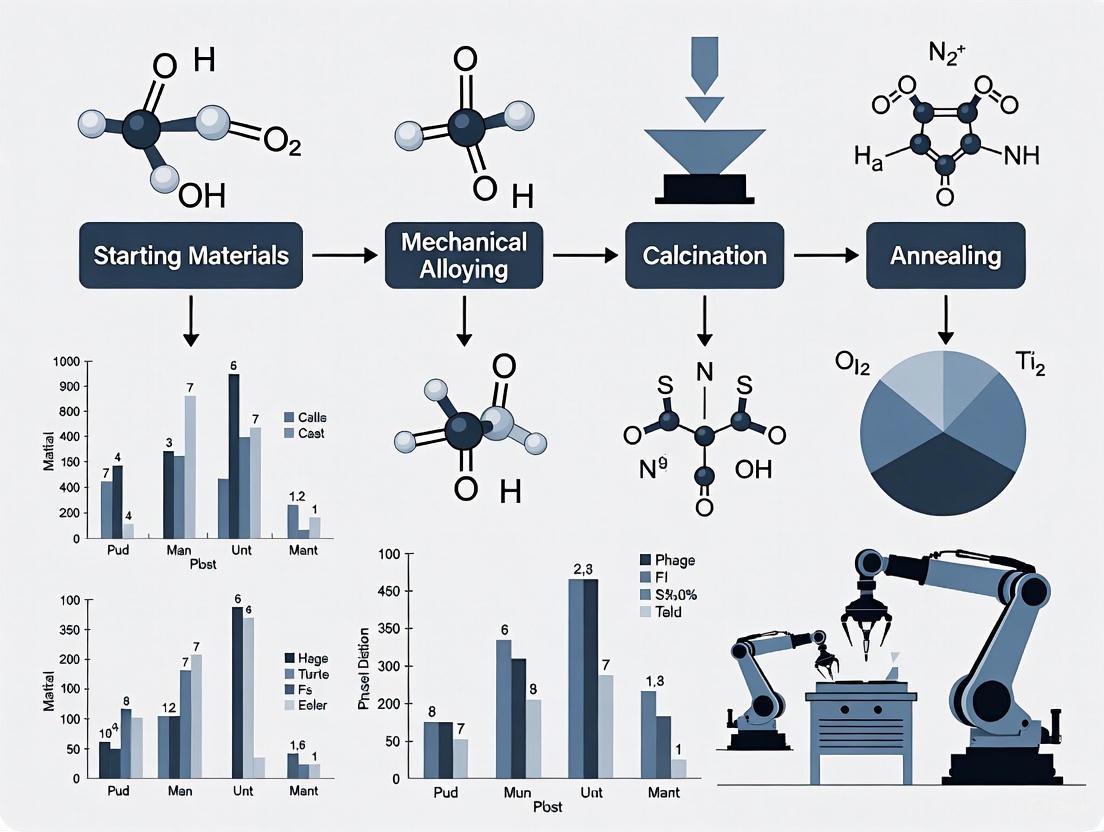
This article explores the transformative integration of robotics, artificial intelligence, and automated laboratories in the solid-state synthesis of inorganic powders.
Revolutionizing Materials Science: Autonomous Robotics and AI in Solid-State Synthesis of Inorganic Powders
Abstract
This article explores the transformative integration of robotics, artificial intelligence, and automated laboratories in the solid-state synthesis of inorganic powders. Aimed at researchers, scientists, and drug development professionals, it details how autonomous platforms like the A-Lab are accelerating materials discovery and optimization. The content covers foundational principles, core methodologies including AI-driven recipe generation and active learning, strategies for troubleshooting synthesis failures, and rigorous validation of these technologies against traditional methods. By synthesizing recent breakthroughs and real-world case studies, this review demonstrates how closed-loop, autonomous experimentation is bridging the gap between computational prediction and experimental realization, with profound implications for the development of advanced pharmaceuticals and functional materials.
The New Paradigm: Understanding Autonomous Solid-State Synthesis
The discovery and synthesis of novel functional materials are pivotal for addressing global challenges in clean energy, healthcare, and sustainable technologies. While computational methods have dramatically accelerated the prediction of promising materials, a significant gap persists between virtual screening and experimental realization. This disconnect is particularly pronounced in the solid-state synthesis of inorganic powders, where traditional trial-and-error approaches remain time-consuming and resource-intensive. The integration of robotics, artificial intelligence, and automated laboratories represents a paradigm shift in materials research, offering a pathway to bridge this computation-experiment divide. By creating closed-loop systems where computational predictions directly guide robotic experiments and experimental outcomes inform computational models, researchers can significantly accelerate the entire materials discovery pipeline from initial prediction to final synthesis.
Computational Foundations for Materials Discovery
Advanced computational methods form the critical first step in modern materials discovery workflows, enabling the identification of promising candidate materials before any experimental work begins.
Phase Stability and Reaction Energetics
The foundation of computational materials design rests on accurate prediction of phase stability. Large-scale ab initio calculations using density functional theory (DFT) provide essential data on formation energies and decomposition energies, allowing researchers to identify thermodynamically stable and metastable compounds [1]. The Materials Project and Google DeepMind have created extensive databases containing phase stability information for thousands of hypothetical and known materials, serving as invaluable resources for initial screening [1]. These databases enable researchers to construct convex hull diagrams that visually represent the thermodynamic stability of compounds relative to competing phases.
For electrocatalyst design focused on activating inert molecules like COâ‚‚, Nâ‚‚, and Oâ‚‚, computational approaches have evolved to incorporate complex interfacial phenomena under realistic operating conditions [2]. The computational hydrogen electrode model and constant electrode potential models allow for accurate predictions of reaction energetics at electrochemical interfaces, while ab initio thermodynamics extends these predictions to relevant temperature and pressure conditions [2].
Descriptor-Based Screening and Machine Learning
Descriptor-based screening methods underpinned by the Sabatier principle and volcano plot frameworks enable rapid identification of promising catalytic materials by correlating easily computable descriptors with catalytic activity [2]. These approaches allow researchers to screen thousands of candidate materials by computing simple metrics such as adsorption energies or electronic structure descriptors rather than calculating complete reaction pathways.
Machine learning techniques have further accelerated this screening process by creating surrogate models that predict materials properties orders of magnitude faster than traditional DFT calculations [3]. ML models trained on existing materials databases can identify complex patterns and relationships that are difficult to capture with conventional computational methods, enabling exploration of vast chemical spaces comprising millions of known and hypothetical materials [4].
Table 1: Computational Methods for Materials Discovery
| Method Category | Specific Techniques | Key Applications | Limitations |
|---|---|---|---|
| Phase Stability Analysis | Convex hull construction, Ab initio thermodynamics | Predicting synthesizable compounds, Identifying stable crystal structures | Limited to T=0K without extensions, Neglects kinetic barriers |
| Descriptor-Based Screening | Volcano plots, Scaling relations, Sabatier analysis | Electrocatalyst design, High-throughput materials screening | Requires known descriptor-property relationships, May miss unconventional materials |
| Machine Learning Approaches | Gradient boosting, Neural networks, Natural language processing | Property prediction, Synthesis condition optimization, Precursor selection | Requires large, high-quality datasets, Limited transferability across domains |
| Advanced Sampling | Ab initio molecular dynamics, Constant potential simulations | Electrochemical interfaces, Solvation effects, Finite-temperature behavior | Computationally expensive, Limited timescales |
Autonomous Laboratories: The A-Lab Case Study
The A-Lab represents a groundbreaking advancement in experimental materials science, demonstrating how integration of computation, robotics, and artificial intelligence can successfully bridge the computation-experiment gap for solid-state synthesis of inorganic powders.
System Architecture and Workflow
The A-Lab operates as an integrated system with three specialized stations for sample preparation, heating, and characterization, with robotic arms transferring samples and labware between them [1]. The preparation station dispenses and mixes precursor powders before transferring them into alumina crucibles. A robotic arm then loads these crucibles into one of four available box furnaces for heating. After synthesis and cooling, another robotic arm transfers samples to the characterization station, where they are ground into fine powder and measured by X-ray diffraction (XRD).
The operational workflow is controlled by decision-making agents that plan and interpret experiments. For each target compound, the system generates up to five initial synthesis recipes using machine learning models that assess target "similarity" through natural-language processing of a large database of syntheses extracted from the literature [1]. This approach mimics how human researchers base initial synthesis attempts on analogy to known related materials. Synthesis temperatures are proposed by a second ML model trained on heating data from the literature.
Performance and Outcomes
In a landmark demonstration, the A-Lab successfully synthesized 41 of 58 novel target compounds over 17 days of continuous operation, achieving a 71% success rate [1]. These materials spanned 33 elements and 41 structural prototypes, with 35 of the 41 successfully synthesized materials obtained using recipes proposed by ML models trained on literature data. The success rate could be improved to 74% with minor modifications to the decision-making algorithm and further to 78% with enhanced computational techniques [1].
Analysis revealed that literature-inspired recipes were more likely to succeed when reference materials were highly similar to the targets, confirming that target "similarity" provides a useful metric for selecting effective precursors [1]. However, precursor selection remains challenging even for thermodynamically stable materials, as only 37% of the 355 tested recipes produced their targets despite 71% of targets eventually being obtained.
Diagram 1: A-Lab autonomous synthesis workflow. The system integrates computational screening, ML-based precursor selection, robotic synthesis, and active learning in a closed loop.
Active Learning and Optimization
When initial literature-inspired recipes failed to produce >50% target yield, the A-Lab employed an active learning cycle called Autonomous Reaction Route Optimization with Solid-State Synthesis (ARROWS3) [1]. This algorithm integrates ab initio computed reaction energies with observed synthesis outcomes to predict optimal solid-state reaction pathways.
The active learning approach identified improved synthesis routes for nine targets, six of which had zero yield from initial recipes [1]. The methodology is grounded in two key hypotheses: (1) solid-state reactions tend to occur between two phases at a time (pairwise reactions), and (2) intermediate phases that leave only a small driving force to form the target material should be avoided as they often require long reaction times and high temperatures [1].
The A-Lab continuously builds a database of pairwise reactions observed in experiments, which allows the products of some recipes to be inferred without testing. This knowledge of reaction pathways enables prioritization of intermediates with large driving forces to form the target, computed using formation energies from the Materials Project [1].
Experimental Protocols and Methodologies
Solid-State Synthesis of Inorganic Powders
The solid-state synthesis of inorganic powders in automated systems like the A-Lab follows a standardized protocol with specific modifications for autonomous operation:
Precursor Preparation: Precursor powders are automatically dispensed using robotic powder handling systems. Precursors are selected based on ML recommendations from literature data or active learning algorithms, considering decomposition behavior and reactivity [1].
Mixing and Milling: Precursors are transferred to mixing containers and milled to ensure good reactivity between precursors. This step addresses challenges posed by different physical properties of precursor powders, including density, flow behavior, particle size, hardness, and compressibility [1].
Thermal Treatment: Mixed precursors are transferred to alumina crucibles and loaded into box furnaces using robotic arms. Heating profiles are applied based on ML recommendations from historical data, with temperatures typically ranging from 500°C to 1200°C depending on the material system [1].
Characterization and Analysis: Synthesized materials are ground into fine powders and characterized by X-ray diffraction. Phase and weight fractions of synthesis products are extracted from XRD patterns by probabilistic ML models trained on experimental structures from the Inorganic Crystal Structure Database [1].
Machine Learning-Guided Synthesis Optimization
For multi-variable synthesis methods like chemical vapor deposition (CVD), machine learning models can quantitatively optimize synthesis parameters:
Data Collection: Synthesis data is collected from archived laboratory notebooks, typically containing hundreds of experimental data points with recorded parameters and outcomes [5]. For CVD-grown MoSâ‚‚, such datasets include parameters like gas flow rate, reaction temperature, reaction time, precursor distance, and boat configuration.
Feature Engineering: Initial feature sets are refined by eliminating fixed parameters and those with missing data. Pearson's correlation coefficients are calculated to quantify mutual information content between features, ensuring selected features have minimum redundancy [5].
Model Selection and Training: Multiple ML algorithms including XGBoost, support vector machines, Naïve Bayes, and multilayer perceptrons are evaluated using nested cross-validation to prevent overfitting [5]. The best-performing model is selected based on metrics like area under the receiver operating characteristic curve.
Interpretation and Optimization: SHapley Additive exPlanations (SHAP) analysis quantifies the importance of each synthesis parameter on experimental outcomes [5]. The trained model predicts success probabilities for unexplored parameter sets and recommends optimal conditions.
Essential Research Reagents and Materials
Successful implementation of automated synthesis platforms requires specific reagents, materials, and instrumentation tailored for robotic handling and high-throughput experimentation.
Table 2: Essential Research Reagents and Materials for Automated Solid-State Synthesis
| Category | Specific Items | Function/Role | Considerations for Automation |
|---|---|---|---|
| Precursor Materials | Metal oxides, Phosphates, Carbonate salts | Source of cation and anion components for target materials | Particle size distribution, Flow properties, Hygroscopicity |
| Reaction Vessels | Alumina crucibles, Quartz boats | Containment during thermal treatment | Robotic gripping compatibility, Thermal stability, Reusability |
| Characterization Consumables | XRD sample holders, Glass slides | Support for structural and morphological analysis | Compatibility with automated sample loading, Reusability |
| Robotic System Components | Solid dispensers, Liquid handlers, Robotic arms | Precise handling and transfer of materials | Precision, Payload capacity, Compatibility with labware |
| Analytical Instruments | X-ray diffractometers, Raman spectrometers | Structural characterization and phase identification | Automation compatibility, Data output standardization |
Analysis of Failure Modes and Synthesis Barriers
Despite advanced computational screening and robotic automation, significant barriers to successful synthesis remain. Analysis of the 17 unobtained targets in the A-Lab study revealed four primary categories of failure modes [1]:
Slow Reaction Kinetics: This affected 11 of the 17 failed targets, each containing reaction steps with low driving forces (<50 meV per atom) [1]. These kinetic limitations represent fundamental barriers that cannot be easily overcome by conventional optimization of synthesis parameters.
Precursor Volatility: Volatilization of precursor materials during thermal treatment prevented formation of desired phases in some targets, particularly those containing elements with high vapor pressures at synthesis temperatures [1].
Amorphization: Some synthesis reactions resulted in amorphous products rather than the desired crystalline phases, highlighting limitations in current computational methods for predicting glass-forming tendencies [1].
Computational Inaccuracy: In some cases, computational predictions of stability failed to align with experimental reality, emphasizing the need for improved accuracy in ab initio methods for certain material classes [1].
These failure modes provide direct and actionable suggestions for improving both computational screening techniques and experimental synthesis design. They highlight the importance of incorporating kinetic considerations alongside thermodynamic stability in computational predictions and the need for more sophisticated models that account for precursor chemistry and amorphous phase competition.
Future Perspectives and Concluding Remarks
The integration of computation and experiment through robotic platforms represents a transformative approach to materials discovery, but several challenges and opportunities remain for further advancing the field.
Emerging Technologies and Methodologies
Future developments will likely focus on several key areas:
Improved Synthesisability Metrics: Moving beyond thermodynamic stability to develop more robust metrics that incorporate kinetic synthesizability, precursor compatibility, and reaction pathway analysis [4].
Enhanced Active Learning: Developing more sophisticated active learning algorithms that can navigate complex multi-objective optimization spaces encompassing yield, phase purity, and materials properties.
Multi-modal Characterization: Integrating complementary characterization techniques beyond XRD, such as electron microscopy and spectroscopic methods, to provide more comprehensive understanding of synthesis outcomes.
Closed-Loop Integration: Creating tighter feedback loops between computation and experiment, where not only synthesis outcomes but also functional properties are continuously fed back to improve computational models.
Concluding Remarks
The computation-experiment gap in materials discovery represents both a significant challenge and a tremendous opportunity. Autonomous laboratories like the A-Lab demonstrate that through thoughtful integration of computational screening, machine learning, robotics, and active learning, researchers can dramatically accelerate the discovery and synthesis of novel functional materials. As these technologies continue to mature and become more widely adopted, they promise to transform materials discovery from a slow, sequential process to a rapid, integrated one where computation and experiment work in concert to explore the vast landscape of possible materials. This acceleration is essential for addressing pressing global challenges in energy, sustainability, and healthcare that demand new materials with tailored properties and functions.
The Autonomous Laboratory (A-Lab) represents a transformative approach to materials research, specifically designed to close the significant gap between the computational prediction of novel materials and their experimental realization. Operating as a fully integrated, closed-loop system, the A-Lab leverages artificial intelligence (AI), robotics, and historical data to autonomously plan, execute, and interpret solid-state synthesis experiments for inorganic powders. This platform addresses a critical bottleneck in materials science; while high-throughput computations can identify thousands of promising candidates, traditional manual experimentation is too slow to validate them. The A-Lab operates on the principle of autonomy—the ability of an experimental agent to interpret data and make subsequent decisions based on that analysis with minimal human intervention. By integrating computations, machine learning, and automation into a continuous workflow, the A-Lab achieves a dramatic acceleration in the pace of materials discovery and development, operating 24/7 and processing 50 to 100 times more samples per day than a human researcher [1] [6]. Its design is particularly focused on solid-state synthesis, which, while more challenging to automate than liquid-handling systems, produces multigram quantities of powder samples that are directly suitable for manufacturing and device-level testing in technologies such as batteries, solar cells, and other clean energy applications [1] [6].
Technical Architecture and Workflow
The A-Lab's operational pipeline is a tightly integrated sequence of computational planning, robotic execution, and AI-driven analysis. The entire process is schematically represented in the workflow diagram below, which outlines the core closed-loop logic.
The process initiates with the selection of a target material. These targets are typically novel inorganic compounds identified through large-scale ab initio phase-stability calculations from databases like the Materials Project and Google DeepMind. To ensure compatibility with the A-Lab's open-air environment, targets are filtered to be air-stable, predicted not to react with Oâ‚‚, COâ‚‚, or Hâ‚‚O [1]. For each selected compound, the system generates initial synthesis recipes using machine learning models trained on vast historical data extracted from scientific literature. These models assess "target similarity" to known materials to propose effective precursor powders and synthesis temperatures, mimicking the analogy-based approach of a human chemist [1] [7].
The physical synthesis is carried out by a coordinated robotic system. This system consists of three main stations:
- A preparation station where robotic arms dispense and mix precursor powders from a library of nearly 200 starting materials into alumina crucibles [1] [6].
- A heating station where a robotic arm loads the crucibles into one of four (or up to eight) box furnaces for solid-state reaction [1] [6].
- A characterization station where another robotic arm transfers the cooled sample, which is ground into a fine powder and analyzed by X-ray diffraction (XRD) to determine its crystalline structure and phases [1].
The interpretation of the XRD data is performed by probabilistic machine learning models trained on experimental structures. For novel compounds with no known experimental pattern, the A-Lab uses simulated patterns derived from computed structures, which are corrected to minimize errors from density functional theory (DFT) calculations. The phases identified by ML are subsequently confirmed with automated Rietveld refinement to quantify the weight fractions of the reaction products [1]. This analytical result closes the loop. If the target material is synthesized with a yield greater than 50%, the experiment is deemed a success. If not, the system activates an active learning cycle to propose and test a refined synthesis recipe.
Active Learning and Optimization
The active learning module, specifically the ARROWS³ (Autonomous Reaction Route Optimization with Solid-State Synthesis) algorithm, is the core of the A-Lab's adaptive intelligence [1]. This component becomes active when initial, literature-inspired synthesis attempts fail to produce a high yield of the target material. ARROWS³ leverages two key hypotheses grounded in solid-state chemistry:
- Pairwise Reaction Tendency: Solid-state reactions often proceed through intermediate phases that form between two precursors at a time [1].
- Driving Force Principle: Intermediate phases that leave only a small thermodynamic driving force to form the final target should be avoided, as they often lead to kinetic traps and require prolonged reaction times or higher temperatures [1].
As the A-Lab conducts more experiments, it builds a growing database of observed pairwise reactions between solid precursors. This knowledge allows it to intelligently narrow the search space of possible synthesis routes. For instance, if a recipe is predicted to yield a set of intermediates already known to the database, the system can preclude testing that recipe at higher temperatures, as the remaining pathway is already understood. This can reduce the search space by up to 80% [1]. The algorithm then prioritizes alternative synthesis routes that feature intermediates with a larger computed driving force (derived from formation energies in the Materials Project) to form the desired target, thereby increasing the likelihood of a successful high-yield synthesis.
Key Experimental Protocols and Outcomes
Synthesis Campaign and Performance Data
In a landmark demonstration of its capabilities, the A-Lab was tasked with synthesizing 58 novel, computationally predicted inorganic compounds over a continuous 17-day period. The outcomes of this campaign are summarized in the table below, which provides quantitative data on its performance and the distribution of synthesis methods [1].
Table 1: A-Lab Experimental Outcomes from 17-Day Synthesis Campaign
| Metric | Value | Details/Context |
|---|---|---|
| Targets Attempted | 58 | Novel oxides and phosphates; 52 had no prior synthesis reports [1]. |
| Successfully Synthesized | 41 | Represents a 71% success rate for first-ever synthesis attempts [1]. |
| Obtained via Literature-Inspired Recipes | 35 of 41 | Initial recipes from ML models trained on historical data [1]. |
| Optimized via Active Learning (ARROWS³) | 6 of 41 | Targets where the active learning cycle identified a successful recipe after initial failure [1]. |
| Total Recipes Tested | 355 | Demonstrates that precursor selection is non-trivial, with only 37% of individual recipes producing the target [1]. |
| Potential Improved Success Rate | Up to 78% | Analysis suggests minor algorithmic and computational adjustments could increase success [1]. |
The Scientist's Toolkit: Essential Research Reagents and Materials
The operation of the A-Lab relies on a suite of specialized hardware, software, and materials. The following table details the key components that constitute the essential "toolkit" for this autonomous research platform.
Table 2: Essential Research Reagents and Solutions for the A-Lab
| Category | Item / Component | Function / Description |
|---|---|---|
| Precursor Materials | ~200 Inorganic Powders | A comprehensive library of solid-state precursor compounds used as starting ingredients for reactions [6]. |
| Laboratory Hardware | Alumina Crucibles | Reusable containers in which precursor powders are mixed and heated to high temperatures [1]. |
| Robotic & Automation Systems | 3 Robotic Arms | Perform sample and labware transfer between preparation, heating, and characterization stations [1] [6]. |
| 4-8 Box Furnaces | Heated environments for solid-state synthesis reactions; allow for parallel processing [1] [6]. | |
| Characterization Instrument | X-ray Diffractometer (XRD) | The primary analytical tool for identifying crystalline phases and quantifying yield in the synthesized powder [1]. |
| Computational Resources | Materials Project Database | Source of ab initio calculated formation energies and phase stability data for target selection and pathway analysis [1] [7]. |
| Natural Language Models | Train on historical literature data to propose initial synthesis recipes and precursors [1] [8]. | |
| Active Learning Algorithm (ARROWS³) | Uses thermodynamic data and observed reactions to optimize failed synthesis attempts [1]. | |
| Norfenefrine hydrochloride | Norfenefrine Hydrochloride | Norfenefrine hydrochloride is an α-adrenergic agonist for hypotension research. For Research Use Only. Not for human consumption. |
| 6'-O-beta-D-glucosylgentiopicroside | 6'-O-beta-D-glucosylgentiopicroside, CAS:115713-06-9, MF:C22H30O14, MW:518.5 g/mol | Chemical Reagent |
Analysis of Failure Modes and Future Directions
Despite its high success rate, the A-Lab did not obtain 17 of its 58 target materials. Analysis of these failures revealed four primary categories of obstacles, as detailed in the table below. Understanding these failure modes is crucial for guiding future improvements in both autonomous labs and computational screening methods [1].
Table 3: Analysis of Synthesis Failure Modes in the A-Lab
| Failure Mode | Prevalence | Description |
|---|---|---|
| Slow Reaction Kinetics | 11 of 17 failures | The most common issue, particularly affecting reactions with low driving forces (<50 meV per atom), where the reaction rate is too slow under tested conditions [1]. |
| Precursor Volatility | Not Specified | The loss of one or more precursor materials due to evaporation or decomposition before they can react to form the target phase [1]. |
| Amorphization | Not Specified | The formation of non-crystalline products, which cannot be detected or analyzed by standard X-ray diffraction techniques [1]. |
| Computational Inaccuracy | Not Specified | Instances where the predicted stability of the target material from DFT calculations does not align with experimental reality [1]. |
Future development of autonomous laboratories will focus on overcoming these constraints. Key directions include the integration of more advanced AI models, such as Large Language Models (LLMs) for planning and foundation models for cross-domain generalization [8]. To address data scarcity, the development of standardized data formats and the use of high-quality simulations will be essential. Furthermore, enhancing hardware modularity to accommodate a wider range of chemical tasks (e.g., integrating liquid handling for organic synthesis) and developing robust error-detection and fault-recovery protocols will be critical for expanding the scope and reliability of self-driving labs [8].
The solid-state synthesis of inorganic powders is a cornerstone in the discovery of novel materials for applications in energy storage, catalysis, and electronics. Traditional synthesis methods rely heavily on trial-and-error, a process that is time-consuming, labor-intensive, and often limits the exploration of complex chemical spaces. The integration of robotics, artificial intelligence (AI), and data integration is transforming this field, turning laboratories into automated factories for discovery. This whitepaper details the core technological components enabling the development of autonomous laboratories for the accelerated synthesis of novel inorganic materials, providing researchers and drug development professionals with a technical guide to this transformative paradigm.
Robotic Automation Systems
Robotic systems form the physical backbone of autonomous laboratories, executing synthetic procedures and handling materials with superhuman precision and endurance. In the context of solid-state synthesis, which involves handling and processing powders, this requires specialized automation solutions.
System Architectures and Workflows
Two predominant robotic architectures have emerged: integrated fixed systems and modular mobile systems.
- Integrated Fixed Systems: Platforms like the A-Lab employ a tightly integrated design where robotic arms transfer samples and labware between dedicated, co-located stations for powder preparation, heating, and characterization [1]. This configuration is optimized for high-throughput, continuous operation on a specific class of reactions—in this case, solid-state synthesis of inorganic powders.
- Modular Mobile Systems: An alternative approach uses free-roaming mobile robots to connect existing, standard laboratory instruments [9]. This paradigm offers greater flexibility, allowing robots to transport samples between a synthesizer (e.g., a Chemspeed ISynth), an X-ray diffractometer (XRD), and other characterization tools like nuclear magnetic resonance (NMR) spectrometers, without requiring extensive and permanent hardware integration [9]. This is particularly suited for exploratory chemistry where the required instrumentation may vary.
The workflow in a fixed system for solid-state synthesis, as demonstrated by the A-Lab, typically follows these steps [1]:
- Powder Dispensing and Mixing: A robotic station dispenses precise masses of precursor powders and mixes them to ensure homogeneity.
- Crucible Transfer: A robotic arm transfers the filled alumina crucibles to a box furnace.
- Heating: The sample is heated in the furnace according to a computationally derived temperature profile.
- Post-Reaction Characterization: After cooling, another robotic arm transfers the sample to a station where it is ground into a fine powder and its structure is analyzed by XRD.
Levels of Laboratory Automation
The progression of automation in a laboratory can be categorized into five levels, which help in assessing current capabilities and setting future goals [10]:
- A1: Assistive Automation: Individual tasks, such as liquid handling, are automated while humans handle the majority of the work.
- A2: Partial Automation: Robots perform multiple sequential steps, with humans responsible for setup and supervision.
- A3: Conditional Automation: Robots manage entire experimental processes, though human intervention is required when unexpected events arise.
- A4: High Automation: Robots execute experiments independently, setting up equipment and reacting to unusual conditions autonomously.
- A5: Full Automation: At this final stage, robots and AI systems operate with complete autonomy, including self-maintenance and safety management.
Most advanced autonomous laboratories, such as the A-Lab, currently operate at the A3 (Conditional Automation) level, with some aspects approaching A4 [1] [10].
Artificial Intelligence and Planning
Artificial intelligence serves as the cognitive center of the autonomous laboratory, making critical decisions about experimental design, execution, and analysis.
Target Selection and Initial Recipe Generation
The process begins with the selection of promising target materials, often identified from large-scale ab initio phase-stability databases like the Materials Project and Google DeepMind [1] [8]. These targets are typically stable or near-stable compounds predicted by density functional theory (DFT) calculations.
For a given target compound, the AI must then propose initial synthesis recipes. This is often achieved using machine learning models trained on vast historical datasets extracted from the scientific literature:
- Natural-Language Models: Models trained on text-mined synthesis data from numerous papers can assess target "similarity" to known compounds and propose effective precursors by analogy to literature procedures [1].
- Large Language Model (LLM) Agents: More recently, frameworks like LLM-RDF and Coscientist have used LLMs such as GPT-4 to power specialized agents [8] [11]. These agents can perform literature searches, extract detailed synthetic procedures, and design experiments based on natural language prompts from researchers.
Active Learning and Route Optimization
When initial synthesis recipes fail to produce a high target yield (>50%), active learning closes the loop by proposing improved follow-up recipes. The A-Lab's Autonomous Reaction Route Optimization with Solid-State Synthesis (ARROWS3) algorithm is a key example [1]. Its operation is based on two core hypotheses:
- Solid-state reactions tend to occur between two phases at a time (pairwise reactions).
- Intermediate phases that leave only a small driving force to form the target material should be avoided, as they often require long reaction times and high temperatures [1].
The system continuously builds a database of observed pairwise reactions, which allows it to infer the products of some recipes without testing them, thereby reducing the experimental search space by up to 80% [1]. It then prioritizes reaction pathways with a large thermodynamic driving force, computed using formation energies from the Materials Project, to overcome kinetic barriers.
Table 1: Performance Metrics of the A-Lab in Solid-State Synthesis [1]
| Metric | Value | Details |
|---|---|---|
| Operation Duration | 17 days | Continuous operation |
| Novel Targets Attempted | 58 | Oxides and phosphates |
| Successfully Synthesized | 41 compounds | 71% success rate |
| Synthesized via Literature Recipes | 35 compounds | ML-based precursor selection |
| Optimized via Active Learning | 9 targets | 6 had zero initial yield |
| Potential Improved Success Rate | 78% | With improved computational techniques |
The following diagram illustrates the closed-loop, autonomous workflow that integrates robotics, AI, and data analysis.
Data Integration and Analysis
The final core component is the seamless integration and interpretation of data, which enables the autonomous loop to function.
Automated Characterization and Analysis
A critical step is the rapid and accurate analysis of characterization data to determine the outcome of an experiment. For solid-state synthesis, powder X-ray diffraction (XRD) is the primary technique.
- Machine Learning-Powered Phase Analysis: In the A-Lab, XRD patterns are analyzed by probabilistic ML models trained on experimental structures from the Inorganic Crystal Structure Database (ICSD) [1]. For novel compounds with no experimental reports, diffraction patterns are simulated from computed structures and corrected for DFT errors.
- Automated Rietveld Refinement: The phases identified by ML are subsequently confirmed with automated Rietveld refinement to determine weight fractions with high reliability [1].
- Multi-Modal Data Integration: In modular platforms, orthogonal techniques like mass spectrometry (MS) and NMR spectroscopy are combined. A heuristic decision-maker can then assign a pass/fail grade to each reaction based on all available data streams, mimicking a human expert's decision-making process [9].
The Scientist's Toolkit: Key Research Reagents and Materials
The following table details essential materials and reagents used in automated solid-state synthesis and characterization experiments.
Table 2: Essential Materials for Robotic Solid-State Synthesis [1] [12] [13]
| Item | Function / Explanation |
|---|---|
| Precursor Powders | High-purity inorganic powders (e.g., metal oxides, carbonates, phosphates) that serve as starting materials for solid-state reactions. Their physical properties (density, flow) are critical for automated handling [1]. |
| Alumina Crucibles | Chemically inert containers that hold powder samples during high-temperature reactions in box furnaces [1]. |
| Nano-Silica Glidants | Additives like Aerosil R972P or A200 used in "dry coating" to modify powder flowability by reducing interparticle cohesion, ensuring consistent dispensing in automated systems [13]. |
| Standard Reference Materials | Crystalline standards (e.g., NIST Si) used for instrument calibration and validation of automated XRD analysis protocols [1]. |
| Microcrystalline Cellulose (MCC) | Common pharmaceutical excipient used in powder flowability studies; serves as a model system for understanding and optimizing powder handling in automated platforms [12] [13]. |
| 4'-O-trans-p-Coumaroylmussaenoside | 4'-O-trans-p-Coumaroylmussaenoside, MF:C26H32O12, MW:536.5 g/mol |
| 22-Dehydroclerosterol glucoside | 22-Dehydroclerosterol glucoside, MF:C35H56O6, MW:572.8 g/mol |
Experimental Protocol: Active Learning Cycle for Synthesis Optimization
This protocol details the methodology for an autonomous cycle to optimize the synthesis of a novel inorganic material, based on the operation of the A-Lab [1].
- Objective: To synthesize a target inorganic compound as the majority phase (>50% yield) from precursor powders, using an AI-driven active learning loop.
- Materials: Precursor powders (e.g., carbonates, oxides), alumina crucibles, box furnaces, robotic powder handling system, X-ray diffractometer.
Procedure:
- Initial Recipe Proposal: For a novel target (e.g., CaFe2P2O9), generate up to five initial synthesis recipes using a natural-language model trained on historical literature. The model selects precursors based on chemical similarity to known compounds. A separate ML model proposes a synthesis temperature [1].
- Robotic Synthesis Execution: a. The robotic system dispenses and mixes the precursor powders by mass. b. A robotic arm transfers the mixed powder in an alumina crucible to a box furnace. c. The furnace heats the sample according to the proposed temperature profile [1].
- Automated Product Characterization: a. After cooling, the robot transfers the sample to a preparation station for grinding. b. The ground powder is characterized by XRD [1].
- AI-Powered Data Analysis: a. The XRD pattern is analyzed by a convolutional neural network to identify crystalline phases and estimate their weight fractions. The analysis is confirmed with automated Rietveld refinement [1]. b. The resulting phase composition and target yield are reported to the lab's management server.
- Decision and Iteration: a. IF the target yield is >50%, the experiment is concluded successfully. b. IF the target yield is <50%, the active learning algorithm (ARROWS3) is activated. The algorithm consults its database of observed pairwise reactions and uses thermodynamic data from the Materials Project to predict a new, improved synthesis route that avoids low-driving-force intermediates [1].
- Loop Closure: The new recipe is sent to the robotic synthesis system (return to Step 2), and the cycle repeats until the target is obtained or all recipe options are exhausted.
The integration of robotics, AI, and data integration is not merely an incremental improvement but a paradigm shift in the solid-state synthesis of inorganic materials. The core components detailed in this whitepaper—encompassing flexible robotic systems, intelligent AI planners for design and optimization, and robust data integration pipelines—enable the operation of autonomous laboratories that can execute the "design-make-test-analyze" cycle with unprecedented speed and scale. As these technologies mature and reach higher levels of automation, they hold the promise of dramatically accelerating the discovery of next-generation materials for pharmaceuticals, energy, and beyond.
The discovery and synthesis of novel inorganic materials are pivotal for advancing technologies in energy storage, computing, and sustainability. Traditional experimental methods are often slow, resource-intensive, and rely on serendipity. The integration of ab initio computational databases and robotic laboratories has revolutionized this process, enabling a data-driven, accelerated approach to materials discovery. Ab initio, or first-principles calculations, primarily using Density Functional Theory (DFT), allow researchers to predict the stability and properties of materials before any physical synthesis is attempted [14]. Two resources central to this modern paradigm are the Materials Project and Google DeepMind's GNoME database.
The Materials Project, established at Lawrence Berkeley National Laboratory, is an open-access database that computes the properties of both known and predicted materials. It uses DFT calculations, as implemented in the Vienna Ab Initio Simulation Package (VASP), to evaluate total energies and properties of compounds at 0 K and 0 atm, providing a foundational dataset for materials screening [15] [14]. In a significant expansion, Google DeepMind's GNoME (Graph Networks for Materials Exploration) tool has used deep learning to predict 2.2 million new crystal structures, of which 380,000 are classified as stable and have been added to the Materials Project [16] [17]. This collaboration provides an unprecedented resource for identifying promising synthesis targets, particularly for functional applications such as better batteries, superconductors, and carbon capture materials [17].
When framed within the context of robotic solid-state synthesis of inorganic powders, as exemplified by the A-Lab at Berkeley Lab, these databases shift the research paradigm. They provide the essential computational foundation for selecting targets and planning their synthesis with minimal human intervention, effectively bridging the gap between computational prediction and experimental realization [1] [6].
Core Database Fundamentals and Properties
Key Properties for Target Selection
Selecting a viable material for synthesis requires evaluating key computed properties that indicate thermodynamic stability and synthesizability. The following properties are fundamental to this process.
Table 1: Key Ab Initio Properties for Synthesis Target Selection
| Property | Description | Role in Target Selection |
|---|---|---|
| Formation Energy | The energy released when a compound is formed from its constituent elements in their standard states. | A negative value indicates that the compound is thermodynamically stable relative to its elements. It is a primary filter for stability [1]. |
| Decomposition Energy (Energy Above Hull) | The energy required for a material to decompose into the most stable set of other compounds on the phase diagram (the "convex hull") [1]. | The primary metric for thermodynamic stability. A value of 0 meV/atom means the material is on the convex hull and is stable. Values below 50 meV/atom are often considered potentially synthesizable (metastable) [1] [16]. |
| Distance to Known Materials | A measure of a material's similarity to previously synthesized compounds, often based on composition or crystal structure. | Helps assess synthetic feasibility. Targets with high similarity to known materials are more likely to have successful, literature-inspired synthesis recipes [1]. |
Database Characteristics and Scale
The scale and data composition of these databases directly influence the breadth of available targets.
Table 2: Scale and Characteristics of Major Ab Initio Databases
| Database | Primary Function | Key Outputs | Scale |
|---|---|---|---|
| Materials Project | Provides computed properties of known and predicted inorganic materials using DFT [14]. | Crystal structures, formation and decomposition energies, band gaps, elastic properties, and more. | Contains hundreds of thousands of structures; integrated GNoME's 380,000 new stable materials [17]. |
| GNoME (Google DeepMind) | A deep learning tool that predicts the stability of novel crystal structures [16]. | Crystal structures and formation energy. | Discovered 2.2 million new crystals, identifying 380,000 as stable [16] [17]. |
| A-Lab Experimental Database | An autonomous lab that tests synthesis recipes and logs outcomes, building a database of successful and failed reactions [1]. | Experimentally verified synthesis recipes, observed reaction pathways (intermediates), and product yield data. | Identified 88 unique pairwise reactions during its initial campaign; successfully synthesized 41 novel compounds [1]. |
The Target Selection Workflow
The process of selecting targets for robotic synthesis is a multi-stage workflow that moves from computational screening to experimental planning. The following diagram illustrates this integrated pipeline.
Diagram 1: The integrated computational-experimental workflow for target selection and synthesis, as implemented in the A-Lab [1].
Stage 1: Computational Screening for Stability and Properties
The first stage involves using ab initio databases to filter for the most promising candidate materials.
- Identify Thermodynamically Stable Targets: The primary filter is the decomposition energy (energy above hull). The A-Lab, for instance, selected targets predicted to be on or very near (<10 meV/atom) the convex hull of stable phases from the Materials Project and a cross-referenced DeepMind database [1]. The GNoME project further refined this by defining the most promising 380,000 materials as those lying on the "final" convex hull, representing the new standard for stability [16].
- Assess Environmental Stability: For practical synthesis and handling, targets must be air-stable. The A-Lab screened out materials predicted to react with Oâ‚‚, COâ‚‚, or Hâ‚‚O [1].
- Screen for Functional Properties: Once stable candidates are identified, they are screened for specific application-driven properties. For example, GNoME has identified 52,000 new layered compounds similar to graphene for electronics and 528 potential lithium-ion conductors for improved batteries [16].
Stage 2: From Digital Target to Physical Synthesis
Once a target is selected digitally, the process shifts to planning its physical synthesis.
- AI-Generated Recipe Proposal: Initial synthesis recipes are generated using machine learning models trained on historical data from scientific literature. These models assess target similarity to known materials to propose effective precursor powders and a synthesis temperature [1].
- Active Learning for Recipe Optimization: If the initial recipes fail to produce a high yield (>50%), an active learning loop is initiated. The A-Lab uses the ARROWS³ algorithm, which integrates ab initio computed reaction energies with observed synthesis outcomes. It leverages two key hypotheses:
- Pairwise Reaction Preference: Solid-state reactions tend to occur between two phases at a time [1].
- Driving Force Maximization: Intermediate phases that leave only a small driving force (<50 meV/atom) to form the target should be avoided, as they often lead to kinetic bottlenecks [1]. The lab builds a database of observed pairwise reactions, which allows it to avoid redundant testing and prioritize reaction pathways with larger driving forces [1].
Experimental Protocols and Methodologies
Protocol: Autonomous Synthesis and Characterization in the A-Lab
The following methodology details the experimental protocol used by the A-Lab to synthesize and characterize a target material [1].
- Precursor Dispensing and Mixing: Robotic arms dispense and mix precursor powders from a library of approximately 200 starting ingredients based on the AI-proposed recipe. The mixed powders are transferred into alumina crucibles.
- Robotic Heating: A robotic arm loads the crucibles into one of four available box furnaces for heating. The heating profile (temperature and duration) is set by the AI model.
- Cooling and Sample Transfer: After the reaction is complete and the sample has cooled, a robotic arm transfers the crucible to the next station.
- Post-Synthesis Processing: The synthesized solid is ground into a fine powder by a robotic shaker to prepare it for analysis.
- X-ray Diffraction (XRD) Characterization: The powdered sample is measured by XRD.
- Machine Learning Analysis: The XRD pattern is analyzed by probabilistic ML models to identify phases and their weight fractions. The results are confirmed with automated Rietveld refinement.
- Data Feedback and Decision Making: The resulting phase composition and yield are reported to the lab's management server. If the target yield is insufficient, the active learning cycle proposes a modified recipe, and the process repeats.
Protocol: Validating Diffusivity in Amorphous Materials
For materials where ionic conductivity is a key property, such as solid electrolytes, Ab Initio Molecular Dynamics (AIMD) can be used to validate diffusivity before synthesis. The following protocol is derived from the creation of an amorphous materials database [18].
- Generate Amorphous Structure: Using a starting crystal structure, perform a molecular dynamics simulation at high temperature (e.g., 5000 K) to melt the material and destroy long-range order.
- Computational Quenching: Rapidly quench the molten structure to lower temperatures (e.g., 1000K, 1500K, 2000K) to "freeze" in a representative amorphous structure. This requires larger unit cells than typical DFT calculations to capture sufficient local environments.
- Calculate Ionic Diffusivity: Using AIMD trajectories at different temperatures, calculate the mean squared displacement (MSD) of the mobile ions (e.g., Liâº).
- Extract Diffusion Coefficient: The diffusion coefficient (D) is derived from the slope of the MSD versus time. The activation energy (Eâ‚) for diffusion can then be determined from an Arrhenius plot of D versus 1/T.
- Machine Learning Correlation: The resulting database of structures and diffusivities can be used to train machine learning models to rapidly predict Li-ion diffusivity based on composition and structural features, offering a cost-effective alternative to full AIMD calculations [18].
This section details the key hardware, software, and data resources that constitute the modern materials scientist's toolkit for autonomous discovery.
Table 3: Essential Resources for AI-Driven Materials Synthesis
| Tool/Resource | Type | Function |
|---|---|---|
| A-Lab (Berkeley Lab) | Robotic Laboratory | A fully automated, closed-loop facility that uses robotics and AI to synthesize inorganic powders from precursor compounds, operating 24/7 [1] [6]. |
| Materials Project Database | Ab Initio Database | The core open-access database providing computed properties for hundreds of thousands of materials, essential for initial stability and property screening [17] [14]. |
| GNoME Database | Deep Learning Database | A massive expansion of stable crystal structures, significantly enlarging the pool of viable synthesis targets for clean energy and other technologies [16] [17]. |
| VASP (Vienna Ab Initio Simulation Package) | Simulation Software | The primary software used for performing DFT calculations to evaluate total energies and properties of materials in the Materials Project [15]. |
| ARROWS³ Algorithm | Active Learning Software | An algorithm that uses computed reaction energies and experimental data to optimize solid-state synthesis routes by avoiding low-driving-force intermediates [1]. |
| Inorganic Powder Precursors | Research Reagent | The ~200 different solid-state powder starting materials used by the A-Lab for solid-state synthesis reactions [6]. |
The integration of ab initio databases from the Materials Project and Google DeepMind with robotic synthesis platforms like the A-Lab represents a transformative advancement in materials science. This synergy creates a closed-loop, data-driven pipeline that dramatically accelerates the discovery of novel inorganic materials. The workflow—from computational screening for stable targets based on decomposition energy, through AI-powered synthesis planning, to autonomous experimental execution and active learning—has proven highly effective, successfully synthesizing dozens of new compounds. This paradigm not only increases the rate of discovery but also systematically builds a knowledge base of synthesis pathways, continuously refining the process. As these databases grow and AI models become more sophisticated, this approach is poised to become the standard for developing the next generation of functional materials for energy, electronics, and beyond.
Inside the A-Lab: AI-Driven Workflows and Robotic Execution
The experimental realization of computationally predicted inorganic materials has long been hindered by slow, manual synthesis processes, creating a critical bottleneck in materials discovery. To close this gap, autonomous laboratories represent a paradigm shift, integrating robotics, artificial intelligence (AI), and historical data to accelerate research. A cornerstone of this approach is the use of natural language processing (NLP) and large language models (LLMs) to generate viable synthesis recipes by learning from the vast body of scientific literature [1] [8] [19]. This technical guide details the methodologies and protocols for employing these technologies within the context of the solid-state synthesis of inorganic powders using robotics, providing researchers with a framework for implementing autonomous discovery pipelines.
Core Concepts and Definitions
- Natural Language Processing (NLP): A field of AI that enables computers to understand, interpret, and generate human language. In materials science, it is used for automatic data extraction from scientific literature [19].
- Large Language Models (LLMs): Advanced NLP models, such as GPT and BERT, pre-trained on massive text corpora. They can be fine-tuned for specialized tasks like synthesizing information from materials science publications [19].
- Word Embeddings: Dense, low-dimensional vector representations of words that capture semantic and syntactic similarities. Models like Word2Vec and GloVe create these embeddings, allowing algorithms to assess material "similarity" for precursor selection [19].
- Autonomous Laboratory (Self-Driving Lab): A platform that integrates AI, robotic experimentation, and automation into a closed-loop cycle. It autonomously plans, executes, and analyzes experiments to discover or optimize materials with minimal human intervention [8].
- Active Learning: An ML paradigm where the algorithm optimally selects subsequent experiments based on previous results to improve outcomes rapidly. In synthesis, it is used to propose improved follow-up recipes when initial attempts fail [1].
The A-Lab: A Case Study in Autonomous Synthesis
The A-Lab, demonstrated by Szymanski et al., serves as a seminal proof-of-concept for a fully autonomous solid-state synthesis platform [1] [8]. Its workflow and performance metrics provide a concrete template for the field.
Workflow and Performance
Over 17 days of continuous operation, the A-Lab successfully synthesized 41 out of 58 novel, computationally predicted inorganic materials, achieving a 71% success rate [1]. The lab's performance demonstrates the effectiveness of integrating computations, historical knowledge, and robotics.
Table 1: A-Lab Experimental Outcomes Summary
| Metric | Value | Description |
|---|---|---|
| Operation Duration | 17 days | Continuous, autonomous operation |
| Target Materials | 58 | Novel, air-stable inorganic powders identified via the Materials Project and Google DeepMind |
| Successfully Synthesized | 41 | Compounds obtained as majority phase from XRD analysis |
| Overall Success Rate | 71% | Percentage of targets successfully synthesized |
| Recipes from Literature-ML | 35 | Materials obtained using initial recipes from NLP models |
| Targets Optimized via Active Learning | 9 | Targets with yield improved by the ARROWS3 algorithm |
Key Technical Components
The A-Lab's success hinged on several integrated technical components [1] [8]:
- Target Selection: Novel, theoretically stable materials were selected from large-scale ab initio phase-stability databases (Materials Project, Google DeepMind).
- Robotic Synthesis: Three integrated stations handled powder preparation, heating in box furnaces, and characterization.
- Automated Characterization & Analysis: X-ray diffraction (XRD) was used for primary characterization, with ML models and automated Rietveld refinement providing phase identification and weight fractions.
- Closed-Loop Optimization: The active learning algorithm ARROWS3 used observed reaction data and thermodynamic driving forces to propose improved synthesis routes.
NLP and LLM Methodologies for Recipe Generation
The generation of initial synthesis recipes is a primary application of NLP and LLMs in autonomous discovery.
Information Extraction from Literature
Traditional NLP pipelines are used to automatically construct large-scale materials databases. This involves [19]:
- Named Entity Recognition (NER): Identifying and classifying key entities in text, such as material compounds, precursors, and properties.
- Relationship Extraction: Determining the relationships between entities, such as which precursors lead to a specific final material under what conditions (temperature, time).
These pipelines have been applied to extract compounds, synthesis processes, and parameters from decades of scientific publications, forming a structured knowledge base [19].
Recipe Generation via Language Models
The A-Lab utilized NLP models trained on historical synthesis data to generate its initial recipes [1]. The process involves:
- Training on Historical Data: Models are trained on a large database of solid-state syntheses extracted from the literature.
- Similarity Assessment: The model learns to assess "similarity" between a novel target material and known compounds, mimicking a human researcher's approach of basing new attempts on analogous known syntheses [1].
- Precursor and Temperature Selection: A model proposes precursor sets, while a second ML model, trained on heating data from the literature, proposes synthesis temperatures [1].
More recently, LLMs like GPT-4 have shown promise in planning chemical synthesis. They can be used directly for tasks such as [8] [19]:
- Prompt Engineering: Crafting precise instructions to guide the LLM to generate viable synthesis routes.
- Fine-tuning: Adapting a general-purpose LLM on a curated dataset of materials science literature to imbue it with specialized domain knowledge.
- Agents for Automation: LLM-based agents (e.g., Coscientist, ChemCrow) can be given tool-using capabilities to autonomously design, plan, and even control robotic systems to execute synthesis [8].
Experimental Protocols and Workflow
This section details the standard protocols for an autonomous synthesis campaign, as exemplified by the A-Lab.
The following diagram illustrates the integrated, closed-loop workflow of an autonomous laboratory for materials discovery.
Protocol 1: Generating Initial Synthesis Recipes with NLP
Objective: To produce one or more initial solid-state synthesis recipes for a novel target inorganic material using models trained on historical data.
Materials and Data Sources:
- Historical Synthesis Database: A large, text-mined corpus of solid-state synthesis procedures from peer-reviewed literature [1] [19].
- Target Material Formula: e.g., CaFe₂P₂O₉.
- Computational Stability Data: Formation energies and decomposition energies from sources like the Materials Project [1].
Methodology:
- Feature Encoding: Represent the target material in a machine-readable format, often using compositional descriptors or its text-based formula.
- Similarity Search: Use NLP-based similarity metrics (e.g., from word embeddings) to identify known materials in the database that are structurally or compositionally analogous to the target [1] [19].
- Precursor Selection: The ML model proposes precursor sets based on the precursors used for the identified analogous materials. The A-Lab generated up to five initial precursor sets per target [1].
- Condition Prediction: A separate regression model (e.g., trained on heating data) predicts an initial synthesis temperature for the proposed precursors [1].
- Output: A complete synthesis recipe specifying precursor identities, their ratios, and a recommended heating temperature.
Protocol 2: Active Learning-Driven Synthesis Optimization
Objective: To iteratively improve the yield of a target material when initial synthesis recipes fail.
Materials:
- Initial Synthesis Products: XRD patterns and phase analysis from failed attempts.
- Reaction Database: A growing database of observed pairwise solid-state reactions between precursors and intermediates [1].
- Thermodynamic Data: Ab initio computed reaction energies from the Materials Project [1].
Methodology (ARROWS3 Algorithm):
- Pathway Inference: Identify the reaction pathway from the initial experiment. The system recognizes intermediate phases formed during the synthesis.
- Driving Force Calculation: Compute the thermodynamic driving force (in meV/atom) to form the target from the observed intermediates using DFT-calculated formation energies.
- Hypothesis-Driven Recipe Design:
- Avoid Low-Driving Force Intermediates: Prioritize synthesis routes that avoid intermediates with a very small driving force (<50 meV/atom) to form the target, as these often lead to kinetic traps [1].
- Leverage Known Pairwise Reactions: Use the database of observed reactions to predict the products of new precursor combinations without testing them, thereby reducing the experimental search space [1].
- Iteration: The newly designed recipe is executed robotically, and the cycle repeats until the target is obtained with high yield or all possible recipes are exhausted.
Table 2: Key Research Reagent Solutions for Autonomous Solid-State Synthesis
| Category | Item/Component | Function in Autonomous Workflow |
|---|---|---|
| Computational Resources | Materials Project/DeepMind DB | Provides target materials and thermodynamic data for stability prediction and reaction driving force calculations [1]. |
| Data & Models | Historical Synthesis Text Corpus | Serves as the training data for NLP/LLM models to learn precursor selection and condition prediction [1] [19]. |
| Robotic Hardware | Powder Dispensing & Mixing Station | Automates the precise weighing and mixing of solid precursor powders, ensuring reproducibility [1]. |
| Automated Box Furnaces | Provides controlled high-temperature environment for solid-state reactions; multiple units enable high-throughput [1]. | |
| Characterization | Powder X-ray Diffraction (PXRD) | Primary technique for phase identification and quantification in synthesized powders [1] [20]. |
| Analysis Software | ML-based XRD Phase Analysis | Automatically identifies phases and estimates weight fractions from XRD patterns, enabling rapid feedback [1]. |
Protocol 3: Automated Phase Analysis via XRD and Machine Learning
Objective: To autonomously identify phases and quantify the yield of the target material from an XRD pattern.
Materials:
- XRD Pattern: Of the synthesized powder product.
- Reference Patterns: Simulated XRD patterns for the target and potential impurity phases, typically from computed structures (e.g., Materials Project) corrected for DFT error [1].
Methodology:
- Data Collection: The robotic system transfers the ground powder to the diffractometer for automated measurement.
- ML Pattern Analysis: Probabilistic ML models (e.g., convolutional neural networks) trained on experimental structures from the Inorganic Crystal Structure Database (ICSD) are used to identify phases present in the pattern [1] [8].
- Quantitative Refinement: Automated Rietveld refinement is performed to confirm the identified phases and calculate precise weight fractions of all phases, including the target yield [1].
- Result Reporting: The calculated weight fraction of the target material is reported to the lab management server to inform the next experimental decision.
Technical Diagrams
NLP Processing Pipeline for Historical Texts
The following diagram outlines the process of using LLMs to generate ground-truth data for improving historical text analysis, a methodology applicable to processing older scientific literature.
Challenges and Future Directions
Despite significant progress, several challenges remain in the widespread deployment of NLP-driven autonomous laboratories.
Key Challenges:
- Data Scarcity and Quality: AI model performance is highly dependent on diverse, high-quality data. Experimental data is often noisy, scarce, and inconsistently reported [8].
- Model Generalization: Most AI models and autonomous systems are specialized for specific reaction types or material systems and struggle to generalize to new domains [8].
- LLM Hallucination: LLMs can generate plausible but chemically incorrect information or references, potentially leading to failed experiments if not properly constrained [8].
- Hardware Integration: A lack of standardized, modular hardware architectures makes it difficult to create flexible platforms that can handle both solid-state and solution-based chemistry [8].
Future Outlook:
- Development of Foundation Models: Training large-scale models across different materials and reactions to improve generalization and transfer learning [8] [19].
- Robust Uncertainty Quantification: Embedding measures of uncertainty in AI predictions to improve decision-making and error handling [8].
- Standardized Data Formats: Community-wide adoption of standardized data formats for experimental data to improve model training and reproducibility [8].
- Advanced LLM Agents: Further development of hierarchical, tool-using LLM agents (e.g., ChemAgents) to more fully automate the entire research process [8].
The solid-state synthesis of inorganic materials, a cornerstone for developing new technologies from batteries to catalysts, has traditionally relied on manual, trial-and-error approaches. These methods are often slow, difficult to reproduce, and represent a significant bottleneck in materials discovery. The emergence of autonomous laboratories represents a paradigm shift, integrating automated robotic platforms with artificial intelligence (AI) to transform research [21]. These systems combine AI models, hardware, and software to execute experiments, interact with robotic systems, and manage data, thereby closing the critical predict-make-measure discovery loop [21]. This technical guide details the core components and methodologies for implementing robotic systems for the automated handling, mixing, and heating of powders, framing them within the broader context of accelerating solid-state materials synthesis.
Fundamental Elements of an Autonomous Laboratory
An autonomous laboratory for solid-state synthesis is an advanced robotic platform equipped with embodied intelligence. To achieve a fully closed-loop operation, several fundamental elements must work synergistically [21]:
- Chemical Science Databases: These databases serve as the backbone, managing and organizing diverse chemical data. They integrate multimodal data from proprietary databases (e.g., Reaxys, SciFinder) and open-access platforms (e.g., PubChem) into an AI-powered framework, providing essential support for experimental design and optimization [21].
- Large-Scale Intelligent Models: Interpretive predictive models and advanced algorithms are crucial for processing data, predicting outcomes, and informing decision-making. Common algorithms used in autonomous laboratories include Bayesian Optimization for minimizing experimental trials, Genetic Algorithms (GAs) for handling large variable spaces, and the SNOBFIT algorithm for combining local and global search strategies [21].
- Automated Experimental Platforms: These are the physical robotic systems that perform the tasks of a human researcher. They encompass hardware for powder handling, mixing, and heating, which will be explored in detail in subsequent sections.
- Integrated Management and Decision Systems: This software layer controls the robotic hardware, manages the experimental workflow, and integrates data from experiments and AI models to make autonomous decisions about subsequent experiments [21].
Robotic Systems for Powder Handling and Manipulation
Handling and manipulating powdered precursors is a primary challenge in solid-state synthesis automation. The unique dynamics of granular media require specialized end-effectors.
Challenges in Powder Manipulation
Powders can be free-flowing or cohesive, each presenting distinct challenges. Free-flowing particles are prone to segregation based on size, shape, and density, while cohesive materials can form agglomerates or lumps, complicating the mixing process [22]. Efficiently scooping nearly all powder from variously sized containers in a single action is critical for throughput and avoiding cross-contamination [23].
Specialized End-Effector Design
The SCU-Hand (Soft Conical Universal Robotic Hand) is a novel end-effector designed to address the challenge of scooping powders from containers of various sizes [23]. Its design principles are a model for creating effective tools for laboratory automation:
- Thinness: The end-effector must have a thin, sheet-like structure to slide easily under the powder without pushing it out of the container.
- Size Reconfiguration: The tool's size must be reconfigurable to accommodate different container geometries.
- Spill Prevention: A concave shape without gaps is ideal for securely holding powder and preventing spillage.
- Anisotropic Stiffness: The material must be flexible enough to deform and maintain contact with the container wall, yet stiff enough to resist buckling under friction during the scooping motion [23].
The SCU-Hand uses a flexible, conical structure that deforms to maintain consistent contact with the container, achieving a scooping performance of over 95% for containers ranging from 67 mm to 110 mm in diameter [23].
Automated Powder Mixing Methodologies
Achieving a homogeneous mixture of precursor powders is critical for the success of subsequent solid-state reactions.
Mixing Mechanisms and Equipment
The primary mechanism for powder mixing in solid-state synthesis is convection, where clumps of particles are shifted relative to one another by the action of the mixer, thereby improving spatial homogeneity [22]. Common laboratory mixers include:
- Tumbling Mixers: Such as V-blenders and double-cone blenders, which rely on the rotation of the container to induce mixing.
- Stirred Vessels: Which use an internal rotating blade or paddle to actively mix the powders.
Scale-up of mixing processes from development to production remains a significant challenge and often relies on manufacturer experience and empirical testing [22].
Integrated Robotic Mixing Systems
Advanced robotic systems integrate mixing directly into an automated workflow. For instance, one integrated solid-phase combinatorial chemistry system uses a 360° Robot Arm (RA) and a Liquid Handler (LH) with a heating/cooling rack to handle the mixing of solid beads and liquids for reactions like peptide synthesis [24]. This system automates tasks such as shaking beads and managing different washing solvents, which are essential for purification during the synthesis process [24].
Robotic Heating and Synthesis Optimization
The heating step, where solid-state reactions occur, is a focal point for AI-driven optimization in autonomous laboratories.
Precursor Selection Algorithms
The selection of optimal precursor powders is a critical step that greatly influences the yield and purity of the final product. The ARROWS3 (Autonomous Reaction Route Optimization with Solid-State Synthesis) algorithm has been developed to automate this process [25]. Unlike black-box optimization, ARROWS3 incorporates physical domain knowledge. It works by:
- Initially ranking precursor sets by their thermodynamic driving force (ΔG) to form the target.
- Proposing experiments across a temperature gradient to map reaction pathways.
- Identifying, via in-situ characterization (e.g., XRD), intermediates that consume the driving force.
- Re-prioritizing precursor sets that avoid these energy-trapping intermediates, thereby retaining a larger driving force (ΔG') for the target material [25].
This approach has been validated by successfully synthesizing target materials like YBa2Cu3O6.5 (YBCO) and metastable Na2Te3Mo3O16 with high purity, while requiring fewer experimental iterations than other methods [25].
Validation via Robotic Synthesis
The value of such algorithms is proven through high-throughput robotic validation. In one study, a new approach to precursor selection, based on analyzing pairwise reactions in phase diagrams, was tested [26]. The Samsung ASTRAL robotic lab synthesized 35 target materials through 224 separate reactions in a few weeks—a task that would manually take months or years. The new method achieved higher purity products for 32 of the 35 target materials, demonstrating the power of combining intelligent precursor selection with robotic synthesis [26].
Integrated Workflows and Data Management
The full power of automation is realized when all steps are integrated into a seamless, closed-loop workflow.
Autonomous Experimentation Workflow
A prime example of an integrated workflow is the Autonomous Robotic Experimentation (ARE) system developed for Powder X-ray Diffraction (PXRD) [20]. While focused on characterization, its workflow model is directly applicable to synthesis. The system uses a 6-axis robotic arm to automate the entire process from sample preparation to data analysis, illustrating the core closed-loop principle as shown in the diagram below.
Data Analysis and Feedback
A key feature of autonomous systems is the integration of automated data analysis. In the PXRD system, machine learning techniques are used to automatically interpret diffraction data [20]. The results of this analysis feed directly back into the control system, completing the loop and enabling the platform to make informed decisions about subsequent experiments without human intervention [20]. This iterative feedback is the engine of accelerated discovery.
The Scientist's Toolkit: Key Research Reagents and Solutions
Table 1: Essential Research Reagents and Solutions for Robotic Solid-State Synthesis
| Item | Function | Example Use Case |
|---|---|---|
| Precursor Powders | Raw materials containing constituent elements for the target material. Selected based on reactivity and phase diagram analysis. | Synthesis of oxide materials (e.g., battery cathodes, catalysts) [26] [25]. |
| 2-Chlorotrityl Resin | A solid-phase support for combinatorial synthesis, enabling automated washing and separation. | Automated synthesis of nerve-targeting contrast agent libraries [24]. |
| Pd(OAc)₂ / P(o-Tol)₃ / TBAB | Catalytic system (Palladium acetate/Triorthotolylphosphine/Tetrabutylammonium bromide) for facilitating coupling reactions. | Used in a Heck reaction during automated synthesis on a robotic platform [24]. |
| Potassium tert-Butoxide (KOtBu) | A strong base used to drive specific chemical transformations. | Employed under microwave conditions in an automated synthesis sequence [24]. |
| Trifluoroacetic Acid (TFA) / DCM | Cleavage cocktail (20% TFA in Dichloromethane) to release synthesized molecules from solid support beads. | Final cleavage step in solid-phase combinatorial synthesis [24]. |
| Naphthyl-2-oxomethyl-succinyl-CoA | Naphthyl-2-oxomethyl-succinyl-CoA|Anaerobic Degradation | Research-grade Naphthyl-2-oxomethyl-succinyl-CoA for studying anaerobic microbial degradation of naphthalene. For Research Use Only. Not for human or veterinary use. |
| Bunitrolol Hydrochloride | Bunitrolol Hydrochloride, CAS:23093-74-5, MF:C14H21ClN2O2, MW:284.78 g/mol | Chemical Reagent |
Quantitative Performance Data
The effectiveness of robotic systems is demonstrated through concrete, quantitative data on performance metrics such as time savings, yield, and purity.
Table 2: Quantitative Performance of Automated Synthesis Systems
| System / Study Focus | Key Performance Metric | Result | Comparison to Manual Method |
|---|---|---|---|
| Integrated Robotic Chemistry System [24] | Synthesis time for 20 compounds | 72 hours | 120 hours for manual synthesis (40% time saving) |
| Integrated Robotic Chemistry System [24] | Average purity of 20 synthesized compounds | 51% ± 29% | 74% ± 30% for manual synthesis |
| ARROWS3-guided Synthesis [25] | Successful identification of synthesis routes for YBCO | Identified all 10 effective precursor sets | Required fewer experimental iterations than Bayesian Optimization or Genetic Algorithms |
| New Precursor Selection + ASTRAL Lab [26] | Success rate for achieving higher purity | 32 out of 35 target materials | Higher purity achieved vs. traditional precursor selection |
The robotic execution of powder handling, mixing, and heating represents a transformative advancement in the solid-state synthesis of inorganic materials. By integrating specialized hardware like adaptive end-effectors and automated reactors with intelligent software for planning and optimization, autonomous laboratories can drastically accelerate the research cycle. These systems enhance reproducibility, enable the exploration of vast chemical spaces, and are poised to overcome traditional bottlenecks in materials discovery and development. As these technologies continue to evolve, particularly through the development of distributed networks of autonomous labs, their impact on the pace of scientific innovation will only grow [21].
The integration of automated X-ray Diffraction (XRD) with machine learning (ML) represents a paradigm shift in the solid-state synthesis of inorganic powders. This technological convergence enables real-time analysis and intelligent decision-making within robotic research environments, dramatically accelerating materials discovery and development cycles. Where traditional characterization methods required hours or days of manual operation, automated systems now provide continuous feedback on critical parameters including crystallographic phase composition, layer thickness, and structural properties while synthesis is underway. This capability is particularly transformative for pharmaceutical development, where precise control over polymorph formation directly impacts drug efficacy and safety profiles.
The foundation of this approach lies in connecting automated XRD instrumentation directly to robotic synthesis platforms, creating closed-loop systems where characterization data immediately informs synthesis parameters. When enhanced with machine learning algorithms, these systems not only track predefined metrics but also predict optimal synthesis pathways and identify phase formation patterns that might escape human observation. This technical guide examines the core components, methodologies, and implementations of these integrated systems within the context of robotic solid-state synthesis research.
Core Technologies and System Architectures
Automated XRD Instrumentation Platforms
Automated XRD systems designed for in-line monitoring employ specialized architectures to function within production and research environments. These systems maintain the analytical precision of laboratory instruments while incorporating robustness for continuous operation.
On-Line XRD for Process Monitoring: Specifically engineered for real-time monitoring during manufacturing processes such as steel galvannealing, these systems provide continuous measurements without disrupting production flow. Featuring X-ray tubes with Cu, Co, or Cr anodes and leveraging advanced algorithms like those in HighScore software, they determine individual phase thicknesses (zeta, delta, gamma1, gamma) within layered materials [27]. These instruments can be installed in a single day during planned maintenance and utilize Pb-free tube housings with CRISP technology to prevent corrosion in the incident beam path [27].
Multi-Mode Laboratory Diffractometers: Systems like the 7300LSI offer versatile characterization capabilities including X-ray reflectivity (XRR), high-resolution XRD (HRXRD), grazing-incidence XRD, and wide-angle XRD for comprehensive thin film analysis [28]. They feature full automation for configuration switching, recipe creation, and wafer handling (300mm, 200mm, and 150mm), making them suitable for both R&D and in-line production monitoring [28]. The S channel option enables small spot measurements (50×50µm) on patterned wafers with fully automated pattern recognition, while the I channel facilitates in-plane XRD measurements for ultra-thin crystalline films [28].
Fully Autonomous Solid-State Workflows: Recent research demonstrates end-to-end automation of powder XRD experiments encompassing crystal growth, sample preparation, and automated data capture [29]. These implementations utilize teams of multipurpose robots working in modular configurations to execute complex, multi-step laboratory processes that traditionally required manual intervention at each stage [29].
Machine Learning Frameworks for Phase Analysis
Machine learning brings predictive capabilities to XRD analysis by extracting meaningful patterns from complex diffraction data that correlate with material properties and synthesis outcomes.
Phase Prediction Algorithms: For complex material systems like high-entropy alloys (HEAs), ML models including Random Forest, Multi-Layer Perceptron, and Gradient Boosting classifiers have demonstrated exceptional accuracy in predicting phase formation (solid solution, intermetallic compound, or mixed phases) [30]. In one implementation, a Random Forest classifier achieved an accuracy of 0.914, precision of 0.916, and ROC-AUC score of 0.97 for phase prediction, enabling targeted design of alloys with specific characteristics [30].
Operative Workflow Analysis: ML-powered computer vision systems can automatically analyze surgical procedures by breaking down operations into key phases and steps [31]. While demonstrated in surgical contexts, this approach has direct applicability to materials synthesis, where it could track complex experimental procedures, identify deviations from protocols, and correlate operational sequences with synthesis outcomes [31]. Such systems have achieved 91% accuracy in phase recognition and 76% accuracy in step recognition despite substantial variations in procedure duration and sequence [31].
Autonomous Experimental Design: The A-Lab represents a groundbreaking implementation of autonomous materials synthesis, combining computational screening, historical data mining, machine learning, and robotics to plan and interpret experiments [1]. This system uses natural language models trained on scientific literature to propose initial synthesis recipes, then employs active learning grounded in thermodynamics to optimize these recipes based on experimental outcomes [1].
Table 1: Key Specifications of Automated XRD Systems
| System Type | Primary Applications | Automation Features | Analysis Capabilities |
|---|---|---|---|
| On-Line XRD [27] | Real-time monitoring of galvannealing processes | Continuous operation during production | Phase thickness, composition in real-time |
| 7300LSI Multi-Mode [28] | Epitaxial and crystalline thin films on wafers | Automated configuration switching, wafer handling | Strain metrology, thin film characterization, phase analysis |
| Autonomous Solid-State Workflow [29] | Powder XRD for materials discovery | Three multipurpose robots for end-to-end automation | Crystal structure analysis, phase identification |
Implementation and Workflow Integration
System Architecture for Autonomous Characterization
The integration of automated XRD with robotic synthesis platforms requires carefully engineered workflows that coordinate physical sample handling with data acquisition and analysis. The system architecture must support seamless transfer between synthesis and characterization modules while maintaining sample integrity and traceability.
Diagram 1: Autonomous XRD Workflow for Materials Synthesis. This workflow integrates computational planning, robotic handling, in-line characterization, and AI-driven decision making in a closed-loop system.
Machine Learning Data Processing Pipeline
ML-powered phase analysis requires sophisticated data processing pipelines that transform raw XRD measurements into actionable insights about material structure and composition. These pipelines combine signal processing, pattern recognition, and predictive modeling to deliver accurate phase identification and quantification.
Diagram 2: ML-Powered XRD Data Analysis Pipeline. This pipeline transforms raw diffraction data into quantitative phase composition through sequential processing, feature extraction, and machine learning inference.
Experimental Protocols for Automated Phase Analysis
Implementing robust experimental protocols is essential for obtaining reliable, reproducible results from automated XRD systems. The following methodologies represent current best practices for different applications.
Protocol 1: Real-Time Phase and Thickness Analysis for Coated Materials
This protocol is adapted from industrial on-line XRD systems for monitoring galvannealed steel, with applications to pharmaceutical coating processes and functional material layers [27].
System Configuration: Utilize an on-line XRD instrument with Cu anode (45 kV, 40 mA, 1800 W) and position the analyzer for real-time measurement of moving or stationary samples. Ensure the beam path incorporates corrosion-resistant technology (CRISP) for long-term stability [27].
Calibration Procedure:
- Perform intensity calibration using certified reference materials
- Validate phase assignment with standards of known composition
- Establish thickness correlation models using the thickness analysis algorithm in HighScore or equivalent software [27]
Continuous Monitoring:
- Acquire XRD patterns at predetermined intervals (e.g., every 30-60 seconds)
- Apply real-time phase identification for zeta, delta, gamma1, and gamma phases or relevant pharmaceutical polymorphs
- Calculate individual phase thicknesses using implemented algorithms [27]
Quality Control:
- Implement automated alerts for deviation from target phase composition
- Maintain a database of phase-thickness correlations for process optimization
- Correlate XRD measurements with subsequent performance tests
Protocol 2: Autonomous Synthesis-Optimization Cycle for Novel Materials
This protocol is based on the A-Lab implementation that successfully synthesized 41 of 58 novel inorganic compounds over 17 days of continuous operation [1].
Target Identification:
- Select target materials predicted to be stable using ab initio phase-stability calculations (e.g., Materials Project database)
- Filter for air-stable compounds that won't react with Oâ‚‚, COâ‚‚, or Hâ‚‚O during handling [1]
Recipe Generation:
- Generate initial synthesis recipes using natural-language models trained on historical literature data
- Propose synthesis temperatures using ML models trained on heating data from literature [1]
- Select up to five promising precursor combinations based on target similarity metrics
Robotic Execution:
- Automatically dispense and mix precursor powders in appropriate stoichiometries
- Transfer mixtures to alumina crucibles using robotic arms
- Load crucibles into box furnaces for programmed thermal treatment [1]
Automated Characterization:
- After cooling, transfer samples to XRD station using robotic arms
- Grind samples to fine powder and measure XRD patterns
- Analyze patterns using probabilistic ML models trained on experimental structures [1]
Active Learning Cycle:
- If target yield is <50%, employ active learning algorithm (ARROWS³) to propose improved recipes
- Integrate ab initio computed reaction energies with observed synthesis outcomes
- Prioritize reaction pathways with large driving forces to form the target material [1]
- Continue experimentation until target is obtained as majority phase or recipes are exhausted
Protocol 3: Multi-Robot Integration for Powder XRD Analysis
This protocol implements a fully autonomous solid-state workflow using multiple robots, achieving data quality that matches or surpasses manual operations [29].
Workflow Segmentation:
- Divide the end-to-end process into 12 discrete steps encompassing crystal growth, sample preparation, and data capture
- Assign specific responsibilities to each of three multipurpose robots in a coordinated sequence [29]
Sample Processing:
- Execute crystal growth procedures with precise temperature and environmental control
- Transfer samples between processing stations without cross-contamination
- Prepare powders for analysis with consistent particle size distribution
Automated Data Collection:
- Position samples in XRD instrument with sub-millimeter precision
- Collect diffraction patterns with optimized parameters for each material class
- Perform quality checks on data completeness and signal-to-noise ratio [29]
Data Integration:
- Correlate synthesis parameters with structural characterization results
- Update materials database with complete experimental records
- Flag anomalies for further investigation or protocol adjustment
Table 2: Performance Metrics of Automated XRD-ML Systems
| System / Application | Success Rate / Accuracy | Key Performance Metrics | Reference |
|---|---|---|---|
| A-Lab Novel Material Synthesis | 71% (41/58 compounds) | 17 days continuous operation; 33 elements; 41 structural prototypes | [1] |
| ML Phase Prediction for High-Entropy Alloys | 91.4% accuracy | 0.916 precision; 0.97 ROC-AUC score (Random Forest classifier) | [30] |
| Automated Workflow Analysis | 91% phase recognition accuracy | 76% step recognition accuracy despite procedural variations | [31] |
| On-Line XRD Monitoring | Real-time (8-hour reduction vs. off-line) | Continuous quality measurements; reduced errors and waste | [27] |
Essential Research Reagent Solutions and Materials
The implementation of automated XRD and ML-powered phase analysis requires specific materials and computational resources that form the foundational toolkit for researchers in this field.
Table 3: Essential Research Reagent Solutions for Automated XRD and Phase Analysis
| Category | Specific Items | Function / Application | Technical Specifications |
|---|---|---|---|
| Precursor Materials | High-purity metal oxides, phosphates | Starting materials for solid-state synthesis of inorganic powders | ≥99.9% purity; controlled particle size distribution (1-10µm) |
| Reference Standards | NIST-certified XRD reference materials | Instrument calibration; phase identification validation | Certified lattice parameters; defined crystallographic phases |
| Sample Containers | Alumina crucibles | High-temperature reactions in robotic furnaces | Withstand temperatures >1500°C; chemically inert |
| XRD Components | Cu, Co, Cr X-ray tubes | Radiation sources for diffraction experiments | Cu: 45kV, 40mA @ 1800W; Co: 40kV, 40mA @ 1600W; Cr: 30kV, 55mA @ 1650W [27] |
| Computational Resources | Materials Project database | Ab initio phase-stability data for target identification | DFT-calculated formation energies; phase diagrams [1] |
| ML Training Data | ICSD (Inorganic Crystal Structure Database) | Experimental structures for training phase identification models | Curated crystallographic data with quality indicators [1] |
Discussion and Future Perspectives
The integration of automated XRD with ML-powered phase analysis represents a fundamental advancement in materials research methodology. These technologies have demonstrated remarkable success in accelerating the discovery and characterization of novel materials, with systems like the A-Lab achieving a 71% success rate in synthesizing previously unreported compounds [1]. This performance highlights the effectiveness of combining computational screening, historical knowledge, robotics, and artificial intelligence in autonomous research platforms.
Critical to this success is the implementation of active learning cycles that continuously refine synthesis approaches based on experimental outcomes. The ARROWS³ algorithm exemplifies this approach, using observed reaction pathways to prioritize experiments with higher probabilities of success [1]. Similarly, ML models for phase prediction achieve impressive accuracy (exceeding 90% in some implementations) by leveraging comprehensive feature sets derived from both computational and experimental data [30].
Future developments in this field will likely focus on increasing the degree of autonomy, expanding the range of accessible materials, and improving real-time decision capabilities. As these systems mature, they promise to transform materials development from a largely empirical process to a fundamentally predictive science, with profound implications for pharmaceutical development, energy storage, electronic materials, and beyond.
The integration of artificial intelligence (AI) and robotics is revolutionizing the solid-state synthesis of inorganic powders. A central advancement in this field is the development of ARROWS3 (Autonomous Reaction Route Optimization with Solid-State Synthesis), an active-learning algorithm that enables fully autonomous experimental cycles for synthesizing novel inorganic materials [1]. ARROWS3 addresses the fundamental challenge in materials discovery: while computational methods can rapidly identify thousands of promising candidates, their experimental realization remains slow, resource-intensive, and often relies on human intuition and trial-and-error [8]. By embedding AI-driven decision-making directly into robotic experimentation, ARROWS3 closes the loop between computational prediction and experimental validation, dramatically accelerating the synthesis of novel compounds.
This technical guide examines ARROWS3's core architecture, its implementation within autonomous laboratory frameworks such as the A-Lab, and its role in advancing solid-state synthesis of inorganic powders through robotics research. We detail the algorithm's underlying principles, experimental protocols, performance metrics, and the essential research toolkit required for its deployment. For researchers, scientists, and drug development professionals, understanding ARROWS3 provides insights into the next generation of materials discovery platforms that operate with minimal human intervention.
Core Principles and Architecture of ARROWS3
ARROWS3 functions as the cognitive core of an autonomous materials discovery pipeline, integrating computational thermodynamics with real-time experimental feedback. The algorithm is grounded in two fundamental hypotheses about solid-state reactions [1]:
- Pairwise Reaction Preference: Solid-state reactions tend to occur between two phases at a time rather than through complex multi-phase interactions simultaneously.
- Driving Force Optimization: Intermediate phases that leave only a small driving force to form the target material should be avoided, as they often require prolonged reaction times and higher temperatures, potentially leading to kinetic traps.
The architectural workflow of ARROWS3 within a full autonomous laboratory system involves multiple integrated components, as visualized below:
Figure 1: ARROWS3 Integration in Autonomous Laboratory Workflow
This workflow demonstrates how ARROWS3 activates when initial synthesis attempts fail, creating a closed-loop optimization system that continuously refines synthetic routes based on experimental outcomes.
Algorithmic Foundations
ARROWS3 employs an active learning approach that integrates ab initio computed reaction energies with observed synthesis outcomes to predict optimal solid-state reaction pathways [1]. The algorithm maintains a growing database of pairwise reactions observed experimentally, which enables two critical functions:
- Pathway Prediction: By recognizing intermediate phases that commonly form during reactions, ARROWS3 can predict complete reaction pathways without requiring exhaustive experimental testing of all possible routes.
- Search Space Reduction: Knowledge of established reaction pathways can reduce the search space of possible synthesis recipes by up to 80% by eliminating redundant routes that lead to the same intermediates [1].
The algorithm prioritizes reaction pathways that maximize the thermodynamic driving force toward the target material, calculated using formation energies from computational databases like the Materials Project.
Quantitative Performance and Experimental Data
The effectiveness of ARROWS3 was demonstrated through a landmark 17-day continuous operation of the A-Lab, which successfully synthesized 41 of 58 novel inorganic compounds predicted by computational screening [1]. This represents a 71% success rate for first-time synthesis of materials that were largely unreported in scientific literature.
Table 1: A-Lab Synthesis Performance with ARROWS3
| Metric | Value | Details |
|---|---|---|
| Operation Period | 17 days | Continuous operation |
| Target Compounds | 58 | Novel inorganic oxides and phosphates |
| Successfully Synthesized | 41 | 71% success rate |
| Materials from Literature Recipes | 35 | ML-based precursor selection |
| Optimized via ARROWS3 | 9 targets | 6 with zero initial yield |
| Database of Pairwise Reactions | 88 unique reactions | Cataloged during experiments |
ARROWS3 specifically enabled the synthesis optimization for nine targets, six of which had completely failed (0% yield) using initial literature-inspired recipes [1]. The system's ability to navigate complex multi-precursor systems is exemplified by the synthesis of CaFeâ‚‚Pâ‚‚O₉, where ARROWS3 identified an alternative pathway that avoided the low-driving-force intermediates FePOâ‚„ and Ca₃(POâ‚„)â‚‚ (8 meV per atom) in favor of forming CaFe₃P₃Oâ‚₃ as an intermediate, from which a substantially larger driving force (77 meV per atom) remained to form the target. This pathway optimization resulted in an approximately 70% increase in target yield [1].
Table 2: ARROWS3 Optimization Impact on Synthesis Outcomes
| Optimization Feature | Implementation | Experimental Impact |
|---|---|---|
| Pairwise Reaction Tracking | Database of 88 observed reactions | Up to 80% reduction in search space |
| Driving Force Calculation | Using Materials Project formation energies | Prioritization of kinetically favorable pathways |
| Intermediate Phase Avoidance | Bypassing low-driving-force intermediates | 70% yield improvement in specific cases |
| Active Learning Cycle | Iterative recipe proposal based on XRD | 6/9 targets achieved after initial failure |
Experimental Protocols and Methodologies
Implementation in Autonomous Laboratory Workflow
The experimental realization of ARROWS3 within the A-Lab follows a precise protocol that integrates robotic systems with AI-driven decision-making:
Target Selection and Validation
- Novel inorganic materials are identified using large-scale ab initio phase-stability data from the Materials Project and Google DeepMind [1].
- Targets are filtered for air stability, excluding materials predicted to react with Oâ‚‚, COâ‚‚, or Hâ‚‚O [1].
- Only materials predicted to be on or very near (<10 meV per atom) the convex hull of stable phases are selected [1].
Initial Recipe Generation
- Up to five initial synthesis recipes are generated using machine learning models trained through natural-language processing of extensive synthesis literature [1].
- A separate ML model trained on heating data from literature proposes initial synthesis temperatures [1].
- These literature-inspired recipes leverage human knowledge encoded in historical data to establish baseline synthesis attempts.
Robotic Synthesis Execution
- Precursor powders are automatically dispensed and mixed using robotic arms at a sample preparation station [1].
- Mixed powders are transferred to alumina crucibles and loaded into one of four box furnaces for heating [1].
- Synthesis temperatures and durations are controlled according to the proposed recipe, with parameters logged for subsequent analysis.
Material Characterization and Analysis
- After cooling, robotic arms transfer samples to an X-ray diffraction (XRD) station where they are ground into fine powder and measured [1].
- XRD patterns are analyzed by probabilistic machine learning models trained on experimental structures from the Inorganic Crystal Structure Database (ICSD) [1].
- For novel materials without experimental patterns, diffraction patterns are simulated from computed structures and corrected to reduce density functional theory (DFT) errors [1].
- Automated Rietveld refinement confirms identified phases and calculates weight fractions of synthesis products [1].
ARROWS3 Optimization Cycle
- When initial recipes produce less than 50% target yield, ARROWS3 initiates the optimization cycle [1].
- The algorithm consults its database of observed pairwise reactions to predict viable alternative pathways.
- New recipes are proposed that maximize the thermodynamic driving force to the target material while avoiding low-energy intermediates.
- This cycle continues until the target is obtained as the majority phase or all possible synthesis routes are exhausted.
Case Study: Synthesis Pathway Optimization
The logical decision-making process of ARROWS3 in navigating synthesis pathways can be visualized as follows:
Figure 2: ARROWS3 Logical Decision Process
The Research Toolkit: Essential Materials and Solutions
Implementing ARROWS3 within an autonomous laboratory for solid-state synthesis requires specific hardware, software, and experimental components. The following table details the essential research toolkit:
Table 3: Essential Research Toolkit for ARROWS3 Implementation
| Component | Specification | Function in ARROWS3 Workflow |
|---|---|---|
| Robotic Platforms | 3 integrated stations with robotic arms | Sample preparation, furnace loading, and transfer to XRD [1] |
| Precursor Materials | High-purity inorganic powders (oxides, phosphates) | Raw materials for solid-state synthesis reactions [1] |
| Heating System | Four box furnaces with alumina crucibles | Controlled high-temperature solid-state reactions [1] |
| Characterization | X-ray diffraction (XRD) with automated sample handling | Phase identification and yield quantification [1] |
| Computational Database | Materials Project, Google DeepMind phase stability | Thermodynamic data for driving force calculations [1] |
| ML Phase Identification | Probabilistic models trained on ICSD data | Automated analysis of XRD patterns for phase identification [1] |
| Natural Language Models | Models trained on synthesis literature data | Initial recipe generation based on historical knowledge [1] |
| 5,6-Epoxyretinoic acid | 5,6-Epoxyretinoic Acid|Retinoid Metabolite | 5,6-Epoxyretinoic acid is a physiological metabolite of retinoic acid. This product is for research use only and is not intended for personal use. |
| 28-Hydroxyoctacosanoic acid | 28-Hydroxyoctacosanoic Acid|Research Grade |
Discussion: Barriers and Future Directions
Despite its demonstrated success, ARROWS3 and similar autonomous platforms face several barriers to universal implementation. Analysis of the 17 unobtained targets in the A-Lab study revealed four primary failure modes [1]:
- Slow Reaction Kinetics: Affected 11 of 17 failed targets, particularly those with reaction steps having low driving forces (<50 meV per atom) [1].
- Precursor Volatility: Loss of precursor materials during high-temperature reactions.
- Amorphization: Formation of non-crystalline products not detectable by standard XRD.
- Computational Inaccuracy: Discrepancies between predicted and actual material stability.
Future developments in ARROWS3 and similar active learning systems will need to address these limitations through improved kinetic models, multi-modal characterization (including non-XRD techniques), and tighter integration between computational prediction and experimental validation.
The convergence of large language models (LLMs) with autonomous laboratories presents a promising direction for enhancing systems like ARROWS3. Recent developments such as Coscientist and ChemCrow demonstrate the potential of LLM-based agents to plan and execute complex chemical experiments [8]. These systems could be integrated with ARROWS3 to provide more sophisticated reasoning about synthetic pathways and improved interpretation of experimental failures.
As autonomous laboratories evolve toward higher levels of sophistication, ARROWS3 represents a significant milestone in the development of fully self-driving research platforms. By demonstrating that 71% of computationally predicted materials can be synthesized autonomously on the first attempt, this approach validates the power of integrating AI-driven decision-making with robotic experimentation to accelerate materials discovery.
Overcoming Synthesis Barriers: Failure Modes and Adaptive Learning
Identifying and Classifying Synthesis Failure Modes
The integration of robotics, artificial intelligence, and automation into materials laboratories represents a paradigm shift in the acceleration of inorganic materials discovery. Platforms like the A-Lab, which autonomously plans and executes the solid-state synthesis of inorganic powders, have demonstrated the capability to realize 41 novel compounds over 17 days of continuous operation [1]. However, a significant proportion of target materials—17 out of 58 in the A-Lab's case—remain unobtained due to various synthesis failure modes [1]. Understanding, identifying, and classifying these failures is crucial for improving the success rate of autonomous synthesis workflows. This guide provides a technical framework for researchers to diagnose and address common failure mechanisms encountered in the robotic solid-state synthesis of inorganic powders, contextualized within the broader thesis of accelerating materials discovery through automation.
Common Synthesis Failure Modes: Identification and Classification
Based on experimental outcomes from autonomous laboratories and traditional solid-state synthesis, failure modes can be systematically categorized. The following table summarizes the primary failure modes, their characteristics, and observable indicators.
Table 1: Classification of Common Solid-State Synthesis Failure Modes
| Failure Mode | Primary Characteristics | Key Observational Indicators | Prevalence in Failed Syntheses (%) |
|---|---|---|---|
| Sluggish Kinetics [1] | Low driving force for reaction steps (<50 meV per atom); failure to overcome activation energy barriers. | Low target yield despite extended heating; presence of unreacted precursors in XRD patterns. | ~65% (11 of 17 targets) [1] |
| Precursor Volatility/Evaporation [1] [32] | Loss of volatile precursor components at high synthesis temperatures. | Non-stoichiometric product composition; unexpected secondary phases; color changes in powder [33]. | Reported in ~18% of failures (3 of 17 targets) [1] |
| Amorphization [1] | Failure of the product to crystallize, forming an amorphous phase instead. | Broad, diffuse humps in XRD pattern instead of sharp crystalline peaks. | Reported in ~12% of failures (2 of 17 targets) [1] |
| Computational Inaccuracy [1] | Discrepancy between computational predictions (e.g., phase stability) and experimental reality. | Synthesis fails for a material predicted to be stable; unexpected competing phases form. | Reported in ~6% of failures (1 of 17 targets) [1] |
| Interfacial & Microstructural Heterogeneity [34] [35] | Non-uniform mixing and reaction at precursor interfaces, leading to inhomogeneous products. | Inhomogeneous phase distribution; presence of impurity phases; reduced sample homogeneity (e.g., ~28% heterogeneity observed in LaCeâ‚€.₉Thâ‚€.â‚CuOʸ) [35]. | Common in direct solid-state reactions [34] |
| Material Instability [33] | Chemical degradation of the target material or its precursors under ambient or synthesis conditions. | Material degradation upon air exposure (e.g., color change, gas release); performance decline over time. | Observed in materials like CoSâ‚‚ [33] |
In-Depth Analysis of Key Failure Modes
Sluggish Kinetics: This is the most prevalent failure mode, accounting for approximately 65% of unsuccessful synthesis attempts in autonomous operations [1]. The solid-state reaction rate is governed by nucleation and diffusion processes, both of which require overcoming activation energy barriers. When the thermodynamic driving force—often quantified by the energy released in forming the target from its immediate precursors—is low (typically below 50 meV per atom), the reaction may proceed imperceptibly slowly or not at all within practical timeframes [1] [34]. This is a fundamental challenge in solid-state chemistry, as atomic diffusion in solids is inherently slower than in liquid or gas phases.
Precursor Volatility and Evaporation: The high temperatures required for many solid-state reactions can cause the sublimation or decomposition of certain precursors. This leads to an effective deviation from the intended stoichiometry in the reaction mixture. For instance, the A-Lab identified precursor volatility as a cause of failure for three of its unobtained targets [1]. This phenomenon is not limited to autonomous labs; in organic synthesis, the evaporation of substrates like 2-methylnaphthalene at reaction temperature has been identified as a critical, often overlooked variable affecting reproducibility [32].
Amorphization and Crystallization Failure: In some cases, the thermodynamically stable crystalline phase does not form, resulting in an amorphous product. This can occur when the kinetic conditions favor the rapid formation of a disordered solid rather than the slow, controlled growth of a crystal lattice. The A-Lab encountered this issue with two of its targets [1]. This failure mode is particularly relevant in low-temperature synthesis routes or when using complex compositions that lack a clear structural template for crystallization.
Experimental Protocols for Failure Diagnosis
A systematic approach to diagnosing synthesis failures is essential. The following workflow, derived from best practices in autonomous and conventional labs, outlines a sequence of characterization techniques to identify the root cause of failure.
Diagram 1: Experimental Workflow for Diagnosing Synthesis Failures
Detailed Methodologies for Key Diagnostic Experiments
Phase Analysis via X-ray Diffraction (XRD)
- Protocol: Grind the synthesized powder into a fine, homogeneous consistency. Load it into a sample holder for XRD analysis, ensuring a flat surface. Acquire a diffraction pattern over a 2θ range of at least 10° to 80° using Cu Kα radiation. The resulting pattern should be compared against reference patterns from databases like the Inorganic Crystal Structure Database (ICSD) for known precursors and potential intermediates, as well as simulated patterns from computational sources (e.g., the Materials Project) for the target material [1].
- Interpretation: The presence of sharp peaks corresponding only to precursors indicates a complete failure to react. Peaks corresponding to intermediate phases or competing stable compounds suggest a kinetic or thermodynamic trap. A pattern with a broad "hump" and no sharp peaks indicates amorphization [1]. Automated phase analysis can be assisted by machine learning models, as demonstrated in the A-Lab, which used probabilistic ML models to extract phase and weight fractions from XRD patterns [1].
Microstructural and Compositional Analysis via SEM/EDS
- Protocol: Coat the powder sample with a conductive material (e.g., gold or carbon) to prevent charging. Image the powder particles using Scanning Electron Microscopy (SEM) at various magnifications to assess morphology, particle size distribution, and agglomeration. Perform Energy-Dispersive X-ray Spectroscopy (EDS) point analysis on individual particles and area mapping on larger regions to determine the spatial distribution of elements.
- Interpretation: EDS mapping that shows segregated regions of different elements is a direct indicator of microstructural heterogeneity and incomplete reaction [35]. This confirms that the solid-state reaction did not proceed to completion due to diffusion limitations or poor mixing, even if the XRD pattern is complex.
Thermal and Stability Analysis via TGA/DSC
- Protocol: Subject the synthesized powder to Thermogravimetric Analysis (TGA) and Differential Scanning Calorimetry (DSC) in a controlled atmosphere (e.g., Nâ‚‚, air) from room temperature to a temperature beyond the original synthesis temperature.
- Interpretation: A gradual or sudden mass loss in the TGA curve, especially at high temperatures, is indicative of precursor volatility or the decomposition of the target material itself [33]. Concurrent endothermic or exothermic events in the DSC curve can help identify decomposition temperatures, phase transitions, or crystallization events of amorphous phases.
The Scientist's Toolkit: Research Reagent Solutions
Success in solid-state synthesis, particularly in an automated context, relies on the effective use of precursors and reagents. The following table details key materials and their functions.
Table 2: Essential Materials for Solid-State Synthesis of Inorganic Powders
| Material/Reagent | Function in Synthesis | Key Considerations |
|---|---|---|
| High-Purity Oxide/Carbonate Precursors | Provide the required cation sources for the reaction. | High purity (>99%) is critical to avoid unintended doping or impurity phase formation. Reactivity can vary with source and particle size. |
| Alumina Crucibles | Container for holding powder samples during high-temperature heating. | Chemically inert to most oxide and phosphate systems at high temperatures. Can react with certain alkali or other metal oxides. |
| Sulfur Powder (S) | Sulfur source for the synthesis of sulfide materials (e.g., CoSâ‚‚) [33]. | Requires careful control of atmosphere (e.g., sealed ampoules) to prevent oxidation and control stoichiometry due to high volatility. |
| Inert Atmospheres (Ar, Nâ‚‚) | Create a controlled environment inside the furnace. | Essential for synthesizing air-sensitive materials (e.g., sulfides, nitrides, or materials with reducible cations) to prevent oxidation [33]. |
| A-Labs (Autonomous Labs) | Integrated robotic systems for dispensing, mixing, heating, and characterizing powders [1]. | Utilize robotics and AI to execute high-throughput experimentation and active learning, closing the loop between computation and experiment. |
| 2,3-didehydropimeloyl-CoA | 2,3-didehydropimeloyl-CoA, MF:C28H44N7O19P3S, MW:907.7 g/mol | Chemical Reagent |
The path to a successfully synthesized inorganic powder is often paved with failed attempts. A systematic approach to identifying and classifying these failures—sluggish kinetics, precursor volatility, amorphization, computational inaccuracy, microstructural heterogeneity, and material instability—is no longer a passive post-mortem but an active component of a modern materials discovery pipeline. By implementing the detailed diagnostic protocols and leveraging the toolkit outlined in this guide, researchers can not only understand why a synthesis failed but also extract actionable intelligence. Integrating this knowledge back into computational screening, precursor selection algorithms, and robotic experimental procedures, as pioneered by the A-Lab, creates a virtuous cycle that continuously refines and accelerates the discovery and synthesis of novel functional materials.
Addressing Sluggish Kinetics and Low Driving Forces
In the solid-state synthesis of inorganic powders, sluggish kinetics and low thermodynamic driving forces represent the principal bottlenecks that impede the rapid discovery and manufacturing of novel functional materials. These challenges often kinetically trap reactions in incomplete, non-equilibrium states, leading to undesirable by-product phases and low target yield [36] [37]. The emergence of robotic laboratories provides an unprecedented platform to overcome these hurdles through high-throughput, autonomous experimentation guided by computational thermodynamics and machine learning [1] [38]. This technical guide details the core principles and methodologies for addressing these fundamental issues within the context of robotic materials research, providing researchers with a framework to accelerate the synthesis of computationally predicted inorganic materials.
Fundamental Principles: Thermodynamics and Kinetics
The Interplay of Driving Force and Reaction Pathway
The successful synthesis of a target multicomponent oxide is governed by the careful balance between thermodynamic driving force and kinetic accessibility. The overall reaction energy, while important, does not guarantee synthesis success if dissipated through stable intermediate phases [37].
- Low Driving Forces: When the free energy change (ΔG) for the final step of a solid-state reaction is minimal (e.g., < 50 meV per atom), the transformation to the target phase becomes impractically slow, a direct manifestation of sluggish kinetics [37].
- Competing By-Product Phases: Complex, high-dimensional phase diagrams often contain many low-energy competing phases. The formation of these intermediates consumes the available thermodynamic driving force, kinetically trapping the system and preventing the formation of the desired target material [37].
Quantifying the Synthesis Problem
The underlying mechanisms of sluggish kinetics can be quantified through key physical parameters, which are critical for diagnosing and overcoming synthesis failures.
Table 1: Key Parameters Governing Synthesis Kinetics
| Parameter | Description | Impact on Synthesis |
|---|---|---|
| Reaction Energy (ΔE) | Enthalpy change of the reaction forming the target from precursors. | A larger, negative ΔE provides a greater driving force for faster phase transformation kinetics [37]. |
| Inverse Hull Energy | Energy difference between the target and its neighboring stable phases on the convex hull. | A larger inverse hull energy increases the selectivity for the target phase over competing by-products [37]. |
| Decomposition Energy | Energy required to decompose a material into its constituent stable phases. | A negative value indicates thermodynamic stability at 0 K, but is insufficient alone to predict synthesizability [1]. |
| Activation Energy (Eâ‚) | Energy barrier that must be overcome for a reaction to proceed. | Higher Eâ‚ leads to exponentially slower reaction rates, a direct measure of sluggish kinetics [39]. |
| Activation Entropy (ΔS) | Entropic change between the reactant and transition state. | Can compensate for a high Eâ‚; a more positive ΔS increases the pre-exponential factor (A) in the Arrhenius equation, accelerating rates [39]. |
Robotic and Computational Solutions
Robotic laboratories integrate computational guidance with automated experimentation to systematically navigate the challenges of kinetics and thermodynamics.
A Strategic Framework for Precursor Selection
Effective precursor selection is a thermodynamic strategy to circumvent kinetic traps. The following principles guide the identification of optimal precursor pairs [37]:
- Initiate with Two Precursors: Minimize simultaneous pairwise reactions between three or more precursors to reduce the probability of forming undesired intermediates.
- Utilize High-Energy Precursors: Choose metastable or unstable precursors to maximize the thermodynamic driving force (ΔE), thereby accelerating reaction kinetics.
- Target Deepest Hull Point: Ensure the target material is the lowest-energy phase on the reaction convex hull between the two precursors, making its nucleation thermodynamically favored over competing phases.
- Minimize Competing Phases: Select a precursor pair whose compositional slice intersects as few other stable phases as possible.
- Prioritize Large Inverse Hull Energy: If by-products are unavoidable, a large inverse hull energy ensures a substantial driving force remains to form the target from any intermediates.
An Autonomous Workflow for Synthesis Optimization
The implementation of the above principles is effectively carried out by an autonomous robotic laboratory, or A-Lab. The following diagram illustrates the integrated computational and experimental workflow.
This workflow, as demonstrated by the A-Lab, leverages several key technologies [1]:
- Computational Databases: Uses ab initio data from resources like the Materials Project to assess phase stability.
- Machine Learning: Employs natural language processing models trained on historical literature to propose initial synthesis recipes and analyzes X-ray diffraction (XRD) patterns to identify synthesis products.
- Robotics: Automates the entire experimental process, including powder handling, milling, furnace heating, and sample transfer.
- Active Learning: An algorithm (e.g., ARROWS³) that uses observed synthesis outcomes and computed reaction energies to propose improved follow-up recipes when initial attempts fail, directly addressing issues of sluggish kinetics by finding pathways with higher driving forces [1].
Quantitative Experimental Validation
Large-scale experimental validation using robotic laboratories has demonstrated the effectiveness of these thermodynamic strategies.
Performance of Robotic Synthesis
The A-Lab successfully synthesized 41 out of 58 novel target materials over 17 days of continuous operation, achieving a 71% success rate [1]. Analysis revealed that this rate could be improved to 74% by addressing failures primarily caused by slow reaction kinetics, underscoring the centrality of this challenge [1]. In a separate study focusing on 35 target quaternary oxides, precursors selected using the described thermodynamic principles frequently produced materials with higher phase purity than traditional precursors [37].
Table 2: Synthesis Outcomes from Robotic Laboratories
| Study Focus | Number of Targets | Success Rate | Key Performance Insight |
|---|---|---|---|
| Novel Material Realization [1] | 58 | 71% (41 compounds) | 35 targets were obtained using literature-inspired recipes; active learning optimized 9 targets. |
| Targeted Quaternary Oxides [37] | 35 | N/A (Focused on relative purity) | Thermodynamically-guided precursors consistently yielded higher phase purity than traditional precursors. |
Detailed Experimental Protocol: Synthesis via the A-Lab
The following methodology outlines the standard operating procedure for the autonomous synthesis of a novel inorganic powder, as conducted by the A-Lab [1].
- Step 1: Target Identification. Begin with a target material predicted to be stable (on or near the convex hull) by large-scale ab initio computations (e.g., from the Materials Project). The target must be air-stable.
- Step 2: Precursor Selection. Generate up to five initial synthesis recipes using a machine learning model that assesses target "similarity" through natural-language processing of a large synthesis database. A second ML model proposes a synthesis temperature.
- Step 3: Robotic Preparation. The robotic system automatically dispenses and mixes the selected precursor powders in the specified ratios, then transfers the mixture into an alumina crucible.
- Step 4: Firing. A robotic arm loads the crucible into one of four available box furnaces for heating according to the proposed temperature profile.
- Step 5: Characterization. After cooling, the sample is robotically transferred, ground into a fine powder, and measured by X-ray diffraction (XRD).
- Step 6: Phase Analysis. The XRD pattern is analyzed by probabilistic ML models to identify phases and determine the weight fraction of the target material. Results are confirmed with automated Rietveld refinement.
- Step 7: Decision and Iteration. If the target yield exceeds 50%, the synthesis is deemed successful. If not, the active learning algorithm (ARROWS³) uses the observed reaction pathway and thermodynamic data to propose a new, optimized recipe (e.g., different precursors, temperature, or time). Steps 3-7 are repeated until success or recipe exhaustion.
The Scientist's Toolkit: Research Reagent Solutions
The following table details key reagents, materials, and computational tools essential for conducting research in this field.
Table 3: Essential Research Tools for Robotic Solid-State Synthesis
| Item | Function / Application | Relevance to Kinetics & Driving Force |
|---|---|---|
| Precursor Powders | High-purity starting materials (e.g., binary oxides, carbonates). | The energy of the precursor directly determines the initial thermodynamic driving force (ΔE). Unstable precursors provide greater driving force [37]. |
| Ab Initio Databases (e.g., Materials Project) | Databases of computed material properties and phase stabilities. | Used to construct convex hulls, calculate reaction energies (ΔE), and identify low-energy intermediates that act as kinetic traps [1] [37]. |
| Machine Learning Potentials | Interatomic potentials trained on DFT data for efficient molecular dynamics. | Enable large-scale atomic simulations (e.g., Monte Carlo) of processes like disorder-to-order transitions with DFT accuracy, providing kinetic and thermodynamic insights [40]. |
| Active Learning Algorithms (e.g., ARROWS³) | Algorithms that propose next experiments based on past outcomes. | Core to the autonomous optimization of synthesis recipes, specifically designed to overcome kinetic barriers by finding pathways with larger effective driving forces [1]. |
| X-ray Diffractometer | For phase identification and quantification of synthesis products. | Critical for the feedback loop; provides the experimental data on reaction success/failure that guides the active learning process [1] [41]. |
Advanced Topics and Future Directions
Entropy-Enthalpy Compensation in Transition States
Recent research into the oxygen evolution reaction (OER) provides a profound analogy for understanding kinetic barriers in solid-state synthesis. Arrhenius analysis of OER catalysts reveals a compensation effect: as overpotential increases, the activation energy (Eâ‚) initially rises, but the rate still increases because the pre-exponential factor (A) increases even more [39]. This suggests that increasing driving forces can initially create a more ordered, structured interface—increasing the activation entropy—which compensates for the higher enthalpic barrier. This principle may extend to solid-state reactions, where a significant thermodynamic push is needed to pre-organize the system before a rapid kinetic step ensues.
Accelerating Ordering Kinetics with Ternary Alloys
Beyond oxide synthesis, kinetic challenges are also prevalent in forming intermetallic compounds. For example, PtCo intermetallic nanoparticles are excellent catalysts but require high-temperature annealing for ordering, which causes particle growth. Machine learning potential-driven Monte Carlo simulations show that introducing a third element (M) into PtCo alloys can significantly lower the critical temperature for the disorder-to-order transition and reduce atomic migration energy barriers [40]. This finding provides a general strategy for overcoming sluggish kinetics in ordering transitions by tailoring composition to enhance atomic diffusion and lower thermodynamic barriers. The following diagram conceptualizes this accelerated pathway.
In the solid-state synthesis of inorganic powders, the challenge of kinetic trapping represents a significant bottleneck. This phenomenon occurs when a reaction pathway becomes obstructed by the formation of stable intermediate phases that consume the thermodynamic driving force necessary to form the desired target material. These intermediates act as deep kinetic traps, preventing the system from reaching its lowest energy state and resulting in failed syntheses or impure products. Within the context of robotic materials research, where the goal is autonomous and high-throughput discovery, developing strategies to predict and avoid these traps is paramount. The formation of such intermediates is not merely a laboratory curiosity; it is a fundamental materials problem that can halt the synthesis of otherwise thermodynamically stable compounds [1] [25].
The move toward robotic laboratories, such as the A-Lab, has brought this issue into sharper focus. These platforms execute synthesis recipes with precision and scale, generating comprehensive datasets that include both successful and failed attempts. Analysis of these failures reveals that sluggish reaction kinetics driven by low driving forces (<50 meV per atom) at critical reaction steps is a primary cause of kinetic trapping. Overcoming this requires a shift from heuristic-based synthesis design to a principle-driven approach that integrates computational thermodynamics, machine learning, and active learning algorithms. This guide details the core principles and methodologies for precursor selection designed to bypass stable intermediates, enabling the successful robotic synthesis of novel inorganic materials [1] [25].
Core Principles: Thermodynamic Driving Force and Pairwise Reactions
The strategy for avoiding kinetic traps is built upon two foundational concepts: the management of thermodynamic driving force and the analysis of pairwise reactions.
Thermodynamic Driving Force
The initial thermodynamic driving force (ΔG) to form a target material from a set of precursors is a key metric for predicting reaction success. While a large, negative ΔG is generally favorable, it does not guarantee a successful synthesis. The critical factor is preserving a sufficient driving force (ΔG′) through the final target-forming step, even after the formation of intermediates. A synthesis route can be derailed if a highly stable intermediate phase forms early, consuming most of the available energy and leaving an insufficient ΔG′ to form the target. Therefore, the objective is to select precursors that not only provide a substantial initial ΔG but also avoid intermediates that would diminish it below a critical threshold [25].
Pairwise Reaction Analysis
Solid-state reaction pathways can be conceptually decomposed into a series of step-by-step transformations that occur between two phases at a time, known as pairwise reactions. This simplification, while not capturing every complexity, provides a powerful framework for modeling and predicting synthesis outcomes. By focusing on the intermediates formed from the interaction of two precursors at a time, researchers can map potential reaction pathways and identify which pairwise steps lead to undesirable, stable intermediates. This approach forms the basis for computational tools that can learn from experimental data and recommend precursor combinations that circumvent these kinetic traps [25].
Table 1: Key Concepts for Avoiding Kinetic Traps
| Concept | Description | Role in Avoiding Kinetic Traps |
|---|---|---|
| Initial Driving Force (ΔG) | The free energy change to form the target directly from the precursors. | Identifies precursor sets with a strong thermodynamic tendency to form the target. |
| Remaining Driving Force (ΔG′) | The free energy change to form the target from the observed intermediates. | Determines if the reaction can proceed to completion after intermediates have formed. |
| Pairwise Reactions | A model that breaks down complex solid-state reactions into two-phase interactions. | Allows for the identification of specific intermediate phases that act as kinetic traps. |
Computational and Methodological Frameworks
The ARROWS³ Algorithm
The ARROWS³ (Autonomous Reaction Route Optimization with Solid-State Synthesis) algorithm is an active-learning framework explicitly designed to overcome kinetic traps by dynamically selecting optimal precursors. Its logic flow is as follows [25]:
- Initial Ranking: For a given target, all possible stoichiometrically balanced precursor sets are generated. In the absence of prior experimental data, these are ranked based on their calculated initial thermodynamic driving force (ΔG) to form the target.
- Experimental Interrogation: The top-ranked precursor sets are tested experimentally across a range of temperatures. The products at each stage are characterized, typically via X-ray diffraction (XRD).
- Pathway Analysis: The algorithm identifies the specific pairwise reactions that led to the observed intermediate phases.
- Learning and Re-ranking: Using this information, ARROWS³ predicts the intermediates likely to form in untested precursor sets. It then re-ranks all precursor sets based on the predicted remaining driving force (ΔG′) to form the target, prioritizing those that avoid intermediates with low driving forces.
- Iteration: This process repeats until the target is synthesized with high yield or all precursor options are exhausted.
Figure 1: The ARROWS³ Active-Learning Workflow
Data-Driven Precursor Recommendation
An alternative or complementary approach involves machine learning models trained on vast historical synthesis data extracted from the scientific literature. One such strategy involves:
- Materials Encoding: Training an encoding neural network to create a vectorized representation of a target material based on its known precursors. This model learns the "synthesis similarity" between materials, effectively capturing the heuristics used by human researchers [42].
- Similarity Query and Recipe Completion: For a novel target material, the algorithm queries its database for the most synthetically similar known material. The precursor set from this reference material is then adapted for the target. This method has demonstrated a high success rate, correctly recommending precursors for over 82% of unseen target materials in a large-scale validation [42].
Table 2: Comparison of Precursor Selection Strategies
| Strategy | Underlying Principle | Data Requirements | Advantages |
|---|---|---|---|
| ARROWS³ Active Learning | Thermodynamics and pairwise reaction analysis | Requires in-situ experimentation for learning | Dynamically adapts to experimental outcomes; does not require a prior database |
| Literature-Based ML | Machine-learned chemical similarity from historical data | Large database of text-mined synthesis recipes (e.g., 29,900 recipes) | Provides immediate, human-like recommendations; high initial success rate |
Experimental Protocols for Robotic Implementation
The following protocols are tailored for integration into autonomous laboratories, which combine robotic material handling, heating, and characterization.
Protocol for Initial Synthesis and Pathway Mapping
This protocol is used by platforms like the A-Lab to test precursor sets and identify the formation of stable intermediates [1].
Precursor Preparation:
- Dispensing: Use a robotic arm to transfer precursor powders from storage vessels to a mixing station.
- Mixing: Mechanically mix the precursor powders in stoichiometric ratios to achieve the target's composition. A typical batch size is on the order of grams to facilitate later characterization.
- Transfer: Load the homogeneous powder mixture into an alumina crucible.
Heat Treatment:
- Loading: A second robotic arm loads the crucible into a box furnace.
- Heating Profile: Heat the sample to a predetermined temperature (based on ML models trained on literature data) and hold for a set duration (e.g., 4-12 hours). Multiple temperatures may be tested for each precursor set to snapshot the reaction pathway.
Product Characterization:
- Cooling & Transfer: After cooling, a robot transfers the crucible to a preparation station.
- Grinding: The resulting solid is ground into a fine powder to ensure a representative sample for diffraction.
- XRD Measurement: The powder is analyzed using X-ray diffraction (XRD).
- Phase Analysis: Machine learning models analyze the XRD pattern to identify crystalline phases and determine their weight fractions via automated Rietveld refinement. The identified intermediates are logged.
Protocol for Active-Learning Optimization with ARROWS³
This protocol is initiated when the initial synthesis fails to yield the target as the majority phase [25].
- Database Update: The observed intermediates and their formation pathways from the failed experiment are added to the lab's growing database of pairwise reactions.
- Pathway Inference: The algorithm uses this database to predict the full reaction pathway for the tested precursor set, including steps not directly observed.
- Precursor Re-ranking: ARROWS³ calculates the remaining driving force (ΔG′) for all precursor sets, both tested and untested. It prioritizes sets predicted to form intermediates that retain a large ΔG′ (e.g., >50 meV per atom) for the final step.
- Iterative Experimentation: The highest-ranked untested precursor set is selected for the next experiment, following the protocol in Section 4.1.
- Loop Closure: The cycle of characterization, database update, and re-ranking continues until the target yield exceeds a predefined threshold (e.g., 50%) or all viable precursor sets are exhausted.
The Scientist's Toolkit: Research Reagent Solutions
Table 3: Essential Components of an Autonomous Synthesis Lab
| Tool/Reagent | Function in Synthesis | Specific Role in Avoiding Kinetic Traps |
|---|---|---|
| Precursor Powders | Source of chemical elements for the target material. | The core variable; selection dictates which intermediates form. Uncommon precursors can bypass common kinetic traps. |
| Robotic Arms & Dispensers | Automate the weighing, dispensing, and mixing of precursors. | Enable high-throughput testing of multiple precursor combinations to rapidly map reaction landscapes. |
| Box Furnaces | Provide controlled high-temperature environments for solid-state reactions. | Allow for precise testing of temperature-dependent phase evolution and intermediate stability. |
| X-ray Diffractometer (XRD) | Characterizes the crystalline phases present in a powder sample. | The primary source of data for identifying kinetic trap intermediates via phase analysis. |
| Ab Initio Databases (e.g., Materials Project) | Provide computed thermodynamic data (formation energies) for thousands of phases. | Used to calculate the initial (ΔG) and remaining (ΔG′) thermodynamic driving forces for precursor ranking. |
The strategic selection of precursors to bypass stable intermediates is no longer a purely empirical art. Through the integration of thermodynamic modeling, pairwise reaction analysis, and machine learning, researchers can now design synthesis routes with a markedly reduced risk of kinetic trapping. Frameworks like the ARROWS³ algorithm exemplify the power of an active-learning approach, where robotics are not merely for automation but are integral to a closed-loop discovery process. By leveraging these tools and principles, the solid-state synthesis of novel inorganic materials can be accelerated, making the process more predictable, efficient, and successful.
Active learning represents a paradigm shift in experimental science, moving beyond traditional trial-and-error approaches to a more intelligent, iterative process for navigating complex search spaces. In the context of solid-state synthesis of inorganic powders using robotics, active learning functions as a closed-loop system that strategically selects which experiments to perform next to maximize the acquisition of knowledge or optimization of properties. This methodology is particularly valuable in materials science and pharmaceutical development where experimental resources are limited, and the parameter space is vast. Where a full factorial exploration of ten critical variables would require approximately 1,024 experiments—an impractical undertaking when limited to about four experiments per week—active learning provides a framework for achieving optimization with significantly fewer, more intelligent experiments [43].
The fundamental strength of active learning lies in its treatment of the optimization task as a search through a "black box" guided by a surrogate model and an acquisition function. This approach has demonstrated remarkable success in various applications, from optimizing continuous lithium carbonate crystallization processes to enabling autonomous laboratories for synthesizing novel inorganic materials [43] [1]. By leveraging artificial intelligence to propose improved follow-up experiments, researchers can accelerate the discovery and optimization of materials while reducing costs and experimental overhead.
The Core Active Learning Loop
Conceptual Framework and Key Components
The active learning process operates through an iterative cycle that continuously refines experimental focus based on accumulating data. This loop consists of several interconnected components that transform data into knowledge and knowledge into improved experimental design:
- Surrogate Model: A machine learning model trained on existing experimental data that serves as a proxy for the actual experimental system. This model predicts material properties or synthesis outcomes based on input parameters.
- Acquisition Function: A utility function that uses predictions from the surrogate model, particularly their uncertainties, to quantify the potential value of conducting any given experiment.
- Experimental Execution: The physical carrying out of the selected experiments, typically automated through robotic systems in modern implementations.
- Data Analysis and Model Update: Characterization of experimental outcomes and incorporation of new data into the surrogate model to improve its predictive accuracy for subsequent iterations.
This framework allows researchers to navigate high-dimensional discovery spaces efficiently by systematically reducing uncertainty about the relationship between experimental parameters and target properties [44].
Workflow Visualization
Methodologies for Proposing Follow-Up Experiments
Acquisition Functions for Experiment Selection
Acquisition functions form the decision-making engine of active learning, quantifying the potential value of candidate experiments to efficiently navigate toward optimal conditions or maximize knowledge gain. Several specialized acquisition functions have been developed for different experimental scenarios:
- Expected Improvement (EI): Selects experiments with the highest probability of improving upon the current best-observed value, particularly effective for optimization tasks [44].
- Upper Confidence Bound (UCB): Balances exploration (high uncertainty regions) and exploitation (known promising regions) using a tunable parameter [44].
- Thompson Sampling: Draws random samples from the posterior distribution of the surrogate model and selects experiments that optimize these samples.
- Entropy-Based Methods: Choose experiments that maximize the reduction in uncertainty about model parameters, ideal for mapping complex response surfaces.
These acquisition functions enable the active learning system to propose follow-up experiments that are significantly more informative than random selection or traditional design of experiments approaches. For instance, in optimizing continuous lithium carbonate crystallization, such methods enabled researchers to identify critical parameter adjustments that improved the process's tolerance to magnesium impurities from a few hundred ppm to 6000 ppm [43].
Human-in-the-Loop Active Learning
While fully autonomous systems exist, the integration of human expertise with active learning creates a powerful synergy that enhances experimental efficiency. In Human-in-the-Loop Active Learning (HITL-AL), domain experts contribute in several crucial ways:
- Refining AI-Proposed Experiments: Experts use their knowledge to adjust or filter experiment suggestions from the AI, focusing on those most likely to yield meaningful results within practical constraints [43].
- Hypothesis Generation and Bias Correction: Humans develop new hypotheses from emerging data and identify potential biases in AI suggestions, such as incorrect assumptions about impurity removal difficulties [43].
- Interpreting Complex Results: Experts provide causal understanding that complements the AI's correlation-based approach, offering intuition-driven insights that refine the evaluation process [43].
This collaborative approach was demonstrated effectively in lithium carbonate crystallization optimization, where human experts helped identify that adjusting cold reactor temperatures significantly reduced magnesium impurities—a counterintuitive breakthrough achieved with minimal experiments [43].
Autonomous Optimization with ARROWS3
For fully autonomous systems, specialized algorithms like ARROWS3 (Autonomous Reaction Route Optimization with Solid-State Synthesis) have been developed to propose follow-up experiments. This approach integrates thermodynamic computations with observed synthesis outcomes to predict solid-state reaction pathways and is guided by two key hypotheses [1]:
- Pairwise Reaction Preference: Solid-state reactions tend to occur between two phases at a time rather than through simultaneous multi-phase interactions.
- Driving Force Optimization: Intermediate phases that leave only a small driving force to form the target material should be avoided, as they often require longer reaction times and higher temperatures.
The A-Lab implementation demonstrated the power of this approach, successfully synthesizing 41 of 58 novel target compounds over 17 days of continuous operation—a success rate of 71% that could be improved to 74% with minor modifications to the decision-making algorithm [1].
Table 1: Key Algorithmic Approaches for Proposing Follow-Up Experiments
| Method | Key Mechanism | Best-Suited Applications | Implementation Example |
|---|---|---|---|
| Bayesian Optimization | Gaussian Process surrogate with EI acquisition | High-dimensional parameter optimization with limited data | Lithium carbonate crystallization parameter optimization [43] |
| Human-in-the-Loop (HITL-AL) | Human expertise refines AI suggestions | Complex systems where domain knowledge complements data | Expert-guided impurity tolerance enhancement [43] |
| ARROWS3 | Thermodynamic-driven active learning avoiding low-driving-force intermediates | Solid-state synthesis of novel inorganic powders | A-Lab's synthesis of novel compounds [1] |
| Knowledge-Embedded Active Learning | Integrates historical data from literature via natural language processing | Initial recipe proposal for novel materials | A-Lab's literature-inspired synthesis recipes [1] |
Experimental Protocols and Implementation
Case Study: Continuous Lithium Carbonate Crystallization Optimization
The application of active learning to optimize continuous lithium carbonate crystallization from low-grade brines demonstrates a comprehensive implementation protocol. The experimental setup addressed the challenge of complex brine chemistry—particularly the Smackover Formation brines with approximately 1000 impurity atoms for every lithium atom—where traditional methods would be economically prohibitive [43].
Experimental Setup and Parameters:
- System Configuration: Continuous crystallization reactors with precise temperature and flow control
- Critical Variables: Reactor temperatures, flow rates, brine composition, impurity concentrations (Na, K, Mg, Ca)
- Target Objective: Produce battery-grade lithium carbonate (Li₂CO₃) from impure brines
- Constraints: Limited to approximately four experiments per week due to throughput limitations
Active Learning Implementation: The HITL-AL framework began with initial experiments designed to explore the parameter space, with results used to train surrogate models predicting product quality based on input parameters. The acquisition function then identified the most promising regions for subsequent experiments, with human experts providing critical guidance on which suggestions to implement. This iterative process continued until optimal conditions were identified [43].
Key Findings: Through this approach, researchers discovered that adjusting cold reactor temperatures significantly reduced magnesium impurities—a counterintuitive finding that may have been overlooked through traditional methods. This insight enabled expansion of acceptable magnesium contamination levels from industry standards of a few hundred ppm to 6000 ppm, making the use of low-grade lithium resources contaminated with such impurities economically feasible [43].
Case Study: A-Lab Autonomous Materials Synthesis
The A-Lab represents a state-of-the-art implementation of active learning for solid-state synthesis of novel inorganic materials. Its experimental protocol demonstrates a fully autonomous workflow for synthesizing and characterizing predicted compounds [1].
Robotic System Configuration:
- Sample Preparation Station: Dispenses and mixes precursor powders before transferring to alumina crucibles
- Heating Station: Robotic arm loads crucibles into one of four box furnaces with temperature control
- Characterization Station: Automated grinding of synthesized samples into fine powder followed by X-ray diffraction (XRD) analysis
- Transfer System: Robotic arms move samples and labware between stations
Active Learning Workflow:
- Initial Recipe Generation: For each target compound, up to five initial synthesis recipes are generated by machine learning models trained on historical literature data
- Temperature Optimization: Synthesis temperatures are proposed by a second ML model trained on heating data from literature
- Active Learning Cycle: If initial recipes fail to produce >50% yield, the ARROWS3 algorithm proposes improved follow-up recipes based on observed reaction pathways and thermodynamic calculations
- Iterative Refinement: The system continues experimentation until the target is obtained as the majority phase or all available synthesis recipes are exhausted
Performance Metrics: Over 17 days of continuous operation, the A-Lab successfully synthesized 41 of 58 novel target materials (71% success rate), demonstrating more than two new materials per day with minimal human intervention. Of the successful syntheses, 35 were obtained using literature-inspired recipes, while active learning optimized synthesis routes for nine targets, six of which had zero yield from initial recipes [1].
Table 2: Quantitative Outcomes from Active Learning Implementation
| Metric | Lithium Carbonate Crystallization [43] | A-Lab Materials Synthesis [1] |
|---|---|---|
| Experimental Throughput | ~4 experiments per week | >2 new materials per day |
| Success Rate | Significant expansion of impurity tolerance | 71% (41 of 58 compounds) |
| Key Achievement | Magnesium tolerance increased to 6000 ppm | 35 compounds from literature recipes, 6 additional from active learning |
| Human Involvement | Expert-guided refinement of AI suggestions | Minimal human intervention |
| Optimization Efficiency | Identified critical temperature parameter overlooked by conventional approaches | Reduced search space by up to 80% through pathway knowledge |
The Scientist's Toolkit: Essential Research Solutions
Implementing active learning for continuous optimization requires both computational and experimental resources. The following tools and reagents form the essential toolkit for establishing an automated active learning pipeline for solid-state synthesis.
Table 3: Essential Research Reagent Solutions for Active Learning-Driven Synthesis
| Item | Function | Implementation Example |
|---|---|---|
| Precursor Powders | Source materials for solid-state reactions; varied chemistries enable exploration of compositional space | A-Lab used precursors spanning 33 elements for 58 target materials [1] |
| Alumina Crucibles | Heat-resistant containers for high-temperature solid-state reactions | A-Lab used robotic arms to transfer crucibles to box furnaces [1] |
| Automated Milling Equipment | Ensures good reactivity between precursors with different physical properties | Addressing challenges of density, flow behavior, particle size variations [1] |
| Box Furnaces with Precision Control | Enables precise temperature regimes for solid-state reactions | A-Lab used four box furnaces for parallel experimentation [1] |
| X-ray Diffractometer | Primary characterization tool for identifying crystalline phases and quantifying yield | A-Lab used automated XRD with ML-powered phase analysis [1] |
| Surrogate Modeling Software | Predicts material properties and guides experiment selection | Gaussian Processes, Bayesian optimization packages [43] [44] |
| Acquisition Function Algorithms | Quantifies potential value of candidate experiments | Expected improvement, UCB, entropy-based methods [44] |
Active learning has emerged as a transformative methodology for proposing improved follow-up experiments in continuous optimization scenarios, particularly in solid-state synthesis of inorganic powders using robotics. By leveraging surrogate models and acquisition functions, these systems efficiently navigate high-dimensional parameter spaces that would be prohibitive to explore exhaustively. The integration of human expertise creates a powerful synergy that combines data-driven insights with domain knowledge, while fully autonomous implementations like the A-Lab demonstrate the potential for accelerated materials discovery with minimal human intervention.
As these methodologies continue to evolve, they promise to significantly reduce the time and cost associated with materials development and optimization. The 71-78% success rates demonstrated in synthesizing novel compounds, coupled with the ability to identify non-intuitive optimal conditions as shown in lithium carbonate crystallization, underscore the transformative potential of active learning in experimental science. Future advancements will likely focus on improving handling of challenging scenarios such as slow reaction kinetics, precursor volatility, and computational inaccuracies—further enhancing the efficiency and effectiveness of this approach.
Benchmarking Performance: Success Rates, Efficiency, and Comparative Analysis
The acceleration of materials discovery is crucial for technological advancement, bridging the gap between computational prediction and experimental realization. This technical guide examines the breakthrough performance of the A-Lab, an autonomous laboratory that achieved a 71% success rate in synthesizing novel inorganic materials over 17 days of continuous operation [1]. By integrating artificial intelligence, robotics, and active learning into a closed-loop system, the A-Lab successfully synthesized 41 of 58 target compounds that were identified using large-scale ab initio phase-stability data from the Materials Project and Google DeepMind [1] [8]. This achievement demonstrates the collective power of computational screening, historical data mining, and robotic experimentation in advancing the solid-state synthesis of inorganic powders—a core challenge in materials science and drug development research.
Quantitative Synthesis Outcomes
The A-Lab's experimental campaign targeted 58 novel compounds spanning 33 elements and 41 structural prototypes, with 52 targets having no previous synthesis reports [1]. The outcomes demonstrated the effectiveness of AI-driven platforms for autonomous materials discovery.
Table 1: Overall Synthesis Performance Metrics
| Performance Metric | Value | Details |
|---|---|---|
| Operation Duration | 17 days | Continuous operation |
| Target Compounds | 58 | Oxides and phosphates |
| Successfully Synthesized | 41 compounds | 71% success rate |
| Novel Compounds | 52 compounds | No previous synthesis reports |
| Synthesis Recipes Tested | 355 recipes | Across all targets |
Table 2: Synthesis Success by Approach
| Synthesis Approach | Number of Targets Successful | Key Characteristics |
|---|---|---|
| Literature-Inspired Recipes | 35 targets | Based on ML models trained on historical data |
| Active Learning Optimization | 6 targets | Initial recipes had zero target yield |
| Stable Compounds | 50 targets | Predicted to be on convex hull |
| Metastable Compounds | 8 targets | Near convex hull (<10 meV per atom) |
Analysis revealed no clear correlation between decomposition energy (a thermodynamic metric describing the driving force to form a compound) and synthesis success, indicating the critical influence of kinetic factors and precursor selection in solid-state synthesis outcomes [1].
Autonomous Experimental Workflow & Protocols
The A-Lab's success stems from its integrated pipeline that combines computational screening, AI-driven planning, robotic execution, and iterative optimization. The workflow operates as a continuous closed-loop system, minimizing human intervention while maximizing experimental efficiency.
Diagram 1: A-Lab Autonomous Workflow
Target Selection Protocol
- Computational Screening: Targets were identified using large-scale ab initio phase-stability data from the Materials Project and Google DeepMind [1] [8]
- Stability Criteria: Compounds predicted to be on or very near (<10 meV per atom) the convex hull of stable phases were selected [1]
- Air Stability Consideration: Targets were screened for predicted non-reactivity with Oâ‚‚, COâ‚‚, and Hâ‚‚O to ensure compatibility with open-air handling [1]
Synthesis Recipe Generation
- Natural Language Processing: ML models trained on literature data assessed target "similarity" to propose initial synthesis recipes based on analogy to known materials [1]
- Temperature Prediction: A second ML model trained on heating data from literature proposed synthesis temperatures [1]
- Precursor Selection: Up to five initial synthesis recipes were generated for each target compound [1]
Robotic Execution & Characterization
- Automated Powder Handling: Robotic systems dispensed and mixed precursor powders before transfer to alumina crucibles [1]
- Heating Process: Robotic arms loaded crucibles into one of four available box furnaces for heating under controlled conditions [1]
- XRD Characterization: After cooling, samples were automatically ground into fine powder and measured by X-ray diffraction [1]
Phase Identification & Analysis
- ML Pattern Analysis: Two probabilistic ML models worked together to analyze XRD patterns, trained on experimental structures from the Inorganic Crystal Structure Database [1]
- Automated Rietveld Refinement: Phases identified by ML were confirmed with automated Rietveld refinement to determine weight fractions [1]
- Simulated Reference Patterns: For novel targets with no experimental reports, diffraction patterns were simulated from computed structures and corrected to reduce DFT errors [1]
Active Learning Optimization System
When initial synthesis recipes failed to produce >50% yield of target materials, the A-Lab employed an active learning system called ARROWS³ (Autonomous Reaction Route Optimization with Solid-State Synthesis) to improve outcomes [1]. This system integrated ab initio computed reaction energies with observed experimental outcomes to predict improved solid-state reaction pathways.
Diagram 2: Active Learning Decision Process
Optimization Principles
The active learning system operated on two key hypotheses derived from solid-state synthesis principles:
- Pairwise Reaction Preference: Solid-state reactions tend to occur between two phases at a time [1]
- Driving Force Maximization: Intermediate phases that leave only a small driving force to form the target material should be avoided, as they often require long reaction times and high temperatures [1]
Implementation Example
The synthesis of CaFeâ‚‚Pâ‚‚O₇ was optimized by avoiding the formation of FePOâ‚„ and Ca₃(POâ‚„)â‚‚ intermediates, which had a small driving force (8 meV per atom) to form the target. The system identified an alternative route forming CaFe₃P₃Oâ‚₃ as an intermediate, with a much larger driving force (77 meV per atom) to react with CaO and form the target, resulting in an approximately 70% increase in yield [1].
Research Reagent Solutions
The A-Lab utilized a comprehensive set of research reagents and laboratory infrastructure to enable its autonomous operation. The table below details the key components of its experimental toolkit.
Table 3: Essential Research Reagents & Laboratory Components
| Component | Function | Specifications/Details |
|---|---|---|
| Precursor Powders | Starting materials for solid-state synthesis | 33 elements represented in target compounds |
| Alumina Crucibles | Containment for high-temperature reactions | Withstands repeated heating cycles |
| Box Furnaces | High-temperature processing | Four units available for parallel processing |
| X-ray Diffractometer | Phase characterization of products | Automated sample handling and measurement |
| Robotic Arms | Sample transfer between stations | Integrated with all laboratory modules |
| ARROWS³ Algorithm | Active learning optimization | Integrates ab initio energies with experimental data |
| Natural Language Models | Synthesis recipe generation | Trained on historical literature data |
| Probabilistic ML Models | XRD phase identification | Trained on ICSD experimental structures |
Analysis of Failure Modes & Improvement Potential
Despite the impressive 71% success rate, 17 target materials were not obtained, providing valuable insights into current limitations and potential improvements for autonomous synthesis platforms.
Table 4: Failure Mode Analysis and Improvement Potential
| Failure Mode | Targets Affected | Characteristics | Potential Solutions |
|---|---|---|---|
| Slow Reaction Kinetics | 11 targets | Reaction steps with low driving forces (<50 meV per atom) | Extended reaction times, higher temperatures, flux agents |
| Precursor Volatility | Not specified | Loss of precursor materials during heating | Modified heating profiles, sealed containers |
| Amorphization | Not specified | Failure to crystallize target phase | Alternative precursors, optimized cooling rates |
| Computational Inaccuracy | Not specified | Errors in predicted stability | Improved DFT functionals, experimental validation |
Analysis indicated that the success rate could be improved to 74% with minor modifications to the lab's decision-making algorithm, and further to 78% with enhancements to computational techniques [1]. This highlights the iterative refinement potential of autonomous laboratory systems.
The A-Lab's demonstration of a 71% success rate in synthesizing novel inorganic materials represents a watershed moment in autonomous materials research. By effectively integrating computational screening, AI-driven decision-making, robotic execution, and active learning optimization, the platform addresses the critical bottleneck between materials prediction and experimental realization. The detailed quantitative outcomes, experimental protocols, and failure analysis presented in this guide provide researchers with a comprehensive framework for advancing solid-state synthesis of inorganic powders using autonomous methods. As these systems continue to evolve through improved AI models, enhanced robotic capabilities, and more accurate computational screening, they promise to dramatically accelerate the discovery and development of novel materials for applications across drug development, energy storage, and advanced technology sectors.
The discovery and synthesis of novel inorganic materials are pivotal for advancements in energy storage, electronics, and catalysis. However, the traditional experimental approach, characterized by manual, trial-and-error methods, creates a significant bottleneck, especially when contrasted with the rapid pace of computational material screening [1]. This case study examines the paradigm shift enabled by autonomous laboratories, with a specific focus on the "A-Lab" – a fully integrated, robotic platform for the solid-state synthesis of inorganic powders. We detail how the convergence of artificial intelligence (AI), robotics, and computational thermodynamics can accelerate the synthesis and optimization of complex oxides and phosphates, framing these developments within the broader context of robotic solid-state synthesis research [1] [8].
The A-Lab addresses a critical challenge in materials science: closing the gap between the rates at which new materials are predicted computationally and their experimental realization [1]. By operating autonomously over extended periods, such labs can not only validate computationally predicted materials but also navigate complex synthesis parameter spaces and overcome kinetic barriers more efficiently than traditional manual approaches.
The Autonomous Laboratory (A-Lab) Workflow
The A-Lab integrates computational predictions, historical knowledge, machine learning, and robotic experimentation into a closed-loop system [1] [8]. Its operational workflow for synthesizing a target material involves several interconnected stages, as illustrated in the diagram below.
This workflow functions as a continuous, closed-loop cycle. The process begins with the identification of novel, theoretically stable target materials from large-scale ab initio databases like the Materials Project and Google DeepMind [1] [8]. These targets are filtered for air-stability to ensure compatibility with the lab's operational environment.
For each proposed compound, the system generates up to five initial synthesis recipes using a natural-language model trained on a vast database of historical syntheses extracted from the scientific literature [1]. This model assesses "target similarity" to mimic a human researcher's approach of basing new synthesis attempts on analogous known materials. A second machine learning model, trained on literature heating data, proposes an initial synthesis temperature [1].
Robotic systems then execute these recipes. The platform includes integrated stations for powder dispensing and mixing, high-temperature heating in box furnaces, and X-ray diffraction (XRD) characterization [1]. A central software API and robotic arms coordinate the transfer of samples and labware between these stations, enabling continuous operation without human intervention.
The synthesis products are characterized by XRD, and their phase composition is analyzed by probabilistic machine learning models trained on experimental structures from the Inorganic Crystal Structure Database (ICSD) [1]. For novel materials without experimental patterns, diffraction patterns are simulated from computed structures and corrected for density functional theory (DFT) errors. The phases identified by ML are confirmed with automated Rietveld refinement to determine precise weight fractions [1].
A critical decision point occurs after each synthesis attempt: if the target yield exceeds 50%, the synthesis is deemed successful. If not, an active learning loop is engaged to propose and test improved follow-up recipes until the target is obtained or all options are exhausted [1].
Experimental Outcomes & Performance Data
Over 17 days of continuous operation, the A-Lab successfully synthesized 41 out of 58 target compounds, achieving a 71% success rate [1]. This performance demonstrates the effectiveness of AI-driven platforms for autonomous materials discovery. The following table summarizes the quantitative outcomes and the impact of different AI components on the synthesis success.
Table 1: A-Lab Synthesis Performance and AI Contribution Metrics
| Performance Metric | Value | Description / Context |
|---|---|---|
| Overall Success Rate | 71% (41/58) | Materials successfully synthesized as majority phase [1]. |
| Potential Improved Rate | 78% | Projected success with minor algorithmic & computational improvements [1]. |
| Literature Recipe Success | 37% (35/41) | Proportion of successfully synthesized materials obtained from initial literature-inspired AI recipes [1]. |
| Active Learning Success | 6 | Number of additional materials synthesized only after active learning optimization [1]. |
| Novel Compounds | 41 | Number of synthesized materials with no prior reported synthesis [1]. |
| Operational Duration | 17 days | Period of continuous, autonomous operation [1]. |
Analysis of the results revealed that the success of the initial, literature-inspired recipes was higher when the reference materials used by the AI were highly similar to the synthesis targets [1]. Furthermore, the A-Lab's active learning cycle, powered by the ARROWS3 algorithm, was crucial for optimizing synthesis routes for nine targets, six of which had a zero yield from the initial recipes [1]. This optimization is grounded in two key hypotheses: 1) solid-state reactions tend to occur between two phases at a time (pairwise), and 2) intermediate phases with a small driving force to form the target should be avoided, as they often lead to kinetic traps [1].
The lab continuously built a database of observed pairwise reactions, which contained 88 unique entries from the experiments in this study [1]. This knowledge base allowed the system to infer the products of some untested recipes, thereby reducing the search space of possible synthesis recipes by up to 80% in some cases and preventing redundant experimentation [1].
Synthesis Optimization via Active Learning
The ARROWS3 active learning algorithm is a cornerstone of the A-Lab's ability to overcome failed syntheses. It integrates ab initio computed reaction energies with observed experimental outcomes to predict favorable solid-state reaction pathways [1]. The following diagram details the logical process this algorithm uses to optimize a failed synthesis attempt.
A concrete example of this optimization is the synthesis of CaFe2P2O9. The initial recipe led to the formation of FePO4 and Ca3(PO4)2 as intermediates. The computed driving force from these intermediates to the target was very small (8 meV per atom), indicating a kinetically sluggish reaction [1]. The active learning algorithm therefore prioritized an alternative synthesis route that formed CaFe3P3O13 as an intermediate, from which the driving force to react with CaO and form the target was significantly larger (77 meV per atom). This strategic change resulted in an approximately 70% increase in the target yield [1].
Analysis of Failure Modes and Barriers to Synthesis
Seventeen of the 58 targets were not obtained. A detailed analysis of these failures provides direct, actionable insights for improving both computational screening and synthesis design. The barriers to synthesis were categorized, with their prevalence among the failed targets summarized below.
Table 2: Identified Failure Modes in Unsuccessful Syntheses
| Failure Mode | Prevalence (out of 17) | Description and Impact |
|---|---|---|
| Sluggish Kinetics | 11 | Reaction steps with low thermodynamic driving force (<50 meV/atom), leading to impractically slow reaction rates [1]. |
| Precursor Volatility | 3 | Loss of precursor materials during high-temperature heating, altering the reactant stoichiometry [1]. |
| Amorphization | 2 | Formation of non-crystalline products, which are not detected by standard XRD analysis and hinder pathway identification [1]. |
| Computational Inaccuracy | 1 | Instances where the predicted stability of the target material from DFT calculations was incorrect [1]. |
Understanding these failure modes is essential for guiding future research. For example, the prevalence of sluggish kinetics suggests that incorporating kinetic simulations or models into the target selection and recipe planning process could improve success rates. Similarly, addressing precursor volatility might require the development of specialized containers or alternative precursor choices.
The Scientist's Toolkit: Key Reagents & Materials
The experimental protocols in autonomous synthesis rely on a range of key reagents and materials. The following table details essential items used in the featured A-Lab study and related synthesis efforts.
Table 3: Key Research Reagent Solutions for Solid-State Synthesis
| Reagent / Material | Function in Synthesis | Example & Context |
|---|---|---|
| Precursor Powders | Source of cationic and anionic components for the target material. | High-purity metal oxides, carbonates, and ammonium phosphates are typical for oxide and phosphate synthesis [1]. |
| TBA Salts (e.g., TBAC) | Ion-exchange agents that enhance the solubility and reactivity of phosphate precursors in solution-based methods [45]. | Tetrabutylammonium chloride (TBAC) was crucial for converting insoluble phosphates into reactive [TBA][PO2X2] reagents [45]. |
| Halogenation Reagents (e.g., TCT) | Activate stable P-O bonds in phosphates, enabling downstream phosphorylation reactions under mild conditions [45]. | Cyanuric chloride (TCT), combined with an amide catalyst, facilitates redox-neutral conversion of phosphates into versatile P(V)-X intermediates [45]. |
| Ab Initio Data | Provides thermodynamic data (e.g., formation energies, decomposition energies) for target selection and reaction pathway analysis [1]. | Data from the Materials Project was used to compute reaction driving forces and identify stable targets [1]. |
| ML Models (Literature-Trained) | Propose initial synthesis recipes and heating temperatures based on historical data and analogy [1]. | Natural language processing models trained on text-mined synthesis literature were used for initial precursor and temperature selection [1]. |
Detailed Experimental Protocols
This section provides specific methodologies for key experiments cited in this case study, serving as a reference for replicating the approaches.
General Solid-State Synthesis Protocol for Oxides/Phosphates (A-Lab)
- Precursor Preparation: Accurately weigh and mix precursor powders (e.g., Li2CO3, Fe2O3, NH4H2PO4) in stoichiometric ratios according to the target composition (e.g., LiFePO4) using a robotic powder dispensing system [1] [46].
- Milling: Transfer the powder mixture to a milling apparatus (e.g., a ball mill) and mill for a set duration (e.g., 30 minutes) to ensure homogeneity and improve reactivity [1].
- Pelletization (Optional): Press the mixed powders into pellets to increase inter-particle contact and improve reaction kinetics.
- Heating: Load the samples into alumina crucibles and transfer them to a box furnace using a robotic arm. Heat the samples at a rate of 5°C/min to a target temperature (e.g., between 600-1000°C) proposed by the ML temperature model, and hold for a specified time (e.g., 12 hours) [1].
- Cooling: Allow the samples to cool naturally within the furnace to room temperature.
- Characterization: Grind the resulting product into a fine powder and characterize it using X-ray diffraction (XRD). Phase identification and quantification are performed using probabilistic ML models followed by automated Rietveld refinement [1].
Protocol for Direct Conversion of Phosphates to P(V)-X Reagents
This solution-based protocol exemplifies advanced phosphate activation, complementary to solid-state methods [45].
- Reaction Setup: Charge a reaction vessel with a phosphate source (e.g., 1.0 mmol of [TBA][H2PO4]) and a halogenation reagent (e.g., 0.76 mmol cyanuric chloride, TCT).
- Catalyst Addition: Add a catalytic amount (5 mol%) of 1-formylpyrrolidine (FPyr) to activate the TCT.
- Solvent and Additive: Add tetrabutylammonium chloride (TBAC, 1.0 mmol) and 2 mL of an aprotic solvent (e.g., CH3CN).
- Reaction Execution: Stir the reaction mixture at room temperature for 12 hours under an inert atmosphere.
- Work-up: Upon completion, filter the mixture to remove the cyanuric acid (CA) byproduct. Concentrate the filtrate under reduced pressure to isolate the product, [TBA][PO2Cl2], in high yield (e.g., 96%) [45].
This case study demonstrates that the autonomous synthesis of complex oxides and phosphates is not only feasible but highly effective. The A-Lab's achievement of synthesizing 41 novel compounds with a 71% success rate validates the integration of computational screening, AI-driven planning, robotic execution, and active learning as a powerful new paradigm in materials science [1]. The insights gained from both successful and failed syntheses provide a clear roadmap for improving AI algorithms and computational tools, promising even higher success rates in the future.
The implications for research are profound. Autonomous laboratories can dramatically accelerate the discovery cycle for new materials for batteries, catalysts, and other technologies [8]. Furthermore, the detailed, machine-readable data generated by these platforms will be invaluable for training more sophisticated AI models, creating a virtuous cycle of improvement. As these labs become more advanced and widespread, they hold the potential to fully close the loop between material prediction and creation, ushering in a new era of accelerated innovation.
The field of materials discovery, particularly the solid-state synthesis of inorganic powders, is undergoing a profound transformation driven by robotics and artificial intelligence. This shift from traditional manual methods to autonomous workflows represents a paradigm change in how researchers approach experimental science. Where traditional synthesis has relied on the expertise, intuition, and repetitive labor of skilled scientists, autonomous systems integrate robotics, computational planning, and iterative optimization to accelerate discovery. This comparative analysis examines the technical foundations, performance metrics, and practical implementations of both approaches within the context of modern materials research, providing researchers with a framework for evaluating their integration into laboratory workflows.
The emergence of platforms like the "A-Lab" for autonomous materials synthesis demonstrates the tangible progress in this domain. This system successfully realized 41 novel inorganic compounds from 58 targets over 17 days of continuous operation by combining computational screening, machine learning-driven recipe planning, and robotic execution [1]. Such advancements highlight the growing capability of autonomous systems to bridge the gap between computational prediction and experimental realization in solid-state chemistry.
Core Conceptual Differences
The distinction between autonomous and traditional synthesis workflows extends beyond mere automation, encompassing fundamental differences in philosophy, execution, and adaptation.
Defining Characteristics
Traditional Synthesis Workflows represent well-established laboratory practices where human researchers perform, monitor, and interpret experiments through sequential, manual operations. In solid-state synthesis of inorganic powders, this typically involves manual weighing of precursors, mechanical mixing and grinding, calcination in fixed-temperature furnaces, and iterative characterization with human-determined adjustments between cycles [47]. These workflows are characterized by their reactive nature—each experimental step requires explicit human direction and intervention.
Autonomous Synthesis Workflows constitute integrated systems where AI-driven planning, robotic execution, and automated characterization form a closed-loop process. These systems are proactive and goal-oriented, capable of dynamically adjusting experimental parameters based on real-time outcomes. The A-Lab exemplifies this approach, using "computations, historical data from the literature, machine learning and active learning to plan and interpret the outcomes of experiments performed using robotics" [1]. Autonomous workflows function as intelligent experimental agents that perceive, decide, and act within their operational environment.
Philosophical and Operational Frameworks
The conceptual divergence between these approaches mirrors the broader distinction between traditional automation and agentic AI systems. Traditional automation follows predefined, linear paths with minimal deviation, while agentic systems demonstrate adaptability, goal-driven behavior, and dynamic decision-making [48].
In practical terms, traditional solid-state synthesis represents a deterministic process where outcomes are heavily dependent on precisely followed protocols. Autonomous synthesis introduces probabilistic and adaptive elements, where the system navigates experimental parameter space through iterative optimization, much like the "Synbot" platform that "iteratively refines synthesis plans using feedback from the experimental robot, gradually optimizing the recipe" [49].
Table 1: Fundamental Characteristics of Synthesis Workflows
| Characteristic | Traditional Workflows | Autonomous Workflows |
|---|---|---|
| Decision-Making | Human-in-the-loop, experience-based | AI-driven, data-driven optimization |
| Experimental Pace | Limited by researcher throughput | Continuous 24/7 operation |
| Adaptability | Manual protocol adjustments | Dynamic in-experiment parameter adjustment |
| Data Integration | Disconnected experimental records | Unified digital experimental thread |
| Knowledge Transfer | Literature review & personal experience | ML models trained on historical data |
| Error Handling | Manual troubleshooting | Automated fault detection & recovery |
Technical Architecture and Implementation
Autonomous Workflow Infrastructure
Autonomous synthesis platforms for solid-state chemistry require sophisticated integration of computational and physical components. The A-Lab demonstrates this architecture through three integrated stations: "sample preparation, heating and characterization, with robotic arms transferring samples and labware between them" [1]. This physical infrastructure is coordinated by AI planning systems that generate synthesis recipes using natural language processing models trained on historical literature data.
The "Synbot" platform exemplifies a layered architecture with distinct functional components: an AI software layer for synthesis planning and optimization, a robot software layer for translating abstract recipes into executable commands, and a physical robot layer for conducting experiments [49]. This modular approach enables specialized functionality while maintaining system interoperability.
Autonomous Synthesis Decision Loop
Traditional Workflow Processes
Traditional solid-state synthesis of inorganic powders follows a linear, sequential path with distinct manual operations. A representative high-throughput workflow for oxide materials demonstrates the hybrid approach where manual actions are applied to multiple samples simultaneously to increase efficiency [47]. This workflow includes:
- Manual precursor preparation through wet milling of insoluble raw materials (oxides, carbonates, oxalates) in planetary mills
- Semi-automated mixing using liquid handling stations to combine aqueous suspensions of precursors
- Sample dispensing into specialized trays, followed by freeze-drying to form porous discs
- Isopressing to increase density and strength of samples
- Batch calcination in furnaces under controlled temperature profiles
- Manual transfer to characterization equipment, typically X-ray diffraction systems
This approach "increases throughput by automating some steps and modifying others so that manual actions now impact multiple samples, particularly during transfer between processes" [47]. Despite incorporating automation elements, the workflow remains fundamentally human-directed with limited adaptive capability.
Traditional Synthesis Workflow
Performance Metrics and Comparative Analysis
Quantitative Performance Indicators
Direct comparison of autonomous and traditional synthesis workflows reveals significant differences in throughput, success rates, and operational efficiency. The A-Lab's performance in synthesizing novel inorganic materials provides concrete metrics for evaluation, having successfully realized 41 of 58 target compounds (71% success rate) over 17 days of continuous operation [1]. This achievement is particularly notable considering that 52 of the 58 targets had no previously reported synthesis.
Table 2: Quantitative Performance Comparison
| Metric | Traditional Workflows | Autonomous Workflows | Experimental Context |
|---|---|---|---|
| Throughput | ~1-5 syntheses per researcher per day | 2.4 successful syntheses per day | Novel inorganic powder synthesis [1] |
| Success Rate | Highly variable, experience-dependent | 71% for novel compounds | First-attempt synthesis of computationally predicted materials [1] |
| Optimization Cycles | Manual iteration, days to weeks per cycle | Automated active learning, hours between iterations | Reaction optimization using ARROWS3 algorithm [1] |
| Experimental Duration | Limited by researcher availability | 24/7 continuous operation | 17-day continuous operation [1] |
| Multi-step Synthesis | Linear sequence with manual intervention | Parallel optimization of routes | Dynamic path optimization based on intermediate characterization [49] |
| Data Completeness | Selective recording, notebook entries | Comprehensive digital experimental record | All parameters and outcomes automatically captured [1] |
Experimental Outcomes and Limitations
Analysis of failed syntheses in autonomous workflows reveals distinctive failure modes and limitations. For the 17 unobtained targets in the A-Lab study, primary failure modes included "slow reaction kinetics, precursor volatility, amorphization and computational inaccuracy" [1]. Specifically, sluggish reaction kinetics hindered 11 of the 17 failed targets, each containing reaction steps with low driving forces (<50 meV per atom).
Traditional workflows face different limitations, particularly in exploration efficiency. The manual nature of these approaches makes comprehensive exploration of multi-component compositional spaces practically challenging. As noted in research on high-throughput ceramic workflows, "the compositional space to be explored grows exponentially" with increasing elements, creating bottlenecks for traditional methods [47].
Autonomous systems demonstrate particular advantage in navigating complex parameter spaces. The integration of active learning allows these systems to progressively refine synthetic approaches based on experimental outcomes. In the A-Lab, "active learning closed the loop by proposing improved follow-up recipes" when initial synthesis attempts failed, leading to successful optimization for 9 targets, 6 of which had zero yield from initial literature-inspired recipes [1].
Implementation Considerations
Research Reagent Solutions and Essential Materials
The transition to autonomous synthesis requires specialized materials and computational resources that differ from traditional laboratory needs.
Table 3: Essential Research Reagents and Materials
| Component | Function in Autonomous Workflows | Traditional Analog |
|---|---|---|
| Computational Stability Data | Pre-screening of target compounds via ab initio calculations (e.g., Materials Project) | Manual literature review and phase diagram analysis |
| ML-Generated Synthesis Recipes | Initial reaction conditions from natural language processing of literature | Researcher experience and published protocols |
| Standardized Precursor Libraries | Consistent powder properties for robotic handling | Laboratory-specific precursor sources with variable properties |
| Automated Characterization | XRD with ML-based phase identification and Rietveld refinement | Manual XRD operation and interpretation |
| Active Learning Algorithms | Iterative optimization of synthesis parameters (e.g., ARROWS3) | Manual adjustment based on researcher intuition |
| Robotic Compatibility | Samples formatted for automated handling (e.g., discrete pellets) | Various sample formats and containers |
Practical Integration Strategies
Successful implementation of autonomous synthesis capabilities often follows a hybrid approach that preserves strengths of traditional methods while incorporating autonomous efficiency. Research institutions have developed "high-throughput sub-solidus synthesis workflows that permit rapid screening of oxide chemical space" by combining manual operations on multiple samples with automated processes [47]. This strategy increases throughput while maintaining flexibility for researcher intervention based on intermediate results.
The modular nature of autonomous systems enables progressive integration into existing research infrastructure. Platforms using "mobile robots to operate a Chemspeed ISynth synthesis platform, an ultrahigh-performance liquid chromatography–mass spectrometer and a benchtop NMR spectrometer" demonstrate how distributed equipment can be incorporated without extensive laboratory redesign [9]. This approach allows sharing of sophisticated instrumentation between autonomous and manual workflows.
The ongoing development of autonomous synthesis workflows points toward increasingly integrated and capable systems. Future advancements will likely focus on expanding materials classes beyond the current demonstrated capabilities in inorganic powders and organic compounds. The extension to hybrid materials, such as the "one-pot" synthesis of inorganic-polymer hybrid electrolytes for battery applications [50], represents a promising direction that combines multiple materials paradigms within autonomous frameworks.
Technical evolution will also address current limitations in reaction classes and scalability. As noted in research on nanoparticle synthesis, techniques like "laser ablation-assisted chemical synthesis and bio-inspired hybrid methods have demonstrated potential in overcoming the limitations of conventional approaches" [51], suggesting pathways for expanding autonomous capabilities to more challenging synthetic targets.
Autonomous synthesis workflows represent a fundamental advancement in materials research methodology, offering substantial advantages in throughput, optimization efficiency, and experimental scope compared to traditional approaches. For solid-state synthesis of inorganic powders, the demonstrated capability to successfully realize a high percentage of computationally predicted materials without prior synthetic reports marks a significant milestone in closing the loop between materials prediction and experimental realization.
The integration of AI-driven planning, robotic execution, and active learning creates a new paradigm where the researcher's role evolves from direct experimental executor to system architect and interpreter. This transition enables more efficient exploration of complex compositional spaces and accelerated discovery of novel materials with tailored properties.
Traditional synthesis methods retain value for specific applications, particularly in early-stage exploratory research where protocols are poorly defined or in environments with limited scale justification for autonomous infrastructure. However, the compelling performance advantages of autonomous systems position them as the foundational methodology for future high-throughput materials discovery initiatives.
For research organizations navigating this transition, hybrid approaches that strategically integrate autonomous capabilities within existing workflows offer a practical pathway to progressively build autonomous capacity while continuing to leverage valuable traditional expertise. This balanced strategy maximizes both near-term productivity and long-term innovation capability in materials synthesis research.
In the rapidly evolving field of robotic solid-state synthesis of inorganic powders, the acceleration of materials discovery has created a critical bottleneck: the rapid and accurate characterization of reaction products. X-ray Diffraction (XRD) stands as the primary technique for phase identification and structural analysis, but traditional interpretation requires significant expert knowledge and time. The integration of artificial intelligence and automation into XRD analysis has emerged as a transformative solution, enabling the high-throughput validation necessary to keep pace with robotic synthesis platforms. This technical guide examines the accuracy, methodologies, and implementation frameworks for automated XRD analysis within autonomous materials discovery pipelines, providing researchers with a comprehensive resource for validating synthetic outcomes.
The Convergence of Robotic Synthesis and Automated XRD Analysis
The materials discovery pipeline has undergone a paradigm shift with the introduction of fully autonomous laboratories, such as the A-Lab, which successfully synthesized and characterized 41 novel inorganic compounds over 17 days of continuous operation [1]. This platform exemplifies the tight integration between robotic synthesis and automated XRD characterization, where AI-driven interpretation of diffraction patterns directly informs subsequent synthetic iterations. Such integration addresses the fundamental challenge that while computational methods can screen thousands of potential materials at scale, their experimental realization remains rate-limited by characterization capabilities.
Automated XRD analysis in these contexts serves multiple critical functions:
- Phase Identification: Rapid determination of synthesis products and byproducts
- Yield Quantification: Measurement of target phase weight fractions through automated Rietveld refinement
- Decision Support: Providing real-time feedback to active learning algorithms for synthesis optimization
- Structural Validation: Confirming predicted crystal structures against experimental patterns
The effectiveness of this approach is demonstrated by the A-Lab's 71% success rate in synthesizing computationally predicted compounds, with automated XRD analysis enabling the identification of optimal synthesis routes through active learning cycles [1].
Quantitative Performance Metrics of Automated XRD Analysis
Classification Accuracy Across Material Systems
Recent advances in machine learning-based XRD analysis have demonstrated significant improvements in classification accuracy across diverse crystal systems. The table below summarizes the performance metrics of various approaches:
Table 1: Performance Metrics of Automated XRD Analysis Methods
| Method | Dataset | Accuracy | Uncertainty Quantification | Experimental Validation |
|---|---|---|---|---|
| Bayesian-VGGNet [52] | Simulated Perovskite Spectra (VSS) | 84% | Bayesian confidence intervals | Yes |
| Bayesian-VGGNet [52] | External Experimental Data (RSS) | 75% | Low entropy values indicating high confidence | Yes |
| Probabilistic ML + Rietveld [1] | A-Lab Novel Materials (41/58 targets) | Phase identification sufficient for 71% synthesis success | Integrated in active learning loop | Yes (autonomous operation) |
| Classical ML Models (RF, SVM, KNN) [52] | Mixed SYN/RSS Dataset | <70% (10% lower than B-VGGNet) | Not implemented | Limited |
Impact of Data Augmentation Strategies
The accuracy of automated XRD analysis is profoundly influenced by the training data strategy. Research demonstrates that using synthetically generated data alone yields suboptimal results when applied to experimental patterns. The integration of real structure spectral data (RSS) with virtual structure data (VSS) through template element replacement (TER) strategies creates synthetic spectra (SYN) that significantly improve model performance [52].
Table 2: Effect of Data Composition on Classification Accuracy
| Training Data Composition | Test Data | Classification Accuracy | Remarks |
|---|---|---|---|
| Virtual Structure Spectra (VSS) only [52] | Real Structure Spectra (RSS) | Low (unsatisfactory) | Large simulation-to-experiment gap |
| TER-generated VSS [52] | RSS | ~5% improvement over non-TER | Enhanced model understanding of XRD-structure relationship |
| Optimal SYN (70% RSS) [52] | Reserved RSS test set | Maximum accuracy | Balanced diversity and realism |
| Literature-inspired recipes [1] | Novel compounds | 35/41 successful syntheses | Effective when reference materials are highly similar |
Experimental Protocols for Automated XRD Analysis
Bayesian Deep Learning Framework for XRD Classification
The implementation of a robust automated XRD analysis system requires careful architectural design and training methodology:
Dataset Construction:
- Extract crystal structure information from Inorganic Crystal Structure Database (ICSD)
- Utilize CIF files from Materials Project database spanning 93 space group classes
- Generate three data types: Virtual Structure Spectral (VSS), Real Structure Spectral (RSS), and Synthetic (SYN)
- Apply Template Element Replacement (TER) to perovskite chemical space, creating physically unstable virtual structures to enhance model understanding [52]
- Incorporate experimental variables including noise, preferred orientation, and instrumental broadening to better replicate real conditions
Model Architecture and Training:
- Implement Bayesian-VGGNet architecture for simultaneous classification and uncertainty estimation
- Employ variational inference, Laplace approximation, or Monte Carlo dropout for uncertainty quantification
- Train on 24,645 augmented VSS XRD spectra
- Validate on 1,894 RSS spectra with reserved test set
- Optimize hyperparameters through systematic evaluation of dataset mixtures [52]
Validation Protocol:
- Use probabilistic ML models trained on experimental structures from ICSD
- Simulate diffraction patterns for novel materials from computed structures (Materials Project)
- Apply corrections to reduce density functional theory (DFT) errors
- Confirm ML phase identifications with automated Rietveld refinement [1]
- Report weight fractions to inform subsequent experimental iterations
Integration with Robotic Synthesis Workflows
The A-Lab demonstrates a fully integrated protocol for autonomous synthesis validation:
Sample Handling:
- Automated transfer of synthesis products from furnaces to characterization station
- Robotic grinding of samples into fine powder for XRD measurement
- Loading of prepared samples into XRD instruments via robotic arms [1]
Data Acquisition and Processing:
- XRD measurements performed with high-throughput automation
- Real-time pattern collection and analysis
- Automated phase identification through ensemble ML approaches
- Immediate quantification of target phase yield [1]
Decision Loop:
- Yield assessment against threshold (typically >50%)
- Initiation of active learning cycle for failed syntheses
- Proposal of alternative precursor combinations and thermal profiles
- Database building of observed pairwise reactions to constrain future experiments [1]
Automated XRD Analysis in Autonomous Materials Discovery
Implementation of robust automated XRD analysis requires both software and hardware components working in concert. The following table details key solutions and their functions:
Table 3: Research Reagent Solutions for Automated XRD Analysis
| Tool/Category | Specific Examples | Function | Implementation Context |
|---|---|---|---|
| Analysis Software | DIFFRAC.SUITE (EVA, LEPTOS) [53] | XRD pattern processing, phase identification, Rietveld refinement | Automated quality control, high-throughput screening |
| Black Box Solutions | DIFFRAC.TOPAS BBQ, DIFFRAC.BBE [53] | Fully automated quantification without user intervention | Industrial quality control, autonomous laboratories |
| Robotic Integration | Sample robots, conveyor belts [53] | Automated sample handling and measurement | Continuous operation systems like A-Lab [1] |
| Bayesian ML Models | Bayesian-VGGNet [52] | Crystal symmetry classification with uncertainty estimation | Research environments requiring confidence metrics |
| Active Learning Algorithms | ARROWS3 [1] | Optimizes synthesis routes based on XRD results | Autonomous materials discovery platforms |
| Data Augmentation | Template Element Replacement (TER) [52] | Generates expanded training datasets | Improving model robustness across chemical spaces |
| Uncertainty Quantification | Monte Carlo Dropout, Laplace Approximation [52] | Estimates prediction confidence | Critical for decision-making in autonomous workflows |
Validation Frameworks and Uncertainty Quantification
Confidence Assessment in Automated Phase Identification
A critical advancement in automated XRD analysis is the move beyond simple phase prediction to confidence-calibrated classification. Bayesian deep learning approaches address the historical challenge of overconfidence in neural network predictions by providing uncertainty estimates alongside classification results [52]. This capability is particularly valuable in autonomous research environments where decision-making depends on reliable confidence metrics.
The implementation of Bayesian methods enables:
- Entropy-based Confidence Scoring: Low entropy values indicate high model confidence, aligning with accurate classifications [52]
- Failure Identification: High uncertainty predictions can flag samples for human expert review
- Active Learning Prioritization: Uncertainty measures guide iterative experimentation toward ambiguous cases
Interpretability Through Feature Importance Analysis
The "black box" nature of deep learning models presents a significant adoption barrier in scientific contexts. Recent research addresses this through SHAP (SHapley Additive exPlanations) value analysis, quantifying the importance of input features to crystal symmetry classification [52]. This approach aligns significant spectral features with physical principles, building trust in model predictions and ensuring adherence to crystallographic fundamentals.
Case Studies in Autonomous Validation
A-Lab: End-to-End Autonomous Synthesis and Validation
The A-Lab demonstrates a fully realized implementation of automated XRD analysis within an autonomous discovery pipeline. Key achievements include:
High-Throughput Operation:
- Continuous operation over 17 days
- 41 novel compounds successfully synthesized from 58 targets
- 33 elements and 41 structural prototypes represented
- Automated XRD analysis enabled rapid iteration and optimization [1]
Active Learning Integration:
- Initial literature-inspired recipes successful for 35 targets
- Active learning with ARROWS3 improved yields for 9 targets
- 6 targets with zero initial yield successfully synthesized through optimization
- Reaction pathway database built from 88 unique pairwise reactions [1]
Failure Analysis:
- Identification of four failure categories: slow kinetics, precursor volatility, amorphization, computational inaccuracy
- 11 of 17 failures attributed to low driving forces (<50 meV/atom)
- Provides actionable insights for improving computational screening [1]
Precursor Selection Validation with Robotic Laboratories
Recent research demonstrates how automated XRD validation enables rapid testing of synthesis hypotheses at scale. A study evaluating new precursor selection criteria synthesized 35 target materials through 224 reactions using the Samsung ASTRAL robotic lab, completing in weeks what would traditionally require months or years [26]. Automated XRD analysis confirmed higher phase purity for 32 of 35 target materials, validating the new precursor selection approach and demonstrating the power of integrated robotic synthesis and characterization.
Automated XRD analysis has evolved from a辅助 tool to a critical component in autonomous materials discovery platforms. The integration of Bayesian deep learning, comprehensive data augmentation strategies, and uncertainty quantification has addressed fundamental challenges in accuracy, reliability, and interpretability. When tightly coupled with robotic synthesis systems, as demonstrated by the A-Lab and similar platforms, automated XRD analysis enables rapid validation cycles that dramatically accelerate the translation of computational predictions to synthesized materials. Future advancements will likely focus on increasing interpretability, expanding to more complex multi-phase systems, and further reducing the reliance on large labeled datasets through self-supervised and semi-supervised approaches. As these technologies mature, autonomous materials discovery with integrated, validated characterization will become increasingly central to advanced materials development across energy, electronics, and manufacturing sectors.
Conclusion
The integration of robotics, AI, and autonomous laboratories marks a fundamental shift in inorganic materials synthesis. The demonstrated success of platforms like the A-Lab in rapidly synthesizing a wide array of novel compounds proves that closing the loop between computation, prediction, and experiment is not only feasible but highly effective. Key takeaways include the critical role of AI for precursor selection and failure diagnosis, the efficiency gains from robotic reproducibility, and the power of active learning to navigate complex reaction landscapes. For biomedical research, these advancements promise to drastically accelerate the development of new inorganic excipients, drug delivery materials, and diagnostic agents. Future directions will involve expanding these systems to air-sensitive materials, integrating multi-modal characterization, and developing more generalized AI models to further democratize autonomous materials discovery, ultimately shortening the timeline from conceptual target to functional material in the clinic.
References
- 1. An autonomous laboratory for the accelerated synthesis of ... [https://www.nature.com/articles/s41586-023-06734-w]
- 2. Advances in computational approaches for bridging theory ... [https://pubs.rsc.org/en/content/articlelanding/2025/nh/d5nh00216h]
- 3. Into the Unknown: How Computation Can Help Explore ... [https://pmc.ncbi.nlm.nih.gov/articles/PMC9585593/]
- 4. Closing the synthesis gap in computational materials design [https://chemrxiv.org/engage/chemrxiv/article-details/687ce72323be8e43d628846f]
- 5. Machine learning-guided synthesis of advanced inorganic ... [https://www.sciencedirect.com/science/article/abs/pii/S1369702120302248]
- 6. Meet the Autonomous Lab of the Future - Berkeley Lab [https://newscenter.lbl.gov/2023/04/17/meet-the-autonomous-lab-of-the-future/]
- 7. Autonomous experimentation for accelerated materials ... [https://ceder.berkeley.edu/research-areas/autonomous-experimentation-for-accelerated-materials-discovery/]
- 8. Artificial intelligence-driven autonomous laboratory for ... [https://www.oaepublish.com/articles/cs.2025.66]
- 9. Autonomous mobile robots for exploratory synthetic chemistry [https://www.nature.com/articles/s41586-024-08173-7]
- 10. Study: Robotic Automation, AI Will Accelerate Progress in ... [https://chem.unc.edu/news/study-robotic-automation-ai-will-speed-up-scientific-progress-in-science-laboratories/]
- 11. An automatic end-to-end chemical synthesis development ... [https://www.nature.com/articles/s41467-024-54457-x]
- 12. A systematic comparison of four pharmacopoeial methods ... [https://www.sciencedirect.com/science/article/abs/pii/S0378517324006884]
- 13. Predicting Powder Blend Flowability from Individual ... [https://pmc.ncbi.nlm.nih.gov/articles/PMC12055667/]
- 14. Overview | Materials Project Documentation [https://docs.materialsproject.org/methodology/materials-methodology/overview]
- 15. Calculation Details | Materials Project Documentation [https://docs.materialsproject.org/methodology/materials-methodology/calculation-details]
- 16. Millions of new materials discovered with deep learning [https://deepmind.google/blog/millions-of-new-materials-discovered-with-deep-learning/]
- 17. Google DeepMind Adds Nearly 400000 New Compounds to ... [https://newscenter.lbl.gov/2023/11/29/google-deepmind-new-compounds-materials-project/]
- 18. The ab initio amorphous materials database: Empowering machine learning to decode diffusivity [https://arxiv.org/html/2402.00177v1]
- 19. Applications of natural language processing and large ... [https://www.nature.com/articles/s41524-025-01554-0]
- 20. Autonomous robotic experimentation system for powder X-ray ... [https://pubs.rsc.org/en/content/articlehtml/2024/dd/d4dd00190g]
- 21. Autonomous laboratories in China: an embodied intelligence ... [https://pubs.rsc.org/en/content/articlehtml/2025/dd/d5dd00072f]
- 22. Mixing of powders and granular materials by mechanical ... [https://www.sciencedirect.com/science/article/abs/pii/S1674200112001149]
- 23. Soft Conical Universal Robotic Hand for Scooping ... [https://arxiv.org/html/2505.04162v1]
- 24. A robotic system for automated chemical synthesis of ... [https://pmc.ncbi.nlm.nih.gov/articles/PMC11181120/]
- 25. Autonomous and dynamic precursor selection for solid- ... [https://www.nature.com/articles/s41467-023-42329-9]
- 26. New Approach to Materials Synthesis—with Quick ... [https://www.energy.gov/science/bes/articles/new-approach-materials-synthesis-quick-validation-robotic-lab]
- 27. Monitor galvannealed steel in real time with on-line XRD [https://www.malvernpanalytical.com/en/products/product-range/on-line-xrd]
- 28. 7300LSI [https://www.bruker.com/en/products-and-solutions/semiconductor-solutions/x-ray-metrology-for-silicon-semi/jvx7300lsi.html]
- 29. Modular, multi-robot integration of laboratories [https://www.sciencedirect.com/org/science/article/pii/S2041652024001755]
- 30. Machine learning-driven insights into phase prediction for ... [https://www.sciencedirect.com/science/article/pii/S2949917824000579]
- 31. Automated operative workflow analysis of endoscopic ... [https://pubmed.ncbi.nlm.nih.gov/34740198/]
- 32. Robots Won't Solve Organic Synthesis - Corin Wagen [https://cwagen.substack.com/p/robots-wont-solve-organic-synthesis]
- 33. Failure and renovation of CoS2 powder as cathode ... [https://www.sciencedirect.com/science/article/abs/pii/S0167577X22008564]
- 34. How to accelerate the inorganic materials synthesis [https://pmc.ncbi.nlm.nih.gov/articles/PMC11960098/]
- 35. Limitation of solid-reaction technique in a controlled ... [https://www.sciencedirect.com/science/article/pii/S2307410823000317]
- 36. A review on challenges in low temperature Lithium-ion ... [https://www.sciencedirect.com/science/article/abs/pii/S0306261925007172]
- 37. Navigating phase diagram complexity to guide robotic ... [https://www.nature.com/articles/s44160-024-00502-y]
- 38. How computational guidelines and data-driven is ... [https://www.eurekalert.org/news-releases/1081436]
- 39. Interfacial solvation pre-organizes the transition state of ... [https://www.nature.com/articles/s41557-025-01932-7]
- 40. Unraveling disorder-to-order transitions and chemical ... [https://pubs.rsc.org/en/content/articlehtml/2025/sc/d5sc04043d]
- 41. Modular, multi-robot integration of laboratories - RSC Publishing [https://pubs.rsc.org/en/content/articlehtml/2024/sc/d3sc06206f]
- 42. Precursor recommendation for inorganic synthesis by ... [https://pmc.ncbi.nlm.nih.gov/articles/PMC10256153/]
- 43. Human-AI synergy in adaptive active learning for continuous ... [https://pubs.rsc.org/en/content/articlehtml/2025/dd/d5dd00285k]
- 44. Active learning in materials science with emphasis on ... [https://www.nature.com/articles/s41524-019-0153-8]
- 45. Direct conversion of various phosphate sources to a ... [https://www.nature.com/articles/s41467-025-57255-1]
- 46. Recent advances in synthesis and modification of ... [https://www.sciencedirect.com/science/article/abs/pii/S2352152X24020978]
- 47. A high throughput synthetic workflow for solid state synthesis ... [https://pmc.ncbi.nlm.nih.gov/articles/PMC10866347/]
- 48. Agentic Workflows vs Traditional Automation [https://technology-signals.com/agentic-workflows-vs-traditional-automation-roi-insights-for-2025/]
- 49. AI-driven robotic chemist for autonomous synthesis of ... [https://pmc.ncbi.nlm.nih.gov/articles/PMC10619927/]
- 50. New 'one-pot' technique a breakthrough for material ... [https://www.sciencedaily.com/releases/2025/03/250306152934.htm]
- 51. Synthesis of nanoparticles using advanced techniques [https://www.sciencedirect.com/science/article/pii/S2949829525000385]
- 52. Interpretable X-ray diffraction spectra analysis using ... [https://www.nature.com/articles/s41524-025-01743-x]
- 53. X-ray Diffractometers [https://www.bruker.com/en/products-and-solutions/diffractometers-and-x-ray-microscopes/x-ray-diffractometers.html]