Grand Challenges for Colloidal Materials and Interfaces: Dancing on Nano-Stage
Exploring the microscopic world where particles perform an intricate ballet that shapes our macroscopic reality
The Unseen World That Shapes Our Lives
Imagine a particle so small that it dances perpetually under invisible forces, yet its performance dictates everything from the consistency of your morning milk to the effectiveness of life-saving medicines.
This is the world of colloids—microscopic particles suspended in fluids, performing an intricate ballet on a nano-stage. These tiny performers, measuring between 1 nanometer and 1 micrometer, occupy a fascinating middle ground between the molecular and macroscopic worlds, exhibiting properties that have puzzled and fascinated scientists for centuries 1 6 .

Today, colloidal science stands at the precipice of a revolution. Researchers are no longer mere observers of this nano-dance but are learning to choreograph these movements, tackling grand challenges that could transform industries from medicine to materials manufacturing.
By peering into the hidden dynamics of colloidal systems, scientists are uncovering secrets that bridge scales from individual particle interactions to emergent collective behavior—a journey into the heart of matter itself.
What Are Colloids? The Science of the In-Between
Colloids represent a unique state of matter that defies simple classification. They are heterogeneous mixtures where microscopic particles are evenly distributed throughout another substance without settling out. These particles are larger than individual molecules in true solutions but smaller than those in coarse suspensions, placing them in what scientists call the "mesoscale"—the crucial interface between atomic and macroscopic worlds 6 8 .
Key Characteristics
Did You Know?
The term "colloid" comes from the Greek word "kolla" meaning glue, and "eidos" meaning form, reflecting early observations of glue-like substances.
Classification of Colloidal Systems
| Dispersed Phase | Dispersion Medium | Classification Name | Everyday Examples |
|---|---|---|---|
| Gas | Liquid | Foam | Whipped cream, shaving cream |
| Liquid | Gas | Aerosol | Fog, mist, clouds |
| Liquid | Liquid | Emulsion | Milk, mayonnaise |
| Liquid | Solid | Gel | Jelly, butter, cheese |
| Solid | Gas | Solid Aerosol | Smoke, dust in air |
| Solid | Liquid | Sol | Paint, blood, ink |
| Solid | Solid | Solid Sol | Colored glass, ruby glass |
This diversity explains why colloids appear throughout our daily lives. From the food we eat (milk, butter, mayonnaise) to the products we use (shampoo, paint, cosmetics) and even within our own bodies (blood, cellular structures), colloidal systems are ubiquitous 1 6 . Their stability and unique interfacial properties make them indispensable across industries, even if we rarely recognize their presence.
The Nano-Stage Revolution: New Windows into Colloidal Worlds
For decades, colloidal research was hampered by an fundamental limitation: scientists could only observe bulk properties but couldn't directly witness the individual particle movements that created these behaviors. This changed with advances in optical microscopy techniques, particularly confocal microscopy, which allowed researchers to track individual colloidal particles in three dimensions over time 2 .
Confocal Microscopy
This advanced imaging technique uses spatial pinholes to eliminate out-of-focus light, allowing researchers to construct 3D images of colloidal systems with exceptional clarity.
Model Systems
Colloids serve as ideal models for studying atomic and molecular behavior due to their observable size scales and tunable interactions.
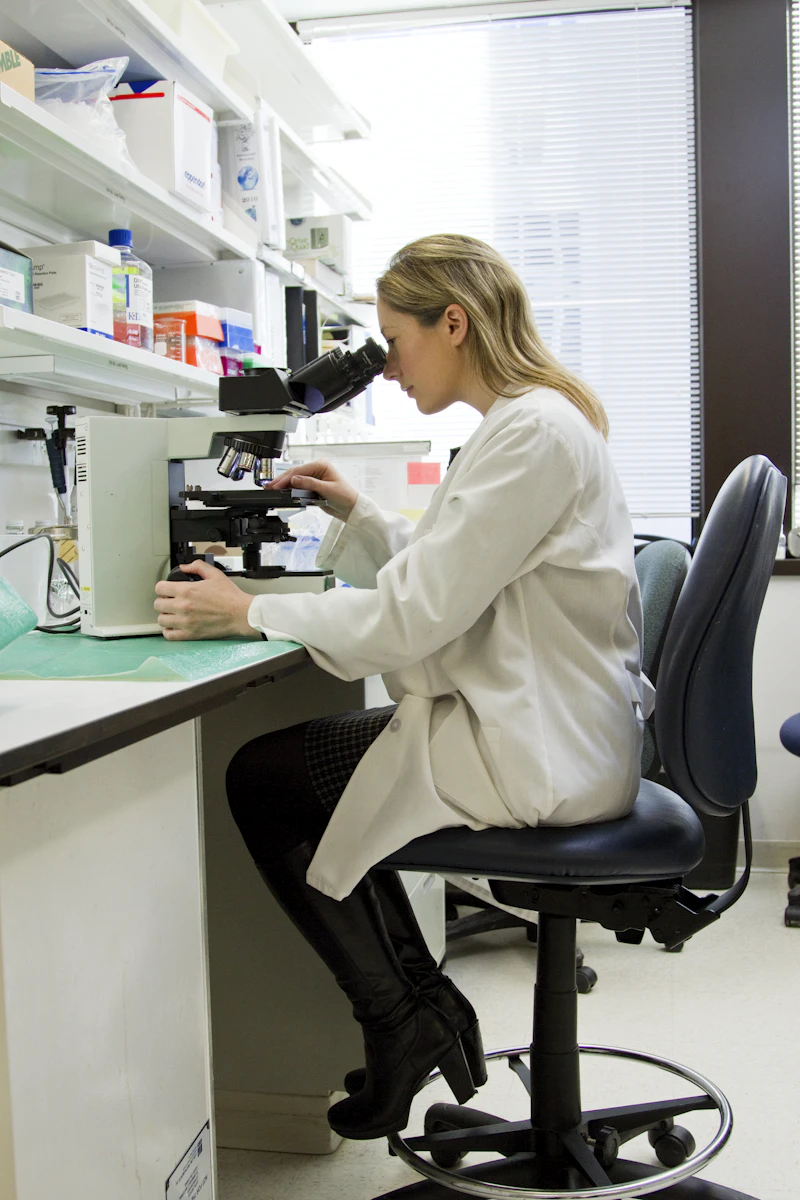
These imaging breakthroughs transformed colloids from merely interesting materials to powerful experimental platforms for investigating fundamental physics. With particles typically ranging from 200 nanometers to several micrometers, colloids became ideal models for studying phenomena that are difficult to observe in atomic systems 2 . Their size makes them directly observable with advanced optics, while their Brownian motion and tunable interactions mirror the behavior of atoms and molecules, just on length and time scales more accessible to laboratory observation 2 .
This "nano-stage" perspective allows researchers to connect microscopic particle dynamics with emergent macroscopic properties—a connection that remains largely inaccessible in atomic or molecular systems. By decorating this nano-stage with particles of different sizes, shapes, and surface properties, scientists can create model systems to probe questions about phase transitions, glass formation, self-assembly, and mechanical behavior in condensed matter 2 .
A Frontline Experiment: Stress Localization in Colloidal Glasses
To understand how modern colloidal research works, let's examine a landmark experiment that investigated how colloidal glasses respond to mechanical deformation.
Methodology: Tracking Particles Under Stress
The research team employed traction rheoscopy, a technique that combines confocal microscopy with precisely controlled shear deformation 2 . Here is their step-by-step approach:
System Preparation
Researchers prepared a binary colloidal suspension containing two particle sizes to prevent crystallization, creating a model glass-forming system. The particles were suspended in a fluid with nearly matching density to minimize gravitational settling.
Mechanical Coupling
The colloidal suspension was placed between two parallel plates, with the top plate capable of rotational movement to apply controlled shear stress.
Imaging Protocol
Using a confocal microscope, the team captured three-dimensional image stacks of the colloidal particles at regular intervals during the shear process. Specialized fluorescent labeling allowed clear visualization of individual particles.
Particle Tracking
Advanced computational algorithms identified particle centers with precision exceeding 10 nanometers and linked these positions across time frames to reconstruct trajectories for thousands of particles.
Strain Mapping
By embedding fluorescent tracer particles within the gel and tracking their displacements, the researchers created detailed maps of localized strain throughout the material.
Results and Analysis: The Birth of Soft Spots
The experiment revealed fascinating insights into how amorphous materials respond to deformation:
| Observation | Scientific Significance | Implications |
|---|---|---|
| Heterogeneous strain | Strain localized in narrow bands rather than distributing uniformly | Challenges classical models of uniform deformation in materials |
| "Soft spots" formation | Certain particle arrangements deform more easily than others | Identifies structural motifs responsible for mechanical failure |
| Particle rearrangements | Collective particle motions precede macroscopic yielding | Suggests warning signs before material failure |
| Persistent localization | Strain patterns persisted after stress removal | Reveals memory effects in disordered materials |
- Local volume fraction
- Bond orientation order
- Voronoi volume distribution
- Local stress tensors
- Strain fields
- Stress-strain correlations
Quantitative analysis of particle trajectories revealed that materials don't deform uniformly at the microscopic level. Instead, strain localizes in narrow bands where particles undergo significant rearrangements, while other regions remain mostly rigid. These "soft spots" represent structural vulnerabilities in the material that determine its ultimate mechanical failure 2 .
The Scientist's Toolkit: Essential Research Reagents
Colloidal research relies on specialized materials and characterization tools. The following table details essential components in the colloidal scientist's toolkit, particularly for experiments like the one described above:
| Tool/Reagent | Primary Function | Research Application |
|---|---|---|
| Polymer Colloids (e.g., PMMA, polystyrene) | Model hard spheres with tunable interactions | Fundamental studies of phase behavior, crystallization, glass formation |
| Temperature-Responsive Microgels (e.g., pNIPAM) | Particles that swell/shrink with temperature changes | Investigating responsive materials, controlled volume fraction changes |
| Fluorescent Dyes (e.g., rhodamine, fluorescein) | Labeling particles for optical tracking | Confocal microscopy, particle tracking and dynamics |
| Index-Matching Solvents | Minimize light scattering in dense suspensions | Enabling deep imaging within 3D colloidal samples |
| Depletants (e.g., polymer chains like polystyrene) | Induce attractive interactions between particles | Studying phase separation, gelation, aggregation phenomena |
| Charged Colloids (e.g., sulfated polystyrene particles) | Model electrostatic interactions | Investigating screened Coulomb interactions, phase behavior |
| Anisotropic Particles (e.g., ellipsoids, rods, disks) | Introduce directional interactions | Studying orientation-dependent phenomena, complex self-assembly |
| Functionalized Surfaces (e.g., patterned substrates) | Impose boundary conditions | Probing confinement effects, directed assembly |
Versatile Research Platform
This toolkit enables the sophisticated experiments that are pushing the frontiers of colloidal science. Each component plays a specific role in mimicking atomic systems or creating novel functionalities not found in natural materials.
Future Directions: The Next Dance Steps
As colloidal research advances, several exciting frontiers are emerging that will define the field's future.
Physics-Informed Machine Learning
The rich, particle-resolved datasets generated from colloidal experiments are ideally suited for machine learning applications. Researchers are now using these datasets to train algorithms that can identify hidden patterns in particle arrangements, predict future dynamics from initial configurations, and even guide the inverse design of materials with specific properties 2 .
Sustainable Technology Solutions
Colloidal science is increasingly directed toward addressing environmental challenges. Recent studies explore bio-based reagents for mineral processing, replacing traditional chemicals with sustainable alternatives derived from sources like vitamin E 5 . Nanostructured colloidal materials are being developed for water purification, such as magnesia-impregnated activated carbon that effectively removes fluoride from wastewater 5 .
Biomedical Advancements
In medicine, colloids are revolutionizing diagnostics and drug delivery. Colloidal gold nanoparticles form the basis of rapid lateral flow tests (including home pregnancy and COVID-19 tests), while other colloidal systems are being engineered for targeted drug delivery, leveraging their size and surface properties to accumulate specifically in diseased tissues 4 .
Conclusion: The Dance Continues
The grand challenges facing colloidal science are not merely technical problems but fundamental questions about how complexity emerges across scales in nature.
By studying the intricate dance of particles on the nano-stage, researchers are developing a deeper understanding of matter itself—knowledge that transcends specific materials or systems.
As we continue to develop new tools to observe, manipulate, and model colloidal systems, we move closer to mastering this dance—not just as observers but as choreographers of matter. The future of colloidal science promises not only deeper fundamental insights but transformative applications across medicine, technology, and sustainability.
The nano-stage is set, and the dance of colloidal particles continues to reveal its secrets, inviting us to watch, learn, and eventually join in directing this microscopic ballet that shapes our macroscopic world.