AI vs. Human Experts in Materials Discovery: A New Paradigm for Scientific Breakthroughs
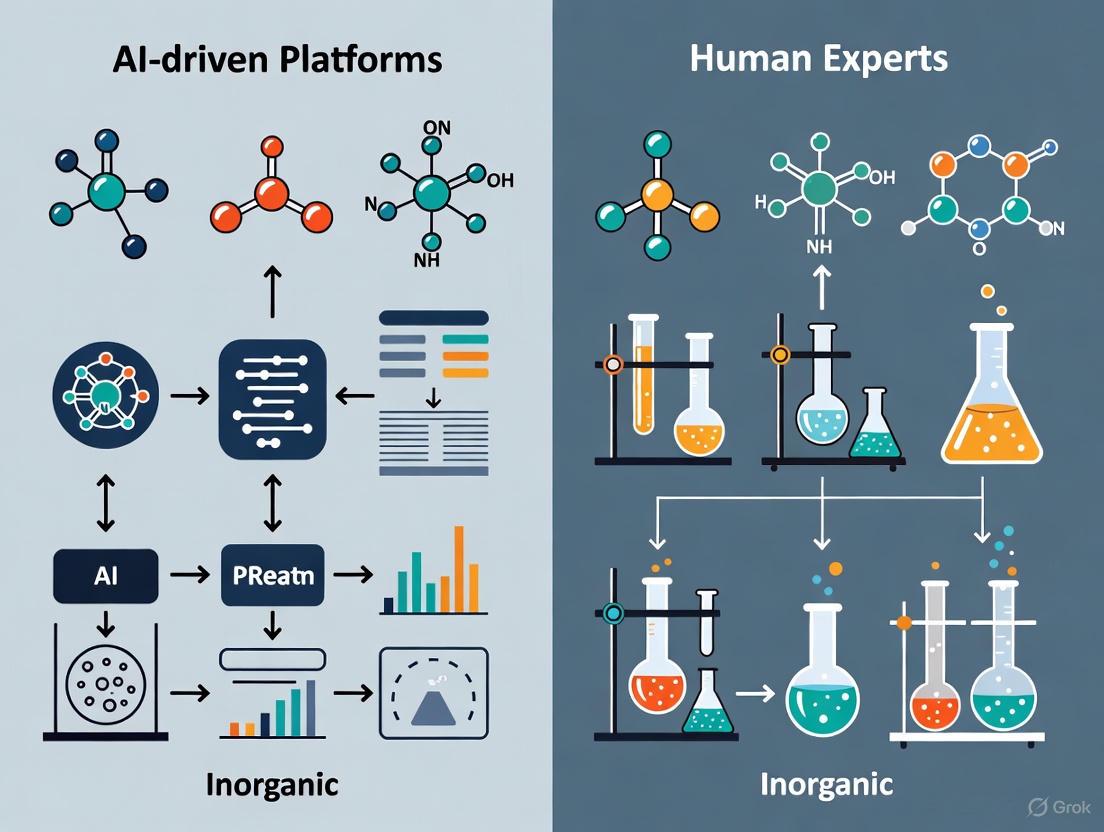
This article explores the evolving synergy between artificial intelligence and human expertise in accelerating materials discovery, with a focus on applications in biomedical and clinical research.
AI vs. Human Experts in Materials Discovery: A New Paradigm for Scientific Breakthroughs
Abstract
This article explores the evolving synergy between artificial intelligence and human expertise in accelerating materials discovery, with a focus on applications in biomedical and clinical research. We examine foundational concepts where AI 'bottles' human intuition, methodological advances in autonomous experimentation, and strategies for overcoming computational and reproducibility challenges. Through comparative analysis of real-world platforms and case studies, we provide a framework for researchers to integrate AI tools effectively, balancing unprecedented speed with the irreplaceable value of scientific creativity and oversight to fast-track the development of novel therapeutics and materials.
The New Frontier: How AI is Augmenting Human Intelligence in Materials Science
The integration of artificial intelligence (AI) into scientific discovery is creating a new paradigm for research. Frameworks like Materials Expert-Artificial Intelligence (ME-AI) are being developed not to replace human scientists, but to capture and quantify their expert intuition, creating collaborative systems that accelerate discovery. This guide compares the performance of such AI-driven platforms against human experts in materials discovery, focusing on their respective strengths and the experimental data that benchmark their capabilities.
The Rise of AI Collaboration in Scientific Discovery
Traditional materials discovery has often been a slow process, relying on a combination of theoretical models, trial-and-error experimentation, and the invaluable, yet hard-to-define, intuition of experienced researchers [1]. This intuition is built from years of hands-on work and deep domain knowledge. The challenge has been to translate this qualitative "gut feeling" into a quantitative, scalable framework [2].
AI-driven platforms are now being designed to meet this challenge. Their primary goal is to bottle the insights latent in the expert growers' human intellect [3]. This is achieved by having the AI learn from data that has been carefully curated and labeled by human experts, allowing the machine to uncover the underlying descriptors and rules that the expert may use subconsciously [2]. This approach represents a significant shift from purely data-driven AI to a human-in-the-loop model where domain expertise guides and informs the computational process.
Comparative Analysis: AI-Driven Platforms vs. Human Experts
The table below summarizes the core characteristics of AI-driven platforms and human experts, highlighting their complementary roles in the modern research workflow.
| Feature | AI-Driven Platforms (e.g., ME-AI, CRESt) | Human Experts |
|---|---|---|
| Core Strength | Rapid, systematic exploration of high-dimensional parameter spaces; quantitative descriptor identification [3] [4]. | Creative, divergent thinking; intuitive leaps based on deep domain knowledge and experience [4]. |
| Knowledge Processing | Learns from expert-curated data to reproduce and extend human insight; can articulate its reasoning process [3] [2]. | Integrates knowledge from diverse sources (literature, experiments, collegial input) and personal intuition, which can be difficult to articulate [2] [5]. |
| Exploration Scope | Efficiently screens thousands of possibilities based on learned criteria; excels at "in-the-box" search within a defined space [4] [5]. | Capable of "outside-the-box" thinking; can make unexpected connections beyond the immediate data, leading to novel pathways [4]. |
| Scalability & Speed | Highly scalable and fast; can run high-throughput computations and robotic experiments 24/7 [5]. | Limited by human speed and endurance; the discovery process can be painstakingly long [1]. |
| Typical Role | A powerful assistant that augments human capability; handles data-heavy lifting and optimization [5]. | The domain expert who defines the problem, curates data, and provides the foundational intuition for the AI to learn from [3]. |
Quantitative Performance Benchmarks
The following table presents experimental data from studies that directly or indirectly compare the output of AI systems and human researchers in discovery-oriented tasks.
| Experiment Task | AI Platform / Method | Human Expert / Control | Key Performance Results | Source |
|---|---|---|---|---|
| Lubricant Molecule Discovery | State-of-the-art AI system | Teams of human participants | AI Average Performance: Significantly better molecules on average.Human Peak Performance: The single best molecule was found by a human participant. | [4] |
| Fuel Cell Catalyst Discovery | CRESt Platform (Multimodal AI) | Traditional research methods | Discovery Speed: Explored 900+ chemistries, conducted 3,500 tests in 3 months.Performance: Achieved a 9.3-fold improvement in power density per dollar over a pure palladium catalyst. | [5] |
| Identification of Topological Materials | ME-AI (Gaussian Process Model) | Expert-derived "tolerance factor" rule | Validation: ME-AI successfully reproduced the expert's known structural descriptor.Expansion: Identified new, emergent descriptors (e.g., hypervalency) and demonstrated transferability to different material families. | [3] [2] |
Detailed Experimental Protocols
To understand the benchmarks above, it is essential to examine the methodologies behind the key experiments.
The ME-AI Workflow for Quantum Materials Discovery
The ME-AI framework was developed specifically to translate a materials expert's intuition into quantitative, actionable descriptors [3] [2]. Its application to identifying topological semimetals (TSMs) in square-net compounds follows a rigorous protocol:
- Expert-Led Data Curation: A human expert (e.g., a materials chemist) curates a dataset of 879 square-net compounds from a structural database. The expert selects 12 primary features (PFs)—including atomistic properties like electronegativity and valence electron count, and structural distances—based on chemical intuition and domain knowledge [3].
- Expert Labeling: Each compound in the dataset is labeled as a TSM or a trivial material. This is a critical step where expert insight is transferred to the dataset. Labeling is done through:
- Direct experimental or computational band structure analysis (56% of the database).
- Chemical logic and analogy for alloys and related compounds (44% of the database) [3].
- Model Training: A Dirichlet-based Gaussian process model with a chemistry-aware kernel is trained on this curated and labeled dataset. The model's task is not just classification, but to discover the effective descriptors that predict the TSM property from the PFs [3].
- Descriptor Extraction and Validation: The trained model is analyzed to reveal the combinations of primary features that serve as the most potent descriptors. The model successfully recovered the "tolerance factor," a known expert-derived rule, and identified new descriptors like hypervalency. The model's generalizability was tested and confirmed by accurately predicting topological insulators in a different crystal structure family (rocksalt) [3].
The CRESt Platform for High-Throughput Materials Discovery
MIT's CRESt (Copilot for Real-world Experimental Scientists) platform represents a broader, multimodal approach to AI-driven discovery, integrating diverse data sources and robotic experimentation [5].
- Multimodal Knowledge Integration: The system begins by ingesting information from diverse sources, including scientific literature, existing databases, chemical compositions, and microstructural images. This creates a rich "knowledge embedding space" [5].
- Search Space Definition and Active Learning: Principal component analysis is performed on the knowledge space to define a reduced, efficient search space. Bayesian optimization is then used within this space to design the next best experiment [5].
- Robotic Execution and Analysis: CRESt's robotic systems—including liquid-handling robots and automated electrochemical workstations—synthesize and test the proposed material recipes. Characterization equipment, like electron microscopes, provides immediate feedback on the results [5].
- Iterative Loop with Human Feedback: The results from the experiments, along with human researcher observations, are fed back into the large language model to update the knowledge base and refine the search space for the next iteration. The system can use computer vision to monitor experiments and suggest corrections for reproducibility issues [5].
The Scientist's Toolkit: Essential Research Reagents & Solutions
The following table details key resources and their functions that are central to conducting research in this field, from computational tools to physical laboratory components.
| Research Reagent / Solution | Function in AI-Driven Materials Discovery |
|---|---|
| Curated Experimental Datasets | The foundational resource on which AI models like ME-AI are trained. Requires expert labeling to embed human intuition into quantitative data [3] [2]. |
| Gaussian Process Models | A class of ML models ideal for working with smaller datasets; they are interpretable and can provide uncertainty estimates, making them well-suited for scientific discovery tasks [3]. |
| Liquid-Handling Robots | Automated laboratory hardware that enables high-throughput synthesis of material recipes proposed by the AI, drastically accelerating the experimental cycle [5]. |
| Automated Electrochemical Workstations | Robotic testing equipment that rapidly characterizes the functional performance (e.g., catalytic activity) of newly synthesized materials, providing critical feedback data for the AI [5]. |
| Multimodal Knowledge Bases | Integrated databases that combine scientific literature, structural data, and experimental results, allowing AI systems like CRESt to make informed predictions based on a wide context [5]. |
| Dirichlet-based Kernels | A type of function used in Gaussian process models that can be designed to be "chemistry-aware," allowing the model to respect known chemical relationships or periodic trends while learning [3]. |
| 3,6-Diamino-9(10H)-acridone | 3,6-Diamino-9(10H)-acridone, CAS:42832-87-1, MF:C13H11N3O, MW:225.25 g/mol |
| (+)-5-trans Cloprostenol | D-Cloprostenol|High-Purity Research Compound |
The evolving narrative in materials discovery is not a competition but a collaboration. Frameworks like ME-AI and CRESt demonstrate that the most powerful approach combines the quantitative, scalable pattern recognition of AI with the qualitative, creative intuition of the human expert [3] [4] [5]. AI excels at efficiently searching vast, complex spaces defined by expert-curated data, while humans provide the foundational insights, define the problems, and make the creative leaps that can lead to true breakthroughs. The future of accelerated discovery lies in this synergistic partnership, where AI serves as a powerful copilot, bottling intuition to guide the scientific journey.
For decades, scientific advancement in materials science and drug discovery has relied heavily on serendipitous discovery and laborious trial-and-error methodologies. Human experts, drawing upon deep intuition honed through years of experience, have traditionally navigated vast chemical spaces with incremental progress. Today, a profound shift is underway: artificial intelligence (AI) is transforming this landscape into a targeted, accelerated search process. This guide provides an objective comparison between established human-expert workflows and emerging AI-driven platforms, focusing on their performance in real-world discovery tasks. We frame this analysis within the broader thesis of how AI is augmenting and, in some cases, transforming the role of human researchers by leveraging massive datasets, predictive modeling, and robotic automation to guide exploration with unprecedented efficiency.
The following analysis synthesizes experimental data and performance metrics from recent peer-reviewed literature and commercial platforms to offer a clear, evidence-based comparison. We examine specific case studies across materials science and drug discovery, detailing methodologies, quantitative outcomes, and the essential tools that enable this new paradigm.
Comparative Analysis: AI Platforms vs. Human Experts
The table below summarizes key performance metrics from recent studies and platforms, directly comparing the output of AI-guided systems with traditional human-led discovery.
Table 1: Performance Comparison of AI-Guided Discovery vs. Traditional Methods
| Metric | AI-Guided Discovery | Traditional Human-Led Discovery | Source/Context |
|---|---|---|---|
| Discovery Speed | 18 months from target to Phase I trials (drug discovery) [6]; 3 months to explore >900 chemistries (materials) [5] | ~5 years for discovery and preclinical work (drug discovery) [6] | Insilico Medicine (AI); Industry Standard (Traditional) |
| Experimental Efficiency | 70% faster design cycles; 10x fewer compounds synthesized [6] | Requires synthesis and testing of thousands of compounds [6] | Exscientia Platform Data |
| Chemical Space Explored | 1 million electrolytes screened from 58 data points [7]; 900+ chemistries tested [5] | Limited by cost, time, and human bias toward known chemical spaces [7] | University of Chicago Study; MIT CRESt System |
| Success in Identifying High-Performing Candidates | Discovery of a catalyst with 9.3x improvement in power density per dollar [5]; 4 novel high-performing battery electrolytes identified [7] | Relies on incremental improvement and expert intuition [3] | MIT CRESt System; University of Chicago Study |
| Data Utilization | Multimodal: Literature, experimental data, microstructural images, intuition [5] | Primarily experimental results and personal experience/intuition [5] | MIT CRESt System Description |
Inside the AI-Guided Workflow: Protocols and Platforms
To understand the performance metrics above, it is essential to examine the experimental protocols and technological architectures that enable AI-driven discovery. The following workflows are representative of the state-of-the-art.
The CRESt Platform for Materials Discovery
The Copilot for Real-world Experimental Scientists (CRESt) platform, developed by MIT researchers, exemplifies the integrated AI-guided approach [5].
Detailed Experimental Protocol:
- Natural Language Input: A researcher converses with the CRESt system in natural language to define the objective (e.g., "find a high-activity, low-cost fuel cell catalyst").
- Multimodal Data Integration: The system's large multimodal model ingests diverse information, including scientific literature, known chemical compositions, and microstructural images, creating a knowledge embedding space.
- Search Space Reduction: Principal component analysis (PCA) is performed on this high-dimensional knowledge space to define a reduced, focused search space that captures most performance variability.
- Bayesian Optimization: An active learning loop using Bayesian optimization designs the next experiment within this reduced space.
- Robotic Execution: Robotic equipment, including liquid-handling robots and automated electrochemical workstations, synthesizes and tests the proposed material recipe.
- Analysis and Feedback: The results from characterization (e.g., automated electron microscopy) and performance testing are fed back into the model. The system can also use computer vision to monitor experiments and suggest corrections for reproducibility issues.
- Iterative Learning: The newly acquired data and human feedback are used to augment the knowledge base and redefine the search space for the next cycle [5].
ME-AI: Bottling Expert Intuition
The Materials Expert-Artificial Intelligence (ME-AI) framework takes a distinct approach by quantifying human expert intuition [3].
Detailed Experimental Protocol:
- Expert Curation: A materials expert curates a refined dataset of 879 square-net compounds, selecting 12 experimentally accessible primary features (PFs) based on deep domain knowledge. These PFs include atomistic features (e.g., electronegativity, electron affinity) and structural features (e.g., square-net distance).
- Expert Labeling: The expert labels each compound in the database, for instance, classifying it as a topological semimetal (TSM) or a trivial material. This labeling uses available band structure data and, crucially, chemical logic for related compounds where direct data is absent.
- Model Training: A Dirichlet-based Gaussian-process model with a chemistry-aware kernel is trained on this curated dataset. Its mission is to learn emergent descriptors that predict the expert-classified properties from the primary features.
- Descriptor Discovery: The model successfully recovers the known "tolerance factor" descriptor and identifies new, interpretable emergent descriptors, such as one related to chemical hypervalency.
- Prediction and Validation: The trained model can then predict the properties of new, unknown compounds. Remarkably, the model demonstrated transferability by accurately classifying topological insulators in a different crystal structure (rocksalt) despite being trained only on square-net compounds [3].
AI-Driven Drug Discovery Platforms
In drug discovery, platforms from companies like Exscientia and Insilico Medicine have established robust AI-driven protocols [6].
Detailed Experimental Protocol (Exscientia's Centaur Chemist):
- Target Product Profile Definition: Precise criteria for the drug candidate (potency, selectivity, ADME properties) are defined.
- Generative AI Design: Deep learning models trained on vast chemical and experimental data propose novel molecular structures that satisfy the target profile.
- Patient-First Validation: AI-designed compounds are tested on patient-derived biological samples (e.g., tumor samples) in high-content phenotypic screens to ensure translational relevance.
- Iterative Design-Make-Test-Learn Cycle: The results from biological testing are fed back to the AI models to refine the next round of compound design, drastically compressing the cycle time [6].
The Scientist's Toolkit: Essential Research Reagents & Materials
The following table details key reagents, software, and hardware solutions that form the foundation of modern AI-guided discovery platforms.
Table 2: Key Research Reagent Solutions for AI-Guided Discovery
| Item Name | Type | Function in Experimental Protocol |
|---|---|---|
| Liquid-Handling Robot | Hardware | Automates precise dispensing of precursor chemicals in synthesis, enabling high-throughput experimentation [5]. |
| Automated Electrochemical Workstation | Hardware | Performs consistent, high-volume testing of material performance (e.g., catalyst activity, battery cycle life) [5] [7]. |
| Carbothermal Shock System | Hardware | Enables rapid synthesis of materials by quickly heating precursors to high temperatures [5]. |
| Automated Electron Microscope | Hardware | Provides high-throughput microstructural imaging for characterization; data is used for AI model feedback [5]. |
| Generative AI Design Software (e.g., Exscientia's DesignStudio) | Software | Proposes novel molecular structures that satisfy multi-parameter target product profiles [6]. |
| Active Learning Model | Software/Algorithm | Efficiently explores vast chemical spaces by selecting the most informative next experiments, minimizing the number of trials needed [7]. |
| Curated Experimental Materials Database (e.g., ICSD) | Data | Provides the structured, measurement-based data required to train and validate physics-aware ML models like ME-AI [3]. |
| High-Content Phenotypic Screening Platform | Assay/Technology | Tests AI-designed compounds on patient-derived samples to validate efficacy in biologically relevant models early in the discovery process [6]. |
| Aripiprazole (1,1,2,2,3,3,4,4-d8) | Aripiprazole-d8 (butyl-d8)|Deuterated Internal Standard | Aripiprazole-d8 (butyl-d8) is a deuterated internal standard for LC-MS/MS analysis of aripiprazole in biological samples. For Research Use Only. Not for human or veterinary use. |
| 3-Bromopyridin-2-ol | 3-Bromo-2-hydroxypyridine | CAS 13466-43-8 | RUO | High-purity 3-Bromo-2-hydroxypyridine for pharmaceutical & organic synthesis research. For Research Use Only. Not for human or veterinary use. |
The evidence from cutting-edge research platforms indicates that the shift from serendipitous discovery to AI-guided targeted search is not only real but is also producing quantifiable advances in efficiency and outcomes. AI platforms demonstrate the ability to dramatically accelerate discovery timelines, explore broader chemical spaces, and identify high-performing candidates with fewer resources than traditional methods. However, the role of the human expert remains indispensable. The most successful frameworks, such as ME-AI and CRESt, are not replacements for researchers but rather powerful copilots. They excel at bottling expert intuition, handling multimodal data, and executing repetitive tasks, thereby augmenting human creativity and strategic thinking. The future of scientific discovery lies in this synergistic partnership, where AI handles the scale and speed of search, and human experts provide the domain knowledge, intuition, and ultimate scientific judgment.
The field of materials discovery stands at a pivotal juncture, where artificial intelligence promises to revolutionize traditional research methodologies. However, contrary to fears of wholesale automation, a new paradigm is emerging: human-AI collaboration. This approach, often termed "human-in-the-loop," strategically leverages the complementary strengths of both human researchers and AI systems to accelerate scientific discovery while maintaining the crucial role of human expertise. Within materials science and drug development, this collaborative model demonstrates that AI serves not as a replacement for researchers, but as a powerful assistant that amplifies human capabilities.
The fundamental premise of this paradigm recognizes that humans and AI systems possess distinct and complementary capabilities. While AI excels at processing vast datasets, identifying complex patterns, and performing high-throughput computations, human researchers provide irreplaceable qualities such as scientific intuition, creative problem-solving, and ethical judgment. Research from MIT Sloan School of Management formalizes this concept through the EPOCH framework, which categorizes essential human capabilities that remain difficult to automate: Empathy and Emotional Intelligence, Presence, Networking, and Connectedness, Opinion, Judgment, and Ethics, Creativity and Imagination, and Hope, Vision, and Leadership [8]. This framework provides a theoretical foundation for understanding why certain research functions remain firmly in the human domain, even as AI capabilities advance.
Quantitative Comparison: AI-Augmented vs. Traditional Research Workflows
The effectiveness of the human-in-the-loop approach is demonstrated through measurable improvements in research outcomes across multiple institutions. The following table summarizes key performance metrics from documented implementations:
| Research Institution | Application Focus | Key Performance Metrics | Human Researcher's Role |
|---|---|---|---|
| Carnegie Mellon University & University of North Carolina [9] | Development of strong yet flexible polymers | AI suggested experiments; humans provided feedback and adjustments in an iterative loop. | Dynamic guidance and expert interpretation |
| MIT (CRESt Platform) [5] | Discovery of fuel cell catalyst materials | Explored 900+ chemistries; conducted 3,500 tests; achieved a 9.3-fold improvement in power density per dollar versus pure palladium. | Natural language interaction, debugging, and final analysis |
| University of Washington Foster School of Business [10] | Evaluation of health equity proposals | AI helped non-experts match expert-level assessments, but experts spent more time scrutinizing AI suggestions. | Critical evaluation and nuanced judgment |
| SLAC National Accelerator Laboratory [11] | Particle accelerator operation | Humans managed complex, rare, or unexpected situations where AI systems struggle due to limited data. | Experience-based reasoning in high-stakes, uncertain environments |
The data consistently reveals a common theme: AI dramatically accelerates the process of data generation and initial analysis, while human researchers provide the critical strategic direction, contextual understanding, and validation necessary for transformative discoveries. As noted by researchers at the National Renewable Energy Laboratory (NREL), the true potential of autonomous science lies not merely in speeding up discovery but in "completely reshaping the path from idea to impact" [12]. This synergy allows research teams to navigate the long-standing "valley of death" where promising laboratory discoveries fail to become viable products.
Experimental Protocols: Methodologies for Human-AI Collaboration
Case Study 1: Polymer Development at CMU/UNC
The collaborative development of advanced polymers illustrates a tightly integrated human-AI workflow. The experimental protocol followed a structured, iterative cycle [9]:
- Initialization: Researchers defined the target properties for the polymer, primarily seeking to overcome the typical trade-off between strength and flexibility.
- AI Suggestion: A machine-learning model analyzed the input parameters and suggested a specific series of chemical experiments.
- Human Execution & Feedback: Chemists at UNC-Chapel Hill conducted the suggested experiments using automated science tools.
- Measurement & Iteration: The produced materials were tested, and the resulting property data was fed back to the AI model, which then made adjustments for the next cycle.
Professor Frank Leibfarth from UNC-Chapel Hill emphasized that this was not a passive process for the human researchers: "In our human-augmented approach, we were interacting with the model, not just taking directions" [9]. This active collaboration combined the best of human intuition and machine efficiency, leading to the creation of novel polymers with excellent properties that could be used in applications from running shoes to medical devices.
Case Study 2: Catalyst Discovery via the MIT CRESt Platform
The CRESt (Copilot for Real-world Experimental Scientists) platform developed at MIT represents a more advanced implementation of the human-in-the-loop paradigm, incorporating robotic equipment and multimodal data processing. Its experimental methodology is comprehensive [5]:
- Natural Language Tasking: Human researchers converse with the CRESt system in natural language, specifying the goal to find promising material recipes for a specific project, such as a fuel-cell catalyst.
- Knowledge Integration: The system's models search through scientific literature and databases to create representations of potential recipes based on existing knowledge.
- Automated Experimentation: The system orchestrates a robotic workflow for sample preparation, characterization (including automated electron microscopy), and electrochemical testing.
- Active Learning & Optimization: Experimental results are used to train active learning models. These models use both literature knowledge and new data to suggest subsequent experiments, efficiently navigating the search space.
- Human Oversight & Debugging: The system uses cameras and vision models to monitor experiments, detect issues, and suggest solutions to human researchers via text and voice.
A critical finding from this research was the indispensability of the human researcher for ensuring reproducibility. As the MIT team noted, "CREST is an assistant, not a replacement, for human researchers. Human researchers are still indispensable" [5]. This protocol led to the discovery of a novel, multi-element catalyst that delivered record power density while using only one-fourth of the precious metals of previous designs.
Visualizing the Workflow: Human-AI Collaboration in Materials Discovery
The following diagram illustrates the integrated, cyclical workflow of a human-in-the-loop research paradigm, synthesizing the key stages from the documented case studies:
This workflow highlights the critical interaction points where human expertise guides the AI system, creating a continuous feedback loop that is more efficient and insightful than either could achieve independently.
The Scientist's Toolkit: Essential Research Reagents & Materials
The experiments cited rely on a range of specialized materials and reagents that form the foundation of materials discovery research. The table below details key components and their functions in the development of advanced materials, from polymers to energy solutions.
| Material/Reagent | Function in Research | Example Application Context |
|---|---|---|
| Palladium / Platinum [5] | Serves as a catalytic component, often as a baseline or key element in catalyst formulations. | Fuel cell catalyst research (e.g., in the MIT CRESt project). |
| Formate Salt [5] | Acts as a fuel source for testing certain types of fuel cells. | Direct formate fuel cell performance testing. |
| Phase-Change Materials (e.g., paraffin wax, salt hydrates) [13] | Store and release thermal energy during phase transitions, used for testing thermal regulation. | Thermal energy storage systems for building decarbonization. |
| Electrochromic Materials (e.g., Tungsten trioxide) [13] | Change optical properties (e.g., tint) in response to an electrical stimulus. | Smart window technologies for energy-efficient buildings. |
| Bamboo Fiber Composites [13] | Provide a sustainable, high-strength reinforcement material for biopolymer composites. | Sustainable packaging and consumer product development. |
| Aerogels (Silica, Polymer-based) [13] | Provide ultra-lightweight, highly porous structures for insulation and energy storage. | Advanced applications in energy storage and biomedical engineering. |
| Metamaterials (Engineered composites) [13] | Exhibit properties not found in naturally occurring materials, like manipulating electromagnetic waves. | Improving 5G antennas, medical imaging, and seismic protection. |
| Co 101244 hydrochloride | Co 101244 hydrochloride | RUO Kinase Inhibitor | Co 101244 hydrochloride is a potent and selective research chemical. For Research Use Only. Not for human or veterinary diagnostic or therapeutic use. |
| Dimethyl-bisphenol A | Dimethyl-bisphenol A, CAS:1568-83-8, MF:C17H20O2, MW:256.34 g/mol | Chemical Reagent |
The evidence from leading research institutions confirms that the most productive path forward in materials science and drug development is one of collaboration, not replacement. AI systems excel as powerful assistants that can manage massive datasets, propose novel experiment candidates, and operate robotic labs at unprecedented scale. However, they fundamentally lack the EPOCH capabilities—the empathy, judgment, creativity, and vision—that human scientists bring to the research process [8]. The future of discovery lies not in choosing between human expertise and artificial intelligence, but in strategically integrating both to create research teams that are "stronger together than either one alone" [11]. This human-in-the-loop paradigm ensures that the acceleration of discovery is guided by the wisdom, ethical considerations, and creative insight that remain the hallmark of human intellect.
The discovery of new quantum materials, which exhibit exotic properties governed by quantum mechanics, has traditionally relied on a slow, iterative process combining theoretical modeling, serendipitous discovery, and the deep-seated intuition of experienced researchers [14] [2]. This "gut feeling" of human experts, developed through years of specialized research, allows them to make insightful leaps that are often inscrutable and impossible to quantify. However, this intuitive process is difficult to scale or replicate, creating a significant bottleneck in the search for next-generation materials for quantum computing, energy, and other advanced technologies [14].
The rise of Artificial Intelligence (AI) promises to accelerate materials discovery by rapidly screening vast chemical spaces. Yet, purely data-driven AI models often struggle where human experts excel: in understanding complex, qualitative properties of quantum materials that are beyond the reach of quantitative modeling [2]. This case study examines a groundbreaking approach that bridges this gap—the Materials Expert-AI (ME-AI) framework developed by researchers from Cornell and Princeton Universities. We will objectively compare this human-in-the-loop AI strategy against both conventional human-led research and purely data-driven AI platforms, analyzing its effectiveness in reproducing and articulating a researcher's intuition for discovering new quantum materials.
Experimental Comparison: ME-AI vs. Alternative Discovery Methods
The following analysis compares three distinct paradigms in quantum materials discovery: the novel ME-AI framework, traditional expert-led research, and fully automated AI-driven platforms.
Table 1: Comparative Analysis of Quantum Material Discovery Methodologies
| Feature | ME-AI Framework [2] | Traditional Expert-Led Research | Purely Data-Driven AI Platforms |
|---|---|---|---|
| Core Approach | Hybrid human-AI collaboration; expert-curated data and features inform machine learning. | Relies on researcher experience, reasoning, and serendipitous discovery. | Indiscriminate analysis of large datasets without expert guidance. |
| Role of Intuition | Expert intuition is "bottled" into quantifiable descriptors for the model. | Central, but implicit and difficult to articulate or transfer. | Not incorporated; operates as a "black box" based on statistical correlations. |
| Scalability | High potential; expert reasoning is captured and can be applied to larger datasets. | Inherently low; limited by the individual researcher's time and cognitive capacity. | Very high; can process massive volumes of data rapidly. |
| Articulation of Insight | High; machine explains its reasoning, making the expert's implicit process apparent. | Low; intuitive leaps are often described as a "gut feeling" that is hard to formalize. | Variable; some models offer explainability, but insights may lack physical meaning. |
| Key Limitation | Dependent on quality and scope of expert-curated initial data. | A non-replicable, scarce resource that is difficult to scale. | Prone to generating misleading correlations from poorly curated data [2]. |
Table 2: Performance Metrics in a Model Discovery Problem
| Metric | ME-AI Framework Performance [2] | Estimated Human Expert Baseline | Estimated Pure AI Baseline |
|---|---|---|---|
| Problem Scope | 879 materials screened for a specific desirable characteristic. | Manual review of a limited subset due to time constraints. | Could screen all 879, but with risk of false positives/negatives. |
| Accuracy in Reproducing Expert Insight | Successfully reproduced the expert's intuition and expanded upon it. | N/A (Establishes the benchmark) | Unpredictable; may miss criteria important to domain experts. |
| Generalization Ability | Demonstrated exciting generalization by predicting similar materials in a different set of compounds. | High, but slow and labor-intensive. | Can be high, but is highly dependent on data quality and model design. |
| Interpretability of Output | Model provided reasoning that the expert found logical and insightful. | Intuitive but difficult to articulate fully. | Often low; results can be a "black box" without clear physical rationale. |
Experimental Protocol: The ME-AI Methodology
The ME-AI framework was implemented through a structured, collaborative protocol between machine learning specialists and a domain expert, in this case, Professor Leslie Schoop and her research group at Princeton University, who study quantum materials [2].
Step-by-Step Workflow
The experimental workflow is designed to systematically encode human expertise into a machine-learning model.
ME-AI Workflow for Material Discovery
Key Research Reagents and Computational Tools
The following table details the essential "research reagents"—both data and software components—used in the ME-AI experiment.
Table 3: Essential Research Reagents for the ME-AI Framework
| Research Reagent | Type | Function in the Experiment |
|---|---|---|
| Expert-Curated Material Set | Data | A labeled dataset of 879 materials, curated and classified by a domain expert, serving as the ground truth for model training. |
| Human Expert Intuition | Knowledge | The implicit reasoning and "gut feeling" of the researcher, which the model aims to quantify and replicate. |
| Machine Learning Model | Software | The core algorithm that learns the mapping between material descriptors and the target property from the expert-curated data. |
| Material Descriptors | Data Features | Quantifiable parameters (e.g., structural, electronic) that the model uses to understand and predict material properties. |
| Validation Dataset | Data | A separate set of compounds, distinct from the training set, used to test the model's ability to generalize its learned intuition. |
Results and Interpretation: Quantifying the Gut Feeling
The outcome of the ME-AI experiment demonstrated a successful transfer and augmentation of human expertise. The model did not merely mimic the expert's prior classifications; it produced a generalized insight that the expert recognized as valid and insightful. As Professor Schoop noted upon reviewing the model's output, "Oh, that makes a lot of sense," indicating that the AI had captured the underlying logic of her thought process [2].
A key advantage of the ME-AI framework is its ability to articulate the intuitive process. As lead researcher Professor Eun-Ah Kim explained, "When a human has a gut feeling, it happens too quickly for them to spell it out. They know it's right, but they wouldn't necessarily articulate their process. In contrast, a machine is very good at explaining how it's reached a conclusion" [2]. This creates a powerful feedback loop where the machine makes the expert's implicit reasoning explicit, potentially leading to new scientific understanding.
This case study demonstrates that the most promising path for AI in complex scientific fields like quantum materials discovery is not to replace human experts, but to collaborate with them. The ME-AI framework provides a structured methodology to "bottle" invaluable human intuition, creating scalable, articulate, and insightful AI partners. This hybrid approach leverages the unique strengths of both humans and machines: the pattern-recognition and processing power of AI, and the contextual, conceptual understanding of the human researcher. As these collaborative tools mature, they promise to significantly accelerate the discovery of the quantum materials that will underpin future technological revolutions.
AI in Action: Platforms, Workflows, and Real-World Breakthroughs
The Experimental Workhorse: Core Components of an Autonomous Lab
The following diagram illustrates the integrated, closed-loop workflow of a multimodal AI system like CRESt, which combines computational planning with robotic execution to accelerate discovery.
The experimental realization of systems like CRESt relies on specific, high-purity materials and advanced robotic equipment. The table below details key research reagents and their functions in the discovery of advanced electrocatalysts, as demonstrated in CRESt's fuel cell research [5] [15] [16].
| Research Reagent / Equipment | Function in Experiment |
|---|---|
| Palladium & Platinum Precursors | Served as primary catalytic elements in the search for efficient fuel cell catalysts [5]. |
| Base Metal Precursors (Cu, Au, Ir, etc.) | Formed multi-element catalysts to reduce precious metal content and optimize the coordination environment [5]. |
| Formate Salt Solution | Used as the fuel source during electrochemical testing to evaluate catalyst performance in direct formate fuel cells [15]. |
| Liquid-Handling Robot | Automated the precise dispensing and mixing of up to 20 precursor molecules to create numerous material recipes [5]. |
| Carbothermal Shock System | Enabled rapid synthesis of materials, including high-entropy alloys, by subjecting precursors to extreme temperatures [15]. |
| Automated Electrochemical Workstation | Performed high-throughput testing (e.g., 3,500 tests) to characterize catalyst performance metrics like power density [5]. |
| Automated Electron Microscope | Provided microstructural imaging and characterization of synthesized materials, with data fed back to the AI model [5]. |
Experimental Protocols & Performance Benchmarking
Detailed Experimental Methodology
The following diagram specifics the iterative "active learning" cycle that enables AI platforms like CRESt to efficiently optimize materials through sequential rounds of computation and experimentation.
In a landmark study, CRESt's protocol was applied to discover a high-performance, low-cost electrocatalyst for direct formate fuel cells, a technology with potential for clean energy generation [15]. The core objective was to identify a multi-element catalyst that would minimize the use of precious metals like palladium while maximizing power density.
Key Experimental Parameters & Analysis Methods:
- Synthesis: The system employed a carbothermal shock method for rapid synthesis of nanoparticle catalysts, allowing for quick iteration of over 900 distinct material chemistries [5] [15].
- Performance Testing: An automated electrochemical workstation conducted 3,500 tests to measure critical performance indicators, most notably the power density of the catalysts in a working fuel cell [5].
- Characterization: Automated electron microscopy and X-ray diffraction (XRD) were used for microstructural imaging and phase identification, providing visual data on the synthesized materials [5].
- Anomaly Detection: Computer vision models monitored experiments in real-time, detecting issues such as pipette misplacements or sample deviations that could affect reproducibility [16].
Quantitative Performance: AI vs. Human-Led Research
The true measure of an experimental system lies in its results. The table below provides a quantitative comparison of the performance of the CRESt platform against traditional, human-led research methodologies, based on its documented success in electrocatalyst discovery [5] [15] [16].
| Metric | CRESt AI Platform | Traditional Human-Led Research |
|---|---|---|
| Experiment Duration | ~3 months [5] [16] | Typically years for similar complexity [17] [18] |
| Experiments/Compositions Tested | 900+ chemistries, 3,500 electrochemical tests [15] | Limited by manual synthesis and testing capabilities [18] |
| Search Space Complexity | Optimized in octonary (8-element) space [15] | Often limited to ternary or quaternary spaces due to complexity [19] |
| Key Discovery | Pd-Pt-Cu-Au-Ir-Ce-Nb-Cr catalyst [15] | Typically focuses on simpler compositions [19] |
| Performance Improvement | 9.3x power density per dollar vs. pure Pd [5] [16] | Incremental improvements are more common [17] |
| Precious Metal Content | 1/4 of previous devices [5] | Often relies on higher precious metal loading [5] |
| Data Integration | Multimodal: literature, images, experimental data [5] [15] | Primarily experimental data, with limited literature integration |
Discussion: The Evolving Roles of AI and Human Expertise
The emergence of platforms like CRESt does not render human researchers obsolete but rather redefines their role in the discovery process. As noted by MIT's Ju Li, "CRESt is an assistant, not a replacement, for human researchers" [5] [16]. The system excels at executing and optimizing within a defined framework, but human scientists remain indispensable for setting strategic research goals, providing critical domain knowledge, and interpreting complex, unexpected results.
This human-AI collaboration is key to overcoming a major challenge in materials science: the "valley of death" where promising lab discoveries fail to become viable products [12]. By integrating considerations of cost, scalability, and performance from the earliest stages of research, autonomous platforms can help ensure new materials are "born qualified" for real-world application [12].
The future of materials discovery lies not in a choice between human expertise and artificial intelligence, but in a synergistic partnership that leverages the strengths of both.
The discovery and synthesis of novel materials are critical for advancing technologies in energy storage, quantum computing, and sustainable chemistry. Traditional research, reliant on human intuition and manual experimentation, often requires over a decade to move from conceptualization to practical application [20] [21]. Autonomous laboratories represent a transformative shift, integrating artificial intelligence (AI), robotics, and high-throughput computation to accelerate this process dramatically. This guide provides an objective comparison of two leading approaches: the A-Lab, an autonomous system for inorganic powder synthesis, and the ME-AI framework, which codifies human expert intuition. The core distinction lies in their operational paradigm; A-Lab focuses on robotic execution of synthesis and characterization, while ME-AI enhances human decision-making by uncovering deep material descriptors. Performance data indicates that these AI-driven platforms can achieve a 10-100x faster discovery rate compared to traditional methods, potentially reducing development cycles from years to months [20] [22]. This analysis examines their experimental protocols, quantitative performance, and respective roles within the research ecosystem, providing researchers with a clear framework for evaluation and adoption.
This section details the core architectures and measurable outputs of the A-Lab and ME-AI platforms, with comparative data presented in Table 1.
The A-Lab: An Autonomous Synthesis Platform The A-Lab, developed by researchers at Lawrence Berkeley National Laboratory, is a fully integrated robotic system designed for the solid-state synthesis of novel inorganic materials [23] [24]. Its operation is a closed-loop process: given a target material, AI models propose synthesis recipes, robotic arms execute the powder handling and heating, and X-ray diffraction (XRD) characterizes the products. Machine learning then analyzes the results, and an active learning algorithm, ARROWS3, proposes improved follow-up recipes without human intervention [23]. This system operates 24/7 in a 600-square-foot lab, capable of processing 100-200 samples per day and testing 50-100 times more samples than a human researcher [24]. In its inaugural demonstration, the A-Lab successfully synthesized 41 out of 58 novel, computationally predicted compounds over 17 days, achieving a 71% success rate [23].
The ME-AI Framework: Augmenting Human Expertise In contrast, the Materials Expert-Artificial Intelligence (ME-AI) framework does not perform physical experiments. Instead, it is a machine-learning tool designed to "bottle" the intuition of expert materials scientists [3]. ME-AI learns from expertly curated, experimental data to identify quantitative descriptors that predict material properties. In one application focused on identifying topological semimetals (TSMs) within square-net compounds, ME-AI was trained on a set of 879 compounds described by 12 experimental features. It successfully recovered a known expert-derived structural descriptor (the "tolerance factor") and identified new ones, including a purely atomistic descriptor related to hypervalency [3]. Its key achievement is transferability; a model trained solely on square-net TSM data correctly classified topological insulators in rocksalt structures, demonstrating an ability to generalize learned principles beyond its initial training set [3].
Table 1: Performance Comparison of AI-Driven Platforms vs. Human Experts
| Feature | A-Lab (Autonomous Robotics) | ME-AI (Expert-Augmentation) | Traditional Human-Led Research |
|---|---|---|---|
| Primary Function | Fully autonomous synthesis & characterization [23] | Discovering predictive material descriptors [3] | Manual experimentation and analysis |
| Throughput | 100-200 samples per day [24] | Analysis of 879+ compounds in a single study [3] | Limited by manual processes and speed |
| Success Metric | 71% (41/58) novel compounds synthesized [23] | Identified new descriptors; demonstrated model transferability [3] | Highly variable; discovery can take a decade [21] |
| Key Strength | Closed-loop, rapid iteration from prediction to synthesis [23] [20] | Embeds deep chemical intuition; highly interpretable results [3] | Leverages broad, creative scientific insight |
| Experimental Role | Replaces human in manual tasks and initial decision-making | Augments and explicates human expert intuition | Direct, hands-on involvement in all stages |
Detailed Experimental Protocols and Workflows
Understanding the precise methodologies of these platforms is crucial for evaluating their capabilities and limitations.
A-Lab's Autonomous Synthesis and Optimization Protocol
The A-Lab's workflow for synthesizing a novel inorganic powder involves a multi-stage, iterative protocol as shown in Figure 1.
- Target Identification and Validation: Targets are selected from computational databases like the Materials Project, focusing on compounds predicted to be thermodynamically stable (on the convex hull) and air-stable [23].
- Literature-Inspired Recipe Generation: For each new compound, the system uses natural-language models trained on historical synthesis literature to propose initial precursor sets and a heating temperature [23].
- Robotic Execution:
- Preparation: Precursor powders are automatically dispensed and mixed by a robotic arm before being transferred into an alumina crucible.
- Heating: A second robotic arm loads the crucible into one of four available box furnaces for heating.
- Characterization: After cooling, the sample is ground into a fine powder and its X-ray diffraction (XRD) pattern is measured [23].
- Automated Data Analysis: The XRD pattern is analyzed by probabilistic machine learning models to identify phases and their weight fractions. This is followed by automated Rietveld refinement to confirm the results [23].
- Active Learning Loop: If the target yield is below 50%, the active learning algorithm (ARROWS3) takes over. It uses a growing database of observed pairwise solid-state reactions and ab initio reaction energies to propose alternative synthesis routes with a higher driving force to form the target, avoiding kinetic traps [23]. The loop continues until a high-yield recipe is found or all options are exhausted.
Figure 1: The A-Lab's closed-loop, autonomous workflow for materials synthesis and optimization.
ME-AI's Descriptor Discovery Protocol
The ME-AI framework follows a distinct, data-centric protocol to uncover the hidden rules experts use to identify promising materials, as shown in Figure 2.
- Expert-Led Data Curation: A materials expert (ME) assembles a refined dataset focused on a specific class of materials (e.g., square-net compounds). The MEs define the primary features (PFs), which are basic atomistic or structural properties like electronegativity, electron affinity, and specific crystallographic distances [3].
- Expert Labeling: Each compound in the dataset is labeled by the expert based on the target property. This is done through direct band structure analysis when available, or by applying chemical logic and analogy for related compounds or alloys [3]. This step encodes human intuition into the dataset.
- Model Training and Descriptor Discovery: A Dirichlet-based Gaussian-process model with a chemistry-aware kernel is trained on this curated dataset. The model's mission is not just to classify materials, but to learn the emergent descriptors—combinations of the primary features—that are predictive of the target property [3].
- Validation and Interpretation: The resulting model is interpreted to articulate the discovered descriptors. Its performance and, crucially, its transferability to other material families (e.g., applying a model trained on square-nets to rocksalt structures) are rigorously tested [3].
Figure 2: The ME-AI workflow for translating expert intuition into quantitative, actionable material descriptors.
The Scientist's Toolkit: Essential Research Reagents and Materials
The effectiveness of autonomous platforms depends on specialized materials, software, and hardware. Table 2 lists key components cited in the experimental results.
Table 2: Key Research Reagents and Solutions for Autonomous Materials Discovery
| Item | Function in the Experiment | Source / Example |
|---|---|---|
| Solid-State Precursor Powders | Starting ingredients for solid-state synthesis of inorganic powders. The A-Lab's library contains ~200 different precursors [24]. | Various commercial chemical suppliers |
| Alumina Crucibles | Containers for holding powder samples during high-temperature reactions in box furnaces [23]. | Laboratory equipment suppliers |
| Ab Initio Computational Databases | Sources of predicted stable materials used as synthesis targets and for calculating thermodynamic driving forces [23]. | The Materials Project [23], Google DeepMind GNoME [21] |
| Historical Synthesis Data | Training data for natural-language models that propose initial, literature-inspired synthesis recipes [23]. | Text-mined from scientific literature [23] |
| Experimental Crystal Structure Database | Source of experimental structures for training ML models that analyze and identify phases from XRD patterns [23]. | Inorganic Crystal Structure Database (ICSD) [23] |
| Structural Constraint Software | Software tools that steer generative AI models to create materials with specific geometric patterns associated with quantum properties [25]. | SCIGEN (Structural Constraint Integration in GENerative model) [25] |
| Anisoin | Anisoin, CAS:119-52-8, MF:C16H16O4, MW:272.29 g/mol | Chemical Reagent |
| 2-Hydroxypropyl stearate | Propylene Glycol Monostearate for Research | Research-grade Propylene Glycol Monostearate (PGMS) for scientific study. Applications include food science and pharmaceuticals. For Research Use Only. |
The comparison reveals that the choice between autonomous platforms depends on the research goal. The A-Lab excels in rapid, high-volume validation of computationally predicted materials, physically generating samples and iterating recipes with superhuman endurance. Its performance demonstrates that the integration of computation, historical data, and robotics can successfully close the loop on materials synthesis [23]. In contrast, ME-AI aims to deepen fundamental understanding, providing interpretable descriptors that capture the nuanced intuition of expert researchers, with a proven ability to generalize across material classes [3].
Rather than a simple replacement narrative, the future of materials discovery lies in synergistic collaboration between human and artificial intelligence. AI-driven robotic systems like A-Lab and tools like SCIGEN [25] can shoulder the burden of repetitive tasks and vast exploration, freeing human researchers to formulate deeper hypotheses, design more creative experiments, and interpret complex results. As these technologies mature, they promise to form an integrated ecosystem where AI handles high-throughput experimentation and initial screening, while scientists focus on high-level strategy and tackling the most profound scientific challenges. This partnership will be crucial for addressing urgent global needs in clean energy and sustainable technology development.
The discovery of new functional materials, crucial for technologies from renewable energy to next-generation displays, has traditionally been a slow and labor-intensive process guided by human intuition and experimentation. However, a transformative shift is underway with the emergence of GPU-accelerated AI platforms that can evaluate millions of molecular candidates orders of magnitude faster than conventional methods. This guide objectively compares the capabilities of these AI-driven platforms against traditional expert-led approaches, examining their performance, methodologies, and practical applications in discovering advanced catalysts and OLED materials. By synthesizing data from recent implementations, we provide researchers with a comprehensive framework for selecting and implementing these technologies, with a particular focus on their integration into existing scientific workflows and their profound impact on accelerating the materials discovery pipeline.
Performance Comparison: Quantitative Analysis of Screening Platforms
The transition to AI-driven discovery platforms represents not merely an incremental improvement but a fundamental shift in materials research scalability. The table below summarizes key performance metrics documented from recent implementations.
Table 1: Documented Performance Metrics of AI Platforms vs. Traditional Methods
| Platform/Method | Application Area | Screening Scale | Speed Improvement | Key Metric |
|---|---|---|---|---|
| NVIDIA ALCHEMI NIM [26] | OLED Materials Discovery | Billions of candidates | 10,000x faster | Evaluation of billions of molecules in seconds instead of days [27] |
| NVIDIA ALCHEMI NIM [26] | Catalyst Discovery | 10M cooling fluid & 100M catalyst candidates | 10x more candidates in same timeframe | Evaluation completed within weeks [26] |
| ME-AI Framework [3] | Topological Materials | 879 square-net compounds | Not specified | Transferability to new material classes (rocksalt structures) |
| OpenVS Platform [28] | Drug Discovery | Multi-billion compound libraries | 7 days for full screening | 14-44% hit rates for target proteins |
These performance gains stem from fundamental architectural advantages. GPU-accelerated platforms leverage parallel processing to evaluate thousands to millions of candidates simultaneously, while AI models learn underlying patterns to prioritize promising candidates, dramatically reducing the need for exhaustive physical simulations [26] [27]. This represents a paradigm shift from the traditional sequential experimentation and computation that has constrained materials discovery for decades.
Table 2: Qualitative Comparison of Discovery Approaches
| Feature | AI-Driven Platforms | Traditional Expert-Led Approaches |
|---|---|---|
| Screening Throughput | Billions of candidates feasible | Limited to hundreds/thousands of candidates |
| Speed | Days to weeks for massive libraries | Months to years for similar scope |
| Basis for Discovery | Pattern recognition in high-dimensional data | Chemical intuition & incremental modification |
| Scalability | Highly scalable with computational resources | Limited by human resources & equipment |
| Interpretability | Varies (can be "black box") | High (based on established principles) |
| Data Requirements | Requires substantial training data | Leverages existing knowledge & expertise |
Platform-Specific Experimental Protocols and Workflows
NVIDIA ALCHEMI for Energy and Display Materials
The NVIDIA ALCHEMI platform employs a structured computational workflow that has demonstrated significant success in industrial applications. For ENEOS's catalyst discovery program, the workflow consists of several critical stages [26]:
- Candidate Generation: Computational creation of molecular structures based on chemical rules and prior knowledge.
- Batched Conformer Search: Using ALCHEMI NIM microservices to identify low-energy molecular shapes across thousands of candidates simultaneously.
- Batched Molecular Dynamics: Simulation of molecular behavior and properties under specified conditions.
- Prescreening Analysis: Computational ranking of candidates based on target properties, with only the most promising advancing to physical testing.
This workflow enabled ENEOS to evaluate approximately 10 million liquid-immersion cooling candidates and 100 million oxygen evolution reaction candidates within weeks—a tenfold increase over previous methods. A company representative noted, "We hadn't considered running searches at the 10-100 million scale before, but NVIDIA ALCHEMI made it surprisingly easy to sample extensively" [26].
Similarly, Universal Display Corporation applied ALCHEMI to OLED material discovery through a specialized protocol [26] [29]:
- Universe Definition: Acknowledging a search space of approximately 10^100 possible OLED molecules.
- AI-Accelerated Conformer Search: Using ALCHEMI to evaluate billions of candidate molecules up to 10,000× faster than traditional computational methods.
- Stability Simulation: Construction of simulation cells for each conformer to assess thermal processing stability.
- Parallel Molecular Dynamics: Running simulations across multiple NVIDIA GPUs in parallel, reducing simulation time from days to seconds.
UDC's leadership reported that this approach "completely change[s] the scale and speed of discovery" and enables researchers to "uncover opportunities and fast-track new materials quicker than we ever could before" [26].
ME-AI Framework for Topological Materials
The Materials Expert-Artificial Intelligence (ME-AI) framework represents a distinctive approach that specifically incorporates human expertise into the AI discovery process. Its experimental protocol includes [3]:
- Expert Curation: Compilation of 879 square-net compounds with 12 experimental features guided by materials expert intuition.
- Feature Selection: Focus on chemically meaningful atomistic and structural features including electron affinity, electronegativity, valence electron count, and structural distances.
- Expert Labeling: Manual classification of materials as topological semimetals through band structure analysis and chemical logic.
- Model Training: Implementation of a Dirichlet-based Gaussian-process model with a chemistry-aware kernel to learn descriptors.
- Validation: Testing transferability by applying the model to unrelated material families (rocksalt structures).
This hybrid approach successfully reproduced established expert rules for identifying topological semimetals while revealing hypervalency as a decisive chemical descriptor, demonstrating how AI can formalize and extend human intuition [3].
OpenVS Platform for Drug Discovery
The OpenVS platform employs a multi-stage filtering approach for virtual screening in drug discovery [28]:
- Library Preparation: Compilation of multi-billion compound libraries from available chemical databases.
- Active Learning Integration: Training target-specific neural networks during docking computations to triage promising compounds.
- Two-Stage Docking: Initial screening with Virtual Screening Express (VSX) mode followed by high-precision assessment with Virtual Screening High-precision (VSH) mode with full receptor flexibility.
- Binding Affinity Prediction: Use of improved RosettaGenFF-VS scoring function combining enthalpy calculations with entropy estimates.
- Experimental Validation: Synthesis and testing of top-ranking compounds, with structural validation via X-ray crystallography.
This protocol enabled the discovery of hit compounds for two unrelated targets (KLHDC2 and NaV1.7) with 14% and 44% hit rates respectively, completing screening in less than seven days using a high-performance computing cluster [28].
Workflow Visualization: AI-Driven Materials Discovery
The following diagram illustrates the generalized workflow for AI-accelerated materials discovery, synthesizing common elements across the platforms discussed:
AI-Driven Materials Discovery Workflow
This workflow highlights the iterative filtering process where AI systems rapidly narrow billions of possibilities to tens of laboratory-testable candidates, with human expertise integrated at critical decision points to guide the discovery process.
The Scientist's Toolkit: Essential Research Reagent Solutions
Successful implementation of accelerated screening platforms requires both computational and experimental components. The table below details essential "research reagent solutions" - key resources and their functions in the discovery pipeline.
Table 3: Essential Research Reagent Solutions for Accelerated Materials Discovery
| Resource Category | Specific Examples | Function in Discovery Pipeline |
|---|---|---|
| GPU-Accelerated Computing Platforms | NVIDIA ALCHEMI NIM Microservices [26] | Provides batched conformer search and molecular dynamics for high-throughput screening |
| AI/ML Frameworks | ME-AI Gaussian-process model [3], OpenVS active learning [28] | Learns from expert-curated data to identify promising candidates and reduce search space |
| Specialized Instrumentation | Brookhaven's National Synchrotron Light Source II with Holoscan [26] | Enables real-time nanoscale imaging with sub-10 nanometer resolution for experimental validation |
| Data Management Systems | Materials data repositories with FAIR principles [30] | Ensures standardized, findable, accessible, interoperable, and reusable data for AI training |
| Experimental Validation Platforms | Self-driving labs (SDLs) with defined autonomy metrics [31] | Automates physical synthesis and testing with minimal human intervention for rapid iteration |
| D-erythro-Ritalinic acid-d10 | Ritalinic Acid Reference Standard|CAS 19395-41-6 | Ritalinic acid is the primary metabolite of methylphenidate. This product is for research use only, such as analytical testing. It is not for human consumption. |
| (2-Chlorophenyl)(phenyl)methanone | (2-Chlorophenyl)(phenyl)methanone, CAS:5162-03-8, MF:C13H9ClO, MW:216.66 g/mol | Chemical Reagent |
These resources collectively enable the seamless transition from computational prediction to experimentally verified materials, addressing the critical "last mile" of materials discovery that has traditionally represented the greatest timeline bottleneck.
The evidence from multiple implementations demonstrates that GPU-powered AI platforms fundamentally transform materials discovery by evaluating candidate spaces of unprecedented scale at speeds orders of magnitude beyond traditional approaches. These platforms do not render human experts obsolete but rather amplify their impact by handling computationally intensive screening tasks, allowing researchers to focus on higher-level strategy, interpretation, and validation. The most successful implementations create a synergistic relationship between artificial and human intelligence, combining the scalability of AI with the chemical intuition and contextual understanding of experienced scientists.
As these technologies continue evolving, their integration into materials research workflows will become increasingly seamless, with self-driving labs potentially closing the loop between prediction and validation. However, the critical role of researchers will shift from manual candidate selection to designing discovery frameworks, interpreting AI outputs, and integrating multidisciplinary knowledge. This transformation promises to accelerate the development of critically needed materials for energy, healthcare, and electronics, potentially reducing discovery timelines from years to weeks while exploring chemical spaces that were previously beyond practical consideration.
The field of materials science is undergoing a profound transformation as artificial intelligence transitions from a theoretical tool to an experimental partner. This shift represents a fundamental reimagining of the scientific method, where AI-generated hypotheses are systematically bridged with physical validation in self-optimizing research ecosystems. The integration of AI into materials discovery has created a new paradigm characterized by accelerated iteration cycles, reduced resource consumption, and enhanced exploration of chemical space. As research and development organizations increasingly adopt these technologies, understanding the comparative performance between AI-driven platforms and human expertise becomes critical for optimizing scientific workflows. Recent assessments indicate that materials R&D has reached an inflection point, with 46% of all simulation workloads now utilizing AI or machine-learning methods, signaling a mainstream adoption that demands rigorous performance comparison [32].
This comparative analysis examines the evolving relationship between computational prediction and experimental validation across multiple dimensions of materials research. By synthesizing data from recent studies, we quantify the performance differentials between AI-assisted and traditional human-expert approaches in key metrics including discovery rates, resource efficiency, and innovation quality. The findings reveal a complex landscape where AI systems demonstrate remarkable capabilities in specific domains while human expertise remains indispensable for contextual reasoning and strategic oversight. As the field progresses toward fully autonomous research systems, the optimal framework appears to be a synergistic partnership that leverages the respective strengths of computational and human intelligence.
Performance Metrics: Quantitative Comparison of AI vs. Human Experts
Rigorous evaluation of AI systems against human experts requires multidimensional assessment across discovery efficiency, resource utilization, and innovation quality. The following comparative analysis synthesizes data from recent studies and industrial implementations to provide a comprehensive performance benchmark.
Table 1: Comparative Performance Metrics for Materials Discovery
| Performance Metric | AI-Assisted Research | Traditional Human Research | Improvement Factor | Data Source |
|---|---|---|---|---|
| Discovery Rate | 44% more materials discovered | Baseline | 1.44x | Industrial R&D Lab Study [33] |
| Patent Output | 39% more patents filed | Baseline | 1.39x | Industrial R&D Lab Study [33] |
| Prototype Development | 17% more product prototypes | Baseline | 1.17x | Industrial R&D Lab Study [33] |
| Research Efficiency | 13-15% overall R&D efficiency improvement | Baseline | 1.14x | Industrial R&D Lab Study [33] |
| Data Acquisition | 10x more data points collected | Steady-state sampling | 10x | Self-Driving Lab Implementation [34] |
| Project Cost | ~$100,000 savings per project | Traditional experimental costs | Significant reduction | Industry Survey [32] |
| Idea Generation | 57% automated | Manual design processes | N/A | Industrial R&D Lab Study [33] |
Beyond these quantitative metrics, the qualitative aspects of research output demonstrate significant differences between AI-assisted and traditional approaches. The same industrial study revealed that AI-enabled researchers produced discoveries with superior quality (as assessed by similarity to desired properties) and demonstrated greater novelty both structurally and in downstream patents. Patents filed by AI-assisted scientists used more novel technical terminology, an early marker of transformative innovation [33]. This suggests that AI assistance enables researchers to escape local optima and explore more diverse regions of materials space rather than simply accelerating incremental improvements.
The temporal dimension of research acceleration reveals interesting patterns across different stages of the discovery pipeline. AI adoption produced a clear step change in materials discovery and patent filings after approximately six months, while the increase in product prototypes took over a year to materialize. This progression aligns with the natural technology readiness level advancement, where fundamental discoveries must mature through development stages before manifesting as tangible prototypes [33]. The delayed prototype impact underscores that AI acceleration affects different research phases variably rather than producing uniform acceleration across the entire pipeline.
Experimental Protocols: Methodologies for AI-Human Comparison
Industrial-Scale AI Implementation Study
The most comprehensive comparison of AI-assisted versus human-expert materials discovery comes from a large-scale industrial implementation study conducted across 1,018 scientists at a major U.S. industrial R&D lab. The study employed a wave rollout methodology that allowed for controlled comparison between treatment and control groups over nearly two years. Researchers implemented a graph neural network (GNN)-based diffusion model trained to generate candidate materials predicted to have specific properties through inverse design—where researchers provided target features and received plausible structures in return [33].
The experimental protocol involved several key phases: First, researchers established baseline productivity metrics for all participants over an initial observation period. The AI tool was then introduced to successive waves of researchers while maintaining a control group, enabling rigorous measurement of the tool's causal impact. Throughout the study period, researchers maintained detailed activity logs that captured time allocation across different research tasks. The validation mechanism included both quantitative output metrics (materials discovered, patents filed, prototypes developed) and qualitative assessments of novelty and quality through expert evaluation and analysis of patent terminology [33].
Autonomous Discovery with CRESt Platform
The Copilot for Real-world Experimental Scientists (CRESt) platform developed by MIT researchers represents a more integrated approach to AI-human collaboration. This system combines multimodal feedback incorporating information from scientific literature, chemical compositions, microstructural images, and human input to design and execute experiments. The platform employs robotic equipment including liquid-handling robots, carbothermal shock systems for rapid materials synthesis, automated electrochemical workstations, and characterization equipment including automated electron microscopy [5].
In a demonstration application, CRESt explored more than 900 chemistries and conducted 3,500 electrochemical tests over three months to develop an electrode material for direct formate fuel cells. The experimental protocol employed Bayesian optimization enhanced with literature knowledge embedding, where the system created representations of each recipe based on previous knowledge before conducting experiments. The system performed principal component analysis in this knowledge embedding space to obtain a reduced search space capturing most performance variability, then used Bayesian optimization in this reduced space to design new experiments [5]. After each experiment, newly acquired multimodal experimental data and human feedback were fed into a large language model to augment the knowledge base and redefine the search space, creating a continuous learning loop.
Dynamic Flow Experimentation for Inorganic Materials
A groundbreaking methodology for accelerating autonomous materials discovery comes from North Carolina State University's development of dynamic flow experiments within self-driving laboratories. This approach fundamentally redefines data utilization by continuously varying chemical mixtures through microfluidic systems and monitoring them in real-time, rather than waiting for steady-state conditions. Where traditional self-driving labs using steady-state flow experiments might generate a single data point after 10 seconds of reaction time, the dynamic flow system captures up to 20 data points at half-second intervals during the same period [34].
The experimental protocol employs microfluidic principles and real-time, in situ characterization to map transient reaction conditions to steady-state equivalents. Applied to CdSe colloidal quantum dots as a testbed, this approach demonstrated an order-of-magnitude improvement in data acquisition efficiency while reducing both time and chemical consumption compared to state-of-the-art self-driving fluidic laboratories. The continuous data stream enables machine learning algorithms to make smarter, faster decisions about subsequent experiments, honing in on optimal materials and processes in a fraction of the time required by traditional methods [34].
Workflow Visualization: AI-Human Collaboration Frameworks
The integration of AI into materials discovery has generated distinct workflow architectures that define the interaction patterns between computational and human intelligence. The following diagrams illustrate the primary frameworks emerging from recent research implementations.
AI-Human Collaborative Research Workflow: This diagram illustrates the integrated workflow of the CRESt platform, demonstrating how human expertise and AI systems interact throughout the discovery process. The framework highlights the continuous feedback loops between computational prediction and experimental validation, with human oversight maintaining strategic direction while AI optimizes tactical execution [5].
Self-Driving Laboratory Workflow: This diagram captures the fully autonomous research cycle implemented in advanced self-driving laboratories, highlighting the continuous data collection and closed-loop optimization that enables exponential acceleration of materials discovery. The dynamic flow experimentation system generates an order of magnitude more data than traditional approaches by operating as a continuous process rather than discrete experiments [34].
Research Reagent Solutions: Essential Materials and Tools
The experimental protocols defining modern AI-accelerated materials research rely on specialized reagents, equipment, and computational tools that collectively enable rapid iteration between prediction and validation. The following table catalogues the essential components of contemporary materials discovery pipelines.
Table 2: Essential Research Reagents and Tools for AI-Accelerated Materials Discovery
| Tool Category | Specific Examples | Function in Research Process | Implementation Context |
|---|---|---|---|
| Computational Models | Graph Neural Networks (GNNs), Bayesian Optimization (BO), Gaussian Processes | Generate candidate materials, predict properties, optimize experiment selection | Inverse design, search space navigation [33] |
| Robotic Synthesis | Liquid-handling robots, Carbothermal shock systems, Automated electrochemical workstations | High-throughput synthesis of candidate materials | Self-driving labs, continuous flow reactors [5] [34] |
| Characterization Tools | Automated electron microscopy, X-ray diffraction, Optical microscopy, In-situ sensors | Rapid structural and functional characterization of synthesized materials | Real-time quality assessment, feedback for AI models [5] |
| Data Extraction Tools | Named Entity Recognition (NER), Vision Transformers, Multimodal LLMs | Extract structured materials data from literature, patents, and reports | Knowledge base construction, prior art incorporation [35] |
| Simulation Platforms | Density Functional Theory (DFT), Machine Learning Interatomic Potentials (MLIPs) | Predict material properties before synthesis | Initial screening, candidate prioritization [36] |
| Microfluidic Systems | Continuous flow reactors, Real-time monitoring sensors | Enable dynamic flow experiments with continuous data collection | Self-driving labs, high-throughput experimentation [34] |
The integration of these tools creates a technological ecosystem that fundamentally transforms traditional research workflows. As noted in a recent industry survey, 94% of R&D teams reported abandoning at least one project in the past year because simulations ran out of time or computing resources, highlighting both the critical importance and current limitations of computational tools in materials research [32]. This scarcity environment has driven demand for more efficient simulation capabilities, with 73% of researchers reporting they would trade a small amount of accuracy for a 100× increase in simulation speed [32].
Domain Expertise Integration: Human-AI Complementarity
A critical finding across multiple studies is that AI tools do not replace scientific experts but rather redefine their role in the discovery process. The integration of domain expertise emerges as the decisive factor in determining the success of AI-assisted research initiatives. Data from the industrial R&D study revealed a striking disparity in performance improvement based on researcher expertise—the top third of scientists nearly doubled their output when augmented with AI tools, while the bottom third saw little change [33].
Analysis of researcher activity logs demonstrated a dramatic reallocation of human effort in AI-assisted workflows. AI automation handled approximately 57% of the idea-generation process, freeing researchers to focus on evaluation and testing candidate materials—activities where human domain knowledge proves most essential [33]. This shift in responsibility reflects a fundamental complementarity: AI systems excel at exploring vast combinatorial spaces and identifying non-obvious correlations, while human researchers provide critical contextual reasoning, physical intuition, and strategic oversight.
The specific forms of expertise that proved most valuable for working effectively with AI systems followed a clear hierarchy: scientific training emerged as most important, followed by previous in-field experience and raw intuition. Notably, experience with other ML tools proved unimportant for effective collaboration with the materials discovery AI [33]. This finding underscores that subject matter expertise, not technical AI proficiency, determines successful human-AI collaboration in scientific domains. As a consequence, the advent of AI tools appears to be increasing rather than decreasing the value of deep domain knowledge in materials research.
Limitations and Challenges: Current Boundaries of AI Acceleration
Despite dramatic acceleration capabilities, current AI systems for materials discovery face significant limitations that constrain their application domains and require human oversight. Several critical challenges emerge across multiple research implementations that define the current frontier of AI capabilities in materials science.
Reasoning and Generalization Limitations
Even with advanced reasoning paradigms like test-time compute that enable models to iteratively reason through their outputs, AI systems still struggle with complex logical reasoning tasks. As noted in the AI Index Report, current systems "cannot reliably solve problems for which provably correct solutions can be found using logical reasoning, such as arithmetic and planning, especially on instances larger than those they were trained on" [37]. This limitation significantly impacts the trustworthiness of these systems and their suitability for high-risk applications where failure could have serious consequences.
The generalization capabilities of AI systems also remain constrained by their training data. While systems like ME-AI (Materials Expert-Artificial Intelligence) demonstrate promising transfer learning—correctly classifying topological insulators in rocksalt structures when trained only on square-net topological semimetal data—this cross-domain generalization remains the exception rather than the rule [3]. Most AI materials discovery systems operate within carefully bounded search spaces where their predictions remain reliable.
Benchmarking and Validation Challenges
The rapid proliferation of AI systems for materials discovery has outpaced the development of standardized benchmarking methodologies, creating challenges for objective performance comparison. As discussed in accelerated discovery communities, benchmarking approaches often face a fundamental tension: baselines are "either easy to establish but not highly relevant, such as a human with random sampling—or more relevant but requires intensive effort, such as comparing a human with design-of-experiments vs. human with AI" [38].
This benchmarking challenge is compounded by the multifaceted nature of real-world materials discovery, where researchers typically balance multiple performance properties rather than optimizing a single metric. As one researcher notes, "People often benchmark using a single performance property, but that's not realistic to materials discovery" [38]. The absence of standardized multi-objective evaluation frameworks makes direct comparison between AI systems and human experts particularly challenging.
Reproducibility and Implementation Barriers
Reproducibility emerged as a significant challenge in the implementation of AI-driven discovery platforms like CRESt, where material properties can be influenced by subtle variations in precursor mixing and processing conditions. The MIT team reported that "poor reproducibility emerged as a major problem that limited the researchers' ability to perform their new active learning technique on experimental datasets" [5]. This challenge required the integration of computer vision and vision language models with domain knowledge to automatically detect and correct experimental deviations.
Beyond technical limitations, trust and security concerns represent significant adoption barriers. According to an industry survey, every research team expressed concerns about protecting intellectual property when using external or cloud-based AI tools, and only 14% felt 'very confident' in the accuracy of AI-driven simulations [32]. These concerns highlight the critical importance of validation frameworks and security protocols for broader adoption of AI-assisted discovery platforms.
The comparative analysis of AI-driven platforms and human experts in materials discovery reveals a rapidly evolving landscape where the most productive path forward emerges as a synergistic partnership rather than a competition for supremacy. The empirical evidence demonstrates that AI systems consistently outperform human researchers in specific tasks—particularly high-throughput hypothesis generation, combinatorial optimization, and data pattern recognition—while human experts remain indispensable for strategic direction, contextual interpretation, and complex reasoning. This complementarity enables the documented performance improvements, where AI-assisted researchers discover 44% more materials, file 39% more patents, and develop 17% more prototypes than their traditional counterparts [33].
The future trajectory of materials discovery points toward increasingly tight integration between computational prediction and experimental validation, with self-driving laboratories and AI research assistants handling an expanding portion of the experimental workflow. However, rather than making human researchers obsolete, these advancements appear to be elevating the importance of human expertise to more strategic levels. As captured in the CRESt system philosophy, "CREST is an assistant, not a replacement, for human researchers. Human researchers are still indispensable" [5]. This balanced perspective acknowledges both the transformative potential of AI acceleration and the irreplaceable value of human scientific intuition, creating a collaborative framework that leverages the unique strengths of both intelligence paradigms to push the boundaries of materials discovery.
Navigating the Challenges: Compute Limits, Trust, and Workflow Optimization
A quiet crisis is unfolding in materials science and drug discovery laboratories. A recent industry report reveals that 94% of R&D teams had to abandon at least one project in the past year because their simulations ran out of time or computing resources [32]. This computational bottleneck stifles innovation at a time when the demand for novel materials and therapeutics has never been greater.
This guide examines how AI-driven platforms are confronting this compute crisis, comparing their capabilities with traditional expert-led approaches to help researchers navigate the evolving R&D landscape.
Quantifying the Compute Crisis
The following table summarizes key data points that illustrate the scale and impact of computational limitations in scientific R&D.
| Metric | Reported Figure | Source / Context |
|---|---|---|
| R&D Teams Abandoning Projects | 94% [32] | Matlantis 2025 Report (Survey of 300 U.S. materials science professionals) [32] |
| AI Simulation Workloads | 46% [32] | Percentage of all simulation workloads now using AI or machine learning [32] |
| Willingness to Trade Accuracy for Speed | 73% [32] | Researchers who would accept a minor trade-off in precision for a 100x increase in simulation speed [32] |
| Cost Savings from Simulation | ~$100,000/project [32] | Average savings from using computational simulation over purely physical experiments [32] |
| Generative AI Pilot Failure Rate | 95% [39] [40] | MIT NANDA 2025 Report on enterprise AI deployments failing to reach production [39] [40] |
AI-Driven Platforms vs. Human Experts: A Comparative Analysis
The compute crisis has accelerated the development of AI-driven research platforms. The table below compares their capabilities and limitations against traditional human-expert-led workflows.
| Aspect | AI-Driven Platforms | Human Expert-Led Research |
|---|---|---|
| Core Approach | Data-driven inference; pattern recognition in high-dimensional spaces; automated high-throughput screening [41] [5] [3]. | Intuition honed by experience; hypothesis-driven experimentation; deep domain knowledge [3]. |
| Scalability & Speed | High: Capable of generating and screening millions of molecular structures or predicting properties in minimal time [41]. | Low: Relies on iterative, often sequential, trial-and-error, making the process time-consuming and resource-intensive [41]. |
| Resource Consumption | High computational cost for training and large-scale simulation, but increasingly efficient in allocating experimental resources [32] [42]. | Lower direct compute costs, but high costs in human capital, materials, and time, especially for dead-end experiments [41]. |
| Handling Complexity | Excels at navigating vast combinatorial spaces (e.g., identifying promising candidates from tens of millions of structures) [41]. | Can struggle with high-dimensional complexity but excels in leveraging chemical intuition and analogies for targeted exploration [3]. |
| Key Innovations | Generative models (e.g., ReactGen) for novel molecular structures and synthesis pathways [41]; Multimodal systems (e.g., MIT's CRESt) that integrate literature, data, and robotics [5]. | Frameworks like "Materials Expert-AI" (ME-AI) that translate expert intuition into quantitative, interpretable descriptors for machine learning [3]. |
| Major Limitations | Dependence on vast, high-quality data; "learning gap" where models fail to adapt to dynamic real-world workflows [41] [39]; High development costs and compute limitations [41] [32]. | Inability to manually process the combinatorial phase space of non-elemental materials; subject to cognitive biases; slower discovery cycles [3]. |
Emerging Synergies: The Hybrid Approach
The most promising strategies are hybrid, combining the strengths of both AI and human expertise. The Materials Expert-AI (ME-AI) framework demonstrates this by using machine learning to "bottle" the insights of expert researchers, turning them into quantitative, interpretable descriptors for targeted discovery [3]. Similarly, platforms like CRESt are designed as "copilots," where human researchers converse with the system in natural language to guide AI-driven experimentation [5].
Inside the AI-Accelerated Lab: Key Experiments & Protocols
To illustrate the operational differences, this section details a landmark experiment conducted by an AI platform and the corresponding protocol for a human expert.
Case Study: MIT's CRESt Platform Discovers a Fuel Cell Catalyst
Researchers at MIT used the CRESt (Copilot for Real-world Experimental Scientists) platform to discover a high-performance, multielement fuel cell catalyst [5].
- Objective: Discover an electrode material for a direct formate fuel cell that reduces reliance on precious metals while achieving high power density [5].
- Methodology: CRESt is a multimodal system that integrates AI with robotic equipment. Its workflow for this experiment is shown in the diagram below.
- Key Reagent Solutions: The table below lists the core components used in CRESt's automated experimentation pipeline [5].
| Research Reagent / Solution | Function in the Experiment |
|---|---|
| Liquid-Handling Robot | Precisely dispenses and mixes precursor chemicals for consistent, high-throughput sample preparation [5]. |
| Carbothermal Shock System | Rapidly synthesizes material samples by subjecting them to extremely high temperatures for short durations [5]. |
| Automated Electrochemical Workstation | Systematically tests the performance (e.g., power density, catalytic activity) of each synthesized material [5]. |
| Automated Electron Microscopy | Provides high-resolution imaging to characterize the microstructure and morphology of synthesized materials without manual operation [5]. |
| Palladium & Other Precursors | The elemental building blocks (e.g., precious metals, cheap elements) for creating the multielement catalyst library [5]. |
- Outcome: Over three months, CRESt discovered a catalyst made from eight elements that achieved a 9.3-fold improvement in power density per dollar over pure palladium and delivered record power density with one-fourth the precious metals of previous devices [5].
Protocol for Human Expert-Led Discovery
For comparison, a human expert-led approach to a similar materials discovery problem would typically follow the workflow below.
This workflow is inherently slower and more resource-intensive, as each iteration cycle requires manual labor and is constrained by the researcher's throughput and cognitive bandwidth. The risk of project abandonment due to time or resource exhaustion is high [41] [32].
Navigating the Future R&D Landscape
The compute crisis is a significant barrier, but the evolution of AI-driven platforms offers a viable path forward. The key for research organizations is to strategically blend human expertise with artificial intelligence.
Successful implementation requires more than just purchasing software. It demands C-suite sponsorship, a focus on measurable business outcomes, and often a re-architecting of core business processes to embed AI effectively [39]. The future of discovery lies not in choosing between human experts and AI, but in fostering a collaborative environment where each amplifies the strengths of the other.
The field of materials discovery is undergoing a profound transformation, increasingly characterized by a symbiotic relationship between artificial intelligence and human expertise. As AI platforms demonstrate growing capabilities in predicting novel materials and optimizing complex formulations, critical questions regarding intellectual property (IP) security and trust in predictions have moved to the forefront. This comparison guide objectively evaluates the current landscape of AI-driven platforms against traditional human expert-led approaches, examining their respective methodologies, performance metrics, and security considerations. For researchers, scientists, and drug development professionals, understanding these dynamics is essential for navigating the evolving ecosystem of materials innovation. The following analysis synthesizes data from recent peer-reviewed literature, benchmark studies, and experimental validations to provide a comprehensive framework for assessing these complementary paradigms.
Comparative Analysis: AI Platforms vs. Human Experts
The following table summarizes the core characteristics, capabilities, and trust factors of prominent AI-driven platforms and the established human expert approach in materials discovery.
Table 1: Comparative Analysis of AI Platforms and Human Experts in Materials Discovery
| Feature | Human Expert-Driven Research | ME-AI Platform | CRESt Platform | ChatGPT Materials Explorer (CME) |
|---|---|---|---|---|
| Core Approach | Intuition honed by hands-on experience and domain knowledge [3] | Machine learning model trained on expert-curated experimental data [3] | Multimodal AI using robotic equipment and diverse data sources [5] | Specialized LLM connected to scientific databases [43] |
| Primary Data Source | Literature, experimental results, personal intuition [5] | Curated, measurement-based data from 879 square-net compounds [3] | Scientific literature, chemical compositions, microstructural images [5] | NIST-JARVIS, NIH-CACTUS, Materials Project [43] |
| Interpretability | High (transparent, logic-based reasoning) | High (reveals quantitative, chemistry-aware descriptors) [3] | Medium (explains actions via natural language) [5] | Low (closed-model "black box") [43] |
| IP & Data Security | Established lab protocols, but variable and human-dependent | Depends on host institution's data governance; not explicitly discussed | Depends on host institution's data governance; not explicitly discussed | Relies on platform provider's security measures; not user-configurable |
| Key Advantage | Nuanced understanding, creativity, cross-disciplinary insight | Bottles expert insight into discoverable descriptors; transferable learning [3] | Rapid, autonomous experimentation (3500+ tests); high reproducibility [5] | High accessibility; 100% accuracy in tested queries vs. general AI [43] |
| Key Limitation | Low throughput; difficult to scale or fully articulate insight [3] | Limited to specific chemical families (e.g., square-net compounds) [3] | Complex setup requiring robotic equipment and multimodal integration [5] | Cannot run physical experiments; limited to data from connected sources [43] |
Experimental Protocols & Performance Data
Methodology for Validating AI-Generated Predictions
To establish trust, AI platforms must validate predictions through rigorous, reproducible experimental protocols. The following methodologies are representative of current best practices:
ME-AI Workflow: This protocol begins with expert curation of a specialized dataset. For square-net compounds, this involved 12 primary features including electron affinity, electronegativity, and valence electron count [3]. A Dirichlet-based Gaussian-process model with a chemistry-aware kernel was then trained on this data. The model's output is not a simple prediction but an interpretable descriptor (like the "tolerance factor") that experts can validate against chemical logic [3].
CRESt Platform Protocol: The MIT team's approach integrates Bayesian optimization (BO) with multimodal knowledge. The system creates "huge representations" of material recipes based on existing literature and databases. Principal component analysis then reduces the search space, and BO designs new experiments. Crucially, newly acquired experimental data and human feedback are fed back into the system to augment the knowledge base and refine the search space [5].
Validation via Self-Driving Labs (SDLs): Platforms like the MAMA BEAR system at Boston University provide a closed-loop validation pipeline. They autonomously synthesize predicted materials (e.g., via a liquid-handling robot and carbothermal shock system) and characterize them using automated electron microscopy, X-ray diffraction, and performance testing (e.g., electrochemical workstations). This generates ground-truthed data to confirm AI predictions, as seen in over 25,000 experiments conducted by MAMA BEAR [44].
Quantitative Performance Benchmarking
The table below compares the demonstrated performance of AI platforms against human-led research in recent experimental campaigns.
Table 2: Experimental Performance Benchmarking
| Platform / Approach | Experimental Scale / Dataset | Key Performance Outcome | Validation Method |
|---|---|---|---|
| Human Expert Intuition | N/A | Established "tolerance factor" for square-net topological semimetals [3] | Theoretical reasoning and selective experimental verification [3] |
| ME-AI | 879 square-net compounds [3] | Identified hypervalency as a decisive chemical lever; model transferred to classify rocksalt topological insulators [3] | Comparison to known band structure data (56% of database) and chemical logic [3] |
| CRESt Platform | 900+ chemistries, 3,500+ tests [5] | Discovered an 8-element catalyst with 9.3x improvement in power density per $ over pure Pd [5] | Automated electrochemical testing and characterization [5] |
| ChatGPT Materials Explorer | 8 test queries (e.g., molecular formulas) [43] | 100% accuracy on test queries, outperforming general ChatGPT and ChemCrow [43] | Cross-referencing against authoritative databases [43] |
| Community-Driven SDL (MAMA BEAR) | 25,000+ experiments [44] | Achieved 75.2% energy absorption, doubling benchmarks from 26 J/g to 55 J/g [44] | High-throughput mechanical testing and data analysis [44] |
The Scientist's Toolkit: Essential Research Reagents & Platforms
Modern materials discovery relies on a suite of computational and experimental resources. The following table details key solutions that form the backbone of this research.
Table 3: Essential Research Reagent Solutions for AI-Driven Materials Discovery
| Tool Name / Solution | Type | Primary Function | Key Feature |
|---|---|---|---|
| NIST-JARVIS [43] | Database | Provides data for AI training and validation (e.g., electronic structure, properties) | Integrates DFT, ML, and experiments |
| Materials Project [43] | Database | Provides computed material properties for data-driven research | Open web-based platform for computed materials data |
| CRESt [5] | Integrated AI & Robotics Platform | Autonomous materials synthesis, characterization, and testing | Combines Bayesian optimization with robotic equipment |
| CME (ChatGPT Materials Explorer) [43] | Specialized AI Assistant | Answers materials science questions and predicts properties | Resists hallucinations via curated scientific databases |
| CrystalGym [45] | RL Benchmarking Environment | Trains and benchmarks RL algorithms for material design | Provides direct DFT-calculated rewards (band gap, modulus) |
| ME-AI [3] | Machine Learning Framework | Discovers quantitative descriptors from expert-curated data | Uses chemistry-aware kernel for interpretable models |
| MAMA BEAR SDL [44] | Self-Driving Lab | Autonomous high-throughput materials testing | Community-accessible platform for collaborative research |
Workflow & Signaling Pathways
The logical relationship between human expertise, AI analysis, and experimental validation can be conceptualized as an iterative, reinforcing cycle. The following diagram maps this integrated workflow, highlighting critical decision points and feedback loops that build trust in AI-generated predictions.
Security and Trust Framework
Building confidence in AI-generated predictions requires a multi-layered approach addressing data integrity, model transparency, and IP protection.
Data Provenance and Governance: The foundational layer of trust hinges on the quality and security of the data used to train AI models. As noted in Cyera's AI Readiness Report, 70% of organizations deploy AI tools without fully understanding their data exposure [46]. Platforms like CME and ME-AI mitigate this by pulling information from curated scientific databases (NIST-JARVIS, Materials Project) rather than generic web sources, significantly reducing the risk of "hallucinations" and data poisoning [3] [43]. A robust strategy must classify data based on sensitivity and implement strict access controls, especially as AI agents begin to touch core enterprise applications [46].
Model Interpretability and Human-in-the-Loop Design: Trust is enhanced when AI systems provide explainable rationales for their predictions. The ME-AI framework excels here by generating interpretable, chemistry-aware descriptors like the "tolerance factor," which resonate with expert intuition [3]. Furthermore, systems like CRESt are designed as assistants, not replacements, for human researchers. They use natural language to explain their actions and present hypotheses, maintaining a crucial human-in-the-loop for oversight and complex decision-making [5].
Agent Governance and IP Control: As AI systems evolve from tools to autonomous "agents," they must be governed with employee-like oversight. This includes assigning distinct identities, permissions, and audit trails [46]. Jason Clark of Cyera uses the metaphor of keeping "agents on a leash," where autonomy is granted in stages as confidence builds [46]. For IP security, this means ensuring that AI agents operating within self-driving labs or design platforms do not inadvertently expose proprietary formulations or experimental data. The move toward community-driven labs, as seen in BU's KABlab, also introduces new IP sharing models that require clear protocols for data ownership and usage rights in collaborative environments [44].
The evolving partnership between AI-driven platforms and human experts is redefining the frontiers of materials discovery. This analysis demonstrates that the most promising path forward is not a choice between AI and human expertise, but a strategic integration of both. AI platforms offer unprecedented scale, speed, and ability to uncover hidden patterns from complex data. Human experts provide the indispensable judgment, creativity, and contextual understanding necessary to guide these systems, interpret their findings, and establish trust. The critical factors for success in this new paradigm will be a relentless focus on data security, a commitment to model interpretability, and the design of collaborative workflows that leverage the unique strengths of both human and machine intelligence. By addressing the challenges of IP security and prediction confidence, the research community can fully harness the potential of AI to accelerate the discovery of next-generation materials.
Reproducibility is a foundational pillar of the scientific method. In materials discovery, however, it remains a significant challenge due to complex, multi-step experimental procedures where subtle variations in parameters can lead to dramatically different outcomes. The traditional artisanal model of research, reliant on manual experimentation and anecdotal record-keeping in lab notebooks, often fails to capture the critical metadata necessary for replicating results [47]. This creates a "reproducibility gap" that severely hinders scientific progress.
The emerging paradigm of self-driving laboratories (SDLs) and AI-driven research platforms offers a powerful solution. By integrating robotics, artificial intelligence, and autonomous experimentation, these systems can run and analyze thousands of experiments in real time [44]. A critical component in ensuring the reproducibility of these automated systems is the fusion of computer vision (CV) for continuous experimental monitoring and domain knowledge to interpret results and debug failures. This guide objectively compares the capabilities of AI-driven platforms and human experts in tackling the reproducibility crisis, providing experimental data and methodologies for a clear performance comparison.
Comparative Analysis: AI-Driven Platforms vs. Human Experts
The table below summarizes the core strengths and limitations of AI-driven platforms and human experts in ensuring reproducible materials research.
Table 1: High-Level Comparison of AI-Driven Platforms vs. Human Experts
| Feature | AI-Driven Platforms | Human Experts |
|---|---|---|
| Data Logging | Automated, structured, and comprehensive capture of all parameters and outcomes [47]. | Manual, often unstructured; reliant on lab notebooks; prone to omissions [47]. |
| Experimental Throughput | Very high; capable of thousands of experiments (e.g., 25,000+ runs on MAMA BEAR) [44]. | Low to moderate; limited by manual effort and time. |
| Reproducibility Enforcement | High; robots execute protocols with minimal variation, and CV monitors for deviations [5] [47]. | Variable; depends on individual skill and diligence; protocols vary from lab to lab [47]. |
| Exception Handling | Rules-based and learning-based; can flag anomalies but requires human input for novel failures [5] [47]. | High; excels at creative problem-solving and handling unexpected, out-of-scope scenarios [47]. |
| Integration of Domain Knowledge | Embedded via knowledge-guided models and literature-trained large language models (LLMs) [5] [3]. | Intrinsic; based on years of hands-on experience, intuition, and chemical logic [3]. |
| Capital Cost | High; requires multi-million-dollar investment in robotics and AI infrastructure [47]. | Lower initial cost; primarily requires standard lab equipment and expertise. |
Experimental Protocols & Performance Data
The CRESt Platform: Multimodal Feedback for Fuel Cell Catalyst Discovery
Experimental Objective: To discover a high-performance, low-cost multielement catalyst for direct formate fuel cells by exploring a vast combinatorial chemistry space [5].
Methodology:
- Platform: The Copilot for Real-world Experimental Scientists (CRESt) system was used, which combines robotic equipment for high-throughput synthesis and electrochemical testing with multimodal AI [5].
- AI & Computer Vision: The system used a Bayesian optimization algorithm guided by information from scientific literature, experimental data, and human feedback. Cameras and visual language models were used to monitor experiments in real-time, detect issues (e.g., sample misplacement, shape deviations), and suggest corrections to maintain experimental integrity [5].
- Workflow: The AI proposed material recipes, which were then automatically synthesized by a liquid-handling robot and a carbothermal shock system. The resulting materials were characterized via automated electron microscopy and tested in an automated electrochemical workstation [5].
Key Quantitative Results: Table 2: Experimental Results from CRESt Catalyst Discovery
| Metric | AI-Driven Results | Baseline (Pure Pd) |
|---|---|---|
| Experiments Conducted | 3,500 tests across 900+ chemistries [5] | N/A |
| Discovery Timeline | 3 months [5] | N/A |
| Power Density per Dollar | 9.3-fold improvement [5] | Baseline (1x) |
| Precious Metal Content | 1/4 of previous devices [5] | 100% (Pure Pd) |
The MAMA BEAR SDL: Community-Driven Discovery of Energy-Absorbing Materials
Experimental Objective: To autonomously discover polymer foams with maximum mechanical energy absorption efficiency [44].
Methodology:
- Platform: The "MAMA BEAR" (Bayesian Experimental Autonomous Researcher) self-driving lab at Boston University [44].
- AI & Workflow: The system uses Bayesian optimization to propose new foam formulations and processing conditions. It then autonomously synthesizes the foams and tests them, with the results fed back to the AI to guide the next experiment [44].
- Community-Driven Element: A key evolution of this SDL is its transformation into a community-driven platform. External research groups can submit novel optimization algorithms to run on the physical hardware, and a public data interface allows broader access to the experimental results [44].
Key Quantitative Results: Table 3: Experimental Results from MAMA BEAR and Community Collaboration
| Metric | AI-Driven Results | Previous Benchmark |
|---|---|---|
| Total Experiments | Over 25,000 conducted [44] | N/A |
| Peak Energy Absorption | 75.2% efficiency (record) [44] | N/A |
| Collaborative Improvement | Energy absorption doubled from 26 J/g to 55 J/g via external algorithm testing [44] | 26 J/g |
The Scientist's Toolkit: Essential Reagents for AI-Augmented Discovery
The following table details key solutions and technologies that form the backbone of modern, reproducible materials discovery workflows.
Table 4: Key Research Reagent Solutions for Automated Discovery
| Reagent / Technology | Function |
|---|---|
| High-Throughput Robotics | Enables parallel synthesis and testing, accelerating data generation by orders of magnitude and standardizing protocols for reproducibility [47]. |
| Liquid-Handling Robots | Automates the precise dispensing of precursor chemicals, eliminating a major source of human error and ensuring consistent sample preparation [5]. |
| Automated Characterization | Systems like automated electron microscopy and electrochemical workstations provide standardized, high-volume material property data [5]. |
| Bayesian Optimization (BO) | A core AI algorithm that efficiently navigates complex parameter spaces to find optimal material formulations with fewer experiments [5] [44]. |
| Large Language Models (LLMs) | Provides natural language interfaces, integrates domain knowledge from scientific literature, and helps hypothesize using retrieval-augmented generation (RAG) [5] [44]. |
| Computer Vision Systems | Acts as an objective, continuous monitor; tracks experiments, verifies robotic operations, and detects physical anomalies to flag potential reproducibility issues [5]. |
Visualizing Workflows for Reproducible Discovery
Computer Vision for Experimental Monitoring and Debugging
The diagram below illustrates how computer vision is integrated into an automated lab to serve as a critical debugging and reproducibility tool.
Human-AI Collaborative Workflow for Inverse Design
This diagram outlines the "inverse design" workflow, a powerful hybrid approach that leverages the strengths of both AI and human experts.
The data and methodologies presented demonstrate that the dichotomy between AI-driven platforms and human experts is false. The most effective path toward ensuring reproducibility and accelerating discovery in materials science is collaboration. AI-driven platforms provide unparalleled speed, data integrity, and the ability to navigate vast combinatorial spaces. Human experts provide the indispensable creative leaps, intuition, and ability to handle novel, out-of-scope problems [47]. As exemplified by systems like CRESt and community-driven SDLs, the future of research lies in hybrid workflows that leverage the strengths of both, creating a virtuous cycle where AI handles the breadth and humans guide the depth, ultimately leading to more robust, reproducible, and groundbreaking scientific discoveries.
In the competitive field of materials science, a significant shift in mindset is occurring. A recent industry survey of 300 materials science and engineering professionals revealed that 73% of researchers would trade a small amount of accuracy for a 100x increase in simulation speed [48]. This statistic underscores a pivotal moment in research and development (R&D), where the potential for radical acceleration is redefining priorities. This article explores the trade-offs between accuracy and speed by comparing AI-driven platforms with traditional human-expert methods, providing a data-driven guide for researchers navigating this new landscape.
The State of AI in Materials Research
The adoption of AI in materials science is no longer a niche phenomenon but a mainstream reality. Nearly half (46%) of all simulation workloads now run on AI or machine-learning methods [48]. The economic incentive is clear: organizations report saving approximately $100,000 per project on average by leveraging computational simulation instead of relying solely on physical experiments [48].
However, this acceleration comes with significant challenges. A staggering 94% of R&D teams admitted to abandoning at least one project in the past year because simulations ran out of time or computing resources [48]. This "quiet crisis of modern R&D" highlights the critical need for faster, more efficient discovery tools.
Comparative Analysis: AI Platforms vs. Human Expertise
The following platforms and methodologies exemplify the current spectrum of discovery approaches, from fully autonomous AI to traditional expert-driven research.
Table 1: Comparison of Materials Discovery Platforms and Methods
| Platform / Method | Primary Approach | Reported Speed Advantage | Key Strength | Data Efficiency |
|---|---|---|---|---|
| Orb AI Model [49] | AI Simulation | 10x - 100x | High-speed, reliable accuracy for screening | Information Not Specified |
| AI Supermodels [50] [51] | Physics-informed AI | 100x - 1000x | Integrates domain knowledge & theoretical constraints | High (dramatically less data) |
| CRESt Platform [5] | Multimodal AI + Robotics | 9.3-fold improvement in performance per dollar | Integrates diverse data sources & runs automated experiments | High (uses literature, images, etc.) |
| ME-AI Framework [3] | Machine Learning | Reproduces and extends expert intuition | Translates experimentalist intuition into quantitative descriptors | High (trained on 879 compounds) |
| Traditional Human R&D | Expert Intuition & Trial-and-Error | Baseline | Deep causal understanding, creativity | N/A |
Table 2: Performance Metrics and Practical Trade-offs
| Platform / Method | Key Performance Metric | Practical Bottleneck | Trust/Accuracy Concern |
|---|---|---|---|
| Orb AI Model [49] | "Ideal choice for high-throughput screening" | Information Not Specified | Information Not Specified |
| AI Supermodels [50] | Quantum sensor tuning reduced from weeks to 4 minutes | Not yet mainstream | Relies on integrating correct physics |
| CRESt Platform [5] | Discovered an 8-element catalyst with record fuel cell power density | Requires robotic equipment; humans still do most debugging | System explains its actions, presents hypotheses |
| ME-AI Framework [3] | Demonstrated transferability to predict properties in new material families | Relies on high-quality, expert-curated datasets | Embeds expert knowledge for interpretable criteria |
| Traditional Human R&D | Deeper engagement with complex problems | 94% of teams abandon projects due to time/resource constraints [48] | High trust; based on deep, causal understanding |
Inside the Experiments: How AI and Human Methods Work
To understand the trade-offs, it is essential to examine the experimental protocols underlying these platforms.
The ME-AI Framework: Bottling Expert Intuition
The ME-AI (Materials Expert-Artificial Intelligence) framework is designed to formalize the intuition of materials scientists [3].
- Methodology: The process begins with a human expert (ME) curating a refined dataset based on chemical intuition. For a study on topological semimetals, experts curated 879 square-net compounds, each described using 12 experimental features including electronegativity, valence electron count, and key structural distances [3].
- AI Model: A Dirichlet-based Gaussian-process model with a chemistry-aware kernel is then trained on this data.
- Outcome: The AI not only reproduced the experts' established "tolerance factor" rule but also identified new emergent descriptors, including one related to the classical chemical concept of hypervalency. Remarkably, the model trained on one class of materials successfully predicted topological insulators in a different crystal structure, demonstrating significant transferability [3].
The CRESt Platform: A Multimodal, Autonomous Lab
MIT's CRESt (Copilot for Real-world Experimental Scientists) platform takes a more integrated and autonomous approach [5].
- Methodology: CRESt uses large multimodal models to incorporate diverse information sources: scientific literature, chemical compositions, microstructural images, and human feedback. It performs principal component analysis on this "knowledge embedding space" to define a reduced search space. Bayesian optimization suggests new experiments, which are then executed by a suite of robotic equipment, including liquid-handling robots and automated electrochemical workstations [5].
- Experimental Workflow: The system explored over 900 chemistries and conducted 3,500 electrochemical tests autonomously over three months.
- Outcome: This workflow led to the discovery of an 8-element catalyst that achieved a 9.3-fold improvement in power density per dollar over pure palladium in a direct formate fuel cell [5].
The "AI Supermodel": Leveraging Physics for Data Efficiency
Enthought's concept of an "AI Supermodel" focuses on extreme data efficiency by embedding existing scientific knowledge directly into the AI [50].
- Methodology: Unlike pure data-driven models, AI Supermodels integrate theoretical constraints and domain-specific physics into their architecture. This allows them to make reliable predictions without needing massive training datasets.
- Experimental Workflow: In one case, an AI Supermodel was used to interpret complex X-ray diffraction patterns to determine atomic structure—a process that traditionally relies on expert intuition and can take months.
- Outcome: The AI Supermodel reduced this analysis time to mere minutes, achieving results comparable to expert intuition. In another example, the weeks-long process of tuning a sensitive quantum sensor was reduced to just four minutes, a 1000-fold speed increase [50].
The following table details key computational and experimental "reagents" essential for modern AI-accelerated materials discovery.
Table 3: Key Research Reagents and Solutions in AI-Accelerated Materials Discovery
| Reagent / Resource | Function in the Discovery Process | Example in Use |
|---|---|---|
| Curated Experimental Datasets | Serves as the foundational training data for ML models, encoding expert knowledge. | ME-AI's set of 879 square-net compounds with 12 primary features [3]. |
| Physics-Informed AI Architectures | Core models that integrate known scientific laws to improve data efficiency and extrapolation. | The "AI Supermodels" used by Enthought that incorporate "the physics we know" [50]. |
| Multimodal Data Integrators | AI systems that can process and learn from diverse data types (text, images, compositions). | MIT's CRESt platform, which learns from literature, images, and experimental data [5]. |
| High-Throughput Robotic Systems | Automated hardware for synthesizing and characterizing materials at a massive scale. | CRESt's liquid-handling robots and automated electrochemical workstations [5]. |
| Universal Atomistic Simulators | Software that predicts material behavior at the atomic level for a wide range of elements. | The Matlantis platform, which uses deep learning to speed up simulations [48]. |
Visualizing the Workflows
The fundamental difference between traditional and AI-accelerated research lies in the workflow structure. The traditional process is sequential and human-centric, while the autonomous loop is iterative and AI-driven, enabling rapid learning.
The Path Forward: A Hybrid Future
The choice is not a binary one between AI and human experts. The most promising path forward is a hybrid approach that leverages the strengths of both [5] [12].
AI systems like CRESt are designed as assistants, not replacements, for human researchers [5]. The goal is to build intelligent systems that can handle high-throughput, repetitive tasks and data analysis, freeing scientists to focus on high-level strategy, creative problem-solving, and deep causal understanding. This collaboration is key to bridging the long-standing "valley of death," where promising lab discoveries fail to become viable products [12]. By integrating considerations of cost, scalability, and performance from the earliest stages, AI can help ensure the advanced materials of the future are not only discovered quickly but are also "born ready for the industrial scale" [12].
Measuring Impact: Performance, ROI, and the Future of Scientific Talent
The field of materials science is undergoing a profound transformation, moving from traditional, often intuition-guided research to a new paradigm where artificial intelligence acts as a collaborative partner to human scientists. This guide objectively compares the performance of AI-driven platforms against human-expert-led research by examining concrete case studies where this collaboration has yielded record-breaking material performance. The integration of AI is not about replacement but augmentation, creating a synergistic relationship where AI's ability to process vast, multidimensional datasets complements human creativity, domain expertise, and strategic oversight. The following analysis, based on the most current research available in 2025, provides quantitative benchmarks and detailed experimental protocols to illustrate this transformative shift.
Quantitative Benchmarking of AI-Human Collaborative Discoveries
The most compelling evidence for the power of AI-human collaboration comes from direct, quantitative comparisons of newly discovered materials against prior state-of-the-art achievements. The table below summarizes key performance metrics from recent, record-breaking discoveries.
Table 1: Record-Breaking Material Performance from AI-Human Collaboration
| AI-Human Collaborative System | Discovered Material / Achievement | Key Performance Metric | Performance vs. Previous Benchmark | Experimental Duration & Scale |
|---|---|---|---|---|
| MIT's CRESt Platform [5] | Multielement fuel cell catalyst (8 elements) | Power density per dollar (for direct formate fuel cells) | 9.3-fold improvement over pure palladium [5] | 3 months; 900+ chemistries, 3,500+ tests [5] |
| BU's MAMA BEAR SDL [44] | Optimal energy-absorbing structure | Energy absorption efficiency | 75.2% efficiency (record); Doubled benchmark from 26 J/g to 55 J/g [44] | 25,000+ experiments conducted autonomously [44] |
| BU-Cornell Collaboration [44] | Novel mechanical structure | Energy absorption (Joules per gram) | 55 J/g, doubling the previous benchmark of 26 J/g [44] | N/A (Algorithm tested on existing SDL) |
Detailed Experimental Protocols & Methodologies
Case Study 1: MIT's CRESt Platform for Fuel Cell Catalysts
The "Copilot for Real-world Experimental Scientists" (CRESt) platform developed at MIT exemplifies a comprehensive AI-human workflow for materials discovery.
Workflow and Signaling Pathway
The following diagram illustrates the integrated, closed-loop workflow of the CRESt system, showcasing the continuous feedback between AI, robotics, and human researchers.
Diagram 1: CRESt Closed-Loop Discovery Workflow
Key Research Reagent Solutions
Table 2: Essential Research Reagents for CRESt Fuel Cell Experimentation
| Reagent / Component | Function in Experimental Protocol |
|---|---|
| Palladium Precursors | Served as the baseline precious metal catalyst; the AI system worked to minimize its use while maintaining performance. [5] |
| Other Metal Precursors | A pool of over 20 potential precursor molecules was used to discover the optimal multielement catalyst composition. [5] |
| Formate Salt | Used as the fuel source for the direct formate fuel cells during electrochemical performance testing. [5] |
| Electrochemical Workstation | An automated system for conducting high-throughput testing of catalyst performance (e.g., power density, durability). [5] |
Case Study 2: Boston University's MAMA BEAR for Energy-Absorbing Materials
The Bayesian Experimental Autonomous Researcher (MAMA BEAR) at Boston University is a self-driving lab focused on maximizing mechanical energy absorption.
Workflow and Signaling Pathway
The MAMA BEAR system operates a highly autonomous loop, with human collaboration occurring at strategic points.
Diagram 2: MAMA BEAR Autonomous Research Loop
Key Research Reagent Solutions
Table 3: Essential Research Reagents for MAMA BEAR Mechanical Testing
| Reagent / Component | Function in Experimental Protocol |
|---|---|
| Base Material for Structures | The primary substance (often a polymer or composite) used by the robotic system to fabricate the designed mechanical structures for testing. [44] |
| Compression Testing Apparatus | A key characterization tool that automatically measures force-displacement curves to calculate energy absorption (J/g) of each fabricated structure. [44] |
Analysis: Comparative Advantages in the Discovery Workflow
The case studies reveal a consistent pattern of how AI and humans contribute distinct strengths to the research process.
AI-Driven Platforms Excel In: High-speed iteration and multidimensional optimization. The CRESt system's exploration of over 900 chemistries in three months is a scale unattainable by human teams alone [5]. Furthermore, AI can integrate diverse data types—including literature text, microstructural images, and experimental results—to refine its search strategy in a way that surpasses traditional Bayesian optimization confined to a narrow parameter space [5].
Human Experts Are Indispensable For: Strategic oversight, contextual reasoning, and debugging. In the CRESt platform, humans conversed with the system via natural language to guide objectives and interpret findings [5]. Crucially, human researchers performed most of the debugging when experiments faced reproducibility issues, with AI vision models acting as assistants by suggesting potential problems [5]. This aligns with the broader understanding that humans possess superior metacognitive abilities, allowing them to recognize the limits of their knowledge and adjust strategies accordingly [52].
The most successful outcomes, as demonstrated by these record-breaking results, arise not from a competition but from a collaborative division of labor. AI handles the scale and complexity of data, while human scientists provide the creative direction, ethical judgment, and final interpretation.
The integration of artificial intelligence (AI) and computational simulation into materials and drug discovery represents a fundamental shift in research and development (R&D). A 2025 survey of 300 U.S. materials science and engineering professionals quantified this transformation, revealing that organizations save an average of $100,000 per project by leveraging computational simulation instead of relying solely on physical experiments [53] [54]. This substantial cost reduction stems from AI's ability to drastically compress development timelines—in some documented cases, reducing processes that traditionally took 3-6 years down to just 18 months [6] [55]. As traditional trial-and-error methodologies increasingly prove insufficient for modern innovation demands, a clear comparison between AI-driven platforms and human expert-led approaches becomes essential for research organizations aiming to optimize their R&D investments and accelerate breakthrough discoveries [41] [42].
Quantitative Comparison: AI Platforms vs. Human Experts
The $100,000 average savings per project underscores the economic value of computational simulation, but the full picture emerges when examining specific performance metrics across different R&D approaches. The following table synthesizes key quantitative comparisons between AI-driven platforms and traditional human expert-led methodologies.
Table 1: Performance Metrics - AI Platforms vs. Human Expert-Led Approaches
| Performance Metric | AI-Driven Platforms | Traditional Human Expert-Led Approaches |
|---|---|---|
| Average Savings/Project | $100,000 (from reduced experimentation) [53] [54] | N/A (Baseline cost) |
| Project Abandonment Rate | 94% of teams abandon projects due to compute limits [53] [54] | Not quantified in search results |
| Discovery Timeline | Months (e.g., 18 months for drug candidate) [6] [55] | Years (e.g., 3-6 years for drug candidate) [6] [55] |
| Compounds Synthesized | Up to 10x fewer (e.g., 136 vs. thousands) [6] | Thousands (industry norm) [6] |
| Design Cycle Speed | ~70% faster [6] | Industry standard pace |
| Simulation Workload | 46% of workloads now use AI/ML [53] | Traditional physics-based methods |
The data reveals that while AI platforms offer significant efficiency gains, they also introduce new challenges. Notably, 94% of R&D teams reported abandoning at least one project in the past year due to simulations exceeding runtime expectations or compute budgets [53] [54]. This highlights a critical bottleneck in the AI-driven approach, where computational limitations rather than scientific potential determine project viability.
Experimental Protocols and Methodologies
AI-Driven Discovery Workflow
AI-platforms typically employ an integrated, multi-stage workflow that combines generative design with automated validation. The following diagram illustrates this continuous cycle:
AI-Driven Discovery Workflow: The continuous cycle of AI-powered materials discovery.
The protocol begins with researchers defining target properties, where AI platforms like Deep Principle's ReactGen propose novel molecular structures and complex chemical reaction pathways by learning underlying reaction principles [41]. The system then screens these structures for feasibility and properties, predicts synthesis pathways, and dispatches tasks to automated high-throughput experimental equipment [41]. Through iterative AI feedback, researchers achieve breakthrough formulas, with the system subsequently evaluating findings and suggesting refinements before scale-up production [41].
Expert-Informed AI Methodology
An emerging hybrid approach, exemplified by the Materials Expert-AI (ME-AI) framework, translates experimental intuition into quantitative descriptors. The methodology involves:
- Expert Curation: Materials experts compile a refined dataset with experimentally accessible primary features based on chemical intuition and domain knowledge [3].
- Feature Selection: Researchers select atomistic features (electron affinity, electronegativity, valence electron count) and structural features (crystallographic distances) that reflect chemical understanding [3].
- Model Training: A Dirichlet-based Gaussian-process model with a chemistry-aware kernel is trained on the curated data to uncover correlations and emergent descriptors [3].
- Validation: The model's predictive capability is tested against expert-labeled materials and its transferability is assessed across different chemical families [3].
This approach effectively "bottles" the insights latent in expert growers' human intellect, creating quantifiable descriptors that can guide targeted synthesis and accelerate discovery [3].
High-Throughput Virtual Screening Protocol
For organizations focusing on inverse design (designing materials given desired properties), a common protocol involves:
- Data Infrastructure Setup: Compiling training data from internal experimental results, computational simulations, and external repositories [42].
- Algorithm Selection: Implementing machine learning algorithms capable of handling sparse, high-dimensional, and noisy materials data [42].
- Multi-Fidelity Screening: Using fast AI-based surrogates to screen enormous design spaces quickly, reserving expensive calculations only for the most promising candidates [54].
- Active Learning Integration: Employing algorithms that choose which experiments to run to maximize improvement and reduce the total number of required experiments [42].
The Scientist's Toolkit: Essential Research Solutions
Modern materials informatics relies on a sophisticated ecosystem of computational and experimental tools. The following table details key solutions and their functions in AI-accelerated R&D.
Table 2: Essential Research Reagents & Solutions for AI-Accelerated R&D
| Tool Category | Specific Examples | Function & Application |
|---|---|---|
| AI/Simulation Platforms | Matlantis, Citrine Informatics, Deep Principle | Universal atomistic simulation; predict properties & optimize materials [53] [41] [56] |
| Generative AI Models | ReactGen, MatterGen, GNOME | Design novel molecular structures; propose synthesis routes [41] |
| Pre-trained ML Potentials | DPA-2, Orbital Materials' "Orb" | Accelerate molecular dynamic simulations with high precision [41] |
| Automated Lab Equipment | High-throughput screening systems, Robotics-mediated automation | Execute synthesis & testing tasks dispatched by AI platforms [41] [6] |
| Data Infrastructure | ELN/LIMS Software, Cloud-based research platforms | Manage materials data; enable collaborative workflows [42] |
| Specialized Processors | GPU clusters, Tensor Processing Units (TPUs) | Accelerate computationally intensive simulations [54] |
This toolkit enables the implementation of what Carnegie Mellon's Barbara Shinn-Cunningham describes as "autonomous platforms that integrate high-throughput screening with AI-driven modeling," which are transforming the scientific process from basic discovery to scalable manufacturing [57].
Critical Analysis: Implementation Challenges & Considerations
Computational Bottlenecks
The most significant barrier to AI-driven discovery is computational limitation, with 94% of R&D teams reporting abandoned projects due to exceeded runtime expectations or compute budgets [53] [54]. This bottleneck often stems from a mismatch between project ambitions and supporting infrastructure, where workflow complexity, data fragmentation, and scheduling constraints impede progress despite substantial investments in simulation technology [54].
Data Quality and Security Concerns
Every research team surveyed expressed concerns about intellectual property security when using cloud-based or third-party tools [53] [54]. Additionally, the effectiveness of AI models depends on access to vast amounts of high-quality experimental data, yet materials development datasets often suffer from incompleteness, inconsistency, and inaccuracy [41]. High-throughput experimental settings remain constrained in many contexts, while proprietary formulations continue to be closely guarded industrial secrets [41].
Accuracy Trade-offs
Trust in AI's accuracy remains cautious, with only 14% of researchers feeling "very confident" in results from AI-accelerated simulations [53] [54]. Most teams accept modest accuracy trade-offs for significant speed improvements, with 73% of respondents willing to trade a small amount of accuracy for a 100× increase in simulation speed [53]. This suggests the industry is ready for more efficient methods, even with minor compromises in precision.
The quantified $100,000 average savings per project demonstrates the substantial economic value of computational simulation in materials and drug discovery. AI-driven platforms offer undeniable advantages in speed and efficiency, compressing discovery timelines from years to months and reducing the number of compounds requiring synthesis by orders of magnitude. However, these platforms face significant challenges including computational bottlenecks, data security concerns, and ongoing trust issues regarding accuracy.
The most promising path forward appears to be a hybrid approach that leverages the strengths of both paradigms. Frameworks like ME-AI, which translate expert intuition into quantitative descriptors, exemplify how human expertise can guide and validate AI-driven discovery [3]. As computational infrastructure evolves to address current limitations and trust in AI models increases through validation and transparency, this collaborative approach between human researchers and AI platforms will likely become the standard paradigm for materials innovation, ultimately delivering the breakthroughs necessary for a more sustainable and technologically advanced future.
The following table provides a high-level comparison of the core capabilities between AI-driven discovery platforms and traditional human-expert-led research, summarizing the transformative shifts occurring in the field.
| Aspect | AI-Driven Platforms | Human Experts (Traditional) |
|---|---|---|
| Exploration Scale | 100 million+ candidate molecules [26] | Limited by intuition, manpower, and cost [58] |
| Experiment Throughput | Thousands of electrochemical tests in months [5] | Handful of manually conducted experiments |
| Discovery Speed | 10,000x faster conformer search [26]; problems solved in "half an hour" [58] | Years to decades for breakthrough materials [58] |
| Data Synthesis | Integrates literature, experimental data, and simulations multimodally [5] | Relies on deep specialization; cross-disciplinary synthesis is challenging [58] |
| Primary Role | Hypothesis generation, experiment planning, and high-throughput execution [5] [57] | Expert intuition, experimental design, and final analysis |
Performance Benchmarking: Quantitative Data
The acceleration enabled by AI is not merely theoretical but is demonstrating concrete, order-of-magnitude improvements in research and development workflows, as detailed in the table below.
Discovery Acceleration Metrics
| Platform / User | Task | Performance with AI | Traditional Method |
|---|---|---|---|
| NVIDIA ALCHEMI (UDC) [26] | Conformer Search | 10,000x faster | Conventional CPU computation |
| NVIDIA ALCHEMI (ENEOS) [26] | Candidate Evaluation | 10-100 million candidates in weeks | Not previously feasible at this scale |
| MIT CRESt [5] | Material Discovery | 900+ chemistries, 3,500+ tests in 3 months; 9.3x improvement in performance-per-dollar | Time-consuming and expensive trial-and-error |
| Coscientist (CMU) [57] | Autonomous Experimentation | Independently designs, plans, and executes complex chemistry from natural language | Fully manual process requiring expert scientists |
Experimental Protocols & Methodologies
The CRESt Platform Workflow (MIT)
The "Copilot for Real-world Experimental Scientists" (CRESt) platform exemplifies the integrated human-AI collaboration model [5].
1. Objective Definition: A researcher converses with the system in natural language to define a goal, such as finding a low-cost, high-activity fuel cell catalyst [5]. 2. Knowledge Integration: The system's models search scientific literature to create knowledge representations for elements and precursor molecules, establishing a foundational understanding before any experiment begins [5]. 3. Search Space Optimization: Principal component analysis is performed on this "knowledge embedding space" to identify a reduced search space that captures most performance variability, making the problem tractable [5]. 4. AI-Driven Experiment Design: Bayesian optimization is used within this reduced space to design the next experiment. The system then orchestrates a robotic symphony of sample preparation (e.g., using a liquid-handling robot and carbothermal shock synthesizer), characterization (automated electron microscopy), and testing (automated electrochemical workstation) [5]. 5. Multimodal Feedback & Iteration: Results from characterization and testing are fed back into the models. This data, combined with human feedback, is used to augment the knowledge base and refine the search space for the next iteration, creating a continuous learning loop [5].
Industrial Application with NVIDIA ALCHEMI
Companies like Universal Display Corporation (UDC) and ENEOS use microservices like NVIDIA ALCHEMI in a streamlined protocol for industrial R&D [26].
1. Candidate Generation: For UDC, this involves generating a vast universe of possible OLED molecules, around 10^100 [26]. 2. AI-Powered Prescreening: The ALCHEMI NIM microservice for AI-accelerated conformer search is used to evaluate billions of candidate molecules, predicting their properties to narrow down the list to the most promising candidates. This computational prescreening replaces reliance solely on "chemical intuition" [26]. 3. High-Fidelity Simulation: The most promising compounds are then simulated using the ALCHEMI NIM for molecular dynamics, which accelerates a single simulation by up to 10x. By running these simulations across multiple NVIDIA GPUs in parallel, the team can reduce simulation time from days to seconds [26]. 4. Physical Validation: Only the top-performing candidates from simulation are then synthesized and tested in real-world experiments, saving immense R&D costs and time [26].
The Scientist's Toolkit: Key Research Reagent Solutions
The following table details essential components that power modern, AI-driven discovery platforms.
| Tool / Solution | Function in AI-Driven Discovery |
|---|---|
| Liquid-Handling Robot [5] | Automates the precise mixing of precursor chemicals for high-throughput synthesis of material candidates. |
| Carbothermal Shock System [5] | Enables rapid synthesis of materials by subjecting precursors to extremely high temperatures for short durations. |
| Automated Electrochemical Workstation [5] | Robotically tests the performance of synthesized materials (e.g., as catalysts) by running standardized electrochemical measurements. |
| Automated Electron Microscope [5] | Provides high-resolution microstructural images of new materials without constant human operation; data is used for AI analysis. |
| NVIDIA ALCHEMI NIM Microservices [26] | Cloud-native AI models provide efficient, high-throughput simulations for batched conformer search and molecular dynamics. |
| NVIDIA Holoscan [26] | A platform for real-time sensor processing, used for edge processing of streaming data from instruments like synchrotrons. |
| Large Multimodal Models (LMMs) [5] | Process and integrate diverse data types (text, images, data plots) and enable natural language interaction with the research platform. |
The evidence demonstrates that AI-driven platforms are not replacements for human scientists but powerful force multipliers. The role of the researcher is evolving from manually executing tasks to strategically guiding AI systems. Scientists provide the crucial intuition, creativity, and contextual understanding that AI lacks, while AI provides unparalleled scale, speed, and data-synthesis capabilities [5] [57]. This symbiotic relationship, as seen with platforms like CRESt and ALCHEMI, is overcoming fundamental human limitations, compressing discovery timelines from decades to days, and fostering a more accessible and productive future for scientific research [58].
The field of materials discovery stands at a pivotal juncture, marked by a fundamental shift from traditional artisanal methods to industrialized, AI-driven science. For centuries, scientific progress has relied on the intuition, expertise, and sometimes serendipitous discoveries of human researchers. However, the combinatorial vastness of possible materials—which exceeds the number of atoms in the universe—renders exhaustive traditional approaches impractical [59]. Artificial intelligence now emerges as a powerful tool to navigate this immense search space, yet its ultimate value manifests not in replacing human scientists, but in collaborating with them. This comparison guide objectively examines the distinct and complementary strengths of AI-driven platforms and human experts through recent experimental data, demonstrating that the hybrid model delivers outcomes superior to either approach alone.
Performance Benchmarking: AI vs. Human Experts
The acceleration of discovery through AI is not merely theoretical; it is demonstrated quantitatively across multiple domains, from crystal structure prediction to functional material optimization. The following tables synthesize key performance metrics from recent studies.
Table 1: Comparative Performance on Discovery Scale and Speed
| Metric | AI-Driven Platforms | Human Experts (Traditional Methods) | Source/Platform |
|---|---|---|---|
| New Crystal Structures Discovered | 2.2 million stable structures [60] | ~48,000 known over decades [60] | Google DeepMind's GNoME |
| Equivalent Research Time | ~800 years of knowledge [60] | Actual decades of cumulative research [60] | Google DeepMind's GNoME |
| Stability Prediction Accuracy | ~80% precision [60] | ~50% accuracy [60] | Google DeepMind's GNoME |
| Candidate Screening Scale | 10-100 million candidates in weeks [26] | Limited by experimental throughput | NVIDIA ALCHEMI (ENEOS) |
Table 2: Performance on Specific Benchmark Tasks
| Task / Benchmark | AI Performance | Human Expert Performance | Context & Notes |
|---|---|---|---|
| SWE-bench (Coding Problems) | 71.7% solved (2024) [37] | Baseline for comparison | From 4.4% in 2023 [37] |
| IMO Math Olympiad (GPT-o1) | 74.4% score [37] | Varies | vs. GPT-4o's 9.3% [37] |
| AI Agent (Short-Horizon Task) | 4x human expert score [37] | Baseline score | 2-hour budget [37] |
| AI Agent (Long-Horizon Task) | Half the human score [37] | 2x AI score [37] | 32-hour budget [37] |
The data reveals a clear pattern: AI excels in high-throughput exploration, pattern recognition, and solving well-defined problems with speed and scale that are superhuman. However, on complex, long-horizon tasks, human strategic thinking and expertise remain superior [37]. This dichotomy forms the basis for a powerful synergy.
Experimental Protocols and Workflows
The true "hybrid advantage" is engineered through specific workflows that integrate AI and human intelligence. The following protocols, drawn from recent research, provide a blueprint for such collaboration.
Protocol 1: The CRESt Hybrid Discovery Platform
Objective: To discover advanced functional materials, such as efficient fuel cell catalysts, by integrating multimodal data and human feedback into an active learning loop [5].
Methodology:
- Human-Curated Data Initiation: Researchers define the project goal and curate a initial dataset incorporating diverse information sources, including scientific literature, chemical compositions, and microstructural images [5].
- AI-Driven Bayesian Optimization: An AI uses Bayesian optimization (BO) in a knowledge-embedding space to suggest promising new material recipes [5].
- Robotic Synthesis and Testing: A robotic system automatically synthesizes the proposed materials and characterizes their structure and performance [5].
- Multimodal Feedback and Human Oversight: Results are fed back to the AI. Human researchers converse with the system in natural language, reviewing observations and hypotheses. Computer vision models monitor experiments, detect issues, and suggest corrections [5].
- Iterative Active Learning: The cycle repeats, with the AI's search space continuously refined by both new experimental data and human expert feedback [5].
Outcome: In one campaign, CRESt explored over 900 chemistries and conducted 3,500 tests, discovering a catalyst that delivered a 9.3-fold improvement in power density per dollar over pure palladium, a problem that had plagued the field for decades [5].
Protocol 2: The AMASE Autonomous Phase Mapping
Objective: To autonomously and accurately map materials phase diagrams, which are blueprints for understanding material properties and discovering new phases [61].
Methodology:
- Combinatorial Library Preparation: A thin-film library containing a vast array of compositionally varying samples is prepared [61].
- AI-Directed Experimentation: An AI algorithm instructs a diffractometer to analyze specific points on the library at a set temperature [61].
- Machine Learning Analysis: A machine learning code analyzes the crystal structure data to determine the phase distribution [61].
- Theory Integration: This experimental phase information is fed into the CALPHAD (CALculation of PHAse Diagrams) thermodynamic simulation to predict the broader phase diagram [61].
- Autonomous Navigation: The CALPHAD prediction autonomously decides which region of the phase diagram to investigate next, closing the loop without human intervention [61].
Outcome: This fully autonomous theory-experiment cycle reduced the overall time required to map a phase diagram by six-fold compared to traditional methods [61].
Protocol 3: The GNoME and A-Lab Synthesis Pipeline
Objective: To rapidly discover and synthesize novel, stable crystalline materials [60].
Methodology:
- AI Prediction: The GNoME graph neural network generates millions of novel crystal structure predictions and assesses their stability with high precision [60].
- Stability Validation: Promising candidates are validated using Density Functional Theory (DFT) calculations [60].
- Autonomous Synthesis Planning: The A-Lab system uses AI to interpret the prediction and plan synthesis recipes [60].
- Robotic Execution: Robots execute the synthesis procedures [60].
- Learning from Failure: If a synthesis fails, the AI analyzes the result and proposes a modified recipe for the robots to try, creating a closed-loop learning system [60].
Outcome: This pipeline has identified 380,000 stable materials, and the A-Lab has successfully synthesized over 41 novel compounds from these predictions in a fully autonomous manner [60].
The Scientist's Toolkit: Key Research Reagent Solutions
The experiments and platforms discussed rely on a suite of computational and physical tools. The following table details these essential components.
Table 3: Essential Reagents and Tools for Hybrid Materials Discovery
| Tool / Reagent | Type | Function in Research | Exemplar Platform/Use |
|---|---|---|---|
| Graph Neural Networks (GNNs) | Algorithm | Models atomic connections in crystalline structures to predict novel stable materials. | Google DeepMind's GNoME [60] |
| Bayesian Optimization (BO) | Algorithm | Recommends the next most informative experiment based on previous results, balancing exploration and exploitation. | MIT's CRESt Platform [5] |
| Density Functional Theory (DFT) | Computational Method | Provides high-accuracy computational validation of material stability and properties. | Standard for validating GNoME predictions [60] |
| Combinatorial Thin-Film Library | Material Substrate | A single sample containing a continuous gradient of compositions, enabling high-throughput testing. | UMD's AMASE Platform [61] |
| Liquid-Handling Robot | Robotic Equipment | Automates the precise mixing of precursor chemicals for synthesis. | Standard in automated labs [5] |
| Automated Electrochemical Workstation | Characterization Tool | Robots material performance (e.g., catalyst efficiency) without human intervention. | MIT's CRESt Platform [5] |
| CALPHAD | Software/Model | Models thermodynamic properties to compute and predict phase diagrams. | UMD's AMASE Platform [61] |
Comparative Analysis of Strengths and Limitations
A nuanced understanding of the capabilities of AI and human experts is necessary to design effective hybrid systems. The following diagram and table map their distinct roles.
Table 4: Functional Comparison of AI and Human Experts
| Aspect | AI-Driven Platforms | Human Experts | Hybrid Advantage |
|---|---|---|---|
| Speed & Scale | Exceptional. Can screen millions of candidates in weeks [26]. | Limited by physical and temporal constraints. | Industrializes discovery, moving from artisanal to industrial scale [59]. |
| Intuition & Creativity | Limited to interpolation within training data. Struggles with true novelty. | Exceptional. Can form abstract analogies and radical hypotheses. | AI handles scale; humans guide the search towards truly creative solutions. |
| Data Dependency | High. Requires large, high-quality datasets; performance degrades with poor data [62]. | Can operate effectively with limited or noisy data using prior knowledge. | Humans curate data and provide "synthetic" expert feedback to augment datasets [5]. |
| Interpretability | Often a "black box," though improving [59]. Can articulate correlations but not causality. | Naturally interpretable, providing causal reasoning and chemical logic. | Systems like ME-AI aim to "bottle" expert insight into interpretable descriptors [3]. |
| Reproducibility & Debugging | Can suffer from irreproducibility due to subtle experimental variations. | Critical for identifying and correcting sources of error and irreproducibility. | Humans debug experiments with AI assistance (e.g., computer vision) [5]. |
| Cost | High upfront computational cost; low marginal cost per prediction. | High recurring cost of labor and resources. | Optimizes R&D budget by reducing failed experiments and accelerating time-to-discovery. |
The evidence from the frontiers of materials science is clear: the competition is not between AI and human experts, but between isolated and integrated approaches. AI-driven platforms provide unprecedented speed and scale, navigating combinatorial landscapes that would stymie any human team. Human experts provide the strategic direction, creative intuition, and profound domain knowledge necessary to frame meaningful problems and interpret complex results.
The hybrid model, as exemplified by CRESt, AMASE, and GNoME coupled with A-Lab, creates a positive feedback loop where AI amplifies human creativity and human intelligence steers AI's computational power. This synergy overcomes the individual limitations of both, leading to a dramatic acceleration in the pace of discovery and the quality of outcomes. For researchers, scientists, and organizations aiming to lead in the development of next-generation materials, the strategic integration of AI efficiency with human creativity is no longer optional—it is the fundamental advantage.
Conclusion
The future of materials discovery, particularly for high-stakes biomedical applications, does not pit AI against humans but champions their integration. The key takeaway is that AI platforms offer unparalleled speed and scale in exploring chemical spaces, processing data, and running experiments, as evidenced by projects that screen hundreds of millions of candidates. However, this power is most effectively harnessed when guided by human intuition, creativity, and strategic oversight. Frameworks like ME-AI demonstrate that 'bottling' expert knowledge leads to more interpretable and generalizable models. For drug development, this synergy promises to dramatically shorten R&D cycles for novel therapeutics, biomaterials, and drug delivery systems. The path forward requires continued investment in trustworthy, efficient AI tools and, most importantly, the cultivation of a new generation of scientists skilled in leveraging these collaborative systems to solve humanity's most pressing health challenges.
References
- 1. How AI is Rewriting the Rules of Materials Discovery [https://pratt.duke.edu/news/ai-materials-program-research/]
- 2. 'Bottling' human intuition for AI-led materials discovery [https://news.cornell.edu/stories/2025/09/bottling-human-intuition-ai-led-materials-discovery]
- 3. Materials Expert-Artificial Intelligence for materials discovery [https://www.nature.com/articles/s43246-025-00928-7]
- 4. Human divergent exploration capacity for material design [https://www.sciencedirect.com/science/article/pii/S2949882124000240]
- 5. AI system learns from many types of scientific information ... [https://news.mit.edu/2025/ai-system-learns-many-types-scientific-information-and-runs-experiments-discovering-new-materials-0925]
- 6. Leading AI-Driven Drug Discovery Platforms [https://www.sciencedirect.com/science/article/abs/pii/S0031699725075118]
- 7. New AI model explores massive chemical space with minimal ... [https://pme.uchicago.edu/news/new-ai-model-explores-massive-chemical-space-minimal-data]
- 8. New MIT Sloan research suggests that AI is more likely to ... [https://mitsloan.mit.edu/press/new-mit-sloan-research-suggests-ai-more-likely-to-complement-not-replace-human-workers]
- 9. Chemists Can Discover New Materials More Quickly With AI [https://www.cmu.edu/news/stories/archives/2025/september/chemists-can-discover-new-materials-more-quickly-with-ai]
- 10. Research Uncovers Pros and Cons of AI-Assisted Decision ... [https://magazine.foster.uw.edu/insights/ai-decision-making-leonard-boussioux/]
- 11. Humans in the loop: How accelerator operators are partnering ... [https://www6.slac.stanford.edu/news/2025-05-27-humans-loop-how-accelerator-operators-are-partnering-ai]
- 12. AI Could Help Bridge Valley of Death for New Materials [https://www.nrel.gov/news/detail/program/2025/ai-could-help-bridge-valley-of-death-for-new-materials]
- 13. Materials science breakthroughs 2025: ​Trends to watch [https://www.cas.org/resources/cas-insights/materials-science-trends-2025]
- 14. Quantum Materials – What's New in 2025? [https://www.azoquantum.com/Article.aspx?ArticleID=583]
- 15. A multimodal robotic platform for multi-element... | Nature [https://www.nature.com/articles/s41586-025-09640-5?error=cookies_not_supported&code=ef83886c-8220-4fdb-a6d5-81a62b364d4a]
- 16. AI copilot accelerates materials discovery and... CRESt multimodal [https://completeaitraining.com/news/crest-multimodal-ai-copilot-accelerates-materials-discovery/]
- 17. The AI That Does Science, Not Just Reads About It | Medium [https://medium.com/@stawils/the-ai-that-does-science-not-just-reads-about-it-e451c5cc4a37]
- 18. A simple comparison between the slow, iterative discovery ... [https://medium.com/@akhan54/how-ai-is-transforming-materials-science-e9a5086e64ad]
- 19. Machine Learning-Driven Materials Discovery [https://www.sciencedirect.com/science/article/abs/pii/S235221432500139X]
- 20. Autonomous experimentation for accelerated materials ... [https://ceder.berkeley.edu/research-areas/autonomous-experimentation-for-accelerated-materials-discovery/]
- 21. Can AI Design Better Materials Than Humans? A Deep ... [https://www.linkedin.com/pulse/can-ai-design-better-materials-than-humans-deep-dive-yb2lc]
- 22. Data-Driven Materials Discovery [https://matse.illinois.edu/research/data-driven-materials-discovery]
- 23. An autonomous laboratory for the accelerated synthesis of ... [https://www.nature.com/articles/s41586-023-06734-w]
- 24. Meet the Autonomous Lab of the Future - Berkeley Lab [https://newscenter.lbl.gov/2023/04/17/meet-the-autonomous-lab-of-the-future/]
- 25. New tool makes generative AI models more likely to create ... [https://news.mit.edu/2025/new-tool-makes-generative-ai-models-likely-create-breakthrough-materials-0922]
- 26. NVIDIA Accelerated Computing Enables Materials Discovery [https://blogs.nvidia.com/blog/ai-science-materials-discovery-sc25/]
- 27. NVIDIA Unveils AI Tools That Speed Materials Discovery ... [https://www.techbuzz.ai/articles/nvidia-unveils-ai-tools-that-speed-materials-discovery-by-10-000x]
- 28. An artificial intelligence accelerated virtual screening ... [https://www.nature.com/articles/s41467-024-52061-7]
- 29. Universal Display reveals it is using NVIDIA's ALCHEMI ... [https://www.oled-info.com/universal-display-reveals-it-using-nvidias-alchemi-platform-accelerate-its]
- 30. Materials informatics: A review of AI and machine learning ... [https://www.sciencedirect.com/science/article/pii/S2352492825020379]
- 31. Performance metrics to unleash the power of self-driving ... [https://pmc.ncbi.nlm.nih.gov/articles/PMC10866889/]
- 32. Materials Scientists Embrace AI to Accelerate Discovery—Yet [https://www.globenewswire.com/news-release/2025/11/19/3191001/0/en/Materials-Scientists-Embrace-AI-to-Accelerate-Discovery-Yet-Nearly-All-Confront-Compute-Limitations.html]
- 33. Can AI Can Accelerate Scientific Research? - Rowan [https://www.rowansci.com/blog/can-ai-accelerate-scientific-research]
- 34. Researchers Hit 'Fast Forward' on Materials Discovery with ... [https://news.ncsu.edu/2025/07/fast-forward-for-self-driving-labs/]
- 35. Foundation models for materials discovery – current state ... [https://www.nature.com/articles/s41524-025-01538-0]
- 36. Machine Learning Tools Accelerate Materials Discovery [https://semiengineering.com/machine-learning-tools-accelerate-materials-discovery/]
- 37. Technical Performance | The 2025 AI Index Report [https://hai.stanford.edu/ai-index/2025-ai-index-report/technical-performance]
- 38. Benchmarking acceleration in materials discovery with AI [https://accelerated-discovery.org/t/benchmarking-acceleration-in-materials-discovery-with-ai/529]
- 39. The GenAI Divide: Why 95% of AI Investments Fail? [https://www.sundeepteki.org/blog/the-genai-divide-why-95-of-ai-investments-fail]
- 40. MIT report: 95% of generative AI pilots at companies are ... [https://fortune.com/2025/08/18/mit-report-95-percent-generative-ai-pilots-at-companies-failing-cfo/]
- 41. AI can transform innovation in materials design – here's how [https://www.weforum.org/stories/2025/06/ai-materials-innovation-discovery-to-design/]
- 42. Materials Informatics 2025-2035: Markets, Strategies, Players [https://www.idtechex.com/en/research-report/materials-informatics-2025/1096]
- 43. AI lab assistant predicts material properties in seconds | Hub [https://hub.jhu.edu/2025/09/19/chatgpt-materials-explorer/]
- 44. Reimagining the Future of Materials Discovery [https://www.bu.edu/hic/2025/10/14/reimagining-the-future-of-materials-discovery-from-automation-to-collaboration/]
- 45. CrystalGym: A New Benchmark for Materials Discovery ... [https://arxiv.org/abs/2509.23156]
- 46. Building Trust In AI Starts With Protecting The Data Behind It [https://www.forbes.com/sites/tonybradley/2025/11/14/building-trust-in-ai-starts-with-protecting-the-data-behind-it/]
- 47. Going beyond manual experiments to scale materials ... [https://entalpic.ai/hte-to-scale-materials-discovery/]
- 48. Materials Scientists Embrace AI to Accelerate Discovery ... [https://www.cbs42.com/business/press-releases/globenewswire/9578747/materials-scientists-embrace-ai-to-accelerate-discovery-yet-nearly-all-confront-compute-limitations]
- 49. Orb AI model offers 10-100x speed advantage in materials ... [https://www.linkedin.com/posts/orbitalmaterials_a-10-100x-speed-advantage-thats-the-finding-activity-7394057031760121856-EGFC]
- 50. How 'AI supermodels' can speed up materials discovery by ... [https://www.rdworldonline.com/early-tests-show-ai-supermodels-can-speed-up-materials-discovery-by-100x-or-more-with-minimal-data/]
- 51. R&D World: "Early tests show 'AI supermodels' can speed ... [https://www.enthought.com/in-the-news-early-tests-show-ai-supermodels-can-speed-up-materials-discovery-by-100x-or-more-with-minimal-data]
- 52. AI Is Faster, Humans Are Smarter—In A Fast World ... [https://www.forbes.com/sites/luisromero/2025/08/27/ai-is-faster-humans-are-smarter-in-a-fast-world-humans-might-lose-out/]
- 53. Materials Scientists Embrace AI to Accelerate Discovery ... [https://finance.yahoo.com/news/materials-scientists-embrace-ai-accelerate-140000000.html]
- 54. AI Tech: 94% of R&D Teams Abandon Projects Due to Limits [https://www.azom.com/article.aspx?ArticleID=24821]
- 55. Artificial Intelligence in Cancer Drug Discovery in 2025 [https://oncodaily.com/oncolibrary/artificial-intelligence-in-cancer-drug-discovery]
- 56. AI in Materials Discovery Market Size, Report by 2034 [https://www.precedenceresearch.com/ai-in-materials-discovery-market]
- 57. AI's Role in the Future of Discovery - News [https://www.cmu.edu/news/stories/archives/2025/september/ais-role-in-the-future-of-discovery]
- 58. AI's Driving Vision: Accelerating Human Scientific Discovery [https://etcjournal.com/2025/09/03/ais-driving-vision-accelerating-human-scientific-discovery/]
- 59. The Future of Materials Science: AI, Automation, and Policy ... [https://www.mercatus.org/research/policy-briefs/future-materials-science-ai-automation-and-policy-strategies]
- 60. AI for Materials Discovery: How GNoME is Changing Science [https://www.sentisight.ai/ai-materials-discovery-gnome-changes-science/]
- 61. Researchers Develop Autonomous Materials Discovery ... [https://mse.umd.edu/news/story/researchers-develop-autonomous-materials-discovery-engine-using-ai]
- 62. Scientific breakthroughs: 2025 emerging trends to watch [https://www.cas.org/resources/cas-insights/scientific-breakthroughs-2025-emerging-trends-watch]